

More Than Songs: How To improve the Live Performance Experience
“Fans are paying for proximity to the artist and each other,” writes Carlo Kiksen of The Fanbase Builder. But too often artists are only providing an opportunity to hear their songs live. Kiksen shares some ways to improve the live performance experience for fans that build community and fan loyalty.
by Carlo Kiksen of The Fanbase Builder
Concerts are about experiencing fandom together, not alone.
Why it matters
When I worked at a music venue, the hardest shows to market were always for artists whose press kits focused solely on their new album. They would send over posed photos and press releases about their music, but nothing that explained what the show would actually feel like.
There is a fundamental misunderstanding here. If you market your tour simply as an opportunity to hear the songs live, you are underselling the experience.
Fans are paying for proximity to the artist and each other. Shows are gatherings of like-minded people, places where the “weird kids” or the “romantics” assemble. Artists are selling a sense of belonging and validation for identity.
This specific desire is what sociologist Émile Durkheim famously described as collective effervescence. For artists and their teams, understanding this concept is valuable so they can sell the atmosphere of a show to build community.
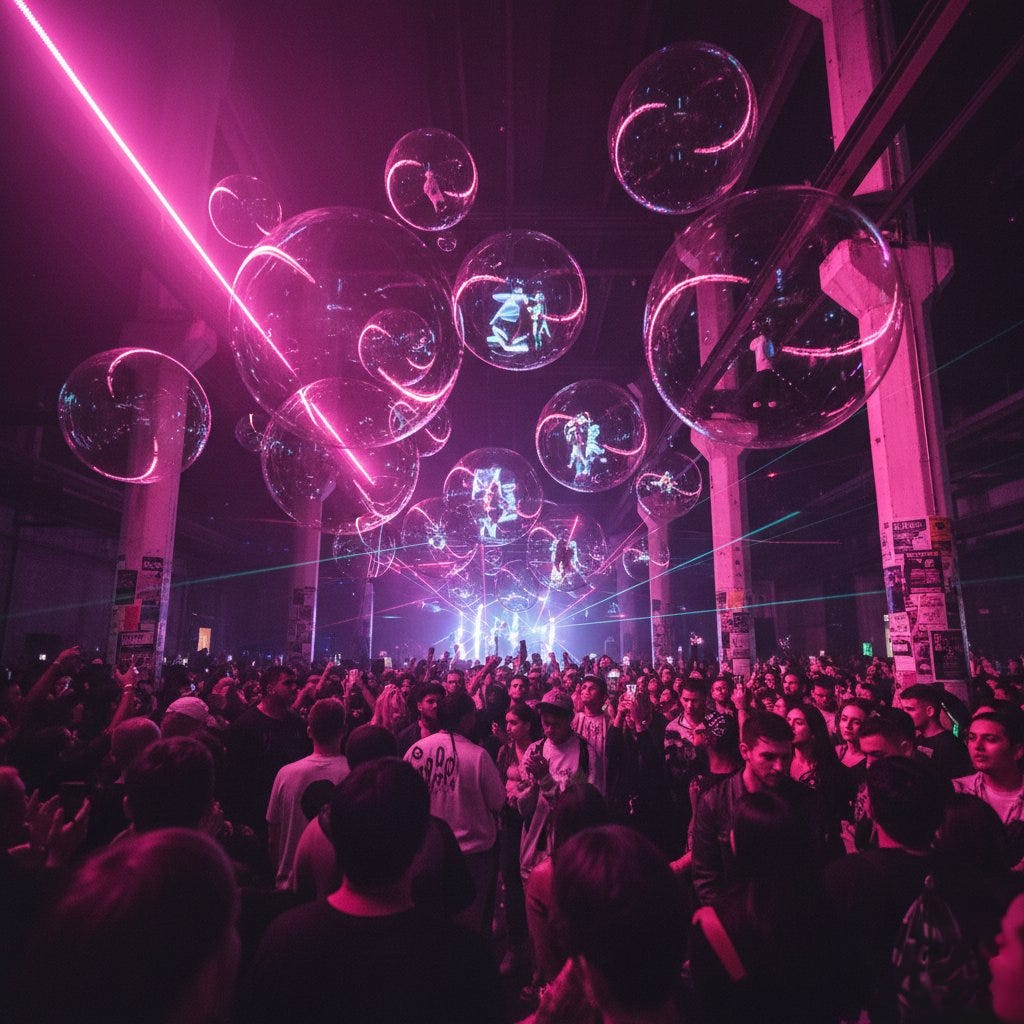
How to improve the live performance experience: “Collective Effervescence”
Durkheim introduced the term ‘Collective Effervescence’ in 1912 to describe the intense energy produced when groups gather for rituals.
When people perform synchronised actions, the boundaries of self fade away. The group is uplifted by a force greater than the sum of its parts. Durkheim argues it’s the source of sacred feelings.
Indeed, this may sound religious, but it is perfectly applicable to concerts. The gig is the ritual, and the music acts as a means to attain synchronicity. Engaging in synchronised actions creates a collective emotional experience that fosters a sense of belonging.
These moments occur because the artist provides a clear, simple framework for the crowd to act as one. Some examples:
- Freddy Mercury’s iconic Ay-Oh call-and-response at Live Aid 1985.
- Oasis always let the crowd sing the “I said maybe” part of Wonderwall.
- Fred Again’s crowd ends the show with a Delilah singalong.
- Sit-downs, wall-of-deaths, mosh pits, silent immersed audiences, synchronised jumping, etc.
Concerts are about experiencing fandom together, not alone.
Yes, but..
Some artists might argue that their fans are introverts or that their music isn’t high-energy mosh pit material. That’s valid; collective effervescence doesn’t require chaos. A room of 200 people sitting in pin-drop silence, holding their breath during an acoustic guitar solo, is experiencing the same sociological phenomenon as a crowd fist-pumping synchronously at a rave.
Take action now
Three simple things artists can do to apply this highly conceptual theory:
- Evaluate the marketing assets you send to venues. Do you help the venue marketers to sell your show?
- Script a ritual into your show. Begin with something simple, like a rhythmic clap.
- During the show, steer the narrative towards engagement, like: “Look around you, we are here together in this moment.”
Further reading
- Durkheim, É. (1912). The elementary forms of religious life.
- Collective Effervescence (The SAGE Encyclopedia of the Sociology of Religion)
- Durkheim’s Collective Conscience (EBSCO Research Starters)
- Clever artists make their marketers’ jobs easier (The Fanbase Builder)
- How to fill a room at showcase festivals (The Fanbase Builder)
- Why fans wear band shirts like football jerseys (The Fanbase Builder)
- Creating a strong sense of community (The Fanbase Builder)
