

Why Did So Many Music Festivals Cancel in 2025?
The 2025 festival season saw out some of live music and DJ culture’s most beloved festivals due to surges in costs, an exodus of sponsorship, and a “saturation of sameness.” Let’s talk about it.

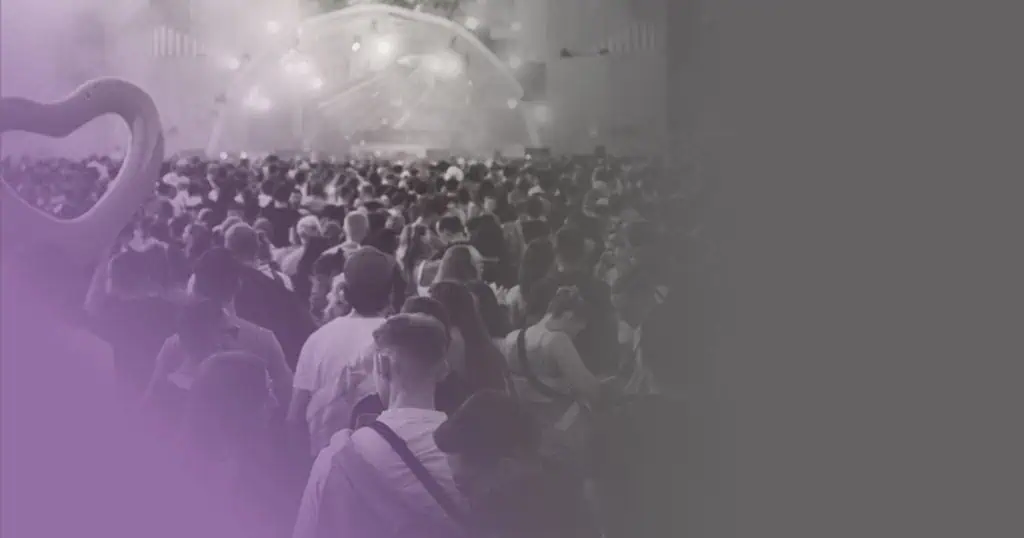
The Festival Bubble Bursts: Why 2025 Saw Record Cancellations and Insolvency
By Daniel Alexis of Midnight Rebels
The festival sector, once the golden goose of the live music industry, is currently experiencing a “Great Correction” that feels less like a market adjustment and more like a cultural liquidation. For a decade, the industry operated on a “growth at all costs” hallucinogen, fuelled by cheap credit and the post-pandemic “revenge spending” of a populace desperate to feel the bass in their chest.
But in 2025, the comedown has arrived, and it is brutal.
While the very top tier of mega-festivals — the Tomorrowlands and EDC Las Vegases of the world — continue to sell out by turning themselves into “Disneyfied” theme parks for the global elite, the mid-tier and boutique festival market is collapsing under the weight of economic volatility and its own creative stagnation.
The result is a hollowing out of the middle, bifurcating the landscape into massive, corporate-backed spectacles and tiny, sweaty underground raves, leaving the “indie middle class” of festivals to die on the vine.
The 2025 Casualty List: An In Memoriam
The roster of cancellations for the 2025 season is unprecedented in its breadth, affecting legacy brands and new ventures alike. It serves as a grim casualty list for an industry that priced out its own future.
Major Festival Cancellations & Hiatuses (2025)
| Festival Name | Location | Status | The Post-Mortem |
| Pitchfork Music Festival | Chicago, USA | Cancelled | The most symbolic death of the year. After 19 years, the festival that defined the “curated” indie experience succumbed to “economic unsustainability” under Condé Nast ownership. |
| Balaton Sound | Hungary | Hiatus | A destination giant that cited “post-pandemic financial instability” and an inability to maintain quality standards without bankrupting its audience. |
| Sick New World | Las Vegas, USA | Cancelled | The nu-metal nostalgia bubble burst. With headliners like Metallica and Linkin Park reportedly asking for $5M guarantees, the math simply stopped mathing. |
| Creamfields Hong Kong | Hong Kong | Cancelled | Officially blamed on “factors that cannot be resisted,” a poetic euphemism for intense regional competition and the exorbitant cost of importing Western DJs to Asia. |
| Global Dance Festival | Denver, USA | Cancelled | A victim of rising production costs and venue instability, forcing a retreat to regroup. |
| Field & Stream Music Fest | USA | Cancelled | Despite backing from Eric Church and Morgan Wallen, this “lifestyle” fest was scrapped, proving that even massive country stars can’t outrun logistics costs. |
The Mechanics of Collapse: A Broken Algorithm
The primary driver of these cancellations is a fundamental disconnect between operational costs and consumer price sensitivity. We are witnessing the end of the “subsidy era” of live music.
The Inflationary Spiral (or, Why Fencing Costs More Than Your Rent)
The cost of essential festival infrastructure — security, fencing, stages, and insurance — has risen by a staggering 30-50% since 2019. This isn’t just inflation; it’s a structural realignment of the supply chain. Steel, labor, and insurance premiums have decoupled from the consumer price index.
To maintain the razor-thin margins of the past, organizers have raised ticket prices to eye-watering levels, but consumer purchasing power — eroded by the same cost-of-living crisis — has not kept pace.
The Sponsorship Exodus
For years, the mid-tier festival was propped up by the “subsidy model,” where corporate brand activations (the Heineken House, the Amex Lounge) offset the cost of production. In 2025, that model fractured. Corporate sponsors, facing their own recessionary pressures and “DEI backlash,” have slashed experiential marketing budgets or retreated from cultural events entirely.
Without this corporate lifeline, the independent festival model is mathematically insolvent.
The “Sameness” Fatigue
Perhaps the most damning factor is cultural rather than economic: the market is suffering from a “saturation of sameness.”
With major conglomerates like Live Nation and AEG dominating booking, lineups have become algorithmically homogenized. A glance at the 2025 posters reveals a depressingly safe rotation of artists — Fred again.., Olivia Rodrigo, Noah Kahan — circling the globe like satellites. Consumers are refusing to pay premium prices ($600+) for “cookie-cutter formats” that lack the distinct identity of the scenes they claim to represent.
As one Reddit user on r/festivals put it: “It’s crazy how homogenous this summer festival season feels. When all these festivals have the same lineups, why travel?”
Community Feedback: The Vibe Shift
The sentiment on the ground — scraped from the digital town squares of Reddit and Discord — is one of cynicism mixed with nostalgia.
- “VIP is the New GA”: The most common complaint in 2025 is the stratification of the festival grounds. Fans argue that by overselling VIP tickets to monetize every square foot, organizers have degraded the communal experience. “The red line is the VIP section… it’s completely crammed and indiscernible from GA,” wrote one user regarding the now-cancelled Sick New World.
- The Trust Deficit: There is a profound lack of trust in organizers. When Creamfields HK cited “force majeure,” the community immediately translated it to “low ticket sales.” The prevailing wisdom is now to wait until the last minute to buy tickets, destroying the “early bird” cash flow model that independent promoters rely on to pay artist deposits.
- Antitrust Anger: The Department of Justice’s lawsuit against Live Nation/Ticketmaster has emboldened fans, who now view high fees not as a nuisance, but as a systemic injustice. The narrative has shifted from “concerts are expensive” to “we are being exploited by a monopoly.”
The Future: Bifurcation and the Underground
The result of this correction is not the death of festivals, but their mutation. The market is bifurcating into two distinct survival modes:
- The Mega-Spectacle: The corporate-backed giants that can absorb losses and offer a “theme park” experience (Coachella, Tomorrowland). These events are “too big to fail” and rely on international tourism rather than local scenes.
- The New Underground: The only growth sector in 2025 is the unpermitted, low-overhead rave. In cities like Chicago and New York, the collapse of mid-tier events like Pitchfork has pushed the culture back into warehouses and basements. Here, the “vibe” is authentic, the overhead is low (no Ferris wheels, just a sound system), and the community is gated by encrypted apps rather than Ticketmaster queues.
The medium-sized, independent festival — once the cultural engine that broke new artists and defined taste — is becoming an endangered species.
In 2025, you either went massive, or you went underground. There is no middle ground left.
Daniel Alexis, also known as DASD, is a bedroom DJ and music producer from Manila, and an IT student who uses the power of web to express different insights and perspectives through writing.
