

Touring Economics: Why Concert Tickets Cost $150 in Austin But $68 in Cleveland
New data uncovers how venue competition and regional pricing patterns are reshaping the sustainability of live music in different U.S. cities.

By Anshul Dua of Wiingy
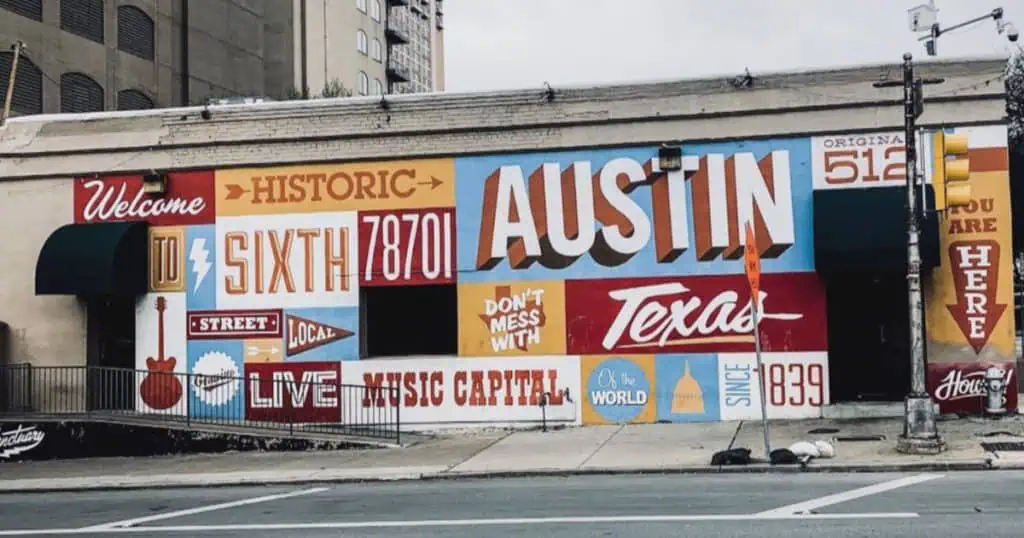
Austin, proudly billed as the “Live Music Capital of the World,” may be synonymous with live music, but its median concert ticket price of $150 is more than double Cleveland’s $68.
The stark price difference raises crucial questions not only about consumer affordability but also about which markets are best positioned to sustain live music in the long run, and which are pricing themselves into fragility?
The Venue Competition Problem
New research from Wiingy analyzing 600+ concert tickets across 20 major U.S. cities reveals a troubling trend: cities with limited venue competition charge significantly higher ticket prices. Download the full report, “The Most Affordable Cities for Concert Tickets in America in 2026” by Wiingy.
This is true even when the cost of living in those cities is already high.
Take New York, for example. Despite being one of the priciest cities in the world, the median ticket price for a concert in the city is just $91, far less than Austin’s $150.
The reason? Competition.
New York boasts multiple major venues, including Madison Square Garden, Barclays Center, and MetLife Stadium.
Austin, on the other hand, is home to just one: Moody Center. When multiple venues compete for top-tier acts, prices remain competitive. But in a city with limited venue options, ticket prices soar.
This issue extends across all artist tiers. For instance, tickets to see Ed Sheeran cost $66 in New York but rise to $116 in Las Vegas, a 76% increase for the same show.
Similarly, tickets for Cardi B start at $93 in Seattle, but they jump to $153 in Atlanta, a 65% increase.
The ticket prices are not simply a consumer inconvenience; they create real challenges for tour managers deciding where to schedule their concerts.
Regional Divides: Where Touring Math Still Works
Breaking down pricing by region reveals a clear divide.
The Midwest, for example, boasts the most affordable ticket prices, with Cleveland ($68), Pittsburgh ($71), and Indianapolis ($80) leading the charge.
The Northeast follows with an average ticket price of $95, where cities like New York ($91) and Boston ($122) still maintain relatively affordable tickets.
In contrast, the South and West are marked by higher prices, with Austin ($150), Atlanta ($136), and Las Vegas ($140) leading the pack.
While these cities can support marquee tours, they struggle to support the mid-tier tours that build long-term local audiences.
Pittsburgh, however, stands out as an anomaly: it ranks high for both ticket price and local income-adjusted affordability.
This unique combination signals a healthier, more sustainable market than cities like Austin or Miami, where ticket prices are high but local residents may struggle to afford regular concert attendance.


The Income Problem: Why Same Ticket Price Doesn’t Equal Same Affordability
Wiingy’s research calculated an Affordability Index comparing ticket costs to local median incomes, revealing which markets can sustain regular attendance versus which depend on tourists and one-off buyers.
Las Vegas ranks worst with an index of 17.5, concerts consume a larger share of resident income than anywhere else.
San Francisco’s $92 ticket produces the best index at 6.8 thanks to the city’s $135,590 median income.
This matters for venue operators. In Vegas, you’re banking on tourist dollars. In San Francisco, you have a local base that can attend regularly. One model is volatile; the other is sustainable.
The same $91 ticket feels entirely different in New York (index 9.1, #3 most affordable) versus Nashville (index 10.2, #8).
Nashville’s “Music City” brand commands New York prices, but locals can afford it less easily, creating a market increasingly dependent on bachelorette parties rather than music fans who’ll come back.
The Touring Math Problem
For artists and managers building routes, the message is clear: pricing power varies wildly, and the most lucrative short-term markets may not be the most strategic long-term plays.
One Austin show at $150 generates the same gross as two Pittsburgh shows at $75 each.
But two Pittsburgh shows build twice the fan base, twice the merch opportunities, and stronger regional loyalty. Over a career, which market serves you better?
The Midwest’s low prices aren’t a weakness, they’re a competitive advantage. These markets offer room to build, to experiment, to develop audiences that can afford to see you more than once every few years.
What Destination Pricing Really Costs
Cities like Austin, Las Vegas, and Atlanta, which market themselves as top-tier destinations, can charge premium prices for concerts because people are willing to travel for the experience.
But this pricing structure doesn’t work for mid-tier acts, which rely on building a fanbase that can afford to see them multiple times over the years.
The key issue here is that when “Live Music Capital of the World” translates to “most expensive place to see live music,” the city is no longer fostering a sustainable music community.
Instead, it’s focusing on short-term tourism dollars, which may not be enough to support a thriving music scene.
The Bottom Line
The live music industry’s current instability isn’t just about festival oversaturation or rising touring costs. It’s about markets where pricing has disconnected from sustainability.
Austin’s $150 tickets and Vegas’s tourist-dependent model might maximize short-term revenue.
But Cleveland’s $68 tickets and New York’s competitive venue ecosystem show what healthy markets look like: accessible to locals, attractive to tours, and built to last.
As the industry continues recalibrating after pandemic disruptions and market oversaturation, these regional pricing patterns offer a roadmap.
The cities getting it right aren’t necessarily the ones with the biggest brands or highest grosses.
They’re the ones where the math still works for everyone, venues, artists, and most importantly, fans who can afford to show up more than once.
