# Hypebot
> Covering the business, culture, & communities of live music and independent music.
Public Ghost content for AI and LLM tooling. This file includes a bounded export of public pages first, then recent public posts.
Append `.md` to any post or page URL to get the content in Markdown (for example, `/example-post.md`).
## Pages
### Essential News & Insights for Artists and Live Music Pros.
URL: https://www.hypebot.com/about/
Last updated: 2026-05-05T20:11:12.000Z
Hypebot is an essential daily resource for artists and live music pros. We share relevant news, feature length stories, actionable insights, and real-world advice they need to build sustainable careers, while fostering conversations about music tech, live music, artist marketing, and event promotion. Our coverage spotlights the innovators, ideas, and emerging trends redefining how music is created, promoted, and experienced, on a human scale.
### **We cover the business, communities, & trends pushing live music culture forward.**
###
Hypebot’s mission is to inform, spotlight, and empower the people shaping live and independent music — artists, organizers, venues, and fans — through authentic editorial perspectives and real-time industry insights and news. We cover the topics that matter most to working artists and professionals, and not just the industry noise dominating news cycles.
We pledge to share objective information and first-hand experience that benefits artists and pros, and cut through the talking points propped up by gatekeepers driven by profit.
Although our editorial purview covers much more than live music, we share the perspective of our parent company, [**Bandsintown**](https://www.artist.bandsintown.com/?ref=hypebot.com), that the live environment exists as the most resonant point of connection between artists and their fans. Live music has the power to unite people around communal, expressive, and ultimately human moments. Besides offering one of the most surefire routes to sustainability in an artist’s career — more dependable than streaming or licensing over the long term — touring is also the most truthful space of interaction shared between artists and their fans.
Because music is all about building connection. If you'd like to stay connected, and informed, join our free weekly newsletter. Unsubscribe anytime, we get it.
## Hypebot
Essential news & insights for artists and live music pros.
Sign up for free weekly content delivered to your inbox
Subscribe
Email sent! Check your inbox to complete your signup.
### About Hypebot
Hypebot was founded in 2004 and edited by **Bruce Houghton** through 2025, in order to chronicle the new music industry trends and technologies that are changing how music is discovered, consumed, marketed and monetized. The publication was acquired by Bandsintown in 2023\. **Jeremy Young** is the current Editor-in-Chief.
Hypebot is a music industry publishing platform read daily by more than 30,000 music industry professionals including executives and senior staff of music related tech firm internet based music sites, every major label group and most indies as well as many managers, artists and members of the live music community.
> *“I swear by Hypebot every morning over breakfast.”*
> Derek Sivers | Founder, CD Baby
### Contact Us
Pitch us a story, or get in touch: [**editor@hypebot.com**](mailto:editor@hypebot.com).
Advertise with us. Hypebot is one of the most trusted voices in the music industry for news, insights, commentary, and sharing conversations happening across a wide breadth of partner publications and brands at the forefront of music’s shifting landscape. If you’d like to run ads or advertorial content to reach our deadicated readership of musicians, music fans, and music industry insiders, let’s talk.
For ad rates and options, contact us at the above address.
### Follow Us
Follow Hypebot on [**X**](https://x.com/hypebot?ref=hypebot.com).
Follow Hypebot on [**Facebook**](https://www.facebook.com/Hypebot/).
Follow Hypebot on [**LinkedIn**](https://www.linkedin.com/company/hypebot?ref=hypebot.com).
### The best popup you ever did see
URL: https://www.hypebot.com/sws-popover-content/
Last updated: 2025-12-16T20:09:21.000Z
Hello! I'm a popup!
### Homepage ad card
URL: https://www.hypebot.com/homepage-ad-card/
Last updated: 2026-06-04T20:23:23.000Z
[](https://www.company.bandsintown.com/news/meet-boost?ref=hypebot.com)
[](https://www.company.bandsintown.com/news/meet-boost?ref=hypebot.com)
[](https://www.company.bandsintown.com/news/meet-boost?ref=hypebot.com)
### Live Music Industry News
URL: https://www.hypebot.com/live-music-industry-news-6970c7a70a0dbe2092b47f04/
Last updated: 2025-02-27T17:26:51.000Z
scpit\_embedsParams = window.scpit\_embedsParams || {}; scpit\_embedsParams\["scp-embed-hypebot-live"\] = {"maxCols":3,"colSplitWidth":400,"minCols":"3"};
### Mike Test
URL: https://www.hypebot.com/mike-test/
Last updated: 2022-05-06T20:01:31.000Z
#### Desktop
#### Mobile
#### Out Of Page
### RESOURCES
URL: https://www.hypebot.com/resources/
Last updated: 2020-06-03T16:20:34.000Z
## CONNECT
- **Join the 13 million who have signed the Justice For George Floyd Change.org petition [here](https://www.change.org/p/mayor-jacob-frey-justice-for-george-floyd?source%5Flocation=search%5Findex&algorithm=promoted&original%5Ffooter%5Fpetition%5Fid=&grid%5Fposition=2&pt=AVBldGl0aW9uAAoFVgEAAAAAXtegU75ZLP1hNzRlYTI0Nw%3D%3D&ref=hypebot.com).**
- **Text “FLOYD” to 55156 and sign the Color of Change Petition**
- **[Register To Vote](https://www.google.com/url?q=https://www.vote.org/register-to-vote/&sa=D&ust=1591129164134000&usg=AFQjCNGAKPab66v6PgCx0wQsVo7plBIZog&ref=hypebot.com)**
- **[Vote in the Primary Elections](https://www.fvap.gov/guide/appendix/state-elections?ref=hypebot.com)**
- **Sign the Petition – [Hands Up Act](https://www.change.org/p/us-senate-hands-up-act?ref=hypebot.com)**
## EDUCATE
- **Read “On the Other Side of Freedom” by DeRay McKesson**
- **Talk to your family, friends, fans, and colleagues**
- **Join organizations within your community**
- **Follow @blklivesmatter @colorofchange @naacp @civilrightsorg**
- **Listen to a podcast “[The United States of Anxiety](https://www.wnycstudios.org/podcasts/anxiety?ref=hypebot.com)”**
**Read “Biased” by Jennifer L. Eberhardt**
- **Read “Fatal Invention” by Dorothy Roberts**
- **Listen: NPR Codeswitch: “[A Decade of Watching Black People Die”](https://www.npr.org/2020/05/29/865261916/a-decade-of-watching-black-people-die?ref=hypebot.com)**
## DONATE
- **Support local black-owned businesses**
- **Donate to [Color Of Change](https://secure.actblue.com/contribute/page/support-us?refcode=coc%5Fwebsite%5Fpopup&ref=hypebot.com)**
**Donate to the [Unicorn Riot](https://www.givemn.org/organization/Unicorn-Riot?ref=hypebot.com), a non-profit, media organization dedicated to exposing root causes of dynamic social & environmental issues**
- **Donate to [Black Lives Matter](https://secure.actblue.com/donate/ms%5Fblm%5Fhomepage%5F2019?ref=hypebot.com)**
- **Donate to [Reclaim the Block](http://www.reclaimtheblock.org/?ref=hypebot.com)**
### WMG, Capital Join Growing ‘Black Out Tuesday’ Music Industry George Floyd Protest: #TheShowMustBePaused
URL: https://www.hypebot.com/wmg-capital-join-growing-black-out-tuesday-music-industry-george-floyd-protest-theshowmustbepaused-6970c7a70a0dbe2092b47f05/
Last updated: 2026-02-02T15:09:05.000Z
**Warner Music Group, Capitol Music Group** and **Quincy Jones** are among those joining a growing grassroots music industry campaign to pause all activity on Tuesday, June 2nd following the death of **George Floyd** while in police custody and the nationwide protests that followed.
Messages began circulating using the #THESHOWMUSTBESHOWED hashtag on Instagram and other social media platforms on Friday evening May 29th calling for “a day to disconnect from work and reconnect with our community.”

In the hours that followed many artists, record labels and others in the music industry added their support.
Overnight, **Capital Music Group** announced that it would “not be conducting any business” on Tuesday along with a donation to **[Color Of Change](https://colorofchange.org/?ref=hypebot.com),** a progressive non-profit that organizes campaigns “powerful enough to end practices that unfairly hold Black people back, and champion solutions that move us all forward. Until justice is real.”
**Warner Music Group** also pledged to shut down Tuesday in solidarity and make donations to **Black Live Matter** and other organizations.
**Universal Music Group Ireland** and other major and independent labels across the globe also expressed the support.
## More Support
Other music companies including **Live Nation** and **Sony** have signaled support in the last 36 hours, but as of Sunday morning have not specifically pledged to shut down on Tuesday.
**Quincy Jones** was among the many artists also expressing support.
### Indie Biz
URL: https://www.hypebot.com/the-business-of-indie/
Last updated: 2023-04-26T15:16:52.000Z
scpit\_embedsParams = window.scpit\_embedsParams || {}; scpit\_embedsParams\["scp-embed-indie-music-by-bruce-c-houghton"\] = {};
### More News
URL: https://www.hypebot.com/news-6970c7a70a0dbe2092b47f06/
Last updated: 2023-05-09T13:12:19.000Z
scpit\_embedsParams = window.scpit\_embedsParams || {}; scpit\_embedsParams\["scp-embed-hypebot-live-by-bruce-c-houghton"\] = {"minCols":"3","maxCols":"4","colSplitWidth":"500"};
### Indie Biz
URL: https://www.hypebot.com/charts-6970c7a70a0dbe2092b47f07/
Last updated: 2023-04-26T15:17:21.000Z
scpit\_embedsParams = window.scpit\_embedsParams || {}; scpit\_embedsParams\["scp-embed-indie-music-by-bruce-c-houghton"\] = {};
### Privacy Policy
URL: https://www.hypebot.com/privacy-policy-6970c7a70a0dbe2092b47f08/
Last updated: 2023-04-26T15:19:34.000Z
## Who we are
Our website address is: https://www.hypebot.com.
## What personal data we collect and why we collect it
### Comments
When visitors leave comments on the site we collect the data shown in the comments form, and also the visitor’s IP address and browser user agent string to help spam detection.
An anonymized string created from your email address (also called a hash) may be provided to the Gravatar service to see if you are using it. The Gravatar service privacy policy is available here: https://automattic.com/privacy/. After approval of your comment, your profile picture is visible to the public in the context of your comment.
### Media
If you upload images to the website, you should avoid uploading images with embedded location data (EXIF GPS) included. Visitors to the website can download and extract any location data from images on the website.
### Contact forms
### Cookies
If you leave a comment on our site you may opt-in to saving your name, email address and website in cookies. These are for your convenience so that you do not have to fill in your details again when you leave another comment. These cookies will last for one year.
If you visit our login page, we will set a temporary cookie to determine if your browser accepts cookies. This cookie contains no personal data and is discarded when you close your browser.
When you log in, we will also set up several cookies to save your login information and your screen display choices. Login cookies last for two days, and screen options cookies last for a year. If you select “Remember Me”, your login will persist for two weeks. If you log out of your account, the login cookies will be removed.
If you edit or publish an article, an additional cookie will be saved in your browser. This cookie includes no personal data and simply indicates the post ID of the article you just edited. It expires after 1 day.
### Embedded content from other websites
Articles on this site may include embedded content (e.g. videos, images, articles, etc.). Embedded content from other websites behaves in the exact same way as if the visitor has visited the other website.
These websites may collect data about you, use cookies, embed additional third-party tracking, and monitor your interaction with that embedded content, including tracking your interaction with the embedded content if you have an account and are logged in to that website.
### Analytics
## Who we share your data with
## How long we retain your data
If you leave a comment, the comment and its metadata are retained indefinitely. This is so we can recognize and approve any follow-up comments automatically instead of holding them in a moderation queue.
For users that register on our website (if any), we also store the personal information they provide in their user profile. All users can see, edit, or delete their personal information at any time (except they cannot change their username). Website administrators can also see and edit that information.
## What rights you have over your data
If you have an account on this site, or have left comments, you can request to receive an exported file of the personal data we hold about you, including any data you have provided to us. You can also request that we erase any personal data we hold about you. This does not include any data we are obliged to keep for administrative, legal, or security purposes.
## Where we send your data
Visitor comments may be checked through an automated spam detection service.
## Your contact information
## Additional information
### How we protect your data
### What data breach procedures we have in place
### What third parties we receive data from
### What automated decision making and/or profiling we do with user data
### Industry regulatory disclosure requirements
### Sample Page
URL: https://www.hypebot.com/sample-page/
Last updated: 2026-01-22T19:21:28.000Z
This is an example page. It’s different from a blog post because it will stay in one place and will show up in your site navigation (in most themes). Most people start with an About page that introduces them to potential site visitors. It might say something like this:
> Hi there! I’m a bike messenger by day, aspiring actor by night, and this is my website. I live in Los Angeles, have a great dog named Jack, and I like piña coladas. (And gettin’ caught in the rain.)
…or something like this:
> The XYZ Doohickey Company was founded in 1971, and has been providing quality doohickeys to the public ever since. Located in Gotham City, XYZ employs over 2,000 people and does all kinds of awesome things for the Gotham community.
As a new WordPress user, you should go to [your dashboard](https://www.hypebot.com/wp-admin/) to delete this page and create new pages for your content. Have fun!
### Live Music Industry News
URL: https://www.hypebot.com/live-music-industry-news-7/
Last updated: 2025-02-27T17:26:51.000Z
scpit\_embedsParams = window.scpit\_embedsParams || {}; scpit\_embedsParams\["scp-embed-hypebot-live"\] = {"maxCols":3,"colSplitWidth":400,"minCols":"3"};
### Mike Test
URL: https://www.hypebot.com/mike-test-2/
Last updated: 2022-05-06T20:01:31.000Z
#### Desktop
#### Mobile
#### Out Of Page
### Independent Venue Week Panel
URL: https://www.hypebot.com/venue-2/
Last updated: 2020-10-26T17:20:39.000Z

## **The Panel**
**But Wait, There’s More… Alternative Revenue Streams for Venues**
Join IVW for a discussion about other ways a venue can bring in a cash flow beyond the ticket sale. Should every venue have its own merch? What add-ons to customer purchases won’t break the bank? Will customers pay for post-COVID comfort perks such as individual pods or timed entry
- Mary Kay Huse ([Mandolin](https://www.mandolin.com/?ref=hypebot.com))
- Joe Ahearn ([WithFriends](https://withfriends.co/?ref=hypebot.com))
- Stacy Schwartz ([First Avenue Productions](https://first-avenue.com/shop/?ref=hypebot.com))
- Bruce Houghton ([Bandsintown](http://bandsintown.com/?ref=hypebot.com), [Skyline Artists Agency](http://www.skylineonline.com/?ref=hypebot.com))
## **Resources**
**Mandolin**
- [https://www.mandolin.com/](https://www.mandolin.com/?ref=hypebot.com)
- About: [https://www.mandolin.com/about-us](https://www.mandolin.com/about-us?ref=hypebot.com)
- For Venues: https://www.mandolin.com/for-venues
**WithFriends**
- [https://withfriends.co/](https://withfriends.co/?ref=hypebot.com)
- About: [https://withfriends.co/organizers](https://withfriends.co/organizers?ref=hypebot.com)
**First Avenue**
- [Membership Program](http://membership.first-avenue.com/?ref=hypebot.com)
- [Merch](https://first-avenue.com/shop/?ref=hypebot.com)
**Bandsintown**
- [Free livestream promotion using Bandsintown](https://artists.bandsintown.com/support/blog/the-easiest-and-free-way-to-promote-your-live-streams?ref=hypebot.com)
- [How to produce a compelling live stream show – Best Practices from DiscMakers’ experts](https://artists.bandsintown.com/support/blog/how-to-produce-a-compelling-live-stream-show-best-practices-from-discmakers-experts?ref=hypebot.com)
- [Creative Techniques For Monetizing Your Live Streams](https://artists.bandsintown.com/support/blog/creative-techniques-for-monetizing-your-live-streams?ref=hypebot.com)
- [Tech: Musician’s Guide To Running A Livestream Using Free OBS Software](https://artists.bandsintown.com/support/blog/musicians-guide-to-running-a-livestream-using-free-obs-software?ref=hypebot.com)
**Custom CDC compliant mask printing:** adam@skylineonline.com.
### RESOURCES
URL: https://www.hypebot.com/resources-2/
Last updated: 2020-06-03T16:20:34.000Z
## CONNECT
- **Join the 13 million who have signed the Justice For George Floyd Change.org petition [here](https://www.change.org/p/mayor-jacob-frey-justice-for-george-floyd?source%5Flocation=search%5Findex&algorithm=promoted&original%5Ffooter%5Fpetition%5Fid=&grid%5Fposition=2&pt=AVBldGl0aW9uAAoFVgEAAAAAXtegU75ZLP1hNzRlYTI0Nw%3D%3D&ref=hypebot.com).**
- **Text “FLOYD” to 55156 and sign the Color of Change Petition**
- **[Register To Vote](https://www.google.com/url?q=https://www.vote.org/register-to-vote/&sa=D&ust=1591129164134000&usg=AFQjCNGAKPab66v6PgCx0wQsVo7plBIZog&ref=hypebot.com)**
- **[Vote in the Primary Elections](https://www.fvap.gov/guide/appendix/state-elections?ref=hypebot.com)**
- **Sign the Petition – [Hands Up Act](https://www.change.org/p/us-senate-hands-up-act?ref=hypebot.com)**
## EDUCATE
- **Read “On the Other Side of Freedom” by DeRay McKesson**
- **Talk to your family, friends, fans, and colleagues**
- **Join organizations within your community**
- **Follow @blklivesmatter @colorofchange @naacp @civilrightsorg**
- **Listen to a podcast “[The United States of Anxiety](https://www.wnycstudios.org/podcasts/anxiety?ref=hypebot.com)”**
**Read “Biased” by Jennifer L. Eberhardt**
- **Read “Fatal Invention” by Dorothy Roberts**
- **Listen: NPR Codeswitch: “[A Decade of Watching Black People Die”](https://www.npr.org/2020/05/29/865261916/a-decade-of-watching-black-people-die?ref=hypebot.com)**
## DONATE
- **Support local black-owned businesses**
- **Donate to [Color Of Change](https://secure.actblue.com/contribute/page/support-us?refcode=coc%5Fwebsite%5Fpopup&ref=hypebot.com)**
**Donate to the [Unicorn Riot](https://www.givemn.org/organization/Unicorn-Riot?ref=hypebot.com), a non-profit, media organization dedicated to exposing root causes of dynamic social & environmental issues**
- **Donate to [Black Lives Matter](https://secure.actblue.com/donate/ms%5Fblm%5Fhomepage%5F2019?ref=hypebot.com)**
- **Donate to [Reclaim the Block](http://www.reclaimtheblock.org/?ref=hypebot.com)**
### WMG, Capital Join Growing ‘Black Out Tuesday’ Music Industry George Floyd Protest: #TheShowMustBePaused
URL: https://www.hypebot.com/wmg-capital-join-growing-black-out-tuesday-music-industry-george-floyd-protest-theshowmustbepaused/
Last updated: 2020-05-31T15:56:46.000Z
**Warner Music Group, Capitol Music Group** and **Quincy Jones** are among those joining a growing grassroots music industry campaign to pause all activity on Tuesday, June 2nd following the death of **George Floyd** while in police custody and the nationwide protests that followed.
Messages began circulating using the #THESHOWMUSTBESHOWED hashtag on Instagram and other social media platforms on Friday evening May 29th calling for “a day to disconnect from work and reconnect with our community.”

In the hours that followed many artists, record labels and others in the music industry added their support.
Overnight, **Capital Music Group** announced that it would “not be conducting any business” on Tuesday along with a donation to **[Color Of Change](https://colorofchange.org/?ref=hypebot.com),** a progressive non-profit that organizes campaigns “powerful enough to end practices that unfairly hold Black people back, and champion solutions that move us all forward. Until justice is real.”
**Warner Music Group** also pledged to shut down Tuesday in solidarity and make donations to **Black Live Matter** and other organizations.
**Universal Music Group Ireland** and other major and independent labels across the globe also expressed the support.
## More Support
Other music companies including **Live Nation** and **Sony** have signaled support in the last 36 hours, but as of Sunday morning have not specifically pledged to shut down on Tuesday.
**Quincy Jones** was among the many artists also expressing support.
### Indie Biz
URL: https://www.hypebot.com/the-business-of-indie-2/
Last updated: 2023-04-26T15:16:52.000Z
scpit\_embedsParams = window.scpit\_embedsParams || {}; scpit\_embedsParams\["scp-embed-indie-music-by-bruce-c-houghton"\] = {};
### More News
URL: https://www.hypebot.com/news/
Last updated: 2023-05-09T13:12:19.000Z
scpit\_embedsParams = window.scpit\_embedsParams || {}; scpit\_embedsParams\["scp-embed-hypebot-live-by-bruce-c-houghton"\] = {"minCols":"3","maxCols":"4","colSplitWidth":"500"};
### Indie Biz
URL: https://www.hypebot.com/charts/
Last updated: 2023-04-26T15:17:21.000Z
scpit\_embedsParams = window.scpit\_embedsParams || {}; scpit\_embedsParams\["scp-embed-indie-music-by-bruce-c-houghton"\] = {};
## Posts
### Be Memorable: Picking the Right Horse to Run Your Grammy Campaign
URL: https://www.hypebot.com/be-memorable-picking-the-right-horse-to-run-your-grammy-campaign/
Last updated: 2026-10-16T21:13:48.000Z
*Welcome to* [***Be Memorable***](https://www.hypebot.com/tag/be-memorable)*, a monthly column by independent singer, songwriter and* [*Dream Chasers Radio*](https://www.youtube.com/@dreamchasersradio?ref=hypebot.com) *host,* [***Yaya Diamond***](https://www.hypebot.com/author/yaya-diamond/)*, exploring how artists can use the power of branding and promotion to break through the noise and be memorable.*
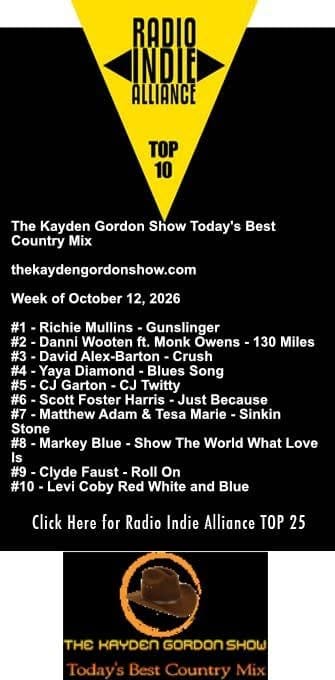
As I write "Blues Song" just hit #4 on the [Radio Indie Alliance Top 10](https://radioindiealliance.com/?ref=hypebot.com) — The Kayden Gordon Show's Today's Best Country Mix, for the week of October 12.
This news is still ringing in my head, because it proves the whole point of what I'm about to tell you about running a Grammy FYC campaign as an independent artist: you can't ride every horse. You pick one, and you ride it like everything depends on it — because it certainly does!
Everything below is in two parts: what I did, and what you can do. This is the stuff nobody hands you when you're running a campaign on a budget like mine — so I'm handing it to you.
## **1\. Pick just one horse.**
***What I did:*** I had more than one song I believed in. But belief doesn't provide money for promotions, and hope, although great, doesn't fund a campaign. Every dollar behind my run for the 69th Grammys comes out of my own pocket, as I stated in [my recent Hypebot article](https://www.hypebot.com/what-a-grammy-fyc-campaign-actually-looks-like-if-youre-independent). That's the campaign fund. So the math was simple and brutal: I could only afford to give one song a real shot.
So how did I choose? I listened to the people. "Blues Song" chose itself, honestly. It was the most requested song I had — the one people asked for by name, the one that got the reaction in the room, the one listeners kept coming back to. When you're independent, you don't have a label's research department or a team of consultants telling you what to push. You have something better: real people telling you what moved them, and Blues Song was the key to the puzzle.
I stopped guessing and started listening. The requests were the data. "Blues Song" wasn't just my favorite — it was *their* favorite. And in a campaign where every dollar has to count, you don't bet on the song you hope people will love. You push the song they rave about the most.
And now the charts are saying the same thing the people said. #4\. The horse is running!
***What you can do:*** Pull your own data before you spend a dime. Which song gets requested at gigs? Which one has the most streams, the most DMs, the most "play that one again"? That's your horse — not the song you hope people will love, but the song they truly love, even if you don't. Then put every available dollar behind that one song and use the others for shows and live performances. It feels wrong, but do it anyway. A split budget is how independent artists lose campaigns they could have won.
## **2\. Fund it from the kitchen table.**
***What I did:*** What does the campaign actually look like? Joining FYC Facebook groups and posting my song, asking Academy members to please take a listen and vote honestly, hitting up Instagram messages, send send send, post post post, and then post and send some more, every day, multiple times a day. There's no war room. There's me, at my table in Southwest Florida, a laptop, a phone, and one song I'm asking the world to hear. It's not glamorous. It's honest work, and honest work is the only thing I've ever been able to count on.
***What you can do:*** Write down your real number — the actual dollars you can spend without hurting your life. That's your campaign budget, and it's enough if you're disciplined. Spend it only on things voters will actually see: a proper radio edit, Facebook targeted ads, maybe even promote some short videos of yourself talking about the song. Everything else is free: your phone camera is your content studio use it, FYC groups are your broadcast networks, your socials are your billboards. And film everything — your campaign is your content. The struggle, the wins, the late nights at the table: document it. People fund and follow journeys, not press releases, so don't waste your money on those.
## **3\. Commit completely — narrowing the scope.**
***What I did:*** Once I picked the horse, everything narrowed. "Blues Song – Radio Edit" is entered in Best American Roots Performance and Best American Roots Song, and every bit of energy I have goes there. First-round voting runs October 12 through 22, and I'm treating those days like the song's whole future depends on them — because for an independent artist, it kind of does.
***What you can do:*** Choose your categories like they cost money — because they do, in energy, time, and focus. Enter where your song genuinely fits, not where you wish it fit. Then narrow your whole world to that entry: every post, every email, every conversation points at it. Put the voting dates on your calendar and plan content for each day of the window before it opens — you'll be too deep in it to plan once it starts. One entry, one message, no distractions, no doubts.
## **4\. Turn every win into proof.**
***What I did:*** Let's be honest about what #4 on a chart does for a Grammy campaign: voters vote, charts don't. No ballot has ever been swayed by a chart position alone. The Recording Academy members deciding Best American Roots Performance aren't checking the Radio Indie Alliance Top 10 before they vote, although it would be super nice if they did LOL.
But here's what it does do: it's proof that the song is trending. It tells a voter scrolling through hundreds of FYC entries that this song is already moving — that real stations are playing it, real listeners are requesting it, real momentum exists. For an independent artist with no label logo on the submission, that kind of third-party validation is real currency. It's the difference between "here's my song, please listen" and "here's my song — and by the way, it's already in fourth place somewhere."
It also does something no campaign budget can buy: it tells me I picked the right horse. When you're spending your own money, doubt is the most expensive thing in the room. A #4 chart position quiets the insecurity and gives you what you rarely have: hope.
***What you can do:*** Chase every piece of proof you can get, starting now. Submit to independent, college radio, and reporting radio stations. Track every spin, every playlist add, every chart placement if possible — screenshot all of it. Each one becomes ammunition: put it in your FYC posts, your emails, your one-sheet, post it on your social media, make videos about it, etc. And be honest with yourself about what proof does: charts don't vote, voters do. But proof matters when a voter is deciding which of 200 entries deserves three minutes of their time. This gives them a reason to take a moment to listen and seriously consider your entry.
## **5\. Don't ride alone.**
***What I did:*** Here's the part nobody tells you about being independent: the other independent artists are not your competition, they're your campaign team. I've been collaborating with fellow artists — we promote each other's songs, we show up for each other's releases, we lift each other up. When one of us gets a placement, a vote, a spin, we all feel it and congratulate each other. There's no label machine behind any of us, so we became the machine for each other. I share their music with my audience; they share "Blues Song" with theirs. It's not strategy — it's community. And community, it turns out, is the most powerful promotion money can't buy.
***What you can do:*** Find five to ten artists at your level — same budget, same hunger — and build a promo circle before voting starts. Share each other's FYC posts. Show up for each other's releases. It costs nothing and multiplies every one of you. The artists around you are the only marketing department you'll ever be able to afford, so treat them like it: promote them like you'd want to be promoted. Don't forget your fans who would want to help you spread the word. Even though they may not be voters, they too can help spread the news about their favorite artist and the FYC song you choose.
## **6\. Go where the voters actually are.**
***What I did:*** I'm posting "Blues Song" in the FYC listening groups where Recording Academy voting members gather. I'm writing about the campaign in my Hypebot column. I'm doing what I can to reach the voters and also offering my ear in return for their FYC submission.
***What you can do:*** Find the rooms where your voters gather and go there first — FYC listening groups exist for exactly this. Read each group's rules before you post (some ban things like gramophone images or entry IDs — respect the room). And learn the most important targeting lesson in this whole article: FYC messages are for voters, not fans. Fans can't vote on Grammys, but they can help you reach them. Your voters get "For Your Consideration" with categories and credits; your fans get "stream it, request it, share it." Same song, two different messages, two different rooms.
That's the whole playbook. Pick the song the people already chose. Fund it with what you actually have. Narrow everything to the entry. Turn every win into proof. Link arms with the artists beside you. Put the right message in the right room. And when the charts confirm what the people already told you — ride that momentum all the way to the ballot.
One horse. Running fourth. All the way. Let's go! I wish you nothing but the best because in the end we are all winners!!!! Congrats.
---
[***Yaya Diamond***](https://www.hypebot.com/author/yaya-diamond/) *is an independent singer and songwriter, the daughter of disco legend Evelyn Thomas, a Recording Academy voting member, and host of* [*Dream Chasers Radio*](https://www.youtube.com/@dreamchasersradio?ref=hypebot.com) *since 2008\.* [*"Blues Song"*](https://open.spotify.com/track/4DaQWnXSH2rpeS0uWziog9?si=f426a50026204b21&ref=hypebot.com) *is her For Your Consideration entry for the 69th Annual Grammy Awards.*
### Goldman Sachs 2026 Music Report: The Monetization Era
URL: https://www.hypebot.com/goldman-sachs-2026-music-report-the-monetization-era/
Last updated: 2026-10-16T14:43:47.000Z
The 10th annual **Goldman Sachs** [***Music in the Air***](https://hitsdd.co/gs-music-in-the-air-2026?ref=hypebot.com) report delivers the analysts' first upward revision to long-term music industry revenue forecasts since 2022\.
The central takeaway: the music business has completed its transition from a pure volume-and-adoption race into a mature, aggressive monetization era. Rather than relying purely on user growth in developed markets, industry expansion over the coming decade will be propelled by routine subscription price hikes, emerging market penetration, direct-to-consumer (D2C) superfan infrastructure, and consistent spending on live events.
**Here is a breakdown of the report's top-line findings plus a deeper dive into what** [**the data**](https://www.hypebot.com/tag/data-&-analysis) **says about superfans and live music.**
### **The Macro Picture: Goldman Sachs’ 2026–2035 Global Forecasts**
Goldman Sachs projects total global music industry retail revenue (combining recorded music, publishing, and live music) to grow **+6.7% year on year in 2026** and expand at a **5.8%** **compound annual growth rate (CAGR) from 2025 to 2035**, reaching **$198.1 billion by 2035,** up from $112.5 billion in 2025:
- **Recorded Music:** Retail revenues are projected to grow at a +6.3% Compound annual growth rate through 2035, while rightsholder revenue will grow at a +5.9% CAGR from $31.7 billion in 2025 to $56.1 billion in 2035.
- **Live Music:** Projected to grow at a +5.7% CAGR, expanding from $37.4 billion in 2025 to nearly $65 billion by 2035.
- **Music Publishing:** Forecast to grow at a +4.8% CAGR over the ten-year period, generating $12.1 billion in incremental revenue.
- **Subscription Streaming:** Rightsholder subscription streaming revenue is set to climb at a +7.1% CAGR from $17 billion in 2025 to $33 billion in 2035, supported by paid subscribers expanding from 837 million to 1.525 billion.
- **Routine Streaming Price Hikes:** The report notes that music DSPs have successfully broken the historic $9.99 price ceiling and established pricing power with minimal churn. Goldman Sachs forecasts DSPs will now implement price increases on a predictable 12- to 24-month cadence across individual and family tiers.
- **Generative AI Opportunity:** Goldman models AI as a net near-term positive for DSPs and premier rights holders, projecting a $3.3 billion base-case monetization uplift (a \~10% revenue lift to subscription streaming) by 2035 through licensed creation tools, remix add-ons, and forensic royalty recovery.
## **Superfans & D2C: The High-Margin Frontier**
In a dedicated deep dive section titled **The Emerging Direct-to-Consumer Opportunity,** Goldman Sachs identifies D2C platforms and artist-owned superfan relationships as the next structural revenue wave. The report argues that emerging D2C channels are actively fulfilling the monetization promises that streaming DSP "super-premium" tiers have struggled to execute.
### **Superfan Spending Is Underestimated**
Goldman Sachs now says that its historic assumption - that superfans spend roughly 2x the amount of an average listener - is too conservative.
Close to 50% of fans voluntarily pay *above* the artist-set minimum price on pay-what-you-want direct storefronts when given the choice,.
### **Direct To Consumer: Four Integrated Pillars**
The report maps out an integrated **Direct To Consumer** (D2C) architecture operating across four pillars.
- **Commerce & Music Storefronts** (EVEN, Bandcamp): **EVEN** enables pay-what-you-want digital drops, vinyl pre-orders, and fan access windows before streaming release dates. These sales **report directly to Luminate** for Billboard chart eligibility. **J. Cole** leveraged EVEN for the 10th anniversary of "2014 Forest Hills Drive," propelling a decade-old catalog record back into the Billboard Top 15\. The report also highlights **Bandcamp** which pay an average of 82% of fan spend directly to artists and labels.
- **Community Memberships** (Patreon, Weverse, Substack): Subscription platforms that capture recurring monthly revenue in exchange for exclusive content and direct community access.
- **Direct Fan Messaging** (Laylo): SMS and direct-to-consumer messaging tools that bypass social media algorithms. Laylo has generated more than $1 billion in ticket, merch, and content sales across 250 million fan interactions for artists like Sabrina Carpenter and Nicki Minaj.
- **Direct-to-Fan Presales (Planet, Bandsintown):** Presale and ticketing offerings round out the ecosystem, giving artists a way to route ticket access directly to their most engaged fans. The report features [**Bandsintown**](https://help.artists.bandsintown.com/en/articles/9579809-launch-presales-for-your-tours-and-events?ref=hypebot.com), which offers artists a free D2F presale tool: "Artists list a presale directly on their Bandsintown page, fans opt in, and Bandsintown automatically alerts fans who signed up with the ticket link and presale code shortly before the presale opens." Goldman Sachs also cites [Planet](https://planet.fans/?ref=hypebot.com) which issues fans a digital wallet pass that captures presale sign-ups, RSVPs, and in-venue engagement, allowing artist teams to identify their most committed fans.
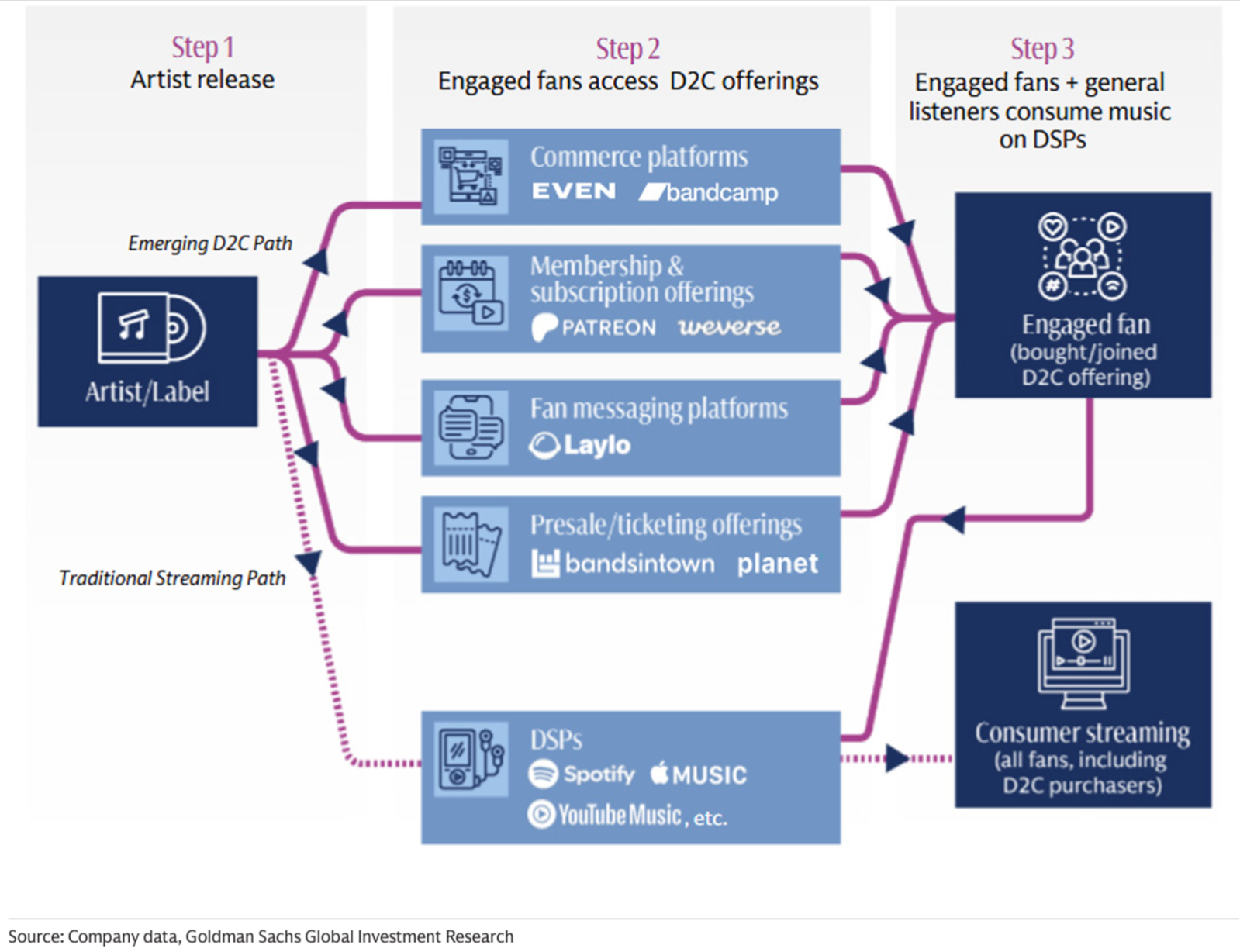
D2F pillars Goldman Sachs 2026 Music Report: The Monetization Era
### **D2C Release Windows Are Additive, Not Cannibalistic**
Importantly, Goldman Sachs found that **D2C/D2F release windows do not cannibalize streaming royalties**.
Artists who run direct-to-fan sales windows ahead of general DSP drops capture high-margin upfront revenue without experiencing any drop in subsequent streaming performance. The D2C sector is forecast to expand from tens of millions in industry revenue today to **hundreds of millions annually over the next decade**.
Major labels are reacting by acquiring stakes and embedding D2C. **UMG** has established partnerships and investments with **EVEN**, **Stationhead,** and **HYBE’s Weverse**, while **Sony Music** and **WMG** have created dedicated internal D2C divisions.
## **Live Music: The Experiential Engine That Beats Recessions**
Live entertainment remains one of media's strongest growth sectors. Following a slight pause in 2025 due to difficult year-over-year comps against Taylor Swift’s historic *Eras Tour*, live music revenue is forecast to accelerate to **+6.0% YoY growth in 2026**, delivering a **+6.0% CAGR through 2030** and **+5.0% through 2035**.
### Global Live Music Revenue Projection
**• 2025: $37.4 Billion (Actual/Base)**
**• 2026: $39.6 Billion (+6.0% YoY)**
**• 2030: $49.8 Billion (+6.0% 5-Yr CAGR)**
**• 2035: $65.0+ Billion (+5.0% 5-Yr CAGR)**
### **Insatiable Millennial & Gen Z Demand For Live**
Live music’s resilience is rooted in structural demographic demand:
- **Generation Y & Z Spending Power:** Millennials and Gen Z make up 43% of the US population and heavily prioritize real-world experiences over material possessions.
- **Concerts as the #1 Financial Priority:** A 2025 CashApp study cited in the report reveals that concerts rank as the **number one spending priority for Gen Z**—ranking above vacations, buying designer apparel, investing in stocks, or saving for a house.
- **Resale & Premium Tolerance:** 75% of Gen Z music fans surveyed are willing to pay inflated ticket resale prices to see their favorite artists, spending 23% more per month on concert attendance than the average US listener.
- **Eventbrite Data:** 79% of young adults (ages 18–35) report plans to attend more live events in 2026 than in prior years.
### **Proven Recession Resilience**
Goldman’s macroeconomic analysis reveals that live music is historically non-cyclical compared to broader consumer spending:
- Spending on live music in the US has grown in **31 of the past 35 years**, persisting through three major economic recessions and the pandemic.
- During US recession years (excluding COVID), live entertainment spending grew at an average rate of **+7.3%**, more than double the broader personal consumption expenditure (PCE) growth rate of +3.2%.
- In a 2025 Live Nation consumer survey, **91% of respondents ranked live concerts in their top spending preferences**, while only 12% stated they would cut concerts first if forced to trim discretionary budgets.
### **Expanding Venue Pipelines and Pricing**
To meet artist supply and touring demand, venue infrastructure is expanding at record scale. Live Nation’s *Venue Nation* pipeline alone currently tracks **over 768,000 seats of announced new venue capacity** across arenas, amphitheaters, and stadiums globally.
Pricing trends reinforce this growth: average ticket prices for the Top 100 tours worldwide have increased **+37% since 2019**. Stadiums and venues with 30,000+ capacity captured the steepest price gains, with **average ticket prices leaping +29% between 2023 and 2025.**
Read the full Goldman Sachs [Music in the Air](https://hitsdd.co/gs-music-in-the-air-2026?ref=hypebot.com) report [here](https://hitsdd.co/gs-music-in-the-air-2026?ref=hypebot.com).
## **Hypebot's Bottom Line**
Goldman Sachs’ 2026 report confirms what working artists, managers, and indie labels have felt on the ground for the past three years: **streaming volume alone will no longer save the music business.**
With subscriber growth maturing in Western markets, the music industry's real financial power has migrated to two poles:
1. **The physical stage:** Live concerts remain an untouchable, recession-proof juggernaut where young fans willingly divert their savings to stand in a room together.
2. **Direct fan ownership:** Capturing the top 5% to 10% of your audience via D2C commerce, SMS channels, and exclusive drops is now a recognized pillar of corporate music valuation.
For independent artists and labels, the mandate is clear: do not treat DSPs as your final monetization destination. Use streaming platforms for what they do best - algorithmic discovery and passive reach - while actively funneling your true listeners into owned platforms like **Laylo, EVEN,** and **Bandsintown**.
---
*Get the latest Live Music & Industry News updated continuously from across the web under the Hypebot Industry News tab* [*here*](https://www.hypebot.com/music-industry-news-feed/)*.*
## Hypebot
Essential news & insights for artists and live music pros.
Sign up for free weekly content delivered to your inbox
Subscribe
Email sent! Check your inbox to complete your signup.
### Manager of the Month: Mike Lisanti of MLennial
URL: https://www.hypebot.com/manager-of-the-month-mike-lisanti-of-mlennial/
Last updated: 2026-10-16T13:49:16.000Z
Welcome back to our new interview series, [**Manager of the Month**](https://www.hypebot.com/tag/manager-of-the-month/), in which we spotlight the work of successful pros in the artist management space, and ask them to share (just a few of) their coveted trade secrets... *shhh!*
Manager of the Month is supported by [**Bandsintown Pro**](https://www.bandsintown.pro/?utm%5Fsource=hypebot&came%5Ffrom=900), the *smarter* way to promote live concert events.
[**MLennial**](https://www.mlennial.com/?ref=hypebot.com) is a Los Angeles–based artist management and entertainment company founded in 2024 by **Mike Lisanti**. Built on an operator-first philosophy, MLennial focuses on developing scalable, long-term careers for electronic artists through hands-on management, growth strategy, and business infrastructure. In its first full year of operation, MLennial-supported artists collectively sold more than **150,000 headline tickets worldwide**, expanding into new headline markets before entering its second year with major projects including **Seven Lions’ second studio album** and continued roster expansion.
Here's our conversation. Let's dive in. Enjoy!
---
**Hypebot: Hey Mike, so tell us about your role. What was the arc of your career that led you to MLennial?**
Mike Lisanti: "I’m the founder and CEO of [MLennial](https://www.mlennial.com/home?ref=hypebot.com). My role is to help guide our artists’ careers while building the team and infrastructure that support them."
I came into this as a musician and producer, then worked in touring and artist management before becoming COO of Prodigy Artists. Those experiences gave me an understanding of both the creative side and the business behind it."
I launched MLennial in April 2024 to build a company around that perspective, with a hands-on approach and a longer-term view of each artist’s career."
**H: Looking back, where did the passion for music come from for you? And how did it grow?**
ML: "It started in middle school, playing guitar and forming bands with friends. I picked it up quickly and became pretty competitive about getting better. That eventually grew into producing and performing myself."
Rock and metal were a big part of that foundation, and I still love the musicianship in those genres. Over time, the creative satisfaction expanded into helping other artists realize their ideas."
I still get excited about a great record, but now I also get excited about figuring out how to build a whole career around someone’s talent."
**H: Is there too much pressure right now for every artist to constantly appear to be growing — more followers, bigger rooms, more streams — even when slowing down might be healthier for the career?**
ML: "Absolutely. Everything is publicly measured now, so it’s easy to feel like every announcement needs to prove you’re getting bigger. That can lead to decisions that look impressive but don’t make much business sense. A bigger room can come with more risk and less profit. More shows can leave less time to make the music that creates future demand."
I’m ambitious for our artists, but growth needs a purpose. Sometimes the right move is to consolidate, make something great, and give fans a reason to come back."
> *"There also needs to be room to live. If the business only works when someone is constantly on the road and exhausted, we need to improve the business."*
**H: MLennial talks about building sustainable artist businesses rather than chasing short-term wins. What does “sustainable” actually look like for an electronic artist today?**
ML: "It means the artist can keep making music and earning a living without needing every release or tour to be their biggest ever. Practically, that means profitable touring, manageable overhead, a catalog that continues to earn, and fans you can reach directly."
Ownership matters, too. What is the artist building that will still have value five or ten years from now?"
There also needs to be room to live. If the business only works when someone is constantly on the road and exhausted, we need to improve the business."
**H: Mike, you’ve said managers can’t manufacture momentum from nothing. So when an artist comes to you, what do you need them to have figured out before management can genuinely help?**
ML: "They need some understanding of who they are creatively, evidence that people are responding, and the ability to follow through. I don’t expect a finished business or enormous numbers. But I want to see initiative: releasing music, connecting with listeners, creating opportunities, and learning from what works."
A manager can bring structure, relationships, and better execution. The partnership becomes much more productive when the artist already has direction and is actively participating in their own career."
**H: What’s the difference between an artist having a viral moment and an artist actually having a business?**
ML: "What happens after the attention arrives. Do people remember the artist’s name? Do they listen to another record, buy a ticket, or come back six months later? Can you reach those people again?"
A business has repeat customers, revenue, and a way to deliver consistently. A viral moment can be a great introduction, but you still have to give people a reason to stay."
**H: What's your most frequent lunch order? :)**
ML: "Chipotle chicken and steak burrito bowl with extra guac."
**H: Managers have access to an extraordinary amount of data now. What is one important career decision that you still wouldn’t trust the numbers to make? (In other words, what still takes human intuition?)**
ML: "Whether to support a new creative direction. The numbers mostly tell you how people responded to something that already exists. They can’t fully tell you what an artist is capable of becoming."
Sometimes an artist brings you something that doesn’t fit their previous results, but you can hear that it matters to them and could open a new chapter. That takes listening, trust, and judgment."
Data can help us decide how to introduce it, but I wouldn’t let it make the creative decision."
> *"The other number I think deserves more attention is what the artist actually keeps. Gross revenue gets talked about a lot, but profit after production, travel, and the team gives you a much clearer picture of whether the career is becoming healthier."*
**H: Back on the data thing, is there a data point or set that you think is underrated?**
ML: "Audience retention and direct fan conversion. I want to know how many people come back, and how many take the next step from watching content to joining a mailing list or buying a ticket. Looking at that by city can be especially useful for touring."
The other number I think deserves more attention is what the artist actually keeps. Gross revenue gets talked about a lot, but profit after production, travel, and the team gives you a much clearer picture of whether the career is becoming healthier."
**H: What’s a success story in your managerial capacity? An artist you worked with and what worked in their campaign case?**
ML: "Crankdat is a strong example from more than six years of managing him. There was a period in 2022–2023 when he was questioning whether he wanted to continue being an artist, and we had a conversation about giving it another focused push and allowing himself to take more creative risks. He has [spoken publicly about that conversation](https://edm.com/features/how-crankdat-beat-burnout-flamethrowing-middle-fingers-fan-first-mission/?ref=hypebot.com) as a turning point that helped put him on the path to selling out arenas as a headliner."
The artist’s participation was essential, and the same applies to Seven Lions’ recent resurgence. In both cases, we had to understand what their most loyal fans were connecting with and where new fans were coming from."
For Crankdat, it was reigniting the audience that originally connected with his SoundCloud remixes and reaching a new generation through TikTok. For Seven Lions, it has been about serving his massive existing fanbase while reconnecting with the sound of his original golden era. There’s an EDM renaissance happening, with younger listeners discovering the classics, and an opportunity to bring that sound forward in a way that still feels fresh."
The strategy was different for each artist, but both required them to believe in the direction and actively participate in making it work."
**H: What is the biggest thing you’ve learned working with artists over time?**
ML: "You have to understand what success means to that particular person. Some artists want the biggest stages possible. Others want creative freedom, financial security, or more time at home. Those priorities can also change."
You can execute a very successful campaign and still miss the mark if you’re building a life the artist doesn’t want. Having those conversations honestly — and revisiting them — is a big part of the job."
**H: Best concert you've seen recently that wasn't one of your clients? :)**
ML: "Korn’s set at Sick New World 2026 in Las Vegas."
---
*To learn more, visit* [*MLennial*](https://www.mlennial.com/about?ref=hypebot.com)*.*
*Join the leading live event professionals saving time and selling more tickets with* [*Bandsintown Pro.*](https://www.bandsintown.pro/?utm%5Fsource=hypebot&came%5Ffrom=900)
### Live Nation Filing Calls FTC Suit "Perversion" of Bots Act
URL: https://www.hypebot.com/live-nation-filing-calls-ftc-suit-perversion-of-bots-act/
Last updated: 2026-10-16T13:11:14.000Z
[**Live Nation**](https://www.hypebot.com/tag/live-nation/) and [**Ticketmaster**](https://www.hypebot.com/tag/ticketmaster/) this week filed their answer to the high-stakes lawsuit brought by the **Federal Trade Commission** (FTC) and seven states.
The live entertainment giant contends that federal regulators are misapplying the **Better Online Ticket Sales Act** (BOTS) by attempting to penalize the very platform the statute was designed to protect.
### **Fast Facts: What You Need to Know**
- **The Legal Filing:** Live Nation and Ticketmaster submitted their formal Answer and 16 affirmative defenses in the U.S. District Court for the Central District of California this week.
- **The Opponents:** The FTC is joined by state attorneys general from **Colorado, Florida, Illinois, Nebraska, Tennessee, Utah**, and **Virginia.**
- **The Core Argument:** Live Nation argues that the FTC is attempting to **"flip the Act on its head"** by holding ticketing companies liable when bad actors bypass their security measures, rather than prosecuting the scalpers running the bots.
- **The Defense Metrics:** Ticketmaster reports investing more than **$1 billion** since 2010 to counter ticket scalping and claims it blocked nearly **260 million daily bot attempts** in 2025.
- **The Constitutional Defenses:** Live Nation raises 16 defenses, including violations of **Due Process, the Equal Protection Clause,** and the **Major Questions Doctrine**. More on all this below.
- Live Nation and Ticketmaster also emphasized their advocacy for ticketing reform including lobbying for the original 2016 BOTS Act.
### **Flipping the BOTS Act 'On Its Head'**
At the center of Live Nation’s filing is statutory interpretation.
Congress enacted the BOTS Act in 2016 to outlaw the technological circumvention of purchase limits and to penalize scalpers who sell tickets acquired through those means. Live Nation’s legal teams at **Latham & Watkins and Sidley Austin** arguethe statute distinguishes between bad-faith scalpers and primary ticket issuers.
According to the filing:
> **"The Commission seeks to flip the Act on its head by turning it against Live Nation and Ticketmaster, the very companies the Act is intended to support. This perversion of the Act contradicts its plain meaning, flouts the will of Congress, and undoubtedly sets back the fight against scalpers."**
Citing legislative history from the **Senate Commerce Committee**, Live Nation says that lawmakers specifically framed primary sellers' safeguards as the frontline defense against automated ticket harvesting. Under prior FTC enforcement actions, Ticketmaster was consistently treated as the protected ticket issuer whose controls were circumvented by outside scalpers.

Live Nation argues that the FTC’s current theory reinterprets the statute to punish ticketing platforms whenever a determined scalper discovers a loophole, effectively transforming anti-bot legislation into a platform liability.
### **Warnings of a 'Chilling Effect' on Anti-Bot Security**
Live Nation’s response outlines what it characterizes as a dangerous paradox in the FTC’s enforcement approach.
Because BOTS Act liability hinges on circumventing safeguards used to enforce ticket limits, a ticketing company that implements zero purchase limits and zero anti-bot defenses faces no exposure under the statute at all.
If courts determine that platforms face compound statutory liability whenever a third-party broker evades an anti-abuse control, Live Nation warns that ticketing platforms will face economic and regulatory pressure to abandon purchase caps and security measures entirely. Alternatively, platforms like it could be forced to severely curtail or shutter fan-to-fan resale marketplaces to avoid third-party liability, eliminating authenticated resale protections and driving consumers back to unregulated secondary black markets.
Addressing the complaint's allegations regarding pricing transparency and ticket disclosures, Ticketmaster stated that it now operates with all-in pricing consistent with FTC regulations and denied engaging in unfair or deceptive acts.
### **16 Affirmative Defenses: Due Process and the Major Questions Doctrine**
In addition to a general denial of wrongdoing, Live Nation asserted 16 formal defenses including:
1. **Third-Party Causation:** Any harm suffered was caused by the intervening and superseding actions of independent scalpers, not Ticketmaster.
2. **Major Questions Doctrine:** The FTC is attempting to unilaterally expand its regulatory authority across the entire secondary ticketing market without clear congressional authorization.
3. **Constitutional Vagueness & Fair Notice:** Applying BOTS Act terms like "circumvent" and "sell or offer to sell" against ticket platforms violates Due Process guarantees under the Fifth and Fourteenth Amendments.
4. **Selective Enforcement:** The enforcement action constitutes arbitrary and unequal treatment under the Equal Protection Clause.
5. **Good Faith & Public Interest:** The company acted in good faith, and the sweeping injunctive remedies sought by regulators would disrupt live event ticketing and harm the broader public interest.
### **What Comes Next in FTC vs Live Nation and Ticketmaster**
Following **Judge Maame Ewusi-Mensah Frimpong**’s decision to reject Live Nation's previous motion to dismiss, this litigation now enters an intensive, multi-year discovery phase.
The court will enter a formal Pretrial and Scheduling Order setting binding discovery deadlines, opening the door for the FTC to subpoena Ticketmaster's internal communications with brokers, account-monitoring logs, and secondary fee revenue. Concurrently, Ticketmaster’s legal team will prepare its defense in part by gathering technical information to demonstrate ongoing mitigation efforts against scalpers.
This fact-finding and expert deposition process will likely dominate 2027, setting up summary judgment battles in early 2028 where Live Nation will formally challenge the FTC’s statutory authority.
The parties have already proposed vastly different trial schedules: the **FTC** and **state plaintiffs** are pushing for an **April 24, 2028** jury trial date, while **Live Nation** and **Ticketmaster** are requesting an **October 2028** trial kickoff.
---
*Get the latest Live Music & Industry News updated continuously from across the web under the Hypebot Industry News tab* [*here*](https://www.hypebot.com/music-industry-news-feed/)*.*
## Hypebot
Essential news & insights for artists and live music pros.
Sign up for free weekly content delivered to your inbox
Subscribe
Email sent! Check your inbox to complete your signup.
###
### Raleigh's “Temporary” Venue Lasted 16 Years — It's Now Becoming Permanent.
URL: https://www.hypebot.com/raleighs-temporary-venue-lasted-16-years-its-now-becoming-permanent/
Last updated: 2026-10-16T12:44:59.000Z
On October 5, Raleigh buried a time capsule at the future home of [**Red Hat Amphitheater**](https://www.bandsintown.com/v/10008982-red-hat-amphitheater?utm%5Fsource=hypebot&came%5Ffrom=900), preserving posters, records, apparel and other reminders of nearly 1,000 events at its original location. As [***Pollstar*** reports](https://news.pollstar.com/2026/10/10/pass-the-hat-red-hat-amphitheater-closes-time-capsule-in-raleigh/?ref=hypebot.com), the ceremony marked the next chapter for a downtown concert venue that was never supposed to stay this long.
Opened in 2010, Red Hat occupied land reserved for the convention center's eventual expansion. A [concert venue](https://www.hypebot.com/tag/venues/) would give the site something to do in the meantime. Sixteen years later, Raleigh is building an upgraded permanent successor one block south, with an opening **planned for 2027.**
Somewhere along the way, the placeholder became a place worth keeping.
Raleigh's experience raises a useful question for cities, promoters and anyone trying to make the case for more live music infrastructure: what if the permanent venue doesn't have to come first?
A major venue proposal asks people to commit money, land and political support based partly on projections. How many shows could it attract? Would audiences come regularly? Would nearby businesses benefit? Architects can draw the building, but the habits that make it work are harder to put in a rendering.
Red Hat had years to develop those habits. According to [***Visit Raleigh***](https://www.visitraleigh.com/plan-a-trip/visitraleigh-insider-blog/post/red-hat-amphitheater-venue-raleigh-schedule-new-location-2027/?utm%5Fsource=chatgpt.com), its 44 shows in 2025 attracted **245,497 concertgoers.** The tourism organization reports that those events generated **more than $33 million** in downtown economic impact.
That impact estimate isn't venue profit or a calculation of what taxpayers get back. But the attendance figure provides something concrete: a substantial audience already uses this space.

**Rendering image courtesy of Visit Raleigh.*
The city also has a clearer sense of what needs improving. Planned upgrades include permanent bathrooms, better sightlines and improved backstage facilities. The city's design criteria call for at least 6,000 seats, attention to artist needs and operational safety.
This is where experience helps.
Years of operating a venue can help sharpen the details; staff have seen where crowds gather, how artists have experienced the backstage setup, and which fans have lived with the quirks. A successor project can respond to those experiences, and improve upon them.
It would be a stretch to describe Raleigh's original decision as a deliberate “test before you build” strategy. The amphitheater was always a temporary use for land awaiting another project. Its relocation is now making room for that convention center expansion. The broader lesson is a vote of confidence for the city's cultural identity.
It says: **"We're building a permanent home for a venue that helped establish a permanent audience."**
What makes this story useful for the Hypebot lens on live music is that sequence. The shows happened, promoters learned what works and what doesn't, audiences gathered and businesses reaped the benefits of a downtown after-work public. Now the permanent version is being built around something people *already use*.
By the way, **remember that time capsule?** That will be opened in 2076\. For something once conceived as a temporary venue, that's quite a long horizon.
[Follow Red Hat Amphitheater on Bandsintown.](https://www.bandsintown.com/v/10008982-red-hat-amphitheater?utm%5Fsource=hypebot&came%5Ffrom=900)
### Does Live Nation Own Your Management Company? Ellie Goulding's Lawsuit. Oasis Ticketmaster Charges & the DOJ's Proposed Settlement 🎙️👨🏻⚖️
URL: https://www.hypebot.com/does-live-nation-own-your-management-company-ellie-gouldings-lawsuit-oasis-ticketmaster-charges-the-dojs-proposed-settlement/
Last updated: 2026-10-16T12:31:59.000Z
*This article was originally posted on* [***Vinyl Culture***](https://vinylculture.substack.com/p/does-live-nation-own-your-management)
Here is a statement from a prominent **artist manager**:
> “***20% of nothing is nothing.***”
That’s what **Ben Mawson** told **Music Business Worldwide** in an interview back in **2018**, explaining what it means to *manage artists on a percentage* and why *a manager has to really believe in an *artist**. It’s a good line. Factual and to the point.
This was also the period when **Ellie Goulding** joined his company, **TaP Management**. But according to a legal claim issued in the **UK**, there was something she says nobody told her. (**TaP’s parent company is owned by Live Nation.)**
The claim says that the live music giant bought **50.1%** stake in **2015** and the rest in **2019**. **Goulding** was managed there from **2018** through **2025**, at a **20% commission**. Over those years she signed deals with **Live Nation** companies covering ***touring***, ***merchandise*** and ***a documentary film***.
Hold that thought, because this isn’t an isolated story. Since mid-August, three separate stories have described the same *monopolistic machine* from three different angles.
Ideally, ***the person who manages you***, ***the platform that sells your ticket***, and ***the remedy meant to restrain a company with a stronghold on an entire industry*** should have nothing to do with each other. But as you will see, they increasingly do…
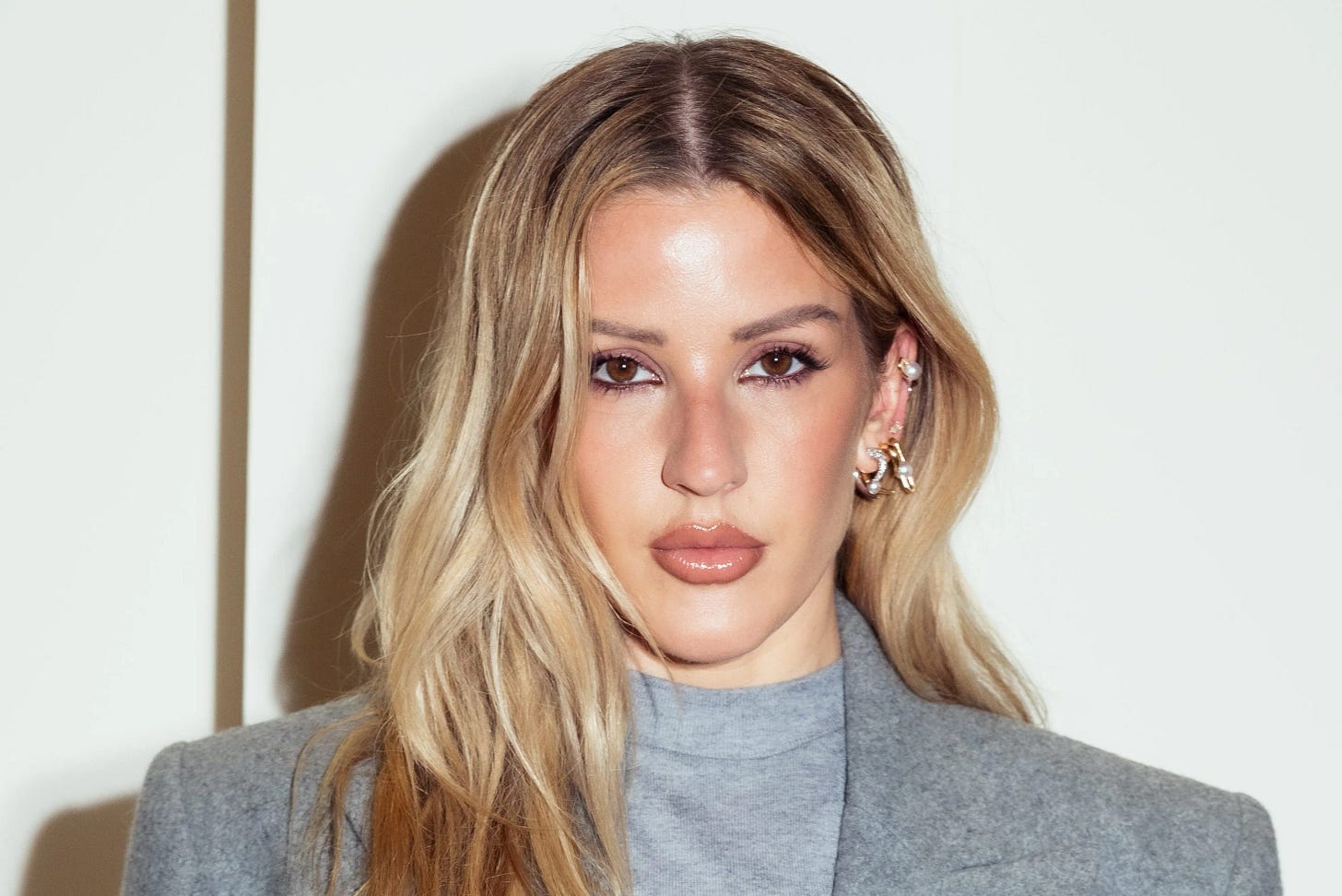
Ellie Goulding has sued her ex-management company over Live Nation ties
## **Ellie Goulding’s Lawsuit | Who Was Her Manager Really Working For?**
For clarification, **Ellie Goulding**’s claim names **Ben** **Mawson**, his co-founder **Ed Millett**, and **TaP**’s parent company, **HNOE Ltd**. **Live Nation is not a defendant and is not directly accused of wrongdoing here.**
But the argument is that **Mawson** and **Millett** were effectively **Live Nation employees**. According to the claim, that gave them a reason to have *a personal interest* in **Live Nation**’s **dealings with their clients**. This conflicted with her interests & need to get the best terms from whichever *promoter* or *merchandiser* suited her. It also alleges that they were **contractually barred from encouraging any artist they managed to stop doing business with the Live Nation group**. She wants *unspecified* *damages* for *breach of* *fiduciary duty*.
The ownership trail is public.
**The UK government’s “Companies House Search Service” has records that show “Live Nation Entertainment, Inc.” holding more than 50% of HNOE. The rest sits with “Artist Nation Management Limited,” another Live Nation group company.**
The claim says that **Ben** **Mawson** became **HNOE**’s **CEO** after the **2019** buyout. It also says he and **Millett** report to **someone designated by Live Nation**’s **CEO**, and that **Live Nation** **has collected dividends** **as the controlling shareholder**. **Live Nation**’s latest annual report says it managed about **360 artists** in **2025**.
None of this has been tested in court yet. **Live Nation** and the defendants hadn’t commented publicly when the claim was reported. **Ellie Goulding** has since gone back to **Sarah Stennett** for *management* and signed with **William Morris Endeavor** (**WME**) for *worldwide representation*.
By the way, **HNOE** has been here before. **Angus & Julia Stone** sued **HNOE** and their ex-manager **Tim Manton** in **New South Wales** over *commission payments*. In November **2024**, **HNOE** substantially won an appeal that sent the dispute to **London** on *a jurisdiction clause*. That’s a common strategy to *delay the ruling* or even to *get it dismissed*.
This should be a warning sign for all **artists**. A manager’s entire job is to *shop around*. Fiduciary duty means ***loyalty***.
**If the person negotiating your tour reports to the company you are negotiating with, then that negotiation is basically money moving between pockets of the same coat.**
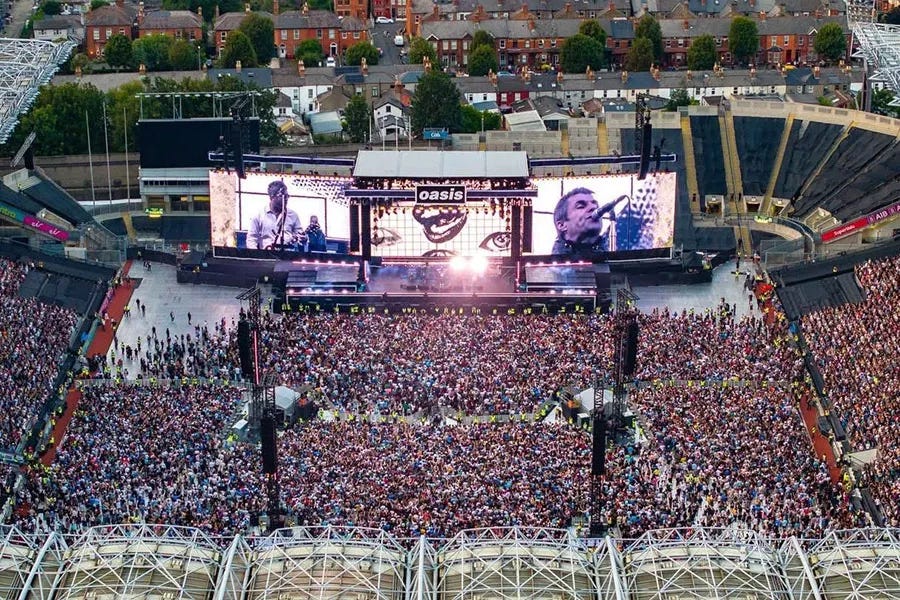
Ticketmaster has been accused of consumer law breach over Oasis ticket sales for the Croke Park shows
## **Oasis ‘Platinum’ Tickets Were A Sham | Why Ireland Is Prosecuting Ticketmaster**
On September 7, **Ireland**’s consumer watchdog, the **Competition and Consumer Protection Commission** (**CCPC**), took **Ticketmaster** to the **Dublin District Court**. The **Ticketline Unlimited Company**, trading as **Ticketmaster**, faces ***two charges*** under **the Consumer Protection Act 2007** over the **August 31, 2024** sale for **Oasis**’s **Croke Park shows**.
> First, **offering “Platinum tickets” in a way likely to *mislead consumers*** **about what they were**.
> And secondly, **sharing important price information in a way that was *unclear***, ***unintelligible***, ***ambiguous* or *untimely***.
You might remember that sale. More than **900,000 tickets went on sale that day**, **fans sat for hours in queues**, and **prices climbed dynamically during the sale**. Some **Dublin standing tickets** went from **€176** **in the pre-sale** **to** **more than €400**. The **CCPC** opened its investigation within a week in 2024, after **more than 100 consumer complaints** to its helpline.
**Ticketmaster** says it will fight back. Their lawyer told the judge that he expects the case to be *fully contested*. The case returns to court tomorrow, October 5, for *disclosure*, and a hearing of *three or four days* could follow before Christmas. Nothing has been proven. **Ticketmaster** has long said that ***promoters*** and **artists** set the prices. But these charges aren’t about *who* set the price. They are about **what the fans were told, and when**.
**Britain** took a much softer route. Its version of the complaint was **UK tickets** **rising from £135 to** **£350**. The **Competition and Markets Authority** (**CMA**) found no evidence of ***real-time dynamic pricing***, which is what most angry fans assumed.
*In this case,* **standing tickets were split into price tiers in advance** *, and* **the pricier tier opened after the cheaper one sold out** *.*
They did find some “**Platinum tickets**” sold at nearly **2.5 times the standard price** with **no adequate explanation that they offered any extra benefit over some standard tickets in the same areas**. That truth is arguably worse than *dynamic pricing*. A structure *fixed in advance* and *deliberately not explained*.
The outcome of this investigation was *voluntary commitments* for **Ticketmaster**.
*They were asked to* **give** **24 hours’ notice of tiered pricing** *,* **have the** **price ranges shown in queues** *, and* **two years of reporting to the CMA** *.*
There was ***no admission of liability***, and **Ticketmaster** dropped **the “Platinum” label** from tickets sold in the **UK**. According to them, this is the **CMA** confirming that **Ticketmaster** “***did not breach consumer law.***”
And this keeps happening. In one of our previous issues titled “[***The Live Nation Monopoly***](https://vinylculture.substack.com/p/the-live-nation-monopoly-how-one?r=4mw0hq)*,”* we covered **Mexico**’s **Profeco** opening proceedings in February to **fine Ticketmaster México** **over a BTS concert’s *pre-sale queue irregularities* and *tickets appearing on resale almost instantly***.
**Different country. Different artists. Same complaint. Fans didn’t know exactly what they were buying…**
Live Nation has pushed back on States’ renewed bid for DOJ settlement records
## **DOJ’s Settlement With Live Nation Solves Nothing**
Which brings us to a possible fix to this problem. On March 9, a week into trial, **the DOJ settled with Live Nation**. They were asked to **divest from** **13 amphitheater booking agreements**, to cap **Ticketmaster service fees** at **15% of face value** at **Live Nation amphitheaters**, to set aside **$280 million** for **state damages claims**, and to **extend the consent decree by eight years**. But most importantly,
**Live Nation can keep control of Ticketmaster.**
But **33 states** along with **D.C.** disagreed & kept going with the case. On April 15, a jury found for them. They found ***illegal monopolization in ticketing and amphitheaters***, ***unlawful tying***, and ***a $1.72-per-ticket overcharge in 22 states***.
**Manatt, Phelps & Phillips**’s analysis puts **Ticketmaster** at about **80% of primary ticketing at major venues** and **Live Nation** at about **70% of major concert promotion**. **Live Nation** is now asking the court to overturn the verdict.
### **Why Venues Stay With Ticketmaster | AEG’s Flywheel Argument**
The comment window on the DOJ deal closed September 4, and the filings are brutal.
**AEG** *, one of* **Live Nation** *’s competitor, wants the judge to *reject the deal*, *order* *Ticketmaster be sold*, and *ban long-term exclusive venue contracts*. According to them, this deal “*does not break Ticketmaster’s grip; it tightens it.*”*
**AEG** points to the **2010** and **2020** decrees and asks **why eight more years of rules would work where fifteen years of similar restrictions failed**? By their math, **Ticketmaster** keeps about **85% of major-venue events** (roughly **6,500 of 7,500 a year**) with **only about** **170 opened to rivals**. The **$18 million payment to the six settling states** is **under 0.1% of Live Nation**’s **2025** **revenue** of **more than $25 billion**, and a **$5 million penalty per violation** **is too small to change Live Nation’s behaviour**.
AEG and SeatGeek have asked the court to reject Live Nation’s DOJ settlement
**SeatGeek**’s reaction was even more aggressive, calling the deal “***a feeble gesture masquerading as a serious solution.***”
*They offered at least* **eight major venues** *“*a retaliation insurance*”* **against** **losing Live Nation shows** **if they switched ticket partners** *, and paid t* **he Florida Panthers** *nearly* **$1 million** *under one such provision.*
But “**virtually all**” of them stayed with **Ticketmaster** anyway.
That result is **AEG**’s main point. **Venues sign exclusive Ticketmaster deals so they don’t lose Live Nation shows.** They argue that it’s “***not because Ticketmaster wins on price, service, or innovation.***”
We can liken it to *a flywheel*. **Live Nation** ***controls the concerts***, ***concerts* *force venues into* Ticketmaster**, and **Ticketmaster’s various fees *fund the whole machine***. This settlement deal leaves that *flywheel* intact according to **AEG**. And they are absolutely correct…
### **Afraid to Speak Out? | Louis Messina’s Warning**
**Louis Messina**, whose company has promoted tours for **Taylor Swift** and **Ed Sheeran**, describes the situation from *an insider’s perspective*. In a filing, he wrote that
**Live Nation** **stopped returning his calls in 2024** **and** **kept artists such as** *“* **The Lumineers** *”* **out of its amphitheaters if he was involved** *.*
The calls resumed in **2026**, after the settlement was filed. According to him, most **artists**, **agents** and **managers** **are afraid to speak out**. Even someone like him “***could go out of business like other promoters who have fallen victim to Live Nation.***” Read that next to **Ms.** **Goulding**’s claim about **managers contractually barred from steering artists away from Live Nation**, and the pattern is crystal clear.
### **Rival Companies Aren’t The Only Critics**
**Live Nation**’s response through EVP **Dan Wall** is that **AEG and SeatGeek are competitors advancing** “***their own commercial interests***,” and that **much of what they say misrepresents the settlement’s terms**. They are confident that the court will approve this settlement.
Fair enough, rivals have motives. But **the states that won the verdict aren’t rivals**. **17 of the 33 above mentioned states and D.C.** **also say that the deal could entrench Ticketmaster**.
> They argue that **none of the** **13** “**divestiture**” **venues** is *owned* or *leased* by **Live Nation**, so **it’s giving up** **contract rights**, **not selling assets**.
> They also note that the deal **still allows exclusive contracts of up to four years**, **when trial evidence showed that Ticketmaster averaged 5.6 years in 2024**.
> They say it **reappoints** “***the very same monitor***” **used for** “***the past two failed settlements.***”
> And they want **discovery into how the deal was made**, citing **Live Nation**’s own disclosures that [**White House Counsel officials took part in settlement communications**](https://vinylculture.substack.com/i/206085394/the-phone-call-that-made-live-nations-monopoly-verdict-meaningless).
**Manatt, Phelps & Phillips** notes that **no court has ever had to review a DOJ antitrust settlement against a jury verdict like this one** in the same case. **Judge** **Arun Subramanian** is therefore deciding on a situation that the courts haven’t faced before.
Live Nation announced that it is now supporting Creator Nation as a capital partner and a strategic backer
## **Who Owns Your Management, Your Ticketing Partner, and The Venues?**
These three stories clearly point to a coherent structure.
**A manager who allegedly answered to Live Nation**. **A ticket seller accused of obscuring what fans were buying**. And **a settlement that leaves the gatekeeper at the gate** according to the states that won the verdict.
And the reach continues even further. On October 1,
**Live Nation** **announced that it is supporting “Creator Nation” as a *capital partner* and a *strategic backer*.**
This new venture **plans to acquire creator-management firms**. That means **influencer managers** are also now engaging with **Live Nation**, not just **artist managers**. The direction in which this is going is very clear.
When **music** is treated purely as **an asset to squeeze**, it alienates **the people who sustain it**. **Artists** get **tangled** in ***overlapping management*** and ***promotion deals***. And **fans** get ***priced out of live music***, or **buy a** “**Platinum*” *ticket** **that wasn’t any better than the standard one**.
**This is a system where everybody in the chain is fully dependent on one single entity with a lot of power...**
---
🫵🏼 **What do YOU think?** Do you know who your manager works for? Do you think Live Nation will eventually have to sell Ticketmaster? Let us know your thoughts…
If you are an **artist**, ask in writing about who owns your manager’s company and whether they have a stake in any promoter or ticket partner they recommend. If you are a **fan**, keep screenshots from the ticket queues.
💬 ***If this one got under your skin;*** ***drop a like,*** **share your thoughts below & share this investigation with every artist and music fan you know*. The future of human creativity depends on holding these companies accountable. Consider supporting artists directly through platforms like *Bandcamp*, where musicians set their own prices and keep a fair share of revenue.*
---
*🤝🏼 *Join us at** [***Vinyl Culture***](https://vinylculture.substack.com/) *as we continue exploring ways to preserve and evolve an authentic music culture in an age dominated by algorithms and corporate interests. We are building something that will revolutionize the music industry by creating an Artist-centred and Community-driven platform, leveraging both the offline & online medium. We will empower artists by allowing them to share their art and creativity directly with the fans. *More on this soon…**
### The Week in Review: Oct 9-15, 2026
URL: https://www.hypebot.com/the-week-in-review-oct-9-15-2026/
Last updated: 2026-10-16T12:08:00.000Z
Here's a rundown of some of our favorite stories from this week on [**Hypebot**](https://www.hypebot.com/). As always, thanks for reading and being part of our growing community of artists, managers, and industry pros.
### **Top Stories**
[Kimaya Diggs on How Writing Music Helps to See and Feel SeenWe chat with the Massachusetts artist on digging to unearth a song, supporting Mavis Staples and Tank and the Bangas, and salt and vinegar chips.HypebotJeremy Young](https://www.hypebot.com/kimaya-diggs-on-how-writing-music-helps-to-see-and-feel-seen/)
[How Music Tourism Is Becoming a Growth LeverWe take stock of how the live music sector is being built around new markets across four different continents, and what that looks like globally.HypebotHypebot Editorial Desk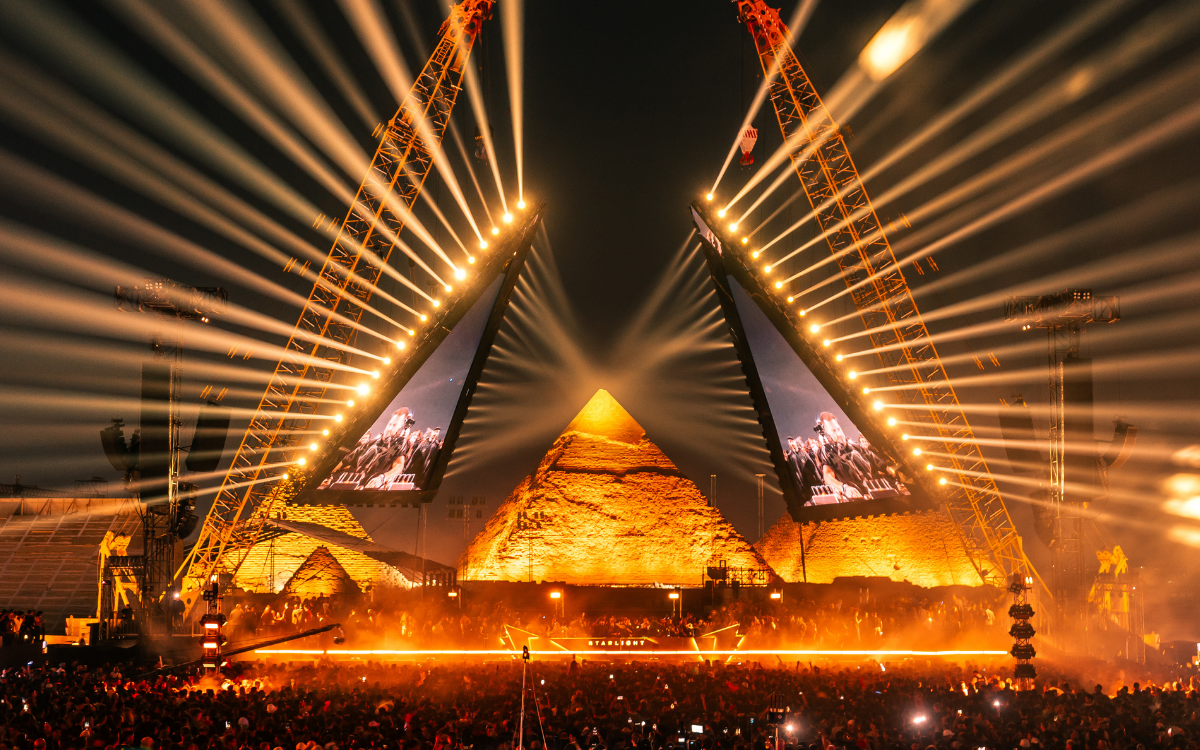](https://www.hypebot.com/how-music-tourism-is-becoming-a-growth-lever/)
[Music With No Regional BarriersAn open letter to the Grammys on the blind spots of the "Best Asian Pop" category, and why this personally affects me.HypebotGuest Author](https://www.hypebot.com/music-with-no-regional-barriers/)
[What Music Taught Me About Grief, Money, and the Topics Artists AvoidTony Tripi reflects on how music helped him navigate grief and loss, and how it can help artists begin the difficult conversations nobody wants to have.HypebotGuest Author](https://www.hypebot.com/what-music-taught-me-about-grief-money-and-the-topics-artists-avoid/)
### **Advice & Tips**
[8 Essential Items to Add to Your Band's EPKEvery artist needs a clean, convenient way to present themselves to the professional world. Here are 8 things you don't want to leave out of your EPK.HypebotBandzoogle Blog](https://www.hypebot.com/8-essential-items-to-add-to-your-bands-epk/)
[The Artist’s Guide to Building a Better Nighttime RoutineA consistent routine in the dark hours can help musicians both protect their sleep and enhance creativity. Here's how.HypebotSymphonic](https://www.hypebot.com/the-artists-guide-to-building-a-better-nighttime-routine/)
[Artists Need to Stop Thinking Like Entrepreneurs and Start Thinking Like PhilanthropistsThe entrepreneurial mindset gave artists more control — now it’s costing them real fans. Here's what to do about it.HypebotGuest Author](https://www.hypebot.com/artists-need-to-stop-thinking-like-entrepreneurs-and-start-thinking-like-philanthropists/)
['Never lose the fan perspective,' says manager Paul GarganoUnderstanding your fans is crucial to create VIP experiences that go beyond simple transactions to create lasting memories.HypebotBruce Houghton](https://www.hypebot.com/artist-manager-paul-gargano-never-lose-the-fan-perspective/)
### **Marketing in Music**
[Hold Up, Are Billboards Back?Tour teases are making their way from our pockets back into the physical world again — is the best way to stand out from a crowd, offline again?HypebotJeremy Young](https://www.hypebot.com/hold-up-are-billboards-back/)
[Lalu's Corner: Who Controls the Digital Version of You?Lalu's Corner is a monthly column about the power of music and brand partnerships, and how indie artists can benefit from them.HypebotLauren Thackray](https://www.hypebot.com/lalus-corner-who-controls-the-digital-version-of-you/)
[Is This World Map the Best Music Trend-Spotting Tool Ever?Music Road turns global data into a clickable world map of trending songs by country for listener discovery. It's a surprisingly useful tool for pros too.HypebotHypebot Editorial Desk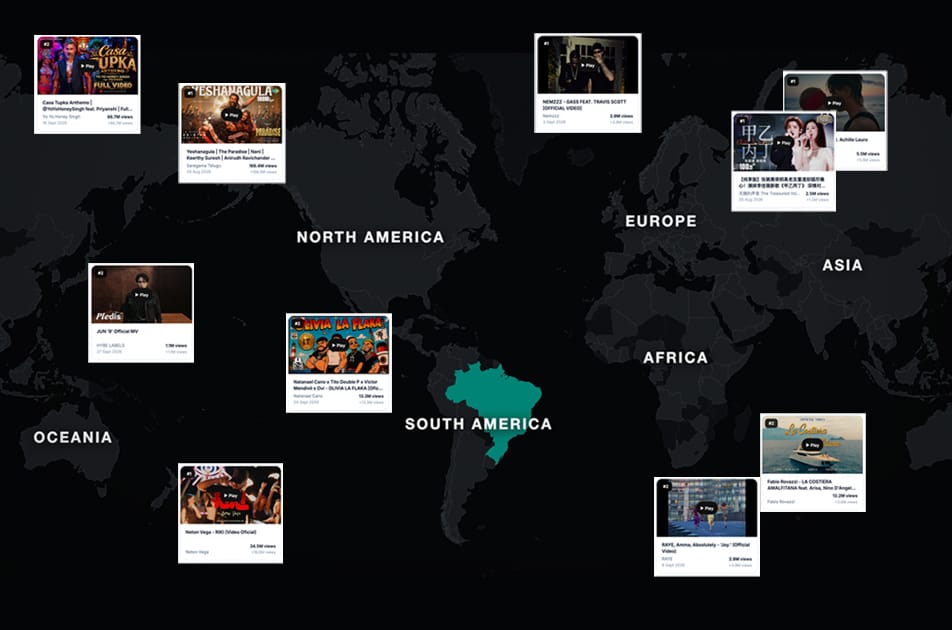](https://www.hypebot.com/is-this-world-map-the-best-music-trend-spotting-tool-ever/)
[Rocketship Maps A Song's Listeners Before Release For FreeRocketship gives indie artists major-label level data, using AI to identify target audiences for songs before release or spending a dime.HypebotBruce Houghton](https://www.hypebot.com/rocketship-maps-a-songs-listeners-before-release-for-free/)
### **Streaming & AI**
[What Happens After the Streams Stop: How Independent Artists Should Measure a CampaignWhich metrics are crucial to understanding whether streams are translating into sustainable audiences? Let's find out.HypebotGuest Author](https://www.hypebot.com/what-happens-after-the-streams-stop-how-independent-artists-should-measure-a-campaign/)
[What Should Music Awards Recognize in the Age of AI?Why human creative decisions behind AI-assisted work are still at the center of the tech-driven present, and why awards organizations need transparency.HypebotGuest Author](https://www.hypebot.com/what-should-music-awards-recognize-in-the-age-of-ai/)
[Spotify For Artists Opens Wrapped 2026 Portal With New ToolsDiscover new Wrapped 2026 features including new performance video uploads and thank-you messages that connect artists with their biggest fans.HypebotBruce Houghton](https://www.hypebot.com/spotify-for-artists-opens-wrapped-2026-portal-with-new-tools/)
[DistroKid Takedown Wave Hits Indie Artists After UMG LawsuitWith UMG's copyright lawsuit pending DistroKid is aggressively purging tracks, leaving artists who say their innocent caught in the crossfire.HypebotBruce Houghton](https://www.hypebot.com/distrokid-takedown-wave-hits-indie-artists-after-umg-lawsuit/)
### **Live Focus**
[In The Trenches with Boo Song of Taos' MothershipBoo Song, GM, Talent Buyer, Marketing Director of Taos, NM's Mothership tells us about his unique venue and the journey that brought him there.HypebotBruce Houghton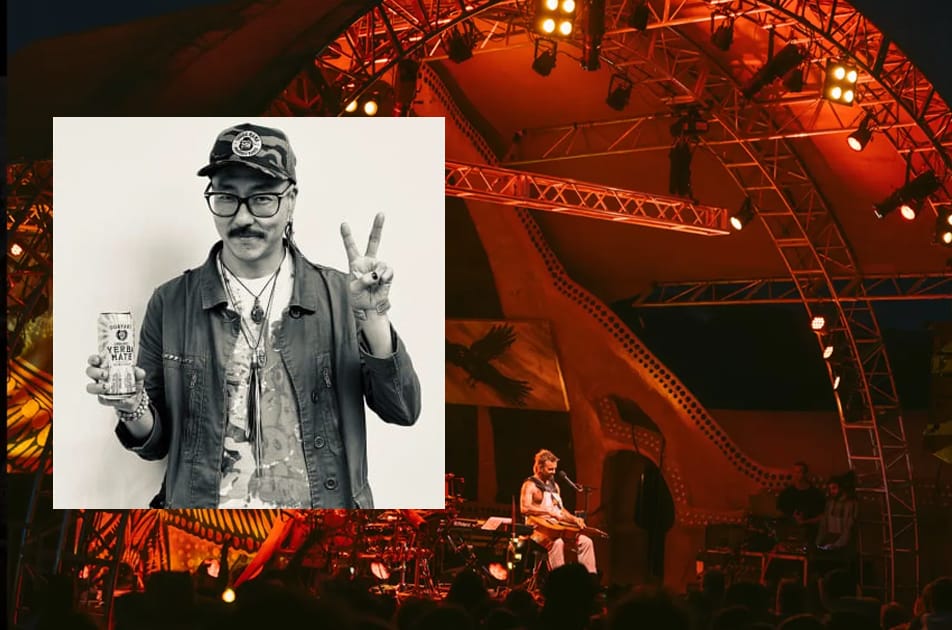](https://www.hypebot.com/in-the-trenches-with-boo-song-of-taos-the-mothership/)
[Six Weeks Off, Zero Shows Lost: On Lambrini Girls' 2026 Rescheduling MoveWhy the Lambrini Girls' Coachella pullout was a masterclass in DIY tour crisis management.HypebotJeremy Young](https://www.hypebot.com/six-weeks-off-zero-shows-lost-on-lambrini-girls-2026-rescheduling-move/)
[Venues, Promoters: Take This Quick NITO, NIVA Survey Now!NITO, NIVA, and Bandsintown have joined together to survey how agents, managers, venues and promoters can work together better.HypebotBruce Houghton](https://www.hypebot.com/venues-promoters-take-this-quick-nito-niva-survey-now/)
[Learn How to Simulate Live Performance Pressure Before a GigAdding meaningful stakes — such as rewards or peer evaluation — can help manage stage fright by recreating the same nervous system reaction.HypebotDr. Noa Kageyama](https://www.hypebot.com/learn-how-to-simulate-live-performance-pressure-before-a-gig/)
### **News**
[Music Industry News From Across The Web ♫We search the web so you don't have to. The latest music industry and live music news under the INDUSTRY NEWS tab at the top of every page.HypebotBruce Houghton](https://www.hypebot.com/music-industry-news-from-across-the-web-2/)
[Record Store Day Black Friday 2026 Top ReleasesNoah Kahan, Playboi Carti, KATSEYE, Sombr, Wicked, Prince and more top 180+ exclusive releases dropping on Record Store Day Black Friday 2026.HypebotBruce Houghton](https://www.hypebot.com/record-store-day-black-friday-2026-top-releases/)
[US Copyright Fees Jump Nov 11: One Month Left To SaveUS Copyright fees jump on November 11\. Register songs and albums now to lock in lower rates before many costs double.HypebotBruce Houghton](https://www.hypebot.com/us-copyright-fees-jump-nov-11-one-month-left-to-save/)
[Hypebot Bottom Line: News That Matters To MusiciansHow to make the most of Spotify Wrapped, US Copyright fee hikes, DistroKid takedowns, streaming fraud, social marketing tools, a quiz and more.HypebotBruce Houghton](https://www.hypebot.com/hypebot-bottom-line-news-that-matters-to-musicians-2/)
### ***\*This Week's Wild Card***
[Touring Radar: 5 Live Music Moves We’re Watching This WeekTouring Radar tracks newly announced dates that say something bigger about the business of live music. Here's what's catching our eye.HypebotHypebot Editorial Desk](https://www.hypebot.com/touring-radar-5-live-music-moves-were-watching-this-week/)
### Hold Up, Are Billboards Back?
URL: https://www.hypebot.com/hold-up-are-billboards-back/
Last updated: 2026-10-15T19:57:50.000Z
[Tour announcements](https://www.hypebot.com/tag/touring-radar/) are almost always designed to shrink right into the dimensions of your phone screen now. Post the artwork somewhere, drop your tour dates in a QR code or hashtag, presale link up your website, make vertical videos and dangle the hype so the algorithm does the rest.
The problem with online content marketing is that... everyone is doing it. Where is there space left for you carve out your announcement?
Welp, ahead of announcing her 2027 *Day and Night Tour*, [**Carly Rae Jepsen**](https://www.bandsintown.com/a/251236-carly-rae-jepsen?utm%5Fsource=hypebot&came%5Ffrom=900) [placed billboards](https://ca.billboard.com/music/concerts/carly-rae-jepsen-day-and-night-tour?ref=hypebot.com) around North America carrying a cryptic message: **“We go hard in this family.”** Fans familiar with her new album recognized the lyric from “Motivation.”
A few days later, the routing was revealed, including dates from Edmonton and Vancouver to Madison Square Garden and the Kia Forum.
[**Calvin Harris**](https://www.bandsintown.com/a/4733-calvin-harris?utm%5Fsource=hypebot&came%5Ffrom=900) is doing it too.
Billboards have [recently appeared](https://housemusic.us/calvin-harris-north-american-tour/?ref=hypebot.com) in cities including New York, Seattle, Chicago, San Diego, and Houston carrying localized variations on one of his most recognizable lyrics: ***“I feel so close to you right now.”*** They point to Harris' website, where fans can register for information tagged to 2027\. The info isn't currently on there, suggesting this is going to be a long play.
And then just last week in [Australia](https://www.hypebot.com/tag/australia/), [**Powderfinger**](https://www.bandsintown.com/a/6647-powderfinger?utm%5Fsource=hypebot&came%5Ffrom=900) started letting fans solve a bizarre announcement themselves. Cryptic digital billboards [appeared](https://www.theguardian.com/music/2026/oct/09/the-rumours-are-true-powderfinger-are-reuniting-16-years-after-the-bands-farewell-tour?ref=hypebot.com) in Brisbane, Sydney and Melbourne carrying numbers and phrases tied to the band's history. Projections appeared on landmarks.
Fans traced the clues to an Instagram account named after the band's song “The Return of the Electric Horsemen.” Days later, the band confirmed what everybody had already figured out: the band's five members were [reuniting](https://www.hypebot.com/tag/reunion/) for their first tour since 2010.
**Hold up, are billboards *back*?**

**Calvin Harris posing in front of his 2026 billboard.*
***+Read more:*** [*"Concert Tickets Are Apparently the New Airline Miles"*](https://www.hypebot.com/concert-tickets-are-apparently-the-new-airline-miles/)
## **Okay Fine, the Billboard Never *Really* Left**
Technically, it never went anywhere. According to the [Out of Home Advertising Association of America](https://oaaa.org/news/out-of-home-advertising-revenue-reaches-record-9-46-billion/?ref=hypebot.com), US out-of-home advertising revenue reached a record **$9.46 billion in 2025**, then grew another 10.7% year over year in the second quarter of 2026\. Digital out-of-home advertising has been growing particularly quickly. Those figures come from the industry's trade association, but the direction is clear: advertisers haven't abandoned public space for the feed.
Music hasn't abandoned it either. Drive out towards the [Coachella Valley](https://www.hypebot.com/tag/coachella/) and you've practically entered an outdoor gallery of artist campaigns. Album releases still show up on Sunset Boulevard and in Times Square. Earlier this year, [*Fast Company*](https://www.fastcompany.com/91523376/coachella-2026-billboards-prove-music-branding-is-getting-niche?ref=hypebot.com) noted how increasingly cryptic Coachella billboards had become, with campaigns designed less like conventional advertisements and more like visual puzzles for fans.
It's not that billboards ever really went out of style, it's that the style *of* billboards has changed so much, now it's more around **what artists seem to want a billboard to do**. We've moved past language like "NEW ALBUM FRIDAY" or "TOUR ON SALE NOW."
Newer display ads withhold basically all of that. Carly gives you a lyric to chew on. Calvin gives you a lyric, a city, and a signup link. Powderfinger gives you numbers and clues. The missing information becomes the [campaign](https://www.hypebot.com/tag/campaign/).
**Powderfinger's cryptic numerical billboards.*
***+Read more:*** [*"Tyla’s Fans Are Learning Her Show Before It Even Starts"*](https://www.hypebot.com/tylas-fans-are-learning-her-show-before-it-even-starts/)
## **The Real World Has Become a Teaser**
That's a strange reversal after a decade of increasingly frictionless digital marketing. Online, every piece of information becomes crucial not to forget. It's like the "phone, wallet, keys" of promotion: Artist, Tour, Dates, Venues, Presale, Ticket link, "Tap here," "Buy now."
A physical billboard has so many more limitations. And those limitations are actually assets when it comes to billboard marketing. The less information you take in, the more it sticks with you. And if you have to do any *thinking* (ie: what the hell did I just read?!), it's proven to stick with you even longer.
So, when you pass something on the street and wonder what it means, more often than not you photograph it, and sometimes you'll post it. Once a fan recognizes the reference, it's off to the races. Reddit starts investigating. Music media starts asking questions.
**The billboard is offline, but the behavior it generates is extremely online.**
Powderfinger's campaign is a fun example. The clues in physical spaces didn't compete with social media; they supplied social media with something to talk about. Fans effectively turned the announcement into a collaborative decoding exercise before the band formally confirmed anything.
## **The Feed's "Infinite Supply" Problem**
Artists face an odd marketing problem in 2026\. It's never been easier to communicate directly with fans, but that also means it's never been easier for everybody else to do exactly the same thing. A tour graphic on Instagram sits next to another tour graphic. Then an ad. Then somebody's vacation. Then a meme. Then another artist announcing an album. Then a dog, and like 100 more dogs.
Everything has to compete inside the same tiny, warm rectangle.
A poster on a wall has far less targeting precision than Meta's advertising infrastructure. But there is something a wall can still do better, which is: **exist in only one place at one time.**
That makes location part of the message itself.
“NEW YORK, I FEEL SO CLOSE TO YOU RIGHT NOW” means something slightly different when you physically encounter it in New York than when the same artwork appears in your feed. It says: this is for *here,* for *you.*
And perhaps that geographic specificity matters particularly for touring, because concerts remain stubbornly physical products. The song can be everywhere at once, but the show can ([mostly](https://www.hypebot.com/was-shakiras-stadium-livestream-so-big-it-prompted-another-show/)) only be in one place at a time.
## **Do I Need a Billboard? No, You Probably Don't Need a Billboard.**
Here's the useful part for independent artists. A giant digital screen in Times Square is expensive, don't worry about that. The strategy behind the idea can still be done on the cheap.
**Carly Rae Jepson's lyrical LA billboard.*
A local band could put 20 strange posters around the neighborhood where its release show will happen.
Project a lyric onto the side of a building until that gets taken down, and then when it does, make *that* the story. Leave postcards at record stores. Put a phone number on a flyer without explaining what happens when somebody calls. Create different pieces of an image and distribute them across several venues. Place a QR code somewhere fans have to physically find.
The scale doesn't matter nearly as much as the principle: ***Give people something worth noticing before asking them to click anything.***
The music industry has spent years becoming increasingly sophisticated at reaching exactly the right consumer at exactly the right moment. Maybe there's still value in occasionally doing something less efficient.
No, billboards probably aren't “back,” because they never really left. But in an era when nearly every artist announcement begins inside the same handful of apps, the physical world has acquired something it never really thought it had a claim to: **novelty.**
And sometimes the best way to start a conversation online might be to put something interesting on a wall first.
**+Read more:* Get caught up on* [*Hypebot's Touring Radar series*](https://www.hypebot.com/tag/touring-radar/)*, contextualizing new and recent tour announcements into storylines.*
### Qobuz Named One of TIME’s Best Inventions of 2026
URL: https://www.hypebot.com/qobuz-named-one-of-times-best-inventions-of-2026/
Last updated: 2026-10-15T18:33:46.000Z
Independent music streaming and download platform [**Qobuz**](https://www.qobuz.com/ca-en/discover?ref=hypebot.com) **has been named one of TIME’s Best Inventions of 2026**, earning recognition in the Entertainment & Gaming category.
[***TIME’s*** entry](https://time.com/collection/best-inventions/2026/qobuz/?ref=hypebot.com) highlights the service’s ad-free listening, human-curated playlists and reported higher royalty payments per stream—a combination that has helped the French company distinguish itself in a crowded streaming market.
Founded in 2007, Qobuz combines high-resolution audio and music downloads with original journalism, recording credits and editorial recommendations. Its pitch borrows from the independent record store: give listeners knowledgeable guidance and reasons to explore beyond the songs they already know.
According to the company’s announcement, recent updates include a redesigned player with synchronized lyrics, expanded access to credits and editorial content, and tags identifying AI-generated music. Qobuz has also continued expanding Qobuz Connect, which allows users to stream directly to compatible audio equipment through its apps.
Its artist partnerships have included exclusive streaming of yasiin bey’s *The Ecstatic*, global listening events and an exclusive live release with Sylvan Esso, and the restoration and release of 77 performances from Alan Lomax’s American Patchwork recordings.
For independent artists and labels, the recognition brings wider attention to a service building its identity around sound quality, music context and human discovery. Those priorities offer another way to think about streaming’s value: helping listeners develop a deeper relationship with the music.
**Read TIME Magazine's full list of** [**The Best Inventions of 2026 here**](https://time.com/collection/best-inventions/2026/?ref=hypebot.com)**.**
---
## Hypebot
Essential news & insights for artists and live music pros.
Sign up for free weekly content delivered to your inbox
Subscribe
Email sent! Check your inbox to complete your signup.
###
### Hypebot Bottom Line: News That Matters to Musicians
URL: https://www.hypebot.com/hypebot-bottom-line-news-that-matters-to-musicians-2/
Last updated: 2026-10-15T15:42:33.000Z
Welcome to the latest edition of [**the Hypebot Bottom Line**](https://www.hypebot.com/tag/bottom-line/) — our regular roundup pulling key takeaways and actionable insights for musicians, creators, and industry professionals from the most important stories covered in recent days.
### **Spotify Opens Wrapped Artist Message Uploads and Updates**
**Hypebot Bottom Line:** End-of-year recaps are a rare global cultural moment that every artist can be a part of. They are also the one time of the year when fans enthusiastically do your marketing for you by sharing their listening and concert data across social media. Don't leave fan engagement, streams, and ticket sales on the table. Spending a few minutes today to record a heartfelt 30-second video message, refreshing your press photos, and updating your Bandsintown tour dates is arguably the highest ROI marketing task you can do in Q4.
[Read Full Post](https://www.hypebot.com/spotify-opens-wrapped-artist-message-uploads-and-updates/)
### **US Copyright Fees Jump Nov. 11: One Month Left to Save**
**Hypebot Bottom Line:** With registration costs jumping up to 100% and transfer recording more than doubling, copyright protection is shifting from a routine administrative task to a significant line-item expense. Independent artists, labels, and catalog managers have a critical 30-day window before November 11, 2026, to register backlog music and record ownership transfers at existing rates before federal price hikes take effect.
[Read Full Post](https://www.hypebot.com/us-copyright-fees-jump-nov-11-one-month-left-to-save/)
### **DistroKid Takedown Wave Hits Indie Artists After UMG Lawsuit**
**Hypebot Bottom Line:** The days of 'upload and forget' verification-free music distribution are over, which in and of itself it not a bad thing for legitimate artists. But while major labels and tech platforms wage a multi-million dollar war over AI integration, streaming fraud, and digital supremacy, independent musicians are paying the price as collateral damage. For indie artists, choosing DistroKid or other distributor is no longer a question of who has the lowest fees, but rather about has the infrastructure to verify a release upfront, rather than nuking your catalog after the fact.
[Read Full Post](https://www.hypebot.com/distrokid-takedown-wave-hits-indie-artists-after-umg-lawsuit/)
### **US Copyright Office Probes Music Streaming Fraud**
**Hypebot Bottom Line:** The Michael Smith streaming fraud sentencing and this new US Copyright Office inquiry mark a massive turning point for the music industry. For years, artificial streaming was largely treated as a platform Terms of Service violation - a nuisance left to distributors and DSPs to play whack-a-mole with. Now, the federal government is formally acknowledging that streaming fraud is a serious criminal enterprise that actively steals from the pockets of legitimate creators. If the industry unites to provide hard data to the Copyright Office during this comment period, it could finally lead to the standardized, legally enforceable anti-fraud guardrails the DIY and independent music ecosystem desperately needs.
[Read Full Post](https://www.hypebot.com/us-copyright-fees-jump-nov-11-one-month-left-to-save/)
### **Think You Know Music? Prove It with Spotify's new Music Quiz**
**Hypebot Bottom Line:** Let's call it like it is. With Spotify Music Quiz, Spotify isn't just giving fans a fun toy; they're Weaponizing Stan Culture. By turning passive listening into a competitive gamified sport, Spotify solves two headaches for streaming platforms: keeping users locked inside the app longer and creating free, user-generated promotional hype across social media. The only question left is simple. Are you about to be humbled by a 2-second audio clip? Go update your app and find out.
[Read Full Post](https://www.hypebot.com/think-you-know-music-prove-it-with-spotifys-new-music-quiz/)
### **How Artists and Venues Can Boost Instagram Live Streams**
**Hypebot Bottom Line:** Instagram's new in-app feature is a major win for music marketing. It removes the friction of navigating Meta Ads Manager, allowing artists and venues to spontaneously amplify their reach right before going live. By capturing immediate, in-the-moment engagement, livestream boosting serves as a powerful new tool for converting casual scrollers into dedicated fans and ticket buyers.
[Read Full Post](https://www.hypebot.com/how-artists-and-venues-can-boost-instagram-live-streams/)
### **New Features on Instagram, Facebook, YouTube To Market Music**
**Hypebot Bottom Line:** The overarching theme of the Fall 2026 social media updates is frictionless connection. Whether it is bypassing Ads Manager to boost an IG Live, using YouTube AI to test thumbnails, or cutting out feed clutter via Facebook's Forum app, platforms are empowering artists to reach their audiences faster. For music marketers and independent artists, the strategy is clear: stop relying solely on static posts. The algorithms are prioritizing real-time engagement (Live), episodic video (Shorts Series), and dedicated micro-communities (Forum). By adopting these native tools early, artists can lower their marketing friction and build deeper, more profitable relationships with their fans.
[Read Full Post](https://www.hypebot.com/new-features-on-instagram-facebook-youtube-to-market-music/)
---
*Get the latest Live Music & Industry News updated continuously from across the web under the Hypebot Industry News tab* [*here*](https://www.hypebot.com/music-industry-news-feed/)*.*
## Hypebot
Essential news & insights for artists and live music pros.
Sign up for free weekly content delivered to your inbox
Subscribe
Email sent! Check your inbox to complete your signup.
###
### Kimaya Diggs on How Writing Music Helps to See and Feel Seen
URL: https://www.hypebot.com/kimaya-diggs-on-how-writing-music-helps-to-see-and-feel-seen/
Last updated: 2026-10-15T15:41:04.000Z
[**Kimaya Diggs**](https://www.bandsintown.com/a/15532859-kimaya-diggs?utm%5Fsource=hypebot&came%5Ffrom=900)is a Western Massachusetts singer-songwriter, poet, and producer whose new album, [***Green***](https://open.spotify.com/album/2Cw9dNIsRSCgMzs0RzXQOS?si=cec43b0ac04046c9&ref=hypebot.com), came out this month. Written after a period of loss, chronic illness, and rebuilding her voice following surgery, the album finds Kimaya exploring belonging, resilience, and how to remain open to life after it has changed you.
Her upbringing is an important piece of her work as an artist, as she uses creativity as one of the vessels for contemplating her identity. As a Black and Desi artist in a predominantly white region growing up, she has often felt socially isolated while remaining deeply connected to the land, rivers, wildlife, and creative community around her. At its core, *Green* is an album about place: what makes somewhere feel like home.
Here's our conversation. Enjoy!
---
**Hypebot: Hey Kimaya, thanks for taking the time! How do you write: lyrics first, guitar or arrangement first, or some combination?**
Kimaya Diggs: "For *Green,* I took a new approach to the writing. Instead of waiting for inspiration to strike or the conditions to be perfect, I wrote quickly and intuitively, and actually moved between songs if I ever found myself stuck for more than five minutes."
The process was richly generative, and once I'd amassed a huge number of verses, choruses, and chord progressions, I started putting them together in new ways, cutting things that didn't work, and basically chipping away at this block of material until I'd unearthed the song."
**H: Your songwriting is extremely personal. You’ve spoken before about your Black and Desi upbringing in a predominantly white part of Massachusetts. Why is it important to frame and communicate those aspects of your experience and identity through creativity? Does writing ever complicate the relationship you thought you had with those moments in your life?**
KD: "Existing as the person I am feels inherently political much of the time. I think that phrase is sometimes overused, but it does capture the fact that when I leave the house, when I'm at my day job, when I'm driving my car, the world engages with me in a specific way that the predominantly white population around me doesn't experience. It gives this outsider feeling, or a sense of being in opposition to the world."
It's not always bad, but it is always loaded, and my day consists of reading the room and constantly weighing if I should stay or go. I don't think this feeling is unique to Black and brown people living in highly white areas – I think that all of us feel like outsiders, and all of us feel isolated at times. I've always thought that, paradoxically, the best way to invite someone into a song and make it feel 'relateable' is to dig into the facets of what makes your own point of view unique."
In my experience, people aren't looking for songs that reflect their broad experience of enjoying a summer day, but they *are* looking for glimmers of specific things that make them feel seen – like the experience of wanting to memorize the smile of someone you love as the summer sun plays across their face."
**H: Have you ever received feedback from listeners or fans who felt seen by your writing?**
KD: "I have! In the algorithm age, it's hard to put a lot of stock into streaming numbers or social media followers, so messages from people who have been moved by my work mean the most to me."
It's my personal measure of success: am I reaching people who need this music? Is it connecting with them? If so, I'm happy. The messages mean so much to me that there are some I know by heart and say to myself when I'm feeling a crisis of confidence."
> *"I think that some parts of being an artist mean that by default there's some important part of your life where you feel like you don't belong... I create to be understood and to be known, and I think that originally came from this sense of not being understood."*
**H: Belonging seems to be a theme in your work. How has being a musician and artist become a place of belonging, or perhaps not, for you in recent years?**
KD: "As a musician, I have two extremes: I like to be anonymous and a cog in the machine in a big choir or ensemble, and I like to do my own thing and make it as weird and theatrical and heartfelt as I want to."
I think that some parts of being an artist mean that by default there's some important part of your life where you feel like you don't belong. Maybe that's just me! But I create to be understood and to be known, and I think that originally came from this sense of not being understood."
**H: Congratulations on *Green*. It’s a gorgeous record. Can you talk about what you wanted to do differently with this recording? What does “green” mean to you?**
KD: "Thank you so much, that really means a lot to me and I'm grateful you took the time to bring it into your life! With this album, I wanted to take on the lead producer role, and to engineer more of the record, both of which happened! In the past, when I was just beginning to learn about recording music, I often doubted my own taste, and my lack of technical abilities put a damper on how much control I was able to have over my recordings."
That's not to say I don't love my previous records, but with *Green* I felt a new sense of agency in my ability to communicate and execute my vision for each song."
To me, 'green'represents the moment in spring when the leaves finally unfurl. It's a short period where the entire landscape is transformed, and it's one of my favorite times of year. It's a moment full of potential and possibility, and I want the album to feel just like that."
**H: Do you find creative freedom in the space between taking yourself seriously and throwing caution to the wind?**
KD: "For the last several years, I've been committed to not taking myself too seriously. It's a cliché, but losing my mom put so much into perspective. In my music, that manifests as a willingness to play and experiment, to trust my intuition and taste, and most importantly, to trust all of the people I collaborate with."
82 incredible artists contributed to this album between playing on the songs, working on music videos, styling, photos, and so much more, and they're all people whose taste I trust."
**H: What animal do you identify with, and why?**
KD: "The first thing that comes to mind is a red-tailed hawk, but I'm not sure why. Many of them spend time in my yard, so I get to watch them up close. They're focused, patient, and a little removed from the rest of the forest."
> *"Seeing someone live, hearing their stories, talking with them after the show – that's the best way to connect, and in that way, I think it's essential."*
**H: Let’s talk about touring. You have a tour coming up that spans a large part of the country. What are you looking forward to most about this run?**
KD: "I'm very excited for the tour! I'm looking forward to meeting bands in new cities, to playing the songs in flexible configurations, and to connecting with audiences in real life. For me, the album is only half of the circle. Closing the circle means bringing it to people in person – it's a completely different experience."
**H: You recently supported Mavis Staples and Tank and the Bangas at different shows. What were those experiences like for you as an artist on the rise? What were the biggest takeaways from watching their sets?**
KD: "I feel so lucky to have supported so many incredible artists over the years. It's always an honor and a privilege to share the stage and to get to see people at the top of their craft. Watching Mavis is always so emotional for me. She's a true channeler and filled head to toe with incredible power and compassion. She's also incredibly funny! I'll be opening for her again in Washington state in January."
**H: Do you think touring is essential for artists today?**
KD: "This is a tough one, because touring isn't financially viable for most artists who don't have institutional support. I'm fully independent, funding everything myself through community support, grants, personal underwriting, and putting money back into the business."
But at the same time, there's no better way to truly connect with someone than to play live for them. We hear hundreds of artists a week through our streaming algorithms, and it's rare for one to really catch your ear even if they're all incredibly talented. But seeing someone live, hearing their stories, talking with them after the show – that's the best way to connect, and in that way, I think it's essential."
**H: What’s your favorite food to eat after a concert?**
KD: "I am the world's biggest fan of Lays salt and vinegar chips."
---
## [**Kimaya Diggs Tour Dates**](https://www.bandsintown.com/a/15532859-kimaya-diggs?utm%5Fsource=hypebot&came%5Ffrom=900)
### The Artist’s Guide to Building a Better Nighttime Routine
URL: https://www.hypebot.com/the-artists-guide-to-building-a-better-nighttime-routine/
Last updated: 2026-10-15T14:25:46.000Z
### **The Artist’s Guide to Building a Better Nighttime Routine**
*By* [***Randi Zimmerman***](https://blog.symphonic.com/author/randi-zimmerman/?ref=hypebot.com)*of* [***Symphonic***](https://blog.symphonic.com/2026/09/29/nighttime-routine-for-musicians/?ref=hypebot.com)
[Creativity](https://blog.symphonic.com/2026/09/03/how-to-tap-into-creativity-when-you-have-writers-block-2/?ref=hypebot.com) can strike at any time. In the shower, in line waiting for your coffee, or, all too often, right when you’re trying to fall asleep… And although following every spark of inspiration can feel productive in the moment, constantly answering that call has its downsides.
Because sleep is when your brain and body get a chance to recover from the day, getting enough of it plays a big role in how well you think, focus, process information, and manage your energy. For creative people who rely on all of those things to do their best work, consistently cutting that recovery time short can catch up with you faster than you think.
Of course, not every late night is avoidable. But if you regularly find yourself working, scrolling, or chasing ideas when you should be winding down, your nighttime routine may be part of the problem.
If you’re an artist who struggles to turn your brain off at the end of the day, here are a few ways to build a routine that actually works…
## **Can’t Turn Your Brain Off? Here’s How To Wind Down At Night as a Musician**
### Give Your Workday an Actual Ending
When you work for yourself, there’s not typically a natural end to the day. There’s always another email you could answer, another tweak you could make, another piece of content you could schedule.
That in itself makes it especially hard to leave unfinished tasks behind for the day.
No, it doesn’t *have* to be finished today… but sometimes we just can’t help it. Like an itch we just have to scratch… but[ *in this study*](https://pubmed.ncbi.nlm.nih.gov/27101340/?ref=hypebot.com)*,* researchers found that unfinished tasks were linked with poorer sleep through “increased rumination about work”, meaning the more loose ends people had hanging over them, the more likely they were to keep mentally returning to those tasks when they were supposed to be winding down for the night.
That’s where giving yourself a **clear stopping point** can make all the difference.
**Before you wrap up for the day, take a few minutes to:**
- Write down anything you still need to finish.
- Leave yourself a note about where to pick back up tomorrow.
- Save and close whatever you’re working on.
- Resist the urge to squeeze in “one more thing.”
These seem like small things, but it really does work. [*In this sleep study*](https://pubmed.ncbi.nlm.nih.gov/29058942/?ref=hypebot.com), they found that people who spent five minutes writing down the tasks they still needed to take care of fell asleep faster afterward. And the more specific their list was, the faster they fell asleep.
Instead of leaving your brain to keep track of everything you still need to do, having a solid routine for shutting down signals that it’s time for rest.
You’ve made a plan for what comes next, so now there’s no need for your brain to mentally carry it with you into the night.
## **Have a System for Late-Night Ideas**
Sometimes it’s not unfinished work keeping you up… It’s a brand-new idea that decided 12:30 a.m. was the perfect time to show up.
When that happens, you don’t have to choose between ignoring it completely and getting out of bed to work on it. What you can do, however, is give yourself a quick way to save the idea for tomorrow without turning it into a full session tonight.
Keep a notebook next to your bed, jot down a few words in your Notes app, or record a quick voice memo if it’s a melody you don’t want to lose. Get down just enough that you’ll know what you meant in the morning, then **stop there**.
A voice memo of a melody takes 30 seconds. Opening your DAW to “quickly” lay it down can turn into another two hours of work before you know it.
## **Build *Your* Perfect Wind-Down Sequence**
Going straight from working on a track, answering emails, or scrolling on your phone to expecting yourself to fall asleep five minutes later is simply not possible for most of us. *(And if it is for you, you are blessed, and I am extremely envious.)*
Most of us need some kind of buffer to help things slow down up there. Start with 20 or 30 minutes and fill that time with a few calming things you can realistically repeat most nights.
**Maybe you:**
- Take a warm shower.
- Make a cup of caffeine-free tea.
- Stretch for five or ten minutes.
- Read something completely unrelated to music.
- Put on an audiobook, ASMR, or a short guided meditation.
**Whatever you choose, try to do them in roughly the same order every night.**
There’s a scientific reason for the repetition. Your brain learns associations between routines and what comes next, so over time, that familiar sequence becomes a mental cue that the day is ending and it’s time to sleep.
It doesn’t have to be some crazy 10-step routine. **Even something as simple as:**
Shower → make tea → read for 15 minutes → bed.
**Or after a late studio session, maybe it’s:**
Save and close the session → quick shower → 10 minutes of stretching → bed.
All you need is a chill transition between everything you’ve been doing all day and trying to sleep.
## **The Power of *(The Right)* Music**
Generally, slower and more predictable beats are the best kinds of tracks to fall asleep to. [*This study*](https://pubmed.ncbi.nlm.nih.gov/41425167/?ref=hypebot.com) on music and sleep found that relaxing sleep music tends to sit around 60 to 80 BPM, with softer dynamics, smooth melodies, simple arrangements, and less rhythmic activity.
If you get in bed and find your mind wandering, you need something to take the reins. Something steady enough to hold your attention without giving you more to think about.
That’s where a dedicated nighttime playlist can help. [Research shows](https://www.sleepfoundation.org/noise-and-sleep/music?ref=hypebot.com) that **slower music can reduce heart rate, breathing rate, and blood pressure**, helping the body shift into a more relaxed state.
So look for tracks that stay soft, slow, and repetitive, without big drops, dramatic builds, or lyrics you know you’ll start following. Ambient music, soft piano, mellow instrumentals, and slower lo-fi are all good places to start.
**Personally, I like these two:**
## **What About Magnesium, Tea, and Other Sleep Aids?**
For some people, a good nighttime routine also requires a little extra help.
I’ve personally struggled with sleep for years, and two things that have genuinely helped me are **magnesium glycinate** and **lemon balm tea**. Keep in mind, just because they work for me doesn’t mean they’ll work for you, but I figure this is as good a time as ever to share my extensive (and desperate) personal research on the two.
**Magnesium glycinate** is one of the forms of magnesium commonly used at night because of its role in nervous system function and sleep regulation. It can also help with muscle relaxation, which is part of why some people find it helps them feel physically calmer before bed.
- Magnesium itself is involved in hundreds of processes throughout the body, including muscle and nerve function, energy production, blood sugar regulation, and stress responses.
- Supporting those systems can have a ripple effect on how balanced your body feels overall, including how well you sleep at night.
**Lemon balm tea** is another good option if your issue is feeling mentally wired at night. It’s traditionally been used for its calming effects, and[ research](https://pubmed.ncbi.nlm.nih.gov/34449930/?ref=hypebot.com) has found promising effects on stress and anxiety. Personally, I found it definitely relaxed my mind before bed, settling my usual restless thoughts way more than usual.
Honorary mention here… **Melatonin**. You already know all about it, I’m sure, but melatonin is a hormone your body naturally produces as it gets dark, helping signal that it’s nighttime and prepare your body for sleep. Taking supplemental melatonin can reinforce that signal, which may help you fall asleep faster and can be especially useful when your internal clock is out of sync from things like jet lag, travel, or an inconsistent sleep schedule. Rather than acting like a traditional sedative, it essentially gives your body a stronger cue that it’s time to sleep.
These aren’t magic by any means, but they’re worth a shot if you’re looking for more natural ways to fix your sleep. However, please **do your research** first and **check with your doctor** before jumping into any supplements, especially if you take medications or have an existing health condition.
## **Some Final Thoughts…**
Being an artist means there’s almost always something else you *could* be doing. Finishing a mix, planning content, checking release numbers, answering emails, rehearsing, writing, recording, or chasing the next idea.
At some point, though, the session has to end.
A solid nighttime routine helps you draw that line so you’re not carrying every unfinished task, lyric, melody, and release thought into bed with you. Write it down, save the session, leave yourself a note for tomorrow, and let the day be done.
**The song will still be there in the morning.**
So will the email, the content plan, and the next idea. Give yourself the rest you need to come back better than ever.
---
## Frequently Asked Questions
**What should you do when you get a song idea right before falling asleep?**
Capture the smallest version of the idea that will make sense to you in the morning, then stop. That might mean recording a 20-second voice memo, typing one lyric into your Notes app, or writing down the rhythm or concept in a notebook next to your bed.
The important part is avoiding the jump from “I need to remember this” to “I should work on this right now.” Opening your DAW, putting on headphones, or starting to arrange the idea can quickly turn a passing thought into another full work session.
**How can musicians wind down after a late studio session without feeling like they are wasting creative momentum?**
Try treating the end of a session as part of the creative process instead of as a hard interruption. Save your work, bounce a rough version if needed, write down your next move, and give yourself a clear starting point for tomorrow. That can make it easier to stop because you are not abandoning the idea. You are preserving it.
After that, give yourself 20 to 30 minutes of lower-stimulation activity, such as showering, stretching, reading, or listening to something calming, before trying to sleep.
**What is a realistic nighttime routine for musicians with inconsistent schedules?**
Your routine does not need to happen at the exact same time every night. For musicians, producers, DJs, and touring artists, that may not be realistic.
Instead, focus on repeating the same sequence whenever your workday ends. For example: save and close your session, write tomorrow’s priorities, take a shower, stretch for 10 minutes, then get into bed. A repeatable order can be more useful than a rigid clock time when your schedule changes from day to day.
**How do you know if your nighttime routine is actually working?**
Look for patterns rather than expecting one perfect night of sleep.
A useful routine should make it easier to disengage from work, reduce the urge to reopen a project, and help you feel more settled by the time you get into bed. If you are still regularly lying awake thinking about unfinished tasks, checking your phone, or getting back up to work, your routine may need a stronger stopping cue or a longer transition period between creative work and sleep.
**Should musicians use supplements or sleep aids when they have trouble winding down?**
Supplements are better treated as a separate decision from your nighttime routine, not as a replacement for one.
If you are considering magnesium, melatonin, herbal products, or other sleep aids, look at the evidence carefully and talk with a healthcare professional, especially if you take medications or have an existing health condition. A consistent wind-down routine, clear work boundaries, and fewer late-night stimulation triggers are still useful foundations whether or not you use a supplement.
### What Should Music Awards Recognize in the Age of AI?
URL: https://www.hypebot.com/what-should-music-awards-recognize-in-the-age-of-ai/
Last updated: 2026-10-15T15:03:21.000Z
*By *Shamielle Alston**, *Founder of* [***Academy of Emerging Music Arts & Sciences (AEMAS)***](https://www.aemas.org/?ref=hypebot.com)
Music has never waited for us to become comfortable with change. Every generation has watched a new technology enter the [creative process](https://www.hypebot.com/which-of-these-4-models-of-creativity-works-for-you/) and wondered what it would mean for the people already making music. Multitrack recording changed what could happen in a studio.
Synthesizers changed the sounds we could create. Sampling challenged old definitions of originality. Digital audio workstations eventually put capabilities that once required expensive studios onto laptops. Now we have [artificial intelligence.](https://www.hypebot.com/tag/ai/)
And this time, the conversation feels different. Perhaps that's because AI doesn't only change how something can be created. In some cases, it forces us to ask who, or what, we believe created it. For awards organizations, that creates a question we cannot avoid:
- **What exactly are we recognizing?**
- **Is it the technology?**
- **Is it the finished recording?**
- **Is it the person who typed a prompt?**
Is it the person who wrote, arranged, revised, rejected, directed, edited, produced and made hundreds of decisions before the final work existed? Or is the answer somewhere in between?
I believe the music industry is going to have to become much more precise about that question.
## **The Tool Is Not the Whole Story**
I don't believe the answer is to pretend AI doesn't exist. It does. Creators are using it now. Some are experimenting. Some are building entire workflows around it. Some want nothing to do with it. Others are discovering that it allows them to create music they could previously hear in their minds but didn't have the technical resources to produce.
All of those people are part of today's music landscape. But accepting that technology is part of music creation doesn't require us to stop asking where the human being is in the process.
A person can press a button and accept the first result. Another person can begin with an original idea, write and rewrite lyrics, make decisions about structure, instrumentation, vocal character, phrasing and emotion, reject dozens of outputs, redirect the technology repeatedly, edit the result and continue working until what comes back reflects what they intended to create.
Those are not necessarily the same creative act. If we place them into the same bucket simply because AI was involved, we lose information that matters. And if we reject both simply because AI was involved, we lose information too.
***+Read more:*** [*"AI Is Reshaping the Music Industry, But Leaving Live Events Behind."*](https://www.hypebot.com/ai-is-reshaping-the-music-industry-but-leaving-live-events-behind/)
## **Recognition Requires Us to Know What We're Honoring**
Awards have always represented more than a trophy. They tell us what an institution believes is worthy of recognition. That makes this moment especially important. If an awards organization recognizes AI assisted or AI directed music,
it should be able to explain what it believes it is recognizing.
That does not mean every institution has to arrive at the same answer. But we should have an answer. For me, one of the most important ideas is [human](https://www.hypebot.com/tag/human/) creative direction.
- **Where did the concept originate?**
- **Who made the meaningful creative decisions?**
- **Who determined when something wasn't right?**
- **Who revised it?**
- **Who shaped the emotional intention?**
- **Who decided what belonged and what didn't?**
- **Who can explain why the finished work sounds the way it does?**
Those questions become increasingly valuable as the technology becomes more capable. The better the machine becomes at producing something polished, the less useful polish alone becomes as evidence of creative contribution. We have to look deeper.
## **This Isn't Only an AI Question**
There is another reason I believe this conversation matters. AI may be forcing the question, but emerging creators have been confronting a version of it for years.
What happens when someone makes extraordinary music without a traditional label? What happens when the recording was made in a bedroom instead of a major studio? What happens when an artist doesn't have a large following? What happens when the creator uses tools the traditional industry didn't grow up using? Does the route by which the music arrived determine whether the work deserves serious consideration?
I don't believe it should. That became important to me while building the [Academy of Emerging Music Arts & Sciences, AEMAS](https://www.aemas.org/?ref=hypebot.com), and its [inaugural Ellison Awards](https://www.aemas.org/theellisonscommercial?ref=hypebot.com). We are building the Ellisons to recognize emerging music across genres and across a changing creative landscape. That includes traditional creation, independent creation, and yes, it includes a place for human directed AI creativity.
But I don't want the Ellisons to become known simply as "AI music awards." That would miss the point entirely. AI is one part of a much larger change happening in music. Creators have more ways to make music, distribute it, build audiences
and develop careers than at almost any other point in history. Recognition has to be capable of seeing them.
***+Read more:*** [*"What Constant Visibility Is Doing to the Creative Process"*](https://www.hypebot.com/what-constant-visibility-is-doing-to-the-creative-process/)
## **The Process Matters Too**
Once you decide what deserves consideration, another question
immediately follows: **How do you evaluate it fairly?**
This is where I believe awards institutions carry a responsibility that isn't always visible from the stage. People see the envelope, the nominee announcement, someone holding a trophy. They don't necessarily see the architecture underneath it.
For the Ellison Awards, we chose to build a process that includes eligibility review, blind judging, five judges assigned to each entry, conflict of interest safeguards, independent certification and controlled winner determination. That structure matters to me because recognition should not depend on whether someone knows the right person.
A creator should not need fame to deserve serious consideration. And money should never move an entry closer to an award. A submission fee can get work into consideration. It can never purchase the outcome of that consideration.
That principle becomes even more important when you're building something new. You don't inherit trust. You have to construct the systems worthy of it.
## **We Shouldn't Be Afraid of the Next Creator**
There is a temptation whenever technology changes to spend all of our energy protecting the definition of what came before. I understand that instinct.
Music matters deeply to people. Musicians spend years developing their craft. Songwriters live with words until they finally say what they were trying to say. Producers develop ears that took decades to train. Singers carry something in their voices that software cannot explain.
None of that should be dismissed. But neither should the person somewhere in the world who has an extraordinary creative mind and is discovering a new way to express it.
We don't yet know who that person is. They may be fifteen. They may be sixty five. They may live in Nashville, Lagos, Seoul, London, Kingston or a town none of us have heard of. They may have a conservatory education. They may have learned everything they know from experimentation. They may walk into a studio full of musicians. They may open a laptop.
What should matter is not whether their creative process looks familiar to us. What should matter is whether there is something worth hearing and whether we have built systems capable of recognizing it responsibly.
## **The Future Doesn't Need Permission to Arrive**
AI will continue to change. Music will continue to change. Some of today's tools will disappear. Others will become ordinary enough that future creators will wonder why we argued about them. But human beings will continue doing something we have always done: **We will try to make something that sounds like what we feel.**
Our responsibility as an industry isn't to predict every tool creators will use. It is to make sure that, as the tools change, we don't lose sight of the human creative decisions that give the work meaning.
That is one of the ideas behind AEMAS. And it is one of the reasons we're building the Ellison Awards now. Not because the future of music has already been decided.
Because it hasn't. And the creators helping decide it deserve to be heard.
**Submissions for the inaugural 2027 Ellison Awards open November 1, 2026.** The awards recognize emerging music across multiple genres, with a dedicated category for **AI Creative Direction.**
Learn more about the [Academy of Emerging Music Arts & Sciences](https://www.aemas.org/?ref=hypebot.com) and view the Ellison Awards announcement [here](https://www.aemas.org/theellisonscommercial?ref=hypebot.com).
---
**Shamielle Alston* is the Founder of the* [***Academy of Emerging Music Arts*** ***& Sciences (AEMAS)***](https://www.aemas.org/?ref=hypebot.com)*, the organization presenting the inaugural Ellison*
*Awards in 2027\. A songwriter and music creator herself, Alston founded*
*AEMAS to build recognition, education and professional opportunity*
*around emerging music and the people directing its creation.*
### Rocketship Maps a Song's Listeners Before Release for Free
URL: https://www.hypebot.com/rocketship-maps-a-songs-listeners-before-release-for-free/
Last updated: 2026-10-15T13:39:06.000Z
With an estimated 100,000 new tracks flooding streaming platforms every day, independent artists face an uphill battle when trying to cut through the noise.
Most creators make their most expensive decisions — selecting singles, buying ads, and planning promo — based on guesswork.[**Rocketship**](https://rocketship.music/?ref=hypebot.com) promises to change that.
Co-founded by music industry veteran **Maxwell Zotz** (Verge Campus, MAX.Live) and tech entrepreneur **Billy Rodgers** (Fanpage), Rocketship is billed as the first AI-driven platform capable of identifying a song's potential audience before it is ever commercially released.
Following four months in Beta with feedback from 100+ label, publishing, management, and distribution executives, the platform aims to democratize data-driven A&R for DIY creators worldwide.
### **How Rocketship Works**
Rather than analyzing post-release streaming metrics or vanity social numbers, Rocketship evaluates an unreleased audio track across **80 distinct audio, lyrical, and contextual parameters**.
- **Historical Modeling:** The platform matches track characteristics against decades of music history and millions of catalog data points to identify demographic and psychographic listener profiles.
- **Copyright Compliance:** Developed alongside entertainment law firm Loeb & Loeb, the system's patent-pending models were trained on over 250,000 catalog tracks while adhering strictly to intellectual property laws.
- **Actionable Roadmaps:** Once the core audience is identified, the platform builds an end-to-end promotional strategy calibrated to the artist’s release window and available budget.
Co-founder Maxwell Zotz says:
> *"Artists make their most expensive decisions — which single, which audience, and where to spend — before they have a single data point on how a song will land. Rocketship gives them a real starting point. It doesn’t replace taste or instinct. It means they’re not guessing alone."*
### **Core Platform Features**
Rocketship integrates strategy and creative execution into a single workflow:
- **Free Initial Analysis:** Every new user can run one unreleased track through the platform at zero cost to see who their music naturally aligns with.
- **Mission Control:** An AI-powered dashboard that customizes promotional missions including fan discovery, DSP streaming pitching, social media growth, and sync licensing opportunities.
- **Rocketship Studio:** A built-in creative engine that turns audio into vertical video assets in minutes. Artists can upload raw clips or pull from AI-curated video footage tailored to the track’s tempo, mood, color palette, and target listener demographic.
Beyond independent creators, the platform provides utility across the broader business: managers can validate single selection, publishers can leverage predictive song-to-artist pitching, and catalog owners can identify under-monetized listener segments.
## **The Hypebot Bottom Line**
Predictive audience modeling has been an advantage reserved strictly for major-label research departments with seven-figure analytics budgets. Rocketship’s decision to open its doors with a free first analysis gives independent artists a low-risk way to test algorithmic A&R on their own terms.
While no software can replace authentic artistry or guarantee a viral hit, shifting marketing spend from blind trial-and-error to data-backed targeting addresses one of the modern music industry's most frustrating bottlenecks: discovery.
### Touring Radar: 5 Live Music Moves We’re Watching This Week
URL: https://www.hypebot.com/touring-radar-5-live-music-moves-were-watching-this-week/
Last updated: 2026-10-14T15:46:12.000Z
Our [**Touring Radar**](https://www.hypebot.com/tag/touring-radar/) series looks at newly announced tours and live events that stand out not simply because they can generate headlines, but because they offer a glimpse at where [live music](https://www.hypebot.com/tag/live-music/) may be heading.
Live music careers rarely move in a straight line. This week’s announcements reveal several different ways artists and promoters are creating momentum: converting mass exposure into ticket sales, using small shows to launch large tours, concentrating demand in a single market and building experiences that extend beyond the concert itself.
Touring Radar is supported by [**Bandsintown**](https://bandsintown.com/?utm%5Fsource=hypebot&came%5Ffrom=900) tour data.
## 1\. Ayra Starr Turns Halftime Exposure Into a World Tour
One day after becoming the first Afrobeats artist to headline an [NFL International Game halftime show](https://www.youtube.com/watch?v=WLU7MMa5U-o&ref=hypebot.com), [**Ayra Starr**](https://www.bandsintown.com/a/15501171-ayra-starr?utm%5Fsource=hypebot&came%5Ffrom=900) announced the 20-city *Starrgirl World Tour*. The 2027 run begins in Cologne in January and travels through Europe and the UK, and then reaches North America in March. Starr performed for a stadium audience (and a much larger broadcast audience) in London last week, then immediately gave newly interested listeners somewhere to go next. We won’t know how many halftime viewers become ticket buyers, but the sequence illustrates how a large cultural or sporting appearance can function as the top of a live nmusic funnel rather than an isolated promotional moment.
## 2\. Remi Wolf Still Believes in the Underplay
[**Remi Wolf**](https://www.bandsintown.com/a/8823745-remi-wolf?utm%5Fsource=hypebot&came%5Ffrom=900) released her third album, *Mud*, on October 9 and surrounded its arrival with intimate performances at Los Angeles’ Fonda Theatre and New York’s Webster Hall. Those dates are considerably smaller than the rooms awaiting her when the full *Mud Tour* begins in February, including Radio City Music Hall, Massey Hall, Red Rocks Amphitheatre, and Seattle’s WaMu Theater. And that contrast is important.
An "underplay" can reward core fans, generate social content and let an artist introduce new material in a controlled environment before a larger production hits the road. It also makes the forthcoming scale-up visible: Wolf isn’t merely announcing bigger venues; she is allowing fans to watch the show grow into them.
## 3\. Fuerza Regida Creates a Residency Without Calling It One
[**Fuerza Regida**](https://www.bandsintown.com/a/15207711-fuerza-regida?utm%5Fsource=hypebot&came%5Ffrom=900) originally announced two concerts at Mexico City’s Palacio de los Deportes. Demand eventually expanded the engagement to ten shows across eleven nights — a new record for the venue. The run follows a successful US stadium leg that included nearly 50,000 tickets sold at Dodger Stadium. Fuerza Regida is concentrating demand in one city and encouraging fans to travel to the event. It has the economics and cultural weight of a residency, even if nobody is marketing it that way. It also demonstrates that música Mexicana’s live growth is becoming deeper within individual markets, not simply spreading across a longer list of cities.
## 4\. Rock The Bells Turns R&B Into a Vacation
[**Rock The Bells**](https://www.bandsintown.com/f/224657-rock-the-bells-cruise-2026?utm%5Fsource=hypebot&came%5Ffrom=900) is expanding its live portfolio with *I Need Luv*, an inaugural R&B cruise sailing from Miami to Nassau aboard the Norwegian Jewel from November 15–19, 2027\. The lineup includes Tank, Xscape, Ginuwine, Mýa, K. Michelle, Kenny Lattimore, Eric Benét and Kindred the Family Soul, with Jagged Edge performing a port show. The programming goes beyond concerts, adding matchmaking, relationship conversations and wellness experiences around the broader theme of love.
That makes *I Need Luv* less like a floating festival and more like a carefully defined lifestyle product. Rock The Bells isn’t only packaging recognizable performers; it is using the emotional language of R&B to build an entire vacation (and another extension of its brand) around a shared audience identity.
## **5\. The Womack Sisters Climb Every Rung at Once**
[**The Womack Sisters**](https://www.bandsintown.com/a/12350567-the-womack-sisters?utm%5Fsource=hypebot&came%5Ffrom=900) have mapped out one of the most interesting artist-development itineraries of 2027\. After four sold-out club shows in San Francisco and Los Angeles, the trio will undertake its own North American and European headline runs, appear at Big Ears and then open five Soldier Field concerts for Harry Styles.
Those dates place the group in front of radically different audiences without surrendering ownership of its own live identity. The stadium appearances offer enormous discovery potential, while rooms such as Webster Hall, the Howard Theatre, Toronto’s Opera House and Minneapolis’ First Avenue give that discovery somewhere more intimate to land. Following the August release of their self-titled debut album, the sisters are simultaneously operating as emerging headliners, international touring artists and stadium support.
### The One We’ll Be Watching: The Womack Sisters
Every [**Touring Radar**](https://www.hypebot.com/tag/touring-radar/)edition ends with one artist who represents a larger industry question. This week, it’s **The Womack Sisters.**
The Womack Sisters’ calendar contains almost every rung of the modern touring ladder: sold-out clubs, independent headline dates, international expansion, a tastemaker festival and repeated appearances before stadium audiences. Their Harry Styles dates will introduce them to a much larger public, but exposure is only the beginning. What makes this route worth watching is that the sisters have already set themselves up for converting on that. With their own rooms, their own audience, and their own touring story underway this band has a much better chance of transfoming borrowed attention into lasting demand.
---
## Hypebot
Essential news & insights for artists and live music pros.
Sign up for free weekly content delivered to your inbox
Subscribe
Email sent! Check your inbox to complete your signup.
### Music With No Regional Barriers
URL: https://www.hypebot.com/music-with-no-regional-barriers/
Last updated: 2026-10-14T16:16:25.000Z
*By* [***Therese Orosa***](https://www.linkedin.com/in/therese-orosa-231842387?utm%5Fsource=share%5Fvia&utm%5Fcontent=profile&utm%5Fmedium=member%5Fios)**,* Music Business Student at* [***Hofstra University***](https://www.hofstra.edu/academics/music-business/?ref=hypebot.com)
**BTS** taking a stand against the **Grammys’ new “Best Asian Pop” category** is a stand against the consistent sidelining and disrespect done to Asian Artists and Asian music within the western music industry. **BTS, Blackpink, Beabadoobee**, and **Mitski** are just some of the Asian music acts that have reached global status, yet none of them have received a Grammy award for their success.
The Grammys’ new category is only one of many examples of Asian artists and music being overlooked and ostracized by the western music industry.
On June 16, 2026, The Grammys announced five new categories that are set to take effect for the 2027 ceremony, one of them being labeled “Best Asian Pop Category.” This category sparked backlash and discussion, catching the attention of global K-Pop sensation, [BTS](https://www.hypebot.com/tag/bts/).
In response to this new category, BTS released an announcement in Korean that they will not be submitting their music to the 2027 Grammy Awards, stating that they hope that:
> *“...music can be heard and loved for what it is, rather than being divided into region or language.”*
This statement sparked discourse, leading to BTS’ Grammy performances to be removed from the official Grammy YouTube account and an official statement made by the Grammys CEO, **Harvey Mason Jr.**, in defense of the new category. Both statements have sparked mixed reactions among the general public and the music industry as a whole. After months of discussion, the Grammys have decided to move forward with this category, claiming the majority of feedback was in support of keeping it.
As someone who wants to work in the music industry with the intent on uplifting Asian voices, I recognize that I will have to work harder than the next person. This isn’t the first time Asian artists have been sidelined by the industry. Only recently have we seen more Asian and Asian American artists break into mainstream markets, despite many years of people trying.
A perfect example of this is **Jeremy Passion** and **Tori Kelly,** two best friends who started posting singing videos on YouTube at the same time with the same genre of music. One is an Asian man who doesn’t fit the western’s natural idea of what an Asian is supposed to look like due to his Filipino features and tan skin, while the other is a multiracial, white passing, conventionally attractive woman.
Unfortunately, only the latter was able to break into mainstream markets, landing her collabs with **Ed Sheeran** and a role in the musical cartoon, ***SING.*** As a matter of fact, Tori Kelly was a part of a friend group of male Filipino singers who she would make countless videos and covers with, yet still to this day, none of them have been able to expand their audience beyond Asian fans.
That is something we continue to see happening today with artists like **keshi, NIKI,** and **Jackson Wang,** where they have been forced into a part of the industry that is unable to grow past the Asian market, despite their chart success and social media virality.
Due to BTS’ success and the rise of [K-Pop](https://www.hypebot.com/tag/k-pop/), many people, including myself, wondered when BTS would receive their Grammy win, following the popularity of their first English song, “Dynamite”. In the end, BTS did not win, but the issue did not lie with their loss. The issue lied with how the Grammys used BTS’ popularity and loyal fanbase to gain viewership. In addition to not even presenting the award during the main show, they continuously made it seem like BTS was next to perform when in reality they were one of the last performances. It was reported that the viewership plummeted once their performance was done.
This situation became repeated the following year, where they would show BTS periodically throughout the program, continuously promising their performance after the next commercial break, and still not take home a trophy. In the same matter, after their performance, the viewership continued to decrease. It felt like BTS was being used for their fan base. Not only that, but the songs they were losing to were nowhere near the amount of chart success compared to BTS’ songs.
After multiple nominations and no win, the Grammys created “Best Asian Pop” as a category. Harvey Mason Jr. claimed that this category was to uplift Asian artists and give exposure to more artists. I think they were scared. After the massively successful releases of **RM’s** *Indigo* album, **Jungkook’**s single “Seven”, and the group’s highly anticipated comeback album, *ARIRANG*, I think the Grammys knew that not just BTS but K-Pop as a whole was a force to be reckoned with.
Artists like **Stray Kids, Seventeen, Twice,** and **Rosé** have been smashing the charts with hit after hit, and with the hype of the hit Netflix original movie, **KPop Demon Hunters**, K-Pop was on the rise. And the Grammys knew that. They knew they had to nominate K-Pop acts for categories, but I don’t think they wanted those acts to get in the way of the artists they have grown to be so comfortable with.
> *"Music is expression. It is art, and it is for everyone regardless of ethnicity, gender, region, or language."*
Their solution was to create a new category. Segregate artists based on region and race, disregarding culture, language, and diversity. In hopes of making sure it is inclusive enough, the guidelines of this category stated that it will not be based on ethnicity and nationality. The only rule was that it needed to use an Asian language in a “meaningful way.”
With these guidelines, it meant that BTS’ mostly English title track, “SWIM”, will not be eligible for consideration, while **Trisha Paytas**, a white American woman, could win for the category for her song “Saranghae (I love you).” If we take those extremes out of the way, we are still comparing different languages and cultures. A traditional Bollywood song could be put against a Filipino R&B song and a K-Pop song that uses the old folk songs they used to sing during the Japanese Occupation.
This is not a new concept.
The Grammys and the western music industry have done this before, but this time they’re more direct. They used to do it in sneaky ways. “Black” music would be switched to “Urban/Rap” music, and Latin American music would be considered its individual category based on language.
**Tyler, The Creator,** in his 2020 post-Grammy interview, stated his disheartenance about how other Black artists are always put into a rap or urban category. He expressed his dislike towards the word “urban,” stating, “it’s just a politically correct way of saying the n-word to me.” But this is now blatant racism and ostracization towards the Asian music community.
They’re pigeonholing artists that look like me, that I see myself in. They’re telling young Asian men and women that we can only win against each other. They’re telling us that we will never be stars. Growing up Filipino American, I was always taught to have pride for my heritage and my country.
If I saw a character played by a half-Filipino, I would get so excited and happy that there was someone like me on screen. The same goes for singers. **Bruno Mars** being Filipino was a common fact among my family and fellow Filipinos, but he would never really talk about it. There were countless times I would have to prove to my friends that he is half-Filipino, that someone so successful and popular was the same as me, but still, he would never fully promote it.
So, when **Olivia Rodgrio** and **H.E.R.** started to gain popularity, the joy was sparked again, giving pride to Filipinos around the world for their success. But H.E.R. is a half-Black, half-Filipino R&B singer, and she was not very Filipino looking. She loved talking about her Filipino heritage and family, but the industry already labeled her as a strong Black R&B artist. The culture she so badly wants to share is completely wiped and undermined by her imaging and brand.
Comparatively, Olivia Rodrigo was very white passing in her acting days, never talking about her culture unless it was Disney’s promotion of AAPI month. In her early days of music, she never mentioned it, but once her team saw how much support, fans, and money they gained from Filipino fans just because she has Filipino blood, it became her image.
These are the people I grew up looking up to. Half-Asian artists that did not look like they had Asian blood, who either hid their heritage or used it for profit. These are the ones that are successful. These are the ones that can go against any race. But the ones that truly represent Asians and look like us, are put against each other and taught that the only way you can win is against your own race.
In the end, the Grammys have decided to keep this category, claiming that: “the loudest feedback we heard was from people who were enthusiastic supporters of the category, fellow music creators expressing their encouragement for keeping it.” It was not musical uplifting; it was musical segregation.
Unfortunately, this has always been around, but the Grammys is the first ones to get massively caught up in it.
**Music is expression. It is art, and it is for everyone regardless of ethnicity, gender, region, or language.**
It should represent everyone on an equal playing field. That is what the western industry is missing. If you compare Asian countries and their disregard for language or ethnicity, you can see people loving music for what it is; love, self expression, representation, and community. And it is a good thing that this category is being reconsidered and edited to be inclusive and representative of all people, but it should not have even been made in the first place.
None of these genres and categories with a historically racial background should have been here to begin with. People call music “the universal language,” so why do we keep on trying to divide it among ourselves?
---
[***Therese Orosa***](https://www.linkedin.com/in/therese-orosa-231842387?utm%5Fsource=share%5Fvia&utm%5Fcontent=profile&utm%5Fmedium=member%5Fios)*is a student at theMusic Business Program at* [***Hofstra University***](https://www.hofstra.edu/academics/music-business/?ref=hypebot.com)***.***
### Backstage Pass: Ben Duvdevani of One More Time VIP on Scaling Intimate Experiences
URL: https://www.hypebot.com/backstage-pass-ben-duvdevani-of-one-more-time-vip-on-scaling-intimate-experiences/
Last updated: 2026-10-14T14:22:45.000Z
This interview with **Ben Duvdevani**, co-founder of [**One More Time VIP**](https://onemoretimevip.com/?ref=hypebot.com), is part of **Hypebot's** [**Backstage Pass**](https://www.hypebot.com/tag/backstage-pass/) series. Here, we feature conversations with people working behind the scenes to help artists and audiences navigate live music industry economics, logistics, and trends.
One More Time VIP is an independent VIP services company focused on producing creative ticket packages for touring artists and their dedicated fans. The company is focused on making it so fans can have a spectacular concert going experience at affordable rates. Historically, the VIP experience has been reserved for the 1% — but with One More Time, fans can get a meet-n-greet or autographed merch package, etc. for often less than $200\. We're talking about artists like**Chappell Roan, Sabrina Carpenter, My Morning Jacket, Shaboozey, Wu Tang Clan, Zara Larsson, Earl Sweatshirt** and many more.
Backstage Pass is sponsored by venue, festival and promoter marketing solution [**Bandsintown PRO**](https://www.bandsintown.pro/?ref=hypebot.com).
---
**Hypebot: Let's start at the beginning. What Is One More Time VIP?**
Ben: "One More Time is a VIP services company. We produce VIP programming for touring artists of all genres and sizes. Our specialty is creating bespoke experiences for fans at their live event (i.e.: meet & greets, backstage tours, soundcheck access, hospitality lounges, exclusive merchandise and more). It’s a very niche part of live touring that has become important for both the artist and fan. The connections that we can make to enhance a concert goers experience is unmatched."
**H: The growth shortly after founding this company is spectacular. 250 tours with VIP offerings in the first year, and 350 just a couple years later? My question is: how did that scale? How can your team be responsible for in-person, intimate, experiences at that level without things falling through the cracks?**
B: "The growth we’ve seen over the last 3 years has been amazing! We’re very grateful and excited to continue that growth. There are a couple of key factors that directly attributed to this."
1. **We don’t necessarily call One More Time a start-up**, it’s more of a re-start. The team has collectively more than 30+ years of VIP experience across multiple companies. The unique thing is we’ve all done it mostly together!
2. **We know who we are, we’re a services company.** We put the client and the objective first, we’re a cog in a very large machine which is touring. Our goal is always to take pressure off of a client or touring team's shoulders.
3. **Relationships are key**, but those relationships come from years of sticking to our overall ethos as a company. Operating with respect, kindness, & efficiency. There are a lot of personalities in this business and we want to treat everyone the same no matter how big an opportunity is."
**H: How do you make sure the artist makes time, and is prepared for engaging in these VIP events while on the often-unpredictable, busy tour road?**
B: "When we’re at the initial phase of building out the creative for a VIP program we first make sure we understand what an artist is comfortable with. From there it’s easy to present an experience that fits in with a touring schedule."
Our Event Producers are meticulously advancing with the tour, venues, and internally with our Staffing & Guest Services department. Of course things pop up while on the road and we need to pivot in real time, but that's the exciting part. How can we adapt to an unforeseen moment and still have an amazing experience for the fan."
> *"The access is undeniable, for fans to have the opportunity for a great ticket, exclusive merch and be up close and personal to their favorite artist. That’s special in itself."*
**H: VIP used to mean a meet-and-greet and maybe a signed poster. Of course those elements are still at play today, but in 2026, what feels "outdated" for fans now?**
B: "I don’t think anything we do or have done is necessarily outdated, I think it's a matter of evolving from the “grip and grin” photo to something more nuanced and engaging for the super fan. What elements can we add into a traditional meet & greet to make it more unique, what’s the theme of the tour or album, can we play into that? What are the artists' interests, can we incorporate something there?"
Also, merchandise, we love to have fun with the items we include in our packages. Let’s really make it special and perhaps interactive, we all have enough tote bags at this point."
**H: What are some differences between VIP engagements in the US versus the UK, EU, Asia or Middle East markets?**
B: "That’s a great question, pre-covid VIP programming internationally was a bit taboo. Culturally it just didn't resonate. Now almost a quarter of our overall business happens outside of North America. The steady incline of tours we’ve executed overseas has been remarkable, and we’re so happy to see it continue to catch on."
I think the big differences are paying attention to key words and phrases within your packages. We’re not just converting the money when we build these out but language also. We want to make sure the offering is coming across without hesitation as the fan is going through their purchase flow."
Without giving away the secret sauce, from an operations standpoint mirroring what we do in NA for international tours has been extremely beneficial."
**H: What does live music mean to you?**
B: "It means everything, going to concerts as a kid in New York City, being with a like-minded community enjoying a band. It’s a very euphoric experience. Moving into producing / promoting live events and watching those fans come in and knowing how they’re feeling in that moment because you’ve been there, it genuinely makes you feel like you're part of something bigger. To be able to parlay that love into a career, it’s unfathomable."
**H: Perhaps harkening back to the scale conversation, how is AI being used to help this business grow?**
B: "Another great question, 2026 was the year of AI embracement for One More Time. Again, not without giving too much away. The tools that we’ve built internally have optimized our operation flow immensely. With that free up of bandwidth it’s allowed our staff to give a little more TLC to our clients on a daily basis."
**H: Can you talk about a success story that shows why there's nothing like a VIP experience for an artist's biggest fans?**
B: "Well first the access is undeniable, for fans to have the opportunity for a great ticket, exclusive merch and be up close and personal to their favorite artist. That’s special in itself. When we’re able to create certain VIP packages that you, the fan gets to leave your mark, is when we’re getting into a very unique and memorable zone."
In 2025 we produced a hospitality lounge for **Wu-Tang Clan’s** farewell tour. We built a massive time capsule where fans of their 35 year career can leave a note, gift, memento in this functional structure that was going to be buried somewhere. I saw people leave photo’s, concert ticket stubs, memorabilia. It was really cool to know that these VIP buyers were going to be part of history forever, just because they bought that package."
> *"Let’s really make it special and perhaps interactive, we all have enough tote bags at this point."*
**H: As concerts themselves become more expensive overall, where do you think VIP goes next? Do the best programs become more exclusive and elaborate, or do artists need to start thinking about affordable “micro-VIP” experiences for fans who can’t spend hundreds of dollars?**
B: "I think it’s both. Every tour, every artist is different. We want to cater to each one of them in a specific way that will lead to a fun experience for a fan, but also profitable for an artist. We’ve always been relatively conservative with our pricing in general, I’d always rather sell 10 more packages than make a couple of extra bucks."
So with that mindset building out programming based on the size of the venue / artist all boils down to budget. What does the team feel comfortable doing, and what’s practical within those means without gauging these dedicated fans."
**H: I read that you're embracing sustainability and eco-friendly options to align with the green trend across the live touring industry as well. What does that look like on the ground level?**
B: "Yes, thank you! This initiative has become very important to artists and us as well. As I mentioned earlier we produce a lot of unique merch, and it’s at volume. So we really took the time to research what vendors we could work with to maintain quality product that is also eco-friendly."
Truthfully it’s a lot of trial and error, and the pool of options sometimes can be limited. it’s expensive to try and do your part to save the planet. But, we know it's important and we love seeing that passion from our clients."
**H: What was the last spectacular concert you saw?**
B: "I’m currently on a flight home from the **Teddy Swims** “The Ugly Tour” kick off. It’s an amazing show that everyone should see!"
---
*Learn more about* [***One More Time VIP***](https://onemoretimevip.com/?ref=hypebot.com)***.***
***Hypebot’s*** [***Backstage Pass***](https://www.hypebot.com/tag/backstage-pass/) *series is sponsored by venue, festival and promoter marketing platform* [***Bandsintown PRO***](https://www.bandsintown.pro/?ref=hypebot.com)**.* Join leading live event professionals saving time and selling more tickets with their automated, self-serve and custom solutions.*
### Artists Need to Stop Thinking Like Entrepreneurs and Start Thinking Like Philanthropists
URL: https://www.hypebot.com/artists-need-to-stop-thinking-like-entrepreneurs-and-start-thinking-like-philanthropists/
Last updated: 2026-10-14T13:37:42.000Z
*By *Chris Nardone*, Founder & President of* [***Venture Music***](https://venturemusic.com/?ref=hypebot.com)
In April 2026, two researchers published [a decades-long study](https://www.frontiersin.org/journals/psychology/articles/10.3389/fpsyg.2026.1751742/full?ref=hypebot.com) of **Bruce Springsteen fans**. They aimed to understand what really kept people so deeply connected to the singer through decades. Three themes emerged from the responses of 1,100 participants:
- **He was a friend or family member.**
- **He was a teacher, mentor, or spiritual guide.**
- **He was a source of therapy, healing, and hope.**
Almost none of the feedback had anything to do with the music itself. That gap, between what fans actually get from artists and what the industry measures (or understands) has become a massive problem.
## **Framing the Problem**
Over the past two decades, the creator economy has turned artists into mini startups. They record, distribute, market, and monetize with little to no outside help. That freedom forced them to become entrepreneurial, and much of that mindset shift has been good.
But we’ve overcorrected. The entrepreneurial mindset that gave artists more control is now costing them real fans. As business owners, artists need to think entrepreneurially. But when that mindset takes over, the relationship with fans turns transactional. The more transactional it becomes, the harder it is to attract *real* fans.
Thinking less like an entrepreneur - and more like a philanthropist - creates a trickle-down effect that fixes three fundamental flaws holding artists (and their teams) back from a better and brighter future:
1. **We don’t really understand the value artists have to offer.**
2. **We focus too much on growth, instead of impact.**
3. **Artists think the goal is to make everyone happy.**
## **Stop confusing consumption with value**
Somewhere along the way, we decided music should be marketed like a consumer product: build a funnel, drive traffic to the top, optimize conversion at the bottom. We reduced the value of music to consumption: sales, streams, engagement. Except consumption has never been worth less in the eyes of fans. Case in point:
[**Luminate’s**](https://www.hypebot.com/author/spotlight-by-luminate/) most recent report notes there are [now 253 million tracks](https://luminatedata.com/reports/yearend-music-industry-report-2025/?ref=hypebot.com) on streaming services, with roughly 106,000 new ones delivered every single day. In 2025, 88% of those tracks were streamed less than 1,000 times. Nearly half were streamed less than 10 times.
Meanwhile, **Pollstar** reports the [world's top 100 tours](https://news.pollstar.com/2025/12/23/year-end-business-analysis-a-return-to-earth-2025-grosses-ticket-sales-drop-averages-increase-beyonce-oasis-coldplay-have-top-tours-venues-stadiums-rock/?ref=hypebot.com) grossed $8.9 billion in 2025, up 61% from 2019, and **Goldman Sachs** expects live music to [keep growing](https://www.musicbusinessworldwide.com/emerging-markets-superfans-and-price-rises-7-takeaways-from-goldman-sachs-new-music-in-the-air-report/?ref=hypebot.com) 7.2% a year through 2030.
So value didn't vanish. It just moved somewhere consumption metrics can't predict. Therein lies the new frontier.
## **Before asking fans to create value for you, get clear on the value you create for them.**
In 2013, [a team of researchers](https://pmc.ncbi.nlm.nih.gov/articles/PMC3741536/?ref=hypebot.com) conducted one of the largest studies to date on why people listen to music. They combed decades of prior work across philosophy, psychology, anthropology, musicology, and neuroscience, distilled more than 500 proposed functions down to 129, and had participants rate each one.
After stepping back, they realized every function could be sorted into three categories:
1. **Mood Regulation:** Using music to manage energy and emotion: to get pumped up, calm down, process feelings, relieve stress, focus, etc.
2. **Self-Awareness:** Using music to connect with feelings, find meaning, express identity, and better understand oneself or the world.
3. **Social Connection:** Using music to bond with other people, feel connected, experience new things, and become part of something bigger.
Often, artists and their teams spend little to no time trying to understand the role the artist and their music play in fans' lives. Before asking fans to [create value](https://www.hypebot.com/tag/value/) for you, get clear on the value you create for them.
***+Read more:*** [*"What Independent Artists Learn When Their Career Data Starts Disappearing"*](https://www.hypebot.com/what-independent-artists-learn-when-their-career-data-starts-disappearing/)
## **Worry about impact, not growth**
An entrepreneur is trained to focus on [revenue](https://www.hypebot.com/tag/revenue/) and [growth](https://www.hypebot.com/tag/growth/): *How can we expand our customer base? How can we be more profitable?* A philanthropist thinks about the work in terms of service and impact: *Who am I here to serve? What impact can I make in their life?*
Being successful as a philanthropist means having a mission with a cause worth caring about. It means being selective about where you allocate your resources. And it means keeping a different scoreboard.
Philanthropists don't just count how many people they reach. They measure what changed because of the reach. We find the best results for artists when we treat the work the exact same way.
## **Super-*serve* people who care deeply**
Too many artists approach their social strategy with self-serving questions: *What do I need to post? How can I get noticed?* When everything you do online benefits you - watch this, stream this, buy this — people feel it, and they check out. We can't help it. We're selfish too.
The philanthropist's mindset is selfless: ***What do people need from me? What can I give?***
Ask these questions honestly and two realities emerge: your resources are limited, and our needs as human beings vary widely from person to person. You can't serve everyone well, so world domination can't be the goal.
No philanthropist funds every cause. They pick one, find the people it matters most to, and go deep. The fans who already care are not a stepping stone to a bigger audience. They *are* the audience. Super-serve them, and they'll spread the word for you.
## **Run your business like an entrepreneur. Approach the work like a philanthropist.**
If you’re an artist, run your business like an entrepreneur. Just remember to approachthe work like a philanthropist. Understand the value you can provide. Know who you’re here to serve. Focus on the impact you’re making, not the dollars you’re taking.
Do this work right, and the numbers follow.
***+Read more:*** [*"Fan Appreciation Isn't a Tactic. It's a Mindset."*](https://www.hypebot.com/fan-appreciation-isnt-a-tactic-its-a-mindset/)
---
**Sources**
- \[1\] Mangione, L. and Luff, D., "Bruce Springsteen's fans and the deep significance of creative works," *Frontiers in Psychology*, April 13, 2026\. 2014 (1,152 responses) and 2021 (742 responses). [Link](https://www.frontiersin.org/journals/psychology/articles/10.3389/fpsyg.2026.1751742/full?ref=hypebot.com)
- \[2\] Luminate, *2025 Year-End Music Report*, January 2026\. 253 million tracks on streaming services; 106,000 new tracks delivered per day on average; 88% of tracks streamed 1,000 times or fewer in 2025; 120.5 million tracks (about 48%) streamed 10 times or fewer. [Link](https://luminatedata.com/reports/yearend-music-industry-report-2025/?ref=hypebot.com)
- \[3\] Pollstar, *2025 Year-End Business Analysis*, December 2025\. Top 100 worldwide tours grossed $8.9 billion, up 60.8% over 2019 (down 6.1% from 2024's record $9.5 billion). [Link](https://news.pollstar.com/2025/12/23/year-end-business-analysis-a-return-to-earth-2025-grosses-ticket-sales-drop-averages-increase-beyonce-oasis-coldplay-have-top-tours-venues-stadiums-rock/?ref=hypebot.com)
- \[4\] Goldman Sachs Research, *Music in the Air*, June 2025\. Live music forecast at a 7.2% compound annual growth rate, 2024 to 2030\. [Summary](https://www.musicbusinessworldwide.com/emerging-markets-superfans-and-price-rises-7-takeaways-from-goldman-sachs-new-music-in-the-air-report/?ref=hypebot.com)
- \[5\] Schäfer, T., Sedlmeier, P., Städtler, C. and Huron, D., "The psychological functions of music listening," *Frontiers in Psychology* 4:511, August 2013\. [Link](https://www.ncbi.nlm.nih.gov/pmc/articles/PMC3741536/?ref=hypebot.com)
---
**Chris Nardone* is the Founder and President of* [***Venture Music***](https://venturemusic.com/?ref=hypebot.com)*, a Nashville-based artist development and marketing company he launched in 2012\. With more than 15 years of experience in artist management, marketing, behavioral science, and audience psychology, Nardone helps artists build authentic brands, meaningful fan communities, and sustainable careers.*
### Spotify For Artists Opens Wrapped 2026 Portal With New Tools
URL: https://www.hypebot.com/spotify-for-artists-opens-wrapped-2026-portal-with-new-tools/
Last updated: 2026-10-14T13:19:19.000Z
[**Spotify’s**](https://www.hypebot.com/tag/spotify) **Get Ready for Spotify 2026 Wrapped** landing page is officially live on Spotify for Artists, signaling the rapid approach of the music industry's most viral marketing moment.
Last year alone, fans shared Wrapped content more than **635 million times**. For artists at every stage of their career, Wrapped has become a critical opportunity to drive engagement, thank loyal supporters, and convert casual listeners into [superfans](https://www.hypebot.com/tag/superfans/).
To help musicians maximize this moment, Spotify has rolled out a comprehensive preparation guide, including a brand-new video feature.
Here is exactly how artists can get their profiles Wrapped-ready.
### **1\. Upload a Personal Video Message**
All artists can record and upload a short video message (under 30 seconds) to speak directly to their top listeners. This is a chance to thank fans for their streams, celebrate a major 2026 milestone, or tease an upcoming 2027 project.
- **Where it lives:** Eligible messages will be featured directly in fans’ **Wrapped data stories** and the **Your Artist Messages** feed.
- **How to do it:** Uploads are managed through the **Video & Visuals** tab within your Spotify for Artists dashboard.
- **Deadline is Nov. 6th.**
### **2\. Share a Performance Video (NEW for 2026)**
0:00
/0:12
1×
New this year, eligible artists participating in the video upload beta can share performance videos directly to the platform. Whether it’s a high-energy live show, an acoustic cut, or an intimate studio session, this feature gives fans a deeper look into your artistry.
- **Where it lives:** These videos will appear in fans’ **Your Top Songs** playlist during Wrapped. Users simply tap the "Performances" chip to watch live versions of the tracks they love.
- **The Perks:** These videos are eligible for royalties, count toward charting, and remain permanently on your artist profile even after Wrapped season ends.
**Note:** Submitting messages and performance videos gives Spotify permission to distribute it, but does not guarantee placement.
### **3\. Optimize Your Spotify Artist Profile**
Don't let the influx of Wrapped traffic go to waste. Before the campaign launches, ensure your profile is fully optimized to capture new fans and drive revenue:
- Update your **bio** and **profile image**.
- [Refresh your track **Canvases**.](https://www.hypebot.com/what-happens-after-the-streams-stop-how-independent-artists-should-measure-a-campaign/)
- Pin your latest **merchandise** to the top of your page.
- Ensure all **upcoming tour dates and shows** are accurately listed using [**Bandsintown**](https://www.artist.bandsintown.com/integrations/spotify?ref=hypebot.com)so listeners know where to catch you live next.
Fine more information on the Spotify For Artists' Get Ready for Spotify 2026 Wrapped guide [here](https://artists.spotify.com/get-ready-for-wrapped?ref=hypebot.com).
### **Hypebot’s Bottom Line**
With over 635 million shares last year, **Spotify Wrapped** has evolved into the Super Bowl of music marketing. The addition of performance videos this year is a massive upgrade, giving artists a way to monetize their live content while simultaneously deepening fan connections.
If you haven't marked **November 6th** on your calendar to upload a personalized thank-you video, you are leaving one of the easiest, highest-converting fan engagement tools of the year on the table. Take 30 seconds, record a genuine message on your phone, update your merch, and let the algorithm do the heavy lifting when Wrapped drops.
Stay tuned, **Bandsintown's** **2026 High Notes** is starting soon!
---
*Get the latest Live Music & Industry News updated continuously from across the web under the Hypebot Industry News tab* [*here*](https://www.hypebot.com/music-industry-news-feed/)*.*
## Hypebot
Essential news & insights for artists and live music pros.
Sign up for free weekly content delivered to your inbox
Subscribe
Email sent! Check your inbox to complete your signup.
### How Music Tourism Is Becoming a Growth Lever
URL: https://www.hypebot.com/how-music-tourism-is-becoming-a-growth-lever/
Last updated: 2026-10-14T11:37:59.000Z
From a birds-eye view, the [live music industry’s](https://www.hypebot.com/tag/live-music/) growth story right now isn’t really about any single festival, tour, or market. It’s about promoters explicitly engineering *new* audiences and geographies rather than competing harder for the ones they already have — and the pattern is showing up on four continents at once.
## **Egypt's Pyramids Are an Acquisition Funnel**
Let's start at Giza. **EXIT’s Starlight Festival** wrapped its four-day run on October 11, drawing roughly 20,000 people a day to see DJs like **Charlotte de Witte, Michael Bibi, Adriatique, Vintage Culture,** and **Pete Tong** perform in the shadow of the pyramids. The festival's massive lineup and attendance is one thing, but what caught our eye was what local Venture Lifestyle promoter **Rabih Mokbel** [said afterward to *IQ Magazine*](https://www.iqmagazine.com/2026/10/the-pyramids-are-the-platform-how-music-tourism-is-reshaping-egypts-live-landscape/?ref=hypebot.com):
> *"The Pyramids are the platform for the millions of people who haven’t seen Egypt yet, and we intend to sell to foreigners and give them priority access before anyone... The domestic crowd is solid and strong, and they’re ready to sell out any event we do. But we want the foreigners to come, because they benefit the country."*
In other words, the entire point of a mass-scale event like this is to prioritize *foreign* ticket-buyers as a way to fund and professionalize Egypt’s *domestic* live infrastructure. The tourists have become the revenue source, while the domestic stage is the investment project.
You bring in international dance-music fans willing to fly to Cairo for a bucket-list show, and you use that premium-priced demand to subsidize building a scene for Egyptian artists and fans long-term.
## **K-Pop’s Next Frontier Is a New Map Entirely**
**BTS**, meanwhile, is making a similar [bet on geography](https://www.iqmagazine.com/2026/10/going-k-global-bts-puts-latin-america-in-focus/?ref=hypebot.com) rather than genre. The group is already putting serious weight behind Latin America, which industry watchers have already flagged as K-pop’s “biggest growth story” globally. But the bigger news is that **HYBE** — the conglomerate behind BTS — is relocating its flagship **Weverse Con festival** to New Delhi, explicitly chasing India’s fast-expanding entertainment market.
Two different companies, two [different regions](https://www.hypebot.com/global-music-has-more-than-one-map-new-chartmetric-report-finds/), same underlying strategy: K-pop’s growth ceiling in its existing strongholds (Korea, Japan, North America) is real, so the majors are now racing each other into markets where the *audience* infrastructure barely exists yet, betting that whoever builds the fan base first owns it.
**+Read more:* Get caught up on* [*Hypebot's Touring Radar series*](https://www.hypebot.com/tag/touring-radar/)*, contextualizing new and recent tour announcements into storylines.*
## **Latin America Is the Market Everyone’s Suddenly Circling**
**Live Nation** just [announced a majority acquisition](https://www.billboard.com/pro/live-nation-bizarro-chile-partner-expand-latin-music-deal/?ref=hypebot.com) of Chile’s **Bizarro**, with CEO **Michael Rapino** calling the market “one of the most dynamic” in the region — building on an existing partnership with Argentina’s **DG Medios.**
Colombia alone is a case study in compounding momentum: **EDC Colombia** debuted in Medellín to what organizers billed as the largest music festival in the country’s history, a new 26,000-capacity venue (**DAVIarena**) opened to position the Antioquia region as a touring destination, and regional Mexican act Fuerza Regida’s capital-city residency grew from a planned two nights to ten shows in eleven days.
Add **Travis Scott, Charli XCX, and The Killers** [all headlining](https://consequence.net/2026/10/lollapalooza-south-america-2027-headliners-travis-scott-charli-xcx-the-killers/?ref=hypebot.com) **Latin American Lollapalooza** dates this cycle, and you get a region where multiple majors, independent promoters, and new venues are all betting simultaneously that LatAm’s live infrastructure is about to catch up to its demand.
## **Even “New Markets” Are Getting Propped Up**
**Diljit Dosanjh** and **Arijit Singh** are both mounting [stadium-scale India tours](https://www.iqmagazine.com/2026/10/landmark-runs-from-diljit-dosanjh-and-arijit-singh-to-break-boundaries-in-india/?ref=hypebot.com) that industry observers are calling unprecedented in scale for homegrown talent — meaning India’s own domestic stars are now headlining at a level that previously only justified international imports.
**Shakira’s** stop in Bishkek, Kyrgyzstan was described by [local organizers](https://bnmusic-artists.com/shakira-bishkek-kyrgyzstan-concert/?ref=hypebot.com) as a genuine turning point, potentially opening Central Asia to international touring for the first time.
**Afro Plus**, the US-based Afrobeats-focused festival, grew from 20,000 to 120,000 attendees in its second year and is now targeting 200,000-capacity events by 2031 with more diaspora-hub locations.
None of these are “new markets” in the way Egypt or Latin America are new markets — they’re new *strata* within markets that already had some live infrastructure, now being unlocked by homegrown superstar scale.
**+Read more:** [*"How Diljit Dosanjh Paved His Path to Wembley"*](https://www.hypebot.com/how-diljit-dosanjh-paved-his-path-to-wembley/)
## **Melbourne Is Mapping the Demographic Axis**
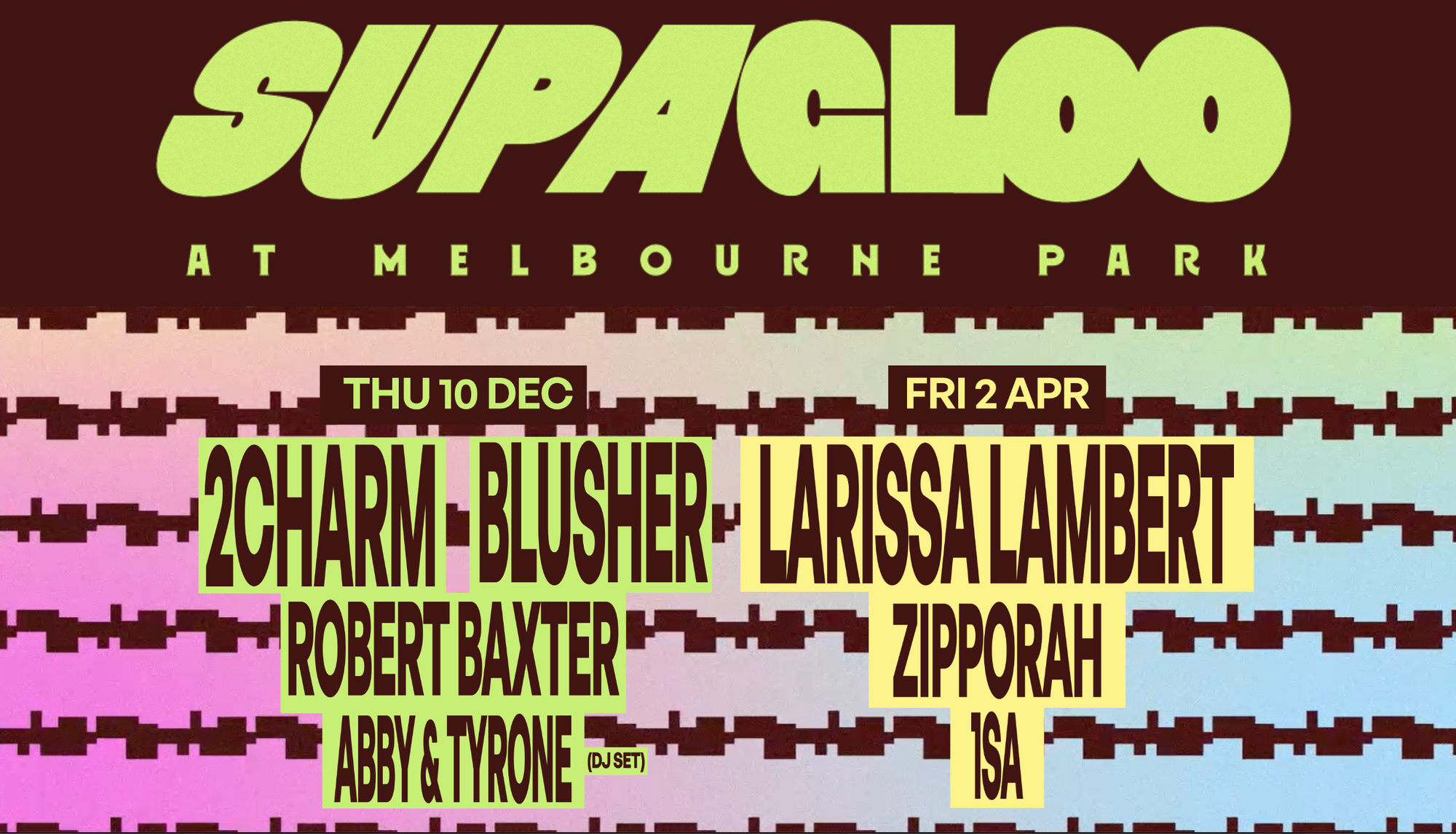
In Australia, **Frontier Touring’s** new Melbourne series, [**Supagloo**](https://www.frontiertouring.com/news/frontier-touring-and-melbourne-park-launch-supagloo?ref=hypebot.com), rounds out the pattern by applying the same growth logic along a demographic axis instead of a geographic one. It’s explicitly built as all-ages and affordable, designed to cultivate “the next generation of artists and audiences” rather than serve the demographic that already reliably buys tickets.
That’s the same instinct as the Egypt or LatAm plays — don’t just serve existing demand harder, manufacture the next cohort of demand before a competitor does.
### Why this matters for Hypebot’s readers
For independent artists and promoters, the implication isn’t “go play a show in Cairo” — it’s that the biggest live-music companies (Live Nation, HYBE, EXIT, AEG) have all independently solidified their strategies for building pathways in these untapped global music markets at a large scale.
It's also about identifying and serving "undercapitalized" audiences — by geography, by age, by genre loyalty — and building the infrastructure (venues, festivals, residencies, local promoter partnerships) to own that audience before it matures. That’s a meaningfully different posture than the last decade of consolidation, which was mostly about controlling existing supply chains (venues, ticketing, promoters) in mature markets.
The open question worth watching from our side is:
**Does any of this actually succeed in producing genuinely sustainable local live-music ecosystems in these markets (the stated goal in Egypt, India, and LatAm), or does it mostly produce waves of one-off “destination event” tourism that enriches touring majors and exploits local tourist economies, without building lasting foundations locally?**
One thing's for sure. We'll keep an eye on it.
---
### Venues, Promoters: Take This Quick NITO, NIVA Survey Now!
URL: https://www.hypebot.com/venues-promoters-take-this-quick-nito-niva-survey-now/
Last updated: 2026-10-14T11:26:59.000Z
[**NITO**](https://www.hypebot.com/tag/nito/) (National Independent Talent Organization), the trade group for independent agents and managers, and[**NIVA**](https://www.hypebot.com/tag/niva/)(National Independent Venue Association), which represents venues, promoters, and festivals are exploring how that these stakeholders can work together better.
This quick six-question survey facilitated by [**Bandsintown**](https://bandsintown.com/?utm%5Fsource=hypebot&came%5Ffrom=900) explores issues including the impact of local openers, time between to delivery of promotional material, show announcements and ticket on-sales, the impact of agents holding dates for possible bookings, and more.
Survey results will be shared by both organizations and used to improve important workflows that impact all bookings and the success of each show.
**Venues and promoters are encouraged to take the short** [**survey here now**](https://bandsintown.typeform.com/to/zyZ2cc1Q?utm%5Fsource=bh&utm%5Fcampaign=NIVA-NITO%5Fsurvey%5F2026)**.**
---
## Hypebot
Essential news & insights for artists and live music pros.
Sign up for free weekly content delivered to your inbox
Subscribe
Email sent! Check your inbox to complete your signup.
### Learn How to Simulate Live Performance Pressure Before a Gig
URL: https://www.hypebot.com/learn-how-to-simulate-live-performance-pressure-before-a-gig/
Last updated: 2026-10-13T15:05:10.000Z
### **Two Ways to Simulate Performance Pressure Before the Real Thing**
*By* [***Dr. Noa Kageyama, PhD***](https://bulletproofmusician.com/author/njkalm/?ref=hypebot.com) *of* [***The Bulletproof Musician***](https://bulletproofmusician.com/how-can-you-create-the-feeling-of-real-pressure-in-practice-situations/?ref=hypebot.com)
Whether it’s hitting that high note in an audition, nailing that exposed entrance in orchestra, playing in a master class, or [making an impossible trashketball shot to get your class an A in organic chemistry](https://www.youtube.com/watch?v=0DNha94yZa0&rel=false&width=640&height=360&ref=hypebot.com) , we all know from experience that it’s a lot harder to play like yourself when the pressure kicks in and there’s something at stake.
Fortunately, we know from studies in this area that the ability to perform well under pressure and reduce that gap between practice and performance is a skill (e.g. [here](https://bulletproofmusician.com/helpful-harmful-perform-piece-performance-ready/?ref=hypebot.com) and [here](https://bulletproofmusician.com/research-suggests-that-you-can-learn-to-perform-well-even-when-youre-nervous-heres-how/?ref=hypebot.com)). And that we can get better at performing under pressure if we practice performing under pressure.
But that’s much easier said than done, because it’s not like there’s an instant “pressure” button we can push to make our hands go cold and stiff, get our heart pounding, and jumpstart the racing self-critical thoughts.
So…is there any research in this area? When it comes to simulating the feeling of pressure in advance of a real audition or performance, what works best?
### **What do elite coaches say?**
A team of researchers ([Stoker et al., 2016](http://www.ijsp-online.com/abstract/view/47/262?ref=hypebot.com)) interviewed 11 Olympic/International-level coaches, representing a range of sports[1](https://bulletproofmusician.com/how-can-you-create-the-feeling-of-real-pressure-in-practice-situations/?ref=hypebot.com#easy-footnote-bottom-1-36840), to find out how they integrated “pressure training” into their athletes’ preparation for competition.
There were differences among the coaches, but nevertheless, a few themes emerged. Specifically, two main strategies, each with three key elements.
## Strategy #1: Manipulate the training demands
The coaches noted that competitions are usually more demanding – both mentally and physically – than anything an athlete would normally encounter in training. So one way of increasing pressure is to manipulate the difficulty of a training session.
They reported doing this in three ways:
### **Way #1: Task**
This involves tweaking the drill, exercise, or skill itself to make things more challenging.
In music, this would be like playing with a pianist who’s sight-reading the piano part, which might make it more challenging for you to focus on playing the way you want. Or using a subpar reed. Or on a piano with a really light or heavy touch. Or having to play faster or softer than you will on stage.
### **Way #2: Performer**
Another way to increase the demands of training is to manipulate your physical or psychological state. Like doing a run-through at 4am when you’re barely awake. Or right after eating a plate of painfully spicy wings.
### **Way #3: Environment**
The third strategy involves changing your surroundings. Like playing in a really dry unflattering acoustical environment. Or in a cold, hot, or poorly lit space.
## Strategy #2: Manipulate the consequences
The coaches’ other main method for creating pressure was to use reward/punishment or positive and negative consequences, based on performance. They acknowledged that this might sound kind of harsh, but as one coach mentioned, this is an unavoidable part of competition anyhow.
Here too, there were three main ways that coaches created pressure:
### **Way #1: Forfeits**
This is where you lose something you want, or must do something you don’t want to, if you fail to meet a certain level of performance. Like sprints if you miss a shot. This is pretty straightforward – but the coaches recommended being very cautious, as it has the potential to backfire (as you can probably imagine).
### **Way #2: Reward**
This strategy sounds a little more appealing, in that it involves winning something positive or desirable if you perform well. Like being able to move on to the next page of a new piece you’re learning. Or being selected to perform in a master class for a visiting guest artist.
### **Way #3: Judgment**
A third strategy involves performing in the presence of someone who is evaluating your performance. This would be like playing for peers and teachers, and other musicians we look up to. Or strangers or family members. This would also include studio classes, mock auditions, practice performances, self-recording, and random drop-in performances for a friend in the practice room a few doors down.
These all sound like they could be useful – but how helpful are they really?
Which ones actually prepare us best for the pressure of a real audition or performance?
**+Read more:** [*"Making Mistakes on Stage? This Study Offers a Way to Correct Them."*](https://www.hypebot.com/making-mistakes-on-stage-this-study-offers-a-way-to-correct-them/)
## Which works best? Demands or consequences?
To find out, a couple of the researchers ([Stoker et al., 2017](https://doi.org/10.1080/10413200.2017.1298166?ref=hypebot.com)) teamed up with a few others to conduct a study of elite international-level Netball players.
They put 15 athletes through a throwing accuracy drill[2](https://bulletproofmusician.com/how-can-you-create-the-feeling-of-real-pressure-in-practice-situations/?ref=hypebot.com#easy-footnote-bottom-2-36840), in different conditions.
In the **DEMANDS** condition, the athletes had to throw at targets in a randomized order, release the ball within 3 seconds, and hit the smaller 6×6 targets (**task**). They also wore goggles that blocked out vision in one of their eyes (**performer**), and had to deal with a distractingly loud beeping sound (**environment**).
In the **CONSEQUENCES** condition, the athletes had to perform the drill in front of 2-3 of their peers, as well as their head coach, who was evaluating them on their ability to handle pressure and stay focused on the task. Their performance was also videotaped, so that a well-known national coach could evaluate it at a later time (**judgment**).
Furthermore, whomever got the lowest scorer had to do a 1-minute presentation (perform a comedy sketch, talk about who they admired most on the team and why, talk about why their skills could make them the best in the world, or count backwards from 1013 by 17’s), on camera, which was uploaded to a popular social media site, and stayed there for 2 weeks. In addition, they had to select one of their teammates who would also have to complete one of these four tasks (**forfeits**).
The winner, on the other hand, received £50, and immunity from the embarrassing video task (**reward**).
## So what was more effective? Demands or consequences?
Based on self-reported measures of pressure, anxiety, confidence, and heart rate, the researchers found that facing **consequences** seemed to more consistently create the feeling of pressure among the athletes.
So when designing a pressure training program for yourself (or a student), being creative about consequences seems to be the way to go!
## Takeaways
It’s important to note that we don’t all experience the same amount of pressure from the same things. A situation that feels like pressure for one person, may feel totally stress-free for another. So if you’re teaching, it may help to ask a student for their ideas in creating a list of meaningful stressors. That’s actually what the researchers did in coming up with their creative stressors. The creative forfeits above were the result of some collaborative brainstorming between the researchers, athletes, and coaches.
It’s also important to acknowledge that there are some things you just can’t simulate or replicate. Even if you have access to an audition or performance simulator, like the one Aaron Williamon and his colleagues developed at the Royal College of Music (described in Aaron’s podcast episode [here](https://bulletproofmusician.com/aaron-williamon-on-becoming-a-better-happier-and-healthier-musician/?ref=hypebot.com)). But as some of the coaches in the first study suggested, this is actually ok! Because the goal isn’t to practice for 100% of all possible scenarios in as realistic a way as possible. But rather, to create an environment where you can practice “pressure management.”
The goal of pressure management being to identify, test out, and develop a set of skills that you can use when you find yourself in a real pressure situation, instead of being caught off guard and having to figure things out on the fly.
And whether you manipulate consequences or demands, don’t forget to incorporate some element of fun into pressure training. After all, the objective of pressure training isn’t to evaluate *you*, the individual. It’s all about putting your pressure management *skills* to the test, to see if they’re up to the challenge or need a little more work (as in [this article](https://bulletproofmusician.com/the-mindset-that-makes-it-possible-to-recover-from-setbacks-and-perform-even-better/?ref=hypebot.com)).
---
**References**
- Stoker, M., Lindsay, P., Butt, J., Bawden, M., W. Maynard, I. (2016). Elite coaches’ experiences of creating pressure training environments. *International Journal of Sport Psychology, 47*(3), 262-281\. doi:10.7352/IJSP.2016.47.262
- Stoker, M., Maynard, I., Butt, J., Hays, K. F., Lindsay, P., & Norenberg, D. A. (2017). The Effect of Manipulating Training Demands and Consequences on Experiences of Pressure in Elite Netball. *Journal of Applied Sport Psychology, 29*(4), 434–448\. https://doi.org/10.1080/10413200.2017.1298166
### Artist Manager, Paul Gargano: 'Never Lose the Fan Perspective.'
URL: https://www.hypebot.com/artist-manager-paul-gargano-never-lose-the-fan-perspective/
Last updated: 2026-10-13T14:41:36.000Z
[**Paul Gargano**](https://www.instagram.com/paulgargano/?hl=en&ref=hypebot.com)**,** is a veteran music manager with a background in journalism and the former editor of ***Metal Edge*** magazine.
On a new[**The Music Biz Weekly Podcast**](https://www.hypebot.com/tag/music-biz-weekly-podcast/), he joins **Michael Brandvold** and **Blasko** to discuss current music business trends with a focus on **VIP experiences** and the importance of maintaining a fan perspective.
Paul shares insights from managing artists including **Faster Pussycat**, **The Bites**, and **Chad Taylor’s Mercy Revival**, emphasizing how understanding the fan experience is crucial for creating VIP experiences that go beyond a simple transaction to create lasting memories.
The discussion highlights how artists need to genuinely connect with and listen to their most dedicated fans, as these are the most die-hard supporters willing to spend significant money for special experiences. Gargano stresses that successful VIP programs require careful consideration of pricing, quality of interaction, and the demographic of the fans being targeted.
**Watch and listen here or on your favorite podcast platform.**
Get caught up with all of Hypebot's Podcast coverage [**here**](https://www.hypebot.com/tag/podcast-music-biz/).
---
## Hypebot
Essential news & insights for artists and live music pros.
Sign up for free weekly content delivered to your inbox
Subscribe
Email sent! Check your inbox to complete your signup.
***Get all the latest Music Industry & Live Music News updated continuously from across the web under the Hypebot Industry News tab*** [***here***](https://www.hypebot.com/music-industry-news-feed/)***.***
### What Happens After the Streams Stop: How Independent Artists Should Measure a Campaign
URL: https://www.hypebot.com/what-happens-after-the-streams-stop-how-independent-artists-should-measure-a-campaign/
Last updated: 2026-10-13T14:32:05.000Z
*By *James Plimmer*, Managing Director of* [***Now Listen PR***](https://nowlistenpr.com/?ref=hypebot.com)
An artist finishes a [release campaign](https://www.hypebot.com/tag/album-release/). The stream count looks strong. The team celebrates. Then a few weeks later, nothing much has changed. Follower numbers barely moved. The next post gets the same reach as before. Ticket sales for the upcoming show are slow.
This is not a [streaming](https://www.hypebot.com/tag/streaming-music/) problem. It is a measurement problem. At [Now Listen](https://nowlistenpr.com/?ref=hypebot.com), we work across digital promotion, DSP strategy and fan acquisition with independent artists and labels. One of the most common questions we hear from artists who have previously invested in promotion is:
> *“The streams looked good, so why does nothing feel different?”*
More often than not, the answer comes down to what those numbers actually represent. Stream counts confirm that the music was played. On their own, they do not confirm that those listeners became fans.
The number at the top of the dashboard is the least informative one on the page. I'll explain why.
**TL;DR Takeaways:**
- *Stream counts measure passive consumption, not fan development or commercial value*
- *Monthly listener figures can rise sharply while audience quality stays flat or declines*
- *75% of a release's first-year streams happen after its first month, so release week is not the verdict*
- *Save rate, repeat listening and follower growth are the signals that predict long-term career momentum*
- *The green and red signals in this piece give you a practical scorecard to run after every release*
## **The Monthly Listener Trap**
Monthly listener count is the figure artists check almost as obsessively as streams and it carries the same flaw. A rising monthly listener figure looks like growth. It can just as easily reflect a wave of low-intent, algorithmically driven discovery that produces no saves, no follows and no repeat listening.
[Spotify](https://www.hypebot.com/tag/spotify/) separates listener behaviour into two categories inside its for Artists dashboard: active listeners (people who sought the artist out intentionally from their profile, library or own playlists) and programmed listeners (people who heard the artist passively through editorial or algorithmic sources).
[Hypebot's guide to Spotify audience segments](https://www.hypebot.com/how-to-optimize-spotify-marketing-tools-enhance-your-audience-engagement/) covers the distinction in detail. A campaign that inflates monthly listeners almost entirely through programmed sources has not grown an audience. It has borrowed one temporarily.
**The useful question after any campaign is not how many monthly listeners the artist has. It is what proportion of them chose to be there.**
A monthly listener figure that rises during a campaign and then drops sharply once paid activity ends is telling you something specific: the campaign created exposure without converting it into genuine interest. That is worth knowing before the next campaign brief is written.
A healthy campaign will typically show programmed listeners outweighing active listeners during the release window, which is normal. The signal to watch is what happens in the four to six weeks after paid activity ends. If active listeners hold steady or grow while programmed listeners fall away, the campaign converted passive exposure into genuine interest. If both drop together, it did not.
A ratio of active to programmed listeners above 30% in the weeks following a campaign is a reasonable benchmark for independent releases. Below that, the targeting or creative needs revisiting.
### Why save rate matters more
When a listener saves a track, they are making an active decision to return to it. That is qualitatively different from a passive stream generated by a playlist they never curated and will never revisit.
The number to watch is not total saves in isolation. It is saves relative to listeners. A save rate above 5% is a strong signal for most independent releases. Below 2% warrants a direct conversation with whoever ran the campaign.
Those thresholds matter because save rate is one of the primary signals that triggers algorithmic playlist placement. Discover Weekly and Release Radar respond to engagement quality, not stream volume. A track with a high save rate and modest streams will outperform a high-stream, low-save track in algorithmic reach over time, because the platform reads saves as evidence that real listeners want to return.
The table below shows how the same campaign reads differently depending on which lens you apply:
| Signal | Streams-only read | Scorecard read |
| ------------------------------------- | ----------------- | -------------------------------------- |
| 38,000 streams | Strong result | Starting point only |
| 34,000 unique listeners | Not reported | Low repeat listening, ratio of 1.1 |
| 1.8% save rate | Not reported | Red signal: below the 2% threshold |
| Artist follows: +12 | Not reported | Red signal: minimal profile conversion |
| Monthly listeners: +4,200 then -3,800 | Not reported | Borrowed audience, not retained |
| Algorithmic playlist triggers | Not reported | None: engagement signals too weak |
The streams-only read produces a press release. The scorecard read produces a better next campaign.
Listener-to-stream ratio tells a similar story. If a release generates 40,000 streams from 10,000 listeners, each listener averaged four plays. If those same streams came from 35,000 listeners, the average drops to just over one. Repeat listening is a signal that the music is genuinely connecting, not just being encountered.
***+Read more:*** [*"If Viral Content Doesn't Drive Streams, Then What Does?"*](https://www.hypebot.com/if-viral-content-doesnt-drive-streams-then-what-does/)
## **Release Week Is Not the Verdict**
Spotify's own data shows that 75% of a release's first-year streams happen after its first month. The opening week, which most campaign reports treat as the primary performance window, accounts for a fraction of the total listening a track will generate over its life.
That has a direct implication for how campaigns should be built and how their results should be read. A release that shows modest first-week numbers but strong save activity, healthy repeat listening and growing artist follows is in a better position than one that peaks on day three and drops sharply by day ten.
The first campaign is building conditions for sustained algorithmic discovery. The second has already told the [algorithm](https://www.hypebot.com/tag/algorithm/) what it needs to know.
**Saves and follows are the signals that feed Release Radar, Discover Weekly and Radio. A campaign that prioritizes generating those signals is investing in the 75% of listening that happens after the initial push ends.**
The artists who build durable streaming careers are not always the ones with the strongest release weeks. They are the ones whose releases keep finding new listeners for months afterwards, because the engagement signals from the first campaign gave the algorithm enough confidence to keep recommending the track.
The practical implication is this: the actions that matter most in release week are not the ones that drive the highest stream count on day one. They are the ones that generate saves, follows and complete listens, because those signals are what the algorithm carries forward. A pre-save campaign that converts into release-day library adds, a social content sequence that drives profile visits rather than just track plays, and playlist pitching timed to land in week two rather than day one are all strategies that invest in the 75% rather than the 25%.
Release week is the foundation. What you build on it determines everything after.
## **What the Headline Stream Count Doesn’t Tell You**
One anonymized campaign from our own work provides a useful example. When the active campaign ended, the track had generated approximately 350,000 streams. But the headline stream count only tells part of the story.
Over the 12-month period shown below, the track generated an additional **443,144 streams from 82,066 listeners**, averaging **5.4 streams per listener**, alongside **5,717 saves and 10,936 playlist adds**. These additional signals provide important context. Rather than simply recording exposure, they indicate repeat listening and active audience behaviour: listeners returning to the track, saving it to their libraries and adding it to their own playlists.
The trajectory after the campaign is equally significant. Instead of a short-lived spike followed by a sharp decline, the track maintained a consistent streaming baseline and continued to accumulate listening after active promotion had ended. It has since surpassed **one million all-time streams**.
That milestone is certainly notable for an independent release, but the number itself isn't the main point. The more useful insight is what happened between 350,000 and one million: the track continued to generate meaningful activity after the active campaign had concluded.
This is why evaluating a campaign solely on its stream count at the point of reporting can give an incomplete picture. Repeat listening, saves, playlist adds, follower growth, catalogue engagement and the post-campaign baseline all help determine whether attention is translating into longer-term audience development.
The active campaign ended at around 350,000 streams. The audience behaviour that followed is the more important measure of what was built.
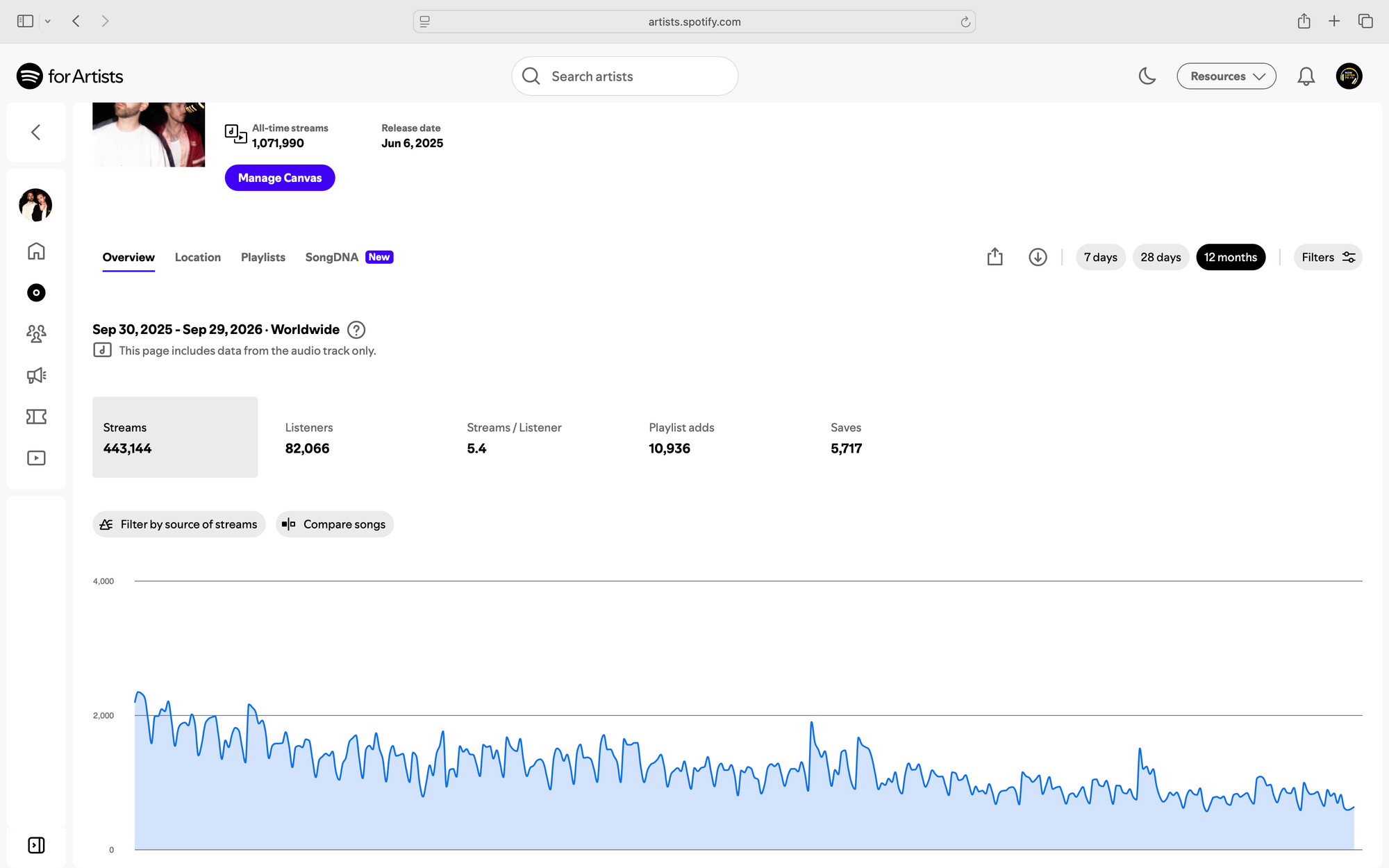
**+Read more:** [*"How to Save Time and Be Everywhere: A Guide to Bandsintown’s Artist Marketplace"*](https://www.hypebot.com/how-to-save-time-and-be-everywhere-a-guide-to-bandsintowns-artist-marketplace/)
## **The Post-Campaign Scorecard**
Most of this data is already available to you. Spotify for Artists, your social dashboards and any smart link platform you use contain everything below. After every release, run through these signals before drawing any conclusions from the stream total alone. It takes ten minutes and it will change what you ask for from your next campaign.
### Green signals: the campaign is building real momentum
- Save rate is strong relative to listener volume (above 5% is a meaningful benchmark for most independent releases)
- Listener-to-stream ratio suggests repeat plays rather than one-and-done exposure
- Artist follows grew during and after the campaign, not just during paid activity
- Profile visits and catalogue streams rose alongside the new release
- Active listener proportion held up or grew relative to programmed listeners
- Algorithmic playlists (Discover Weekly, Release Radar, Radio) activated after the initial campaign push
- Owned audience grew: mailing list, social following or fan community
- Ticket link clicks, presale registrations or local audience concentration increased
### Red signals: the campaign may need rethinking
- Strong first-week streams with a sharp drop-off and no baseline uplift afterwards
- Low saves relative to listener volume; below 2% warrants a direct conversation with your campaign team
- Monthly listeners rose sharply during paid activity then fell immediately after it stopped
- Minimal artist-follow growth despite high reach
- No movement on catalogue or profile activity
- Playlist streams did not translate into engagement elsewhere
- No growth in owned audience channels
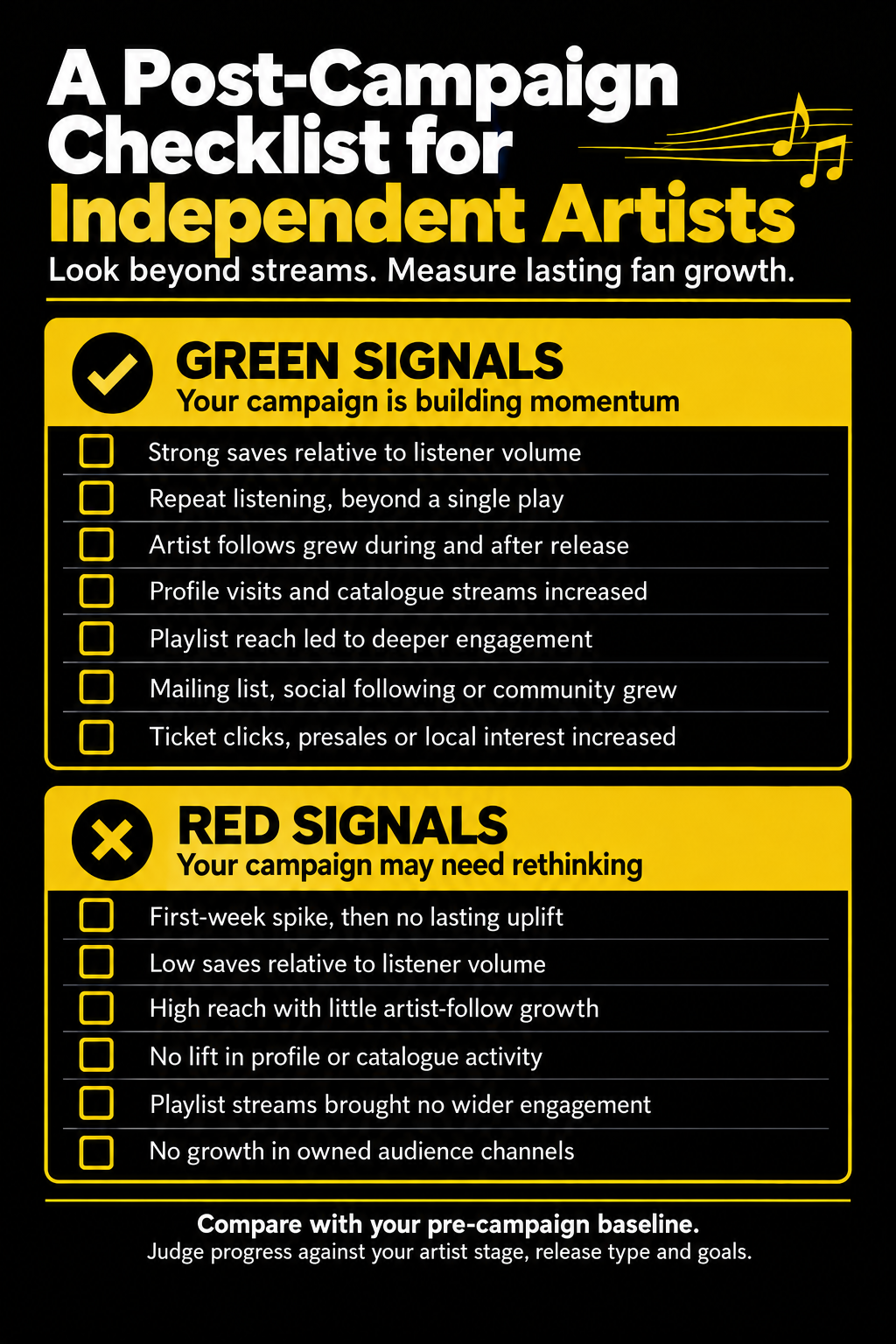
**Checklist courtesy of Now Listen PR.*
## **What to do with the data**
The right benchmark varies by artist stage, release type and objective. A debut single and an established artist's album campaign should not be assessed by the same criteria.
What matters is the direction of travel. Ask these questions after every release:
1. **Did this campaign move the baseline, or did streaming return to where it was before?**
2. **Did new listeners explore the catalogue, or did they hear one track and leave?**
3. **Did any of this translate into owned audience growth: follows, mailing list or ticket interest?**
4. **What proportion of monthly listeners are active versus programmed?**
If the answers are consistently pointing towards red signals, here is what to do with each one:
- **Low save rate:** Review the playlist sources. If most streams came from algorithmic or editorial placements with no genre specificity, the track reached the wrong listeners. Next campaign, tighten targeting to audiences with demonstrated affinity for the sound.
- **No artist follow growth:** The track found listeners but the artist profile did not. Add a content layer in the next campaign that drives profile visits directly: artist story content, catalogue highlights and behind-the-scenes material that gives new listeners a reason to follow rather than just stream.
- **Monthly listeners dropped sharply post-campaign:** The audience was borrowed, not built. Reduce reliance on broad playlist pitching and paid reach. Invest more in owned channels: pre-save lists, mailing list growth and fan community building before the next release.
- **No catalogue discovery:** New listeners heard the release and stopped there. Consider a catalogue-focused content sequence running two to three weeks after release, surfacing older tracks via re-marketing to the new audience while engagement is still warm.
- **No baseline uplift:** Streaming returned to pre-campaign levels. This is the clearest signal that the campaign created a moment rather than momentum. The next brief needs different objectives, not a bigger budget.
Stream counts are part of the picture. They have never been the whole one. The artists building durable careers right now are the ones asking better questions after every campaign, not just checking the number at the top of the page.
---
**James Plimmer* is Managing Director of* [***Now Listen PR***](https://nowlistenpr.com/?ref=hypebot.com)*, a UK music marketing agency specializing in bespoke digital promotion, DSP strategy and fan acquisition for independent artists and labels. He has worked in music marketing since founding Now Listen PR in 2019, helping artists develop sustainable audiences across streaming and digital platforms.*
### US Copyright Fees Jump Nov. 11: One Month Left to Save
URL: https://www.hypebot.com/us-copyright-fees-jump-nov-11-one-month-left-to-save/
Last updated: 2026-10-13T13:28:42.000Z
The [**US Copyright Office**](https://www.hypebot.com/tag/us-copyright-office/)is raising service fees on **November 11, 2026** despite objections from songwriters and industry trade groups.
Following a proposed schedule submitted to Congress in July, the statutory 120-day congressional review period expires on November 11, triggering automatic price increases across nearly all categories.
While administrative costs across all U.S. copyright services will **increase by an average of 43%,** core services for music rightsholders, independent record labels, publishers, and catalog buyers will see fee increases ranging from **31% to 126%**.
### **2026 U.S. Copyright Office Fees Comparison**
| **Service** | **Old → New** | **Change** |
| --------------------------------------- | ----------------- | ---------- |
| **Single App** (1 work, 1 author) | $45 → **$55** | +22% |
| **Standard App** (Single track/album) | $65 → **$85** | +31% |
| **GRAM Album** (Up to 20 tracks) | $65 → **$130** | **+100%** |
| **Group Works** (Up to 20 songs) | $65 → **$85** | +31% |
| **Unpublished Group** (Up to 10 works) | $85 → **$130** | +53% |
| **E-Recordation** (Transfers/contracts) | $95 → **$215** | **+126%** |
| **Termination Notice** (Base fee) | $125 → **$275** | **+120%** |
| **Special Handling** (Expedited) | $800 → **$1,100** | +38.5% |
| **Paper App** (Standard paper filing) | $125 → **$185** | +48% |
### **Key Impacts**
### 1\. Album Registrations Double in Price
For independent labels and DIY artists using the Group Registration for Works on an Album of Sound Recordings (GRAM), filing an album of up to 20 tracks along with artwork and liner notes moves from **$65 to $130**.
### 2\. Catalog Acquisitions and Transfers Hit Hardest
The base fee for electronic recordation of documents — including copyright assignments, chain-of-title transfers, and publisher agreements — more than doubles from **$95 to $215**. Companies and funds conducting merger and acquisition activity or acquiring legacy catalogs will face substantially higher administrative due diligence costs.
### 3\. Termination Rights Become More Expensive to Exercise
Recording a Notice of Termination, which allows songwriters and artists to reclaim rights transferred to publishers or labels after 35 years, rises from **$125 to $275**.
### 4\. Rush Litigation Costs Rise
If you need expedited processing to file an infringement lawsuit, the Special Handling surcharge increases from **$800 to $1,100** per registration, on top of the base filing fee.
### **Action Plan Before November 11, 2026**
- **Register Works Immediately:** Audit your release pipeline and catalog backlog. Any unfiled singles, EPs, or albums should be registered within the next 30 days to lock in current $65 rates.
- **Record Pending Asset Transfers:** If you have completed catalog acquisitions, publisher administration agreements, or co-ownership transfers, file the electronic recordation paperwork before the fee jumps to $215.
- **Batch Unpublished Demos:** If you have unreleased catalogs or demo batches, use the Group Registration for Unpublished Works ($85) before it jumps to $130.
### **How and Where to Register Music Copyrights**
To avoid the November 11 fee hike, creators and rights owners can register compositions, lyrics, and sound recordings now directly through the official [US Copyright Office Registration Portal](https://www.copyright.gov/registration/?ref=hypebot.com).
To file online at the lowest statutory rate, set up an account in the [Electronic Copyright Office (eCO) System](https://eco.copyright.gov/?ref=hypebot.com), where you can choose between **Performing Arts (PA)** for underlying music and lyrics or **Sound Recording (SR) / GRAM** for master recordings. Filing electronically guarantees an immediate effective date of registration as soon as your completed application, deposit audio file, and payment are submitted.
## **Hypebot's Bottom Line**
With registration costs jumping up to 100% and transfer recording more than doubling, copyright protection is shifting from a routine administrative task to a significant line-item expense.
Independent artists, labels, and catalog managers have a critical 30-day window before November 11, 2026, to register backlog music and record ownership transfers at existing rates before federal price hikes take effect.
---
*Get the latest Live Music & Industry News updated continuously from across the web under the Hypebot Industry News tab* [*here*](https://www.hypebot.com/music-industry-news-feed/)*.*
## Hypebot
Essential news & insights for artists and live music pros.
Sign up for free weekly content delivered to your inbox
Subscribe
Email sent! Check your inbox to complete your signup.
### Starling on the Subconscious Nature of Their Writing
URL: https://www.hypebot.com/starling-on-the-subconscious-nature-of-their-writing/
Last updated: 2026-10-13T13:26:49.000Z
[**Starling**](https://www.bandsintown.com/a/15573513-starling?utm%5Fsource=hypebot&came%5Ffrom=900) is a four-piece alternative band born and based in Los Angeles, creating music with a soft heaviness that moves from grunge to songwriter to shoegaze without settling into any one of them. Combining warped, bedroom-built production with angular leads and rich vocal melodies, the band writes toward a general yearning — for contentment, a person, a place — that gives the songs their vulnerable, wide-open feel.
There's a truly [DIY feel](https://www.hypebot.com/tag/d-i-y/) to this band that comes from a core place of authenticity, rather than nostalgia. And that Starling's new EP, [*Plexus*](https://open.spotify.com/album/2wughsoxhyOW8V0KIo1YkO?si=ZR0wmQfVS52BLaMLQ9kN1A&ref=hypebot.com), is an entirely self-made record, produced by the band and mixed by drummer Erik Sathrum Johnson, only reinforces that element of the band's identity.
Here's our conversation. Enjoy!
---
**Hypebot: Hey Starling! Thanks for taking the time to answer some questions. Congrats on the new EP, *Plexus*, it’s such a great distillation of this band’s sound, which I would say is a “live sound” in terms of energy, yet there are crucial studio punch-ins and edits on this record that distort the sound world. Tell me about how this one came together? What’s different this time around for you?**
Starling: "Thank you! There wasn’t anything super different this time around with recording. We have just gotten more comfortable with our own collaborative process. With production and mixing there was an intention to marry the aesthetic palette of our first EP, *2324,* and our record *Forgive Me,*."
As you noticed, it was definitely a mixed bag of live tracking and studio punch-ins to achieve very specific ideas we had for some key moments."
**H: Do you have influences that have shaped your live sound, not just the studio sound?**
S: "It’s not very often that we pull a specific reference when we are rehearsing for live shows, or even in the studio. But we are always in flow with the inspiration that sparks with whatever we are listening to or the shows we are going to and watching online lately."
**H: On that note, “See the Water” features a pretty cute guitar reference to Talking Heads’ “Naive Melody” to start, is that an Easter Egg or accidental? And what does that say about the way your group approaches writing or arranging material?**
S: "It’s definitely not a reference to 'This Must Be The Place,' but no hate to the Talking Heads, we actually all just went and saw David Byrne together last month. I think we got that for the first time months after we started playing it live, but we definitely do get it frequently and totally hear it."
What we get most often is people comparing it to Modest Mouse. Someone thought it was a Strokes cover. So it is kind of something that everyone identifies in something they have heard before because it is such a specific sound. Gitai wrote the part and what he has to say is there wasn’t anything conscious he was referencing in the moment."
But the first thing that came to him was a possible subconscious reference to the 100 Gecs live performance on Fish Center of 'Small Pipe.' We generally do not like to reference certain things when writing because clearly our subconscious does that enough."
> *"Once per tour Kasha is allowed to pull the van over to serenade some cows."*
**H: How do you keep healthy on the road?**
S: "We eat most of our meals from grocery store items. Microwave rice, tinned fish, boiled eggs, oatmeal, avocado, grapes. Stuff like that. Usually on a show day, we have one meal a day that we eat out together that is fresh and hot. None of us really like fast food."
We also try to go for walks every day, and bring a yoga mat to stretch our weary muscles after a day in the van. For mental health, we all do our own thing, including meditating or journaling or taking the time to call a loved one."
**H: You’re about to embark on a pretty extensive national tour. What’s the most irrational rule your band has developed on the road? Like the non-negotiables for your band every time you walk out on stage?**
S: "Once per tour Kasha is allowed to pull the van over to serenade some cows."
**H: Which member of the band would survive longest if the van broke down in the middle of nowhere, and who would be dead meat?**
S: "After a brief discussion we have found no consensus."
We all think Gitai would die by eating poisonous berries or mushrooms. Erik thinks he would die second but I personally disagree. We all kind of think we would survive longest. Gitai agrees me (Kasha) would survive longest. Erik thinks Grace would leave and come back riding a bear with a bunch of elk and deer following behind."
**H: What’s something you’ve learned by spending time on the road? About music, life, yourselves?**
S: "It has sparked curiosity about the places we have passed through. We watch a lot of history videos about the cities we visit."
> *"A Shakespeare super fan once collected all of the birds ever mentioned in his plays and released them in America. Starlings were mentioned one time, and now are a highly invasive species in the midwest; a farmer’s enemy."*
**H: Does being from Los Angeles mean something to your band when you’re on the road? For better or worse?**
S: "When we are at shows it doesn’t really make a difference. I think when people ask us where we are from at a bar or gas station we can get some pretty strong responses both ways. For us it is just where we were raised."
**H: What’s the strangest place you’ve ever had a genuinely great show?**
S: "Lubbock, Texas."
**H: When things are “on” and you’re really feeling it during a show, what does that look like?**
S: "Interacting a lot with a crowd, sometimes getting in it during the performance. It is literally what it’s all about so what it looks like is the reason we do any of this in the first place."
**H: Where does the band name come from?**
S: "The bird. There is a story to it. A Shakespeare super fan once collected all of the birds ever mentioned in his plays and released them in America. Starlings were mentioned one time, and now are a highly invasive species in the midwest; a farmer’s enemy. But they have beautiful black feathers that can be iridescent and they sing a starling song."
So we were just fascinated by all of this and it felt like a good fit. It is NOT ‘star darling’ and certainly has *nothing* to do with Starlink."
**H: What’s your favorite post-concert food to eat?**
S: "Pho!!! Vermicelli bowl… so, Vietnamese. Nourishing and delicious."
---
## [**Starling Tour Dates**](https://www.bandsintown.com/a/15573513-starling?utm%5Fsource=hypebot&came%5Ffrom=900)
### Lalu's Corner: Who Controls the Digital Version of You?
URL: https://www.hypebot.com/lalus-corner-who-controls-the-digital-version-of-you/
Last updated: 2026-10-12T17:23:01.000Z
*Welcome to* [***Lalu's Corner***](https://www.hypebot.com/tag/lalus-corner/)*, a monthly column by music and brand partnership agent *Lauren Thackray*, exploring commercial music applications and sync placements, and the most pertinent takeaways for independent artists.*
[**Addison Rae's**](https://www.bandsintown.com/a/15477927-addison-rae?utm%5Fsource=hypebot&came%5Ffrom=900) **Fortnite** skin started with ten selfies — not a photoshoot, not a scan, just ten photos she sent Epic Games herself, so a game studio could get the angles of her own face right. It shipped with two outfits, two emotes, two Jam Tracks, and a version of her built into the game itself.
She said yes to *all of it.*
A company holding an accurate, reusable digital version of someone's face is never really just a gaming story. Three questions follow it everywhere:
***Who gets to create it, what can they do with it, and how much control does the person keep once it exists?***
For a growing number of artists, the first question is already being answered without them.
This year alone, **Jason Isbell** and other musicians [sued Suno](https://www.hypebot.com/suno-steals-artist-identities-jason-isbell-wants-to-stop-it/) over the use of artists’ identities in AI-generated music. Suno says artist names are blocked, but the lawsuit alleges that simply spacing out the letters - *“t a y l o r s w i f t”* \- gets around it.
Then there’s **deadmau5**, who found a [deepfake of himself](https://www.instagram.com/p/DUrZOlnksAk/?ref=hypebot.com) on another DJ’s Instagram — a fully AI-generated video of him endorsing that DJ’s music, made from footage that already existed.
And remember when “I Run” went viral with vocals that sounded just like **Jorja Smith**? She’d never recorded it. Her label spent weeks pushing for compensation over the use of her voice. They also argued that if AI had generated the lyrics or melody, rather than just imitating her voice, they’d pursue a share of the songwriting credit too.
None of it required a deal or a *yes.*
The music industry is making deals of its own. But the three biggest labels aren't even agreed on the floor, let alone the ceiling.
**Universal** has pursued both litigation and licensing, suing **Suno** while reaching a settlement and licensing arrangement with **Udio**. **Sony** has taken the opposite bet — no licensing deal with anyone, leaning instead on a growing pile of takedowns against unauthorized [AI tracks](https://www.hypebot.com/tag/ai-in-music/), on the theory that the fight's worth winning in court, not negotiating around. **Warner** has pursued agreements with artist opt-in provisions, giving participating artists a way to authorize certain uses of their voices and likenesses.
Different approaches, but the same question underneath: ***How much say does the individual artist actually have?***
A label owning a recording doesn't mean it owns every use of the voice or face on it. And with most of these deals negotiated behind closed doors, nobody outside the room knows where the artist's permission actually comes in, or what happens to their digital version once they've given it.
The clearest public example of what real protection looks like is the deal SAG-AFTRA struck with Replica Studios in 2024, specifically for building and using AI voices. It requires informed consent before a model gets built, fresh permission before it's used in anything new, and a licence that expires unless the performer agrees to renew it. The terms are public, meaning other agreements can be measured against them.
Music doesn't have anything close. And while artist opt-in provisions are a start, permission to create a digital version is only part of the problem. The next question is who controls it once it exists.
That's the gap artists need to be negotiating around. Better clauses matter, but they only get you so far. Where possible, control over how the resulting model, avatar or any other digital version of the artist gets used should sit with an entity the artist majority-controls, rather than being signed away to a platform under a one-off consent agreement.
License specific uses out on specific terms. A sequel, a new campaign, a model update six months later — that's fresh permission and a new fee, not a courtesy email.
None of this stops someone else building an unauthorized deepfake from material that's already public. But it changes the balance of power in the deals artists actually choose to make. The entity controlling the authorized version of your face and voice should answer to you, not whoever happened to build the model.
### What's the takeaway in all this?
**If you're the artist:** Stop treating this as a clause to negotiate inside someone else's contract. Your name, voice and likeness should sit in a structure you hold majority control of — one entity or several, split however makes sense across your image, your voice, even album by album — licensed out deal by deal. Permission to build one version of you shouldn't become permission to use it forever.
**If you're the manager:** Duration, reuse, and derivative-use language are the baseline now, not the finish line. The real job is making sure your artist's team, not the platform's, is the one deciding what happens to the model next — with fresh approval and a new fee built into the agreement automatically, not a negotiation you have to start from scratch every time someone wants to use it again.
**If you're on the brand or platform side:** Warner's opt-in deal is the best public template today, and it's still short of giving the artist real control over what happens to it next. Whoever moves past "you get asked and paid" to "you actually control what it can be used for" first will have a real edge signing the next generation of artists who've started asking the sharper question.
---
[***Lauren Thackray***](https://www.linkedin.com/in/laurenthackray/?ref=hypebot.com) *is the Founder of* [***LALU&CO***](https://www.linkedin.com/company/lalu-co/?ref=hypebot.com)*, a music culture agency helping brands build artist partnerships and cultural strategy. Her clients include Unilever, L’Oréal Paris and Heineken amongst others. And via her Substack newsletter,* [*LALU Dispatch*](https://laluandco.substack.com/about)*, she writes about brands and music.*
### Six Weeks Off, Zero Shows Lost: On Lambrini Girls' 2026 Rescheduling Move
URL: https://www.hypebot.com/six-weeks-off-zero-shows-lost-on-lambrini-girls-2026-rescheduling-move/
Last updated: 2026-10-12T16:46:46.000Z
When **Phoebe Lunny** fractured her neck and sustained an acute brain injury earlier this year, [**Lambrini Girls**](https://www.bandsintown.com/a/15516345-lambrini-girls?utm%5Fsource=hypebot&came%5Ffrom=900) faced the kind of moment that sinks momentum for a lot of breakout acts: a forced withdrawal from [Coachella](https://www.hypebot.com/tag/coachella/) and the postponement of an entire North American [tour](https://www.hypebot.com/tag/touring), with doctors ordering the vocalist not to fly or perform for six weeks.
For a major-label act, that's a logistics problem with a team to absorb it. For a Brighton punk duo on independent labels Big Scary Monsters and City Slang, riding the momentum of a UK Albums Chart-charting debut, it's existential.
And yet — [nothing actually got *cancelled*](https://consequence.net/2026/04/lambrini-girls-rescheduled-2026-tour-dates/?ref=hypebot.com). Every postponed show was **rescheduled rather than scrapped**, with the band's US run pushed from spring into a staggered return across June, September, and October.
That's the real story here, and it's one that Hypebot's readership of bookers, managers and promoters should care about: ***What does crisis-proofing a tour actually look like at the indie level?***
A few threads in this story are worth pulling for those tracking this sort of thing:
### **The reroute, not the refund.**
Rather than eating losses or burning goodwill with cancellations, the band and their teams renegotiated routing across multiple countries' venues and promoters — a logistical lift that usually requires major-label or agency muscle.
### **Momentum preserved mid-recovery. Phew!**
The band had just landed a Coachella slot off the strength of 2025's "Who Let the Dogs Out," which was considered one of the year's standout albums — exactly the kind of momentum an extended injury layoff can kill. The [reschedule-everything approach](https://exclaim.ca/music/article/lambrini-girls-unveil-2026-north-american-tour?ref=hypebot.com) seems designed to protect that.
### **Fan trust as the real currency.**
For an act whose audience skews [DIY](https://www.hypebot.com/tag/d-i-y/) and community-driven, how you communicate a six-month delay matters as much as whether you deliver the show at all.
### **A template for other indie acts.**
As more bands hit breakout velocity without the infrastructure to match, the Lambrini Girls situation is a live case study other teams will likely reference the next time an injury, visa issue, or Act of God disrupts a tour.
---
## [**Lambrini Girls Tour Dates**](https://www.bandsintown.com/a/15516345-lambrini-girls?utm%5Fsource=hypebot&came%5Ffrom=900)
### Listen to Episode 1 of the New 'A Heart For The Charts' Podcast
URL: https://www.hypebot.com/listen-to-episode-1-of-the-new-a-heart-for-the-charts-podcast/
Last updated: 2026-10-12T16:22:03.000Z
[**Record Research**](https://www.recordresearch.com/?ref=hypebot.com)**,** the music chart reference publisher founded by **Joel Whitburn**, has launched its first podcast, ***A Heart for the Charts***. The series debuted October 6 with Thelma Houston and The Fleetwoods’ Gretchen Christopher discussing what it took to reach No. 1—and what happened afterward.
The opening episode, “The Day I Went to Number One,” follows Houston’s years of work leading up to “Don’t Leave Me This Way,” her first time hearing the song on the radio, and the promotional campaign that followed. Christopher revisits The Fleetwoods’ high school beginnings and the success of “Come Softly to Me,” along with the group’s later chart milestones.
Take a listen:
Five hosts bring research and industry experience to the conversations: longtime Billboard reporter Fred Bronson; former Billboard Director of Charts Michael Ellis; Record Research Head Researcher Paul Haney; Second Disc label founder Joe Marchese; and Motown historian Andy Skurow.
Founded in 1970, Record Research has published more than 240 reference books documenting chart history across genres and publications. The podcast extends that archival work into conversations with the people behind the records.
Produced by Benztown, with Record Research CEO Vinnie Freda serving as executive producer, [*A Heart for the Charts*](https://omny.fm/shows/a-heart-for-the-charts?ref=hypebot.com) is available on Apple Podcasts, Spotify and YouTube.
---
## Hypebot
Essential news & insights for artists and live music pros.
Sign up for free weekly content delivered to your inbox
Subscribe
Email sent! Check your inbox to complete your signup.
### Your Morning Coffee Podcast: CDs Are Back, Top Music Biz Schools, RSD Updates, More
URL: https://www.hypebot.com/your-morning-coffee-podcast-cds-are-back-top-music-biz-schools-rsd-updates-more/
Last updated: 2026-10-12T14:48:14.000Z
### **Listen on your favorite** [**podcast platform**](https://bio.to/UloQY6?ref=hypebot.com)**.**
Subscribe to the Your Morning Coffee newsletter [here](https://label-logic.us8.list-manage.com/subscribe?u=735771602810b0eb238d4e814&id=1ffaab59d7&ref=hypebot.com).
**YMC Episode 323 — October 12, 2026**
On this week’s episode of the [**Your Morning Coffee podcast**](https://www.hypebot.com/tag/your-morning-coffee/), your hosts Jay Gilbert and Mike Etchart chat about these timely music industry stories:
- **Record Store Day Black Friday 2026 Lineup Unveiled With 185 Exclusives!**
- **CDs Are Back, And We Think We Know Why.**
- **Billboard's 2026 Top Music Business Schools**
- **Music Publishers Will Be Handed Millions of Dollars Next Year. Here's Why.**
Listen right here:
Subscribe to the Your Morning Coffee newsletter [**here**](https://label-logic.us8.list-manage.com/subscribe?u=735771602810b0eb238d4e814&id=1ffaab59d7&ref=hypebot.com)**.**
**FIND MORE CURATED MUSIC BUSINESS AND INDIE**
**PODCAST EPISODES** [**HERE**](https://www.hypebot.com/tag/podcast-music-biz/)
---
## Hypebot
Essential news & insights for artists and live music pros.
Sign up for free weekly content delivered to your inbox
Subscribe
Email sent! Check your inbox to complete your signup.
### DistroKid Takedown Wave Hits Indie Artists After UMG Lawsuit
URL: https://www.hypebot.com/distrokid-takedown-wave-hits-indie-artists-after-umg-lawsuit/
Last updated: 2026-10-12T18:01:44.000Z
**Universal Music Group** (UMG) filed a major federal copyright infringement lawsuit against **DistroKid** in September. The major music group accused the DIY distribution giant of deceptive business practices, alleging that DistroKid actively floods streaming services with undisclosed "AI-generated slop" and unauthorized, manipulated (sped-up and slowed-down) remixes.
Now independent musicians are facing a harsh reality of the legal fallout.
### Artists React To DistroKid Takedowns
**DistroKid** distributes an estimated **30% to 40% of all new music** released globally, making it the largest independent music distributor by volume. It processes and uploads to **Spotify** and others approximately **35,000 new tracks daily** and serves a catalog exceeding **20 million tracks** by over **2 million artists.**
Over the past few weeks an increasing number of creators using DistroKid have reported their music abruptly disappearing from the major streaming platforms.
Many of the takedowns list only "Universal Music Group" as the complaining rightsholder, offering no path to dispute the ban. Some have already been streaming for years without complaint.
Independent musician McGwire took to [social media](https://x.com/McGwireMusic?ref=hypebot.com) to share that six of his songs had been removed. He and [others](https://www.youtube.com/watch?v=Jy%5FIZ9afe40&ref=hypebot.com) say there was no communication from DistroKid about the takedowns until they as creators reached out.
McGwire said one of his songs was removed for an uncleared sample. But the song he allegedly sampled was released [two years *after*](https://x.com/McGwireMusic/status/2108316592606159248?s=20&ref=hypebot.com) his own track.
### **Why is DistroKid Taking Down Songs?**
In an **IFPI** (International Federation of the Phonographic Industry) [study](https://musictechpolicy.com/2026/09/14/why-is-distrokid-holding-out-on-streaming-integrity/?ref=hypebot.com), **75.8% of the AI-generated tracks** reviewed were distributed via **DistroKid** with **90.4%** of the studied tracks generated using **Suno**.
While DistroKid strongly denied the allegations in UMG's lawsuit and promised to defend themselves vigorously, the reality on the ground looks like a distributor in full defensive mode.
Facing potential statutory damages of up to **$150,000 per infringed work** and operating in the shadow of an impending **$2 billion acquisition by CVC Capital,** DistroKid appears to have severely tightened its automated enforcement systems.
But because of these aggressive automated sweeps, legitimate human creators are sometimes caught in the crossfire.
"They should have allowed artists to have recourse in this and a warning to debate,” producer and music marketer [**Jesse Cannon**](https://www.jessecannon.com/?ref=hypebot.com) told [The Verge](https://www.theverge.com/entertainment/1009309/distrokid-take-down-songs-umg-lawsuit?ref=hypebot.com), “but I’ve been told by former employees they see customer service as a waste of profits since they have such a high market share and remain ubiquitous.”
### **What Types of Tracks Are Being Flagged?**
Artists are reporting sudden takedowns, zero-warning copyright strikes, and a lack of communication from DistroKid support regarding:
- **Original Recordings:** Acoustic, 100% human-made tracks with no loops or third-party samples.
- **Licensed Covers:** Cover songs where mechanical licensing fees were actively being paid through DistroKid's own systems.
- **Public Domain Audio:** Archival and century-old copyright-free recordings.
### **DistroKid Responds**
"A very small number of recordings distributed through DistroKid have been removed in response to claims made by UMG," **Amanda Ferri, VP of Artist Services, DistroKid** said in a statement to Hypebot. "We strongly dispute the allegations underlying UMG’s lawsuit and regret the disruption to affected artists. We are working to minimize that disruption while protecting artists’ ability to release their music."
## **Hypebot’s Bottom Line**
The days of 'upload and forget' verification-free music distribution are over, which in and of itself it not a bad thing for legitimate artists.
But while major labels and tech platforms wage a multi-million dollar war over AI integration, streaming fraud, and digital supremacy, independent musicians are paying the price as collateral damage.
For indie artists, choosing DistroKid or other distributor is no longer a question of who has the lowest fees, but rather about has the infrastructure to verify a release upfront, rather than nuking your catalog after the fact.
### In The Trenches With Boo Song of Taos' The Mothership
URL: https://www.hypebot.com/in-the-trenches-with-boo-song-of-taos-the-mothership/
Last updated: 2026-10-13T11:43:03.000Z
*This interview with *Boo Song*, GM, Talent Buyer, and Marketing Director of Taos independent music venue* [***The Mothership***](https://www.bandsintown.com/v/10004353-taos-mothership?utm%5Fsource=hypebot&came%5Ffrom=900)*, is part of Hypebot’s*[***In The Trenches***](https://www.hypebot.com/tag/in-the-trenches/)*. The series, sponsored by live music marketing solution* [***Bandsintown PRO***](https://www.bandsintown.pro/?ref=hypebot.com)*, spotlights the unsung heroes fighting to keep independent live music alive.*
---
**Hypebot: Tell us about yourself and your current gig?**
Boo Song: "My name is **Boo Song** and I am the General Manager, Talent Buyer, Marketing Director of **The Mothership** in Taos, NM. I have a joint Electrical Engineering Honors College Degree from **University of Pittsburgh** and **Carnegie Mellon**."
Boo Song
**H: What lead you to The Mothership?**
BS: "My journey includes Wilmington, NC's **The Soapbox**; founding **Progressive Music Group**; talent buying for Richmond, VA's **Hat Factory,** Southeast/ Carolina's club talent buyer for **Live Nation**, events and marketing for cannabis dispensary chain **Pinnacle Emporium** and agent at LA's **Empire Agency**."
**H: Tell us about your venue.**
BS: "[**The Mothership**](https://www.taosmesabrewing.com/?ref=hypebot.com) in Taos, New Mexico. Capacity is 2,000 SRO, 1,000 half house/partially seated and 500 side stage. Our stage was constructed by [**The Earthship Community.**](https://earthship.com/?ref=hypebot.com)"
Some of the artists who have played here include **Dead South, Shakey Graves, Thievery Corporation, Midland, Beats Antique, SOJA, Lucero, Magic City Hippies, Los Lonely Boys, The Motet, Desert Dwellers, Microwave** and **Free Throw.**"
The venue sits atop the **Hondo Mesa** with views of the **Sangre de Cristo** Mountains in the background. They are a part of the Southern Rockies. We are several miles from the **Rio Grande Gorge**."
Taos, NM is a remote mountain community of 6500 with a strong arts and music community and **Taos Pueblo**, a **UNESCO World Heritage Site** with one of the longest inhabited operating **Pueblos in the Nation**."
**The Mothership Taos, NM*
**H: What does your typical workday look like?**
BS: "Every day is different."
It consists of connecting and communicating with Agents and Managers, sending offers, creating and implementing marketing plans, putting out fires on existing shows."
Venue management that can also look like staff scheduling, bar management, hospitality, Food & Beverage management, vending beer at area events. (We are a brewery too!), outsourcing labor, looking at cost analyzation of products, creating new channels of revenue."
**H: What ‘go to’ tools, strategies and platforms do you use to market shows?**
BS: "We use all of these:
• Meta
• Radio
• Email - Bandsintown & JamBase
• Organic email list through Laylo
• Cross promoting at our sister restaurant - Taos Mesa Brewing Taproom.
• Print
• Street Team
• Google, YouTube
• Heavy focus on regional markets: Albuquerque, Santa Fe, Denver, Front Range CO (Durango, Pueblo, Colorado Springs, Alamosa)
• We get 60-65% of patrons on national touring acts come from outside of Taos County."
**H: What newer marketing tools, strategies and outlets show the most promise?**
BS: "Geo-targeting."
**H: Name a show or campaign that you were involved in where you felt you had the most impact and why?**
BS: "All of them, because I book the show and also setup marketing, the bars, and load the band in, settle with the band."
**H: What do you wish more artists and their teams would do differently that would make your job easier and help sell more tickets?**
BS: "Proper assets including Videos and Video Liners. Utilize email lists and bands data to promote the show locally."
Basically have your team together, the more assets and language that you provide, the more we can integrate properly with marketing."
---
*Learn more about* [***The Mothership***](https://www.taosmesabrewing.com/?ref=hypebot.com) *and* [*check out the calendar on Bandsintown*](https://www.bandsintown.com/v/10004353-taos-mothership?utm%5Fsource=hypebot&came%5Ffrom=900)*, or on Facebook/Instagram @TaosMothership.*
## Hypebot
Essential news & insights for artists and live music pros.
Sign up for free weekly content delivered to your inbox
Subscribe
Email sent! Check your inbox to complete your signup.
### Music Industry News From Across The Web ♫
URL: https://www.hypebot.com/music-industry-news-from-across-the-web-2/
Last updated: 2026-10-12T12:35:10.000Z
Find the latest [Music Industry News](https://www.hypebot.com/music-industry-news-feed/) and Live Music Business updates under the [Industry News tab](https://www.hypebot.com/music-industry-news-feed/) above.
### 6 Recent Australian Live Music Stories to Enjoy This Weekend
URL: https://www.hypebot.com/6-recent-australian-live-music-stories-to-enjoy-this-weekend/
Last updated: 2026-10-10T12:21:59.000Z
Get away from the high-speed daily news of this industry for a moment this weekend, and sit down with some commentary you can really sink your teeth into, at your own pace.
This time, we're featuring stories from the [Australian](https://www.hypebot.com/tag/australia/) live music scene that caught our eye recently. Dive right in! Here are **6 Feature articles** for your [**Weekend Reading**](https://www.hypebot.com/tag/weekend-reads).
Enjoy!
---
[New South Wales Just Protected Live Music by Law. Why Can’t Other Governments?Australia’s NSW set a new live music law that offers a model for governments to support artists and venues through practical protections.HypebotHypebot Editorial Desk](https://www.hypebot.com/new-south-wales-just-protected-live-music-by-law-why-cant-other-governments/)
[Australia’s Festivals Have an Itsy Bitsy Visa ProblemWho actually operates Australia’s summer live circuit? Apparently backpackers erect fencing and stages, scan wristbands, staff bars and help with loading.HypebotNews](https://www.hypebot.com/australias-festivals-have-an-itsy-bitsy-visa-problem/)
[Belle and Sebastian Show How to Salvage a Canceled GigSinger/songwriter Stuart Murdoch borrowed two guitars and met fans in a park in Perth when equipment delays caused the band’s gig to be cancelled.HypebotHypebot Editorial Desk](https://www.hypebot.com/belle-and-sebastian-show-how-to-salvage-a-canceled-gig/)
[Australia’s Venues Are Housed in Buildings They Do Not OwnAustralia’s grassroots venues are running into issues securing leases and self-ownership, to protect the buildings their live scenes depend on.HypebotHypebot Editorial Desk](https://www.hypebot.com/australias-venues-are-housed-in-buildings-they-do-not-own/)
[International Tours Keep Skipping the Same Parts of Australia70 years of concert data revealed a divide between Australia’s major markets and the states, territories, and towns international artists routinely bypass.HypebotHypebot Editorial Desk](https://www.hypebot.com/international-tours-keep-skipping-the-same-parts-of-australia/)
[Australia’s Festival Crisis Has One Very Twangy ExceptionStrong identities, intergenerational communities, and destination experiences... Is Country music the answer to Australia’s music festival cancellations?HypebotJeremy Young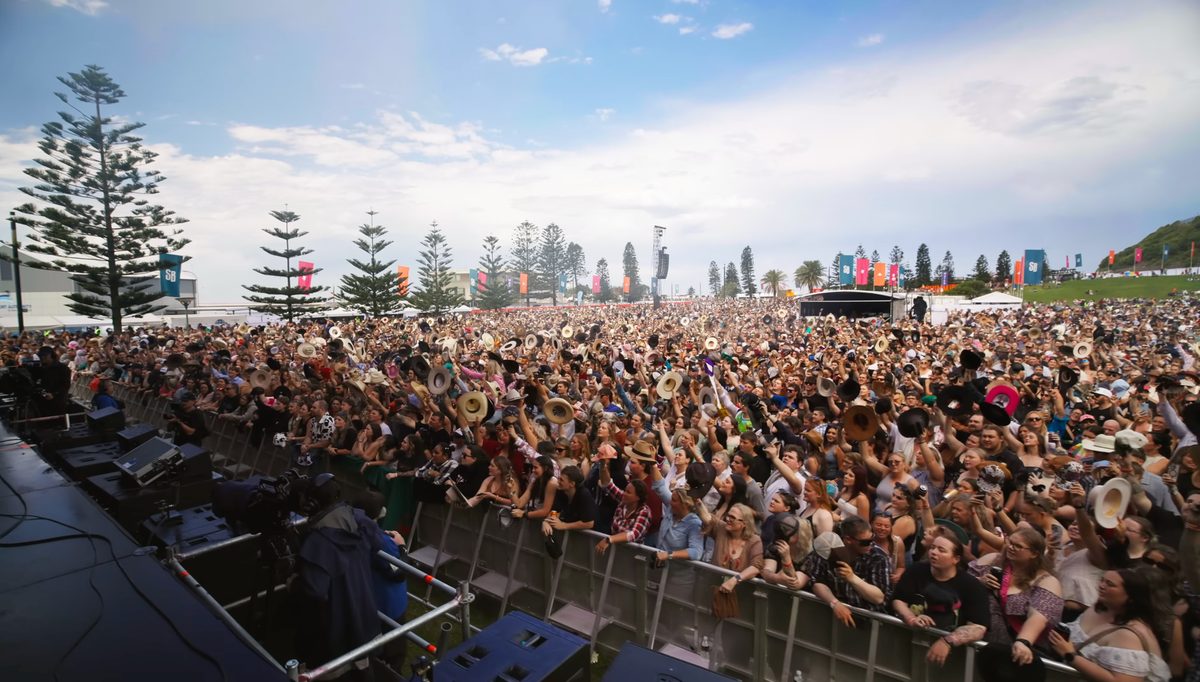](https://www.hypebot.com/australias-festival-crisis-has-one-very-twangy-exception/)
---
### Is This World Map the Best Music Trend-Spotting Tool Ever?
URL: https://www.hypebot.com/is-this-world-map-the-best-music-trend-spotting-tool-ever/
Last updated: 2026-10-09T16:57:29.000Z
Let’s get the hype out of the way first: is a map you click on *actually* going to replace your streaming analytics dashboard, your Chartmetric login, or your own two ears? Debatable!
But, a new site called[**Music Road**](https://music-road.com/en?ref=hypebot.com) has built something kind of competitively fun and useful at the same time. And sometimes, the best ideas hide behind something that's actually a ton of fun.
The concept: **a world map.**
You click a country, and you get up to five trending YouTube songs tied to artists from that country, ranked by new views gained over your selected time window — refreshed daily. No login wall, no fifteen-tab dashboard, no “insights” paywalled behind a demo call.
Built, by the site’s own framing, for listeners who want to fall down a discovery rabbit hole — but we’d argue the real audience hiding in plain sight is marketers. Here’s the case, (only slightly exaggerated for effect):
**It’s fast.**
You’re not exporting a CSV or waiting on a report. Click Brazil, see Brazil’s top five. Click again, see somewhere else. If your job involves scanning multiple markets in a single coffee break, this is about as frictionless as market-by-market discovery gets.
**It’s visual.**
A map is a shortcut your brain already knows how to read. You don’t have to parse a spreadsheet to notice that a sound is clustering across a region — your eyes do that work for you just by clicking around.
**It’s interactive, not static.**
A “top tracks by country” report is a snapshot. A map you can click through feels more like a conversation — which, conveniently, makes it more likely someone actually opens it twice.
**It’s ranked by momentum, not just volume.**
Because the list is built on *new* views gained in a given window rather than all-time totals, you’re looking at what’s accelerating right now — a sharper signal for “get ahead of this” than a standard most-viewed chart would give you.
**It updates daily.**
For anyone trying to catch a regional trend before it’s a global one, staleness is the enemy.
**It’s built on YouTube data.**
This is the detail that actually matters most for the marketing case. YouTube is free, it’s global, and it’s arguably the most universally accessed music discovery platform on the planet — no subscription required, no regional pricing tiers locking anyone out. A tool built on that data isn’t just reflecting what paying subscribers in wealthier markets stream; it’s reflecting what the broadest possible slice of the world is actually watching.
**Bonus round: the Golden List.**
Beyond the daily trending view, Music Road also has a separate section ranking the 2,500 most-viewed songs on YouTube of all time, filterable by country, language, genre, vibe, audio tags, and channel. That’s less “what’s hot today” and more “what’s the proven, durable canon in this market” — a handy reference point for telling a flash-in-the-pan regional spike apart from something with real staying power.
One honest caveat: The country-tagging logic runs on artist identity rather than listener geography — songs are sorted by where the artist (or the channel’s main artist) is from, with some judgment calls for artists tied to multiple countries.
That makes it an artist-origin map rather than a listener-behavior map, which is a meaningfully different lens — just a different tool, not a weaker one. And since it’s capped at five songs per country, sparser markets may come up empty on a given day; that’s a sample-size quirk, not a verdict on the music scene there.
So: best trend-spotting tool ever? We’ll let the headline remain a question for now.
But for the specific job of “show me what’s accelerating somewhere, right now, with zero setup,” Music Road is a genuinely sharp little tool wearing a deceptively simple interface — and we’re kind of obsessed with it.
[Try it out.](https://music-road.com/en?ref=hypebot.com)
### What Music Taught Me About Grief, Money, and the Topics Artists Avoid
URL: https://www.hypebot.com/what-music-taught-me-about-grief-money-and-the-topics-artists-avoid/
Last updated: 2026-10-09T13:50:48.000Z
*By*[***Tony Tripi***](https://open.spotify.com/artist/2wbznbxvKEjFeDwekvDGrm?si=47b31eb3f3fb44ab&ref=hypebot.com)
I have spent much of my life trying to understand what **a song** can do for someone.
Sometimes a song lets us celebrate. Sometimes it gives us permission to be angry. Sometimes it finds words for something we haven't figured out how to say ourselves. And sometimes it shifts our perspective enough to help us survive something we weren't prepared to survive.
I am a songwriter and musician. I am also a person and, for nearly three decades, I have worked with families as a financial advisor and estate planner. For a long time, I thought of those as separate parts of my life. Over the years, I began to understand that they are all asking versions of the same questions.
- **How do we talk about the things we'd rather avoid?**
- **How do we prepare for loss?**
- **What do we leave behind?**
- **And who helps us find another perspective when our own isn't enough?**
Music has become one of the ways I enter those conversations. That became especially clear in September 2021.
Tragedy wasn't new to me. At three years old, I survived a house fire that put me and my brothers in the hospital. There were other fires, accidents and losses in the years that followed. My work in financial and estate planning gave me another kind of education. I spent decades sitting beside families through some of their brightest and darkest moments.
I thought I understood how quickly life could change.
I didn't.
On September 13, 2021, my first grandson Roman was born.
COVID restrictions kept me out of the hospital, so I spent much of the day waiting in parking lots and coffee shops. Eventually my daughter called. She sounded exhausted and blissful. I heard Roman over the phone. His mom and dad had given him a bath, held him, fed him, changed him and loved all over him.
I was lit up.
That evening, I found myself at a nearby coffee shop that was hosting an open mic. I told the owner that my first grandson had just been born, and he invited me to play.
I sang three of my songs: "Find Your Way Home," "Love Your Life Away" and "Make It Rain." Somehow I got a room full of strangers singing songs they'd never heard before. Between them, we chanted "ROCK n RO...MAN."
I went to sleep completely full of love.
The next morning I woke up to a text: *"We need you at the hospital right away."*
Roman left us that afternoon.
There I was with decades of experience, both personal and professional, around trauma, families, loss and difficult decisions. And I couldn't move. I had nothing to draw from.
The doctors were gone. The priest was gone. The chaos was gone. My daughter was holding her son and her husband was holding her.
There was a quiet room.
And somewhere inside that quiet, I felt something familiar. It was subtle, almost underneath thought. I recognize it when a song is calling.
I still don't know exactly what that feeling was. I can only return to that room in small, measured doses. I don't know whether I will ever write a song directly from that moment.
But music gets me closer to it.
That is what songwriting has always done for me. Artists give us another perspective when our own perspective has reached its limit. I hear it in songs like **Stephen Wilson Jr.'s** "I'm A Song," **Dawes'** "A Little Bit of Everything" and **Jimi Hendrix's** "The Wind Cries Mary." Someone else looks at being alive from an angle I hadn't considered, and suddenly I can see something differently.
That shift in perspective has helped me survive. It has helped me recover and has fostered success in my advisory practice. And eventually it became the foundation for [***Close to Fire: Roman's Anthology Release Part I***](https://tripirocks.com/about?ref=hypebot.com), the album I created in the years after losing Roman.
What began as something intensely personal grew into a community of musicians, engineers, therapists, advisors and other people bringing their own experiences of love and loss into the project. The album taught me something I had been circling around for years: music can open doors to conversations we often don't know how to begin.
And artists need those conversations too. The music business teaches artists a lot about building careers. We learn about releases, royalties, publishing, touring, promotion, contracts and audiences. There is an enormous amount of information available to us. Sometimes it feels like trying to get a glass of water from Niagara Falls.
But there are other questions waiting underneath the career.
- **What happens to your music if something happens to you?**
- **Does your family know what you own?**
- **Who controls your copyrights?**
- **Who can make decisions if you can't?**
- **What happens to the life you've spent years building?**
- **How do you talk to your parents about their wishes? Your spouse? Your children? Your bandmates?**
Those questions aren't really about spreadsheets. They're about fear, family, mortality, responsibility and love. I know because I've spent nearly three decades helping families have them. And strangely enough, the process I use with a family isn't very different from the process I use to write a song.
When I write, I try to get everything out first. Let it flow. Observe it without immediately trying to edit it. Once it's all on the table, I can come back, sort through it, remove things, add things, play with it and look again from another perspective.
People often need the same freedom when talking about money, death and legacy. They need time to get it out.
For years, I kept these worlds separate. There was financial-advisor Tony, speaking the language financial advisors and estate planners speak. Then I would take off the suit and tie, pick up a guitar and become musician Tony. Eventually those two people stopped fighting each other.
I began to understand that a legacy isn't a number on a brokerage statement. It's Grandpa's stories. The family recipes. The dad jokes. The songs. The values. The things we carry forward because somebody mattered to us. Artists understand that instinctively. Our life's work is built around expression, memory and connection. Yet artists can be especially reluctant to talk about planning for what happens to that work when we're gone.
The consequences can become very public. Prince died without a will. The estates and intellectual property of artists including Martin Luther King Jr., Amy Winehouse and Kurt Cobain have all been involved in complicated family or legal disputes.
The details differ, but the lesson is simple: **Artists need help too.**
I don't believe every songwriter needs to become an estate-planning expert. I don't believe a spreadsheet can prepare anyone for grief.
I had spent decades around both trauma and estate planning, and when Roman died, I wasn't fully prepared. I had to get ready very quickly. My family needed all of me. I do believe we can become better at having difficult conversations before circumstances force them on us.
That's where I keep coming back to music. Rock and roll can kick the door open. People may resist sitting down to talk about grief, mortality, money, addiction, family or fear. But they'll listen to a song. They'll go to a concert. They'll stand beside a stranger and sing something together.
Music lets us feel before it asks us to explain.
That matters because financial literacy and grief literacy have something important in common: both require us to enter subjects we would often rather avoid. Information alone isn't enough. We need language, trust, perspective and other people.
My songwriting now supports and enriches my financial planning practice, and my advisory work has elevated my songwriting.
We've even created a financial literacy academy informed by things I've learned from 12-step recovery programs, Aikido, music and motorcycle riding. Those experiences may sound unrelated, but each has taught me something about practice, awareness, humility, trust and learning from other people.
I used to think my different lives needed to remain separate. Now I think the connection between them may be the point. Losing Roman changed the way I understand grief. Making *Close to Fire* changed the way I understand music. Working with families changed the way I understand legacy.
They have all taught me that we need other people.
We need people willing to sit with us when the conversation is uncomfortable. We need people who can help us see what we can't see ourselves. We need teams we trust enough to tell the truth to.
And we need artists. Because sometimes before we're ready to have the conversation, we need a song to help us find the words.
---
**Tony Tripi* is a singer and songwriter who releases music as* [***TRIPI***](https://open.spotify.com/artist/2wbznbxvKEjFeDwekvDGrm?si=47b31eb3f3fb44ab&ref=hypebot.com)*, with a sound that bridges rock and soul with a deeply personal, mission-driven voice. His new album,* Close to Fire: Roman’s Anthology Release Part I*, was created in the wake of the loss of his grandson, Roman, who passed away just one day after his birth. Creating this album was an invitation for Tripi, allowing him to process profound grief while inviting connection to others who have experienced similar tragedies.*
Close to Fire *launches on October 30 in New York City at The Cutting Room.* [*Get tickets here.*](https://www.eventim.com/eventseries/tripi-close-to-fire-a-grief-support-benefit-concert-4223613/?ref=hypebot.com)
### Record Store Day Black Friday 2026 Top Releases
URL: https://www.hypebot.com/record-store-day-black-friday-2026-top-releases/
Last updated: 2026-10-09T13:23:13.000Z
[**Record Store Day**](https://www.hypebot.com/tag/record-store-day/)has officially unveiled its **Black Friday 2026** lineup, giving music fans and vinyl collectors over 180 reasons to line up outside their local independent record shops on **Friday, November 27.**
While the spring **Record Store Day** remains the flagship global event, RSD Black Friday has carved out its own essential space in the music industry calendar. Instead of fighting big-box holiday retail crowds, RSD Black Friday redirects the busiest shopping day of the year into local, independent music businesses.
New this year, the vinyl lineup is being driven just as heavily by Gen-Z pop, trap, and soundtracks as it is by legacy rock acts.
### **Top Releases for RSD Black Friday 2026**
Whether fans are looking for first-time pressings, 20th-anniversary editions, or highly sought-after picture discs, this year’s list spans every genre. Here are some of the most anticipated drops hitting independent record stores:
- **Noah Kahan:** Kahan continues his physical media dominance with two releases. *The Last of the Bugs* gets a 12-inch EP pressing on 180-gram Alpenglow-colored vinyl, while his *Hunger Games* contribution, *Draw You Out*, arrives on 7-inch vinyl.
- **Playboi Carti:** In a massive win for hip-hop collectors, Carti’s hit 2025 album *MUSIC – SORRY 4 DA WAIT* is making its very first appearance on vinyl via an exclusive red 2-LP set.
- **Wicked: The Complete Soundtrack:** Musical theater fans are being treated to a stunning 4-LP slipcase set housed in a pink and green "W" box. The collector's set combines the soundtracks from both *Wicked* films featuring Ariana Grande and Cynthia Erivo.
- **KATSEYE:** The breakout pop group will issue *The Dance Breaks* on a 12-inch yellow vinyl, featuring exclusive arrangements from their Beautiful Chaos Tour.
- **Sombr:** The rising indie star’s 2023 debut, *In Another Life EP*, is receiving its first-ever vinyl release pressed on silver vinyl.
- **Heritage & Classic Acts:** As always, older demographics are well served with exclusive live albums and reissues from **Bruce Springsteen** (*Live at Tower Theatre Philly 1975*), **Prince** (*Live at 3121 Las Vegas*), **Billy Joel** (*Billy Joel Tonight*), and **Joni Mitchell**.
**Fans mapping out their RSD Black Friday vinyl hunting can view the breakdown of all the releases** [**here**](https://recordstoreday.com/SpecialReleases?ref=hypebot.com)**.**
### **Hypebot's Bottom Line**
The 2026 RSD Black Friday lineup is a masterclass in modern music merchandising. For years, the narrative surrounding physical media was that it only catered to legacy acts and older audiophiles. Releases from Gen-Z juggernauts like Noah Kahan, Playboi Carti, Sombr, and KATSEYE shatter that myth.
For independent artists and labels, the takeaway is clear: physical media is no longer a relic, it is a high-demand, high-margin merch table power player. Fans across *all* genres are craving tactile, limited-edition touchpoints from the artists they stream.
By creating thoughtful, exclusive physical products, you aren't just selling music—you are creating communal events that drive revenue and actively support the independent retail ecosystem.
---
## Hypebot
Essential news & insights for artists and live music pros.
Sign up for free weekly content delivered to your inbox
Subscribe
Email sent! Check your inbox to complete your signup.
### For MARO, Songwriting Is a 'Feeling' Thing.
URL: https://www.hypebot.com/for-maro-songwriting-is-a-feeling-thing/
Last updated: 2026-10-09T13:05:28.000Z
[**MARO**](https://www.bandsintown.com/a/15242945-maro?utm%5Fsource=hypebot&came%5Ffrom=900)is a multi-instrumentalist, songwriter, and producer from Lisbon, Portugal. Since attending Berklee College of Music in 2017, the extremely talented artist has gone on to release nine albums and two EPs, and share the stage with major touring artists such as Jacob Collier, ODESZA, Charlotte Cardin, Parcels, and Shawn Mendes.
Not just that, but she represented her country in Eurovision and made it to the Top 10 as a finalist, *and* MARO was named one of the Top 10 female artists featured on *other artists'* Spotify Wrapped. In other words, IYKYK. She's currently on the road here in North America on her largest US and Canadian headlining tour ever, with more dates scheduled for 2026 and 2027\.
Here's our conversation. Enjoy!
---
**Hypebot: Hey Mariana, thanks for taking the time to answer some questions. The classical guitar / jazz influence in a pop “shell” in your music is a huge part of what makes you and your band’s sound unique. How did you arrive at this sound?**
MARO: "I think it happened naturally, as a combination of all the music I grew up listening too. I’ve been exposed to many different artists and genres since I was a kid, and I think it all stayed with me and is part of who I am and, consequently, my writing and playing."
**H: Do you start with the voice, and let the voice lead the instrumental arrangements, or the other way around?**
M: "It really depends on the song or moment, but generally they’re together. Every time I play, I feel the need to sing along — whatever it is."
**H: Your music can feel incredibly intimate even when there are a lot of musical ideas happening underneath it. How do you know when a song needs *less?***
M: "It’s a *feeling* thing, for me. I always respect how I feel about a song and let that feeling guide the process and define the final production. In other words, if it hits the spot, it probably doesn’t need much else."
**H: The classical guitars must be tough to soundcheck in a live setting, no? Have you had many feedback issues on the road, and does it always work out or are there horror stories?**
M: "Luckily, no horror stories! It’s true that, sometimes, the trio project doesn’t have the easiest set up for live sound, as we use monitors and not in-ears, but it’s all pretty manageable with a good sound engineer! **😄**"
> *"There’s definitely a magical feeling when you get to do what you love with somebody you admire. It’s just priceless."*
**H: How do you decide which songs to write in English versus Portuguese? Do you ever write in one language but then translate to sing in the other?**
M: "It always comes naturally, so it really depends on my environment. If I’m spending more time in Portugal, I end up writing more in Portuguese, but If I’m abroad more and speaking mostly in English, then I end up writing in English more."
I haven’t done many translations, actually, but it’s definitely something I think about and will probably do more in the future!"
**H: How did you meet Jacob Collier? And how was it to perform with Eric Clapton when that happened? Do you get starstruck ever?**
M: "Jacob messaged me on instagram, back in 2018\. He saw a video of me reharmonizing 'American Boy' and reached out. We then met in LA and recorded ['Lua,'](https://open.spotify.com/track/5YK0WaXMtRHeWEn8EIbmPw?si=1ba7734f110442da&ref=hypebot.com) the song we have together. A little after that, he invited me to join his *DJESSE* world tour, as part of the band, to which I very happily said *yes*."
Regarding Eric Clapton, I had done a little video of 'Tears in Heaven’ that ended up reaching him, to which he responded asking if I could do the full song. Luckily, I was working on my *'ITSAME, MARO! - Calling…'* series and decided to ask him if he’d do the full song with me for the series. Still in awe that he said yes, and I’ll forever cherish that video."
I’m not sure I’ve ever gotten very starstruck per se, but there’s definitely a magical feeling when you get to do what you love with somebody you admire. It’s just priceless."
**H: What’s your favorite post-concert food to eat?**
M: "I generally try and eat a couple of hours before the show, but maybe a good soup!"
**H: When you go on tour, how do you make sure to stay healthy? And what about mental health, is there anything you do to keep your mind sharp?**
M: "Nowadays, I try to sleep as much as I can, eat as healthy as possible, workout regularly and walk a whole lot. Also, having a team that feels like a family is crucial, as it keeps me grounded and makes me feel supported. All of these, nowadays, are essential for me to feel good on a long tour."
**H: What do you do on your days off while on tour?**
M: "If I’m exhausted, I try and rest up, but always find the time for some sightseeing and walking around. I also hang out with the team, as we always find something cool to do or to see. It’s very wholesome and what makes me love the road life!"
> *"Music really is a universal language capable of uniting people and changing the world."*
**H: What’s something you’ve learned by spending time on the road? About music, life, yourselves?**
M: "How important it is to sleep enough and eat well. How important it is to have a team of people that are not only talented but actually professional, positive, kind, helpful, generous… *good* people. How music really is a universal language capable of uniting people and changing the world."
**H: When things are “on” and you’re really feeling it during a show, what does that look like?**
M: "Probably a very present and happy MARO? When people are kind, loving, respectful, joining in… we all connect to the same frequency, and that’s truly one of the best feelings in the world."
**H: What does MARO mean to you exactly?**
M: "I honestly don’t have a great answer for that… For me, it’s just my nickname. Just me. I don’t take myself seriously enough to have it mean anything else."
**H: What’s the most beautiful thing in the world to you?**
M: "As cheesy as it is…. Love. It truly is the most powerful force."
---
## [**MARO Tour Dates**](https://www.bandsintown.com/a/15242945-maro?utm%5Fsource=hypebot&came%5Ffrom=900)
### Watch: Jai Alai IPA x Raise the Stage — The Social
URL: https://www.hypebot.com/watch-jai-alai-ipa-x-raise-the-stage-the-social/
Last updated: 2026-10-09T12:13:44.000Z
**Raise The Stage** is a series of micro-documentaries spotlighting influential North American independent music venues, put together in partnership between the [**National Independent Venue Association (NIVA)**](https://www.hypebot.com/tag/niva/) and **Jai Alai IPA**, the flagship beer brand from Cigar City Brewing.
Today's release highlights Orlando, Florida's [**The Social**](https://www.bandsintown.com/v/10001025-the-social?utm%5Fsource=hypebot&came%5Ffrom=900), an intimate live music venue on downtown's North Orange Avenue, which hosts local artists alongside national and international touring acts. Known for its indie music programming, the roughly 400-capacity club features a brick-walled space and a bar, offering fans a close-up concert experience.
Watch below, and catch every video in this series on Hypebot [**right here**](https://www.hypebot.com/tag/venue-spotlight).
Each episode of Raise The Stage pairs a venue operator with an artist who has a meaningful connection to the space, exploring how local venues help launch careers, build communities, and sustain regional music scenes.
The project is part of **Jai Fidelity**, a broader music-focused platform from Jai Alai IPA aimed at connecting the brand with live music culture and fan communities. Beyond the video series, Jai Alai IPA will also serve as title sponsor of a new NIVA marketing grant designed to help independent venues strengthen local awareness, audience engagement, and long-term sustainability.
[Learn more about NIVA here.](https://www.nivassoc.org/?ref=hypebot.com)
---
## Hypebot
Essential news & insights for artists and live music pros.
Sign up for free weekly content delivered to your inbox
Subscribe
Email sent! Check your inbox to complete your signup.
### 8 Essential Items to Add to Your Band's EPK
URL: https://www.hypebot.com/8-essential-items-to-add-to-your-bands-epk/
Last updated: 2026-10-09T12:03:24.000Z
### **The 8 things that should be in every band's electronic press kit**
*By* [***Julia Kater***](https://bandzoogle.com/blog/author/julia-kater?ref=hypebot.com) *of* [***Bandzoogle Blog***](https://bandzoogle.com/blog/the-8-things-that-should-be-in-every-band-s-digital-press-kit?ref=hypebot.com)
People with many different roles will visit your [music website](https://www.hypebot.com/tag/artist-website/). Your fans might visit to read your latest news or learn about your new music. Event bookers might check out your performance history posted on your website, and watch videos of you playing. Media professionals might use your website to compile [promotional material](https://www.hypebot.com/tag/promotion/) about your career.
No matter who is visiting, you’ll want to be sure they can easily find what they’re looking for. Creating a digital press kit, or a [**Onesheet EPK**](https://bandzoogle.com/blog/onesheets-for-musicians-how-to-use-a-onesheet-to-promote-your-music?ref=hypebot.com), directly on your website is a surefire way to provide everything venue bookers and media outlets need.
## What is an electronic press kit?
An [EPK, or electronic press kit](https://bandzoogle.com/blog/what-is-an-epk-and-why-do-you-need-one?ref=hypebot.com), is a digital version of the promotional packages that musicians once mail out to venues, festivals, or talent buyers. Musicians can use their EPKs to book shows, generate buzz for upcoming album releases, and share their music with bloggers and journalists. A press kit can expand and grow as your career progresses, or can be updated or adjusted with each new music release.
## What should be in an EPK?
You’ll want to tailor your press kit to your purpose, and include materials that best showcase your music career. Overall, an [effective Onesheet EPK](https://bandzoogle.com/blog/title-how-to-easily-build-an-epk-using-bandzoogle-s-preset-page-templates?ref=hypebot.com) should include everything the press needs to highlight your new music or project.
Let’s take a closer look at the material you need to put in your press kit. These suggestions apply whether you're creating a new EPK from scratch, or updating an existing press kit:
## **1\. Artist bio**
Start your press kit with a [strong musician bio](https://bandzoogle.com/blog/how-to-write-an-effective-musician-bio-with-examples?ref=hypebot.com). Placing your bio at the top of the page is an effective way to introduce yourself to promoters or venues when they open your music EPK.
Write a few sentences that explain who you are, your genre of music, and a recent accomplishment. Think of this as your elevator pitch, the quick way you would [introduce yourself](https://www.youtube.com/watch?v=MPCmBnJvYs0&ref=hypebot.com) in person. Keep in mind that bookers and festivals often have different word limits for bios. If you’re booking or [advancing a lot of shows](https://bandzoogle.com/blog/how-to-advance-your-shows-the-right-way?ref=hypebot.com), it's smart to include bios of various lengths:
- **Elevator pitch** (1-2 sentences)
- **Short bio** (1 paragraph)
- **Medium bio** (2+ paragraphs)
- **Long bio** (3+ paragraphs)
To keep your EPK clean and organized, you can add these versions of your musician bio as [downloadable files](https://bandzoogle.com/blog/how-to-create-a-downloadable-press-kit-for-your-music?ref=hypebot.com). Alternatively, include a medium-length musician bio directly on your EPK page, with the first paragraph crafted as a standalone pitch, knowing that someone may copy and paste only part of it.

**Electronic press kit example:* [**Rachel Beck*](https://rachelbeckmusic.com/press-kit?ref=hypebot.com)
## **2\. Promotional photos**
The next essential element in your musician EPK is high-quality photos. Your press kit should include a variety of images in different styles and sizes to meet the needs of different promoters, reviewers, and media outlets.
Include a mix of posed band photos and a few live shots that capture your performance energy and style. If you’re promoting a new album, add photos that match the visual aesthetic of that release, along with the album artwork.
For sizing, it’s smart to include:
- Vertical and horizontal images
- At least one black and white option
- A horizontal image with some space around the subject (to allow for cropping on social media or media websites)
- A square or easily cropped portrait image that can easily be cropped (great for stories or social feeds)
Build an electronic press kit you're proud to share with the music industry by starting with a clean and easy-to-navigate template, then customize your layout using tools designed for musicians.
These photo options will cover most industry needs, whether someone wants to learn about you, promote your music, or advertise an upcoming show. To save space in your EPK, display thumbnails and link them to high-resolution downloads.

**Electronic press kit example:* [**The Pretty Flowers*](https://theprettyflowers.net/never-felt-bitter-epk?ref=hypebot.com)
***+Read more:*** [*"How to Build a Fan Base: the Science-Backed Strategy Most Artists Overlook"*](https://www.hypebot.com/how-to-build-a-fan-base-the-science-backed-strategy-most-artists-overlook/)
## **3\. Music**
Since your EPK represents your musical identity, select your strongest and most popular tracks to include. A promoter or music supervisor may be hearing your music for the first time, and they might only listen to the first track or two, so make sure to lead with songs that best showcase your sound and talent.
Your digital press kit should include a music player that allows full-track playback, with a simple, one-click option to start listening. Also, add a short description of your music to give context. This could highlight an upcoming album, a standout single, or the vibe of your overall sound if you’re featuring multiple tracks.
By doing this, you're giving journalists or reviewers a starting point to describe your sound, in your terms. You can write this yourself or include a quote from a reviewer, DJ, or fan that captures your style well.
You can also create a [dedicated EPK](https://bandzoogle.com/blog/how-to-create-an-epk-for-your-music-with-examples?ref=hypebot.com) specifically for promoting a new album or single release. This focused version is perfect for building buzz and grabbing attention around a specific project.

**Electronic press kit example:* [**Jason Bible*](https://jasonbiblemusic.com/?ref=hypebot.com)
## **4\. Video**
Media sites often embed artist videos to make articles more engaging, and venues and festivals like to feature video content to promote artists they’ve booked.
Include a few of [your best music-related videos](https://bandzoogle.com/blog/7-ways-to-use-videos-on-your-band-website?ref=hypebot.com) in your digital press kit to make it easy for promoters and journalists to find and share your high-quality content. Regularly update your EPK by adding new videos and removing outdated ones to ensure you’re showcasing your most recent, or most relevant, work.
If you’re using your EPK to book shows, include live performance videos so talent buyers and promoters can see and hear you in action. If you’re creating an EPK to promote a new album, adding a lyric video or official music video for a lead single from the album is a great way to generate interest and excitement around your release.

**Electronic press kit example:* [**Wiles*](https://wilestunes.com/?ref=hypebot.com)
## **5\. Press and reviews**
While sharing good press on social media is great, your EPK should have a dedicated section for showcasing reviews and media coverage. This shows that there's already a story around your music, and gives music programmers, journalists, and presenters a convenient place to see it all in one spot: on your EPK.
Positive reviews add credibility and create incentive for people to listen. Articles that highlight your live performance can also help you land even bigger and better gigs.
Remember: the goal of your EPK is to give a clear sense of who you are without overwhelming the reader. Pull the best quote from each review and include the source along with a link to the full article beneath it. This keeps your press section impactful, scannable, and easy to explore further.

**Electronic press kit example:* [**Abigail Lapell*](https://abigaillapell.com/epk?ref=hypebot.com)
***+Read more:*** [*"11 Music Distributors Beyond the Usual Suspects"*](https://www.hypebot.com/11-music-distributors-beyond-the-usual-suspects/)
## **6\. Highlights and musical achievements**
One of the goals of a music press kit is to present yourself professionally, like a musical resume. So it should include key highlights from your career so far. This helps frame your music or live show in a positive context and gives anyone visiting your EPK a clearer picture of who you are and what you've accomplished.
Examples of musical achievements might include awards or nominations, radio airplay, success on streaming platforms, or significant YouTube views. If you’ve supported a major act on tour or played notable festivals, be sure to include that information in this section of your music EPK.
The purpose of this section is to generate buzz, whether it’s around you as a performer or your latest release. Focus on your biggest and most relevant accomplishments, and remember to update this section regularly as your career evolves.

**Electronic press kit example:* [**Katherine Paterson*](https://katherinepatersonmusic.com/epk?ref=hypebot.com)
## **7\. Social and streaming links**
While your EPK is a key tool for telling your story, your social media presence helps to paint a fuller picture. Be sure to include links to your most active online platforms in your press kit, especially the ones that best represent you and your music right now.
If your goal is to highlight streaming success or promote a new release, you can focus on streaming links alone. Or, if you have a strong presence on platforms like Instagram or TikTok, include these as well to give playlist curators a sense of your engagement and audience.

**Electronic press kit example:* [**SUBLiFTER*](https://sublifter.com/press-kit?ref=hypebot.com)
***+Read more:*** [*"We Stopped Waiting to Be Chosen and Mailed 100,000 CDs Instead"*](https://www.hypebot.com/we-stopped-waiting-to-be-chosen-and-mailed-100-000-cds-instead/)
## **8\. Contact information**
Clear contact information is a crucial part of any EPK. Make it easy for media, bookers, and talent buyers to reach you by keeping all contact details in one accessible place. You can use a contact form or simply include an email address, just be sure it’s easy to find.
If you have a team, you can list individual contact details for your booking agent, manager, or publicist. If you're [handling everything yourself](https://www.hypebot.com/tag/d-i-y/), include your main email or preferred contact info for press and booking inquiries.

**Electronic press kit example:* [**Wolf Bite*](https://wolfbite.band/?ref=hypebot.com)
As a professional artist, it's important that you [make a music website](https://bandzoogle.com/blog/how-to-make-a-website-for-your-music?ref=hypebot.com) that includes all of your songs, merch for sale, and information about you. An EPK for your music should be a central part of that. Think of it as a snapshot of your latest music or project, all summed up on one page.
Building a band EPK with the right elements can help you book more gigs and make it easier for media and music journalists to promote your music. Be sure to update your press kit regularly as your sound and performances evolve, and this will go a long way in supporting your [career growth.](https://www.hypebot.com/tag/growth/)
---
**Additional resources**
Now that you know what to include in a band press kit, you can build one quickly and easily with [Bandzoogle](https://bandzoogle.com/?ref=hypebot.com), or add an EPK page to your full musician website.
- [*Creating an EPK*](https://bandzoogle.com/help/articles/379-creating-an-epk?ref=hypebot.com)*. A step-by-step guide to help you get started*
- [*How to create an EPK using a template*](https://bandzoogle.com/blog/title-how-to-easily-build-an-epk-using-bandzoogle-s-preset-page-templates?ref=hypebot.com)*. Find a template and easily add your content*
- [*How to create an EPK for your music (with examples!)*](https://bandzoogle.com/blog/how-to-create-an-epk-for-your-music-with-examples?ref=hypebot.com)*. Perfect if you're pitching to radio, reviewers, or playlist curators*
- [*Website design inspiration: best electronic press kits*](https://bandzoogle.com/blog/website-design-inspiration-best-electronic-press-kits-epks?ref=hypebot.com)*. Explore real artist examples to inspire your EPK design*
### The Week in Review: Oct 2-8, 2026
URL: https://www.hypebot.com/the-week-in-review-sept-25-oct-1-2026-2/
Last updated: 2026-10-09T11:44:21.000Z
Here's a rundown of some of our favorite stories from this week on [**Hypebot**](https://www.hypebot.com/). As always, thanks for reading and being part of our growing community of artists, managers, and industry pros.
### **Top Stories**
[The Warning Keep Having to Prove They Belong. The Burden Is on Rock Music.Sold-out shows, chart success, an upcoming stadium headline debut... Why do women in rock constantly have to prove their positioning?HypebotJeremy Young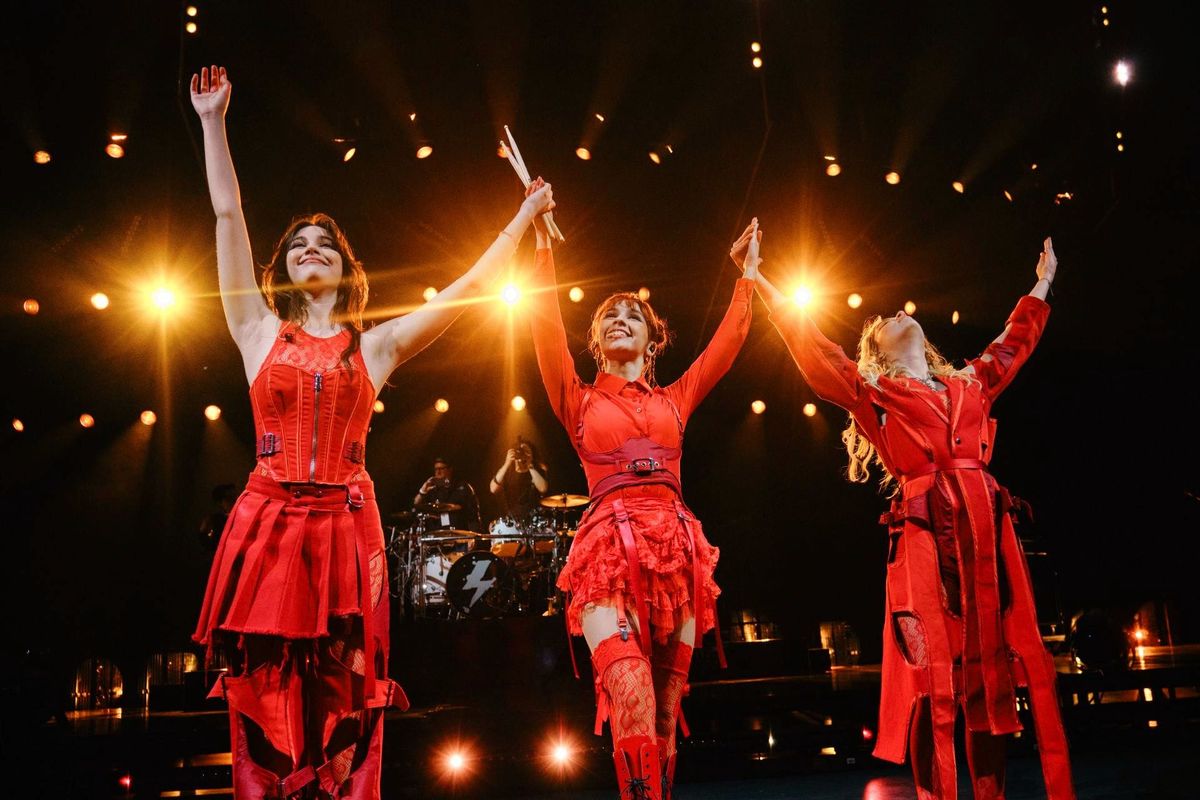](https://www.hypebot.com/the-warning-keep-having-to-prove-they-belong-the-burden-is-on-rock-music/)
[Cory Wong Booked Three Tours Instead of One. Here’s Why That’s Smart.Cory Wong’s new tour isn’t really about a new album — it’s a case study in curating formats, guests, and routing to do an album’s job instead.HypebotHypebot Editorial Desk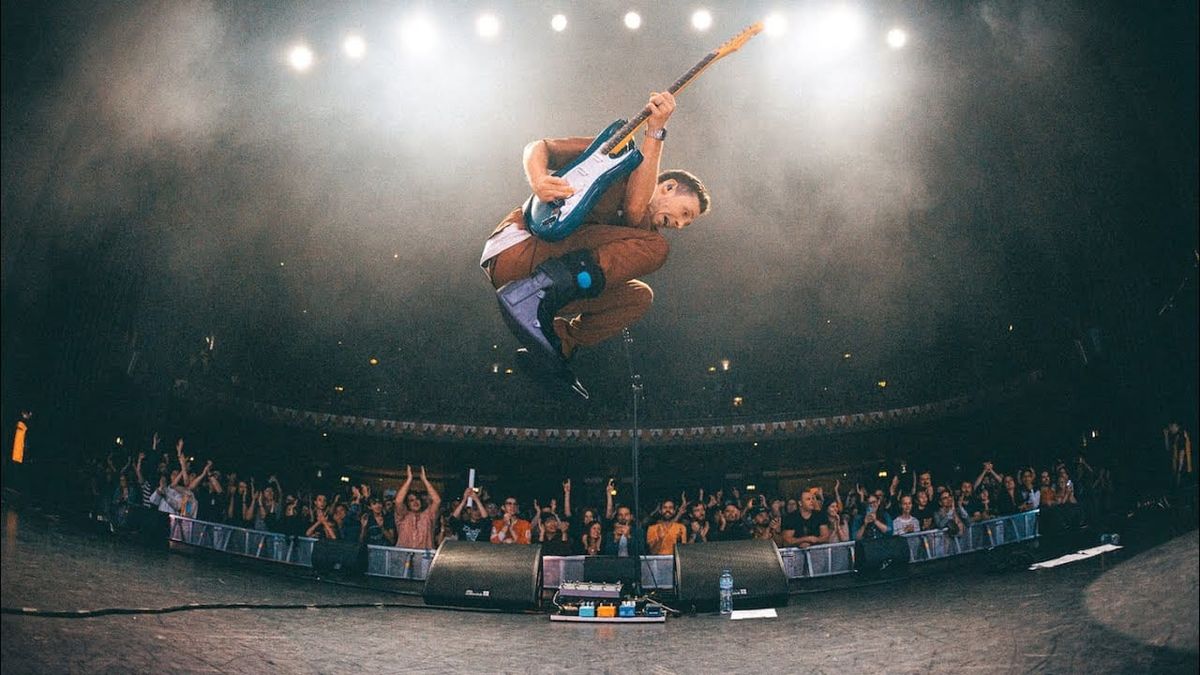](https://www.hypebot.com/cory-wong-booked-three-tours-instead-of-one-heres-why-thats-smart/)
[Bad Brains Changed What a Punk Show Could Be: A Brief HistoryAs early studio recordings receive a first official release, we revisit the stages, breakthroughs and ruptures that made Bad Brains live-music legends.HypebotJeremy Young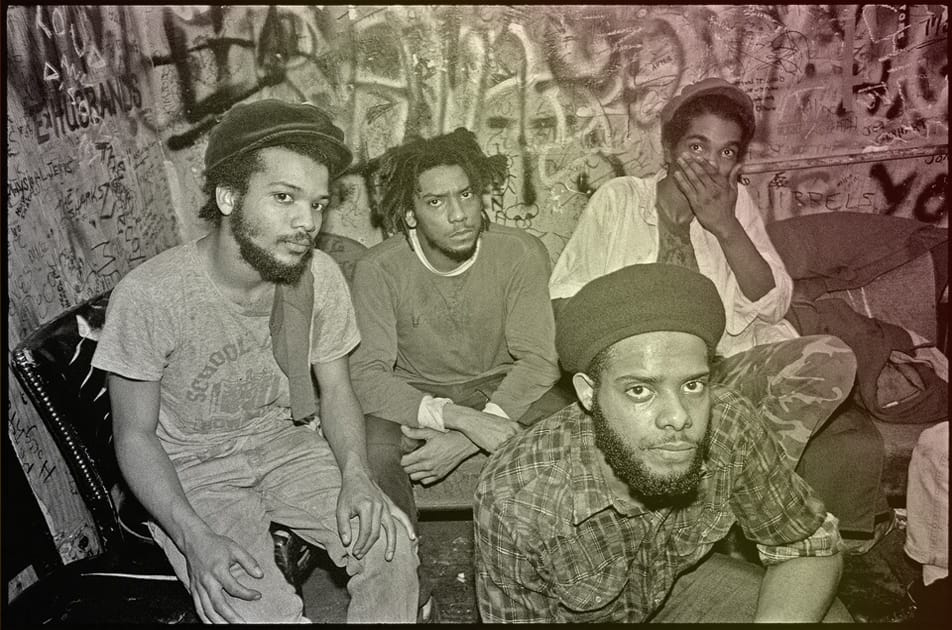](https://www.hypebot.com/bad-brains-changed-what-a-punk-show-could-be-a-brief-history/)
[Same Stadium. Same Message. Very Different Outcome.Zach Bryan just broke an attendance record out Gillette Stadium wearing a “Free Palestine” shirt, two weeks after Macklemore was barred from the same venue.HypebotHypebot Editorial Desk](https://www.hypebot.com/same-stadium-same-message-very-different-outcome/)
### **Advice & Tips**
[What Independent Artists Learn When Their Career Data Starts DisappearingAn essay on why artists need verified career archives to preserve one’s achievements as changing platforms and AI reshape the public record.HypebotGuest Author](https://www.hypebot.com/what-independent-artists-learn-when-their-career-data-starts-disappearing/)
[How to Switch Distributors Without Losing Streams or PlaylistsSymphonic’s guide to keeping audio, identifiers, and metadata consistent when switching to a new distribution platform. Here’s how to do it correctly.HypebotSymphonic](https://www.hypebot.com/how-to-switch-distributors-without-losing-streams-or-playlists/)
[Your Music Is Neither Good Nor Bad — It’s Yours. Stop Trying to Make It “Good.”Drawing on decades of recording experience, a Nashville songwriter meditates on setting aside self-judgment in order to discover one’s own voice.HypebotGuest Author](https://www.hypebot.com/your-music-is-neither-good-nor-bad-its-yours-stop-trying-to-make-it-good/)
[How Artists & Venues Can Boost Instagram Live StreamsInstagram rolled out an in-app feature letting musicians and venues easily boost livestreams to reach a wider audience and drive real-time views.HypebotBruce Houghton](https://www.hypebot.com/how-artists-and-venues-can-boost-instagram-live-streams/)
### **Marketing in Music**
[New Features on Instagram, Facebook, YouTube To Market MusicInstagram, YouTube, and Facebook have dropped Fall 2026 updates. Here’s how to use them to boost your music marketing.HypebotBruce Houghton](https://www.hypebot.com/new-features-on-instagram-facebook-youtube-to-market-music/)
[Was Shakira’s Stadium Livestream So Big It Prompted Another Show?Shakira’s record-breaking livestream and expanded dates beg the question of whether watching a stream can make fans eager to experience it live.HypebotNews](https://www.hypebot.com/was-shakiras-stadium-livestream-so-big-it-prompted-another-show/)
[What Are the Different Tiers of Music Publicity Campaigns?This post breaks down what you can expect to get for your money if you’re an artist hiring a Music PR team.HypebotSoundfly](https://www.hypebot.com/what-are-the-different-tiers-of-music-publicity-campaigns/)
[What I Learned About K-Pop Fandom From BTS and KCON LAHow does K-pop build lasting fandom while creating spaces where fans can participate, connect, and belong?HypebotMIDiA Research](https://www.hypebot.com/what-i-learned-about-k-pop-fandom-from-bts-and-kcon-la/)
### **Streaming & AI**
[The Next Music Economy Will Run on Autonomous AI AgentsThis might be the fix for music’s fragmented rights, metadata, and royalty systems, and help companies pay creators faster with human oversight.HypebotGuest Author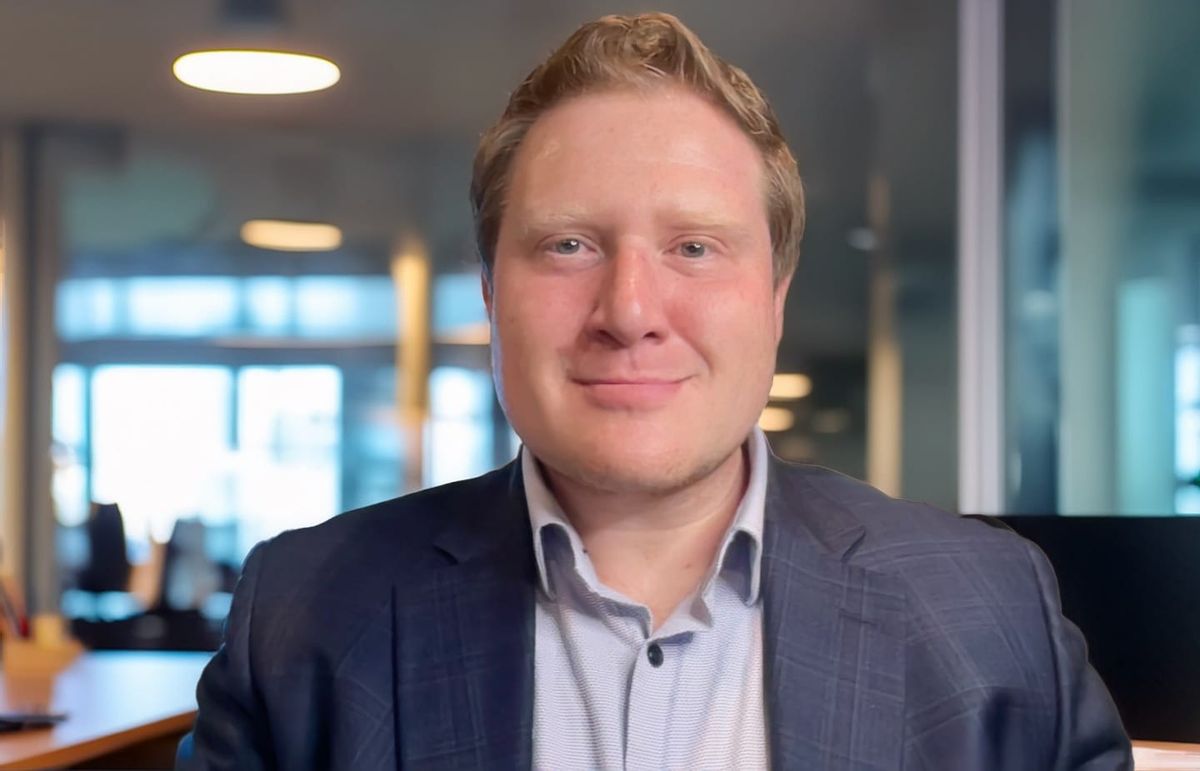](https://www.hypebot.com/the-next-music-economy-will-run-on-autonomous-ai-agents/)
[Spotify opens Wrapped Artist Message Uploads and Updates\[UPDATE\] An email from Spotify For Artists started the countdown for artists to get ready for Spotify Wrapped 2026 and other year end reviews. Learn how.HypebotBruce Houghton](https://www.hypebot.com/spotify-opens-wrapped-artist-message-uploads-and-updates/)
[Who Actually Made This? The Question AI Is Forcing Music to Ask.AI can support music creation, but transparency about human involvement is essential to preserving the meaningful artist–fan connection.HypebotGuest Author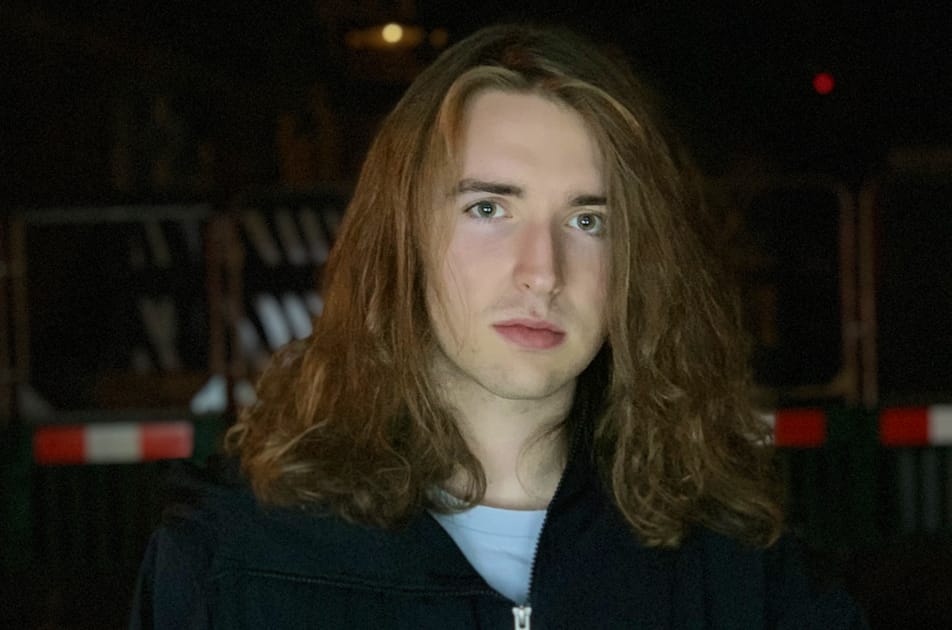](https://www.hypebot.com/who-actually-made-this-the-question-ai-is-forcing-music-to-ask/)
[What Does Music Distribution Really Cost an Artist?Choosing a music distributor means weighing total costs, included services, contract terms, and how fees or revenue shares will change as your catalog and career grow.HypebotGuest Author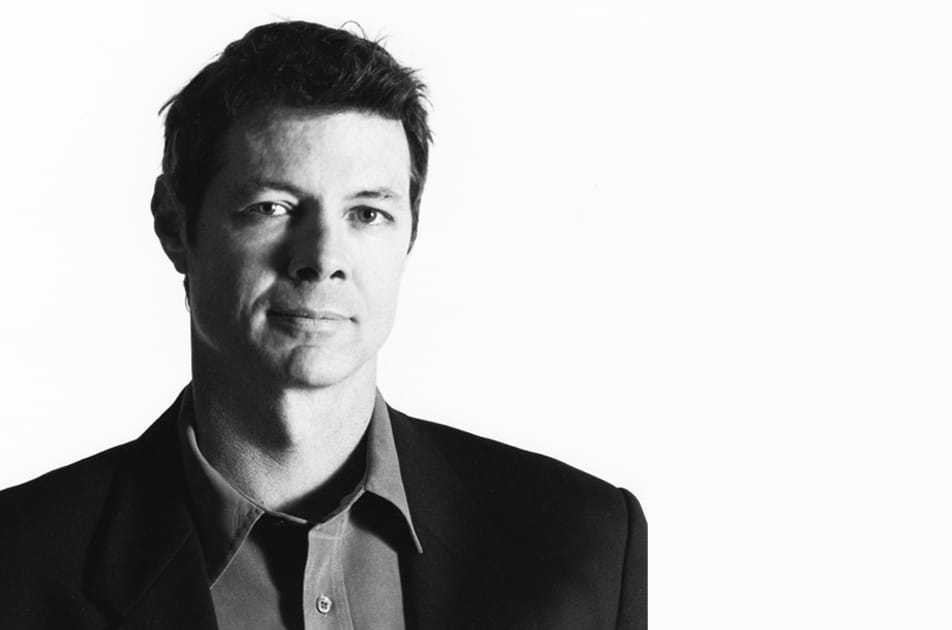](https://www.hypebot.com/what-does-music-distribution-really-cost-an-artist/)
### **Live Focus**
[Checking In on America’s Fastest Growing Indie VenuesAccording to Bandsintown’s 2025 High Notes data, these are the independent US music venues growing quickest in follower counts.HypebotHypebot Editorial Desk](https://www.hypebot.com/checking-in-on-americas-fastest-growing-indie-venues/)
[Mega Music Festivals Are Harming The Planet say ScientistsA new study warns “festival gigantism” is ruining the planet, urging capacity cuts and mandatory carbon budgets for mega music events.HypebotBruce Houghton](https://www.hypebot.com/its-official-mega-music-festivals-are-harming-the-planet/)
[New South Wales Just Protected Live Music by Law. Why Can’t Other Governments?Australia’s NSW set a new live music law that offers a model for governments to support artists and venues through practical protections.HypebotHypebot Editorial Desk](https://www.hypebot.com/new-south-wales-just-protected-live-music-by-law-why-cant-other-governments/)
[Who Needs a Festival Anyway?Australia’s “Dance Music Boom” has officially escaped the festival fence, as Calvin Harris sells over 300k tickets for his AU events alone.HypebotHypebot Editorial Desk](https://www.hypebot.com/who-needs-a-festival-anyway/)
### **News**
[Live Music Industry News: The LatestIn Live Music Industry News, Live Nation’s CEO gets a raise, Steinberg and Zink exit, Reliant expands, NIVA and Great American Beer Fest partner.HypebotBruce Houghton](https://www.hypebot.com/live-music-industry-news-26/)
[US Copyright Office Probes Music Streaming FraudAfter the $8M AI streaming fraud sentence for Michael Smith, the US Copyright Office launched an inquiry into fake streams and stolen royalties.HypebotBruce Houghton](https://www.hypebot.com/us-copyright-office-probes-music-streaming-fraud/)
[ROSTR Announces Searchable Promoter Directory to Help Artists Build Tour RoutesROSTR’s new promoter directory will help artists and agents find local buyers, assess their booking experience, and gain new touring opportunities.HypebotNews](https://www.hypebot.com/rostr-announces-searchable-promoter-directory-to-help-artists-build-tour-routes/)
[School of Rock AllStars Tour Raises $16,000 for Youth Music ScholarshipsSchool of Rock’s 2026 AllStars Tour brought 162 young musicians to stages across the US, raising money to help others access music education.HypebotNews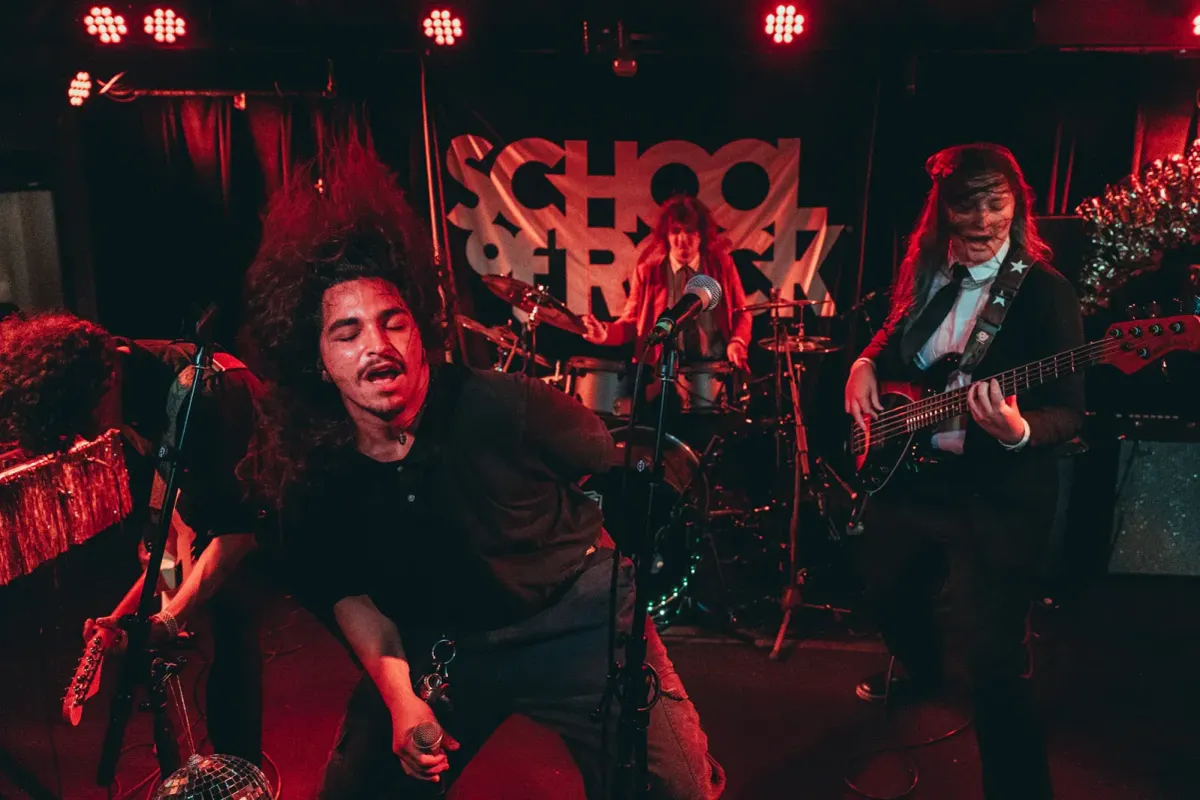](https://www.hypebot.com/school-of-rock-allstars-tour-raises-16-000-for-youth-music-scholarships/)
### ***\*This Week's Wild Card***
[Watch: Roots In The Bronx — Ron E (Episode 1)From the Bronx to the Grammys, Ron E talks music, Chris Brown, Tank and Hitmaka in this new video series. Watch every episode here on Hypebot!HypebotHypebot Editorial Desk](https://www.hypebot.com/watch-roots-in-the-bronx-ron-e-episode-1/)
### Was Shakira's Stadium Livestream So Big It Prompted Another Show?
URL: https://www.hypebot.com/was-shakiras-stadium-livestream-so-big-it-prompted-another-show/
Last updated: 2026-10-08T17:50:26.000Z
[**Shakira’s**](https://www.bandsintown.com/a/90-shakira?utm%5Fsource=hypebot&came%5Ffrom=900) October 3 Madrid concert became **Amazon Music’s most-viewed livestream performance by a female artist**, [according to the platform](https://www.billboard.com/music/latin/shakira-madrid-concert-livestream-amazon-music-record-1236353979/?ref=hypebot.com).
Another 50,000+ fans watched inside the temporary "Shakira Stadium." Two days later, she announced another Madrid show for October 12, extending her residency to 13 dates.
That sequence raises an interesting question for anyone selling live music: ***Does letting people watch a concert at home make a ticket less desirable — or show them why they want one?***
The concern is easy to understand. Broadcast the entire show and you reveal the production, the setlist, the big moments. What’s left to buy?
But a concert’s appeal includes everything the camera can only suggest: the crowd singing around you, the physical force of the sound, the feeling of sharing a moment with thousands of strangers. A broadcast can make those things look more desirable. It can function as a trailer even when it shows the whole performance.
***+Read more:*** [*"Are Music Festivals the New Frontier of Digital Media?"*](https://www.hypebot.com/are-music-festivals-the-new-frontier-of-digital-media/)
Shakira’s livestream included a surprise appearance by **Dua Lipa** for an acoustic “Antología.” Viewers could watch the duet, but they also watched a stadium discover it together. Seeing what happened can deepen the wish to have been there.
The update since Monday makes the next ticket a different proposition, too. On October 6, Europa Press reported that the October 12 finale will feature **Maluma, Dani Martín,** and **Beéle**, with additional surprises promised. Watching Saturday’s show does not reveal everything Monday’s audience will experience.
There’s a complication, though. [*Cadena SER*](https://cadenaser.com/nacional/2026/10/06/shakira-cabrea-a-sus-lobos-anuncia-ahora-un-ultimo-concierto-especial-en-madrid-a-pocos-dias-de-marcharse-cadena-ser/?ref=hypebot.com) reported disappointment among some fans who bought October 11 tickets expecting "the final night." Distinctive dates can create excitement, but changing which one gets the grand farewell can also unsettle [buyers’ expectations](https://www.hypebot.com/what-does-a-band-name-promise-a-ticket-buyer-actually/).
**None of this proves the livestream sold more tickets.** Live Nation cited demand for the extension, without attributing it to the broadcast. Amazon [has not disclosed](https://www.europapress.es/cultura/musica-00129/noticia-homenaje-lorca-dani-martin-maluma-acompanaran-shakira-ultimo-concierto-12-octubre-madrid-20261006113644.html?utm%5Fsource=chatgpt.com) a viewer total, either.
For independent artists, the useful idea is worth testing at a smaller scale: let potential ticket buyers see what an audience gets from your show. Track whether those viewers visit your ticket page or buy. The question is whether watching makes them want to join the crowd.
***+Read more:*** [*"By the Time the Show Is Live, the Content Is Already Out."*](https://www.hypebot.com/by-the-time-the-show-is-live-the-content-is-already-out/)
---
## [**Shakira Tour Dates**](https://www.bandsintown.com/a/90-shakira?utm%5Fsource=hypebot&came%5Ffrom=900)
### Hypebot's Bottom Line: News That Matters to Musicians
URL: https://www.hypebot.com/hypebots-bottom-line-news-that-matters-to-musicians-8/
Last updated: 2026-10-08T17:27:36.000Z
Every day, Hypebot dives into the news and trends shaping the music industry. This latest edition of [**Hypebot’s Bottom Line**](https://www.hypebot.com/tag/bottom-line/) pulls key takeaways from recent stories and what they mean for musicians and creators.
### **Spotify Opens Wrapped Artist Message Uploads and Updates**
End-of-year recaps are a rare global cultural moment that every artist can be a part of. They are also the one time of the year when fans enthusiastically do your marketing for you by sharing their listening and concert data across social media.
Don't leave fan engagement, streams, and ticket sales on the table. Recording a 30-second video message for **Spotify Wrapped**, refreshing your photos on all platforms, and updating your **Bandsintown** tour dates now is arguably the highest ROI marketing task you can do in Q4.
[**Read the full story**](https://www.hypebot.com/spotify-opens-wrapped-artist-message-uploads-and-updates/)
### **It's Official: Mega Music Festivals Are Harming the Planet**
As touring costs remain volatile and promoter profit margins rely heavily on massive scale, capping ticket sales — even to minimize environmental impact — is the absolute last thing most festivals want to do.
But the clash between the economics of **"festival gigantism"** and the reality of the climate crisis is coming to a head, according to this peer reviewed study, and proactive environmental strategy may now be an existential business necessity.
[**Read the full story**](https://www.hypebot.com/its-official-mega-music-festivals-are-harming-the-planet/)
### **New Features on Instagram, Facebook, YouTube To Market Music**
The overarching theme of the Fall 2026 social media updates is frictionless connection. Whether it is bypassing Ads Manager to boost an **Instagram Live**, using **YouTube** AI to test thumbnails, or cutting out feed clutter via **Facebook's new Forum app**, platforms are empowering artists to reach their audiences faster. For music marketers and independent artists, the strategy is clear: stop relying solely on static posts.
The algorithms are prioritizing real-time engagement (Live), episodic video (Shorts Series), and dedicated micro-communities (Forum). By adopting these native tools early, artists can lower their marketing friction and build deeper, more profitable relationships with their fans.
[**Read the full story**](https://www.hypebot.com/new-features-on-instagram-facebook-youtube-to-market-music/)
### **How Artists & Venues Can Boost Instagram Live Streams**
Instagram's new in-app feature is a major win for music marketing. It removes the friction of navigating Meta Ads Manager, allowing artists and venues to spontaneously amplify their reach right before going live.
By capturing immediate, in-the-moment engagement, livestream boosting serves as a powerful new tool for converting casual scrollers into dedicated fans and ticket buyers.
[**Read the full story**](https://www.hypebot.com/how-artists-and-venues-can-boost-instagram-live-streams/)
### **Fans Travel 38% More for Live Music, New Study Shows**
The era of the hometown show being a fan's only option is over. Fans are willing to cross state lines and even international borders to see the artists they love - and they bring heavy economic weight with them. For artists, this means you don't necessarily have to hit every secondary market on a tour.
If you build a compelling event in a centralized hub, your most dedicated fans will travel to you. For independent venues and promoters, the data is a clear mandate: market your shows regionally, not just locally. Partnering with local hotels, restaurants, and transit authorities to alleviate the "accommodation friction" could be the key to turning a one-night show into a massive economic weekend for your entire city.
[**Read the full story**](https://www.hypebot.com/fans-travel-38-more-for-live-music-new-study-shows/)
---
*Get the latest Live Music & Industry News updated continuously from across the web under the Hypebot Industry News tab* [*here*](https://www.hypebot.com/music-industry-news-feed/)*.*
## Hypebot
Essential news & insights for artists and live music pros.
Sign up for free weekly content delivered to your inbox
Subscribe
Email sent! Check your inbox to complete your signup.
### Checking In on America’s Fastest Growing Indie Venues
URL: https://www.hypebot.com/checking-in-on-americas-fastest-growing-indie-venues/
Last updated: 2026-10-08T17:20:24.000Z
With the end of this year starting to come into focus, we're looking back on [**Bandsintown's** 2025 High Notes](https://www.company.bandsintown.com/2025-high-notes?ref=hypebot.com) data to revisit some of the [independent music venues](https://www.hypebot.com/tag/independent-venues/) that made waves last year, and have been continuing that trajectory throughout 2026 as well.
Because while venues across the US have much to celebrate in the ways live music has gained cultural momentum, the economic hardships plaguing the live industry are still very real. [**Bandsintown's**](https://www.hypebot.com/tag/bandsintown/) ongoing partnership with the **National Independent Venue Association (**[**NIVA**](https://www.hypebot.com/tag/niva/)**)** has sought to address that, with a joint [Live Independent](https://www.liveindependent.com/?ref=hypebot.com) initiative that includes independent venue search, featured placements, and certified badges that make finding and supporting independent stages is easier than ever.
To that end, in 2025, Bandsintown generated:
- 1 billion event recommendations for Live Independent venues
- 38 million clicks to buy tickets for Live Independent venues
- 2 million RSVPs for events at Live Independent venues
But now we turn to **the Top 10 independent music venues in terms of follower growth on the platform last year.** Here's the list!
---
## **10\. Preservation Hall — New Orleans, LA**

**Preservation Hall** is a jazz venue on St. Peter Street in New Orleans’ French Quarter. It presents intimate acoustic concerts featuring local musicians who carry forward the city’s traditional jazz heritage. Originally emerging from sessions in an art gallery, the family-run venue continues to connect generations of performers and listeners.
[Visit the venue on Bandsintown.](https://www.bandsintown.com/v/10000990-preservation-hall?utm%5Fsource=hypebot&came%5Ffrom=900)
## **9\. Smartbar — Chicago, IL**
**Smartbar** is an independent Chicago nightclub on North Clark Street dedicated to dance music and DJs from around the world. Located at basement level, it pairs visiting talent with a roster of resident artists. Its recurring parties include Queen!, a longstanding gathering rooted in Chicago house music and LGBTQ+ nightlife.
[Visit the venue on Bandsintown.](https://www.bandsintown.com/v/10001183-smartbar?utm%5Fsource=hypebot&came%5Ffrom=900)
## **8\. Spy Bar — Chicago, IL**

**Spybar** is a basement nightclub on Chicago’s North Franklin Street that opened in 1996\. Focused on electronic music, it hosts internationally recognized DJs and producers alongside emerging artists, residents, and regional talent. Its compact room combines a lounge setting with a dance floor geared toward house and techno fans.
[Visit the venue on Bandsintown.](https://www.bandsintown.com/v/10000065-spy-bar?utm%5Fsource=hypebot&came%5Ffrom=900)
## **7\. Barboza — Seattle, WA**
**Barboza** is an intimate music venue on the lower level of the Neumos complex in Seattle’s Capitol Hill neighborhood. Opened in 2012 as a space for local bands, it occupies a former automobile dealership’s mechanical shop. The below-street-level room puts live music inside a small piece of the neighborhood’s industrial history.
[Visit the venue on Bandsintown.](https://www.bandsintown.com/v/10001284-barboza?utm%5Fsource=hypebot&came%5Ffrom=900)
## **6\. Icehouse — Minneapolis, MN**
**Icehouse** is a live music club on Minneapolis’ Eat Street that opened in 2012\. The venue brings together concerts, food, and drinks, with a calendar that also includes comedy and dancing. Recurring artist residencies sit alongside individual shows, making it a regular gathering place for local musicians and audiences.
[Visit the venue on Bandsintown.](https://www.bandsintown.com/v/10001520-icehouse?utm%5Fsource=hypebot&came%5Ffrom=900)
**+Read more:** [*"Why the Levitt Foundation Model Should Not Be an Outlier"*](https://www.hypebot.com/why-the-levitt-foundation-model-should-not-be-an-outlier/)
## **5\. The Barbary — Philadelphia, PA**

**The Barbary** is a two-floor nightclub in Philadelphia’s Fishtown neighborhood with roots in the city’s blues, punk, and indie nightlife scenes. It reopened in February 2025 following a major renovation, with upgraded sound and lighting and an outdoor patio. Today, its programming combines established dance parties with underground house and techno.
[Visit the venue on Bandsintown.](https://www.bandsintown.com/v/10001405-the-barbary?utm%5Fsource=hypebot&came%5Ffrom=900)
## **4\. Brillobox — Pittsburgh, PA**
**Brillobox** is a Pittsburgh bar and cultural space on Penn Avenue that has been operating since 2005\. Alongside its food and drinks, the venue uses its second floor for entertainment and community events, including DJ dance parties, art events, spoken word, fundraisers, variety shows, and screenings.
[Visit the venue on Bandsintown.](https://www.bandsintown.com/v/10001276-brillobox?utm%5Fsource=hypebot&came%5Ffrom=900)
## **3\. The Virgil — Los Angeles, CA**
**The Virgil** is a family-owned cocktail bar and entertainment venue on the edge of Los Angeles’ Silver Lake neighborhood. Its Stage Side hosts live music, comedy, DJs, and special events, while its B Side offers weekend DJ sets and dancing. Cocktails and a full beer selection round out the experience.
[Visit the venue on Bandsintown.](https://www.bandsintown.com/v/10000235-the-virgil?utm%5Fsource=hypebot&came%5Ffrom=900)
## **2\. Shubert Theatre — New York, NY**
**The Shubert Theatre** is a historic Broadway theater on West 44th Street in Manhattan’s Theater District. Operated by the Shubert Organization, it presents theatrical productions in an ornate auditorium featuring decorative plasterwork and painted panels. The building sits beside the Booth Theatre along the well-known Shubert Alley.
[Visit the venue on Bandsintown.](https://www.bandsintown.com/v/10002035-shubert-theatre?utm%5Fsource=hypebot&came%5Ffrom=900)
## **1\. Spirit — Pittsburgh, PA**

**Spirit** is a music venue, restaurant, and event space in Pittsburgh’s Lawrenceville neighborhood. Spread across three levels, it combines spaces for live entertainment with a pizzeria and rooftop garden bar, giving visitors somewhere to eat, drink, and gather alongside the venue’s shows.
[Visit the venue on Bandsintown.](https://www.bandsintown.com/v/10000587-spirit?utm%5Fsource=hypebot&came%5Ffrom=900)
**+Read more:** [*"Pro Guide: How to Maintain Your Venue's PA System Over Time"*](https://www.hypebot.com/how-to-maintain-your-venues-pa-system-over-time/)
### US Copyright Office Probes Music Streaming Fraud
URL: https://www.hypebot.com/us-copyright-office-probes-music-streaming-fraud/
Last updated: 2026-10-08T14:41:51.000Z
The [**US Copyright Office**](https://www.hypebot.com/tag/us-copyright-office/) **(USCO)** has published a **Notice of Inquiry** (NOI) soliciting public comments on the growing crisis of music streaming fraud.
The probe aims to understand how bad actors use bot farms, click farms, and artificial intelligence to siphon billions in [royalties](https://www.hypebot.com/tag/royalties/) away from legitimate, hard-working artists and rightsholders.
### **The Catalyst: The $8 Million Michael Smith Case**
The government's announcement arrived just one day after a federal judge sentenced North Carolina musician **Michael Smith** to 18 months in prison.
In the first-ever US criminal prosecution for AI-assisted music streaming fraud, prosecutors revealed that between 2017 and 2024, Smith used up to 10,000 automated bot accounts to stream hundreds of thousands of AI-generated tracks billions of times. His massive operation successfully defrauded streaming platforms out of more than **$8 million** in royalty payments.
**Mike Smith.*
### **What the USCO Wants to Know**
To prevent cases like Smith's from draining the royalty pool, the Copyright Office is asking for industry's input. The office is specifically seeking data and evidence regarding:
- The prevalence and economic impact of specific schemes (e.g., bot farms, playlist manipulation).
- The exact relationship between streaming fraud and AI-generated music.
- How effectively digital platforms, distributors, and initiatives (like the Music Fights Fraud Alliance) are detecting and preventing artificial plays.
- Potential legislative, statutory, or regulatory solutions to claw back stolen royalties and permanently ban offenders.
**Artists, labels, and industry stakeholders have until November 23, 2026, to submit their initial written comments, with reply comments due by December 21, 2026.**
### **Hypebot's Bottom Line**
The Michael Smith sentencing and this new US Copyright Office inquiry mark a massive turning point for the music industry.
For years, artificial streaming was largely treated as a platform Terms of Service violation - a nuisance left to distributors and DSPs to play whack-a-mole with. Now, the federal government is formally acknowledging that streaming fraud is a serious criminal enterprise that actively steals from the pockets of legitimate creators.
If the industry unites to provide hard data to the Copyright Office during this comment period, it could finally lead to the standardized, legally enforceable anti-fraud guardrails the DIY and independent music ecosystem desperately needs.
***+Read more:*** [*"AI Music Disputes Need More Than a Label: 5 Records All Artists Should Keep"*](https://www.hypebot.com/ai-music-disputes-need-more-than-a-label-5-records-all-artists-should-keep/)
---
*Get the latest Live Music & Industry News updated continuously from across the web under the Hypebot Industry News tab* [*here*](https://www.hypebot.com/music-industry-news-feed/)*.*
## Hypebot
Essential news & insights for artists and live music pros.
Sign up for free weekly content delivered to your inbox
Subscribe
Email sent! Check your inbox to complete your signup.
### Who Needs a Festival Anyway?
URL: https://www.hypebot.com/who-needs-a-festival-anyway/
Last updated: 2026-10-08T14:37:41.000Z
[**Calvin Harris**](https://www.bandsintown.com/a/4733-calvin-harris?utm%5Fsource=hypebot&came%5Ffrom=900) has sold 330,000 tickets for ten [**Australian**](https://www.hypebot.com/tag/australia/) outdoor shows scheduled for February 2027, according to [*The Music Network*](https://themusicnetwork.com/news/calvin-harris-just-made-australian-touring-history?ref=hypebot.com). Promoter Untitled Group describes the sold-out run as **the largest electronic headline tour in Australian history**. Five nights at Sydney’s Domain alone are expected to bring in 150,000 fans.
For an artist whose previous Australian appearances were largely built around [festivals](https://www.hypebot.com/tag/festivals), that is quite a massive first dedicated headline tour. Hence: when one DJ can draw that many people, why even bother with festival infrastructure at all?
Harris’s announcement landed alongside another milestone. In a September 25 recap, **Frontier Touring** [reported that](https://www.frontiertouring.com/news/dom-dolla-plays-to-60-000-fans-at-sold-out-marvel-stadium-homecoming?ref=hypebot.com) [**Dom Dolla**](https://www.bandsintown.com/a/1602870-dom-dolla?utm%5Fsource=hypebot&came%5Ffrom=900) had played to 60,000 fans at Melbourne’s Marvel Stadium. The hometown show followed his Australian stadium debut at Sydney’s Allianz Stadium in December 2025 and introduced a new production built specifically for the larger setting.
Put those developments together and a different picture of Australia’s [dance music](https://www.hypebot.com/tag/edm/) business emerges. A festival-sized audience can now gather around an artist’s name, with a stadium, park or racecourse becoming the destination.
For years, festivals have offered an efficient way to assemble that crowd — one ticket buying a collection of artists, a day out with friends and the possibility of discovering someone you did not come to see. The [festival brand](https://www.hypebot.com/what-primavera-sounds-lineup-says-about-live-music-right-now/) helps connect those pieces, while several acts contribute to the appeal of the bill.
A headline ticket makes a more [specific promise](https://www.hypebot.com/what-does-a-band-name-promise-a-ticket-buyer-actually/). Fans are buying into the artist at the centre of the evening, but [support acts](https://www.hypebot.com/how-to-nail-your-next-supporting-act-set/) still matter too: Dom Dolla’s Melbourne bill included **Green Velvet, Torren Foot,** and **RONA. b2b DJ JNETT.** But ultimately, the event is organized around one performer’s identity and show.
Harris’s five-night Sydney booking clearly proves that there's enough demand to sustain repeated outdoor shows in the same market, rather than a single festival appearance. And it makes sense, too. Harris' recent sets have been massive. He doesn't *need* festival infrastructure to bring that kind of heat.
A headline event has to justify its own ticket price and carry its own production costs. A sellout tells us about demand; it does not tell us the profit margin. Nothing in these announcements establishes that a stadium show is cheaper, easier or more lucrative than a festival booking.
Nor do two major acts establish that every electronic artist can make the leap. Harris brings an extensive hit catalogue; Dom Dolla brings the pull of a hometown occasion and an expanding international live career. These are substantial advantages.
One thing remains clear: Australia’s dance audience is showing up outside the festival fence. For the artists capable of bringing it there, the headline show is becoming an event big enough to stand on its own.
---
## [**Calvin Harris Tour Dates**](https://www.bandsintown.com/a/4733-calvin-harris?utm%5Fsource=hypebot&came%5Ffrom=900)
### Think You Know Music? Prove It with Spotify’s new Music Quiz
URL: https://www.hypebot.com/think-you-know-music-prove-it-with-spotifys-new-music-quiz/
Last updated: 2026-10-08T14:07:00.000Z
So, you claim you knew your favorite band before they blew up? You swear you know every deep cut, secret track, and producer credit by heart?
**It’s time to put your ego on the line.**
Following a test run with the [**BTS ARMY**](https://newsroom.spotify.com/2026-10-06/music-quiz-expansion/?ref=hypebot.com), Spotify has announced the global expansion of its interactive[**Music Quiz**](https://newsroom.spotify.com/2026-10-06/music-quiz-expansion/?ref=hypebot.com)**.** Rolling out to Spotify Premium listeners across 11 countries, this feature covers trivia for over 2,000 artists.
**It’s fast, it’s competitive, and it’s about to expose anyone who’s been faking their music IQ.**
### **What is the Spotify Music Quiz?**
The **Spotify Music Quiz** is an interactive, in-app trivia challenge that tests listeners on an artist's entire history.
Instead of basic multiple-choice questions, the quiz forces fans to identify pixelated album art, guess songs from micro audio previews, and answer cutthroat trivia about catalog lore and career milestones.
### **How to Play the Spotify Music Quiz**
Want to dominate the group chat? Follow these quick steps to get started.
1. **Update the App:** Grab the latest version of the Spotify app on iOS or Android.
2. **Pick an Artist:** Stream a track from any participating artist on Spotify Premium.
3. **Scroll to the Challenge:** Swipe down on the **Now Playing** screen until you hit the **Music Quiz** card.
4. **Take the Test:** Tap in to answer audio previews, album art reveals, and trivia.
5. **Flex Your Score:** Wrap up the quiz, screenshot your score, and blast it to your friends to demand they beat it.
### **Who Gets to Claim Bragging Rights?**
Right now, the feature is rolling out to Premium users aged 18+ in the **U.S., U.K., Canada, Ireland, Australia, New Zealand, Singapore, India, Nigeria, South Africa,** and **Indonesia.** Quizzes are launching in English first, with plans to add more languages and markets soon.
If the card hasn't popped up for your favorite artist yet, don't panic - Spotify is rolling this out gradually across its 2,000+ artist roster. Keep checking back every time you hit play.
### **Hypebot's Bottom Line**
Let’s call it like it is. With **Spotify Music Quiz**, the isn't just giving fans a fun toy; they’re **Weaponizing Stan Culture.**
By turning passive listening into a competitive gamified sport, Spotify solves two headaches for streaming platforms: keeping users locked inside the app longer and creating free, user-generated promotional hype across social media.
The only question left is simple. **Are you about to be humbled by a 2-second audio clip?** Go update your app and find out.
### What Does Music Distribution Really Cost an Artist?
URL: https://www.hypebot.com/what-does-music-distribution-really-cost-an-artist/
Last updated: 2026-10-08T14:00:29.000Z
*By *Stevan Pasero*, Founder/CEO of* [***Sugo Music Group***](https://sugomusic.com/?ref=hypebot.com)
For independent artists, choosing a [music distributor](https://www.hypebot.com/tag/distribution/) can look like a simple comparison of prices and percentages. One distributor charges an annual fee while allowing artists to retain 100% of their standard distribution [royalties](https://www.hypebot.com/tag/royalties/). Another charges no upfront distribution fee but receives a percentage of the revenue the music generates. Others combine elements of both approaches.
But those headline numbers don't necessarily tell you what distribution will actually cost — or which arrangement makes the most sense for your career. The goal is ultimately to understand: **“What am I paying, what am I receiving in return, and how will those economics change as my catalog and revenue grow?”**
Understanding the three basic economic models of music distribution is a good place to start.
## **1\. Fee-Funded Distribution**
Under a fee-funded model, the artist or label pays the distributor directly, typically through an annual subscription, per-release fee, or similar charge.
Companies such as **DistroKid, TuneCore, Ditto Music,** and **Amuse** offer variations of this approach. Depending on the distributor and plan, artists may pay a recurring fee while retaining all or nearly all of their standard streaming and download revenue.
The appeal is easy to understand. Once the distribution fee has been paid, increasing streaming revenue doesn't necessarily mean paying the distributor a larger percentage of those earnings. But artists should look beyond the advertised subscription price.
This is particularly important for artists who release music frequently. An artist planning a series of singles throughout the year may incur multiple submission or release costs under certain pricing structures, along with recurring account or subscription fees. If those singles are later combined and released as an EP or album, the economics should be evaluated across the entire release strategy — not simply the cost of distributing one release.
Before choosing a distributor, estimate how many singles, EPs, and albums you expect to release during the year and calculate the total cost accordingly. Also ask whether the fee covers one artist or several, unlimited releases or a limited number, and which services are included.
For an artist releasing frequently or generating substantial revenue, a fixed-fee structure may be economically attractive. For an artist generating modest revenue, however, the fee remains an expense regardless of how the music performs.
## **2\. Revenue-Share Distribution**
Instead of relying primarily on an upfront or annual distribution fee, a revenue-share distributor receives an agreed percentage of the revenue generated by the recordings.
**AWAL** and **ONErpm** are examples of distributors using revenue participation in their distribution economics. [Sugo Music Group](https://sugomusic.com/?ref=hypebot.com), the company I founded, also operates under a revenue-share distribution model.
The basic economic distinction is important: the cost generally rises and falls with the revenue generated by the catalog. When a recording generates modest revenue, the distributor's share is correspondingly modest. As revenue grows, both the artist's earnings and the distributor's share increase.
Instead of the artist paying simply to gain access to distribution, both parties participate economically in the performance of the recordings. That doesn't automatically make revenue sharing better (or cheaper). For a high-earning artist, giving up a percentage of revenue may eventually cost considerably more than paying a fixed annual fee.
The important question is what the distributor provides in return for that participation.
## **3\. Hybrid Distribution**
Some distributors use hybrid models, combining fees and revenue participation or offering different arrangements depending on the artist, plan, service, or partnership.
**CD Baby, Symphonic Distribution,** and **UnitedMasters** illustrate variations of this broader category. An artist might encounter an upfront or recurring charge combined with commissions on particular revenue streams. Another distributor may offer a subscription plan for some artists while operating selective revenue-share partnerships for others.
This is why simply asking whether a distributor “charges a fee” can be misleading. You need to understand the entire arrangement.
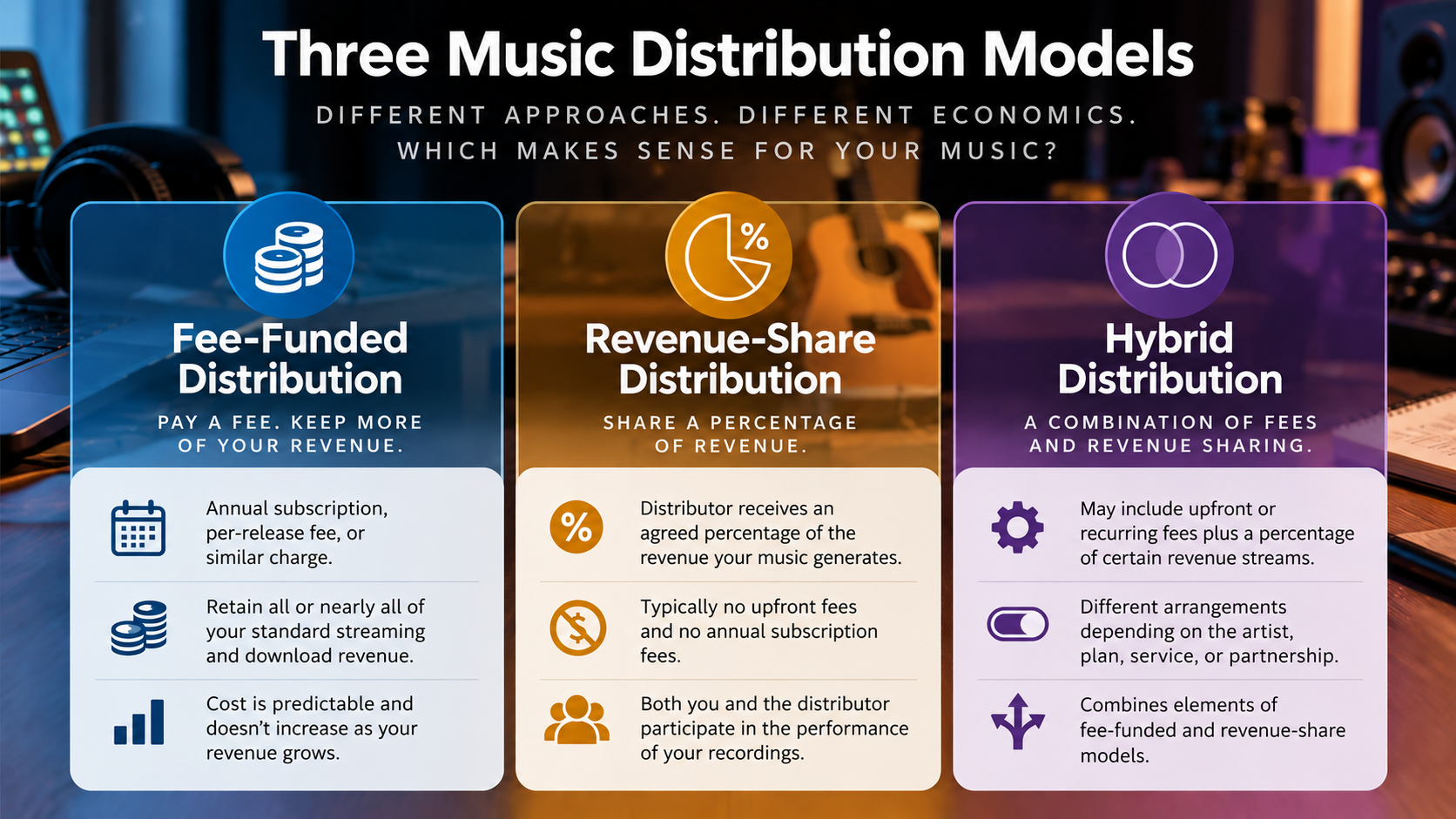
## **Who Carries the Financial Risk?**
One useful way to compare distribution models is to ask who pays before the music earns money.
- Under a **fee-funded structure**, the artist generally commits money to distribution regardless of how the release performs. The artist assumes that initial financial risk in exchange for retaining more of the revenue if the music succeeds.
- Under a **revenue-share model**, there may be little or no upfront distribution cost, but the distributor participates in the revenue if the recordings earn money.
- **Hybrid arrangements** can distribute that risk somewhere between the two.
For an established artist with predictable streaming revenue, paying a fixed fee may make financial sense. For a developing artist or a label managing a catalog with uncertain performance, avoiding recurring costs may have different advantages.
Neither structure is inherently right for everyone.
## **There Is No Universal Break-Even Point**
Artists sometimes try to determine the exact revenue level at which a subscription becomes more economical than a percentage-based arrangement. That's a useful exercise — but there is no universal answer.
The calculation depends on the agreements being compared: subscription costs, release fees, revenue percentages, number of artists and releases, optional charges, included services, and other contractual terms.
Catalog size and release frequency matter too. An artist releasing numerous singles — or a label managing dozens of artists, releases, or catalog assets — can face very different economics depending on how the distributor structures its plans and charges. Likewise, a revenue percentage that seems inexpensive when a catalog generates modest income can become a significant expense as revenue increases.
Run the numbers using your own catalog, release schedule, and realistic revenue expectations.
**+Read more:** [*"The Modern Guide to Getting Your Music Played on Radio"*](https://www.hypebot.com/the-modern-guide-to-getting-your-music-played-on-radio/)
## **Distribution Is More Than Uploading Music**
Price comparisons become more difficult because not all distribution services are alike. Virtually every distributor can deliver recordings to major streaming platforms. The differences often emerge in what happens before and after delivery.
Depending on the company and agreement, services may include:
- Metadata review and quality control
- Artwork review and DSP compliance
- Royalty accounting and reporting
- YouTube Content ID
- Social-platform monetization
- Release scheduling
- Artist and collaborator splits
- Catalog management
- Rights administration
- Cover-song licensing assistance
- Publishing administration
- Customer or account support
- Marketing and promotional tools
- Analytics
- Licensing or neighboring-rights services
Some of these may be included. Others may cost extra or may not be provided at all. An artist comparing distribution offers should therefore avoid treating distribution as a commodity where the only meaningful difference is the headline price.
A less expensive plan isn't necessarily less expensive if you need to purchase important services separately — or spend significant time handling them yourself.
## **Don't Forget About Publishing**
For artists who also write their own songs, there is another important consideration: music publishing. Distribution and publishing administer different rights. Music distribution primarily concerns the sound recording, while music publishing concerns the underlying musical composition — the song itself.
Some music distributors or affiliated companies also offer publishing administration services that may include registering compositions with collection societies around the world and helping collect eligible mechanical and performance royalties.
These services may be included in a broader relationship, offered separately, or subject to additional fees or commissions.
For artists who write or control their songs, this can affect the overall value of a distribution relationship. A distributor that also provides publishing administration may offer a different level of service than a distribution-only company — but artists should understand what is included, what rights are being administered, and what the service costs.
This is another reason that comparing distributors solely by a subscription fee or royalty percentage may not provide the full picture.
***+Read more:*** [*"The Spotify Paradox: More Powerful, Impossible to Leave"*](https://www.hypebot.com/the-spotify-paradox-more-powerful-impossible-to-leave/)
## **Nine Questions to Ask Before Choosing a Distributor**
Before signing up or moving your catalog, look beyond “100% royalties” or “no upfront fees” and ask:
- **1) What will I actually pay each year?** *Include subscriptions, per-release charges, additional-artist fees, optional services, and other applicable charges.*
- **2) Does the distributor participate in my revenue?** *If so, determine which revenue streams are covered and what percentage applies.*
- **3) What services are included?** *Compare the actual service package rather than assuming every distributor provides the same level of support.*
- **4) What happens as my catalog grows?** *A model that works well for three releases may look very different when you're managing 30 or 300.*
- **5) What happens if my revenue grows significantly?** *Calculate how fixed fees and revenue percentages would affect you at several realistic revenue levels.*
- **6) What are the contract and exit terms?** *Understand exclusivity, term length, renewal provisions, takedown procedures, rights granted, and what happens when the relationship ends.*
- **7) How does my release strategy affect the cost?** *If you plan to release multiple singles throughout the year — and perhaps later combine those songs into an EP or album — calculate the cost of your complete release schedule rather than a single release.*
- **8) Do I also need publishing administration?** *If you write or control your compositions, determine whether the company offers publishing administration, global song registrations, and collection of eligible publishing royalties, and whether those services involve separate fees or commissions.*
- **9) What do I actually need from a distributor?** *A self-sufficient artist who wants basic delivery may value a different model than an artist or label seeking hands-on catalog support, publishing administration, rights management, or additional services.*
## **Don't Choose a Distributor by One Number**
[Independent artists](https://www.hypebot.com/tag/indie-artists/) have more distribution choices than ever, but that also means more business models to evaluate. A distributor that allows artists to retain 100% of their standard distribution royalties may still charge fees. A distributor charging no upfront fee may participate in revenue. A hybrid distributor may do both under different circumstances.
The goal is to understand the total economics of the relationship.
Before choosing a distributor, calculate the likely cost using your own catalog and release schedule, identify which services you need, consider whether you also need publishing administration, read the agreement, and think about how the economics could change as [your career](https://www.hypebot.com/tag/career/) grows.
The most useful question to ask should always be:
***“Which distribution relationship gives me the right combination of cost, services, support, and value for where my music career is today — and where I want it to go?”***
---
**Stevan Pasero* is the Founder and CEO of* [***Sugo Music Group***](https://sugomusic.com/?ref=hypebot.com) *and has worked in the music industry for 50 years as a music distribution and publishing executive, recording artist, producer, composer, and author. He is the author of* [*Musical Darwinism: The Past Is the Portal to the Future of Music*](https://www.amazon.ca/Musical-Darwinism-Portal-Future-Music/dp/B0F5M6VJ4K?ref=hypebot.com) *and contributes to the Sugo Music Group Music Knowledge Center.*
### How to Switch Distributors Without Losing Streams or Playlists
URL: https://www.hypebot.com/how-to-switch-distributors-without-losing-streams-or-playlists/
Last updated: 2026-10-08T13:32:12.000Z
### **How to Switch Distributors Without Losing Streams or Playlists**
*By* [***Randi Zimmerman***](https://blog.symphonic.com/author/randi-zimmerman/?ref=hypebot.com)*of* [***Symphonic***](https://blog.symphonic.com/2026/09/17/how-to-switch-distributors-without-losing-streams/?ref=hypebot.com)
[Switching distributors ](https://blog.symphonic.com/2025/08/05/what-no-one-tells-you-about-switching-distributors-2/?ref=hypebot.com)doesn’t have to be a headache, but it definitely can be if it’s done without a plan. You’ve built up [streams](https://www.hypebot.com/tag/streaming-music/), [playlist placements](https://www.hypebot.com/tag/playlists/), saves, and listening history, and the last thing you want is to watch all of that disappear because of a bad transfer.
The good news is… losing streams and playlists isn’t some unavoidable side effect of switching distributors that you just have to roll over and accept. With the right preparation and the right tools, you can move your catalog to a new distributor without disrupting your music, your stats, or your fans’ listening experience.
Here’s how to do it the right way…
## Why Can Streams and Playlists Be Affected When You Switch Distributors?
Most artists don’t lose streams or playlist placements just because they switched distributors. The problems usually come from what changes *during* the switch. DSPs like [**Spotify**](https://www.hypebot.com/tag/spotify) and [**Apple Music**](https://www.hypebot.com/tag/apple-music/) don’t track music by title alone. They rely on identifiers and metadata to recognize whether a track is the same release they already have on their platform.
If something important doesn’t match, the DSP may treat the new delivery as a completely separate release. That’s when you start seeing issues like duplicate versions, disconnected stats, or playlist placements dropping off.
The most common cause is assigning new codes. ISRCs identify individual tracks, and UPCs identify a release as a whole. If those codes change during migration, platforms may not connect the new version to the existing streaming history. [Metadata ](https://blog.symphonic.com/2024/06/26/how-proper-metadata-improves-your-musics-chance-of-success-2/?ref=hypebot.com)mismatches can also break that link, even if the audio is identical.
**Small differences matter more than most artists realize, including things like:**
- track titles or formatting changes
- version tags like Remix, Live, or Acoustic
- explicit vs. clean status
- release dates
- track order
Another major mistake is handling takedowns too early. If your old distributor removes the release before the new version is fully delivered and mapped, you can create gaps where the music disappears temporarily. In those cases, playlists don’t always reconnect automatically once the release comes back.
Not only that, but many issues also happen when artists try to manually re-upload their catalog from scratch instead of using a structured migration process. Without consistent identifiers and proper checks, it’s much easier for duplicates or missing history to slip through.
**The good news is that all of this is preventable.** If your identifiers stay consistent, your metadata matches, and the timing is handled correctly, you can switch distributors without losing the progress you’ve already built, without missing a beat.
***+Read more:*** [*"The Indie Artist's Guide to Maximizing Discovery With SoundCloud"*](https://www.hypebot.com/the-indie-artists-guide-to-maximizing-discovery-with-soundcloud/)
### **Step 1: Prep Your Catalog Before You Switch**
Before you start moving anything, the most important part of switching distributors is the prep. A smooth migration depends on having the right assets and information ready ahead of time, especially if you want DSPs to recognize your releases as the same music and keep your streams and playlists intact.
At the very least, you should gather the original files and details tied to every release in your catalog. This includes the same audio and artwork that are currently live, along with the exact metadata that DSPs already have on record.
**Here’s what you’ll want to have ready before starting your migration:**
- audio files and cover artwork
- track titles, release titles, and song order
- existing ISRCs for each track
- existing UPCs for each release
- original release dates
- songwriter, composer, and publishing info (if available)
- any partner-specific artist identifiers (Spotify URI, Apple Artist ID, YouTube channel links)
- territory restrictions or delivery notes that were applied with your previous distributor
It’s also worth flagging any alternate versions in your catalog, like remasters, deluxe editions, live recordings, or acoustic versions. These definitely need to be mapped carefully so they don’t get delivered as duplicates.
**Remember, your core release structure needs to match what’s already live.** That means keeping the same identifiers, titles, versions, and sequencing. Supplemental information like additional contributors or credits can usually be added later, but the foundational details need to stay consistent for DSPs to carry over your streaming history.
Once everything is organized, you’re ready for step 2!
### **Step 2: Create Your Releases With TransferTrack**
> TransferTrack is part of Symphonic’s music distribution platform, built specifically to help artists switch distributors without losing their streaming history.
Once you’ve gathered your files and metadata, the next step is recreating your catalog with your new distributor. This is where migration can either go smoothly or get complicated, depending on how closely everything matches what’s already live on DSPs.
If you’re switching over to Symphonic, you’re in luck! To simplify this process as much as possible, we created a tool called [**TransferTrack**](https://blog.symphonic.com/2024/03/26/how-symphonics-transfertrack-tool-can-save-you-time/?ref=hypebot.com)**.** After years of seeing people struggle with this process, we knew we had to create something to change the game. Now, instead of manually rebuilding every release from scratch, TransferTrack lets you import existing release data directly from Spotify and review it before delivery. **That means with TransferTrack, you can:**
- import metadata and artwork automatically
- flag mismatches or missing information before submission
- retain ISRCs and UPCs so DSPs recognize the release correctly
- streamline uploads for larger back catalogs
All right from your Symphonic account, you can start a transfer by providing a Spotify artist or release link. From there, you’ll upload any missing assets, confirm the metadata matches, and submit your releases for review.
Once approved, your catalog can be delivered to DSPs with the identifiers and structure needed to keep your streams and playlists connected. 💪
Want to see it in action? [Try TransferTrack for free here.](https://community.symphonicdistribution.com/transfertrack-demo?%5F%5Fhstc=77898315.8792607ca1d440a8d20aeb2637dd2181.1791398907568.1791398907568.1791398907568.1&%5F%5Fhssc=77898315.5.1791398907568&%5F%5Fhsfp=b706004c2fe6562b9e2f974b678aca27&ref=hypebot.com)
### **Step 3: Coordinate Takedowns Carefully**
Once your catalog has been delivered through Symphonic and your releases are live on DSPs, the next step is handling takedowns with your previous distributor. This is one of the most important parts of the entire migration process, because poor timing here is what leads to gaps, lost playlist placements, or disconnected stats…
**The main rule is simple:** *don’t take anything down until the new version is fully delivered and properly mapped.* If the old release disappears too early, DSPs may treat the new delivery as a separate upload instead of a continuation of the existing release, which can interrupt your streaming history.
Instead, confirm that your releases are live through Symphonic first, then coordinate the takedown timing with your old distributor so the transition happens cleanly. Avoid manually deleting releases unless you’re specifically instructed to do so, and make sure any split catalog situations are clearly identified ahead of time.
Once the old versions are removed and the new ones are fully in place, your catalog should stay connected and uninterrupted across platforms.
### **Step 4: Verify Everything After the Switch**
Once your catalog is fully live through your new distributor, the last step is making sure everything transferred the way it should. Even when a migration is handled correctly, it’s still worth reviewing your releases across DSPs during the first few days to confirm that your streaming history stayed connected.
Start by checking that the correct versions of your releases appear on your artist profiles, with the right artwork, track order, and metadata. You’ll also want to make sure your performance data carried over properly.
**To help you out, here are a few key things to verify:**
- Your releases are showing up correctly on Spotify, Apple Music, and other DSPs
- Artwork, track order, and metadata match the original versions
- Streams, saves, and listening history are still reflected
- Playlist placements remain active
- No duplicate versions appear on your artist profile
- Territory availability matches your previous settings
It’s normal for some platforms to take a little time to fully sync stats or playlist mapping after a catalog move, which is why monitoring the transition early matters. If anything looks off, catching it quickly makes it much easier to resolve before it becomes a longer-term issue.
If you notice anything that doesn’t look right, hit up our [Help Desk](https://support.symdistro.com/hc/en-us?%5F%5Fhstc=77898315.8792607ca1d440a8d20aeb2637dd2181.1791398907568.1791398907568.1791398907568.1&%5F%5Fhssc=77898315.5.1791398907568&%5F%5Fhsfp=b706004c2fe6562b9e2f974b678aca27&ref=hypebot.com). We can help fix issues quickly to make sure your streaming history stays intact. 🛠️
**+Read more:** [*"How to Save Time and Be Everywhere: A Guide to Bandsintown’s Artist Marketplace"*](https://www.hypebot.com/how-to-save-time-and-be-everywhere-a-guide-to-bandsintowns-artist-marketplace/)
### **Some Final Thoughts…**
Switching [distributors](https://www.hypebot.com/tag/distribution/) doesn’t have to mean starting over. When handled correctly, your streams, playlist placements, saves, and listening history can carry over seamlessly, allowing you to make a change without losing the progress you’ve already worked so hard to build.
That’s exactly why we built **TransferTrack**. Catalog migration has a reputation for being stressful, but with the right tools and the right support, it doesn’t have to be. TransferTrack helps simplify the process by importing your existing release data, flagging mismatches before delivery, and ensuring DSPs can recognize your music correctly.
Whenever you’re ready to move your catalog to Symphonic, TransferTrack makes it easier to protect your streaming history and make the switch with ease.
---
## Hypebot
Essential news & insights for artists and live music pros.
Sign up for free weekly content delivered to your inbox
Subscribe
Email sent! Check your inbox to complete your signup.
### Bad Brains Changed What a Punk Show Could Be: A Brief History
URL: https://www.hypebot.com/bad-brains-changed-what-a-punk-show-could-be-a-brief-history/
Last updated: 2026-10-08T19:03:09.000Z
#
[**Bad Brains**](https://www.bandsintown.com/a/3263-bad-brains?utm%5Fsource=hypebot&came%5Ffrom=900) are opening the vault on the moment before the mythology. On November 6, **Trust Records** will release [*Are You Ready: The First Studio Recording (Inner Ear – March 1979)*](https://links.trustrecords.com/bb-ayr?ref=hypebot.com), a six-song session newly mixed by **Ian MacKaye.**
[Announced](https://blabbermouth.net/news/bad-brains-to-release-are-you-ready-the-first-studio-recording-inner-ear-march-1979-in-november?ref=hypebot.com) September 23, the collection gives recordings that circulated among tape-trading punks their first official release, nearly five decades after they were made. It’s a good excuse to revisit what happened when those songs left the studio.
Bad Brains’ reputation rests heavily on the live show: four Black musicians from [Washington, D.C.](https://www.hypebot.com/tag/washington-dc/), playing with a speed and precision that helped reshape punk, with H.R. seeming to stretch the possibilities of what a frontman could physically do. But their [performance history](https://badbrains.com/pages/history?ref=hypebot.com) also contains community organizing, genre expansion, broken relationships and returns that meant something different from the first explosive gigs.
Here’s a [**Brief History**](https://www.hypebot.com/tag/brief-history/) of the rooms, and moments, that made them.
## **Before the Legend, There Was a Parking Lot**
In September 1979, Bad Brains played a **Rock Against Racism** show at Washington’s Valley Green Housing Complex. Days later, they performed at Hard Art Gallery. Photographer **Lucian Perkins** [documented both](https://www.thewire.co.uk/galleries/gallery%5Fdc-1979%5Flucien-perkins%5Fs-photos-of-hardcore%5Fs-early-days?ref=hypebot.com), preserving a scene taking shape in places that weren’t purpose-built concert venues.
The Valley Green show places the band within its own community before the familiar footage of crowded punk clubs. H.R. helped organize the event, bringing the music into a residential setting. Bad Brains were making an audience as much as finding one.
Those beginnings are useful to remember whenever hardcore gets reduced to an aesthetic: a haircut, a fast song, a particular kind of angry young man. Here was a band helping turn everyday space into somewhere people could gather around an unfamiliar sound.
## **“Banned in D.C.” Became Bigger Than the Incident Itself**
The band’s most durable origin story needs a little unpacking. Current publicity describes exclusions from multiple D.C. clubs. Yet **Darryl Jenifer** told [*Pitchfork*](https://pitchfork.com/features/interview/6663-bad-brains/?ref=hypebot.com) in 2007 that a citywide ban was an “urban myth.” He recalled one club’s hostile response to the crowd — and to [Black](https://www.hypebot.com/tag/black-american-music/) punks — which the band turned into a song.
A venue encounter became a declaration that traveled far beyond the room where it happened. “Banned in D.C.” gave rejection a name, a beat and somewhere to go. The band’s subsequent emergence in New York helped make that declaration part of hardcore’s shared vocabulary.
***+Read more:*** [*"The Mythos of a Band That Became More Famous By Disappearing"*](https://www.hypebot.com/the-mythos-of-a-band-that-became-more-famous-by-disappearing/)
## **CBGB, 1982: The Reputation Has Receipts**
The performances captured over Christmas 1982 in [*Live at CBGB 1982*](https://catalog.rockhall.com/rrhof-ais/Details/fullCatalogue/200037330?ref=hypebot.com) remain a central document of the band at full force. H.R. dances, prowls and reaches into the crowd while the musicians drive through hardcore and reggae. The combination is a killer: Speed creates one kind of physical response; reggae changes the body’s relationship to the beat.
How do you even conceive of moving your body to that in a sensical way??!
And behind the motion was an unusually exacting band. The live identity depended on the players being able to hold everything together while the singer appeared capable of flying apart. Watching those [performances](https://www.hypebot.com/tag/live-performance/) helps explain why their influence traveled through musicians as much as through records. You could hear the songs at home, but in [a live room](https://www.hypebot.com/tag/live-music/) you were at the whims of the element of energy.
## **Amsterdam, 1987: The Sound Keeps Moving**
The 1987 Paradiso performance in Amsterdam preserved on [*The Youth Are Getting Restless*](https://badbrainsrecords.com/products/babrtygr00-cd?ref=hypebot.com) gives us another essential stop on the Bad Brains busride. By then, *I Against I* had broadened the band’s sound, bringing a heavier, more expansive musical language into the live repertoire.
The Amsterdam recording lets listeners follow that development onstage. Their early songs could sit beside newer material without the concert becoming a reenactment of the band’s first years. Elsewhere on the band’s 1987 touring calendar, this Daytona Beach performance captures the expanding sound in action. Watch below.
For a group increasingly treated as foundational to a genre, continuing to move was consequential. The genre was becoming a historical category. Bad Brains still had music to make.
## **The Contradictions Came on Tour, Too**
Any account of the band’s live history has to acknowledge the damage alongside the breakthroughs. During their 1982 touring period, H.R.’s homophobic confrontation involving **Big Boys** singer Randy “Biscuit” Turner created [a lasting rift within the scene](https://exclaim.ca/music/article/on%5Fmissionbad%5Fbrains%5Fstops%5Fstarts?ref=hypebot.com).
This episode undermined the inclusive promise of the band’s positive mental attitude message. But another brought yet another rupture.
A support tour with the **Beastie Boys** in 1995 offered a substantial platform for the group, but H.R. refused to leave the bus for the opening date and attacked the band’s manager. Later, a microphone-stand assault at a Kansas show [injured an audience member](https://www.spinmagazine.com/2012/11/bad-brains-strange-survival-tale/3/?ref=hypebot.com). Further touring was canceled.
These incidents belong in the story because they affected people and the band’s ability to keep working. Calling a performer “unpredictable” can blur the difference between an exhilarating concert and a harmful encounter. Punk music has always had to rectify with that kind of possibility, but Bad Brains’ caught it perhaps worse than other bands due to their racialized presence within the scene.
***+Read more:*** [*"A Brief History of the Juke Joint — the Original American Live Music Venue"*](https://www.hypebot.com/a-brief-history-of-the-juke-joint-the-original-american-live-music-venue/)
## **A Different Kind of Return**
By 2012, H.R. described his calmer stage presence as a deliberate choice: staying composed, he told [*SPIN*](https://www.spinmagazine.com/2012/11/bad-brains-strange-survival-tale/3/?ref=hypebot.com), helped the band play better and kept the audience from becoming uncontrollable. The frontman whose movement helped define the early shows was reconsidering movement itself.
Then, in June 2017, an art opening became an intimate, *impromptu* reunion. At the "Mind Power" exhibition at Brooklyn’s [**Okay Space**](https://www.okayplayer.com/bad-brains-surprise-fans-at-okay-space-for-darryl-jenifer-art-show/720066?ref=hypebot.com), the classic lineup played a surprise set, with original vocalist **Sid McCray** and **Lamb of God’s Randy Blythe** also taking turns at the microphone.
H.R. had undergone brain surgery earlier that year. His presence carried a weight that no acrobatic performance could substitute for.
A gallery, a small crowd, musicians sharing the floor: there was something fitting about the setting. Their early history had unfolded in improvised spaces, too.
The forthcoming release of the 1979 session takes us back even further, before all these stages and all the expectations attached to them. Bad Brains changed what a punk show could be, and did it first in rooms where nobody yet knew what to expect.
---
## Hypebot
Essential news & insights for artists and live music pros.
Sign up for free weekly content delivered to your inbox
Subscribe
Email sent! Check your inbox to complete your signup.
### Watch: Roots In The Bronx — Ron E (Episode 1)
URL: https://www.hypebot.com/watch-roots-in-the-bronx-ron-e-episode-1/
Last updated: 2026-10-07T18:43:57.000Z
From The Bronx to the Grammys, [**Ron E**](https://www.instagram.com/itsron.e/?ref=hypebot.com) sits down with **Bervin Harris** for Episode 1 of [**Roots In The Bronx**](https://www.youtube.com/watch?v=BHjlVzRWLLA&ref=hypebot.com), a new interview series from the [Renaissance Youth Center](https://renaissanceyouth.org/?referrer=ginette&ref=hypebot.com) celebrating the people, culture, music, and stories that make The Bronx special.
In this first episode, Grammy-winning songwriter Ron E talks about growing up in The Bronx, his journey in music, his connection to Renaissance Youth Center, and his experiences working with major artists including Chris Brown, Tank, Hitmaka, Fabolous, and more. Hosted by Bervin Harris, President and CEO of Renaissance Youth Center, Roots in the Bronx shines a spotlight on artists, musicians, athletes, educators, community leaders, and other inspiring people connected to the Bronx.
Watch Episode 1 of Roots In The Bronx here:
Watch more Roots In the Bronx by subscribing to [Mr. Harris RYC here](https://www.youtube.com/channel/UC4JQ-sAjhahiMtOMulow5Vw?ref=hypebot.com).
---
### **About The Renaissance Youth Center**
[***Renaissance Youth Center***](https://renaissanceyouth.org/?ref=hypebot.com) *is a South Bronx nonprofit providing free and affordable opportunities for young people through music, STEM, civic engagement, and youth development.*
### Live Music Industry News: The Latest
URL: https://www.hypebot.com/live-music-industry-news-26/
Last updated: 2026-10-07T17:15:03.000Z
### Live Nation CEO Gets A Raise
**Live Nation** has amended **CEO Michael Rapino**’s employment agreement extending it through 2031\. It keeps his $3 million annual salary, adds a $17 million target cash bonus starting in 2027, and grants a $20 million upfront stock award.
Rapino's target annual compensation is 70% performance-based, 25% time-based equity, and 5% salary.
### Emporium's Steinberg & Zink Leave Live Nation
In more **Live Nation** news, veteran concert promoters **Dan Steinberg** and **Jason Zink** are leaving the company at the end of 2026 after eight years.
This will end their **Emporium Presents**’ operation as part of the concert giant. They will remain with Live Nation through the end of the year before a six month non-compete period.
Steinberg and Zink shared their plans in an interview with **Decibel’s Dave Brooks.** and say they have not decided their future plans.
### **Romeo Joins Reliant**
**Reliant Talent Agency** has announced that **Michelle Romeo** has joined the company as Corporate Agent.
The former co-owner of if fair and event bookers **Romeo Entertainment Group,** Romeo brings more than two decades of experience in talent buying and live entertainment to her new role.
### **NIVA partners with Great American Beer Festival**
The **National Independent Venue Association (NIVA)** has announced a partnership with the **Brewers Association’s Great American Beer Festival**, the nation’s premier craft beer celebration
The two-day festival moves outdoors to Denver’s independent live music venue, **Levitt Pavilion**, a NIVA member. On October 10 and 11, NIVA will present the **“Live Independent” Mile High Stage** as an event sponsor for GABF, featuring performances by **Low Cut Connie** and **Próxima Parada**.
The partnership is part of **NIVA’s Live Independent** certification program launched in partnership with **Bandsintown**.
---
*Get the latest Live Music & Industry News updated continuously from across the web under the Hypebot Industry News tab* [*here*](https://www.hypebot.com/music-industry-news-feed/)*.*
## Hypebot
Essential news & insights for artists and live music pros.
Sign up for free weekly content delivered to your inbox
Subscribe
Email sent! Check your inbox to complete your signup.
### What I Learned About K-Pop Fandom From BTS and KCON LA
URL: https://www.hypebot.com/what-i-learned-about-k-pop-fandom-from-bts-and-kcon-la/
Last updated: 2026-10-07T17:12:23.000Z
### **K-pop as culture: Fandom learnings from BTS and KCON LA**
*By* [***Olivia Jones***](https://www.midiaresearch.com/analyst/olivia-jones?ref=hypebot.com) *of* [***MIDiA Research Blog***](https://www.midiaresearch.com/blog/k-pop-as-culture-fandom-learnings-from-bts-and-kcon-la?ref=hypebot.com)
[K-pop](https://www.hypebot.com/tag/k-pop/) is known as a genre built around fandom-focused live experiences, whether that’s concerts or fan-run events, and it’s been a busy few months for K-pop fans in the US.
In August, I attended CJ ENM’s three-day K-pop convention **KCON LA**, as well as two dates on **BTS’s** massive **ARIRANG** **world tour.** These events highlighted how K-pop has grown as a cultural export, expanding beyond the music to encompass Korean pop culture as a whole – and the struggles and strategies that come with building a world around the genre.
## **K-pop goes beyond the music**
A key theme throughout the events was that [K-pop is no longer just about the music](https://www.midiaresearch.com/blog/seoul-traders-how-korean-labels-are-building-beyond-the-song?ref=hypebot.com). KCON’s theme for 2026 was “K-S(e)oul City” and featured fan experiences focused on K-food, K-beauty, and K-entertainment. One KCON presenter went so far as to say that the convention was “not just K-pop anymore”.
While the multiple K-pop artist performances were the main draw of the convention, the non-music experiences gave fans the opportunity to immerse themselves – and most importantly, participate – in K-pop and Korean culture.
This “K-culture” strategy was also utilised at BTS’s New York concert, where HYBE brought its [‘The City’ project](https://www.koreajoongangdaily.com/entertainment/bts-wraps-new-york-edition-of-the-city-projectnbsp/12813910?ref=hypebot.com) to New York for the first time. ‘The City’ was a three-day citywide event leading up to the concert, featuring BTS-themed fan activities and brand activations at key locations, including New York’s Korean Cultural Center.
While these activities gave fans an opportunity to engage with Korean culture and celebrate K-pop, it also gave Korean brands like Samsung, Tous Les Jours, and TIRTIR strong visibility through targeted pop-up events centred around brand products. Events like these had a practical effect of raising global recognition for Korean brands through the established cultural export of K-pop.
However, they also built a world around K-pop by identifying the intersection of fans’ musical and non-musical interests and crafting experiences around those.
**+Read more:** [*"How NYBA Back-Designed a Cirque du Soleil Ticket Sellout (and Succeeded)"*](https://www.hypebot.com/how-nyba-back-designed-a-cirque-du-soleil-ticket-sellout-and-succeeded/)
## **Culturally-specific, but globally popular**
Both the BTS concerts and KCON were steeped in Korean culture, but were also intended to export that culture to a Western, English-speaking audience, which is no easy task. In the past, a genre would be practically required to excise its culturally-specific qualities in order to gain mainstream success.
However, in the era of [successful local-language artists like BTS and Bad Bunny](https://www.midiaresearch.com/reports/international-success-for-local-language-artists-a-strategic-playbook?ref=hypebot.com), that cultural specificity is a strength rather than a weakness. Still, as K-pop aims to break into the Western market at scale, adapting an “English-first” approach has been the trend among Korean artists – and this was especially visible at BTS’s concert.
While the concert was visually themed to Korean culture and history, the ARIRANG album and the concert’s performances were primarily in English. This highlights the [tricky space that K-pop currently finds itself in](https://www.midiaresearch.com/blog/k-pops-global-bifurcation-a-genre-at-a-crossroads?ref=hypebot.com), as the genre tries to create a more globally-appealing presentation while staying true to its native roots. Conversely, it shows the benefit of the “K-culture” strategy, as K-pop finds its balance when tied to K-culture as an overarching concept.
The music itself may become less influenced by Korean culture, but the lifestyle surrounding it – the food, the beauty products, the artists themselves – can deepen the cultural connection.
***+Read more:*** [*"A Clear Example Why Festivals Should Be on Bandsintown Pro"*](https://www.hypebot.com/a-clear-example-why-festivals-should-be-on-bandsintown-pro/)
## **What this means for fandom-building**
The strongest takeaway from these events is the importance of connection in fandom. Fans came together across artists and fandoms, a contrast to the common characterization of K-Pop fans as being intensely loyal to their favourite artist at the expense of other artists.
At both KCON and the BTS concerts, K-pop was an instant conversation starter among fans, as they shared handmade freebies and talked about which K-pop idol they were most excited to see. BTS’s ‘The City’ festival and KCON created spaces for fans to just be fans – nurturing the fandom and letting it thrive on its own terms.
While the artist performances were the main attraction of both events, it was the welcoming community for fans – regardless of which group is their favourite – that made these events meaningful, and is what will drive fans to come back in the future.
*Want the latest entertainment research and insights directly to your inbox? Our newsletter has you covered,* [*click here to subscribe*](https://www.midiaresearch.com/newsletter?utm%5Fcampaign=blog%5Fbody%5FCTA&utm%5Fid=olivia-jones&utm%5Fmedium=social%5Fmedia&utm%5Fcontent=k-pop-as-culture-fandom-learnings-from-bts-and-kcon-la&ref=hypebot.com)*.*
---
## Hypebot
Essential news & insights for artists and live music pros.
Sign up for free weekly content delivered to your inbox
Subscribe
Email sent! Check your inbox to complete your signup.
### Manager(s) of the Month: Andrea Troolin & Victoria Roe of Team Spirit
URL: https://www.hypebot.com/manager-of-the-month-andrea-troolin-victoria-roe-of-team-spirit/
Last updated: 2026-10-07T18:46:34.000Z
Welcome back to our new interview series, [**Manager of the Month**](https://www.hypebot.com/tag/manager-of-the-month/), in which we spotlight the work of successful pros in the artist management space, and ask them to share (just a few of) their coveted trade secrets... *shhh!*
Manager of the Month is supported by [**Bandsintown Pro**](https://www.bandsintown.pro/?utm%5Fsource=hypebot&came%5Ffrom=900), the *smarter* way to promote live concert events.
[**Team Spirit**](https://teamspiritmgmt.com/?ref=hypebot.com) is an artist management company headquartered in Chicago and New York City, that was founded in 1999 by former A&R executive and independent record label owner **Andrea Troolin.** Manager **Victoria Roe** joined the team in 2010, and the firm has celebrated over 25 years of being independently owned and woman operated. Not just that, their work extends far beyond the typical borderlines of "artist management" to include an array of special projects that are artist-forward and community-oriented. We talk about some of those projects below, you can find more information [here](https://teamspiritmgmt.com/special-projects/?ref=hypebot.com).
Here's our conversation. Let's dive in. Enjoy!
---
**Hypebot: Hey Andrea and Victoria. We’re talking now because of all the recent changes to your agency. You’ve changed the name, from Ekonomisk to Team Spirit, you’ve launched a new office in New York, and Victoria became a partner. What does this mean to you after 27 years in the industry?**
AT :"Well, technically, it’s been 32 years in the industry for me — the party got started for me doing A&R at Rykodisc in the mid 90s where **Andrew Bird** and I crossed paths. What this new launch represents is a happy expansion of a vision of the management team I wanted to be part of when Ekonomisk Mgmt began, tiny but mighty, in 1999\. Now having an incredible team around to share the thrills with, learn from, and be inspired by has been a true gift."
VR: "The new name represents how we operate… as a team and with plenty of spirit. Simple in concept but in practice is where it shines. Everyone on the team has a seat at the table for ideas and input, and the success of one’s client is a win for us all. After being in this biz for a long time, that feels pretty special."
**H: Talk about meaning-making, TSM is a proudly independent,** [**women-founded**](https://www.hypebot.com/tag/women-in-music/) **and operated firm. In fact… unless I’m mistaken this firm is 100% women-staffed, no? What does that say to an industry which has been dominantly gatekept by men for most of its existence?**
AT: "Yes, we are currently 100% women-staffed. We’re not trying to say anything to the industry, we’re just working to build something different and true to our ideals."
VR: "Simply put: we built the kind of company we would want to work at. Everyone is welcome to a seat at our table."
**H: In the “spirit of team,” what do you look for in an artist, and how do you work closely and in tandem with the talent to build opportunities that will be worthwhile to them personally?**
AT: "I look for an artist or band that I can visualize performing at Carnegie Hall when they are 80 years old. That kind of lasting songwriting. We want to build such a sustainable career that that becomes possible for them. We work with every client in a completely different way, depending on what they need from us. The how involves deep listening and then bringing the art into the tangible, physical world."
VR: "Fans first and foremost. Whether it’s 5 or 5,000+, the ability to move people through song. Building a sustainable career is about zooming out, not just looking at the goals for this year or this campaign, but the goals 10 and 20 years from now. It’s about crafting a plan to get the artist where they actually want to go, not where they think they should be."
> *"The role of a manager these days involves being part of every corner of an artists ecosystem and business. We all owe it to our communities to bring energy and advocacy back into them and beyond. Music is a perfect conduit."*
**H: Looking back, where did the passion for music come from for you? And how did it grow?**
AT: "I always loved music from the get go. I was a cellist, then played bass in a band and along the way started an indie-pop label (Grimsey Records), worked at record stores, DJ’d at college radio, promoted shows, and it grew by staying honest to my ideals, being unafraid to take risks, make some mistakes, and get my hands dirty."
VR: "I was a failed musician. Self-aware enough to know I didn’t have ‘it’ but opinionated enough to think I had a shot on the biz side. That, and the only thing I wanted to do beginning at age 13 was go to shows. I started showing up early to help flyer, load in merch, whatever needed to be done to make the show happen. Then I realized there might actually be a job in it."
**H: You’ve been a producer on more events than we have time to talk about but I wanted to pull a couple out in particular. First,** [**CAROLINADAZE**](https://www.carolinadaze.com/?ref=hypebot.com) **is amazing. It’s a non-profit music festival tied to local business development, political action and advocacy, and civic engagement. Tell me a bit about this event. And why does a “manager” take this kind of thing on? Why should others?**
AT: "The role of a manager these days involves being part of every corner of an artists ecosystem and business. We all owe it to our communities to bring energy and advocacy back into them and beyond. Music is a perfect conduit."
VR: "All of our clients make music in community and giving back to that community is essential to their business. Their job is incredibly hard, and finding purpose is important when the going gets tough. The pendulum swings between ‘artists must speak up’ and ‘shut up and sing.’"
In any case, I think we’ve all learned that action beats anguish… And I’m proud that our clients get their hands dirty with projects like CarolinaDaze – a first-of-it’s kind music + arts festival that galvanized young voters and where 100% of the proceeds benefited organizations working to protect voting rights, abortion access, and civil liberties. I learned fast that I have NO business being a festival buyer, but boy was I deeply honored to be on that ride."
I’ll never forget watching **Janelle Monae** take the stage and cheering for our beneficiaries."
**H: Were there any growing pains getting into producing/organizing “live” events versus operating and executing publicity campaigns? How does it change the workflow to deal with live event production?**
AT: "It’s not a dissimilar skillset or workflow — organization, communication and perseverance are crucial. Having been hands on in our client’s touring worlds for so long makes live production simply an expansion of something we’re already used to doing."
VR: "What’s that saying *‘how you do one thing is how you do everything?'* That resonates here. It’s an extension of what we do on a day-to-day basis… Just with a bit higher stakes but so much meaning. But in any case, watching an artist's vision leave the ether to be realized on a stage in community is the most meaningful part of what I get to do."
**H: Another project that embodies the collaborative spirit of this firm is Andrew Bird's** [**Hope This Helps Fund**](https://www.cfmt.org/funds/hopethishelps/?ref=hypebot.com)**, which supports environmental justice, music education access, mental healthcare, and gun violence prevention. What does Team Spirit do in this project specifically?**
AT: "We work with Andrew to find incredible organizations to partner with that are a natural fit for the types of advocacy he wants to bring about in the world. It’s one of the best parts of the job, getting to know about the fantastic work so many folks are doing to make the world better."
VR: "$1 from every ticket sold on all of Andrew’s headline tour dates benefits the fund. And over the years, in addition to the donation, we’ve partnered with many of the beneficiary organizations like the campaign with Everytown for Gun Safety and more recently, an LA show at Largo benefiting Healthcare worker’s mental health."
> *"Always lead with honesty. People get starry-eyed when musicians enter the room, it’s hard not to. But as the manager it’s your job to be a pillar of honesty. When it’s hard to point out ugly truths or difficult situations, navigating with integrity and transparency earns trust."*
**H: What does a typical day look like for you?**
AT: "Seems cliche, but there’s no typical day. I like to talk on the phone from my garden as much as possible, though I’m often lured inside for meetings or to tackle my email mountain. Best days are at the show."
VR: "The best part of management is that no two days look alike. I always try to hit my non-negotiables bright and early so that no doubt when chaos ensues, there’s time to problem solve."
**H: Better pizza, Chicago or New York? And why? (Uh oh...)**
AT: "The Chicagoan votes for NY for sure. A perfect NY Slice is one of the greatest foods known to humanity. I often travel home with a few foil wrapped slices that my daughter and I reheat in the cast iron skillet to get nice and crispy."
VR: "Our NYC office is in the same building as L’Industrie… Need I say more?"
**H: What is the biggest thing you’ve learned working with artists over time?**
AT: "It’s the long game so be patient, never go against your gut, make sure there are decent snacks to be had, do what you say you’re going to do."
VR: "Always lead with honesty. People get starry-eyed when musicians enter the room, it’s hard not to. But as the manager it’s your job to be a pillar of honesty. When it’s hard to point out ugly truths or difficult situations, navigating with integrity and transparency earns trust."
**H: When was the first time in your life that a concert blew your mind? And the last time?**
AT: "It’s impossible to pick or remember a first, I was spoiled seeing so many amazing shows in high school growing up in Minneapolis, **First Avenue** was an expressway to all things cool, I remember **Sonic Youth** really blowing my young 16 year old mind on the *Daydream Nation* tour. I never used to like large shows but two blew my mind this year both at United Center in Chicago — **Rosalia** and **Phoebe Bridgers** — Hands down some all time favorites."
VR: "**Something Corporate** when I was 13\. It was the first show I bought my own ticket to, and the first time I felt like a real fan. That band, its fans changed my life in many ways. More recently, **Janelle Monae** at SXSW. Janelle’s integrity as an artist, and activist and her creative vision expanded what I value in a performer. She came out on a stretcher… Enough said."
---
*To learn more, visit* [*Team Spirit Management*](https://teamspiritmgmt.com/?ref=hypebot.com)*.*
*Join the leading live event professionals saving time and selling more tickets with* [*Bandsintown Pro.*](https://www.bandsintown.pro/?utm%5Fsource=hypebot&came%5Ffrom=900)
### Who Actually Made This? The Question AI Is Forcing Music to Ask.
URL: https://www.hypebot.com/who-actually-made-this-the-question-ai-is-forcing-music-to-ask/
Last updated: 2026-10-07T15:16:23.000Z
*By *John Lister* of* [***Rap Fame***](https://rapfame.app/?ref=hypebot.com)*,*
[Rap music](https://www.hypebot.com/tag/rap/) has always been about *more than* just the music. It’s about the relationship between the artist and listener. What they say, how they say it, and everything from the clothes they wear to the world they build around their music.
Internet culture gave that dynamic a whole new dimension. SoundCloud, YouTube, the comments section and eventually genre-specific platforms blew open the doors to how people discovered and shared music. At the same time, bedroom producers, beat marketplaces, and mobile recording apps made music-making more accessible to millions of people who might never have considered themselves "artists,” way before [AI](https://www.hypebot.com/tag/AI) came into the picture.
That’s important context for the [AI conversation in music](https://www.hypebot.com/tag/ai-in-music/), we didn’t go from the lute to Suno. [Technology](https://www.hypebot.com/tag/tech/), especially mobile technology, has made it easier for people to make music for years.
Hip-hop itself has always embraced technological experimentation. Drum machines created entirely new genres. Sampling changed the rules. Synthesizers fundamentally changed what we consider an instrument. And Auto-Tune became the standard for modern vocal recording.
**Dr. Dre** recently made a similar argument about AI in [*The New York Times*](https://www.nytimes.com/2026/08/23/business/jimmy-iovine-dr-dre-beats-usc.html?ref=hypebot.com), comparing resistance to it with resistance to drum machines and synths. He described AI as "a new tool for creativity" and said he doesn't see it as a threat. And he's got a point.
But there's a significant bit of nuance missing from that comparison. The glaring difference between AI and its musical predecessors is that, until now, tech has given more people the ability to create, rather than making the human contribution optional. Everything Dre used in his prime relied on human creativity above all else. With AI, the lines are blurred.
That doesn't necessarily make all AI bad. But it does make one question much harder to answer:
***Who actually made this?***
## **Not all AI is the same**
That question matters because “AI music” covers much more than most people realize. Someone using AI to clean up their vocals they recorded on their phone in a busy household or on their way to work is worlds apart from someone typing “make me a rap song” into Suno and then uploading it as if they wrote, performed and produced it. Human + AI production isn't new either. **LANDR**, for example, has been using AI for automated mastering since 2014\.
In recent times, we've already seen a wave of AI-generated music flooding streaming platforms. A [recent study out of the **University of Chicago**](https://arxiv.org/abs/2606.18052?ref=hypebot.com) found that 93% of AI-generated tracks it examined received few, if any, plays, while also finding that mass-produced AI music is remarkably easy to distribute.
In other words, AI can make music incredibly quickly, but that doesn't mean anyone actually wants to listen to it.
The tech industry's argument has often been that AI will democratize creativity. But if the result is millions of instantly generated tracks competing for the same finite amount of human attention, we've potentially solved the problem of making music while creating the problem of **finding music worth listening to,** much, much worse. This is where authenticity starts to matter economically as well as emotionally.
Let's look at **Tyga's** recent *$TARFACE* album.
Tyga openly discussed using AI in the album's creation, comparing it to the arrival of AutoTune and arguing that AI is simply another tool. ***Pitchfork*** [subsequently gave the album](https://pitchfork.com/reviews/albums/starface-tyga-starface/?ref=hypebot.com) a **0.0** rating, the first zeroed out review in 20 years on the site. Slightly worse than the 3.6/10 average from his two previous efforts.
But the score itself isn't proof that AI made the album worse. It does raise a more interesting question, though, of how much does knowing how a piece of music was made change the way we experience it?
***+Read more:*** [*"An LLM Flagged 1,632 Videos. One Was Real."*](https://www.hypebot.com/an-llm-flagged-1-632-videos-one-was-real/)
## **How should the music industry use AI?**
AI is already part of how a lot of people make music. Pretending otherwise isn't going to help anyone. The right answer isn’t to discount every artist who touches an AI tool, either. If someone uses AI to brainstorm an idea, extend a melody, clean a vocal, or speed up part of their workflow, I don't think that makes the music meaningless.
And I definitely don't think tech itself is the enemy. Hip-hop especially has never been afraid of new tech. What I think people and the community I support on [Rap Fame](https://rapfame.app/?ref=hypebot.com) in particular actually want is for a musician to tell us what we’re actually listening to.
**Image courtesy of* [**Rap Fame*](https://rapfame.app/?ref=hypebot.com)**.*
### If a human wrote the song, say so.
There’s something really powerful about knowing the effort that went into the making of a song. When someone like Kevin Parker of Tame Impala creates an entire album himself, playing the instruments, producing and mixing it, you understand the work that went into it. You understand what he went through to create his piece of art.
### If a human and AI made it together, say so.
Maybe someone wrote their bars on their phone, recorded on the subway or in a noisy house, and then used AI to clean up the recording and help build the rest of the track. If they managed to turn a rough recording captured in imperfect circumstances into a finished song, that's also super impressive. The human idea, performance, and experience are still at the heart of it. AI is just helping them get the song over the line.
### If a machine made the whole thing, say so.
This isn’t inherently a bad thing. I've received plenty of fully AI-generated songs from friends, usually turning a funny message, an inside joke or a birthday wish into a song. They're often hilarious. AI has its uses.
The problem comes when people pretend these three things are the same.
Because ultimately, this isn't really an argument about whether AI can make a good song. The more interesting question is whether we still care about the person who made it. And looking at the community we have built at Rap Fame, the answer is clear. People still want to know who has the best bars, they still want to know who has the best flow. They still want to know what someone has lived through before they jumped on a mic (or a phone!).
That's the part of music [AI](https://www.hypebot.com/tag/ai-in-music/) can't replace. It’s not the sound, but the reasons we care about it.
***+Read more:*** [*"What If Emerging Rappers Got Paid to Develop?"*](https://www.hypebot.com/what-if-emerging-rappers-got-paid-to-develop/)
---
**John Lister* is the Head of Content and Community at* [***Rap Fame***](https://rapfame.app/?ref=hypebot.com)*.*
### Cory Wong Booked Three Tours Instead of One. Here's Why That's Smart.
URL: https://www.hypebot.com/cory-wong-booked-three-tours-instead-of-one-heres-why-thats-smart/
Last updated: 2026-10-07T14:42:04.000Z
Here's a trick question: how many tours did [**Cory Wong**](https://www.bandsintown.com/a/2192802-cory-wong?utm%5Fsource=hypebot&came%5Ffrom=900) just announce?
If you said *one*, look again.
In the space of a single press cycle, the [**Vulfpeck**](https://www.bandsintown.com/a/2957241-vulfpeck?utm%5Fsource=hypebot&came%5Ffrom=900) and [**Fearless Flyers**](https://www.bandsintown.com/a/15353060-the-fearless-flyers?utm%5Fsource=hypebot&came%5Ffrom=900) funk guitarist locked in one-off dates in Guangzhou and Hong Kong, a dedicated European run built around a guitar-collective concept, a 10-city US tour with a pop vocalist riding shotgun, and a two-night hometown stand with a completely different guest.
He doesn't really have a new album he's promoting, or a single driving any global [marketing strategy](https://www.hypebot.com/tag/marketing-strategy/). He's stacking [support acts](https://www.hypebot.com/how-to-nail-your-next-supporting-act-set/), stacking formats, and collaging different looking live performance environments... for the hell of it?
It's curious in an age like ours, where things tend to look pretty buttoned up at Wong's level. There's an unruly aspect to a three-tour announcement that's odd-angled, and Wong is odd too, so let's sit with this from a promotional standpoint. Here's what I find so intriguing.
## **This isn't a tour. It's a portfolio.**
December brings "Fretboard Odyssey" through the UK and Europe — Dublin, Nottingham, Leeds, Cardiff, then into Switzerland, Germany, Denmark, Norway, and Sweden — with a rotating cast of **Mark Lettieri, Ariel Posen, Henrik Linder, Louis Cato,** and **Kevin Gastonguay.** Wong has been explicit that this isn't a "shred showcase."
The pitch is more around players with different vocabularies speaking a similar language but with totally different accents, reacting to each other live. This is music-nerdery scaled up to 11\.
But then February and March flip the format entirely: a 10-date US run with **dodie** joining his band as guest vocalist and UK soul-funk act **PREP** opening. Then it closes with two nights at Minneapolis' First Avenue — his actual hometown room — with **Blu DeTiger** instead.
Three formats. Three different audiences. Zero overlap in who's on stage.
> [ View this post on Instagram ](https://www.instagram.com/p/Dd37QdHxt2l/?utm%5Fsource=ig%5Fembed&utm%5Fcampaign=loading)
>
> [A post shared by CORY WONG (@coryjwong)](https://www.instagram.com/p/Dd37QdHxt2l/?utm%5Fsource=ig%5Fembed&utm%5Fcampaign=loading)
***+Read more:*** [*"Ro$ama Is Using the Road as His Classroom"*](https://www.hypebot.com/ro-ama-is-using-the-road-as-his-classroom/)
## **The collaborators aren't openers. They're the strategy.**
It's worth asking why dodie, PREP, and Blu DeTiger specifically. None of them sound like Cory Wong, which is part of the strategy behind it. A bedroom-pop-adjacent singer-songwriter, a UK soul band, and a bass-forward dance-pop artist each pull a fanbase that doesn't naturally overlap with "funk guitarist who plays with Vulfpeck."
But, as many indie touring acts can attest to this vein of thinking, pairing with them is *not* a [booking](https://www.hypebot.com/tag/booking/) afterthought, it's audience acquisition — borrowing reach from genres he isn't in, rather than trying to out-genre them. And "Fretboard Odyssey" only works at all because of a decade of relationship-building: Lettieri and Posen are, by Wong's own account, close friends built over years of mutual fandom. Louis Cato came out of the Colbert house band. Gastonguay has played alongside Wong since their first day of college.
Essentially, this tour is an act of cashing in goodwill that was being built long before anyone called it a tour. That's a super useful takeaway for anyone reading this who isn't playing arenas: **your collaborator network is a touring asset, whether or not you've ever thought of it that way.**
## **Even the map has a thesis**
Look at where each format lands. The Asia dates are one-offs and a festival slot (WestK Jazzfest in Hong Kong) — a low-risk way to test a market rather than commit to a full run. The ensemble show goes to European clubs and mid-size theaters, a format built for a listening crowd rather than a singalong crowd.
The guest-vocalist format hits North American rooms sized for his existing pop-adjacent pull. And the hometown dates get a bill nobody else on the tour gets. It's four different go-to-market plays, each one matched to what that specific audience in that specific market is actually there for.
> [ View this post on Instagram ](https://www.instagram.com/p/DYRficijDMU/?utm%5Fsource=ig%5Fembed&utm%5Fcampaign=loading)
>
> [A post shared by CORY WONG (@coryjwong)](https://www.instagram.com/p/DYRficijDMU/?utm%5Fsource=ig%5Fembed&utm%5Fcampaign=loading)
**+Read more:** [*"Did a Russian Cover Band Accidentally Stumble Onto a Winning US Tour Strategy?"*](https://www.hypebot.com/did-a-russian-cover-band-accidentally-stumble-onto-a-winning-us-tour-strategy/)
## **The real lesson isn't about Cory Wong**
I guess the hopeful thing for those of us that aren't selling out largescale venues across the world is to think that you don't need new music to justify a tour, and especially if the format itself is the hook.
There are really so many ways to market a tour, and this live listener environment today (as expensive and volatile as it is for artists), is strangely a great context to test new models. At Hypebot, we're constantly covering announcements in the festival, booking, and tour management space that feel counter-intuitive or messy. When we zoom out, it's hard to imagine that that isn't a point in and of itself.
Audiences like messy, why do we keep trying to button everything up so neat and tidy?
*Get caught up on Hypebot's tour announcement analysis series,* [***Touring Radar***](https://www.hypebot.com/tag/touring-radar/)*.*
---
## [**Cory Wong Tour Dates**](https://www.bandsintown.com/a/2192802-cory-wong?utm%5Fsource=hypebot&came%5Ffrom=900)
### Stanley Simmons and the KISS Nepo Baby Dilemma
URL: https://www.hypebot.com/stanley-simmons-and-the-kiss-nepo-baby-dilemma/
Last updated: 2026-10-07T13:59:02.000Z
[**The Music Biz Weekly Podcast**](https://www.hypebot.com/tag/music-biz-weekly-podcast/) looks at the marketing challenges faced by [**Stanley Simmons**](https://www.bandsintown.com/a/15645270-stanley-simmons?utm%5Fsource=hypebot&came%5Ffrom=900), the singer-songwriter duo consisting of **KISS** leaders **Gene Simmons** and **Paul Stanley**’s sons, Evan and Nick.
**Michael Brandvold** and **Blasko** explore how the band’s decision to use their famous parents’ last names creates preconceived notions among **KISS** fans who expect heavy metal music, while the duo actually produce acoustic songs more similar to **Simon and Garfunkel**.
In moves designed to show their independence from their famous fathers, the duo released their album on vinyl and CD first before making it available on digital platforms, and have been performing in small club tours auctioning off personal KISS memorabilia to fund the project.
**Should Stanley Simmons have chosen a different band name to avoid these expectations and potential haters?** Or they should embrace their heritage while acknowledging the marketing difficulties it presents?
Watch and listen here or on your favorite podcast platform.
Get caught up with all of Hypebot's Podcast coverage [here](https://www.hypebot.com/tag/podcast-music-biz/).
---
## [**Stanley Simmons Tour Dates**](https://www.bandsintown.com/a/15645270-stanley-simmons?utm%5Fsource=hypebot&came%5Ffrom=900)
### How Artists and Venues Can Boost Instagram Live Streams
URL: https://www.hypebot.com/how-artists-and-venues-can-boost-instagram-live-streams/
Last updated: 2026-10-07T11:22:18.000Z
[**Instagram**](https://www.hypebot.com/tag/instagram/) has introduced a new in-app feature that allows creators, artists, and venues to boost their live videos directly from within the livestream composer.
While marketers have previously been able to set up ads for upcoming streams via Meta Ads Manager, this new update bypasses complicated campaign setup. Now, expanding your audience is as simple as tapping a button right before you go live.
Here is a breakdown of how the feature works, and how to leverage it for maximum impact.
### **How Instagram Livestream Boosting Works**
Here is the quick breakdown of how to use the new feature:
- **What is it?** A native, in-app tool that turns your ongoing live video into an ad to drive real-time viewership.
- **Where do the ads appear?** Your live broadcast serves as the ad creative and is pushed to users across their Feed, Stories, and Reels.
- **When does it run?** The promotion *only* runs while you are actively broadcasting, ensuring you are pulling in viewers exactly when it matters.
- **How do you set it up?** Inside the Instagram livestream composer, tap the **Boost** option before going live. You can choose a custom target audience or rely on Instagram's suggested audience.
- **PRO TIP:** Instagram recommends scheduling your boosted stream at least two hours before going live to avoid any ad delivery delays.
### **What Boosts Cost + How To Avoid 30% Apple App Store Fees**
- **What it Costs:** You have full control over your spend. You set a total or daily budget (starting as low as $1 to $5 per campaign), and Instagram will distribute the ad until your time or budget cap is reached. More $ delivers more reach.
- **The Apple 30% Fee Warning:** If you tap "Boost" directly inside the Instagram iOS app on an iPhone, Apple applies a **30% service fee** on top of your total ad cost (plus Meta requires prepaid funds for iOS app boosts). That means 39% of your ad budget goes to Apple rather than reaching potential fans.
- **How to Avoid the 30% Apple Surcharge:** To keep 100% of your budget working for your broadcast, log into **instagram.com** (or access Meta Business Suite / Meta Ads Manager) via a desktop or mobile web browser. Managing your boosted streams through the web version completely bypasses Apple’s in-app purchase system, saving you 30% on every campaign.
### **4 Ways Artists and Venues Can Market With Live Boosts**
This update significantly lowers the barrier to entry for paid promotion, opening up several new marketing strategies:
**1\. Virtual Concerts & Album Release Parties** \- Hosting a live performance or listening party? Boosting the stream ensures that your broadcast breaks out of your existing follower base. Because the ads appear in Reels and Stories, you can catch casual scrollers with a high-energy live performance and instantly convert them into viewers.
**2\. Flash Ticket Sales For Venues & Promoters** \- Host a quick 30-minute livestream offering a "Live-Only" discount code for an upcoming show. By using the targeting feature to boost the broadcast specifically to local users in your city, venues can drive hyper-targeted, immediate ticket sales.
**3\. Sound Check Teasers & Backstage Q&As** \- Build hype just before the show by by hosting a boosted stream during soundcheck or from backstage. Both are great ways to show behind-the-scenes authenticity while reaching new, targeted demographics.
**4\. Increasing Monetization** More active viewers means a higher potential for monetization. If you also utilize Instagram's tipping features (like Badges), boosting a high-quality stream can pay for itself by increasing your pool of potential tippers.
## **Hypebot’s Bottom Line**
Instagram's new in-app feature is a major win for music marketing.
It removes the friction of navigating Meta Ads Manager, allowing artists and venues to spontaneously amplify their reach right before going live. By capturing immediate, in-the-moment engagement, livestream boosting serves as a powerful new tool for converting casual scrollers into dedicated fans and ticket buyers.
***Read more:*** [*"New Features on Instagram, Facebook, YouTube to Market Music"*](https://www.hypebot.com/rostr-announces-searchable-promoter-directory-to-help-artists-build-tour-routes/)
---
## Hypebot
Essential news & insights for artists and live music pros.
Sign up for free weekly content delivered to your inbox
Subscribe
Email sent! Check your inbox to complete your signup.
### New South Wales Just Protected Live Music by Law. Why Can’t Other Governments?
URL: https://www.hypebot.com/new-south-wales-just-protected-live-music-by-law-why-cant-other-governments/
Last updated: 2026-10-06T15:10:13.000Z
**New South Wales** has passed the [**Contemporary Music Act 2026**](https://www.parliament.nsw.gov.au/parliamentary-business/bills/bill-details?billId=18870&ref=1849), introducing legal protections for live music venues, concerts, and festivals. Announced on September 24, the hyperlocal legislation puts a useful question to governments pretty much everywhere else:
***If live music matters to your economy and culture, what should your laws do to help it survive?***
The [NSW Government’s announcement](https://www.nsw.gov.au/departments-and-agencies/dciths/ministerial-media-releases/world-first-music-bill-passes-to-protect-nsw-live-music?ref=hypebot.com) describes changes that reach into the everyday work of putting on shows. A three-tier [venue](https://www.hypebot.com/tag/venues/) recognition scheme will help tailor support, including grants and extended trading hours. Eligible venues will gain access to free mediation. State agencies and local councils will be barred from making live music decisions solely on musical genre.
For the average independent artist, those measures may sound less exciting than a new funding announcement, the money from which might trickle down to a songwriter or performer for example. But grants only go so far if the places where artists perform are [struggling to operate](https://www.hypebot.com/australias-venues-are-housed-in-buildings-they-do-not-own/).
## **What Does Protecting Live Music Actually Entail?**
One particularly practical change concerns concert lineups. Hosting more than four acts will no longer, by itself, push an event into the “large-scale music festival” category and its associated regulation. Outdoor events at specified government sites will also use noise assessments based on sound averaged over time.
Consider the booking decision behind that first change. An extra [local act](https://www.hypebot.com/tag/local/) can mean another paid opportunity, another audience introduced to an emerging artist, and a stronger connection between a touring show and its host city. A regulatory threshold can make that addition harder to justify. Changing the threshold gives an organizer more room to say yes.
The genre provision deserves attention, too. An event should be assessed on its actual plans and risks. Using its musical category as the deciding factor substitutes a label for that assessment. For artists and promoters, a protection against that practice is something concrete to cite when an approval is at stake.
These are the details that make the legislation interesting *beyond* the shores of Australia. It treats **support for music as a responsibility that reaches into licensing, event classification, and dispute resolution.**
**+Read more:** [*"Australia’s Festivals Have an Itsy Bitsy Visa Problem"*](https://www.hypebot.com/australias-festivals-have-an-itsy-bitsy-visa-problem/)
## **Is This a Model Worth Borrowing?**
The question for other [governments](https://www.hypebot.com/tag/government/) is which parts of this approach could work locally.
- Could venue recognition connect regular original-music programming to useful support?
- Could mediation help resolve disputes before legal costs overwhelm a small operator?
- Could concert rules make it easier to book emerging support acts?
There is still implementation to watch. [NSW says](https://www.nsw.gov.au/departments-and-agencies/dciths/ministerial-media-releases/world-first-music-bill-passes-to-protect-nsw-live-music?ref=hypebot.com) its venue recognition scheme is expected to launch later this year. Passage establishes a framework; its value will depend on how that framework works for the people trying to put on shows.
It's a bit more of a specific demand than **“please support the scene.”** It will be interesting to map which protections make a measurable difference in this cultural economy. But at least now we have a working example to track, courtesy of New South Wales.
---
## Hypebot
Essential news & insights for artists and live music pros.
Sign up for free weekly content delivered to your inbox
Subscribe
Email sent! Check your inbox to complete your signup.
### The Warning Keep Having to Prove They Belong. The Burden Is on Rock Music.
URL: https://www.hypebot.com/the-warning-keep-having-to-prove-they-belong-the-burden-is-on-rock-music/
Last updated: 2026-10-06T14:32:35.000Z
[**The Warning**](https://www.bandsintown.com/a/17503-the-warning?utm%5Fsource=hypebot&came%5Ffrom=900) are selling out shows and preparing to headline a stadium. But the three Mexican sisters from Monterrey say that being [women in rock music](https://www.hypebot.com/tag/women-in-music/) still means fighting for equal opportunity — even **after 13 years as a successful band.**
In a recent interview [reported by ***Consequence***](https://concerts.consequence.net/articles/the-warning-rock-changed-for-women-constant-battle?ref=hypebot.com), the trio described a “constant battle” to establish their place in the genre. That admission lands at a moment when their career is supplying some fairly persuasive answers to whatever questions people might have.
They recently played three sold-out nights at Los Angeles’ Fonda Theatre. Their single [“Kerosene”](https://open.spotify.com/track/7fmpirJ2erxdswxKPB6CRp?si=0494eb149d474241&ref=hypebot.com) reached No. 1 on Billboard’s Mainstream Rock Airplay chart. And their newly announced *Everything’s Falling* world tour opens February 5, 2027, with their first stadium headline show, at Mexico City’s Estadio GNP Seguros. [The tour announcement](https://blabbermouth.net/news/the-warning-announces-everythings-falling-early-2027-world-tour?ref=hypebot.com) marks another step up for Daniela, Paulina, and Alejandra Villarreal.
All of which has us asking:
***At what point does an artist (scratch: Woman artist) stop having to prove they belong?***
Rock puts considerable weight on the "live test." Playing your instruments, building and sustaining a high level of energy, winning over a crowd, and getting people through the door as ticket buyers, are not just supposed to build credibility in this space, they're the bar that bands must clear in order to even be given a chance.
It all traces back to the [live stage show](https://www.hypebot.com/tag/live-music/). A strong concert experience gives audiences a reason to return and promoters a reason to book the next date. But why do some bands and artists feel like they have to keep passing the same test?
The Warning’s personal account suggests that commercial momentum and equal treatment can move at different speeds. A band can draw paying audiences, secure radio support, and earn bigger bookings while still encountering doubts about its place in the music. Success makes those doubts harder to justify, but it doesn’t automatically make them disappear.
**+Read more:** [*"Who Are LATIN MAFIA?"*](https://www.hypebot.com/who-are-latin-mafia/)
There is also a distinction between **proving demand** and **proving belonging.** Every [touring act](https://www.hypebot.com/tag/touring/) has to demonstrate that a particular show makes business sense. Ticket sales, costs, and local audience development matter. Whether [women](https://www.hypebot.com/tag/women/) have a legitimate place in rock should already be settled.
That matters for the people making decisions about support slots, festival bills, marketing budgets and headline opportunities. If an artist’s audience keeps growing, those decisions should respond to the evidence. Treating each achievement as an exception can leave the underlying assumptions intact.
For independent artists, The Warning represent an encouraging example of what a live career can build: an audience whose commitment becomes visible in actual rooms. Three sold-out theater nights are tangible demand. The stadium booking is a larger test still ahead, rather than proof of a result already achieved.
But “keep working until nobody can question you” is a poor answer to unequal opportunity. It puts all the responsibility on the musicians and gives everyone else an indefinite extension.
The Warning are doing the work. Their fans are showing up. It's no longer *their* question to answer; the industry has to step in and decide how much evidence is actually required to grant continual entry
---
## [**The Warning Tour Dates**](https://www.bandsintown.com/a/17503-the-warning?utm%5Fsource=hypebot&came%5Ffrom=900)
### It's Official: Mega Music Festivals Are Harming the Planet
URL: https://www.hypebot.com/its-official-mega-music-festivals-are-harming-the-planet/
Last updated: 2026-10-06T14:03:26.000Z
A newly published peer-reviewed paper is sounding the alarm on the environmental impact of massive live music events, suggesting that the world's largest [festivals](https://www.hypebot.com/tag/festivals/) cannot cut their [carbon footprint](https://www.hypebot.com/exposing-how-the-live-music-industry-lies-about-its-massive-carbon-footprint/) while continuing to grow.
Authored by **Adrian Bossey** (Independent Researcher), **Dr. Mike Duignan** (Centre for Events & Festivals), and **Dr. Teresa Moore** (A Greener Future), [**"Have Mega Festivals Become Too Big to Be Environmentally Sustainable?"**](https://www.eventsandfestivals.org/insights/have-mega-festivals-become-too-big-to-be-environmentally-sustainable?ref=hypebot.com) identifies a structural crisis in the live music space: **Festival Gigantism**.
Mega festivals might be great for the culture of [live music](https://www.hypebot.com/tag/live-music/), but when it comes to the climate, bigger does not mean better.
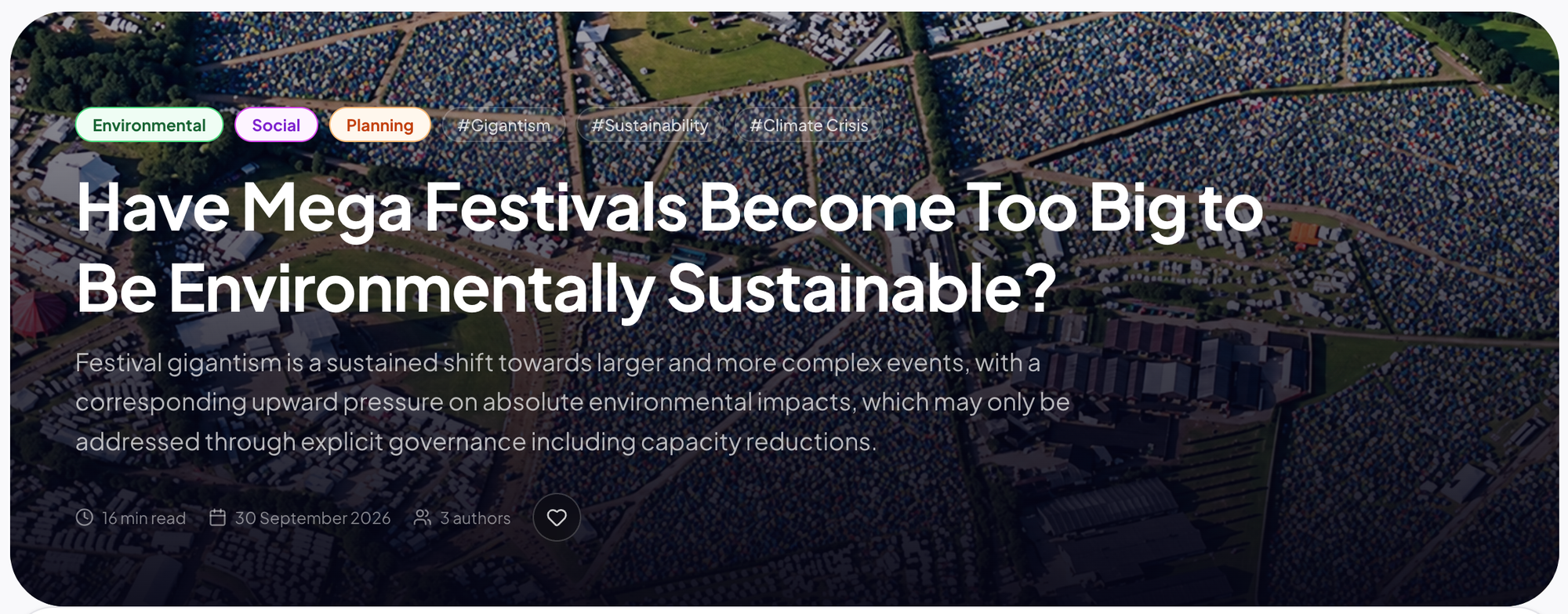
[**"Have Mega Festivals Become Too Big to Be Environmentally Sustainable?"*](https://www.eventsandfestivals.org/insights/have-mega-festivals-become-too-big-to-be-environmentally-sustainable?ref=hypebot.com)
The authors point to the sustained expansion of events such as the UK's **Download** and **Glastonbury** festivals as proof that scale is rapidly outpacing efficiency. In the US, similar sized festivals include **Coachella** and **Bonnaroo.** The later is already taking 2027 off to allow its Manchester, Tennessee festival grounds to "rest and recover" following back-to-back years of damage from severe weather and heavy rainstorms.
### **The Limits of "Green" Operations**
For years, major festivals have touted their [sustainability efforts](https://www.hypebot.com/green-hydrogen-is-pushing-diesel-off-the-festival-bill/), from compostable cups to solar-powered side stages. But the study argues that polishing on-site operations is essentially a contradiction when attendance capacities are simultaneously expanding.
- **The Travel Problem:** Quantitative evidence repeatedly shows that audience travel is the single biggest environmental impact of any festival, scaling upwards with audience size and internationalization.
- **The Greenfield Reality:** Bigger bins, greener generators, and carbon offsets cannot compensate for hundreds of thousands of people driving to remote greenfield sites with inadequate public transport.
### **Mandatory Carbon Budgets and Licensing**
To combat these problems, the researchers are calling for explicit governance. They say that the climate emergency demands that festival organizers, local policymakers, and licensing authorities treat capacity as a vital sustainability variable, not just a commercial given.
The paper recommends:
1. Making **strict carbon budgets** a condition for festival licensing.
2. Shifting **travel demand management** from an "aspirational" goal to a mandatory requirement.

**Garbage left behind at Reading Festival, UK. (Photo courtesy of Reddit user David White)*
### **The "Degrowth" Ultimatum**
Where realistic environmental mitigations fall short, the authors argue that reducing absolute audience capacity — also known as **"degrowth"** — must be on the table.
“Whilst this will be contentious, we believe that the sector must choose: value over volume, or business as usual in the face of a climate emergency,” stated co-author Adrian Bossey. Dr. Duignan added a stark warning for the live sector:
> “Make no mistake: this is not a fringe concern but a mainstream one... Festivals have grown too big, too fast, with too few guardrails to stop profit trumping planet.”
Read the full "Have Mega Festivals Become Too Big to Be Environmentally Sustainable?" study [**here**](https://www.eventsandfestivals.org/insights/have-mega-festivals-become-too-big-to-be-environmentally-sustainable?ref=hypebot.com)**.**
### **Hypebot’s Bottom Line**
As touring costs remain volatile and promoter profit margins rely heavily on massive scale, capping ticket sales — even to minimize environmental impact — is the absolute last thing most festivals want to do.
But the clash between the economics of "festival gigantism" and the reality of the climate crisis is coming to a head, according to this peer reviewed study, and proactive [environmental strategy](https://www.hypebot.com/tag/environment/) may now be an existential business necessity.
**+Read more:** [*"How to Build a Greener Concert Industry"*](https://www.hypebot.com/how-to-build-a-greener-concert-industry/)
---
## Hypebot
Essential news & insights for artists and live music pros.
Sign up for free weekly content delivered to your inbox
Subscribe
Email sent! Check your inbox to complete your signup.
### The Next Music Economy Will Run on Autonomous AI Agents
URL: https://www.hypebot.com/the-next-music-economy-will-run-on-autonomous-ai-agents/
Last updated: 2026-10-06T16:27:48.000Z
*By *Edward Ginis*, Co-Founder of* [***OpenPlay***](https://openplay.co/?ref=hypebot.com)
I have spent twenty years building infrastructure for the music business. In all that time the industry's ambition has run ahead of its plumbing. We digitized [distribution](https://www.hypebot.com/tag/distribution/) and called it "transformation."
But, we never finished the harder job: building the systems that manage rights, metadata and money at the scale we now operate at. That gap is now the industry's defining problem. Here's why, and what to do about it.
## **We have outgrown our own infrastructure**
Goldman Sachs expects the global music industry to **pass $150 billion by 2030.** Streaming already accounts for more than 70% of recorded music revenue, according to IFPI. Independent releases, user-generated content, gaming, creator platforms and sync each add a new revenue line. Each also adds a new schema, a new reporting format, a new set of identifiers and a new place for value to leak.
Every dollar of growth arrives with a tax of operational complexity, and we pay that tax by hand.
Walk through any label, distributor or publisher and you will find the same picture. Rights live in one system, metadata in another, royalties in a third, and the truth in someone's inbox. Splits are confirmed by email. Statements arrive as PDFs. Reconciliation happens in a spreadsheet built by someone who left two years ago. The same recording is keyed in by the label, the distributor, the publisher, the society and the DSP, and no two versions agree.
The cost is not abstract. Bad data means unmatched royalties sitting in suspense, writers paid late or not at all, and legal exposure when attribution is wrong. It also means the most talented people in the building spend their days cleaning data instead of finding and growing artists.
## **The AI conversation is aimed at the wrong problem**
Most [AI](https://www.hypebot.com/tag/ai/) discussion in music is about generation and [copyright](https://www.hypebot.com/tag/copyright/). Those debates matter, but they are not where the money leaks. The practical opportunity is **agentic AI: networks of specialized, autonomous agents that do the operational work the industry has never been able to staff.**
An agent is not a chatbot. It is software with a job, a set of tools and the authority to act within limits. One agent watches for metadata conflicts across sources and resolves them against a trusted authority. Another matches unmatched royalty lines to works and recordings and files the claims. Another validates a registration before it goes out, catches a missing IPI and routes the fix. Another reads a contract, extracts the terms and checks that the statement math honors them.
Each runs continuously. Each hands off to the next. Together they form an operational layer that never sleeps and never keys the same ISRC twice.
At [OpenPlay](https://openplay.co/?ref=hypebot.com), we were building this before it had a name. Our platform sits under thousands of music companies, so we see the data problem at full scale. This year we built agents directly into our core platforms. Verse, our publishing administration platform, ships with agents for registration validation, split reconciliation and statement ingestion. Pulse does the same for recorded music and distribution. OpenPlay Connect links those agents to outside sources and platforms so an agent resolving a conflict can go verify the answer rather than guess.
This is the first generation. The interesting version arrives when agents at a publisher, a distributor and a society start talking to each other.
**+Read more:** [*"'Human-First' Needs More Than Just a Checkbox"*](https://www.hypebot.com/human-first-needs-more-than-just-a-checkbox/)
## **What agent-led infrastructure looks like**
An agent-led industry is not one giant AI. It is a network. Agents live where the data lives, speak a common protocol, carry provenance for every change and escalate to a person when confidence drops. A label's agent asks a publisher's agent to confirm a split. A society's agent flags a duplicate work to the registrant's agent. The transaction is logged, sourced and reversible.
Four foundations make that network trustworthy.
1. **Trusted data.** Agents amplify whatever they are fed. Every fact must carry its source and its authority. Our own approach weights each claim by who made it and how reliable they have proven to be, so conflicts resolve on evidence rather than on which record arrived last.
2. **Interoperable systems.** Agents cannot fix silos by working inside them. Open APIs, standard identifiers and shared protocols are the roads agents drive on. DDEX and CWR did the hard work years ago. Agents finally make that work pay off.
3. **Automated workflows.** The goal is not a faster spreadsheet. It is no spreadsheet. Any process that runs on a schedule, follows rules and touches structured data belongs to an agent.
4. **Human oversight.** Autonomy without accountability is a liability. Every agent action should be explainable, auditable and subject to approval thresholds the company sets. People move from doing the work to governing it. That is a promotion, not a layoff.
***+Read more:*** [*"You Can Own Your Masters and Still Lose Control of Your Catalog"*](https://www.hypebot.com/you-can-own-your-masters-and-still-lose-control-of-your-catalog/)
## **The advantage goes to whoever moves first**
The labels, distributors, and publishers that get this right will pay faster, sign smarter and scale without adding headcount. Those that wait will keep paying the complexity tax, and the tax rises with every new platform that launches.
For once the technology is ahead of the industry, and the industry's problem is operational rather than creative. That is good news. Operational problems get solved. We have been waiting a long time for a music economy that runs at the speed of the music. **Agents** are how we get there, and this is just the beginning.
---
*With over 15 years of experience in the finance, music, and technology arenas, *Edward Ginis* has built a reputation for developing effective legacy technology modernization strategies, incubating new business models, and successfully managing large-scale global software system implementations. Ginis co-founded* [***OpenPlay***](https://openplay.co/?ref=hypebot.com) *in 2013 after serving as the CTO of Concord Music Group.*
### Spotify Opens Wrapped Artist Message Uploads and Updates
URL: https://www.hypebot.com/spotify-opens-wrapped-artist-message-uploads-and-updates/
Last updated: 2026-10-07T17:18:40.000Z
[**Spotify For Artists**](https://www.hypebot.com/tag/spotify-for-artists/) has sent the first in what will certainly be a series of notices telling artists and their teams it's time to get ready for **Wrapped 2026.**
Based on recent years, the release of **Spotify Wrapped 2026** is expected to go live around December 3rd. **Apple Music Replay**, **Amazon Music**, **YouTube Music**, **Deezer My Data**, and **Bandsintown High Notes** will also release their 2026 highlights to fans a week or so before or after the start of December.
The deadline for artists to prepare for year end wraps is usually two to three weeks prior to each platform's release.
With all this looming, now is the time to start updating artist accounts with new pictures, releases, merch and tour info to make the most of this massive influx of end-of-year traffic.
Here is what we know so far about how artists should prepare for music's 2026 wrap-up season. We will also keep you updated as each service shares more about their plans and deadlines.
**+Read more:** [*"How to Connect Your Bandsintown Account to Reach 4 Billion Fans"*](https://www.hypebot.com/how-to-connect-your-bandsintown-account-to-reach-4-billion-fans/)
### **Spotify Wrapped 2026: Record Your Artist Message**
**Spotify** officially announced that **Artist Messages** are back for **Wrapped 2026\.**
Last year, over **70,000 artists** uploaded video messages to Spotify, generating hundreds of millions of views. This direct outreach boosted fan engagement by nearly 20% compared to the previous year's Wrapped, leading to massive spikes in track saves and shares.
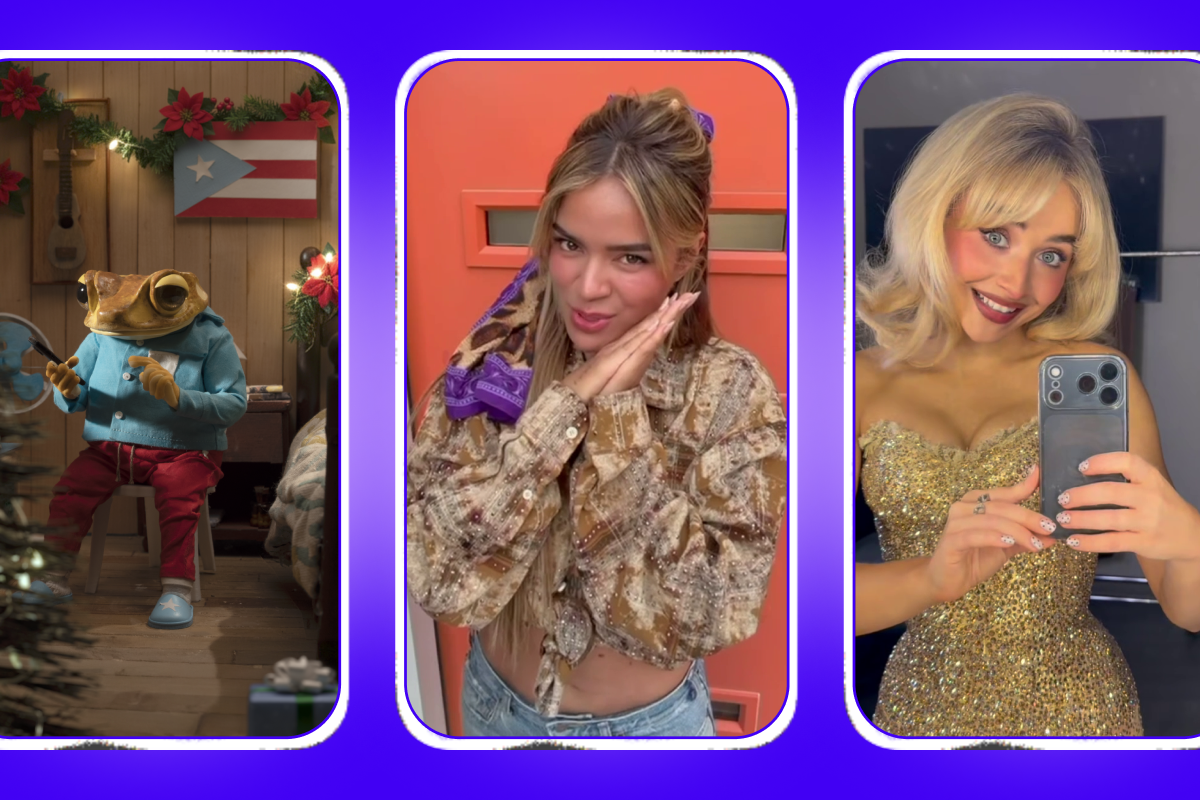
**UDATE:** The launch was delayed a day, but **Artists can now upload their vertical video clips via Spotify for Artist.**
**A direct link to upload is** [**here**](https://www.hypebot.com/tag/here-we-go-magic/)**.** You can also get to it from the Video & Visuals tab in Spotify for Artists on desktop by clicking the Wrapped banner.
**The deadline to submit is November 6\. All submissions are reviewed, and submitting doesn't guarantee placement.**
### **Tips From Spotify**
You have just 30 seconds to connect with listeners. s0 Spotify recommends covering one of these prompts:
- **Share a Milestone:** Talk about a fan moment you are especially proud of, a meaningful venue you played, or a release that defined your year.
- **Reflect on Your Journey:** Highlight a song from your catalog that changed everything or celebrate a deep cut that recently had a resurgence.
- **Look Ahead:** Tell your fans what you can't wait for in 2026/2027, tease upcoming creative projects, or hype your upcoming live shows.
### **Optimize Across All Platform**
While **Spotify Wrapped** leads the hype, millions of fans will also be sharing their **Apple Music, Amazon Music, YouTube Music, Deezer** and **Bandsintown** recaps. It's essential to log into every artist portal and run through this quick checklist before the deadlines:
1. **Refresh Bio and Photos:** Make sure shots are current and the bio reflects 2026 accomplishments.
2. **Update Your Artist Pick:** On platforms like Spotify, use the "Artist Pick" feature to highlight a recent music video, a 2026 favorites playlist, or your latest release.
3. **Link Your Merch:** Fans want to support their top artists. Ensure your Shopify is linked to your profiles so fans can easily grab vinyl or a t-shirt.
4. **Build Hype For Upcoming Releases:** If you have new music dropping before the end of the year, utilize tools like **Spotify Countdown Pages** to drive pre-saves right from your profile.
### **Update Your Live Show Listings**
End-of-year recaps aren't just about streaming. **Bandsintown High Notes** is the ultimate personalized recap of the live music year for both fans and artists.
Because Wrapped season drives traffic to all your profiles, ensure that your concert calendar is up to date. Updating it on **Bandsintown for Artists** and checking that your profile is properly connected ensures show info automatically syncs to High Notes as well as your Spotify profile, Apple, Google, Shazam, YouTube, Amazon and more as well as , if the widget is installed, to your own website.
## **Hypebot’s Bottom Line**
End-of-year recaps are a rare global cultural moment that every artist can be a part of. They are also the one time of the year when fans enthusiastically do your marketing for you by sharing their listening and concert data across social media.
Don't leave fan engagement, streams, and ticket sales on the table.
Spending a few minutes today to record a heartfelt 30-second video message, refreshing your press photos, and updating your Bandsintown tour dates is arguably the highest ROI marketing task you can do in Q4\.
### **Read more:** ["Musicians Guide To Spotify Wrapped - How To Make The Most Of It"](https://www.hypebot.com/musicians-guide-to-spotify-wrapped-hot-to-make-the-most-of-it/)
---
*Get all the latest Music Industry & Live Music News updated continuously from across the web under the Hypebot Industry News tab* [*here*](https://www.hypebot.com/music-industry-news-feed/)*.*
## Hypebot
Essential news & insights for artists and live music pros.
Sign up for free weekly content delivered to your inbox
Subscribe
Email sent! Check your inbox to complete your signup.
### What Are the Different Tiers of Music Publicity Campaigns?
URL: https://www.hypebot.com/what-are-the-different-tiers-of-music-publicity-campaigns/
Last updated: 2026-10-06T12:18:36.000Z
*By* [***Angela Tyler***](https://www.hypebot.com/author/angela-tyler/) *for* [***Soundfly***](https://flypaper.soundfly.com/hustle/what-are-the-different-tiers-of-music-publicity-campaigns/?ref=hypebot.com)
[Publicity](https://www.hypebot.com/the-case-for-human-centric-pr-in-an-ai-driven-music-industry/) can be kind of confusing. Even more so when you start to get into the weeds of what to expect with the different tiers of music publicity. And if I’ve just lost you there and you’re thinking “wait what? Tiers? What are you talking about?” stick with me, because you’re not alone in that.
Especially when so many independent musicians [are their own publicists](https://flypaper.soundfly.com/hustle/how-to-run-your-own-pr-campaign/?ref=hypebot.com), marketers, managers, bookers, and everything else they need to be to create [a successful career](https://flypaper.soundfly.com/hustle/how-you-define-success-says-everything-about-whether-youll-actually-succeed/?ref=hypebot.com), it can feel difficult to understand what exactly PR is and how it’s beneficial. But understanding the different tiers is the first step to that.
This post looks specifically at [*hiring publicists*](https://flypaper.soundfly.com/hustle/you-should-vibe-with-your-publicist/?ref=hypebot.com) but if you want to run your own campaign, check out our post, [“How to DIY Your PR Campaign”](https://flypaper.soundfly.com/hustle/how-to-run-your-own-pr-campaign/?ref=hypebot.com) on *Flypaper.*
Please note that while I’m going to include rough price estimates so that you can get an idea of what to budget, these are just estimates. Every company will have their own system based on the level of artists they work with, how well known and respected they are in the industry, the placements they’ve had for their artists, and so on.
## **Tier 1: Getting Your Feet Wet**
**$500-$1500/month**
I like to describe this tier as the place most emerging artists start. At this stage you’ve probably either never had PR before or are just looking for a very small amount of press for a smaller release. This can be a good way to get your feet wet and start accumulating press, figuring out your brand and test different messages or strategies.
It’s usually a cheaper option because you’re not getting the same level of support as someone who is looking for a full strategy or wanting a *lot* of press. So if you only want a handful of pieces of coverage and already feel pretty solid on your branding this is a good option.
The other time this is a good option is if you’re planning to release a lot of songs over the course of the year and this is one of the songs you want to get some press for but don’t need a ton like your other singles.
In short, this is the cheapest option but it’s not the option you want to pick solely for that reason. It’s cheaper because you’re not getting the whole PR package. Most of the time you won’t be getting branding and messaging assistance, you won’t be [getting a full strategy](https://flypaper.soundfly.com/hustle/what-a-publicist-does-for-an-artist/?ref=hypebot.com) surrounding the release or hands-on support. You’ll get a few pieces of coverage to get you going though and that can be a great start.
***+Read more:*** [*"5 Playlist Pitching Regrets From an Artist Turned Curator"*](https://www.hypebot.com/5-playlist-pitching-regrets-from-an-artist-turned-curator/)
## **Tier 2: All-In for Indie Artists**
**$2500/month and up**
This is for artists that have been at it a while and are ready to pour their resources into their next release, or who really do need the whole package. (Which honestly….is most indie artists.) Your publicist will come on at this point to first help you with solidifying (and maybe even identifying) your brand, working on your messaging (what angles to use for press and different strategies for each), and overall strategy for the coarse of the campaign.You’ll get more hands on support and in most cases, much more coverage.
You might think this means you have to be an established, well known artist for this to work but that’s not true. In fact, a lot of artists come to us for this package when they’ve been struggling with building a fanbase and getting traction and need our help to re-work their branding and messaging. We help them with all of that and then [do a press campaign](https://flypaper.soundfly.com/hustle/what-music-journalists-definitely-do-not-want-to-read-in-your-press-release/?ref=hypebot.com) around their new release.
This is for artists who are ready to [go all in on their career](https://flypaper.soundfly.com/hustle/how-to-develop-a-longterm-mindset-music-career/?ref=hypebot.com) and accept help.
## **Tier 3: Major Label Campaign**
This is for the [major label artists](https://flypaper.soundfly.com/hustle/5-reasons-you-dont-want-the-record-deal-of-your-dreams/?ref=hypebot.com). I didn’t include a price for this because it’s usually going to be part of your label deal and will vary *so* much depending on if they use in house or not for publicity anyways.
At this level, you still have to participate in PR activities like doing interviews or (hopefully) sharing the coverage that people post about you, but you aren’t out there [looking for your own publicist](https://flypaper.soundfly.com/hustle/what-to-consider-before-hiring-a-publicist/?ref=hypebot.com) or working with them one on one. Usually that will be your manager handling that.
However, keep this in mind as you grow — you can usually request to bring your team with you, so just like you’d bring your manager on as you get signed, if you have been working with a publicist you really like, you can request the label work with them on the next release.
***+Read more:*** [*"9 Live Music Marketing Trends Selling Out Shows In 2026"*](https://www.hypebot.com/9-live-music-marketing-trends-selling-out-shows-in-2026/)
### Final Thoughts
PR campaigns are all about [building awareness and visibility](https://www.hypebot.com/the-88-problem-why-most-music-fails-before-anyone-hears-it/) and bringing you more fans. The way you do that and the tier you choose will determine how that plays out, but the important thing is to make PR an essential part of your overall strategy. It’s a key player in your success, so ask yourself: What do I need to do to make the most of this release? And what can take me there?
**Don’t stop here!**
*Continue learning with hundreds of lessons on songwriting, mixing, recording and production, composing, beat making, and more on *Soundfly*, with artist-led courses by* [*Kimbra*](https://soundfly.com/courses/kimbra-vocal-creativity-arranging-production?utm%5Fsource=Flypaper&utm%5Fcampaign=Flypaper-ad-system&utm%5Fmedium=bottomcta)*,* [*Jlin*](https://soundfly.com/courses/jlin-rhythm-variation-vulnerability?utm%5Fsource=Flypaper&utm%5Fcampaign=Flypaper-ad-system&utm%5Fmedium=bottomcta)*,* [*Kiefer*](https://soundfly.com/courses/kiefer-keys-chords-beats?utm%5Fsource=Flypaper&utm%5Fcampaign=Flypaper-ad-system&utm%5Fmedium=bottomcta)*,* [*RJD2*](https://soundfly.com/courses/rjd2-sampling?utm%5Fsource=Flypaper&utm%5Fcampaign=Flypaper-ad-system&utm%5Fmedium=bottomcta)*,* [*Ryan Lott*](https://soundfly.com/courses/ryan-lott-designing-sample-based-instruments?utm%5Fsource=Flypaper&utm%5Fcampaign=Flypaper-ad-system&utm%5Fmedium=bottomcta)*, and of course,* [*Com Truise: Mid-Fi Synthwave Slow-Motion Funk*](https://soundfly.com/courses/com-truise-mid-fi-synthwave-slow-motion-funk?utm%5Fsource=Flypaper&utm%5Fcampaign=Flypaper-ad-system&utm%5Fmedium=bottomcta)*.*
---
## Hypebot
Essential news & insights for artists and live music pros.
Sign up for free weekly content delivered to your inbox
Subscribe
Email sent! Check your inbox to complete your signup.
### she's green on How They Get Into 'Tour Shape'
URL: https://www.hypebot.com/shes-green-on-how-they-get-into-tour-shape/
Last updated: 2026-10-06T11:20:51.000Z
[**she's green**](https://www.bandsintown.com/a/12581676-she's-green?utm%5Fsource=hypebot&came%5Ffrom=900) are a band from Minneapolis that describe themselves as “moss music” and sometimes "Stadium Country." Only one of those descriptors feels actually right, and it's not the one you think. Their new EP, [***Swallowtail***](https://open.spotify.com/album/2WAneOUp6cuyzxoQemgq7C?si=P5zhYYIpSQ214taH783w8Q&ref=hypebot.com)*,* is about as fuzzy and mesmerizing as you might expect a mossy bed of music to sound. The band's shoegaze-inspired, ethereal vocals, and reverberant, dreamy guitars do most of the talking in that regard.
But I wanted the band to get talking about the year they've had so far. In September alone they jetsetted from England to Copenhagen to Iowa City and all points in between. But earlier this year they played festivals like Bonnaroo and Reading & Leeds for the first time. They're still on the road as we speak.
I like a busy band. Here's our conversation. Enjoy!
---
**Hypebot: Hey all, thanks for taking the time to answer some questions. Congrats on *Swallowtail*, it’s such a gorgeous EP with flashes of intense shoegaze catharsis. Firstly, what would you call *your* genre?**
she's green: "'Stadium Country' or 'Moss Music.''"
**H: How was the process of making this record different from past records?**
sg: "It felt a lot more professional, and less elapsed of a process. We’d had some of the songs for a long time but the recording only took the span of a week. In our past projects we just kept working on things for a while."
**H: Do songs generally come to you fast while you’re writing, or producing, or do they tend to take a lot of time and tinkering?**
sg: "This answer definitely depends on the song. Some songs feel like they write themselves in less than half an hour, some take a few years to get to their final form. Generally, coming up with new song ideas is the easier part for us. That’s the first 80% of a song. The last 20%, which involves tuning up the intricate details, is usually what takes us the longest."
**H: What’s the relationship between the studio versions of songs and the live versions? Do they change when adapted to the stage? Examples?**
sg: "For the most part, our live versions are quite one-to-one with the studio versions. People often tell us the live set 'sounds just like the record.' However, there are definitely some exceptions."
We generally like to take the songs in a harder-hitting direction for the live version. Lately, we’ve been adding some extended outros and break downs to sounds like 'bleed' and 'mettle.'"
> *"We quickly get into 'tour shape' after a few shows. We spend more energy thinking about what new elements we can add to the set, whether that’s bringing in a deeper cut, coming up with a new transition, or adding sections to songs."*
**H: How do you prepare for tours usually, is it sort of the same old rehearsals or are there tech things you need to take care of, new arrangements, adding material to the repertoire?**
sg: "Since we’re touring so often, we don’t spend a ton of time rehearsing before each tour. We quickly get into 'tour shape' after a few shows. We spend more energy thinking about what new elements we can add to the set, whether that’s bringing in a deeper cut, coming up with a new transition, or adding sections to songs."
Realistically, though, prepping for tour is a lot of sitting at a computer and figuring out logistics."
**H: What’s something you’ve learned by spending time on the road?**
sg: "You learn how to find peace and a sense of home despite being in a new place every day. Oftentimes that means eating your favorite food or watching a nostalgic show together in the hotel. Calling friends and family helps too!"
**H: Congrats on playing KEXP too, that’s sort of a dream for many indie bands I think. And that’s well-shot, well-recorded content that will live on the internet forever which can be good (or terrifying!). How was that experience for you?**
sg: "It was absolutely a dream come true, we’re huge fans of theirs and thus we were massively nervous leading up to that session. Thankfully, the staff were so sweet and welcoming, they helped us feel very comfortable with the setup amidst all of our nerves."
We were lucky enough to have our host be the legendary **Cheryl Waters** too. She’s such a pro, the session/interview felt super fun and natural with her at the helm- and she’s even kinder than we imagined. It was a bucket list moment for sure."
**H: What do you like to do on your days off on tour?**
sg: "We love hiking and the outdoors, if we’re lucky enough to be near a state park or national park we’ll try to spend a bunch of time there. Otherwise, it’s always fun to explore cities and look for good coffee shops and bookstores."
**H: What was one of the most unexpectedly wonderful occurrences that happened on tour for you?**
sg: "A recent one that comes to mind was getting to meet a lot of our favorite artists at the **Reading & Leeds** festival in the UK. Saying hello to folks like **Declan McKenna** or **Geese** in the catering tent was really special!"
**H: Who are some artists you’ve seen play live recently that have blown you away?**
sg: "We all really loved **Florence and the Machine’s** set. She just captivated everyone at the festival. **Charli XCX** was insane though. She just keeps on innovating and it’s so inspiring."
> *"Generally, coming up with new song ideas is the easier part for us. That’s the first 80% of a song. The last 20%, which involves tuning up the intricate details, is usually what takes us the longest."*
**H: What’s your favorite post-concert food to eat?**
sg: "Oooh good question. It’s limited by what’s open. We try to change it up depending on what region we’re in. In the southern U.S. it’s mostly Mexican food. Recently, in Berlin, we had some doner kebab that hit so good."
**H: Best and worst things to buy at a gas station on tour. Go!**
sg: "Best thing: KwikTrip fried chicken (yum)."
Worst thing: gas (expensive!)."
**H: What are you looking forward to in the next 6-12 months?**
sg: "We’re really excited to take some time off touring to get back into writing mode. We’ve already got a handful of songs ready and are itching to work on a bunch more."
---
## [**she's green Tour Dates**](https://www.bandsintown.com/a/12581676-she's-green?utm%5Fsource=hypebot&came%5Ffrom=900)
### Same Stadium. Same Message. Very Different Outcome.
URL: https://www.hypebot.com/same-stadium-same-message-very-different-outcome/
Last updated: 2026-10-05T21:11:26.000Z
Just weeks after **Macklemore** [was removed from](https://www.hypebot.com/everything-we-know-about-the-ed-sheeran-macklemore-tour-fallout/) **Ed Sheeran’s** stadium tour amid objections to his pro-Palestinian performances, [**Zach Bryan**](https://www.bandsintown.com/a/15492027-zach-bryan?utm%5Fsource=hypebot&came%5Ffrom=900) walked onto the stage at one of the venues at the center of that [controversy](https://www.hypebot.com/tag/controversy/) **wearing a “Free Palestine” shirt.**
Then he did it again the next night — while [breaking the venue’s attendance record](https://musically.com/2026/10/05/zach-bryan-breaks-gillette-stadium-record-in-a-free-palestine-t-shirt/?ref=hypebot.com).
Bryan drew **73,538 fans** to **Gillette Stadium** on Saturday, October 3, the largest crowd for any event in the Massachusetts stadium’s history. He had also worn the shirt during his Friday show, while members of his band displayed their own messages of support for Palestinians.
The timing makes the shows difficult to separate from what happened there just weeks earlier.
## **Same Stadium, Different Circumstances**
Gillette Stadium owner **Robert Kraft** had previously confirmed that Macklemore would not be permitted to perform at the venue as part of Ed Sheeran’s tour.
Macklemore had used earlier Sheeran dates at MetLife Stadium to repeatedly say “Free Palestine,” perform his protest song “Hind’s Hall” and display images from Gaza. Kraft said his objection involved both material presented during those performances and what he characterized as Macklemore’s broader history of antisemitic rhetoric and imagery. Macklemore has disputed that characterization, saying his criticism is directed at Israeli policy rather than Jewish people.
So this isn’t a perfect apples-to-apples comparison. Bryan’s statement was largely visual. Macklemore delivered an extended political performance. And the controversy surrounding Macklemore involved considerably more than the words printed on Bryan’s shirt.
But there is another difference that matters in the live music business. Macklemore was *only* a support act, Bryan was the top-billing reason 73,538 people were there.
> [@jaksmusik](https://www.tiktok.com/@jaksmusik?refer=embed&ref=hypebot.com "@jaksmusik") Zach Bryan and his band repping Free Palestine shirts on night one at Gillette Stadium in Boston Massachusetts. Amazing response to the situation after Robert Kraft had Macklemore barred from performing. Artists will not be silenced. Free Palestine @Macklemore @zachbryanmusic @gillettestadium [♬ original sound - Jak](https://www.tiktok.com/music/original-sound-7692311582323313438?refer=embed&ref=hypebot.com "♬ original sound - Jak")
***+Read more:*** [*"Everything We Know About the Ed Sheeran – Macklemore Tour Fallout"*](https://www.hypebot.com/everything-we-know-about-the-ed-sheeran-macklemore-tour-fallout/)
## **Evidence of a Headliner's Leverage**
The Macklemore controversy raised a question we’ve already explored at *Hypebot*: on a stadium tour, who ultimately decides what can happen onstage — **the artist, headliner, promoter, or venue?**
Free speech is a complicated subject no matter the platform, whether on stage, in an interview or on a record sleeve, or social media, and Bryan’s shows don’t answer that question neatly. They do, however, illustrate how dramatically the balance of power can change depending on where an artist [sits on the poster](https://www.hypebot.com/whats-more-radical-daisy-chain-fields-poster-design-or-its-women-led-lineup/).
Removing an opening act can disrupt a tour. Removing the artist who sold the tickets can jeopardize the structural economy of a [live venue](https://www.hypebot.com/tag/venues/). Artists regularly encounter restrictions involving production, sponsorships, curfews, security, branding and what can happen onstage. Those negotiations are shaped not only by contracts and venue policies, but by leverage.
A developing artist *needs* the room. A superstar capable of filling it has something the room needs, too.
That doesn’t mean headliners can simply do whatever they want, or that Bryan and Macklemore were treated differently solely because of their ticket-selling power. Their statements and circumstances were materially different. But seeing these two episodes unfold at the same stadium, only weeks apart, makes one live-industry reality unusually visible:
The bigger an artist becomes, the more bargaining power they may have over the space they perform in. Gillette Stadium still owns the building, but on a Saturday night in September, **Zach Bryan brought 73,538 reasons why ownership isn’t the only kind of power inside it.**
***+Read more:*** [*"Making the Case for Political Activism at Concerts"*](https://www.hypebot.com/making-the-case-for-political-activism-at-concerts/)
---
## [**Zach Bryan Tour Dates**](https://www.bandsintown.com/a/15492027-zach-bryan?utm%5Fsource=hypebot&came%5Ffrom=900)
## Hypebot
Essential news & insights for artists and live music pros.
Sign up for free weekly content delivered to your inbox
Subscribe
Email sent! Check your inbox to complete your signup.
### What Independent Artists Learn When Their Career Data Starts Disappearing
URL: https://www.hypebot.com/what-independent-artists-learn-when-their-career-data-starts-disappearing/
Last updated: 2026-10-05T16:47:43.000Z
*By* [***Melissa B.***](https://www.melissab.com/?ref=hypebot.com)
Recently, I went looking for my own [**Billboard**](https://www.hypebot.com/tag/billboard) history and discovered that some of it was much harder to surface than I expected. The records existed. The chart pages could still be traced. But the path from a current artist profile to that history was incomplete.
As an independent artist — and as someone who works in technology — that stopped me. I have spent years telling artists to own their masters, understand their business, and build direct relationships with their audience. I realized there was another kind of ownership I had not talked about enough: **Owning the record of your own career.**
Over more than a decade building my career independently, working in network engineering, and writing about artist independence in my book [*Digitally Independent*](https://www.amazon.ca/Digitally-Independent-First-Book-1/dp/B07T913Q8S?ref=hypebot.com), I have learned not to assume someone else will preserve every important piece of your story. This time, I had to apply that lesson to my own historical [chart data](https://www.hypebot.com/how-indie-artists-can-chart-on-billboard-with-1k-in-sales/).
My Billboard history includes two records I can document directly.
[In 2017](https://web.archive.org/web/20171119024729/http://www.billboard.com/biz/charts/2017-10-28/hot-singles-sales), **“Dancing in the Rain”** by Juan Cristiani featuring Melissa B. reached No. 1 on Billboard’s **Hot Singles Sales** chart for the week of October 28, 2017\. [In 2022](https://www.billboard.com/charts/r-and-b-digital-song-sales/2022-04-02/?ref=hypebot.com), my single **“Physical”** reached No. 13 on Billboard’s **R&B Digital Song Sales** chart for the week of April 2, 2022.
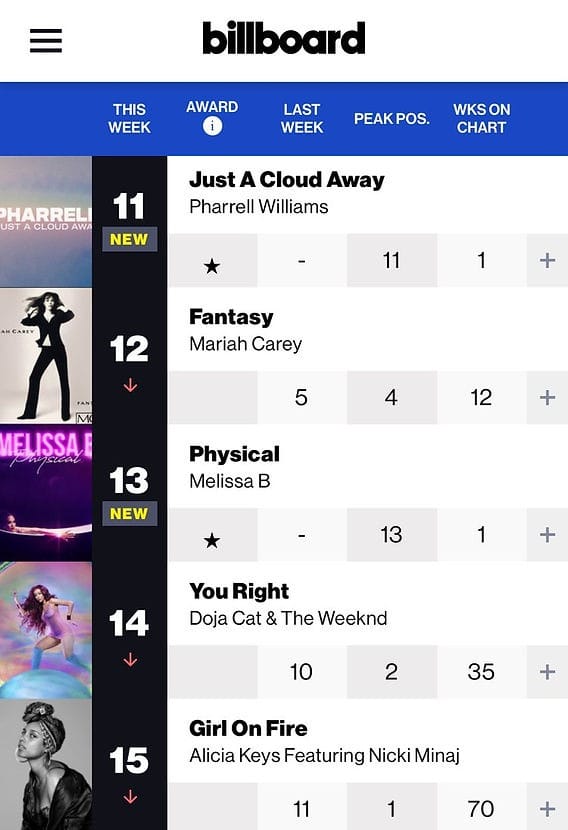
Those achievements happened. The records exist. But the way that history appears online can change.
As chart products are discontinued, websites are redesigned, URLs change, and databases evolve, **older information can become harder for the public to find.** Billboard has confirmed directly to me that historical information remains archived in its chart system, while discontinued charts may no longer populate on the current public site.
This is not about accusing a platform of deleting history. It is about recognizing that **a platform’s current interface is not the same thing as the complete historical record**.
For an independent artist, that can create a serious problem. If a journalist, booking agent, researcher, potential collaborator, search engine, or AI system looks at your current artist profile and sees only part of the story, that partial view can gradually become the version of your career that gets repeated.
That can have practical consequences: a booking agent or journalist may work from an incomplete profile, and that partial version can then be repeated in bios, search results, and AI summaries.
**+Read more:** [*"How Indie Artists Can Chart on Billboard With <1K In Sales"*](https://www.hypebot.com/how-indie-artists-can-chart-on-billboard-with-1k-in-sales/)
## **The public record is becoming part of artist infrastructure**
For years, musicians have been told to maintain an electronic press kit. That usually means a biography, photos, music links, press quotes, and recent accomplishments.
I think we need to go further. Every long-term artist should maintain a **verified career archive**: a source-linked record of chart appearances, awards, credits, performances, press coverage, releases, and other career milestones.
That archive should distinguish between different kinds of evidence.
An official chart page can verify a chart position. An independent publication can establish editorial coverage. An artist’s own website can preserve a useful contemporaneous record, but it should not be treated as the same kind of evidence as independent journalism. A screenshot can help preserve something that has disappeared from a current interface, but whenever possible it should be supported by an archived page or another source.
Today, documentation is part of artist ownership.
That same evidence discipline applies to numbers. Streaming totals, social reach, chart positions, radio activity, playlist placements, sales rankings, and compilation performance are not interchangeable. I separate live analytics from historical records: a current streaming figure can change tomorrow, while a historical chart peak should be preserved with its exact chart name, date, and source.
For example, I do not rewrite Hot Singles Sales into a more familiar modern chart name. I preserve the terminology that was actually used at the time. The same goes for R&B Digital Song Sales. Accuracy may be less flashy, but it lasts longer.
## **AI and search make this more urgent**
There is another reason artists should care about this now: [AI-powered search](https://www.hypebot.com/the-three-tasks-ai-can-take-off-an-artists-plate/) and automated knowledge systems increasingly summarize careers for people. Those systems learn from what is available, discoverable, repeated, and well-sourced.
If your career information is fragmented across expired links, discontinued charts, old press pages, social posts, and screenshots sitting on a hard drive, the public version of your history can become incomplete.
Artists spend enormous energy creating new work. We also need to preserve the evidence of the work we already did. That does not mean trying to control every sentence written about us. It means making accurate source material [easier to find](https://thelanote.com/melissa-b-billboard-chart-history/?ref=hypebot.com).
***+Read more:*** [*"The Ultimate Guide to Understanding Spotify Analytics Data for Artists"*](https://www.hypebot.com/the-ultimate-guide-to-understanding-spotify-analytics-data-for-artists/)
## **My solution: build the archive yourself**
I started building a [public, source-linked timeline of my own career](https://www.melissab.com/charts?ref=hypebot.com) so that anyone researching me can see where a fact came from. For my Billboard history, I can point to an archived copy of the October 28, 2017 **Hot Singles Sales** chart and the April 2, 2022 **R&B Digital Song Sales** chart.
I can separate current data from historical data. I can distinguish an independent article from an artist-controlled page. And when a source is incomplete or still being recovered, I can say that instead of filling the gap with a stronger claim than the evidence supports. Because preservation is not the same thing as promotion.
A useful archive should be willing to say:
- **"This is verified."**
- **"This is a primary source."**
- **"This is independent editorial coverage."**
- **"This still needs stronger documentation."**
That kind of discipline protects the artist as much as it helps the researcher.
## **Independent does not mean undocumented**
For me, this experience reinforced something I have believed throughout my career: independence is not simply doing everything yourself. It is understanding what needs to be owned, what needs to be verified, and what cannot safely be left entirely in someone else’s system.
Own your masters. Know your publishing. Keep your contracts. Save your credits. Archive your press. Document your chart history. Preserve the original URLs and dates. Keep screenshots, but also look for archived pages. And build a source trail that someone other than you can follow.
Your music is part of your legacy. The documentation around it is part of that legacy too. If we want independent artists to have careers that can be accurately understood ten, twenty, or thirty years from now, we have to start treating career data as something worth preserving today.
---
[***Melissa B.***](https://www.melissab.com/?ref=hypebot.com) *is an independent singer, songwriter, producer, author, and network engineer. Her career spans recorded music, technology, artist development, and advocacy for independent creators. She is the author of Digitally Independent, a guide to building and managing an independent music career, and a Recording Academy voting member.*
### What Primavera Sound's Lineup Says About Live Music Right Now
URL: https://www.hypebot.com/what-primavera-sounds-lineup-says-about-live-music-right-now/
Last updated: 2026-10-06T15:20:52.000Z
[**Primavera Sound**](https://www.bandsintown.com/f/238052-primavera-sound-2027?utm%5Fsource=hypebot&came%5Ffrom=900) has unveiled its [massive 2027 Barcelona lineup](https://pitchfork.com/story/phoebe-bridgers-massive-attack-caroline-polachek-to-headline-primavera-2027/?ref=hypebot.com), and at first glance, it looks almost impossible to summarize.
That cross-genre unpredictability has become part of the Primavera brand, but it's also indicative of this moment in live music culture, with which seemingly everyone is on board.
The 25th-anniversary edition brings together 151 acts spanning rap, hardcore, indie rock, electronic music, pop, experimental music and several generations of artists whose careers do not neatly fit into the traditional album-tour-album cycle. **Doechii** is there. So are **Turnstile, Robyn, Massive Attack, Fontaines D.C., FKA twigs, The Chemical Brothers, Pavement** and dozens more.
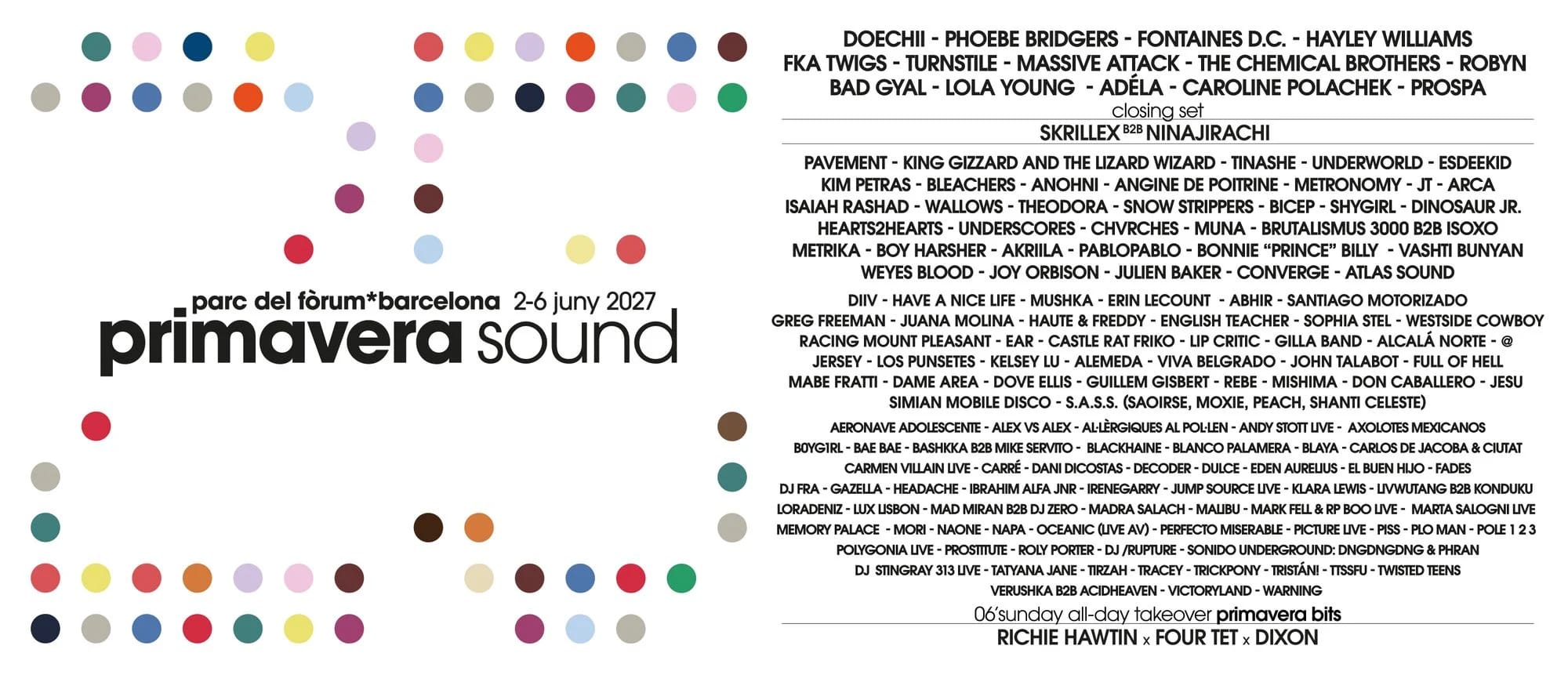
Some are in the middle of major contemporary moments. Others have catalogs stretching back decades. A few have barely anything in common musically. But taken together, the Primavera poster paints a pretty clear picture as to where [live music](https://www.hypebot.com/tag/live-music/) is right now.
This is not necessarily a lineup built around who has the *newest* record to be released. It is a lineup built around **who has a reason to be seen live.** Here are ten artists on the bill that help explain why that is.
## 1\. Turnstile: Genre borders barely matter anymore
[**Turnstile**](https://www.bandsintown.com/a/151087-turnstile?utm%5Fsource=hypebot&came%5Ffrom=900) may have come from hardcore punk, but calling them simply a hardcore band no longer explains what is happening around this Grammy-award winning band. Their audience now stretches across punk, alternative, indie, pop and top-billing festival culture. They have moved into rooms and media spaces that hardcore bands historically struggled to access without abandoning the scene that built them. It's largely because they put on an unforgettable show.
## 2\. Doechii: The performance is part of the product
[**Doechii's**](https://www.bandsintown.com/a/15515183-doechii?utm%5Fsource=hypebot&came%5Ffrom=900) rise makes even more sense when viewed from the stage, too. Her shows combine rap, choreography, theatricality, fashion, and physical performance in a way that makes the concert feel less like a reproduction of recorded music (the classic "hip-hop karaoke" style act) and more like another creative medium unto itself. People in the know, know not to sleep on a Doechii gig.
## 3\. Robyn: A catalog can stay contemporary
[**Robyn**](https://www.bandsintown.com/a/7928-robyn?utm%5Fsource=hypebot&came%5Ffrom=900) is one of the more revealing names near the top of the Primavera poster because although she's been at the top of the Pop Music ladder in her career, her placement does not feel like a conventional legacy booking. Her biggest songs have existed for years, but they also never really disappeared from clubs, playlists, parties, and younger listeners' discovery cycles. Robyn hasn't even required a full reinvention in order to remain relevant, this is a name that puts heels on dance floors all over the world.
## 4\. Fontaines D.C.: Rock works when the band becomes a world
[**Fontaines D.C.**](https://www.bandsintown.com/a/8296081-fontaines-d.c.?utm%5Fsource=hypebot&came%5Ffrom=900) are also useful evidence that guitar music never needed to be “saved.” The bands succeeding at festival scale right now are often doing much more than releasing solid rock records. They have an aesthetic, a worldview, an attitude, a visual identity, and a stronger-than-steel community around them. In other words, they create a world (IRL). That counts for a lot right now.
## 5\. Pavement: The reunion is no longer a temporary event
There was once a predictable formula for reunion tours. A beloved band would return after years away, sell tickets based on pent-up nostalgia, play a limited run and disappear again. That model is becoming much less rigid. [**Pavement**](https://www.bandsintown.com/a/3226-pavement?utm%5Fsource=hypebot&came%5Ffrom=900) is part of a growing category of reunited artists who can function as contemporary festival acts even without participating in the normal new-album promotional cycle. Catalogs keep circulating, younger listeners keep discovering them, and festivals keep providing stages. A reunion no longer necessarily has to be a one-time event. It can become another phase of a band's touring life.
## 6\. The Chemical Brothers: Electronic music has its own legacy acts now
Rock festivals have relied on veteran artists for decades because rock developed a recognized canon. Electronic music increasingly has one too. [**The Chemical Brothers**](https://www.bandsintown.com/a/26024-the-chemical-brothers?utm%5Fsource=hypebot&came%5Ffrom=900) can now appear on the same lineup as much younger electronic artists without feeling disconnected from the present. They are not simply a nostalgia act; they are part of a multi-generational live culture in which audiences increasingly treat foundational electronic artists the way previous generations treated major rock bands. Dance music has history now, and that history sells tickets.
## 7\. Skrillex b2b Ninajirachi: The live “act” is getting more fluid
One of the most interesting Primavera bookings may be [**Skrillex**](https://www.bandsintown.com/a/438314-skrillex?utm%5Fsource=hypebot&came%5Ffrom=900) performing back-to-back with [**Ninajirachi**](https://www.bandsintown.com/a/13058776-ninajirachi?utm%5Fsource=hypebot&came%5Ffrom=900). That pairing says something about how electronic performance is evolving. The attraction is not simply Skrillex, and it is not simply Ninajirachi. It is what might happen when those two artists share a stage. DJ culture has increasingly embraced B2Bs, collaborative sets and one-off combinations where unpredictability becomes part of the ticket value. The artist configuration itself can be the event, which is a very different model from the traditional touring act playing essentially the same set night after night.
## 8\. Angine de Poitrine: Extremely niche can suddenly become extremely viable
Quebec duo [**Angine de Poitrine**](https://www.bandsintown.com/a/15537640-angine-de-poitrine?utm%5Fsource=hypebot&came%5Ffrom=900) may be one of the strangest success stories on the lineup, which is exactly why they belong in this conversation. Their loop-heavy, technically eccentric music does not resemble a conventional mainstream breakthrough story. But the internet has dramatically changed what “too niche” means. Artists can now find highly specific audiences online before traditional industry infrastructure ever decides what category they belong in. Once enough of those people exist, something very important happens: an internet audience becomes a ticket-buying audience.
**+Read more:** [*"Angine de Poitrine Fever Is Super Contagious Right Now.* 🤒*"*](https://www.hypebot.com/angine-de-poitrine-fever-is-super-contagious/)
## 9\. FKA twigs: Spectacle does not have to mean bigger
Arena and stadium touring has spent years equating spectacle with scale: more screens, more trucks, more fire, more production. [**FKA twigs**](https://www.bandsintown.com/a/8002427-fka-twigs?utm%5Fsource=hypebot&came%5Ffrom=900) represents another direction. Her performances rely on choreography, movement, costume, visual language and highly intentional staging to create something unmistakably hers. That distinction matters. Audiences do not necessarily need a show to be physically enormous; they need it to feel authored.
## 10\. Massive Attack: Longevity belongs to artists with a proposition
[**Massive Attack**](https://www.bandsintown.com/a/25998-massive-attack?utm%5Fsource=hypebot&came%5Ffrom=900) have long since reached the point where a new release is not required to justify their presence on a festival stage. The show itself is the proposition. Their visuals, politics, catalog, production and reputation have accumulated into something audiences understand as an event. That may be one of the clearest paths to longevity in live music. Hits help, but artists who remain meaningful onstage for decades usually offer something larger than a collection of familiar songs. They create a reason for the performance to continue existing.
***+Read more:*** [*"Massive Attack Teams Up With Dublin Club on Politically Charged Kit"*](https://www.hypebot.com/massive-attack-teams-up-with-dublin-club-on-politically-charged-kit/)
## Primavera may be selling the lineup instead of the headliner
There is one more thing about Primavera Sound 2027 worth noticing. The festival has placed an unusually large group of artists at [roughly the same visual level at the top of its lineup](https://www.hypebot.com/whats-more-radical-daisy-chain-fields-poster-design-or-its-women-led-lineup/). That's categorically different from the Coachella *look* for example, which says: come for these three names, everything else is a bonus.
Primavera has always leaned more heavily into curation, but its 2027 poster pushes that philosophy particularly far. The value is the ecosystem. Global superstar guarantees continue to rise, touring costs remain high, and festivals cannot endlessly depend on the same handful of giant names to carry every weekend.
[Primavera Sound's 2027](https://www.bandsintown.com/f/238052-primavera-sound-2027?utm%5Fsource=hypebot&came%5Ffrom=900) lineup describes what audiences currently want music to do when it gets onstage.
---
### [**Follow Primavera Sound Festival on Bandsintown for updates**](https://www.bandsintown.com/f/238052-primavera-sound-2027?utm%5Fsource=hypebot&came%5Ffrom=900)
## Hypebot
Essential news & insights for artists and live music pros.
Sign up for free weekly content delivered to your inbox
Subscribe
Email sent! Check your inbox to complete your signup.
### ROSTR Announces Searchable Promoter Directory to Help Artists Build Tour Routes
URL: https://www.hypebot.com/rostr-announces-searchable-promoter-directory-to-help-artists-build-tour-routes/
Last updated: 2026-10-05T15:14:45.000Z
Music industry intelligence platform [**ROSTR**](https://hq.rostr.cc/?ref=hypebot.com) has announced **ROSTR Promoters**, a searchable directory designed to help artists and agents find the people who buy, market, and make live shows happen.
Unveiled October 4 at the International Entertainment Buyers Association’s 56th annual conference in Nashville, the directory is scheduled to launch in **2027**. ROSTR describes it as the world’s first searchable promoter database.
The idea addresses a familiar touring problem: knowing which venue an artist wants to play doesn’t necessarily tell their team who can put the show together. A **promoter** brings more than a room into the equation. They make the offer, take on financial risk, market the event, and draw on local audience relationships.
Finding someone with the right experience can be as important as finding a [venue](https://www.hypebot.com/tag/venues/) with the right capacity.
## **Finding the Next Buyer**
ROSTR Promoters is being built to help [touring teams](https://www.hypebot.com/tag/touring/) look beyond their existing contacts. An agent might already know the major buyers in New York or Los Angeles but have fewer connections in a smaller market that could make a tour route work.
The directory will bring promoter information into a single searchable platform, with profiles intended to show which artists promoters have worked with, the genres they have booked, and the cities and markets where they operate.
That context could help teams identify buyers whose experience fits an artist’s audience, while giving promoters more visibility beyond their established networks.
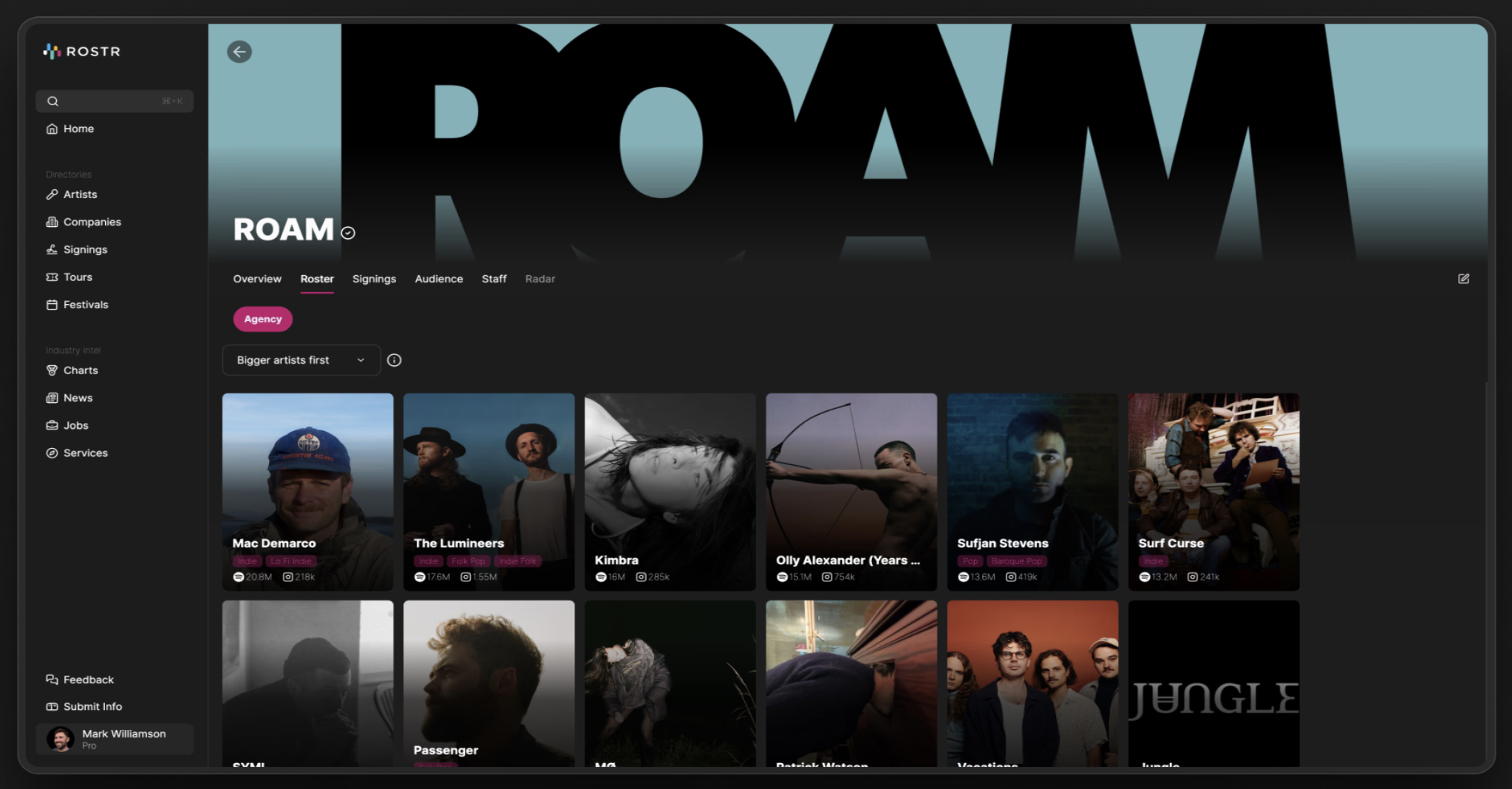
[**ROSTR's*](https://hq.rostr.cc/?ref=hypebot.com) *platform look.*
For [independent artists](https://www.hypebot.com/tag/indie-artists/), the potential value is practical: a promising market becomes more useful when you can identify someone equipped to promote a show there. A promoter’s booking history could give a team a stronger starting point for outreach and help uncover opportunities between the obvious tour stops.
**+Read more:** [*"How to Save Time and Be Everywhere: A Guide to Bandsintown’s Artist Marketplace"*](https://www.hypebot.com/how-to-save-time-and-be-everywhere-a-guide-to-bandsintowns-artist-marketplace/)
## **Connecting Venues and Promoters**
The announcement builds on ROSTR’s existing information about venues and artist representation, adding another part of the relationships that underpin touring. **Vivian Wang Donohue**,ROSTR’s Chief Growth Officer said:
> *"Promoters carry the financial risk on every show that goes on sale, and they are the least documented job in the business. We had to do venues first, because you cannot map a promoter without knowing the rooms. This is the other half of that."*
ROSTR positions the directory as a response to rising touring costs, competition for venue availability, and a fragmented ticket marketplace. Its proposed contribution is better access to potential partners: helping artists and agents find buyers they might otherwise never encounter, and helping those buyers get discovered.
---
*Get the latest Live Music & Industry News updated continuously from across the web under the Hypebot Industry News tab* [*here*](https://www.hypebot.com/music-industry-news-feed/)*.*
## Hypebot
Essential news & insights for artists and live music pros.
Sign up for free weekly content delivered to your inbox
Subscribe
Email sent! Check your inbox to complete your signup.
### Live Music Industry News: TM Outage, SeatGeek TourIQ & More
URL: https://www.hypebot.com/live-music-industry-news-tm-outage-seatgeek-touriq-more/
Last updated: 2026-10-05T18:23:38.000Z
### **Ticketmaster Transfer Outage**
Fans reported that they were unable to transfer **Ticketmaster** tickets to multiple events last Friday and Saturday. One customer posted a screenshot showing Ticketmaster displaying **“Transfer Unavailable”** and telling the recipient, “Unfortunately, Transfer is not available at the moment. Please try again later.”
The dozens of effected events ranged from **Harry Styles** in NYC to **Bruno Mars** at California's SoFi Stadium. The ticketer [acknowledged](https://www.ticketnews.com/2026/10/ticketmaster-transfer-problems-october-2/?ref=hypebot.com) the transfer backlog which appeared to clear by late Saturday.
Ticket resellers were quick to pounce with their cleverly named **Coalition for Ticket Fairness** calling the incident the "clear consequence of allowing one company’s unprecedented control over live event ticketing."
### **SeatGeek launches predictive Tour IQ**
SeatGeek has launched [TourIQ](https://seatgeek.com/blog/introducing-touriq?ref=hypebot.com), a predictive intelligence product built for the people who book and price live shows.
TourIQ is designed to help a promoter or venue know that an event is worth at any building, for any artist, on any date before it is booked and calculate the apporpriate price for each seat.
Here's a quick SeatGeek TourIQ demo:
0:00
/0:36
1×
### **Pollstar Live! Moves**
Top U.S live music industry conference [**Pollstar Live!**](https://pollstar.live/?ref=hypebot.com) is moving to Indian Wells near Palm Springs for its 2027 edition.
Presented byinsurance brokers **Marsh** and **Ticketmaster**, the next edition of Pollstar Live! is scheduled for April 13-15 between the two **Coachella** weekends. Stay tuned for more details. Discount registrations are open [here](https://pollstar.live/?ref=hypebot.com).
### **ILMC's Arthur Awards Expand**
Across the pond, the[**Arthur Awards**](https://dkcjnw04.eu1.hubspotlinks.com/Ctc/OV+113/dkcJNW04/VVR5md6l-3ZCN7XbRjcndMgsW9fbdmV5VzrHvN4Yn9N-3qn9qW7Y8-PT6lZ3pPVdxXXt1j3j1HW5GYWn17Bp3yzW7w79Mz7QSQX%5FVtfP3w7VPkNSW6gf1lt61L-HpW27n%5FpW7q0%5FC9N6CJZ%5F1qF1WfW4Sr6kR8kf8hLN81lbn93546wW8J4Hz51hL3X0V1957R2ZM43NW5lxvs64w%5F67bW5XBCPZ5Pg6TWW9fjjMr86ggT7W1p4yhR2WB5h1W8mfpNC1wBxr3N5cn%5FZMDZ%5FPzVMJb2Z5rfkFHW8cmWfn4gC-bTW1Ygyn352dtX-W116DKD3nl8XyW4pN-B07bZJyTW1N7dhm6bZBLDW3JHQb229dSY-W2Qyz1Z8p8x9tW3TTlcP2W5GFcf8c4Z-d04?ref=hypebot.com)are expanding their global live music business accolades and moving to the London Hilton Park Lane. For the first time, ILMC members can **submit nominations** in any of this year’s categories. [Nominate your peers here](https://dkcjnw04.eu1.hubspotlinks.com/Ctc/OV+113/dkcJNW04/VVR5md6l-3ZCN7XbRjcndMgsW9fbdmV5VzrHvN4Yn9Pg3qn9qW8wLKSR6lZ3mcW1GJt9D5j7-xcN47zP7sf1b9%5FW7sd8T186fGn9W4ljgQ86b93tWW3CGHJ268JS3%5FW210FZk3L2z7pV5pC5w6jw0nSW6M15t56B%5Ff6MW71YJjJ5rtDz-W730V1b1gn6N2W7kqq8d7zwNChW8dYgFN17tsZYN4FD5Rn%5FsVKMN6vVpLb2x%5Fv9W5mqP471xjNjlW5jyCLf4p%5Fd-LN7mmr1twbLghN1kTpgBTMhCSN2QPjZ2z4Y%5FvW2j4MQN1ywW8BW2m4NK659bVH4VP3C3m4vNF52W1TqWYl49sZ1%5FW5bXKyh3%5FxMCSW52z8jP2ywQNLW2-tdLW3mYQ8hW7B0Sft412ZWXW2FrVXy6Gzxxhf5zdJN604?ref=hypebot.com).
Held on February 25, **The Arthurs** are part of the **International Live Music Conference (ILMC)** running February 23-26\. Discount registrations are [available now](https://39.ilmc.com/register/?ref=hypebot.com).
### **New Partnership For Greenville's Foundry**
**John Peters** of **MassConcerts** and **Wesley Gilliam** of **Radio Room** are partnering to run the 1,200-capacity [**The Foundry at Judson Mill**](https://www.foundrygvl.com/?ref=hypebot.com)in Greenville, South Carolina.
The venue will undergo substantial renovations including an expanded stage, upgrades to sound and lighting, and new dressing rooms.
### **More News**
*Get the latest Live Music Industry News updated continuously from across the web under the Hypebot Industry News tab* [*here*](https://www.hypebot.com/music-industry-news-feed/)*.*
## Hypebot
Essential news & insights for artists and live music pros.
Sign up for free weekly content delivered to your inbox
Subscribe
Email sent! Check your inbox to complete your signup.
### What Does a Band Name Promise a Ticket Buyer, Actually?
URL: https://www.hypebot.com/what-does-a-band-name-promise-a-ticket-buyer-actually/
Last updated: 2026-10-05T14:00:35.000Z
[**Gnarls Barkley’s**](https://www.bandsintown.com/a/58-gnarls-barkley?utm%5Fsource=hypebot&came%5Ffrom=900) upcoming tour, as lauded as it has been in pre-launch promotion, won't look like past tours. And that's for one pretty crucial reason: **Only *half* of the duo will be onstage.**
Back in September, Gnarls Barkley [announced](https://news.livenationentertainment.com/news/gnarls-barkley-announce-2026-to-whom-it-still-concerns-tour?ref=hypebot.com) the ***To Whom It Still Concerns*** tour as the group’s first in 18 years, following the release of their third and final album, ***Atlanta***. The North American run begins November 5 in San Francisco. The promoter’s announcement now includes a disclaimer that Danger Mouse will not appear.
A statement [published by Pollstar](https://news.pollstar.com/2026/09/18/gnarls-barkley-announces-2026-to-whom-it-still-concerns-tour/?ref=hypebot.com) on September 22 said the shows had always been planned as a CeeLo Green-led run and that Danger Mouse was never scheduled to participate. Green subsequently clarified his collaborator’s absence on social media, and updated promotional artwork bills the concerts as:
> *“CeeLo Green performing Gnarls Barkley.”*
That wording makes the offering easier to understand. It also opens a question that extends well beyond this particular tour: **What does a band name actually *promise* a ticket buyer?**
For some fans, the answer is in the song. Put CeeLo’s voice behind “Crazy,” and the essential experience might be there. For most however, Gnarls Barkley means a particular creative partnership. The singer and the producer are both part of what they thought they were buying, the experience they expect to have.
Neither expectation is inherently wrong, they're preferential. But as groups extend into several decades, this becomes a common question. It's just asked differently each time?
***+Read more:*** [*"How We Built a Tour Identity for Fred again.. That Fans Made Their Own"*](https://www.hypebot.com/how-i-built-a-tour-identity-for-fred-again-that-fans-made-their-own/)
## **I Guess a "Band" Doesn't Constitude a Fixed Head Count?**
[Live music](https://www.hypebot.com/tag/live-music/) would lose a lot if every personnel change required a new name. Members always leave, drummers explode, some folks pass away during the duration of a band's existence. That stuff just happens, but the music is expected to stay the same and that's largely what fans want.
But at what point do the scales tip towards a band doing karaoke of their own music? And then what happens when the new members start recording *new music* as the same band name.
**Lynyrd Skynyrd** offers one familiar example. Its 1987 return began as a tribute tour, with Ronnie Van Zant’s younger brother Johnny on vocals, before developing into a continuing band that recorded new music. That history is part of the group’s identity today. And yes, people have mixed feelings about it.
Even “original lineup” can be a slippery standard too.
**The Temptations’** founding lineup included Elbridge “Al” Bryant; David Ruffin, whose voice many listeners associate with the group, joined afterward. The personnel present at the beginning aren’t necessarily the people who define a band in the "public's memory."
In Gnarls Barkley's case, half of a duo being absent may feel like more substantial than several replacements in a large ensemble, especially when both members are alive and kicking. And even when a band's musical identity divides neatly into fractions (guitar, bass, drums, vocals), in the case of Gnarls Barkley those duties are pretty crucially massive: **production, vocals.**
**Tour graphic courtesy of Gnarls Barkley.*
***+Read more:*** [*"Bandsintown's Boost Is a New Way to Promote Upcoming Gigs"*](https://www.hypebot.com/bandsintowns-boost-is-a-new-way-to-promote-upcoming-gigs/)
## **The Word “Reunion” Makes a Different Promise**
There’s also a difference between a band continuing and [a band returning](https://www.hypebot.com/tag/reunion/). A group that has toured through successive lineups gives audiences time to understand its evolution. A reunion pitch invites people to imagine something being restored.
After an 18-year gap, that might be something audiences take seriously in a way the marketing can't touch. After so long, people *want* that duo back on stage, and they've waited too long for a consolation. And now two absences need to be rectified, the absence of Danger Mouse from the live project, and the absence of the band from the stage for nearly two decades.
Which absence takes precedence over the communications?
Or rather, "We're back!" doesn't really ring true now, does it?
That makes the billing do more work. “CeeLo Green performing Gnarls Barkley” gives a [ticket buyer](https://www.hypebot.com/tag/ticketing/) a clearer basis for deciding. Someone may still happily buy the ticket. Someone else may pass. Both can make that choice without having to decode the announcement.
***+Read more:*** [*"How to Promote Live Shows and Tours"*](https://www.hypebot.com/how-to-promote-live-shows-and-tours/)
## **The Promise Starts Before the Show**
For [artists](https://www.hypebot.com/tag/indie-artists) and [promoters](https://www.hypebot.com/tag/promoter), this is a useful question at every scale. A local band reviving its name, a singer revisiting an old project, or a group advertising an anniversary show faces a version of the same problem: What will fans reasonably picture when they see that poster?
Of course, in marketing, scarcity speaks almost just as loud as text sometimes. *Saying less* about an experience build anticipation, fantasy, projection, and curiosity on the part of the music fan. That can be a massive tool in the promoter's arsenal when it comes to building viral buzz.
**Arcade Fire's** 2013 [pre-launch *Reflektor* campaign](https://www.hollywoodreporter.com/music/music-news/arcade-fires-reflektor-anatomy-a-654234/?ref=hypebot.com) set the bar pretty high for cryptic all-points marketing. Seemingly all at once and overnight, graffiti reading: "9/9/9" ("Sept. 9 at 9pm) and a geometric grid that simply said "Reflektor" started appearing all over the globe. Over the next few months, the band started appearing alongside those images in popular culture broadcasts like *SNL,* etc.
Eventually the single dropped and people [understood what was happening](https://consequence.net/2013/09/arcade-fires-9-9-9-marketing-campaign-was-environmentally-friendly-but-sort-of-annoying/?ref=hypebot.com), the anticipation could not have been higher. But buying a record the day it drops, and buying an expensive concert ticket months in advance, for a show you're not totally in the know about, are two separate things.
Communications strategy matters. Bands are allowed to do whatever they want, but they shouldn't let promotional efforts get in the way of their fan relationships, even if the repertoire remains the same.
Go see CeeLo.
---
## [**Gnarls Barkley 2026 Tour Dates**](https://www.bandsintown.com/a/58-gnarls-barkley?utm%5Fsource=hypebot&came%5Ffrom=900)
### Your Morning Coffee Podcast: Phonorecords V Case, AI in Court, Fans Travel, More.
URL: https://www.hypebot.com/your-morning-coffee-podcast-59/
Last updated: 2026-10-05T14:20:13.000Z
*\*Thanks for the* [*Hypebot shout out*](https://www.hypebot.com/fans-travel-38-more-for-live-music-new-study-shows/) *today!*
### **Listen on your favorite** [**podcast platform**](https://bio.to/UloQY6?ref=hypebot.com)**.**
Subscribe to the Your Morning Coffee newsletter [here](https://label-logic.us8.list-manage.com/subscribe?u=735771602810b0eb238d4e814&id=1ffaab59d7&ref=hypebot.com).
**YMC Episode 322 — October 5, 2026**
On this week’s episode of the [**Your Morning Coffee podcast**](https://www.hypebot.com/tag/your-morning-coffee/), your hosts Jay Gilbert and Mike Etchart chat about these timely music industry stories:
- **AI Lost Its First Fair Use Appeal. Suno Should Be Worried.**
- **Phonorecords V Could Reshape Catalog Valuations for Years. Here's Why Songwriters Should Pay Attention.**
- **Fans Travel 38% More for Live Music, New Study Shows**
- **Linking Songs To Recordings Is Music Data's 'Single Biggest Unsolved Problem.'**
Listen right here:
Subscribe to the Your Morning Coffee newsletter [**here**](https://label-logic.us8.list-manage.com/subscribe?u=735771602810b0eb238d4e814&id=1ffaab59d7&ref=hypebot.com)**.**
**FIND MORE CURATED MUSIC BUSINESS AND INDIE**
**PODCAST EPISODES** [**HERE**](https://www.hypebot.com/tag/podcast-music-biz/)
---
## Hypebot
Essential news & insights for artists and live music pros.
Sign up for free weekly content delivered to your inbox
Subscribe
Email sent! Check your inbox to complete your signup.
### New Features on Instagram, Facebook, YouTube to Market Music
URL: https://www.hypebot.com/new-features-on-instagram-facebook-youtube-to-market-music/
Last updated: 2026-10-05T13:10:40.000Z
With shifting algorithms and the rapid integration of AI, the ways artists interact with fans - and monetize those interactions - is evolving fast. From on-the-fly advertising tools to dedicated community apps, here is a breakdown of the latest updates from **Instagram, YouTube**, and **Facebook**, and how to use them to supercharge your music music marketing.
### **1\. Instagram: In-App Live Boosting & Profile Customization**
**Instagram** has aggressively rolled out new features throughout 2026, but the most impactful for artists am be new **in-app boosting for Livestreams**. Instead of navigating the complex Meta Ads Manager, creators can now launch a paid promotion directly from the livestream composer with just two taps.
Additionally, Instagram’s recent suite of updates includes **grid reordering, AI-powered post summaries**, and the highly anticipated **"Theme Song"** feature, allowing users to attach a music track and lyrics directly to their profiles.
**How Artists Can Use This For Marketing**
- **Amplify Live Events:** Hosting a listening party, acoustic set, or Q&A? You can now hit "Boost" two hours before you go live, targeting a specific audience to pull them directly into your stream while you are broadcasting.
- **Profile Branding:** Utilize the new profile Theme Song feature to pin your latest release directly to your bio. Paired with grid reordering, you can completely customize your digital storefront for release day, ensuring new visitors see and hear exactly what you want them to.
### **2\. YouTube: "Made on YouTube" 2026 Upgrades**
At their annual **"Made on YouTube"** event late last month, Google announced a slew of creator-focused tools aimed at **global reach** and **episodic storytelling**. Key features include **Shorts Series** (which allows creators to link episodic short-form videos), **Video A/B Testing** (uploading up to three thumbnails to see which performs best), and **real-time auto-dubbing** for livestreams (currently piloting in English and Spanish).
**How Artists Can Use This For Marketing**
- **Optimize Your Visuals:** Stop guessing which album artwork or press photo works best. Use **thumbnail A/B testing on your music videos and let YouTube's algorithm automatically serve the highest-**converting image to your audience.
- **Episodic Behind The Scenes Content:** Use the new "Shorts Series" feature to document the making of an album or a tour diary. Structuring Shorts as a series encourages binge-watching, keeping fans locked into your narrative.
- **Go Global:** If you have an international fanbase, real-time auto-dubbing for Live shows and Q&As will break down language barriers, instantly making your streams accessible to Spanish-speaking (and soon, other) audiences.
### **3\. Facebook: The Standalone "Forum" App for Groups**
Meta has officially launched **Forum**, a dedicated app built entirely for **Facebook Groups**. Recognizing that Groups are the most highly engaged spaces on the platform, Forum strips away the clutter of the main feed. The app features **AI-powered "Ask" search** which pulls group-sourced answers to user questions, and **"Top Voice" badges** that group admins can award to highly engaged members.
**How Artists Can Use This For Marketing:**
- **Nurture Super-Fans:** If you have a street team or a dedicated fan group, encourage them to migrate to Forum. Without the distraction of the standard Facebook algorithm, your updates, exclusive merch drops, and tour pre-sales will reach your core fans directly.
- **Build Authority:** Engage in genre-specific or local music scene groups on Forum. By consistently offering value (production tips, gig swaps), you can earn a "Top Voice" badge, elevating your visibility and driving high-intent listeners back to your artist page.
## **Hypebot’s Bottom Line**
The overarching theme of the Fall 2026 social media updates is **frictionless connection**.
Whether it is bypassing Ads Manager to boost an IG Live, using YouTube AI to test thumbnails, or cutting out feed clutter via Facebook's Forum app, **platforms are empowering artists to reach their audiences faster.**
For music marketers and independent artists, the strategy is clear: **stop relying solely on static posts.**
The algorithms are prioritizing **real-time engagement** (Live), **episodic video** (Shorts Series), and dedicated **micro-communities** (Forum). By adopting these native tools early, artists can lower their marketing friction and build deeper, more profitable relationships with their fans.
---
*Get the latest Live Music & Industry News updated continuously from across the web under the Hypebot Industry News tab* [*here*](https://www.hypebot.com/music-industry-news-feed/)*.*
## Hypebot
Essential news & insights for artists and live music pros.
Sign up for free weekly content delivered to your inbox
Subscribe
Email sent! Check your inbox to complete your signup.
### Latest Music Industry News From Across The Web
URL: https://www.hypebot.com/music-industry-news-from-across-the-web/
Last updated: 2026-10-05T12:09:22.000Z
**We search hundreds of sources on the web so you don't have to**. Find the latest [Music Industry News](https://www.hypebot.com/music-industry-news-feed/) under the [Industry News tab](https://www.hypebot.com/music-industry-news-feed/) above.
## Hypebot
Essential news & insights for artists and live music pros.
Sign up for free weekly content delivered to your inbox
Subscribe
Email sent! Check your inbox to complete your signup.
### 6 Feature Articles on Hypebot to Enjoy This Weekend
URL: https://www.hypebot.com/6-longform-articles-on-hypebot-to-enjoy-this-weekend-2/
Last updated: 2026-10-03T18:36:51.000Z
Get away from the high-speed daily news of this industry for a moment this weekend, and sit down with some commentary you can really sink your teeth into, at your own pace.
Here are **6 Feature articles** for your [**Weekend Reading**](https://www.hypebot.com/tag/weekend-reads)**.**
Enjoy!
---
[Tyla’s Fans Are Learning Her Show Before It Even StartsTyla’s A\*POP Tour will be an in-person extravaganza of the South African choreography that bolstered her songs online. Fans already can’t stop dancing.HypebotHypebot Editorial Desk](https://www.hypebot.com/tylas-fans-are-learning-her-show-before-it-even-starts/)
[Did a Russian Cover Band Accidentally Stumble Onto a Winning US Tour Strategy?This Moscow-based Chicago cover band is thriving in the US, proving that with the right tour market mapping strategy, the setlist can lead to success.HypebotJeremy Young](https://www.hypebot.com/did-a-russian-cover-band-accidentally-stumble-onto-a-winning-us-tour-strategy/)
[Artists Don’t Just Choose a Mixing Engineer. They Choose Who to Trust With the Record.When artists choose a mixing engineer, they read three kinds of trust signals: technical, emotional, and social. Here’s how to convey that trust.HypebotGuest Author](https://www.hypebot.com/artists-dont-just-choose-a-mixing-engineer-they-choose-who-to-trust-with-the-record/)
[Kelela Refuses to Stay in a Lane. And So Does Her Live Show.On her New Avatar Live tour, Kelela is putting guitars, club techno, and R&B on the same stage — and asking who decided they had to be kept apart.HypebotJeremy Young](https://www.hypebot.com/kelela-refuses-to-stay-in-a-lane-and-so-does-her-live-show/)
[The Hidden Cost of Early SuccessEarly success brings rapid growth and heavy pressure. Here’s how music creators can navigate the hidden challenges of breaking through.HypebotGuest Author](https://www.hypebot.com/the-hidden-cost-of-early-success/)
[Who Is PRESIDENT (and What Is All This Hype About)?PRESIDENT’s rapid rise from anonymous festival booking to sold-out North American headliner has us thinking about “carefully controlled mystery.”HypebotJeremy Young](https://www.hypebot.com/who-is-president-and-what-is-all-this-hype-about/)
### Are Artists Obligated to Be Activists?
URL: https://www.hypebot.com/are-artists-obligated-to-be-activists/
Last updated: 2026-10-02T15:33:44.000Z
I don’t think anyone missed the [Ed Sheeran Loop Tour controversy](https://www.hypebot.com/everything-we-know-about-the-ed-sheeran-macklemore-tour-fallout/). In short:
- Macklemore, known for his pro-Palestine remarks, opens for Ed Sheeran at MetLife Stadium in New Jersey, USA, and says “Free Palestine” on stage.
- Several NFL stadium owners threaten to cancel shows at their venues if he stays on the tour.
- Macklemore is dropped from the tour. Ed Sheeran responds with a statement that lands badly.
- All remaining opening acts, and Ed Sheeran’s touring band, quit in solidarity.
First, to provide some context for how I see this, let me be clear about where I stand: Free Palestine. I was therefore pleasantly surprised by how Macklemore handled the situation, from his statement to donating his tour earnings.
But that doesn’t mean I oppose Ed Sheeran’s choice to stay out of politics.

This is a good reminder of how short-sighted people on social media can be, and how easily public opinion is steered by people with power and knowledge.
The main antagonist in this story isn’t Ed Sheeran. It’s billionaire Robert Kraft, owner of the Gillette Stadium and a prominent supporter of Israel, who, together with three other NFL owners, threatened Ed Sheeran’s team not to host the tour as long as Macklemore was on it.
Instead of debating the value of freedom of speech, which, from my European perspective, feels obvious, we’re stuck in a debate that goes like this: Macklemore good, Ed Sheeran bad.
And all because people want Ed Sheeran to speak out. I don’t agree with that. We can’t force artists to speak out, form an opinion, or become activists just because they have a platform. They can, but they aren’t obliged to. We can’t “out” somebody’s opinion just to form our own. I think that’s poor human behaviour.
Instead of a Macklemore versus Ed Sheeran debate, this should be about people with power who successfully interfere with free speech. But that’s not the case, and those with power have played it well.
## Yes, but..
[Ed Sheeran’s statement](https://www.instagram.com/p/DdT-6KGAtuI/?ref=hypebot.com) that accelerated the debate was terrible. His team should have managed this much better.
Artists aren’t obliged to speak out. But staying neutral in the middle of a fight is a message too.
## Take action now
Artists can decide whether to:
- Speak out on a topic proactively.
- Speak out when asked for an opinion.
- Choose to keep their opinion to themselves.
***+Read more:*** [*"Everything We Know About the Ed Sheeran – Macklemore Tour Fallout"*](https://www.hypebot.com/everything-we-know-about-the-ed-sheeran-macklemore-tour-fallout/)
---
## Hypebot
Essential news & insights for artists and live music pros.
Sign up for free weekly content delivered to your inbox
Subscribe
Email sent! Check your inbox to complete your signup.
### School of Rock AllStars Tour Raises $16,000 for Youth Music Scholarships
URL: https://www.hypebot.com/school-of-rock-allstars-tour-raises-16-000-for-youth-music-scholarships/
Last updated: 2026-10-02T15:24:13.000Z
[**School of Rock**](https://www.schoolofrock.com/?ref=hypebot.com) 2026 AllStars Tour raised more than **$16,000 for youth music education scholarships** during a summer run of 34 shows across 33 U.S. cities, the organization announced September 29.
The money will support the [**Play Without Limits Project**](https://www.playwithoutlimits.org/?ref=hypebot.com), a nonprofit that helps students who otherwise couldn’t afford to participate access School of Rock programs.
This year’s tour brought together 162 students from 99 School of Rock locations across eight countries. Divided into six teams, they performed over 10 days at venues including New York’s Sony Hall, Trees in Dallas, and San Diego’s House of Blues. Local School of Rock House Bands opened each show.
According to School of Rock, fewer than 1% of its students earn an AllStars spot. Alongside performing, participants spoke to audiences about their experiences and encouraged support for scholarships.
For the young musicians, the run paired time on professional stages with a chance to help other students get started. The money raised will extend that opportunity beyond this year’s touring class.
[Donations remain open through the Play Without Limits Project.](https://secure.givelively.org/donate/play-without-limits-project-inc/school-of-rock-fundraising?ref=hypebot.com)
---
### [**Follow School of Rock on Bandsintown**](https://www.bandsintown.com/a/42398-school-of-rock?utm%5Fsource=hypebot&came%5Ffrom=900)
[***School of Rock***](https://www.schoolofrock.com/?ref=hypebot.com) *helps aspiring musicians master skills, unleash creativity, and develop the tools they need to thrive in life. Founded as a single school in Philadelphia, PA., in 1998, School of Rock has become a rapidly growing international franchise with over 650 schools open or in development across 23 global markets and has grown its student count from 4,000 in 2009 to over 80,000 today. School of Rock offers a wide variety of* [*music lessons*](https://www.schoolofrock.com/method?ref=hypebot.com)*, including* [*guitar*](https://www.schoolofrock.com/music-lessons/guitar-lessons?ref=hypebot.com)*,* [*singing*](https://www.schoolofrock.com/music-lessons/singing-lessons?ref=hypebot.com)*, and* [*piano*](https://www.schoolofrock.com/music-lessons/keyboard-piano-lessons?ref=hypebot.com)*. The company also* [*sells musical instruments and music gear*](https://www.schoolofrock.com/gearselect?ref=hypebot.com) *through its GearSelect program.*
### Your Music Is Neither Good Nor Bad — It's Yours. Stop Trying to Make It "Good."
URL: https://www.hypebot.com/your-music-is-neither-good-nor-bad-its-yours-stop-trying-to-make-it-good/
Last updated: 2026-10-02T14:51:24.000Z
> *“…But for the common wages…” – Dylan Thomas, 'In My Craft or Sullen Art'*
*By* [***Jonah Kraut***](https://jonahkraut.bandcamp.com/?ref=hypebot.com)
I have embarked on recording projects for over 20 years now, home recordings, demos, side projects and full albums; projects where I was involved as a writer, performer, producer, sometimes all, sometimes none. Successful or not, and what success really means, is not important. Well, it is important, but I’m not going to get into that.
Through these experiences I’ve learned what matters: the feeling. When listening to music, or when making music, knowledge passes, the feeling remains. And since feelings are complex — we rarely reduce our feelings to simple matters of good or bad — we need not apply the same or similar rubric within the art we make.
Your music isn’t your own. It’s a culmination of everything you believe to be true about itself. A worldview. A perspective we share with some and are confined from others. To make and take cues about music is part of the art makers’ spiraling lineage, a web unimaginably, almost infinitely dense, from simple social gatherings to a global industry of middlemen that aim to control the conversations.
I am not talking about the treadmill or the spectacle of the live show, where the music has already been worked out in advance, even if it’s improvised. And this is not even necessarily about recorded music, in which song, sound and voice form something of an identity. I am pointing to somewhere in between the idea and its crystallized output, between inception and completion.
The stuff that exists between what we have in our head and what’s heard out loud, where all the decisions, big or small, conscious or not, are made. Here is where, when the bumper paddles of judgement remain untouched, more work can be done.
The lack of judgement in evaluating your own work, like stoic meditation techniques, can help unlock crucial elements in understanding your own voice and vision.
I have been chasing sounds for years. Growing up playing classical music, an interest in recreating heard sounds, pursuing jazz in music school, a devotion to the limitless discovery of various media in retail stores, libraries and friends’ collections, I came to view music listening not as a banner of aesthetics but as a portal to dynamic worlds. Worlds that encourage a staging of interaction, from remote observer to active participant. And it all happens inside our heads.
There is a famous story about **Ramones’ Johnny Ramone** telling **The Clash’s Paul Simonon** something like “we’re terrible…we can’t play our instruments.” Whether this was intended as diffidence, it became a feature of punk aesthetics. Perceptions of good and bad shuffled about. Extracted from notions of good or bad, the music thrived beyond it.
Jump to Nashville, TN, land of individual talent, where I’ve lived since 2009, a place where good and bad have their own theory of relativity. *“If you’re not on the top you’re on the bottom.”* Egoist attitudes prop their own relevance. Up is down and down is up. After graduating from music school and continuing my own pursuance of music, it dawned on me that in order to be successful here, one does not have to be good, just good enough.
When I reflect upon my recording projects over past decades, there have been great teaching moments, but in particular, the moments that occurred outside of that duality are the ones that stand out as being the most educational.
Here are **six epiphanies** when good or bad became unimportant in the recording studio.
## **A 12-Hour Mix?**
My first two projects were with a band in Boston, MA. We were adamant on making decisions democratically, which proved to be difficult, but more on that later.
Our first album was eye opening, and I felt a seduction of the studio, a want to learn everything, all the buttons. It was so satisfying (the experience, not necessarily the music) that I was not prepared for any changes in approach for our second album, which, having different personnel, was necessary.
Everyone operates under different credos and our engineer had one in particular: if you have 12 hours to mix a track, you mix a track in 12 hours. I remember hearing that and juggling the words in my head, not agreeing or disagreeing, just analyzing. It wasn’t until the project was completed that it occurred to me that this approach works for very detailed mixes, but our music was loose. We liked to record live and with limited overdubs, so scrutinizing over small details during mixing was going to do little to change the feel of the music.
From here I started to think that the music itself should determine the approach, to mixing, but really to most everything, and not the other way around. Musical content and its approach to post-production may be mismatched, but that doesn’t deem either as good or bad. Perhaps they should match, and perhaps not.
## **“Better Than Good”**
**David Ferguson** has a long list of impressive credits to his name, but you wouldn’t know it to watch him play. In fact, I’ve never seen someone so laid back, nearly all the way. While his knowledge and experience would fill a series of books, there is one story in particular that struck me as particularly valuable.
I wasn’t there, but it goes like this: someone asked Ferg how a session went. *“Was it good?”* Answer: *“Better than good, it’s done!”*
A skeptic could view that sentiment as someone all too eager to close the book on a particular session, and perhaps that was accurate, but there is also more to it than that, and with a shift in perspective, quite the opposite comes out. As much of a craft as an art, the work, *not* the end-result of the work, is what we recognize, the thing itself, and understanding the mechanics of a particular thing is what a craftsperson learns on the long road of experience.
*“It’s better than good, it’s done”* is not the sentiment of a beginner, but someone who has learned what done is. Possibilities were exhausted, decisions were made or left alone, and some sort of identity was identified, without a question of good or bad.
## **Who Is That Singing?**
I’ve recorded vocals with different engineers and each has their own approach. One might concentrate on technique, room sounds, relation to mix, emotional impact, on and on. With one particular demo, I heard something unrecognizable — myself!
Well, I knew it was my voice, but it had been comped — smaller pieces cut and pasted together — in such a way that I lost the recognition of my own musical decisions. It wasn’t that the take sounded bad, just not myself, not something I would have sang live.
The idea of this sense of identity expands beyond the voice. To form a recognition of yourself, your instruments, sound and style, will yield more information to help guide decisions than any aesthetic qualifications.
## **On Feel Checks**
After a smooth process in recording our first record, the Boston-based band returned to the studio with slightly different members, recording engineers and studios for our second effort. The results were…*not as smooth*, and I remember feeling pressure to spark things up as much as I could. This feeling permeated the edits and overdubs and it’s something I can still hear if I listen back.
But my biggest fallacy was thinking I could rework the particular groove of a song by re-recording the bass. Convinced all the track needed was a little more bounce, I did my best impression of our regular bass player and called it a day. Did it help the groove? I don’t know because listening back all I can hear is my attempt to rerecord. In the end I should have let the groove be what it was originally.
I’ve pulled bass parts back on the time clock on at least one other recording to attempt the same thing, a meatier groove, a fatter beat, and whether it was achieved is debatable. The lesson is one of many in how pieces can, should, do or don’t fit together, not of their inherent goodness.
## **Notes From the Underground**
In between Boston and Nashville, I spent time recording my own music in my hometown in Evanston, IL. I had the house to myself to use as a studio, setting up a drum set in the basement, experimenting with ideas, putting myself on a daily regimen of writing, improvising, recording, editing, tinkering with no particular process other than to draw ideas out as much as I could.
I also designed and [printed handmade CDs,](https://www.hypebot.com/we-stopped-waiting-to-be-chosen-and-mailed-100-000-cds-instead/) gave them away, receiving positive, acceptable, and difficult (as in this music is difficult to listen to) feedback. But those points mattered little because through its completion I understood a few more concrete things about my music. No matter how complex the layering, and I tried to make it complex, there were still simple underlaying changes, in chord progressions, in texture, and in structure, that identified the music.
The other takeaway was specifically about overdubs. The performances on this project were all my own and I tried my best to act as a band would, each voice or instrument in its role, interactive, dynamic and responsive to each other, serving the song, jam or idea. But by the end of the project, I was craving the simple pleasure of accompanying another human, being accompanied or just locking in sync with a voice or instrument that wasn’t my own. I made no official vow, and there have been many an overdub since then, but from that point, the thought of hearing more than one layer of me renders me unsatisfied. I want real sounds happening simultaneously from real people in real places, independent, thinking, reacting, expressing.
## **Un-Expectations and Letting Go**
One thing you can never know is how it’s going to go. You can plan every detail out to a tee, but until everyone is in the room and says ‘go,’ the thing itself contains something of the unknown.
Tension exists inherently, and while larger systems (like more people playing together) adds complexity, this uncertainty, this unknowing can also exist as a singularity, in just one person, alone. I learned this, after some struggling on my latest project, Strange Passages, by ultimately putting the performance front and center.
The project started as a way to demonstrate songs for others to play, a demo, with a plan to fill in spaces with musical parts beyond the voice and accompaniment. But partly due to time limitations, I ended up letting the sounds and empty space coexist, focusing on the performance. In the interest of the song, the music and the words contained imagined parts that would not be played, and in doing this I shifted to the emotional output of the words, contemplating if I wanted it to come out this or that way, and let the song be whatever it was.
This not a unique approach, but it was the uncovering of this unknown, this revealing of an alternate identity, occurring through a sort of squeezing, a wrestling of direction, a struggle.
With this, a feeling of conflict, and, at times, resolution. But by the end, through all the tinkering, I had to accept the output, and could, so long as aesthetic judgement was suspended. When it comes to art, good and bad must wait in the wings while decisions are being made.
## **Guilt and Freedom**
In a discourse of aesthetics, there is a natural pull to recognize art when its value goes beyond its intention, or in other words, a guilty pleasure. There are different concepts here, but perhaps we can think of one as an inverse of the other. When a song (or movie or book, etc) is enjoyable outside the rational, we give passes, both to it and to ourselves.
Can we create art the same way?
As any child will demonstrate, visceral human expression can simply exist, outside of any rubric or skill, real or imagined. By adjusting our dials effectively, we can ignore any scent of social consensus. Popular music insists that it’s good for a listen, though what’s popular at a particular time changes, as people change, as the world changes.
In short, artists should chase not aesthetics, but their own identity. They should heed not the voices around them but search for and discover (and rediscover) internal voices. Remove miraged social anchors of good and bad, cultivate the freedom to explore more, wider and deeply. And through exploration, hopefully, comes understanding, a sense of context, and an ability to communicate more directly or more indirectly.
And so, don’t listen to what other people might think. Return to the Tao of Ramones. Be smart. Next time, listen your heart. Don’t hurry if it’s good, don’t worry if it’s bad. It’s all the same if it hasn’t got a name.
---
[***Jonah Kraut***](https://jonahkraut.bandcamp.com/?ref=hypebot.com) *is a Nashville-based composer, singer-songwriter and multi-instrumentalist whose music lives restlessly between assertiveness and vulnerability. Trained in classical and jazz, inspired by music from all spaces and times, Jonah crafts intimate, high-wire performances using only his voice and a single instrument. His recordings merge disparate sounds and emotional textures, creating a storytelling atmosphere that can swing between dread and bliss, euphoria and ennui. Known for his sharp artistic self-awareness, Jonah’s work is a raw and honest exploration of creative myths and truths.*
### Osagie Osarenkhoe on How to Build Support Structures in African Music
URL: https://www.hypebot.com/osagie-osarenkhoe-on-how-to-build-support-structures-in-african-music/
Last updated: 2026-10-02T13:59:42.000Z
[**Osagie Osarenkhoe**](https://www.linkedin.com/in/osagieosarenkhoe/?isSelfProfile=false&ref=hypebot.com) is the Director of A&R and African Operations at [**ONErpm**](https://onerpm.com/?ref=hypebot.com), where she built the company's African operation from a single Lagos office to a five-country, 38-person team. Before that, she discovered [Wizkid](https://www.bandsintown.com/a/1245424-wizkid?utm%5Fsource=hypebot&came%5Ffrom=900) and served as his first manager.
Her insights with the Afrohouse moment come from Nigeria's rave scene, where Gen Z can't get into clubs, so they’re making their own moments in unique ways. Those raves are now incubating a hybrid genre that fuses **amapiano, Afrobeats,** and **house** in a way that's distinctly Nigerian.
It's clear there's so much momentum in the African music scene, but what structural challenges are standing in its way? We talk about it all.
Here's our conversation. Enjoy!
---
**Hypebot: Hey Osagie, thanks so much for taking the time to answer some questions. You’re the Director of A&R & Operations for Africa at** [**ONErpm**](https://onerpm.com/?ref=hypebot.com)**, what does that role entail exactly? And for those who aren’t familiar, what is ONErpm?**
Osagie: "ONErpm is a global music company and record label. We work with artists and labels across distribution, marketing, publishing, business intelligence and other areas of the music business. For me, the important thing is that we’re able to bring that global infrastructure into local markets while still understanding what makes each market different."
For me, the role sits between A&R, artist development, strategy and operations. So beyond music and talent, I’m always thinking about the bigger picture. How do we help artists build real careers, understand their numbers, find the right audiences and markets, and have the support they need to keep growing?"
A big part of my role is also making sure my team has what they need to be really good at what they do, so together we can give our clients and the business what they need to keep growing year on year across the different markets, while also staying culturally relevant."
**H: With so many different cultures, markets, languages, and trends across the African continent, how does ONErpm connect all the dots and continue to provide value to the artists operating in these different markets?**
O: "I think the first thing is to understand that the realities across the African markets are very different, from Lagos to Nairobi, Johannesburg, Accra or Abidjan. The opportunity is in understanding what makes each market unique and then finding the connections between them."
For us, having people on the ground makes a huge difference. You can’t understand a market purely from a spreadsheet or presentation. You need people who understand the culture, the language, the people driving conversations locally and what audiences are actually responding to."
The data then helps you see things that you might not see immediately. If an artist starts getting traction in a market they’ve never really focused on, that tells you something. The next question is, why is it happening and what can we do with it? That combination of our local understanding, our global infrastructure and technology is how we create value."
> *"What excites me is that these markets are starting to interact with each other much more. Music is travelling across borders in ways we didn’t necessarily see at the same scale before."*
**H: What separates Nigeria from the other markets in Africa in your opinion? And what other communities are on the rise across the continent?**
O: "Nigeria has always had a very strong music culture, but what really sets it apart for me is the level of the creativity and the entrepreneurial energy around it. There’s always something happening. While we stand out, we shouldn’t always be the benchmark for every other African market. Every market has its own unique character."
South Africa has obviously had a huge global impact with Amapiano. Ghana continues to produce incredible music and talent. East Africa is particularly interesting to me right now, and there’s a lot happening in Kenya, Uganda and Rwanda. Francophone, lusophone and Northern Africa are also very special and unique spaces."
What excites me is that these markets are starting to interact with each other much more. Music is travelling across borders in ways we didn’t necessarily see at the same scale before."
**H: What’s an example of a trend that ONErpm has been able to identify before anyone else based on the unique positioning of your data collection? Or a success story that happened on the platform?**
O: "One of the advantages of having access to data across different markets is that sometimes you see movement before everyone starts talking about it."
A good recent example is **Skales’ “Shake Body.**” It’s a 2014 record, we put out when I managed him, but more than a decade later we started seeing it pick up again in completely different markets and with a much younger audience. The TikTok resurgence, including Lamine Yamal and many popular influencers and celebrities using the song, helped introduce the record to a new generation, and suddenly you had an old Nigerian record finding a new life globally."
More recently, **“Beauty Station” by 76 Drums featuring JC Kalinks** is another interesting example for me. It’s a Zambian record that started showing really strong signals in the market, and you could see that movement across different data points. It’s currently showing up prominently across Zambian platform rankings, and it’s a good example of why I’m always interested in what’s happening outside the obvious markets."
Those are the kinds of things that make the data really interesting. The numbers tell you that something is happening, but then you have to dig into the why. Where is the audience coming from? What are they responding to? Is there a cultural moment driving it? And can we help the artist build on that momentum?"
For me, the bigger lesson is that African music doesn’t have to follow a single path to become global. Sometimes the most interesting opportunities come from the unexpected connections between markets."
**H: How has Lagos (and its culture industry) changed over the years you’ve been living and working there?**
O: "I was born and raised in Lagos, Nigeria and it is my favourite city in the world. It moves fast, it’s chaotic, it’s creative, it’s expensive but we always find a way to make things happen and overcome any challenges."
When I started working in music professionally in 2008, there was already a huge amount of talent, but there wasn’t necessarily the same level of infrastructure, knowledge or international attention around the industry that we have today."
Now there’s more investment, more international interest, more companies coming into the market and, importantly, artists and the music industry as a whole are thinking much more seriously about the business side of their careers. But the hustle hasn’t changed. If anything, that’s probably still the thing that defines Lagos most for me."
**H: You’re a champion of women artists globally. In 2026, with progress having been made for women but there still being inequities, what are the main challenges women face in the arts/music?**
O: "There’s definitely been progress, but I still think there’s a lot of work to do. For me, one of the biggest issues is access - access to opportunities, funding, the right networks, information and, most importantly, access to decision-making rooms."
I’m proud that at ONErpm we have a very diverse team, and women play a big role in leadership across the company, both globally and in Africa. Women make up around 40% of our global workforce, and on the African team I lead, it’s about 36%. A lot of the women across the business are also in key leadership and decision-making roles, which I think is really important."
But across the wider industry, we still need more women in every part of the ecosystem- artists, managers, producers, executives, engineers, promoters, lawyers, investors and entrepreneurs."
I have seen women have to work twice as hard to be taken seriously in some rooms, and I think that’s slowly changing. We should get to a point where seeing a woman leading in music is just normal and doesn’t need to be a talking point."
> *"I use Bandsintown to track the reach of an incredible Nigerian artist I work with, *Kemuel*, and what’s interesting is that a lot of the people connecting with his music aren’t actually in Africa. That kind of data can really change how you think about an artist’s touring potential."*
**H: Who are your Top 5 African women-identifying artists right now in Afrobeats, Mbalax or Amapiano?**
O: "My top African female artists right now are Tems, Ayra Starr, Rukmani, Wendy Shay, Fave, Hanna, Amaarae, Nikita Kering, okay that’s more than 5\. This is not a ranking in any way; there are just ladies whose music I am excited about right now. From these artists, I guess you can tell what my favourite genres are."
**H: I imagine with cities so far apart and travel not always accessible over long distances in Africa, touring for bands that aren’t at the top of the industry is difficult between countries. Is there any momentum in the live music space to link more touring networks?**
O: "Absolutely. I think live music is one of the biggest opportunities for the continent, but the infrastructure now has to catch up with the music. It is one of the amazing things about music, how an artist can have an audience in several countries without ever having performed in those countries."
You can see the streams, you can see the social engagement, but then the artist and their teams have to figure out how to get there and how to connect with the audiences in those markets. And that’s where it gets complicated, finding the right promoters, visas, flights, accommodation, etc. For an independent artist, these things can quickly become a lot."
I’d love to see more regional touring networks develop around the continent. The audience exists already, the infrastructure just needs to catch up."
**H: Are artists in Africa using** [**Bandsintown**](https://www.bandsintown.com/?ref=hypebot.com) **to list and promote their concerts?**
O: "There are only a handful of artists and teams across Africa who really know about Bandsintown. It’s usually something artists’ teams discover when artists start touring more developed markets and need their shows to be visible across platforms like Spotify and YouTube."
So there’s definitely an opportunity here. I think artists need to see Bandsintown as more than somewhere to announce a show, it can help them understand where their audience actually is and turn that digital audience into a live one."
I use Bandsintown to track the reach of an incredible Nigerian artist I work with, [**Kemuel**](https://www.bandsintown.com/a/15568071-kemuel?utm%5Fsource=hypebot&came%5Ffrom=900), and what’s interesting is that a lot of the people connecting with his music aren’t actually in Africa. That kind of data can really change how you think about an artist’s touring potential."
**H: What was one unforgettable concert you attended recently?**
O: "I recently saw Zlatan headline Trace Live in Lagos, Nigeria and that was such an amazing experience, I haven’t danced that much in a long time. His energy on stage and connection with the audience really reminded me why I love music."
**H: What’s the scariest animal to see on the street as you’re making your way home at night after a concert?**
O: "Maybe a stray dog. But if we’re talking Lagos after a late night, I’m probably less worried about any animals on the streets."
---
[*Learn more about *ONErpm* here.*](https://onerpm.com/how-it-works/?ref=hypebot.com)
## Hypebot
Essential news & insights for artists and live music pros.
Sign up for free weekly content delivered to your inbox
Subscribe
Email sent! Check your inbox to complete your signup.
### The Week in Review: Sept 25-Oct 1, 2026
URL: https://www.hypebot.com/the-week-in-review-sept-25-oct-1-2026/
Last updated: 2026-10-02T11:26:11.000Z
Here's a rundown of some of our favorite stories from this week on [**Hypebot**](https://www.hypebot.com/). As always, thanks for reading and being part of our growing community of artists, managers, and industry pros.
### **Top Stories**
[Kelela Refuses to Stay in a Lane. And So Does Her Live Show.On her New Avatar Live tour, Kelela is putting guitars, club techno, and R&B on the same stage — and asking who decided they had to be kept apart.HypebotJeremy Young](https://www.hypebot.com/kelela-refuses-to-stay-in-a-lane-and-so-does-her-live-show/)
[Did a Russian Cover Band Accidentally Stumble Onto a Winning US Tour Strategy?This Moscow-based Chicago cover band is thriving in the US, proving that with the right tour market mapping strategy, the setlist can lead to success.HypebotJeremy Young](https://www.hypebot.com/did-a-russian-cover-band-accidentally-stumble-onto-a-winning-us-tour-strategy/)
[The Hidden Cost of Early SuccessEarly success brings rapid growth and heavy pressure. Here’s how music creators can navigate the hidden challenges of breaking through.HypebotGuest Author](https://www.hypebot.com/the-hidden-cost-of-early-success/)
[Syd Doesn’t Need to Fill the Stage to Fill a RoomAs Syd prepares to take “Beard” on tour, her minimal stage presence is a reminder that concerts can feel bigger when the music has room to breathe.HypebotJeremy Young](https://www.hypebot.com/syd-doesnt-need-to-fill-the-stage-to-fill-a-room/)
### **Advice & Tips**
[DIY Artists: How to Make Money Making MusicCourtesy of our friends at the DIY Musician Blog, this is the ultimate revenue checklist for musicians. Read on.HypebotDIY Musician Blog](https://www.hypebot.com/diy-artist-how-to-make-money-making-music/)
[Checklist: The Last Mile of Your Independent ReleaseArtists! Stop what you’re doing and read this practical guide for readying your next song or album launch. Here’s everything you need to know!HypebotGuest Author](https://www.hypebot.com/checklist-the-last-mile-of-your-independent-release/)
[Artists Don’t Just Choose a Mixing Engineer. They Choose Who to Trust With the Record.When artists choose a mixing engineer, they read three kinds of trust signals: technical, emotional, and social. Here’s how to convey that trust.HypebotGuest Author](https://www.hypebot.com/artists-dont-just-choose-a-mixing-engineer-they-choose-who-to-trust-with-the-record/)
[How to Build a Fan Base: the Science-Backed Strategy Most Artists OverlookBuild a lasting fan base by sharing personal songs and stories consistently — give listeners a reason to feel connected beyond the stream.HypebotVenture Music](https://www.hypebot.com/how-to-build-a-fan-base-the-science-backed-strategy-most-artists-overlook/)
### **Marketing in Music**
[How to Save Time and Be Everywhere: A Guide to Bandsintown’s Artist MarketplaceBe everywhere with the click of a button. Bandsintown integrations connect tour dates, fan signups, and merch offers where fans already exist.HypebotJeremy Young](https://www.hypebot.com/how-to-save-time-and-be-everywhere-a-guide-to-bandsintowns-artist-marketplace/)
[By the Time the Show Is Live, the Content Is Already Out.Live sets and festival performances are now becoming media content faster than ever, iPhone app TagMix is right in the swing of it.HypebotHypebot Editorial Desk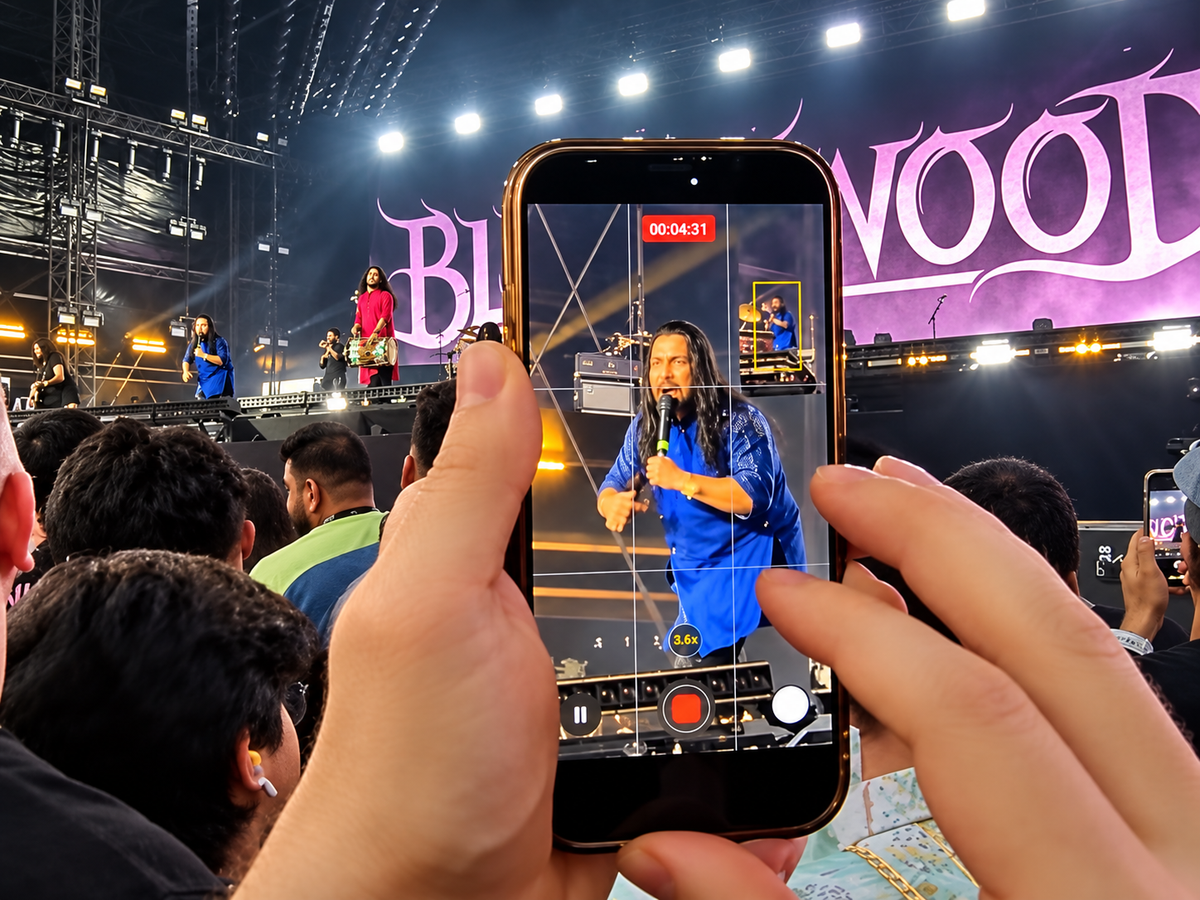](https://www.hypebot.com/by-the-time-the-show-is-live-the-content-is-already-out/)
[How Does Dave Matthews Get Prime Placement and Not Us!?This exclusive excerpt from David Fagin’s “Confessions of a Musical Masochist” describes a darkly funny yet revealing episode in his dealings with Napster.HypebotGuest Author](https://www.hypebot.com/how-does-dave-matthews-get-prime-placement-and-not-us/)
[The Next Era of Physical Music Will Not End at the Point of SaleZATAP CEO David Geisser proves why NFC-enabled albums and merch can turn a one-time sale into an ongoing direct fan relationship.HypebotGuest Author](https://www.hypebot.com/the-next-era-of-physical-music-will-not-end-at-the-point-of-sale/)
### **Streaming & AI**
[Lyrics Show How AI Can Grow Music Revenue Without Replacing PeopleAI-assisted lyric transcription, sync, and translation can expand royalty revenue for songwriters and publishers while creating more work for human teams.HypebotGuest Author](https://www.hypebot.com/lyrics-show-how-ai-can-grow-music-revenue-without-replacing-people/)
[Global Music Has More Than One Map, New Chartmetric Report FindsMexico, Japan, Brazil, India and Nigeria are all producing major artists. The routes their music takes beyond their borders look very different.HypebotHypebot Editorial Desk](https://www.hypebot.com/global-music-has-more-than-one-map-new-chartmetric-report-finds/)
[The Ultimate Guide to Understanding Spotify Analytics Data for ArtistsHow are listeners engaging with your music? Where are they based? Which are their favorite tracks? Learn how to track all that data and more here.HypebotSymphonic](https://www.hypebot.com/the-ultimate-guide-to-understanding-spotify-analytics-data-for-artists/)
[Your Morning Coffee Podcast: DistroKid Market Share, Suno Label Deals, StubHub, More.Episode 321 of Jay Gilbert and Mike Etchart’s podcast Your Morning Coffee: Weekly News for the New Music Business is available now.HypebotYour Morning Coffee](https://www.hypebot.com/your-morning-coffee-podcast-real-artist-hacking-streaming-2-0-congress-updates-more-2/)
### **Live Focus**
[The $15,000 Barrier: Visa Fees Cripple Int’l Touring In U.S.Rising visa costs are pricing foreign musicians out of US touring and trigger cancellations that hurt venues and leave lineups less diverse.HypebotBruce Houghton](https://www.hypebot.com/the-15-000-barrier-visa-fees-cripple-intl-touring-in-us/)
[Did the 2027 Oasis Ticket Pre-Sale Learn From Past Mistakes?This latest ticketing episode proves that high-demand ticketing can be more manageable, but was it any less dramatic?HypebotNews](https://www.hypebot.com/did-the-2027-oasis-ticket-pre-sale-learn-from-past-mistakes/)
[More Festivals Cancel as Climate Crisis Upends Live MusicSevere weather forced Global Citizen, All Things Go, CBGB and other festival cancellations this weekend. Learn how climate change is reshaping live music.HypebotBruce Houghton](https://www.hypebot.com/more-festivals-cancel-as-climate-crisis-upends-live-music/)
[Fans Travel 38% More for Live Music, New Study ShowsA new Live Nation study shows live music fans take 38% more trips than the average traveler and spend 60% of their budgets outside of the venue.HypebotBruce Houghton](https://www.hypebot.com/fans-travel-38-more-for-live-music-new-study-shows/)
### **News**
[Music Industry News From Across The WebThe latest music industry news and live music business updates from across the web under the Industry News tab at the top of every Hypebot page.HypebotBruce Houghton](https://www.hypebot.com/music-industry-news-from-across-the-web/)
[ROSTR Launches Free Global Database of 33,000 Music VenuesROSTR Venues is a new, free directory mapping over 33,000 global live music venues designed to make booking and tour routing easier.HypebotBruce Houghton](https://www.hypebot.com/rostr-launches-free-global-database-of-33-000-music-venues/)
[Ticketmaster Must Face FTC Ticket Resale Lawsuit Judge RulesLive Nation’s Ticketmaster must face an FTC lawsuit alleging it enabled scalpers and profited from illegal resale tactics after a court ruling.HypebotBruce Houghton](https://www.hypebot.com/ticketmaster-must-face-ftc-ticket-resale-lawsuit-judge-rules/)
[Hypebot Bottom Line: News That Matters To MusiciansIn a new Hypebot Bottom Line: 82% of musicians can’t afford to tour, how to chart on Billboard, gig booking tools, Ticketmaster vs FTC and more.HypebotBruce Houghton](https://www.hypebot.com/hypebot-bottom-line-news-that-matters-to-musicians/)
### ***\*This Week's Wild Card***
[5 New Tours That Don’t Follow the Usual PlaybookTouring Radar tracks newly announced dates that say something bigger about the business of live music. Here’s what’s catching our eye this week.HypebotHypebot Editorial Desk](https://www.hypebot.com/5-new-tours-that-dont-follow-the-usual-playbook/)
### Fans Travel 38% More for Live Music, New Study Shows
URL: https://www.hypebot.com/fans-travel-38-more-for-live-music-new-study-shows/
Last updated: 2026-10-01T12:37:49.000Z
[Live music](https://www.hypebot.com/tag/live-music/) has become a powerful drivers of global tourism.
According to a new study from [**Live Nation**](https://news.livenationentertainment.com/news/live-music-fans-take-38-more-trips-and-where-artists-play-drives-where-they-go-next?ref=hypebot.com), live music fans are taking significantly more trips than the average traveler, building their vacations, weekend getaways, and budgets around where their favorite artists are playing. Pair this with [Bandsintown](https://www.bandsintown.company/2025-high-notes?ref=hypebot.com) data from late last year and a clear picture emerges: concert tourism is no longer just for stadium tours - it is reshaping travel at every level.
Here is a breakdown of the data and what it means for artists, promoters, and independent venues.
### **Key Takeaways: The Live Nation Concert Travel Study**
Live Nation’s new global study surveyed fans across 13 countries to understand how a single ticket shapes the rest of a trip.
- **Fans take 38% more trips:** Live music fans are highly active travelers, taking 38% more trips annually than the general population.
- **Lineup over location:** 78% of fans say the artist or lineup matters more to them than the location of the host city itself.
- **A gateway to new cities:** 73% travel specifically to explore new destinations, and an incredible 91% say a live event played an important role in their very first visit to a new city.
- **Extended stays:** Concert travel isn't a simple in-and-out trip. 87% of fans stay for more than one night.
- **The 40/60 spend ratio:** Fans spend just 40% of their music travel budget on the event itself, pumping the remaining 60% into the local economy (flights, food, and accommodations).
- **The return trip:** 76% of fans eventually return to a destination they first visited for a live music event.
[Bandsintown](https://www.bandsintown.company/2025-high-notes?ref=hypebot.com) data confirmed the trends:
- Bandsintown stats showed international travel for live music jumped 32.6% last year, while average in-state travel distances increased by 13%.
- The platform's 100 million registered fans showed that guitar music is still a massive travel draw, with Rock, Alternative, and Metal taking the top spots for fan engagement and road-trip-worthy shows.
### **Biggest Friction Point: Accommodations**
If there is one major hurdle in the concert travel ecosystem, it's finding a place to sleep.
The Live Nation study notes that 88% of fans factor accommodations heavily into their plans, and **71% struggle to find a place to stay near the venue**. Fans are actively looking for packaged deals that combine ticketing, travel, and lodging- and 40% said they would gladly change their preferred booking platforms to get that support.
A new and growing concern for travelling concertgoers are [**last minute climate change related cancellations**](https://www.hypebot.com/more-festivals-cancel-as-climate-crisis-upends-live-music/).
## **Hypebot's Bottom Line**
The era of the hometown show being a fan's only option is over. Fans are willing to cross state lines and even international borders to see the artists they love - and they bring heavy economic weight with them.
For **artists**, this means you don't necessarily have to hit every secondary market on a tour. If you build a compelling event in a centralized hub, your most dedicated fans will travel to you.
For **independent venues and promoters**, the data is a clear mandate: market your shows regionally, not just locally. Partnering with local hotels, restaurants, and transit authorities to alleviate the "accommodation friction" could be the key to turning a one-night show into a massive economic weekend for your entire city.
***Read more:*** [*"More Festivals Cancel as Climate Crisis Upends Live Music"*](https://www.hypebot.com/more-festivals-cancel-as-climate-crisis-upends-live-music/)
---
## Hypebot
Essential news & insights for artists and live music pros.
Sign up for free weekly content delivered to your inbox
Subscribe
Email sent! Check your inbox to complete your signup.
***Get all the latest Music Industry & Live Music News updated continuously from across the web under the Hypebot Industry News tab*** [***here***](https://www.hypebot.com/music-industry-news-feed/)***.***
### Hypebot Bottom Line: News That Matters to Musicians
URL: https://www.hypebot.com/hypebot-bottom-line-news-that-matters-to-musicians/
Last updated: 2026-10-01T12:15:48.000Z
Welcome to the latest edition of [**Hypebot’s Bottom Line**](https://www.hypebot.com/tag/bottom-line/) **\-** our regular roundup of key takeaways for musicians and all industry pros from the stories we covered recently
### [**More Festivals Cancel as Climate Crisis Upends Live Music**](https://www.hypebot.com/more-festivals-cancel-as-climate-crisis-upends-live-music/)
Severe weather forced Global Citizen, All Things Go, CBGB and other festival cancellations this weekend. As the number of music festivals and concerts postponing or cancelling altogether due to rapid, unpredictable severe weather events rises, live music executives and promoters are being forced to rethink their touring calendars.
**Hypebot's Bottom Line:** The cancellation of Global Citizen, Oceans Calling, and All Things Go in a single weekend serves as a stark reminder: climate change is no longer a future threat. Promoters, agents, production crews, and artists must build weather resilience directly into their plans, contracts, and operating budgets. Severe weather will keep coming, and the live music industry must evolve or risk watching its outdoor calendar wash away.
[Read the full story](https://www.hypebot.com/more-festivals-cancel-as-climate-crisis-upends-live-music/)
###
[74% Of Musicians Earned Under $1K, 82% Can't Afford to Tour](https://www.hypebot.com/74-of-musicians-earned-under-1k-82-cant-afford-to-tour/)
Releasing music is "easy" but making a living in music isn't. A new Ditto survey spanning 112 countries shows 74% of independent musicians earned under $1,000 last year. Worse, with soaring travel and production expenses, a staggering 82% of respondents stated they cannot currently afford the expenses associated with going on tour.
**Hypebot's Bottom Line:** The democratization of music distribution was supposed to be the great equalizer, but Ditto Music's 2026 report proves that access does not equal sustainability. We have successfully solved the problem of getting music onto platforms; we have completely failed to solve the problem of getting artists paid. Until the industry finds a way to subsidize live performance costs or adjust streaming payouts, "independent music" will remain a hobby for the many, and a career only for the well-funded few.
[Read the full story](https://www.hypebot.com/74-of-musicians-earned-under-1k-82-cant-afford-to-tour/)
### [**Ticketmaster Must Face FTC Ticket Resale Lawsuit, Judge Rules**](https://www.hypebot.com/ticketmaster-must-face-ftc-ticket-resale-lawsuit-judge-rules/)
Live Nation's Ticketmaster must face an FTC lawsuit alleging it enabled scalpers and profited from illegal resale tactics. A federal judge denied a motion to dismiss, keeping intact the FTC's claims that Ticketmaster violated the BOTS Act and engaged in deceptive "drip pricing" practices.
**Hypebot's Bottom Line:** This ruling is a critical blow to Ticketmaster's legal shields and a win for fans, artists, and independent promoters. By opening the door to full discovery, the court is forcing transparency onto how major ticketing platforms handle scalpers. If the FTC wins here, it could force a fundamental overhaul of primary ticket distribution, bot enforcement, and secondary resale fee structures across the live music ecosystem.
[Read the full story](https://www.hypebot.com/ticketmaster-must-face-ftc-ticket-resale-lawsuit-judge-rules/)
### [**How Indie Artists Can Chart on Billboard With <1K In Sales**](https://www.hypebot.com/how-indie-artists-can-chart-on-billboard-with-1k-in-sales/)
Charting on Billboard isn't just for major label acts. Independent artists can chart on Billboard without a major or large independent label by targeting secondary charts—like Folk/Americana, Blues, or Alternative—which often require only 500 to 1,500 album-equivalent units in their first week.
**Hypebot's Bottom Line:** You don't need a multi-million dollar major label apparatus to get a Billboard plaque on your wall. By focusing on the right genre category, registering your UPC/ISRC codes with Luminate, and running 6-week pre-sale and pre-save campaigns that stack all fan buying power into release day, an independent act with a dedicated fanbase of a few hundred people can legitimately land a top 10 spot on an official Billboard chart.
[Read the full story](https://www.hypebot.com/how-indie-artists-can-chart-on-billboard-with-1k-in-sales/)
### [**Gigwell Opens Its Booking Toolbox FREE to Artists and Independent Promoters**](https://www.hypebot.com/gigwell-opens-its-booking-toolbox-to-artists-and-independent-promoters/)
Gigwell has launched free tools that help independent artists, agents, and promoters create booking documents, calculate show costs, and settle gigs. The available tools include builders for artist offer sheets, performance contracts, hospitality riders, and a show profit calculator.
**Hypebot's Bottom Line:** The people who need a structured offer sheet or an artist settlement report most are the ones who can least afford advanced, industry-specific tools. By opening up its collection of free tools, Gigwell provides a crucial starting point for independent artists and promoters who are learning the business without an established agency behind them.
[Read the full story.](https://www.hypebot.com/gigwell-opens-its-booking-toolbox-to-artists-and-independent-promoters/)
### [**Boost Fan Engagement With New Instagram Updates**](https://www.hypebot.com/boost-fan-engagement-with-new-instagram-updates/)
Instagram now lets you add tagged posts to your primary profile grid. Instead of getting relegated to the secondary "Tagged" tab, fan-generated content and press mentions can now sit seamlessly on your main feed, giving artists and venues an incredible tool for cross-promotion.
**Hypebot's Bottom Line:** Instagram's decision to let users add tagged posts to their primary grid is a real win for grassroots music marketing because it seamlessly turns fan excitement and press coverage into front-page marketing. By combining this new level of user-generated content with Collab posts and Broadcast Channels, artists and venues can spend less time struggling to create original content and more time amplifying the communities that already surround them.
[Read the full story](https://www.hypebot.com/boost-fan-engagement-with-new-instagram-updates/)
---
*Get the latest Live Music & Industry News updated continuously from across the web under the Hypebot Industry News tab* [*here*](https://www.hypebot.com/music-industry-news-feed/)*.*
## Hypebot
Essential news & insights for artists and live music pros.
Sign up for free weekly content delivered to your inbox
Subscribe
Email sent! Check your inbox to complete your signup.
### Kelela Refuses to Stay in a Lane. And So Does Her Live Show.
URL: https://www.hypebot.com/kelela-refuses-to-stay-in-a-lane-and-so-does-her-live-show/
Last updated: 2026-10-01T12:12:14.000Z
[**Kelela**](https://www.bandsintown.com/a/5651775-kelela?utm%5Fsource=hypebot&came%5Ffrom=900) is on the road with *New Avatar Live*, a full-band tour built around her July album ***new avatar***.
In a [recent *Los Angeles Times* interview](https://www.latimes.com/travel/story/2026-09-18/kelela-on-new-avatar-and-upcoming-tour-wiltern?ref=hypebot.com), she imagined a show with the energy of a rave that might tip into a mosh pit. That's not just confidence, that's innovation in form. This is an artist often introduced as an electronic R&B experimenter, feather-ruffler, and shape-shifter.
It's her calling card, and she's seeking a way to share that aspect of her creativity with her audience, to make every audience member part of that fluidity. It also flies in the face of how the music industry *loves* putting performers into neat and tidy boxes.
Can a live tour change the category people put you in?
The guitars on *new avatar* are not exactly a sudden instrumental costume change. Before her 2013 mixtape ***Cut 4 Me*** helped establish Kelela in experimental club and R&B circles, the singer fronted the Washington D.C. indie rock band **Dizzy Spells.**
She told the *Times* about the rock and alternative songs she loved as a teenager; and in an [interview with Pitchfork](https://pitchfork.com/story/the-music-that-made-kelela/?ref=hypebot.com), she described entering the studio determined to explore guitar music without giving up dance music. The resulting album moves through shoegaze and grunge alongside UK garage and the fractured R&B that has long been part of her sound.
The [live stage](https://www.hypebot.com/tag/live-music/), though, makes those connections physical.
A guitar arrangement can alter the weight of an older song, it can ramp up the emotion. A club rhythm can follow a heavy riff without a DJ having to figure out where the cut and transition points are. The audience can dance, sing, and push toward the front over the course of the same set.
According to fan accounts of this tour so far, Kelela’s been messing around with an electric-guitar arrangement of [“Rewind,”](https://open.spotify.com/track/3gpTmtwDhuWAJhqzZnmmUT?si=0fd28bd18cd245da&ref=hypebot.com) a song from her earlier catalog that initially made use of synths and drum machines. This tour is carrying the new record into the room while giving familiar material another shape. Shapeshifting.
There is more at stake here than proving she can play rock music to critics.
In the *Times* interview, Kelela called the racialized assumptions about which sounds belong to whom ***“sonic racism.”*** Black artists helped build rock, electronic music, and R&B, and helped push those genres into their future iterations when they felt stale; and yet, an artist’s established genre can still affect which parts of their range an audience or an industry readily recognizes.
For Kelela, bringing those sounds together is a way to make room for Black listeners who grew up loving guitar music as well as club music. She's bridging a gap of both visibility, and identification.
One recent performance put that argument on display. For a [Spotify live session](https://www.youtube.com/watch?v=%5FxapImfNbKg&ref=hypebot.com), Kelela performed with an all-Black femme ensemble that included strings, guitar, bass, and backing vocals, playing her own “Idea 1” and covering **Incubus’** “Mexico.”
That was a separate performance from the tour, whose reported setup is a full band. This is sort of the exception that proves the rule I guess. Both show how much the choice of musicians and arrangements can say before anyone reaches for a genre label. And she's not interested in labels.
One concert may not rewrite streaming metadata or change a promoter’s marketing overnight. But the show lets an artist present a wider identity directly to the people most likely to follow them into it.
For independent artists, that can start with a different arrangement of an older song, an unexpected cover or a bill that connects audiences usually kept apart. Your live set can show fans where the music is going before any platform finds a name for it.
---
## [**Kelela Tour Dates**](https://www.bandsintown.com/a/5651775-kelela?utm%5Fsource=hypebot&came%5Ffrom=900)
### Ryan Castro's Venue Rise In Real Time
URL: https://www.hypebot.com/ryan-castros-venue-rise-in-real-time/
Last updated: 2026-10-01T12:03:53.000Z
[**Ryan Castro**](https://www.bandsintown.com/a/12836137-ryan-castro?utm%5Fsource=hypebot&came%5Ffrom=900) has [booked his first Madison Square Garden headline show](https://www.msg.com/events-tickets/ryan-castro-madison-square-garden-december-2026/3B006536EA426467?ref=hypebot.com) for December 12\. It is a big announcement for the Colombian artist. It is also the fourth entry in a neat and tidy New York-area concert history:
- In 2023, he played [Palladium Times Square](https://www.palladiumtimessquare.com/event/ryan-castro/?ref=hypebot.com).
- In 2024, he and Blessd took their joint *¡Ay Bendito Ghetto!* tour to [Prudential Center](https://www.prucenter.com/events/blessd-ryan-castro?ref=hypebot.com).
- In 2025, Castro brought his own *SENDÉ* tour to the [Barclays Center](https://www.barclayscenter.com/events/detail/ryan-castro?ref=hypebot.com).
- Now comes [the Garden](https://www.bandsintown.com/v/10002026-madison-square-garden?ref=hypebot.com).
That is a venue ladder you can see from space. It also shows a localized version of audience development strategy happening in a real time microcosm.
## The space between buzz and a bigger room
Music coverage likes a breakthrough moment. Touring is usually less cinematic.
An artist can have a viral song, enormous streaming numbers and a loud online following, then discover that those listeners are scattered across places where a concert cannot yet sell enough tickets. A live career gets built market by market, with evidence that people will show up again at a higher ticket price or in a larger room.
Castro’s current ***SENDÉ THE LAST DANCE*** run helps explain why the Garden booking is more than a prestige play. [Consequence reported](https://concerts.consequence.net/articles/ryan-castro-announces-madison-square-garden-show?ref=hypebot.com) sold-out dates in Laval, Boston, Orlando and Tampa, with the upcoming Denver date also sold out. The itinerary itself moves between arenas, theaters, and other rooms.
Different cities can be at different steps of the same artist’s career. His growth is also obviously bigger than New York; his Medellín stadium concert sold 45,168 tickets and grossed more than $3.4 million. Those numbers show the scale of his audience at home; they do not mean every US city is ready for a stadium, but it proves the model works.
## What tells you to move up?
An [independent artist’s](https://www.hypebot.com/tag/indie-artists/) version of this decision may be whether to move from a 300-cap room to 700, or from 700 to 1,500\. The question is the same: **What did the last show actually prove?**
A quick sellout is one signal, but the details matter here:
- Did tickets move because of the artist’s own audience, or because a stronger act was on the bill?
- Were there hundreds of fans turned away, or did the room only just fill?
- How early did tickets sell?
- Did the city perform well on a return visit?
- Would the next room still make financial sense after higher production, staffing and marketing costs?
There is no universal percentage that answers those questions. A slightly smaller packed room can be a better night, financially and emotionally, than an ambitious room with empty sections. But staying put forever can also leave demand on the table. The point is to choose the next venue with sales history, local fan response, and a realistic budget in hand.
Castro’s four bookings make the climb super easy to draw on a timeline. They also show why the line is not perfectly straight: an arena on a joint tour, an arena headlined alone, then a larger symbolic stage. Madison Square Garden will be a milestone if the December show delivers. The work that got him there is already visible in the rooms he played along the way.
---
## [**Ryan Castro Tour Dates**](https://www.bandsintown.com/a/12836137-ryan-castro?utm%5Fsource=hypebot&came%5Ffrom=900)
### How to Build a Fan Base: the Science-Backed Strategy Most Artists Overlook
URL: https://www.hypebot.com/how-to-build-a-fan-base-the-science-backed-strategy-most-artists-overlook/
Last updated: 2026-10-01T11:55:09.000Z
*This post originally appeared on* [***Venture Music Blog***](https://venturemusic.com/blog/how-to-build-a-fanbase?ref=hypebot.com)
There's a moment every artist knows.
You put everything into something— a song, a lyric, a performance. You release it into the world and just hope for the best. Then weeks or months later, a complete stranger reaches out, overflowing with emotion, doing their best to explain how much it means to them.
It's not an exaggeration. You changed their life.
Most artists want more of that. Not more streams, not more followers — more of *that.* The feeling that what you made actually mattered to someone. If you've ever searched how to [build a ](https://www.hypebot.com/tag/fan-base/)[fan base](https://www.hypebot.com/tag/fan-base/) hoping to create more of those moments, you've probably found a lot of the same advice: *post more, promote harder, run ads.*
That advice isn't wrong. It's just incomplete. Because what's actually happening in that moment when a stranger tells you that you changed their life? That's not a marketing outcome. That's a neurological one.
**Understanding the psychology and** [**neuroscience behind why music connects**](https://venturemusic.com/blog/neuroscience-to-build-your-fanbase?ref=hypebot.com) **will change how you approach your work**. Not in a calculated, manipulative way -- in a way that empowers you to just be you. Because the science keeps pointing to the same counterintuitive truth:
*The more personal your work is, the more universally it connects.*
## Most Advice on How to Build a Fan Base Gets One Thing Wrong
The standard [music promotion strategy](https://www.hypebot.com/tag/promotion/) conversation focuses almost entirely on reach. Get in front of more people. Hit more playlists. Run more ads. Grow the numbers. And look…reach matters. You can't build fans when no one knows about you.
**But reach alone doesn't create fan bases. It creates impressions. And impressions are not the same thing as attachment.**
The artists who struggle most aren't usually invisible. They're visible but not *connecting*. Streams aren't converting to email subscribers. Followers aren't buying tickets. People listen once and move on.
That's not a reach problem. That's a relationship problem. **The piece most music promotion strategy advice skips is the psychological one: how does a casual listener become someone who cares?** [**What actually creates the kind of fan who shows up, spends money, and tells everyone they know?**](https://venturemusic.com/blog/what-is-a-superfan?ref=hypebot.com)
That's what the neuroscience answers. And it's more useful (and reliable) than any algorithm strategy.
**+Read more:** [*"Streams Don’t Build Careers: Fans Do"*](https://www.hypebot.com/streams-dont-build-careers-fans-do/)
## What Actually Turns Casual Listeners Into Real Fans
If you want to build fans – not just accumulate streams – you have to understand what's happening in the listener's brain.
In 1956, two researchers named [Horton and Wohl were studying something that seemed strange](https://www.participations.org/03-01-04-horton.pdf?ref=hypebot.com): television viewers were forming what appeared to be genuine friendships with people on screen. They grieved when characters died. They felt betrayed by plot twists. They talked about these "relationships" as if they were real.
This wasn't delusion. It was a fundamental feature of how our brains process repeated exposure to a personality. Researchers now call these **parasocial relationships**.
Here's the basic mechanism: our brains evolved to form bonds through repeated interaction. When our ancestors saw the same faces regularly, heard the same voices, and witnessed someone's emotional states over time, their brain registered that person as part of their social world.
The interesting problem is that our brains never developed a strong filter for the screen. **When someone listens to your music repeatedly (and has an emotional response to it) their brain starts processing you as a known, trusted figure. The neural pathways that activate are remarkably similar to those involved in actual friendship.**
That’s not the only powerful thing about parasocial relationships artists can leverage if they understand them though…
[Another 2014 study found that parasocial relationships predict consumer behavior](https://journals.sagepub.com/doi/abs/10.1016/j.intmar.2013.12.003?ref=hypebot.com) – buying concert tickets, purchasing merchandise – more reliably than any traditional marketing metric. Why? Because you're not functioning as a "brand" in their brain. You're functioning as a person they feel they know and trust.
This is how to get fans who actually stay: not by being everywhere, but by creating the conditions for genuine psychological connection.
## The Psychology Behind Every Powerful Fan Community
The strongest fan community isn't built on giveaways or Discord servers. It's built on repeated emotional resonance. Here's what's happening neurologically when your music connects:
**Reward systems fire.** Music activates the nucleus accumbens -- the same reward center that responds to food and dopamine triggers. When listening to music gives you chills, dopamine is being released at measurable levels. [Music literally creates a neurochemical reward response.](https://www.nature.com/articles/nn.2726%5C?ref=hypebot.com)
**Mirror neurons activate.** When you sing about heartbreak, anger, joy, or longing with genuine emotion, your listener's mirror neuron system fires. [These neurons simulate the emotional state you're expressing.](https://pmc.ncbi.nlm.nih.gov/articles/PMC2555420/?ref=hypebot.com) This isn't just understanding your emotion – their brain is partially *experiencing* it with you.
**Memory consolidates around it.** Music combined with emotion creates significantly stronger memories than either element alone. [The amygdala and hippocampus work together during musical experiences to form what researchers call "flashbulb memories"](https://www.gatech.edu/news/2024/12/02/music-can-change-how-you-feel-about-past?ref=hypebot.com) – vivid, emotionally charged memories that persist. This is why someone can remember exactly where they were the first time they heard a song that mattered to them.
**Identity integrates.** [Personally meaningful music activates the medial prefrontal cortex](https://academic.oup.com/cercor/article/19/11/2579/376624?ref=hypebot.com) \-- the region associated with maintaining your sense of self. When you, as an artist expresses something that resonates, the fan doesn't just *like* you. They use the way you articulate your feelings to understand themselves better. You become a tool for self-discovery.
This is why music discovered during emotional pivots – breakups, grief, identity crises, moments of triumph – creates such powerful lifelong attachments. The music didn't just soundtrack that moment. It provided a framework for understanding it.
**And this is why the strongest fan bases aren't built on production value or marketing budget. They're built on consistent, genuine emotional expression – the kind that gives the brain something *real* to bond to.**
***+Read more:*** [*"9 Live Music Marketing Trends Selling Out Shows In 2026"*](https://www.hypebot.com/9-live-music-marketing-trends-selling-out-shows-in-2026/)
## How Parasocial Relationships Help You Build a Fan Base Organically
So what do you actually *do* with this?
If you want to know how to build a fan base that lasts, your music promotion strategy needs to prioritize a consistent emotional experience over algorithm hacks. That means being intentional about four things:
**1\. Repeated exposure with emotional context.** It's not just about getting your music in front of people. It's about sharing it in a way that is actually memorable.. Tell a short story about what inspired it in the caption, or put a hook at the beginning of your video that helps the listener see themselves in the song. Give people reasons to come back, and give those returns emotional weight.
**2\. Emotional specificity.** Generic doesn't connect. Specificity does. *"I was heartbroken"* doesn't activate mirror neurons the way *"I drove past your street for three months before I could stop myself"* does. The details are what make something feel *real* enough to matter. Resist the pressure to sand down your edges to reach a broader audience. The specificity is exactly what creates the resonance.
**3\.** [**A consistent narrative**](https://venturemusic.com/blog/extend-storytelling-through-marketing?ref=hypebot.com)**.** Fans aren't just connecting to a song. They're connecting to you -- to a story that unfolds over time. Share the process. Talk about where you've been and where you're going. [Let people feel like they're part of something](https://venturemusic.com/blog/email-marketing-for-musicians?ref=hypebot.com) that has a beginning, a middle, and a direction. [This is how casual listeners become invested ones.](https://venturemusic.com/blog/1000-true-fans?ref=hypebot.com)
**4\. Self-disclosure.** Be specific enough about who you are that your fans can see who *they* are in relation to your work. You don’t need to overshare, just be open enough about your values, your worldview, and your stories that the right people feel recognized. When someone shares your music, they're using it to say something about themselves. The more clearly you express yourself, the more confidently they can do that.
None of this requires a big budget or a label deal. **It requires consistency, self-awareness, and the willingness to be genuinely yourself in public.**
## Why Authentic Self-Expression Is the Fastest Way to Get Fans Who Stay
Here's the thing most marketing advice gets backwards: the pressure to be "relatable to everyone" is actually counterproductive.
**If you want to know how to get fans who become true believers, the answer isn't to broaden your appeal. It's to deepen your authenticity.**
When you express something specific -- a real perspective, a real feeling, a real story -- individual listeners find themselves in it. Not because you made it easy, but because you made it *real*. Generic doesn't help anyone understand themselves. Honest specificity does.
This is also why the fans who find you this way are so much more likely to stick around. They didn't connect to a persona. They connected to something that felt true. And that connection is harder to break than any algorithmically optimized impression.
When you're debating whether an idea is too honest, too vulnerable, or too weird -- that's usually the signal you're onto something worth saying. The artists who build fans that last aren't the ones chasing a wider net. They're the ones willing to build fans by going deeper.
**The goal isn't to be everything to everyone. It's to be exactly what the right people have been looking for.**
## Conclusion
Fan growth isn't primarily a marketing problem. It's a psychological one.
**The connection your music creates isn't mystical or random. It's mirror neurons firing, dopamine releasing, memories consolidating, and identity integrating. All doing exactly what human neurology evolved to do: connect people through shared emotional experience.**
Parasocial relationships aren't a manipulation tactic. They're a natural outcome of genuine, repeated, emotionally resonant connection. The artists who understand how to build a fan base aren't the ones chasing attention. They're the ones building psychological presence – one honest song, story, and interaction at a time.
That's not a secret formula. It's just what actually works.
Want to think through how this applies to your specific artist career? That's exactly what we do at Venture Music. [Explore how we work with artists here](https://venturemusic.com/?ref=hypebot.com).
**+Read more:** [*"Email Marketing for Musicians: How to Turn Casual Listeners Into Connected Fans"*](https://www.hypebot.com/email-marketing-for-musicians-how-to-turn-casual-listeners-into-connected-fans/)
### Lyrics Show How AI Can Grow Music Revenue Without Replacing People
URL: https://www.hypebot.com/lyrics-show-how-ai-can-grow-music-revenue-without-replacing-people/
Last updated: 2026-10-01T11:50:18.000Z
*By *Darryl Ballantyne*, Founder/CEO of* [***LyricFind***](https://www.lyricfind.com/?ref=hypebot.com)
The music industry’s anxiety around [artificial intelligence](https://www.hypebot.com/tag/ai/) is understandable.
Artists, songwriters, publishers, and labels have reason to be concerned about generative AI systems that use copyrighted work without permission, flood platforms with low-quality content, and weaken human creativity. Those concerns deserve serious attention, and any use of copyrighted music in AI systems needs clear licensing, transparency, and guardrails.
However, the industry needs to be careful not to treat *every* AI conversation as the same debate. Some uses can improve the business infrastructure and help existing works earn money, especially for artists.
In **lyrics,** **rights data, translations, synchronization,** and **metadata workflows**, AI can make the music business more efficient in ways that directly benefit the artists and companies behind the songs. I'll prove it.
## **A Misunderstood Revenue Source**
[Lyrics](https://www.hypebot.com/tag/lyrics/) are a useful example because the licensing around them is often misunderstood, even though lyric displays generate real [revenue](https://www.hypebot.com/tag/revenue/) for publishers and songwriters. Much like [audio streaming](https://www.hypebot.com/tag/streaming-music/), lyric royalties are fundamentally usage-driven, regardless of whether the license is structured per display or as part of a revenue-share model.
The more often lyrics are displayed, the more value flows back to the rightsholders whose songs are being used.
**Deezer screenshot using LyricFind with Olivia Dean.*
That makes lyric availability a financial issue. When a DSP has lyrics for one song but not the next, or when some songs have synchronized lyrics while others only have static text, the user experience becomes inconsistent and engagement suffers. Fans are less likely to use lyric features when availability feels unpredictable, which in turn gives services fewer reasons to promote them. The result is fewer displays, and less money for rightsholders.
For years, **the challenge has been scale**. There is an enormous amount of music in the world, with tens of thousands more tracks released every day. Transcribing, synchronizing, translating, and verifying lyric content requires significant human labor. There has always been a break-even point where it did not make financial sense for companies like LyricFind to create lyrics, syncs, or translations for a song manually because the expected usage would not justify the cost.
That has never meant those lyrics have no value, only that manual processing has limited how deep into the catalogue the industry can go.
According to [**Luminate data**](https://luminatedata.com/reports/yearend-music-industry-report-2025/?ref=hypebot.com), there were **253M ISRCs** tracked across global streaming activity in 2025, and 120.5M either were not played at all or were played 10 times or less. Nearly 224M of the 253M songs tracked were played less than 1,000 times all year. At the other end, only 29 songs had more than 1B global streams last year, and only 192 songs had between 500M and 1B streams.
Those numbers show both the limits of manual processing and the size of the opportunity. While it will likely continue to be impossible to provide lyrics for every song, expanding the addressable portion of lyrics that can be created can significantly improve the user experience, as well as increase the flow of royalties to artists and rightsholders.
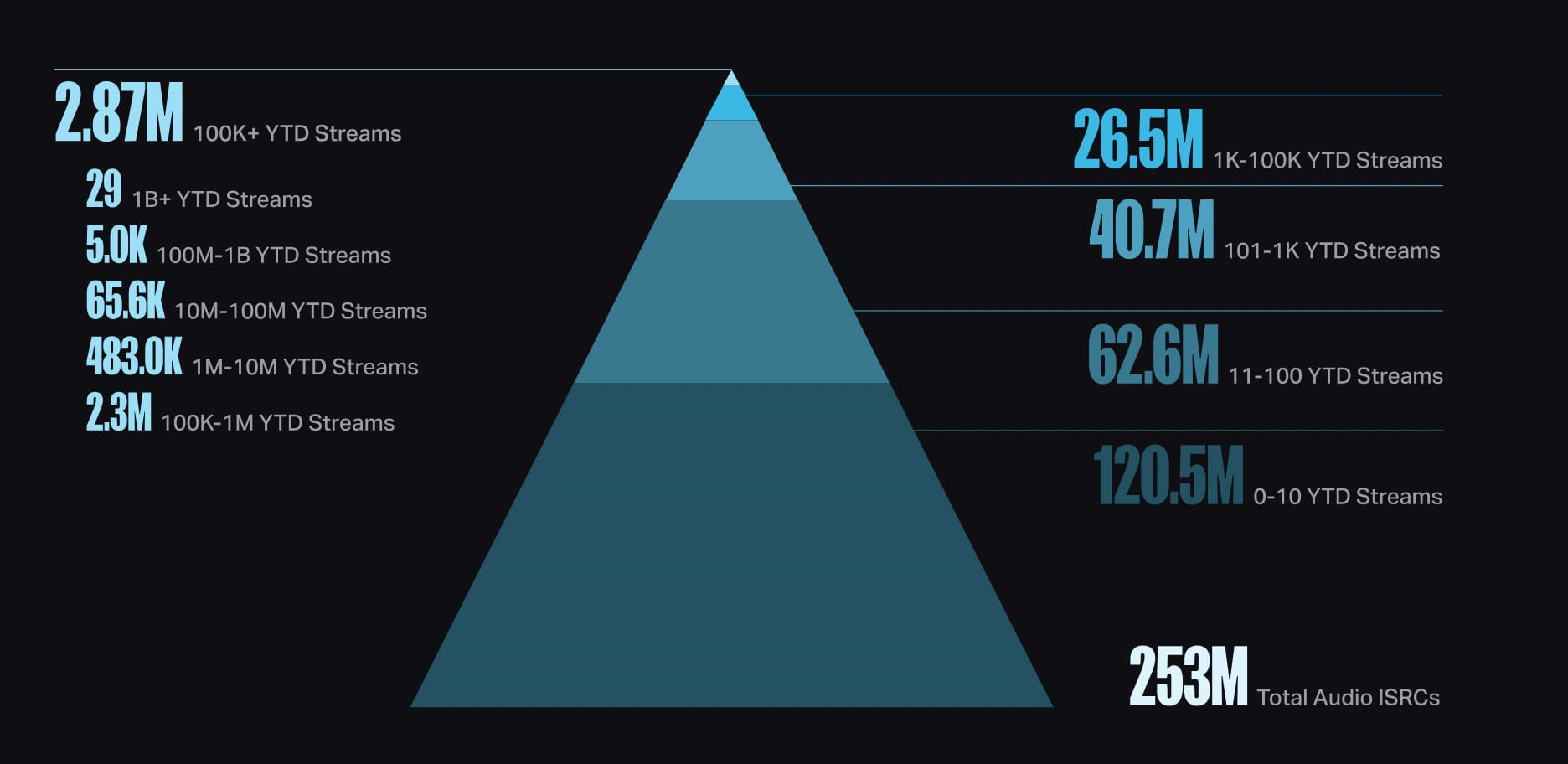
**Source:* [**Luminate 2025 Year-End Music Report*](https://luminatedata.com/reports/yearend-music-industry-report-2025/?ref=hypebot.com)**.*
## **The Effect of AI**
AI can change that equation by **making the work more efficient**, while keeping people at the centre of the process.
At [LyricFind](https://www.lyricfind.com/?ref=hypebot.com), our ever-evolving content workflow now uses AI at multiple points, with human oversight built in throughout. AI can produce an initial transcription, but the technology is not reliable enough to publish without human verification. Once the lyrics are accurate, AI can generate word-by-word synchronization and translations, which can then be prioritized, reviewed, and corrected by human teams.
The result is a shift in the nature of the work. Instead of spending hours on repetitive manual tasks, skilled content teams can focus more time on accuracy, judgment, corrections, and quality control. If the main cost of creating a lyric asset is human time, making each person three or four times more efficient can dramatically lower the popularity threshold for economically viable content. Songs that previously didn’t have the usage to justify human review can suddenly make sense to process, expanding the addressable catalogue by millions of tracks and creating more opportunities for engagement, displays, and royalty revenue.
For example, **9.6M** songs were streamed between 10,000 and 500,000 times in 2025, more than ten times the number that crossed 500,000 streams. Those songs represent **over 13% of total global stream volume** for the year. Without the efficiencies of AI, those lyrics would likely never be created. With AI, that 13% share becomes addressable, generating royalties for songwriters.
**Deezer screenshot using LyricFind with Tame Impala, JENNIE.*
> *"With AI, that 13% share becomes addressable, generating royalties for songwriters."*
That also deepens the value of the people doing the work. When a content team member can process more lyrics in the same amount of time, the return on that person’s labor increases. If a lyric that once cost too much to create manually can now earn back its cost within a reasonable window, it becomes easier to justify staffing up to process more of the catalogue.
While AI can make staff three times as efficient or more, the addressable market of viable content grows even faster, by approximately 700%. This means that it actually makes sense to *double* the size of our human team, to maximize return on investment.
Translations are especially important here as well. Music is global, and a song can travel much further when listeners can understand it. Licensed and responsibly reviewed lyric translations can help songs reach more fans while increasing the value of existing [copyrights](https://www.hypebot.com/tag/copyright/).
The conversation around jobs also deserves more nuance, because AI is often discussed as if efficiency automatically means fewer people. In rights and metadata infrastructure, the amount of work is effectively endless, and even a 99% accurate AI system applied to 100 million song lyrics would still leave at least 1 million errors. Content teams become more integral to quality control as their work shifts toward managing corrections, prioritizing work, and reviewing difficult cases.
## **Moving Forward Responsibly**
The music industry should remain vigilant about AI systems that exploit creative work without permission, while also recognizing practical uses that can strengthen licensed infrastructure. AI will not solve metadata gaps, rights complexity, or under-monetized catalogue by itself, and human accountability remains essential.
Our publishing partners have understood this distinction from the start, and their support for using AI in these workflows has been a key part of getting it right. Lyrics are one often-overlooked area where AI can help put more money in rightsholders’ hands, improve the fan experience, and make the case for more investment in the people doing the work.
---
**Darryl Ballantyne* is the Founder and CEO of* [***LyricFind***](https://www.lyricfind.com/?ref=hypebot.com)*, a global leader in lyric licensing and data solutions. He founded the company in 2004 with Mohamed Moutadayne and Chris Book, and helped pioneer the licensed digital lyrics space by securing the first-ever lyric licensing deal with EMI Music Publishing, now part of Sony Music Publishing, in 2005\.*
### The $15,000 Barrier: Visa Fees Cripple Int'l Touring In US
URL: https://www.hypebot.com/the-15-000-barrier-visa-fees-cripple-intl-touring-in-us/
Last updated: 2026-10-01T11:25:04.000Z
**Quick Summary:** *Surging US visa petition fees, mandatory surcharges, and chronic consular backlog have pushed the upfront cost of touring the US for foreign bands to between *$10,000 and $15,000* before plane tickets are bought and the first note played. These financial and administrative hurdles are driving a projected *30% drop* in international performing-arts and emerging artist tours, causing widespread cancellations, homogenized lineups, and major revenue losses for independent venues and promoters.*
What was once a routine administrative task for international musicians planning a US tour has transformed into a financial and logistical nightmare.
Between compounding government filing increases, mandatory surcharges, and chronic delays, bringing an overseas act into the US now carries a price tag and a level of risk that many independent and mid-tier artists simply cannot afford.
For foreign artists, and stateside talent buyers and venue operators, the regulatory landscape has become one of the single biggest threats to live music globalization.
### **The Math Behind The Border: Breakdown of the 2026 Visa Fee Structure**
The cumulative costs of securing US work visas - primarily the **O-1B** (extraordinary ability) and **P-1B/P-3** (internationally recognized/culturally unique groups) categories - have surged over **200%** since early 2024\. A standard petition for a four-to-six-person band plus key touring crew requires navigating a stacked fee matrix:
| **Fee Type** | **Cost** | **Details** |
| ---------------------- | ------------- | ------------------------ |
| **Basic I-129** | $1,015–$1,055 | Base petition rate |
| **Asylum Surcharge** | $300–$600 | Mandatory USCIS fee |
| **Premium Processing** | $2,965 | Mandatory 15-day rush |
| **MRV Visa Fee** | $205 / person | In-person interview fee |
| **Legal & Union** | $2,300–$6,550 | Retainers & peer letters |
When tallied up, a four-piece band with two crew members faces **$10,000 to $15,000 in upfront, non-refundable administrative expenses** before spending a single dollar on flights, vans or buses and gear rental.
### **High-Profile Cancellations and Collateral Damage**
Immigration advocacy non-profit [**Tamizdat**](https://tamizdat.org/?ref=hypebot.com) estimates that these financial and administrative burdens will contributed to a **30% drop** in **international performing-arts touring** in the US. For **emerging artists** whose touring income may not cover the costs, the numbers are likely much higher.
Recent cancellations highlight the real-world impact across every tier of the industry. Some diverse examples.
[**Enter Shikari**](https://www.entershikari.com/?ref=hypebot.com) **\-** The veteran British rock act was forced to cancel their entire North American tour—encompassing 20-plus dates and major festival appearances—due to delays in final visa issuance.
[**Boston Manor**](https://www.bostonmanorband.com/?ref=hypebot.com) **\-** Demonstrating the collateral damage of headline cancellations, British band Boston Manor suffered heavy unrecoverable losses when their joint touring plans vanished alongside Enter Shikari's cancellation, leaving them holding the bill for prepaid travel and gear.
[**Hypocrisy**](https://www.hypocrisy.cc/?ref=hypebot.com) **\-** Swedish death metal legends Hypocrisy pulled the plug on their 12-date North American run just days before the first show, citing processing bottlenecks beyond their control.
[**Shred Kelly**](https://www.shredkelly.com/?ref=hypebot.com) **\-** Canadian indie-rockers Shred Kelly explicitly cited the math, stating that post-hike visa fees turned what would have been a modest, profitable US tour into an immediate, guaranteed net loss.
### **Venue and Live Ecosystem Fallout**
The impacts ripple far beyond the artists themselves, creating severe friction and loss of income across the US live entertainment economy:
- **Dark nights for Independent Venues:** When an international tour cancels on short notice, 500-to-2,000 capacity rooms are left with empty dates. Venues suffer immediate losses in ticket commissions, food and beverage sales, and merch cuts; and staff looses a night of income.
- **Risk-Averse Booking:** US talent buyers and independent promoters are increasingly hesitant to book developing overseas acts. The high probability of a visa-related cancellation makes international talent a liability compared to domestic options.
- **Homogenized Lineups:** As low and middle-tier international acts are priced out, US festival and venue lineups are leaning heavier on domestic artists, narrowing cultural diversity on American stages.
## **Hypebot's Bottom Line**
The current US visa framework is effectively functioning as an unofficial tariff on cultural exchange. While major tours can easily amortize $15,000 or more in visa costs across massive gross revenues, the middle and lower tiers of the global touring ecosystem are being systematically choked out.
Without legislative relief, policy reform, or streamlined processing pathways for mid-tier acts, North American fans and independent venue owners will continue to bear the cost of quiet stages and increasingly homogenized concert calendars.
---
*Get the latest Live Music & Industry News updated continuously from across the web under the Hypebot Industry News tab* [*here*](https://www.hypebot.com/music-industry-news-feed/)*.*
## Hypebot
Essential news & insights for artists and live music pros.
Sign up for free weekly content delivered to your inbox
Subscribe
Email sent! Check your inbox to complete your signup.
### When Taxpayers Help Build the Venue, Who Should the Venue Work For?
URL: https://www.hypebot.com/when-taxpayers-help-build-the-venue-who-should-the-venue-work-for/
Last updated: 2026-10-01T11:24:13.000Z
A city can own a [concert venue](https://www.hypebot.com/tag/venues/) without having any ability to control what happens on its stage.
That is one of the more striking findings in a new [Vanderbilt Policy Accelerator study](https://cdn.vanderbilt.edu/vu-URL/wp-content/uploads/sites/412/2026/09/17174438/How-State-and-Local-Governments-Pay-for-Live-Nations-Monopoly.pdf?ref=hypebot.com) examining [Live Nation’s](https://www.hypebot.com/tag/live-nation/) large outdoor venues in the United States. Of the 64 amphitheaters and stadiums surveyed, 30 are government-owned properties operated by Live Nation. The authors also identify at least $420 million in public support (ie: tax-payer funding) connected to venues from which the company benefits.
That $420 million is the researchers’ estimate from public records and reporting, rather than an independent government audit or a tally of cash handed directly to Live Nation.
The study examines different arrangements, including financing, tax incentives, discounted public land and infrastructure, and spending on publicly owned venues. Its authors say the figure excludes the value they attribute to below-market rent and naming-rights income.
The real question this study has us wondering is: **when the public helps create a place for music, what claim does the public have on the way that place is run?**
## A venue is more than an economic development project
There is a credible case for a city to invest in a concert venue. Shows can bring visitors into hotels and restaurants, create work and give residents a reason to gather. [Live Nation itself makes that case](https://news.livenationentertainment.com/news/partners-unveil-plan-for-outdoor-amphitheater-on-the-riverfront-in-cleveland?ref=hypebot.com) when announcing venues, emphasizing tourism, local business, and the prospect of attracting tours that might otherwise bypass a [market](https://www.hypebot.com/tag/music-market/).
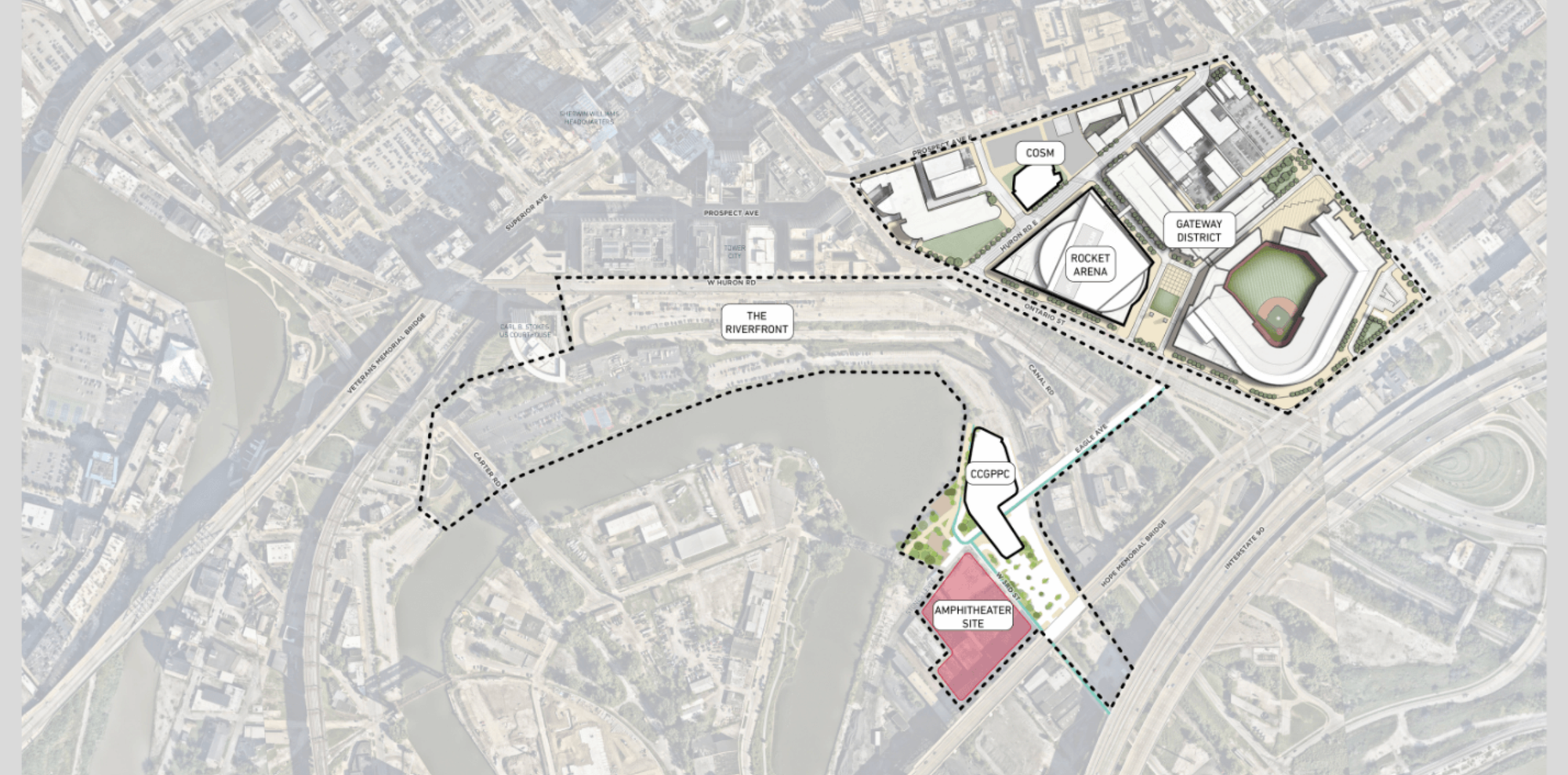
**"Partners Unveil Plan for Outdoor Amphitheater on The Riverfront in Cleveland" (*[**Live Nation*](https://news.livenationentertainment.com/news/partners-unveil-plan-for-outdoor-amphitheater-on-the-riverfront-in-cleveland?ref=hypebot.com)**)*
But a venue is also cultural infrastructure. Its calendar shapes which artists audiences can see, which promoters can put on shows and whether a [local scene](https://www.hypebot.com/tag/local/) has a path to larger stages. The people who fill the room are part of the value that makes the investment work.
Ticket buyers, workers, nearby businesses, and artists all help turn concrete and steel into a viable music business. That is why public ownership alone does not settle the public-interest question. The relevant details are in the operating agreement:
- **Who can book the room?**
- **Who keeps the naming-rights revenue?**
- **What does the operator pay in rent, and who covers improvements?**
- **Are there affordable dates for community use, or measurable opportunities for local artists?**
If those terms are weak or invisible, residents may have financed an asset without retaining much say over its impact.
**+Read more:** [*"Did a Russian Cover Band Accidentally Stumble Onto a Winning US Tour Strategy?"*](https://www.hypebot.com/did-a-russian-cover-band-accidentally-stumble-onto-a-winning-us-tour-strategy/)
## What can a city ask for?
The Vanderbilt study favors competitive bidding for public venue contracts, with conditions attached to the winner, or operation through a publicly chartered nonprofit. Their proposed conditions include **an “open room”** available to promoters beyond the operator’s own business, **limits on certain fees**, and clearer commitments on **access and event volume.**
Those are the authors’ policy recommendations, not requirements every city has adopted.
**Read the full Vanderbilt study* [***here**](https://cdn.vanderbilt.edu/vu-URL/wp-content/uploads/sites/412/2026/09/17174438/How-State-and-Local-Governments-Pay-for-Live-Nations-Monopoly.pdf?ref=hypebot.com)**.*
[Nashville](https://www.bandsintown.com/c/nashville-tn?utm%5Fsource=hypebot&came%5Ffrom=900) offers a useful example of what a contract can decide.
When the operating agreement for the city-owned Ascend Amphitheater expired, the city held a competition rather than simply extending Live Nation’s deal. Opry Entertainment Group took over in January 2026 under an agreement that, according to the study, includes an open-room commitment, annual rent, a payment tied to each ticket sold, shares of certain profits and a commitment to improvements.
This does not prove that one operating model fits every market. It shows that public access and public return can be negotiated as concrete terms.
For independent promoters and artists, an open room offers a chance to compete for dates at a publicly owned stage. A local booking commitment could connect an emerging act to a larger audience. Transparent fees and rental terms let promoters judge whether a show can work before taking the risk. None of those benefits appears automatically because a venue is called “public.”
There is still room for a large private operator to make a strong proposal. The ethical test is what the community receives in exchange for the land, financing, infrastructure or ownership it contributes — and whether officials can show that return in the contract and in the venue’s actual calendar.
The Vanderbilt study puts a number on public support. Its deeper challenge to cities is to put a definition on **public benefit** before signing away the keys.
*Note: Live Nation has not publicly commented on this story.*
---
*Get the latest Live Music & Industry News updated continuously from across the web under the Hypebot Industry News tab* [*here*](https://www.hypebot.com/music-industry-news-feed/)*.*
## Hypebot
Essential news & insights for artists and live music pros.
Sign up for free weekly content delivered to your inbox
Subscribe
Email sent! Check your inbox to complete your signup.
### The Hidden Cost of Early Success
URL: https://www.hypebot.com/the-hidden-cost-of-early-success/
Last updated: 2026-10-03T15:46:42.000Z
[](https://www.rimaspublishing.com/?ref=hypebot.com)
### **The Hidden Cost of Early Success**
*By *Jesús Polanco,* Client Success Manager at* [***Rimas Publishing***](https://www.rimaspublishing.com/?ref=hypebot.com)
Success is usually the part of the story everyone wants to talk about. The first big song. The unexpected opportunity. The numbers that suddenly start moving…
And those moments should be celebrated.
But there is another side of early success that we do not talk about enough: sometimes, a career can move faster than the person building it. The cost isn’t necessarily something you lose. It can be the pressure of having to learn, decide, and grow while everything around you is moving faster.
An artist or songwriter can go from trying to get their first real opportunity to suddenly having more decisions, responsibilities and expectations than they have ever had before. There is no manual that arrives with success.
*Jesús Polanco*
## **When everything starts happening at once**
Early momentum can be exciting, but it can also create a strange kind of pressure.
You may have more people around you, but less time. More opportunities, but less clarity about which ones actually make sense. More income, but new financial responsibilities.
And because the outside world sees the momentum, there can be an expectation that you should already know what to do with it. The reality is that most people don't.
A creator who is great at writing songs does not automatically know how to evaluate a publishing opportunity. An artist who knows exactly what they want creatively may still be figuring out how to build the right team around that vision. Those are different skills.
**There is nothing wrong with needing time to learn them.**
I remember working with a producer who had been sending music for a major Latin artist’s projects for some time without landing a placement. Then, during a camp, he made a beat simply because he felt inspired and enjoyed the process. It was the one he least expected to make the album, but it did. That song changed his life. Suddenly, he had opportunities to work with major artists, greater visibility, and a different financial reality.
Supporting him meant being there through the uncertainty and continuing to offer encouragement as those opportunities arrived. It meant helping him stay focused and reminding him, through moments of uncertainty, that his work was worth continuing. What stayed with me was his response: he did not see that first big placement as a sign that he had arrived. His attitude was: now it is time to work.
Today, he is a Grammy-winning producer who continues to work with major artists. You never really know where a breakthrough will come from, and having someone in your corner as you find your footing can make a difference.
> ***"The pressure to keep up can make every opportunity feel urgent..."***
Even when a creator stays focused, a breakthrough can bring more than they have ever had to navigate before. That’s one of the less obvious costs of early success: the pressure to keep up can make every opportunity feel urgent.
When things are happening for the first time, it is natural to want to say yes. But it can be difficult to step back and ask a simple question: **Does this actually make sense for where I want to go?**
Sometimes the best decision is to move quickly. Sometimes it is to ask for more information. And sometimes it is to say no, even when saying yes feels like the safer choice.
## **Success changes the questions**
Early in a career, many of the questions are about getting an opportunity. How do I get heard? How do I get the song placed? How do I reach more people?
**Once things start working, the questions change.**
How do I protect what I am building? Which opportunities are worth pursuing? How do I make sure the business side keeps up with the creative side? What does this decision mean six months or two years from now?
Those questions may not feel urgent when everything is going well. But that is often exactly when they deserve attention.
A strong support system can make a difference here, not because someone else should make the decisions for you, but because having the right people around you gives you space to make better ones.
The right support system doesn’t have to be a big team. It might be a manager who helps you separate the good opportunities from the right ones, a publisher who helps you understand what your catalog can become, or a lawyer who makes sure you understand what you’re signing. Different people, different roles, but one common purpose: helping you make informed decisions while you build your career.
**Having the right people in your corner simply makes the weight of everything feel a little lighter, and that matters, too.**
One of the things I would tell any creator experiencing their first wave of success is this: you are allowed to be new at this. What matters is building the right habits and relationships early enough that you can grow into the opportunities coming your way.
The artists I’ve seen navigate success best aren’t necessarily the ones who had all the answers from the beginning. They’re the ones who knew when to ask a question, when to slow down, and who to call when they weren’t sure what came next. Maybe that’s the part of early success we don’t talk about enough. It is not just about learning how to handle more opportunities. It’s about learning how to handle everything that comes with them. And you don’t have to figure all of that out alone.
*This is a Hypebot Sponsored Feature by* [***Rimas Publishing***](https://www.rimaspublishing.com/?ref=hypebot.com)*.*
---
[***Rimas Publishing***](https://www.rimaspublishing.com/?ref=hypebot.com) *is an award-winning independent music publisher, home to internationally acclaimed songwriters and producers including Eladio Carrión, Mora, Súbelo NEO, Caleb Calloway, YENSANJUAN, Lennex, Pailita, Cris MJ, Marcianeke, Corina Smith, Tempo, DJ Negro, and Lizzy Parra, among others, with an impressive catalog of compositions reaching audiences worldwide. Rimas Publishing manages publishing licenses for its clients globally, spanning film, television, advertising, and more.*
### How to Save Time and Be Everywhere: A Guide to Bandsintown’s Artist Marketplace
URL: https://www.hypebot.com/how-to-save-time-and-be-everywhere-a-guide-to-bandsintowns-artist-marketplace/
Last updated: 2026-09-30T14:40:00.000Z
An artist announces a live tour. Then comes the less glamorous "tour" of updating all your platforms and landing pages:
Your artist website, link in bio, streaming profiles, notifying your email list, socials, ticket links, making sure the show-by-show info gets synced and venue details match. If a date changes, the whole job starts again.
The [**Bandsintown for Artists Marketplace**](https://www.artist.bandsintown.com/integrations?ref=hypebot.com) is built for this exact purpose: **put show information in one place, and let connected tools carry it further.** The directory contains more than 30 integrations and partners spanning event discovery, websites, fan marketing, merchandise, and other artist services. Some connections sync information; others introduce a separate service or offer.
It's the simplest way an artist can be everywhere at once.
## Make each date easier to find
The strongest time saver is [event distribution](https://help.artists.bandsintown.com/en/articles/10518205-distribution-to-spotify-google-apple-shazam-and-amazon-music?ref=hypebot.com). Publish a show through Bandsintown for Artists, and its details surface anytime a fan searches **Google**, listens on **Spotify** or **Apple Music,** identifies a track with **Shazam**, or watches the artist on **YouTube.**
**Amazon Music** and **Apple Maps** are among other powerful fan discovery points. Those appearances put a ticket link closer to the moment someone is interested in the artist, including fans who have never even visited the artist’s website.
This is more useful than telling fans to “check the tour page” in every caption. A listener can come across an upcoming show while hearing the song that made them curious in the first place. For an independent act playing several markets, the same accurate gig information can meet different local audiences across different services.
## Keep the artist’s own corners of the web current
An artist’s website and link in bio often become the last places anyone remembers to update. Marketplace connections with **Bandzoogle, Squarespace, Wix,** and **WordPress** can bring Bandsintown dates onto any band's main site, while its **Linktree** connection can display the next six shows with ticket links, easily. **Feature.fm** can pull upcoming dates into a tour link, too.
That gives each channel a job without requiring someone to rebuild the tour calendar by hand. Even if the website remains the artist’s home base; the link in bio will catch someone arriving from social media, and streaming services will reach people who were not looking for the website at all.
## Turn a show announcement into a fan relationship
Visibility is only *part* of the work of amping up discovery. The other is having a way to reach interested fans *again*.
Bandsintown’s connected widgets, smart links, and signup forms can collect email and SMS opt-ins. Its [**Fan Contact Sync**](https://help.artists.bandsintown.com/en/articles/12684662-fan-contact-sync?ref=hypebot.com) sends new signups to approved services including **Mailchimp, Klaviyo, Community,** and **Laylo** once the artist connects an account. That can spare a manager the routine of exporting a list and importing it elsewhere before sending a city-specific update or presale message.
The Marketplace also includes a **Shopify** connection for displaying merch on a an artist page and in email campaigns. Distribution and promotional partners such as **CD Baby, DistroKid,** and **TuneCore** appear in the directory as well, though joining one is a separate choice from syncing show dates.
For an artist with a small team, it's simple:
[**Claim or log into a Bandsintown for Artists page**](https://artists.bandsintown.com/?ref=hypebot.com)**,** check every upcoming date and ticket link, then browse the Marketplace for the website, link page or fan marketing tool already in use. Connect the useful ones and check how a show appears from a fan’s point of view.
### MusicAtlas Expands Robin Film Grant to $5,000+ in Awards and Resources
URL: https://www.hypebot.com/musicatlas-expands-robin-film-grant-to-5-000-in-awards-and-resources/
Last updated: 2026-09-30T13:57:37.000Z
[**MusicAtlas**](https://musicatlas.ai/?ref=hypebot.com) is expanding its **Robin Film Grant** for fall 2026, offering more than $5,000 in awards and filmmaker resources, including a **$1,000 USD cash grant toward music licensing**. Applications open October 1 and close November 15, with the grant recipient and up to 10 Official Selections announced December 1.
The program helps independent filmmakers discover and license commercially released music through Robin, MusicAtlas’s music discovery platform. The fall edition adds support from partners **Greenlit, YOW.tv, Rise, Wordbank, 4:08 Productions, Adapt, and JACK.TV**.
Together, the awards and services cover music licensing, project development, financing, audience development, distribution, exhibition, localization, subtitling, dubbing, and industry mentorship. The more than $5,000 total represents the combined value of awards and resources across selected projects; the dedicated music licensing grant remains $1,000.
## Finding music that fits the film
Robin allows filmmakers and other creative teams to search commercially released music using natural language, sonic similarity, lyrics, scene descriptions, and creative prompts. Users can describe a scene, an emotion, or a musical reference, then explore tracks and build a shortlist for their project.
Applicants receive access to Robin during the grant process to discover music that could work in their films.
The program builds on the inaugural grant, launched in April. **Taylor Hammersla’s *The Valley Buzz*** received the spring award, alongside 10 Official Selections. According to MusicAtlas, Hammersla used Robin to discover and license music from **Sub Pop and Downtown Music** for the film.
MusicAtlas has also worked with the **48 Hour Film Project**, giving participating filmmakers access to Robin during production.
Alongside its discovery platform, the company offers **Sail**, short for Simple Agreement for Instant License, a free standardized framework intended to simplify limited-use music synchronization licensing. The framework has been used in licensing workflows between filmmakers and rights holders and is available [here](https://musicatlas.ai/documents/?ref=hypebot.com).
## Free access for film students and educators
The fall grant follows the September launch of **Robin for Education**, which offers complimentary access to eligible film students and educators worldwide with verified academic email addresses.
The education program gives emerging filmmakers access to music discovery tools beyond the grant application period. Details are available on the [Robin for Education website](https://musicatlas.ai/robin/education/?ref=hypebot.com).
Filmmakers can learn more about the fall grant and apply beginning **October 1** at [musicatlas.ai/robin/film-grant](https://musicatlas.ai/robin/film-grant/?utm%5Fsource=chatgpt.com).
---
*Get the latest Live Music & Industry News updated continuously from across the web under the Hypebot Industry News tab* [*here*](https://www.hypebot.com/music-industry-news-feed/)*.*
## Hypebot
Essential news & insights for artists and live music pros.
Sign up for free weekly content delivered to your inbox
Subscribe
Email sent! Check your inbox to complete your signup.
### Checklist: The Last Mile of Your Independent Release
URL: https://www.hypebot.com/checklist-the-last-mile-of-your-independent-release/
Last updated: 2026-09-30T13:34:14.000Z
*By *Jean-Christophe Blondet*, Founder of* [***Ready Release***](https://www.readyrelease.net/?ref=hypebot.com)
Most [independent releases](https://www.hypebot.com/tag/album-release/) do not fail because the song is weak. They fail in the last mile: the stretch between ***"the file is done"*** and ***"this feels finished enough to put your name on."***
[Playlists](https://www.hypebot.com/a-guide-to-pitching-music-to-independent-spotify-playlists/) matter. So do ads, TikTok hooks, and distributor settings. None of those fix a release that still sounds unfinished, looks inconsistent, or arrives with no plan for what to post after day one.
This is a checklist for that last mile. Not a growth hack. A production checklist.
---
## **1) Decide what "finished" means before you upload**
Write one sentence: What should a stranger understand about this release in three seconds? Then lock three decisions:
- **Sound standard:** Is this file ready for Spotify / Apple / YouTube delivery, or is it still a mix export?
- **Visual identity:** One cover language, one thumbnail language, one short-form language. They can be related. They should not be three unrelated templates.
- **Campaign length:** Are you posting for 3 days, 10 days, or a full month? Campaign length is not the same as production time.
If you skip this, you will "finish" five times and still feel amateur on release day.
## **2) Sound: treat mastering as QC, not as a loudness button**
Platforms normalize loudness. Pushing past their target does not make you louder on the feed. It usually costs dynamics and can hurt how the track translates. Here's your checklist:
1. **Source audit.** Format, sample rate, bit depth, headroom. Has the file already been limited or re-encoded?
2. **Artefacts.** Clicks, glitches, clipped transients, encoding damage. Especially common on AI-assisted exports.
3. **Noise / clicks.** Clean without dulling the record.
4. **Corrective EQ.** Fix the fighting frequency, not the whole band.
5. **Low end.** Readable on phone speakers, not only on studio monitors.
6. **Vocal presence.** Intelligible on a phone. If the words disappear, nothing else matters.
7. **Dynamics.** Consistent energy without flattening the life out of the track.
8. **Stereo / mono.** Check mono. A large share of listening is single-speaker or mono-fed systems.
9. **Loudness + true peak.** Set for streaming delivery, not for a loudness contest.
10. **Delivery specs.** 24-bit WAV source when possible, plus the store-ready formats your distributor expects.
If someone offers "one-click AI mastering," ask what they listened for. Volume is not monetization-ready finishing.
At Ready Release, mastering is done by a human engineer and sits inside the release packages. That is a production stance more than a pitch: the last mile on sound is still a human listening job.
## **3) Visual identity: cover, thumbnail, and social are different jobs**
A common indie mistake: one square image used everywhere. Here's your checklist:
- **Cover art (1:1).** Store-ready square. Identity first. Aim for platform-accepted sizes (commonly up to 3000x3000).
- **YouTube thumbnail (16:9).** Click job. Composition, contrast, text weight. Not the same crop as the cover.
- **Banner / headers.** Only if you will actually use them. Empty banners look unfinished.
- **Mockups.** Useful for press and social proof when they match the same creative direction.
- **Brand guidelines.** Colors, type, usage rules. Especially useful if more than one person will post.
Rule of thumb: If the cover builds identity and the thumbnail steals the click, do not force one file to do both.
**Image courtesy of* [**Ready Release*](https://www.readyrelease.net/?ref=hypebot.com)**.*
***+Read more:*** [*"What a Grammy FYC Campaign Actually Looks Like If You're Independent"*](https://www.hypebot.com/what-a-grammy-fyc-campaign-actually-looks-like-if-youre-independent/)
## **4) Short-form content: build pieces, do not only cut leftovers**
A short is not "the music video but vertical." Here's your checklist:
1. **0-1s hook.** First frame already in motion.
2. **1-4s lock-in.** Viewer understands the world and syncs to the rhythm.
3. **4-10s cuts.** Angle changes on the beat.
4. **10-14s peak.** Strongest moment on the climax.
5. **14-15s loop**. Last frame connects to the first when the format needs it.
Also decide production method honestly:
- Filmed with real people
- Directed generative scenes
- Cuts from a longer film (label these as cuts)
What matters for the last mile is coherence: same mood, same identity, same world as the release. Not five random clips that happen to use the same song.
## **5) Music video: choose a method, then demand a production process**
Independent artists often face a false binary: DIY generator clips, or a traditional shoot they cannot fund. There is a third lane: a directed film with a fixed scope.
Two production methods that can deliver the same product (one complete video for one track):
1. **Cinematic 4K Footage.** Cut from licensed cinematic footage. Concept, storyboard, selection, edit, grade. It is not a shoot on location.
2. **Cinematic Performance Video.** Scenes built around the song, with the artist (or an avatar directed as a performer) inside the story, including lip-sync where it fits. Not a traditional shoot.
Before you pay anyone, ask for this process:
- Concept written for this song
- Structure mapped section by section
- Storyboard before production
- Cuts landing on musical events
- One visual signature from first frame to last
- Clear delivery format (4K MP4 is a clean baseline)
A useful buyer filter: can they show you ten seconds of your own song before you commit? Proof of direction matters more than a freebie. This isn't a prompt. It's a production.
**Image courtesy of* [**Ready Release*](https://www.readyrelease.net/?ref=hypebot.com)**.*
***+Read more:*** [*"We Stopped Waiting to Be Chosen and Mailed 100,000 CDs Instead"*](https://www.hypebot.com/we-stopped-waiting-to-be-chosen-and-mailed-100-000-cds-instead/)
## **6) Campaign plan: give every asset a day, a platform, and a job**
Assets without a publishing plan become a hard drive folder. Here's your checklist:
**3-day campaign**
- Day 1: Teaser (curiosity)
- Day 2: Hook (want more)
- Day 3: Release (drive listeners to streaming)
**10-day campaign**
- Days 1-4: Build attention
- Days 5-7: Release moment
- Days 8-10: Keep discovery moving
**30-day campaign**
- Days 1-7: Build
- Days 8-14: Countdown
- Days 15-21: Release
- Days 22-30: Long tail
Write the plan before release day. "We'll post something" is not a plan. When sound, visuals, content, and plan are directed together, the release reads as one product. Buy individual pieces if that is all you need. Use a system when coherence is the product.
## **7) Rights, ownership, and honesty checks**
Before you hit publish:
- Do you own (or have commercial rights to) every visual element you did not create yourself?
- Are third-party licences clear (footage libraries, stock, tools, collaborators)?
- Are you overclaiming results? Streams, playlists, and follower spikes are not deliverables you can honestly guarantee.
- Are AI tools disclosed where your audience or partners expect transparency? Using AI as a production method is different from selling a generator product.
Honesty is part of the last mile. Overpromising is a brand debt.
## **8) Final pre-release gate (print this)**
Print or paste this and tick it:
**☐ You would still stand behind this if a label A&R opened it cold.**
**☐ All rights and credits are clear**
**☐ Publishing plan exists for the campaign length you chose**
**☐ Music video (if any) has a concept mapped to the song structure**
**☐ At least one short has a real hook in the first second**
**☐ Cover and thumbnail are separate, intentional assets**
**☐ Delivery files match distributor / store specs**
**☐ Master sounds release-ready on phone, laptop, and earbuds**
If you cannot tick most of these, you are not late on marketing. You are early on finishing.
## Closing Words
The last mile is unglamorous. It is also where independent releases start looking intentional. You make the music. The release still has to be built: sound, visuals, content, and a plan that belongs to one song.
If you want a concrete production reference while you build your own checklist, process notes live at readyrelease.net and the music video page at readyrelease.net/music-videos. Use them as a production baseline, not as a growth shortcut.
No playlist hack required. Just finish the last mile.
---
**Jean-Christophe Blondet* is the Founder and CEO of* [***Ready Release***](https://www.readyrelease.net/?ref=hypebot.com)*, a release-production studio for independent artists based in Chamalières, France (CONSILIO SASU). Ready Release builds the last mile of a release: human mastering, visual identity, short-form content, and directed music videos. "You make the music. We build the release."*
### Live Music Industry News: The Latest
URL: https://www.hypebot.com/live-music-industry-news-25/
Last updated: 2026-09-30T12:05:45.000Z
### New Free Live Music Magazine
At a time when music media is in steep decline, 50,000 copies of **new print magazine SHOWNOTES** will be available free at 500 live music venues across the UK in November.
Made possible by a grant from **Music Venue Trust** and put together by [**Drowned In Sound**](http://drownedinsound.org/?ref=hypebot.com), the rag will "give a voice to fans alongside covering acts playing stadiums and arenas who support the grassroots levy, cult heroes thrilling crowds, and rising acts playing small local venues. "
Editing will be **Hannah Ewens** (Rolling Stone, Vice, Vogue, etc) and design handled by new DIS creative director **Raissa Pardini.**
### **Kentucky Gets A Music Office**
Kentucky's new Music Office is being called the next step in a bipartisan effort to strengthen the state’s music economy.
The Kentucky Music Office established by **Governor Andy Beshear** builds on **Senate President Robert Stivers'** bill SB 324 which directs a study of the needs of Kentucky’s musicians and music venues and recommendations to support industry growth.
“Kentucky’s musical heritage runs deep—from the **Everly Brothers** and L**oretta Lynn** to **Chris Stapleton, Sturgill Simpson, Tyler Childers, My Morning Jacket,** and **Cage the Elephant,**”said **Joe Argabrite, President of NIVA Kentucky**. "Music has always been one of our greatest cultural and economic assets. Establishing a dedicated Governor’s Music Office is a powerful step toward ensuring that legacy continues to thrive.”
**Texas, North Carolina, Louisiana,** and **Tennessee** are among the U.S. states that have established state-level offices focused on music and the music industry.

Jon Moskowitz
### Moskowitz joins Pyramid
Veteran booking agent **Jon Moskowitz** has joined **Pyramid Entertainment**.
He spent the past 15 years with **Universal Attractions Agency** wherehe worked with artists including **I Love 90s, George Clinton, Ludacris, Black Eyed Peas, Ub40, Flo Rida, Rick Ross, Nelly, Ja Rule**, **Ashanti, Trey Songz, Mya, Floetry, Morris Day**, and **Sheila E**.
Pyramid was founded in 1988 by owner and CEO **Sal Michaels**.
### **International Live Music Conference**
3,000 are expected to attend ILMC, Europe's premier annual live music industry conference February 23-26, 2027.
This 39th edition boasts as new layout at London's Royal Lancaster with the spaces reconfigured to create ILMC Central, networking and exhibition areas
More info and register [here](https://39.ilmc.com/?ref=hypebot.com).
### Fever Adds $250 Million
Experiential event producer [**Fever**](https://feverup.com/?ref=hypebot.com) has raised **$250 million** in additional funding.
The company says revenue more than tripled over the past three years while remaining EBITDA-positive. It now operates in 55 countries with an expanded presence in North America and Asia.
The new funding will be used to "expand into new markets and grow across different areas of live entertainment."

### Ticketmaster To Face FTC Ticket Resale Lawsuit
A federal judge denied **Ticketmaster** and **Live Nation**'s motion to dismiss a **Federal Trade Commission** lawsuit alleging illegal ticket resale tactics and is allowing the case to proceed directly into the evidence discovery phase.
The ruling also keeps intact the **FTC**'s claims that **Ticketmaster** violated the **Better Online Ticket Sales (BOTS) Act** and engaged in deceptive pricing practices. More [here](https://www.hypebot.com/ticketmaster-must-face-ftc-ticket-resale-lawsuit-judge-rules/).
---
*Get the latest Live Music & Industry News updated continuously from across the web under the Hypebot Industry News tab* [*here*](https://www.hypebot.com/music-industry-news-feed/)*.*
## Hypebot
Essential news & insights for artists and live music pros.
Sign up for free weekly content delivered to your inbox
Subscribe
Email sent! Check your inbox to complete your signup.
### 'What I learned on the Rob Zombie and Marilyn Manson Tour'
URL: https://www.hypebot.com/what-i-learned-on-the-rob-zombie-and-marilyn-manson-tour/
Last updated: 2026-09-30T11:25:45.000Z
**Rob 'Blasko' Nicholson** recently returned to the road from the **Freaks on Parade Tour** featuring [**Rob Zombie**](https://www.bandsintown.com/a/192-rob-zombie?utm%5Fsource=hypebot&came%5Ffrom=900) and [**Marilyn Manson**](https://www.bandsintown.com/a/26648-marilyn-manson?utm%5Fsource=hypebot&came%5Ffrom=900). A long time touring musician, artist manager and keen observer of the music industry, Blasko didn't just play bass for Rob Zombie, he watched and learned.
On a new [**Music Biz Weekly** **podcast**](https://www.hypebot.com/tag/music-biz-weekly/), **Michael Brandvold** and **Blasko** discuss the tour's strong attendance and positive fan engagement despite challenging weather conditions at outdoor venues.
The pair look at the importance of effective tour, noting that the unique combination of **Rob Zombie, Marilyn Manson,** and Mongolian metal band **The Hu** created strong value for fans. The conversation also shares strategies for opening acts to maximize their opportunities, including reading the audience, incorporating familiar covers into sets, showcasing band members' talents, and engaging directly with fans after each performance.
Watch and listen here or on your favorite podcast platform.
**FIND MORE FROM MUSIC BIZ WEEKLY & OTHER GREAT MUSIC BUSINESS AND INDIE MUSICIAN PODCAST EPISODES** [**HERE**](https://www.hypebot.com/hypebot/category/podcast-music-biz)**.**
---
## Hypebot
Essential news & insights for artists and live music pros.
Sign up for free weekly content delivered to your inbox
Subscribe
Email sent! Check your inbox to complete your signup.
### Did a Russian Cover Band Accidentally Stumble Onto a Winning US Tour Strategy?
URL: https://www.hypebot.com/did-a-russian-cover-band-accidentally-stumble-onto-a-winning-us-tour-strategy/
Last updated: 2026-09-30T11:15:38.000Z
If you haven't already heard of them (and no, you wouldn't be blamed),[**Leonid & Friends**](https://www.bandsintown.com/a/13937720-leonid-and-friends?utm%5Fsource=hypebot&came%5Ffrom=900) is an 11-piece band from Moscow that became famous by recording freakishly accurate **covers of Chicago songs on YouTube**.
If you're already thinking, *okay... where is this going?* Yeah, that's what I thought when I first heard about this group.
The thing is... they're selling out almost every show. And the US general population doesn't *exactly* love Russia right now, so what is happening here?
Well, the group spent its spring appearing on Pollstar's LIVE75 chart alongside major touring acts, and even opened for Jerry Seinfeld at Los Angeles' Greek Theatre, and now another lengthy American run is fully underway with sold-out shows already scattered across the schedule.
It's not just a viral internet thing. This thing has legs. Because somewhere along the way, Leonid & Friends stopped merely benefiting from viral attention, and made a crazy good booking decision to go find their audiences in theaters housed in smaller, stranger markets.
Immokalee, FL. Shipshewana, IN. Del Mar, CA. Danville, VA. Red Bank, NJ. Glenside, PA. St. Charles, IL.
***+Read more:*** [*"Why Is Gig Booking Still in the Age of Dinosaurs?"*](https://www.hypebot.com/why-is-gig-booking-still-in-the-age-of-dinosaurs/)
## **The tour map didn't start in New York and end in Los Angeles**
[**Paladin Artists**](https://paladinartists.com/?ref=hypebot.com) agent **Gil Jacobs** recently told Pollstar that Leonid & Friends often performs particularly well in **secondary and tertiary markets.** Secondary and tertiary live music markets are typically the smaller, non-major cities where artists tour after playing primary metropolitan hubs.
Apparently, this Russian troupe has toured so widely in the last 12 months that there are only two US states they haven't been featured in. Now *that* even rivals some of the most stalwart DIY road hogs out there.
On one run, Jacobs recalls booking three or four Iowa shows alone. His explanation is uncomplicated and makes total sense: **plenty of fans live outside major music cities, and many would rather see a band at the theater down the road than drive hours into a metropolis.**
Newark, OH. Champaign, IL. Des Moines, IA. Albuquerque, NM. Salem, OR. Redwood City, CA. Temecula, CA.
New York, LA, and Dallas still matter. They just aren't treated as *the only* places that matter. The band's official schedule currently marks shows in Skokie, Stafford, Dallas, and Anaheim as sold out, among others; Pollstar also reports that a Milwaukee date sold out its original theater months early and was moved into the larger Riverside Theater.
## **Virality created the audience. Touring mapped it.**
Leonid & Friends' story began almost accidentally. Founder **Leonid Vorobyev** gathered musicians to record a Chicago cover in 2014 as he was contemplating retirement. Videos followed. One particularly successful performance of "25 or 6 to 4" eventually reached Jacobs.
When he finally became involved, the band's first small US run expanded from roughly three dates to six or seven, and that's where this approach naturally began for the team. They did well enough that Jacobs brought them back twice more in 2019\. The operation has essentially been collecting evidence ever since: play the market, see what happens, return where demand exists.
**The lesson here isn't just to "book random small towns and hope for the best."** It's that the traditional hierarchy of touring markets may tell you less about your audience than it once did, and that scarcity can actually be an asset.
The internet isn't confined to urban areas. A fan who discovers you on [YouTube](https://www.hypebot.com/tag/youtube/), [TikTok](https://www.hypebot.com/tag/tiktok/), [Spotify](https://www.hypebot.com/tag/spotify/), or [Instagram](https://www.hypebot.com/tag/instagram/) doesn't have to live in Brooklyn. [Digital discovery ](https://www.hypebot.com/tag/discovery/)flattened that part of the music business years ago. Touring maps have been slower to catch up, but the show in this case is simple enough to be the perfect test case.
Jacobs describes a live show without huge lasers or elaborate production: musicians, the band's name on a screen, and an audience largely fueled by online videos, recommendations, and word of mouth.
## **Who else is looking beyond the usual cities?**
There are signs of the same calculation elsewhere. [**The Offspring's**](https://www.bandsintown.com/a/327-the-offspring?utm%5Fsource=hypebot&came%5Ffrom=900) future US headline dates will intentionally target markets the group historically hadn't played, and for the same reason. The band's demand has shifted along with its prime demographic.
CAA's **Lindsey Myers** said a cross-country [**Darius Rucker**](https://www.bandsintown.com/a/60536-darius-rucker?utm%5Fsource=hypebot&came%5Ffrom=900) arena tour proved successful partly because it invested in audiences he hadn't fully developed before. Similarly, Live Nation's **Alex Vyskocil** pointed to[**Three Days Grace**](https://www.bandsintown.com/a/28-three-days-grace?utm%5Fsource=hypebot&came%5Ffrom=900)playing roughly 25 Canadian dates across major and secondary markets and said longer, deeper routing can actually help touring economics work.
The phenomenon is important enough that Britain's new [**Liveline Fund**](https://livelinefund.uk/?ref=hypebot.com) specifically includes money to extend tours into secondary and tertiary markets that rising costs have caused artists to skip. [**Music Venue Trust**](https://www.musicvenuetrust.com/?ref=hypebot.com) says its programs supported more than 75 new events across 28 secondary and tertiary towns and cities during the first three months of 2026 alone.
In other words, the opportunity exists at the same moment the touring industry is in danger of retreating from it.
**+Read more:** [*"For Stevie Wonder, It’s Always Been About the Whole Album"*](https://www.hypebot.com/for-stevie-wonder-its-always-been-about-the-whole-album/)
## **It seems the afterthought should be the strategy**
Major markets still offer obvious advantages: press, industry presence, and a dense concentrations of listeners. But they also offer every other tour in America happening at the same time. A Wednesday night in Los Angeles can mean competing against dozens of worthwhile shows. A Wednesday night in a smaller city might mean being ***the* show**.
That doesn't make every tertiary-market date sensible. Artists still have to look at ticketing data, streaming geography, social engagement, email lists, venue history, and the brutal mathematics of gas, hotels, and crew, when tour planning. But Leonid & Friends offers another variable worth considering: **How much does an audience value being noticed?**
Perhaps the band's original breakthrough was lucky. You can't exactly schedule a viral YouTube video. But they've leveraged this, halfway across the world, in the smartest way possible.
[Get caught up on Hypebot's tour announcement analysis series, Touring Radar.](https://www.hypebot.com/tag/touring-radar/)
---
### [**View Leonid & Friends Tour Dates on Bandsintown**](https://www.bandsintown.com/a/13937720-leonid-and-friends?utm%5Fsource=hypebot&came%5Ffrom=900)
### ROSTR Launches Free Global Database of 33,000 Music Venues
URL: https://www.hypebot.com/rostr-launches-free-global-database-of-33-000-music-venues/
Last updated: 2026-09-29T20:02:20.000Z
[Independent live music](https://www.hypebot.com/tag/live-music/) trade and technology company **The ROSTR Group** has launched [**ROSTR Venues**](https://www.rostr.cc/venues?ref=hypebot.com), a sweeping new live music directory.
Covering over **33,000 venues** across North America (13,000+), Europe (10,000+), and Latin America (9,000+), this interactive map and database aims to make booking a gig as intuitive as booking an Airbnb. It's all optimized for the **mobile web** and an **iOS app** is coming soon. New markets will be added as well.
Best of all? **Basic access is free.**
"Before ROSTR, the only way to find an artist's team was an out-of-date book, a PDF or a website that felt like it was built in 1999." said **Mark Williamson, Co-Founder & CEO, ROSTR.** He continued:
> *“Venues had the same problem: the directories exist, but they're stuck in the past. ROSTR Venues puts 33,000+ venues on one map, with search that's fast, modern and easy to use. Like our contacts database, it's built to help music professionals move faster and make better decisions.”*
**Here is a breakdown of what the new ROSTR Venues platform offers to agents, managers, and independent artists routing a tour.**
### **What is ROSTR Venues?**
[**ROSTR Venues**](https://www.rostr.cc/venues?web=home&ref=hypebot.com) is a searchable, map-based live music directory built directly into the ROSTR ecosystem. You can find, compare, and connect with venues based on location, capacity bands, and venue type.
### **How Does the Venue Search Work?**
Users can zoom in on an interactive map, drop a pin on a city, set a radius, and filter the results. Every venue has a dedicated profile that displays:
- **Key Details:** Capacity, venue type, and booking status.
- **Upcoming Shows:** Powered by a direct integration with [**Bandsintown**](https://www.bandsintown.com/?ref=hypebot.com)**.**
- **Artist Connections:** You can click from a venue's upcoming shows straight to that artist's agent or manager on ROSTR.
For ROSTR Pro users, the platform unlocks **Key Contacts**, including names, roles, emails, and phone numbers of associated talent buyers and promoters. ROSTR PRO accounts start at $50 per month with discounts for a yearly subscription.
### **Launch Partners**
While there's clearly a heavy dose of AI helping to power the new database, ROSTR didn't build this it a vacuum.
In addition to upcoming show listing from **Bandsintown**, the company partnered with the **National Independent Venue Association** to improve the data along with a "Live Independent" filter that surfaces NIVA members.
Live [venue management](https://www.hypebot.com/8-payment-tools-built-for-concert-venues/) systems provider **Opendate** and venue management and entertainment experiences company **Legends Global** also verified their clients' data prior to launch.
### **How To Verify Venue Data**
Venue owners and operators can (and should) claim and update their profile [here](https://rostr.typeform.com/to/h8lInbB1?ref=hypebot.com). It's free and assures that venue specs and contact info is accurate.
### 5 New Tours That Don't Follow the Usual Playbook
URL: https://www.hypebot.com/5-new-tours-that-dont-follow-the-usual-playbook/
Last updated: 2026-10-13T19:01:58.000Z
Our [**Touring Radar**](https://www.hypebot.com/tag/touring-radar/) series looks at newly announced tours and live events that stand out not simply because they can generate headlines, but because they offer a glimpse at where [live music](https://www.hypebot.com/tag/live-music/) may be heading. Touring Radar is supported by [**Bandsintown**](https://bandsintown.com/?utm%5Fsource=hypebot&came%5Ffrom=900) tour data.
These are five newly announced tours we're excited about.
## **1\. Lil’ Kim turns *Hard Core* into orchestral repertory**
Demand has already produced a second Brooklyn performance of [**Lil’ Kim’s**](https://www.bandsintown.com/a/603-lil'-kim?utm%5Fsource=hypebot&came%5Ffrom=900) *Hard Core Symphony*, featuring the all-Black Thee Phantom & The Illharmonic Orchestra. This is more interesting than yet another *album-anniversary* show. It places a landmark hip-hop record inside a premium format historically reserved for rock, pop, and classical catalogs — and asks audiences to hear Kim’s music as composed repertory rather than period nostalgia.
## **2\. Lizzy McAlpine is scaling market by market**
[**Lizzy McAlpine’s**](https://www.bandsintown.com/a/15488485-lizzy-mcalpine?utm%5Fsource=hypebot&came%5Ffrom=900) *Over Country Tour* moves between theaters and major arenas, including Detroit’s Fox Theatre, Durham’s DPAC, Nashville’s Bridgestone Arena, Madison Square Garden and Toronto’s Scotiabank Arena. That unevenness may be the point. Instead of forcing every city into the same room-size narrative, the routing appears to meet individual markets where their demand actually is — preserving intimacy in some cities while allowing genuine arena moments elsewhere.
## **3\. Christopher proves that “going global” can mean going home**
Danish pop star [**Christopher**](https://www.bandsintown.com/a/15850-christopher?utm%5Fsource=hypebot&came%5Ffrom=900)sold 60,000 tickets for a single 2027 hometown concert within 54 hours. The promoter initially planned for 50,000 before expanding capacity; his previous Copenhagen-area headline drew 35,000\. The especially useful detail is that this growth has coincided with Christopher leaning further into Danish-language material. His trajectory makes a strong counterargument to the assumption that artists must sing in English or prioritize export markets to reach stadium scale.
## **4\. Brent Faiyaz is attempting intimacy at arena scale**
After three years away from U.S. headline stages, [**Brent Faiyaz**](https://www.bandsintown.com/a/8820980-brent-faiyaz?utm%5Fsource=hypebot&came%5Ffrom=900)is returning for only three shows: Chicago’s United Center, Brooklyn’s Barclays Center and Los Angeles’ Crypto.com Arena. The production is being pitched as an intimate, cinematic encounter despite the arena capacities. That contradiction is the story: can an artist create scarcity, emotional closeness, and genuine event status by concentrating an entire national return into three enormous rooms?
## **5\. Brandi Carlile gives fans control — and takes away their phones**
[**Brandi Carlile’s**](https://www.bandsintown.com/a/1863-brandi-carlile?utm%5Fsource=hypebot&came%5Ffrom=900) 15-date *Burn the Setlist* theater tour will build every setlist from requests made in the room. The concerts will also be phone-free, while attendees receive access to selected official bootlegs and can purchase a recording of the full show. It is an unusually complete live-music experiment: audience participation creates the performance, Yondr protects its immediacy, and authorized recordings give the night a commercial afterlife.
### The One We’ll Be Watching: Brandi Carlile
Every [**Touring Radar**](https://www.hypebot.com/tag/touring-radar/)edition ends with one artist who represents a larger industry question. This week, it’s **Brandi Carlile.**
Fans control the songs, phones disappear, no two nights can be reproduced, and the artist (not hundreds of shaky audience uploads) controls how the performance circulates afterward. This new initiative of Brandi's treats spontaneity and monetization as partners rather than opposites.
---
## Hypebot
Essential news & insights for artists and live music pros.
Sign up for free weekly content delivered to your inbox
Subscribe
Email sent! Check your inbox to complete your signup.
### 74% Of Musicians Earned Under $1K, 82% Can't Afford to Tour
URL: https://www.hypebot.com/74-of-musicians-earned-under-1k-82-cant-afford-to-tour/
Last updated: 2026-09-29T18:12:46.000Z
The [**Independent Music Report 2026**](https://dittomusic.com/en/independent-music-report-2026?ref=hypebot.com) just released by digital music distributor [**Ditto Music**](https://dittomusic.com/?ref=hypebot.com) shows that74% of independent artists earned less than $1,000 from their music last year. Surveying over **5,000 musicians** across 112 countries, the data paints a sobering picture of the modern music economy, where artists are expected to be creators, digital marketers, live performers and self-funders all at once.
Here is a breakdown of the survey's most critical takeaways.
### **How Much Do Independent Artists Make?**
When answering the question of [indie artist](https://www.hypebot.com/tag/indie-artists/) sustainability, the numbers reveal a heavy reliance on outside income. Music is still a side hustle for the vast majority of creators:
- **74%** earned less than $1,000 from music last year.
- **64%** work a full- or part-time job outside of the music industry.
- Only **22%** consider music to be their full-time job.
- **43% of U.S. respondents** (and 32% globally) seriously considered quitting music in the past year due to financial strain.
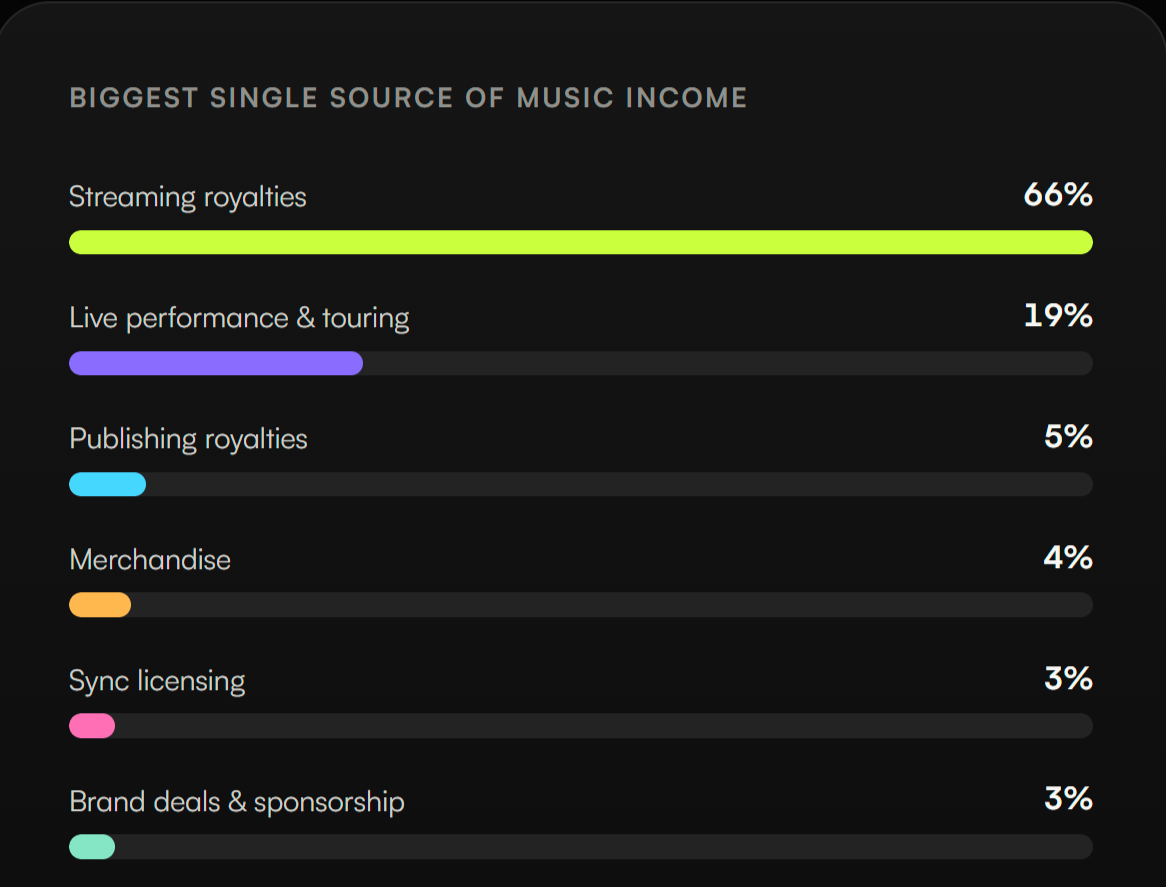
### **The Touring Catch-22**
Historically, when streaming royalties fail to pay the bills, artists [hit the road](https://www.hypebot.com/tag/touring/). But the 2026 report highlights a massive problem: **touring may now be too expensive for the artists who need it most.**
Live performance remains the second-largest source of income for independent artists (behind streaming). However, a staggering **82% of respondents stated they cannot currently afford the expenses associated with going on tour**. Without tour support from a label, many independent artists are missing out on their most crucial revenue and merchandise-selling engine.
### **The Burnout of the 'Musician-Creator'**
Without a label marketing budget, the burden of promotion falls entirely on the artist.
- **75%** of artists believe social media success is absolutely essential to a viable career.
- **86%** actively create social content to promote their tracks.
- **TikTok** and **YouTube** remain the dominant discovery engines, driving the most new fans for 49% of those surveyed.
But this is also taking a toll on [mental health](https://www.hypebot.com/tag/mental-health/). Marketing and self-promotion ranked as the second-largest source of stress for artists (23.5%), right behind financial pressure.
***+Read more:*** [*"Hypebot's Mental Health Awareness Month Guide For Musicians"*](https://www.hypebot.com/hypebots-mental-health-awareness-month-guide-for-musicians/)
### **Who is Actually Using AI in Music? (It's Not Gen Z)**
One of the more surprising insights from Ditto’s report is the demographic breakdown of [Artificial Intelligence](https://www.hypebot.com/tag/ai/) in music production. While **47% of all surveyed artists are using AI** mostly as an assistant for mixing, mastering, and vocal tuning, the generation driving the adoption is surprising.
- **74%** of artists over the age of 55 use AI to make music.
- Only **24%** of Gen Z artists reported using AI tools in their workflow.
“Independent artists have unprecedented access to audiences, technology and global distribution, but turning that access into a sustainable career remains a major challenge,” said **Matt Parsons**, **CEO and co-founder of Ditto Music**. “The annual report sheds light on this reality for today’s independent musicians, and how social media, touring costs and AI are reshaping what it means to build a career.”
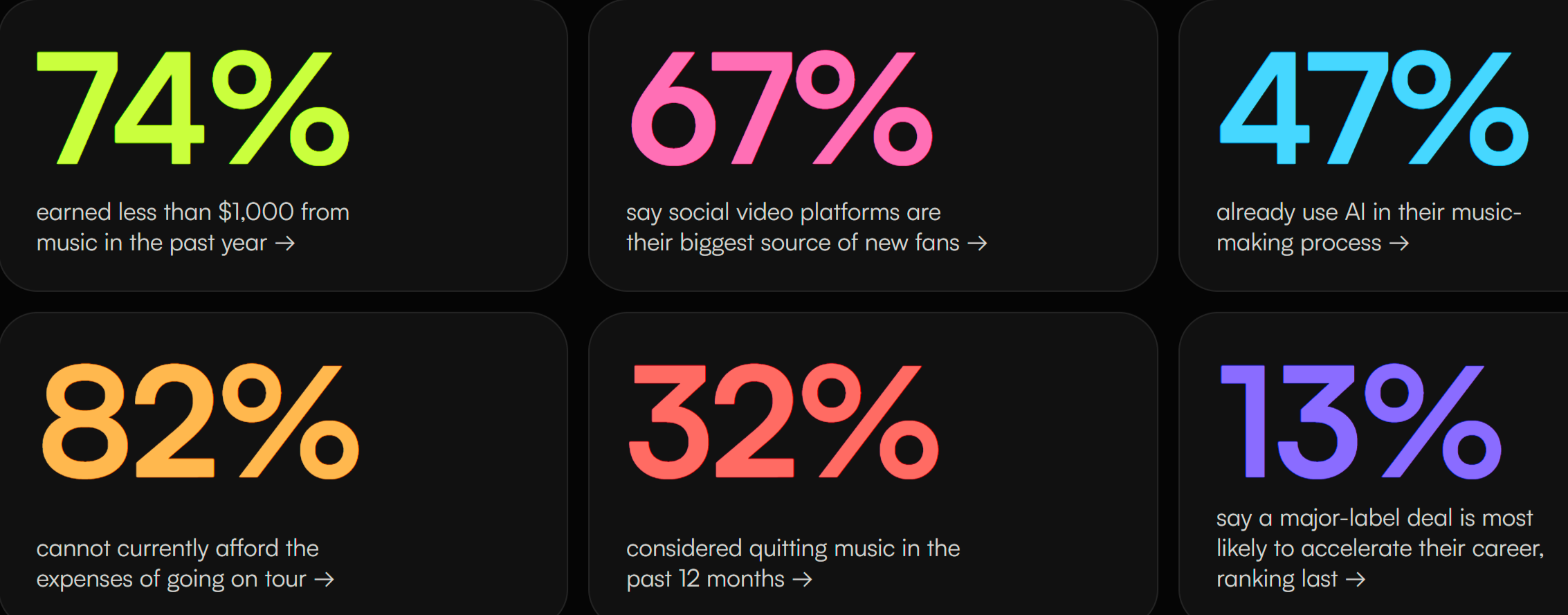
### **Methodology**
The Independent Music Report 2026 gathered responses from 5,039 independent artists living in 112 countries. The survey covered artist demographics, career experience, income, streaming, music discovery, social media, artificial intelligence, live performance and mental health.
The largest respondent markets were the U.S. (1,180), U.K. (1,003) and South Africa (929).
[**Read the full Ditto Independent Music Report here.**](https://dittomusic.com/en/independent-music-report-2026?ref=hypebot.com)
## **Hypebot's Bottom Line**
The democratization of music distribution was supposed to be the great equalizer, but Ditto Music’s 2026 report proves that access does not equal sustainability. We have successfully solved the problem of getting music onto platforms; we have completely failed to solve the problem of getting artists paid.
When 82% of artists are priced out of touring and 74% are making less than $1,000 a year, we are risking a massive creative brain drain — evidenced by the 43% of US artists who considered quitting last year. The modern independent artist is being crushed under the weight of having to fund their own PR, social media management, and tour logistics.
Until the industry finds a way to subsidize live performance costs or adjust streaming payouts, "independent music" will remain a hobby for the many, and a career only for the well-funded few.
---
## Hypebot
Essential news & insights for artists and live music pros.
Sign up for free weekly content delivered to your inbox
Subscribe
Email sent! Check your inbox to complete your signup.
### Sound Rink and Laylo: Presale Is About More Than Ticket Revenue
URL: https://www.hypebot.com/sound-rink-and-laylo-presale-is-about-more-than-ticket-revenue/
Last updated: 2026-09-29T14:50:44.000Z
[**Sound Rink**](https://soundrink.com/?ref=hypebot.com) and [**Laylo**](https://laylo.com/?ref=hypebot.com) have teamed up to help artists turn tour announcements into VIP sales, presales and a fan audience they can reach again on the next run.
Under the partnership announced Tuesday, September 29, Sound Rink will help artists set up and run campaigns on Laylo, the platform used for ticket, merch and content drops. That includes artists new to Laylo as well as those who already have an account. Sound Rink says it can bring together an artist’s mailing lists, social audience, e-commerce contacts and other fan touchpoints to promote shows and collect direct fan signups. Laylo also [lists Sound Rink as an affiliate](https://laylo.com/affiliates/sound-rink?utm%5Fsource=chatgpt.com).
The companies say several pilot campaigns generated substantially more presale and VIP revenue than the artists’ previous tours, citing increases of 2x, 3.5x and 16x. Those are company-reported examples, rather than a platform-wide average; the release does not detail the size or terms of each comparison. One established group, the companies say, added nearly 20,000 fans through teasers and show-specific RSVPs and brought in nearly $200,000 before its tour began. An emerging band reportedly more than tripled its previous tour’s gross revenue during the presale period.
Sound Rink says it has sold more than 500,000 tickets across over 250 tours and paid $24 million to artists since 2023\. Laylo says its campaigns have powered more than 250 million fan actions and $1 billion in sales across tickets, merch and content since 2021.
A venue, city, or date-specific RSVP gives an artist a clearer picture of *where* demand is coming from, including fans who do not buy immediately. Those contacts can help with the next announcement or a later ticket push, provided fans opt in to further messages.
For independent artists, the practical lesson is to treat a presale as the start of an ongoing conversation. A VIP package may raise revenue on this tour; knowing which fans showed interest, and having permission to reach them directly, can make the next tour easier to launch.
### **Connecting Laylo to Bandsintown For Artists**

Independent artists and marketing teams can now also grow their owned audiences via Laylo's partner integration with [**Bandsintown**](http://artists.bandsintown.com/?ref=hypebot.com). By using the Bandsintown Widget to embed your tour dates on your website, when fans RSVP or sign up for presales and/or waitlists, their email and SMS opt-ins sync automatically to Laylo. You own that data forever.
Learn more about the [Laylo integration here](https://www.artist.bandsintown.com/integrations/laylo?ref=hypebot.com), and view all of [Bandsintown's marketplace integrations here](https://www.artist.bandsintown.com/integrations?ref=hypebot.com).
### Watch: Marshall's The Dead Venue Sessions — Stalag 13 (Philly)
URL: https://www.hypebot.com/watch-marshalls-the-dead-venue-sessions-stalag-13-philly/
Last updated: 2026-09-29T14:09:45.000Z
**What happens to a music venue after the music leaves?**
**Marshall** is answering that question by putting bands back into three rooms that no longer function as venues. Its new limited film series, ***The Dead Venue Sessions***, revisits the former homes of New York’s **China Chalet**, Philadelphia’s **Stalag 13,** and Los Angeles’ **London Fog** — spaces that have since become a food court and arcade, a bodybuilding gym and a barber shop.
Episode 2 of the series is available to watch below.
Today a gym, **Stalag 13** hosted the likes of Refused, Dillinger Escape Plan and Limp Wrist between 1996 and 1999\. Named after the fictional POW camp in Hogan’s Heroes, it was part of a row of warehouse venues that included the Fake House and Killtime. There was almost no infrastructure: bands played on the floor, surrounded by the crowd. Around the music was a wider culture of self-organized events, flyers, and fanzines.
The [DIY spirit ](https://www.hypebot.com/tag/d-i-y/)of Stalag 13 still lives in its walls and for one final performance, became a venue once again. And Marshall brought loud punks, [**Sweet Pill**](https://www.bandsintown.com/a/13793677-sweet-pill?utm%5Fsource=hypebot&came%5Ffrom=900)**,** to resurrect that spirit.
---
The premise is simple, but the transformed rooms do much of the talking. These weren't just spaces where live music came and left, these venues were places where scenes formed, artists learned how to command a room, and audiences found one another to build a community.
Stay tuned as these videos get released one by one, documenting the ghost scenes that each venue left behind.
Through its Amplify membership program, Marshall directs 1% of qualifying online purchases toward [grassroots spaces](https://www.hypebot.com/tag/independent-venues/), funding backline equipment, shows and longer-term partnerships.
[Follow The Dead Venue Sessions here.](https://www.marshall.com/gb/en/made-of-loud?ref=hypebot.com)
---
## [**Sweet Pill Tour Dates**](https://www.bandsintown.com/a/13793677-sweet-pill?utm%5Fsource=hypebot&came%5Ffrom=900)
### The Ultimate Guide to Understanding Spotify Analytics Data for Artists
URL: https://www.hypebot.com/the-ultimate-guide-to-understanding-spotify-analytics-data-for-artists/
Last updated: 2026-09-29T13:56:15.000Z
### **Spotify Analytics for Artists: How to Read Your Data and Grow**
*By* [***Randi Zimmerman***](https://blog.symphonic.com/author/randi-zimmerman/?ref=hypebot.com)*of* [***Symphonic***](https://blog.symphonic.com/2026/09/24/how-to-interpret-your-spotify-analytics-2/?ref=hypebot.com)
[**Spotify**](https://www.hypebot.com/tag/spotify/) **analytics** can tell you a lot more than how many streams your latest release received. Inside [Spotify for Artists](https://www.hypebot.com/tag/spotify-for-artists/), you can see how listeners are finding your music, if they’re coming back, where they’re located, which songs are connecting, and how your audience changes after a release.
The key is knowing which numbers actually tell you something useful. Instead of treating your dashboard like a scoreboard, use it to answer specific questions about your audience.
*Did that playlist placement bring you new fans or just a temporary spike in streams? Are people coming back after discovering your latest single? Is one city starting to show enough momentum to justify more marketing spend? Are your existing fans actually listening when you release something new?*
Here’s everything you need to know…
## How to Access Spotify for Artists Analytics
Once your music is available on Spotify, you can request access to your artist profile through [**Spotify for Artists**](https://artists.spotify.com/?ref=hypebot.com). If the profile has already been claimed, a team administrator can invite you.
Claiming your Spotify for Artists profile gives you access to your artist dashboard and its analytics tools. Spotify now refers to a claimed and actively managed profile as a **Registered Artist**. This is separate from **Spotify’s Verified** by Spotify badge, so you don’t need that badge to use Spotify for Artists analytics.
Once you’re in, you can review audience, music, playlist, release, and performance data on the web or through the Spotify for Artists mobile app.
Now, let’s get into what you should actually be looking for.
## Start By Understanding Who’s Actually Listening
It’s easy to open Spotify for Artists and immediately look at your total streams. On their own, though, streams don’t tell you much about the relationship people have with your music.
Start by looking at a few metrics together.
### Streams, Listeners, and Repeat Listening
Streams tell you how many times your music was played during the selected period, while listeners tell you how many unique people listened.
The relationship between those numbers gives you more context.
If listeners rise quickly but streams per listener stay low, your music may be reaching a lot of new people who aren’t returning yet. If your audience grows and streams per listener rise with it, more listeners may be coming back to your music.
There isn’t one streams-per-listener number every artist should chase. Genre, catalog size, release strategy, playlist exposure, and where you are in your career can all affect it. Compare your own songs and releases over time instead.
**Then bring saves, playlist adds, and followers into the picture.**
- **Saves:** Someone added your song to their library.
- **Playlist adds:** Someone added your music to one of their playlists.
- **Followers:** Someone chose to follow your artist profile.
Those actions can add context to the initial stream because the listener did something beyond simply hearing the song.
> 💡 **For example:** Say a new single reaches 40,000 listeners after getting a major playlist placement, but streams per listener stay low and you see little movement in saves, follows, or active listeners. Another release reaches 15,000 listeners, but those listeners generate more repeat streams, save the track, follow you, and start exploring your catalog.
>
> The first release generated more reach. The second gives you stronger evidence that discovery is turning into a deeper relationship with your music.
Neither result makes a release automatically successful or unsuccessful. They tell you different things about what happened, which can change what you do next.
### Go Deeper With Spotify’s Audience Segments
Spotify’s Audience Segments take this a step further by showing where people are in their relationship with your music.
Your total audience is divided into three main groups:
- **Monthly active listeners:** People who intentionally streamed your music from an active source within the last 28 days.
- **Previously active listeners:** People who previously listened intentionally but haven’t done so in at least 28 days.
- **Programmed listeners:** People who have only heard your music through programmed sources, such as editorial playlists, personalized recommendations, Radio, Autoplay, AI DJ, or playlists made by other listeners.
You can find these groups under **Audience → Segments**. Spotify also shows movement between segments, including new listeners, new active listeners, and reactivated listeners.
Your monthly active audience is broken down even further:
- **Super listeners:** People who intentionally streamed your music 15 or more times during the last 28 days.
- **Moderate listeners:** People with 3–14 intentional streams during the last 28 days.
- **Light listeners:** People with 1–2 intentional streams during the last 28 days.
This is where you can start looking beyond audience size and into audience depth.
If your programmed audience is growing quickly, you may be getting strong discovery. If monthly active listeners are growing alongside it, some of those people are intentionally coming back. If your super listeners are increasing, you have another signal that a portion of your audience is engaging with your music much more deeply.
**📚 Want to go deeper?** [*Check out our Spotify Guide.* ](https://blog.symphonic.com/2026/02/23/spotify-guide-musicians/?ref=hypebot.com)
**+Read more:** [*"The Three Tasks AI Can Take Off Every Artist's Plate"*](https://www.hypebot.com/the-three-tasks-ai-can-take-off-an-artists-plate/)
## Use Source of Streams to Understand Where Your Momentum Is Coming From
Once you know who’s listening, look at **how they got there.**
[Spotify’s Source of Streams](https://support.spotify.com/us/artists/article/source-of-streams/?ref=hypebot.com) shows where people were when they started listening to your music. You can find it on Audience, Song, and Release overview pages by selecting the Source of Streams segmentation.
Spotify divides these sources into two broad categories: **active and programmed.**
Active sources are places where listeners intentionally choose your music. That can include your artist profile and catalog, a listener’s own playlists or library, and their queue.
Programmed sources are places where Spotify or another listener selected what played. These can include editorial and personalized editorial playlists, Discover Weekly, Release Radar, Radio, Autoplay, Daily Mix, Daylist, AI DJ, and playlists created by other Spotify users.
Neither one is automatically better.
Programmed listening can introduce your music to a huge number of people who didn’t know you before. Active listening shows intentional behavior from someone who decided to play your music.
The interesting part is what happens between the two.
If a playlist placement causes programmed listeners to spike, check your audience again over the following days and weeks.
*Are monthly active listeners growing too? Are people saving the track? Following you? Playing other songs? Coming back after the playlist exposure slows down?*
That gives you much more information than celebrating the playlist placement itself.
## Look at What Happens After Someone Discovers Your Music
Getting discovered is only one part of the equation. Your analytics can also help you understand what listeners do afterward.
Spotify’s **Release Engagement** view shows how much of your existing monthly active audience listened to a new release during its first 28 days.
If a new song receives plenty of streams but a relatively small portion of your existing active audience checks it out, take a closer look at your rollout. Maybe your announcement strategy didn’t reach enough existing fans. Maybe you stopped promoting the track after release day. Maybe another song from the project connected more strongly.
Compare Release Engagement across your own releases to see which campaigns consistently get more of your existing audience listening.
The same thinking applies to **playlist performance**. Instead of treating every playlist placement as an isolated win, follow the listener journey:
**Playlist exposure → new listeners → saves/follows → active listeners → repeat listening and catalog exploration**
Say a song gets added to a major playlist and programmed streams immediately jump. Great! Now watch what happens when that exposure starts slowing down.
If the song continues generating active listening, saves, followers, and catalog activity afterward, the placement may have introduced people who actually stuck around. If everything drops back to its previous level as soon as the playlist exposure disappears, you still gained valuable reach, but it tells you something different about the audience that placement brought in.
That distinction can help you evaluate playlist performance much more realistically and decide how to support a track after it starts gaining discovery.
**📚 Want to learn more?** [Check out our guide to how streaming algorithms](https://blog.symphonic.com/2025/05/20/how-to-influence-algorithms-leverage-dsp-tools-to-grow-your-audience/?ref=hypebot.com) respond to fan behavior.
## Use Location Data to Find Markets Worth Testing
Spotify for Artists also shows where your listeners are located, including your top countries and cities.
This data can help you spot markets that deserve more attention, but don’t route an entire tour because one city suddenly jumped in Spotify.
Look for supporting signals first.
> 💡 **For example:** Say Chicago suddenly becomes one of your fastest-growing Spotify markets. Check your other data. Are you also seeing more social engagement from Chicago? Email subscribers? Merch orders? YouTube activity? Have previous shows or ticket campaigns performed well there?
>
> If multiple signals are pointing in the same direction, you have a stronger case for testing the market.
That test doesn’t need to mean booking a headline show immediately. You could run geo-targeted ads around your next release, collaborate with a local creator, pitch regional press, test a support slot, or put more budget behind content that’s already performing in the area.
Then watch what happens…
If the market continues growing across several channels, you have more evidence to justify a larger investment.
Keep Spotify’s data window in mind here, too. Location and demographic information is currently available for the most recent 28 days, so check it regularly if geographic trends are part of your strategy.
**+Read more:** [*"Music on the Wrong Spotify Artist Profile? How to Fix It in 2026"*](https://www.hypebot.com/music-on-the-wrong-spotify-artist-profile-how-to-fix-it-in-2026/)
## Compare Spotify Performance With Your Other Platforms
Spotify is an important part of your streaming audience, but it’s still only one platform.
Your strongest market on Spotify may not be your strongest market on Apple Music, YouTube, Amazon Music, or another service. A song may also start gaining momentum on one platform before that growth appears elsewhere.
If you’re a Symphonic client, [**SymphonicMS analytics tools**](https://symphonic.com/music-technology/?ref=hypebot.com) can help you review performance data across services including **Spotify, Apple Music, Amazon Music, YouTube, Deezer,** and **more** from one dashboard.
> Maybe Spotify shows strong growth for a track in Mexico while YouTube is showing even faster growth there. That overlap gives you more reason to investigate the market.
>
> On the other hand, you may find that a song is taking off on YouTube in a territory where Spotify activity is still relatively small. Instead of assuming the platforms should look the same, ask what’s driving the difference. The audience behavior, content format, platform penetration, or campaign activity in that market may be different.
>
> That can influence where you put ad spend, what type of content you make, which platform you send fans to, and which markets you prioritize next.
## Turn Spotify Analytics Into Your Next Move
Don’t open Spotify for Artists just to see if your numbers went up.
**Go in with a question.**
*Did that playlist placement create repeat listeners? Did your campaign reach new people or mostly activate existing fans? Is one market growing faster than the rest? Did listeners who found the new single explore anything else? Are people who discovered you through programmed sources becoming active listeners?*
**Then look at the metrics that can actually answer it.**
| **What you see** | **What to investigate next** |
| ------------------------------------------------ | --------------------------------------------------------------------------------------------------------------------------------------------------------------------------------------------- |
| Programmed streams jump | Check if saves, follows, active listeners, and catalog listening rise too. |
| Monthly active listeners grow | Identify which release, campaign, playlist, content, or market may be driving more intentional listening. |
| Super listeners grow | Look at what releases or activity coincided with that growth, then think about ways to deepen that relationship through releases, live shows, merch, community, and direct fan communication. |
| One city starts overperforming | Compare the signal with social, email, sales, ticketing, and other platform data before investing more heavily in the market. |
| A release gets streams but weak engagement | Review where those streams came from and what listeners did after hearing the song. |
| Existing fans aren’t engaging with a new release | Compare the rollout with previous releases and look at how you promoted the track before, during, and after release day. |
**You’re looking for patterns you can act on.**
One spike may tell you to investigate. The same behavior showing up across several releases, markets, campaigns, or platforms gives you much stronger information to work with.
## In Conclusion…
Spotify analytics are most useful when you stop treating them as a report card and start using them as clues.
Look at how listeners discover you, whether they come back intentionally, which songs create deeper engagement, where your audience is growing, and how new releases affect your existing fans. Then use those patterns to decide where to promote, what to release, which markets to test, and which listeners need more attention.
The numbers will not make the decision for you, but they can help you make the next one with a lot less guesswork.
***+Read more:*** [*"A Guide to Pitching Music to Independent Spotify Playlists"*](https://www.hypebot.com/a-guide-to-pitching-music-to-independent-spotify-playlists/)
---
## Hypebot
Essential news & insights for artists and live music pros.
Sign up for free weekly content delivered to your inbox
Subscribe
Email sent! Check your inbox to complete your signup.
### Artists Don’t Just Choose a Mixing Engineer. They Choose Who to Trust With the Record.
URL: https://www.hypebot.com/artists-dont-just-choose-a-mixing-engineer-they-choose-who-to-trust-with-the-record/
Last updated: 2026-09-29T13:38:34.000Z
*By *Michael J. Morgan*,Founder of* [***The Business of Mixing***](https://mixing.biz/?ref=hypebot.com)
Artists have to choose a mixing engineer before they can know many of the things that will determine whether working together actually goes well.
They can listen to your discography. They can read your credits. They can ask a producer who has worked with you before. But they cannot hear the mix you are going to make for them.
They don't know how you'll respond when they say the first version isn't right. They don't know whether you'll understand a note like “the chorus doesn't lift.” They don't know how you'll handle disagreement, uncertainty, or all the small moments between sending the files and approving the final mix.
And yet they still have to choose. That gap is what ***trust*** is actually for.
### Something you can put weight on.
There is a useful distinction between trust and entrust. **Trust** is a judgment. **Entrusting** is an action. An artist can think you're talented, respected, and trustworthy without ever sending you a record. Eventually, they have to move from evaluating you to placing something valuable in your care.
In the framework I teach mixers through [**The Business of Mixing**](https://mixing.biz/?ref=hypebot.com), I group the evidence artists use to make that decision into three kinds of trust signals: technical, emotional and social.
**Artists probably aren't consciously sorting mixers into those categories. But they are reading the signals.**
## **Technical trust: Can you carry the work?**
Technical trust is the artist's belief that your ability, judgment and process can produce what this particular record needs. Your mixes are technical signals. So are your credits, taste, genre fluency, consistency, process and the way you talk about the work.
But technical trust is not quite the same as technical skill.
An artist can know you are an exceptional mixer and still wonder whether you are the right mixer for them. A brilliant discography dominated by aggressive metal records is real evidence of ability. To an artist making hazy bedroom pop, it may still leave the important question unanswered. Not, “Are they any good?” But rather, “Are they good for this?”
I once spoke with a mixer whose credits had accumulated billions of streams. The records were real. The skill was obvious. And yet the amount of work those credits generated did not reflect the scale of the credits themselves. More proof that this person could mix was not necessarily what was missing.
You can prove you're excellent without helping a particular artist understand why you're right for their record.
## **Emotional trust: Can I safely tell you the truth?**
Emotional trust does not mean an artist thinks you're nice. It means they believe they can communicate honestly with you when things become subjective, uncertain or uncomfortable.
- **What if they hate the first mix?**
- **What if they can't explain why?**
- **What if the thing they loved about the rough disappears?**
- **What if they ask for something you think is a bad idea?**
- **What if they change their mind?**
A few years ago, I spoke with an artist who had spent more than fifteen years working in studios. She told me she had usually been too timid to say what she really thought about her own music.
Then a mix came back that she didn't like. This time, she said something. She told the mixer they needed to be honest with each other. He told her that was exactly what he wanted, because finding out months later that she had been unhappy would be far worse.
She described that conversation as crucial to everything that followed. She wasn't simply finding out whether he accepted revisions. She was finding out whether honesty was safe. No portfolio or credit could have answered that beforehand.
Most artists know the mixer has expertise they don't have. That can create its own pressure. An artist can dislike something and simultaneously wonder whether they're wrong. They may soften a note because they don't want to offend you. They may struggle to describe what they're hearing.
- ***“The chorus doesn't lift.”***
- ***“It feels too clean.”***
- ***“Can it sound more purple?”***
To an engineer, those notes may sound imprecise. To the artist, they may be the most precise language available for something they know is wrong. Part of emotional trust is believing they can give you that information without becoming a mix engineer first.
Artists also cannot experience your intentions. They experience your behavior. You may know an unfinished mix is heading somewhere great. The artist only knows what came out of the speakers. You may know you haven't replied because you've been buried in work. The artist experiences silence. You may think a short email is efficient. The artist may experience irritation.
Whether you intend it or not, every interaction becomes another signal.
***+Read more:*** [*"What a Grammy FYC Campaign Actually Looks Like If You're Independent"*](https://www.hypebot.com/what-a-grammy-fyc-campaign-actually-looks-like-if-youre-independent/)
## **Social trust: Who else has put weight on you?**
Artists don't only look at you. They look around you. Who else has trusted this person?
Credits are social signals. So are referrals, testimonials, repeat clients, producers, managers, and reputation. But not all social trust works the same way. When a producer the artist already trusts says, “I've worked with her for ten years. Use her,” the signal is more immediate: “Someone *I trust* trusts this person.”
That is transferred trust. It can remove a tremendous amount of uncertainty. This is also why smaller experiences often lead to larger ones.
One artist I interviewed had already been around a mixer in the studio through a producer before hiring him to mix. Another sent one song before committing the rest of the project. A band had watched their producer work on an earlier session before relying on him more deeply later.
Nobody announced that they were running a trust test. They simply got to watch someone carry something smaller before giving them something bigger. A referral often does the same thing. Someone else has already put weight there.
## **How artists choose a mixing engineer: they read all three at once**
An artist is really only thinking about the record they want to make. They get worried and will experience a growing sense of certainty or uncertainty. That's okay, it's incredibly common.
In the best case scenarios, they'll hear your work and recognize their musical world (technical signal), or their producer will recommend you (social signal), or you'll respond to their inquiry with a question that proves you actually listened to their demo material (emotional signal).
Throughout the process you can reinforce those signals by avoiding distance. If you clearly explain your timeline and revision process, that's a combination of technical and emotional signals. If then they question something in the first mix and you become defensive, emotional trust drops.
A credit is not trust. A testimonial is not trust. A great mix is not trust.
## **They are all signals.**
The artist interprets those signals and decides how much weight to give them. That means a mixer can have enormous evidence in one category while leaving another almost completely unanswered.
I see this most often with technical trust. When work is slow, the instinct is often to produce more evidence of ability. Another portfolio update. Another before-and-after. Another credit. Another mix. Sometimes that's exactly what's missing.
But sometimes the artist already believes you can mix. The unanswered question is somewhere else:
- **Will this person understand me?**
- **What will it feel like to work with them?**
- **Can I tell them when something isn't right?**
- **Does anyone I trust know them?**
More technical evidence cannot solve every emotional or social trust problem. Price, availability and deadlines still matter. Producers, managers or labels may already have someone in mind. And none of this compensates for weak work.
Trust isn't the whole decision. But when an artist has uncertainty, they look for enough evidence to make the risk feel acceptable. Technical signals help them believe you can carry the work. Emotional signals help them believe they can be honest while you carry it. Social signals show them that other people have put weight there before.
Eventually, those signals become a decision. The artist stops evaluating you from a distance. They send the files.
**Trust becomes entrusting.**
Your job is not only to prove that you can make a great mix. It is to give an artist enough reason to put the weight of the record in your hands.
---
**Michael J. Morgan* is the Founder of* [***The Business of Mixing***](https://mixing.biz/?ref=hypebot.com)*, where he teaches freelance mix engineers how to build stronger, more sustainable businesses. He has worked one-on-one with more than 1,000 audio professionals and teaches on positioning, pricing, client relationships, and the business behind getting hired and rehired.*
### Ticketmaster Must Face FTC Ticket Resale Lawsuit, Judge Rules
URL: https://www.hypebot.com/ticketmaster-must-face-ftc-ticket-resale-lawsuit-judge-rules/
Last updated: 2026-09-29T13:10:25.000Z
**A federal judge has denied Ticketmaster and Live Nation's motion to dismiss an FTC lawsuit alleging illegal ticket resale tactics, allowing the landmark case to proceed directly into the evidence discovery phase.**
The ruling keeps intact the Federal Trade Commission's claims that Ticketmaster violated the **Better Online Ticket Sales (BOTS) Act** and engaged in deceptive pricing practices. Originally filed by the FTC alongside seven state attorneys general, the complaint accuses the ticketing giant of actively facilitating—and profiting from—the secondary resale market at the expense of fans and artists.
“We continue to believe that this lawsuit is misguided and will ultimately fail,” **Ticketmaster** said in a statement following the ruling.
In April, the [FTC forced **StubHub**](https://www.hypebot.com/stubhub-to-refund-10m-after-ftc-deceptive-pricing-charges/) to refund **$10 million** in ticket fees over deceptive ticket pricing practices that obscured the cost of tickets until the end of the checkout process.
#### **Core Allegations Moving Forward**
- **Enabling Scalper Bots:** Regulators contend Ticketmaster turned a blind eye to brokers using thousands of fake accounts to bypass purchase limits.
- **Broker Software Support:** Internal communications cited by the FTC allege executives intentionally avoided stronger anti-bot measures and provided software tools to help brokers aggregate resold inventory.
- **Double-Dipping on Fees:** The suit highlights how the platform allegedly profits twice on single tickets by charging service fees on both original primary sales and secondary market markups.
- **Deceptive Pricing:** The case targets "drip pricing" tactics where mandatory service fees—sometimes up to 44% of total price—were concealed until the final checkout step.
**Ticketmaster** sought to have the lawsuit dismissed, arguing that it enforces ticket limits and cannot be held liable for third-party broker behavior. However, with the court's rejection of that motion, the case enters discovery, forcing the company to hand over internal operational data and corporate communications ahead of a potential trial.
## **Hypebot's Bottom Line**
This ruling is a critical blow to Ticketmaster's legal shields and a win for fans, artists, and independent promoters.
By opening the door to full discovery, the court is forcing transparency onto how major ticketing platforms handle scalpers. If the FTC wins here, it could force a fundamental overhaul of primary ticket distribution, bot enforcement, and secondary resale fee structures across the live music ecosystem.
### **MORE:** [**Live Nation & Ticketmaster Legal Battles: What Happens Next**](https://www.hypebot.com/live-nation-legal-battles-what-happens-next-in-2026-2027/)
Live Nation faces major legal challenges set to be resolved in the next year. Learn key dates for the DOJ settlement, state remedies trial & more.
## Hypebot
Essential news & insights for artists and live music pros.
Sign up for free weekly content delivered to your inbox
Subscribe
Email sent! Check your inbox to complete your signup.
***Get all the latest Music Industry & Live Music News updated continuously from across the web under the Hypebot Industry News tab*** [***here***](https://www.hypebot.com/music-industry-news-feed/)***.***
### Did the 2027 Oasis Ticket Pre-Sale Learn From Past Mistakes?
URL: https://www.hypebot.com/did-the-2027-oasis-ticket-pre-sale-learn-from-past-mistakes/
Last updated: 2026-09-28T21:17:58.000Z
[**Oasis**](https://www.bandsintown.com/a/249-oasis?utm%5Fsource=hypebot&came%5Ffrom=900) have **sold out** **all 42 dates** of their Live ’27 tour over this past weekend, September 25–27, using a ticket sale that looked [markedly different](https://www.hypebot.com/strict-new-rules-deadlines-for-snagging-oasis-2027-tickets/) from the scramble for its [reunion](https://www.hypebot.com/tag/reunion/) shows just a couple years back.
Fans had to register in advance. Randomly selected registrants received a personal, non-transferable code for one of nine staggered onsale windows. There was [no general onsale or public presale](https://www.musicbusinessworldwide.com/all-42-oasis-live-27-shows-are-sold-out-after-a-ticket-sale-with-no-public-queue/?ref=hypebot.com).
For those who remember the last Oasis sale, the changes are stark. In August 2024, more than 10 million people from 158 countries queued for roughly 1.4 million UK and Ireland tickets to the band's 2025 reunion tour. Long waits and confusing prices followed.
The UK's Competition and Markets Authority [later secured changes from Ticketmaster](https://www.gov.uk/government/news/cma-secures-changes-from-ticketmaster-following-oasis-tickets-investigation?ref=hypebot.com), citing concerns that fans were not told clearly about price tiers or what tickets would cost while they waited. Promoters also moved to cancel more than 50,000 tickets listed on unauthorized resale sites.
This time however, the tour managed the rush *before* tickets went on sale.
Registration limited entry, random selection determined who received access, and the windows spread buyers across three days. [Ticketmaster's instructions](https://help.ticketmaster.ca/hc/en-us/articles/50303249370513-Oasis-Live-27?ref=hypebot.com) still mention waiting rooms, so the queue did not disappear entirely, but the difference is that millions of people were no longer invited to hit the same digital doorway *all at once.*
The plan extends beyond checkout. Oasis says official resale will open closer to the shows through Ticketmaster and Twickets at the original purchase price. Tickets listed elsewhere may be cancelled. That gives the tour a way to control both the first sale and what happens when buyers can no longer attend.
### **Did it work?**
All 42 shows sold out, but a sellout was hardly in doubt for Oasis at this point. The more telling measures would be how long buyers waited, how often transactions failed, and how many tickets eventually turn up on unauthorized resale sites. Those figures have not been made public.
Random access also has its own sting: a genuine fan can register on time and never receive a code, while a code does not guarantee a ticket. Limiting who can shop may be the opposite of what a tour needs.
For a stadium act facing demand it cannot possibly satisfy, Oasis has put a serious question to the industry: why make every fan queue at 10 a.m. when the crowd can be organized before the doors open?
**+Read more:** [*"Concert Films Have Become the Second Leg of an Artist's Tour"*](https://www.hypebot.com/concert-films-have-become-the-second-leg-of-an-artists-tour/)
---
## [**Oasis Tour Dates**](https://www.bandsintown.com/a/249-oasis?utm%5Fsource=hypebot&came%5Ffrom=900)
### By the Time the Show Is Live, the Content Is Already Out.
URL: https://www.hypebot.com/by-the-time-the-show-is-live-the-content-is-already-out/
Last updated: 2026-09-28T18:39:50.000Z
A singer hits the chorus. Someone in the pit raises a phone. Before the set is even over, a clip with sound from the stage can be on the [festival’s](https://www.hypebot.com/tag/festivals/) official feed. That is the workflow [**TagMix**](https://www.tagmix.me/?ref=hypebot.com) is selling to live music events, and its first full festival season with an iPhone app offers a glimpse of why organizers are paying attention.
In figures released September 28, the company says its technology was used at 44 festivals in ten countries in 2026, including **Coachella, Bonnaroo, Governors Ball, Lollapalooza,** and **Wacken Open Air.**
Those are not small names.
According to TagMix's own data, participating festivals published 60% more content and generated 3.9 times as many total video views; it also compared individual posts with those from 513 other festivals in the same territories. The release does not provide enough detail to isolate the app’s effect from differences between events or their posting strategies.
But the workflow behind the figures is worth a look too. TagMix takes video shot on a phone at a show and synchronizes it with the professional audio feed from the stage. A festival’s content team can then post a crowd-level [view of a performance](https://www.hypebot.com/are-music-festivals-the-new-frontier-of-digital-media/) while it is still unfolding, without waiting for footage to move through a conventional edit.
It's an innovative solution to the gap between the convenience of mobile phones and their generally crappy sound.
## A festival now has several audiences at once
Festivals used to document a weekend and publish the recap *afterward*. Now the event is also supplying a near-continuous feed of performances, crowd reactions and unexpected moments to people who are nowhere near the site. One clip might reach a fan deciding which stage to visit that night; another might travel to someone discovering the artist for the first time in another country. A third might become part of the festival’s pitch for next year.
This goes well beyond phone video.
[**Coachella** and **YouTube** renewed their exclusive livestream and content partnership through 2030](https://blog.youtube/news-and-events/made-on-youtube-coachella-exclusively-stream-youtube-2030/?ref=hypebot.com) last week. In 2026, the festival streamed seven stages and offered a round-the-clock Coachella TV channel with archival performances and new highlights. That full-scale broadcast sits alongside the fast, vertical clips TagMix helps festivals publish. The same weekend is simultaneously a ticketed event, a live program for viewers at home and a supply of short videos for social feeds.
TagMix also says unedited phone-shot performance videos at its client festivals drew a 13.9% “reaction rate,” versus 3.2% for professionally produced wrap edits. That comparison is intriguing, though the release does not spell out how the rate was calculated or whether the two formats were shown to comparable audiences.
**Image courtesy of* [**TagMix*](https://www.tagmix.me/?ref=hypebot.com)**.*
**+Read more:** [*"Are Music Festivals the New Frontier of Digital Media?"*](https://www.hypebot.com/are-music-festivals-the-new-frontier-of-digital-media/)
## Who gets the value of the clip?
For an emerging artist, a good performance video from a festival can be more useful than a generic photo of a packed field. It shows the songs landing, offers bookers and prospective fans a sense of the live act, and can keep working after the artist has left town. That value grows if the festival tags the performer, shares usable footage and agrees in advance on where the clip can be posted.
The [festival](https://www.hypebot.com/tag/festivals/) benefits, too. A memorable set gives it something to publish *today*, when people are still talking about it, searching for it, engaging with it. And it offers something to show prospective ticket buyers *later*. The growing volume of content makes artist access and permissions a more concrete part of the booking conversation too.
**TagMix** is one company trying to speed up that process. The bigger shift is that a festival’s content operation increasingly runs at the pace of the show itself. A great performance still happens once, in front of the people who made it there. The clip can start its own tour before the applause ends.
**+Read more:** [*"A 360° Concert With No Spilled Beer on Your Shoes"*](https://www.hypebot.com/a-360deg-concert-with-no-spilled-beer-on-your-shoes/)
---
## Hypebot
Essential news & insights for artists and live music pros.
Sign up for free weekly content delivered to your inbox
Subscribe
Email sent! Check your inbox to complete your signup.
### The Next Era of Physical Music Will Not End at the Point of Sale
URL: https://www.hypebot.com/the-next-era-of-physical-music-will-not-end-at-the-point-of-sale/
Last updated: 2026-09-28T17:32:55.000Z
*By *David Geisser*, Co-Founder and CEO of* [***ZATAP***](https://zatap.io/?ref=hypebot.com)
For years, the music industry has treated a [physical release](https://www.hypebot.com/tag/merch/) as a one-time transaction. A [fan](https://www.hypebot.com/tag/fans/) buys the record, the sale closes, and whatever relationship existed between artist and buyer goes quiet until the next release. That's starting to change, and the shift is less about the object itself than about who owns what happens next.
**Near-field communication** (better known as **"NFC"**), turns almost any physical music product into a direct digital touchpoint. A fan taps a phone to an embedded chip and enters an artist-controlled experience — no app, no code, no camera.
What matters *isn't* the tap. It's who holds the relationship it creates, and how long that relationship stays worth something.
## **The industry needs relationships, not rented reach**
Artists and labels can reach enormous audiences through streaming and social platforms, but access to those audiences is usually rented. [Algorithms](https://www.hypebot.com/tag/algorithm/) decide who sees a post. Platforms control the data. An artist can accumulate millions of followers without knowing who actually bought the album, attended the show or picked up a piece of merch.
A connected physical product flips that. With a clear value exchange, a fan can choose to register, [save a pass to a mobile wallet, or opt into future updates](https://drive.google.com/file/d/1bGP%5FPIukzDSuFkY6Vg7WbXtISAFiyIwm/view?usp=sharing&ref=hypebot.com), and that data belongs to the artist and label, not to a platform that can change its algorithm or its terms tomorrow.
It's the difference between an audience you're renting and one you actually know: who they are, what they bought, and how to reach them directly the next time there's something worth saying.
## **One chip, many jobs**
Not every artist needs the same application, and that's the point. The technology adapts to the campaign rather than the other way around. An NFC-enabled card can double as a straightforward access pass: tap, unlock the album and bonus content, done. It can also carry a game built around the record, turn into a numbered collector's item with authentication built in, or sit inside merch and function as a loyalty unlock.
A cassette, a mini vinyl, a credit-card-format PVC card, even an acrylic tile; the format changes, but each is doing a specific job for a specific audience.
That range is what keeps a product's lifecycle worth something. A traditional physical SKU is worth the most on release day and depreciates from there and it sits on a shelf as a static object. A connected one can be built to do the opposite: a bonus drop timed to a tour announcement, a reward tied to a venue, an artist message a year after release.
Each of those moments gives a fan a reason to come back to something they already own, and gives the artist a reason to keep investing in that object instead of writing it off after the first week of sales.
0:00
/0:21
1×
***+Read more:*** [*"8 Payment Tools Built for Concert Venues"*](https://www.hypebot.com/8-payment-tools-built-for-concert-venues/)
## **A tap must earn the next tap**
None of this works if the technology is the whole idea. Putting a chip inside an album doesn't automatically make that album more meaningful; the experience still has to answer a simple fan question: "Why should I tap?"
NFC-enabled merchandise for [**Ben Folds**](https://www.bandsintown.com/a/483-ben-folds?utm%5Fsource=hypebot&came%5Ffrom=900) supported a charitable initiative while commanding a $10 premium and becoming the best-selling item in his store — proof that a connected product can carry more perceived value than an identical one without the chip. Fans respond to what the object unlocks and what it's worth to keep, not to the chip itself.
## **Measurement is changing what counts as an album**
The next stage of adoption will also be shaped by industry infrastructure. [Luminate's](https://www.hypebot.com/author/spotlight-by-luminate/) decision to begin tracking eligible Smart Media Albums in the United States and Canada, with Billboard chart eligibility beginning October 2, 2026, is more than a technical rules update: it recognizes that an album can be physical, collectible and digitally delivered at the same time.
Germany has already offered a glimpse of what happens when connected formats enter mainstream release strategy. In 2026, three consecutive No. 1 albums on the Official German Albums Chart carried [ZATAP](https://zatap.io/?ref=hypebot.com)\-enabled formats: **Electric Callboy's** *TANZNEID* (Sony Music Germany) as an NFC Fancard, **reezy's** *RAHEEM* (Sony Music Germany) as a Pokémon-inspired "Battlepass," and **Montez's** *So ist das mit dem Glück* (Universal Music Central Europe) as a Mini CD that unlocked the album after a presale window.
Three artists, three different formats, one signal: connected products are moving from novelty into the industry's commercial toolkit.
## **The winners will design for the full lifecycle**
As NFC adoption grows, the industry should resist treating it as another logo on packaging because the opportunity is bigger than that. It's about the full lifecycle of a product: how it's discovered, why a fan buys it, what happens at the first tap, and what brings that fan back a year later.
Artists gain a first-party audience they actually own. Labels get measurable engagement after the sale instead of a one-time revenue line. Retailers and merchandise companies get a product that justifies a higher price because it keeps delivering. And fans get something that becomes more valuable to hold onto the longer they own it, not less.
NFC won't replace vinyl, CDs, cassettes or merchandise. It changes what those formats are worth over time, and who gets to stay in touch with the person who bought them.
The music business has spent the last two decades making music available everywhere. Its next challenge is turning that access into relationships the industry actually owns. The physical product may be one of the best places to start.
***+Read more:*** [*"Charge More to Cover Your Costs or Charge Less to Help Out Fans?"*](https://www.hypebot.com/charge-more-to-cover-your-costs-or-charge-less-to-help-out-fans/)
---
**David Geisser* is a Swiss entrepreneur and Co-Founder & CEO of*[***ZATAP***](https://zatap.io/?ref=hypebot.com)*, a company specializing in “phygital” experiences that connect digital and real-world customer engagement. He works with global brands like Universal Music, Sony Music and McLaren Racing to create interactive, data-driven campaigns. David has a background in strategy consulting and holds a Master’s degree from the University of St. Gallen.*
### Your Morning Coffee Podcast: DistroKid Market Share, Suno Label Deals, StubHub, More.
URL: https://www.hypebot.com/your-morning-coffee-podcast-real-artist-hacking-streaming-2-0-congress-updates-more-2/
Last updated: 2026-09-28T12:38:36.000Z
### **Listen on your favorite** [**podcast platform**](https://bio.to/UloQY6?ref=hypebot.com)**.**
Subscribe to the Your Morning Coffee newsletter [here](https://label-logic.us8.list-manage.com/subscribe?u=735771602810b0eb238d4e814&id=1ffaab59d7&ref=hypebot.com).
**YMC Episode 321 — September 28, 2026**
On this week’s episode of the **Your Morning Coffee podcast**, your hosts Jay Gilbert and Mike Etchart chat about these timely music industry stories:
- **Over 50% of a Major Streaming Service's Tracks Come From DistroKid – And Other Revelations From UMG's Lawsuit**
- **The Spotify Playlist Cleanup**
- **Judge Explains StubHub Arbitration Ruling: Ticket Buyer Agreed To Terms Barring Class Actions When He Clicked 'Buy Now'**
- **As Some Labels Strike Deals With Suno, Artist Reps Sound Off: 'It's the Wild, Wild West'**
Listen right here:
Subscribe to the Your Morning Coffee newsletter [**here**](https://label-logic.us8.list-manage.com/subscribe?u=735771602810b0eb238d4e814&id=1ffaab59d7&ref=hypebot.com)**.**
**FIND MORE CURATED MUSIC BUSINESS AND INDIE**
**PODCAST EPISODES** [**HERE**](https://www.hypebot.com/tag/podcast-music-biz/)
### More Festivals Cancel as Climate Crisis Upends Live Music
URL: https://www.hypebot.com/more-festivals-cancel-as-climate-crisis-upends-live-music/
Last updated: 2026-09-28T12:36:19.000Z
It was a devastating weekend for [live music](https://www.hypebot.com/tag/live-music/) across the Eastern Seaboard as a fierce Nor'easter brought heavy rain, coastal flooding, and high winds that triggered a wave of last-minute cancellations.
In New York City, the 2026 **Global Citizen Festival** in Central Park was called off for the first time in its 14-year history. **All Things Go NYC** and **CBGB Fest** were also forced to close their gates. Further south, Maryland’s massive beachfront **Oceans Calling Festival** had to abandon its entire three-day weekend due to dangerous tides and wind preventing stage assembly. Major stadium dates like **Ed Sheeran’s Gillette Stadium shows** in Massachusetts were similarly halted.
“The Festival is one day,” **Global Citizen** said in a statement. "(But) conflict, extreme weather, and rising costs are forcing millions of families from their homes, disrupting education, threatening food supplies and pushing communities back into extreme poverty."
The coastal storm also impacted **Farm Aid 2026** presenting logistical challenges, and damp conditions at the **Veterans United Home Loans Amphitheater** in **Virginia Beach**. But because of the the venue's large, covered main pavilion, the festival was not canceled.
### **Not Just This Weekend**
This was not just an unlucky weekend, but rather the emerging reality for the concert industry and fans. The number of [music festivals](https://www.hypebot.com/tag/festivals/), stadium shows, and other concerts postponing, rescheduling and cancelling altogether due to rapid, unpredictable severe weather events fueled by climate change is undeniably on the rise.
**Bonnaroo** canceled its 2027 festival after back-to-back years of torrential storms and flooding in 2025 and 2026 severely degraded its 700-acre grounds in **Manchester, Tennessee**. Organizers mandated a one-year hiatus to give the clay-heavy farm time to dry out, recover, and undergo vital drainage upgrades before returning. Many question is the iconic festival will ever restart.
**Santa Monica, California**'s inaugural **Ocean Way Festival** was canceled due to severe beach erosion caused by storm surf and runoff from **Hurricane Marie.** City officials determined that shoreline damaged by the unusual West Coast hurricane could no longer safely accommodate the event's stage production and audience.
In **Europe** this summer, promoters declared that "the unthinkable has happened" after heatwaves and storms forced dozens of mass evacuations and cancellations.
High winds, flash flooding, dangerous lighting, wildfire smoke, and extreme heatwaves compromise temporary event infrastructure and stage safety. When these environmental threats make grounds unsafe for artists, crews, and attendees, organizers must halt or cancel events to prevent catastrophic safety hazards and legal liability.
### Broader Impli**cations for Live Music**
The days of assuming outdoor summer dates guarantee clear skies are long gone. Moving forward, live music executives, promoters, and venue operators must adjust to several systemic industry shifts.
**Crippling Financial Risk and Soaring Insurance:** When a major multi-day festival gets wiped out, lost revenue from ticket refunds, concessions, sponsorship activations, and non-refundable staging labor easily climbs into the millions. Those losses also extend to vendors, local businesses and lost wages.
As severe weather claims multiply globally, underwriting event cancellation insurance has become extraordinarily expensive. Spiking premiums and broader "act of God" exclusions threaten to price boutique and independent promoters out of the market entirely.
**A Radical Shift in the Touring Calendar:** Late summer has historically been peak festival season, but in North America and Europe, July and August are now peak heatwave, wildfire, and tropical storm windows.
To survive, promoters are actively shifting their event windows. For instance, **Canada**'s long-running **Salmon Arm ROOTS and BLUES Festival** recently moved its event dates from August to July specifically to dodge peak wildfire smoke threats. Expect a industry-wide migration toward late spring and early autumn dates to avoid extreme weather patterns.
The domino effect of an extended festival season on **indoor venues** and **smaller touring acts** who already endure an annual summer slowdown is also a concern.
**Mandatory Climate Contingency Planning:** Data from the **Canadian Live Music Association** (CLMA) underscores the urgency. 83% of live music operators report that extreme weather is already disrupting their operations, and 87% expect these conditions to worsen.
The CLMA released a [**Climate Contingency Roadmap**](https://www.canadianlivemusic.ca/climate-contingency-roadmap?ref=hypebot.com) to train operators on emergency site evacuations, localized meteorology tracking, and resilient stage engineering.
## **Hypebot's Bottom Line**
The cancellation of Global Citizen, Oceans Calling, All Things Go in a single weekend serves as a stark reminder: climate change is no longer a future threat.
**The storm has arrived and its hitting live music hard.**
Promoters, agents, production crews and artists must build weather resilience directly into their plans, contracts, and operating budgets. Severe weather will keep coming, and the live music industry must evolve or risk watching its outdoor calendar wash away.
---
*Get the latest Live Music & Industry News updated continuously from across the web under the Hypebot Industry News tab* [*here*](https://www.hypebot.com/music-industry-news-feed/)*.*
## Hypebot
Essential news & insights for artists and live music pros.
Sign up for free weekly content delivered to your inbox
Subscribe
Email sent! Check your inbox to complete your signup.
### Jon Muq on His Live Platform and Label: Shake It Africa
URL: https://www.hypebot.com/jon-muq-on-his-live-platform-and-label-shake-it-africa/
Last updated: 2026-09-28T12:00:45.000Z
From Kampala, Uganda, [**Jon Muq**](https://www.bandsintown.com/a/14739333-jon-muq?utm%5Fsource=hypebot&came%5Ffrom=900) is a vocalist and songwriter who creates soul-filled Afro-pop music. His debut album was produced by **Dan Auerbach** of The Black Keys and released through Dan’s Easy Eye Sound label in 2024\. Now living in Austin, Texas, Muq has performed and toured all over the world with artists like Corinne Bailey Rae, Mavis Staples, Norah Jones, the Secret Sisters, and of course, The Black Keys.
But now he's got a new project. He recently launched [**Shake It Africa**](https://www.shakeitafrica.com/?ref=hypebot.com), a new record label and live entertainment company dedicated to connecting African artists with global audiences through music, live experiences, artist development, and cultural exchange. The company launched with the release of Muq's new single, ["Shake Shake Dance For Me,"](https://n6thwjcab.cc.rs6.net/tn.jsp?f=001hHsbusmbGBvh-G7uL4KqCk%5FvkjBFdM3Ct9jZ4K9Ec9y8EMlzMl2mAGYVJtOJHlfm2vQoxeIeb9Pxw37QAMWlQu8JVw5ZIySafaxW8jTFqntf9Q5QimPV3YXrCRVKAV83kqFkxSF5858bhWjdX2URqOhEFma6Gl73s4bQu4laG27FEb7DEg6TIA==&c=oEw7MVMvlXAaKM4uDWmnuy0LmpZXBgUXKBNm3Of43abz%5FevPQeLRjA==&ch=9JshCP1u2Br6N4uHUB-3ALf513Pd8S4XKYzKoXor992mJwlbFOelpw==&ref=hypebot.com) and a lot of forthcoming news.
Here's our conversation. Enjoy!
---
**Hypebot: Tell me about live music in Uganda. What are some of the unique factors about performing live in your country before moving to Texas?**
Jon Muq: "I moved to Austin in March 2018\. When I left Uganda, honestly, I hadn't started performing live yet; I was at a stage of discovering my purpose and didn't have the chance to experience the live music scene there before I left."
**H: One of the stated goals of Shake It Africa is to “connect African artists with global audiences through music, live experiences, artist development, and cultural exchange.” What are some of the ways that is done, and do you have a success story to share?**
JM: "We managed to record a 10-song album with different musicians from various African countries. It was not easy to coordinate with everyone, because most of the musicians are still in Africa, but we succeeded in making 10 complete songs for the album, *Muntu Bantu."*
**Is there potential for going the other way around, bringing global music back to Uganda and nearby countries, to develop listenerships and partnerships with local artists?**
JM: "Absolutely yes, but the main point is to give every one a chance to make a good song with a good producer. That one song can change a life and create a new standard for an artist... When I was in Uganda I never got that chance, and I struggled to figure out who I was creatively."
I never want others to experience that."
> *"Our approach is to build relationships with an audience first. If we bring an artist over, I want there to be a real plan around the visit: the right partners, more than one opportunity where possible, and enough time to organize it properly."*
**Releasing music in 2026 feels like dropping bits of water into a giant bucket. How do you try to find pathways for success and opportunities for your artist roster in the form of a label?**
JM: "Most importantly, I try to make sure my artists are staying authentic. Everyone is a masterpiece of their own kind, so we stick to that mindset."
**Let’s talk about the live activities. Tell me about the projects in Texas and Utrecht, Netherlands. And are there more things in the calendar as well?**
JM: "We are doing Shake It Africa events monthly, starting in Austin and in different countries like The Netherlands. These events consist of African art, food, live dancers, percussion, amazing Afro DJs; people just come to have a great time and to strengthen communities and commune around each other. In the near future, all of our Shake It Africa artists will be performing at these events."
**Screenshot courtesy of* [**Shake It Africa*](https://www.shakeitafrica.com/?ref=hypebot.com)**.*
**H: What are the challenges with bringing live performing artists from the African continent to the US, gear/visas/finances? How has Shake It Africa approached those challenges from afar?**
JM: "The costs can add up before an artist even steps onstage: travel, visas, accommodation, musicians, equipment, and promotion. There’s also a lot of planning involved, and an artist needs the right support on the ground. A good show alone may not cover all of that."
Our approach is to build relationships with an audience first. If we bring an artist over, I want there to be a real plan around the visit: the right partners, more than one opportunity where possible, and enough time to organize it properly. Visas can often be a big problem."
**H: What "go to" tools, strategies and platforms do you use to market shows?**
JM: "I start with the people most likely to care and the artists, venues, and communities they already follow. Instagram is useful for showing what the night will *feel* like, especially with short video. I also use targeted ads, direct outreach, and the event partners’ networks."
A ticket link and a listing on platforms like Bandsintown can help people find the date, but I think the strongest marketing is still giving people a reason to tell a friend, 'Come with me.'"
> *"Performing live is one of the most powerful ways to build a real relationship with people. Even a small room can teach you a lot about your songs and give someone a reason to stay with your music."*
**H: What do you love about live music?**
JM: "That anything can happen. A song you’ve played a hundred times can feel completely different because of the people in the room. You can hear them sing, see someone dance, or feel the room go quiet and listen. That connection is why I personally love performing."
You also get to learn from the artists you tour with how they operate, which helps you know what changes you have to make in your own career."
**H: Do you think live performance and touring is essential for artists today?**
JM: "It depends on the artist and what they’re building. Touring is expensive, and I don’t think every artist should feel pressured to do it before the audience or finances are there. But performing live is one of the most powerful ways to build a real relationship with people."
Even a small room can teach you a lot about your songs and give someone a reason to stay with your music. So, yes its essential; as it helps you get exposed to a lot of things you don't know, you learn from other musicians and their teams how they operate. And you learn what helps you, when you need to reevaluate where you are and how to move to the next level as an artist."
**H: In your opinion, what's the State of the Industry like these days?**
JM: "The industry is at its highest peak of learning and trying out new things right now. I urge all artists not be afraid of something new. Change is scary, but it can set you free."
**H: What’s your typical lunch order?**
JM: "These days I stay very healthy chicken caeser salad."
**H: A great way to keep it light so you can keep flying!**
---
## [**Jon Muq Tour Dates**](https://www.bandsintown.com/a/14739333-jon-muq?utm%5Fsource=hypebot&came%5Ffrom=900)
### DIY Artists: How to Make Money Making Music
URL: https://www.hypebot.com/diy-artist-how-to-make-money-making-music/
Last updated: 2026-09-28T11:56:39.000Z
### **The Ultimate Revenue Checklist for Musicians**
*By* [***Ryan DiLello***](https://diymusician.cdbaby.com/author/rdilellocdbaby-com/?ref=hypebot.com) *of* [***DIY Musician Blog***](https://diymusician.cdbaby.com/music-career/music-revenue-checklist/?ref=hypebot.com)
Looking for ways to earn more money from your music? The most successful artists manage multiple [revenue streams](https://www.hypebot.com/tag/revenue/) to get the most out of their work.
In this article, we’ll provide you with a comprehensive revenue checklist — from ensuring you’re capturing all the royalties you’re owed to effectively monetizing your [fan base](https://www.hypebot.com/tag/fan-base/).
**KEY TAKEAWAYS**
- **The most successful artists create multiple revenue streams:** From streaming to live performance and fan clubs, it takes a dynamic mix.
- **Collect every royalty you’re owed:** One of the main ways artists lose out on money is not collecting all the royalties they’re generating. Set up the services and registrations needed to collect streaming, mechanical, performance, digital performance, and micro-sync royalties.
- **Develop a unique revenue strategy:** The tips below lay out key revenue streams to consider, but it’s up to you to take stock of your fan base, analyze your activity as an artist, and strategize to meet your goals and engage your fans.
## **1\. Release your music**
First, [release your music to over 150 platforms worldwide with CD Baby](https://auth.cdbaby.com/Account/SignUp?ref=hypebot.com). That will make your music available on all major streaming platforms like Spotify and Apple Music — as well as social media platforms that drive discovery like Instagram and TikTok.
Then [follow our guide to reaching 1,000 streams](https://diymusician.cdbaby.com/music-streaming/1000-streams-on-spotify/?ref=hypebot.com) on Spotify to start earning from your music.
**Checklist:**
- Release your music to over 150 platforms with CD Baby
- Engage your audience with a comprehensive release campaign
- Build to 1,000 streams to unlock monetization on Spotify
**+Read more:** [*"We Stopped Waiting to Be Chosen and Mailed 100,000 CDs Instead"*](https://www.hypebot.com/we-stopped-waiting-to-be-chosen-and-mailed-100-000-cds-instead/)
## **2\. Collect all the royalties you’re owed**
As fans begin streaming your music, you’ll begin to generate royalties — compensatory payments you’re owed for the use of your music. There are [six main types of royalties](https://diymusician.cdbaby.com/music-rights/the-6-types-of-music-royalties/?ref=hypebot.com) and most artists only collect one! Make sure you’re collecting all six.
**Checklist:**
- Opt into CD Baby’s Social Video Monetization service to collect micro-sync royalties from social platforms like Instagram, TikTok, and YouTube
- Add CDB Boost to your release to collect mechanical royalties from The Mechanical Licensing Collective and digital performance royalties from SoundExchange
- Register with a Performing Rights Organization (ASCAP, BMI, SESAC) to collect performance royalties
## **3\. Sell physical media and merchandise to your fans**
Give your fans a way to support you beyond the streams by offering your releases in physical formats. According to the latest [RIAA report,](https://www.riaa.com/wp-content/uploads/2026/08/2026-Mid-Year-Music-Industry-Revenue-Report.pdf?ref=hypebot.com) physical media saw significant growth year-over-year with vinyl sales up 18% and CD’s up nearly 60%. Tapes and CDs are the cheapest options, while vinyl provides a premium experience.
Layer in additional merch items like stickers, t-shirts, and hats to round out your inventory. Then, learn [how to create a sales strategy](https://diymusician.cdbaby.com/music-career/how-to-boost-your-merch-sales/?ref=hypebot.com) with our guide to merch.
**Checklist:**
- Design and order [physical media](https://duplication.cdbaby.com/quoter/index.aspx?ref=hypebot.com) and merch in support of your latest release
- Promote your merch/media across channels with high quality imagery
- Create an email sign-up list to capture emails from online orders and in-person
- Add your merch directly or via link to your artist profiles across social media and streaming platforms (where possible)
***+Read more:*** [*"The Royalty Registration Checklist"*](https://www.hypebot.com/the-royalty-registration-checklist/)
## **4\. Play live shows**
[Live performances](https://www.hypebot.com/tag/performing-live/) are both an excellent revenue stream and powerful tool for fan acquisition. They also give you opportunities to connect with other artists and their audiences. The key is booking the right shows at the right time.
Think of live shows in three main categories: headlining shows, opening or support slots, and guaranteed-rate shows:
**Headlining shows** have the greatest earning potential — and you can leverage strong ticket sales for new opportunities — but they also require the most work and require spacing out.
**Opening or support slots** put you in front of another artist’s audience, making them great opportunities for exposure and networking without carrying the full promotional burden — but they typically pay less.
**Guaranteed-rate shows** pay you a set fee regardless of ticket sales, but can be less targeted for fan acquisition (i.e. many guaranteed-rate shows are background music gigs or college shows).
If you aren’t performing live yet, follow our [guide to booking your first show](https://diymusician.cdbaby.com/booking/top-tips-for-booking-gigs-as-an-indie-artist/?ref=hypebot.com).
**Checklist:**
- Evaluate your schedule for the right mix of headline, support, and guaranteed shows — then book accordingly
- Always capture content from shows to use to promote the next one. Hire a photographer/videographer or bring your own camera and lend it to a friend
- Document performance from every show to share with promoters and booking agents
## **5\. Build recurring revenue from a fan club**
It’s a misconception that only major artists can earn revenue from “superfans.” Even if you’re starting out, watch for signs that you’ve reached the critical mass or momentum needed to support a small fan club.
That might mean consistently strong engagement on social media, growing turnout to shows, organic press coverage, and more. Then, poll your fans (over email, social media, or in person) about what sort of fan club structure and offers they might be interested in.
You can further gauge interest by offering one-off bonus content like secret tracks and live recordings, exclusive merch access, ticket presales, and more.
**Checklist:**
- Start building an email list as soon as possible to reach fans directly
- Look for signs of critical mass/momentum such as repeat buyers, strong engagement on social media, or consistent demand for a core audience
- Identify what your most engaged fans would pay to access
- Experiment with a few initial paid offerings (exclusive merch, secret track, small shows, etc.)
***+Read more:*** [*"You Don’t Need to Be Famous to Sell Your Music Catalog Anymore"*](https://www.hypebot.com/you-dont-need-to-be-famous-to-sell-your-music-catalog-anymore/)
## **Start earning more from your music**
Now that you’ve learned the essential revenue streams to strategize around, you’re ready to plan your next moves. But you don’t need to tackle everything at once.
Start by making sure your music is distributed on the right platforms and you’re collecting the royalties you’re owed with CD Baby. Sign up for a free account today and pay once per release to get your music on over 150 platforms worldwide. [Get Started today.](https://auth.cdbaby.com/Account/SignUp/?utm%5Fsource=diy%5Fmusician&utm%5Fmedium=blog)
---
## Hypebot
Essential news & insights for artists and live music pros.
Sign up for free weekly content delivered to your inbox
Subscribe
Email sent! Check your inbox to complete your signup.
### What 20 Years of Playing Bars Taught Me About Audiences
URL: https://www.hypebot.com/what-20-years-of-playing-bars-taught-me-about-audiences/
Last updated: 2026-09-28T11:34:24.000Z
After **20 years of playing music** — more often in bars than on large, prestige stages — I've learned a lot about **audiences.**
Two things stand out: What audiences *say* they want and what they *actually* respond to are often two different things. And that audiences really do respond to [authenticity](https://www.hypebot.com/tag/authenticity/).
That might seem contradictory but let me explain. Let's start with...
## **The Contradictions**
Everybody says they want new music, myself included. But when do I drift over from the bar for a must-not-miss song? When I hear a local band do a reggae cover of “Turning Japanese” or introduce a new original ballad? You already know the answer.
Familiar songs reliably get a bigger response; it’s just a fact of [performing live](https://www.hypebot.com/tag/performing-live/).
Then once you’re playing a cover song, general audiences want to hear familiar takes on the song. Drunk, casual fans might demand note-perfect covers. And that bachelorette party who somehow drifted into your show all just want you to basically be a jukebox.
Yet, I’ve found that the real fans – not just your own repeat audience, but people there who truly love music – often get more excited if you really make a cover song into something new by making it your own. Most people say they love the connection between audience and live artist and really love getting to know the singer.
Fans say they love great musicianship. But then how does that explain the old joke that a jazz musician is defined as somebody who plays 100 chords for three people, while a blues singer plays three chords for 100 people?
**+Read more:** [*"How to Perform Outdoors Without Sacrificing Your Sound"*](https://www.hypebot.com/how-to-perform-outdoors-without-sacrificing-your-sound/)
## **I Love the Exceptions to the Rule**
It might seem like I’m just here to dunk on bad audiences. I’m not. It can feel like a difficult challenge to win over some bar audiences, but the beautiful thing that I’ve found is that there almost always seems to be at least one person out there who gets you and appreciates you. And usually that person finds a way of letting you know, which is all the fuel you need to keep coming back.
We all should know the “one for them, one for me” ratio of giving people what they want while making sure you do enough to stay engaged.
One such live song for me with my jam band was covering **Chuck Prophet’s** “Summertime Thing.” First of all, it’s a three-chord pattern which never changes, which is reason enough to add it to a band’s repertoire. But it’s got a cool vibe, great up-and-down dynamics, brilliant turns of a phrase, and easy to sing in a low register.
Some bands might scoff at wasting a cover on a song that buys you no love of the familiar since most people have never heard “Summertime Thing.” But when it hits, as with the guy here at a nice outdoor show in San Diego who couldn’t stop raving that we even played the song, it really hits. That guy signed on as a fan of ours for good from that point on.
Similarly, at a solo residency of a true dive bar, you would think I would have had to stick to a close regimen of Stones and Elton John classics to keep the barflies engaged. Not necessarily. Imagine my surprise when I indulged myself by performing **Warren Zevon’s** “Hit Somebody (The Hockey Song)” and this wonderful drunk popped up from the bar to scream-sing every lyric along with me.
It was a silly and magical moment on a Wednesday in front of 25 people – but it’s one of the things that keeps me playing music.
At that same residency or anywhere solo, it’s fun to drop in a “I Want It That Way” **Backstreet Boys** cover. Not because I ever sounded like the record. Playing solo piano, it was impossible for me to ever play that song “right” but it was so “wrong” it always worked out great. That has almost always been a guaranteed sing-along.
The right songs for the right reasons almost always find the right audience.
## **Authenticity**
Before I change the subject, when it comes to playing “one for me”, I’ve learned that people can tell when you're genuinely excited about something. Any time I’m in an audience and a performer asks us what we want to hear, I shout back:
> *“Whatever YOU want to play.”*
Even if it’s an original song I’ve never heard, if I see the performer is into it, then it has a chance to be great or even transcendent. At times on stage, if I’m singing something that particularly means a lot to me, sometimes I play and sing it with my eyes closed and I even forget the audience is there. That’s when things are getting good.
When that happens, after the song is over, I tell them that’s what was going on – that I got into it and thank them for listening like that. Is that an overshare or just stage patter? I don’t think so. That’s honesty, which goes a long way. Similarly, if you’re ever nervous onstage and acknowledge it honestly, that can create connection. And it totally releases any stage fright and lifts a weight off your shoulders.
The audience doesn't necessarily need you to give them exactly what they requested. They need to believe you mean what you're doing. Or what an audience really needs is to believe you kinda know what you’re doing up there – they don’t want to be scared for you.
All of that said, you can’t be in a heavy emotionally connected zone on every song every night. So part of professional performing is to somehow at least seem engaged. As the old expression goes, if you can fake authenticity then you’ve got it made.
## **The Stand-Up Comedy Comparison**
Stand-up comics talk about how long it takes to develop a voice and become genuinely themselves onstage. Writing great material is useless without delivery and feel. Anybody just reading Mitch Hedberg, Jerry Seinfeld, or Bill Burr jokes would never succeed.
Comedy audiences need to understand who the comic is, or what the character is. They also need to know they’re in good hands, like a dog wanting a confident master. The conventional wisdom I’ve heard from stand-ups is that it takes roughly 10 years to figure out performing and their act.
I would postulate that it might be the same for musicians. Eventually you're not just performing songs, you're becoming a particular person that audiences want to hear perform them.
My solo act runs a little cynical; I'm a piano-playing wise-ass like a **Ben Folds** or **Randy Newman.** If I suddenly sang an Adele ballad, it doesn’t play the same as if a younger ingenue female singer did it. Believe me, I’ve played **Adele’s** “I Drink Wine” onstage a lot, and it never has translated like I hope; it’s a great song, but I guess I just can’t make it work for me.
Meanwhile, if I sing my originals about celebrating TV watching, the trash we’ve left on the moon, California politics or even my “I Wish That I Were Gay” — it works for me, whereas it might not work for you. Let’s face it, unless you have a burgeoning career and a support staff of 10 people, your first most important audience member is YOU. You better enjoy what you do up there.
After 20 years, I'm less interested in figuring out exactly what audiences want than I am in figuring out who I am onstage. And go figure, that's often what audiences respond to most.
***+Read more:*** [*"How to Nail Your Next Supporting Act Set"*](https://www.hypebot.com/how-to-nail-your-next-supporting-act-set/)
### 5 Recent Opinions on Hypebot
URL: https://www.hypebot.com/5-recent-opinions-on-hypebot-2/
Last updated: 2026-09-26T13:15:26.000Z
Some of the best and most thoughtful takes on what's happening around the music industry are penned as editorial guest posts by folks working and creating within it.
Those typically appear in the [**Opinions** section](https://www.hypebot.com/tag/oped/), but because we publish *a lot* of content on Hypebot, sometimes those takes get lost in the endless feed.
Here are [**5 Recent Opinions**](https://www.hypebot.com/tag/5-opinions) that we've enjoyed, that we wanted to make sure got a second look. Enjoy!
## **5 Recent Opinions**
[30 Years After The Orchard, Get Ready for the Next Revolution.Why the music industry’s next revolution must move beyond royalties to give out shares of the immense value artists’ and composers’ work creates.HypebotGuest Author](https://www.hypebot.com/30-years-after-the-orchard-get-ready-for-the-next-revolution/)
[AI Is Reshaping the Music Industry, But Leaving Live Events Behind.While AI investment transform recorded music, its greatest untapped potential lies in helping live event pros manage bookings, payments, and workflows.HypebotGuest Author](https://www.hypebot.com/ai-is-reshaping-the-music-industry-but-leaving-live-events-behind/)
[Taming HorsesHow do you preserve authorship in the face of powerful technology?HypebotSoundfly](https://www.hypebot.com/taming-horses/)
[Is AI Slop Giving Artists and Creators a New Life?Growing fatigue with gen-AI content is renewing demand for human creativity, giving musicians an opportunity to build audience trust and attention.HypebotGuest Author](https://www.hypebot.com/is-ai-slop-giving-artists-and-creators-a-new-life/)
[A Rising Tide Lifts All BoatsThe music industry has shifted from seeing tech as disruptive to seeing tech as an accelerator for growth. Here’s what that shift means.HypebotGuest Author](https://www.hypebot.com/a-rising-tide-lifts-all-boats/)
---
### Global Music Has More Than One Map, New Chartmetric Report Finds
URL: https://www.hypebot.com/global-music-has-more-than-one-map-new-chartmetric-report-finds/
Last updated: 2026-09-25T15:44:47.000Z
A song can be available everywhere and still find most of its audience close to home. In a [**new report**](https://chartmetric.com/reports/global-music-pulse/?ref=hypebot.com), [**Chartmetric**](https://www.hypebot.com/author/chartmetric/) examines where music from **Mexico,** **Japan, Brazil, India,** and **Nigeria** gains traction, using [Spotify](https://www.hypebot.com/tag/spotify/) chart appearances and the geographic makeup of artists’ [YouTube](https://www.hypebot.com/tag/youtube/) audiences to trace five different patterns of growth.
The clearest regional story comes from **Mexico**. Between 2021 and 2025, 70.6% of its Spotify regional Top 50 chart entries were in foreign markets, the highest share among the five countries studied. Regional Mexican music has built a network that extends into the U.S. and across Latin America, including Colombia, Peru and Ecuador. “International” success here often means deep connections among neighboring markets.
***+Read more:*** [*"Concert Tickets Are Apparently the New Airline Miles"*](https://www.hypebot.com/concert-tickets-are-apparently-the-new-airline-miles/)
**Japan** shows how much room there can be between a powerful home market and a foreign chart presence. Japanese artists amassed roughly 86,000 track-days on Japan’s Spotify Top 50 from 2021 into 2026, but only 2.9% of those domestic chart appearances coincided with an appearance abroad. That does not mean Japanese music is staying put: artists such as Ado and YOASOBI are building audiences through anime, gaming and online fandom, routes that a Spotify chart snapshot cannot fully capture.

In **Brazil**, foreign Spotify regional-chart entries fell 44.8% between 2021 and 2025\. Yet the number of distinct Brazilian tracks appearing on those charts rose from 26 to 44, and the number of artists from 18 to 30\. More acts reached foreign charts, but appeared there less often overall. Chartmetric also found that 82.4% of the YouTube subscribers for its cohort of top Brazilian artists were in Brazil in 2025\. For a market that large, a career can scale without relying on a sustained overseas breakthrough.

**India** has a different kind of momentum abroad: its foreign Spotify regional-chart entries rose from 1,593 in 2021 to 7,736 in 2025\. Chartmetric’s count of Indian artists in its top “Superstar” tier also rose sharply, from 25 in 2021 to 154 in 2025\. Much of the international chart activity remains concentrated in markets such as Pakistan, the UAE, Malaysia, Singapore and the Philippines. Growth across borders has a geography, even at this scale.
**+Read more:** [*"The Next Big Genre May Show Up in a Producer’s Search First..."*](https://www.hypebot.com/the-next-big-genre-may-show-up-in-a-producers-search-first/)
**Nigeria** has the broadest cumulative foreign reach in the comparison. Nigerian music appeared on regional Spotify Top 50 charts in 46 foreign markets over the period studied; Chartmetric estimates that more than 90% of the 2025 YouTube audiences for Rema, Burna Boy and Tems were outside Nigeria. There is a qualification in the full report, though: a huge foreign chart spike in 2023 gave way to far fewer Top 50 appearances in 2024 and 2025\. Breadth over several years does not mean every year is equally strong.
For independent artists and their teams, the practical question is less “Are we global?” than **where is the audience returning?** A neighboring country, a diaspora corridor or a large home market may each offer a different route to lasting listeners and viable shows. Foreign chart entries show visibility; audience location and repeat activity help show where to invest next.
[**Read Chartmetric’s full *The New Sound of Global Music* report.**](https://chartmetric.com/reports/global-music-pulse/?ref=hypebot.com)
---
*Get all the latest Music Industry & Live Music News updated continuously from across the web under the Hypebot Industry News tab* [*here*](https://www.hypebot.com/music-industry-news-feed/)*.*
## Hypebot
Essential news & insights for artists and live music pros.
Sign up for free weekly content delivered to your inbox
Subscribe
Email sent! Check your inbox to complete your signup.
### Gigwell Opens Its Booking Toolbox to Artists and Independent Promoters
URL: https://www.hypebot.com/gigwell-opens-its-booking-toolbox-to-artists-and-independent-promoters/
Last updated: 2026-09-25T13:53:43.000Z
The paperwork behind a gig can be intimidating when you are booking your first tour or putting on your first show. What goes in an offer? How do you calculate the break-even point? And what should the settlement look like when the night is over?
Booking software company [**Gigwell**](https://www.gigwell.com/?ref=hypebot.com) has launched a [collection of free tools](https://freetools.gigwell.com/?ref=hypebot.com) to help artists, managers, new agents, venues and promoters answer those questions. The tools cover much of a show’s administrative life, from making an offer to calculating the final payout.
The available tools include builders for artist offer sheets, performance contracts, hospitality riders and technical riders. A show profit calculator estimates ticket revenue, costs and break-even attendance before a booking is confirmed, while a settlement generator helps turn sales and expenses into a final report. There is also a radius clause generator for drafting the geographic restrictions that sometimes accompany a show offer.
For an independent artist doing their own booking, the appeal is practical: a rider or contract no longer has to begin with a blank page. For a small promoter, the profit calculator offers a way to test a proposed guarantee against expected ticket sales *before* committing to it.
**Screenshot courtesy of* [**Gigwell*](https://freetools.gigwell.com/?ref=hypebot.com)**.*
Gigwell CEO **Jeremie Habib** said the company built the tools for people learning the business without an established agency behind them:
> *"The people who need a structured offer sheet or an artist settlement report most are the ones who can least afford advanced, industry-specific tools."*
The live tools page also lists an AI contract reviewer as available. It accepts pasted or uploaded agreement language and suggests questions about missing or unusual terms. Gigwell says its contract and radius clause tools do not provide legal advice, so users should treat their output as a starting point for review, especially when money or exclusivity is at stake.
An AI offer assistant, tour router, artist fee estimator and venue operations assistant are marked as coming soon. Gigwell’s paid platform remains the option for teams that want to manage contacts, calendars, contracts, payments and show logistics together. For anyone handling one booking at a time, the free tools offer a place to start.
[Learn more here.](https://freetools.gigwell.com/?ref=hypebot.com)
---
*Get all the latest Music Industry & Live Music News updated continuously from across the web under the Hypebot Industry News tab* [*here*](https://www.hypebot.com/music-industry-news-feed/)*.*
## Hypebot
Essential news & insights for artists and live music pros.
Sign up for free weekly content delivered to your inbox
Subscribe
Email sent! Check your inbox to complete your signup.
### Syd Doesn’t Need to Fill the Stage to Fill a Room
URL: https://www.hypebot.com/syd-doesnt-need-to-fill-the-stage-to-fill-a-room/
Last updated: 2026-09-25T12:53:46.000Z
[**Syd**](https://www.bandsintown.com/a/8119-syd?utm%5Fsource=hypebot&came%5Ffrom=900) will kick off her North American *Beard Tour* in Vancouver on November 7, following a run of UK and European dates. The tour supports her third solo album, released in July, and will take her through the US and Canada before a December 16 show in Los Angeles.
For an artist whose songs can make a small shift in bass, timing, or tone feel enormous, the interesting question is how that music takes hold of a [live room](https://www.hypebot.com/tag/live-music/).
Syd came up as the engineer and DJ in **Odd Future**, then became the voice at the center of **The Internet's** supple, groove-led R&B. Onstage, she has often favored an easy, close-to-the-crowd presence over the kind of choreography that tells everyone exactly where to look.
It's really all about the grooves.
**+Read more:** [*"*](https://www.hypebot.com/-f0-9f-94-a5-how-artists-can-turn-a-good-live-performance-into-an-unforgettable-one/)[*🔥 How Artists Can Turn a Good Live Performance Into an Unforgettable One"*](https://www.hypebot.com/-f0-9f-94-a5-how-artists-can-turn-a-good-live-performance-into-an-unforgettable-one/)
A [review of her 2022 ](https://www.thenuancemagazine.com/nuance-news-feed/syd-sets-the-mood-on-her-broken-hearts-club-tour?ref=hypebot.com)[*Broken Hearts Club*](https://www.thenuancemagazine.com/nuance-news-feed/syd-sets-the-mood-on-her-broken-hearts-club-tour?ref=hypebot.com)[ tour](https://www.thenuancemagazine.com/nuance-news-feed/syd-sets-the-mood-on-her-broken-hearts-club-tour?ref=hypebot.com) described a show with a bassist, a keyboardist, conversation with fans and mood shifts that took the room from dancing to *reflection*. That production had its own visual design, including flowers and archways.
The point was how naturally she could change the temperature of a song with just the musicians and the audience.
That makes [*Beard*](https://open.spotify.com/album/3e3940yQZe1i2GIDPNRGVB?si=5fd58223ea3345cf&ref=hypebot.com) a compelling song set to bring onstage. Syd has described it as the solo album that feels most fully her own, and said she produced most of its songs herself. Naturally, a stark, bedroom-like intimacy befits the singer's [performance](https://www.hypebot.com/tag/performing-live/) style.
She's often talked about wanting nuance, texture, and the possibility of a natural mistake in music. [Her comments to the ](https://www.latimes.com/entertainment-arts/music/story/2026-07-23/syd-beard-odd-future-internet-raphael-saadiq?ref=hypebot.com)[*Los Angeles Times*](https://www.latimes.com/entertainment-arts/music/story/2026-07-23/syd-beard-odd-future-internet-raphael-saadiq?ref=hypebot.com) were about the next Internet record, but they also help explain why her work can feel so alive in human settings.
You want to hear the breath between phrases, the bass finding its pocket, the little decision a musician makes differently tonight.
And there is a reason that kind of show might land especially well now. So much music reaches listeners as a fragment: a clip, a hook, a track slipped between two others in a playlist. In a room with Syd, a song can take its full time. The crowd gets to feel the groove settle in rather than have every moment announced as a climax.
Restraint, in that setting, can create its own anticipation. It also changes [what intimacy means](https://www.hypebot.com/for-pinkpantheress-a-minimal-stage-is-key-to-intimate-fan-connection/).
A singer doesn't have to tell the audience everything or turn a performance into a confession to make people feel close. Syd's music has long been good at implication: a line delivered almost under her breath, a rhythm that pulls you forward without demanding it. When the room is paying attention, those choices become the show.
For developing artists, the lesson is practical. A spare stage only works if something specific fills the space: musical chemistry, pacing, a distinctive voice, a relationship with the audience. Syd has spent years building all four.
As the *Beard Tour* approaches, her appeal is a useful reminder that presence can be a production choice in itself.
***+Read more:*** [*"What If a Tour Gave Back as Much as It Took?"*](https://www.hypebot.com/what-if-a-tour-gave-back-as-much-as-it-took/)
---
## [**Syd Tour Dates**](https://www.bandsintown.com/a/8119-syd?utm%5Fsource=hypebot&came%5Ffrom=900)
### Backstage Pass: Kevin Sellors of Soapbox on Human Experiences in Live Music Tech
URL: https://www.hypebot.com/backstage-pass-kevin-sellors-of-soapbox-on-human-experiences-in-live-music-tech/
Last updated: 2026-09-25T12:25:17.000Z
This interview with **Kevin Sellors**, founder and CEO of technology company [**Soapbox**](https://soapbox.us/?ref=hypebot.com),is part of **Hypebot's** [**Backstage Pass**](https://www.hypebot.com/tag/backstage-pass/) series. Here, we feature conversations with people working behind the scenes to help artists and audiences navigate live music industry economics, logistics, and trends.
Soapbox is an app that gives fans access to artists they could never reach through traditional media. By bringing **real humans** into your home as holograms, they replace flat screens with intimate moments that feel present, human, and alive. They've filmed real artists in 3D and transformed their performances into life-size holograms in over 180 countries on Meta Quest, artists like: **Smokey Robinson, Buddy Guy, T-Pain, Stephen Marley, Soulja Boy, Jadakiss, Waka Flocka Flame**, and more.
Backstage Pass is sponsored by venue, festival and promoter marketing solution [**Bandsintown PRO**](https://www.bandsintown.pro/?ref=hypebot.com).
---
**Hypebot: Hey Kevin, thanks for taking the time! First of all, can you introduce us to Soapbox?**
KS: "Soapbox films artist performances, demonstrations, and interviews in 3D and brings them to fans around the world as life-size holograms via AR/VR devices. This allows fans to get closer than ever to the actual humans behind the music."
The goal is to highlight the value of authentic human technique and to create new revenue streams for the music business. It also creates historical archives of these artists, so if a kid 100 years from now is studying the blues, they'll be able to have Buddy Guy standing in their bedroom showing them, and telling them what it was all about."
**H: I think when people think of holograms they think of stadium-filling names like Tupac and Michael Jackson. And you’ve already worked with megastars like T Pain, Soulja Boy, and Buddy Guy to name just a few. But it strikes me that your offering is not about mega events, rather, intimate small scale performances. Why did you decide to focus on the “home” market?**
KS: "I was a recording engineer for years, which gave me the opportunity to stand right in front of great artists in the studio and get an up-close look at the magic that makes these people special. Our mission is to provide that perspective to everyone, especially in today's world, in an age of AI, we want to remind people why human talent is important."
The hologram examples you mentioned were created using body doubles and CGI to recreate artists who are no longer with us. That has its use, I think, but we're focused on filming actual artists and their authentic techniques. We also film them in full 3D, allowing users to walk all the way around them, and for the artist to look and feel like they're actually in your space. Concerts are great, but you can already go see T-Pain in concert. Most people can't have him walking around their own living room, or their classroom.'
> "Music platforms are being flooded with AI content, we're building a platform for humans."
**H: Similarly, Soapbox’s tagline is “Human First. Tech Second.” At a moment when almost every tech company is racing toward gen-AI, why did you decide the most futuristic thing Soapbox could do was preserve actual humans?**
KS: "With the explosion of AI generated content I believe there will be a resurgence in demand for authentic human experiences. This will manifest itself in live shows and real life events, and we believe the proper use of emerging technologies is to use them to bring people closer together, across continents and across generations."
The human element is what makes art valuable, and what makes content valuable long term. We believe that technology is a tool for artists, not the other way around. Music platforms are being flooded with AI content, we're building a platform for humans."
**H: What’s something specific that you’re trying to encapsulate with these hologram performances? Is the real product here the hologram technology, or is it that sense of intimacy with the artist?**
KS: "The technology is just a conduit, the artist is the whole thing. Just as audio recording captured artist performances, allowing them to be distributed to fans in their own generation and also into the future. We're doing the same thing in another dimension. You can hear what the artist was doing, but you can also walk up and see it and feel it."
**H: What do you love about live music more than anything?**
KS: "Admittedly, I was always more of a record man, a studio guy. But live shows are great for the same reason that (IMO) the best records are great. They capture a unique moment in time that becomes meaningful to a large group of people."
**H: Do artists perform differently when they know the audience will eventually be able to walk around them and watch from any angle?**
KS: "It's been interesting to see. For some of them, yes. Filming experiences like drum drills with Ralph Johnson of Earth, Wind & Fire, and knowing that fans can walk around and see what his hands and his feet are doing, it's wild."
I think the biggest differentiator we've felt is a sense of gravity, that these moments are forever and that kids in the future will be able to have them standing in their space. For many of them that seems to resonate, with artists from Smokey Robinson to Yelawolf, it's caused them to really open up and share an intimate side of themselves."
**H: For an independent artist, what is the business case for creating a Soapbox performance? Is this primarily promotion, fan engagement, a new piece of merchandise, a new revenue stream — or potentially all of those?**
KS: "It's all of the above, whether you're independent or not. The labels really resonate with the promotional and superfan engagement potential of having their artist standing right in fans' living rooms. The platform is growing fast with users so far across 185 countries, so it's a unique way to reach a unique demographic."
The platform is monetized and comes out to a rev share that pays the artists, the labels, and the publishers. We're cooking up some surprises on merchandising with Soulja Boy that we will be launching soon."
> *"The major tech companies are betting on a 3D future, I agree with them..."*
**H: One of the big obstacles here is still hardware. How much does Soapbox's future depend on VR headsets becoming something closer to ordinary glasses?**
KS: "Devices are definitely the bottleneck. The music business taught me the evolution of mediums. Audio recordings went from shellac records to vinyl, cassettes, 8-tracks, CDs, and now to streaming. AR/VR devices are our shellac records."
We're working now with some of the major tech companies to bring the platform to AR glasses. This is coming sooner than you think, we already have it working. The content will then go to hologram projection, and beyond."
The major tech companies are betting on a 3D future, I agree with them... We will also be launching a phone app in the coming months."
**H: What was the last IRL concert you attended that truly blew you away?**
KS: "I was at Martyrs' in Chicago earlier this year with Derek Trucks when he jumped up on stage with Jerry Garcia's guitar, Tiger... Talk about a moment. It was a Grateful Dead tribute band so the place was packed out with fans who understood the situation, that it was Jerry's guitar and that it had recently sold for \~$12M."
I'm standing in this room watching all walks of life, from hippies to suits, at 2am, just lost in the moment. United around a relic from a cultural icon who's been gone for over 30 years. That's the ongoing impact of these artists. If their songs and their instruments are that valuable to people after they're gone, I suspect that the ability to stand face to face with them will be invaluable."
**H: If you could nominate one animal for president, which would it be?**
KS: "Squirrel, no doubt. At least they understand you gotta save more acorns than you eat."
---
*Learn more about* [***Soapbox***](https://soapbox.us/?ref=hypebot.com)***.***
***Hypebot’s*** [***Backstage Pass***](https://www.hypebot.com/tag/backstage-pass/) *series is sponsored by venue, festival and promoter marketing platform* [***Bandsintown PRO***](https://www.bandsintown.pro/?ref=hypebot.com)**.* Join leading live event professionals saving time and selling more tickets with their automated, self-serve and custom solutions.*
### How Does Dave Matthews Get Prime Placement and Not Us!?
URL: https://www.hypebot.com/how-does-dave-matthews-get-prime-placement-and-not-us/
Last updated: 2026-09-25T11:54:20.000Z
[**David Fagin**](https://www.davidfagin.net/?ref=hypebot.com) is a musician, songwriter, producer, and artist-rights advocate best known as the founder, lead singer, and principal songwriter of the power-pop band The Rosenbergs.
The band became a case study in artist leverage in 2000, when Fagin publicly refused a slot on Universal-affiliated Farmclub over a 23-page, six-album contract that would have handed the label the band's website and publishing in exchange for roughly two minutes of airtime. His refusal circulated widely (now called "going viral"), garnering coverage from CNN, CNBC, the LA Times, Spin, Wired and the Denver Post. The Rosenbergs instead signed with Robert Fripp's Discipline Global Mobile on a revenue-share deal that let the band retain its own masters and partner with Napster on record sales and tour promotion.
In his new book, [***Confessions of a Musical Masochist***](https://www.davidfagin.net/shop?ref=hypebot.com), Fagin tells the story of a career spent chasing a dream that stayed permanently just out of reach — from viral notoriety, national tours, and a deal with British rock royalty to empty clubs, floor-sleeping, disastrous road trips, tribute bands, and stints with The Muppets, Neil Diamond, and Sheryl Crow.
*Hypebot* is proud to offer this complete chapter excerpt. Enjoy.
---
## **Embracing the Dark Side**
It’s not that we wanted to give our music away, we liked being compensated for our art the same as anyone else, but besides not having the budget to compete on a traditional playing field, we had just found out the field was off limits to us. Members only. So we started our own game in the sandlot. Hoping that menacing dog wouldn’t steal our ball.
To our surprise, Napster was interested.
Milt Olin, the new CEO, liked us. Called us “scrappy” (thankfully with an s). Napster was in the midst of fighting its own, exponentially larger war with the major labels, and so they saw us as kindred spirits—a band that told the system to go screw itself and was in need of a new path forward.
Even Adrian, Mr. Slow-and-Steady himself, was on board. Maybe he realized we had very little steady left, and slow was feeling more like stuck. Or maybe he was more than a little embarrassed by how badly the McClusky thing had flopped and figured we had nothing to lose. In his defense, we might never have gotten anywhere if we spent $50,000 on a record that was blacklisted, anyway. Still, it would’ve been cool to take the shot.
In any case, in true Rosenbergs fashion, we decided to try something no one had ever done: With Napster behind us, we released a two-for-the-price-of-one bundle of Mission: You.
Napster would pay to manufacture and distribute 10,000 copies of the CD with a second, full-length “Napster copy.” One CD would have the booklet, lyrics, and liner notes; the Napster one would just be the disc with the Napster logo and a heartfelt liner note from us: “Before we become drug-addicted rock stars and isolate ourselves from our fans, we can think of no better way to get our music to the public than with the help of Napster. If 20,000 people have the record, that’s potentially 40,000 people at our shows. Here’s a copy for you and a copy for a friend.” File sharing, Amish-style.
(Somewhere, a Sony marketing exec is spitting out his latte, reading that. I know this for a fact, because years later, Sony would steal this exact idea and offer two-for-one deals with some of their own artists. Which either meant we were visionaries or they were desperate. Probably a bit of both.)
Part of the deal included Napster putting us on their front page. Keep in mind, this was like being added to Spotify’s front page today. Of course the internet was nowhere near what it is now, but back then it still meant hundreds of thousands of views. Daily. We finally found it: a back door into the mainstream.
The morning after we went live on Napster’s front page, Evan and I were holed up in a motel (for the moment, the desire to kill each other taking a back seat to the business at hand). Evan opened his laptop and lost his mind. Sitting in his underwear, belly out like a proud toddler, he shrieked: “Jesus Christ, David! We got over a thousand requests to be added to the mailing list just since last night!”
Giddy, like sixth graders watching a Donkey Kong machine tip over and the coins come flying out, we ran to get the Joes in the other room.
In 2001, MP3s and file sharing were the Wild West. As Napster and The Rosenbergs rode into town, the entire music industry stood on its front porch, screaming for the sheriff to “DO SOMETHING!” Meanwhile, we were feeling like the Dalton Gang.
The first week of the insane Napster rush, we collected over ten thousand addresses. Poor Evan. What was once a rush of rocket fuel had turned to a nightmare, as he had the glamorous job of manually entering every single email into our database. This was way before Mailchimp or Constant Contact. As we drove between gigs, Evan sat in the back of the van, typing away for hours on end. How he didn’t get carpal tunnel is beyond me.
The other part of the Napster deal includes tour sponsorship. For us, it was perfect timing, since the record had just come out. The nice folks at Napster threw us $5,000 in cash and several six-foot-long magnetic Napster logos to slap on the sides of our van. They also gave us boxes and boxes of T-shirts, stickers, hats, and other swag. I still have most of those dusty boxes in my garage, looking very much like the room with all the classified docs in Mar-a-Lago.
All the magnetic logos were stolen within a week. (There’s simply no way to stop someone who wants to take a magnet off your van. They’re probably collector’s items now.) As we cruised down the highway, people honked at us—either in support of Napster or to let us know they hated us. Either way, we were getting noticed.
But the real question was: Without radio promo, would anyone come to the shows? We could barely draw fifty people in NYC, and now we were booked as headliners in 500-capacity venues in New Mexico and Sacramento. Would Napster’s exposure—and the thousands of new fans on our mailing list—translate into breathing bodies in the rooms?
It actually did.
Sort of.
Having thousands of new fans was absolutely amazing. But there was just one small problem no one had thought of. All the kids who found us on Napster were under eighteen. Which meant, legally, they weren’t allowed inside 90 percent of the venues on the tour.
Every town we rolled into, we found a few hundred high schoolers standing outside the venue…and, one by one, we watched them all get turned away. It was a cruel twist worthy of a John Hughes movie, with no happy ending. Like Samantha getting dumped by Jake. I’m not sure how to explain the special kind of heartbreak that comes from driving across the country, from Tucson to Tallahassee, promoting your first full-length record, with thousands of fans—thousands—who want to see you, yet only playing to the bartender and the sound guy.
Doing our best to see the humor in this fucking catastrophe, we called our jaunt the No Fans Allowed tour. Almost everywhere we played was a graveyard. Seeing all those kids locked out was so frustrating. We actually tried jamming on the sidewalk a few times, but it never really worked. We didn’t have any acoustic guitars with us, so you could barely hear us.
There was one exception in the nightmare that was the Napster tour: The show we did at the Cow Haus in Tallahassee with Hank Williams III. The place was packed.
Seeing all the people led us to believe, for once, we’d make out okay, financially, as the split saw Hank getting a $5,000 guarantee and us splitting the rest with the other band. To our good fortune, the third band on the bill pulled a no-show, which left just us and Hank. Now, come settlement time, we were expecting an even bigger windfall. Stupid.
We’d heard Hank had a thing for punk and thrash metal, and sure enough, after about an hour of boring, country-western heartbreak, he addressed the crowd in full Southern drawl: “Ladies and gentlemen, those of you who’ve seen us before know what’s gonna happen next. Those of you who haven’t might wanna head for the exits. Or stick around. It’s your choice. But It’s gonna get loud.”
Half the room bolted.
Hank peeled off his jacket, revealing a skull-and-crossbones shirt and tons of tattoos, and launched into a speed metal cover of Stormtroopers of Death. One minute it’s “Your Cheatin’ Heart,” the next it’s “MUTHAFUCKA!! MUTHAFUCKA!!”
Hilarious. Surreal. And awesome.
After everyone cleared out of “Bob’s Country Bunker,” we went to the office to settle up. By all logic, we figure we’re due at least $3,000–$4,000.
But the guys from Deliverance put a stop to that.
The “promoters” of this shit-kicker—three good ole boys who look like they’re cast for a regional production of Hee Haw: The Apocalypse—ushered us into the back room. Did I mention they were quite large? And drunk? And they had guns? Somehow, we managed to find ourselves smack-dab in the middle of a scene from the movie Porky’s. And, as it turned out, these drunken hillbillies with guns had zero interest in paying us what we were actually owed.
One of them whipped out a calculator, pretending to go through the motions. Reading the room, I already knew how this would turn out. After a minute of overly-exaggerated tapping and sighing, he looked up and said, with full, drunken Southern sincerity: “I dun tole Mary y’all were gettin’ sebenty-fibe bucks for the night and she agreed.”
I’m sorry, what?
Mary would never have agreed to a laughable sum like sebenty-fibe dollars. Unfortunately, she had the contract. We’d just spoken to her, but, of course, we didn’t have a fax on us, and these guys weren’t going to let us see their copy. God, how I wish there were cell phones that could send PDFs.
We called Mary. She didn’t pick up. We argued with the hicks for a bit, but it was no use. I wanted to tell them to keep their seventy-five dollars but was overruled. We took our sad little payout and left to pack up the van.
To add insult to this redneck injury, as we were loading out, two of the Deliverance Brothers come trotting out. Naturally, to help us pack.
“You boys dun took our microphones.”
“I’m sorry, what?”
Captain Kangaroo repeated himself.
“You’re accusing us of stealing your mics?”
The sound system at this place was made of rust, duct tape, and pubic hair. We told them we didn’t have their microphones, but that just upset them more.
“Open the van,” he said. The third stooge was now there, too.
To say we were scared shitless is understatement. These guys were the type to blow your heads off, then bury you in a ditch behind the bar.
Yet, as petrified as we were, we weren’t gonna let them in the van. Fuck that shit. Screwing us out of our money was one thing. Accusing us of theft? No thanks.
Lucky for us, a small crowd had gathered, watching the standoff between the city boys and the moonshine trio. Probably hoping for a remake of Road House. Then, just as we thought we were about to be shot, Calculator Guy gave us one long, guilty look and said: “Ah, forget ’em, boys. Let ’em go.”
Guess he realized stealing three grand from us was better than life in state prison for the quadruple murder of northerners.
Our underwear freshly soiled, we drove off—underpaid, falsely accused, and reeking of beer, sweat, and mid-level trauma.
In El Paso, we played an Air Force base exactly like the one in Spinal Tap. Actually, Spinal Tap had more people at their show. And we didn’t even get to meet Fred Willard.
A few fans actually showed up, thanks to a handful of pop-loving airmen, but it was beyond surreal playing in an actual airplane hangar. The drums sounded like they were in the Grand Canyon. Every song sounded like Dokken.
As much fun as it was being on a tour through the nation’s armpits, playing to no one, and constantly fighting with your tragically immature band member, for some reason, I was not in a great headspace. Maybe it was that Paula and I had been broken up for three months by then, and I’d decided to live in a full-blown, deluxe pity party. Somewhere in the middle of New Mexico, I woke to an email from Paula. It was a GIF of a teddy bear rolling over in bed with no one next to him. The caption said: “I miss you.” I let the thing play like fifty times, that stupid bear rolling over, then rolling back. Rolling over, rolling back.
After three months of nothing, she ambushes me with an emotionally manipulative Build-A-Bear? Thanks.
In my fog of heartbreak over the tour, and now heartbreak over my heartbreak, I loaded my gear into the van, forgetting to bend my knees… and… SNAP! A pain shot through my lower back like I’d just been tased by the LAPD.
As I was doubled over in pain, I saw the bag was only halfway in, so, like a true genius, I gave it one last push and—SNAP! Another, even-more-crippling pain. Nearly immobile, I hobbled back to the motel, bent over like a hunchback, and called Dr. Ron, who offered his usual groundbreaking advice: “Heat it, then ice it.” Or was it the reverse? Whatever, neither worked. I could barely walk.
I ended up playing the next two shows sitting on a stool like some sad lounge act in a bad 70s movie. Not like there was an audience to give me their sympathy, anyway. When I got home, my high school buddy, Chip, who was now a chiropractor, gave me one good crack and knocked the pain clean out of my spine. To this day, I still get sore standing for too long, which isn’t great if you’re a musician on your feet for four to five hours at a clip. But, thanks to Chip, the pain is nowhere near what it once was. Outside of a Napster hat, my back injury was the only lasting souvenir I would bring home from the tragedy that was the Napster tour.
In LA, we were at the House of Blues, an amazing, iconic venue. They told us we could have one bottle of anything we wanted in our trailer. Without hesitation, I said: “Tequila!” Big mistake. I wound up drinking three-quarters of the bottle myself, crashing the set of poor Page Hamilton of Helmet, the act on after us—and doing a Wayne’s World (bowing in front of him) at his feet, ’til I was dragged off by security. At which point, I began vomiting uncontrollably. It would’ve helped if I’d eaten something, but c’est la vie.
The next morning, we had a four-hour drive to San Francisco, and I had a nasty case of alcohol poisoning. I couldn’t even get off the bed, let alone get into a moving van, but I had no choice. Not only did we have a show that night, we were supposed to meet up with Jerry Harrison for dinner. The guys basically carry me to the van and throw me in the back, in pretty much my underwear.
Every five minutes or so, I was like “Pull over.” BLLLLEEEEEEECCCCHHH. I puked out the door. This constant stopping—and the fact Joe couldn’t drive over 30 mph for fear of me vomiting inside the van, added about three hours to our trip. When we hit the desert near those giant wind turbines, I made Joe pull over again. This time, when Zeckle slid the door open, a swarm of horseflies flew in the van. For the remainder of the trip, the van swerved left to right as Mahoney tried to avoid being bitten. Of course, that movement made me projectile vomit into a Big Gulp cup—until finally, I passed out.
Incidentally, we made it to San Fran with about a half hour to spare, and, somehow, I managed to put on one of my best shows of the tour. Maybe I should do this more often? The next day, Jer—that’s what I call Jerry now ’cuz we’re BFFs—took us up to his house in the redwoods and we toured the giant tree forest.
Silver lining—somehow, we actually managed to sell all ten thousand copies of the Napster-sponsored CD.
And now for the bad news.
Adrian told us that record stores were apparently buying the two-for-one bundles, opening them up, and selling the two CDs separately, in order to double their profit. So instead of promoting file sharing, we were actually promoting capitalism.
Evan was the first to say what we we’re all thinking: “Fuck that shit! Call Chidekel! We’re suing!”
When I told Chidekel what was going on, he said: “As long as they pay for them, they’re allowed to do whatever they want.” Naturally, that crushed us.
“What?! That can’t be right.”
“It’s right.”
We were boned. Even the indie stores—especially the indie stores—were ripping open our two-for-ones and selling the second disc separately. Then came gut punch #2: Adrian told us our upcoming in-store tour of indie record stores—about twenty dates—was canceled.
We were already blacklisted from mainstream radio. Now the indie stores were blacklisting us?
Adrian sighed. “Yep. Don Van Cleave—the president of the Coalition of Indie Record Stores—is furious you guys partnered with Napster. Says they’re stealing from artists.”
I was not having this. “Exactly how much of a royalty does an indie store pay Depeche Mode when they sell one of their used CDs for five bucks?”
“Good point, mate. I’ll ring him up,” he said.
Ten minutes later: “No luck. They won’t support any artist doing business with Napster.”
This would turn out to be complete bullshit.
I told Angus, our business manager, the situation. Without missing a beat, he said: “You know Dave Matthews is doing a Napster promo right now.”
Our collective jaws hit the floor. We piled in the van and headed to the nearest record store. And there it was. The new Dave Matthews single “I Did It,” with a prominent placing next to the register, like a tip jar.
We called Adrian. “What the fuck, Adrian?! We do a deal with Napster and get blacklisted, but Dave Matthews does the same thing and gets prime product placement?”
“I’ll call you back, mate.”
CUT TO: Adrian returning with a line so stupid it could’ve come right out of Spinal Tap. “The problem,” he said, “is that you guys have the Napster logo on the front of your CD. Dave doesn’t.”
I stared into the void. The indie store association was giving us the real-life On your record, she’s the victim. On Dave’s, he’s the victim. For real? That was the excuse? A tiny, half-inch-wide kitty-cat logo was keeping us out of thousands of stores? And cancelling our tour?
The real reason, of course, was that Dave Matthews was a platinum-selling rock star and The Rosenbergs were not.
On top of all the Napster nonsense, my arguments with Evan were reaching a fever pitch. Riding in a van with us was like watching a cobra and a mongoose. Part of it was the obvious: too many months crammed into a van like human luggage. And into a studio situation that saw everything take five times longer than we thought. And would wind up costing us five times more than we thought. Thanks to our friends, blame and frustration, we were fast becoming corrosively allergic to each other.
On the road, Evan became the walking embodiment of the anti–anything Dave guy. No matter what the topic—women, politics, songwriting, the proper way to eat an orange—it didn’t matter. My way wasn’t just bad—it was now evil. Conversely, Evan’s way wasn’t just good, it was godly. One would think becoming a Buddhist would bring enlightenment and peace to any situation. But not with Evan. He joined the Milarepa Fund, the organization founded by The Beastie Boys’ Adam Yauch and activist Erin Potts to help free Tibet from Chinese rule, and was immediately an authority on everything. Peace and tranquility in the wrong hands can be just as powerful a weapon as hate and fear.
Just a few years ago, I was teaching Evan how to be in a band. Now he had made it his mission to teach me how to be a perfect person. Professor Silverman’s syllabus? Judging and despising everything I do. It was like I enrolled in a community college class of Enlightenment 101, taught by a bitter, hypocritical, low-calorie version of the Dalai Lama.
The arguments continued wherever we went; a particularly embarrassing one was in a family picnic area in the middle of Utah—screaming expletives in front of children eating Lunchables. It got so loud, a park ranger had to ask us to leave. Think about that; we were asked to leave a massive sprawling national park in the middle of the Utah desert. You could test the atomic bomb there, and no one would ask you to leave. Days later, in a strip mall parking lot in Indiana, or someplace with a lot of tanning salons, our fight was so nasty, we nearly broke up the band. Unsure what to do, Zeckle and Mahoney just kept their heads down and prayed we could at least sell a few more records before we broke up.
**Order David Fagin's** [***Confessions of a Musical Masochist: My Life As An Almost Rockstar***](https://www.davidfagin.net/shop?ref=hypebot.com)**, out today in print and audio via Scout Media and Noshpit Entertainment.**
**For more information visit** [**David Fagin's website**](https://www.davidfagin.net/?ref=hypebot.com)**.**
---
**David Fagin* is a musician, songwriter, and artist-rights advocate. As frontman of The Rosenbergs, the first band credited with going viral, he famously refused a Universal-affiliated TV slot over its contract terms, signed with Robert Fripp's label, partnered with Napster, appeared on Howard Stern with Gene Simmons, and testified at the C.A.R.P. hearings on Capitol Hill alongside Alanis Morrisette. His song "Birds of a Feather" was the theme to the CBS sitcom Accidentally on Purpose.*
*He even worked with The Muppets.*
### The Week in Review: Sept 18-24, 2026
URL: https://www.hypebot.com/the-week-in-review-sept-18-24-2026/
Last updated: 2026-09-25T11:37:08.000Z
Here's a rundown of some of our favorite stories from this week on [**Hypebot**](https://www.hypebot.com/). As always, thanks for reading and being part of our growing community of artists, managers, and industry pros.
### **Top Stories**
[Tyla’s Fans Are Learning Her Show Before It Even StartsTyla’s A\*POP Tour will be an in-person extravaganza of the South African choreography that bolstered her songs online. Fans already can’t stop dancing.HypebotHypebot Editorial Desk](https://www.hypebot.com/tylas-fans-are-learning-her-show-before-it-even-starts/)
[For Stevie Wonder, It’s Always Been About the Whole AlbumWonder is taking “Songs in the Key of Life” on the road for its 50th birthday — the live stage still suggests that albums need to be heard from start to finish.HypebotHypebot Editorial Desk](https://www.hypebot.com/for-stevie-wonder-its-always-been-about-the-whole-album/)
[MUTEK Elevates Live Electronic Music Performance Yet Again \[PHOTOS\]After 27 editions, MUTEK continues to ask electronic artists to do more than reproduce their records in digital playback onstage. Check out these photos.HypebotJeremy Young](https://www.hypebot.com/mutek-elevates-live-electronic-music-performance-yet-again-photos/)
[What It Actually Takes to Read Music Without Sight (and What AI Can Help Solve)How accessible scores and Braille music make concert prep possible, and why reliable tools today matter more than AI’s promised future.HypebotGuest Author](https://www.hypebot.com/what-it-actually-takes-to-read-music-without-sight-and-what-ai-can-help-solve/)
### **Advice & Tips**
[What a Grammy FYC Campaign Actually Looks Like If You’re IndependentNo label, no publicist, no big backer — Yaya Diamond reveals the real cost of running a Grammy FYC campaign as a fully independent artist.HypebotGuest Author](https://www.hypebot.com/what-a-grammy-fyc-campaign-actually-looks-like-if-youre-independent/)
[How Indie Artists Can Chart on Billboard With <1K In SalesCharting on Billboard isn’t just for major label acts. Learn how indie artists leverage pre-sales and pre-saves to top charts for their genre.HypebotBruce Houghton](https://www.hypebot.com/how-indie-artists-can-chart-on-billboard-with-1k-in-sales/)
[Belle and Sebastian Show How to Salvage a Canceled GigSinger/songwriter Stuart Murdoch borrowed two guitars and met fans in a park in Perth when equipment delays caused the band’s gig to be cancelled.HypebotHypebot Editorial Desk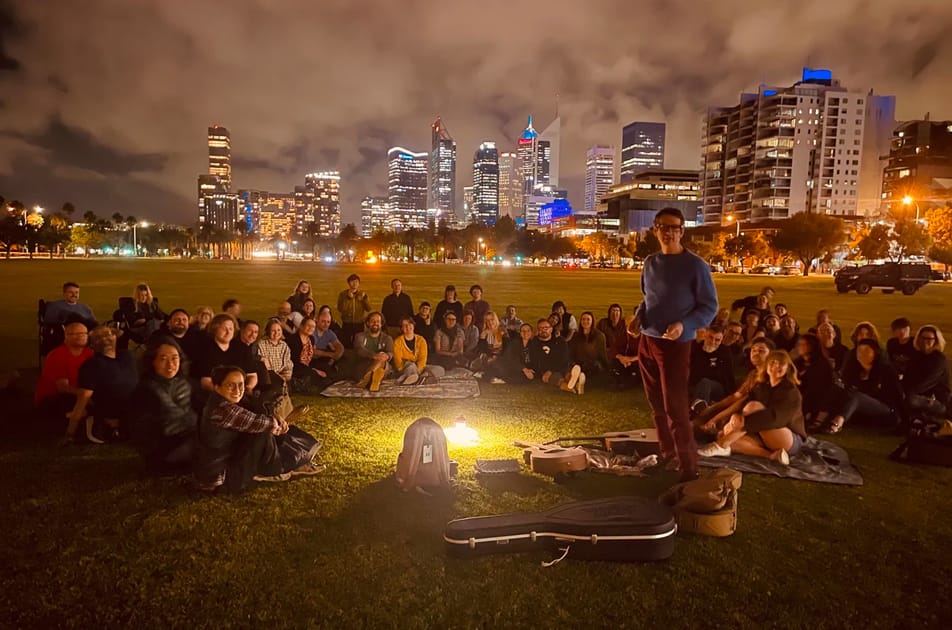](https://www.hypebot.com/belle-and-sebastian-show-how-to-salvage-a-canceled-gig/)
[Taming HorsesHow do you preserve authorship in the face of powerful technology?HypebotSoundfly](https://www.hypebot.com/taming-horses/)
### **Marketing in Music**
[What GTA 6 Understands About Music That Your Label Doesn’tGrand Theft Auto VI’s music turn fleeting streams into lasting fans because players discover songs inside a world they’ll return to for years.HypebotGuest Author](https://www.hypebot.com/what-gta-6-understands-about-music-that-your-label-doesnt/)
[How New YouTube View Rules Are Impacting Music MarketingYouTube now counts views from the first frame. Learn what new the stats and 60% engagement rate means for artists, venues, and music marketers.HypebotBruce Houghton](https://www.hypebot.com/how-new-youtube-view-rules-are-impacting-music-marketing/)
[Korean Pop Labels Are Building Gateways to Artist UniversesKorean labels turn fandom into revenue through merchandise, visuals, live experiences, and community. Here’s how.HypebotMIDiA Research](https://www.hypebot.com/korean-pop-labels-are-building-gateways-to-artist-universes/)
[Boost Fan Engagement With New Instagram UpdatesInstagram now lets you add tagged posts to your profile grid. Here’s how artists, venues and labels can use this and other updates to market.HypebotBruce Houghton](https://www.hypebot.com/boost-fan-engagement-with-new-instagram-updates/)
### **Streaming & AI**
[The Spotify Paradox: More Powerful, Impossible to LeaveSylvan Esso’s reluctant return and Taylor Swift’s full embrace of its video tools expose the uncomfortable truth that the platform is becoming monolithic.HypebotJeremy Young](https://www.hypebot.com/the-spotify-paradox-more-powerful-impossible-to-leave/)
[Winamp Is Back. Babe, Fire Up Some Orbital.Winamp plans to return in 2027 with a Deezer subscription service that mixes streaming with local files, radio, podcasts, and those old nostalgic feels.HypebotHypebot Editorial Desk](https://www.hypebot.com/winamp-is-back-babe-fire-up-some-orbital/)
[Why AI Workflows Need Music Understanding and SearchWhy conversational search and agentic music workflows succeeds when built on structured metadata that allows AI to understand catalogs.HypebotGuest Author](https://www.hypebot.com/why-ai-workflows-need-music-understanding-and-search/)
[TuneCore Will Match Artists’ Nature Donations Through End of 2026Artists can direct a share of their streaming royalties to conservation projects, with TuneCore matching their contributions through December.HypebotNews](https://www.hypebot.com/tunecore-will-match-artists-nature-donations-through-end-of-2026/)
### **Live Focus**
[Watch: Marshall’s The Dead Venue Sessions — China Chalet (NYC)The new short-film series puts indie bands inside of three lost American music spaces where they used to frequent. Watch them all on Hypebot.HypebotNews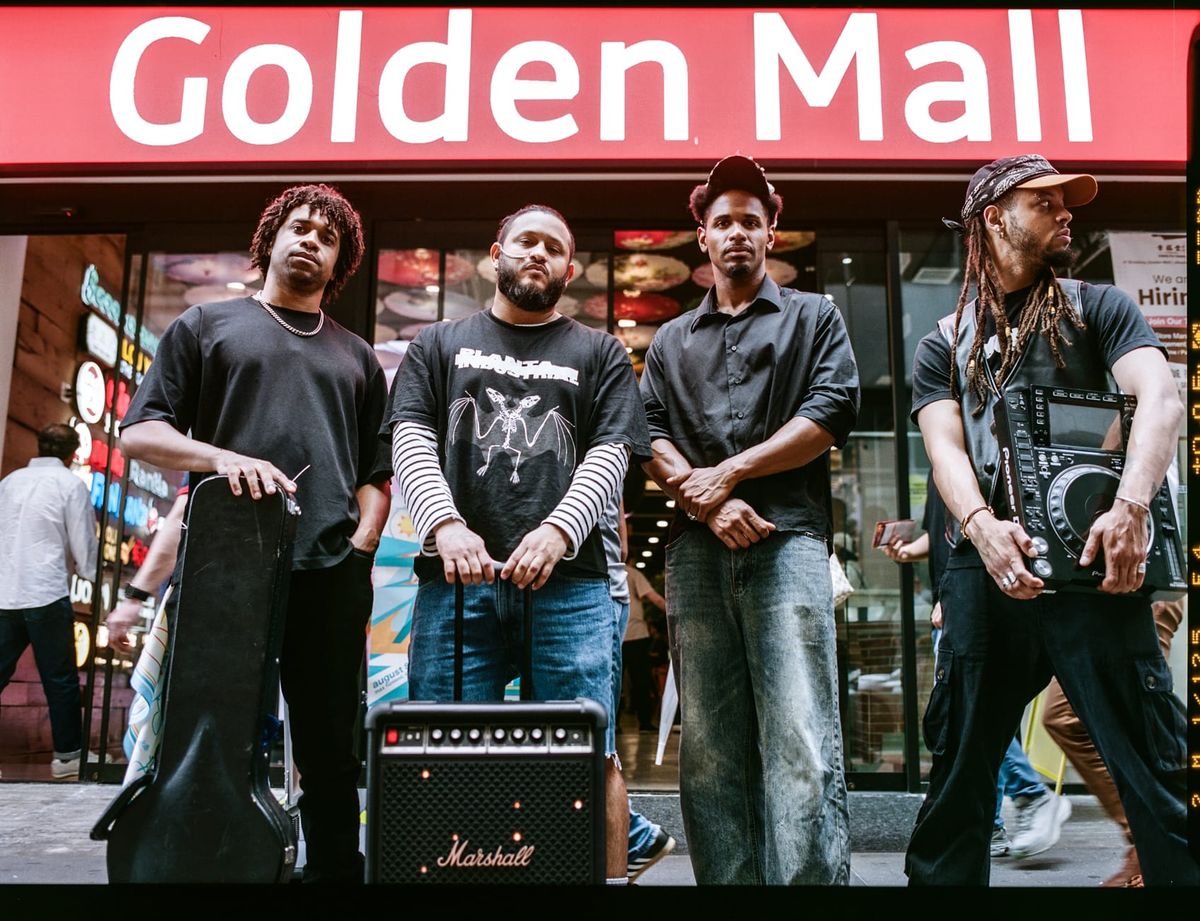](https://www.hypebot.com/watch-marshalls-the-dead-venue-sessions-china-chalet-nyc/)
[What Is an Avatar Concert? Unit1 Is Making Them Easier to ProduceUnit1 Studio raised another $20 million to turn hyper-realistic digital performers into concert productions that can play existing venues.HypebotNews](https://www.hypebot.com/what-is-an-avatar-concert-unit1-is-making-them-easier-to-produce/)
[When Ticketing Fees Grow, What Do Festivals Get in Return?Why percentage-based fees make festivals pay more for the same service — and what to do about it.HypebotGuest Author](https://www.hypebot.com/when-ticketing-fees-grow-what-do-festivals-get-in-return/)
[The Live Music Experience Is Always Transforming — But Drinks Are Still Getting SpikedCounterSpike’s founder shows why venues need trained staff, response protocols, and reliable reporting so victimized fans can get help quickly.HypebotGuest Author](https://www.hypebot.com/the-live-music-experience-is-always-transforming-but-drinks-are-still-getting-spiked/)
### **News**
[BMI Launches Free Healthcare Navigation Service for SongwritersBMI Health Connect gives US-based songwriters, composers, and their families free 1:1 help comparing and enrolling in a health insurance plan.HypebotNews](https://www.hypebot.com/bmi-launches-free-healthcare-navigation-service-for-songwriters/)
[Australia’s Festivals Have an Itsy Bitsy Visa ProblemWho actually operates Australia’s summer live circuit? Apparently backpackers erect fencing and stages, scan wristbands, staff bars and help with loading.HypebotNews](https://www.hypebot.com/australias-festivals-have-an-itsy-bitsy-visa-problem/)
[Everything We Know About the Ed Sheeran – Macklemore Tour FalloutAn update on where things stand, following Mack’s tour removal due to political statements, the wave of support departures, and humanitarian pledges.HypebotHypebot Editorial Desk](https://www.hypebot.com/everything-we-know-about-the-ed-sheeran-macklemore-tour-fallout/)
[Apple Music Opens a London Venue Built to Turn Concerts Into ContentThe new 600-cap London venue allows artists to stage an intimate concert as well as a Spatial Audio recording, broadcast mix, and multicamera video.HypebotNews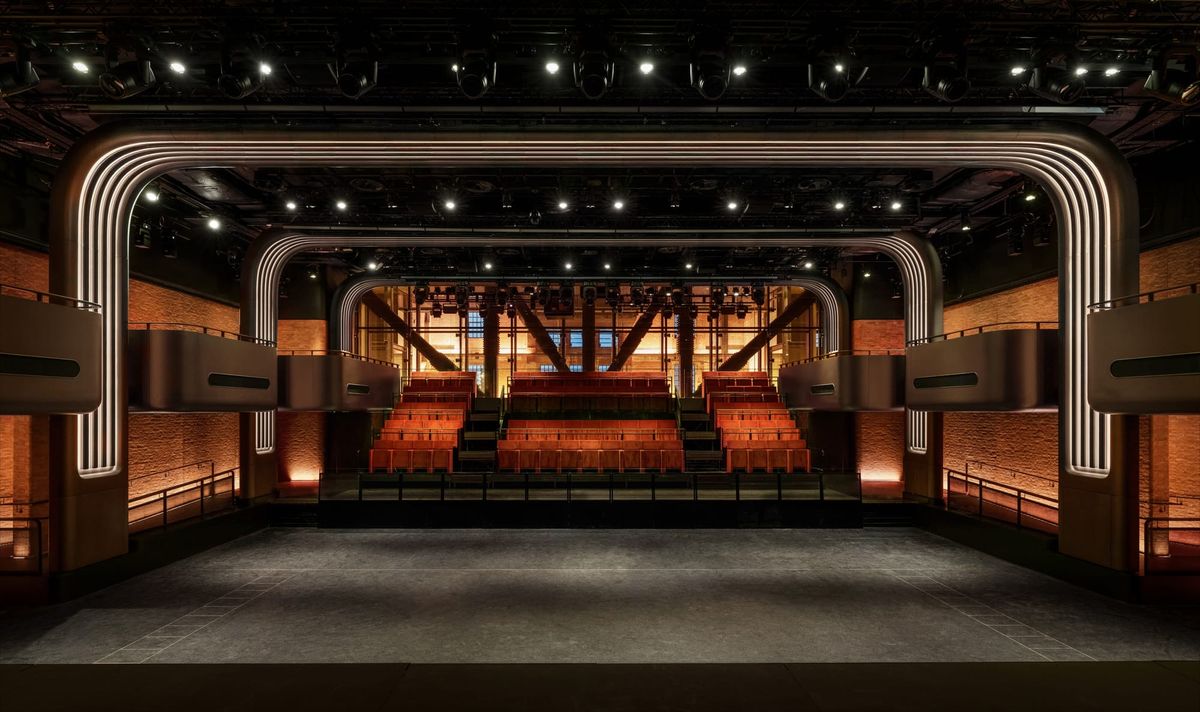](https://www.hypebot.com/apple-music-opens-a-london-venue-built-to-turn-concerts-into-content/)
### ***\*This Week's Wild Card***
[6 Tour Announcements That Made Us Stop Scrolling This WeekTouring Radar tracks newly announced dates that say something bigger about the business of live music. Here’s what’s catching our eye this week.HypebotHypebot Editorial Desk](https://www.hypebot.com/6-tour-announcements-that-made-us-stop-scrolling-this-week/)
### Pennies Earned: What MILEY's Schedule Says About Burnout Culture Today
URL: https://www.hypebot.com/pennies-earned-what-mileys-schedule-says-about-burnout-culture-today/
Last updated: 2026-09-24T18:51:23.000Z
*Welcome to* [***Pennies Earned***](https://www.hypebot.com/tag/pennies-earned/)*, a column by *Arielle Aslanyan* of* [*Pretty Penny PR*](https://www.instagram.com/p/DbLdEjKxH-q/?ref=hypebot.com) *on the subtle shifts that can make or break any publicity campaign, and how not to overlook opportunities hidden in plain sight.*
## **A "Sold Out" Bottleneck, Meh, Whatever...**
When [**MILEY**](https://www.bandsintown.com/a/1205-miley?utm%5Fsource=hypebot&came%5Ffrom=900) announced two nights at the Hollywood Bowl and roughly 1.5 million people tried to get into the presale for 35,000 seats, it would have been easy to file that under the same tired category of "manufactured hype."
She called the two shows the "ultimate dress rehearsal" for a possible residency and said plainly that people will come to her, taking the part of her career most artists manage quietly, her openness about not wanting to tour the way the industry expects, and building the entire campaign around it.
She's described the [**Hollywood Bowl**](https://www.bandsintown.com/v/10003993-hollywood-bowl?utm%5Fsource=hypebot&came%5Ffrom=900) as her favorite place to see [live music](https://www.hypebot.com/tag/live-music/) and said she's sat in that audience many times without ever having performed there, and it's close enough to home that she joked about being in bed by 11 after the show, so the announcement gets to carry the weight of a major comeback.
What makes this resonate beyond the [fan base](https://www.hypebot.com/tag/fan-base/) who'd show up regardless is the moment it's landing in.
> [ View this post on Instagram ](https://www.instagram.com/reel/DdHhpt9yZlZ/?utm%5Fsource=ig%5Fembed&utm%5Fcampaign=loading)
>
> [A post shared by MILEY (@miley)](https://www.instagram.com/reel/DdHhpt9yZlZ/?utm%5Fsource=ig%5Fembed&utm%5Fcampaign=loading)
Being honest about not wanting to grind through a full touring cycle isn't just personal, it's familiar and a lot of her audience has said out loud about their own jobs in the last few years. Burnout stopped being a private failure and became [something people talk about openly](https://www.hypebot.com/lauv-stepped-away-from-a-major-tour-more-artists-should-know-thats-okay/), and an artist saying the same thing about her own career, without apologizing for it, reads less like limitation and more understanding with fan support.
Artists aren't money-making machines, however the industry tends to treat them, and MILEY knowing when to slow down says she understands that burning out costs more than slowing down ever will.
The timing of all this lines up with something bigger than a venue booking. In the same stretch that she announced the Bowl shows, she also dropped Cyrus and started going by MILEY and announced her album, **Bass Persuades*,* which cameout September 18\.
Built around music being something you feel and share with other people, *Bass Persuades* isn’t about consuming music through a screen. An album about putting the phone down and being present doesn't land the same way through a pair of earbuds on a commute either.
It's also an opening for everything around the album to work the same way; listening parties where people hear it together before it's just background noise, dance parties, any excuse for the record to pull people out of their homes and into a room with other fans instead of another scroll session.
The mononym is what further anchored the album campaign, saying the artist has outgrown needing the full name, the full rollout, the full tour circuit, and can now exist on a smaller, and more concentrated footprint.
If an artist can't sustain constant travel, or performs better in a controlled setting, or has decided she's genuinely done living on a bus, a great team can build around that while protecting her and still delivering for the fans. A well-placed residency or a repeated hometown show can end up hitting harder than a full tour because that's what successful artists are supposed to do.
MILEY's hesitation to tour could easily have been framed as a letdown, like she wasn't giving fans what they wanted.
### **For the artist:**
If there's a way of working that protects your health, your voice, or your creativity, tell your team early enough for it to shape the plan instead of getting tacked on at the end. You don't owe anyone an apology for what you won't do, you just need what you will do to feel worth showing up for.
### **For the manager:**
A smaller number of well-chosen shows can build a clearer story and a format the artist can actually keep doing without burning out, even when it means leaving obvious revenue on the table.
---
## [**MILEY Tour Dates**](https://www.bandsintown.com/a/1205-miley?utm%5Fsource=hypebot&came%5Ffrom=900)
### What GTA 6 Understands About Music That Your Label Doesn't
URL: https://www.hypebot.com/what-gta-6-understands-about-music-that-your-label-doesnt/
Last updated: 2026-09-24T16:14:32.000Z
*By *Nick Ditri* of* [***Global Gaming League***](https://www.globalgamingleague.com/?ref=hypebot.com)
After I watched the GTA VI Extended Look ten times, I just walked away with it running in the background. After-all, I’m an audio guy at heart.
The twenty-six-minute extended look contains at least fourteen identifiable licensed songs and ends with **Elderbrook** and **Bob Moses’** [“Inner Light.”](https://open.spotify.com/album/4lwHXYfthE95rn7z1B3dWD?si=c661aba78f1d48d3&ref=hypebot.com) For the final shot of what is probably the most anticipated [video game](https://www.hypebot.com/tag/video-games/) footage release in a decade, this track slaps.
As someone who produces dance records for a living, I’m biased, but “Inner Light” has been stuck in my head all week.
The number every gaming site circled was **Captain & Tennille’s** “But I Think It’s a Dream” jumping 130,730% on Spotify. Great headline but it’s almost meaningless.
The track had roughly 194,000 lifetime Spotify streams at the time of its report per MusicAlly. With a base that small, a few thousand curious listeners creates a moon-shot percentage.
We’ve seen this movie before with GTA. The percentage gets reported because the percentage is big. What it really measures is how forgotten the song was until **Rockstar Games** made people [discover it](https://www.hypebot.com/tag/discovery/).
***+Read more:*** [*"To Build a Musical World, You've Got to Break Some Branding Rules"*](https://www.hypebot.com/to-build-a-musical-world-youve-got-to-break-some-branding-rules/)
## **The number I’m interested in got maybe one line of coverage, if that…**
**Depeche Mode’s** “People Are People” streams increased 190%. Playlist additions were up 700%.
The playlist ratio is the one to watch. Playing a song once and moving on is one thing. A playlist add is someone deciding, “I want this again.” They did the small amount of work required to make that happen. The song was acquired by the listener and they now “own” it in their personal library.
“Inner Light” showed the same signal. Spotify data via EDM.com had global streams up 1,070% while playlist adds climbed 4,155%. That’s the difference between a marketing result and a catalog result, and it’s what I’d be waving the flag about.
## **None of this is new… THAT’S THE POINT.**
Vice City came out in 2002 with radio stations, hosts, ad breaks, station IDs and an actual editorial position about what 1986 sounded like. Flash FM was an argument, delivered by a fictional DJ, inside a place you spent sixty hours driving around.
San Andreas shipped with 150-plus songs and GTA V had more than 200 across roughly fifteen stations. That isn’t a soundtrack so much as a functioning radio market. I still can’t hear certain records without being fifteen and in a car that isn’t real.
A song attached to a place behaves differently in your head than a song a recommendation engine hands you at 2pm on a Tuesday. You don’t experience it as being sold to you. It becomes part of the furniture of somewhere you liked being and I can still smell the meatballs my mom was cooking that day.
A trailer buys a song thirty seconds in front of an enormous audience, once. A radio station inside a game people will play for years buys unlimited plays in a context where the listener chose the station. Nobody in music gets that deal from playlisting, syncs or even TikTok.
***+Read more:*** [*"Yes, Human Curation Still Matters for Real Fans."*](https://www.hypebot.com/why-curation-still-matters-for-real-fans/)
## **What everyone’s about to get wrong**
A lot of people are going to write that GTA VI is the new promotional playbook and labels should [pitch game placements](https://www.hypebot.com/why-indie-video-game-sync-is-more-accessible-than-film-and-tv-in-2026/) the way they pitch [radio](https://www.hypebot.com/tag/radio/). There’s a bigger play. The mechanism here is scarcity, and scarcity is the one thing our industry is structurally *incapable* of doing.
Three major video reveals across three calendar years. Minimal advance word on the music. No artist promo cycle. No **“As Heard In GTA 6”** playlist at midnight. Fans identified the tracks themselves and then did the promotion for free, with enormous enthusiasm.
Now imagine a major running the identical asset. The placement gets announced in advance. The artist posts the clip, tagged. Every move converts discovery into advertising, and that conversion is exactly what kills the thing you were trying to capture. The audience can smell it instantly. As an artist, I’m guilty of running this play too. It doesn’t make people care about the art and it feels more like a local-TV commercial.
Rockstar isn’t running a [music marketing campaign](https://www.hypebot.com/tag/marketing-strategy/). They’re building a world. The music is load-bearing inside it, and the promotional effect happens because they aren’t treating it like promotion.
## **Placement inside something people re-enter beats placement inside something people scroll past.**
A feed is consumed once and gone. A world, a game, a show people rewatch, live activations, gaming tournaments, and any ecosystem where someone spends real hours keeps paying out is where it’s at. **It builds the association that turns a listener into a fan instead of a stream.**
If an artist spends time in our [Global Gaming League Discord](https://primes.globalgamingleague.com/?ref=hypebot.com), gives gamers music to use on their streams, and consistently participates in events and conversations, who do you think is top of mind when one of those gamers is involved with a major event that needs a halftime performer?

## **Presence creates attention. Attention creates momentum.**
The most valuable asset in [that trailer](https://www.youtube.com/watch?v=VQRLujxTm3c&ref=hypebot.com) was that nobody knew what was in it. I’ve been saying to artists for a while that the element of surprise is grossly underrated. Keep fans guessing and catch them when they least expect it. That move is what creates chatter.
Rockstar JUST started showing its hand but not all 5 fingers. [*Grand Theft Auto VI: The Album*](https://www.rockstargames.com/VI/music?ref=hypebot.com) will feature 34 original tracks, and six have already been rolled out: Yung Lean featuring Future and Metro Boomin’ with “That’s It,” Travis Scott with “RHYNO,” CA7RIEL & Paco Amoroso, PinkPantheress, Fred again.. and Etienne de Crécy with “Sexy Magic,” Morgan Wallen with “Last Thing You Need,” Rauw Alejandro with “Macacoa 2000,” and Keith Richards with “Bright Lights, Big City.”
That’s part of the album, not the entire thing, and we still don’t have the full radio station lists or know what catalog records Rockstar has buried inside the actual world.
You can bank on the notion that some producer’s dormant catalog track is going to get found by fifty million people who are all convinced they found it themselves.
***+Read more:*** [*"Why Indie Video Game Sync Is More Accessible Than Film and TV in 2026"*](https://www.hypebot.com/why-indie-video-game-sync-is-more-accessible-than-film-and-tv-in-2026/)
---
**Nick Ditri* is the VP of Business Development at* [***Global Gaming League***](https://www.globalgamingleague.com/?ref=hypebot.com)*.*
### What It Actually Takes to Read Music Without Sight (and What AI Can Help Solve)
URL: https://www.hypebot.com/what-it-actually-takes-to-read-music-without-sight-and-what-ai-can-help-solve/
Last updated: 2026-09-24T15:02:09.000Z
#
*Co-Authored by *Yaroslav Sizov* of* [***Muse Group***](https://www.mu.se/?ref=hypebot.com)*& *Solveig-Marie Oma**
A concert is in two weeks. Suddenly, the conductor arrives with last-minute changes. A section has been shortened, dynamics have been adjusted, and several entries need to be corrected before the performance. For most musicians, this creates stress.
For a **blind musician**, it adds an entirely different layer of complexity.
The preparation starts at a computer: finding the right file with scores, converting it into music Braille, and reading it one measure at a time on a refreshable Braille display, or embossed onto paper. By the time the first rehearsal begins, the part has to be in memory – a laptop and a screen reader are not things you bring to a music stand.
This shifts where the work happens. For sighted musicians, a lot of learning takes place with the score on the stand, during rehearsal. For blind musicians, a lot of it happens before – and how smoothly it goes depends on whether the digital tools in between actually behave the way they're supposed to.
This is a daily reality of professional musicians without sight like [**Solveig-Marie Oma**](https://www.linkedin.com/in/solveig-marie-oma-322273b5/?isSelfProfile=false&ref=hypebot.com). She is originally from Norway. After losing her sight at the age of seven, she started playing piano, and switched to church organ a few years later. She later on graduated as a church musician. By fourteen, she had learned Braille music notation – something she now considers essential for working independently in classical music. Before that, she relied partly on learning by ear and partly on having music explained.
Today, she lives and works in Germany. Her freelance work spans organ playing for services and concerts, teaching music Braille, and consulting on accessibility. Two larger projects currently take up much of her time: ongoing work on music Braille with the DAISY Consortium, in cooperation with MuseScore and others, and a Norwegian initiative to make the country's hymnal accessible. In her spare time, she sings in a choir.
At first glance, the daily work of a blind music teacher or conductor may not seem very different from that of any other musician. The tasks remain the same: reading scores, preparing lessons, editing arrangements, organizing rehearsal materials, and learning large amounts of music under time pressure. The difference is that blind musicians often experience notation sequentially, moving through the music piece by piece using speech output or Braille.
Digital scores have become central to that process. Solveig-Marie often turns to services like MuseScore to find MusicXML files, which she then converts into music Braille using external tools. From there, the score can be read on a refreshable Braille display or embossed onto paper for use at the instrument. MuseScore Studio itself is something she is still learning, and uses primarily for composing and editing rather than for performance – but many blind and visually impaired musicians already rely on it for composing and teaching.
She explains:
> *“If I suddenly need an organ piece for a concert in a couple of weeks, it could already be too late to order a Braille score.”*
Despite technological advances, many of the challenges still remain surprisingly basic. Music notation is fundamentally visual. Blind musicians cannot glance across multiple staves or quickly compare sections of a score. Braille music is linear by nature, meaning information must be processed sequentially rather than visually all at once.
**Image courtesy of* [**Muse Group*](https://www.mu.se/posts/704tef5v71-accessibility-breakthrough-compose-in-br?ref=hypebot.com)**.*
Sometimes even smaller issues that don’t seem dramatic may cause inconvenience: an unlabeled button, inconsistent keyboard navigation, inaccessible PDFs, or poorly structured rehearsal materials.
Artificial intelligence may help change some of that. Solveig-Marie sees strong potential in AI-powered note recognition and score conversion, particularly when working with printed or PDF scores. She is also interested in [AI-generated](https://www.hypebot.com/tag/AI-in-music) vocal tools that could make choir rehearsals easier for blind singers by delivering lyrics clearly alongside rehearsal tracks.
The problem is simple: when you receive only an audio file, there is no way to know precisely where a word falls in the phrase, where a syllable shifts on a melisma, or when a new line begins. In a large choral work – Bach, for instance – that disconnect between text and music doesn't just slow down learning. It can make independent preparation almost impossible, leaving singers dependent on someone else to walk them through the placement by ear.
AI-generated singing or lyric guidance could make learning music from audio alone easier.
However, for Solveig-Marie accessibility is less about futuristic technology and more about smaller day-to-day needs: being able to open a score, find the right measure, and make the correction before the rehearsal ends. Whether or not the last-minute changes before tomorrow's concert go smoothly will depend less on any new technology than on whether the tools already in use were built with them in mind.
## **Background: Accessibility Features in MuseScore**
MuseScore Studio became the first mainstream music notation software to support live Braille translation and six-key Braille note input. These features were developed in partnership with the DAISY Consortium and Sao Mai Center for the Blind.
The software’s Braille view displays music notation in real time inside a dedicated panel below the score, allowing blind users to navigate music one measure at a time using refreshable Braille displays. MuseScore also supports Braille note entry using six keyboard keys ***(S, D, F, J, K, L)***, alongside keyboard navigation and screen-reader support.
You can find more info [**here**](https://www.mu.se/posts/704tef5v71-accessibility-breakthrough-compose-in-br?ref=hypebot.com).
---
**Solveig-Marie Oma* is a professional organist, music educator, and Braille music consultant.*
**Yaroslav Sizov* is Head of Design and Brand at* [***Muse Group***](https://www.mu.se/?ref=hypebot.com)*, responsible for customer experience across its products, with accessibility key to creating a barrier-free digital environment for every musician. Previously, he led design for a banking app with 80M+ monthly users.*
### Who Is an "Album Artist" in the Streaming Era (Part II)?
URL: https://www.hypebot.com/who-is-an-album-artist-in-the-streaming-era-part-ii/
Last updated: 2026-09-24T14:28:27.000Z
[To read Part I of Keith's series, head here.](https://www.hypebot.com/who-is-an-album-artist-in-the-streaming-era/)
*This post originally appeared on* [***Keith Jopling's Substack***](https://songsommelier.substack.com/p/who-is-an-album-artist-in-the-streaming-afe)
I left [part one](https://songsommelier.substack.com/p/who-is-an-album-artist-in-the-streaming) with this thesis: that the post pandemic album resurgence — flying in the face of tech-driven music consumption trends — has been led largely, by four female pop superstars: **Olivia Rodrigo, Billie Eilish, Taylor Swift,** and **Lana Del Rey** — with a strong supporting cast.
This was supported by the chart below, a relative comparison of the “album track differential” streams, on [**Spotify**](https://www.hypebot.com/tag/spotify/)**.**
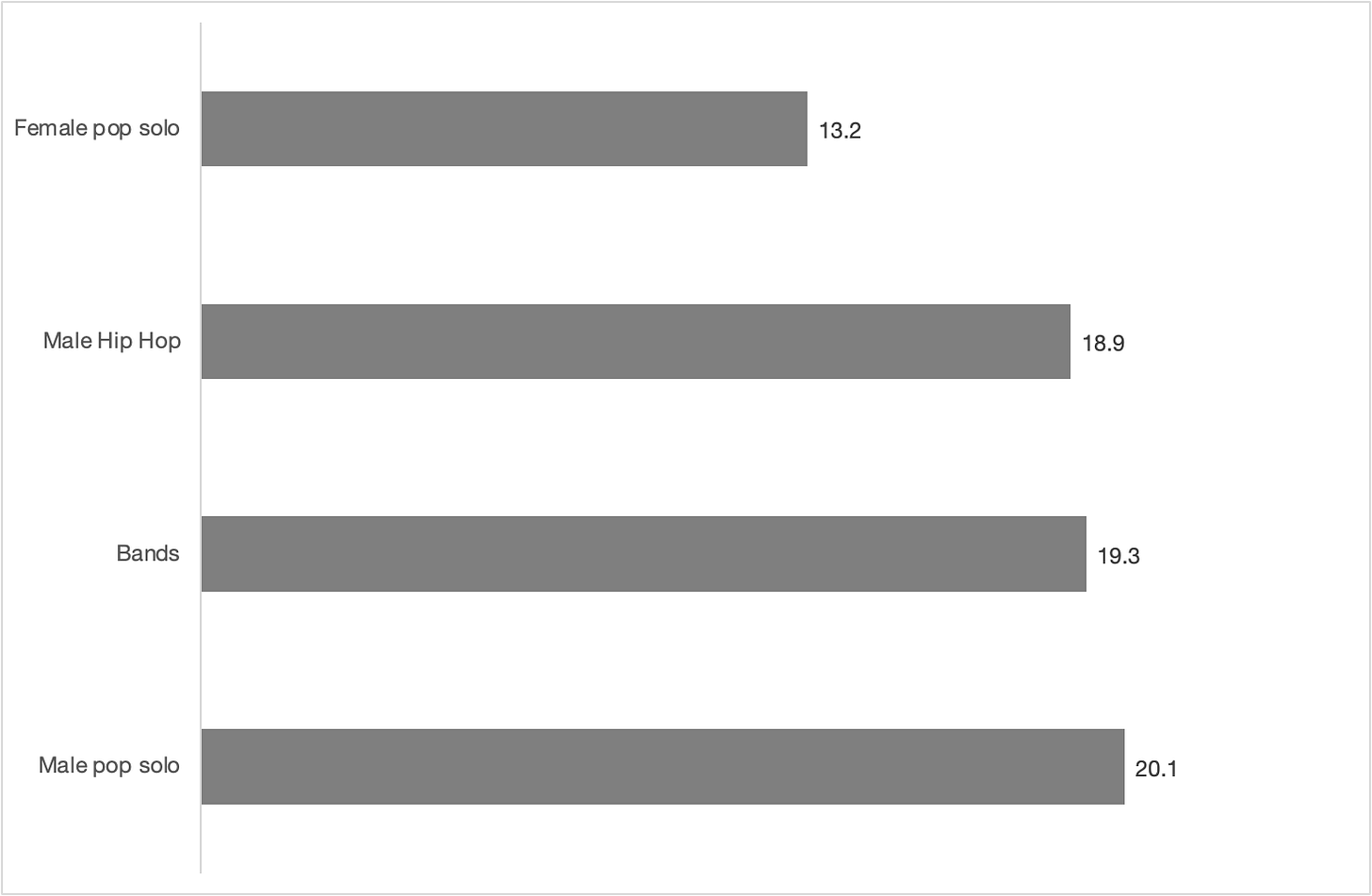
Now of course, let’s be clear: ALL artists have kept the album alive in the streaming era simply by continuing to make albums. Sometimes as part of their label contract, sometimes entirely under their own steam to be shopped through a label or distributor after the artist themselves have spent tens of thousands (or more) making the record.
Somehow, after 26 years of post-CD digital music, the vast majority of artists remain album-first. I’ve said it before (and will soon be presenting it as part of a wider analysis and talk), the “big five” survival pillars for the album are:
1. **Artists;** as featured here
2. **Vinyl;** marked by 19 years of consecutive annual growth in the UK and USA
3. **Youth and tangibility;** a return to physical formats, nostalgia and IRL experiences
4. **Lockdown;** not to be forgotten, a time when we got our attention spans back
5. **The music industry;** contracts, charts, awards, Record Store Day and a refusal to submit fully to a non-product based business model.
More on those in later pieces (or, read the book!), but worth reiterating here that it’s the artists first and foremost. We are no longer in a monoculture, where an album can make a dent in the universe as significantly as *OK Computer* did, or *Thriller* did (or *Rumours* still is doing!).
But with *BRAT*, *The Art of Loving*, *Getting Killed* et. al., ‘classic’ albums keep coming and artists keep on trying to make them. The most super-talented next-generation artists seem to be just as album focused as Radiohead, MJ or Fleetwood Mac were in their prime. As the avant-R&B artist kieyaA (who took five years between her debut album and the follow up *hooke’s law)* told 6 Music, on the album’s release:
> *“I didn’t feel I could call myself a real artist until I had an album out”.*
*Hooke’s law* is now one year old and is cemented as yet another cult and critical hit that very few of us will ever listen to. But still, it makes the point rather well. Unlike the iTunes era and the early days of streaming, only the most contrarian artist would step away from the idea of building a career album-by-album. So how are they fairing with this creative strategy?
I took the same approach (method stated at the end) as that for #1, with the “superwomen of pop” with four other groups with massively streamed albums (albeit we have no idea in what order): male pop stars, bands, and (male) hip hop (there were so few female rap titles in the original Kworb sample - which was my SCOBY for this album kombucha).
## **Male pop artists**
For male pop stars then, who is the most album oriented of this lot?:
**Bad Bunny**
**Bruno Mars**
**Ed Sheeran**
**Frank Ocean**
**Harry Styles**
**Post Malone**
**The Weeknd**
You got it in one!
It’s Bad Bunny of course. He is a great example of an artist who has emerged from within streaming culture but nevertheless uses the album as a tour de force. Bad Bunny not only makes coherent and expansive albums, but his listeners very much consume his work that way, despite the fact that he does have huge streaming hits via playlists and radio slots.
Remarkably, across the five albums featured on the Kworb list, the low ratio/track differential is *consistently* low. This is arguably more significant than an older artist simply continuing to make albums because it’s what they’ve always known.
### **Exhibit #4: Bad Bunny presents: the album as experience**
(track differential ratio calculated from Spotify streams - see method below)
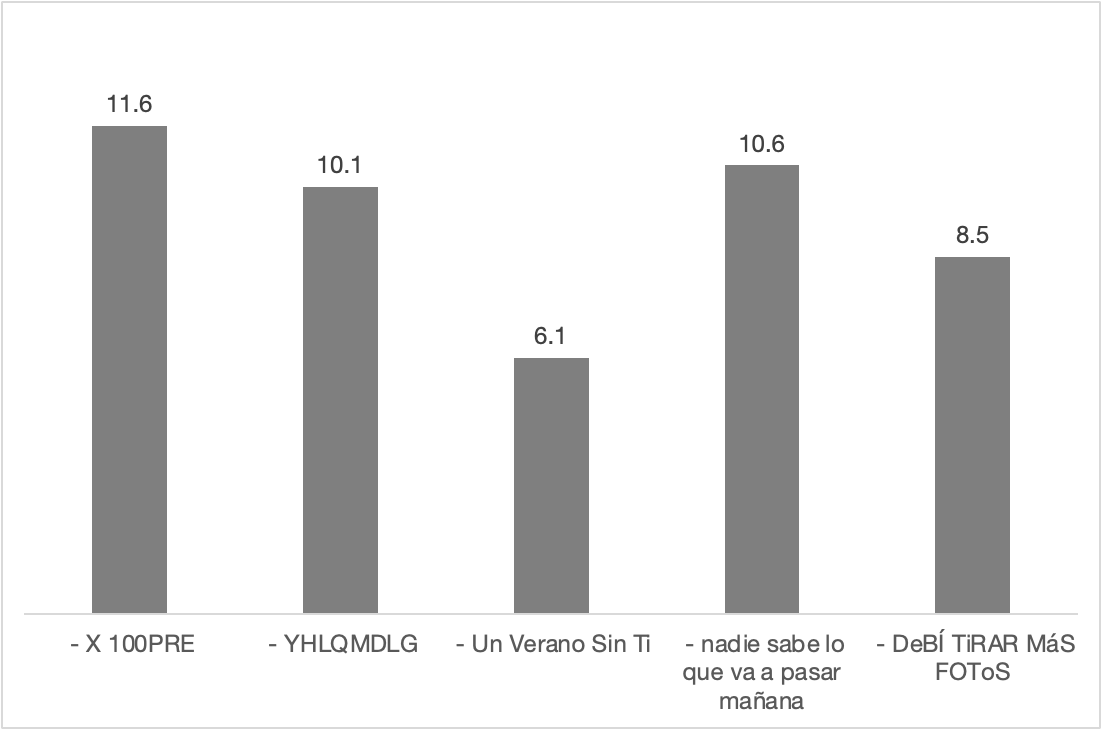
He’s not alone. His contemporaries on this list would all probably see themselves as ‘album artists’. Harry Styles is very much Bad Bunny’s opposite number across the pond, although Styles is not quite as consistent across his catalogue (*Harry’s House* contains the mega-mega five billion streamer “As It Was” but also the penultimate song “Boyfriends” which is by this evidence, much skipped).
Again, I’m so pleased to see Styles holding his end up on albums, because it does appear to be how he wants it to be. In February 2026 he launched 4th album (KATTDO) with live listening parties across 40 countries. In 2022, he launched 3rd album Harry’s House with an article in Homes & Gardens magazine. Styles is making a statement on how far album culture has progressed in the past four years.
### **Exhibit #5: Male pop artists are making albums, just not as well as their female counterparts**
(track differential ratio calculated from Spotify streams - see method below)
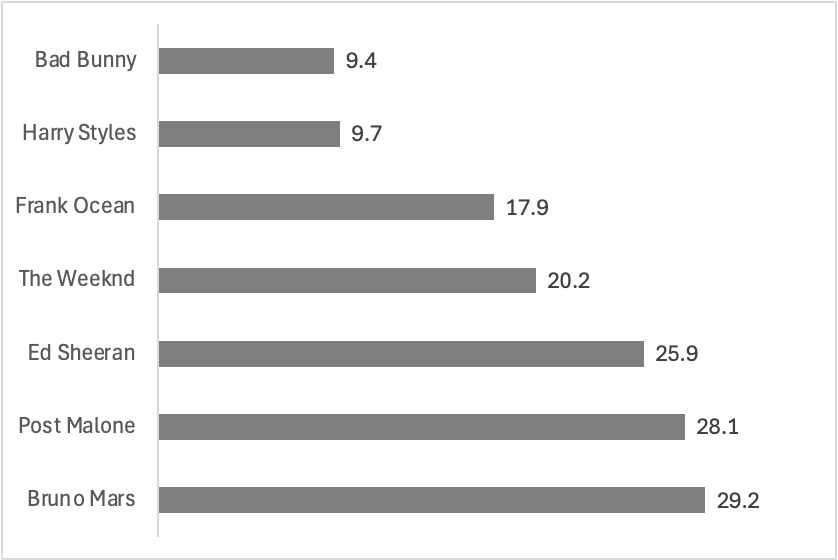
If anything, this list behaves largely as you might expect. Both Frank Ocean and The Weeknd come across as every bit ‘album artists’ but their albums contain variance, perhaps partly because they contain a lot of tracks, and partly because they have quite a few songs that cover huge ground on playlists (again, I excluded Ocean’s more “interlude” tracks that are sometimes under a minute long, from the ratio).
Certainly, the higher-ratio artists on the list strike me as the usual suspects as far as “singles” go; Ed Sheeran, Bruno Mars, and Post Malone command relatively less attention across full albums (I can’t see them losing sleep over it).
Again, the takeaway here is clear - male solo artists do not possess the same album power as the women, with Bad Bunny, then Harry Styles, very much the exception to the rule.
## **Rap & Hip Hop**
Now rap/hip-hop is interesting here. My back-of-book list of the “most important albums of the 21st century” (shoring up “Fortress Album” again the evils of tech empires and A.I.) includes no less than six rap/hip-hop L.P.s, two by Kanye West, two by Kendrick Lamar and one each by Drake and Jay Z. The Kworb ‘SCOBY 200’ included 24 titles by the below list of hip hop artists combined plus a handful of one-offs.
No doubt about it, rap & hip hop has dominated streaming culture in the 21st century and, at least in part, album culture too. After all, only one of the albums in the Kworb 200 has won a Pulitzer Prize for Music. Pulitzer said of Kendrick’s *Damn*.:
> *“A virtuosic song collection unified by its vernacular authenticity and rhythmic dynamism that offers affecting vignettes capturing the complexity of modern African American life.”*
How about that for re-issue label copy? Fair to say, this genre has punched above its weight innovating the album format too. Drake released a mixtape, reviving interest in the long-form record (i.e., the L.P.) at a critical time, just before streaming exploded. Unlike traditional DJ-hosted mixtapes, *So Far Gone* (2009) had album-like cohesion, original production and high-quality mixing. Also, remember Jay-Z’s streaming “hold out”.
By default of him owning his own streaming platform, *The Blueprint* wasn’t put on general release across streaming platforms until October 2015\. It in any case proved that the hip-hop album was in fine health as the age of digital music took hold.
This is the hip-hop “power list”:
**Drake**
**Eminem**
**Kanye West**
**Kendrick Lamar**
**Lil Peep**
**Travis Scott**
**Tyler, The Creator**
**XXXTENTACION**
The average ratio is similar to male solo artists and bands, again lower than the superwomen of pop. But the variance is interesting. Before I get to that though, I confess to knowing less about the genre (my list of important albums was based objectively not my own tastes). So I did something a little different. I first asked Chat GPT to rank these artists in order of album-orientation and provide me with a basic star rating and thesis.
This is what it came up with:
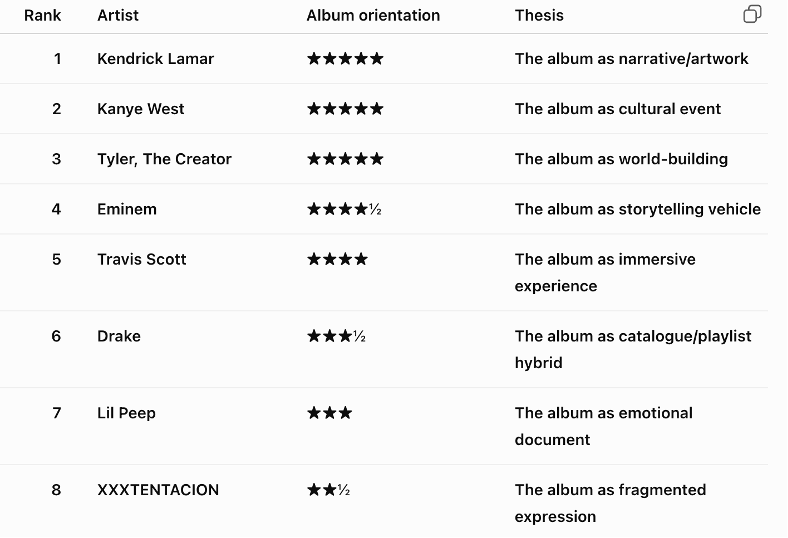
If you know the genre well you’ll have your own views on this, but it looks pretty intuitive to me. The Pulitzer winner comes top, and the next few names in order make some sense. I asked Claude the same question and it largely agreed - the same artists at the top & bottom and in the top and bottom half of the list it spat out. Good enough for a hypothesis.
But my proxy ratio shows different. It’s Travis Scott who comes up top, though sure enough, Tyler, Kendrick and Kanye are all then stacked up close in the top half.
A flaw in my ratio is exposed here - especially in the case of Eminem and Drake - they both have such massive streaming hits on some of their titles - skewing their score aware from album-orientation - perhaps unfairly. In the case of Drake for example, *Scorpion* contains “Gods Plan” (3x”billions club”) and this drives the ratio high to over 30, whereas his album *Take Care* has a much lower ratio of 12\.
Perhaps that’s why Brooklyn based [Cue the Record](https://open.substack.com/users/304896870-cue-the-record?utm%5Fsource=mentions) has focused [live listening sessions planned for ](https://posh.vip/e/morning-session-listening-session-032-drake-take-care-2011?ref=hypebot.com)[*Take Care*](https://posh.vip/e/morning-session-listening-session-032-drake-take-care-2011?ref=hypebot.com)[ in October](https://posh.vip/e/morning-session-listening-session-032-drake-take-care-2011?ref=hypebot.com) \- if you are in NY, go along to it, or other of their excellent sessions.
### **Exhibit #6: Hip hop artists get variable attention with their albums**
(track differential ratio calculated from Spotify streams - see method below)
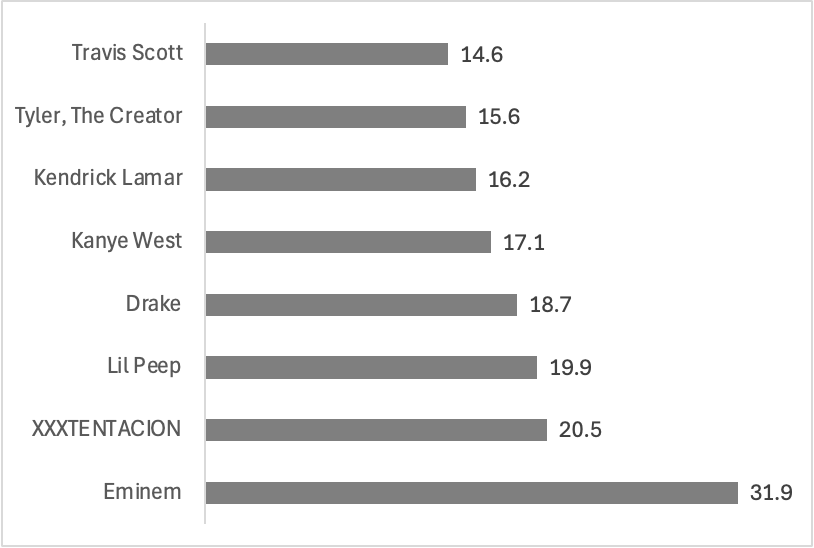
## **Bands**
Moving swiftly onto the last category - bands! Again, male by default - apart from the now mixed gender Linkin Park, whose new album From Zero with frontwoman Emily Armstrong is included here (with a much lower ratio for that band of 10 compared with 32 overall, mmm).
As signalled last time, it will not surprise you who is the *least* album orientated band on this list - but just to reassure yourself go ahead and say out loud to yourself now:
**Arctic Monkeys**
**BTS**
**Cigarettes After Sex**
**Imagine Dragons**
**Linkin Park**
**One Direction**
**Pink Floyd**
Of course, you said Imagine Dragons! If you said BTS, you did not stop to think about it from the fan’s viewpoint. Read on…
First, Imagine Dragons. The unfeasibly popular US pop band just doesn’t make “credible” albums (sorry fans). Each title has extreme top-track concentration. There is no real sequencing logic to their albums (at least that’s how it comes across). Their albums don’t build a narrative arc - songs are largely interchangeable - and each track seems engineered for radio/sync/festival anthem singalongs rather than to sit in a specific place within the album structure. You could shuffle *Evolve* or *Night Visions* and lose essentially nothing.
No wonder then, the band’s albums barely register over 50/100 average review scores on Album of the Year (a very solid quality benchmark at least for creative power).
Perhaps you guessed after Imagine Dragons (terrible name along with a few other suspects in this list) it would then be BTS? Ah well, look at the chart!
### **Exhibit #7: Bands, BTS gives Pink Floyd a run for their album money**
(track differential ratio calculated from Spotify streams - see method below)
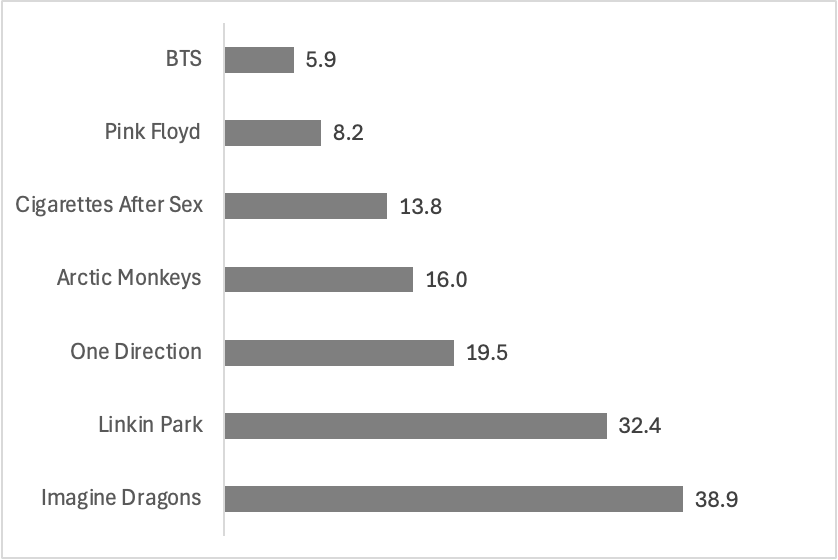
I bet, as anyone would, you assumed Pink Floyd would top the list and you are vexed by the masters of 70s prog rock coming second to a K-pop sensation from the 21st century streaming era (BTS sell *more* CDs as well of course). It’s the fan base; they’re off the scale when it comes to consuming BTS stuff, making the band look like concept album artisans. This is consistent across the four BTS albums included in the Kworb list, too.
Indeed, two BTS albums: Love Yourself 轉 ‘Tear’ and MAP OF THE SOUL : PERSONA have the lowest ratios apart from Floyd’s *Animals*, and Arctic Monkeys’ *Tranquility Base Hotel*, which of course are both very much concept albums.
To conclude, I did say they were caveats to all this. I know enough about numbers to admit nothing here is close to statistical significance. I did this under my own steam, purely out of curiosity (and, as part of some upcoming talks on *Body of Work*, stay tuned there). But it revealed some interesting ideas. As said, I would love to do it all again *properly* \- hear me out Luminate, Chartmetric or other. I’d like to know the answer, partly because I think artists - and labels - would also be intrigued as to how their music is being enjoyed.
As I say in *Body of Work*:
> “If the album has made a comeback both as a cultural good and a music industry unit of supply, it still begs the question: Who’s really listening? If artists are placing as much importance as ever on albums, and see making them as one of their ultimate creative goals, who are they really making albums for? There is no doubt that, in the streaming era, music consumers appear to have moved on — possibly a decade ago”
## **Where does this leave the album in the streaming age?**
While the streaming and social players have all the data in the world about who is doing what and when on their platforms, musicians and music producers don’t get to know what they really need to know i.e. who is enjoying my art, and how? Instead, they get a dashboard of cold numbers. On the platforms TIME = ASSUMED PLEASURE (= revenue) but that doesn’t translate meaningfully to the music creators. Of course, their true measure is to see the whites of the eyes of their fans in the crowd, or to receive a heartfelt message about their latest project on social networks or at a meet & greet.
A bit anecdotal really!
But I feel like they would more than appreciate the reassuring idea that some people are putting on their albums and going on the journey with them. And indeed, taking that journey back & forth through time across their catalogue.
The album resurgence, from the listeners perspective, is evidenced by the steady success of vinyl and the now apparent return of the CD, but once those physical items are purchased, we don’t know how much listening happens (it’s safe to assume more album-focused listening than on streaming, but that’s the limit of our knowledge). In addition, album anniversary tours keep on rolling around.
Stevie Wonder will perform his classic album *Songs in the Key of Life* in full starting this year and [the tour is a very hot ticket](https://www.hypebot.com/for-stevie-wonder-its-always-been-about-the-whole-album/). We’ll probably see that album return to the charts as a result.
The future of the album seems secure enough and I expect the streaming services will do more to acknowledge this, and promote album listening as an experience.
When Spotify revealed “your top five albums” on its 2025 Wrapped (for the first time in 10 years), it seemed to me that finally, the streamer was indicating that it understood albums still matter. Since artists have always known this, it makes sense to lean in further. I’d suggest streaming services do more to sync up with anniversary tours, sell more vinyl and promote more listening parties (both virtual and real).
After all, albums are long-form, so encouraging this is encouraging users to spend more time on the platforms. Or is 45 minutes of focused listening no longer enough to claim that time = money?
[***Body of Work* and *Riding the Rollercoaster* via your preferred retailer here.**](https://watkinspublishinglinks.com/keith-jopling-landing-page?ref=hypebot.com)
---
[***Keith Jopling***](https://songsommelier.substack.com/) *is a strategy & growth leader, author, and speaker, whose work can be found on* [*The Song Sommelier*](https://www.songsommelier.com/?ref=hypebot.com)*. He's worked in the music business for 25 years, most recently as an executive consultant in the music industry’s key organizations: major labels, indies, startups, trade bodies and Spotify. Read more about* [Riding The Rollercoaster.](https://www.songsommelier.com/riding-the-rollercoaster?ref=hypebot.com)
### Taming Horses
URL: https://www.hypebot.com/taming-horses/
Last updated: 2026-09-24T13:34:16.000Z
*By *Ian Temple* of* [***Soundfly Weekly***](https://soundfly.substack.com/p/taming-horses)
*\*Follow Ian Temple's Substack,* [*Soundfly Weekly*](https://soundfly.substack.com/?ref=hypebot.com) *for more essays on creativity.*
In the middle of the night on April 14-15, 1912, a junior wireless operator on the world’s largest ship who had been relaying distress signals all night following a collision with an iceberg was knocked off the deck by an encroaching wave.
The operator, one Harold Bride, ended up in the frigid waters of the North Atlantic from where he watched his ship, the unsinkable *Titanic,* start to “turn on its nose… just like a duck that goes down for a dive.” He swam away as fast as he could, miraculously grabbing onto an overturned lifeboat, from which he was rescued a few hours later.
But as he grasped on for dear life, he later told interviewers, he heard music echoing across the water. According to his testimony, it was the ship’s band that continued to play as it went down, even as they themselves went down with it.
In 1969, this story captured the imagination of an avant-garde bassist and composer named **Gavin Bryars**, who submitted a one-page description of how one might try to replicate the sound of the sinking band for a student art exhibition. What would the music sound like as it echoed across the water? As the musicians were slowly submerged in water? What other sounds would one hear echoing across the waves?
This exercise became the basis for Bryars’ now famous piece [***The Sinking of the Titanic***](https://www.youtube.com/watch?v=csdz41KxvDI&ref=hypebot.com), one of my favorite pieces of music. It was also the very first release on **Brian Eno’s** Obscure Records in 1975, a label founded in part on the idea that experimental music could move beyond the fine art world and reach wider audiences. This is certainly something that comes through in Bryars’ work: Beauty, emotion, and sentimentality are not incompatible with experimentation.
Love letters to the creative process.
The piece itself is built on an old hymn played by a string ensemble, lush and beautiful, atop a host of other sounds drawn imaginatively from the literal facts of the sinking of the ship: reflections, rumbles, tape recordings of survivors, echoing morse code signals, creaks and cracks from the ship’s hull, etc. Part of the instructions for the piece state that it should change over time as we discover new information about the real historical event.
I love this piece of music for a number of reasons, but most of all, it’s absolutely gorgeous. The melodies all feel cozy and recognizable. The warm, dense, round reverberations of the strings offer this rich, rumbly, drone-y harmonic bed on which everything else sits. It’s what Bryars imagines the sound vibrations might have sounded like bouncing off and through the water, reverberating forever in the “more sound-efficient medium of water,” as he [**describes it**](https://gavinbryars.com/post/the-sinking-of-the-titanic-5?ref=hypebot.com).
Then there are the metallic creaks and groans, the moving testimonies on tape, the echo-y woodblocks that open up the space, and all sorts of other subtle elements that help paint a vivid and moving picture of the night in question.
But I also love the way the piece can’t be separated from the process of its creation. The specific notes and chords are not that important here. They’re certainly secondary to their treatment, to their interpretation, to the imagination and faith of the performers in their recreation. In that way, it’s AI-proof art. It only exists in the specific recreations and interpretations of the performers playing it.
(Side note: Bryars took this process-based concept to the extreme with his orchestra the Portsmouth Sinfonia whose members were people who either had never played before or were playing different instruments from the ones they were trained in. Eno was also a member and played the clarinet. It’s… more than [**a little painful**](https://www.youtube.com/watch?v=hpJ6anurfuw&ref=hypebot.com) but actually had a top 40 hit in the UK in the ‘80s somehow.)
Recently, I’ve been listening to another work in this vein, a gorgeous new album by an artist I know named **Alexandros Miaris** called *Selected Works for Film and Modular Orchestra.* Alexandros is a very prolific artist. He’s a founding member of the rock band Electric Litany, an award-winning film scorer, and an adventurous solo composer.
And this album is vast. I’d even call it oceanic. It’s full of deep reflections and rumbles that call to mind the sorts of watery reverberations Bryars was playing with in *The Sinking of the Titanic.* It feels achingly full at times, and yet has a powerful simplicity to it. Give it a listen here:
The water-y depth is due in part to how Alexandros made it. He took a bunch of acoustic sounds he’d recorded on piano, on guitar, or with strings and then put them through a series of outboard modules with audio inputs — chopping, filtering, distorting, and compressing them until they were something new. He then listened to the output, and recomposed the stuff he liked into songs, often putting them through the modules again in the process. (For the nerdy among you, two of the modules he cites are Make Noise’s Morphagene and the Overstayer 8776A Channel Strip).
This week, I chatted to Alexandros from Greece to ask a bit about his process.
> “I felt a bit as if you’re taming a horse,” he says. “It’s a fine balance. It’s very easy to get carried away and create generic drone music, which doesn’t do much for me. But the more you program this system, the more you input some conditions — some can be tonal, some can be rhythmic — the more you prepare the system to work under your rules, the more you know pretty much it’s going to be tasteful to your personal taste.
>
> I’m a believer of David Lynch always used to say about intention and idea, that there has to be some idea in the beginning. There has to be something to start with. Even if that idea is still very innocent and very simple, but at least there has to be an idea that I can play or write down, and that’s as important as the process of letting go.”
Part of the reason he took this approach is that it allowed him to listen to his own music as something new, as something to react to and get inspired by, as if he was listening to a different artist he likes. It was a way of [**tricking himself**](https://soundfly.substack.com/p/trick-yourself) into seeing things in a whole new way.
> “How can you place your idea in an environment — it can be a technological environment or something else — in order to remind ourselves why we do music in the first place? I remember when I was seven or six, and I was listening to music through headphones, and I was in shock about new ideas, new sounds I heard. I wanted to bring myself even just a glimpse of that again, of being inspired by something like that. So I think it was an exercise in pretending I’m just a listener.
>
> What I found as a musician and composer \[with this process\] is that I can detach a little bit of my own identity, my own self from the music I fed into the system. The output of that system, I just listen to it as if it’s not me anymore, so I can inspire myself.
>
> And now and then I would capture a few moments where I say, ‘Okay, this is great.’ And then I would go and recompose what I’ve heard on the piano or on the cello, on the guitar, and I would start writing the piece again as if I listened to someone else’s music or a part of someone else’s music which I enjoyed.”
**A photo of Miaris’s studio with his modular rack on the piano.*
It’s interesting to me how many parallels I can see between what Alexandros is describing and what Bryars did.
Alexandros talks about tricking himself into hearing his own music as someone else — the same way Bryars tried to do by putting himself in the ears of Harold Bride, listening to the music floating to him across the water.
There’s the way both are creating a specific sonic landscape — the collision of warm, recognizable instrumentation playing simple ideas with randomness, surprise, and the sound of things breaking.
There’s the way the process itself serves as inspiration, the collision of experimentation with beauty. Both pieces are built on a concept that is then developed through an interplay of artist agency and the space for chance occurrences to effect the outcome.
Here’s Alexandros again:
> “I also think it’s interesting that when you, speaking from a technological point of view now, when you pass a relatively flat signal through a series of pieces of equipment that have valves and tubes, depending on how much you push it, they do break, and then harmonics appear from that break of the signal. They appear at places where they were not there, or they flourish where they were part of the sound.
>
> I do enjoy them a lot, and especially how they start interacting with one another.”
One of the things that defines me as a musician is a wide and varied palette. I basically like it all — from [**the Delta blues**](https://mailchi.mp/soundfly/subscriber-newsletter-16537576?e=69ff1f3108&ref=hypebot.com) recordings on Parchman Farm to Celine Dion belting [**overwrought orchestral pop music**](https://soundfly.substack.com/p/can-pop-music-be-epic) and beyond. But the throughline of stuff that really inspires me is an experimental mindset — the focus on finding and developing a process that will surprise and challenge and inspire you, or as Alexandros says, remind you why you make music in the first place.
Put differently, the part where you’re trying to tame a horse is part of what makes the whole thing exciting. And that’s often where you hear the human come through as well.
Apparently, Bryars thinks that one reason his piece *The Sinking of the Titanic* has been so enduring is because people are still so entranced by the story of the Titanic — the messianic and arrogant faith people had in human-developed technology to completely overcome all natural obstacles. It was meant to be the unsinkable ship! You could just let it do its thing. Of course, that faith proved to be tragically misguided.
I wonder to what extent we’re experiencing something similar right now with AI. It’s the pinnacle of technology, this tool that promises to grant each of us enormous powers to generate whatever we can imagine — and render it valueless in the process. And while many people are raising the possibilities of what can go wrong, we’re still heading toward the iceberg anyway.
Alexandros is working on another piece of music right now, a piece for solo piano that works on random Euclidean pattern sequencing. He inputs a note, and the software spits back out a bunch of rhythmic sequences. The funny thing is that many of these are unplayable — and yet Alexandros is trying to learn to play some of them himself on piano for a show this November.
There’s a certain irony in this, a certain reversal of the accepted order of things. While much of the world is creating instructions for AI to make stuff for them, in this case Alexandros is trying to perform music based on the impossible instructions given to him by his technology. And it’s going to be imperfect and challenging and quixotic and very, very human.
I asked him why he’s so drawn to technology in how he creates:
> “I think it’s quite liberating when you befriend the tools that work with you. I have things that I can work with, and I love working with them. It’s a way to travel places musically that I couldn’t otherwise.”
**Alexandros Miaris.*
Simple stuff, but maybe that’s what I love about these specific stories: Both these artists refuse to be constrained by dichotomies. You can make experimental music that’s also beautiful. You can use technology to feel more human. You can trick yourself into figuring out what you like. You can have a concept in mind without writing down every note on the page. You can approach something with intention and allow serendipity to alter it as it goes.
In particular, I’m thinking about how I use technology in music. I’m staring down all this unbelievable tech that promises to get me a better sound, to produce anything I can imagine. And I could let it drive — potentially right into an iceberg.
Or I can preserve my ownership of the process. I can keep my hands on the steering wheel. In that way, I can use the tech in a way that serves the spirit, that keeps authorship in my own hands, and that continues to excite me in the same way I was excited when I started playing music.
Stay dry out there.
---
**Ian Temple* is the Founder and CEO of *Soundfly*. Follow his Substack,* [***Soundfly Weekly***](https://soundfly.substack.com/?ref=hypebot.com) *for essays on the creative process, or join the growing community of musicians and educators on* [***Soundfly***](https://soundfly.com/?ref=hypebot.com) *for free today.*
### Watch: Jai Alai IPA x Raise the Stage — 3rd & Lindsley
URL: https://www.hypebot.com/watch-jai-alai-ipa-x-raise-the-stage-3rd-lindsley/
Last updated: 2026-09-24T12:10:28.000Z
**Raise The Stage** is a series of micro-documentaries spotlighting influential North American independent music venues, put together in partnership between the [**National Independent Venue Association (NIVA)**](https://www.hypebot.com/tag/niva/) and **Jai Alai IPA**, the flagship beer brand from Cigar City Brewing.
Today's release highlights Nashville's [**3rd & Lindsley**](https://www.bandsintown.com/v/10000999-3rd-and-lindsley?utm%5Fsource=hypebot&came%5Ffrom=900).“In a city like Music City, there’s nothing as important to our ecosystem as independent venues like 3rd & Lindsley,” says Talent Buyer Chris Cobb. “This is where tomorrow’s superstars cut their teeth, where they learn their craft, where they refine their show.”
Watch below, and catch every video in this series on Hypebot [**right here**](https://www.hypebot.com/tag/venue-spotlight).
Each episode of Raise The Stage pairs a venue operator with an artist who has a meaningful connection to the space, exploring how local venues help launch careers, build communities, and sustain regional music scenes.
The project is part of **Jai Fidelity**, a broader music-focused platform from Jai Alai IPA aimed at connecting the brand with live music culture and fan communities. Beyond the video series, Jai Alai IPA will also serve as title sponsor of a new NIVA marketing grant designed to help independent venues strengthen local awareness, audience engagement, and long-term sustainability.
[Learn more about NIVA here.](https://www.nivassoc.org/?ref=hypebot.com)
---
## Hypebot
Essential news & insights for artists and live music pros.
Sign up for free weekly content delivered to your inbox
Subscribe
Email sent! Check your inbox to complete your signup.
### Spotify Now Lets Listeners Tell Its Algorithm What They Want
URL: https://www.hypebot.com/spotify-now-lets-listeners-tell-its-algorithm-what-they-want/
Last updated: 2026-09-23T21:39:33.000Z
[**Spotify**](https://www.hypebot.com/tag/spotify/)is rolling out [**Taste Profile (Beta)**](https://newsroom.spotify.com/2026-09-23/taste-profile-shape-home-feed/?ref=hypebot.com) to Premium listeners 18 and older in the US, following a test in New Zealand. The feature lets people see a short account of how Spotify understands their listening across music, podcasts and audiobooks, then tell the app what they would like more or less of on their Home feed.
Usually, listeners shape recommendations through what they play, skip and save. Taste Profile gives them a way to state an interest before their listening history reflects it: they can ask for more of a genre they have just discovered, music that suits a particular part of the day, or less of something they have moved on from.
These requests guide recommendations; they do not issue commands. Spotify says Taste Profile cannot follow an artist on someone’s behalf or enforce rules such as “always show” or “never show.”
0:00
/0:29
1×
**+Read more:** [*"Yes, Human Curation Still Matters for Real Fans."*](https://www.hypebot.com/why-curation-still-matters-for-real-fans/)
## How to use Spotify Taste Profile
Eligible listeners can open the Spotify mobile app and:
1. Tap their **profile picture**, then select **Taste Profile**.
2. Read Spotify’s summary of their interests across music, podcasts and audiobooks.
3. Under **Tell us more**, type what they want to change and send the message.
Someone might ask for more contemporary jazz, more music for an early morning run, or fewer recommendations tied to a passing obsession. Spotify says changes typically appear within a few hours. Listeners can edit or delete their notes, or leave their profile alone if they like what Home already shows them. The beta is available to eligible Premium listeners in the **US and New Zealand**; Spotify has not announced a broader rollout in its September 23 post.
## What could change for artists?
For independent musicians, the interesting possibility is that a listener can now express *curiosity* before they have [streamed](https://www.hypebot.com/tag/streaming-music) enough music to demonstrate it. If someone tells Spotify they want to explore a particular sound, relevant artists could have another opportunity to appear in that listener’s Home recommendations.
Personalized recommendations already play a substantial role in discovery. Spotify has said that **35% of discoveries on its platform in 2024** happened through personalized recommendations in algorithmic contexts. Taste Profile adds a listener’s stated interests to the picture, but Spotify has not described a way for artists to target those notes or see which request led a listener to their music.
***+Read more:*** [*"Spotify’s Fresh Finds Is Becoming More Than a Playlist"*](https://www.hypebot.com/spotifys-fresh-finds-is-becoming-more-than-a-playlist/)
---
## Hypebot
Essential news & insights for artists and live music pros.
Sign up for free weekly content delivered to your inbox
Subscribe
Email sent! Check your inbox to complete your signup.
### TuneCore Will Match Artists’ Nature Donations Through End of 2026
URL: https://www.hypebot.com/tunecore-will-match-artists-nature-donations-through-end-of-2026/
Last updated: 2026-09-23T19:39:23.000Z
[**TuneCore**](https://www.tunecore.com/?ref=hypebot.com) is giving independent artists an added reason to put part of their streaming income toward environmental work. The distributor announced during Climate Week NYC that it will match artist donations made through its [**Give Nature a Split**](https://www.tunecore.com/givenatureasplit?ref=hypebot.com) initiative through the end of 2026.
Launched on Earth Day with [**EarthPercent**](https://www.earthpercent.org/?ref=hypebot.com) and the [**Sounds Right**](https://www.soundsright.earth/?ref=hypebot.com)initiative, the program lets TuneCore artists assign a percentage of a track’s streaming royalties to the Sounds Right Fund. That money supports Indigenous and community-led projects protecting and restoring threatened ecosystems. TuneCore says its new match will double participating artists’ contributions during the matching period.
For artists, the mechanism is a familiar one: **a royalty split.**
In TuneCore’s campaign instructions, an artist can select a new or previously released song they own, add EarthPercent through TuneCore Splits, and choose the percentage to donate. They can later change or remove the split. TuneCore says the arrangement applies to streaming royalties and does not affect licensing requests for the song.
***+Read more:*** [*"How to Build a Greener Concert Industry"*](https://www.hypebot.com/how-to-build-a-greener-concert-industry/)
The fund currently supports 11 projects in the Amazon and Congo basins and the Colombian Tropical Andes, according to TuneCore. EarthPercent, the environmental nonprofit co-founded by **Brian Eno**, is the lead music partner of Sounds Right, an initiative developed by the Museum for the United Nations – UN Live.
For an independent artist already using TuneCore, the appeal is the ability to make a recurring contribution from a release without organizing a separate fundraiser. The company’s decision to match that contribution through December gives a small royalty allocation more reach — and puts some of the cost of the initiative on the distributor, too.
[Learn more here.](https://www.tunecore.com/givenatureasplit?ref=hypebot.com)
---
*Get all the latest Music Industry & Live Music News updated continuously from across the web under the Hypebot Industry News tab* [*here*](https://www.hypebot.com/music-industry-news-feed/)*.*
## Hypebot
Essential news & insights for artists and live music pros.
Sign up for free weekly content delivered to your inbox
Subscribe
Email sent! Check your inbox to complete your signup.
### Remembering Morris Ballen (1938-2026)
URL: https://www.hypebot.com/remembering-morris-ballen-1938-2026/
Last updated: 2026-09-23T19:17:44.000Z
*By* [***Tony van Veen,***](https://www.linkedin.com/pulse/what-vinyl-boom-gen-z-driving-surge-cds-tony-van-veen-3zkwe/?ref=hypebot.com)*CEO of*[***Disc Makers***](https://www.linkedin.com/posts/tony-van-veen%5Fthe-music-business-lost-an-important-leader-share-7508245611305979904-WQh%5F/?utm%5Fsource=social%5Fshare%5Fsend&utm%5Fmedium=ios%5Fapp&rcm=ACoAAACmj6UBbBiqTWajJ8qHp9zWHA8B1ALRy9w)
The music business lost an important leader today.
**Morris Ballen**, longtime owner and CEO of [**Disc Makers**](https://www.discmakers.com/?ref=hypebot.com), passed away last night at his home in Philadelphia at the age of 88.
Morris was not widely recognized in the music industry. He didn’t crave the spotlight. But behind the scenes, he built Disc Makers into a major enabler of the first independent music revolution.
Morris joined the company his father founded right out of college. In the mid-’80s, he recognized something important was happening: more artists wanted to build careers without waiting for a record label to discover them.
His vision for Disc Makers was simple: give independent artists access to the same professional-quality physical media the labels had — at prices they could afford.
At first it was records, then cassettes, and eventually CDs. Professional packaging. Small order quantities suitable for emerging artists. Morris wanted an independent artist on a budget to look every bit as good as an artist signed to a major label.
And he always put the artist first. Even when that meant putting their interests ahead of the labels we also worked with.
That philosophy helped turn Disc Makers from a small regional vinyl pressing plant into a national market leader — and helped countless independent artists build careers on their own terms.
Morris hired me right out of college in 1987\. He was my first boss — and my only boss ever during the 20 years it took me to go from my first job at Disc Makers to company CEO.
Along the way, Morris went from boss, to mentor, to friend, to family.
He taught me about work, priorities, loyalty, generosity, and perseverance. Morris was extraordinarily generous with his employees, friends, and family. He believed in taking care of people and in taking chances on them.
This year, Disc Makers celebrates its 80th anniversary. Morris’s DNA remains deeply embedded in the company — in our can-do culture, in our commitment to independent creators, and in the many people he hired and mentored who are still with us today.
Morris never sought recognition for what he accomplished. But there are generations of independent artists — and an entire company — that are part of his legacy.
I’m going to miss him very much.
Rest in peace, Morris. And thank you for taking a chance on a 22-year-old kid from Aruba all those years ago.
### 6 Tour Announcements That Made Us Stop Scrolling This Week
URL: https://www.hypebot.com/6-tour-announcements-that-made-us-stop-scrolling-this-week/
Last updated: 2026-10-13T19:01:52.000Z
Our [**Touring Radar**](https://www.hypebot.com/tag/touring-radar/) series looks at newly announced tours and live events that stand out not simply because they can generate headlines, but because they offer a glimpse at where [live music](https://www.hypebot.com/tag/live-music/) may be heading. Touring Radar is supported by [**Bandsintown**](https://bandsintown.com/?utm%5Fsource=hypebot&came%5Ffrom=900) tour data.
This week's attention-grabbing announcements feature a 95-year-old actor deciding to become a heavy-metal frontman, a band playing three rooms in the same city instead of hopping in the van, what happens in the shadow of a rising star's breakout moment, and more.
## **1\. William Shatner Is NOT Done Trying New Things at 95.**
At 95 years old, [**William Shatner**](https://www.bandsintown.com/a/50255-william-shatner?utm%5Fsource=hypebot&came%5Ffrom=900) played his **first-ever heavy-metal concert** over the weekend at Chicago's Park West before taking the same hilariously strange experiment to Riot Fest the following day. Backed by **The \*uckers**, Shatner delivered characteristically dramatic spoken-word versions of Ozzy Osbourne's “Crazy Train,” Motörhead's “Ace of Spades” and Metallica's “Enter Sandman,” alongside material from his forthcoming album, *What the F Is Heavy Metal?*
There's probably no useful career-development playbook that ends with “wait until you're 95 and start a metal band.” There is, however, a useful reminder that artists don't have to spend their entire careers protecting the logic of what they've already done. Sometimes trying something that makes absolutely no sense is... fun!
## **2\. Metallica's Tour Is Its Own Franchise**
[**Metallica**](https://www.bandsintown.com/a/128-metallica?utm%5Fsource=hypebot&came%5Ffrom=900) launched the *M72 World Tour* in April 2023, it's now careening right into **2027**. By Live Nation's count, the tour has already played 99 shows across 26 countries and drawn nearly five million fans, and at this point, *M72* has developed its own visual identity too: stage design, fan expectations, and branded experiences.
The album launched the tour, but the tour has increasingly become a product independent of the album. Most artists aren't going to run the same production for five years, but there may be something worth stealing from Metallica's approach: a strong live concept doesn't necessarily need to disappear because the promotional cycle says it's time for something new.
## **3\. HA\*ASH Keep Showing How Deep the North American Latin Pop Market Runs**
Mexican-American sisters Hanna and Ashley, known as [**HA\*ASH**](https://www.bandsintown.com/a/1107757-ha%2Aash?utm%5Fsource=hypebot&came%5Ffrom=900), are heading back across the US and Canada next spring for the 18-city *No Me Hablen de Amor – Gira 2027*. This follows their HAASHVILLE tour that Live Nation says moved more than 66,000 tickets and produced 16 sold-out shows in total. That's the number that caught our attention.
North American touring coverage can still default to treating Spanish-language music as [a specialist market](https://www.hypebot.com/the-data-behind-the-expansion-of-languages-in-the-us-music-streaming-market/) until an artist reaches obvious superstar scale. HA\*ASH are an example of the enormous touring ecosystem operating underneath that level. The audience is already here, and they're showing up!
## **4\. Arkells Are Touring Cities Instead of Venues**
[**Arkells**](https://www.bandsintown.com/a/209972-arkells?utm%5Fsource=hypebot&came%5Ffrom=900) are expanding their *Between Us* city-takeover format to Saskatoon, Winnipeg, and Ottawa this November. Instead of arriving, playing one appropriately sized room and leaving, the band will spend three nights in each city playing three different venues.
Not all bands are big enough to command that much attention in any one market, but it is somewhat surprising that more mid-top level touring acts don't try this. Different rooms can mean different setlists, different audiences, and entirely different atmospheres to play with. Longtime [superfans](https://www.hypebot.com/tag/superfans/) get a reason to attend more than once. It's a neat flip of the recent [music residencies](https://www.hypebot.com/tag/music-residencies/) script that we're tracking closely!
## **5\. Ninajirachi's Breakout Has Been Mapped**
Australian electronic artist [**Ninajirachi**](https://www.bandsintown.com/a/13058776-ninajirachi?utm%5Fsource=hypebot&came%5Ffrom=900) is extending the *I Love My Computer and It Loves Me Tour* with another North American leg in January. The new dates reach Portland, Seattle, Minneapolis, Chicago, Cincinnati, Atlanta, Charlotte, Washington, New York and Toronto before wrapping January 23 in Montreal. Festival visibility and online buzz are one thing, a geographically broad headline run is another.
Winter in Canada is a whole other thing. Girl, you sure you wanna do that to yourself? ❄️ Playing on a major festival bill surrounded by other attention-grabbing names is certainly worthy of praise, but it does shadow the data around what an artist is able to draw when they're the biggest name on the marquee. The route has gotten wider, suggesting confidence in her ability to draw.
## **6\. Suki Waterhouse Heads for the Opera House Forecourt**
[**Suki Waterhouse**](https://www.bandsintown.com/a/4930079-suki-waterhouse?utm%5Fsource=hypebot&came%5Ffrom=900) will take her *Loveland Tour* to Australia this December, including a performance on the **Sydney Opera House Forecourt**. It's one of those bookings where the venue itself becomes a useful career marker, considering its status in the cultural sphere of Australia's live music ecosystem. Waterhouse has spent several years on the rise, but now she gets one of the most distinctive outdoor stages in the world to use as a backdrop to tell that story visually.
Not every career milestone is measured by capacity. Sometimes the curtain behind you tells the story for you.
### The One We'll Be Watching: Ninajirachi
Of this week's six, **Ninajirachi** feels like the one whose touring trajectory could look meaningfully different a year from now. There are plenty of artists who generate an online moment. There are plenty who land attractive festival slots.
The difficult step is turning visibility into enough geographically distributed demand that audiences begin showing up specifically for you. That's why the January routing matters. Portland. Minneapolis. Cincinnati. Charlotte. Toronto. Montreal. Those aren't simply prestige stops inserted around New York and Los Angeles. They're the beginnings of an actual North American touring network. That's when “breakout artist” starts becoming something more durable: **a touring artist.**
---
*Get all the latest Music Industry & Live Music News updated continuously from across the web under the Hypebot Industry News tab* [*here*](https://www.hypebot.com/music-industry-news-feed/)*.*
## Hypebot
Essential news & insights for artists and live music pros.
Sign up for free weekly content delivered to your inbox
Subscribe
Email sent! Check your inbox to complete your signup.
### What a Grammy FYC Campaign Actually Looks Like If You're Independent
URL: https://www.hypebot.com/what-a-grammy-fyc-campaign-actually-looks-like-if-youre-independent/
Last updated: 2026-09-23T14:08:56.000Z
*By* [***Yaya Diamond***](https://yayadiamond.com/?ref=hypebot.com)
When people hear the words, **"Grammy campaign,"** they picture billboards on Sunset Boulevard, an expensive publicist on retainer, and a war room full of consultants. Let me tell you what it actually looks like:
Me, at my table in Southwest Florida, a laptop, a phone, and three songs I believe in with my whole heart. Why?
Because I'm an independent singer and songwriter. And I have big, big dreams.
I'm the daughter of disco legend Evelyn Thomas — the "Queen of High Energy." I'm a Florida Music Hall of Fame nominee, a Recording Academy voting member, and I've hosted my own show, [Dream Chasers Radio](https://www.youtube.com/@dreamchasersradio?app=desktop&ref=hypebot.com), since 2008\. This fall I'm running a [For Your Consideration campaign](https://open.spotify.com/playlist/6p9lgNAj3IufbFQ3r4BfX6?ref=hypebot.com) for the [**69th Grammys**](https://www.hypebot.com/tag/grammys/), with first-round voting October 12 through 22, for three songs: "Another Level," "Good Thing," and "Blues Song."
No label. No publicist. No big backer. Here's what that actually means.
## **The Budget is Mine.**
Every dollar behind this campaign comes out of my own pocket, and every dollar in my pocket comes from work. I teach voice lessons every week — students lined up from morning to evening, kids and adults who trust me with their voices. I sing the national anthem at community events; not long ago I stood at the Vietnam Wall in Punta Gorda and sang it for the riders and veterans gathered there.
And I do paid interviews through my podcast — more than a thousand of them, a five-star service with over a thousand reviews and two thousand orders completed — where authors, artists, and entrepreneurs pay me for a real, thoughtful conversation about their work.
That is the campaign fund. Voice lessons. Anthem gigs. Interviews. There's nothing glamorous about it, and I'd have it no other way, because every dollar is honest work — and honest work is the only thing I've ever been able to count on.
### Suggestion: What can you do?
*Look at the work you're already doing and let it carry the campaign. I teach, I sing, I interview — that's my budget and my stage. You don't need a windfall. You need a plan that runs on the money your real life already makes. Fund it from your own work, and wear that like a badge, not an apology.*
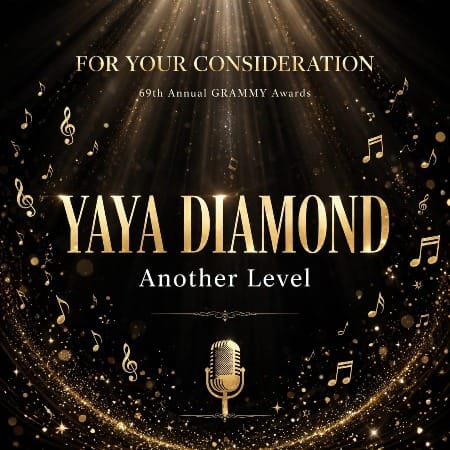
***+Read more:*** [*"Artists: If You Can't Define Success, You Won't Find It"*](https://www.hypebot.com/artists-if-you-cant-define-success-you-wont-find-it/)
## **Campaigning in Both Directions.**
Most FYC campaigns are a one-way broadcast: *listen to me, vote for me.* I do ask that, and I'll own it — I made graphics that say "Please listen!" and I mean it. But I'm also doing something I haven't seen many artists do: I'm asking other artists to send me *their* FYC music for a personal listen. I put it right on my graphic: "I am listening! DM me your FYC."
Why? Because I know exactly what it feels like to pour your heart into a song and then shout it into the void. Voting members get flooded with links every fall. Most of them get skimmed, skipped, or never opened. The indie artist without a machine behind them is the one whose link dies in the pile.
So I decided my campaign would be a two-way street. I'll fight for my three songs, and I'll press play on yours too. A listen is a small thing, but when you're independent, being heard at all can feel like everything.
### Suggestion: What can you do?
*Pick one other independent artist and press play on their music this week — and tell them you did. Put up your own version of "I am listening." When you give attention, you get attention, and a two-way campaign builds the kind of community a billboard never could.*
> *"That's all we've ever had: *the song, standing on its own, in front of people willing to give it three minutes.*"*
## **1,000 Interviews Taught Me How to Get People to Press Play**
I've done more than a thousand paid interviews on Dream Chasers Radio. Authors, musicians, founders, everyday people with extraordinary stories. And here is the single biggest lesson those conversations taught me about promotion: nobody presses play because you told them to. People press play because you made them feel something in the first ten seconds.
In an interview, if the first question is boring, the listener is gone — it doesn't matter how great the guest is. Same thing with a song pitch. "For your consideration" is the least interesting sentence in the English language. So I don't lead with the ask. I lead with the story: why this song exists, what it cost me to make it, who I was when I wrote it.
I show up as a **person first** and a **candidate second**. That's not a [marketing tactic](https://www.hypebot.com/tag/marketing-strategy/). That's eighteen years of hosting talking — people can tell when you actually care, and they can tell when you're reading a script.
It also taught me about the follow-through nobody wants to do. I answer my own messages. When someone sends me their FYC, I actually listen, and I reply like a human being, not a brand. The unglamorous part of a campaign isn't just the funding — it's the hundreds of small, invisible moments of showing up. Post every day. Answer every message. Thank every person who shares your song. Nobody sees most of it. Do it anyway.
### Suggestion: What can you do?
*Three habits, and all of them are free. Lead with the story behind your music instead of the ask — make people feel something in the first ten seconds. Show up every single day — post, reply, thank, repeat. And ask like a person, not a brand — no blast links, no form letters. Consistency is the whole strategy when you don't have a machine.*
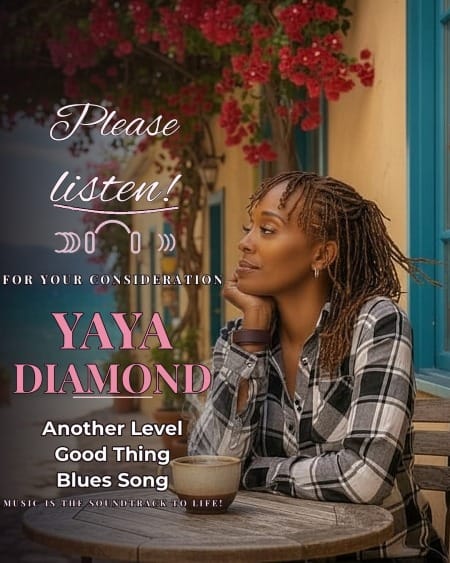
***+Read more:*** [*"We Stopped Waiting to Be Chosen and Mailed 100,000 CDs Instead"*](https://www.hypebot.com/we-stopped-waiting-to-be-chosen-and-mailed-100-000-cds-instead/)
## **How to Promote Your FYC.**
When it all comes down to it, promoting your FYC means one thing: getting your music in front of voting members and making it easy for them to press play. Here's how I do it:
- **Make it one click.** My songs live where anybody can reach them in one tap. If a voter has to hunt for your music, you've already lost them. No hurdles, no homework.
- **Be loudest during the window.** First-round voting runs October 12 through 22 — those are the days that count. I post about my campaign every day, and I turn it all the way up while voting is open. Don't spend your energy in September and go quiet in October.
- **Ask personally.** A message that says "I'd love for you to hear this" beats a hundred generic posts. I answer my own DMs because the personal touch is the whole advantage of being independent. Nobody with a big machine can do what you can do: talk to one person like they matter.
- **Team up with other independents.** I ask other artists to send me their FYC, and they send people my way too. We lift each other because nobody else is going to do it for us. Your network is your label.
- **Then let the music do the talking.** You've done the work to earn the listen — now trust the song. That's all any of us have ever had: the work, standing on its own.
## **Here's the *Real* Ask...**
So here's the ask — and it isn't just mine. It belongs to every independent artist running a campaign this fall, whether they have the words for it or not: please, actually listen. Not skim. Not save-for-later. Listen.
Don't vote for the name, the legacy, or the résumé. Press play on an [independent artist's](https://www.hypebot.com/tag/indie-artists/) music (any of us) and let the work make its own case. That's all we've ever had: **the song, standing on its own, in front of people willing to give it three minutes.**
And if you're an artist running your own FYC campaign with no label, no publicist, and no big backer — you can reach me with your music through my [FYC listening form](https://docs.google.com/forms/d/e/1FAIpQLSd1T3GYUKrPa55Cz3TLqcibqnrtcNHKeaHnZN8PdNcTLwRQfw/viewform?ref=hypebot.com). I'm listening. Somebody should be.
I'm running this race just like you — so please, take a moment to listen to my FYC here: [Yaya Diamond FYC](https://open.spotify.com/playlist/6p9lgNAj3IufbFQ3r4BfX6?ref=hypebot.com).
---
[***Yaya Diamond***](https://yayadiamond.com/?ref=hypebot.com) *is an independent singer/songwriter in Southwest Florida, daughter of disco legend Evelyn Thomas, Florida Music Hall of Fame nominee, and host of* [*Dream Chasers Radio*](https://www.youtube.com/@dreamchasersradio?app=desktop&ref=hypebot.com)*. She holds a 2024 honorary doctorate in music business/entrepreneurship, is a Presidential Lifetime Achievement Award recipient and a Recording Academy voting member, and has opened for Tower of Power, George Clinton & Parliament-Funkadelic, The Commodores, and the Village People.*
### Australia’s Festivals Have an Itsy Bitsy Visa Problem
URL: https://www.hypebot.com/australias-festivals-have-an-itsy-bitsy-visa-problem/
Last updated: 2026-09-23T13:32:31.000Z
[**Australia’s**](https://www.hypebot.com/tag/australia/) always dealing with labor shortages, one way or the other, but this next one may hit the live music sector just as the country is ramping up for Summer festival season.
The federal government [has announced plans](https://immi.homeaffairs.gov.au/what-we-do/whm-program/latest-news/arrangements-uk-passport-holders?ref=hypebot.com) to expand the use of ballots in the Working Holiday Maker program, limiting how many backpackers can remain in Australia for a second or third year. Under the proposed system, completing the required regional work would no longer guarantee eligibility for another [visa](https://www.hypebot.com/musicians-speak-on-the-impact-of-getting-a-u-s-artist-visa/). It would earn the applicant a place in a ballot.
The second-year ballot will reportedly be capped at 45,000 places, compared with approximately 57,000 people who qualified last year. Third-year availability would fall more dramatically, from roughly 31,000 to 5,000 places, although UK passport holders have separate arrangements.
Backpackers help build stages and fencing, work gates and bars, scan wristbands, move equipment, handle waste and support the bump-in and bump-out labor that festivals require. Regional venues also depend upon them for front-of-house, security, transportation and hospitality work.
**Howard Adams**, chair of the **Australian Live Music Business Council**, told [*The Music*](https://themusic.com.au/industry/australia-working-holiday-maker-visa-cuts-live-music/AzK5FxYZGBs/15-09-26?ref=hypebot.com) that any reduction in Working Holiday Maker visas would hurt venues and festivals:
> *"There is no doubt that any reduction in the number of short term working holiday visas will be detrimental to the hospitality and live music sector."*
The dependence can be startling. **Russell Temple**, general manager of Darwin venue [**Mayberry**](https://www.bandsintown.com/v/10286487-mayberry?utm%5Fsource=hypebot&came%5Ffrom=900), estimates that international backpackers make up approximately 66% of its workforce. According to the same report, as many as 80% of Darwin bars and clubs employ them.
Agriculture and tourism groups are sounding similar alarms. [*Reuters* reports](https://www.reuters.com/world/asia-pacific/immigration-crackdown-puts-australias-wheat-harvest-risk-industry-groups-say-2026-09-18/?ref=hypebot.com) that the ballot system and longer processing periods could leave seasonal employers without enough workers. Festivals operate on much the same calendar: brief, intense periods when thousands of temporary jobs need to be filled at once.
***+Read more:*** [*"Australia’s Festival Crisis Has One Very Twangy Exception"*](https://www.hypebot.com/australias-festival-crisis-has-one-very-twangy-exception/)
## **Playing Catch Up**
The government’s [2026–27 budget papers](https://budget.gov.au/content/bp2/download/bp2%5F2026-27.pdf?ref=hypebot.com) say the Working Holiday Maker program will be reformed to control numbers, reduce employment barriers and expand ballot allocation. However, some implementation details remain unclear. At the time of writing, the Department of Home Affairs’ [country-cap guidance](https://immi.homeaffairs.gov.au/what-we-do/whm-program/status-of-country-caps?ref=hypebot.com) still states that second- and third-year Work and Holiday visas are uncapped, while its existing [ballot explainer](https://immi.homeaffairs.gov.au/what-we-do/whm-program/latest-news/new-work-and-holiday-subclass-462-visa-pre-application-process?ref=hypebot.com) says the process applies only to first-year applicants from selected countries.
**Anyone personally affected** should therefore monitor the official [Working Holiday Maker updates page](https://immi.homeaffairs.gov.au/what-we-do/whm-program/latest-news?ref=hypebot.com) rather than relying solely on early news reports.
The larger industry problem is that [Australia’s live-music infrastructure](https://www.hypebot.com/tag/australia/) does not consist only of stages, venues, and sound systems, it includes the people operating them. And this summer, there may be fewer of those people available.
***+Read more:*** [*"Can Cheap Beer Save Australia’s Opening Bands?"*](https://www.hypebot.com/can-cheap-beer-save-australias-opening-bands/)
---
*Get the latest Live Music & Industry News updated continuously from across the web under the Hypebot Industry News tab* [*here*](https://www.hypebot.com/music-industry-news-feed/)*.*
## Hypebot
Essential news & insights for artists and live music pros.
Sign up for free weekly content delivered to your inbox
Subscribe
Email sent! Check your inbox to complete your signup.
### How Indie Artists Can Chart on Billboard With <1K In Sales
URL: https://www.hypebot.com/how-indie-artists-can-chart-on-billboard-with-1k-in-sales/
Last updated: 2026-09-23T12:57:58.000Z
While charting on [**Billboard**](https://www.hypebot.com/tag/billboard/) may not have the cache it once did, it does [still matter](https://www.hypebot.com/whats-in-a-number-why-music-charts-still-matter-in-the-streaming-era/). Beyond just being a point of personal pride, chart position is badge of honor that fans and the industry pay attention to.
Independent artists can chart on **Billboard** without a major or large independent label by targeting secondary charts like **Folk/Americana**, **Blues, Hard Rock/Metal, Jazz,** or **Alternative** which often require only **500 to 1,500 album-equivalent units** in their first week.
Securing that position relies on routing all physical and digital direct-to-consumer (D2C) sales through [**Luminate reporting**](https://www.hypebot.com/how-to-get-isrc-codes-report-music-sales-for-charts-to-luminate/) channels while using structured pre-sale and pre-save campaigns to concentrate fan engagement into Friday-to-Thursday tracking cycles.
### **1\. Focus on Achievable Niche Genre Charts**
While cracking the **Billboard 200** demands tens of thousands of album units, niche genre charts measure specific fan bases where smaller numbers carry massive impact. Some examples:
- **Top Blues Albums / Americana & Folk Albums:** Frequently accessible with 300 to 800 pure album sales in week one.
- **Top Hard Rock / Metal / Alternative Albums:** Generally require 800 to 1,500 album units (a mix of pure sales and streams).
- **Current Music vs. Catalog:** Genre charts focus on new releases during their initial release window, meaning concentrated effort pays off immediately.
**+Read more:** [*"The Chart Is the Scoreboard. The Catalog Is the Score."*](https://www.hypebot.com/the-chart-is-the-scoreboard-the-catalog-is-the-score/)
### **2\. Lock Down Mandatory Infrastructure & Luminate Reporting**
Before launching any promotion, your release infrastructure must be configured so every sale and stream is counted by Luminate (formerly Nielsen SoundScan), the data provider for Billboard.
- **UPC & ISRC Registration:** Ensure your album has an [official UPC code](https://www.hypebot.com/how-to-get-isrc-codes-report-music-sales-for-charts-to-luminate/) and every track carries a unique ISRC code. Register these identifiers directly with Luminate.
- **Eligible Pricing:** An album must be priced at **$3.49 or higher** during its first week to qualify for *Billboard* pure sales charts.
- **Luminate-Reporting D2C Storefronts:** Digital and physical sales on your personal website only count if processed through a certified reporting tool (e.g., *Single Music* for Shopify or *Bandcamp*).
- [**Merch Cat**](https://www.merchcat.com/?ref=hypebot.com)recently added direct reporting to Luminate, allowing artists to report eligible physical music sales from live shows.
### 3\. Use Pre-Sales to Stack First-Week Numbers
Pre-sales are a most critical tool for indie charting. All physical pre-orders (CDs, vinyl, cassettes) and digital pre-orders placed during a 4-to-8-week pre-sale window **accumulate and count toward your official Week 1 numbers** on release day.
- **Run a 4 to 6-Week Pre-Order Window:** Give your core fans enough time to pre-order without letting campaign momentum stall.
- **Fulfill Physical Shipping On Time:** Physical items must actually ship during release week for Luminate to validate the sale.
- **Leverage Limited Physical Items:** Offer signed CDs, limited-edition vinyl colorways, or exclusive physical bundles. (Note: [Billboard rules prohibit bundling tickets or unapproved non-music merch](https://www.hypebot.com/new-billboard-charts-rules-no-merch-tickets-bundles/) to count as album sales, so focus on the music format itself).
### 4\. Harness Pre-Saves to Drive Algorithmic Day-One Streams
While pure sales drive the bulk of secondary chart placement, streaming units bridge the remaining gap. Pre-saves convert early awareness into immediate streaming volume on release day.
- **Trigger Release Day Library Adds:** Pre-save links (via **Feature.fm, DistroKid HyperFollow**, **Show.co** and others) automatically drop your project into fan libraries at midnight on release day.
- **Feed Algorithmic Playlists:** High initial streams on Friday notify **Spotify** and **Apple Music** algorithms to push your tracks onto ***Release Radar*** and ***Discover Weekly*,** sustaining consumption metrics through Thursday midnight, the end of the *Billboard* tracking week.
### Target Numbers Overview
| **Chart** | **Week 1 Units** | **Key Strategy** |
| --------------------- | ---------------- | --------------------------- |
| **Blues / Folk** | 300–800 | D2C Vinyl/CD Pre-orders |
| **Hard Rock / Metal** | 800–1,500 | Webstore Pre-orders |
| **Alternative** | 1,000–2,000 | Physical Retail + Pre-Saves |
| **Billboard 200** | 10,000+ | Multi-Channel Playlisting |
### **Digital Song Sales: Another Way To Chart**
It is also possible to chart purely based on digital sales. For example Billboard has a **Latin Digital Song Sales** chart.
Because digital track downloads have declined market-wide, the threshold to enter the bottom of this specific list is incredibly low - often requiring fewer than **100 to 200 pure downloads** in a single tracking week.
### **Hypebot's Bottom Line**
You don’t need a multi-million dollar major label apparatus to get a Billboard plaque on your wall.
By focusing on the right genre category, registering your UPC/ISRC codes with Luminate, and running 6-week pre-sale and pre-save campaigns that stack all fan buying power into release day, an independent act with a dedicated fanbase of a few hundred people can legitimately land a top 10 spot on am official Billboard chart.
***+Read more:*** [*"What’s in a Number? Why Music Charts Still Matter in the Streaming Era"*](https://www.hypebot.com/whats-in-a-number-why-music-charts-still-matter-in-the-streaming-era/)
---
## Hypebot
Essential news & insights for artists and live music pros.
Sign up for free weekly content delivered to your inbox
Subscribe
Email sent! Check your inbox to complete your signup.
### The Live Music Experience Is Always Transforming — But Drinks Are Still Getting Spiked
URL: https://www.hypebot.com/the-live-music-experience-is-always-transforming-but-drinks-are-still-getting-spiked/
Last updated: 2026-09-23T12:38:20.000Z
*By *Gary Green*, Co-Founder of* [***CounterSpike***](https://counterspike.com/?ref=hypebot.com)
At a packed concert, a person whose drink has been spiked may initially look like someone who has simply had too much to drink. That distinction can be easy to miss — and devastating to get wrong. Without a clear protocol in place, what happens next can depend on whether an individual bartender, security guard or friend recognizes the warning signs and knows how to respond.
**Drink-spiking safety** should no longer depend on improvisation. It should be built into venue operations.
The [live music industry](https://www.hypebot.com/tag/live-music/) has spent the last decade rethinking nearly every part of the fan experience. Mobile ticketing changed how we enter venues. Cashless payments changed how we buy a drink. Venue apps, premium spaces and sophisticated food and beverage programs changed what fans expect once they are inside. Safety should be treated with the same operational focus.
**All images courtesy of* [**CounterSpike*](https://counterspike.com/?ref=hypebot.com)**.*
Venues and promoters already invest heavily in security personnel, bag checks, access control, crowd management, medical response and emergency planning. The issue is not that the industry has ignored safety. It is that drink spiking does not fit neatly within systems designed primarily to manage visible threats. It can happen quickly and discreetly in the middle of an otherwise normal night out, and the initial symptoms can be mistaken for intoxication.
The scale is difficult to measure because drink spiking is significantly underreported.
In a nationally representative **2025 Drinkaware survey** of more than 7,000 UK adults, 1.8% said they believed they had been drink spiked during the previous year, rising to 3% among adults ages 18 to 34\. Only 23% of those respondents reported the incident to police. The data is UK-based, but the operational challenge is not confined to one country: people often do not report what happened, and venues may never learn that a suspected incident occurred.
A recent fan-led review of live and electronic music published by the UK Parliament’s Culture, Media and Sport Committee found that only 19% of respondents said they always feel safe at events. That finding addresses event safety broadly, not drink spiking specifically, but it underscores a larger point: fans judge the entire experience, not the organizational chart behind it.
***+Read more:*** [*"How Venues Are Using Tech to Improve Concert Safety"*](https://www.hypebot.com/how-venues-are-using-tech-to-improve-concert-safety/)
Fans do not experience ticketing, security, food and beverage, guest services and the performance as separate departments. They experience **one night out**. If something makes them feel vulnerable — or if a friend seeking help is dismissed as intoxicated — that becomes part of their view of the venue and potentially part of their decision about whether to return.
I came to this issue first as a father of three daughters and then as an entrepreneur. I do not believe the answer is to tell women, or any other potential victim, to spend an entire night guarding a drink. Awareness matters, but vigilance alone cannot be the safety system in an environment designed around talking to friends, dancing, moving through crowds and watching what is happening onstage.
At CounterSpike, our work includes drink-spiking detection technology. But technology alone will not solve this problem. A meaningful venue standard must combine tools with training, clear communication and a response protocol. The framework can be straightforward: **prepare, respond,** and **deter.**
## **Prepare.**
Bartenders, security personnel, medical teams and guest-services staff should know that apparent intoxication may have another cause. They should understand the warning signs, know where to direct a concerned guest and be able to explain clearly where help is available. Fans should not have to search for the right person while a friend is becoming increasingly impaired.
## **Respond.**
When someone reports a concern, the venue should have a simple written protocol: move the person to a safe location, keep them with a trusted companion when possible, involve appropriate medical and security personnel, preserve relevant information and footage, and make appropriate detection or testing resources available. Most fans will never see this system in action. Its value becomes visible when somebody needs it.
## **Deter.**
Venues should communicate that suspected drink spiking will be taken seriously and investigated. The objective is not only to respond better after an incident. It is to create an environment in which someone considering the act believes there is a meaningful chance of being detected and held accountable. Training, visible reporting channels, retained camera footage and consistent follow-through all change that calculation.
***+Read more:*** [*"Overdoses at Festivals Keep Happening — Here Are Proven Ways to Reduce Them"*](https://www.hypebot.com/overdoses-at-festivals-keep-happening-here-are-proven-ways-to-reduce-them/)
Every major venue should be able to answer three questions today.
- **1) Are frontline employees trained to recognize and escalate a suspected drink-spiking incident?**
- **2) Is there a written protocol that protects the affected person and quickly involves medical or security personnel?**
- **3) Can the venue preserve useful information and direct the person to appropriate detection, testing and reporting resources?**
If the answer to any of those questions is no, the system is incomplete.
This does not require turning concerts into checkpoints or placing new barriers between fans and the experience they paid for. Done properly, most of these measures create little or no friction for the average guest. They make the venue more capable when a serious concern arises.
The live business has repeatedly shown that it can change behavior at enormous scale. Digital tickets moved from novelty to normal. Cashless transactions became routine. Operators adopted technologies and procedures that once appeared unnecessary because they ultimately improved the business or the fan experience. Drink-spiking safety now deserves the same seriousness.
No single product, policy or training session will eliminate drink spiking. That is not an excuse for waiting. At minimum, every venue should have trained frontline staff, a clear reporting and response protocol, and the ability to preserve evidence and connect a concerned guest with appropriate tools and care.
We have spent years finding better ways to get fans through the door. The next standard should be making sure that, when something goes wrong inside, nobody has to rely on luck or improvisation to get help.
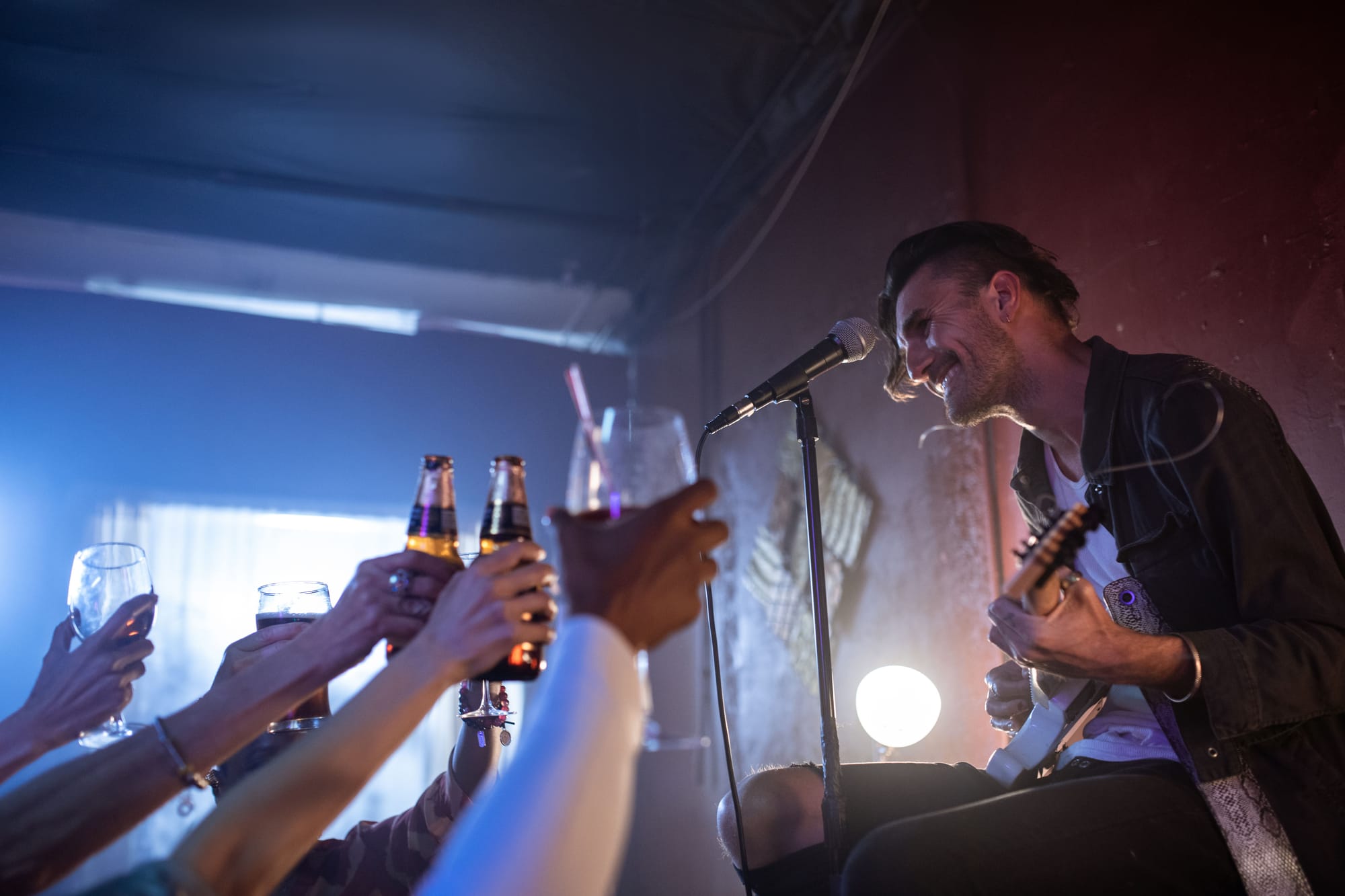
---
**Gary Green* is a co-founder of* [***CounterSpike***](https://counterspike.com/?ref=hypebot.com)*, a company developing drink-spiking detection technology and related safety tools.*
### An LLM Flagged 1,632 Videos. One Was Real.
URL: https://www.hypebot.com/an-llm-flagged-1-632-videos-one-was-real/
Last updated: 2026-09-23T12:37:17.000Z
### **An LLM Flagged 1,632 Videos. One Was Real.**
*By *Alan More*, Founder of* [***Videojam***](https://videojam.live/blog/copyright-provenance-not-content?ref=hypebot.com)
Videojam is an embed-only music video platform. We host nothing: every video on the site is a YouTube embed, played through the IFrame API, served from Google's infrastructure. That gives our copyright question an unusual shape. We aren't asking *"are we hosting infringing content?"* We're asking *"should we be curating and surfacing this particular upload?"*
It's a narrower question, and I assumed it would be an easier one. It wasn't. Over the past week I rebuilt our copyright triage from scratch, and every approach that seemed obvious failed in an instructive way. The one that worked was almost embarrassingly simple, and it wasn't the one anyone would reach for first.
Here's the sequence, in the order we got it wrong.
## Attempt 1: ask a language model
The first version was the version everyone is building right now. Point a model at each video's metadata (title, description, uploader, tags) and ask it to judge whether the upload looks like it shouldn't be there.
Over a corpus of 2,026 videos, it flagged **1,632**.
That's four out of five. When a classifier flags 80% of its input, it hasn't found a problem; it *is* the problem.
Its own reasoning gave the game away. **1,602 of the 1,632 flags (98.2%)** came back under two rationales so broad they would apply to very nearly any music video in existence. The model wasn't discriminating between rows. It was restating its own prior, 1,632 times, with high confidence.
When we rebuilt the detector from scratch, that same corpus of 2,026 yielded **one** row worth acting on.
The failure isn't that the model is bad at reasoning. It's that the model was reasoning about the wrong thing, and reasoning well about the wrong thing produces confident nonsense. Consider two rows:
- `Nirvana - Smells Like Teen Spirit`, uploaded by NirvanaVEVO
- `Nirvana - Smells Like Teen Spirit`, uploaded by a channel with 400 subscribers and a stock-photo banner
Semantically, in title space, these are the *same video*. The thing that distinguishes them (who put it there and whether they had the right to) is not in the content. It's in the provenance. An LLM reading the content will always be guessing, and it will guess in whichever direction its prompt leans. Ours leaned cautious, so it flagged everything.
## Attempt 2: a heuristic
Fine. Drop the model, write a rule. We have a Cinema vertical (short films, documentaries) alongside the music catalog, and the obvious risk there is a commercial film ripped and re-uploaded. So: long duration, plus the cinema section, plus a non-official uploader, equals probable rip.
That rule flagged **196 videos**. Every one of them was a legitimate documentary. Zero were rips.
Which, in hindsight, is exactly what the rule was built to do. "Long film on a channel that isn't a studio" doesn't describe a rip. It describes an independent documentary. Which is to say, it describes our entire Cinema vertical. The heuristic detected *length*. Length correlates with legitimate long-form content, not with infringement.
We deleted the detector.
## Attempt 3: match rightsholder names
Third try, and now we're getting warmer. Freeze a list of roughly forty artists and estates known for aggressive enforcement, the ones where a re-upload reliably draws a claim. Match their names against video titles.
This one actually caught things. It also caught a Tomorrowland set, uploaded by Tomorrowland, licensed by Tomorrowland, because a headliner's name appeared in the title.
We patched it: exclude titles containing `remix`, `live`, `set`, `b2b`, `mix`. That fixed the DJ content and immediately failed on the next class: covers, tutorials, reactions, karaoke. A guitar cover of a Prince track flags. A piano lesson for a Beatles song flags. Every patch bought one class of false positive and revealed another, and the list of exclusion tokens started growing without any obvious end.
There's a deeper problem with name-matching, and it's the one that should have stopped us sooner: **it's spoofable in the wrong direction.** A denylist keyed on names tells a bad actor exactly how to pass: leave the name out of the title. We had built an evasion guide and called it a filter.
## Attempt 4: look at who uploaded it
The catalog stored an `artist` field, but (a known gap in our data model) it was populated from the *YouTube channel*, not the performer. And for a large slice of the catalog, particularly older gap-fill entries, it was empty.
That emptiness was doing enormous damage, and we hadn't noticed. Our name-matcher was flagging rows where the artist name matched *and provenance was unknown*. And it was reading "unknown" as "not official." Thirty-three videos sat in the queue, and the reason they were there was not that we had bad evidence about them. It was that we had **no** evidence about them, and had quietly converted that into guilt.
So we backfilled one field. A single batched call to the YouTube API, pulling `channelId` for every candidate.
**Thirty-three collapsed to two.**
The thirty-one that dropped out were: Official Artist Channels, VEVO uploads, `- Topic` auto-generated channels, and the festival's own account. The Beatles material was on the Beatles' channel. The Rolling Stones material was on the Stones' channel. Every one of them was, in fact, the single most licensed and most embeddable class of row in the entire catalog, and our detector had been flagging them for removal.
The two that remained were genuine: commercial masters by aggressively-enforced estates, re-uploaded by channels with no claim to them. We hid both, logged both, and denied both channels catalog-wide.
Two rows, across a catalog of 6,013\. One of them inside the 2,026 the language model had already chewed through. Found not by reading a single frame of video, but by looking at who uploaded it.
One caveat, stated plainly, because otherwise a careless reader will supply the wrong one for me: **"two" means two rows met a criterion we can defend**: a commercial master by an aggressively-enforced estate, re-uploaded by a channel with no claim to it. It does not mean the catalog contains exactly two problems. Our detector knows about a frozen list of forty rightsholders and nothing else. It is a triage tool, not a census, and I'd distrust anyone (including me) who tried to compute a clean-catalog percentage from a number like this. Making claims a method cannot support is, more or less, the entire subject of this post.
## The thesis
**Copyright triage on a music catalog is a provenance problem wearing a content problem's clothes.**
Every signal that read the *content* (the LLM, the duration heuristic, the title matcher) failed, and failed at a rate that made it operationally worthless. The only signal that resolved the question read the *uploader*. And that's not a quirk of our catalog; it follows from what copyright actually is. Licensing status is a fact about a relationship between two parties. It is not a property of the artifact. You cannot see it by looking harder at the artifact, no matter how good your model is.
This is, I think, the thing worth taking away from a small platform's week of getting it wrong, at a moment when a great many larger platforms are pointing language models at exactly this problem.
## The two rules
Out of it fell two rules that we now enforce in code and in tests, and which I'd suggest generalize well past music:
**1\. No exemption may key on a mutable string.**
Our first fix for the Tomorrowland problem was to exempt channels named "Tomorrowland," "Boiler Room," "Cercle." That is trivially defeated: anyone can name a channel "Tomorrowland." An exemption keyed on a human-readable name inverts a denylist into a bypass. Every allowlist we run is now keyed on `channelId`, an identifier the uploader cannot edit after the fact. There is a test that spoofs the name and asserts the video still flags.
**2\. A detector must never fire on the absence of a field.**
This is the one that cost us the most, and it's the subtler of the two. Thirty-one of our thirty-three candidates were there because provenance was *missing*, and the code read missing as damning. A detector that fires on absence isn't detecting anything; it's reporting its own ignorance, wearing the costume of a finding.
If that sounds familiar, it should: it's the same failure as attempt one. A model with no evidence, answering confidently anyway.
## What we built instead
The engine that shipped is deterministic and has no LLM in it. It's a precedence chain over a single channel registry, keyed throughout on `channelId`:
1. **Takedown denylist**: channels that have received a valid notice. Overrides everything.
2. **Official artist channels** and **event/label channels**: exempt.
3. **Rightsholder name list**: runs last, and only on rows where provenance is actually present.
Alongside it: a public [copyright and takedown page](https://videojam.live/copyright?ref=hypebot.com) with a named contact and a stated turnaround, and an internal takedown log that records what triggered every action: a received notice, a manual decision, or an engine flag. That last field, `source`, is one line of schema, and it's the difference between having a compliance process and being able to *show* you have one.
The engine now flags on the order of one or two videos a week, and I look at every one.
## The coda
There's a footnote here that turned out to be the point.
The reason our provenance data was missing in the first place is that Videojam's data model conflates *uploader* with *artist*. Which means a DJ's catalog is scattered across the channels of every festival that ever filmed them: Charlotte de Witte's work lives under Awakenings, Cercle, Boiler Room, and her own channel, as four unrelated entities.
That's a discovery problem, and I'd had it filed as one for months. It turns out to be the same bug as the copyright problem, keyed on the same field. Fixing provenance to stop mis-flagging the Beatles is the identical fix as making a DJ's catalog cohere.
Which is, in its own way, the most useful thing this week produced. Not the engine. The realization that we'd been treating one missing field as two separate problems.
---
[***Videojam***](https://videojam.live/?ref=hypebot.com) *is a music video discovery platform.*
### Tyla’s Fans Are Learning Her Show Before It Even Starts
URL: https://www.hypebot.com/tylas-fans-are-learning-her-show-before-it-even-starts/
Last updated: 2026-09-23T11:19:31.000Z
Four weeks before [**Tyla**](https://www.bandsintown.com/a/148465-tyla?utm%5Fsource=hypebot&came%5Ffrom=900) begins her first global headline tour, she has offered a preview without revealing a stage, a costume change, or a production trick.
On September 18, the South African star released a three-minute rehearsal video for “THAT GIRL.” By all accounts, for a pop star at the height of their performance prowess, this is essentially *"nude."*
Filmed in a nondescript dance studio, it shows Tyla working through the global hit song with a performer ensemble. There is no crowd, no mic, and no scenery. No frills. The movement itself is the announcement.
And that's kind of the point...
Here is an artist whose fans may already know pieces of the concert before they enter the building. She knows it, and she's directing her [marketing efforts](https://www.hypebot.com/tag/marketing-strategy/) to them, specifically.
Tyla’s 34-date [**A\*POP World Tour**](https://www.bandsintown.com/a/148465-tyla?utm%5Fsource=hypebot&came%5Ffrom=900) begins October 12 in Paris, continues through Europe and North America, and finishes with dates in Lagos, Cape Town, and Johannesburg. It will be her largest worldwide headline run yet — and the first chance to see how well the dance vocabulary that helped her music circle the internet can hold together a full touring production.
She's a true crossover talent, but will her South African-inspired moves make it into the hips and feet of her fans too?
## **Choreography That Travels First**
[“Water”](https://open.spotify.com/track/5aIVCx5tnk0ntmdiinnYvw?si=8bb6f4612c814155&ref=hypebot.com) did not become a global hit through audio alone. Its signature routine, created by Tyla’s longtime South African choreographer **Lee-ché “Litchi HOV” Janecke**, gave listeners something recognizable to perform, and easily catchy enough to sing.
The choreography drew from Bacardi dance, pairing intricate legwork and hip movement with a song that blended **pop, R&B,** and **amapiano.** In 2023, the related TikTok hashtags had accumulated more than 448 million views, according to [*TIME*](https://time.com/6321439/tylas-water-dance-challenge-tiktok/?ref=hypebot.com).
Tyla's newest single, “THAT GIRL,” is beginning on a similar trip around the planet. Its choreography incorporates **the phara walk**, a movement South African viewers recognized even as some international users encountered it as something newly invented online. Tutorials, dance classes, and fan attempts are already circulating.
Every repetition teaches another potential [ticket buyer](https://www.hypebot.com/tag/ticketing/) a piece of Tyla’s physical language.
> [@charlize.laraine](https://www.tiktok.com/@charlize.laraine?refer=embed&ref=hypebot.com "@charlize.laraine") @TYLA [#dancechallenge](https://www.tiktok.com/tag/dancechallenge?refer=embed&ref=hypebot.com "dancechallenge") [#dancetrend](https://www.tiktok.com/tag/dancetrend?refer=embed&ref=hypebot.com "dancetrend") [#tiktokdances](https://www.tiktok.com/tag/tiktokdances?refer=embed&ref=hypebot.com "tiktokdances") [#thatgirl](https://www.tiktok.com/tag/thatgirl?refer=embed&ref=hypebot.com "thatgirl") [#tyladance](https://www.tiktok.com/tag/tyladance?refer=embed&ref=hypebot.com "tyladance") [♬ THAT GIRL - Tyla](https://www.tiktok.com/music/THAT-GIRL-7664711002852100112?refer=embed&ref=hypebot.com "♬ THAT GIRL - Tyla")
***+Read more:*** [*"Concert Tickets Are Apparently the New Airline Miles"*](https://www.hypebot.com/concert-tickets-are-apparently-the-new-airline-miles/)
Pop tours have always generated audience rituals, like the classic clap everyone knows, the lyric everyone shouts, and the dance break everyone waits to film so they bust out their phones 30 seconds before the chorus hits.
Tyla’s version starts before the show is even announced. From clips to fan tutorials, her dance moves circulate around [social media](https://www.hypebot.com/tag/social-media/) so effectively that by the time they reach [the live stage](https://www.hypebot.com/tag/live-music/), thousands of people already have a familiarity with them enough to perform them in lockstep.
In other words, the audience has already been rehearsing.
## **Dance Challenges Don't Guarantee Live Show Participation**
The tour still poses an odd creative problem however. Just because a 20-second vertical clip stops you from scrolling, doesn't mean that alone will power a 75-minute concert. Nobody's going to wait all concert for that moment alone.
> [@thesherlocksisters\_](https://www.tiktok.com/@thesherlocksisters%5F?refer=embed&ref=hypebot.com "@thesherlocksisters_") Don’t ask us how many times we’ve watched this performance🫣 @TYLA dc:@Litchi [#dancers](https://www.tiktok.com/tag/dancers?refer=embed&ref=hypebot.com "dancers") [#sisters](https://www.tiktok.com/tag/sisters?refer=embed&ref=hypebot.com "sisters") [#tyla](https://www.tiktok.com/tag/tyla?refer=embed&ref=hypebot.com "tyla") [#fyp](https://www.tiktok.com/tag/fyp?refer=embed&ref=hypebot.com "fyp") [♬ THAT GIRL - Tyla](https://www.tiktok.com/music/THAT-GIRL-7664711002852100112?refer=embed&ref=hypebot.com "♬ THAT GIRL - Tyla")
Tyla and her team must turn individual viral moments into pacing, transitions, and a larger visual world. That's the true narrative of setlist and production design. Her rehearsal video suggests that ensemble movement will do some of that work. Tyla is positioned inside a group rather than floating above anonymous backup dancers, allowing formations and shared gestures to enlarge movements that began on much smaller screens.
Online, an [African](https://www.hypebot.com/tag/africa/) dance can become “the Tyla dance,” then simply “a TikTok dance,” within days. Onstage, Tyla can keep the dancers, movement styles, and creative collaborators visible, in an effort to protect the cultural significance of the original choreography intact.
Janecke, who has worked with her since she was 17, told [*The Guardian*](https://www.theguardian.com/world/2025/sep/17/south-africa-dance-choreographer-lee-che-janecke-amapiano-afrobeats-tyla?ref=hypebot.com) that his “African dream” was to create a dance performed by the whole world. Tyla’s concerts may be where that global participation meets its source.
> [@judithendje](https://www.tiktok.com/@judithendje?refer=embed&ref=hypebot.com "@judithendje") obsessed with this song🔥🔥 [#tyla](https://www.tiktok.com/tag/tyla?refer=embed&ref=hypebot.com "tyla") [#tyladance](https://www.tiktok.com/tag/tyladance?refer=embed&ref=hypebot.com "tyladance") [#mrnonchalant](https://www.tiktok.com/tag/mrnonchalant?refer=embed&ref=hypebot.com "mrnonchalant") @TYLA [♬ son original - Dr3wskii 🦇](https://www.tiktok.com/music/son-original-7670237418548857622?refer=embed&ref=hypebot.com "♬ son original - Dr3wskii 🦇")
***+Read more:*** [*"Audiomack's Charlotte Bwana on Building a Global Platform That Resonates"*](https://www.hypebot.com/audiomacks-charlotte-bwana-on-building-a-global-platform-that-resonates/)
The physical demands carry additional weight. Tyla cancelled her planned 2024 world tour after an injury worsened enough to threaten her long-term [health](https://www.hypebot.com/tag/health-/?-saftey/). She has performed extensively since, including festival sets and an Asian headline run, but A\*POP will ask her to maintain a dance-heavy production across three continents over nearly three months.
## **Movement As Artist Identity**
For independent artists, the lesson is not that every release needs a forced dance challenge. Most should probably resist that temptation.
What Tyla demonstrates is the value of a repeatable performance language. Her movement, styling, collaborators, and South African musical references reinforce one another. A rehearsal can double as tour marketing because the rehearsal itself contains something fans want to watch, learn and reproduce.
That creates a useful loop: the live performance produces the clip, the clip teaches the audience, and the audience brings that knowledge to the next performance. The stage and the feed are no longer separate endpoints. Each one prepares people for the other.
We still do not know exactly what the A\*POP World Tour will look like in its grandest fashion. Tyla has not unveiled details regarding staging, setlists, costumes, or production design. But the rehearsal footage makes one priority fairly clear.
It's about the hips, folks. Get it right (*as she says in her single,* [*"IS IT"*](https://open.spotify.com/track/3JOEeE7J77XMV9rSGnO9kx?si=aa2820771fe74b2c&ref=hypebot.com)).
---
## [**Tyla Tour Dates**](https://www.bandsintown.com/a/148465-tyla?utm%5Fsource=hypebot&came%5Ffrom=900)
### Apple Music Opens a London Venue Built to Turn Concerts Into Content
URL: https://www.hypebot.com/apple-music-opens-a-london-venue-built-to-turn-concerts-into-content/
Last updated: 2026-09-22T21:36:31.000Z
**Apple** has opened a [live music venue](https://www.hypebot.com/tag/venues) in **London** designed to make a single concert work simultaneously as an intimate show, a global livestream and a professionally recorded piece of content.
[**Apple Music Hall**](https://www.apple.com/newsroom/2026/09/apple-opens-apple-music-hall-a-state-of-the-art-live-music-venue-in-london/?ref=hypebot.com) is a new 600-capacity room inside **Battersea Power Station.** The venue combines a reconfigurable 38-foot stage and 48-speaker spatial sound system with two recording and mixing studios, a broadcast control room and connections for at least 16 cameras.
That means an artist can perform for a relatively small audience and leave with a multitrack recording mixed in Spatial Audio, a broadcast-ready mix and multicamera video from the same show. Apple says performances will also be livestreamed globally, extending events held in the London room to fans elsewhere.
## **A venue and production studio under one roof**
The scale is part of the pitch. Apple Music Hall is small enough to keep fans close to the stage, but its technical infrastructure is closer to what artists might expect from a much larger production environment. The stage can accommodate a traditional front-facing concert or be adapted for an in-the-round performance, giving artists more control over how an event is staged and captured.
Apple Music global creative director Zane Lowe said:
> *"What better way to celebrate this relationship than a new music venue where we get to experience amazing music in an amazing space and share it with the world."*
Apple has not simply opened another London concert room. It has built a vertically integrated performance pipeline: the physical show, audio master, video production and worldwide broadcast can all originate in one place.
That model reflects a larger shift in [live music](https://www.hypebot.com/tag/live-music/).
A concert can now be both an event for the people in the room and raw material for livestreams, films, clips and immersive audio releases. The advantage for artists is clear from the model: one performance can generate several audience touchpoints without rebuilding the production elsewhere.
The launch also extends Apple Music’s history in live programming, which includes the former iTunes Festival and Apple Music Festival. Unlike those event brands, however, Apple Music Hall gives the company a permanent venue and production base.
Apple also opened new **Apple Music Radio studios** at **Battersea Power Station.** The service’s London-based hosts and programs will now broadcast from the site.
Ticket information and upcoming performances will be announced through [Apple Music Hall’s website](https://www.applemusichall.com/?ref=hypebot.com).
---
*Get all the latest Music Industry & Live Music News updated continuously from across the web under the Hypebot Industry News tab* [*here*](https://www.hypebot.com/music-industry-news-feed/)*.*
## Hypebot
Essential news & insights for artists and live music pros.
Sign up for free weekly content delivered to your inbox
Subscribe
Email sent! Check your inbox to complete your signup.
### Belle and Sebastian Show How to Salvage a Canceled Gig
URL: https://www.hypebot.com/belle-and-sebastian-show-how-to-salvage-a-canceled-gig/
Last updated: 2026-09-22T16:16:24.000Z
[**Belle and Sebastian**](https://www.bandsintown.com/a/32857-belle-and-sebastian?utm%5Fsource=hypebot&came%5Ffrom=900) could not save their canceled **Perth** concert. They did, however, save the night. And in the most glorious, intimate fashion.
Their headlining show scheduled for September 17 at Perth’s **Astor Theatre** was called off only hours before doors after freight delays from [**Australia’s**](https://www.hypebot.com/tag/australia/) east coast prevented critical equipment from arriving. Promoter **Destroy All Lines** contacted ticket holders about their options, including full refunds, while the band’s original sold-out Perth date remained scheduled for the following evening.
It was the sort of [touring](https://www.hypebot.com/tag/touring/) problem that leaves very little room for iadjustment: the artist had made it to the city, the audience was ready, but the production had not. Singer/songwriter of the band, **Stuart Murdoch** improvised.
The band's frontman [invited fans to meet him at Langley Park](https://themusic.com.au/news/belle-and-sebastian-stuart-murdoch-intimate-show-langley-park-perth-gig-cancelled/d07Fa2ptbG8/18-09-26?ref=hypebot.com), asking whether anyone nearby might have a guitar (or really *any* instrument) and offering to chat, play a few songs, and sign things. He even posted a map with an "X" marking the meeting point.
> Thanks to everyone who came down to Langley Park, it was so nice to meet you and play a few songs, and I’m so glad there was two guitars, it’s always more fun with Jackson 😁 https://t.co/IGv3FsY9mK
>
> — stuart murdoch (@nee\_massey) [September 17, 2026](https://x.com/nee%5Fmassey/status/2100578341866946919?ref%5Fsrc=twsrc%5Etfw&ref=hypebot.com)
Fans showed up. So did two guitars. Murdoch and bandmate Jackson Pollock played an informal outdoor set beneath the stars, turning what could have been a night of pure disappointment into something smaller, stranger, and way more memorable.
This was not a replacement concert, of course. Fans bought tickets for a full Belle and Sebastian production, not an acoustic gathering in a public park, and the cancellation still meant refunds, disrupted plans and a lost night of touring business.
But Murdoch’s response offers a useful lesson in how artists handle the moments when a tour breaks down. He could not make the freight arrive faster or reproduce the Astor Theatre show without its equipment. What he could do was acknowledge the disappointment, remain present and give fans a story that did not end with a cancellation notice.
> [@belleandsebastianuk](https://www.tiktok.com/@belleandsebastianuk?refer=embed&ref=hypebot.com "@belleandsebastianuk")
>
> Thank you to everyone who joined Stuart and Stevie at Langley Park on Thursday! We enjoyed meeting you all.
>
> [♬ original sound - Belle and Sebastian](https://www.tiktok.com/music/original-sound-7687657705611201282?refer=embed&ref=hypebot.com "♬ original sound - Belle and Sebastian")
Touring is full of things artists cannot control. The relationship with the audience is one of the few things they can.
---
## [**Belle & Sebastian Tour Dates**](https://www.bandsintown.com/a/32857-belle-and-sebastian?utm%5Fsource=hypebot&came%5Ffrom=900)
### The Spotify Paradox: More Powerful, Impossible to Leave
URL: https://www.hypebot.com/the-spotify-paradox-more-powerful-impossible-to-leave/
Last updated: 2026-09-22T15:25:32.000Z
[**Spotify**](https://www.hypebot.com/tag/spotify/) had two very different artist stories unfolding last week.
First, [**Sylvan Esso**](https://www.bandsintown.com/a/7017117-sylvan-esso?utm%5Fsource=hypebot&came%5Ffrom=900) put their music *back on* the platform after spending roughly a year away. The duo had removed their catalog in 2025 following Spotify co-founder Daniel Ek’s investment in defense technology company Helsing. Their [politics](https://www.hypebot.com/tag/politics/) haven’t changed, but sadly it became clear that the economics have.
Amelia Meath [told fans that](https://exclaim.ca/music/article/sylvan-esso-move-back-to-spotify-we-do-not-want-to-support-the-business-of-war?ref=hypebot.com) staying away had become “unsustainable for us not to be on that platform” if the group wanted to continue employing its team. She went further, telling listeners she would still rather they hear Sylvan Esso elsewhere.
Then there’s [**Taylor Swift.**](https://www.bandsintown.com/a/157-taylor-swift?utm%5Fsource=hypebot&came%5Ffrom=900)
Spotify announced September 16 that [all 58 of Swift’s official music videos](https://routenote.com/blog/taylor-swift-music-videos-spotify/?ref=hypebot.com) are now available to Premium subscribers in markets where its music-video beta operates. Earlier this year, the video for “Opalite” debuted on Spotify and Apple Music before arriving on YouTube two days later. It became Spotify’s biggest single-day music video streaming performance.
One artist is reluctantly returning, while another is handing Spotify even more valuable content in recognition that it's the *best* place to reach wide and engaged audiences. It's the same story, written two ways, and for independent artists, both stories point toward the same problem: **Spotify's market dominance is too big to ignore.**
## **Spotify Is Becoming More Than the Place Where Songs Live**
It would be easier to make an argument for leaving the platform if Spotify were merely a giant digital record store. But yeah, it isn’t. It has spent years adding artist analytics, playlist pitching, pre-save, and Countdown Page [tools](https://www.hypebot.com/tag/tools/), ticket integrations, fan notifications and increasingly [video](https://www.hypebot.com/tag/video/).
This summer, Spotify began allowing participating artists to upload full-length music videos, live performances, studio sessions, and covers directly through [Spotify for Artists](https://www.hypebot.com/tag/spotify-for-artists/). Those videos can generate royalties, appear on charts, and surface through personalized and editorial discovery.
Spotify also says **people who watch a full-length video subsequently stream that song 64% more over the following three weeks**, while listening to the artist’s wider catalog rises 57%. Those are Spotify’s own figures, but they explain why the company wants video embedded directly alongside audio.
For artists, the pitch kind of makes sense? Why send a listener to YouTube to watch the video, another site to find tour dates and somewhere else to discover your catalog when Spotify can increasingly keep that entire experience inside one app, thanks to partnerships with API tools like [**Bandsintown**](https://www.bandsintown.com/?utm%5Fsource=hypebot&came%5Ffrom=900).
But, convenience for the listener can become *dependence* for the artist. And that's something indie artists need to watch out for.
## **Where It Breaks Down**
There is also an enormous difference between Taylor Swift choosing to use Spotify and a working independent artist deciding whether they can afford *not to*. Swift can treat platforms strategically and use leverage to bolster any certainty where others will find risk. She can experiment with exclusivity and redirect an audience that will probably follow her wherever she goes.
Most musicians do not have that leverage. And although Sylvan Esso is a pretty well-established band with a sustainable core following, their experience shows that developing artists on all levels might struggle to leave Spotify behind, without a comparable alternative already in place. Removing music from Spotify potentially means walking away from streaming revenue, algorithmic discovery, playlist placement, listener data, and a place where existing fans already expect to find them.
That is why the Sylvan Esso story hits harder than another debate about streaming payouts. They actually left, and then took a hard look at what leaving costed them.
> [ View this post on Instagram ](https://www.instagram.com/reel/DdJkwEmxfBh/?utm%5Fsource=ig%5Fembed&utm%5Fcampaign=loading)
>
> [A post shared by Amelia Randall Meath (@arandallm)](https://www.instagram.com/reel/DdJkwEmxfBh/?utm%5Fsource=ig%5Fembed&utm%5Fcampaign=loading)
The problem with Spotify for independent artists is multi-faceted. It pays out an unfair amount per stream where artists feel like they *have to* send their community there to listen, so the bargaining leverage is never in their favor. Individuals who represent that company tend to invest in dubious, misaligned agendas on a global scale, which turns off politically active artists. And the monolithic monopoly folks see the platform becoming within this industry is a non-competitive, non-independent friendly model that nobody wants to support.
So, where do we go from here?
That's a complicated question to answer right now. There are many streaming platforms artists can direct their fans to, through distributors you can choose to shut off distribution to Spotify or any other platform by checklist, and of course you can use your promotional efforts to direct fans to physical merch or downloads through aligned distribution partners.
But that's also exactly how we got here, to this point about leverage. The real move towards investing in career and fan development sustainability is a bigger effort that touches every aspect of an artist's activities over years. But it's important to simply acknowledge just how massive and crucial Spotify is right now to building a discoverable listenership.
---
## [**Sylvan Esso Tour Dates**](https://www.bandsintown.com/a/7017117-sylvan-esso?utm%5Fsource=hypebot&came%5Ffrom=900)
## [**Taylor Swift Tour Dates**](https://www.bandsintown.com/a/157-taylor-swift?utm%5Fsource=hypebot&came%5Ffrom=900)
### 30 Years After The Orchard, Get Ready for the Next Revolution.
URL: https://www.hypebot.com/30-years-after-the-orchard-get-ready-for-the-next-revolution/
Last updated: 2026-09-22T12:47:40.000Z
*By *Scott Cohen*, Co-Founder of* [***The Orchard***](https://www.theorchard.com/?ref=hypebot.com)
When Richard Gottehrer and I launched [The Orchard](https://www.theorchard.com/?ref=hypebot.com) in the mid-90s, we set out to solve the biggest obstacle facing the independent music community: **Market Access.**
Recognizing the emerging possibilities of the World Wide Web, we pooled our experience to build a company that became the catalyst for structural change in the music industry, giving [independent artists](https://www.hypebot.com/tag/indie-artists/) global access to fans in ways never seen before.
Fast forward 30 years and that access is now taken for granted. The ability of independent artists to reach listeners globally is now a fundamental part of the modern music industry. Today, a new battleground demands our attention: the mistaken belief that a royalty payment is sufficient compensation.
## **The Battle for Compensation**
I used to believe that [copyrights](https://www.hypebot.com/tag/copyright/) ensured artists, composers and rightsholders were fairly paid; but the copyright system was designed to compensate them for the usage of their work, not the underlying value they create for the industry.
The value of music has exploded. Yet artists, composers and rightsholders remain shut out of the wealth their work creates. Their compensation stops at royalties, when it should in fact reflect the full economic value they generate. Songs are building empires that are being sold for billions without sharing any of the proceeds.
This disparity isn’t an accident. It is the system working exactly as designed — an industry built to treat the royalty as the ceiling, not the floor, by those with an interest in keeping it that way. But it has been dramatically exacerbated by the financial, technological and structural shifts of recent years. It has grown too big to ignore.
If I learned one thing from my Orchard journey, it is that challenging the established industry to create structural change is hard but well worth the fight. My thinking has evolved over the years. I want to see a model that compensates the artists, composers and rightsholders whose work powers the industry beyond the royalty.
There is no roadmap, but we can take the first step. Here’s how.
**+Read more:** [*"Your Music Is Earning While You Sleep..."*](https://www.hypebot.com/your-music-is-earning-while-you-sleep/)
## **Disrupting the Establishment**
Every industry has its norms and established ways of doing things; that is until something new — something better — arrives to upend the status quo. In the ’90s, of course independent artists and labels could record music relatively cheaply and manufacture [CDs to sell to fans](https://www.hypebot.com/we-stopped-waiting-to-be-chosen-and-mailed-100-000-cds-instead/); but distribution was controlled by powerful gatekeepers, so a critical obstacle stood in their way.
Simply put, if those CDs couldn’t reach the shelves of record stores, they couldn’t be sold. And access was closed off to most indie artists and labels, who didn’t have the means to break through that distribution barrier.
Richard and I had been running online campaigns as far back as 1995 to promote albums from our own small independent record company on Orchard Street in Manhattan’s Lower East Side, which led us to stumble upon a new type of record store: **online CD stores.**
These online stores had something traditional record stores didn’t — unlimited shelf space and the ability to ship to fans anywhere in the world. This was online music version 1.0\. The step before digital downloads. We saw the opportunity and we started making deals.
Within a year, The Orchard became the exclusive supplier of independent music to all major online music stores. Soon, those online CD stores transformed into download stores, and later into streaming services. The flood gates opened, and the tsunami hit. And it has only grown more powerful. Today, virtually everyone, everywhere, has access.
At The Orchard, we learned that we had the power to disrupt the status quo. We learned that change doesn’t come overnight, that it can be slow, and frustrating, and you need to be scrappy and relentless. But we also learned that if enough people believe in what you are doing — if enough people share in your conviction for change — you can move mountains.
This momentous shift wasn’t immediately celebrated by everyone. It came with a lot of resistance from those in power — either dismissed as a ‘fad’ or a dangerous form of piracy that the ‘real’ music industry should steer clear of — often from those who had a vested interest in keeping things the way they were.
Back then, the gatekeepers controlled shelf space. Today, they control something bigger: enterprise value. They decide who gets to own the businesses built on artists’ work, and who merely gets paid, once, for the right to use it.
**+Read more:** [*"Charge More to Cover Your Costs or Charge Less to Help Out Fans?"*](https://www.hypebot.com/charge-more-to-cover-your-costs-or-charge-less-to-help-out-fans/)
## **Timing Is Everything**
The Orchard could only have been built in the mid-’90s, when the rise of the internet created the conditions for a new model of [music distribution](https://www.hypebot.com/tag/distribution/). I firmly believe we are at a similar inflection point today: technology and industry dynamics are creating fertile soil for another revolution.
We cannot claim ignorance. The numbers of music companies being acquired for vast sums – totalling more than $12 billion in the first half of 2026 alone - isn’t the problem. It’s the symptom — proof of an industry that has learned how to turn creators’ work into enterprise value, while still telling creators a royalty is all they’re owed.
It is undeniable: the time for change is upon us.
And maybe, 30 years from now, it will be embedded in the fabric of the industry — even taken for granted — that artist, composers and rightsholders share in the true financial value they generate.
But first, the gatekeepers will ignore this. They will see this as a fad. Not something the “real” industry does. I intend to be part of the fight — and I’d rather not do it alone. The next revolution needs people willing to bet against the establishment one more time. Who is willing to join me?
---
**Scott Cohen* is one of the music industry’s most notable pioneers. In 1997, Cohen co-founded* [***The Orchard***](https://www.theorchard.com/?ref=hypebot.com)*; the world’s first digital distributor of music. The Orchard, now owned by Sony Music, provides independent artists and labels a platform to sell their music to mainstream audiences. In 2019 Cohen retired from The Orchard and joined Warner Music Group as its first-ever Chief Innovation Officer, a role uniquely tailored to Cohen's expertise in both music and technology. More recently, Cohen Co-founded Jukebox (JKBX), a platform that converted income streams from hit songs into SEC regulated securities.*
### Massive Attack Teams Up With Dublin Club on Politically Charged Kit
URL: https://www.hypebot.com/massive-attack-teams-up-with-dublin-club-on-politically-charged-kit/
Last updated: 2026-09-22T12:37:02.000Z
### **Massive Attack Teams Up With Dublin Club on Politically Charged Kit**
*By* [***Daniel Alexis***](https://midnightrebels.com/author/dasd/?ref=hypebotdraft.ghost.io) *of* [***Midnight Rebels***](https://midnightrebels.com/massive-attack-bohemian-fc-2026-fai-cup-jersey-cuba/?ref=hypebot.com)
Daniel Lambert spent months on this one. In case you missed it last month, [Bohemian F.C.’s](https://bohemians.ie/bohemian-f-c-x-massive-attack/?ref=hypebot.com) Chief Commercial Officer helped launch something bigger than a typical shirt [drop](https://midnightrebels.com/glossary/drop/?from=https%3A%2F%2Fmidnightrebels.com%2Fmassive-attack-bohemian-fc-2026-fai-cup-jersey-cuba%2F&ref=hypebot.com). **Bohemian F.C., one of the world’s oldest** [**fan-owned clubs**](https://www.footyheadlines.com/6632760037/bohemian-fc-x-massive-attack-2026-cup-kit-released.html?ref=hypebot.com)**, released its 2026 FAI Cup jersey in partnership with** [**Massive Attack**](https://www.bandsintown.com/a/25998-massive-attack?utm%5Fsource=hypebot&came%5Ffrom=900) **on August 14**, and by the time most outlets covered it, the story had already split into two different articles.
That split is the interesting part. [Cuba is deep into an energy and medicine shortage](https://djmag.com/news/massive-attack-team-bohemian-fc-new-charity-football-shirt?ref=hypebot.com) right now, the kind where basic hospital supplies routine in Europe just aren’t showing up.
**Massive Attack has spent years speaking out on political causes**, Palestine and climate policy among them. A charity shirt from a small League of Ireland club landing at exactly this moment, for exactly this cause, isn’t an accident.
It pairs two audiences that rarely overlap: football fans who’d never otherwise hear a Massive Attack political statement, and music fans who’d never otherwise buy a football shirt.

***+Read more:*** [*"Everything We Know About the Ed Sheeran – Macklemore Tour Fallout"*](https://www.hypebot.com/everything-we-know-about-the-ed-sheeran-macklemore-tour-fallout/)
## What does the shirt actually fund?
Not “all proceeds.” Some early coverage implied that, and it’s wrong. [**Thirty percent of profits go to two specific charities**](https://www.hotpress.com/music/bohs-and-massive-attack-announce-collaborative-jersey-23156981?ref=hypebot.com), the Cuba Solidarity Campaign’s Cuba Vive Medical Aid Appeal and mediCuba-Europe, both focused on getting medical supplies into the country.
That’s real money. But there’s a real difference between “30% of profits” and “all sales,” worth saying plainly instead of letting the bigger-sounding version stick.
## Why did a football club and a band end up making this together?
It only makes sense once you know Bohemian FC’s history. [**The club has done music-themed charity kits before**](https://www.footyheadlines.com/6632760037/bohemian-fc-x-massive-attack-2026-cup-kit-released.html?ref=hypebot.com), this isn’t a first. Lambert’s own statement leaned into that alignment, pointing to Massive Attack’s activism “from Palestine to climate justice and on many other issues” as the reason the partnership worked.
## The design carries more history than it looks like at a glance
Nobody just slapped a logo on a template here. The shirt runs [**alternating khaki and black stripes**](https://ra.co/news/85791?ref=hypebot.com), a red chevron built around the white star from the Cuban flag, and printed excerpts from a Che Guevara speech from 1965, delivered in Algiers. Dublin artist Jim Fitzpatrick, the man behind the Che Guevara poster you’ve almost certainly seen reprinted somewhere, contributed artwork too.
And buried in there: [**lyrics from “Teardrop,” translated into Irish**](https://www.nme.com/news/music/massive-attack-team-up-with-bohemian-f-c-for-new-football-shirt-3962679?ref=hypebot.com). You could wear this without clocking any of that. You’d be missing most of the point, though.

***+Read more:*** [*"Making the Case for Political Activism at Concerts"*](https://www.hypebot.com/making-the-case-for-political-activism-at-concerts/)
## Does this actually help Cuba, or is it just a gesture?
Here’s where I’ll take a side: symbolic gestures get dismissed too fast, and this one has an actual dollar figure attached, which puts it ahead of a statement post. But there’s no sales data available yet, no unit counts, no total raised. Until that shows up, “medical aid for Cuba” is a direction, not a result. Not a knock on the project. Just where things stand three weeks in.
## What happens next?
[**Restock hits the Bohs Store around September 9**](https://www.shop-bohemianfc.com/products/adult-bohemian-fc-x-massive-attack-2026-cup-jersey-regular-fit?ref=hypebot.com), and the two short films made for the launch, shot across Bristol and Dublin, are already out. Whether this turns into a real fundraising run or just a one-week news cycle comes down to whether Bohemian FC and Massive Attack keep the conversation going. Not whether the shirt looks good.
---
## [**Massive Attack Tour Dates**](https://www.bandsintown.com/a/25998-massive-attack?utm%5Fsource=hypebot&came%5Ffrom=900)
### MUTEK Elevates Live Electronic Music Performance Yet Again [PHOTOS]
URL: https://www.hypebot.com/mutek-elevates-live-electronic-music-performance-yet-again-photos/
Last updated: 2026-09-22T12:26:19.000Z
It can be difficult to determine what “live” means in electronic music.
The instruments may be invisible. A laptop can contain the equivalent of an entire band, recording studio and lighting department. Sounds prepared months earlier can appear at the push of a button. From the audience, it is not always obvious whether the artist is rebuilding the music, rearranging it or simply letting it run.
MUTEK has spent more than a quarter-century making that ambiguity interesting.
The Montreal festival was founded in 2000 with an explicit mandate to present “[live electronic music and real-time audiovisual performance](https://montreal.mutek.org/en/mission?utm%5Fsource=chatgpt.com).” That wording matters. MUTEK does not treat electronic music as recorded material that needs to be transferred onto a stage. It treats the stage as a laboratory where sound, image, technology and bodies can interact in real time.
**Abulzooz at MUTEK, photo by Nina Gibelin Souchon.*
Its 27th edition, held August 25–30, showed how expansive that idea has become.
Across six days, MUTEK presented 137 artists from 27 countries, 89 performances, four immersive films and 62 premieres. More than half of its programming featured local or Canadian talent. The festival also reported a record 102,591 attendees, including more than 70,000 at its free outdoor stage—a 42% attendance increase over 2025\.
[MUTEK’s own post-festival report](https://montreal.mutek.org/en/news/mutek-2026-an-ecosystem-that-amplifies-digital-creativity-in-montreal-and-around-the-world?utm%5Fsource=chatgpt.com) suggests its experimental mandate is not keeping audiences away. It is becoming the attraction.
**Poirier at MUTEK, photo by Bruno Aïello Destombes.*
## A live set should *need* the artist
MUTEK is not opposed to DJing. **Ben UFO**, one of the form’s most adventurous practitioners, appeared on this year’s lineup, and DJ sets remain part of the festival’s social and musical fabric. But MUTEK’s larger argument is that electronic performance can offer more than the selection and sequencing of finished tracks.
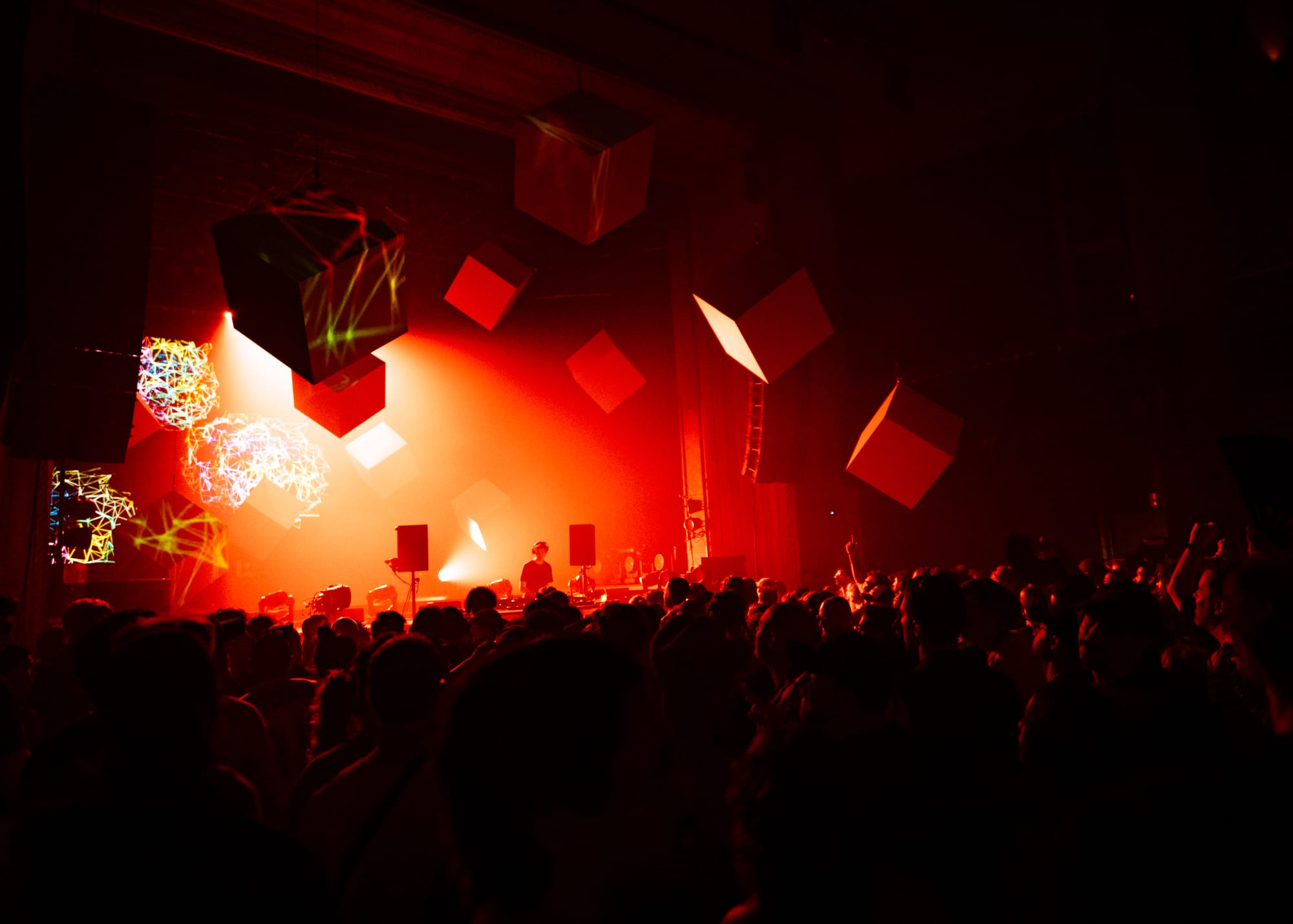
**Ben UFO, photo by Nina Gibelin Souchon.*
A genuinely live electronic set contains decisions that have not yet been made. Sequences can drift. Machines can misbehave. Images can respond to sound. An artist can stretch, dismantle or abandon a piece according to what is happening in the room. The risk may be less visible than a guitarist breaking a string, but it is still there.
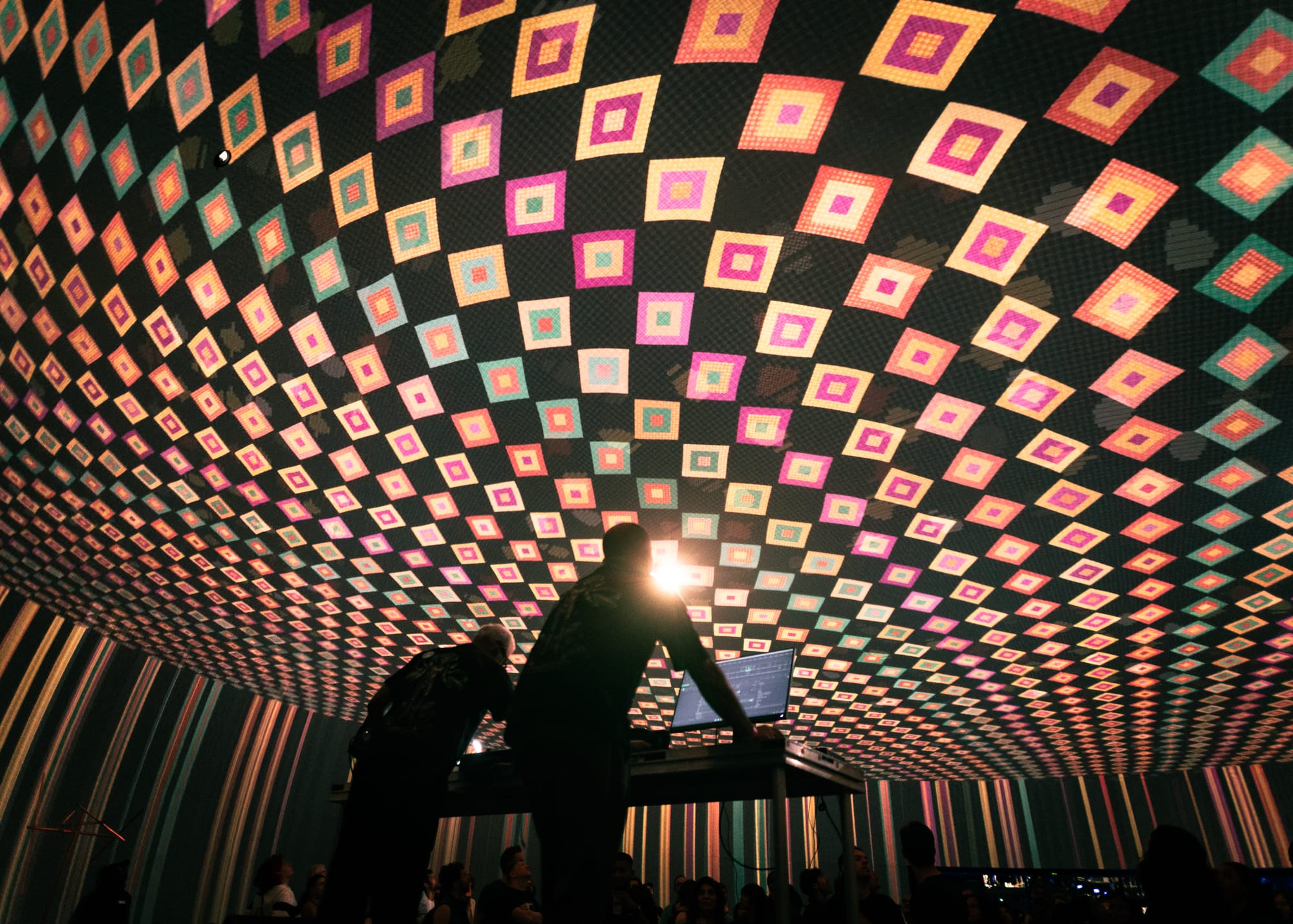
**Elsewhere in India ft. Murthovic & Thiruda, photo by Nina Gibelin Souchon.*
The best test is simple: **Does the performance require this artist, in this place, at this moment?**
At MUTEK, the answer is repeatedly yes.
Montreal artist **Honeydrip** used contact microphones placed against her throat, capturing the physical vibrations of her breath and feeding them through a system of tubes, loops and electronics. The method may sound closer to a university research project than a club set. In practice, it produced bass-heavy music that was deeply physical.
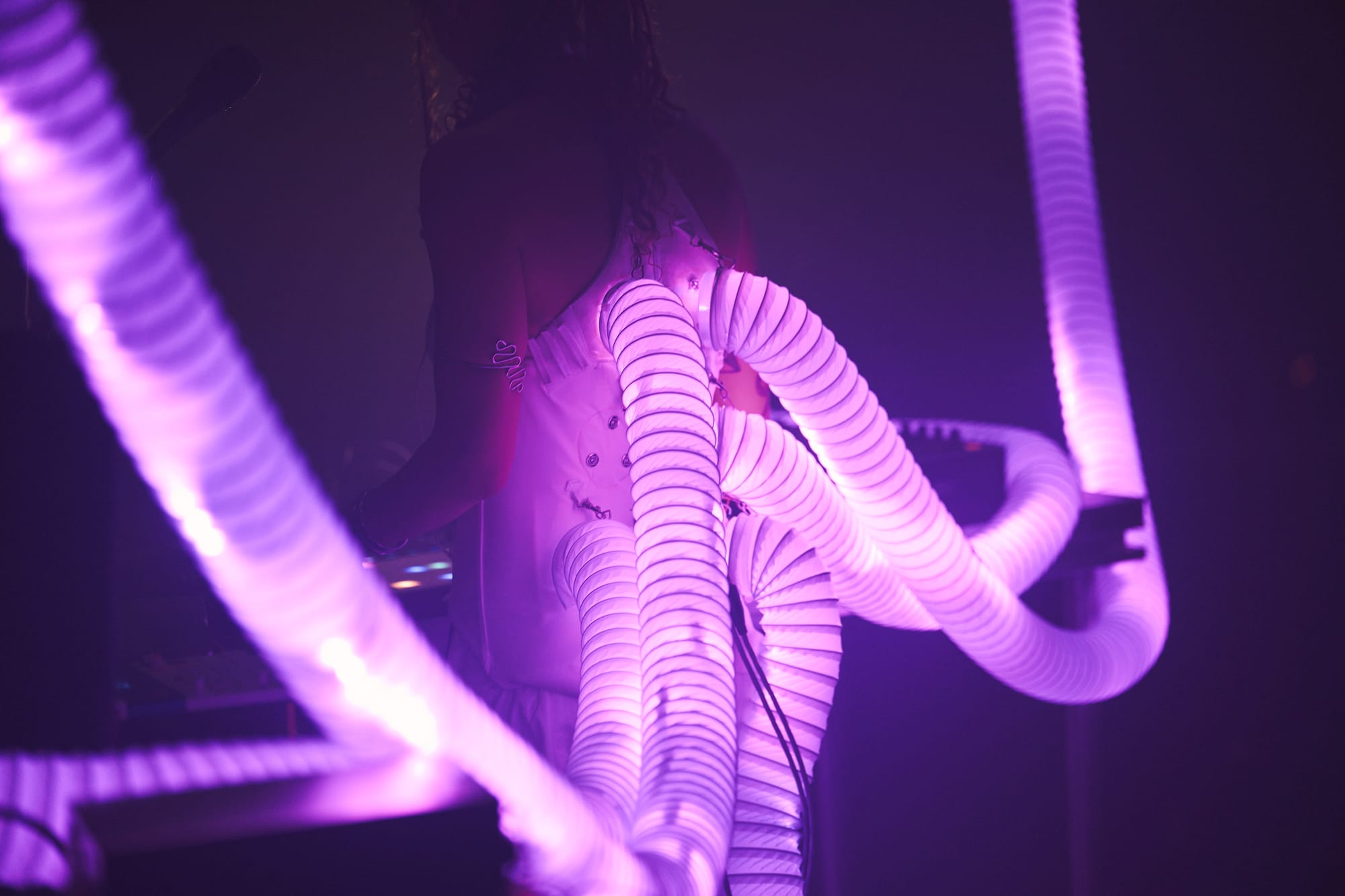
**Honeydrip, photo by Bruno Aïello Destombes.*
Elsewhere, Japan’s **ELECTRONICOS FANTASTICOS!** constructed playable instruments from discarded CRT televisions, electric fans and barcode scanners. The appliances were not stage decoration. They became an “electromagnetic punk” orchestra, turning technological obsolescence into something noisy, funny and unexpectedly alive.
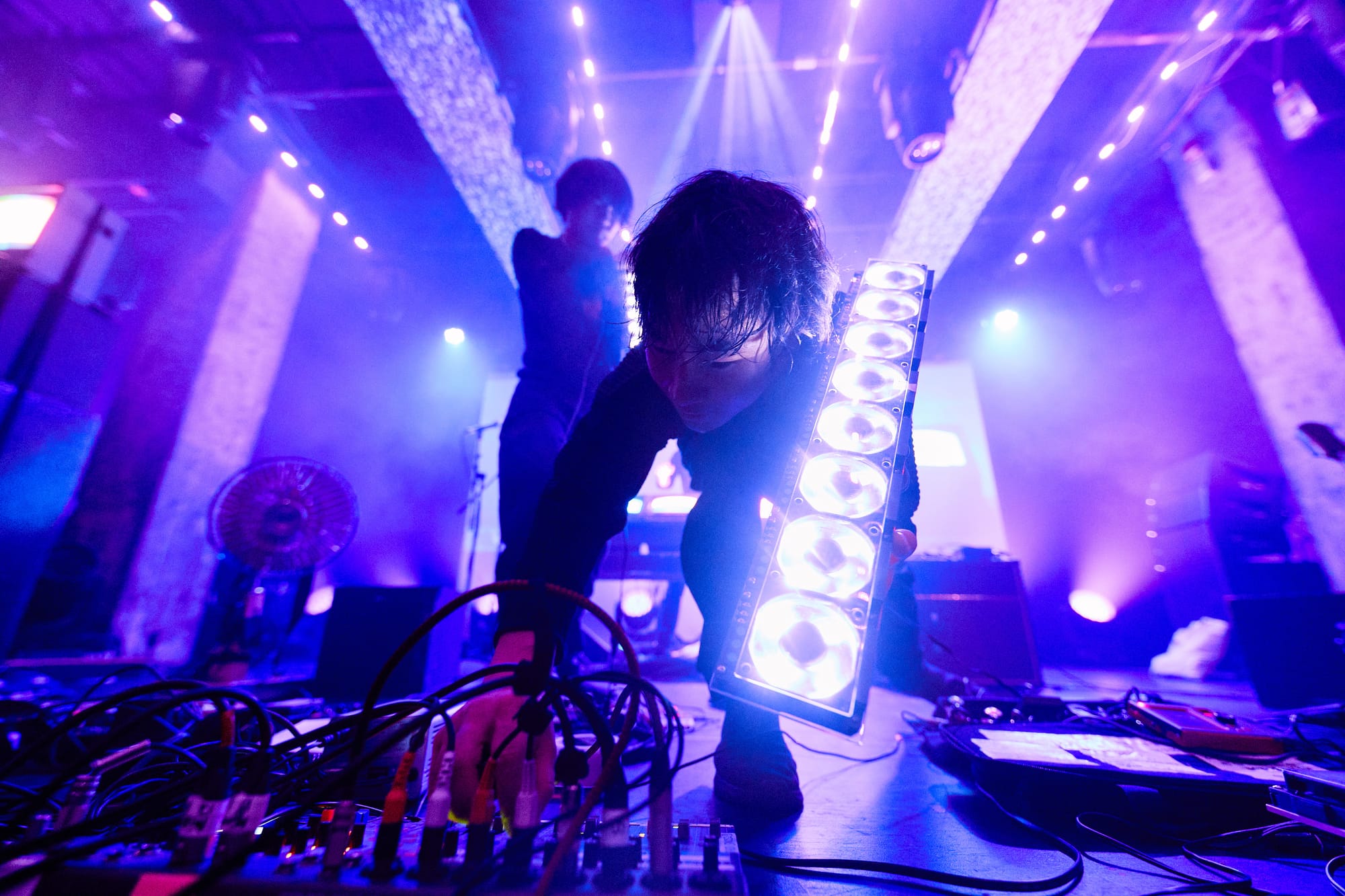
**ELECTRONICOS FANTASTICOS! at MUTEK, photo by Vivien Gaumand.*
Mexican producer **Debit** rebuilt material from *Desaceleradas* using accordion, modular synthesis and tape decks. Her live A/V performance connected cumbia rebajada, decaying magnetic tape and archival footage of Monterrey’s Kolombia dance culture. The record provided the source material, but the performance became another object entirely.
**Debit at MUTEK, photo by Nina Gibelin Souchon.*
**Jump Source** (the Montreal duo of Priori and Patrick Holland) reworked their album *Fold* live rather than reproducing it. **JakoJako** sculpted modular sequences whose irregular timing and unstable patterns left space for surprise.
**JakoJako at MUTEK, photo by Vivien Gaumand.*
**Super Galaxy Meow Meow** used laser beams to trigger sound.
**Super Galaxy Meow Meow, photo by Bruno Aïello Destombes.*
**Tristan Perich** and organist **James McVinnie** placed the Maison symphonique’s pipe organ in conversation with a 100-speaker system.
**Tristan Perich, photo by Bruno Aïello Destombes.*
**Kali Malone** played the Maison symphonique’s pipe organ, working with sustained tones, resonance and the accumulated history of an ancient instrument.
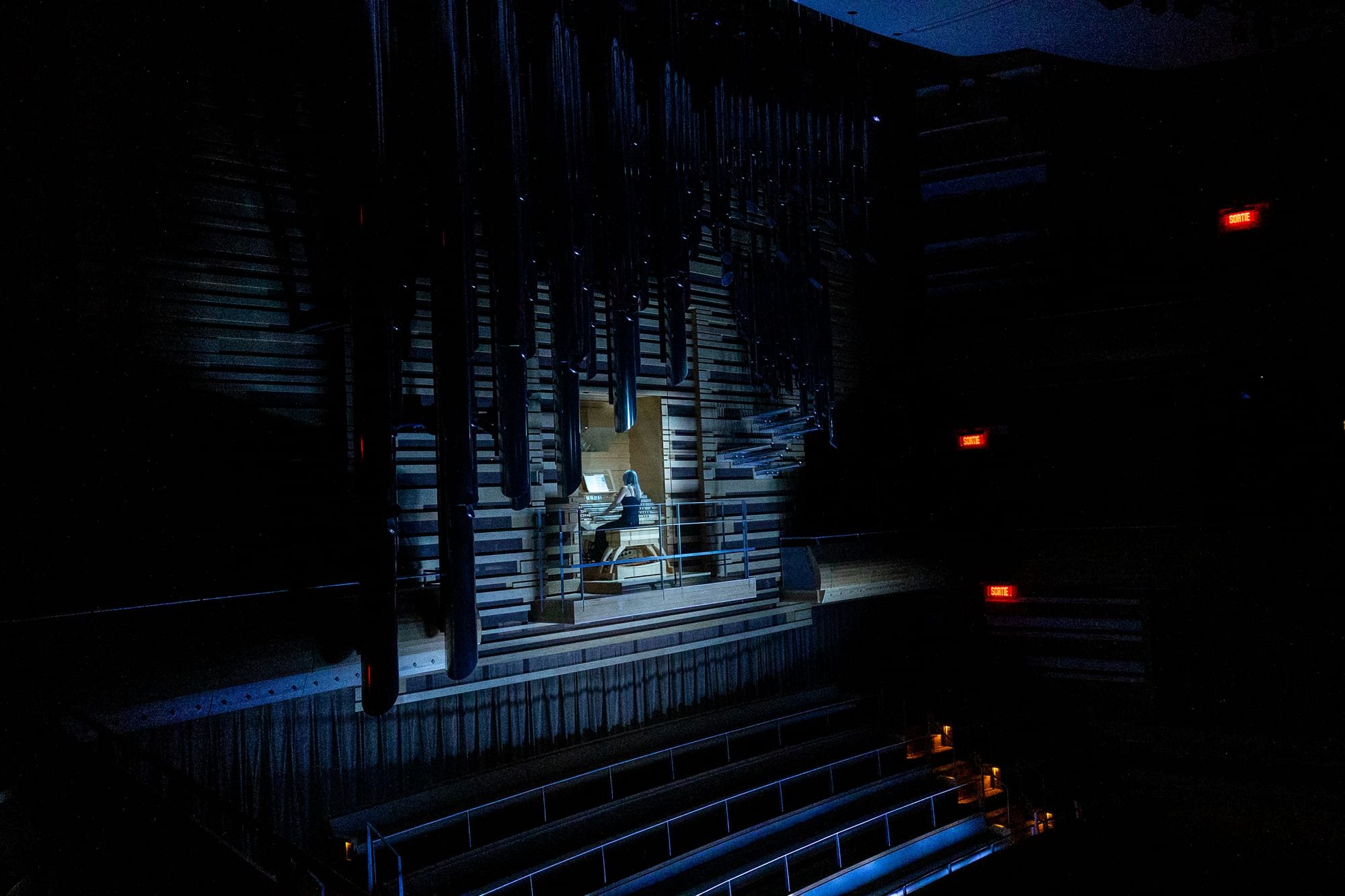
**Kali Malone at MUTEK, photo by Frédérique Ménard-Aubin.*
**Ida Toninato** explored sensuality and saxophonic rhythm cycles in a shapeshifting performance combining electronic beats, voice, and guttural brass soundscapes.
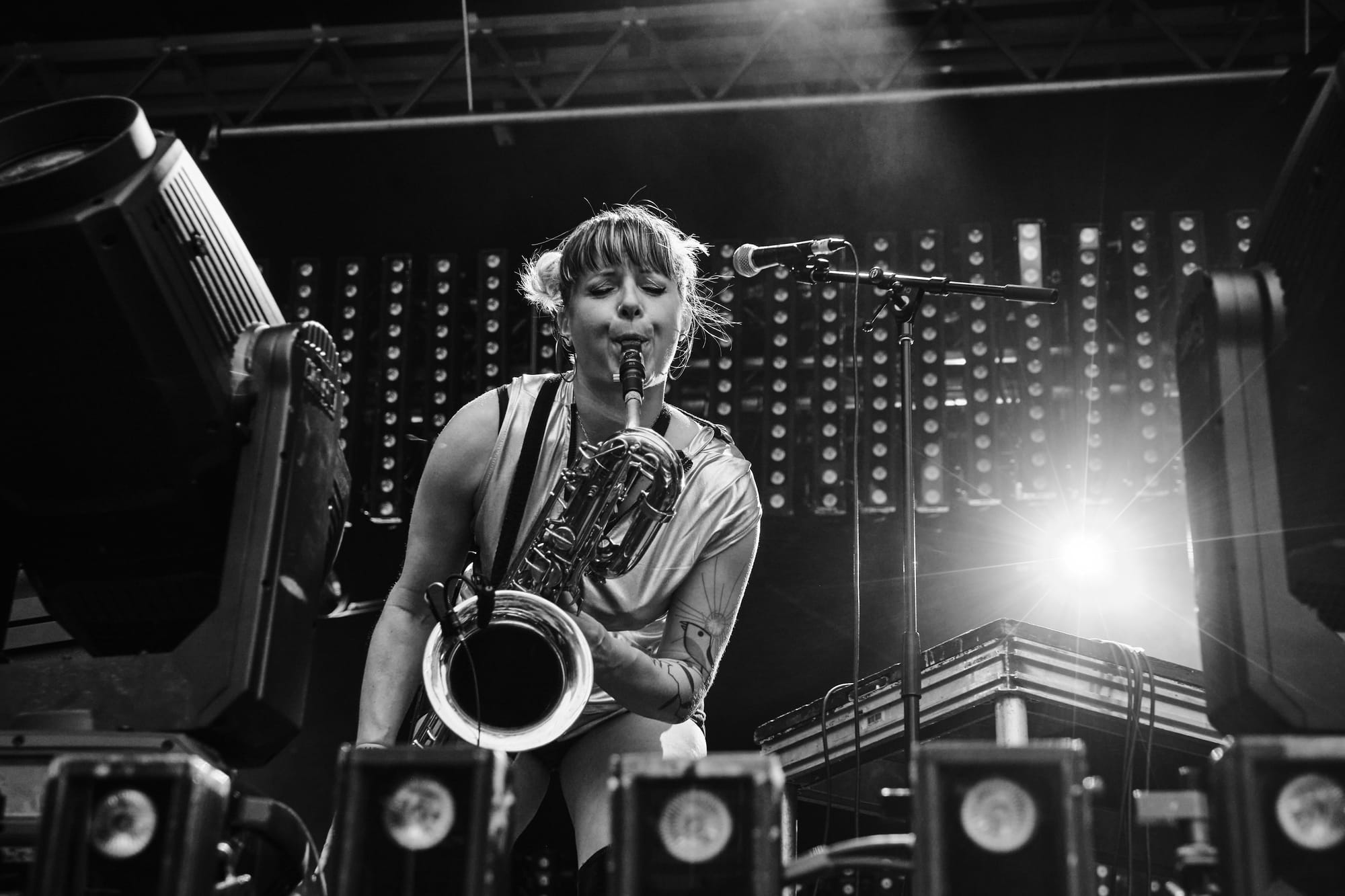
**Ida Toninato at MUTEK, photo by Vivien Gaumand.*
The venue is never just a container for corralling audiences, it can be an instrument too.
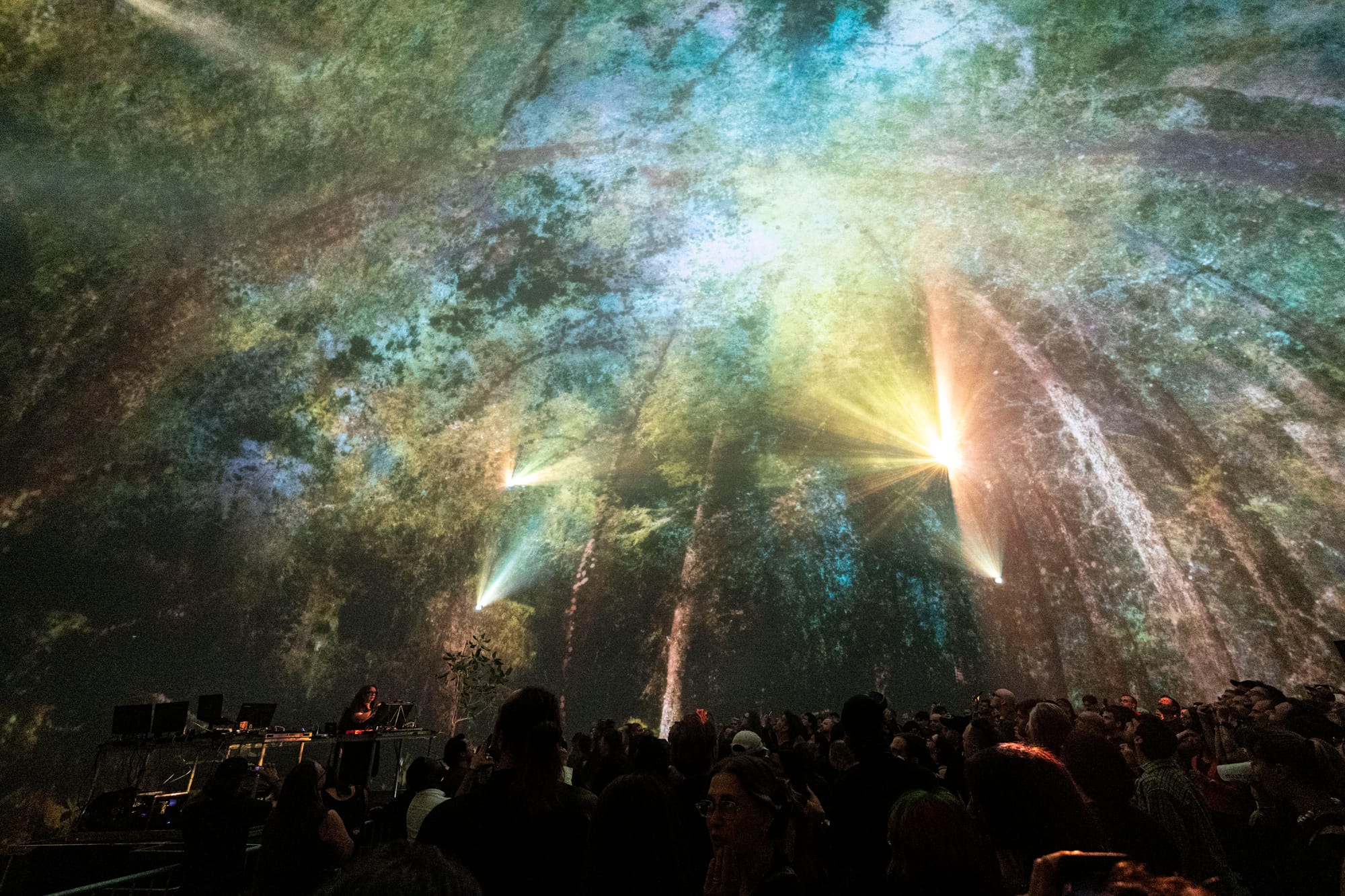
**Nelly-Eve Rajotte at MUTEK, photo by Frédérique Ménard-Aubin.*
---
### Boost Fan Engagement With New Instagram Updates
URL: https://www.hypebot.com/boost-fan-engagement-with-new-instagram-updates/
Last updated: 2026-09-22T12:11:31.000Z
[**Instagram**](https://www.hypebot.com/tag/instagram) continues to evolve, and keeping up with the platform's features is [crucial for anyone marketing music](https://www.hypebot.com/instagram-is-a-hub-for-music-superfandom-luminate-study-shows/). Now Instagram is rolling out a highly requested update: the ability to add tagged posts directly to your primary profile grid.
For musicians, bands, and live music venues, this update is a powerful shift in how to utilize user-generated content (UGC) to market as well as a real time saver.
### **What is the New Instagram Tagged Posts Grid Feature?**
Previously, when a fan, venue, or collaborator tagged you in an Instagram post, that image or video was relegated to the secondary "Tagged" tab on your profile — a section many casual fans never click on.
With this update, users have the option to push these tagged posts onto their primary profile grid, making them just as visible as original content. This can turn a main feed into a dynamic, collaborative space.
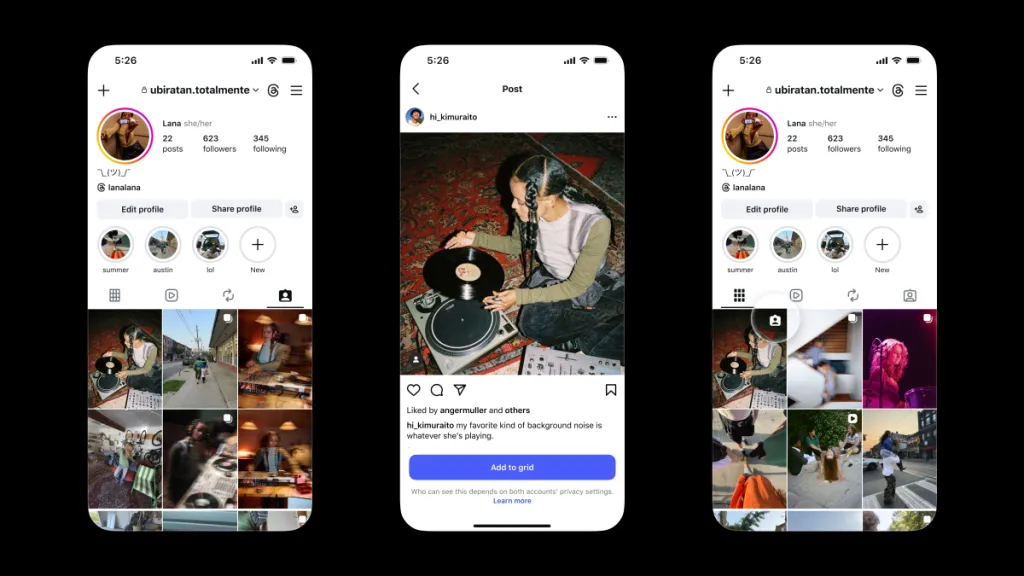
### **How Artists and Venues Can Use Tagged Posts for Marketing**
**Elevate Fan-Generated Content**
Nothing creates FOMO quite like seeing a crowd having the time of their lives. If a fan posts a high-quality video of your encore or a great shot of the mosh pit at your venue, you can now add that post to your main grid. This rewards the fan by amplifying their content and shows future ticket-buyers what your live experience looks like.
**Maximize Press and Promoter Tags**
When a music blog reviews your new single or a festival promoter announces the lineup, they will tag the artists. Adding these posts to your grid serves as instant social proof. It shows visitors that industry tastemakers are talking about you, without you having to screenshot and repost their content.
**Venue and Artist Cross-Promotion**
Venues and artists can build stronger local ecosystems. If a band takes a great photo in the green room and tags the venue, the venue can add it to their grid. Conversely, if a venue posts professional shots of a performance, the artist can integrate those directly into their main feed. It’s seamless, frictionless cross-promotion.
**+Read more:** [*"Fan Appreciation Isn't a Tactic. It's a Mindset."*](https://www.hypebot.com/fan-appreciation-isnt-a-tactic-its-a-mindset/)
### **More Recent Instagram Updates to Add to Your Strategy**
To get the most out of the algorithm, combine the tagged grid feature with other recent tools Instagram pushed out for creators:
**Expanded Collab Posts**
You can now invite multiple collaborators on a single post. If you're doing a co-headlining tour or part of a festival, create a single tour announcement post and invite the other bands and the promoters as collaborators. The post will appear on everyone's feeds, combining your audiences and compounding your engagement.
**Broadcast Channels for Superfans**
Broadcast channels act as a one-way messaging tool where artists can send text, voice notes, and polls directly to followers who opt-in. Use this to share pre-sale codes, early demo leaks, or exclusive merch drops directly with your most engaged fans.
**Profile Notes**
The newish "Notes" feature short, 60-character thought bubbles at the top of the inbox and profile) is great for quick calls to action. Venues can use this to announce "Low Ticket Warnings," while artists might use it to say "New Music at Midnight" to keep top-of-mind awareness.
### **Hypebot’s Bottom Line**
Instagram’s decision to let users add tagged posts to their primary grid is a real win for grassroots music marketing because it seamlessly turns fan excitement and press coverage into front-page marketing.
By combining this new level of user-generated content with Collab posts and Broadcast Channels, artists and venues can spend less time struggling to create original content and more time amplifying the communities that already surround them.
***+Read more:*** [*"Instagram Is a Hub for Music Superfandom, Luminate Study Shows"*](https://www.hypebot.com/instagram-is-a-hub-for-music-superfandom-luminate-study-shows/)
---
## Hypebot
Essential news & insights for artists and live music pros.
Sign up for free weekly content delivered to your inbox
Subscribe
Email sent! Check your inbox to complete your signup.
### When Ticketing Fees Grow, What Do Festivals Get in Return?
URL: https://www.hypebot.com/when-ticketing-fees-grow-what-do-festivals-get-in-return/
Last updated: 2026-09-22T12:10:26.000Z
*By *Ciara Azam*, Founder of* [***Eventist***](https://www.eventist.ca/?ref=hypebot.com)
Every [festival](https://www.hypebot.com/tag/festivals/) organizer can tell you their ticket price to the cent. Almost none can tell you what their [ticketing](https://www.hypebot.com/us-fans-love-live-events-but-trust-the-ticketing-system-least/) platform costs them per ticket, because the number hides inside a percentage.
I run [a ticketing company](https://www.eventist.ca/?ref=hypebot.com) in Canada, so weigh what follows accordingly. The figures are published Canadian rates in CAD as of September 2026, and the currency does not matter. The "shape" of the fee does.
## Why a percentage is the wrong "shape"
Most large platforms charge a percentage of the ticket price plus a fixed amount per ticket, then card processing on top. In Canada, that looks like 3.5% plus $1.29, or 2.1% plus $0.99, or 2.5% plus $1.69, depending on the platform. A percentage makes sense when someone earns a commission on a sale they made happen.
That is *not* what a ticketing platform does for a festival. Nobody discovers your festival by browsing a ticketing site. You booked the lineup, rented the field, bought the ads and built the mailing list. The platform served a page, took a card, sent a QR code and scanned it at the gate.
That work costs the same whether the ticket is $35 or $250, so a fee that climbs with the price is charging you more for the same thing because you were able to charge your fans more. It also means the ticketing line in your January budget is wrong by August after two price changes.
## The example
Take a $120 weekend pass. On a 3.5% plus $1.29 model the platform fee is $5.49, and with 2.9% processing the organizer gives up $8.97 before seeing a dollar. On a flat model, which is what Eventist charges at 85 cents per ticket, processing is $3.78 and the total is $4.63\. Now change the price and watch what moves.
| Ticket price (CAD) | Percentage model platform fee (3.5% + $1.29) | Percentage model total with 2.9% processing | Flat model platform fee | Flat model total with 2.9% + $0.30 processing |
| ------------------ | -------------------------------------------- | ------------------------------------------- | ----------------------- | --------------------------------------------- |
| $35 day pass | $2.52 | $3.54 | $0.85 | $2.17 |
| $120 weekend pass | $5.49 | $8.97 | $0.85 | $4.63 |
| $250 VIP pass | $10.04 | $17.29 | $0.85 | $8.40 |
Processing scales with price on both sides because the card networks charge a percentage, and that is not the platform’s doing. Look at the platform fee column. On the percentage model it climbs from $2.52 to $5.49 to $10.04\. On the flat model it stays at 85 cents.
So ask the obvious question. If you are paying $17 in fees on a $250 pass, what are you getting for it? A QR code. The same QR code the $35 ticket got for $3.54.
***+Read more:*** [*"Concert Tickets Are Apparently the New Airline Miles"*](https://www.hypebot.com/concert-tickets-are-apparently-the-new-airline-miles/)
## Ticketing should do more than sell a ticket
The product has barely changed in thirty years. In the 1990s you got a printed ticket with a barcode. Today you get an email with a QR code. The scan is the same scan and the fee model is the same model, and that is what a market run by a handful of monopolies looks like. Regulators in more than one country have taken them to court over it, and still nothing pushes the ticket to do more.
It could do a lot more.
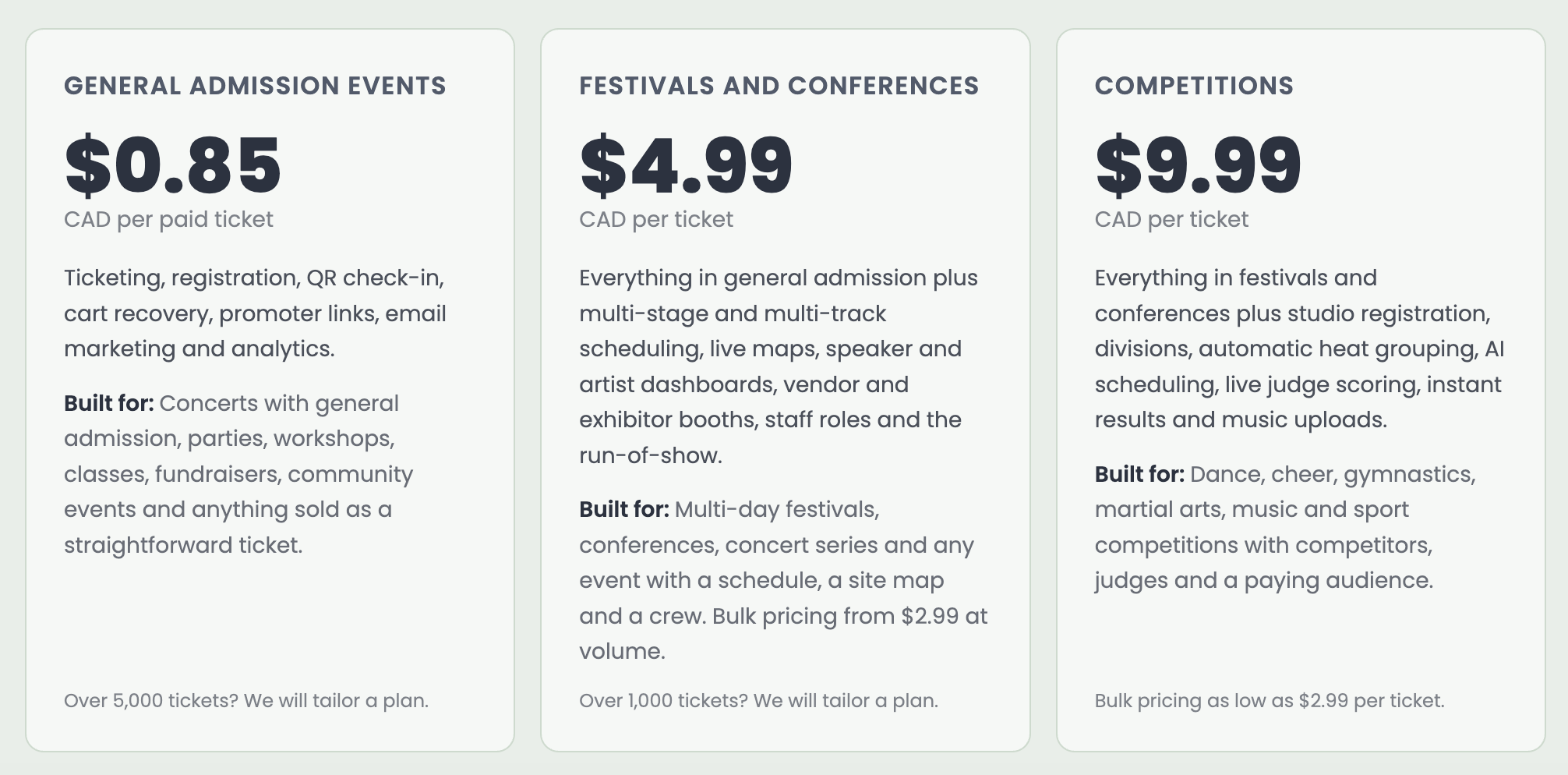
**Screenshot of static pricing, courtesy of Eventist.*
Live events are a $1.5 trillion global market by most estimates, and the sale is a sliver of what happens at one.
The schedule across four stages, the vendor map, the volunteer shifts, the crew run of show, the medical tent, the artist advance, the attendee who wants to know when their set starts: at most festivals all of that still lives in spreadsheets and group chats, while the ticket, the one thing every single attendee touches, does nothing after the scan.
There is room for dozens of companies to solve those problems. The fastest way to get them is for organizers to treat ticketing as software they buy, priced by the unit consumed, and to say so when a platform quotes them a percentage.
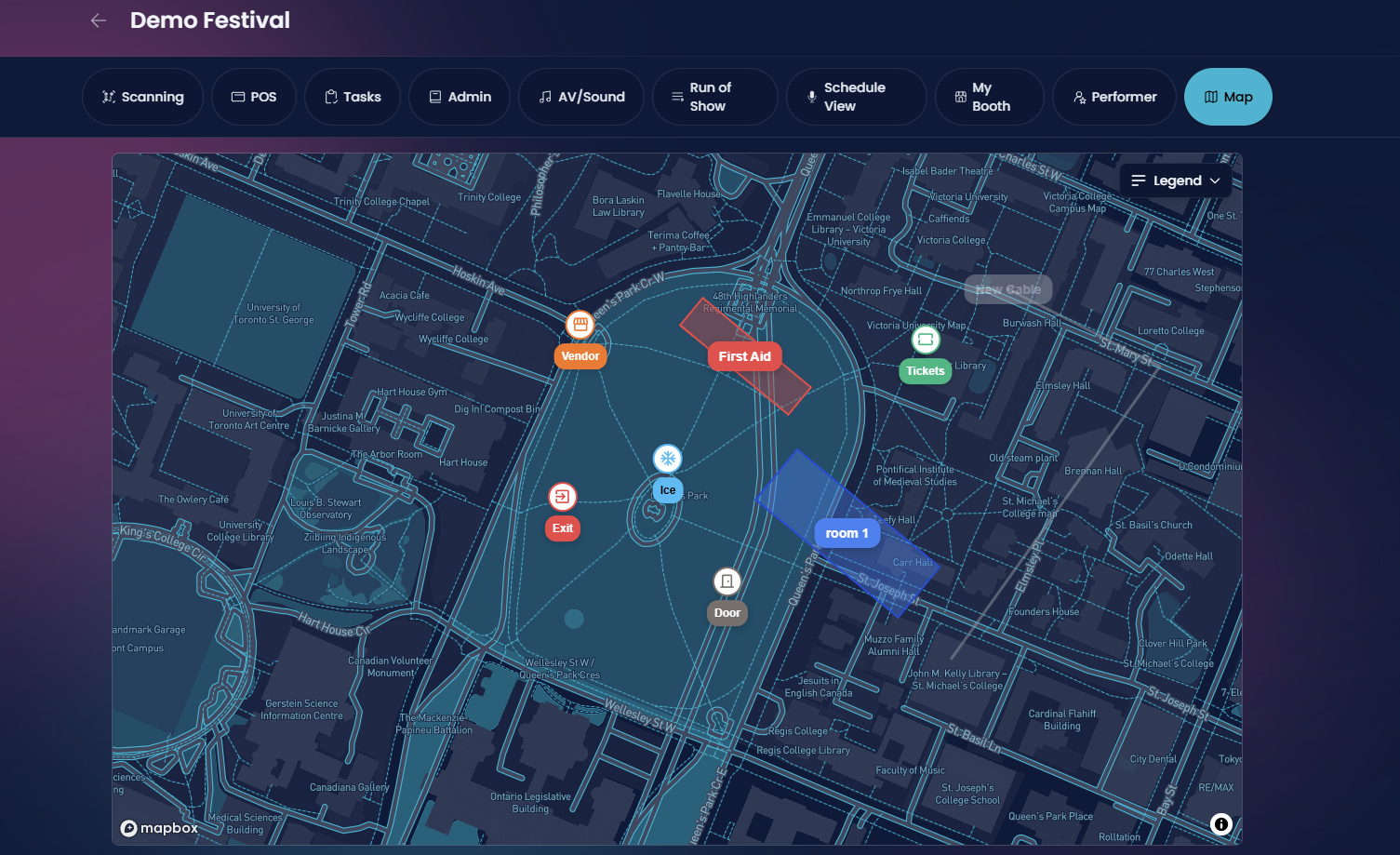
**A festival site map inside a ticketing platform, with the vendor booths, first aid and gates the ticket unlocks, courtesy of Eventist.*
Change is coming.
It already has, at the edges. Flat fee platforms exist now, Eventist among them in Canada and others elsewhere, and the gap between $17 and 85 cents on a VIP pass is not something an organizer forgets once they have seen it. More platforms let you export every attendee and every order, so the fan stays yours.
Regulators are finally asking who owns the venue, the promotion and the ticket at the same time. And organizers are asking the question this piece is built on: what does it actually cost you to sell one ticket, and why should I pay more for the expensive one?
Keep asking it. The answer tells you which platforms think you are their customer, and which think your fans are.
***+Read more:*** [*"How to Build a Greener Concert Industry"*](https://www.hypebot.com/how-to-build-a-greener-concert-industry/)
---
**Ciara Azam* (she/her) is the Founder of* [***Eventist***](https://www.eventist.ca/?ref=hypebot.com)*, a bootstrapped, woman-founded festival and event ticketing platform based in Kitchener, Ontario, founded in 2021\. She writes about the economics of independent events and how organizers can keep more of what they earn.*
### Official Charts Opens Its Data Vault With New PRO Platform
URL: https://www.hypebot.com/official-charts-opens-its-data-vault-with-new-pro-platform/
Last updated: 2026-09-22T11:20:42.000Z
The **Official Charts Company** has launched [**Official Charts PRO**](https://www.officialcharts.com/pro/?ref=hypebot.com), a new intelligence platform designed to help labels, publishers, managers, distributors, and artists make more informed release and marketing decisions.
Described as the largest technology investment in the organization’s history, PRO opens more of the data behind the UK’s official charts to paying subscribers. The platform draws on information supplied directly by streaming services and retailers, covering more than 99% of [UK](https://www.hypebot.com/tag/uk/) music consumption.
Users can follow performance across artists and tracks, examine daily streaming activity and study wider changes in how music is being consumed. Customizable dashboards, automated reports and expanded search tools allow clients to analyze longer periods and compare campaigns.
PRO also includes an AI-powered Smart Insights feature that summarizes current chart and market performance. A separate Story Builder tool turns selected data into shareable presentations.
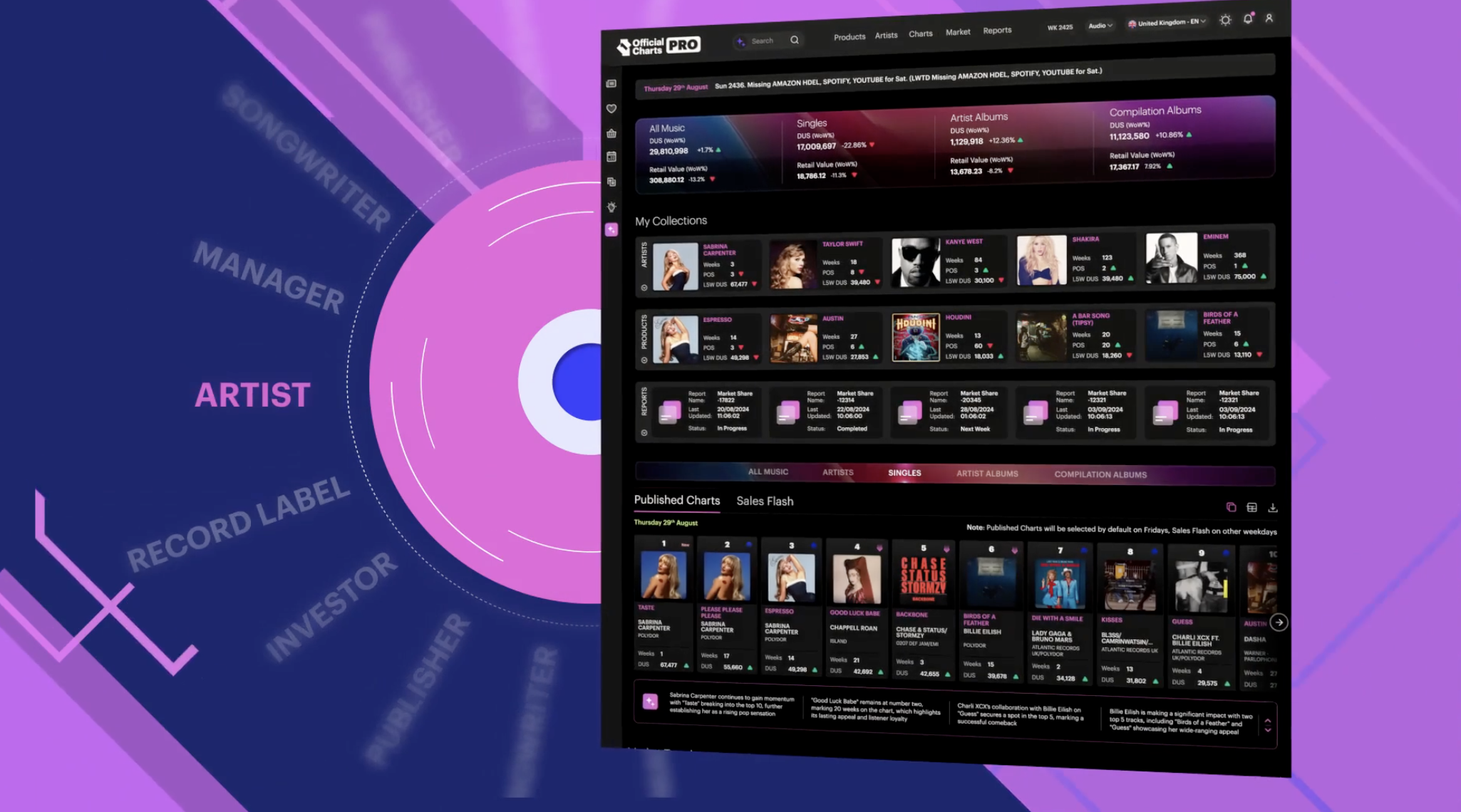
***+Read more:*** [*"What’s in a Number? Why Music Charts Still Matter in the Streaming Era"*](https://www.hypebot.com/whats-in-a-number-why-music-charts-still-matter-in-the-streaming-era/)
## Physical Sales Still Create No. 1 Albums
Some of the initial data released alongside PRO underlines how much [physical products](https://www.hypebot.com/tag/merch) continue to matter, particularly when an album is competing for the top of the chart.
According to the Official Charts Company, 65% of the albums that reached No. 1 in the UK during 2025 did so in a week when physical formats accounted for the majority of their chart units. Across all of the year’s No. 1 albums, physical sales generated an average of 60% of first-place chart units.
Physical formats also accounted for more than 20% of the total chart units generated by Taylor Swift, Sam Fender and Oasis during the year. The average among 2025’s Top 20 acts was 11%. That makes vinyl, CDs and other physical editions more than fan merchandise. For artists capable of organizing preorders, limited editions or direct-to-fan campaigns, they can become a strategic part of a concentrated chart push.
## New Artists Are Still Reaching the Top 20
The company’s figures also provide some encouragement for developing artists. One-third of the UK’s Top 20 singles of 2025 came from artists who had begun releasing music within the previous five years. Meanwhile, the proportion of Top 20 artists whose first charting single had arrived during the previous three years increased from 10% in 2023 to 30% in 2025.
Those numbers do not erase the discovery challenges facing independent and emerging artists. They do suggest, however, that the upper reaches of the UK singles chart have not become entirely closed to newer voices.
PRO arrives as artists and their teams are being asked to make increasingly complicated decisions about release timing, formats and marketing budgets. More detailed data can help — but access to that intelligence will itself become another campaign expense, particularly for smaller operations.
Official Charts PRO launches with UK and Irish music data. UK home entertainment data will follow on September 24\. Subscription plans will be available for businesses of different sizes, although public pricing was not included in the launch announcement. More information and demonstration bookings are available through the [**Official Charts PRO website**](https://www.officialcharts.com/pro/?ref=hypebot.com).
---
*Get the latest Live Music & Industry News updated continuously from across the web under the Hypebot Industry News tab* [*here*](https://www.hypebot.com/music-industry-news-feed/)*.*
## Hypebot
Essential news & insights for artists and live music pros.
Sign up for free weekly content delivered to your inbox
Subscribe
Email sent! Check your inbox to complete your signup.
### Winamp Is Back. Babe, Fire Up Some Orbital.
URL: https://www.hypebot.com/winamp-is-back-babe-fire-up-some-orbital/
Last updated: 2026-09-21T20:37:58.000Z
**Winamp** is [coming back](https://winamp.com/press/winamp-announces-strategic-partnership-with-deezer-to-power-the-next-generation-of-its-iconic-music-player?ref=hypebot.com). Somewhere, an old folder of badly labeled MP3s just felt a tremor.
The desktop music player that helped define the early digital-music era is scheduled to return in the first half of 2027 through a new partnership with [**Deezer**](https://www.hypebot.com/tag/deezer/). The reboot will give Winamp its own premium subscription service, powered by Deezer’s streaming technology and licensed global catalog.
But that's not all. Here's what Winamp plans to build *around* that catalog...
According to the [company’s announcement](https://winamp.com/press/winamp-announces-strategic-partnership-with-deezer-to-power-the-next-generation-of-its-iconic-music-player?ref=hypebot.com), the new player will **bring streaming together with local music files, internet radio, podcasts** and **personal cloud collections.** It is also promising a highly customizable interface, social features and new ways to [discover](https://www.hypebot.com/tag/discovery/) and organize music. (Pricing and supported platforms have not yet been revealed.)
In other words, Winamp does not want to return as one more [streaming app](https://www.hypebot.com/tag/streaming-music/) with a familiar logo pasted on top. It wants to revive the idea that a music player can feel like *yours*.
Of course, listeners got pretty used to building digital libraries song by song, rearranging their files, and installing skins to customize the look of their player before streaming services like Spotify and Pandora came along. Your dashboard was your little spaceship command center.
Streaming made music vastly easier to access, but it also made listening interfaces all look so boring and similar: search bar, recommendation feed, algorithmic playlist, repeat. Hence, Winamp’s bet is that some listeners miss having more control over the room where all that music lives.

**+Read more:** [*"A Guide to Pitching Music to Independent Spotify Playlists"*](https://www.hypebot.com/a-guide-to-pitching-music-to-independent-spotify-playlists/)
The partnership also says something about the streaming business in 2026\. Deezer will supply the catalog and technical infrastructure, while Winamp keeps control of the product, brand and subscriber relationship. As licensed catalogs become broadly similar, the next competition may be less about *what* a service carries than how it lets people collect, navigate and relate to it.
For artists, another branded doorway into essentially the same streaming ecosystem does not automatically mean better economics or stronger fan relationships. Winamp says its subscription model will be “fundamentally different,” but has not yet explained what that means. Those details will determine whether this is a real alternative or simply Deezer wearing one extremely nostalgic skin.
The classic desktop player is not disappearing. Winamp says it still has more than 40 million active users worldwide, and plans to add the new subscription service to that app after the next-generation player launches.
There is reason to keep one eyebrow raised. Winamp [announced another ambitious streaming-era revival in 2018](https://techcrunch.com/2018/10/15/winamp-returns-in-2019-to-whip-the-llamas-ass-harder-than-ever/?ref=hypebot.com), promising a 2019 release that never materialized. This time, at least, it has a partner capable of supplying the licensing and streaming machinery.
So yes, Winamp may be back. But like, in 2027...
In the meantime, fire up *In Sides* and start looking for your favorite skin.
***+Read more:*** [*"Why I Built a Music Discovery Platform That Finds, Not Buries, Niche Artists"*](https://www.hypebot.com/why-i-built-a-music-discovery-platform-that-finds-not-buries-niche-artists/)
---
## Hypebot
Essential news & insights for artists and live music pros.
Sign up for free weekly content delivered to your inbox
Subscribe
Email sent! Check your inbox to complete your signup.
### A Rising Tide Lifts All Boats
URL: https://www.hypebot.com/a-rising-tide-lifts-all-boats/
Last updated: 2026-09-21T18:44:47.000Z
*By *Dmitri Vietze*, Founder of the* [***Music Tectonics Conference***](https://www.musictectonics.com/?ref=hypebot.com)*,*
Not a music industry conversation goes by without someone bringing up the disruption that came from peer-to-peer music sharing and the switch to music streaming.
[Technology](https://www.hypebot.com/tag/tech/) changed what was possible and the recording industry lost its ability to monetize song listening. It took years to put Humpty Dumpty back together again, first by developing a market for the limitless jukebox of Spotify and then by inventing licensing models for social media platforms that became the new railway for music sharing.
All of these changes disconnected artists and labels from fans and listeners and, through the process, lowered the monetary value of every listen and lowered the amount consumers spent on listening to recorded music. Some of these changes pushed music to the background. So it makes sense that the music industry has held technology at arm’s length, seeing it as deflating the economic value of music, or as a form of arbitrage pushing payment for music from creators and rightsholders to platforms where listeners gather.
But as **Jim Collins**, author of ***Good to Great***, puts it: technology is an accelerator. The problem is not technology; it’s the value proposition that has been negotiated or sidestepped. Change the value proposition, and technology can accelerate growth of the value of music and the music market as a whole.
Certain music technologies have been created specifically with revenue in mind, and when you put it all together, they become an engine for growing the size of the music industry. Sure, streaming continues to grow industry revenue and live performance doubles the market size. But collecting all that revenue is not as straightforward as it could be.
Plus, just as technology has accelerated the fragmentation of artist-fan connections, it can also speed up its reunification, by triggering more engagement, and new products and revenue streams that increase the lifetime value of music fans.
I’ve identified 8 categories of emerging technology that can help music companies grow their revenue and in the process grow the total market for music.
## **1\. Catalog Value.**
Increasing [the value of songs and recordings](https://www.hypebot.com/tag/catalog/) starts with understanding how much they are worth and whether they are currently undervalued in regards to possible or forthcoming revenue streams. A healthy catalog exchange market allows for more money to flow into the music industry; allowing artists or their estates to cash out or share investment in their songs or recordings, which is money that can be re-invested in music or at least create long term incentives for those just getting started in creating [musical IP](https://www.hypebot.com/artists-dont-have-a-content-problem-they-have-an-ip-problem/).
Technology companies and key players in this category might include streaming audit platforms, catalog valuation advisors and tools, royalty revenue forecasting tools, metadata optimization, royalty advance & catalog funding platforms, and music IP investment funds, some of which build their own tech for catalog valuation.
## **2\. Revenue Recovery.**
With all the fragmentation between artists, labels, DSPs, licensors, pirates, and fans, the [music revenue](https://www.hypebot.com/tag/revenue/) framework has a lot of leaks. Whether you call it a black box or breakage, part of growing the value of music is collecting the correct amounts from the relevant parties and paying them to the right rightsholders.
These types of tools help us capture more of the value that has been left on the table — some even track down money from under the table: Royalty gap finders, rights matching and recognition engines, collection society technology, publishing administration platforms, and royalty accounting software.
***+Read more:*** [*"The Chart Is the Scoreboard. The Catalog Is the Score."*](https://www.hypebot.com/the-chart-is-the-scoreboard-the-catalog-is-the-score/)
## **3\. Distribution and Artist/Label Services**
For a long time, [independent artists](https://www.hypebot.com/tag/indie-artists/) without a label (and independent labels without distribution deals), were left without the opportunity to monetize their music. As we look at growing the value of music, we have to include these platforms that have opened the doors to more music being released and more listening and more music use.
While some argue that [distribution](https://www.hypebot.com/tag/distribution/) has become commoditized, you have to admit more differentiation has been introduced and that has the potential to increase the market. These tech companies include enterprise label & distributor delivery platforms, independent artist distributors, and independent label back-office software. And distributors play a key role in scalable artist and label services.
## **4\. Licensing**
Remember when television had a renaissance with incredible soundtracks leading to the growth of sync? And advertisers followed suit with licensing top tracks to sell products? In walked a rebirth of coffee shops, fitness apps, meditation software, yoga studios, and gaming wanting to spice up experiences with the application of music. Dare we bring up YouTube, Instagram, Facebook, and TikTok? [Sync](https://www.hypebot.com/tag/sync-licensing/) has remained a small share of total revenue, yet music is placed everywhere.
Companies trying to collect more revenue from licensing include curated premium sync libraries, subscription-based content creator licensing platforms, social platform and UGC licensing technology, and new and specialized DSPs. We might also include new audio-visual formats that are interactive and music-driven (like remix apps that let fans share videos based on their creations).
## **5\. AI Licensing**
Given the unique characteristics of [generative AI](https://www.hypebot.com/tag/ai/), I’ve pulled this as its own category of licensing, especially since the market rates and use cases are not clear yet. As a result, there is a whole industry sector emerging to address the specific needs of revenue collection and licensing for generative AI training and licensing.
If the music industry gets this right, there is the potential for a huge amount of new revenue for the use of music to train generative AI models. These companies include licensed AI music training platforms, generative music attribution infrastructure, licensed generative music creation tools, and voice and likeness licensing platforms.
***+Read more:*** [*"Running the Numbers on '1,000 True Fans'"*](https://www.hypebot.com/running-the-numbers-on-1-000-true-fans/)
## **6\. Fan Growth**
There’s been tremendous creativity in the tools and platforms to help market songs, tickets, experiences, VIP clubs, and merch. CRMs built for music, tools to pull more value out of audience segmentation, fan data capture and drops features, and anything that helps artists, managers, and labels re-connect with fans make up this category.
Fan data and CRM platforms, release drop and fan list marketing tools, cross-platform artist analytics, and social music marketing automation tools are all on the rise.
## **7\. Fan Revenue**
It appears that many fans are willing to spend money on music, beyond their monthly subscription fee and tickets for performances. Direct-to-fan e-commerce optimizations continue to innovate. These include artist-owned storefront platforms, label-backed fan community apps, and artist membership, micro-patronage, and subscription tools.
## **8\. New Music Products**
When it comes to finding new products for fans to buy, there is a lot of innovation in music tech.
The vinyl resurgence is evidence of listeners’ desire to purchase and own something. New form factors of physical goods is the tip of the iceberg and artists and labels are finding all sorts of other things to sell and ways to sell them, thanks to new technology, such as music content, sample & beat marketplaces, music talent & services marketplaces, AI audio creation and stem tools, artist legacy and immersive experience companies, and music game and interactive entertainment platforms.
As an industry, we need to move away from solely transactional conversations, towards systems that grow the overall market. Each player in the music ecosystem can benefit from rowing in the same direction. Many of the companies and people who fall in these categories need to talk more. That’s one of the most important things we can do right now, and there are many places evolving to do it.
If we all see our job as growing the TAM, as making the most of tech to make the tide rise for all, we’ll see a healthier music industry and witness the final days of the value gap.
---
**Dmitri Vietze* is the Founder of the* [***Music Tectonics Conference***](https://www.musictectonics.com/?ref=hypebot.com)*, held October 27-29, 2026, in Santa Monica, California; and the CEO of the PR and marketing firm* [***Rock Paper Scissors***](https://www.rockpaperscissors.biz/?ref=hypebot.com)*.*
### What Is an Avatar Concert? Unit1 Is Making Them Easier to Produce
URL: https://www.hypebot.com/what-is-an-avatar-concert-unit1-is-making-them-easier-to-produce/
Last updated: 2026-09-21T18:16:30.000Z
**“Avatar concert”** sounds like one of those music-tech phrases that explains almost nothing. Is it a hologram? A concert film? An AI-generated performer? Are the musicians actually playing live?
The short answer is: it can contain pieces of all those ideas, but the format Unit1 Studio is building is best understood as a hybrid stage production. A digitally constructed version of an artist appears inside a real venue, surrounded by the lighting, sound, scenery and — in [**Unit1’s**](https://unit1.studio/?ref=hypebot.com) model—live musicians that give the show the scale and atmosphere of a concert.
Now the British startup has raised another $20 million, or nearly £15 million, to move that concept closer to a repeatable live business.
[The new investment](https://www.theguardian.com/business/2026/sep/20/uk-startup-15m-investment-concerts-digital-versions-musicians?ref=hypebot.com) includes backing from Balderton Capital, existing investor Mercuri and former U2 manager Paul McGuinness. Unit1 plans to spend the money on research and development as well as the intellectual-property and licensing agreements required to make shows with artists and their estates.
## So, what does an avatar concert actually look like?
The performer the audience sees is a photorealistic “digital double” — a computer-generated version of a real artist. Its movement can begin with motion-capture footage of the artist, or, when recreating an archival performance, with existing footage and performances by actors and musicians whose movements are blended into the finished character.
0:00
/1:42
1×
That digital performer is then presented on a high-definition LED display and integrated into a physical stage show. Lighting extends beyond the screen. Props and scenery help erase its edges. Sound fills the room. Unit1’s proposed shows would place live players onstage beside the virtual star.
The audience is not sitting at home, wearing a VR headset or watching an elaborate movie. People still travel to a [venue](https://www.hypebot.com/tag/venues/), stand or sit together and hear at least part of the music performed in the room. What has changed is the body at the center of the production.
Nor is “hologram” quite the right word, even though it has become the default label for digital resurrections such as **Tupac’s 2012 Coachella appearance**. These productions generally create the *illusion* of a three-dimensional performer through screens, projections and carefully controlled sightlines. The image is not a free-standing person made of light.
[AI](https://www.hypebot.com/tag/ai/) may assist parts of the visual-effects process, but an avatar concert is not necessarily an AI invention. Unit1 describes an end-to-end production involving artist relations, creative direction, performance capture, CGI, staging, venue operations and financing. Its [production partners](https://unit1.studio/?ref=hypebot.com) span LED display technology, lighting, sound, media control and post-production. The effect depends as much on theatre craft as it does on software.
**+Read more:** [*"A Crowded Venue Isn’t the Only Way to Experience Live Music"*](https://www.hypebot.com/a-crowded-venue-isnt-the-only-way-to-experience-live-music/)
## From ABBA Voyage to the local theatre circuit?
[ABBA Voyage](https://abbavoyage.com/?ref=hypebot.com) proved that audiences would buy tickets to see younger digital versions of living artists. It also established an intimidating benchmark: years of development and a purpose-built London arena designed around the illusion.
Unit1 is trying to change that equation. Rather than attach every production to its own permanent building, the company wants to create shows capable of playing existing venues. In theory, the same digital production could also operate in more than one territory at once—something no touring human artist can do.
The company demonstrated its approach with [**KT Tunstall**](https://www.bandsintown.com/a/302-kt-tunstall?utm%5Fsource=hypebot&came%5Ffrom=900). Motion-capture cameras recorded Tunstall as she revisited a performance from roughly 20 years earlier, while the resulting avatar presented her with her current-day appearance. The pilot used advanced CGI, performance capture and high-resolution LED technology to place her digital double into a concert setting.
For living artists who no longer want to undertake a conventional [tour](https://www.hypebot.com/tag/touring/), the format could offer another way to perform. For estates, it could turn a famous concert preserved in an archive into a ticketed live production. For venues, it suggests a new class of show that sits somewhere between a residency, a theatrical production and a touring concert.
## The technology may be easier than the permission
The unresolved questions are not only visual:
- Who approves a deceased artist’s movements, voice and stage dialogue?
- Does a recreation preserve a documented performance, or invent a new one?
- How clearly should audiences be told which elements are live, recorded, reconstructed or generated?
- And how are performers, musicians and estates paid when a show can run without the artist physically present?
Unit1 founder **Barney Wragg** [told *The Guardian*](https://www.theguardian.com/business/2026/sep/20/uk-startup-15m-investment-concerts-digital-versions-musicians?ref=hypebot.com) that the company is working with families and estates and is conscious of avoiding productions that feel exploitative. A carefully authorized recreation of a known performance is very different from making a dead artist appear to say or do something they never did.
For now, Unit1 has announced the investment, not a slate of commercial tours. But $20 million is a substantial bet that avatar concerts will become a format rather than a novelty — and that the next one will not require building another ABBA Arena first.
---
## [**KT Tunstall Tour Dates**](https://www.bandsintown.com/a/302-kt-tunstall?utm%5Fsource=hypebot&came%5Ffrom=900)
### MX LONELY on Being a Pro-Level Exorcist on Stage
URL: https://www.hypebot.com/mx-lonely-on-being-a-pro-level-exorcist-on-stage/
Last updated: 2026-09-21T16:49:48.000Z
New York "heavygaze" band [**MX LONELY**](https://www.bandsintown.com/a/15559137-mx-lonely?utm%5Fsource=hypebot&came%5Ffrom=900) are about to release their new EP, *PERFECT HOUSE*, on Julia’s War Recordings. Some singles have been released to streaming already and showcase the band's natural ferocity. Watching them live supplants that reputation and experience even further. This is a band on the rise and on the edge, their sound is infectious, their lyrics are at once fun, bleak, and politically charged, and the result is that it's impossible not to headbang.
No wonder singer, songwriter and instrumentalist Rae Haas feels like an exorcism is happening on stage. I chat with Rae and the band on these things and more.
Here's our conversation. Enjoy!
---
**Hypebot: Hey MX Lonely, thanks for taking the time to answer some questions. Congrats on the new EP, *PERFECT HOUSE*. What has changed from your first album to now? Where do these songs go that past songs don’t?**
MX: "HONESTLY, thank you for asking! WE GOTTA KEEP ASKING QUESTIONS. *Perfect House* isssss out this fall. Four years have passed since we all went upstate into an 1800s schoolhouse this guy turned into an Airbnb in Caledonia, NY. We all misremembered the town as “Cadonia” (title of record), which is not a real place."
There is an English play from 1908 called “The King of Cadonia” about a young King who suffers a moral quandary over radical political revolutionaries and thus attempts to take his own life…or at least that's what I misremembered it as. It ran for 333 performances. ‘Cadonia’ went to a haunted house, and ‘All Monsters’ comes from hell. ‘Perfect House’ calls from your bedroom closet."
**H: *ALL MONSTERS* literally came out 6 months ago… haha, why are you going so fast, dudes?**
RAE: "Speed saves."
**H: I love the genre mashup “heavygaze” that you employ. It accurately describes the feeling of your music; I’m wondering what the main influences are that influenced this particular sound.**
RAE: "Deftones, Pixies, Smashing Pumpkins. We be reheating the '90s nachos with different sauces."
**H: “March 16th” is the new single, and it's sorta loaded. What does this song mean to you? How did this all come together?**
RAE: "Caitlin really spearheaded that. 'March 16th' was a Jake Harms voice note that had been sitting as an instrumental for a bit — titled automatically (badabum) *\*March 16th\**"
I have to hear a song all at once, and I loved the riff and could only hear the counter-melody parts I eventually added. It just needed some love. We didn't even plan to jam on March 16th when Caitlin came in to record guitars and harmonies for Ex Rae' (on 12/14/25). Cait had been up all night with a friend whose little sister attended Brown, and her friend had been one of the victims. There was just this heaviness in the air. Something in how we measure our degrees of tragedy. Everybody knows somebody who knows somebody. With the genocide in Gaza and violent injustices all around, I think it's important to really fucking notice things AND personalize them. *'We’ve been here before; why* do we keep coming back for more?'"
Okay, so after ripping a fat 'Ex Rae' solo, Caitlin just spaaaaat out 'March’s' whole melody. Magical truly. Piecing together all of our different elements was like trying to figure out a Rubik's Cube for hours, and then someone comes in and flashes it in 15 seconds. I love songs like lightning. I love weaving from emotions and concepts larger than myself and trying to understand them."
I like to think of this as the start of Cait and I’s (best?) friendship."
> *"Some engineers love it — they want to take on a sort of sonic challenge of the band’s chaos and that's when it really creeps into Fifth Beatle territory. A good sound person can basically change the entire listening experience... Sound guys are my crushes and true heroes."*
**H: Let’s talk about live shows. Congrats on the Pitchfork London booking. What changes for you on a big a$$ stage versus a club/DIY venue show?**
RAE: "The bigger the stage, the greater the opportunity to challenge the dogma. It’s an honor to get to be a professional exorcist on an increasingly larger scale."
**H: Is soundchecking tough? I imagine with the loud drums and amps it’s never easy to get a feedback-free signal from the vox.**
RAE: "I use a xvive in-ear monitor with just my vocals instead of a monitor, and it pretty much solves the feedback. What’s the point of having stacks if you can’t just relish in the best spot in the room for volume? Gabe and Jake also do a bunch of feedback stuff through the tube amps that actually won’t work if the amps aren’t cranked — a quiet MX set isn’t sonically possible haha."
Soundcheck feels entirely reflective of your sound engineer’s taste. We are loud as fuuuuck, but also have soft, complicated harmonies, so I am always being pushed in the house, and it really wants to sit kind of in the mix, but I shift from screaming to head voice, so it's helpful to kind of ride the vocals."
Some engineers love it — they want to take on a sort of sonic challenge of the band’s chaos and that's when it really creeps into Fifth Beatle territory. A good sound person can basically change the entire listening experience."
Sound guys are my crushes and true heroes."
**H: What’s something memorable that’s happened at one of your concerts?**
MX: "Awh dude that's such an insane question. I mean this from the bottom of my heart, something special happens at every MX Lonely show. I talk to a lot of parents of trans kids, and that’s probably the most special thing I could ever get to do."
**H: Do you eat big before a gig or after?**
RAE: "Both (bigback for a boy)"
> *"We’re psychotic and don’t take days off on tour. We are either driving or playing a show. I'm so serious."*
**H: How has the live stage helped to define this band, your sound and/or your approach to songcraft, if at all?**
MX: "There is a ferocity and speed that we’ve adapted from playing so many live shows. I like to think of the songcraft as ever-shifting."
**H: What’s something you’ve learned by spending time on the road over the years?**
RAE: "You have to believe that all the microplastics in your body are like army men that protect you from getting sick. When I sleep, I imagine these Army men marching out of my ears back out to the van to protect it from getting broken into."
**H: What do you like to do on your days off on tour?**
RAE: "We’re psychotic and don’t take days off on tour. We are either driving or playing a show. I'm so serious."
**H: Favorite items to pick up at the gas station? Go!**
RAE: "DIY Dirty Soda, Mexican Tamarind Candy, Cajun Boiled Peanuts."
---
## [**MX LONELY Tour Dates**](https://www.bandsintown.com/a/15559137-mx-lonely?utm%5Fsource=hypebot&came%5Ffrom=900)
### US Fans Love Live Events But Trust the Ticketing System Least
URL: https://www.hypebot.com/us-fans-love-live-events-but-trust-the-ticketing-system-least/
Last updated: 2026-09-21T14:34:16.000Z
Of the three markets [**Tixel**](https://tixel.com/?ref=hypebot.com) surveyed in their new report, [***Future of Ticketing Report: The Live Equation 2030***](https://tixel.com/future-of-ticketing-report/?ref=hypebot.com), American fans may be the most eager [live-music](https://www.hypebot.com/tag/live-music/) event audience — and the most frustrated by the machinery standing between them and the door.
New international research commissioned by fan-to-fan resale platform Tixel found that US [fans](https://www.hypebot.com/tag/fans/) were more likely than those in the UK or Australia to miss an event they wanted to attend, encounter ticket [fraud](https://www.hypebot.com/tag/fraud/) and pay an inflated resale price. At the same time, Americans scored highest on many of the survey's measures of live music's emotional and social value.
34% of US respondents said they had wanted or tried to attend a ticketed event during the previous year but did not make it, compared with 26% in [Australia](https://www.hypebot.com/tag/australia/) and 20% in the [UK](https://www.hypebot.com/tag/uk/). 29% reported encountering a fake, invalid or nonexistent [ticket](https://www.hypebot.com/tag/ticketing/) during the same period, while 56% said they had paid a resale price they knew was significantly inflated at some point.
For [Gen Z](https://www.hypebot.com/why-is-gen-z-staying-home-and-how-can-artists-and-venues-adapt/), the reported numbers were worse. 46% of US Gen Z respondents said they had experienced ticket fraud in the past year, and 69% had previously paid an inflated price.
The findings come from a Kantar-run survey of 5,107 adults across the US, UK and Australia, including 1,522 US respondents. Participants had attended, purchased tickets for or tried to attend a ticketed live event during the prior 12 months. The figures are self-reported, and the report was commissioned by Tixel, whose business is built around verified resale and price caps.
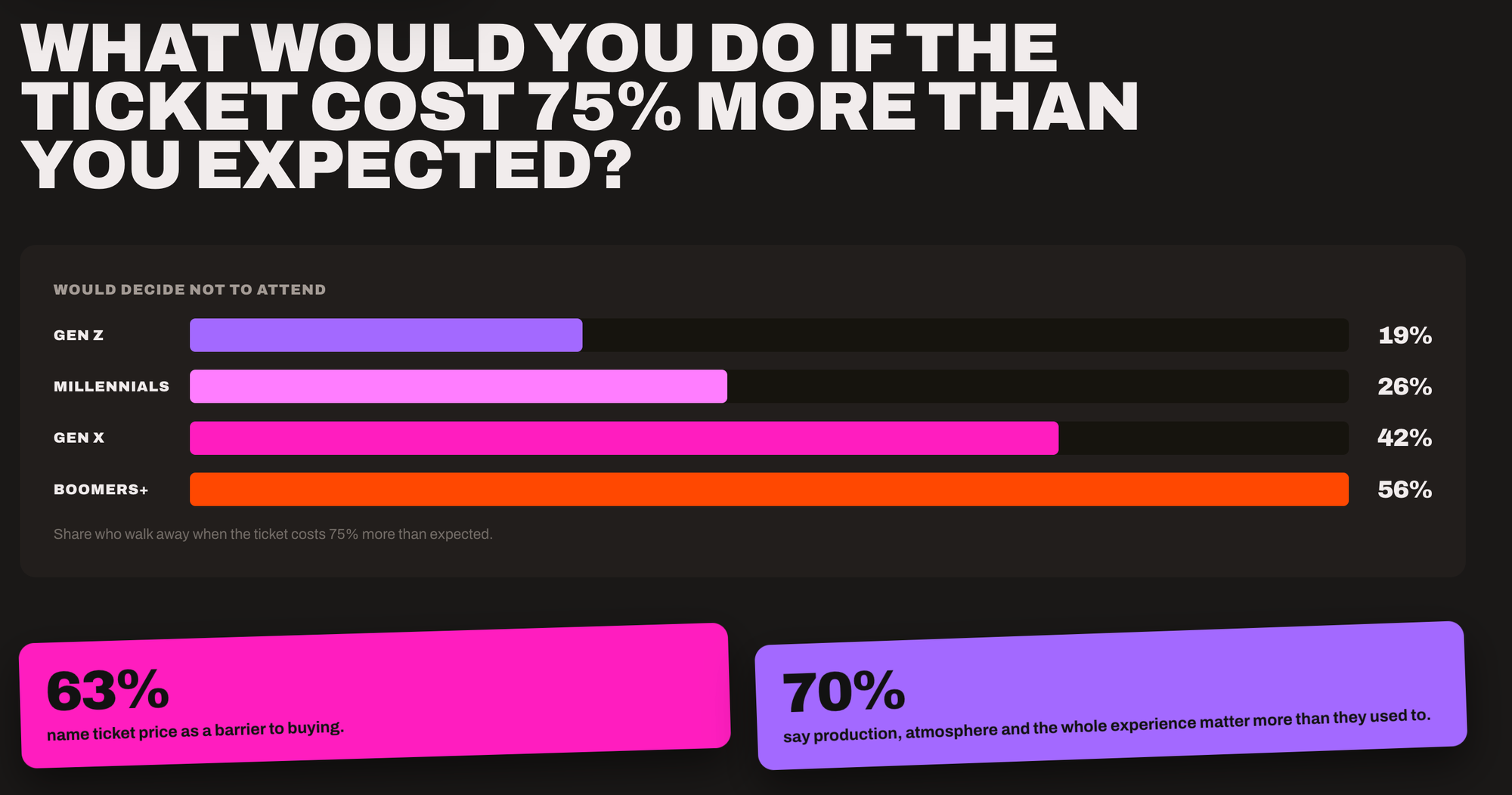
***+Read more:*** [*"Live Clips Are Powering Artist Discovery With the Next Generation of Fans"*](https://www.hypebot.com/live-clips-are-powering-artist-discovery-with-the-next-generation-of-fans/)
## Fans Still Want In
What makes the results especially uncomfortable for the ticketing business is that demand is not the problem. 82% of US fans called live events one of the best ways to connect with friends and family, while 78% saw them as a form of emotional release rather than simple entertainment. When a desired ticket cost far more than expected, 67% said they would look for another way into the event instead of giving up.
That persistence can also leave fans exposed. Two-thirds of US respondents had bought a resale ticket before—the highest share of the three markets—and 75% believed bots or brokers were purchasing tickets and reselling them at inflated prices.
Trust has eroded accordingly. Only 43% of US respondents identified ticketing or event platforms as a trusted source of event information, virtually level with friends and family at 42%. One in eight did not trust any of the common information sources named in the survey.
Fees remain another breaking point. 28% said processing fees or surprise checkout charges had stopped them from making a purchase, compared with 20% in both Australia and the UK.
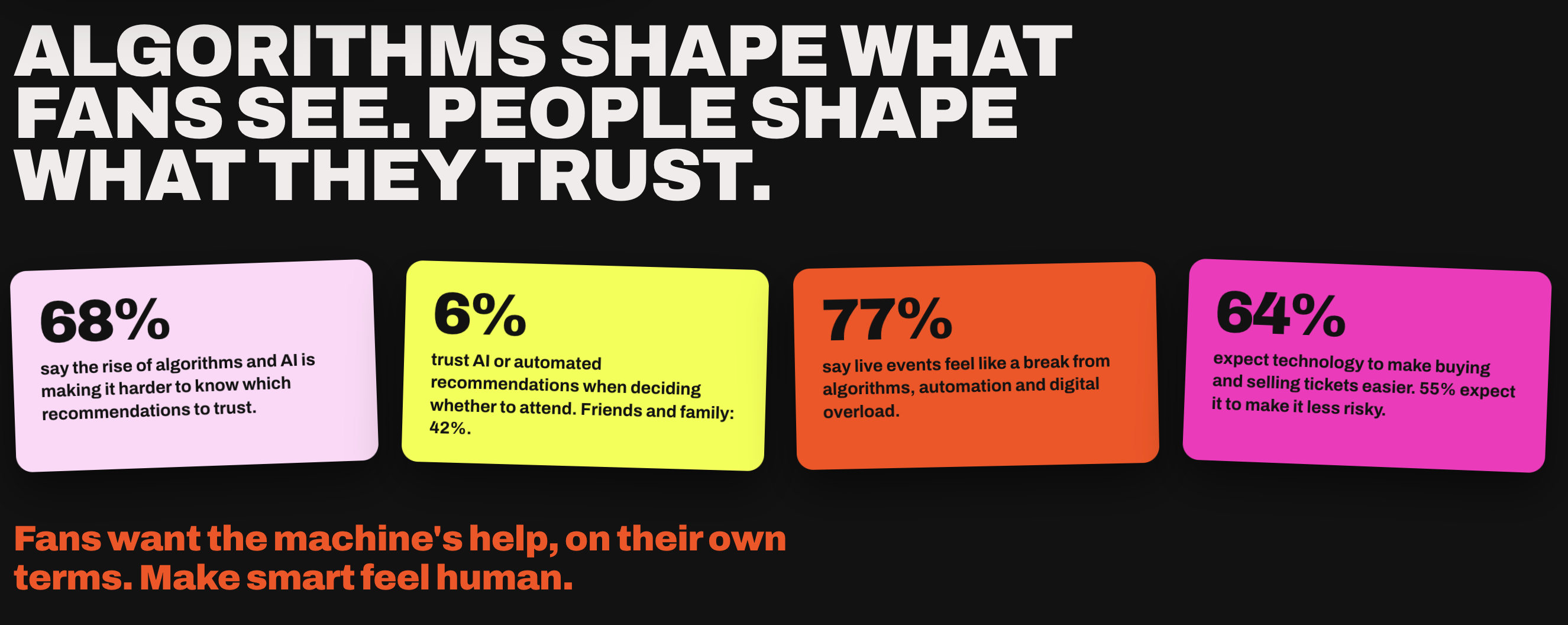
## The Ticket Now Has to Provide Certainty
The report suggests that [fans](https://www.hypebot.com/tag/fans/) are not necessarily hunting for the absolute cheapest ticket. They are placing a value on knowing that the ticket will work, the final price is visible and their money is not trapped if plans change.
78% of US respondents said they would rather pay more for a verified or guaranteed ticket than save money on an uncertain one. Another 67% said the ability to resell a ticket if their plans changed made them more confident about buying it in the first place.
That matters to independent artists, venues, and promoters because every ugly ticketing encounter lands on the event's reputation, even when they did not create it. **A sold-out room** **is not the only measure of a healthy market.** If fans reach it through scams, sticker shock and distrust, the system is converting devotion into risk.
Tixel argues that verification, resale caps and all-in pricing do not need to wait for federal legislation. That conclusion conveniently aligns with its own model, but the survey's broader warning is harder to dismiss: US fans continue to place enormous value on being in the room. They are losing faith in how they get there.
***+Read more:*** [*"The Music Industry Loves Successful Women. It Still Doesn't Invest Enough in Them."*](https://www.hypebot.com/the-music-industry-loves-successful-women-it-still-doesnt-invest-enough-in-them/)
### Korean Pop Labels Are Building Gateways to Artist Universes
URL: https://www.hypebot.com/korean-pop-labels-are-building-gateways-to-artist-universes/
Last updated: 2026-09-21T14:05:50.000Z
### **Seoul traders: How Korean labels are building beyond the song**
*By* [***Leon Farrell***](https://www.midiaresearch.com/analyst/leon-farrell?ref=hypebot.com) *of* [***MIDiA Research Blog***](https://www.midiaresearch.com/blog/seoul-traders-how-korean-labels-are-building-beyond-the-song?ref=hypebot.com)
On a Sunday in August 2025, I approached the **O2 Forum Kentish Town** to see an act I had heard plenty about.
On this warm August afternoon, the main attraction was flamboyant, distinctive, petite in size and, by all accounts, electric. As I turned from Tufnell Park Road onto Kentish Town Road, the snake-like queue immediately came into view, with would-be fans streaming towards it.
A few minutes later, I reached the front. I pointed to what I wanted and asked for two. The attendant turned to the wall of pink and black boxes behind him, took down a pair and placed them in a bag with two packets of batteries and a Jennie photo card.
I had come to see [a light stick](https://www.hypebot.com/backstage-pass-lynn-bartsch-of-fanlight-on-the-future-of-active-fandom/).
[**BLACKPINK**](https://www.bandsintown.com/a/12412115-blackpink?utm%5Fsource=hypebot&came%5Ffrom=900) were not performing at the Forum that day. They had played two dates at Wembley Stadium that weekend as part of their Deadline world tour. Nine miles away, however, the group had hired an entire 2,300-capacity music venue for a five-day merchandise pop-up. No artist was present and no song was sung, yet BLACKPINK had created a destination that fans were willing to travel across London to visit, centred around a product that turns [superfandom](https://www.hypebot.com/tag/superfans/) into identity and belonging.
Each K-pop act has its own uniquely designed light stick. Fans bring them to concerts, where thousands can illuminate an arena in the artist’s colours and move in synchronized patterns. It is merchandise, but it is also part of the [live performance](https://www.hypebot.com/tag/live-performance/), a rite of passage, and a visual expression of the community itself. Most importantly, it is just one example of [K-pop’s holistic approach to world-building](https://www.midiaresearch.com/reports/state-of-the-k-pop-economy-rising-to-the-global-stage?ref=hypebot.com).
## **Music opens the door to a bigger world**
The conventional music business has largely treated the song as the final product. Everything else exists to promote, distribute, or monetise it. Yet K-pop often reverses that relationship. The music remains essential, but also serves as the entry point into a broader artist world made up of visuals, fashion, video, performance, community, and physical products.
In fact, music, visuals, and products increasingly operate on equal footing and are designed into the artist proposition from the start. For some of Asia’s biggest music companies, merchandise, licensing, and other non-recorded-music products are no longer just supplementary revenue. They are central to the business.
In fact, among the Asian labels tracked by [**MIDiA**](https://www.hypebot.com/author/midia/), live and expanded rights revenue surpassed digital and physical recorded music revenue in Q2 2026 for the first time. This is according to MIDiA’s latest recorded music market shares report update, available soon.
[](https://www.hypebot.com/backstage-pass-lynn-bartsch-of-fanlight-on-the-future-of-active-fandom/)
**+Read more:** [*"Backstage Pass: Lynn Bartsch of Fanlight on the Future of Active Fandom"*](https://www.hypebot.com/backstage-pass-lynn-bartsch-of-fanlight-on-the-future-of-active-fandom/)
## **The “SaWaDiKa” effect**
The destinations audiences are directed towards help illustrate this shift. At the time of writing, BLACKPINK’s Lisa has around 100 million Instagram followers, placing her among the platform’s most-followed music artists. Yet on [Spotify](https://www.hypebot.com/tag/spotify/), she ranks much lower based on monthly listeners, at around number 750 globally.
That does not mean that the music is failing to connect. It suggests that streaming alone does not capture the full scale, intensity, or commercial potential of her audience.
Lisa’s latest single, “SaWaDiKa”, offers an even clearer view. The track has generated around 15 million streams on Spotify, compared with approximately 150 million views for its music video on YouTube. These metrics are not directly interchangeable, but the difference is still revealing.
For many [fans](https://www.hypebot.com/tag/fans/), the complete product is not simply the audio. It is Lisa exploding to life across locations in Bangkok, the choreography, the production, the styling and the celebration of her Thai identity.
The video does not just accompany the song. It builds the world around it.
**+Read more:** [*"Concert Tickets Are Apparently the New Airline Miles"*](https://www.hypebot.com/concert-tickets-are-apparently-the-new-airline-miles/)
## **Music as the beginning, not the end**
[Expanded rights have long been a part of entertainment strategy](https://www.midiaresearch.com/reports/recorded-music-market-shares-2025-expanded-rights-growing-impact?ref=hypebot.com). *Pokémon* began as a video game before expanding into animation, trading cards, merchandise, and a wider entertainment universe. *Star Wars* began as a film and moved into toys, games, television, and eventually immersive theme park experiences.
Music artists have always sold products, too. What feels different now is the purposeful approach to building the product, experience, and purchasing journey around the artist from the outset.
K-pop offers perhaps the clearest view of where this can lead. The goal is not simply to convert more people into listeners. It is to convert attention into fandom, and fandom into participation across several parts of an artist’s world.
The music is not becoming less important. It is taking on a broader role. It brings audiences through the door, but increasingly, the value lies in everything waiting for them on the other side.
---
*For more on the growing footprint of expanded rights, MIDiA clients can look out for the upcoming MIDiA report ‘Recorded music market shares Q2 2026 | Sony accelerated, Asian labels expand’.*
*Want the latest entertainment research and insights directly to your inbox? Our newsletter has you covered,* [*click here to subscribe*](https://www.midiaresearch.com/newsletter?utm%5Fcampaign=blog%5Fbody%5FCTA&utm%5Fid=leon-farrell&utm%5Fmedium=social%5Fmedia&utm%5Fcontent=seoul-traders-how-korean-labels-are-building-beyond-the-song&ref=hypebot.com)*.*
---
## [**BLACKPINK Tour Dates**](https://www.bandsintown.com/a/12412115-blackpink?utm%5Fsource=hypebot&came%5Ffrom=900)
### Everything We Know About the Ed Sheeran – Macklemore Tour Fallout
URL: https://www.hypebot.com/everything-we-know-about-the-ed-sheeran-macklemore-tour-fallout/
Last updated: 2026-09-21T13:54:46.000Z
#
What began with [**Macklemore**](https://www.bandsintown.com/a/2037479-macklemore?utm%5Fsource=hypebot&came%5Ffrom=900) saying “Free Palestine” during two [**Ed Sheeran**](https://www.bandsintown.com/a/190899-ed-sheeran?utm%5Fsource=hypebot&came%5Ffrom=900) shows has now led to **his removal from the tour**, the departure of **every other announced support act**, competing **statements from artists and venue owners**, millions of dollars **pledged to humanitarian aid** — and a significant change in Sheeran’s own public position.
Here’s where things stand as of today, September 21st.
## It started with Macklemore’s MetLife Stadium sets
Macklemore opened for Ed Sheeran at **MetLife Stadium** in New Jersey on September 4 and 5\. During the shows, he spoke in support of Palestinians in Gaza and the West Bank, repeatedly said “Free Palestine,” and performed his 2024 protest song “Hind’s Hall” while images from Gaza appeared on the stadium screens.
During the second show, Macklemore directly addressed Jewish members of the audience, saying that his criticism of Israel was not intended as criticism of Jewish people and describing his message as one of peace, dignity, and equality.
The appearances prompted criticism from several organizations and public figures. **The Israeli American Council** launched a petition calling for Macklemore to be removed from the remaining tour dates, arguing that Sheeran's concert should not be turned into a political platform.
Singer **Pink**, who initially amplified criticism of Macklemore's set, later clarified that she was **not** calling for him to be fired or silenced, but said some of the imagery and rhetoric frightened her as a Jewish person.
**+Read more:** [*"Everything We Know So Far About Massive Attack’s Singapore Ban"*](https://www.hypebot.com/everything-we-know-so-far-about-massive-attacks-singapore-ban/)
## Stadium owners objected — and Macklemore was dropped
On September 14, **Messina Touring Group,** promoter of the US leg of Sheeran's Loop Tour, confirmed that Macklemore would no longer perform on the remaining dates.
The promoter said venues had informed the company that they would not permit shows to proceed with Macklemore still on the lineup, creating the possibility that entire concerts would be cancelled. Macklemore had been scheduled for eight of Sheeran's final 10 stadium dates.
Macklemore subsequently said New England Patriots owner Robert Kraft, whose organization owns Gillette Stadium, had told Sheeran that Macklemore would not be permitted to perform there and alleged that Kraft had encouraged other stadium owners to take the same position.
Kraft confirmed that Gillette Stadium had barred Macklemore from Sheeran's September 25 and 26 concerts. He said the decision was based on material presented during the MetLife performances as well as what he described as Macklemore's broader history of antisemitic rhetoric and imagery. Macklemore has disputed the characterization of his current advocacy as antisemitic and has repeatedly said his criticism is directed at Israeli policy rather than Jewish people. Kraft did not publicly confirm Macklemore's specific claim that he had rallied other venue owners.
## Sheeran said it wasn't his decision
On September 15, Sheeran released his first extensive response.
He said Macklemore had been free to choose his own setlist and that, after the New Jersey performances, upcoming venues told the tour they would cancel concerts if Macklemore remained on the bill. Sheeran said he spent days trying to mediate between venue owners, promoters and others involved but was unable to reach a solution.
“Macklemore coming off tour was the promoter's decision, it was not mine,” Sheeran wrote.
Sheeran also explained that he had historically avoided turning his concerts into political forums, describing them instead as spaces intended to bring together audiences with different backgrounds and viewpoints.
That distinction would become harder to maintain as the week continued.
***+Read more:*** [*"For Stevie Wonder, It’s Always Been About the Whole Album"*](https://www.hypebot.com/for-stevie-wonder-its-always-been-about-the-whole-album/)
## Then the rest of the support lineup walked
Within hours, the dispute expanded well beyond Macklemore. **Aaron Rowe, Lukas Graham** and **Finneas** all withdrew from upcoming Loop Tour dates, citing Macklemore's removal and expressing solidarity with Palestinians. **Beoga,** the Irish group that has frequently collaborated and performed with Sheeran as part of his live show, also departed.
By September 16, every publicly announced supporting act affected by the [controversy](https://www.hypebot.com/tag/controversy/) had withdrawn.
That turned what had initially been a dispute over one opening act into a much larger touring problem — one involving not only political speech but the practical question of how much control artists, promoters and venue operators each have over what happens on a stadium stage.
## Macklemore pledged his tour money to Palestinian relief
On September 16, Macklemore announced that he would donate the approximately $1 million in net earnings he received from the Loop Tour to six organizations working on Palestinian humanitarian relief, including the **Palestine Children's Relief Fund, HEAL Palestine, Gaza Soup Kitchen, Medical Aid for Palestinians, Anera** and **UNRWA USA.**
He publicly invited Kraft to match the donation.
The financial pledges quickly grew beyond that number. Kraft subsequently said Sheeran had already contacted him and asked him to commit **$2 million** to match a $2 million humanitarian contribution from Sheeran. Kraft said he would do so, although the specific recipients of those two $2 million commitments had not yet been publicly identified.
## Sheeran then spoke much more directly
The biggest change came at Sheeran's first concert since the controversy, at Philadelphia's **Lincoln Financial Field** on September 19\. Without his previous support lineup, Sheeran addressed the situation from the stage and moved considerably beyond his earlier explanation that he preferred not to use concerts as political platforms.
He condemned the October 7 attacks in Israel as horrific, but also described what is happening in Gaza as “catastrophic and unjustifiable” and “disproportionate,” while saying the treatment of Palestinians in the West Bank could not be ignored. He characterized the issue as humanitarian rather than simply political and said he could no longer hide how he felt about it. Sheeran said:
> *"My heart has been broken by the scale of devastation and loss of civilians' lives, of children's lives. And the systemic injustice we're seeing unfold in the West Bank cannot be overlooked."*
Sheeran also acknowledged the difficult week surrounding Macklemore's removal and said he had tried to keep his concerts focused on unity while finding himself pulled into a debate over political expression and freedom of speech. The tour itself is continuing.
## So where does this leave the tour?
Macklemore remains off the Loop Tour. The support artists who withdrew have not announced plans to return. Sheeran's remaining US stadium dates are moving ahead, including the September 25 and 26 shows at Kraft-owned Gillette Stadium. But the episode has become considerably larger than the original two words Macklemore said from a stage in New Jersey.
Within less than three weeks, a support artist's political statement triggered objections from stadium operators, a promoter's decision to remove him, the withdrawal of fellow musicians, public disputes about censorship and antisemitism, several million dollars in humanitarian pledges, and a substantially more explicit public statement from one of the world's biggest [touring artists](https://www.hypebot.com/tag/touring/).
For the [live music](https://www.hypebot.com/tag/live-music/) business, it also leaves an unresolved question hanging over the entire episode:
***On a stadium tour, who ultimately gets to decide what an artist is allowed to say — the artist, the headliner, the promoter or the building?***
---
## [**Ed Sheeran Tour Dates**](https://www.bandsintown.com/a/190899-ed-sheeran?utm%5Fsource=hypebot&came%5Ffrom=900)
## [**Macklemore Tour Dates**](https://www.bandsintown.com/a/2037479-macklemore?utm%5Fsource=hypebot&came%5Ffrom=900)
### Your Morning Coffee Podcast: Real Artist Hacking, Streaming 2.0, Congress Updates, More.
URL: https://www.hypebot.com/your-morning-coffee-podcast-real-artist-hacking-streaming-2-0-congress-updates-more/
Last updated: 2026-09-21T13:25:35.000Z
### **Listen on your favorite** [**podcast platform**](https://bio.to/UloQY6?ref=hypebot.com)**.**
Subscribe to the Your Morning Coffee newsletter [here](https://label-logic.us8.list-manage.com/subscribe?u=735771602810b0eb238d4e814&id=1ffaab59d7&ref=hypebot.com).
**YMC Episode 320 — September 21, 2026**
On this week’s episode of the **Your Morning Coffee podcast**, your hosts Jay Gilbert and Mike Etchart chat about these timely music industry stories:
- **Nearly 150,000 Tracks Are Added to Streaming Services Every Day, Luminate CEO Says.**
- **I Hijacked a Real Artist's Spotify with AI Music. It Was Disturbingly Easy.**
- **Music-Related Legislation Before Congress Right Now: A Full List of Bills.**
- **Streaming 2.0 Hasn't Worked. It's Time For An Upload Fee.**
Listen right here:
Subscribe to the Your Morning Coffee newsletter [**here**](https://label-logic.us8.list-manage.com/subscribe?u=735771602810b0eb238d4e814&id=1ffaab59d7&ref=hypebot.com)**.**
**FIND MORE CURATED MUSIC BUSINESS AND INDIE**
**PODCAST EPISODES** [**HERE**](https://www.hypebot.com/tag/podcast-music-biz/)
### How New YouTube View Rules Are Impacting Music Marketing
URL: https://www.hypebot.com/how-new-youtube-view-rules-are-impacting-music-marketing/
Last updated: 2026-09-21T13:11:36.000Z
In August, [**YouTube**](https://www.hypebot.com/tag/youtube/) fundamentally changed the way it [measures success](https://www.hypebot.com/artists-if-you-cant-define-success-you-wont-find-it/). Moving away from the classic 30-second watch-time requirement, the platform now counts a view as the second a video begins playing.
While this instant-play standard aligns YouTube long-form videos with shorter formats like YouTube Shorts, TikTok, and Instagram, new data is showing that these inflated vanity metrics are hiding a massive gap in actual audience attention.
Recent analysis from [**Agentio**](https://www.agentio.com/blog/youtube-new-view-count-60-engaged-view-rate?ref=hypebot.com) of over 75,000 videos reveals that **only 60% of YouTube's new public views are actually "engaged."**
So, what do these new view count rules mean for music and creator partnerships? Here is a breakdown of the new stats and how artists, venues, and music marketers can pivot.
### The Data: Public Views vs. Engaged Views
The old definition of a view - watching for 30 seconds or more - hasn't vanished; it has simply been rebranded in **YouTube Studio** analytics as an **"Engaged View."**
When we look at the discrepancy between the new instant-play public views and the backend engaged views, the data tells a striking story:
- **The 60% Rule:** For every 100 public views on a video, 60 held attention, and 40 reached an audience but failed to hold it. Public views now run about 1.67x higher than engaged views.
- **The Autoplay Effect:** 77% of this gap between public and engaged views comes from feed autoplay (such as the Home tab or "Up Next" recommendations).
- **Watch Pages Win:** When a viewer actually clicks into a video directly via the watch page, 85% of those plays translate into an engaged view.
## What Does This Mean for Music Marketing?
### For Artists: A Double-Edged Sword
For artists, this update provides an immediate boost in vanity metrics. Public-facing numbers on official music videos, lyric videos, and live streams will look much healthier to the average fan, which is great for building perceived momentum.
However, **this will not impact your music royalties.** Payouts and YouTube Partner Program eligibility continue to rely on the stricter "Engaged Views" metric. To see if fans are actually listening to your tracks or just scrolling past an autoplaying video, you will need to navigate to *YouTube Studio > Analytics > Advanced Mode* to monitor your true retention.
### **For Live Venues and Talent Buyers: Reevaluating Draw**
Festival bookers, talent buyers, and venue promoters frequently use social metrics—including YouTube views—to gauge an artist's potential ticket-selling draw.
With public view counts now inflated, venues can no longer take surface-level views at face value. A high view count on a recent music video simply means the video started playing, often due to aggressive feed algorithms. Promoters should start asking artists for backend "Engaged View" stats, or rely heavier on localized Spotify streaming numbers and historical ticketing data to accurately assess an artist's true fan engagement.
### **For Music Marketers and Brands: Stop Overpaying for Exposure**
If you are running a creator-led campaign - like paying an influencer to feature an artist's new single in their vlog - you should change how you negotiate.
Because public views overstate actual attention, any music marketer buying placements based on public view counts is likely **overpaying by up to 67%.** A $30 CPM (Cost Per Mille) negotiated on public views is effectively a $50 CPM when you filter down to the fans who actually stayed long enough to hear the song. Moving forward, music marketers and brands must anchor their pricing, benchmarks, and campaign reporting strictly on Engaged Views.
## **Hypebot’s Bottom Line**
YouTube gave your public view counts a massive, cosmetic facelift. But while bigger numbers look great on an EPK, a pitch deck, or a playlist submission, it is vital to remember that **exposure is not the same as attention.**
Don't let inflated public metrics give you a false sense of security in your marketing strategy. For artists, keep your eyes glued to the "Engaged views" in your backend analytics to see who is truly listening. For marketers and venues, recalibrate your benchmarks today - otherwise, you'll be paying a premium for an audience that wasn't even watching.
***+Read more:*** [*"YouTube Views Now Count From the First Frame"*](https://www.hypebot.com/youtube-views-now-count/)
---
*Get all the latest Music Industry & Live Music News updated continuously from across the web under the Hypebot Industry News tab* [*here*](https://www.hypebot.com/music-industry-news-feed/)*.*
## Hypebot
Essential news & insights for artists and live music pros.
Sign up for free weekly content delivered to your inbox
Subscribe
Email sent! Check your inbox to complete your signup.
### 6 Longform Articles on Hypebot to Enjoy This Weekend
URL: https://www.hypebot.com/6-longform-articles-on-hypebot-to-enjoy-this-weekend/
Last updated: 2026-10-03T18:26:00.000Z
Get away from the high-speed daily news of this industry for a moment this weekend, and sit down with some commentary you can really sink your teeth into, at your own pace.
Here are **6 longform Feature articles** for your [**Weekend Reading**](https://www.hypebot.com/tag/weekend-reads)**.**
Enjoy!
---
[What’s More Radical: Daisy Chain Fields’ Poster Design or Its Women-Led Lineup?Olivia Rodrigo’s benefit festival challenged live music’s gender imbalance — and the visual ranking system that tells audiences which artists “matter.”HypebotHypebot Editorial Desk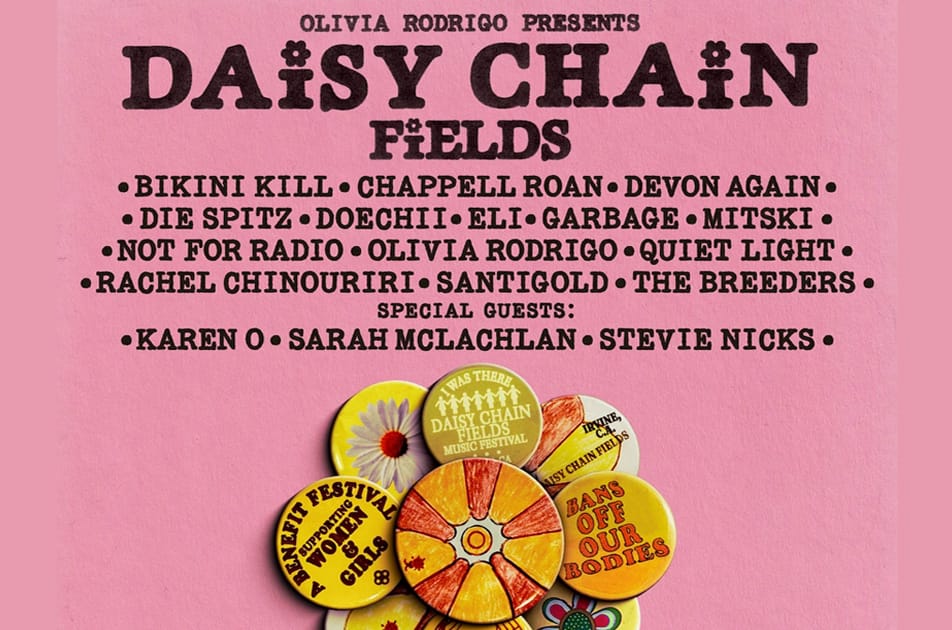](https://www.hypebot.com/whats-more-radical-daisy-chain-fields-poster-design-or-its-women-led-lineup/)
[Why Are Serious Filmmakers Turning to Concerts?Paul Thomas Anderson and Brady Corbet are bringing celluloid — and “serious” filmmaking — back to the concert film. But, why?HypebotJeremy Young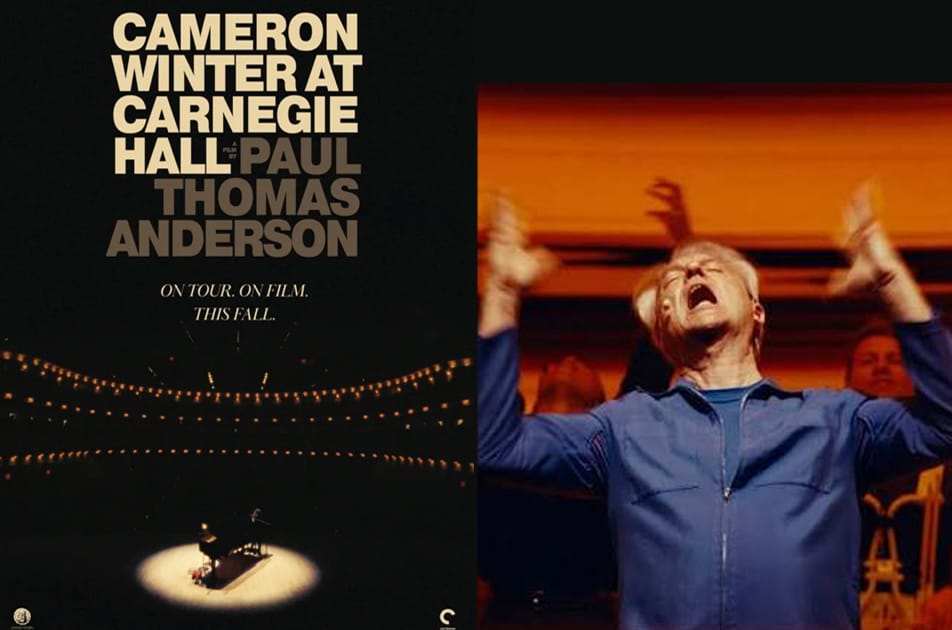](https://www.hypebot.com/why-are-serious-filmmakers-turning-to-concerts/)
[How Chief Keef Is Finally Being Reembraced By His Home CityFor years, Chicago wouldn’t let Chief Keef perform there (not even as a hologram). Now, he’s selling out his hometown tour starter.HypebotHypebot Editorial Desk](https://www.hypebot.com/how-chief-keef-is-finally-being-reembraced-by-his-home-city/)
[Making the Case for Political Activism at ConcertsPeaceful disruptions at concerts are inconvenient, but the collective, emotional nature of live music makes it the perfect space to challenge the status quo.HypebotJeremy Young](https://www.hypebot.com/making-the-case-for-political-activism-at-concerts/)
[Why the Levitt Foundation Model Should Not Be an OutlierCombining free admission with paid artists, local control, and sustained investment in public space, Levitt’s model should be replicated... everywhere.HypebotHypebot Editorial Desk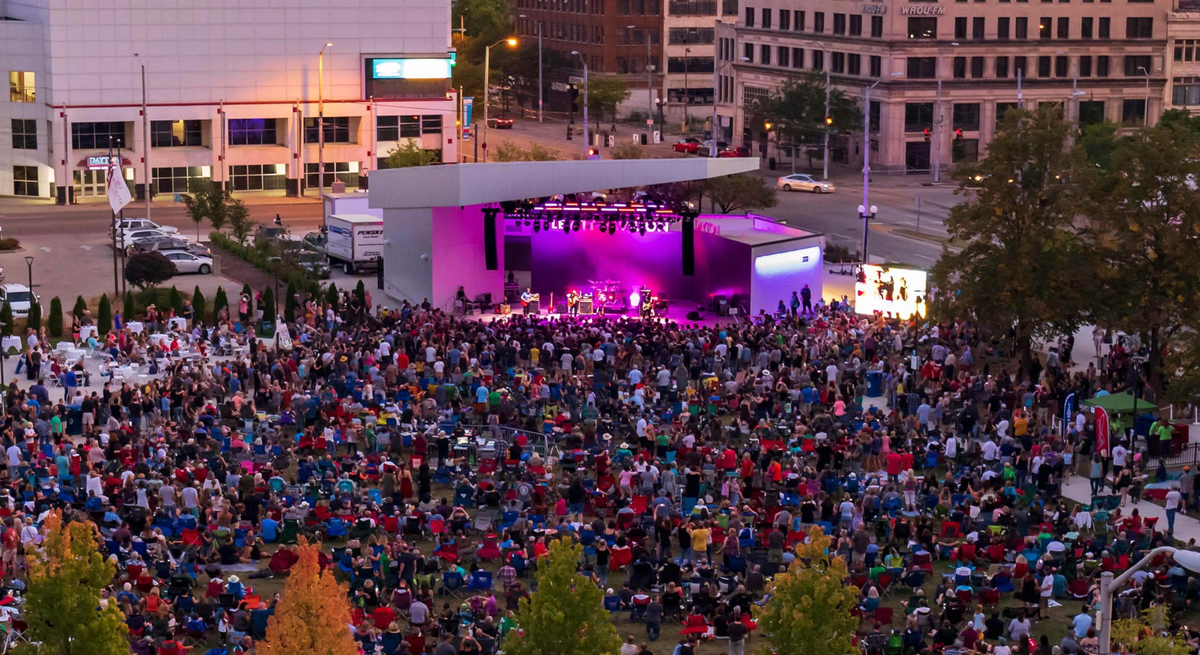](https://www.hypebot.com/why-the-levitt-foundation-model-should-not-be-an-outlier/)
[Altın Gün Didn’t Translate Their Music for America. Who Cares?The Dutch-Turkish psych pop band’s growing North American draw suggests “crossover” no longer means pandering or sanding down. Come as you are!HypebotJeremy Young](https://www.hypebot.com/altin-gun-didnt-translate-their-music-for-america-who-cares/)
### Watch: Marshall's The Dead Venue Sessions — China Chalet (NYC)
URL: https://www.hypebot.com/watch-marshalls-the-dead-venue-sessions-china-chalet-nyc/
Last updated: 2026-09-18T15:14:57.000Z
**What happens to a music venue after the music leaves?**
**Marshall** is answering that question by putting bands back into three rooms that no longer function as venues. Its new limited film series, ***The Dead Venue Sessions***, revisits the former homes of New York’s **China Chalet**, Philadelphia’s **Stalag 13** and Los Angeles’ **London Fog** — spaces that have since become a food court and arcade, a bodybuilding gym and a barber shop.
The [first six-minute episode](https://www.youtube.com/watch?v=evLdxNuNSwA&ref=hypebot.com), released today, follows Bronx Dominican punk band [**Planta Industrial**](https://www.bandsintown.com/a/15600984-planta-industrial?utm%5Fsource=hypebot&came%5Ffrom=900) into the old China Chalet space for the debut of a new single, “MIA.” Filmmaker and photographer **Cheryl Dunn** directed the series, created by Marshall with agency Anomaly.
The premise is simple, but the transformed rooms do much of the talking. These weren't just spaces where live music came and left, these venues were places where scenes formed, artists learned how to command a room, and audiences found one another to build a community.
Stay tuned as these videos get released one by one, documenting the ghost scenes that each venue left behind.
Through its Amplify membership program, Marshall directs 1% of qualifying online purchases toward [grassroots spaces](https://www.hypebot.com/tag/independent-venues/), funding backline equipment, shows and longer-term partnerships.
[Follow The Dead Venue Sessions here.](https://www.marshall.com/gb/en/made-of-loud?ref=hypebot.com)
---
## [**Planta Industrial Tour Dates**](https://www.bandsintown.com/a/15600984-planta-industrial?utm%5Fsource=hypebot&came%5Ffrom=900)
### For Stevie Wonder, It’s Always Been About the Whole Album
URL: https://www.hypebot.com/for-stevie-wonder-its-always-been-about-the-whole-album/
Last updated: 2026-09-18T14:34:22.000Z
[**Stevie Wonder**](https://www.bandsintown.com/a/529-stevie-wonder?utm%5Fsource=hypebot&came%5Ffrom=900) could probably build a sold-out arena tour [setlist](https://www.hypebot.com/tag/setlist/) just by pulling song titles from a hat. Instead, when he [returns to the road](https://www.bandsintown.com/a/529-stevie-wonder?utm%5Fsource=hypebot&came%5Ffrom=900) this fall, he's asking audiences to sit with one record piping into their eardrums.
Wonder has announced an 18-date tour celebrating the 50th anniversary of ***Songs in the Key of Life***, beginning October 13 in Birmingham, England, before moving through Europe and eventually arriving in the United States for shows in New York, Chicago, Washington, Detroit and Los Angeles. Wonder will perform his album in full.
And with *Songs in the Key of Life*, that's quite an undertaking...
The original 1976 package contained two LPs plus a four-song bonus EP: 21 tracks stretching to roughly an hour and 45 minutes, moving between funk, jazz, soul, love songs, childhood memories, spirituality, and pointed examinations of race and inequality. Wonder wrote, composed, arranged and produced all 21 songs.
And they're some of the most classic and well-appreciated jazz, soul, pop songs ever written. Fifty years later, they still hit hard, and audiences want more time with them.
## **Let's talk about "albums" for a sec.**
Albums haven't disappeared at all. Artists still make them, fans still love them, vinyl continues to give them a physical life and major releases can still feel like cultural events. But the dominant digital listening environment constantly encourages us to pull them apart.
The ability to sit and play a record from start to finish is increasingly complicated and difficult for some reason. It's not how [we discover music](https://www.hypebot.com/tag/discovery/), and sometimes how we discover is how we listen.
When a great song lands on a playlist, it's more common nowadays to attribute the playlist to that great pick, and stick with it versus seeking out the artist and album and hitting play on that instead. Then there's algorithmic autoplay, as soon as a great song hits your ears we've moved on to another artist, another sound, another set of metadata structures.
In other words, a listener discovers track seven without ever hearing track six. And there's nothing inherently wrong with that. Discovery has always changed with technology, and plenty of listeners eventually find entire albums because one song reached them first. But sequencing loses some of its authority, and its creative alchemy, along the way.
But Stevie has always organized songs, ideas, stories, and interwoven narratives, around not just the songs of his records but their sequencing too. Discussing *Songs in the Key of Life*, he later described its songs as snapshots of different times, places and emotions that belonged together, and specifically emphasized how conscious he was of an album's musical flow. His [concerts](https://www.hypebot.com/tag/concerts/) on this upcoming tour will make that devilishly clear.
**+Read more:** [*"What’s More Radical: Daisy Chain Fields’ Poster Design or Its Women-Led Lineup?"*](https://www.hypebot.com/whats-more-radical-daisy-chain-fields-poster-design-or-its-women-led-lineup/)
## **Stevie has done this before**...
This isn't an anniversary gimmick invented because *Songs in the Key of Life* happens to be turning 50\. Wonder began performing the album in its entirety in 2013, initially making it the centerpiece of his annual House Full of Toys benefit concert in Los Angeles.
He then took the concept on the road beginning in 2014, building a major North American run around performing the record front to back. Those shows stretched to around three hours. Damn, Stevie...
Now, a decade older at age 76, he's returning to the same work. It's impressive on so many levels. But it also tells us that this is a formula he's not willing to let go of, and neither should we. *Songs in the Key of Life* is not really something that needs a **revival**, it's a **repertory work.**
An audience has to move through all of it together; and even though the record sequencing or songwriting doesn't change, the music always will. And the people inside the room always do.
**+Read more:** [*"Jodeci Made the Slow Jam Feel Dangerous. They’re Taking It Back on Tour."*](https://www.hypebot.com/jodeci-made-the-slow-jam-feel-dangerous-theyre-taking-it-back-on-tour/)
There was once a practical reason albums existed as albums. Music had to be packaged onto physical media. Records had sides. CDs had running times. Listeners bought the container and got everything inside it.
Streaming removed much of that necessity, but then what is the real role an album plays in today's listening culture? And what really holds songs together these days?
1976's *Songs in the Key of Life* provides a pretty persuasive answer. The record won Album of the Year at the Grammys, spent 14 weeks at No. 1 and entered the Library of Congress' National Recording Registry decades later. But its staying power isn't merely the result of containing exceptionally famous songs.
Its enormous range is part of what gives the individual songs their context, and it's also what makes it fantastic fodder for a live performance in full. The album format in this case acts not just like a container of disparate song visions, but a narrative that pulls it all together in a fluid momentum of music.
Don't skip these songs, and don't skip these events.
---
## [**Stevie Wonder Tour Dates**](https://www.bandsintown.com/a/529-stevie-wonder?utm%5Fsource=hypebot&came%5Ffrom=900)
### Why AI Workflows Need Music Understanding and Search
URL: https://www.hypebot.com/why-ai-workflows-need-music-understanding-and-search/
Last updated: 2026-09-18T13:37:46.000Z
*By *Markus Schwarzer*, CEO of* [***Cyanite***](https://cyanite.ai/?ref=hypebot.com)
I was browsing the [Epidemic Sound](https://www.epidemicsound.com/?ref=hypebot.com) website when I noticed they had added conversational search. It was so good that, for a brief moment, I was convinced they’d found a much better solution than ours. *We might as well close shop,* I thought.
Then I looked into what was powering it and realized, *oh… that’s us.*
It wasn’t a different technology. It was Cyanite’s music understanding and search working underneath an LLM. We’d spent the past months improving our tagging models, while, at the same time, the Epidemic Sound team had been building the conversational search experience their users needed on top of them. They took the foundation we provided and extended it into a product that fit their audience.
That moment made me realize where this is all heading. As we move into the agentic era, people will build entirely new ways to work with [their catalogs](https://www.hypebot.com/tag/catalog/). But none of those workflows function unless machines can understand the music and find it.
Get that layer right, and the rest becomes much easier to build. I'll prove it to you.
## What has actually changed
Across the music industry, I keep hearing the same frustration: people spend a huge part of their day [on repetitive work](https://www.hypebot.com/being-a-musician-in-2026-is-a-full-time-platform-job/) that feels impossible to delegate because the workflow isn’t written down anywhere. The workflow is based on years of experience that lives almost entirely in one person’s head. I’ve heard them say they’d have to clone themselves to get the work done faster.
For a long time, software could only automate workflows that were explicitly defined. The moment a process depended on someone’s accumulated experience, it became much harder to delegate. Language models changed that. Give one enough context, and it can already mimic 80–90% of a text-based workflow. It won’t get every decision right, but it doesn’t have to. If it can handle the repetitive work, that’s already enough to save hours.
I have a friend who works in creative sync at a music publisher. Every new track that comes in ends up in one of about 30 folders she created over the years, depending on whether it fits luxury brands, automotive campaigns, FMCG, uplifting music, or whatever else makes sense to her. It’s her own taxonomy. It makes perfect sense to her because she built it, but nobody else really understands it.
At first glance, this looks like exactly the kind of workflow an LLM should be able to take over. The problem is… **LLMs today can’t adequately *understand* music.** They need structured music metadata describing sound and lyrics to recognize the patterns behind her decisions. Give it enough data from tracks already sitting in those folders and it will be able suggest where any new song belongs before she ever listens to it.
That’s the clone she’d always wished she had. But that only works because the LLM isn’t making sense of the music on its own. It’s reasoning from structured descriptions of the music and the patterns they reveal.
**Screenshot courtesy of* [**Cyanite's Tagging 2.0*](https://cyanite.ai/music-tagging/tagging-2-0/?ref=hypebot.com)**.*
## Why structured music understanding matters
Language models work from the information they’re given. The more relevant that information is, the better the result. The same applies to music. Before AI can become useful, a recording has to be translated into information a machine can reason with, information that reflects how the catalogue is actually used, not just what the track sounds like.
Think back to my friend in creative sync. Her folders aren’t simply collections of songs with similar characteristics. They’re the result of years of placing music for real clients. Every track she files away adds another example of what belongs together in her world. An AI might know that a track is energetic, guitar-driven, and around 120 BPM, but that alone doesn’t explain why she’d choose it over another. Give it the structured data for the tracks already sitting in her folders, though, and it begins to see the same patterns she does, learning how those characteristics relate to the way her catalogue is actually used.
That was exactly what I saw on Epidemic Sound’s website. The AI wasn’t replacing the music understanding underneath. It was using that understanding together with retrieval to make the catalog searchable through ***conversation.***
That is why structured music understanding matters more, not less, as AI enters more workflows. It turns every file into a consistent description, giving every agent and workflow the same starting point. So, search, recommendations, and automation all build on that same foundation.
A conversational search system can interpret a request in natural language and connect it to the right tracks. A publisher can sort new uploads into an existing taxonomy. A creative team can search for music that fits a specific brief. Different teams ask different questions, but they’re all drawing from the same catalog, and you pay the cost of understanding the music once so every future music AI workflow can query the same structured representation.
## What this looks like in practice
What I saw at Epidemic Sound isn’t an isolated example. The LLM handled the text understanding while Cyanite dealt with structured music understanding behind the scenes to find, compare, and refine the right tracks.
[Soundstripe](https://www.soundstripe.com/?ref=hypebot.com) has taken a similar approach. Users can search in natural language then refine their request through conversation. The language model manages that back-and-forth, asking follow-up questions, interpreting intent, and adjusting the search as the conversation evolves, while Cyanite provides the music understanding that keeps the search grounded in the catalog.
[BeatStars](https://www.beatstars.com/explore-musicians?ref=hypebot.com) applies the same idea in a completely different workflow. Every month, hundreds of thousands of new tracks are uploaded to its marketplace. Structured audio metadata gives every new upload a consistent description, making that catalog immediately usable for search, recommendations, and future AI applications.
These companies are solving different problems, but they have all arrived at the same conclusion. AI makes the interaction more natural. A consistent understanding of the catalog makes those interactions useful.
**Screenshot courtesy of* [**Soundstripe*](https://www.soundstripe.com/?ref=hypebot.com)**.*
## Looking ahead
The agentic era will bring new ways of working with music. Some will change how people search and discover music. Others will automate work that still happens manually today.
Every one of those workflows depends on a machine being able to work with the music in the catalog. The better that foundational layer, the more useful AI becomes, regardless of how the interface evolves.
That’s why AI needs both structured music understanding and retrieval. Together, they give AI a reliable way to understand, search, and reason over music, so teams can build the workflows that make sense for their business.
If you’re building for the next generation of music workflows, start with structured music understanding — the foundation they’ll all depend on.
---
**Markus Schwarzer* is the CEO of* [***Cyanite***](https://cyanite.ai/?ref=hypebot.com)*. Cyanite gives music companies — and the AI agents now built on top of them — a deep, structured understanding of music: powering search, recommendation, and metadata at scale.*
### BMI Launches Free Healthcare Navigation Service for Songwriters
URL: https://www.hypebot.com/bmi-launches-free-healthcare-navigation-service-for-songwriters/
Last updated: 2026-09-18T12:43:51.000Z
**BMI** has launched [**BMI Health Connect**](https://www.bmi.com/creators/health-connect?ref=hypebot.com), a free service designed to help its U.S.-based songwriters and composers find and enroll in healthcare coverage.
Developed with insurance brokerage Gallagher Alternative Health Solutions, the service connects BMI affiliates and their immediate families with licensed advisors for one-on-one assistance. Advisors can compare **Affordable Care Act** marketplace plans, private off-exchange coverage, Medicare and additional options including dental and vision insurance.
The guidance is free, but the insurance is not. BMI Health Connect is not itself an insurance plan, and BMI does not subsidize premiums or out-of-pocket costs. Instead, advisors review details such as household size, budget, income, current coverage and life stage before presenting available options and assisting with enrollment.
There is no obligation to purchase a plan. However, BMI — through its licensed Creator Connect Insurance Services brokerage — and Gallagher may receive a commission from an insurance carrier when an affiliate enrolls. BMI says that commission does not increase the participant’s premium.
The service is built partly around the realities of creative work, where freelance employment, fluctuating income and the absence of employer-sponsored benefits can make insurance decisions particularly difficult.
BMI Health Connect is available now, allowing affiliates to review their options ahead of the next enrollment period. Medicare open enrollment runs from October 15 through December 7\. Federal ACA marketplace enrollment begins November 1, with December 15 as the deadline for coverage beginning January 1\. [Federal enrollment remains open through January 15](https://www.healthcare.gov/quick-guide/dates-and-deadlines/?ref=hypebot.com), while some state-operated exchanges may use different deadlines.
It does not solve the larger affordability problem facing uninsured and underinsured music creators. But for artists accustomed to navigating benefits alone, free access to an actual person who understands the options is a meaningful place to start. [**Learn more here.**](https://www.bmi.com/creators/health-connect?ref=hypebot.com)
BMI affiliates can access the service online or speak with an advisor at **(833) 997-5805.**
---
*Get the latest Live Music & Industry News updated continuously from across the web under the Hypebot Industry News tab* [*here*](https://www.hypebot.com/music-industry-news-feed/)*.*
## Hypebot
Essential news & insights for artists and live music pros.
Sign up for free weekly content delivered to your inbox
Subscribe
Email sent! Check your inbox to complete your signup.
### In The Trenches With Howie Kaplan of NOLA's Howlin' Wolf
URL: https://www.hypebot.com/in-the-trenches-with-howie-kaplan-of-nolas-howlin-wolf/
Last updated: 2026-09-18T12:11:40.000Z
*This interview with *Howie Kaplan*, owner of New Orleans indie music venue *The Howlin' Wolf*, is part of Hypebot’s*[***In The Trenches***](https://www.hypebot.com/tag/in-the-trenches/)*. The series, sponsored by live music marketing solution* [***Bandsintown PRO***](https://www.bandsintown.pro/?ref=hypebot.com)*, spotlights the unsung heroes fighting to keep independent live music alive.*
Venue owner and operator **Howie Kaplan** acquired [**The Howlin' Wolf**](http://bandsintown.com/v/10010934-the-howlin%27-wolf?utm%5Fsource=hypebot&came%5Ffrom=900) in 2000, dedicating his career to preserving New Orleans' music culture and advocating for grassroots live entertainment.
Beyond running the venue, Kaplan has managed the Grammy Award-winning **Rebirth Brass Band** for more than 17 years, served as Vice Chair of Advocacy for the **National Independent Venue Association (NIVA)**, and was appointed as New Orleans' first Director of the Office of Nighttime Economy in 2022\.
Known for his civic leadership, Kaplan spearheaded the "**Meals for Musicians"** initiative during pandemic shutdowns and organized massive community street-kitchen relief efforts after **Hurricane Ida**. Today, Kaplan continues to lead from the front lines of the industry, taking on secondary ticketing giants in federal court to protect artists, venues, and concertgoers.
On September 10, 2026, Kaplan and [The Howlin' Wolf filed a federal lawsuit ](https://www.hypebot.com/nolas-howlin-wolf-sues-stubhub-over-spec-ticket-sales/)against StubHub in the U.S. District Court for the Eastern District of Louisiana. The suit alleges false advertising under Section 43(a) of the Lanham Act and violations of the Louisiana Unfair Trade Practices and Consumer Protection Law (LUTPA).
Kaplan is taking a stand against speculative ("spec") ticketing, automated bots, and deceptive resale practices. Below, he shares what drove him to file suit, why spec tickets harm fans and artists, and how independent venues can fight back.
---
**Hybebot: What motivated you to file this lawsuit against StubHub right now?**
Howie Kaplan: "I don't think it's something I got started. I think it's just a continuation of all the problems that are plaguing independent venues right now. Before the pandemic, it was more something affecting larger shows or larger venues. But now you've got bots that literally list shows that don't exist for four times what your average ticket price is."
"This isn't some little 'someone bought a ticket for $20 and sold it for $40.' This is really about protecting venues, protecting fans, and protecting artists. We keep playing this game like it's okay to sell something you don't have. That, to me, is a little asinine."
> *"It's like saying, 'I'm selling a '65 Mustang. Give me $20,000, and now give me a couple of months to go get it for you.'"*
**H: Is this suit strictly focused on speculative "ghost" tickets rather than overall ticket price caps?**
HK: "Yes. The price cap issue is something entirely different. There are so many issues we have, but this is one I think we can all agree on: you can't sell something you don't have."
"To me, a ticket is not a commodity—it's a license. When you buy season tickets for the New Orleans Saints, you sign a contract with terms. These aren't secondary market sellers; these are scalpers. They create confusion in the marketplace, commit fraud and deception, and get away with it because nobody is stopping them. Fans think they're buying tickets directly from us."
**H: Why did you choose the judicial route with the Lanham Act and LUTPA rather than waiting for state legislative reform?**
HK: "In Louisiana, you can't sell a physical ticket in front of Tiger Stadium above face value, but you can do it for 10 times the price on a phone. We tried working on state legislation. We got a sponsor, put in massive effort, and were ready to go in front of the Senate Commerce Committee when the bill got pulled. Resale platforms spend hundreds of thousands of dollars lobbying against these bills."
"So I looked at it and realized we don't need a new law if what they're doing is already illegal under existing statutes like the Unfair Trade and Deceptive Practice Law (LUTPA) and the federal Lanham Act. Under the Lanham Act, you can't take somebody's name, mislead on ticket scarcity, or trick consumers. Plus, federal law like the BOTS Act is already on the books."
**H: How are these practices directly affecting fans at your door?**
HK: "We have shows with zero official box office tickets sold, yet speculative listings are live on StubHub. We had a guy spend $96 on a $25 ticket for a show that wasn't even happening for another two months, and the listing had the wrong date on it. The show hadn't even gone on sale because we were tweaking the date! He just didn't know."
"StubHub’s own terms of service state you cannot sell speculative tickets on their site. What are they doing to stop it? Nothing. If I allowed illegal activity inside my venue, I'd be shut down immediately. Platforms shouldn't get a free pass."
> *"When a fan gets to see an artist, it elevates the spirit and soul to a place they didn't know existed. You're messing with something so pure and powerful."*
**H: Stone Church owner Robin Gristkovsky in Vermont filed a** [**similar lawsuit**](https://www.hypebot.com/how-this-indie-venue-is-taking-on-stubhub-for-deceptive-ticketing-practices/)**. Do you see these venue-led lawsuits working together**
HK: "I’ve known Robin for a while. Rebirth Brass Band actually played Stone Church recently. This isn't just a Howlin' Wolf issue or a Vermont issue; it's an industry-wide problem. Stone Church filed in the Southern District of New York, and we filed in federal court in Louisiana."
"The goal right now is to draw attention to something ludicrous, get everyone in the industry on the same page, and figure out how to stop this. This is the first of many steps."
***+Read more:*** [*"NOLA's Howlin' Wolf Sues StubHub Over Spec Ticket Sales"*](https://www.hypebot.com/nolas-howlin-wolf-sues-stubhub-over-spec-ticket-sales/)
---
*Learn more about* [*The Howlin Wolf*](https://www.thehowlinwolf.com/?ref=hypebot.com) *and* [*follow on Bandsintown*](http://bandsintown.com/v/10010934-the-howlin%27-wolf?utm%5Fsource=hypebot&came%5Ffrom=900)*.*
## Hypebot
Essential news & insights for artists and live music pros.
Sign up for free weekly content delivered to your inbox
Subscribe
Email sent! Check your inbox to complete your signup.
### The Week in Review: Sept 11-17, 2026
URL: https://www.hypebot.com/the-week-in-review-sept-11-17-2026/
Last updated: 2026-09-18T11:25:51.000Z
Here's a rundown of some of our favorite stories from this week on [**Hypebot**](https://www.hypebot.com/). As always, thanks for reading and being part of our growing community of artists, managers, and industry pros.
### **Top Stories**
[Green Hydrogen Is Pushing Diesel Off the Festival BillSome music festivals have replaced gas generators with this quieter, cleaner power source to power up stages and other energy-hungry infrastructure.HypebotJeremy Young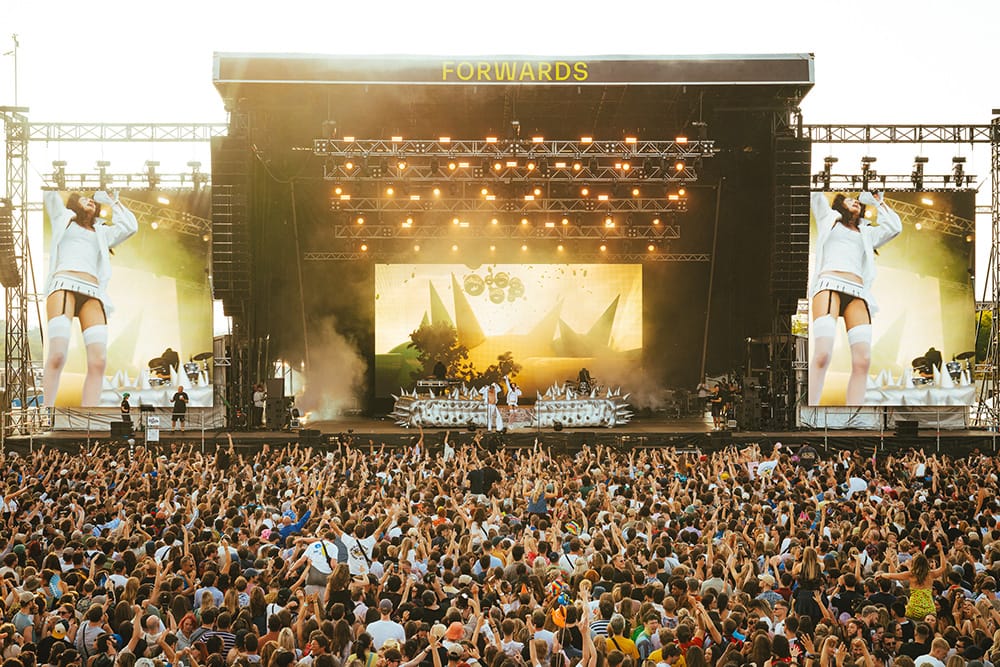](https://www.hypebot.com/green-hydrogen-is-pushing-diesel-off-the-festival-bill/)
[Who Is PRESIDENT (and What Is All This Hype About)?PRESIDENT’s rapid rise from anonymous festival booking to sold-out North American headliner has us thinking about “carefully controlled mystery.”HypebotJeremy Young](https://www.hypebot.com/who-is-president-and-what-is-all-this-hype-about/)
[The Band That Got Banned for Being Too Loud: A Brief History of Dinosaur Jr.From ear-splitting gigs and onstage fighting to becoming anthemic for younger fans, this Brief History reveals a band that refuses to be nostalgic.HypebotJeremy Young](https://www.hypebot.com/the-band-that-got-banned-for-being-too-loud-a-brief-history-of-dinosaur-jr/)
[Making the Case for Political Activism at ConcertsPeaceful disruptions at concerts are inconvenient, but the collective, emotional nature of live music makes it the perfect space to challenge the status quo.HypebotJeremy Young](https://www.hypebot.com/making-the-case-for-political-activism-at-concerts/)
### **Advice & Tips**
[Artists: If You Can’t Define Success, You Won’t Find ItHow you view the concept of success can actually tell you how likely you are to reach it. Here’s what I’ve found over the years of working with artists.HypebotAngela Tyler](https://www.hypebot.com/artists-if-you-cant-define-success-you-wont-find-it/)
[Independent Distro Is Optimizing for the Wrong NumberOpen music distribution solved artists’ access problem. but created a discovery crisis that smaller, curated platforms can better address.HypebotGuest Author](https://www.hypebot.com/independent-distro-is-optimizing-for-the-wrong-number/)
[What Smaller African Music Markets Need In Order to Build Sustainable CareersStreaming has opened global platforms to African artists, but sustainable careers (especially in countries like Togo) depend on stronger strategies.HypebotGuest Author](https://www.hypebot.com/what-smaller-african-music-markets-need-in-order-to-build-sustainable-careers/)
[Audiomack Pro Shows Artists How Listeners Engage With Their SongsAudiomack Pro gives artists instant monetization, greater promotional reach and granular Song Pulse data showing exactly how listeners are engaging.HypebotNews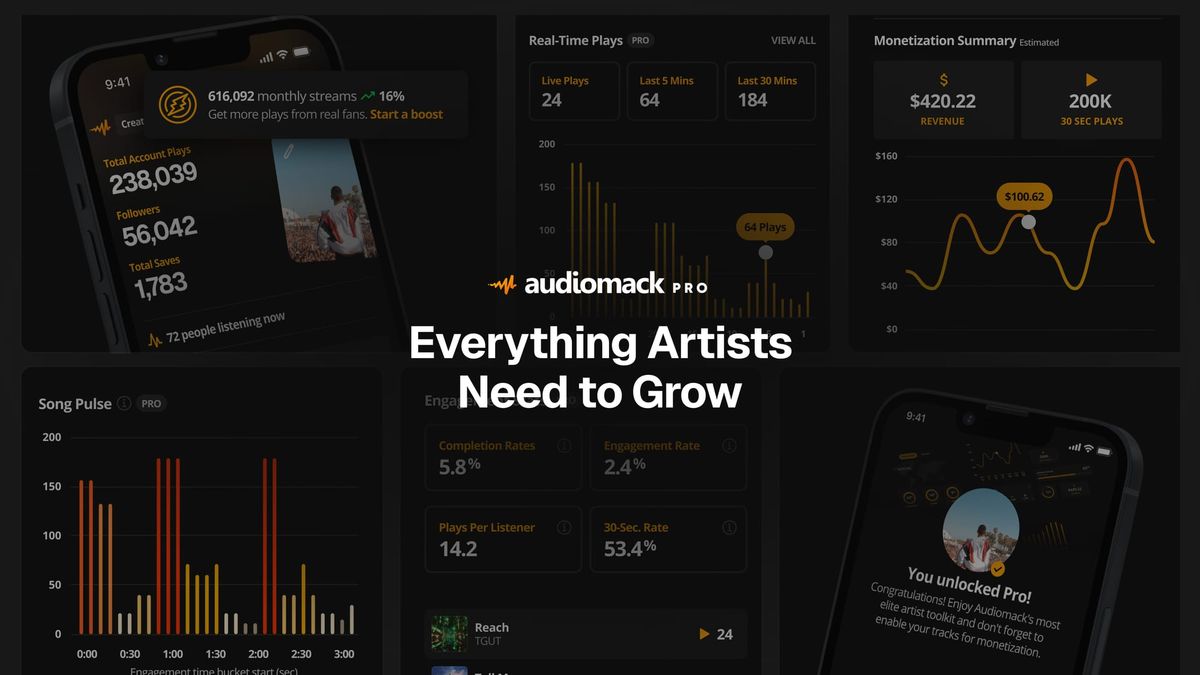](https://www.hypebot.com/audiomack-pro-shows-artists-exactly-where-listeners-hit-skip/)
### **Marketing in Music**
[Bandsintown Artists Can Now Sync Fan Signups to Mailchimp, Klaviyo, ActiveCampaign, More.The new integrations mean fan signups artists collect through Bandsintown now flow into more of the Marketing & CRM tools they already use.HypebotHypebot Editorial Desk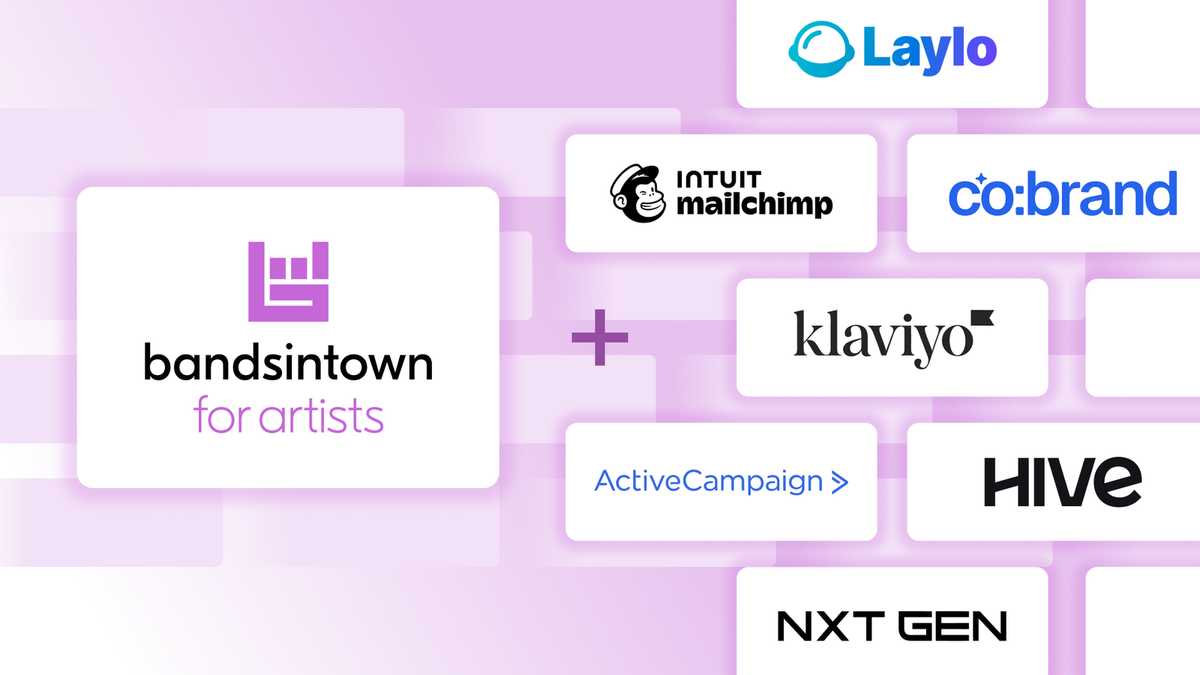](https://www.hypebot.com/bandsintown-artists-can-now-sync-fan-signups-to-mailchimp-klaviyo-activecampaign-more/)
[Why Not All Songs Should Be Promoted the Same WayStop recycling the same release campaign for every track. Instead, market each song around its value prop: discovery, fan engagement, live promotion, etc.HypebotReverbNation Blog](https://www.hypebot.com/why-not-all-songs-should-be-promoted-the-same-way/)
[Concert Tickets Are Apparently the New Airline MilesLive music is becoming a loyalty reward across banking, retail, and delivery — but this trend also reveals how the geography of fandom is changing.HypebotHypebot Editorial Desk](https://www.hypebot.com/concert-tickets-are-apparently-the-new-airline-miles/)
[Why Is It So Hard For Fans To Buy Music?A major frustration shared by fans, artists and the industry is the inability to purchase new music releases when the fans are most excited to.HypebotBruce Houghton](https://www.hypebot.com/why-is-it-so-hard-for-fans-to-buy-music/)
### **Streaming & AI**
[AI Is Reshaping the Music Industry, But Leaving Live Events Behind.While AI investment transform recorded music, its greatest untapped potential lies in helping live event pros manage bookings, payments, and workflows.HypebotGuest Author](https://www.hypebot.com/ai-is-reshaping-the-music-industry-but-leaving-live-events-behind/)
[SubmitHub Will Give Up 10% of Its Revenue to Keep AI Music OutThe platform plans to block tracks deemed 85% likely to be AI-generated from its core promotion services in order to prioritize human-created music.HypebotNews](https://www.hypebot.com/submithub-will-give-up-10-of-its-revenue-to-keep-ai-music-out/)
[AFM Union Battles UMG and Warner Over AI Licensing PayoutsMusicians union AFM is fighting UMG and Warner over AI licensing deals with Suno and Udio. Learn why it matters and where the lawsuit stands.HypebotBruce Houghton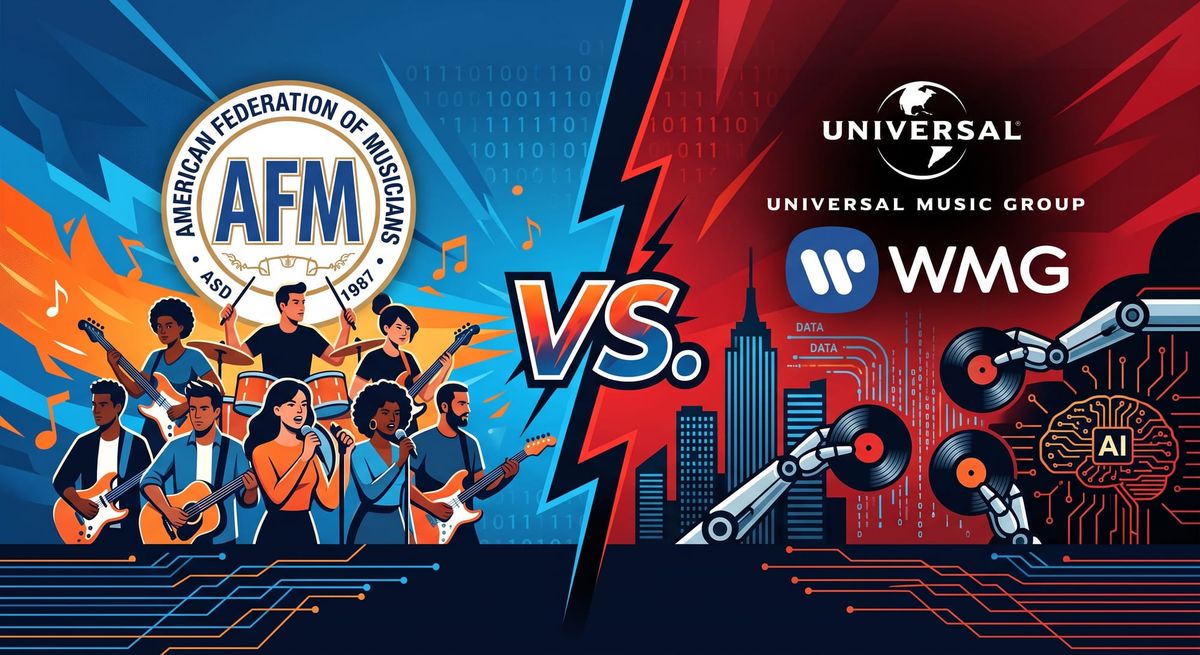](https://www.hypebot.com/afm-union-battles-umg-and-warner-over-ai-licensing-payouts/)
[IFPI unites CD Baby, Sony, UMG & More To Fight AI StreamsTop music distributors unite to fight fraud, but key players have yet to sign on. How the IFPI’s initiative battles fakes and protects royalties.HypebotBruce Houghton](https://www.hypebot.com/ifpi-unites-cd-baby-sony-umg-and-more-to-fight-ai-streams/)
### **News**
[Live Nation Legal Battles: What Happens Next in 2026–2027Live Nation faces major legal challenges set to be resolved in the next year. Learn key dates for the DOJ settlement, state remedies trial & more.HypebotBruce Houghton](https://www.hypebot.com/live-nation-legal-battles-what-happens-next-in-2026-2027/)
[NOLA’s Howlin Wolf sues StubHub over Spec Ticket SalesIconic New Orleans music venue The Howlin’ Wolf is suing StubHub for false advertising and spec ticket sales and showing others how to fight back.HypebotBruce Houghton](https://www.hypebot.com/nolas-howlin-wolf-sues-stubhub-over-spec-ticket-sales/)
[New EU Merch Tax Hits US, UK, All Non-EU Artists HardNew EU parcel duties stack by item type. See how a simple $40 merch order of a sticker, CD, and t-shirt incurs nearly $10 in surprise taxes.HypebotBruce Houghton](https://www.hypebot.com/new-eu-merch-tax-hits-us-uk-all-non-eu-artists-hard/)
[Strict New Rules & Deadlines for Snagging Oasis 2027 TicketsOasis Live ’27 tour has no ticket onsale. Fans must register before the deadline, answer a quiz, and get lucky. How to get Oasis 2027 tickets.HypebotBruce Houghton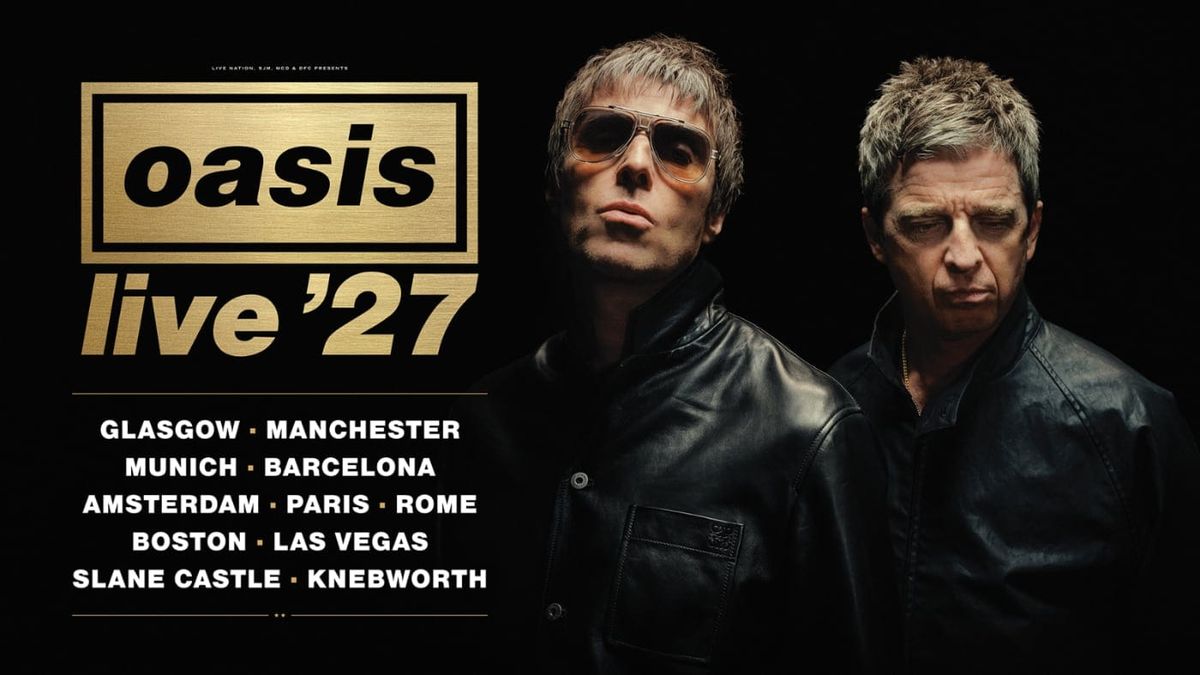](https://www.hypebot.com/strict-new-rules-deadlines-for-snagging-oasis-2027-tickets/)
### ***\*This Week's Wild Card***
[How the Live Music Road Story Is Being RewrittenTouring Radar tracks newly announced dates that say something bigger about the business of live music. Here’s what’s catching our eye this week.HypebotHypebot Editorial Desk](https://www.hypebot.com/how-the-live-music-road-story-is-being-rewritten/)
### Spotify’s Fresh Finds Is Becoming More Than a Playlist
URL: https://www.hypebot.com/spotifys-fresh-finds-is-becoming-more-than-a-playlist/
Last updated: 2026-09-17T20:45:15.000Z
[**Spotify**](https://www.hypebot.com/tag/spotify/) is expanding its Fresh Finds playlist network into a year-long artist-development program expected to support approximately 10,000 emerging independent artists annually.
Launched Thursday, [Fresh Finds Forward](https://newsroom.spotify.com/2026-09-17/fresh-finds-forward/?ref=hypebot.com) will provide eligible artists with free studio time, music-production tools, wellness resources, industry programming and potential touring and video opportunities. The aim is to turn the fleeting attention of a playlist placement into something closer to sustained career support.
Artists added to any Fresh Finds playlist beginning January 1, 2026, may receive an invitation through Spotify for Artists. Once enrolled, participants can access the program’s benefits for 12 months.
Those benefits include premium access to LANDR Studio Pro and Splice’s Creator Plan, early access to select Spotify products, virtual and in-person events, and six months of therapy through BetterHelp. U.S.-based artists may also receive free studio time at Electric Lady Studios in New York, The Lighthouse at Ocean Way Nashville or Spotify Studios in Los Angeles.
Spotify says participants will receive prioritized consideration for certain tour and music video partnerships, although inclusion does not guarantee that an artist will land one. A Fresh Finds badge will also appear on participating artists’ profiles.
## Turning discovery into development
Fresh Finds has operated for more than a decade as Spotify’s editorial showcase for unsigned, independent and early-career artists. According to the company, its playlists have featured more than 80,000 artists from 127 countries.
The alumni list includes Laufey, Clairo, Doechii, Ice Spice, ROLE MODEL, Ethel Cain, Wet Leg, Japanese Breakfast, Megan Moroney, Ella Langley and Omar Apollo. Fresh Finds alumni have also appeared among the Grammy nominees for Best New Artist in each of the past five years.
Spotify says the playlists have generated more than 128 million new artist discoveries since 2024, with almost 70% of their streams coming from listeners encountering an artist for the first time. More than half of the artists featured later receive placements on other Spotify editorial playlists, including New Music Friday, RapCaviar and Lorem.
That reach is valuable, but a playlist spike does not automatically create a durable fan base, a touring business or a sustainable career. Fresh Finds Forward appears designed to address the difficult stretch after discovery, when an artist has attention but may not yet have the money, infrastructure or professional network to use it well.
“Participating artists aren’t just getting a playlist placement,” said Joe Hadley, Spotify’s Global Head of Music Content and Partnerships. “They’re getting the benefits, resources, and the community to make the most of that moment.”
The program also gives Spotify a more concrete answer to a familiar criticism of streaming-era discovery: platforms can generate sudden visibility without providing the support needed to convert it into long-term growth.
There is no separate public application for Fresh Finds Forward. Independent artists hoping to qualify must first [pitch an unreleased song](https://support.spotify.com/us/artists/article/pitching-music-and-videos-to-playlist-editors/?ref=hypebot.com) to Spotify’s editors through Spotify for Artists and secure a Fresh Finds placement.
That still leaves editorial selection as the gateway. But for the thousands of artists who pass through it each year, Fresh Finds will now offer more than a promising line on their streaming analytics. Spotify is attempting to build an artist-development layer around the playlist itself—and give early momentum somewhere to go.
### Artists: If You Can't Define Success, You Won't Find It
URL: https://www.hypebot.com/artists-if-you-cant-define-success-you-wont-find-it/
Last updated: 2026-09-17T18:35:15.000Z
One of the first things I ask my artists when they [approach me for a PR campaign](https://wearemp.co/?ref=hypebot.com) is:
> *"What three things would make this campaign a success for you?”*
Over the years, I've seen a myriad of answers, ranging from the very concrete (gain 1,000 followers! Get 5 million zillion streams!) to the sweet and completely subjective (make a difference, reach the right audience.)
At the same time, I hear a lot of talk of ***if only.***
**If only** a label would give me a chance. ***If only*** that venue would book me. ***If only*** I could get on a national tour.
All of these answers share the same pitfalls. They’re either too ambiguous or they’re giving a lot of power away to people that don’t even know you.
The thing is, all of these are paths to success. But there are *many* paths to success, and in my experience, the most surefire ones are those that involve **you** taking control of **your** career and **going after the things you want,** rather than waiting for someone else to do it for you.
Because the thing is, it's not really that you don’t have the tools or the money or the support. It’s more likely that you aren’t quite sure where you’re going, and you’re hoping someone can direct you there. And it’s hard, I get it! Especially when the answer might constantly be shifting. But more likely than not, that’s the thing that’s holding you back.
And the good news? We can fix that.
So I want to propose something different. Instead of hanging on to an elusive idea of what success is, something intangible that ebbs and flows, let's define it. Get clear on what you really want. And then, let's make a plan to get there.
# Success means knowing exactly what you want.
And I mean down to the nitty gritty. By far this is the one I see most artists skip. Their goals are arbitrary at best.
- **Sign to a label.*Okay, what label and why is it a good fit for you?***
- **Tour more.** *Okay where? And why, what will that get you closer to?*
- **Make enough money to go full-time.** *What does that mean? Someone in rural America might get by on three grand a month, where someone in New York City could barely pay rent on that. What do you actually need to make and how can you make it?*
In order to make things happen for yourself, you need to know what you're going after and why. The more specific you can be the better. You don’t want to sign to a label, you want to sign to Hopeless Records because you feel like they’ll understand your need to maintain creative control while helping you grow, and you know the majors might not allow for that same kind of freedom.
Which brings me to the second point...
***+Read more:*** [*"The Band Member Day Job Conundrum"*](https://www.hypebot.com/the-band-member-day-job-conundrum/)
# Success means understanding why you’re doing this.
What I’m really asking is, how do you want to feel, and how can we make that happen?
This is something I had to get very clear on when I was pivoting Muddy Paw PR and deciding how to enter my tenth year in business. How I wanted to feel when I started the company at twenty-five and how I wanted to feel in my mid-thirties were pretty different. Naturally, my priorities and lifestyle had changed and I needed goals that reflected that.
Maybe you can relate?
For example, when you started playing music, did you want to tour the world? Stay out until two a.m. every night? Make friends in every city? Perhaps. But what about now?
If you still want that, then great! But what if you’re more of a homebody. (Happens to the best of us) You have steady relationship or a full time job or a family. Suddenly touring six months out of the year not only isn't feasible but it's not even really what you want anymore. That's okay! Ask yourself what feelings you’re chasing *now*.
There's no one right direction, but the more you can hone in on specificities, the faster you can get where you're going, because you won't be distracted by the things you think you're supposed to want.
# Success means celebrating little victories.
I hate to be the one to tell you this, but even when you hit your major milestones, the feeling is fleeting. You’ll celebrate, of course (as you should!) but the way our brains are wired, especially as creatives, it’s so easy to go: *“okay great! Now what?”*
So we have to make a conscious effort to celebrate the little victories just as much. It’s so easy to miss them otherwise. This one is tough. But it really does make a huge difference in how you feel about yourself and your relationship to your craft.
Try not to downplay your accomplishments. This industry can be so brutal, that if you don’t take the time to acknowledging the little things, it’s not likely anyone else will either.
# Success will change over time. Let it.
You aren’t the same person today as you were a year ago. What you view as success now will almost certainly change as you continue to grow. That’s okay, let it. You’re not doing yourself or your career any favors by keeping a chokehold on the past.
If you're always fixating on the next thing and never appreciating what's right in front of you, odds are you'll struggle to ever feel successful. Even when you are.
So appreciate the little moments, the friendships, the bandmates, the fans that make this all possible. Make time to reconnect with why you started playing music in the first place, and don't be afraid to be a little foolish in the pursuit of happiness. At the end of the day, this is your journey and yours alone.
Success is what *you* make it.
### SubmitHub Will Give Up 10% of Its Revenue to Keep AI Music Out
URL: https://www.hypebot.com/submithub-will-give-up-10-of-its-revenue-to-keep-ai-music-out/
Last updated: 2026-09-17T15:24:30.000Z
[**SubmitHub**](https://www.hypebot.com/tag/submithub/) is placing a hard limit on highly AI-generated music—and says doing so could eliminate roughly 10% of its current revenue.
Under the platform’s [new AI policy](https://www.submithub.com/story/ai-policy?ref=hypebot.com), tracks calculated to be at least 85% likely to contain AI-generated audio will no longer qualify for its core music-promotion services. The restriction covers both fully generated recordings and “hybrid” tracks that have undergone some human editing or processing.
This is not a blanket ban on using AI. Music created with AI as one part of a larger human process can still be submitted if it falls below the threshold. SubmitHub’s Hot or Not feature and Meta advertising services are also exempt.
The cutoff will be enforced using SH Labs, SubmitHub’s detection system, which the company says achieved 99.4% accuracy in third-party testing. There will be no appeals process, and writing a song’s lyrics or underlying composition will not exempt a recording if its finished audio crosses the threshold.
SubmitHub says approximately 11% of recently uploaded tracks scored above 85%. Those songs earned an average curator approval rate of 16%, compared with 31% for non-AI music.
The decision partly follows [Spotify’s introduction of AI Persona badges](https://newsroom.spotify.com/2026-08-11/ai-persona-badges-transparency/?ref=hypebot.com). Spotify will exclude labeled AI Personas from editorial and algorithmic recommendations unless a listener already follows them. Spotify stresses that its badge concerns an artist’s public identity, not necessarily how the music was made, but SubmitHub believes heavily generated tracks may still face a promotional disadvantage.
More importantly, SubmitHub is making its own philosophical choice. It does not want human artists competing for curator attention against an unlimited supply of finished songs generated at the press of a button. That makes this more than another disclosure policy. A major independent promotion platform is deciding not only how AI music should be labeled, but whether it should be allowed to purchase access to human-curated attention at all.
**+Read more:** [*"SubmitHub AI Music Detector Exposes Huge Disclosure Gap"*](https://www.hypebot.com/submithub-ai-music-detector-exposes-huge-disclosure-gap/)
---
*Get the latest Live Music & Industry News updated continuously from across the web under the Hypebot Industry News tab* [*here*](https://www.hypebot.com/music-industry-news-feed/)*.*
## Hypebot
Essential news & insights for artists and live music pros.
Sign up for free weekly content delivered to your inbox
Subscribe
Email sent! Check your inbox to complete your signup.
### Audiomack Pro Shows Artists How Listeners Engage With Their Songs
URL: https://www.hypebot.com/audiomack-pro-shows-artists-exactly-where-listeners-hit-skip/
Last updated: 2026-09-17T18:45:50.000Z
[**Audiomack**](https://audiomack.com/?ref=hypebot.com) has launched **Audiomack Pro** worldwide, introducing a paid tier that combines deeper listener analytics with verification, monetization and promotional tools for independent artists.
The centerpiece is **Song Pulse**, a new feature that shows when listeners are responding to a track, helping artists identify what resonates, expand their music's reach, and turn engagement into revenue.
That information could be particularly useful when deciding which section of a track to turn into a TikTok, Reel or YouTube Short. Instead of guessing which 15 seconds might connect, artists can work from actual listener behavior.
Pro subscriptions also include real-time play counts, expanded audience data, priority customer support and expedited access to Audiomack’s orange verification badge. Members can immediately join the Audiomack Monetization Program without meeting its standard eligibility thresholds.
The package also adds a 20% reach increase through Audiomack Boost, including location targeting intended to put releases in front of listeners more likely to engage.
The new tier builds upon Audiomack’s free Creator App, which already offers unlimited uploads, performance insights and direct-to-fan messaging through Audiomack Connect. The company says hundreds of thousands of Connect messages have been exchanged so far, averaging more than seven fan replies per message.

For independent artists, Song Pulse may be the most interesting addition. Streaming dashboards are good at showing whether a song performed. More granular engagement data can begin to explain *why* — and give artists something practical to do with the answer.
Audiomack says it now serves more than 60 million monthly users and over one million active creators. [**Audiomack Pro** is available now](https://audiomack.com/world/post/audiomack-pro?ref=hypebot.com) to artists worldwide.
**+Read more:** [*"7 Digital Music Platforms That Put Artists Back in Charge"*](https://www.hypebot.com/7-digital-music-platforms-that-put-artists-back-in-charge/)
### Green Hydrogen Is Pushing Diesel Off the Festival Bill
URL: https://www.hypebot.com/green-hydrogen-is-pushing-diesel-off-the-festival-bill/
Last updated: 2026-09-17T14:42:30.000Z
Outdoor [music festivals](https://www.hypebot.com/tag/festivals) require an extraordinary amount of temporary electricity. Sound systems, lighting rigs, video walls, catering operations, bars, campsites and production offices all need power, often in fields where a permanent grid connection simply does not exist.
For pretty much all of live music history, the answer has been diesel generators. They are portable and dependable, but they are also noisy, polluting and difficult to square with an industry increasingly promising to reduce its environmental impact.
Now, a handful of festivals are testing a different solution: **green hydrogen.**
At England’s [**Boomtown Festival**](http://bandsintown.com/f/202506-boomtown-festival-2026?utm%5Fsource=hypebot&came%5Ffrom=900) this August, green-hydrogen fuel cells powered the 20,000-capacity HYDRO XL stage. **Skrillex, Four Tet, Floating Points** and **Groove Armada** were among the artists who performed on that particular stage. The festival had introduced a smaller hydrogen-powered stage in 2025, then substantially expanded the experiment this year.
Later that month, Bristol’s [**FORWARDS Festival**](https://www.forwardsbristol.co.uk/sustainability?ref=hypebot.com) [used green hydrogen to power its main stage](https://www.renewableenergymagazine.com/hydrogen/lorde-and-forwards-festival-powered-by-green-20260828?ref=hypebot.com), with renewable-energy-charged mobile batteries handling other parts of the site. **Lorde, Little Simz, Tems,** and **Wet Leg** performed across the weekend as part of a publicly supported clean-power trial designed to reduce the event’s reliance on diesel.
These are not yet *entirely* hydrogen-powered festivals, but they represent an important jump from powering a backstage office or food vendor to running the production infrastructure beneath major artists.
**+Read more:** [*"How to Build a Greener Concert Industry"*](https://www.hypebot.com/how-to-build-a-greener-concert-industry/)
## What is *green* hydrogen?
Hydrogen is sometimes discussed as if it is automatically clean. It is not. Most hydrogen is still produced using fossil fuels. [Green hydrogen](https://en.wikipedia.org/wiki/Green%5Fhydrogen?ref=hypebot.com) is made differently: renewable electricity from sources such as wind or solar is used to split water into hydrogen and oxygen through electrolysis.
That hydrogen can then be stored, transported to a festival and fed into a fuel cell that converts it back into electricity. At the point of use, a fuel-cell generator produces water and heat rather than carbon dioxide, nitrogen oxides or particulate pollution. It is also much quieter than a diesel generator, which could make the change noticeable backstage even when audiences have no idea what is powering the show.
The technology has been moving through the festival circuit for several years. Scotland’s HebCelt used locally produced green hydrogen to power its Islands Stage for three days in 2022, supporting performances by 12 acts. The festival returned to the system the following year.
In the Czech Republic, **Rock for People** began experimenting with a hydrogen-powered stage in 2021 and has since incorporated hydrogen alongside solar and other alternative energy sources. **Big Church Festival** used green hydrogen for its main stage in 2024, with [supplier **GeoPura**](https://www.geopura.com/sectors/events-festivals/?ref=hypebot.com) estimating that the switch prevented approximately 5.7 metric tons of carbon dioxide emissions.
Other festivals have started with less glamorous (but equally necessary) parts of their operations. **Latitude** [used green hydrogen](https://www.geopura.com/wp-content/uploads/2025/03/GeoPura-Latitude-Case-Study.pdf?ref=hypebot.com) for medical and welfare facilities, merchandise, VIP camping and its recycling hub in 2024\. That same year, the Isle of Wight Festival used it to power artist and crew catering and part of its guest village.
That patchwork of experiments may be more revealing than any claim that one festival has suddenly solved sustainable power. Organizers are learning where green hydrogen works, how much fuel they need and which pieces of festival infrastructure can be moved away from diesel without risking a blackout in the middle of a headline set.
***+Read more:*** [*"Exposing How the Live Music Industry Lies About Its Massive Carbon Footprint"*](https://www.hypebot.com/exposing-how-the-live-music-industry-lies-about-its-massive-carbon-footprint/)
## Hydrogen is one part of the power mix
Green hydrogen is not a *perfect* solution. Producing, compressing and transporting it requires energy, while converting electricity into hydrogen and then back into electricity creates efficiency losses. If a festival can connect directly to a renewable grid, that is generally the simpler option. Batteries can also be more efficient for shorter, predictable periods of demand.
Hydrogen becomes particularly interesting when an event requires continuous, high-capacity power at a temporary or remote location. Unlike a battery, a hydrogen system can keep operating as long as more fuel is delivered. That makes it a potential replacement for the large generators festivals have historically been reluctant to surrender.
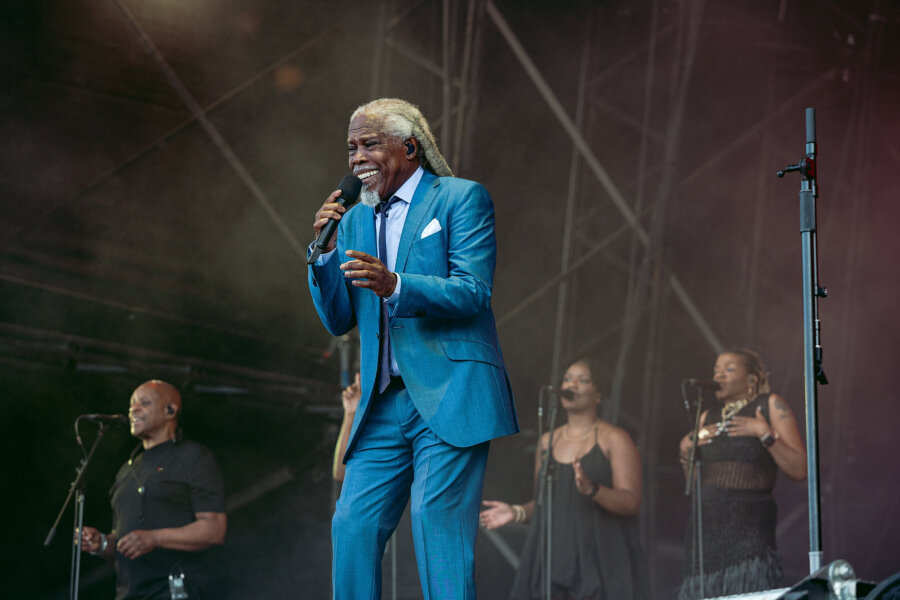
**Billy Ocean performing at Latitude Festival - read their* [**Sustainability commitment here*](https://www.latitudefestival.com/information-category/look-out-for-our-planet?ref=hypebot.com)**.*
The greener festival of the future will probably not run on one miraculous technology. It might use a permanent grid connection for the main site, batteries for predictable loads, solar installations where practical and green hydrogen for stages or production areas that require uninterrupted off-grid power.
For promoters, the first step may be less futuristic: accurately measuring how much electricity an event actually consumes. Oversized generators frequently burn fuel while supplying only a fraction of their available capacity. Better energy planning can reduce emissions before a new piece of equipment even arrives.
Still, the appearance of green hydrogen on increasingly large stages matters. Festival sustainability has often been presented through visible changes aimed at audiences: reusable cups, recycling stations, water refill points and public-transit campaigns. Hydrogen addresses something deeper in the machinery of the event.
Fans may never see the generators powering the show. For once, that may be the point.
***+Read more:*** [*"Upcycled Tour Merch Is Live Music's Next Green Frontier"*](https://www.hypebot.com/upcycled-tour-merch-is-live-musics-next-green-frontier/)
### New EU Merch Tax Hits US, UK, All Non-EU Artists Hard
URL: https://www.hypebot.com/new-eu-merch-tax-hits-us-uk-all-non-eu-artists-hard/
Last updated: 2026-09-17T13:59:38.000Z
[Independent musicians](https://www.hypebot.com/tag/indie-artists/) in the US, Canada, the UK and outside the European Union are facing a massive new hurdle when shipping physical [merchandise](https://www.hypebot.com/tag/merch/) to their European fans.
While initially highlighted for its [impact](https://musically.com/2026/09/04/british-artists-and-labels-hit-by-new-eu-taxes-on-small-parcels/?ref=hypebot.com) on British artists and labels, the new regulations the EU introduced are equally devastating for US, Canadian, and all outside-the-EU musicians and labels who rely on Direct-to-Consumer (D2C) e-commerce.
The European Union recently eliminated its long-standing €150 (approx. $165 USD) duty-free threshold for incoming goods. In its place, it introduced a flat customs duty of **€3 (\~$3.30 USD)** on low-value shipments. Crucially, this €3 ($3.30 USD) duty is charged **per product line item category** (based on standard 6-digit HS tariff codes), not per box.
When a fan orders multiple distinct merch categories in a single transaction, the fees compound rapidly. Here is how this stacking effect creates a severe margin crisis for independent artists:

### **A $3 Sticker, a $12 CD, and a $25 T-Shirt**
To understand how customs clearance systems and these new taxes actually work, let's look at a $40 merch bundle containing three distinct item categories. Because these items fall under different tariff classifications, the duty applies three separate times within the same package.
First, imagine a fan adds a **sticker** to their cart for **$3.00**. Because this is classified as a "Printed Decal," it triggers the €3.00 ($3.30 USD) flat duty. The tax cost on the sticker alone exceeds the actual price of the product, representing an effective tax rate of 110%.
Next is a **CD** priced at **$12.00**. Classified under "Recorded Media," this triggers a second €3.00 ($3.30 USD) duty, adding a 27.5% tax rate to the CD.
Finally, the fan buys a **t-shirt** for **$25.00**. Classified as "Apparel," this triggers a third €3.00 ($3.30 USD) duty, representing a 13.2% tax on the shirt.
**Total Damage:** A fan places an order for $40.00, containing just three low priced items. Because of the way the EU introduced this per-category fee structure, that single package instantly incurs **€9.00 ($9.90 USD)** in basic customs duties. This creates an **average tax rate of nearly 25%**—and that is ***before* adding standard European Value Added Tax (VAT)** and postal or shipping fees.
**+Read more:** [*"The Rebirth of CDs and What It Means For Musicians"*](https://www.hypebot.com/the-rebirth-of-cds-and-what-it-means-for-musicians/)
### **Actionable D2C Strategies for Non-EU Artists**
To protect margins and avoid high cart abandonment rates, independent artists and labels should revamp their international e-commerce workflows to:
- **Collect Duties at Checkout (IOSS):** Ensure your Shopify, Bandcamp, or webstore platform uses an Import One-Stop Shop (IOSS) integration. Collecting VAT and customs duties upfront guarantees the package clears customs without being held hostage for cash-on-delivery.
- **Stop Selling Standalone Low-Ticket Items:** Selling a $3 sticker as an impulse buy at checkout is now a liability. Stop selling single stickers, enamel pins, or patches to European customers unless they are bundled into unified multi-packs that share a single tariff heading.
- **Audit Your Product HS Codes:** Standardize your catalog data. Assigning accurate 6-digit HS codes to every product prevents customs officials from misclassifying items or applying duplicate tariff categories unnecessarily.
- **Prepare for Autumn Fee Hikes:** The EU is preparing to introduce an **additional handling fee (€2 / $2.20 USD per line)** later this year. Pricing structures must account for these rising fixed overheads.
## **Hypebot's Bottom Line**
The new EU parcel tax isn't just a minor administrative annoyance. it is a structural blow to cross-border music commerce. When a $3 sticker triggers a $3.30 tax, the traditional "add a sticker to your order" upsell model becomes toxic to international sales.
But there are strategies to minimize the damage. Failure to adapt will mean a surge in checkout rejections, angry fans, and diminished [income](https://www.hypebot.com/tag/income/).
---
*Get the latest Live Music & Industry News updated continuously from across the web under the Hypebot Industry News tab* [*here*](https://www.hypebot.com/music-industry-news-feed/)*.*
## Hypebot
Essential news & insights for artists and live music pros.
Sign up for free weekly content delivered to your inbox
Subscribe
Email sent! Check your inbox to complete your signup.
### MIDiA's Music Creator Survey Is Back: Help Shape The Future
URL: https://www.hypebot.com/midias-music-creator-survey-is-back-help-shape-the-future/
Last updated: 2026-09-17T15:24:36.000Z
Top music industry analysts[**MIDiA Research**](https://www.hypebot.com/author/midia/) has launched its annual **Music Creator Survey**, offering artists, producers, songwriters, and engineers a direct line to the companies building tomorrow’s music tech.
By spending under 10 minutes to share your day-to-day reality, you can influence the DAWs, platforms, and services the industry designs next - plus, you gain a chance to win **$1,000**.
### **Why Your Feedback Matters**
The music tech landscape is changing rapidly. From generative AI plugins and DAW workflow shortcuts to direct-to-fan platforms and automated distribution, the software you rely on every day is undergoing constant redevelopment.
But developer roadmaps shouldn't be crafted in a vacuum.
Every year, major tech platforms, software developers, and industry services rely on MIDiA’s independent findings to separate real creator needs from temporary market hype. Completing the survey helps ensure product managers build tools tailored to actual creator workflow rather than guesswork.
### **What the Survey Covers**
MIDiA is asking creators for candid, practical feedback across three areas:
1. **Your Creative Process & Workflow:** How you write, arrange, record, and release music in today's environment.
2. **Tools & Tech Stack:** The DAWs, plugins, hardware, and software platforms you use every day (and where they fall short).
3. **Industry Challenges:** The financial, administrative, or technical friction points currently slowing down your career growth.
### **How to Participate**
The survey takes less than 10 minutes to complete. To thank you for giving creators a unified voice, completing the survey automatically enters you into a draw for **$1,000**.
[**Take the 10-Minute MIDiA Music Creator Survey Here**](https://www.surveymonkey.com/r/MusicCreator26MailingList?code=[code%5Fvalue]&ref=hypebot.com)
---
*Get the latest Live Music & Industry News updated continuously from across the web under the Hypebot Industry News tab* [*here*](https://www.hypebot.com/music-industry-news-feed/)*.*
## Hypebot
Essential news & insights for artists and live music pros.
Sign up for free weekly content delivered to your inbox
Subscribe
Email sent! Check your inbox to complete your signup.
### Bandsintown Artists Can Now Sync Fan Signups to Mailchimp, Klaviyo, ActiveCampaign, More.
URL: https://www.hypebot.com/bandsintown-artists-can-now-sync-fan-signups-to-mailchimp-klaviyo-activecampaign-more/
Last updated: 2026-09-17T01:20:42.000Z
Live music discovery leader [**Bandsintown**](https://www.bandsintown.com/?utm%5Fsource=hypebot&came%5Ffrom=900) is expanding its [Bandsintown For Artists Marketplace](https://www.artist.bandsintown.com/integrations?ref=hypebot.com), adding seven marketing and CRM platforms that now sync artist fan signups in real time.
The addition more than doubles the Marketplace's marketing and CRM integrations, bringing its overall partner count to close to 40.
## **Seven new marketing and CRM integrations**
Artists can now sync fan email and SMS opt-ins with **Mailchimp**, **Klaviyo** and **ActiveCampaign**, alongside **Laylo**, **co:brand**, **Hive** and **NxtGen**. The signups come from the Bandsintown tools artists already run on their own sites and social channels — the **Widget**, the **Smart Link** and the **Signup Form** — and sync the moment a fan opts in, with no export step.
These sit alongside fan sync already live with **Community**, **Openstage** and **Rivet**, and event sync with the tools artists build their pages on, including **Linktree**, **Komi**, **Bandzoogle** and **Feature.fm**.
## **Every synced signup does two things**
It lands in the artist's own platform — Mailchimp, Klaviyo, whichever they run — exactly as it would from a native signup form, so their automations fire the same way they always have. A fan who joins a presale can have the code back from the artist's own platform within seconds.
It also registers the fan as a Bandsintown follower. From there, Bandsintown promotes the artist to that fan automatically: every show announced nearby, on every tour, for as long as they follow, at no cost and no extra work.
The artist's side of the equation doesn't change. The audience does.
## **How it works**
1. The artist adds the Bandsintown Widget or Smart Link to their own website and social channels to announce and promote tour dates.
2. Fans checking tour dates on the artist's website or Smart Link can RSVP, join a presale, join a waitlist, or sign up for updates.
3. Whichever action a fan takes, Bandsintown collects their email address, and phone number if they provide one.
4. That signup syncs automatically to whichever platform the artist connects — Mailchimp, Klaviyo, ActiveCampaign, Laylo, co:brand, Hive or NxtGen.
5. The fan is also registered as a Bandsintown follower, triggering automatic show alerts in every city, on every future tour.
The sync covers signups captured by the artist's Bandsintown Widget or Smart Link. Follows and RSVPs on the Bandsintown site or app aren't part of it.
Artists already syncing signups this way include **Gorillaz**, **Placebo**, **Hayley Williams**, **Kehlani**, **Yung Gravy**, **Alexandra Kay** and **Iliza Shlesinger**, as well as **Angine de Poitrine**, the Quebec duo who've taken their sound from clubs to festival stages this year.
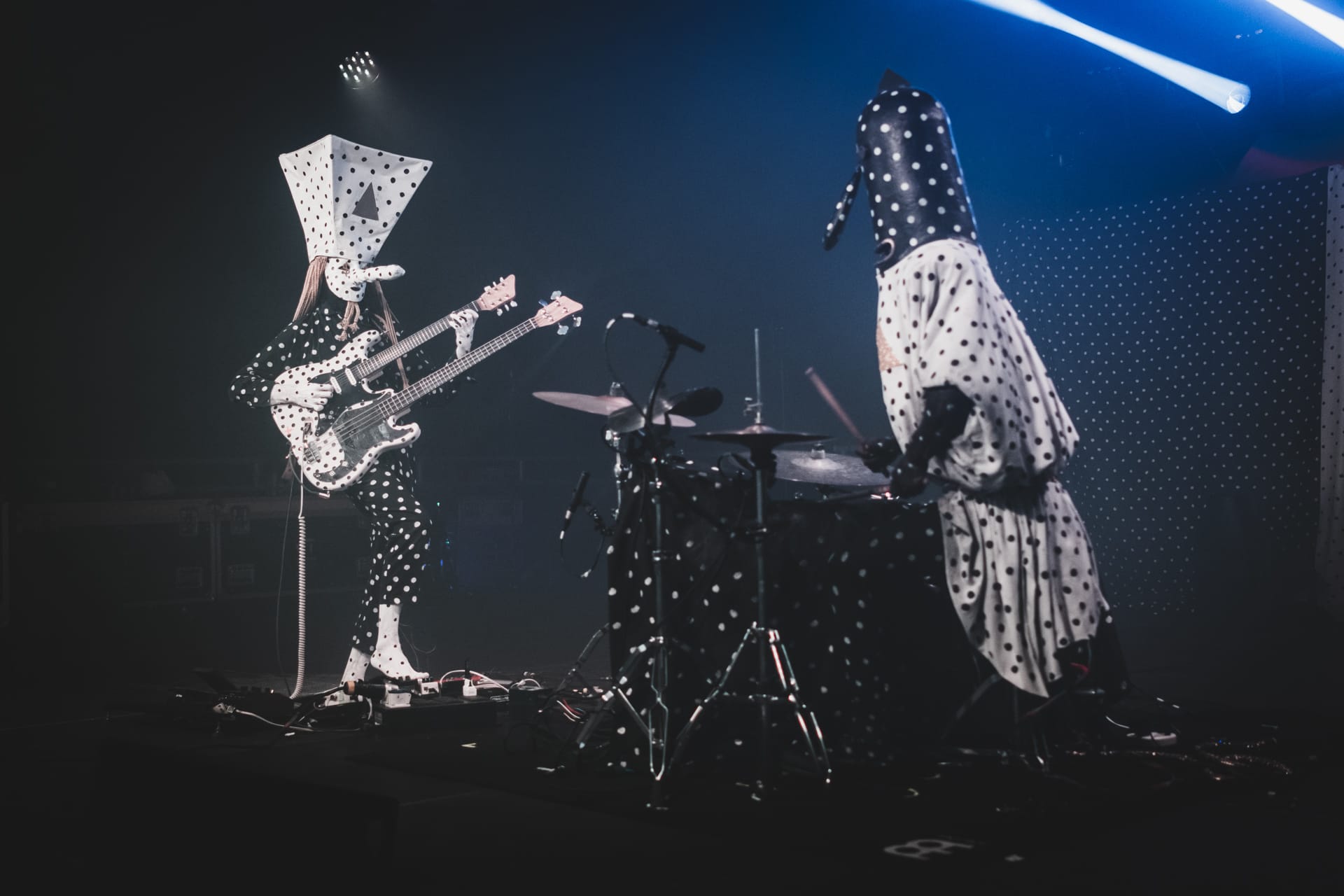
[***Angine de Poitrine.**](https://www.bandsintown.com/a/15537640-angine-de-poitrine?utm%5Fsource=hypebot&came%5Ffrom=900)
## **Why this matters**
Independent artists already run more tools than they have time to manage — a CRM, a distribution service, a link-in-bio, a Bandsintown page — each one asking to be checked separately. This expansion doesn't add another one to the pile; it connects two the artist already has.
That adds up in small ways: fewer manual exports, fewer chances to lose a fan between tools, and a following that keeps growing on Bandsintown's side without a single extra task added to the artist's day.
**Artists can connect their tools now at** [**marketplace.bandsintown.com**](https://marketplace.bandsintown.com/?utm%5Fsource=hypebot&came%5Ffrom=900)**.**
**+Read more:** [*"Bandsintown expands mission to empower Artists with Marketplace"*](https://www.hypebot.com/bandsintown-expands-mission-to-empower-artists-with-marketplace/)
---
## Hypebot
Essential news & insights for artists and live music pros.
Sign up for free weekly content delivered to your inbox
Subscribe
Email sent! Check your inbox to complete your signup.
### Why Not All Songs Should Be Promoted the Same Way
URL: https://www.hypebot.com/why-not-all-songs-should-be-promoted-the-same-way/
Last updated: 2026-09-16T16:16:43.000Z
### **Stop Marketing Every Song the Same Way**
*By *Kevin Breuner* of* [***ReverbNation Blog***](https://blog.reverbnation.com/stop-marketing-every-song-the-same-way/?ref=hypebot.com)
Independent artists have been handed a standard [release marketing](https://www.hypebot.com/tag/marketing-strategy/) formula:
Announce the song. Ask fans to pre-save it. Post a teaser. Share the cover art. Release the song. Make short-form videos. Repeat.
There’s nothing wrong with those steps. The problem is treating every song as if it has the same purpose and potential.
Some songs attract new listeners. Others mean more to existing [fans](https://www.hypebot.com/tag/fans/). Some work onstage. Some fit playlists. Some have sync potential. Some are important pieces of an album but were never meant to carry an entire campaign.
If every song is different, why would you market them all the same way?
## **Decide what the song’s job is**
Before planning your campaign, decide what you want the song to accomplish. Its primary job might be:
- Reaching new listeners
- Re-engaging existing fans
- Growing your email list
- Selling tickets to a show
- Creating sync opportunities
A song can do more than one thing, but choosing a primary goal makes the campaign easier to build and measure.
“I want as many people as possible to hear it” isn’t a strategy.
### The discovery song
A song with an immediate hook, clear mood, or memorable lyric may be your best candidate for reaching strangers. If one section consistently gets the best response, build around it. You don’t need to promote every part of the song equally.
### The fan song
Your most commercially immediate song isn’t always the one your existing fans will love most.
A more personal track might benefit from:
- An email explaining its story
- A demo or alternate version
- A lyric breakdown
- Studio footage
- An intimate performance
This approach may produce fewer impressions, but it can strengthen your relationship with the people most likely to support your career.
### The live song
Some songs make the most sense when people experience them together. Use rehearsal footage, live clips, audience reactions, or stripped-down performances. Connect the song to upcoming concerts and ticket offers.
A live song may become more powerful after its release as you learn how audiences respond to it.
### The sync song
A song with a strong mood, useful theme, and clear ownership may have long-term potential for film, television, advertising, or games.
A sync-focused song doesn’t need to go viral to be valuable.
### The catalog song
An older track may become relevant again because of a season, anniversary, live performance, playlist, or social post.
When that happens, treat it like an active song. Create a new video, release an alternate version, tell its story, or introduce it to fans who discovered you later.
Your catalog isn’t an archive. It is a collection of assets you can continue using.
**+Read more:** [*"If Viral Content Doesn't Drive Streams, Then What Does?"*](https://www.hypebot.com/if-viral-content-doesnt-drive-streams-then-what-does/)
## **The audience will give you clues toward success**
Pay attention to:
- Which clips people finish
- Which lyrics they quote
- Whether they save the track
- Whether they visit the rest of your catalog
- Which content generates genuine responses
When something connects, don’t abandon it because your calendar says it’s time to promote another song.
Extend the campaign. Make another video. Tell a deeper story. Put advertising behind content that has already demonstrated interest.
Not every song deserves the same budget or length of campaign. If one song is connecting, give it more support. If another isn’t responding after several honest attempts, you are allowed to move on.
Your music deserves more than a recycled promotional routine. Decide what the song can realistically accomplish, then build the campaign around that.
Release your next single at [ReverbNation.com](https://reverbnation.com/?ref=hypebot.com)
**+Read more:** [*"5 Playlist Pitching Regrets From an Artist Turned Curator"*](https://www.hypebot.com/5-playlist-pitching-regrets-from-an-artist-turned-curator/)
### Big Ears' Big 2027 Lineup Is Built for Wandering
URL: https://www.hypebot.com/big-ears-big-2027-lineup-is-built-for-wandering/
Last updated: 2026-09-16T16:02:25.000Z
[**Big Ears Festival**](https://www.bandsintown.com/f/236471-big-ears-festival-2027?utm%5Fsource=hypebot&came%5Ffrom=900) will return to downtown Knoxville, Tennessee, from **April 1–4, 2027,** with another enormous lineup that treats genre boundaries as polite suggestions. [Passes are on sale now](https://bigearsfestival.org/?ref=hypebot.com).
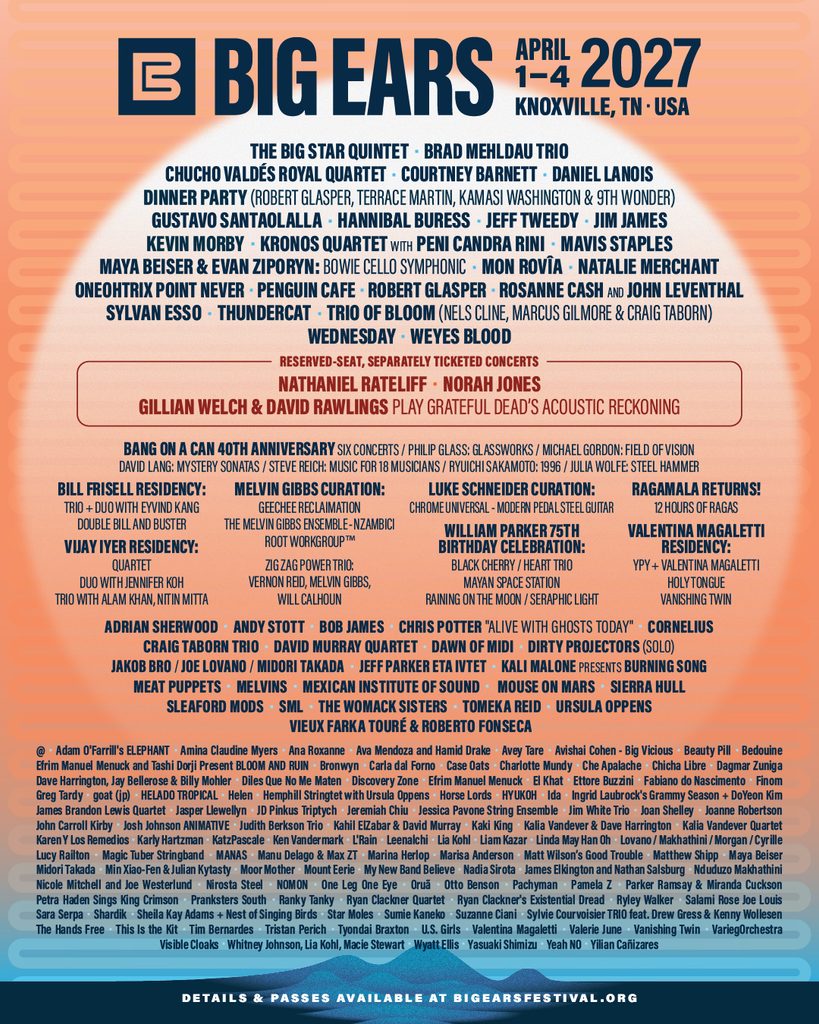
Jeff Tweedy, Robert Glasper, Weyes Blood, Courtney Barnett, Thundercat, Mavis Staples, Oneohtrix Point Never, Sylvan Esso, Wednesday, Daniel Lanois, Jim James and Natalie Merchant are among the artists announced. Dinner Party — the supergroup featuring Glasper, Terrace Martin, Kamasi Washington and 9th Wonder — will also perform.
The four-day festival will present more than 250 concerts, films, conversations and exhibitions across over 20 Knoxville venues.
Its deeper programming includes residencies from Bill Frisell, Vijay Iyer, William Parker, and Valentina Magaletti; a 40th-anniversary celebration of Bang on a Can; the return of the 12-hour *Ragamala* program; and a Melvin Gibbs-curated series titled *How Black Music Took Over the World*.
Nathaniel Rateliff, Norah Jones, and Gillian Welch and David Rawlings performing *Grateful Dead Acoustic Reckoning* will appear in reserved-seat concerts ticketed separately from regular festival admission.
[The complete lineup is available here](https://bigearsfestival.org/?ref=hypebot.com).
## **Curation Is an Incredibly Powerful Driver of Business**
At a moment when many festival posters seem assembled from the same rotating pool of proven names, Big Ears continues to sell something harder to duplicate: trust.
Its audience does not need to recognize every artist before buying a pass. The curatorial identity is the draw, and Knoxville’s network of theaters, churches, clubs and public spaces turns discovery into part of the product. A listener might arrive for Tweedy or Weyes Blood and leave talking about a pedal-steel experiment, an improvised jazz set or 12 hours of Indian classical music.
That matters for independent and adventurous artists. Festivals do not have to make every booking independently famous when the event itself provides enough context, and enough credibility, to make audiences curious.
Big Ears’ 2027 lineup is sprawling, and it wants its listeners to wander as much as the artists do.
### [**Follow Big Ears 2027 on Bandsintown**](https://www.bandsintown.com/f/236471-big-ears-festival-2027?utm%5Fsource=hypebot&came%5Ffrom=900)
---
## Hypebot
Essential news & insights for artists and live music pros.
Sign up for free weekly content delivered to your inbox
Subscribe
Email sent! Check your inbox to complete your signup.
### Who Is PRESIDENT (and What Is All This Hype About)?
URL: https://www.hypebot.com/who-is-president-and-what-is-all-this-hype-about/
Last updated: 2026-09-16T15:14:01.000Z
[**PRESIDENT**](https://www.bandsintown.com/a/15575223-president?utm%5Fsource=hypebot&came%5Ffrom=900) appeared on the [**Download Festival**](http://bandsintown.com/f/200217-download-festival-2026?utm%5Fsource=hypebot&came%5Ffrom=900) lineup before releasing a song. They played their first [live show](https://www.hypebot.com/tag/live-music/) with only two tracks in the world. Now, barely a year later, the masked British band is selling out North American rooms where fans already know every word.
That is either an unusually fast rise. Is this a fluke, a new industry psy-op conspiracy, or proof that a little bit of mystery still works in an economy built around "oversharing?"
There might be more to this story than meets the (masked) eye. Let's [dive deep](https://www.hypebot.com/tag/deep-dive/) into it, to figure out who exactly is PRESIDENT, and what all this hype is about afterall?
## **PRESIDENT Hit People's Eyes Before Their Ears**
[The public story](https://www.presidentband.com/bureau/?ref=hypebot.com) began in February 2025, when an unknown name appeared on the lineup for Download, the UK's biggest rock and metal festival. There was no back catalog to explore and no familiar face to place. There wasn't even a debut single. There was only a name, a masked figure, and the promise of an *“inauguration.”*
Creepy, but... so cool.
But this is a reversal of the usual order of [artist development](https://www.hypebot.com/tag/artist-development/). Most bands release music, gather an audience, and then pitch their sound and numbers to festivals. PRESIDENT secured the public stage first, leaving listeners to work backward and determine what they had just been shown. Because nobody actually knew.
The band's first single, “In the Name of the Father” [arrived in May](https://www.loudersound.com/bands-artists/president-metal-hammer-cover-2026?ref=hypebot.com), followed by “Fearless.” On June 15, PRESIDENT made their live debut on Download's Dogtooth Stage. The tent overflowed, although the group had just two released songs. Their five-song set filled in the gaps with three tracks the crowd had never heard.
Then in September, PRESIDENT released the six-song ***King of Terrors*** EP and were selling out headline dates followed in London, New York, and Los Angeles, along with arena support slots for **Architects** and a North American run with **Bad Omens** and **Beartooth.** Their first proper North American headline tour began September and stretches across 26 dates through October 14, with most of the run sold out.
The band's debut album, ***Blood of Your Empire***, arrived through Atlantic Records on the same day the tour began. That is a startling amount of attention to assemble before the debut record even arrives; what's more, it's a band in which the members still have not publicly identified themselves.
***+Read more:*** [*"Your Friend Bought the Tickets 💸*](https://www.hypebot.com/your-friend-bought-the-tickets-for-gods-sake-pay-them-back/)[*For God’s Sake, Pay Them Back"*](https://www.hypebot.com/your-friend-bought-the-tickets-for-gods-sake-pay-them-back/)
## **Who's Behind the Masks?**
The official answer is a four-piece consisting of **The President, Heist, Protest,** and **Vice**. The President is the project's vocalist, principal songwriter and original architect. Heist and Protest handle guitar and bass, while Vice plays drums. Their concerts are “rallies,” videos become “broadcasts,” and joining the mailing list means joining the “campaign.”
The [political](https://www.hypebot.com/tag/politics/) language is largely framing, however. The President has said that the project is less interested in party politics than religion, mortality, faith, and the systems people are taught not to question. That ethos, combined with the masks and a shared management connection, has made comparisons to **Sleep Token** unavoidable.
PRESIDENT has pushed back hard against the idea that the two projects are interchangeable. But the comparison still helps explain why listeners immediately understood how to approach the band. Heavy music has a long tradition of masks, aliases and constructed worlds, from **Slipknot** and **Ghost** to **Sleep Token**. The anonymity isn't exactly new, but the digital promotional model here is testing some serious flood gates.
***+Read more:*** [*"Why the UK Is Freaking Out Over Its 'Nepo Baby Stage'"*](https://www.hypebot.com/why-the-uk-is-freaking-out-over-its-nepo-baby-stage/)
## **The Hype Has Bled Into the Real World**
PRESIDENT's ascent is no longer measured only in streams or comment-section theories. It is visible in rooms. Their December 2025 show at New York's **Gramercy Theatre** (their third performance ever, and first in the US) [sold out in less than a minute](https://www.loudersound.com/bands-artists/president-metal-hammer-cover-2026?ref=hypebot.com).
Even the gear world is buying in. **Manson Guitar Works** recently added Heist and Protest to its artist roster, building them what appear to be bespoke extended-range instruments. One may be the company's first seven-string baritone. It is a small detail, but a telling one: [the fictional universe is acquiring real-world equipment](https://www.guitarworld.com/artists/bands/president-teams-with-manson-guitars?ref=hypebot.com).
There is also more substance underneath the rollout than the masks suggest. *Blood of Your Empire* is an album built around existential crisis, religious belief, and the corruption of power. It's less of a conventional concept album than a diary, which helps sell the anonymity as part of a larger story that we can all identify with; not just one person's experience.
***+Read more:*** [*"4 Types of Music Festivals — and What Makes Them Different"*](https://www.hypebot.com/4-types-of-music-festivals-and-what-makes-them-different/)
## **Why Mystery Is Not the Same Thing as Absence**
[Music marketing](https://www.hypebot.com/tag/marketing-strategy/) in the social-media era has trained artists to believe that every unanswered question is a missed content opportunity. More is more. Content is king. Post everyday.
And yet, here's a group that answers very little questions and leaves almost everything except the shell visible to the outside world. An outside world that's begging to be let in.
Fact and fiction remain blurred, but there's a promise of drama and excitement that nobody can look away from. Mystery thrives on absence. GOD SAVE THE PRESIDENT.
Keep up to date with [Download Festival 2027 here.](https://www.bandsintown.com/f/233305-download-festival-2027?utm%5Fsource=hypebot&came%5Ffrom=900)
---
## [**PRESIDENT Upcoming Tour Dates**](https://www.bandsintown.com/a/15575223-president?utm%5Fsource=hypebot&came%5Ffrom=900)
### Strict New Rules & Deadlines for Snagging Oasis 2027 Tickets
URL: https://www.hypebot.com/strict-new-rules-deadlines-for-snagging-oasis-2027-tickets/
Last updated: 2026-09-16T14:20:23.000Z
### **Oasis 2027 Tour: Inside An Unusual Ticketing Process**
Following a massive reunion tour rollout that left many fans battling dynamic pricing and endless queues, [**Oasis**](https://www.bandsintown.com/a/249-oasis?utm%5Fsource=hypebot&came%5Ffrom=900) is back with their **Oasis Live '27** tour. But they've completely overhauled how fans buy tickets.
If fans want to see the Gallagher brothers hit the stage in the **US, UK, Europe**, or **Ireland** in 2027, they will need to jump through some very specific hoops.
Here is what makes the Oasis Live '27 ticketing process so unusual, and what fans need to do to secure a spot.
[**Ticketmaster**](https://www.hypebot.com/tag/ticketmaster/) is the ticketing partner for the tour and [**OpenStage**](https://openstage.live/?ref=hypebot.com) is handling fan-registration process as it did after the band's last tour onsale turned into a nightmare.
### **How the Oasis Live '27 Registration Works**
The most significant change for this tour is that **there will be absolutely no general onsale**. The only way to purchase tickets is to get randomly selected through a mandatory pre-registration system.
To have a chance at getting tickets, fans must follow these exact steps:
- **Register Before the Deadline:** Fans must register via the official website ([Oasisinet.com](https://oasisinet.com/home/?ref=hypebot.com)) by **4 PM BST / 11 AM ET / 8 AM PT on Thursday, September 17, 2026**.
- **Match Email Addresses Perfectly:** The email used for the Oasis registration *must* match the email address associated with the buyer's Ticketmaster account. If they don't match, the entry is void.
- **Answer the Fan Quiz:** To deter bots and casual scalpers, registrants must correctly answer a trivia question during the sign-up process.
- **Select City Preferences:** Fans can choose up to three cities, in order of preference, for the chance to receive a code.
- **Wait for the Random Draw:** Registering does not guarantee a ticket. Successful fans will be randomly selected to receive a unique, non-transferable code between September 24 and 27\. This code grants access to a specific onsale window.
- **Dynamic pricing is out**. Standard ticket prices are fixed, ranging from £71.50 to £266.60 in the UK. All price tiers will be shared publicly before the sale begins.
### **Why Did Oasis Change Their Ticketing Strategy?**
The band’s previous ticketing rollout became a PR nightmare with untenable queues and exorbitant dynamic pricing.
**Ticketmaster** was also [forced](https://www.hypebot.com/ticketmaster-agrees-to-drop-misleading-labels-after-oasis-ticketing-backlash/) to overhaul certain labeling and pricing practices in the the U.K. after pressure from the **Competition and Markets Authority (CMA)**.
To rebuild trust and combat ticket touts (scalpers), Oasis pivoted to this hyper-controlled model.
### **Hypebot’s Bottom Line**
Oasis’s shift to a registration-only, fixed-price ticketing model is a direct response to industry-wide backlash against dynamic pricing and predatory scalping. By forcing fans to answer trivia questions, match their Ticketmaster emails, and enter a random lottery, the band is prioritizing die-hard fans over bots.
While the lack of a general onsale may frustrate more casual fans, it represents a potentially industry-shifting experiment in live music ticketing fairness. If this process successfully keeps scalpers at bay and fan sentiment positive, expect other stadium-level acts to adopt the "Oasis Model" in 2027 and beyond.
**+Read more:** [*"Ticketmaster Agrees to Drop Misleading Labels After Oasis Ticketing Backlash"*](https://www.hypebot.com/ticketmaster-agrees-to-drop-misleading-labels-after-oasis-ticketing-backlash/)
---
## [**Oasis Live Tour Dates**](https://www.bandsintown.com/a/249-oasis?utm%5Fsource=hypebot&came%5Ffrom=900)
### AI Is Reshaping the Music Industry, But Leaving Live Events Behind.
URL: https://www.hypebot.com/ai-is-reshaping-the-music-industry-but-leaving-live-events-behind/
Last updated: 2026-09-16T14:14:42.000Z
*By *Ben Ikwuagwu*, CEO & Co-Founder of* [***Soundcheck Live***](https://soundchecklive.io/?ref=hypebot.com)
Everyone in the music business is talking about [AI](https://www.hypebot.com/tag/AI). Labels are negotiating AI rights clauses into artist contracts. Streaming platforms are debating whether AI-generated songs should chart. Startups are raising hundreds of millions to build the next AI music tool.
The conversation is loud, fast, and almost entirely about ***recorded* music.**
Meanwhile, [live music](https://www.hypebot.com/tag/live-music/), the industry's biggest revenue driver, [still runs](https://www.hypebot.com/why-is-gig-booking-still-in-the-age-of-dinosaurs/) on WhatsApp group chats, Excel spreadsheets, and handshake deals. The hundreds of thousands of freelance musicians, sound engineers, lighting techs, and event coordinators who make every show happen are nearly invisible to the AI revolution unfolding around them.
I know because I'm one of them.
I've spent 15 years as a working vocalist in the private events world, performing roughly 60 weddings and corporate events a year alongside some of the most skilled musicians you'll never hear on the radio. I juggled multiple gigs across multiple bands and multiple bosses, none of whom shared the same calendar, contract format, or payment system.
The operational layer underneath live music was broken, and I couldn't stop thinking about it.
So my Co-Founder **Steven Tran** and I built [Soundcheck Live](https://soundchecklive.io/?ref=hypebot.com), a platform that gives live event professionals the business infrastructure they should have had all along. Bookings, payments, and workflows all in one place.
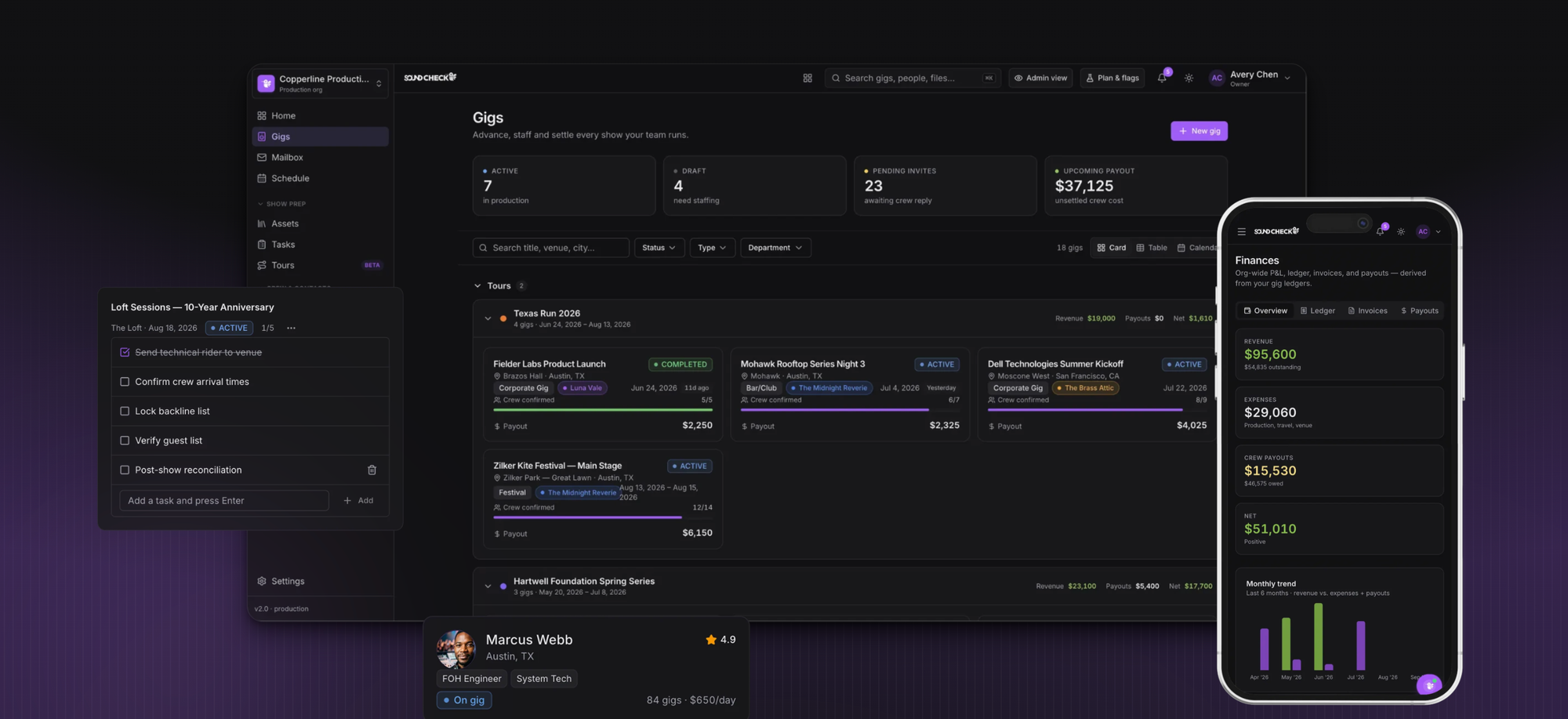
**Screenshot of* [**Soundcheck Live app*](https://soundchecklive.io/?ref=hypebot.com)**.*
***+Read more:*** [*"How NYBA Back-Designed a Cirque du Soleil Ticket Sellout (and Succeeded)"*](https://www.hypebot.com/how-nyba-back-designed-a-cirque-du-soleil-ticket-sellout-and-succeeded/)
Building Soundcheck confirmed what I already knew from the stage. The freelance musician is the most underserved professional in the music business. Event pros work for multiple employers at once, in a world where the legal, financial, and technological systems were designed for full-time employees, not independent contractors.
Now AI is widening the gap.
The tools being built right now serve the top of the pyramid: labels, publishers, distributors, and streaming platforms. AI is generating music, cloning voices, automating A&R decisions, and negotiating rights. All of that matters. None of it touches the working musician trying to figure out if they got paid correctly for last Saturday's wedding, or the sound engineer coordinating three back-to-back festival slots with no system to manage any of it.
Here's the irony of it all.
AI could genuinely transform the lives of the people making the show happen that you'll never see, if anyone bothered to build for them. Imagine AI that reconciles payments across booking platforms automatically. That flags contract discrepancies before a musician signs. That helps a freelance coordinator build a setlist, schedule crew, and send reminders to 15 vendors from one place. That isn't fantasy.
It's a solvable problem, and there's a lot that's being done to push the ball forward.
But the broader [music tech ecosystem](https://www.hypebot.com/tag/tech/) isn't paying attention, because crew and staff don't generate the data, scale, or investor headlines that streaming royalties and AI-generated platinum records do. The result is a two-tier industry: a highly automated, AI-optimized recorded music business on top, and a fragmented, manually operated live music workforce underneath. More vulnerable, more invisible, and more exploited than ever.
The music industry loves to talk about supporting artists. But the artist ecosystem is bigger than the names on the marquee.
- It's **the sound tech** who drove 11 hours to set up that stage.
- It's **the session musician** who played on three records this month and got paid late for all of them.
- It's **the coordinator** keeping 40 freelancers in sync with a shared Google doc and a prayer.
If we're serious about AI benefiting the music industry as a whole, not just disrupting it, we need to widen the conversation. That means building for the **working level of live music, not just the executive level.** It means designing AI with event pros in mind from day one, not as an afterthought.
And it means acknowledging that the future of music is not just what gets streamed. It's what gets performed, night after night, by real people who deserve better systems.
The AI revolution in music is happening. The question is who it's happening for.
**+Read more:** [*"11 Music Distributors Beyond the Usual Suspects"*](https://www.hypebot.com/11-music-distributors-beyond-the-usual-suspects/)
---
**Ben Ikwuagwu* is a first-generation Nigerian-American entrepreneur, professional vocalist, and CEO & Co-Founder of* [***Soundcheck Live***](https://soundchecklive.io/?ref=hypebot.com)*, the AI operating system and reputation layer for the live events industry.*
### Why Is It So Hard For Fans To Buy Music?
URL: https://www.hypebot.com/why-is-it-so-hard-for-fans-to-buy-music/
Last updated: 2026-09-16T13:52:05.000Z
On the latest [**Music Biz Weekly Podcast**](https://www.hypebot.com/tag/music-biz-weekly/), **Michael Brandvold** and **Blasko** discuss how traditional sales roles within the music industry have been eliminated, leaving unequipped artists to handle that responsibility (along with everything else).
The pair share multiple examples where purchase links were unavailable or the music was out of stock, frustrating excited fans and costing revenue. The only answer is for artists and their teams to take more responsibility for ensuring that the full transaction journey works before messaging fans to: *"Go buy my new album!"*
Listen and watch here or on your favorite podcast platform.
**FIND MORE FROM MUSIC BIZ WEEKLY & OTHER GREAT MUSIC BUSINESS AND INDIE MUSICIAN PODCAST EPISODES** [**HERE**](https://www.hypebot.com/hypebot/category/podcast-music-biz)
---
## Hypebot
Essential news & insights for artists and live music pros.
Sign up for free weekly content delivered to your inbox
Subscribe
Email sent! Check your inbox to complete your signup.
### IFPI Unites CD Baby, Sony, UMG and More to Fight AI Streams
URL: https://www.hypebot.com/ifpi-unites-cd-baby-sony-umg-and-more-to-fight-ai-streams/
Last updated: 2026-09-16T13:46:14.000Z
The **International Federation of the Phonographic Industry (IFPI)** has launched the [**Streaming Integrity Initiative**](https://endstreamingfraud.com/?ref=hypebot.com) **(SII)**, a global effort to eliminate artificial streams and protect royalty payouts for creators.
The initiative shifts anti-fraud enforcement upstream. Rather than relying solely on DSPs like **Spotify** and **Apple Music** to catch fraud, the SII turns digital music distributors ranging from **CD Baby** to **UMG** into the primary gatekeepers of the digital supply chain.
A full list of SII signatories is below.
Notably missing from the launch are **DistroKid, Believe/TuneCore,** TikTok’s **SoundOn**, **UnitedMasters,** **ONErpm**, **Stem, LANDR**, and **Amuse.** DistroKid alone handles an estimated 30% to 40% of new music uploaded globally. Some of the missing DSPs are part of the existing [**Music Fights Fraud Alliance**](https://musicfightsfraud.com/about-us?ref=hypebot.com#members).
This week [**Universal Music Group (UMG)**](https://www.hypebot.com/tag/umg/) sued [**DistroKid**](https://www.hypebot.com/tag/distrokid/) accusing it of deceptive trade practices, copyright infringement, and enabling mass uploads of unauthorized AI-generated content.
### **What Are the 5 Rules of the Streaming Integrity Initiative?**
Participating distributors have committed to five baseline anti-fraud practices:
1. **Identity Verification (KYC):** Perform robust Know Your Customer (KYC) identity (in this case creators) and rights verification to stop anonymous uploader accounts.
2. **Pre-Release Content Vetting:** Use effective tools to catch copyright infringement, metadata abuse, and AI-related risks before music hits DSPs.
3. **Active Enforcement:** Investigate suspicious streaming spikes and act against repeat offenders.
4. **Cross-Platform Intelligence Sharing:** Share operational data where legally permissible so banned bad actors cannot jump to competing services.
5. **Continuous System Auditing:** Audit and upgrade anti-fraud technology regularly to keep pace with evolving AI tactics.
### **Full List of Distributors, Organizations Supporting The Streaming Integrity Initiative**
The initiative brings together these major record labels, indie heavyweights, and digital distributors across the global music ecosystem:
- **Absolute Label Services**
- **ADA**
- **AWAL**
- **CD Baby**
- **CmdShft**
- **Ditto Music**
- **FUGA**
- **GoDigital**
- **HYBE**
- **IDOL**
- **IMPALA**
- **InnerCat Music Group**
- **Merlin**
- **Redeye**
- **Revelator**
- **RouteNote**
- **Secretly Distribution**
- **Sony Music Group**
- **Symphonic**
- **The Orchard**
- **Too Lost**
- **Universal Music Group**
- **Virgin Music Group**
- **Warner Music Group**
### **What This Means for the Music Ecosystem**
- **For Independent Artists:** verified identity checks (KYC) will become standard during release setup. Cleaner royalty pools ensure more money flows to real human listens.
- **For Distributors:** Low-friction, anonymous distribution is officially over. Aggregators must invest in Trust & Safety tech to stay compliant.
- **For DSPs:** Screening uploads at the entry point reduces catalog bloat, automated spam, and server cleanup costs downstream.
### **Hypebot's Bottom Line**
The **IFPI's Streaming Integrity Initiative** shifts anti-fraud strategy from reactive cleanup to proactive gatekeeping.
For years, bad actors exploited loose onboarding at DIY distributors to siphon money out of shared streaming royalty pools. By mandating strict identity checks, pre-release screening, and cross-platform intelligence sharing, the IFPI is closing the back door on streaming manipulation.
While independent creators may face extra verification steps when setting up a new release, the effort should mean a fairer ecosystem and protected payout rates.
### **MORE:** [**UMG Sues DistroKid For Alleged AI 'Slop' and Copyright Theft**](https://www.hypebot.com/umg-sues-distrokid-for-alleged-ai-slop-and-copyright-theft/)
---
*Get the latest Live Music & Industry News updated continuously from across the web under the Hypebot Industry News tab* [*here*](https://www.hypebot.com/music-industry-news-feed/)*.*
## Hypebot
Essential news & insights for artists and live music pros.
Sign up for free weekly content delivered to your inbox
Subscribe
Email sent! Check your inbox to complete your signup.
### UMG Sues DistroKid For Alleged AI 'Slop' and Copyright Theft
URL: https://www.hypebot.com/umg-sues-distrokid-for-alleged-ai-slop-and-copyright-theft/
Last updated: 2026-09-16T12:09:12.000Z
\[UPDATED\][**Universal Music Group (UMG)**](https://www.hypebot.com/tag/umg/)has filed a federal lawsuit against DIY distribution leader [**DistroKid**](https://www.hypebot.com/tag/distrokid/) accusing the platform of deceptive trade practices, copyright infringement, and enabling mass uploads of unauthorized AI-generated content.
By most estimates, DistroKid distributes 4 million artists representing **30% - 40% of all new music** uploaded to **Spotify** and other streamers. In July, private equity firm [**CVC Capital**](https://www.hypebot.com/distrokid-acquired-by-cvc-venture-capital-firm/) acquired a majority stake in the distributour for $2 billion.
### **DistroKid Responds**
> **"We are confident in our practices and intend to defend DistroKid vigorously."**
"DistroKid is proud to amplify millions of independent artists from around the world and help them bring their music to audiences everywhere," a company spokesperson told Hypebot. "We take copyright protection, fraud prevention and the integrity of the music ecosystem seriously, and work closely with digital streaming platforms, rightsholders and other industry partners on these efforts. Our distribution process includes sophisticated protections that we continuously invest in to stay at the forefront of these efforts. These are shared industry challenges, particularly as technology and the ways music is created and distributed continue to evolve."
"We strongly disagree with UMG’s allegations and are disappointed that it chose litigation rather than established industry processes to address these issues. We are confident in our practices and intend to defend DistroKid vigorously."
### **Key Allegations in UMG's DistroKid Complaint**
- **The AI 'Slop' Pipeline:** UMG alleges DistroKid allows bad actors to flood digital service providers (DSPs) with mass-generated AI audio tracks ("slop") that siphons streaming royalties away from legitimate rightsholders and human creators.
- **Deceptive Trade Practices:** The lawsuit claims DistroKid misleads the industry by portraying releases as authentic, artist-backed tracks while failing to enforce anti-fraud standards.
- **Profit Over Protection:** Despite membership in anti-fraud initiatives like the **Music Fights Fraud Alliance**, UMG argues DistroKid tolerates unauthorized uploads to inflate catalog volume and market valuation. Earlier this week, DistroKid was notably absent from the distributors signing on a new [**IFPI Streaming Integrity Initiaive**](https://endstreamingfraud.com/streaming-integrity-initiative?ref=hypebot.com) that included **UMG. Sony, CDBaby, Symphonic** and others.
### **Why This Matters for Independent Creators**
This new DistroKid lawsuit marks a sharp escalation in UMG’s enforcement strategy following its earlier legal settlement with Believe and TuneCore.
Open-access distributors like DistroKid process tens of thousands of tracks daily. While this model democratizes market access for independent artists, major labels assert that unvetted upload pipelines allow synthetic noise to dilute the pro-rata streaming royalty pools that pay working musicians.

### **Hypebot’s Bottom Line**
Universal Music Group’s legal action against DistroKid alongside the IFPI Streaming Integrity Initiative signal an end of friction-free, unvetted DIY distribution. As major labels and others pressure platforms to clean up streaming pools, distributors will be forced to adopt stringent identity checks and AI detection filters before tracks go live.
For independent artists, this shift will bring stricter upload hurdles. But it may ultimately safeguard human creators from having their hard-earned streaming royalties drained from the pool by synthetic clutter.
---
*Get the latest Live Music & Industry News updated continuously from across the web under the Hypebot Industry News tab* [*here*](https://www.hypebot.com/music-industry-news-feed/)*.*
## Hypebot
Essential news & insights for artists and live music pros.
Sign up for free weekly content delivered to your inbox
Subscribe
Email sent! Check your inbox to complete your signup.
### Angine de Poitrine Fever Is Super Contagious Right Now. 🤒
URL: https://www.hypebot.com/angine-de-poitrine-fever-is-super-contagious/
Last updated: 2026-09-15T20:03:01.000Z
[**Angine de Poitrine**](https://www.bandsintown.com/a/15537640-angine-de-poitrine?utm%5Fsource=hypebot&came%5Ffrom=900) made their US [television ](https://www.hypebot.com/tag/television/)debut Monday night on [*The Tonight Show Starring Jimmy Fallon*](https://www.youtube.com/watch?v=38rvtcwhuw4&ref=hypebot.com). Faced with one of the biggest promotional opportunities of their career, the "anonymous" Québécois duo chose to perform “Zugzegk,” a five-minute song nobody had ever heard and which they apparently have no immediate plans to release.
...Well that's just perfect.
Here we have a band with no visible facial identity or name, songs that aren't in any Earthly language or sung at all, performing in one of Pop Culture's biggest media arenas to millions of viewers, and absolutely nothing to promote or sell.
Why? Because THEY'VE ALREADY SOLD ALL THE TICKETS THEY HAVE.
*What. Is. Happening. Right. Now?*
The meteorically rising band's first US headline tour is completely sold out. Gone. Donezo. Clean up on aisle 5\. They're on the road right now, and their remaining itinerary — which stretches well into 2027 — is a long wall of unavailable tickets in rooms across North America, the UK, and Europe.
What started with a viral video first turned into an international talking point and the butt of a few [pretty good jokes](https://www.reddit.com/r/Quebec/comments/1rhu81h/angine%5Fde%5Fpoitrine/?ref=hypebot.com). It's now a full blown epidemic of [live stage](https://www.hypebot.com/tag/live-music/) enthusiasm.
***+Read more:*** [*"Angine de Poitrine Is Real Weird — They’re Also Probably Coming to Your Town Real Soon"*](https://www.hypebot.com/angine-de-poitrine-is-real-weird-theyre-also-probably-coming-to-your-town-real-soon/)
## **The Live Show Is the Marketing Campaign**
The story took off in February when the duo’s [KEXP performance](https://www.youtube.com/watch?v=0Ssi-9wS1so&ref=hypebot.com), recorded at France’s Trans Musicales festival, began reaching millions of viewers. It was the sort of clip people felt compelled to pass around: visually ridiculous, musically staggering and nearly impossible to describe without saying:
> *"Just watch this. You'll thank me later."*
The numbers followed quickly. [**Luminate**](https://www.hypebot.com/author/spotlight-by-luminate/) found that Angine de Poitrine’s global weekly on-demand streams passed one million during the same week the KEXP session appeared. By the week *Vol. II* arrived in April, the duo generated 11.2 million global streams — up more than 16,000% from the beginning of 2026.
Then the internet heat spilled into actual rooms. Dates were added. Venues got bigger. Extra nights appeared. Those disappeared too. Angine de Poitrine’s free Montreal International Jazz Festival performance reportedly drew more than 80,000 people, while other festivals moved the duo onto larger stages to handle the crowds.
Even their physical releases took on the feeling of an event. After the US vinyl and CD release in June, *Vol. II* debuted at No. 44 on the Billboard 200 while *Vol. I* entered at No. 53, with physical sales driving both. The albums also landed near the top of Billboard’s album-sales and vinyl charts.
Sniffle sniffle, the fever has taken hold of the live music central nervous system.
***+Read more:*** [*"How NYBA Back-Designed a Cirque du Soleil Ticket Sellout (and Succeeded)"*](https://www.hypebot.com/how-nyba-back-designed-a-cirque-du-soleil-ticket-sellout-and-succeeded/)
## **Can We Just Please Enjoy This Moment of Supreme, Uncompromising Weirdness?**
Try explaining Angine de Poitrine to somebody who has never seen them. They wear huge papier-mâché heads and matching polka dots. They play rhythmically tangled, microtonal rock using a custom double-neck guitar. Their songs have names like “Utzp,” “Sarniezz” and “Mata Zyklek.” They rarely speak publicly, guard their anonymity and call themselves a “Mantra-Rock Dada Pythagorean-Cubist Orchestra.”
Before the world gets all crazy and cynical again, can we just have this moment and enjoy it? This is "party music" now. I really hope the AI overlords are tuning in.
But I can't shake the feeling that this is also a lesson, to [artists](https://www.hypebot.com/tag/indie-artists/) of all kinds. Angine de Poitrine never even attempted to make their project easier to understand as their audience has grown. They went further in the other direction, building such a complete and joyfully peculiar world that the initial curiosity kept turning into something sturdier.
The costumes stop the scroll. The playing keeps people watching. The concert itself makes them want to drag a friend along next time. Angine de Poitrine created a project you can identify within seconds, then backed it with a live performance strong enough to carry that identity from screens into increasingly large venues.
The speed of their rise remains absurd, and internet attention is never guaranteed to last. But novelty alone does not ordinarily sell out two Wilterns, two First Avenues, two Salt Sheds and night after night across several continents. For *that,* the show has to be worth the ticket price night after night.
Angine de Poitrine fever is contagious. So far, nobody appears to want the cure.
---
## [**Angine de Poitrine Tour Dates**](https://www.bandsintown.com/a/15537640-angine-de-poitrine?utm%5Fsource=hypebot&came%5Ffrom=900)
### Concert Tickets Are Apparently the New Airline Miles
URL: https://www.hypebot.com/concert-tickets-are-apparently-the-new-airline-miles/
Last updated: 2026-09-15T17:31:33.000Z
Concert tickets are basically the new airline miles. At least that's what *we* took away when we read **Live Nation’s** new [***Return to Real*** report](https://returntoreal.livenationforbrands.com/?ref=hypebot.com), which argues that access to live music is becoming an increasingly valuable tool for brands trying to attract and retain customers.
According to the global survey of 40,000 respondents in 15 countries (aged 18-54) at the heart of this study, live music is the world’s favorite form of entertainment, ahead of sports, and even sex. 93% of music fans crave real experiences over listening digitally, and 80% would rather spend their money on "experiences" than objects.
Brands are responding by bringing live music experiences into their loyalty programs, understanding that fans can still engage with a company's ethos even when they're not necessarily buying their products. What's more interesting though, is how [live music](https://www.hypebot.com/tag/live-music/) is becoming **its own kind of currency.**
Read the full report [here](https://returntoreal.livenationforbrands.com/?ref=hypebot.com).
## **The reward is no longer a product**
**Loyalty programs** have pretty much always been built around **transactions**. Buy coffee, collect stamps, get another coffee. Spend money with an airline, earn a flight. Use a particular credit card, accumulate points that can eventually be exchanged for something with an identifiable dollar value.
That model still exists, but consumers are apparently finding it increasingly *uninspiring.* Live Nation’s global research found that 66% of respondents engage with loyalty programs more than they did a year ago — even as 64% feel less loyal to individual brands and 71% say most programs feel the same.
Hence, brands need something more exciting than yet another discount code. Live music gives them access to an experience customers will [plan around, travel for](https://www.hypebot.com/what-the-heck-is-gig-tripping/), post about and remember. Some case studies:
**Mastercard** already offers cardholders concert presales, premium tickets and VIP experiences through its Priceless partnership with Live Nation. **Lowe’s** provides rewards members with benefits at 20 Live Nation amphitheaters, including discounted children’s tickets, complimentary lawn chairs and sweepstakes. In Australia and New Zealand, **DoorDash** has entered a three-year partnership spanning Live Nation concerts, festivals, and venues.
None of those companies primarily sell music. And nobody cares. A customer probably does not feel emotionally attached to their credit card, hardware store, or delivery app. They are emotionally attached to artists.
Brands have discovered that helping customers get closer to that artist can be more powerful than getting them through another checkout lane.
***+Read more:*** [*"How NYBA Back-Designed a Cirque du Soleil Ticket Sellout (and Succeeded)"*](https://www.hypebot.com/how-nyba-back-designed-a-cirque-du-soleil-ticket-sellout-and-succeeded/)
## **The new music fan is increasingly mobile**
The airline-miles comparison works in another way too: contemporary fandom is becoming less geographically fixed. There was a time when seeing your favorite artist largely depended on whether their tour came through your town. If they skipped the market, or the local show sold out, you probably *did not* see that band.
One's location is no longer an obstacle. Fans now travel to destination [festivals](https://www.hypebot.com/tag/festivals/), [multi-night residencies](https://www.hypebot.com/tag/music-residencies/), [reunion shows](https://www.hypebot.com/tag/reunion/), and [major tour stops](https://www.hypebot.com/tag/touring-radar/). They compare ticket availability across cities and sometimes discover that flying elsewhere is easier—or even cheaper—than buying resale tickets at home. [“Gig-tripping”](https://www.hypebot.com/what-the-heck-is-gig-tripping/) turns a concert into the organizing principle for an entire vacation.
Live Nation says fans collectively traveled more than 40 billion miles for concerts in one year. Its research also found that 80% would rather spend money on experiences than things, while 85% attend live music to feel part of something bigger. [The company’s global announcement](https://news.livenationentertainment.com/news/as-live-nation-enters-its-busiest-week-of-the-year-new-global-report-reveals-a-return-to-real?ref=hypebot.com) says more than nine in ten respondents would consider joining or switching loyalty programs for live music benefits.
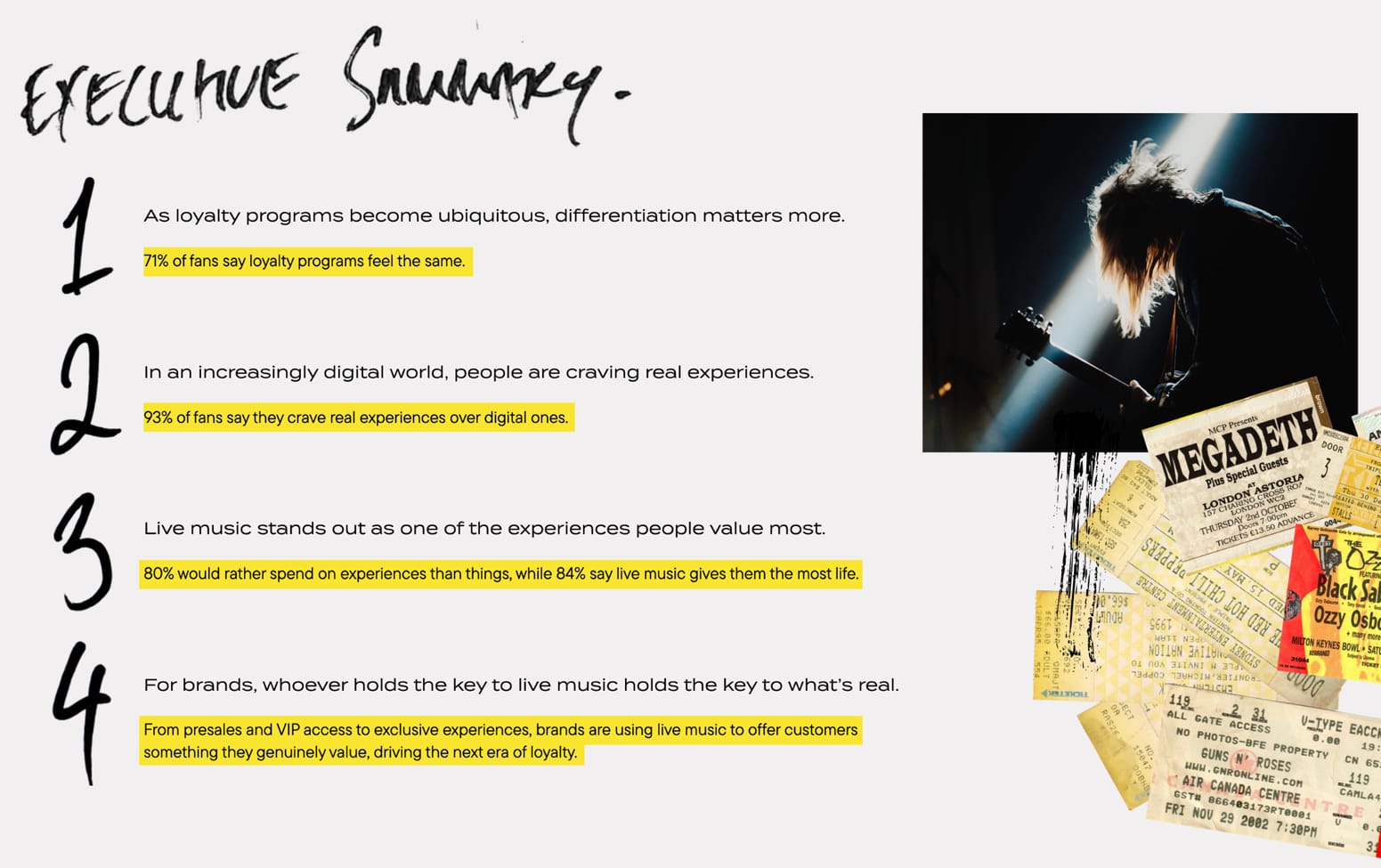
***+Read more:*** [*"'Human-Made' Is Doing for Music What 'Made In Italy' Did for Fashion."*](https://www.hypebot.com/human-made-is-doing-for-music-what-made-in-italy-did-for-fashion/)
Spotify’s [Reserved program](https://www.hypebot.com/how-reserved-by-spotify-works-a-step-by-step-guide/) takes the idea further by turning listening behavior into a **loyalty signal**. The platform uses streams, saves, shares, location and other activity to identify an artist’s most engaged listeners, then holds two tickets for eligible Premium subscribers to purchase before the general sale.
Spotify said nearly 100,000 tickets had been reserved through the program by August. In this model, fans are no longer collecting miles through purchases. They are accumulating evidence of fandom.
That can be framed as a fairer alternative to bots and indiscriminate presales. It also means that ticket access may increasingly be determined by an ecosystem of memberships, cards, subscriptions and behavioral data. The old obstacle was that a show had sold out. The emerging obstacle may be that too many portions of the room were made available first to different categories of insiders.
## **Artists are powering the loyalty economy**
There is real upside here. Brand partnerships can help fund tours, subsidize useful amenities and create memorable experiences for fans. Early access can also reward committed listeners instead of professional resellers.
But artists and their teams should recognize what they are contributing. **The artist creates the music, community, scarcity, and emotional connection that make the reward valuable.** The participating brand may receive new members, customer data, increased spending and years of continued business.
If concert access becomes a major customer-acquisition tool, artists should be asking how much ticket inventory is involved, who controls the resulting data and how the value created by their fan relationships is being shared.
**Note:* Live Nation’s report draws from a 2025 survey of 42,000 respondents across 15 countries and a 2026 loyalty study of 3,450 respondents across 12 countries. The report provides limited information about recruitment, weighting and country-level sample sizes, and its findings should be understood as Live Nation-commissioned brand research.*
---
## Hypebot
Essential news & insights for artists and live music pros.
Sign up for free weekly content delivered to your inbox
Subscribe
Email sent! Check your inbox to complete your signup.
### What Smaller African Music Markets Need In Order to Build Sustainable Careers
URL: https://www.hypebot.com/what-smaller-african-music-markets-need-in-order-to-build-sustainable-careers/
Last updated: 2026-09-15T15:08:18.000Z
*By* [***NIHTAEL***](https://open.spotify.com/playlist/32tHq2VShI69TsNOXLwKw3?si=737766e396324337&ref=hypebot.com)
For many [**African**](https://www.hypebot.com/tag/africa/) artists today, getting music onto **Spotify, Apple Music, YouTube Music** and other digital platforms is no longer the biggest obstacle. The platforms are accessible, [distribution](https://www.hypebot.com/tag/distribution/) is becoming easier, and talented artists can technically reach listeners around the world from almost anywhere.
But access to [streaming](https://www.hypebot.com/tag/streaming-music/) is only the beginning.
In smaller African music markets such as **Togo**, where I come from, the real challenge is building the professional infrastructure around the music: strong distribution practices, correct metadata, release planning, artist development, rights management, marketing, reliable data, and long-term business strategy.
An artist can have a song online, they can find an audience and make a bit of money through royalties, but still have no real career structure around it.
In this article, I'll talk about what African music markets need to prioritize in order to build sustainable pipelines for career development amongst their artists. And I've hand-picked a few of Togo's rising stars for you to listen to throughout. Enjoy!
## **Distribution must become a strategy, not just an upload**
Too many emerging artists still see digital distribution as the final step: upload the song, choose a release date and wait for streams. Professional distribution should begin much earlier.
Before a release goes live, teams should already be thinking about metadata, credits, artwork, rights ownership, release timing, pre-release communication, short-form content, audience targeting, and the markets where the song has the best chance of connecting.
A release without a plan can disappear within days. A well-prepared release gives the artist a foundation to build on. This is one of the areas I focus on in [my work with artists in Togo](https://nihtael-dynasty.netlify.app/?ref=hypebot.com).
The goal is not simply to place music on platforms. It is to help artists understand what happens before, during and after distribution.
## **Metadata is part of the artist’s business**
[Metadata](https://www.hypebot.com/tag/metadata/) may not be exciting, but it is one of the most important parts of the modern music economy. Artist names, featured performers, composers, producers, ISRCs, UPCs, ownership information and other credits need to be accurate and consistent. Errors can create problems with discovery, catalog organization, royalty tracking and future rights administration.
For an independent artist working without a large label team, these details can easily be ignored.
That is why education is essential. Artists should understand that professional music distribution is also information management. Their catalog is an asset, and the data attached to that catalog must be treated with the same seriousness as the recording itself.
**+Read more:** [*"Audiomack's Charlotte Bwana on Building a Global Platform That Resonates"*](https://www.hypebot.com/audiomacks-charlotte-bwana-on-building-a-global-platform-that-resonates/)
## **Artist development still matters in the streaming era**
[Streaming](https://www.hypebot.com/tag/streaming-music) has created an illusion that one viral song can replace artist development. Sometimes a song does explode quickly. But a sustainable career requires much more: identity, consistency, performance skills, visual presentation, communication, discipline and an understanding of the audience.
Smaller markets need more structures that help artists grow before they are expected to compete internationally. That means managers, producers, distributors, media professionals, event organizers and creative entrepreneurs must work together. We need to build artists, not only releases.
When an artist understands his or her brand, audience and long-term direction, every new song becomes part of a larger story rather than an isolated attempt to go viral.
## **Local success should connect to regional opportunity**
One of Africa’s greatest music opportunities is also one of its biggest challenges: the continent is made up of many distinct markets, languages and cultures. An artist can be well known in Lomé and almost unknown a few hundred kilometers away. The next stage of growth should therefore include stronger bridges between neighboring markets.
For Togolese artists, this can mean building relationships in Ghana, Benin, Côte d’Ivoire, Nigeria and other West African markets before looking only toward Europe or the United States.
Regional media partnerships, collaborations, showcases, playlists and touring opportunities can help create a more connected ecosystem. International expansion does not always need to begin thousands of kilometers away. Sometimes the first international market is next door.
***+Read more:*** [*"Local Artists Are Breaking Into Global Markets Faster Than Ever..."*](https://www.hypebot.com/local-artists-are-breaking-into-global-markets-faster-than-ever/)
## **Data should guide decisions**
Artists and teams now have access to [more information than ever](https://www.hypebot.com/local-artists-are-breaking-into-global-markets-faster-than-ever/): listener locations, age groups, playlist activity, social engagement, and performance trends.
But having [data](https://www.hypebot.com/tag/data-/?-analysis) and knowing how to use it are two different things. If an artist suddenly gains listeners in Accra, Abidjan or Paris, that information should influence the next marketing decision. It can guide advertising, collaborations, press outreach or even future live performances.
Smaller markets need more professionals who can translate platform analytics into practical decisions. The question should not only be, “How many streams did we get?” It should also be, “Where did they come from, why did they happen, and what should we do next?”
## **Media visibility remains important**
Social media is powerful, but independent editorial coverage still matters. A serious article, interview or industry feature helps provide context around an artist or music professional. It tells audiences, partners and potential collaborators that there is a story and a body of work worth understanding.
For emerging African markets, stronger relationships between local professionals and credible regional and international music media can help important stories travel beyond their immediate communities. The goal should not be publicity for publicity’s sake. It should be meaningful documentation of the people building the industry.
## **The future depends on infrastructure**
African music has already demonstrated its global potential. The next challenge is making sure that opportunity reaches a wider range of countries, cities and creators.
Not every market will have the same resources as Lagos, Johannesburg or Accra. That does not mean smaller markets lack talent. It means they need systems capable of identifying, developing and exporting that talent. Those systems include professional distribution, rights education, management, media, live performance infrastructure, digital marketing, reliable industry data, and cross-border partnerships.
This is the work that interests me most in Togo: helping create an environment where artists do not simply release music, but understand how to build careers around it.
Streaming opened the door. Now we have to build everything that allows artists to walk through that door and stay there. The next chapter of African music will not be defined only by which song goes viral. It will also be defined by how many sustainable careers, companies and local ecosystems we are able to build behind the music.
***+Read more:*** [*"Listen to Audiomack's 10 African Artists to Watch in 2026"*](https://www.hypebot.com/listen-to-audiomacks-10-african-artists-to-watch-in-2026/)
---
[***NIHTAEL***](https://open.spotify.com/playlist/32tHq2VShI69TsNOXLwKw3?si=737766e396324337&ref=hypebot.com) **(Nodjigno Pierre Yao)* is a Togolese music-industry professional working across digital distribution, artist development and music strategy. Through his work with Façonné Music and the development of* [*NIHTAEL DYNASTY*](https://nihtael-dynasty.netlify.app/?ref=hypebot.com)*, he focuses on helping artists strengthen their release strategy, digital presence and access to wider African and international markets.*
### How the Live Music Road Story Is Being Rewritten
URL: https://www.hypebot.com/how-the-live-music-road-story-is-being-rewritten/
Last updated: 2026-10-13T19:01:41.000Z
Our [**Touring Radar**](https://www.hypebot.com/tag/touring-radar/) series looks at newly announced tours and live events that stand out not simply because they can generate headlines, but because they offer a glimpse at where [live music](https://www.hypebot.com/tag/live-music/) may be heading. Touring Radar is supported by [**Bandsintown**](https://bandsintown.com/?utm%5Fsource=hypebot&came%5Ffrom=900) tour data.
This week’s most revealing touring stories involve scarcity, ticketing, philanthropy, venue power and a new effort to make independent routing visible to fans.
## **1\. Charli xcx Makes the Short Tour a Creative Choice**
[**Charli xcx**](https://www.bandsintown.com/a/289995-charli-xcx?utm%5Fsource=hypebot&came%5Ffrom=900) has added just six European arena dates to her *Music, Fashion, Film Tour*, following a similarly selective North American run. She has been unusually candid about avoiding the stamina demands and repetition of extended touring, suggesting scarcity here is not merely a marketing device.
It is part of the creative direction of this event fundamentally. As artists increasingly protect their energy and resist the assumption that every successful album requires a sprawling itinerary, a shorter tour can feel more like a limited cultural event than another cycle through the arena circuit.
## **2\. Julien Baker Sends Ticket Buyers Back to the Box Office**
[**Julien Baker’s**](https://www.bandsintown.com/a/11630345-julien-baker?utm%5Fsource=hypebot&came%5Ffrom=900) fall tour consists of three-night stands at six independent clubs—and tickets were sold exclusively through the venues’ physical box offices, with a two-ticket limit. That makes the 18-show run interesting beyond its intimate scale. The format rewards committed local fans, gives participating rooms a direct relationship with buyers and creates friction for automated resellers.
It also replaces the usual race across dozens of markets with deeper engagement in a carefully chosen few. A portion of proceeds will benefit LGBTQ youth nonprofit **The Ally Coalition.**
## **3\. Victoria Monét Makes Charitable Giving a Central Focus**
[**Victoria Monét’s**](https://www.bandsintown.com/a/3167545-victoria-monet?utm%5Fsource=hypebot&came%5Ffrom=900) 27-city *Frequency of Love Tour* will allow fans to contribute $1 during checkout to the newly launched **Frequency of Love Foundation**, supporting community garden and youth wellness programs. Tour philanthropy is hardly new, but integrating a small optional contribution directly into ticket purchasing could make participation broader and more habitual.
It also connects the tour’s commercial infrastructure to an initiative intended to continue after the final show — turning an album campaign into a potential funding network rather than a one-night benefit.
## **4\. Macklemore Gets Kicked Off Ed Sheeran's Tour. Who Really Controls Top End Decisions?**
[**Macklemore’s**](https://www.bandsintown.com/a/2037479-macklemore?utm%5Fsource=hypebot&came%5Ffrom=900) removal from [**Ed Sheeran’s**](https://www.bandsintown.com/a/190899-ed-sheeran?utm%5Fsource=hypebot&came%5Ffrom=900) remaining US stadium dates is also a live-industry power story. Following Macklemore’s pro-Palestinian statements at MetLife Stadium, several venues reportedly told the promoter they would not permit him to appear. Messina Touring Group subsequently confirmed that venues had warned the concerts could not proceed with him on the lineup.
Whatever one’s position on the underlying dispute, the episode demonstrates how much influence stadium owners can exercise over a tour’s programming — and how quickly political speech can become routing, insurance and revenue risk at this scale.
## **5\. NIVA’s Live Independent Tour Takes Flight**
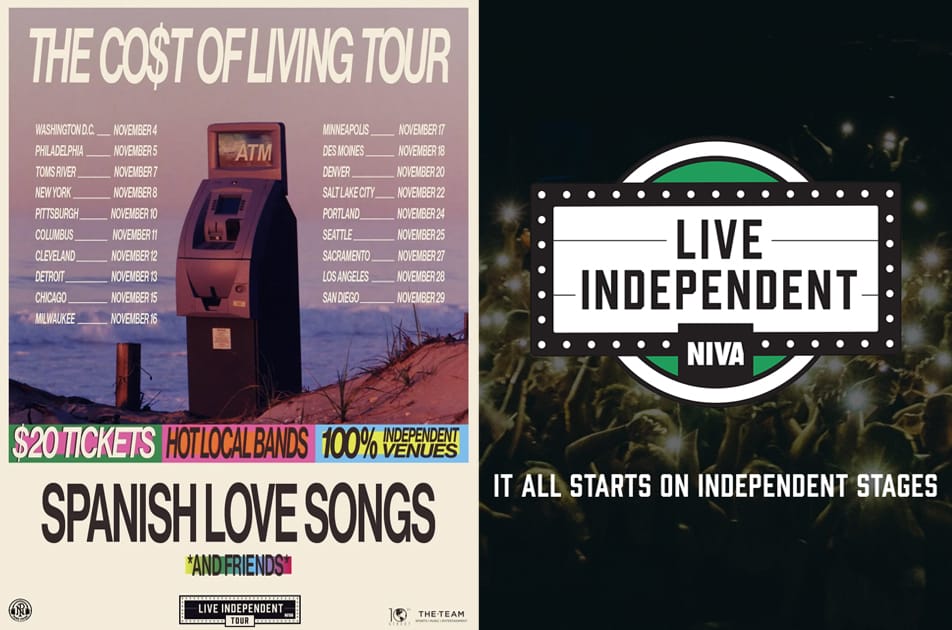
[**Spanish Love Songs**](https://www.bandsintown.com/a/7584588-spanish-love-songs?utm%5Fsource=hypebot&came%5Ffrom=900) will anchor the first tour certified under NIVA’s new **Live Independent Tour** program. The 19-city run will play independent venues exclusively, while the larger initiative (developed with [**Spotify**](https://www.hypebot.com/tag/spotify/) and supported through [**Bandsintown**](https://www.bandsintown.com/?utm%5Fsource=hypebot&came%5Ffrom=900))will recognize and promote artists that route primarily through independent stages.
The compelling idea is that independent routing could become something fans can identify and intentionally support, much like a certification attached to other purchasing choices. Its real test comes next: whether additional artists adopt the designation and whether that visibility translates into meaningful ticket sales for participating rooms.
---
*Get all the latest Music Industry & Live Music News updated continuously from across the web under the Hypebot Industry News tab* [*here*](https://www.hypebot.com/music-industry-news-feed/)*.*
## Hypebot
Essential news & insights for artists and live music pros.
Sign up for free weekly content delivered to your inbox
Subscribe
Email sent! Check your inbox to complete your signup.
### Spotify Adds Genius Video Series ‘Open Mic’ and ‘Verified’
URL: https://www.hypebot.com/spotify-adds-genius-video-series-open-mic-and-verified/
Last updated: 2026-09-15T13:38:24.000Z
[**Spotify**](https://www.hypebot.com/tag/spotify/) is taking another calculated step beyond audio by turning its app into a destination for original video content. In an expanded partnership with online music community and database [**Genius**](https://genius.com/?ref=hypebot.com)**,** the streaming giant is bringing two of digital music culture’s biggest video franchises, [**Open Mic**](https://open.spotify.com/show/6OXBD1NhUU4FKs5O2jwyKi?ref=hypebot.com) and [**Verified**](https://open.spotify.com/show/00k5zjOhsiKMKRaGDSOtnn?ref=hypebot.com)**,** directly into its ecosystem.
The move marks the first time Genius’s stripped-down performance series '**Open Mic'** will stream on Spotify, while expanding the platform footprint of '**Verified' -** the flagship series where creators break down their lyrics and creative process. Executive produced by **Genius VP of Music & Content Rob Markman**, the two franchises have generated over **3.7 billion views** since launching in 2016\.
**Spotify is also filling a need.** Recent data from [**WhichPodcast**](https://whichpodcast.com/research/genre-saturation?ref=hypebot.com)showed a [massive gap](https://musically.com/2026/08/14/there-is-huge-demand-for-music-podcasts-but-not-enough-supply/?ref=hypebot.com) between fan desire to listen to music related podcasts and a severe shortage of music podcasts for them to listen to. Now, the billions of visual impressions for the two Genius podcasts are being funneled through the world's largest subscription audio platform.
### **How the Integration Spotify Genius Works**
Rather than tucking video into hidden menus, Spotify is integrating the shows directly into the listener journey:
- **Dedicated Show Pages:** Both series now feature dedicated hub pages on Spotify for fans to stream full new episodes alongside curated back catalogs featuring artists like **Bebe Rexha**, **Rod Wave**, and **Teddy Swims**.
- **Artist Profile Surfacing:** Episodes will automatically pop up as suggested content on relevant artist profiles, catching listeners at the exact moment they are consuming the music.
- **Weekly Drop Schedule:** New content lands simultaneously on Spotify and Genius each week:
- [**Verified**](https://open.spotify.com/show/00k5zjOhsiKMKRaGDSOtnn?si=iN4FG58tRvWCq6uc%5FaVkmw&utm=&nd=1&dlsi=70264c0103f842a8&ref=hypebot.com)**:** Wednesdays and Fridays at 11:00 AM ET
- [**Open Mic**](https://open.spotify.com/show/6OXBD1NhUU4FKs5O2jwyKi?ref=hypebot.com)**:** Thursdays at 11:00 AM ET
The rollout kicks off with Grammy-winning rapper[**Rapsody**](https://www.bandsintown.com/a/501880-rapsody?utm%5Fsource=hypebot&came%5Ffrom=900) performing "Pick A Side" on **Open Mic**, while [**Magnus Ferrell**](https://www.bandsintown.com/a/15519958-magnus-ferrell?utm%5Fsource=hypebot&came%5Ffrom=900) breaks down his single "Asleep Talking" on **Verified**.
### Why Video Inside DSPs Changes the Game
For years, **Spotify** and other streaming platforms faced a common leak: users discovered music there, but fled to **YouTube** or **TikTok** to watch performances, interviews, and take deeper dives. By embedding premium, artist-led video directly alongside audio catalogs, Spotify is keeping that engagement locked inside its own ecosystem.
For artists, this creates a high-leverage narrative layer. Instead of relying on playlist placement to turn passive listeners into active fans, creators can now showcase their personalities, lyrical craft, and live capabilities right on their profile pages.
### Hypebot's Bottom Line
Visual storytelling on streaming services has evolved from an added bonus into core infrastructure. Spotify and other DSPs are rapidly consolidating audio and video into a single conversion engine. For independent artists, managers, and labels, release strategies can no longer isolate audio streams from visual assets.
And if anyone's reading this at Spotify or Genius, someone would be wise to extend these formats to other genres.
### AFM Union Battles UMG and Warner Over AI Licensing Payouts
URL: https://www.hypebot.com/afm-union-battles-umg-and-warner-over-ai-licensing-payouts/
Last updated: 2026-09-15T13:32:12.000Z
The [**American Federation of Musicians (AFM)**](https://www.afm.org/?ref=hypebot.com) has filed a brief opposing efforts by **Universal Music Group (UMG)**, **Warner Records**, and **Atlantic Recording Corp.** to dismiss its federal lawsuit.
The union alleges the major labels licensed catalog master recordings to [generative ](https://www.hypebot.com/tag/ai/)[AI](https://www.hypebot.com/tag/ai/) developers **Suno** and **Udio** without notifying or compensating session musicians.
**Why this lawsuit matters:** It establishes a crucial legal precedent for the AI era. When major labels settle copyright suits with AI companies for lucrative licensing deals and equity stakes, they keep 100% of the proceeds. This lawsuit will determine whether legacy labor protections force record labels to share AI training revenues with the human musicians whose performances built those models.
### The Core Fight: Article 21(a) "New Use"
The case, presiding in the U.S. District Court for the Southern District of New York (SDNY) under U.S. District **Judge Edgardo Ramos,** hinges on **Article 21(a)** of the **Sound Recording Labor Agreement (SRLA)**.
- **The Union's Position:** The AFM argues that feeding catalog tracks into AI generators for commercial model training is a "new use" of master recordings. Under Article 21(a), new uses trigger mandatory notice to the union and negotiated compensation for performing musicians.
- **The Labels' Defense:** In their August motion to dismiss, UMG and Warner argued that Article 21(a) lacks a pre-set payment scale for AI. They contend AI compensation is a contract negotiation matter for the bargaining table, not a federal lawsuit.
- **AFM's Hypocrisy Claim:** In its September filing, the AFM highlighted that when major labels sued Suno and Udio in 2024, they claimed AI models harmed human creators. Yet once the labels secured commercial licensing deals in 2025 and 2026, they claimed those same human creators were entitled to nothing.
## What Happens Next in Court
Judge Ramos is currently reviewing the motions. If the court grants the labels' motion to dismiss, musicians will be forced to renegotiate AI protections from scratch in upcoming contract talks. If the judge denies the motion, the case enters formal discovery, which could force UMG and Warner to disclose confidential AI licensing deals and reveal every recording handed over to tech platforms.
## Hypebot's Bottom Line
Major labels have framed their legal battles against AI as a crusade to defend human artistry. But once those same lawsuits transformed into lucrative corporate payouts, session musicians were locked out of the revenue stream.
The AFM’s lawsuit tests whether AI training is a commercial format covered by standard labor protections or a loophole labels can monetize alone. Hypebot will continue tracking Judge Ramos’s docket as this pivotal case unfolds.
---
*Get the latest Live Music & Industry News updated continuously from across the web under the Hypebot Industry News tab* [*here*](https://www.hypebot.com/music-industry-news-feed/)*.*
## Hypebot
Essential news & insights for artists and live music pros.
Sign up for free weekly content delivered to your inbox
Subscribe
Email sent! Check your inbox to complete your signup.
### NOLA's Howlin' Wolf Sues StubHub Over Spec Ticket Sales
URL: https://www.hypebot.com/nolas-howlin-wolf-sues-stubhub-over-spec-ticket-sales/
Last updated: 2026-09-15T19:54:34.000Z
Independent live music venue [**The Howlin' Wolf**](https://www.bandsintown.com/v/10012944-the-howlin-wolf?utm%5Fsource=hypebot&came%5Ffrom=900) has launched a federal lawsuit against secondary ticketing giant [**StubHub**](https://www.hypebot.com/tag/stubhub/).
Filed on September 10, 2026 in the United States District Court for the Eastern District of Louisiana, the lawsuit by Cat and Dog Inc., d/b/a **The Howlin' Wolf** alleges false advertising under Section 43(a) of the federal **Lanham Act** and violations of the **Louisiana Unfair Trade Practices and Consumer Protection Law**.
The legal action targets secondary ticketing practices that mislead consumers, steer sales away from primary box offices, and harm independent venues. At the core of the complaint is **StubHub's facilitation of speculative ("spec") selling.** That's the practice of brokers listing and selling non-existent "ghost tickets" before actually acquiring them from the primary seller.
Brattleboro, Vermont music venue [**Stone Church recently sued StubHub**](https://www.hypebot.com/how-this-indie-venue-is-taking-on-stubhub-for-deceptive-ticketing-practices/) focusing on trademark infringement under the Lanham Act, arguing that it actively deceives fans, damages the venue's brand, and siphons revenue from grassroots music spaces.
```
HOWLIN' WOLF vs. STUBHUB AT A GLANCE
┌──────────────────────┬──────────────────────────────────────────────────┐
│ Plaintiff │ Cat and Dog Inc. d/b/a The Howlin' Wolf │
│ Defendant │ StubHub, Inc. │
│ Filing Date │ September 10, 2026 │
│ Court Jurisdiction │ U.S. District Court, Eastern District of LA │
│ Primary Claims │ Lanham Act § 43(a) & LUTPA (Louisiana State Law) │
│ Core Target │ Speculative ("Spec") Ticket Resale & Fake Urgency│
└──────────────────────┴──────────────────────────────────────────────────┘
```
### **Why The Howlin' Wolf Is Fighting Back**
For **Howie Kaplan**, owner of **The Howlin' Wolf** and manager of the Grammy award-winning [**Rebirth Brass Band**](https://rebirthbrassband.com/?ref=hypebot.com), the decision to sue wasn't about an isolated dispute, but rather a necessary stand for the entire independent live music ecosystem.
Kaplan said:
> *"I don't think it's something I got started... I think it's just a continuation of all the problems that are plaguing independent venues right now. You've got bots that literally list shows that don't exist for 4 times what your average ticket price is."*
Kaplan emphasized his lawsuit isn't aimed at ordinary fan-to-fan resales, but at what he sees as systematic, predatory behavior. "This isn't some like little, 'Okay, well, someone bought a ticket for 20 and then they sold it for 40.' That's not what this is about," explained Kaplan:
> *"This is really about protecting venues, protecting fans, protecting artists. And we keep playing this game like it's okay to sell something you don't have."*
### **Core Issues Raised By Kaplan & The Howlin' Wolf**
- **Tickets as Licenses, Not Commodities:** The lawsuit stresses that tickets grant specific rights subject to venue terms, not unchecked resale rights.
- **Calling Out Scalpers:** Resellers that use automated bots to grab or spec-list ticket inventory shouldn't be shielded by polite industry buzzwords.
- **Direct Consumer Fraud:** Resellers are exploiting venue names to deceive fans into believing they are buying from the official box office.
- **Real-World Impact on Fans:** Kaplan shared instances where fans bought tickets to non-existent or rescheduled events: "We had a show that we never even listed," said **Kaplan**. "and a guy actually spent $96 on a $25 ticket to a show that wasn't happening for another 2 months and it had the wrong date on it."
- **Lack of Platform Accountability:** Despite terms of service prohibiting speculative selling, platforms fail to enforce their own rules: *"*Look at StubHub's terms of service," noted Kaplan. "It literally says you can't sell a speculative ticket on their site. What are they doing to stop it? Nothing... Man, if I allowed drug dealing to go on in my venue, we would be shut down so fast."
### **Implications for Independent Venues**
The legal battle waged by The Howlin' Wolf could carry consequences for the survival of independent live music spaces across the country.
When secondary platforms deploy deceptive scarcity warnings and list speculative "ghost tickets," venues and promoters say that they don't just mislead fans - they siphon critical revenue away from the box office and artists. Every time a fan unwittingly buys a speculative ticket from a reseller, the venue also loses the direct customer relationship, leaving venue staff to deal with confused, empty-handed concertgoers at the door when fake tickets fail to scan.
By grounding its lawsuit in existing frameworks like the Lanham Act and state-level consumer protection statutes like LUTPA, the Howlin' Wolf is offering what it believes is a powerful new playbook for small venue owners. Rather than waiting years for stalled state legislation or federal reform, indie venues can actively leverage current unfair trade laws to demand transparency, reclaim their ticket inventory, and hold secondary giants accountable for market deception.
### **Hypebot's Bottom Line**
The fight for fair ticketing is expanding beyond political lobbying in state houses and Congress to direct litigation in federal courts.
By leveraging federal false advertising statutes and state unfair trade practices laws, independent venues like The Howlin' Wolf and Stone Church are creating a grass-roots blueprint for accountability.
If these indie venues prevail, secondary ticketing marketplaces could be forced to abandon deceptive scarcity tactics, eliminate ghost-ticket listings, and grant fans an honest, transparent view of primary box office availability.
---
## [**View Upcoming Shows at The Howlin' Wolf** ](https://www.bandsintown.com/v/10012944-the-howlin-wolf?utm%5Fsource=hypebot&came%5Ffrom=900)
### Could Oprah’s New Sphere Show Become a National Tour?
URL: https://www.hypebot.com/could-oprahs-new-sphere-show-become-a-national-tour/
Last updated: 2026-09-14T18:13:07.000Z
[**“Oprah Winfrey’s AHA”**](https://ahalive.com/?ref=hypebot.com) will debut at [**Sphere**](https://www.bandsintown.com/v/10370747-sphere?utm%5Fsource=hypebot&came%5Ffrom=900) in **Las Vegas** for four performances from April 2 through 4, 2027\. The two-hour production will combine music, poetry, storytelling, visual art, and Sphere’s immersive technology, with Winfrey appearing live alongside a large international creative team.
For now, *AHA* is being billed as a one-weekend event. But Winfrey has already left the door open to something larger. “The idea is, if it works, you’ll do more,” she told [***People***](https://people.com/oprah-reveals-her-next-big-project-exclusive-12116548?ref=hypebot.com), adding that the production has been offered additional dates. Uh... DUH?!
It's Oprah. She can sell more tickets. That's not a question any human on Planet Earth has. The real question is what to do with the production, specific to Sphere and its immersive, *spherical* technological rig, once it becomes clear that a national tour for this show is an available option.
## Oprah Has Toured Arenas Before
Firstly, Winfrey is no stranger to the touring business. In 2014, she mounted **“Oprah’s The Life You Want Weekend,”** an eight-city arena tour mixing personal storytelling with appearances from speakers including **Deepak Chopra, Iyanla Vanzant, Elizabeth Gilbert,** and **Rob Bell.**
She returned to the road in early 2020 with **“Oprah’s 2020 Vision: Your Life in Focus,”** a nine-city U.S. arena tour produced by Live Nation. Each stop was constructed as a day-long wellness event featuring exercises, conversations and a different high-profile guest, including **Lady Gaga, Michelle Obama, Jennifer Lopez, Tina Fey,** and **Dwayne Johnson.**
So, yes: Oprah has already demonstrated that she can function as a nationally touring arena headliner. As if that was ever a worry for ticket sellers. *AHA*, however, appears to be built more like a major theatrical or concert production than either of those earlier tours. And that's where the conundrum of how artists can use the work they produce for Sphere in different settings.
**Image courtesy of* [**AHA Live.*](https://ahalive.com/?ref=hypebot.com)
## Oprah Builds Her Own Kind of Supergroup
Winfrey reportedly conceived the project after attending **U2’s** opening [residency](https://www.hypebot.com/tag/music-residencies/) night at Sphere and becoming interested in how the venue could create not only spectacle, but greater awareness and human connection.
The resulting production brings together a broad creative collective. **Jacob Collier** will provide a featured musical performance, while poet and author **Ocean Vuong** will present original work. **Ajeet** and gospel singer **Wintley Phipps** are also scheduled to appear.
**Max Richter** is contributing musical direction and original music, alongside vocal director **Jason White** and electronic composer **Jon Hopkins.** The writing team includes *Moonlight* screenwriter **Tarell Alvin McCraney,** while artist and stage designer **Es Devlin** will contribute original work. Director **Ethan Tobman** and producer **Baz Halpin** will lead a production intended to use Sphere’s wraparound display and spatial audio system as storytelling tools rather than oversized concert effects.
Winfrey described the show to [***Reuters***](https://www.reuters.com/business/media-telecom/oprah-winfrey-says-sphere-show-is-culmination-her-lifes-work-2026-09-14/?ref=hypebot.com) as the culmination of the message she has spent her career communicating.
## Can a Sphere Show Leave Sphere?
Productions created specifically for Sphere are not easily transferable. Its enormous interior screen, specialized audio system, and immersive architecture cannot simply be packed into trucks and reconstructed in conventional arenas.
But the central elements of *AHA* — Winfrey’s storytelling, original music, poetry, guest performers and large-scale visual design — could potentially be adapted into a touring production. It would not be the identical experience, but it could become a portable version of the same idea.
Live Nation is presenting the Las Vegas engagement, and Winfrey’s previous tours have already shown the size and loyalty of her live audience. If the initial weekend succeeds, *AHA* could point toward an increasingly broad definition of what qualifies as an arena act: not quite a concert, keynote, theatrical production or wellness event, but a carefully engineered mixture of all four.
Tickets start at $145, with general sales beginning September 25 at 10 a.m. PT. Presale registration and hotel packages are available through [AHALive.com](https://ahalive.com/?ref=hypebot.com).
---
### [**Check out the full calendar at Sphere Las Vegas**](https://www.bandsintown.com/v/10370747-sphere?utm%5Fsource=hypebot&came%5Ffrom=900)
### You’ll Never Guess What Alaska’s Most-Searched Music Genre Is
URL: https://www.hypebot.com/youll-never-guess-what-alaskas-most-searched-music-genre-is/
Last updated: 2026-09-14T16:49:02.000Z
Alaska’s music fans apparently like their riffs as extreme as their weather. A [new analysis of Google Trends](https://public.flourish.studio/visualisation/30079418/?ref=hypebot.com) data found that **metal is Alaska’s most disproportionately searched** [**music genre**](https://www.hypebot.com/tag/genres/), placing the state inside one of the study’s biggest (and least predictable) national music blocs.
Ticket search platform [**SeatPick**](https://seatpick.com/festivals-tickets?ref=hypebot.com) examined state-level interest in 18 genres over the 12 months ending August 11, 2026\. The categories included pop, country, hip hop, rock, metal, R&B, soul, jazz, punk, reggae, EDM, Latin, indie, folk, gospel, blues, bluegrass, and classical music.
Pop finished first overall, indexing highest in 13 states. But metal was close behind, taking the top position in 11 — including Alaska, Wyoming, Montana, Maine and New Hampshire. Apparently, **cold weather and loud guitars** travel together.
## Pop Wins America — But Barely
Pop’s 13-state victory stretched from California and Washington to Texas and Arizona, making it the closest thing the study found to a national consensus.
Metal’s second-place finish may be the more interesting result, however. It suggests that the genre’s audience is not concentrated solely in the industrial cities or established regional scenes commonly associated with heavy music. Its strongest relative search interest appears across a large collection of central, northern and remote states.
Soul ranked third, leading in Alabama, North Carolina, South Carolina, Virginia and Illinois. Country — often treated as the default soundtrack of a huge portion of the country — finished first in only four states: Tennessee, West Virginia, North Dakota and South Dakota.
In other words, most of the South did *not* choose [country music](https://www.hypebot.com/tag/country-music/).
Indie led in Colorado, Massachusetts and Rhode Island, while Latin and R&B each topped two states. Eleven other genres—including jazz, blues, gospel, punk, reggae, bluegrass, folk, hip hop, rock, EDM and classical—managed at least one state.
Among the map’s other delightful outliers: Arkansas indexed highest for rock, while Vermont chose classical music. The complete results can be explored through SeatPick’s [interactive map of America’s music searches](https://public.flourish.studio/visualisation/30079418/?ref=hypebot.com).
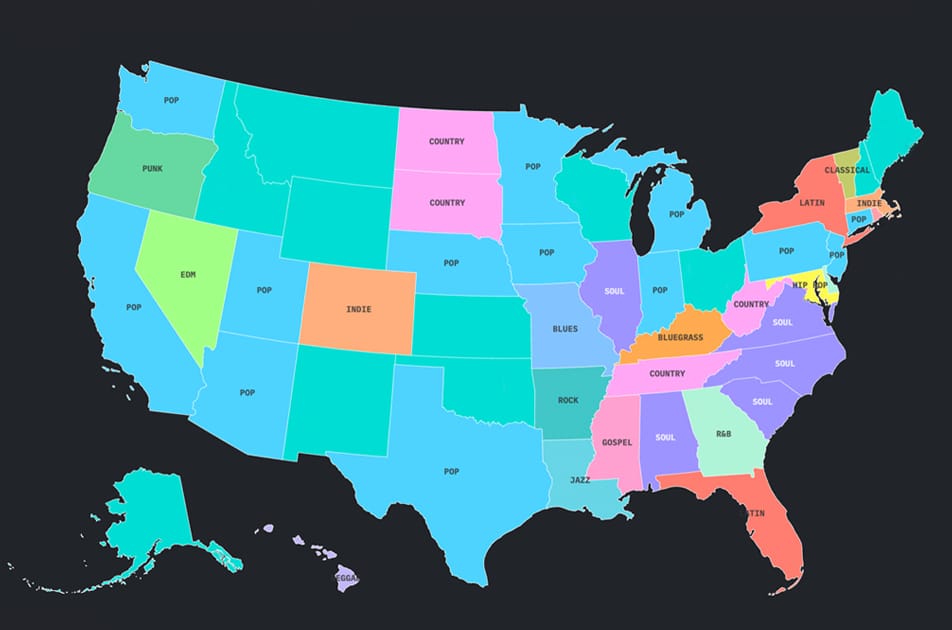
***+Read more:*** [*"What's Changed for Indie Band Tours Since COVID? Remarkably Little..."*](https://www.hypebot.com/whats-changed-for-indie-band-tours-since-covid-remarkably-little/)
## What “Most-Searched” Actually Means
There is an important caveat here: the study does not measure total listening, record sales, concert attendance or even the raw number of searches conducted inside each state. Google Trends scores show where a term attracts unusually strong interest relative to other locations. SeatPick measured each genre separately and then assigned every state the genre for which it indexed highest.
That means metal did not necessarily generate more searches in Alaska than pop did. Instead, Alaskans searched for metal more intensely relative to the rest of America than they did for the other genres studied. So this is better understood as a map of **regional musical affinity**, not a definitive ranking of what every resident is streaming.
## Why Artists Should Care
For [independent artists](https://www.hypebot.com/tag/indie-artists/), we're not sure there's an enormously actionable takeaway in this study. However, as national streaming totals do tend to favor the same enormous genres and artists everywhere, relative search interest can reveal pockets of demand that disappear inside those national averages.
For example, if you're a metal band considering a northern routing strategy, an indie act buying regional ads, or a promoter testing an unfamiliar market, you may be inclined to rely on data like this to assume where concentrated interest in your genre might power attendance and attention.
Search activity cannot guarantee ticket sales, of course. But it can identify places where a genre occupies more cultural space than conventional wisdom suggests. And somewhere under the northern lights, Alaska is apparently turning [the volume all the way up](https://www.hypebot.com/the-band-that-got-banned-for-being-too-loud-a-brief-history-of-dinosaur-jr/).
***+Read more:*** [*"What Makes China's Music Market So Different?"*](https://www.hypebot.com/what-makes-chinas-music-market-so-different/)
[](https://www.hypebot.com/whats-in-a-number-why-music-charts-still-matter-in-the-streaming-era/)
---
## Hypebot
Essential news & insights for artists and live music pros.
Sign up for free weekly content delivered to your inbox
Subscribe
Email sent! Check your inbox to complete your signup.
### The Band That Got Banned for Being Too Loud: A Brief History of Dinosaur Jr.
URL: https://www.hypebot.com/the-band-that-got-banned-for-being-too-loud-a-brief-history-of-dinosaur-jr/
Last updated: 2026-09-16T13:34:46.000Z
[**Dinosaur Jr.**](https://www.bandsintown.com/a/5203-dinosaur-jr.?utm%5Fsource=hypebot&came%5Ffrom=900) has released its 13th studio album, [***There Near***](https://open.spotify.com/album/4x9eupWjvX2qpy7pAgPAQE?si=ZCswllASQhSJ06W9L4Z1JQ&ref=hypebot.com), and extended their supporting North American tour into 2027\. More surprising than another tour from a band that has spent four decades on the road, however, may be the fact that its audience keeps getting younger somehow.
Recent reporting has repeatedly observed younger listeners mixing with Dinosaur Jr.’s longtime audience. A review of the band’s July show with Band of Horses described younger fans rushing toward the stage, while [Pollstar framed its recent cover story](https://news.pollstar.com/2026/09/01/i-just-need-more-wattage-pre-grunge-fuzzlords-dinosaur-jr-turn-it-up-to-11-for-a-new-generation-announce-tour-for-album-release?ref=hypebot.com) around the trio:
> *“Turning it up to 11 for a new generation.”*
Why do some older artists become sealed inside nostalgia while others remain available for discovery?
In Dinosaur Jr.’s case, the answer may be hiding in its live history. This is a band that cleared rooms, fought onstage with each other, toured with Nirvana, reunited without becoming a tribute to itself and somehow kept putting new songs beside the old ones.
Here's a [Brief History](https://www.hypebot.com/tag/brief-history/) of Dinosaur Jr.'s live performances.
## **The Band That Cleared Rooms**
Dinosaur Jr. did not begin by *attracting* any semblance of an audience, it was more like the opposite. Formed in Amherst, MA, in 1984, the original trio of **J Mascis, Lou Barlow** and **Murph** developed a sound that combined hardcore volume with country melancholy, pop melodies, and Mascis’ wandering guitar solos.
The problem was that local audiences (and especially local bar owners) did not particularly know what to do with this sound. According to the band’s [oral history published by *SPIN*](https://www.spinmagazine.com/2014/04/dinosaur-jr-oral-history-excerpt-sonic-youth-tour/?ref=hypebot.com), their early performances were so loud that people would leave the room. Murph recalled the band being banned from nearly every club around Amherst and Northampton except one.
That continual rejection turned out to be kinda useful? If Dinosaur Jr. could not play at home, the band had to travel. Cue: the world.
The band began making trips to Boston, Hoboken, and New York, playing rooms including CBGB, the Channel and Maxwell’s. An opening slot for **Big Black** at Maxwell’s caught the attention of **Sonic Youth**, who subsequently invited Dinosaur Jr. onto a Midwestern tour.
Suddenly, a group accustomed to playing for perhaps 15 people was appearing before crowds of roughly 500\. The band traveled in Barlow’s parents’ station wagon, following the touring blueprint established by indie-punk groups like **Black Flag** and **the Minutemen.**
Mascis later explained that, in their world, making a record was almost a way to advertise the tour. The real destination was [the live stage.](https://www.hypebot.com/tag/live-music/)
**+Read more:** [*"The Mythos of a Band That Became More Famous By Disappearing"*](https://www.hypebot.com/the-mythos-of-a-band-that-became-more-famous-by-disappearing/)
## **Three People Who Could Barely Speak to Each Other — But Could Still Shred**
Dinosaur Jr.’s early performances became ferocious partly because the relationships inside the band were deteriorating in real time. Communication was never a strength of the dudes herein — Mascis was notoriously withdrawn, Barlow increasingly frustrated — but the atmosphere surrounding the original trio frequently tense.
At one point, Mascis and Barlow reportedly got into a fistfight onstage. A 1989 performance of “The Lung” [captures that combustible lineup](https://pitchfork.com/news/47822-watch-five-essential-dinosaur-jr-clips/?ref=hypebot.com) shortly before Barlow was dismissed from the band.
The musicians may have been struggling to function together personally, but the sound remains remarkably unified: Murph pushing from behind, Barlow attacking the bass, and Mascis seeming to disappear into the amplifier stack.
Bands become emotionally dysfunctional all the time. In a weird way, that's the most normal thing about this one.
Yet, those 1980s performances established and cemented a central piece of Dinosaur Jr.’s mythology. The volume of the amps and drums would always be enough to make up for the silence between the dudes.
## **Into the Alternative-Rock Circus**
With Barlow gone, Dinosaur Jr. entered the 1990s as the alternative-rock underground expanded into popular culture.
The band traveled through Europe alongside **Sonic Youth** and **Nirvana,** appearing in the influential documentary ***1991: The Year Punk Broke*.** In 1992, Dinosaur Jr. joined **My Bloody Valentine, the Jesus and Mary Chain,** and a young **Blur** on the aptly named Rollercoaster tour.
By 1993, the band was playing [Lollapalooza](https://www.hypebot.com/tag/lollapalooza/) and enjoying its greatest commercial success with *Where You Been*. But its live identity remained gloriously difficult to contain.
That year, Dinosaur Jr. performed “Missing Link” on *The Arsenio Hall Show* with a lineup that included **Del the Funky Homosapien**, **Mike Watt,** and **the Beastie Boys’ Mike D**. In 1994, the band brought “Feel the Pain” to *Late Show with David Letterman*. In 1997, shortly before Mascis temporarily retired the Dinosaur Jr. name, it turned up performing “Out There” on *The Jenny Jones Show*.
Hair and amps on mainstream TV? Okay '90s... chill.
These clips now look like relics from an era when mainstream television occasionally opened a strange little portal into the musical underground. But they also demonstrate how mobile Dinosaur Jr.’s music could be, and how they were becoming an emblem of a live music era starting to coalesce.
The band existed around punk, shoegaze, hip-hop, grunge, college rock, and MTV without becoming entirely *owned* by any of them. Always [indie](https://www.hypebot.com/tag/indie-artists/), always free.
***+Read more:*** [*"A Brief History of Death From Above 1979’s Loudest Moments"*](https://www.hypebot.com/a-brief-history-of-death-from-above-1979s-loudest-moments/)
## **The Reunion That Refused to Behave Like a Reunion**
They went away for a little while as a band, and Mascis retired the band name for a brief stint. But then the original founding trio got back together in 2005 for a reunion that, frankly, nobody expected to last very long.
Mascis, Barlow, and Murph had not made an album together since *Bug* in 1988\. The breakup had been ugly, their individual projects had long since taken shape and the early catalog had acquired canonical status. A short run of anniversary performances would have made perfect sense.
Instead, the reunion became a *second life.* Following a television appearance and European dates, the trio began revisiting its earliest albums onstage. But in 2007, Dinosaur Jr. released *Beyond*, its first collection of new material featuring Mascis, Barlow, and Murph in nearly two decades.
Five more original-trio albums then followed. The reunited version of Dinosaur Jr. has now existed far longer than the lineup’s initial run.
It got me thinking about why that felt so strange at first. Plenty of bands [reunite](https://www.hypebot.com/tag/reunion/) to "reproduce" a specific historical moment, or cash out on nostalgia. Dinosaur Jr. reunited, and then just became a working indie band again; releasing records, making odd videos, taking younger artists on tour, and submitting itself to another cycle of van rides, soundchecks, and loud rooms.
As if nothing ever happened.
***+Read more:*** [*"The Comeback Tour No Longer Sells Only Tickets — It Sells Memory."*](https://www.hypebot.com/the-comeback-tour-no-longer-sells-only-tickets-it-sells-memory/)
## **Turning the Catalog Into a Meeting Place**
That said, Dinosaur Jr. has certainly participated in the anniversary-album economy. The difference is that its retrospective shows often feel more like community gatherings than museum exhibitions.
In 2011, the trio performed *Bug* in full on bills with **OFF!, Fucked Up, Thurston Moore, the Flaming Lips** and **Deerhoof.** **Henry Rollins** conducted interviews with the band onstage — an especially entertaining assignment considering Mascis’ famously minimal approach to conversation.
For the band’s 30th anniversary in 2015, Dinosaur Jr. played seven consecutive nights at New York’s Bowery Ballroom. The shows featured a sprawling collection of guests, including Kim Gordon, Henry Rollins, Kurt Vile, Jeff Tweedy, Bob Mould and members of Sonic Youth. The band went further with 2019’s Camp Fuzz, where fans could attend workshops and discussions with the musicians. One session placed Mascis in conversation with **My Bloody Valentine’s Kevin Shields** about guitars, volume and effects.
In 2023, Dinosaur Jr. celebrated the 30th anniversary of *Where You Been* with residencies in London and Brooklyn. Rather than simply presenting the record intact, the shows again became collaborative events. Guests included Isaac Brock, Kurt Vile, Warren Haynes, and Hamilton Leithauser. Shields joined the band in London for songs by Dinosaur Jr., My Bloody Valentine and the Cure.
Dinosaur Jr. does not merely reopen its archive. It lets other musicians wander through it.
## **Playing When Shows Barely Existed**
Even the pandemic produced a peculiar entry in Dinosaur Jr.’s live history. In September 2020, the band played two socially distanced outdoor concerts: one with the audience divided into separated grids and another at a New Hampshire drive-in, where admission was sold by the car.
Later that Autumn, back in their home state of Massachusetts, the band recorded a virtual livestreamed performance at the picturesque The Pines Theater in Northampton's Look Park.
A drive-in theater and a quiet woodland park might seem like terrible environments for a band built around physical, brutal volume levels. Dinosaur Jr. nevertheless used the shows to test new material that would appear on *Sweep It Into Space*.
These pandemic-era shows highlight a band that's using every moment to find ways to push their envelope further into the future, and never get stuck in the past.
## **How to Stay "Available" to New Audiences**
Dinosaur Jr.’s recent touring choices help explain the younger faces now appearing in the crowd. The band [co-headlined with **Snail Mail** in 2025](https://pitchfork.com/news/snail-mail-and-dinosaur-jr-announce-2025-summer-tour?ref=hypebot.com), putting one generation of emotionally charged guitar music right beside another. Its 2026 schedule has included dates with **Band of Horses** and **Stef Chura**, while **Starcrawler** will support portions of the newly announced 2027 run.
These are not necessarily *obvious* pairings. That is partly why they work so well for a band that's been in action for so many decades. And it showcases why Mascis' merry gang can be both an influence on the next generation of raucous guitar music, and remain their contemporaries.
Hey. If you wanna remain culturally available after 40 years, sometimes it's just not that complicated. Keep making records, keep finding new generations of bands to share the stage with, keep allowing your past to collide with your present, and apparently...
Never turn it down.
---
## [**Dinosaur Jr. Tour Dates**](https://www.bandsintown.com/a/5203-dinosaur-jr.?utm%5Fsource=hypebot&came%5Ffrom=900)
### Live Nation Legal Battles: What Happens Next in 2026–2027
URL: https://www.hypebot.com/live-nation-legal-battles-what-happens-next-in-2026-2027/
Last updated: 2026-09-14T13:26:42.000Z
Following a series of legal proceedings against [**Live Nation**](https://www.hypebot.com/tag/live-nation/) and [**Ticketmaster**](https://www.hypebot.com/tag/ticketmaster/), the music industry is closely watching what comes next.
While the **U.S. Department of Justice (DOJ)** reached a [tentative settlement](https://www.hypebot.com/live-nation-doj-reach-settlement-ticketmaster-stays-but-big-changes-are-coming/) earlier this year, 33 state attorneys general proceeded to trial and secured a jury verdict in April 2026 finding [Live Nation operated as an illegal monopoly](https://www.hypebot.com/industry-reacts-to-live-nation-guilty-verdict/). Other legal actions are also coming to a head.
Here is a breakdown of what happens next across the federal settlement, the state-led breakup trial, and ongoing consumer litigations.
### **DOJ Settlement and Tunney Act Review**
In March 2026, the DOJ reached a tentative settlement with Live Nation that relies on behavioral remedies rather than a structural breakup of the company. The proposed terms include:
- A **$280 million settlement fund** for state damages.
- A **15% cap** on primary Ticketmaster service fees.
- A **four-year maximum** on exclusive primary ticketing contracts.
- Divestiture of booking control or ownership at **13 amphitheaters**.
**What Happens Next:** Federal antitrust settlements are subject to judicial review under the **Tunney Act** to ensure they serve the public interest. **U.S. District Judge Arun Subramanian** is currently evaluating public comments and competitive impact statements from **NIVA** and others. A formal ruling to either approve or reject the DOJ agreement is expected before the end of **October 2026**.
### **States vs. Live Nation: The Breakup Trial**
Rejecting the DOJ's behavioral terms, 33 state attorneys general and Washington D.C. pushed forward with litigation. On April 15, 2026, a federal jury unanimously ruled that Live Nation unlawfully monopolized concert promotion, venue management, and primary ticketing.
**What Happens Next:** Because the jury established liability, the court must now determine the appropriate penalties.
- **Post-Trial Motions (Late 2026):** Live Nation has filed Motions for Judgment as a Matter of Law (JMOL) attempting to set aside the verdict. Rulings on these motions are expected before the end of the year.
- **The Remedies Trial (February 2027):** Judge Subramanian will oversee a bench trial beginning in as early as **February 2027**. Unlike the DOJ, the **states are seeking full structural relief -** requesting that the court mandate the corporate spin-off of Ticketmaster from Live Nation.
### **Consumer Class Actions & Civil Litigation**
In addition to government actions, Live Nation is navigating private civil lawsuits that are advancing through the courts.
- **Consumer Class Actions:** Leveraging the jury's finding that consumers were overcharged by an average of **$1.72 per ticket**, private plaintiffs are accelerating motions for class certification. If certified, these suits could result in multi-billion-dollar damages. Payout structures will likely be influenced by the outcome of the 2027 state remedies trial.
- **Pricing Transparency Suits:** Localized lawsuits addressing dynamic pricing and undisclosed fees continue independently, coinciding with stricter FTC enforcement on digital drip pricing.
### Quick Reference: Key Live Nation Litigation Timeline
- **Fall 2026:** Federal court Tunney Act review of the tentative DOJ settlement.
- **Late 2026:** Court rulings on Live Nation's post-trial dismissal motions.
- **February 2027:** Start of the state-led remedies bench trial to decide if Ticketmaster must be spun off.
- **Late 2027+:** Resolution of multi-billion dollar consumer class actions and Second Circuit appeals.
### Hypebot's Bottom Line
The antitrust proceedings against Live Nation are currently operating on two distinct tracks.
The DOJ’s proposed settlement, which focuses on fee caps, contract limits, and localized venue divestitures, is currently awaiting judicial approval under the Tunney Act. Separately, following the jury's April 2026 liability verdict in favor of 33 states, a separate bench trial will commence in February 2027 to determine final remedies.
The upcoming 2027 trial will specifically address the states' request for structural relief, which would require the corporate separation of Live Nation and Ticketmaster. Both legal tracks will establish binding precedents for live music operations over the coming decade.
---
*Get the latest Live Music & Industry News updated continuously from across the web under the Hypebot Industry News tab* [*here*](https://www.hypebot.com/music-industry-news-feed/)*.*
## Hypebot
Essential news & insights for artists and live music pros.
Sign up for free weekly content delivered to your inbox
Subscribe
Email sent! Check your inbox to complete your signup.
### Your Morning Coffee Podcast: Spotify Turns 300m, New AI Models, & Finding Royalties.
URL: https://www.hypebot.com/your-morning-coffee-podcast-58/
Last updated: 2026-09-14T13:18:06.000Z
### **Listen on your favorite** [**podcast platform**](https://bio.to/UloQY6?ref=hypebot.com)**.**
Subscribe to the Your Morning Coffee newsletter [here](https://label-logic.us8.list-manage.com/subscribe?u=735771602810b0eb238d4e814&id=1ffaab59d7&ref=hypebot.com).
**YMC Episode 319 — September 14, 2026**
On this week’s episode of the **Your Morning Coffee podcast**, your hosts Jay Gilbert and Mike Etchart chat about these timely music industry stories:
- **As Suno Rolls Out Its New AI Models With Industry Licenses, What Does That Mean For the Music Business?**
- **Where Do We Go From Here? A Letter To The Music Industry.**
- **Spotify Just Hit 300 Million Subscribers. Here's What We've Learned.**
- **The Music Platform That Is Helping Artists Find Unclaimed Money**
Listen right here:
Subscribe to the Your Morning Coffee newsletter [**here**](https://label-logic.us8.list-manage.com/subscribe?u=735771602810b0eb238d4e814&id=1ffaab59d7&ref=hypebot.com)**.**
**FIND MORE CURATED MUSIC BUSINESS AND INDIE**
**PODCAST EPISODES** [**HERE**](https://www.hypebot.com/tag/podcast-music-biz/)
### Billboard, Luminate Add NFC and Smart Media to Charts
URL: https://www.hypebot.com/billboard-luminate-add-nfc-and-smart-media-to-charts/
Last updated: 2026-09-15T20:26:59.000Z
**Billboard** and **Luminate** will officially expand chart eligibility to include **Smart Media Albums** starting the week of October 2–8, 2026\. This marks the first time a new physical music format has been recognized by Billboard since the CD in the mid-1980's.
The addition establishes an official bridge between physical merchandise and digital streaming. For artists, labels, and music tech innovators, the decision validates years of shifts in fan behavior toward hybrid physical-digital experiences.
### What Is a Smart Media Album?
A **Smart Media Album** is a **physical collectible** \-a card, vinyl record, cassette, packaging box, or apparel item - embedded with hardware connectivity like **NFC** (Near Field Communication) **chips, QR** codes**, RFID**, or patented **ultrasonic audio signatures**.
When a fan taps or scans the physical item using a smartphone, it unlocks a dedicated digital experience inside an app or website. These activations grant access to things like:
- **High-fidelity audio streams or direct downloads**
- **Exclusive bonus tracks and live bootlegs**
- **Digital collectibles and dynamic liner notes**
- **High-definition video, photos, and behind-the-scenes content**
Unlike standard merchandise, a Smart Media Album is registered as a unified music asset where the physical token acts as the primary key to the artist's digital universe.

### **Billboard & Luminate Chart Rules Breakdown**
Billboard and Luminate established these reporting guidelines for Smart Media transactions:
| **Metric** | **Rule** |
| --------------------- | --------------------------------- |
| **Billboard 200** | 0.5 Equivalent Album Units |
| **Pure Album Sales** | 1.0 Full Album Sale |
| **UPC Release Limit** | Max 2 versions per album |
| **Effective Date** | Oct 2–8, 2026 tracking week |
| **Vendor Rule** | Must use Luminate-approved vendor |
### **Approved Smart Media Vendors & Formats**
To qualify for [chart](https://www.hypebot.com/the-chart-is-the-scoreboard-the-catalog-is-the-score/) reporting, Smart Media releases must be sourced through Luminate-approved partners. Seven platforms are currently approved under the initial rollout:
- [**KiTbetter / KiTalbum**](https://kitbetter.com/?ref=hypebot.com)**:** Popularized across K-pop and expanding globally, KiTalbums use patented ultrasonic sound signatures to connect physical collector boxes and photo card sets to the KiTplayer app.
- [**Serenade**](https://serenade.co/?ref=hypebot.com)**:** Known for NFC-enabled physical music collectibles and digital pressings, offering seamless tap-to-own mobile experiences.
- [**IYK**](https://iyk.app/?ref=hypebot.com)**:** Specialized in tap-to-connect NFC chips integrated directly into vinyl, physical apparel, and limited-edition merchandise.
- [**WeVerse**](https://weverse.io/?ref=hypebot.com)**:** HYBE's powerhouse fan platform utilizing QR and NFC physical album cards that sync directly with dedicated fan accounts.
- [**Yoto**](https://yotoplay.com/?ref=hypebot.com)**:** Interactive screen-free audio players utilizing physical Smart Cards, bringing albums and audiobooks to younger demographics.
- [**ZATAP**](https://zatap.io/?ref=hypebot.com)**:** A Web3/phygital identity platform embedding cryptographic NFC chips inside physical merchandise and vinyl to verify ownership and unlock digital content.
- [**Totem**](https://www.google.com/search?q=https://totem.media&authuser=1&ref=hypebot.com)**:** Interactive physical-to-digital media platforms designed to connect superfans directly to artist hubs through smart tokens.
### **Strategic Takeaways for Independent Artists & Labels**
1. **Higher Profit Margins on Physical Drops:** Smart Media items generally carry lower production and shipping costs than traditional heavy vinyl gatefolds, allowing independent acts to sell high-margin collectibles that still count as full album sales on pure sales charts.
2. **Direct First-Party Fan Data:** Unlike traditional vinyl sold through big-box retail, Smart Media app activations give artists direct engagement metrics and permission-based access to their most loyal fans.
3. **Fighting the Vinyl Manufacturing Bottleneck:** With vinyl pressing plants often backed up for months, Smart Media formats give artists a fast-to-market physical item to sell during release weeks.
## **Hypebot's Bottom Line**
By officially adding Smart Media to the charts, Luminate and Billboard are acknowledging what superfans have known for years: physical media isn't just about spinning a disc. It's about holding a physical key to an artist's digital world.
For independent artists and labels, this opens up an agile, cost-effective avenue to boost revenue and chart rankings while giving fans something far more interactive than a standard CD.
**ALSO:** [**What’s in a Number? Why Music Charts Still Matter in the Streaming Era**](https://www.hypebot.com/whats-in-a-number-why-music-charts-still-matter-in-the-streaming-era/)
---
## Hypebot
Essential news & insights for artists and live music pros.
Sign up for free weekly content delivered to your inbox
Subscribe
Email sent! Check your inbox to complete your signup.
### Music Industry News: All The Latest ♫
URL: https://www.hypebot.com/music-industry-news-the-latest-2/
Last updated: 2026-09-14T12:07:22.000Z
**We search the web so you don't have to**. Find the latest [Music Industry News](https://www.hypebot.com/music-industry-news-feed/) under the [Industry News tab](https://www.hypebot.com/music-industry-news-feed/) above.
## Hypebot
Essential news & insights for artists and live music pros.
Sign up for free weekly content delivered to your inbox
Subscribe
Email sent! Check your inbox to complete your signup.
### Making the Case for Political Activism at Concerts
URL: https://www.hypebot.com/making-the-case-for-political-activism-at-concerts/
Last updated: 2026-09-11T16:48:40.000Z
In December 2023, a performance of **Wagner’s *Tannhäuser*** at **New York’s Metropolitan Opera** stopped. But not because of any occurrence on the stage. It was a shout from the audience: ***“No opera on a dead planet.”***
The interruption was organized by climate activists affiliated with [Extinction Rebellion](https://www.xrebellion.nyc/news/no-opera-on-a-dead-planet?ref=hypebot.com). One protester unfurled a banner. Security removed him. Then another protester stood up, yelled:
> ***“Our oceans are dying. We must end fossil fuels. There is no opera on a dead planet, no food on a dead planet, no art on a dead planet.”***
Then another stood up, etc. The orchestra stopped and restarted as audience members booed, shouted back and pulled out their phones.
It was disruptive. It was also **non-violent.**
Over the past several years, concert halls, operas, and theatres have increasingly become targets for [political](https://www.hypebot.com/tag/politics/) protest.
Climate activists interrupted the opening night of the BBC Proms at **Royal Albert Hall** in 2023\. [Just Stop Oil](https://juststopoil.org/?ref=hypebot.com) activists disrupted an opera at **Glyndebourne** that same summer and later stopped a **West End** performance of *Les Misérables*. Pro-Palestinian protesters interrupted an **Israel Philharmonic Orchestra** concert in **San Francisco** in 2025.
Some actions have crossed an important line. At a 2025 Israel Philharmonic performance in **Paris**, [protesters ignited flares inside the concert hall](https://www.youtube.com/shorts/CIYd-ll2KMs?ref=hypebot.com), causing panic and contributing to clashes between audience members. Four people were detained. There should be no ambiguity here:
**Political protest does not justify violence, threats or deliberately putting innocent people in danger.**
A packed concert hall is an especially irresponsible place to introduce fire, weapons, or anything likely to cause a stampede. Artists, venue workers, and ticket holders are not acceptable collateral damage for making a political point. But once we separate peaceful disruption from violence, the concert hall is actually one of the most important, resonant spaces for this kind of exchange.
## **Let's Start Here: Was the Concert Hall Ever Really a Neutral Space?**
We sometimes talk about concerts as though politics entered the building sometime around 2016\. Music has accompanied labor movements, civil rights struggles, anti-war demonstrations, environmental campaigns and liberation movements for generations. Punk, folk, hip-hop, reggae, and countless other musical traditions are inseparable from political expression, and have often provided culture with its most anthemic rallying cries.
Audiences generally understand this when the person [holding the microphone is the artist](https://www.hypebot.com/the-stage-is-a-microphone-use-it-like-one/). Roger Waters can build politics into an arena production. Kendrick Lamar can make political imagery part of a performance. A punk band can spend three minutes between songs denouncing \[insert government here\]. That is all considered artistic expression, and it is welcomed.
But when someone in Row G stands up and interrupts the performance, suddenly the attention shifts back to the concertgoer. *Hey, I paid for this ticket and I want to be entertained, keep your political beliefs to yourself!*
It's an example of entitlement that, frankly, I don't get. It's hypocritical, selfish, cynical, and speaks pretty closely to how our species got this planet into the mess we're in right now. Which is to say, nearly irreversible environmental collapse. Clearly, there are bigger issues in the world right now than your Tuesday night $35.50\.
This kind of neat jostle out of the general public's comfort zone is also *exactly* how civil disobedience was designed to spark attention. And it's almost always depended upon precisely that discomfort. A protest that inconveniences nobody is too easy to ignore. It has to get a little ugly if it's going to turn people's heads.
***+Read more:*** [*"The Stage Is a Microphone — Use It Like One"*](https://www.hypebot.com/the-stage-is-a-microphone-use-it-like-one/)
## **Why Concerts? Everyone Is Already Paying Attention.**
Consider what activists are looking for when deciding where to demonstrate. They need people, an acoustically resonant room that carry sound with distance, they need emotion, and they need an environment where people are ready to pull out their phones to take videos and photos.
A modern concert provides all four of these elements. It's why the cinema is *not* a perfect environment. Nobody has their phone out during a movie, and so the audience will never be bigger than those already in the room. Protest needs to amplify.
Professional photographers may also be present at a concert, same with journalists and media folks. Artists and venues also tend to have enormous social media platforms. A disruption lasting 30 seconds inside a major cultural institution can be filmed from 50 angles and circulating globally before security has escorted the protester through the lobby.
In purely communications terms, **live entertainment has become extraordinarily powerful protest infrastructure.**
That helps explain why Just Stop Oil chose the first night of the BBC Proms in July 2023\. Two activists ran onto the Royal Albert Hall stage and unfurled banners before being removed. The organization had also interrupted *Dialogues des Carmélites* at Glyndebourne using air horns, glitter cannons and a banner. And then the same organization was responsible for sending protesters to climb onto the stage during *Les Misérables* during “Do You Hear the People Sing?”
You can disagree completely with the tactic; but you can't argue that the communicative power of theatre isn't present. The performances typically resume after roughly 20 minutes, no harm no foul.
## **The Live Environment Creates a Better Social Space Than Social Media**
There is another reason concerts may increasingly attract political action. They are among the few remaining places where thousands of strangers voluntarily gather to experience the same thing at the same time.
So much of contemporary life has become individualized and lonely. Isolated and unaccountably clandestine. We stream movies alone, algorithms build personalized news feeds, political arguments happen between avatars, and even when millions of people watch the same video, they frequently encounter it separately, hours or days apart.
A concert is different because for 3-4 hours, **we become a public again.** [The live stage](https://www.hypebot.com/tag/live-music/) is our *agora.* Something happens onstage and 10,000 people gasp at once. That collective emotional state is precisely what makes live music powerful and what can make it attractive to people attempting to communicate urgency.
**But disruption must retain a sense of humanity.**
The artist whose evening is interrupted probably isn't the oil executive. That evening *is* someone's livelihood, the thing they've worked at for months, the thing their rent might be depending on. Effective activism needs to wrestle seriously with that reality.
Check out this video of a [Renovate Switzerland](https://weactnow.ch/?ref=hypebot.com) protest that happened at a concert hall in **Luzern.**
## **Maybe Culture *Shouldn't* Just Provide an "Escape" From Everything**
People attend shows to dance, cry, fall in love, hear their favorite song, or simply spend two hours thinking about something *other than* the news. There is an understandable desire to protect that escape from the grim reality we're living through. But... why not turn that space into an *actionable, activated* environment?
Escaping is not exactly productive.
Similarly, perhaps we ask too much of culture, and cultural figures, when we demand that it remain completely insulated from the conditions in which it is created. Because music never really happens outside of society.
Concert halls exist inside cities struggling with inequality. Festivals consume enormous resources while operating within a changing climate. Artists tour through countries funding wars and fighting over immigration, human rights and democracy. The billionaires, corporations and governments sponsoring cultural institutions participate in those systems too.
And the history of popular music is filled with artists telling audiences not to look away. The concert hall may actually be one of the places where it makes the most sense to confront our society's problems head on.
> [ View this post on Instagram ](https://www.instagram.com/p/Cw8l4UNopFo/?utm%5Fsource=ig%5Fembed&utm%5Fcampaign=loading)
>
> [A post shared by act now! 🇨🇭 (@actnow\_ch)](https://www.instagram.com/p/Cw8l4UNopFo/?utm%5Fsource=ig%5Fembed&utm%5Fcampaign=loading)
**+Read more:** [*"How to Build a Greener Concert Industry"*](https://www.hypebot.com/how-to-build-a-greener-concert-industry/)
---
## Hypebot
Essential news & insights for artists and live music pros.
Sign up for free weekly content delivered to your inbox
Subscribe
Email sent! Check your inbox to complete your signup.
### Inside RAMPD and Concord’s Inclusive Songwriting Camp [PHOTOS]
URL: https://www.hypebot.com/inside-rampd-and-concords-inclusive-songwriting-camp-photos/
Last updated: 2026-09-11T14:22:04.000Z
[**RAMPD**](https://rampd.org/?ref=hypebot.com)**(Recording Artists and Music Professionals with Disabilities)** brought more than 20 members of its national network to [**Los Angeles**](https://www.bandsintown.com/c/los-angeles-ca?utm%5Fsource=hypebot&came%5Ffrom=900) last week for its first songwriting camp with [**Concord Music Publishing**](https://concord.com/music-publishing/?ref=hypebot.com)**.**
Held September 2–4 at Paramount Studios, the three-day event connected **disabled and neurodivergent artists, songwriters, and producers** with Concord-affiliated creatives for a series of collaborative writing sessions. The camp was supported through Concord’s Impact Investment initiative, which funds projects and organizations serving or led by underrepresented communities across music and theater.
The partnership was designed to create the kind of **meaningful industry access that disabled creators have historically been denied** **— not only visibility**, but opportunities to build relationships, make music and potentially place their work through one of the world’s largest independent music publishers.
RAMPD founder and CEO [**Lachi**](https://www.bandsintown.com/a/216093-lachi?utm%5Fsource=hypebot&came%5Ffrom=900) said, ahead of the event:
> *"This is a first for RAMPD, and it’s exactly the kind of real-world opportunity our Member Network deserves. We’re putting Disabled songwriters and producers in the room with the largest independent music publisher in the world, giving them a real shot at getting their stories synced, heard by millions, and their talent recognized on the global stage."*
Accessibility was incorporated throughout the camp rather than treated as an afterthought. The setup included multiple wheelchair-accessible studio rooms, travel assistance for participating RAMPD members and accommodations tailored to a range of disabilities and access needs.
Founded in 2021, RAMPD works to expand representation, opportunity and career sustainability for music professionals with disabilities, neurodivergence and chronic conditions. Its first camp with Concord offered a glimpse of what can happen when access is built into the creative process from the beginning.
***+Read more:*** [*"Lachi on the Uplifting Work of Celebrating Self Joy in Music and Beyond"*](https://www.hypebot.com/lachi-on-the-uplifting-work-of-celebrating-self-joy-in-music-and-beyond/)
Below, take a look at how the event unfolded through these exclusive photos. All photos taken by **Jen Rosenstein.**
---


---
*Learn more about* [***RAMPD***](https://rampd.org/?ref=hypebot.com)*and* [***Concord Music Publishing***](https://concord.com/music-publishing/?ref=hypebot.com)*.*
### The Wldlfe on Live Music as an Exchange of Energy
URL: https://www.hypebot.com/the-wldlfe-on-live-music-as-an-exchange-of-energy/
Last updated: 2026-09-11T13:26:03.000Z
[**The Wldlfe**](https://www.bandsintown.com/a/13069182-the-wldlfe?utm%5Fsource=hypebot&came%5Ffrom=900) are a Nashville-based Pop Rock group that has found a format of being able to perform stadium-sized anthems in small clubs, totally blowing live audiences' minds from city-to-city. They've built that audience into a loyal fan base over a few years of hard touring, and their next record, ***Revolver*** which hits shelves on October 2, is a reflection of everything they've learned along the way from a songwriting perspective.
On *Revolver*, the band draw from a broad swath of influences; from classic ‘80s rock to top 40 pop to alternative and indie. Their eclecticism and instinctive, unforced approach to songwriting come together in a sound equally defined by buoyant hooks and emotional directness.
I wanted to learn more about the band's writing and performing processes, so I asked! Here's our conversation. Enjoy!
---
**Hypebot: Hey Wldlfe gang, thanks for taking the time to answer some questions. Congrats on *Revolver*, which comes out in October and you’ll be** [**on tour**](https://www.bandsintown.com/a/13069182-the-wldlfe?utm%5Fsource=hypebot&came%5Ffrom=900) **in support. What makes this record different from past records? What did you try to communicate with this one, this time?**
The Wldlfe: "We definitely went into this record with a better idea of who we are and where we wanted to go. So much of the history of this band has been self discovery and learning about what kind of band we wanted to be in real time. Making our last record *Heaven is a place* felt like we finally found who The Wldlfe is in a lot of ways."
We all felt really good about those songs and the sonic space we found ourselves in. Going into this one we knew there were sounds that we wanted to continue to build on, but we also have never been a band that shied away from experimenting and trying new things. There are definitely songs on this album that are sonic firsts for the band and that’s always super exciting."
We also worked with some new producers on this one and co-wrote some songs with people we had never worked with before, so it felt like we got to push ourselves in some really fun directions, while now knowing the ethos of the band and what it was that we wanted to achieve with this album."
**H: What kinds of themes are at play on this record in the songwriting?**
W: "I don’t think that it was the first song written for this album, but 'Ruby' was kind of the catalyst for what the album became thematically. It’s not a concept album exactly, but we did want a narrative through line inspired by, more or less, a coming of age story that touches on themes of love and loss, hope and longing, and ultimately acceptance."
**H: What’s different about the way the band operates now than before?**
W: "It’s a bit more streamlined now. We’ve been doing this long enough that we know what our roles are, what we need from each other, and how to help each other where we can."
> "That exchange of energy is something that I’ve always thought is very particular to live music — the sort of interactive nature of it. That’s something that can never be faked or replicated."
**H: How was it to start this band in Indianapolis? What makes the midwest special to you compared to the rest of the country?**
W: "From a touring standpoint, it proved to be a great center for the early days of playing shows and building fan bases outside of Indiana. We were about 4 hours from Columbus, Cincinnati, Chicago, Grand Rapids, St Louis, Louisville, and Nashville."
From a personal standpoint, it allowed us to grow in an environment that wasn’t hyper-competitive or oversaturated and allowed us to get a bit of our footing before coming to a place like Nashville, which is where we've lived for the past several years now."
**H: In the same vein, what’s something memorable or special that’s happened at one of your concerts?**
W: "Any time a parent tells us that we're their child's first concert — that always feels so special."
**H: With so much attention paid to streaming and socials, why is live music still essential for you as a band (and fans of other artists)?**
W: "It’s where it all comes to life. These songs go on to have lives of their own once we put them out. They live with you — soundtrack your lives, and take on entirely new meaning and purpose. That’s what makes live music so special. It’s the center point for all those experiences and emotions from us and the audience."
We all get to experience that together. That exchange of energy is something that I’ve always thought is very particular to live music — the sort of interactive nature of it. That’s something that can never be faked or replicated."
**H: Is the road destructive or constructive usually for you. How important is staying healthy on the road for you guys?**
W: "It really is what you put into it. The older we have gotten, the more emphasis we have put on making that time as constructive as possible. Staying healthy physically and mentally are probably THE most important things."
I think that looks a little different for each of us, but for me personally I try to eat as well as I can, sleep with some level of consistency, go to the gym as often as I can manage, and take time to be outside if the weather isn’t horrible."
> *"You want your audience to love what you're doing, but we have found that usually the things we believe in the most are always received the best by our fans."*
**H: What’s something you’ve learned by spending time on the road over the years?**
W: "The value of community and supporting each other."
**H: Has touring helped reshape the way you write music?**
W: "I don’t really think it’s reshaped the way we write, but I think we might have a better idea of what our audience responds best to live. We always want to make sure that we are making things we love and that we are excited about. Obviously, you want your audience to love what you're doing, but we have found that usually the things we believe in the most are always received the best by our fans."
**H: What do you like to do on your days off on tour?**
W: "It really depends on where we are. If we are in a major city, we might go in and explore a bit — hit up some coffee shops, find a thrift store, all that fun stuff. If not, then maybe just hit a movie and get dinner somewhere."
I always tell myself I’ll go to more museums on off days where I can. Maybe that will be my goal for this tour."
**H: What was one live concert you saw as a kid or young adult that shaped you, and what’s a live show you went to recently that blew your mind?**
W: "I grew up going to Warped Tour every year. Not only did that music have a massive impact on me, but seeing how young a lot of those bands were at the time really made me want to be in bands and play shows."
I don't go to shows that often anymore, but one of the last bands I went to see was The Story So Far. They're one of my favorite bands and I surprisingly hadn’t seen them headline properly before that, so it was a real treat for me."
**H: Favorite items to pick up at the gas station. Go!**
W: "Dr. Pepper Zero and Extra Toasty Cheez Its"
---
## [**The Wldlfe Tour Dates**](https://www.bandsintown.com/a/13069182-the-wldlfe?utm%5Fsource=hypebot&came%5Ffrom=900)
### Independent Distro Is Optimizing for the Wrong Number
URL: https://www.hypebot.com/independent-distro-is-optimizing-for-the-wrong-number/
Last updated: 2026-09-11T12:09:06.000Z
*By *Achille Pezzini*, Founder of* [***ANGVIS***](https://angvis.com/?ref=hypebot.com)*.*
The best thing that happened to [independent musicians](https://www.hypebot.com/tag/indie-artists/) in the last fifteen years was open distribution. It is also, slowly, the thing that stopped serving them.
When the doors opened, they opened all the way. Anyone could put a record on Spotify or Apple Music for the price of a sandwich, sometimes for nothing. I have no nostalgia for the gatekept era it replaced. But look at how distributors compete now for [streaming](https://www.hypebot.com/tag/streaming-music/) audiences and it is almost always on the same three promises: faster, cheaper, open to everyone.
For an artist just starting out, that race has sadly turned into a trap.
The trouble with **"anyone can upload"** is that once everyone can, being one of everyone is worth nothing. Tens of thousands of tracks arrive on the platforms every day. An emerging artist is not held back by access anymore. They are buried by it. We solved the problem of getting your music onto the shelf and replaced it with a harder one: nobody can find the shelf, let alone your record on it.
Speed does not fix that. Neither does price.
A release that goes live in an hour instead of a day lands in the same ocean. A distributor that charges you less, or nothing, has still handed you the same blank page and wished you luck. These are real improvements to a transaction. They are not help. And emerging artists, more than anyone, need help, not just throughput.
The lever almost nobody in independent distribution wants to pull is the obvious one: [**curation**](https://www.hypebot.com/why-curation-still-matters-for-real-fans/)**.** Saying no. It has a bad reputation, because for decades saying no was how labels protected their margins and their taste from outsiders. But curation has a second, better meaning. When a platform tells most people no, it is making a promise to the few it tells yes. It is saying: there are not many of you, so we can actually stand behind you.
That is the bet we made with **ANGVIS Music Distribution**.
It is free for artists, which usually sits at the opposite end of the spectrum from curated, but it is invite-only, and every application is read by a real A&R, not a form and an automatic approval. We focus on emerging electronic acts specifically, because a roster you can genuinely champion has to be small enough to know.

**Screenshot courtesy of* [**ANGVIS*](https://angvis.com/about?ref=hypebot.com)**.*
Free and selective sound contradictory only if you assume the point of curation is to charge money at the gate. Ours is not. The point is to keep the roster small enough that being on it means something.
Curation also changes what you can offer the artists you say yes to. Distribution is just the front door of ANGVIS: behind it sits the record label itself, signing electronic releases that fit; a radio show where our artists play guest mixes; publishing administration included with every release, which opens the door to sync briefs artists can pitch their own tracks to; press kits; and artist services when a record needs more hands.
None of that works at the scale of a million uploads. With a few hundred artists, it does. That is what serving artists actually looks like once you stop optimizing for the signup counter.
---
**Achille Pezzini* is the Founder of* [***ANGVIS***](https://angvis.com/?ref=hypebot.com)*. He produces and DJs electronic music as* [*Aky*](https://www.akyofficial.com/?ref=hypebot.com)*. Learn more about* [*ANGVIS Music Distribution here*](https://distribution.angvis.com/?ref=hypebot.com)*.*
### The Week in Review: Sept 4-10, 2026
URL: https://www.hypebot.com/the-week-in-review-sept-4-10-2026/
Last updated: 2026-09-11T11:33:03.000Z
Here's a rundown of some of our favorite stories from this week on [**Hypebot**](https://www.hypebot.com/). As always, thanks for reading and being part of our growing community of artists, managers, and industry pros.
### **Top Stories**
[Why Are Serious Filmmakers Turning to Concerts?Paul Thomas Anderson and Brady Corbet are bringing celluloid — and “serious” filmmaking — back to the concert film. But, why?HypebotJeremy Young](https://www.hypebot.com/why-are-serious-filmmakers-turning-to-concerts/)
[Ro$ama Is Using the Road as His ClassroomThe Texas rapper has been sharpening his high-energy live show by studying seasoned performers alongside him, treating every stage as the next lesson.HypebotHypebot Editorial Desk](https://www.hypebot.com/ro-ama-is-using-the-road-as-his-classroom/)
[Burning Man’s Gen Z Attendance Has Hit a Record LowBurning Man’s share of attendees in their 20s has dropped to a record-low 10%, down from nearly 30% a decade ago. What are the reasons?HypebotMidnight Rebels](https://www.hypebot.com/burning-mans-gen-z-attendance-has-hit-a-record-low/)
[Altın Gün Didn’t Translate Their Music for America. Who Cares?The Dutch-Turkish psych pop band’s growing North American draw suggests “crossover” no longer means pandering or sanding down. Come as you are!HypebotJeremy Young](https://www.hypebot.com/altin-gun-didnt-translate-their-music-for-america-who-cares/)
### **Advice & Tips**
[Want to Crush Your Next Live Show? Treat It Like a Party!Artists can turn an ordinary gig into a career-building event by treating it like a party—with plenty of compelling content moments captured along the way.HypebotReverbNation Blog](https://www.hypebot.com/want-to-crush-your-next-live-show-treat-it-like-a-party/)
[Music on the Wrong Spotify Artist Profile? How to Fix It in 2026The ultimate practical guide for indie artists to clean up any discrepancies on their Spotify profile page.HypebotRebel Music Distribution](https://www.hypebot.com/music-on-the-wrong-spotify-artist-profile-how-to-fix-it-in-2026/)
[7 Digital Music Platforms That Put Artists Back in ChargeA new wave of digital tools gives musicians more control over discovery, fan data, stores, and what’s more, they remove the dependence on a gatekeeper.HypebotHypebot Editorial Desk](https://www.hypebot.com/7-digital-music-platforms-that-put-artists-back-in-charge/)
[You Can Own Your Masters and Still Lose Control of Your CatalogIndependent artists are told to own their masters. But legal ownership does not translate into practical control if someone else oversees everything else.HypebotGuest Author](https://www.hypebot.com/you-can-own-your-masters-and-still-lose-control-of-your-catalog/)
### **Marketing in Music**
[How NYBA Back-Designed a Cirque du Soleil Ticket Sellout (and Succeeded)NYBA founder Markus Hetzenegger shares the forecasting model that drove their predictive, AI-driven ticketing campaign for Cirque du Soleil ALIZÉ.HypebotGuest Author](https://www.hypebot.com/how-nyba-back-designed-a-cirque-du-soleil-ticket-sellout-and-succeeded/)
[The 7-Step Guide to Writing Your Music BioHere’s your one-stop handbook for crafting an effective artist bio to use on your website, EPK, and press materials.HypebotBandzoogle Blog](https://www.hypebot.com/the-7-step-guide-to-writing-your-music-bio/)
[What Is the Music Industrial Advice Complex?In today’s creative economy, are artists spending more time and money chasing contradictory career guidance than making music?HypebotCharlie Recksieck](https://www.hypebot.com/what-is-the-music-industrial-advice-complex/)
[What ‘Born In The USA’ Told Us About Catalog Acquisition in 2026The music industry may be doing catalog diligence backwards, and The Boss can prove it.HypebotGuest Author](https://www.hypebot.com/what-born-in-the-usa-told-us-about-catalog-acquisition-in-2026/)
### **Streaming & AI**
[Suno steals Artist Identities, Jason Isbell wants to stop itJason Isbell and David Lowery’s new class action lawsuit opens a new front in the AI music war: exploitation of an artist’s unique identity.HypebotBruce Houghton](https://www.hypebot.com/suno-steals-artist-identities-jason-isbell-wants-to-stop-it/)
[The Three Tasks AI Can Take Off Every Artist’s PlateThe future of the music business is not human vs. machine. It’s artists and pros building careers around automating tasks that were never worth their time.HypebotGuest Author](https://www.hypebot.com/the-three-tasks-ai-can-take-off-an-artists-plate/)
[11 Music Distributors Beyond the Usual SuspectsFrom cover-song licensing to EDM expertise, these indie distribution services give artists more options for controlling and managing their releases.HypebotHypebot Editorial Desk](https://www.hypebot.com/11-music-distributors-beyond-the-usual-suspects/)
[AI Music Disputes Need More Than a Label: 5 Records All Artists Should KeepProtect your rights in the AI era by keeping clear records of consent, source files, version histories, revenue, and any challenges to unauthorized use.HypebotGuest Author](https://www.hypebot.com/ai-music-disputes-need-more-than-a-label-5-records-all-artists-should-keep/)
### **News**
[Live Music Industry News RoundupNIVA adds Live Independent Tour certifications, new mental health support for small tours, Ticketmaster links to Meta’s Muse AI agent and more.HypebotBruce Houghton](https://www.hypebot.com/live-music-industry-news-24/)
[NIVA, Rivals Slam Live Nation’s DOJ SettlementNIVA, AEG, Messina & SeatGeek demand federal judge reject Live Nation and Ticketmaster DOJ settlement, arguing it tightens its grip on live music.HypebotBruce Houghton](https://www.hypebot.com/niva-rivals-slam-live-nations-doj-settlement/)
[Spotify and The MLC Both Score Wins in Latest Royalty RulingThe latest ruling in The MLC’s mechanical royalty fight with Spotify leaves the streamer’s audiobook “bundle” victory intact for now, but it’s not over.HypebotNews](https://www.hypebot.com/spotify-and-the-mlc-both-score-wins-in-latest-royalty-ruling/)
[News That Matters To Musicians: Hypebot’s Bottom LineCatch up on vital music industry news: rising copyright fees, Jason Isbell AI lawsuit, Live Nation settlement slammed, CD growth, Dolly and more.HypebotBruce Houghton](https://www.hypebot.com/hypebots-bottom-line-news-that-matters-to-musicians-7/)
### ***\*This Week's Wild Card***
[5 Upcoming Live Tours We’re Excited AboutTouring Radar tracks newly announced dates that say something bigger about the business of live music. Here’s what’s catching our eye this week.HypebotHypebot Editorial Desk](https://www.hypebot.com/5-upcoming-live-tours-were-excited-about-2/)
### Hypebot's Bottom Line: Key News That Matters to Musicians
URL: https://www.hypebot.com/hypebots-bottom-line-news-that-matters-to-musicians-7/
Last updated: 2026-09-10T16:07:45.000Z
Welcome to the latest edition of [**Hypebot’s Bottom Line**](https://www.hypebot.com/tag/bottom-line/) **\-** our regular roundup of key takeaways for musicians and all industry pros from the stories we covered recently
### **Suno Steals Artist Identities, Jason Isbell Wants to Stop It**
Jason Isbell, David Lowery, and a coalition of independent musicians filed a landmark federal class-action lawsuit against AI music platform Suno. Rather than rely on copyright infringement claims, the suit targets state-level right-of-publicity violations, alleging Suno captures and converts artist "voiceprints" into retrieval keys for synthetic vocal cloning.
**Hypebot’s Bottom Line:** With this class action suit, the battle between the music industry and generative AI developers has widened from master recordings to the musicians themselves. By weaponizing right-of-publicity and identity claims, plaintiffs are striking at the very core of how AI models ingest and regurgitate human artistry.
[Read the full story](https://www.hypebot.com/suno-steals-artist-identities-jason-isbell-wants-to-stop-it/).
### NIVA, Rivals Slam Live Nation's DOJ Settlement
NIVA, AEG and others argue in recent filings, the Federal Court's rulings on Live Nation's DOJ settlement and the broader guilty verdict later obtained by a coalition of States will have a profound impact on the live music industry for decades to come.
**Hypebot's Bottom Line:** Judge Subramanian is expected to deliver his ruling on whether to accept or reject the proposed Live Nation DOJ settlement by the end of October. Hearings regarding the State's case - including potential structural penalties or a breakup of Live Nation and Ticketmaster - are expected begin as early as February 2027.
[Read the full story.](https://www.hypebot.com/niva-rivals-slam-live-nations-doj-settlement/)
### **More Music Venues Ban Smart Glasses To Protect Fan Privacy**
Nightlife hubs like New York's BASEMENT, along with international clubs and festivals, are updating house rules to strictly ban Meta Ray-Ban and other wearable smart glasses. Venue operators cite privacy concerns, non-consensual recording, and the insufficiency of built-in recording LED indicators on dark dancefloors.
**Hypebot’s Bottom Line:** For the live music industry, cultivating a safe, immersive, and present space is paramount. But the rise of discreet recording technology threatens the very escapism and freedom of expression that live music and nightlife provide. By banning smart glasses, venues are drawing a hard line: human connection, consent, and privacy matter more than accommodating the latest consumer tech trend.
[Read the full story.](https://www.hypebot.com/more-music-venues-ban-smart-glasses-to-protect-fan-privacy/)
### **Just Weeks Left Before U.S. Copyright Fees Jump Dramatically**
The U.S. Copyright Office (USCO) is raising service fees across almost all registration categories in mid-November 2026\. Standard e-filings rise from $65 to $85, album registrations (GRAM) double from $65 to $130, and electronic contract recording jumps 126% from $95 to $215.
**Hypebot’s Bottom Line:** With significant fee hikes taking effect in mid-November 2026, independent artists, record labels, and catalog owners should audit unfiled releases and submit registrations, catalog transfers, and termination notices immediately to avoid higher administrative costs.
[Read the full story.](https://www.hypebot.com/2-months-left-before-u-s-copyright-fees-jump-dramatically/)
### **Dolly Parton’s Business Legacy: 4 Lessons For Every Musician**
Dolly Parton built a multi-decade empire by maintaining total ownership over her publishing IP, treating merch like a lifestyle fashion brand, and expanding into physical, experiential touchpoints.
**Hypebot’s Bottom Line:** Dolly Parton proved that musicians never have to trade core ownership for short-term exposure. By retaining your publishing rights, designing merch tailored to fan lifestyles, and thinking beyond isolated release cycles, you build a resilient foundation capable of sustaining a lifelong career.
[Read the full story.](https://www.hypebot.com/dolly-partons-business-legacy-4-lessons-for-every-musician/)
### **Music Tectonics 2026 Startup Competition Semi-Finalists**
Music Tectonics and the Yamaha Music Innovations Fund revealed the semi-finalists for the 2026 "Swimming With Narwhals" startup competition.
**Hypebot’s Bottom Line:** The 2026 semi-finalists highlight an overarching theme in today's music tech ecosystem: efficiency and revenue recovery. We are seeing a distinct shift away from highly speculative consumer apps in favor of robust, B2B utility tools designed to clean up data, simplify creator workflows, and scale artistic output. By backing startups that solve real, foundational friction points early on, investors are betting that the next industry unicorns will be infrastructure, not social toys.
[Read the full story.](https://www.hypebot.com/music-tectonics-2026-startup-competition-semi-finalists/)
---
*Get all the latest Music Industry & Live Music News updated continuously from across the web under the Hypebot Industry News tab* [*here*](https://www.hypebot.com/music-industry-news-feed/)*.*
## Hypebot
Essential news & insights for artists and live music pros.
Sign up for free weekly content delivered to your inbox
Subscribe
Email sent! Check your inbox to complete your signup.
### Who Is an "Album Artist" in the Streaming Era?
URL: https://www.hypebot.com/who-is-an-album-artist-in-the-streaming-era/
Last updated: 2026-09-10T16:05:44.000Z
*This post originally appeared on* [***Keith Jopling's Substack***](https://songsommelier.substack.com/p/who-is-an-album-artist-in-the-streaming)
In [*Body of Work*](https://watkinspublishinglinks.com/keith-jopling-landing-page?ref=hypebot.com), I recall how in 2021, [**Adele**](https://www.bandsintown.com/a/5594-adele?utm%5Fsource=hypebot&came%5Ffrom=900) bravely stuck her head above the parapet and firmly (but politely) told [Spotify](https://www.hypebot.com/tag/spotify) to turn the album shuffle play button off and put albums back in order. Adele argued that albums are carefully crafted by artists to tell a story or convey a particular journey, and the default shuffle disrupted that intention.
She tweeted about the change, saying:
> “This was the only request I had in our ever-changing industry! We don’t create albums with so much care and thought into our track listing for no reason. Our art tells a story and our stories should be listened to as we intended. Thank you Spotify for listening.”
Spotify capitulated, quickly changing the default setting for albums to play tracks in order, allowing listeners to experience albums as artists intended. The decision was widely praised by artists and fans, highlighting the importance of respecting creative intent in the music industry. The whole episode blew over pretty quickly after that\*.
Nice one, Adele.
But - here is a curious fact. Adele needn’t have bothered on her own account. Although she did the whole creative community a huge favour (especially a legion of strong women - read on), from her own perspective - Spotify listeners were not spending time end-to-end with Adele’s albums.
This is despite the fact that her first two LP records, *19* and *21,* were both bookended with belters. It seems like listeners might have been in a rush to get to those epic closing tracks by skipping others on those albums (or of course by just playing those tracks on playlists). Certainly, *19* dips heavily towards the end (until the classic “Hometown Glory” kicks in) while *21* wanes in the second half (‘side two’ if you like) after the heavyweight “Set Fire to the Rain” - until the epic closer “Someone Like You”.
The later two albums also have distinctive ebb & flow between big songs and ones not so popular. The picture is skewed of course by the fact that Adele has massive songs on each of the four albums she’s made so far, the exception being *30*, on which the single “Easy On Me” is the only Billions Club plaque holder (both *21* and *25* have three songs “in the club” as it were). All this is visible to the eye (if not the ear) by scanning Spotify desktop stream counts for Adele’s albums.
But I went a bit further.
One of my themes in *Body of Work* is that the crop of current superstar female solo artists - including Adele but even more prominently [**Taylor Swift**](https://www.bandsintown.com/a/157-taylor-swift?utm%5Fsource=hypebot&came%5Ffrom=900) and the swathe of US-based superstars that came along after - helped bring albums back into the culture, especially among their own fanbases; young, female and to some extent LGBTQ.
In all cases, these superwomen of pop music have rabid fan bases, so the more **Swift, Billy Eilish, Olivia Rodrigo, Lana Del Rey** et. al. doubled down on albums as their primary force, the more their tribal fan bases came to see the album as the centrepiece - even if they were streaming natives brought up on playlists. This manifests in the sale of physical formats for these artists, which are strong, but also in the streaming data.
I’ll keep this short - the technical bit. Skip the next two paragraphs if you can’t be bothered or you trust me to do it roughly right (“I’d rather be roughly right than exactly wrong” as an old client used to say way too much). Or if you’re into data etc. read on.
---
### **The ‘technical bit’**
Through a Chat GPT query, I was led to Spotify stats website [Kworb.com](http://kworb.com/?ref=hypebot.com), where I found a convenient sample of albums to dive into for a quick numbers crunch. The sample was thus: The top 200 streamed albums ranked by least-streamed album track (i.e. very popular albums).
Obviously this sample helped - especially by eliminating my own bias, but also by selecting a set of hugely streamed albums - conveniently ranked and including a count of their least streamed track. From there - I did a simple clean up - checking the least streamed track was not simply an intro/interlude or anything like that, and that the albums were studio albums, not EPs or compilations etc.
I then sorted by artist type, and supplemented the list with a bit of data input - to make sure for the artists I compared, each had at least three albums included (for some artists this means their entire catalogue e.g. Olivia Rodrigo and Phoebe Bridgers).
For each album title, I calculated a ratio as follows: the average of the stream count of the TOP 2 tracks, divided by the least streamed track. This is a proxy of course. I’d love to have pulled the stream counts for all tracks and done a standard deviation, but I don’t have an API - or the time - although I instinctively feel the patterns would not change that much.
Now of course, if the albums did contain massive hits - the ratio will be larger. But hey, those tracks are still part of the album - and represent the way that artist gets listened to. Throughout the analysis I kept my eye on anything weird or obvious, and I’ll point that out in the copy.
---
Okay if you skipped, **welcome back.**
Question: Out of the following list of superpowered [women of pop](https://www.hypebot.com/tag/women-in-music/), who do you think is the most album-orientated?
- **Adele**
- **Ariana Grande**
- **Billie Eilish**
- **Lana Del Rey**
- **Olivia Rodrigo**
- **Sabrina Carpenter**
- **SZA**
- **Taylor Swift**
You’re right, it turns out it *isn’t* Adele.
The answer is of course, [**Olivia Rodrigo**](https://www.bandsintown.com/a/15456619-olivia-rodrigo?utm%5Fsource=hypebot&came%5Ffrom=900). Rodrigo has a low streaming track differential ratio, consistently across her three studio albums so far. It’s the lowest average ratio among this list of artists. Now this is despite the fact she has had massive streaming hits. Her album track counts remain high throughout the entire sequence of each album.
Rodrigo’s albums are streaming monsters. Her debut *SOUR* has no fewer than seven songs in the Billions Club. The least streamed track “hope ur ok” is approaching half a billion streams - it’s not exactly filler. *SOUR* was included in Rolling Stone’s “The 50 Best Albums of 2021” and was later ranked number 358 on its list of the “500 Greatest Albums of All Time” - pretty impressive for a debut album by a pop artist in 2021.
With next album *GUTS*, all 12 tracks charted in the top 40 of the Hot 100 simultaneously. This is of course the insane quirk of “album equivalent sales” meaning an artist can clog up the charts and steal the limelight from everyone else. Most pop albums have two or three tracks carrying the vast majority of streaming weight while the rest trail behind.
Full-album Hot 100 takeovers is a clear signal that listeners aren’t just streaming the singles, they’re playing the album through. This reflects her enthusiastic fanbase of course, but perhaps also Rodrigo’s own album-focused approach. A new album is a big deal and comes with a campaign very much focused on the whole album, not just song by song.
Outside of streaming, Rodrigo is a vinyl phenomenon. *GUTS* registered the seventh largest week of vinyl sales in history since [Luminate](https://www.hypebot.com/author/spotlight-by-luminate/) began tracking sales, with 94,000 of the album’s 150,000 pure sales (and not the AES fudged sales) coming from vinyl. That’s a (young, female skewed) fanbase buying the album as an object, the body of work in all its packaged, purple glory.
Perhaps this comes as a surprise, but it shouldn’t. Rodrigo has clearly focused her persona around her album releases. For *GUTS*, Rodrigo has said she penned 150 songs for the album, of which 20 were recorded, eventually whittling the final cut to 17 tracks (on the now obligatory deluxe version). In almost every interview, she will elucidate on the theme of her records, the process of crafting a whole album - and has worked with a consistent team (including producer Dan Nigro).
This is in so many ways remarkable - in an age in which the album’s relevance has otherwise given way to playlists, viral video, social media clips and spectacular live sets. This is even more true for a young, female pop star than in any other gender/genre. You’ll have to pardon the pun, but to take a contrarian stance to the way the entire marketing machine of the modern music industry works, takes, well…GUTS.
So far, her latest album *You Seem Pretty Sad*… goes even more in the direction of the whole album listen, with a ratio of just 4.9\. Her fans are paying attention to the way she wants to communicate her art. Despite waning attention spans and brain-rotting content feeds. How cool is that!
Rodrigo timed her strategy towards album orientation well. My theory in Body of Work is that post-pandemic, music fans were once again ready to embrace long form listening. It is Taylor Swift who blazed a trail here, with her first ‘departure’ record, released deep in the throes of the pandemic. From the book:
> “By dropping *Folklore* unexpectedly, Swift made the album release the start of something. It wasn’t a campaign so much as a statement of intent: “I’ve made something. Here it is.” It reversed the prevailing wisdom that, in the streaming era, the best way to hype an album is to cram as many bells and whistles as possible (including multiple singles) into a campaign leading up to the album itself. This being the best way to achieve a return on investment for what is an expensive thing to create, but which is essentially out of step with the world into which it is released. Of course, it doesn’t work that way. Instead, albums quickly evaporate into the atmosphere and disappear into the vast musical ozone layer of streaming platforms. *Folklore* was such a phenomenal success that Swift didn’t stop there. She made another, similar but different album — a companion record some might say — *Evermore*, released the following year. Also a success (with an even lower song stream count differential of 6.9), this pair of albums seemed to lay a foundation from which Taylor Swift would climb to the very top of the music industry pedestal over the next few years\[…\]”
Indeed, Swift comes out well by my proxy album-artist method, with a ratio of 9.2 (this time across all nine albums that were among the original top 200 on Kworb). Not only that, but if Swift set the trend (or perhaps reset the listener to the album) with *Folklore* \- she has also “educated” her streaming audience somewhat to appreciate her albums more since that release.
This chart may demonstrate this, with the albums placed in chronological order:
## **Exhibit #1: Taylor Swift “educates” her listeners to go all the way**
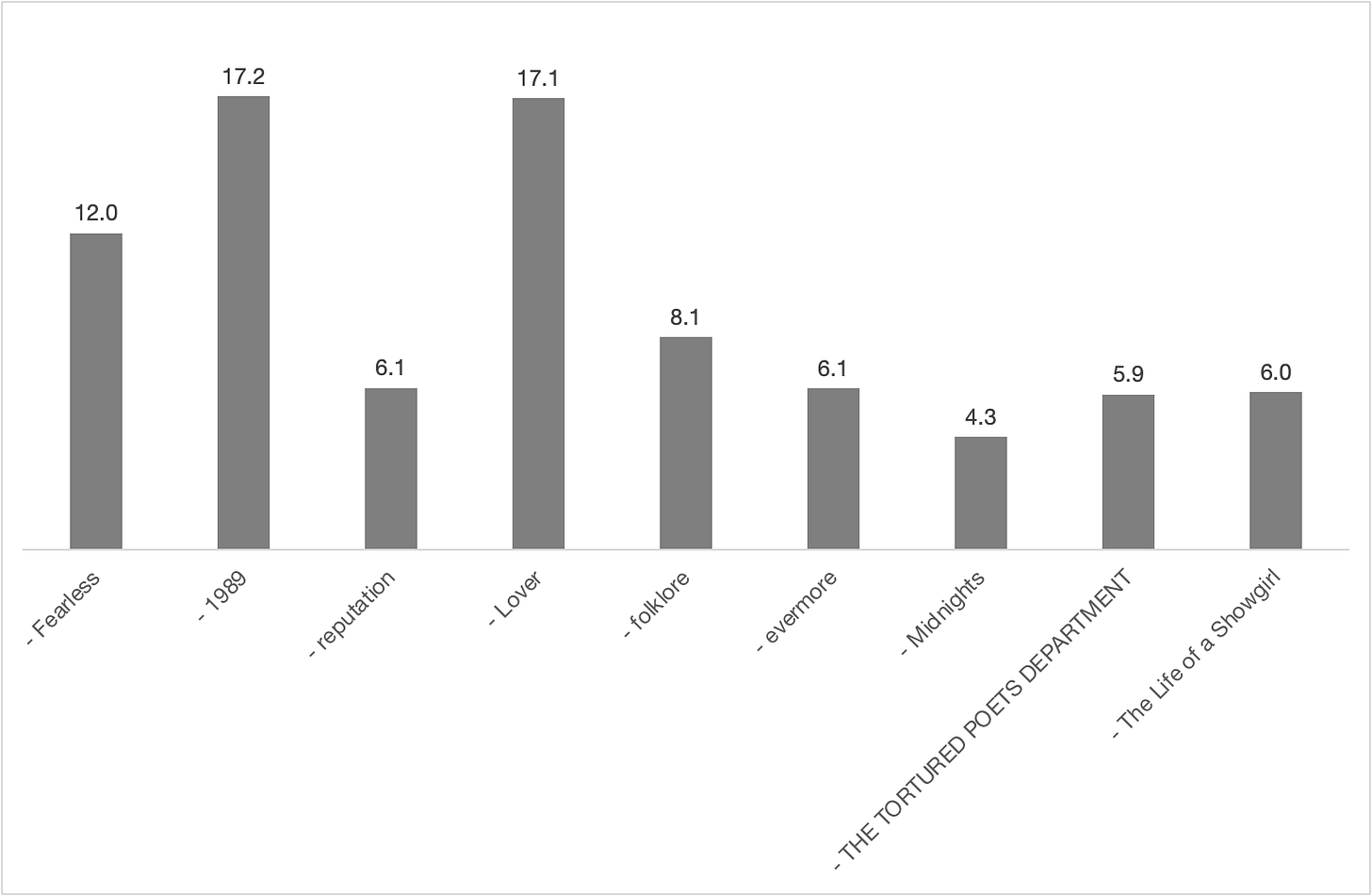
It may be a stretch to say this, but as Swifties have followed her album-by-album, they have also become *album* fans.
Indeed, if it’s a bit of stretch to single anyone out on this proxy method alone, it’s surely fair to say that Rodrigo and Swift, along with Billie Eilish and Lana Del Rey - are the more album orientated of the above list. And so yes, it’s time for another chart already:
## **Exhibit #2: Rodrigo, Eilish, Swift, and Del Rey build “Fortress Album”**
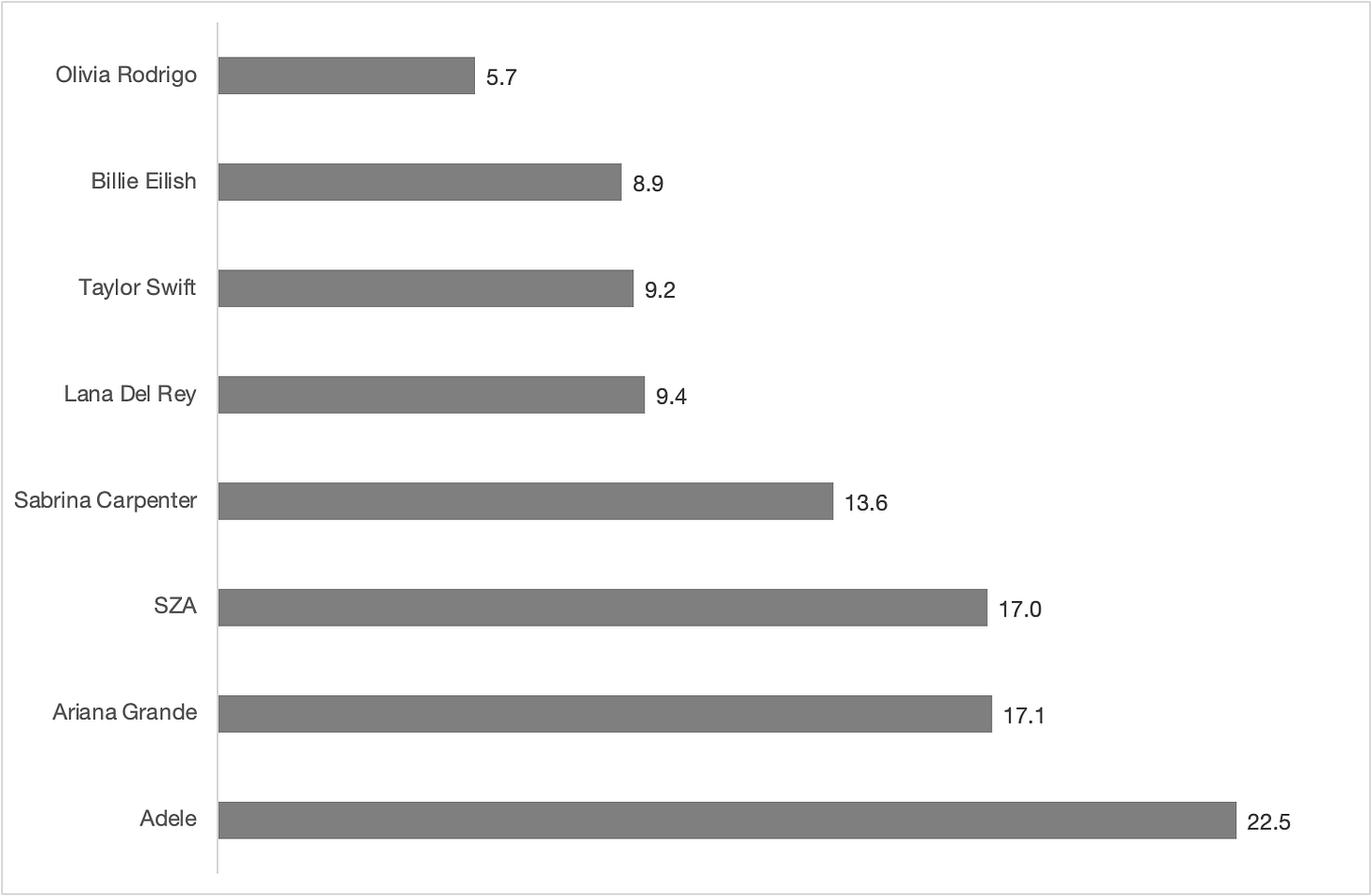
Is it possible that the four superwomen of pop may yet save us from the damage done to art by the four horsemen of the apocalypse?
Read on…
By this same measure, less album-orientated are **Sabrina Carpenter, SZA, Ariana Grande** and, as mentioned, **Adele**. Of these the most surprising is perhaps our album champion Adele, with the lowest ratio. *Now, why might this be?*
On the face of it, Adele comes across as a genuine throwback to the classic years of the 70s and the album’s hay day. And of course, she sells shed loads of physical products too - relatively more than the vast majority of artists. Her albums are literally named for her age at the time of writing/release - *19, 21, 25, 30* \- an explicit, career-long structural conceit that frames each record as a life-chapter statement, not just a collection of tracks (still, it also seems fair to say that Adele’s albums are more song collections than strongly themed concepts).
And yet Adele is the artist who put Spotify back in its sleeve on albums (sorry). Even braver, *25* was held off streaming services for months back in 2015, forcing fans toward the format Adele wanted them to experience it in - a direct assertion that the album was meant to be encountered as a whole physical/purchased object, not piecemeal streams. However, streaming behaviour for Adele’s catalogue is one of the most singles-concentrated patterns - certainly in this sample of female pop superstars but also across other categories - to be explored in the *next long read*.
It has to be said of course, that this simple ratio measures consumption patterns, not artistic intent. Adele is the clearest case here where those two things diverge sharply. on the above evidence Adele is the most vocal advocate for the album - *in the world*.
As said, Adele has had some *massive* songs, which might skew things - accept so have all the other artists in this group. Is it possible that Adele’s fanbase - her album listeners - are simply committed to the physical format, leaving more casual fans to pick & mix from the catalogue when streaming? I feel like this might explain things. It makes a case (not to trash everything I’ve written and you’ve just read outright!) for a more triangulated method, taking into account physical sales, streaming, core audience demographics and artistic intent/perceptions.
One clear thing of note, though, is the power of this particular group in shoring up the album as a cultural force. Again, this was my intuitive feeling when I wrote Body of Work, but I had no data to back it up. “The impact these artists have had on album culture - and on bringing the album to the attention of younger female audiences - cannot be underestimated.” (that’s what I wrote, authoritatively *and* vaguely).
This group of superwomen not only has the biggest presence in the Kworb 200 top streamed albums lists (32 out of the 200 titles, before I added any). And by the way, they also dominated physical album sales in recent years - see chart data to see just how many of these artists feature in the US and UK top 20 physical albums - they are *bossing* the vinyl trend not just riding it.
But this group (female solo) also has the lowest average streaming differential ratio overall, as shown in (yet) another chart:
## **Exhibit #3: From girl power to Album Orientated Women**
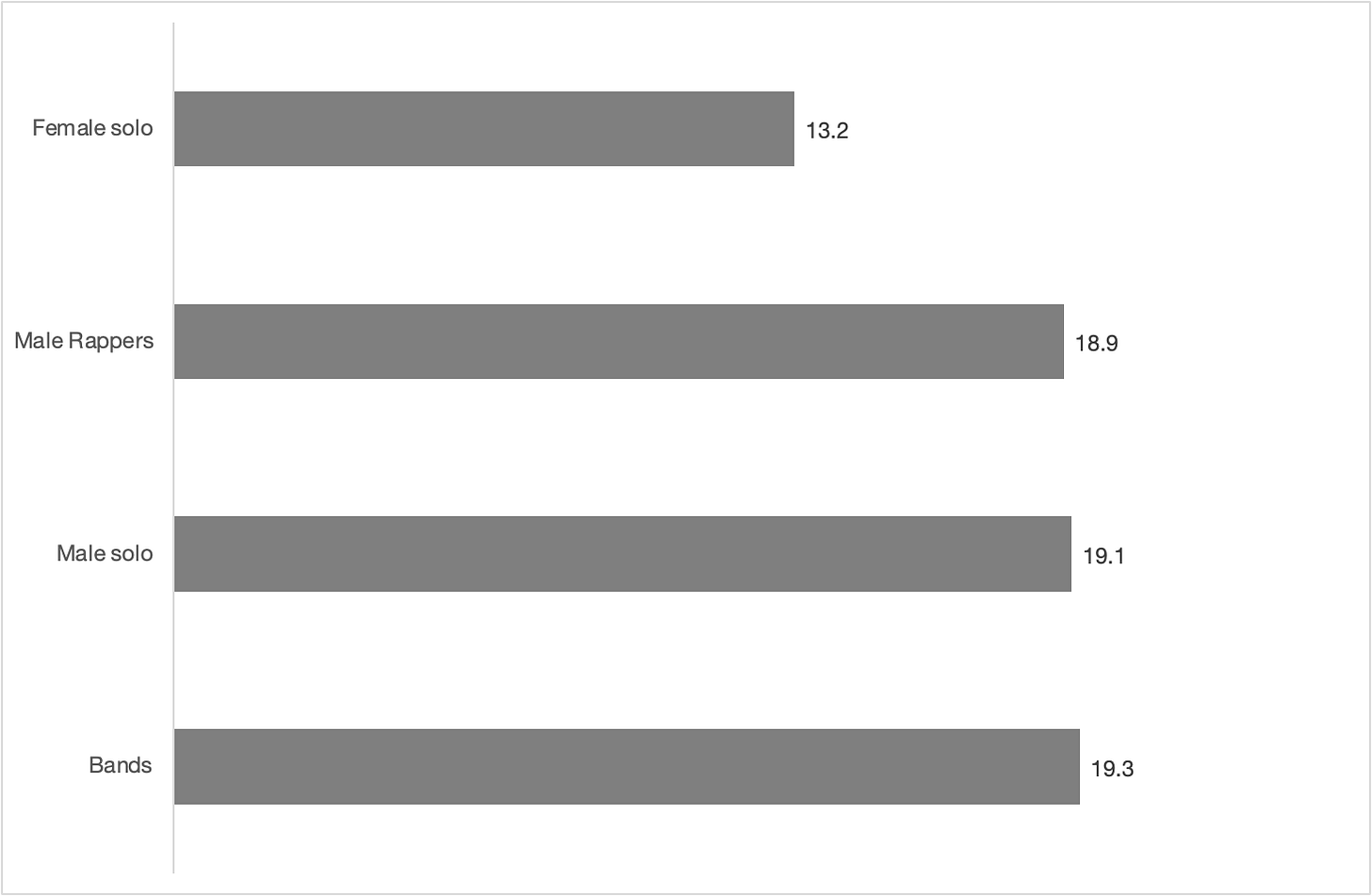
So I’m strongly proposing a thesis here; that the post-pandemic album resurgence - flying in the face of tech-driven music consumption trends - has been led largely, by four female pop superstars: Olivia Rodrigo, Billie Eilish, Taylor Swift and Lana Del Rey - with a strong supporting cast. *It is* possible that the four superwomen of pop may yet save us from the four horsemen of the apocalypse…
American Radio used to have a genre classification of AOR - album oriented rock. I doubt this means so much today, but it might be a good idea to bring it back but rename it as AOW - Album Oriented Women!
[***Body of Work* and *Riding the Rollercoaster* via your preferred retailer here.**](https://watkinspublishinglinks.com/keith-jopling-landing-page?ref=hypebot.com)
---
[***Keith Jopling***](https://songsommelier.substack.com/) *is a strategy & growth leader, author, and speaker, whose work can be found on* [*The Song Sommelier*](https://www.songsommelier.com/?ref=hypebot.com)*. He's worked in the music business for 25 years, most recently as an executive consultant in the music industry’s key organizations: major labels, indies, startups, trade bodies and Spotify. Read more about* [Riding The Rollercoaster.](https://www.songsommelier.com/riding-the-rollercoaster?ref=hypebot.com)
### Live Music Industry News Roundup
URL: https://www.hypebot.com/live-music-industry-news-24/
Last updated: 2026-09-10T18:40:30.000Z
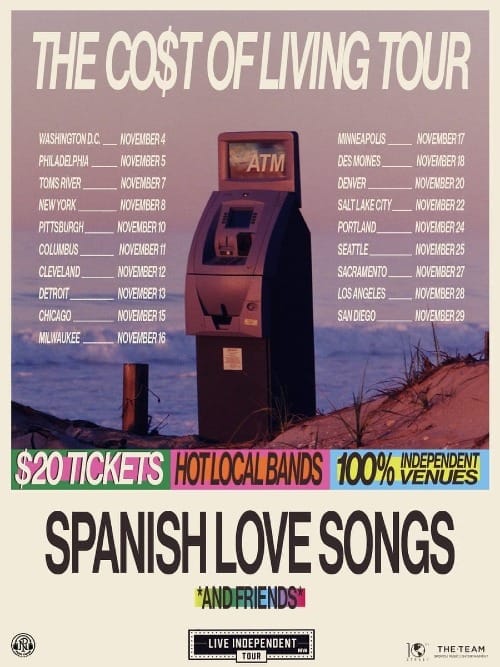
### **NIVA Launches 'Live Independent Tour' Certification**
The **National Independent Venue Association** (NIVA) has launched a **Live Independent Tour** certificationto elevate U.S. independent venues, promoters, and festivals.
First up is Los Angeles indie rock quintet Spanish Love Songs. The band’s 19-city album release tour booked by **The•Team** will play exclusively at independent venues.
"Our band was born and grew in independent rooms willing to take a chance on us,” says frontman **Dylan Slocum of Spanish Love Songs.** “We're proud to partner with NIVA, the venues, and promoters to put people over profit and work directly with the bands, crew, and fans that keep independent music thriving."
The initiative builds on NIVA's partnership with **Spotify** that includes monthly playlist features, and the [**Live Independent**](https://www.liveindependent.com/?ref=hypebot.com) seal launched in partnership with **Bandsintown**. More than **55 million fans** have discovered shows and bought tickets at independent venues and festivals through Live Independent promotion on the Bandsintown platform.
### **Free 'Pay It Forward' Small Tour Mental Health Support**
The [**Music Industry Therapist Collective**](https://www.musicindustrytherapists.com/?ref=hypebot.com) (MITC) has launched a **$367,000** '**Pay It Forward'** fund to bring occupational health support to smaller love tours.
Backers include **Radiohead**’s Philip Selway, **AEG, d&b audiotechnik, Fly By Nite, Live Free 999, Live Nation, Lockton, The Team**, and **Universal Pixels.** The fund will provide free access to occupational health support for **150 small and mid-scale tours** over the next three years.
The **Pay It Forward Fund** is available globally with services available in **English, French, Spanish, Italian, German, Norwegian** and **Hindi**. Applications are now open [here](https://www.musicindustrytherapists.com/payitforward/apply ?ref=hypebot.com).

### **Ticketmaster Connects To Meta's Muse AI Agent**
**Ticketmaster** announced an integration with **Muse**, **Meta**’s new personalized AI agent. Available now in the U.S. via web, iOS and Android, Muse enables people to create their own personalized AI agents.
Fans can now discover **Ticketmaster ticketed concerts**, sports and live shows through conversations with their Muse agent which can also make suggestions, Fans control the purchase, which is completed on Ticketmaster’s marketplace.
Ticketmaster also has integrations with **Gemini, Google AI Mode, ChatGPT, Claude** and **Amazon Alexa+.**
### **Portland Had a Venue-Sized Hole, Live Nation and AEG Are** Competing to Fill It
[Portland, Oregon](http://bandsintown.com/c/portland-or?utm%5Fsource=hypebot&came%5Ffrom=900), needed a mid-sized concert venue. Apparently, it needed two.
[**Live Nation’s**](https://www.hypebot.com/tag/live-nation/) **Steelhead** will bring a 3,500-capacity room to Portland’s Central Eastside. Meanwhile, [**AEG Presents**](https://www.hypebot.com/tag/aeg/) and longtime local promoter **Monqui Presents** are developing a flexible 2,000-to-4,250-capacity venue at the former Nordstrom site in the Lloyd Center. \[[Full story here](https://www.hypebot.com/portland-had-a-venue-sized-hole-live-nation-and-aeg-are-competing-to-fill-it/)\]
### **Australia’s Venues Are Housed in Buildings They Do Not Own**
Like venues in the US, Canada and the UK, Australia’s grassroots venues are running into issues securing leases and self-ownership, to protect the buildings their live scenes depend on. \[[Full story here](https://www.hypebot.com/australias-venues-are-housed-in-buildings-they-do-not-own/)\]
### The 7-Step Guide to Writing Your Music Bio
URL: https://www.hypebot.com/the-7-step-guide-to-writing-your-music-bio/
Last updated: 2026-09-10T12:48:00.000Z
### **How to write an effective musician bio (with examples!)**
*By* [***Julia Kater***](https://bandzoogle.com/blog/author/julia-kater?ref=hypebot.com) *of* [***Bandzoogle***](https://bandzoogle.com/blog/how-to-write-an-effective-musician-bio-with-examples?ref=hypebot.com)
One of the most important pages on your [music website](https://www.hypebot.com/tag/website/) is **your bio page.** As a musician, you may be great at composing melodies and lyrics, but it can be hard to write about yourself. Writing a great musician bio can be a challenge, but it's a very important component in making your project appear professional.
Your musician bio creates the first impression of you for many of your website visitors, so make it great! In addition to converting those visitors into fans, this first impression will give music reviewers, media presenters, playlist curators, and booking agents a sense of who you are.
Remember, your bio isn't really for you, it's for the venue booker scanning 50 submissions, the journalist on deadline, and the fan deciding whether to hit play. It helps to prepare multiple versions: a short bio of 50 to 100 words for social profiles and playlist submissions, a medium version of 150 to 250 words for press and industry contacts, and a full bio of 300 to 500 words for your website and EPK.
The question is common: how do you go about writing that perfect musician bio? The elements outlined here will help you write an effective bio that describes your music and your background in a concise and inviting way.
## 1\. Write an engaging introduction
The toughest part about writing your musician bio is getting started. To help build your momentum for this step, start by making a few notes on a piece of paper. Jot down your name, and where you're from. Add a few details about your sound, as objectively as you can, and then write down your biggest influences.
This will help you shape a sentence or two as an introduction. The goal is to make it engaging but concise. It's easy to go too long here, so think about how you might quickly introduce yourself to someone who has never met you or heard your music before. Think of that frequently mentioned elevator pitch: how would you most effectively describe [your brand of music](https://bandzoogle.com/blog/music-branding-101-for-artists-and-bands?ref=hypebot.com) if you had just a few seconds to explain it to someone?
Be mindful of your tone as you write your bio's introduction: depending on your style of music and your personality, you may want to inject some humor into your writing, or you might instead want to write more formally. Consider how your writing voice would best reflect your music, and move ahead with that pitch.
## 2\. Add background information
Include some relevant background information in your bio, including your musical history, but (again) make it short. You want to be sure to keep your visitors engaged, because lengthy paragraphs of text will lose them.
Briefly describe your musical history and education, and choose just a few relevant details to incorporate into your bio.
To keep your tone professional, make sure to write your musician bio in the third person. This will make it easier to read and understand, and will help with [your website's search engine optimization](https://bandzoogle.com/blog/13-reasons-why-bandzoogle-has-the-best-seo-for-musicians?ref=hypebot.com). It also allows media, bloggers, bookers, or venues to simply copy and paste your bio when they need it, rather than having them adjust the wording to suit their promotional materials.
## 3\. Describe your music
Most of your fans are likely to be familiar with your music already, but bloggers, journalists, and other media professionals might not yet have a sense of your sound. To remedy this, add a brief description that succinctly describes your musical style and most significant influences.
It may be challenging to fit your sound into a single genre, but try to use a few familiar words so that people can more easily place your sound. This will help inspire people reading your bio to also listen to your music.
Mention what you're currently up to with your music: Have you just gone into the studio? Released a single? Co-written a song with another artist? Are you heading out on tour shortly? Did you recently receive a grant, or participate in an artists' residency? Share the news!
Select from the most relevant and recent things that you've been tackling through your music, and add those details to your musician bio.
If you're in a band, you can write out [the full band bio](https://bandzoogle.com/blog/how-to-build-a-great-band-website-bio-page?ref=hypebot.com) at the top of your page. Beneath it, you can add text detailing each individual band member. Include an image with each musician bio to make the page layout visually engaging.
## 4\. Outline career highlights and achievements
Think about everything you've accomplished with your music. Have you opened for a well-known band, or played a big festival? Have you had success on streaming music platforms, charted on college radio, or been nominated for an award?
Make a list of your achievements, then pick two or three of the most impressive items for your musician bio, ensuring at least one is recent enough to show that your music career is active.
Avoid exaggerating or embellishing in this part of your bio. Stick to the facts, but frame them in a positive way, describing how your achievements have solidified your career.
## 5\. Add a media quote (or two!)
Quotes from reviewers are a great way to demonstrate that others are professionally talking about your music. Select a quote or two that will enhance your musician bio, something that describes your sound, your talent, or your latest project. These quotes will lend authority to your musician bio, and you can include a link to the full review if it's available online.
Quotes from music media and accomplished peers can skillfully emphasize your accomplishments and your new music. Quotes could be from a venue owner, a musician you've worked with, an album review, a podcast presenter, or a playlist curator. Really, anyone involved in the music industry that has credibility and a professional reputation.
See where it fits in seamlessly on the page. A quote about your new album will work when talking about your music to date, and a quote from a music presenter will help to describe your live show with sold out numbers.
If you don't have a quote, that's ok. Just keep it in mind for the future. You could reach out to someone you've connected with professionally to see if they can provide you with a few complimentary words you can use in your bio (and you could do the same for them!).
## 6\. Keep your information up to date
Your musician bio is an [important part of your music website](https://bandzoogle.com/blog/creating-a-band-website-a-complete-checklist?ref=hypebot.com). It can let new visitors know who you are, and it offers journalists and venue bookers publicity material they can use in their promotions. Include your bio in a couple places on your website to make it easy to find.
You can place a short elevator pitch on your Home page, and use your full, most in-depth musician bio on your About page, including some downloadable press-quality images there as well.
You'll also want to include a version of your bio [in your electronic press kit (EPK)](https://bandzoogle.com/blog/the-8-things-that-should-be-in-every-band-s-digital-press-kit?ref=hypebot.com). You can download your Bandzoogle EPK as a PDF at any time, making it easy to share with venue bookers, press contacts, and playlist curators.
Make a note to update your bio in these places with any new projects, releases, collaborations, and upcoming tours. You'll want to be sure to add new accomplishments as your career moves forward. An outdated musician bio won't serve you well, so make sure to [refresh it regularly](https://bandzoogle.com/blog/how-to-create-an-epk-for-your-music-with-examples?ref=hypebot.com)!
## 7\. Read sample musician bios
With all this in mind, it can still feel overwhelming to take every piece of advice and condense it into a readable musician bio. So, a sample musician bio might go a bit like this:
Quick introduction. Mention your name, your style of music, and your influences.
Next, describe your background. Mention how long you've been playing, the bands you've played with, and a notable accomplishment.
End with what you're currently doing. This could be playing shows, recording, writing, or a mention of your latest album.
These are a few examples of great musician bios to give you inspiration:
Veteran singer-songwriters The Small Glories provide a great example of pairing a short bio with a long bio, alongside two eye-catching quotes that draw visitors in. They've also linked to their press page, making it easy for people to read more:

**Musician bio example:* [***The Small Glories**](https://thesmallglories.com/about?ref=hypebot.com)
Contemporary R&B / gospel artist Queen Makedah uses color and sections to give her musician bio a streamlined look. It's got depth, with plenty of quotes and information, but is easy to scan, and enjoyable to read:

**Musician bio example:* [***Queen Makedah**](https://queenmakedah.com/bio?ref=hypebot.com)
DJ Moma has created a simple bio that emphasizes his musical history and achievements, telling his story in a colorful way that makes you want to read it:

**Musician bio example:* [***DJ Moma**](https://djmoma.bandzoogle.com/?ref=hypebot.com)
Jazz guitarist Sam Wilson has created a musician bio that's a great example of combining all of the important elements. From a description of her style, to her accomplishments, and a mention of her award-winning albums, her bio covers all of the bases:

**Musician bio example:* [***Sam Wilson**](https://samwilsonmusiq.com/about?ref=hypebot.com)
As a long-time musician, Eric Essix has written a bio that tells his story in detail. It's interesting for fans to see where he has come from, and what he is doing now. Then he's also included a succinct musician bio on his [EPK page](https://bandzoogle.com/blog/title-how-to-easily-build-an-epk-using-bandzoogle-s-preset-page-templates?ref=hypebot.com) that sums up his latest project. It's easy for industry to skim, with a button leading back to his full website for extra information:

**Musician bio example:* [***Eric Essix**](https://ericessix.net/eric-essix-touring-epk?ref=hypebot.com#biography)
Bruce Molsky has done a great job of including relevant quotes on his artist bio page. Ranging from Mark Knopfler to Linda Ronstadt, the span of quotes from other professional musicians really effectively conveys how broadly his music has been well received:

**Musician bio example:* [***Bruce Molsky**](https://brucemolsky.com/bio?ref=hypebot.com)
Once you're done writing your musician bio, check your spelling more than once, and read it aloud a couple of times to be sure it flows well and makes sense. Consider passing it along to a few friends to get their eyes on it, too.
You can use each of these elements to create an effective musician bio that you're happy to share with the world. Use it in multiple places [on your music website](https://bandzoogle.com/blog/how-to-make-a-website-for-your-music?ref=hypebot.com), and be sure to keep it up to date as your music career moves forward. So long as it's well-crafted, current, and earnest, your musician bio will serve you well.
***+Read more:*** [*"How Musicians Leave Money on Their Own Websites"*](https://www.hypebot.com/how-musicians-leave-money-on-their-own-websites/)
---
## Hypebot
Essential news & insights for artists and live music pros.
Sign up for free weekly content delivered to your inbox
Subscribe
Email sent! Check your inbox to complete your signup.
### Ro$ama Is Using the Road as His Classroom
URL: https://www.hypebot.com/ro-ama-is-using-the-road-as-his-classroom/
Last updated: 2026-09-10T12:46:57.000Z
Texas rapper [**Ro$ama**](https://www.bandsintown.com/a/15559275-rodollarama?utm%5Fsource=hypebot&came%5Ffrom=900) has progressed from performing for almost nobody to appearing at Rolling Loud and on [*The Tonight Show*](https://www.youtube.com/watch?v=WhzwEiNZVzA&ref=hypebot.com). His live education happened the old-fashioned way: one city, one crowd, and one opening slot at a time.
The thing people tend to know about Ro$ama is that he was famously fired from his FedEx job after filming a music video while at work there. Fortunately, the video went viral.
That origin story has the tidy shape of an overnight-success myth, but what happened afterward was much less instantaneous. The Paris, Texas, native released a steady run of music, performed wherever he could, and built an audience the grassroots way city by city. He eventually mounted a five-date Texas tour around his 2025 project ***Orange Tape***, and started touring on its acclaim.
But that's when things really started to click. In an [interview with ***Pollstar***](https://news.pollstar.com/2026/08/28/artist-pov-from-fedex-to-jimmy-fallon-roama-is-just-getting-started/?ref=hypebot.com), Ro$ama detailed how he is still learning [how to perform](https://www.hypebot.com/tag/performing-live/) — and he is doing it by watching his friends.
## **The Road Is Where Ro$ama Studies**
Ro$ama’s education came from watching the artists above him on the bill. While touring with artists like **Key Glock** and **Kevin Gates**, Ro$ama paid close attention to the way his fellow, more seasoned, rap artists moved and controlled a room from [the live stage](https://www.hypebot.com/tag/live-music/).
He borrowed a slow backward walk from Glock. From Gates, he picked up a movement that begins with jumping to the beat before suddenly exploding outward. Ro$ama experimented with those gestures, adapted them and folded them into his own performance language.
Great performers are often discussed as though they emerged fully formed, naturally possessing the ability to command thousands of people. Ro$ama talks about stagecraft more like a trade. You watch somebody who is better than you. You identify what works. You practice it. Eventually, the borrowed move stops looking borrowed.
You own it.
That is what touring has traditionally offered developing artists: **an informal apprenticeship.** An opener can watch the headliner handle soundcheck, recover from a quiet crowd, create anticipation, and decide when to let the audience take over a chorus.
The lesson repeats in a different room every night. No online tutorial can completely reproduce the moment when a technique works (or fails) in front of actual bodies.
**+Read more:** [*"Why Rod Wave's Fans Sing His Songs For Him"*](https://www.hypebot.com/why-rod-waves-fans-sing-his-songs-for-him/)
## **Between Patience and Impact**
Ro$ama’s emerging live identity appears to be built around **contrast.** The slow walk creates control, letting him occupy the stage without constantly scrambling across it. The more explosive movements do the opposite, turning the beat drop into a physical catharsis.
One establishes tension; the other releases it. This dichotomy has always been a crucial element of live performance, but in his case, it's *embodied.* And that combination fits Ro$ama’s music particularly well.
His songs are generally compact, bass-heavy and direct. The seven-track *Orange Tape* runs only 17 minutes, moving quickly through records like “Blueprint,” “Ight,” “Shit Popper” and “Bump Down.” Its most-streamed moments include the **BigXthaPlug** collaboration “Microwave,” while “Show Me the Money” brings in fellow Texas rapper **That Mexican OT.**
The production hits hard, but Ro$ama does not simply throw words on top of it. His delivery is forceful and rhythmically alert, with enough variation in pace and emphasis to give a performer something to work with. The tracks feel less like static recordings than compact packages of momentum.
That is intentional. Ro$ama thinks[ about the live show](https://news.pollstar.com/2026/08/28/artist-pov-from-fedex-to-jimmy-fallon-roama-is-just-getting-started/?ref=hypebot.com) while he is still making a song: where he will breathe, how the beat will feel in the room and whether the audience should bounce or open a pit.
Plenty of artists write a record and only later ask how to reproduce it onstage. Ro$ama is building performance cues into the architecture. In this way, his shows do not rely on elaborate scenery or theatrical reinvention (at least not yet). Their appeal is physical and immediate: a heavy beat, a tightly constructed vocal, a rapper learning exactly when to stay still and when to detonate.
## **The Audience Gets to Watch**
Ro$ama’s *Orange Tape Tour* had another practical purpose. Some listeners recognized songs connected to BigXthaPlug and 600 Entertainment without necessarily recognizing Ro$ama himself. Touring Texas allowed him to put a face (and a live personality) to the music.
We live in an era when a stream can make a song familiar without creating much attachment to the person who made it. A live show ties that knot.
> [ View this post on Instagram ](https://www.instagram.com/p/DaxuPX5jvIP/?utm%5Fsource=ig%5Fembed&utm%5Fcampaign=loading)
>
> [A post shared by Ollie (@archivedbyollie)](https://www.instagram.com/p/DaxuPX5jvIP/?utm%5Fsource=ig%5Fembed&utm%5Fcampaign=loading)
It gives fans a voice, body and memory to associate with the record. It also gives the artist immediate information that streaming data cannot: which line people yell back, which song changes the temperature and which supposedly exciting moment leaves the room cold.
Ro$ama has already taken that feedback from tiny rooms to Rolling Loud’s enormous crowd. Yet he still talks like a developing performer. After appearing on *Fallon*, he came away curious about learning to perform with a live band rather than treating national television as proof that he had mastered the job.
The appeal of seeing one of his performances now is not that Ro$ama has arrived at some flawless final version of his show, it's that the show is visibly evolving. Every tour adds another technique. Every crowd teaches him something about the songs. Every larger stage tests whether the instincts developed in smaller Texas rooms can scale.
Ro$ama is using the road as his classroom — and audiences get to watch the lessons turn into a live performer in real time.
---
## [**Ro$ama Tour Dates**](https://www.bandsintown.com/a/15559275-rodollarama?utm%5Fsource=hypebot&came%5Ffrom=900)
### AI Music Disputes Need More Than a Label: 5 Records All Artists Should Keep
URL: https://www.hypebot.com/ai-music-disputes-need-more-than-a-label-5-records-all-artists-should-keep/
Last updated: 2026-09-10T12:33:22.000Z
*By* [***Michael T. Neely***](https://www.linkedin.com/in/michaeltneely?ref=hypebot.com)*, CEO of *Global Music Conference* & *XS10 Magazine**
[Artificial Intelligence](https://www.hypebot.com/tag/AI) has pushed music-industry conversations toward **consent, disclosure,** and **labeling.** Those issues matter, but for independent artists they are only the beginning.
When a dispute actually occurs, the decisive question is often not whether something felt unauthorized. It is whether the artist can document what was agreed to, what was created, what changed, who controlled the relevant files, and what money moved.
That is where many independent creators are exposed. Major labels, publishers and platforms may have legal departments, rights-management systems and internal audit trails. [Independent artists](https://www.hypebot.com/tag/indie-artists/) often have text messages, scattered emails, cloud folders and informal verbal agreements. In an AI-driven environment, that is not enough.
[The U.S. Copyright Office](https://www.hypebot.com/tag/us-copyright-office/) has already identified digital replicas as a serious policy problem and has recommended federal protection against unauthorized replicas of a person’s voice or likeness. Its broader AI initiative also addresses copyrightability and generative-AI training. These developments reinforce a practical lesson for creators: rights are easier to defend when the underlying evidence is organized before a conflict begins.
Learn more about **the U.S. Copyright Office AI initiative** [**here.**](https://www.copyright.gov/ai/?ref=hypebot.com)
Here are five records every independent artist and small music team should keep.
***+Read more:*** [*"'Human-First' Is a Promise Nobody Can Check (Yet)"*](https://www.hypebot.com/human-first-is-a-promise-nobody-can-check-yet/)
## **1\. A written record of consent — and its exact scope**
“Permission” is too vague. If an artist allows a producer, label, platform, or AI company to use a vocal, likeness, composition, stem or dataset, the record should state exactly what was authorized.
- **Was the voice approved for one song, one campaign, one model-training purpose or unlimited future use?**
- **Was the consent exclusive or nonexclusive?**
- **Could the material be sublicensed?**
- **Could a synthetic version of the artist’s voice be created?**
- **Could that replica be used in advertising or commercial releases?**
Independent creators should preserve the final signed agreement, relevant emails, platform terms in effect at the time, and any later amendments. If permission is changed or withdrawn, retain that record too. A dispute over AI use can turn on one sentence buried in a [contract](https://www.hypebot.com/tag/contract/). Keeping the full consent trail makes that sentence easier to find and interpret.
## **2\. Source and provenance records**
Artists should preserve the original source files behind their work: raw vocal takes, multitrack sessions, stems, project files, lyrics, dated demos and exports. The goal is not merely backup. It is provenance — evidence of where a work came from and how it developed.
The **Coalition for Content Provenance and Authenticity**, or **C2PA**, has created a technical standard for recording the origin and editing history of digital media through Content Credentials. The standard is designed to make provenance information tamper-evident and verifiable.
Learn more about[**C2PA Content Credentials specification** here](https://spec.c2pa.org/specifications/specifications/2.2/specs/ContentCredentials.html?ref=hypebot.com).
Independent musicians do not need to become technical specialists to benefit from the underlying principle. Keep originals. Keep dated versions. Preserve metadata where possible. Do not overwrite every earlier file with the newest mix.
## **3\. Version history**
AI tools can produce dozens or hundreds of iterations quickly. That speed creates a new documentation problem. If a producer uses generative AI to alter lyrics, synthesize background vocals, create artwork, replace an instrument, transform a vocal timbre or generate alternate mixes, creators should keep a basic version log.
A simple record might show:
- **Version 1 — original human demo.**
- **Version 2 — AI-assisted arrangement.**
- **Version 3 — synthetic background vocal added.**
- **Version 4 — artist-approved master.**
That record can later help establish what the artist actually created, what the AI system contributed, what was approved and what was never authorized for release. This matters because the Copyright Office has emphasized the [continuing importance of human authorship](https://www.copyright.gov/newsnet/2025/1060.html?ref=hypebot.com) when analyzing copyright protection for works containing AI-generated material.
**+Read more:** [*"Your Song Is the Starting Pistol, Not the Finish Line"*](https://www.hypebot.com/your-song-is-the-starting-pistol-not-the-finish-line/)
## **4\. Revenue and usage records**
If AI-generated or AI-modified music earns money, documentation should follow the money. Independent artists should retain royalty statements, distributor reports, platform dashboards, licensing invoices, synchronization payments, neighboring-rights statements and any records showing how revenue was divided.
This becomes especially important when a disputed vocal replica, composition, likeness or derivative work has already been monetized.
A creator may know that a track generated significant attention, but attention alone does not establish the financial impact. Revenue records can show where the work appeared, how often it was exploited and what compensation resulted. Keep periodic exports rather than relying exclusively on a platform dashboard that may later change.
## **5\. A complaints, correction and redress trail**
When something goes wrong, document every step taken to correct it. Keep the original complaint, takedown request, platform ticket number, correspondence with distributors or labels, screenshots of disputed content, dates of responses, appeal decisions, and any settlement or correction.
This is the difference between saying, *“I complained several times,”* and being able to show precisely when the complaint was made, who received it and what happened next.
Independent artists should also avoid conducting important disputes only through disappearing messages or phone calls. After a call, send a short email confirming what was discussed.
### Documentation is becoming part of creator protection
The music industry has spent decades teaching creators to register copyrights, keep split sheets and read contracts. AI adds another layer: creators now need evidence about data, provenance, synthetic media, versions and automated workflows.
None of this requires an expensive compliance department. A well-organized cloud folder, consistent file naming, periodic exports and written confirmation of important permissions can create a surprisingly strong record.
The broader policy debate around AI music will continue to focus on consent, transparency, labeling, training rights and digital replicas. Those protections are necessary. But independent artists should not wait for every legal question to be resolved before protecting themselves.
When a dispute begins, the creator with the clearest paper trail is in a much stronger position to explain what happened, challenge unauthorized use and seek correction or compensation.
In the AI era, documentation is not paperwork after the creative process. It is becoming part of the creative professional’s rights infrastructure.
---
[***Michael T. Neely***](https://www.linkedin.com/in/michaeltneely?ref=hypebot.com) *is a veteran music executive, songwriter, publisher, educator and AI governance strategist with more than four decades of music-industry experience. He is CEO of *Global Music Conference* and *XS10 Magazine* and works at the intersection of responsible AI, creator rights, music, education and emerging technology.*
### Music Tectonics 2026 Startup Competition Semi-Finalists
URL: https://www.hypebot.com/music-tectonics-2026-startup-competition-semi-finalists/
Last updated: 2026-09-10T12:16:14.000Z
The next wave of music technology is officially here.
[**Music Tectonics**](https://www.musictectonics.com/?ref=hypebot.com), in partnership with the **Yamaha Music Innovations Fund**, has unveiled the 10 semi-finalists for its **2026 Swimming With Narwhals** startup pitch competition. This year’s expanded scope actively invited the earliest-stage innovators—from pre-seed setups to idea-phase founders—who are building transformative technology across the broader creator economy and media landscapes.
The semi-finalists will pitch at the [**Music Tectonics Online Pre-conference** ](https://www.musictectonics.com/onlineevents?ref=hypebot.com)on September 23\. From there, four finalists will be selected to pitch in person to a jury of investors at the Music Tectonics Conference in Santa Monica, CA, from October 27-29, 2026.
Learn more about the Music Tectonics conference and register [here](https://www.musictectonics.com/?ref=hypebot.com).
**Here are the 10 making a splash in this year’s semi-finals:**
### **2026 Swimming With Narwhals Semi-Finalists**
- [**Cadence Catalog Intelligence Co**](https://cadence-ci.com/?ref=hypebot.com)**:** Provides advanced catalog valuation and intelligence tools to help rightsholders and labels identify missing revenue and maximize their catalog's total potential.
- [**Cadence I.O.**](https://cadenceio.com/?ref=hypebot.com)**:** Streamlines the marketing and playlist pitching process for independent artists with a single-form submission that seamlessly translates across all major DSPs.
- [**EquitX**](https://equitx.com/?ref=hypebot.com)**:** An AI-driven blockchain protocol that allows users to access large-cap market exposure through synthetic assets without the traditional custodial constraints.
- [**lyrcs.ai**](https://lyrcs.ai/?ref=hypebot.com)**:** An AI-powered lyrics transcription platform designed to help record labels, distributors, and independent artists accurately transcribe localized and regional music.
- [**PlaiMusic AI**](https://zumapiano.ai/?ref=hypebot.com)**:** Develops AI-driven audio and music education tools to help streamline music learning and creation for the modern creator economy.
- [**Resolut**](https://resolut.media/?ref=hypebot.com)**:** A comprehensive music tech platform that helps rightsholders and their teams manage, monitor, and resolve music copyright conflicts and withheld earnings at scale.
- [**ReVenue**](https://revenuemusic.lovable.app/?ref=hypebot.com)**:** Focuses on unlocking and optimizing new revenue streams across the music and live-event landscape to maximize direct earnings for creators.
- [**Spatial Rhythm**](https://www.musictectonics.com/pitch-competition?ref=hypebot.com)**:** Innovates at the intersection of live production and audio by combining spatial design with rhythmic elements for highly immersive concert experiences.
- [**SyncFlow:**](https://syncflow.ac/?ref=hypebot.com) An all-in-one AI suite that automates the generation of promotional video and audio content to help creators easily build engaging marketing materials.
- [**Visuals.fm**](https://visuals.fm/?ref=hypebot.com)**:** [Co-founded by industry veteran Sebastian Mourra](https://www.linkedin.com/posts/sebastianmourra%5Fwe-made-the-semi-finals-of-music-tectonics-activity-7498818656689164289-SQb8/?ref=hypebot.com), this creative AI engine builds high-quality, tailored visual identities for every track in an artist's catalog.
### **Hypebot's Bottom Line**
The 2026 Swimming With Narwhalssemi-finalists highlight an overarching theme in today’s music tech ecosystem: efficiency and revenue recovery.
We are seeing a distinct shift away from highly speculative consumer apps in favor of robust, B2B utility tools designed to clean up data (Resolut, Cadence Catalog), simplify creator workflows (Cadence I.O., SyncFlow), and scale artistic output (Visuals.fm, lyrcs.ai).
By backing startups that solve real, foundational friction points early on, Music Tectonics and the Yamaha Music Innovations Fund are betting that the next "unicorns" won't necessarily be consumer platforms, but rather infrastructure that makes the modern music industry function and grow.
---
*Get the latest Live Music & Industry News updated continuously from across the web under the Hypebot Industry News tab* [*here*](https://www.hypebot.com/music-industry-news-feed/)*.*
## Hypebot
Essential news & insights for artists and live music pros.
Sign up for free weekly content delivered to your inbox
Subscribe
Email sent! Check your inbox to complete your signup.
### What 'Born In The USA' Told Us About Catalog Acquisition in 2026
URL: https://www.hypebot.com/what-born-in-the-usa-told-us-about-catalog-acquisition-in-2026/
Last updated: 2026-09-10T18:36:31.000Z
#
*By *Neil Shah* (CEO,* [***MusicAtlas***](https://musicatlas.ai/?ref=hypebot.com)*) and *Apolline Reymond* (Founder,* [***SoundsPro***](https://soundspro.co/?ref=hypebot.com)*)*
[Music catalog acquisition](https://www.hypebot.com/tag/catalog/) has become increasingly sophisticated. Buyers have access to detailed royalty histories, financial models, legal diligence, rights databases, streaming analytics, and specialized advisors capable of examining an asset from nearly every conceivable angle.
But that sophistication arrives late in the process.
By the time a serious acquisition reaches diligence, a buyer may deploy lawyers, accountants, administrators, financial analysts, and rights specialists to determine exactly what is being acquired and what it should be worth. That work is necessary, but expensive and time-consuming. Which raises a simpler question at the other end of the funnel:
***How much should you need to know before deciding a catalog is worth knowing everything about?***
[We recently explored that question](https://musicatlas.ai/intelligence/a-framework-for-modern-music-catalog-acquisitions?ref=hypebot.com) using one of the most recognizable music assets imaginable: **Bruce Springsteen’s** *Born in the U.S.A.* What we found wasn’t an argument for more diligence. It was an argument for sequencing diligence more strategically.
**Sony** reportedly paid **approximately $500 million** for Bruce Springsteen’s masters and publishing catalog in 2021\. We didn’t attempt to reverse-engineer that transaction. Instead, we used *Born in the U.S.A.* as a test case for a problem that exists at virtually every scale of music acquisition: buyers have limited time, analyst capacity, and diligence budgets.
Deep diligence is valuable precisely because music rights are complicated. A technical rights audit of even a relatively small catalog can cost thousands of dollars, while the legal, accounting, financial, and technical diligence surrounding an institutional acquisition can be considerably more expensive.
So perhaps the first question shouldn’t be, **“Should we spend thousands of dollars auditing this catalog?”**
The more useful question comes earlier: **“How can we quickly understand whether this catalog is worth a deeper look?”**
That distinction matters when a buyer isn’t evaluating one opportunity, but dozens or hundreds. You cannot investigate every asset with equal intensity. The acquisition process isn’t only a valuation problem. **It’s a resource allocation problem.**

[At MusicAtlas, we analyzed *Born in the U.S.A.*](https://musicatlas.ai/intelligence/a-framework-for-modern-music-catalog-acquisitions?ref=hypebot.com) using acoustic analysis alongside market signals including streaming persistence, cultural relevance, search behavior, UGC and short-form activity, licensing signals, historical transaction data, and long-tail performance patterns.
The interesting result wasn’t simply a valuation number. It was the shape of the asset underneath it.
Value was distributed across multiple works rather than residing exclusively in the title track. Different songs displayed different economic characteristics. That raises questions a headline streaming count or simple multiple can’t fully answer:
- **How concentrated is the catalog’s value?**
- **Is demand persistent or fading?**
- **Does it have meaningful licensing potential?**
- **How does it compare with assets that have historically commanded premium valuations?**
Those questions don’t replace royalty statements. But they can help determine which opportunities deserve the time and money required to answer the harder questions that follow. From a distance, *Born in the U.S.A.* is simply a famous 12-track album released in 1984\. From a rights perspective, that simplicity quickly disappears.
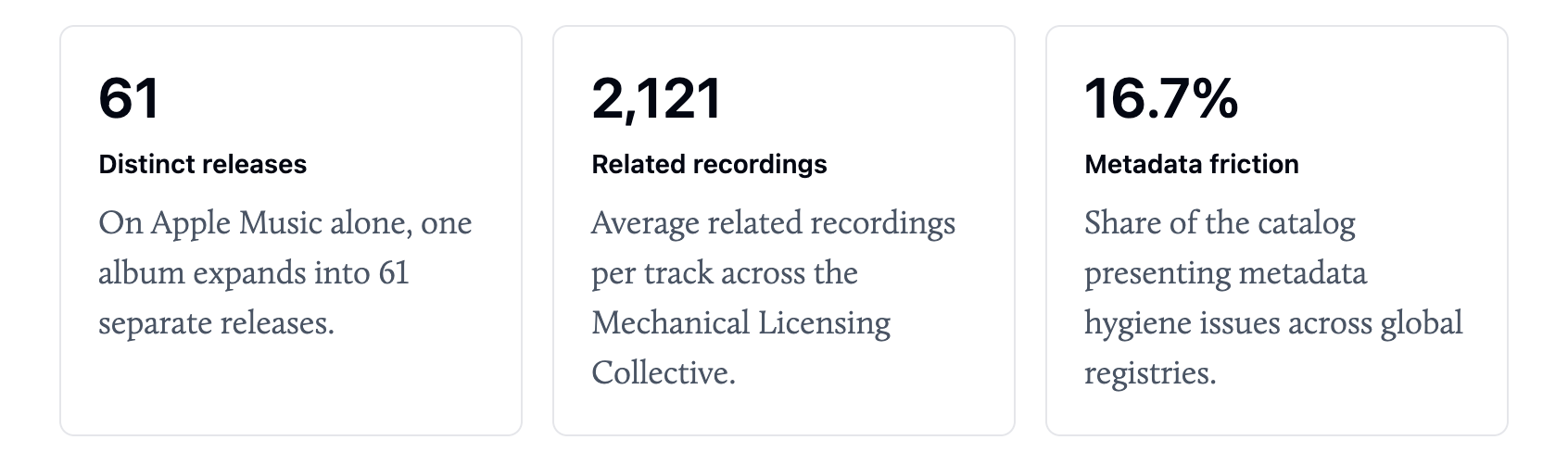
[When SoundsPro examined the album’s underlying rights infrastructure](https://musicatlas.ai/intelligence/a-framework-for-modern-music-catalog-acquisitions?ref=hypebot.com), those 12 tracks expanded into **61 distinct releases on Apple Music** alone. Across the Mechanical Licensing Collective, the analysis identified an average of **2,121 related recordings per track.** And **16.7% of the catalog presented metadata hygiene issues across global registries.**
A successful song doesn’t remain one song attached to one clean database record. Over decades it accumulates remasters, compilations, reissues, covers, alternate releases, identifiers, administrators, and relationships across different rights systems. Each manifestation can extend the commercial life of the music. It also expands the administrative surface surrounding it.
Suddenly the asset being acquired isn’t merely twelve songs and their associated cash flows. It’s a network of registrations, identifiers, recordings, ownership relationships, and administrative obligations built up over decades. That complexity is often a consequence of success. But it also argues for understanding what sits beneath the financial abstraction before assigning too much confidence to it.
The goal shouldn’t be to subject every opportunity to the deepest possible analysis. It should be to apply the right kind of intelligence at the right point in the decision. Early in the funnel, buyers can screen broadly: analyze demand, understand value concentration, look for durability, evaluate licensing characteristics, compare opportunities, and model different scenarios.
**+Read more:** [*"Your Song Is the Starting Pistol, Not the Finish Line"*](https://www.hypebot.com/your-song-is-the-starting-pistol-not-the-finish-line/)
Once an asset warrants serious consideration, go deep. Map registrations. Verify ownership relationships. Examine ISRC-to-ISWC connections. Identify metadata friction. Look for potential collection gaps. Understand the administrative burden that comes with the rights.
Only then should those perspectives converge with royalty histories, financial analysis, legal diligence, and dealmaking. **The music industry doesn’t suffer from a shortage of data. The harder problem is deciding what information matters when.**
If every potential acquisition requires expensive forensic analysis before a buyer can determine whether it is interesting, the acquisition funnel becomes unnecessarily narrow. If buyers rely only on reputation, historical royalties, headline streaming numbers, or simple multiples, they risk discovering important characteristics too late.
Technology shouldn’t replace the lawyers, accountants, administrators, analysts, relationships, and judgment that music transactions depend upon. It should help buyers decide where those scarce resources are most valuable.
That’s what *Born in the U.S.A.* showed us. From a distance, we could see demand, durability, concentration, licensing potential, and economic value. Up close, the same twelve songs became dozens of releases and thousands of related recordings connected through a much more complicated rights infrastructure.
A sophisticated buyer needs both views. The answer isn’t more diligence. It’s evaluating catalog value in the right order.
**+Read more:** [*"The 10 Most Valuable Artist Music Catalogs (for Now)"*](https://www.hypebot.com/the-10-most-valuable-artist-music-catalogs-for-now/)
### ***NOTE***
*This OpEd draws on research conducted jointly by MusicAtlas and SoundsPro using Bruce Springsteen’s Born in the U.S.A. as a case study. The full research and methodology, including MusicAtlas’s commercial valuation analysis and SoundsPro’s technical rights analysis, are available in* [***A Framework for Modern Music Catalog Acquisitions***](https://musicatlas.ai/intelligence/a-framework-for-modern-music-catalog-acquisitions?ref=hypebot.com)*.*
---
**Neil Shah* is the founder and CEO of* [***MusicAtlas***](https://musicatlas.ai/?ref=hypebot.com)*, a music search and catalog intelligence platform. He is a Grammy-nominated musician and technology executive whose background spans music, product, design, and company building.*
**Apolline Reymond* is the founder of* [***SoundsPro***](https://soundspro.co/?ref=hypebot.com) *and a product, automation, and data specialist focused on building practical systems for complex operational workflows. Her background spans music technology, large-scale catalog ingestion, product operations, and program management.*
### Portland Had a Venue-Sized Hole — Live Nation and AEG Are Competing to Fill It.
URL: https://www.hypebot.com/portland-had-a-venue-sized-hole-live-nation-and-aeg-are-competing-to-fill-it/
Last updated: 2026-09-09T20:49:57.000Z
[**Portland, Oregon**](http://bandsintown.com/c/portland-or?utm%5Fsource=hypebot&came%5Ffrom=900), needed a mid-sized concert venue. Apparently, it needed two. As [Axios reported September 3](https://www.axios.com/local/portland/2026/09/03/live-music-venue-competition?ref=hypebot.com), two corporate-backed venues are now under construction roughly two miles apart, with both expected to open in 2027.
[**Live Nation’s**](https://www.hypebot.com/tag/live-nation/) **Steelhead** will bring a 3,500-capacity room to Portland’s Central Eastside. Meanwhile, [**AEG Presents**](https://www.hypebot.com/tag/aeg/) and longtime local promoter **Monqui Presents** are developing a flexible **2,000-to-4,250-capacity venue** at the former Nordstrom site in the Lloyd Center.
Both projects address a real problem. Portland has long lacked a modern general-admission room between its roughly 1,500-capacity clubs and 20,000-seat Moda Center. That missing rung can leave artists too big for the Crystal Ballroom or Roseland Theater but too small for an arena with nowhere appropriate to play.
Sometimes, those [tours](https://www.hypebot.com/tag/touring/) simply skip Portland.
Adding one venue in that range could strengthen the city’s place on the national touring map. Adding two creates something more complicated: a live experiment in what competition looks like when both competitors are global, corporate entertainment conglomerates.
## **Will competition help artists?**
In theory, two venues chasing similar tours should create leverage, and build out the gaps in a fledgling music market. Agents could compare offers, promoters might bid more aggressively, and artists could choose between different capacities, locations and deal structures. Portland fans could finally see more tours that previously stopped in Seattle, Bend or elsewhere.
But Portland is no fledgling music market.
And furthermore, Live Nation and AEG are not your average landlords. Both operate enormous promotion networks with touring relationships that extend far beyond Portland. Their proven behavioral pattern is being able to use that national leverage to negotiate entire tours in venues they co-own, as well as leaning on ticketing relationships to enhance profit share.
That makes this competition less like two neighborhood clubs fighting for a Saturday-night booking and more like two national systems competing to route the same artists through their respective pipelines.

## **Portland’s independents will be watching closely**
Portland was long described as the last major US city *without* a Live Nation-operated venue, and for many residents, this was **a good thing.**
Expectedly, Steelhead has faced sustained opposition from local musicians and venue advocates. Those concerns are heightened by the fragile state of the existing ecosystem: [only 37% of Oregon’s independent venues were profitable in 2024](https://www.axios.com/local/portland/2025/10/14/independent-venues-oregon-losses?ref=hypebot.com), according to **National Independent Venue Association (**[**NIVA**](https://www.hypebot.com/tag/niva/)**)** data.
**MusicOregon** co-chair **Cheri Jamison** [recently said](https://www.portlandmercury.com/music/big-steelhead-small-market/?ref=hypebot.com) that advocates will watch whether Steelhead begins hosting reduced-capacity shows that place it in direct competition with smaller independent rooms. Live Nation said it intends to book shows that fully use the venue, but did not rule out limiting or subdividing its capacity.
The AEG project already advertises flexible configurations beginning at 2,000 attendees. Its partnership with Monqui gives that venue a meaningful local connection, but AEG’s corporate scale still changes the balance of power in the market.
Portland unquestionably needs better infrastructure for mid-level touring artists, booking agencies nationally have known about this for some time. But does filling that gap strengthen the independent scene, or create two new corporate gatekeepers floating above it?
---
*Get the latest Live Music & Industry News updated continuously from across the web under the Hypebot Industry News tab* [*here*](https://www.hypebot.com/music-industry-news-feed/)*.*
## Hypebot
Essential news & insights for artists and live music pros.
Sign up for free weekly content delivered to your inbox
Subscribe
Email sent! Check your inbox to complete your signup.
### In The Trenches With Gideon Amelkin of Groot Hospitality
URL: https://www.hypebot.com/in-the-trenches-with-gideon-amelkin-of-groot-hospitality/
Last updated: 2026-09-09T18:56:10.000Z
> *"(We) are always open to collaborating on new ideas, which makes the job easier."*
*This interview with *Gideon Amelkin* of *Groot Hospitality* is part of Hypebot’s*[***In The Trenches***](https://www.hypebot.com/tag/in-the-trenches/) *series sponsored by venue, festival and promoter marketing solution* [***Bandsintown PRO***](https://www.bandsintown.pro/?ref=hypebot.com)*. The series features the unsung heroes who make live music happen.*
***Gideon Amelkin**
**Hypebot: Please introduce yourself.**
Gideon: "I'm **Gideon Amelkin**, Director of Brand Partnerships and Activations at [**Groot Hospitality**](https://groothospitality.com/?ref=hypebot.com) in Miami. I've been with the company several years, previously as Head of Marketing, before moving over to build out the partnerships side. I still work closely with the current head of marketing and the operations team day to day."
**H: Tell us about your organization and its venues.**
G: "Groot Hospitality operates premium venues across **Miami** and **Las Vegas**, including **LIV Nightclub, Papi Steak, Komodo, Gekkō,** and **Casadonna**. All high energy, celebration driven rooms, with LIV booking the biggest artists in the world every weekend."
**H: What does your typical workday look like?**
G: "In the office by nine, working through outreach, relationship building, and marketing execution for active partnerships. Evenings and weekends are spent on site at whatever we have activating."
**H: What 'go to' tools, strategies and platforms do you use to market shows?**
G: "AI research tools, **Canva** and **Photoshop** for creative, [**monday.com**](http://monday.com/?ref=hypebot.com)for project management, plus a range of automations."
**H: What newer marketing tools, strategies and outlets show the most promise?**
G: "The most promising ones are built in house. Autonomous chatbots handling inbound and outbound lead outreach, and automated campaigns driving upsells and incremental revenue."
**H: Name a particular show or campaign that you were involved in where you felt you had the most impact and why?**
G: "Our **DraftKings** World Cup activation, watch parties across every Miami match. A national brand tied to a local moment, and genuinely fun to execute."
**H: What do you wish more artists and their teams would do differently that would make your job easier and help sell more tickets?**
G: "Honestly, we're lucky here. Artists at LIV know us and are always open to collaborating on new ideas, which makes the job easier."
**H: Where can we find you and on socials?**
G: "Instagram and TikTok: @GideonAmelkin"
---
***+Read more:*** [**"In The Trenches:* Spotlighting the unsung heroes strengthening live music"*](https://www.hypebot.com/tag/in-the-trenches/)
## Hypebot
Essential news & insights for artists and live music pros.
Sign up for free weekly content delivered to your inbox
Subscribe
Email sent! Check your inbox to complete your signup.
***Get the latest Live Music & Industry News updated continuously from across the web under the Hypebot Industry News tab*** [***here***](https://www.hypebot.com/music-industry-news-feed/)***.***
### Altın Gün Didn’t Translate Their Music for America. Who Cares?
URL: https://www.hypebot.com/altin-gun-didnt-translate-their-music-for-america-who-cares/
Last updated: 2026-09-09T13:49:11.000Z
[**Altın Gün**](https://www.bandsintown.com/a/14052201-altin-gun?utm%5Fsource=hypebot&came%5Ffrom=900) are touring North America this month, and this is no longer a tentative club run designed to test whether their music travels. That point has been proven.
The Amsterdam-based Dutch-Turkish group’s September itinerary includes Brooklyn Steel in New York and the Orpheum Theatre in Los Angeles. This builds on a previous run in the US which sold out multiple dates in hot music markets like Portland and Seattle.
This band performs psychedelic reinterpretations of traditional Turkish and Anatolian music, with lyrics written largely in Turkish. We're not talking about a heritage act designed solely for the diaspora... Their audience is *young,* and *diverse*!
In other words, there's no attempt to disguise the ***bağlama***, the folk melodies, or the rich cultural history at the center of the band’s sound. They lean in, and we're here for it. More please?
## **Crossover Without *Crossing Over***
For decades, **“crossing over”** often meant an international artist changing something to become more legible to English-speaking audiences. That could mean recording English versions, collaborating with Western stars, adopting familiar production styles or allowing one culturally specific part of the music to become an exotic accent within a more conventional pop framework.
Altın Gün essentially do the reverse. The specificity is its own sort of attraction.
The band’s latest album, [***Garip***](https://open.spotify.com/album/4vyKfkFjgdgSSIpahq5kDU?si=qEvLK%5FYlTUGH370uXSqIgA&ref=hypebot.com), is a full-length tribute to **Neşet Ertaş**, the revered Turkish singer/songwriter and bağlama player who carried the Anatolian folk-bard tradition into the modern era. Its ten songs are Ertaş compositions, rebuilt with psychedelic rock, funk, synths, Arabesque strings and bursts of saxophone.
For vocalist, keyboardist and bağlama player **Erdinç Ecevit Yıldız,** the project is also personal. His parents came from the same region of Turkey as Ertaş, and he grew up hearing the musician’s cassettes at his grandfather’s home. Yıldız has described traditional Turkish music as “the blues of the Turkish people” — storytelling built around love, hardship, loneliness, and everyday life.
North American listeners may not understand every lyric, but they can understand the ache in a vocal, the tension of a melody and what happens when the rhythm section locks into a groove. That translation takes place emotionally and physically, not [linguistically](https://www.hypebot.com/how-kali-uchis-uses-mood-to-connect-to-fans-across-language-borders/).
***+Read more:*** [*"How Kali Uchis Uses Mood to Connect to Fans Across Language Borders"*](https://www.hypebot.com/how-kali-uchis-uses-mood-to-connect-to-fans-across-language-borders/)
## **The Audience Is Already Here**
[Streaming](https://www.hypebot.com/tag/streaming-music/) has helped change what an international touring audience can look like. Listeners no longer need a specialty record shop, an adventurous local radio host or a major-label marketing campaign to encounter music from another part of the world. A Turkish psych track can now sit beside indie rock, disco, funk and electronic music in the same listening session, the same [playlist.](https://www.hypebot.com/tag/playlists/)
That's one thing, another thing is that Altın Gün can consequently reach several overlapping audiences at once.
Turkish [diaspora](https://www.hypebot.com/the-diaspora-is-the-a-r-department/)[ listeners](https://www.hypebot.com/the-diaspora-is-the-a-r-department/) may hear songs connected to family, memory and cultural inheritance. Psychedelic-rock and rare-groove fans can approach the band through its fuzz guitars, analog keyboards and deep rhythmic pocket. Younger listeners accustomed to moving between Afrobeats, K-pop, Latin music, amapiano, and regional Mexican music may not consider language a barrier worth discussing at all.
The result is not one conventional mainstream audience. It is a coalition of smaller communities whose interests converge in the same room. But it has compounded with traditional North American [live music](https://www.hypebot.com/tag/live-music/) audiences through largescale touring opportunities. The group has since performed at Coachella, toured extensively, and through all these efforts, developed what [its label describes](https://www.grammy.com/news/2021-turkish-rock-band-altin-gun-yol-interview/?ref=hypebot.com) as an increasingly global following. The band has spent years converting discovery into ticket buyers.
***+Read more:*** [*"Honey, Why Don't We Talk About Khruangbin Anymore?"*](https://www.hypebot.com/honey-why-dont-we-talk-about-khruangbin-anymore/)
## **Specificity *Can* Scale**
None of this means that geography, language or industry infrastructure have stopped mattering. Altın Gün still have an American label in ATO Records, experienced representation, festival exposure and years of international touring behind them. Building this audience required far more than uploading a few songs and waiting for an algorithm to find the right people.
But the band demonstrates that reaching outward does not necessarily require sanding off what makes them who they are [authentically](https://www.hypebot.com/tag/authenticity/).
For [independent artists](https://www.hypebot.com/tag/indie-artists/), that may be the most useful takeaway. “Accessible” does not always have to mean generalized, and a niche does not have to remain geographically concentrated. A highly specific musical identity can now gather listeners across multiple cities, platforms and subcultures until that supposedly narrow audience becomes large enough to fill theaters.
Perhaps that is what crossover looks like now: not an artist stepping away from their own culture to reach the mainstream, but enough listeners finding their way toward the artist.
Nobody else on the touring circuit today makes those songs sound quite like this, and that's the real reason we keep coming back to buy the ticket. Altın Gün are here to stay.
***+Read more:*** [*"Why the Levitt Foundation Model Should Not Be an Outlier"*](https://www.hypebot.com/why-the-levitt-foundation-model-should-not-be-an-outlier/)
---
## [**Altın Gün Tour Dates**](https://www.bandsintown.com/a/14052201-altin-gun?utm%5Fsource=hypebot&came%5Ffrom=900)
### What Is the Music Industrial Advice Complex?
URL: https://www.hypebot.com/what-is-the-music-industrial-advice-complex/
Last updated: 2026-09-09T13:19:57.000Z
In his January 1961 farewell address, **US President Dwight Eisenhower** famously warned Americans about the newly established **military-industrial complex**: the enormous permanent relationship between government, the military and the defense industry.
Crucially, he wasn't arguing that the military shouldn't exist. His concern was that an institution necessary for one purpose could accumulate **“unwarranted influence”** and “misplaced power.”
**I think musicians have developed a smaller, much less consequential version of the same problem.**
Not an actual military-induced complex, obviously. **A Music Industrial Advice Complex.** Most of us in [the music business](https://www.hypebot.com/tag/music-industry/) have experienced this layer of people in the industry. Well-meaning advice-givers are frequently the ones telling songwriters and musicians how to make it, with the majority of the money just flowing from the aspiring musicians themselves up to the advice givers.
The stakes of military contracting and guitar playing are decidedly different. But I’m going to use key portions of Eisenhower’s prophetic farewell speech as a framework for music industry parallels. Hey, if it doesn’t completely apply in all facets, at least we’ve learned some history together here.
## **“We must guard against the acquisition of unwarranted influence…”**
Who's [making money](https://www.hypebot.com/tag/money/) from musicians' desire to succeed?
I’m not at all trying to say that everybody in the business of giving advice to musicians is a grifter. There is a lot of good advice out there, plenty of industry lifers who would love to be a part of breaking a great new artist, and other musicians who’ve succeeded and want to hold the rope for the rest of us to climb up.
But sometimes it’s just smart and not cynical to wonder: **If you can make a living teaching musicians how to succeed, you don't necessarily need the musicians themselves to succeed.**
The people selling advice often have a much more predictable business model than the people buying it. A musician's career may or may not produce money; teaching musicians how to pursue careers can produce money immediately. Let’s say you’re chasing your songwriting dream and investing in it like you think a professional would or should, putting $10,000 into a new album of songs. Who got paid?
- **The studio and engineer got $5000**
- **Another $600 went to mastering.**
- **You paid $300 to a graphic artist**
- **You spent $1200 on printing CDs.**
- **$400 in costs for envelopes and postage.**
- **$2500 went to a PR firm with pretty vague deliverables.**
In this scenario everybody trying to “help” you actually made money and you’re out $10k.
One of the problems might be that there is **so much advice**, not a scarcity. Musicians have never had more information about how to succeed — and perhaps never had more people trying to sell them information about how to succeed.
Eisenhower warned about defense contractors acquiring “unwarranted influence.” In music, I worry about the conventional wisdom of what musicians think they should be doing. That’s something that gets into artists’ heads and creates a psychology that says the marketing plan matters more than the music.
Of course, there is no magic formula for success. Some slightly-scammy would-be experts try to present their book or seminar or consulting as a formula to be followed, but the more damaging problem is that a lot of musicians somehow **feel** that if they did the right promotion or marketing in the right way at the right time, then it could magically get them where they want to go.
And so much advice is contradictory: Post constantly. Don't post too much. Tour. Don't tour unless you have an audience. Release singles. Release albums. Chase playlists. Don't chase playlists. Build your brand. Be authentic. Learn TikTok. Don't depend on TikTok.
Yes, some strategies are better than others. But the chances of that being accomplished because of a music industry guru are almost nil.
***+Read more:*** [*"The Band Member Day Job Conundrum"*](https://www.hypebot.com/the-band-member-day-job-conundrum/)
## **“The total influence - economic, political, even spiritual…”**
Eisenhower specifically described the military-industrial combination as having influence beyond simply government procurement - it affected the country's economic and political life and even its “spiritual” life. The Music Industrial Advice Complex doesn't just sell tactics like: Get on Spotify playlists.
It can start influencing **how musicians think about themselves**:
- **Am I successful?**
- **Am I building my brand correctly?**
- **Do I have enough followers?**
- **Am I releasing often enough?**
- **Am I networking enough?**
- **Am I “monetizing” my audience?**
- **Am I failing because I haven't bought the right course?**
In other words, the advice twists what it feels like to be a musician. I think most of us have been there before. The impulse and follow-through to “do the work” of taking one’s music career seriously and paying attention to marketing and networking is admirable. Every D.I.Y. artist and band has had [to become a small business. ](https://www.hypebot.com/we-stopped-waiting-to-be-chosen-and-mailed-100-000-cds-instead/)
But when musicians let an enormous ecosystem *tell them how to have music careers*: consultants, conferences, courses, podcasts, newsletters, social-media gurus, playlist experts, branding experts, managers, coaches, etc. all inadvertently get the artist to put the cart before the horse on some level. **None of this advice has to be inherently bad** to be negatively influencing what musicians think their music career is supposed to look like.
## **“We must never let the weight of this combination…”**
Eisenhower's concern was that the institutional machinery could eventually overwhelm the larger purpose it was supposed to serve. Musicians can spend endless hours learning about:
- algorithms
- release schedules
- social media
- playlisting
- branding
- audience funnels
- email lists
- analytics
- content calendars
At some point, [they're spending more time](https://www.hypebot.com/being-a-musician-in-2026-is-a-full-time-platform-job/) learning how to promote music than making music. But I doubt I’m the only musician here who has caught themselves sending emails, making calls, compiling spreadsheets, etc. for days before asking themselves, “Hey, when’s the last time I picked up a guitar?”
**Information can become procrastination.** There is a point where another webinar about music marketing is less valuable than sending ten emails, finishing the song, playing the gig, following up with the producer, or making the damn record.
## **“Only an alert and knowledgeable citizenry…”**
Eisenhower's solution wasn't to *abolish the military-industrial complex.* It was that citizens had to be knowledgeable enough to recognize and control its influence. **Musicians don't need to stop listening to advice; they need to become better consumers of advice.**
But this is the time to mention that there ARE some useless offerings out there – whether they’re irrelevant to you where you currently are in your music career, or some that are an outright scam.
I know an aspiring country songwriter here in San Diego who’s spending a fortune on hiring great players to play showcases and yet under-promoting the shows. Another good friend with a new album was recently pushed into a college radio promotional campaign that was not the right play for that kind of music.
Don’t become cynical but keep your bullshit meter powered on in the meantime.
**+Read more:** [*"What Musicians and Critics Get Wrong About Each Other"*](https://www.hypebot.com/what-musicians-and-critics-get-wrong-about-each-other/)
## **“Balance between cost and hoped-for advantage…”**
Eisenhower explicitly warned about maintaining **“balance between cost and hoped for advantage”** and between the necessary and the merely desirable. Does this sound like “return on investment” to the rest of us musicians?
A $500 conference isn't expensive if it produces an important relationship. A $2,000 consultant might be worth every penny if they solve a real problem.
But **“every successful musician does X”** is an absurd argument. As stated above, there is no magic bullet. Don’t let anybody tell you differently in their sponsored Instagram ad that keeps appearing in your feed. And especially not if their message is in ALL CAPS.
Be careful of the conference/course/consultant treadmill. We’ve all gone to conferences, met people, learned things, made relationships and gotten value from some of them. Great. But did ALL of those courses light a fire under you or provide you with a concrete result? Musicians have to distinguish useful networking and education from paying indefinitely for the feeling that they're *doing something*.
**The lesson isn't “don't hire anybody”**
The existence of a financial incentive for an “expert” doesn't make their advice dishonest. Advice can be valuable. Advice as a substitute for action isn't. At some point you have to stop optimizing the plan for becoming a musician and go be one.
**What am I actually trying to accomplish? What will this cost me? What do I reasonably expect to get from it? And who benefits if I believe I need it?**
Sometimes the $500 thing is worth $500\. And sometimes the $5,000 thing is something the artist could have figured out in an afternoon.
### NIVA, Rivals Slam Live Nation's DOJ Settlement
URL: https://www.hypebot.com/niva-rivals-slam-live-nations-doj-settlement/
Last updated: 2026-09-09T12:48:04.000Z
Comments filed in federal court last week highlight widespread backlash against the Department of Justice’s proposed antitrust settlement with Live Nation.
Following an April jury verdict that [**Live Nation**](https://www.hypebot.com/tag/live-nation/) and [**Ticketmaster**](https://www.hypebot.com/tag/ticketmaster/) operated an illegal monopoly, competitors and independent venue trade group, the **National Independent Venue Association** [**(NIVA)**](https://www.hypebot.com/tag/niva/) formally objected, arguing the settlement fails the public interest and leaves the vertically integrated giant intact.
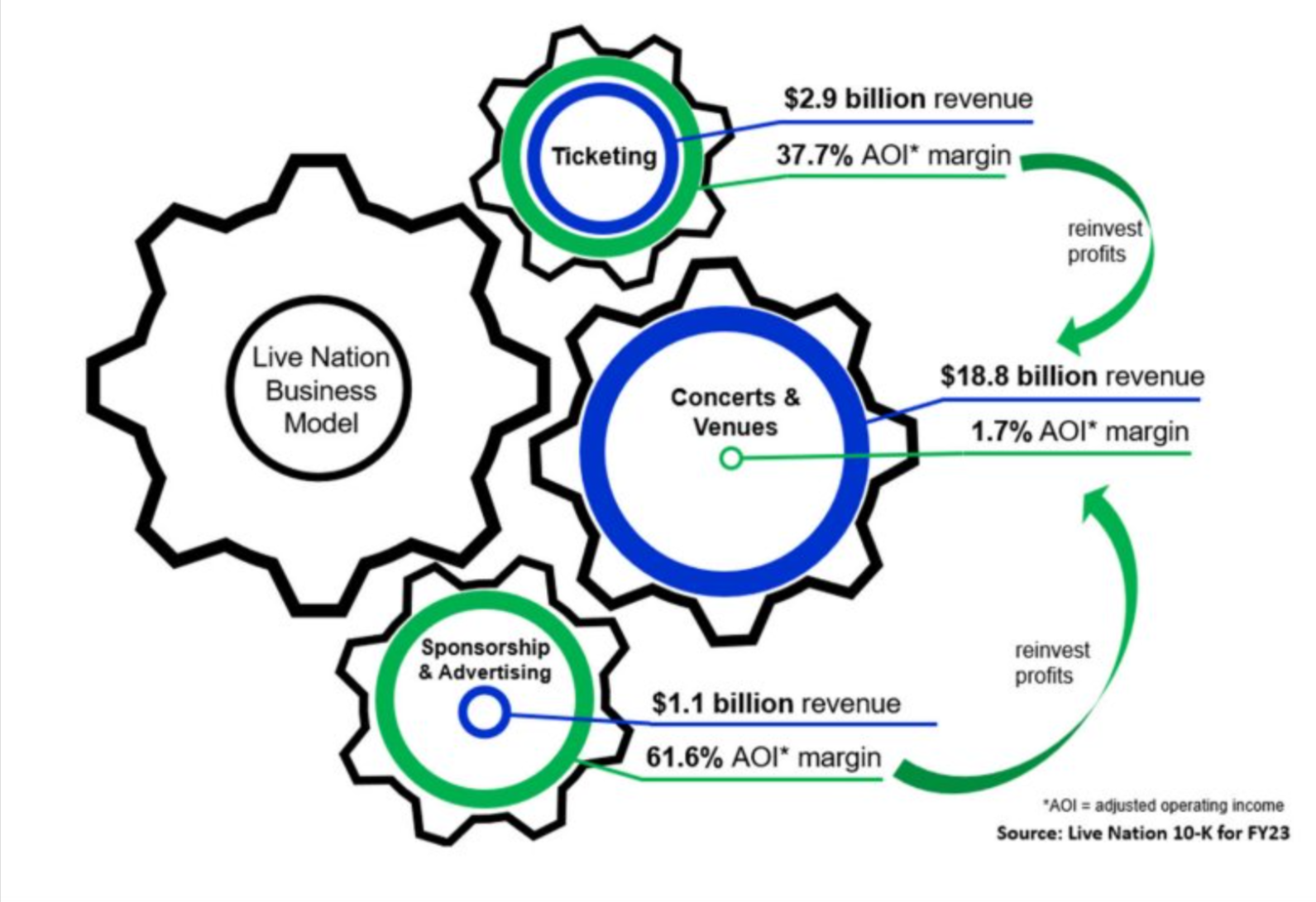
### NIVA’s Tunney Act Filing: Structural Remedies
Representing independent venues, promoters, festivals, and presenters nationally, the National Independent Venue Association (NIVA) submitted its [formal Tunney Act comments](https://www.nivassoc.org/s/260904-US-v-Live-Nation-Proposed-Settlement-NIVA-Tunney-Act-Comments.pdf?ref=hypebot.com) to the court:
> "The jury's verdict creates an historic opportunity to restore competition to a market in which Live Nation's power has been allowed to encroach across multiple parts of the live entertainment ecosystem for decades," wrote **Stephen Parker**, **Executive Director of NIVA.** "The proposed consent judgment will not rein in Live Nation’s illegal monopoly, is not in the public interest, and should be rejected."
NIVA outlined four structural remedies it says are required for any settlement to deliver real competitive relief:
1. **A 50 Percent Tour Cap:** Prohibiting Live Nation-controlled entities from promoting more than half of domestic dates on any headline tour in a calendar year. Over the last three years, Live Nation promoted exclusively or booked a significant majority of dates for 69% to 74% of the top 200 U.S. tours. As Parker noted: *"The entity that books a tour determines the price for the shows on it... If 50% is an appropriate threshold for a building's ticket inventory, 50% is likewise an appropriate cap for each artist's tour."*
2. **Divestiture of Ticketmaster:** Complete structural separation paired with strict bans on rebuilding the leverage through exclusive agreements, revenue sharing, data sharing, or mandatory pre-approvals for future acquisitions.
3. **Divestiture of Artist Management Businesses:** Ending the conflict of interest where managers advising artists work for the same corporate entity promoting the tour, operating the venue, and pricing the ticket.
4. **Making Independent Stages Financially Whole:** Allocating a significant portion of state attorney general penalties directly into state music and live performance funds. In 2025, **64% of independent U.S. stages reported they were not profitable**, while Live Nation reported **$25.2 billion in revenue** that same year.
### The DOJ’s Proposed Deal
NIVA’s filing also highlighted major structural loopholes within the DOJ agreement as it stands now:
- **Scope:** Obligations are restricted to "Major Concert Venues" defined as arenas and amphitheaters with 8,000+ capacity. This ignores the jury’s finding that primary ticketing monopolization carried no capacity limits. It also excludes multi-day festivals entirely, as well as Live Nation's expansion into 2,000+ capacity rooms in markets including Milwaukee, Pittsburgh, Nashville, Tampa, San Diego, and Salt Lake City.
- **Divestitures at Amphitheaters:** At the 13 named amphitheaters, no property, leases, or equity change hands—only contract terms are renegotiated. Buildings like the Ford Idaho Center already publish promoter guides inviting outside promoters, while Maine Savings Amphitheater is already programmed by an independent promoter.
- **Penalties:** Fines of $5 million per violation (capped at major buildings) equal roughly **1.7 hours of Live Nation's annual revenue**—none of which goes to injured venues, promoters, artists, or fans.
- **Future Acquisitions:** Live Nation would only need to give 30 days' notice when acquiring ticketing platforms, promoters, or major venues—with zero permission required. Acquisitions of festivals or venues under 8,000 seats require no notice at all.
## AEG, Louis Messina & SeatGeek Object
NIVA’s pushback aligns with objections filed by some of **Live Nation** and **Ticketmaster**'s primary industry competitors.
Rival promoter **AEG** filed a scathing court objection detailing how the [proposed settlement tightens Ticketmaster's market grip](https://www.musicbusinessworldwide.com/aeg-and-seatgeek-ask-court-to-reject-live-nations-doj-settlement-with-aeg-warning-it-does-not-break-ticketmasters-grip-it-tightens-it/?ref=hypebot.com) rather than breaking it. The company highlighted that under the deal's "open distribution" model, rival ticketing platforms are simply forced to sell tickets on Ticketmaster’s backend, allowing Ticketmaster to continue extracting lucrative service fees while controlling a strong majority of large venue inventory.
Legendary tour promoter **Louis Messina**, founder of **Messina Touring Group** (**Taylor Swift, George Strait, Ed Sheeran, Kenny Chesney, Eric Church**), [filed comments detailing industry retaliation](https://www.ticketnews.com/2026/09/aeg-louis-messina-live-nation-settlement/?ref=hypebot.com). He said Live Nation stopped returning his calls after disputes and blocked his acts from amphitheaters.
Messina also noted that artists, agents, and managers are terrified to speak out against Live Nation publicly out of fear of being blacklisted from major touring routes and venue networks.
Primary and secondary ticketer **SeatGeek** echoed these objections in its court submission, emphasizing that venue operators remain hesitant to switch ticketing platforms as long as Live Nation can pull lucrative concert tours from uncooperative buildings.
### Live Nation's Response
Live Nation executive Dan Wall dismissed the filings, arguing that AEG, SeatGeek, and independent groups are advancing self-serving commercial interests rather than looking out for fans and artists, maintaining that the negotiated terms deliver adequate remedies.
### Hypebot's Bottom Line: What's Next
As NIVA, AEG and others argue in their recent filings, the Federal Court's rulings on Live Nation's DOJ settlement and the broader guilty verdict later obtained by a coalition of States will have a profound impact on the live music industry for decades to come.
Judge Subramanian is expected to deliver his DOJ Tunney Act ruling on whether to accept or reject the proposed settlement by the end of October.
Hearings regarding the State's case including potential structural penalties or a breakup of Live Nation and Ticketmaster are expecteed begin as early as February 2027.
### First Albums, First Concerts, and Most Memorable Shows
URL: https://www.hypebot.com/first-albums-first-concerts-and-most-memorable-shows/
Last updated: 2026-09-09T11:18:38.000Z
On this week's [**Music Biz Weekly** **podcast**](https://www.hypebot.com/tag/music-biz-weekly/)**, Michael** and **Blasko** share stories about their first album purchases, with Blasko buying **KISS** "Destroyer" in 1977 at age 7, and Michael sharing how he discovered **The Lovin' Spoonful** at a garage sale.
Both discuss their first arena concerts, with Blasko seeing KISS on the "Creatures of the Night" tour and Michael recounting attending a **Molly Hatchet** show. Most memorable concerts include Blasko at the Hollywood Palladium seeing **Nine Inch Nails** with **David Bowie** and Michael's early exposure to bands like **Guns N' Roses** and **Motley Crue** before they became famous.
Then each shares some unexpected musical preferences...
**FIND MORE FROM MUSIC BIZ WEEKLY & OTHER GREAT MUSIC BUSINESS AND INDIE MUSICIAN PODCAST EPISODES** [**HERE**](https://www.hypebot.com/hypebot/category/podcast-music-biz)
---
*Get the latest Live Music & Industry News updated continuously from across the web under the Hypebot Industry News tab* [*here*](https://www.hypebot.com/music-industry-news-feed/)*.*
## Hypebot
Essential news & insights for artists and live music pros.
Sign up for free weekly content delivered to your inbox
Subscribe
Email sent! Check your inbox to complete your signup.
### Why Are Serious Filmmakers Turning to Concerts?
URL: https://www.hypebot.com/why-are-serious-filmmakers-turning-to-concerts/
Last updated: 2026-09-08T20:07:56.000Z
#
[Live music](https://www.hypebot.com/tag/live-music/) has never been more... "visible." But it's not as romantic as you might think. Every night, thousands of performances are reduced to six-inch vertical videos: a chorus, a crowd reaction, a shaky glimpse of an artist through somebody else’s phone. Some hashtag you've never heard of.
Shareable digital content has flattened the live stage, and reduced its immersive magic into a data object.
But... it seems that there's still hope. At least the reigns of this problem are being taken up by two of today's most passionate cinema auteurs.
**Paul Thomas Anderson’s** *Cameron Winter at Carnegie Hall*, which captures [**Geese's**](https://www.bandsintown.com/a/342405-geese?utm%5Fsource=hypebot&came%5Ffrom=900) singer/songwriter [**Cameron Winter**](https://www.bandsintown.com/a/15532381-cameron-winter?utm%5Fsource=hypebot&came%5Ffrom=900) live on 16mm and 35mm, is headed to theaters through Janus Films and Criterion. And, just recently, [**David Byrne**](https://www.bandsintown.com/a/32116-david-byrne?utm%5Fsource=hypebot&came%5Ffrom=900) revealed that *The Brutalist* director **Brady Corbet** had captured his elaborate *Who Is the Sky?* tour in 70mm.
Not livestreamed. Not optimized for social media. Not chopped into “content.” Celluloid. Movie theaters. The biggest possible image.
The stage is moving, people.
## **A Concert Film That Will Literally Tour**
*Cameron Winter at Carnegie Hall* documents the [**Geese**](https://www.bandsintown.com/a/342405-geese?utm%5Fsource=hypebot&came%5Ffrom=900) frontman’s sold-out solo performance at the New York institution in December 2025\. Winter accompanied himself on a Steinway grand piano, giving Anderson an unusually stripped-down performance to place inside one of the world’s most imposing concert spaces.
Anderson directed and shot the 75-minute film with a crew that included filmmaker **Benny Safdie**, while producer **Ariel Rechtshaid** recorded the music. The result will have its world premiere at the New York Film Festival on October 1, with Anderson and Winter attending. [Film at Lincoln Center](https://www.filmlinc.org/nyff2026/films/cameron-winter-at-carnegie/?ref=hypebot.com) describes the film as balancing intimate images of Winter with the scale of Carnegie Hall itself"
> *"The result is a smashing cinematic concert, shot on 16mm and 35mm with a perfect mix of intimate images of Winter and of the cavernous space, keyed into the singer-songwriter’s effortless combination of bravado and sensitivity, darkness and light."*
Then the movie will [effectively go on tour](https://www.hypebot.com/concert-films-have-become-the-second-leg-of-an-artists-tour/). Beginning November 20, supervised 35mm prints made by FotoKem will travel through North American theaters, and the schedule currently extends through January 18\. Janus and Criterion’s theatrical rollout makes the format part of the attraction: audiences are not simply seeing footage of the concert. They are seeing an actual film print.
**+Read more:** [*"The Story of “That” Rooftop Concert"*](https://www.hypebot.com/the-story-of-that-rooftop-concert/)
## **David Byrne Goes Even Bigger**
**Brady Corbet’s** untitled film of [**David Byrne’s**](https://www.bandsintown.com/a/32116-david-byrne?utm%5Fsource=hypebot&came%5Ffrom=900) ***Who Is the Sky?*** tour takes the idea further. It was captured over multiple performances in Byrne’s hometown of Baltimore using both 8-perf and 15-perf 70mm formats.
.jpeg)
Byrne’s show features 13 musicians, singers, and dancers moving across the stage, blending music, choreography, visual art, and storytelling. According to Byrne, he did not initially understand how dramatically 70mm would change the presentation until Corbet sent him early frames. It captured the show’s widescreen scale in a way he had never seen before. Release and distribution details have not yet been announced.
Of course, Byrne understands better than most that a concert film can become its own work of art. **Jonathan Demme’s** *Stop Making Sense* did not merely preserve a **Talking Heads** performance; it used framing, pacing, choreography and gradual accumulation to reinvent it for cinema. **Spike Lee** later interpreted Byrne’s Broadway production *American Utopia* for the screen.
Corbet now becomes the latest major filmmaker to look at Byrne’s stage work and see material for a movie — not merely documentation.
**+Read more:** [*"Amyl & The Sniffers: How a F\*ing Good Concert Film Helps You Grow"*](https://www.hypebot.com/amyl-the-sniffers-how-a-f-ing-good-concert-film-helps-you-grow/)
## **Concert Films Used to Be Movies. No, Like, REAL Movies!**
There is a rich precedent for that approach. Any music fan would be familiar with how **D.A. Pennebaker’s** *Monterey Pop* transformed the 1967 festival into vivid cultural history. **Albert and David Maysles** and **Charlotte Zwerin’s** *Gimme Shelter* began as a **Rolling Stones** tour film and became a disquieting portrait of the disastrous 1969 Altamont concert.
**Adrian Maben’s** *Pink Floyd: Live at Pompeii* removed the audience altogether, placing the band inside an ancient Roman amphitheater and turning a performance into something closer to science fiction.
For *The Last Waltz*, **Martin Scorsese** approached **The Band’s** 1976 farewell concert as a full-scale cinematic production, using seven 35mm cameras, carefully planned coverage and renowned cinematographers. The resulting 1978 film remains as much a Scorsese movie as it is a record of The Band. Criterion [calls it:](https://www.criterion.com/films/29460-the-last-waltz?ref=hypebot.com)
> *"An at once ecstatic and elegiac summation of a vital era in American rock music."*
These films did not ask how closely a camera could reproduce the experience of standing in the room. They asked what cinema itself could reveal about a live performance that the room could not, what stories could be told when [the live stage](https://www.hypebot.com/tag/live-music/) becomes both a setting and a plot point.
## **So, Why Is This Artistic Form Returning *Now*?**
The timing of these new projects is a bit counterintuitive, and that might shed some light as to exactly what's prompting the reemergence of the form.
Firstly, the live business has been experiencing enormous demand for several years, with global attendance at [**Live Nation**](https://www.hypebot.com/tag/live-nation/)concerts reaching 159 million in 2025\. Movie theaters have had a slower and more uneven recovery in the last decade, but the momentum is becoming harder to ignore. The summer 2026 domestic box office reached approximately $4.6 billion, its strongest summer since the pandemic, with younger moviegoers helping drive the rebound.
Audiences have clearly showed that they will leave home when a screening feels like an occasion. And this is where [**the concert film**](https://www.hypebot.com/tag/concert-film/) suddenly becomes especially powerful.
In terms of "in person" entertainment, two communal rituals are collapsing into one. People gather in a music venue to experience the shared embodied immersiveness of an original performance, and the same transformative experience in the cinema.
On a second level, because of social media and the scalability of digital content marketing, so much of today’s live-performance footage is used primarily for immediacy: record a full show, cut it into digestible clips, get those clip online, catch the algorithm, and keep the tour visible.
But speed and volume are not the only ways to extend the life of a show. And audiences that truly care about witnessing their favorite bands and artists in an elevated experiential environment are not satisfied by the reduction in quality of watching live music on their phones.
New questions for musical artists are being opened up when it comes to documenting and capturing live performance:
- **What does the room communicate?**
- **Where could cameras be, or be hidden?**
- **What story does the lighting tell?**
- **Should the film make viewers feel like audience members — or show them something the audience could never have seen?**
- **What happens the day of a show, or the night that follows it?**
These top-end auteur cinema projects suggest that the concert film can be so much more. And I'm personally super excited to watch both these films, and to watch this art form grow and expand in years to come.
---
## [**David Byrne Tour Dates**](https://www.bandsintown.com/a/32116-david-byrne?utm%5Fsource=hypebot&came%5Ffrom=900)
## [**Geese Tour Dates**](https://www.bandsintown.com/a/342405-geese?utm%5Fsource=hypebot&came%5Ffrom=900)
### 11 Music Distributors Beyond the Usual Suspects
URL: https://www.hypebot.com/11-music-distributors-beyond-the-usual-suspects/
Last updated: 2026-09-08T14:54:02.000Z
Ask musicians how to get a song onto [streaming services](https://www.hypebot.com/tag/streaming-music/) and the same names tend to come up: **DistroKid, TuneCore, CD Baby.**
But choosing a [distributor](https://www.hypebot.com/diy-music-distribution-checklist-everything-you-need-to-know/) involves more than finding an upload button. An artist releasing occasional covers has different needs from a producer managing several aliases, a band splitting income among collaborators, or a small label coordinating an entire roster.
Beyond the familiar names are services offering different combinations of distribution, administration, promotion, and personal support. Some welcome direct signups; others select their partners. These 11 serve independent artists, although their ownership structures and business models do vary.
## **1\. Too Lost**
Once you’re managing multiple releases, collaborators, and income streams, distribution becomes an organizational job. [**Too Lost**](https://toolost.com/?ref=hypebot.com) combines delivery with catalog management, royalty accounting, analytics, and rights protection tools. Its offering includes team access and controls for authorizing or blocking uses on supported user-generated-content services. Artists and small labels with growing catalogs may find those administrative features especially relevant.
## **2\. EmuBands**
[**EmuBands**](https://www.emubands.com/?ref=hypebot.com) offers both pay-per-release distribution and a Premium subscription with unlimited releases. Its Pro and Premium tiers include a personal account manager, royalty payment splitting, and video-call support. That gives artists a way to compare occasional-release costs with a more supported ongoing service. One detail to check: leaving Premium requires converting releases to its paid “Forever Releases” option to keep them online.
## **3\. iMusician**
What happens to your music when you stop paying a subscription? It’s a useful question to ask before signing up. [**iMusician**](https://imusician.pro/en/products/pricing?ref=hypebot.com) offers pay-per-release and subscription options, and says releases remain online even after an AMPLIFY subscription ends. Fees and commissions differ by plan, so keeping music available and keeping every royalty dollar are separate considerations.
## **4\. Horus Music**
[**Horus Music**](https://www.horusmusic.global/?ref=hypebot.com)offers unlimited DIY distribution alongside publishing and promotional services. It also has a separate, invite-only artist and label services offering for those seeking more hands-on support. Its India-focused services include targeted editorial playlist pitching, giving artists working in that market a specific offering to investigate. The DIY subscription and selective service have different economics; compare them accordingly.
***+Read more:*** [*"A Guide to Pitching Music to Independent Spotify Playlists"*](https://www.hypebot.com/a-guide-to-pitching-music-to-independent-spotify-playlists/)
## **5\. RouteNote**
A subscription can feel like another expense before a release earns anything. [**RouteNote’s** free distribution option](https://routenote.com/s/best-music-distribution?ref=hypebot.com) instead lets artists keep 85% of earnings, with the service retaining the rest. It’s a model worth considering when available cash matters more than retaining every percentage point. As a catalog’s income grows, artists can reassess whether revenue sharing still suits them.
## **6\. Soundrop**
Cover artists have an extra administrative task: licensing the songs they perform. [**Soundrop**](https://soundrop.com/?ref=hypebot.com) includes cover-song licensing and automated collaborator splits alongside distribution. Its published price is US$4.99 per track plus 15% of revenue, without recurring distribution fees. For musicians whose release schedules regularly include covers, handling those tasks together gives the service a clear use case.
## **7\. OFFstep**
ONErpm’s DIY service, [**OFFstep**](https://offstep.com/?ref=hypebot.com), offers unlimited distribution through tiered subscriptions, along with automated royalty sharing, analytics, and promotional tools. Its broader feature set includes music-video distribution and release amendments. Artists should compare the individual plans against their actual workflow: managing collaborator payments or updating a release may matter more than a long list of tools they rarely use.
## **8\. Record Union**
[**Record Union**](https://www.recordunion.com/?ref=hypebot.com) combines distribution with Linkfire smart links, an electronic press kit, and royalty splits. The EPK is a useful addition for artists who also need to introduce themselves to bookers, journalists, or prospective partners. Its pricing includes annual release charges and royalty participation, so the total cost deserves the same attention as the promotional extras.
***+Read more:*** [*"You Released the Song. Now What?"*](https://www.hypebot.com/you-released-the-song-now-what/)
## **9\. Symphonic**
[**Symphonic Starter**](https://symphonic.com/starter/?ref=hypebot.com)provides a DIY route with distribution, analytics, and payment splits, while its separate [Partner service](https://symphonic.com/partner/?ref=hypebot.com) uses a royalty-share model for additional support. That distinction matters: joining the entry-level service doesn’t mean receiving a bespoke artist-development campaign. For artists and labels considering a more involved distribution relationship, Symphonic offers both models to examine.
## **10\. ANGVIS**
London electronic music label [**ANGVIS**](https://angvis.com/news/angvis-music-distribution?ref=hypebot.com) opened applications for its distribution service in April 2026\. Its selective offering prioritizes electronic artists. According to its distribution site, delivery runs through a Create Music Group partnership, with no upfront fees, publishing administration, neighboring-rights collection, and access to sync opportunities. The distribution split is disclosed before signing; sync fees are split 50/50\. Artists should request the full terms and examples of the support provided.
## **11\. Rebel Music Distribution**
[**Rebel Music Distribution**](https://rebelmusicdistribution.com/?ref=hypebot.com) offers standard distribution without upfront fees or a mandatory subscription, alongside daily streaming trends, analytics, and collaborator splits. Its [published terms](https://rebelmusicdistribution.com/terms-and-conditions/?ref=hypebot.com) normally allocate 90% of eligible royalties to artists and 10% to Rebel. Optional services include YouTube Content ID, VEVO video delivery, and priority release review. For artists watching their budgets, that provides another route to releasing music— although additional services and release takedowns may carry fees.
A distributor should fit the way you work. Getting the music online is only the beginning.
---
## Hypebot
Essential news & insights for artists and live music pros.
Sign up for free weekly content delivered to your inbox
Subscribe
Email sent! Check your inbox to complete your signup.
### You Can Own Your Masters and Still Lose Control of Your Catalog
URL: https://www.hypebot.com/you-can-own-your-masters-and-still-lose-control-of-your-catalog/
Last updated: 2026-09-08T14:05:33.000Z
*By* [***Ali Sohrabi Far***](https://avanolabel.ir/ali-sohrabi-far-press-kit/?ref=hypebot.com)
For [independent artists](https://www.hypebot.com/tag/indie-artists/), “own your masters” has become one of the most repeated pieces of advice in the music business. And it is good advice. Owning a recording matters. It can determine who has the right to license it, monetize it, transfer it, and make long-term decisions about its use.
But after years of working in music production and, more recently, with digital distribution and catalog management, I have become convinced that there is another layer of control independent artists need to think about: ***Operational control.***
An artist can legally own a recording and still have almost no practical control over what happens to it online.
The master may belong to the artist, but the distributor account may belong to a manager. The login email may belong to a freelancer. Two-factor authentication may be connected to someone else’s phone. Royalty reporting may be visible only to a third party. The artist may not have their own record of the ISRCs, UPCs, original metadata, artist IDs, delivery history, or rights-management settings connected to the release.
Everything can appear normal while the business relationship is healthy. The problem becomes visible when that relationship changes. ***Owning a master and controlling a catalog are not the same thing.***
Here's why.
## **The Distributor Account Is Part of a Music Biz Balanced Diet**
For many new artists, a [distributor](https://www.hypebot.com/tag/distribution/) account feels like a utility: upload the master, upload the cover, enter the metadata, choose a release date, send the release to digital services, and move on.
Over time, however, that account can become much more than an upload tool. It may contain release metadata, identifiers, payout information, delivery history, platform settings, royalty statements, ownership declarations, and rights-management options. That makes access to the distribution relationship an operational asset. If another person controls all of that infrastructure, the artist may own the music but still depend on that person to operate the business around it.
This does not mean artists should never work with managers, labels, distributors, or service companies. Professional delegation is normal. The important question is whether delegation has quietly become dependency.
## **The Problem Usually Appears After the Relationship Changes**
Imagine an independent artist at the beginning of a career. Distribution is unfamiliar, so a friend, manager, producer, freelancer, or business partner creates the account and handles the technical work. At the time, that can be practical.
Years later, there may be dozens of releases inside the same distribution relationship. If the relationship ends, suddenly the artist needs answers to basic questions:
- What email address controls the distributor account?
- Who controls the password and account recovery?
- Whose phone or device receives the 2FA code?
- Where are the royalty statements and payout records?
- What ISRC was assigned to each recording?
- What UPC or EAN was used for each release?
- What metadata was originally delivered?
- Which artist profiles were mapped on the major DSPs?
- Which rights-management services are active?
- Can the artist export the catalog information before leaving?
If those questions cannot be answered without the cooperation of one particular person, the catalog has an operational control problem. The larger the catalog becomes, the more expensive that problem can become.
***+Read more:*** [*"A Stream Is Not a Fan: What Independent Artists Should Measure Instead"*](https://www.hypebot.com/a-stream-is-not-a-fan-what-independent-artists-should-measure-instead/)
## **ISRCs and Release Codes Are Not Admin Trivia**
An [**ISRC**](https://isrc.ifpi.org/?ref=hypebot.com) is the international identifier used for a specific sound recording or music video recording. The **International ISRC Registration Authority** describes it as a fixed point of reference for a recording across services, borders, and licensing arrangements.
A UPC or EAN, by contrast, is commonly used as the product-level identifier for a release. Artists do not need to become standards experts, but they should keep a reliable internal record of the identifiers attached to their catalog.
At minimum, an artist’s own archive should contain:
- Track title and version
- Main artist name
- ISRC
- Release title
- UPC / EAN or other release identifier
- Original release date
- Current distributor or distribution partner
- DSP artist profile links or IDs
- Final master file
- Final artwork
- Delivered metadata
- Contributor and ownership information
- Royalty and contract records where applicable
Think of this as the [catalog’s](https://www.hypebot.com/tag/catalog/) technical passport. You may not need every field every day, but when a migration, dispute, audit, or account handover happens, that information becomes extremely valuable.
## **Catalog Migration Should Be Planned, Not Improvised**
Changing distributors is not unusual. Artists move because of pricing, services, support, rights-management capabilities, label relationships, accounting requirements, geographic access, or changes in their business.
The mistake is treating migration as simply deleting one release and uploading another. A recording that is already live has history attached to it. It may be connected to playlists, saved libraries, artist profiles, platform metadata, recommendation systems, user-generated content, and years of [streaming activity](https://www.hypebot.com/tag/streaming-music/).
Before changing anything, document the existing release. Confirm the master audio, identifiers, title formatting, artist mapping, original release date, artwork, and relevant metadata. Where the old and new distributors support a coordinated migration, prepare the replacement delivery with continuity in mind and verify that it is live and correctly matched before requesting removal of the old delivery.
Platform behavior varies, and no migration process can guarantee that every stream count, playlist connection, recommendation signal, or historical association will be preserved. The goal is not to promise perfect continuity; it is to avoid unnecessary disruption by preserving the recording’s identity and coordinating the handoff carefully.
***Deleting first and asking questions later is one of the most avoidable risks an artist can take with an established catalog.***
## **Rights Management Adds Another Layer**
Distribution no longer ends at streaming services. Music also appears in YouTube videos, Shorts, Reels, TikTok posts, and other forms of user-generated content. That creates another operational layer: rights management.
[**YouTube Content ID**](https://support.google.com/youtube/answer/2797370?ref=hypebot.com) is one example. YouTube explains that Content ID compares uploaded videos against reference audio and video supplied by eligible copyright owners. When a match is found, the resulting claim can block, monetize, or track the matched video depending on the rights holder’s settings.
That technology is useful when the correct party controls the reference and the underlying rights are clear. It becomes more complicated when an artist changes distribution or rights-management partners and does not know who currently administers the reference connected to the recording.
The artist may own the master, but an old distribution or rights-management relationship can still affect how that recording is administered online. That is why rights-management history should be documented alongside distribution history. Artists should be able to answer:
- **Who delivered the recording?**
- **Who enrolled or administered it in rights-management systems?**
- **Which territories and services are covered?**
- **Who can resolve or release a claim when appropriate?**
- **What happens to those registrations when the distribution relationship ends?**
These are no longer minor technical questions. They are part of modern catalog management.
## **Artists Need Transparency — Not Necessarily Every Backend Password**
There is an important distinction here. I am not arguing that every artist working with a professional label or distribution partner must personally operate every backend account.
A well-run [label](https://www.hypebot.com/tag/labels/) may legitimately manage distribution, accounting, metadata, rights administration, and catalog delivery on an artist’s behalf. The real issue is transparency, portability, and having a clear exit process.
An artist should know what infrastructure is being used to manage the catalog. Ownership and contractual positions should be documented. The artist should have access to the identifiers and metadata connected to the recordings, receive clear royalty reporting, and understand the process that applies if the professional relationship ends.
That is very different from allowing a catalog to become permanently dependent on one person’s private email address, password, phone number, or memory.
***+Read more:*** [*"Why Are We Still Managing Modern Releases Like It’s 2005?"*](https://www.hypebot.com/why-are-we-still-managing-modern-releases-like-its-2005/)
## **This Matters Even More When Artists Depend on Intermediaries**
My own perspective on this issue has also been shaped by working with **independent Iranian artists**. For artists operating in markets where access to international financial services, distribution systems, payment tools, or global business infrastructure can be more complicated, intermediaries may play a larger role.
Sometimes those arrangements solve real problems. They can also create an additional layer of dependency. The more intermediaries involved in a catalog, the more important documentation becomes.
- **Who owns the recording?**
- **Who controls the distribution relationship?**
- **Who receives and reports the revenue?**
- **Where are the identifiers and metadata stored?**
- **Who can authorize a takedown or transfer?**
- **Who controls any rights-management settings?**
- **What is the exit process if the relationship changes?**
Those are governance questions, not merely technical questions. Independent artists increasingly need to think like small rights-management businesses.
## **A Simple Catalog-Control Checklist**
**1\. Keep the exact final master.** Do not rely on being able to retrieve it later from a distributor, manager, or third party.
**2\. Archive the final artwork.** Keep the approved cover and, where possible, the original design assets.
**3\. Keep the ISRC for every recording.** Maintain your own spreadsheet or catalog database.
**4\. Keep the UPC / EAN for every release.** Store it with the release-level metadata.
**5\. Record the original release date.** Dates matter when reconstructing catalog history or coordinating migrations.
**6\. Know the current distributor or distribution partner.** Do not let this become knowledge that exists only in someone else’s inbox.
**7\. Know the account-control and recovery arrangement.** Understand who controls login, 2FA, recovery, and the contractual relationship.
**8\. Keep access to royalty reporting.** Even when accounting is delegated, reporting should be transparent.
**9\. Document active rights-management services.** Know whether the recording is enrolled in systems such as YouTube Content ID or comparable UGC monetization services.
**10\. Define the exit process before you need it.** The best time to decide what happens when a relationship ends is while the relationship is working.
Easier uploading has created the illusion that distribution itself is simple. **Uploading *is* simple. Catalog management is not.** A recording accumulates identifiers, platform relationships, metadata, accounting history, rights-management references, and operational dependencies over time. Those things become part of the practical value of the catalog.
So yes, independent artists should understand and protect ownership of their masters. But they should go one step further.
**Own the master. Own the metadata. Own the records. Understand the infrastructure.**
Because if someone else is the only person who can access, move, manage, or account for your catalog, legal ownership alone may not give you the practical control you thought it did.
---
[***Ali Sohrabi Far***](https://avanolabel.ir/ali-sohrabi-far-press-kit/?ref=hypebot.com) *is an Iranian music producer, arranger, composer, and mixing and mastering engineer based in Isfahan, Iran. He began working with music in 2010 and has worked professionally since 2015\. He currently works as a Producer at* [***AVANO Label***](https://avanolabel.ir/?ref=hypebot.com)*, where his work also extends into digital distribution, catalog management, and the operational challenges surrounding independent music releases.*
### Suno Steals Artist Identities, Jason Isbell Wants to Stop It
URL: https://www.hypebot.com/suno-steals-artist-identities-jason-isbell-wants-to-stop-it/
Last updated: 2026-09-08T13:48:58.000Z
> *"This lawsuit is how these musicians resist the premise that resistance is futile."*
[**Jason Isbell**](https://www.bandsintown.com/a/46119-jason-isbell?utm%5Fsource=hypebot&came%5Ffrom=900) is spearheading a groundbreaking class-action lawsuit against AI music generator[**Suno**](https://www.hypebot.com/tag/suno/)**.**
Filed in Massachusetts federal court, Isbell and a group of independent artists are opening a new front in the music industry's battle against artificial intelligence.
Instead of relying on copyright infringement claims, [this lawsuit](https://fingfx.thomsonreuters.com/gfx/legaldocs/lgvdedrkepo/MUSICIAN%20SUNO%20LAWSUIT%20complaint.pdf?ref=hypebot.com) is built entirely around identity, name, image, likeness, and the unauthorized use of artists' "voiceprints".
### **Who is Suing Suno?**
- **Jason Isbell:** Six-time Grammy-winning Americana singer-songwriter.
- **David Lowery:** Frontman for the alternative rock bands Cracker and Camper Van Beethoven.
- **Guy Forsyth:** Renowned Texas blues singer-songwriter and multi-instrumentalist.
- **Eduardo Calle:** Florida-based jazz saxophonist.
Filed by a diverse group of artists, if class action status is granted, the lawsuit will be on behalf of all independent musicians.
### **Why Are Artists Suing Suno For Identity Theft?**
Unlike the massive lawsuits already filed by major record labels and music publishers targeting generative AI companies for scraping copyrighted song catalogs, this 84-page complaint takes a distinctly different approach.
It leverages state-level right-of-publicity claims.
The musicians accuse **Suno** of deliberately capturing and storing **"voiceprints" -** measurements of pitch contours, formant structure, and breath dynamics - without artist consent.
The lawsuit alleges that Suno treats an artist’s name as a "retrieval key". For example, according to the complaint, **prompting Suno with "Jason Isbell"** resulted in a generated Americana track called **"Paper Bell,"** which flawlessly imitated that artist's "characteristic clear male vocals and country twang" alongside country-themed cover art.
### **The Borg Comparison**
In a vivid illustration of the existential threat artists feel, the lawsuit opens by likening Suno to the **Star Trek** villains, the **Borg Collective.** The complaint states, "Autonomy is consumed and repurposed in the service of a cold machine intelligence that feels nothing for what it has taken".
The plaintiffs argue that a musician's identity is their fundamental property, declaring, "This lawsuit is how these musicians resist the premise that resistance is futile".
### **Suno's Response to the Allegations**
Unsurprisingly, Suno disputes the claims. A spokesperson for the company stated that their platform exists "to help people create new, original music, not to trade on anyone's name".
The AI developer claims to have strict protections in place that actively block user prompts containing specific artist names or copyrighted materials. However, the plaintiffs argue these guardrails are woefully inadequate and easily bypassed.
## **HYPEBOT’S BOTTOM LINE**
With this Jason Isbell led class action suit, the battle between the music industry and generative AI developers has widened from master recordings to the musician themselves.
By weaponizing right-of-publicity and identity claims, Jason Isbell and his fellow plaintiffs are striking at the very core of how AI models ingest and regurgitate human artistry.
If the courts rule that an artist's vocal style, phrasing, and likeness are legally off-limits for AI generation without explicit consent and compensation, it will fundamentally disrupt the business models of Suno and similar platforms.
**Copyright was the first battleground. Identity is the new war.**
---
*Get the latest Live Music & Industry News updated continuously from across the web under the Hypebot Industry News tab* [*here*](https://www.hypebot.com/music-industry-news-feed/)*.*
## Hypebot
Essential news & insights for artists and live music pros.
Sign up for free weekly content delivered to your inbox
Subscribe
Email sent! Check your inbox to complete your signup.
### 5 Upcoming Live Tours We’re Excited About
URL: https://www.hypebot.com/5-upcoming-live-tours-were-excited-about-2/
Last updated: 2026-10-13T19:01:35.000Z
Our [**Touring Radar**](https://www.hypebot.com/tag/touring-radar/) series looks at newly announced tours and live events that stand out not simply because they can generate headlines, but because they offer a glimpse at where [live music](https://www.hypebot.com/tag/live-music/) may be heading. Touring Radar is supported by [**Bandsintown**](https://bandsintown.com/?utm%5Fsource=hypebot&came%5Ffrom=900) tour data.
These are five newly announced tours we're excited about.
## **1\. Radiohead Turns a Continental Tour Into Four Residencies**
[**Radiohead’s**](https://www.bandsintown.com/a/25874-radiohead?utm%5Fsource=hypebot&came%5Ffrom=900) entire 2027 live calendar consists of 21 arena shows in just four markets: four nights in Perth, six each in Melbourne and Sydney, and five in Saitama, Japan. The band explicitly says no additional 2027 dates will be announced. (We'll see.)
But that's not what we're tracking. This is a condensed version of the new [residency-routing trend](https://www.hypebot.com/tag/music-residencies/): fewer cities, longer stays, less constant transportation and enough scarcity to make fans travel. The ticketing is equally interesting, which involves mandatory registration, four-ticket limits, fixed prices without dynamic pricing, and face-value resale only.
## **2\. Miley's Comeback Does Not Require an Entire Tour**
[**Miley**](https://www.bandsintown.com/a/1205-miley-cyrus?utm%5Fsource=hypebot&came%5Ffrom=900) (now dropping “Cyrus” professionally) announced two Hollywood Bowl concerts on October 16 and 18 surrounding her new album, *Bass Persuades*. These will be rare major headline appearances from an artist who has not mounted a conventional headlining tour since 2015\. (!!!).
This is another kind of story about condensation. It's not *really* a residency, instead it's a high-profile two-night stand in a powerful, amplifying media market, that concentrates "attention" and meaning to accompany her return with the new name change. Almost like, "larger than life scarcity;" designed to fit the comfort level of the performer while guaranteeing the word gets out.
## **3\. Angèle Shows That Global Success Does Not Scale Evenly**
Belgian pop star [**Angèle**](https://www.bandsintown.com/e/1040121350-angele-at-centre-bell?utm%5Fsource=hypebot&came%5Ffrom=900) announced a 23-date international tour spanning Europe and North America. The venue choices tell an unusually clear story about geography and language. She is playing three nights at Paris’ Accor Arena, two at Brussels’ ING Arena and Montreal’s Bell Centre. In New York and Los Angeles, however, she will perform at the considerably smaller Brooklyn Paramount and The Wiltern.
That is not a weakness — it is a smart acknowledgment that an artist’s appropriate venue size can change dramatically [between linguistic markets](https://www.hypebot.com/how-kali-uchis-uses-mood-to-connect-to-fans-across-language-borders/). Angèle can be an arena artist in the Francophone world while deliberately developing her audience elsewhere.
## **4\. Jack Blocker’s Messy-Looking Tour Is What Artist Development *Actually* Looks Like**
[**Jack Blocker’s**](https://www.bandsintown.com/a/15557331-jack-blocker?utm%5Fsource=hypebot&came%5Ffrom=900) expanded Big Jefe Tour moves between festivals, opening slots and his own headline dates. He will appear at AMERICANAFEST and the Whitefish Songwriter Festival, support Briscoe and Molly Tuttle, and headline venues ranging from Texas dance halls to The Bitter End and the Middle East Upstairs.
It lacks the neat visual progression of a traditional headline tour, but every booking serves a different purpose: industry exposure, audience acquisition, regional credibility or proof that he can carry a room himself.
## **5\. Kany García Takes Intimate Songwriting Into Bigger Rooms**
Puerto Rican singer-songwriter [**Kany García**](https://www.bandsintown.com/a/372191-kany-garcia?utm%5Fsource=hypebot&came%5Ffrom=900) begins the North American leg of her *Puerta Abierta Tour* this week as part of an ambitious 76-date global itinerary — her largest tour yet. García is also expanding the performance itself, playing more instruments and incorporating regional Mexican musicians while preserving the personal [storytelling](https://www.hypebot.com/thundercats-2026-tour-is-about-character-development-yup-this-is-a-trend/) at the center of her work.
That creates a challenge faced by many singer-songwriters as their audiences grow: how do you enlarge the production without making the music feel emotionally smaller? García’s tour is a test of whether scale and intimacy have to be opposites. Bigger rooms can become an opportunity to reveal more of the musical world surrounding the songs.
### The One We'll Be Watching: Radiohead
Every [**Touring Radar**](https://www.hypebot.com/tag/touring-radar/)edition ends with one artist who represents a larger industry question. This week, it’s **Radiohead**, easily.
Radiohead is testing whether major tours can travel less by asking audiences to travel more. Their announcement gathers the most Touring Radar ideas into one experiment: [concentrated residency routing](https://www.hypebot.com/tag/music-residencies/), extreme scarcity, reduced travel, fixed ticket prices, anti-bot registration and face-value resale. Can a tour reach fewer places without feeling smaller, or will fans resent being expected to travel?
---
*Get all the latest Music Industry & Live Music News updated continuously from across the web under the Hypebot Industry News tab* [*here*](https://www.hypebot.com/music-industry-news-feed/)*.*
## Hypebot
Essential news & insights for artists and live music pros.
Sign up for free weekly content delivered to your inbox
Subscribe
Email sent! Check your inbox to complete your signup.
### Want to Crush Your Next Live Show? Treat It Like a Party!
URL: https://www.hypebot.com/want-to-crush-your-next-live-show-treat-it-like-a-party/
Last updated: 2026-09-08T12:07:33.000Z
### **Want to Crush Your Next Live Show? Treat It Like a Party!**
*By *Kevin Breuner* of* [***ReverbNation Blog***](https://blog.reverbnation.com/want-to-crush-your-next-live-show-treat-it-like-a-party/?ref=hypebot.com)
Playing a great set is important, but getting people into the room and giving them an experience worth talking about can be just as important.
**Luke Danalon**, CEO of **Ghost Rocket** and **Skyrocket Records**, suggests making one simple shift: stop thinking about your next show as just a concert. Think of it as a party that happens to feature your band.
Here’s how that shift can help you create a better event and a more valuable moment for your music career.
***+Read more:*** [*"How to Nail Your Next Supporting Act Set"*](https://www.hypebot.com/how-to-nail-your-next-supporting-act-set/)
#### **Give people a reason to show up**
“Come see my band” may not be enough to convince someone to leave the house. A party, celebration, release event, or one-of-a-kind experience can be a much stronger invitation.
Start by giving your show a theme or purpose. It could be:
- An album or single release party
- Your band’s anniversary
- A holiday show
- A benefit for a local organization
- A collaboration with other artists or businesses
- A themed night built around your music or community
The theme doesn’t need to be elaborate. It simply gives people a reason to feel like this particular show is something they shouldn’t miss.
#### **Build your invite list intentionally**
Don’t limit your outreach to the people who already follow your band. Think about everyone you would like to have in the room.
Personal invitations can be much more effective than repeatedly posting the same show flyer. Make people feel like they’re being invited to participate in something—not simply asked to buy a ticket.
#### **Focus on filling the room**
A packed room creates energy. It makes the performance more exciting for the audience, gives the venue a reason to invite you back, and helps your band look more established.
Depending on the event, that may mean keeping tickets inexpensive, offering a limited number of free invitations, or partnering with another artist who can help bring an audience.
The goal isn’t simply to maximize ticket revenue from one night. Sometimes the more valuable outcome is creating a room full of people who become fans, make connections, share posts, and attend your next show.
***+Read more:*** [*"A Day in the Life of a Working Musician on Gig Day"*](https://www.hypebot.com/a-day-in-the-life-of-a-working-musician-on-gig-day/)
#### **Add a few incentives**
Small extras can make the night feel more special. If your budget allows, consider providing food, drink tickets, giveaways, exclusive merch, or another perk tied to the event.
You don’t need to spend recklessly. Choose one or two additions that support the theme and make the invitation more appealing. Even something as simple as free tacos for the first 25 people can give fans another reason to arrive early.
#### **Capture the moment**
A successful live show shouldn’t only benefit you for one night. Make sure someone is there to capture quality photos and video.
Plan this before the show. Decide who will shoot, what moments you need, and where they should stand. A few strong clips can be far more useful than dozens of shaky phone videos.
#### **Turn the show into a career-building moment**
Your performance still matters. You need to rehearse, sound great, and give the audience a memorable set. But the event surrounding that performance can help your music reach much further.
Create a theme. Invite the right people. Give them a reason to attend. Fill the room and capture what happens.
Don’t just book another concert. Build an event people want to be part of.
***+Read more:*** [*"How to Perform Outdoors Without Sacrificing Your Sound"*](https://www.hypebot.com/how-to-perform-outdoors-without-sacrificing-your-sound/)
---
### Spotify and The MLC Both Score Wins in Latest Royalty Ruling
URL: https://www.hypebot.com/spotify-and-the-mlc-both-score-wins-in-latest-royalty-ruling/
Last updated: 2026-09-07T16:36:14.000Z
Neither [**Spotify**](https://www.hypebot.com/tag/spotify/) nor [**The Mechanical Licensing Collective**](https://www.hypebot.com/tag/mlc/) walked away empty-handed from the latest round of their [royalty](https://www.hypebot.com/tag/royalties/) dispute.
**U.S. District Judge Analisa Torres** issued [a mixed ruling](https://musically.com/wp-content/uploads/2026/09/2026-09-01-183-Order-re-Cert-of-Appealability-and-Mtn-to-Strike.pdf?ref=hypebot.com) September 1, denying The MLC’s request to immediately appeal an earlier decision finding that Spotify can legally classify its Premium music-and-audiobook subscriptions as “bundles.” At the same time, Torres granted The MLC’s request to strike Spotify’s “unclean hands” defense.
That leaves an important Spotify victory in place while the broader fight over how much the streamer should be paying songwriters and publishers continues.
### The audiobook bundle ruling stands — for now
The dispute dates back to May 2024, when The MLC sued Spotify over its decision to report Premium Individual, Duo and Family plans as “Bundled Subscription Offerings” after adding audiobook access.
The distinction matters because federal mechanical royalty rules calculate payments differently for standalone music subscriptions and bundles. Spotify’s classification allows part of subscription revenue to be attributed to audiobooks before mechanical royalties for music are calculated.
In January 2025, Torres sided with Spotify, ruling that Premium qualifies as a bundle because subscribers receive music alongside another service — 15 hours of audiobook listening per month — with “more than token value.”
The MLC wanted permission to appeal that ruling before the rest of the case was resolved.
Torres said "no." The court found The MLC had not shown enough disagreement over the relevant law to justify an interlocutory, or mid-case, appeal. Spotify’s victory on the basic question of whether Premium *can* be considered a bundle therefore remains intact while litigation continues.
### But Spotify loses its “unclean hands” defense
The MLC prevailed elsewhere. Spotify had accused The MLC of selectively targeting it while allegedly failing to pursue other streaming services over similar reporting practices. Spotify argued that amounted to “unclean hands,” an equitable defense that can prevent a plaintiff from obtaining relief when its own misconduct is tied to the dispute.
Torres rejected the argument, finding no legal requirement that The MLC enforce Section 115 against every streaming service “in the same way, the same manner, and at the same time.”
The court concluded Spotify’s defense “has no basis in law” and ordered it stricken.
### The Spotify-MLC lawsuit is still alive
Importantly, the original lawsuit’s dismissal did **not** end the case.
The MLC subsequently filed an amended complaint advancing different theories. Rather than simply arguing Spotify cannot call Premium a bundle, it now alleges Spotify improperly calculated the royalties owed on those bundles — including through the value assigned to Premium’s audiobook component.
So the legal question has shifted. Spotify has, so far, successfully defended the proposition that **music plus audiobooks can qualify as a bundle** under federal royalty rules.
What remains unresolved is whether Spotify is **calculating that bundle correctly — and therefore paying the correct amount of mechanical royalties to songwriters and publishers.**
***+Read more:*** [*"The Music Industry Has Become a Trademark Minefield"*](https://www.hypebot.com/the-music-industry-has-become-a-trademark-minefield/)
---
*Get all the latest Music Industry & Live Music News updated continuously from across the web under the Hypebot Industry News tab* [*here*](https://www.hypebot.com/music-industry-news-feed/)*.*
## Hypebot
Essential news & insights for artists and live music pros.
Sign up for free weekly content delivered to your inbox
Subscribe
Email sent! Check your inbox to complete your signup.
### Burning Man’s Gen Z Attendance Has Hit a Record Low
URL: https://www.hypebot.com/burning-mans-gen-z-attendance-has-hit-a-record-low/
Last updated: 2026-09-07T15:43:19.000Z
### **Burning Man’s Gen Z Attendance Has Hit a Record Low**
*By* [***Nicky Montes***](https://midnightrebels.com/author/nickymonteswp/?ref=hypebot.com) *of* [***Midnight Rebels***](https://midnightrebels.com/burning-mans-gen-z-attendance-has-hit-a-record-low/?ref=hypebot.com)
In 2015, nearly a third of everyone who trekked into Nevada’s Black Rock Desert for **Burning Man** was in their 20s. In 2025, that number was 10%, the lowest share on record, according to the [festival’s](https://www.hypebot.com/tag/festivals/) [own annual census](https://www.aol.com/articles/burning-man-richest-city-us-214942000.html?ref=hypebot.com). It’s the same age group that used to define Black Rock City, and now it’s shrinking almost every year.
That [drop](https://midnightrebels.com/glossary/drop/?from=https%3A%2F%2Fmidnightrebels.com%2Fburning-mans-gen-z-attendance-has-hit-a-record-low%2F&ref=hypebot.com) is landing right as ticket prices climb and the nonprofit behind the event tries to close a multimillion-dollar budget hole. [Main admission started at $390 in 2015](https://jingletree.com/gen-zers-have-cooled-on-burning-man-as-the-desert-festival-gets-pricier-261915.html?ref=hypebot.com). This year it starts at $550, and a vehicle pass adds another $165, pushing the minimum cost for a solo driver past $700 before food, water, or gear.
*TL;DR: Burning Man’s 20-somethings have dropped from 30% of attendees in 2015 to just 10% in 2025, and cost is the top reason people cite for skipping it. Ticket prices climbed from $390 to $550 over that stretch, while the festival’s nonprofit lost money on almost every ticket sold in 2024.*
## What Do the Numbers Actually Show?
The [Black Rock City Census](https://www.aol.com/articles/burning-man-richest-city-us-214942000.html?ref=hypebot.com) has tracked attendee demographics since 2013, and the trend line is hard to miss. Burners in their 20s made up **29.6% of the crowd in 2015**. By 2025 that had fallen to 10%, a share now smaller than the crowd in their 50s.
Thirtysomethings, meanwhile, have held steady at roughly 38.7% of attendees for a decade straight. [The Census team flagged this shift years ago](https://sfstandard.com/2025/08/30/burning-man-black-rock-city-ai-san-francisco/?ref=hypebot.com), too. Back in 2019, they noted that under-30 attendance had dropped from 34.2% in 2013 to just 20.0%, while the 60-plus crowd nearly doubled over the same stretch.
## Cost Is the Reason Most People Give
Ask attendees why fewer young people show up, and the answer isn’t complicated.
[In the 2025 census](https://jingletree.com/gen-zers-have-cooled-on-burning-man-as-the-desert-festival-gets-pricier-261915.html?ref=hypebot.com), **more than a quarter of respondents named cost as their single biggest obstacle to attending**, ahead of everything else on the list. Another 16% said they couldn’t get time off work or school, and over 10% pointed to the logistics of surviving a week in the desert, since Burning Man requires participants to haul in their own water, food, and shelter.
Money trouble at the organizational level hasn’t helped. [Burning Man Project’s own financial disclosures](https://burningman.org/about-us/what-we-do/financials-public-reporting/summary-financial-info/?ref=hypebot.com) show it **lost $265 on every main ticket it sold in 2024**, part of a $10.7 million net loss that year. [Tickets failed to sell out for the first time in 13 years](https://www.aol.com/burning-man-shaky-financial-ground-101502115.html?ref=hypebot.com), and the organization spent months publicly fundraising just to stay solvent. Higher prices were meant to close that gap. They’ve also pushed the event further out of reach for the exact group that’s already thinning out.
> [ View this post on Instagram ](https://www.instagram.com/p/Dc6uLGHjgE5/?utm%5Fsource=ig%5Fembed&utm%5Fcampaign=loading)
>
> [A post shared by Techno & House Music (@technoandhousemusic)](https://www.instagram.com/p/Dc6uLGHjgE5/?utm%5Fsource=ig%5Fembed&utm%5Fcampaign=loading)
**+Read more:** [*"What’s More Radical: Daisy Chain Fields’ Poster Design or Its Women-Led Lineup?"*](https://www.hypebot.com/whats-more-radical-daisy-chain-fields-poster-design-or-its-women-led-lineup/)
## Is This Really Just About the Money, Though?
Not entirely, and that’s what makes this more interesting than a simple cost complaint.
Gen Z hasn’t stopped spending on live events. [Nearly half of Gen Z consumers say they skip events over high prices](https://www.emarketer.com/content/gen-z-consumers-turned-off-by-high-priced-events?ref=hypebot.com), according to one industry survey, yet plenty of young people are still lining up, and paying, for concerts and festivals elsewhere. [Festivals built specifically around affordability](https://midnightrebels.com/people-are-partying-less-and-its-not-just-about-missing-out-on-fun/?ref=hypebot.com) are picking up some of that demand instead.
[Breakaway, a touring dance-music festival aimed at a college-age crowd](https://fortune.com/2026/03/07/gen-z-live-event-cost-hacks-breakaway-events-music-festivals?ref=hypebot.com), sells day tickets starting around $40 and drew more than 300,000 attendees in 2025\. That’s not a generation opting out of festivals. It’s a generation being more selective about which ones are worth the money.
## What Happens to Burning Man Next?
Burning Man was never a cheap weekend, but it used to draw a much younger crowd anyway, back when tickets were closer to $200 and the event’s [underground](https://midnightrebels.com/glossary/underground/?from=https%3A%2F%2Fmidnightrebels.com%2Fburning-mans-gen-z-attendance-has-hit-a-record-low%2F&ref=hypebot.com) reputation outweighed its price tag. That trade-off looks different now. [Attendance peaked at 78,850 people in 2019](https://www.aol.com/burning-man-shaky-financial-ground-101502115.html?ref=hypebot.com), and the festival hasn’t matched that number since.
Whether this is a temporary dip or a permanent shift in who Burning Man is for is still an open question. What’s clear from the census data is that the festival’s younger base isn’t disappearing by accident. It’s doing the math, and for a lot of them, the math doesn’t work anymore.
**+Read more:** [*"A Clear Example Why Festivals Should Be on Bandsintown Pro"*](https://www.hypebot.com/a-clear-example-why-festivals-should-be-on-bandsintown-pro/)
---
*Hey, I'm* [***Nicky Montes***](https://midnightrebels.com/author/nickymonteswp/?ref=hypebot.com) *— your sonic guide, music creator, and all-around creative spirit. As a DJ, I craft immersive experiences with diverse beats. Behind the scenes, I produce original tunes that tell wordless stories. Beyond music, I'm a creative explorer dabbling in visual arts, photography, and offbeat projects.*
### How NYBA Back-Designed a Cirque du Soleil Ticket Sellout (and Succeeded)
URL: https://www.hypebot.com/how-nyba-back-designed-a-cirque-du-soleil-ticket-sellout-and-succeeded/
Last updated: 2026-10-02T15:39:14.000Z
*By *Markus Hetzenegger*, CEO of* [***NYBA Media***](https://www.nyba.ai/?ref=hypebot.com)*,*
For most of my career, live entertainment [marketing](https://www.hypebot.com/tag/marketing-strategy/) has worked the same way: **you book the show, you commit the budget,** and **then you wait**. Money goes into billboards, radio and paid social, some of it sells tickets, and nobody can tell you which part did the work.
My company, NYBA, has spent the last six months testing whether that has to stay true. The answer, based on real campaigns with real money at stake, is ***no.*** We've run performance marketing for live entertainment for the past twelve years, for artists and productions from **Bad Bunny, Rosalía,** and **Bob Dylan to Cirque du Soleil.** Every one of those campaigns left data behind: what was spent, where, on which audiences, and how many tickets it moved.
This year we turned that archive into software. [NYBA OS](https://www.nyba.ai/?ref=hypebot.com), which launched publicly on August 14, is the operating platform our clients book and run their campaigns in. Campaigns go live out of the system and are optimized against live ticketing [data](https://www.hypebot.com/tag/data-/?-analysis). **Forecasting** is one of ten modules, let me tell you about it.
## **The Test Case**
Before we launched our platform publicly in August, we ran it in a closed beta with existing clients. One of those beta cases was [**Cirque du Soleil ALIZÉ.**](https://www.cirquedusoleil.com/alize?ref=hypebot.com)
When the event went into the system, the model compared it against our full campaign history: 75 million tickets sold, roughly 1,200 campaigns a year across 25 markets, about 400 million euros in analyzed ad spend. It looked for comparable productions, venues, markets, price points and audience overlaps, and produced a forecast before the campaign started: projected ticket sales, sellout probability, and a budget split across channels.
That forecast held, and the show sold out along the curve the model had drawn. During the same beta phase, the model ran on Helene Fischer's tour, a run of almost 750,000 tickets, with the same result, and most recently on campaigns for elrow in Málaga and for ANYMA in Madrid, which took the test from family entertainment and German pop into electronic music and international club culture.
Cirque du Soleil ALIZÉ is the company's first European resident show, which plays year-round in Berlin. A [resident](https://www.hypebot.com/tag/music-residencies/) show has no tour hype to lean on; it has to sell night after night in a city with one of the densest entertainment offers in Europe, which makes it a more demanding test than a one-off arena date.
What mattered under those conditions was that the spend was traceable against the right number. Ad platforms grade their own homework: Meta, Google and TikTok will happily claim the same purchase, and if you add up their reports, every show sells 300 percent of its tickets. We measure against real ticket sales from the ticketing systems instead.
On that basis we knew at any point which channel was converting at which cost and which creative was fatiguing, and budget moved week by week. The creative side runs on the same logic: the system finds which ad assets performed on comparable shows, generates variations for human approval, and cuts underperformers live.
Measuring against the box office rather than the ad account also produces findings that surprised even us. We have worked closely with TikTok since 2019, as one of its first performance partners worldwide, and assumed we knew its role. Yet, the beta showed the channel to be more of a discovery layer than we had thought: the first contact with a show happens there, and once TikTok enters the mix, sales on the other platforms rise disproportionately.
The [discovery](https://www.hypebot.com/tag/discovery/) happens on TikTok while the purchase often closes on Google or Meta. An effect that stays invisible in ad-account attribution but is unmistakable in the real ticket sales. It is also why I would tell any promoter not to optimize on dashboard metrics, even though our best-known case is a ROAS of 130, awarded by TikTok. CTR, CPM and platform ROAS are the ad platform's arithmetic, and the box office often disagrees. In our experience, only two numbers really matter, real tickets sold and the speed at which they sell at the start.
The first 72 hours of an on-sale will tell you more about a show's outcome than anything in a dashboard. The practical effect of all this is speed. Campaign planning that used to take our teams weeks now takes about 15 minutes, simply because the first draft of every plan already exists in the data of the thousand campaigns that came before it.
**+Read more:** [*"From Aircraft Carriers to Delis: Live Music Promoters Are Betting on Unusual Venues"*](https://www.hypebot.com/from-aircraft-carriers-to-delis-live-music-promoters-are-betting-on-unusual-venues/)
## **What I Expect Over the Next 12 to 18 Months**

Across markets and genres, the beta showed that ticket demand follows patterns stable enough to plan against. Artist type, venue, market, price point, audience overlap: similar combinations keep producing similar demand curves, and the forecast recalibrates daily once sales start. That turns forecasting into a planning method, and once a forecast exists before an offer is signed, decisions change well beyond the marketing department.
Some of what follows is already visible in our beta data, some is speculation:
**Already happening:** Forecasting is moving upstream, from marketing into booking. Once a promoter can see a sellout probability before signing an offer, venue sizing and routing become data decisions. The question shifts from "can we market this show?" to "should this show be in a 4,000-cap or a 6,500-cap room, and in which city first?"
**Already happening:** Additional shows stop being a gamble. When demand signals from the first on-sale feed back into the model, the decision to add a second night becomes arithmetic. That was where beta clients changed their behavior fastest.
**Already happening:** The model regularly advises spending less. When sellout probability is high, the recommendation is to cut budget on that show and move it to one that needs the push, early, while demand is still cheap to build. Every euro spent on a show that sells out anyway is a wasted euro.
**Speculative, but I would bet on it:** Budgets get gated, released in tranches against forecast milestones instead of committed up front, so campaigns adjust before the money is gone.
**Also speculative:** Agents will start showing up to negotiations with forecasts. As prediction tools spread, ours and others, demand curves stop being a promoter's private edge and become a shared negotiating document, the way streaming data reshaped A&R conversations.
The group with the most to gain here is not the major. It is the independent promoter. **Live Nation** and **AEG** could always afford to be wrong about a show; an independent betting the company on a 6,500-cap room cannot.
For most of my career, the data advantage sat with the biggest players, because they saw the most campaigns. Prediction tools break that logic: the patterns from a thousand campaigns become available to a promoter running ten shows a year. And the model’s most frequent advice, spend less on the show that sells anyway, matters most when every euro is borrowed against the next on-sale.
I expect independents to adopt forecast-first planning faster than the majors, because for them a wrong venue call is not a variance in a portfolio, it is the year.
***+Read more:*** [*"9 Live Music Marketing Trends Selling Out Shows In 2026"*](https://www.hypebot.com/9-live-music-marketing-trends-selling-out-shows-in-2026/)
## **What the Industry Should Prepare For**
Concretely, three shifts. First, **the division of labor becomes explicit.** What gets automated is the part that repeats: budget allocation, channel weighting, geo splits, audience segments. What stays with people is everything creative: marketing strategy, brand decisions, campaign concepts, and the judgment on whether an ad fits the artist, the brand and the tour.
In practice, the [AI](https://www.hypebot.com/tag/ai/) generates and optimizes creative variants, but nothing goes live without approval by the team and the client; that is a brand decision, not a performance question, and it doesn't get automated. For marketing teams, hiring and evaluation shift accordingly: away from manual media buying, toward strategy and creative.
Second, **decision windows move forward.** When a deviation from the expected sales curve shows up eight weeks before the date instead of one, pricing, capacity and budget shifts become decisions made early in an on-sale, not in the final stretch. Organizations that route those calls through slow approval chains will lose most of what the forecast gives them.
Third, **measurement discipline becomes a competitive factor.** A forecast is only as reliable as the number it is checked against, which is why everything should be tied to real sales from the ticketing systems rather than ad-account reports. And forecasts should be read as what they are: where comparable data is thin, the output is a wider range, not a precise-looking number.
Promoters who treat their own sales data as an asset and build their planning routines around live forecasts will compound that advantage, because the tools are no longer the bottleneck; the adjustment that remains is organizational.
***\*Catch Markus' workshop with Bandsintown CEO Fabrice Sergent in London on September 8, 2026, at the International Festival Forum London.*** [***More info here.***](https://iff.rocks/event/workshop-beyond-the-headliner-how-ai-turns-your-line-up-into-ticket-sales/?ref=hypebot.com)
*In this innovative workshop, live event discovery and marketing platform* [*Bandsintown*](https://bandsintown.com/?utm%5Fsource=hypebot&came%5Ffrom=900) *will show how AI-powered discovery helps festivals unlock the full value of every artist on the bill and turn casual listeners into engaged fans. Digital ticketing and marketing specialist* [*NYBA*](https://www.nyba.ai/?ref=hypebot.com) *will then unpack how to convert that attention into real ticket sales, using AI across creative, campaigns and audience targeting. An invaluable, practical 45 minutes for festival teams who want growth beyond the headliner.*
[**Learn more about this workshop at IFF London.** ](https://iff.rocks/event/workshop-beyond-the-headliner-how-ai-turns-your-line-up-into-ticket-sales/?ref=hypebot.com)
---
**Markus Hetzenegger* is the CEO of* [***NYBA Media***](https://www.nyba.ai/?ref=hypebot.com)*, a data-driven company that works with artists, brands, promoters, and high-profile event organizers to sell more concert tickets using AI, behavioral psychology and audience metrics, and a keen understanding of social media algorithms and trends.*
## Hypebot
Essential news & insights for artists and live music pros.
Sign up for free weekly content delivered to your inbox
Subscribe
Email sent! Check your inbox to complete your signup.
### Your Morning Coffee Podcast: Trump & OpenAI, Midyear Report, Isbell Lawsuit, More.
URL: https://www.hypebot.com/your-morning-coffee-podcast-57/
Last updated: 2026-09-07T14:38:55.000Z
### **Listen on your favorite** [**podcast platform**](https://bio.to/UloQY6?ref=hypebot.com)**.**
Subscribe to the Your Morning Coffee newsletter [here](https://label-logic.us8.list-manage.com/subscribe?u=735771602810b0eb238d4e814&id=1ffaab59d7&ref=hypebot.com).
**YMC Episode 318 — September 7, 2026**
On this week’s episode of the **Your Morning Coffee podcast**, your hosts Jay Gilbert and Mike Etchart chat about these timely music industry stories:
- **RIAA 2026 Mid-Year Report: Streaming Growth Drives Revenue to $6 Billion, CD Sales Increase More Than 50%.**
- **Jason Isbell Files Class Action Lawsuit Claiming Suno Coded AI to 'Extract Musicians' Identities'.**
- **Trump Administration Just Sided With OpenAI In a Key 'Fair Use' Case. What It Means For Music's Fight With Anthropic and Suno.**
- **New Report Asks - Who Owns the Systems Behind Indie Music?**
Plus an audio drop with **Steve Shirley** from **Soundcloud** on letting artists sell tracks directly from their profiles.
Listen right here:
Subscribe to the Your Morning Coffee newsletter [**here**](https://label-logic.us8.list-manage.com/subscribe?u=735771602810b0eb238d4e814&id=1ffaab59d7&ref=hypebot.com)**.**
**FIND MORE CURATED MUSIC BUSINESS AND INDIE**
**PODCAST EPISODES** [**HERE**](https://www.hypebot.com/tag/podcast-music-biz/)
### 5 Recent Opinions on Hypebot
URL: https://www.hypebot.com/5-recent-opinions-on-hypebot/
Last updated: 2026-09-24T21:29:18.000Z
Some of the best and most thoughtful takes on what's happening around the music industry are penned as editorial guest posts by folks working and creating within it.
Those typically appear in the [**Opinions** section](https://www.hypebot.com/tag/oped/), but because we publish *a lot* of content on Hypebot, sometimes those takes get lost in the endless feed.
Here are [**5 Recent Opinions**](https://www.hypebot.com/tag/5-opinions) that we've enjoyed, that we wanted to make sure got a second look. Enjoy!
## **5 Recent Opinions**
[The Music Industry Is Cutting Off Its Own Talent PipelineFunding public-school music programs isn’t charity — it’s an urgent investment in the artists, workers, and infrastructure the music business needs to survive.HypebotGuest Author](https://www.hypebot.com/the-music-industry-is-cutting-off-its-own-talent-pipeline/)
[The Music Industry Loves Successful Women. It Still Doesn’t Invest Enough in Them.Despite some superstar successes, women and nonbinary artists remain underrepresented in music production and on live stages.HypebotGuest Author](https://www.hypebot.com/the-music-industry-loves-successful-women-it-still-doesnt-invest-enough-in-them/)
[Drinking From a FirehoseHow do you make sure you’re constantly bringing in new creative fuel?HypebotSoundfly](https://www.hypebot.com/drinking-from-a-firehose/)
[Why Are We Still Managing Modern Releases Like It’s 2005?Music can reach the world from a laptop, but the work behind each release is still scattered across spreadsheets, inboxes, folders and disconnected apps.HypebotGuest Author](https://www.hypebot.com/why-are-we-still-managing-modern-releases-like-its-2005/)
[Your Song Is the Starting Pistol, Not the Finish LineMost artists treat finishing the work as the win. Weezer’s drummer argues that the real return is in the rights management over the next 20 years.HypebotGuest Author](https://www.hypebot.com/your-song-is-the-starting-pistol-not-the-finish-line/)
---
### 7 Digital Music Platforms That Put Artists Back in Charge
URL: https://www.hypebot.com/7-digital-music-platforms-that-put-artists-back-in-charge/
Last updated: 2026-09-04T15:53:48.000Z
[Streaming](https://www.hypebot.com/tag/streaming-music/) solved music access. But, it did not solve the business of music. Or the need for artists to continually work it.
Musicians can place a recording within reach of almost any listener on Earth, yet often cannot identify those listeners, contact them directly, set the value of a release or control how their work is recommended. The platforms providing that reach also stand between artists and the people pressing play.
And while there is so much more opportunity now for artists to reach their audiences than ever before, [gatekeepers](https://www.hypebot.com/tag/gatekeepers/) still control a lot of that access.
So we wanted to take a moment to highlight a few of our favorite tools that allow [independent artists](https://www.hypebot.com/tag/indie-artists/) the freedom to manage their business without having to go through a third party. They are giving artists back one piece of the digital relationship at a time. Let's dive in.
## **1\. EVEN gives artists back the price tag**
[**EVEN**](https://get.even.biz/?ref=hypebot.com) treats streaming as the end of a release cycle rather than its only destination. Artists can sell early access to music, merch, memberships and experiences before (or alongside) a wider streaming release.
Artists set their prices and decide what buyers receive. EVEN currently takes 20% of most digital sales, 15% of memberships and 5% of merch and event sales, so it does not remove the middleman. It changes the transaction: a fan buys an artist-defined offer instead of generating a fraction of a royalty through passive listening. Sales can also be reported to [Luminate](https://www.hypebot.com/tag/luminate/) for chart eligibility.
## **2\. Sleeve gives artists back their website and fan list**
Followers are useful until an algorithm hides your post. [**Sleeve**](https://sleeve.fm/direct-to-fan?ref=hypebot.com) is built around the opposite idea: an artist website should also be a mailing list, store, membership hub and fan database.
Artists can export their email lists, see who purchased a release and contact opted-in fans. Sleeve says it takes no platform fee from sales or memberships, although payment-processing charges still apply. Its free tier supports up to 250 email subscribers.
## **3\. Audius gives alternative streaming real scale**
The biggest challenge for most alternative music platforms is not designing a fairer model. It is persuading enough listeners to use it. [**Audius**](https://audius.co/?ref=hypebot.com) stands out because it has moved beyond the proof-of-concept stage: launched in 2018, the decentralized streaming platform has reported millions of monthly users and more than 250 million streams.
Artists can upload unlimited music for free, offer high-quality streams and lossless downloads, sell music directly, set their own prices and interact with supporters. Its community-run, Web3 structure (and the $AUDIO token behind it) may present a learning curve for artists who simply want a conventional storefront. But Audius is important because it shows an artist-first streaming alternative can attract a meaningful audience and remain active long enough to be tested in the real world.
***+Read more:*** [*"Is the Streaming Model Failing EDM Producers?"*](https://www.hypebot.com/is-the-streaming-model-failing-edm-producers/)
## **4\. Ampwall puts the music scene ahead of the algorithm**

[**Ampwall**](https://ampwall.com/?ref=hypebot.com) resembles a modern Bandcamp alternative, with customizable artist and label pages, direct sales and community features. Its differences are structural as well as visual.
Ampwall is an artist-owned public benefit company with no ads, data sales, AI-generated music or crypto. Artists currently pay $10 per year for every five hours of uploaded audio, while the platform takes 5% per transaction plus processing fees. More than 1,000 bands and artists use it, and its community can suggest features directly to the development team.
## **5\. Mirlo makes artist infrastructure open source**
[**Mirlo**](https://mirlo.space/?ref=hypebot.com) combines music and merch sales with recurring support, mailing-list management and crowdfunding. Its larger distinction is that the software is open source.
Artist-friendly policies can change when ownership changes. Open-source infrastructure can be inspected, adapted and reused instead of remaining locked inside one company. Mirlo is also organized as a worker cooperative and has been experimenting with federated social features, suggesting an artist page need not live inside a sealed platform.
## **6\. Subvert gives users a vote**
[**Subvert**](https://www.subvert.fm/?ref=hypebot.com)is the most literal attempt to remove a platform owner from above the community: its marketplace is collectively owned by artists, labels, supporters and workers.
Artists and labels set their prices, and Subvert charges a 0% platform fee; sellers keep the purchase price after processing, while buyers can make an optional contribution. Members govern the co-op on a one-member, one-vote basis. That does not guarantee every decision will benefit every artist, but it changes who makes those decisions.
## **7\. Faircamp lets the artist become the platform**
[**Faircamp**](https://faircamp.org/?ref=hypebot.com)takes the most radical route: it is not a marketplace. The free, nonprofit software turns a folder of audio files into a self-hosted music website with a player, downloads, playlists and RSS support.
There is no Faircamp account or central catalog. The musician chooses where the site lives and can connect it to outside payment tools. That offers unusual independence, but requires the artist to arrange hosting, payments and promotion. Faircamp provides the storefront; it does not provide the crowd.
***+Read more:*** [*"8 Payment Tools Built for Concert Venues"*](https://www.hypebot.com/8-payment-tools-built-for-concert-venues/)
---
## Hypebot
Essential news & insights for artists and live music pros.
Sign up for free weekly content delivered to your inbox
Subscribe
Email sent! Check your inbox to complete your signup.
### The Three Tasks AI Can Take Off Every Artist's Plate
URL: https://www.hypebot.com/the-three-tasks-ai-can-take-off-an-artists-plate/
Last updated: 2026-09-04T15:12:06.000Z
*By *Brad Stewart*, Founder of*[***Music Mogul AI***](https://www.musicmogulai.com/?ref=hypebot.com) *&* [***Mogul Talent Group***](https://www.mogultalentgroup.com/?ref=hypebot.com)
Talent has never been the bottleneck.
I have spent more than twenty years around artists who could stop a room the moment they opened their mouths, and the ones who went on to build lasting careers were almost never the most gifted people I met. They were the most organized, or they were the ones who found a team that was. They answered the email. They followed up.
They treated the [career](https://www.hypebot.com/tag/career/) like the business it actually is, while the more talented artist standing next to them waited to be discovered and quietly disappeared.
That is the hidden cruelty of the [independent era](https://www.hypebot.com/tag/d-i-y/). The internet handed every artist the tools that used to belong to a record label, and then it handed them the entire workload to go with it. We called that *freedom*.
A lot of the time it just meant doing three jobs badly instead of one job well, at one in the morning, alone. And the professionals who do this work for a living, the agents and managers and publicists, inherited their own version of it: more artists to serve, more channels to feed, more hours lost to the parts of the job that were never the craft.
So the real question was never whether artificial intelligence belongs in music. It is already here, and it is not leaving. The only question that matters is what we ask it to do. Point it at the wrong things and you get soulless songs and hollow marketing that all sound the same. Point it at the right things and it gives back the one resource this entire business runs short on, which is time to do the human work that only humans can do.
After two decades in this business, I have come to believe its future is not human or machine. It is a hybrid of the two, and it begins with the work nobody dreams about when they first pick up an instrument, or sign their first client.
Here are three of those jobs.
## **1\. Chasing the Follow-Ups**
The difference between the artist who books steadily and the artist who does not is rarely talent. It is follow-up. Somebody has to remember who was emailed, what they said, what was promised, and when to circle back, and then actually do it, week after week, whether they feel like it or not.
By hand, that is a part-time job, and it is the first thing to collapse the moment life gets busy. Any agent will tell you the same thing: the deal you lost because a reply sat in your drafts for a week stings worse than the one you never had a shot at.
This is where [AI](https://www.hypebot.com/tag/AI) earns its place. It can draft the outreach, hold every venue and contact and conversation in one place, and put the thread back in front of you before it goes cold. What it does not do is close. A person still reads the room, names the price, and decides who is worth the drive. It only removes the tax you pay for forgetting, and that tax has cost this business more shows than bad music ever has.
**What it gives back:** The room to work the relationships instead of drowning in the logistics of them.
## **2\. Feeding the Content Machine**
Everyone in this business knows an artist is supposed to be posting. Almost no one has the time to do it well and do it consistently, which are the only two ways it works. You walk offstage at one in the morning, and the algorithm still expects three posts this week and does not care that you just gave everything you had to a room of strangers. Ask any publicist how many accounts are quietly starving for content there are not enough hours to make.
AI is very good at the repetitive middle of this. Hand it one idea and it will help shape a week of captions from it, cut a single video into a dozen clips, draft the note to the mailing list, and schedule all of it to go out overnight. What it must never do is stand in for the voice, the taste, or the story, which is exactly the part a great publicist is paid for. Nobody ever fell in love with an artist for sounding like software. The win is not a feed full of content. The win is that a quiet, month-long silence stops shrinking an audience that took years to earn.
**What it gives back:** A real presence, without anyone surrendering their nights to build it.
## **3\. The Paperwork and the Pipeline**
Behind every working artist is a pile of unglamorous administration nobody claps for: the contact list, the show history, the offer sheets, the invoices, the endless who-owes-me-what. Whether it lands on the artist or the manager, it is boring, it is easy to avoid, and it is precisely the work that quietly costs money every time it slips.
This is the least romantic use of AI and, I would argue, the most valuable. It can keep the data clean, pull the first draft of a contract or an invoice, flag the deposit that never landed, and hand over a clear picture of the pipeline instead of a graveyard of screenshots and half-finished notes. A person still makes the calls and signs the deals. They just make them as the one who has the numbers in front of them, not the one guessing in the dark.
**What it gives back:** fewer things falling through the cracks, and the room to take on more without dropping any of it.
***+Read more:*** [*"Being a Musician in 2026 Is a Full-Time (Platform) Job"*](https://www.hypebot.com/being-a-musician-in-2026-is-a-full-time-platform-job/)
## **The Part That Does Not Change**
None of that replaces the human. It clears the runway for one.
For most of its history, the music business ran on gatekeepers. Agents, managers, publicists, and labels held the relationships and did the heavy lifting, and they were extraordinary at it, but there were only so many hours in a day, so they could only take the artists they could truly serve. Everyone else was told to wait their turn.
The last twenty years blew that open and sold a different myth in its place, the one that says a real artist should do all of it alone. Neither version was ever right. One kept the expertise locked away. The other left the artist buried under work no one should do by hand.
Here is what I actually believe is coming, and it is good news for the professionals, not a threat to them. When AI carries the repetitive infrastructure, the agent, the manager, and the publicist are freed to do the only thing that was ever irreplaceable: the judgment, the taste, the relationships, the deal that gets made in a room because two people trust each other.
A machine cannot earn a promoter's trust or hear what a song is missing. It just clears enough space that the humans who can do those things get to do more of them, for more artists, without burning out. The best agencies and managers of the next decade will not be the ones who resisted this. They will be the ones who used it to serve a bigger roster with more care, not less.
That is the whole idea behind what I am building. [Mogul Talent Group](https://www.mogultalentgroup.com/?ref=hypebot.com) is a human agency, people who do the relationship work, and underneath it runs [Music Mogul AI](https://www.musicmogulai.com/?ref=hypebot.com), the software that carries the grind. One is not there to replace the other. They are built to make each other better, and to give an artist somewhere to stand at every stage, from doing it themselves with AI to handing it to a seasoned team.
That hybrid, the human and the machine pulling in the same direction, is what I think the next era of this industry looks like for all of us.
So do not try to automate everything at once. Whether you are an artist or the person building an artist's career, pick the single task that drains you the most and hand that one piece to the machine first. Then take the hours it gives back and spend them on the part of this only a human can do.
Because the people who win the next decade will not be the ones who refuse all of this out of fear, and they will not be the ones who hand the whole thing to a machine and hope. They will be the ones who use the machine to protect what made them worth betting on in the first place.
Automate the follow-up so you can make the call that matters. Automate the posting so you can make something worth posting. Let the software keep the books so the humans can keep building careers.
[Technology](https://www.hypebot.com/tag/tech/) was never able to make anyone an artist, or a great manager. Used well, it can finally give all of us the time to be one.
***+Read more:*** [*"5 Playlist Pitching Regrets From an Artist Turned Curator"*](https://www.hypebot.com/5-playlist-pitching-regrets-from-an-artist-turned-curator/)
---
[***Brad Stewart***](https://www.bradstewart.site/?ref=hypebot.com) *is a booking agent and artist manager with more than twenty years in the music business, and the Founder of* [***Music Mogul AI***](https://www.musicmogulai.com/?ref=hypebot.com) *and* [***Mogul Talent Group***](https://www.mogultalentgroup.com/?ref=hypebot.com)*, a hybrid of software and human agency built on the belief that the future of the industry is both. He has worked with more than 400 artists, helped develop hundreds of national and international touring acts, and guided Grammy winning artists from the early days in their career. He is the author of* [*The Music Business Playbook*](https://www.amazon.com/Music-Business-Playbook-Strategies-Sustainability/dp/1964963893?ref=hypebot.com) *and host of the Music Industry Architects Podcast.*
### Music on the Wrong Spotify Artist Profile? How to Fix It in 2026
URL: https://www.hypebot.com/music-on-the-wrong-spotify-artist-profile-how-to-fix-it-in-2026/
Last updated: 2026-09-04T14:31:00.000Z
*This article originally appeared on the* [***Rebel Music Distribution Blog***](https://rebelmusicdistribution.com/2026/08/12/wrong-spotify-artist-profile-fix-2026/?ref=hypebot.com)
You release a new single on Friday morning.
The [Spotify](https://www.hypebot.com/tag/spotify/) link arrives, you open it expecting to see the track on your artist page — and instead you’re looking at somebody else’s profile. Same artist name. Different person. Different music.
Or maybe the opposite has happened: you open your own Spotify page and discover a song you’ve never heard before sitting between your releases.
It looks alarming, but it is more common than many independent artists realize. Artist-profile mix-ups can happen on Spotify, Apple Music and other streaming services, particularly when two musicians use the same or very similar artist names.
The good news is that in most cases this does **not** mean somebody has taken ownership of your music. It usually means the release has been connected to the wrong artist identity. And in 2026, artists have more ways to deal with the problem than they did a few years ago.
Let’s go through what actually causes it, what you should do when it happens, and — more importantly — how to reduce the chances of it happening again.
---

## First: Don’t Delete the Release
This is probably the most useful piece of advice in this entire article. If your new single appears on the wrong artist page, your first instinct might be:
**Take it down and upload it again.**
Don’t do that unless your distributor specifically tells you to. A profile-mapping problem does not necessarily mean there is anything wrong with the release itself.
The audio may be correct. The ISRC may be correct. The metadata may be correct. The release may simply have been attached to the wrong artist profile at the streaming-service level. Deleting and re-uploading can create an entirely new set of problems.
You may end up with:
- duplicate releases
- new store links
- unnecessary processing delays
- multiple versions of the same track
- lost momentum around the release
- confusion for listeners
Fix the mapping problem first.
# **Why Does Music End Up on the Wrong Spotify Artist Profile?**
Imagine two artists. One is an electronic producer from Italy called **Nova**. The other is an indie band in Canada called **Nova**.
To a human being, these are obviously two different artists. To a large music platform receiving millions of pieces of metadata, the distinction needs to be represented correctly in the data it receives.
If a release arrives without being associated with the intended artist identity correctly, the system may connect it to an existing artist with the same or similar name. This is one of the reasons artist identifiers matter. Your artist name is what the listener sees.
Behind that name, streaming platforms use internal identifiers to distinguish one artist from another. And that becomes increasingly important when the name isn’t unique.
## A Unique Artist Name Helps — But It Doesn’t Solve Everything
Choosing a unique name is still one of the easiest ways to reduce future problems. Before launching a new artist project, search the name on:
- Spotify
- Apple Music
- YouTube
- Google
- Instagram
- TikTok
If seventeen active musicians already use the exact same name, you are creating unnecessary complications before releasing your first song. That doesn’t mean two artists can never share a name. They can. But the more common the name, the more carefully the artist identity needs to be handled during distribution.
For an established artist, changing a name simply to avoid a mapping problem is usually an overreaction. For somebody who hasn’t released anything yet? It is worth spending ten minutes checking.
***+Read more:*** [*"A Guide to Pitching Music to Independent Spotify Playlists"*](https://www.hypebot.com/a-guide-to-pitching-music-to-independent-spotify-playlists/)
# **My Music Is on the Wrong Spotify Artist Profile. What Should I Do?**
There are two main routes.
## Option 1: Report It Through Spotify for Artists
Spotify has a specific process for music that has been mixed up between artists. This applies when:
- your music appears on somebody else’s profile
- another artist’s music appears on yours
- your catalog has been split between multiple Spotify artist profiles
If you have access to Spotify for Artists, you can report the content mismatch directly. You will normally need links to the affected release and artist profiles so Spotify can see exactly what has happened.
Don’t write a ten-paragraph explanation. Make the problem obvious. For example:
**Incorrect artist page:** \[link\]
**Correct artist page:** \[link\]
**Affected release:** \[link\]
**Artist name:** \[name\]
That’s usually far more useful than saying:
> “My Spotify is completely broken and my new song is somewhere else.”
Support teams solve problems faster when they can identify the problem faster.
# Option 2: Contact Your Distributor
Your distributor is also an important part of this process. [Streaming platforms](https://www.hypebot.com/tag/streaming-music/) receive release data through distributors, and distributors may be able to correct artist mapping or submit updated information.
This is particularly important if the problem originates in the artist identity attached to the delivery. If you distribute through [Rebel Music](https://rebelmusicdistribution.com/?ref=hypebot.com) and notice that a release has landed on the wrong profile, send support:
- your artist name
- release title
- UPC if available
- correct artist profile link
- incorrect artist profile link
- link to the affected release
Sending all of that in the first message can save several emails back and forth. We would much rather receive one slightly boring email containing every relevant link than five messages saying:
***“It still isn’t fixed.”***
# **How Long Does Spotify Take to Fix a Wrong Artist Profile?**
There is no timer you can reliably set. Straightforward mapping problems can sometimes be resolved relatively quickly, but every case is different.
The important thing is to understand that your distributor and Spotify are not editing a WordPress page. A correction may need to move through content systems and then propagate across the platform. That is why repeatedly submitting the same request every few hours usually doesn’t help.
Submit the correct information. Make sure the case is understood. Then allow the correction process to happen.
If nothing changes after a reasonable amount of time, follow up on the same issue rather than creating five slightly different support cases.
# **Spotify Added Artist Profile Protection in 2026**
This is one of the more interesting changes for artists this year. Spotify introduced **Artist Profile Protection**, a feature designed to give artists more control over releases that attempt to appear under their identity.
Instead of discovering an incorrect release only after it has appeared publicly, eligible artists can review certain releases before they are associated with their artist profile.
For years, artist mapping has largely been a process artists noticed after something went wrong. Profile Protection moves part of that process earlier. For artists with common names — or those who have repeatedly had unrelated releases appear on their pages — this could become particularly useful.
If the feature is available on your Spotify for Artists account, it is worth understanding how it works rather than automatically enabling or ignoring it. Artists who collaborate frequently or release constantly may value a frictionless process more. Artists who repeatedly receive incorrect releases may value the extra approval step.
There isn’t one correct setting for everyone.
**+Read more:** [*"We Stopped Waiting to Be Chosen and Mailed 100,000 CDs Instead"*](https://www.hypebot.com/we-stopped-waiting-to-be-chosen-and-mailed-100-000-cds-instead/)
# **What Is a Spotify Artist ID?**
Every Spotify artist profile has its own unique identifier. Your public name might be:
**Midnight**
But Spotify does not need to assume that every artist called Midnight is the same person.
The artist profile itself has a unique identity inside Spotify’s system. When a distributor can associate a release with the correct existing Spotify artist profile, it reduces ambiguity. This is particularly useful for:
- common artist names
- artists with an established catalog
- artists changing distributors
- projects that have previously experienced mapping problems
When uploading a new release, pay attention if your distributor asks whether you already have an existing Spotify artist profile.
Do not choose a random profile simply because the name matches. Open it. Check the music. Make sure it is actually you. This sounds almost embarrassingly obvious. It isn’t.
# **What If Somebody Else’s Song Appears on My Spotify Profile?**
Treat it seriously, but don’t panic. An unrelated release appearing on your page can affect more than how your discography looks. Fans may think you released it. It can confuse your artist identity. And depending on how the release is associated, incorrect music can interfere with the data surrounding your profile.
Report it through Spotify for Artists as an artist mismatch.
If you know which distributor delivered your legitimate catalog, you can also contact them if necessary. The important distinction is this:
**A metadata mix-up and copyright infringement are not automatically the same thing.**
An artist with the same name may have done absolutely nothing wrong. Their legitimate release may simply have landed on your profile.
On the other hand, if somebody is deliberately using your artist identity, artwork, recordings or protected material, that is a different problem and may need to be reported as an infringement rather than a simple catalog mismatch.
Don’t assume malicious intent when the evidence points to a mapping error. But don’t ignore deliberate impersonation either.
# **My Music Is on the Wrong Apple Music Artist Page. What Now?**
Apple Music can have the same basic problem. Two artists with identical or similar names can end up connected to the same artist page, or a release can appear under the wrong identity.
Apple Music for Artists provides a process for reporting artist catalog issues. The useful information is very similar to what you would prepare for Spotify:
- artist name
- affected album or release links
- link to the correct artist page
- details of which content belongs where
If the problem involves release metadata rather than the artist page itself, your distributor becomes especially important. Information such as track titles, release titles, release dates and other metadata is generally supplied to Apple through the label or distributor.
In practical terms:
**Wrong page? Identify the correct and incorrect pages clearly.**
**Wrong release metadata? Talk to the distributor that delivered it.**
# **Spotify and Apple Music Are Not Your Distributor Dashboard**
This causes confusion surprisingly often. An artist notices a typo on Spotify and asks:
***“Where do I edit it in Spotify for Artists?”***
Usually, you don’t. The streaming service displays much of the release information that was delivered to it. If the title of your single is wrong because the wrong title was distributed, changing your Spotify profile bio isn’t going to fix it.
Common metadata corrections may need to come through the distributor, including things such as:
- artist name
- track title
- release title
- artwork
- release date
- featured artist roles
- track order
- explicit-content information
- credits
Think of the distributor as the source of the delivered release package. Spotify and Apple Music are displaying that package. That is why correcting information at the correct point in the chain matters.
# **What If My Artist Catalog Is Split Across Two Spotify Profiles?**
This is another version of the same problem.
Suppose your first album is here:
**Artist Profile A**
*Then your next single appears here:*
**Artist Profile B**
Both profiles have your name. Both contain your music. But now your catalog is split. Do not create a third profile. And don’t re-upload everything.
Report that your catalog has been split and identify which artist page should be the correct destination. Provide links to both profiles and the relevant releases.
Once again, specificity is your friend.
# **Changing Distributor? Be Careful With Artist Mapping**
Moving a catalog from one distributor to another is a moment when you should pay extra attention to existing artist identities. You already have:
- a Spotify artist page
- an Apple Music artist page
- an established catalog
- existing listeners
- existing release identifiers
You don’t want the new delivery treated as though you are an entirely new artist who happens to have the same name.
Before moving established releases, collect your existing artist links. Make sure the new distributor knows exactly which artist identity belongs to you. And if you are moving existing recordings, preserve the correct release information and identifiers wherever the migration process requires it.
Catalog migration should be deliberate. Not:
***“I’ll delete everything tonight and see what happens tomorrow.”***
**+Read more:** [*"You Released the Song. Now What?"*](https://www.hypebot.com/you-released-the-song-now-what/)
# **Should You Create a New Spotify Artist Profile Yourself?**
Usually, no. A Spotify artist profile is normally created in connection with music being delivered to Spotify. You don’t need to invent a duplicate profile because the first release went to the wrong place. Once your music exists on Spotify, you can claim the appropriate artist profile through Spotify for Artists.
If mapping is wrong, correct the mapping. Don’t solve one identity problem by creating another identity problem.
# **How to Prevent Wrong Artist Profiles on Future Releases**
There is no method that guarantees a mapping mistake can never happen, but you can reduce the risk significantly.
## Keep Your Artist Name Consistent
Do not release as:
**John Black**
*then:*
**JOHN BLACK**
*then:*
**John Black Official**
*then go back to:*
**John Black**
*unless there is an actual reason for a formal artist-name change.*
Consistency helps everyone. Your distributor. The DSP. Search engines. Fans. And probably you six months later when you are trying to remember which spelling you used.
## Use the Correct Existing Artist Profile
When submitting a new release, connect it to your existing artist identity where the distribution workflow allows it. Do not guess. Check the link.
If you have a common artist name, this is especially important.
## Claim Spotify for Artists and Apple Music for Artists
Don’t wait until something goes wrong before claiming the tools built for your artist profiles. Having access helps you:
- monitor your catalog
- identify problems
- view performance data
- manage supported profile information
- communicate with the platform through artist-specific processes
You spent weeks making the music. Spend another few minutes claiming the pages where people actually listen to it.
## Check Your Release When It Goes Live
Release day should include one extremely unglamorous task: Open the links.
Check:
- Spotify
- Apple Music
- YouTube Music
- other important DSPs for your audience
Confirm that:
- the track plays
- artwork is correct
- artist profile is correct
- title is correct
- featured artists are correct
You are not being paranoid. You are checking the product you just released.
# **Why Artist Identity Matters More in 2026**
Digital music distribution has become remarkably accessible. That is overwhelmingly good for independent musicians. A bedroom producer can create a record in Serbia, collaborate with a vocalist in Brazil, release it internationally and reach a listener in Japan without ever entering a record-label office.
But easier access creates new identity problems too. There are more releases. More artists. More collaborations. More artists using similar names. And increasingly, more automatically generated content entering digital platforms. That makes accurate artist identity more important, not less.
The future of music distribution isn’t just about delivering audio files faster. It is also about making sure the right music is connected to the right artist.
# **How Rebel Music Handles Artist Profile Issues**
At Rebel Music, we want artists to report mapping problems as soon as they notice them. If a Rebel Music release appears on an incorrect artist profile, contact support with the relevant information rather than deleting and re-uploading the release immediately. Send us:
- your artist name
- release title
- UPC
- affected store
- release link
- wrong artist profile
- correct artist profile
The clearer the request, the easier it is for the issue to be investigated and sent through the appropriate correction process.
If you’re preparing a new release and still need distribution, **Rebel Music** provides [**free music distribution**](https://rebelmusicdistribution.com/?ref=hypebot.com) for independent artists without an upfront standard distribution fee.
---
## Hypebot
Essential news & insights for artists and live music pros.
Sign up for free weekly content delivered to your inbox
Subscribe
Email sent! Check your inbox to complete your signup.
### Spencer Krug on the Groundhog Day Dream State of Touring
URL: https://www.hypebot.com/spencer-krug-on-the-groundhog-day-dream-state-of-touring/
Last updated: 2026-09-04T14:07:21.000Z
[**Spencer Krug**](https://www.bandsintown.com/a/145254-spencer-krug?utm%5Fsource=hypebot&came%5Ffrom=900) is an artist I've personally followed for nearly 20 years (which I hope dates me more than him). When I was in college in Montréal in the early aughts, his band Wolf Parade was one of the city's best-kept secrets until their earned acclaim took their music global.
Since then, Krug has formed a very many other bands, reformed his own solo persona around piano and voice led songcraft several times, and lived all over the world. For a little while, his music grew up and coalesced around a simpler sound — taking on weights and depths unattainable in youth — and alongside it I felt like I too matured to see the depth and beauty in simpler things, slower things.
But Krug's new record, [***Same Fangs***](https://open.spotify.com/album/00vpbXMJFPR5KzMgGqb39s?si=Nds84Sl4RtScrQLpr35Tug&ref=hypebot.com), brings to the table percussion, a string ensemble, backup singers, and slightly more fleshed out instrumentals than of late. The range of his catalog continues to widen, but the weight of his voice and his writing has always remained steady.
Here's our conversation. Enjoy.
---
**Hypebot: Hey Spencer, thanks for taking the time to answer some questions. Congrats on *Same Fangs*, it’s a gorgeous record, it sounds mature in a number of ways but I don’t love that framing because it assumes that the more whimsical elements of other projects have to do with *naïveté*. I have always loved those purposefully "incorrect" elements of your work over the years. What were some of the goals with this group of songs?**
Spencer Krug: "I’m not totally sure what you mean by 'incorrect,' but if you mean when I might steer a song off track, break the fourth wall, choose an ugly word, etc. in an attempt to keep the music from becoming too predictable, then I appreciate that. I don’t know if those things are intentional or just my natural inclination, but regardless I think noticing stuff like that in music demands a close listen, so thanks."
All of these songs were originally written as standalone tracks for my patreon page, so there isn’t any overarching goal or theme here. That said, they were all written during a part of my life that was quiet and stationary, with the only real upset being the resurrection and subsequent reburial of Sunset Rubdown, so the songs kind of oscillate between those two things: middle-age, small town/rural family life, and then what it means to be in a band."
The musical throughline is the piano. The thematic throughline might be bittersweetness."
**H: Haha, yeah** [**"Incorrect"**](https://flypaper.soundfly.com/?s=incorrect-music&ref=hypebot.com) **in my usage refers to ways artists undercut expectation by bringing authentic strangeness to their craft. On that note, when it comes to writing, do you set out to accomplish some specific vision or is it more common for you to try things and see what sticks?**
SK: "I am more a picker-upper of threads, for sure. I think that’s half the fun of songwriting — discovering what a song wants to be and then helping it get there in the most musical way possible. If I have some specific, predetermined message or style in mind before sitting down at the piano, I run a higher risk of making something that sounds forced, which is terrible."
Spontaneous decisions lead to music with a spirit of spontaneity woven into it, which is probably way more fun to listen to. For me, both lyrically and musically, I start with small ideas and then just build on them, trying always to just go with my first instincts, layering and variating, and adding and tweaking, until I have something palatable."
**H: I’m curious how you determine where the boundaries are when creating work for your different musical identities? The wider focus angle of that question is how you incorporate or ignore “limitations” when writing?**
SK: "The limitations and parameters of each project are what makes writing for each of them so simple. If I’m writing something cold for a band, then I’ll be thinking of that lineup and that instrumentation while working, and that helps steer the work. But honestly it hardly ever happens like that anymore. Nowadays it’s more about bringing near-finished demos to one group or another, and letting that group bestow whatever unique magic they possess as a collective onto the song. That’s the fun of bands — they’re all so different."
For my solo work, I like to set boundaries before I start anything; hold to some restriction of instruments or process. Like right now I’m trying to lean more analog in my little backyard studio — get off the screen, not look at any soundwaves, use outboard effects. This really limits my choices for sound and process. For a brain like mine, limitations are necessary."
As a chronic overthinker, I don’t do well with too many choices. It’s better for me when there are parameters in place and the allowances within them are few. I think that’s why so much of my solo work ends up being minimal."
> *"One thing I think is great about touring...is the way it finalizes songs. Playing music in front of other humans really helps work out the kinks. If you can take a song on tour before recording it, I think it will make the recording better."*
**H: What animal is a metaphor for your music, or the music on *Same Fangs* specifically?**
SK: "A turtle? Haha. It’s slow. Instinct-driven, yet seemingly deliberate in its movements. It’s soft and vulnerable underneath (that’s the music, where I’m most impressionable and open to suggestion) but with an impenetrable shell it can hide under (that’s the lyrics — the *IDGAF* part of my songs that I refuse to compromise.)"
(Or! The shell could be Pronounced Kroog, the little DIY label I’ve made for solo work, that none of the old “same serpents” can pierce with their fangs.)"
**H: Your lyrics tend to oscillate between a pretty realistic vernacular and dips into surrealism, symbolism, *aleatoricism* possibly. What’s the effect you’re shooting for when ideating or polishing these lyric worlds?**
SK: "I just had to look up *“aleatoricism”* lol. Leaving things up to chance? I’m not sure I do that. Except maybe sometimes when I’ve decided I want things to rhyme. I think it’s kind of funny how rhyme can dictate meaning, by how the end of the second line is so restricted by whatever random word ends the first line. In that way entire meanings of songs can change, just because 'violence' rhymes with 'silence,' for example. I guess that’s playing with chance."
I sometimes focus too much on the rhythm and syntax within a line, to the point that its meaning becomes compromised. But once a certain cadence or melody is in my head, I can’t help it. I never want to give up that musicality."
So I don’t know what, if any, effect I’m going for when I write lyrics. I would say that I prioritize musicality over meaning, and then after that, I’m just trying to be honest, while maintaining some kind of poeticism, and ideally not make myself or anyone else cringe too much when I’m singing the final product (this last part is only sometimes achieved.)"
**H: You’ve been on tour for a lot of 2026 in support of** [***Same Fangs***](https://open.spotify.com/album/00vpbXMJFPR5KzMgGqb39s?si=yDwF1LLmSeeEGxVWsGPsHg&ref=hypebot.com)**. How do you keep healthy on the road for long periods of time? And take care of your voice?**
SK: "I don’t. And I don’t! I always return home exhausted, stiff, a few pounds heavier, psychologically broken, emotionally hollow. Haha. Cool job, hey?"
It used to be worse when I drank a lot. Nowadays I’m more stable in that regard, but I still lose my mind a little if I’m on tour for much longer than 10 days or so. I don’t know how anyone can stay emotionally healthy in that kind of Groundhog Day dream state longer than that. I’m definitely more road-frail than most musicians I know though."
As for my voice, I just cross my fingers and hope for the best. I’ve never done any kind of vocal warmup or had any kind of protocol on the road for preserving my voice. I just try hard to not get sick, and get up on stage and start singing when I’m supposed to. At its core, I think my music still stems from some kind of low-fi, bedroom rock place, wherein it's okay if I don’t exactly hit all the notes."
**H: How has touring changed for you since younger days? What adjustments have you made over the last 20-something years.**
SK: "As per above, I don’t do long tours anymore. Besides now having a family at home that I don’t want to be away from for long stretches at a time, I no longer possess the physical or emotional fortitude it takes to grind it out in a tour van for weeks on end. I’m almost 50 now, more suited for short runs and one-offs."
The last long tour I did was in the fall of 2024, with Sunset Rubdown, where we pretended it was 2007 and just got in a passenger van with no crew whatsoever and drove / tour-managed ourselves around North America for three weeks. It nearly killed me. It probably killed the band."
> *"A show is a two-way transmission...I think the best shows are the ones wherein everyone in the room understands, on some level, that they’re participating in and contributing to a kind of magical energy unique to that time and place."*
**H: Were there ever/always certain songs that would trip you up to play live on stage?**
SK: "Certainly. Especially when I pretend I can play guitar. Sunset Rubdown’s set was full of those Hail Mary moments, wherein if I pulled off a melody on guitar it sounded great, but really it was a 50/50 chance every night that I hit it And there are of course full band equivalents, with any band, where some songs are just too fun not to try, even though everyone on stage knows it could come off the rails at any point. That aspect of live music is exciting and partly what makes it fun."
I have lots of moments in my solo piano songs as well that I screw up all the time. Things I’ve written that are accidentally beyond my comfort zone and skill level. Or even simple songs that I somehow can’t get right. Currently, it’s 'Timebomb,' from *Same Fangs*. Poor Elbow Kiss, performing that song with me nightly, never knowing whether or not I’ll once again screw up the middle section."
**H: What’s something you’ve learned about yourself by spending time on the road?**
SK: "That I get depressed if I spend too much time alone. My mind is not one that should be left to fester for too long. But also, ironically, that I need time alone when touring with other people. If I never have time to recharge, to get away from everyone for a little while each day, I lose it. I become quietly insufferable to myself and to those around me."
At that point, you never know in what ways the interpersonal dynamic might spiral. People are all nuts in their own way and we have to remember to be gentle with one another."
**H: What are some things you’ve learned about performance over the years?**
SK: "A show is a two-way transmission. The energy coming off the audience is proportionate to the energy coming off the stage. A show can be 'fine' if the performer is having an off night, and the audience isn’t necessarily going to walk away disappointed, but I think the best shows are the ones wherein everyone in the room understands, on some level, that they’re participating in and contributing to a kind of magical energy unique to that time and place."
Also: Try your best."
**H: Do you think touring is essential for artists today?**
SK: "I don’t know. I'm not qualified to say. I guess I would say it depends on the artist, but generally: *probably.* Streaming has more or less killed meaningful royalty income for mid-level bands, so if you can make a little money touring, you probably can’t afford *not* to do it."
But then again touring itself is becoming more and more expensive, so even breaking even can be hard. I feel for the bands that are just starting out. It must seem almost impossible to survive without some rich parents somewhere in the mix."
One thing I think is great about touring though — besides the obvious life experience — is the way it finalizes songs. Playing music in front of other humans really helps work out the kinks. If you can take a song on tour before recording it, I think it will make the recording better. But that’s easier said than done. In my experience it’s usually the other way around."
**H: What’s the best smelling thing in the world?**
SK: "The top of my kid’s head. Dog paws are a close second."
---
## [**Spencer Krug Tour Dates**](https://www.bandsintown.com/a/145254-spencer-krug?utm%5Fsource=hypebot&came%5Ffrom=900)
### The Week in Review: Aug 28-Sept 3, 2026
URL: https://www.hypebot.com/the-week-in-review-aug-28-sept-3-2026/
Last updated: 2026-09-04T11:29:18.000Z
Here's a rundown of some of our favorite stories from this week on [**Hypebot**](https://www.hypebot.com/). As always, thanks for reading and being part of our growing community of artists, managers, and industry pros.
Don't forget! [Take the 2026 Hypebot Reader Survey.](https://bandsintown.typeform.com/to/LEsGcxCr?ref=hypebot.com)
### **Top Stories**
[What’s More Radical: Daisy Chain Fields’ Poster Design or Its Women-Led Lineup?Olivia Rodrigo’s benefit festival challenged live music’s gender imbalance — and the visual ranking system that tells audiences which artists “matter.”HypebotJeremy Young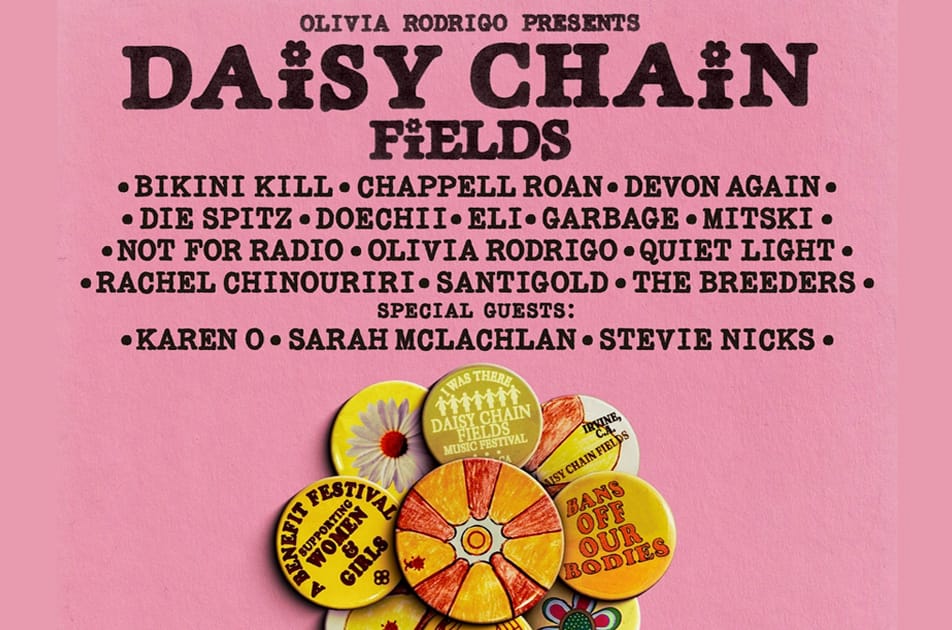](https://www.hypebot.com/whats-more-radical-daisy-chain-fields-poster-design-or-its-women-led-lineup/)
[How Chief Keef Is Finally Being Reembraced By His Home CityFor years, Chicago wouldn’t let Chief Keef perform there (not even as a hologram). Now, he’s selling out his hometown tour starter.HypebotHypebot Editorial Desk](https://www.hypebot.com/how-chief-keef-is-finally-being-reembraced-by-his-home-city/)
[See Kehlani Live This Year — You’ll Feel Every FeelKehlani’s world tour turns the changing moods of a night out into a show, revealing how much an artist can do with catalog-driven emotional range.HypebotJeremy Young](https://www.hypebot.com/see-kehlani-live-this-year-youll-feel-every-feel/)
[New Zealand’s Music Industry Is Sick of Waiting to Be Taken SeriouslyNZ/Aotearoa industry stakeholders are calling for a national growth strategy that treats its cultural systems as serious economic investments (with good reason).HypebotHypebot Editorial Desk](https://www.hypebot.com/new-zealands-music-industry-is-sick-of-waiting-to-be-taken-seriously/)
### **Advice & Tips**
[The Band Member Day Job ConundrumDay jobs often sustain indie bands, but asking band members to commit to the group when it isn’t making money can create animosity and misalignment.HypebotRich Kołodziej](https://www.hypebot.com/the-band-member-day-job-conundrum/)
[The Indie Artist’s Guide to Maximizing Discovery With SoundCloudYour SoundCloud profile should guide new listeners fast. Here’s how to convert new fans using the platform’s features and tools.HypebotSymphonic](https://www.hypebot.com/the-indie-artists-guide-to-maximizing-discovery-with-soundcloud/)
[A Guide to Pitching Music to Independent Spotify PlaylistsHow to pitch independent Spotify playlist curators using intentional research, personal outreach, and authentic relationships, to reach new listeners.HypebotGuest Author](https://www.hypebot.com/a-guide-to-pitching-music-to-independent-spotify-playlists/)
[What Artists Need to Know About Playing Live in Virtual RealityFor any artists or venues looking to add immersive VR concert video to their digital content package, this post details all that you need to know.HypebotGuest Author](https://www.hypebot.com/what-artists-need-to-know-about-playing-live-in-virtual-reality/)
### **Marketing in Music**
[We Stopped Waiting to Be Chosen and Mailed 100,000 CDs InsteadThe Empty Pockets pursued a traditional “breakthrough” approach for years; a free-plus-shipping merch offer was the thing that changed everything.HypebotGuest Author](https://www.hypebot.com/we-stopped-waiting-to-be-chosen-and-mailed-100-000-cds-instead/)
[The ‘Right’ Amount of AttentionLalu’s Corner is a monthly column about the power of music and brand partnerships, and how indie artists can benefit from them.HypebotLauren Thackray](https://www.hypebot.com/the-right-amount-of-attention/)
[If Viral Content Doesn’t Drive Streams, Then What Does?How to turn short-video attention into lasting fandom by using storytelling and emotional connection to encourage saves, shares, and repeat listening.HypebotGuest Author](https://www.hypebot.com/if-viral-content-doesnt-drive-streams-then-what-does/)
[Fan Appreciation Isn’t a Tactic. It’s a Mindset.The G-E-V (Gratitude, Engagement, & Value) Mindset is a content marketing and strategy framework that can help connect deeper with music fans.HypebotVenture Music](https://www.hypebot.com/fan-appreciation-isnt-a-tactic-its-a-mindset/)
### **Streaming & AI**
[Is AI Slop Giving Artists and Creators a New Life?Growing fatigue with gen-AI content is renewing demand for human creativity, giving musicians an opportunity to build audience trust and attention.HypebotGuest Author](https://www.hypebot.com/is-ai-slop-giving-artists-and-creators-a-new-life/)
[SubmitHub AI Music Detector Exposes Huge Disclosure GapSubmitHub analyzed 1 million tracks and found 38% featured AI, yet 31% of creators denied it. Learn what this means for music.HypebotBruce Houghton](https://www.hypebot.com/submithub-ai-music-detector-exposes-huge-disclosure-gap/)
[Artists Don’t Have a Content Problem. They Have an IP Problem.Indie artists should use content to draw listeners toward a distinctive body of work and look to build lasting relationships long after social virality fades.HypebotGuest Author](https://www.hypebot.com/artists-dont-have-a-content-problem-they-have-an-ip-problem/)
[Australia Has Drawn a Line on AI Music — Experts Have Thoughts.ARIA’s ban on predominantly AI-generated music from its charts is a necessary first step, but the industry is at a crossroads.HypebotGuest Author](https://www.hypebot.com/australia-has-drawn-a-line-on-ai-music-experts-have-thoughts/)
### **News**
[Live Music Industry News: The LatestLive Music Industry News: IFF LDN nears, Ark threatened, new Ticketmaster app, NIVA lobbies ticket bills, free NIVF festival webinar and more.HypebotBruce Houghton](https://www.hypebot.com/live-music-industry-news-23/)
[SOCAN Sues Suno Over Alleged Copyright InfringementCanadian music rights organization SOCAN has filed a copyright infringement lawsuit against AI music platform Suno, alleging that its service generates and streams unauthorized copies of songs in SOCAN’s repertoire. The statement of claim, filed September 2 in the Federal Court of Canada, identifies 150 Suno-generated tracks drawnHypebotNews](https://www.hypebot.com/socan-sues-suno-over-alleged-copyright-infringement/)
[California Ticket Bill AB 1349 Passes, NIVA Calls For VetoNIVA urges California Gov. Newsom to veto ticket bill AB 1349, warning last-minute amendments protect StubHub and harm indie venues and fans.HypebotBruce Houghton](https://www.hypebot.com/california-ticket-bill-ab-1349-passes-niva-calls-for-veto/)
[Hypebot’s Bottom Line: Key News That Matters to MusiciansKey takeaways from recent top stories: U.S. copyright fee hikes, X algorithm tactics, Gen Z CD surge, Dolly Parton’s business legacy and more.HypebotBruce Houghton](https://www.hypebot.com/hypebots-bottom-line-key-news-that-matters-to-musicians/)
### ***\*This Week's Wild Card***
[Why the UK Is Freaking Out Over Its ‘Nepo Baby Stage’The BBC Introducing festival stage for developing artists has gone away; in its place is a stage featuring artists who some feel don’t need a helping hand…HypebotJeremy Young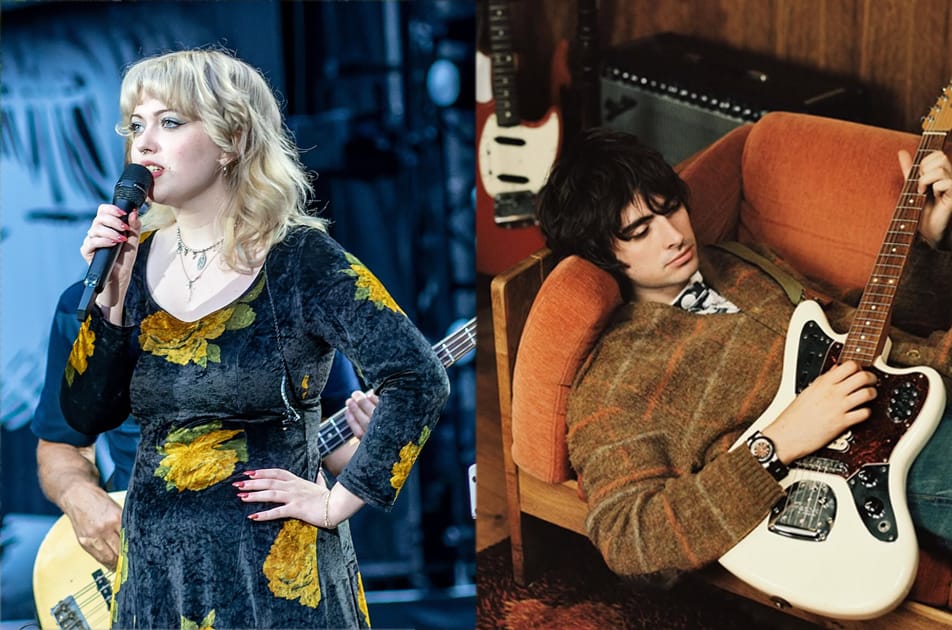](https://www.hypebot.com/why-the-uk-is-freaking-out-over-its-nepo-baby-stage/)
### Live Music Industry News: The Latest
URL: https://www.hypebot.com/live-music-industry-news-23/
Last updated: 2026-09-03T17:48:10.000Z

### **International Festival Forum London**
The prestigious [**International Festival Forum London** ](https://iff.rocks/?ref=hypebot.com)**(IFF LDN)** kicks off **September 7-9**, bringing together an invite-only list of 1,000 booking agents and festival professionals. It's not too late to request an invite [here](https://iff.rocks/register/?ref=hypebot.com).
Among the [sessions](https://iff.rocks/schedule/?ref=hypebot.com), **Bandsintown** managing partner **Fabrice Sergent** and **Markus Hetzenegger** of **NYBA** are presenting an innovative workshop "[**Beyond the Headliner: How AI Turns Your Line-up into Ticket Sales**](https://iff.rocks/event/workshop-beyond-the-headliner-how-ai-turns-your-line-up-into-ticket-sales/?ref=hypebot.com)" that will explore how AI-powered discovery helps festivals unlock the value of every artist on the bill, how to convert that attention into ticket sales and using AI across creative, campaigns and audience targeting.
### **Historic Venue The Ark Faces Development Crunch**
Founded on 1965\. Ann Arbor, Michigan's legendary music venue [**The Ark**](https://theark.org/?ref=hypebot.com)**,** is battling major disruptions as the city finalizes a **$17.4 million sale** of the adjacent 144-space public parking lot. A developer will replace it with a high-density, luxury high-rise apartment complex.
The complete removal of ground-level parking and designated handicap spaces directly behind the venue threatens to alienate patrons and those with mobility challenges. The Ark staff will also have to navigate a narrow, shared alleyway that will also handle the high-rise's utility infrastructure, squeezing crucial backstage load-in and load-out access for touring artists.
### **New Ticketmaster App**
**Ticketmaster** launched a **new consumer app** designed to increase personalization. New features include a **Watchlist** for tracking upcoming events, an updated **Favorites** tool for following artists and a refreshed **Home** with categories like **For You, Trending,** and **Last Minute** that surface events tailored to each fan’s preferences.
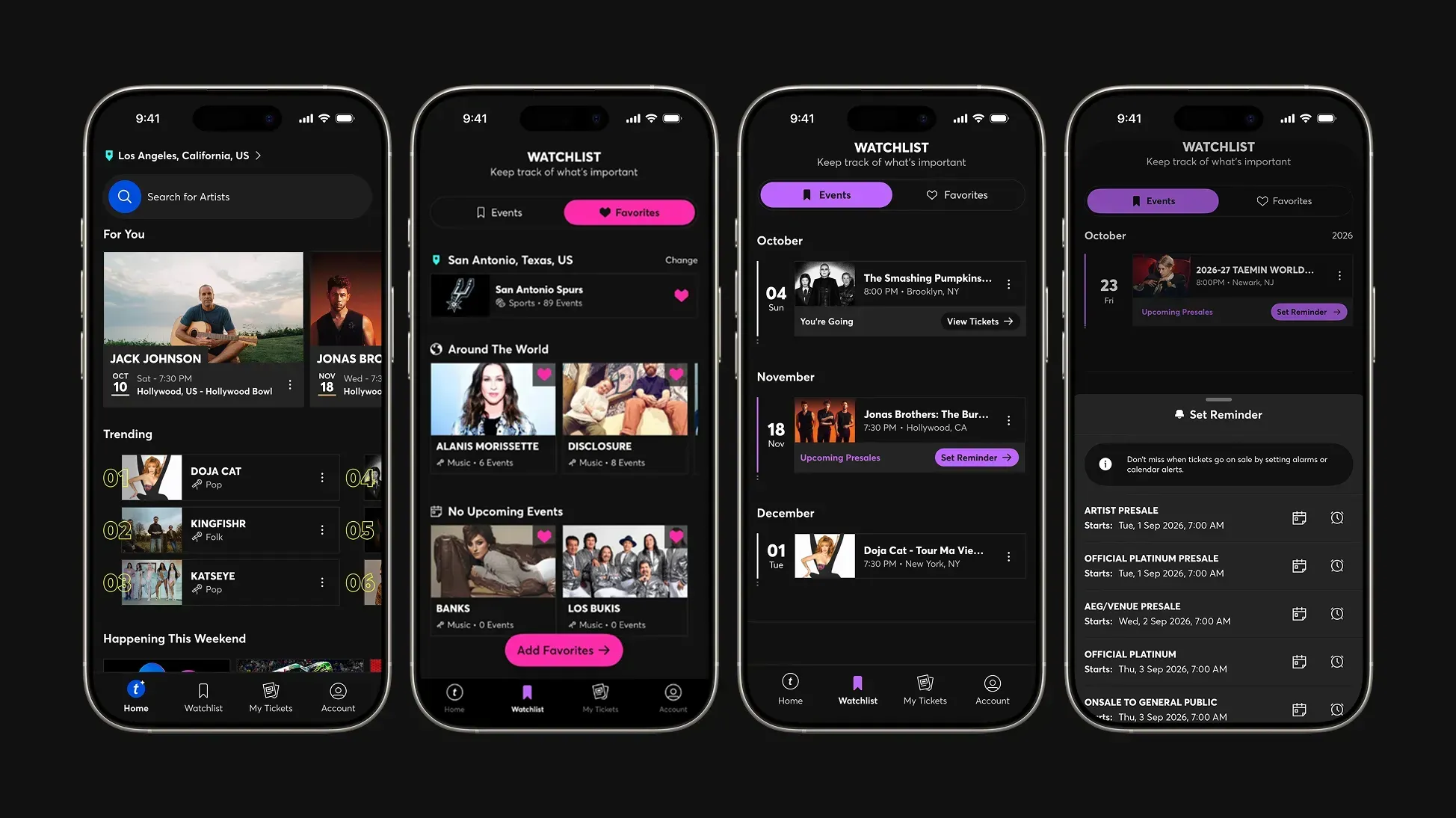
While valuable for tracking **Ticketmaster** events and tickets, the app is missing most of the 60-7o% tickets available to non-stadium and arena shows ticketed by **AXS, Etix, See Tickets, DICE, Eventim** and other ticketing companies. Independent platforms like[**Bandsintown**](https://www.bandsintown.com/?ref=hypebot.com) combine concerts from Ticketmaster and all of these sources.
### **NIVA Supports National MAIN Event Ticketing Act, Urges CA Bill Veto**
The [**National Independent Venue Association**](https://click.mail.nivassoc.org/f/a/EqFGgnvcnqx7T5Ohq9MoFw~~/AAJOsRA~/ON4fhUx0KkXS43u9MHRQ9vsM6XBW1vdQPdmxs58AlA9zYmQst9h2njurMGzoUtpsFpxV2bkFoklNTegAuegw7DU9pqi78Z%5FFNSsqB0BWC8wtImmBNZZjrIZq%5F9POZE7lcxChi6G4kc238cMeDk1KpT1CJb0Slv3AXq8ayokTNEQ59HM8hJvpFd-XNPSXFvekHN-FkaeawrKFbSbUjNaU-0JulSedEvQDYaoxLuqDWQFJqpLwSswdcBy8gWjV8WShSD08SLLrqRVfBn0q2YBHVtT3NLWAmAMHcLuOjDQk42ZZ3tfgjgx2ZMBEJY-8R3UHzRufcINAl6GoNNs9QBqUTbQLomfzdEoa-CfcTUmR5Io70dsiwEcdXHWmKW298kFL?ref=hypebot.com) **(NIVA)** is supporting the advancement of the bipartisan [**MAIN Event Ticketing Act**](https://click.mail.nivassoc.org/f/a/fwDrgRCX6DzTiVy92fvvrw~~/AAJOsRA~/rK-dT5lDGZIpPQLNO%5F1oRYIqzJAHePtoimKy4IRRmJ93ThsFdhcFkMZx4WZu4xE-M7YvfRmfS5IJZeOFEZ-tJc32cKCs00804sAxQ8h7nxiETBRMT3QOfXHYT3fJsId9p-l44bfjDi00HLCyyQDvMlm5XTBFV3YAtGJtMAJRU7dRcyngNeOG-iI4D5eHbyL31U8yfL8K3kAfbLf4n7CB5hNeJ6jnoM56KM778M7UzlsKOM3CuFqpBbUC6gd%5FhnpMK7PuQmbHSlAc2AjS0Y7cvE2PVsGgqQ9qyRmXYE41VUfv0i8AKHDwe5ELCV15B3ZgiU6AMSt5uFiO4yf6RV6NcU-w89P%5FZayJsrUg6q7gtGQYbT9bYJTDkck0TMZd%5F0SZqGo5HPcUoRz2AK9iSMnNL3eVZPsMl7ftEyms6DLHBl-asfgPLe-G9wWWRk0NGLEG?ref=hypebot.com), which will strengthen enforcement against illegal ticket bots and give regulators more tools to protect fans and the live entertainment ecosystem.
The House bill, introduced by Representatives **Diana Harshbarger** (R-Tenn.) and **Troy A. Carter, Sr.** (D-La.), advanced out of the House Commerce, Manufacturing, and Trade Subcommittee by voice vote this week. Its Senate companion, led by **Senators Marsha Blackburn** (R-Tenn.) and **Ben Ray Luján** (D-N.M.), has cleared the Senate Commerce Committee and been placed on the Senate Legislative Calendar.
**In California,** following the late night passage of **California Assembly Bill** **1349 (AB 1349)**, NIVA is [**calling on Governor Gavin Newsom**](https://www.hypebot.com/california-ticket-bill-ab-1349-passes-niva-calls-for-veto/) **to veto** the legislation. What began as an effort to ban speculative 'ghost' ticket sales was altered in final legislative sessions, creating major loopholes that NIVA says protect multi-billion-dollar resale platforms while shifting more legal liability onto independent venues, artists, and fans. **More** [**here**](https://www.hypebot.com/california-ticket-bill-ab-1349-passes-niva-calls-for-veto/)**.**
### **Free NIVF 'So You Wanna Start a Festival?' Webinar**
The[**National Independent Venue Foundation**](https://www.nivf.org/?ref=hypebot.com) **(NIVF)** is hosting a free webinar **"So You Wanna Start a Festival?"** in partnership with **Coalition of Festivals and Major Events (COFAME)**. On September 17, 2026 at 3:30 PM featured speakers include:
- **Evan Tzeng** — Coalition of Festivals and Major Events (COFAME), serving as moderator
- **Michael “MA” Allegretto** — Live Event Producer with Oceanside Production Services. MA has led production for festivals and events including FORM Arcosanti, FWB Fest, Hulaween, North Coast, SXSW, and more.
- **Timothy Liam Epstein, Esq.** — Partner at Duggan Bertsch, LLC and a nationally recognized entertainment attorney who advises festivals, promoters, venues, and events on contracts, risk management, insurance, and other legal and business considerations.
- **Register free** [**here**](https://www.nivf.org/event-registration-so-you-wanna-start-a-festival??ref=hypebot.com)**.**
### Venues Ban Smart Glasses
As wearable tech like **Meta's smart glasses** surge in popularity, a growing number of live music venues, dance clubs and festivals are pushing back. Citing privacy and consent concerns, live event spaces are updating their policies to explicitly prohibit smart glasses from entering their premises.
In addition to to protecting the privacy of patrons and venue staff, the bans help enforce the rights of performing artists to not be recorded without permission. [**Read the full story here.**](https://www.hypebot.com/more-music-venues-ban-smart-glasses-to-protect-fan-privacy/)
---
***Get the latest Live Music & Industry News updated continuously from across the web under the Hypebot Industry News tab*** [***here***](https://www.hypebot.com/music-industry-news-feed/)***.***
## Hypebot
Essential news & insights for artists and live music pros.
Sign up for free weekly content delivered to your inbox
Subscribe
Email sent! Check your inbox to complete your signup.
### SOCAN Sues Suno Over Alleged Copyright Infringement
URL: https://www.hypebot.com/socan-sues-suno-over-alleged-copyright-infringement/
Last updated: 2026-09-04T15:52:27.000Z
Canadian music rights organization [**SOCAN**](https://www.hypebot.com/socan-and-musical-ai-to-track-and-eventually-pay-creators-for-ai-use/) has filed a copyright infringement lawsuit against [AI music](https://www.hypebot.com/tag/ai-in-music/) platform [**Suno**](https://www.hypebot.com/tag/suno/), alleging that its service generates and streams unauthorized copies of songs in SOCAN’s repertoire.
The statement of claim, filed September 2 in the Federal Court of Canada, identifies 150 Suno-generated tracks drawn from 137 songs that SOCAN represents, according to [*Music Business Worldwide*](https://www.musicbusinessworldwide.com/now-canada-socan-sues-suno-claiming-it-illegally-copied-hits-like-both-sides-now-and-sk8er-boi/?ref=hypebot.com). The allegations focus on those outputs and their streaming to users in Canada.
Songs cited include **Avril Lavigne’s** “Sk8er Boi,” **Tom Cochrane’s** “Life Is a Highway” and **Joni Mitchell’s** “Both Sides Now.” SOCAN has also published online comparisons pairing original recordings with Suno tracks it alleges infringe its members’ [rights](https://www.hypebot.com/tag/copyright/).
Take a look/listen [here.](https://www.socan.com/socan-ai/ai-lawsuit?ref=hypebot.com)
**Screenshot courtesy of SOCAN's* [**AI Lawsuit page*](https://www.socan.com/socan-ai/ai-lawsuit?ref=hypebot.com)**.*
SOCAN’s chief legal officer and general counsel, **Andrea Kokonis**, [told *Billboard*](https://ca.billboard.com/business/legal/socan-suno-lawsuit?ref=hypebot.com)Canada that Suno launched in Canada in December 2023 without seeking SOCAN’s consent, and that subsequent discussions had not resolved the dispute. Kokonis said:
> *“We want to ensure that our members are paid when their songs are used.”*
SOCAN is seeking damages and profits attributable to the alleged infringement, or alternatively statutory damages of CAD $20,000 per song. It is also requesting CAD $10 million in punitive and exemplary damages, alongside court orders preventing further infringement.
Neither report includes a response from Suno to SOCAN’s lawsuit. SOCAN's [AI Lawsuit web page](https://www.socan.com/socan-ai/ai-lawsuit?ref=hypebot.com) explains the PRO's perspective with more detail.
**Screenshot courtesy of SOCAN's* [**AI Lawsuit page*](https://www.socan.com/socan-ai/ai-lawsuit?ref=hypebot.com)**.*
[Read the full statement of claim here](https://www.socan.com/wp-content/uploads/2026/09/ISSUED-Statement-of-Claim-SOCAN-v-Suno-September-2-2026-2.pdf?ref=hypebot.com).
---
*Get all the latest Music Industry & Live Music News updated continuously from across the web under the Hypebot Industry News tab* [*here*](https://www.hypebot.com/music-industry-news-feed/)*.*
## Hypebot
Essential news & insights for artists and live music pros.
Sign up for free weekly content delivered to your inbox
Subscribe
Email sent! Check your inbox to complete your signup.
### See Kehlani Live This Year — You’ll Feel Every Feel
URL: https://www.hypebot.com/see-kehlani-live-this-year-youll-feel-every-feel/
Last updated: 2026-09-18T16:05:24.000Z
A great night out incorporates several versions of yourself.
There’s the person in the mirror getting ready, the person dancing like they've forgotten *all* of their problems in life, the person texting someone on their mind, the person wishing someone else was texting *them*, the person who secretly feels like they could (or should) be the one on stage performing.
At the end of the night, sitting in the back of a cab, all of those people converge in your mind to replay everything that happened.
That's not just a microcosm of every [**Kehlani**](https://www.bandsintown.com/a/8423389-kehlani?utm%5Fsource=hypebot&came%5Ffrom=900) concert, it's the narrative structure that holds their new 2026 live show together from start to finish. The Oakland singer is on tour right now in support of their self-titled fifth album; bringing a catalog of **flirtation, affection, frustration,** and **self-discovery** into a production built around the fantasy of one of those unforgettable nights out.
The theatrical production on this tour is entirely built around the idea of a night out at a fictional nightclub called "The Phoenix." I love this as a promise to an audience, that no matter where you're coming in from, you've got somewhere fantastical to go tonight.
Kehlani helps their fans feel sexy, sad, romantic, self-accepting, self-actualized, and ready to dance. Come as you are, no matter which personality you feel like exposing tonight.
## **You Get to Feel Yourself**
Sometimes you want to put on a good outfit, go hear some music, and feel *hot.* Kehlani's [“Distraction”](https://open.spotify.com/track/2wSQyp6VzUopSFBinRo1iD?si=97f4fe1e6dc346b4&ref=hypebot.com) is a returning selection in early-tour setlists, makes flirtation sound both inviting and self-possessed. It's a song that lays out a casual romantic proposition with clear boundaries; and there’s a bit of confidence in being able to say what you want.
[Singing along](https://www.hypebot.com/why-rod-waves-fans-sing-his-songs-for-him/) lets you try that confidence on, even if your actual dating life involves considerably more second-guessing. Kehlani's movement and choreography makes that physical. A good [live performance](https://www.hypebot.com/tag/live-performance/) can make an audience feel attractive, too.
> [ View this post on Instagram ](https://www.instagram.com/reel/DcIIIkoODOb/?utm%5Fsource=ig%5Fembed&utm%5Fcampaign=loading)
>
> [A post shared by Starzia | Toronto Creator (@starziasky)](https://www.instagram.com/reel/DcIIIkoODOb/?utm%5Fsource=ig%5Fembed&utm%5Fcampaign=loading)
## **You Get to Be Yourself**
Self-love has room for more than just swagger — sometimes it can mean recognizing the parts of yourself you’re still figuring out. [“Unlearn”](https://open.spotify.com/track/3UTn3yBXjZCAkGOSxCQwwl?si=79f0123a35f64989&ref=hypebot.com) gives that feeling a place in the show, a turn towards change in a communal setting.
The Phoenix’s concept also matters here. It's a welcoming environment for queerness, communal affection, and sexuality, a space for flirtation with others and especially with new, unknown versions of yourself. Self-acceptance can be a pretty strong reason to leave the house, too.
> [ View this post on Instagram ](https://www.instagram.com/reel/DcP9xcNiaP7/?utm%5Fsource=ig%5Fembed&utm%5Fcampaign=loading)
>
> [A post shared by Zaria Zandria (@zaria\_zandria)](https://www.instagram.com/reel/DcP9xcNiaP7/?utm%5Fsource=ig%5Fembed&utm%5Fcampaign=loading)
## **You Get to Dance**
Of course, you might also have come because it’s been a long week and you need to move. [“After Hours”](https://open.spotify.com/track/4ChomJf8z16E6Zw4EoioYY?si=ef025255eec34603&ref=hypebot.com) helps. At Boston’s MGM Music Hall, [WTBU reviewer Kathy Doan reported](https://sites.bu.edu/wtbu/2026/08/30/review-kehlani-mgm-music-hall-8-18/?ref=hypebot.com) that Kehlani and their dancers took the performance of that song into the venue’s bar area, where audience members were invited and encouraged to get up on stage to dance.
The nightclub premise reaches into the actual room. The bar becomes a performance space; the people around it become part of the scene. That’s where the show’s dance energy has something to offer beyond admiring choreography from far away.
Whatever level feels right: dancing with your friends, moving with a partner, abandoning the idea that you were going to stand still all night. It's on you, now.
> [ View this post on Instagram ](https://www.instagram.com/reel/DcUpI0ANreC/?utm%5Fsource=ig%5Fembed&utm%5Fcampaign=loading)
>
> [A post shared by Allan Schmitt (@asm.music1)](https://www.instagram.com/reel/DcUpI0ANreC/?utm%5Fsource=ig%5Fembed&utm%5Fcampaign=loading)
## **You Get to Be a Hopeless Romantic**
Desire can turn into affection very quickly, especially when the right song catches you beside the right person. Kehlani’s repertoire leaves room for the complicated version of romance, too. [“Folded”](https://open.spotify.com/track/6sTlzpJaFGkFQ4BNccmbW9?si=264c4375d57f47bb&ref=hypebot.com) holds longing and the possibility of repair in the same song.
The singer has described it as being about accountability, but it's also secretly about reconnecting. Checking in with a former lover to see if feelings still exist. You might think about the person who stayed, or the conversation you wish you’d handled differently.
Love can involve wanting somebody, knowing you’ve made mistakes, and hoping there’s still something worth returning to. Unfinished business. There's no better place on Earth than a [live music setting](https://www.hypebot.com/tag/live-music/) to play those dramas out risk free and feel all the feels inside.
> [ View this post on Instagram ](https://www.instagram.com/reel/DcKPQK5po04/?utm%5Fsource=ig%5Fembed&utm%5Fcampaign=loading)
>
> [A post shared by Esabia💜 (@esabia)](https://www.instagram.com/reel/DcKPQK5po04/?utm%5Fsource=ig%5Fembed&utm%5Fcampaign=loading)
## **You Might Get Sad Too, But You Get to Rebecome Yourself At the End**
The best thing about live music, and Kehlani's music leans into this so well, is that the same song can read nostalgic, sad, romantic, and sombre to different people. Some of their tracks are slow jams, some of them trigger past love memories, and others give a hopeful outlook on the future.
Their setlist will often group these songs together, like [“Footsteps,”](https://open.spotify.com/track/40ux5ovsNq0r4sJ6lNC1Uk?si=f2af5fb2f7f34ae1&ref=hypebot.com) [“Out the Window,”](https://open.spotify.com/track/3PWcsbzCtIU55qGOTLPBcN?si=7633fd1c60724235&ref=hypebot.com) and [“Nights Like This.”](https://open.spotify.com/track/6ZRuF2n1CQxyxxAAWsKJOy?si=f5fd7214da254a13&ref=hypebot.com) This is the "comedown" portion of the fantasy "night out," that a high-intensity show ultimately needs. It's its own chapter, and you're allowed to process their songs however you need to. Regret, loneliness, a person you still miss...
Feeling good for an hour doesn’t mean you’ve stopped caring about something painful. You can enjoy yourself and still have a moment when it catches up with you. At least *this time,* there’s a song for it.
Kehlani's catalog has been written so diversely that they're able to put it all together into a six-part performance that references an unforgettable night out. From home to the club to the after hours, to the journey home, with space to reflect on your feels at every turn.
Go with someone you can dance with. You may have a few things to talk about on the way home.
---
## [**Kehlani Tour Dates**](https://www.bandsintown.com/a/8423389-kehlani?utm%5Fsource=hypebot&came%5Ffrom=900)
### What Artists Need to Know About Playing Live in Virtual Reality
URL: https://www.hypebot.com/what-artists-need-to-know-about-playing-live-in-virtual-reality/
Last updated: 2026-09-03T14:17:39.000Z
*By *Kelly Breaks*, Co-Founder of* [***Blue Frog Studios***](https://bluefrogstudios.ca/?ref=hypebot.com)
Artists have to think about a lot today, and that includes new experiences like **VR (or Virtual Reality)**. This may be the last thing you want to hear, but when done right, VR isn’t like many of the other jobs tech has dumped in artists’ laps, such as social media expert or video producer.
VR lets you do what you already do so well (ie: play music live) in [a new format with new audiences](https://www.hypebot.com/a-360deg-concert-with-no-spilled-beer-on-your-shoes/). If you’ve had a chance to experience VR, you know it’s way more than what the metaverse guys were selling. **Immersive sound** and **360 images** can provide a truly moving, deeply human experience.
For a remote [technology](https://www.hypebot.com/tag/tech/), it has the power to put you right there in front of the stage, right there with the performers. I’ve been a musician, audio engineer, and studio owner for decades. I know and treasure that live-music feeling. Let's talk about it.
For me, VR is the only tech that’s ever gotten close to sparking the feeling of sitting with a talented musician in [an intimate club](https://www.hypebot.com/a-crowded-venue-isnt-the-only-way-to-experience-live-music/), the rush and the wonder of an amazing [live performance](https://www.hypebot.com/tag/live-music/).
To capture this energy, there are some technical aspects that matter, things we learned the hard way by trying to create some of the first live music content for the Apple Vision Pro in our Vancouver area live performance space. VR is more challenging than a traditional video or audio recording to produce, but **it also has more long-term value** than a concert you shot to post on socials.
As VR comes into its own at last, thanks to a real shift in the infrastructure and consumer adoption supporting it, artists can grow creatively and financially by embracing it. I am confident that soon, VR will become a viable option not just for big stadium-packing acts, but for independent mid-career artists, too.
With that in mind, it’s worth understanding VR as a medium. So let’s talk about how music content works in VR, some technical lessons we’ve learned from shooting dozens of shows for VR.
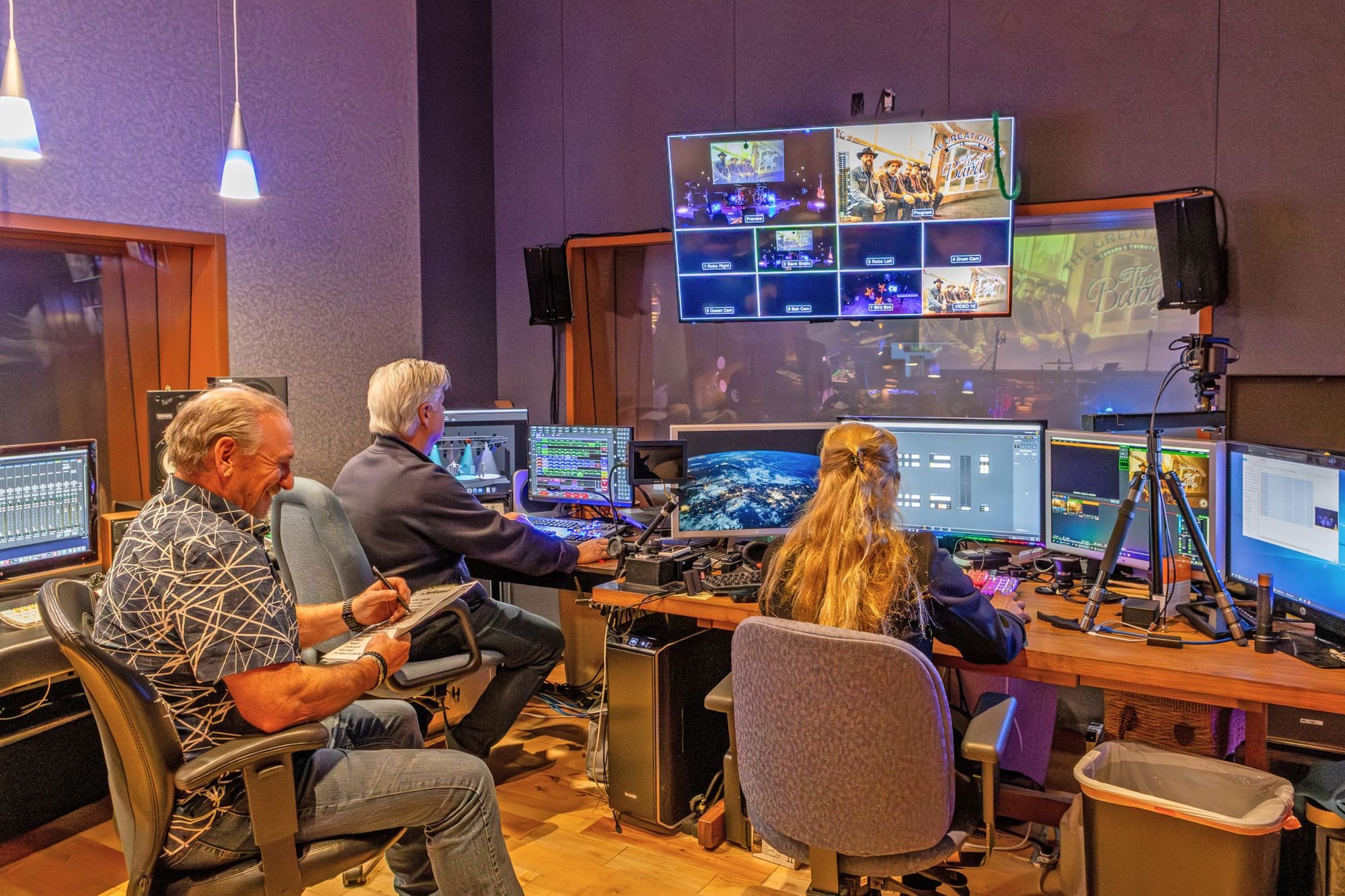
***+Read more:*** [*"8 Payment Tools Built for Concert Venues"*](https://www.hypebot.com/8-payment-tools-built-for-concert-venues/)
First off, immersive cameras are their own beast. You can’t treat them like a regular video camera in the audience. **VR cameras work differently.**
They have two lenses, roughly spaced like human eyes. They tend to work best when positioned right in front of the artist, about 6-8 feet away, and roughly eye level. Positioned too high or too low and the VR viewer feels like they are on a steep slope about to fall over. And the camera cannot make any sudden movements or the viewer may get nauseous (something that takes a bit of getting used to).
To ensure a good result, you have to treat that camera as a person standing in front of you. Make the camera your friend.
Anyone smart can point or position a camera, but it’s knowing how songs and shows flow that can make or break the shoot. To get a good live music experience in VR, we’ve found you need to work with a production crew that has strong musical understanding. They need to get how songs and [setlists](https://www.hypebot.com/tag/setlist/) tend to flow.
That’s because, when capturing a live show, **you don’t get multiple takes.**
That’s part of the beauty, and that gives the final VR experience a [human edge](https://www.hypebot.com/tag/human/); you want there to be some friction, some moments that aren’t perfectly polished. Everyone on our production team has some sort of music background, and many of them are pro or studio session players. They know how to react to those powerful, if not always perfect, moments.
Like immersive cameras, **immersive sound** has its own requirements. We have a great sounding room. We know how to put the mics in the right place. We run each VR session the same way we run an album recording, then we take and translate the results into spatial audio. As you do, you need to make sure that the audio feels like a concert, not something acoustically jarring. If you see a guitarist in front of you, it shouldn’t sound like she’s playing behind your left shoulder.
While that can be fun for games or other experiences, it doesn’t work for live music.
We expect sound engineers to be music people, but with VR, the person running your lighting also needs a strong feel for music. We’re hearing a band’s song for the first time; there’s no cue sheet. The lighting technician has to figure out that there’s a chorus and has to change the lighting. You need that vibe. You have to hit the sound right on the beat, so that the visuals harmonize with the audio.
Once the shoot is over, our first job is to watch the whole show in immersive and judge what works. It’s not always what you’d expect. When it works, it’s breathtaking. You get goosebumps and say, yeah, they nailed it. If we get that feeling, we know someone else watching it will, too
One last, very important moment: You need to own both sides of the songs you’re performing if you want to sell a VR experience of a live show. One thing artists can begin thinking about right now is licensing for new formats and tech like VR. If you work with a publisher, check with them about how they approach VR. Laying some groundwork might serve you well as opportunities in this format grow.
***+Read more:*** [*"60 Years of the SM58 🎤 A Lesson in Branding"*](https://www.hypebot.com/60-years-of-the-sm58-a-lesson-in-branding/)
VR at the moment isn’t really a [DIY proposition](https://www.hypebot.com/tag/d-i-y/). You need a specialized studio or setup at a performance space and people to run and produce it. But we hope more and more live venues and studios will consider VR setups as a way to support artists, who can grab a show and turn it into something lasting that fans will love (and pay for) for months and years to come.
That’s what we do at our studio, and we think this approach could be one of the more viable ways to make VR more mainstream — and to give artists a new way to make money doing what they love and excel at.
---
**Kelly Breaks* is Co-Founder of* [***Blue Frog Studios***](https://bluefrogstudios.ca/?ref=hypebot.com)*, Canada’s premier live recording theatre and streaming venue. Since launching the studio in 2010, he has produced more than 150 concerts annually and has been streaming live performances globally since April 2014, beginning with an Earth Day broadcast featuring Jefferson Starship.*
### Hypebot's Bottom Line: Key News That Matters to Musicians
URL: https://www.hypebot.com/hypebots-bottom-line-key-news-that-matters-to-musicians/
Last updated: 2026-09-03T16:07:01.000Z
Welcome to the latest edition [**Hypebot's Bottom Line**](https://www.hypebot.com/tag/bottom-line/), our regular roundup pulling key takeaways for musicians and their teams from the most important stories we've covered in recent days.
### **2 Months Left Before U.S. Copyright Fees Jump Dramatically**
The U.S. Copyright Office (USCO) is raising service fees in mid-November 2026 across almost all registration and recordation categories. Standard e-filings will increase from $65 to $85, album registrations (GRAM) double from $65 to $130, electronic contract recordations jump 126% from $95 to $215, and Notices of Termination rise from $125 to $275.
**Hypebot's Bottom Line:** With significant fee hikes taking effect in mid-November 2026, independent artists, record labels, and catalog owners should audit unfiled releases and submit registrations, catalog transfers, and termination notices immediately to avoid higher administrative costs.
[Read the full story](https://www.hypebot.com/2-months-left-before-u-s-copyright-fees-jump-dramatically/).
### X Opens Algorithm: What Musicians, Marketers Need to Know
X (formerly Twitter) open-sourced its recommendation algorithm, exposing the code-level mechanics that drive organic feed reach. The code reveals heavy penalties for posts containing outbound streaming or ticketing links, while heavily boosting native video uploads, direct comment replies, and rapid first-hour engagement.
**Hypebot's Bottom Line:** Stop dropping bare streaming links in main posts on X. To maximize reach under the open algorithm, upload native video clips, spark active comment threads in replies, and place your Spotify, Apple Music, or pre-save links in the first reply of the thread rather than the main post.
[Read the full story](https://www.hypebot.com/x-opens-algorithm-what-musicians-marketers-need-to-know/).
### **Rebirth of CDs and What It Means For Musicians**
U.S. CD sales surged 16% in the first half of 2026, outpacing vinyl growth by nearly 7-to-1 according to Luminate data. Fueled by Gen Z's desire for tactile ownership and affordable physical media alongside a boom in portable Bluetooth CD players, compact discs have re-emerged as a core merchandise item.
**Hypebot's Bottom Line:** CDs are no longer a relic of the past—they are a high-margin merch table power player. Fast to manufacture, easy to transport on tour, and budget-friendly for fans, independent artists who ignore compact discs in 2026 are leaving cash on the table.
[Read the full story](https://www.hypebot.com/the-rebirth-of-cds-and-what-it-means-for-musicians/).
### **Dolly Parton's Business Legacy: 4 Lessons For Every Musician**
Dolly Parton built an enduring business empire by keeping 100% control over her publishing IP, treating merchandise like a lifestyle fashion brand, expanding into physical/experiential touchpoints, and creating an interconnected brand ecosystem that generated sustainable long-term revenue.
**Hypebot's Bottom Line:** Dolly Parton proved that musicians never have to trade core ownership for short-term exposure. By retaining your publishing rights, designing merch tailored to fan lifestyles, and thinking beyond isolated release cycles, you build a resilient foundation capable of sustaining a lifelong career.
[Read the full story](https://www.hypebot.com/dolly-partons-business-legacy-4-lessons-for-every-musician/).

### **YouTube Views Now Count From the First Frame**
YouTube has updated its platform metrics to count video views from the exact moment play begins across long-form music videos, Shorts, and streams, dropping its legacy 30-second watch threshold. While public view counts on official music videos will now rise faster, royalty monetization and YouTube Partner Program eligibility remain strictly tied to backend "Engaged Watch Hours."
**Hypebot's Bottom Line:** YouTube just gave your public view counts a cosmetic facelift by counting views from the first second. But while bigger numbers look great on an EPK or a pitch deck, it's important to remember that exposure isn't the same as attention. Don't let inflated public metrics give you a false sense of security; keep your eyes on the "Engaged views" in the backend analytics to see who is actually listening to the music, and continue optimizing content to hold their attention.
[Read the full story](https://www.hypebot.com/youtube-views-now-count/)
### **Own Your AI Search Results: A Guide for Artists & Venues**
Google has expanded its "Preferred Sources" tool, giving musicians and venue operators a direct lever to defend their search visibility against AI-generated hallucinations and declining website traffic. By embedding an official Google Preferred Source button or deeplink on official artist websites and pre-sale emails, creators ensure Google's AI search tools prioritize official tour dates, ticket links, and venue policies directly over third-party scalpers.
**Hypebot's Bottom Line:** The battle for AI visibility isn't just about keywords anymore; it's about fan ownership. Installing Google's Preferred Source button and adding links in your emailers takes minutes, but it ensures that when your biggest supporters ask AI search a question, your direct links answer the call.
[Read the full story](https://www.hypebot.com/own-your-ai-search-results-a-guide-for-artists-and-venues/).
### **Vanderbilt Study: Resale Ticketing Costs Fans $11B Annually**
A landmark white paper released by the Vanderbilt Policy Accelerator reveals that ticket scalpers and secondary marketplaces drain $11 billion per year from live event audiences—adding $4.5 billion in resale price markups and $6.8 billion in platform service fees. Supported by NIVA and NITO, the study refutes reseller claims of "free market efficiency" and provides state and federal lawmakers with a concrete roadmap to reform live ticketing.
**Hypebot's Bottom Line:** The live music ecosystem is reaching a breaking point where unearned middleman profits directly undercut touring viability and fan access. With empirical data disproving the "free market" defense of scalping, policymakers now have a clear roadmap: cap platform fees at 10% and outlaw above-face-value resale to keep live entertainment sustainable for everyone involved.
[Read the full story](https://www.hypebot.com/vanderbilt-study-resale-ticketing-costs-fans-11b-annually/).
### **Colorado Enacts First 'Artist Company' Legal Designation**
Colorado became the first state in the nation to enact statutory "Artist Companies" (A-Companies) under SB 26-133\. Designed alongside artist advocates and legal scholars, the statutory framework lets independent creators raise outside investment while legally locking in a mandatory 51% artist voting majority, separating governance rights from financial dividends, and enforcing automatic copyright reversions upon dissolution.
**Hypebot's Bottom Line:** Colorado's Artist Company Act is an important attempt to rebalance the economic scales between independent creators and corporate capital. By legally codifying a 51% artist voting majority and automatic IP reversions, it offers a legal shield for independent musicians and creative ventures. We'll be watching whether other states emulate Colorado. But until federal courts clarify how state reversion rights hold up against work-for-hire doctrines and institutional record labels start accepting non-controlling equity stakes, Colorado's A-Company will primarily serve smaller independent artists.
[Read the full story.](https://www.hypebot.com/colorado-enacts-first-artist-company-legal-designation/)
---
*Get all the latest Music Industry & Live Music News updated continuously from across the web under the Hypebot Industry News tab* [*here*](https://www.hypebot.com/music-industry-news-feed/)*.*
## Hypebot
Essential news & insights for artists and live music pros.
Sign up for free weekly content delivered to your inbox
Subscribe
Email sent! Check your inbox to complete your signup.
### More Music Venues Ban Smart Glasses to Protect Fan Privacy
URL: https://www.hypebot.com/more-music-venues-ban-smart-glasses-to-protect-fan-privacy/
Last updated: 2026-09-03T13:20:42.000Z
As wearable tech like[**Meta's Ray-Ban**](https://www.meta.com/ai-glasses/?ref=hypebot.com) **smart glasses** surge in popularity, a growing number of [live music venues](https://www.hypebot.com/tag/venues/) and dance clubs are pushing back. Citing privacy and consent concerns, live event spaces are updating their door policies to explicitly prohibit smart glasses from entering their premises.
In addition to to protecting the privacy of patrons and venue staff, the bans help enforce the rights of **performing artists** to not be recorded without permission.
## **Dancefloor Pushback**
In New York, the popular techno club [**BASEMENT**](https://www.bandsintown.com/v/10236391-basement-ny?utm%5Fsource=hypebot&came%5Ffrom=900)recently [announced](https://mixmag.net/read/new-york-nightclub-basement-bans-smart-glasses-from-venue-news?ref=hypebot.com) a strict ban on all smart glasses. The Queens venue, which has operated with strict no-photo, no-video, and no-phone house rules since it opened in 2019, considers the wearable tech a direct threat to the "privacy, safety and freedom" of its attendees.
The policy is uncompromising: anyone found with smart glasses — even tucked away in a bag—will be asked to leave and risks a permanent ban from the club.
> [ View this post on Instagram ](https://www.instagram.com/p/DcjYe6%5FSMh9/?utm%5Fsource=ig%5Fembed&utm%5Fcampaign=loading)
>
> [A post shared by BASEMENT (@basementnewyork)](https://www.instagram.com/p/DcjYe6%5FSMh9/?utm%5Fsource=ig%5Fembed&utm%5Fcampaign=loading)
**BASEMENT** isn't an isolated case. The broader nightlife and festival scene is taking similar action:
- **Other NY Nightclubs:** Venues like **Nowadays, Green Room**, and **Signal** all operate with strict no-photo policies that naturally reject discreet recording devices.
- **Danish venue Radar** introduced a ban on smart glasses. Guests wearing the glasses will be asked to put them away, according to venue director **Martin Aagaard Jensen**, who [outlined the decision](https://celebrityaccess.com/2026/09/02/danish-venue-bans-meta-smart-glasses/?ref=hypebot.com) in a commentary published by Kulturmonitor.
- **Body Movements Festival:** The London-based queer festival explicitly banned smart glasses this past August, calling them the "antithesis" of their brand values and stating that the festival is "not a place for surveillance culture, non-consensual filming or exploitation."
Other large-scale gatherings like **Burning Man** allow attendees to bring smart glasses, but mandate that users get explicit permission from anyone in the frame before recording.
### **Theatres and Pubs Join the Ban**
It isn't just underground dance clubs and festivals adding these rules, [particularly in the U.K](https://www.theguardian.com/technology/2026/aug/06/restaurants-pubs-and-theatres-ban-metas-spy-glasses-over-privacy-fears?ref=hypebot.com).
- **Theatres:** ATG Theatres, which owns major venues like the **Edinburgh Playhouse** and **London's Bristol Hippodrome**, announced that recording is prohibited and guests wearing the glasses during shows will be asked to remove them.
- **Pubs and Restaurants:** **Wetherspoons**, the UK pub chain with 800 locations, noted that Meta glasses enable "surreptitious surveillance" of both staff and customers. High-end London restaurateurs have also echoed the sentiment, refusing to allow what they see as a covert invasion of guest privacy.
### **Why the LED Light Isn't Enough**
Meta has argued that their AI-powered glasses feature a built-in LED light that blinks when capturing photos or video, alerting bystanders. However, venue owners and operators feel this safeguard is insufficient for dark, crowded, and loud environments like concerts and dancefloors, where a tiny blinking light can easily go unnoticed.
## **Hypebot’s Bottom Line**
For the live music industry, cultivating a safe, immersive, and present space is paramount. But the rise of discreet recording technology threatens the very escapism and freedom of expression that live music and nightlife provide.
By banning smart glasses, venues are drawing a hard line: human connection, consent, and privacy matter more than accommodating the latest consumer tech trend.
---
*Get all the latest Music Industry & Live Music News updated continuously from across the web under the Hypebot Industry News tab* [*here*](https://www.hypebot.com/music-industry-news-feed/)*.*
## Hypebot
Essential news & insights for artists and live music pros.
Sign up for free weekly content delivered to your inbox
Subscribe
Email sent! Check your inbox to complete your signup.
### Is AI Slop Giving Artists and Creators a New Life?
URL: https://www.hypebot.com/is-ai-slop-giving-artists-and-creators-a-new-life/
Last updated: 2026-09-03T13:16:22.000Z
*By *Tal Gonen* of* [***Fiverr***](https://www.fiverr.com/?ref=hypebot.com)
When fans learned **Olivia Rodrigo** had [commissioned artists](https://www.dazeddigital.com/music/article/70398/1/she-blew-me-away-olivia-rodrigo-on-her-new-collab-with-chloe-wise?ref=hypebot.com) to create [handmade art and animation](https://www.instagram.com/reel/DZizDGeuHq-/?ref=hypebot.com) for the lyric videos for her new album, the love spread across socials within days, turning a routine production choice into news. In an era where [AI slop](https://www.hypebot.com/how-chief-keef-is-finally-being-reembraced-by-his-home-city/) seems to be everywhere, Rodrigo's choice was a breath of fresh air.
She didn’t stop there.
Rodrigo also partnered with Etsy to launch a collection featuring [merchandise](https://www.hypebot.com/tag/merch/) from independent female artists alongside an immersive fan experience, putting human creators at the center of another major release.
## **The Industry Is Pushing Back**
The same instinct driving Rodrigo to commission human work is playing out across the music industry, where [venues are banning AI-generated flyer art](https://sfstandard.com/2025/09/11/bay-area-concert-venue-bans-ai-generated-flyers-connects-bands-real-artists-instead/?ref=hypebot.com), and across [social media platforms](https://www.businessinsider.com/ai-slop-substack-youtube-tiktok-pinterest-facebook-instagram-threads-2026-7?ref=hypebot.com), where YouTube, Substack, and LinkedIn have all announced recent efforts to **cut down AI slop.**
These aren't one-off stories, they're part of a broader shift in how artists and the people around them value human work, and a guide for how any creative, marketing, or business team should be thinking about who does the work in an AI-saturated market.
What's easy to miss is how many distinct trades this industry actually runs on.
- A subtitler translating lyrics into another language.
- An animator hand-drawing a lyric video frame by frame.
- A session musician laying down strings remotely for an artist they'll never meet in person.
- A topline writer shaping the melody over someone else's beat.
Most fans never think about any of these jobs until one of them gets credited by name, and lately, that's happening more often.
## **The Numbers Don’t Lie**
As a global freelance platform, we have insight into the services most in demand worldwide. When it comes to freelancers working in the music industry, the data backs up the broader trends we're seeing. Demand for topline writing is up 466%, strings are up 116%.
Even as AI becomes part of the creative process, artists aren’t handing *everything* over to AI — **songwriting has climbed 426%.**
**+Read more:** [*"Upcycled Tour Merch Is Live Music's Next Green Frontier"*](https://www.hypebot.com/upcycled-tour-merch-is-live-musics-next-green-frontier/)
Behind the numbers are real jobs and real people. [**Andrea Sacchi**](https://pro.fiverr.com/freelancers/andrens05??ref=hypebot.com), a freelancer was hired to provide Spanish subtitles for **Ed Sheeran's** YouTube channel and official videos. Her work puts a human translator's judgment between an artist and millions of fans who don't speak English. [**Beau Vallis**](https://www.fiverr.com/beauvallis?ref=hypebot.com), a Grammy-nominated music engineer, has earned $1 million on **Fiverr** working with artists like **Pharrell** and **Lil Wayne.**
This isn't limited to global pop stars. New Zealand singer **Kirsten Morrell** worked with Fiverr animator [**Upa H**](https://pro.fiverr.com/freelancers/motionmechanics??ref=hypebot.com) on the lyric video for her single ["Hoping & Wishing,"](https://open.spotify.com/album/0iou8K4s1xr3q0Lsk9DOzX?si=puqp2TtOR7C-M4b24M4G4Q&ref=hypebot.com) a tribute to a mentor who'd recently passed. "Collaborating on this video was deeply intentional," Morrell told [*Rolling Stone*](https://au.rollingstone.com/music/music-news/kirsten-morrell-hoping-wishing-music-video-single-88800/?ref=hypebot.com)*.* “It's a moment to speak to the heart."
The same instinct that drove Rodrigo's rollout is showing up at every level of the industry, from stadium acts to working artists releasing music on their own terms.
## **Beyond the Music**
The pattern isn't unique to music. Searches for freelancers who can "humanize AI content," such as rewriting chatbot scripts, marketing emails, and website copy so it sounds like [a person wrote it](https://www.hypebot.com/ai-is-destroying-common-sense/), are up 641% in the last six months, compared with the previous six-month period.
[**Gabrielle Gerbus**](https://www.fiverr.com/ggerbus?ref=hypebot.com), a freelance brand strategist, [told Fiverr](https://investors.fiverr.com/news-releases/news-release-details/businesses-rush-harness-ai-agents-fueling-18347-surge-freelancer?ref=hypebot.com):
> *"I thought my copywriting services wouldn't be as needed following the roll-out of ChatGPT. However, I get almost daily requests when it comes to editing AI-written copy so it still sounds human."*
What's happening here isn't complicated, even if it cuts against a lot of assumptions about where the industry is headed. When artists and the people around them are faced with a choice between a human and an AI doing the work, humans are increasingly the preference, and audiences are pushing them there. Visible AI shortcuts are starting to cost trust, and audiences increasingly want to know a person is behind the creation of the content.
The industry has always run on human craft. While other industries race to automate, this one is visibly pulling in the other direction. Budget for human collaborators the way you'd budget for a producer or a venue, as a line item, not an afterthought. Treat "handmade" as a marketing asset in its own right, not a production decision nobody notices until it's gone.
Rodrigo didn't need to make this choice. She's already one of the biggest pop artists in the world. That she did anyway, and that fans noticed and rewarded it within days, says something about where audiences' heads are right now. That kind of trust can't be manufactured. It has to be built, visibly, by people.
---
**Tal Gonen* is a Verticals Manager at* [***Fiverr***](https://www.fiverr.com/?ref=hypebot.com) *and a marketing and business leader with a focus on growth strategy. Over the past 11 years, she has worked with more than 18 global brands across 22 markets, developing and executing global marketing strategies that drive business growth. Her expertise spans identifying new market and business opportunities, building strategic growth plans, and translating them into actionable initiatives.*
### The Band Member Day Job Conundrum
URL: https://www.hypebot.com/the-band-member-day-job-conundrum/
Last updated: 2026-09-03T11:26:29.000Z
A while back, I had a conversation with the manager of another independent band. He was frustrated. The band’s vocalist and bassist were “committed.” The guitarist and drummer, however, still had day jobs. That created scheduling problems and, at least in his telling, questions about whether those two musicians really wanted it enough.
The whole thing bothered me.
Schedules matter. You cannot run a band if half the members are never available. Everyone must agree on what the project requires. But this was not merely about availability. **“Committed”** had become a *financial* descriptor. The people who did not need conventional jobs were committed. The people who still had to earn a living were not.
From what I understand, the vocalist receives substantial support from her family. That is more than fine. If your family believes in your art and has the means to give you space to pursue it, that is an extraordinary gift. There might be a therapist warming up a chair for that discussion someday, but that's besides the point.
The problem begins when that help becomes the standard against which everyone else’s commitment is measured. Not every musician, or artist, comes from the same financial foundation. When "committed" starts to mean "subsidized,” the end might be nearing for your project.
## **The Old Day-Job Story**
We have always romanticized the jobs musicians worked before becoming famous. Someone waited tables, pumped gas, drove a truck or worked construction. The job belongs to the first act of the story.
The artist struggles. The artist is discovered. The artist quits the job. Roll credits. Hand me a tissue, please.
But this story was manufactured by an industry reliant on gatekeepers. A label signed you or did not. Someone with money and access could move you into another economic category. Someone, somewhere, altruistically took a chance on you and it paid off.
No, that's not really the reality of independent music anymore. Sorry.
Anyone can record, distribute, and promote music. Nobody has to tell you yes or no. And this freedom has produced an astonishing amount of music. Some of it is extraordinary. Some sounds like it was recorded inside an air fryer. All of it is competing for attention. So making music has become easier, but making a deep impact has become harder.
There may never be one decisive moment when a modern artist succeeds or fails. What does success mean when permission is abundant, but attention and money are not?
## **Your Best Year Might Mean Breaking Even (and That's Okay)**
My band is having its best financial year right now actually. We have played packed festival rooms, received meaningful radio support and accumulated hundreds of thousands of streams. People sometimes recognize our singer, my wife, in cities where we do not live. We will probably finish the year around break-even
This is success (to us, at least). It just does not pay anyone’s mortgage.
Our other members make money because, within the organization, they are hired musicians. Still though, nobody is becoming a full-time musician because of this band anytime soon. Possibly ever. And that is okay.
Musicians are expected to maintain a cheerful public delusion. Every release is enormous. Every show is historic. Every Tuesday brings unprecedented momentum. A project can be genuinely successful without supporting four adults. Artistic, audience and financial success can overlap, but they do not reliably arrive together.
Your best year might mean that the band pays for itself, with expenses equalling out over the course of the year. That is actually rather remarkable, but you can't live on "breaking even." So it's important to remember...
***+Read more:*** [*"We Stopped Waiting to Be Chosen and Mailed 100,000 CDs Instead"*](https://www.hypebot.com/we-stopped-waiting-to-be-chosen-and-mailed-100-000-cds-instead/)
## **The Job May Be the Only Thing Keeping Your Band Alive**
A musician's day job may be the only reason they can remain committed to their creative endeavors. It pays the rent, provides health insurance, buys the strings, pedals and drumheads, and covers the car hauling gear four hours to a show that pays $200.
The job is not always standing *between* the musician and the dream — sometimes it's the thing financing the dream. And although that does not excuse every scheduling conflict, bands need to have honest conversations about expectations. If one person wants to play twice a month and another wants [to tour](https://www.hypebot.com/tag/touring/) for twelve weeks, they may want fundamentally different things.
Secondly, just because someone *can* tour for twelve weeks does not mean the band *should.* Availability is not a strategy, and mileage isn't momentum. Just like how a musician who will not abandon a paycheck for a poorly attended tour is not automatically afraid, lazy, or insufficiently devoted.
My band has played a venue called [**The Raccoon Motel**](https://www.bandsintown.com/v/10217849-raccoon-motel?utm%5Fsource=hypebot&came%5Ffrom=900) in Davenport, Iowa, twice. One show benefited from the headliner. The other was largely a waste of time and effort. We drove to Davenport, played the show (we demonstrated commitment), and almost nobody cared.
**There is a persistent belief that touring proves seriousness.** A band plays twenty cities for three people each, and everyone agrees this is how careers are built. Maybe sometimes it is, but that also sucks sometimes.
For context, I bring up this story because it *is* actually a success story. Later, that same band played a couple packed **Alternating Currents** shows in Davenport, which gave that city a reason to encounter our music and take a chance. People wandered in, saw the band and decided for themselves whether they dug us. We played for 400 to 500 people. Not all will buy a ticket when we return, of course. Festival enthusiasm and advance ticket purchases are different species.
But now we have an audience to invite.
In this case, repeat visits created the opportunity for growth [and discovery](https://www.hypebot.com/this-artist-is-playing-a-gig-every-day-in-2026-its-the-ultimate-discovery-gamble/), and so the journey to get there was merited. But if that pathway isn't available because some band members can't take time away from work to tour, you simply have to find another route.
**+Read more:** [*"How to Plan a Release Strategy That Spans the Entire Year"*](https://www.hypebot.com/how-to-plan-a-release-strategy-that-spans-the-entire-year/)
## **Make the Available Time Matter**
A manager who understands the economics should not ask why musicians with day jobs cannot give the band more time. The better question is what to do with the time they can give.
If the band has six weekends instead of six weeks, make them matter. Build the [home market](https://www.hypebot.com/nick-caves-genius-how-his-hometown-show-used-the-entire-town/). Choose reachable cities. Find [festivals](https://www.hypebot.com/tag/festivals/) that gather curious listeners. Pursue support slots with compatible audiences. Stop booking shows simply to fill your calendar.
Every show costs energy, goodwill, vacation time and family time. Sometimes it costs a musician’s enthusiasm for the entire project. A manager’s job is not to determine which band member will suffer most. It is to create conditions under which talented people can continue making music together.
## **A Different Definition of Success**
Now we come to something important: [establishing a working definition of success](https://www.hypebot.com/how-we-define-success-is-the-greatest-predictor-of-success-and-failure/). Because success may not mean quitting the job.
It may mean making remarkable records over many years. Building real audiences in selected cities. Playing meaningful festivals. Paying collaborators. Covering the next recording. Mattering to listeners even if the project never becomes anyone’s sole income.
The job can support the art without defining the artist. The art can define the artist without completely supporting the artist. That may not be the fantasy we were sold. It may, however, be the model that allows the music to survive.
A band does not fail because the musicians kept their jobs, it fails because nobody understands that those jobs may have been the thing keeping the band alive in the first place.
## Hypebot
Essential news & insights for artists and live music pros.
Sign up for free weekly content delivered to your inbox
Subscribe
Email sent! Check your inbox to complete your signup.
### How Chief Keef Is Finally Being Reembraced By His Home City
URL: https://www.hypebot.com/how-chief-keef-is-finally-being-reembraced-by-his-home-city/
Last updated: 2026-09-18T16:05:42.000Z
[**Chief Keef**](https://www.bandsintown.com/a/2268858-chief-keef?utm%5Fsource=hypebot&came%5Ffrom=900) is opening his next US tour at home, and [Chicago](https://www.hypebot.com/tag/chicago/) has already bought up the tickets.
His September 12 show at **Huntington Bank Pavilion** at Northerly Island is sold out, according to [*Pollstar*](https://news.pollstar.com/2026/08/27/chief-keef-sells-out-opening-night-of-fall-live-2026-tour/?ref=hypebot.com). This concert launches a 19-date run that wraps October 28 in Las Vegas. For many artists, selling out a hometown show is not really newsworthy at all... For Keef, it's all kinds of complicated.
This comes with a history that makes just the booking itself meaningful.
The rapper helped turn Chicago drill into an internationally influential sound while his own relationship with the city’s [live stages](https://www.hypebot.com/tag/live-music/) deteriorated. Legal troubles and opposition from officials complicated [his ability to perform locally](https://chicago.suntimes.com/music/2024/06/13/chief-keef-long-road-back-to-chicago-for-summer-smash-industry-insiders-weigh-in?ref=hypebot.com), even as songs like “I Don’t Like” and “Love Sosa” carried his music far beyond Chicagoland.
But one of the most bizarre chapters in this story came in 2015, when even **a hologram** proved too much.
Keef planned a benefit concert to raise money for the family of Dillan Harris, a toddler killed by a vehicle fleeing a shooting. Then-Mayor Rahm Emanuel’s office asked the Chicago venue to cancel, describing Keef as “an unacceptable role model.”
When the hologram appeared instead at a festival in nearby Hammond, Indiana, police cut the power.
***+Read more:*** [*"What If a Tour Gave Back as Much as It Took?"*](https://www.hypebot.com/what-if-a-tour-gave-back-as-much-as-it-took/)
His eventual return finally happened in June 2024 at **Summer Smash** in suburban Bridgeview: his first Chicago-area performance in nearly 12 years, for more than 40,000 people. Reviewing the show, [*The Chicago Sun-Times* described a more assured performer](https://chicago.suntimes.com/music/2024/06/17/chief-keef-review-summer-smash-chicago-bridgeview-seatgeek-stadium-aughter-lyrical-lemonade-g-herbo?ref=hypebot.com), joined onstage by his daughter.
Ahead of that appearance, his manager said Keef had resolved outstanding legal matters and “made amends” with Chicago officials.
Now, a sold-out tour opener within Chicago itself suggests that homecoming has staying power. And that his fans weren't just in it to watch a car wreck.
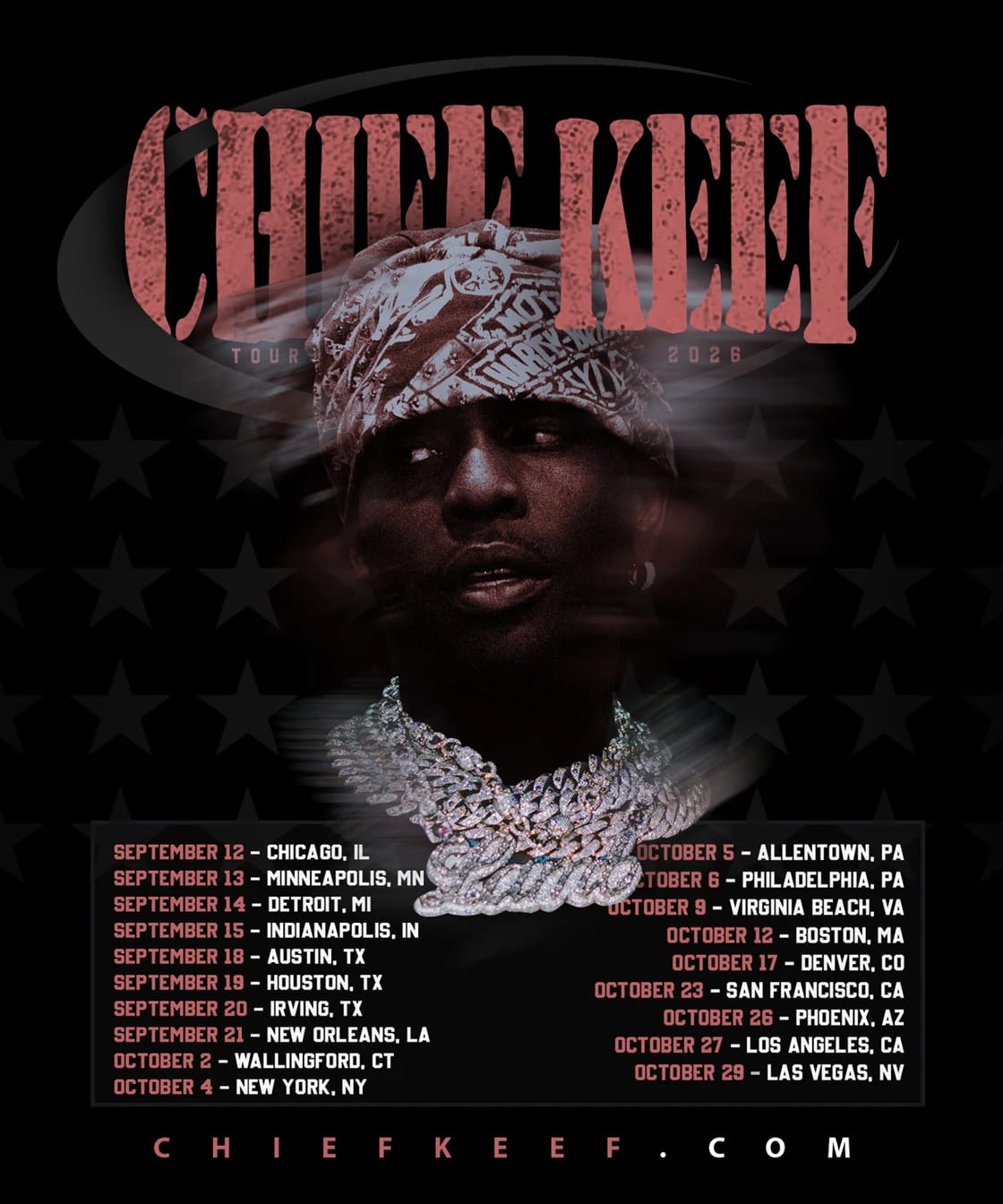
***+Read more:*** [*"Maroon 5 Played a Hedge-Fund Guy's Birthday — the Whole Town Showed Up."*](https://www.hypebot.com/maroon-5-played-a-hedge-fund-guys-birthday-the-whole-town-showed-up/)
For independent artists, not all of us can relate to what Chief Keef has been through, but there's a useful music-business lesson here.
An artist’s relationship with their local audience can survive years of institutional resistance. In fact, one's [local community](https://www.hypebot.com/tag/local/) is *always* where you should turn when things in your career go astray. Gatekeepers, promoters, and city officials don’t necessarily have to agree about your worth, if you build it from the ground up.
In this case, a sellout gig doesn’t amount to an apology from City Hall. But it gives an artist whose image once prompted authorities to pull the plug the hometown momentum they need to power the rest of an arduous national tour run.
---
## [**Chief Keef Tour Dates**](https://www.bandsintown.com/a/2268858-chief-keef?utm%5Fsource=hypebot&came%5Ffrom=900)
### Australia’s Venues Are Housed in Buildings They Do Not Own
URL: https://www.hypebot.com/australias-venues-are-housed-in-buildings-they-do-not-own/
Last updated: 2026-09-03T13:20:00.000Z
Live music needs *somewhere* in order to happen. There really can't exist any of the magic of a [live performance](https://www.hypebot.com/tag/live-performance/) without, um, a room.
I guess that room also needs some semblance of a stage, sound system, bathrooms, ventilation, and neighbors who will tolerate a bass drum after 10pm. But it also needs something that is becoming increasingly frought: a landlord willing to keep renting it to a [music venue.](https://www.hypebot.com/tag/venues/)
Right now, Australia's music scene is realizing that this isn't a given anymore.
On August 29, Sydney’s not-for-profit venue [**Lazy Thinking**](https://www.lazythinking.com.au/?ref=hypebot.com) [hosted its final show](https://events.humanitix.com/lazy-thinking-venue-farewell-show?ref=hypebot.com) in Dulwich Hill. The organization had been operating on a month-to-month lease when its landlord informed the team that it would need to leave the property by the end of the year. Rather than spend four more months maintaining a space it was certain to lose, the venue closed early to concentrate on finding a new, hopefully more sustainable home.
As the venue put it, there was little sense in continuing to subsidize a building it already knew it would lose. That brutal realization also reflects the fact that...
## **Even If the Venue Succeeds, the Lease Can Still Fail.**
Lazy Thinking wasn't just any old bar that occasionally put a band on in the corner, it had been [developing a not-for-profit model](https://www.hypebot.com/the-bar-tab-used-to-pay-for-live-music-clearly-it-doesnt-anymore/) supported partly through memberships, presenting non-commercial programming, and giving artists access to performance space. It was actively experimenting with how non-traditional venues can build community and turn a profit while doing it. But in the end, the building's owners still have the power to cut the cord.
As [*The Guardian* reports](https://www.theguardian.com/music/2026/aug/29/sydney-melbourne-brisbane-live-music-nightlife-crisis-venues-closed?ref=hypebot.com), this is part of a much larger pattern.
Brisbane’s [**Bearded Lady**](https://www.bandsintown.com/v/10028494-the-bearded-lady?utm%5Fsource=hypebot&came%5Ffrom=900) closed after lease negotiations failed. Adelaide’s long-running [**The Jade**](https://www.thejadeadl.com.au/?ref=hypebot.com)will close when its lease is not renewed. Melbourne’s [**Gasometer**](https://www.instagram.com/thegasometer/?hl=en&ref=hypebot.com) ended operations after the building’s owners reportedly rejected offers from another operator to take over the business.
> [ View this post on Instagram ](https://www.instagram.com/p/DMuaLGjqKyS/?utm%5Fsource=ig%5Fembed&utm%5Fcampaign=loading)
>
> [A post shared by The Gasometer Hotel (@thegasometer)](https://www.instagram.com/p/DMuaLGjqKyS/?utm%5Fsource=ig%5Fembed&utm%5Fcampaign=loading)
**+Read more:** [*"Tasmania Is Live Music's Most Confusing Frontier"*](https://www.hypebot.com/tasmania-is-live-musics-most-confusing-frontier/)
Other Australian venues have closed for different combinations of financial pressures, but the underlying vulnerability is remarkably consistent: venue operators invest years of labor into making a room culturally valuable while holding very little control over the property containing it.
They build the audience. They establish the reputation. They install the equipment. They manage the noise. They create the scene.
The landlord owns the appreciating asset.
But the timing of this trend couldn't be stranger. Only days earlier, the **New South Wales government** announced [$3.8 million in Venue Upgrade Grants](https://www.nsw.gov.au/departments-and-agencies/dciths/ministerial-media-releases/keeping-live-music-venues-alive-as-cost-crunch-hits?ref=hypebot.com) for 33 metropolitan and regional music rooms. This money will support genuinely useful improvements.
Cronulla’s **Brass Monkey** received $121,096 for its stage, speakers, backline, ventilation and soundproofing. **The Lansdowne** received $150,000 for solar panels and battery installation. Newcastle’s **King Street Hotel** received $500,000 for screens, lighting, and video equipment.
These are not frivolous [investments](https://www.hypebot.com/tag/investment/). Many venues have spent the past several years using every available dollar simply to remain open. Better sound, accessibility, energy efficiency and ventilation can improve conditions for artists, workers and audiences while lowering long-term operating costs.
But regardless of [grant financing](https://www.hypebot.com/small-venues-can-now-apply-for-10-000-live-music-society-grants/), whoever controls the lease still controls the future of a cultural space.

**Adelaide's The Jade.*
**+Read more:** [*"Pro Guide: How to Maintain Your Venue's PA System Over Time"*](https://www.hypebot.com/how-to-maintain-your-venues-pa-system-over-time/)
## **How About If the Community Owns the Room?**
This is not an abstract policy puzzle in Alice Springs. **The Black Wreath** has spent 15 years building a live venue, recording studio, rehearsal facility, record label and artist-development hub for Central Australia. Its operators say there is no comparable resource within 1,500 kilometers.
Now the property is being sold. Instead of waiting for another landlord, [The Black Wreath is attempting to raise AU$1 million](https://www.pozible.com/project/save-the-black-wreath?ref=hypebot.com) to purchase the building, place it in a trust and protect it for future generations. The campaign has already raised more than AU$690,000.
On September 12, more than 30 bands will perform simultaneously across Alice Springs, Sydney, Melbourne, Brisbane, Adelaide and Perth as part of [**Blacken Forever**](https://tickets.oztix.com.au/outlet/event/d2c655a9-ba6d-40cf-8372-f9a8f74d7586?ref=hypebot.com), a national effort to push the campaign across the finish line. It's an enormous amount of money for one independent community to raise, but there's hope.
The goal is not to transform promoters into property speculators. No venue manager really even *wants* that responsibility. The goal is to remove culturally important rooms from the most destructive and precarious aspects of real estate asset management.
Ownership does not necessarily need to belong to the venues either. In various models, buildings could be held by community land trusts, not-for-profits, or local governments acting as benevolent landlords. Longer cultural leases could protect music use. Governments could also help operators finance purchases rather than limiting support to equipment installed inside privately controlled properties.
Australia has become increasingly sophisticated about supporting what happens inside its music venues. It funds stages, soundproofing, lighting, and programming. It reforms noise rules and liquor licensing. And it recognizes venues as essential parts of the artist-development pipeline, but there are still mountains to climb.
---
*Get all the latest Music Industry & Live Music News updated continuously from across the web under the Hypebot Industry News tab* [*here*](https://www.hypebot.com/music-industry-news-feed/)*.*
## Hypebot
Essential news & insights for artists and live music pros.
Sign up for free weekly content delivered to your inbox
Subscribe
Email sent! Check your inbox to complete your signup.
### If Viral Content Doesn't Drive Streams, Then What Does?
URL: https://www.hypebot.com/if-viral-content-doesnt-drive-streams-then-what-does/
Last updated: 2026-09-02T15:44:24.000Z
*By *Bailey Koozer*, Founder of* [***Social Strategy with Bailey***](https://www.socialstrategywithbailey.com/?ref=hypebot.com)
It’s a random Tuesday. Your latest song is blowing up on [TikTok](https://www.hypebot.com/tag/tiktok/), and your phone won’t stop buzzing with reactions. But when you open [Spotify for Artists](https://www.hypebot.com/tag/spotify-for-artists/), it looks exactly the same as last week.
That gap between ***attention*** and ***action*** is where most artists get stuck, so often. And closing it requires optimizing for a completely different metric than views.
For [independent artists](https://www.hypebot.com/tag/indie-artists/) posting their music online, the end goal is turning their viewers into fans of their music. Views and likes can create the illusion of growth, but they rarely build an audience that sticks. Real signals come from behavior: people save songs they want to hear again, and they share songs they want others to discover.
When you start optimizing for saves and shares, not views, that’s when growth actually compounds.
How do we bridge the gap between short-form content and streaming behavior? It comes down to converting attention into intention and turning discovery into commitment.
The problem isn’t that TikTok doesn’t work. It’s that TikTok is designed to reward attention, while [streaming platforms](https://www.hypebot.com/tag/streaming-music/) require users to take action. A user can stumble across your song, enjoy a 15-second clip, and keep scrolling without ever seeking out the full track.
For that viewer to become a listener, your content needs to create more than a fleeting reaction. It needs to create enough curiosity or emotion to make them want to hear what comes next. Turning attention into intention starts with positioning your content in a way that gives people a reason to listen.
***+Read more:*** [*"What It Really Takes to Go Big on Spotify"*](https://www.hypebot.com/what-it-really-takes-to-go-big-on-spotify/)
If your content feels like an advertisement for your song, people will treat it like one. Instead, position your content around behaviors that make streaming more likely: curiosity, emotional connection, saves, shares, and repeat listening.
Ask yourself: ***What can I create that makes someone want to take one of those actions?***
[Storytelling](https://www.hypebot.com/tag/storytelling/) is a powerful way to do this because it gives the viewer emotional context.
For example, I worked with an artist who released a breakup song set in a bar. Instead of filming generic performance content, we leaned fully into that context. Every piece of content was shot inside an actual bar. That visual consistency made the song feel real and immersive. Viewers weren’t just hearing a track; they were experiencing the moment it was written about.
That shift in positioning led to the strongest release the artist had seen, both in reach and overall performance. The content drove a 53% increase in views on TikTok and a 23% increase on Instagram, outperforming previous releases and helping the song connect more deeply with new listeners.
More importantly, it gave the audience something to attach to. The setting reinforced the emotion, making the content more shareable, more memorable, and more likely to convert into real listening behavior.
You can also **lean into the curiosity gap** by giving viewers *just enough* context to make them want to hear more.
Here's an example. Write: *“I wrote this song after finding out something I wish I never knew.”* Then, let the music provide the payoff.
The same applies to performance content. Instead of opening with: *“Here’s my new song,”* connect the hook to the emotion behind it: *“I wrote this for anyone who stayed in a relationship long after they knew it was over.”*
The goal is to make your audience feel something strong enough to make them seek out the entire song. When you do this effectively, attention turns into [listeners](https://www.hypebot.com/tag/listeners/).
---
**Bailey Koozer* is the Founder of* [***Social Strategy with Bailey***](https://www.socialstrategywithbailey.com/?ref=hypebot.com)*, a Nashville-based marketing agency specializing in short-form content and digital advertising for artists. With a background in music business and experience across PR, social media, and paid campaigns, Bailey helps independent artists turn attention into measurable growth.*
### What’s More Radical: Daisy Chain Fields’ Poster Design or Its Women-Led Lineup?
URL: https://www.hypebot.com/whats-more-radical-daisy-chain-fields-poster-design-or-its-women-led-lineup/
Last updated: 2026-09-02T15:08:51.000Z
[**Olivia Rodrigo’s**](https://www.bandsintown.com/a/15456619-olivia-rodrigo?utm%5Fsource=hypebot&came%5Ffrom=900) inaugural [**Daisy Chain Fields festival**](https://www.daisychainfields.com/?ref=hypebot.com) made several statements that were impossible to miss.
The single-day event [brought 45,000 people](https://www.theguardian.com/music/2026/aug/30/daisy-chain-fields-festival-review-olivia-rodrigo?ref=hypebot.com) to **Great Park** in Irvine, CA, last week. Its women-led lineup stretched across generations, from **Bikini Kill, The Breeders, Garbage** and **Santigold to Mitski, Doechii, Chappell Roan** and **Rodrigo** herself. Every participating artist waived their fee. The festival ended up raising $10 million for ten [nonprofits supporting women](https://www.daisychainfields.com/non-profit?ref=hypebot.com) and girls, and [**Melinda French Gates** matched that amount](https://apnews.com/article/olivia-rodrigo-daisy-chain-fields-aa831e6e96d6e75f315ae35633c6cd06?ref=hypebot.com), which brought the total to $20 million.
But for Rodrigo and the organizers, this was about more than raising money. It was about visibility and how it interacts with who gets to have a voice in this space. On the festival poster, **every artist’s name was presented in the same-sized type** and **listed alphabetically**.
There was no enormous headliner, no second tier and no cluster of emerging acts in print so small it nearly became a disclaimer. Then the schedule carried the idea into the event itself: performances alternated between **two stages which never overlapped**, allowing attendees to see every artist on the bill.
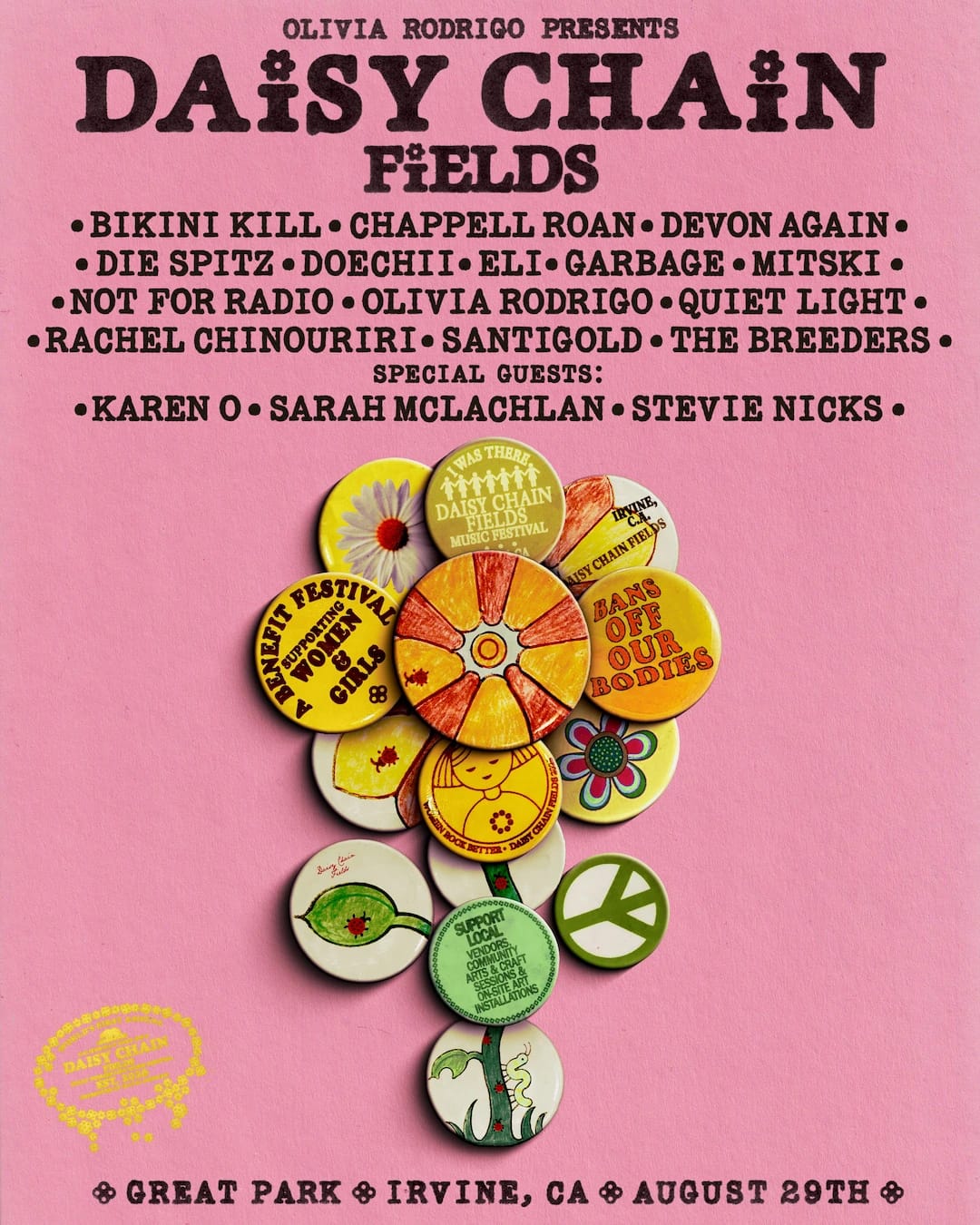
That invites an incredible question:
*Which was more radical — the decision to build a festival around women, or the decision to stop visually ranking them?*
## **A Festival Poster Is a Power Map**
The conventional festival poster looks like marketing, but it functions as an industry hierarchy made visible. **Font size** and **placement prominence** communicate drawing power, negotiating leverage and perceived cultural importance. The largest names are presented as the reason to buy the ticket. The smallest are framed as niche-attraction *additives* — valuable, perhaps, but ultimately *optional.*
Those distinctions do not begin with the graphic designer. They reflect real differences in ticket demand, career stage, set length, fees and contractual billing. Rodrigo still closed the Daisy Chain Fields evening, and equal lettering did not make every artist equally famous.
But design does more than reflect hierarchy. It *reinforces* it.
Before audiences hear a single note ring out, the poster tells them whose set is essential and whose can be skipped. It gives media outlets an instant shorthand for who “matters” on the bill. I love that this festival simply *declined* the temptation to use fame as the festival’s organizing visual principle.
What's more, the festival's booking approach to create a no-conflict stage schedule offers the same gesture, in never asking fans to choose between watching better- or lesser-known performers.
**Just some of the nonprofits that benefitted from the festival's fundraising. Courtesy of* [**Daisy Chain Fields Festival*](https://www.daisychainfields.com/non-profit?ref=hypebot.com).
## **Gender Equity Is About More Than Just Presence**
The poster also matters because festival gender imbalance has never been only a question of *how many* women are booked. It is about where they appear. In 2018, [Pitchfork analyzed nearly 1,000 artists across 20 major festival lineups](https://pitchfork.com/features/festival-report/tracking-the-gender-balance-of-this-years-music-festival-lineups/?ref=hypebot.com) and found that women were particularly scarce in the largest-font tiers. Four festivals had no female or mixed-gender acts at all among their top-billed 10%.
That is one reason the work of [**Book More Women**](https://www.bookmorewomen.com/?ref=hypebot.com) has been so effective, and why we support this group here at Hypebot emphatically. The organization began in 2018 by erasing male-only acts from festival posters, turning familiar lineup graphics into stark pictures of who was missing.
> [ View this post on Instagram ](https://www.instagram.com/p/DYfm3BoHCzy/?utm%5Fsource=ig%5Fembed&utm%5Fcampaign=loading)
>
> [A post shared by Book More Women (@bookmorewomen)](https://www.instagram.com/p/DYfm3BoHCzy/?utm%5Fsource=ig%5Fembed&utm%5Fcampaign=loading)
This intervention worked so well because the poster already contained the industry’s priorities; Book More Women simply made those priorities harder to ignore.
Its methodology has since become more exacting. Rather than counting a band as “diverse” because it includes a single woman or nonbinary member, Book More Women now researches the individual musicians who are actually being paid to perform.
Across nine major [US multi-genre festivals in 2025](https://bookmorewomen.substack.com/p/how-book-more-women-measures), 38% of acts included at least one woman or nonbinary musician under the organization’s original method. Count the people onstage, however, and women represented 21.6% of musicians, nonbinary artists 1.6% and men 77.4%. Across 130 festivals tracked in 2024 and 2025, just 17.3% of booked musicians were women and 1% were nonbinary.
**+Read more:** [*"Book More Women: The Data-Driven Initiative Pushing Music Festivals Toward Gender Equity"*](https://www.hypebot.com/book-more-women-the-data-driven-initiative-pushing-music-festivals-toward-gender-equity/)
This might help explain why Daisy Chain Fields is better described as women-led than strictly women-only.
A poster can show a full slate of female-fronted acts while the personnel onstage tell a more complicated story. Representation must be examined at every level: whose name is advertised, who gets the prestigious slot, who is hired to perform and who holds power behind the scenes.
In her recent OpEd for Hypebot, **Andie Aronow**, the founder of[**Women That Rock**](https://www.womenthatrock.co/?ref=hypebot.com), argues that despite the notable success at the tippy top of the Pop Music stardom ladder, imbalance still exists in all the lower rungs:
> *"Every few months, someone in entertainment press declares that it is the “year of women” in music. Taylor Swift, Beyoncé, or Lady Gaga drops another enormous record. Chappell Roan and Sabrina Carpenter dominate summer festivals. Charli XCX owns music branding and reshapes pop culture."*
> *The headlines suggest that *"we’ve ‘made it"* — that the industry has finally figured out how to support women. It’s a heartening narrative, but it’s also dreadfully incomplete."*
> *Though a handful of women are filling stadiums, thousands of equally talented women are still fighting for something much more basic: an equal shot at getting recognized in the first place."*
## **The Late '90s Might Have Something to Say About All This**
Daisy Chain Fields was inspired in part by [**Lilith Fair**](https://apnews.com/article/olivia-rodrigo-daisy-chain-fields-aa831e6e96d6e75f315ae35633c6cd06?ref=hypebot.com), the late-1990s touring festival created after[**Sarah McLachlan**](https://www.bandsintown.com/a/633-sarah-mclachlan?utm%5Fsource=hypebot&came%5Ffrom=900) encountered an industry that resisted booking women back-to-back. Back in 1997, Sarah McLachlan launched Lilith Fair to challenge the stubborn music-business assumption that audiences "wouldn’t turn out for multiple women on the same bill."
Building on successful shows with [Paula Cole](https://www.bandsintown.com/a/50399-paula-cole?utm%5Fsource=hypebot&came%5Ffrom=900)the previous year, McLachlan brought that challenge on the road as a touring festival showcasing [female artists](https://www.hypebot.com/tag/women-in-music/). It became the year’s highest-grossing touring festival, earning $16 million and returning in 1998 and 1999 — a pretty convincing rebuttal to the gatekeepers who doubted the demand.
McLachlan joined Rodrigo onstage Saturday, connecting two generations of artists who turned the "risky" booking decision into a cultural event.
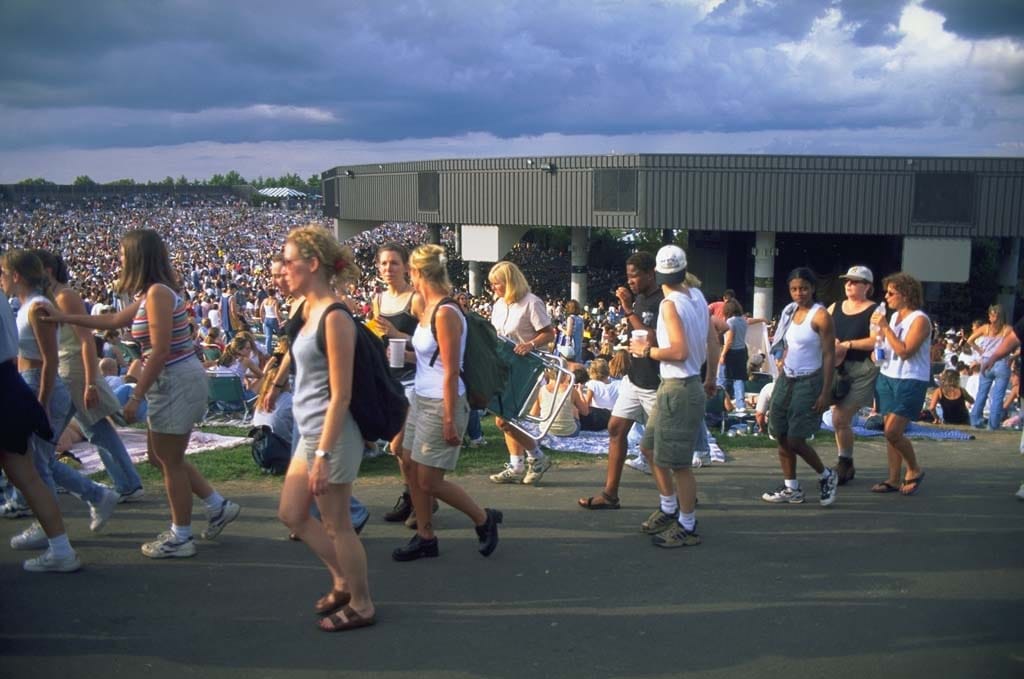
**The Lilith Fair festival stage, Sept. 22, 1998, in Mansfield, MA.*
Nearly three decades later, Daisy Chain Fields is asking similar questions. But this time, it's trying to tear down the entire business of hierarchical competition with it.
A male-dominated festival simply cannot typeset its way to gender equity right now. No matter which way you slice it, when male acts appear on a bill, old power structures will be upheld and reinforced. Even if the fonts are the same, women and non-binary artists are still being concentrated in earlier festival time slots and less visible stages.
The money raised, the connection to one of America's most popular touring festivals, the deconstruction of typographic hierarchy, the ambitious and impressive lineup all suggest one thing.
Daisy Chain Fields is tearing down the patriarchy, and all its derivative ills. We hope it comes back for a second year in 2027\. 🤞
---
## [**Olivia Rodrigo Tour Dates**](https://www.bandsintown.com/a/15456619-olivia-rodrigo?utm%5Fsource=hypebot&came%5Ffrom=900)
### Fan Appreciation Isn't a Tactic. It's a Mindset.
URL: https://www.hypebot.com/fan-appreciation-isnt-a-tactic-its-a-mindset/
Last updated: 2026-09-02T14:12:51.000Z
*This post originally appeared on* [***Venture Music Blog***](https://venturemusic.com/blog/fan-appreciation-g-e-v?ref=hypebot.com)
On September 12, 2025, [**Coldplay**](https://www.bandsintown.com/a/99-coldplay?utm%5Fsource=hypebot&came%5Ffrom=900) played the final show of their Music of the Spheres World Tour at [Wembley Stadium](https://www.bandsintown.com/v/10014931-wembley-stadium?utm%5Fsource=hypebot&came%5Ffrom=900). When the confetti cleared, they'd sold 13.1 million tickets across four continents. The most tickets ever sold for a tour in concert history.
It wasn't just the music. Coldplay hasn't had a consensus "best album" in over a decade, and plenty of critics have written them off. But the ticket sales tell their own story: 3.8 million in 2022, 3.2 million in 2023, 3 million in 2024, 3.5 million in 2025\. People kept coming back. (And they kept bringing friends.)
They're not the only ones. Fifteen days after Coldplay's final Wembley show, [**Zach Bryan**](https://www.bandsintown.com/a/15492027-zach-bryan?utm%5Fsource=hypebot&came%5Ffrom=900) walked onto the field at [Michigan Stadium](https://www.bandsintown.com/v/10115011-michigan-stadium?utm%5Fsource=hypebot&came%5Ffrom=900) in Ann Arbor. By the time he played his first note, 112,408 people were there, the most tickets sold for one show in US history. A few years earlier, he'd been recording songs on his iPhone outside a Navy barracks.
**So why them? Why now?**
These aren't anomalies. They're evidence of a pattern hiding in plain sight, and it comes down to how these artists demonstrate [fan](https://www.hypebot.com/tag/fan-base/) appreciation.
## Artists Aren't Entertainers. They're Community Leaders.
The artists who build lasting careers understand something fundamental: ***They're not just entertainers. They're community leaders.***
And the most effective community leaders, whether they're running a city, a company, or a fanbase, operate on three core principles: gratitude, engagement, and value. This isn't motivational fluff. It's peer-reviewed, [Goldman-Sachs-report-level](https://www.goldmansachs.com/insights/articles/global-music-revenues-are-forecast-to-double-to-200-million-in-2035?ref=hypebot.com) science. Coldplay and Zach Bryan are just two examples of where it shows up most visibly.
## Fan Appreciation: The Invisible Currency That Buys Loyalty
[Gratitude research published in *The Journal of Positive Psychology*](https://www.researchgate.net/publication/378508980%5FGratitude%5Fpredicts%5Fwell-being%5Fvia%5Fresilience%5Fand%5Fsocial%5Fsupport%5Fin%5Femerging%5Fadults%5Fa%5Fdaily%5Fdiary%5Fstudy?ref=hypebot.com) found that appreciation doesn't just make people feel warm and fuzzy. It's linked to building the kind of social bonds and support that make relationships stronger over time.
**When a leader expresses genuine appreciation, it changes the neurochemistry of the relationship.** People don't just like grateful leaders more. They trust them more. Proof of concept: [talent management firm Workhuman found](https://www.workhuman.com/blog/human-workplace-index-the-power-of-thanks/?ref=hypebot.com) that with as few as five moments of recognition per year, less than one "thank you" every two months, turnover drops by 22%.
But what does this have to do with artists leading communities?
***+Read more:*** [*"Fred again..’s Dropbox Photo Dump Understands the Moment"*](https://www.hypebot.com/fred-again-s-dropbox-photo-dump-understands-the-moment/)
## What Robert Emmons' Gratitude Research Says About Fan Loyalty
Psychologist Robert Emmons at UC Davis has spent decades studying this. [His research found](https://greatergood.berkeley.edu/article/item/why%5Fgratitude%5Fis%5Fgood?ref=hypebot.com) that people who feel genuinely appreciated experience higher levels of joy, optimism, and love, and are far less likely to slip into envy, resentment, or bitterness.
Now translate that from the boardroom to the stage… Coldplay’s Chris Martin spent time reading individual fans' signs, pointing them out in the crowd, thanking them one by one. At one point, he invited a group of friends on stage to help him sing. A stadium show that somehow felt intimate.
But **Martin's fan appreciation wasn't just verbal. It was built into the show itself.** LED wristbands turned every fan into part of the light show. Every ticket planted a tree. Every dance on the kinetic floors, or ride on the energy-storing stationary bikes, helped power the next show. **Coldplay told 13 million people: *your presence here matters, and we built the entire experience to prove it.***
Zach Bryan's version, while different, operates from the same principle. During his Quittin' Time tour, he started gifting guitars to fans at the end of shows. At a charity auction, he personally bid $4,000 on his own *DeAnn* vinyl, then handed it straight to a fan in the crowd. These are examples of direct, specific ways of saying thank you that stick with the people who showed up.
But it has to be real. **Fans have the most sophisticated BS detectors on the planet.** A generic *"love you guys!!!"* in a caption doesn't move anything. Specific, personal, unexpected gratitude does. The artist who DMs a fan who made cover art. The rapper who shouts out the person by name from the meet and greet before the show. The singer who remembers a fan's sign from three cities ago. **That's what activates trust at a neurological level,** [**the same neurological response that turns casual listeners into devoted fans**](https://venturemusic.com/blog/how-to-build-a-fanbase?ref=hypebot.com)**."**
Fan appreciation isn't just good karma though. It's good business.
[**A 2024 survey of 1,000 superfans**](https://www.fancircles.com/blog/music-industry-report-2025/?ref=hypebot.com) **found that 73% felt artists who regularly engage with their fan community come across as more genuine and relatable.** And here's the part that matters for your bottom line: the more genuine the artist seems, the more money fans spend. [Luminate's 2024 Year-End Report](https://luminatedata.com/reports/yearend-music-industry-report-2024/?ref=hypebot.com) shows superfans spend 80% more on music each month than the average listener, (105% more on physical purchases, and 66% more on live events.)
It literally pays to express gratitude and engage with your people.
## Fan Engagement: From Passive Listeners to Active Participants
Here's a stat that should reframe your strategy: [72% of music fans now discover new artists through social media](https://www.researchgate.net/publication/347441254%5FMusic%5Fsales%5Fand%5Fartists%5Fpopularity%5Fon%5Fsocial%5Fmedia?ref=hypebot.com). **And the artists who win aren't posting the most content...They're creating the most participation.**
The research backs up why this works.[A study from Portland State University on parasocial relationships in music](https://pdxscholar.library.pdx.edu/cgi/viewcontent.cgi?article=2371&context=honorstheses&ref=hypebot.com) found that **when artists create opportunities for direct interaction and shared experience, fans stop being consumers and start becoming what researchers described as "relational partners."** They feel ownership. They feel responsible for the artist's success.
**Tyler, the Creator** understood this deeply. **When Odd Future exploded in the early 2010s,** it wasn't because of a huge marketing budget. **It was because their Tumblr page made fans feel like family.** It gave fans a front-row seat to the group's actual day-to-day -- a masterclass in [how to use storytelling to build your fanbase](https://venturemusic.com/blog/extend-storytelling-through-marketing?ref=hypebot.com) \-- sleeping on each other's floors, dealing with sketchy promoters, eating fries at diners together. By the time Tyler won a VMA, the day-one followers felt like they'd gone on the same journey.
[**Brandi Carlile**](https://www.bandsintown.com/a/1863-brandi-carlile?utm%5Fsource=hypebot&came%5Ffrom=900) **built another powerful example of fan loyalty** in a completely different genre. Her fan community, *the Bramily,* operates with a level of mutual care that borders on radical. **Her Girls Just Wanna Weekend festival isn't just a concert series in Mexico.** It's an annual gathering where fans ride-share with strangers, room-share with people they met online, and sometimes cover each other's trips when money is tight.
The [festival](https://www.hypebot.com/tag/festivals/) features an all-female and female-fronted lineup, days of service where fans pack school supplies for local communities, and spontaneous collaboration between artists that makes it feel like something that can't happen anywhere else. **As Carlile told Variety, that kind of community and intimacy is almost unheard of in a fanbase.**
[The International Journal of Music Business Research published a formal Artist-Fan Engagement Model](https://musicbusinessresearch.wordpress.com/wp-content/uploads/2018/10/volume-7-no-2-october-2018%5Fstewart%5Ffinal.pdf?ref=hypebot.com) that maps how fans move from initial emotional response, through discovery, to active community participation. The research is clear: [engagement creates gravity](https://venturemusic.com/our-approach?ref=hypebot.com#gravity). **The artists who build systems that pull fans deeper into their orbit are the ones who build careers that last.**
As one artist in the [Portland State study](https://pdxscholar.library.pdx.edu/cgi/viewcontent.cgi?article=2371&context=honorstheses&ref=hypebot.com) put it, **any relationship, if you take care of it, is going to flourish, and you're going to have more committed people.**
So how do you actively drive engagement?
Stop broadcasting. Start building feedback loops. ([Email is a great place to do this](https://venturemusic.com/blog/email-marketing-for-musicians?ref=hypebot.com).) Ask questions. Create spaces where fans interact with each other, not just with you. **The strongest communities are the ones where members have relationships with one another. Your job is to be the reason they gathered.**
***+Read more:*** [*"Indie Playlist Pitching Is Broken. Here’s How to Know if You’re Getting Played"*](https://www.hypebot.com/indie-playlist-pitching-is-broken-heres-how-to-know-if-youre-getting-played/)
## Value: How to Build a Fanbase That Buys Into More Than the Music
[Kevin Kelly's "1,000 True Fans" theory](https://venturemusic.com/blog/1000-true-fans?ref=hypebot.com) proposed that a creator needs just 1,000 people willing to spend $100 a year to make a living. The math is clean. The reality is more nuanced... Kelly himself later acknowledged that few artists pull it off with music alone.
But the principle holds up: **you don't need millions of casual listeners. You need a** [**core community that finds so much value in what you offer**](https://venturemusic.com/blog/what-is-a-superfan?ref=hypebot.com) **that they keep coming back, keep buying, and keep telling their friends.**
And value doesn't just mean music.
**Chance the Rapper proved this by literally giving the music away for free.** *Coloring Book* was the first streaming-only project to win a Grammy for Best Rap Album. Chance never sold it, never signed a major label deal. Instead, **he built value that went beyond the songs:** he founded SocialWorks, a Chicago nonprofit focused on youth empowerment, and personally donated $1 million to Chicago Public Schools when state funding hit a crisis point, which triggered contributions from the Chicago Bulls, Google, and Jewel-Osco. The New Chance Fund ultimately raised $2.2 million for local schools. Chance still made $33 million that year, [according to Forbes,](https://www.forbes.com/sites/hughmcintyre/2017/09/28/chance-the-rappers-earnings-show-just-how-much-the-music-industry-has-changed/?ref=hypebot.com) without selling a single album. His pitch wasn't *"buy my record."* It was *"I'm building something for our community, and supporting me means supporting that."* **Fans bought tickets and merch because they were buying into a purpose, not just a product.**
**Tyler, the Creator** took a different path to the same place. Golf Wang started as Odd Future merch, loud hoodies and cartoonish designs. By 2022, it had a flagship store on Fairfax Avenue in Los Angeles, a luxury sub-line with Converse that sold out instantly, and annual revenue in the tens of millions. The brand works independently of his music. People who've never heard his albums buy Golf Wang for the aesthetic alone. Add Camp Flog Gnaw, the festival he owns and curates, and **you've got an artist who built an entire world: music, fashion, festival, film, fragrance. Each piece feeds the others.**
**Nipsey Hussle** was the blueprint for this thinking. [He told Mass Appeal](https://djbooth.net/features/2018-03-28-nipsey-hussle-diversify-product-line/?ref=hypebot.com) that **artists need to see themselves as content creators with a product line, not just musicians with a catalog.** He pointed to Disney's model: the music is the IP, but the value extends into clothing, experiences, education, and community development. Nipsey built The Marathon Clothing store, created Vector90, a STEM co-working space in South Central LA, and launched Our Opportunity, a coalition for redeveloping underserved neighborhoods. **Every venture added value to his community, his brand, and his fans' sense that supporting Nipsey meant supporting something bigger than a record.**
The data backs this up industry-wide. [**Luminate reports that superfans engage with artists in five or more distinct ways:**](https://luminatedata.com/blog/why-are-super-fans-so-valuable/?ref=hypebot.com) **streaming, social media, physical purchases, merch, and live events.** These fans are 54% more likely to discover new music first, 59% more likely to seek personal connections with artists, and 43% more likely to participate in artist communities.
The **Pareto Principle** holds in music like it does everywhere else. **Roughly 80% of revenue comes from 20% of fans.** [Luminate's data shows](https://luminatedata.com/reports/yearend-music-industry-report-2024/?ref=hypebot.com)that 20% of US music listeners qualify as superfans, and they spend $113 per month on live events alone (66% more than the average listener). They spend $39 per month on physical purchases, more than double the average. Seven out of ten superfans buy their favorite artist's merch, compared to just 26% of general listeners.
We're not saying you need to create something at the same scale as these examples, but the takeaway here is simple: **Your music is the entry point, not the entire offering. Think about what your community actually needs, not just what they'll buy, but what would genuinely improve their lives or make them feel like insiders.** That's value.
## The G-E-V Mindset: How It All Connects
Here's what ties this whole framework together…It's not three separate strategies. It's a flywheel. **Fan appreciation** builds trust. **Trust** increases engagement. **Engagement** reveals what your community values. **Delivering value** deepens the gratitude your fans feel toward you, and toward each other.
And the cycle speeds up.
Coldplay's gratitude toward fans and the planet drives deeper engagement: fans keep showing up, keep participating in the show itself. That engagement tells Coldplay what their community values, and they deliver on it with more sustainability innovations and inclusive experiences, like partnering with KultureCity to make shows accessible for fans with sensory needs. The community responds with even more loyalty: 13 million tickets, the most attended tour in history.
Zach Bryan's direct, personal gestures of gratitude, gifting guitars, handing a fan his own vinyl, build the same kind of trust at a smaller scale. Fans feel appreciated and seen, and he keeps delivering value through unpolished live shows and a refusal to compromise authenticity for commercial polish. His community grows not through algorithms, but through trust, until 112,408 of them show up at The Big House.
Brandi Carlile creates a space where women and the LGBTQ+ community feel safe and celebrated. *The Bramily* engages by caring for each other, and she delivers value through experiences like Girls Just Wanna Weekend that fans can't have anywhere else. A fan community that feels more like family grows stronger every year.
**The artists who struggle are almost always missing one piece of the flywheel.** They might make incredible music but never engage with fans. They might engage constantly on social media but never express real appreciation. They might be the most grateful person in the room but never create anything beyond the music itself.
The G-E-V Mindset isn't about being perfect. It's about recognizing that **lasting careers in music are built on the same foundation as any thriving community: gratitude, engagement, and value.**
You're not just an entertainer. You're a community leader. Act like one.
---
*Need help figuring out what that might look like in your music career?* [*Get in touch with Venture Music here.*](https://venturemusic.com/contact?ref=hypebot.com)
### California Ticket Bill AB 1349 Passes, NIVA Calls For Veto
URL: https://www.hypebot.com/california-ticket-bill-ab-1349-passes-niva-calls-for-veto/
Last updated: 2026-09-02T13:49:39.000Z
Following the late-night passage of **California Assembly Bill 1349 (AB 1349)**, the [**National Independent Venue Association (NIVA)**](https://www.hypebot.com/tag/niva/) is calling on **Governor Gavin Newsom** to veto the legislation.
What began as a landmark effort to ban speculative 'ghost' ticket sales was altered in final legislative sessions, creating major loopholes that NIVA says protect multi-billion-dollar resale platforms while shifting more legal liability onto independent venues, artists, and fans.
### **How Last-Minute Amendments Altered AB 1349**
The amendments came after StubHub led a $3 million lobbying effort.
AB 1349 was originally championed by independent music advocates to outlaw ghost ticketing - the predatory practice where secondary sellers list and sell tickets they do not actually own.
However, as the bill moved through the California State Senate and Assembly ahead of this week's session deadline, last-minute amendments fundamentally reshaped the text.
Ticket resale marketplaces like [**StubHub** secured exemptions](https://www.hypebot.com/niva-top-orgs-urge-ca-lawmakers-to-vote-no-on-ticket-bill/), while small businesses, nonprofit stages, and independent promoters were left exposed to legal exposure for standard primary sales practices, according to NIVA.
> “AB 1349 could have been an opportunity to stop the sale of ghost tickets across the State of California, ensuring what happened during the World Cup and what happens every night at independent venues is illegal,” said **Stephen Parker, NIVA’s Executive Director**. “Instead, AB 1349 abdicates multibillion-dollar resale platforms like StubHub from true accountability for selling ghost tickets. It puts the small businesses and nonprofits that put on shows every night at risk.”
### **4 Ways NIVA Says AB 1349 Hurts Fans and Independent Stages**
NIVA outlined four dangers embedded in the final version of AB 1349 passed by the state legislature:
1. **Exposes Indie Stages to Lawsuits:** Creates a private right of action for speculative ticket sales that targets independent venues, festivals, and presenters, while shielding the secondary marketplaces where ghost tickets are actually listed and sold.
2. **Reclassifies Standard Primary Sales as "Resale":** Designates primary venues and promoters as "resellers" simply for running routine fan presales, waitlists, or VIP packages - even though these are face-value primary sales set directly by the artist.
3. **Gives Secondary Marketplaces a Free Pass:** Explicitly exempts corporate ticket resale marketplaces like StubHub from being classified as speculative ticket sellers, despite their track record of hosting unverified listings.
4. **Strips Away Consumer Transparency:** Removes the legal requirement that secondary listings display seat and row numbers, eliminating a crucial consumer protection that lets fans confirm a ticket exists before buying.
### **An Industry Call to Action**
NIVA, along with a coalition of artists, independent stages, and live music supporters, is mobilizing fans and venue operators to contact Governor Newsom immediately to request a formal veto.
The advocacy group emphasized that it remains committed to working with California lawmakers in the upcoming legislative session to pass genuine anti-speculative ticketing reform that holds secondary platforms accountable without penalizing local live music ecosystems.
**NIVA is asking venues, fans and the industry to send Governor Newsom a message to veto AB 1349** [**here**](https://secure.everyaction.com/cVBo%5F85H2UGXCuTYuWRlQQ2??ref=hypebot.com)**.**
### The Importance of Authenticity and Ongoing Fan Base Growth
URL: https://www.hypebot.com/the-importance-of-authenticity-and-ongoing-fan-base-growth/
Last updated: 2026-09-02T13:40:23.000Z
On this week's [**Music Biz Weekly** **podcast**](https://www.hypebot.com/tag/music-biz-weekly/)**,** Blasko and Michael dig into two essential practices that every band should implement, but too often overlook.
**Blasko** shared the critical importance of authentic artistic expression, arguing that independent artists must genuinely connect with their unique experiences rather than relying on familiar topics. You risk becoming forgettable when you don't share your own authentic perspective.
Both discussed how authenticity applies to artists at every career stage, from new artists working to attract their first fans to established veterans who risk losing connection with their audience by singing about topics that no longer reflect their current reality.
**Michael** focused on the fundamental need for ongoing fan base retention and growth. He stresses that artists must actively ask followers to subscribe, follow, and engage across multiple platforms, instead of assuming that fans will find them organically. If not, your number of active followers will naturally decrease over time.
The pair also highlighted how fan metrics are now currency in the music business, with booking agents and other industry pros primarily evaluating artists based on their visible social media engagement and follower counts.
### Watch and listen here or on your favorite podcast platform.
---
*Get all the latest Music Industry & Live Music News updated continuously from across the web under the Hypebot Industry News tab* [*here*](https://www.hypebot.com/music-industry-news-feed/)*.*
## Hypebot
Essential news & insights for artists and live music pros.
Sign up for free weekly content delivered to your inbox
Subscribe
Email sent! Check your inbox to complete your signup.
### New Zealand's Music Industry Is Sick of Waiting to Be Taken Seriously
URL: https://www.hypebot.com/new-zealands-music-industry-is-sick-of-waiting-to-be-taken-seriously/
Last updated: 2026-09-01T18:49:59.000Z
Ahead of the country’s 2026 election, 12 music organizations across **New Zealand / Aotearoa’s music industry** have united behind a manifesto calling for a national growth strategy.
Led by **Recorded Music NZ** and developed with **APRA AMCOS**, the **NZ Music Commission** and other partners, it connects artist development, exports, copyright, education and the infrastructure that makes musical careers possible. [The NZ Music Commission announced the coalition on August 26.](https://nzmusic.org.nz/music-commission-news/aotearoa-music-organisations-share-2026-nz-music-industry-manifesto/?ref=hypebot.com)
The manifesto puts the sector’s 2024 contribution to GDP at **NZ$928 million**, while saying music receives **less than 5% of government arts funding**. You can [read the full manifesto here](https://cdn.sanity.io/files/oursm957/development/7388be6d5d40589123afbc5135b35aa4071d1030.pdf?ref=hypebot.com). It states that “the music industry is not asking for handouts,” however, it *is* asking for a plan to be put in place that reflects this national economic contribution.
[](https://nzmusic.org.nz/music-commission-news/aotearoa-music-organisations-share-2026-nz-music-industry-manifesto/?ref=hypebot.com)
And not for the first time: a [2023 manifesto from the same three lead organizations](https://www.apraamcos.co.nz/about-us/news-and-events/2023-music-industry-manifesto?ref=hypebot.com) sought a properly resourced, multiyear strategy and stronger routes to international success.
Another election. Another request to think beyond the next funding round.
**Artist: Emerson. Photo by Chontalle Musson (courtesy of* [**NZ Music Commission*](https://nzmusic.org.nz/?ref=hypebot.com)**)*
## **What would taking music seriously actually involve?**
For starters, bringing music into the remit of the Ministry of Business, Innovation and Employment, recognizing its growth potential alongside screen and games, and introducing a tax rebate for businesses that develop and create music.
The financial requests include NZ$2 million annually for regional touring, NZ$3 million for organizations delivering professional development, and NZ$5 million for an export strategy, including expanded support through Outward Sound. The coalition also wants music represented in trade missions, as outlined in [*Rolling Stone AU/NZ*](https://au.rollingstone.com/music/music-news/nz-music-industry-issues-seven-point-manifesto-ahead-of-2026-election-100284/?ref=hypebot.com),
But the document isn’t really an invoice. It calls for venue support and changes to noise and liquor-licensing rules; at least one New Zealand support act on international shows and tours; investment in Māori-led music creation and development; and better-resourced music education. On [AI](https://www.hypebot.com/tag/ai/), it opposes new copyright exceptions for training and seeks transparency about training material.
Note that these remain industry proposals, not a newly approved government package. In essence, the argument is bigger than any individual grant: teaching someone to make music, helping them build a business, protecting their work and reaching overseas audiences should be connected parts of a **national strategy.**
**Artist: IA. Photo by Dave Simpson (courtesy of* [**NZ Music Commission*](https://nzmusic.org.nz/?ref=hypebot.com)**)*
## **The people behind the policy**
Recorded Music NZ CEO **Jo Oliver** [has described](https://www.1news.co.nz/2026/08/31/nz-music-industry-launches-election-manifesto-calling-for-greater-support/?ref=hypebot.com) a growing market in which local artists still struggle to secure their share. Country artist [**Kaylee Bell**](https://www.bandsintown.com/a/4841567-kaylee-bell?utm%5Fsource=hypebot&came%5Ffrom=900)said her touring overheads had roughly doubled over three years, while travelling with a team of at least 20 New Zealanders. She also credited opening for Ed Sheeran with transforming her career.
[**The Beths’**](https://www.bandsintown.com/a/11242378-the-beths?utm%5Fsource=hypebot&came%5Ffrom=900) **Jonathan Pearce** put the venue problem plainly:
> *“If we lose those spaces, there'll be nowhere for you as an artist to conduct your enterprise.”*
Enterprise. That pretty much sums up the argument for the coalition. They want to be considered an equitable investment partner in the growth of the country. A venue is somewhere to gather, certainly. It is also somewhere musicians work, technicians earn and artists learn whether an audience actually wants what they’re making.
Nor is government investment in music an entirely foreign concept. In June, the government highlighted support for [**Post Malone’s** New Zealand concert](https://www.beehive.govt.nz/release/global-stars-shine-new-zealand-boosting-cities-and-regions?ref=hypebot.com) through its Events Attraction Package, pointing to the economic benefits of major performances.
**Artist: Bub. Photo by Chontalle Musson (courtesy of* [**NZ Music Commission*](https://nzmusic.org.nz/?ref=hypebot.com)**)*
Hence: If bringing international stars into New Zealand is economic development, shouldn’t building careers for New Zealand artists be treated that way too?
All New Zealand / Aotearoa’s music industry wants is a country that can do more than celebrate the artists who make it what it is. It wants a serious plan for how the next ones get there.
### New Report Asks Who Owns the Systems Behind Indie Music?
URL: https://www.hypebot.com/new-report-asks-who-owns-the-systems-behind-indie-music/
Last updated: 2026-09-01T16:27:01.000Z
Research company **STVDIO** has released its first quarterly report, [***Independent Music 2026: The Fight for Music’s Infrastructure***](https://stvdio.io/reports/?ref=hypebot.com), with support from [Secretly Distribution](https://secretlydistribution.com/?ref=hypebot.com).
Written by STVDIO founder **Benjamin James**, the report examines who controls the tools and services independent artists rely on — and where the sector has opportunities to build alternatives.
Its starting point is encouraging: the report puts **independent music’s share of global recorded music revenues at 46.7%.** But its central argument is that a growing share of the music doesn’t necessarily translate into greater control over the business surrounding it.
Drawing together industry deals, platform developments, and artist examples, the report identifies several issues worth watching.
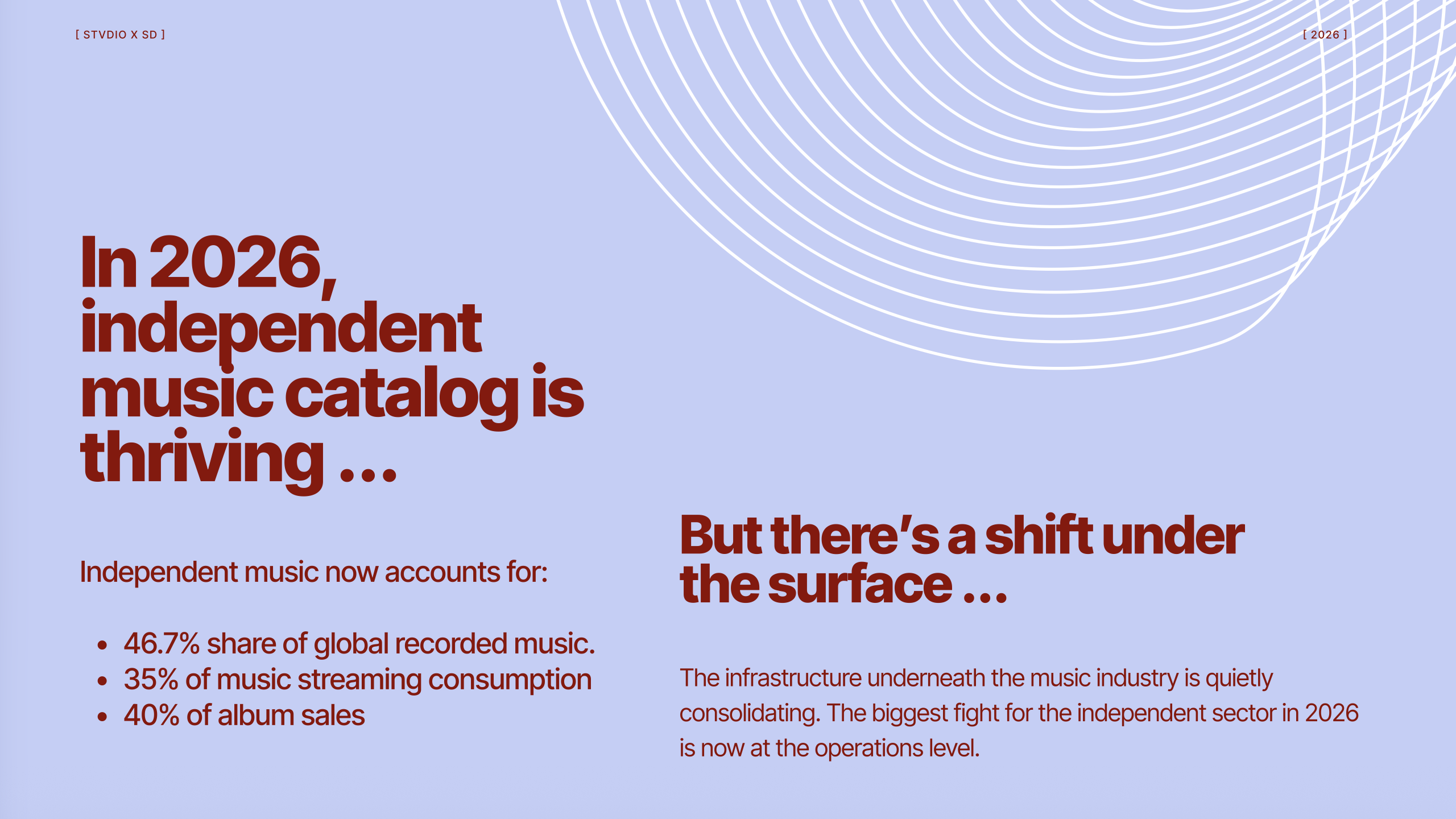
## **1\. Keeping your masters is only part of the independence question.**
An artist can retain their [copyrights](https://www.hypebot.com/tag/copyright/) while relying on distribution, royalty accounting, or publishing administration systems controlled by a major music company. The report traces how acquisitions — including **Sony’s** purchases of **The Orchard** and **AWAL** — have expanded major-label involvement in independent releases.
For artists, that makes the ownership behind a service worth understanding alongside its pricing and features. The report argues that control over these systems brings access to valuable data and influence over how music reaches the market.
## **2\. AI licensing offers an opening, with plenty still unresolved.**
STVDIO argues that independent organizations have an opportunity to help establish consent, attribution, and payment standards as AI music licensing develops. It highlights **Merlin’s** and **Kobalt’s** agreements with **ElevenLabs** as examples of opt-in arrangements that allow participating rights holders to share in revenue.
But the report also acknowledges how much remains unsettled, including how a catalog’s contribution to a model should be measured and how payments should be calculated.
Participation is another question. According to the report, Secretly Distribution offered the license to more than 100 label partners; only three labels and seven artists opted in. The potential business opportunity clearly hasn’t resolved artists’ concerns about the technology.
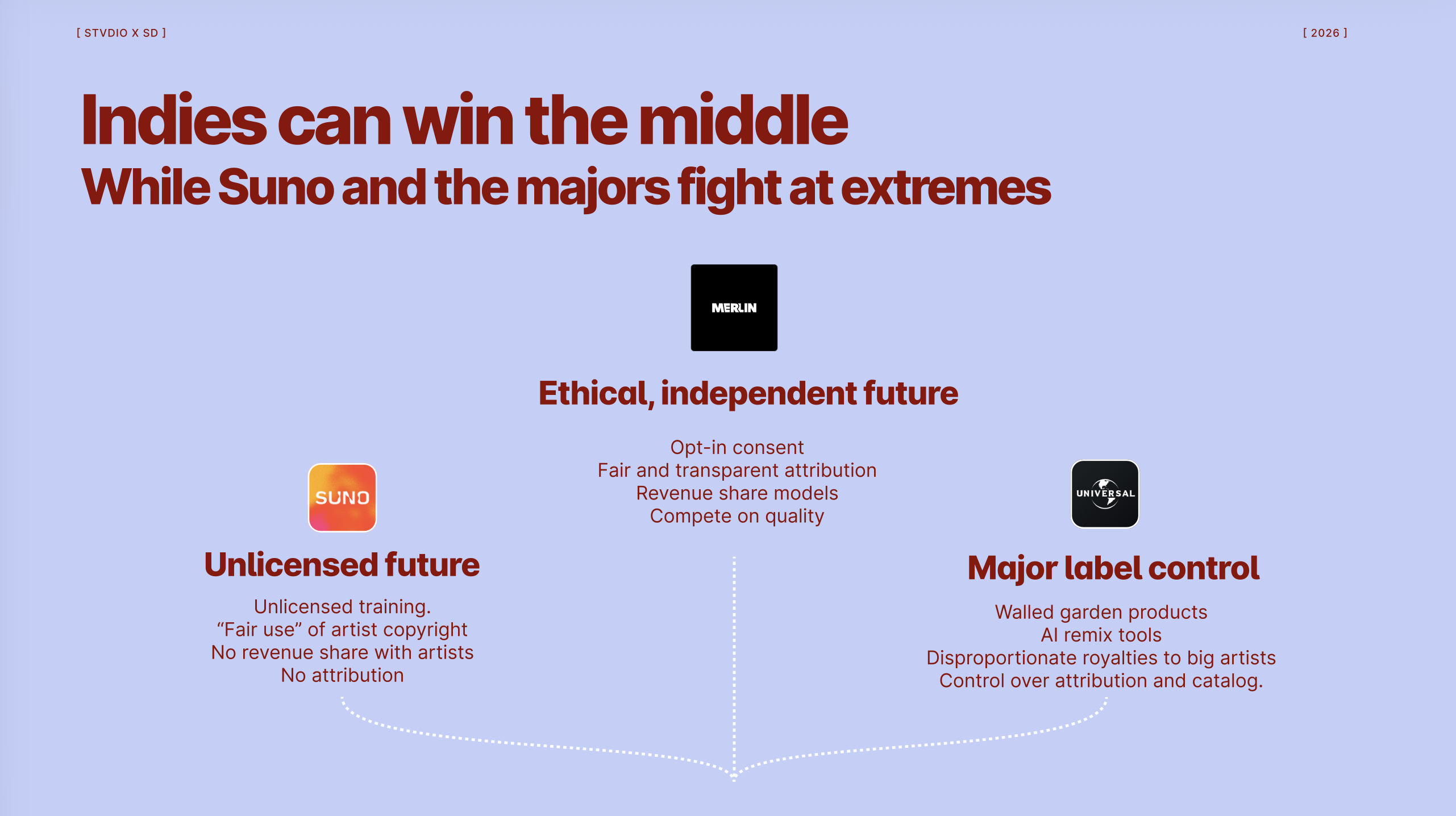
## **3\. Independent companies can build more together.**
The report points to collective investment as one way to preserve alternatives to [major-label](https://www.hypebot.com/tag/major-labels/) and investor-controlled services. Among its examples: 24 independent labels investing in streaming platform **Cantilever** through an effort organized by **ORCA,** and **Merlin** partnering with **Jamen Capital** to acquire **Curve Royalty Systems.**
The argument is practical: independent businesses can pool resources to support the services they need, including the less visible systems that track and distribute royalties.
## **4\. Smaller streaming services have room to serve specific audiences.**
Rather than assuming every platform needs to offer everything to everyone, STVDIO highlights services built around particular listening habits, genres, or markets.
Cantilever, for example, offers a rotating selection of roughly ten handpicked albums per month and allocates each subscriber’s royalties to the albums they actually hear. The report also discusses **Qobuz, Audiomack,** and specialist services such as classical platform **Idagio**, examples of opportunities for discovery and listening experiences tailored to particular communities.
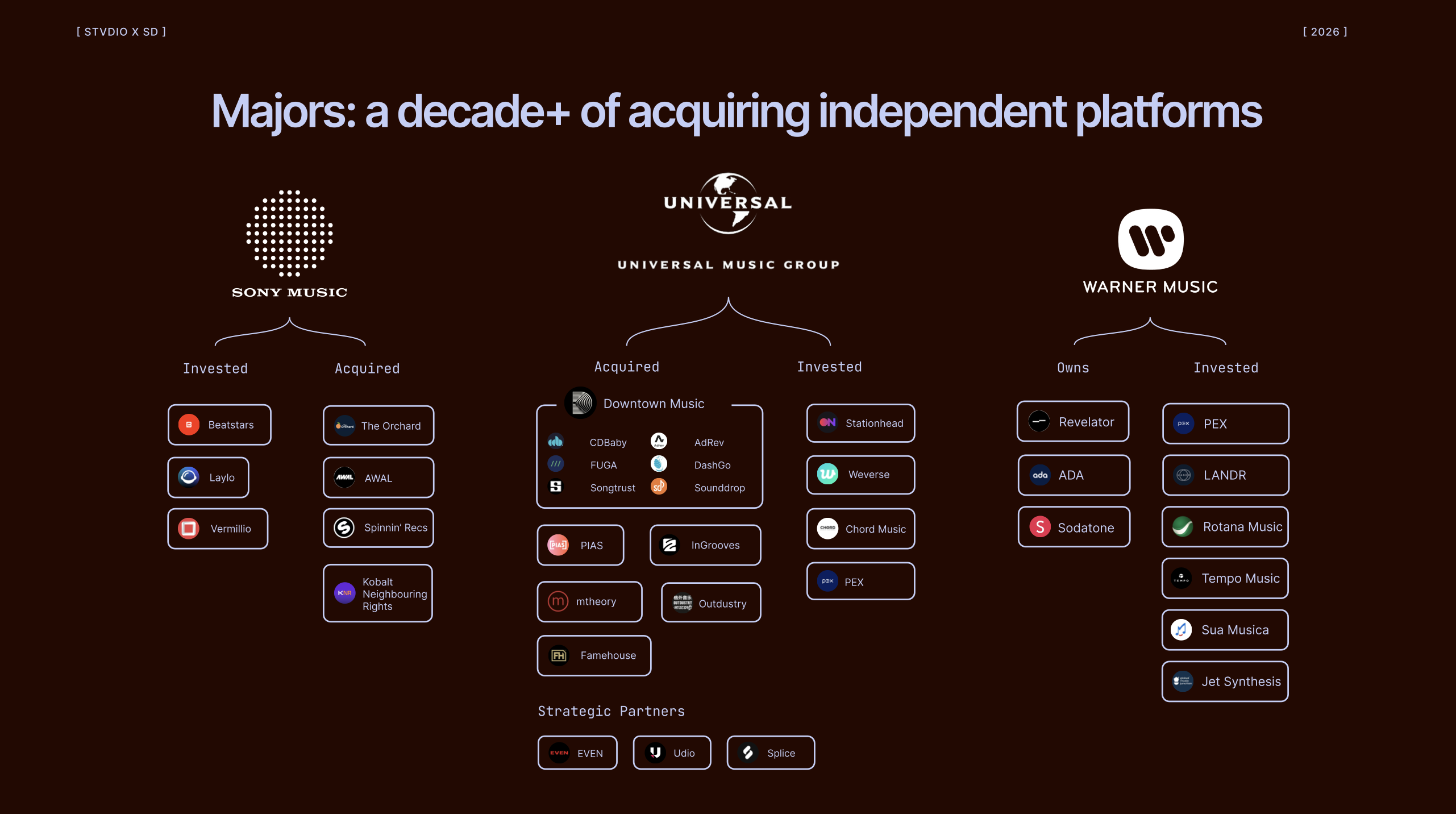
## **5\. Direct fan relationships are becoming tangible business assets.**
The report cites **Mitski** converting more than 200,000 fans to her mailing list through Instagram tour announcements, and **Japanese Breakfast** collecting hundreds of phone numbers per night using venue QR codes.
For working artists, this may be the most immediately useful takeaway: releases and concerts create moments when listeners have a reason to stay connected. Giving them a clear way to subscribe can help turn that attention into an ongoing relationship an artist can maintain directly.
*Read and download Independent Music 2026: The Fight for Music’s Infrastructure through* [*STVDIO’s reports page*](https://stvdio.io/reports/?ref=hypebot.com)*.*
---
***Get the latest Live Music & Industry News updated continuously from across the web under the Hypebot Industry News tab*** [***here***](https://www.hypebot.com/music-industry-news-feed/)***.***
## Hypebot
Essential news & insights for artists and live music pros.
Sign up for free weekly content delivered to your inbox
Subscribe
Email sent! Check your inbox to complete your signup.
### Artists Don’t Have a Content Problem. They Have an IP Problem.
URL: https://www.hypebot.com/artists-dont-have-a-content-problem-they-have-an-ip-problem/
Last updated: 2026-09-01T15:46:56.000Z
*By* [***Reece Hallum***](https://liminl.music/?ref=hypebot.com)
For the past few years, independent artists have been given essentially the same career advice: post more. And then post some more.
Feed the algorithm. Stay visible. Make short-form video. Tell the story behind the song. Turn one release into twenty pieces of content. Don't disappear between releases.
[Social platforms](https://www.hypebot.com/tag/social-media/) have transformed music discovery, and I'm not arguing with that. For an [independent artist](https://www.hypebot.com/tag/d-i-y/) without a label machine behind them, direct access to an audience is enormously valuable. But somewhere along the way, we've confused two different things: the mechanism for getting attention and the thing that deserves the attention in the first place.
The scarce thing isn't content. It's the thing worth making content about (*a.k.a.,* you.)
## **The Content Treadmill**
I've spent a lot of time on both sides of this. [I'm an independent songwriter](https://liminl.music/?ref=hypebot.com), but I've also spent years working in communications and creative strategy. I've watched good creative work get pulled into a marketing machine and come out looking strangely similar to everything else.
The announcement video, the teaser, the lyric clip, the behind-the-scenes clip, the talking-to-camera explanation, the acoustic version, the meme and then another post explaining the meme.
None of that is inherently bad. I've made plenty of this stuff myself. Some of it is smart marketing. Sometimes the stupid little reel you made in ten minutes is the thing that gets someone to listen. The problem starts when marketing begins determining the [creative strategy](https://www.hypebot.com/tag/marketing-strategy/).
If an artist is spending more time figuring out what to post about a song than figuring out what the song could become, something has gone slightly wrong. A [post performs well](https://www.hypebot.com/tag/virality/), so you make another. A format works, so you repeat it. A trend appears, so you adapt it. A release doesn't perform, so perhaps the answer is another five videos.
Before long, an artist can be extraordinarily productive without actually building very much. The danger is that the activity itself can start to feel like progress, even when very little is accumulating underneath it.
## **The Artist and the Influencer Are NOT Building the Same Thing**
Part of the problem is that musicians are increasingly being handed a playbook built for influencers, who build businesses around their ability to maintain attention. Their personality is central to the product, and content is how they keep that relationship going.
Artists need attention too. But attention isn't the thing they're supposed to be building.
A musician's [catalogue](https://www.hypebot.com/tag/catalog/) can keep doing its job while the artist is nowhere near Instagram. A song can be discovered by someone who wasn't even alive when it came out. A record can become meaningful because of something that happens in a listener's life years after its marketing campaign ended.
If your career depends entirely on manufacturing new reasons for people to look at you today, you're exposed to whatever happens to the platform next. If the attention is directed towards a body of work, the platform is doing a different job: helping people find something that can exist without it.
Otherwise, you end up spending your creative energy building the distribution system instead of making the thing you're distributing.
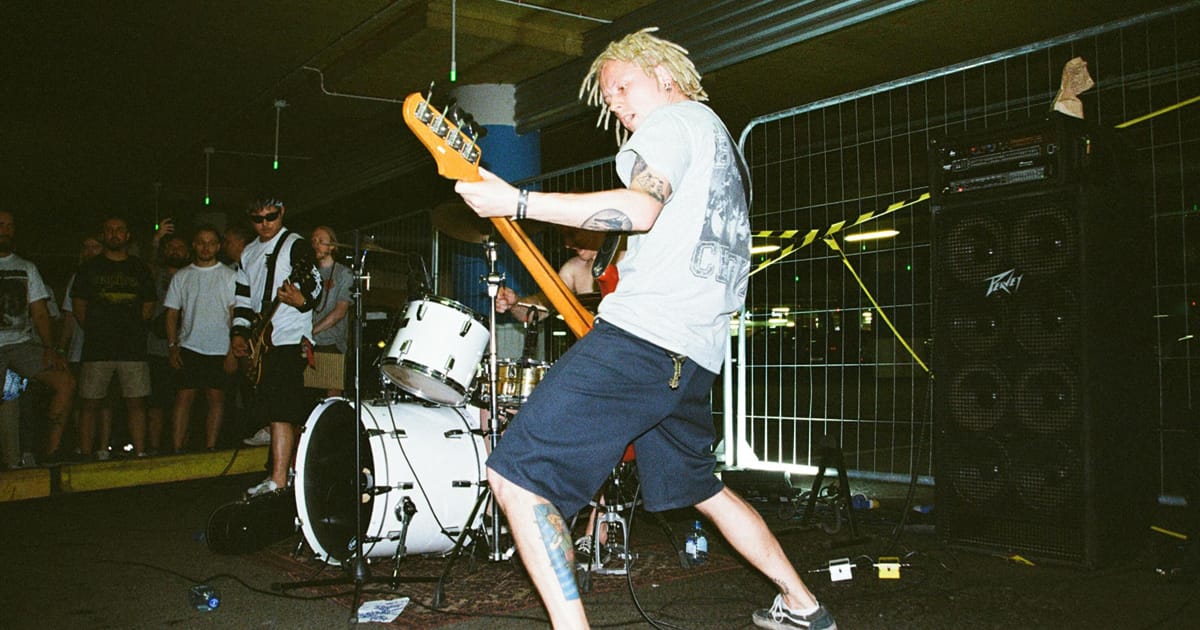
***+Read more:*** [*"Email Marketing for Musicians: How to Turn Casual Listeners Into Connected Fans"*](https://www.hypebot.com/email-marketing-for-musicians-how-to-turn-casual-listeners-into-connected-fans/)
## **So, What Are You Actually Building?**
[“Intellectual property”](https://www.hypebot.com/tag/intellectual-property/) isn’t the sexiest phrase in music. It sounds like lawyers, contracts and licensing departments. It certainly doesn't sound like sitting on the floor at 1am trying to work out why the second verse still isn't working.
But artists are creating IP constantly. In fact, every time they make anything original. The obvious example is the music itself. A song is an original work that can sit in a catalogue for decades. It can be streamed, licensed, performed, covered, synchronized, rediscovered and recontextualized.
Its value doesn't depend entirely on whether it got traction on Instagram during release week.
And the song doesn't have to be the only thing. There might be a visual language around the music, characters and stories, a particular approach to production, a body of writing, a podcast, a newsletter, a live format or eventually an entire fictional world.
Some artists develop recognizable ways of working, too: the way they write songs, construct a show or keep returning to the same strange ideas.
Those things can accumulate. A song can lead someone to an article, the article can introduce them to the artist, and the artist's wider body of work can lead to a sync opportunity, collaboration or live show. What you're building is a body of work rather than simply accumulating more posts.
## **When Content Gets Easier, the Underlying Work Matters More**
The pressure to produce content isn't going away. If anything, it's getting easier. [AI](https://www.hypebot.com/tag/ai/) can now produce a frightening amount of competent promotional material before you've finished your coffee. For an independent artist, that can be useful. But it also changes the economics of being “good enough.”
So the question becomes less about whether you can produce another asset and more about whether there's anything recognizably yours underneath it.
Your taste matters. So do the things you keep obsessing over, the things you notice that other people don't and the decisions you make when there's no obvious answer. AI can help you get from an idea to an output faster, but it definitely doesn't remove the harder question: why this idea?
That remains the artist's problem.
## **Your Weirdest Idea Is Probably Your Most Valuable One**
The content machine also rewards things that are immediately understandable. Make this sound like that. Use this format. Follow this trend. Put the hook in the first three seconds.
There's nothing inherently wrong with accessibility. But the things that make an artist genuinely distinctive often don't fit neatly into a content template. A strange obsession. An unusual point of view. A particular visual language. A recurring character. A weird production choice. A way of writing about relationships that nobody else quite approaches in the same way.
Those things can take longer and make less sense to an algorithm. That's also what makes them difficult to copy. Building something recognizably yours isn't just a business strategy. It gives you permission to follow an idea because it interests you, rather than because you can already imagine how it will perform.
## **Activity Isn't the Same as Accumulation**
I've started thinking less about output and more about accumulation. If I spend three hours making a video that disappears from people's feeds within a few days, that isn't necessarily wasted time. Maybe it gets someone to listen. Great.
But if those same three hours could have gone into making a song, developing a visual concept, writing something substantial or building an audience channel I actually own, there's another question worth asking:
***Which piece of work is likely to have a life beyond the platform where I made it?***
Not everything needs to become a business opportunity. Artists aren't factories, and a song doesn't need to justify itself through a five-year monetization strategy. But there is a difference between being busy and building something. One genuinely distinctive song can keep finding people long after the post that introduced it has disappeared.
That's the asymmetry I'm interested in. The goal isn't to make less. It's to make more things that have somewhere to go after the feed has moved on.
**+Read more:** [*"You Released the Song. Now What?"*](https://www.hypebot.com/you-released-the-song-now-what/)
## **Content Still Matters, It Just Needs a Job To Do.**
None of this means artists should stop [making content](https://www.hypebot.com/tag/content-marketing/). For independent artists, it's one of the most accessible marketing tools ever created. Someone with no label, publicist or traditional media campaign can make something in their bedroom and potentially put it in front of listeners anywhere in the world.
But content is distribution. The thing being distributed is what matters. TikTok won't be the last platform. Something else will replace it eventually. An algorithm can change. A format can disappear. A platform can become irrelevant.
But your song is still your song. Your catalogue is still your catalogue. And if you've built a website, mailing list or direct relationship with your audience, you have somewhere to take that relationship when the platform changes again.
So when planning a career, the question you should be asking is somewhere along the lines of: ***“What am I building that will still matter when nobody remembers what I posted this week?"***
## **Outliving the Algorithm**
You can write and record music, design an identity, publish essays, build a website, talk directly to listeners, distribute globally and experiment with new tools without waiting for an institution to decide you're worth investing in. The catch is that nobody is going to decide what you're building for you.
Maybe you're building a great catalogue of songs. Maybe there's a visual world running through your releases. Maybe you're building a community around a particular idea. Maybe the music sits alongside writing, film, software, live experiences or something that doesn't have a neat category yet.
It doesn't have to be an “IP strategy.” It just has to be something more durable than the next post.
The opportunity for independent artists isn't to become better and better at manufacturing an endless stream of content. It's to build the things that platforms can't build for them: the work itself, the ideas behind it, and a relationship with the people who care about it.
Someone finds you. They click your profile. They listen to the song. *Then what?*
---
**Reece Hallum* is a New Zealand-based songwriter and communications strategist working at the intersection of music, storytelling and creative strategy. He writes and makes music exploring character, narrative and artist identity. Find his work at* [***liminl.music***](https://liminl.music/?ref=hypebot.com)*.*
### A Guide to Pitching Music to Independent Spotify Playlists
URL: https://www.hypebot.com/a-guide-to-pitching-music-to-independent-spotify-playlists/
Last updated: 2026-09-02T15:11:33.000Z
*By *Jenny Morrison**
In an industry where so many artists are screaming for attention across multiple platforms, [music discovery](https://www.hypebot.com/tag/discovery/) is certainly a hot topic of discussion.
One of the most crucial tools for music discovery is [**Spotify playlists**](The 2026 Guide for Pitching Spotify Editorial Playlists). [Spotify](https://www.hypebot.com/tag/spotify/) itself says playlists are responsible for breaking thousands of artists. While Spotify curated playlists account for a significant portion of discovery, user-created playlists are still massive and eliminate the algorithmic gatekeeping of DSP playlists.
Getting featured on these user-generated playlists is so important for boosting a track's API (or Popularity Index), which can be a serious catalyst for gaining attention on Spotify. We can really break down music discovery on Spotify to three gatekeepers:
1. **Spotify editorial**
2. **Spotify algorithm**
3. **Independent playlist curators**
Here we’re going to discuss how to pitch to the most accessible: **independent playlist curators.**
### First, Do Some Research
Spotify announced that listeners have created **nearly 9 billion playlists**. That’s… overwhelming, but the good news is that your artist’s music doesn’t belong on all of them.
Heck, they don’t even belong on every playlist for their genre, just the important ones. The key here is to research. The first steps are to identify 3-5 artists that your artist is for fans of. (FFO) Then you’ll want to find user-created playlists that feature those artists. Another great research category might be by vibe, which is a little harder to define.
Many playlists are created for specific activities such as "cleaning," "driving," or even "focus." Just really consider the vibe of your music.

**+Read more:** [*"5 Signs a Spotify Playlist Is Fake (and How Playlist Bot Checkers Actually Work)"*](https://www.hypebot.com/5-signs-a-spotify-playlist-is-fake-and-how-playlist-bot-checkers-actually-work/)
Each playlist should ideally contain at least 20 tracks and your artist’s music should fit with both the vibe and the flow of the playlist. Think about it: if the playlist is all slow jams and you’re pitching a super upbeat song, well, you missed the mark. If the playlist is all chick lead singers and you’re pitching your boy band, your message is going to be ignored.
Ideally, you should make a list of playlists that would be a great fit for your artist. I keep mine in an Excel spreadsheet labeled by Playlist Title, Link, and Contact Info.
As a niche [playlist curator](https://www.hypebot.com/5-playlist-pitching-regrets-from-an-artist-turned-curator/), I have dozens of popular playlists featuring exclusively instrumental orchestral music. And you know what I get pitched nearly daily? Songs with vocals.
What an absolute waste of my time and theirs. I usually don’t respond because it’s not worth the effort. Sometimes I block them. But imagine if a music industry gatekeeper blocked *you* because you couldn’t be bothered to listen to a few minutes of a playlist. That would never be you, *of course.*
### Don't Forget to Add Contact Information
Arguably the most challenging part of this endeavor is finding contact information for this playlist curator. You need somewhere to actually send this pitch after all. These are the three best practices for finding contact information for playlist curators.
1. **The Playlist Description:** Some curators LOVE to support independent musicians and artists and will list their contact info for playlist consideration in the playlist description
1. **Search the curator’s name on Google** (or your search engine of choice): You never know what may pop up: their blog, their YouTube, their long-abandoned Tumblr.
2. **Search their name on Social Media:** Instagram and TikTok are awesome places to send a cold DM and a lot of these playlist creators have coinciding Social Media pages.
### Open With Something Personal
I always recommend opening with a quick introduction that shows the curator that you actually took the time to listen to their playlist and you “get it.” You could compliment their music taste, mention what it means to you, or even where you listen to this playlist.
*Ie. “Dude, you obvs are super into new hip-hop,” “This playlist got me through some dark times,” or “I’ve been listening to this playlist every frickin’ day at the gym.”*
But be authentic to you. If you don’t really listen to this playlist, then don’t lie.
### Introduce the Artist and Song
Keep it brief: no more than one introductory sentence, followed by another sentence or two that introduces the artist. Include ONE SONG. Start with *one*. Hopefully, this is the start of a beautiful relationship with this person so you’ll have the opportunity to show off many more songs, but start with ONE. I can’t tell you how often someone pitches an entire album; I feel overwhelmed because I only have 2 minutes and end up not listening to a single song.
### Disclose If You’re Using AI
If you are pitching AI-created music in any capacity, the right thing to do is disclose that. Let them know how you used it. Was it just the instrumental? Was it the vocals? Is the whole song AI-created? You’ve got to say that. A lot of curators (and music listeners) are still really put off by AI or have moral stances about it.
I’m not saying it’s right or wrong, but what I am saying is that you don’t want anyone to feel duped or mislead; that’s a great way to shatter your relationship with a mini-gatekeeper.
***+Read more:*** [*"9 Live Music Marketing Trends Selling Out Shows In 2026"*](https://www.hypebot.com/9-live-music-marketing-trends-selling-out-shows-in-2026/)
### Offer Something (and it Doesn’t Have to Be Money)
According to **Robert Cialdini** and decades of research on persuasion, reciprocity is super powerful. Sure, you can buy a spot in a playlist, but if you’re an up and coming artist, money is tight. Exposure also has value, as every business-savvy music artist understands.
So offer what you can. Can you shout-out their playlist on your artist’s Instagram Stories? Are you going to mention it on your Twitch stream? What about adding a link in your bio? Attention has value and if you offer something, people will want to return the favor.
### Close with Gratitude and Accept the Outcome with Grace
You open with a compliment and you close with gratitude. Thank them for their time and consideration with kindness in a way that’s authentic to you. And let’s be real, they might say no. They might not even give a reason. They might just ignore you and your message may never even be seen or acknowledged.
And that’s okay; this isn’t your only playlist pitch and this isn’t your only gatekeeper. Don’t sweat it and thank them for their time and move on to the next.
### Be Authentic and Don’t Have ChatGPT Write your Message
You see ChatGPT tells in the messages you receive all the time. “It’s not X, it’s Y.” “And honestly? That’s rare.” Ugh. *Eyeroll.* ChatGPT is an incredible tool, but I will say that it absolutely sucks the life out of the messaging. When I receive a message or pitch written by ChatGPT, I can’t help but think that this person didn’t even bother to type a message to me themselves.
Use your voice. I want to network and connect with YOU. Not ChatGPT. Chatty and I already have a rapport thank you very much.
### What About Those Paid Services for Playlist Payments?
They’re real. They’re out there, but I’d rather establish real connections with individuals in the music industry — even if they’re a tastemaker. The same people who are curating playlists are the ones who are creating content on TikTok and those TikToks get posted to Reels, and the cycle of influence continues.
Grab your free exposure and playlist placement and go get your music heard.
---
**Jenny Morrison* is a professional musician and content creator with over a decade of experience teaching Music Business at the collegiate level. Her career encompasses songwriting, session work, and touring in the children’s music industry. She is an award-winning educator who develops engaging and innovative curriculum that reflects the dynamic nature of the music industry.*
### The Indie Artist's Guide to Maximizing Discovery With SoundCloud
URL: https://www.hypebot.com/the-indie-artists-guide-to-maximizing-discovery-with-soundcloud/
Last updated: 2026-09-01T14:28:06.000Z
### **How to Maximize Your SoundCloud Profile to Improve Discoverability**
*By* [***Randi Zimmerman***](https://blog.symphonic.com/author/randi-zimmerman/?ref=hypebot.com)*of* [***Symphonic***](https://blog.symphonic.com/2026/07/28/maximize-soundcloud-profile/?ref=hypebot.com)
Let’s say someone on [**SoundCloud**](https://blog.symphonic.com/2026/07/20/why-soundcloud-matters-for-independent-artists-in-2026-2/?ref=hypebot.com) just heard one of your tracks in a repost, playlist, comment thread, DM, or shared link. They click your name because they want more, but once they get to your profile, your best song isn’t pinned, your last playlist is full of random tracks with no description, and the only link in your bio sends them to an old pre-save page.
*Oof…* That is exactly the kind of friction that loses people *fast*. On the other hand, if your profile makes it easy to find your strongest tracks, understand your sound, and follow the right links to everything else you have to offer, you give that listener more reasons to stay. More reasons to explore your ecosystem as an artist. More reasons to fall in love with your music. And on SoundCloud, that’s the whole point of the platform.
If you’re ready to maximize your SoundCloud profile so it actually grabs people’s attention, improves discoverability, and leads listeners toward the tracks you want them to hear first, here’s everything you need to know.
## **How To Maximize Your SoundCloud Profile To Improve Discoverability**
### **Update Your Profile Image, Banner, and Display Name**
Before you get into tags, playlists, or anything else for that matter, start with the basics. When someone goes to your SoundCloud profile, your artist name, profile image, banner, and URL should make it clear they’re in the right place.
**Start by checking:**
- **Your display name:** Use the same artist name you use across DSPs, social platforms, press links, and your website. If your SoundCloud name is formatted differently than your Spotify, Instagram, or TikTok, it can make your profile harder to recognize and harder to search.
- **Your profile image:** Choose something clean and recognizable even when it appears as a small circle in feeds, reposts, comments, search results, or suggested tracks. A crowded flyer, blurry photo, or overly detailed graphic may not translate well.
- **Your banner:** Use this space to support your current era. If you’re promoting a new single, EP, tour, mix series, or visual direction, your banner should reflect that.
- **Your profile URL:** Make sure it’s clean, readable, and aligned with your artist name. Don’t just change it casually. Changing your profile URL can break old links and embedded players, so only update it if the current one is outdated, confusing, or no longer accurate.
If your header is still promoting a release from two years ago, or your profile photo doesn’t match the rest of your artist branding, these are easy fixes that will make your profile feel more intentional right off the bat.
***+Read more:*** [*"Has the Modern Streaming Algorithm Killed the Long-Form DJ Set?"*](https://www.hypebot.com/has-the-modern-streaming-algorithm-killed-the-long-form-dj-set/)
### **Rewrite Your Bio and Update Your Links**
Your [bio](https://blog.symphonic.com/2023/05/31/why-having-a-great-artist-bio-is-important-how-to-write-one/?ref=hypebot.com) doesn’t have to tell your whole life story; it just needs to give new listeners enough context to understand who you are, what you make, and what you want them to check out next.
**A great SoundCloud bio should quickly answer:**
- **Who are you?** Are you a producer, vocalist, DJ, band, songwriter, composer, or something else?
- **What do you make?** Mention the genre, scene, mood, or world your music fits into.
- **What are you promoting right now?** A new single, EP, tour, mix series, beat pack, merch drop, or upcoming project?
- **Where should people go next?** Add links to the platforms, offers, or pages that actually support your current goals.
**For example:**
- “Miami DJ and producer blending Afro house, Latin tech, and late-night club edits. Start with the ‘After Hours’ mix series and follow for new edits every month.”
- “Chicago indie artist making guitar-heavy songs about burnout, growing up, and starting over. New single ‘Backseat’ out now.”
- “London producer sharing grime instrumentals, remixes, and works in progress. For collaborations and custom production, email \[contact\].”
Of course, tailor your bio to your specific vibe, but these are great examples. Each one gives listeners a sound, a reason to keep listening, and a next step.
Your links should be just as intentional. Use them to point people toward your website, latest [release](https://blog.symphonic.com/2026/05/18/music-release-plan-independent-artists/?ref=hypebot.com), [mailing list](https://blog.symphonic.com/2025/08/14/email-is-not-dead-how-to-build-a-real-fanbase-in-the-age-of-algorithms/?ref=hypebot.com), merch, tour dates, social platforms, booking contact, or any fan support option you’re actively using. Don’t send people to old pre-save pages, abandoned socials, expired campaigns, or links that no longer match what you’re promoting.
The goal is to make the next step obvious. If someone likes what they hear, they shouldn’t have to search around to figure out where to follow you, support you, contact you, or hear more.
### **Clean Up Your Track Titles**
Your track titles should be easy to read, easy to search, and clear enough for someone to understand what they’re clicking on. This is especially important on SoundCloud, where artists typically upload demos, edits, remixes, freestyles, DJ mixes, and alternate versions that may not exist anywhere else.
**Here are some tips to help you out:**
- **Use the actual song title first.** Don’t bury it under “new drop,” “please repost,” excessive emojis, or promo text.
- **Label versions clearly.** If it’s a demo, remix, edit, instrumental, live version, freestyle, or rough mix, say that in the title.
- **Keep formatting consistent.** If you use “Song Title (Demo)” for one upload, don’t use “song title demo version final” for another.
- **Make collaborations easy to understand.** Use clear labels for features, remixes, and producers, so listeners know who’s involved.
For example, “Blue Hour (Demo)” is much easier to understand than “BLUE HOUR FINAL MAYBE NEW VERSION.” “After Midnight feat. Lena Rose” is cleaner than adding every collaborator, release note, and call to action in the title.
**The title should tell people what the track is.** Use the *description* for the extra context.
### **Use Track Descriptions To Add Context**
Once your titles are sorted, use the description to give listeners the extra details that don’t belong in the title. This is where you actually explain what the track is, who worked on it, where it fits into your catalog, and what someone should do after listening.
**Strong track descriptions typically include things like:**
- **Release context:** Is this part of an EP, album, mix series, remix pack, or upcoming project?
- **Credits:** Tag or mention producers, featured artists, remixers, engineers, visual artists, labels, or anyone else involved.
- **Lyrics or sample notes:** If there’s a lyric people keep asking about, a sample that needs context, or a story behind the track, this is a good place to add it.
- **Relevant links:** Add links to stream, download, buy, watch the video, join your mailing list, or support the release.
- **A clear next step:** Ask listeners to follow, comment, repost, check out the full project, or send the track to someone who would actually like it.
For example, instead of leaving the description blank or writing *“new song out now,”* give people something they can actually use:
*“First single from my upcoming EP, Blue Hour. Produced by @producername, mixed by \[name\], and artwork by \[name\]. Listen to the full project here: \[link\].”*
This tells listeners what the track is, who helped make it, where it fits, and where to go next without overcrowding the title.
### **Choose Better Tags and Genres**
Tags and genres help listeners understand what they’re about to hear, but they also help SoundCloud categorize your music more accurately. These should describe the *actual track you made,* not every audience you wish you could reach.
Start with the main genre first. If it’s a house track, use House. If it’s an R&B track, use R&B. From there, you can add more specific tags that describe the sound, mood, scene, or use case.
**For example:**
- **For a club track:** Afro House, Latin House, Percussion, Club, DJ Tool
- **For a rap track:** Alternative Rap, Trap, Freestyle, Southern Hip Hop, Melodic Rap
- **For an indie track:** Dream Pop, Bedroom Pop, Lo-Fi, Guitar, Sad Indie
- **For an electronic track:** Breakbeat, UK Garage, Bass, Experimental, Late Night
The biggest mistake is treating tags like some sneaky reach hack. Tagging an ambient track as “pop,” “tech house,” “viral,” and “Drake” won’t magically put it in front of the right people. It just makes your metadata less accurate.
Think like the listener who loves this track… what would they search? What playlists would this track fit into? What scene, mood, or sound does it fit into?
Be *honest* with your tags, not optimistic.
***+Read more:*** [*"What It Really Takes to Go Big on Spotify"*](https://www.hypebot.com/what-it-really-takes-to-go-big-on-spotify/)
### **Organize Your Profile with Playlists**
Having playlists on your profile helps people move through your catalog without having to scroll through every upload you’ve ever posted. So instead of treating them like random folders, use them to create clear paths for different types of listeners.
Start with a **“Start Here”** playlist. This can include 5 to 10 tracks that best represent where your sound is right now. Add your strongest release, a fan favorite, a recent track, a collaboration, and anything else you feel gives new listeners a good first impression.
**From there, build playlists around how people actually listen. For example:**
- Latest Releases
- Best of \[Artist Name\]
- Demos and Unreleased
- DJ Mixes
- Remixes
- Instrumentals
- Beats Available
- Acoustic Versions
- Club Edits
- Collaborations
Then, make sure you add a short description to each playlist so people know what they’re getting. Something like, “A rotating playlist of my latest demos, edits, and unreleased ideas. Updated monthly.” Or, “Start here if you’re new. These are the tracks that best represent where my sound is right now.”
This method ensures a fan looking for your recent drops, a DJ looking for edits, a vocalist looking for beats, or anyone trying to understand your vibe doesn’t have to dig through some unorganized feed to do so.
Not only that, but the more organized your profile *looks*, the more professional your entire artist presence *feels*.
### **Pin the Tracks You Want People To Hear First**
SoundCloud profiles show uploads in chronological order, and that’s fine when your newest track is also your top priority. However, it can work against you if the song you want people to hear is older, part of a larger project, or buried under demos, reposts, edits, and random uploads.
This is where SoundCloud’s [**Spotlight**](https://help.soundcloud.com/hc/en-us/articles/115003448687-Spotlight-Tracks-Playlists?ref=hypebot.com) feature comes in. With it, eligible Artist and Artist Pro users can pin tracks or playlists to the top of their profile, so listeners will see those before the rest of your feed.
**So if you have things like:**
- A new single you’re actively promoting
- A “Start Here” playlist for first-time listeners
- A full EP or project playlist
- A track that is gaining traction
- A DJ mix, remix pack, or edit series
- A song that best represents your current sound
…consider pinning it! And whenever it no longer reflects what you’re promoting, swap it out with something new that does.
### **Some Final Thoughts…**
Your SoundCloud profile should make people want to *keep listening*. Not because every detail is overly polished, but because the experience feels clear, current, and true to who you are as an artist.
Every click is a chance to pull someone deeper into your world. When your profile is organized, your metadata is accurate, your links are up to date, and your best tracks are easy to find, you’re giving listeners fewer reasons to leave and more reasons to explore.
Show them where to start, give them a reason to stay, and keep your profile aligned with the music you’re actively building right now.
All you have to do is make the path clear, then let the music do the rest. 💪
***+Read more:*** [*"DIY Music Distribution Checklist: Everything You Need to Know"*](https://www.hypebot.com/diy-music-distribution-checklist-everything-you-need-to-know/)
### 2 Months Left Before U.S. Copyright Fees Jump Dramatically
URL: https://www.hypebot.com/2-months-left-before-u-s-copyright-fees-jump-dramatically/
Last updated: 2026-09-01T14:09:29.000Z
### US Copyright Fees Increase in November 2026: What Music Creators and Catalog Owners Need to Know
The U.S. Copyright Office (USCO) is raising its service fees in **mid-November 2026** despite the objections of songwriters and industry trade groups.
Following a proposed [schedule submitted to Congress](https://www.hypebot.com/us-copyright-office-proposes-massive-fee-hike-what-it-means/) on July 14, 2026, the statutory 120-day review period expires in mid-November, triggering automatic price increases across almost all registration and recordation categories.
While the administrative cost across all USCO services will increase by an average of 43%, core services for music rightsholders, independent record labels, and catalog buyers will see fee increases ranging from **31% to 126%**.

### **2026 U.S. Copyright Office Fees Comparison**
| **Service** | **Old** | **New** | **Change** |
| --------------------------------------- | ------- | ---------- | ---------- |
| **Single App** (1 work, 1 author) | $45 | **$55** | +22% |
| **Standard App** (Single track/album) | $65 | **$85** | +31% |
| **GRAM Album** (Up to 20 tracks) | $65 | **$130** | **+100%** |
| **Group Works** (Up to 20 songs) | $65 | **$85** | +31% |
| **Unpublished Group** (Up to 10 works) | $85 | **$130** | +53% |
| **E-Recordation** (Transfers/contracts) | $95 | **$215** | **+126%** |
| **Termination Notice** (Base fee) | $125 | **$275** | **+120%** |
| **Special Handling** (Expedited) | $800 | **$1,100** | +38.5% |
| **Paper App** (Standard paper filing) | $125 | **$185** | +48% |
## **Key Impacts**
### 1\. Album Registrations Double in Price
For independent labels and DIY artists using the Group Registration for Works on an Album of Sound Recordings (GRAM), filing an album of up to 20 tracks along with artwork and liner notes moves from **$65 to $130**.
### 2\. Catalog Acquisitions and Transfers Hit Hardest
The base fee for electronic recordation of documents including copyright assignments, chain-of-title transfers, and publisher agreements more than doubles from **$95 to $215**. Companies and funds conducting merger and acquisition activity or acquiring legacy catalogs will face substantially higher administrative due diligence costs.
### 3\. Termination Rights Become More Expensive to Exercise
Recording a Notice of Termination, which allows songwriters and artists to reclaim rights transferred to publishers or labels after 35 years, rises from **$125 to $275**.
### 4\. Rush Litigation Costs Rise
If you need expedited processing to file an infringement lawsuit, the Special Handling surcharge increases from **$800 to $1,100** per registration, on top of the base filing fee.
## How and Where to Register Music Copyrights
To avoid the mid-November fee hike, creators and rights owners can register compositions, lyrics, and sound recordings directly through the official [**U.S. Copyright Office Registration Portal**](https://www.copyright.gov/registration/?ref=hypebot.com)**.**
To file online at the lowest statutory rate, set up an account in the [Electronic Copyright Office (eCO) System](https://eco.copyright.gov/?ref=hypebot.com), where you can choose between **Performing Arts (PA)** for underlying music and lyrics or **Sound Recording (SR) / GRAM** for master recordings. Filing electronically guarantees an immediate effective date of registration as soon as your completed application, deposit audio file, and payment are submitted.
## **Action Plan Before Mid-November 2026**
- **Register Works Immediately:** Audit your release pipeline and backlog. Any unfiled singles, EPs, or albums should be registered before the mid-November deadline to lock in the lower $65 rates.
- **Record Pending Asset Transfers:** If you have completed catalog acquisitions, publisher administration agreements, or co-ownership transfers, file the electronic recordation paperwork before the fee jumps to $215.
- **Batch Unpublished Demos:** If you have unreleased catalogs, use the Group Registration for Unpublished Works ($85) before it jumps to $130.
## **Hypebot's Bottom Line**
With registration costs jumping up to 100% and transfer recording more than doubling, copyright protection is shifting from a routine administrative task to a significant line-item expense.
Independent artists and labels have a narrow window before mid-November 2026 to register backlog music and record ownership transfers at existing rates before federal price hikes take effect.
---
***Get the latest Live Music & Industry News updated continuously from across the web under the Hypebot Industry News tab*** [***here***](https://www.hypebot.com/music-industry-news-feed/)***.***
## Hypebot
Essential news & insights for artists and live music pros.
Sign up for free weekly content delivered to your inbox
Subscribe
Email sent! Check your inbox to complete your signup.
### In The Trenches with Gimme Gimme Disco
URL: https://www.hypebot.com/in-the-trenches-with-gimme-gimme-disco/
Last updated: 2026-09-01T14:04:10.000Z
*This interview with *Ethan Maccoby* and *Alex Badanes,* the founders of* [***Burwoodland***](https://www.burwoodland.com/?ref=hypebot.com) *and its flagship event* [***Gimme Gimme Disco***](https://www.bandsintown.com/a/15462986-gimme-gimme-disco?utm%5Fsource=hypebot&came%5Ffrom=900)*, is part of Hypebot’s*[***In The Trenches***](https://www.hypebot.com/tag/in-the-trenches/) *series. In the Trenches is sponsored by venue, festival, and promoter marketing solution* [***Bandsintown PRO***](https://www.bandsintown.pro/?ref=hypebot.com)*, and features the unsung heroes who make live music happen.*
*Ethan and Alex started producing events in 2015 with Emo Night Brooklyn, the kind of party they wanted to attend themselves: a room full of people singing loudly to the music they grew up with. Since then, their empire of live entertainment has sold more than 2 million tickets across 5,000 events in 250+ cities and 10 countries. The company's events have generated *$30+ million in ticket revenue* and an additional *$24 million in local economic activity.**
*Last month, their flagship event,* [*Gimme Gimme Disco Fest*](https://www.bandsintown.com/a/15462986-gimme-gimme-disco?utm%5Fsource=hypebot&came%5Ffrom=900)*, returned to New York's The Rooftop at Pier 17 to bring partygoers an all-out bash of sequins, bell-bottoms, platform shoes, and tunes from ABBA, Donna Summer, Cher, and the Bee Gees to dance to. No headliners, no major touring acts, it's an audience-focused event that's replicable everywhere, and guaranteed fun.*
*Now, please enjoy our conversation along with photos from last month's *Gimme Gimme Disco Fest* in *NYC.**
---
**Hypebot: Hey guys, thanks so much for taking the time and congrats on the latest edition of Gimme Gimme Disco Fest. Are you still reeling from the event? How was this year’s festival?**
Ethan and Alex: "Thank you so much! We absolutely loved Gimme Gimme Disco Fest this year. We really leveled up on the visuals, the disco ball head dancers and the live music aspect. **Rooftop at Pier 17** remains one of our favorite venues of all time. It’s such a gorgeous rooftop with the perfect view of the city and river, and no better place to celebrate your favorite genre."
**H: What I’ve always loved about GGD, and what I assume most people love about it, is that it’s somehow grandiose and feels like the same kind of energy as a house party at the same time. How did you actually approach *building* that?**
E&A: "We really let the crowd’s natural energy build it. People of all ages dress up, dance, groove, sing, and just that raw energy itself really builds the show into what it is. We just provided the space and the outlet for it. It’s also amazing to see how disco really brings together people of all generations. You have people that grew up during the '70s and '80s attend, as well as 20 year olds whose parents introduced them to it, all singing and dancing together. It’s so special."
**H: Were there bumps along the way of growing this thing?**
E&A: "There are always challenges when growing an event like this. Sometimes shows don’t sell as well as you’d hoped for whatever reason, perhaps because of the market, or timing, etc."
You also can’t make everyone happy with the playlist. Too much ABBA, not enough ABBA, we’ve heard it all! Everyone has different opinions on what songs should be included. That’s what's beautiful about the event too — everyone is so passionate about the genre, but gimme gimme disco tries to make it accessible to both the biggest fans and the casual fans that might only know the big hits."
**H: When did the model become replicable outside of Brooklyn?**
E&A: "After the first GGD in a smaller venue was a hit in Brooklyn, we quickly took it national. Our relationships with other venues and promoters across the country, built from working on other events, like Emo Night Brooklyn, allowed us to book GGD in city after city. Disco is so beloved everywhere, so we were confident it would translate outside of NYC."
**H: What are you doing now that took time to learn and integrate? In other words, what’s changed?**
E&A: "When we first started gimme gimme disco, it was pretty basic. Blasting our favorite tunes in a small room with essentially a laptop and an aux chord. Since then, we’ve really focused on building up production — dancers, incredible visuals that match up and change with each song, disco balls, props and fun giveaways for the guests that show up early (like boas, necklaces, disco glasses, etc)."
We’ve hired incredible DJs that put on amazing sets and can really work with the crowd. We learned how often to come back to each city, how to structure the playlist. We’ve learned to give space to guests that get so excited they come up on stage to sing and dance. It’s really been a magical ride, and we are still learning, evolving and iterating after each show."
**H: What is it that you truly love about live music?**
E&A: "What I love most about live music is what it does to a room full of strangers. You can have people from completely different backgrounds, different beliefs, different lives, and for a few hours none of that matters. Everyone’s just connected. Through a shared love of music."
Music has this power to bypass everything else. It changes your mood instantly, it makes you move before you’ve even decided to, it turns people standing next to strangers into people singing the same words together. That connection is the whole reason we do this. You can’t manufacture it any other way."
**H: Do you think live performance and touring is essential for artists today?**
E&A: "Yes I do think it’s essential. Getting people together in a room is just so special and can’t really be replicated while you’re at home scrolling on your phone. It’s so important to bring people together in person to connect, meet, interact."
We’ve seen from our events that people have met their best friends, wives, husbands, partners at our events. That’s just something that wouldn’t have happened at home listening by yourself."
**H: This whole model is based on the ability for digital marketing to find related interest audiences in specific music markets. What ‘go to’ tools, strategies, or platforms do you use to market these events?**
E&A: "Marketing isn’t easy, but it’s one of the key ingredients to building a long term successful brand. Our organic socials are probably the biggest driver of marketing for our shows — mostly Instagram and TikTok. We like to build communities locally, with local DJ, local promoters, local photographers that also help spread the word. We try to get our events listed on local publishing sites to get discovered."
Of course, paid advertising is also a key ingredient. We definitely work hard to fine tune ads on Instagram and Facebook and other platforms so that people can discover us. Sometimes we will partner with influencers, brand ambassadors, or other co promotion tools to help get the word out."
**H: What does a typical day look like for you?**
E&A: "Every day is honestly very different, which is what I love about this business. The beginning of the week is typically focused on announcing events, fine-tuning marketing for them, and making sure all the pieces are in place to execute great shows."
Later in the week, the focus shifts to execution: checking in with venues and promoters, confirming production and DJ logistics, and putting out the small fires that always pop up before a show."
I also meet with our booking team to ensure we are focusing on the right markets. And the best part is getting to go to the shows and seeing the fruits of our labor — the magical experience of people coming together over a shared love of music."
**H: What’s your typical lunch order?**
E&A: "If it’s a quick one I’m picking up a salad from Trader Joe’s and sit in Domino Park. If it’s a sit down I love trying any local restaurant in Williamsburg. There are so many good spots around our office!"
---
*Learn more about* [***Gimme Gimme Disco***](https://www.gimmegimmedisco.com/?ref=hypebot.com) *and* [***Burwoodland***](https://www.burwoodland.com/?ref=hypebot.com)*. And* [*follow Gimme Gimme Disco on Bandsintown*](https://www.bandsintown.com/a/15462986-gimme-gimme-disco?utm%5Fsource=hypebot&came%5Ffrom=900)*.*
*Get all the latest Music Industry & Live Music News updated continuously from across the web under the Hypebot Industry News tab* [*here*](https://www.hypebot.com/music-industry-news-feed/)*.*
## Hypebot
Essential news & insights for artists and live music pros.
Sign up for free weekly content delivered to your inbox
Subscribe
Email sent! Check your inbox to complete your signup.
### Support Is Essential, But Celebrating It Is Priceless
URL: https://www.hypebot.com/support-is-essential-but-celebrating-it-is-priceless/
Last updated: 2026-08-31T19:35:02.000Z
Music-industry [mental health](https://www.hypebot.com/tag/mental-health) work often takes understandably serious forms: crisis resources, research, difficult conversations, and programs designed to help people navigate addiction, anxiety, depression, and burnout.
This is the majority of the work that goes on behind the scenes to keep people mentally strong and thriving, in an industry that sadly also diminishes artists' and creators' outlooks. But sometimes it's worthwhile to bring all of that to the surface, and celebrate that work out in the open.
And sometimes, that looks like an awards show. On August 27, nonprofit organization [**Support Life And Music**](https://www.supportlifeandmusic.org/?ref=hypebot.com) released its inaugural [**2026 SLAM Awards**](https://www.supportlifeandmusic.org/the-2026-slam-awards-show-released-on-youtube/?ref=hypebot.com), an online ceremony honoring what it calls the music industry’s “mental health superheroes.”
Hosted by **Cathy Rankin**, the show combines presentations and acceptance speeches with music videos, performances and appearances from across the music community. Take a look at what went down last week:
The 11 honorees include several very recognizable names. Judas Priest singer **Rob Halford** and hip-hop pioneer **Darryl “DMC” McDaniels** were recognized alongside longtime music executive **Michael Alago,** and Dangerous Toys vocalist **Jason McMaster.**
But the list also reaches behind the spotlight. Artist managers **John Bambino** and **Pamela Parks**, publicist **Amy Sciarretto**, radio personality and mental health advocate **Dani Cutler**, singer **Marc Lopes**, and researchers **Dr. George Musgrave** and **Dr. Dorian Lamis** all received awards.
That mixture of roles says it all.
Improving mental health in music does not happen through one grand gesture or one kind of advocacy. It happens when artists share difficult personal stories, researchers document the industry’s risks, managers build healthier working environments and people behind the scenes help connect someone with the right support.
Founded in 2025 by veteran music journalist **Jack Mangan**, SLAM approaches that challenge as a connector, educator and community builder. The organization is explicit that it is not a counseling service. Instead, it works to make information, professional resources and honest conversations easier for musicians and industry workers to find.
Its [year-round programs](https://www.supportlifeandmusic.org/programs/?ref=hypebot.com) include the *SLAM: Music Survival Guide*, a podcast featuring conversations with musicians, industry veterans, authors and mental health professionals. Its Artist Voices and SLAM Summits give artists and experts space to share lived experiences and survival strategies.
**Screenshot courtesy of* [**Support Life And Music*](https://www.supportlifeandmusic.org/?ref=hypebot.com)**.*
SLAM also produces its [**D.R.E.A.M. reports**](https://www.supportlifeandmusic.org/articles/?ref=hypebot.com) — short for **Data, Research, Education, Awareness and Music** — which examine issues affecting musician mental health. Its website maintains a direct-help directory connecting visitors with organizations including **Backline, MusiCares, the 988 Suicide & Crisis Lifeline**, addiction services, and financial assistance.
According to SLAM, the organization produced 55 podcast episodes, published 43 articles and completed seven D.R.E.A.M. reports during its first 20 months.
That work is essential. But the SLAM Awards recognize something that can easily disappear from conversations about mental health: celebration has value, too. An awards show is *not* therapy, and a trophy cannot replace access to care. But recognition in a public forum can still be powerful.
It tells advocates that their work has been noticed. It introduces audiences to people making the industry safer. Most importantly, it reminds musicians and music workers that they are surrounded by people who want them to survive and thrive. Thus, the SLAM Awards are deliberately a little playful, a little loud and proudly celebratory.
A healthier music industry cannot be built only through conversations held after something goes wrong. It also needs opportunities to gather around the people getting things right — and give them a good old-fashioned round of applause.
[*Visit Support Life And Music for a list of Direct Help Resources.*](https://www.supportlifeandmusic.org/direct-help-resources/?ref=hypebot.com)
### Why the UK Is Freaking Out Over Its 'Nepo Baby Stage'
URL: https://www.hypebot.com/why-the-uk-is-freaking-out-over-its-nepo-baby-stage/
Last updated: 2026-08-31T18:38:02.000Z
For North American readers unfamiliar with [BBC Introducing](https://www.bbc.co.uk/programmes/profiles/MRVrHBDbW7fVl6xjyzXlYM/bbc-introducings-festival-stages?ref=hypebot.com), imagine a publicly funded pipeline connecting local radio, unsigned artists, and some of the country’s biggest festival stages. Musicians could upload their music without needing a label, manager or well-placed industry contact. Regional broadcasters identified promising acts, played them on the radio and occasionally helped move them onto national platforms.
For nearly two decades, one of those platforms was **Reading & Leeds** — two of the [UK’s](https://www.hypebot.com/tag/uk/) most influential [live music festivals](https://www.hypebot.com/tag/festivals/) that feature performances by artists culled directly from the BBC Introducing selections. But his year, that stage disappeared.
Festival Republic removed the **BBC Introducing** stage from Reading & Leeds after 18 years and replaced it with **the Canopy**, described as a new home for emerging artists. The organizer’s explanation sounds reasonable: limiting the former stage to artists selected by BBC Introducing excluded other developing acts, while the new format allows the festival to book from a wider pool.
The problem arose when people saw who had been [booked](https://www.hypebot.com/tag/booking/).
## **Welcome to the “Nepo Baby" Era**
The Canopy lineup included [**Violet Grohl**](https://www.hypebot.com/the-right-amount-of-attention/), daughter of Dave Grohl; [**Cruz Beckham**](https://www.bandsintown.com/a/14934679-cruz-beckham?utm%5Fsource=hypebot&came%5Ffrom=900), son of David and Victoria Beckham; and [**Villanelle**](https://www.bandsintown.com/a/15547832-villanelle?utm%5Fsource=hypebot&came%5Ffrom=900), fronted by Liam Gallagher’s son **Gene Gallagher**. [**December 10**](https://www.bandsintown.com/a/15640610-december-10?utm%5Fsource=hypebot&came%5Ffrom=900), a boy band formed through Simon Cowell’s Netflix series *The Next Act* and already signed to a label, also appeared.
That concentration of famous connections earned the Canopy an [unofficial, and fairly brutal, nickname](https://www.theguardian.com/music/2026/aug/28/reading-leeds-festival-bbc-introducing-canopy-stage?ref=hypebot.com): the **“Nepo Baby Stage.”**
Of course, the stage is open to emerging artists “from all backgrounds and at different stages of development,” whether [independent](https://www.hypebot.com/tag/indie-artists/), signed, or entering the industry through different routes. And famous parents do not automatically make an artist undeserving. Violet Grohl, Cruz Beckham, and Gene Gallagher still have to create music people "want to hear."
But while folks are voicing that these artists have had an easier route to stardom than the rest, the controversy is not *really* about celebrity, it's more centered on what has disappeared in order to make room for them.
## **Being Without Part of Its Headliner Pipeline**
BBC Introducing was more than another small festival stage. It was connective tissue for an industry typically quite amenable to its artist development chain. The program combined local tastemakers, public radio, and live opportunities into a paved route through the music industry.
An artist did not need millions of streams or a viral campaign to enter the system the BBC had built, just some talent and the support of someone within the BBC’s regional network that heard potential in it. That process had an extraordinary track record. **Ed Sheeran, Charli xcx, The 1975, Sam Fender, Florence + The Machine, Raye** and **Little Simz** all received early support from BBC Introducing.
At least 70% of the UK artists booked at Reading & Leeds this year had been supported by the initiative earlier in their careers, including four of the 2026 festival’s headliners. This is where the program's removal gets worrisome. It's cutting out part of its own pipeline to success on a global stage.

**+Read more:** [*"Nick Cave’s Genius — How His Hometown Show Used the 'Entire' Town."*](https://www.hypebot.com/nick-caves-genius-how-his-hometown-show-used-the-entire-town/)
## **Discovery Is Not "Really" Development**
The music business loves to talk about [artist discovery](https://www.hypebot.com/tag/discovery/). Every platform wants to be where fans “discover” their *next* favorite artist. But discovery is all but entirely a **data-driven** phenomenon these days. [This artist is actually currently testing this theory.](https://www.hypebot.com/this-artist-is-playing-a-gig-every-day-in-2026-its-the-ultimate-discovery-gamble/)
**Development** needs more from its industry. Developing artists need local rooms in which to become better performers, opportunities to play for unfamiliar audiences, and credible stages that tell agents, promoters, and future fans to take them seriously.
They need somewhere between the 100-capacity club and the main festival field to learn how to become a headliner. BBC Introducing helped build that bridge, and its removal will inevitably leave a rift in the access pathway to bigger, better-produced stage spaces.
**+Read more:** [*"A Clear Example Why Festivals Should Be on Bandsintown Pro"*](https://www.hypebot.com/a-clear-example-why-festivals-should-be-on-bandsintown-pro/)
## **Why Should We Care?**
Well, it's not as though we don't have our own share of "nepo babies" in the creative industries here. But what's interesting about this story is the way this is treated as a sustainability issue. [Festivals](https://www.hypebot.com/tag/festivals/), nowadays, are nowhere near a guarantee year after year.
And while there is no precise North American equivalent to BBC Introducing — college radio, local promoters, showcase festivals, and emerging-artist programs each play a partial role but just not as one coordinated national system — festivals everywhere face the same challenge to bring artists arriving with a built-in audience.
Those curatorial choices reduce risk, which in turn makes it nearly impossible for unknown or emerging artists to be given those platforms to grow.
Ironically, BBC Introducing itself has begun expanding into the United States through partnerships with college radio. Unfortunately, its underlying idea — that local broadcasters can find artists whom commercial algorithms and national tastemakers have missed — may be arriving here just as one of its most valuable UK stages disappears.
---
## [**Cruz Beckham Tour Dates**](https://www.bandsintown.com/a/14934679-cruz-beckham?utm%5Fsource=hypebot&came%5Ffrom=900)
## [**Violet Grohl Tour Dates**](https://www.bandsintown.com/a/15630623-violet-grohl?utm%5Fsource=hypebot&came%5Ffrom=900)
## [**Villanelle Tour Dates**](https://www.bandsintown.com/a/15547832-villanelle?utm%5Fsource=hypebot&came%5Ffrom=900)
### Lalu's Corner: The 'Right' Amount of Attention
URL: https://www.hypebot.com/the-right-amount-of-attention/
Last updated: 2026-09-29T20:30:12.000Z
*Welcome to* [***Lalu's Corner***](https://www.hypebot.com/tag/lalus-corner/)*, a monthly column by music and brand partnership agent *Lauren Thackray*, exploring commercial music applications and sync placements, and the most pertinent takeaways for independent artists.*
[**Mk.gee**](https://www.bandsintown.com/a/15056339-mk.gee?utm%5Fsource=hypebot&came%5Ffrom=900) barely posts. He gives almost no interviews. There's no BTS reel, none of the constant visibility that artists are increasingly expected to maintain. And yet he's become a "musician's musician," the kind of name that seems to spread because other musicians keep saying it, rather than because a feed put it in front of you.
The instinct is to call this mystique.
[**Frank Ocean’s**](https://www.bandsintown.com/a/1312055-frank-ocean?utm%5Fsource=hypebot&came%5Ffrom=900) spent years between albums, a handful of appearances, no interviews, and when he finally resurfaced to headline Coachella in 2023, it needed no comeback narrative, no explaining where he'd been. The silence was never read as absence.
[**Alex G**](https://www.bandsintown.com/a/14505921-alex-g?utm%5Fsource=hypebot&came%5Ffrom=900) has been a critical favourite since his 2014 breakthrough, *DSU*, and largely stayed off social media the entire time.[**Djo**](https://www.bandsintown.com/a/819850-djo?utm%5Fsource=hypebot&came%5Ffrom=900) took a different route, playing his first shows in a wig and sunglasses, keeping some distance between the music and the much louder fame he already had from *Stranger Things*.
Different scenes, similar instinct: a little distance can leave more room for the work itself.
## **For most of music history, silence wasn't a choice.**
Think "Video Killed the Radio Star," a song about sound-only media giving way to sound-plus-image. Two years later, MTV launched and played that video first and turned the title into a mission statement:
**The channel would decide who got seen.**
That's the media world[**Prince**](https://en.wikipedia.org/wiki/Prince%5F%28musician%29?ref=hypebot.com) and, later, [**Daft Punk**](https://www.bandsintown.com/a/263-daft-punk?utm%5Fsource=hypebot&came%5Ffrom=900) operated in, and it's worth being precise about what their mystique actually meant within it. Prince told *Rolling Stone* flatly, "I don't do interviews" — and when he did occasionally grant one, he was known to restrict tape recorders and note-taking, leaving journalists to reconstruct conversations afterward.
Daft Punk spent years performing behind helmets, at a time when an artist's public image still moved through a much narrower set of outlets; MTV, magazines, television appearances, radio. Their mystique was deliberate, but the conditions that made it possible weren't theirs alone to create.
Distance was easier to preserve when there were fewer places an artist was expected to appear, and when labels, programmers, editors and broadcasters controlled much of what audiences saw. You could choose how much to reveal, but the infrastructure did some of the withholding for you.
## **Then the infrastructure flipped.**
[**Arctic Monkeys**](https://www.bandsintown.com/a/430-arctic-monkeys?utm%5Fsource=hypebot&came%5Ffrom=900) are usually cited as where this really starts. In 2004 and 2005, fans ripped and shared the band's homemade demo CDs across MySpace and file-sharing sites — no label push, barely even a [MySpace](https://www.hypebot.com/tag/myspace/) page the band controlled themselves. By the time their debut single came out in October 2005, it entered the UK chart at No. 1 off an audience that had already built itself. Press and label showed up after the fact, not before it.
"Gangnam Style" showed just how powerful that route could become. It became the first video in [YouTube](https://www.hypebot.com/tag/youtube) history to reach a billion views in December 2012\. A few months later, [Billboard](https://www.hypebot.com/tag/billboard/) changed the Hot 100 methodology to include YouTube streams, recognizing that songs could now become enormous hits in places its traditional measures weren't fully capturing.
That's the reality underneath everything since: an artist can reach people directly now, in whatever volume they choose. [**Sombr's**](https://www.bandsintown.com/a/15560450-sombr?utm%5Fsource=hypebot&came%5Ffrom=900) "Back to Friends" had been out for months before it caught on TikTok in March 2025; by April, it had reached the Billboard Hot 100 for the first time.
And [**Bieber**](https://www.bandsintown.com/a/307871-justin-bieber?utm%5Fsource=hypebot&came%5Ffrom=900) —who broke, originally, through his mother's YouTube uploads of him singing covers — launched a Twitch channel in October 2025 and said he'd stream "pretty much every day": rehearsals, studio time, hanging out, eventually a "Daisies" run-through as he prepared to headline Coachella.
Nobody is rationing his exposure anymore. That's entirely his own call to make. Which is the shift underneath. For most of music history, restraint was the default because the infrastructure enforced it. Now that nothing enforces it, restraint is simply a "choice."
## **The real skill now isn't restraint. It's knowing which room you're actually in.**
There are more ways to reach an audience today than at any point in music history, which sounds like an advantage until you realize it also means there's no single right answer to "how much should I post." The right amount depends entirely on who's listening, and what they signed up for.
[**Charli xcx's**](https://www.bandsintown.com/a/289995-charli-xcx?utm%5Fsource=hypebot&came%5Ffrom=900) audience wants to feel like they're inside a group chat with her - the chaos, the confessions, the in-jokes are the relationship, not a distraction from the music. Going quiet on that audience wouldn't read as mystique, it would read as her leaving the group chat. [**Phoebe Bridgers'**](https://www.bandsintown.com/a/1222829-phoebe-bridgers?utm%5Fsource=hypebot&came%5Ffrom=900) audience is the opposite bet entirely: they came for songs that sound like they cost her something to write, and a steady stream of content would work against exactly what they're there for.
Silence, for her, isn't a gap. It's part of the same sincerity the music is selling. None of these artists is more correct than the others. They're just different rooms, with different terms of entry.
And for an unknown artist, posting constantly, trying things, following trends, moving between platforms isn't a failure to understand restraint. Often it's how you find out who's listening in the first place. You can't really know what kind of room you're in until there are people in it. Everyone gets to be a little too online on the way to figuring that out.
## **Even the same room changes shape, on purpose**
**Charli xcx** usually keeps a fairly open line to her audience — the jokes, the posts, the sense of being somewhere inside the conversation. However, before ***Music, Fashion, Film*** was released, that same closeness briefly took a different shape. She previewed the album through one-night-only listening events at independent cinemas in 25 cities around the world, turning the first album listen into something you had to be in a particular room to experience.
> [ View this post on Instagram ](https://www.instagram.com/p/DadRbKWxR87/?utm%5Fsource=ig%5Fembed&utm%5Fcampaign=loading)
>
> [A post shared by Charli (@charli\_xcx)](https://www.instagram.com/p/DadRbKWxR87/?utm%5Fsource=ig%5Fembed&utm%5Fcampaign=loading)
It wasn't really a retreat from the relationship she'd built with her audience. If anything, it was a more concentrated version of it: fewer people, less access, but more significance attached to being there. And it was temporary. The album came out two weeks later, the wider machinery started moving again, and this fall she's taking it into arenas.
The skill isn't choosing intimacy or reach as a permanent identity, or treating them as opposites. It's knowing which shape the relationship needs to take, and when.
## **K-pop's four biggest labels built themselves a permanent version of the same lever**
Four of **K-pop's** biggest labels are now [building an entire festival together](https://www.musicbusinessworldwide.com/k-pops-big-four-and-south-korean-government-reveal-plans-for-fanomenon-festival-in-seoul-and-los-angeles/?ref=hypebot.com), with ambitions to rival [Coachella](https://www.hypebot.com/tag/coachella/). On one level, it's simply a very large event. But it also creates something the feed can't quite replicate: a finite place and time that audiences can orient themselves around, year after year. Instead of having to create a new reason to pay attention every time, the event itself can become the reason.
An individual artist can create that sense of occasion for a moment — a particular show, a listening party, an album cycle. A [festival](https://www.hypebot.com/tag/festivals/) can build it into the calendar for an entire roster at once. They're not just creating another room. They're trying to build a room people already know they'll want to come back to.
### What's the takeaway in all this?
**If you're the artist:** There's no universal right amount to post - the real questions are which room you're actually in, and where you are in your own cycle. Early on, posting constantly while you find your audience isn't a compromise, it's the job - and if you're lucky enough to find or build that community IRL instead, that works just as well.
**If you're the manager:** The job is spotting which community your artist is actually tapping into — the group chat, the loyal few hundred, the other musicians who won't stop talking about them — and understanding what that community values about being there.
Sometimes the next move is more access; sometimes it's a smaller room, a one-night event, or simply giving people a reason to show up somewhere together. If it works, it's worth asking whether to rebuild that room from scratch next cycle, or turn it into something permanent the audience already knows to come back to. Build on the relationship that's already forming instead of importing a content strategy designed for somebody else's room.
**If you're on the licensing or brand side:** Look for artists whose communication and experiences feel native to a community they've built. The opportunity isn't always to give that artist more reach. Sometimes it's to help them make the room they're already in more meaningful — fund the experience, create the occasion, or give the community something it couldn't have had otherwise.
---
[***Lauren Thackray***](https://www.linkedin.com/in/laurenthackray/?ref=hypebot.com) *is the Founder of* [***LALU&CO***](https://www.linkedin.com/company/lalu-co/?ref=hypebot.com)*, a music culture agency helping brands build artist partnerships and cultural strategy. Her clients include Unilever, L’Oréal Paris and Heineken amongst others. And via her Substack newsletter,* [*LALU Dispatch*](https://laluandco.substack.com/about)*, she writes about brands and music.*
### Dolly Parton’s Business Legacy: 4 Lessons for Every Musician
URL: https://www.hypebot.com/dolly-partons-business-legacy-4-lessons-for-every-musician/
Last updated: 2026-08-31T14:33:25.000Z
Following [the passing](https://www.hypebot.com/dolly-parton-made-every-stage-feel-like-her-front-porch/) of global icon [**Dolly Parton**](https://www.hypebot.com/tag/dolly-parton/), her team confirmed that her multi-category portfolio of creative and business ventures will continue uninterrupted.
As longtime manager **Danny Nozell** noted, Parton worked tirelessly up to her final days alongside a handpicked team to map out a project roadmap designed to guide her estate for decades to come.
From the launch of Nashville’s **SongTeller Hotel**, **Dolly’s Life Of Many Colors Museum** and the Broadway debut of ***DOLLY: A True Original Musical*** tocoffee, jewelry, home decor, an AI avatar show and more, Parton’s estate isn't just managing a catalog.
They are executing a carefully planned multifaceted [brand](https://www.hypebot.com/tag/brand) ecosystem.
### **Active Projects in the Dolly Parton Pipeline**
This is just a partial list...
- **Hospitality & Tourism:** The SongTeller Hotel, Dolly’s Life Of Many Colors Museum, and Dolly’s Tennessean Travel Stops.
- **Consumer Products & Lifestyle:** Kendra Scott x Dolly jewelry ("The 9 to 5 Collection"), Dolly Dolls, Dolly’s Cup Of Ambition Coffee, pet accessories, bedding, and home decor.
- **Stage, Screen & Digital IP:** DOLLY: A True Original Musical on Broadway, a Dolly avatar show, feature film biopics, documentaries, and scripted television series.
Dolly Parton showed that artists do not have to surrender control or compromise their identity to achieve massive commercial scale. Whether an emerging indie act or an established touring artist, here is how to apply Dolly’s core business strategies.
## **1\. Own Your Publishing and Control Your Intellectual Property**
The foundation of Dolly Parton’s business empire was ironclad control over her intellectual property (IP).
Her most famous business decision occurred in the 1970s when **Elvis Presley**’s manager, **Colonel Tom Parker**, demanded 50% of the publishing rights to **"I Will Always Love You"** in exchange for Elvis recording it. Dolly famously refused. Decades later, **Whitney Houston**’s cover generated tens of millions of dollars in songwriting royalties - every cent of which flowed directly to Dolly because she retained her underlying copyright.
### Takeaway Early Career Artists
- **Never trade core ownership for short-term exposure:** A high-profile co-sign or quick payout rarely justifies giving up perpetual publishing rights or master ownership.
- **Learn the mechanics of music publishing early:** Register your songs with Performance Rights Organizations (PROs like ASCAP or BMI), collect mechanical royalties via the Mechanical Licensing Collective (MLC), and always document formal split sheets for every recording session.
## **2\. Treat Merch Like a Fashion Line and Lifestyle Brand**
Dolly Parton never viewed merchandise as mere promotional giveaway items or cheap printed logo t-shirts. She understood her aesthetic - rhinestones, warmth, vibrant Appalachian heritage - and expanded it into consumer products spanning cosmetics, home goods, baking mixes, and high-end fashion collaborations like her **Kendra Scott** line.
### Standard Artist Merch Strategy vs Dolly Parton's Lifestyle Brand Model
**• Standard:** Basic concert tees with back-print tour dates vs. **Dolly:** Curated, aesthetic apparel drops designed as wearable everyday fashion
• **Standard:** One-size-fits-all stickers and enamel pins vs. **Dolly:** Tailored lifestyle products aligned with fan routines (like custom coffee)
• **Standard:** Sales tied strictly to live touring cycles vs: **Dolly:** Year-round direct-to-consumer (D2C) e-commerce storefronts
### Takeaway for Early-Career Artists
- **Design for your audience's daily lifestyle:** Instead of placing a logo on a generic shirt, ask what your fans actually wear, drink, or use in their daily routines.
- **Curate high-margin micro-collections:** Small, limited-edition product drops—such as co-branded accessories, custom coffee blends, or curated vintage items—command higher price points and build stronger brand loyalty than basic venue table merch.
## **3\. Expand Beyond Songs: Physical Touchpoints**
Music creates emotional attachment, but physical experiences monetize that attachment at scale.
Long before the industry prioritized immersive marketing and at show fan experiences, Dolly launched **Dollywood** in 1986, turning her brand into a physical destination including hotels and other nearby attractions that generate thousands of local jobs and steady, multi-generational revenue. Her latest ventures like the **SongTeller Hotel** and interactive museum spaces continue to convert listeners into experiential guests.
For emerging musicians, that starts with time at merch table, offering creative fan VIP experiences and online fan events like listening parties, Q&A sessions and more.
### How Experiential Revenue Works for Musicians
1. **Core Music & Storytelling:** Start by Engage fans through songs, lyrics, and authentic personal narrative.
2. **Direct Fan Engagement:** Build a dedicated community via email lists, SMS channels, and direct fan platforms.
3. **Immersive Experiences:** Monetize high-intent fans through premium ticket tiers, secret acoustic pre-show sessions, themed local pop-ups, and city-specific events.
### Takeaway for Early-Career Artists
- **Elevate your live experience:** Expand beyond basic General Admission tickets by offering VIP soundcheck access, limited acoustic sessions, Q&A's and handwritten setlists.
- **Build local physical touchpoints:** Partner with local coffee shops, craft breweries, or boutiques in tour cities for release pop-ups to give fans a physical space to gather for pre-show events, after parties and more.
- **Go Online:** Between tours, create online fan events like acoustics performances, listening parties and Q&A sessions
## **4\. Build an Interconnected Brand Ecosystem with a Long Roadmap**
Dolly Parton’s team is actively launching new products through 2027 and beyond because she viewed her career as an interconnected engine rather than a series of isolated release cycles.
Her songwriting fed her film roles, her film roles expanded her global brand, her brand fueled her theme park, and the revenue from all three funded her literacy programs and charitable foundations.
### Takeaway for Early-Career Artists
- **Adopt multi-year asset planning:** Stop thinking exclusively release-to-release. Build a strategic vision for where your brand positioning will sit in 3, 5, and 10 years.
- **Diversify revenue streams early:** Balance streaming payouts with live performance, direct-to-fan retail, sync licensing, and digital media to build financial independence.
## Hypebot's Bottom Line
Dolly Parton’s enduring legacy proves that artistic authenticity and shrewd commercial strategy are not mutually exclusive.
By treating her music as valuable intellectual property, building an interconnected brand ecosystem and retaining ownership, she constructed a business capable of sustaining itself for generations.
**For any musician starting out today, the message is clear: don't just build a music career - build a business ecosystem you own.**
## Hypebot
Essential news & insights for artists and live music pros.
Sign up for free weekly content delivered to your inbox
Subscribe
Email sent! Check your inbox to complete your signup.
### Australia Has Drawn a Line on AI Music — Experts Have Thoughts.
URL: https://www.hypebot.com/australia-has-drawn-a-line-on-ai-music-experts-have-thoughts/
Last updated: 2026-08-31T13:59:23.000Z
*By* [***Louis Rogers***](https://www.linkedin.com/in/louis-rogers/?ref=hypebot.com)*, Sr. Director Partnerships & Sales (APAC) of* [***Leap Event Technology***](https://leapevent.tech/?ref=hypebot.com)
[**Australia**](https://www.hypebot.com/tag/australia/) has become one of the first major music markets to draw a clear line around artificial intelligence in its official [charts](https://www.hypebot.com/tag/charts/).
The decision by the [**Australian Recording Industry Association (ARIA)**](https://www.aria.com.au/charts/news/aria-charts-set-eligibility-rules-for-recordings-made-with-ai?ref=hypebot.com) to ban wholly AI-generated tracks from the ARIA Charts has put the country at the center of a global debate over what counts as music, [who gets credit](https://www.hypebot.com/the-ai-chart-rules-ask-if-a-record-is-human-they-never-ask-if-the-song-is/) for creating it and how audiences will know the difference.
But music and technology leaders say the chart ban is only the beginning...
## **What the Ban Means**
Under the updated [**Code**](https://aus01.safelinks.protection.outlook.com/?url=http%3A%2F%2Fcontent.aria.com.au%2Fdocuments%2Faria-charts-code-24-august-2026.pdf&data=05%7C02%7Camcgregor%40aria.com.au%7C715b92e864da48bf502708df01a717d4%7C19f0c4897c324e2090e555fdc606b787%7C0%7C0%7C639231489344297072%7CUnknown%7CTWFpbGZsb3d8eyJFbXB0eU1hcGkiOnRydWUsIlYiOiIwLjAuMDAwMCIsIlAiOiJXaW4zMiIsIkFOIjoiTWFpbCIsIldUIjoyfQ%3D%3D%7C0%7C%7C%7C&sdata=OH1tSlXuIW%2FrNKbJGMPk3lOBuz53VNS%2BQk2nztoYMtA%3D&reserved=0&ref=hypebot.com), a recording developed using [generative AI](https://www.hypebot.com/tag/ai/) is eligible only where:
- **It is substantially human made**
- **It raises no stream or chart manipulation concerns**
This means from the ARIA Chart dated August 31, recordings generated wholly or primarily by AI will no longer be eligible to chart. Music that uses generative AI in a supporting role can remain eligible, provided it is “substantially human made” and raises no concerns around stream or chart manipulation.
ARIA CEO **Annabelle Herd**, stated:
*“These changes reflect our intent to remain dynamic and promote the human nature of artistry in what is – to say the least – a rapidly developing space. Artists already use AI tools in their work, the Charts can and should evolve to keep room for that, but music generated wholesale by services built on artists’ recordings is a different matter."*
*“The ARIA Charts will always remain a transparent measurement of the music Australia consumes, but a chart that rewards unlicensed AI output would undercut the very basis of the recorded music we exist to represent. We have worked closely with IFPI and a number of international industry bodies to understand how to best implement these changes in a way that is both clear and future-facing."*
*“This gives everyone who releases music in Australia a clear rule to work to. We call on all parties who have a role in deciding the music played and promoted to Australian audiences, particularly radio, to support human artistry and implement similar changes across their own codes.”*
## **Easier Said Than Done?**
It is a distinction that sounds relatively straightforward: AI can be a tool, but it cannot be the artist. In practice, however, that line could prove considerably harder to maintain as generative technology becomes embedded across music creation, distribution and consumption.
The new rules arrive after an unusually public test case. Queensland DJ and producer **Josh Fawaz’s** cover of **Madonna’s** "Like a Prayer" became Australia’s most-played song on radio and climbed to number four on two ARIA charts in July amid questions about its use of generative AI.
Fawaz subsequently added credits on Spotify identifying generative AI vocals and AI drums. As of the ARIA chart dated August 24, the song remained at number four on the **Australian Singles Chart.**
The controversy transformed what had largely been an industry debate about copyright, training data and synthetic music into a much more immediate question: when AI-created music becomes commercially successful, should it compete on the same terms as [human artists](https://www.hypebot.com/human-first-is-a-promise-nobody-can-check-yet/)?
**+Read more:** [*"Why I Truly Believe Artistry Beats the Algorithm, Every Time."*](https://www.hypebot.com/why-i-truly-believe-artistry-beats-the-algorithm-every-time/)
## **The Critical Question the Music Industry Must Now Confront**
[**Con Raso**](https://www.linkedin.com/in/conraso/?ref=hypebot.com) (Co-Founder of [Tuned Global](https://www.tunedglobal.com/?ref=hypebot.com)) says ARIA’s decision highlights a question the entire global music industry is now having to confront: ***Where do we draw the line between AI as a creative tool and AI as the creator?***
According to Raso:
*“There’s an important distinction between music that is generated almost entirely by AI and artists using AI as part of a broader human creative process. AI is already becoming another tool available to musicians, producers and songwriters, and we shouldn’t create rules that inadvertently discourage artists from experimenting with new technology.”*
*“What matters is transparency. Listeners, platforms and rights holders need to understand how a piece of music was created, who contributed to it and what rights sit behind it. Clear attribution and metadata will become increasingly important as AI-generated and AI-assisted music grows.”*
## **Chart Eligibility Is Only Part of a Much Bigger Issue**
In Raso's perspective, ARIA’s move is an understandable attempt to protect the [value of human artistry](https://www.hypebot.com/the-music-industry-still-runs-on-human-connection/), but chart eligibility is only one part of a much bigger issue:
*“Streaming services and music platforms globally will increasingly need mechanisms to identify AI-generated content, manage the associated rights and royalties, and give businesses and consumers meaningful choices about how that content appears in their services. Ultimately, AI isn’t going away. The challenge for the music industry is to build frameworks that protect artists and rightsholders without closing the door on genuinely innovative ways for humans to use technology to create music.”*
To distinguish AI-generated recordings from AI-assisted ones, ARIA will apply the definitions in the labelling standard announced by the global music community on 10 July. ARIA will keep the Code under review as AI policy and technology develop. Raso continues:
*“There’s an important distinction between music that is generated almost entirely by AI and artists using AI as part of a broader human creative process. AI is already becoming another tool available to musicians, producers and songwriters, and we shouldn’t create rules that inadvertently discourage artists from experimenting with new technology.”*
*“What matters is transparency. Listeners, platforms and rights holders need to understand how a piece of music was created, who contributed to it and what rights sit behind it. Clear attribution and metadata will become increasingly important as AI-generated and AI-assisted music grows.”*
***+Read more:*** [*"'Human-First' Needs More Than Just a Checkbox"*](https://www.hypebot.com/human-first-needs-more-than-just-a-checkbox/)
## **Adding Value Versus Risk**
ARIA’s decision draws an important question for the wider music industry. For me, this isn’t really about rejecting AI, it’s about deciding where technology adds value and where it risks replacing the very thing audiences are coming to enjoy — authentic music experiences.
Earlier in my career I worked at [**triple j**](https://www.abc.net.au/triplej?ref=hypebot.com), long before generative AI entered the conversation. What struck me then was how much of music culture was built around authenticity. There was enormous value placed on discovering artists, hearing a distinctive voice and understanding the person and story behind the music.
Audiences wanted to feel that connection was genuine, and for emerging artists in particular, authenticity was often what enabled them to build incredibly loyal communities. Of course back then, authenticity was basically taken for granted. It was a value that was baked in, because AI slop didn’t exist. Music that was exposed as “fake” in some way could be decried as a kind of fraud. Milli Vanilli is a stand out memory here!
Technology has changed dramatically since then, but the fundamental audience expectation hasn’t. If anything, AI makes authenticity more valuable because it makes it easier to manufacture something that looks, sounds or feels real. If audiences start questioning whether the artist, performance or content they are engaging with is actually what it claims to be, we risk eroding the connection that makes live entertainment so powerful.
## **The Potential to Make the Industry Better**
Experts agree at the same time, [AI](https://www.hypebot.com/tag/ai/) has enormous potential to make the industry better. We’re already seeing opportunities for it behind the scenes, helping organizers understand audiences, personalize communications, improve marketing, predict demand and create better experiences. There’s an important distinction between using AI to enable human creativity and connection, and using it to replace them.
What’s interesting about ARIA’s approach is that it recognizes that distinction. It isn't an outright rejection of AI. Instead, it creates a boundary between wholly AI-generated music and music where technology has assisted human creativity. That feels much closer to where the broader entertainment industry needs to head: embracing innovation while establishing clear expectations around transparency, authenticity and ownership.
The organizations that get AI right won’t necessarily be those using the most of it. They’ll be the ones using it transparently to strengthen human creativity and connection, while protecting the authenticity that makes people want to discover an artist, become a fan and ultimately turn up to experience something together.
---
[***Louis Rogers***](https://www.linkedin.com/in/louis-rogers/?ref=hypebot.com) *is Senior Director of Partnerships & Sales, APAC at* [***Leap Event Technology***](https://leapevent.tech/?ref=hypebot.com)*, where he works with event organizers, venue operators, sporting organizations and entertainment brands to harness technology to reach new audiences and achieve sustainable growth.*
**Leap’s* global event technology solution empowers organizers to transform their events into electrifying experiences for attendees. The company provides an all-in-one suite of ticketing, mobile apps, experiential marketing, and event management tools, combined with expert marketing and analytics services.*
### Your Morning Coffee Podcast: The State of Music, Amazon 'Pain', How to Launch, More
URL: https://www.hypebot.com/your-morning-coffee-podcast-56/
Last updated: 2026-08-31T13:26:14.000Z
### **Listen on your favorite** [**podcast platform**](https://bio.to/UloQY6?ref=hypebot.com)**.**
Subscribe to the Your Morning Coffee newsletter [here](https://label-logic.us8.list-manage.com/subscribe?u=735771602810b0eb238d4e814&id=1ffaab59d7&ref=hypebot.com).
**YMC Episode 317 — August 31, 2026**
On this week’s episode of the **Your Morning Coffee podcast**, your hosts Jay Gilbert and Mike Etchart chat about these timely music industry stories:
- **The Music Industry Is in Good Shape - Despite What You May Have Heard**
- **How Is Each Music Listening Platform Treating AI Music?**
- **Best Practices for Launching Albums and Series in a Crowded Entertainment Marketplace**
- **The Amazon "Pain" Forest**
Plus an audio drop with **Kristin Robinson** from Billboard on the different policies for streaming AI generated music.
Listen right here:
Subscribe to the Your Morning Coffee newsletter [**here**](https://label-logic.us8.list-manage.com/subscribe?u=735771602810b0eb238d4e814&id=1ffaab59d7&ref=hypebot.com)**.**
**FIND MORE CURATED MUSIC BUSINESS AND INDIE**
**PODCAST EPISODES** [**HERE**](https://www.hypebot.com/tag/podcast-music-biz/)
### The Music Industry Is Cutting Off Its Own Talent Pipeline
URL: https://www.hypebot.com/the-music-industry-is-cutting-off-its-own-talent-pipeline/
Last updated: 2026-08-31T13:08:01.000Z
*By *Henry Donahue*, Executive Director of* [***Save The Music***](https://www.savethemusic.org/?ref=hypebot.com)
As we [start the school year](https://www.hypebot.com/for-music-retailers-back-to-school-strategy-starts-before-the-first-bell/), it’s time for a reminder that funding for [music education](https://www.hypebot.com/tag/education/) isn’t charity. It’s an investment in a thriving future music industry.
Based on my ten years as the Executive Director of Save The Music, the leading national non profit for K-12 music education, I can report that the pipeline that develops future artists, songwriters, engineers and other music workers has never been more at risk.
Tomorrow’s artists and audiences demand that we care about what is happening in public school music programs **right now.**
### **“We need to lay off the music teachers. Can we send the instruments back?”**
This was a request I received this past spring from a California school district where [Save The Music](https://www.savethemusic.org/why-is-music-education-important/?ref=hypebot.com) has done years of work helping to rebuild its school music programs.
This district is not alone. Across the country, government funding cuts, declining enrolments, and state policy shifts toward private schools have put public school administrators under tremendous budget pressure. Despite decades of research showing that music education drives better attendance, test scores and graduation rates, many of these school districts are again cutting music classes from their schedules and firing music teachers.
This isn’t a side issue for the music industry. The music that creates our business did not happen by accident. It was the product of a sustained, systemic commitment to teaching young people how to play, sing, collaborate, and create.
0:00
/1:00
1×
**Video courtesy of Save The Music.*
**+Read more:** [*"Why the Levitt Foundation Model Should Not Be an Outlier"*](https://www.hypebot.com/why-the-levitt-foundation-model-should-not-be-an-outlier/)
### **American music education is the reason we have a music business today.**
Pop, R&B, Hip-Hop, rock, gospel, country, jazz, house, and techno were all built on the culturally rich foundation of American music education. In addition to learning music in school, Americans make music every day at home, in church, in restaurants and bars, and at sporting events.
American genres power more than half of the $100 billion+ global music business.
New Orleans invented modern music. So did Memphis, Detroit, New York City, Los Angeles, Miami, Nashville, Chicago, Austin, Dayton, and countless other American communities. Dayton, Ohio became the “Funk Capital of the World” in the 1970s by aggressively funding public school music education, fueling a competitive marching band culture and producing amazing horn players. And then when they started their own groups, there were places for young people to perform, radio stations that played their records and a path from Dayton to national and global audiences.
Today much of that systemic support is either at risk or no longer exists.
### **The case for investment starts with the social and emotional benefits and then leads to music technology, workforce development and talent development.**
Music students are more motivated to come to school, and when they connect their passion for music to their schoolwork, they’re learning a set of valuable skills including close listening, collaboration, and managing a project from start to finish.
Save The Music’s fastest growing program is our J Dilla Music Tech grant to middle schools and high schools. When we started in 2018, this was relatively new territory for high schools. Today, music tech is growing quickly — in high schools and even middle schools — and many of our early students have gone on to study music and production in college, moving from classroom beat-making into the same creative and technical skills the industry now depends on.

**Photo courtesy of Save The Music.*
**+Read more:** [*"School of Rock AllStars' 34-Date Tour Supports Music Education Access"*](https://www.hypebot.com/school-of-rock-allstars-34-date-tour-supports-music-education-access/)
### **When more students have music in school, more of them find their way to community based programs, higher education, music careers, and other parts of the music ecosystem.**
Unfortunately, we’re seeing an unprecedented erosion of the school music infrastructure: classroom programs, arts-specific education funding, and career pathways for music teachers.
Fewer than half of the states have an arts requirement for high school graduation, and in many states the existing requirements are being replaced by career and technical training alternatives.
According to the [**Arts Education Data Project**](https://artseddata.org/?ref=hypebot.com), over 4 million students nationwide don’t have the opportunity to take an in-school music class. And for the first time in my tenure at Save The Music, the gap seems to be widening, as federal, state, and local officials are accelerating funding cuts for public education and the arts.
**If you work in music:** Think of public music education not as charity, but as an investment in the future of the industry, and the time to make that investment is now.
Music companies need to be showing up in the local, state, and federal workforce development conversations in the state houses and school board meetings where decisions are being made.
---
**Henry Donahue* has been the Executive Director of* [***Save The Music***](https://www.savethemusic.org/?ref=hypebot.com) *since 2016\. Save The Music partners with public school districts nationwide to jump start their music education programs, so that students, schools, and communities can reach their full potential through the power of making music. Since its founding in 1997, Save The Music has started over 2,500 new school music programs.*
### MUSIC INDUSTRY NEWS: All The Latest
URL: https://www.hypebot.com/music-industry-news-16/
Last updated: 2026-08-31T12:55:30.000Z
**We search the web so you don't have to**. Find the latest [Music Industry News](https://www.hypebot.com/music-industry-news-feed/) under the [Industry News tab](https://www.hypebot.com/music-industry-news-feed/) above.
## Hypebot
Essential news & insights for artists and live music pros.
Sign up for free weekly content delivered to your inbox
Subscribe
Email sent! Check your inbox to complete your signup.
### NIVA, Top Orgs Urge CA Lawmakers To Vote No On Ticket Bill
URL: https://www.hypebot.com/niva-top-orgs-urge-ca-lawmakers-to-vote-no-on-ticket-bill/
Last updated: 2026-09-01T20:58:22.000Z
\[UPDATED\] The **National Independent Venue Association** (NIVA), California’s live music community and some top U.S. music industry organizations have issued an **urgent Monday call to action against bill AB 1349\.** Details on how to oppose the bill are below.
Originally introduced by CA As
Assembly member **Isaac Bryan** to limit resale, ban limit speculative ("fake") ticketing and prohibit deceptive resale websites, the bill was drastically altered following heavy secondary market lobbying efforts.
As amended in the Senate, AB 1349 exposes independent venues, festivals, and promoters to significant legal liability while explicitly **carving out exemptions for secondary ticket marketplaces** like StubHub.
Legislation meant to protect live music is increasingly being twisted by secondary market lobbyists. In California, [**StubHub spent as much as $2.6 million**](https://www.hypebot.com/stubhub-spends-millions-to-kill-ca-ticket-bill/) **to alter the legislation.** That effort was reportedly greater than spending by **Chevron, Verizon, AT&T** and **OpenAI** this quarter.
NIVA leadership, including Executive Director **Stephen Parker** and CA Chapter President **Joe Rinaldi**, are among those urging all independent venue operators, staff, musicians, and live music fans to **contact their state legislators before the California Senate votes on Monday afternoon.**
### **4 Ways Amended AB 1349 Harms California’s Live Music Industry**
According to the coalition AB 1349:
- **Exposes Venues to Lawsuits for Reseller Speculative Ticketing:** Creates a private right of action allowing lawsuits over speculative ticket sales that target primary presenters, festivals, and venues, while leaving out the actual secondary platforms where those fake tickets are listed and sold.
- **Reclassifies Standard Primary Sales as "Resale":** Re-designates routine primary ticketing practices—such as artist presales, official waitlists, and VIP packages—as "reseller" transactions under state law.
- **Exempts Secondary Ticket Marketplaces:** Explicitly shields secondary resale platforms from being classified as speculative ticket sellers, despite hosting virtually all speculative ticket listings.
- **Strips Seat and Row Transparency:** Removes the requirement for secondary listings to display seat and row numbers—eliminating the most direct way for fans and enforcement officials to verify a ticket actually exists before money changes hands.
## **How To Take Action To Stop AB 1349**
**The California State Senate will take up AB 1349 on Monday afternoon.** Independent stages and live music supporters that oppose the bill need to **submit comments immediately to ensure state representatives vote NO.**
1. **Submit the Opposition Form:** Take two minutes to [**Fill Out the Official NIVA CA Action Form Here**](https://www.google.com/search?q=https://www.nivassoc.org/take-action&authuser=1&ref=hypebot.com)to send an automated message directly to your State Senator and Assemblymember.
2. **Personalize Your Impact:** Add a sentence detailing a specific venue, stage, or community contribution, explaining how increased lawsuit exposure could force local doors to close.
3. **Spread the Word:** Forward this alert to your venue staff, fellow operators, artists, and music fans throughout California.
### SubmitHub AI Music Detector Exposes Huge Disclosure Gap
URL: https://www.hypebot.com/submithub-ai-music-detector-exposes-huge-disclosure-gap/
Last updated: 2026-08-28T15:24:47.000Z
AI music detection has moved from a theoretical concept to a necessity for everyone from Spotify to everyday artists and fans.
As generative audio tools become standard features in digital audio workstations, music platforms are struggling to answer a critical question: how much AI is actually hiding in today's music submissions?
**SubmitHub’s** [**SH Labs**](https://www.submithub.com/?ref=hypebot.com) **analyzed over one million track releases in July 2026 to find out, revealing massive adoption rates alongside a glaring disclosure problem.**
### Key Stats: AI Music Creation at a Glance
- **Total AI Involvement:** **38.5%** of all analyzed tracks contained AI audio elements, according to SubmitHub.
- **Fully AI-Generated:** **23.2%** of tracks were built entirely by AI.
- **Hybrid Tracks:** **15.3%** used AI audio that was subsequently edited or processed by humans.
- **The Disclosure Gap:** **31% of artists whose tracks flagged positive for AI explicitly claimed they used zero AI tools.**

### **The Rise of Hybrid Music and the Disclosure Gap**
SubmitHub's dataset reveals that the industry is rapidly entering a "hybrid" era. Rather than choosing strictly between fully human or fully AI-generated tracks, creators are increasingly blending both—using generative stems, AI vocal processors, and modified synthetic samples alongside traditional songwriting.
```
SubmitHub Detection Results (July 2026 Dataset)
[████████░░░░░░░░░░░░░░░░] 23.2% Fully AI-Generated
[█████░░░░░░░░░░░░░░░░░░░] 15.3% Hybrid (AI + Human Edit)
[█████████████░░░░░░░░░░░] 38.5% Total AI Audio Tracks
```
However, artist self-reporting is falling behind reality. During submission, 31% of artists who tested positive for AI audio denied using it. This discrepancy proves that platform self-reporting requirements are no longer sufficient on their own.
> **"I think the path forward for AI music is disclosure," says SubmitHub founder Jason Grishkoff. "People should be able to decide for themselves whether they want to engage with AI-generated music. Our job is to give them enough information to make that choice."**
### **High-Accuracy Detection at Scale**
Originally created to help curators filter music submissions, SubmitHub’s AI Music Detector has achieved over **99% accuracy** on confidential industry benchmarks. Because it detects nuanced hybrid production rather than applying a simple binary "yes/no" flag, the tool is now used across the industry by **Bandcamp, GEMA’s MusicHub, Traxsource, SlopTracker**, and a major record label.
### **Test tracks using the SubmitHub** [**AI Song Checker**](https://www.submithub.com/?ref=hypebot.com)**.**
## **Hypebot's Bottom Line**
The SubmitHub study showed that the industry cannot enforce simple "AI bans" when nearly 40% of music relies on some form of synthetic generation.
Moving forward, the goal should be not to penalize hybrid artist workflows, but to bring absolute transparency to rights management, curation, and payouts. Platforms that embrace high-accuracy, granular detection will lead the next era of fair music distribution.
***Get all the latest Music Industry & Live Music News updated continuously from across the web under the Hypebot Industry News tab*** [***here***](https://www.hypebot.com/music-industry-news-feed/)***.***
## Hypebot
Essential news & insights for artists and live music pros.
Sign up for free weekly content delivered to your inbox
Subscribe
Email sent! Check your inbox to complete your signup.
### Latest Live Music Industry News
URL: https://www.hypebot.com/live-music-industry-news-22/
Last updated: 2026-08-28T14:31:20.000Z
### New WME Head Of Music Marketing
WME has promoted Sara Williams to Head of Music Marketing, She joined the agency in 2019 as a Tour Marketing Agent. Williams will continue to be based in Nashville and now reports to Kirk Sommer, WME Global Head of Music
### SeatPin Adds PinAI Concierge
While it's no surprise that we're not fans of most ticket resellers, they sometimes use the gobs of money they make to build interesting things. These days most are are AI related.
Such is the case with EU reseller [**Seatpin**](https://www.seatpin.com/?ref=hypebot.com)'s new AI-powered assistant **PinAI** Instead of scrolling through social fees, multiple websites and listing pages, you can type or speak things like “Front row for **Ariana Grande** at **The O2** this August” and it will go find it.
You will likely pay dearly for the privilege, but at least you saved time doing it.
### Resale Ticketing Costs Fans $11B Annually
Speaking of ticket resale, a new study released by the **Vanderbilt Policy Accelerator** revealed that resellers and marketplaces drain **$11 billion** every year from U.S. live event audiences.
**How to Save Audiences $11 Billion on Live Events** showed how ticket brokers add $4.5 billion in resale upcharges while platform service fees add another $6.8 billion in costs. While resale advocacy groups claim secondary markets save fans money when tickets sell under face value, VPA’s data shows **fans actually lose $12 to markup gouging for every $1 saved**.
Read more [here](https://www.hypebot.com/vanderbilt-study-resale-ticketing-costs-fans-11b-annually/).
### **AEG adds Austin Venue**
**AEG Presents** has announced **United Heritage Hall**, a new 4,000-capacitylive music venue in **Austin, Texas**, opening in spring 2027\.
Developed by AEG Presents in partnership with **Westfield, Partners Group,** and **Presidium**, United Heritage Hall will anchor **River Park**, the 109-acre mixed-use development in Austin's growing Riverside neighborhood.
### **NIVA '27 Conference Discounts**
NIVA '27, the **National Independent Venue Association** conference is heading to **Boulder, Colorado** from June 27 - July 1, 2027! Discount pricing is available now through September 10, and registration won't reopen until Early Bird pricing launches in January.
**Register to save** [**here**](https://conference.nivassoc.org/e/niva-27-boulder-co??ref=hypebot.com) and also get access to the best hotel rates.
### **MRG Adds Australia**
Toronto, Canada based **MRG Group** has launched **MRG Live Australia.** The new Sydney-based office will be led by veteran live music executive **Graham Kennedy**, who joins the company as General Manager & Senior Promoter.
He joins MRG after ten years as Head of Arts & Entertainment at **Live Nation Australia**. The appointment follows the successful Australian and New Zealand tour of **The Next Step,** which sold more than 45,000 tickets and further demonstrated the strength of the market for MRG's expanding portfolio of live productions.
### Dolly Parton Live
Hypebot paid tribute to the late great **Dolly Parton** with two stories about her live performance career: [**Dolly Parton Made Every Stage Feel Like Her Front Porch**](https://www.hypebot.com/dolly-parton-made-every-stage-feel-like-her-front-porch/) and[**The Day Dolly Parton Gave Me a Masterclass in Touring Grace**](https://www.hypebot.com/the-day-dolly-parton-gave-me-a-masterclass-in-touring-grace/)**.**
---
***Get the latest Live Music & Industry News updated continuously from across the web under the Hypebot Industry News tab*** [***here***](https://www.hypebot.com/music-industry-news-feed/)***.***
## Hypebot
Essential news & insights for artists and live music pros.
Sign up for free weekly content delivered to your inbox
Subscribe
Email sent! Check your inbox to complete your signup.
### We Stopped Waiting to Be Chosen and Mailed 100,000 CDs Instead
URL: https://www.hypebot.com/we-stopped-waiting-to-be-chosen-and-mailed-100-000-cds-instead/
Last updated: 2026-08-28T14:30:34.000Z
*By *Josh Solomon* of* [***The Empty Pockets***](https://open.spotify.com/artist/0rh5QYyYGojMDMJE0EXiUv?si=ZtIyuMNcTLSLfuxiMpo4lw&ref=hypebot.com)
For a long time, my band played an almost entirely industry-focused game. We tried to *attract* the right **manager, booking agent, record label, publisher, radio programmer, festival buyer, journalist,** and **streaming-platform editor.**
Our hope was that one of the right people would hear something in us, open the right door and start the chain reaction that turns a working band into a successful one. I understand why artists chase that story. It is sexy. It is also the plot of my favorite movie, *That Thing You Do!*
That kind of Cinderella story still happens. But eventually I had to confront an uncomfortable reality: artists have almost no control over whether it happens to them. Most people in the music industry are not trying to be cruel. They do not want to crush somebody’s dream or burn a bridge with an artist who might explode on TikTok six months later.
So almost nobody gives you a definitive answer. You get encouraging meetings, polite passes, vague promises, unanswered emails and variations of “keep us posted.”
Over time, all of this began to grate on me.
## **Validation is not the same as success**
I have made a full-time living as a musician for roughly 20 years. [**The Empty Pockets**](https://www.bandsintown.com/a/268360-the-empty-pockets?utm%5Fsource=hypebot&came%5Ffrom=900) have toured around the world and played remarkable venues in London, Tel Aviv, Dublin, Amsterdam, New York and Chicago. We have worked with artists including Kenny Loggins, Simon Kirke, Richie Furay and Gary Wright, and eventually became the backing band and support act for Al Stewart.
Strictly speaking, many of my childhood dreams have come true. I remind myself of that because my brain still searches for some additional form of “real” validation: a major record deal, a giant festival, a tastemaker deciding that we matter or a streaming platform placing one of our songs in front of millions of people.
I suspect a lot of artists get lost in that same search. But validation does not equal success, and success does not automatically create a feeling of validation. A career can be financially sustainable, creatively satisfying and deeply meaningful without ever receiving the particular stamp of approval you imagined when you were 15.
It took me a long time to understand that.
## **The course that changed our direction**
Our original breakthrough came years ago when we bought John Oszajca’s Music Marketing Manifesto course. Until then, we had mostly been playing the gatekeeper game. The course introduced us to a different way of thinking: What could we build ourselves? What could we measure and improve? What relationship could we create directly with listeners?
I eventually paid for a one-on-one strategy session with John. After that conversation, we began putting some basic e-commerce building blocks into practice.
At the time, even the vocabulary felt new. *What is a landing page? Why is an email list so valuable? How do you turn a casual listener into a genuine member of your community?*
I started studying marketers outside the music business, bought ClickFunnels and spent a year or two experimenting with pages, offers and email sequences. We borrowed a concept already common in e-commerce and book marketing, and one the music business had used in earlier eras...
## **"Free plus shipping."**
That simple idea completely changed the reality of our band. The free CD became our introduction. We created a [CD](https://www.hypebot.com/tag/cd/) specifically for the offer called *Maybe Next Time*.
It is a collection of songs from across The Empty Pockets catalog. When I was a kid, bands called these albums “greatest hits,” but we have never had any hits, so “best of” felt more honest.
The system is straightforward. We advertise to people on Facebook who might enjoy our music. The ad sends them to a focused landing page where we offer the CD for free. The listener covers shipping and handling.
From there, they may be offered additional albums or merchandise. They enter an email sequence that introduces the band, tells our story and helps them explore more of the catalog. They can buy concert tickets or eventually join EPIC, the Empty Pockets Insiders Club, our recurring fan membership.
The free CD is not merely a giveaway. It introduces a real person to the music, creates a verified customer relationship, gives us permission to communicate and moves the relationship into an ecosystem we own.
A Spotify listener is valuable, but we usually do not know who that person is. We cannot contact them directly or tell them when we are playing in their town unless an algorithm happens to show them. When somebody orders a CD directly from us, the relationship is fundamentally different.
**+Read more:** [*"A Day in the Life of a Working Musician on Gig Day"*](https://www.hypebot.com/a-day-in-the-life-of-a-working-musician-on-gig-day/)
## **We learned slowly**
None of this happened overnight. Between tours and backing-band work, we learned about landing-page conversion rates, Facebook advertising, checkout design, email automation, customer service and fulfillment.
We tinkered constantly. We changed the music on the collection, revised the landing page, tested advertisements, improved follow-up emails, changed the offers customers saw after ordering and examined where people abandoned the process.
Eventually, we converted our entire website to **Shopify**.
Many artists effectively operate two websites: a band website and a separate online store. We decided to make the store the website and the website the store. That gave us cleaner data, fewer subscriptions and a more coherent customer journey. Someone can discover the band, hear the music, order an album, read our story, find a concert and join our membership without being bounced between unrelated platforms.
Over time, we mailed more than 100,000 CDs directly to listeners around the United States. Those CDs formed the foundation of a growing [direct-to-fan system](https://www.hypebot.com/tag/direct-to-fan/).
## **What changed when the audience grew**
Playing a headline show to a mostly empty room sucks. Releasing music that hardly anybody hears is disheartening. Making very little money from an album also makes creating the next one harder.
As our mailing list grew and more CDs traveled around the country, tangible things began to change. Rooms started filling up. Album launches became more meaningful. We could reach listeners ourselves instead of hoping an algorithm would reach them.
Six of our albums appeared [on Billboard charts](https://www.hypebot.com/the-chart-is-the-scoreboard-the-catalog-is-the-score/), and *Outside Spectrum* in 2022 and *Gotta Find the Moon* in 2023 both debuted at No. 1 on the Billboard Blues Albums chart. But those chart positions were not created by a major-label campaign or viral moment. They were the result of thousands of individual relationships developed over time.
A person saw an advertisement. They ordered a CD. They opened an email. They listened to another album. They came to a concert. They told a friend. Some joined EPIC. Some bought every record. Some disappeared for a while and returned years later.
That is less cinematic than being discovered in a smoky club by a record executive. It is also much more controllable.
## **The wrong question about advertising**
Other artists frequently ask me: *“How large does my advertising budget need to be?”*
I think that is the wrong question. The goal is not to save an enormous pile of money, select an arbitrary monthly budget and hope advertising creates a career. You need enough money to test. Run some ads, pay for your website and learn whether your offer works. Then the sales generated by the system should help determine how much you can continue spending.
Marketers sometimes call this *liquidating the ad spend.* In simple terms, you spend $100 on advertising and attempt to generate enough [immediate revenue](https://www.hypebot.com/tag/revenue/) from the offer and related sales to recover that $100, or perhaps generate $150 or $200.
That does not mean the entire amount is profit. There are manufacturing costs, postage, payment-processing fees, software, labor and customer service. Getting a physical CD from our studio in Chicago to somebody’s mailbox requires real work. But if the system recovers enough of the acquisition cost, you can continue advertising.
That is how we have spent far more on ads than we ever could have saved in advance. The ads helped generate the money used to buy more ads. Better conversion, checkout offers and long-term customer value all increase what we can sustainably spend. The “budget” is not merely an amount we choose. It is an output of the economics of the system.
## **Awareness is expensive; conversion is powerful**
The basic major-label strategy often begins with massive **awareness**. Put the artist everywhere. Generate radio plays, press, playlist exposure, social content, influencer activity and touring visibility. From all that attention, some percentage of people may eventually stream the music, purchase a ticket or become a long-term fan.
That strategy can work. It is [also brutally expensive](https://www.hypebot.com/this-artist-is-playing-a-gig-every-day-in-2026-its-the-ultimate-discovery-gamble/). Most independent artists do not have hundreds of thousands, or millions, of dollars available for a speculative global awareness campaign.
The Empty Pockets do not have much financial wiggle room. Hence our band name. We have to be more efficient. Instead of trying to make everybody vaguely aware of us, we try to find one potentially interested person and give that person a clear reason to begin a relationship with the band. Then we work to deepen that relationship.
The important metric is not simply how many people saw an advertisement or streamed 30 seconds of a song. It is how many meaningful listener relationships we can create and how well we serve those people over time.
## **This is not an argument against the industry**
We still pitch Spotify. We still contact press, radio programmers, podcast hosts, festival buyers and other gatekeepers. We would happily accept the right record, publishing or distribution opportunity. Industry relationships can accelerate a career enormously, and great agents, managers, journalists and radio programmers provide real value.
But those opportunities no longer have to be the foundation underneath everything else. We can pursue outside validation while continuing to build something we control.
A gatekeeper saying no, or saying nothing at all, does not require the entire operation to stop. We can run another advertisement, mail another CD, write another email, release another record and invite another listener into the community.
There are still vastly more people who have never heard of The Empty Pockets than people who have. To me, that is not discouraging anymore. It means there is enormous room left to grow.
I wish I could say learning all of this permanently cured me of wanting validation. But I still feel disappointed when a major opportunity does not materialize. I still wonder why one artist is embraced by the industry while another is ignored. I still have moments when 20 years of professional work feels less real because the particular gatekeeper I hoped would respond did not respond.
Then I look at the system we have built. More than 100,000 CDs have traveled from us to listeners. People who originally found us through an advertisement now attend concerts, buy albums, send emails, bring friends and support our membership.
That is real. It is also cumulative. Every new listener does not have to produce an immediate miracle. The relationships, customer data, catalog, email automations, advertising knowledge and direct-sales infrastructure [all compound](https://www.hypebot.com/music-is-a-social-accelerator/).
We spent years hoping somebody in the music industry would choose us. Today, we are still open to being chosen. But we are no longer waiting.
---
## [**The Empty Pockets Tour Dates**](https://www.bandsintown.com/a/268360-the-empty-pockets?utm%5Fsource=hypebot&came%5Ffrom=900)
---
**Josh Solomon* is a singer, guitarist and cofounder of Chicago roots rock band* [***The Empty Pockets***](https://open.spotify.com/artist/0rh5QYyYGojMDMJE0EXiUv?si=ZtIyuMNcTLSLfuxiMpo4lw&ref=hypebot.com)**.* Their new album, Dear Billionaires, recorded live in Abbey Road Studio 2, arrives October 23, 2026\. Learn more at theemptypockets.com.*
### Tiny Habits Is Into Exploring Coffee and Thrifting Spots on Tour
URL: https://www.hypebot.com/tiny-habits-is-into-exploring-coffee-and-thrifting-spots-on-tour/
Last updated: 2026-08-28T12:49:52.000Z
[**Tiny Habits**](https://www.bandsintown.com/a/15511270-tiny-habits?utm%5Fsource=hypebot&came%5Ffrom=900)is a trio of singers that met and began their rise while attending Berklee College of Music in Boston. Since those early days, which apparently began in a dorm building stairwell — singing harmonies in acoustically precise privacy — they've captivated audiences with creatively arranged and excellently executed three-part harmonies.
But they're more than just a few pretty voices. Their personal, self-accepting song lyrics and deep vibe live shows have earned them industry acclaim and a growing global audience. The band has toured alongside James Taylor, Sarah McLachlan, Gracie Abrams, Noah Kahan, and more. Tiny Habits' new album [***Keepers***](https://open.spotify.com/prerelease/465YAUoGxkGMQGuutUAuFK?si=94d94cfd9ba842d4&ref=hypebot.com) is out today!
There's a lot of meaning in all of this for the group, and I wanted to talk about that.
Here's our conversation. Enjoy!
---
**Hypebot: Hey Cinya, Judah, and Maya, thanks for taking the time to answer some questions. Congrats on *Keepers,* the whole album is gorgeous. What exactly do you call your genre? It’s so many things at once I wanna call it like "acoustic soul?"**
Tiny Habits: "For a while we described our music as 'Folk-pop,' but this album definitely expands far past that label. I think it’d be almost impossible to give it just one name but maybe: *'folk-r&b-disco-acoustic-habit-pop.'*"
**H: So I heard that you met in a stairwell. Tell me about these intimate and metaphorical origins!**
TH: "We technically met online and then in a dorm room, but started singing together often in stairwells! We just loved the acoustics in there and it was also just a great place to congregate and sing together. The stairwell was such a good place to hear all of our quieter harmonies and so it stuck!"
**H: For a group like yours, what is the recording process like typically? What’s written in advance and recorded first versus made up in the studio on the fly?**
TH: "It totally varies from song to song. There’s been a lot of times where we start a song from scratch all together, and other times where someone has written a full song or nearly finished song, that we just flesh out together arrangement-wise."
The songs usually exist long before we even step foot in the studio, but they tend to transform in some really beautiful ways once we get in with a band and a producer."
> *"The songs would be too bare without our lovely band, especially with these faster and more energetic songs. Get ready, it’s going to be a feast for the senses."*
**H: Harmony is very important to this crew. What inspiration do you draw from when crafting vocal harmonies?**
TH: "Honestly from each other. When there’s 3 chefs in the kitchen there’s always an abundance of ideas. Also, the greats, Crosby Stills and Nash, Destiny’s Child, ABBA."
**H: What is the Salt Lick Incubator and what was that experience like for you all?**
TH: "The Salt Lake incubator is a nonprofit organization that helps support up-and-coming artists get off their feet with certain projects. They were crucial in the beginnings of our career. They helped us to fund so many of our projects and tours as well and have really connected us with such an amazing artist community. We love them and every artist should check them out for grant opportunities!"
**H: What did it mean to you all to perform at the Newport Folk Fest? That’s such a coveted, historic stage, enriched with so much meaning.**
TH: "It meant so much to us to perform at Newport. We were there a couple of years ago, performing at the foundation tent and to be back on the main stage this year really meant everything."
We’ve been on so many stages that have felt so special; however, when we opened for James Taylor on tour last year that felt like a really huge moment for us as a band. He’s one of the most iconic songwriters probably in the world and to be sharing a stage with him every night for so many months and his legendary band was such a dream and privilege."
**H: Speaking of live performance, you’ll be going on** [**an extensive tour**](https://www.bandsintown.com/a/15511270-tiny-habits?utm%5Fsource=hypebot&came%5Ffrom=900) **this fall. Will that be with the full band or trio? How much does that change your approach to a gig?**
TH: "We’re bringing our amazing band, yes! So many of these songs are so instrument oriented. The songs would be too bare without our lovely band, especially with these faster and more energetic songs. Get ready, it’s going to be a feast for the senses."
> *"\[Touring\] can be a little tough given the circumstances sometimes, but it’s important to have a positive perspective and think of it like summer camp...It’s totally worth the bumpy bus sleeps."*
**H: What’s something you’ve learned by spending time on the road?**
TH: "We’ve learned a lot about patience and resilience. It can be a little tough given the circumstances sometimes, but it’s important to have a positive perspective and think of it like summer camp. The bus rides are filled with laughter, and the shows are always filled with such beautiful energy. We’ve learned it’s totally worth the bumpy bus sleeps."
**H: What do you like to do on days off from tour?**
TH: "We love to explore! Especially in a cool city. It’s a good time to bond with the crew and relax! We all love coffee and thrifting, so always looking for those spots in every city."
**H: How do you avoid burnout or breakdown?**
TH: "We love a little time apart. Because we spend so much time together, it’s important that we have some separation and hobbies outside of this. Also, we do a lot of checking in with each other."
**H: If you could vote for an animal to be President of the United States, which animal would it be and why?**
TH: "We would all vote for an elephant because they seem really wise and level-headed."
---
## [**Tiny Habits Tour Dates**](https://www.bandsintown.com/a/15511270-tiny-habits?utm%5Fsource=hypebot&came%5Ffrom=900)
### X Opens Algorithm: What Musicians, Marketers Need to Know
URL: https://www.hypebot.com/x-opens-algorithm-what-musicians-marketers-need-to-know/
Last updated: 2026-08-28T12:08:05.000Z
**X** has open-source released its recommendation [algorithm](https://www.hypebot.com/tag/algorithm) and it offers musicians, venues, and music marketers a clear look into how content gets ranked, distributed, or suppressed in user feeds.
Understanding these code-level mechanics is essential for driving organic reach and optimizing music release campaigns.
### **Key Algorithmic Ranking Factors**
- **Direct Link Suppression:** Main posts containing external links to sites like Spotify, Apple Music, or ticketing sites trigger automated distribution penalties.
- **Reply & Thread Multipliers:** Recommendation models prioritize interactive dialogue, giving post replies and quote tweets a significantly higher weight than passive likes.
- **Native Video Priority:** Watch-time metrics (completion rates, replays) boost visibility, but only for natively uploaded video files.
- **The 30-Minute Engagement Window:** High comment velocity immediately following publication determines whether content expands into broader "For You" feeds.
### **New X Music Marketing Playbook**
- **External DSP Links:** Since outbound links in primary posts trigger feed suppression, place Spotify, Apple Music, or pre-save links in the first reply of the thread rather than the main post body.
- **Native Video Clips:** With video watch time providing strong positive distribution signals upload 30-to-60-second studio teasers, acoustic performance cuts, or behind-the-scenes clips directly to X.
- **Reply & Comment Threads:** Active conversation loops trigger ranking multipliers so finish promotional posts with open-ended, choice-based questions (e.g., "Which mix variant should we drop first?") to prompt immediate discussion.
- **First-Hour Engagement Velocity:** Rapid interaction signals high-value content to recommendation engines. Mobilize your superfans, Discord members, or mailing list subscribers to leave comments within 15 minutes of posting.
### **AEO & Search Engine Optimization Strategies**
- **Contextual Semantic Tagging:** State your music genre, mood, and artist references explicitly in your opening sentence. Machine learning models use vector embeddings to route content directly to target audience clusters.
- **Natural Copywriting:** Avoid repetitive, broadcast-style promotional text. Varied, natural phrasing prevents automated systems from flagging posts as low-quality promo spam.
Learn more on [opentweet](https://opentweet.io/blog/x-algorithm-open-source-github-2026?ref=hypebot.com).
### **Hypebot’s Bottom Line**
Stop dropping bare streaming links in main posts and expecting organic reach.
X’s open algorithm rewards native video content, real-time conversation loops, and rapid early engagement while penalizing outbound links.
Keep your DSP links in the comments, upload video teasers directly to the platform, and prompt your core fan base to jump into the replies as soon as you press publish.
---
***Get the latest Live Music & Industry News updated continuously from across the web under the Hypebot Industry News tab*** [***here***](https://www.hypebot.com/music-industry-news-feed/)***.***
## Hypebot
Essential news & insights for artists and live music pros.
Sign up for free weekly content delivered to your inbox
Subscribe
Email sent! Check your inbox to complete your signup.
### The Week in Review: Aug 21-27, 2026
URL: https://www.hypebot.com/the-week-in-review-aug-14-20-2026-2/
Last updated: 2026-08-28T18:24:47.000Z
Here's a rundown of some of our favorite stories from this week on [**Hypebot**](https://www.hypebot.com/). As always, thanks for reading and being part of our growing community of artists, managers, and industry pros.
Don't forget! [Take the 2026 Hypebot Reader Survey.](https://bandsintown.typeform.com/to/LEsGcxCr?ref=hypebot.com)
### **Top Stories**
[Dolly Parton Made Every Stage Feel Like Her Front PorchThe country icon, who died this week, grew from a child singer in Knoxville into a global star, never losing the intimacy that made her music feel like home.HypebotHypebot Editorial Desk](https://www.hypebot.com/dolly-parton-made-every-stage-feel-like-her-front-porch/)
[The Day Dolly Parton Gave Me a Masterclass in Touring GraceHypebot’s Bruce Houghton recalls how Dolly Parton handled a soundcheck nightmare with grace and set a standard every touring artist should follow.HypebotBruce Houghton](https://www.hypebot.com/the-day-dolly-parton-gave-me-a-masterclass-in-touring-grace/)
[Can We Make Accessibility More Than Just an ‘Accommodation?’Two live music acts are designing concerts around disability access to create more inclusive (and imaginative) experiences for artists and audiences.HypebotJeremy Young](https://www.hypebot.com/can-we-make-accessibility-more-than-just-an-accommodation/)
[This Artist Is Playing a Gig Every Day in 2026 — It’s the Ultimate Discovery GambleIsaac Neilson has spent nearly all his life savings to play live 365 days straight. It’s an experiment to see if artists can still build a career one room at a time.HypebotHypebot Editorial Desk](https://www.hypebot.com/this-artist-is-playing-a-gig-every-day-in-2026-its-the-ultimate-discovery-gamble/)
### **Advice & Tips**
[Who Needs Perfection, Anyway?This exclusive excerpt from Dani Felt’s book “Becoming Unstoppable” shares tactics for building creative resilience and overcoming self-doubt.HypebotGuest Author](https://www.hypebot.com/who-needs-perfection-anyway/)
[The Chart Is the Scoreboard. The Catalog Is the Score.Let me tell you why Weezer’s biggest chart week produced their least valuable album, and why the album that stalled at #16 pays the bills three decades on.HypebotGuest Author](https://www.hypebot.com/the-chart-is-the-scoreboard-the-catalog-is-the-score/)
[There’s One Well-Paying Gig Musicians Always Forget About...Why conferences may be the best performance environment and bang for your buck you’ve never considered. Here’s how to get that gig.HypebotGuest Author](https://www.hypebot.com/theres-one-well-paying-gig-musicians-always-forget-about/)
[The Rebirth of CDs and What It Means For MusiciansCDs are making a massive comeback in 2026\. From Gen Z buying retro players to a 16% music CD sales surge, here is what it means for musicians.HypebotBruce Houghton](https://www.hypebot.com/the-rebirth-of-cds-and-what-it-means-for-musicians/)
### **Marketing in Music**
[Pennies Earned: Breaking Down the Impact of ‘A Very Laufey Day’Pennies Earned is a monthly column deconstructing music PR case studies that maximize positioning, partnerships, and strategy, in actionable ways.HypebotArielle Aslanyan](https://www.hypebot.com/pennies-earned-breaking-down-the-impact-of-a-very-laufey-day/)
[Running the Numbers on ‘1,000 True Fans’Today’s direct-to-fan tools have finally made Kevin Kelly’s “1,000 True Fans” theory a viable career strategy, here’s why.HypebotGuest Author](https://www.hypebot.com/running-the-numbers-on-1-000-true-fans/)
[A Clear Example Why Festivals Should Be on Bandsintown ProHondo Rodeo Fest used Bandsintown’s geo-targeted marketing and festival tools to turn a $2,250 investment into more than 10x that in ticket revenue.HypebotJeremy Young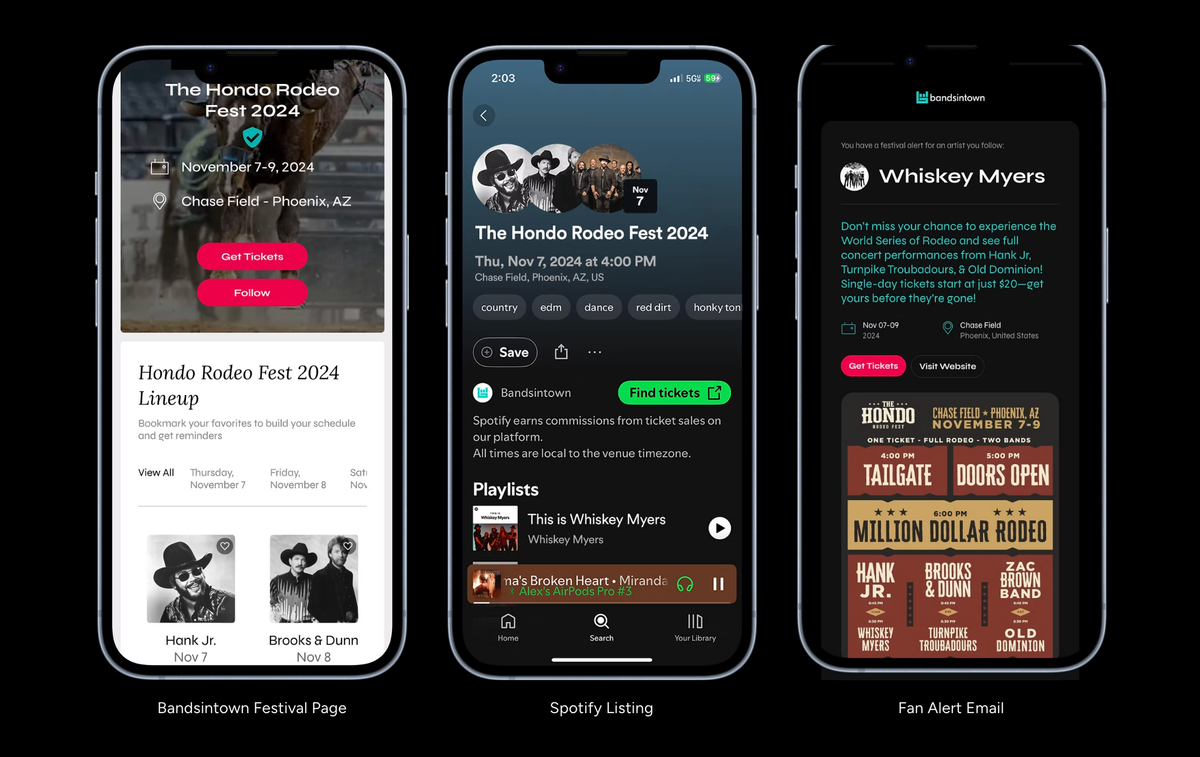](https://www.hypebot.com/a-clear-example-why-festivals-should-be-on-bandsintown-pro/)
[Independent Artists Need an Operating System, Not Another ‘Tool’The music industry has spent the last decade building tools for independent artists. The next step is making them work together.HypebotGuest Author](https://www.hypebot.com/independent-artists-need-an-operating-system-not-another-tool/)
### **Streaming & AI**
[Own Your AI Search Results: A Guide for Artists & VenuesWant your website cited first in Google AI Overviews? Embed the Preferred Sources button and turn fan loyalty into direct search visibility.HypebotBruce Houghton](https://www.hypebot.com/own-your-ai-search-results-a-guide-for-artists-and-venues/)
[Mark My Words: AI Music Is the End of the Artist Economy.People keep calling gen-AI music “inevitable.” But if making a song no longer requires an artist, that isn’t the future, it’s the end of the artist economy.HypebotGuest Author](https://www.hypebot.com/mark-my-words-ai-music-is-the-end-of-the-artist-economy/)
[Audiomack’s Night Plan Lets African Fans Download Music When Data Is CheaperThis new plan helps African listeners cut mobile data costs by scheduling music downloads during cheaper overnight hours on supported carriers.HypebotNews](https://www.hypebot.com/audiomacks-night-plan-lets-african-fans-download-music-when-data-is-cheaper/)
[SoundCloud Will Let Artists Sell Music Directly and Keep the RevenueThe streaming platform’s new no-commission sales rivals Bandcamp’s offerings to independent artists, and will be rolled out after an initial Beta trial.HypebotNews](https://www.hypebot.com/soundcloud-will-let-artists-sell-music-directly-and-keep-the-revenue/)
### **News**
[Vanderbilt Study: Resale Ticketing Costs Fans $11B AnnuallyA Vanderbilt study reveals ticket resellers drain $11B yearly from live music and its fans. NIVA and NITO support the study’s proposed solutions.HypebotBruce Houghton](https://www.hypebot.com/vanderbilt-study-resale-ticketing-costs-fans-11b-annually/)
[Folk Alliance International Announces 140+ Artists for 2027 ConferenceFolk Alliance International has announced more than 140 artists from 31 countries for its January 2027 Chicago conference.HypebotNews](https://www.hypebot.com/folk-alliance-international-announces-140-artists-for-2027-conference/)
[AEG Wants to Fly Concertgoers in Air Taxis. That’s Some Weird Sh\*#.AEG and Archer Aviation plan to build an electric air-taxi hub beside Crypto.com Arena for shuttling folks to concerts and events. What year is it?HypebotHypebot Editorial Desk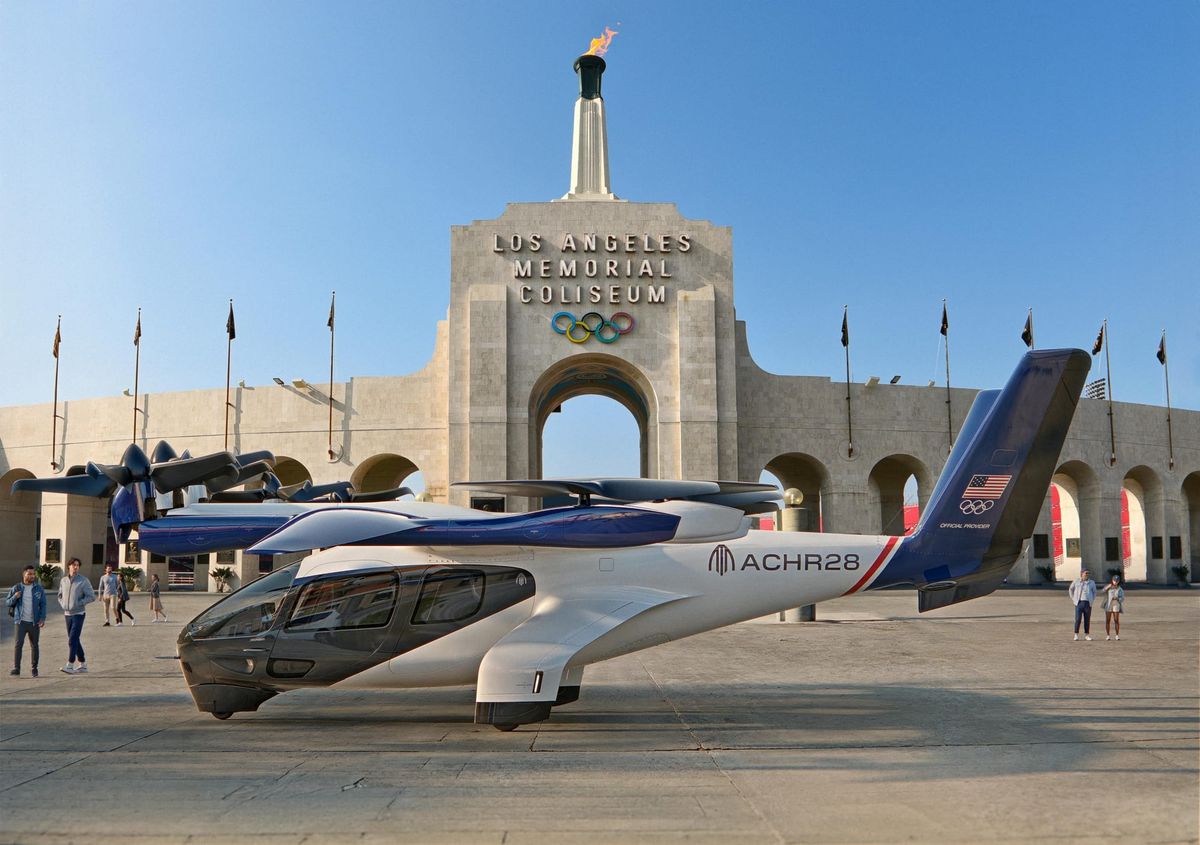](https://www.hypebot.com/aeg-wants-to-fly-concertgoers-in-air-taxis-thats-some-weird-sh/)
[Hybebot’s Bottom Line: News That Matters To MusiciansNews that matters to Musicians: YouTube watch metrics, AI search strategies, ticketing fee caps, Dolly Parton’s touring masterclass and more.HypebotBruce Houghton](https://www.hypebot.com/hybebots-bottom-line-news-that-matters-to-musicians/)
### **\*Surprise Bonus\***
[4 Live Music Markets Changing Faster Than You ThinkThis edition of Touring Radar takes a closer look at the unexpected cities making live music news. Here’s what’s catching our eye this week.HypebotHypebot Editorial Desk](https://www.hypebot.com/4-live-music-markets-changing-faster-than-you-think/)
### Music as a Cultural Infrastructure Business
URL: https://www.hypebot.com/music-as-a-cultural-infrastructure-business/
Last updated: 2026-08-28T11:23:28.000Z
### **Music as a cultural infrastructure business**
*By* [***Kriss Thakrar***](https://www.midiaresearch.com/analyst/kriss-thakrar?ref=hypebot.com) *at* [***MIDiA Research Blog***](https://www.midiaresearch.com/blog/music-as-a-cultural-infrastructure-business?ref=hypebot.com)
Suno is introducing deliberate friction to pump the brakes on the [AI-powered superabundance](https://www.midiaresearch.com/blog/why-music-is-not-enough-for-an-artist-fan-club?ref=hypebot.com) it helped create. By implementing download caps (per [*Variety*](https://variety.com/2026/music/news/suno-unveils-download-caps-for-free-paid-tiers-generator-1236831589/?utm%5Fsource=chatgpt.com)), the company is putting guardrails around how much music users can output.
Streaming services have removed millions of suspected ‘spam’ tracks, and [TechRepublic ](https://www.techrepublic.com/article/news-spotify-ai-persona-badges/?utm%5Fsource=chatgpt.com)reports Spotify is introducing AI persona labelling. With Suno also signing a licensing deal with BMG (according to [Music Business Worldwide](https://www.musicbusinessworldwide.com/5-things-to-know-about-sunos-bmg-licensing-deal-download-caps-watermarks-and-more/?utm%5Fsource=chatgpt.com)), all signs point to a world where AI is seen less as a bull in a china shop and more as an opportunity that can viably be integrated, governed, and monetized by the music industry.
Ultimately, as the integration of [AI](https://www.hypebot.com/tag/ai/) unfolds, the industry will increasingly need to solve the cultural problems created by superabundance, alongside reaping the functional benefits AI can deliver.
The solution to these cultural problems, unsurprisingly, is not using AI to find ways to create more creators. Instead, the industry needs to think of itself less as a music business and more as a cultural infrastructure business. Rather than producing music and rights, the systemic infrastructure that produces culture through artists is the asset that has enduring value in the [age of AI](https://www.hypebot.com/tag/ai/).
## **Function versus culture**
What is indisputable about AI is its functional capacity. The ability to make a recording has evolved from a technically challenging, expert-enabled art form to being as simple as writing a prompt.
When it comes to production in most industries, function is king and value is ultimately placed on the efficiency and capability in going from start to finish. Yet music is not a functional industry based on the production of raw materials. It is a cultural one that carries meaning and identity. And ironically, the better AI becomes at fulfilling music's functional requirements, the less value those functions hold in differentiating music as a cultural asset.
As the functional outputs of musical craft become abundant, craft itself becomes less legible in the finished recording. Music production can therefore become increasingly divorced from music culture (similar to the ongoing decoupling of [music consumption from music culture](https://www.midiaresearch.com/blog/the-music-industrys-personalisation-paradox?ref=hypebot.com)).
**+Read more:** [*"'Human-First' Is a Promise Nobody Can Check Yet."*](https://www.hypebot.com/human-first-is-a-promise-nobody-can-check-yet/)
## **From scarcity to superabundance**
Music will always have cultural value in society because, as Warner Music CEO **Robert Kynckl** puts it, it is “the most distributed thing in the universe, maybe other than oxygen” (per [Semafor](https://www.semafor.com/article/08/14/2026/warner-music-group-ceo-robert-kyncl-mixed-signals?ref=hypebot.com)).
Music has also historically enjoyed an advantage that other cultural industries did not: the recording itself was a scarce cultural object. Even in the financial freefall of the download era, music’s cultural positioning was indisputable.
However, with the ever-increasing superabundance of recordings, music has lost the unique cultural asset that only it could control. In the technological quest to solve the functional problems of music production, we have created a cultural one.
The scarcity that once helped make the recording itself a cultural asset has been traded for superabundance. But cultural value hasn't disappeared; it has simply been redistributed. The craft and cultural power of music will increasingly reside in the places where trust is inherent. This puts power in the hands of artists who double down on [performance, provenance, and personality](https://www.midiaresearch.com/blog/how-musics-instagram-moment-led-to-its-fast-fashion-era?ref=hypebot.com).
## **A Swedish solution to music’s culture problem**
Music now has to compete in the same lane as entertainment as a whole. Athletes, podcasters, influencers, and celebrities all operate in the same attention economy as artists. But generating and releasing a recording doesn't provide an artist with achievement, an established audience, or cultural authority.
So how do artists compete in the modern culture of entertainment? If it’s not obvious, it is worth being clear that AI is not the solution to music’s culture problem. Culture is not powered by technological tools, but by social infrastructure. This is what cultivates the skills of elite performance, provides a provenance-rich environment, and develops distinct cultural personalities.
Since Sweden has a good track record of solving the music industry’s problems, it’s worth turning to them again. Stockholm perhaps holds one of the best models for cultural development. Decades of investment across music education, subsidized studios, venues and public institutions have enabled scenes to flourish and talent to overperform and compete globally. The city is now applying this model to Stockholm’s Meatpacking district, explicitly using music as an “engine of urban renewal” (per [Fast Company](https://www.fastcompany.com/91541695/culture-is-infrastructure-and-stockholm-is-betting-on-it?utm%5Fsource=chatgpt.com)).
***+Read more:*** [*"Is the Concept of Listening Becoming Obsolete?"*](https://www.hypebot.com/is-the-concept-of-listening-becoming-obsolete/)
## **The craft of producing culture**
The music business can no longer think of itself primarily as a recording business. It is increasingly a cultural infrastructure business, which means it is dependent on the craft of artists and their cultural standing in the world. AI will enable a functional revolution and, in doing so, reveal where the future value of musical craft lies.
Culture has never been more strategically important to the music business. What makes that exciting is that the industry's role in developing social infrastructure and creative clusters has never been more important.
AI has commoditized the production of music. In doing so, it could make the production of culture the music industry's most valuable craft.
### Dolly Parton Made Every Stage Feel Like Her Front Porch
URL: https://www.hypebot.com/dolly-parton-made-every-stage-feel-like-her-front-porch/
Last updated: 2026-08-27T18:54:40.000Z
**Dolly Parton**, the singer, songwriter, actor, entrepreneur and philanthropist whose seven-decade career made her one of the most beloved figures in American culture, died Tuesday in Nashville. She was 80\. Her death was announced on [her official website](https://www.dollyparton.com/?ref=hypebot.com).
There will be many ways to measure what Parton leaves behind: the songs, films, businesses, philanthropy, and a larger-than-life public persona that became more universally adored as the culture around her grew more divided. But Dolly Parton was also one of [live music’s](https://www.hypebot.com/tag/live-music/) great practitioners.
Her gift was not simply that she could command a stage. It was that she learned how to carry that down-home intimacy with her, no matter how large her stages became. She could enter wearing enough rhinestones to be visible from space, then speak as though she had pulled up a chair.
Here is a [brief history](https://www.hypebot.com/tag/brief-history/) of how Dolly Parton became (and kept becoming) one of America's greatest live performers.
## **The Front Porch Came First**
Before there was a stage, there was **a porch.** Parton grew up as one of 12 children in a small home in **the Smoky Mountains** of East Tennessee. She wrote songs as a child and imagined herself performing with a homemade microphone.
By 10, she was singing on local radio and television programs. At 13, she made her first appearance at the Grand Ole Opry, introduced by Johnny Cash.
Parton never completely outgrew the emotional rules of the front porch: tell a story clearly, make people laugh and sing something true enough that they lean closer.
Her presentation would become spectacular. Her relationship with an audience remained conversational.
## **Sharing the Stage With Porter Wagoner Taught Her How to Steal It**
Parton’s invitation to join ***The Porter Wagoner Show*** in 1967 gave her both national television exposure and a place in Wagoner’s touring road show. For seven years, Porter and Dolly became one of country music’s defining duos.
The partnership functioned as a live apprenticeship in timing and contrast. Wagoner’s stately baritone and established persona gave Parton something to sing against. Her bright harmonies, emotional openness and sly humor made her increasingly difficult to treat as a supporting player.
In essence, her education in sharing the stage meant learning how to steal the stage.
By 1969, she was a **Grand Ole Opry** member. By 1974, she was ready to leave Wagoner. The song she wrote to explain that departure, “I Will Always Love You,” became one of the most graceful assertions of artistic independence in music history.
Leaving the partnership was the moment Parton became responsible for building the entire show around herself.
## **New York City Proved Dolly Did Not Need Translating**
In May 1977, Parton played [a three-night stand at New York’s Bottom Line](https://www.rollingstone.com/music/music-country/dolly-parton-bottom-line-new-york-835401/?ref=hypebot.com). Mick Jagger and John Belushi were reportedly among the people who came to see whether Nashville’s rising star could hold a room outside the conventional country circuit.
She very much could.
The performances capture an artist in transition: grounded in mountain songs and country storytelling, but comfortable mixing her catalog with pop and R&B material. She did not dilute country music for New York. She trusted the audience to come *to her*. To her porch.
That trust became central to her crossover. “Here You Come Again” reached pop listeners, Parton won the CMA’s Entertainer of the Year award in 1978, and ***9 to 5*** turned her into a movie star with a theme song that audiences already seemed to know by heart.
The stages then got larger from there, and so did the range of a Dolly Parton show. A set could move from a devastating ballad to a bluegrass breakdown, a pop chorus, a bawdy joke and an instrumental flourish. Her heightened visual presentation gave her permission to contain all of those things at once.
## **Then Came Kenny**
Parton’s touring partnership with **Kenny Rogers** in the mid-1980s brought another kind of growth. [“Islands in the Stream”](https://open.spotify.com/track/6dnco8haegnJYtylV26cBq?si=6066436d14934f1d&ref=hypebot.com) had made them a country-pop phenomenon.
But their easy affection, teasing banter, and contrasting voices gave arena audiences something warmer than a superstar package.
The numbers were enormous. [A 1985 bill at the Louisiana Superdome](https://www.fox8live.com/2026/08/25/superdome-house-of-blues-remembering-dolly-partons-unforgettable-louisiana-concerts/?ref=hypebot.com) featuring **Rogers, Parton, Lee Greenwood,** and **Sawyer Brown** drew 20,000 people. Parton joined Rogers would tour together around the world through 1990.
The pairing revealed one of Parton’s most useful live instincts, that **generosity can unlock a lot of connection**, both between performers and their audiences. She did not have to dominate every second to remain the center of attention. The pleasure was rooted in human chemistry, not only production machinery.
## **Her Millennium Comeback Tour Reinforced That Early Intimacy**
After stepping away from the grueling touring schedules of her earlier career, Parton returned in 2002 with her first major tour in over ten years. Instead of attempting an arena-scale comeback, the *Halos & Horns* Tour played mostly intimate venues holding between 1,000 and 2,500 people.
The shows sold out. The production stripped away much of the glitz of earlier tours, while bluegrass and folk arrangements brought the music back toward East Tennessee. Even “9 to 5” received an acoustic reworking.
At New Orleans’ **House of Blues**, approximately 1,000 fans were already chanting her name before she appeared. The tour later ended with two Dollywood performances that became the live album and concert film ***Live and Well*.**
## **Glastonbury Was the World’s Largest Front Porch**
By the 2010s, Parton was again selling out major tours across North America, Europe, and Australia. But no late-career performance captured her live identity more completely than Glastonbury in 2014\. Her official biography estimates that more than 140,000 people attended the set, the largest live audience of her career.
Parton later admitted she had been frightened that a massive rock-festival crowd would have little patience for an artist who liked to stop, talk and tell stories. Instead, those habits became the whole point of why people flocked to see her.
She wrote a song about the festival mud. She played banjo, fiddle and a rhinestone-covered saxophone. She told jokes, yodeled, led singalongs and moved between “Coat of Many Colors,” “Jolene,” “9 to 5” and “I Will Always Love You.” The performance was gloriously excessive and built specifically for the people standing in that field.
“I know it was corny, but it was fun,” she told them.
Years later, [Parton told ](https://news.pollstar.com/2026/08/25/why-dolly-parton-belongs-in-the-rock-hall/?ref=hypebot.com)[*Pollstar*](https://news.pollstar.com/2026/08/25/why-dolly-parton-belongs-in-the-rock-hall/?ref=hypebot.com) that Glastonbury was as close as she had felt to being a rock star. More revealingly, she remembered how respectfully the audience listened to her stories. She had made an enormous festival behave like a listening room.
## **Into Her Elder Years, She Pushed the Tour Van Farther**
In 2016, at the ripe young age of 70, Parton launched a tour across North America in support of her 45th solo album, *Pure & Simple Tour.* The run covered **over 60 dates.** In classic Parton fashion, she deliberately moved away from a giant production in favor of a more minimalist show, deeper catalog selections and more conversation with the audience.
The combination of a large touring itinerary with a smaller emotional scale summed up what she had spent a lifetime learning. Although these would be her last road runs, she still planned to perform occasionally, and acknowledged that a tour was not something she could do halfway.
## **Her Encore Back in East Tennessee**
Parton’s final years onstage unfolded through special appearances rather than conventional tours. At her 2022 Rock & Roll Hall of Fame induction, she turned “Jolene” into an all-star singalong. In 2023, at 77, she walked onto the Dallas Cowboys’ Thanksgiving halftime stage in a bedazzled cheerleading uniform and performed a compressed medley for a stadium and national television audience.
And in March 2025, her **final documented live performance** would come at Dollywood’s 40th-anniversary opening day. Parton sang “Celebrate the Dreamer in You,” a song she had written for the park’s 25th anniversary.
It was an unusually fitting last stage: in the East Tennessee place she had built from her own history, image and belief in where she came from.
Dolly Parton spent seven decades growing in, *many*, directions. The hair got higher. The costumes became brighter. The outfits got tighter. And the audiences grew from a few people near a radio microphone to well over 100,000 standing in a field. Yet she kept finding ways to make the stage feel smaller.
Charm, generosity, stagecraft.
### Instagram's First Draft Is a New Tool to Auto-Edit Reels on the Fly
URL: https://www.hypebot.com/instagrams-first-draft-is-a-new-tool-to-auto-edit-reels-on-the-fly/
Last updated: 2026-08-27T14:59:18.000Z
Staring at a pile of raw [video clips](https://www.hypebot.com/tag/short-video/) is usually the exact moment many musicians and creators decide to just skip posting entirely.
To help users push past the friction of content creation, [**Instagram**](https://www.hypebot.com/tag/instagram/) has introduced **First Draft**, a new one-tap editing feature designed to automatically trim video clips and stitch them into a cohesive Reel in seconds.
Currently rolling out exclusively for iOS users, First Draft acts as a digital assistant that handles the tedious “rough cut” phase of video editing. An Android version is will likely be releases soon.
### **What is Instagram First Draft?**
First Draft is a native editing tool for Instagram Reels that automatically cuts down selected video clips, removes unnecessary pauses, and pieces together the strongest moments to create an initial video edit.
It primarily uses audio and motion detection to recognize dead air and trims those gaps without relying on generative AI.
### **How Musicians and Creators Can Use It**
The feature is seamlessly integrated directly into the standard Instagram Reels workflow. **You can access it in two ways:**
- **From your camera roll:** Open the Reels gallery, select one or multiple clips, and tap the new “First Draft” button at the bottom of your screen.
- **Directly in-app:** Open the Instagram camera, film your video directly, and tap “First Draft” to have the app immediately tighten up the footage.
The tool adapts to different formats like **day-in-the-life vlogs, multi-clip tour montages**, and **standard talking-head updates**.
**Every edit made by First Draft is 100% reversible**. If you don't like the pacing of the automated cut, you can rearrange, restore, or completely scrap the clips before adding your music, text, or effects in the full editor.
> [ View on Threads](https://www.threads.com/@creators/post/Dcd8qfSEbEV?ref=hypebot.com)
## **Hypebot's Bottom Line**
Short-form video is a non-negotiable pillar of modern music marketing, but for independent musicians managing their own campaigns, editing is a massive bottleneck.
By automating the most frustrating and time-consuming part of video production including cutting out dead air and syncing up basic montages, Instagram is giving artists their time back.
Instagram's First Draft effectively takes the rough-cut busywork off your plate, allowing you to focus on shaping the narrative, engaging your fanbase, and actually making music. If you own an iPhone, this new feature removes the last remaining excuse for not posting that tour vlog or track breakdown.
***+Read more:*** [*"Social Music Discovery Upgrades: Spotify, Snapchat, Facebook"*](https://www.hypebot.com/social-music-discovery-upgrades-spotify-snapchat-facebook/)
### Who Needs Perfection, Anyway?
URL: https://www.hypebot.com/who-needs-perfection-anyway/
Last updated: 2026-08-27T19:22:56.000Z
Whether you're an entrepreneur or an artist, living a life dependant on finding creative solutions and monetizing that work can come with, well, innumerable setbacks.
Whether those mountains to climb are ***externally*** (capital, competition, logistics, technology) or ***internally*** (self-doubt, lack of motivation, gaps in knowledge) **motivated**, there's no path forward that doesn't include boosting confidence, becoming comfortable with risk, and building resilience.
As a recording artist, music entrepreneur, and music industry professional with 15+ years of experience in the business, author [**Dani Felt**](https://www.instagram.com/danifeltmusic/?hl=en&ref=hypebot.com) has been through that ringer more than her share of times. Her new book, [***Becoming Unstoppable: The Playbook for Creatives and Entrepreneurs***](https://www.amazon.com/dp/B0GRTJ3CB4?ref=hypebot.com), grew out of the experiences and lessons she's learned throughout multifaceted career. It's focused on helping creatives navigate the less glamorous side of building their careers, overcoming rejection and self-doubt, creating sustainable opportunity, and learning to think strategically while retaining one's creative identity.
*Hypebot* is proud to offer this complete chapter excerpt. Enjoy.
---
## **Fuck Perfection (Seriously, Let It Go)**
I have been so challenged to try things outside of my comfort zone when it comes to being an artist. I have been getting really pushed to my limits, like trying to topline. I have tried to write over ten songs of toplining melodies. But then I started teaming up with people who topline and this comes so easily to them. My thing is lyrics. Everyone has their own thing.
As artists, we are so often told to be perfect. To have perfect social media numbers, be an incredible performer, sell lots of music, have perfect merch, be incredible in the studio, be an amazing topliner, lyricist, play all instruments, blah, blah, blah. I am here to tell you: IT IS SAFE TO NOT BE PERFECT. Drop the perfection act and play to your strengths. Team up with people who are good at what comes hard to you. This whole pretending to be perfect thing is super exhausting and I would much rather see you thrive.
It is safe to not be perfect. It is safe to have weaknesses. It is safe to ask for help and admit you need guidance on something. We are human and divine, but not perfect! Forgive yourself for what is not your best skills, and find people to team up with who are amazing with those things you struggle with. You will feel so much better.
Also try to be less harsh on yourself. Love yourself more, forgive yourself more. Your imperfection is a beautiful thing! It is okay to not have a great day, week, or month. Do what you gotta do. Be kind to yourself. YOU ARE AMAZING JUST THE WAY YOU ARE. Just be You!
Why do we always put so much pressure on ourselves to complete everything so perfectly? Why do we feel that art always has to be perfect? What happened to giving ourselves space, time, and magic to act on divine timing and know that it does not have to be perfect to be great? Can we, for once, start to enjoy the process and let go of rushing into everything? Can we learn to have more fun and enjoy the process of creating? Instead of wanting it to be perfect and never releasing it because we do not feel it is good enough. Can we just slow down a bit and breathe in the magic, and let go of some of the weights we put on ourselves day by day?
This was the reminder I got when I took a mini road trip to Ashland City to meet with a dear friend I have not seen in over five years. This girl is very special to me; we have so much history. She even performed at my book release party in New York City. When I stepped into her home, I felt such a warm, welcoming energy, such a good vibe. I saw plants everywhere, beautiful lighting, and amazing interior design. I felt like I was on vacation and it was just what my soul needed.
The trip was amazing! My friend is just a pure, kind-hearted person. She treated me to such delicious home-cooked meals. We had the most amazing songwriting session and
heart-to-heart conversations. Her home is surrounded by trees and it felt so good to just be surrounded by nature. My soul felt so happy! Sometimes, we all just need to slow down and take a mental break.
Oh by the way, one crucial thing I did at this time was I turned my phone off for almost the entire day. It felt so good being disconnected from everyone and just focusing on being in the moment with my friend for our writing session. I highly recommend everyone to start taking more breaks from your phone. It led me to some powerful downloads and insights.
I also noticed that day, I felt more at peace because I barely looked at my social media. I think social media can really trigger a lot of anxiety in me, and hence, I’m trying to use it less. I think the biggest thing it does is lead me to constantly compare myself to everyone else’s “perfect” life and what they are doing. That is actually not healthy and can cause a lot of insecurity, at least in my experience. So I vow to try to use social media less, except when posting, and focus more on staying in a state of peace. Really being in a peaceful state of mind is where we can manifest the fastest and most powerful, anyway.
When I asked my friend about the plans for her music, she told me she is working on an EP/album and that she is taking her time with it. She is not rushing to finish it so fast because she would rather have an amazing quality than rush just to get songs out. I loved this way of thinking and decided I will start to adapt this into my everyday way of being. Why rush? Why not enjoy it? Why not really appreciate where we are in the moment versus trying to always rush into the future and accomplish every single thing in an instant?
As an artist, I have felt pressured to release music every four to eight weeks, and honestly, that is a lot. I would rather be at peace and take my time than be in a state of constant stress and pressure. Maybe that is just me.
When I was working towards releasing my single “Unapologetic,” I asked so many different producers their opinion of the song. I just could not part ways with it. It was never complete in my opinion. I could have mixed it over and over again. Being an artist, I can be quite the perfectionist. I just wanted it perfect. But you know what? I had to learn to let it go. To surrender the process. To give it up to God and the universe. To tell myself it is complete.
As an artist, as a creator, we can always keep editing but this is also a form of self-sabotage. We must learn to trust, let go, and surrender to the process of creating art. Music is subjective anyway, and it will never sound perfect. We can never please everyone! So learn to just embrace the imperfections of art and find harmony within yourself to enjoy the Process!
### Aim for Greatness
One New Year’s Eve, I was really excited to go out and have fun, and see one of my friends perform live. I was on some kind of sugar high, not paying attention while I was doing laundry. I walked into my laundry room and suddenly bent down then straightened back up, and banged
my head on the laundry dryer door which I forgot was not closed. If I was being more present, if I was in less of a rush, and paid more attention to the moment, maybe that would not have happened.
My long-winded point is maybe we just need to start to take our time more and take the pressure off ourselves. So what if something does not turn out as perfect as we wanted it to? Sometimes, things are going to be messy and we are going to make mistakes. If life was about perfection, gosh, we would all be so bored! Although sometimes, the project takes longer because the original idea is just not aligned anymore.
A great example: I had been working on my TV show for almost five years. It is absolutely not perfect. In fact, I have probably come up with at least nine to ten different versions of the show. But when it comes to creating, it’s about development, it’s about making it better and better. It is not about wanting it to be perfect, but it is about creating something great! So take off your “perfection lens,” and instead, replace it with the “lens of greatness.” Take it one scene at a time, one line at a time, one story at a time.
Why are we in a constant state of “this project needs to happen right now or else?” Why does it need to be perfect? That song you did might not be perfect, but it could be on its way to greatness! Take your time and just put in a beautiful intention for the song. Do not rush it. It does not need to be perfect. Just keep working on it until it is great. That book you are sitting on? Start writing it! That business plan you are dreaming of, start drafting it. Do not wait until something is perfect to get started on it. Just go forward and take action!
Also, let’s start to look at things differently. Can we shift our mindset to: Projects will be done when they are meant to, that it is not about perfection but that divine timing is always at play.
Can we normalize just living in joy and embracing the messiness of life rather than being so damn critical of ourselves all the time? Life is not about perfection! It is about the experience, the good, the bad, the ugly, it is all for us to build our journey. This is the blessing of being human, not being perfect. Can we make a conscious effort to just enjoy life more and live in the moment versus acting in a constant state of fear and lack?
Can we start to adapt the mindset of “if not now, another time.” If not this one person to work with my team, another one. If this singer will not record one of my songs, then another. If we cannot release our EP this month, then another month. If not this client, another one. A better-fitting client. A better-fitting singer. A better-fitting person to pitch xyz, or manage us, etc.
### Rejection
I got rejected from The Recording Academy and I want you to know that rejection is a common part of being in this music world. It is part of being an artist, a producer, or just working in this
industry, in general. It might hurt my feelings but at the same time, I believe that everything happens for a reason. If something is meant for us, it will be for us.
I want you to know, no matter how many doors get slammed in your face, you will be okay! And I want to encourage you to keep going no matter what. Keep trying, keep putting yourself out there, keep applying to every opportunity your heart desires. What’s meant for you will align for you. Maybe someone else needed the membership more than me and that’s okay. Sure, my ego might be like, how dare they not choose me! (You know what I mean, our ego can be a bit wild.) But my soul is like, it’s okay and what is meant for me will be for me.
Never let an opportunity determine your worthiness. You are worthy of just being born. Never think that if you do not get an opportunity, or get into a certain label or management company that you are less worthy than a peer in your community of music friends. I shared this story to encourage you and to let you know, you got this. Do not be so hard on yourself when you do not
always hear a “yes” in this fun music world. Keep going, keep going, keep going, keep going, keep going, and keep going. You are talented and an amazing human. The world needs your music no matter what. We need your creativity, inspiration, voice, etc.
### Energy
The reason people will hire you as a coach, consultant, or artist; or buy your merch, go to your shows, or become a fan or client of yours is because they feel good about being around you. They love your energy and who you are. Let’s be real, there are millions of artists out there. So, what makes people purchase from you or become a raving fan? It comes down to the quality of your offer, your brand awareness, and who you are as a human being. Your energy, your personality, your essence are the reasons people hire you, or buy your products or services, or become a super fan.
I got this realization when I asked some of my clients what their favorite part of my three-month program was and they said my energy and attitude. :) Then it hit me, it is not about being perfect, it is about being ourselves.
So take a deep breath, take the pressure off yourself and realize that the people who purchase from you are the people who love you for who you are, your attitude, your energy. Even your music resonates with a certain energy. Really take that in! You get to be paid for just being yourself. How beautiful is that?! It is not about being perfect, it is about being YOU. Although, do not get me wrong, if you are a producer, you do need to nail that mix or as an artist nail that recording. But at the end of the day, people hire us for being us!
### Key Takeaways
1.Take mental breaks, surround yourself with nature, and surround yourself with things that inspire you.
2\. Sometimes when you remove yourself from your current environment, you start to see a different perspective and get new insights, ideas, and creative thoughts that you never would have otherwise.
3\. Slow down and enjoy the present moment more.
4\. Take breaks from your phone and social media.
5\. Be less harsh on yourself and just enjoy the process more than focusing so much on the destination of whatever it is you’re trying to accomplish.
6\. Take care of yourself, get enough sleep, and eat healthy. Make sure you have energy to do the things you want to do.
7\. Take it one step at a time.
8\. Really get clear on what you want in your life, not what others tell you is good for you. You want to be a signed artist, great! Go for it. You want to do more songwriting behind the scenes, that is okay too. There is no wrong or right answer. It is ultimately your life and you have to choose what is best for you!
### Affirmations:
1\. I am perfect just the way I am.
2\. My mistakes become my biggest power-ups in life.
3.Being human is my gift and blessing.
4\. This or better always.
**Order Dani Felt's** [***Becoming Unstoppable: The Playbook for Creative and Entrepreneurs***](https://www.amazon.com/dp/B0GRTJ3CB4?ref=hypebot.com) **in hard copy on Amazon or** [**listen to the book**](https://www.audible.com/pd/B0HFYLW7XT?source%5Fcode=ASSORAP0511160006&share%5Flocation=pdp&ref=hypebot.com) **on Audible.**
---
**Dani Felt* is a recording artist, music entrepreneur, and author with 13 years of experience in the music industry. Based in Los Angeles, she has built a career spanning music, entrepreneurship, and artist development.*
### Take the 2026 Hypebot Reader Survey
URL: https://www.hypebot.com/take-the-2026-hypebot-reader-survey/
Last updated: 2026-08-27T13:16:04.000Z
### ***Take a look around, take a moment to share your thoughts.***
We'd love to know what you think of Hypebot's look, navigation, content, and email cadence. Please help us improve the overall reader experience by taking just a few minutes to complete [this quick survey](https://bandsintown.typeform.com/to/LEsGcxCr?ref=hypebot.com).
Your impressions and suggestions will directly impact the future direction of the platform and its coverage of the industry we love and love to support.
[Take the Survey Here!](https://bandsintown.typeform.com/to/LEsGcxCr?ref=hypebot.com)
Thanks so much for being a *Hypebot* reader, we hope you've been enjoying the content!
### There's One Well-Paying Gig Musicians Always Forget About...
URL: https://www.hypebot.com/theres-one-well-paying-gig-musicians-always-forget-about/
Last updated: 2026-08-27T15:08:11.000Z
*By *Bruce Weinstein, Ph.D.* of* [***The Ethics Guy***](https://theethicsguy.com/?ref=hypebot.com)
Pop quiz! Which of the following are places where musicians can perform and be paid?
**A) Busking**
**B) Clubs**
**C) Concerts and festivals**
**D) Weddings, private parties, and bar mitzvahs**
**E) All of the above**
The correct answer is E. But are there any other places for musicians to share their gifts with the world and to be paid well too? Yes, there are, but the answer may not be obvious:
**F)** **Conferences.**
Hotels across the country host meetings every day. During the day, attendees go to educational sessions that include keynote speeches and breakout sessions. The people who plan the meetings also know that attendees also want to be entertained in the evening. That’s where your band comes in.
I know the conference world from the daytime side. For more than 25 years, I have traveled across the United States and around the world to give paid presentations at association and business meetings, most of which were held in hotels. The good news is that the people a professional speaker approaches to be hired are often the same people your band can approach to provide entertainment. The difference is simple: I speak during the day. You play at night.
Why should you care about this? First, [conference](https://www.hypebot.com/tag/conferences/) work can offer immediate benefits. It may pay more than many familiar performance venues. The client often pays for transportation, hotel, and meals too. There are long-term benefits as well. A successful engagement can lead to repeat business, referrals, and opportunities with other organizations whose members saw you perform.
I will now explain:
1. **Who** books the talent at conferences
2. **How** to get these people to book your band
3. **When** to get paid (spoiler alert: you will get paid in full before you set foot on stage)
## **Two Groups Meet in Hotels**
Two groups meet in hotels and conference venues: **nonprofit associations and businesses.**
**Nonprofit associations** include professional societies and trade organizations at the national, state, and local levels. There is an association for nearly every profession and interest: accountants, physicians, mechanical contractors, human-resources professionals, and thousands of others. They have annual meetings, regional conferences, leadership retreats, and educational programs. They need speakers during the day, and many need entertainment at night.
**Businesses** also meet in hotels. Small, medium, and large companies hold sales meetings, training and professional development programs, and customer or client conferences. Some have larger entertainment budgets than non-profits do, and thus this can be a more challenging market to enter for bands that aren’t household names. A colleague of mine worked for a company that hired the Rolling Stones as the entertainment. That company wasn’t going to give a platform to a band few had heard of, no matter how good that unknown band might have been.
Therefore, for many bands nonprofit associations are the practical place to begin. Their budgets vary, of course, but they often need high-quality entertainment that is compelling, professional, and affordable, and not being a household name is not a disqualifier.
If you’re reluctant about pitching a nonprofit association, remember this: these groups are actively searching for good entertainment that will delight the people who attend their meetings. They need you, they want you, and the only thing preventing you from getting booked is that they don’t know about you. Yet.
***+Read more:*** [*"How to Nail Your Next Supporting Act Set"*](https://www.hypebot.com/how-to-nail-your-next-supporting-act-set/)
## **Think like a Meeting Planner**
A meeting planner is responsible for creating an event that serves the interests of a professional organization. Attendees may spend a considerable amount of time and money attending a conference, and they understandably want to ensure a high return on their investment. Meeting planners are keen to avoid mistakes that will disappoint attendees and reflect poorly on the sponsoring organization and the meeting planners themselves.
Meeting planners want a band that will entertain their attendees and help make the event a success.
Before you contact an organization, do some research. Find out when and where it meets. Look at its conference theme, who its attendees are, and the musical acts it has previously hired. Many organizations post meeting programs, photos, and video clips on their websites and through social media. This information will help you tailor your message and demonstrate that you understand the organization. Never send a generic pitch to anyone. Period.
Suppose, for example, that you want to pitch your band, the Blues Chiropractors, to the National Association of Happy People. You do your due diligence and discover that for the past four years the NAHP’S annual conventions have featured pop, country, polka, and rock acts, but never a blues band. This knowledge gives you a way to position your group: a refreshing change of pace for the group’s next meeting.
Research does not guarantee a booking, but it instantly separates you from musicians who make no effort to understand the audience.
## **Make Your Pitch About the Meeting Planner, Not You**
Let’s compare two possible pitches you could send to the Director of Meetings for the National Association of Happy People. Here’s the first pitch:
My band, The Blues Chiropractors, would be perfect for one of your meetings. We cure whatever ails you. My band is the number-one attraction in our town, and everyone who hears us immediately falls in love with our music. I would like to arrange a time at your convenience to tell you more about us.
Maybe every word is true, but the pitch is dominated by the least appealing words in the English language from the perspective of the reader: “my,” “we,” and “us.” And the call to action is completely self-serving. This pitch will not land.
Here’s a second possible pitch:
For your upcoming meeting in Boca Raton, why not book a hot band that will get members dancing the moment we start playing? May I send you a short demo reel?
The second version is shorter and more relevant. It is about the meeting, the members, and the result the planner wants. It also ends with a simple question. A question is a much more engaging way to communicate with a reader, isn’t it?
Your first outreach should seek to start a conversation, not close a deal. Show the meeting planner that you have done your homework. Make a clear connection between your band and the audience. Ask permission to send a short demo reel.
## **Your Demo Reel Will Make or Break Your Marketing Effort**
A demo reel, sometimes called a sizzle reel or showreel, should do more than show that your group plays well. It should also demonstrate what your band will do for the meeting planner’s audience.
Of course, your video should include good footage of your ensemble: wide shots, medium shots, and close-ups that look and sound professional. When someone takes a solo, let viewers see the soloist. Meeting planners may not notice outstanding video and audio, but they will absolutely notice if either or both components are sorely lacking.
But a top-shelf demo reel shows not only *the band*. It also demonstrates that *the audience* is having a terrific time.
Show people dancing, smiling, singing along, laughing, clapping, and visibly enjoying themselves. Cut back and forth between the band and an engaged crowd. What subliminal message does crosscutting tell the meeting planner? It says, “We will engage your audience the way we’re engaging this one.”
Before you hire a videographer, be clear about what you need. Give them a shot list that includes all the shots I described above. If the videographer scoffs and responds, “I don’t need this list! I shoot bands all the time,” you say, “Thank you for your time.” Then you find a videographer who *will* welcome your shot list. A good videographer gives the client what the client wants and needs.
It bears repeating: your demo reel should answer the meeting planner’s unspoken question: “Will this band make my audience happy and make me look good for booking them?”
**+Read more:** [*"How to Choose the Right Indie Venue for Your Live Concert"*](https://www.hypebot.com/how-to-choose-the-right-indie-venue-for-your-live-concert/)
## **Persistence Pays Off**
Direct outreach is a numbers game. Don’t expect a booking after pitching a dozen or even 300 non-profit associations. Meeting planners are inundated with pitches every day. Even if you write a great one, you probably won’t get an explicit rejection. You will most likely hear nothing.
But if you keep pitching, eventually you will get to “yes.”
Early in my speaking career, I sent pitches to every state pharmacy association in the country. Each went unanswered until the executive director of what was then called the Alaska Pharmaceutical Association contacted me. “Our keynote speaker has fallen ill,” she wrote.” Can you come to Anchorage in two days?” I could, and I did. And, is standard practice, the organization paid for my plane fare, hotel accommodations, and meals, on top of my fee.
Years later, I subscribed to an association directory and used it to identify state CPA societies. I spent a considerable amount of time researching each meeting: its theme, who had presented at earlier meetings, and what they were looking for. Again, most of the people I pitched did not respond. One who did has become my largest client.
Persistence pays off.
## **You Will Pay with Your Time or Your Money — Or Both**
You can locate prospects through online research, or you can use a directory or database you pay for that consolidates association contacts and meeting information. In one scenario you invest your money, but with both you invest your time. A lot of it.
You should expect many nonresponses. Some prospects will already have booked their entertainment. Some will say no. Many will simply not reply. This is what investing in the business side of your musical career requires.
Note that a meeting planner might be interested in you for a future meeting. They may save your email and reach out in months or even years. It has happened to me, and it can happen to you too.
## **A Word of Advice: Get Paid Upfront**
When you book a conference engagement directly, get paid upfront. Ignore this rule at your peril.
Years ago, I was hired to speak at a prestigious private school. Our signed contract clearly stated that I would be paid on the day of the program. When I checked in with them before the engagement, the client told me that the payment would be there. It was not. I delivered the presentation for the audience, but the organization did not pay me. It took two years and a trip to small-claims court to collect.
That experience changed my approach to payment. Since then, I require payment in full before I step onstage. Only once has a meeting planner of a non-profit organization told me, “We don’t pay presenters upfront.”
I responded, “Then you have to get another speaker.”
Long pause. I thought she’d hung up on me. Then: “Well, maybe we can make an exception.” Ask for what you want and deserve!
A smart way to ensure you get paid upfront is to give the client a choice. In my negotiations with a group that wants to book me, I tell the meeting planner, “You can pay half of my fee within two weeks of signing the contract and the balance two weeks before the engagement, or you can pay the full fee within two weeks and take a 10% discount.” Some organizations are required to take discounts that are offered to them, and some just want to exercise that option.
Use a written agreement to state your fee, the payment dates, cancellation terms, travel responsibilities, technical requirements, and any other expectations you have. Use an e-signature platform like DocuSign to make it simple for clients to execute the contract. (There’s a free version). Do not assume a warm conversation or a prestigious organization eliminates the need for clear terms.
Professional payment practices protect you and your band, reduce uncertainty for the client, and allow you to arrive at the gig focused on the performance.
Do have an attorney draft or review your contract before you send it. Mine has evolved over twenty-five years. It is now simple, jargon-free, and effective.
**+Read more:** [*"Backstage Pass: Sebastian Vidal of BookedKit Shares Booking Advice & Insights"*](https://www.hypebot.com/backstage-pass-sebastian-vidal-of-bookedkit-shares-booking-advice-insights/)
## **Consider Third-Party Representation**
Direct marketing is not the only route to conference gigs. Management companies, talent agencies, and speakers bureaus serve as intermediaries between talent and clients.
A speakers bureau, for example, will market you, negotiate the agreement, handle logistics, and collect the payment. In exchange, it takes a commission. That commission can be substantial, but the bureau may also open doors to clients, especially businesses, that are difficult to reach on your own.
I’ve spoken to non-profit groups through my own marketing efforts as well as that of speakers bureaus, but all of the businesses I’ve spoken to have come through the bureaus that represent me.
To be attractive to a bureau, you need strong marketing materials: a compelling demo reel, high-resolution photographs, a concise biography, ecstatic and honest testimonials, and a clear explanation of the audiences and events you serve. A client list (the places where you’ve already played) helps to make this clear. The bureau must be able to envision how it will sell you.
The term of art you should know about and practice rigorously is “bureau-friendly.” Everything you send a bureau must have only their contact information on it and nothing of your own. A bureau understandably wants to ensure that their clients use the bureau for booking you.
You do not have to choose between direct outreach and representation. Pursue both.
## **Make it Happen!**
Conferences need entertainment. The people who organize them need professional acts that understand audiences, make events more memorable, and reduce the planner’s risk.
The best part is that this market is already there. Hotels are hosting meetings today. Somewhere, a meeting planner is looking for *your* band. So what are you waiting for? Start pitching now!
---
*Forbes contributor *Bruce Weinstein, Ph.D.*, is a professional speaker, author, and harmonica player who has spent more than 25 years presenting at conferences across the United States and internationally. He helps musicians pursue the conference-entertainment market and thereby share their musical gifts with a wider audience and be paid well too.* [*Contact Bruce*](mailto:drummingman8@gmail.com) *for a presentation of “How to Get the Well-Paying Gig” as a keynote, workshop, or virtual session.*
### 'Human-First' Needs More Than Just a Checkbox
URL: https://www.hypebot.com/human-first-needs-more-than-just-a-checkbox/
Last updated: 2026-08-27T12:35:55.000Z
By **Jeffrey Anthony*, Director of the* [***Musical Form Institute***](https://musicalform.org/?ref=hypebot.com)
In her recent *Hypebot* article, [“‘Human-First’ Is a Promise Nobody Can Check Yet,”](https://www.hypebot.com/human-first-is-a-promise-nobody-can-check-yet/) **Cynthia Zhu** makes a very important point that simply claiming that a recording is "human-first" without the requisite “machinery” behind it is just a hollow claim anyone can make. As Zhu writes:
> *"The claim is what you see; the enforcement is what makes the claim worth seeing."*
Zhu takes us on a short historical jaunt through the history of open-source software and explains that what made open-source mean something significant was that its definition was maintained outside the companies that financially benefited from its social capital. It was a publicly legible claim that anyone could check against a publicly available definition.
All well and good, yet Zhu’s recommended *solution* to the current crisis of verifying human authorship is **to add a checkbox to the upload forms** used by **DistroKid, CD Baby, TuneCore,** et al. Zhu argues that this self-attestation carries legal weight because it becomes part of the contract between the [artist](https://www.hypebot.com/tag/indie-artists/) and the [distributor](https://www.hypebot.com/tag/distribution/), while the resulting “enforcement layer” can be administered at “approximately zero marginal cost.”
This is where Zhu’s argument runs into the realities of enforcement. What happens when a distributor tells a customer that their claim to human authorship is a lie, removes their music from the streaming platforms, and bans them from using its service?
At this exact nexus, where the rubber meets the road, zero marginal cost turns into investigations, demands for evidence and transparency, public standards, an appeals process, and potentially expensive litigation. Nor does Zhu address the lack of industry-wide consensus or federal regulation. Other distributors can simply continue accepting the music, allowing rejected artists to move to another service and nullifying the enforcement mechanism altogether.
**+Read more:** [*"Being a Musician in 2026 Is a Full-Time (Platform) Job"*](https://www.hypebot.com/being-a-musician-in-2026-is-a-full-time-platform-job/)
But even before we get to the enforcement phase we need to ask what, exactly, is being verified when someone claims that a sonic object is the product of a **human-first process**:
- Was it made wholly by a human, partly by a human, or through some combination of human and machine processes?
- Does using common mastering-chain plugins that have been on the market for over a decade and contain processes now marketed as [AI](https://www.hypebot.com/tag/ai/) mean that the recording was made with AI?
- Does the [paltry solution floated](https://www.hypebot.com/new-ai-labeling-standard-for-music-draws-support-and-hesitation/) by the RIAA, IFPI, and A2IM that says voluntarily putting an all AI or partial-AI sticker on your music will assure audiences the music they are listening to is in fact smoke from an originating fire?
- What about tools that begin with a human performance but replace the musicians’ timing and pitch with machine-determined values of “perfection?”
Human-first does not have to remain an undefined marketing claim, but it does have to be defined as something specific enough to be tested. This is the very problem we have been working on since launching the [**Musical Form Institute**](https://musicalform.org/?ref=hypebot.com) through the **Certificate of Embodied Production (CEP)**.
The Certificate of Embodied Production is not a voluntary label or a checkbox. It is a certification mark, currently pending federal registration with the [USPTO under Serial No. 99559776](https://tsdr.uspto.gov/?ref=hypebot.com#caseNumber=99559776&caseSearchType=US%5FAPPLICATION&caseType=DEFAULT&searchType=statusSearch), that certifies that sound recordings were produced without grid correction, pitch correction, or [generative AI](https://www.hypebot.com/tag/ai-in-music/).
In this sense, it belongs to the same family of standards-based certification systems as Certified Organic, Fair Trade, and LEED, examples Zhu invokes herself. A certifying organization publishes the standard, evaluates applicants against it, controls who may use the mark, and maintains procedures for enforcement, suspension, and revocation.
This does not mean that the USPTO certifies individual recordings or endorses the CEP standard. It means that the CEP is being built within the federal legal framework for certification marks rather than as another ungoverned industry label.
What connects the three processes in the CEP is that each moves authority over the final form of the recording away from the musicians whose performances initiated it. Grid correction replaces the musicians’ embodied expressions with idealized, machine-defined timing, pitch correction replaces the pitch actually expressed by the singer or performer with a machine-defined understanding of perfect pitch, and generative AI produces musical material without an embodied musical act occurring at all.
The CEP draws its line at this transfer of authority away from the human act, whether to a machine-defined ideal of time in which no human exists, a machine-defined ideal of pitch no human expresses, or a machine that produces musical material outside the historical unfolding of a situated human act. A human performance comes into being through a body acting in a particular time and place, with each musical decision following from what has occurred in relation to the moment.
Generative AI draws instead from a latent space outside historical time, in which all points of data exist simultaneously as available material rather than arising through that lived unfolding. We argue that the take matters, that the smoke should, and needs to, point to an originating fire, and that the stakes are not on the register of aesthetics, but on the level of epistemology and social coordination.

I arrived at this distinction through three different lines of personal experience:
**The first came from making records.**
I began my career as a session drummer in the late 1990s, during the transition from tape to Pro Tools, and through recording drums on hundreds of records, saw firsthand the power of digital technology to facilitate recording and, to use that overused phrase, democratize access by enabling bedroom producers and independent studios to make serious records. I also watched those tools shift from facilitating performances to rewriting them.
A common phrase you hear these days as a session musician is “we have coverage,” which is code for taking one base take and using the playlisting function in Pro Tools to swap in passages from half a dozen other takes, creating a Frankenstein track that is then subjected to [*gridification*](https://musicalform.substack.com/p/what-is-gridifcation). The particular place, time, and relation of any one performance are flattened and replaced by a machine-perfect representation of what the musician is “supposed” to sound like. This is why so much contemporary music sounds perfect, placeless, timeless, and homogenized.
**The second came from analyzing music at scale.**
In 2004, I landed a job as a music analyst on the Music Genome Project at a small Oakland startup called Savage Beast Technologies, which later pivoted to online radio and became Pandora. I spent seventeen years there systematically analyzing music through hundreds of identifiable variables per song.
**The third came from studying how institutions establish legitimate public claims.**
When COVID hit, I returned to graduate school for a master’s degree in public administration, focusing on collaborative governance, economics, and social policy. These three lines of experience came together in my theory of the crisis of gridification and in the development of the CEP as my response to that crisis. In 2026, I was invited to present this theory and response at [the Susanne K. Langer Conference](https://www.attp.tuwien.ac.at/project/langer-conference-2026/?ref=hypebot.com) in Vienna, Austria.
But, to return to Zhu’s point, all of this is quite meaningless as a certification claim unless it is backed by a publicly verifiable process. Without that machinery, the CEP functions as the very kind of marketing language Zhu warns against.
This is where the Musical Form Institute has invested most of its institutional work. The CEP is backed by a published standard, an evidentiary review process, conflict-of-interest controls, a public registry, a permanent audit trail, and formal procedures for appeals, suspension, and revocation.
Every recording is reviewed by a trained human music analyst before certification. The CEP also relies on attestation for aspects of a recording’s production history that cannot be established from the finished audio alone, but places that attestation inside this larger structure rather than allowing it to stand alone.
The CEP is not a [strict “no AI” label](https://www.hypebot.com/new-ai-labeling-standard-for-music-draws-support-and-hesitation/), and it is not an argument for analog purity. We allow assistive processes, including mastering and EQ-assistive plugins, because technology alone does not tell us where authority over musical form resides.
What about electronic and dance music, much of which is built on the grid? Yes, it is. But a dance track, unlike a finished pop song, is [created with the intention](https://musicalform.substack.com/p/why-dance-music-is-not-gridification) that it will find its completion on the dance floor. It is not complete until a DJ performs it in a particular time and place, often changing its tempo and pitch, while its placement within a sequence determine its final form. And composing to a grid is ontologically distinct from embodied expression that is then subject to machinic processes of perfection.
Zhu’s five proposed fields may be useful metadata, showing where someone claims AI entered the workflow, but they do not define what human-first protects. Whether AI created the marketing copy tells us nothing about the musical act preserved in the recording. More categories do not create a standard, and a contract does not create independent review.
Distributors can carry certification status in metadata and act when a certification mark is used dishonestly, but the definition, review, and adjudication of that claim must remain outside firms that benefit financially from every upload.
Zhu is right that human-first requires machinery, and the Musical Form Institute was created to provide that independent certification layer through the CEP, because a checkbox can only carry meaning when it points beyond itself to an actual certification process.
---
**Jeffrey Anthony* is the Founder and Director of the* [***Musical Form Institute***](https://musicalform.org/?ref=hypebot.com) *and creator of the Certificate of Embodied Production, an independent certification for sound recordings made without grid correction, pitch correction, or generative AI. He has recorded and performed with artists including Sheryl Crow, Chuck Prophet, Tony Furtado, and Eric McFadden, and spent seventeen years as a music analyst on Pandora’s Music Genome Project.*
### The Rebirth of CDs and What It Means For Musicians
URL: https://www.hypebot.com/the-rebirth-of-cds-and-what-it-means-for-musicians/
Last updated: 2026-08-27T12:14:26.000Z
CDs are experiencing a massive rebirth.
Driven by [Gen Z’s desire](https://www.hypebot.com/what-vinyl-boom-gen-z-is-driving-a-surge-in-cds/) for tangible music experiences and affordability, **U.S. CD sales surged 16%** in the first half of 2026, drastically outpacing vinyl growth. Consumer interest in CD players has also skyrocketed, with modernized, Bluetooth-enabled units making the compact disc an essential merch item for independent musicians.
**If you thought the compact disc was dead, it’s time to update your merch strategy.**
For years, the physical media narrative has been dominated by the [vinyl](https://www.hypebot.com/tag/vinyl/) resurgence. But as vinyl prices skyrocket and production times remain a headache for independent artists, and with [postal prices soaring](https://www.hypebot.com/how-to-price-cds-online-when-shipping-fees-cut-into-profits/) too, a new trend has emerged in 2026: young fans are returning to the CD.
Here is a breakdown of the data, the cultural shift driving it, and most importantly, what this means for your music career.

**+Read more:** [*"What Vinyl Boom? Gen Z Is Driving a Surge in CDs"*](https://www.hypebot.com/what-vinyl-boom-gen-z-is-driving-a-surge-in-cds/)
### **The Data: CD Growth is Outpacing Vinyl**
According to [**Luminate’s 2026 Midyear Report**](https://luminatedata.com/blog/luminate-2026-midyear-report-trends-in-music-television-film/?ref=hypebot.com), U.S. CD sales surged a staggering 16% to 16.3 million units in the first half of the year. To put that in perspective, CD growth is currently outpacing vinyl’s modest 2.4% growth by nearly 7-to-1.
While K-Pop superfans are responsible for a significant chunk of physical retail, Luminate notes that even if you strip K-Pop out of the equation entirely, U.S. CD sales still grew by a highly respectable 6.7%. The data proves that CDs are no longer a declining format — they are a growing revenue stream.
### **The Hardware: Gen Z & 'Performative Audiophilia'**
It’s not just older listeners buying CDs for their cars; **Gen Z** is fueling this revival. As [The Guardian recently reported](https://www.theguardian.com/business/2026/aug/22/young-people-buying-all-in-one-cd-players?ref=hypebot.com), **searches for CD players are up 96%** at UK retailer John Lewis, with popular all-in-one models selling out completely.
**Why?** For younger listeners who grew up in an era of frictionless digital streaming, putting a disc into a player to listen to an album from front to back is a deliberate, tactile experience.
Brand strategists are dubbing it **"performative audiophilia"** \- a cultural rebellion against streaming and algorithmic playlists. Plus, **economics play a huge role:** a new vinyl record can easily cost over $35, while a CD usually sits around $12 to $15\. It allows younger, cash-strapped fans to collect physical music without breaking the bank.
### **Busting the 'No CD Player' Myth**
If you’re a musician, you’ve probably heard a fan at your merch table say, **"I'd buy this, but I don't have a CD player."**
As CD and vinyl manufacturer [Disc Makers rightly points out](https://blog.discmakers.com/2026/08/the-cd-player-myth-thats-costing-artists-sales/?ref=hypebot.com), artists often take this at face value and lose the sale. But the reality is that CD players never died; they evolved. Today’s market is flooded with portable Bluetooth CD players, compact desktop units, and aesthetic all-in-one stereo systems.
**Furthermore, fans aren't just buying CDs for the audio**. They are buying them as souvenirs, collectibles, and a direct way to support the artists they love.
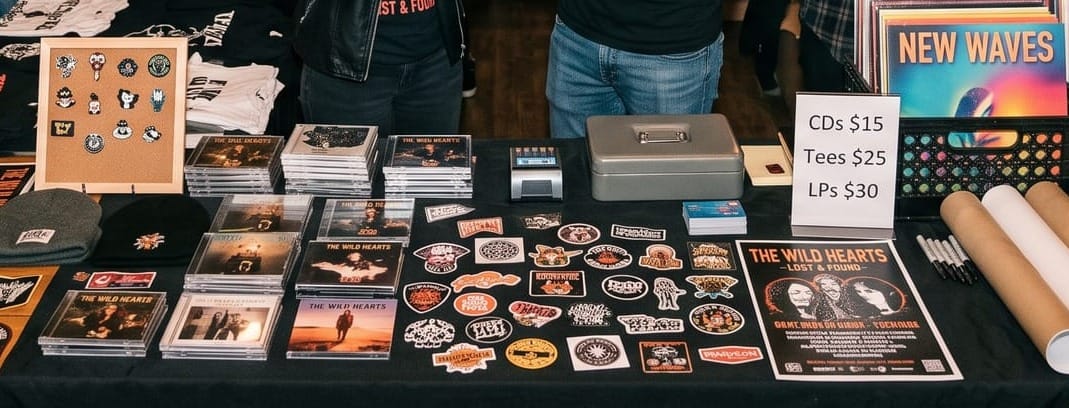
**+Read more:** [*"4 Tips to Triple Your Merch Sales at Your Concert"*](https://www.hypebot.com/4-tips-to-triple-your-merch-sales-at-your-concert/)
## **What This Means for Musicians**
The rebirth of music CDs offers a massive opportunity for independent artists. Here is how you can capitalize on the trend:
- **Restock Your Merch Table:** If you abandoned CDs in favor vinyl, bring them back. They are cheap to manufacture, highly profitable, and easy to transport on tour.
- **Focus on Packaging:** Because CDs are being treated as physical art objects, invest in good design. Digipaks, lyric booklets, and signed copies drastically increase the perceived value of your album.
- **Offer Superfan Bundles:** Luminate's data shows that 20% of U.S. listeners are superfans. Bundle your CD with a t-shirt, a poster, or an exclusive sticker pack to drive up your average order value.
- **Don't Forget Retail & Online Sales:** While the bulk of most CD sales will be at the merch table, the CD resurgence is also happening at local record stores and online on Amazon and direct from artist.
### **Hypebot's Bottom Line**
The music industry's obsession with vinyl overshadowed a sleeping giant. CDs are cheaper for fans to buy, faster for artists to manufacture, and yield fantastic profit margins.
With Gen Z actively reviving CD player hardware to escape algorithmic fatigue, independent musicians who ignore the CD format in 2026 are leaving money on the merch table.
**Embrace the compact disc. It's officially cool again.**
### Hybebot's Bottom Line: News That Matters To Musicians
URL: https://www.hypebot.com/hybebots-bottom-line-news-that-matters-to-musicians/
Last updated: 2026-08-27T11:55:49.000Z
Welcome back to [**Hypebot's Bottom Line**](https://www.hypebot.com/tag/bottom-line/) — our regular roundup pulling key takeaways from our most important recent stories and insights.
### **YouTube Views Now Count From the First Frame**
Starting August 24, 2026, YouTube will count a view the second a video begins playing from the very first frame. Dropping its previous 30-second watch-time requirement, this update applies globally to all formats.
**The Bottom Line:** YouTube just gave your public view counts a cosmetic facelift by counting views from the first second. But don't let inflated public metrics give you a false sense of security; keep your eyes on the "Engaged views" in the backend analytics to see who is actually listening to the music.
- **Full Post:** [YouTube Views Now Count From the First Frame](https://www.hypebot.com/youtube-views-now-count/)
### **Own Your AI Search Results: A Guide for Artists & Venues**
Google has expanded Preferred Sources giving artists and venues a lever to dominate AI Search, AI Overviews and AI Mode to counter the decline AI is causing in website traffic.
**The Bottom Line:** The battle for AI visibility isn't just about keywords anymore; it's about fan ownership. Installing Google's Preferred Source button lets you turn fan loyalty into direct search visibility.
- **Full Post:** [Own Your AI Search Results: A Guide for Artists & Venues](https://www.hypebot.com/own-your-ai-search-results-a-guide-for-artists-and-venues/)
### **Vanderbilt Study: Resale Ticketing Costs Fans $11B Annually**
A white paper released by the Vanderbilt Policy Accelerator (VPA) reveals that ticket resellers and marketplaces like StubHub drain $11 billion every year from live event audiences.
**The Bottom Line:** The live music ecosystem is reaching a breaking point where unearned middleman profits directly undercut touring viability and fan access. With empirical data disproving the "free market" defense of scalping, policymakers now have a clear roadmap: cap platform fees at 10% and outlaw above-face-value resale.
- **Full Post:** [Vanderbilt Study: Resale Ticketing Costs Fans $11B Annually](https://www.hypebot.com/vanderbilt-study-resale-ticketing-costs-fans-11b-annually/)
### **Colorado Enacts First 'Artist Company' Legal Designation**
Colorado has officially enacted the Colorado Artist Company Act (SB 26-133), establishing the nation's first statutory business structure designed explicitly to protect creative autonomy.
**The Bottom Line:** Colorado's Artist Company Act is an important attempt to rebalance the economic scales between independent creators and corporate capital. By legally codifying a 51% artist voting majority and automatic IP reversions, it offers a legal shield for independent musicians and creative ventures.
- **Full Post:** [Colorado Enacts First 'Artist Company' Legal Designation](https://www.hypebot.com/colorado-enacts-first-artist-company-legal-designation/)
### **The Day Dolly Parton Gave Me a Masterclass in Touring Grace**
Approaching technical issues with quiet authority yields faster results, preserves relationships, and builds a reputation that lasts a lifetime.
**The Bottom Line:** Your reputation depends as much on how you handle a bad soundcheck as how you hit the high notes. True headliners address problems professionally and privately, and remember that grace under pressure always produces a better show than a public meltdown.
- **Full Post:** [The Day Dolly Parton Gave Me a Masterclass in Touring Grace](https://www.hypebot.com/the-day-dolly-parton-gave-me-a-masterclass-in-touring-grace/)
---
***Get the latest Live Music & Industry News updated continuously from across the web under the Hypebot Industry News tab*** [***here***](https://www.hypebot.com/music-industry-news-feed/)***.***
## Hypebot
Essential news & insights for artists and live music pros.
Sign up for free weekly content delivered to your inbox
Subscribe
Email sent! Check your inbox to complete your signup.
### SoundCloud Will Let Artists Sell Music Directly and Keep the Revenue
URL: https://www.hypebot.com/soundcloud-will-let-artists-sell-music-directly-and-keep-the-revenue/
Last updated: 2026-08-26T17:33:57.000Z
[**SoundCloud**](https://www.hypebot.com/tag/soundcloud/) is adding direct music sales, giving artists a way to sell downloadable tracks from their profiles without paying the platform a commission.
The [feature launched in Beta](https://soundcloud.com/playbook-articles/soundcloud-introduces-direct-music-purchases-with-zero-commission?ref=hypebot.com) on August 26 for approximately 200 U.S.-based Artist Pro subscribers with Fan Support enabled. Participating artists can set their own prices, choose which eligible tracks are available to buy and offer downloads in formats including MP3 and WAV.
SoundCloud says artists will receive the full purchase price, minus standard payment-processing fees and applicable taxes.
## Turning listeners into customers
The move closes a gap between [discovery](https://www.hypebot.com/tag/discovery/) and [commerce](https://www.hypebot.com/tag/revenue/) that SoundCloud has previously filled with external links. More than 250,000 artists have connected over 2.4 million SoundCloud tracks to outside music platforms, while SoundCloud sends more than half a million users to third-party sites to purchase music each year.
Now, fans in the Beta can discover, purchase and download a track without leaving the platform. SoundCloud CEO **Eliah Seton** says:
> *"Artists should be able to build their audience in one place, on one platform. We’re continuing to bring more of what they need to grow their careers into that same experience, while letting fans directly support the music they love."*
SoundCloud’s own artist research found that 14% of respondents already sell downloadable music, while another 14% would like to do so. The company also says highly engaged superfans can spend up to five times more on artists and music than casual listeners.
That makes direct purchasing more than a nostalgic revival of paid downloads. For independent artists, it creates a higher-value transaction with listeners who may already stream their music, follow their profiles or participate in their SoundCloud communities.
## SoundCloud expands its direct-to-fan ambitions
Direct sales join a growing collection of SoundCloud monetization tools that includes Fan-Powered Royalties, Fan Support, on-demand vinyl and ticketing integrations.
Together, those features point toward SoundCloud’s broader ambition to become more than an upload and streaming service. The company increasingly wants to house multiple stages of an independent artist’s career, from releasing and promoting music to communicating with fans and earning directly from them.
The Beta’s small initial group will allow SoundCloud to collect feedback about purchasing friction, artist controls and the kinds of features creators want next. Sales data will be available through Artist Studio and the Fan Support Dashboard.
SoundCloud plans to expand access gradually before making direct music purchases available to all eligible creators later this fall.
**+Read more:** [*"Yes, Human Curation Still Matters for Real Fans."*](https://www.hypebot.com/why-curation-still-matters-for-real-fans/)
### The Day Dolly Parton Gave Me a Masterclass in Touring Grace
URL: https://www.hypebot.com/the-day-dolly-parton-gave-me-a-masterclass-in-touring-grace/
Last updated: 2026-08-26T17:02:20.000Z
Whether you're a fan or in the music industry, you probably have [a story](https://cardinalnews.org/2026/08/26/special-human-now-gone-southwest-virginians-remember-dolly-parton/?ref=hypebot.com) about how **Dolly Parton** (who [passed away](https://www.cnn.com/interactive/2026/08/26/entertainment/dolly-parton-dead-vis/index.html?ref=hypebot.com) Tuesday, Aug. 25) touched you.
Here's mine.
It was Dolly Parton’s theater, in Dolly Parton’s Dollywood amusement park, in Dolly Parton’s east Tennessee town. Yet during soundcheck for the 2018 Dollywood pre-season media day, things were going horribly wrong.
I was there as the booking agent for [Orleans](https://orleansonline.net/?ref=hypebot.com), the group behind hits like "Dance With Me" and "Still the One". Dolly particularly loved the later track and wanted to perform it and Cat Steven's "Pease Train" that day with Orleans as her backing band. So in typical fashion, she flew the band in and paid them well.
But as Dolly Parton and the band stood onstage doing soundcheck, the front-end audio was muddy and the monitor mix was awful.
In my 35 years as the agent for dozens of national touring acts, I've seen every possible reaction to a bad mix. Most artists will say something passive-aggressive from the stage, and some curse and humiliate the house technician in front of everyone.
But Dolly Parton showed infinite patience, trying to work through the sound problems diplomatically.
When, after what seemed like an eternity, that didn't fix the mix, she didn't throw a fit over the PA system. Instead, she quietly walked off the stage and walked straight up the the stairs to the front-of-house soundboard. Because I was standing near the sound board, I got to hear her whispered conversation firsthand.
She looked at him and softly said so (almost) no one could here, "Honey, you are a beautiful young man, but this isn't really working for me, so can I let Orleans' sound man do the mix?"
She stepped back, nodded to the new engineer to take over, and within a minute or two of soundcheck resuming, the sound was immaculate.
Dolly Parton went the extra mile to make sure nobody in that room heard the critique except the man behind the board. She protected his dignity while instantly fixing the performance.
How an artist treats staff and crew creates immediate defensiveness and destroys production momentum. It also can help define an artist's longevity in the business.
Raw talent might get you booked, but word travels fast across venue crews, production managers, talent buyers and agents. Approaching technical issues with quiet authority yields faster results, preserves relationships, and builds a reputation that lasts a lifetime.
R.I.P. Dolly Parton, and thank you for this lesson in grace and kindness.
### **Hypebot's Bottom Line**
Your reputation depends as much on how you handle a bad soundcheck as much as how you hit the high notes.
True headliners address problems professionally and privately, and remember that grace under pressure always produces a better show than a public meltdown.
### Running the Numbers on '1,000 True Fans'
URL: https://www.hypebot.com/running-the-numbers-on-1-000-true-fans/
Last updated: 2026-08-26T16:10:07.000Z
*By *Julius Farahwaran*, founder of* [***Musikeers***](https://www.musikeers.com/?ref=hypebot.com)
**Kevin Kelly** wrote [*"1,000 True Fans"*](https://kk.org/thetechnium/1000-true-fans/?ref=hypebot.com) in 2008\. Since then it has been quoted at every panel, in every newsletter, on every "future of the creator economy" slide. And somewhere along the way it turned into a poster. Inspiration. A nice thing to believe on a tough day.
Here is what almost nobody does with it: **run the math.**
In 2026, for musicians, the math finally works – and that turns this theory from a poster into an actual plan. Here's how.
## The number nobody runs
Kelly's original pitch was simple. **Find 1,000 true fans** – the people who will buy anything you make – and **get each of them to spend about a day's wages a year on you.** Call it $100\. That is $100,000 a year. Enough to make a living, without ever being "famous."
For musicians in 2008, that was mostly theory. The infrastructure did not exist. You could not easily charge 1,000 people a few euros a month and give them something worth it in return. So the idea stayed a slide.
Now run it with today's tools.
Say 1,000 fans support you at around €3.49 a month. After platform and payment fees, you keep roughly €2.84 of each. That is about €2,840 a month. Call it €34,080 a year. Recurring.
Now put streaming next to it. A million streams on Spotify pays somewhere around €2,000 to €4,000 gross, before your distributor takes its cut. One million plays – a number most independent artists will never hit once, let alone every month – pays roughly what 1,000 committed fans pay you every single month.
That is not a motivational stat. That is a spreadsheet. And it might be the most important one in your career.
## Why it works now and didn't then
Two things changed. First, streaming showed its ceiling. We have had a decade of data. Streaming is extraordinary for reach and close to worthless for rent. A stream is worth a fraction of a cent, it pays once, and the algorithm owns the relationship – not the artist. Nobody credible still argues that streams alone build a middle-class music career.
Second, the tooling caught up. In 2008 there was no clean way to run a direct, recurring, music-native relationship with 1,000 people. Today there is: direct-to-fan platforms, frictionless recurring payments, community spaces, live rooms, ways to give fans access and proximity instead of one more post. The infrastructure Kelly's idea always needed simply exists now.
So the constraint moved. It used to be "the math does not work." Now the math works, and the constraint is you, the artist.
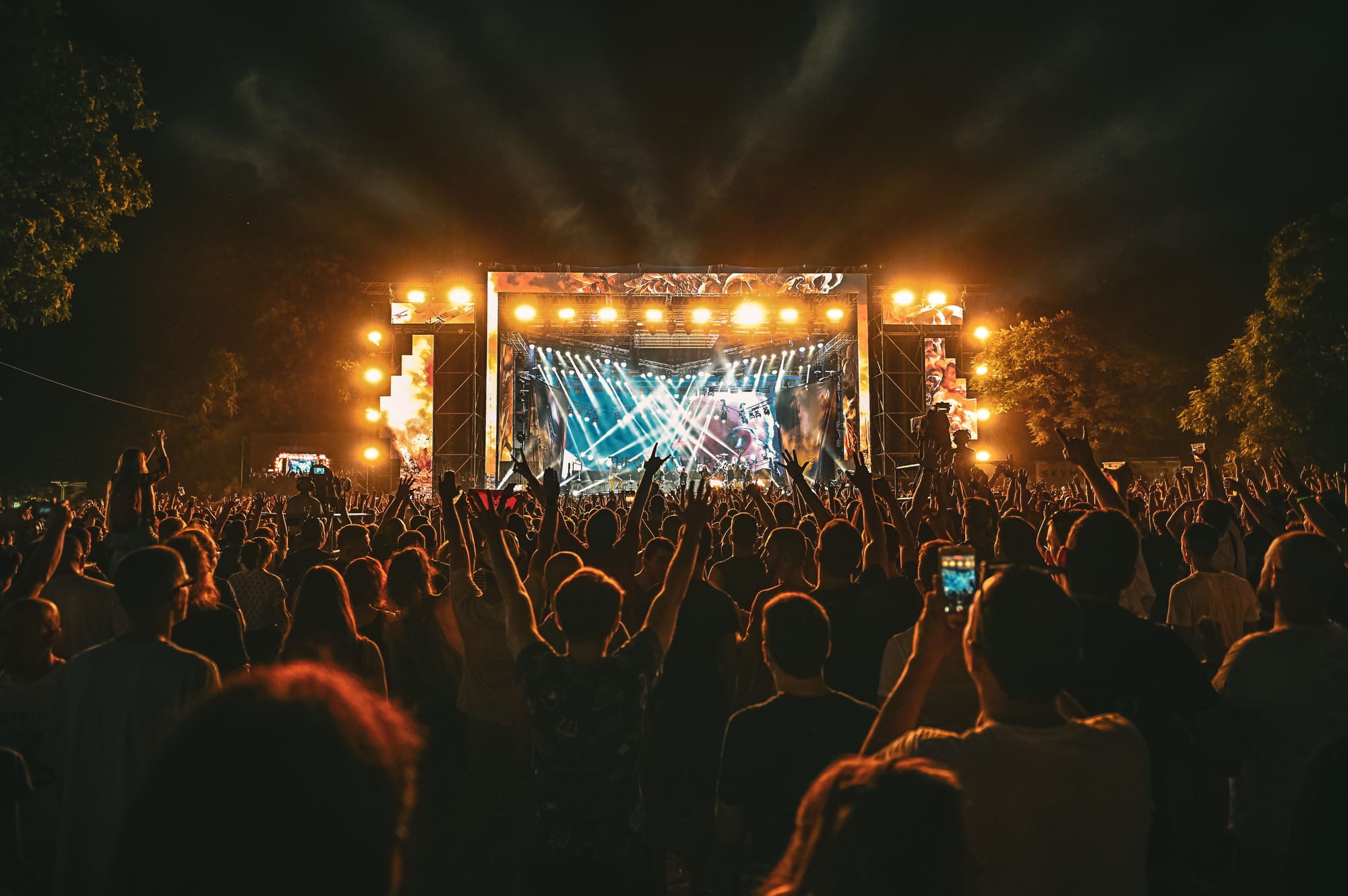
***+Read more:*** [*"What Does a Smart Merch Strategy Look Like for Artists?"*](https://www.hypebot.com/what-does-a-smart-merch-strategy-look-like-for-artists/)
## The honest part
Here is what the LinkedIn version of this story leaves out: the first 100 fans are brutal. Getting from 0 to 100 true fans is slow, unglamorous, one-conversation-at-a-time work. There is no viral moment that does it for you. It is replying to comments, remembering names, and showing up for the same small room over and over when it would feel better to chase a number that spikes and disappears.
That is why most artists never do it. Not because the math is wrong – because the math is boring at the start. Stream counts give you a hit today. True fans pay you rent in two years. Human beings are bad at that trade.
The ones who win make peace with slow. They stop optimizing for the number that feels good and start building the one that pays.
## The actual playbook
Strip it down, and the artists who make 1,000 true fans work tend to do four things. They pick a small group to serve deeply instead of a big group to reach shallowly. A thousand people who feel seen beats a hundred thousand who scroll past.
They give those fans something a stream cannot. Access. Proximity. A live listening moment. A room where the artist actually shows up. What you are offering is not audio – audio is everywhere and nearly free. You are offering closeness to you.
They choose consistency over virality. One real touchpoint a week for two years builds a fanbase. One viral spike builds a graph that goes back down.
And they own the relationship instead of renting it. If your entire connection to your fans lives inside a platform's algorithm, you do not have fans – you have a lease the platform can end whenever it likes.
## You don't need to be famous. You need to be supported.
Fame is 100,000 strangers who like a song for a week. Support is 1,000 people who back you for years. One is a lottery ticket. The other is a living. Kelly saw it in 2008, but the tools were not there.
In 2026 they are. The number is not that big, the math is real, and it is sitting in a spreadsheet waiting for someone to take it seriously. The work is still the hard part. It always was. The difference now is that the work finally pays.
**+Read more:** [*"The Modern Guide to Getting Your Music Played on Radio"*](https://www.hypebot.com/the-modern-guide-to-getting-your-music-played-on-radio/)
---
**Julius Farahwaran* is the founder of* [***Musikeers***](https://www.musikeers.com/?ref=hypebot.com)*, a direct-to-fan platform for independent artists, and host of the podcast "Im Circle." More at* [*musikeers.com*](https://www.musikeers.com/?ref=hypebot.com)*.*
### This Artist Is Playing a Gig Every Day in 2026 — It's the Ultimate Discovery Gamble
URL: https://www.hypebot.com/this-artist-is-playing-a-gig-every-day-in-2026-its-the-ultimate-discovery-gamble/
Last updated: 2026-08-26T14:45:40.000Z
In an industry fixated on streams, followers and short-form virality, [**Isaac Neilson**](https://www.instagram.com/isaacneilson00/?hl=en&ref=hypebot.com) has chosen a much slower way to find an audience: **meeting it in person.**
The 26-year-old British indie-rock artist is attempting to [perform live](https://www.hypebot.com/tag/performing-live/) on every day of 2026\. When [***The Guardian*** caught up with him](https://www.theguardian.com/music/2026/aug/21/isaac-neilson-british-musician-playing-365-gigs-this-year?ref=hypebot.com), he was 231 consecutive days into the challenge, had visited more than 60 UK towns and cities and put nearly 20,000 miles on his Peugeot.
And in fact, because he sometimes performs more than once in a day, he expects to finish the year with more than 400 performances.
Neilson has driven an average of three hours a day, slept on friends’ sofas and watched the more than £30,000 he had saved fall toward a projected £3,000\. It is an extraordinary feat of endurance. But it's not just a torturous gauntlet for a touring musician to put himself through, it's a test:
***Does the old-fashioned path to music discovery still work?***
> [ View this post on Instagram ](https://www.instagram.com/p/DcVph6FiIXu/?utm%5Fsource=ig%5Fembed&utm%5Fcampaign=loading)
>
> [A post shared by Isaac Neilson (@isaacneilson00)](https://www.instagram.com/p/DcVph6FiIXu/?utm%5Fsource=ig%5Fembed&utm%5Fcampaign=loading)
**+Read more:** [*"Maroon 5 Played a Hedge-Fund Guy's Birthday — the Whole Town Showed Up."*](https://www.hypebot.com/maroon-5-played-a-hedge-fund-guys-birthday-the-whole-town-showed-up/)
## **It's the original artist-development strategy**
Long before artists were advised to feed several content platforms every week, the industry had a simpler prescription: **just get in the van and find your crowd.**
Play constantly. Improve in public. Win over a few people in every town. Return to those towns with better songs and a slightly bigger crowd. If the work was good enough — and the artist sufficiently persistent — the audience would compound. Neilson's campaign asks if this model is still relevant.
In 2024, he played the Y Not Festival for thousands and discovering that one impressive appearance did not automatically produce better bookings or an obvious next rung on the career ladder. By the end of 2025, he was considering giving up music. Instead, [he went all in](https://www.bbc.com/news/articles/c5y4je9x618o?ref=hypebot.com).
So far, his 2026 experiment has produced tangible results. A manager joined his team after hearing about the project. His streaming and follower counts have grown into the thousands. In a [midyear interview with Nottingham’s ***LeftLion***](https://leftlion.co.uk/features/2026/07/interview-catching-up-with-isaac-neilson/?ref=hypebot.com), Neilson said he had collected more than 1,000 email addresses since February — people he can contact without first asking a platform to show them his post.
Then there are the "intangibles." Neilson says his voice has never been stronger, and that one hour onstage can be worth 100 hours of private practice. Night after night, the road is teaching him what holds a room, where a song loses attention, and how to recover when almost nobody is listening.
> [ View this post on Instagram ](https://www.instagram.com/reel/DcBnYpzIDjC/?utm%5Fsource=ig%5Fembed&utm%5Fcampaign=loading)
>
> [A post shared by Isaac Neilson (@isaacneilson00)](https://www.instagram.com/reel/DcBnYpzIDjC/?utm%5Fsource=ig%5Fembed&utm%5Fcampaign=loading)
***+Read more:*** [*"Lauv Stepped Away From a Major Tour. Artists Should Know That's Okay."*](https://www.hypebot.com/lauv-stepped-away-from-a-major-tour-more-artists-should-know-thats-okay/)
## **The road is one extremely expensive algorithm**
Neilson estimates that his project costs about £400 a week, with fuel as the biggest expense. By year’s end, he expects to have spent roughly £27,000 of his savings. His car has broken down repeatedly. He has described serious [mental health](https://www.hypebot.com/tag/mental-health/) crashes alongside shorter periods when he has struggled to keep going.
This isn't a clear story about "hard work," it's a real examination of the economically and emotionally taxing state of the [live music industry](https://www.hypebot.com/tag/live-music-industry/) today.
The mythology of the road has always hidden its subsidies: savings, debt, unpaid labor, borrowed floors, supportive partners, and vehicles being driven into the ground. Neilson’s girlfriend also helps manage his social media. Even a radically human, face-to-face campaign still needs someone translating the journey into digital content.
The infrastructure beneath it is fragile, too. Neilson depends on the pubs, clubs, promoters and grassroots stages willing to give him somewhere to play. According to the [**Music Venue Trust’s** 2025 annual report](https://www.musicvenuetrust.com/2026/01/music-venue-trust-annual-report-2025/?ref=hypebot.com), 30 UK grassroots music venues permanently closed last year, 53% reported no profit and 175 towns and cities no longer received regular touring shows by professional artists.
> [ View this post on Instagram ](https://www.instagram.com/reel/DceMbTdoZks/?utm%5Fsource=ig%5Fembed&utm%5Fcampaign=loading)
>
> [A post shared by Isaac Neilson (@isaacneilson00)](https://www.instagram.com/reel/DceMbTdoZks/?utm%5Fsource=ig%5Fembed&utm%5Fcampaign=loading)
***+Read more:*** [*"A Day in the Life of a Working Musician on Gig Day"*](https://www.hypebot.com/a-day-in-the-life-of-a-working-musician-on-gig-day/)
## **What is a live audience actually worth?**
[Digital platforms](https://www.hypebot.com/tag/streaming-music/) are very good at turning attention [into visible numbers](https://www.hypebot.com/a-stream-is-not-a-fan-what-independent-artists-should-measure-instead/). A live show creates messier signals; fifty people in a pub does not look as impressive on a dashboard as 50,000 video views. But a person who watches an entire set, has a conversation with the artist, buys something, and joins an email list is inevitably worth far more than passive streams.
The challenge is conversion.
If an artist plays a memorable show but leaves with no email addresses, ticket-buyer data, merch sales, or reason for the audience to return, much of that value disappears when the room empties. Neilson is trying to turn [in-person encounters](https://www.hypebot.com/how-come-nobody-ever-talks-about-casual-fans/) into durable relationships.
His campaign also reveals that the road and the algorithm are no longer opposites. The unusual premise attracts press coverage. Daily [performances](https://www.hypebot.com/tag/performing-live/) create daily social content. Each new town supplies another chapter in an unfolding story. Neilson calls the project “anti-algorithmic,” but its growing visibility comes partly from giving the algorithm a remarkably clear narrative to carry.
### But, does it work?
Isaac's experiment suggests, basically, that yes it does; but not in the clean, romantic way the music business once promised. Playing live remains one of the best ways for an artist to improve, create meaningful fans and build the relationships from which careers are made. Neilson’s stronger performances, new management, and direct audience growth are evidence of that.
But 365 consecutive days also expose the limits of the strategy. Touring is slow, geographically constrained, personally expensive and dependent on a shrinking network of small stages. It can generate opportunity, but it might not guarantee a sustainable career in this highly global, digital, "always on" day and age. Most artists could not (should not) have to risk a house deposit to become visible.
### 4 Live Music Markets Changing Faster Than You Think
URL: https://www.hypebot.com/4-live-music-markets-changing-faster-than-you-think/
Last updated: 2026-10-13T19:01:27.000Z
This week, [**Touring Radar**](https://www.hypebot.com/tag/touring-radar/) turns its attention away from individual artists to four live music cities that are growing and investing, attracting attention, or wrestling with the economics beneath their busy calendars. Touring Radar is supported by [**Bandsintown**](https://bandsintown.com/?utm%5Fsource=hypebot&came%5Ffrom=900) tour data.
We identified four cities whose venue ecosystems are changing in particularly revealing ways. Publicly viewable data from Bandsintown’sfollower and upcoming-event totals don't reflect ticket sales or attendance figures, but they can be vital in tracking change and growth across the total activities occurring in a market.
It's a useful snapshot of where audiences are paying attention and where live music is happening consistently. Let's dive in.
## 1\. Grand Rapids Built the Top of Its Venue Ladder
**Grand Rapids, Michigan** made a substantial bet on its future as a touring destination when the 12,000-capacity [**Acrisure Amphitheater**](https://www.bandsintown.com/v/10584516-acrisure-amphitheater?utm%5Fsource=hypebot&came%5Ffrom=900) opened in May. The riverfront venue represents a [$184 million public-private investment](https://www.fox17online.com/news/local-news/grand-rapids/acrisure-amphitheater-opens-in-grand-rapids-after-years-of-planning-and-184-million-investment?ref=hypebot.com) and is projected to welcome more than 300,000 visitors each season. The venue's 18 upcoming events represent an impressive opening calendar of touring talent.
But Grand Rapids is not attempting to create a live music market from scratch. It's already a popular destination for artists on the move.
[The Intersection](https://www.bandsintown.com/v/10001023-the-intersection?utm%5Fsource=hypebot&came%5Ffrom=900) has 96 upcoming events listed on Bandsintown, while [The Pyramid Scheme](https://www.bandsintown.com/v/10000008-the-pyramid-scheme?utm%5Fsource=hypebot&came%5Ffrom=900) has 59\. [GLC Live at 20 Monroe](https://www.bandsintown.com/v/10007626-glc-live-at-20-monroe?utm%5Fsource=hypebot&came%5Ffrom=900) has 23, and [Van Andel Arena](https://www.bandsintown.com/v/10003562-van-andel-arena?utm%5Fsource=hypebot&came%5Ffrom=900) provides another established option at the upper end of the market. What changes now is that a gap has been filled with this newly-built rung on the local artist development ladder. Artists can build through clubs, graduate into theaters and larger concert halls, reach the arena level, and now consider a major outdoor play without ever leaving Grand Rapids.
***+Read more:*** ["Huntsville Ain't Nashville — But It Sure Is on the Rise"](https://www.hypebot.com/huntsville-aint-nashville-but-it-sure-is-on-the-rise/)
## 2\. Minneapolis' Challenge Ahead Is to Make Sure Its Healthy Live Economy Stays Intact
**Minneapolis–St. Paul** has one of the strongest live music identities in North America. New economic data shows that identity also produces an enormous amount of tangible value. A recently released local analysis found that independent live entertainment generates [$2.2 billion in economic output](https://mplsartsandculture.org/minneapolis-music-initiative?ref=hypebot.com), supports more than 15,000 jobs and contributes $114.2 million in annual state and local tax revenue.
Those figures describe a powerful local industry. Its profitability numbers describe something more alarming. Only [20% of Minneapolis’ independent stages](https://mspmag.com/arts-and-culture/state-of-live-reports-on-local-independent-entertainment/?ref=hypebot.com) reported turning a profit. But it's not due to inactivity. [The Dakota](https://www.bandsintown.com/v/10003439-dakota?utm%5Fsource=hypebot&came%5Ffrom=900) lists 84 upcoming events, 67 at [Fine Line](https://www.bandsintown.com/v/10001063-fine-line?utm%5Fsource=hypebot&came%5Ffrom=900), 55 at [First Avenue](https://www.bandsintown.com/v/10002186-first-avenue?utm%5Fsource=hypebot&came%5Ffrom=900), and [Armory](https://www.bandsintown.com/v/10030033-armory?utm%5Fsource=hypebot&came%5Ffrom=900) has 42\.
A crowded calendar can look like a healthy market from the outside while the venues creating that activity struggle with staffing, insurance, rent, production costs and thin margins. Minneapolis certainly does not need to prove that live music contributes to its economy; but the challenge ahead lies in ensuring that the businesses generating that contribution can survive long enough to share in it.
## 3\. San Diego Wants to Open Its Bottleneck
In August, [Live Nation](https://www.hypebot.com/tag/live-nation/) detailed plans to transform **San Diego, California’s** historic Wonder Bread Building into a purpose-built, 4,000-capacity concert venue. The company described that capacity as a specific hole in the city’s touring infrastructure: too large for its club network but below its major arenas and outdoor venues. The new venue is expected to open in 2028 and could eventually welcome 316,000 fans annually.
Bandsintown's own city listings help illustrate the market surrounding that gap. [House of Blues San Diego](https://www.bandsintown.com/v/10001454-house-of-blues-san-diego?utm%5Fsource=hypebot&came%5Ffrom=900) has 62 upcoming events, [Music Box](https://www.bandsintown.com/v/10000793-music-box?utm%5Fsource=hypebot&came%5Ffrom=900) has 58, [The Observatory North Park](https://www.bandsintown.com/v/10002832-the-observatory-north-park?utm%5Fsource=hypebot&came%5Ffrom=900) has 53 and [SOMA](https://www.bandsintown.com/v/10001704-soma?utm%5Fsource=hypebot&came%5Ffrom=900) has 40\. Meanwhile, Pechanga Arena, Petco Park, Viejas Arena, and North Island Credit Union Amphitheatre all serve significantly larger productions.
San Diego does not lack live music. It may lack an appropriate next step for artists who have outgrown its smaller rooms but cannot yet justify an arena. That is why the [Wonder Bread Building](https://news.livenationentertainment.com/news/live-nation-to-restore-san-diegos-historic-wonder-bread-building-into-a-new-4-000-capacity-music-venue?ref=hypebot.com) proposition is based on widening its career-development bottleneck.
***+Read more:*** [*"Touring Economics: Why Concert Tickets Cost $150 in Austin But $68 in Cleveland"*](https://www.hypebot.com/touring-economics-why-concert-tickets-cost-150-in-austin-but-68-in-cleveland/)
## 4\. Mexico City Is No International Afterthought
**Mexico City, Mexico** has become too large, too active and too structurally important to be treated as a bonus date attached to a primarily American tour. Its rising star venue, [**Palacio de los Deportes**](https://www.bandsintown.com/v/10009505-palacio-de-los-deportes?utm%5Fsource=hypebot&came%5Ffrom=900), has more than 123,000 followers, followed by [Estadio GNP Seguros](https://www.bandsintown.com/v/10023472-estadio-gnp-seguros?utm%5Fsource=hypebot&came%5Ffrom=900) with nearly 89,000, [Autódromo Hermanos Rodríguez](https://www.bandsintown.com/v/10010528-autodromo-hermanos-rodriguez?utm%5Fsource=hypebot&came%5Ffrom=900) with more than 56,000, [Auditorio Nacional](https://www.bandsintown.com/v/10002203-auditorio-nacional?utm%5Fsource=hypebot&came%5Ffrom=900) with more than 54,000 and [Arena CDMX](https://www.bandsintown.com/v/10016766-arena-cdmx?utm%5Fsource=hypebot&came%5Ffrom=900) with more than 47,000.
Below those major buildings is another substantial layer that includes Pepsi Center WTC, Auditorio BB, Teatro Metropólitan, Circo Volador, Foro Indie Rocks! and Lunario del Auditorio Nacional, and the festival season calendar is just as magnificent. Mexico City hosts events such as Pitchfork CDMX, Corona Capital, Coca-Cola Flow Fest, Vans Warped Tour Mexico City, Knotfest Mexico, and numerous independent [festivals](https://www.hypebot.com/tag/festivals/).
Mexico City has leveled up its presence on the international touring circuit so thoroughly that it's no longer considered by many to be a "nice bonus" destination. No, it's a guaranteed tour anchor now.
### The Market We’ll Be Watching: Minneapolis
Every [**Touring Radar**](https://www.hypebot.com/tag/touring-radar/)edition ends with one last thought with regards to one of the entries profiled above. This week, Minneapolis presents the most urgent industry question:
*What does it mean for a live music market to generate billions of dollars, support thousands of jobs, attract millions of fans and still leave most of its independent stages without a profit?*
Touring markets cannot be judged only by the number of events appearing on their calendars. The next step is determining whether the venues creating that activity are being paid enough to remain part of the system. A city can have demand, cultural importance and a busy calendar while still losing the rooms that made it a music city in the first place.
This could be a phase of the economic standing of the region, or country, but it could also precede a reckoning with the city's vibrant cultural sector, and where gentrification-assisted capital ends up when it trickles down to the creative class.
[*Catch up with all editions of Touring Radar here.*](https://www.hypebot.com/tag/touring-radar/)
### The Chart Is the Scoreboard. The Catalog Is the Score.
URL: https://www.hypebot.com/the-chart-is-the-scoreboard-the-catalog-is-the-score/
Last updated: 2026-08-26T12:10:13.000Z
*By *Patrick George Wilson*,* [***Weezer***](https://www.bandsintown.com/a/140-weezer?utm%5Fsource=hypebot&came%5Ffrom=900) *drummer & CFO of* [***OPUS***](https://www.opuswilson.com/?ref=hypebot.com#enterprise)
In May 2005, [**Weezer**](https://www.bandsintown.com/a/140-weezer?utm%5Fsource=hypebot&came%5Ffrom=900) had the biggest chart week of our career. ***Make Believe*** debuted at number two on the Billboard 200\. Twenty years later, nobody would call it our most valuable album. Not the fans, not the critics, and not the person who signs the corporate filings, which for the last thirty years has also been me.
Our most "valuable" album peaked at #16.
***The Blue Album*** came out in 1994 and never cracked the top fifteen. It just never left. It went platinum, then triple platinum, then five times platinum. This spring the Library of Congress put it in the National Recording Registry. It has outsold and outearned everything we made while we were [watching the charts](https://www.hypebot.com/whats-in-a-number-why-music-charts-still-matter-in-the-streaming-era/), including the album that nearly topped them.
I have had an unusual vantage point on this. I play drums in the band, and I have also been the CFO of [Weezer Touring, Inc.](https://www.opuswilson.com/?ref=hypebot.com#portfolio) for the whole run. One version of me spent release weeks refreshing chart positions like everyone else. The other version watched the actual [money move](https://www.hypebot.com/how-money-actually-flows-through-the-music-industry-in-2026/) for three decades. Those two guys learned very different lessons, and the second one was right.
Here is what the books taught me that the charts never did.
A chart position measures **one week of attention.** A [catalog](https://www.hypebot.com/tag/catalog/) earns for **decades.** The [Billboard 200](https://www.hypebot.com/tag/billboard/) is a snapshot of seven days of consumption, taken at the moment of maximum marketing spend. It tells you how good your launch was. It tells you almost nothing about what the record will do across the next twenty years, which is where nearly all of the money lives. *Blue* at sixteen beat *Make Believe* at two, and it was not close.
The chart week is also the most expensive week you will ever have. Whatever you spent to get that debut position, that spend is gone by week two. The catalog income that follows costs you almost nothing to earn. It shows up because the work exists, the rights are in order, and somebody registered everything correctly.
From a CFO’s chair, the debut week is your worst margin and year fifteen is your best.
I understand the pull. A number is public, immediate, and easy to compare. “Debuted at number two” fits in a sentence. “Still recouping royalties in 2026 from a record that stalled at sixteen in 1994” does not. So artists optimize the sentence and neglect the asset.
***+Read more:*** [*"You Don’t Need to Be Famous to Sell Your Music Catalog Anymore"*](https://www.hypebot.com/you-dont-need-to-be-famous-to-sell-your-music-catalog-anymore/)
I watched us do a version of this ourselves in the mid-2000s. We got the big number. It felt great for about a month. The quiet record from a decade earlier kept working the entire time and never got a congratulations from anyone.
None of this means launches don’t matter. They do. A launch is how a record gets its chance. But a launch is a doorway, not a destination, and the industry has trained artists to throw everything at the doorway. First-week numbers, chart screenshots, debut positions in the press release.
Meanwhile, the things that determine what the record earns over its life get treated as paperwork. Registrations. Splits. Master ownership. Whether anyone is actually collecting what the song is owed in year eight, when no one is looking.
If you are an independent artist reading this, the math is more in your favor than it was for us, not less. You likely own more of your work than any major-label act of my generation did. Which means the long tail, when it comes, is actually yours. It also means nobody else is doing the boring work that protects it. The chart week has a whole industry pushing you toward it. Year fifteen has nobody but you.
So spend the release week however you want. Celebrate the number if you get one. Then ask the only question the number never answers: who is taking care of this record for the next twenty years?
[**Our twentieth album**](https://open.spotify.com/album/4X3LhfPfmdcMQblc5k11WC?si=U6SKhM9ASTW6W3eGRlfa4Q&ref=hypebot.com) came out **August 21.** There is a song on it called “C.E.O.,” which the internet finds funny given my day job, and fair enough. After thirty years I can tell you exactly what week one is worth, because I have seen what every week after it is worth. I hope the new record charts. I know it will still be earning long after the number is forgotten, because that is what the last twenty did, and this time all the paperwork is done.
Week one is the applause. Everything after is the career.
***+Read more:*** [*"Your Song Is the Starting Pistol, Not the Finish Line"*](https://www.hypebot.com/your-song-is-the-starting-pistol-not-the-finish-line/)
---
**Patrick George Wilson* is the Co-Founder and drummer of *Weezer* and the former CFO of *Weezer Touring, Inc.* He is the Founder and CEO of* [***OPUS***](https://www.opuswilson.com/?ref=hypebot.com#enterprise)*, a firm that helps artists, founders, and family offices treat catalogs, masters, publishing, and brand as long-term assets rather than one-off paydays.*
*Weezer's new album,* [*Weezer (The Gold Album)*](https://open.spotify.com/album/4X3LhfPfmdcMQblc5k11WC?si=U6SKhM9ASTW6W3eGRlfa4Q&ref=hypebot.com)*, is out now.*
## [**Follow Weezer on Bandsintown.**](https://www.bandsintown.com/a/140-weezer?utm%5Fsource=hypebot&came%5Ffrom=900)
### Musician and Manager Blasko on Running a Business on Tour
URL: https://www.hypebot.com/musician-and-manager-blasko-on-running-a-business-on-tour/
Last updated: 2026-08-26T12:04:03.000Z
Musician and manager **Blasko** is on tour as the bassist for **Rob Zombie.** But he also has a management company to run.
He joins his [**Music Biz Weekly** **podcast**](https://www.hypebot.com/tag/music-biz-weekly/)co-host **Michael Brandvold** to discuss life on the road and how he manages to maintain his business while travelling and performing.
"Every day is a different day and it's not an easy thing to do," says **Blasko.** "Granted, not everybody has a management business. (But) there's a lot of people that are in bands of various sizes that are operating mobile businesses."
He shares strategies for staying productive, including his mobile office backpack with essential tech gear. The pair also reflect on the differences between touring in the 1980s and today, noting the advantages of modern technology for connectivity, but also increased expectations for constant communication.
Watch and listen here or on your favorite podcast platform.
**FIND MORE FROM MUSIC BIZ WEEKLY & OTHER GREAT MUSIC BUSINESS AND INDIE MUSICIAN PODCAST EPISODES** [**HERE**](https://www.hypebot.com/hypebot/category/podcast-music-biz)**.**
---
*Get all the latest Music Industry & Live Music News updated continuously from across the web under the Hypebot Industry News tab* [*here*](https://www.hypebot.com/music-industry-news-feed/)*.*
## Hypebot
Essential news & insights for artists and live music pros.
Sign up for free weekly content delivered to your inbox
Subscribe
Email sent! Check your inbox to complete your signup.
### Vanderbilt Study: Resale Ticketing Costs Fans $11B Annually
URL: https://www.hypebot.com/vanderbilt-study-resale-ticketing-costs-fans-11b-annually/
Last updated: 2026-08-25T17:55:25.000Z
A white paper released by the **Vanderbilt Policy Accelerator** (VPA) reveals that ticket resellers and marketplaces like **StubHub** drain **$11 billion** every year from live event audiences.
The study, **How to Save Audiences $11 Billion on Live Events,** exposes how ticket brokers add $4.5 billion in resale upcharges while platform service fees add another $6.8 billion in costs. While resale advocacy groups claim secondary markets save fans money when tickets sell under face value, VPA’s data shows **fans actually lose $12 to markup gouging for every $1 saved**.
### **Industry Leaders Back Reform**
Both the **National Independent Venue Association** (NIVA) and the **National Independent Talent Organization** (NITO) voiced support for VPA’s findings. NITO cited its own survey of 65 shows, which found an average resale markup of 91% and platform service fees occasionally exceeding 100% of face value. Industry leaders emphasize that these billions in inflated costs never reach the artists, crews, or venues actually putting on the shows.
**Both trade groups endorse VPA’s two central policy solutions:**
- **A bright-line ban** on reselling tickets above original face value.
- **A 10% cap** on all primary and secondary ticketing platform service fees.
"Vanderbilt has given Congress, governors, state legislators, and attorneys general the most convincing evidence we've seen that resale price gouging has to be reined in," **Stephen Parker, Executive Director of the NIVA** said in a statement. "This report uncovers that fans and consumers lose $12 on the resale market for every $1 that scalper advocacy groups claim they save. That is shocking, and it calls for action."
“Stubhub and the resale giants have spent millions on lobbying to convince law makers they are saving consumers money” echoed **NITO Executive Director Nathaniel Marro.** “However, the facts are clear as day. Resale is costing fans billions of dollars each year, money that is being drained from our industry and never reaches the artists, crews or venues that actually put on these shows.”
### **Fitting Into the Legislative Landscape**
These proposals build on momentum already taking root across state and federal governments. **Rhode Island, Maine, Vermont,** and **Washington, D.C.**, have already passed laws capping resale markups or platform fees, with similar legislation pending in **Massachusetts.** Internationally, the province of Ontario and several European nations have enacted face-value resale rules.
At the federal level, the report intersects with an increasingly aggressive regulatory push. Legislative efforts such as the **BOTS Act**, the **MAIN Event Ticketing Act,** and the **Fans First Act** aim to curb ticket-buying bots and mandate price transparency.
Concurrently, the **Federal Trade Commission** and **Department of Justice** are pursuing major enforcement actions against dominant ticketing companies and predatory groups.
The Vanderbilt study also highlights that **state attorneys general and the FTC already possess the regulatory authority under Section 5 "unfair practices" rules** to enact fee caps and resale limits immediately without waiting for new congressional statutes.
Read the full Vanderbilt study "How to Save Audiences $11 Billion on Live Events" [here](https://cdn.vanderbilt.edu/vu-URL/wp-content/uploads/sites/412/2026/08/03190151/How-to-Save-Audiences-11-Billion-on-Live-Events.pdf?ref=hypebot.com).
### **Hypebot’s Bottom Line**
The live music ecosystem is reaching a breaking point where unearned middleman profits directly undercut touring viability and fan access.
With empirical data disproving the "free market" defense of scalping, policymakers now have a clear roadmap: cap platform fees at 10% and outlaw above-face-value resale to keep live entertainment sustainable for everyone involved.
---
***Get the latest Live Music & Industry News updated continuously from across the web under the Hypebot Industry News tab*** [***here***](https://www.hypebot.com/music-industry-news-feed/)***.***
## Hypebot
Essential news & insights for artists and live music pros.
Sign up for free weekly content delivered to your inbox
Subscribe
Email sent! Check your inbox to complete your signup.
### Mark My Words: AI Music Is the End of the Artist Economy.
URL: https://www.hypebot.com/mark-my-words-ai-music-is-the-end-of-the-artist-economy/
Last updated: 2026-08-25T16:46:51.000Z
*By *Gust Moons* of* [***Moon Society***](https://moonsociety.be/?ref=hypebot.com)
I talked about this in [my latest Youtube video](https://www.youtube.com/watch?v=1qcDnWtfYO8&ref=hypebot.com). A friend of mine made a video explaining that he uses [generative AI](https://www.hypebot.com/tag/ai-in-music/) in his music because it’s "inevitable" — the next step in the evolution of music.
The fact that he uses AI isn’t even what bothered me the most. It was that argument. I keep hearing the same thing: *AI music is coming whether we like it or not, so we might as well get on board.*
I don’t buy that at all. Honestly, it’s a very convenient opinion to have when AI is saving you time or making you money. If you call it inevitable, you never have to properly defend it. But calling something inevitable doesn’t make it good, and it doesn’t mean we have to accept it.
## This isn’t evolution
Saying AI is the evolution of music is like saying the comet that killed the dinosaurs was part of their evolution. It wasn’t. It was their extinction.
If **Suno**, **Udio,** and every similar platform shut down tomorrow, what would actually happen? We wouldn’t lose music. Artists would keep writing, producing and releasing songs. People just wouldn’t be able to generate 20 or 50 finished tracks in a day anymore.
**Deezer** says it now receives roughly [90,000 fully AI-generated tracks every day](https://newsroom-deezer.com/2026/07/ai-music-exceeds-50-percent-daily-uploads-deezer/?ref=hypebot.com), accounting for more than half of new deliveries at peak times in June 2026\. No audience is asking for that much AI music.
People talk about these companies like they’re unstoppable. They aren’t. They are companies running websites and servers, and we can decide what role they’re allowed to play in this industry.
There’s also a huge difference between technology that helps someone make music and technology that makes the music for them. A synthesizer still needs a musician. A DAW still needs a producer. If a tool writes, performs and produces the entire track from a prompt, it isn’t helping the artist. It is doing the artist’s job.
***+Read more:*** [*"5 Signs a Spotify Playlist Is Fake (and How Playlist Bot Checkers Actually Work)"*](https://www.hypebot.com/5-signs-a-spotify-playlist-is-fake-and-how-playlist-bot-checkers-actually-work/)
## The artist is *already* disappearing
I work across artist management, labels, marketing and music content. Over the past year, I’ve watched respected labels release more tracks from brand-new profiles with no biography, no social media and no visible history anywhere online.
I’m not going to name labels, and I can’t prove that every empty profile is AI-generated. But that’s the problem. We’ve reached a point where I can look at a legitimate label release and wonder whether the artist even exists.
When artists hide their own [use of generative AI](https://www.hypebot.com/ai-generated-music-is-everywhere-detecting-it-just-got-a-little-less-daunting/), they make this worse. Once people discover that one vocal, lyric or production was generated, they start questioning everything else that artist has released. You aren’t just saving yourself some work. You’re making people doubt how much of your work is actually yours.
At the absolute minimum, fully AI-generated music [should be clearly labelled](https://www.hypebot.com/new-ai-labeling-standard-for-music-draws-support-and-hesitation/). Listeners shouldn’t have to investigate an artist profile to find out whether a person made the song.
## Why should AI music earn royalties?
Everything I own has been paid for by music. My rent, my food and my career have all come from working in this industry. That’s why the [royalty](https://www.hypebot.com/tag/royalties/) side matters so much to me.
Royalties compensate the people and companies that created, performed, recorded, published and invested in music. If the writing, production and vocal were all generated by a machine, why on earth should that track earn the same royalties as something people actually made? Typing a prompt and paying for a subscription doesn’t make you the songwriter, vocalist, and producer.
The law is still catching up, but the [**U.S. Copyright Office**](https://www.copyright.gov/newsnet/2025/1060.html?ref=hypebot.com) has said that purely AI-generated material [isn’t protected by copyright](https://www.hypebot.com/why-ai-song-generators-dont-grant-copyright/), that prompts alone aren’t enough and that protection depends on meaningful human creative contribution.
My opinion is simple: fully AI-generated tracks shouldn’t earn royalties. Not fewer royalties. None. If a human genuinely wrote, performed or produced the music and used AI as one small part of the process, that’s a different conversation. But a finished song generated from a prompt should not pull money from the same royalty pool as human artists.
***+Read more:*** [*"Who Owns a Song No One Wrote?"*](https://www.hypebot.com/who-owns-a-song-no-one-wrote/)
## The people using AI may be replacing themselves
Mark my words: if this continues, a streaming platform will eventually let you generate whatever you want to hear on the spot.
You’ll type, “Give me a dark deep-house track with a female vocal for a late-night drive,” and the platform will make one for you. At that point, why would it need artists at all? Why pay a label, producer, vocalist or songwriter when it owns the model and the subscription?
The people making money from AI songs right now think they’re ahead of everyone else. But they may just be helping build the system that replaces them too. They’re teaching listeners that it doesn’t matter who made a song—or whether anybody made it at all. Once that becomes normal, the AI company is the only one that really wins.
## We can still choose a different future
I’m not against AI as a whole. I use it for practical things all the time. Using AI to help with a boring task is not the same as generating an entire song, uploading it under an artist name and pretending you made it.
Fully generated music should be labelled. It shouldn’t be eligible for the same royalty pools, charts or recommendation systems as human-made music. If somebody deliberately passes AI-generated work off as human, there should be actual consequences.
People act as if regulating these companies is impossible. It isn’t. They depend on servers, distributors, streaming platforms and laws. All of those things can change.
Maybe we’re already late. There are already millions of AI tracks on streaming platforms. But I still have faith in the industry that gave me everything I have.
We need to stop pretending that giving up is progress. A future where artists use new technology can still be a future for music. A future where the artist is no longer needed is something else entirely.
If that’s where we’re going, call it what it is. It isn’t the evolution of music. It’s the end.
---
[***Gust Moons***](https://moonsociety.be/?ref=hypebot.com) *is a Belgian artist manager, music marketer and content creator. He has worked across various labels, brands and digital music media, and creates videos about new music and online music culture.*
### Maroon 5 Played a Hedge-Fund Guy's Birthday — the Whole Town Showed Up.
URL: https://www.hypebot.com/maroon-5-played-a-hedge-fund-guys-birthday-the-whole-town-showed-up/
Last updated: 2026-08-25T20:08:41.000Z
On August 22, Rhode Island native Hedge-fund manager **Joseph Healey** continued an unusual [once-a-decade tradition](https://www.bostonglobe.com/2026/08/23/metro/maroon-5-narragansett-free-beach-concert/?ref=hypebot.com) at his waterfront home in Narragansett. Healey famously hired **Sting** when he turned 40 in 2006, followed by **Lenny Kravitz** for his 50th birthday in 2016\.
This time, he got [**Maroon 5**](https://www.bandsintown.com/a/510-maroon-5?utm%5Fsource=hypebot&came%5Ffrom=900) to perform at his 60th birthday party. Thousands of strangers ended up to attend. The band performed from a stage positioned beside Narragansett Town Beach, where the public could watch for free.
The town announced the event with a wonderfully uncomplicated message:
> ***“ALL ARE WELCOME.”***
Thousands filled the sandy shoreline, while others watched from paddleboards and boats offshore. Jumbo screens carried the performance to spectators without a direct view of the stage. Parking lots were reportedly full hours before Maroon 5 began their 21-song set. [*The Boston Globe*](https://www.bostonglobe.com/2026/08/23/metro/maroon-5-narragansett-free-beach-concert/?ref=hypebot.com) described a crowd stretching all the way to the water.
I know what you're thinking... Who cares about some extravagant vanity party an extremely rich person threw to hire out their favorite band for a night?
What we're looking at, however, is an accidental modern reboot of one of the oldest music-business models in existence, dating back centuries: **private music patronage.**
> [ View this post on Instagram ](https://www.instagram.com/reel/DcXQDvrNlSo/?utm%5Fsource=ig%5Fembed&utm%5Fcampaign=loading)
>
> [A post shared by Providence Journal (@provjournal)](https://www.instagram.com/reel/DcXQDvrNlSo/?utm%5Fsource=ig%5Fembed&utm%5Fcampaign=loading)
## **Welcome Back, Music Patronage.**
Long before ticketing companies, streaming platforms, and corporate sponsorship packages shaped the music economy as [quiet giant gatekeepers](https://www.hypebot.com/is-the-streaming-model-failing-edm-producers/), artists frequently worked with patrons to fund their composition and performance activities.
Churches, royal courts, and wealthy families commissioned music to be written, employed musicians in-house, and paid for performances. [During the Renaissance](https://serenademagazine.com/the-lifeblood-of-classical-music-how-patronage-shaped-its-evolution/?ref=hypebot.com), court patronage became an important source of [income](https://www.hypebot.com/tag/income/) alongside church employment, with music also heavily functioning as a display of status and prestige.
As public concerts and music publishing expanded during the 19th century, and long-distance travel became more accessible via rail, artists became less exclusively dependent on those relationships locally, being able to find opportunities and employment elsewhere. But patronage never disappeared.
The modern music business tends to disguise the same basic arrangement beneath different language. Today, it may be called philanthropy, sponsorship, commissioning or underwriting. The central question remains familiar: ***Who pays for music to exist when the audience is not expected to cover that cost?***
Enter Healey.
He reportedly spent at least six figures on the event infrastructure alone; a local building permit valued the temporary structure at an estimated $250,000, although that figure did not represent the concert’s total cost. Instead of keeping the experience entirely behind the gates of his waterfront property, he turned the stage toward the beach and invited the community to share it.
This was still a billionaire-scale birthday flex, but it was also a privately financed public event, experienced by thousands for free.
**+Read more:** [*"Why the Levitt Foundation Model Should Not Be an Outlier"*](https://www.hypebot.com/why-the-levitt-foundation-model-should-not-be-an-outlier/)
## **So, What If More Private Money Bought Public Access?**
Free concerts are already supported by **foundations, municipalities, nonprofit organizations,** and **socially conscious businesses** across the country. Hypebot just profiled the countrywide free music series [run centrally by the Levitt Family Foundation](https://www.hypebot.com/why-the-levitt-foundation-model-should-not-be-an-outlier/). In this case, one person wanted a concert, and had the funds to create it.
Public access in this scenario is completely optional, but... the possibilities for this model are endless.
- A **benefactor** could underwrite a neighborhood concert series.
- A **foundation** could commission an artist to create a performance for a particular community.
- A **group of businesses** could collectively finance shows without demanding that the resulting event become an enormous branded activation.
- An **artist or promoter** could even pitch a free public concert to one donor instead of trying to convince 2,000 people to buy tickets.
The underlying mechanism can work at almost any scale.
A donor does not need to hire an arena headliner. They could spend $10,000 supporting local artists, production workers and an independent promoter instead. They could finance a stage at a community festival, cover artist guarantees for a free venue series or pay for an outdoor performance in a neighborhood that rarely receives live entertainment investment.
**Francois Puget's "The Musical Society" (1688)*
**+Read more:** [*"We’ve Normalized Financial Struggle for Artists. It’s Time to Stop."*](https://www.hypebot.com/weve-normalized-financial-struggle-for-artists-its-time-to-stop/)
## **Untethering Patronage and Power**
Of course, the old patronage system came with a substantial catch: the patron always holds the power. This is still the case.
When artists depend on wealthy individuals, those individuals can influence which musicians receive support, what gets performed and which communities are considered worthy of investment. Historically, patronage sustained remarkable art while also keeping artists accountable to the tastes and politics of the people writing the checks.
That's a tension that needs to be worked out in this model somehow. But in a way, an individual benefactor is an easier string to pull than an entire multinational corporation.
Private wealth should not determine **an entire community’s cultural life.** Public arts funding, ticket-buying audiences and independent institutions all provide necessary counterweights. A modern patronage model would work best when funders supply resources while artists, promoters and community organizations retain meaningful control over programming.
Sometimes, even on a local level, it can be beneficial to ask: ***Who could pay for this — and what if they invited everybody?***
> [ View this post on Instagram ](https://www.instagram.com/reel/DcZSBuOvwhE/?utm%5Fsource=ig%5Fembed&utm%5Fcampaign=loading)
>
> [A post shared by IslandTimesMedia (@islandtimesmedia)](https://www.instagram.com/reel/DcZSBuOvwhE/?utm%5Fsource=ig%5Fembed&utm%5Fcampaign=loading)
---
## [**Maroon 5 Tour Dates**](https://www.bandsintown.com/a/510-maroon-5?utm%5Fsource=hypebot&came%5Ffrom=900)
### Audiomack’s Night Plan Lets African Fans Download Music When Data Is Cheaper
URL: https://www.hypebot.com/audiomacks-night-plan-lets-african-fans-download-music-when-data-is-cheaper/
Last updated: 2026-08-25T14:49:02.000Z
[**Audiomack**](http://audiomack.com/?ref=hypebot.com) has launched **Night Plan**, a new feature that schedules music downloads for overnight hours when [mobile](https://www.hypebot.com/tag/mobile-apps/) data may be less expensive across several African markets.
Now available to Audiomack Plus subscribers, Night Plan allows listeners to queue music during the day and automatically download it later using supported mobile carriers, including **MTN, Airtel, Glo**, and **9mobile**. A moon icon identifies scheduled downloads, while notifications keep users updated on their progress.
If the Audiomack app wakes more than four hours after the scheduled download window, it will skip the attempt and try again the following night. The feature addresses an often overlooked barrier to [music streaming](https://www.hypebot.com/tag/streaming-music): the cost of the connection itself.
In many African markets, mobile data is the [primary route to digital music](https://www.musicweek.com/digital/read/audiomack-launches-night-plan-to-cut-data-costs-for-african-music-fans/094823?ref=hypebot.com). Even when a streaming subscription is affordable (or the service offers a free tier) the data required to listen can still make regular streaming expensive. Because some carriers offer cheaper rates during overnight hours, Night Plan effectively lets listeners shift that cost without having to stay awake to manage their downloads.
Audiomack co-founder and CMO **David Ponte** says:
> *"Streaming services need to embrace these differences and support fans, not try to change them. We believe music lovers deserve products built for the way they actually listen."*
## **Offline listening is part of the product**
Night Plan builds on Audiomack’s emphasis on **offline access** and regional mobile partnerships. The company says African listeners have generated **109.3 billion plays** and **16.3 billion offline downloads** on the platform since 2020\. Audiomack has also reached the top of the app-store charts in 11 African countries, including Benin and Zimbabwe.
Audiomack currently reports more than 50 million monthly users and over one million active creators, with music supplied by the three major labels and more than 400 independent labels. Its carrier partnerships include MTN Nigeria, Africell Gambia, and Orange Liberia, helping the company offer more affordable access in markets where connectivity costs can strongly influence listening behavior.
Clearly, offline listening is not merely a backup for moments without reception. In mobile-first markets, downloading can be a central part of how audiences discover, save, and return to music.
Audiomack
**+Read more:** [*"Audiomack's Charlotte Bwana on Building a Global Platform That Resonates"*](https://www.hypebot.com/audiomacks-charlotte-bwana-on-building-a-global-platform-that-resonates/)
## **Music access is more than a subscription price**
Global [streaming platforms](https://www.hypebot.com/tag/streaming-music) often compete around catalog size, audio quality, recommendation tools and monthly subscription costs. But big international corporations often ignore how users actually engage with their products on the ground regionally.
Expanding music access does not always require changing listener behavior top down. Night Plan addresses how a service could reflect the ways in which people in a particular market actually get online.
***+Read more:*** [*"The Top 5 African Music Industry Conferences in 2026"*](https://www.hypebot.com/the-top-5-african-music-industry-conferences-in-2026/)
---
[***Audiomack***](https://audiomack.com/?ref=hypebot.com) *is a music streaming and discovery platform that connects artists with fans. With 50 million monthly users, the service allows artists to upload unlimited music for free and features a curated library that includes songs from all three major labels and more than 400 independents.*
### Can We Make Accessibility More Than Just an 'Accommodation?'
URL: https://www.hypebot.com/can-we-make-accessibility-more-than-just-an-accommodation/
Last updated: 2026-08-26T16:12:24.000Z
#
This August, two concert announcements arrived on news desks like ours that appeared unrelated to begin with.
[**Big Ocean**](https://www.bandsintown.com/a/15601559-big-ocean?utm%5Fsource=hypebot&came%5Ffrom=900), the [K-Pop](https://www.hypebot.com/tag/k-pop/) trio whose members are hard of hearing, announced a fall U.S. run beginning September 13 in Katonah, New York. **PJ, Chanyeon,** and **Jiseok** all perform using **hearing aids** or **cochlear implants**, and **incorporate sign languages** (Korean, American, and International) into their [live shows](https://www.hypebot.com/tag/live-music/).
That same day, Toronto-based nonprofit [**Xenia Concerts**](https://xeniaconcerts.com/2026/08/13/announcing-our-2026-2027-adaptive-concert-season/?ref=hypebot.com) unveiled a 2026–27 Adaptive Concert Season spanning Toronto, Mississauga, and Markham, Ontario. At those performances, audience members are explicitly welcome to get up, make noise, move, or stim. **Flexible seating, sensory tools, visual schedules, captions,** and **separate break areas** are part of the concert plan.
That same week, UK accessibility organization **Attitude Is Everything** launched a national [State of Access survey](https://attitudeiseverything.org.uk/attitude-is-everything-launches-state-of-access-survey/?ref=hypebot.com) examining how disabled audiences, artists and workers experience live music. This follows the UK’s new [**UnMute roster**](https://www.theguardian.com/music/2026/mar/25/new-live-music-roster-ensure-opportunities-disabled-musicians?ref=hypebot.com), which began representing disabled musicians while helping venues and promoters meet access needs earlier this year.
In the US, Philadelphia's **Philly Music Link** recently created a [venue accessibility guide](https://xpn.org/new-venue-accessibility-guide-helps-music-fans-better-enjoy-live-performances/?ref=hypebot.com) that covers more than a dozen spaces, highlighting information about strobe lighting, odors, temperature, A/C, seating and bathrooms — the kinds of details that can determine whether someone can attend a show at all. *Hypebot* recently [interviewed blind artist **Lachi**](https://www.hypebot.com/lachi-on-the-uplifting-work-of-celebrating-self-joy-in-music-and-beyond/) on how venues and communities can make small changes toward more accessibility.
Whether it's about centering and amplifying disabled artists on a global stage, or transforming local audience experiences around the needs of disabled and neurodivergent concertgoers, **accessibility is moving beyond a list of physical accommodations and toward a fuller examination of how live music works.**
Let's take a closer look.
## **Access Can Be an Artistic Language**

**Big Ocean.*
[Big Ocean](https://www.bandsintown.com/a/15601559-big-ocean?utm%5Fsource=hypebot&came%5Ffrom=900) is not simply a conventional K-Pop act with accessibility services attached. The members’ lived experience shapes the group’s choreography, communication, visual storytelling, and the stories they tell through song.
Signing is not parked at the side of the stage as a translation of a performance happening somewhere else. It is integrated into the performance itself. Their new single, “Love Sign,” is due September 9, just before the tour begins, and turns a familiar flirtatious question into one about language and identity.
The trio’s tour opening show at [**Caramoor**](https://www.bandsintown.com/v/10084439-caramoor-center-for-music-and-the-arts?utm%5Fsource=hypebot&came%5Ffrom=900) also shows how an artist’s approach and a presenter’s services can work together. [The Katonah venue says](https://caramoor.org/event/big-ocean-2026?ref=hypebot.com) the performance will include ASL interpretation for d/Deaf and hard-of-hearing audience members, even though signed expression is already part of Big Ocean’s work.
Creative inclusion does not eliminate the need for specific access services. But it can expand what a pop performance looks and feels like.
***+Read more:*** [*"A Venue's $70 Million Renovation to Fit… Less People?"*](https://www.hypebot.com/a-venues-70-million-renovation-to-fit-less-people/)
## **Xenia Flips the Audience Contract**
**Concert image courtesy of Xenia Concerts, photo by Nicola Betts Photography.*
[Xenia Concerts](https://xeniaconcerts.com/?ref=hypebot.com) approaches the same idea from the other side of the stage. Most concert culture still relies on a surprisingly narrow set of behavioral expectations. Stand here. Sit there. Stay quiet during this kind of music. Do not leave your seat. Do not distract the people around you. If your body cannot comfortably follow those rules, the show may technically admit you without ever making you feel welcome.
Xenia changes that social contract before the first note is played. Its policy is simple:
> *“All expressions are welcome.”*
The organization then backs that invitation with practical supports. Audiences receive venue guides and accessible digital programs in advance. Noise-cancelling earmuffs, weighted and balance pillows, and fidgets are available. A visual slide schedule explains what will happen. Seating is flexible. Breaks are expected. Movement is built into the experience rather than treated as a disruption.
The result is not a lesser version of a concert. It is a different and often more participatory one. Xenia’s season opens with **Chris McKhool’s FiddleFire**, a performance that invites the crowd to clap, sing, dance, and even join the musicians onstage. The same season stretches across classical music, jazz, folk, tango, Métis storytelling, baroque music, and more.
## **Making Concerts Better for *Everyone* (Full Stop.)**
Better advance information helps a wheelchair user confirm a step-free route, but it also helps an anxious first-time attendee understand where to go.
Flexible seating is essential for some people with chronic pain and useful to someone recovering from an injury.
Clear captions serve d/Deaf and hard-of-hearing fans while also helping anyone follow unfamiliar lyrics.
A break space may support a neurodivergent guest, a fan managing a panic attack or a parent whose child has become overwhelmed.
Even the freedom to leave and return without being judged can make live music feel more *humane.* Disability access does not need to produce a "bonus" in order to be worthwhile. It simply *is* a net benefit, as it shows other spaces, promoters, and artists what's possible.
"[Lachi on the Uplifting Work of Celebrating Self Joy in Music and Beyond](https://www.hypebot.com/lachi-on-the-uplifting-work-of-celebrating-self-joy-in-music-and-beyond/)" **(Hypebot)*
## **5 Things Artists and Venues Can Do NOW.**
Not every club can immediately fund a major renovation, and low-cost changes cannot substitute for physical access. Still, small changes can make a huge impact.
**1\. Publish useful access information before the show.** Explain entrances, stairs, seating, bathrooms, transportation, lighting effects, fog, temperature, re-entry rules, bag policies, and who to contact.
**2\. Ask artists and workers about access needs.** A standard [access rider](https://musiciansunion.org.uk/legal-money/rights-at-work/equality-rights/disabled-musicians-rights-and-support-at-work/access-riders-for-musicians?ref=hypebot.com) can normalize that conversation for performers and crew instead of forcing someone to disclose a disability during a crisis.
**3\. Make more of the show legible beyond sound.** Prepare accurate lyric captions, preserve sightlines for interpreters, use clear visual cues and think about how lighting or projection can communicate rhythm and transitions. Auto-captions may help, but they should be checked whenever accuracy matters.
**4\. Create options, not assumptions.** If possible, offer places to sit and stand, a quieter break area, ear protection or simple sensory tools. Tell audiences whether movement, noise and re-entry are welcome instead of leaving them to guess.
**5\. Involve disabled people early — and pay them.** Accessibility works best when the people affected help shape the event, not when organizers attempt to imagine every need on their behalf after the plan is finished.
We support a future in which accessible live music is not a special season, a separate section, or a box checked at the end of a production meeting. And while we're now seeing signs that concerts designed from the first decision to be experienced in more than one way are taking flight, we hope they'll have a chance to land in more venues and artist performance packages going forward.
***+Read more:*** [*"Lachi on the Uplifting Work of Celebrating Self Joy in Music and Beyond"*](https://www.hypebot.com/lachi-on-the-uplifting-work-of-celebrating-self-joy-in-music-and-beyond/)
---
## [**Follow Big Ocean's Tour Dates**](https://www.bandsintown.com/a/15601559-big-ocean?utm%5Fsource=hypebot&came%5Ffrom=900)
### Colorado Enacts First 'Artist Company' Legal Designation
URL: https://www.hypebot.com/colorado-enacts-first-artist-company-legal-designation/
Last updated: 2026-08-25T13:37:41.000Z
Colorado has officially enacted the [**Colorado Artist Company Act**](https://leg.colorado.gov/bills/SB26-133?ref=hypebot.com)(SB 26-133), establishing the nation's first statutory business structure designed explicitly to protect creative autonomy.
Conceived in partnership with legal scholars and artist advocates including **Kickstarter** co-founder **Yancey Strickler**, the new law introduces **Artist Companies** (A-Companies), a specialized version of the traditional LLC.
In all other 49 U.S. states, musicians, artists and other creators often face a tough choice: remain underfunded independents or sign away rights and operational authority to corporate financiers and record labels. The **A-Company** framework alters that balance by embedding artist equity, voting control, and asset reversion directly into state corporate law.
### **Core Features of the A-Company Model**
- **Mandatory 51% Voting Majority:** Artists must retain at least 51% of all voting power at all times—a statutory threshold that operating agreements cannot negotiate away or dilute.
- **Decoupled Financial and Governance Rights:** External investors can hold economic stakes sharing in profits and royalties, but they are legally barred from having any voting power or creative leverage.
- **Automatic IP Reversion:** Unless explicitly waived, intellectual property assigned or licensed to the A-Company automatically reverts to the creating artist upon the company's dissolution or the artist’s departure.
- **Nationwide Accessibility:** Creators based outside of Colorado can utilize the framework through state filings, paving the way for Colorado to become the **"Delaware for Artists"**.
### **Legal and Financial Friction Points**
Despite its pro-artist structure, the **A-Company** model faces significant legal friction where state corporate law intersects with federal statutes.
A primary conflict involves federal copyright law, according to[**Greg Ramos**](https://www.armstrongteasdale.com/thought-leadership/colorado-a-companies-options-for-artists-and-investors-nationwide/?ref=hypebot.com), a partner at the law firm **Armstrong Teasdale**. If a court classifies an artist's output as a "**work made for hire,"** federal law deems the company itself to be the legal author and original copyright owner, leaving no underlying assignment for state reversion rights to act upon.
Other legal uncertainties also remain around how the state's new automatic reversion rights will coexist with **federal 35-year copyright termination rights** and assignments requirements, according to Ramos.
Crucially, traditional record labels, venture funds, and media conglomerates routinely demand control over intellectual property before committing capital. Unless institutional investors are comfortable acting strictly as silent financial backers with no claim to the underlying art, they will likely require artists to reorganize under traditional corporate business models.
### **Hypebot's Bottom Line**
Colorado’s Artist Company Act is an important attempt to rebalance the economic scales between independent creators and corporate capital. By legally codifying 51% artist voting majority and automatic IP reversions, it offers a legal shield for independent musicians and creative ventures.
We'll be watching whether others states emulate Colorado. But until federal courts clarify how state reversion rights hold up against work-for-hire doctrines and institutional record labels start accepting non-controlling equity stakes, the Colorado's A-Company will primarily serve smaller independent artists.
---
***Get the latest Live Music & Industry News updated continuously from across the web under the Hypebot Industry News tab*** [***here***](https://www.hypebot.com/music-industry-news-feed/)***.***
## Hypebot
Essential news & insights for artists and live music pros.
Sign up for free weekly content delivered to your inbox
Subscribe
Email sent! Check your inbox to complete your signup.
### AEG Wants to Fly Concertgoers in Air Taxis. That’s Some Weird Sh*#.
URL: https://www.hypebot.com/aeg-wants-to-fly-concertgoers-in-air-taxis-thats-some-weird-sh/
Last updated: 2026-08-24T18:43:12.000Z
If sitting in Los Angeles traffic on the way to a concert has ever made you wish your car could simply lift off the ground, *welp*: [AEG](https://www.hypebot.com/tag/aeg/) has some news for you.
The live entertainment giant has [entered a multi-year partnership with Archer Aviation](https://www.investors.archer.com/news/news-details/2026/AEG-and-Archer-to-Develop-Vertiport-at-L-A--LIVE-Expanding-Archers-Planned-Los-Angeles-Air-Taxi-Network-Ahead-of-the-LA28-Games/default.aspx?ref=hypebot.com) to pursue a “vertiport” at **L.A. LIVE**, its four-million-square-foot entertainment district beside [**Crypto.com Arena**](https://www.bandsintown.com/v/10000612-crypto.com-arena?utm%5Fsource=hypebot&came%5Ffrom=900) in downtown Los Angeles. In normal-person language, that means a place where small electric aircraft could take off and land vertically, potentially flying fans, artists, and VIP visitors to and from concerts and sporting events.
Yup, AEG wants to fly people to shows in air taxis. That’s some futuristic stuff right there.
Under [the agreement](https://investors.archer.com/news/news-details/2024/Archer-Unveils-Planned-Los-Angeles-Air-Taxi-Network-Ahead-Of-Major-Worldwide-Sporting-Events/default.aspx?ref=hypebot.com), Archer will become L.A. LIVE’s exclusive "air-taxi partner." The proposed site would be the first **vertiport** announced in downtown Los Angeles and part of a wider network Archer is planning around locations including SoFi Stadium, USC, and Hollywood Burbank Airport.
The company says its Midnight aircraft is designed to turn ground journeys that can take an hour or longer into electric flights of roughly 10 to 20 minutes. Archer is also the official air-taxi provider of the 2028 Los Angeles Olympic and Paralympic Games and Team USA, giving everyone involved a very large, very public deadline around which to build hype.

***+Read more:*** [*"California’s 10% Ticket Resale Cap Dies in Senate Committee"*](https://www.hypebot.com/californias-10-ticket-resale-cap-dies-in-senate-committee/)
## **Before You Cancel Your Uber**
There is a considerable gap between announcing a vertiport and watching four people descend from the heavens just in time for doors.
AEG and Archer have completed an initial feasibility study covering land use, airspace, electricity requirements and community impact. They are now reviewing operations and the prospective passenger experience. But the companies disclosed no construction timeline, opening date or financial terms, and Archer’s Midnight aircraft has not yet received FAA type certification.
[No eVTOL aircraft has been type-certified in the United States](https://www.aerotime.aero/articles/archer-aeg-vertiport-la-live-downtown-los-angeles?ref=hypebot.com), in fact. So this is a serious corporate partnership wrapped around a transportation system that does not yet commercially exist in the market where it is supposed to operate.
There are other obvious questions. What will a flight cost? Will air taxis offer meaningful transportation capacity or become glorified helicopters for VIPs? And how exactly will nearby communities feel about a stream of aircraft arriving beside an arena district?
For now, the flying-to-the-gig part remains aspirational.
## **The Concert Experience Starts Before the Concert**
This announcement is interesting for reasons beyond its flying-car energy. One of the world’s largest live entertainment companies is treating transportation infrastructure as part of the fan experience. AEG’s **Nick Baker** said the project is intended to improve the experience surrounding the major sports and entertainment events held at L.A. LIVE.
That matters because some of the worst parts of attending a concert happen outside the venue: traffic, parking, unreliable public transit, rideshare surcharges and the eternal post-show question of how the hell everyone is getting home.
Most promoters will never need a vertiport. But they can still think more expansively about shuttle services, transit partnerships, parking information, safe late-night routes and how arrival and departure shape whether audiences return. [Read this observation](https://www.hypebot.com/a-fandom-expert-on-why-waiting-is-its-own-event/) about how "waiting in line" before a concert can actually be a fan-building experience.
***+Read more:*** [*"What If a Tour Gave Back as Much as It Took?"*](https://www.hypebot.com/what-if-a-tour-gave-back-as-much-as-it-took/)
### Pennies Earned: Breaking Down the Impact of 'A Very Laufey Day'
URL: https://www.hypebot.com/pennies-earned-breaking-down-the-impact-of-a-very-laufey-day/
Last updated: 2026-08-24T18:30:49.000Z
*Welcome to* [***Pennies Earned***](https://www.hypebot.com/tag/pennies-earned/)*, a column by *Arielle Aslanyan* of* [*Pretty Penny PR*](https://www.instagram.com/p/DbLdEjKxH-q/?ref=hypebot.com) *on the subtle shifts that can make or break any publicity campaign, and how not to overlook opportunities hidden in plain sight.*
## **Laufey Built a Third Space. The Industry Is Still Building Funnels.**
The music industry keeps mistaking volume for connection. More posts, more videos, more access, more ways to stay visible between releases, as if fandom is a math problem that scale eventually solves. It isn't, and [**Laufey**](https://www.bandsintown.com/a/14586219-laufey?utm%5Fsource=hypebot&came%5Ffrom=900) just proved it.
In 2023, ahead of the release of her album **Bewitched*,* the Icelandic-Chinese singer-songwriter introduced [**"A Very Laufey Day,"**](https://averylaufeyday.com/?ref=hypebot.com) an annual global fan event, built around her version of a perfect day.
Four years in, this is no longer just a campaign, it's a full-throttle engine of public-facing engagement.
> [ View this post on Instagram ](https://www.instagram.com/p/DcBvHWNjs7d/?utm%5Fsource=ig%5Fembed&utm%5Fcampaign=loading)
>
> [A post shared by laufey (@laufey)](https://www.instagram.com/p/DcBvHWNjs7d/?utm%5Fsource=ig%5Fembed&utm%5Fcampaign=loading)
This year's edition, themed "A Celebration of the Arts," runs across more than 75 cities in 25-countries taking place Sunday, August 23 where fans get pointed toward museums, bookstores, cafés all chosen to reflect the jazz, classical, and old-world aesthetic her music already lives in. Most artists only fight for attention among people already following them. She's fighting for it among people planning their Sunday.
It's being covered like a nice idea. A museum here, a bookstore there, an ice cream flavor with her name on it. What's actually happening underneath is more interesting than that, and almost nobody is naming it correctly.
Look closely and "A Very Laufey Day" isn't a single activation, it's a full ecosystem, and every layer is doing a different job leading to more sales. Commerce runs on a few tiers, not one: The net proceeds from merch goes towards The Laufey Foundation. The Spotify playlist for the entire activation which prompts engagement leads to more streams. The libraries connected to her book club generate more sign-ups.
And sitting above all of those is Candlelight: A Very Laufey Day, a limited, ticketed concert series in ten cities, produced with Fever while also offering a screening of her film, [*A Night at the Symphony: Hollywood Bowl*](https://www.youtube.com/watch?v=AKFIWElkqTo&ref=hypebot.com) in select theaters. The free grassroots day and the premium ticketed night are the same campaign, monetized in completely different altitudes.
Every one of those layers reinforces every other one.
None of it required a single paid ad, and none of it expires the week the news cycle moves on. The moment someone recognizes they're being sold to, they resist, scroll past, tune out, all the things marketers now complain fans do reflexively. Laufey built something that functions exactly like a funnel: discovery, engagement, and conversion, all three stages present and doing their job, but disguised as a day out.
Discovery, community, and revenue, all running through the same afternoon, in that order, and every stop feels like a gift instead of a pitch.
Most artist campaigns build these elements on separate tracks. A merch drop here. A brand partnership there. A fan club running its own separate calendar. They rarely hand fans from one to the next.
What makes this version work isn't any single piece, it's that the sequence is deliberate. Nobody gets asked to pay for anything until they've already had the experience and already feel invested in it. The free layer exists specifically to make the paid layer feel earned rather than pushed.
That's the lesson worth stealing, and it has nothing to do with museums or other activities specifically. Lower the barrier all the way to the floor first. Let people in for free. Only then offer them something that costs money, once they already want to be there.
Here's the honest caveat: this particular version of the funnel works because Laufey's identity happens to map onto physical places. Museums, bookstores, cafés. An artist without that kind of aesthetic coherence ends up building a stunt instead of a funnel, and audiences can usually tell the difference.
It's also not free to run, even if it's free to attend. Coordinating dozens of independent businesses across two dozen countries, keeping every one of them on brand and showing up correctly on the same day, is a real operational lift. That cost doesn't show up on a media budget line, but it's there.
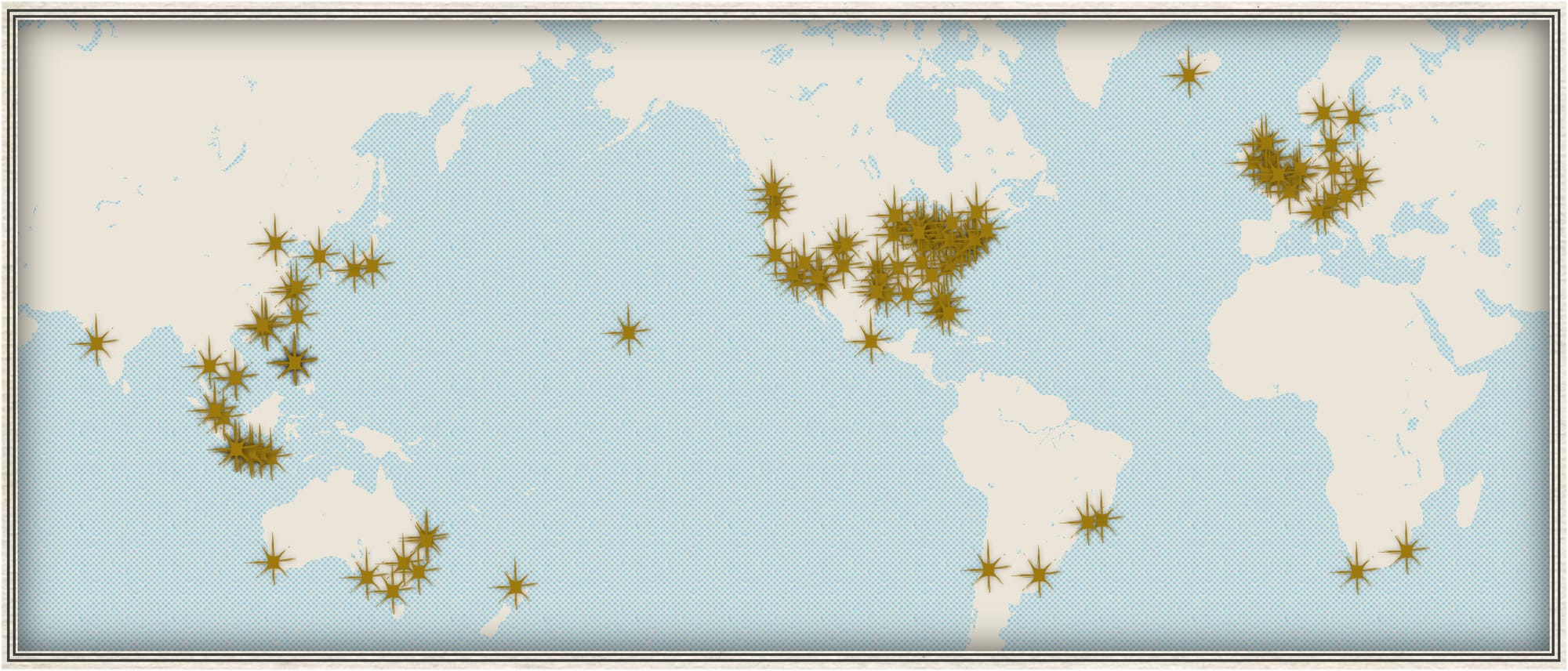
**Image courtesy of* [**averylaufeyday.com*](https://averylaufeyday.com/?ref=hypebot.com)**.*
### **For the artist:**
Your version of this doesn't need 75 cities. It needs one place your music already sounds like, and a reason for people to walk through the door before you ever ask them for money. The experience is currency to fans.
### **For the manager:**
Sequence the ask. Free experience first, paid tier second, always in that order. A fan who's already had a good afternoon is a far easier sell than one being pitched cold.
### **For the brand or venue partner:**
You're not being asked to sponsor an ad. You're being asked to be one stop on a path built to feel like discovery, not marketing, which is exactly why fans will forgive you for being there.
Most of the industry is still building funnels people can see. The ones who figure out how to build ones fans actually want to walk through are going to make the old model look like it's shouting into an empty room.
"A Very Laufey Day" works because it asks a completely different question. Not "how many promotional moments can we squeeze out of this album," but "what experience does this album make possible."
---
## [**Laufey Tour Dates**](https://www.bandsintown.com/a/14586219-laufey?utm%5Fsource=hypebot&came%5Ffrom=900)
---
**Arielle Aslanyan* is the Founder of* [***Pretty Penny PR***](https://www.instagram.com/p/DbLdEjKxH-q/?ref=hypebot.com)*, a music publicity company for the indie side of things, launched in June 2026\. Aslanyan is a former publicist with Syndicate and Sony Music, and has 22 years of experience in the music industry, having worked with artists like Lord Huron, Lucius, Velvet Revolver, Slash, Jane’s Addiction, Black Label Society, Clutch, and more.* [*Follow Pretty Penny PR on Substack*](https://prettypennypr.substack.com/)*.*
### Independent Artists Need an Operating System, Not Another 'Tool'
URL: https://www.hypebot.com/independent-artists-need-an-operating-system-not-another-tool/
Last updated: 2026-08-24T15:08:14.000Z
*By *Karan Dasgupta,* Founder of* [***UpNComer***](https://upncomer.co/?ref=hypebot.com)
It's [release week](https://www.hypebot.com/tag/release-strategy/), and while the music is finished, the artist's job is just getting started. There's a distributor to check, streaming dashboards to monitor, ads to launch, and royalties to track, on top of assets and campaign notes scattered across half a dozen different apps, with audience data living somewhere else entirely.
None of these tools are bad; most of them are genuinely excellent at what they do, and that's exactly what makes the real problem so easy to miss.
Independent artists today aren't really short on tools to build a [complete release strategy](https://www.hypebot.com/how-to-plan-a-release-strategy-that-spans-the-entire-year/). What they're short on is a system that ties those tools together.
## **We Solved Every Individual Problem, But...**
Music technology has spent years breaking an artist's career into smaller problems and building software around each one. Need to distribute your music, build a smart link, or run ad campaigns? There's almost certainly a specialist service built to solve exactly that.
That progress has genuinely mattered, removing gatekeepers, lowering costs, and giving musicians capabilities that used to require a label. The hidden cost is that every new solution also became **another login, another dashboard,** and **another subscription to track**, so artists ended up with every individual problem solved and no sense of how the pieces fit together.
## **The Modern Artist Is Running a Company**
[“Independent artist”](https://www.hypebot.com/tag/d-i-y/) sounds like a simple job description: make music, release music, build an audience. In practice, an independent artist today is often simultaneously responsible for marketing, financial tracking, release planning, distribution, and branding, which amounts to [running a small company](https://www.hypebot.com/the-label-model-is-training-artists-not-to-need-labels/) without the company built around it.
A startup usually spreads those functions across a team, while an artist usually has one person handling all of them: the artist. That's how the same technology built to make musicians more independent can quietly turn into an enormous operational burden, and it's worth remembering that being independent should mean owning your career rather than spending that career operating software.
***+Read more:*** [*"Why Are We Still Managing Modern Releases Like It’s 2005?"*](https://www.hypebot.com/why-are-we-still-managing-modern-releases-like-its-2005/)
## **The Hidden Cost Isn't the Subscription**
When artists compare tools, price is usually the first thing they weigh, but the more important cost is usually attention.
Picture an artist trying to figure out why a release underperformed. Streaming numbers, ad performance, social engagement, and revenue all live in separate systems, each showing one slice of the same story that the artist has to assemble by hand.
That's constant context switching, and the mental reset between tasks tends to cause more friction than the tasks themselves. Over weeks and months it adds up to duplicated work and missed opportunities, plus the familiar feeling of spending an entire day “working” on a music career without making any music. The real question worth asking runs bigger than any single platform: what happened across the artist's whole career, and why.
## **Artists Should Start Thinking in Workflows, Not Tools**
Musicians usually ask what's the best tool for a job, when a more useful question is how that tool fits into the rest of their workflow. If an artist still has to manually move information between five platforms, remember what happened in each, and decide what to do next, the software has only solved part of the problem.
A better system connects actions instead of just performing them: a release connects to its distribution timeline, which informs the marketing campaign, which connects to audience data, which shapes the next round of content and feeds back into the next release decision. That's the real difference between a collection of tools and an operating system: a layer where those functions actually talk to each other, without requiring one company to replace every specialist service artists already use.
The result is an artist experiencing their career as one connected system instead of ten separate dashboards, spending less time moving information around and more time actually making decisions.
**Dashboard view of* [**UpNComer*](https://upncomer.co/?ref=hypebot.com)**.*
***+Read more:*** [*"DIY Music Distribution Checklist: Everything You Need to Know"*](https://www.hypebot.com/diy-music-distribution-checklist-everything-you-need-to-know/)
## **AI Makes This More Important, Not Less**
Artificial intelligence is being added to nearly every part of the music business, and artists can now use it to generate ideas and analyze data, though intelligence without context still has real limits. An AI that understands one isolated task can give an answer, but a system that understands an artist's releases, audience, and finances can explain why that answer actually matters.
The real opportunity for [AI in music](https://www.hypebot.com/tag/ai-in-music/) has less to do with producing more content and more to do with connecting the information artists already have into actions they can actually execute. The best AI may end up being the AI artists notice the least, sitting underneath their workflow instead of becoming another destination to visit.
## **Independent Artists Don't Need More Complexity**
The first era of independent music technology was about access, as distribution, analytics, and marketing tools all became available to anyone. The next era needs to be about connection: how these systems talk to each other, and how an artist moves from having access to professional tools to actually operating like a professional team.
The promise of independence has always been control: **owning your music, understanding your audience,** and **building a career without asking permission from a gatekeeper.** [Technology](https://www.hypebot.com/tag/tech/) made that possible, and now it needs to make it manageable, since there's a point where more tools stop creating freedom and start creating another job.
The better question for the industry now is how to make everything artists already have to do dramatically easier, and the companies that matter most over the next decade will likely be the ones helping artists eliminate dashboards rather than pile on more of them.
Independent music was never really short on tools; it's been short on systems all along, and the next generation of artist technology needs to be built around closing that gap.
---
**Karan Dasgupta* is a recording artist and the Founder of* [***UpNComer***](https://upncomer.co/?ref=hypebot.com)*, a music technology platform building an operating system for independent artists and music teams. UpNComer brings together tools for music marketing, distribution, analytics, fan engagement, audio production, career management and AI-powered strategy in one ecosystem.*
### Should Artists Always Turn Down Unpaid Gigs?
URL: https://www.hypebot.com/should-artists-always-turn-down-unpaid-gigs/
Last updated: 2026-08-24T14:17:50.000Z
### **When should artists say yes to an unpaid gig?**
*By *Carlo Kiksen* of* [***The Fanbase Builder***](https://newsletter.thefanbasebuilder.co/p/when-should-artists-say-yes-to-an?ref=hypebot.com)
Early-phase acts get this email constantly: *Come perform for beers and for the exposure, because our audience is huge and it’ll be so good for you.*
Exposure is not a currency, and most of these offers deserve a straightforward no. But not all of them.
## Why it matters
My starting point for this edition was an early draft titled “never play for free”. But that blanket advice is too simple. It lets artists off the hook from figuring out what their time is worth.
Nobody would turn down an underpaid [Super Bowl halftime slot](https://www.hypebot.com/bad-bunnys-halftime-show-proved-why-we-do-what-we-do/). That level of exposure is invaluable, and not a single artist would turn it down for lack of monetary reward. Artists shouldn’t refuse every unpaid offer on principle.
Instead, it’s valuable to understand the difference between an offer that’s genuinely below [market value](https://newsletter.thefanbasebuilder.co/p/market-value-is-the-music-industrys?ref=hypebot.com) and one that only looks that way because you haven’t defined your market value yet.
**Generated with Gemini.*
***+Read more:*** [*"How to Perform Outdoors Without Sacrificing Your Sound"*](https://www.hypebot.com/how-to-perform-outdoors-without-sacrificing-your-sound/)
## How it works
Every offer an artist receives is a trade. Venue promoters aren’t guessing what to offer you. As with every product or service people buy, they’re pattern-matching to what they believe you’re worth. Artists can teach the market to expect.
The reward doesn’t have to be cash. What matters is that the artist names the reward honestly and weighs it against what they believe they’re currently worth. Market value is a claim an artist makes about themselves, and every accepted offer either confirms or resets that claim:
- Free beers signal “hobby,” not “career”. It’s fine for acts who genuinely see themselves that way.
- Exposure to a genuinely bigger audience can move a career forward, but the promoter is pricing your market value at €0,00.
- A €10 door fee, a €500 guarantee, a €10k festival fee: all legitimate, depending entirely on where you actually are right now.
Whatever you accept becomes the number the next promoter starts from. Say yes to €150 because a friend was promoting, and the next offer is €150 too, they’ve no reason to offer more.
## Yes, but..
None of this means saying no to every unpaid offer on principle. Sometimes the point is getting into a room you can’t otherwise reach. A support slot for an artist whose fans should become your fans can be worth more than the €200 a random Tuesday show would pay.
Avoid turning down every early opportunity while waiting for an offer that matches a market value you haven’t yet built. Before you have a track record, the honest answer to “what am I worth” is sometimes just: “not much yet”, and that’s fine.
## Take action now
Artists can pick one number today (a minimum guarantee, a minimum door fee, a minimum audience size) and hold it for the next show request that lands in their inbox.
**+Read more:** [*"A Day in the Life of a Working Musician on Gig Day"*](https://www.hypebot.com/a-day-in-the-life-of-a-working-musician-on-gig-day/)
---
*Subscribe to* [***The Fanbase Builder***](https://newsletter.thefanbasebuilder.co/?ref=hypebotdraft.ghost.io) *and join the hundreds of artists, creators, and music industry executives who receive it for free.*
**Further reading**
- [*Market value is the music industry’s hidden currency*](https://newsletter.thefanbasebuilder.co/p/market-value-is-the-music-industrys?ref=hypebot.com) *(The Fanbase Builder)*
- [*Why your live show should be more than just your album played loud*](https://newsletter.thefanbasebuilder.co/p/why-your-live-show-should-be-more?ref=hypebot.com) *(The Fanbase Builder)*
- [*What do you sell as an artist?*](https://newsletter.thefanbasebuilder.co/p/what-do-you-sell-as-an-artist?ref=hypebot.com) *(The Fanbase Builder)*
- [*The limits of business logic in music*](https://newsletter.thefanbasebuilder.co/p/the-limits-of-business-logic-in-music?ref=hypebot.com) *(The Fanbase Builder)*
### Build the Future With Us
URL: https://www.hypebot.com/build-the-future-with-us/
Last updated: 2026-08-24T13:39:56.000Z
### ***Things look a little different around here, don't they?***
This is Jeremy Young, Editor-in-Chief of [***Hypebot***](https://www.hypebot.com/)*.*
You may have noticed that we re-launched our publication this past February with a new look, a new design feel, and a more expansive editorial purview that covers the music industry with a focus on actionable insights for artists and their teams.
We'd love to know what you think of the changes! In fact, your impressions and suggestions will directly impact the future direction of the platform and its coverage of the industry we love and love to support.
Please help us improve the overall reader experience by taking just a few minutes to complete [this quick survey](https://bandsintown.typeform.com/to/LEsGcxCr?ref=hypebot.com).
[Take the Survey Here!](https://bandsintown.typeform.com/to/LEsGcxCr?ref=hypebot.com)
Thanks so much for being a *Hypebot* reader, we hope you've been enjoying the content! **Below are a few of my favorite posts** we've run recently.
All my best,
Jeremy Young
---
[Can Cheap Beer Save Australia’s Opening Bands?One Melbourne venue is using discounted drinks to get fans in early — it’s part of a wider effort to rebuild Australia’s emerging live music pipeline.HypebotHypebot Editorial Desk](https://www.hypebot.com/can-cheap-beer-save-australias-opening-bands/)
[The Music Industry Loves Successful Women. It Still Doesn’t Invest Enough in Them.Despite some superstar successes, women and nonbinary artists remain underrepresented in music production and on live stages.HypebotGuest Author](https://www.hypebot.com/the-music-industry-loves-successful-women-it-still-doesnt-invest-enough-in-them/)
[9 Live Music Marketing Trends Selling Out Shows In 2026From AI audience models to automated marketing and ‘content butchery,’ learn how savvy touring artists, venues and promoters sell out live shows.HypebotBruce Houghton](https://www.hypebot.com/9-live-music-marketing-trends-selling-out-shows-in-2026/)
[How to Build a Greener Concert IndustryA comprehensive list of green energy models and non-invasive methods to help build a more sustainable future for the live concert industry.HypebotJeremy Young](https://www.hypebot.com/how-to-build-a-greener-concert-industry/)
[Has the Modern Streaming Algorithm Killed the Long-Form DJ Set?Streaming metrics and rapid DJ transitions have squeezed the life out of dance tracks. Is the patient, hypnotic rhythm of classic house ever coming back?HypebotMidnight Rebels](https://www.hypebot.com/has-the-modern-streaming-algorithm-killed-the-long-form-dj-set/)
[Backstage Pass: Tobi Parks of Tour Tech & xBK on Closing the Live Music Data GapHow does an entertainment/IP attorney start creating digital tools for live music venue operational management and artist data management?HypebotHypebot Editorial Desk](https://www.hypebot.com/backstage-pass-tobi-parks-of-tour-tech-xbk-on-closing-the-live-music-data-gap/)
[Chartmetric Knows Why Major Tours Get Canceled In 2026Live Nation says cancellations are at normal levels, but tell that to fans who bought tickets. Chartmetric looks at what’s behind Blue Dot Fever.HypebotChartmetric](https://www.hypebot.com/chartmetric-knows-why-major-tours-get-canceled-in-2026/)
[Live Clips Are Powering Artist Discovery With the Next Generation of FansReversing the traditional fan journey, younger audiences now see live music clips of artists they discover on social media before seeing them in concert.HypebotHypebot Editorial Desk](https://www.hypebot.com/live-clips-are-powering-artist-discovery-with-the-next-generation-of-fans/)
[Why the Levitt Foundation Model Should Not Be an OutlierCombining free admission with paid artists, local control, and sustained investment in public space, Levitt’s model should be replicated... everywhere.HypebotJeremy Young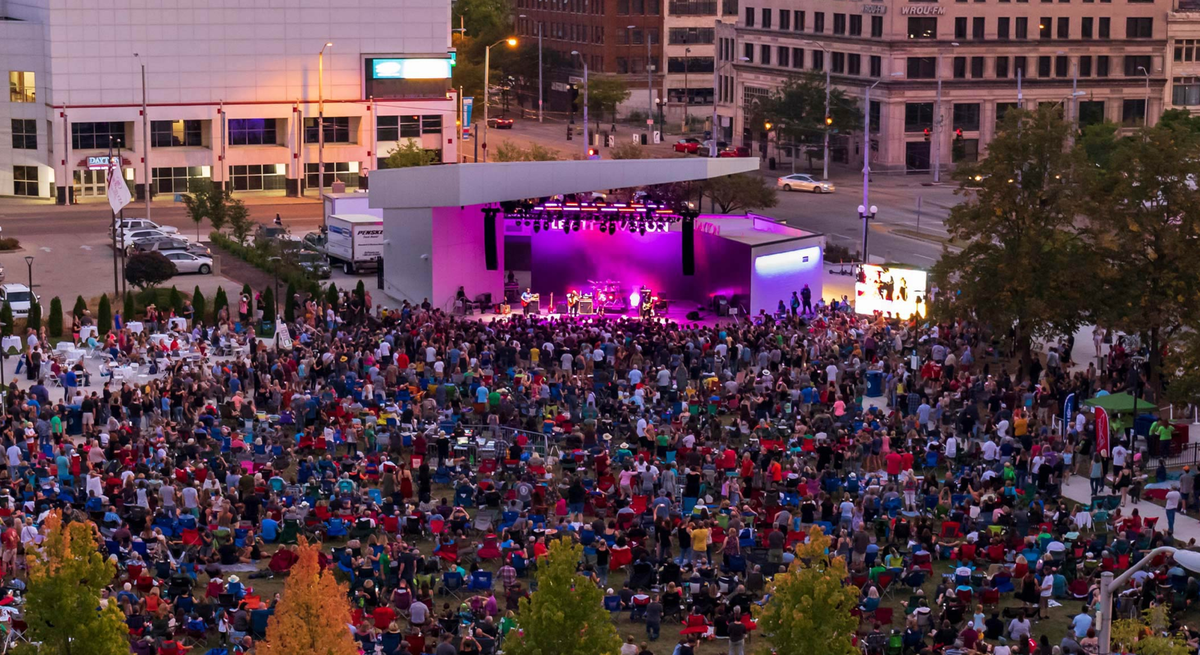](https://www.hypebot.com/why-the-levitt-foundation-model-should-not-be-an-outlier/)
### Your Morning Coffee Podcast: Suno's BMG Deal, Spotify Curators, American Greed, More
URL: https://www.hypebot.com/your-morning-coffee-podcast-55/
Last updated: 2026-08-24T13:18:38.000Z
### **Listen on your favorite** [**podcast platform**](https://bio.to/UloQY6?ref=hypebot.com)**.**
Subscribe to the Your Morning Coffee newsletter [here](https://label-logic.us8.list-manage.com/subscribe?u=735771602810b0eb238d4e814&id=1ffaab59d7&ref=hypebot.com).
**YMC Episode 316 — August 24, 2026**
On this week’s episode of the **Your Morning Coffee podcast**, your hosts Jay Gilbert and Mike Etchart chat about these timely music industry stories:
- **Spotify's Playlist Editors Now Explain Their Picks To Listeners, And Get Their Own Public Profiles**
- **OP-ED: Blue Dot Fever Isn't a Ticket Sales Problem. It's a Good Old Fashioned American Greed Problem**
- **Robert Kyncl Justifies Suno Deal, as UMG and Sony Press on with Lawsuit: 'In My Opinion, You Embrace It.'**
- **5 Things To Know About Suno's BMG Licensing Deal - Download Caps, Watermarks, and More**
Plus an audio drop with **Kristin Robinson** from Billboard on the challenges of labeling AI generated music.
Listen right here:
Subscribe to the Your Morning Coffee newsletter [**here**](https://label-logic.us8.list-manage.com/subscribe?u=735771602810b0eb238d4e814&id=1ffaab59d7&ref=hypebot.com)**.**
**FIND MORE CURATED MUSIC BUSINESS AND INDIE**
**PODCAST EPISODES** [**HERE**](https://www.hypebot.com/tag/podcast-music-biz/)
### Own Your AI Search Results: a Guide for Artists and Venues
URL: https://www.hypebot.com/own-your-ai-search-results-a-guide-for-artists-and-venues/
Last updated: 2026-08-24T13:05:01.000Z
Google has expanded [**Preferred Sources**](https://blog.google/products-and-platforms/products/search/personalize-search-discover-news/?ref=hypebot.com) giving artists and venues a lever to dominate **AI Search, AI Overviews** and **AI Mode** to counter the decline AI is causing in website traffic.
You can now embed an **official Google Preferred Source button** directly on any site. When fans tap it, Google prioritizes the official domain labeling it with a prominent **"Preferred" badge** whenever those fans ask AI search tools about your music, showtimes, or venue rules.
### **Why Preferred Sources Changes the Game**
- **Eliminates Ticket Hallucinations:** AI answer engines can frequently hallucinate incorrect showtimes or point fans to reseller ticket scams. Priority badges ensure your official domain is cited as the primary source.
- **Doubles Click-Through Rates:** Google data indicates searchers are roughly twice as likely to click on a Preferred Source link inside AI search results.
- **Weaponizes Fan Loyalty for GEO:** Generative Engine Optimization (GEO) usually requires complex technical structuring. This feature converts existing fan affection straight into search authority.
### **3 Ways Artists & Venues Should Use Preferred Sources**
1. **Install the Embed Code:** Add Google’s lightweight JavaScript button to the root domain of your official site near your tour or event page.
2. **Promote in Pre-Sale Emails:** Add a one-click call to action link in your email newsletter: *"Save us as a Preferred Source on Google to ensure AI search always shows you official ticket links and set times first."*
3. **Anchor Your FAQ Page:** Also include the button atop your venue policies, door times, and box office hours. When fans ask AI, "What is the bag policy at \[Venue Name\]?", your site becomes the cited source.
### **How to Add A Preferred Sources Button and Deeplink**
**Option 1: Interactive JavaScript Button (Best for Websites):** If your site allows custom HTML/JS (WordPress, Squarespace), embed Google's interactive button so fans can opt in with one click without leaving your site:
Place the button attribute where you want the button to appear (e.g., near tour dates and venue FAQs):
HTML
```
```
*(Note: You can change `data-theme="dark"` to `data-theme="light"` to match your site design).*
Paste Google's source script tag into your website's `` element:
HTML
```
```
**Option 2: Direct Deeplink (Best for Newsletters, Socials & Link-in-Bio)** If your website builder blocks custom scripts or you want to prompt fans via email blasts, use Google's direct preference URL:
- **URL Format:** Swap in your root domain name at the end of this link: `[https://www.google.com/preferences/source?q=yourdomain.com](https://www.google.com/preferences/source?q=yourdomain.com)`
- **Execution:** Add this link to a call-to-action button in your pre-sale mailer: *"Click here to set \[Artist/Venue Name\] as a Preferred Source on Google."*
When tapped, fans land directly on Google's source customization page with your domain pre-loaded, requiring just one tap to confirm.
### **Hypebot's Bottom Line**
The battle for AI visibility isn't just about keywords anymore; it's about fan ownership.
Installing Google's Preferred Source button and adding links in your emailers takes minutes, but it ensures that when your biggest supporters ask AI search a question, your direct links answer the call.
### To add Hypebot as a Preferred Source [click here](https://www.google.com/preferences/source?q=hypebot.com&ref=hypebot.com).
###
---
*Get all the latest Music Industry & Live Music News updated continuously from across the web under the Hypebot Industry News tab* [*here*](https://www.hypebot.com/music-industry-news-feed/)*.*
## Hypebot
Essential news & insights for artists and live music pros.
Sign up for free weekly content delivered to your inbox
Subscribe
Email sent! Check your inbox to complete your signup.
### Music Industry News: All The Latest
URL: https://www.hypebot.com/music-industry-news-the-latest/
Last updated: 2026-08-24T12:41:31.000Z
**We search the web so you don't have to**. Find the latest [Music Industry News](https://www.hypebot.com/music-industry-news-feed/) under the [Industry News tab](https://www.hypebot.com/music-industry-news-feed/) above.
## Hypebot
Essential news & insights for artists and live music pros.
Sign up for free weekly content delivered to your inbox
Subscribe
Email sent! Check your inbox to complete your signup.
### 5 Longform Articles for Your Weekend Reading
URL: https://www.hypebot.com/5-longform-articles-for-your-weekend-reading/
Last updated: 2026-08-24T14:08:27.000Z
Welcome to [**Long Reads**](https://www.hypebot.com/tag/long-reads/), a new series that collects some of the feature length content recently published on Hypebot so you can have something deeper to add to your weekend reading list.
### **TDE Is Touring Black Universities Right Now. Here's What's Going Down...**
[What If a Tour Gave Back as Much as It Took?TDE’s current HBCU tour brings performances to college campuses, but along with them, studio time, mentorship, scholarships, and opportunity.HypebotJeremy Young](https://www.hypebot.com/what-if-a-tour-gave-back-as-much-as-it-took/)
### **Are There More Trademark Lawsuits Now Than Ever?**
[The Music Industry Has Become a Trademark MinefieldIn the new digital, and global, fan economy, once-separate names and trademarks are now valuable (and contestable) commercial territory.HypebotHypebot Editorial Desk](https://www.hypebot.com/the-music-industry-has-become-a-trademark-minefield/)
### **What This Artist Learned About Playlists After Becoming a Curator**
[5 Playlist Pitching Regrets From an Artist Turned CuratorWhy concise, personal pitches, careful playlist vetting, and investing in your own fan community matter more than mass outreach in 2026.HypebotGuest Author](https://www.hypebot.com/5-playlist-pitching-regrets-from-an-artist-turned-curator/)
### **An Explanation of a Funding Model That *Should* Be More Common**
[Why the Levitt Foundation Model Should Not Be an OutlierCombining free admission with paid artists, local control, and sustained investment in public space, Levitt’s model should be replicated... everywhere.HypebotJeremy Young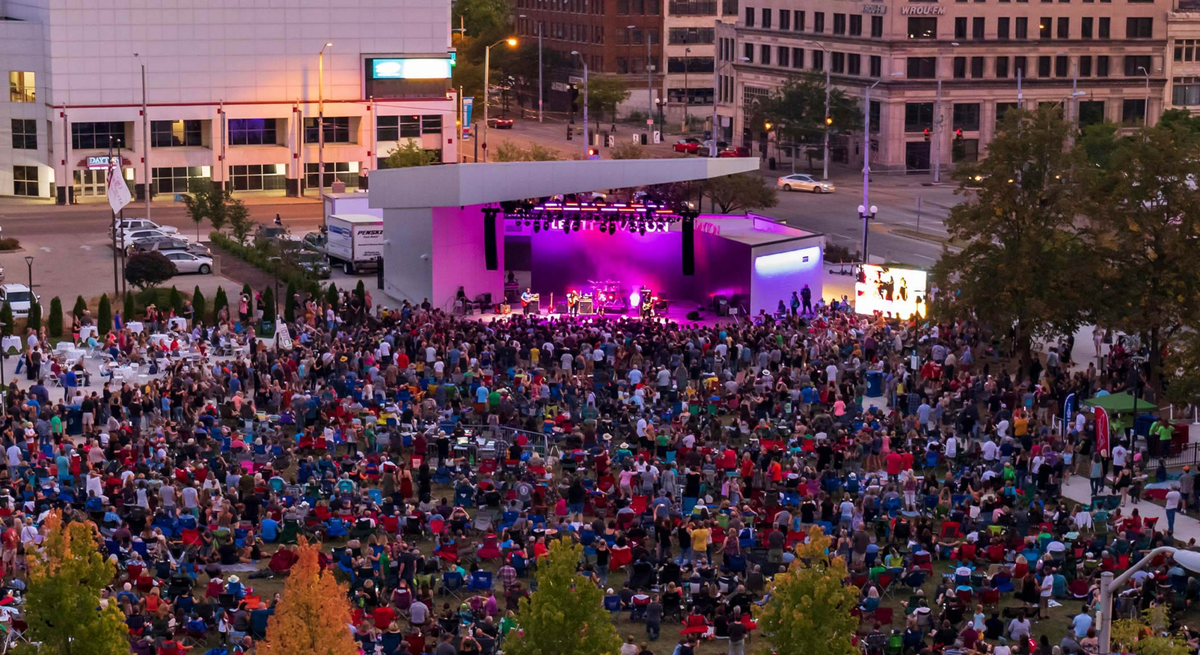](https://www.hypebot.com/why-the-levitt-foundation-model-should-not-be-an-outlier/)
### **A Piece on Why Local Resident DJs Do More to Power a Club's Reputation Than Celebrity Guests**
[Celebrity DJs Bring a Venue Sales, Residents Define Its LegacyCelebrity guest DJs draw a crowd once, on a single high-profile night. Resident DJs build the reason a venue’s regulars keep coming back over years.HypebotMidnight Rebels](https://www.hypebot.com/celebrity-djs-bring-a-venue-sales-residents-define-its-legacy/)
### **An Introduction to the Internet's Newest Obsession**
[Who Are LATIN MAFIA?Fred again.. introduced millions to the Monterrey trio, but they’d already built an arena-sized community by making music that follows emotion wherever it leads.HypebotJeremy Young](https://www.hypebot.com/who-are-latin-mafia/)
### **An Editorial on Indie Music Marketing**
[A Stream Is Not a Fan: What Independent Artists Should Measure InsteadThe music industry is very good at measuring exposure. The harder question is whether any of it changed what the listener did next.HypebotGuest Author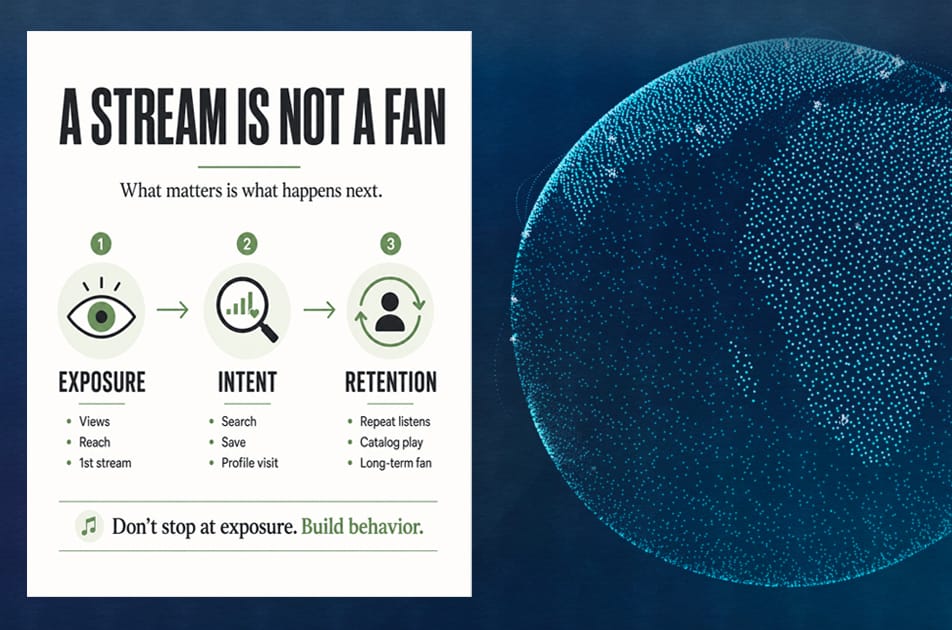](https://www.hypebot.com/a-stream-is-not-a-fan-what-independent-artists-should-measure-instead/)
### **Our Exclusive Interview with Aidan Gallagher**
[Aidan Gallagher on Following the Song’s Lead to Access EmotionWe chat with the actor-turned-songwriter about his newly released single (off his forthcoming full-length album), his writing process, and... love.HypebotJeremy Young](https://www.hypebot.com/aidan-gallagher-on-following-the-songs-lead-to-access-emotion/)
### Aidan Gallagher on Following the Song's Lead to Access Emotion
URL: https://www.hypebot.com/aidan-gallagher-on-following-the-songs-lead-to-access-emotion/
Last updated: 2026-08-21T17:37:36.000Z
[**Aidan Gallagher**](https://www.hypebot.com/folk-alliance-international-announces-140-artists-for-2027-conference/) is a Seattle-based, self-produced singer-songwriter who makes cinematic pop — introspective songs about working through heartbreak, the kind of music that soundtracks the moments you don't forget. But that's probably not how you know him.
He's better known as Number Five in Netflix's **The Umbrella Academy*.*
Yup, *that* Aidan Gallagher. Would it surprise you to learn that he's been writing, producing, and performing songs himself (not unlike Finneas, Charlie Puth, or Elliott Smith) for years? Would it also surprise you to hear how powerful, emotionally rich, and gorgeously recorded his songs are?
Gallagher's new album arrives this fall, but his latest single, ["Dream,"](https://open.spotify.com/track/4c3PXRSKJLHP3rkYqdJETe?si=d076d8986cfc4b76&ref=hypebot.com) dropped this morning. Check it out, and enjoy our conversation below.
---
**Hypebot: Hey Aidan, thanks for taking the time to answer some questions. Congrats on finishing your debut full-length record. You home-recorded this, but it sounds rich and layered. How was this process for you?**
Aidan Gallagher: "First off, thank you! In terms of the process, it was a matter of translating what I had in my head. The whole time I could feel what it wanted to be, and it was difficult to translate an acoustic demo into a final mix that represented the emotional core of each song. But I'm making it sound less fun than it was."
I don't think anyone would put this much effort into something creative without that joy being a part of it."
**H: Most folks might know you more through your work as an actor. However, these songs and their execution may surprise a lot of fans that music is not just a hobby for you — it’s the next frontier. Why is music so important to you at this moment?**
AG: "It's always been important to me. I'm endlessly surprised by anyone who says music is not a major role in their life. For me it's been an ongoing and powerful part of my everyday. It's the quickest way to my heart."
**H: Who would you say are your biggest influences in songwriting and production, and how did you transmit these artists’ influence on these tracks?**
AG: "My taste is a blend of many different influences, so it’s hard to explain how that shows up in the music. Besides, I don’t think you can recreate something you idolize — part of that obsession doesn’t exist in reality. The feeling is what’s important, and there’s different ways to get there."
My goal is to support the songs rather than try and emulate something. Everything is a tool towards accessing emotion, and the song is in charge."
> *"You're trying to access emotion, and every now and then the clouds part and you get a gift. But you have to follow it. You can't lead it. It's like digging up a fossil. It's discovery."*
**H: To take this further, you’ve spoken about the influence of Thom Yorke in particular, who uses common phraseology and colloquial language to get to deeper sensibilities of human emotion and interaction. Can you talk a bit about why this is a powerful source of inspiration for you, and a working writing model?**
AG: "You might write a song and ten years later, be a completely different person. If you've made the emotional truth powerful, but the specifics abstract, then the song can grow with you over those ten years. And it becomes accessible to everyone who hasn't had the exact experience which created the emotion you're feeling."
Furthermore, when I play a strange group of notes on an instrument, I'll feel something, and it might not have anything to do with my personal life. Sometimes it does. But you're trying to access emotion, and every now and then the clouds part and you get a gift. But you have to follow it. You can't lead it. It's like digging up a fossil. It's discovery. It's not creation in the way that people might think."
**H: What is the most meaningful song on this collection to you, and why?**
AG: "They all mean different things. And because of that, they're powerful from different angles. I can't say one is better than another. And to be completely honest, I've never dealt with a question of favorites in a suitable way. I don't have a favorite in anything. It's constantly changing depending on what my last favorite was."
I hate the question of favorites. I don't think that's how humans exist, really. I think people should be allowed to grow. Maybe I change more often than most people. But I have never really had a favorite. There's too much good stuff."
**H: On “Dream” I swear I hear police sirens in the background (but then again it could be a synth) — what’s going on there? 🤯**
AG: "That song has hundreds of layers. I built an entire city. If you listen in headphones, you can hear it in the intro and the outro. That song exists halfway between reality and a dream, and certain things are inside the narrator's head and other things are echoes of the external world."
**H: Are you planning tour dates around the launch of the album?**
AG: "We're still working that stuff out. I would like to go on tour at some point in the near future."
> *"If you sit down in front of a piano, even if you're not a musician, right there in front of you is every song that has ever been written, and every song that will ever be written. And it's up to anyone to find the ones that haven't been written yet... When you uncover something, it's a thrill."*
**H: And will these songs have to be changed or adapted to the live concert environment in any way? Can you talk about taking songs from the studio to the stage?**
AG: "When I recorded the album, I wasn't concerned with recreating the songs live. I just wanted to make something that someone could put on headphones and melt into."
For a live show, there’s a few ways I’d approach it. There's a version of these songs acoustically, and there's a version of them with a 3 piece band or a 5 piece band, and I'll do what makes sense logistically for a tour."
I look at music from the perspective of rhythm, melody, texture, and lyrics. If you present those elements in an interesting way it doesn’t matter if it’s two tracks or two hundred. The songs will have to change for a live show, but I think that can be really interesting."
**H: What’s something you’ve learned through music over the years?**
AG: "I think the best shows are somewhere between being prepared and being present. You can’t ignore the energy in the room. My default approach to everything in life is to try and be open and honest and in the moment."
**H: Between writing, recording, editing, and performing, what is your favorite aspect of music-making and why?**
AG: "Writing is by far the most fun. It's kind of like a mirror maze where you're following the idea and you hit walls, but then you find your way through, and you have no idea where it's going to go. It's an absolute thrill to be a writer. But you can't do it all the time. An idea presents itself. You can try and force a great song, but you won't get a great song."
If you sit down in front of a piano, even if you're not a musician, right there in front of you is every song that has ever been written, and every song that will ever be written. And it's up to anyone to find the ones that haven't been written yet. It's all right there on the keys. Or on the fretboard. When you uncover something, it's a thrill."
**H: What’s the most beautiful thing on Earth to you?**
AG: "I think love is the most beautiful aspect of being alive."
---
[**Follow Aidan Gallagher on Bandsintown for Tour Dates**](http://bandsintown.com/a/3276390-aidan-gallagher?utm%5Fsource=hypebot&came%5Ffrom=900)
### Folk Alliance International Announces 140+ Artists for 2027 Conference
URL: https://www.hypebot.com/folk-alliance-international-announces-140-artists-for-2027-conference/
Last updated: 2026-08-21T14:32:50.000Z
[**Folk Alliance International**](https://folk.org/?ref=hypebot.com) has unveiled the first wave of **Official Showcase artists** for its 39th annual conference, taking place **January 27–31, 2027** in **Chicago, IL.**
More than 140 artists from 31 countries, 32 U.S. states and seven Canadian provinces have joined a lineup expected to grow beyond 160 performers.
The initial slate includes: Alela Diane, Emily Scott Robinson, Erin McKeown, American Patchwork Quartet, Julian Taylor, Raye Zaragoza, Nat Myers, Susan Werner, Amy Speace, Sammy Brue, Flamy Grant, and Carrie Newcomer.
The announcement also reflects Folk Alliance International’s expansive definition of folk music.
Tuvan throat-singing group Alash, Latvian folk-pop ensemble Tautumeitas, Georgian polyphonic singers Trio Mandili and Korean-American blues poet Nat Myers will perform alongside Colombian salsa sextet Las Guaracheras, Japanese taiko group Nagata Shachu and Yemeni psychedelic band El Khat.
Other highlights include Latin Grammy-nominated Making Movies, Chicago’s Sones de México Ensemble, Grammy-winning vocalist and violinist Mireya Ramos, blues guitarist Buddy Red and Texas guitarist Mathias Lattin.
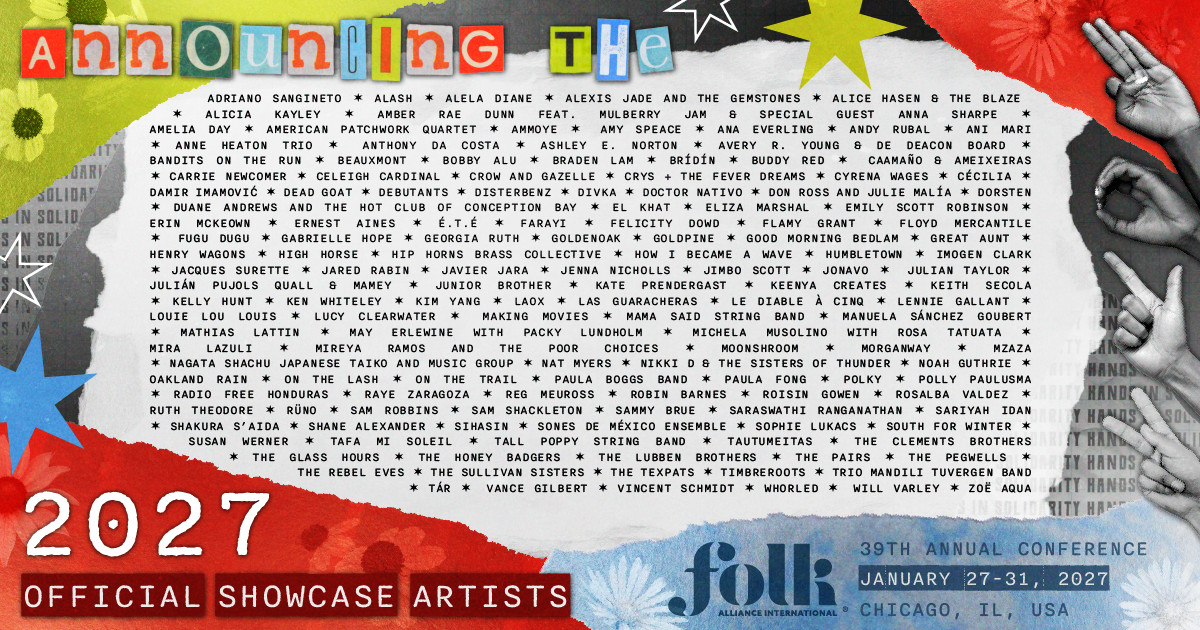
### More Than a Folk Festival
The annual [**Folk Alliance International**](https://folk.org/?ref=hypebot.com) conference is both a showcase event and an industry gathering, bringing artists together with booking agents, venue operators, record labels, DJs, media companies, and other music professionals.
Its five-day program includes panels, workshops, presentations, networking sessions and professional development opportunities. Jury-selected performers appear in Official Showcases, while the conference’s late-night Private Showcases turn hotel rooms into intimate performance spaces open to a much wider range of attendees.
FAI Executive Director Jennifer Roe notes:
> *"During a time when connection matters more than ever, we are thrilled at the worldwide response to join us for the 39th annual conference. There is so much musical richness for an attendee to discover."*
The theme of the 2027 conference will be “Hands In Solidarity,” inviting attendees to consider how musical communities can become systems of mutual support and collective action.
The range of artists selected also makes a broader point about what folk music can include. FAI’s programming stretches across Americana, blues, bluegrass, Celtic, Cajun, global roots, hip-hop, spoken word, traditional music and numerous cross-cultural hybrids.
A keynote speaker and additional Official Showcase artists will be announced at a later date.
### A Clear Example Why Festivals Should Be on Bandsintown Pro
URL: https://www.hypebot.com/a-clear-example-why-festivals-should-be-on-bandsintown-pro/
Last updated: 2026-08-21T14:22:40.000Z
Marketing a [festival](https://www.hypebot.com/tag/festivals/) is not an easy thing to do.
Sure there are world-class artists that soak up a lot of visibility, local artists on the program leveraging their niche networks, and corporate sponsors renting out their brand positioning to elevate goodwill initiatives. All of that is great.
But [digital marketing](https://www.hypebot.com/tag/marketing-strategy/) requires matching the product to the customer, and in cities with millions of residents, sometimes making sure the right message meets the right consumer at the right time is a major headache.
Enter: Phoenix’s [**Hondo Rodeo Fest**](https://www.thehondorodeofest.com/?ref=hypebot.com). Launched at **Chase Field** in Phoenix in 2024, it's a three-day event combining an invitational professional rodeo, a free Western culture street festival, and a full-length nightly program of concerts. A case study published by **Bandsintown Pro** shows how this festival was able to use the tools offered by Bandsintown to effectively close that gap.
[According to the case study](https://www.bandsintown.pro/festivals/festival-case-studies/hondo-rodeo-fest?ref=hypebot.com), a $2,250 campaign for Hondo Rodeo Fest generated more than $24,000 in ticket revenue. The campaign alone delivered approximately 2,100 visits and 271 festival-pass sales, representing a 13% conversion rate and what Bandsintown calculates as a 10x return.
It's a clear demonstration of what Bandsintown Pro can do when a festival already has real audience demand embedded in its artist lineup. Let's take a closer look at those numbers.
## What Is Hondo Rodeo Fest?
**Hondo Rodeo Fest** is not a conventional country music festival. Combining food and street vendors, live music concerts, and a pro-level rodeo competition, it's a hybrid event that has little duplicable precedents elsewhere from which to draw inspiration.
Yet, its inaugural edition brought more than 60,000 people to Chase Field, according to organizers. World-class rodeo competitors competed across eight events for a combined $1 million purse, while the music lineup included Hank Williams Jr., Whiskey Myers, Brooks & Dunn, Turnpike Troubadours, Zac Brown Band and Old Dominion.
That hybrid identity is one of Hondo Rodeo Fest’s biggest strengths — it is also what made the event such a ripe participant for a Bandsintown Pro for Festivals integration.
## What the Case Study Shows
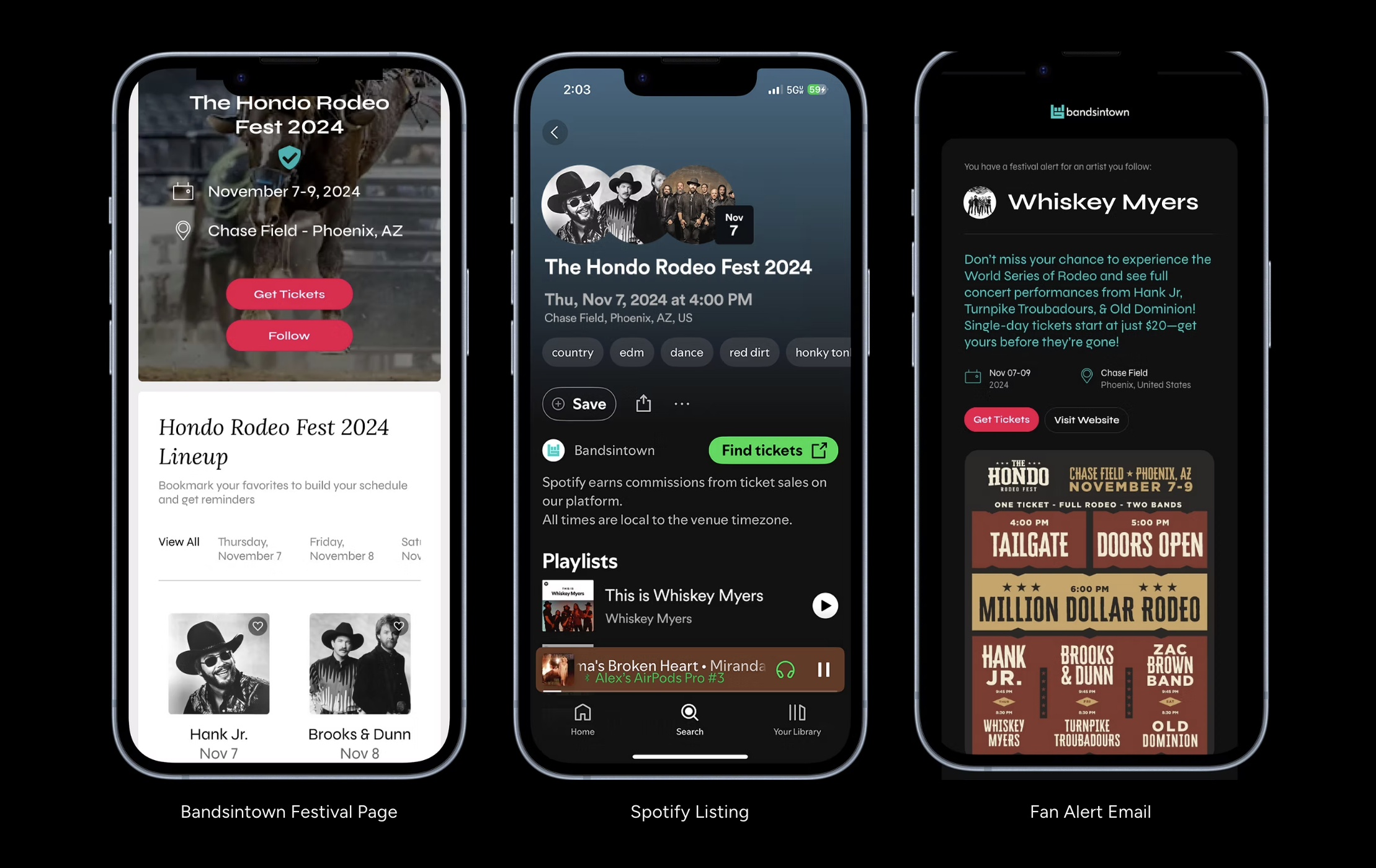
Bandsintown Pro’s Premium Festival Package gave Hondo Rodeo Fest a verified festival page, verified individual set listings and featured placements across Bandsintown’s homepage and relevant city pages. Those listings were also distributed beyond Bandsintown to platforms including Spotify, Shazam, Google Search and Apple Maps.
That meant a fan did not have to follow the festival (or even know its name) to encounter one of its shows while searching for an artist or consuming music elsewhere. Bandsintown begins with people who have already demonstrated interest in the artists appearing there.
The platform then adds geography.
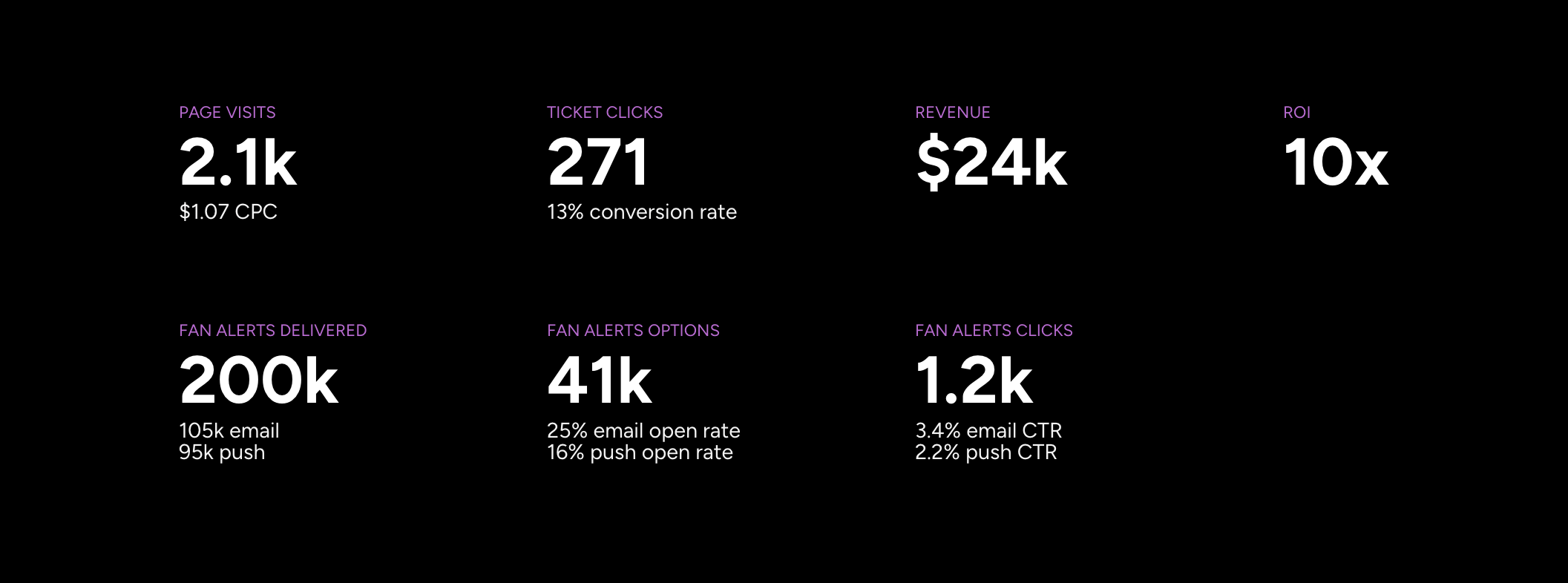
Rather than promoting Hondo Rodeo Fest indiscriminately to every fan of every artist on the bill, Bandsintown could concentrate its campaign on relevant followers in and around the Phoenix market. It turned each artist’s distributed following into a geographically specific pool of potential ticket buyers.
That is particularly useful for newer festivals that have booked recognizable artists but have not yet spent years building their own mailing lists, customer profiles and returning audience.
## The Right Message at the Right Moment
The Hondo campaign was also designed around multiple ticket-buying moments instead of relying on a single lineup announcement.
[Bandsintown Pro](https://www.bandsintown.pro/festivals?ref=hypebot.com) delivered geo-targeted email and push notifications to artist followers when single-day tickets went on sale, when set times were announced and during the final week before the festival. “Last chance” reminders were sent both during festival week and the day before the event.
Custom email and push campaigns also reached a wider pool of country music fans who were not necessarily following one of the participating artists. In total, Bandsintown says it delivered 200,000 alerts: 105,000 emails and 95,000 push notifications. Those messages produced approximately 41,000 opens and 1,200 clicks, while the broader package ultimately generated 271 attributed pass sales.
But it's never about simply sending *a lot* of messages; It's about aligning those messages with specific artists, locations, and stages of the purchasing cycle.
**Dashboard example of Bandsintown Pro for Festivals.*
The Hondo Rodeo Fest results do not guarantee that every $2,250 campaign will generate $24,000\. Lineup strength, ticket pricing, market demand and campaign timing will always affect the outcome. What the case study shows is that festival marketing can be far more precise than buying impressions and "hoping the right people notice."
Hondo Rodeo Fest had rodeo fans, country fans, rock fans and local live music fans circling the same event from different directions. Bandsintown Pro helped bring them into one measurable ticket funnel.
[Learn more about Bandsintown Pro for Festivals here.](https://www.bandsintown.pro/festivals?ref=hypebot.com)
### The Week in Review: Aug 14-20, 2026
URL: https://www.hypebot.com/the-week-in-review-aug-14-20-2026/
Last updated: 2026-08-21T11:53:58.000Z
Here's a rundown of some of our favorite stories from this week on [**Hypebot**](https://www.hypebot.com/). As always, thanks for reading and being part of our growing community of artists, managers, and industry pros.
Enjoying this content? Tell us about it! [Take the 2026 Hypebot Reader Survey.](https://bandsintown.typeform.com/to/LEsGcxCr?ref=hypebot.com)
### **Top Stories**
[Who Are LATIN MAFIA?Fred again.. introduced millions to the Monterrey trio, but they’d already built an arena-sized community by making music that follows emotion wherever it leads.HypebotJeremy Young](https://www.hypebot.com/who-are-latin-mafia/)
[What If a Tour Gave Back as Much as It Took?TDE’s current HBCU tour brings performances to college campuses, but along with them, studio time, mentorship, scholarships, and opportunity.HypebotJeremy Young](https://www.hypebot.com/what-if-a-tour-gave-back-as-much-as-it-took/)
[Fans Hit With $40 Fines For Arriving Late To A Moby ConcertUPDATE: Late fees for live music? A UK promoter is charging up to $40 if ticketholders miss their allocated entry time. Let’s make sense of this…HypebotBruce Houghton](https://www.hypebot.com/did-fans-really-just-get-hit-with-a-40-fine-for-arriving-late-to-see-moby/)
[Are We Witnessing the Second Coming of the Music Blog?The Wild Honey Pie returns, but the real question is: Can we ever get that 2009 feeling back?HypebotAngela Tyler](https://www.hypebot.com/are-we-witnessing-the-second-coming-of-the-music-blog/)
### **Advice & Tips**
[Email Marketing for Musicians: How to Turn Casual Listeners Into Connected FansArtist need a direct, algorithm-free way to turn casual listeners into connected fans via personal updates, exclusive access, and consistent contact.HypebotVenture Music](https://www.hypebot.com/email-marketing-for-musicians-how-to-turn-casual-listeners-into-connected-fans/)
[5 Playlist Pitching Regrets From an Artist Turned CuratorWhy concise, personal pitches, careful playlist vetting, and investing in your own fan community matter more than mass outreach in 2026.HypebotGuest Author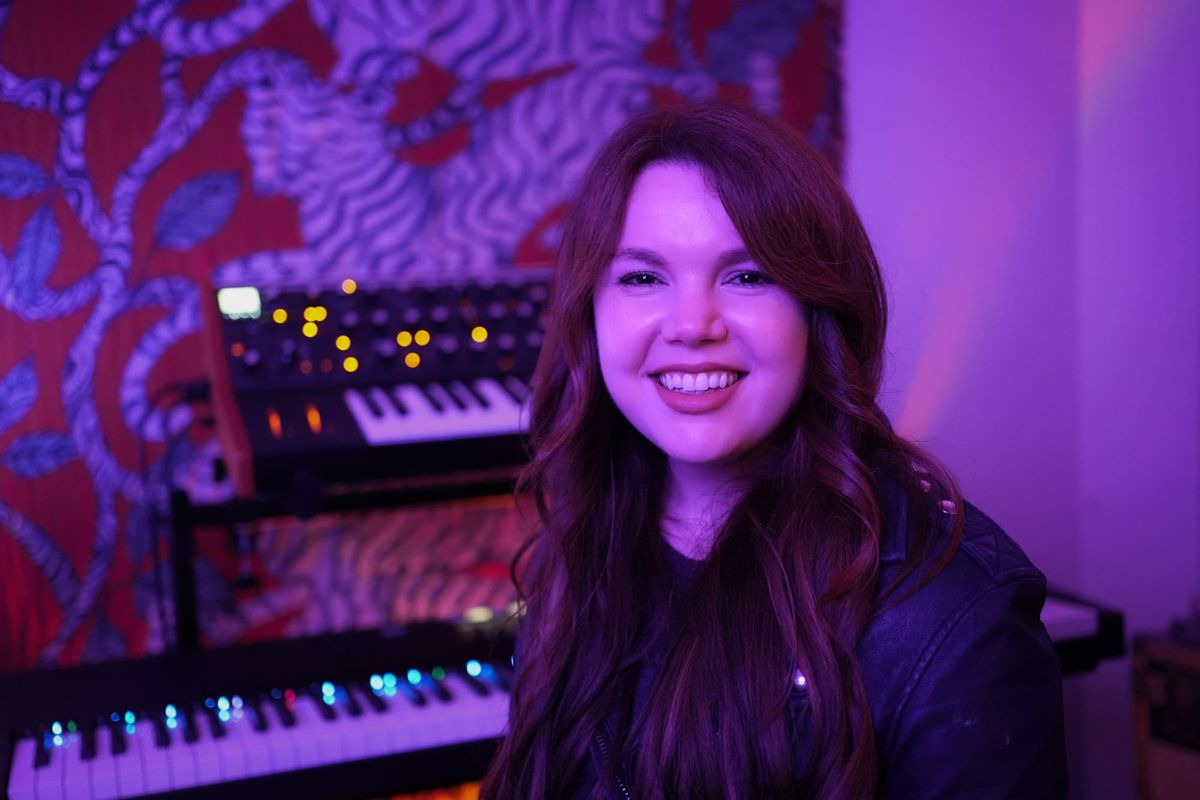](https://www.hypebot.com/5-playlist-pitching-regrets-from-an-artist-turned-curator/)
[Stop Acting Like A Store And Let Fans Support Your ArtThe music industry is built on a false hypothesis: that fans must receive something tangible in exchange for financially supporting an artist.HypebotGuest Author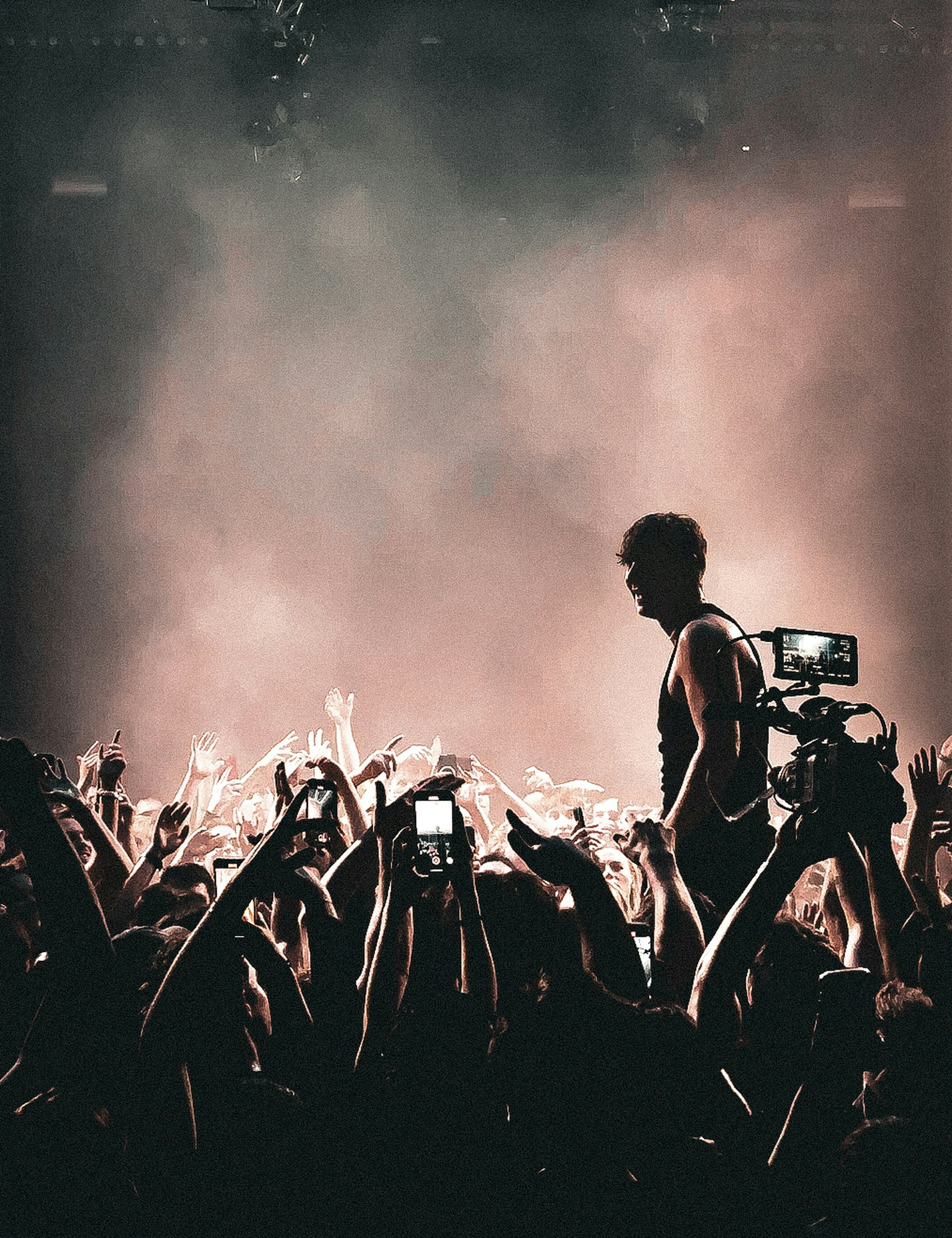](https://www.hypebot.com/stop-acting-like-a-store-and-let-fans-support-your-art/)
[Is Bandcamp Still the Best Platform for Indie Musicians?Is Bandcamp still relevant? Discover how its fast payments, robust marketing tools, and direct fan access beat traditional streaming.HypebotBruce Houghton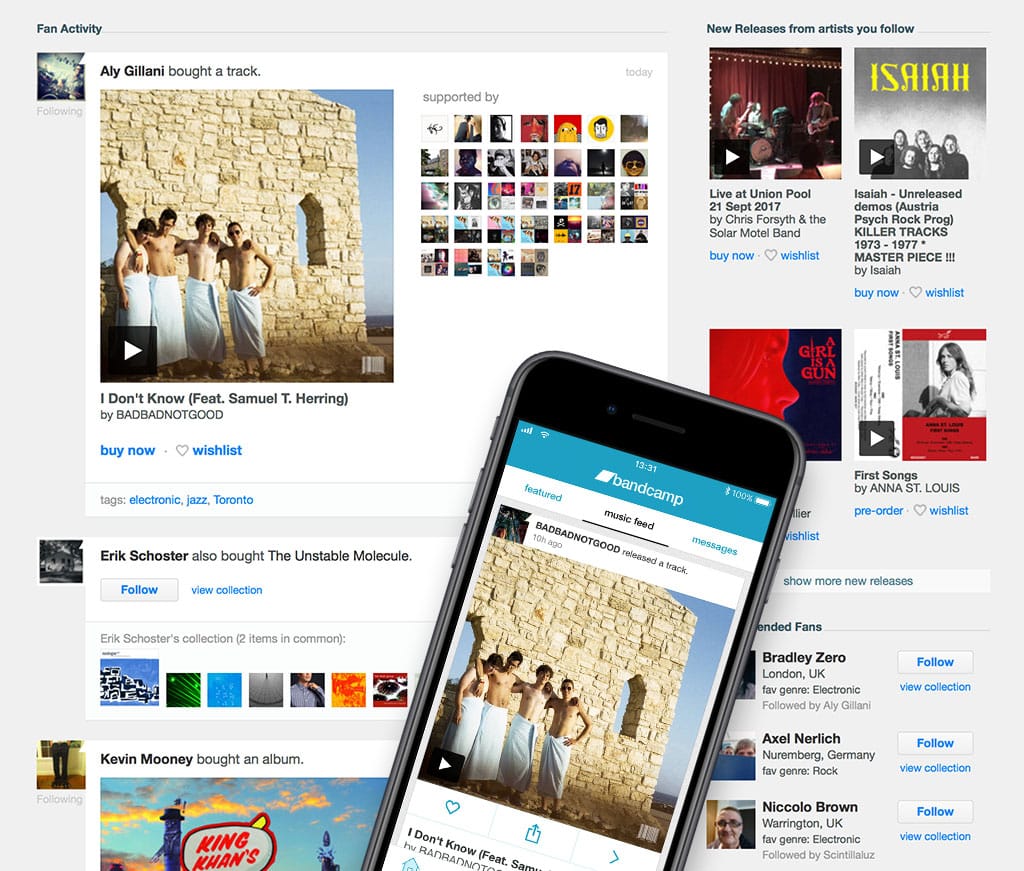](https://www.hypebot.com/is-bandcamp-still-the-best-platform-for-indie-musicians/)
### **Streaming & AI**
[A Stream Is Not a Fan: What Independent Artists Should Measure InsteadThe music industry is very good at measuring exposure. The harder question is whether any of it changed what the listener did next.HypebotGuest Author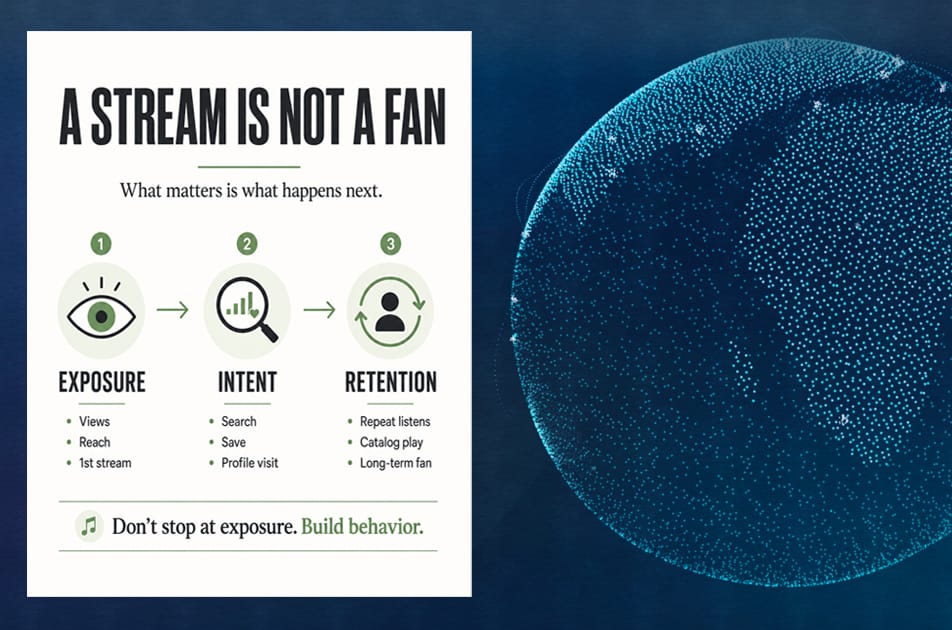](https://www.hypebot.com/a-stream-is-not-a-fan-what-independent-artists-should-measure-instead/)
[YouTube Views Now Count From the First FrameStarting Aug 24, YouTube will count views the second a video starts. Learn how this major metric shift impacts musicians and payouts.HypebotBruce Houghton](https://www.hypebot.com/youtube-views-now-count/)
[The AI Chart Rules Ask if a Record Is Human. They Never Ask If the Song Is.New labeling and chart rules identify genAI recordings but ignore AI-assisted writing, an unenforceable gap about what “human-made” actually means.HypebotGuest Author](https://www.hypebot.com/the-ai-chart-rules-ask-if-a-record-is-human-they-never-ask-if-the-song-is/)
[Where Artists Draw the Line On AI: New Uppeat Creator ReportAI slop is flooding feeds, causing massive fan burnout. Uppbeat’s Creator Report survey reveals how human artists are winning the culture war.HypebotBruce Houghton](https://www.hypebot.com/where-artists-draw-the-line-on-ai-uppeat-creator-report/)
### **News**
[Live Music Industry News: The LatestDICE adds US venues, $5M for Quantizr, NIVA Policy Summit, Folk Alliance Conference, Merch Cat connects Luminate, NITO adds Master Tour, More.HypebotBruce Houghton](https://www.hypebot.com/l-2/)
[Small Venues Can Apply for $10,000 Live Music Society GrantsU.S. music venues with capacities under 300 can apply for up to $10,000 in Live Music Society Toolbox grants for equipment and facility upgrades.HypebotBruce Houghton](https://www.hypebot.com/small-venues-can-now-apply-for-10-000-live-music-society-grants/)
[Kickstarter unveils $1M Culture Fund for Musicians, CreatorsThe new Kickstarter Culture Fund is investing $1 million directly in musicians and creators. Find out what this means, deadlines and how to apply.HypebotBruce Houghton](https://www.hypebot.com/kickstarter-unveils-1m-culture-fund-for-musicians-and-creators/)
[Hypebot’s Bottom Line: Latest News That Matters To MusiciansFrom $40 late entry fines to grants for musicians and venues plus YouTube view counts and more, Hypebot’s essential news roundup for musicians.HypebotBruce Houghton](https://www.hypebot.com/hypebots-bottom-line-latest-news-that-matters-to-musicians-2/)
### **\*Surprise Bonus\***
[6 Upcoming Live Tours We’re Excited AboutTouring Radar tracks newly announced dates that say something bigger about the business of live music. Here’s what’s catching our eye this week.HypebotHypebot Editorial Desk](https://www.hypebot.com/6-upcoming-live-tours-were-excited-about-3/)
### What's Changed for Indie Band Tours Since COVID? Remarkably Little...
URL: https://www.hypebot.com/whats-changed-for-indie-band-tours-since-covid-remarkably-little/
Last updated: 2026-08-21T11:19:02.000Z
The [independent](https://www.hypebot.com/tag/d-i-y/) working-band tour has not disappeared. Far from it. And since COVID changed the economics and logistics of touring in a highly contained short-term timespan, data suggests the operations of the average tour have barely changed at all in the long-term.
That is the most useful takeaway from [**Bandago’s**](https://www.bandago.com/?ref=hypebot.com) newly published [State of Band Touring 2026 report](https://www.hypebot.com/l-2/), which analyzes **1,532 verified music tours** completed between August 2025 and July 2026 and compares them with several earlier touring seasons.
Bands do tend to put in a lot of miles, though. The average tour lasted **16.1 days** and covered **4,334 miles**. The median (or more typical) run is about **12 days** and **3,135 miles.** Music tours alone put 5.9 million miles on Bandago rented vehicles during the year.
But this story isn't really to show that bands still drive a lot. It's about the numbers which suggest that the basic shape of a tour has remained surprisingly stable while almost everything required to execute one has become more deliberate.
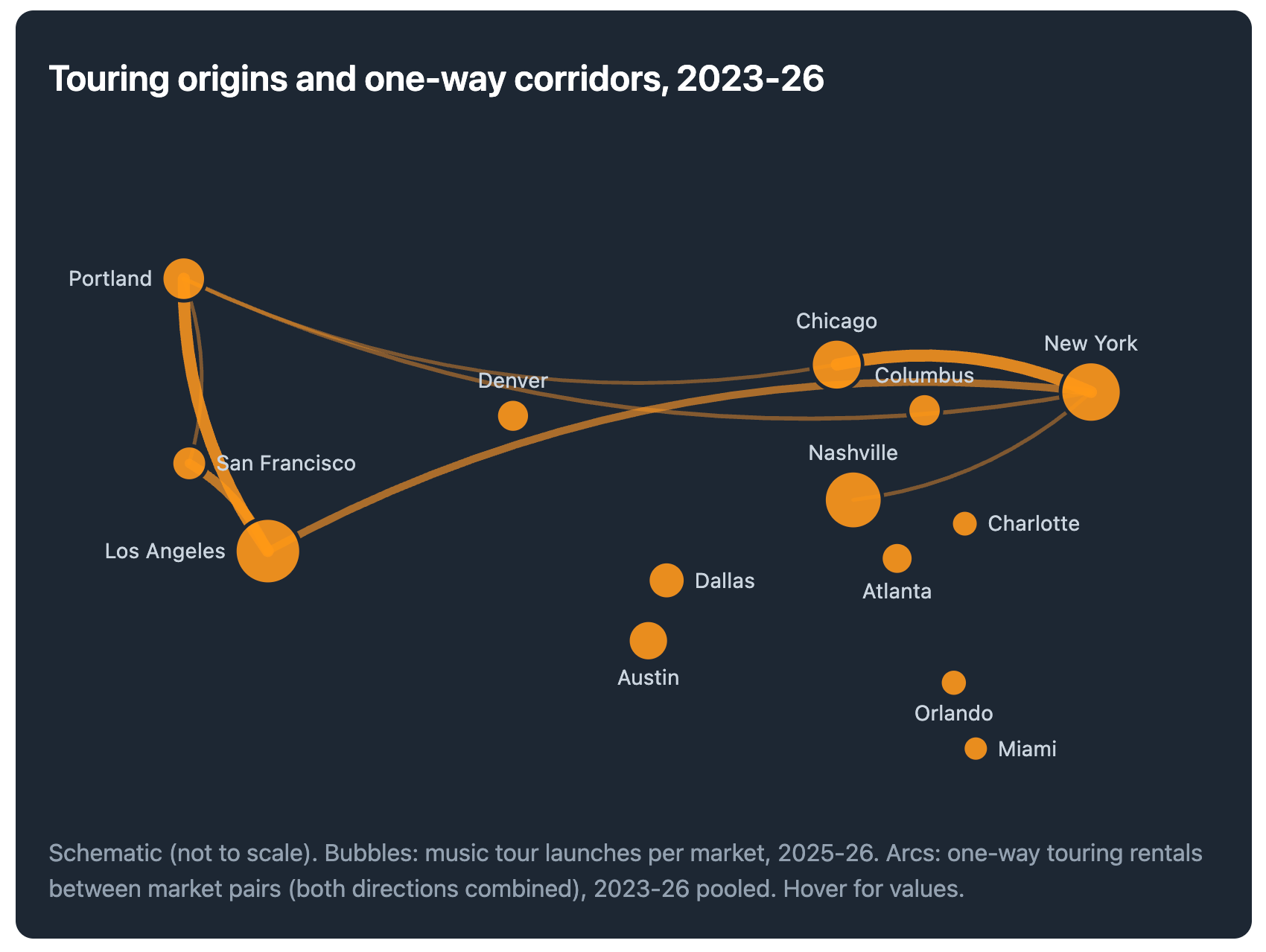
**Data courtesy of Bandago's* [**State of Band Touring 2026 study*](https://www.bandago.com/touring-data/state-of-band-touring-2026/?ref=hypebot.com)**.*
## **The middle held. The outer edge stretched.**
Across all touring-scale rentals, defined as trips of at least 1,000 miles and four days, the median distance has hovered around 1,900 to 2,000 miles for most of the past decade. In other words, the standard van tour did not radically expand after the pandemic.
The longest runs did however. A tour at the 90th percentile covered 6,769 miles in 2025-26, compared with 5,222 miles in 2018-19 — an increase of almost 30%. One in ten music tours in the latest season exceeded 9,700 miles. That suggests a split in the touring economy.; the artists and crews operating at the more ambitious end are asking much more of every vehicle, routing decision, and person on board.
Additionally, the average indie band reserved its van 35 days before departure last season, compared with 21 days in 2015-16 — which doesn't necessarily mean artists have become less spontaneous, it just may mean that vehicles, venues, crew and affordable routing now have to be locked together earlier for the numbers to work.
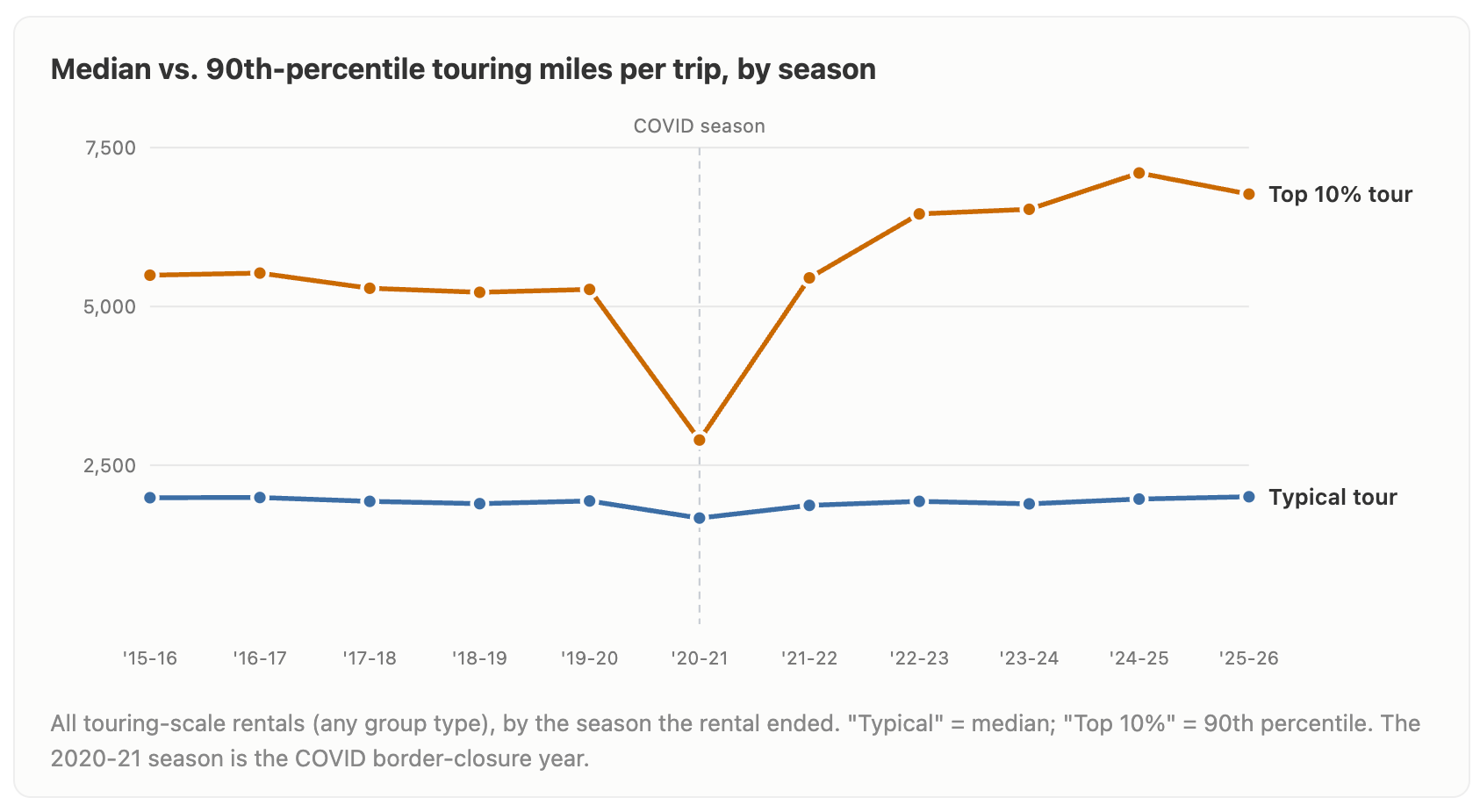
***+Read more:*** [*"Why the Levitt Foundation Model Should Not Be an Outlier"*](https://www.hypebot.com/why-the-levitt-foundation-model-should-not-be-an-outlier/)
## **Touring is decentralizing.**
A decade ago, Los Angeles, New York and Nashville accounted for 64.8% of Bandago’s music-tour launches. Last season, their combined share was 52%.
The three hubs still matter enormously — Los Angeles alone launched 294 tours, followed by New York with 242 and Nashville with 217 — but more runs are now originating in markets including Chicago, Portland, Austin, Dallas, Columbus and Denver.
This complicates the old idea that a serious touring career must be built from one of three industry capitals. The live network is becoming more distributed, at least within Bandago’s 14-market footprint.
Routing is changing with it. The share of touring rentals returned in a different city from where they began rose from 11.7% in 2015-16 to 19.2% last season. More tours are functioning as point-to-point journeys rather than neat loops back home, with especially active corridors along the West Coast and between New York and Chicago.
## **The road is becoming less international**
The report’s most concerning finding is the decline in international acts touring the United States. International customers accounted for 7% to 8% of Bandago’s music tours before the pandemic and recovered to 7.7% in 2022-23\. Their share has since fallen for three consecutive seasons, reaching 4.7% in 2025-26 — the lowest level in the dataset outside the border-closure period.
That translated to 72 international tours last season, down from 122 in 2018-19\. Canadian acts experienced the sharpest decline, falling from 31 tours to roughly a dozen.
Bandago notes that this slide coincides with higher costs and tighter U.S. visa and border conditions, but its rental records cannot establish why it is happening. The data also identifies a customer’s country through billing information, meaning foreign artists renting through American management may not appear as international.
Even with those caveats, a three-year decline after a complete post-pandemic recovery is difficult to dismiss as a reopening hangover. For American audiences and venues, fewer visiting working bands means a narrower cultural exchange below the arena level. For international artists, it suggests the U.S. van tour is becoming a harder proposition to justify.
***+Read more:*** [*"How to Build a Greener Concert Industry"*](https://www.hypebot.com/how-to-build-a-greener-concert-industry/)
## **Bands leave on Wednesday for a reason**
Some of the report’s smaller findings are very fun. Wednesday was the most common departure day, and 59% of tour launches occurred between Tuesday and Thursday.
The likely strategy is familiar to anyone who has ever routed a run: use smaller weekday shows to travel outward, then reach the strongest markets when audiences are available on the weekend.
September was the busiest launch month, while April and September produced some of the longest tours. Summer may own the public image of live music, but working bands appear to reserve spring and fall for the serious mileage.
All in all, this data tells us something useful and actionable. Tours can still be spontaneous, short, cheaply executed and highly effective for indie artists, but they might require a little extra planning and professionalism to deal with all the external factors of the road.
Pulling a van tour off now means booking earlier, routing across a broader network, building around the calendar, and preparing for plans to change anyway.
[**Read the full study here.**](https://www.bandago.com/touring-data/state-of-band-touring-2026/?ref=hypebot.com)
---
**Methodology note:* Bandago analyzed a fixed data set of anonymized rental records from 1,532 verified music tours completed in 14 U.S. markets. The company describes the dataset as a large sample of working touring groups, not a census of the touring industry. Simultaneous multi-van rentals are counted as separate vehicle-tours.*
### The Music Industry Has Become a Trademark Minefield
URL: https://www.hypebot.com/the-music-industry-has-become-a-trademark-minefield/
Last updated: 2026-08-20T16:20:20.000Z
Four music-related trademark stories arrived almost simultaneously this week.
**Lady Gaga** [defeated a lawsuit](https://www.music-news.com/news/UK/190736/Lady-Gaga-defeats-Mayhem-trademark-infringement-lawsuit-filed-by-surfboard-brand?ref=hypebot.com) alleging that her *Mayhem* album and merchandise infringed a surf company’s trademark. **FKA twigs** [won an important stage](https://www.music-news.com/news/UK/190738/FKA-Twigs-scores-victory-in-trademark-infringement-battle-with-The-Twigs?ref=hypebot.com) in her name dispute with an indie duo called **The Twigs**. Christian metal band **Demon Hunter** [sued Netflix and AEG Presents](https://www.billboard.com/pro/netflix-sued-kpop-demon-hunters-christian-band-demon-hunter/?ref=hypebot.com) over ***KPop Demon Hunters***. **C+C Music Factory** co-founder **Robert Clivillés** [filed a $30 million lawsuit](https://www.musicbusinessworldwide.com/cc-music-factory-co-founder-robert-clivilles-sues-freedom-williams-for-30m-seeking-cancellation-of-the-trademark-on-the-groups-name/?ref=hypebot.com) challenging **Freedom Williams’** ownership and use of the group’s name.
It looks like a sudden outbreak of music-industry litigation. It is not quite that simple. The timing is partly coincidental, but the underlying conditions are not.
It all points to the trend that, over the past decade, music has become a global brand economy specifically in how an artist name can now identify a streaming profile, concert tour, apparel collection, fan membership, film franchise, social account and licensing business. That expansion has also given artists many more opportunities to collide, thus asking parties to prove their trademarks more frequently.
## **Music is worth fighting over again**
The recorded music industry generated approximately $15 billion globally in 2015, when streaming was beginning to reverse nearly two decades of decline. In 2025, global recorded music revenue **reached $31.7 billion,** [according to IFPI](https://www.ifpi.org/global-music-report-2026-global-recorded-music-revenues-grow-6-4-as-record-companies-drive-innovation/?ref=hypebot.com).
At the same time, more trademarks are entering the marketplace. The [US Patent and Trademark Office](https://www.uspto.gov/web/offices/com/sol/og/2024/week48/2024TPACAnnualReport.pdf?ref=hypebot.com) received 503,889 trademark application classes in fiscal year 2015\. In 2024, it received 767,138 — an **increase of roughly 52%**. The office says the exceptional volume of applications filed in recent years has also produced more contested cases before its Trademark Trial and Appeal Board.
That does not prove trademark lawsuits are exploding. The federal judiciary found that filings remained relatively stable between 1996 and 2018\. The more supportable conclusion is that more names are being registered and monetized across more commercial categories, creating more potential conflicts.
## **The album title does not stay on the album anymore**
Lost International did not sue Lady Gaga merely because she called an album *Mayhem*. The surf company argued that Gaga carried the name — and a similarly [branded ](https://www.hypebot.com/tag/branding/)logo — onto clothing and accessories, where Lost already sells Mayhem-branded products.
Lost reportedly sought $100 million and an order preventing Gaga from using the branding. A federal judge ultimately [dismissed the lawsuit](https://www.billboard.com/pro/lady-gaga-wins-lawsuit-surf-brand-mayhem-album-name/?ref=hypebot.com), finding that Gaga’s use was artistically connected to the album and did not explicitly mislead consumers.
The case demonstrates how the modern music rollout increases an artist’s legal exposure. An album title becomes a tour name. The tour name appears on hoodies. The hoodie is sold online and shipped globally. What began as an expressive work quickly enters the ordinary consumer marketplace.
Between 2022 and 2024, the number of artists with fewer than one million monthly listeners selling merchandise through Spotify more than tripled, while their sales volume increased more than sixfold, [according to Spotify](https://artists.spotify.com/fan-study/merch-and-live?ref=hypebot.com).
## **Streaming eliminated the safe distance between similar names**
Two similarly named bands could once operate in different cities, scenes or countries without creating much confusion. Their records were stocked in different stores and their shows appeared in different local newspapers. [Streaming](https://www.hypebot.com/tag/streaming-music/) brought everyone into the same search bar.
A mistaken profile can affect recommendations, statistics, royalty accounting and the identity fans associate with a name.
The Demon Hunter lawsuit shows how much larger that problem can become. The Christian metal band has recorded and toured under its name for roughly 25 years. It alleges that Netflix’s *KPop Demon Hunters* has expanded from a film into music, merchandise and an AEG-promoted live tour — bringing the property into direct overlap with the band’s business.
Demon Hunter’s complaint cites alleged real-world confusion, including a customer who spent $500 on tickets to a Demon Hunter concert while believing they were purchasing tickets to the Netflix production. The band is seeking to stop Netflix and AEG from using the name and is asking for damages. The lawsuit’s filing does not establish that Netflix has infringed the band’s rights.
## **Trademark law encourages everyone to act early**
A trademark registration does not come with government enforcement. The [USPTO tells owners](https://www.uspto.gov/trademarks/basics/why-register-your-trademark?ref=hypebot.com) that they are responsible for monitoring their marks and pursuing potential infringers. That creates an incentive to send cease-and-desist letters, oppose applications and file claims before another use becomes entrenched. Waiting can make enforcement substantially harder.
FKA twigs’ latest victory demonstrates the danger. Her conflict with The Twigs began around 2013, when she was still building her career. The duo sued in 2014 but dropped the case after failing to secure an injunction. They revived their objections years later and reportedly demanded a seven-figure payment to allow the names to coexist.
This week, Judge Jed Rakoff ruled that their infringement claims were barred by laches — a doctrine that can prevent claims after an unreasonable delay. The ruling does not resolve every remaining trademark question, but it delivers a clear warning: a rights holder cannot necessarily watch another artist build a global identity for a decade and then reclaim the dispute once that identity becomes immensely valuable.
## **Even dormant names are active assets**
The C+C Music Factory lawsuit represents a different problem: who owns a group’s identity after its original structure falls apart?
Freedom Williams obtained federal trademark rights connected to the name years after appearing on the group’s biggest recordings. Co-founder Robert Clivillés argues that Williams was a featured performer rather than an owner and that C+C refers specifically to Clivillés and his late creative partner David Cole.
Their disagreement regained urgency following Williams’ involvement in the politically controversial Freedom 250 concert series. Clivillés is now seeking cancellation of the trademark, an end to Williams’ use of the name and at least $30 million in damages. Williams has not yet responded publicly to the new complaint.
---
***Get the latest Live Music & Industry News updated continuously from across the web under the Hypebot Industry News tab*** [***here***](https://www.hypebot.com/music-industry-news-feed/)***.***
## Essential news & insights for artists and live music pros.
Subscribe
Email sent! Check your inbox to complete your signup.
Sign up for free weekly content delivered to your inbox
### Hypebot's Bottom Line: Latest News That Matters To Musicians
URL: https://www.hypebot.com/hypebots-bottom-line-latest-news-that-matters-to-musicians-2/
Last updated: 2026-08-20T15:40:54.000Z
Welcome back to [**Hypebot's Bottom Line**](https://www.hypebot.com/tag/bottom-line/) — our regular roundup pulling key takeaways from our most important recent stories and insights.

### **YouTube Counts Views From Frame One**
YouTube updated its platform policy to count video views from the exact moment play begins across long-form videos, Shorts, and streams. While public view counts will increase faster, royalty payouts and Partner Program eligibility still require strict engaged watch time.
- **Hypebot’s Bottom Line:** Don't let inflated public view counts give you a false sense of security. Check YouTube Analytics backend metrics for "Engaged views" to track who is actually watching and listening.
- [Read the full story](https://www.hypebot.com/youtube-views-now-count/)
### **Kickstarter Launches $1M Culture Fund**
Kickstarter unveiled a $1M Culture Fund offering minimum $1,000 pledges to eligible independent music, art, and film campaigns. The initiative aims to provide early social proof and algorithmic visibility on the platform.
- **Hypebot’s Bottom Line:** Crowdfunding remains one of the most viable ways for independent creators to fund projects. Securing early pledge momentum lets you build creative freedom without taking on debt or giving up master rights.
- [Read the full story](https://www.hypebot.com/kickstarter-unveils-1m-culture-fund-for-musicians-and-creators/)
### **Where Creators Draw the Line on AI**
The Uppbeat Creator Report surveyed nearly 1,800 creators, revealing that 60% integrate AI into administrative workflows. However, younger creators (ages 16–24) lead the charge in rejecting fully synthetic, AI-generated tracks.
- **Hypebot’s Bottom Line:** Outsource administrative backend grind to AI tools, but protect the core art. In an era of infinite synthetic noise, authentic human connection and personal stories are your ultimate competitive advantage.
- [Read the full story](https://www.hypebot.com/where-artists-draw-the-line-on-ai-uppeat-creator-report/)
### **Gen Z Nightlife Fatigue Reshapes Live Shows**
A Harris Poll report shows 74% of Gen Z adults default to staying home on weekends due to high costs and nightlife fatigue, preferring affordable daytime activities and lower-pressure social settings.
- **Hypebot’s Bottom Line:** Gen Z is financially squeezed, not anti-social. Artists and venues pivoting toward earlier showtimes, zero-proof beverage options, and community-driven experiences will capture long-term loyalty.
- [Read the full story](https://www.hypebot.com/why-is-gen-z-staying-home-and-how-can-artists-and-venues-adapt/)
### **Inflation Is Reshaping Live Music in Colorado**
Rising costs are forcing fans to skip shows and festivals. According to new data, nearly 33% of residents plan to skip concerts entirely due to financial constraints, citing admission costs, transportation, and expensive food and beverages at venues.
- **Hypebot’s Bottom Line:** While bucket-list venues like Red Rocks and festivals like Global Dance, Country Jam and Telluride Bluegrass may continue to drive strong demand, smaller venues and festivals now face steeper competition for fan dollars. These venues, festivals and the artists that play them need to focus on transparent pricing and delivering overall value to keep mid-tier touring financially viable.
- [Read the full story](https://www.hypebot.com/inflation-is-reshaping-live-music-in-colorado/)
### **Small Venues Can Apply for $10K Live Music Society Grants**
The Live Music Society (LMS) has opened applications for its 2026 Toolbox Grant program. Independent U.S. venues with a capacity between 50 and 300 can apply for grants of up to $10,000 through September 16th to fund equipment and facility upgrades.
- **Hypebot’s Bottom Line:** For small venues operating on tight margins, a broken stage box or outdated lighting setup can stall live production fast. Live Music Society Toolbox grants offer direct capital tailored specifically to fixing practical, day-to-day operational hurdles. Eligible venue operators should prepare their detailed budget and timeline now ahead of the September 16 deadline.
- [Read the full story](https://www.hypebot.com/small-venues-can-now-apply-for-10-000-live-music-society-grants/)
### **Did Fans Really Just Get Hit With a $40 Fine for Arriving Late to See Moby?**
A UK promoter is charging up to $40 if ticketholders miss their allocated entry time under a staggered-entry ticketing model. The controversial policy recently caught fans off guard and made headlines after several attendees were penalized at a Moby concert in London.
- **Hypebot’s Bottom Line:** Ticketing transparency is already the most heavily scrutinized issue in the live music industry. While staggered entry pricing makes logistical sense for crowd management and boosting early-evening bar sales, weaponizing it with "late fines" could be a major PR liability for promoters and venues. Independent artists and venues should take note: alienating your most dedicated fans at the front gate over a delayed train is not a sustainable community-building strategy.
- [Read the full article on Hypebot](https://www.hypebot.com/did-fans-really-just-get-hit-with-a-40-fine-for-arriving-late-to-see-moby/)
---
***Get the latest Live Music & Industry News updated continuously from across the web under the Hypebot Industry News tab*** [***here***](https://www.hypebot.com/music-industry-news-feed/)***.***
## Hypebot
Essential news & insights for artists and live music pros.
Sign up for free weekly content delivered to your inbox
Subscribe
Email sent! Check your inbox to complete your signup.
### What If a Tour Gave Back as Much as It Took?
URL: https://www.hypebot.com/what-if-a-tour-gave-back-as-much-as-it-took/
Last updated: 2026-08-20T15:37:03.000Z
Tours typically come to a city, make a lot of noise, and go; leaving nothing behind but memories. The artist brings the show. Fans bring their attention, their enthusiasm and, usually, their money.
**Top Dawg Entertainment's** new [**TDE University Tour**](https://news.pollstar.com/2026/08/14/tde-brings-live-music-civic-engagement-with-2026-hbcu-tour/?ref=hypebot.com) is showcasing a somewhat different exchange. One that's mutually beneficial for everyone involved.
Launched August 12, and powered by **The Orchard**, this tour visits **Historically Black Colleges and Universities (HBCUs)** through early September with performances from TDE artists and guests. But the performances themselves are only part of what's actually being brought onto campus. There are student performances, mentorship opportunities, voter registration, scholarships, and a tour bus that has been converted into a working recording studio.
In other words, TDE isn't only asking students to come watch its artists. It's asking some of them to **participate**. The more you put in, the more you get out of it.
> [ View this post on Instagram ](https://www.instagram.com/reel/DcJ%5FlKrSM69/?utm%5Fsource=ig%5Fembed&utm%5Fcampaign=loading)
>
> [A post shared by Top Dawg Entertainment (@topdawgent)](https://www.instagram.com/reel/DcJ%5FlKrSM69/?utm%5Fsource=ig%5Fembed&utm%5Fcampaign=loading)
Check out all of the TDE University Tour dates below.
## **The Audience Gets a Turn**
At most stops, up to 30 students can enter the tour's **TDE Sessions** mobile studio and record an original verse and hook over TDE tracks. Campus winners receive $500, and can ultimately compete for an opportunity to perform at December's Cricket Celebration Bowl and appear as a BET Amplified Live Artist at the **2027 BET Awards.**
That's a big deal. It gets bigger.
Thirty students across the tour will also be selected for **virtual mentorship** from executives at TDE, BET, and The Orchard. Student artists get **showcase opportunities** alongside the visiting performers, while BET is running **voter-registration** drives at the participating campuses.
The people on campus aren't only being treated as potential consumers of TDE's music. They're being treated as potential artists, executives, creators and participants in the culture that TDE itself depends on. This is ["fan engagement"](https://www.hypebot.com/tag/fan-engagement/) on a deeper, life-changing level.
Usually, engagement just means getting more out of a fan; stream another song, join the Discord, buy another vinyl variant, post the clip, scan the QR code, give us your email, etc. There's nothing inherently wrong with any of that; artists need audiences, and sustainable careers require people willing to support them.
But TDE University raises an interesting counter-question: ***What does the fan get to become in return?***
> [ View this post on Instagram ](https://www.instagram.com/reel/DcJeNf9Sf6M/?utm%5Fsource=ig%5Fembed&utm%5Fcampaign=loading)
>
> [A post shared by Southern University’s Jaguar Activities Board (@subr\_jab)](https://www.instagram.com/reel/DcJeNf9Sf6M/?utm%5Fsource=ig%5Fembed&utm%5Fcampaign=loading)
***+Read more:*** [*"Why Rod Wave's Fans Sing His Songs For Him"*](https://www.hypebot.com/why-rod-waves-fans-sing-his-songs-for-him/)
## **From Consumption to Participation**
The modern [fan relationship](https://www.hypebot.com/tag/fan-base/) is already becoming more participatory. Fans don't simply listen to culture anymore. They remix it, meme it, document it, discuss it, organize around it and sometimes help determine where it travels next. Industry observers increasingly describe modern fandom as shifting from passive consumption toward active participation.
TDE University pushes that idea into the physical world. A student can arrive because they like **SZA, Doechii, ScHoolboy Q** or another artist associated with the label and leave having recorded something themselves, met somebody working in the industry or discovered a potential pathway into the business.
The established artist still gets the stage. But somebody in the audience gets a door opened for them.
Obviously the corporate sponsors of this event get something too, but that's all part of the funding structure of tours like this nowadays. ([Read our recent piece on the Levitt Family Foundation tour model here.](https://www.hypebot.com/why-the-levitt-foundation-model-should-not-be-an-outlier/)) Toyota receives a highly visible campus partnership. BET connects itself to young Black audiences and emerging talent. The Orchard gets to introduce future creators to its ecosystem.
Reciprocity doesn't mean nobody benefits commercially. It means putting money towards a new equilibrium that creates as much opportunity as possible.
> [ View this post on Instagram ](https://www.instagram.com/p/Db8-GzMkoEX/?utm%5Fsource=ig%5Fembed&utm%5Fcampaign=loading)
>
> [A post shared by Top Dawg Entertainment (@topdawgent)](https://www.instagram.com/p/Db8-GzMkoEX/?utm%5Fsource=ig%5Fembed&utm%5Fcampaign=loading)
## **For TDE, Giving Back Isn't New**
There's also a reason this particular idea feels credible coming from Top Dawg. TDE has spent more than a decade staging an annual holiday concert and community giveback in Watts, where label founder **Anthony "Top Dawg" Tiffith** grew up.
The 2024 edition reportedly drew around 10,000 people and distributed more than $750,000 worth of toys and clothing to local families; the event returned for its 12th year in 2025.
When Tiffith describes TDE University as an effort to bring the label's "artists, knowledge and resources" onto HBCU campuses, there's history behind the language. The University Tour essentially takes that instinct on the road.
> [ View this post on Instagram ](https://www.instagram.com/reel/DcB56swRu0i/?utm%5Fsource=ig%5Fembed&utm%5Fcampaign=loading)
>
> [A post shared by Jordan J. Browley (@mr.jjmadeit)](https://www.instagram.com/reel/DcB56swRu0i/?utm%5Fsource=ig%5Fembed&utm%5Fcampaign=loading)
***+Read more:*** [*"The Local Advantage: Could Festivals Win by Thinking Smaller?"*](https://www.hypebot.com/the-local-advantage-could-festivals-win-by-thinking-smaller/)
## **On a Smaller Level, What Can Indie Artists Give Back?**
Obviously, your average touring musician can't park a state-of-the-art recording bus outside every venue or offer somebody a path to an award ceremony appearance. But that's not really the lesson here. The scalable idea is much simpler: ***A touring artist possesses something besides a performance.***
- Maybe it's experience booking DIY tours.
- Maybe the guitarist knows production.
- Maybe the manager can spend an hour with local artists explaining publishing.
- Maybe the photographer can invite a young shooter into the pit.
- Maybe a visiting band can hold an afternoon workshop at a community music program, invite a local opener onto the bill, or give emerging musicians access to soundcheck.
For artists without enormous budgets, the most valuable thing they can leave behind may simply be **access to what they already know**. And this doesn't need to happen at every stop. Nor should every tour suddenly become a traveling nonprofit. The more useful idea is to reconsider what a successful relationship with an audience looks like.
The TDE University Tour suggests that **the "value" of the fan relationship** simply doesn't have to flow in only one direction.
---
## **TDE University Tour Dates**
- Wednesday, August 12: Grambling State University — Grambling, LA
- Thursday, August 13: Jackson State University — Jackson, MS
- Friday, August 14: Alabama State University — Montgomery, AL
- Monday, August 17: Southern University A&M — Baton Rouge, LA
- Wednesday, August 19: Howard University — Washington, D.C.
- Friday, August 21: AUC (Spelman College, Morehouse College, Clark Atlanta University, Morris Brown College) — Atlanta, GA
- Tuesday, August 25: Morgan State University — Baltimore, MD
- Thursday, August 27: Tennessee State University — Nashville, TN
- Saturday, August 29: Cricket MEAC/SWAC Challenge at Center Parc Stadium — Atlanta, GA
- Thursday, September 3: North Carolina A&T State University — Greensboro, NC
### Live Music Industry News: The Latest
URL: https://www.hypebot.com/l-2/
Last updated: 2026-08-20T13:30:28.000Z
### **DICE US Venue and Promoter Signings**
Ticketing platform **DICE** has announced a wave of US venues including Brooklyn's **Saint Vitus**, Pacific Northwest event producers **ViViD Presents**, and Miami's **The Originals**, **Phase 3 Presents** and S**tudio 60**.
Dice was acquired by event producers **Fever** last year.
### Quantizr raises $5M For AI-Powered Touring Ops
[**Quantizr**](https://quantizr.reportablenews.com/t/tl%5Ff7727ip5lf7c?ref=hypebot.com)**,** an AI-powered financial operations platform for the live entertainment industry, has raised a $5 million seed round.
Quantizr uses AI to extract financial info from businesss docs and organizes it into a structured, live workflow. Teams use Quantizr to create projections, manage budgets, track expenses, review settlements, and understand how individual decisions affect an artist’s bottom line. The company recently expanded its platform with **Quantizr Tour Financials** (QTF), giving artist managers and their teams a real-time view of financials while on tour.
### NIVA Live Policy Summit 2026
The **National Independent Venue Association** will host its [**2026 Live Policy Summit**](http://click.mail.nivassoc.org/f/a/%5FA4yo4VfHm9Mh4DUHqvjDw~~/AAJOsRA~/CPPnrk-0Ym%5Fq1sYY1tWn2cQHsZhwmM932edPIUx4AA4k6uzaRunFZhrNc7SHKcUs1t7t5CeTTOpS2Lb2Zva-aJx03pR%5Fv6VfrKfeQU2uMweFm%5FfCzaqY3kV%5FIUlnWUNNHfn-233UZvFZkWuDMWNbGq1fbcAx9OOd4cMAaPvU9ZvVLV2lU46XLCRneyn8Y7xBtX0J7q0bspqiK9IMe8cTDe%5FPAOlgCilkF4hVSKE-mZqxa0E%5Fa6U0O3zQ%5F9T6OJO%5FAy%5FgejGTfhf56SiuW88yc34PlrKN-THNZ3lw6EtsD2bv-RsPT12cIqMvu84qpSHc5BswQjh8avi4RspjpAYsjaEXWgyz0oNxxddBOL2M8y4ouweYkwwafA-l-1s-1UztCrCDnwcL4P8iwqu4L%5Fd%5FE1iqH2cSOaJCf%5Fm6dV3d7RQ~?ref=hypebot.com)October 26-27, 2026, at [**HI-FI Indianapolis**](http://click.mail.nivassoc.org/f/a/YtS5FGE2quvEewrl5bcIuQ~~/AAJOsRA~/MEyOZmi12m0ggFYha%5FijTPtgvgA7pcrQNjcd0Nc6U8kDTLXpT6qOz%5FQIJDwtVkHtAuJMFdwgAT67gr6FkFtN9UQGQhsVtuyhzj9dWWKbwASRrlSBqtsEXq1JRtEHXD0w4mx5g31YzjkvP0DjWpQU8LSCydErFXeOdwX1V9wRWpYJ4CZexU3HO0Nnq8FfmSAtJe04HtKcnc66SkGgMCfr1IcoFH8pMD-FYaT7wsK9Q6FIUaaJ6mFRYqs3l6IfMeq-ISerhXGJv1mwmU%5FSGtwTVto2hUpvOdWdcSCmaXlUIY7GGHiNfAgs-HG%5FlghImJj1d5JMyFlbzwI0yBP77WvVwNRBYD9huEC8pmJYNqfnXep3k%5FVSVZK7r2IMSTEzoxrTthzEJ4vIPU1xi-ahCLijzQ~~?ref=hypebot.com) in Indianapolis, Indiana.
This year's **NIVA Live Policy Summit** will be an advocacy workshop bringing together national music and live performance organizations with state and local advocates and advocacy organizations.
More info and registration [here](https://www.tixr.com/groups/hifi/events/niva-live-policy-summit-2026-203213?ref=hypebot.com).
### Folk Alliance Conference Showcase Artists and Theme
**Folk Alliance International** unveiled the lineup of o**fficial showcases** for its 39th [**annual conference**](https://www.folk.org/conference?ref=hypebot.com) January 27-31, 2027, in Chicago. The [160+ artists](https://www.folk.org/conference/2027-official-showcase-artists?ref=hypebot.com) represent 31 countries, 32 US states, and seven Canadian provinces.
This year's conference’s theme is **Hands In Solidarity** encouraging attendees to move beyond connection into action.
In Chicago, a city shaped by the labor movement, organizing, and creative exchange, FAI will explore how music communities can become systems of support. "What begins as expression can become action," the non-profit said in a statement. "And what begins as music can become a movement. Hands in Solidarity is an invitation to gather, to listen, to create, and to participate in the work of solidarity — together."
### **Merch Cat adds Luminate Live Show Sales Reporting**
**Merch Cat** has added direct reporting to [**Luminate**](https://luminatedata.com/?ref=hypebot.com)**,** allowing artists and their teams to report eligible physical music sales from live shows as part of their normal merch workflow.
Previouslythe **atVenu** point of sale system was the only platform enabling Luminate live-show reporting.
The reporting is built directly into [**Merch Cat**](https://www.merchcat.com/?ref=hypebot.com) platform and app alongside its **Square** integration, inventory management, venue settlements, show reporting and analytics. Merch Cat also integrates with [**Bandsintown**](https://www.artist.bandsintown.com/?ref=hypebot.com), allowing artists to import upcoming shows for faster setup, and connects with **Merch Cat Fan** to expand direct-to-fan sales opportunities before, during and after shows.
### NITO adds Master Tour Discount
The **National Independent Talent Organization** (NITO)has added a **25% Master Tour annual subscription discount** as a member benefit. The discount applies to both current and new users.
Eventric's[**Master Tour**](https://www.eventric.com/?ref=hypebot.com) gives touring teams a centralized system to plan and run a tour end to end: build itineraries and day sheets, manage the guest list, track crew and personnel across a searchable directory of 150,000+ contacts, and pull venue details from a database of over 15,000 concert halls and clubs.
[**NITO**](https://nitolive.org/?ref=hypebot.com) offers more than **20 exclusive discounts** for goods and services used by its member managers and and agents.
### **$10,000 Live Music Society Venue Grants**
Small U.S. for-profit and non-profit music venues with capacities under 300 can now apply for up to $10,000 in Live Music Society Toolbox grants for equipment and facility upgrades. More [here](https://www.hypebot.com/small-venues-can-now-apply-for-10-000-live-music-society-grants/).
### **Late Fees For Live Music**
A UK promoter is charging up to $40 if ticketholders miss their allocated entry time. A **Moby** show was one of the first. More [here](https://www.hypebot.com/did-fans-really-just-get-hit-with-a-40-fine-for-arriving-late-to-see-moby/).
---
***Get the latest Live Music & Industry News updated continuously from across the web under the Hypebot Industry News tab*** [***here***](https://www.hypebot.com/music-industry-news-feed/)***.***
## Hypebot
Essential news & insights for artists and live music pros.
Sign up for free weekly content delivered to your inbox
Subscribe
Email sent! Check your inbox to complete your signup.
### Celebrity DJs Bring a Venue Sales, Residents Define Its Legacy
URL: https://www.hypebot.com/celebrity-djs-bring-a-venue-sales-residents-define-its-legacy/
Last updated: 2026-08-20T13:31:25.000Z
### **The Curatorial Anchor: Why Resident DJs Define a Venue’s Legacy**
*By* [***NJ Bigornia***](https://midnightrebels.com/author/njbigornia/?ref=hypebot.com) *of* [***Midnight Rebels***](https://midnightrebels.com/resident-djs-venue-identity-vs-guest-headliners/?ref=hypebot.com)
Ask [**DLV**](https://electronicgroove.com/beyond-the-spotlight-the-essential-role-of-resident-djs/?ref=hypebot.com) what a [residency](https://www.hypebot.com/in-the-new-era-of-touring-artists-are-planting-in-one-city-for-weeks/) actually gives you and he doesn’t talk about the paycheck. He talks about learning to read a room, week after week, at Grelle Forelle in Vienna, until he could shape the club’s whole identity from behind the decks.
That’s not a small claim. It’s the difference between playing music and building a place people belong to.
It matters right now because [venues](https://www.hypebot.com/tag/venues/) are getting crowded. **UK operators are prioritizing localized venue identity, according to a** [**2026 industry guide**](https://www.connectionsentertainment.co.uk/the-role-of-resident-djs-at-venues-a-2026-guide/?ref=hypebot.com), precisely because cookie-cutter rooms now look and sound interchangeable. A resident is how a venue stops sounding like everywhere else.
## What Actually Separates a Resident From a Guest?
A guest DJ is freelance. They fly in, play a set, fly out, and belong to no single room. A [resident is closer to staff](https://grokipedia.com/page/Resident%5FDJ?ref=hypebot.com), showing up on the same night, at the same venue, often for years, until the crowd starts to organize its week around them.
That distinction sounds small until you notice **UK venues pay a specialist resident** [**£200 to £400 a night**](https://www.connectionsentertainment.co.uk/the-role-of-resident-djs-at-venues-a-2026-guide/?ref=hypebot.com), a fraction of a headliner fee, and still see the bigger return: guests staying at the bar longer on quieter midweek nights specifically because the resident knows how to sustain a room’s energy without a big name to lean on.
## The Lineage No Guest Slot Can Buy
This isn’t a new idea dressed up for 2026\.
[**Frankie Knuckles** became musical director of The Warehouse in Chicago](https://electronicgroove.com/beyond-the-spotlight-the-essential-role-of-resident-djs/?ref=hypebot.com) in the late 1970s, and that [residency](https://midnightrebels.com/glossary/residency/?from=https%3A%2F%2Fmidnightrebels.com%2Fresident-djs-venue-identity-vs-guest-headliners%2F&ref=hypebot.com) is widely credited as the birthplace of [house](https://midnightrebels.com/glossary/house/?from=https%3A%2F%2Fmidnightrebels.com%2Fresident-djs-venue-identity-vs-guest-headliners%2F&ref=hypebot.com) music itself. [**Larry Levan** held Paradise Garage in New York from 1977 to 1987](https://grokipedia.com/page/Resident%5FDJ?ref=hypebot.com) and reshaped how a club could sound over a decade, not a night.[**Carl Cox** did the same at Space Ibiza for fifteen years, from 2001 to 2016](https://electronicgroove.com/beyond-the-spotlight-the-essential-role-of-resident-djs/?ref=hypebot.com).
None of that happens in a one-off booking. It happens because someone kept showing up.
**+Read more:** [*"Exposing How the Live Music Industry Lies About Its Massive Carbon Footprint"*](https://www.hypebot.com/exposing-how-the-live-music-industry-lies-about-its-massive-carbon-footprint/)
## Why Does a Backbone Matter More Than a Headliner?
Here’s the stance worth taking: a headliner sells a night, a resident sells a venue. A famous name pulls a crowd once, and that crowd may never come back if the same person isn’t [booked](https://www.hypebot.com/tag/booking/) again.
A resident builds the reason to return that has nothing to do with who else is on the flyer. [DLV](https://electronicgroove.com/beyond-the-spotlight-the-essential-role-of-resident-djs/?ref=hypebot.com) put it plainly: residents are “the backbone of every scene,” acting as “musical directors and the initial connectors to the crowd.” That’s not a promotional line. It’s a functional description of a job most headliners never do, because they’re never at the same club twice in a month.
## Vegas Proves the Opposite Model Works Too
To be fair to the other side, the counter-model is real and it’s massive. [Las Vegas nightclubs lock in more than 600 artists a season](https://nocovervegas.com/djs?ref=hypebot.com), running from April through New Year’s Eve, and **Calvin Harris’s** deal at XS is a true venue exclusive, reportedly paying figures that rival a stadium tour stop.
That’s not a residency in the Levan or Knuckles sense. It’s a season-long booking calendar built on scarcity and star power, and it works because Vegas is selling spectacle, not neighborhood identity.
## Is Vegas Really the Exception?
Mostly, yes. Even inside that model, the venues still lean on continuity to make it feel like more than a rotating lineup.
[**Dustin Lynch** is returning to XS and Encore Beach Club for a second year in 2026](https://laepicclubcrawls.com/las-vegas/blog/2026-resident-djs/?ref=hypebot.com), building his own crossover country-club identity there rather than dropping in once. Even the most headliner-driven rooms in the world understand that a name people see once doesn’t build the same loyalty as a name they know they’ll see again.
A city’s nightlife identity isn’t set by whoever draws the biggest crowd once. It’s set by whoever’s still behind the decks a year later, teaching that crowd what the room is supposed to feel like.
**+Read more:** [*"Pro Guide: How to Maintain Your Venue's PA System Over Time"*](https://www.hypebot.com/how-to-maintain-your-venues-pa-system-over-time/)
### The AI Chart Rules Ask if a Record Is Human. They Never Ask If the Song Is.
URL: https://www.hypebot.com/the-ai-chart-rules-ask-if-a-record-is-human-they-never-ask-if-the-song-is/
Last updated: 2026-08-20T13:40:27.000Z
*By *Steve Canfield* of* [***Song Cage***](https://songcage.com/?ref=hypebot.com)
*\*This piece is based on an earlier* [*published article on Song Cage.*](https://songcage.com/blog/ai-music-labels-stop-at-the-recording/?ref=hypebot.com)
On July 30, [IFPI](https://www.hypebot.com/tag/ifpi/) began applying new chart eligibility principles across the official charts it manages in Latin America, the Middle East, Africa, and Southeast Asia, and started work with its national groups to reach twenty or so more.
A recording made with generative AI now qualifies only if the AI service was authorized and lawful, the track is "substantially human made," and there are no stream or chart manipulation concerns. Eleven record companies, the three majors among them, had put those principles forward the day before.
Twenty days earlier, eight organizations covering most of the recorded music business [proposed the labels](https://www.hypebot.com/new-ai-labeling-standard-for-music-draws-support-and-hesitation/) the framework leans on. An uppercase "AI" for a track whose lead vocal, key instrumental or entirety came out of a model. A lowercase "ai" for a human-performed record where a model touched some expressive element.
Read the [July 10 announcement](https://www.ifpi.org/music-community-introduces-new-labelling-program-to-distinguish-generative-ai-in-sound-recordings/?ref=hypebot.com) to the end and you reach one sentence. The system "does not cover the use of generative AI in lyrics, composition, music videos, or cover art at this point."
That is the entire songwriting stage, placed out of scope in a single clause.
The comfortable reading is that composition was too hard to reach. It was not. Apple Music shipped transparency tags in March with four categories: track, composition, artwork and music video. The composition tag covers AI-generated compositional elements, lyrics included. A major DSP built the field four months before the industry settled on a standard that leaves it out. Given a choice of where to harmonize, the business harmonized to the narrower option.
There is a real reason behind that, and it is not a cynical one.
A performance leaves an acoustic fingerprint. [Deezer](https://www.hypebot.com/tag/deezer/) built a detector for it, and *Billboard* uses that detector to identify AI tracks on its charts. Composition leaves nothing. There is no spectral signature for a chord progression, and no forensic test that separates a model's second verse from one written at a kitchen table at two in the morning. So the industry standardized the part that can be checked.
The difficulty is that "substantially human made" is now a chart rule, and the question it asks lands squarely **in the part** [**nobody can check.** ](https://www.hypebot.com/human-first-is-a-promise-nobody-can-check-yet/)
January showed what that looks like in practice. IFPI Sweden barred the AI-artist **Jacub's** "Jag vet, du ar inte min" from **Sverigetopplistan** on the grounds that it was mainly AI-generated.
The team behind the track did not argue about the recording. They said it came from:
> *"A team of human songwriters, producers, and creators... (through) a focused, conscious and human-driven creative process, guided by a clear artistic vision."*
Make of that defence what you like. The part worth noticing is where it was pitched. Not at the vocal. At the writing. That is the claim chart compilers now have to accept or reject case by case, with no label, no detector and no agreed definition to work from.
Meanwhile there is already a working rule at the composition stage, and it is nowhere near a sticker. **ASCAP, BMI,** and **SOCAN** went to the market together and told writers not to register fully AI works, while partial ones are fine. That line sits at 100 percent. The recording side's line sits at "substantially human." Two thresholds, two systems, nobody reconciling them, and the one with money attached is the registration.
So for anyone writing with these tools, the first disclosure question is not which sticker the track ends up carrying. It is what goes on the registration, and whether every co-writer in the room would describe the session the same way.
Listeners are already sorting themselves. [Luminate's](https://www.hypebot.com/author/spotlight-by-luminate/) July study found 38% of Americans less interested in music made with generative AI against 28% more interested. They will start asking. The labels will tell them who sang it. Nothing in the July frameworks tells them who wrote it, and "at this point" is the industry conceding that this was a decision rather than a limit.
Songwriters have until the standard hardens to say so.
---
**Steve Canfield* is a former professional composer and the developer of* [***Song Cage***](https://songcage.com/?ref=hypebot.com)*, a songwriting tool built without generative AI.*
### Inflation Is Reshaping Live Music in Colorado
URL: https://www.hypebot.com/inflation-is-reshaping-live-music-in-colorado/
Last updated: 2026-08-20T12:10:09.000Z
The[live music](https://www.hypebot.com/tag/live-music/) and [festival](https://www.hypebot.com/tag/festivals/) season in **Colorado** is facing significant hurdles as rising costs force fans to rethink their [entertainment budgets](https://www.hypebot.com/luminate-live-music-report-of/).
According to the newly released **Summer Squeeze Survey** by **Red Rocks Credit Union**, nearly 33% of Colorado residents plan to skip concerts, festivals, and major summer events entirely due to financial constraints, while another 24% are undecided.
The data highlights a concerning trend in the live music industry where fan enthusiasm is being directly challenged by the harsh realities of inflation and the rising cost of everyday living. From Gen Z to Gen X, fans are becoming more selective about where their discretionary income goes.
When analyzing why fans are staying home, the data shows that initial ticket prices tell only part of the story.
**59% cited the cost of admission** as a major barrier and **64% pointed to transportation** expenses as the primary culprit keeping them away from venues. Attendees are increasingly frustrated by ancillary event costs, with nearly **50% citing overpriced food and beverage** options at the venues and 3**5% pointing to expensive lodging** for destination festivals.
The squeeze is also reaching beyond lower-income households. Respondents earning between $50,000 and $100,000 annually were the most likely to cite both transportation costs and ticket prices as barriers to attending summer events.
Perhaps unsurprisingly for Colorado, the state's fans are shifting to cheaper experiences, with outdoor recreation easily outpacing live music as a top summer priority.
### Hypebot's Bottom Line
While bucket-list venues like Red Rocks and festivals like Global Dance, Country Jam and Telluride Bluegrass may continue to drive strong demand, smaller venues and festivals now face steeper competition for fan dollars.
These venues, festivals and the artists that play them need to focus on transparent pricing and delivering overall value to keep mid-tier touring financially viable.
**+Read more:** [*"Why Is Gen Z Staying Home, and How Can Artists and Venues Adapt?"*](https://www.hypebot.com/why-is-gen-z-staying-home-and-how-can-artists-and-venues-adapt/)
### Who Are LATIN MAFIA?
URL: https://www.hypebot.com/who-are-latin-mafia/
Last updated: 2026-08-19T15:58:04.000Z
If you spent any time near [Fred again..’s](https://www.hypebot.com/tag/fred-again/) corner of the internet this summer (how could you not?!), you probably encountered three young Mexican brothers singing, producing, laughing and finishing music alongside him in Mexico City.
Fred again.. and [**LATIN MAFIA**](https://www.bandsintown.com/a/15532625-latin-mafia?utm%5Fsource=hypebot&came%5Ffrom=900) turned the creation of their collaborative mixtape, *9 months & 50 hours*, into a three-day YouTube livestream watched more than 7.5 million times. Now *that's* a deep hang.
Almost immediately after completing it, they played the new music for more than 20,000 people at **Palacio de los Deportes.** The full performance has since been released through YouTube Music, while the mixtape [debuted at No. 1](https://www.billboard.com/music/chart-beat/fred-again-latin-mafia-number-one-9-months-50-hours-1236313187/?ref=hypebot.com) on *Billboard’s* Top Latin Pop Albums chart. It was an enormous introduction to LATIN MAFIA for listeners outside the Spanish-speaking world.
But ***“introducción”*** isn't exactly the right word.
These three brothers have been [building](https://www.hypebot.com/tag/build-fan-base/) their mass audience alongside a recognizably contemporary visual language through their unique live shows, which connect with today's Mexican music and culture fans in an active, engaged style. It's everything that Fred himself stands for, and it's why their collab felt so authentic. [Catch LATIN MAFIA live on tour with Bandsintown.](https://www.bandsintown.com/a/15532625-latin-mafia?utm%5Fsource=hypebot&came%5Ffrom=900)
## **3 Brothers, 2 Singers, 1 Producer**
LATIN MAFIA consists of twin brothers Milton and Emilio de la Rosa on vocals and their older brother Mike de la Rosa handling production. The brothers began sharing music online during the pandemic, eventually uploading songs to streaming platforms in 2021\. Their rise was fast. Before releasing an album or signing with a label, they were already [selling out large venues across Mexico](https://www.grammy.com/news/latin-mafia-meet-the-first-time-latin-grammy-nominee-new-album-interview/?ref=hypebot.com).
That early success led to festival appearances at Coachella and Lollapalooza in Argentina and Chile, followed by a deal with [**Rimas Entertainment**](https://rimasmusic.com/?ref=hypebot.com) in 2024\. Their debut album, ***TODOS LOS DÍAS TODO EL DÍA***, arrived that October and earned them a Latin Grammy nomination for Best New Artist.
Their music combines alternative pop, R&B, reggaeton, trap, electronic music, flamenco, cumbia and occasional flashes of punk, but they honestly could care less about genres or labels of any kind. LATIN MAFIA do not really make "genre-hopping" music, it's more like a "whatever we feel" approach.
A song can begin as an intimate ballad, develop a nervous electronic pulse, collide with an abrasive breakbeat and suddenly burst into something euphoric. The switch-ups sound like the emotional volatility of being young, overwhelmed, and unsure what you are supposed to do with everything you feel.
Hence: their deep connection with their domestic [fan base](https://www.hypebot.com/tag/fan-base/).
***+Read more:*** [*"Where to See the Top Corridos Artists Perform in 2026"*](https://www.hypebot.com/where-to-see-the-top-corridos-artists-perform-in-2026/)
## **Their Music Moves the Way Feelings Do**
“Siento que merezco más” begins in wounded reflection before mutating through electronic distortion, flamenco textures, and punk-like release. “Patadas de Ahogado,” with Humbe, is softer and more openly romantic. “Sentado aquí” sounds furious, anxious, and ecstatic within the same performance.
Even the titles on *TODOS LOS DÍAS TODO EL DÍA* were designed to function together like one continuous thought. The album begins with “Siento que merezco más” — “I feel like I deserve more” — before moving through statements about falling apart, uncertainty, dishonesty, expectation and noise.
LATIN MAFIA’s music feels contemporary because it does not insist that one emotion must finish before another begins. It all blends together organically... kind of like *life.*
The brothers [explained to the ](https://www.latimes.com/delos/story/2025-02-05/latin-mafia-todos-los-dias-todo-el-dia-first-us-tour?ref=hypebot.com)[*Los Angeles Times*](https://www.latimes.com/delos/story/2025-02-05/latin-mafia-todos-los-dias-todo-el-dia-first-us-tour?ref=hypebot.com) that the songs frequently emerged from mistakes and “happy accidents;” a freedom that is easier to understand when you remember they are siblings. Their shared history allows them to move quickly, contradict one another and recognize ideas that might be difficult to explain to an outsider.
## **Enter Fred again..**
Speaking of outsiders... [Fred again..](https://www.hypebot.com/tag/fred-again/) and LATIN MAFIA may come from different worlds (London and Monterrey) but they speak the same emotional language.
Fred’s music often begins with small human fragments — a voice note, an unfinished sentence, a vulnerable vocal or an ordinary moment — and gradually expands them into communal electronic release. LATIN MAFIA travel in the opposite direction, beginning with personal songwriting and allowing the emotion to rupture the song’s structure. Both treat electronic production as a way to bring people closer rather than create distance.
Their collaboration began taking visible shape around Fred again..’s December 2025 Mexico City appearance. The short film ***under the fabric*** later documented the artists working through unfinished music together before that show. By July, they had transformed that relationship into the [live-streamed](https://www.hypebot.com/tag/livestream/) creation of *9 months & 50 hours*. This collaboration feels like two existing musical languages discovering a shared vocabulary.
***+Read more:*** [*"Fred again..’s Dropbox Photo Dump Understands the Moment"*](https://www.hypebot.com/fred-again-s-dropbox-photo-dump-understands-the-moment/)
## **This Audience Was Already Here**
There is a tendency in the global music business to recognize an artist’s momentum only after someone familiar validates it, but that would be a serious misreading of LATIN MAFIA’s story.
In 2024, more than 18,000 fans attended a free immersive listening event for their debut album at Palacio de los Deportes. The following year, their international tour concluded with three sold-out performances at the venue, drawing [64,500 people in total](https://grammymuseum.org/event/an-evening-with-latin-mafia/?ref=hypebot.com).
LATIN MAFIA’s concerts help explain why the newly global fan connection runs so deep. The twins race around the stage while Mike directs the sonic chaos. Body-mounted cameras capture faces and movement from unusually intimate angles. Glitchy footage follows them through venue hallways. One European performance even included a deliberately ridiculous instructional video teaching the crowd how to mosh before the music erupted again.
The production is conceptual, but it never feels sterile. Humor, anxiety, tenderness and sensory overload are allowed to coexist. As with the songs, the live show moves the way feelings do.
## **The Takeaway in All This?**
There is a useful lesson here for [independent artists](https://www.hypebot.com/tag/d-i-y/). Amplification and authenticity can offer two separate trajectories for an artist's career — one is inward-leaning and one is outward-facing. But that doesn't necessarily mean they aren't connected.
Fan connection usually stems from an artist doing something that communicates and registers on an emotional level with an audience, that's where the authenticity part comes in. Do your best to remain truthful to your voice and vision, execute your artistic endeavors unabashedly and without compromise, and eventually people will notice.
So, ***“who are LATIN MAFIA?”*** The short answer is that they are three brothers from Mexico making pop music without staying inside pop music’s borders. The better answer is that they're what happens when you do the work of creating authentic, personal art, then you find a growth channel to broadcast it to the rest of the world.
---
## [**LATIN MAFIA Tour Dates**](https://www.bandsintown.com/a/15532625-latin-mafia?utm%5Fsource=hypebot&came%5Ffrom=900)
### A Stream Is Not a Fan: What Independent Artists Should Measure Instead
URL: https://www.hypebot.com/a-stream-is-not-a-fan-what-independent-artists-should-measure-instead/
Last updated: 2026-08-19T14:44:11.000Z
*By *Gavi Shohet Zabin,* Founder/CEO of* [***SRND AI***](https://srnd.ai/?ref=hypebot.com)
An artist posts a TikTok -> it gets 200,000 views -> a playlist adds your song. Streams jump 40%. Release day is the biggest day of the artist’s career -> everyone celebrates.
Then two weeks later, the graph comes back down.
This is one of the biggest mistakes I see in [independent music marketing](https://www.hypebot.com/tag/marketing-strategy/): we treat activity as progress because activity is easier to measure. Views, impressions, streams, monthly listeners, and playlist reach tell you that something happened. They do not necessarily tell you that you built anything.
As both an [independent artist](https://www.hypebot.com/tag/indie-artists/) myself and the founder of [SRND AI](https://srnd.ai/?ref=hypebot.com), I spend a lot of time thinking about a different question: ***So what did the listener do next?***
That question sounds simple, but it changes how you evaluate almost every piece of music marketing. Let's talk about it.
## **1\. A million impressions can still produce almost nothing**
Social media has trained artists to think in reach. The assumption is straightforward: *more people see the song, more people stream the song.* But the relationship is not nearly that clean.
A 2026 [study published in ***Marketing Science***](https://pubsonline.informs.org/doi/10.1287/mksc.2024.1170?ref=hypebot.com) examined what happened when Universal Music Group removed its catalog from [TikTok](https://www.hypebot.com/tag/tiktok/) during the companies’ licensing dispute. Researchers compared UMG tracks with Sony and Warner tracks and found something surprising.
For UMG songs that had already been available on TikTok, generally more established songs and artists, removal from TikTok actually corresponded with a **2% to 3% increase in consumption on other streaming platforms**. For less-popular UMG tracks that had not previously been available on TikTok, the effect went the other direction: streams declined by **1% to 3%**, consistent with TikTok helping with discovery.
That does not mean TikTok is good or bad for music. It means **attention is not the same thing as demand**. For one artist, a short-form video may introduce thousands of people to a song they would never have heard. For another, people may consume the satisfying part of the song inside the video and never leave the platform.
So “the video got 500,000 views” is not the result. It is the beginning of the analysis. Did profile visits rise? Did people search for the artist? Did saves move? Did the back catalog move? Did those listeners come back three weeks later?
That is where the useful information starts.
**Screenshot courtesy of* [**SRND AI*](https://srnd.ai/?ref=hypebot.com)**.*
***+Read more:*** [*"The 88% Problem: Why Most Music Fails Before Anyone Hears It"*](https://www.hypebot.com/the-88-problem-why-most-music-fails-before-anyone-hears-it/)
## **2\. Even a stream can be misleading**
The same problem exists inside [Spotify](https://www.hypebot.com/tag/spotify/). A listener hearing your song because it appeared in a playlist is not behaving the same way as someone typing your name into search and choosing your record. Spotify itself separates those behaviors.
Its “monthly active listeners” are people who intentionally streamed an artist from places like the artist profile, release pages, their library or their own playlists. “Programmed listeners,” on the other hand, have heard the artist through programmed sources such as [editorial playlists](https://www.hypebot.com/tag/editorial-playlists/), Discover Weekly, Radio, Autoplay or other listeners’ playlists.
Here is the part artists should tune in on: **Monthly active listeners make up only 33% of an artist’s total audience on average, but generate 60% of streams and 80% of merch purchases through Spotify.**[ Spotify explains the segments here.](https://artists.spotify.com/blog/introducing-new-audience-segmentation-on-spotify-for-artists?ref=hypebot.com)
That changes the way I look at a campaign for example:
- **Campaign A** produces 20,000 streams but almost nobody intentionally comes back,
- **Campaign B** produces 6,000 streams but creates hundreds of listeners who save the record, explore the catalog and return on their own.
I would rather have Campaign B. The first campaign rented someone's attention, but the second changed their behavior.
## **3\. Playlist placement is the beginning of the job, not the end**
This does not make playlists unimportant; in fact, they can be enormous discovery engines.
[Spotify says that](https://newsroom.spotify.com/2025-05-19/fresh-finds-10-year-anniversary/?ref=hypebot.com) Fresh Finds generated more than **65 million artist discoveries in 2024**, and nearly 70% of Fresh Finds streams that year represented listeners discovering an artist for the first time. Artists also saw new listeners and international streams more than double, on average, a month after their first Fresh Finds placement.
That is powerful, but the most interesting part of a playlist placement is what happens **after the playlist**.
- Does somebody hear the song on Fresh Finds and forget the artist’s name?
- Or do they open the profile, play another record, save the song and come back?
The playlist generated both listeners, but only one is beginning to become a fan. This is why I think artists should stop evaluating promotion as isolated events. The TikTok post affects the Spotify visit. The Spotify visit affects the save. The save affects the next release. The next release can reactivate somebody who disappeared six months earlier.
A career is a chain of behaviors. Most marketing reports are simply snapshots.
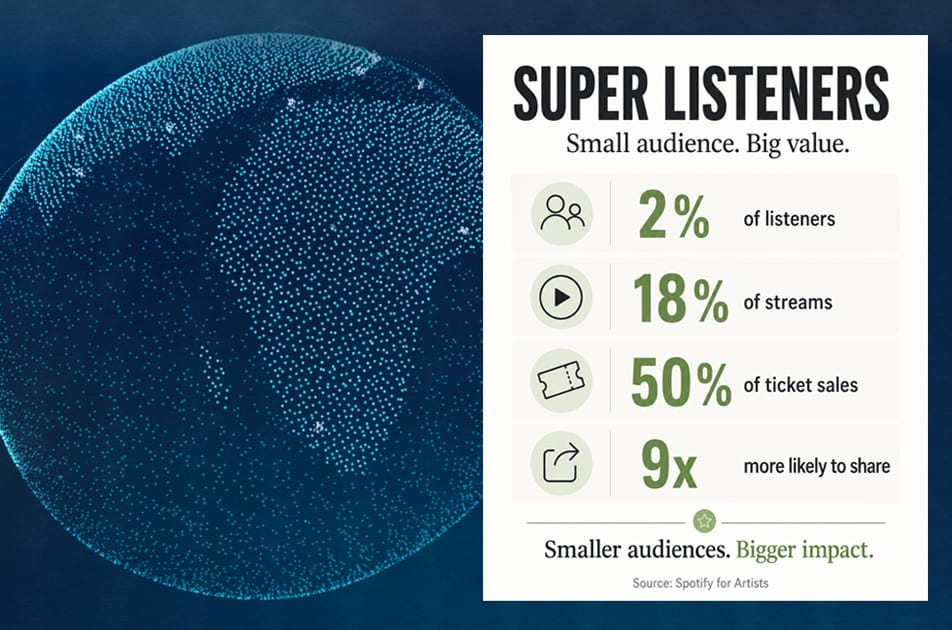
## **4\. The smallest number on your dashboard may matter most**
Spotify’s data on its most engaged audience makes this even clearer. “Super listeners” account for only about **2% of an artist’s monthly listeners**, but they generate more than **18% of monthly streams**.
[Spotify goes further to say](https://artists.spotify.com/blog/super-listeners-your-guide-for-developing-fans-who-go-deeper?ref=hypebot.com) that they also account for **50% of ticket sales through Spotify** and are **nine times more likely to share an artist’s music** than other listeners. More than half are still streaming the artist six months after discovering them.
Think about what that means: An artist could obsess over increasing monthly listeners from 50,000 to 60,000 while ignoring the few hundred people who may be disproportionately responsible for streams, sharing, tickets and long-term value.
## **5\. Release Day is also over-measured**
There is another number artists place too much psychological weight on: first-week streams. Obviously, momentum around release matters, but Spotify says **75% of a release’s first-year streams happen after its first month.**
And yet, a huge amount of independent marketing behaves as if the campaign expires seven days after the song comes out. Pre-save, release post, run ads, pitch playlists. A week of content, and then everyone starts thinking about the next record.
That is backwards. The first month should give you information that makes the next months smarter.
- Which city responded disproportionately?
- Which piece of content produced intentional listeners instead of views?
- Which fans disappeared and came back?
- Did listeners who found the single explore another song?
- Which audience deserves another touch?
This is actually one of the reasons I built **SRND AI**. Artists already have dashboards full of information. The missing layer is often what comes between the dashboard and the next action.
SRND Agent [is designed around that loop](https://srnd.ai/faq?ref=hypebot.com): read what is happening, decide what should happen next, execute the marketing work, measure the response, and keep adjusting. It can run a release across 121 defined marketing actions, but the important part to me is not the number of actions. It is that the next action can be informed by what the last one actually changed.
I think that distinction will become increasingly important as artists get access to more automation, because automating bad measurement just lets you make the wrong decision faster.
**Screenshot courtesy of* [**SRND AI*](https://srnd.ai/?ref=hypebot.com)**.*
***+Read more:*** [*"5 Playlist Pitching Regrets From an Artist Turned Curator"*](https://www.hypebot.com/5-playlist-pitching-regrets-from-an-artist-turned-curator/)
## **The question I would ask after every campaign**
There is a simple test artists can use without any complicated model: ***If I stopped spending money and posting about this song tomorrow, what would I still own?***
A listener who will never come back? Or a save? A follower? An email address? A fan relationship? Someone who will recognize your name when the next song appears? That is the difference between buying a number and [building an audience](https://www.hypebot.com/tag/fan-base/).
The job of music marketing is to make their behavior different because they encountered it. So after your next release, do not only ask: ***How many people listened?***
Ask: ***How many gave me a reason to believe they’ll listen again?***
That number is usually smaller, but it may also be the one your career is actually being built on.
---
*19-year-old creative and entrepreneur *Gavi “Bimpin” Shohet Zabin* is the Founder and CEO of* [***SRND AI***](https://srnd.ai/?ref=hypebot.com)*, a Chicago-based music technology company building an operating system that plans, executes and adapts artist marketing and release campaigns. He is also an independent recording artist and producer under the name* [*Bimpin*](http://imbimpin.com/?ref=hypebot.com)*, giving him firsthand experience both building artist-marketing technology and releasing music himself.*
### Manager of the Month: Joshua Smith of Immortal Music Group
URL: https://www.hypebot.com/manager-of-the-month-joshua-smith-of-immortal-music-group/
Last updated: 2026-08-19T14:06:09.000Z
Welcome back to our new interview series, [**Manager of the Month**](https://www.hypebot.com/tag/manager-of-the-month/), in which we spotlight the work of successful pros in the artist management space, and ask them to share (just a few of) their coveted trade secrets... *shhh!* Manager of the Month is supported by [**Bandsintown Pro**](https://www.bandsintown.pro/?utm%5Fsource=hypebot&came%5Ffrom=900), the *smarter* way to promote live concert events.
**Joshua Smith** is the longstanding guitarist for Australian heavy metal group [**Northlane**](https://www.bandsintown.com/a/780743-northlane?utm%5Fsource=hypebot&came%5Ffrom=900), and has been on the road consistently for the last nearly 20 years. And while him and I could talk touring for hours, instead we opted to chat about how an artist becomes a manager, and helps to shape the careers of others.
In 2019, he co-founded Open Door Management, which has since been renamed[**Immortal Music Group**](https://immortalmusicgroup.com/?ref=hypebot.com). His work plays a major role in developing an [impressive roster](https://immortalmusicgroup.com/creators/?ref=hypebot.com) of bands — including Yours Truly, Make Them Suffer, and his own — through touring, releases, branding, and long-term strategies. And yes, he's still in his own band, too.
Here's our conversation. Let's dive in. Enjoy!
---
**Hypebot: Hey Joshua, you wear a few hats as the guitarist of a pretty active band and the founder of the Immortal Music Group agency. How to balance those duties?**
Joshua: "Hey there! I have quite a few tools in my arsenal that greatly assist me. The biggest asset I have is my amazing team at IMG. We carefully structured the business so each area of the artist's specific affairs would have a specialist handling it, rather than going the traditional route of a day to day assistant/s."
I’m very careful about what and how I delegate, and that’s been both a godsend and key to our growth. I’m lucky to have a supportive wife as well, and I don’t live a life of balance. I put my health first because without that I can’t take care of others. This makes Northlane feel more like a creative outlet for me, and a flagship for the business too."
**H: No but like. *Actually.* How do you structure your time so you’re not neglecting the clients you represent, while making sure your bandmates don’t shoot you?**
J: "Sometimes it can be challenging due to timezones when I’m touring, but again I am fortunate enough to have some awesome crew and a comfortable enough situation to be able to work on the road. It’s actually advantageous in a way because I get to move around the world more and meet people more often than just taking business trips."
It doesn’t come without sacrifice though, I’m often taking calls from the bus until as late as 4AM in some cases, but that’s the price I have to pay to live this life. The hour I get on stage again feels like an outlet."
To be honest, there is little structure in the way I work as far as my own time goes. I just do what needs to be done and sacrifice any free time I have in order to do it. When it gets real challenging is when I am training for or competing in an ironman triathlon. I often joke that swimming is the only thing that gives me relief because I can’t answer a phone underwater."
**H: Where did the idea to start a management company come from?**
J: "It came from necessity. I took over managing Northlane quite some time ago when the band was in a real downswing. It was only meant to be temporary however nobody was interested in picking the band up at the time that we trusted. So I kept at it. I found it very difficult to learn the ropes of professionalism and also as a self managed artist I found myself knocking at a lot of closed doors."
People still noticed what I was doing though, I had a roommate who was Nick from Make them Suffer and we used to work out of the same studio room. He was having issues with his management at the time and expressed interest in me taking over. I didn’t feel ready for that responsibility at the time, so I found a business partner in Chris O’Brien from Destroy All Lines here in Melbourne too. Chris was the experienced industry head I really needed to help me learn the ropes and feel confident to take on a client beyond my own band."
He had the network and experience. I had the real world knowledge from years on the road and an intimate understanding of what life is really like for artists. We got the business set up after a single meeting and it's been full gas ever since."
> *"I just do what needs to be done and sacrifice any free time I have in order to do it... I often joke that swimming is the only thing that gives me relief because I can’t answer a phone underwater."*
**H: I guess you probably gained a bunch of experience being in a band and seeing things up close, but were there any growing pains when it came to managing other clients?**
J: "To be honest *no*, we have always aimed to stay a step ahead of the needs of our artists. Really the most difficult part for me was the workload in the early days before we could afford to hire help. I was working 7 days a week, often upwards of 80-100 hours to stay on top of everything. I’d already made all the mistakes and learned from watching our old management very closely, both with things I liked and things that I disagreed with."
I just made myself a sponge and hit the ground running. I think the most important thing is truly understanding the psychology of what songwriting and touring does to people, and how to best deal with it. I’ve learned that from over 15 years on the road."
**H: Is there something specific to the AU/NZ music market that you feel doesn’t translate to the rest of the world?**
J: "No, but we certainly face unique challenges coming from Australia. The biggest challenge being the barriers to entering international touring markets are substantial. We have to tread a fine line when we break artists into new territories because if it’s not timed right the economics can be catastrophic."
**H: This series is called Manager of the Month — it’s admittedly a little tongue-in-cheek — but it’s about how managers help shape the growth of artists. What do you look for in an artist, and what are the goals?**
J: "For me to be interested in an artist they need to have chops as a musician above all else. They need to have a unique identity and they need to be able to write good songs. The rest we can foster."
For us at IMG, we only work with artists in a long term capacity with the view of them becoming full-time career artists. The goals are the artist making a living off their music and having a stable, sustainable career. Anything short of that is just not worthwhile for me."
**H: Are there specific tools you employ that have exceeded expectations in terms of your productivity or capacity?**
J: "Absolutely, we have built our own work management system within the company we use to manage and triage tasks that’s just unbelievable. I lean on my staff heavily for this and essentially guide and manage the work."
We are big on transparency and accessibility of information so everything is highly organized and cloud based. Our artists also have a direct line to the entire team and we speak almost every day."
> "You can’t rush art. Timelines can be pushed, labels can wait. Great music is timeless and if it takes longer than expected then so be it."
**H: Looking back, where did the passion for music come from for you?**
J: "Hardcore and Metal, and the community it had was the community that got me through my teenage years. I was hooked the first time I heard a double bass pedal, it was just all over. It was the best outlet for me as a kid because evidently I’m wired to be a bit extreme."
It grew when I picked up a guitar for the first time and started jamming with my friends in garages as a teenager. I still look back on those times with great fondness."
**H: What is the biggest thing you’ve learned working with artists over time?**
J: "You can’t rush art. Timelines can be pushed, labels can wait. Great music is timeless and if it takes longer than expected then so be it. Songs are the absolute currency in music."
**H: What was the first concert that ever blew your mind?**
J: "Probably when I first saw The Wiggles as a toddler. But after that, I think I saw Slipknot in the 7th grade with my friends and it was absolutely insane. They had just dropped *Vol 3*. Years later I would support them and it was a nice full circle moment for me."
---
*To learn more, visit* [*Immortal Music Group*](https://immortalmusicgroup.com/?ref=hypebot.com)*. Catch Northlane on tour* [*via Bandsintown*](https://www.bandsintown.com/a/780743-northlane?utm%5Fsource=hypebot&came%5Ffrom=900)*.*
*Join the leading live event professionals saving time and selling more tickets with* [*Bandsintown Pro.*](https://www.bandsintown.pro/?utm%5Fsource=hypebot&came%5Ffrom=900)
## Essential news & insights for artists and live music pros.
Subscribe
Email sent! Check your inbox to complete your signup.
Sign up for free weekly content delivered to your inbox
### Email Marketing for Musicians: How to Turn Casual Listeners Into Connected Fans
URL: https://www.hypebot.com/email-marketing-for-musicians-how-to-turn-casual-listeners-into-connected-fans/
Last updated: 2026-08-19T12:17:01.000Z
*This post originally appeared on* [***Venture Music Blog***](https://venturemusic.com/blog/email-marketing-for-musicians?ref=hypebot.com)
Most artists think about [email marketing](https://www.hypebot.com/tag/email-marketing/) as a way to announce things. *New single out. Tour dates up. Merch available.* And that's fine — but it's not why email is actually valuable.
**Email marketing gives artists something social media can’t: it allows you to talk directly to a fan.** No algorithm deciding whether they see it. No post getting buried. Just you, in their inbox, with their full attention for thirty seconds.
That's a different kind of relationship than a follow or a stream. And for independent artists trying to [build a fanbase that actually shows up, buys things, and sticks around,](https://venturemusic.com/blog/how-to-build-a-fanbase?ref=hypebot.com) building that relationship is the whole game.
**But before you can use email that way, you have to get fans onto a list in the first place.** And that's where most artists get stuck.
## **The gap email marketing fills for musicians**
If someone follows you on Instagram or streams your music on Spotify, you don't really have a relationship with them yet. You have awareness. They know you exist. They might even like what you do. But you have no way to reach them directly, and they haven't done anything that signals they want more from you than the occasional song in a playlist.
We call these fans "curious." [They're in your outermost orbit](https://venturemusic.com/our-approach?ref=hypebot.com#orbital-model). They've discovered you, but there's no direct line between you and them. The goal isn't to keep shouting at them through social posts and hope they move closer on their own. The goal is to give them a clear next step in their relationship with you: getting onto your list.
That step is the move from [curious to connected](https://venturemusic.com/our-approach?ref=hypebot.com#orbital-model). Once someone is on your artist mailing list, the relationship changes. You can reach them. You can be consistent with them. You can start to build something real.
## **How to build a real fanbase through your artist mailing list**
Artists are told to "grow their list" without much guidance on how, exactly, to do that… Especially when your fans primarily live on streaming platforms and social media.
A few things that actually work:
### Give them a reason that's worth their email address.
A generic "sign up for updates" doesn't motivate most people. But *"be the first to hear new music before it's released anywhere"* – that's a reason. So is early access to tickets, a download of an unreleased track, or a voice memo from you about how a song came together. The offer doesn't have to be elaborate. It just has to feel like it’s worth something to the fan who just recently discovered you.
### Make the ask at moments of genuine connection.
If someone just heard you play a set, they're as warm as they're going to get. That's the moment to mention your list from the stage — not as a formal announcement, but as a genuine invitation: "*My email list gets early access to every new song I release. Sign up if you want it too."* Same logic applies on social: if a post is resonating and people are commenting, that's when to point them toward your list.
### Don't bury the signup.
Link in bio, a signup form that's easy to find on your website, a QR code at your merch table. This is the boring logistical stuff, but it matters. If signing up requires three clicks and some detective work, most people won't bother.
The goal at this stage isn't a massive list. It's a list of people who actually opted in -- who raised their hand and said they want to hear from you. A hundred people who want to be there are worth more than ten thousand who vaguely remember following you once upon a time.
***+Read more:*** [*"Indie Playlist Pitching Is Broken. Here’s How to Know if You’re Getting Played"*](https://www.hypebot.com/indie-playlist-pitching-is-broken-heres-how-to-know-if-youre-getting-played/)
## **What to send your musician newsletter subscribers**
Here's where email marketing for musicians either works or quietly dies. Most artists either stop emailing entirely (too busy, not sure what to say) or default to a broadcast mode that makes every email feel like a press release.
Neither builds connection.
What does build connection is treating your list like what it actually is: a group of people who cared enough to give you direct access to them. That's not nothing. Write to them like it isn't nothing.
### Make it personal, not promotional.
The emails that work aren't the ones that announce things. They're the ones where the reader finishes and thinks*"*[*I feel like I know this person a little better."*](https://venturemusic.com/blog/neuroscience-to-build-your-fanbase?ref=hypebot.com) That might mean writing about what you were going through when you wrote a song. What's been frustrating about recording. A record you've been obsessing over and why. That's how you [extend your storytelling through your marketing](https://venturemusic.com/blog/extend-storytelling-through-marketing?ref=hypebot.com) – the kind of thing you'd tell a friend, not a press outlet.
### Tell them things before you tell anyone else.
This is the simplest, highest-impact move in email marketing for bands and solo artists alike. When you have news -- a new song, a tour date, anything -- send it to your list first. Even if it’s only a day early. Frame it that way: *"You're hearing this before it goes anywhere else."* That framing costs you nothing and signals to your subscriber that being on your list means something.
### Be consistent without being robotic.
You don't need a rigid email schedule. But you do need to show up regularly enough that people don't forget they signed up. Once or twice a month is enough for most artists. What matters more than frequency is that when your email arrives, it doesn't feel like a chore to read.
### Don't write for everyone.
This sounds counterintuitive, but your musician newsletter should feel like it's written for one specific person, not a mass audience. The more your emails read like a broadcast, the less they feel like genuine connection. Write as if you're sending it to one specific person you actually know.
## **What this is building toward**
Getting a Curious fan onto your email list and sending them something real is not the end of the relationship. [It's the first step into your connected orbit.](https://venturemusic.com/our-approach?ref=hypebot.com#orbital-model)
Connected fans are the ones who open your emails, come to shows when they're in the area, and care about what you're doing beyond the songs they already know. They're not yet the devoted fans who pre-order your vinyl and bring their friends to every tour date…but [they're on the way.](https://venturemusic.com/blog/1000-true-fans?ref=hypebot.com)
We'll cover how to deepen that relationship further in an upcoming post. But if you haven't started treating your list as a relationship tool rather than an announcement channel, that's the first move.
If you want to understand where your fans currently sit and how to think about moving them closer, the [Orbital Model](https://venturemusic.com/our-approach?ref=hypebot.com#orbital-model) is the framework we use to do exactly that. And if you're just starting to think about what a real fan development strategy looks like, [this piece on superfans](https://venturemusic.com/blog/what-is-a-superfan?ref=hypebot.com) is worth reading first.
[*Interested in working with us? Head here.*](https://venturemusic.com/our-approach?ref=hypebot.com#the-work)
### Is Bandcamp Still the Best Platform for Indie Musicians?
URL: https://www.hypebot.com/is-bandcamp-still-the-best-platform-for-indie-musicians/
Last updated: 2026-08-19T11:50:30.000Z
On the latest [**Music Biz Weekly** **podcast**](https://www.hypebot.com/tag/music-biz-weekly/), **Michael Brandvold** and **Blasko** focus on **Bandcamp**. its features, its benefits for independent musicians, and how it compares to other platforms.
Michael shares his experience using **Bandcamp** for **BraveWords Record**s, highlighting its fast payment system, high-quality audio options, and direct artist-to-fan communication capabilities.
Blasko talks about Bandcamp’s community of dedicated music fans and describes creative ways he has used Bandcamp for his own cover band, including uploading live performance clips.
Both laud the platform's direct distribution without middlemen, robust marketing tools, and the ability to build relationships with dedicated fans.
Watch and listen here or on your favorite podcast platform.
---
**FIND MORE FROM MUSIC BIZ WEEKLY & OTHER GREAT MUSIC BUSINESS AND INDIE MUSICIAN PODCAST EPISODES** [**HERE**](https://www.hypebot.com/hypebot/category/podcast-music-biz)
## Hypebot
Essential news & insights for artists and live music pros.
Sign up for free weekly content delivered to your inbox
Subscribe
Email sent! Check your inbox to complete your signup.
***Get the latest Live Music & Industry News updated continuously from across the web under the*** [***Hypebot Industry News tab***](https://www.hypebot.com/music-industry-news-feed/)***.***
### NAMM Show Unveils Five-Day Schedule for 2027
URL: https://www.hypebot.com/namm-show-unveils-five-day-schedule-for-2027/
Last updated: 2026-08-19T11:37:55.000Z
**The NAMM Show** [will return](https://www.namm.org/news/press-releases/one-world-one-industry-one-show-2027-namm-show-announces-global-five-day?ref=hypebot.com) to the **Anaheim Convention Center** from **January 26–30, 2027,** with five days of education, networking, performances and industry events surrounding three days of exhibits.
Organized by the National Association of Music Merchants, the annual gathering brings together instrument and equipment manufacturers, retailers, artists, creators, educators, audio professionals and music technology companies from around the world. The main exhibition halls will operate January 28–30\. NAMM announced the expanded schedule on Monday.
Programming will begin Tuesday, January 26, with professional development and networking events. The opening day will include a NAMM Succession Summit for music businesses navigating ownership transitions, a Financial Summit and the inaugural Music Education Advocacy Summit.
Wednesday’s programming will add a new NAMM AI Marketing Summit focused on using emerging technology in music industry marketing. The day will also feature the TEC Tracks Studio and Live Sound Summits, the Entertainment Technology Summit, Women of NAMM Leadership Amplified and a Music Education Leaders Summit.
The exhibition floors will open Thursday with instruments, recording equipment, live production technology, lighting products and other gear from participating brands. New additions include a dedicated Percussion Showcase featuring hourly demonstrations and the first NAMM Sync Summit, which will explore music placement opportunities for artists.
More than 250 educational sessions are planned across the five-day event, addressing topics including business strategy, the creator economy, recording, live sound, music education, AI and emerging technologies.
NAMM will also host a full slate of awards and live events. Thursday’s schedule includes the TEC Awards, Backline Talk Awards and Bass Magazine Awards, while Friday will feature the Grand Rally for Music Education and Parnelli Awards. The show will conclude Saturday with Best in Show and the She Rocks Awards.
The expanded program builds on a 2026 NAMM Show that attracted more than 60,000 attendees from 122 countries, regions and territories, according to the organization. NAMM says artists and performers now account for more than one-quarter of attendees, reflecting the show’s evolution from a conventional product trade show into a broader music industry gathering.
More information is available through the [**NAMM Show website**](https://www.namm.org/?ref=hypebot.com)**.**
### Small Venues Can Now Apply for $10,000 Live Music Society Grants
URL: https://www.hypebot.com/small-venues-can-now-apply-for-10-000-live-music-society-grants/
Last updated: 2026-08-19T11:02:20.000Z
The [**Live Music Society**](https://www.hypebot.com/tag/live-music-society/) (LMS) has opened applications for its [**2026 Toolbox Grant program**](https://www.livemusicsociety.org/toolboxgrant?ref=hypebot.com). Independent U.S. venues with a capacity between 50 and 300 can apply for grants of up to **$10,000** through September 16th.
To qualify, applicants must operate a U.S. [venue](https://www.hypebot.com/tag/venues/) active since January 2023 and host a minimum of 30 live music performances a year. Unlike most grant programs, **for-profit and non-profit venues** can apply. Promoters and festivals are not eligible.
Since launching the Toolbox grant program in 2023, the non-profit has awarded more than **$844,000** to **109 grantees**. Overall, LMS has distributed **$5.9 million** in support of **250 venues** since 2020.
This new round follows a very busy year for **Live Music Society**, which also distributed grants through its **Music in Action** program in June and continues to expand its **One Night Live** touring initiative alongside industry partners like **D-TOUR** and **Folk Alliance International.**
### **How Toolbox Grants Are Utilized**
LMS Toolbox grants are designed to help fund equipment and facility upgrades. Applications are evaluated on project vision and feasibility including timeline and budget. Past grantees have used funds for targeted, high-impact improvements:
- **Audio Infrastructure:** Stage box replacements, microphone upgrades, and acoustic treatment panels like previous grantees [Flint Local 432](https://flintlocal432.org/?ref=hypebot.com) and [The Bugle Boy](https://thebugleboy.org/?ref=hypebot.com).
- **Stage & Facility Production:** Professional lighting rigs, stage infrastructure, and acoustics as did venues [BLUE](https://portcityblue.com/?ref=hypebot.com), [Kennett Flash](https://www.kennettflash.org/?ref=hypebot.com), and [Black Lodge](https://www.google.com/search?q=https://www.blacklodge.org/&authuser=1&ref=hypebot.com).
- **Operational Development:** Accessibility improvements, staff training, and expert consulting for ticketing, branding, or acoustics.
Applications will be evaluated on the project's vision for enhancing the experience for artists, audiences, and staff, as well as the practical feasibility of the budget, timeline and implementation plan. Grantees will be announced in December, with selected projects set for implementation between December 15, 2026, and June 30, 2027.
Learn more about the grants and **apply** [**here**](https://www.livemusicsociety.org/toolboxgrant?ref=hypebot.com)**.**
### **Hypebot's Bottom Line**
For small venues operating on tight margins, a broken stage box or outdated lighting setup can stall live production fast.
Live Music Society Toolbox grants offer direct capital tailored specifically to fixing practical, day-to-day operational hurdles. Eligible venue operators should prepare their detailed budget and timeline now ahead of the September 16 deadline.
**+Read more:** [*"A 2026 Live Music Venue Guide to São Paulo"*](https://www.hypebot.com/a-2026-live-music-venue-guide-to-sao-paulo/)
---
***Get the latest Live Music & Industry News updated continuously from across the web under the Hypebot Industry News tab*** [***here***](https://www.hypebot.com/music-industry-news-feed/)***.***
## Hypebot
Essential news & insights for artists and live music pros.
Sign up for free weekly content delivered to your inbox
Subscribe
Email sent! Check your inbox to complete your signup.
### 6 Upcoming Live Tours We’re Excited About
URL: https://www.hypebot.com/6-upcoming-live-tours-were-excited-about-3/
Last updated: 2026-10-13T19:00:43.000Z
Our [**Touring Radar**](https://www.hypebot.com/tag/touring-radar/) series looks at newly announced tours and live events that stand out not simply because they can generate headlines, but because they offer a glimpse at where [live music](https://www.hypebot.com/tag/live-music/) may be heading. Touring Radar is supported by [**Bandsintown**](https://bandsintown.com/?utm%5Fsource=hypebot&came%5Ffrom=900) tour data.
One thing's for sure, there is no single route to building a successful tour. One artist can turn a free SoundCloud album into a live attraction a decade later; another can use a major support slot as the runway for her next headlining campaign. Established acts can prioritize overlooked cities, festivals can become touring brands ([among other things](https://www.hypebot.com/are-music-festivals-the-new-frontier-of-digital-media/)), and electronic artists can test stadium demand with one *big-a$$* show.
These are six newly announced tours we're excited about.
## **1\. Jamila Woods Turns a Free Album Into a Long-Term Live Asset**
When [**Jamila Woods**](https://www.bandsintown.com/a/2243340-jamila-woods?utm%5Fsource=hypebot&came%5Ffrom=900) released *HEAVN* in 2016, she initially made the album available free through SoundCloud. Ten years later, it is supporting an "anniversary" tour. That journey says something important about how an independent-minded release can accumulate value. Woods did not diminish the album’s future by making it widely accessible, instead this model allowed the music to circulate, find an audience, and become meaningful enough that listeners now want to gather around it a decade later.
Streaming numbers can measure how often an album is played. An anniversary tour reveals whether that album became part of people’s lives.
## **2\. Allison Russell Uses the Support Slot as a Launchpad**
On the other hand, a support tour can generate considerably more than the nightly performance fee would suggest. Properly timed, it can introduce an artist to exactly the audience needed for the next headline run. After spending the summer touring with Sarah McLachlan, [**Allison Russell**](https://www.bandsintown.com/a/15483929-allison-russell?utm%5Fsource=hypebot&came%5Ffrom=900) will return to many North American markets this fall with her own *In the Hour of Chaos Tour*.
Opening for the right artist should not be treated as an isolated booking. It can be the first stage of a carefully planned audience-acquisition campaign.
## **3\. Steve Lacy Lets His Absence Build Demand**
Artists are constantly encouraged to remain visible. Release frequently. Post daily. Tour continuously. [**Steve Lacy**](https://www.bandsintown.com/a/346812-steve-lacy?utm%5Fsource=hypebot&came%5Ffrom=900) is having none of that jazz. His newly announced [27-city ](https://variety.com/2026/music/news/steve-lacy-oh-yeah-fall-2026-tour-dates-1236832982/?ref=hypebot.com)*Oh Yeah? Tour* will be his first North American headline run since 2022\. In the intervening years, “Bad Habit” became an enormous crossover success, *Gemini Rights* won a Grammy and Lacy allowed the attention surrounding him to settle into something more durable.
Now he is returning to venues including Radio City Music Hall, Red Rocks Amphitheatre and the Hollywood Bowl. The tour will test whether listeners remained invested while he was away — and whether the patience surrounding his new chapter can translate into tickets.
**+Read more:** [*"A 2026 Live Music Venue Guide to São Paulo"*](https://www.hypebot.com/a-2026-live-music-venue-guide-to-sao-paulo/)
## **4\. John Summit Tests Stadium Demand One Show at a Time**
[**John Summit's**](https://www.bandsintown.com/a/14563710-john-summit?utm%5Fsource=hypebot&came%5Ffrom=900) arena ambitions are beginning to affect the rest of his touring calendar. Days after adding a December 12 finale at the Los Angeles Memorial Coliseum — his largest headline show to date — Summit [cancelled his four remaining August festival appearances](https://www.billboard.com/music/music-news/john-summit-cancels-four-european-festival-dates-august-1236318083/?ref=hypebot.com) at Pukkelpop, Creamfields, BBC Radio 1 Dance Malta, and Touquet Music Beach Festival citing that he needed time to rest, recharge, and prepare for the upcoming autumn activities.
The withdrawals inevitably disappointed fans and created problems for festivals that had promoted his appearances. They also reveal [the less visible reality](https://www.hypebot.com/lauv-stepped-away-from-a-major-tour-more-artists-should-know-thats-okay/) of scaling a live career: bigger productions require more than additional ticket demand. They demand creative preparation, rehearsals, logistics and enough personal capacity to deliver the show. Ultimately, the cancellations show that moving to the next level may require performing less frequently, not more.
## **5\. Sugarland Takes the Anniversary Tour Where Arena Tours Rarely Go**
[**Sugarland’s**](https://www.bandsintown.com/a/358-sugarland?utm%5Fsource=hypebot&came%5Ffrom=900) *Ride or Die Tour* celebrates the 20th anniversary of *Enjoy the Ride*, but the most interesting detail may be its routing. The 26-city run visits St. Augustine, Sioux City, La Crosse, Grand Forks, Youngstown, Pikeville, Bangor, Toledo and several other cities often omitted from major arena itineraries.
Clearly, Sugarland does not need every stop to be in a major media market. Secondary markets can represent less competition, lower travel costs for regional fans and considerable pent-up demand.
## **6\. Breakaway Makes the Festival Itself the Touring Act**
[**Breakaway Music Festival**](https://www.breakawayfestival.com/2027-season?ref=hypebot.com) has announced the first four stops of its 2027 season: Tampa, Atlanta, Columbus, and St. Paul, with additional cities still to come. The company is becoming a household touring festival brand. Its 2027 offerings even include a “Golden Ticket” providing a buyer and a guest with [VIP access](https://www.hypebot.com/its-time-to-rethink-the-vip-experience-at-concerts-and-festivals/) to every date.
That creates many of the same advantages enjoyed by a touring artist. Breakaway can carry recognizable branding, production systems, sponsor relationships and audience expectations between markets while adapting each lineup to local demand. Details of the 2026 edition, occurring August 21-22 in Worcester, MA, [**can be found here.**](https://www.bandsintown.com/f/203802-breakaway-music-festival-mass-2026?utm%5Fsource=hypebot&came%5Ffrom=900)
### The One We’ll Be Watching: Steve Lacy
Every [**Touring Radar**](https://www.hypebot.com/tag/touring-radar/)edition ends with one artist who represents a larger industry question. This week, it’s **Steve Lacy.**
Most artists are taught that momentum must constantly be fed. If they step away from touring, social media or the release calendar for too long, audiences will supposedly move on. Lacy's return to [the live stage](https://www.hypebot.com/tag/live-music/) tests whether a singular artist can allow demand to accumulate organically with real-world results, as opposed to continuously attempting to stimulate it.
**+Read more:** [*"Why the Levitt Foundation Model Should Not Be an Outlier"*](https://www.hypebot.com/why-the-levitt-foundation-model-should-not-be-an-outlier/)
### Did Fans Really Just Get Hit With a $40 Fine for Arriving Late to See Moby?
URL: https://www.hypebot.com/did-fans-really-just-get-hit-with-a-40-fine-for-arriving-late-to-see-moby/
Last updated: 2026-08-19T19:46:03.000Z
Hold up... what *just* happened?!?
### **What you need to know**
UK-based promoter [**Labyrinth Events**](https://www.labyrinthevents.com/?ref=hypebot.com) is charging concertgoers late-entry fees of £15/$20 to £30/$40 if they arrive after their ticket's allocated entry time.
The controversial policy recently made [headlines](https://www.telegraph.co.uk/news/2026/08/16/fans-fined-for-being-late-to-concerts/?ref=hypebot.com) after fans were penalized at a [**Moby**](https://www.bandsintown.com/a/807-moby?utm%5Fsource=hypebot&came%5Ffrom=900) concert in London and now **the promoter has responded.**
### **What are concert late fees?**
A concert late fee is an additional surcharge levied on ticket holders who miss their designated arrival slot. Under this staggered-entry ticketing model, early-arrival tickets are sold at a lower premium.
If a fan purchases a cheaper "pre-2 PM" entry ticket but arrives at 6 PM, they are charged a penalty to reflect the price difference of a later entry ticket. At Labyrinth Events, the penalty starts at £15 per missed time slot.
### **Why are promoters charging fans for arriving late?**
Concert promoters and venues argue that time-restricted ticket tiers and late-entry charges are standard practice in the [UK](https://www.hypebot.com/tag/uk/) nightlife market for three reasons:
- **Crowd Control:** Staggering entry helps manage safe and efficient ingress, reducing the sudden crush of crowds on local transport and venue security.
- **Fair Pricing:** It prevents fans from buying discounted early-entry tickets and intentionally showing up late, which is viewed as unfair to guests who paid full price for a later or flexible entry.
- **Early Bar Spend:** Though rarely stated publicly, forcing attendees into a venue hours before the headliner takes the stage significantly increases [food and beverage revenue](https://www.hypebot.com/new-study-shows-how-drinking-habits-are-reshaping-live-music/).
**MOBY*
### **Fan Backlash**
Despite promoters claiming these fees are clearly communicated at purchase, many fans report being caught off guard by the "small print."
During a recent **Moby** show at the **Old Royal Naval College** in London, several attendees were forced to pay **£30/$40 fines** at the gate. Fans argue the policy is inherently unfair, noting that unexpected public transit delays, severe weather, and accessibility issues can easily extend travel times, making strict arrival windows impossible to meet.
## **UPDATE: Labyrinth Responds**
"Time-restricted ticket tiers and late-entry charges are an established and standard practice within the UK nightlife market," Moby promoter Labyrinth Events said in statement. "Earlier entry, cheaper tickets are offered at a lower price to customers at the point they purchase, so allowing late arrival without an additional charge would be unfair to guests who have paid a premium for later entry."
"Staggered entry also helps us manage ingress safely and efficiently, while reducing pressure on the surrounding area and local transport services," the statement continues. "These conditions are clearly communicated to ticket holders at every step - at the point of purchase, in pre-arrival communications on our socials, via email and in our website FAQs."
### **Hypebot’s Bottom Line**
Ticketing transparency is already the most heavily scrutinized issue in the live music industry.
While staggered entry pricing makes logistical sense for crowd management and boosting early-evening bar sales, weaponizing it with "late fines" could be a major PR liability for promoters and venues.
**Independent artists and venues should take note:** alienating your most dedicated fans at the front gate over a delayed train is not a sustainable community-building strategy. If you want fans to show up early, incentivize them with exclusive merch drops, early-bird drink specials, or stellar opening acts. Don't punish them with surprise fees.
---
## [**Moby Tour Dates**](https://www.bandsintown.com/a/807-moby?utm%5Fsource=hypebot&came%5Ffrom=900)
### Fairground's App Recognizes That Live Music Has Always Been About the "Scene"
URL: https://www.hypebot.com/fairgrounds-app-recognizes-that-live-music-has-always-been-about-the-scene/
Last updated: 2026-08-18T14:28:58.000Z
A new [UK](https://www.hypebot.com/tag/uk/) music platform wants to change the basic unit of online discovery from the individual track to the entire scene surrounding it.
[**Fairground**](https://fairground.music/?ref=hypebot.com) has launched publicly on iOS, Android and the web, combining independent music discovery, community features, live listings, memberships and direct-to-fan commerce in one app. Its first rollout is focused on building density in London and Manchester before expanding into more UK cities.
At the center of Fairground are **Scenes**: hubs organized around the artists, labels, venues, promoters, curators and fans connected to a city, genre or cultural movement. Users can follow those scenes to **find releases and shows, join conversations, watch videos,** and **buy music or merchandise.**
That makes Fairground a notable counterpoint to [discovery systems](https://www.hypebot.com/tag/discovery/) that present music as a seemingly endless stream of disconnected tracks. The startup is betting that fans do not only form attachments to artists or songs. They also **care about the venues, organizers, and communities that give the music context.**
**+Read more:** [*"Live Clips Are Powering Artist Discovery With the Next Generation of Fans"*](https://www.hypebot.com/live-clips-are-powering-artist-discovery-with-the-next-generation-of-fans/)
## Connecting a fragmented fan relationship
Fairground founder and CEO **Lloyd Young** said the idea emerged from his eight years running [Permanent Creeps](https://www.permanentcreeps.com/?ref=hypebot.com), where he released records and promoted roughly 1,000 shows. Young said:
> *"We were building real audiences, but also something harder to quantify: a sense of place, shared identity and connection between the people around the music... That culture came from the relationships between artists, venues, promoters and fans, yet online those relationships were constantly broken apart."*
Fairground is not positioning itself as a replacement for streaming services or ticketing platforms. Instead, it aims to add a connected layer across tools that are typically scattered among social networks, merchandise stores, mailing lists, ticketing sites and private chats.
Its **True Fans** feature lets artists and music organizations create free or paid communities offering exclusive posts, unreleased material, early access and live perks. Artists and other sellers can also offer downloads, physical releases, merchandise, limited products and bundles within the same environment where discovery and discussion take place.
Fairground takes transaction fees from sales and memberships, while sellers and rightsholders retain the majority of the revenue, according to the company. Music is supplied through authorized uploads, and rightsholders control how their recordings appear. Fairground says it also plans to introduce content-identification technology to help detect and manage copyrighted recordings.
**Live listings and outbound ticket links** are incorporated into artist and Scene pages through APIs.
## An early test with Bad Vibrations
Fairground has already tested the model through an activation with [**Bad Vibrations**](https://www.badvibrations.co.uk/?ref=hypebot.com), the promoter behind [**Wide Awake Festival**](https://www.bandsintown.com/z/1033243195-wide-awake-at-brockwell-park?utm%5Fsource=hypebot&came%5Ffrom=900)and London venues including [**MOTH Club**](https://www.bandsintown.com/v/10004085-moth-club?utm%5Fsource=hypebot&came%5Ffrom=900) and [**The Shacklewell Arms**](https://www.bandsintown.com/v/10002217-the-shacklewell-arms?utm%5Fsource=hypebot&came%5Ffrom=900)**.**
According to figures supplied by Fairground, 11.3% of the activation’s early users chose a paid membership. The campaign used no paid marketing, doubled the platform’s previous daily acquisition rate and began generating recurring subscription revenue immediately.
Those results come from one early activation and should not yet be treated as evidence that every scene or organization will convert fans at the same rate. Still, they illustrate Fairground’s central proposition: trusted independent music organizations may be able to turn an audience they already serve into a community that provides ongoing financial support.
For [independent artists](https://www.hypebot.com/tag/d-i-y/), the interesting part is not simply having another profile to maintain. It is the possibility that discovery, fandom and spending might reinforce one another when artists are presented as part of a living ecosystem rather than as isolated pieces of content.
Fairground is now onboarding more independent labels, venues, promoters and music organizations. The app is available free from the [Apple App Store](https://apps.apple.com/gb/app/fairground/id6736897474?ref=hypebot.com), [Google Play](https://play.google.com/store/apps/details?id=com.fairground.fairground&ref=hypebot.com) and the [web](https://app.fairground.music/?ref=hypebot.com).
---
[***Fairground***](https://fairground.music/?ref=hypebot.com) *is an independent music marketplace and community platform built around Scenes: local, cultural and creative communities where artists, labels, venues, promoters, curators and fans overlap. It combines discovery, direct-to-fan commerce, community and live activity.*
### 5 Playlist Pitching Regrets From an Artist Turned Curator
URL: https://www.hypebot.com/5-playlist-pitching-regrets-from-an-artist-turned-curator/
Last updated: 2026-08-18T14:02:49.000Z
*By *Claire Donzelli* of* [***Clarity Music Marketing***](https://www.claritymusicmarketing.com/?ref=hypebot.com)
Like many [independent artists](https://www.hypebot.com/tag/indie-artists/), none of my music has ever been added to Spotify’s [editorial playlists](https://www.hypebot.com/tag/editorial-playlists/). Despite several hours editing each song’s pitch into perfection, hitting the submit button on [Spotify for Artists](https://www.hypebot.com/tag/spotify-for-artists/) felt like chucking my music into a black hole.
So when I discovered there was a robust world of third-party playlists out there, I took matters into my own hands and went on a DMing frenzy, pitching my music far and wide to anyone who’d listen.
After growing a playlist network of my own years later, I look back on some of the things I did and said and shudder. Now that I’m on *the other side* of the inbox receiving artists’ pitches, I see my own mistakes reflected back at me every day. Despite the best intentions, **much of the playlist pitching advice passed around by artists is misguided.**
So, here are a few things I wish I knew when I was [pitching my music to playlists](https://www.hypebot.com/tag/playlist-pitching/), from an artist-turned-marketer-turned-curator.
## **One personalized pitch is worth more than 100 generic ones**
I used to think playlist pitching was a numbers game. I’d always customize the name of the curator and playlist I was pitching to, but it wasn’t enough to set me apart from the hundreds of carbon copies curators received. While including this information in your message helps cut down the guesswork of sorting your song into the right playlist, adding one more piece of relevance will make you stand out more than you think.
If there’s another artist on the playlist you resonate with or sound similar to, or something about the curator’s platform or social media posts you enjoy, mentioning this will take you further than a hundred copy-and-paste pitches ever could.
The first sentence of your pitch is the most important. If you misspell a curator’s name or say something filler like "hope you’re doing well," your message may never see the light of day. This was something I didn’t execute particularly well when I was pitching my own music, and plenty of those DMs are still sitting unopened in curators’ inboxes.
**Image courtesy of* [**Clarity Music Marketing*](https://www.claritymusicmarketing.com/?ref=hypebot.com)**.*
## **Write like you talk**
I receive plenty of pitches that sound mechanical or stiff, and unfortunately sent my fair share of them, too. When the music’s full of personality but the pitch sounds like it’s written from the same template as everyone else, artists are shooting themselves in the foot.
Before you send another pitch, read it out loud: ***Does it sound like something you’d actually say?***
Ditch ChatGPT and Claude and record a voice memo of how you’d describe your song to a friend. You can always run it through spell check or AI to clean it up, but in a world where everyone’s using them for the first draft, sounding more you is a cheat code.
**+Read more:** [*"9 Live Music Marketing Trends Selling Out Shows In 2026"*](https://www.hypebot.com/9-live-music-marketing-trends-selling-out-shows-in-2026/)
## **Take your pitch and cut it in half**
Nothing scares a curator off faster than opening their inbox and seeing a massive wall of text, even if its contents are thoughtful and well-written. It’s easy for anything longer than a few sentences to start looking like an essay, especially on mobile.
Go through your playlist pitch word by word and trim anything that could be removed without it interfering with the meaning or tone of your message.
## **Believe what you see, not what they say**
Not every playlist is worth your time, and some of them hurt far more than they help. Early on, I took what curators said at face value more than I should have. Take advantage of free sites and resources like artist.tools, where you can copy and paste the URL of any playlist to see if there’s a risk of bot activity.
Now that I’m working on the marketing side and pitching other artists’ songs, I refuse to take any risks. I’ve taken it a step further by asking curators how they’ve grown their playlists, sometimes requesting screenshots of Spotify for Artists stats of a song that’s on it. All it takes is [one botted playlist](https://www.hypebot.com/5-signs-a-spotify-playlist-is-fake-and-how-playlist-bot-checkers-actually-work/) for a distributor to flag your song, so if something feels fishy, trust your gut and do the detective work. Your music is worth it, and authentic curators will understand.
## **Your community is more valuable than anyone's playlist**
This probably sounds odd coming from someone who's built a 50,000+ follower playlist network, but those listeners belong to Spotify. When I was actively releasing music, I spent more time hunting for playlists than I probably should have when my biggest supporters were right in front of me, commenting on my posts, joining my email list, and starting conversations about my music.
Playlists are a great way to reach new listeners, but you can build something of your own that encourages people to come back and engage more actively. Whether it's social media posts that spark comments, a Substack with stories about your music, or a playlist of songs with other artists in your community, fans who resonate with what you’re doing are more important than getting added to a thousand playlists.
If there’s one last thing I wish I could’ve told myself back when I was pitching my music, it’s that you shouldn't take it personally when you don’t hear back, or when you're not a curator’s cup of tea. Take it from a curator. The bigger the playlist, the more pitches a curator gets, and the harder it is to keep up with them.
Don’t let someone's full inbox shape the way you feel about your music. Keep creating and relentlessly pitching to curators, because there’s an audience out there that needs to hear it.
**+Read more:** [*"You Released the Song. Now What?"*](https://www.hypebot.com/you-released-the-song-now-what/)
---
**Claire Donzelli* is the founder of* [***Clarity Music Marketing***](https://www.claritymusicmarketing.com/?ref=hypebot.com)*, a Los Angeles-based agency helping artists, labels, and creative brands grow through release strategy and audience development. Through her agency and 50K+ follower playlist network, she’s led national PR and advertising campaigns and helped hundreds of artists expand their fanbases. She also created Clarity Indie 50, a rotating editorial feature spotlighting emerging independent artists.*
### YouTube Views Now Count From the First Frame
URL: https://www.hypebot.com/youtube-views-now-count/
Last updated: 2026-08-18T13:39:13.000Z
### **The Basics**
Starting August 24, 2026, [**YouTube**](https://support.google.com/youtube/thread/433409976?hl=en&ref=hypebot.com) will count a view the second a [video](https://www.hypebot.com/tag/video/) begins playing from the very first frame. Dropping its previous 30-second watch-time requirement, this update applies globally to all formats, including long-form music videos, Shorts, and live streams.
While public view counts will increase faster, this change will not impact creator earnings or YouTube Partner Program eligibility, which will still be based on strict engagement metrics.
### **Why Did YouTube Change the View Count Rule?**
Previously, YouTube required around 30 seconds of watch time for standard, long-form content. Now, YouTube is applying the instant-play standard they previously introduced for Shorts to every video format on the platform.
The goal is to eliminate metric confusion and give creators a unified way to show their "true exposure" to brand partners, sponsors, and the industry.
TikTok and Instagram also count views when a video starts playing.
**+Read more:** [*"What If Video on Spotify Becomes the Next Big Thing?"*](https://www.hypebot.com/what-if-video-on-spotify-becomes-the-next-big-thing/)
### **Will This Impact My Music Royalties?**
No. While your public view counts are going to rise, your wallet won't feel the difference. YouTube is keeping its stricter metrics for [royalty](https://www.hypebot.com/tag/royalties/) monetization.
Payouts and YouTube Partner Program eligibility will continue to rely on “Engaged Watch Hours” and “Engaged Shorts Views,” meaning a fan still needs to stick around and actually watch the video for it to generate revenue.
### **What Musicians Need to Know**
For independent artists and music marketers, this update is a double-edged sword:
- **Bigger Vanity Metrics:** Public-facing numbers on official music videos, lyric videos, and live streams will look much healthier to the average fan, A&R rep, or festival booker.
- **Hidden Real Analytics:** To find out if fans are actually engaging with the music or just accidentally clicking, look at **YouTube Analytics > Advanced Mode** to find the **newly labeled “Engaged views” metric.**
- **Exposure vs. Attention:** A high view count now simply means a video started playing. You will have to work harder to measure true audience retention.
Learn more from YouTube [here](https://support.google.com/youtube/thread/433409976?hl=en&ref=hypebot.com).
### **Hypebot's Bottom Line**
YouTube just gave your public view counts a cosmetic facelift by counting views from the first second. But while bigger numbers look great on an EPK or a pitch deck, its important remember that exposure isn't the same as attention.
Don't let inflated public metrics give you a false sense of security; keep your eyes on the "Engaged views" in the backend analytics to see who is actually listening to the music, and continue optimizing content to hold their attention.
***+Read more:*** [*"Musicians Guide to Video Distribution and Monetization"*](https://www.hypebot.com/musicians-guide-to-video-distribution-and-monetization/)
---
***Get all the latest Music Industry & Live Music News updated continuously from across the web under the Hypebot Industry News tab*** [***here***](https://www.hypebot.com/music-industry-news-feed/)***.***
## Hypebot
Essential news & insights for artists and live music pros.
Sign up for free weekly content delivered to your inbox
Subscribe
Email sent! Check your inbox to complete your signup.
### Stop Acting Like a Store and Let Fans Support Your Art
URL: https://www.hypebot.com/stop-acting-like-a-store-and-let-fans-support-your-art/
Last updated: 2026-08-18T12:16:12.000Z
## **The false premise that’s killing independent music**
*By *Daniel J. Carucci*, Founder/CEO of* [***Tipify***](https://tipify.music/?ref=hypebot.com)*. This article first appeared on* [***Music Business Worldwide.***](https://www.musicbusinessworldwide.com/the-false-premise-thats-killing-independent-music/?ref=hypebot.com)
I am not an artist or music executive. I am a physician and research scientist who spent more than three decades working on problems most people considered intractable.
I have led global health programs at the Bill & Melinda Gates Foundation and in support of the United Nations. I spent twenty years as a U.S. Navy flight surgeon and research physician focused on the development of next-generation vaccines, before I ever gave serious thought to the economics of the music industry.
I came to the music industry the way scientists sometimes stumble onto their most important scientific endeavors: not by design, but by noticing that something was structurally wrong, and that no one was asking why.
What I found was something scientists recognize when examining a problem from a different angle or lens: a field operating on a false hypothesis. A foundational misassumption baked so deeply into the architecture of the industry that it is now taken for granted.
### **The hypothesis is this: fans must receive something tangible in exchange for financially supporting an artist.**
To understand why that assumption took hold, you have to understand where it came from. For most of the twentieth century, the music industry was built on a simple and unavoidable transaction: if you wanted music, you bought it. The quid pro quo was not a philosophy; it was a mechanical fact. The transaction was inescapable.
Then digital distribution dismantled that model almost overnight. First came downloading, then streaming. Suddenly, music required no purchase of a physical product. The transaction that had defined the industry for nearly a century ceased to be necessary. But the mental systems built around it did not disappear. Platforms carried forward the old assumption that fans need a reason to pay. While the marketplace changed, the artist mindset did not.
Of course, it sounds reasonable. **Every existing platform is built for artist monetization. Patreon, Bandcamp, merch stores, subscription tiers** are designed around this premise. The entire music ecosystem teaches the same lesson: as an artist, you must offer something tangible to earn support. That lesson is reinforced so consistently, from so many directions, that artists have absorbed it not as platform logic but as fan psychology.
### **The music economy accidentally trained artists to become fulfillment companies.**
And like many false hypotheses that persist for a long time, it is wrong. The data have been saying so for years.
In medicine, we call the mechanism that keeps a false hypothesis alive a confounder. A confounder appears to explain an outcome but is actually obscuring the true cause.
For decades, researchers believed stress caused stomach ulcers. Barry Marshall and Robin Warren won the Nobel Prize for demonstrating that a bacterium was actually responsible. The confounder was that stress and ulcers co-occurred, but the actual causal mechanism was entirely different. Proving that one assumption wrong fundamentally transformed treatment.
**The music industry’s confounder is the quid pro quo.** Fan behavior, buying merchandise, paying above the minimum price on Bandcamp, attending the same show multiple times, is interpreted as evidence that fans want deliverables. But a closer look at why fans actually behave this way tells a different story.
**+Read more:** [*"The Music Industry Still Runs on Human Connection"*](https://www.hypebot.com/the-music-industry-still-runs-on-human-connection/)
### **Patreon, Bandcamp & Luminate Data Show How Fans Want To Support Artists**
The evidence is consistent across platforms. **Patreon**’s own user research finds that 47 percent of paying subscribers say they want to show appreciation for the creator so they can stay motivated to create, not to receive exclusive content, but simply to keep the artist going.
**Bandcamp**’s data tells the same story from a different angle: fans pay above the minimum price 40 percent of the time, driving the average price paid to nearly 50 percent above the floor, with nothing additional unlocked. [Goldman Sachs](https://www.musicbusinessworldwide.com/companies/goldman-sachs/?ref=hypebot.com)‘ 2023 Music in the Air report found that 44 percent of music superfans take out streaming subscriptions purely to support their favorite artists.
And[**Luminate**](https://www.musicbusinessworldwide.com/companies/luminate/?ref=hypebot.com)‘s research, presented at SXSW in 2025, found that music superfans spend an average of $113 a month on live music, not because they receive proportionally more in return, but because supporting artists they believe in is part of who they are.
Consider the fan who buys three identical T-shirts at the merch table. Those additional two shirts are the nearest available instrument for saying something that has no cleaner outlet: “I love what you are making, and I want you to keep making it.”
### **Streaming solved access. It left patronage psychologically awkward.**
A stream pays an artist approximately four-tenths of a cent. At that rate, an independent artist needs more than 800,000 monthly streams just to approach a minimum wage. The industry’s response has been to layer more transactional obligations on top, more of the same architecture built on the same false premise. The most motivated fans are not looking for more content. They are looking for a direct line to the artist.
I have spent much of my professional life working in support of resource-constrained environments where the gap between what people needed and what was available was enormous, and where the solution was almost never more resources. It was always a different framework, a cultural shift, a change in mindset.
---
**Daniel J. Carucci,* MD, MSc, PhD, the Founder and CEO of* [***Tipify***](https://tipify.music/?ref=hypebot.com)*, a direct fan-to-artist patronage platform. He is a former U.S. Navy Captain, former Director of the U.S. Navy Malaria Vaccine Program, former Global Chief Medical Officer at McCann Health, and directed the Gates Foundation’s Grand Challenges in Global Health Initiative. He has published more than 70 peer-reviewed articles and holds two U.S. patents on malaria vaccine discovery.*
## Hypebot
Essential news & insights for artists and live music pros.
Sign up for free weekly content delivered to your inbox
Subscribe
Email sent! Check your inbox to complete your signup.
***Get all the latest Music Industry & Live Music News updated continuously from across the web under the Hypebot Industry News tab*** [***here***](https://www.hypebot.com/music-industry-news-feed/)***.***
### California’s 10% Ticket Resale Cap Dies in Senate Committee
URL: https://www.hypebot.com/californias-10-ticket-resale-cap-dies-in-senate-committee/
Last updated: 2026-08-17T19:29:30.000Z
**California's** attempt to put a hard cap on ticket resale prices has stalled after the state's **Senate Appropriations Committee** declined to advance **AB 1720**, also known as the **California Fans First Act.**
The bill was held under submission on August 13, effectively ending its chances of passage during California's current two-year legislative session.
Introduced by Assembly member **Matt Haney** of San Francisco, AB 1720 would have prohibited ticket resellers from [selling tickets](https://www.hypebot.com/tag/ticketing/) for more than **10% above their original purchase price**, with the cap including mandatory fees. Resale marketplaces would also have faced limits on the fees they could charge, while sellers would have been required to disclose a ticket's original price.
While initially proposed as a broader restriction on live-event resale, a May amendment narrowed the bill to events held at **independent venues with capacities of 3,000 people or fewer**, along with certain nonprofit venues. To qualify as independent, a venue generally had to derive most of its revenue from ticketed events, not be majority-owned by a publicly traded company and not operate venues across more than 10 states.
That made AB 1720 particularly relevant to California's independent [live music sector](https://www.hypebot.com/tag/live-music/).
Supporters included the **National Independent Venue Association (NIVA), National Independent Talent Organization, Future of Music Coalition** and **Music Artists Coalition,** as well as **Live Nation Entertainment.** [NIVA](https://www.hypebot.com/tag/niva/) had argued that resale price caps could reduce incentives for large-scale scalping and keep more value within the live entertainment ecosystem.
Opponents, including secondary ticketing companies and consumer groups, argued that regulating the resale market without similarly restricting prices in the primary market could reduce competition and strengthen Ticketmaster and Live Nation's position in ticketing.
The fight also attracted significant lobbying spending. [StubHub](https://www.hypebot.com/tag/stubhub/) reported nearly **$2.6 million in California lobbying expenses during the second quarter of 2026**, bringing its state lobbying expenditure to about **$3.4 million for the year**, according to filings reported by [The Hollywood Reporter](https://www.hollywoodreporter.com/music/music-industry-news/california-bill-to-cap-concert-resale-ticket-prices-dies-1236673216/?ref=hypebot.com) and [Music Business Worldwide](https://www.hypebot.com/why-the-levitt-foundation-model-should-not-be-an-outlier/).
More than $1 million of the quarterly total went to the Ticket Policy Forum, whose members include **StubHub, SeatGeek, Vivid Seats,** and **TickPick.** The spending shows the stakes surrounding the legislation, though it does not by itself establish why lawmakers declined to advance the bill.
Cost was also an issue. California's Department of Finance opposed AB 1720 during the appropriations process, citing projected state enforcement costs.
***+Read more:*** [*"Noah Kahan, Pixies, Goose, MGMT, More Back MA Ticket Reform"*](https://www.hypebot.com/noah-kahan-pixies-goose-mgmt-more-back-ma-ticket-reform/)
### **Another California ticketing bill is still alive**
The failure of AB 1720 does not end California's ticketing reform push. Companion legislation **AB 1349** was released from the Appropriations Committee's suspense file on August 13 and can continue toward a Senate vote. That bill takes a different approach, targeting practices including speculative ticketing — listing tickets a seller does not yet possess — as well as deceptive ticketing websites and bot-driven purchasing.
Haney has indicated that the resale-cap fight is not over, saying he intends to continue working with artists, fans and venues on the issue. Because AB 1720 cannot carry into the next legislative session, however, a renewed attempt at a California resale cap would require new legislation.
For now, California's independent venues will not get the resale-price protections AB 1720 would have provided — and the wider battle over who controls the value of a concert ticket after its initial sale continues.
### Why the Levitt Foundation Model Should Not Be an Outlier
URL: https://www.hypebot.com/why-the-levitt-foundation-model-should-not-be-an-outlier/
Last updated: 2026-08-17T14:47:02.000Z
[**The Levitt Family Foundation**](https://levitt.org/?ref=hypebot.com) marked its 60th anniversary this summer by declaring June the first **National Free Outdoor Concerts Month**. The announcement could have been little more than a feel-good promotional campaign.
Instead, it arrived with something more useful: the public release of Levitt’s toolkit for producing free outdoor concerts, including guidance on programming, operations, marketing and volunteer engagement.
That toolkit reflects a model Levitt has been building for decades. In 2026, the Foundation says it is supporting more than 100 nonprofits **presenting over 1,000 free concerts** in **more than 100 towns and cities** across all 50 states, Washington, D.C. and Puerto Rico. Those events are expected to reach more than one million people — and **pay more than 4,000 performing artists.**
At that scale, Levitt has already done the work of proving that free outdoor concerts can be a net positive, not just for building sustainable revenue for local creatives and communities, but as a development initiative for civic infrastructure.
The real question is: Why aren't we talking about this more?
## **Free for the audience does not mean free to produce**
What I love about Levitt's commitment is that just because the concerts are free, musicians are never treated like free labor. There are no "visibility exchanges" here.
According to the Foundation, [artists performing across the Levitt network are always paid](https://levitt.org/artist-booking/?ref=hypebot.com). Local nonprofits **control their own bookings**, while the national network **creates potential routing opportunities** for emerging, regional, and established acts.
Levitt’s current [**Music Series grants**](https://levitt.org/music-series/?ref=hypebot.com) provide participating [nonprofits](https://www.hypebot.com/tag/nonprofit/) with matching funds of up to $40,000 annually for three years. In return, each organization presents seven to ten free concerts per year in an accessible, underused outdoor space. The Foundation also supplies contracts, sponsorship templates, production guidance, access to booking expertise and an expenses-paid learning conference.
Plenty of communities can scrape together enough money for one free concert, but Levitt's funds help communities build the repetition required for sustainable community return. A park, plaza or vacant lot becomes part of community life because people return to it week after week, not because it hosted one successful Saturday.
And the matching requirement forces broader [local](https://www.hypebot.com/tag/local/) investment. Up to half of the match can be in-kind, but communities must still assemble support from businesses, donors, municipal departments, foundations and other partners; which kicks local stakeholders into gear in meaningful ways.
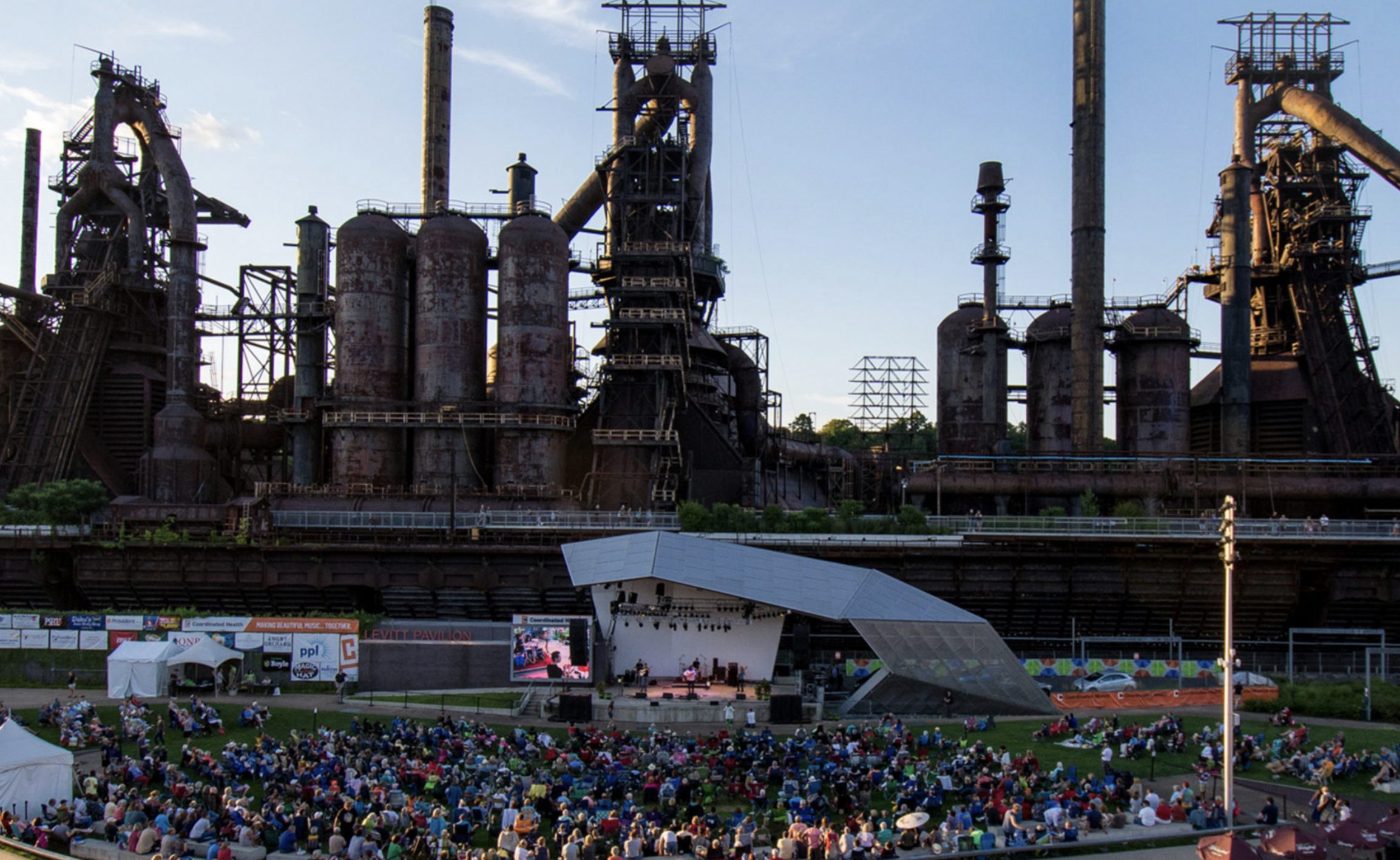
**The* [**Levitt Pavilion SteelStacks*](https://levitt.org/bethlehem/?ref=hypebot.com) *in Bethlehem, PA.*
**+Read more:** [*"The Local Advantage: Could Festivals Win by Thinking Smaller?"*](https://www.hypebot.com/the-local-advantage-could-festivals-win-by-thinking-smaller/)
## **A model that changes with the community**
[**Levitt AMP**](https://levitt.org/amp/?ref=hypebot.com) supports series in small and mid-sized communities, including rural towns and Appalachian and Midwestern Main Streets. [**Levitt VIBE**](https://levitt.org/vibe/?ref=hypebot.com) brings concerts to neighborhoods in larger cities where access to live music and arts programming may be limited. The newer [**Levitt BLOC**](https://levitt.org/bloc/?ref=hypebot.com) program rotates concerts among multiple public spaces, spreading activity across different neighborhoods rather than asking everyone to travel to one central site.
Permanent Levitt venues in cities like Arlington, Dayton, Denver, and Sioux Falls operate at another level, generally presenting 40 to 50 free concerts annually.
This model addresses the often-ignored reality that the word **“underserved”** does not mean *one thing* to every community, and that serving those communities requires different approaches.
A town of 2,000 residents likely lacks touring infrastructure to accommodate out of town artists, but so can a particular cut-off neighborhood inside a major music market, and a university campus might conveniently connect several disparate neighborhoods if activated via public space.
## **A concert can be an economic development tool without becoming a mega-event**
Sometimes the objective is not necessarily to fly in thousands of tourists for one enormous [festival weekend](https://www.hypebot.com/tag/festivals/). Sometimes the best approach is a long-tail plan to generate recurring foot traffic for food vendors, nearby restaurants, Main Street businesses, and community organizations over time.
In [Middlesboro, Kentucky](https://levitt.org/amp-middlesboro-ky/?ref=hypebot.com) for example, the Levitt AMP series turned a vacant gravel lot into a lawn and performance space with a permanent stage and mural. [***Main Street America*** reported](https://mainstreet.org/the-latest/news/from-vacant-lots-to-vibrant-venues-the-impact-of-levitt-amp-concerts-on-main-streets?ref=hypebot.com) that Middlesboro’s downtown had only one restaurant and no retail stores during the series’ first season in 2015\. It now has additional shops and restaurants, growth that local organizers partly attribute to bringing people downtown for free Thursday-night concerts.
Levitt’s commissioned research in Denver found a similar social effect, concluding that the [Levitt Pavilion Denver](https://levitt.org/denver/?ref=hypebot.com) helped fill a gap in the city’s arts landscape, brought different audiences together, and created a stronger sense of belonging. Not to mention the benefits for musicians achieved through competitive pay, audience development, and connections with schools and nonprofits.
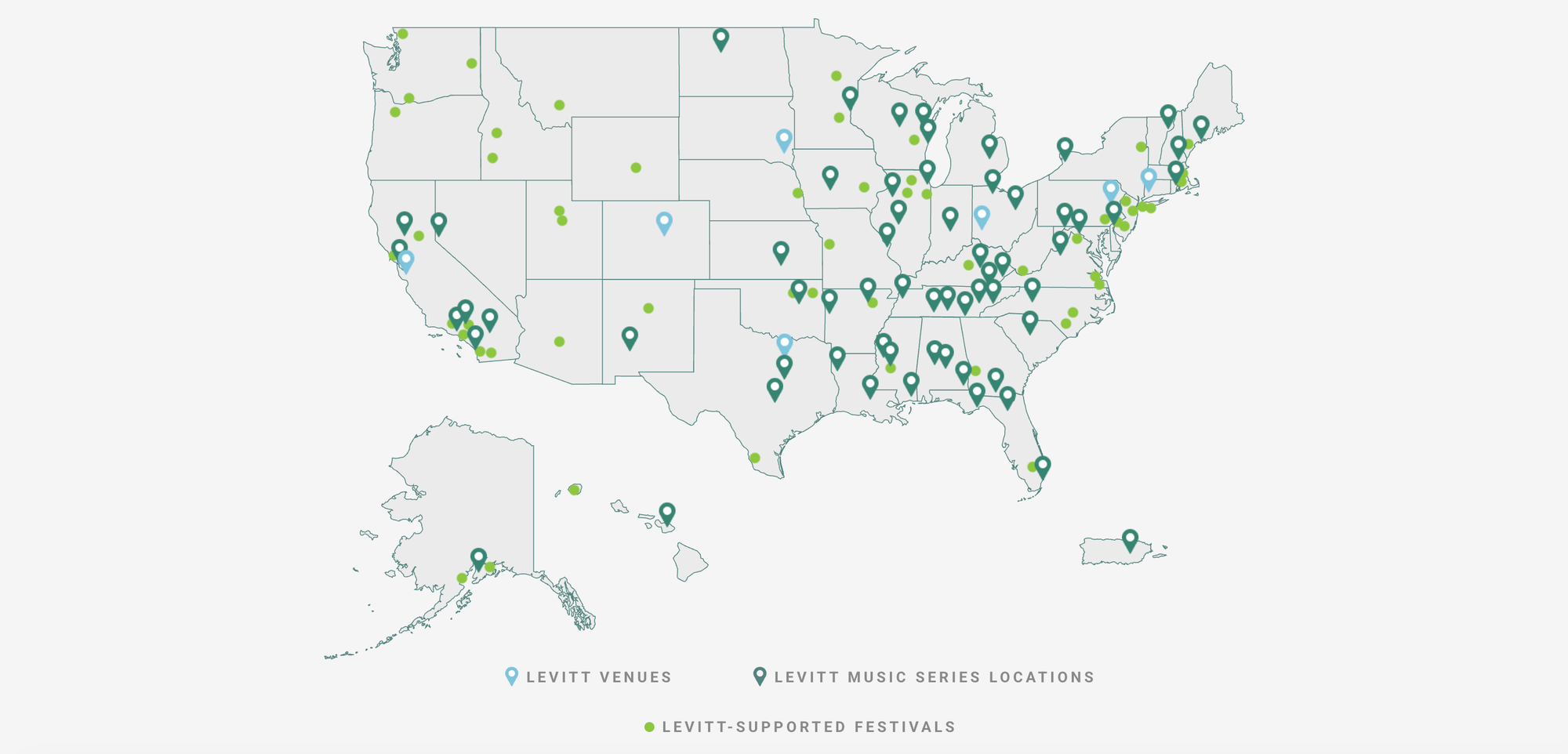
***+Read more:*** [*"4 Types of Music Festivals — and What Makes Them Different"*](https://www.hypebot.com/4-types-of-music-festivals-and-what-makes-them-different/)
## **What's next?**
Recent news surrounding the addition of government partners in different states suggests that the model is being considered wider and wider. These are targeted investments that combine arts access, workforce support, tourism, public-space activation and small-business development.
The Tennessee Entertainment Commission has joined Levitt to support six communities, with the partnership expected to generate as many as 180 free concerts over three years. Mississippi is looking to combine state public-art funding with Levitt grants that activate the new installations through annual concert series.
## **Watching out for equity**
Cultural-policy thinker **Roberto Bedoya** [has warned that](https://www.giarts.org/article/placemaking-and-politics-belonging-and-dis-belonging?ref=hypebot.com) creative placemaking can become a tool of *“dis-belonging”* when arts activity raises the value or profile of a neighborhood without serving the people already living there. See also: **gentrification.**
I'm mentioning this because this came up in Levitt’s own report on their Denver case study. The community did see raised tensions around demographic change, ownership over collective memory, and barriers to participation for some. In this way, a "responsible" version of this model would really need to take stock of local programming authority and decision-making across residential communities.
It needs honest evaluation of who attends, who benefits economically and whether the activated space remains truly public. Replication will also require cities and states to help less-resourced organizations build that capacity rather than simply asking them to compete for scarce philanthropic dollars.
**The* [**Levitt Pavilion Arlington*](https://levitt.org/arlington/?ref=hypebot.com) *in Arlington, TX.*
***+Read more:*** [*"A Venue's $70 Million Renovation to Fit… Less People?"*](https://www.hypebot.com/a-venues-70-million-renovation-to-fit-less-people/)
## **Levitt cannot (should not) do this alone**
In 2023, the Levitt Foundation announced that it would spend down its $150 million in assets and close in 2041\. The decision allows it to invest more aggressively now, but it also places a deadline on the efficacy of the experiment.
The Foundation’s lasting achievement cannot simply be the number of concerts it funds before then. It must be convincing tourism agencies, municipal parks departments, downtown development organizations, philanthropists, and local businesses that this work belongs in their regular budgets.
In other words, this should not be an *extraordinary* act of philanthropy; it should be one of the ordinary ways a community invests in [live music](https://www.hypebot.com/tag/live-music/), and in itself.
[Learn more about the Levitt Family Foundation here.](https://levitt.org/?ref=hypebot.com)
### Are We Witnessing the Second Coming of the Music Blog?
URL: https://www.hypebot.com/are-we-witnessing-the-second-coming-of-the-music-blog/
Last updated: 2026-08-17T13:48:15.000Z
[***This post originally appeared on Angela Tyler's Muddy Paw PR Substack***](https://muddypawpr.substack.com/p/the-return-of-music-blogs?r=g21nh&utm%5Fcampaign=post-expanded-share&utm%5Fmedium=post%20viewer)
Today [*The Wild Honey Pie*](https://open.substack.com/users/26969309-the-wild-honey-pie?utm%5Fsource=mentions)[ announced they’re bringing back their music blog](https://thewildhoneypie.substack.com/p/why-were-bringing-back-our-music), citing “algorithms and AI have completely hijacked the experience of music discovery, and we want to do our part to restore its human touch.” Out with the algorithms, in with community.
And I’m all about that. And that’s a big deal.
For someone who looked to sites like *TWHP* and others when I was building my own now defunct music blog, *Infectious Magazine*, it elicits a certain nostalgia. (And you know [I love to talk incessantly about that](https://substack.com/@muddypawpr/p-209917367?utm%5Fsource=profile&utm%5Fmedium=reader2)). But it also brings about an important question.
Very first Infectious Mag logo.
**In a music industry where we have everything at our fingertips, why are we turning to the nostalgic past? Why are we going backwards in pursuit of progress?**
I have a few ideas.
## We miss the simplicity
Choice fatigue is real. Think about going to a Cheesecake Factory vs a small, local restaurant with one page menu. You might *think* Cheesecake Factory sounds better because who doesn’t want twenty five pages of choices?!
But it turns out that the answer to that is: everyone.
If you’ve never read this, you’re in for a wild ride.
[*Link to read that here.*](https://mashable.com/article/cheesecake-factory-history-twitter-thread?ref=hypebot.com)
We’re completely overwhelmed by choices online and off and the pressure to remain constantly relevant is exhausting. To do things offline — act a certain way, perform a certain way — just to have something new to post. It’s not bad enough we have the internet assaulting us 24/7 but now even our offline lives are consumed by it.
**My advice to artists:** Simplify everything in your process. Don’t overcomplicate it. The more you can simplify, the more likely you are to do the things you want to do, and honestly, your fans will likely thank you. If you don’t want complicated, odds are they don’t either.
Don’t want to post three times a week? Then don’t! Make one really amazing posts and get in Stories. Don’t want to be perform live a bunch? Fine! What *do* you want to do and how can you showcase that?
### We miss actual opinions & knowing who to trust
I love that the internet has birthed the ability for everyone to have their voice heard by their people. But it is (see point one), overwhelming. Back when music blogs first began emerging, there were a handful of major indie outlets you would turn to. *TWHP*, but also *Brooklyn Vegan, Alter The Press, Alternative Press*, and *Property of Zack,* to name a few.
After that, another wave of less prestigious but still well respected and trusted outlets. And so on and so forth. Everyone sort of had their ranking and as a music journalist you might aspire to become the next tier. So that motivation felt both attainable and exciting.
Part of the problem is over-saturation. I don’t have a solution for this because I both want more music blogs and understand the complications of having more. So I guess I’d say I want more *quality* blogs. Quality interviews. Thought provoking reviews. What I don’t think we need more of is journalists feeling overwhelmed and pressured into posting 8 out of 10 PR requests they get so that 90 percent of indie bands featured are basically just the press release copy and pasted without any real opinions.
My advice to artists: Have an opinion. That’s always what made the greats stand out.
### We miss human decency
People have always been hit or miss. Sometimes, we’re great. Sometimes we suck.
But I will say, there was a much deeper sense of community back in the 2009-2012 music blog era. I think this has a lot to do with the fact it was just less saturated. Everyone kind of knew each other or at least, knew someone who knew that person.
And so, we grew together. We traded contacts with the people we trusted instead of gatekeeping. Put in a good word. Shared links with reckless abandon.
We were a community.
**My advice to artists:** Build your relationships. Be mindful of your interactions. Noone is too small for you and while not every opportunity will be right for you, each one is worth considering from all angles. Including (maybe especially) the ones that don’t pay off right away.
Some of my greatest and longest standing relationships in the music industry started fifteen years ago.
## So are music blogs back?
Listen, no one is a bigger advocate for the return of the 2009 music blog scene more than me. I miss it terribly, and I can often be found in text messages saying things like *“maybe I should start doing artist interviews again…”* or *“I really miss when…”*
The truth is, we can’t go back. But we can certainly learn from what worked and what didn’t. The latter of which *TWHP* describes wonderfully in their post. But I hope we can move forward with the lessons of the past close by. Number two on here, the bit about music blogs going back to having actual opinions? Being kind but constructive?
That really resonates with me. Maybe with you as well.
And I don’t know. Maybe *The Wild Honey Pie* has inspired me to start doing artist interviews and more artist-centric pieces like that down the line. Who knows.
All I know, it’s a good sign. And I hope people want this as much as I do.
[](https://thewildhoneypie.substack.com/p/why-were-bringing-back-our-music)
---
*Subscribe to* [***Angela Tyler's Muddy Paw PR Substack***](https://substack.com/@muddypawpr?ref=hypebot.com) *for music industry tips for independent musicians. She's a Recording Academy Member, SXSW speaker, and relentless DIY spirit, fueled by 15+ years in music marketing, music PR, and artist management.*
### Kickstarter Unveils $1M Culture Fund for Musicians and Creators
URL: https://www.hypebot.com/kickstarter-unveils-1m-culture-fund-for-musicians-and-creators/
Last updated: 2026-08-17T13:27:59.000Z
Kickstarter has launched a new $1 million **Kickstarter Culture Fund for musicians and other creators**. Its first-ever direct investment in creative ideas, the fund is designed to fuel independent projects in Music, Arts, Film, and Fashion by contributing financial pledges directly to active campaigns.
If you are an independent musician planning to [crowdsource](https://www.hypebot.com/tag/crowdfunding/) your next album, tour, or vinyl pressing, here is a complete breakdown of the new fund and how to get involved.
### **What is Kickstarter?**
Kickstarter is a crowdfunding platform launched in 2009 that allows independent musicians, bands, and producers to secure direct capital from their audience. Artists set a financial goal and create a deadline and offering fan rewards ranging from digital album downloads and exclusive vinyl pressings to signed gear and private house shows in exchange for pledges. Operating on an "all-or-nothing" model, creators only receive the funds if their project reaches its full financial target, mitigating financial risk for creators and backers alike.
Crowdfunding doesn't get the attention it used to. But thousands of artists year still use **Kickstarter** and competitors like [**Ulule**](https://www.ulule.com/?ref=hypebot.com), as well as [**Indiegogo**](https://www.indiegogo.com/?ref=hypebot.com), which lets you keep the money raised even if you don't hit your goal. Since its launch in 2009, Kickstarter has raised over $300 million in its Music category alone

**+Read more:** [*"Festival Curator Brad Sweet on Raising $700k in Fan-Powered Ownership"*](https://www.hypebot.com/festival-curator-brad-sweet-on-raising-700k-in-fan-powered-ownership/)
### **What is the** Kickstarter Culture Fund**?**
The [Kickstarter Culture Fund](https://landing.kickstarter.com/culture-fund?ref=hypebot.com) is a $1 million initiative where Kickstarter acts as an active financial backer for select live campaigns. Instead of just hosting your campaign, the platform actively invests in it. Selected recipients receive:
- **Direct Financial Backing:** A direct pledge to your live Kickstarter campaign (all awarded projects receive a minimum pledge of $1,000).
- **Promotional Support:** High-visibility promotion across Kickstarter’s owned and operated channels.
- **Expert Guidance:** Boundary-pushing projects may receive hands-on campaign guidance from the Kickstarter team to ensure they reach their goals.
### **What the Culture Fund Means for Musicians and Creators**
For many musicians, Kickstarter’s traditional "all-or-nothing" crowdfunding model can be a daunting hurdle. The Culture Fund shifts this dynamic by providing a vital safety net and a massive vote of confidence.
- **Early Momentum:** Securing a minimum $1,000 pledge directly from Kickstarter creates instant social proof. This early momentum heavily encourages fans and casual browsers to back your project.
- **Algorithmic Visibility:** Projects that receive rapid funding and official Kickstarter promotional backing are far more likely to trend on the platform, putting your music in front of new, non-fan audiences.
- **Creative Freedom Without Debt:** Unlike advances or loans, this is a pledge. If your project is successfully funded, you owe the promised art to your backers- not a percentage of your masters or future royalties to a corporation.
### **How to Apply for the Kickstarter Culture Fund**
Applying is straightforward, but you need to meet the eligibility requirements and have your campaign ready to go.
**Eligibility Requirements:**
• The project must fall under Music, Art, Photography, Dance, Theater, Film, or Fashion.
• You must launching the campaign on or before **December 31, 2026**.
• You must meet Kickstarter’s standard location/geographic requirements (US, UK, Canada, Australia, etc.).
**Steps to Apply:**
1. **Draft Your Project:** Your campaign doesn't need to be live yet, but it must be in the "draft" phase with at least a main image and a one-paragraph description.
2. **Submit Your Application:** Head to the Kickstarter Culture Fund landing page and submit your project for review.
3. **Launch:** If selected, Kickstarter will apply the funding to your campaign once it goes live.
**Note:** Selections are made on a rolling basis throughout 2026, and applicants are notified of their status within six weeks of submission.
## **Hypebot's Bottom Line**
Crowdfunding remains one of the most viable ways for independent artists to fund their careers without giving up their rights.
By launching the $1 million Culture Fund, Kickstarter is putting its money where its mouth is, transitioning from a mere hosting platform to an active patron of the arts.
For any musician planning a release or a major creative project before the end of 2026, applying for this fund is an absolute no-brainer. Having Kickstarter officially back your campaign could be the exact momentum shift you need to smash your funding goals and take your career to the next level.
---
***Get all the latest Music Industry & Live Music News updated continuously from across the web under the Hypebot Industry News tab*** [***here***](https://www.hypebot.com/music-industry-news-feed/)***.***
## Hypebot
Essential news & insights for artists and live music pros.
Sign up for free weekly content delivered to your inbox
Subscribe
Email sent! Check your inbox to complete your signup.
### Your Morning Coffee Podcast: Illegal Sellers, 2033 Revenue Projections, Suno & BMG, More
URL: https://www.hypebot.com/your-morning-coffee-podcast-54/
Last updated: 2026-08-17T13:16:26.000Z
### **Listen on your favorite** [**podcast platform**](https://bio.to/UloQY6?ref=hypebot.com)**.**
Subscribe to the Your Morning Coffee newsletter [here](https://label-logic.us8.list-manage.com/subscribe?u=735771602810b0eb238d4e814&id=1ffaab59d7&ref=hypebot.com).
**YMC Episode 315 — August 17, 2026**
On this week’s episode of the **Your Morning Coffee podcast**, your hosts Jay Gilbert and Mike Etchart chat about these timely music industry stories:
- **Suno Inks Global Licensing Deal With BMG, Ahead Of Launching New Music Model**
- **Global Recorded Music Retail Revenue to Top $121 Billion by 2033, MIDiA Report Says**
- **Spotify To Label AI Artists With New 'AI Persona' Badge – Keeping Their Music Out Of Recommendations By Default**
- **The Illegal Sellers, Costing Musicians Millions in Revenue**
Plus audio drops with Sam Duboff, Spotify's Global Head of Music Policy on their new "AI Persona" badge, and Steve Knopper on his piece for the WSJ on counterfeit merch!
Listen right here:
Subscribe to the Your Morning Coffee newsletter [**here**](https://label-logic.us8.list-manage.com/subscribe?u=735771602810b0eb238d4e814&id=1ffaab59d7&ref=hypebot.com)**.**
**FIND MORE CURATED MUSIC BUSINESS AND INDIE**
**PODCAST EPISODES** [**HERE**](https://www.hypebot.com/tag/podcast-music-biz/)
### How This Indie Venue Is Taking on StubHub for Deceptive Ticketing Practices
URL: https://www.hypebot.com/how-this-indie-venue-is-taking-on-stubhub-for-deceptive-ticketing-practices/
Last updated: 2026-08-17T13:07:42.000Z
Brattleboro, Vermont music venue [**Stone Church**](https://www.bandsintown.com/v/10018060-stone-church?utm%5Fsource=hypebot&came%5Ffrom=900) has launched a direct legal strike against secondary ticketing giant [**StubHub**](https://www.hypebot.com/tag/stubhub/)**.**
Filed in New York Southern District Court, this David vs Goliath lawsuit targets the StubHub's checkout interface and consumer marketing, alleging trademark infringement and false advertising.
Instead of the antitrust complaints at the center of most current live music industry lawsuits, the Stone Church (officially FSO, LLC) [filing](https://www.pacermonitor.com/public/case/66175814/FSO,%5FLLC%5Fdba%5FStone%5FChurch%5Fv%5FStubHub,%5FInc?ref=hypebot.com) uses a highly specific legal strategy. Focusing on trademark infringement under the **Lanham Act,** this suit offers a detailed breakdown of StubHub's UX (user experience), arguing that it actively deceived fans, damaged the venue's brand, and siphons revenue from grassroots music spaces.
The Lanham Act governs trademarks, service marks, and unfair competition. Beyond traditional trademark infringement, it also prohibits false advertising.
### **Stone Church's Core Allegations Against StubHub**
The [Stone Church](https://stonechurchvt.com/?ref=hypebot.com) lawsuit takes aim at several specific secondary ticketing practices not unique to StubHub.
- **False Scarcity Flags:** StubHub allegedly deploys urgent warnings (e.g., "Only 4% of tickets left!") on events where a vast majority of the primary box office inventory is actually still available.
- **Deceptive Price Badges:** The complaint highlights listings badged with superlatives like “Lowest price!” despite being marked up significantly above face value, while original, cheaper tickets sit unsold at the venue's direct box office.
- **Speculative ("Spec") Selling:** The venue accuses brokers of listing non-existent inventory on StubHub. In one documented test purchase cited in the suit, a broker allegedly waited 49 hours *after* collecting a fan's money on StubHub to actually purchase the real ticket from the Stone Church box office.
### **What Does Stone Church Want?**
In addition to seeking damages exceeding $5 million, Stone Church is pushing for systemic operational transparency. The venue is seeking a federal injunction requiring StubHub to:
1. Display all-in pricing upfront.
2. Clearly disclose that its listings do not reflect the total remaining venue inventory.
3. Notify consumers when primary box office tickets are still available for cheaper.
### **Hypebot’s Bottom Line**
While live entertainment conglomerates fight high-profile antitrust battles in Washington and elsewhere, Stone Church is fighting against secondary ticketing platforms on the grounds of consumer protection and trademark law.
If this grassroots legal challenge by a small independent music venue forces a change in how ticket availability is marketed, it could completely disrupt the secondary ticketing space - and finally give concertgoers an honest view of what it costs to see their favorite artists.
[Follow Stone Church on Bandsintown to see live concert listings.](https://www.bandsintown.com/v/10018060-stone-church?utm%5Fsource=hypebot&came%5Ffrom=900)
---
***Get all the latest Music Industry & Live Music News updated continuously from across the web under the Hypebot Industry News tab*** [***here***](https://www.hypebot.com/music-industry-news-feed/)***.***
## Hypebot
Essential news & insights for artists and live music pros.
Sign up for free weekly content delivered to your inbox
Subscribe
Email sent! Check your inbox to complete your signup.
### Hypebot's Bottom Line: Latest News That Matters To Musicians
URL: https://www.hypebot.com/hypebots-bottom-line-latest-news-that-matters-to-musicians/
Last updated: 2026-08-14T12:30:41.000Z
Welcome back for the latest Hypebot's Bottom Line — our regular roundup pulling key takeaways from the most important stories we've covered recently.
### **Dance Music Live Demand Surges 24%, Bandsintown Data Shows**
**Hypebot's Bottom Line:** With a one year 23.7% jump in Bandsintown ticket clicks, dance music's live boom isn't about bigger light shows; it's a structural shift in fan interest and monetization. As the genre's fans continue to embrace early ticket buying, dance acts are unlocking predictable, arena-level revenue streams that rival mainstream pop and rock.
[Read the full story.](https://www.hypebot.com/dance-music-live-demand-surges-24-bandsintown-data-shows/)
### **Can AI Unlearn Music? What Musicians Need to Know**
**Hypebot's Bottom Line:** When dealing with AI music companies, never trade upfront permission or payment for a promise of "we can always delete it later." Until true machine unlearning becomes technically feasible, obtaining strict, pre-training consent remains the only real protection. By grounding artist rights in hard science, Chris Castle and his new Machine Unlearning Research Hub hope to ensure musicians don't get sold a fake delete button.
[Read the full story.](https://www.hypebot.com/can-ai-unlearn-music-what-musicians-need-to-know/)
### **YouTube Doubles Watch Hours for Monetization**
**Hypebot's Bottom Line:** If you are an independent artist, venue, or label building a channel, relying solely on ad revenue just got harder. These upcoming 2027 changes are also a signal from YouTube: musicians need to diversify their income by leaning heavily into Fan Funding, merchandise via YouTube Shopping, and off-platform brand deals, rather than chasing automated ad-sense dollars alone.
[Read the full story](https://www.hypebot.com/youtube-doubles-watch-hours-for-monetization/)
### **Spotify Labels AI-Generated Artists, Hides Recommendations**
**Hypebot's Bottom Line:** Spotify is finally drawing a line in the sand between AI as a production tool and AI as a fake artist. By banning AI Personas from algorithmic and editorial discovery, Spotify is protecting the platform's most valuable real estate for actual, human musicians trying to build sustainable careers. For indie artists competing in a crowded landscape, this is a win for authentic music discovery.
[Read the full story](https://www.hypebot.com/spotify-labels-ai-generated-artists-hides-recommendations/)
### **Live Nation & Veeps Gut BrooklynVegan, AltPress, Revolver**
**Hypebot's Bottom Line:** Gutting Live Nation/Veeps owned BrooklynVegan, Alternative Press, Revolver, and Goldmine and eliminating music editorial newsrooms fundamentally disrupts the entire music ecosystem.
For independent artists, losing trusted tastemakers eliminates crucial early-stage press coverage that fuels algorithmic pickup, playlist placement, and organic discovery. For indie labels, publicity strategies face a bottleneck that forces reliance on paid social conversion funnels rather than earned, credible journalism. For live music, stripping away grassroots publications starves mid-tier clubs and underground venues of the coverage needed to build sustainable touring audiences.
[Read the full story](https://www.hypebot.com/live-nation-and-veeps-gut-brooklynvegan-altpress-revolver/)
### **Why Is Gen Z Staying Home, and How Can Artists and Venues Adapt?**
**Hypebot's Bottom Line:** Gen Z hasn't become anti-social, but they are financially squeezed, overwhelmed, and looking for lower-pressure ways to connect. Musicians, venues, and marketers who pivot away from late-night, alcohol-fueled, high-cost models in favor of accessible, earlier, and community-driven experiences will secure this generation's long-term loyalty and live music spend.
[Read the full story.](https://www.hypebot.com/why-is-gen-z-staying-home-and-how-can-artists-and-venues-adapt/)
### **3 Spotify Updates That Are Changing Music Marketing**
**Hypebot's Bottom Line:** These three updates collectively shift across Spotify's ecosystem away from passive growth hacks and toward intentional, active engagement. While User Notes and Campaign Lift give artists richer storytelling options and actionable ROI data, tighter Pre-Save limits mean that automated marketing shortcuts will no longer sustain a career. Success on the platform now requires a dual strategy: leveraging native tools to strengthen listener bonds, while building independent, direct communication channels off-platform
[Read the full story.](https://www.hypebot.com/3-new-spotify-updates-that-are-changing-music-marketing/)
### New Study Shows How Drinking Habits Are Reshaping Live Music
URL: https://www.hypebot.com/new-study-shows-how-drinking-habits-are-reshaping-live-music/
Last updated: 2026-08-14T12:27:48.000Z
A new study commissioned by Berlin's **Club Commission** highlights a fundamental vulnerability in the live music business model globally.
Historically, independent venues have relied on drinks and food sales for 60% of their gross turnover, while tickets generated 21%.
This heavy reliance on high-margin alcohol sales allowed operators to keep ticket prices low, using the bar to subsidize basic overhead, artist bookings, and rising real estate costs. But a significant cultural shift in audience behavior is forcing an overhaul of this alcohol-dependent revenue structure.
[Multiple studies](https://www.hypebot.com/the-bar-tab-used-to-pay-for-live-music-clearly-it-doesnt-anymore/) [have shown](https://www.hypebot.com/why-ticket-sales-arent-enough-for-independent-music-venues-anymore/) how over the past several years, drinking habits among venue-goers have transformed dramatically. Younger generations, particularly [Gen Z](https://www.hypebot.com/why-is-gen-z-staying-home-and-how-can-artists-and-venues-adapt/) and younger Millennials, are consuming far less alcohol during live events compared to previous demographics.
Fueled by wellness trends, 'sober-curious' lifestyles, and the widespread legalization of cannabis, many fans are choosing to alternate their drinks with water, opt for non-alcoholic beverages, or pre-game before arriving at the venue. Coupled with post-inflation prices for premium cocktails, per-head bar spending has dropped sharply, leaving venues unable to lean on drink margins to cover their bottom line.
### **Unprofitable Venues**
This drop in beverage revenue comes at a time when running a venue is harder than ever.
The Berlin study and others show that even during stable economic conditions, over half of independent venues struggle to remain profitable, with **30% merely breaking even** and **21% operating at a loss**. As gentrification drives up rents and new real estate developments bring wave after wave of noise complaints, venues can no longer afford to operate simply as bars with a stage attached.
A similar [survey of U.S. venues](https://www.hypebot.com/niva-state-of-live-how-us-independent-venues-power-local-economies/) by the **National Independent Venue Association** (NIVA) showed that **64% of independent venues nationwide were unprofitable.**
This new study and others concluded that to survive, live music spaces worldwide must diversify their financial strategy and advocate for structural policy changes. Operators need to expand high-margin non-alcoholic offerings such as premium mocktails and herbal drinks to capture revenue from non-drinking patrons.
On a policy level, venue coalitions must push local governments to reclassify venues as formal cultural institutions rather than commercial drinking establishments. Gaining this recognition opens the door to public cultural grants, tax relief, and critical zoning protections that can force developers to pay for soundproofing.
By modernizing night-of monetization and securing legal recognition as cultural assets, music venues can safeguard their future against shifting consumer habits.
Download the full study [here](https://www.clubcommission.de/club-culture-study/?ref=hypebot.com).
### **Hypebot's Bottom Line**
The era of funding live music on the back of $15 IPAs is all but over. Independent venues can no longer treat the stage as a loss leader for the bar.
They need real policy protection and modernized revenue streams to stay afloat.
If cities and music lovers want these cultural engines to survive, they must start valuing music venues for the art they nurture and the massive indirect economic value they create - not just the liquor they pour.
**+Read:** [**The Bar Tab Used to Pay for Live Music. Clearly, It Doesn't Anymore**](https://www.hypebot.com/the-bar-tab-used-to-pay-for-live-music-clearly-it-doesnt-anymore/)
***Get all the latest Music Industry & Live Music News updated continuously from across the web under the Hypebot Industry News tab*** [***here***](https://www.hypebot.com/music-industry-news-feed/)***.***
## Hypebot
Essential news & insights for artists and live music pros.
Sign up for free weekly content delivered to your inbox
Subscribe
Email sent! Check your inbox to complete your signup.
### Where Artists Draw the Line On AI: Uppbeat Creator Report
URL: https://www.hypebot.com/where-artists-draw-the-line-on-ai-uppbeat-creator-report/
Last updated: 2026-08-28T13:42:16.000Z
The surge of AI in the creator economy has fundamentally shifted the digital landscape. It has led to an explosion of content—but also a crisis of authenticity. Rather than guessing what the future holds, the creative asset platform **Uppbeat** went straight to the source.
In the newly published **Uppbeat Creator Report 2026**, they asked the creative community exactly how artificial intelligence is changing their daily working lives. For musicians, video creators, and industry marketers, this report offers a vital pulse check on where human creativity fits into an increasingly automated world.
### **What is the Uppbeat Creator Report 2026?**
The Uppbeat Creator Report 2026 is a comprehensive study based on survey data from 1,792 creative professionals and 13 in-depth interviews conducted between February and March 2026\. It explores how musicians, YouTubers and other creators are adapting to new technology, what AI tools they are embracing and which parts of the creative process they refuse to hand over to a machine.
The survey reveals a clear line between AI as a crutch and AI as a collaborator.
While with **just 6.7% of respondents finding fully AI-generated content acceptable**, almost **60% are happy to integrate AI assistance** into their creative workflow. Defying common tech stereotypes, **16- to 24-year-olds are the least likely group to use AI tools**, confirming that younger creators are leading the charge in keeping human effort at the heart of their process.
### **3 Core Takeaways For All Creators**
Rather than debating if AI is "good or bad," the report focuses on the real-world application of these tools.
Analyzing over 2,600 open-text responses, a few major themes emerged that directly impact the music and content industries:
1. **Specificity Beats Volume:** With AI making it easier than ever to mass-produce content, **creators are standing out by getting more specific and niche,** rather than just increasing their output volume.
2. **The Audience Pushback:** Audiences are beginning to quietly reject overly automated, generic content in their social feeds. They are actively seeking the "messy, emotional, and brilliant" human elements of art.
3. **The Scarcity of Authenticity:** In a world of infinite, AI-generated media, the only truly scarce commodity left is the individual creator's unique perspective and voice.
### AI Strategies For Independent Musicians
- **Outsource the Grind, Protect the Art:** Musicians use AI for tasks like metadata, promo scheduling, email drafts, clip editing, and workflow logistics. Writing songs, cutting vocals, and direct fan engagement remain non-negotiable human domains.
- **Niche Beats Volume Every Time:** Mass-producing generic tracks or endless low-effort clips gets swallowed by algorithm slush. Hyper-specific aesthetics and vulnerable personal stories are what actually convert passive listeners into paying fans.
### **Where can I read the full Uppbeat Creator Report?**
You can read the insights or download the full PDF of The Uppbeat Creator Report 2026 directly on the [Uppbeat Blog](https://uppbeat.io/blog/creators/the-uppbeat-creator-report-2026?ref=hypebot.com).
### **Hypebot's Bottom Line**
The new Uppbeat Creator Reportshows that the path forward for indie musicians isn't to fear AI, nor is it to surrender creative identity to it.
Their is power in using tools to eliminate backend friction and buy back time. Then use that time to double down on raw unfiltered human connection - in songs, on stage at at the merch table.
In an era of infinite synthetic noise, a personal story isn't just a brand - it's the ultimate competitive advantage.
### The Week in Review: Aug 7-13, 2026
URL: https://www.hypebot.com/the-week-in-review-aug-7-13-2026/
Last updated: 2026-08-14T12:12:26.000Z
Dear reader,
Here's a rundown of some of our favorite stories from this week on [**Hypebot**](https://www.hypebot.com/). As always, thanks for reading and being part of our growing community of artists, managers, and industry pros.
### **Top Stories**
[Honey, Why Don’t We Talk About Khruangbin Anymore?They’ve turned years of audience feedback into a dependable live experience; evidence that becoming a festival fixture can breed a certain form of mastery.HypebotJeremy Young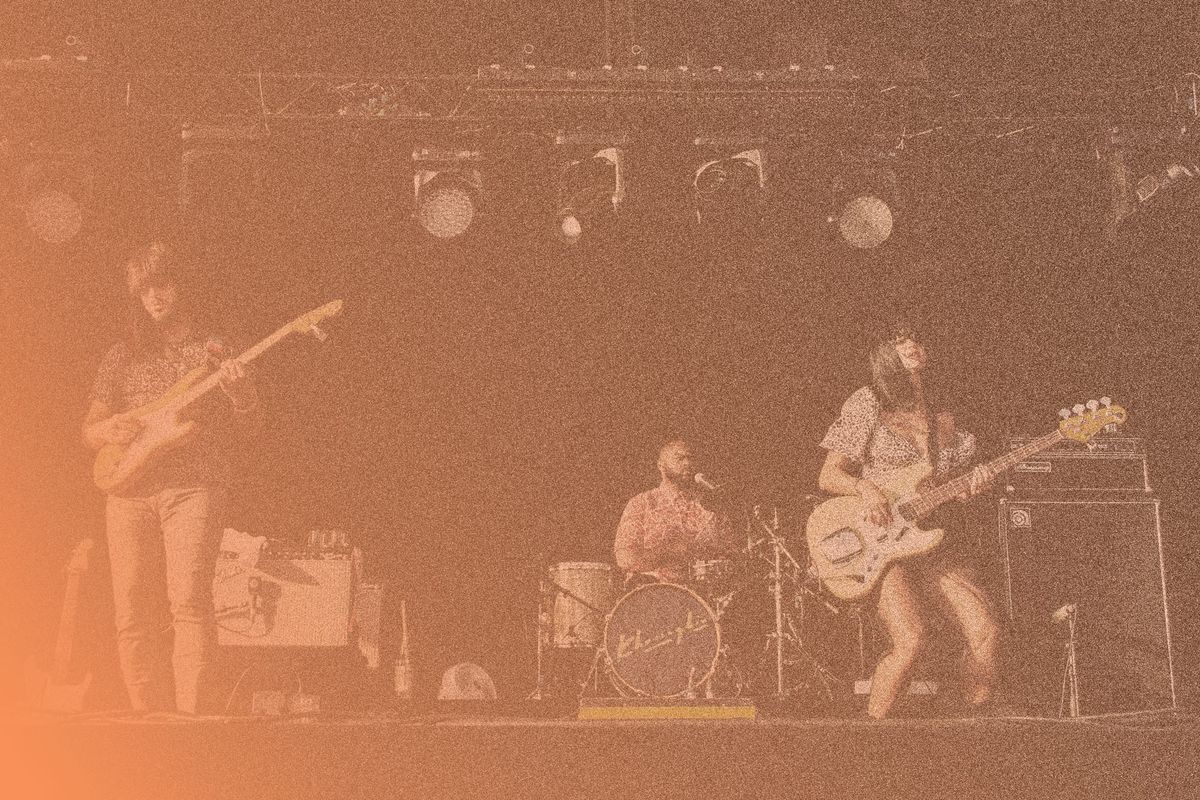](https://www.hypebot.com/honey-why-dont-we-talk-about-khruangbin-anymore/)
[International Tours Keep Skipping the Same Parts of Australia70 years of concert data revealed a divide between Australia’s major markets and the states, territories, and towns international artists routinely bypass.HypebotHypebot Editorial Desk](https://www.hypebot.com/international-tours-keep-skipping-the-same-parts-of-australia/)
[4 Types of Music Festivals — and What Makes Them DifferentFrom temporary rural pop-ups to venue networks spread across urban neighbourhoods, these four models create distinctly different experiences.HypebotJeremy Young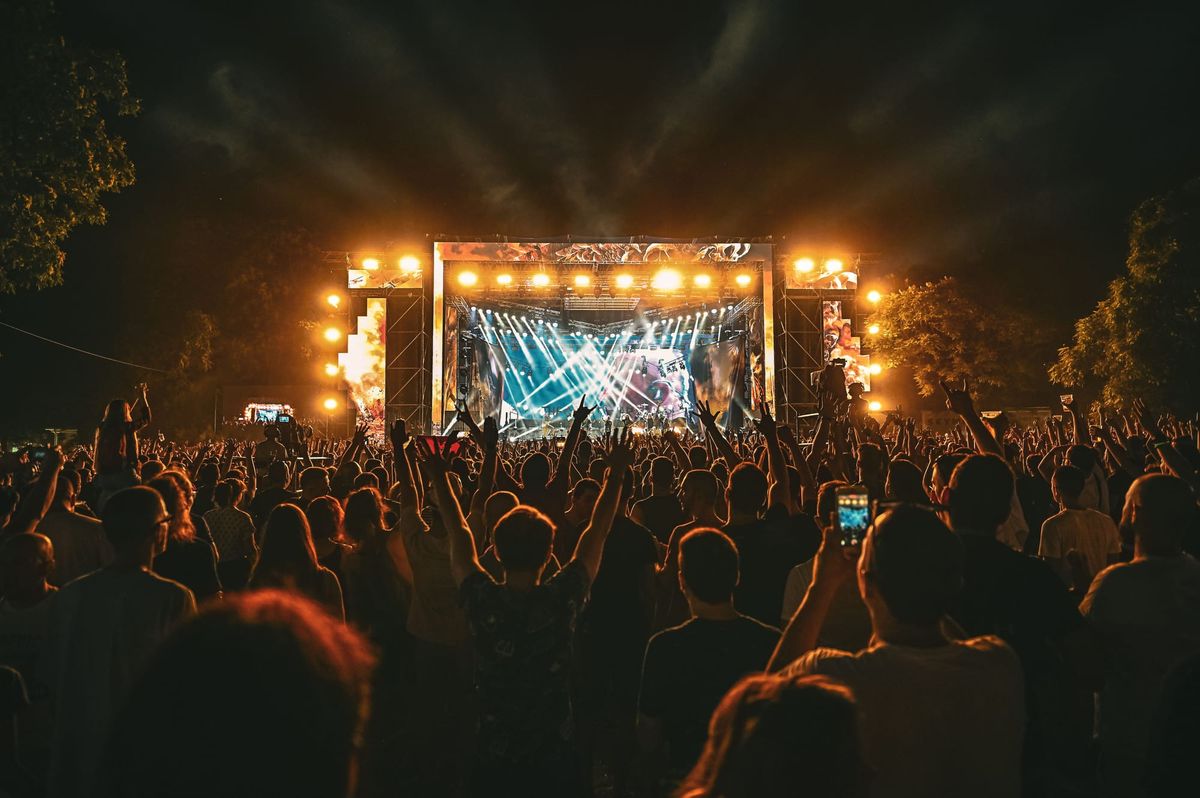](https://www.hypebot.com/4-types-of-music-festivals-and-what-makes-them-different/)
[Chartmetric Knows Why Major Tours Get Canceled In 2026Live Nation says cancellations are at normal levels, but tell that to fans who bought tickets. Chartmetric looks at what’s behind Blue Dot Fever.HypebotChartmetric](https://www.hypebot.com/chartmetric-knows-why-major-tours-get-canceled-in-2026/)
### **Advice & Tips**
[What Does a Smart Merch Strategy Look Like for Artists?It’s more than an extra direct revenue stream for artists — merch is an emotion-driven tool for fan connection that takes your music further.HypebotSymphonic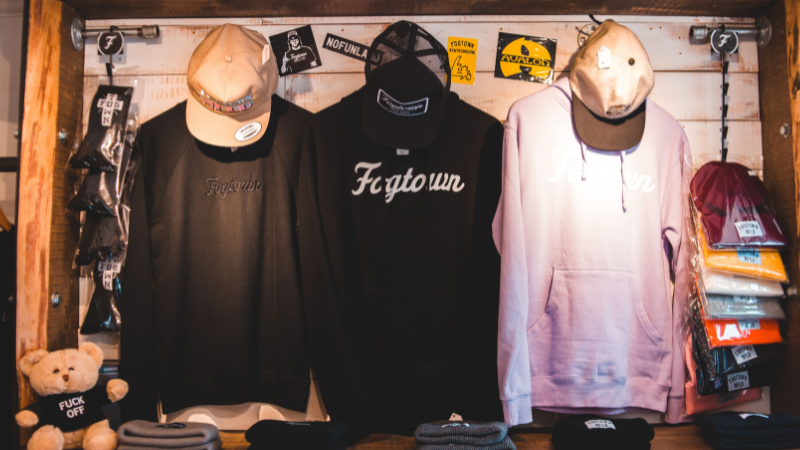](https://www.hypebot.com/what-does-a-smart-merch-strategy-look-like-for-artists/)
[Musician Growth Lab Offers Indie Artists Mentorship and a $5,000 GrantThe organization is accepting applications for a year-long program combining music business education, mentorship, and a $5,000 grant.HypebotHypebot Editorial Desk](https://www.hypebot.com/musician-growth-lab-offers-indie-artists-mentorship-and-a-5-000-grant/)
[Drinking From a FirehoseHow do you make sure you’re constantly bringing in new creative fuel?HypebotSoundfly](https://www.hypebot.com/drinking-from-a-firehose/)
[Dance Music Live Demand Surges 24%, Bandsintown Data ShowsDance music is outpacing most genres in live growth. Bandsintown data reveals a 24% jump in ticket clicks and 1.51 billion artist follows.HypebotBruce Houghton](https://www.hypebot.com/dance-music-live-demand-surges-24-bandsintown-data-shows/)
### **Streaming & AI**
[Can AI Unlearn Music? What Musicians Need to KnowAI firms claim they can unlearn and remove music after training, but can they? The Machine Unlearning Hub separates reality from marketing spin.HypebotBruce Houghton](https://www.hypebot.com/can-ai-unlearn-music-what-musicians-need-to-know/)
[Spotify Labels AI-Generated Artists, Hides RecommendationsSpotify adds ‘AI Persona’ badges to label AI-generated artists and removes them from recommendations to boost trust and transparency.HypebotBruce Houghton](https://www.hypebot.com/spotify-labels-ai-generated-artists-hides-recommendations/)
[We can’t outrun AI, but we can stop tripping over ourselvesAI is flooding music, but human connection remains our strongest asset. Bas Grasmayer on how to evolve, organize, and thrive in this new era.HypebotGuest Author](https://www.hypebot.com/we-cant-outrun-ai-but-we-can-stop-tripping-over-ourselves/)
[YouTube Doubles Watch Hours for MonetizationYouTube is doubling Partner Program watch hour requirements and tightening Shorts payouts. Here is what music creators need to know.HypebotBruce Houghton](https://www.hypebot.com/youtube-doubles-watch-hours-for-monetization/)
### **News**
[Live Music Industry NewsThe latest live music industry news: ticket fraud warnings, Ticketmaster Gemini news, Tixel US expansion, and dance music trends from Bandsintown.HypebotBruce Houghton](https://www.hypebot.com/live-music-industry-news-21/)
[Merck Mercuriadis to Keynote Music Tectonics 2026The Hipgnosis Artist Partnerships founder will keynote the Music Tectonics 2026 conference in Santa Monica, CA, this October. Details here.HypebotNews](https://www.hypebot.com/merck-mercuriadis-to-keynote-music-tectonics-2026/)
[A London Developer Leased Pink Floyd’s Old Studio to Artists for £1The band’s Britannia Row studio has become an affordable creative hub under a £1 lease; a promising (but temporary) stand against condo transformation.HypebotNews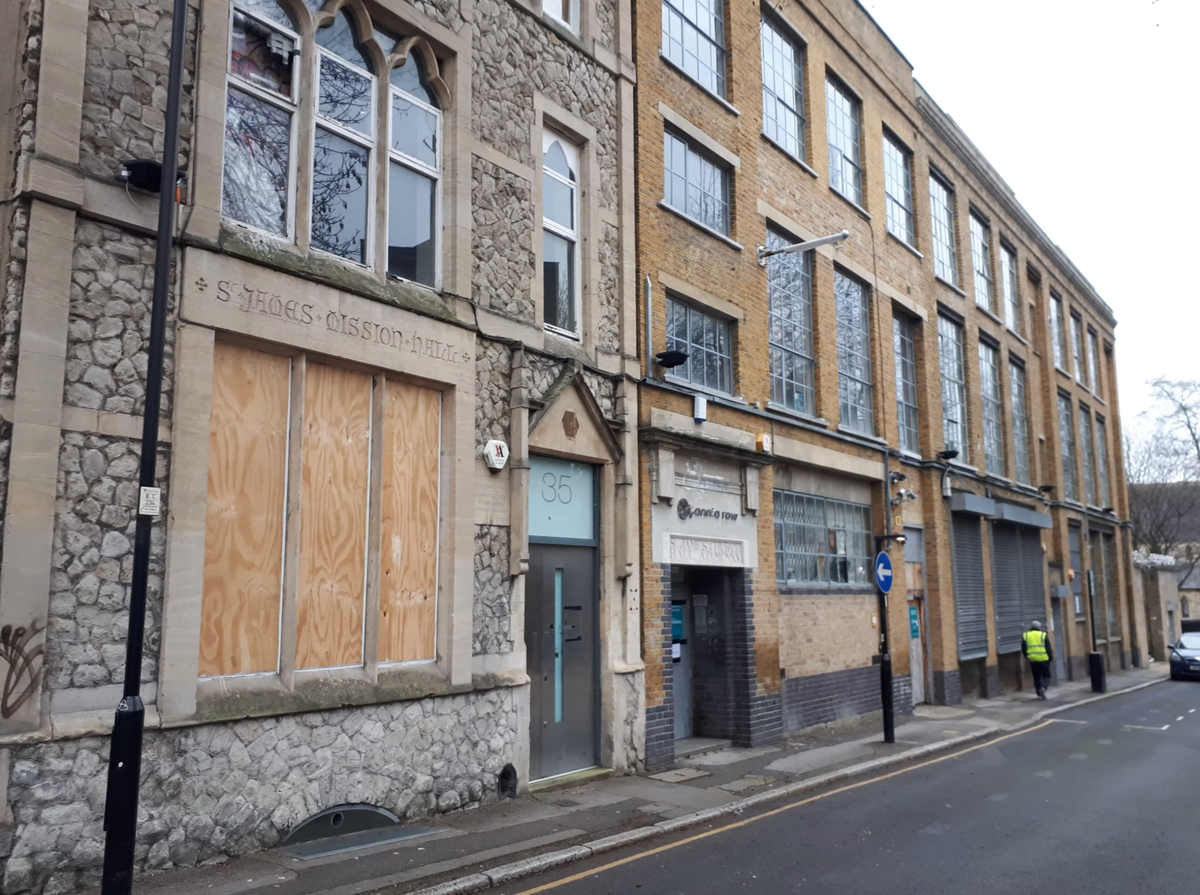](https://www.hypebot.com/a-london-developer-leased-pink-floyds-old-studio-to-artists-for-1/)
[StubHub Spends Millions to Kill CA Ticket BillA California bill aims to cap concert ticket resale markups, but StubHub is spending millions to block it.HypebotBruce Houghton](https://www.hypebot.com/stubhub-spends-millions-to-kill-ca-ticket-bill/)
### **\*Surprise Bonus\***
[A 2026 Live Music Venue Guide to São PauloBrazil’s cultural capital is a city on the rise in the global live music scene. Here are our 11 favorite spots for checking out new and established artists and bands.HypebotJeremy Young](https://www.hypebot.com/a-2026-live-music-venue-guide-to-sao-paulo/)
### Pro Guide: How to Maintain Your Venue's PA System Over Time
URL: https://www.hypebot.com/how-to-maintain-your-venues-pa-system-over-time/
Last updated: 2026-08-14T11:32:18.000Z
A [**concert venue**](https://www.hypebot.com/tag/venues/) can replace a microphone between soundcheck and doors. Replacing a blown loudspeaker, overheated amplifier or damaged piece of rigging is considerably more complicated.
That is why PA maintenance should not begin when something sounds wrong. For venues and festivals, regular cleaning, careful cable handling, and sensible operating levels can prevent many common failures. From daily tests to weather protection and rigging inspections, here is how to keep a professional sound system healthy, reliable, and ready for the next show.
## **1- Start Every Show With a System Check**
Before soundcheck, send a familiar reference track, pink noise or another consistent test signal through the system. Walk the room or festival site and listen to every main hang, fill, delay and subwoofer zone. You are not trying to tune the entire PA from scratch. You are looking for changes: a cabinet that has gone quiet, a distorted driver, an intermittent connection, unexplained hum or one side of the system sounding different from the other.
Check amplifier and processor software for thermal warnings, muted channels, impedance irregularities and persistent limiting. Small inconsistencies often provide the first warning of a much larger failure.
## **2- Give Amplifiers Room to Breathe**
Heat is one of the biggest enemies of audio electronics. Amplifier racks, powered speakers and processors need unobstructed ventilation, clean air and an environment that stays within the manufacturer’s operating limits.
That means keeping vents free of dust, leaving the required clearance around active cabinets and making sure rack-room air conditioning can handle the heat generated during a full-capacity show. Q-SYS notes that [clean, low-humidity and unobstructed airflow is critical to amplifier longevity](https://blogs.qsc.com/systems/2021/09/07/what-about-long-term-amplifier-power-output-consultant-courier/?ref=hypebot.com).
Outdoor events add another challenge. Black speaker cabinets and amplifier panels can become extremely hot in direct sunlight. Use properly secured shade structures where appropriate, but never drape material over vents or create a makeshift cover that traps heat. In some cases, direct sunlight can reduce an amplifier module’s ability to deliver full output. The exact requirements will vary, so the manual for each piece of equipment should remain the final authority.
***+Read more:*** [*"Backstage Pass: Turning Live Venue Operations Into a Well-Oiled Machine"*](https://www.hypebot.com/backstage-pass-stage-portal/)
## **3- Keep Dust Out — Without Cleaning Too Aggressively**
Dust blocks airflow, holds moisture and works its way into faders, fans and electrical contacts. Venue systems should be dusted regularly, while portable festival equipment should be cleaned before it is packed away.
Disconnect equipment from power before cleaning it. Use a soft, dry microfiber cloth and a gentle brush or appropriate vacuum attachment for loose surface dust. Avoid spraying cleaner directly onto a speaker, console, amplifier or connector. Some manufacturers specifically warn against aerosols and chemical cleaners near their equipment; [QSC recommends a dry cloth for its powered speakers](https://www.qsc.com/resource-files/productresources/spk/k.2/q%5Fspk%5Fk2%5Fusermanual.pdf?ref=hypebot.com), while Yamaha similarly advises unplugging equipment before cleaning and avoiding solvents.
Cleaning is also an opportunity to inspect the gear. Look for cracked enclosures, loose handles, rattling grilles, damaged power cords, missing hardware, bent connector pins and signs of corrosion. If liquid has entered a cabinet or rack, do not simply wait until the exterior looks dry and power it back up. Remove it from service and have it inspected by a qualified technician.
## **4- Treat Cables as Part of the PA**
Many apparent “speaker problems” are actually cable or connector problems. Inspect audio, speaker, network and power cables for crushed jackets, exposed conductors, damaged strain relief, loose connector shells and bent pins. Test intermittent cables away from the show and retire anything that cannot be trusted. A cable that works when held at a particular angle is not repaired — it is warning you.
Coil flexible audio cables using the over-under method so they deploy flat without twists. Secure them with reusable straps, label both ends and store different cable types separately. Avoid sharp bends, tightly cinched ties and winding cables around an elbow, all of which place unnecessary stress on the conductors.
***+Read more:*** [*"8 Payment Tools Built for Concert Venues"*](https://www.hypebot.com/8-payment-tools-built-for-concert-venues/)
## **5- Stop Running the System at the Edge**
A PA should be sized so that it can meet the venue’s coverage and level requirements without spending the entire show in distress. Q-SYS describes the purpose of [proper gain structure](https://q-syshelp.qsc.com/q-sys%5F8.2/Content/Gain%5FStructure/Gain%5FStructure%5Fnew.htm?ref=hypebot.com) as achieving a good signal-to-noise ratio while avoiding clipped signals.
A limiter flashing occasionally during a loud transient may be doing its job. A limiter illuminated through entire songs is telling you that the system has little room left. Do not respond by defeating protective processing or indiscriminately adding gain elsewhere.
Feedback also deserves immediate attention. It occurs when sound from a loudspeaker re-enters an open microphone and is amplified repeatedly, as [Shure explains in its guide to controlling feedback](https://www.shure.com/en-US/insights/how-to-control-feedback-in-a-sound-system?ref=hypebot.com). Better microphone and monitor placement, sensible stage volume and precise EQ are safer solutions than simply pushing the system harder.
## **6- Power Up and Shut Down in the Right Order**
Uncontrolled power-up pops can damage drivers and produce a frightening blast through an otherwise healthy system. With levels down or outputs muted, turn on source equipment, the console and processors first. Power amplifiers or active loudspeakers come on last. When shutting down, reverse the sequence: amplifiers and powered speakers go off first.
Avoid connecting or disconnecting live audio cables while the system is open. If something must be repatched, mute the affected channel or output before touching the connection. Yamaha’s professional-audio guidance similarly recommends powering speakers last and shutting them down first to help prevent speaker damage.
**+Read more:** [*"A Venue's $70 Million Renovation to Fit… Less People?"*](https://www.hypebot.com/a-venues-70-million-renovation-to-fit-less-people/)
## **7- A Real Weather Plan**
An [outdoor festival](https://www.hypebot.com/tag/festivals/) needs more than a few plastic sheets kept backstage. Confirm the weather rating of every cabinet, connector and electrical enclosure. An IP rating applies only under specific conditions and does not mean equipment can be treated as waterproof. Open connector panels, improperly fitted covers and wind-driven rain can still create an unsafe situation.
Speaker positions, amplifier racks and front-of-house equipment need properly engineered protection from rain, mud, direct sun and standing water without sacrificing airflow. Temporary electrical distribution should be designed and installed by qualified personnel, with appropriate grounding and fault protection.
Just as importantly, establish who has the authority to mute, shut down and de-energize the system when conditions become unsafe. That decision should not be improvised after the storm arrives.
## **8- Inspect Anything That Flies**
Rigging maintenance is a life-safety responsibility, not an audio tweak. Before every deployment, inspect loudspeaker rigging points, pins, links, frames, shackles and associated hardware. Any cracked, bent, corroded or otherwise questionable component should be removed from service immediately.
A [d&b rigging manual](https://www.dbaudio.com/assets/products/downloads/manuals-documentation/accessories/dbaudio-rigging-manual-v-series-1.12-en.pdf?ref=hypebot.com) calls for a visual inspection of the complete system before an array is assembled. The company also recommends documented inspections and a log containing inventory, serial numbers, event history and test certificates.
Flown systems should only be assembled and inspected by people with the appropriate training, following the manufacturer’s instructions and applicable local regulations. Paint, tape and optimistic thinking are not rigging repairs.
**+Read more:** [*"Backstage Pass: Tobi Parks of Tour Tech & xBK on Closing the Live Music Data Gap"*](https://www.hypebot.com/backstage-pass-tobi-parks-of-tour-tech-xbk-on-closing-the-live-music-data-gap/)
## **9- Store and Transport Everything as Carefully as You Use It**
Road cases, padded covers and rack lids protect equipment from impacts, dust and moisture. They also keep related components organized, making it less likely that an essential cable or accessory disappears between shows.
Do not pack wet equipment into sealed cases. Dry and inspect it first. Store speakers and electronics in a clean, reasonably climate-controlled space rather than a damp basement, hot trailer or loading area where condensation is common.
Firmware and console files need maintenance too. Back up system configurations, show files, presets and network documentation. Install manufacturer-approved updates during a planned maintenance window (not an hour before doors) and confirm that the system works properly afterward.
*A well-maintained PA does more than save repair money. It reduces last-minute emergencies, protects staff and audiences, and gives every artist walking onto the stage a system they can trust.*
### CA Ticket Bill Stalls After StubHub Spends Millions
URL: https://www.hypebot.com/stubhub-spends-millions-to-kill-ca-ticket-bill/
Last updated: 2026-08-16T12:45:37.000Z
Secondary ticketing giant StubHub pulled out all the stops and its checkbook to kill a proposed California bill that would cap concert ticket resale prices. On Thursday, California, AB 1720, the California Fans First Act, failed to advance in the state Legislature after being held in the Senate Appropriations Committee.
“This is a disappointing outcome,” said Ron Gubitz, Executive Director of Music Artists Coalition. “Every fan, at every show, needs to be protected. Period.”
StubHub had spent as much as $2.6 million on lobbying efforts in California to block legislation designed to protect music fans from exorbitant secondary market markups. The resale marketplace's California lobbying effort was [reportedl](https://www.hollywoodreporter.com/music/music-industry-news/stubhub-lobbying-spending-concert-ticket-bill-1236664212/?ref=hypebot.com)y greater than spending by Chevron, Verizon, AT&T and OpenAI this quarter.
Here is what you need to know about the legislative battle.
### **Why did StubHub lobby against the California ticket bill?**
StubHub’s entire business model relies on a free-market secondary ticketing system where high-demand concert tickets can be flipped for massive profits. The California legislation (AB 1720) seeks to strictly limit the maximum price at which a ticket can be resold at 10% above face value and cap fees at 10%.
These caps directly threaten the massive percentage-based commissions StubHub makes on inflated scalper prices. In response, StubHub and other ticket resellers funneled millions into lobbying efforts to stop the bill from ever becoming law.
### **Who supports the ticket resale cap?**
While StubHub is fighting the legislation, the original bill received support from The Music Artist Coalition, the Future of Music Coalition, the National Independent Venue Association (NIVA), and the National Independent Talent Association (NITO), as well as Live Nation Entertainment and Ticketmaster.
“They are staring into a future that does not allow them to make millions across the entire sector by price gouging consumers across the country,” **Stephen Parker**, the executive director of the National Independent Venue Association (NIVA) told the [Hollywood Reporter](https://www.hollywoodreporter.com/music/music-industry-news/stubhub-lobbying-spending-concert-ticket-bill-1236664212/?ref=hypebot.com) this week. “California is one of the biggest concert markets in the country. If California goes in terms of consumer protections around ticketing, we think the rest of the nation will soon follow.”
Some had become concerned by revisions to the bill.
The latest version included an amendment limiting it to venues of 3,000-capacity or lower, removing the large amphitheater, arena and stadium shows that draw the most profitable activity on sites like StubHub.
### **What this means for the live music industry**
Federal ticket reform has stalled. But Maine, Vermont, and Washington, DC have already passed laws restricting resale. Massachusetts and other states are moving strong legislation forward.
Particularly given the size of the state's concert economy, if passed in its original form this California legislation would have served as a watershed moment for live music in the United States.
***Get all the latest Music Industry & Live Music News updated continuously from across the web under the Hypebot Industry News tab*** [***here***](https://www.hypebot.com/music-industry-news-feed/)***.***
## Hypebot
Essential news & insights for artists and live music pros.
Sign up for free weekly content delivered to your inbox
Subscribe
Email sent! Check your inbox to complete your signup.
### International Tours Keep Skipping the Same Parts of Australia
URL: https://www.hypebot.com/international-tours-keep-skipping-the-same-parts-of-australia/
Last updated: 2026-08-13T11:43:09.000Z
[**Australia’s**](https://www.hypebot.com/tag/australia/) international touring circuit may be growing, but it remains profoundly uneven. [An analysis](https://www.culturekings.com.au/blogs/news/the-australian-states-international-artists-keep-skipping?ref=hypebot.com) published by streetwear company [**Culture Kings**](https://www.culturekings.com.au/blogs/news/the-australian-states-international-artists-keep-skipping?ref=hypebot.com) examined 29,665 shows by 1,121 international artists across 264 Australian cities and towns between 1954 and 2025\.
The results put numbers behind a familiar complaint: where a fan lives still has an enormous influence on whether a tour ever reaches them.
The Northern Territory sits at the bottom of the study with only 64 documented international-artist shows across the entire 70-year period. That works out to 252 shows per million current residents, compared with 1,195 in New South Wales.
The gap has not disappeared in the modern touring era. From 2015 through 2025, the Northern Territory hosted just 19 international shows, or 75 per million residents. Queensland recorded 210 per million during the same period, while [Tasmania](https://www.hypebot.com/tasmania-is-live-musics-most-confusing-frontier/) received 217.
At the other end, South Australia logged 335 shows per million residents over the past decade, followed by the Australian Capital Territory with 328.
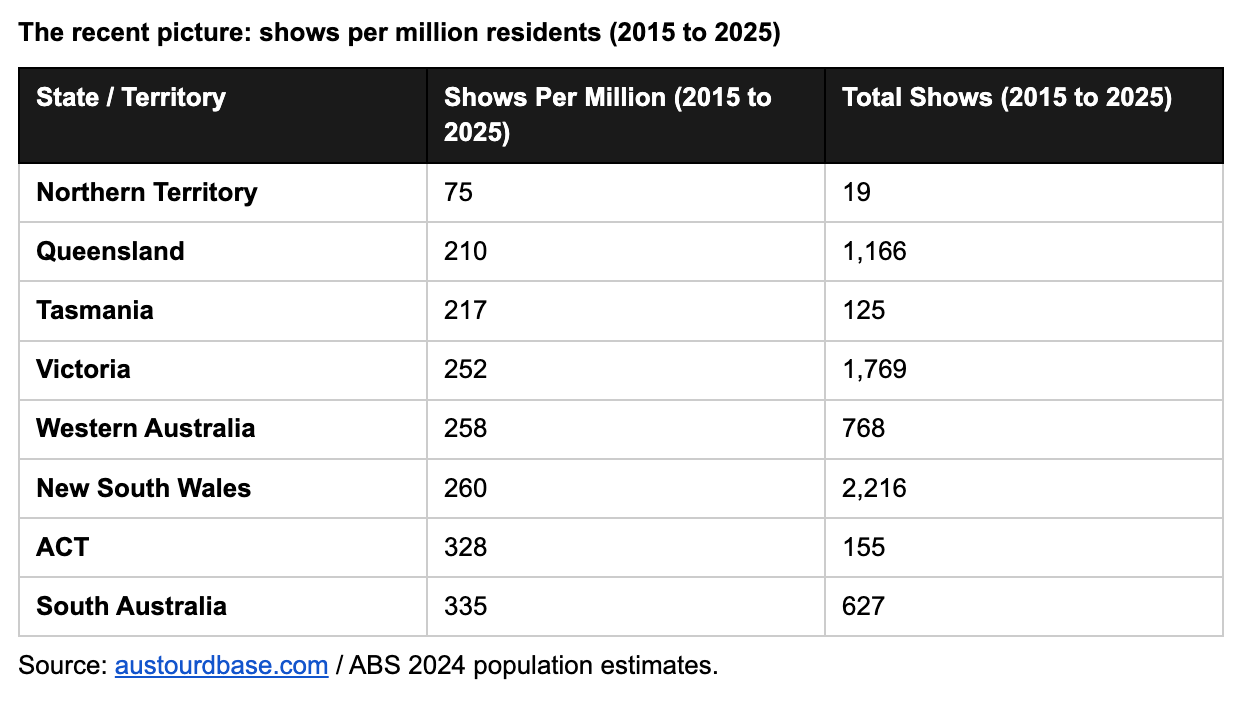
**+Read more:** [*"Tasmania Is Live Music's Most Confusing Frontier"*](https://www.hypebot.com/tasmania-is-live-musics-most-confusing-frontier/)
## Sydney and Melbourne still dominate
[Raw show totals](https://docs.google.com/spreadsheets/d/1f3RDOFdiNQaZc1WSdVdEM7Warq2ZAKmh-0YlpDSll10/edit?gid=1480800289&ref=hypebot.com#gid=1480800289) reveal just how concentrated the Australian touring business remains. Sydney accounted for 7,783 international performances across the full dataset, while Melbourne received 6,836\. Brisbane ranked third with 3,676—less than half Sydney’s total.
The drop becomes sharper outside the largest capitals. Newcastle recorded 601 shows, Wollongong had 286 and Hobart accumulated 270\. Launceston received only 79.
Some of that concentration reflects the practical realities of touring Australia. International productions must contend with long distances, expensive freight, domestic flights, limited venue options and uncertainty over whether smaller markets can sell enough tickets to cover the additional stop.
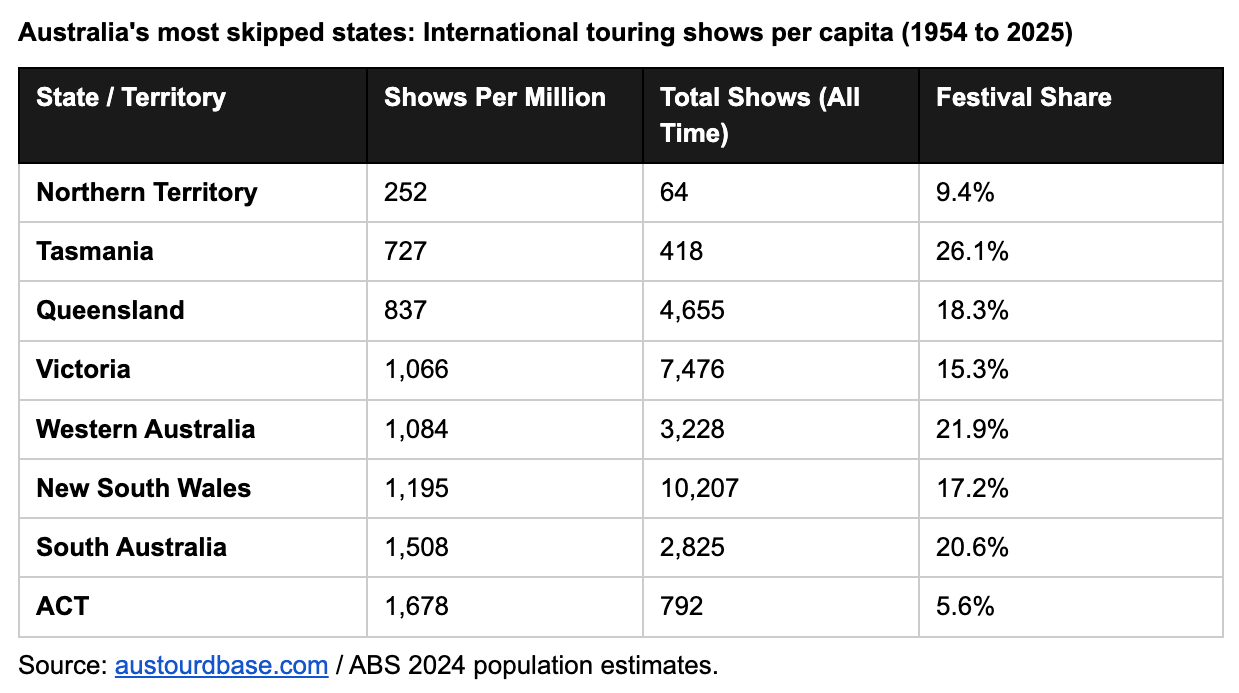
Those constraints can make the familiar Sydney–Melbourne–Brisbane route considerably easier to justify than adding Darwin, Hobart or regional cities. But repeated across thousands of tours, individual routing decisions create a national access problem.
Queensland is an especially revealing case. Despite having more than 5.5 million residents, it ranked near the bottom of the per-capita table. International artists regularly visit Brisbane and occasionally the Gold Coast, but the state’s large regional population remains comparatively difficult to reach.
## Festivals are the only route into some towns
The study’s most consequential finding may be the role festivals play outside conventional touring markets. Every documented international performance in Busselton, Western Australia, was connected to a festival. The same was true of Woodford in Queensland, Maitland and Ulladulla in New South Wales, and several smaller towns.
Busselton’s 49 appearances were all tied to **Southbound Festival**, while Woodford’s 41 came through **Woodford Folk Festival.** In these communities, festivals did not merely supplement the [local touring](https://www.hypebot.com/tag/local/) calendar. They created its entire documented international component.
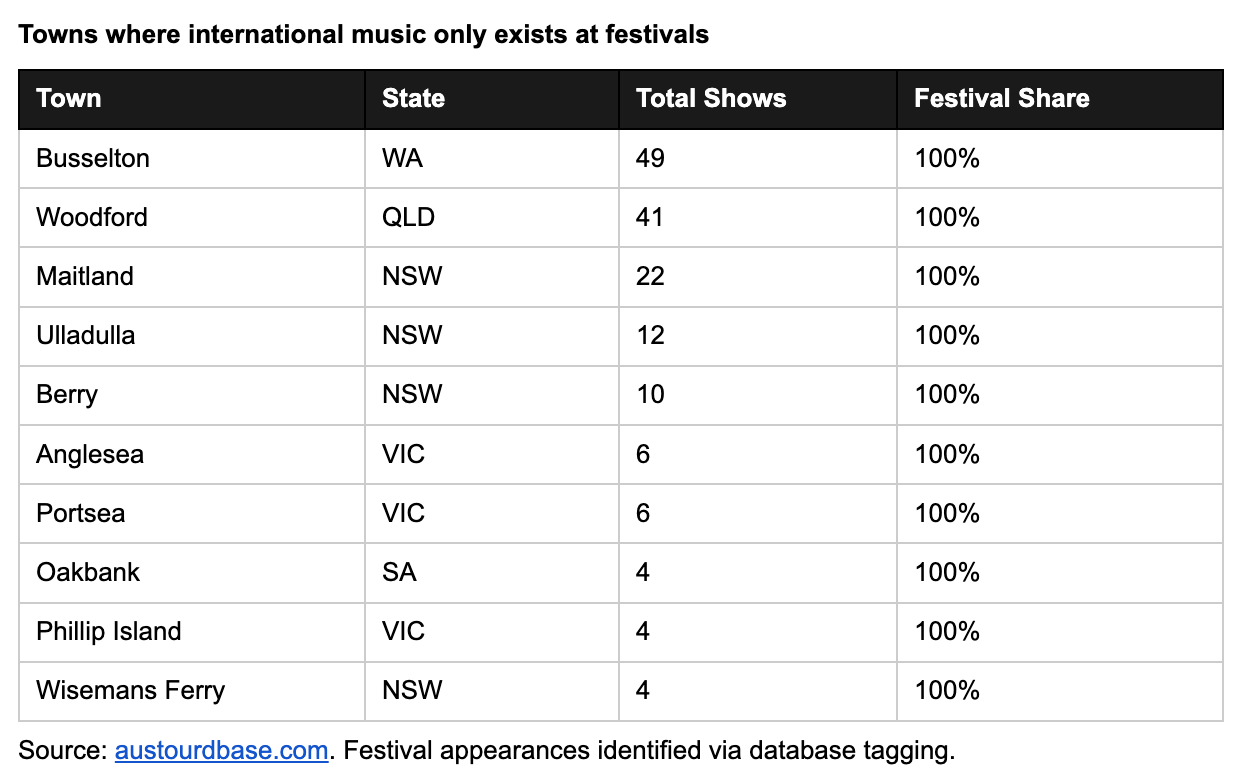
***+Read more:*** [*"Can Cheap Beer Save Australia’s Opening Bands?"*](https://www.hypebot.com/can-cheap-beer-save-australias-opening-bands/)
Tasmania received 26.1% of its historical international shows through festivals, the largest share of any state or territory in the study. That dependence makes the loss or suspension of a major festival more than a hole in the summer calendar: it can remove one of the region’s few reliable connections to international touring.
For promoters and policymakers, that finding strengthens the case for treating regional festivals as touring infrastructure. A festival can combine audiences, production resources and multiple artists in a way that makes a geographically difficult destination economically possible.
The data does require some caution. The [**Australian Concert Tour Database**](https://www.austourdbase.com/?ref=hypebot.com) is community-maintained rather than a complete government record, and cities without documented activity cannot be identified as definitive zeros. The historical per-capita calculation also compares 70 years of shows against 2024 population estimates, so it should be understood as a broad measure of geographic concentration rather than a resident’s annual likelihood of seeing a concert.
Even with those limitations, the pattern is difficult to miss. Australia’s appetite for [live music](https://www.hypebot.com/tag/live-music/) is national. Its international touring network still is not.
---
[*Culture Kings*](https://www.culturekings.com.au/blogs/news/the-australian-states-international-artists-keep-skipping?ref=hypebot.com) *stands at the forefront of a worldwide streetwear phenomenon, showcasing a unique blend of music, sport, and fashion. These core foundations represent the three pillars from which Culture Kings is built.*
### Chartmetric Knows Why Major Tours Get Canceled In 2026
URL: https://www.hypebot.com/chartmetric-knows-why-major-tours-get-canceled-in-2026/
Last updated: 2026-08-13T11:42:59.000Z
**Blue dots can keep artists up at night.**
For the last few months, the term **“**[**blue dot fever**](https://www.latimes.com/entertainment-arts/music/story/2026-05-12/is-blue-dot-fever-real-problem-for-concert-industry?ref=hmc.chartmetric.com)**”** has spread through the music industry after several headlining acts, including [P**ost Malone**](https://variety.com/2026/music/news/post-malone-cancels-stadium-concerts-jelly-roll-tour-1236735970/?ref=hmc.chartmetric.com)**,** [**ZAYN**](https://variety.com/2026/music/news/zayn-malik-cancels-us-tour-1236735511/?ref=hmc.chartmetric.com)**,** [**Meghan Trainor**](https://variety.com/2026/music/news/meghan-trainor-cancels-tour-get-it-girl-1236724113/?ref=hmc.chartmetric.com)**,** and the [**Pussycat Dolls**](https://variety.com/2026/music/news/pussycat-dolls-cancel-reunion-tour-1236737087/?ref=hmc.chartmetric.com), canceled all or part of major tours. The blue dots in question are the available seats on a ticketing page, and apparently, these tours were riddled with them. IE, their tours did not sell enough tickets to make a profit.
Of course, the real story may be more complicated than any single explanation. None of the artists admitted that ticket sales were the reason for the cancellation. Doing so would only double down on the harm to their reputation that comes when axing a tour. [Post Malone](https://app.chartmetric.com/artist/135326?ref=hmc.chartmetric.com), real name Austin Post, said he needed to finish a new album. [Trainor](https://app.chartmetric.com/artist/4913?ref=hmc.chartmetric.com) cited her new baby.
However, three factors surrounding these tours suggest ticket sales could be the culprit.
**First,** [**ticket prices are soaring**](https://www.rollingstone.com/music/music-news/concert-ticket-prices-live-nation-1235544883/?ref=hmc.chartmetric.com)**.** With many people [struggling with the cost of living](https://time.com/article/2026/04/10/america-cost-of-living-pay-crisis/?ref=hmc.chartmetric.com), the idea of spending money on a concert is becoming less realistic for fans across the board. **Second, the above artists share several prominent discrepancies in the data that could suggest they have fewer dedicated fans than it may seem.** And finally, [**the sheer volume of tours**](https://gearsource.com/blog/touring-economics-2026?ref=hmc.chartmetric.com) **competing for fans' attention and dollars** right now may be diluting demand for any single show
The Spotify monthly listeners of the artists above suggest a huge amount of fandom. They range from 16.5 million to 60.6 million, with the[**Pussycat Doll**s](https://app.chartmetric.com/artist/2081?ref=hmc.chartmetric.com) and **Post** holding the lowest and highest positions. Post regularly sits well within the top 50 on the entire platform.
The issue lies in how Spotify calculates monthly listeners. Whether someone is playing Post’s latest album, *F-1 Trillion: Long Bed* (2024)*,* on repeat or simply letting “Sunflower” (2019) pass as part of a workout playlist, they would both count as one monthly listener. And only one of them would likely spend the minimum $57 (plus drinks, transportation, etc) to see him perform at a stadium.
So, in looking at where these artists are getting their listeners on Spotify, all of them are seeing the majority go to songs they released in a previous era. Scanning Post’s daily change in Spotify streams over the past year, famous songs such as “rockstar” (2017), “Circles” (2019), and “Congratulations” (2016) consistently receive the highest numbers compared to newer songs in his recent live setlists, which can be found on [Setlist.FM](http://setlist.fm/?ref=hmc.chartmetric.com).
The most conspicuous example is [**ZAYN**](https://app.chartmetric.com/artist/207124?ref=hmc.chartmetric.com)**,** real name Zayn Malik. He has almost 26 million monthly listeners, but three songs are dominant in total streams: “PILLOWTALK” with 1.8 billion, his **Taylor Swift** collaboration “I Don’t Wanna Live Forever,” with 2.2 billion, and his **Sia** collaboration “Dusk Till Dawn,” with 2.3 billion.
All three of these songs were released between 2016 and 2018, and the only one he’s performing lately is “PILLOWTALK.” Then, his daily change in Spotify streams shows that these three songs get at least 600k more plays every day than the next most popular song, which usually gets around 50k.
These stats then create a feedback loop into playlisting data. ZAYN’s top three songs are in almost 10 times as many playlists as the rest of his catalog. None of Post’s top ten songs in terms of playlist adds are from this decade. If certain songs are always getting the most plays, the algorithm will put them in more playlists while leaving newer songs behind. As such, if the vast majority of people listening to the music only care about a certain few old songs, why would they want to spend their money on a concert?
This puts artists in a serious conundrum. Touring is how they earn the bulk of their income, and most people listen on streaming. So, if streaming is leading to fair-weather fans by nature, artists may have to reconsider their approach to touring.
They could accommodate smaller spaces to perhaps bank on exclusivity to maintain their illustrious reputation. Another option is doubling down on fan engagement to get more people in their camp.
**Luminate just released** [**a study**](https://www.iqmagazine.com/2026/07/gen-zs-price-sensitivity-declining-despite-concert-costs-rising/?ref=hmc.chartmetric.com) **stating that Gen Z audiences are willing to spend their money despite the rising costs.** Many in that generation were too young for these artists' most popular songs, but if the artists can find a way to get more of them interested, their touring careers can be healthy long into the future.
This prospect goes beyond the music. As the Pussycat Dolls demonstrated, collaborating with a currently popular artist doesn’t necessarily do the trick. They tapped [**Sara Landry**](https://app.chartmetric.com/artist/879137?ref=hmc.chartmetric.com), one of the most popular DJs in the world at the moment, to remix their new single, “Club Songs,” and it doesn’t even have 180k streams yet.
Luminate’s findings back up a study by[**Live Nation**](https://www.iqmagazine.com/2026/04/music-fandom-is-central-to-gen-zs-identity/?ref=hmc.chartmetric.com)that found that Gen Z places great emphasis on in-person events, and artists are already addressing this dynamic. For example, artists of all genres and levels of fame are hosting [pop-up sets](https://hmc.chartmetric.com/pop-up-shows-2025-lorde-all-american-rejects-charlotte-de-witte/?ref=hypebot.com) in unconventional locations to provide fans with more intimate, memorable shows. Other artists are investing in intricate activations.
[**Olivia Rodrigo**](https://app.chartmetric.com/artist/260477?ref=hmc.chartmetric.com)curated two simultaneously running [immersive activations in Los Angeles](https://floodmagazine.com/225003/olivia-rodrigo-immersive-experiences-la-announce/?ref=hmc.chartmetric.com) ahead of her third album, *you seem pretty sad for a girl so in love* (2026). Moreover, she also [personally hosted](https://www.latimes.com/entertainment-arts/music/story/2026-06-15/inside-olivia-rodrigos-emotional-la-pop-up-for-her-new-album-you-seem-pretty-sad?ref=hmc.chartmetric.com) a listening event. Now her entire world tour and her new festival, [**Daisy Chain Fields**](https://www.daisychainfields.com/?ref=hmc.chartmetric.com), are sold out.
When mainstage DJ/producer **Kaskade** hosted a pop-up merch shop for his latest album, *undux* (2025), he personally greeted fans at the door. For **Elise Milani,** Director of Operations & Marketing at BLK Matter Ltd and part of Kaskade's management team, the lesson is simple:
**“How are you making those people feel like they're valued?”**
Rodrigo and Raddon certainly made their fans feel valued by showing up to these events themselves, but artists constantly doing in-person events is unrealistic, so this is where Milani defers to the data.
Prior to BLK Matter, Milani worked at 2plus2 Management with the alternative electronic artist **REZZ,** real name Isabelle Rezazadeh. Rezazadeh has an exceptionally dedicated fanbase, to the point that they willingly branded themselves as “the cult.” In strategizing how to build a community around Rezazadeh, Milani wasn’t looking at numbers like monthly listeners. Instead, she would dive into ticket buyers, often seeing that as many as half of them traveled from out of state to see Rezazadeh perform.
“What are they doing while they're there? Is there more that can be built around that?” Milani asks. She would often design custom merch or host temporary pop-ups in the area. “It lent to a lot of culture being created by the community itself. We were helping fuel it by giving them opportunities to meet.”
“When I saw \[Rezazadeh’s\] cult exponentially growing, I was just like, ‘Man, this is so valuable,’” Milani says. “Those superfans that feel a sense of belonging because of you, they're not just buying from you. They're advocating for you.” But such fandom can also be a delicate thing, especially these days with the cost of living being where it is. Immediately jumping on a larger space could suddenly price out the younger fans that supported an artist’s rise in the first place.
“People can lose interest after a certain point if they don't feel like they belong anymore,” Milani says.
Blue dot fever proves that deciding which rooms to play throughout a career is never set in stone. Agents have to look at various sets of numbers every time they’re deciding how to route a tour. For booking coordinator **Julian Schwartzman** of **Liaison Artists**, routing a tour means looking far beyond Spotify monthly listeners. Past ticket sales, gross history, and other indicators of fan demand ultimately determine which rooms an artist can realistically fill.
“If they've sold out, how much can I potentially push those costs up to where our fans will still want to buy with all of the fees that potentially come on top of the tickets?” Schwartzman asks. Every production upgrade, from a larger band to more elaborate staging, eventually affects ticket prices, making tour scaling a balance between the artist’s vision and what fans can realistically afford.
One forward-facing metric Schwartzman has noticed suggests more leeway with budgeting is Instagram. Artists who present an exciting show through video content pique the interest of potential fans regardless of their music. He specifically points out **Baby J**, a DJ who doesn’t produce original music, but she has nearly 800k followers on Instagram. Now she’s performing at **Coachella’s Do LaB stag**e and helming [Asia tours](https://www.instagram.com/p/DWi3Bz5kUO7/?utm%5Fsource=ig%5Fweb%5Fcopy%5Flink&igsh=MzRlODBiNWFlZA==).
Social media seems like it wouldn’t be an issue for the blue dot fever artists, as many of them have tens of millions of followers. But Post, Malik, and Trainor have all seen a net decrease in Instagram followers over the last two years.
“Great \[music\] only gets you so far, which is so unfortunate, because there's so much talent out there,” Schwartzman says. “Having a strong social media presence in today's music industry goes a very long way in terms of being able to move tickets, because you're getting that visibility. They see it via social media, and they say, ‘Wow, $20 for me to experience that? I wanna go.’”
And yet sometimes, even if the artist does everything “right,” prices tickets fairly, routes the tour well, plays realistic rooms, longstanding fans still might not want to go anymore because of this thing called life. A lot can change in a few years. Post’s most popular songs are from seven years ago. Fans can have children in that amount of time, and suddenly concerts just aren’t a priority anymore.
Milani presents it as a form of empathy: “You have to think, what are their hopes and aspirations? What are their pain points? What's holding them back? What are they thinking about when they're considering buying this ticket?”
The younger generation is thinking about concerts. It may be daunting for established artists to work towards attracting a new community when their previous armies were so loyal, but getting fresh faces on board is the surefire way for those blue dots to become fans in the seats.
### Live Music Industry News
URL: https://www.hypebot.com/live-music-industry-news-21/
Last updated: 2026-08-13T11:38:24.000Z
### **$202M Annual Ticket Fraud**
The **UK** government and **O2** have [teamed](https://www.gov.uk/government/news/gig-goers-urged-to-stop-think-fraud-before-buying-tickets?ref=hypebot.com) to urge the public to **Stop! Think Fraud** and to always use official ticketing websites. The campaign comes as new research by O2 reveals the amount lost to ticket fraud in the UK last year reached **£150 million/$202 million.**
The data showed that more than **14% of gig goers surveyed have bought a fake ticket** with 77% of the tickets bought via online platforms. It also found that no age group was immune to scams, but those aged 18 to 24 faced the highest risk with 31% having been sold a fake ticket compared to 4% of those aged 55+.
### **Ticketmaster adds Gemini App**
**Ticketmaster** is now available as a **Connected App in Gemini** enabling the discovery of live events through natural conversations.
Fans can browse eligible events, compare seating options and prices, then continue to the Ticketmaster marketplace to complete their purchase. Event organizers also gain visibility in one of the world’s fastest-growing AI platforms without any additional implementation or setup.
Ticketmaster also has integrations with **Claude, ChatGPT** and **Amazon Alexa+**.
### **Juan Torres joins Tixel**
Former **Prism, Dice** and **Aprimo** exec **Juan Torres** has joined **Tixel** as VP Commercials US, leading the fan to fan ticket resale marketplace's North American commercial operation.
[**Tixel**](https://tixel.com/?ref=hypebot.com)partners with venues, promoters, festivals, and primary ticketing platforms "to eliminate scalping and deliver a secure, fair resale experience for fans and organizers alike." Having built strong market positions in Australia and the UK, the company is now scaling aggressively in the United States.
### **Bandsintown chronicles Dance Music's Live Growth**
New data from [**Bandsintown**](https://www.bandsintown.com/?ref=hypebot.com)comparing 2025 and 2026 shows that **dance music ticket demand is accelerating** faster than virtually every other major genre.
Clicks to buy dance music tickets rose **23.7% year-over-year,** outstripping live growth in hip-hop, pop, rock, R&B, Latin, and country. Total artist follows in the genre grew to **1.51 billion**, adding **60.8 million new fan connections** in the last year. [More stats here](https://www.hypebot.com/dance-music-live-demand-surges-24-bandsintown-data-shows/).
***Get all the latest Music Industry & Live Music News updated continuously from across the web under the Hypebot Industry News tab*** [***here***](https://www.hypebot.com/music-industry-news-feed/)***.***
## Hypebot
Essential news & insights for artists and live music pros.
Sign up for free weekly content delivered to your inbox
Subscribe
Email sent! Check your inbox to complete your signup.
### A London Developer Leased Pink Floyd’s Old Studio to Artists for £1
URL: https://www.hypebot.com/a-london-developer-leased-pink-floyds-old-studio-to-artists-for-1/
Last updated: 2026-08-13T11:35:26.000Z
[**Pink Floyd’s**](https://www.bandsintown.com/a/260-pink-floyd?utm%5Fsource=hypebot&came%5Ffrom=900) former **Britannia Row studio** in London has reopened to artists under a lease costing **just £1.**
That sounds like a feel-good preservation story. It may also be a test case for a more complicated question facing cities everywhere: **Can property developers make room for musicians and artists without abandoning plans to build something more profitable?**
Pink Floyd established Britannia Row Studios in Islington in 1975 and recorded ***Animals*** and parts of ***The Wall*** there. The studio business later moved elsewhere, while the Islington property passed through other uses and eventually fell vacant.
Property company [**Har-monic** acquired the site in 2025](https://www.thetimes.com/uk/london/article/pink-floyd-london-studio-reopens-kxlf9znx9?ref=hypebot.com), reportedly after self-storage operators had shown interest. The developer then spent approximately £60,000 restoring the cultural space and leased it to the Florence Trust, a London arts charity, for a nominal £1\. Today, 18 artists work in newly created studios inside Britannia Row, while three gallery spaces host exhibitions and performances.
For a building that had been empty for years, that is real cultural use — not a plaque, a branded lobby or a nostalgic reference in a luxury apartment brochure.
***+Read more:*** [*"The Story of 'That' Rooftop Concert"*](https://www.hypebot.com/the-story-of-that-rooftop-concert/)
## **The catch: This is “meanwhile use”**
Har-monic is unusually direct about what comes next. Its own project page describes Britannia Row as a [“meanwhile-use cultural space”](https://har-monic.com/projects/35-britannia-row?ref=hypebot.com) operating while redevelopment plans move through the approval process.
The company is developing a mixed-use proposal that would add housing while retaining community and creative functions. Previous planning permission for the property, which has since expired, allowed eight residential units as well as expanded office space. Har-monic’s new plans are still in progress.
That distinction matters. The £1 lease gives artists valuable space today, but it does not necessarily guarantee that the same amount of affordable cultural space (or the same artists) will remain after construction.
***“Meanwhile use”*** has become an increasingly common way to put empty buildings to work during the long period between acquisition and redevelopment. For owners, it can deter deterioration, bring people to a dormant property and build goodwill around a future planning application. For cultural organizations, it can provide access to spaces they could never afford at market rates.
Both sides can benefit. The problem is that artists may also create the energy, identity and desirability that make a site more valuable, only to be displaced when the permanent development arrives.
**Screenshot courtesy of* [**Har-Monic*](https://har-monic.com/projects/35-britannia-row?ref=hypebot.com)**.*
***+Read more:*** [*"UK Unveils £45M ‘Turn It Up’ Plan to Back Artists, Venues, and Careers"*](https://www.hypebot.com/uk-unveils-45m-turn-it-up-plan-to-back-artists-venues-and-careers/)
## **Still better than an empty building...**
That does not make Britannia Row’s arrangement meaningless. Eighteen working studios are better than 18 imaginary studios promised for some future master plan. The [Florence Trust](https://theflorencetrust.com/?ref=hypebot.com) says it now operates more than 70 affordable studios across six buildings, with more than 60% of its turnover returned directly to artists through materials, exhibitions, paid work and other support.
For [independent musicians](https://www.hypebot.com/tag/d-i-y/), the significance stretches beyond this building’s famous past. Live careers do not begin at the venue door. They depend on an entire layer of affordable infrastructure: rehearsal rooms, recording studios, workshops, small galleries and flexible spaces where artists can meet, practice and experiment before an audience ever buys a ticket.
When those spaces vanish, cities may retain concerts while losing the conditions that allow new local artists to emerge. These short-term leases could help bridge that gap. Owners of vacant commercial buildings could offer nominal or heavily discounted rents to vetted cultural organizations while planning applications, financing or construction schedules move forward. Cities could make those agreements easier through tax relief, expedited approvals or incentives tied to affordable creative use.
London already treats meanwhile use as a tool for activating vacant property. But temporary access is not the same as preservation. Organizations such as the [**Creative Land Trust**](https://creativelandtrust.org/?ref=hypebot.com) are pursuing long leases, property transfers, and ownership precisely because artists cannot build stable careers around spaces that may disappear with short notice.
Britannia Row matters because of what Pink Floyd made there. But cultural heritage cannot survive entirely in the past tense. The best way to preserve a studio is not simply to mark the place where famous music once happened. It is to keep the building available to people who have not made their famous work yet.
### Spotify Labels AI-Generated Artists, Hides Recommendations
URL: https://www.hypebot.com/spotify-labels-ai-generated-artists-hides-recommendations/
Last updated: 2026-08-12T12:50:00.000Z
Spotify is taking its biggest step yet to separate human musicians from artificial creators with the launch of the "AI Persona" badge.
Starting in mid-September 2026, listeners will begin seeing an "AI Persona" label on artist profiles that are fully AI-generated and do not represent a real human. Spotify also announced that it will default to excluding these AI Personas from all algorithmic and editorial recommendations.
The move addresses a growing listener and industry frustration: engaging with what appears to be a new artist, only to discover an AI-generated facade.
### **How the Spotify AI Persona Badge Works**
Artists and their teams can now self-disclose their AI status through the Spotify for Artists dashboard. But Spotify isn’t relying on the honor system alone.
The streaming giant's review team is actively scanning profiles that meet certain audience thresholds, flagging those with obvious AI-generated names and imagery. If Spotify applies the badge manually, the creator will be notified and given a chance to appeal. In the coming months, fans will also be given a reporting feature to flag suspected AI profiles.
Listeners who tap the badge on the app will be able to see if the creator transparently self-disclosed, or if Spotify had to step in and flag it.
### **Algorithmic Penalty for AI**
For independent artists and labels, the biggest news isn't the badge - it's the algorithmic suppression. Spotify said it "is focused on elevating music from authentic artists building careers in music."
Unless a user specifically hits "follow" on an AI Persona, that creator's music will be cut out of personalized recommendations, Discover Weekly, and editorial placements.
### **The 2026 Transparency Push**
Spotify notes that the AI Persona badge specifically addresses *who* the artist is, not *how* the music was made. It acts as a companion to other features rolled out this year, including **Verified by Spotify** (proving human authenticity), **SongDNA** (showing contributor context), and **AI Credits** (allowing real artists to transparently disclose AI use in their production process).
## **Hypebot's Bottom Line**
Spotify is finally drawing a hard line in the sand between AI as a production tool and AI as a fake entity.
By banning AI Personas from algorithmic and editorial discovery, Spotify is protecting the platform's most valuable real estate for actual, human musicians trying to build sustainable careers. For indie artists competing in a crowded landscape, this is a massive win for authentic music discovery.
---
### Spotify 'AI Persona' Badges: Key Takeaways
- **What is the Spotify AI Persona Badge?** A new visual label identifying Spotify artist profiles that are AI-generated rather than representing a real human being.
- **When does the AI Persona badge launch?** The feature rolls out to Spotify listeners globally in mid-September 2026.
- **Can AI artists get on Spotify playlists?** No. Spotify will exclude AI Personas from editorial and algorithmic recommendations by default unless a listener specifically follows that profile.
- **How does Spotify know an artist is AI?** Creators can self-disclose via Spotify for Artists, or Spotify’s internal review team will manually flag profiles based on photorealistic AI imagery and naming patterns. Users will also be able to report suspected AI profiles soon.
***Get all the latest Music Industry & Live Music News updated continuously from across the web under the Hypebot Industry News tab*** [***here***](https://www.hypebot.com/music-industry-news-feed/)***.***
## Hypebot
Essential news & insights for artists and live music pros.
Sign up for free weekly content delivered to your inbox
Subscribe
Email sent! Check your inbox to complete your signup.
### Drinking From a Firehose
URL: https://www.hypebot.com/drinking-from-a-firehose/
Last updated: 2026-08-12T12:38:11.000Z
*By *Ian Temple* of* [***Soundfly Weekly***](https://soundfly.substack.com/p/drinking-from-a-firehose)
*\*Follow Ian Temple's Substack,* [*Soundfly Weekly*](https://soundfly.substack.com/?ref=hypebot.com) *for more essays on creativity.*
> *“Creativity begets creativity. When we engage with creative work, we set a higher standard for our own work.” — author Roxane Gay*
Is it possible to be an artist without having a deep relationship with other art and music?
If we’re being truthful, the answer is probably Yes. Every once in a blue moon, I meet an artist who seems to have been birthed in a vacuum, without obvious heroes or years of study. They exist. They’re strange and singular, a product of some cosmic trick played on us by the gods.
But what’s much more common is that I meet an artist doing incredibly interesting things, with a passionate fanbase, and I discover that they have a deeper relationship with other artists, influences, and music than I could ever imagine.
They can list every piece of gear Prince used in *Sign o’ the Times* off the top of their head. They know every Bud Powell solo by heart. They reach out to bespoke synth manufacturers in Italy to get the same synth used by their favorite band. They spout snippets of obscure philosophy, reference dissident artists from imaginary countries, or rank one-handed piano concertos to taste.
They KNOW stuff. They’ve studied it, often on their own and with great obsession.
A short essay on the creative process and music, once a week.
I recently hosted a course with the pop artist Betty Who on lyric writing, and in the conversations we’d have, she would whittle off lyrics from any number of artists she loves with total ease. Every concept we discussed, she’d call to mind three examples. The funny part is that I don’t think she even noticed or considered that it might be exceptional to have memorized literally hundreds (maybe thousands) of songs. She just did it as a matter of course.
It’s one of the most profound differences between the true professionals and the rest of us who aspire to be: Have you spent the time to be a student of the greats, to dig into the stuff that inspires you with depth and vigor?
The pianist Kiefer talks about how often he gets a new student who comes to him and asks the relatively banal question “how do I play like Herbie?” or “how do I sound like Robert Glasper?” To which he always replies: “How many Herbie songs have you learned? How many Glasper pieces do you know how to play?” And almost invariably, they look at him blankly. None. They didn’t think to do that.
Sometimes the easiest routes are the hardest to see.
So yeah, I don’t think it’s incredibly controversial to say that in order to be great at something you need to immerse yourself in it — to fall down its labyrinthine passageways in whatever way you can, to wrap the many dimensions of its messy existence around your shoulders like a misty cloak, to get lost in the petty dramas and exhilarating grandeurs of its unique development. You need to learn shit.
But here’s the thing: When I recently brought this up to some musicians in my accountability group, the response was mostly: “Yeah, we know, but our problem isn’t spending time listening to music — it’s that we’re taking in too much.”
It’s true. The content is a deluge. Every time I lift my phone, it’s like raising a firehose to my face and trying desperately to get a sip while waves of high-pressure water unceasingly blast my receptacles.
We’re taking in a lot. It’s just that very little of it is actually sticking with us. It’s not uncommon for people to listen to 8 hours straight of music in today’s day and age without being able to name a single artist they listened to (someone literally told me they did this yesterday).
And even those of us who are more careful with our intake, it’s still a f&\*^ton. The problem isn’t that we’re not listening to enough music or digesting enough art, usually. The challenge is that we may be doing it without actually taking anything in.
So how do you deal with that? We artists need creative fodder — but we don’t have much time, we’re swamped with shit, and it’s tough to manage it all. How do you ensure that you’re constantly feeding your artistic vocabulary in a productive way without getting overwhelmed by it all?
## **What’s Your Input Persona?**
I came up with a concept for my [**Draft // Echo group**](https://live.soundfly.com/courses/draft-echo?ref=hypebot.com) last year that’s helped me, and maybe it’ll help you: The Input Persona. Basically, the idea is that you come up iwth a character based on your strengths that guides you in how you learn.
Let me give you an example. Questlove of the Roots is one of the voracious musical archivists of our time. It’s clear in everything he does — whether playing covers at a dime on Jimmy Fallon, producing films and documentaries on important events in music history, or DJing sets filled with obscure funk and soul music. In the Fall, I went to a DJ night he was hosting where he only played obscure live Prince songs — for like 6 hours straight. He knows recorded soul music inside and out.
I’d say his character is an Archivist. The Archivist, in fact. He could be hired by the government to preserve our cultural legacy.
I could never be like Questlove. I don’t know why, but it’s not the way I work. I’ve tried at times to gain a wider breadth of artistic knowledge, but for me, none of it sticks. I can’t remember specific record names or song titles. Maybe with flash cards I could get better, but I’ve got no natural file system the way he does.
That’s because I’m an Educator. That’s my input style. What I love to do and what I’m good at is going absurdly deep on something specific in service of sharing it with someone else.
For example, I recently decided to write an article on Chopin’s Raindrops Prelude. I learned the piece and started to analyze it, but before I knew it, I’d read 3 biographies of Chopin, watched about 12 YouTube videos, listened to multiple podcast episodes, and created a [**30 minute podcast episode**](https://soundfly.substack.com/p/how-to-make-epic-music-chopin-and) about it. It felt completely natural and enthralling to me.
Since I realized that’s how I work, I’ve started to lean into that. It’s a big reason I write these newsletters. And when I want to study a topic, I know that the best way to incentivize myself to do it and to ensure I truly digest it is through sharing it with someone else in some way.
There are many types of personas you could take on. Synthwave artist ([**and Soundfly instructor**](http://soundfly.com/comtruise?ref=hypebot.com)) **Com Truise** is a Hacker. He likes to try to go behind the scenes and understand the code behind everything he uses. He loves going down an internet rabbit hole on specific sounds trying to unearth everything about them and how they were made.
Film scorer **Cristobal Tapia De Veer** sounds like an Anthropologist ([**based on interviews**](https://www.thecut.com/article/cristbal-tapia-de-veer-the-white-lotus-composer-interview.html?ref=hypebot.com) I’ve read). He talks about how he’ll immerse himself in a particular musical tradition or subculture sometimes for weeks at a time to understand as much as he can about it.
My friend [**Ewa Łączkowska**](https://open.substack.com/users/233162800-ewa-aczkowska?utm%5Fsource=mentions) sees herself as a Hunter-Gatherer, which means that she’s someone always on the move, following little traces here and there, enjoying anything that’s edible. As a hunter-gatherer, she can’t afford to be picky, and while she often returns to places that have borne fruit in the past, she can’t be fixated. Always to the next one.
She’s even taken the concept one step further by asking herself: What does a hunter-gatherer do? And then using the answers to that question as creative inspiration throughout her process. For example, “if your environment doesn’t feed you, move on” and “make your own tools.” I can definitely see how those characteristics could be really fun problem-solving tools, constraints, or things to play with when making music.
I’m not sure this concept is groundbreaking — but it has stuck with me. Learning that educating others is one of the most effective ways for me to expand my own learning has guided me a lot over the past couple years. It’s become part of my daily and weekly practice in a variety of ways, from writing these newsletters to making [**random presentations**](https://ianrtemple.substack.com/p/the-rise-and-fall-of-florence) for my family to showing something to a friend.
So... **What’s your input persona?** Based on what you know about yourself, what’s a good way that you can break through the constant noise and input new material in a way that will inspire and inform your art? Give it a name. Take on the role. And maybe it’ll help.
---
**Ian Temple* is the Founder and CEO of *Soundfly*. Follow his Substack,* [***Soundfly Weekly***](https://soundfly.substack.com/?ref=hypebot.com) *for essays on the creative process, or join the growing community of musicians and educators on* [***Soundfly***](https://soundfly.com/?ref=hypebot.com) *for free today.*
### AI Is Destroying Common Sense
URL: https://www.hypebot.com/ai-is-destroying-common-sense/
Last updated: 2026-08-16T17:41:07.000Z
*By *Aristotle Dreher* of* [***Aristotle Digs Music***](https://linktr.ee/aristotledreher?ref=hypebot.com)
Music is a direct conduit to the [human](https://www.hypebot.com/tag/human/) soul. AI may be able to imitate algorithmically appropriate and aesthetically pleasing sounds, but it cannot reproduce the lived experience behind them.
Musicians are still being born every day, which poses a problem for AI songwriting. [Artificial Intelligence](https://www.hypebot.com/tag/ai/) can already generate an algorithmically appropriate and aesthetically pleasing song faster than most bands can agree on what is for dinner. It can imitate genres, suggest lyrics, build arrangements, clean up audio, and manufacture an endless supply of competent musical material. Yet whenever I hear an AI generated song, there is a profound lack of character.
I can usually tell it is AI because I cannot hear what microphone they are using or what kind of room they are in. Most people may not consciously notice those things, but we all register them on some level. Those details tell us where the music came from. They create space, texture, personality, and a sense that an actual event took place.
It is going to be very strange if we eventually reach a point where musicians begin imitating AI generated music. My concern is that the music industry will look at the speed and convenience of synthetic output and confuse the ability to produce music with the experience of becoming a musician.
I have spent most of my life creating, playing bass, recording, touring, rehearsing, and carrying speaker cabinets up staircases like Sisyphus, night after night. The finished recording is only one artifact of that life, but it is also an important marking of time. It is a journal of an actual lived experience.
***+Read more:*** [*"Social Media in the Age of AI: The Internet’s Next Luxury Is Proof You’re Human"*](https://www.hypebot.com/social-media-in-the-age-of-ai-the-internets-next-luxury-is-proof-youre-human/)
The real thing is the process that happens before the song exists. Collaboration is key. That is where we are told no. It is where we learn to fail in front of one another, develop taste, argue over arrangements, discover what we sound like together, and gradually become capable of making something none of us could have made alone.
A band is not simply a content factory. It is a small family unit with all the frailties, foibles, and dysfunction that come with it. A band is exactly what the word implies: a group of musicians banding together.
Through collaboration, you learn to admit that occasionally the drummer’s idea is better, despite the dangerous precedent this may set. You also learn that the brilliant part you invented alone in your bedroom may become even better once it has been distilled through the other trusted musicians in your circle.
The friction is where true art develops.
When people discuss AI and music, the conversation usually becomes a debate over output. Can the machine write a catchy melody? Can it produce a convincing vocal? Can it create a track polished enough for a playlist, commercial, or television cue?
Those are fair questions, but music has never existed solely to prove that an acceptable arrangement of frequencies can be produced. Music is a relationship between the musicians and the listener. The first listener is always the player. There is a give and take between the musician, the instrument, the other players, and the audience.
I see this every day through [Aristotle Digs Music](https://www.tiktok.com/@aristotledreher?ref=hypebot.com), the music education series I facetiously describe as *The Reading Rainbow of Rock*. My format is straightforward. I start with a question about a song, artist, performance, or instrument. Then I explore the historical context before we listen closely to the music itself.
I point out what is happening melodically, rhythmically, harmonically, lyrically, or technically. Then I try to connect that musical choice to a larger idea about creativity, persistence, identity, or the audacity to be authentically yourself. What people respond to is the act of another human being noticing something, caring about it, and inviting them to notice it too.
They see my hands on the instrument. They hear the excitement in my voice. They tell me about the first time they heard the song, the parent who introduced it to them, the concert that changed them, or the riff that made them want to start a band.
I have had people tell me that one of my videos made them hear a song differently after decades of listening to it. Others have shared memories of hearing an artist with a parent who is no longer alive. Some have told me that understanding one bass line made them want to pick up an instrument themselves.
Those exchanges remind me that music is not simply audio content. It is a vessel for memory, identity, grief, joy, curiosity, and human connection. The human element is not decorative packaging around the music. It is the entire reason the music has cultural value.
A machine may be able to identify a chord progression or imitate a singer’s phrasing, but it cannot have a memory attached to the song. It cannot remember being fourteen years old, finally playing the riff correctly, and feeling that elation. It cannot feel the room change when a band locks into the same groove. It cannot look across a stage and silently agree to extend an ending because the audience has suddenly become part of the arrangement.
The mistakes matter too. When I hear AI recordings, there are no mistakes. The vocals are always immaculate, and the instruments are uncannily in tune.
**Humanness *is* imperfection.**
We can be done with a piece, but that does not mean the piece is finished. Frankly, a piece is never completely finished. What matters is intention, risk, context, and consequence. Somebody chose to reach for the note. Maybe they did not quite make it, but somehow it sounds better than it would have if they had landed it perfectly. That is where expression lives.
This is where I think the industry faces a genuine danger. If synthetic music becomes fast, cheap, and plentiful, companies may decide that developing human musicians is an expensive inconvenience. All of that experience and expression can be mined, repackaged, and doled out every day for pennies.
Why pay for rehearsals, studios, touring, mentorship, or artist development when a system can produce hundreds of usable tracks in minutes?
The problem with that logic is that musicians are still being born every day. That is not going to stop. So where will they go? Eventually there will be a revolt, because the human soul wants to breathe freely and express itself. Corporate thinking can try to suppress that instinct, but it will not prevail.
If we remove enough humans from that ecosystem, we may end up with more music and less musical culture. We may end up with no actual points of view. Or worse, we will end up with people imitating the lifelessness of AI sounds in their own music. But I will still take that over purely machine generated slop.
I am not arguing that musicians should refuse every new tool. Musicians have always used technology, and much of modern music exists because artists abused equipment in ways its manufacturers never intended.
Feedback and distortion began as problems before they became desirable sounds. Microphone placement, multitrack recording, sampling, synthesizers, editing software, and digital distribution all changed the creative process.
The useful distinction is not technology versus humanity. It is whether the technology expands human expression or gives the industry an excuse to stop investing in human beings.
***+Read more:*** [*"60 Years of the SM58 🎤 A Lesson in Branding"*](https://www.hypebot.com/60-years-of-the-sm58-a-lesson-in-branding/)
Used *intelligently*, AI can help organize ideas, remove repetitive work, make technical knowledge more accessible, and allow independent creators to do things that once required a large team. I have no philosophical objection to a useful tool.
**I object when the tool becomes the author or the performer.**
The most valuable thing artists can do in an algorithmic culture is make the human process visible, because that is ultimately what makes it relatable. The imperfections are what make art tactile and human. Give the audience context, personality, and some evidence that a living person is on the other side of the experience.
That does not mean authenticity should become another marketing costume. Audiences can smell inauthenticity immediately. The point is not to perform humanness. The point is to stop sanding it away in pursuit of frictionless output.
People do not need artists to be perfectly relatable or endlessly available. We want to check in with real human beings and see where they are as artists. We want to witness growth, failure, discovery, obsession, and change.
I always think it is funny when a fan says something like, “I hear this new album is going to sound like their first album.” I do not want that. I want to hear where the artist is today. I can then choose to continue following them on that journey or not, but knowing where they truly are is what I value.
AI may eventually become astonishingly good at making aesthetically balanced and pleasing sounds, but it will never be real art in the way human experience and expression are real art. It may create work that is catchy and technically impressive. But the future of music cannot be measured only by slick sounding synthetic songs.
It must also be measured by whether people are still learning instruments, forming bands, playing rooms, teaching one another, and discovering who they are through the act of making sound together. That distinction is not sentimental nostalgia. It is the difference between music as an endless commodity and music as a living culture.
---
[***Aristotle Dreher***](https://linktr.ee/aristotledreher?ref=hypebot.com) *is a professional bassist, actor, public speaker, and creator of* [***Aristotle Digs Music***](https://www.instagram.com/aristotledreher/?ref=hypebot.com)*, which he describes as The Reading Rainbow of Rock. His work combines musical demonstration, close listening, history, humor, and the human lessons contained within great songs and performances. He has toured and recorded with Vaeda and Cage9 and creates music education content.*
### Bonobo on Pursuing a Grandiose Live Show (Because He Has to)
URL: https://www.hypebot.com/bonobo-on-pursuing-a-grandiose-live-show-because-he-has-to/
Last updated: 2026-08-12T11:47:53.000Z
[**Bonobo**](https://www.bandsintown.com/a/2956-bonobo?utm%5Fsource=hypebot&came%5Ffrom=900) (**Simon Green**) has spent over 25 years as a recording artist, and one of the leading voices in [electronic music](https://www.hypebot.com/tag/electronic-music). It’s a career that has seen him release two Top 10 Albums, rack up billions of streams, collaborate with the likes of Erykah Badu and Damon Albarn, and be both BRIT and GRAMMY-nominated.
It's also taken him on tour all over the globe.
His pioneering live show – built around a full live-band, guest vocalists and immersive visuals – has also set the blueprint for how and where an electronic musician can translate their records into [the live arena](https://www.hypebot.com/tag/live-music/). He has performed to millions of people with sold-out shows at prestigious venues like the Sydney Opera House, Alexandra Palace, and Red Rocks Amphitheatre – in some cases as one of the first electronic artists to do so – and the world’s biggest festival stages including Glastonbury, Coachella, and Fuji Rock.
His last tour also included co-headlining London’s Field Day (with Aphex Twin), and a historic sold-out 5-night [residency](https://www.hypebot.com/in-the-new-era-of-touring-artists-are-planting-in-one-city-for-weeks/) at the Royal Albert Hall, which I ask about. Now he's heading back out on the road in support of his new record, [***Distance in Static***](https://open.spotify.com/album/2FMGW8WrG0BE0ZimHbHw2M?si=5a007018df8b48f3&ref=hypebot.com)*,* out September 11, 2026, on **Ninja Tune**.
Take a listen to some of the singles below, and read our conversation. [Catch Bonobo live in 2026 via Bandsintown.](https://www.bandsintown.com/a/2956-bonobo?utm%5Fsource=hypebot&came%5Ffrom=900)
---
**Hypebot: How did your new album *Distance in Static* come together?**
Simon Green: "I rarely set out to sort of make a full record. You know, conceived from the start to finish. I know some people do that, but I tend to just sort of work on music until there's a sort of critical mass and a record sort of takes shape. But kind of it really sort of comes into focus towards the end, really, like, I don't know what the record is going to be until it's sort of almost at the deadline."
I think the first thing is like not having deadlines, just working on music and just sort of seeing how I feel about what it is I'm trying to do. And I think at that early stage, I'm always trying to second guess what I need to do next. You know, I had these concepts at the beginning of like, Maybe this is just going to be a trip hop record, or: Maybe this is going to be just like a kind of more experimental electronic instrumental record, or maybe it's going to be something else."
But I think, um, as it started coming into focus, I realized there's kind of quite a few things I was trying to say. So it really, it takes shape towards the end and then then we start to see what kind of a record it might be."
**H: When and where was the *Distance in Static* recorded?**
SG: "A little bit everywhere, I think with all my stuff... I mean, the record before this obviously was quite different because it was in the pandemic, but like this one, you know, there was songs that were recorded on tour in like Europe, on tour buses and hotel rooms. There's there's a lot of stuff."
I spent a lot of time in Japan, London, we recorded a lot of stuff. I did a lot of instrumentation tracking in London and over the last couple of years and L.A., which is where I've been living. And also this studio in the Redwoods in California, which was Neil Young's ranch and Broken Arrow Ranch."
And I spent some quite intensive time there at the beginning of the year, just really kind of focusing on finishing the record. And, you know, I sort of was locked in there for, for a good couple of months. So it was a little bit of everywhere."
> *"I think some of the most special moments of my life have come from doing this live show. So, we're back. We'll see where, we'll see where it lands, I guess."*
**H: How did it come about that you could produce in Neil Young’s famous Broken Arrow Ranch Studios?**
SG: "It was a really nice, lucky opportunity to get to sort of spend some time working in there. And it's pretty much like it's really well preserved. Although the studio has been sort of modernised with, with kind of a lot of digital stuff now. But as an experience, yeah, this place is super isolated and it's definitely like a homage to him and his time there."
You know, there's these pictures of like Crosby, Stills and Nash on the wall, all sort of like jamming on this platform, which is right outside the studio and you look out the window and there it is, and it's all in the redwoods. So it's pretty magical place. Really in nature surrounded by, you know, it's in the trees, it's by the river."
It's just really, it's just a really kind of peaceful experience. I didn't I didn't want to leave, actually, but yeah, the studio itself was in this cabin. There's a log fire. The old Neve console is still in there. It's really beautiful."
**H: You famously played Royal Albert Hall on your last tour. How do you look back on that and how do these monumental shows effect your upcoming tour?**
SG: "Yeah. Royal Albert Hall was crazy. It was five nights. It was a five night residency, which was the longest run of a single artist in in their history. I think the longest consecutive run of an artist in the history of the Royal Albert Hall. And each night became more sort of emotionally intense, and it culminated with this, this moment of the organist joining for the end of the set, which just blew people's faces off, really. It was insane. So, yeah it's like, Where do we do where do we go from there?"
The new show is actually going to be really insane because we have the stage design by Pierre Claude, who's been working with recently with sort of Gesaffelstein and The xx and the Air 'Moon Safari' tour as well. So he's, he's come up with some really cool ideas. I think the next step of the show is to do something more, leans more into the visual. And is a bit more sort of structural and architectural and multi-dimensional, I suppose.
There's a North American tour which is going to be at the end of the year. And then there's plans for the live show to be sort of everywhere next year in Europe. The first part of 2027 we'll be out in Europe. So I'm just kind of putting that together now and figuring out what that's going to look like. But I'm excited. I mean, I didn't think I'd do this again, honestly, the live show, because it's such a sort of strain and it really sort of takes its toll physically and mentally after 18 months on the road."
It's very disruptive for your soul doing these. You have these huge highs and these crashing adrenaline after. But it's really special. I think some of the most special moments of my life have come from doing this live show. So, we're back. We'll see where, we'll see where it lands, I guess."
> *"The live show feels really important because I feel like these records are rooted in musicianship, and they are about sort of, you know, fingers on instruments. So the live show is sort of something I feel I really needed to do and really need to say."*
**H: Do you sometimes consider exclusively being a DJ? Because a tour is such a big enterprise and you earn less money with it in these times...**
SG: "Well, that's absolutely true. Yeah, DJing s easier money. And I love deejaying. I love how immediate it is. So I think doing both is the balance, right? And I think the live show has sort of cemented a kind of reputation on the project as well."
I don't know if I could have done what I've done without having the live show as well. And the live show feels really important because I feel like these records are rooted in musicianship, and they are about sort of, you know, fingers on instruments. So the live show is sort of something I feel I really needed to do and really need to say."
But the DJing is not a compromise for me either. It's a different thing, and I think there are some people in my fan base who are not really nightclub people. They only engage with the sort of the recorded music and the live show, and they sort of come to the DJ shows and they're a bit confused. But for me it's a really different thing."
**H: Now that the album comes out do you still feel a certain pressure after all those years of releasing music?**
SG: "You know there is this sort of sense of what's gone before and expectation and how well the last ones have gone, I don't know. I mean, people say that none of this stuff matters, but I think, of course it matters. It's going to bear a weight on you if you've kind of have this perception of what you've done before. But it's fine."
I feel like I'm sort of really happy, I feel like I don't have as much to prove anymore. So it's just kind of like, I think I've said everything I need to say musically at this point. So anything from this point on I can just sort of do for the sense of joy and exploration."
---
## [**Bonobo Upcoming Tour Dates**](https://www.bandsintown.com/a/2956-bonobo?utm%5Fsource=hypebot&came%5Ffrom=900)
### Dance Music Live Demand Surges 24%, Bandsintown Data Shows
URL: https://www.hypebot.com/dance-music-live-demand-surges-24-bandsintown-data-shows/
Last updated: 2026-08-11T16:22:13.000Z
Electronic dance music music has fully completed its transition from late-night underground clubs to high-margin, stadium-scale live entertainment. New data from top global live event discovery and marketing platform [**Bandsintown**](https://www.bandsintown.com/?ref=hypebot.com) comparing 2025 and 2026 confirms that dance music ticket demand is accelerating faster than virtually every other major genre.
### **Bandsintown Data: Key Live Music Metrics**
- **Surging Ticket Intent:** Clicks to buy dance music **tickets rose 23.7% year-over-year**, outstripping live growth in hip-hop, pop, rock, R&B, Latin, and country.
- **Massive Audience Expansion:** Total artist follows in the genre grew to **1.51 billion**, adding **60.8 million** new fan connections in the last year.
- **Shift to Advance Ticketing:** Unlike in most other genres, electronic music fans are increasingly **locking in tickets months before events** rather than relying on door sales, giving promoters clearer revenue visibility.
### **Who Is Driving the Live Dance Boom?**
Global arena headliners continue to anchor massive tour grosses, but a new wave of emerging talent is accelerating discovery.
- **Top 15 Fastest-Growing Artists:** HUGEL, it’s murph, Ian Asher, Kettama, Starjunk 95, Ely Oaks, HOLY PRIEST, Tonic Walter, Nicolas Julian, BOLO, Ninajirachi, Swimming Paul, KI/KI, DJ Habibeats, and Joey Cash.
- **Top 15 Most Followed Overall:** Calvin Harris, Steve Aoki, AFROJACK, Deadmau5, Tiësto, Disclosure, Major Lazer, Martin Garrix, Dillon Francis, Diplo, DJ Snake, Massive Attack, Armin van Buuren, Kygo, and Marshmello.
### **Why Dance Music Is Winning Live**
With over 100 million registered fans and 700,000 artists on the platform and distribution partnerships with Spotify, Apple Music, YouTube, Amazon Music, Google and more, Bandsintown’s massive data highlights a fundamental structural shift.
Electronic dance music is no longer just a nightclub commodity. It has matured into a premium, festival experience. Advanced ticketing behavior proves fan demand that reduces risk for venues, promoters and festivals.
### **Hypebot's Bottom Line**
With a one year 23.7% jump in [**Bandsintown**](https://www.bandsintown.com/?ref=hypebot.com) ticket clicks, dance music's live boom isn't about bigger light shows; it's a structural shift in fan interest and monetization.
As the genre's fans continue to embrace early ticket buying, dance acts are unlocking predictable, arena-level revenue streams that rival mainstream pop and rock.
***Get all the latest Music Industry & Live Music News updated continuously from across the web under the Hypebot Industry News tab*** [***here***](https://www.hypebot.com/music-industry-news-feed/)***.***
## Hypebot
Essential news & insights for artists and live music pros.
Sign up for free weekly content delivered to your inbox
Subscribe
Email sent! Check your inbox to complete your signup.
### YouTube Doubles Watch Hours for Monetization
URL: https://www.hypebot.com/youtube-doubles-watch-hours-for-monetization/
Last updated: 2026-08-11T13:10:17.000Z
**TL;DR for Creators:** YouTube is making major changes to its YouTube Partner Program (YPP) requirements. For independent musicians and industry creators relying on YouTube to build a sustainable business, the barrier to entry is getting significantly higher.
New creators will need 8,000 watch hours (up from 4,000) or 20 million Shorts views to qualify for ad revenue. Creators will also face new ongoing performance minimums to keep their Shorts monetized.
These are the first major adjustments to the YouTube Partner Program (YPP) since 2018\. The changes take effect on February 1, 2027.
Earlier this year, Facebook launched a [new monetization program to attract creators](https://techcrunch.com/2026/03/18/facebook-launches-a-new-monetization-program-to-attract-popular-creators-from-tiktok-youtube/?ref=hypebot.com) from YouTube and TikTok.
Here is what you need to know to adapt your channel strategy for 2027.
### **What are YouTube's new monetization thresholds for 2027?**
To qualify for ad and Premium subscription revenue sharing, new channels will need to hit much steeper metrics. Effective February 1, 2027, the new entry requirements are:
- **1000 subscribers** (and either)
- **Long-form video:** 8,000 qualified watch hours in the trailing 365 days (doubled from the previous 4,000 hours).
- **YouTube Shorts:** 20 million qualified Shorts views in the trailing 90 days (doubled from the previous 10 million views).
### **How do the new YouTube Shorts payout rules work?**
Getting into the YPP is only half the battle. YouTube is introducing an ongoing maintenance requirement for Shorts monetization.
To remain eligible for ad and subscription revenue sharing on Shorts, creators must maintain at least **10 million qualified Shorts views over a rolling 90-day period**.
If your channel dips below this threshold, your Shorts revenue sharing will pause. However, you will remain in the YPP and continue to earn revenue from your long-form content. Once you cross the 10 million view mark again, Shorts monetization will automatically resume.
### **What stays the same for YouTube creators?**
Fortunately, not everything is getting harder. If you rely on direct fan monetization, the lower-tier entry requirements remain unchanged.
You can still unlock **Fan Funding** (Super Chats, Super Stickers, Channel Memberships) and **YouTube Shopping** features at the current threshold:
- 500 subscribers
- 3,000 watch hours OR 3 million Shorts views in the past 90 days.
Additionally, YouTube notes that creators who are already in the YPP prior to this rollout will not be affected by the new entry requirements.
### **Why is YouTube making these changes?**
According to Amjad Hanif, YouTube’s VP of Creator Products, the changes are a response to the platform's massive explosion in watch time, particularly on Shorts and connected TVs. The higher bar is meant to ensure that the creators getting paid receive "meaningful" earnings that they can actually reinvest back into their channels.
To help bridge the gap for smaller creators, **YouTube is also expanding its "Premium Lite" subscription tier globally** (where creators earn a 60% revenue pool cut) and promises to roll out new non-ad-revenue incentive programs—like bonuses for brand deals, using YouTube Shopping, and sparking viral trends.
Creators can review and sign the updated YPP terms within YouTube Studio ahead of the February 1, 2027 effective date.
### **Hypebot's Bottom Line**
**The Takeaway for Musicians:** If you are an independent artist, venues or label building a channel, relying solely on ad revenue just got harder.
These upcoming 2027 changes are also a signal from YouTube: musicians need to diversify their income by leaning heavily into Fan Funding, merchandise via YouTube Shopping, and off-platform brand deals, rather than chasing automated ad-sense dollars alone.
***Get all the latest Music Industry & Live Music News updated continuously from across the web under the Hypebot Industry News tab*** [***here***](https://www.hypebot.com/music-industry-news-feed/)***.***
## Hypebot
Essential news & insights for artists and live music pros.
Sign up for free weekly content delivered to your inbox
Subscribe
Email sent! Check your inbox to complete your signup.
### We can't outrun AI, but we can stop tripping over ourselves
URL: https://www.hypebot.com/we-cant-outrun-ai-but-we-can-stop-tripping-over-ourselves/
Last updated: 2026-08-11T12:36:52.000Z
> ***"People may not always be able to hear whether a person is attached to the music, but they still care whether one is."***
*Guest post by *Bas Grasmayer*, who leads growth strategy at* [***Vandall***](https://vandall.com/?ref=hypebot.com)
In July, **Deezer** announced that [more than 50%](https://newsroom-deezer.com/2026/07/ai-music-exceeds-50-percent-daily-uploads-deezer/?ref=hypebot.com) of new uploads were fully AI in June 2026\. Across the month, around 90,000 AI-generated tracks were being delivered to the platform each day. Up from 10,000 only 18 months prior.
Synthetic music can be produced and distributed at a speed that human creators will never match, but upload volume is not the same as cultural impact.
Fully AI-generated tracks still account for only a small share of listening on streaming (between [1-3% of plays](https://newsroom-deezer.com/2026/07/ai-music-exceeds-50-percent-daily-uploads-deezer/?ref=hypebot.com) on Deezer), and much of that activity has been linked to streaming fraud. These songs are fast to create and fast to move on from and are slung at the algorithm without an artist building a world around them or a team working a release plan.
The current tipping point may be easy to dismiss because so little of the AI music attracts meaningful attention. But the fact that it’s not happening yet, doesn’t mean a playbook won’t emerge to establish synthetic music as a serious competitor for our attention.
## People care who made the music
As music streaming rose in popularity in the 2010s, so did live music and physical formats like vinyl and cassettes. The **IFPI** reported global physical revenues up 8% in 2025, with [vinyl up 13.7%](https://www.ifpi.org/global-music-report-2026-global-recorded-music-revenues-grow-6-4-as-record-companies-drive-innovation/?ref=hypebot.com). **Luminate** found [live music spending still climbing](https://www.hypebot.com/for-gen-z-concerts-are-worth-the-money-and-the-trip/) despite ticket prices that keep rising. People are willing to pay a premium for authenticity.
Another Deezer-commissioned survey found that 97% of listeners failed to distinguish fully AI-generated music from human-made music in a blind test. At the same time, [80% said fully AI-generated music should be clearly labelled](https://newsroom-deezer.com/2025/11/deezer-ipsos-survey-ai-music/?ref=hypebot.com).
Songs often carry relationships, biographies, scenes, memories and stories. People may not always be able to hear whether a person is attached to the music, but they still care whether one is.
## The problem isn’t creation
The response to AI flooding the streaming services is not complicated. Keep putting people in rooms together. Keep running the writing camps. Keep giving artists however long they need, though sometimes it can be helpful to tell someone when the track's done, also.
The problem is what happens afterwards. A song can be written in a week and spend the following six months trapped in admin. Files are spread across inboxes, drives, and expiring links. Decisions sit in unconnected WhatsApp threads, emails, and voice notes.
Music industry outsiders are often surprised by how normal this is. Paperwork, often seen as the boring part, gets relegated to ‘later’ only to become urgent when the song starts earning, rather than being treated as part of the collaboration itself.
This becomes a liability in the age of AI when agents can create, release, and test new synthetic music continuously.
## Speeding up coordination
**The next generation of successful music companies may not look like the large, vertically organized labels that dominated the previous century.**
They may look more like small, highly capable core teams coordinating much larger networks of artists, writers, producers, managers and specialist partners.
We have already seen early versions of this model in dance music. [**UKF** began as two YouTube channels in 2009](https://ukf.com/discover/about-us/?ref=hypebot.com) before expanding into releases, editorial and events. [Monstercat launched on YouTube in 2011](https://www.monstercat.com/about?ref=hypebot.com), building a digital-first label around a large network of producers and a high release cadence. **Spinnin’ Records** was also early on **YouTube**, launching its channel in 2007 and building it into a major distribution and discovery engine: by 2019 it was releasing 15 to 18 tracks a week and had more than 26 million subscribers. [Warner acquired the company in 2017 for a reported $100m+](https://www.musicbusinessworldwide.com/how-spinnin-records-is-meeting-the-challenge-of-holding-on-to-the-attention-of-millennials/?ref=hypebot.com). These teams showed that smaller, networked music companies could move faster by embracing new digital tools and building around how music was now being made, shared and discovered.
**The next version will go further.**
Five years from now, the strongest music companies may still make songs in much the same way they do today. People will meet, exchange ideas, disagree, improvise and take their time. What changes is everything surrounding that process.
Rights information will be captured while the work happens. Files, decisions, agreements and plans will live in one place. Systems will surface what is missing before it becomes a problem. Release checklists will improve with every campaign. Teams will be able to see what worked, learn from it and apply those lessons to the next project. Commercial planning will become part of the workflow rather than a separate scramble that begins once the music is finished.
Ironically, AI may be one of the things that makes this possible. Not necessarily by making the music, but by taking more of the coordination, planning, organization and repetitive work off people's plates.
Some organizations already work that way, but it will become less optional in the next few years. Orgs that thrive will look like a small group of people with the ability to coordinate a much larger network than in the past without adding the same amount of administrative overhead.
The bad outcome is an industry in which human music remains trapped in fragmented systems while synthetic music becomes faster, cheaper and better organized. The cost shows up in teams that stay bloated, workflows that do not scale, and people spending more time coordinating the work than improving it.
The better outcome is that teams become exceptionally good at supporting the things machines cannot reproduce: trust, relationships, judgement, and shared history, while using technology to remove as much friction as possible from everything around them.
**We don't need to outrun AI; we just need to stop tripping over ourselves.**
[***Bas Grasmayer***](https://bas.grasmayer.com/?ref=hypebot.com)*has led product at music streaming services and platform strategy at*[ *COLORS*](https://www.youtube.com/@COLORSxSTUDIOS?ref=hypebot.com)*. He founded the*[ *MUSIC x*](https://musicx.substack.com/) *newsletter and works with*[ *Vandall*](https://vandall.com/?ref=hypebot.com) *on collaboration infrastructure for the music industry.*
### 4 Types of Music Festivals — and What Makes Them Different
URL: https://www.hypebot.com/4-types-of-music-festivals-and-what-makes-them-different/
Last updated: 2026-08-11T11:53:18.000Z
The word [**“festival”**](https://www.hypebot.com/tag/festivals/) can describe some very different [live music](https://www.hypebot.com/tag/live-music/) experiences. And a lot of that depends on how and where the events take place in designated areas.
From distributed events across an entire city's indoor and outdoor venues to building a new city-style site in the middle of nowhere on a farm or rural ground, live music fans can get the chance to see their favorite bands and artists perform on a variety of different stages.
Let's take a closer look at what those distinctions actually entail.
## **1\. The Destination Festival**

**Coachella Festival.*
The destination festival takes a large piece of land and temporarily transforms it into an entire entertainment ecosystem.[**Glastonbury**](https://www.glastonburyfestivals.co.uk/?ref=hypebot.com) occupies Worthy Farm and surrounding land, while [**Coachella**](https://www.coachella.com/?ref=hypebot.com)transforms the Empire Polo Club in Indio, California. These sites become self-contained environments with stages, food, sanitation, security, art installations, backstage compounds, transportation systems and, in many cases, camping.
The defining feature is immersion. Attendees do not simply visit a venue for several concerts. They enter a temporary world, often remaining inside it for several days. The land itself becomes part of the festival’s mythology: Worthy Farm is inseparable from Glastonbury, just as the polo fields and desert landscape are inseparable from Coachella.
That scale also creates enormous logistical demands. Organizers must build much of the infrastructure that an established venue already possesses, then remove it when the festival ends. Glastonbury’s official description of its festival site includes stages, campsites, production facilities, parking, backstage areas and staff compounds — essentially everything required to operate a small city. The festival is taking a fallow year in 2026, [read more about that here.](https://www.hypebot.com/do-you-know-why-theres-no-glastonbury-this-year-its-so-cool/)
## **2\. The Urban Festival Compound**

**Osheaga Festival.*
The urban festival compound follows the familiar multi-stage format but places it *within* a city.[**Osheaga**](https://www.bandsintown.com/f/210193-osheaga-music-and-arts-festival-2026?utm%5Fsource=hypebot&came%5Ffrom=900), which took place July 31 through August 2, built its 2026 festival site inside Montreal’s Parc Jean-Drapeau. Audiences moved between several outdoor stages while remaining within one controlled festival environment.
[**Pitchfork Music Festival**](https://pitchfork.com/news/an-update-on-pitchfork-music-festival/?ref=hypebot.com)followed a similar model during its long run in Chicago’s Union Park. Although Pitchfork announced that the Chicago edition would not return in 2025 after 19 years, its format remains a useful example: one park, multiple stages and a single festival grounds located inside a major city.
This model combines some of the immersion of a destination festival with the existing infrastructure of an urban area. Attendees can use public transit, stay in hotels and visit nearby restaurants rather than relying entirely on festival-built services.
Its central tension is the use of public space. A park that normally belongs to residents is temporarily enclosed, ticketed and transformed into a commercial event site. Organizers must therefore consider restoration, noise, neighbourhood access and the length of time that setup and teardown keep sections of the park unavailable.
**+Read more:** [*"How to Build a Greener Concert Industry"*](https://www.hypebot.com/how-to-build-a-greener-concert-industry/)
## **3\. The Unconventional Single-Site Festival**
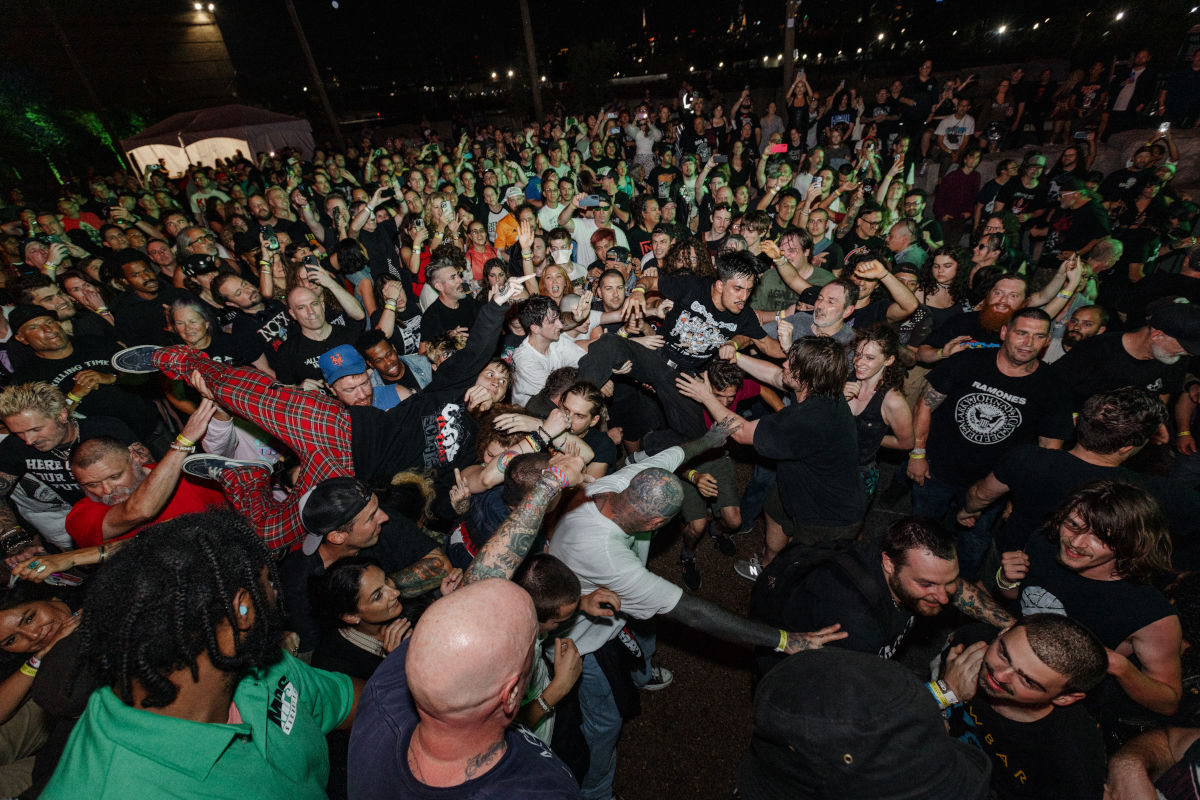
**The CBGB Festival.*
Some festivals still want one controlled site but are becoming more imaginative about what that site can be.[**CBGB Festival**](https://www.bandsintown.com/f/219367-cbgb-festival-2026?utm%5Fsource=hypebot&came%5Ffrom=900) will return September 26 with Morrissey, Patti Smith, Interpol, the Sex Pistols featuring Frank Carter, Bikini Kill, Mannequin Pussy and more. Instead of occupying a conventional park or field, the event will take place at Under the K Bridge Park in Brooklyn’s Greenpoint neighbourhood.
Operationally, it remains a single-site festival: audiences arrive at one entrance and spend the event inside one contained area. What distinguishes it is the willingness to [treat overlooked infrastructure](https://www.hypebot.com/from-aircraft-carriers-to-delis-live-music-promoters-are-betting-on-unusual-venues/) as festival grounds.
Parking lots, waterfronts, industrial properties and spaces beneath highways can offer alternatives when conventional festival sites are unavailable or prohibitively expensive. They can also give an event a visual identity that a generic field cannot. The challenge is adapting those spaces for sound, accessibility, crowd movement and comfort.
## **4\. The Distributed City Festival**
The distributed city festival does not construct one central site. It connects existing venues and public spaces through a shared program.[**Pitchfork Music Festival London**](https://www.bandsintown.com/f/231735?utm%5Fsource=hypebot&came%5Ffrom=900) will present its November 2–8 edition across rooms including the Roundhouse, ICA, KOKO, MOTH Club, Café OTO, EartH, and Village Underground. Instead of building stages, the festival uses venues that already have sound systems, bars, bathrooms, staff and distinct cultural identities.
And [**POP Montréal**](https://www.bandsintown.com/f/223999-pop-montreal-2026?utm%5Fsource=hypebot&came%5Ffrom=900) takes a similar approach. Its September 23–27 program moves through venues including Casa del Popolo, La Sala Rossa, Bar Le Ritz PDB, Théâtre Rialto and Le Ministère. The festival becomes a route through Montreal’s existing independent music ecosystem rather than a world constructed apart from it.
Belfast's [**Fleadh Cheoil na hÉireann**](https://fleadhcheoil.ie/whats-on/?ref=hypebot.com) stretched the model even further this past weekend. The eight-day celebration includes more than 180 competition categories alongside concerts, pub sessions and street performances. Belfast City Council expects more than 800,000 people to participate, making the city itself (not one venue) the gathering place.
Distributed festivals can reduce the need for temporary infrastructure while directing audiences toward local venues, restaurants and businesses. They can also create valuable opportunities for smaller artists by placing them in appropriately sized rooms instead of positioning every performance on a vast outdoor stage.
The tradeoff is fragmentation. Audiences must navigate travel times, overlapping schedules, separate capacities and potentially different ticketing systems. There is no single crowd experiencing the same environment together.
None of these four models is inherently better. Each creates a different relationship among the organizer, the artist, the audience and the surrounding community. A [music festival](https://www.hypebot.com/tag/festivals/), it turns out, is not defined simply by putting several artists on one poster. It is defined by how those artists, audiences, and spaces are brought together.
**+Read more:** [*"The Local Advantage: Could Festivals Win by Thinking Smaller?"*](https://www.hypebot.com/the-local-advantage-could-festivals-win-by-thinking-smaller/)
### 11 Emerging Artists Turn Personal Stories Into Songs That Give Back
URL: https://www.hypebot.com/11-emerging-artists-turn-personal-stories-into-songs-that-give-back/
Last updated: 2026-08-11T11:46:49.000Z
[**Play It Forward**](http://www.playitforward.com/?ref=hypebot.com)has named the 11 winners of its 2026 Emerging Artist Spotlight, connecting independent [music discovery](https://www.hypebot.com/tag/discovery/) with fundraising for artist-selected nonprofit organizations.
Each participating musician has contributed an original song tied to a personal experience, relationship, or cause. Fans can hear the music, learn the story behind it, and make a donation to download the track. According to Play It Forward, 100% of each donation goes to the artist’s chosen [charity](https://www.hypebot.com/tag/charity/).
The causes represented this year include mental health advocacy, gun violence prevention, cancer and diabetes research, environmental protection, community development, and support for survivors of sexual violence. Play It Forward founder Steve Mazza said:
> *“These artists are sharing much more than their music. They are sharing the experiences that shaped them and using those experiences to help someone else.”*
## The 2026 Emerging Artist Spotlight winners
The artists and their selected organizations are:
- [*Marirose Rueth*](https://www.playitforward.com/projects/Shouldnt-Assume?ref=hypebot.com) *— Make-A-Wish Foundation of Illinois*
- [*Jake Cassman*](https://www.playitforward.com/projects/We-All-Look-The-Same?ref=hypebot.com) *— Jail Guitar Doors*
- [*Samaera*](https://www.playitforward.com/projects/good-company?ref=hypebot.com) *— National Alliance on Mental Illness*
- [*Syante*](https://www.playitforward.com/projects/Music-That-Gives-Back?ref=hypebot.com) *— Jubilee Oikos*
- [*Page Montgomery*](https://www.playitforward.com/projects/grit-my-teeth?ref=hypebot.com) *— Take Back The Night Foundation*
- [*BRAY SMIZZI*](https://www.playitforward.com/projects/for-ian-help-end-gun-violence?ref=hypebot.com) *— Everytown for Gun Safety*
- [*Lorelei*](https://www.playitforward.com/projects/protect-our-planets-rainforests?ref=hypebot.com) *— Cool Earth*
- [*Jae Cabrera*](https://www.playitforward.com/projects/spread-the-cheer-with-jae?ref=hypebot.com) *— Spread The Cheer USA*
- [*Gruve Collective*](https://www.playitforward.com/projects/Give-Hope-To-The-Hopeless?ref=hypebot.com) *— Diabetes Research Institute Foundation*
- [*Caliban Strange*](https://www.playitforward.com/projects/caliban-strange-united-way-campaign?ref=hypebot.com) *— United Way Worldwide*
- [*Daniel Saighe, aka Unstoppable*](https://www.playitforward.com/projects/american-cancer-society?ref=hypebot.com) *— American Cancer Society*
The Emerging Artist Spotlight was created to give developing musicians another way to reach listeners while supporting organizations meaningful to them. In addition to a dedicated fundraiser and artist page, each winner receives promotional support from Play It Forward.
The format asks listeners to do more than passively stream a track. Each song becomes an entry point into the experience behind it—and an invitation to support people facing similar circumstances.
For independent artists, it is also an example of how music can build community around a shared purpose. A release can serve simultaneously as creative expression, personal storytelling, audience development, and direct support for a cause.
**+Read more:** [*"School of Rock AllStars' 34-Date Tour Supports Music Education Access"*](https://www.hypebot.com/school-of-rock-allstars-34-date-tour-supports-music-education-access/)
---
[***Play It Forward***](http://www.playitforward.com/?ref=hypebot.com) *is a nonprofit music platform that helps artists raise money for causes they care about through original music. Artists share their songs, fans donate to download them, and 100 percent of donations benefit the participating charities.*
### Can AI Unlearn Music? What Musicians Need to Know
URL: https://www.hypebot.com/can-ai-unlearn-music-what-musicians-need-to-know/
Last updated: 2026-08-10T14:25:45.000Z
### **Why AI Can’t Just 'Unlearn' Music**
AI developers love pitching a comfortable safety net to skeptical musicians: "If you don't like how your music is used, we can always take it back out later." But says Chris Castle of MusicTechPolicy, this promise is practically fiction.
Unlearning a song from a trained neural network is, as [The Trichordist](https://thetrichordist.com/2026/08/06/your-music-ai-and-the-machine-unlearning-research-hub-what-every-musician-should-know/?ref=hypebot.com) wrote. like trying to extract eggs from a fully baked cake. Once a model trains on your tracks, it alters trillions of internal mathematical parameters across the system.
"Creators should not assume that a contractual promise to “remove” works from future training is equivalent to proving that an existing model has actually forgotten them," says Castle.
To address this gap between tech claims and technical reality, he's launched the [Machine Unlearning Research Hub](https://musictechpolicy.com/machine-unlearning-research-hub/?ref=hypebot.com).
### **What Is The Machine Unlearning Research Hub?**
The Hub serves as an open knowledge resource tracking peer-reviewed computer science, audio research, and policy analyses surrounding "machine unlearning" - the theoretical process of making AI models forget specific training data without rebuilding the entire system from scratch.
### **How Musicians Can Use The Machine Unlearning Hub**
- **Fact-Check Tech Pitches:** When an AI startup claims you can easily "opt-out" or "delete" your catalog post-training, use the Hub's research to call out the spin.
- **Strengthen Licensing Deals:** Demonstrate to platforms that retroactive removal isn't currently feasible, reinforcing why strict upfront consent and licensing fees are mandatory.
- **Track Real Technical Progress:** Follow legitimate developments in audio unlearning (such as post-pruning or output filters) to know if true data removal ever becomes a reality.
- **Support Legal & Policy Advocacy:** Utilize the Hub’s findings in copyright debates to refute arguments that unlearning offers an easy fix for unauthorized scraping.
Learn more [here](https://musictechpolicy.com/machine-unlearning-research-hub/?ref=hypebot.com).
### **Hypebot's Bottom Line**
When dealing with AI music companies, never trade upfront permission or payment for a promise of "we can always delete it later." Until true machine unlearning becomes technically feasible, obtaining strict, pre-training consent remains the only real protection.
By grounding artist rights in hard science, the Chris Castle and his new Machine Unlearning Research Hub hope to ensure musicians don't get sold a fake delete button.
***Get all the latest Music Industry & Live Music News updated continuously from across the web under the Hypebot Industry News tab*** [***here***](https://www.hypebot.com/music-industry-news-feed/)***.***
## Hypebot
Essential news & insights for artists and live music pros.
Sign up for free weekly content delivered to your inbox
Subscribe
Email sent! Check your inbox to complete your signup.
### Merck Mercuriadis to Keynote Music Tectonics 2026
URL: https://www.hypebot.com/merck-mercuriadis-to-keynote-music-tectonics-2026/
Last updated: 2026-08-10T13:07:51.000Z
Music catalog investor and longtime artist manager **Merck Mercuriadis** will deliver the keynote address at [**Music Tectonics 2026**](https://www.musictectonics.com/conference?ref=hypebot.com), taking place this **October 27–29** in Santa Monica, California.
Mercuriadis is scheduled to speak October 28 at the **Annenberg Community Beach House.** This year’s conference has expanded to three days across two beachfront venues, bringing together music executives, artists, managers, investors, publishers, and technology founders.
The [conference](https://www.hypebot.com/tag/conferences/) will center on the theme **“Grow Music, Grow Value,”** exploring how different corners of the industry can collaborate to expand the overall music market.
“The last decade has transformed the fortunes of the music industry through systemic change in how people consume music as streaming grew from 30 million to over 800 million paid subscribers globally,” Mercuriadis said. He continued:
> *“The next decade will further transform the fortunes of artists, songwriters, producers and managers, without whom there is no music industry, through what will be the most significant value shift ever.”*
Mercuriadis helped reshape the market for music catalogs through Hipgnosis Songs Fund, Hipgnosis Song Management, and Hipgnosis Songs Capital. Those companies invested in catalogs associated with artists, songwriters, and producers including Neil Young, Red Hot Chili Peppers, Nile Rodgers, Shakira, Leonard Cohen, Jack Antonoff, Justin Bieber, and Justin Timberlake.
He has since announced the launch of Hipgnosis Artist Partnerships, where he serves as founder and executive chairman. Earlier in his career, Mercuriadis managed artists including Elton John, Beyoncé, Guns N’ Roses, and Iron Maiden.
Music Tectonics founder Dmitri Vietze said the keynote will support the conference’s broader effort to bring traditionally separate sectors of the music business into the same conversation.
“This year, we want to rally everyone from top label execs to publishers to artist managers to artists and founders around a single theme: how we can work together to create a rising tide that lifts all boats,” Vietze said.
## Music tech, investment, and AI on the agenda
Other announced sessions will examine where investors are placing money in music technology, activating artists inside major social games, and whether AI could expand the industry’s total addressable market through new licensing and royalty models.
The schedule will also include conversations about technology designed to increase music revenue, a session in which label representatives respond to music tech startup pitches, and discussions about making AI work for artists, labels, and publishers.
Early-bird tickets are available **through August 11.** Registration and additional conference information can be found on the [Music Tectonics website](https://www.musictectonics.com/conference?ref=hypebot.com).
---
[***Music Tectonics***](https://www.musictectonics.com/conference?ref=hypebot.com)*was founded to explore the deep seismic shifts that keep the music industry unsettled. Music Tectonics unites music tech innovators across industry boundaries to share insights and get business done. A variety of experiences in unexpected venues offer attendees many opportunities for making meaningful connections, scheduling meetings, and serendipitous encounters.*
### Your Morning Coffee Podcast: Spotify, Touring, Gen Alpha, AI, Vinyl
URL: https://www.hypebot.com/your-morning-coffee-podcast-53/
Last updated: 2026-08-10T13:08:23.000Z
On this week's Episode 314 hosts Jay Gilbert & Mike Etchart break down these vital music industry stories:
**• Spotify Hits 300M Premium Subscribers in Q2, Adding 7M, As Streamer Posts $762M Operating Profit.**
**• The "Stadium Nations": What's Driving the Global Touring Boom?**
**• The Music Industry Is Trying to Guess the AI Recipe "After Dinner Was Served".**
**• A 'Pressing' Issue: Why Are Vinyl Albums Becoming So Different From Their Digital Versions?**
Listen here:
Also available on your favorite podcast platform. Subscribe to the Your Morning Coffee newsletter [here](https://label-logic.us8.list-manage.com/subscribe?u=735771602810b0eb238d4e814&id=1ffaab59d7&ref=hypebot.com).
**FIND MORE CURATED MUSIC BUSINESS AND INDIE PODCAST EPISODES** [**HERE**](https://www.hypebot.com/tag/podcast-music-biz/)**.**
### Musician Growth Lab Offers Indie Artists Mentorship and a $5,000 Grant
URL: https://www.hypebot.com/musician-growth-lab-offers-indie-artists-mentorship-and-a-5-000-grant/
Last updated: 2026-08-10T11:56:35.000Z
A new national nonprofit is offering independent musicians a year of practical career development, industry mentorship, and financial support. [**Musician Growth Lab**](https://www.musiciangrowthlab.org/?ref=hypebot.com) has opened applications for its inaugural 2027 cohort, which will include five artists or bands from across the United States. Applications will remain open **through October 11, 2026.**
Running from January through December 2027, the virtual program is designed to help musicians develop the business skills required to build sustainable careers without stepping away from their existing creative work, touring schedules, or day jobs.
Participants will attend monthly “Growth Sessions” led by music industry professionals, receive one-on-one mentorship and office hours, and qualify for a $5,000 grant upon successfully completing the program.
Sessions will cover touring, publicity, synchronization licensing, contracts, royalties, distribution, merchandise, financial management, and long-term career planning. The curriculum was developed with input from an advisory council of working musicians intended to keep the program grounded in the challenges artists currently face.
**Screenshot courtesy of* [**Musician Growth Lab*](https://www.musiciangrowthlab.org/?ref=hypebot.com)**.*
***+Read more:*** [*"How Come Nobody Ever Talks About 'Casual Fans?'"*](https://www.hypebot.com/how-come-nobody-ever-talks-about-casual-fans/)
## Musicians are increasingly running small businesses
Musician Growth Lab founder and executive director Kevin York developed the program after spending five years working with artists as a publicist.
York said he repeatedly encountered talented musicians juggling multiple jobs while attempting to finance and manage their careers independently. The problem was not necessarily the quality of their music, but the growing number of responsibilities artists were expected to handle around it. According to York:
> *“The definition of being a successful musician has changed dramatically. Making great music is still essential, but today artists are also expected to run what amounts to a small business.”*
That business can include booking shows, managing budgets, negotiating agreements, planning releases, overseeing merchandise, collecting royalties, pitching media, and building an audience — often without the staff or financial resources available to established acts.
Musician Growth Lab aims to make that knowledge more accessible by combining structured education with individualized guidance from experienced industry professionals.
Because the program will be conducted virtually, selected musicians can participate from anywhere in the country while continuing to write, record, perform, and work.
Five artists or bands will be selected for the first cohort. Musicians can review the eligibility requirements and submit an application through the [Musician Growth Lab website](http://www.musiciangrowthlab.org/apply?ref=hypebot.com).
***+Read more:*** [*"Charge More to Cover Your Costs or Charge Less to Help Out Fans?"*](https://www.hypebot.com/charge-more-to-cover-your-costs-or-charge-less-to-help-out-fans/)
---
[***Musician Growth Lab***](https://www.musiciangrowthlab.org/?ref=hypebot.com) *is a national nonprofit organization helping independent musicians build sustainable careers. Through career development, mentorship from experienced music industry professionals, and financial support, Musician Growth Lab equips artists with the knowledge, guidance, and resources to navigate the business of music without losing sight of the reason they started making it in the first place.*
### Honey, Why Don't We Talk About Khruangbin Anymore?
URL: https://www.hypebot.com/honey-why-dont-we-talk-about-khruangbin-anymore/
Last updated: 2026-08-10T11:51:14.000Z
For a stretch there, right around the time of the pandemic, discovering [**Khruangbin**](https://www.bandsintown.com/a/1922700-khruangbin?utm%5Fsource=hypebot&came%5Ffrom=900) felt like being whispered a secret that everyone else somehow already knew, too.
The Houston trio’s mixture of Thai funk, surf guitar, dub, soul, and psychedelic music was immediately identifiable, while their black hair dos, minimal stage banter and extraordinary musicianship made them one of the most infectious live bands in the world. Then the world caught up. And they were everywhere. And I'm pretty sure *nobody* had a problem with it. They're just one of those perfect "festival scale" bands, despite being so visually, and musically, minimalistic.
Now, Khruangbin is almost a "given" on any festival stage, rarely in need of introduction. But that's kind of where my curiosity lies at the moment... **Nobody really *talks about them* anymore?**
It's almost like we just assume that they'd just settled into a formula that works and are riding it out until the invitations stop coming. But that's not true at all, and in fact, the trio has become this well-oiled entertainment machine based on all those 10,000 stage hours of global fan engagement these past two years. They've refined and redefined their sound subtly, gotten extremely precise, and even re-recorded one of their old albums just to see what would happen.
Let's get caught up.
## **Khruangbin did not disappear. They became a headliner.**
Over the past few summer weekends, Khruangbin has headlined Japan’s famous **Fuji Rock Festival** and topped the opening day of South Korea’s **Incheon Pentaport Rock Festival.**
When the band first appeared at Fuji Rock in 2019, they played the smaller Field of Heaven stage. This year, their return graced the top of the Green Stage bill. [Fuji Rock’s own preview](https://en.fujirockfestival.com/news/feat01?ref=hypebot.com) acknowledged that Khruangbin had effectively climbed the ladder all the way to headliner status.
At Pentaport, the band demonstrated how it has learned to work at that level. During “So We Won’t Forget,” Khruangbin [folded the melody of “Arirang,” a traditional Korean song, into the performance](https://www.instagram.com/reel/DbdjtddSv%5Fj/?ref=hypebot.com), with a nod to [**BTS**](https://www.bandsintown.com/a/695158-bts?utm%5Fsource=hypebot&came%5Ffrom=900) whose new album is titled that. It was not an enormous production stunt. It was a subtle acknowledgment of where the band was and who they were standing in front of.
That is kind of just how Khruangbin operates; the gestures are restrained, but precise.
***+Read more:*** [*"A 2026 Live Music Venue Guide to São Paulo"*](https://www.hypebot.com/a-2026-live-music-venue-guide-to-sao-paulo/)
## **They got bigger without making the music bigger**
Usually bands keep going for more and more and more when they get a taste of mass public attention. Just look at this year's [Coachella stage set designs](https://www.instagram.com/popular/coachella-stage-design-2026/?ref=hypebot.com).
The conventional live-business ladder moves an artist from clubs to theatres, amphitheatres and eventually arenas. Khruangbin became large enough in audience pull to consider playing in arenas, with massive structural additions to their performance, and opted out.
During the *A La Sala* cycle, the band favored [multiple-night](https://www.hypebot.com/in-the-new-era-of-touring-artists-are-planting-in-one-city-for-weeks/) amphitheatre engagements over an arena run. Bassist **Laura Lee Ochoa** [explained to ***Uproxx***](https://uproxx.com/indie/khruangbin-interview-a-la-sala-tour-hollywood-bowl/?ref=hypebot.com)that guitarist **Mark Speer** had reservations about how an arena would handle the intricacies of her melodic bass lines. A larger room might flatten the details that make Khruangbin sound like Khruangbin. Multiple nights also gave the trio room to rotate the [song setlists](https://www.hypebot.com/tag/setlist/) for returning fans, correcting some of the rigidity of the more tightly programmed *Mordechai* tour.
That discipline shaped *A La Sala*. Recorded with minimal overdubs and no outside collaborators beyond longtime engineer Steve Christensen, it returned attention to the same three musicians responsible for recreating it onstage. Drummer **Donald “DJ” Johnson** described the challenge as being minimalist and maximalist simultaneously: creating an expansive sound without backing tracks or an expanded [touring band](https://www.hypebot.com/tag/touring/).
***+Read more:*** [*"Can Cheap Beer Save Australia’s Opening Bands?"*](https://www.hypebot.com/can-cheap-beer-save-australias-opening-bands/)
## **The setlist stayed still while the show kept moving**
For much of the *A La Sala* tour, Khruangbin devoted the first half of the concert to performing the album in sequence. The band did not play to a click track or inflexible musical cues. Speer has explained that small mistakes could reveal ideas worth repeating. Dynamics changed, tempos breathed and songs gradually told the musicians what they wanted to become. The album sequence accumulated the lessons of performing it for audiences around the world.
Harkening back to the album cover artwork, the staging of a staircase leading to three window-like screens, created a changing weather and lightscape over the course of their set. Ochoa and Speer used slow, synchronized movements rather than constant crowd work, turning the stage into something between a living room, an installation and a piece of choreography. [One Seattle review](https://offtherecordpress.com/reviews/2025/5/28/khruangbins-a-la-sala-tour-turned-seattle-into-their-living-room?ref=hypebot.com) described the effect as making the cavernous WAMU Theater feel like the band’s living room.
***+Read more:*** [*"Upcycled Tour Merch Is Live Music's Next Green Frontier"*](https://www.hypebot.com/upcycled-tour-merch-is-live-musics-next-green-frontier/)
## **Ten years of concerts rewrote the first album**
In November 2025, Khruangbin offered the clearest evidence that [live performance](https://www.hypebot.com/tag/live-performance/) had helped develop the group's sound even further. Rather than remastering or repackaging its debut for its tenth anniversary, the trio returned to the same Central Texas barn and re-recorded it.
[*The Universe Smiles Upon You ii*](https://redlightmanagement.com/khruangbin-unveil-the-universe-smiles-upon-you-ii-re-recorded-reimagined-versions-of-their-debut-album-to-celebrate-the-records-10th-anniversary/?ref=hypebot.com) used the same instruments and location, but it was not an attempt to recreate 2015\. Its arrangements, sequence and track selection reflected how Khruangbin understood the material after a decade of performing it. Simply playing the songs as originally recorded would no longer have represented who the musicians were.
The band paired the release with a sold-out 15-date run through venues including **Webster Hall, 9:30 Club, Metro,** and the **Fonda Theatre.** After an *A La Sala* world tour that [its production team said encompassed approximately 130 performances](https://www.instagram.com/p/DPGmkwmDn0e/?ref=hypebot.com), Khruangbin deliberately brought its oldest songs back into club-sized rooms.
That is a feedback loop: songs go on tour, audiences change how the musicians understand them, and those lessons eventually become the new recorded versions.
## **The closest thing to a live-music promise**
Khruangbin’s early appeal was based partly on *novelty*. The band sounded unlike almost anything else on a festival bill. Its current value is based on something sturdier: ***trust.***
Audiences now understand what a Khruangbin performance offers: an unhurried groove, meticulous musicianship, visual beauty, gradual release and the feeling of being transported somewhere calmer. And they're continually nailing it, getting tighter with every ring around the calendar.
Years spent in front of audiences have taught the trio how long a groove can breathe, when a familiar melody should arrive, how much visual information the music needs and which parts of a supposedly finished song remain open to change. Khruangbin knows the difference between what fans recognize and why they return.
That relationship now supersedes any individual album cycle. People are not necessarily buying tickets to hear a new release's songs, they're buying into a vibe and the certainty that the band will deliver it.
---
## [**Khruangbin Tour Dates**](https://www.bandsintown.com/a/1922700-khruangbin?utm%5Fsource=hypebot&came%5Ffrom=900)
### A 2026 Live Music Venue Guide to São Paulo
URL: https://www.hypebot.com/a-2026-live-music-venue-guide-to-sao-paulo/
Last updated: 2026-10-06T18:27:29.000Z
When [**Bandsintown's 2025 High Notes** came out](https://www.hypebot.com/bandsintowns-high-notes-reveals-the-artists-genres-cities-that-led-live-music-in-2025/) last year — revealing analyses around some of the most interesting data points in the live music industry — we were surprised and delighted to see that [Brazil's](https://www.hypebot.com/tag/brazil/) cultural capital **São Paulo** was #4 on the **Top 10 Global Cities Gaining Fans Fastest** list.
Here's our list of eleven venues shaking up the scene in São Paulo right now.
Make sure to [head to Bandsintown to discover many live events around this city.](https://www.bandsintown.com/c/sao-paulo-brazil?utm%5Fsource=hypebot&came%5Ffrom=900)
## **1\. Casa Rockambole**
**Casa Rockambole** may be the clearest center of gravity in São Paulo’s current alternative scene. Part venue, part label ecosystem and part creative clubhouse, it appears repeatedly in local indie calendars and is hosting artists ranging from Jonnata Doll and E A Terra Nunca Me Pareceu Tão Distante to Ludovic, Jovens Ateus and Rodrigo Alarcon this month.
[**Discover upcoming events.**](https://www.bandsintown.com/v/10320877-rockambole?utm%5Fsource=hypebot&came%5Ffrom=900)
## **2\. Casa Natura Musical**

**Casa Natura** is a 710-capacity venue wholly committed to Brazilian music across rap, MPB, rock, samba and contemporary hybrids. It's a room with the capacity to turn independent momentum into a major domestic career. Its current calendar includes Don L, a sold-out Terno Rei anniversary show, Zander with Far From Alaska, and a São Paulo Independent Music festival pairing of Boogarins and Pelados.
[**Discover upcoming events.**](https://www.bandsintown.com/v/10018179-casa-natura-musical?utm%5Fsource=hypebot&came%5Ffrom=900)
## **3\. Bar Alto**
Opened by people connected to Balaclava Records, Popload and Tokyo, **Bar Alto** has become both a destination venue and an informal gathering place for São Paulo’s music community. Its 250-capacity room hosts emerging Brazilian acts, international alternative artists, label parties and DJs without making the entire building dependent on ticketed shows. August includes Gab Ferreira, Garotas Suecas, Turmallina and Mexican band Diles Que No Me Maten.
[**Discover upcoming events.**](https://meaple.com.br/baralto?ref=hypebot.com)
## **4\. Cine Joia**
Operating inside a former cinema in Liberdade, **Cine Joia** combines the atmosphere of a major concert with the flexibility of an alternative club. Its remarkably broad upcoming calendar moves from Fafá de Belém and Budah to Black Pantera, Otto, The Slackers and Japanese hip-hop project *Luv(sic) Hexalogy*. Bandsintown currently shows approximately 22 upcoming events, making it one of the city’s busiest recognizable concert rooms.
[**Discover upcoming events.**](https://www.bandsintown.com/v/10008898-cine-joia?utm%5Fsource=hypebot&came%5Ffrom=900)
## **5\. Picles**
**Picles** is the wonderfully unruly grassroots choice. The 150-capacity Pinheiros venue combines original live music, DJs, karaoke and an open stage equipped with instruments — and recently celebrated its eighth anniversary. It has shows whenever it opens, with Thursdays and Fridays generally emphasizing original music before Saturdays turn more dance-oriented. Its August calendar continues with Abacaxepa, Besouro Mulher, Felipe Vaqueiro and Aquino.
[**Discover upcoming events.**](https://ma.to/venue/piclescardeal?ref=hypebot.com)
## **6\. Mundo Pensante**
**Mundo Pensante** remains one of the city’s essential homes for contemporary Brazilian music, particularly samba, soul, rap, Afro-Latin music and experimental sounds. Its calendar operates more like a living community than a conventional sequence of tour dates: current programming includes Tietê, O Pente, Chamego, DJ Nuts and a showcase with Sofia Malta and Dupê. Its recurring Afrojam has also become an important gathering point for Black musicians in São Paulo.
[**Discover upcoming events.**](https://www.mundopensante.com.br/programa%C3%A7%C3%A3o?ref=hypebot.com)
## **7\. Hangar 110**
For punk, hardcore, emo and metal, **Hangar 110** remains difficult to dislodge. Its 2026 calendar mixes Brazilian scene institutions with international touring acts including The Red Jumpsuit Apparatus, Swallow the Sun, Samiam, Between the Buried and Me, A Wilhelm Scream and Militarie Gun. Few venues demonstrate São Paulo’s continued importance on alt Latin American touring routes as clearly.
[**Discover upcoming events.**](https://www.bandsintown.com/v/10008450-hangar-110-musica-and-cultura?utm%5Fsource=hypebot&came%5Ffrom=900)
## **8\. Bona Casa de Música**

**Bona** occupies a useful space between a tiny grassroots club and a formal concert hall. It specializes in mid-level independent Brazilian artists, with carefully designed acoustics and listening-focused presentation. Its packed August schedule includes Bento Gil, Bruna Lucchesi with Helio Flanders, Flavio Tris, Lirinha and Caçapa, and Rodrigo Maranhão’s album-release show.
[**Discover upcoming events.**](https://www.instagram.com/bona%5Fcasa%5Fde%5Fmusica/?ref=hypebot.com)
## **9\. Casa de Francisca**
Located in the historic Palacete Teresa downtown, **Casa de Francisca** remains one of São Paulo’s most carefully curated musical spaces. Its salon, basement, intimate Sala B and Largo-facing bar allow several different kinds of programming to coexist. The calendar consistently mixes adventurous newcomers, Brazilian veterans, repertoire projects and unusual collaborations — the sort of shows that rarely fit neatly into standard touring venues.
[**Discover upcoming events.**](https://www.bandsintown.com/v/10258656-casa-de-francisca?utm%5Fsource=hypebot&came%5Ffrom=900)
## **10\. Audio**
**Audio** earns the final spot as São Paulo’s most convincing bridge between the independent ecosystem and larger international touring. It currently reports roughly 24 upcoming concerts, with a calendar spanning Gaby Amarantos, Sticky Fingers, Planta & Raiz, CPM22, Haikaiss, Nação Zumbi, Tasha & Tracie and Slayyyter. It is less grassroots than the venues above, but unquestionably one of the city’s busiest and most versatile rooms.
[**Discover upcoming events.**](https://www.bandsintown.com/v/10012402-audio?utm%5Fsource=hypebot&came%5Ffrom=900)
## **11\. Porta**
**Porta** is quickly becoming one of the most reliable entry points into São Paulo’s emerging alternative scene. Located in Pinheiros, the intimate venue favors adventurous independent programming across indie rock, post-punk, experimental music and heavier sounds, often placing several developing artists on the same affordable bill. Its participation in the inaugural São Paulo Independent Music festival (and a busy August calendar featuring Ottopapi, Julieta Social, Camarones Orquestra Guitarrística and other rising acts) confirms its growing importance in the scene.
[**Discover upcoming events.**](https://www.bandsintown.com/v/10366060-porta?utm%5Fsource=hypebot&came%5Ffrom=900)
---
We wanted to keep this list manageable so we anchored it in only 11 venues, but São Paulo is definitely a city [on the rise](https://www.hypebot.com/bandsintowns-high-notes-reveals-the-artists-genres-cities-that-led-live-music-in-2025/), and there are *a lot* more venues to check out. Some of the hardest omissions for us were **Sesc Pompeia, A Porta Maldita, FFFront, Centro da Terra, JazzB** and **Blue Note São Paulo**.
Last but not least, you have to check out this hand-drawn [live independent venue](https://www.hypebot.com/tag/independent-venues/) map of São Paulo created by [**The Brazilian Music Map**](https://themusicnewsletter.substack.com/p/the-sao-paulo-independent-music-map)on Substack.
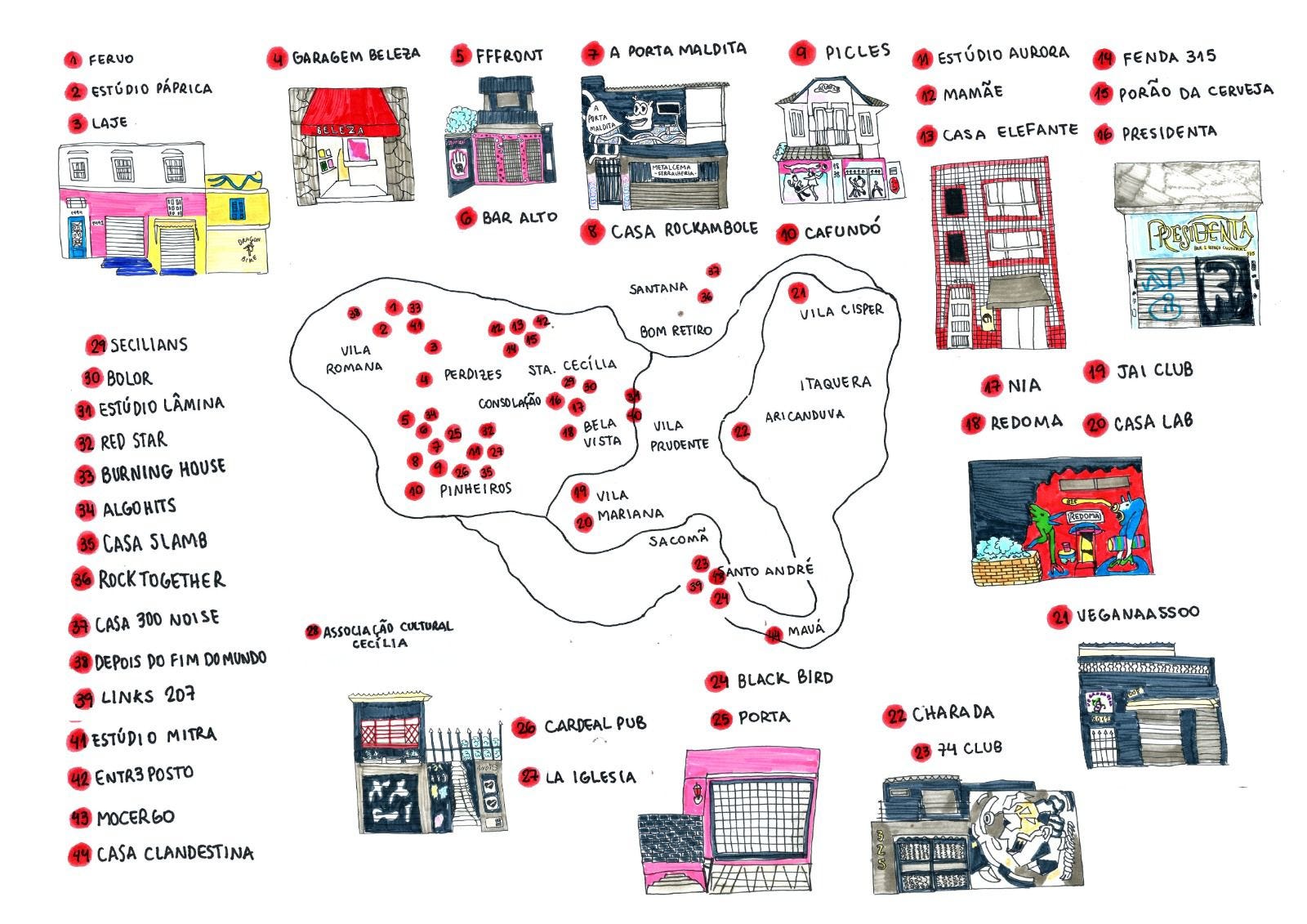
[**Check out more live events in São Paulo on Bandsintown.**](https://www.bandsintown.com/c/sao-paulo-brazil?utm%5Fsource=hypebot&came%5Ffrom=900)
### The Week in Review: July 31-Aug 6, 2026
URL: https://www.hypebot.com/the-week-in-review-july31-aug6/
Last updated: 2026-08-07T12:42:40.000Z
Dear reader,
Here's a rundown of some of our favorite stories from this week on [**Hypebot**](https://www.hypebot.com/). As always, thanks for reading and being part of our growing community of artists, managers, and industry pros.
### **Top Stories**
[Nick Cave’s Genius — How His Hometown Show Used the ‘Entire’ Town.The artist turns his Brighton homecoming into citywide cultural events, revealing how to pay respect to local fan communities, and why it’s crucial.HypebotJeremy Young](https://www.hypebot.com/nick-caves-genius-how-his-hometown-show-used-the-entire-town/)
[The Music Industry Loves Successful Women. It Still Doesn’t Invest Enough in Them.Despite some superstar successes, women and nonbinary artists remain underrepresented in music production and on live stages.HypebotGuest Author](https://www.hypebot.com/the-music-industry-loves-successful-women-it-still-doesnt-invest-enough-in-them/)
[Australia’s Festival Crisis Has One Very Twangy ExceptionStrong identities, intergenerational communities, and destination experiences... Is Country music the answer to Australia’s music festival cancellations?HypebotJeremy Young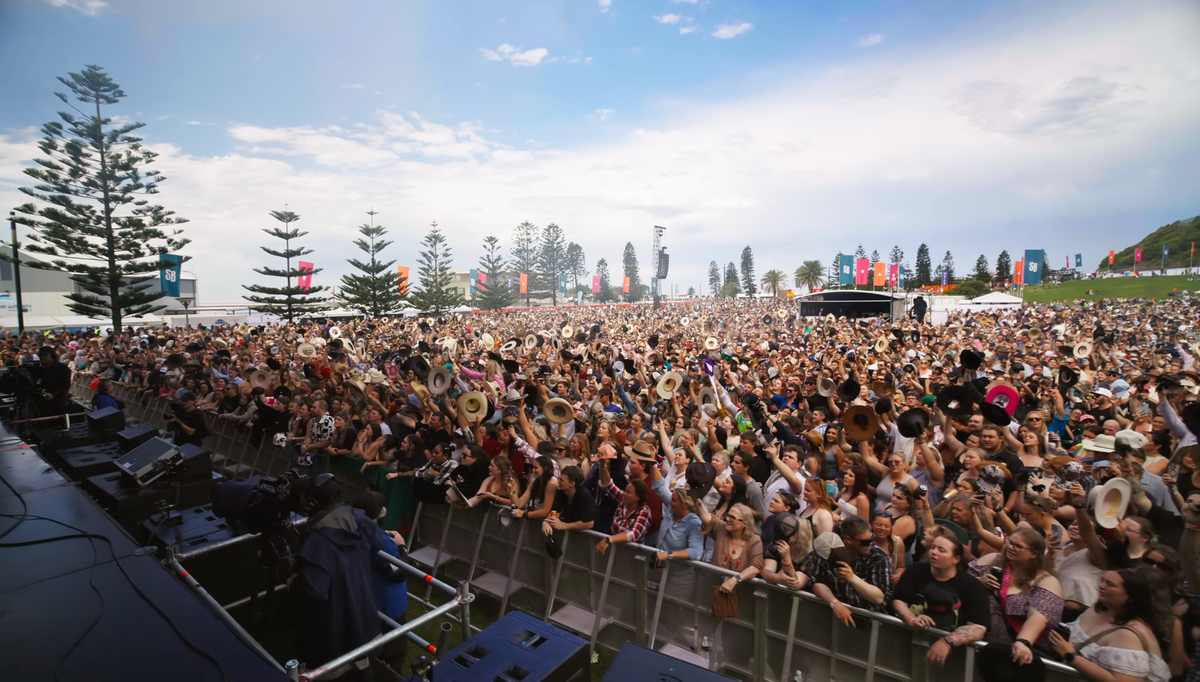](https://www.hypebot.com/australias-festival-crisis-has-one-very-twangy-exception/)
[Why Gen Z Stays Home and How Artists & Venues Can AdaptNew Harris Gen Z Weekend Report shows Gen Z trading loud, expensive nights out for soft socializing. Learn why and how artists, venues can adapt.HypebotBruce Houghton](https://www.hypebot.com/why-is-gen-z-staying-home-and-how-can-artists-and-venues-adapt/)
### **Advice & Tips**
[10 Music Business Podcasts You Should Be Listening to Right NowThese podcasts help artists and pros make sense of the industry news, career strategy, marketing, technology, rights and economics issues of today.HypebotHypebot Editorial Desk](https://www.hypebot.com/10-music-business-podcasts-you-should-be-listening-to-right-now/)
[How to Get Started With Music Promotion: An Artist’s GuideHere are 12 easy ways to get your music out there, from content marketing to generate interest to building an optimized website to capture that interest.HypebotBandzoogle Blog](https://www.hypebot.com/how-to-get-started-with-music-promotion-an-artists-guide/)
[How to Avoid These 6 Release MistakesFrom forgetting metadata to not utilizing social media correctly in the right moments, these are the traps artists fall into when releasing new music.HypebotDIY Musician Blog](https://www.hypebot.com/how-to-avoid-these-6-release-mistakes/)
[Being a Musician in 2026 Is a Full-Time (Platform) JobDigital platforms lowered the barriers to releasing music, but their growing demand for content, tech management, and adaptive upkeep take a toll.HypebotGuest Author](https://www.hypebot.com/being-a-musician-in-2026-is-a-full-time-platform-job/)
### **Streaming & AI**
[Has the Modern Streaming Algorithm Killed the Long-Form DJ Set?Streaming metrics and rapid DJ transitions have squeezed the life out of dance tracks. Is the patient, hypnotic rhythm of classic house ever coming back?HypebotMidnight Rebels](https://www.hypebot.com/has-the-modern-streaming-algorithm-killed-the-long-form-dj-set/)
[SoundCloud adds The Upload to ‘combat algorithmic fatigue’SoundCloud launches The Upload, a weekly music discovery playlist curated by its editorial team complete with background stories and commentary.HypebotBruce Houghton](https://www.hypebot.com/soundcloud-adds-the-upload-to-combat-algorithmic-fatigue/)
[Good News! Spotify Removed 75 Million AI-Generated Slop Music TracksSpotify’s new filter targets fully AI-generated music, impersonation and mass-upload schemes that divert royalties from legitimate artists.HypebotMusic 3.0](https://www.hypebot.com/good-news-spotify-removed-75-million-ai-generated-slop-music-tracks/)
[The Era of Unlabeled AI Content in Europe Is EndingEurope’s AI transparency rules are now in force, requiring many forms of AI-generated content to be labeled, marking a major shift toward disclosure.HypebotNews](https://www.hypebot.com/the-era-of-unlabeled-ai-content-in-europe-is-ending/)
### **News**
[Live Music Industry NewsIn Live Music Industry News, Live Nation and Sphere report growth, $350K fine for ticket reseller Elite, and The TEAM is sold.HypebotBruce Houghton](https://www.hypebot.com/live-music-industry-news-19/)
[Everything We Know So Far About Massive Attack’s Singapore BanAfter displaying a Palestinian flag in Singapore, two members are now barred from re-entry, and the group is banned from performing. Here’s what we know.HypebotHypebot Editorial Desk](https://www.hypebot.com/everything-we-know-so-far-about-massive-attacks-singapore-ban/)
[Spotify Q2: 300M Subs, Profit Warnings & Merlin Remix DealSpotify hit 300 million paid subs in Q2 2026 and launched Reserved tickets for superfans, alongside a profit warning and Merlin indie remix deal.HypebotBruce Houghton](https://www.hypebot.com/spotify-q2-300m-subs-profit-warnings-merlin-remix-deal/)
[Hypebot’s Bottom Line: News That Matters to MusiciansA new roundup of “Hypebot’s Bottom Line” covering key takeaways for musicians and music marketers from our recent posts.HypebotBruce Houghton](https://www.hypebot.com/hypebots-bottom-line-news-that-matters-to-musicians-5/)
### **\*Surprise Bonus\***
[6 Upcoming Live Tours We’re Excited AboutTouring Radar tracks newly announced dates that say something bigger about the business of live music. Here’s what’s catching our eye this week.HypebotHypebot Editorial Desk](https://www.hypebot.com/6-upcoming-live-tours-were-excited-about-2/)
### Hypebot's Bottom Line: News That Matters to Musicians
URL: https://www.hypebot.com/hypebots-bottom-line-news-that-matters-to-musicians-6/
Last updated: 2026-08-07T11:35:04.000Z
Welcome back to [**Hypebot's Bottom Line**](https://www.hypebot.com/tag/bottom-line/) — our regular roundup pulling key takeaways from our most important recent stories and insights.
### **Live Nation and Veeps gut BrooklynVegan, AltPress, Revolver**
**Hypebot's Bottom Line:** The recent layoffs and shuttering of prominent music publications like BrooklynVegan, Alternative Press, Revolver, and Goldmine deal a massive blow to the music ecosystem. Without these trusted tastemakers, emerging independent artists lose a vital avenue for early press that often jumpstarts algorithmic discovery and playlist features. Independent labels are also feeling the pinch, having to pivot towards paid social media funnels instead of relying on organic journalism. Furthermore, the live music sector loses the grassroots coverage needed to build sustainable audiences, severing a critical pathway that helps cultivate tomorrow's headlining acts.
[**Read the full story**](https://www.hypebot.com/live-nation-and-veeps-gut-brooklynvegan-altpress-revolver/)

### **Spotify Q2: 300M Subs, Profit Warnings, Merlin Remix Deal**
**Hypebot's Bottom Line:** With subscriber growth slowing in Western markets, Spotify is pivoting toward monetizing superfans rather than mass acquisition. However, the primary beneficiary of this shift remains up for debate. While initiatives like Spotify Reserve exchange streaming metrics for concert tickets and the new Merlin partnership monetizes fan-made remixes, Spotify still retains exclusive access to the users. This leaves artists and labels questioning if they should truly rely on the platform to host their presales and drive remix engagement.
[**Read the full story**](https://www.hypebot.com/spotify-q2-300m-subs-profit-warnings-merlin-remix-deal/)
### **Why Is Gen Z Staying Home? + How Can Artists and Venues Adapt**
**Hypebot's Bottom Line:** Gen Z is not abandoning socializing; they are simply burnt out and burdened by high living costs, seeking more relaxed ways to interact. Industry professionals, venues, and marketers that move away from expensive, late-night, alcohol-centric events and instead offer earlier, more affordable, and community-focused experiences will be best positioned to capture Gen Z's long-term loyalty and entertainment budget.
[**Read the full story**](https://www.hypebot.com/why-is-gen-z-staying-home-and-can-how-artists-and-venues-adapt/)
### **3 New Spotify Updates That Are Changing Music Marketing**
**Hypebot's Bottom Line:** Spotify’s latest changes demand a shift away from passive algorithms and toward proactive engagement. While features like Campaign Lift and User Notes offer better storytelling tools and clearer analytics, the new restrictions on automated pre-saves mean that marketing shortcuts won't sustain a career. Success on Spotify now requires a dual strategy: leveraging the platform’s native tools to strengthen listener bonds, while simultaneously building independent communication channels (like SMS and email lists) to ensure you maintain direct access to your fan base off-platform.
[**Read the full story**](https://www.hypebot.com/3-new-spotify-updates-that-are-changing-music-marketing/)
### **SoundCloud adds The Upload to 'Combat Algorithmic Fatigue'**
**Hypebot's Bottom Line:** SoundCloud's core strength has always been its vibrant community where artists can share early mixes and get feedback from hardcore music lovers. By introducing "The Upload" weekly playlists, SoundCloud's editorial team is actively curating and spotlighting this cutting-edge talent, helping fans discover the best new tracks often long before they hit other major platforms.
[**Read the full story**](https://www.hypebot.com/soundcloud-adds-the-upload-to-combat-algorithmic-fatigue/)

### **House Democrats Launch Investigation Into StubHub CEO**
**Hypebot's Bottom Line:** StubHub is under intense scrutiny from multiple directions. Alongside a new investigation by the U.S. House Oversight Committee, states like Maine, Vermont, and Washington, D.C., have passed strict ticket resale regulations that the company claims threaten its profitability. With similar bills moving forward in California, New York, and Massachusetts, lawmakers are finally dialing up the pressure and bringing desperately needed transparency to the live event ticketing industry.
[**Read the full story**](https://www.hypebot.com/house-democrats-launch-investigation-into-stubhub-ceo/)
### **What If Video on Spotify Becomes the Next Big Thing?**
**Hypebot's Bottom Line:** To capitalize on Spotify's push into video, independent artists and marketers should first check their Spotify for Artists dashboard to see if they have access to the direct video upload beta (or join the waitlist if not). Keep in mind that high-budget productions aren't always necessary—simple, creative content like stripped-down live sessions or covers can perform exceptionally well. Finally, make sure to submit your videos either before the track drops or within a week of release to ensure they are considered for editorial playlist placement.
[**Read the full story**](https://www.hypebot.com/what-if-video-on-spotify-becomes-the-next-big-thing/)
### What Does a Smart Merch Strategy Look Like for Artists?
URL: https://www.hypebot.com/what-does-a-smart-merch-strategy-look-like-for-artists/
Last updated: 2026-08-07T11:33:13.000Z
### **How to Build a Smarter Merch Strategy as an Independent Artist with MerchCat**
*By* [***MerchCat***](https://blog.symphonic.com/author/merchcat/?ref=hypebot.com) *for* [***Symphonic***](https://blog.symphonic.com/2026/07/29/build-a-smarter-merch-strategy-with-merchcat-2/?ref=hypebot.com)
[Independent artists](https://www.hypebot.com/tag/d-i-y/) today are building full businesses. You’re planning releases, marketing your music, and mapping out tours. But merch is often the piece that gets handled last.
And that’s where a lot of [revenue](https://www.hypebot.com/tag/revenue/) gets left behind…
[Merch](https://www.hypebot.com/tag/merch/) isn’t just extra income. It’s one of the most immediate ways to turn fan connection into real-time cash, while reinforcing your brand, giving fans something tangible to take with them, and ultimately strengthening that connection.
**So where do you actually start?**
### **Start With Intent (and Smart Product Selection)**
**Before you design anything, take a step back:**
- What actually represents your brand?
- What would your fans realistically wear, use, or collect?
- What price points make sense for your audience?
Then get specific about what you’re offering.
A strong merch lineup doesn’t need to be big; it needs to be *thoughtful*.
**Focus on a tight mix:**
- A core item (typically a t-shirt)
- One higher-priced item (like a hoodie)
- One lower-priced or impulse item (hat, tote, accessory)
You can also round it out with something like a **sticker or poster** – low cost to produce, easy to sell, and great for fans who want to support without spending on apparel.
This gives fans options without overwhelming them, or you. Starting simple and building based on real sales data will always outperform guessing.
### **Know Your Fans (Start With the Data You Already Have)**
Before you finalize your merch, look at what your existing data is telling you.
Platforms like Symphonic give you insight into where your listeners are, who they are, and how they’re engaging with your music. That’s a strong starting point for making smarter merch decisions.
- Where are your top listeners located?
- What age groups are you reaching?
- How engaged are your fans?
- Is there a noticeable skew in your audience?
This can influence everything from what you sell to how you price it.
For example, if a meaningful portion of your audience is female, it’s worth considering offering a **ladies tee** alongside a standard/unisex option. For some artists, those fits do sell. At the same time, many artists find unisex styles perform best. The key is making the decision intentionally.
***+Read more:*** [*"Ditching the Pressing Plant: How On-Demand Vinyl Saved My Independent Label"*](https://www.hypebot.com/ditching-the-pressing-plant-how-on-demand-vinyl-saved-my-independent-label/)
### **Think Beyond the Product**
Merch is more than just what you’re selling; it’s how everything works together. It spans design, sourcing, production, touring logistics, online sales, and marketing.
When those pieces aren’t connected, things get chaotic. When they are, merch becomes something you can actually build on – something you can repeat and improve.
### **Price With Purpose**
**You don’t need a complex model, but you do need clarity:**
- What does each item cost you?
- What are you actually making per sale?
- How many units do you need to sell to make it worth it?
Without a [pricing strategy](https://www.hypebot.com/how-to-price-cds-online-when-shipping-fees-cut-into-profits/), artists often underprice or overproduce. Both are costly mistakes.
### **Pay Attention to What Fans Are Telling You**
**Every sale is feedback:**
- What’s selling out first?
- What’s not moving?
- Which cities or shows are stronger than others?
But don’t just rely on sales; *ask your fans directly!*
**At shows, on social, or through your email list:**
- What would they actually buy?
- What designs or products do they want to see?
- What are they loving right now?
You don’t need a formal survey; even casual conversations at the merch table can give you valuable insight.
If you’re not tracking or asking, you’re guessing, and over time, that guesswork adds up to missed opportunities.
### **Build, Measure, Adjust**
**Merch works best when you treat it like an ongoing process:**
1. Plan it
2. Run it
3. Look at what happened
4. Adjust
Without structure, it’s easy to lose revenue, visibility, and control. With it, you start to build something repeatable.
***+Read more:*** [*"9 Live Music Marketing Trends Selling Out Shows in 2026"*](https://www.hypebot.com/9-live-music-marketing-trends-selling-out-shows-in-2026/)
### **Where Merch Cat Fits In**
**Executing a merch strategy consistently is where things tend to break down, especially once you’re playing shows regularly.**
Merch Cat was built to help artists actually **manage that process**. It brings live sales, inventory, and analytics into one place so you can stay organized and understand what’s working without adding more chaos to your process.
If you’re heading into a tour or just trying to get more intentional about merch at live shows, it’s worth having a system behind it.
- *For a 14-day Merch Cat trial, click* [*here*](https://web.merchcat.com/Home/SignUp?ref=hypebot.com) *to get started and use code: *SYMPHO*. // To learn more, visit* [*MerchCat.com*](http://merchcat.com/?ref=hypebot.com)*.*
### In The Trenches with Said Yassin of It's Ok* Studios
URL: https://www.hypebot.com/in-the-trenches-with-said-yassin-of-its-ok-studios/
Last updated: 2026-08-07T11:32:00.000Z
*This interview with *Said Yassin*, the founder and talent buyer of* [***It’s Ok\* Studios***](https://itsokworld.com/?ref=hypebot.com) *in Toronto, Ontario, is part of Hypebot’s*[***In The Trenches***](https://www.hypebot.com/tag/in-the-trenches/) *series. In the Trenches is sponsored by venue, festival, and promoter marketing solution* [***Bandsintown PRO***](https://www.bandsintown.pro/?ref=hypebot.com)*, and features the unsung heroes who make live music happen.*
*It’s Ok\* Studios is an independent Black-led and operated, multipurpose arts space located in Toronto’s historic Queen West neighbourhood. Transformed from a vacant retail building in the historic Queen West district, the space is a hub for artistic growth and development, a vibrant gathering place for Toronto’s Black artistic community.*
*Their annual, free music festival, *It’s Ok\* World,* is returning to Toronto's Trillium Park this weekend, on *Saturday, August 8\.* This year's artist programming includes *Gena (Liv.e + Karriem Riggins), keiyaA, Clairmont The Second, Kwncy, Dvyn, DJ Shylosofly,* and more.* [*Learn more and grab tickets here.*](https://dice.fm/event/536b9y-its-ok-world-8th-aug-trillium-park-toronto-tickets?ref=hypebot.com)
*Now, here's our conversation. Enjoy!*
---
**Hypebot: Hey Said, thanks so much for taking the time to answer some questions. You’ve got a festival coming up this weekend, we’ll touch on that, but let’s talk about the Studio first. I heard that the space is essentially “temporary” because eventually the city plans to build a park there. Is that true?**
Said Yassin: "Yes, the space was always destined to be a park. I knew that when I signed on to take the building. I thought it would be closer to 10 years before we ever had to think about moving, but it’s been 4 years now and we’ve had a lot of lease extensions, so I’ve had to think about moving a lot. It’s Ok\* started before we had a physical space and will continue on in some shape or form with or without one. I do think we will land on our feet and end up with something permanent though. We are in talks with the city about securing a new space, so I do think we will land on our feet and end up somewhere permanent."
I don’t think the demo of the building has affected what we do though. Aside from the administrative annoyances, I try to do the best I can with what I’ve got every day for my community. When I do get frustrated I just have to remind myself that it’s always better to have space than not, right? Not many people were given the opportunity I was given and how many beautiful things have been able to happen in the space, so no matter the length of the lease or the impending demo, I would have moved the same way."
**Kadhja Bonet at It's Ok\* World 2025.*
**H: This series is called** [**In The Trenches**](https://www.hypebot.com/tag/in-the-trenches/) **— it’s normally reserved for traditional music venues with a daily booking/presenting operation. It’s OK\* Studios is not exactly that, but I wonder if you could walk us through what you do differently, and why you're leaner and perhaps more integrated into the community around you?**
SY: "We don’t like to call It’s Ok\* Studios a venue or a gallery or any other traditional kind of name that would put it in a box. It’s just a space. It can be a gallery, a music venue, a rehearsal space, a wedding venue (once, and never again) or whatever you can imagine."
I came up as a DIY organizer and I’ve always brought people into spaces that weren’t meant for art and community. I want people to be able to look at what we've done with our space and hopefully change their perspective on what a space can be. We can’t be limited to the venues that exist and for the most part I hate traditional venues. I think a lot of times they are exploitative and unwelcoming spaces for my community."
We don’t have a fixed rate for folks to use the space. If you have a little grant money we will work with it, if you need to wait till the Eventbrite funds hit your account after the event we will work with it, if you have no money and just need space, we will figure it out. We try and meet everyone where they are at. I don’t think it’s helpful to have a one size fits all model, it turns away more people than it brings in. And we want to be known as a space that is supportive and puts our community first."
**H: Speaking of which, you’ve said before: “no shade to Embrace or Live Nation, but it’s more interesting when things are put on by the community.” I think this can mean a lot of different things to different people. What does it mean to you?**
SY: "I think we all want to be at things that are real. There's just a different level of care and attention when you go to something that's put together by people who genuinely believe in what they're doing. The events I enjoy going to are led by people who are part of the community. They aren't built because someone identified a gap in the market or is trying to capitalize on a viral moment. They happen because people genuinely love the music and are willing to take on the financial risk to make something happen."
Things are just better when the people making decisions are actually part of the community they're programming for. There's a real sense of accountability. If people trust me enough to pay for a ticket and I put together a corny show, I deserve to be told I didn't do a good job. I'll probably hear about it the next day. That kind of feedback keeps you honest and pushes you to make something people actually care about."
I think Live Nation and bigger concert promoters have an important role in the city. I definitely don't have the means to bring huge artists or put on stadium shows. But I do believe the first people breaking artists into a market should be community promoters. It gives artists a real opportunity to connect with a city's music scene instead of just flying in, playing a show, and flying out. Those early shows are where artists meet other musicians, discover local spaces, build relationships with audiences, and become part of a community."
I can’t count how many times I’ve seen an artist play for the first time in the city at a venue that doesn’t make sense with an opener who doesn’t fit and is not in front of the right people because the marketing department doesn’t know where this artists community is or could be."
> *"The events I enjoy going to are led by people who are part of the community. They aren't built because someone identified a gap in the market or is trying to capitalize on a viral moment. They happen because people genuinely love the music and are willing to take on the financial risk to make something happen."*
**H: What’s the biggest promise you make to the artists you present?**
SY: "That I care, I care so much, maybe more than they care. I’ve worked at many venues and presented hundreds of shows as someone's employee and at times it just felt like we were getting through our Saturday shift vs being part of a beautiful moment and hopefully a core memory for someone. I will never lose sight of that, no matter how many shows or events we’ve done back to back to back. I want everyone to have the very best experience possible every time."
**H: What are the best three spots to grab a bite after an event at It’s Ok\*?**
SY: "There's a haka place called Angara that we go to at the end of the night when it’s been a long one and we all need to have a sit down dinner. Alpha’s Shawarma is always a go to, and if it’s not a late show we go to Taqueria el Pastorcito in Kensington. If it’s super late then the Taqueria el Pastorcito at Bloor and Dufferin closes at 4am on the weekends."
**Black Rave Culture at It's Ok\* World 2025.*
**H: Is live performance essential in today’s music economy?**
SY: "I think live performance is one of the last real opportunities to have a genuine experience with music. I’ve become a fan of so many artists after having the opportunity to see them live and lead me to buying merch, records, or a ticket to another show and bringing 4 friends."
**H: What tools, strategies, or platforms do you use to market shows?**
SY: "I use social media, mailing lists, poster campaigns. Kind of all of the traditional things but the thing I tell concert promoters is that it’s more about getting people to trust you as a brand equally as much as it is about the artist you are presenting."
You have to book music you believe in, but you also have to treat people well at every interaction you have with them both online and in person. We have so many people who come to shows and events we do and a lot of the times they have no idea who is performing but they’ve had a good time with us in the past and they trust our music curation enough that they are willing to buy a ticket and take a chance on something they might not be familiar with."
> *"You have to book music you believe in, but you also have to treat people well at every interaction you have with them both online and in person."*
**H: As for the festival,** [**It's Ok\* World**](https://dice.fm/event/536b9y-its-ok-world-8th-aug-trillium-park-toronto-tickets?ref=hypebot.com)**, it’s amazing that it’s *\*FREE\**, how is that possible? Can you tell us a bit about what to expect this year?**
SY: "We are lucky to have grants and sponsorship that help make the festival free. I remember when I was a young student in Toronto and how many amazing concerts I was able to attend in the city completely free and this is our way of giving back."
I’ve been obsessively checking the weather for weeks now but as of today it should be a gorgeous day in one of the city's cutest parks and just a good day filled with community and good music. I think a good free show creates an atmosphere where people are coming in feeling good from the get go. You know when you pay $300 for a show you want that value to be returned to you in some way and it never really happens but a free show with really well curated music you are kind of already starting from a good position."
All of the artists this year are folks that I’ve been huge fans of this year and I’m excited to share them with everyone. Besides the music, we’ve got a local vendor market, really great food vendors too. There’s also a 95% chance you will make a new friend."
**H: Lastly, what’s the most beautiful thing in the world?**
SY: "What a tough question. I want to say bread."
But also maybe it’s when I go to my parents’ house and ask what’s for dinner, and my mom tells me to make it myself, and we do this whole back and forth, when she’d already made lasagna the whole time."
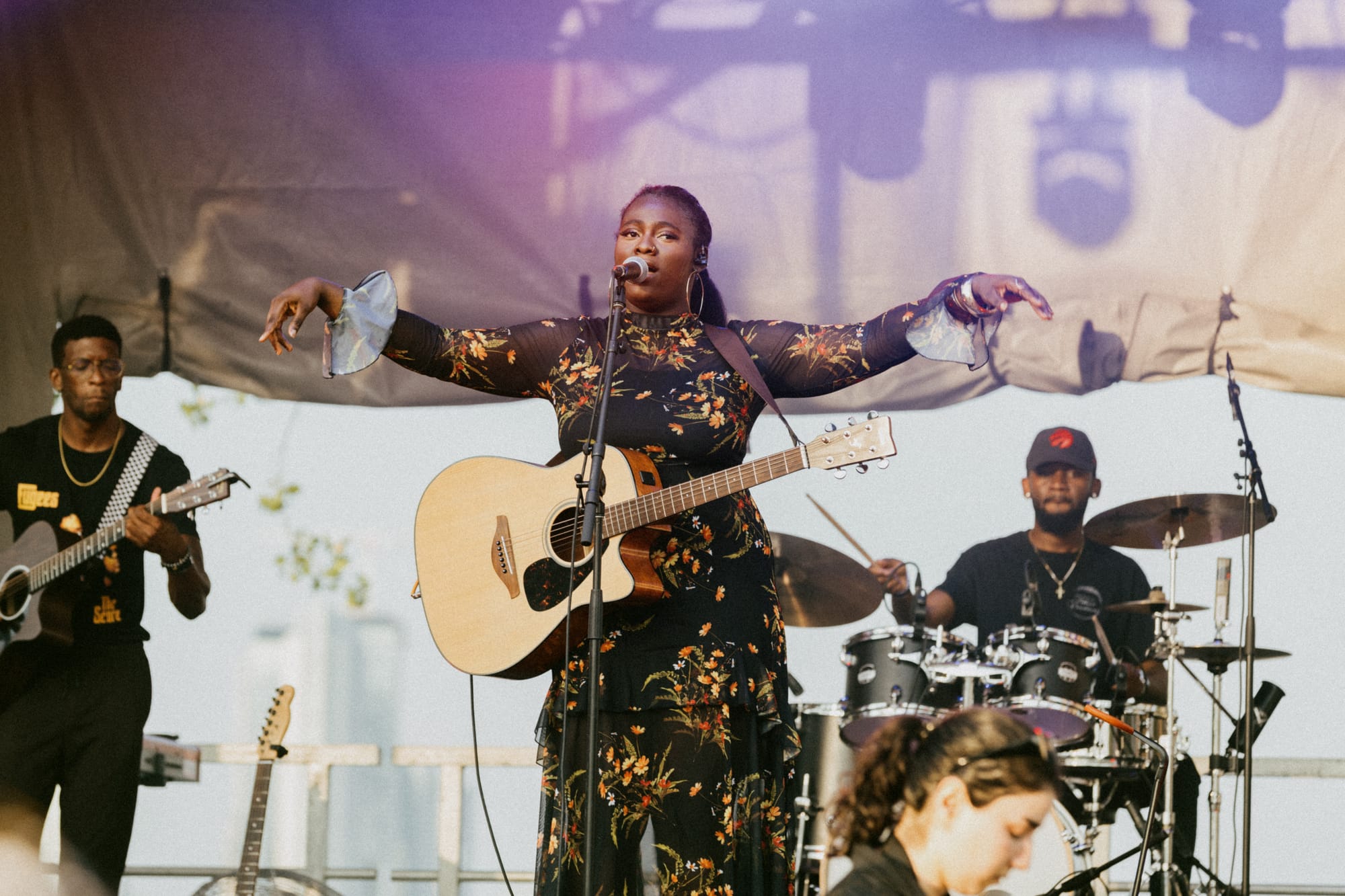
**Sewa at It's Ok\* World 2025.*
---
*Learn more at* [***It's Ok\* Studios***](https://itsokworld.com/about/?ref=hypebot.com) *and on* [***Instagram***](https://www.instagram.com/itsok.world/?hl=en&ref=hypebot.com)*. Get tickets for the* [***It's Ok\* World festival***](https://dice.fm/event/536b9y-its-ok-world-8th-aug-trillium-park-toronto-tickets?ref=hypebot.com) *happening in *Toronto* on *August 8th.**
*Get all the latest Music Industry & Live Music News updated continuously from across the web under the Hypebot Industry News tab* [*here*](https://www.hypebot.com/music-industry-news-feed/)*.*
## Essential news & insights for artists and live music pros.
Subscribe
Email sent! Check your inbox to complete your signup.
Sign up for free weekly content delivered to your inbox
### Today Is Bandcamp Friday
URL: https://www.hypebot.com/today-is-bandcamp-friday-4/
Last updated: 2026-08-07T11:17:02.000Z
**Bandcamp Friday is back today: Friday, August 6, 2026**
During all Bandcamp Fridays the popular indie music platform, [Bandcamp](https://www.hypebot.com/tag/bandcamp/), waives its revenue share and passes the funds directly to artists and labels.
Bandcamp Fridays began in March of 2020 and has resulted in millions of fans paying over $120 million directly to labels and musicians.
### **Four More Bandcamp Fridays in 2026**
- September 4th
- October 2nd
- November 6th
- December 4th
### Good News! Spotify Removed 75 Million AI-Generated Slop Music Tracks
URL: https://www.hypebot.com/good-news-spotify-removed-75-million-ai-generated-slop-music-tracks/
Last updated: 2026-08-06T15:31:35.000Z
### **Good News! Spotify Removed 75 Million AI-Generated Slop Music Tracks**
*By *Bobby Owsinski* from*[***Music 3.0***](https://music3point0.com/2026/08/05/good-news-spotify-removed-75-million-ai-generated-slop-music-tracks/?ref=hypebot.com)
As everyone knows, there are a lot of songs on [**Spotify**](https://www.hypebot.com/tag/spotify/), probably more than you can listen to in a hundred lifetimes. I’ve never heard anyone having a problem with that. What we all have a problem with is when [AI-generated](https://www.hypebot.com/tag/ai/) slop music tracks fill up the pipeline and push legitimate artists out of the way.
Thankfully, the streamer has finally done something about it.
The company recently [announced](https://newsroom.spotify.com/2025-09-25/spotify-strengthens-ai-protections/?ref=hypebot.com) that it removed around 75 million spammy music tracks in the last 12 months, which is good news for both artists and listeners.
## **There’s The Competition Issue**
For artists, this has meant not only increased competition, but the fact that these tracks are also taking a piece of the royalty pie, leaving less for the humans that have slaved over their legitimate art.
As the company says:
> *“Total music payouts on Spotify have grown from $1B in 2014 to $10B in 2024\. But big payouts entice bad actors. Spam tactics such as mass uploads, duplicates, SEO hacks, artificially short track abuse, and other forms of slop have become easier to exploit as AI tools make it simpler for anyone to generate large volumes of music.”*
***+Read more:*** [*"AI Stole My Client’s Song — Then Its Version Went Viral."*](https://www.hypebot.com/ai-stole-my-clients-song-then-its-version-went-viral/)
## **AI Fraud’s The Thing**
A huge part of the problem is when a human artist of any stature has songs that gain some traction, an AI impersonator [swoops in with a copy](https://www.hypebot.com/tag/fraud/) of the song and deflects a portion of the royalties and streams away.
In order to at least put a finger in the dike, Spotify says that it will roll out a new AI music spam filter in the fall. If it works as planed, the system will identify AI impersonator uploaders and tracks, tag them, and stop recommending them.
Personally I think the penalty is too light, but to be fair, the company wants to be sure that’s it’s not being too aggressive and end up penalizing hardworking artists that are completely innocent.
To be clear, they will not be singling out music that uses AI as an assistant, like for noise reduction, helping with EQ, or any other production use. This is aimed strictly at 100% AI-generated slop music.
There’s actually quite a lot of news breaking on the AI slop prevention front at the moment, so stay tuned for more updates.
***+Read more:*** [*"The Music Industry Didn’t Get Flooded by Accident"*](https://www.hypebot.com/the-music-industry-didnt-get-flooded-by-accident/)
### I Waited 30 Years to Hear My Songs. That Was Just the Start.
URL: https://www.hypebot.com/i-waited-30-years-to-hear-my-songs-that-was-just-the-start/
Last updated: 2026-08-06T20:43:33.000Z
*By *Jeff Kaiser* (aka* [***JAK Kaiser***](https://open.spotify.com/artist/57ni4vcvKvDyejy5lD8uAq?si=6A1ToJsHR-K6K8RVUWJ19w&ref=hypebot.com)*)*
For nearly thirty years, my songs lived only in a notebook.
I loved writing them. But melodies would only ever surface in fragments; enough to suggest where a song wanted to go, never enough to carry it. I couldn't play an instrument to chase them down, and I had no one to hand the words to. So the lyrics got finished. The music never did.
Then I found [**Suno**](https://www.hypebot.com/tag/suno/). I knew almost nothing about prompting. I only knew the sound I wanted: warm male vocals, acoustic guitar, an unhurried tempo, an honest [country feel](https://www.hypebot.com/tag/country-music/). My first attempt was as basic as it gets:
*"Country song. Male singer. Acoustic guitar. Slow tempo."*
I pasted in the lyrics and hit Generate. A minute later, I was listening to one of my own songs. Exhilarating is the only word I have for it. Thirty years on a page, and there it was, coming out of a speaker. It still hits that way. Twenty-six songs later, it hasn't worn off.
As I listened to each replay, I found myself wanting more. So I generated again. And again. Then one came back that started to line up.
That's the one I played over and over. Somewhere in there, I stopped listening for what was wrong with it and started hearing it the way you hear a record you love, waiting for the line you know is coming — except the line was mine, from a notebook, and no one had ever sung it before.
When I looked up, most of the afternoon was gone. It was the first of a great many afternoons and evenings I've lost the same way. The next morning, **I opened the notebook.**
> *"I needed to get better at putting the sound in my head into words, and I didn't want to spend another thirty years figuring out how."*
Most of it was half-written verses and fragments that had been waiting years for a melody. A few songs were close to finished. I picked two and set out to hear them. A basic prompt gets you something decent. Suno isn't hard to use — it's hard to aim. So I generated, listened, and tried again with different words. I wasn't diagnosing anything. I was guessing. When a version finally landed a melody worth keeping, I'd lock it in and build on it. Those two took dozens of passes.
Those early generations were teaching me something: I needed to get better at putting the sound in my head into words, and I didn't want to spend another thirty years figuring out how.
So I started talking it through with [AI](https://www.hypebot.com/tag/ai/) — **ChatGPT, Gemini, Grok.** I'd describe what I was after and they'd give it back to me in words I didn't have, sharper than anything I'd have come up with on my own. Then I'd show each one what the others came up with and push it to do better.
It helped. It took fewer passes to land a melody I could build on. That was the whole method for nine months — good enough that I didn't go looking for anything better, though I never stopped wanting it. They could put a sound into words. Whether those words were optimized for Suno, none of them could say.
Then I ran across an answer. There are probably a hundred of these out there: videos, courses, guides people post for free. I found one. Seven pages, not a wasted line. It wasn't about music. It was about Suno.
The prompt gives you a limited number of characters, and the earliest ones carry the most weight. Every word has to narrow something. Those words go to the recording: fidelity, frequency balance, era, energy, the room it's in, what the voice is doing. What you don't want goes last. And half of it isn't the prompt at all — it's tags dropped into the lyrics, telling the model how to sing each section.
Look at my first prompt again. *"Country song. Male singer. Acoustic guitar. Slow tempo."* I named four things and described none of them. Everything in frame, nothing in focus.
I pasted the guide into a new chat I labeled Prompting and never started another. Every prompt I've built since lives in that thread, one song stacked on the last. "She Came Out of the Blue" (which comes out Sept. 4) was the first song to get the full treatment. The prompt read, in part:
- **Mood:** Smoky late-night Gulf Coast energy. Cinematic atmosphere, driving groove.
- **Vocal:** Weathered country baritone. Soulful grit, restrained realism, subtle rasp.
- **Arrangement:** Short instrumental intro, immediate vocal entry, warm electric guitar textures, fingerpicked acoustic, melodic bass, brushed percussion, restrained lead, atmospheric textures.
- **Production:** Analog warmth. Intimate close-mic presence. Natural dynamics. Rich minimalism. No glossy pop sheen. No organ.
Those last two sentences — *"no glossy pop sheen, no organ"* — are easy to overlook. They came from iterating. You find the song you want by hearing the ones you don't. "She Came Out of the Blue" came back with a coastal, country, slightly jazzy flow — intimate, warm, and the vibe I'd been chasing. First pass. Others had taken dozens.
The guide wasn't just about what to say. It was about how to arrange it. A structured, precisely worded prompt meant fewer passes to get where I wanted to be. Plenty of songs still fight me, though, and the model can be stubborn no matter how well you describe things.
> *"For thirty years, I'd had nothing to put in anyone's hands. Now I did — and I started wondering what a musician would do with one."*
I never stopped writing. Ideas that would have stalled felt worth chasing down, because now the words had somewhere to go: a melody, an arrangement, a finished song. In a year, two songs became twenty-six. For thirty years, I'd had nothing to put in anyone's hands. Now I did — and I started wondering what a musician would do with one.
Making that first approach was harder than any of the prompting. Uncharted water. I didn't know the customs. What to ask for, what things cost, what was reasonable to expect. Mostly I didn't know whether I'd look foolish, or whether I'd understand enough of that world to move through it competently.
I made myself a cheat sheet of musical terms and their definitions, words I wanted to be sure I understood before someone used one on me. Then I started making calls and sending emails. I contacted [Nashville](https://www.hypebot.com/tag/nashville/) demo studios directly and found the rest of the artists and professionals through **AirGigs** and **SoundBetter.**
That outreach sent my songs to studios in Nashville and Europe, and to producers, vocalists, instrumentalists, and engineers I'd never have met otherwise. The fear was misplaced. Nobody made me feel foolish. Every one of them was helpful and enthusiastic. Within a few conversations the anxiety faded and I started looking forward to them.
On "Winding On" (which comes out Feb. 5), producer **Vito Astone** recreated every instrumental part, and added a fingerpicked acoustic introduction that draws the listener into the story before a single word is sung. **Abbie Parker** sang the lead.
A professional sang my words back to me like she'd lived them. When she reached the line "Some things break and just stay broken," her voice caught almost imperceptibly on the word broken. I'd carried that lyric for years. Hearing someone else find the weight in it changed the song for me permanently.
I wasn't ready for that.
"Winding On" is one of eight songs I've re-recorded this way, with producers, vocalists, and instrumentalists building new versions from the originals. They're part of my release catalog, coming as alternate versions, acoustic cuts, and studio cuts.
I've released an original song every month since November 2025\. The catalog has accumulated nearly two hundred thousand streams. One track was used to promote Florida tourism. I'm grateful for those things. They aren't the point.
The point is that a door I'd been standing outside since my twenties turned out to have a handle.
[AI](https://www.hypebot.com/tag/ai/) didn't write my lyrics. It made the music, and learning to aim it took a year. It didn't make me a songwriter. I'd been writing songs for thirty years. What I hadn't been doing was finishing. It's hard to finish something no one will ever hear. What the technology gave me was the ability to hear my own work clearly enough to know it was worth finishing, and worth placing in the hands of people who could hear things in it I couldn't.
The software didn't replace Vito, Abbie, or the others. It *introduced* us.
There are still songs in that notebook to finish. I used to think that was where my songs would end; but it turns out they were just waiting for me to hear them.
**+Read more:** [*"Why AI Song Generators Don’t Grant Copyright"*](https://www.hypebot.com/why-ai-song-generators-dont-grant-copyright/)
---
**Jeff Kaiser* (aka* [***JAK Kaiser***](https://open.spotify.com/artist/57ni4vcvKvDyejy5lD8uAq?si=6A1ToJsHR-K6K8RVUWJ19w&ref=hypebot.com)*) creates Country-Americana music in the “Country Coastal” style, which bridges the gap between traditional storytelling and modern HiFi production. His songs have generated nearly 200k streams across streaming platforms since his debut release in November 2025.*
### The Metadata Debt Problem: How Independent Labels Lose Control of Their Catalogs
URL: https://www.hypebot.com/the-metadata-debt-problem-how-independent-labels-lose-control-of-their-catalogs/
Last updated: 2026-08-06T14:43:00.000Z
*By *Dominick Stragapede*, Founder of* [***DataWav***](https://apps.apple.com/us/app/datawav/id6772322664?ref=hypebot.com)
Most [metadata](https://www.hypebot.com/tag/metadata/) mistakes look harmless when they happen.
A producer is credited under a nickname on one release and a legal name on the next. A songwriter’s suffix is missing. A featured artist’s name is styled differently across platforms. The copyright line on the packaging does not match the information delivered to the distributor.
The song still comes out, though. There is no emergency meeting. No one delays the campaign. The team moves on to the next release, and the inconsistency quietly becomes part of the catalog.
**That is how "metadata debt" begins.** Metadata debt is the backlog of incomplete, conflicting, or unverified information attached to a label’s releases. One error is usually manageable. The problem appears when small errors accumulate across dozens (or hundreds) of tracks.
Eventually, someone needs a clear answer. That is when a two-minute confirmation turns into an afternoon of searching through old emails, spreadsheets, agreements, and messages.
## **Going live does not mean the information is right**
Music teams are understandably focused on the music. They spend weeks adjusting mixes, approving artwork, planning content, scheduling announcements, and coordinating the rollout. Credits and metadata can feel like administrative work to handle near the end.
But the information behind a release is being created from the moment the song begins. A producer joins the session. A songwriter contributes a line. An engineer records vocals. A featured artist is added. The title changes. Ownership is discussed. Another version of the track is created.
If those details are not documented as they happen, somebody has to reconstruct them later. That becomes especially difficult on smaller teams, where one person may be handling management, distribution, marketing, budgets, creative approvals, and artist communication at the same time.
The information often exists, but in pieces.
The artist has the lyrics. The producer knows the session credits. The manager has the rollout information. The attorney has the agreement. The distributor has the version that was delivered. Each person knows part of the release. Few people can see the full record.
## **The hardest part is deciding what to trust**
In label copy and release-planning work, the issue is not always missing information.
Sometimes there is too much information. A spreadsheet lists one credit. An email includes a later correction. The artwork reflects the update, but the delivery sheet does not. A contributor’s name appears differently in the label copy and the public credits.
Every document looks official. Only one can be current.
This is where labels lose time. Instead of entering information, someone has to investigate how the information changed and determine which version was actually approved. For one release, that may be a minor inconvenience, but across an entire catalog, it becomes a system problem.
A growing [independent label](https://www.hypebot.com/why-running-a-successful-indie-label-is-still-harder-than-it-looks/) can quickly accumulate hundreds of contributor names, roles, identifiers, publishing details, copyright lines, approvals, and ownership records. Even a small percentage of inconsistencies creates a large cleanup project.
The label may own the recordings while still lacking a reliable record of what is attached to them.
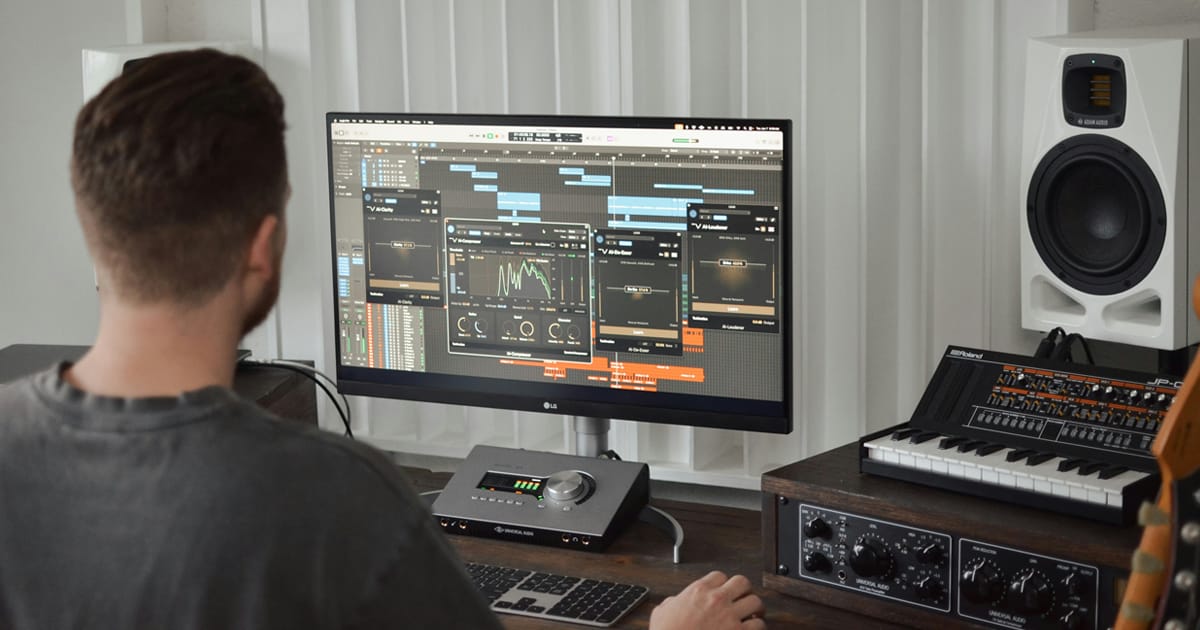
**+Read more:** [*"Why Running a Successful Indie Label Is Still Harder Than It Looks"*](https://www.hypebot.com/why-running-a-successful-indie-label-is-still-harder-than-it-looks/)
## **Names and roles create expensive confusion**
Contributor names are a common source of trouble because people do not always use one name everywhere. A producer may use a professional alias in the credits, a legal name in an agreement, and a slightly different spelling in a rights database. A songwriter may include a middle initial on one release and leave it off another.
The people involved understand that the records refer to the same person. A database may not.
Roles can be just as complicated. Producer, co-producer, additional producer, and vocal producer describe different contributions. Recording engineer, mixing engineer, and assistant engineer are not interchangeable either. When those distinctions are entered casually, copied from an older document, or left unconfirmed, the release may still go live without an obvious problem.
The confusion usually surfaces later. A contributor requests a correction. A royalty question comes up. A catalog is transferred. A reissue is planned. A music supervisor needs ownership information quickly. Now the label has to confirm details from a project that may be years old.
## **Metadata debt waits for the worst possible moment**
A catalog can carry incomplete information for a long time without drawing attention. Then an opportunity arrives.
A track is being considered for a sync placement, but the ownership details are unclear. A vinyl release is planned, but the original credits cannot be verified. A label changes distributors and discovers that its internal records do not fully match the previous delivery. A song starts gaining traction, and a contributor notices their credit is missing.
The original mistake may have been small. The difficulty comes from everything that has changed since then. Managers move on. Employees leave. Artists change teams. Email accounts disappear. People remember the session differently.
The longer a question sits unresolved, the more expensive the answer becomes.
That cost is not limited to money. It also includes the time spent pulling people away from new releases, artist development, marketing, and licensing opportunities.
**+Read more:** [*"Being a Musician in 2026 Is a Full-Time (Platform) Job"*](https://www.hypebot.com/being-a-musician-in-2026-is-a-full-time-platform-job/)
## **Small labels can outgrow memory quickly**
When a label is new, informal systems can work surprisingly well. The founder knows every artist. The same producers appear across several projects. Most decisions happen in one text thread. When something is missing, somebody knows who to call.
Then the catalog grows. New artists join. More managers become involved. Distribution arrangements change. Employees take on different responsibilities. Projects are transferred between teams. The label has more than additional releases. It has more history to maintain.
A catalog should remain understandable to someone who was not present when the music was made. That person should be able to identify the contributors, confirm what was approved, understand what was delivered, and find the supporting documentation.
If every answer depends on locating one former manager or scrolling through years of messages, the process is already too fragile.
## **Start with the catalog that matters now**
Most independent labels do not have the time or staff to audit every historical release at once. They do not need to. Start with the projects carrying the most immediate opportunity or risk:
- **Active releases**
- **High-performing catalog titles**
- **Upcoming reissues**
- **Licensing opportunities**
- **Distributor transfers**
- **Projects with known credit or ownership questions**
For each priority release, establish one approved record containing the essential information:
- **Final artist names and track titles**
- **Songwriters, producers, engineers, and performers**
- **Confirmed contributor-name formatting**
- **Publishing and ownership details**
- **Recording and party identifiers, when available**
- **Copyright information**
- **Important approvals and their sources**
A credit copied from a streaming platform is not the same as a credit confirmed by the contributor or supported by the original project documentation. A reliable catalog record should answer three questions:
***Who provided the information?***
***Who approved it?***
***When was it confirmed?***
Those details may feel unnecessary when everyone agrees. They matter when somebody later disputes the record.
## **The easiest debt to fix is the debt you never create**
Catalog cleanup helps, but the real solution is improving the process for new releases. Credits should be collected while contributors are still involved. Names and roles should be confirmed before delivery. When a title, credit, or ownership detail changes, the main release record should be updated — not just mentioned in an email.
This does not require a large operations department. It requires one clear owner. Someone needs to know what is missing, which record is current, who must approve each detail, and what was ultimately delivered.
Without that ownership, everybody contributes information but nobody maintains the full picture. That gap is one of the reasons I created [DataWav](https://apps.apple.com/us/app/datawav/id6772322664?ref=hypebot.com), an app built to help independent artists, managers, producers, and labels organize the information behind a release in one workspace. Credits, metadata, lyrics, audio, artwork, splits, label copy, files, and release planning can stay connected to the project instead of being scattered across unrelated tools and conversations.
The idea came directly from what I kept seeing in music operations: teams were not necessarily missing information because they were careless. They were losing track of it because there was no clear place for the entire release to live.
Software alone will not fix inaccurate metadata. People still need to confirm the information, communicate clearly, and assign responsibility. But a better system makes it much harder for important details to disappear.
## **Catalog value includes the information attached to it**
Independent labels often measure catalog value through ownership, streams, revenue, licensing potential, and audience growth. Reliable information is part of that value. A catalog with unclear credits, inconsistent contributor records, or incomplete ownership details is harder to license, transfer, register, correct, and build upon.
The music may be valuable. Accessing that value becomes slower when the information cannot be trusted.
Metadata debt rarely comes from one dramatic mistake. It grows through small decisions:
- "We will confirm it later."
- "The distributor probably has it."
- "Someone else approved the change."
- "We can correct it after release."
- "Sometimes that works."
Eventually, the catalog needs an answer immediately — and “probably” is no longer enough. Independent labels do not need perfect metadata from their first release. They need a process that keeps unanswered questions from becoming permanent catalog problems.
The best time to confirm the information is while the project is still active. After that, the label starts paying interest.
---
**Dominick Stragapede* is the Founder of* [***DataWav***](https://apps.apple.com/us/app/datawav/id6772322664?ref=hypebot.com)*, a music release-operations app helping artists, managers, producers, and record labels organize credits, metadata, audio, artwork, lyrics, splits, label copy, files, and release planning in one workspace. He currently works at Sony Music Entertainment across label copy coordination and video release planning, supporting projects for Epic Records, Arista Records, and Legacy Recordings.*
### Live Nation and Veeps Gut BrooklynVegan, AltPress, Revolver
URL: https://www.hypebot.com/live-nation-and-veeps-gut-brooklynvegan-altpress-revolver/
Last updated: 2026-08-06T14:19:33.000Z
In the latest blow to music media, parent company **Veeps**, the ticketed livestreaming platform majority-owned by **Live Nation**, has executed sweeping layoffs across its music media portfolio.
Bounced emails and public statements confirm near-total staff eliminations across **BrooklynVegan**, **Alternative Press**, **Revolver**, and **Goldmine**. This sudden purge leaves decades of cultural reporting, independent artist coverage, and subculture journalism in jeopardy.
These publications represent bedrock platforms for punk, indie, heavy metal, and vinyl record culture. **BrooklynVegan** documented independent rock since 2004 and **Alternative Press** helped define alternative scene coverage starting in 1985\. **Revolver** championed hard rock and metal since 2000 and **Goldmine** had served vinyl collectors since 1974.
Collectively, the demise of the music outlets deals **another blow to the pipeline** that Live Nation, Veeps and the entire music industry relies on to build tomorrow's headliners.
*Live Nation or Veeps have not commented publicly on the layoffs. Hypebot has asked both for comment and will publish any statements here.*
### **Why Now?**
Tying music journalism to large music conglomerates created a fundamental misalignment where grassroots criticism and independent reporting are viewed as line-item liabilities rather than core cultural assets.
More recently, sharp referral traffic losses driven by changes in search and AI overviews - which summarize articles directly on query pages - have severely eroded ad-driven revenue models, pushing digital music journalism into an unprecedented crisis that leaves rising artists with far fewer champions.
### **Part Of A Devastating Trend**
The destruction of these outlets is not an isolated incident, but rather part of a systematic collapse of corporate-owned music media.
In 2023, Paramount shuttered **MTV News** entirely after 36 years, eventually taking its digital archives offline. That same year **Vice Media** filed for bankruptcy, culminating in an announcement that the company would lay off hundreds of staffers and cease publishing **Vice.com** and its music vertical, **Noisey**.
Music media consolidation intensified sharply in early 2024\. Condé Nast absorbed **Pitchfork** into **GQ**, firing its veteran editorial leadership and gutting the independent desk. Warner Music Group stripped funding from **Uproxx** and **HipHopDX** as part of a company-wide layoff. Both were officially sold off a few months later.
**Penske Media** carried out successive rounds of layoffs across **Billboard**, **Rolling Stone**, and **Variety** pink-slipping veteran editors, analysts, and reporters. Heavy music outlets faced similar pressures in April 2026, when **Sony's Blast Beat Network** hit niche pillars **Metal Injection** and **MetalSucks** with severe staff reductions.
### **Hypebot's Bottom Line**
Gutting **BrooklynVegan**, **Alternative Press**, **Revolver**, and **Goldmine**. and the eradication of music editorial newsrooms fundamentally disrupts the entire music ecosystem.
For **independent artists**, the loss of trusted tastemakers eliminates crucial early-stage press coverage that fuels algorithmic pickup, playlist placement, and organic fan discovery.
For **indie labels**, publicity strategies now face a severe bottleneck, forcing PR teams to rely more heavily on paid social conversion funnels rather than earned, credible journalism.
For **live music**, stripping away grassroots publications starves mid-tier clubs and underground venues of the artist features, reviews and tour coverage that build sustainable touring audiences.
**On top of the brutal economics of touring and running independent venues, a decimated music press cuts off the very pipeline that creates tomorrow’s headliners.**
### 10 Music Business Podcasts You Should Be Listening to Right Now
URL: https://www.hypebot.com/10-music-business-podcasts-you-should-be-listening-to-right-now/
Last updated: 2026-08-06T14:14:09.000Z
The [music business](https://www.hypebot.com/tag/music-industry/) moves quickly. [Streaming](https://www.hypebot.com/tag/streaming-music/) rules change, new [marketing strategies](https://www.hypebot.com/tag/marketing-strategy/) emerge, [touring](https://www.hypebot.com/tag/touring/) costs rise, and another [AI](https://www.hypebot.com/tag/ai/) company appears before anyone has finished debating the last one....
Fortunately, there is no shortage of **podcasts** out there to help artists and industry professionals make sense of it all. Whether you want practical career advice, thoughtful analysis, or a quick recap of the week’s biggest stories, these ten of our favorite actively publishing shows deserve a place in your rotation.
Let's go!
## **1\. Your Morning Coffee**
Hosted by **Jay Gilbert** and **Mike Etchart**, ***Your Morning Coffee*** delivers a weekly rundown of the news and trends shaping the contemporary music business. The format is conversational and efficient, making it particularly useful for listeners who want to stay informed without reading every press release, earnings report and industry newsletter themselves. [**Learn more here.**](https://yourmorning.coffee/home?ref=hypebot.com)
[**Listen to all episodes of *Your Morning Coffee* on Hypebot.**](https://www.hypebot.com/author/your-morning-coffee/)
## **2\. The New Music Business with Ari Herstand**
Musician and author **Ari Herstand** interviews artists, executives, managers and marketers about how careers are actually being built today. Recent episodes have explored influencer marketing, modern A&R, direct-to-fan album campaigns and professional songwriting. It remains one of the most immediately useful shows for independent artists. [**Learn more here.**](https://aristake.com/new-music-business-podcast/?ref=hypebot.com)
## **3\. Trapital**
**Dan Runcie** approaches music as a business strategist, examining how technology, culture, finance and entertainment intersect. ***Trapital*** is especially strong when analyzing hip-hop’s biggest companies and personalities, catalog investment, streaming economics, AI and the business decisions behind major artist campaigns. [**Learn more here.**](https://www.trapital.com/podcast?ref=hypebot.com)
## **4\. The Price of Music**
Produced by Music Ally and hosted by **Stuart Dredge** and **Joe Sparrow**, ***The Price of Music*** explains the money behind the week’s biggest industry developments. Streaming royalties, ticketing, publishing, artificial intelligence and music legislation are all translated into clear conversations that do not assume the listener already understands the fine print. [**Learn more here.**](https://podcasts.apple.com/gb/podcast/the-price-of-music/id1725454682?ref=hypebot.com)
## **5\. The Music Biz Weekly Podcast**
Led by music marketer **Michael Brandvold** alongside artist manager and musician **Blasko**, the long-running **Music Biz Weekly** turns current industry developments into practical conversations for working artists. Recent episodes have covered online presence audits, AI-generated music, touring economics, email engagement, the Live Nation antitrust case, and of course, Hypebot's recent changes (thanks guys!). They consistently bring the discussion back to what musicians can actually *do* with the information. [**Learn more here.**](https://podcasts.apple.com/us/podcast/the-music-biz-weekly/id400401604?ref=hypebot.com)
[**Listen to all episodes of *Music Biz Weekly* on Hypebot.**](https://www.hypebot.com/tag/music-biz-weekly/)
## **6\. Music Tectonics**
**The *Music Tectonics*** podcast concentrates on the technologies changing how music is created, distributed, licensed and monetized. Host **Dmitri Vietze** regularly speaks with startup founders, investors and industry innovators, giving listeners a useful view of what may be coming next — and which new tools could actually matter. [**Learn more here.**](https://www.musictectonics.com/podcast?ref=hypebot.com)
## **7\. The Future of What**
Created by Music Business Association president **Portia Sabin**, ***The Future of What*** brings industry leaders together to discuss where the business is heading. Recent subjects have included music legislation, independent labels, Latin music’s global growth, AI rights and diversity across the music ecosystem. [**Learn more here.**](https://musicbiz.org/news-category/future-of-what-podcast/?ref=hypebot.com)
## **8\. Music Business Insider Podcast**
Hosted by **Ritch Esra** and **Eric Knight**, MUBUTV’s ***Music Business Insider Podcast*** offers long-form conversations with professionals working across A&R, artist management, publicity, touring, publishing and music supervision. Its greatest strength is career education: guests explain both what their jobs involve and how people can enter those corners of the industry. [**Learn more here.**](https://www.mubutv.com/podcast?ref=hypebot.com)
## **9\. The Bob Lefsetz Podcast**
**Bob Lefsetz** has strong opinions, asks unusually direct questions, and rarely conducts a short interview. We *love* Bob. His weekly podcast features artists, agents, promoters, executives and other entertainment veterans discussing how careers, companies and entire sectors of the business were built. The episodes can be lengthy, but they frequently preserve the kind of institutional knowledge that rarely appears in a press release. [**Learn more here.**](https://podcasts.apple.com/us/podcast/the-bob-lefsetz-podcast/id1316200737?ref=hypebot.com)
## **10\. The Business Side of Music**
As its title promises, ***The Business Side of Music*** focuses on the practical machinery supporting a sustainable career. Episodes cover rights ownership, distribution, visual content, artist development and earning strategies through conversations with working musicians and experienced industry professionals. [**Learn more here.**](https://businesssideofmusicpodcast.com/?ref=hypebot.com)
*No single podcast can explain every corner of the modern music economy. Together, however, these shows offer a useful mix of breaking news, practical education, emerging technology and long-term industry perspective — often directly from the people doing the work.*
### Live Music Industry News
URL: https://www.hypebot.com/live-music-industry-news-20/
Last updated: 2026-08-06T12:21:29.000Z
### **CAA and WME Swap Acts**
We'll let you decide who came out on top...
Alicia Keys has left WME to sign with CAA while singer, songwriter and Yellowstone actor Ryan Bingham exited CAA to sign with WME for live representation.

### **ROSTR and Hive Partner**
Live music trade and database **ROSTR** named **Hive** its exclusive CRM partner as part of a 360 partnership spanning platform integration, media, data and more.
ROSTR and Hive will also co-host an annual industry event "timed to a key moment in the live business calendar."
Hive is the second company selected for ROSTR's category-exclusive 360 partnership program, following [**Please & Thank You**](https://please.co/?srsltid=AfmBOoqQwAvBWsbUnzsAicMhIpKQQZKbMC%5Fse9MfMacONS9Muju9BEJd&ref=hypebot.com) in the VIP experiences category.
### Triangle Group adds $15M, former Live Nation APAC President
**Triangle Group** has raised $15 million to expand its live touring and festival business across the Asia-Pacific region
Former **Live Nation** APAC President **Roger Field** will now serve as Executive Director and Operating Partner after a year as an adviser and investor.
The Singapore based business raised a $10 million equity seed round led by **DSG Consumer Partners,** with participation from **Golden Gate Ventures**, the **Oberoi Family Office** and others. An additonal $5 million venture debt facility came from **Genesis Alternative Ventures**.
### **Superglue Punk and Hardcore Management, Agency Launches**
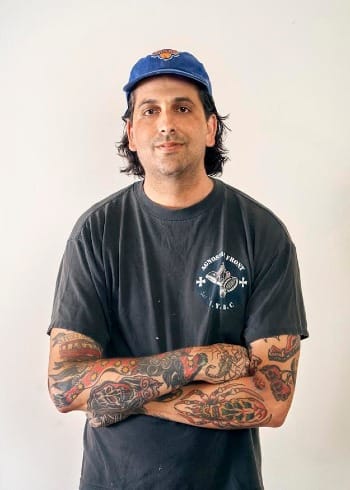
****Dan Oestreich** launches Superglue Music
Punk and hardcore veteran **Dan Oestreich** has launched management company and live booking agency [**Superglue Music.**](https://supergluemusic.com/?ref=hypebot.com)
The touring division is led by Oestreich alongside Toronto's **Greg Benedetto** of indie promotion company [**Not Dead Yet**](https://anotherside.cmail19.com/t/y-l-fyklrul-dryujtukkd-j/?ref=hypebot.com) and New York-based agent **John Scanlon**. The agency roster includes **Béton Armé, Bold, CIV, Cold World, Dark Thoughts, Gorilla Biscuits, Judge** and **Straight Ahead.**
Superglue’s management roster includes **Angel Du$t, Béton Armé, Dillinger Four, Home Front, Poison Ruin, STERÖID** and **Tim Heidecker**.
### **Reserved By Spotify: Early Stats**
Spotify has a lot to say about its newly launched **Reserved By Spotify** ticket program on its Q2 earnings call this week.
Thanks to a deal with **Live Nation**, Spotify holds two tickets for select artists' most dedicated fans to purchase before the general public sale opens.
So far, Reserved has supported "a few artists" and sold "nearly **100,000 tickets**". Read more on reaction, the cost and how this compares to other sponsored pre-sales [here.](https://www.hypebot.com/spotify-q2-300m-subs-profit-warnings-merlin-remix-deal/)
***Get all the latest Music Industry & Live Music News updated continuously from across the web under the Hypebot Industry News tab*** [***here***](https://www.hypebot.com/music-industry-news-feed/)***.***
## Hypebot
Essential news & insights for artists and live music pros.
Sign up for free weekly content delivered to your inbox
Subscribe
Email sent! Check your inbox to complete your signup.
### Backstage Pass: Turning Live Venue Operations Into a Well-Oiled Machine
URL: https://www.hypebot.com/backstage-pass-stage-portal/
Last updated: 2026-08-05T20:08:12.000Z
This interview with **Ben Wratten**, artist, venue owner, and co-founder of technology company [**Stage Portal**](https://stageportal.gg/?ref=hypebot.com),is part of **Hypebot's** [**Backstage Pass**](https://www.hypebot.com/tag/backstage-pass/) series. Here, we feature conversations with people working behind the scenes to help artists navigate live music industry economics, logistics, and trends.
Live music runs on a tangle of WhatsApp threads, scattered PDFs, and apps that don't talk to each other. Stage Portal is an operating system built for [independent artists](https://www.hypebot.com/tag/indie-artists/) and [live venues](https://www.hypebot.com/tag/independent-venues/) that replaces all of this tangled communication with one connected system for putting on shows. Here's our conversation. Enjoy!
Backstage Pass is sponsored by venue, festival and promoter marketing solution [**Bandsintown PRO**](https://www.bandsintown.pro/?ref=hypebot.com).
---
**Hypebot: What is** [**Stage Portal**](https://stageportal.gg/?ref=hypebot.com)**?**
Ben Wratten: "Stage Portal is the operating system for live music. It brings together dedicated apps for artists, tour managers, venues, and event organizers, tools that work great individually but unlock the full potential of the platform when used together."
The core job is simple: keep all the information that usually ends up scattered across WhatsApp threads, email chains, spreadsheets, and people's memories in one place. Bookings, advancement, band and crew communication, guestlists, schedules, expenses, setlists, everything that needs to happen before a show, organized and accessible to everyone who needs it."
Our goal is to make it easier for everyone involved to deliver a professional show, night after night."
**H: You and your brother started Stage Portal based largely on your own experience as artists and venue/festival managers. What was it that led to figuring out how to solve the pain points you experienced?**
BW: "We realized that almost every problem we experienced wasn't actually a music problem. It was an information problem. We have been the band waiting for confirmation from a venue. We have been the tech team chasing a rider that should have arrived weeks ago. We have spent time advancing festivals, booking artists, and trying to keep hundreds of moving parts organized."
Every time something went wrong, it came back to the same thing: the right information hadn't reached the right person at the right time."
Eventually we stopped asking how to solve each individual problem and started asking a bigger question: why is everyone managing live music with half a dozen different tools that don't talk to each other, and 400 messages across different platforms? We found large-scale enterprise solutions but nothing built for the independent grassroots level."
**H: The software is billed as “A platform built for grassroots music.” How did you address the specific challenges of independent live venues?**
BW: "Grassroots venues don't have large teams or dedicated production departments. The person booking the band might also be running the bar, handling the marketing, and fixing a leaking pipe before doors open. We wanted to build software that respected that reality."
Rather than creating another complicated enterprise platform, we focused on saving time and making things genuinely easy to use. If we can save a venue manager or band manager an hour or two per show by keeping all the information in one place and automatically getting it to the right people, that's time they can spend looking after artists and audiences instead of chasing messages."
Building Stage Portal as a platform rather than a standard SaaS product has also let us offer tools at rates that work for independent venues and bands operating on tight budgets. Grassroots venues are the heartbeat of live music. If we can reduce the workload for the passionate people running them, the whole ecosystem benefits."
> *"Every time something went wrong, it came back to the same thing: the right information hadn't reached the right person at the right time."*
**H: Why is live music so important to artists in 2026?**
BW: "Live music is one of the few places where people still share genuine experiences together. You can stream any song in the world from your phone, but you can't stream the feeling of standing in a packed room when your favourite band walks on stage."
For artists, live shows have never been more important. Streaming made music more accessible than ever, but it also made earning a living from recorded music significantly harder. Live shows aren't just where artists connect with fans, for many, it's where they build a sustainable career. The better the live experience is for artists and venues, the healthier the whole industry becomes."
**H: What’s the hardest thing people don’t understand about running a** [**venue**](https://www.hypebot.com/tag/venues/)**?**
BW: "Most people only see the doors opening. They don't see the weeks of work that came before it. It's very much like an iceberg."
Every show means advancing artists, organizing crew, scheduling staff, confirming technical requirements, planning hospitality, managing guest lists, handling suppliers, and preparing for dozens of things that you hope never go wrong. When everything runs perfectly, nobody notices. That's usually because someone has spent weeks making sure it would."
**H: What are the biggest advantages of having an organized administrative dashboard that artists don’t realize?**
BW: "People assume organization is about saving time. It's actually about reducing stress. When your information is ready, your EPK and tech specs are current, everyone knows where they need to be, and your documents are all in one place, you stop firefighting. That lets you focus on the performance rather than worrying whether you've forgotten something."
What we hear from bands using the platform is that the whole experience of gigging changes: smoother load-ins, calmer soundchecks, and a sense of being prepared when they walk on stage. Professional artists aren't necessarily more talented than everyone else. They're usually just better organized behind the scenes."
**H: Is there something you learned along the way on that journey that’s become essential to you?**
BW: "The biggest lesson has been that communication beats perfection. A lot of smaller bands feel they need to reach a certain level before they can send a rider. But from our experience on the tech side, we always welcomed as much information as possible in advance, because it meant we could actually prepare."
Nobody expects every show to be flawless. What people expect is to know what's happening. There has been a long-standing attitude in parts of the industry that the chaos is just part of the grind starting out. We're out here showing people there's a better way."
When venues, artists, and crew are all working from the same information, problems stay manageable. When everyone is working from different versions of the truth, small issues quickly become large ones. That has become a core philosophy behind everything we build."
> *"We believe the future of live music isn't about replacing people with technology, it's about giving people better tools."*
**H: What was one recent concert that blew you away?**
BW: "Our local heat of **Metal to the Masses**, the battle of the bands competition that gives new acts a shot at playing **Bloodstock Festival.**"
Watching local bands pour everything into a performance when there is something real on the line is something else entirely. Every act brought their best, and you could feel what it meant to them. That energy and the talent in the room, that sense of genuine stakes, is exactly what grassroots live music is about."
**H: If you could only eat desserts or appetizers for the rest of your life, which would you choose and why?**
BW: "Desserts, without hesitation. I can never turn down a sticky toffee pudding or a chocolate brownie."
**H: What is your perspective on how** [**AI**](https://www.hypebot.com/tag/ai/) **is shaping live music infrastructure?**
BW: "We believe the future of live music isn't about replacing people with technology, it's about giving people better tools."
There is a lot of noise right now. AI-generated products, vibe-coded platforms thrown together overnight, tools built by people who spotted a market opportunity and decided to serve it. We are not that. Stage Portal was built by humans who have come from exactly the same position as the people using it. We have been on the stage, behind the desk, behind the bar, and behind the booking inbox. We know what the problems actually feel like because we lived them."
The relationships between artists, venues, promoters, and tour managers are what make this industry special. Our job isn't to automate those relationships away, or the music. It's to remove the admin that gets in the way, so everyone can spend more time creating extraordinary live experiences."
---
*Learn more about* [***Stage Portal***](https://stageportal.gg/?ref=hypebot.com)*.*
***Hypebot’s*** [***Backstage Pass***](https://www.hypebot.com/tag/backstage-pass/) *series is sponsored by venue, festival and promoter marketing platform* [***Bandsintown PRO***](https://www.bandsintown.pro/?ref=hypebot.com)**.* Join leading live event professionals saving time and selling more tickets with their automated, self-serve and custom solutions.*
### Being a Musician in 2026 Is a Full-Time (Platform) Job
URL: https://www.hypebot.com/being-a-musician-in-2026-is-a-full-time-platform-job/
Last updated: 2026-08-05T14:34:14.000Z
*By *Iuliia Sozontova**
Five years ago, [releasing music](https://www.hypebot.com/tag/release-strategy/) digitally meant distributing a track, writing a bio, maybe [pitching a playlist](https://www.hypebot.com/indie-playlist-pitching-is-broken-heres-how-to-know-if-youre-getting-played/).
That was kind of *it*. The platform was a delivery channel.
Now? On [Spotify](https://www.hypebot.com/tag/spotify/) alone there's Canvas, Clips, full-length video and more. [Apple Music](https://www.hypebot.com/tag/apple-music/) has its own editorial criteria, analytics dashboards, custom artist pages. [YouTube](https://www.hypebot.com/tag/youtube/) wants Shorts and long-form. [TikTok](https://www.hypebot.com/tag/tiktok/) is a whole separate game. And then there's whatever distributor dashboard you're logging into this week.
Every platform keeps shipping new features, each one promising better engagement, more discovery, higher conversion. That's great in theory. In practice, every single one of those features **takes time away from actually *making music.***
And we haven't even talked about video yet. Artists are now expected to produce music videos and vertical content across multiple platforms. It costs real money and real time, and every platform has its own content guidelines for what flies and what doesn't.
## **Features get shipped. Not all of them stick.**
That's just how tech works. To stay competitive, platforms roll out new stuff fast. Some of it lands. Some gets quietly killed off.
Remember Spotify Greenroom? Spotify spent $50 million acquiring Betty Labs in 2021, launched a whole live audio platform with its own Creator Fund, built it to compete with Clubhouse. By April 2023 the entire thing was shut down. The live audio moment passed, and the product went with it.
Or take Apple Music's Spatial Audio bonus. In January 2024, they introduced a 10% royalty uplift for tracks available in Spatial Audio. Sounds great, except listeners don't actually have to play the Spatial version for the artist to get the bonus. It's based on availability, not usage. Reports suggested the real driver was encouraging people to buy Apple hardware that supports Dolby Atmos. Smart business move. But not exactly something artists were asking for.
None of these are failures, really. It's just how the industry works. Platforms build things at a pace set by competition with each other, not necessarily by what creators need right now. Some features stick around, some don't. The artists are the ones left figuring it out in real time.
## **When something breaks, it goes deeper than you'd think.**
For most listeners, a streaming profile is just a page with songs on it. For an artist, it's their storefront, their brand, their main touchpoint with their audience. When something goes wrong there, it's not a minor thing. It can directly mess with how people find and hear their music.
What most people don't realize is that behind that clean interface there's a pretty gnarly technical stack. Metadata pipelines, distribution systems, content matching algorithms, multiple databases updating on different schedules. A release showing up under the wrong name, analytics not reflecting right, a new track just not appearing on time.
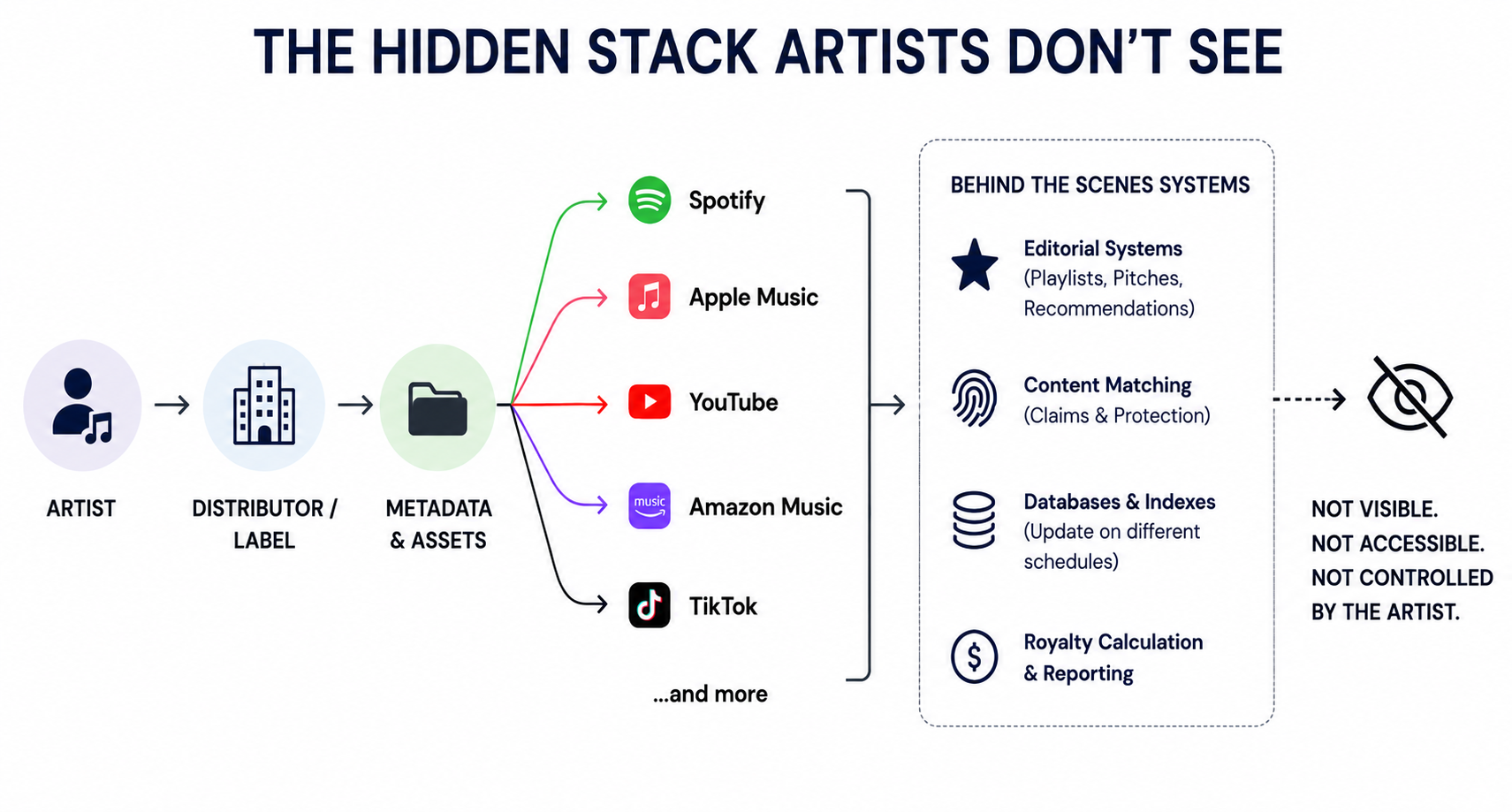
***+Read more:*** [*"Social Media in the Age of AI: The Internet’s Next Luxury Is Proof You’re Human"*](https://www.hypebot.com/social-media-in-the-age-of-ai-the-internets-next-luxury-is-proof-youre-human/)
These aren't simple bugs you can just report and get fixed in an hour. They can involve several technical layers that the artist never sees and definitely can't access directly.
More features mean more moving parts. More moving parts means more stuff that can break. And look, platforms aren't doing a bad job here. They genuinely want artists using their tools and finding success. But the complexity is real and it's not getting any simpler.
## **What's the new barrier to entry?**
Digital platforms were supposed to lower barriers to entry in the music industry. For a while, they absolutely did. Anyone could distribute a song and reach a global audience. It felt genuinely democratic.
But something else has crept in. The sheer complexity of managing a presence across [streaming platforms](https://www.hypebot.com/tag/streaming-music/), YouTube, TikTok has made it harder for artists doing this on their own. If you're not making video content alongside your audio, you're missing discovery surfaces that increasingly matter. If you don't understand how promotional tools work across platforms, you're leaving growth on the table.
An artist's career increasingly depends on digital platforms they don't own or control, making them vulnerable to technical issues, algorithm changes, and platform decisions.
Labels have had people handling this stuff for years. Dedicated teams dealing with analytics, metadata, promotional workflows, distributor relationships across whole rosters. That's the key bit though: entire rosters. One person, dozens of artists. An independent artist has to do all of it solo, on top of writing, recording, performing, and promoting.
For anyone uploading music as a passion project or a side thing, the gap between what platforms expect and what one person can realistically manage keeps growing. Every new feature, every new format adds another layer that favours artists who can treat platform management as a full-time commitment.
## **Now, the uncomfortable question...**
Platforms are not going to simplify. They're competing by building more.
The real question is: What happens to the artists who can't keep up, and whether the democratization that digital distribution once promised is slowly being undone by the very tools that were supposed to make it possible?
***+Read more:*** [*"What Are Music Curators Actually Looking For? Insights From 100K Submissions"*](https://www.hypebot.com/what-are-music-curators-actually-looking-for-insights-from-100k-submissions/)
---
**Iuliia Sozontova* is a London-based creator service designer at* [***Spotify***](https://www.hypebot.com/tag/spotify/) *and holds an MA in Music Business Management from the University of Westminster. Views are her own.*
### Why Is Gen Z Staying Home, and How Can Artists and Venues Adapt?
URL: https://www.hypebot.com/why-is-gen-z-staying-home-and-how-can-artists-and-venues-adapt/
Last updated: 2026-08-05T14:10:18.000Z
A July 2026 **'Gen Z Weekend Report" Harris poll** reveals a major cultural shift in how younger audiences socialize.
Today, **74% of Gen Z adults stay home for at least half of their weekends**, with 68% stating that going out simply isn't worth the damage to their wallets. Driven by **weekend loneliness (51%)** and high living costs, **88% are actively avoiding traditional nightlife** tropes like loud, crowded spaces and alcohol-heavy settings.
**Gen Z isn't anti-social.** 71% feel they are missing out on the in-person experiences older generations enjoyed. They are trading "hard socializing" for lower-cost, lower-pressure "soft socializing."
### **Key Data: The Gen Z Weekend Report at a Glance**
- **The Loneliness Paradox**: 51% of Gen Z adults experience weekend loneliness, and 49% say they lack enough offline friends to hang out with.
- **Financial Strain**: 68% say going out isn't worth the wallet damage, while 62% avoid making plans altogether to dodge post-event financial regret.
- **Staying In Is Default**: 74% stay home for at least half of their weekends, citing saving money (49%) and recharging mental/physical health (47%) as their top motivations.
- **Nightlife Avoidance**: 88% actively avoid traditional nightlife settings. Specific pain points include large groups of strangers (39%), loud/crowded venues (38%), high spending (36%), alcohol-centered events (35%), and staying out past midnight (29%).
- **What Gen Z Wants**: 79% seek affordable outings, 76% look for quieter/less overwhelming environments, 73% want non-alcohol-centric options, and 54% prefer daytime activities over nights out.
- **The Rise of Wellness**: 65% feel more socially connected in wellness-focused environments than in traditional nightlife settings.
- **Desire for Real-World Connection**: 62% wish their online friendships translated into in-person plans, and 71% feel they are missing out on the IRL experiences older generations enjoyed.
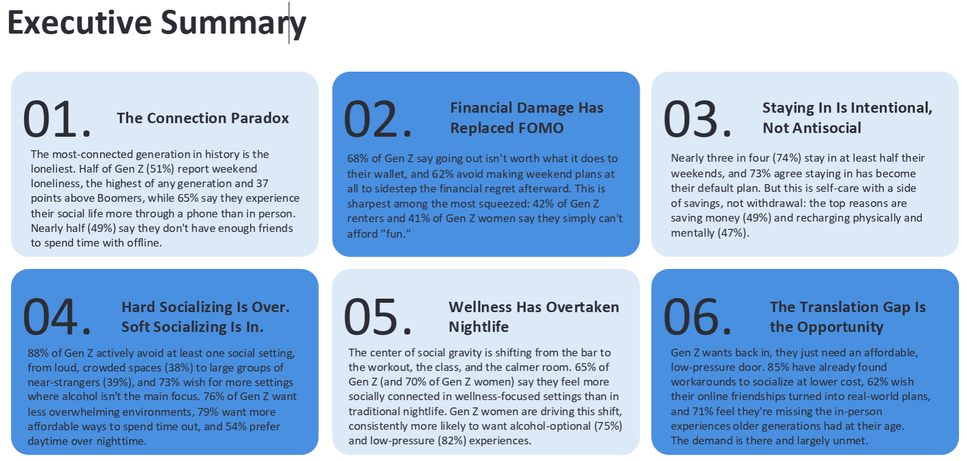
### **What This Means for Artists**
- **Schedule Matinees & Early Sets**: With 54% preferring daytime weekend plans and 29% avoiding late nights, consider adding afternoon or early-evening gigs opens doors to a broader Gen Z crowd.
- **Bridge Online Communities to IRL**: 62% want online connections to become real-world plans. Artists can host low-cost pre-show meetups, listening parties for Discord and social media followers and offer more live streams of shows.
- **Embrace Soft Socializing**: Integrate intimate acoustic sets, pop-ups, or interactive fan Q&As that feel low-pressure and welcoming.
### **What This Means for Venues**
- **Expand Zero-Proof Menus**: 73% of Gen Z want social spaces where alcohol isn't the primary focus. Venues should treat mocktails, non-alcoholic beers, and functional beverages as core revenue drivers rather than afterthoughts.
- **Rethink Space & Sound Design**: Because 76% want quieter, less sensory-overwhelming environments, offering quiet chill-out lounges or lower-decibel areas can keep fans from leaving early.
- **Address Financial Friction**: Offer transparent, fee-free ticketholder perks, off-peak happy hours, or sliding-scale entry to combat the 68% who feel going out damages their wallet.
### **What This Means for Music Marketers**
- **Promote Advance Planning**: 54% of Gen Z prefer weekend plans made in advance. Campaign rollouts should focus on early announcement cycles rather than relying on last-minute walk-up decisions.
- **Leverage Budget-Friendly Bundles**: 85% of Gen Z use budget workarounds like group discounts, ticket lotteries, or rewards. Marketers should actively push **"bring-a-friend"** ticket bundles and credit card perk integrations.
- **Pivot Messaging to Connection & Wellness**: Highlight how live shows foster community and well-being rather than just late-night partying, positioning gigs as an investment in personal connections.
Read and download the full Gen Z Weekend Report free [here.](https://theharrispoll.com/wp-content/uploads/2026/07/The-Gen-Z-Weekend-Report-July-2026.pdf?ref=hypebot.com)
### **Hypebot's Bottom Line**
Gen Z hasn't become anti-social. But they are financially squeezed, overwhelmed, and looking for lower-pressure ways to connect.
Musicians, venues and marketers who pivot away from late-night, alcohol-fueled, high-cost models in favor of accessible, earlier, and community-driven experiences will secure this generation's long-term loyalty and live music spend.
**+Read more:* "*[*Your Friend Bought the Tickets… For God’s Sake, Pay Them Back 💸*](https://www.hypebot.com/your-friend-bought-the-tickets-for-gods-sake-pay-them-back/)*"*
### Australia’s Festival Crisis Has One Very Twangy Exception
URL: https://www.hypebot.com/australias-festival-crisis-has-one-very-twangy-exception/
Last updated: 2026-08-05T12:32:09.000Z
[**Australia’s**](https://www.hypebot.com/tag/australia/) festival business has rarely looked more precarious.
**Byron Bay Bluesfest** collapsed [just three weeks before its 2026 edition](https://www.hypebot.com/amidst-the-2026-bluesfest-cancellation-artists-keep-au-nz-tours-intact/), with its operating company entering liquidation. A subsequent report found that the company owed approximately $7 million to more than 900 creditors. The cancellation followed years of disruption for festivals including **Splendour in the Grass** and **Groovin the Moo**, with rising production, touring, insurance and logistics costs colliding with softer ticket sales.
But amid all that instability, one corner of Australia’s live music sector is making a surprising amount of noise...
**Country music** is booming.
According to [research highlighted by Destination NSW](https://www.destinationnsw.com.au/newsroom/new-research-confirms-live-country-music-boom?ref=hypebot.com), Australia’s [country music](https://www.hypebot.com/tag/country-music/) industry generated an estimated $1.09 billion during the 2024–25 financial year, up 77% from 2019\. Live performance revenue reached $560 million — an increase of 93% over the same period.
Country festivals, concerts and small venues are all participating in that growth. The research counted 137 dedicated country festivals attracting 684,000 attendees, while [Live Nation](https://www.hypebot.com/tag/live-nation/) reported a 4.5-fold year-over-year increase in the number of country shows it booked in Australia.
Those boots are not only stomping in regional towns, either. Country streams on Spotify Australia have risen 115% over three years, and 92% of the country streams recorded over the past two years came from listeners in metropolitan areas, according to [*ABC News*](https://www.abc.net.au/news/2026-06-20/country-music-rises-in-popularity/106807276?utm%5Fsource=chatgpt.com)*.*
Hence: country music has escaped the countryside.
## **A festival format with a clear identity**
The momentum is now shaping Australia’s 2026 festival calendar.
[**Strummingbird**](https://strummingbird.com.au/?utm%5Fsource=chatgpt.com) will return as a three-city touring festival, visiting [**Ballarat**](https://www.bandsintown.com/f/221432-strummingbird-festival-2026?utm%5Fsource=hypebot&came%5Ffrom=900) on **October 10**, [**Newcastle**](https://www.bandsintown.com/f/221435?utm%5Fsource=hypebot&came%5Ffrom=900) on **October 17** and [**the Sunshine Coast**](https://www.bandsintown.com/f/221518-strummingbird-festival-queensland-2026?utm%5Fsource=hypebot&came%5Ffrom=900) on **October 18**. Post Malone will headline alongside Bailey Zimmerman, Cooper Alan, Stella Lefty, Brad Cox, Cam, Kaitlin Butts and a substantial group of rising Australian acts.
The programming stretches from mainstream country-pop to Americana, roots music and country-rock, but the identity is unmistakable. There will even be line dancing.
***+Read more:*** [*"Are Music Festivals the New Frontier of Digital Media?"*](https://www.hypebot.com/are-music-festivals-the-new-frontier-of-digital-media/)
Many struggling festivals have attempted to attract the widest possible audience by assembling enormous, genre-spanning bills. Country festivals tend to do the opposite. They know who they are, whom they serve and what kind of experience their audience expects.
Fans do not simply purchase access to several artists. They buy into a recognizable community — with its own fashion, rituals, storytelling traditions, and increasingly [intergenerational audience](https://www.hypebot.com/luminate-live-music-report-of/).
The country boom also overlaps neatly with [gig-tripping](https://www.hypebot.com/what-the-heck-is-gig-tripping/). These events frequently take place outside major city centers, turning attendance into a road trip, camping holiday or regional tourism experience.
Few festivals embody that better than the [**Mundi Mundi Bash**](https://www.bandsintown.com/f/200963-mundi-mundi-bash-2026?utm%5Fsource=hypebot&came%5Ffrom=900), which returns to the **Mundi Mundi Plains** near Broken Hill from **August 20–22.**
Its 2026 lineup is broader than country alone, bringing together The Teskey Brothers, Jon Stevens, John Butler, Boy & Bear, Jessica Mauboy, Troy Cassar-Daley, Fanny Lumsden, Tim Finn and other Australian favorites.
But the festival’s real headliner may be its location. Mundi Mundi is part concert, part campground and part outback expedition. Audiences are not being asked to travel hundreds of kilometers solely for a lineup. They are traveling to join a temporary community set up underneath the magical desert sky.
That gives the event something increasingly valuable: a reason to exist beyond the artists on its poster.
***+Read more:*** [*"What the Heck Is 'Gig-Tripping?'"*](https://www.hypebot.com/what-the-heck-is-gig-tripping/)
## **Country is not *completely* immune**
None of this means that adding cowboy hats can *fix* Australia’s festival economics. [**Ridin’ Hearts**](https://ridinhearts.com/?ref=hypebot.com), another country-focused event that had been held in Sydney and Melbourne,is [taking 2026 off](https://www.hypebot.com/do-you-know-why-theres-no-glastonbury-this-year-its-so-cool/)while organizers prepare for a proposed 2027 return.
The [**Birdsville Big Red Bash**](https://bigredbash.com.au/?ref=hypebot.com) was also cancelled for a second consecutive year after unprecedented rainfall and flooding made its remote Queensland site inaccessible. Ticket holders were offered refunds or transfers to the 2027 Bash or the 2026 Mundi Mundi event.
In fact, organizers said [Mundi Mundi was already more than 90% sold](https://mundimundibash.com.au/big-red-bash-2026-ticket-transfer?ref=hypebot.com) when the transfer option was announced. Big Red Bash’s problem was not insufficient demand, but instead it was a reminder that weather, infrastructure, and remote-event logistics can still overwhelm a popular festival.
But there's another issue at the heart of this.
ABC’s reporting noted that fans eager to spend heavily on major American stars do not necessarily buy tickets to see emerging local country performers. A successful Post Malone festival appearance does not automatically create a sustainable touring circuit for every Australian songwriter with tattoos and an acoustic guitar.
Promoters will have to ensure that international headliners help build pathways for domestic artists rather than merely absorbing the new demand, [like Warped Tour has done for over 30 years](https://www.hypebot.com/how-festivals-act-as-artist-development-accelerators/).
**Image courtesy of* [**Strummingbird.*](https://strummingbird.com.au/?ref=hypebot.com)
## **This lesson is bigger than the dang Australian sky.**
The takeaway for Australia’s festival sector is not simply to book more country artists, nor is the context for this story stuck down under.
If anything, the lesson here is that while legacy music festivals are no longer immune to the same economic pressures plaguing the rest of the [live music ecosystem](https://www.hypebot.com/tag/live-music/), there's evidence to suggest that building large-scale events around already self-powering listening communities is still lucrative.
In other words, capturing an existing energy and offering a new cultural, communal outlet for what's fuelling it, is still a winning formula. Country festivals currently possess several advantages: a strong cultural identity, broad age appeal, a natural relationship with regional Australia and audiences willing to travel for an experience that extends beyond the stage.
That combination cannot erase production costs or control the weather. But it can create something many festivals are struggling to maintain: a clear emotional reason for fans to attend.
***+Read more:*** [*"How to Build a Greener Concert Industry"*](https://www.hypebot.com/how-to-build-a-greener-concert-industry/)
### The Era of Unlabeled AI Content in Europe Is Ending
URL: https://www.hypebot.com/the-era-of-unlabeled-ai-content-in-europe-is-ending/
Last updated: 2026-08-05T12:11:03.000Z
Beginning **August 2**, new transparency provisions under [**the European Union's AI Act**](https://artificialintelligenceact.eu/?ref=hypebot.com) are now in effect, requiring many AI-generated or AI-manipulated forms of content (including audio, images, video and text) to be clearly identified as "artificial."
The rules also [introduce new transparency obligations](https://www.musicbusinessworldwide.com/the-eu-ai-acts-rules-on-ai-content-labeling-and-training-are-now-law-heres-what-they-mean-for-the-music-business/?ref=hypebot.com) for developers of general-purpose [AI systems](https://www.hypebot.com/tag/ai/), marking one of the first major consumer-facing milestones in the EU's landmark AI legislation.
For the music industry, the change is less about restricting AI than making its use more visible. AI-generated music isn't being banned, nor does the law settle the ongoing copyright disputes surrounding AI training data.
Instead, **the focus is on transparency**: if content is created or significantly manipulated by AI, users should be able to recognize it, while AI developers are expected to document their training practices and comply with the AI Act's transparency requirements.
Many of the music industry's biggest legal questions remain unanswered. The new rules do not determine whether companies such as **Suno** or **Udio** infringed [copyright](https://www.hypebot.com/tag/copyright/) by training on copyrighted recordings, nor do they require every song used for AI training to be publicly disclosed. Those issues continue to be fought in courts and licensing negotiations around the world.
Europe's latest step simply establishes a new baseline: **AI-generated content should no longer be anonymous.**
For artists, labels and rights holders, that could make it easier to identify AI-generated works, scrutinize how they're presented to listeners, and hold companies accountable for how AI is deployed. Companies that fail to comply with the transparency requirements could face fines of up to €15 million or 3% of their annual global turnover, giving the rules significant enforcement power.
***+Read more:*** [*"New AI Labeling Standard for Music Draws Support — and Hesitation"*](https://www.hypebot.com/new-ai-labeling-standard-for-music-draws-support-and-hesitation/)
### For Music Retailers, Back-to-School Strategy Starts Before the First Bell
URL: https://www.hypebot.com/for-music-retailers-back-to-school-strategy-starts-before-the-first-bell/
Last updated: 2026-08-04T17:56:41.000Z
*By *Taylor Harnois*, General Manager of* [***Music Shop 360***](http://www.musicshop360.com/?ref=hypebot.com)
The **back-to-school season** is a critical period for [music retailers](https://www.hypebot.com/how-music-retailers-can-deal-with-tariffs-and-save-their-customers/). It influences sales, customer acquisition, and long-term growth — and as students sign up for band and orchestra programs and educators prepare classrooms, there’s a unique opportunity to build relationships that last well beyond a single school year rental agreement.
It’s no surprise that economic pressures shape how families approach back-to-school purchases today. According to [Deloitte’s 2026 Back-to-School Survey](https://edge.prnewswire.com/c/link/?t=0&l=en&o=4728244-1&h=273902654&u=https%3A%2F%2Fwww.deloitte.com%2Fus%2Fen%2Finsights%2Findustry%2Fretail-distribution%2Fback-to-school-survey.html&a=2026+Deloitte+Back-to-School+Survey%2C%22&ref=hypebot.com), parents are more thoughtful about their spending and value-seeking strategies as they navigate back-to-school shopping.
For families, instrument rentals offer a more affordable and flexible option than purchasing outright. At the same time, schools need reliable partners that can keep their music programs running smoothly.
For music retailers, success depends on preparation. Retailers that strengthen their school partnerships, improve operational efficiency, and use data to anticipate demand before the school year begins better position themselves to deliver a positive experience for both educators and families.
## **Strong School Partnerships Create Long-Term Customers**
Building relationships with schools creates opportunities that go far beyond instrument rentals. By engaging with music educators early and understanding the needs of their programs, retailers can become trusted partners in helping students get started and supporting educators throughout the year.
Early engagement also gives retailers greater visibility into upcoming enrollment trends. Regular communication with school music directors allows stores to better understand expected participation, instrument preferences, and potential supply challenges before demand peaks. Rather than reacting to last-minute requests, retailers can plan proactively and provide better service when schools and students need it most.
Over time, these relationships can naturally extend to include instrument and accessory purchases, maintenance and repairs, or private music lessons.
***+Read more:*** [*"How Music Retailers Can Deal With Tariffs and Save Their Customers"*](https://www.hypebot.com/how-music-retailers-can-deal-with-tariffs-and-save-their-customers/)
## **Operational Efficiency Makes Every Interaction Better**
Back-to-school season often means coordinating hundreds of instrument rentals, deliveries, repairs, and customer questions within a compressed timeframe. Technology helps music retailers simplify these operational challenges.
Modern inventory systems give real-time visibility into available instruments, helping business owners avoid shortages. Digital workflows cut down on paperwork for rental agreements and administrative tasks that previously required multiple phone calls or in-person visits. This allows retailers to spend more time with customers.
Coordinating deliveries to schools is more efficient with technology, too. Rather than relying on spreadsheets or disconnected systems, retailers can organize deliveries, track orders, and provide updates more effectively.
Communication is yet another area where technology makes a significant difference. Automated notifications let customers know when instruments are ready for pickup or delivery, or when repairs are finished. Giving families and schools convenient ways to access information reduces administrative workload, while improving the customer experience.
## **AI Helps Retailers Prepare More Strategically**
[Artificial intelligence](https://www.hypebot.com/tag/ai/) is a valuable planning tool — it helps retailers make better use of customer and trend data.
Previous inventory levels, rental demand, repair cycles, customer purchasing behavior, and school participation trends all provide insights into what may happen in the upcoming year, which helps business owners identify patterns more quickly than manual analysis.
Retailers can use AI to better estimate inventory needs by instrument type or school district. More accurate forecasts reduce both overstocking and shortages, helping stores allocate resources more efficiently before the rush begins.
AI creates new opportunities for marketing, too. By analyzing customer history and engagement patterns, retailers can personalize outreach based on individual needs. Families with students returning to music education may get reminders about accessories or instrument upgrade promotions, while first-time renters receive educational resources that help them navigate the rental process.
AI can also help identify customers who may benefit from maintenance services, lessons, or trade-in programs based on previous interactions. Rather than sending broad seasonal campaigns, retailers can deliver more relevant and personalized communications to better serve each customer.
***+Read more:*** [*"How Musicians Get Discovered in 2026: Case Study & Downloadable Checklist"*](https://www.hypebot.com/how-musicians-get-discovered-in-2026-a-realistic-playbook-that-actually-works/)
## **Preparation Creates Better Experiences**
No technology can replace the trust built between a retailer and a local music educator — and it’s these relationships at the heart of successful music shops.
As customer expectations change and operational complexity grows, preparation becomes an important competitive advantage. Retailers that engage schools early, plan proactively, and use data to make informed decisions are better equipped to deliver the reliable, responsive service that educators and families expect — and keep them coming back.
---
[***Taylor Harnois***](https://musicshop360.com/?ref=hypebot.com) *is the General Manager of *Music Shop 360*, where he oversees all aspects of the Music Shop 360 brand, including sales and marketing, customer experience and support, and product and development. Prior to his time at Music Shop 360, Taylor spent many years in the retail and education industries. He holds a Bachelor’s degree in Business Administration and a Master’s degree in Business Leadership.*
### How to Get Started With Music Promotion: An Artist's Guide
URL: https://www.hypebot.com/how-to-get-started-with-music-promotion-an-artists-guide/
Last updated: 2026-08-04T15:44:20.000Z
### **12 Ways to Promote Your Band**
By [***David Andrew Wiebe***](https://bandzoogle.com/blog/author/david-andrew-wiebe?ref=hypebot.com)*of* [***Bandzoogle***](https://bandzoogle.com/blog/8-ways-to-promote-your-band?ref=hypebot.com)
Trying to figure out how to promote your band? [Music promotion](https://www.hypebot.com/tag/promotion/) is a long-term game, and following trendy, flash-in-the-pan tactics might keep you active, but if you want to promote your music successfully, you need to go where listeners are and get your music in front of them regularly.
Promoting your music online ensures you're ready when people search your name on Google and streaming services. The music industry keeps changing, so knowing how to get your music out there can only help you attract new fans and nurture the ones you already have.
Here are 12 ways to promote your band. Ready to dig in? Let's start from the top.
### **1\. Digitally distribute your music**
Today, [streaming sites](https://www.hypebot.com/tag/streaming-music/) like Spotify, Apple Music, and YouTube are where most fans are listening to music. Most artists have come to accept this as fact, and are aware of digital distribution services which they can use to get their music out to a broader audience for a nominal fee.
If, for whatever reason, you haven't digitally distributed your music yet, don't skip this step. We recommend using [DistroKid](https://distrokid.com/?c=Bandzoogle&utm%5Fsource=Bandzoogle%5FBlog&utm%5Fmedium=Site&utm%5Fcampaign=12%5Fways%5Fpromote&utm%5Fcontent=DistroKid) which lets you upload unlimited tracks and you keep 100% of your earnings (and you get 50% off your first year [using this link](https://distrokid.com/?c=Bandzoogle&utm%5Fsource=Bandzoogle%5FBlog&utm%5Fmedium=Site&utm%5Fcampaign=12%5Fways%5Fpromote&utm%5Fcontent=DistroKid)).
At the same time, it is very difficult to earn higher payouts from streaming sites, and focusing too much on them is sure to leave you feeling disheartened. So, think strategically: use streaming sites to [gather fans and attention](https://www.hypebot.com/what-it-really-takes-to-go-big-on-spotify/), and use other means to grow your income.
### **2\. Create engaging video content**
[Video content](https://www.hypebot.com/youtube-for-muscians-how-your-youtube-channel-can-help-grow-your-fan-base/) is a powerful promotional tool. It can be created cost-effectively, even from the comfort of your home.
Your video content can be used for promotion in a variety of ways, whether that's to book more shows, grow your fan base, or [showcase your latest release](https://bandzoogle.com/blog/how-to-promote-an-album-12-essential-strategies?ref=hypebot.com). Keep in mind all the channels where you can natively share your videos: YouTube, Facebook, Instagram, Twitter, and TikTok, for example. A service like [DistroVid](https://distrovid.com/?c=Bandzoogle&utm%5Fsource=Bandzoogle%5FBlog&utm%5Fmedium=Site&utm%5Fcampaign=12%5Fways%5Fpromote&utm%5Fcontent=DistroKid) also helps musicians get music videos into Apple Music, TikTok Music, Vevo, Boomplay, and Tidal, and you keep 100% of earnings.
Further, you don't need to limit yourself to music-related content with your videos. You can create vlogs, rig rundowns, product reviews, interviews, tour updates, and more.
### **3\. Connect with fans at shows**
People may hear you for the first time on Spotify or YouTube, but a live show is where a real connection is made. And if you want to build an engaged, loyal fan base, you must create a connection.
There are many ways to get in front of your audience to promote your band, including local shows, touring, and even live streams. When looking for in-person gig opportunities, create a relationship with local bands, and don't forget to reach out to local press for promotion.
It's also worth [getting booked at music festivals](https://bandzoogle.com/blog/how-to-get-booked-at-music-festivals?ref=hypebot.com), since they often offer new connections, turning casual listeners into people who'll show up to your next show, buy a shirt, and tell their friends about you.
### **4\. Host a live-stream event**
Technology has come a long way for video conferencing, making [live streams](https://www.hypebot.com/why-venues-and-artists-should-be-livestreaming-concerts-on-volume/) more viable and more engaging than ever before. You can integrate live streaming as part of your touring efforts or do one-offs to [keep fans engaged](https://bandzoogle.com/blog/10-ways-to-keep-fans-engaged-between-releases?ref=hypebot.com) while you're working on your next release.
For live streams, treat them like proper events rather than casual hangouts. Many streams fail because of lack of preparation, but if you organize, promote, and execute your plan, you'll see real results. Live streams can also drive up your impressions on social media, and the more people see you, the better the chance you will grow your following.
**+Read more:** [*"What It Really Takes to Go Big on Spotify"*](https://www.hypebot.com/what-it-really-takes-to-go-big-on-spotify/)
### **5\. Put efforts into getting playlisted**
[Getting your music playlisted](https://www.hypebot.com/what-are-music-curators-actually-looking-for-insights-from-100k-submissions/) is still a fantastic way to expand its reach and promote your band. To maximize your playlisting potential, follow these steps:
First, [claim your Spotify for Artists account](https://distrokid.com/resources/get-music-on-spotify/?c=Bandzoogle&utm%5Fsource=Bandzoogle%5FBlog&utm%5Fmedium=Site&utm%5Fcampaign=12%5Fways%5Fpromote&utm%5Fcontent=DistroKid). Doing so will allow you to manage your official Spotify profile and presence, and provide streaming stats for you to monitor. This can help with geo-targeting and your ongoing advertising efforts.
Next, you'll launch your music to your audience. This boosts your music in the algorithm, increasing your chances of getting playlisted. If you aren't stimulating organic listens, getting playlisted will prove an uphill battle.
You will also want to [pitch your music to curators](https://bandzoogle.com/blog/how-to-get-your-music-featured-on-spotify-playlists?ref=hypebot.com). Identify the curators you'd like to present your music to, and look up their websites or social media profiles. Pitch to relevant playlists only and play the long game: build relationships, and remain professional and patient in your communication. For more tactics on how to [promote your song](https://bandzoogle.com/blog/5-best-ways-to-promote-your-song?ref=hypebot.com), focus on presenting your best work to the right people at the right time.
And finally, remember to [create Canvas videos for your Spotify releases](https://distrokid.com/canvas/?c=Bandzoogle&utm%5Fsource=Bandzoogle%5FBlog&utm%5Fmedium=Site&utm%5Fcampaign=12%5Fways%5Fpromote&utm%5Fcontent=DistroKid). According to Spotify, listeners are 20% more likely to add a track to their playlists if they see the Canvas.
### **6\. Create and grow your email list**
Social media algorithms change constantly, which means the followers you've worked so hard to gather may never even see your posts. Email, on the other hand, goes directly to your fans' inboxes. It's one of the most reliable ways to communicate with the people who care about your music.
A well-maintained email list gives you direct access to your most dedicated fans, so it's worth the time to [grow your mailing list and care for it](https://bandzoogle.com/blog/5-ways-to-grow-your-email-marketing-list-as-a-musician?ref=hypebot.com). Your email list is yours, and no algorithm can take that away from you.
Start collecting email addresses at shows with a simple sign-up sheet, or offer a free download on your website in exchange for joining your list. Once you've started gathering addresses, stay consistent by sending a newsletter every few weeks with updates on new releases, upcoming shows, and behind-the-scenes content.
### **7\. Maintain an up-to-date website**
Take charge of your online presence by [creating a music website](https://bandzoogle.com/blog/how-to-make-a-website-for-your-music?ref=hypebot.com) where you control the narrative and the design. Having a website gives your band the chance to speak directly to your audience and shape your identity at the same time, through creative visuals and design. If you want to see some great examples, look through [15 of the best music website designs](https://bandzoogle.com/blog/15-of-the-best-musician-website-designs-on-bandzoogle?ref=hypebot.com).
Your website should function as the centerpiece in your ongoing online promotion efforts for your band. Ensure that your social media profiles point back to your website (i.e., your "link in the bio" should be your artist website, and not a facebook page). These links drive traffic back to your website, which helps your fans see the full picture of your band and improves your site's ranking in search engine results.
Having your own music website also means you can set up a shop to sell your music and band merch [to make money from your website](https://bandzoogle.com/blog/18-ways-musicians-can-make-money?ref=hypebot.com).
***+Read more:*** [*"You Released the Song. Now What?"*](https://www.hypebot.com/you-released-the-song-now-what/)
### **8\. Make and sell branded merch**
Turn your fans into walking billboards for your brand and music by making and selling branded [merchandise](https://www.hypebot.com/tag/merch/). Share it out by word of mouth, at shows, and ask your fans to spread the news online as well.
[Creating and selling merch](https://bandzoogle.com/blog/the-ultimate-guide-to-selling-band-merch-online?ref=hypebot.com) has never been easier thanks to print-on-demand tools like Printful. You can keep your garage clear of excess inventory and focus instead on sharing your merch and making an income from sales.
While t-shirts are great sellers, offer some [creative band merch](https://bandzoogle.com/blog/25-creative-band-merch-ideas?ref=hypebot.com) as well. Add your band logo to mugs, stickers, hoodies, and more, to see what appeals to your fans.
### **9\. Network and collaborate with other artists**
Some of the best opportunities come from connecting with other musicians. Co-headlining shows lets both bands pool their audiences while splitting costs. Cross-promotion, where you share each other's releases with your respective fan bases, exposes your music to listeners who are already primed to appreciate it.
Collaborative tracks can introduce you to entirely new audiences, and online communities like genre-specific forums or Discord servers are great places to [find like-minded artists](https://bandzoogle.com/blog/5-ways-to-find-new-collaborators?ref=hypebot.com). Treat these relationships as genuine connections rather than transactions, and you'll find doors opening that you didn't even know existed.
### **10\. Share your music far and wide**
These days, sharing your music on one platform and hoping listeners will find it is like throwing a needle in a haystack and expecting someone to be able to find it quickly and easily.
There are a lot of great platforms like YouTube, SoundCloud, and Bandcamp where you can get free exposure to [promote your music online](https://bandzoogle.com/blog/17-ways-to-promote-your-music-online?ref=hypebot.com) without it being a huge drain on your time. You can also explore dedicated music promotion sites that help connect artists with new listeners.
Keep an ear to the ground and look for new platforms where more people can hear your music. And don't forget to direct them to your official music website.
### **11\. Research and pitch to radio stations and podcasts**
There are still plenty of people who listen to the radio, and that means there's a viable market you can tap into. Actively [seek out opportunities](https://www.hypebot.com/the-modern-guide-to-getting-your-music-played-on-radio/) in college and internet radio because the exposure you get from a single spin can be hard to replicate with a channel like streaming. For the most success [promoting your music to radio](https://bandzoogle.com/blog/how-to-effectively-promote-your-music-to-radio?ref=hypebot.com), focus on crafting a compelling pitch and targeting stations that fit your sound.
Also, seek out local podcasts for opportunities to be interviewed and to share your music. Do your research before pitching and be clear on what you bring to the table. Look for ways to add value to podcast hosts and they will be more likely to respond favorably to your requests.
### **12\. Explore new ways to promote your music**
From technological innovations to new social media platforms, in the ever-changing world of promotion, no one knows for sure what is and what isn't going to work.
While you shouldn't bet all your chips on the latest trend, you could find success going a different route than everyone else is going. So, spend 20% of your time experimenting with cutting-edge platforms and tools. If short-form video isn't your thing, there are other avenues to explore; this guide on how to [promote your music without short-form content](https://bandzoogle.com/blog/7-ways-to-promote-your-music-without-short-form-content?ref=hypebot.com) offers alternatives worth considering.
You can:
- Create a community on Discord or another fan-focused platform
- Experiment with short-form video on emerging platforms
- Try a small paid promotion campaign and track the results
- Team up with a niche newsletter or blog in your genre for a feature or shoutout
### In conclusion
A successful music career always begins with great music. These days, you also need to focus your efforts on promoting that great music; otherwise, no one will hear it!
Make promotion an organic extension of your artistic identity. Keep it fun, stay consistent, and the momentum you create will pay off over time. The artists who show up regularly are often the ones who get heard.
***+Read more:*** [*"The Modern Guide to Getting Your Music Played on Radio"*](https://www.hypebot.com/the-modern-guide-to-getting-your-music-played-on-radio/)
---
*Award-winning composer, best-selling author, and long-time podcaster *David Andrew Wiebe* is the founder of Content Marketing Musician. His eighth self-published book is the* [*Productivity, Performance & Profits Blackbook*](https://www.contentmarketingmusician.com/yoqmfdcz?ref=hypebot.com)*, a thorough resource for artists looking to accomplish more in their careers, build a fan base, and create the life they love through music.*
### Nick Cave’s Genius — How His Hometown Show Used the 'Entire' Town.
URL: https://www.hypebot.com/nick-caves-genius-how-his-hometown-show-used-the-entire-town/
Last updated: 2026-08-04T15:06:31.000Z
[**Nick Cave and the Bad Seeds’**](https://www.bandsintown.com/a/5433-nick-cave-and-the-bad-seeds?utm%5Fsource=hypebot&came%5Ffrom=900) only UK show of 2026 did not begin when the band walked onstage at **Brighton’s Preston Park.** It began at the train station.
Visitors arriving in Brighton were temporarily welcomed by Cave’s voice. [**Resident Music**](https://www.resident-music.com/?ref=hypebot.com) hosted exclusive merchandise, catalogue discounts, giveaways and a postbox where fans could submit physical letters to Cave’s long-running [Red Hand Files](https://www.theredhandfiles.com/?ref=hypebot.com) project. [Duke of York’s Picturehouse](https://www.picturehouses.com/cinema/duke-of-york-s-picturehouse?ref=hypebot.com) devoted the weekend to five films selected and introduced by Cave himself.
Then, hours before the sold-out Preston Park concert on July 31, Cave and the Bad Seeds appeared [on the roof](https://www.hypebot.com/the-story-of-that-rooftop-concert/) of Resident Records for an unannounced performance.
According to [***The Guardian’s*** report from the scene](https://www.theguardian.com/music/2026/jul/31/nick-cave-thrills-brighton-secret-rooftop-gig?ref=hypebot.com), the narrow street below was packed with fans from Germany, Norway, France, and elsewhere. Some had heard a rumor. Others came looking for an exclusive “Jubilee Street” picture disc and realized something was happening when they saw musical equipment on the roof. By the time Cave launched into “Train Long Suffering,” the hometown show had already expanded far beyond the park itself.
> [ View this post on Instagram ](https://www.instagram.com/reel/DbdQQAINo2J/?utm%5Fsource=ig%5Fembed&utm%5Fcampaign=loading)
>
> [A post shared by Resident (@residentbrighton)](https://www.instagram.com/reel/DbdQQAINo2J/?utm%5Fsource=ig%5Fembed&utm%5Fcampaign=loading)
***+Read more:*** [*"The Story of 'That' Rooftop Concert"*](https://www.hypebot.com/the-story-of-that-rooftop-concert/)
## **Brighton was a participant, not a backdrop.**
Artists have always used local imagery to make major concerts feel specific to a city. A tour might produce a location-exclusive poster, shout out a beloved restaurant or replace the city’s name on a merchandise design. Cave’s Brighton homecoming went further.
The event was itself distributed among places that already contribute to Brighton’s cultural identity, adding to it a sense of participation and buy-in for [local music](https://www.hypebot.com/tag/local/) lovers and stakeholders.
Resident's [four-day Cave takeover](https://www.nickcave.com/news/nick-cave-the-bad-seeds-x-resident-30-jul-2-aug/?ref=hypebot.com) included an exclusive vinyl release, a shop-specific tote bag and a physical extension of The Red Hand Files. The Duke of York’s did what a historic independent cinema does: it programmed films. Cave selected *Pinocchio*, *Wake in Fright*, *Irréversible*, *Under the Skin* and *The Gospel According to St. Matthew*, each accompanied by a recorded introduction explaining its significance to him. Brighton station did not become a ticketed attraction. It simply turned the ordinary act of arriving in the city into the first scene of the experience.
These businesses and institutions were given roles to play in an active capacity, as opposed to sitting back and existing as a backdrop for some artist's grandiose [promotional play](https://www.hypebot.com/tag/promotion/).
***+Read more:*** [*"Can Cheap Beer Save Australia’s Opening Bands?"*](https://www.hypebot.com/can-cheap-beer-save-australias-opening-bands/)
## **The Economic Impact of Local Spending Surges**
Major concerts already produce activity beyond the venue. Travelling fans book hotels, eat at restaurants, visit bars, use public transit and shop while they are in town. Usually, however, that spending is *incidental.* The show attracts an audience, and the surrounding economy captures whatever happens to spill over.
Cave’s Brighton weekend was designed to direct some of that attention into existing cultural businesses, aiming at delivering a boost toward sustainability. The extended the life of a one-night performance without requiring a second concert. It also gave fans who could not attend the Preston Park show other ways to participate.
But most importantly, the arrangement felt legitimate because Cave has a real relationship with Brighton. Although he was born in [Australia](https://www.hypebot.com/tag/australia/), he lived in the English city for many years and has repeatedly described it as beloved. The [official Preston Park announcement](https://nickcavebrighton.com/?ref=hypebot.com) called Brighton central to his life and work; Cave called the concert **“a homecoming.”**
In other words, the city is being recognized as part of the artist’s story.
***+Read more:*** [*"How to Choose the Right Indie Venue for Your Live Concert"*](https://www.hypebot.com/how-to-choose-the-right-indie-venue-for-your-live-concert/)
## **Is BTS locking on to the same idea?**
Cave’s Brighton weekend felt, simply, organic. But it was not the only recent concert to treat an entire city as part of the event. Around [**BTS’s**](https://www.bandsintown.com/a/695158-bts?utm%5Fsource=hypebot&came%5Ffrom=900) August 1 and 2 concerts at **MetLife Stadium,** HYBE organized “BTS THE CITY ARIRANG NEW YORK” campaign, routing fans through activities at the **Korean Cultural Center New York, Arte Museum, Grand Central Terminal, Top of the Rock,** and several participating restaurants and businesses.
**New Wonjo**, a longstanding Korean barbecue restaurant in Manhattan, created a menu inspired by foods the BTS members miss while touring. Arte Museum developed a digital-art experience connecting the group’s music to Korean cultural heritage. Fans could follow a map and stamp rally between participating locations.
The concert is the anchor, not the entirety, of the experience.
> [ View this post on Instagram ](https://www.instagram.com/p/DbLy-qRhqyS/?utm%5Fsource=ig%5Fembed&utm%5Fcampaign=loading)
>
> [A post shared by New Wonjo (@newwonjo)](https://www.instagram.com/p/DbLy-qRhqyS/?utm%5Fsource=ig%5Fembed&utm%5Fcampaign=loading)
## **Independent artists, take note...**
No, most artists *cannot* arrange personalized railway announcements, museum installations, or citywide maps. But that doesn't mean the scale of this idea needs to dissuade artists from activating spaces *other* than [their live venue.](https://www.hypebot.com/how-to-choose-the-right-indie-venue-for-your-live-concert/)
A hometown release show could include an afternoon performance at a record store. A local cinema could screen a film that influenced the album. A neighborhood restaurant could create a temporary menu item. A gallery could exhibit the photographer or visual artist behind the campaign. A nearby venue could host the official aftershow.
None of this is new, but the innovation comes from connecting and activating all of these micro-events so that the audience understands they are participating in one[*larger local event*](https://www.hypebot.com/the-local-advantage-could-festivals-win-by-thinking-smaller/)*.*
But any [related partnerships](https://www.hypebot.com/an-indie-artist-guide-to-partnering-with-local-brands/) need to be reciprocal and mutually beneficial. A record store should sell records. A restaurant should gain diners. A cinema should sell tickets. The artist receives additional visibility and deeper fan engagement, so the local partner must receive more than permission to display their logo on a poster.
Hence, Cave's genius is to show the [live music world](https://www.hypebot.com/tag/live-music/) that a smart hometown show does not just *happen* in town somewhere, it gives everyone in town a role to play.
---
## [**Nick Cave & The Bad Seeds Tour Dates**](https://www.bandsintown.com/a/5433-nick-cave-and-the-bad-seeds?utm%5Fsource=hypebot&came%5Ffrom=900)
### Spotify Q2: 300M Subs, Profit Warnings, & Merlin Remix Deal
URL: https://www.hypebot.com/spotify-q2-300m-subs-profit-warnings-merlin-remix-deal/
Last updated: 2026-08-04T13:49:42.000Z
[**Spotify**](https://www.hypebot.com/tag/spotify) delivered a strong Q2 2026 earnings report, but it’s a story of milestones and promising launches mixed with cautious corporate guidance.
While the [streaming](https://www.hypebot.com/tag/streaming-music/) giant officially surpassed a massive paid subscriber milestone, it also issued a weaker than expected profit forecast due to slowing growth in profitable Western markets. Spotify stock was trading down slightly Tuesday on the news.
Beyond the numbers, on the music side Spotify is leaning heavily into live tickets and AI indie licensing. Here's the full rundown of **Spotify's Q2 2026 report.**
### **User Growth: Spotify Hits 300M Premium Subscribers**
In a historic first for the global audio streaming industry, Spotify officially crossed the 300 million Premium paid subscriber threshold in Q2 2026.
- **Paid User Growth:** Premium subscribers grew by 9% year-over-year, adding 7 million new paid users to pass **300 million**.
- **Total & Free User Growth:** Total Monthly Active Users (MAUs) reached **777 million**,a 12% year-over-year increase. Ad-supported, free users now account for roughly **477 million** of total listeners.
**On the financial front**, quarterly revenue rose 14% to €4.78 billion / $5.5 billion, backed by a record gross margin of 33.4%.
### **The Catch: Weak Profit Forecast Amid Slowing Growth**
Despite setting records, Spotify’s stock dipped following the report's tempered Q3 profit forecast.
Spotify projected Q3 operating income at €670 million / $771 million, falling slightly short of Wall Street's consensus. The streamer cited slowing user growth across major established markets in North America and Europe as driving the conservative outlook.
### **Spotify Reserve: Rewarding Superfans with Direct Access**
Spotify doubled down on live music with the mid-June U.S. [launch of **Spotify Reserve**.](https://www.hypebot.com/how-reserved-by-spotify-works-a-step-by-step-guide/)
Through a deal with **Live Nation**, **Reserved by Spotify** holds two concert tickets for select artists most dedicated fans to purchase before the general public sale opens. A Spotify executive said during Tuesday's earnings call:
> *"This is about offering more value to paid subscribers."*
So far, Reserved has supported "a few artists" and sold "nearly 100,000 tickets" compared to the 10% t0 25% of arena tour presale tickets sold through similar arrangements between Live Nation and sponsors like Verizon and Citi.
The cost of Reserved to Spotify is likely significant. On its recent earnings call **Live Nation CEO Michael Rapino** said the Spotify Reserved partnership is a "great win-win" because the concert giant is "compensated properly" for access to presale inventory.

### **Merlin Licensing Deal: Fan-Made Covers & Remixes**
To fend off AI-generated disruption and offer new user experiences, Spotify will be launching a paid add-on tool allowing fans to craft personalized covers and remixes. Following initial deals with **WMG** and **UMG**, Spotify now adds **Merlin**, the global digital music licensing partner for 30,000 independent labels.
- **New Revenue for Indies:** The remix add-on ensures that independent artists and songwriters who opt-in receive credit and compensation.
- **Ecosystem Protection:** Every fan creation is engineered to route listeners back to the original master recordings.
### **Hypebot's Bottom Line**
As Western paid subscriber growth cools, Spotify is shifting its focus from mass user acquisition to deep [superfan](https://www.hypebot.com/tag/superfans/) monetization.
**The big question is: *Who really benefits; artists and labels or Spotify?***
Programs like **Spotify Reserv**e turn streaming data into live concert access, while the **Merlin** agreement formalizes user remixing into paid product tiers. But since the streamer doesn't share access to these superfans, is Spotify the place where artists and labels will choose to run their presales and encourage remixes?
### Ticketmaster Made More Adjusted Operating Income Than Live Nation's Concerts Did
URL: https://www.hypebot.com/ticketmaster-made-more-adjusted-operating-income-than-live-nations-concerts-did/
Last updated: 2026-08-04T13:43:00.000Z
[**Live Nation’s**](https://www.hypebot.com/tag/live-nation/) second-quarter earnings contained a remarkable detail: [**Ticketmaster**](https://www.hypebot.com/tag/ticketmaster/) made more adjusted operating income than the company’s entire concert-promotion division.
Live Nation generated a record **$7.7 billion in revenue** during the quarter, including **$6.44 billion** from concerts. Yet the concerts division produced **$309.6 million in adjusted operating income**, while Ticketmaster generated **$331 million** from only **$852.2 million in revenue.**
Put another way, concerts generated roughly 8x as much revenue — but slightly less adjusted operating income.
The comparison is not perfectly apples to apples. Adjusted operating income is Live Nation’s preferred non-GAAP performance measure, not net profit, and the two segments account for revenue differently. Ticketmaster’s reported revenue excludes the face value of tickets and is net of the fees paid to its clients.
Still, the figures neatly illustrate one of the live music industry’s defining economic divides: **promoting concerts is an enormous, expensive gamble, yet processing access to them is a comparatively dependable transaction business.**
**+Read more:** [*"The Bar Tab Used to Pay for Live Music. Clearly, It Doesn't Anymore."*](https://www.hypebot.com/the-bar-tab-used-to-pay-for-live-music-clearly-it-doesnt-anymore/)
## Ticketmaster Does Not Share the Promoter’s Bet
A concert [promoter](https://www.hypebot.com/tag/promotion/) commits money long before knowing whether enough people will buy tickets. It may guarantee an artist’s fee, rent a venue, advertise the show and cover production, staffing, security, equipment and other expenses. A weak onsale, unexpected cancellation or expensive production can turn a promising concert into a loss.
In other words: **promoters assume the risk of unprofitable events.**
Ticketmaster’s basic business model is different. It generally acts as an agent for venues, teams and promoters, selling tickets and retaining a portion of the service charge. As ticket volume rises, Live Nation says, Ticketmaster’s operating income generally rises with it.
Ticketmaster is not literally incapable of losing money. It has technology, labor, customer-service, payment-processing, legal and regulatory costs, and cancellations can result in refunds and lost fee revenue. But on an individual show, it usually does not make the same all-or-nothing wager as the promoter. Its model is built to collect revenue from transactions without taking on most of the underlying event risk.
That difference showed up vividly in Q2\. Ticketmaster sold **90 million fee-bearing tickets, up 8%,** while its adjusted operating income **rose 14%.** Its implied AOI margin was nearly 39%. The concerts division’s was **below 5%.**
## **One Quarter Is Not a Permanent Rule**
Live Nation attributed the concert division’s 14% decline in adjusted operating income to stadium-show timing, venue pre-opening expenses and investments in new international festivals. The company expects concerts to deliver double-digit AOI growth for the full year, with much of that improvement arriving in Q4.
So this is a snapshot, not proof that ticketing will always earn more than concert promotion. It also includes Ticketmaster’s business across sports and other live entertainment — not only tickets to Live Nation-promoted concerts. But the snapshot helps explain why ticketing partner relationships matter so much to artists, promoters and independent venues.
The ticket represents a valuable memento to fans, and a valuable business layer for platforms and providers, but it's also a relationship that should reflect a promoter's values off the stage as well.
**+Read more:** [*"Great Shows Depend on People Fans Never See. These People."*](https://www.hypebot.com/great-shows-depend-on-people-fans-never-see-these-people/)
### Quiet Riot, Ozzy Bassist Rudy Sarzo on How He Uses AI
URL: https://www.hypebot.com/quiet-riot-ozzy-bassist-rudy-sarzo-on-how-he-uses-ai/
Last updated: 2026-08-04T12:05:06.000Z
**Rudy Sarzo** sits down with **Michal Brandvold** and **Blasko** for a new [**The Music Biz Weekly Podcast**](https://www.hypebot.com/tag/music-biz-weekly/) discussing his use of AI in music creation.
Best know for his work with **Quiet Riot, Ozzy Osbourne**, and **Whitesnake**, Sarzo explains how he uses AI platforms like **Suno** as a 'studio band' for his new songs. For the veteran musician, AI has become a tool that levels the playing field for those who lack traditional industry support.
Sarzo discusses his own creative process, the evolution of the music industry, and how AI allows him to realize his artistic vision without the constraints of a label or expensive studio time. Blasko and Michael share their perspectives on how musicians can leverage AI to enhance their creativity.
The conversation also touches on the backlash against AI, the changing nature of music production, and Rudy's personal history and experiences in the industry.
**Don't miss some great stories!** Watch and listen here or on your favorite podcast platform.
---
**FIND MORE FROM MUSIC BIZ WEEKLY & OTHER GREAT MUSIC BUSINESS AND INDIE MUSICIAN PODCAST EPISODES** [**HERE**](https://www.hypebot.com/hypebot/category/podcast-music-biz)
## Hypebot
Essential news & insights for artists and live music pros.
Sign up for free weekly content delivered to your inbox
Subscribe
Email sent! Check your inbox to complete your signup.
***Get all the latest Music Industry & Live Music News updated continuously from across the web under the Hypebot Industry News tab*** [***here***](https://www.hypebot.com/music-industry-news-feed/)***.***
### 6 Upcoming Live Tours We’re Excited About
URL: https://www.hypebot.com/6-upcoming-live-tours-were-excited-about-2/
Last updated: 2026-08-03T19:43:08.000Z
Our [**Touring Radar**](https://www.hypebot.com/tag/touring-radar/) series looks at newly announced tours and live events that stand out not simply because they can generate headlines, but because they offer a glimpse at where live music may be heading.
Whether it’s an artist adding second arena nights, a veteran band extending a reunion after fans proved the demand was there, or a landmark composition being reimagined for a new generation, these are six upcoming tours we’re excited about.
## 1\. Rod Wave’s Second Shows Draw a Demand Map
Adding one date to a tour can be a scheduling adjustment. Adding nine second arena nights is a market signal. After strong ticket demand, [**Rod Wave**](https://www.bandsintown.com/a/15457215-rod-wave?utm%5Fsource=hypebot&came%5Ffrom=900) expanded his Don’t Look Down Tour in Philadelphia, Houston, Dallas, Detroit, Brooklyn, Chicago, Orlando, Sunrise and Atlanta. The result is more than a longer itinerary. It’s a map of the cities where his audience is deep enough to fill the same room twice.
Streaming can demonstrate reach, but second shows reveal concentration. For promoters, managers and agents, that may be an even more useful measure of an artist’s live momentum.
## 2\. Megadeth Is Taking the Long Way to Goodbye
Most farewell tours attempt to create urgency. [**Megadeth**](https://www.bandsintown.com/a/551-megadeth?utm%5Fsource=hypebot&came%5Ffrom=900) is creating something closer to a global campaign. The band’s newly announced Breakout: Hibernation of the Nations European tour is a 24-date arena run with Black Label Society and Testament. It is also only one chapter in what Megadeth is describing as a "multi-year farewell."
That longer runway gives fans across different markets a realistic chance to participate while turning the final tour into an era of its own. For a band with more than four decades of history, goodbye was probably never going to fit neatly into a single lap.
## 3\. Shyne Reassembles the Sound That Made Him
Legacy tours become more compelling when the people who created the original chemistry are part of the story.[**Shyne’s**](https://www.bandsintown.com/a/26161-shyne?utm%5Fsource=hypebot&came%5Ffrom=900) 2622 LGND Tour brings him together with Barrington Levy, whose voice helped define “Bad Boyz” and “Bonnie & Shyne,” along with Lil’ Cease. The run follows Shyne’s first U.S. headline performance in more than a decade and continues the 25th-anniversary celebration surrounding his debut album.
This isn’t simply a catalog being taken back on the road. It’s an effort to restore the personalities, relationships and musical contrasts that made those records memorable in the first place.
## 4\. Icona Pop Goes Small on Purpose
A globally recognizable act choosing small rooms doesn’t necessarily mean downsizing. Sometimes it means resetting the relationship with the audience.[**Icona Pop’s**](https://www.bandsintown.com/a/1101378-icona-pop?utm%5Fsource=hypebot&came%5Ffrom=900) four-show U.S. run will visit intimate venues in Brooklyn, Chicago, Las Vegas and Los Angeles around the release of the duo’s new album, *Ritual*.
For an act still widely associated with a massive crossover hit, club dates can redirect attention toward what the artist is doing now. They offer proximity, scarcity and the possibility of turning a short tour into an event. Bigger isn’t always the most effective way to begin a new album cycle.
## 5\. Jay B Takes the Theater Route Through America
A successful group career may provide an audience, but solo touring still requires an artist to establish a separate reason for fans to buy a ticket. **GOT7** leader [**Jay B**](https://www.bandsintown.com/a/15573777-jay-b?utm%5Fsource=hypebot&came%5Ffrom=900) will bring his *tape: roots* solo tour to six U.S. cities in September, playing theaters and similarly sized venues in Los Angeles, San Francisco, Tacoma, New York, Dallas and Chicago.
The scale feels deliberate: substantial enough to demonstrate demand, but intimate enough for JAY B’s individual catalog and identity to remain at the center of the experience. It’s another example of K-pop’s expanding touring ecosystem, where the careers surrounding a successful group can become durable businesses of their own.
## 6\. Third Day Lets the Audience Decide the Reunion’s Size
[**Third Day’s**](https://www.bandsintown.com/a/679-third-day?utm%5Fsource=hypebot&came%5Ffrom=900) 30th-anniversary reunion began as a major return. The audience response is turning it into something larger. With more than half of the original run selling out (including Red Rocks) the band has added a second and final leg for spring 2027\.
It’s a useful model for reunion touring: announce a meaningful first run, see where demand materializes and expand after the audience has proved the appetite exists. Nostalgia may generate attention, but ticket sales determine how big the comeback becomes.
### The One We’ll Be Watching: Rod Wave
Every [Touring Radar](https://www.hypebot.com/tag/touring-radar/) could end with one artist who represents a larger industry shift. This week, it’s Rod Wave.
Second arena nights are much harder to manufacture than online buzz. They demonstrate not only that an artist has a large audience, but that the audience is concentrated enough in individual markets to support another show immediately. By adding nine of them, Rod Wave is providing unusually clear evidence of where his live business is strongest. That information can shape future routing, venue strategy and the size of his next tour long after this run is over.
**+Read more:** [*"Why Rod Wave's Fans Sing His Songs For Him"*](https://www.hypebot.com/why-rod-waves-fans-sing-his-songs-for-him/)
### SoundCloud Adds The Upload to 'Combat Algorithmic Fatigue'
URL: https://www.hypebot.com/soundcloud-adds-the-upload-to-combat-algorithmic-fatigue/
Last updated: 2026-08-03T19:02:04.000Z
**The Upload** is a new "TL;DR for music discovery" playlist curated and hosted by SoundCloud's editorial team sharing "must-hear tracks"
Each track is accompanied by commentary. "We're showcasing the tracks AND the untold stories behind the most exciting emerging artists making waves right now," the team posted on [Instagram.](https://www.instagram.com/p/DbdjlL8oWxy/?ref=hypebot.com)
[**The Upload**](https://soundcloud.com/soundcloud-stories/sets/the-upload?ref=hypebot.com) playlists are ad-supported and free to listen to. A new episode is uploaded every Friday.
> [ View this post on Instagram ](https://www.instagram.com/reel/DbdjlL8oWxy/?utm%5Fsource=ig%5Fembed&utm%5Fcampaign=loading)
>
> [A post shared by SoundCloud (@soundcloud)](https://www.instagram.com/reel/DbdjlL8oWxy/?utm%5Fsource=ig%5Fembed&utm%5Fcampaign=loading)
### **Antidote To Algorithms**
Algorithmic driven music discovery like **Spotify's Release Radar** is based on previous listening. As surprisingly accurate as algorithms can be at uncovering similar music you'll love, missing is the chance to discover an artist well outside of your usual sonic comfort zone.
### **Hypebot's Bottom Line**
One of **SoundCloud**'s superpowers is as a place where emerging and established artists can upload rough mixes and new music to get feedback from other musicians and hardcore music lovers.
With **The Upload** weekly playlists, the SoundCloud editorial team can surface some of the best - often before they appear on other platforms.
[SoundCloud Stories](https://soundcloud.com/soundcloud-stories?ref=hypebot.com "SoundCloud Stories") · [The Upload](https://soundcloud.com/soundcloud-stories/sets/the-upload?ref=hypebot.com "The Upload")
### Everything We Know So Far About Massive Attack’s Singapore Ban
URL: https://www.hypebot.com/everything-we-know-so-far-about-massive-attacks-singapore-ban/
Last updated: 2026-08-03T18:15:25.000Z
[**Massive Attack**](http://bandsintown.com/a/25998-massive-attack?utm%5Fsource=hypebot&came%5Ffrom=900) say their entire band was detained, questioned separately and subjected to searches after displaying a Palestinian flag during a concert in Singapore. Two members have now been barred from returning, while the group has effectively been banned from performing in the country again.
The [incident](https://www.aljazeera.com/news/2026/8/3/massive-attack-says-members-held-after-pro-palestine-display-in-singapore?ref=hypebot.com) occurred during Massive Attack’s July 29 performance at **The Star Theatre**. Footage showed founding members **Robert “3D” Del Naja** and **Grant “Daddy G” Marshall** holding a Palestinian flag onstage as audience members chanted “Free Palestine.” One of the musicians also repeated the phrase from the stage.
Singapore restricts the public display of foreign national emblems without permission. The concert’s licence reportedly included an additional condition prohibiting flags supporting political causes. In an [official joint statement](https://www.police.gov.sg/Media-Hub/News/2026/08/20260731%5Fjoint%5Fspf%5Fimda%5Fstatement%5Fon%5Fincident%5Frelating%5Fto%5Fbritish%5Fband%5Fmassive%5Fattack?ref=hypebot.com), the Singapore Police Force and Infocomm Media Development Authority (IMDA) said two unnamed Massive Attack members were investigated for supporting a [political cause](https://www.hypebot.com/tag/politics/) and displaying a foreign flag.
Both received “stern warnings” for offences under the Foreign National Emblems (Control of Display) Act and Public Order Act. Neither was charged, but both will be banned from re-entering Singapore. Although authorities did not name the musicians, reporting and footage from the performance identified them as Del Naja and Marshall.
Massive Attack later offered a more extensive account of what happened after the concert. In a statement posted to [Instagram](https://www.instagram.com/massiveattackofficial/?hl=en&ref=hypebot.com), the group said its “entire band” had been detained, isolated and questioned separately. Some members also had their hotel rooms searched and passports temporarily confiscated.
> [ View this post on Instagram ](https://www.instagram.com/p/Dbihk0UDDwF/?utm%5Fsource=ig%5Fembed&utm%5Fcampaign=loading)
>
> [A post shared by Massive Attack (@massiveattackofficial)](https://www.instagram.com/p/Dbihk0UDDwF/?utm%5Fsource=ig%5Fembed&utm%5Fcampaign=loading)
The touring lineup included a live backing band and guest vocalists, including **Cocteau Twins** singer **Elizabeth Fraser**, [according to *Reuters*](https://www.reuters.com/world/asia-pacific/massive-attack-band-says-singapore-police-detained-questioned-them-after-concert-2026-08-03/?ref=hypebot.com).
Massive Attack said it was “surprised and disappointed” by the response, arguing that the group had not expected displaying the flag of Palestine to violate Singaporean law. The band nevertheless said it was proud to have joined fans in what it called an impromptu expression of solidarity.
Singaporean authorities defended the action by warning against “importing foreign politics,” which they said could threaten the country’s racial and religious harmony.
The consequences extend beyond the two individual re-entry bans. IMDA said it will reject any future application for Massive Attack to perform in Singapore. The agency is also continuing to investigate possible breaches of the event’s licence conditions and has not yet announced whether the concert organizer will face additional action.
For now, the case has ended without criminal charges against the musicians — but with two personal entry bans, an effective countrywide performance ban for Massive Attack and a still-open licensing investigation.
---
## [**Massive Attack Tour Dates**](http://bandsintown.com/a/25998-massive-attack?utm%5Fsource=hypebot&came%5Ffrom=900)
### Has the Modern Streaming Algorithm Killed the Long-Form DJ Set?
URL: https://www.hypebot.com/has-the-modern-streaming-algorithm-killed-the-long-form-dj-set/
Last updated: 2026-08-03T15:48:24.000Z
### **How are streaming algorithms killing the long-form DJ set?**
*By* [***Daniel Alexis***](https://midnightrebels.com/author/dasd/?ref=hypebotdraft.ghost.io) *of* [***Midnight Rebels***](https://midnightrebels.com/streaming-economics-short-tracks-progressive-house-fatigue/?ref=hypebot.com)
Mainstage [electronic music](https://www.hypebot.com/tag/edm/) is running on empty.
If you scroll through online dance [communities](https://www.reddit.com/r/EDM/comments/1tvfocz/which%5Fnew%5Ftrend%5Fyou%5Fwanna%5Fsee%5Fnow%5Fin%5Fedm/?ref=hypebot.com), you will find a lot of [people complaining](https://www.reddit.com/r/EDM/comments/10924vx/why%5Fdo%5Fdjsmusic%5Fproducers%5Fmake%5Ftracks%5Fso%5Fshort%5Fnow/?ref=hypebot.com) that they are tired of skipping through mass-produced tracks. Listeners are exhausted by a relentless cycle of cheap, predictable [festival](https://midnightrebels.com/glossary/festival/?from=https%3A%2F%2Fmidnightrebels.com%2Fstreaming-economics-short-tracks-progressive-house-fatigue%2F&ref=hypebot.com) drops.
The numbers back up this frustration, showing that **84 percent of Billboard Global 200 songs gained traction on TikTok**. Club music has become a series of brief social media clips.
This compression is a direct result of streaming economics. Because platforms pay per play rather than playtime, producers are financially incentivized to chop their tracks in half.
In **2019, the average hit track length shrank to just over three minutes**. This financial model rewards fast, repetitive replays rather than patient songwriting. It is a major catalyst for the [*enshittification* of electronic dance music](https://midnightrebels.com/enshittification-electronic-dance-music-platform-decay/?ref=hypebot.com) that crowds are actively rejecting.
**TL;DR:** Streaming platforms and social media algorithms incentivized short, hyper-compressed tracks, causing widespread listener fatigue. Audiences now want a return to the classic progressive era. During this time, artists like Sasha and John Digweed released long, patient compositions that focused on building deep physical grooves rather than delivering instant, predictable drops.
## How Did Algorithms Compress The Club Dancefloor?
Songs are shrinking. It is a survival strategy mapped out by streaming [royalties](https://midnightrebels.com/glossary/royalties/?from=https%3A%2F%2Fmidnightrebels.com%2Fstreaming-economics-short-tracks-progressive-house-fatigue%2F&ref=hypebot.com). To make any money, a track must play for at least [**30 seconds to trigger a royalty payment**](https://midnightrebels.com/why-owning-music-matters-for-djs-in-2025-bandcamp-vs-streaming/?ref=hypebot.com). Because of this, producers skip introductory grooves entirely. They throw the main hook in your face instantly to stop you from hitting the skip button. This system leaves no room for music to breathe.
## Are Short Transition Times Killing The Groove?
This frantic pacing has completely warped live DJing. In commercial venues, DJs rarely let a track settle into the room. Instead, they run through records at a dizzying pace to keep crowds from drifting away. Some club managers even order their staff to **execute mixes every 60 to 90 seconds**. The traditional art of the long, slow blend has practically disappeared. DJs just trigger digital hot cues at the [drop](https://midnightrebels.com/glossary/drop/?from=https%3A%2F%2Fmidnightrebels.com%2Fstreaming-economics-short-tracks-progressive-house-fatigue%2F&ref=hypebot.com).
***+Read more:*** [*"Your Favorite DJ’s Favorite DJ: ¥ØU$UK€ ¥UK1MAT$U"*](https://www.hypebot.com/your-favorite-djs-favorite-dj-y-ou-ukeur-y-uk1mat-u/)
## The Growing Demand For Structural Patience
People are pushed to their limit by this constant stimulation. They are actively seeking out a deeper, more hypnotic alternative to [festival mainstages](https://midnightrebels.com/electronic-music-industry-revenue-12-9-billion-market-and-dj-payment-reality-check/?ref=hypebot.com). Many point to **1998 as the definitive high-water mark for** [**progressive house**](https://midnightrebels.com/glossary/progressive-house/?from=https%3A%2F%2Fmidnightrebels.com%2Fstreaming-economics-short-tracks-progressive-house-fatigue%2F&ref=hypebot.com). This era represented a completely different mindset. Producers prioritized slow, hypnotic tension rather than loud, sudden bangs.
## DJs Who Allowed The Music To Speak For Itself
This patient style required a physical space that respected the music. At the **New York City nightclub Twilo**, Sasha and John Digweed played marathon sets that ran for twelve hours. They would regularly drop a twelve-minute vinyl record, step out of the booth, and walk into the crowd just to hear what the dancers were experiencing. The sound was a physical experience. You could not rush a crowd when you had half a day to build a groove.
## Inside The Twelve-Minute Progressive Track
The music itself was designed for deep concentration. In this progressive scene, producers approached track arrangements like live jam bands. Themes and melodies would wander through different breakdowns, evolving slowly over a massive runtime.
Sasha’s release **“Xpander” runs for 11 minutes and 30 seconds**. It is a highly detailed style of production that takes months to perfect. Giving music that much time is a sign of respect for the listener.
**+Read more:** [*"What It Really Takes to Go Big on Spotify"*](https://www.hypebot.com/what-it-really-takes-to-go-big-on-spotify/)
### Algorithmic & Streaming Industry Standards
- **84% TikTok Promotion Metric**
- [The Washington Times: Shrinking Pop Song, TikTok, Spotify Reshaping Music](https://www.washingtontimes.com/news/2025/apr/14/shrinking-pop-song-tiktok-spotify-streaming-reshaping-music/?ref=hypebot.com)
- According to platform metrics, 84 percent of tracks entering the Billboard Global 200 gained initial traction on TikTok before appearing on the charts.
- **The 2019 Song Compression Pivot**
- [The Boar: The Shrinking and Growing of Song Lengths](https://theboar.org/2025/09/the-shrinking-and-growing-of-song-lengths/?ref=hypebot.com)
- Driven heavily by digital curation habits, the average length of a hit single plummeted to just over three minutes in 2019.
- **The 30-Second Spotify Payout Threshold**
- [The Washington Times: Shrinking Pop Song, TikTok, Spotify Reshaping Music](https://www.washingtontimes.com/news/2025/apr/14/shrinking-pop-song-tiktok-spotify-streaming-reshaping-music/?ref=hypebot.com)
- Major streaming networks enforce a policy where a song must stream continuously for at least 30 seconds before generating any royalty revenue.
- **The 60-to-90 Second Transition Standard**
- [Reddit: A Question for Top 40 Hip-Hop DJs](https://www.reddit.com/r/DJs/comments/71xmo6/a%5Fquestion%5Ffor%5Ftop%5F40%5Fhiphop%5Fdjs/?ref=hypebot.com)
- Working DJs in high-volume venues are frequently instructed by management to transition to a new track every 60 to 90 seconds.
### Classic Club Culture & Event Milestones
- **1998 Progressive House Peak**
- [Electronic Groove: GU 009 Sasha turns twenty](https://electronicgroove.com/gu-009-sasha-turns-20/?ref=hypebot.com)
- The year 1998 serves as the definitive point in electronic music history when progressive house reigned supreme across global dance floors.
- **The Twilo Nightclub Era**
- [PAPER Magazine: Twilo Club Revival 2026](https://www.papermag.com/twilo-club-revival-2026?ref=hypebot.com)
- Operating in New York City from 1995 to 2001, the legendary Twilo became famous for its custom Phazon sound setup and 12-hour marathon sets.
### Classic Progressive House Productions
- **Sasha’s “Xpander” Release**
- [Resident Advisor: Rewind: Sasha – Xpander EP](https://ra.co/reviews/24134?ref=hypebot.com)
- Initially published in July 1999, Sasha’s milestone progressive track “Xpander” completely bypassed pop formats with a massive runtime of 11 minutes and 30 seconds.
---
**Daniel Alexis*, also known as DASD, is a bedroom DJ and music producer from Manila, and an IT student who uses the power of web to express different insights and perspectives through writing.*
### Live Music Industry News
URL: https://www.hypebot.com/live-music-industry-news-19/
Last updated: 2026-08-03T14:09:42.000Z
### **Live Nation, Ticketmaster Report Continued Growth**
**Live Nation Entertainment** reported Q2 2026 revenue of $7.7 billion, a 9% increase over the same quarter last year, just beating analyst expectations. A record 49 million fans attended concerts.
Concert revenue was $6.4 billion, up 8% over the same period last year. International attendance at stadiums, arenas, and festivals was up more than 20% compared to the same period last year.
Food and beverage spending was also up in the high single digits. **Ticketmaster** revenue came topped $852 million, up 15% and Sponsorship revenues was $383 million, up 12% vs. Q2 2025.
### Sphere Revenue Rises
**Sphere Entertainment** reported strong Q2 revenue thanks to strong performance at its Las Vegas Sphere venue.
The company posted $313.6 million in revenue for the quarter, an 11% increase over the same period last year and beating Wall Street expectations. Executive Chairman and CEO **James Dolan** said the company is on pace to grow this year while pursuing expansion plans both in the U.S. and abroad.
### **FTC Fine For Elite Events & Tickets LLC**
Ticket reseller **Elite Event**s will [pay $300,000](https://www.ftc.gov/news-events/news/press-releases/2026/07/ftc-takes-action-against-elite-events-bypassing-ticket-purchase-limits-violation-better-online?ref=hypebot.com) in civil penalties to resolve **Federal Trade Commission (FTC)** allegations that it purchased millions of dollars’ worth of tickets to high-demand events by illegally circumventing measures designed to limit the number of tickets that can be purchased to a single event.
The FTC alleged that **Elite Events** and **Tickets LLC**, which also does business as **Smart Scalpers**, and owners, **Kevin W. McKerley** and **Aaron L. Fera,** violated the **Better Online Ticket Sales Act** buying and reselling tickets to 2,400 different events. The act makes it illegal to “circumvent a security measure, access control system, or other technological control or measure on an Internet website or online service that is used by the ticket issuer to enforce posted event ticket limits or to maintain the integrity of posted online ticket purchasing order rules.” e tickets on the secondary marketplace at a significant profit.
### **Wasserman's The TEAM Sold**
**Casey Wasserman** is exiting the company he founded 25 years ago after selling his shares in **Wasserman** (rebranded as **The Team** earlier this year) to **Providence Equity Partners**. Providence has held a majority stake in the agency since buying in 2022\.
The deal is expected to close in the second half of 2026\. **Mike Watts**, who stepped in after Wasserman was accused of a connection to Jeffery Epstein, will be CEO.
***Get all the latest Music Industry & Live Music News updated continuously from across the web under the Hypebot Industry News tab*** [***here***](https://www.hypebot.com/music-industry-news-feed/)***.***
## Hypebot
Essential news & insights for artists and live music pros.
Sign up for free weekly content delivered to your inbox
Subscribe
Email sent! Check your inbox to complete your signup.
### The Music Industry Loves Successful Women. It Still Doesn't Invest Enough in Them.
URL: https://www.hypebot.com/the-music-industry-loves-successful-women-it-still-doesnt-invest-enough-in-them/
Last updated: 2026-08-03T14:01:21.000Z
*By *Andie Aronow*, Founder of*[***Women That Rock***](https://www.womenthatrock.co/?ref=hypebot.com)
Every few months, someone in entertainment press declares that it is the “year of women” in music. **Taylor Swift, Beyoncé,** or **Lady Gaga** drops another enormous record. **Chappell Roan** and **Sabrina Carpenter** dominate summer festivals. **Charli XCX** owns music branding and reshapes pop culture.
The headlines suggest that **"we’ve ‘made it"** — that the industry has finally figured out how to support [**women.**](https://www.hypebot.com/tag/women/) It’s a heartening narrative, but it’s also dreadfully *incomplete.*
Though a handful of women are filling stadiums, thousands of equally talented women are still fighting for something much more basic: an equal shot at getting recognized in the first place.
While the [music industry](https://www.hypebot.com/tag/music-industry) has become great at loudly celebrating the very small percentage of top female artists, the systems around them are largely unchanged. There’s a cultural perception that women are "dominating music" right now, but if you zoom out from the handful of superstar success stories, a different picture emerges.
> *"Across thirteen years of popular music, more than 93% of charting songs were created without a single woman producer."*
According to the [USC Annenberg Inclusion Initiative](https://annenberg.usc.edu/research/aii?ref=hypebot.com), women accounted for just 37.7% of artists on *Billboard’s* year-end Hot 100 chart in 2024\. Behind the scenes, the imbalance becomes even more striking: women represented only 18.9% of songwriters and 5.9% of producers on those same hits. Across thirteen years of popular music, more than 93% of charting songs were created without a single woman producer.
And while conversations about representation often focus on studios, charting, streaming, or awards recognition, some of the most consequential inequities happen on the road.
Studies show that women accounted for just 21.6% of headlining slots across nine major music festivals in 2025\. [Coachella’s](https://www.hypebot.com/tag/coachella/) 2025 lineup was roughly 75% men. [Book More Women’s](https://www.hypebot.com/book-more-women-the-data-driven-initiative-pushing-music-festivals-toward-gender-equity/) festivals audit showed that female and nonbinary representation at major US festivals actually ***declined*** in 2025\. Progress actually reversed after several years of improvement.
***+Read more:*** [*"Book More Women: The Data-Driven Initiative Pushing Music Festivals Toward Gender Equity"*](https://www.hypebot.com/book-more-women-the-data-driven-initiative-pushing-music-festivals-toward-gender-equity/)
The global [Keychange](https://www.keychange.eu/?ref=hypebot.com) initiative now has 750+ organizations committed to “achieving gender-balanced programming” because the imbalance remains so widespread and systemic.
[Touring](https://www.hypebot.com/tag/touring/) is where artists’ careers and longevity are built. It’s where they grow audiences, sell merchandise, connect with lifelong fans, and generate the income that allows them to keep making music. Every opening slot, every festival booking, every multi-city run compounds into future opportunities.
If women are consistently receiving fewer of those opportunities - or are expected to fight harder for each one — the gap widens.
Support isn’t just a single playlist during Women’s History Month or a social media graphic.
Real support looks like creating tangible opportunities — for [women to perform](https://www.hypebot.com/tag/women-in-music/), to sell their music and their merchandise, to release records, to grow their audiences. It’s developing events dedicated to femme lineups and consistent, day in, day out promotion and marketing efforts. It’s booking women, paying women, and facilitating tools and opportunities for women to connect with their fans and with each other.
> *"If women are consistently receiving fewer of those opportunities - or are expected to fight harder for each one — the gap widens."*
Investing time and resources and support in women before they’re the obvious bets. Before they’re filling arenas and becoming the 1%.
This is why I started [Women That Rock](https://www.womenthatrock.co/?ref=hypebot.com), which was built on a simple DIY concept: if the existing system isn’t creating enough opportunities for women and nonbinary artists, let’s build new ones ourselves. The organization is dedicated to advocating consistently for women and nonbinary artists, through marketing, outreach, and tangible revenue-generating performance opportunities.
This August, this philosophy takes its next big step as Women That Rock presents a 5-city tour featuring [**Abby Holliday**](https://www.bandsintown.com/a/15488544-abby-holliday?utm%5Fsource=hypebot&came%5Ffrom=900) and [**Charli Adams**](https://www.bandsintown.com/a/8923717-charli-adams?utm%5Fsource=hypebot&came%5Ffrom=900); two extraordinary independent artists who represent exactly the kind of musicians that the industry should be investing in.
Kicking off August 7, 2026, the tour includes stops in **New York City, Boston, D.C., Chicago** and **Nashville**, and each show features a femme local opening artist that the co-headliners hand-selected through an open call for talent promoted on their social media.
One of indie music’s most compelling songwriters and performers, Abby Holliday has toured with artists including Men I Trust, The Japanese House, and James Bay, and built a devoted audience through her deeply honest and sonically creating songwriting. Prolific songwriter Charli Adams has become one of indie music’s most respected voices, earning praise from *NPR, Billboard,* and *The FADER* and building a catalog that has resonated with millions of listeners. Together, Holliday and Adams represent women artists building sustainable careers through authenticity, community, and artistic excellence.
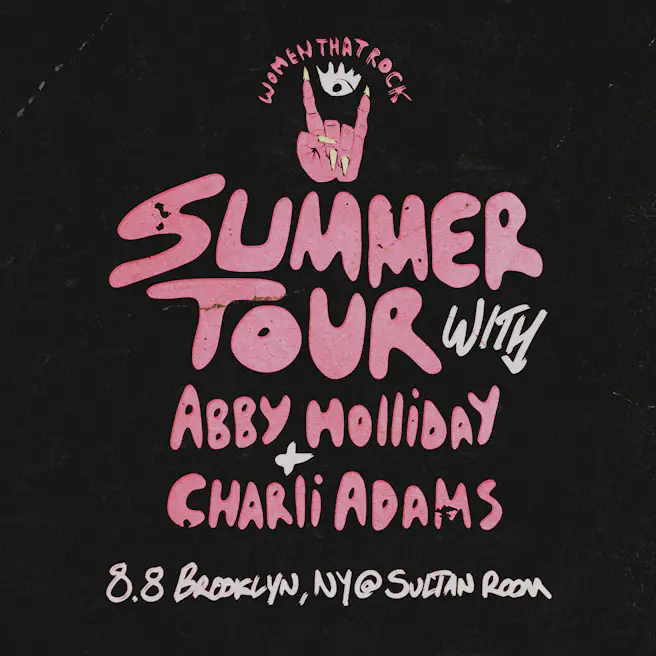
Women That Rock's events alone won't solve the music industry's systemic gender imbalance. But they can help create a blueprint for what's possible, challenging the scarcity mindset that women and nonbinary artists have long been expected to accept.
The goal isn't to compete for one of a few token “female" slots. It's to create more: more opportunities, more visibility, more stages, and more equitable investment.
## **Women That Rock Summer 2026 Tour Dates**
- August 7 — Washington, D.C. @ Songbyrd Music House
- August 8 — New York City, NY @ The Sultan Room
- August 9 — Boston, MA @ The Rockwell
- August 12 — Chicago, IL @ Schubas Tavern
- August 15 — Nashville, TN @ The Basement East
[**Get more information and tickets here.**](https://linktr.ee/womenthatrock?utm%5Fsource=ig&utm%5Fmedium=social&utm%5Fcontent=link%5Fin%5Fbio&fbclid=PAZXh0bgNhZW0CMTEAc3J0YwZhcHBfaWQPOTM2NjE5NzQzMzkyNDU5AAGnH-a0dZaULAr8yMtFKq7eaDN79gN8qFqnc2VyOmZ5gQvT8TJvnqu3vGOyfdM%5Faem%5F4qjNkwrXvhR00skoRbSTfA)
### Your Morning Coffee Podcast: The 'Gen Alpha' Melody, AI Artists, BTS Drama, More
URL: https://www.hypebot.com/your-morning-coffee-podcast-52/
Last updated: 2026-08-03T13:25:35.000Z
### **Listen on your favorite** [**podcast platform**](https://bio.to/UloQY6?ref=hypebot.com)**.**
Subscribe to the Your Morning Coffee newsletter [here](https://label-logic.us8.list-manage.com/subscribe?u=735771602810b0eb238d4e814&id=1ffaab59d7&ref=hypebot.com).
**YMC Episode 313 — August 3, 2026**
On this week’s episode of the **Your Morning Coffee podcast**, your hosts Jay Gilbert and Mike Etchart chat about these timely music industry stories:
- **Majors, Believe, BMG, Concord, HYBE (and more) Propose Chart Eligibility Rules for AI Music**
- **Grammys CEO Defends New Asian Pop Category After BTS Says They Won't Participate in 2027 Awards**
- **Once You Hear It: The 'Gen Alpha Melody' Is Everywhere**
- **10 Biggest AI Music Artists Have Made $6.1 million on Spotify and YouTube, Report Suggests**
Plus an audio drop with Matt Urmy, CoFounder & CEO at Artist Growth!
Listen right here:
Subscribe to the Your Morning Coffee newsletter [**here**](https://label-logic.us8.list-manage.com/subscribe?u=735771602810b0eb238d4e814&id=1ffaab59d7&ref=hypebot.com)**.**
**FIND MORE CURATED MUSIC BUSINESS AND INDIE**
**PODCAST EPISODES** [**HERE**](https://www.hypebot.com/tag/podcast-music-biz/)
### 3 New Spotify Updates That Are Changing Music Marketing
URL: https://www.hypebot.com/3-new-spotify-updates-that-are-changing-music-marketing/
Last updated: 2026-08-03T13:17:00.000Z
[Spotify](https://www.hypebot.com/tag/spotify/) and [Spotify For Artists](https://www.hypebot.com/tag/spotify-for-artists) continually tweak their platforms, and three recent updates change how artists, labels, venues and other music marketers should execute campaigns.
From enhanced playlist personalization to stricter data rules, here is a breakdown of the newest features and what they mean for your [music marketing strategy](https://www.hypebot.com/tag/marketing-strategy/).
### **Spotify User Notes: Enhancing Personalized Playlists**
*Listeners can now add personal captions to songs on their playlists. Discover how User Notes builds fan connection and deepens music discovery.*
**What are Spotify User Notes?**
Spotify is giving listeners a new way to make [playlists](https://www.hypebot.com/the-2026-guide-for-pitching-spotify-editorial-playlists/) more personal with **User Notes,** a feature that lets users add notes to tracks on playlists they create or manage. Think of it as adding a personal caption to songs: a place to share why a track made the playlist, when you discovered it, a hidden gem worth remembering, the story behind it and more.
Available to Spotify users 16+ on Free and Premium across most of the Americas, Europe, and Asia-Pacific, User Notes transforms playlists from a collection of songs into a more personal space for music discovery, bringing together personalization and added context.
**How Spotify User Notes changes music marketing**
- **Curator Storytelling:** Playlist curators and tastemakers can now add context to why they selected your track, essentially providing a written endorsement or "pitch" directly inside the playlist.
- **Artist-Curated Playlists:** Artists can use this feature on their own profiles to speak directly to fans, sharing behind-the-scenes trivia or inspirations for tracks included in their "Artist Picks" or curated mood playlists.
**How to create Spotify User Notes**
1. On mobile, in any playlist you've created or added tracks to, tap the **three-dot menu** next to a track.
2. Select **"Add note."**
3. Type a note (a memory, extra context for why you chose this song for this playlist) and tap **Save**.
4. Your note is now visible to anyone who can see the playlist, with your name linking to your profile.
***+Read more:*** [*"What Are Music Curators Actually Looking For? Insights From 100K Submissions"*](https://www.hypebot.com/what-are-music-curators-actually-looking-for-insights-from-100k-submissions/)
### **Discovery Mode Adds New Campaign Lift Metric**
*The new Campaign Lift metric shows how Discovery Mode boosts your streams. See the impact of paid marketing compared to organic reach.*
**What is the Campaign Lift metric?**
Spotify has updated its performance reports for [**Discovery Mode**](https://support.spotify.com/us/artists/article/understanding-your-discovery-mode-performance-report/?ref=hypebot.com) adding a new metric called **Campaign Lift**. It uses machine-learning to estimate the 'true' impact of a campaign. Opting into Discovery Mode means accepting a lower royalty rate, so this metric calculates the rate your streams and listeners grew in Discovery Mode compared to an estimate of what your songs would have generated organically without the program.
**How Discovery Mode Campaign Lift changes music marketing**
- **Clearer ROI Validation:** Marketers no longer have to guess if a spike in streams was due to their Discovery Mode enrollment or an outside viral trend. Campaign Lift isolates the algorithmic boost.
- **Smarter Track Selection:** By analyzing which tracks generate the highest "lift," marketing teams can make better data-driven decisions on which catalog tracks to leave in Discovery Mode and which to pull.
### **Spotify Rule Change Impacts Forever Pre-Saves**
*Spotify now requires fans to renew third-party app permissions every six months, changing how lifetime pre-saves and fan data collection work.*
**What are the updates to forever pre-saves?**
Historically, third-party marketing apps (like **Hypeddit**, **Laylo**, **SymphonyOS**, and **Feature.fm**) could retain permanent connection access to a fan's Spotify account, enabling "forever" or "lifetime" pre-saves for all future releases. Spotify has updated its API rules, and now **that connection must be renewed every 6 months**. If a fan doesn't re-authenticate after six months, the automated pre-saves will stop.
**How Spotify Pre-Save updates impact music marketing**
- **Focus on Owned Channels:** Automated pre-save lists can no longer be treated as permanent assets. Marketers must build email and SMS lists to re-engage fans whenever access tokens expire.
- **Release Frequency Matters:** Artists who maintain consistent track release schedules (every 4–6 weeks) are better positioned to keep fan authorizations active before the 6-month window closes.
- **Audit Your Toolkit:** "Different providers handle this new rule differently. For example, **Hypeddit’**s automated release emails include a built-in one-tap reconnect button," advices Marlen Hüllbrock of [Music Ally](https://musically.com/2026/07/31/new-spotify-updates-change-how-forever-pre-saves-work/?ref=hypebot.com). "On **Laylo**, when a fan replies to a message or clicks a button within a message, Laylo immediately uses their cached data to trigger the pre-save again. Other tools rely on the artist team to remind fans to pre-save again."
### **Hypebot's Bottom Line**
These three updates collectively shift across Spotify's ecosystem away from passive growth hacks and toward intentional, active engagement.
While **User Notes** and **Campaign Lift** give artists richer storytelling options and actionable ROI data. But tighter **Pre-Save** limits mean that automated shortcuts won't build a sustainable career.
**Winning on Spotify today requires a dual strategy**.
Work to maximize native features that deepen listener connections while aggressively building direct, owned channels off-platform to keep the core audience locked in. If you capture email and SMS info and communicate regularly, you are far less dependent on the changes that Spotify and other platforms make that often get between you and your fans.
**+Read more:** [*"9 Live Music Marketing Trends Selling Out Shows In 2026"*](https://www.hypebot.com/9-live-music-marketing-trends-selling-out-shows-in-2026/)
### Grammys 2027: 3 Weeks Left to Submit (Plus 5 New Categories)
URL: https://www.hypebot.com/grammys-2027-3-weeks-left-to-submit-plus-5-new-categories/
Last updated: 2026-07-31T13:03:14.000Z
### **Grammy Award 2027 Deadlines**
The online entry deadline is August 21, 2026\. With first round voting running October 12 - 22, 2026\.
**More Dates**
**November 16, 2026:** Nominees Announced for the 69th Annual Grammy Awards
**December 10, 2026:** Jan. 7, 2027: Final Round Voting
**February 7, 2027:** 69th Annual Grammy Awards
### **Grammy Award Eligibility**
To be eligible for the 2027 Grammy Awards, recordings must be released between August 31, 2025, and August 28, 2026\. Recordings must be for sale commercially via general distribution or made available as a digital recording, either for sale or via a recognized streaming service.
### **Five New Grammy 2027 Categories**
The Academy has expanded its genres to better reflect global and niche music markets. The five new categories:
- **Best Asian Pop Music Performance:** Recognizes artistic excellence in Asian pop (including K-pop, J-pop, and C-pop) that makes meaningful use of one or more Asian languages.
- **Best R&B Collaboration or Duo/Group Performance:** For contemporary R&B collaborative works and established duos/groups. *(Note: Because of this, the existing Best R&B Performance category will be renamed "Best R&B Solo Performance").*
- **Best Traditional Pop Vocal Performance:** Spotlighting singles and tracks that fit a traditional pop style that cannot be intermingled with current mainstream pop forms.
- **Best Traditional Folk Album:** Dedicated to albums of traditional folk recordings. *(Note: The former Best Folk Album category is now renamed "Best Contemporary Folk Album").*
- **Best Latin Song:** Awarding songwriters for newly written Latin songs that feature at least 51% Spanish lyrics.
### **Find more Grammy deadlines and details** [**here**](https://www.grammy.com/awards/faq/?ref=hypebot.com)**.**
---
*Get all the latest Music Industry & Live Music News updated continuously from across the web under the Hypebot Industry News tab* [*here*](https://www.hypebot.com/music-industry-news-feed/)*.*
## Hypebot
Essential news & insights for artists and live music pros.
Sign up for free weekly content delivered to your inbox
Subscribe
Email sent! Check your inbox to complete your signup.
### Hypebot's Bottom Line: News That Matters to Musicians
URL: https://www.hypebot.com/hypebots-bottom-line-news-that-matters-to-musicians-5/
Last updated: 2026-07-31T12:55:07.000Z
This latest edition of [**Hypebot's Bottom Line**](https://www.hypebot.com/tag/bottom-line/) pulls key takeaways from the most impactful stories we've covered recently.
### **Majors and Indies Unite for Global AI Music Chart Standards**
**Hypebot's Bottom Line:** With the world's biggest major and independent labels finally agreeing on global AI chart rules, the Wild West of AI-generated music on streaming charts is coming to a close. By requiring human-centric creativity and standardizing metadata tags to exclude purely synthetic tracks, the industry is building real infrastructure to protect authentic human artistry from fraudulent streams.
[**Read the full story**](https://www.hypebot.com/majors-and-indies-unite-for-global-ai-music-chart-standards/)
### **John Mulaney Twists Residency Model: 9 NYC Venues in 9 Days**
**Hypebot's Bottom Line:** As production costs along with attention to personal and mental health rise, musicians are actively experimenting with fresh live formats. Where Harry Styles anchored to a single room and The Eagles built a bespoke mega-residency at The Sphere, John Mulaney's city-wide venue crawl offers a masterclass in localized storytelling and artificial scarcity. 'Mulaney Takes Manhattan' spans nine distinct "must-see" events in a single market and sets a clever new precedent for how marquee acts can execute urban residencies.
[**Read the full story**](https://www.hypebot.com/john-mulaney-twists-residency-model-9-nyc-venues-in-9-days/)
### **Social Music Discovery Upgrades: Spotify, Snapchat, Facebook**
**Hypebot's Bottom Line:** The barrier between streaming audio and social video is rapidly disappearing. To stay ahead, marketers and artists should actively encourage fans to utilize Spotify's new direct-sharing integrations, leverage location-based music sharing on Snap Map to build local buzz, and immediately double down on video content as Spotify and now Facebook fundamentally transform the mobile experience.
[**Read the full story**](https://www.hypebot.com/social-music-discovery-upgrades-spotify-snapchat-facebook/)
### **Artist Growth Brings Secure AI to Music Business Operations**
**Hypebot's Bottom Line:** Generative AI is useless if it leaks unreleased tour details or hallucinates schedule changes. By anchoring ChatGPT, Claude, Gemini, and Copilot to strict permission structures and clean operational data, the Artist Growth Model Context Protocol (MCP) isn't just saving music teams hours of administrative grunt work. It's setting the blueprint for how music businesses can safely scale AI automation.
[**Read the full story**](https://www.hypebot.com/artist-growth-brings-secure-ai-to-music-business-operations/)
### **House Democrats Launch Investigation Into StubHub CEO**
**Hypebot's Bottom Line:** StubHub is facing increasing pressure on multiple fronts. In addition to this new Congressional scrutiny from the U.S. House Oversight Committee, Maine, Vermont, and Washington, D.C. have enacted strict resale price caps and regulations that StubHub said will make its business unprofitable. Similar legislation is pending in Massachusetts, New York, California, and elsewhere. As federal lawmakers, agencies, and the states dial up the pressure on StubHub and other secondary ticketing companies, transparency in live entertainment ticketing is finally getting the scrutiny it deserves.
[**Read the full story**](https://www.hypebot.com/house-democrats-launch-investigation-into-stubhub-ceo/)
### **Bandzoogle Upgrades Stores with Pre-Orders, Promo Codes and Tipping**
**Hypebot's Bottom Line:** Owning the direct-to-fan relationship is crucial. Bandzoogle's commission-free model is already a favorite among independent artists. By adding the ability to do things like accept tips and bundle free shipping promotions, musicians are now equipped with standard retail marketing tools that are proven to drive more sales and increase the lifetime value of their fans.
[**Read the full story**](https://www.hypebot.com/bandzoogle-upgrades-stores-with-pre-orders-promo-codes-tips/)
### How to Avoid These 6 Release Mistakes
URL: https://www.hypebot.com/how-to-avoid-these-6-release-mistakes/
Last updated: 2026-07-31T12:37:40.000Z
### **6 common release mistakes artists make (and how to avoid them)**
*By* [***Ryan DiLello***](https://diymusician.cdbaby.com/author/rdilellocdbaby-com/?ref=hypebot.com) *of* [***DIY Musician Blog***](https://diymusician.cdbaby.com/releasing-music/6-common-release-mistakes/?ref=hypebot.com)
Releasing your music and finding an audience takes the right mix of tools and knowledge. From gathering your assets for submission to promoting your music and growing your [fan base](https://www.hypebot.com/tag/fan-base/), there’s a lot of room to go wrong — even if it’s not your first time.
Drawing on our experience serving over two million artists worldwide, we’ve rounded up the most common mistakes we see artists make and resources to help you avoid them. Read on to feel prepared at every turn.
**KEY TAKEAWAYS**
- Over 100,000 tracks are released daily — a promotion plan is essential to stand out
- Cover art and metadata errors are a leading cause of release delays and rejections
- Most artists collect only 1 of 6 possible royalty types, leaving revenue unclaimed
- A consistent artist brand helps fans recognize and connect with you across every release
- Social media strategy should align with clear goals to avoid burnout
- Releasing music consistently builds momentum and makes fan growth easier to track
## **1\. Submitting cover art or metadata that doesn’t meet requirements**
Errors in your cover art or other metadata (i.e. essential information about your music) can lead to release delays and rejections. Before you submit your music, be sure your cover art meets platform requirements and your metadata is accurate and consistent.
It’s not only about getting your release live on time. Clean and accurate metadata gives you a strong foundation for unlocking opportunities down the road — from arranging publishing deals to signing with a label. Good data makes everything easier.
Resources to help:
- [How to distribute your music](https://diymusician.cdbaby.com/releasing-music/music-distribution-guide/?ref=hypebot.com): Get a practical, step-by-step guide to releasing your music
- [Copyright 101](https://diymusician.cdbaby.com/music-rights/copyright-for-musicians/?ref=hypebot.com): Learn what music copyright is, how it works, and why it matters
- [Cover art 101](https://diymusician.cdbaby.com/music-career/cover-art-best-practices/?ref=hypebot.com): Learn how to effectively design and format artwork for your music
- [Metadata 101](https://diymusician.cdbaby.com/releasing-music/music-metadata-101/?ref=hypebot.com): Learn what metadata is, how to maintain it, and why it matters
- [Credits 101](https://diymusician.cdbaby.com/music-publishing/what-are-songwriter-credits-and-why-are-they-important/?ref=hypebot.com): Learn what songwriter credits are and why they’re important
## **2\. Releasing music without a plan to promote it to your fans**
Over [100,000 new tracks hit streaming platforms](https://diymusician.cdbaby.com/music-news/takeaways-from-luminate-2025/?ref=hypebot.com) every day. That means just getting your music out there isn’t enough to find your fans. You need a plan to cut through the noise if you want to boost your streams.
Resources to help:
- [The 30-day release plan](https://diymusician.cdbaby.com/music-promotion/30-day-release-plan/?ref=hypebot.com): Follow this detailed guide with a daily list of promo to-do’s
- [Post-submission essentials](https://diymusician.cdbaby.com/releasing-music/what-to-do-after-submitting-music/?ref=hypebot.com): Learn what to do after submitting your music for distribution
- [How to run a Spotify pre-save campaign](https://diymusician.cdbaby.com/music-promotion/100-pre-saves-on-spotify/?ref=hypebot.com): Launch a campaign to reach 100 pre-saves
- [How to pitch Spotify editorial playlists](https://diymusician.cdbaby.com/music-promotion/pitch-spotify-editorial-playlists/?ref=hypebot.com): Get a 5-step template to craft an effective pitch
- [How to reach 10,000 streams on Spotify](https://diymusician.cdbaby.com/music-streaming/10000-streams-on-spotify/?ref=hypebot.com): Learn tactics and strategies for reaching key streaming milestones from your first handful of streams up to 10,000
## **3\. Missing out on revenue from uncollected music royalties**
Many independent artists release their music and focus solely on collecting recording royalties from streaming platforms through their distributor. But that’s only one of six common music royalties that together, add up to quite a bit of easy revenue. You’re probably earning other forms of royalties already — through streaming, live performances, radio play, and more. You just need to take the steps to collect them.
Resources to help:
- [Royalties 101](https://diymusician.cdbaby.com/music-rights/the-6-types-of-music-royalties/?ref=hypebot.com): Learn the 6 common types of royalties and how to collect them
- [CDB Boost](https://diymusician.cdbaby.com/music-publishing/monetize-your-music-with-cdb-boost/?ref=hypebot.com): Automatically collect additional royalties with CDB Boost
- [Social Video Monetization](https://diymusician.cdbaby.com/music-rights/monetize-your-music/?ref=hypebot.com): Claim royalties from fans using your music on social video platforms with CD Baby’s Social Video Monetization service
- [Publishing 101](https://diymusician.cdbaby.com/music-rights/music-publishing-explained/?ref=hypebot.com): See how music publishing works and what you need to get started
- [Revenue checklist](https://diymusician.cdbaby.com/musician-tips/earn-more-money-from-your-music/?ref=hypebot.com): Explore 10 ways you can start earning more from your music — beyond royalty collection
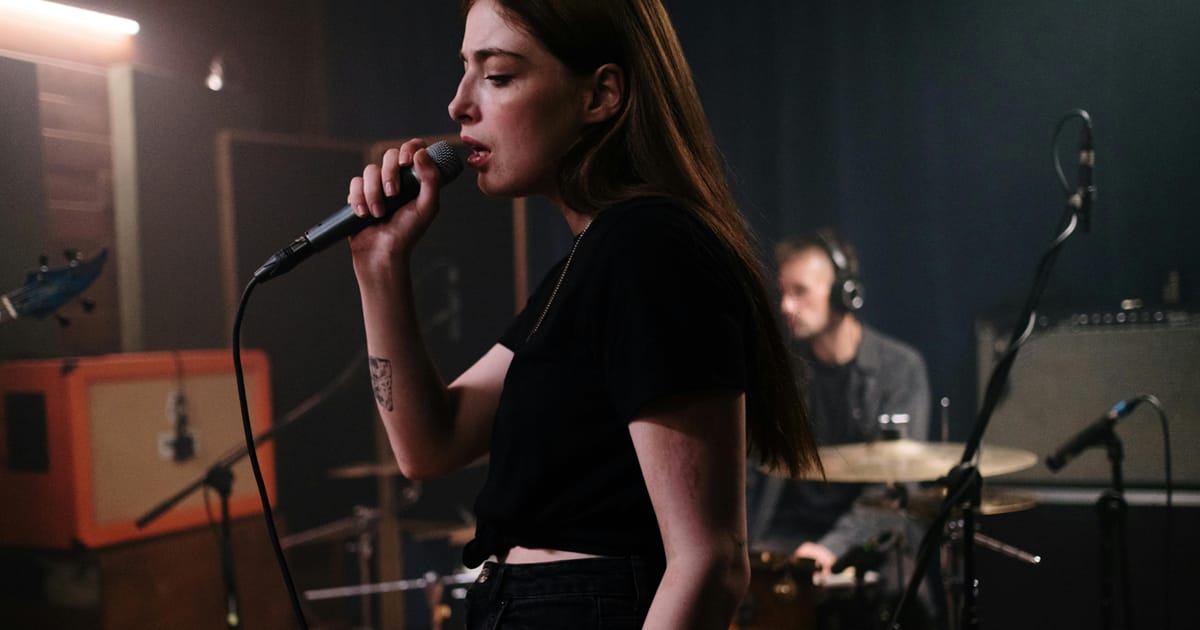
***+Read more:*** [*"How Musicians Get Discovered in 2026: Case Study & Downloadable Checklist"*](https://www.hypebot.com/how-musicians-get-discovered-in-2026-a-realistic-playbook-that-actually-works/)
## **4\. Not building an artist brand that fans can identify**
No amount of marketing — be it paid ads, social posts, emails, or live shows — can make up for a lack of artist branding. Every appearance is a chance to make your identity and creative world stick with fans. But if your social profile has no consistent aesthetic, your live show feels different every time, and your releases don’t tell a story, fans have no clear way to get to know you.
Resources to help:
- [Artist branding](https://diymusician.cdbaby.com/artist-management/guide-to-artist-branding/?ref=hypebot.com): Learn what an artist brand is and how to build one
- [Networking](https://diymusician.cdbaby.com/music-career/industry-networking-checklist/?ref=hypebot.com): Get yourself out there and create opportunities
- [How to get press coverage](https://diymusician.cdbaby.com/music-marketing/guide-to-press-coverage/?ref=hypebot.com): Learn how to tell an impactful story behind your release
- [How to write an artist bio](https://diymusician.cdbaby.com/music-career/how-to-write-an-artist-bio/?ref=hypebot.com): Learn how to write about yourself and your music
- [How to create an electronic press kit](https://diymusician.cdbaby.com/music-marketing/epk-checklist/?ref=hypebot.com): Impress journalists and media people with an EPK
## **5\. Burning out on social media**
Social media enables you to reach global audiences in a matter of seconds. It’s also incredibly effective at making local music scenes more accessible and navigable. Maintaining your social media presence gives fans a way to discover your sound and stay connected with you — beyond the music.
But make no mistake, burnout is real. If you feel overwhelmed or drained by constant posting, it’s time to reassess your strategy. Think: what do you want to accomplish and how will social media help you get there?
Resources to help:
- [Social media makeover](https://diymusician.cdbaby.com/music-career/social-media-makeover-for-musicians/?ref=hypebot.com): If your profiles are stale, this easy checklist helps with a refresh
- [How to build an email list](https://diymusician.cdbaby.com/music-marketing/email-marketing-tips/?ref=hypebot.com): Tired of algorithm chasing? See what email can do for you.
- [How to promote your music on social media](https://diymusician.cdbaby.com/music-promotion/promote-your-music-on-social-media/?ref=hypebot.com): If you’re just starting out or reassessing your strategy, this is an excellent (re)introduction to social media for musicians
- [Social media promotion inspo](https://diymusician.cdbaby.com/music-promotion/10-ideas-for-social-media-promo/?ref=hypebot.com): Learn how to make content that feels authentic to you
- [Fan funnel](https://diymusician.cdbaby.com/music-marketing/how-to-build-a-fan-funnel/?ref=hypebot.com): Align your social media content with a marketing funnel to grow and retain your fan base
## **6\. Releasing music too infrequently to build momentum**
It’s difficult to grow your fan base if you aren’t releasing music on a consistent basis. It’s also hard to gauge your growth if you don’t have metrics to prove it. Artists that don’t do either end up having to rebuild their foundation every time they start promoting a new release — and that’s not sustainable.
Resources to help:
- [How to choose a release format](https://diymusician.cdbaby.com/releasing-music/choosing-a-release-format/?ref=hypebot.com): Learn the differences between a single, EP, and album and how each fits within your release cycle
- [How to waterfall your release](https://diymusician.cdbaby.com/releasing-music/waterfall-release-strategy/?ref=hypebot.com): Get the most out of your next album by releasing lead singles that stack up to build momentum
- [How to release a single](https://diymusician.cdbaby.com/releasing-music/how-to-release-a-single-in-2026/?ref=hypebot.com): Learn the latest tactics for promoting your single
- [How to release an album](https://diymusician.cdbaby.com/releasing-music/how-to-release-an-album-in-2026/?ref=hypebot.com): Learn the latest tactics for promoting your album
- [Music metrics that matter](https://diymusician.cdbaby.com/music-career/music-metrics-that-matter/?ref=hypebot.com): You can’t grow what you don’t measure. Learn what metrics matter most across various channels
## **Put these lessons into action. Your next release starts here.**
For nearly three decades, CD Baby has focused on giving independent artists the tools and knowledge to confidently avoid these pitfalls and build careers on their own terms.
When you’re ready to release your music, we offer distribution to 150+ platforms worldwide with pay-per-release pricing and no annual fees.
***+Read more:*** [*"What It Really Takes to Go Big on Spotify"*](https://www.hypebot.com/what-it-really-takes-to-go-big-on-spotify/)
### We’ve Normalized Financial Struggle for Artists. It’s Time to Stop.
URL: https://www.hypebot.com/weve-normalized-financial-struggle-for-artists-its-time-to-stop/
Last updated: 2026-07-31T11:38:36.000Z
*By *Craig A. Meyer*, Founder of* [***GigLogic***](https://www.giglogic.com/?ref=hypebot.com)
I remember one show early in my career that looked like a success by every measure I knew. The audience was fantastic. The [venue](https://www.hypebot.com/tag/venues/) was packed. People stayed afterward to talk, buy merchandise, and tell me how much they loved the performance. I drove away thinking:
> *“This is what making it feels like.”*
Then I started doing the math...
By the time I accounted for travel, lodging, fuel, meals, taxes, and everything else that comes with being a working musician, the night’s profit looked nothing like the paycheck I’d been celebrating. I hadn’t played a bad show. I had made a bad business decision... and I didn’t realize it until it was over.
Looking back, I don’t blame anyone for that. No one misled me. No one was trying to take advantage of me. Like so many artists, I simply didn’t have the tools or the business framework to evaluate the opportunity before I accepted it.
That’s a lesson I would learn more than once. It’s also the reason I’m convinced we need to change the way we prepare artists for professional careers.
For generations, we’ve **accepted financial struggle** as part of the artist’s story. We romanticize it. We call it paying dues. We call it passion. We tell young musicians to keep hustling, keep saying yes, keep grinding, and trust that eventually it will all work out.
### But what if we’ve been telling artists the wrong story?
The music industry isn’t short on opportunity. According to the Recording Industry Association of America ([RIAA](https://www.hypebot.com/tag/riaa/)), U.S. recorded music revenues reached a record $17.7 billion in 2024\. Streaming continues to grow. [Live music](https://www.hypebot.com/tag/live-music/) remains a powerful economic force. New technologies have made it easier than ever for artists to create, distribute, and promote their work.
Yet financial sustainability remains elusive for many working musicians. According to [MusiCares’ 2025 Wellness in Music Survey](https://musicrow.com/2025/10/musicares-shares-findings-from-2025-wellness-in-music-survey/?ref=hypebot.com), financial wellness and income stability remain among the most significant challenges facing music professionals.
This isn’t because artists lack talent. It isn’t because they aren’t willing to work. In my experience, musicians are among the hardest-working people you’ll ever meet. They’ll drive through the night, load their own gear, play three sets, sleep four hours, and do it all again the next day because they love what they do.
We’ve become remarkably good at teaching artists how to create, but remarkably inconsistent at teaching them how to build sustainable careers. We teach songwriting, performance, recording, branding, promotion, and social media. What we often don’t teach is how to evaluate an opportunity as a business decision.
A bigger guarantee doesn’t automatically mean a better gig. A full calendar doesn’t necessarily mean you’re building a successful business. A sold-out room can still lose money once travel, lodging, crew, commissions, taxes, meals, and all the hidden costs of live performance are taken into account. Being busy is not the same thing as being profitable.
My co-founder, **Gary Arbuthnot**, and I learned that lesson over decades of performing. Between us, we’ve worked on Broadway, in concert halls, aboard cruise ships, with orchestras, and in theaters around the world. We’ve watched talented artists say yes based on excitement or instinct because they simply didn’t have the information they needed beforehand.
That isn’t a character flaw. It’s an information problem. Artists shouldn’t have to become accountants to build sustainable careers. But they do deserve access to the same kind of business intelligence every other entrepreneur relies on.
Artists are entrepreneurs too. Every performance is an investment of time, money, reputation, and creative energy. Every opportunity deserves to be evaluated with the same care as any other business decision. Not every gig should be judged by [profit](https://www.hypebot.com/tag/revenue/) alone. Some are worth doing for the audience, the relationships, or the doors they may open. But those should be intentional decisions and not expensive surprises.
Gary and I eventually built [GigLogic](https://www.giglogic.com/?ref=hypebot.com) because we were tired of learning those lessons after the fact. We wanted a better way to understand the economics of a performance before committing to it.
But this conversation is much bigger than one [tool](https://www.hypebot.com/tag/tools/). It’s about changing the culture around creative careers. It’s about giving artists permission to think like entrepreneurs without asking them to stop thinking like artists. It’s about helping musicians understand that asking smart business questions doesn’t diminish creativity. It protects it.
We don’t expect architects to apologize for earning a living. We don’t romanticize struggling accountants or celebrate lawyers who consistently lose money on every client. We recognize that professionals deserve to understand the economics of their work. Artists deserve that same respect.
If we want healthier careers, healthier creative communities, and a healthier music industry, we have to stop treating financial uncertainty as an unavoidable part of making art.
Talent deserves sustainability. Passion deserves a plan. It’s time we stop teaching artists that financial struggle is part of the job and start giving them the knowledge to build careers that last.
It’s time to retire the idea that financial struggle is proof of artistic authenticity.
***+Read more:*** [*"How to Choose the Right Indie Venue for Your Live Concert"*](https://www.hypebot.com/how-to-choose-the-right-indie-venue-for-your-live-concert/)
---
**Craig A. Meyer* is Founder of* [***GigLogic***](https://www.giglogic.com/?ref=hypebot.com)*, a veteran touring performer, and creator, producer, and star of the internationally touring production Remember When Rock Was Young – The Elton John Experience.*
### In The Trenches with Al Damashek of Move Forward Music & Webster Hall
URL: https://www.hypebot.com/in-the-trenches-with-al-damashek-of-move-forward-music-webster/
Last updated: 2026-07-31T14:42:06.000Z
*This interview with *Al Damashek*, the founder of* [***Move Forward Music***](https://moveforwardmusic.com/?ref=hypebot.com)*and a former booker at iconic New York City venues* [***SOB's***](https://www.bandsintown.com/v/10004416-sob's?utm%5Fsource=hypebot&came%5Ffrom=900)*,* [***Webster Hall***](https://www.bandsintown.com/v/10001867-webster-hall?utm%5Fsource=hypebot&came%5Ffrom=900)*, and* [***Baby's All Right***](https://www.bandsintown.com/v/10001849-baby's-all-right?utm%5Fsource=hypebot&came%5Ffrom=900)*, is part of Hypebot’s*[***In The Trenches***](https://www.hypebot.com/tag/in-the-trenches/) *series sponsored by venue, festival and promoter marketing solution* [***Bandsintown PRO***](https://www.bandsintown.pro/?ref=hypebot.com)*. The series features the unsung heroes who make live music happen.*
*Al is one of New York City's most influential independent music promoters and bookers, and has built a reputation for spotting talent before the rest of the industry catches on, having helped launch early NYC performances for artists like Kendrick Lamar, Doja Cat, Juice WRLD, Shaboozey, and Ravyn Lenae long before their mainstream success.*
*Here's our conversation. Enjoy!*
---
**Hypebot: Hey Al, thanks so much for taking the time. Can you just introduce us to your work and your career?**
Al: "It started at a historic live music club in downtown Manhattan called SOB's, around 2007, where I somehow landed a Director of Marketing role as my first job out of college, and launched Move Forward Music out of that office in 2008\. Move Forward's mission was to spotlight progressive artists and create spaces where diverse groups could connect through music."
In 2014, I was tapped by Webster Hall to revamp their long running Thursday club night, and our weekly House Party NYC became the biggest hip-hop party in the city, and a right of passage for artists looking to break a big record in NYC. In just a 2-year run, Travis Scott, Playboi Carti, Lil Uzi Vert, Rae Sremmurd, Bobby Shmurda, Tinashe and many more stars of the 2010's made their early waves in NYC at Webster Hall on Thursday nights."
I earned the reputation for being the first to book everyone in hip-hop in NYC, and Move Forward started to build a culture around artist discovery. From there, we developed scenes at Baby's All Right, Market Hotel, SILO, and many other rooms, continuing to spot talent early and provide platforms to launch their careers. Kendrick Lamar, Doja Cat, Ravyn Lenae, Tems, Shaboozey, and so many other amazing talents have blessed the various stages we've represented. We never gave up the mission."
In 2020, we partnered with Twitch to launch a live music streaming channel and continued paying artists to perform virtually throughout the pandemic. In 2026, we launched Sounds That Move, an independent culture festival that takes over 5 venues on one block in Brooklyn, turning Scott Avenue into an immersive music experience built around music discovery and community."
**H: I want to talk about** [**SOB’s**](https://www.bandsintown.com/v/10004416-sob's?utm%5Fsource=hypebot&came%5Ffrom=900)**. An NYC INSTITUTION since the early '80s, how did that experience shape you? Was there a weight of responsibility booking such a sought-after room like that?**
Al: "So much culture runs through that space that it's hard not get inspired working in that environment. It wasn't only the artists but all the people working behind the scenes. I have to shout out Larry Gold, the owner, who still runs the place today, for giving so many talented young people the opportunity to launch their careers."
I had spent my teenage and college years trying to break into the music industry as a rapper and DJ, and within a few months at SOB's, I was on the phone with Gil Scott-Heron (RIP) and booking pop-up shows by Kanye West. I was learning about Fela Kuti and at the same time as having the opportunity to introduce NYC to his son, Seun Kuti, in concert. These were just the type of things that would happen there every week. I would see a Haitian band like Djakout Mizik or an act like Ferro Gaita from Cabo Verde and was so inspired to see the way they brought people of those cultures together."
I grew up in Brooklyn and didn't even know we had that many Cape Verdeans in NYC! And here is a room full of them singing in Portuguese, feeling all the pride of their culture and heritage. It was beautiful and it reminded me what was so great about New York and made me want to commit my life to creating those moments for as many people as possible. I had caught the live music bug and there was no turning back."
**H: What do you look for in young talent, and is there anything you can do in your role to coax them through that growth moment?**
Al: "I look for the signs that people are starting to coalesce around their sound, their energy, their identity, or what they represent in the culture at the given time. Today, a lot of that is data analytics like streams, likes and follows, but it also has a lot to do with who is working with them and who's talking about them online. I don't mean influencers because a lot of them get paid to talk about stuff, but I've spent a lot of time curating my network of trusted people that I follow and talk to."
So I know if a certain manager or agent is really passionate about an artist, or if someone I know has great taste is sharing it, that means something. I've always had a rule of three – when I hear about an artist from three distinct sources, I know there is something happening, and then I let my ears do the rest of the work. As far as coaxing them through the moment, I don't look at that as part of my job."
I'm singularly focused on creating the best possible environment for that artist's live show, especially if it is their debut in NYC. I'm going to put them in the right room, make sure their fans know about the show and can access tickets, book the appropriate local openers to support their vibe, put the production crew in place to make it sound pristine, and make the concert experience as seamless and stress-free as it can be from the moment they walk in the door til they exit. And I'm always going to make it feel like New York, put you in the right neighborhood, with the right people in the room, and the right food backstage."
That's what I do. When the curtain comes down, I wish them luck until I see them the next time in a bigger room, and get ready for the next artist's show."
> "I've always had a rule of three – when I hear about an artist from three distinct sources, I know there is something happening, and then I let my ears do the rest of the work."
**H: What do you love about live music?**
Al: "The way it brings people together. You can be in a packed concert and there would never be any other circumstance that would put that group of people in the room at the same time. And there's an immediate camaraderie, because people base their identity around their musical tastes in a way they don't with movies or museums."
When you see someone at a concert, you know they are on your type of time. And then you all feel the bass hit your legs together. And you sing together. And you get to witness raw expression of human creativity and vulnerability bursting off the stage. It's a unique feeling. Part of my business plan when I started Move Forward in 2008, at a time when the music industry was reeling from mp3 piracy, was to invest in live music because you can't download that feeling."
Today in 2026, I would say you can't replicate that feeling with AI either. It's an intimate human-to-human connection that needed in the world, and that was proven after the pandemic when people came out in droves for live events."
**H: Are live performance and touring is essential for artists today?**
Al: "Yea, how else are we going to know for sure that you are not A.I.? Haha, seriously though, that human interaction is going to more important than ever. Things increase in value through scarcity. And we are in an era, sadly, where human interaction is becoming less routine and more rare."
You can build your myth online through social media, but you can't become a real life legend until people see you in the flesh. Also the experience as a fan, sharing that communal joy with a packed crowd is validating, and it makes you want to relive it through the music. I know I've streamed more Jay-Z since seeing him at Yankee Stadium than I have in the past few years."
**H: So let’s talk about** [**Move Forward Music**](https://moveforwardmusic.com/?ref=hypebot.com) **\- a team that produces, markets and live-streams experiences and events that build brands and impact culture. What did it take to build the community for this and launch this?**
Al: "I've always been obsessed with moments, and the power that one simple interaction can have on your life or even the course of history, but at the same time, how once the moment passes, the world keeps turning. And I believe that live music has a unique power to create memorable, culture-shifting moments."
So that's what Move Forward has always been about. Identify the potential for a cultural moment, create it, treat every opportunity like its the most important moment in the world, then when the lights go up, the moment is over. We Move Forward no matter what. On to the next one."
**H: And speaking about community-building, how does Live Nation and the monopolistic takeover of live touring impact work like yours in terms of building something big on a local level?**
Al: "The nature of the business has forced me to get a lot more creative about where we do our shows and how to scale our business. I've doubled down on the emerging artists space, and being first to market with new artists. Instead of investing in one artist that I can scale with from clubs to arenas, I've put all my resources into building a culture around music discovery and nurturing spaces where new scenes can develop. Over time, we built credibility and trust and expanded into different genres and now are considered a go-to option for the first NY play."
As we scaled to larger shows, we had to find alternative spaces outside the traditional touring circuit. We started throwing concerts at St. Ann & The Holy Trinity in 2021 as an alternative look for artist to play a NY concert, and ended up producing Andre3000's first ever solo show, for his album *New Blue Sun,* at the historic church. After booking Chief Keef at Knockdown Center in 2020, we were hired by Spotify to produce a branded anniversary show for *Finally Rich,* and ended up working with them as an experiential producer on several projects."
Ultimately, Spotify joined as a partner for Sounds That Move, which itself was launched as a vehicle to level up independent venues by grouping them together under the festival brand, giving us more leverage to get shows and offer artist another opportunity after that first club moment."
**H: What "go to" tools, strategies and platforms do you use to market shows?**
Al: "The best marketing is a good booking. A well curated line-up will do more for you than any media platform. As far as communicating with the audience, shoot em a text. It took me a long time to embrace SMS marketing because as an old head I thought it to be invasive. It's not for this generation. People read and click through on text messages at a way higher rate than emails or even most social media promo. I still write my email newsletters, and create content for socials, but it takes time and money. Pound for pound, the best value in marketing right now is SMS."
> *"*I know I've streamed more Jay-Z since seeing him at Yankee Stadium than I have in the past few years."
**H: What it the state of the music industry according to your point of view?**
Al: "The industry is in a bit of a rebuilding phase following COVID. This isn't unique to music, but the business came out super hot in the years following the pandemic, especially with festivals, and touring in general. From festivals to clubs, fans were buying all tickets and prices kept rising and more and more artists kept hitting the road hoping to cash in. VIP premiums and upgrades became increasing common and service fees exploded."
Over the last two years, we've seen that start to level out – artists at the very top are blowing out their on-sales, and artists in our world, on the club level, acts are still by and large attracting those early fans, but the middle is hollowing. After rushing outside for two years, a lot of people have reverted to indoor preferences and people are going out less and coming home earlier. Gen Z really needs an incentive to bring them out to spend money and the same old expensive festivals and maybe that one song they like isn't enough anymore. They want something more tailored to them and their tastes."
That's really why we built Sounds That Move. We wanted to create a different kind of festival. Instead of dropping people into one giant field, we created choose your own adventure format, with distict venues and multiple genres, in away that encourages artist discovery, intimacy with the fans, and different cultures interacting and exchanging reactions to music in a shared space. In our first year, 10,000 fans moved freely between panels, a daytime fashion market, concerts, and late-night club shows, and it really felt like we brought a lot of different parts of NYC out to enjoy something in unison, and we need that right now. We're already working on 2027, and I know it's going to continue to grow as more people catch on to what we're doing."
**H: What’s your typical lunch order?**
Al: "Cracked pepper turkey & muenster cheese, lettuce tomato, salt & peper, oil & vinegar, NO MAYO!!!"
---
### **MORE**
**•** [**In The Trenches: Spotlighting the unsung heroes strengthening live music**](https://www.hypebot.com/tag/in-the-trenches/)
**•** [**How Bands and Music Venues Can Market Live Shows Like the Pros**](https://www.hypebot.com/tag/in-the-trenches/)
*Get all the latest Music Industry & Live Music News updated continuously from across the web under the Hypebot Industry News tab* [*here*](https://www.hypebot.com/music-industry-news-feed/)*.*
## Essential news & insights for artists and live music pros.
Subscribe
Email sent! Check your inbox to complete your signup.
Sign up for free weekly content delivered to your inbox
### Jodeci Made the Slow Jam Feel Dangerous. They’re Taking It Back on Tour.
URL: https://www.hypebot.com/jodeci-made-the-slow-jam-feel-dangerous-theyre-taking-it-back-on-tour/
Last updated: 2026-07-30T16:18:32.000Z
In one of the most unexpected reunions of the year, [**Jodeci’s**](https://www.bandsintown.com/a/25971-jodeci?utm%5Fsource=hypebot&came%5Ffrom=900) recently announced their upcoming live concert tour, their first in over 20 years.
The group will mark the 35th anniversary of its debut album, ***Forever My Lady***, with a 36-city US tour beginning October 24 at The Masonic in San Francisco. The run will go through Los Angeles, Chicago, Detroit, Memphis, New Orleans, Miami Beach and other cities before their hometown conclusion at Charlotte’s Ovens Auditorium in December. Get the [full tour details here.](https://www.bandsintown.com/a/25971-jodeci?utm%5Fsource=hypebot&came%5Ffrom=900)
And while we'd love to talk about how these ferociously sexy shows are sure to make 2027 a record-setting birth year, what we really ought to celebrate is how, looking back, this group reinvented an entirely new way of performing R&B. Jodeci made romantic music feel tough, dangerous, un-churchly, and they changed how Gospel boys behaved on [the live stage](https://www.hypebot.com/tag/live-music/).
Here's a [**Brief History**](https://www.hypebot.com/tag/brief-history/) of **Jodeci.**
## **The group that arrived looking different**
The mainstream male vocal-group template of the early 1990s favored polish: coordinated clothes, controlled choreography and romance presented as reassurance. Jodeci kept the harmonies but disrupted the composure.
Despite being raised in the church (both sets of brothers), **K-Ci, JoJo, DeVante Swing,** and **Mr. Dalvin's** gospel-rooted vocals were thrust into contact with street clothing, sensuous erotic tension, and the physical abandon of a rock show. Their lyrics begged for love, but their [live performances](https://www.hypebot.com/tag/live-performance/) rarely behaved politely enough to be called begging.
The transformation was already visible when Jodeci performed “Forever My Lady” at the Apollo in 1991\. The song itself is tender and devotional. K-Ci sings it like testimony, throwing his entire body behind notes that a more restrained group might have delivered standing perfectly still.
Jodeci would soon join **Boyz II Men,** **TLC,** and other emerging acts on **MC Hammer’s** enormous 1992 *Too Legit to Quit* tour. In retrospect, the bill placed several possible futures for R&B on the same stage. Boyz II Men offered extraordinary harmonic precision; TLC brought a youthful Atlanta attitude; and Jodeci looked and moved like the distinction between an R&B group and a hip-hop crew was already becoming irrelevant.
## **When the slow jam lost control**
Jodeci wasn’t the first act to combine R&B and hip-hop. **New Jack Swing** had already established that new relationship between drum machine rhythms, gospel chords, and four-part harmonies. But that was always a "party" sound.
Jodeci still wanted to seduce you, yet while wearing baggy jeans, combat boots, and leather. It all felt a little dangerous. At any point, the group's live choreography could dissolve into kneeling, shouting, or stripping off a layer of clothing. A love song was not a display of emotional control. It was the exact moment control disappeared.
That combination became Jodeci’s signature: preacher voice, bedroom lyrics, and hip-hop swagger colliding in public.
**+Read more:** [*"Bryson Tiller Doesn't Have to Rush His Crowd. Here's Why."*](https://www.hypebot.com/bryson-tiller-doesnt-have-to-rush-his-crowd-heres-why/)
## **The performance that became a hit**
The clearest evidence of Jodeci’s live power came during *Uptown MTV Unplugged* in 1993\. Their version of Stevie Wonder’s “Lately” was not originally a Jodeci studio single. It was a live cover performed during a showcase featuring Uptown Records artists including Mary J. Blige, Heavy D and Christopher Williams.
Jodeci’s performance was so commanding that the recording became part of the group’s catalog, eventually reaching No. 1 on Billboard’s R&B chart.
Plenty of artists use live performances to promote records. Jodeci created a hit record by performing it.
## **The Bad Boys of R&B become fully formed**
By the middle of the decade, Jodeci’s music and stage identity had completely merged. Their *Jams Live* set — featuring “Cry for You,” “What About Us” and “Feenin’” — captures the group near its unruly peak.
These no longer feel like slow songs inserted into a conventional concert. The screaming is part of the arrangement, so is the pleading. And this is a performative language that would spread throughout male R&B. Singers could be sensitive without being polished, sexual without being suave, and vocally disciplined while appearing seconds away from chaos.
You can hear and see pieces of that vocabulary embedded in generations of performers who followed.
**+Read more:** [*"The Story of 'That' Rooftop Concert"*](https://www.hypebot.com/the-story-of-that-rooftop-concert/)
## **The reunion that showed their true colors**
Jodeci’s original run ended without a tidy conclusion in 1995\. Following the release of *The Show, the After Party, the Hotel*, the group would go two decades without releasing another studio album.
Personal struggles and inconsistent appearances often became more visible than the music. A traumatic 1995 home invasion and assault involving producer DeVante Swing led him to take time off, which opened the doors for brothers K-Ci & JoJo to branch off and find success as a duo. Jodeci never officially "broke up," but the would only reunite for short stints after that.
At the 2014 Soul Train Awards [reunion](https://www.hypebot.com/tag/reunion/) (the first performance together since 2006), the group performed a medley with appearances from **Method Man** and **Lil’ Kim** before introducing “Nobody Wins,” their first new song in years. It truly supplanted the fact that Jodeci had become inseparable from hip-hop history, not just R&B history.
## **Entering their legacy touring phase**
The current tour is not Jodeci’s first recent return to the road. In 2023, the group [headlined the Summer Block Party Tour](https://www.youtube.com/watch?v=iu7QS7qKe-8&ref=hypebot.com) with **SWV** and **Dru Hill**. The following year, they launched a [live residency](https://www.hypebot.com/in-the-new-era-of-touring-artists-are-planting-in-one-city-for-weeks/) at the House of Blues Las Vegas with a sold out opening weekend.
They've officially entered the coordinated legacy infrastructure that so many comeback artists [are seeing right now](https://www.hypebot.com/the-comeback-tour-no-longer-sells-only-tickets-it-sells-memory/). That means the feeling Jodeci created has become durable enough to support theater tours, residencies and catalog products three decades later. And the strongest legacy tours revive a live identity that nobody else can reproduce.
For Jodeci, that identity has always existed inside a contradiction. The songs promised tenderness and permanence, yet the performances made both sound like an emergency.

---
## [**Jodeci Tour Dates**](https://www.bandsintown.com/a/25971-jodeci?utm%5Fsource=hypebot&came%5Ffrom=900)
### Why Are We Still Managing Modern Releases Like It’s 2005?
URL: https://www.hypebot.com/why-are-we-still-managing-modern-releases-like-its-2005/
Last updated: 2026-07-30T14:22:07.000Z
*By *Adam Fitzgerald*, Founder of*[***Legless Records***](https://www.legless-records.com/?ref=hypebot.com)*and* [***Blackbox RMS***](https://www.blackboxrms.com/?ref=hypebot.com)
## **The missing middle of music technology**
The music industry has developed excellent tools for making music, distributing it, promoting it and measuring what happens afterward. What has received far less attention is the operational work **in the middle.**
That middle begins when a track is accepted and continues long after it appears on streaming platforms. Someone has to confirm the version being released, collect the correct artist information, artwork, credits and identifiers, issue the contracts and make sure they are returned and correctly completed. Deadlines need to be tracked, masters approved, promotional campaigns prepared and any changes recorded. Months later, royalty data must be matched back to the correct release and the agreement that determines how the income is divided.
For a large company, those responsibilities can be distributed among departments.
For a small, growing or mid-sized [independent label](https://www.hypebot.com/why-independent-record-labels-must-professionalize-to-survive/), they are often handled by one or two people, usually late at night, while they juggle A&R, marketing, social media, accounting and artist support. [Self-releasing artists](https://www.hypebot.com/tag/d-i-y/) face much the same problem: independence gives them control, but also every administrative job that used to sit somewhere else.
The industry often celebrates access to tools, and rightly so. Artists and labels now have resources that would once have been unavailable to them. But access to twenty separate tools does not automatically create an effective working system.
*Sometimes it simply creates twenty different places where information can be lost.*
## **How I found the problem**
I did not set out to build music software. I set out to run a record label properly.
I have spent more than 30 years around underground electronic music as a DJ, producer and, eventually, a label owner. When I relaunched [Legless Records](https://www.legless-records.com/?ref=hypebot.com), I expected the difficult parts to be finding good music, earning artists’ trust and getting releases heard in an overcrowded market. Those things are difficult, of course. What surprised me was how much of my time disappeared into administration.
Every release brought another contract, master, radio edit, piece of artwork, metadata sheet, release date, set of artist links, promotional campaign and, eventually, royalty statement. None of those jobs was unusual on its own. The problem was that they all lived in different places.
The contract was in one folder and the master in another. The final metadata might be in a spreadsheet, unless the artist had sent an updated version by email. Release dates were in a calendar, promo contacts somewhere else, feedback arrived through another system and royalty reports came back months later in a completely different format.
*I was not running one release. I was chasing pieces of the same release across several apps.*
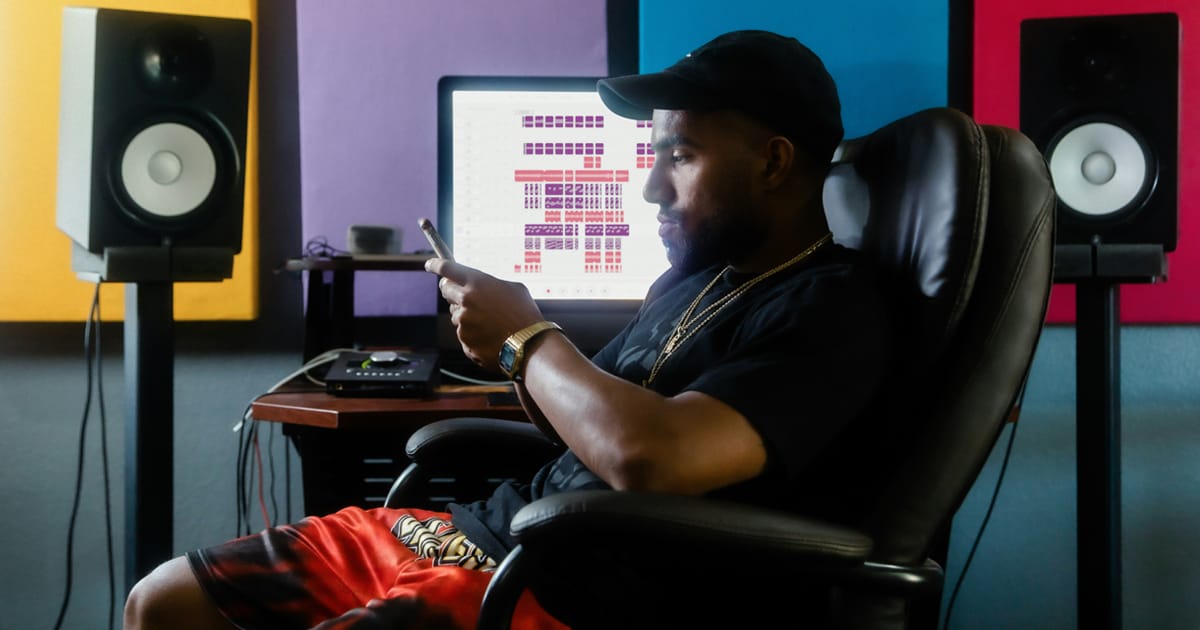
***+Read more:*** [*"The 88% Problem: Why Most Music Fails Before Anyone Hears It"*](https://www.hypebot.com/the-88-problem-why-most-music-fails-before-anyone-hears-it/)
## **A spreadsheet is useful, but it is not a release management system**
I have nothing against spreadsheets. I still use them. They are flexible, familiar and excellent for many jobs, but the problem begins when a spreadsheet is expected to become the label.
A spreadsheet does not know that a [contract](https://www.hypebot.com/tag/contract/) is still unsigned, that an artist sent a replacement master after the metadata was finalized or that a reminder is needed before an exclusivity period ends. It cannot connect a royalty line back to the agreement that determines how the money should be divided.
*It only knows what somebody remembered to type into it.*
That may be manageable with two releases. It becomes much more fragile with twenty, fifty, or several hundred, when the concern is not only workload but continuity.
A label should be able to open a release years later and see what happened, which files were approved, what was agreed, what changed and what is still due. An artist should be able to do the same with their own catalog. Instead, important knowledge often lives in the label owner’s memory, which works until the catalog grows, another person joins the team, a laptop fails or somebody needs an answer quickly.
*“Ask the person who remembers” is not infrastructure.*
## **More software has not solved the problem**
The usual response to operational pressure is to add another app. Need contracts? Add contract [software](https://www.hypebot.com/tag/software/). Need project management? Add a task manager. Need promo? Add a promo platform. Need cloud storage? Add another subscription. Need royalty accounting? Add another system.
There is a product for almost every individual requirement, from calendars and contact databases to artist intake and metadata checking. Many are very good at what they do. The problem is what happens between them.
Every additional system creates another login, another bill and another source of information to keep current. A change made in one place may also need to be made in three others, assuming somebody remembers where those versions exist.
This is where I believe music technology gets the process wrong. It treats each administrative function as a separate problem, even though labels and artists experience them as connected parts of the same release. The technology supporting it should be designed accordingly.
*A release is not a collection of unrelated administrative jobs. It is one continuous process.*
## **Professional systems should not be reserved for major companies**
There is still a strange idea in parts of the industry that smaller labels should accept disorder as part of being independent. The chaos is sometimes treated almost as proof of authenticity: manage everything yourself, improvise constantly and somehow remain focused on the music.
I do not believe professionalism makes a label less independent. I think it protects that independence.
Good systems do not decide what music you release or replace judgment, relationships and taste. They reduce the time spent searching for files, copying information between applications and correcting avoidable mistakes.
That matters because administration has a real creative cost. Every hour spent working out which metadata sheet is current is an hour not spent listening to demos, supporting an artist, planning a release or building an audience. Preventable mistakes also damage trust. A missed deadline, outdated file or incorrect statement may look small, but to the artist affected, it shows how seriously their work is being handled.
*Labels and self-releasing artists do not need stripped-down toys.*
They need professional tools built around how they actually work, priced and designed for organizations that may begin with only one person.
## **Why I built Blackbox RMS**
[Blackbox RMS](https://www.blackboxrms.com/?ref=hypebot.com) came directly from this frustration.
**Screenshot courtesy of* [**Blackbox RMS Label Edition*](https://www.blackboxrms.com/label-edition.html?ref=hypebot.com)**.*
I was not trying to build another distributor, streaming platform or generic project manager with music terminology added on top. I wanted one place where a release could be managed from beginning to end.
That meant bringing the practical parts of the process together: releases, artists, contracts, files, metadata, reminders, mastering, promotion and royalties. It also meant creating different editions for labels and artists, because the underlying problem is shared even when their day-to-day workflows are not identical.
*The purpose is simple. A release* [*should have a home*](https://www.hypebot.com/distributed-everywhere-but-nowhere-is-home/)*.*
When somebody opens it, they should see the current information, relevant files, the agreement behind it, completed work and anything still outstanding. They should not have to reconstruct the history from an email chain and three folders with “FINAL” in their names.
Blackbox is the product I wished I had when I relaunched my label. Building it also clarified something much broader for me.
*The industry does not have a shortage of software. It has a shortage of connected thinking.*
## **The future of independence needs better infrastructure**
Music will always be messy in the best possible ways. Artists change their minds, release plans move and unexpected opportunities appear. Creative work does not travel in a perfectly straight line, nor should it. The systems surrounding that work, however, do not need to be chaotic.
We have spent years making it easier to create and distribute music. The next step is making it easier to manage everything that happens once a track leaves the studio.
That does not mean replacing people with automation or turning every label into a corporation. It means giving people a clearer view of their work and allowing technology to carry more of the administrative burden.
Most people enter music because they care about music. Very few dream of maintaining spreadsheets at midnight. Administration will never disappear, nor should it. Contracts, credits, metadata, deadlines and accounting matter, but they should not consume the time needed for decisions that genuinely require human judgment.
*A release should not live in six expensive apps, four folders and somebody’s memory.*
It should exist as one complete, accessible body of work. And in 2026, that should not be a radical idea.
**+Read more:** [*"How to Plan a Release Strategy That Spans the Entire Year"*](https://www.hypebot.com/how-to-plan-a-release-strategy-that-spans-the-entire-year/)
---
**Adam Fitzgerald* is an Ireland-based DJ, producer and founder of* [***Legless Records***](https://www.legless-records.com/?ref=hypebot.com)*, with more than 30 years in underground electronic music. He is also the founder of* [***Blackbox RMS***](https://www.blackboxrms.com/?ref=hypebot.com)*, a release management system built to help record labels and artists manage releases, contracts, metadata, files, promotion and royalties in one connected workspace.*
### Majors and Indies Unite for Global AI Music Chart Standards
URL: https://www.hypebot.com/majors-and-indies-unite-for-global-ai-music-chart-standards/
Last updated: 2026-07-30T15:27:53.000Z
In an unprecedented cross-industry alignment, a global coalition of major and independent record companies including **Believe**, **BMG, Concord, Dirty Hit, Glassnote Records, HYBE, Mom+Pop Music, Partisan Records, Sony Music, Universal Music Group,** and **Warner Music Group** have[proposed a unified framework](https://www.musicweek.com/labels/read/major-labels-and-independents-unite-on-chart-eligibility-rules-for-recordings-developed-with-genai/094627?ref=hypebot.com) governing the eligibility of generative AI recordings on official music charts worldwide.
**IFPI**, the organization representing the recording industry worldwide, also announced its support and will apply the principles to IFPI-run official charts and the **National Group** network of local and international charts
The new proposal sets clear boundaries between human-led creativity, legitimate AI assistance, and purely synthetic or unauthorized AI tracks. Beyond protecting human artistry, the safeguards aim to eliminate fraudulently boosted streams from being celebrated on commercial charts.
### 3 Core Eligibility Criteria
Under the proposed guidelines, any recording created with generative AI tools must meet three fundamental requirements to qualify for official chart inclusion:
- **Authorized Tooling:** The AI service used must be legally authorized and properly licensed.
- **Human-Centric Creativity:** The track must be substantially human-made.
- **Anti-Fraud Compliance:** The recording must be free from artificial stream manipulation or fraudulent promotion.
Tracks created via unapproved generative [AI models](https://www.hypebot.com/tag/AI) — particularly those trained on copyrighted recordings without permission — will be explicitly disqualified from chart eligibility.
***+Read more:*** [*"New AI Labeling Standard for Music Draws Support — and Hesitation"*](https://www.hypebot.com/new-ai-labeling-standard-for-music-draws-support-and-hesitation/)
### Building the Infrastructure for AI Governance
Music attorney [**Chris Castle**](https://musictechpolicy.com/2026/07/29/ai-music-governance-takes-a-step-forward/?ref=hypebot.com) highlighted the significance of this broad consensus, noting that agreement on tough issues has historically eluded the business. Castle said:
> *"One of the persistent criticisms of the music industry is that it struggles to reach consensus on difficult issues. That is why this week’s announcement deserves recognition."*
The new chart initiative builds on a recently announced cross-industry AI labeling program backed by the **RIAA, IFPI, A2IM, IMPALA, SAG-AFTRA**, and t**he Recording Academy.** That program introduces standardized metadata tags—distinguishing between **"AI-Generated"** and **"AI-Assisted"**—which travel through the supply chain from distributors to DSPs. Under these rules, tracks classified as "AI-Generated" are automatically disqualified from chart consideration.
*"*Standing alone, that would be noteworthy," observed **Castle.** "But viewed alongside the recently announced industry-wide AI labeling initiative, something more significant is beginning to emerge: the foundations of an AI governance framework for recorded music. For the first time, the industry is building the practical infrastructure necessary to govern it."
### Why Standardized Metadata Matters Beyond the Charts
Establishing reliable AI data at the distribution phase ensures that chart organizations aren't left trying to catch unauthorized content after it has already gone viral. Clean metadata also creates transparency across every touchpoint of the music ecosystem, helping distinguish legitimate creative tools from exploitative scrapers.
"It can improve royalty administration, reduce fraudulent submissions, support licensing compliance, strengthen credit accuracy, and help digital services distinguish between human-created recordings and recordings generated substantially through AI systems," said Castle.
### Hypebot's Bottom Line
In coming together, major and independent labels and global trade groups are working to protect human creators by distinguishing legitimate creative tools from exploitative scrapers working to steal their spot on the charts.
By establishing these new unified global frameworks for metadata and the eligibility of generative AI recordings on the charts, distributors and digital services finally have a clear standard to enforce.
### Live Clips Are Powering Artist Discovery With the Next Generation of Fans
URL: https://www.hypebot.com/live-clips-are-powering-artist-discovery-with-the-next-generation-of-fans/
Last updated: 2026-07-30T14:05:17.000Z
If you grew up in the music market I grew up in, here's how [music discovery](https://www.hypebot.com/tag/discovery) usually happened:
- **First,** you hear a song (on radio, on MTV, at a friend's place).
- **Second,** you buy the record to hear it in full.
- **Third,** you wait for the artist to go on tour and buy a ticket to see them live.
In other words, for decades, the [live concert](https://www.hypebot.com/tag/live-music/) sat near *the end* of the traditional fan journey. The show was the payoff for fandom — the place where an already-established relationship became something tangible.
Yet, for a growing number of younger listeners, that journey increasingly begins in reverse:
- Short-form video concert clip.
- Check them out on streaming or socials, follow.
- Buy the ticket.
The live show is no longer the reward at the end of music discovery, it's becoming a driver of discovery at the start. And the full track of the above transaction can happen in a matter of minutes, not months.
## **The Concert Has Become a Content Asset**
We already know that younger audiences discover music through [social media](https://www.hypebot.com/tag/social-media/). **Deloitte** [found that **82% of Gen Z listeners**](https://www.deloitte.com/us/en/insights/industry/technology/digital-media-trends-consumption-habits-survey/2024/ugc-videos-music-discovery.html?ref=hypebot.com) learn about new music or artists through social platforms and user-generated video sites.
Roughly three-quarters have heard music elsewhere — including in videos, movies, or games — and subsequently searched for the artist. But the more interesting development is what kind of content now drives that curiosity.
Increasingly, it's not a polished music video, a carefully planned single teaser, or studio recorded media. It is an amateur vertical clip of a singer holding a note, an enormous festival crowd shouting a chorus or an unexpected interaction that gives someone scrolling at home the feeling that they missed something.
> [@livemusiccore](https://www.tiktok.com/@livemusiccore?refer=embed&ref=hypebot.com "@livemusiccore")
>
> been waiting for this one!!! [#adriennunez](https://www.tiktok.com/tag/adriennunez?refer=embed&ref=hypebot.com "adriennunez") [#stagecoach](https://www.tiktok.com/tag/stagecoach?refer=embed&ref=hypebot.com "stagecoach") [#festivals](https://www.tiktok.com/tag/festivals?refer=embed&ref=hypebot.com "festivals") [#concerts](https://www.tiktok.com/tag/concerts?refer=embed&ref=hypebot.com "concerts") [#countrymusic](https://www.tiktok.com/tag/countrymusic?refer=embed&ref=hypebot.com "countrymusic")
>
> [♬ DONT WANNA GO HOME - Adrien Nunez](https://www.tiktok.com/music/DONT-WANNA-GO-HOME-7499855468689378090?refer=embed&ref=hypebot.com "♬ DONT WANNA GO HOME - Adrien Nunez")
That feeling can be more persuasive than conventional promotion. A music video shows what an artist wants audiences to see. A concert clip appears to show what actually happened.
The crowd reaction becomes social proof. The [imperfect camera angle](https://www.instagram.com/reels/DWkgYZRjiyb/?ref=hypebot.com) makes the moment feel discovered rather than delivered. Even the person filming can become part of the recommendation: ***"You needed to see this, so I recorded it for you."***
**+Read more:** [*"Why Rod Wave's Fans Sing His Songs For Him"*](https://www.hypebot.com/why-rod-waves-fans-sing-his-songs-for-him/)
## **Live Moments Can Now Launch Songs**
[**KATSEYE**](https://www.bandsintown.com/a/15561070-katseye?utm%5Fsource=hypebot&came%5Ffrom=900) offered a particularly clear example when the group debuted the then-unreleased “Internet Girl” during the opening night of its Beautiful Chaos Tour in Minneapolis.
Videos of the performance quickly circulated online, allowing the audience’s reaction—and the discussion surrounding the song — to begin before a studio version was available. KATSEYE then extended the moment by releasing a polished “Live from the Beautiful Chaos Tour” performance, which has accumulated millions of views. The concert did not simply promote the release.
It became part of the [release strategy](https://www.hypebot.com/tag/marketing-strategy/).
[**Chappell Roan’s**](https://www.bandsintown.com/a/14727853-chappell-roan?utm%5Fsource=hypebot&came%5Ffrom=900) breakout also demonstrated how powerfully a live clip can communicate an artist’s identity. Her [Coachella](https://www.hypebot.com/tag/coachella/) introduction — “I’m your favorite artist’s favorite artist” — escaped the festival grounds and became a viral calling card. Clips of elaborate costumes, massive crowds and thousands of people performing the “Hot to Go!” dance did more than advertise individual songs. They showed viewers that a recognizable culture was forming *around* them.
[**Charli xcx’s**](https://www.bandsintown.com/a/289995-charli-xcx?utm%5Fsource=hypebot&came%5Ffrom=900) rotating “Apple” dance guests, [**Sabrina Carpenter’s**](https://www.bandsintown.com/a/1503835-sabrina-carpenter?utm%5Fsource=hypebot&came%5Ffrom=900) audience “arrests” and countless surprise festival appearances work similarly. Each creates a recurring moment that makes sense inside the show but can also travel independently across social media. The clip becomes a miniature story with a setup, payoff and recognizable piece of the artist’s personality.
> [@much](https://www.tiktok.com/@much?refer=embed&ref=hypebot.com "@much")
>
> Sabrina Carpenter arrests SZA during night 4 of her ‘Short N’ Sweet’ tour in LA😍 Via: @NAS
>
> [♬ original sound - MuchMusic](https://www.tiktok.com/music/original-sound-7575068880155593480?refer=embed&ref=hypebot.com "♬ original sound - MuchMusic")
## **The Festival Audience Is Now Much Larger Than the Crowd**
Festivals have accelerated this shift because their performances are increasingly built to travel, or [built to stream](https://www.hypebot.com/are-music-festivals-the-new-frontier-of-digital-media/).
A set may be watched by thousands of people on the field, many more through an official [livestream](https://www.hypebot.com/tag/livestream/) and potentially millions through the clips that follow. One dramatic entrance, crowd interaction or surprise collaboration can reach people who have never heard the artist’s recorded catalog.
That helps explain why live festival footage can feel more culturally significant than an official video. The clip does not simply tell viewers that an artist is exciting. It shows a crowd collectively deciding that they are exciting.
For emerging artists, this creates a second audience for every performance: the people in the room and the people who may encounter a fragment of it later.
> [@linkinpark\_clips](https://www.tiktok.com/@linkinpark%5Fclips?refer=embed&ref=hypebot.com "@linkinpark_clips")
>
> This band is just epic everytime - Mumbai, 2026 ➡️I make pure vertical clips of [#linkinpark](https://www.tiktok.com/tag/linkinpark?refer=embed&ref=hypebot.com "linkinpark") From The Inside
>
> [♬ original sound - Linkin Park Clips - Achros\_42 - Linkin Park Clips - Achros\_42](https://www.tiktok.com/music/original-sound-Linkin-Park-Clips-Achros42-7640827519155571478?refer=embed&ref=hypebot.com "♬ original sound - Linkin Park Clips - Achros_42 - Linkin Park Clips - Achros_42")
***+Read more:*** [*"Are Music Festivals the New Frontier of Digital Media?"*](https://www.hypebot.com/are-music-festivals-the-new-frontier-of-digital-media/)
## **Shareable Does Not Have to Mean "Artificial"**
There is an obvious danger here. If every transition, speech, and audience interaction is engineered for TikTok, the concert can begin to feel like a content shoot with a cover charge. Authenticity, thus, is an enormous driver of engagement with new fans.
Hence, the best shareable moments generally work because they belong to the artist’s existing world. They might be a recurring joke, an unusual arrangement, a striking visual cue, a call-and-response section or the point in the set where the [crowd takes over the song](https://www.hypebot.com/why-rod-waves-fans-sing-his-songs-for-him/). This is what makes Sabrina Carpenter's approach so effective.
The goal is not to interrupt the show for content. It is to identify the moments already worth remembering and make sure somebody captures them properly.
For independent artists, that could mean positioning one person near the front with a phone, recording clean audio from the soundboard, adding the artist and song names directly to the video and posting quickly while the energy of the performance is still fresh. A strong 20-second clip delivered the next morning may [do more discovery work](https://resources.onestowatch.com/genz-music-discovery-insights-2026/?utm%5Fsource=chatgpt.com) than a generic tour recap posted three weeks later.
> [@livemusiccore](https://www.tiktok.com/@livemusiccore?refer=embed&ref=hypebot.com "@livemusiccore")
>
> this one is relatable [#ingridandress](https://www.tiktok.com/tag/ingridandress?refer=embed&ref=hypebot.com "ingridandress") [#taillights](https://www.tiktok.com/tag/taillights?refer=embed&ref=hypebot.com "taillights") [#countrymusic](https://www.tiktok.com/tag/countrymusic?refer=embed&ref=hypebot.com "countrymusic") [#livemusic](https://www.tiktok.com/tag/livemusic?refer=embed&ref=hypebot.com "livemusic") [#concerts](https://www.tiktok.com/tag/concerts?refer=embed&ref=hypebot.com "concerts")
>
> [♬ Taillights - Ingrid Andress](https://www.tiktok.com/music/Taillights-7619093406418094081?refer=embed&ref=hypebot.com "♬ Taillights - Ingrid Andress")
It is also worth remembering that discovery does not automatically become fandom. A viral view is [only an introduction](https://www.midiaresearch.com/blog/gen-z-social-habits-spell-trouble-for-music-discovery?ref=hypebot.com). The artist still needs an accessible catalog, a clear profile, upcoming dates and an obvious next step for anyone curious enough to look further.
But that first step increasingly happens onstage.
***+Read more:*** [*"For Gen Z, Concerts Are Worth the Money — and the Trip"*](https://www.hypebot.com/for-gen-z-concerts-are-worth-the-money-and-the-trip/)
### How I Sold My Limited Vinyl Run in 2 Days
URL: https://www.hypebot.com/how-i-sold-my-limited-vinyl-run-in-2-days/
Last updated: 2026-07-30T12:15:24.000Z
*By* [***Tony van Veen,***](https://www.linkedin.com/pulse/what-vinyl-boom-gen-z-driving-surge-cds-tony-van-veen-3zkwe/?ref=hypebot.com)*CEO of*[***Disc Makers***](https://blog.discmakers.com/2026/07/how-i-sold-my-limited-vinyl-run/?ref=hypebot.com)
I want to show you exactly what I did to sell out of a very limited colored vinyl run for one of my old bands. But first, here are two pieces of context that you should know.
First context is this: I’ve spent years teaching artists to make money from their music. My advice consistently is to use [streaming](https://www.hypebot.com/tag/streaming-music/) and [social media](https://www.hypebot.com/tag/social-media/) for awareness, then get potential fans to your website where you collect their email addresses, and eventually sell them something like [CDs](https://www.discmakers.com/products/?utm%5Fcampaign=DMBLOG&utm%5Fsource=Article&utm%5Fmedium=BLOG), [vinyl](https://www.discmakers.com/products/vinyl?utm%5Fcampaign=DMBLOG&utm%5Fsource=Article&utm%5Fmedium=BLOG), [merch](https://blog.discmakers.com/2024/10/merch-ideas/?ref=hypebot.com), [concert tickets](https://www.hypebot.com/how-to-sell-more-tickets-and-merch-changes-at-tiktok-and-meta/).
Something happened recently where I thought: *Let me put this to the test myself*.
The last time I actually did this was before the internet, after all. This brings me to context number two.
I was contacted last year by someone from Berlin who has an indie label that specializes in reissuing old, obscure punk rock records. He had found a 7” EP of the first band I played in back in 1983 and wanted permission to reissue it. After I picked up my jaw from the floor, I contacted my ex-bandmates, got a thumbs up, and gave him the ok.
That band was called **Kremlin Korps**. Hey, it was the ‘80s, Reagan was president, the cold war was running hot, and we were anti-establishment punk rockers. What can I say?

We didn’t get paid for this. In true punk rock fashion, my bandmates and I received 15% of the production run – some black vinyl, some blue – as “payment.” It was up to us what to do with it.
So here was my conundrum:
- I had a small number of 7” records…
- Of a band named Kremlin Korps…
- That had broken up in early 1984… 42 years ago.
- That had zero fans… no website, no social media, no streaming presence.
So I thought: *Let me practice what I preach, but do it in a very limited way.*
I wasn’t going to build a website or a social presence for this defunct band. I wasn’t going to set up a mailing list and start mailing extensively. Heck, I have a day job.
I was just going to use some of the tools [Disc Makers](https://www.discmakers.com/?utm%5Fcampaign=DMBLOG&utm%5Fsource=Article&utm%5Fmedium=BLOG) offers artists, then make a pitch to my friends. And guess what – I sold out of my blue [7” vinyl recordsyou will target](https://www.discmakers.com/products/vinyl-records-7in?utm%5Fcampaign=DMBLOG&utm%5Fsource=Article&utm%5Fmedium=BLOG), and I have only a couple of black vinyl copies left. When those are gone, I’m donating all the proceeds to charity.
## How I sold the records
Let’s walk through the steps I took to sell my limited colored vinyl run from a broken-up punk band with no [fan base](https://www.hypebot.com/tag/fan-base/).
### Step 1: Make it available
I uploaded the tracks to streaming sites through CD Baby, since I already had an account there. That process was really smooth. I set the release date 3 weeks into the future, so I could have physical and digital drop the same day.
I also set up an account with [Spinney Mediayou will target](https://www.discmakers.com/services/warehousing-fulfillment?utm%5Fcampaign=DMBLOG&utm%5Fsource=Article&utm%5Fmedium=BLOG), sent my vinyl records to them, and set up my two titles in their dashboard. They are Disc Makers’ partner for physical distribution and order fulfillment, and when you make your CDs and vinyl with Disc Makers, you get a free 6-months subscription. Spinney has their own direct-to-fan online store, which is super handy.
### Step 2: Link your accounts
Then I did a critical registration piece: through CD Baby, I linked up Kremlin Korps to my [Spotify](https://blog.discmakers.com/2023/11/how-to-get-more-streams-on-spotify/?ref=hypebot.com) for Artists account. This way, I’m able to see all my Kremlin Korps stats. And through Spinney Media, I linked my Spinney account with my 7” singles to my Spotify account so that I could sell my vinyl right from my Spotify profile.
Spinney also set my vinyl up with big online retailers like Walmart and Amazon. Note that if If I had a website and a Bandcamp page, they would have linked there as well to fulfill any orders. But I decided I wasn’t going to bother doing that for a band that has been defunct for four decades.
### Step 3: Make it visible — front and center
To raise the profile of my 7” vinyl record, I went into my Spotify for Artists account, where there’s the opportunity to promote content at the top of the artist page with the artist’s pick. I selected my record and added a custom message: “Get our EP on vinyl while they last!”
So, when I went to my Kremlin Korps artist profile, my physical 7” EP was featured front and center. If fans want it, I’ve made it super easy for them to find it, and when they click on it, they’re taken right to Spinney’s checkout screen.
***+Read more:*** [*"DIY Music Distribution Checklist: Everything You Need to Know"*](https://www.hypebot.com/diy-music-distribution-checklist-everything-you-need-to-know/)
## Promoting the record
I mentioned, I don’t have a website or a mailing list for this band. I have a day job that keeps me pretty busy, so I didn’t want to bother setting those up. I decided that instead I was going to do *one* social post. Just one! And yes, I was breaking my own rule that you need to repeat your marketing message, but I didn’t have that many records to sell.
Now, my social post was not a run of the mill “record out now” post. One of the things I’ve preached is that in order to engage fans, you have to be a storyteller. You can’t just spam them with “buy my record” messages. You have to engage them.
So I told the story of being contacted by the guy in Berlin, meeting him, and reconnecting with bandmates I hadn’t seen in over a decade. I included a link to Spotify, where the record is featured. If I had done more posts or emails, I would have also linked directly to my Spinney selling page.
Within 2 days, I had sold out of my blue vinyl records.
Now, I don’t want to make this into a bigger deal than it is. I only had a small handful of records to get rid of, so it wasn’t that hard. But I also didn’t do any real marketing – just one post, no emails, no website, no ads.
## Conclusion
If I could sell out the blue vinyl copies of an old punk band that hasn’t been around for 43 years and which has no fan base, then an artist like you who is currently active can certainly [sell records and CDs](https://blog.discmakers.com/2025/01/selling-merch-at-concerts/?ref=hypebot.com) to your fans! It’s a great way to make few bucks to support your music endeavors.
Don’t ignore your friends. Most of the people who bought my records were friends, family, and former colleagues. When you do *your* marketing and messaging, be sure to reach out to your friends and acquaintances, too.
Remember the simple steps you must take for [your release](https://www.hypebot.com/tag/release-strategy/):
1. Schedule your drop date a few weeks into the future, and drop your physical and digital albums on the same date.
2. Set up easy physical fulfillment with Spinney.
3. Through CD Baby, link up your Spotify for Artists account, get the app, and watch your metrics.
4. Feature your physical media on your Spotify artist profile.
5. Tell stories in your marketing.
Now, I did this for fun. I don’t aspire to be a successful musician – I haven’t sat behind a drum kit in over a decade.
You, of course, can – and should – do more than I did. Repeated messaging on socials. Capture names for your email list. Email your fans with special offers or signed copies. None of this is hard. But unfortunately, too few artists actually do it — because it’s work. And then they lament they’re not making it.
The tools we have to reach a large audience cheaply are so great. Use them, and you’ll see revenue coming to you. I promise.
***+Read more:*** [*"Charge More to Cover Your Costs or Charge Less to Help Out Fans?"*](https://www.hypebot.com/charge-more-to-cover-your-costs-or-charge-less-to-help-out-fans/)
*You can watch the original version of this blog as part of our Indie Music Minute series on the Disc Makers YouTube Channel.*
### Trade Groups Host 'Protect Working Musicians Act' Online Forum
URL: https://www.hypebot.com/trade-groups-host-protect-working-musicians-act-online-forum/
Last updated: 2026-07-30T15:34:42.000Z
Some of the music industry's leading trade and rights advocacy groups are joining forces with **Congresswoman Deborah Ross** (D-NC) to host **"Our Seat at the Table,"** a virtual panel addressing power imbalances in the digital music economy.
The online forum focuses on the re-introduced **Protect Working Musicians Act of 2026 (PWMA)**, a legislative effort designed to allow independent artists, songwriters, and record labels to negotiate collectively with tech platforms, streaming services, and AI developers.
### **Quick Event Overview**
**Event: Our Seat at the Table: A Conversation on the Protect Working Musicians Act**
**Date:** Thursday, August 6
**Time:** 2:00 PM ET / 1:00 PM CT / 12:00 PM MT / 11:00 AM PT
**Featured Speaker:** Congresswoman Deborah Ross (D-NC)
**Hosted By:** American Association of Independent Music (A2IM), American Federation of Musicians (AFM), Artist Rights Alliance (ARA), Fan Alliance, Folk Alliance, Future of Music Coalition, Music Artists Coalition (MAC), Music Managers Forum US (MMF-US), National Music Publishers Association (NMPA), Recording Academy, and Songwriters of North America (SONA).
**Free Registration:** [**A2IM Zoom Webinar Registration Link**](https://a2im.zoom.us/webinar/register/WN%5FKx6WZT8uTAysYJZkFgltiQ?ref=hypebot.com#/registration)
### **What is the Protect Working Musicians Act of 2026?**
The **Protect Working Musicians Act (PWMA)** addresses a fundamental challenge facing independent creators: antitrust laws currently prevent small rights holders from joining together to negotiate payouts from mega-platforms. While major record labels hold enough market share to negotiate favorable streaming payouts and licensing terms, independent artists and small labels are forced to accept non-negotiable take-it-or-leave-it rates.
The re-introduced 2026 bill creates an antitrust exemption enabling independent music creators and small businesses to:
- **Negotiate collectively** with the dominant streaming platforms for fair royalty rates.
- **Negotiate terms** with AI developers who train generative models on copyrighted musical works.
- **Establish market leverage** to shift payouts from platform-dictated terms to mutually agreed valuations.
### Why Independent Music Coalition Support Matters
The virtual forum brings together an unprecedented coalition of organizations representing every corner of the creative ecosystem from songwriters and performers to managers, agents and independent record labels.
With generative AI reshaping royalty distribution and streaming payout structures remaining heavily skewed toward tech platforms, this bill offers a concrete regulatory path toward economic sustainability for independent working musicians.
### **How to Attend the Forum Free**
The event is free to attend, but pre-registration is required. Independent creators, managers, label operators, and industry advocates are encouraged to join the conversation and ask questions directly.
- **Date:** Thursday, August 6th
- **Time:** 2:00 PM EST / 1:00 PM CST / 12:00 PM MST / 11:00 AM PST
- **Format:** Live Zoom Webinar
- **Registration Link:** [Reserve your spot on Zoom](https://a2im.zoom.us/webinar/register/WN%5FKx6WZT8uTAysYJZkFgltiQ?ref=hypebot.com#/registration)
### 8 Payment Tools Built for Concert Venues
URL: https://www.hypebot.com/8-payment-tools-built-for-concert-venues/
Last updated: 2026-07-29T16:04:32.000Z
Running an [independent live venue](https://www.hypebot.com/tag/independent-venues/) involves several distinct kinds of payments. Artists may receive guarantees, percentages of ticket sales, bar splits, deposits, or final balances. Promoters, production crews, DJs, and outside vendors may all submit separate invoices, while tax information and payment records must remain connected to the correct show.
A growing collection of purpose-built [software platforms](https://www.hypebot.com/tag/software/) helps venues manage different parts of that process. Some [move money](https://www.hypebot.com/how-money-actually-flows-through-the-music-industry-in-2026/) directly through bank transfers or digital payment methods. Others calculate settlements, collect payment details, generate invoices, or track what has already been paid. Many combine those functions with booking, contracts, ticketing, and event management.
They are not all payment processors in the strict banking sense. Instead, they represent the wider payment and settlement technology used by venues, promoters, and live entertainment operators.
Here are our 8 favorite platforms addressing different portions of that workflow.
## **1\. Cleo Pay**
[**Cleo Pay**](https://www.cleo-pay.com/venues?ref=hypebot.com) is an accounts-payable platform designed for hospitality businesses, live music venues, and event operators. Venues can invite artists, DJs, promoters, contractors, and vendors to submit their payment and tax information through a dedicated portal.
The platform collects W-9 forms during onboarding, accepts vendor invoices, supports internal approval workflows, and sends payments by ACH. It also tracks payments throughout the year and prepares 1099 information, placing vendor onboarding, payment processing, and tax records in the same system. Multi-location operators can maintain separate vendor and payment histories for each venue while overseeing them through one account.
## **2\. BeatGig**
[**BeatGig**](https://beatgig.com/products/venues?ref=hypebot.com)combines artist discovery, booking, scheduling, contracting, and payments within an entertainment-focused operating system. Its venue product is designed for businesses that regularly book musicians and other performers across one or more locations.
BeatGig consolidates artist activity into itemized invoices, processes artist payments, and automates 1099 reporting. Venues can also connect point-of-sale information and other performance data to their entertainment programming, giving booking and accounting teams a shared record of each engagement.
## **3\. Muzeek**
[**Muzeek**](https://muzeek.com/?ref=hypebot.com)is a live music management platform used by artists, venues, promoters, agencies, festivals, and touring companies. Its financial tools begin with the booking itself: when an engagement is confirmed, the platform can automatically generate the corresponding settlement and invoice.
Users can collect deposits, send payments, accept funds, and share payment links through bank transfers or more than 35 digital payment methods powered by Stripe. Muzeek can also calculate custom deal terms using ticketing data from integrated providers and synchronize invoices and payment statuses with Xero. This connects the original booking terms to the eventual settlement and payment record.
**+Read more:** [*"Backstage Pass: Tobi Parks of Tour Tech & xBK on Closing the Live Music Data Gap"*](https://www.hypebot.com/backstage-pass-tobi-parks-of-tour-tech-xbk-on-closing-the-live-music-data-gap/)
## **4\. Surreal**
[**Surreal**](https://surreal.live/?ref=hypebot.com) is a booking, payment, and entertainment-management platform serving venues, hospitality groups, agencies, and performers. Formerly known as Muso, the system is particularly active in Australia, New Zealand, and the United Kingdom.
For venues and hospitality groups, Surreal can consolidate multiple entertainer payments into a single invoice at either the venue or group level. Its finance tools automate venue invoicing, distribute artist payments, track their status, and address applicable local compliance requirements. These payment features are currently available in Australia, New Zealand, and the UK.
## **5\. Prism.fm**
[**Prism.fm**](https://prism.fm/?ref=hypebot.com) focuses on the operational and financial workflows behind live music bookings. Venues and promoters can use it to create offers and contracts, track deposits and payments, import ticket sales, calculate artist deals, and produce final settlement reports.
Rather than functioning primarily as a payment-transfer service, Prism connects the information used to determine what is owed. Guarantees, percentage deals, expenses, bonuses, ticket counts, and other financial terms remain attached to the show from the initial offer through settlement. Internal and artist-facing settlement reports can then present the relevant portions of that calculation.
## **6\. Gigwell Talent Buyer Pro**
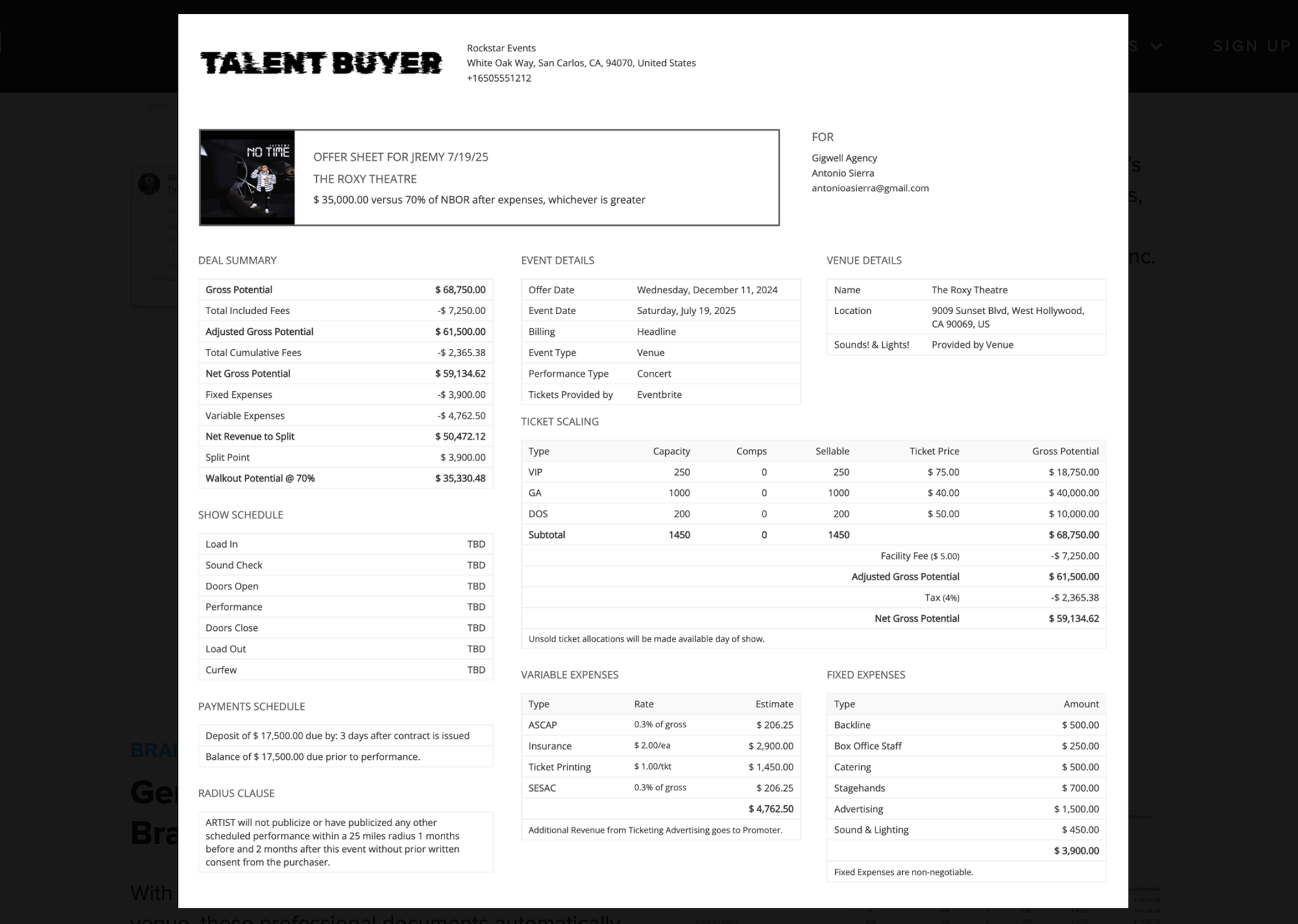
[**Gigwell Talent Buyer Pro**](https://www.gigwell.com/talent-buyer?ref=hypebot.com)provides venue-management software for talent buyers, promoters, festivals, and live music spaces. It brings offers, contracts, artist advancing, payment information, and show settlements into a centralized booking workflow.
The platform tracks financial details alongside the booking rather than treating payment as a separate administrative task. Venues can review deal terms, payment statuses, settlement information, and past show performance from the same system used to manage calendars and artist communications. Gigwell also supports invoices and online payment tracking for organizations working across multiple engagements.
***+Read more:*** [*"Concert Merch Is Going Contactless"*](https://www.hypebot.com/concert-merch-is-going-contactless/)
## **7\. VenuePilot**
[**VenueP**](https://www.venuepilot.com/?ref=hypebot.com)[**ilot**](https://www.venuepilot.com/?ref=hypebot.com) combines booking, ticketing, event management, and artist settlement tools for independent venues and promoters. Its settlement feature can pull ticket sales directly from VenuePilot events or accept manually entered gross box-office receipts from another ticketing provider.
Venues can select from several standard deal structures, incorporate bar or rental percentages, add expenses and adjustments, record deposits or other previous payments, and include relevant tax details. The completed calculation can then be exported as a settlement sheet for the artist or management team. VenuePilot also supports multi-date settlements for engagements spanning more than one performance.
## **8\. Opendate**
[**Opendate**](https://www.opendate.io/info/music-venue-management-software?ref=hypebot.com) is an all-in-one venue-management platform covering the live event lifecycle from initial artist contact through final settlement. Its tools include artist discovery, calendar and hold management, offers, event budgeting, ticketing, marketing, and financial reporting.
Because its native ticketing system and event-management tools operate within the same platform, sales and expense information can flow into the settlement process. Venues can create reusable offer structures, track show finances as an event develops, and generate settlement documents after the performance. Opendate can also be used alongside other systems as part of a venue’s larger operational stack.
These eight platforms approach venue payments from different directions. Together, they illustrate the range of specialized technology now available for managing the financial side of [live music events](https://www.hypebot.com/tag/live-music/).
***+Read more:*** [*"How to Build a Greener Concert Industry"*](https://www.hypebot.com/how-to-build-a-greener-concert-industry/)
### John Mulaney Twists Residency Model: 9 NYC Venues in 9 Days
URL: https://www.hypebot.com/john-mulaney-twists-residency-model-9-nyc-venues-in-9-days/
Last updated: 2026-07-29T14:43:47.000Z
Emmy Award-winning comedian [**John Mulaney**](https://www.bandsintown.com/a/185527-john-mulaney?utm%5Fsource=hypebot&came%5Ffrom=900) has announced **MULANEY TAKES MANHATTAN**, a nine shows in nine venues in New York City residency engagement running from January 7 through January 15, 2027\.
This leg of his *JOHN MULANEY: MISTER WHATEVER* world tour will feature Mulaney and surprise guests performing at a different New York City [live venue](https://www.hypebot.com/tag/venues/) each night.
### **City-Wide Twist on the Modern Residency**
The live industry is [leaning heavily into residencies](https://www.hypebot.com/in-the-new-era-of-touring-artists-are-planting-in-one-city-for-weeks/). From **Harry Styles’** multi-week venue takeovers at NYC's Madison Square Garden and LA's Kia Forum during his Love On Tour, to high-tech, multi-week runs at the Las Vegas Sphere by **The Eagles**, **U2**, **Phish** and others, top-tier acts have prioritized staying anchored in one spot while fans travel to them.
Mulaney’s approach flips that dynamic on its head.
Rather than parking in a single venue for two weeks or forcing fans to travel to a solitary destination, **MULANEY TAKES MANHATTAN** turns the entire geography of New York City into the residency. Starting at small-capacity clubs and scaling up nightly to an arena, Mulaney is using Manhattan's venue density to build escalating daily momentum within a single city footprint.
### **Quick Facts: 'MULANEY TAKES MANHATTAN' At a Glance**
- **Tour Format:** 9 shows across 9 iconic Manhattan venues over 9 consecutive days.
- **Dates:** Thursday, January 7 – Friday, January 15, 2027.
- **Show Structure:** Stand-up comedy accompanied by surprise special guests at every show.
- **Ticketing & Presale:** Details at [JohnMulaney.com](https://www.johnmulaney.com/?ref=hypebot.com).
### **The NYC Venue Progression**
The 9-day run begins in Greenwich Village's legendary subterranean Comedy Cellarand scales up nightly through storied music clubs, Broadway theaters, historic halls, and major arenas.
- Thu, Jan 7: **Comedy Cellar** (approximate capacity 110)
- Fri, Jan 8: **Blue Note** (200)
- Sat, Jan 9: **Joe's Pub** (180)
- Sun, Jan 10: **Bowery Ballroom** (575)
- Mon, Jan 11: **Music Box Theatre on Broadway** (1,009)
- Tue, Jan 12: **Beacon Theatre** (2,894)
- Wed, Jan 1e: **Carnegie Hall** (2,804)
- Thu, Jan 14: **Radio City Music Hall** (5,960)
- Fri, Jan 15: **Madison Square Garden** (20,000)
This Manhattan experiment follows Mulaney's historic hometown performance in Chicago, where he became the first comedian ever to headline Wrigley Field. That sold-out stadium show featured surprise appearances from **David Letterman, Fred Armisen,** and **Richard Kind,** drawing one of the largest live stand-up audiences in history.
**+Read more:** [*"In the New Era of Touring, Artists Are Planting in One City. For Weeks."*](https://www.hypebot.com/in-the-new-era-of-touring-artists-are-planting-in-one-city-for-weeks/)
### **A Very Different Approach**
Private jets, tricked out tour buses and massive support crews made long national and international tours possible. **Taylor Swift's The Eras Tour** spanned 149 shows across five continents in less than two years.
More was always better. Miles travelled and shows sold out became a benchmark of success as or arguably even more important as chart positions and stream counts.
This trend started back in 1981 with **George Thorogood and The Delaware Destroyers** setting the benchmark for touring stamina.
Their 1981 **“50/50 Tour”** kicked off in Hawaii and Alaska as the blues-rockers tackled 50 U.S. states in 50 consecutive days, completing the lower 48 crammed into a custom-outfitted 1979 **Checker Taxi** cab.
Often Driving 500 miles a day, they actually overdelivered by squeezing in a double-header in D.C. and Maryland, ultimately grinding out 51 high-energy club shows in just 50 days. Thorogood was simultaneously opening stadium dates for **The Rolling Stones** at the time, yet famously turned down a coveted slot at Madison Square Garden because his 50/50 dates were already locked in.
This unmatched level of hustle not only cemented the band's reputation as working-class road warriors, but perfectly set the stage for Thorogood to pen his career-defining anthem, "Bad to the Bone," shortly after surviving the historic run.
45 years later, residencies offer a very [different approach](What Are You Up to, Ariana?).
### **Hypebot’s Bottom Line**
As production costs along with attention to personal and mental health rise, musicians are actively experimenting with fresh live formats.
Where **Harry Styles** anchored to a single room and **The Eagles** built a bespoke mega-residency at **The Sphere**, **John Mulaney**’s city-wide venue crawl offers a masterclass in localized storytelling and artificial scarcity.
**'Mulaney Takes Manhattan'** spans nine distinct "must-see" events in single market and sets a clever new precedent for how marquee acts can execute urban residencies.
***+Read more:*** [*"Live Music Marketing Trends Selling Out Shows In 2026"*](https://www.hypebot.com/9-live-music-marketing-trends-selling-out-shows-in-2026/)
---
## [**John Mulaney Tour Dates**](https://www.bandsintown.com/a/185527-john-mulaney?utm%5Fsource=hypebot&came%5Ffrom=900)
### The Rise of One-of-a-Kind Merch: How Artists Are Moving (Way) Beyond T-Shirts
URL: https://www.hypebot.com/the-rise-of-one-of-a-kind-merch-how-artists-are-moving-way-beyond-t-shirts/
Last updated: 2026-07-29T15:23:54.000Z
[Merchandise](https://www.hypebot.com/tag/merch) has never been just about "merchandise."
Merch is a memento. A metaphor. A stand-in. A placeholder for that awesome concert you took your dad too before he lost his hearing, or reminder of that crazy time your friends got on stage to dance with that band, your good-luck charm, the shirt you'd never wash, ever.
And these days, growing number of artists are treating physical products less like souvenirs and more like collectibles, creating limited-edition items designed to feel personal, exclusive, and impossible to replicate. The trend spans everyone from stadium acts to independent artists [building communities](https://www.hypebot.com/tag/community/) through Patreon and fan subscriptions.
A new company called [**Surge Iconics**](https://www.surgeiconics.com/?ref=hypebot.com) is betting that demand for these premium fan experiences will only continue to grow. The Chicago-based company, launched this week by product marketing agency Surge Creates, specializes in high-end custom collectibles and branded merchandise. Early projects include collaborations with **KISS, Styx,** and **The Lost Lands Festival,** featuring items such as crystal tickets, gold-plated collector cards, embroidered artwork, and limited-edition commemorative collectibles tied to tours and anniversaries.
While these products tend to target the upper end of the [fan market](https://www.hypebot.com/tag/fans/), they reflect a broader shift occurring throughout the music business.
**Image courtesy of Surge Iconics.*
***+Read more:*** [*"Charge More to Cover Your Costs or Charge Less to Help Out Fans?"*](https://www.hypebot.com/charge-more-to-cover-your-costs-or-charge-less-to-help-out-fans/)
## Fans Want Something Streaming Can't Deliver
For years, [streaming](https://www.hypebot.com/tag/streaming-music/) made music infinitely accessible. Every song became available everywhere, all the time. As a result, scarcity has become increasingly valuable.
Fans are no longer simply purchasing access to music. They're purchasing access to identity, community, and experiences that feel unique to them. That's helping fuel demand for products that feel less like merchandise and more like artifacts.
Whether it's a numbered collector's item, a tour-exclusive release, a custom piece of artwork, or a limited-edition box set, fans increasingly want something that can't be duplicated with a click.
The success of vinyl's resurgence (which is now bleeding into [CDs becoming sought-after again](https://www.hypebot.com/what-vinyl-boom-gen-z-is-driving-a-surge-in-cds/)) only further reinforces the notion that ["ownership"](https://www.hypebot.com/what-my-wedding-day-taught-me-about-vinyl-ownership/) matters again, particularly when ownership feels personal.
***+Read more:*** [*"What My Wedding Day Taught Me About Vinyl Ownership."*](https://www.hypebot.com/what-my-wedding-day-taught-me-about-vinyl-ownership/)
## Independent Artists Have Been Doing This for Years
While companies like Surge Iconics are bringing premium collectibles to major artists, many independent musicians have been experimenting with personalized merch models for years. Platforms such as Patreon helped normalize the idea that fans would [pay for exclusivity](https://www.hypebot.com/learn-why-superfans-matter/), access, and customization rather than simply products.
Subscriber communities routinely receive handwritten lyric sheets, custom postcards, exclusive artwork, signed test pressings, limited-run cassettes, monthly mystery packages, behind-the-scenes zines, personalized videos, and one-off fan experiences.
In many cases, these items cost very little to produce. Their value comes from scarcity and connection. A hand-numbered lyric notebook created by an emerging artist may generate more emotional engagement than a mass-produced shirt available to thousands of people.
**Image courtesy of Surge Iconics.*
## The Future of Merch Is Smaller, Better, and More Meaningful
The traditional merch table isn't disappearing anytime soon. T-shirts, hoodies, posters, and vinyl remain essential revenue drivers for artists at every level. But increasingly, artists are looking beyond standard merchandise toward products that create stronger emotional connections and higher perceived value.
That might mean a gold-plated collector card for a legendary rock band, courtesy of [Surge Iconics](https://www.surgeiconics.com/?ref=hypebot.com) or another bespoke manufacturer. It might mean a subscriber-only art print for a Patreon community of 100 people.
Either way, the underlying trend is the same.
Fans are becoming collectors, and collectors are willing to spend more when an item feels unique, meaningful, and tied to a specific moment in an artist's story. For artists searching for new revenue opportunities, the lesson may be surprisingly simple: don't just sell merchandise. Create something fans will treasure.
**+Read more:** [*"15 Must-Have Tools to Market Music and Grow a Fan Base"*](https://www.hypebot.com/15-must-have-tools-to-market-music-and-grow-a-fan-base/)
### Manager of the Month: Steff Agathis of Vitalize Projects
URL: https://www.hypebot.com/manager-of-the-month-steff-agathis-of-vitalize-projects/
Last updated: 2026-07-29T13:57:38.000Z
Welcome back to our new interview series, [**Manager of the Month**](https://www.hypebot.com/tag/manager-of-the-month/), in which we spotlight the work of successful pros in the artist management space, and ask them to share (just a few of) their coveted trade secrets... *shhh!*
Manager of the Month is supported by [**Bandsintown Pro**](https://www.bandsintown.pro/?utm%5Fsource=hypebot&came%5Ffrom=900), the *smarter* way to promote live concert events.
**Stephanie Agathis** is the founder of [**Vitalize Projects**](https://www.vitalize-projects.com/?ref=hypebot.com). As a music manager and digital strategist widely known for her ability to build longstanding artist careers through culture-driven activations and strategic momentum, she was named to the coveted *Forbes* "30 Under 30" list. Her work incorporates live experiential marketing, broadcast media campaigning, and digital growth planning. She represents Grammy-winning and nominated talent, and her new label Vitalize Records just opened in May 2026\.
Here's our conversation. Let's dive in. Enjoy!
---
**Hypebot: Hey Stephanie, thanks so much for taking the time to answer some questions. You just launched your agency and now record label, how has it been so far, the whole starting a business thing?**
Steff: "Thank you so much! Launching Vitalize Projects has been an incredibly rewarding experience. Starting a business comes with its share of challenges, but it's also been one of the most fulfilling things I've done professionally. Every day brings new opportunities to learn, grow, and collaborate with talented people."
What excites me most is being able to build something that reflects my vision and values while helping artists and creative projects reach their full potential. It's been a fast-paced journey, but seeing the positive impact we're making makes all the hard work worthwhile. I'm genuinely excited about what's ahead and the opportunities to continue growing the company."
**H: You’re also quite young. Experience counts for a lot in this space, but what is it that you feel you bring to the table that’s refreshing and innovative?**
S: "I started working in artist management and signing talent when I was 11 years old, so I've been immersed in this industry for the past 12 years. Because of that, I feel I bring a level of experience and perspective that's comparable to many of my peers. What I believe sets me apart is that I combine that hands-on experience with a fresh perspective. I've grown up alongside the rapid evolution of the music industry, social media, and digital marketing, so I naturally understand how today's artists build communities and careers."
At the same time, I value the fundamentals of artist development, long-term strategy, and authentic relationships. I think that balance — respecting traditional industry principles while embracing innovation — is what allows me to bring something unique to the table."
**H: How did you land your first client, and how did you land your most recent client? Were those sales efforts different?**
S: "My first signing came when I was 11\. I discovered an artist through SoundCloud and reached out directly, and that relationship grew into early management work where I was helping with marketing, releases, A&R, and overall career direction. That experience really taught me the fundamentals of building artists in real time — by being hands-on and learning as I went."
Looking back, my approach hasn’t changed much. Whether it was those early relationships or the artists I work with today, it always starts with understanding the artist’s vision and whether there’s genuine alignment in where we want to take the project. I’m less focused on trends or numbers and more focused on long-term creative direction, trust, and building something sustainable together."
My most recent management signing is **Natalie Maguire**. I first came across her through clips of her singing on *Vanderpump Rules*, then found more performances on social media. I was immediately drawn to her voice, reached out, and we connected online before starting to work together."
> *"Going viral can get people to notice you, but it doesn't automatically create a loyal fanbase. The goal today is converting attention into genuine connection. That means giving fans a reason to stay long after they discover a song."*
**H: Did you grow up around music in your household?**
S: "I grew up around music in the way most kids do — there was always music on in the car, but it wasn’t a major focus or something that was really pushed on me. It was more part of the background of everyday life rather than a central part of my upbringing."
My favorite song back then was definitely ‘Party in the U.S.A.’ by **Miley Cyrus** — I used to listen to it all the time on my computer."
**H: You came up in the heyday of TikTok and virality, but now it seems like trends are shifting towards offline, personalized, and more meaningful engagement between artist-fan communities. Social media is still a powerful discovery tool, the question becomes leveraging attention. Would you agree with that assessment?**
S: "I definitely agree. Social media is still one of the most powerful discovery tools we have, but discovery alone doesn't build a career. Going viral can get people to notice you, but it doesn't automatically create a loyal fanbase. The goal today is converting attention into genuine connection. That means giving fans a reason to stay long after they discover a song."
Whether that's through live shows, community-building, direct fan engagement, email and text communities, exclusive experiences, or simply telling a consistent story, artists need to create an ecosystem that makes people feel like they're part of the journey. I also think audiences are craving authenticity more than ever. Fans can tell when something is manufactured versus when an artist is genuinely sharing who they are."
So, instead of chasing every trend or trying to force a viral moment, I encourage artists to focus on building a brand and community that's sustainable. Virality is great when it happens, but long-term success comes from creating fans who will show up for every release, buy tickets, support merchandise, and stay invested for years — not just for one trending moment."
**H: This is something you’re known for. Can you share a success story in that vein?**
S: "A simple example is working with one artist who was very early in their career and another who already had a small, established audience. With the newer artist, the focus was building clarity — what they sound like, how they show up, and getting consistent visibility so people could even understand who they were."
With the artist who already had momentum, the focus was more on tightening the strategy, being more selective with releases, and making sure the existing audience stayed engaged while we expanded outward. Same goal at the core (growth) but the starting point always changes the approach."
> *"The strategy always starts with understanding the artist's strengths and then building a plan that feels authentic to them rather than trying to force the same formula on everyone."*
**H: What other ways has artist “management” or development changed since you began your career, and what does the future look like for management to you?**
S: "Management has become much more dynamic than when I first started. Years ago, the focus was primarily on securing opportunities and guiding an artist's career path. Today, managers are involved in many more aspects of an artist's development and growth."
Looking ahead, I think the role of management will continue to evolve, but at its core, it's still about helping artists build sustainable careers, make informed decisions, and navigate an industry that's constantly changing."
**H: What’s an example of differences between the way you’d approach developing one artist versus another? What are the strategic variables you’re moving around when approaching those differences?**
S: "Every artist is different, so there isn't a one-size-fits-all approach. An emerging artist may need more focus on developing their identity, music, and audience, while an established artist may be focused on expanding their reach and creating new opportunities."
I also look at things like genre, location, goals, work ethic, and where they are in their career. The strategy always starts with understanding the artist's strengths and then building a plan that feels authentic to them rather than trying to force the same formula on everyone."
**H: What was one unforgettable concert you attended recently?**
S: "Blackpink's Deadline Concert at Citi Field in New York."
**H: What are some “out of the box” pieces of advice that** [**independent artists**](https://www.hypebot.com/tag/d-i-y/) **can use to amplify their message and content online, and convert new fans?**
S: "Focus on building community, not just chasing views. A lot of independent artists think they need a huge budget, but some of the biggest opportunities come from consistency and creativity. Tell your story, show your personality, and make fans feel like they’re part of the journey. One thing I always recommend is creating multiple pieces of content from one song and testing different angles until something connects."
Don’t be afraid to collaborate with other artists and engage directly with your audience. Most importantly, don’t wait for a big moment. Build momentum through small moments every day. Consistency compounds, and that’s how real fanbases are built."
> *"Focus on building community, not just chasing views. A lot of independent artists think they need a huge budget, but some of the biggest opportunities come from consistency and creativity."*
**H: Who’s on your karaoke playlist?**
S: "Journey's 'Dont Stop Believin'’ and Miley Cyrus' 'Party In The U.S.A.'"
**H: What are the best and worst flavors of ice cream?**
S: "Best - Mint Chocolate Chip, Chocolate, Vanilla, Coffee."
Worst - Anything Almond flavored or Caramel."
---
*To learn more, visit* [*Vitalize Projects.*](https://www.vitalize-projects.com/?ref=hypebot.com)
*Join the leading live event professionals saving time and selling more tickets with* [*Bandsintown Pro.*](https://www.bandsintown.pro/?utm%5Fsource=hypebot&came%5Ffrom=900)
## Essential news & insights for artists and live music pros.
Subscribe
Email sent! Check your inbox to complete your signup.
Sign up for free weekly content delivered to your inbox
### Yes, Human Curation Still Matters for Real Fans.
URL: https://www.hypebot.com/why-curation-still-matters-for-real-fans/
Last updated: 2026-07-29T12:18:03.000Z
### **Why Dedicated Fans Are trading Infinite Choice for Trusted Curation**
*By* [***Laura Fisher***](https://www.midiaresearch.com/analyst/laura-fisher?ref=hypebot.com) *of* [***MIDiA Research Blog***](https://www.midiaresearch.com/blog/why-dedicated-fans-are-trading-infinite-choice-for-trusted-curation?ref=hypebot.com)
The story of digital music has been one of expanding choice. [Streaming's](https://www.hypebot.com/tag/streaming-music/) initial proposition was for the crate-diggers – a way of bringing the passion of music discovery into the digital age. However, the number of passive listeners on DSPs quickly outnumbered dedicated fans and the model optimized accordingly.
However, it left [superfans](https://www.hypebot.com/tag/superfans/) with a longing for context and discovery that streaming never quite replaced. Layer on a broader shift: Gen Z and Millennials are actively trying to reduce screen time.
As a result, a distinct cross-section of listeners has emerged: a selection of people who want to step back from their screens while still actively engaging in discovery online. That combination of unmet needs now underlines an opportunity.
## **The cost of infinite choice**
Streaming's real innovation wasn’t just access, it was the playlist as the primary unit of consumption, which has a cost in context collapse. A song's meaning shrinks to whatever sits before and after it in an algorithmically assembled sequence.
Compare that to the relationship between an artist and a radio programmer. Getting a song onto a show implied editorial investment. A host might build a session around a specific track, bring the artist in for an interview, and create a narrative. The song arrives with context attached. Streaming, for all its reach, stripped that away. What we're seeing now is a consumer response to that absence: an appetite for someone else doing the choosing.
## **The market is already responding**
BBC Radio 6 Music, known for their leadership in music discovery in the FM space, posted stronger [RAJAR](https://www.rajar.co.uk/listening/quarterly%5Flistening.php?ref=hypebot.com) figures last quarter. Meanwhile, Rinse FM has expanded well beyond its late-night footprint into more daytime slots, and NTS continues to grow a global fanbase, all while facing infinite algorithmic competition. As MIDiA has tracked previously, the [role of the tastemaker is moving back to the fore](https://www.midiaresearch.com/blog/the-music-industrys-weakest-link-getting-from-a-to-b?ref=hypebot.com).
Major platforms have noticed too.
[Spotify's](https://www.hypebot.com/tag/spotify/) New Music Friday playlist in the US now puts human curators on camera to explain their picks – a tacit admission that the algorithm isn't enough for superfans. TikTok and iHeartRadio's recent Madonna campaign made the same bet at greater scale and gave the Confessions II album launch exactly the kind of narrative context fans have been missing, turning a release into a narrative.
For DSPs, these examples point to the same clear commercial lever: editorial identity, not just personalization, retains the superfan segment.
**+Read more:** [*"Is Personalized Music Discovery Organic When It's Driven By AI?"*](https://www.hypebot.com/is-personalized-music-discovery-organic-when-its-driven-by-ai/)
## **The premise of omakase listening**
This shift is also starting to take physical form and NTS's own answer is instructive. Rather than building a conventional radio player, [NTS](https://shop.nts.live/products/atonemo-nts-radio-player?srsltid=AfmBOop2INfHW9ClMIoO4mzm%5FJXNHpVN1yJeRWeFglyoIH3bkKn3epd8&ref=hypebot.com) partnered with Stockholm-based Atonemo on a compact Wi-Fi streamer that brings its curated channels and mixtapes to almost any speaker or amp. The device is a fully capable streaming product, yet its reason for being is singular: to make NTS's curation the default, not one option among many on a home screen.
Atonemo co-founder Noah Constantinou frames it in the press release as “*omakase listening*". The analogy works well because, as you would with a chef, you’re handing decisions over to someone whose taste you trust. Yet, the value only materializes if that trust is real, and NTS has spent over a decade earning it. Notably, the device is also conspicuously screen free, yet still feels innovative. It [sits alongside the analogue revival](https://www.midiaresearch.com/reports/analogue-revival-a-cultural-pendulum-swing?ref=hypebot.com) but represents the next stage of it: new technology built for a modern audience with new consumer needs.
The same instinct already exists in audio more broadly. Parents buying screen-free devices like Yoto for children are taking to sites like [Reddit](https://www.reddit.com/r/YotoPlayer/comments/17g5wei/is%5Fthere%5Fa%5Fyoto%5Ffor%5Fadults/?ref=hypebot.com) to ask why no comparable adult product exists. As general screen fatigue deepens, expect more entrants chasing this behaviour: separating audio consumption from the general-purpose screen, rather than it competing as one more app for attention.
## **Context, curation, and narrative**
Choice isn't unwanted and playlists aren't finished. But unlimited choice without context doesn't satisfy the same need. Across radio ratings, Spotify’s editorial pivot, and devices like the NTS player, the through-line is demand for a trusted intermediary willing to make the call and stake something on it.
For an industry that has spent twenty years building tools to give listeners more choice, the next opportunity is building the confidence to take some of it back.
***+Read more:*** [*"Is the Concept of Listening Becoming Obsolete?"*](https://www.hypebot.com/is-the-concept-of-listening-becoming-obsolete/)
### Artist Growth Brings Secure AI to Music Business Operations
URL: https://www.hypebot.com/artist-growth-brings-secure-ai-to-music-business-operations/
Last updated: 2026-07-28T17:55:19.000Z
[**Artist Growth**](https://www.artistgrowth.com/?ref=hypebot.com) has launched what it says is the music industry’s first business operations **Model Context Protocol** (MCP), creating a direct bridge between major AI models and the enterprise data of talent agencies, managers, and promoters, and record labels
By connecting platform data directly to large language models (LLMs) like **ChatGPT, Claude, Gemini,** and **Copilot**, music teams can now execute complex administrative work - from generating tour itineraries to building run-of-show documents - in seconds using simple text prompts.
With the customization AG brings to data security and permissions, it’s amazing what you can do,” said **Matt Urmy**, **Co-founder and CEO of Artist Growth**. “I've literally watched our clients complete 45-minute tasks or retrieve information that used to take days to find in under 20 seconds."
### What is the Artist Growth MCP?
Model Context Protocol (MCP) is an open standard that allows AI models to safely interact with external tools and structured datasets. Artist Growth’s proprietary MCP server connects its centralized event and project management database—housing schedules, ticket buy approvals, budgets, EPKs, and streaming data directly into popular AI assistants.
### Solving the Data and Security Bottleneck
While generative AI offers massive efficiency gains, generic models often struggle with unstructured data and present privacy risks for sensitive artist operations. Artist Growth’s **MCP tackles both challenges head-on:**
- **Enterprise-Grade Security:** User-assigned role permissions in Artist Growth transfer directly to the LLM. Team members and external partners can only retrieve data they are explicitly authorized to view.
- **Contextual Accuracy:** AI outputs rely on Artist Growth’s structured backend data model, eliminating common hallucinations and messy outputs.
- **Workflow Acceleration:** Repetitive tasks that traditionally take 45 minutes or require searching across scattered spreadsheets can now be retrieved and drafted in under 20 seconds.
- **Platform Agnostic:** Music teams are not locked into a single AI ecosystem—the MCP integrates across preferred platforms, including ChatGPT, Claude, Copilot, and Gemini/Antigravity.
### Availability and Demos
The Artist Growth MCP is available today in the ChatGPT app store and can be configured as a custom connector for Claude, Gemini, and Copilot in minutes.
Watch single-prompt automation in action:
- [Make a ticket request](https://www.youtube.com/watch?v=690at7zkkqk&ref=hypebot.com)
- [Create an artist itinerary](https://www.youtube.com/watch?v=QNI%5FFfqnVNs&ref=hypebot.com)
- [Create a run-of-show document](https://www.google.com/search?q=https://youtu.be/6eKgAalkq%5Fk&authuser=1&ref=hypebot.com)
[Artist Growth](https://www.artistgrowth.com/?ref=hypebot.com) will launch more updates as part of its multi-stage 6.0 rollout later this summer. Music industry professionals can get an in-depth look at the MCP and new mobile capabilities during a live public webinar on **July 30**.
### **Hypebot's Bottom Line**
Generative AI is useless if it leaks unreleased tour details or hallucinates schedule changes.
By anchoring **ChatGPT, Claude, Gemini**, and **Copilot** to strict permission structures and clean operational data, the **Artist Growth Model Context Protocol** (MCP) isn't just saving music teams hours of administrative grunt work. It's setting the blueprint for how music businesses can safely scale AI automation.
### Tasmania Is Live Music's Most Confusing Frontier
URL: https://www.hypebot.com/tasmania-is-live-musics-most-confusing-frontier/
Last updated: 2026-07-28T16:38:38.000Z
**Tasmania** is [Australia's](https://www.hypebot.com/tag/australia/) naturally gorgeous, certifiably hip, island state. Its capital [**Hobart**](http://bandsintown.com/c/hobart-australia?city%5Fid=2163355?utm%5Fsource=hypebot&came%5Ffrom=900&ref=hypebot.com) is no stranger to [live music](https://www.hypebot.com/tag/live-music/), but a few recent pieces of news which have moved the city's cultural health in both directions at once have us genuinely confused about what's happening down there.
One thing is for sure though. It looks as though Tasmania is starting to test an actionable theory as to how to revive grassroots live music: **make booking it a better business decision.**
Let's start there.
The **Rockliff Liberal Government** has proposed a [Live Music Excise Rebate Pilot](https://www.premier.tas.gov.au/latest-news/2026/july/backing-live-music%2C-local-pubs-and-tasmanian-jobs?ref=hypebot.com) that would return 50% of participating pubs’, hotels’, and clubs’ verified spending on live music. [Eligible costs would include](https://themusic.com.au/industry/tasmanias-proposed-50-tax-rebate-for-venues-applauded-by-national-live-sector/33Vd8%5FL19Pc/13-07-26?ref=hypebot.com) payments to performers and crew as well as related expenses such as marketing and equipment hire.
That is more than another cultural grant program. The proposed rebate would tie public support to a venue’s actual investment in gigs: **Book an artist, hire the people needed to stage and promote the show, then recover half of the eligible expense through a rebate on alcohol excise.**
In other words, it's an effort to not only help venues survive, but change the calculation that determines whether a show [gets booked](https://www.hypebot.com/tag/booking/) in the first place.
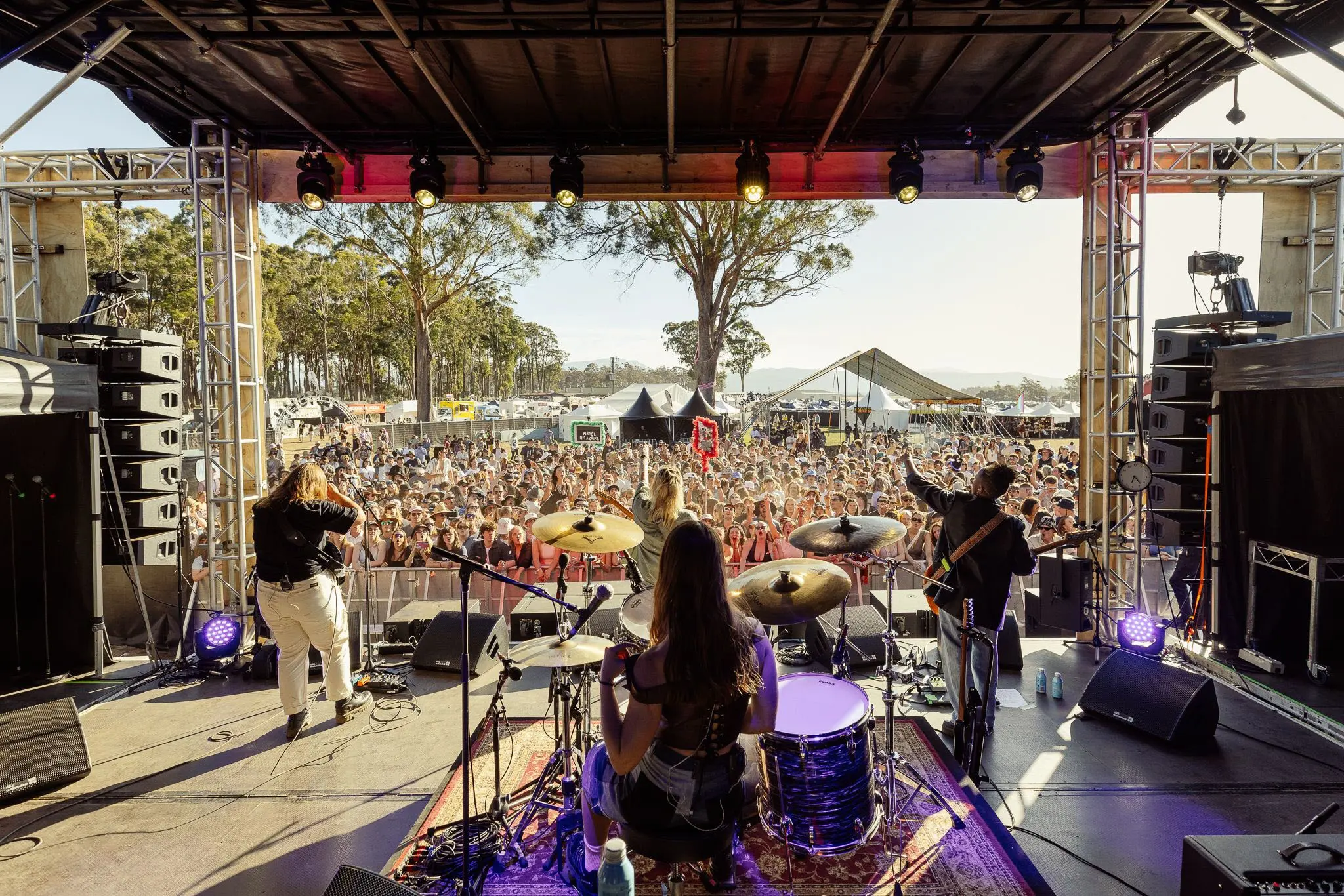
**Party in the Paddock 2025 (photo by Mitch Lowe) courtesy of* [**Discover Tasmania*](https://www.discovertasmania.com.au/?ref=hypebot.com)**.*
***+Read more:*** [*"How to Choose the Right Indie Venue for Your Live Concert"*](https://www.hypebot.com/how-to-choose-the-right-indie-venue-for-your-live-concert/)
## **That's... *If* the Federal Government Agrees**
The pilot is not yet a funded or operational program however. And the [initial federal response](https://www.themercury.com.au/news/tasmania/federal-government-snubs-premiers-ambitious-live-music-tax-rebate-plan/news-story/6e29c0d7dc3af4c60ad5a5071f78e96e?ref=hypebot.com) was *chilly...*
Tasmanian Labor Senator **Richard Dowling** pointed to roughly A$1 million already delivered to live music businesses in the state and the Australian Government’s wider A$25 million [two-year extension of **Revive Live**](https://www.arts.gov.au/funding-and-support/revive-live?ref=hypebot.com)**,** while calling on the Tasmanian Government to invest its own money.
But **APRA AMCOS** called the proposal "an Australian first" and urged the federal government to use Tasmania as the test case for a national incentive.
In a survey of almost 3,000 venues, nightclubs and promoters, more than 70% identified financial pressure as the reason they had stopped programming live music. More than 70% also selected a tax rebate or incentive as the most important measure for getting music back onto their stages.
What makes Tasmania’s version notable is its scale. Earlier economic modelling commissioned by APRA AMCOS examined offsets of 5%, 10% and 20% for existing [live music venues](https://www.hypebot.com/tag/venues/). Tasmania has put **50% on the table.**
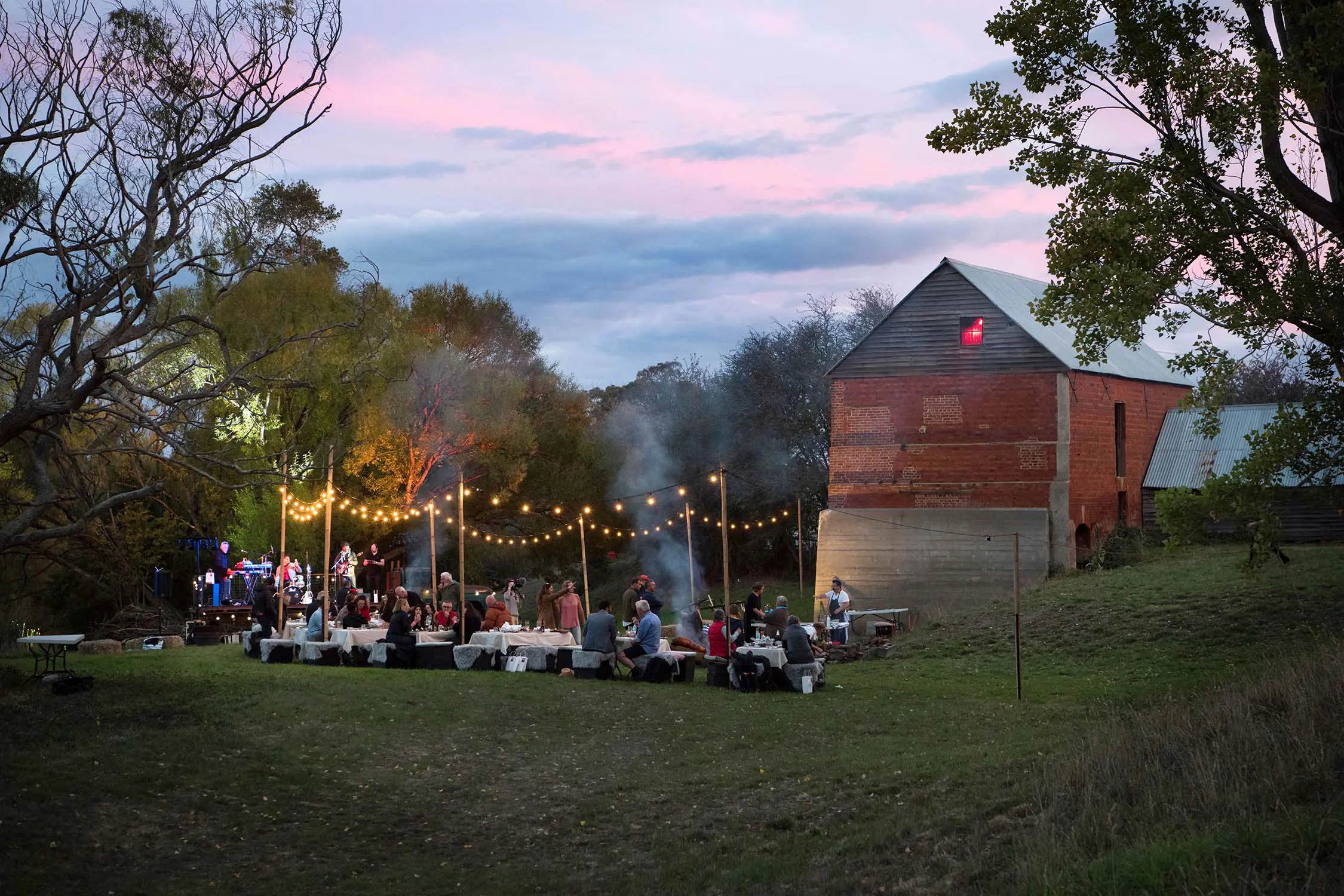
**East Coast Harvest Odyssey (photo by Sarah Rhodes) courtesy of* [**Discover Tasmania*](https://www.discovertasmania.com.au/?ref=hypebot.com)**.*
***+Read more:*** [*"Can Cheap Beer Save Australia’s Opening Bands?"*](https://www.hypebot.com/can-cheap-beer-save-australias-opening-bands/)
## **Hobart’s Big Live Music Contradiction**
The timing of all this is difficult to ignore. Four days before the rebate was proposed, seven prominent Hobart venues announced closures by [entering voluntary administration](https://www.abc.net.au/news/2026-07-06/seven-hobart-bars-to-close-pub-banc-group-liquidation/106883686?ref=hypebot.com), affecting more than 80 workers. The group included **Republic Bar & Cafe**, a North Hobart institution and popular live music room, alongside **Cargo Bar, Jack Greene** and **Post Street Social.**
The owners group cited rising supply, utility, insurance and operating costs, coupled with changing consumer behaviour. That is precisely the equation the proposed rebate is designed to alter. It cannot fix every pressure facing hospitality, but it would make live music an expense that generates direct support rather than one more risk on a thin-margin night.
All the while, Hobart appeared on two significant international tour announcements.
[**Queens of the Stone Age**](https://www.bandsintown.com/a/796-queens-of-the-stone-age?utm%5Fsource=hypebot&came%5Ffrom=900) will bring **Primus** and **Tropical Fuck Storm** to **MyState Bank Arena** on December 11 as part of a six-city Australian run. And [**Delta Goodrem**](https://www.bandsintown.com/a/5792-delta-goodrem?utm%5Fsource=hypebot&came%5Ffrom=900) will close the Australian leg of her eight-city PURE World Tour at the same arena in 2027.

The MyState Bank Arena in Glenorchy, Tasmania.
Two arena dates do not establish a trend on their own, yet they do offer a useful glimpse of what Tasmania is [trying to build](https://tasmania.com/things-to-do/music/?ref=hypebot.com) from both ends. The island’s geography has long made touring expensive and cumbersome logistically. **Music Tasmania** [told a federal inquiry](https://www.aph.gov.au/DocumentStore.ashx?id=59775438-47ed-4636-98ff-44a844e7d01f&subId=660755&utm%5Fsource=chatgpt.com) that crossing Bass Strait to pursue performance opportunities usually **costs bands more than they're able to earn.**
When major artists include Hobart, it signals confidence that a Tasmanian audience can support a large show. When [smaller rooms](https://www.hypebot.com/tag/small-venues/) can afford to program local and touring artists more regularly, they create the continuous ecosystem beneath those occasional arena events: paid stages, working crews, audience habits, and pathways for artists to grow.
Arena concerts cannot substitute for a grassroots circuit. But their arrival makes the case for protecting that circuit more visible.
That is the financial bet Tasmania is proposing. Rather than waiting for venues to fail and then offering rescue money, it would reward them each time they spend on live music.
If the pilot proceeds and the bookings follow, the rest of Australia will have something more useful than another report. It will have a model.
[Check out more Hobart live music events on Bandsintown.](http://bandsintown.com/c/hobart-australia?city%5Fid=2163355?utm%5Fsource=hypebot&came%5Ffrom=900&ref=hypebot.com)
### 'Human-First' Is a Promise Nobody Can Check Yet.
URL: https://www.hypebot.com/human-first-is-a-promise-nobody-can-check-yet/
Last updated: 2026-07-28T15:35:55.000Z
#
*By *Cynthia Zhu*, Co-Founder of* [***HeartMuLa***](https://heart-mula.com/?ref=hypebot.com)
The most interesting thing in **Jason English's** [research on AI and streaming](https://www.hypebot.com/do-musicians-have-an-ai-optimism-blind-spot/) isn't the blind spot. It's a sentence near the end that he only casually lingers on:
> *"The "Human-First" label that's showing up among independent artists and labels is a market response to the blind spot working in reverse. The audience is paying attention. The artists who say plainly that the songs were written, performed, and sung by real people are gaining ground their AI-heavy peers think is being given away."*
So, a "Human-First" label is showing up among independent artists and labels, and it's gaining ground. That's a market pricing "authorship." After three years of arguing about whether anyone cares, someone's [putting a sticker on it](https://www.hypebot.com/new-ai-labeling-standard-for-music-draws-support-and-hesitation/). That's the most encouraging development in this whole mess.
Yet, right now, it's worth *nothing* as a signal. Anyone can type this label out, slap it on an image or webpage and use it to their own ends. But what does it really mean?
## **A label nobody can check is just a "vibe."**
Every label that ever meant anything had machinery behind its proliferation and reputation. "Organic" certification has audits and a paid inspectorate. "Fair Trade" has chain of custody. "Made in Italy" has customs law and a fraud squad. The claim is what you see; the enforcement is what makes the claim worth seeing.
"Human-First" is giving you an artist's word. But an artist's word is precisely what stops being reliable at the moment the label starts converting — because that's when the incentive to claim it falsely shows up. The label gets more valuable and less trustworthy on the same schedule. That's not cynicism about musicians, it's just how unaudited claims behave, in every market where they've ever been tried.
So the question isn't whether Human-First is good, it's who's going to build the machinery, and out of what exactly?
## **The blueprint is next door.**
Software went through this exact fight and the receipts of those transactions are public. For twenty-odd years, "open" was a marketing word in software the way "human" is becoming one in music. Anyone could say it, use it, manipulate it.
The [Open Source Initiative's](https://opensource.org/?ref=hypebot.com) answer wasn't to audit every project — nobody could afford that. It was narrower and much cheaper: **maintain a definition, hold it outside the companies that benefit from it, and let anyone check a claim against it in ten seconds.**
That still works, and you can watch it work. Stability AI ships Stable Audio Open. The name says open. The [license](https://stability.ai/license?ref=hypebot.com) is the Stability AI Community License: it does permit commercial use — that's an actual section — but the grant terminates automatically once your organization passes $1M in annual revenue, and commercial use requires registering with Stability.
Useful model, real license, entirely legitimate product. It's just not open source by the definition, and because a definition exists that isn't Stability's, anyone can say so without it being a slur.
Contrast ACE-Step. ACE Studio and StepFun put [ACE-Step 1.5](https://github.com/ace-step/ACE-Step-1.5?ref=hypebot.com) out under MIT — no revenue cliff, no registration, no takebacks on the copy you've got. Both models are "open" in ordinary English. One word, two completely different sets of rights, and the only reason you can tell them apart in a sentence is that somebody neutral maintains the word.
That's the transferable part. Not audits. **A definition by an owner who isn't selling anything.**
**Screenshot courtesy of* [**HeartMuLa's Explore page*](https://heart-mula.com/explore?ref=hypebot.com)**.*
**+Read more:** [*"Social Media in the Age of AI: The Internet’s Next Luxury Is Proof You’re Human"*](https://www.hypebot.com/social-media-in-the-age-of-ai-the-internets-next-luxury-is-proof-youre-human/)
## **Where will music's version have to live?**
Here's where I'd push back on my own analogy, because a definition alone won't take us all the way there. OSI works partly because software claims are checkable by strangers — the license is in the repo, the code is right there. "A human sang this" isn't checkable by inspection. There's no detector worth trusting and there won't be one soon.
So the enforcement has to come from somewhere else, and there's an obvious place: **the upload form.**
Every release already passes through a [distributor.](https://www.hypebot.com/tag/distribution/) **DistroKid, CD Baby, TuneCore, Bandcamp** — they already make you attest to things, under contract, with account termination behind it. That's not a hypothetical inspectorate; it's a checkbox and a Terms of Service that already exists. If the attestation happens there, it's contractual rather than aspirational. Lie on it and you're not being unfashionable, you're in breach.
And the attestation has to be granular, because the current version is useless. "AI was involved" covers a mastering assistant and a synthetic lead vocal identically, which tells a fan nothing and correctly gets ignored by artists. Five lines fixes it:
- **Composition:** human / AI-assisted / AI-generated
- **Performance:** human / AI-assisted / AI-generated
- **Lead vocal:** human / AI-assisted / AI-generated
- **Production chain** (mastering, stem separation, cleanup): AI used / not
- **Marketing assets** (copy, artwork, video): AI used / not
I'd bet English's 81% is answering about the first three. But because disclosure today is one undifferentiated blob, the artist who used a mastering plugin and the artist who generated a vocal make the same admission and eat the same penalty. That punishes the honest and instructs everyone else to say nothing, which is roughly what's happening.
Fans get five fields instead of a vibe. Artists get to disclose the boring parts without being lumped in with the synthetic-vocals crowd. And the platform — which already has the contract, the account, and the kill switch — becomes the enforcement layer, at approximately zero marginal cost.
## **The obligatory caveat, and then the one about me...**
[English's sample size](https://www.hypebot.com/do-musicians-have-an-ai-optimism-blind-spot/) deserves its asterisks and he's upfront about them: 573 respondents, self-selected, distributed through the *Curious Goldfish* audience — a podcast about Americana, folk, roots, bluegrass and country. That's close to the most human-authorship-friendly listener base in music. The 81% who called AI music inauthentic aren't a cross-section of the market. Read it as a signal from one room, not a verdict on the industry, which is exactly how English framed it.
But the room matters. Those are the genres where people still buy tickets and merch and turn up twice.
And me: [I work in GenAI music](https://heart-mula.com/?ref=hypebot.com). English's data says people in my position read this worst — creators who don't use AI put fan concern about human authorship at 67%, frequent AI users put it at 14%, a 4.7x gap. I have no rebuttal. I'm inside the sample that's wrong.
Which is the whole argument, really. Open source never assumed anyone would be honest, including itself. It wrote the definitions down, put them somewhere its own funders couldn't edit them, and made claims checkable by people with no stake. That isn't idealism — it's a system built by people who assumed everyone involved, themselves included, would eventually be tempted.
Human-First is currently running on honor, in an industry where most independent artists are under real financial pressure. That's a lot of weight on a lot of honor.
Give the label some teeth before somebody hollows it out. The fans are already asking. We just don't have a way to answer that means anything yet.
**+Read more:** [*"New AI Labeling Standard for Music Draws Support — and Hesitation"*](https://www.hypebot.com/new-ai-labeling-standard-for-music-draws-support-and-hesitation/)
---
**Cynthia Zhu* is a Co-Founder of* [***HeartMuLa***](https://heart-mula.com/?ref=hypebot.com)*, an open-source AI music project that releases its models under Apache-2.0 on Hugging Face. She writes about open source, transparency, and where the music industry goes next.*
### Ariana Grande’s Foundation Backs Mental Health Care for Music Workers
URL: https://www.hypebot.com/ariana-grandes-foundation-backs-mental-health-care-for-music-workers/
Last updated: 2026-07-28T14:55:11.000Z
[**Ariana Grande’s**](https://www.bandsintown.com/a/1120421-ariana-grande?utm%5Fsource=hypebot&came%5Ffrom=900) newly launched **Brighter Days Ahead Foundation** is supporting [**Backline’s**](https://www.hypebot.com/free-24-7-music-industry-mental-health-hotline-launches/) efforts to expand mental health care for music industry professionals and their families.
Backline has been named a grantee of the foundation’s Heal & Dream Fund, which focuses on improving access to [mental health services](https://www.hypebot.com/hypebots-mental-health-awareness-month-guide-for-musicians/) and community support. The grant builds on several collaborations between the two organizations, including tour support for the band and crew working on Grande’s *Eternal Sunshine Tour*.

**+Read more:** [*"Lauv Stepped Away From a Major Tour. Artists Should Know That's Okay."*](https://www.hypebot.com/lauv-stepped-away-from-a-major-tour-more-artists-should-know-thats-okay/)
Grande officially launched the Brighter Days Ahead Foundation on June 12 to fund organizations serving vulnerable communities. Its initial priorities include protecting trans and LGBTQ+ rights, expanding mental health care access, and responding to communities experiencing crises.
Its four funds will support organizations providing safety, care, and other essential services. **Grande** said while announcing the foundation:
> *"Our mission is to support, protect, and provide resources for our vulnerable friends in need."*
Backline connects music professionals and their families with therapists, financial assistance, case management, wellness programs, and providers who understand the particular pressures of working in music. Support from the Brighter Days Ahead Foundation will help the nonprofit sustain programs including direct tour services and [**B-LINE**](https://backline.care/b-line/?ref=hypebot.com), its free, confidential [mental health](https://www.hypebot.com/tag/mental-health/) and crisis support line created specifically for the music industry.
Backline Executive Director **Hilary Gleason** sums it up:
> *"Backline delivers essential mental health and wellness resources to music industry professionals, ensuring the people behind the music receive the compassionate, affordable care they deserve."*
The partnership has already reached workers behind Grande’s tour. During a run of sold-out performances at the Kia Forum in Los Angeles, Backline delivered 200 wellness bags to crew members. The packages included products intended to reduce stress and encourage self-care during extended periods on the road.
Crew members will also be eligible to receive therapy grants through Music’s Mental Health Fund, supported by the Brighter Days Ahead Foundation. The assistance is designed to ensure that the people responsible for producing the shows can continue accessing care after the tour moves on.
The foundation had begun supporting Backline even before its public launch. As an early financial contributor to B-LINE, it helped establish a round-the-clock resource available to artists, crew members, industry workers, and their families. More than 400 people have contacted the service since its introduction, according to Backline.
The grant arrives as the music industry continues confronting the mental and physical strain associated with touring, irregular employment, financial insecurity, and long periods away from home.
By directing resources toward both immediate tour support and longer-term care, the partnership recognizes that healthier [live music](https://www.hypebot.com/tag/live-music/) requires supporting everyone working behind the curtain — not only the artists standing onstage.
**+Read more:** [*"Hypebot's Mental Health Awareness Month Guide For Musicians"*](https://www.hypebot.com/hypebots-mental-health-awareness-month-guide-for-musicians/)
---
## [**Ariana Grande Tour Dates**](https://www.bandsintown.com/a/1120421-ariana-grande?utm%5Fsource=hypebot&came%5Ffrom=900)
---
[***Backline***](https://n6thwjcab.cc.rs6.net/tn.jsp?f=001MIcwpGtd9YD-bp32EkjDYjD7R5IRvb5OMAnKTd9rMECj3Sf%5FLC5mY%5FZhvMsqsTiw8MnPXlsznlxqnshiGKH7sgwJs6ZJy%5Fd8e-OT7JpeBpSbVxjHCVEdOm19Z2TQCrm7kXYl3vG7RTBSn1Kb9M7%5F%5Fm%5FwTvoQkyCi&c=BU8k-wi8zSe3x3sWnhbCYh7znFOJYhBWL7UwmM0MnzfGH7apO6Ko-w==&ch=Kzy8wzBHatrzPaoPA50I6VKYXGJ6Pnm45vrORzEl4VXX9PE6HqXGnw==&ref=hypebot.com) *is a national 501(c)(3) nonprofit organization that connects music industry professionals and their families with mental health and wellness resources, streamlining access to a network of trusted organizations and care providers that understand this line of work. With case management, therapy grants, tour support,, and wellness offerings, Backline curates their programs to meet the industry where they are — on or off the road.*
### 6 Upcoming Live Tours We're Excited About
URL: https://www.hypebot.com/6-upcoming-live-tours-were-excited-about/
Last updated: 2026-07-28T14:17:55.000Z
Our new series [**Touring Radar**](https://www.hypebot.com/tag/touring-radar/) takes a look at newly announced upcoming live tours that caught our attention, not because they're headline grabbers but because they say something interesting about where [live music](https://www.hypebot.com/tag/live-music/) is and where it's heading.
Whether it's long-awaited returns, unexpected genre pivots, or ambitious residencies, we're tracking who's on the move, and what's moving audiences.
These are six tour announcements that we're excited about.
## **1\. Mike D Steps Into His Own Spotlight**
For decades, [**Mike D**](https://www.bandsintown.com/a/141000-mike-d?utm%5Fsource=hypebot&came%5Ffrom=900) has been inseparable from the **Beastie Boys.** That's what makes his newly expanded solo tour so compelling. Rather than treating it as a one-off project, he's continuing to add North American and European dates, suggesting there's genuine appetite to see one-third of one of hip-hop's most influential groups on his own terms. For longtime fans, it's another chapter in a legendary career. For the live industry, it's a reminder that legacy artists don't always need reunions to fill rooms — they can build excitement around entirely new creative identities.
## **2\. Rebecca Black's Reinvention Keeps Growing**
Few artists have rewritten their public narrative as successfully as [**Rebecca Black.**](https://www.bandsintown.com/a/1383286-rebecca-black?utm%5Fsource=hypebot&came%5Ffrom=900) Fifteen years after becoming synonymous with one of the internet's earliest viral sensations, she's quietly built a respected career in experimental pop and electronic music. But her latest North American headline tour is not riding nostalgia at all — it's capitalizing on years of steady artistic evolution. It's one of the more remarkable reinvention stories in modern touring.
## **3\. Phoebe Bridgers Turns a Live Moment Into a New Chapter**
Rather than simply announcing another run of dates, [**Phoebe Bridgers**](https://www.bandsintown.com/a/1222829-phoebe-bridgers?utm%5Fsource=hypebot&came%5Ffrom=900) used the momentum of a high-profile Madison Square Garden performance and the debut of new material to launch the next phase of her touring calendar. It's an increasingly common strategy among major artists: let the live show generate excitement first, then immediately convert that attention into ticket sales.
## **4\. Sienna Spiro Makes the Leap From Buzz to Box Office**
Every year there are a handful of artists who make the transition from streaming playlists to real-world ticket pushers. [**Sienna Spiro's**](https://www.bandsintown.com/a/15579368-sienna-spiro?utm%5Fsource=hypebot&came%5Ffrom=900) debut album tour feels like one of those moments. Headlining a first major run is always a milestone because it asks a different question than streaming success: will listeners actually leave the house? Touring remains one of the clearest indicators that an emerging artist is building a genuine audience.
## **5\. Jack White Keeps Choosing the Long Road**
Some artists disappear between album cycles. [**Jack White**](https://www.bandsintown.com/a/89140-jack-white?utm%5Fsource=hypebot&came%5Ffrom=900) has built a reputation for doing the opposite. His latest round of tour dates continues a career defined by relentless live performance, whether that's intimate club shows or larger theater stops. At a time when many artists treat touring as a campaign surrounding an album release, White continues to treat it as an ongoing creative practice — a philosophy that's become increasingly rare.
## **6\. Tricky Returns With Something to Say**
Legacy tours often lean heavily on nostalgia, but [**Tricky's**](https://www.bandsintown.com/a/1017801-tricky?utm%5Fsource=hypebot&came%5Ffrom=900) latest North American run stands apart because it arrives alongside new music. More than three decades after helping define trip-hop, he's returning not simply to revisit the past, but to continue an evolving artistic career. It's a reminder that longevity doesn't have to mean becoming a heritage act; for some artists, touring remains a platform for continued experimentation.
### The One We'll Be Watching: Rebecca Black
Every [Touring Radar](https://www.hypebot.com/tag/touring-radar) could end with one artist who represents a larger industry shift.
This week, that's Rebecca Black.
People will always associate Black with [where she started](https://www.youtube.com/watch?v=kfVsfOSbJY0&ref=hypebot.com), but how she got to where she's at now will always be the more interesting story. Black transformed internet notoriety — and a narrative that wasn't entirely her own to shape originally — into artistic credibility over the course of more than a decade. This latest headline run suggests audiences are responding to who she is *now,* and rallying behind the feminist figure she's come to represent. It's one of the clearest examples of reinvention translating into a sustainable live career, and becoming a role model.
### Bandzoogle Upgrades Stores with Pre-Orders, Promo Codes,Tips
URL: https://www.hypebot.com/bandzoogle-upgrades-stores-with-pre-orders-promo-codes-tips/
Last updated: 2026-07-28T13:53:08.000Z
**TL;DR:** Popular music website builder **Bandzoogle** **has rolled out new updates giving artists more flexibility to sell online.** The new direct-to-fan features include the ability to sell physical merch pre-orders, offer free shipping discount codes, accept tips at checkout, and launch dedicated sheet music stores.
If you are an independent musician or music marketer looking to boost direct-to-fan sales, Bandzoogle’s latest update brings highly requested flexibility to their zero-commission online stores.
Maximizing eCommerce revenue requires giving fans choices and incentives, and these new additions are designed to do exactly that while keeping your music marketing strategies seamless.
### **What are the new Bandzoogle Store features?**
Whether you are funding a new vinyl pressing or trying to increase your average order value, here are the four newest eCommerce features available for your music website:
- **Sell Pre-orders on Physical Products:** Build hype and secure funding for your upcoming vinyl, CD, or custom merch runs by collecting pre-orders directly from your fans before the release date.
- **Free Shipping Discount Codes:** A proven tactic to increase conversion rates. You can now incentivize fans to complete their merch purchases by creating promo codes that waive shipping fees at checkout.
- **Accept Tips at Checkout:** Give your super-fans a frictionless way to show extra support. Fans can now easily add a monetary tip directly to their cart total when checking out.
- **Dedicated Sheet Music Store:** Ideal for composers, instrumentalists, and educators, artists can now seamlessly organize and sell sheet music downloads to their audience.
### **Hypebot's Bottom Line**
Owning the direct-to-fan relationship is crucial. Bandzoogle’s commission-free model is already a favorite among independent artists. By adding the ability todo things like accept tips and bundle free shipping promotions, musicians are now equipped with standard retail marketing tools that are proven to drive more sales and increase the lifetime value of their fans.
Read the full breakdown of these new features directly on the [**Bandzoogle Blog**](https://bandzoogle.com/blog/new-more-flexibility-for-your-store?ref=hypebot.com).
***Get all the latest Music Industry & Live Music News updated continuously from across the web under the Hypebot Industry News tab*** [***here***](https://www.hypebot.com/music-industry-news-feed/)***.***
## Hypebot
Essential news & insights for artists and live music pros.
Sign up for free weekly content delivered to your inbox
Subscribe
Email sent! Check your inbox to complete your signup.
### Social Music Discovery Upgrades: Spotify, Snapchat, Facebook
URL: https://www.hypebot.com/social-music-discovery-upgrades-spotify-snapchat-facebook/
Last updated: 2026-07-28T13:02:22.000Z
For music marketers and artists, getting fans to share and discover tracks and tour dates just got significantly easier.
Recent updates show a push toward seamless audio integration and immersive video across major social platforms. Whether you are building a hometown fanbase or reaching listeners around the world, here is what you need to know about the latest announcements from **Spotify**, **Snapchat,** and **Meta**.
### **Spotify Supercharges Social Sharing**
Word-of-mouth is still a driving force in music discovery. **Spotify** has just [rolled out 10 updated integrations](https://newsroom.spotify.com/2025-11-07/share-spotify-music-whatsapp-instagram-tiktok/?ref=hypebot.com) to help users share their favorite tracks, albums, and podcasts across the social spaces they use every day. Teased late last year, listeners can now easily share Spotify visual cards and audio previews to **WhatsApp** (Status and chats), **TikTok** (via Feed, Stories, and DMs), **Instagram**, **Threads**, **LinkedIn**, and **Facebook.**
For artists, this means zero friction for fans sharing a show or new release.
### **Snapchat Brings 'Now Playing’ to Snap Map**
**Snapchat** is turning location sharing into music discovery. Their [newly announced "Now Playing" feature](https://newsroom.snap.com/now-playing-brings-music-sharing-to-snap-map?ref=hypebot.com) allows Snapchatters to link their **Spotify** accounts and display real-time listening activity directly on **Snap Map**. Plus, fans can now instantly save tracks they discover on Spotlight videos or Sound Pages straight to their Spotify Liked Songs playlist with a single tap. This also gives local acts a creative way to spot where fans are listening to their music in real time.
### **Facebook’s Main App Pivots to Full-Screen Video**
If you have been relying heavily on text or static image posts on **Facebook,** it’s time to rethink your content strategy. **Meta** just [announced that later this year](https://about.fb.com/news/2026/07/connecting-real-people-on-facebook/?ref=hypebot.com), it will test a reimagined, **video-first** experience for the core Facebook app. A subset of users will drop directly into an immersive, full-screen video feed the moment they open the application. While classic Feed will remain available for now, as [noted by Music Ally](https://musically.com/2026/07/27/now-facebooks-own-mobile-app-may-be-pivoting-to-video/?ref=hypebot.com), this pivot signals that short-form vertical video will increasingly dominate Facebook's discovery algorithm.
**Spotify** recently announced its own [pivot to full length video](https://www.hypebot.com/what-if-video-on-spotify-becomes-the-next-big-thing/) and expanding availability to artists. Data shows that video viewers **stream tracks 64% more** than straight listeners.
**Meta** is also launching a free **Facebook Verified badge** based on selfie verification to prove there is a real human behind a profile. This will be an excellent trust-building tool for artists managing local **Facebook Groups**, looking to build authentic fan connections, or selling physical merch via Facebook's newly teased "Seller" tools.
## **Hypebot's Bottom Line**
The barrier between streaming audio and social video is rapidly disappearing.
To stay ahead, marketers and artists should actively encourage fans to utilize Spotify's new direct-sharing integrations, leverage location-based music sharing on Snap Map to build local buzz, and immediately double down on video content as [Spotify](https://www.hypebot.com/what-if-video-on-spotify-becomes-the-next-big-thing/) and now Facebook fundamentally transform the mobile experience.
### **Also Read**
[**What If Video on Spotify Becomes the Next Big Thing?**](https://www.hypebot.com/what-if-video-on-spotify-becomes-the-next-big-thing/) \- Spotify data shows long form video viewers stream tracks 64% more. Learn new tools and strategies artists and music marketers need to use now.
## Hypebot
Essential news & insights for artists and live music pros.
Sign up for free weekly content delivered to your inbox
Subscribe
Email sent! Check your inbox to complete your signup.
***Get all the latest Music Industry & Live Music News updated continuously from across the web under the Hypebot Industry News tab*** [***here***](https://www.hypebot.com/music-industry-news-feed/)***.***
### Patreon’s Direct-to-Fan Business Is Growing. Its Workforce Is Shrinking.
URL: https://www.hypebot.com/patreons-direct-to-fan-business-is-growing-its-workforce-is-shrinking/
Last updated: 2026-07-27T20:18:36.000Z
**Patreon** is cutting one-fifth of its workforce at a moment when its [direct-to-fan](https://www.hypebot.com/use-these-5-direct-to-fan-tools-to-grow-your-digital-fan-base/) business appears to be moving in the opposite direction.
The membership and creator-commerce platform laid off **93 employees** on July 23, its largest workforce reduction to date. CEO and co-founder **Jack Conte** described the decision as painful but necessary, saying Patreon must reduce costs and reorganize itself to remain dependable amid a rapidly changing technology market.
At first glance, the announcement could look like another sign of trouble in the creator economy. Patreon says that is not what is happening.
In [a message to employees and creators](https://www.patreon.com/jackconte/posts/painful-update-164628951?ref=hypebot.com), Conte called Patreon’s core business “healthy and strong.” More than 300,000 creators currently earn money through the platform, with **creators collectively generating billions of dollars annually**. Patreon also says its membership, revenue and payment-processing volume continue to grow each month.
Private-market research firm Sacra estimates that Patreon generated $179 million in revenue during 2025, representing 28% year-over-year growth, according to [*Music Business Worldwide*](https://www.musicbusinessworldwide.com/patreon-lays-off-20-of-its-staff-in-biggest-round-of-cuts-in-its-history/?ref=hypebot.com)*.*
That makes the layoffs more notable. Patreon is not shrinking because fans have stopped supporting creators. It is shrinking while that support continues to expand.
***+Read more:*** [*"15 Must-Have Tools to Market Music and Grow a Fan Base"*](https://www.hypebot.com/15-must-have-tools-to-market-music-and-grow-a-fan-base/)
## AI is not the reason — but it is part of the story
Conte explicitly rejected the idea that Patreon eliminated jobs because AI could simply replace the affected employees. He argued that artificial intelligence cannot substitute for human creativity, judgment, craftsmanship or the desire for human connection—the same qualities on which Patreon’s entire business depends.
Still, he acknowledged that AI has changed how the company builds products, communicates and organizes its workforce.
Patreon will now operate with a flatter organizational structure, fewer employees and teams more tightly focused on improving the creator and fan experience. Conte previously told [*The Verge*](https://www.theverge.com/tech/970211/patreon-layoffs-ai?ref=hypebot.com) that the company was “100 percent embracing” AI internally, warning that Patreon could be obsolete within three years if it failed to adopt the technology.
There is an obvious tension here. Patreon is defending human creativity as the foundation of its platform while using AI-driven changes in the technology business to help justify a leaner operating model.
Earlier in July, Patreon partnered with Cloudflare to block unauthorized AI crawlers from scraping creators’ work for training purposes. Its emerging position appears to be that AI should assist the businesses supporting creators without replacing (or freely consuming) the human work those businesses rely upon.
## Direct-to-fan still depends on platforms
For independent musicians, Patreon’s growth remains encouraging. Recurring memberships, exclusive releases, digital products and fan communities can provide income that does not depend entirely on streaming volume, algorithms or touring.
But the layoffs offer an important reminder: “direct-to-fan” does not mean independent of technology companies.
Artists may have a closer relationship with their audiences, but the platforms facilitating those relationships still have investors, expenses, reorganizations and changing priorities. Patreon says its roadmap is staying intact and that the cuts will help it remain stable over the long term.
For creators building livelihoods on the platform, that promise matters. Direct fan support may be growing, but the infrastructure behind it is entering a leaner and increasingly AI-shaped era.
**+Read more:** [*"How Music Fans Are Becoming Parallel Creators (Sustainably)"*](https://www.hypebot.com/how-music-fans-are-becoming-parallel-creators-sustainably/)
### For Gen Z, Concerts Are Worth the Money — and the Trip
URL: https://www.hypebot.com/for-gen-z-concerts-are-worth-the-money-and-the-trip/
Last updated: 2026-07-27T19:44:43.000Z
### **How Gen Z Is Shaping Live Music’s Future**
*By* [***Robert Steiner***](https://luminatedata.com/author/robert-steiner/?ref=hypebot.com)*of* [***Spotlight By Luminate***](https://luminatedata.com/blog/how-gen-z-is-shaping-live-musics-future/?ref=hypebot.com)
As discussed in **Luminate Intelligence’s** latest report, [*Live Music 2026*](https://luminatedata.com/reports/live-music-2026?ref=hypebot.com), concerts and festivals remain incredibly popular despite rising ticket prices across the board.
In particular, Luminate U.S. Music 360 survey data found that Gen Z live event attendees spent a reported monthly average of $101 on live music events in Q1 2026\. That number notably outpaced Millennials ($94 average), historically the highest-spending demographic for live music.
Gen Z’s willingness to spend on live music has manifested in a few notable ways that, assuming current trends continue over the long run, will have a major impact on the industry’s further evolution.
The most surprising one is the demo’s shifting tone on ticket prices, which have increased substantially in the post-pandemic era and often incite debates over live music’s affordability.
For as long as Luminate has conducted the U.S. Music 360 survey, respondents have consistently listed the price of a ticket as the biggest barrier to attending. But while cost is still the top deterrent for attendees, the percentage of those citing it as such trended downward overall.
Still, Gen Z had the most dramatic shift, with 75% citing ticket cost as a barrier in Q1 2024, versus 57% in Q1 2026\.
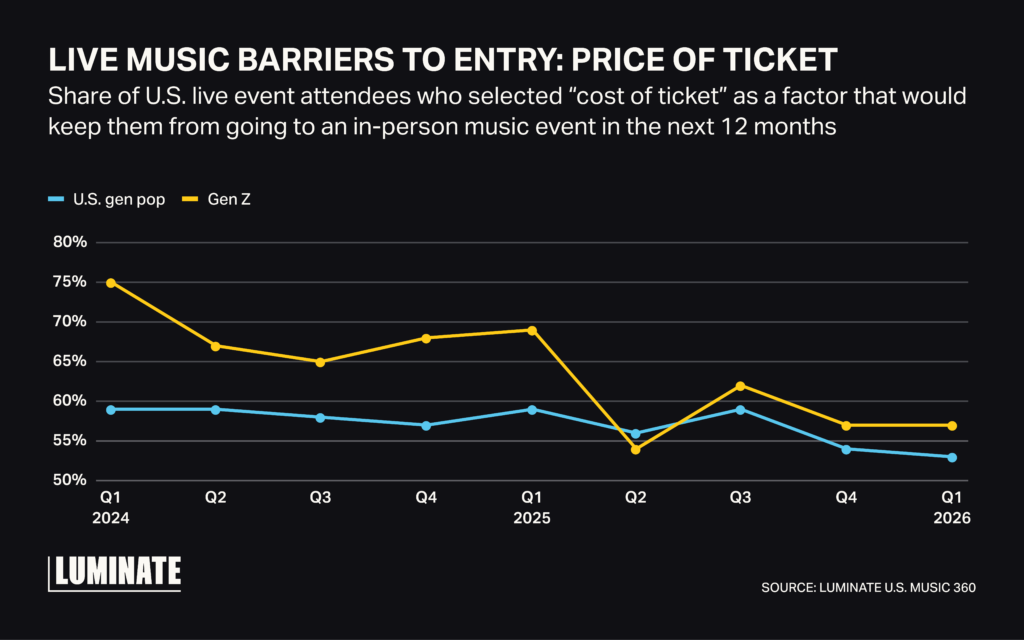
**+Read more:** [*"Your Friend Bought the Tickets… For God’s Sake, Pay Them Ba*](https://www.hypebot.com/your-friend-bought-the-tickets-for-gods-sake-pay-them-back/)[*ck 💸*](https://www.hypebot.com/your-friend-bought-the-tickets-for-gods-sake-pay-them-back/)[*"*](https://www.hypebot.com/your-friend-bought-the-tickets-for-gods-sake-pay-them-back/)
Along with their softening resistance to high ticket prices, Gen Z is also increasingly willing to attend more shows. Overall, the percentage of survey respondents who reported going to 3-4 concerts in the past 12 months has grown since 2024, while attendance for 1-2 events has remained mostly flat.
But for Gen Z, single-concert attendance has simultaneously declined as multishow turnout has grown: Attendance for two concerts a year grew from 29% in Q1 2024 to 37% in Q1 2026, while one concert a year declined 10% within that same period.
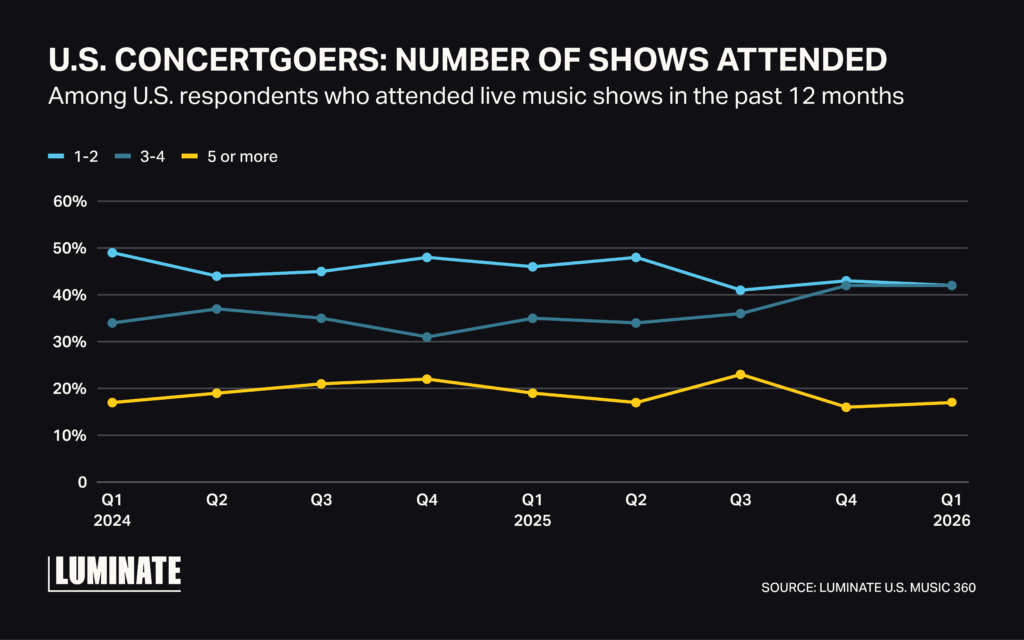
Not only is Gen Z going to more shows, but they’re also turning them into trips. One side effect of pricier concerts has been that, for some fans, traveling to see an artist in a different city or even country might prove cheaper and easier than trying to see them locally.
Luminate found that, along with ticket price, the percentage of Gen Z attendees who listed travel cost as a barrier to live shows has decreased since 2024.
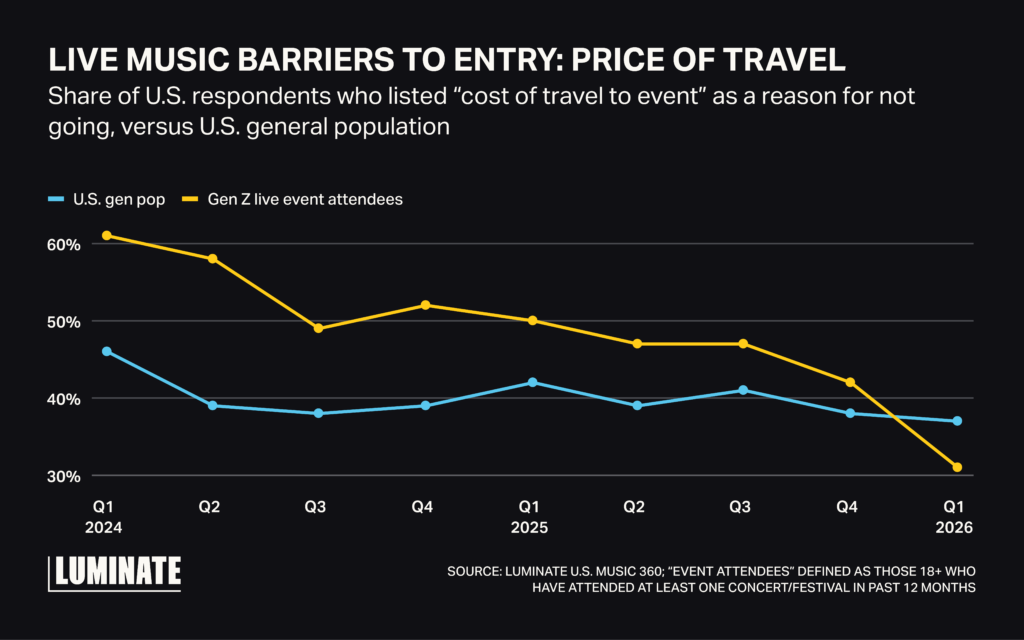
These overarching trends among Gen Z concertgoers offer a clear glimpse of the live music industry’s current trajectory: Younger fans are becoming more comfortable with spending big, and the industry has responded with bigger shows, more experience-based offerings, and live infrastructure in emerging markets with existing tourist demand.
It’s important to remember, though, that this current reality is far from a long-term guarantee. Part of Zoomers’ increased spending may be due to the fact that they are gaining disposable income as they age, and it’s entirely possible that attendees’ willingness to spend more on shows may shift if prices hit climb even higher.
**+Read more:** [*"Live Music's Biggest Growth Opportunity May Be Hiding in Plain Sight"*](https://www.hypebot.com/live-musics-biggest-growth-opportunity-may-be-hiding-in-plain-sight/)
### Pigeon on First Live Concerts, Metallica Covers, & Musical Dehydration : A Handstamp Interview
URL: https://www.hypebot.com/pigeon-on-first-live-concerts-metallica-covers-musical-dehydration-a-handstamp-interview/
Last updated: 2026-07-27T16:02:38.000Z
*This interview originally appeared on* [***Handstamp***](https://handstamp.substack.com/p/a-handstamp-interview-with-pigeon)
Some things will unexpectedly make you feel grateful for the truly special experiences in your life. I probably don’t reflect on just how privileged I’ve been to see so many incredible live performers at the peak of their powers.
I’ve had a bit of an epiphany this week. The sad reality is that it’s taken a [widely-circulated video](https://www.instagram.com/reel/DYaIUoBi-BQ/?igsh=cHVkd2t6czgwaWsz&ref=hypebot.com) featuring a gaggle of laughably dressed grifters, seemingly with literally nothing coming through their stage monitors, performing at a highly-confused rally, to make me realise just how fortunate I am. I’m lucky to have enjoyed so many beautiful nights of music and incredibly lucky to have not attended that particular event.
A band I don’t expect to see at a Yaxley-Lennon misery festival is Pigeon. The sartorially sound, culturally diverse, afro-disco, jazz-infused post punk group have far more important work to do. Having recently been championed by Rolling Stone, BBC and The Times, the band currently have gale force wind in their sails.
On the week of the band’s debut album, I spoke to DJ, producer, label co-founder, self-proclaimed ‘binfluencer’ and Pigeon bassist Josh Ludlow. To kick off an enjoyable conversation, he recounted his early musical exposure.
**Josh Ludlow:** "I grew up in West London. Lots of music in the house. My dad always had a guitar, was always singing, always in bands. So, by the time I was 10 or 11, I was playing in a band with my brother."
**Handstamp:** "What did that sound like?"
**Josh Ludlow:** "We were listening to a lot of Blink 182 and Green Day, so I imagine it sounded like that. One of the first groups I was in was with Tom (Dream) from Pigeon, when he was about 13 and I was 12\. I don’t think we played a gig. But yeah, as long as I can remember, I’ve been playing music."
**Handstamp:** "In London, there is seemingly unlimited access to live entertainment. Did you tap into that early on?"
**Josh Ludlow:** "100%. The first live shows I went to were at a place in Twickenham called Heatham House, where they would put on Battle of the Bands and open mic nights. It was a crazy thing, where there would be no adults, just loads of kids getting drunk, moshing and doing other things that teenagers do."
Those were the first gigs I remember. Not the most professional set-up, but a lot of fun."
**Handstamp:** "So, for your first live experiences, you likely knew most of the people performing?"
**Josh Ludlow:** "I’d imagine so, yeah. I’m racking my brain, trying to work out what my first ‘proper’ show was. I think that it could have been a festival, like Reading or something. I went there when I was 14."
**Handstamp:** "Reading was your festival of choice as a teenager?"
**Josh Ludlow:** "Definitely. From first being in rock bands, me and my brother quickly moved to metal. We started a thrash metal band called Mutant. We toured quite a lot, up and down the country. But because of that, we’d go to heavier festivals as well as Reading."
**Handstamp:** "Who were the stand-out performers during your visits to Reading?"
**Josh Ludlow:** "We saw Slipknot in the early 2000s. They were the biggest band in that world at the time. They were so culturally relevant then, just because they were so freaky. I remember they did the thing where they get everybody to get on the floor, then jump up at once. I don’t know how many people were there, but it felt like it was everyone in the world."
**Handstamp:** "My first festival was the companion version, in Leeds. Your first one can be quite mind altering, can’t it? It really feels that nothing exists beyond the gates of the festival, just for a few days."
**Josh Ludlow:** "Absolutely. I am now 36, so I got to experience life without smart phones, especially because I started going out so long ago. I was out doing my thing from 12 years old, basically. At my first festival, nobody had phones, I think maybe my brother had a pager at the time, so could communicate in a way but overall, I think everybody was far more present than they are now."
I had a bit of that more recently, when I went to Burning Man a few times. They had no phone service one year, so we were plunged back into that way of life. If you got lost, you wouldn’t see your friends for eight hours, or whatever."
**Handstamp:** "Festivals before phones were a lot more fun. I remember rumours spreading across the campsites and everybody believing them - random celebrity deaths, surprise headliners and things like that. Nobody will be fooled anymore. I remember once being at Leeds, when Slipknot were supposed to play and a plane flew over the festival, announcing that they had pulled out last minute. There was a collective groan."
**Josh Ludlow:** "\[laughs\] that’s pretty epic. That’s how they should announce everything, I reckon. I have a little Slipknot anecdote for you."
In one of the groups I played in, called Turbogeist, we ended up sharing a manager with them, he was a great guy. He brought one of the members of Slipknot to one of our gigs, then he hung out afterwards, we had a few drinks and ended up being friends with him. They told us some pretty crazy drinking games that they used to play and we ended up playing some of them, some involving pints of piss. I don’t want to name any names, but it all got a little bit messy."
**Handstamp:** "Wow. A pint of potential Slipknot piss?"
**Josh Ludlow:** "\[laughs\] no, your own piss! It was your own piss or however many shots. I’d have to check in with the guys. It was so great hanging with him, because he was the soundest guy and we’d be in SXSW, but nobody would recognise him, because of the mask. If it were a member of any other band as big as them, you wouldn’t have been able to be in the bar, without constant photos, you know?"
> *“We played three Metallica covers and the local vicar ended up in the mosh pit. I enjoyed it so much, playing metal drums as an energetic youth was good for me, as I’ve always been quite high energy.”*
**Handstamp:** "A lovely life, the sweet spot really. You can be in the biggest band in the world and still walk down the street. Genius. Now, you’ll have to tell me about Burning Man, because I’ve heard wild things, I know how it’s talked about, have seen the Mad Max aesthetic, but know very little about what actually goes down."
**Josh Ludlow:** "It’s interesting. Musically, I can sum it up by saying I had been there for four or five days without seeing a moment of live music. The only music that had been playing was a version of not-great Americanised dance music, Tuluminati type melodic, soft techno. This is around 2017\. I was kind of fed up, but stumbled across a tent where there was an eight-piece group playing amazing funk jams. I was so relieved to hear some music that connected with me that I cried. So, that sums up the music policy really."
**Handstamp:** "So, not a very music-first type of festival..."
**Josh Ludlow:** "It’s just too difficult to have a live group there, because the dust is SERIOUS. After a CDJ’s been there, they have to be opened up, turned inside out, cleaned and put back together. So, if you think about taking your favourite amp or synth there, it just isn’t really feasible."
**Handstamp:** "That funk group sounds like it may have been a mirage. You’d been out in the desert heat too long, being musically dehydrated…"
**Josh Ludlow:** "\[laughs\] exactly! But no, that show was great. Tiny tent, which was dressed in a really stylish way. It felt like wandering into a little casbah or something. When I was going there, around 2016, 2017, 2018, that was the vibe."
Maybe it’s changed now. There was still lots of really cool things to see. You could see these incredible art cars, which had been worked on for decades. They have lasers that shoot out to space and everything. There are so many experiences you can have there that you’ll never forget."
**Handstamp:** "It’s great to still be able to get that shot of escapism, similar to those early festivals you went to. Going back a bit, what was it that turned you to the world of metal?"
**Josh Ludlow:** "It was my brother, who was really into playing metal guitar and needed a drummer. The first gig we played together, as Mutant, was at a church next to our school at an open mic type of thing. We played three Metallica covers and the local vicar ended up in the moshpit. I enjoyed it so much, playing metal drums as an energetic youth was good for me, as I’ve always been quite high energy."
**Handstamp:** "As you’ve played music publicly for years now, what was the last show you really enjoyed as a punter?"
**Josh Ludlow:** "My day job is as a DJ, so I play 60 to 70 gigs a year, all around the world. Every weekend, I’m in a club, watching other DJs, which is fine. Sometimes it’s special and the energy is incredible. However, it’s worlds away from a really impactful live band."
The last gig I bought tickets to was Altın Gün, maybe two years ago and I’ll never forget that experience. Watching them play, how good they are at their instruments, how much time has been put into the presentation of the show… incredible. It’s still totally unmatched for me, seeing a truly brilliant live band."
**Handstamp:** "I love that you can still feel that level of enthusiasm. We’re around the same age and as you age, it’s less common that something can really blow you away. When it happens, you get such a nostalgic thrill."
**Josh Ludlow:** "Absolutely. I’ve been in bands, I’m not a super proficient musician like some, I have my thing and I go for it when I play, but I know that technically I’ll never be at a super high level, so for that reason, seeing people who are technically brilliant at their instrument or skill just never gets old for me."
When we play with Pigeon, because Falle (Nioke, vocals) is such an incredible performer, it still blows me away. We just came back from playing a festival in Norway and it was so much bigger than we expected. There was even a massive runway at the front of the stage, Miley Cyrus style. Falle was completely at home and we all marvelled at him running down there, getting involved, putting on a show. We enjoyed watching him as much as playing ourselves."
**Handstamp:** "I know you’re based in Hastings, but the majority of the band is based in Margate, right?"
**Josh Ludlow:** "Pretty much, yeah."
> *“Seeing people who are technically brilliant at their instrument or skill just never gets old for me. When we play with Pigeon, because Falle is such an incredible performer, it still blows me away.”*
**Handstamp:** "I know the scene has grown enormously there in the last decade. Are you integrated into that and where are the notable places to play or see live music there?"
**Josh Ludlow:** "Yes, absolutely. It’s a very small place. We play a venue run by a guy called Sammy, called Where Else? He put on our first show, he’s very active in the music scene and has created a hub for local artists and a place for smaller touring acts to stop by. Then there’s Dreamland, where you’ll have bigger acts come through. It’s a good scene. Everyone knows everyone and everybody collaborates."
**Handstamp:** "The new record *OUTTANATIONAL* is out now, how are you feeling about sharing the new music in a live environment?"
**Josh Ludlow:** "Really good. It’s been fun. We played the same songs for quite a while, even though Pigeon has performed extremely sporadically, we have played the same tracks for a few years. Playing together live is really fun, we all enjoy it a lot."
*The latest *Pigeon* record* [***OUTTANATIONAL***](https://pigeon-uk.bandcamp.com/album/outtanational?ref=hypebot.com) *was released in May 2026 via Memphis Industries.*
---
*Subscribe to* [***Handstamp on Substack***](https://handstamp.substack.com/?ref=hypebot.com) *for future interviews, follow @itshandstamp on social media and just bloody* [*listen to Chief Springs*](https://linktr.ee/chiefsprings?ref=hypebot.com) *on your chosen platform, will you? Illustrations by Alice Bowsher.*
### 9 Live Music Marketing Trends Selling Out Shows In 2026
URL: https://www.hypebot.com/9-live-music-marketing-trends-selling-out-shows-in-2026/
Last updated: 2026-07-28T13:09:05.000Z
Instead of a 'one-size-fits-all' playbook, live music [marketing](https://www.hypebot.com/tag/marketing-strategy/) in 2026 is highly fragmented based on an artist's career stage, platform algorithms, shifting chart rules, and localized data.
Here are the 9 major trends currently dominating live music marketing in 2026, complete with real-world examples:
### 1) Shift from Borrowed to Owned Attention
Perhaps the biggest marketing trend in 2026 is a massive push to de-risk from volatile social media algorithms. As the popular saying goes: *"*Streams are rented attention, social followers are borrowed attention, but a direct list is owned attention."**
Artists, venues and promoters are increasingly marketing shows by **driving fans into ecosystems they actually contro**l: private Discord servers, dedicated Substack newsletters, Bandsintown followers, email lists and text messages.
- **Example in Action:** Platforms like the [SymphonyOS](https://www.symphonyos.co/?ref=hypebot.com) are helping artists build "Forever Saves" and fan CRMs. Instead of re-marketing to fans every time a single drops or a tour is announced, artists use automated data pipelines to turn casual digital interactions into ownable fan data. This allows teams to instantly message localized fans the moment tour dates go live.
### 2) Automated, "Always-On" Event Promotion
Live promoters, festivals and venues are moving away from complex and tedious manual ad setups towards targeted automated solutions.
- **Example in Action:** They are leaning into automated marketing using tools like [**Bandsintown PRO**](https://www.bandsintown.pro/?ref=hypebot.com) and one time buys like[**Boost**](https://www.company.bandsintown.com/news/meet-boost?ref=hypebot.com) which instantly features a show across Bandsintown's 100M+ user network. Their automated system also syncs tour listings across **Spotify, YouTube, Apple Music, Shazam,** **Amazon Music, Google a**nd more while offering embedded tracking pixels to capture and retarget high-intent ticket buyers.
### 3) Event Marketing vs. Show Marketing
The baseline expectation for a premium live event has shifted far beyond a standard show. Marketing a tour in 2026 means marketing an event.
- **Example in Action:** The peak of this live world-building trend can be seen in high-profile [residency models](https://en.wikipedia.org/wiki/Sphere%5F%28venue%29?ref=hypebot.com) like **Dead & Company, Phish,** and **the Eagles** at the **Las Vegas Sphere** and marketing these shows as historic visual events.
- **Example In Action**: Artists with far smaller production budgets are **marketing their shows as events**. Think tour themes, full album shows and partnerships with local and national charities,
### 4) Tier-Specific Live Strategies
Rollouts are no longer uniform. Now effective live music marketing is tailored to an artist's specific audience tier:
- **The Indie/Emerging Community Build:** For emerging acts, marketing is rooted in hyper-local community building. As highlighted in this [UCLA Radio's Artist Feature](https://uclaradio.com/an-interview-with-avery-cochrane/?ref=hypebot.com), 24-year-old alt-pop breakout **Avery Cochrane** successfully converted her viral **TikTok** storytelling and intimate songwriting from her EP "Male Validation and Other Drugs" into sold-out tour dates by keeping the communication highly personal.
- **The Mainstream Digital Bridge:** For established global pop stars, the goal is more about merging participatory virtual spaces with actual physical tours. [Marketing-Interactive's Virtual Event Report](https://www.marketing-interactive.com/zara-larsson-respawns-on-roblox-with-midnight-sun-virtual-concert?ref=hypebot.com) chronicled how pop star **Zara Larsson** utilized an immersive, gamified *"*Midnight Sun World" on **Roblox** to nurture her core fan ecosystem, converting digital avatar engagement straight into live impressive live ticket sales.
### **5) Anchor Content and Content Butchery**
The traditional multi-month, high-budget "album rollout" has largely taken a back seat. In 2026, music marketing is about maintaining **a constant stream of algorithmic "signal over noise."**
- **Example in Action:** Successful digital marketing agencies are adopting the **"Anchor Content" framework**. Instead of filming ten different high-production videos, a touring artist records one definitive piece of media—such as an intimate, high-quality live studio session or a documentary-style rehearsal video. Marketing teams then practice **"content butchery,"** slicing that single anchor video into dozens of hyper-specific vertical clips optimized for **TikTok, YouTube Shorts,** and **Reels** to sustain daily algorithmic momentum for months.
### 6) The Stream vs. Live Funnel Split
Using evolving metrics across global charts, live marketers are explicitly dividing their promotional spend into two distinct categories depending on the ultimate campaign goal.
- **Example in Action:** Because charts and data companies like [Luminate](https://support.luminatedata.com/portal/en/kb/articles/eligibility?ref=hypebot.com) continually refine chart eligibility rules. They weigh paid subscription streams much more than free, ad-supported formats and aim marketing dollars strictly at pushing fans directly toward paid DSP tiers. Budgets are also being redirected into grassroots, live-event activations to build localized concert awareness.
### 7) Hyper-Local Pop-Ups and Micro-Tours
As fans experience growing digital fatigue and push back against online ticket markups, artists and promoters are utilizing hyper-exclusive live pop-ups to generate immense local urgency and organic word-of-mouth.
- **Example in Action:** More artists are skipping traditional tour rollouts to create unique online and in-person experiences. For instance, see [VICE's coverage](https://www.vice.com/en/article/i-went-to-maggie-rogers-ticketmasterless-in-person-presale/?ref=hypebot.com) of how pop singer-songwriter **Maggie Roger**s fought back against ticketing bots and skyrocketing fees by selling concert tickets the old-school way: **in-person box office pop-ups at local music venues**. The stunt fostered an immediate sense of local community, resulting in massive social buzz and sell-outs.
### 8) AI Audience Simulation
While artificial intelligence was previously relegated to basic copywriting or graphics generation, marketing teams are now deploying **predictive AI modeling** to optimize tour planning from the ground up.
- **Example in Action:** Modern music platforms utilize AI trained on millions of consumer behavior data points to simulate audience profiles. Before an artist announces a single venue or locks in a ticket price, promoters can run automated simulations against localized streaming statistics. This predictive strategy allows teams to test tour concepts and optimize localized ad copy against simulated fan groups, maximizing initial conversion rates upon public on-sale.
### 9) Next-Gen Ticketing Algorithms and Smart Yields
Fully digital ticketing infrastructure has reached a point where data analytics allow venues and promoters to constantly evaluate and shift their ticket prices marketing in real time.
- **Example in Action:** Primary sellers utilize [dynamic ticketing](https://www.themusicnewsblitz.com/news/how-ticketmasters-dynamic-pricing-works-and-how-to-avoid-it?ref=hypebot.com) systems to automatically adjust pricing based on immediate demand surges. Simultaneously, modern ticketing apps analyze consumer listening intensity and past event histories to deploy hyper-personalized push notifications, ensuring that the highest-intent fans are targeted directly on their mobile devices.
***+Read more:*** [*"Beats + Bytes: The Trends Defining Music, Culture & Brand Marketing in 2026"*](https://www.hypebot.com/beats-bytes-the-trends-defining-music-culture-brand-marketing-in-2026/)
### What 1 Billion Real Streams Taught Us About Music Growth in 2026
URL: https://www.hypebot.com/what-1-billion-real-streams-taught-us-about-music-growth-in-2026/
Last updated: 2026-07-27T14:37:07.000Z
*By *Jonathan Estabrooks,* Co-Founder of* [***Emitha***](https://emitha.com/?ref=hypebot.com)
The conversation around [music streaming](https://www.hypebot.com/tag/streaming-music/) has changed. [Independent artists](https://www.hypebot.com/tag/indie-artists/) are no longer asking only how to get more streams, they’re asking *which streams* actually matter.
As [**Spotify**](https://www.hypebot.com/tag/spotify/) and other platforms become better at identifying artificial activity and rewarding authentic listener engagement, sustainable growth increasingly comes from understanding audiences rather than chasing shortcuts.
At Emitha Marketing, we've worked with more than **500 artists across opera, jazz, Broadway, indie rock, and pop**, helping generate more than **1 billion verified, bot-free streams**. The biggest lesson has been simple: long-term success comes from [real listeners](https://www.hypebot.com/streams-dont-build-careers-fans-do/) behaving naturally — not from gaming algorithms.
The music industry has long celebrated headline numbers: millions of streams, viral spikes, and massive playlists. Yet after hundreds of campaigns, we've seen that impressive totals often fail to translate into lasting careers.
Some releases generate enormous streaming numbers but little follower growth, few saves, and almost no long-term momentum. Others produce fewer streams while building loyal audiences that return again and again.
No one outside Spotify knows exactly how its recommendation systems work, but one pattern has remained remarkably consistent. Authentic engagement appears to matter far more than raw volume. A stream is only the beginning. What matters next is whether listeners finish the song, save it, explore the artist's catalog, follow the profile, and come back later.
Those actions signal genuine interest.
Ironically, Emitha was founded after co-founder **John Riesen** experienced the downside of artificial promotion firsthand. In 2020, a playlist promotion company used fraudulent tactics without his knowledge, ultimately leading to his music being removed from Spotify. That experience exposed how many artists were being sold inflated statistics instead of real audiences.
Rather than chasing shortcuts, we focused on connecting artists with listeners who were already likely to enjoy their music. Campaigns emphasized **steady audience development** instead of short-lived spikes.
Across genres, the campaigns that performed best weren't always attached to the biggest budgets. They were the ones where listeners behaved naturally: **listening length, save rate, following artists, and returning** days later.
**Screenshot courtesy of* [**Emitha*](https://emitha.com/?ref=hypebot.com)**.*
***+Read more:*** [*"The Label Model Is Training Artists Not to Need Labels"*](https://www.hypebot.com/the-label-model-is-training-artists-not-to-need-labels/)
### The results looked remarkably similar across very different artists.
- Baritone and **GRAMMY® winning baritone Will Liverman** saw more than one million new streams alongside a 17-fold increase in listeners and a 19-fold increase in streams by reaching audiences already engaged with classical vocal music.
- **EMMY® nominated concert pianist Marina Arsenijevic** generated more than 6.5 million streams with a 48× increase in listeners and a 60× increase in streams through the same principle: relevance over reach.Jazz artists showed the same pattern.
- **Actor and singer (The Office, Happy Days) Linda Purl**'s campaign focused on reconnecting with jazz and cabaret listeners rather than chasing viral exposure, resulting in an 18× increase in streams.
- Pianist and composer **Ben Rosenblum**'s Nebula Project added nearly 900,000 streams and an 11× increase in streaming activity by reaching existing jazz audiences.
These [campaigns](https://www.hypebot.com/8-tips-for-building-a-strong-digital-music-marketing-campaign/) reinforced an important lesson: sustainable growth comes from the right audience, not the biggest one. The metrics that consistently predicted long-term success weren't total streams but save rates, repeat listening, follower growth, and eventually increases in algorithmic recommendations such as Discover Weekly, Release Radar, Radio, and Autoplay.
The first stream is discovery. The second and third streams are the beginning of fandom.
After **one billion verified, bot-free streams**, the lesson isn't that there's a secret to Spotify. It's that there isn't one. **Sustainable growth** comes from putting great music in front of the right listeners and giving them a reason to come back.
As streaming platforms continue to evolve, artists who build lasting careers won't necessarily be the ones with the biggest launch week — they'll be the ones who earn the second listen, then the third.
Those are the signals no shortcut can manufacture, and they're the foundation of every enduring audience we've seen.
***+Read more:*** [*"Streams Don’t Build Careers: Fans Do"*](https://www.hypebot.com/streams-dont-build-careers-fans-do/)
---
**Jonathan Estabrooks* is the Co-Founder of* [***Emitha***](https://emitha.com/?ref=hypebot.com)*, a music marketing and production company dedicated to helping independent artists grow through ethical, data-driven promotion. A GRAMMY®-nominated producer, filmmaker, and graduate of The Juilliard School, Estabrooks has spent more than 20 years producing, mixing, and directing award-winning music projects while working with artists across classical, jazz, Broadway, and contemporary genres.*
### Your Morning Coffee Podcast: A Conversation with Dan Mackta, Managing Director at Qobuz
URL: https://www.hypebot.com/your-morning-coffee-podcast-a-conversation-with-dan-mackta-managing-director-at-qobuz/
Last updated: 2026-07-27T14:00:54.000Z
### **Listen on your favorite** [**podcast platform**](https://bio.to/UloQY6?ref=hypebot.com)**.**
Subscribe to the Your Morning Coffee newsletter [here](https://label-logic.us8.list-manage.com/subscribe?u=735771602810b0eb238d4e814&id=1ffaab59d7&ref=hypebot.com).
**YMC Special Episode — July 27, 2026**
### **A Your Morning Coffee Special Episode: A Conversation with Dan Mackta, the Managing Director at Qobuz**
Your hosts Jay Gilbert and Mike Etchart chat with Dan about what makes Qobuz a different DSP, the challenges of AI, and who's listening to high rez audio.
Listen right here:
Subscribe to the Your Morning Coffee newsletter [**here**](https://label-logic.us8.list-manage.com/subscribe?u=735771602810b0eb238d4e814&id=1ffaab59d7&ref=hypebot.com)**.**
**FIND MORE CURATED MUSIC BUSINESS AND INDIE**
**PODCAST EPISODES** [**HERE**](https://www.hypebot.com/tag/podcast-music-biz/)
### House Democrats Launch Investigation Into StubHub CEO
URL: https://www.hypebot.com/house-democrats-launch-investigation-into-stubhub-ceo/
Last updated: 2026-07-24T16:37:25.000Z
(UPDATED) **StubHub**'s problems grew this week as Democrats on the **U.S. House Oversight Committee** officially launching an investigation into **CEO Eric Baker** over allegations of self-dealing, market manipulation, and undisclosed conflicts of interest.
In an official letter sent on July 24, 2026, **Representative Robert Garcia** (D-Calif.), ranking member of the committee, demanded records and information regarding Baker’s personal financial ties to a private ticket-brokering fund operating on his own platform.
### **Core Allegations: Profiting Off The Platform**
At the center of the probe is the CEO’s involvement with **Andro Capital**, a ticket-reselling fund where he serves as part-owner and managing partner.
Key details highlighted in the new investigation first reported by [Billboard](https://www.billboard.com/pro/stubhub-house-democrats-ceo-ticket-broker-collusion/?ref=hypebot.com) include:
- **Direct Platform Sales:** Andro Capital has been directly selling secondary-market tickets on StubHub since 2008.
- **Massive Profits:** The fund has generated over **$5 million in proceeds** on StubHub since 2022 alone.
- **Lack of Transparency:** Lawmakers are investigating whether Baker’s dual role created an unfair conflict of interest, potential collusion, or rigged market conditions at the expense of fans trying to buy sports and concert tickets.
### **In letter to StubHub CEO Baker, Garcia wrote:**
“For millions of Americans hoping to attend their favorite concert, sports game, or event, buying tickets has gotten outrageously expensive. This is in part because consumers are competing against sophisticated scalpers, who snap up tickets to resell on third-party websites like StubHub, which is marketed as 'the leading marketplace for fans to buy and sell tickets.'
Recent news reports have revealed concerning and apparently unethical business relationships between StubHub, a hedge fund in which you maintain management and ownership stakes, and an affiliate. Reports suggest that you have financed and profited from the very scalpers that are locking fans out of affordable ticket sales in the first place, and that you are further ripping off consumers and smaller sellers by giving yourself preferential treatment on the StubHub platform.
Oversight Democrats are investigating whether you have manipulated markets for your own benefit, while Americans are left paying higher costs in an unfair system.”
### StubHub Responds
"Eric’s \[Baker's} investment in Andro Capital has been disclosed publicly. Andro Capital is a separate company and is one of many vendors we use," ," a S**tubHub spokesperson told Hypebot.** "StubHub, like many companies, works with vendors to provide additional services for their customers, allowing the StubHub team to focus on its core business. This relationship with Andro Capital makes up only a small fraction of StubHub’s total revenue."
### **Escalating Legal Troubles**
This congressional investigation is just the latest blow in what has become a summer of intense scrutiny for StubHub and its executive team.
- **Federal Class-Action Lawsuit:** On July 13, 2026, a federal lawsuit was filed against StubHub and Baker, echoing similar claims that the company misled buyers by hiding its CEO’s ties to professional ticket scalping operations.
- **World Cup "Ghost Ticketing" Probes:** State regulators, including the Texas Attorney General, opened investigations earlier this month following widespread customer complaints regarding canceled or never-delivered World Cup tickets.
- **$10M FTC Settlement:** In April 2026, StubHub agreed to pay $10 million to settle Federal Trade Commission (FTC) charges over hidden "junk fees" and misleading upfront pricing.
### **Hypebot's Bottom Line**
StubHub is facing increasing pressure on multiple fronts.
In addition to this new Congressional scrutiny from the U.S. House Oversight Committee, **Maine, Vermont,** and **Washington, D.C**. have enacted strict resale price caps and regulations that StubHub said will make it's business unprofitable. Similar legislation is pending in [**Massachusetts**](https://www.hypebot.com/noah-kahan-pixies-goose-mgmt-more-back-ma-ticket-reform/)**,** **New York, California**, and elsewhere.
As federal lawmakers, agencies, and the states dial up the pressure on StubHub and other secondary ticketing companies, transparency in live entertainment ticketing is finally getting the scrutiny it deserves.
For artists, promoters, venues, and fans, the collective outcome could diminish the negative impact of secondary ticketing on all of live music going forward.
### How to Spot a "Covenant Not to Sue" Censorship Trap in Any Contract
URL: https://www.hypebot.com/how-to-spot-a-covenant-not-to-sue-censorship-trap-in-any-contract/
Last updated: 2026-07-24T13:52:10.000Z
### **The AI “License” That Isn’t: A Musician’s Checklist for Spotting a Covenant Not to Sue Censorship Trap in Disguise**
*By* [***Chris Castle***](https://musictechpolicy.com/author/editorfox/?ref=hypebot.com) *of* [***Music Tech Policy***](https://musictechpolicy.com/2026/07/21/the-ai-license-that-isnt-a-musicians-checklist-for-spotting-a-covenant-not-to-sue-censorship-trap-in-disguise/?ref=hypebot.com)
If you saw the adverb “forever” in a contract, would it give you pause? It would me—I would wonder who allowed *that* to slip through.
As text-to-audio generative AI models desperately try to normalize their shoot-ready-aim ingestion of likely stolen works to support their next round of financing (or in some cases perhaps a VC exit by IPO), it’s likely that we will see some efforts at “licensing” reminiscent of the Napster era. “Licenses” that actually paper over the main act—stop the lawsuit before they start. What will that look like and what should we look for buried in the not so fine print?
Generative AI companies are coming to the negotiating table with “music licensing agreements” (and probably other artists’ too). That sounds encouraging — it suggests they want to do the right thing and pay for the content they use. Trust me, they don’t. What they want is to get away with it.
Not every document titled “license” actually functions like one. Some of these deals are better described as litigation insurance dressed up in licensing language, and if you sign one without reading the small print, you may be giving away far more than you realize. Because as Tom Waits taught us in the classic [*Step Right Up*](https://www.youtube.com/watch?v=kTdScE3Rqh8&list=RDkTdScE3Rqh8&start%5Fradio=1&ref=hypebot.com), the large print giveth and the small print taketh away.
Here’s a practical checklist of red flags to watch for if you want to look past the hype:
### ☐ Check Whether the “License” Actually Includes a Perpetual “Covenant Not to Sue”
A quick definitional note: a *covenant not to sue* is a contractual promise in which you agree in advance never to bring a legal claim against the other party — regardless of what happens, regardless of whether you even know you have a claim, and often regardless of whether the conduct at issue would otherwise be something you could sue for or get a court to stop (like with an injunction). Unlike a license, which grants permission and can expire, a covenant not to sue can be a permanent waiver of your right to seek a remedy. It’s the difference between handing someone a key to your house and signing a contract promising you’ll never call the police no matter what they do inside.
A real license gives someone permission to use your work under defined conditions, and when the term ends, so does the permission. Watch out for agreements that include a separate clause in which you irrevocably promise — both during and after the term — never to bring any claim against the company or even its users. If the covenant not only covers copyright, publicity rights, moral rights, defamation, and lawsuits over issues that may not exist yet, you are not licensing your work. You are surrendering your right to enforce your rights, permanently. Or you know, “forever.” Make sure you understand the difference before you sign.
### ☐ Beware a “Non-Exclusive” License That Binds Your Co-Writers
Remember the [100% licensing debacle ](https://musictechpolicy.com/2016/09/16/the-harder-they-fall-kafka-1-doj-0/?ref=hypebot.com)back in 2016? Tenants-in-common co-ownership of a copyright means any co-owner can grant a non-exclusive license without the others’ consent — but that principle can be weaponized. If an agreement requires you to represent and warrant that no third-party consent is needed, and that you will not encourage your fellow songwriters to take any position inconsistent with the deal (again with the censorship), you may be dragging your co-writers into an arrangement they never agreed to. Worse, if the covenant not to sue extends to all contributors, your co-writers’ enforcement rights could be compromised by a deal they had no say in. Before you sign, make sure the AI platform isn’t leveraging TIC principles to bind people who aren’t at the table. Here’s why this matters in practice: under TIC co-ownership, a non-exclusive license granted by one co-owner is generally binding on all co-owners, even without their consent. That means if you grant a non-exclusive license — or, more critically, a covenant not to sue — covering the full composition, your co-writer may be unable to bring an infringement claim against the same company for the same use, because the company can point to your grant as a complete defense. The co-writer’s right to sue isn’t technically extinguished, but it’s rendered practically worthless. The result is that one publisher’s signature can neutralize enforcement rights across an entire song’s ownership chain. Ask your lawyer.
### ☐ Look for a Sweeping Pre-Signing Release
Some agreements bury a broad release of all claims arising *before* the effective date — known and unknown, suspected and unsuspected. That’s not a license, it’s a preemptive settlement masquerading as a license. Worse, they may ask you to preemptively waive protections like California Civil Code Section 1542, which exists specifically to *protect* people in this exact situation. The statute prevents people from accidentally releasing claims they don’t yet know about. If an AI company has been training on your catalog without permission for years, a release like this could function like a contractual safe harbor and eliminate any leverage you had to seek compensation for that unauthorized use, or better yet an injunction. You know, kind of like the Music Modernization Act. Ask yourself: why does a forward-looking license need a backward-looking release? Aside from wanting a pony.
### ☐ Make Sure “Training Rights” Aren’t Irrevocable in Practice
A license to include your works in a training corpus sounds civilized, but look closely at the removal mechanics (and take a class in “[machine unlearning](https://en.wikipedia.org/wiki/Machine%5Funlearning?ref=hypebot.com)“). If the company is only required to retrain its model a limited number of times per year — say, twice — then even if you pull your catalog, your works may remain embedded in the AI model for months or even “forever”. There are no guarantees that “retraining” will actually remove your works from the model and, in fact, the literature suggests it won’t. And if the covenant not to sue survives the term for anything created while the deal was active (or before the deal was active), the training that already happened is effectively locked in. You may be inadvertently granting a right for yourself and maybe your co-writers that you can never meaningfully take back.
### ☐ Don’t Pre-Approve a Statutory Streaming License They May Not Be Entitled To
Some AI music platforms aspire to become full on-demand streaming services — and their agreements may include language contemplating exactly that expansion, with provisions stating the company will simply obtain a blanket mechanical license from the Mechanical Licensing Collective under 17 U.S.C. § 115(d). But whether a generative AI platform that creates synthetic music qualifies for the statutory compulsory license designed for traditional on-demand streaming is a genuinely open legal question. If you agree to terms that treat this expansion as a foregone conclusion — or worse, if your covenant not to sue or conditional authorization greenlights streaming functionality by default — you may be conceding the argument before it’s ever litigated. Don’t let an agreement’s assumptions about statutory eligibility become your assumptions. That question should be tested, not waived.
There’s a deeper problem here, too. The Section 115 compulsory license has always contained an anti-piracy prerequisite: you cannot obtain a compulsory license to use a musical composition if the sound recording you’re working from was not lawfully fixed or authorized by the sound recording’s copyright owner. If an AI platform trained its model on sound recordings it ingested without authorization (as is currently being litigated), its entire statutory license theory may be built on a foundation of infringement. The compulsory license was never designed to launder unauthorized use of sound recordings into lawful use of the compositions they embody. By agreeing to terms that treat the platform’s eligibility as settled, you may be implicitly conceding that the platform’s use of those sound recordings was authorized — a concession likely worth far more than anyone is probably paying for it and that can get you sideways with the sound recording owners.
### ☐ Scrutinize “Guardrail Failure” Safe Harbors
Technical safeguards — input filters, output filters, vocal classifiers — are only as good as the consequences for failure. Be wary of provisions that excuse the AI company from breach liability when its guardrails fail, so long as the failures are characterized as “inadvertent” and “de minimis” which are in the eye of the beholder and just buying a lawsuit. If the agreement treats guardrail failures as non-breaches by default, you’ve effectively agreed that the company can produce unauthorized outputs of your works without meaningful accountability, as long as it promises to try to fix the problem after the fact with no stick if it fails.
### ☐ Watch Who Owns the AI Model — and Learned “Insights”
Ownership clauses in AI agreements often go further than you’d expect. The company may claim ownership not just of the AI model, but of all “insights” it learns which can be damn near anything. That “learning” is *including those developed using your content.* That language could be read to mean that everything the AI extracts, learns, or derives from your catalog belongs to the platform. Make sure you are not inadvertently ceding ownership of the creative intelligence embedded in your works.
### ☐ Don’t Let a Third Party’s Binding Calculation Determine Your Payment
I am no fan of market share revenue share deals, particularly when the revenue pool is a fixed number. Some revenue pool deals delegate the calculation of your market share — and therefore your payment — to a third party, and then declare that calculation to be binding on you, even if you had nothing to do with calculating either your market share (under the “license” not in general) or your share of the revenue or minimum guarantee. If you have no right to challenge the methodology or the math, or to audit that third party, you could be found to have agreed to be paid whatever someone else decides you’re owed, with no recourse if they get it wrong.
[](https://musictechpolicy.com/wp-content/uploads/2025/07/see-no-evil.jpeg?ref=hypebot.com)
### ☐ Trace the Revenue Through Every Deduction Before Celebrating the Rate
A headline royalty rate means nothing if it’s applied to a revenue base that has already been carved down by layers of deductions including off the top fees, advertising costs, technical fees, inference compute costs, app-store commissions, performance royalties, and more. Each deduction may sound reasonable in isolation, but stacked together, they can reduce the revenue pool to a fraction of what you’d expect. Always model your actual payout, not just the stated percentage.
### ☐ Beware Conditional Authorizations That Expand the Deal Without Your Active Consent
Some agreements include provisions for future features such as API access, enterprise customer pricing, new product versions, downloads, or interactive streaming that automatically activate once a majority of other rightsholders sign on. If the trigger is what other labels or publishers do rather than what you approve, you may find that the scope of the license has expanded well beyond what you agreed to, without any additional negotiation or compensation. And remember what they say about if everyone else was running off a cliff.
### ☐ Censorship Clauses: Don’t Agree to Never Contradict the Deal
Representation and warranty sections sometimes include a covenant that you will not take, or encourage your artists or songwriters to take, any position at any time (whether during or after the term and whether or not truthful) that is inconsistent with the hoorah narrative about AI or the applicable license. Read that carefully. It could be interpreted to prevent you — or your writers — from ever publicly criticizing the deal, advocating for stronger protections, or supporting legislation that conflicts with the agreement’s framework, even years after it expires even if the AI platform is in breach. Aside from censoring your freedom of speech, this has nothing, and I mean nothing, to do with a license.
### ☐ Understand What Walled Garden Actually Means for Your Writers
A service that restricts AI-generated content to a “walled garden” with no downloads sounds contained. But if users can generate unlimited content using your works, share tracks or links to tracks across social media, and the company retains the right to expand into other product lines (including non-AI product lines like an on-demand streaming service) all within the same agreement, any “walled garden” may be pretty ephemeral.
### ☐ Confirm That Your Minimum Guarantee Is Actually Guaranteed
A minimum guarantee that is “fully recoupable” against future royalties is not a floor — it’s an advance. If the service underperforms, you keep the advance, but if it succeeds, the guarantee is just an interest-free loan. Make sure you understand whether the guarantee represents real minimum compensation or simply front-loaded royalties you would have earned anyway. Also, plan for both failure and success—if you’re a publisher or label, how on earth are you going to be able to account to your songwriters or artists while you’re recouping any minimum guarantee or afterwards?
### ☐ Demand Flow-Down Protections in the Platform’s Terms of Service
An AI platform’s Terms of Service are where your contractual protections actually meet the end user — and if the ToS doesn’t carry your rights forward, your rights may exist only on paper, if at all. Before you sign, confirm that the agreement requires the platform’s user-facing ToS to include, at a minimum:
- **An ownership disclaimer** — users must acknowledge they acquire no copyright or ownership interest in AI outputs that embody your works.
- **A reverse-engineering prohibition** — users must be prohibited from extracting, reconstructing, or isolating your works from the model’s outputs.
- **A downstream training restriction** — users must be barred from using AI-generated outputs containing your works to train their own AI models.
- **User indemnification that flows to you** — if a user misuses your works, you shouldn’t have to rely solely on the platform to make you whole.
- **A meaningful commercial-use definition and enforcement mechanism** — if the deal says “personal, non-commercial use only,” the ToS needs to define what that means and impose real consequences for violations, not just account revocation. Remember, “non-commercial” has been used for text and data mining exceptions in various countries that are huge and unintended exceptions to copyright.
- **An anti-circumvention clause** — users should be explicitly prohibited from attempting to bypass input/output filters and guardrails, not just prevented by technology that may fail.
- **Publisher review and approval rights over ToS language** — if the agreement references ToS protections as part of your deal, you should have the right to review and approve the actual language implementing them.
If the platform isn’t required to flow these protections down to users, then the guardrails in your agreement are a ceiling, not a floor.
### ☐ Ask Whether Any Other Rightsholders Are Getting Equity — and Whether You Are, Too
If the agreement includes an MFN clause promising you’ll receive the “most favorable economic terms” offered to any other licensor, ask the obvious follow-up: are large rightsholders receiving equity stakes in the AI platform as part of their deals like the majors and Merlin did with Spotify? We’ve seen this movie before. When streaming platforms launched, labels negotiated equity positions that dramatically increased the total value of their agreements — value that was never shared with publishers or songwriters. If an AI company is offering stock, warrants, or other equity consideration to labels while offering publishers only cash royalties and a minimum guarantee, then the MFN clause is cosmetic. The “most favorable economic terms” aren’t favorable at all if they exclude the most valuable component of the deal. Before you accept the premise that you’re being treated equally, ask what the royalty rate would look like if nobody were getting equity. That’s the number that tells you whether the cash terms are fair on their own — or whether they’re subsidized by equity you’ll never see.
### Now What:
When an AI company presents you with a “licensing agreement,” read it like a litigator, not a dealmaker. (When presented with a contract, dealmakers look at the money, litigators look at the remedies.). The title of the document matters far less than what’s inside it. If the agreement includes a perpetual covenant not to sue, a retroactive release of claims, and an ownership clause that captures everything the AI learns from your work, what you’re being offered isn’t a license — it’s capitulation with a royalty attached.
Know what you’re signing. Read it yourself, don’t buy the hoorah.
### The Music Industry Still Runs on Human Connection
URL: https://www.hypebot.com/the-music-industry-still-runs-on-human-connection/
Last updated: 2026-07-24T13:02:09.000Z
*By *Sebastian Vidal*, Founder of* [***BookedKit***](https://www.bookedkit.com/?ref=hypebot.com)
The music industry has changed in almost every possible way.
Songs are released instantly. Fans discover artists through [algorithms](https://www.hypebot.com/tag/algorithm/). Promoters find acts on [Instagram](https://www.hypebot.com/tag/instagram/). DJs share mixes through links. Press kits live online. Calendars sync across platforms. A career can begin in a bedroom, move through a phone screen, and reach someone on the other side of the world before an artist ever plays their first [live show](https://www.hypebot.com/tag/live-music/).
It's a beautiful thing. Opportunity is everywhere.
And yet, still somehow, the most meaningful opportunities often begin the same old way:
| A friend introduces you to a friend.You talk to someone after a show.You meet a promoter outside a venue.You play an open deck.You support someone else’s party.You go to an album release, a small club night, a workshop, a listening session, or a community event.You show up without knowing exactly what will happen. |
| --------------------------------------------------------------------------------------------------------------------------------------------------------------------------------------------------------------------------------------------------------------------------------------------------------------------------- |
**That is still the most beautiful part of being a musician.**
For all the [technology](https://www.hypebot.com/tag/tech/) around music, the industry is still powered by people. Not just platforms, metrics, or follower counts, but people paying attention to each other. People recommending each other. People opening doors. People remembering a conversation. People taking a chance because they felt something real.
### **In music, networking rarely starts with a pitch.** It starts by being in the room.
Not every artist has the same relationship with that room. Some are naturally social. Some are shy. Some live in cities with active scenes, while others are far from major music communities. Some have day jobs, families, limited time, or simply do not know where to begin.
For a lot of artists, [“networking”](https://www.hypebot.com/tag/networking/) can sound cold, transactional, even uncomfortable. But at its best, networking in music is not about collecting contacts. It is about participating.
It is going to the show even when you are not playing. It is supporting the organizer who is trying to build something. It is listening to the opening act. It is talking honestly with the person running the night. It is asking questions without immediately trying to sell yourself. It is recognizing that the shy person in the corner might be making the most interesting music in the room.
Open decks are a good example. They may not always lead directly to gigs. That is not necessarily the point. Their real value is often community. You meet other artists. You understand the local scene. You hear what people are working on. You become a familiar face. You support the people who are trying to create space for others.
Over time, that matters.
A friend of a friend might get you into the room. A small conversation might introduce you to a promoter. Supporting someone else’s event might lead to a new collaboration months later. None of it is guaranteed, and that is part of the truth too.
***+Read more:*** [*"What the Concept of 'Guanxi' Has to Do With Music Networking"*](https://www.hypebot.com/what-the-concept-of-guanxi-has-to-do-with-music-networking/)
### **A conversation can open a door. It does not guarantee what happens next.**
That is not a reason to dismiss the human side of the industry. It is a reason to respect how fragile it is. Human connection is powerful, but it is not always scalable.
It is not always easy to remember, organize, or pass along. A promoter cannot always reconstruct who you are from a five-minute conversation outside a venue. A booker cannot always advocate for you if all they have is your Instagram handle. A new contact may genuinely want to help, but they still need something clear to send, save, revisit, or forward.
### **That is where artists need somewhere for the connection to land.**
Not as a replacement for community. Not as a shortcut to getting booked. Not as a “tech solution” to the human messiness of music. Just as a continuation.
The real moment is often not the first conversation. It is what happens after.
| “Great meeting you last night.”“Here’s my music.”“Here’s where I’ve played.”“Here’s my bio.”“Here are my upcoming dates.”“Here’s how to contact me.”“Would love to stay in touch.” |
| ---------------------------------------------------------------------------------------------------------------------------------------------------------------------------------- |
That follow-up is where a casual interaction can become something more real. It is where someone can understand the full picture. It is where they can remember you, share you, book you, introduce you, or simply keep you in mind for later.
This is why a [strong online presence](https://www.hypebot.com/distributed-everywhere-but-nowhere-is-home/) still matters. Not because a [press kit](https://www.hypebot.com/on-the-fence-about-epks-heres-why-they-still-matter/) will magically create a career. Not because a link can replace a real relationship. Not because artists should spend more time optimizing their pages than participating in their scenes.
But because when the human moment happens, you should be ready.
### **Your online presence should not replace the room. It should help the room remember you.**
For independent artists, that might mean a simple page with music, videos, photos, bio, upcoming shows, press assets, technical information, and contact details. It might mean keeping your dates current. It might mean making it easy for someone to understand what you sound like, where you fit, and how to reach you. It might mean having something more useful than a scattered collection of links when someone asks, “Can you send me your stuff?”
Because that question still matters. “Send me your stuff” is often the bridge between the human world and the professional one.
It can happen after a [DJ](https://www.hypebot.com/tag/dj/) set, outside a club, in a DM, at a rehearsal space, through a friend, after an open deck, or in the corner of a crowded room. It is casual, but it carries weight. It means someone is giving you a small opening. Not a guarantee. Not a contract. But a chance.
And chances are easier to honor when you are prepared.
There is a balance here that artists should not have to choose between. Go outside. Support your local scene. Talk to people. Be honest. Follow your gut. Let yourself be open to things happening. Meet the manager. Thank the organizer. Listen to the other artists. Follow up when the conversation feels real.
But also, have something ready to share.
***+Read more:*** [*"Social Media in the Age of AI: The Internet’s Next Luxury Is Proof You’re Human"*](https://www.hypebot.com/social-media-in-the-age-of-ai-the-internets-next-luxury-is-proof-youre-human/)
### **Community creates the opportunity. Readiness helps the opportunity travel.**
This is especially important because not every artist has equal access to community. Some artists live far from major scenes. Some are still finding their people. Some are introverted. Some are starting over in a new city. Some are building slowly online before they ever have a local audience. For them, a clear online presence is not vanity. It can be a way to be understood when they are not physically in every room.
At the same time, artists who are surrounded by community still need clarity. Being known locally is valuable, but being easy to remember and easy to share can extend that local trust beyond the room where it began. That is the space worth paying attention to: the space between the first human connection and the next real opportunity.
At [**BookedKit**](https://www.bookedkit.com/?ref=hypebot.com), this is the balance we keep coming back to. We believe artists need to be part of real communities, not just digital platforms. We also believe that when a connection happens, artists deserve a clear, professional place to continue the conversation.
That is why we are building tools to help artists present themselves in one place, and why we are also exploring ways to surface events, open decks, workshops, and community spaces where artists can meet people in real life.
Because the goal is not to network your way to fame. The goal is to be part of something real, and to be ready when something real opens a door.
**Show up first. Share the link later.**
The music industry still runs on human connection. That is the enduring humanity of it. Artists just need somewhere for that connection to land.
***+Read more:*** [*"Backstage Pass: Sebastian Vidal of BookedKit Shares Booking Advice & Insights"*](https://www.hypebot.com/backstage-pass-sebastian-vidal-of-bookedkit-shares-booking-advice-insights/)
---
**Sebastian Vidal* is the founder of* [***BookedKit***](https://www.bookedkit.com/?ref=hypebot.com)*, a platform that helps artists, DJs, and musicians create clean, booking-ready digital press kits and profile pages. He is also a musician focused on artist presentation, music marketing, and the gap between discovery and professional readiness.*
### The Local Advantage: Could Festivals Win by Thinking Smaller?
URL: https://www.hypebot.com/the-local-advantage-could-festivals-win-by-thinking-smaller/
Last updated: 2026-07-24T12:26:12.000Z
**Glasgow** is about to test a festival strategy that sounds almost *radical* in 2026: build an ambitious music event around the people already making music in the city, then make it affordable enough for the people who live there to attend.
Running July 24 through August 2, the expanded [**Merchant City Festival**](https://www.glasgowlife.org.uk/whats-on/merchant-city-festival?ref=hypebot.com) will spread live music across The Old Fruitmarket, Candleriggs Square and Clydeside Commons at The Briggait. Much of the outdoor programming is **free,** while promotional tickets for several headline concerts are available for **just £10\.**
[***Glasgow Life*** describes it](https://www.glasgowlife.org.uk/news/glasgow-life-confirms-2026-summer-of-events-programme?utm%5Fsource=chatgpt.com) as Scotland’s leading outdoor arts festival, and its music programming feels distinctly rooted in the city hosting it.
Hen Hoose will showcase Scottish women and non-binary artists. The Scottish Alternative Music Awards will present a night featuring VLURE, Chiedu Oraka, Dirty Faces and Jenn Gunn. Techno pioneers Slam will lead a Glasgow Techno Alliance lineup filled with underground DJs, while Candleriggs Square will host free Gaelic, jazz, indie and traditional music showcases. Local radio stations and DJ collectives will soundtrack an open-air food market at The Briggait.
It is not an exclusively [local](https://www.hypebot.com/tag/local/) lineup, but Glasgow is unmistakably turning its own self-powered music ecosystem into festival-sized ambition, and "local" is the true center of gravity.
We're living in an age where everything — [music festivals](https://www.hypebot.com/tag/festivals) especially — seems to be getting bigger and more expensive. To build a week's worth of programming around the premise that local artists get central focus and local audiences get affordable access is a strong rebuttal to this trend.
## Local Pride Compounds
A local artist does not only bring listeners, but parents, siblings, former classmates, coworkers, neighbors, collaborators and friends who have been watching the project develop. A hometown performance can activate an entire social network in a way that another touring act passing through town may not.
Then the snowball effect takes hold.
Local media has a reason to cover the artist. Independent businesses have a reason to [sponsor or partner](https://www.hypebot.com/an-indie-artist-guide-to-partnering-with-local-brands/) with the event. City officials can see a direct connection between cultural investment and the people they represent. Other musicians attend, meet one another and begin planning whatever comes next.
Each artist becomes an access point into a different pocket of the city.
That does not guarantee a sellout. Local bookings still need thoughtful curation, promotion and artists with genuine momentum. But when several of those networks overlap, local pride begins to compound, and it can reflect importance that the community has already created.
**Merchant City Festival (photo by Kris Kesiak).*
**+Read more:** [*"Exposing How the Live Music Industry Lies About Its Massive Carbon Footprint"*](https://www.hypebot.com/exposing-how-the-live-music-industry-lies-about-its-massive-carbon-footprint/)
## The Money Stays Local, Too.
The conventional festival model often sends a significant portion of its budget toward large artist guarantees, long-distance transportation and infrastructure brought in from somewhere else, and pulls *from* international brand sponsorships. The headliner performs, collects the check, and leaves Monday morning.
A more locally-rooted festival naturally circulates more of that spending through the place where the event happens, which means hiring area production crews, photographers, videographers, and designers. It also means working with local backline companies, merch printers, breweries, restaurants, and food vendors. Visiting attendees still fill hotel rooms, while residents [spend money](https://www.hypebot.com/tag/money/) in their surrounding neighborhoods rather than behind a fenced-off destination site.
Austin’s local-artist-centered [**Free Week**](https://redriverculturaldistrict.org/free-week/?ref=hypebot.com) offers one illustration of the potential. A recent economic analysis estimated that the multi-venue event generated [$2.2 million in total economic impact](https://redriverculturaldistrict.org/economic-impact-report/?ref=hypebot.com), much of it through spending at restaurants, transportation providers and nearby businesses.
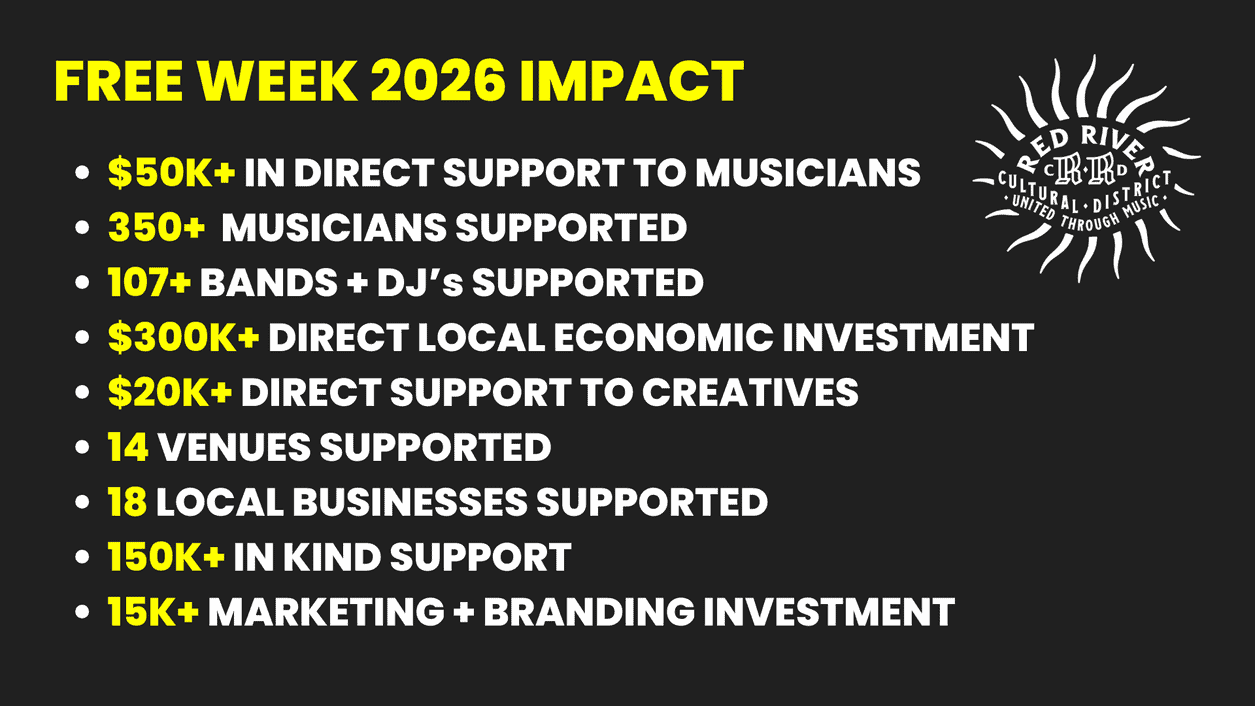
The point is not that every dollar magically stays within city limits. It is that organizers can intentionally give more of those dollars another turn through the local economy. There is also an important caveat: “book local” cannot become another way of saying “pay artists less.”
If reduced travel costs or smaller guarantees merely produce more poorly paid exposure slots, the model fails the community it claims to support. The savings should help create fair artist fees, affordable tickets, stronger production and repeat opportunities.
The UK's [**Music Venue Trust**](https://www.musicvenuetrust.com/?ref=hypebot.com) published their latest annual report recently, and it warns that fewer shows produce fewer opportunities for artists alongside lower bar sales, reduced employment, and declining cultural participation. Its conclusion is effectively that local music infrastructure cannot be separated from the health of the surrounding community. [Read the report here](https://www.musicvenuetrust.com/wp-content/uploads/2026/01/MVT%5F2025-Annual-Report%5FDigital-Spreads.pdf?ref=hypebot.com).
***+Read more:*** [*"Manchester Launches Fund Supporting Grassroots Venues: Could This Work Elsewhere?"*](https://www.hypebot.com/manchester-launches-fund-supporting-grassroots-venues-could-this-work-elsewhere/)
## Audiences As Stakeholders
A locally built festival can create a different emotional contract with its fan community than a massive festival. People attend because these are **our bands**. This is **our venue**. That DJ runs the record shop down the street. That singer played to 30 people here two years ago. That promoter has been building this scene one club night at a time.
The audience is no longer simply purchasing access to entertainment. It is participating in the story of its own city, and this sense of ownership can deepen loyalty beyond any single lineup.
If people believe a festival represents them, attending becomes a form of civic participation — and supporting an unfamiliar artist feels less like taking a risk than discovering another part of the community.
It can also make artistic discovery more meaningful. **Angine de Poitrine** offers an extreme example of how quickly a regional curiosity can become a global story. The masked experimental duo emerged from Quebec’s independent circuit before its KEXP performance exploded internationally. By March, KEXP reported that clips from the session had accumulated [more than 7.5 million YouTube views and six million Instagram views](https://www.kexp.org/read/2026/3/25/angine-de-poitrine-kexp-session-feature/?ref=hypebot.com).
***+Read more:*** [*"Angine de Poitrine Is Real Weird — They’re Also Probably Coming to Your Town Real Soon"*](https://www.hypebot.com/angine-de-poitrine-is-real-weird-theyre-also-probably-coming-to-your-town-real-soon/)
*Local* and *ambitious* are not opposites. Sometimes the most globally interesting thing a festival can present is the act that could only have come from its own backyard.
## How to Become Indispensable...
For smaller festivals, the goal does not need to be competing with [Coachella](https://www.hypebot.com/tag/coachella/), [Glastonbury](https://www.hypebot.com/do-you-know-why-theres-no-glastonbury-this-year-its-so-cool/) or whichever national event has captured the biggest names this year. The better goal may be becoming indispensable to one place.
A festival wins when local artists see it as a career milestone, residents consider it part of the city’s identity, businesses plan around it and audiences trust its curators enough to arrive before they recognize every name. That kind of loyalty cannot be purchased from a headliner. It has to be accumulated.
Book closer to home. Build partnerships that last beyond the weekend. Keep admission accessible. Pay local artists properly. Give audiences a reason to see the festival as something they help sustain.
Thinking smaller does not have to mean making a smaller impact.
*Learn more about the* [*Merchant City Festival here.*](https://www.glasgowlife.org.uk/whats-on/merchant-city-festival?ref=hypebot.com)
### Hypebot's Bottom Line: News That Matters To Musicians
URL: https://www.hypebot.com/hypebots-bottom-line-news-that-matters-to-musicians-4/
Last updated: 2026-07-24T14:01:23.000Z
Welcome back to **Hypebot's** [**Bottom Line**](https://www.hypebot.com/tag/bottom-line/)\- our regular roundup pulling key takeaways from the most important stories we've covered recently.
### **Spotify Bets Big On Video: What It Means For Indie Artists**
**Hypebot's Bottom Line:** Spotify is expanding its ecosystem beyond audio, giving artists new tools to upload full-length videos, pitch for editorial consideration, and track global video hits. If you want to capitalize on this, there are three action items for artists and music marketers: First, check your Spotify For Artists dashboard to see if you have direct video upload beta access (if not, join the waitlist). Second, diversify beyond big-budget content; live stripped-down performances and creative covers drive strong engagement and qualify for editorial playlists. Finally, pitch early—ensure your video is submitted before release day or within 7 days post-release to qualify for editorial pitching.
[**Read the full story**](https://www.hypebot.com/what-if-video-on-spotify-becomes-the-next-big-thing/)
### **Forget 'Subscribe' — Teach Fans To Hack Their Social Feeds**
**Hypebot's Bottom Line:** Stop treating social media algorithms like an unbeatable black box. With major platforms including Instagram, Threads and TikTok putting feed curation tools directly into users' hands, your marketing strategy needs to pivot from passive hope to active education. The most successful artists and marketers moving forward won't just create "algorithm-friendly" content. They will actively mobilize their core community to customize their feed settings. By turning your audience into algorithmic advocates, you ensure your music and announcements cut through the digital noise.
[**Read the full story**](https://www.hypebot.com/hypebots-bottom-line-a-roundup-of-news-that-matters-to-musicians-3/)
### **Live Nations Demands Judge Overturn Monopoly Jury Verdict**
**Hypebot's Bottom Line:** Now that Live Nation has filed motions to dismiss the jury's monopoly verdict against it or permit a retrial, the ball is now in Federal Judge Arun Subramanian's court. The judge will likely issue a ruling, or at least provide significant guidance, on or before the upcoming major status conference scheduled for July 30, 2026\. If the judge denies Live Nation's requests and upholds the jury's verdict, the lawsuit will officially move into the "remedies phase" to determine penalties, which is currently slated for a separate bench trial expected to begin no earlier than February 2027.
[**Read the full story**](https://www.hypebot.com/hypebots-bottom-line-a-roundup-of-news-that-matters-to-musicians-3/)
### **DistroKid Acquired By CVC Venture Capital Firm**
**Hypebot's Bottom Line:** When viewed alongside the corporate ownership of TuneCore and CD Baby, what does the acquisition of DistroKid by private equity giant CVC mean for independent artists? Independent music distribution is no longer a fringe market; it is a billion-dollar business. So while the marketing language of these platforms will continue to champion the "indie" spirit, the corporate reality behind the scenes has entirely shifted. Major corporations now control the distribution of the influx of what they call low-quality "slop" that they say is flooding streaming platforms and hurting their profit margins. For the everyday artist, day-to-day operations and distribution speeds are unlikely to change overnight. But the era of the truly independent, grassroots DIY music distributor has effectively come to a close.
[**Read the full story**](https://www.hypebot.com/hypebots-bottom-line-a-roundup-of-news-that-matters-to-musicians-3/)
***Get all the latest Music Industry & Live Music News updated continuously from across the web under the Hypebot Industry News tab*** [***here***](https://www.hypebot.com/music-industry-news-feed/)***.***
## Hypebot
Essential news & insights for artists and live music pros.
Sign up for free weekly content delivered to your inbox
Subscribe
Email sent! Check your inbox to complete your signup.
###
### Empanadas Ilegales on Their 'Oh Wow' Moment, Double Duty, & the Universality of Flavor.
URL: https://www.hypebot.com/empanadas-ilegales-on-their-oh-wow-moment-double-duty-the-universality-of-flavor/
Last updated: 2026-07-24T11:23:35.000Z
[**Empanadas Ilegales**](https://www.bandsintown.com/a/15533536-empanadas-ilegales?utm%5Fsource=hypebot&came%5Ffrom=900)are a trip.
Their unique sound combines the psychedelic elements of Brazilian Tropicalia with the dance grooves of Colombian cumbia and jazz/funk chops to tighten it all together.
It's danceable, infectious, and weird, and truly built for the live stage; which the band acknowledges in the below conversation. They believe they arrived at this fusion of genres and sounds just by playing together over the years and feeling out what worked. It's a powerful experience, and more than anything, it's fun.
I got the sense from our chat that it's still fun for them too. After four albums and a lot of touring, they continue to hit the road hard. And this summer is no different — as they traverse the festivals and stages of North America, Empanadas Ilegales brings a familiar yet refreshing sound to audiences hungering for a good time.
Here's our conversation. Enjoy!
---
**Hypebot: Hey Empanadas Ilegales! You’re on the road all summer playing some of Canada’s most prestigious festivals. In terms of building your audience was it difficult to find a listening community over time that enjoys your modern spin on cumbia rhythms and electric funk?**
Empanadas Ilegales: "Thank you very much! We're humbled to perform on some very special stages across Canada and Colombia. Since the beginning, we've created music that inspires us, drawing from classic Colombian big-band cumbia of the late '50s and '60s, folkloric Colombian music, Peruvian, Ecuadorian and Argentinian cumbias, Brazilian music, West Coast psychedelia, jazz, and all kinds of other influences."
Our goal has always been to make people dance while blending a ‘not-necessarily-commercial’ psychedelic mix of rhythms, sound effects, and textures."
Somehow, following our instinct to mix these genres while keeping our Latin rhythms and roots intact has resonated with different audiences in Vancouver and beyond. From the punk scene to jazz, folk, and indie, we try to play for everybody, and we've been incredibly lucky that people connect with the sound."
**H: In terms of fan base growth, was there a moment when everything changed for Empanadas Ilegales, and what if anything was the catalyst?**
EI: "Not really... in a sense, our growth has been very organic. We've been at this for several years now, consistently releasing music and playing as many shows as we could. What started with local gigs around Vancouver has gradually grown into touring across Canada, and now we're beginning to play internationally as well. We're now onto our fourth album."
One specific moment when we all went, *'Oh wow,'* was playing Place des Arts during the Montréal International Jazz Festival, the biggest jazz festival in the world. It wasn't necessarily the catalyst for our growth, but it definitely felt like a milestone and a moment where we reflected on how far the band had come."
**H: Empanadas are both crispy on the outside and fluffy on the inside, stuffed with flavour. Do you consider your sound to be crispy, fluffy, or stuffy?**
EI: "That's a good question. I think beyond those textures, what we really celebrate is the fact that the empanada is universal. Every country has its own version. Whether it's crispy, fluffy, or whatever, we're all empanadas."
**H: What would *you* call your genre and why? Haha!**
EI: "Our music sits somewhere between psychedelic cumbia, salsa, and tropical fusion. The most accurate description we’ve landed on is probably *‘Psychedelic Cumbia & Tropical Fusion’*."
> *"Looking back, that approach probably explains why the music feels so alive on stage, it was never designed on paper, it grew naturally through playing together."*
**H: How did this sound get developed? In a way it feels BUILT for the live stage, it’s groovy but not boring, always changing.**
EI: "The sound developed organically. We were following our desire to connect more deeply with traditional Latin American music and its incredible diversity of rhythms and sounds."
At the same time, we're based on Canada's West Coast, where we've been influenced by the local jazz, experimental, and psychedelic rock scenes. Those influences naturally blended with our musical foundation. Rather than trying to invent a new genre, we simply followed the music that excited us. Looking back, that approach probably explains why the music feels so alive on stage, it was never designed on paper, it grew naturally through playing together."
**H: Speaking of the live stage, how different is the experience of playing a festival stage versus a club stage?**
EI: "Truthfully, we approach every show in a similar way. Whether we're performing in a club or on a festival stage, our goal is always to deliver a powerful, danceable performance that gets the audience moving."
Sometimes that means we invite some guest performers playing Congas, Saxophone, Tambora. However, since last year, we've solidified as a live-quintet: guitar, bass, drums, maracas/percussion, and trumpet, which has allowed us to build a strong, consistent lineup that works equally well in both settings."
**H: What changes do you make to your music when adapting songs from the studio to the stage?**
EI: "When we're recording, our philosophy is simple: make the best possible piece of recorded music."
We create the foundational sound and then bring in additional musicians to add performances: congas, saxophone, Colombian folkloric percussion like tambor alegre and tambora, whatever helps the song become its best version; in our upcoming album we even feature a harp."
Naturally, since we're a five-piece live band, we've had to adapt those recordings by having certain members do double duty. For example, our trumpet player, Jocelyn, also plays a mini Korg synth, adding effects and mirroring melody lines while performing her trumpet parts. Both guitar and bass players contribute psychedelic textures through their pedalboards, and our drummer also uses a microphone to interact with the audience and guide transitions throughout the set."
**H: With such a large band, is touring difficult or do you have the logistics down to a science?**
EI: "Our latest five-piece lineup has actually made touring much easier… We now fit into a standard car! So thankfully, logistics haven't been much of a headache."
> *"If music is your thing, and you're surrounded by the people you love, and it keeps motivating you, then you're in the right place!"*
**H: What do you all like to do on your days off on tour?**
EI: "We try to enjoy the local landmarks, play tourist, eat at local restaurants, catch other performances at the festivals we're playing, and, if possible, squeeze in a swim or a workout."
**H: How important is live performance and touring to this band, is it something you prioritize and look forward to or is it all part of the same lifecycle as recording and publishing?**
EI: "Absolutely. Live performance has always been central to this band. From the very beginning, our goal was to make music for the dancefloor, and that's something you can only fully experience by playing live."
That said, we equally love the recording process. Getting into the studio, listening back to old recordings / voice memos, experimenting and workshopping those ideas into songs is something we all genuinely enjoy."
**H: What advice would you give amateur bands looking to spend more time on the road?**
EI: "The most important thing is to make sure you're doing what you truly love. Your motivation should come from your love of music, not fame, not money, and not your ego or image."
If music is your thing, and you're surrounded by the people you love, and it keeps motivating you, then you're in the right place!"
**H: What’s the one festival or venue you would love this band to play one day?**
EI: "We don't have one specific festival or venue we've always aspired to play, but we've all talked about bringing our music to the European festival circuit. We'd also love to make the trip down to Seattle to play KEXP and hopefully a few US festivals... maybe sometime soon?'
**H: Now, I have to ask: which empanadas are your favorite? Argentinian, Chilean, Ecuadorian, Mexican, Colombian or Venezuelan?**
EI: "ALL OF THEM!!!"
But we’ll give a special shout-out to the unique Ecuadorian *‘Empanada de Verde,’* its dough is made with green plantains, which is unusual but incredibly delicious. If you don't know it, look it up, and if you're lucky enough to find one at your local Latin grocer, definitely give it a try."
**Laboratorio Tropical* by *Empanadas Ilegales* comes out August 28th.* [*Pre-order or Pre-save here.*](https://bfan.link/laboratorio-tropical?ref=hypebot.com)
---
## [**Empanadas Ilegales Tour Dates**](https://www.bandsintown.com/a/15533536-empanadas-ilegales?utm%5Fsource=hypebot&came%5Ffrom=900)
### Noah Kahan, Pixies, Goose, MGMT, More Back MA Ticket Reform
URL: https://www.hypebot.com/noah-kahan-pixies-goose-mgmt-more-back-ma-ticket-reform/
Last updated: 2026-07-24T12:02:43.000Z
**Noah Kahan**, **Dropkick Murphys**, **Pixies**, **Goose**, **Lake Street Dive**, **Aimee Mann**, **Guster**, **MGMT**, **Dispatch**, **Tom Rush, Stick Figure** and dozens of other musicians signed an open letter advocating for the **Massachusetts** Senate’s Economic Development Bill dubbed **“The Great Divide Act.”** It is scheduled to come to a vote in the Senate this week.
The bill is also backed by a coalition of major industry advocacy groups, including **NIVA**, **NITO**, **SAG-AFTRA**, **Recording Academy**, **MMF-US**, **MAC**, **Future of Music Coalition**, and **RIAA**.
Full test of the letter with all its signatories is below.
### What The Massachusetts Great Divide Act Proposes
- **Resale Capping:** Caps ticket resale prices at **110% of face value**.
- **Fee Limits:** Caps resale platform fees (StubHub, SeatGeek, etc.) at **10%**.
- **Speculative Sale Bans:** Outlaws selling tickets that the reseller does not actually own.
- **Deceptive Marketing:** Prohibits sites from falsely implying an official affiliation with artists or venues.
### The Artist Perspective
In their collective letter, the signees made a direct plea to protect the fan-artist relationship from private equity-backed secondary market platforms:
> *"Live performance should not be a luxury. Our art is not a commodity to be bought and resold at extreme markups against our wishes. People who contribute nothing to live performance should not profit more than the artists, venues, crews, and workers who bring these shows to life."*
### A Growing National Trend
If passed, Massachusetts will join a growing list of regions taking aggressive legal action against ticket scalping. **Maine, Vermont,** and **Washington, D.C**. have enacted similar caps, with similar legislation currently pending in **New York, California**, and elsewhere.
> [ View this post on Instagram ](https://www.instagram.com/p/DbD4qI5O-JO/?utm%5Fsource=ig%5Fembed&utm%5Fcampaign=loading)
>
> [A post shared by Governor Maura Healey (@massgovernor)](https://www.instagram.com/p/DbD4qI5O-JO/?utm%5Fsource=ig%5Fembed&utm%5Fcampaign=loading)
## Full Text Of Artist Letter In Support Of Massachusetts 'Great Divide Act' To Reform Ticket Scalping
###
*We write as artists who believe deeply in the power of live performance. Shows are where families make memories, where young people discover who they are, and where entire rooms of people share something that cannot be recreated anywhere else. We want these moments to be accessible to everyone, not just those who can afford prices driven by a broken ticket resale market.*
*Live performance should not be a luxury. Our art is not a commodity to be bought and resold at extreme markups against our wishes. People who contribute nothing to live performance should not profit more than the artists, venues, crews, and workers who bring these shows to life.*
*Few things hurt an artist more than seeing a fan exploited by a ticket reseller. It's heartbreaking to read comments from fans who paid outrageous resale prices, knowing there's little we can do to help. Every artist signing this letter has experienced that feeling. Predatory resale, scalping, ticket touting, whatever you choose to call it, does more than exploit fans financially. It erodes the trust between artists and the people who support us.*
*We know how much our fans give to be part of these moments. They plan, they save, and they show up. Our fans support us without hesitation, and we owe it to them to stand up for a system that doesn't shut them out.*
*Massachusetts is acting to protect our fans by capping resale at 110% of face value, banning speculative tickets and cracking down on deceptive websites. We respectfully ask Massachusetts legislators to stand up for their constituents by protecting fair access to live performances and supporting these reforms.*
**Aimee Mann**
**All That Remains**
**Aoife O’Donovan**
**Belly**
**Chadwick Stokes**
**Couch**
**Della Mae**
**Dicky Barrett** (Mighty Mighty Bosstones and The Defiant)
**Dispatch**
**Dropkick Murphys**
**The Elovaters**
**Extreme**
**Flawed Mangoes**
**Four Year Strong**
**Goose**
**Grace Potter**
**Guster**
**Jonathan Edwards**
**Killswitch Engage**
**Lake Street Dive**
**Letters to Cleo**
**Lily Fitts**
**Lori McKenna**
**A Loss For Words**
**Mark Erelli**
**Melissa Ferrick**
**MGMT**
**Mike Viola**
**Mission of Burma**
**Noah Kahan**
**Pixies**
**Ripe**
**Ryan Montbleau**
**Shadows Fall**
**Slapshot**
**Stick Figure**
**The Suitcase Junket**
**Surfer Girl**
**Sweet Petunia**
**The Unseen**
**Tom Rush**
**Will Dailey**
### Can Cheap Beer Save Australia’s Opening Bands?
URL: https://www.hypebot.com/can-cheap-beer-save-australias-opening-bands/
Last updated: 2026-07-23T14:32:59.000Z
[**Australia’s**](https://www.hypebot.com/tag/australia/) live music crisis is usually discussed in enormous terms: rising touring costs, disappearing festivals, struggling venues and artists trying to build careers in an increasingly unforgiving market.
According to [*The Music*](https://themusic.com.au/industry/melbourne-venue-shotkickers-launches-support-the-supports-initiative/Kr6QPD8-ISA/14-07-26?ref=hypebot.com)*,* live music venue, [**Shotkickers**](https://www.shotkickers.com/?ref=hypebot.com), has proposed a considerably smaller intervention.
The 200-capacity venue in Melbourne has [launched an initiative ](https://www.instagram.com/p/DauEl81hKFI/?ref=hypebot.com)called **“Support the Supports,”** offering discounted beer from the moment doors open until the end of the first artist’s set. Through a partnership with local brewery **Tallboy and Moose**, audiences can grab $4 pots and $8 pints — but only if they arrive in time for the [opening act](https://www.hypebot.com/how-to-nail-your-next-supporting-act-set/).
I know what you're thinking.
No, cheap beer cannot solve Australia’s live music crisis... at least not alone. It cannot lower rent, make touring vans more affordable, lower gas prices at the pump or rescue an artist from the brutal economics of playing to an empty room. But it might fix 8pm on a Tuesday, and it might just strengthen the local fan [community](https://www.hypebot.com/tag/community/).
## Turning the Support Set Into Its Own Event
The problem Shotkickers is addressing will be familiar to nearly every emerging artist: you land an opening slot, load in early, perform for the headliner’s most punctual friends and watch the room fill shortly after you finish.
That is bad for the artist, but it is also bad for the broader discovery pipeline. Opening slots are supposed to introduce new acts to larger audiences. If those audiences routinely arrive late, one of live music’s most dependable artist-development mechanisms stops working.
Shotkickers’ solution is simple: make arriving early feel like a reward rather than an obligation.
“This city is absolutely overflowing with sensational emerging bands,” the venue wrote when announcing the program, adding that those artists are finding it harder than ever to reach wider audiences. The venue also suggested fans put the money saved at the bar toward the opening act’s merchandise. [The Music](https://themusic.com.au/industry/melbourne-venue-shotkickers-launches-support-the-supports-initiative/Kr6QPD8-ISA/14-07-26?utm%5Fsource=chatgpt.com) first reported the initiative.
There is something smart about the modesty of the idea. Shotkickers is not asking fans to rescue an industry. It is asking them to show up slightly earlier, drink slightly cheaper beer and possibly discover a band they did not know they liked.
**+Read more:** [*"An Indie Artist Guide to Partnering With Local Brands"*](https://www.hypebot.com/an-indie-artist-guide-to-partnering-with-local-brands/)
## BIGSOUND Puts Money Behind Discovery
A second announcement arrived last week that we feel represents the same kind of shift in [local](https://www.hypebot.com/tag/local/) live music investment. [**BIGSOUND**](https://www.bigsound.org.au/?ref=hypebot.com) unveiled a [much larger artist-support package](https://www.bigsound.org.au/news/announcements/QMUSIC%20LAUNCHES%20BIGSOUND%202026?ref=hypebot.com) for its 2026 showcase program.
For the first time, every act selected for the **BIGSOUND 100** will receive a travel contribution. Artists will also receive an additional conference pass and greater access to conference sessions, while a new Oztix-powered “Stage Drive” system will allow audiences to scan QR codes and send money directly to performers they discover.
A showcase opportunity is really only useful if an artist can afford to take it. And in a country as vast as Australia, flights, accommodations, equipment rental, and additional team credentials can turn a potentially career-changing appearance into an expensive gamble.
BIGSOUND is still built around [discovery](https://www.hypebot.com/tag/discovery/), but its new package acknowledges that exposure cannot be the only thing emerging artists receive in return. All 100 showcasing acts will benefit from the expanded support when the event returns to Brisbane’s Fortitude Valley from **September 1–4, 2026.**
Additionally, the program also includes a $20,000 prize for one of five artists performing at the Up x Monster Children Showcase, intended to support touring, recording or the winner’s next career step.
## Triple J Is Building a Regional Opening Slot
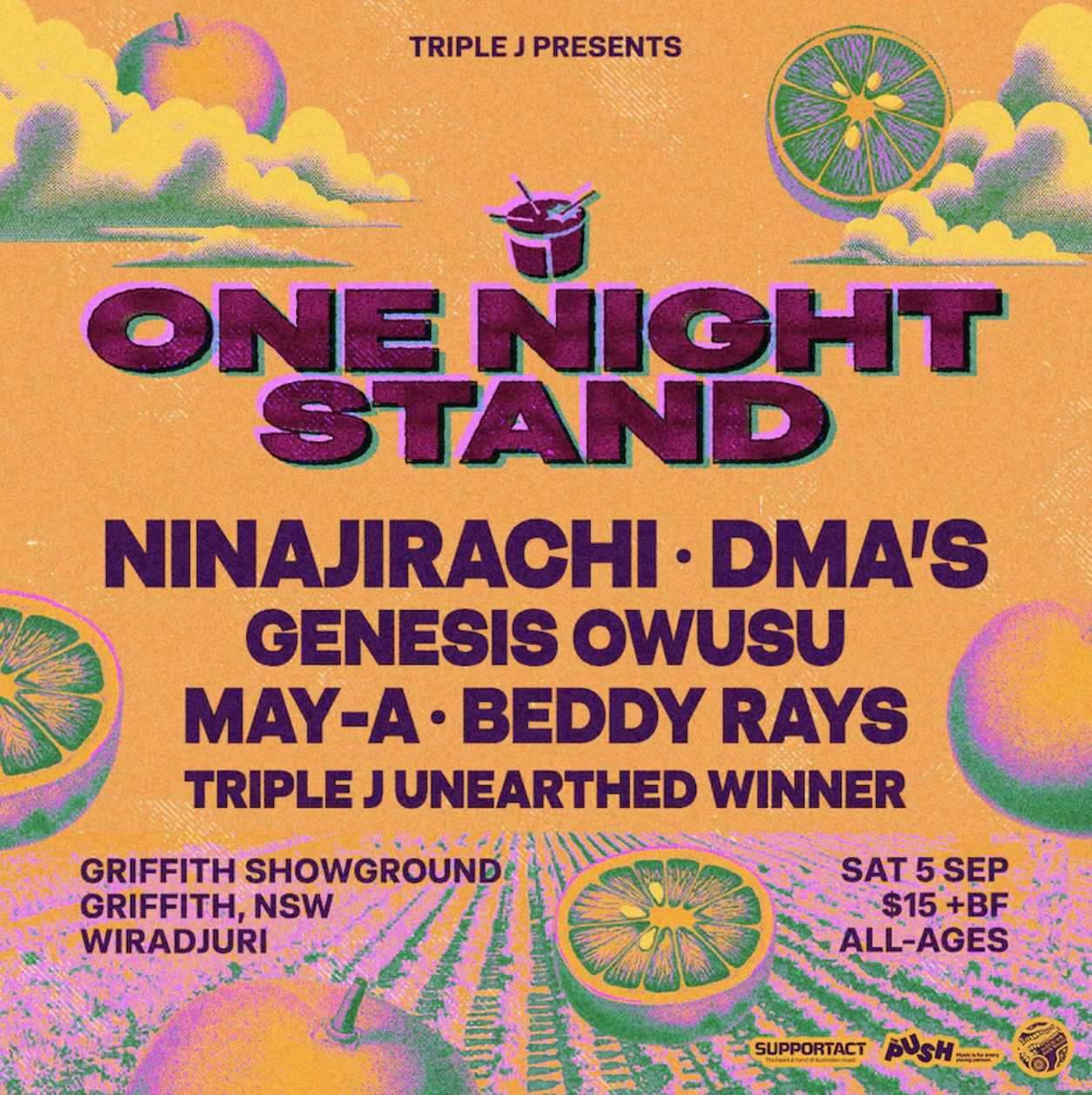
[**Triple J**](https://www.instagram.com/triple%5Fj/?ref=hypebot.com), meanwhile, [has announced](https://www.abc.net.au/triplej/news/one-night-stand-2026/106897162?ref=hypebot.com) that its **2026 One Night Stand** will take place at Griffith Showgrounds in New South Wales on **September 5.**
Ninajirachi, DMA’S, Genesis Owusu, MAY-A and Beddy Rays will perform, but the lineup deliberately leaves room for **one local triple j Unearthed competition winner.** That artist will not merely open a hometown show. They will join a nationally recognized bill, perform before a large regional audience and receive exposure through triple j’s live broadcast.
Tickets cost just $15 plus booking fees, keeping the all-ages, alcohol-free event accessible while bringing a major Australian lineup to a community outside the usual touring capitals. Triple J’s announcement is another reminder that **rebuilding the bottom of the bill** is not only about helping artists get onstage. It is about making sure new audiences can actually be there to see them.
### How it all comes together
One venue is making it cheaper to arrive early. One conference is putting more money behind its showcase artists. One national broadcaster is reserving space for a regional act on a major stage.
Cheap beer, travel assistance, and a regional competition slot are very different forms of support. Together, however, they point toward the same emerging philosophy that Australia continues to invest in: rebuilding the bottom rungs of the live music ladder to secure audience sustainability throughout.
**+Read more:** [*"How to Choose the Right Indie Venue for Your Live Concert"*](https://www.hypebot.com/how-to-choose-the-right-indie-venue-for-your-live-concert/)
### In The Trenches with Drew Hart of NYC's Village Presents
URL: https://www.hypebot.com/in-the-trenches-with-drew-hart-of-nycs-village-presents/
Last updated: 2026-09-01T14:02:04.000Z
*This interview with *Drew Hart*, talent buyer for *Village Presents* and its venues *Cafe Wha?*, *Groove*, and Greenwich Village's first new music venue in 20 years *Bleecker Bell*, is part of Hypebot’s*[***In The Trenches***](https://www.hypebot.com/tag/in-the-trenches/) *series sponsored by venue, festival and promoter marketing solution* [***Bandsintown PRO***](https://www.bandsintown.pro/?ref=hypebot.com)*. The series features the unsung heroes who make live music happen.*
---
### **"We’re always trying to learn from other venues and promoters to make our shows more special."**
**Drew Hart*
**Hypebot: Hey Drew, please introduce yourself and what you do.**
Drew: "I’m a musician and talent buyer/concert promoter living in Brooklyn. I book shows for [**Village Presents**](https://villagepresents.com/?ref=hypebot.com), which is the umbrella for the original music programming at [**Cafe Wha?**](https://www.cafewha.com/?ref=hypebot.com), [**Groove**](https://www.clubgroovenyc.com/?ref=hypebot.com), and our new venue[**Bleecker Bell**,](https://www.bleeckerbell.com/?ref=hypebot.com) coming to Greenwich Village this September, along with putting on shows at other venues in town."
Alongside booking, I [play bass](https://www.linkedin.com/in/drewhartbass/?ref=hypebot.com) with a handful of bands in NYC, which is a nice way to stay connected to the local scene."
**H: Tell us about your new venue.**
D: "Our new venue, **Bleecker Bell**, is a 200 capacity venue/listening room in NYC's Greenwich Village that was built to continue on this neighborhood’s rich live music legacy."
It has the same super intimate feel of the historic Greenwich Village venues, but we added a mezzanine overlooking the stage to create a unique element and to give fans a little more space than some of the other more tightly packed rooms in the neighborhood. We’re really excited for the fall line up which we are releasing later this month."
**Bleecker Bell*
**H: What does your typical workday look like?**
D: "Lots of coffee, emails and phone calls during the day. And a lot of time looking at a calendar. But my favorite part is always looking for new music. Since our venues are on the small side, a lot of the booking is about artist discovery, versus larger venues where the bands are already established and probably familiar names."
But that’s a big part of the fun."
And then at least a few nights a week I’m out going to see shows at other clubs, seeing shows at our venues, or playing a gig, so it’s a nice balance of desk work and actually getting out and seeing music. We’re always trying to learn from other venues and promoters to make our shows more special."
**H: What ‘go to’ tools, strategies and outlets do you use to market shows?**
D: "We use a platform called [Cymbal](https://cymbal.co/?ref=hypebot.com) that has been great for streamlining our marketing process. It makes targeted email blasts super easy and has a great interface for meta ads. The backend for running campaigns on meta is a total nightmare these days, so it’s been huge for cleaning up that process and has a lot of great features to make sure we are getting the most out of those ad spends. And the email segmenting is super easy, so we can target email blasts about shows and genres that will feel relevant to people."
We also hired a dedicated marketing and design team member, Andi, last year which has been huge. Having someone who can really dive into the minutia, how our email campaigns and ad spends are performing, and adjusting the campaigns as we go really helps make the most out of all our marketing efforts."
**H: What newer marketing tools, strategies and outlets show the most promise?**
D: "Spotify concert listings has been great, and seems like a feature people are using more recently. Especially if an artist has a new album out, it’s a great way to meet fans where they are."
**H: Name a show or campaign that you were involved in where you felt you had the most impact and why?**
D: "I think more than the tools and software and ad spends, doing shows with the right timing and the right partners are the most important factors."
We just did a 600 capacity boat ride show with our friends from [**Honky Tonkin’**](https://www.honkytonkininqueens.com/?ref=hypebot.com)in Queens, they’re a really great country concert promoter, with [**The Deslondes**](https://www.deslondes.com/?ref=hypebot.com) headlining. We sold out in advance and the show was a blast. The Deslondes had just released new music, Honky Tonkin’ in Queens do an awesome job promoting shows and have a great fan base of their own, and the boat ride concept is super fun and unique."
Lining up all of those factors really goes a long way in creating buzz organically. And it makes for a great show!"
**H: What do you wish more artists and teams would do differently that would make your job easier and help sell more tickets?**
D: "There are so many factors and it's really a team effort between the venue and the bands, so the more proactive everyone can be the better. If a band has a great new promo video, make sure the venue gets it, a lot of basic stuff like that. Also, it’s really tough for artists on the road right now, so being super intentional about why, where, and when you go on tour feels really important."
This goes for venues as well, but anything artists can do to [make the shows feel special](https://www.hypebot.com/market-live-shows-like-the-pros/) \- tapping into a local scene with a great support act, doing a pop up in a cool location, doing a special release show. Anything to make the show feel like a special event can really help create buzz and sell tickets, and will also usually make for a better fan and artist experience."
### **MORE**
**•** [**In The Trenches: Spotlighting the unsung heroes strengthening live music**](https://www.hypebot.com/tag/in-the-trenches/)
**•** [**How Bands and Music Venues Can Market Live Shows Like the Pros**](https://www.hypebot.com/tag/in-the-trenches/)
*Get all the latest Music Industry & Live Music News updated continuously from across the web under the Hypebot Industry News tab* [*here*](https://www.hypebot.com/music-industry-news-feed/)*.*
## Hypebot
Essential news & insights for artists and live music pros.
Sign up for free weekly content delivered to your inbox
Subscribe
Email sent! Check your inbox to complete your signup.
### What If Video on Spotify Becomes the Next Big Thing?
URL: https://www.hypebot.com/what-if-video-on-spotify-becomes-the-next-big-thing/
Last updated: 2026-07-23T12:25:30.000Z
If you still think [**Spotify**](https://www.hypebot.com/tag/spotify/) is strictly an [audio streaming platform](https://www.hypebot.com/tag/streaming-music), it’s time to update your [marketing strategy](https://www.hypebot.com/tag/marketing-strategy/). Spotify is expanding its video ecosystem, giving independent artists and marketers new tools to upload full-length videos, pitch for editorial consideration, and track global video hits.
Just in case you're unsure if spending time and money on longform video, Spotify released compelling data demonstrating that video isn’t just a visual extra - it directly drives audio streaming and catalog discovery.
## **Why Video on Spotify Matters**
**Audio Streaming Lift:** Listeners who watch a full-length video **stream that song 64% more** over the following three weeks compared to audio-only listeners.
**Catalog Exploration:** Video viewers stream the rest of an artist’s catalog 57% more over the same period.
**Super Listener Engagement:** High-intent fans stream an artist’s catalog 62% more after watching a video—adding an average of 100+ minutes of extra listening time.
**Monetization:** Full-length music videos on Spotify are royalty-bearing and eligible for official music charts.
**+Read more:** [*"You Released the Song. Now What?"*](https://www.hypebot.com/you-released-the-song-now-what/)
### Data: Video Turns Casual Listeners Into Superfans
For years, artists poured budget and energy into video on social media and YouTube, hoping those views would convert into streaming revenue elsewhere. Spotify’s integrated approach connects visuals directly to the listening experience.
According to Spotify's internal data, fans who watch videos alongside audio are **40% more likely to save a track, share it, or add it to a playlist**. Rather than distracting from the music, full-length visual content deepens fan retention.
| **Metric** | **Video Viewer vs. Audio-Only** |
| -------------------------------- | ------------------------------- |
| **3-Week Track Replays** | **+64%** |
| **3-Week Full Catalog Streams** | **+57%** |
| **Save / Share / Playlist Rate** | **+40% (1.4x)** |
| **Super Listener Catalog Time** | **+62% (\~1hr 40m extra)** |
As an example, the cover of **"**[**Valerie (Live from The Minivan Tour)**](https://open.spotify.com/track/18snB5XQKAD1jANzT99qn8?si=79d5c2de6e884612&ref=hypebot.com)**"** by indie rockers[ **The Runarounds**](https://open.spotify.com/artist/6G6I2kNqaE0oDRygzPRGeY?si=dYCJtsa8TEG1lGwGPj8P9Q&ref=hypebot.com)won the band many new fans. Compared to those who only streamed audio, fans who streamed the video went on to stream 67% more of the band's catalog across 21% more distinct tracks. Super listeners streamed the artist 70% more.
## **3 New Spotify Video Tools**
100,000 artists are part of the [video beta](https://artists.spotify.com/blog/how-video-on-spotify-takes-your-fans-further?ref=hypebot.com), but if Spotify mimics previous launches, the three new features will be available to all artists soon. Artists can also [**join the waitlist**](https://spotifyforartists.typeform.com/video-waitlist?typeform-source=docs.google.com&ref=hypebot.com) or ask their distributor about access.
### **1\. Direct Video Uploads**
Artists upload full-length music videos, live performances, studio sessions, and cover songs directly through the **Spotify for Artists** dashboard. They can also deliver videos through eligible labels and distributors.
### **2\. Editorial Video Pitching**
Similar to pitching audio releases, artists can pitch unreleased or newly released videos (within 7 days of release) directly to Spotify's editorial team. Pitched videos are considered for dedicated video playlists including **Best New Videos**, **Live Performances,** and **House Party**.
### **3\. Global Music Video Charts**
Spotify launched its **Music Video Charts Global**, tracking the top 50 daily visual streams worldwide. This creates another high-visibility surface where viral visual releases can build traction.
## **Phase Out Short Form Clips**
As part of this transition, Spotify is also **phasing out new short-form Clips** uploads to double down on full-length, royalty-bearing video content. Existing Clips will remain live under a consolidated Video Tab.
**+Read more:** [*"8 Tips for Building a Strong Digital Music Marketing Campaign"*](https://www.hypebot.com/8-tips-for-building-a-strong-digital-music-marketing-campaign/)
## **Hypebot's Bottom Line**
### **Spotify Video Action Items for Artists and Music Marketers**
1. **Check Your Spotify for Artists Access:** Head to the **Video & Visuals** tab in your **Spotify For Artists** dashboard to see if you have direct video upload beta access. If not, [join the waitlist](https://spotifyforartists.typeform.com/video-waitlist?typeform-source=docs.google.com&ref=hypebot.com) or ask your digital distributor about video delivery.
2. **Diversify Beyond Big-Budget Content:** You don't need a cinematic budget for every song. Live stripped-down performances, studio sessions, and creative covers drive strong engagement and qualify for Spotify editorial playlists.
3. **Pitch Early:** Align your video release schedule with your audio campaign. Ensure your video is submitted before release day or within 7 days post-release to qualify for editorial pitching.
### 3 Live Music Industry Stories to Watch in Last Half of 2026
URL: https://www.hypebot.com/3-live-music-industry-stories-to-watch-in-last-half-of-2026/
Last updated: 2026-07-23T12:14:57.000Z
### **1) Will Judge Force Breakup Live Nation and Ticketmaster?**
Billboard produced a list of top [Music Business Stories to Watch in the Last Half of 2026](https://www.billboard.com/lists/music-business-stories-to-watch-last-half-2026/will-money-raised-from-debt-investors-fuel-more-catalog-acquisitions-and-ma/?ref=hypebot.com) including several that could reshape the live music industry.
But the trade only mentioned in passing what most consider the biggest story in live music: how the courts will rule on **the** [**case against Live Nation and Ticketmaster**](https://www.hypebot.com/states-demand-live-nation-ticketmaster-breakup-reaction/)**.** Perhaps that's because, while we expect several major rulings in the coming months, it seems unlikely to be fully settled in 2026\.
Despite the U.S. **DOJ** signing off on a settlement with **Live Nation**, 33 states and the District of Columbia pushed ahead and won a landmark jury verdict finding that the company illegally dominates the market.
Following that verdict, the States asked the court to impose remedies that would **fundamentally restructure the live entertainment industry**. At the center of their demands, supported by **NIVA** and others, is the **forced breakup of Live Nation and Ticketmaster.**
There are also so many other cases pending against concert and ticketing giant that we created the [**Live Nation, Ticketmaster Lawsuit Tracker.**](https://www.hypebot.com/live-nation-ticketmaster-lawsuit-tracker-pending-cases/)
### **2) How Many More States Will Pass or Propose Legislation Around Ticket Resale?**
"**Washington, D.C.,** passed [the RESALE Act](https://www.billboard.com/pro/dc-council-passes-ticket-resale-bill-scammers-high-prices/?ref=hypebot.com), which caps ticket resales at 10% above face value and bans speculative ticketing... \[and\] **Massachusetts** Governor Maura Healey [announced a proposal ](https://www.billboard.com/pro/noah-kahan-massachusetts-ticketing-bill-cap-resale-prices/?ref=hypebot.com)that would also limit ticket resale to 110% of the price of the original ticket’s face value and limit service fees and charges to 10% of the ticket price," writes Billboard.
"**Vermont** and **Maine** already have laws in place that cap ticket resale at 110% of the original price. Other states, including **California, New York, Washington** and **Tennessee**, are all currently seeking further legislation on ticketing — with the expectation that more states will pass bills that cap the price of ticket resale and others will put forth their own proposals."
### **3) Who will buy THE•TEAM?**
"Bids for live booking agency, \[formerly know as Wasserman\] now renamed THE•TEAM, are in, and it’s expected that the new owner will be announced in the second half of 2026."
Potential buyers include **Providence Equity Partners**, which owns a controlling stake in the agency, former **Endeavor** executive **Patrick Whitesell**'s **WIN Sports Group** and **WIN Artists**, and **Excel Sports Management** with **Goldman Sachs**."
***Get all the latest Music Industry & Live Music News updated continuously from across the web under the Hypebot Industry News tab*** [***here***](https://www.hypebot.com/music-industry-news-feed/)***.***
## Hypebot
Essential news & insights for artists and live music pros.
Sign up for free weekly content delivered to your inbox
Subscribe
Email sent! Check your inbox to complete your signup.
### There Is Big Money in Artists Making Coffee Money
URL: https://www.hypebot.com/there-is-big-money-in-artists-making-coffee-money/
Last updated: 2026-07-23T12:13:01.000Z
Here's an all-too familiar occurrence: An [independent artist](https://www.hypebot.com/tag/indie-artists/) opens their royalty dashboard and sees just about enough money to buy themselves a **cup of coffee.**
That same week, another company built around independent artists gets acquired, funded, consolidated, or folded into a larger corporate structure.
The artist made around $3.12\. The company earned around $2 billion. Somewhere in that math is the story of the modern music industry.
There's no doubt there is a lot of [money](https://www.hypebot.com/tag/money/) in music. The question is where that [money collects](https://www.hypebot.com/how-money-actually-flows-through-the-music-industry-in-2026/). Increasingly, it does not seem to collect with the person making the music. It collects around them, in the pipes, platforms, dashboards, subscription tools, promotional services, marketplaces, and distribution systems that now *surround* the independent artist.
DistroKid is not only selling [distribution](https://www.hypebot.com/tag/distribution/) to artists with careers. It is selling possibility to anyone with a song. They want the song to be real. They want a shot. DistroKid does not need every upload to become a hit. It does not even need every upload to find an audience. It needs more people to believe they should upload.
The old label system placed selective bets on artists. The modern artist-services economy can make money from scale, volume, recurring fees, add-ons, tools, dashboards, and the emotional gravity of possibility. It is not only betting on successful artists. It is betting on the massive number of artists trying to become successful.
## **Spotify Has Listeners. DistroKid Has Uploaders.**
As much as it may seem like it, Spotify and DistroKid are not playing the same game. Spotify has a listener problem. It needs enough music to keep people inside the platform forever, but not so much junk, spam, duplication, fake-artist sludge, and low-effort inventory that the listening experience turns into a landfill with a shuffle button.
DistroKid has a different incentive. It does not need every upload to improve the listening experience. It needs more uploaders.
Spotify says about 13 million people have uploaded at least one song to the platform, while estimating that about 250,000 artists globally are “professional or aspiring professional.” Spotify’s point is not ridiculous. Uploading one song does not automatically make someone a career artist.
But for DistroKid, the bigger number is where the future starts to glow. If the cost of making music keeps falling, that customer base does not shrink. It explodes.
***+Read more:*** [*"How Money Actually Flows Through the Music Industry in 2026"*](https://www.hypebot.com/how-money-actually-flows-through-the-music-industry-in-2026/)
## **The Attempt Is the Product**
The modern music industry has figured out how to monetize the independent artist’s attempt. Not failure. That is too cruel, and often not accurate. These artists are not failures. But the attempt itself has become a market.
An artist pays to distribute the song, master it, promote it, press it, ship it, and stare at the dashboard like it might eventually confess, only to earn less from streaming than it cost to stay in the game. Meanwhile, the businesses around that artist can become acquisition targets.
That does not mean those businesses provide no value. Distribution matters. Access matters. The ability to put music into the world without begging a label executive for permission absolutely matters. But access is not the same thing as sustainability.
The independent artist is no longer only a creator in this system. The independent artist is also a customer. Maybe that is the real shift. The old industry tried to sell music to fans. The new industry sells tools, access, and hope to artists. And hope, it turns out, they renew annually.
DistroKid is not the only sign. Bandcamp, once treated as the warmer alternative to the streaming machine, was bought by Epic Games and later sold to Songtradr. CD Baby now sits inside Downtown Music Holdings, which was acquired by Universal’s Virgin Music Group. Different deals, same signal: the independent artist may still be independent, but the roads they travel are being bought.
To make matters worse...
## **AI Just Turned the Faucet Into a Fire Hose**
Now add [AI](https://www.hypebot.com/tag/ai/). **Deezer** says it receives [almost 90,000 AI-generated tracks per day](https://newsroom-deezer.com/2026/07/ai-music-exceeds-50-percent-daily-uploads-deezer/?ref=hypebot.com), which is above 50% of their daily uploads. That is not a future problem. That is a right-now problem wearing tomorrow’s jacket.
If I can pay a monthly AI subscription, generate twenty songs, pick ten, run the artwork through another tool, write a fake bio, create a new artist name, and upload an album in a week, the cost of production collapses. The remaining cost is participation. Distribution. Promotion. Visibility. Metadata. Playlist pitching. Analytics. More tools. More attempts.
For artists, [the flood is terrifying](https://www.hypebot.com/the-music-industry-didnt-get-flooded-by-accident/). For companies selling boats, it is a growth market. And AI songs are not going to politely wait outside while the humans finish soundcheck. They are already here. They are zombies. They do not need to be great. Zombies rarely are. They just need to keep coming.
They do not eat brains; they eat attention.
***+Read more:*** [*"The Music Industry Didn’t Get Flooded by Accident"*](https://www.hypebot.com/the-music-industry-didnt-get-flooded-by-accident/)
## **The Audience Does Not Want to Be Bamboozled**
Audiences matter here too. [Do listeners care](https://www.hypebot.com/id-rather-stare-into-the-abyss-than-listen-to-ai-music/) whether music is made by AI? I suspect most listeners care about being told the truth more than they care about purity. They may not reject AI music automatically. If something sounds good in the background while they are making dinner, they may not care how the sausage got emotionally processed.
But nobody wants to be bamboozled.
That is where the industry may have to go next. Not a moral panic. Not a purity test. A songwriter using AI to brainstorm an arrangement is not the same as someone generating 500 fake artists and dumping them into the streaming economy before breakfast.
Listeners should know what they are hearing. Human-made. AI-assisted. Fully AI-generated. Unknown. Let people choose.
## **Is There a Solution?**
I do not have a clean solution. Maybe the answer is labeling, human curation, or artist-owned infrastructure. Maybe listeners start to care whether the music came from a person, a prompt, or some blurry mix of both. Maybe artists decide that if they cannot beat AI, they have to use it.
DistroKid’s sale looks less like a random transaction and more like the canary in the coal mine. Big money sees the signal. Music is getting cheaper and easier. More people are going to make it, release it, and try to get noticed.
More songs mean more uploads. More noise means more demand for distribution, dashboards, promotion, and analytics. For artists, that flood may be terrifying. For companies selling access to it, the flood may be the opportunity.
The old gatekeepers kept too many artists out. The new system lets almost everyone in, then charges rent in the hallway.
***+Read more:*** [*"5 Signs a Spotify Playlist Is Fake (and How Playlist Bot Checkers Actually Work)"*](https://www.hypebot.com/5-signs-a-spotify-playlist-is-fake-and-how-playlist-bot-checkers-actually-work/)
### Bandsintown's Top Trending Indie Touring Artists
URL: https://www.hypebot.com/bandsintowns-top-trending-indie-touring-artists/
Last updated: 2026-07-22T16:21:31.000Z
A single viral moment, a high-profile opening slot, or an explosive festival performance can take an artist from underground sensation to global touring powerhouse almost overnight. At Hypebot, we are all about utilizing data to track these shifts, and our partners at [**Bandsintown**](https://www.bandsintown.com/?utm%5Fsource=hypebot&came%5Ffrom=900) has more live music data than anyone.
By looking at [**Bandsintown’s Top Trending Artists**](https://concerts.hypebot.com/?ref=hypebot.com) \- a data driven chart reflecting who fans are actively searching for and tracking for live shows — you can see exactly who is moving the needle in the touring industry right now.
Here is a breakdown of the Top 8 Trending Artists on Bandsintown, what’s driving their growth, their current follower stats, and the verified links to track them so you never miss a show.
## **1\. Dogma**
**Description:** This enigmatic, all-female theatrical heavy metal band has been turning heads with their occult-inspired aesthetic and blistering guitar riffs. Blending classic heavy metal sensibilities with a modern shock-rock flair, Dogma has cultivated a fiercely dedicated live audience. Their live performances are less like traditional concerts and more like immersive, dark theatrical rituals.
- **Accolades & Growth:** Rapidly growing Spotify presence; generating massive organic word-of-mouth in the global hard rock and metal communities.
- **Bandsintown Followers:** 32,500
- **Follow & Track:** [Follow Dogma on Bandsintown](https://www.bandsintown.com/a/15542111-dogma?utm%5Fsource=hypebot&came%5Ffrom=900)
## **2\. Veigh**
**Description:** Hailing from São Paulo, Thiago Veigh is currently one of the most dominant forces in Brazilian trap. His smooth delivery, paired with R&B-infused trap beats, has made him a household name in Latin America, and his global footprint is expanding rapidly as he hits international stages.
- **Accolades & Growth:** Shattered Spotify records in Brazil with his album *Dos Prédios Deluxe*, earning millions of streams within its first 24 hours and maintaining over 8 million monthly listeners.
- **Bandsintown Followers:** 154,200
- **Follow & Track:** [Follow Veigh on Bandsintown](https://www.bandsintown.com/a/15586963-veigh?utm%5Fsource=hypebot&came%5Ffrom=900)
## **3\. Audrey Hobert**
**Description:** Audrey Hobert is a rising indie-pop singer-songwriter whose heartfelt, raw lyricism and intimate vocal delivery are capturing the attention of Gen-Z listeners. After gaining initial momentum co-writing and collaborating with her childhood best friend Gracie Abrams on *The Secret of Us*, Audrey is stepping into the spotlight with her own solo material.
- **Accolades & Growth:** Skyrocketing social media engagement, massive ticket demand for her debut headline club shows, and widespread co-signs from major pop artists.
- **Bandsintown Followers:** \~18,400
- **Follow & Track:** [Follow Audrey Hobert on Bandsintown](https://www.bandsintown.com/a/15592176-audrey-hobert?utm%5Fsource=hypebot&came%5Ffrom=900)
## **4\. Paloma Mami**

**Description:** The Chilean-American singer fuses Latin pop, R&B, and reggaeton into a slick, modern sound. Ever since breaking out on the scene in 2018, Paloma Mami has steadily built a massive touring base, becoming one of the most exciting young Latin artists performing today.
- **Accolades & Growth:** Multi-platinum certifications, a massive debut album (*Sueños de Dalí*), and over 21 million global followers across her social and streaming platforms.
- **Bandsintown Followers:** \~212,000
- **Follow & Track:** [Follow Paloma Mami on Bandsintown](https://www.bandsintown.com/a/15465010-paloma-mami?utm%5Fsource=hypebot&came%5Ffrom=900)
## **5\. ooes**

**Description:** Liza, known professionally as ooes, is a Russian alternative/dark-pop artist who has found a massive international audience. Combining haunting synth-pop with ethereal, melancholy vocals, her music has become the soundtrack to millions of short-form videos online.
- **Accolades & Growth:** Huge viral success on TikTok; consistently pulling in millions of monthly listeners on streaming and rapidly expanding her live footprint across Europe.
- **Bandsintown Followers:** \~38,900
- **Follow & Track:** [Follow ooes on Bandsintown](https://www.bandsintown.com/a/15581135-ooes?utm%5Fsource=hypebot&came%5Ffrom=900)
## **6\. Mariah the Scientist**
**Description:** Atlanta-native Mariah the Scientist crafts emotionally raw, atmospheric R&B. With her unique voice, ambient production, and brutally honest songwriting, she has cemented herself as one of the most compelling modern R&B acts. Her live shows are known for their intimate, fan-centric atmosphere.
- **Accolades & Growth:** Critically acclaimed albums like *To Be Eaten Alive*, high-profile collaborations with Young Thug and Lil Baby, and major appearances at festivals like Coachella and Pitchfork.
- **Bandsintown Followers:** \~245,600
- **Follow & Track:** [Follow Mariah The Scientist on Bandsintown](https://www.bandsintown.com/a/15466053-mariah-the-scientist?utm%5Fsource=hypebot&came%5Ffrom=900)
## **7\. Midnight Til Morning**
**Description:** Midnight Til Morning is an up-and-coming collective drawing attention with their nostalgic, genre-blending sound that touches on indie rock and moody pop. They've been grinding in the local live circuits and are now seeing a sharp spike in tour trackers as they announce bigger regional dates.
- **Accolades & Growth:** Steadily building an organic grassroots fanbase with an impressive conversion rate of streamers into active concert ticket buyers.
- **Bandsintown Followers:** \~8,300
- **Follow & Track:** [Follow Midnight Til Morning on Bandsintown](https://www.bandsintown.com/a/15605402-midnight-til-morning?utm%5Fsource=hypebot&came%5Ffrom=900)
## **8\. Brihang**
**Description:** Brihang is a Belgian rapper and poet whose artistry transcends traditional hip-hop. He merges spoken word, profound lyricism, and alternative beats to create thought-provoking tracks. His reputation as an incredible, dynamic live performer makes him a must-see in the European market.
- **Accolades & Growth:** Multiple sold-out arena and club shows in Belgium, critical acclaim for albums like *Droomvoeding*, and a dedicated cult following.
- **Bandsintown Followers:** \~26,100
- **Follow & Track:** [Follow Brihang on Bandsintown](https://www.bandsintown.com/a/4302861-brihang?utm%5Fsource=hypebot&came%5Ffrom=900)
---
*Want to keep your finger on the pulse of the live music industry? Experience the magic of live music and browse upcoming concerts near you at* [*Hypebot Concerts*](https://concerts.hypebot.com/?ref=hypebot.com)*.*
### Bruce Springsteen Center Taps True Tickets for Secure Digital Ticketing
URL: https://www.hypebot.com/bruce-springsteen-center-taps-true-tickets-for-secure-digital-ticketing/
Last updated: 2026-07-22T13:05:44.000Z
The newly opened [**Bruce Springsteen Center for American Music**](https://springsteencenter.org/?ref=hypebot.com) has selected [**True Tickets**](https://www.true-tickets.com/?ref=hypebot.com)as its official digital ticketing partner.
Located on the campus of **Monmouth University** in New Jersey, the Center will use True Tickets’ mobile-first ticket delivery service for exhibitions, concerts, educational programming and special events. The partnership is designed to streamline admission, give the Center greater control over ticket distribution and help limit unauthorized resale around high-demand events.
The Bruce Springsteen Center for American Music opened to the public on June 13, 2026\. It houses the Bruce Springsteen Archives, the official repository for photographs, recordings, oral histories, memorabilia and other materials documenting Springsteen and the E Street Band.
Its mission extends beyond one artist, however. Through exhibitions, live performances and educational programs, the Center explores the wider history of American music and its role in culture, storytelling and community.
## More Control — Better Audience Data
True Tickets allows participating venues and organizations to set rules around ticket sharing, track ticket custody and maintain closer contact with the people who actually attend their events.
That last function addresses what the company calls the “shadow audience:” visitors who enter using tickets purchased or shared by someone else and therefore remain unknown to the presenting organization. Identifying those attendees can help cultural institutions understand their audiences, communicate directly with visitors and build longer-term relationships with them.
The partnership continues True Tickets’ expansion across museums, performing arts organizations and other cultural institutions. The company reports having delivered 32.2 million digital tickets valued at $2.2 billion across more than 100 arts organizations worldwide.
It also illustrates how ticketing technology is becoming more than an admission tool. It can also help cultural organizations reduce resale problems, understand who is walking through their doors and turn one-time visitors into an ongoing community.
*Visit the* [*Bruce Springsteen Center for American Music*](https://springsteencenter.org/?ref=hypebot.com) *for more information.*
### Major Album Launches Are Leaving Streaming. What Will Bring Them Back?
URL: https://www.hypebot.com/major-album-launches-are-leaving-streaming-what-will-bring-them-back/
Last updated: 2026-07-22T13:05:19.000Z
### **The Biggest Album Launches Happen Off Streaming — Here’s How It Can Win Them Back**
*By* [***Olivia Jones***](https://www.midiaresearch.com/analyst/olivia-jones?ref=hypebot.com)*of* [***MIDiA Research Blog***](https://www.midiaresearch.com/blog/the-biggest-album-launches-happen-off-streaming-heres-how-it-can-win-them-back?ref=hypebot.com)
[Album marketing](https://www.hypebot.com/how-to-plan-a-release-strategy-that-spans-the-entire-year/) rollouts are moving to centre stage as a growing number of artists and labels incorporate interactive experiences into their digital album promotions.
For example, with **Olivia Rodrigo’s** recent release *you seem pretty sad for a girl so in love*, [TikTok](https://newsroom.tiktok.com/tiktok-launches-new-in-app-experience-for-olivia-rodrigo?lang=en&ref=hypebot.com) launched an in-app experience in which fans could complete themed missions, create edits with album-inspired templates, and view top videos within the fan community.
Similarly, [YouTube](https://blog.youtube/creator-and-artist-stories/taylor-swift-premier/?ref=hypebot.com) provided multiple interactive features for **Taylor Swift’s** *The* *Life of a Showgirl* release last year. The key is that these experiences are happening on social media – not [streaming](https://www.hypebot.com/tag/streaming-music/). This highlights a growing disconnect in music engagement: while streaming is still where listeners are consuming music, it may not be where they are engaging as fans.
## **Marketing is becoming more interactive**
The rise of interactive album rollouts is not out of the blue. For the fans, there is a growing appetite to engage more deeply with the music they love. They want to experience the “world” of the album – the creative process, the concept, and the inspiration – along with the music.
On the artist side, showcasing their identity alongside their music is a way to differentiate themselves. Just making good music is no longer enough – a strong artistic identity and [tactical marketing is necessary to cut through the noise](https://www.midiaresearch.com/blog/beyond-the-song-why-artists-need-transmedia-storytelling?ref=hypebot.com).
As artists and labels focus more on fan monetization, marketing is shifting to strategies that build fandom rather than just awareness.
While [social media](https://www.hypebot.com/tag/social-media) is one of the top places where young listeners discover music, there is so much content that traditional promotion methods like teasers and paid ads will likely get lost in an infinite scroll. Interactive campaigns, however, push users to “lean in” and engage with the album in a novel way, giving established fans a chance to explore their favourite music more deeply and bringing in curious potential fans that are already on-platform.
***+Read more:*** [*"You Released the Song. Now What?"*](https://www.hypebot.com/you-released-the-song-now-what/)
## **Fans gravitate to social for shared experiences**
As [music streaming has become more hyper-personalised](https://www.midiaresearch.com/blog/the-music-industrys-personalisation-paradox?ref=hypebot.com), social media – despite being fragmented in its own right – is more often the place for shared experiences. This is especially seen in [how young listeners use platforms](https://www.midiaresearch.com/reports/the-gen-zalpha-reset-rewiring-entertainment-for-the-next-generation?ref=hypebot.com): streaming is more often a place to collect and organize music, while social media is the place to explore and engage with it.
Consider [*Brat* Summer](https://www.midiaresearch.com/blog/brat-summer-and-the-dilemmas-of-going-mainstream?ref=hypebot.com), for example – fans would listen to *Brat* on streaming, but the *Brat* phenomenon was a social-first experience. For young listeners who grew up with streaming, it is more a place for consumption than community.
However, it does not have to stay that way.
## **The opportunity for streaming**
Streaming platforms do not necessarily need to become social platforms in order to engage fans. They can incorporate the social playbook of interactivity and fan participation to reimagine platforms where fans can immerse themselves in their favourite music. Spotify is already laying the foundation for a more “lean in” listening experience through features like [About the Song](https://newsroom.spotify.com/2026-02-06/about-the-song-beta/?ref=hypebot.com) and [in-person fan events](https://newsroom.spotify.com/2026-03-25/bts-arirang-nyc-performance-photos/?ref=hypebot.com).
Similarly, [Deezer’s](https://support.deezer.com/hc/en-gb/articles/7441491009309-Music-Quizzes-on-Deezer?ref=hypebot.com) music quizzes turn music listening into a social game for fans. Still, by approaching album rollouts from a social-focused perspective across platforms rather than a consumption-focused one, marketers and platforms can turn streaming into a place where fans do not just listen to music, but experience it.
*Want the latest entertainment research and insights directly to your inbox? Our newsletter has you covered,* [*click here to subscribe*](https://www.midiaresearch.com/newsletter?utm%5Fcampaign=blog%5Fbody%5FCTA&utm%5Fid=olivia-jones&utm%5Fmedium=social%5Fmedia&utm%5Fcontent=multi-dimensionality-in-music-isnt-new-but-its-overdue-for-a-comeback&ref=hypebot.com)*.*
**+Read more:** [*"8 Tips for Building a Strong Digital Music Marketing Campaign"*](https://www.hypebot.com/8-tips-for-building-a-strong-digital-music-marketing-campaign/)
### Backstage Pass: How Luke Combs' Massive 360° Stage Was Built for the Road
URL: https://www.hypebot.com/backstage-pass-how-luke-combs-massive-360deg-stage-was-built-for-the-road/
Last updated: 2026-07-22T12:23:10.000Z
This interview with Lighting & Design Director **Kevin Northrup** and Production Manager **Jerry Slone**, the masterminds behind [**Luke Combs'**](https://www.bandsintown.com/a/8045055-luke-combs?utm%5Fsource=hypebot&came%5Ffrom=900) celebrated stage set and production on his **My Kinda Saturday Night Tour,** is part of **Hypebot's** [**Backstage Pass**](https://www.hypebot.com/tag/backstage-pass/) series. Here, we feature conversations with people working behind the scenes to help artists navigate live music industry economics, logistics, and trends.
What you have to understand about this live lighting, sound, and stage production rig, is that it was easily the most ambitious night-in/night-out technical lift a Country Music tour has ever achieved. [A timelapse video](https://youtube.com/shorts/OWzkIauGsyM?si=ZzByDJCKpKWy1Wtj&ref=hypebot.com) showing the daytime construction of this rig showcases how perfect it had to be at every level, and the team pulled it off without any hitches. Kevin and Jerry's lighting and video display design was unlike anything audiences had seen before, and as the story goes:
It all started on a napkin at lunch one day.
I wanted to chat with the team that made it all happen. Here's our conversation about stadium-scale production design and planning with Kevin Northrup and Jerry Slone. Enjoy!
Backstage Pass is sponsored by venue, festival and promoter marketing solution [**Bandsintown PRO**](https://www.bandsintown.pro/?ref=hypebot.com).
---
**Hypebot: Hey Kevin and Jerry. You were the Lighting and Design Director and Production Manager for Luke Combs' famously massive 2026 My Kinda Saturday Night Tour, which featured an** [**enormous, moving 360-degree stage**](https://youtube.com/shorts/OWzkIauGsyM?si=ZzByDJCKpKWy1Wtj&ref=hypebot.com) **with cutting edge lighting. Supposedly you conceived of this on a napkin? Tell us about that story.**
Kevin: "I'll start; I'm Kevin, Luke's lighting designer, and for this design I would say I'm also co-production designer with Jerry. The napkin sketch is more of a metaphor for off-the-cuff design, but the truth behind how we work is far wackier. Working with Jerry is really fun, he has a creative mind, but (with all the peace and love, J) can't really even draw a straight line."
However, he uses whatever is around him to convey his thoughts. We've worked on many designs together, and nothing is really off limits. Sometimes it is a scrap of paper on his desk with three or four lines and a sign-off like, *'Something like that!'* Sometimes it's a scribble on the back of a sticky pass with a Sharpie. To date, my favorite communication method was cardboard packaging from some gloves I had bought. He was using it to illustrate a new idea for the video walls. I actually grabbed a picture of him doing that."
Jerry: "Jerry here, Luke's Production Manager... all correct, haha. My pen to paper skills is rudimentary at best. When working through a concept, I will literally grab whatever is in front of me and start bending, tearing, folding, etc. into whatever is hoping around in my head. Kevin and I definitely have fun working on these designs together, I'm just glad he had the ability to sort through my chaos!"
K: "For the in-the-round rig, he simply talked and used his hands as if a scale model were in front of him. It was something along the lines of *'Next year; we are going to be in-the-round.'* His hands were low, as if outside the stage structure. '*I was thinking we should do a circular stage with a circular video wall,'* he said, gesturing up a cylinder with his hands. '*And let me know what you come up with!'"*
J: "I love Kevin's ability to take just an idea and create a tangible creation. We were working on a previous version that looked good but just didn't feel great. I woke up at 4am with nothing but the design on my mind...I sketched out a new idea for the thrusts and went back to sleep. The next day Kevin and I were on Zoom call, and I literally held up my drawing to the camera and said, *'we need this,'* and that became the final layout for them."
K: "I also can hardly draw a straight line freehand, myself; I express my thoughts much better in a 3D space on a computer, so I got to work doing that. What followed required a lot of work and forced me to relearn a lot of math about circles. To make a very long story short, I presented Jerry with a design containing elements similar to our final version. But even at that point, we were a very long way from the finish line. This was especially true when the excitement grew, and the design no longer fit into an NFL stadium."
J: "Also, true. This design was always going to be big, but the first version put the thrusts up into the first few rows of the stands, so we began the process of dialling it back."
K: "A creative project of this size can't come from one sketch or conversation. It involves many conversations and hours spent on a computer. You work on one piece at a time, and eventually you end up nowhere near where you started. And it is wonderful, especially with a great co-designer like Jerry."
J: "It's always a ton of work, but it doesn't feel like a job when you're surrounded by friends."
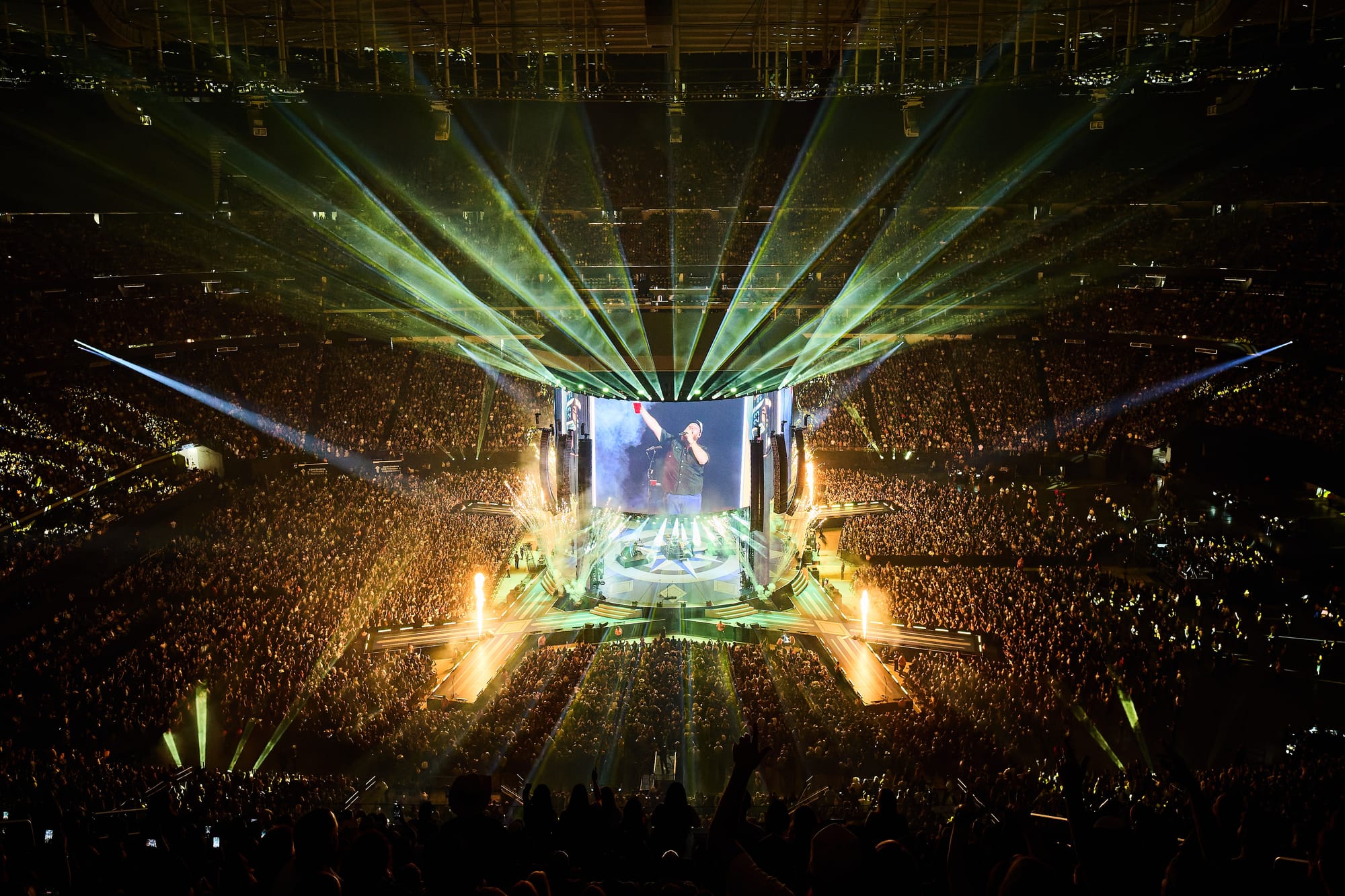
**Luke Combs' live concert rig (photo by David Bergman).*
**H: What is it about** [**Luke Combs**](https://www.bandsintown.com/a/8045055-luke-combs?utm%5Fsource=hypebot&came%5Ffrom=900) **that makes him such a professional, brilliant performer?**
K: "Aside from being an incredibly gifted singer and songwriter. He is genuine. When he makes mistakes, he calls himself out. Being shown that he is not a perfect performer is relatable and endearing beyond belief."
J: "Luke truly cares about the fan experience. From their point of view to the ticket pricing, he wants to give his all for those who support him. This is true for his band and crew as well."
**H: How did you each get your start in Audiovisual Production / Design? Was there a concert you saw when you were young that inspired you to learn about it?**
K: "It all traces back to my dad being a professional square dance caller. I grew up around music, especially country music. And through the years, I loved going to dances with him and helping him set up his equipment. I started setting up sound systems at the age of 8."
I discovered technical theater in high school and enjoyed working on shows as an audio technician, but lighting eventually grabbed me. I didn't see the concert in person, but rather it was a DVD of the **Rush “Snakes and Arrows' tour.** I watched that DVD repeatedly. I knew that's what I wanted to do."
J: "For me it was the **Motley Crue 'Theater of Pain Tour'** in 1985\. I just had to have more of whatever it was they were doing at the time!"
**H: There’s a viral video of the timelapse of construction of the Luke Combs stage set and tower. How many hours did that take to set up every day on the road? What was the fastest you ever got it rigged up?**
J: "Fortunately, for our team when we went on sale with this tour, I made sure we had plenty of time to get everything in. 2 stage/structure days and 2 production build days. I can say that we were always ready for the band to sound check at 6pm on production day #2."
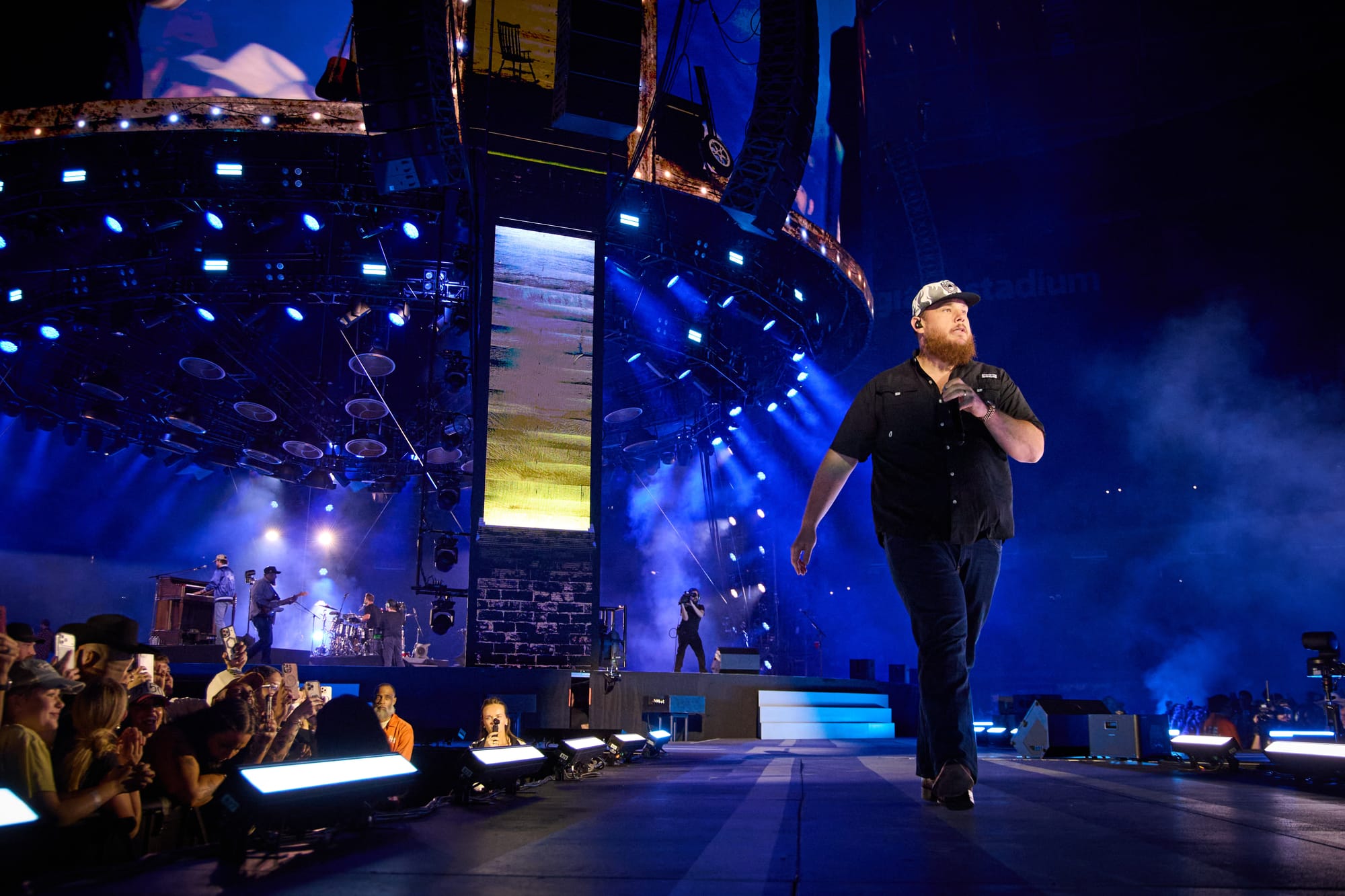
**Luke Combs' live concert rig (photo by David Bergman).*
**H: Was there ever a moment you thought you might not pull it off?**
K: "I knew that we would pull it off no matter what but seeing it in its entirety for the first time in Las Vegas was a huge relief."
J: "I was never worried about our team not being able to pull it off but as Kevin said, seeing 'Frankenstein' walk and talk for the first time in Vegas was a damn cool moment."
**H: How much did the setup differ from venue to venue? I mean, did sight-lines or tech limitations come into play? Low ceilings, audio-lighting grids, etc.?**
K: "Traveling with the structure takes a lot of the venue-to-venue variables off the table. Your positions are locked, your sight-lines are consistent, your crew knows exactly where they're working before they even walk in the door."
The one thing that shifted show to show was some of the audience's lighting; coverage changed depending on the venue, and we knew that going in. But because everything else was so dialed, those adjustments were manageable. On a tour like Luke's, you're not chasing problems. You're just fine-tuning."
J: "When you basically control everything except the weather, you can get things dialled fairly quickly. Fortunately, we did just that."
**Jerry Slone & Kevin Northrup backstage.*
**H: And then something I don’t really know: were either/both of you working the live concert as well? Or just the pre-show design and tech setup?**
K: "We both actively tour with Luke. I am behind the lighting console every show pushing the buttons that make the lights move and blink."
J: "I'm Luke's full-time Production Manager and oversee all live elements from budgets, vendor contracts, crew organization, trucking, scheduling, etc. 2026 marks my 33rd year touring."
**H: Would a production like the My Kinda Saturday Night Tour be able to be shipped overseas? How would the logistics work on that, and with voltage changes in Europe for example, would you need to re-fabricate some of the custom-made equipment?**
J: "For sure we can make this work overseas and have had a few small conversations about it already. Certain elements can be recreated with the vendors we work with when touring Europe, Australia, etc., and some elements would most certainly have to be floated over."
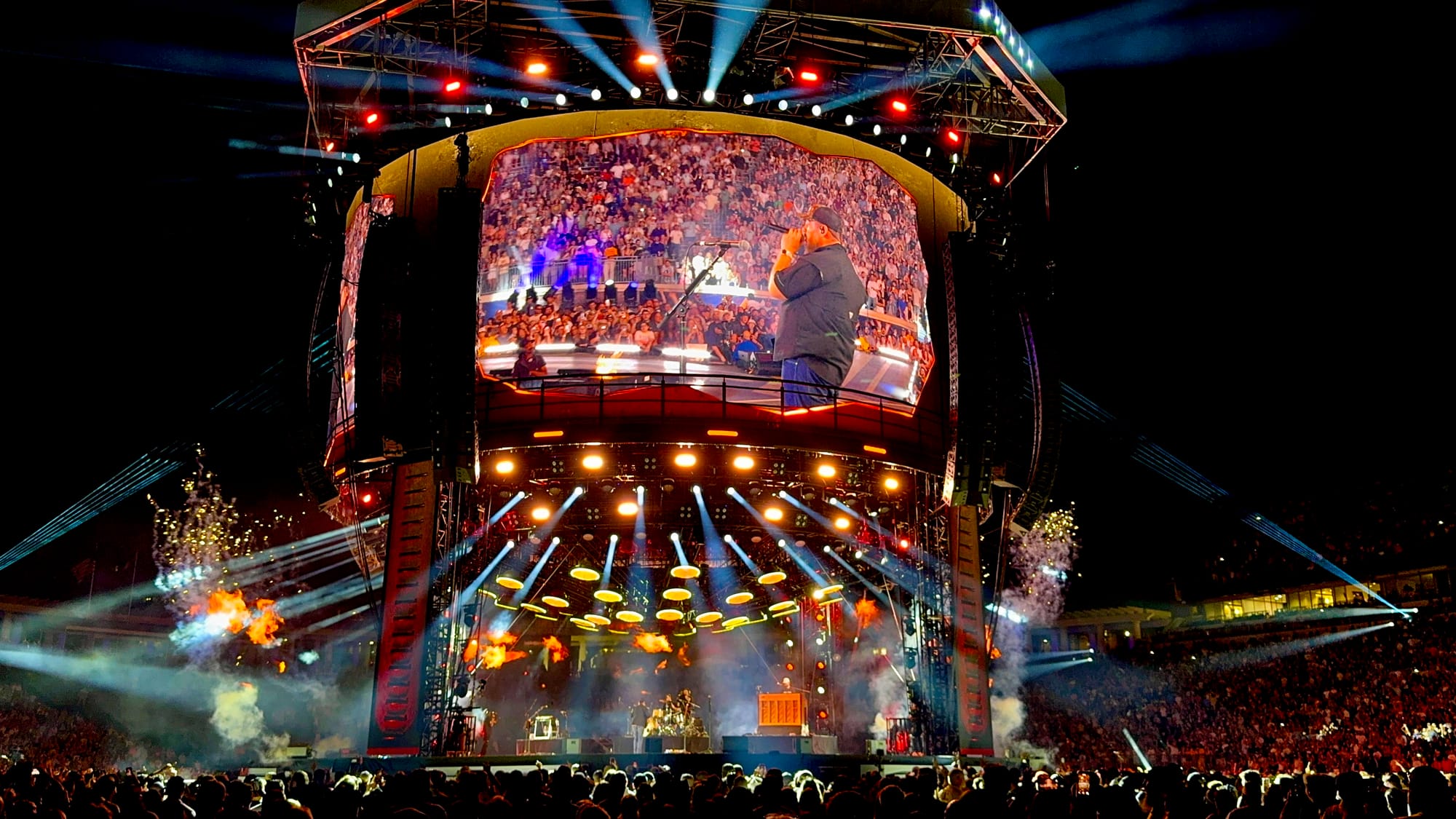
**Luke Combs' live concert rig (photo by Jimmy Hunt).*
**H: What was the biggest thing you learned on that tour?**
K: "To be okay without having all the answers. I've learned to bring in extra help and to trust others to contribute their best to this project. I'll definitely be doing this again."
J: "Pretty much what Kevin said. We have such a great team of people, and you have them in certain positions for a reason. Let them go and be available to help in any way."
**H: What’s on your next napkin?**
K: "We'll have to see where Jerry is and what he has around him, for all we know, he might be building a stage out of knives and forks in catering!"
J: "You never know... We may have to hold our next design meeting at a hardware store! Whatever it is though, I can promise it will be a fun journey and it'll be something really, really cool!"
---
## [**Luke Combs Tour Dates**](https://www.bandsintown.com/a/8045055-luke-combs?utm%5Fsource=hypebot&came%5Ffrom=900)
---
***Hypebot’s*** [***Backstage Pass***](https://www.hypebot.com/tag/backstage-pass/) *series is sponsored by venue, festival and promoter marketing platform* [***Bandsintown PRO***](https://www.bandsintown.pro/?ref=hypebot.com)**.* Join leading live event professionals saving time and selling more tickets with their automated, self-serve and custom solutions.*
### Women That Rock Is Bringing Their Online Energy to Live Rooms
URL: https://www.hypebot.com/women-that-rock-is-bringing-their-online-energy-to-live-rooms/
Last updated: 2026-07-22T23:52:32.000Z
[**Women That Rock**](https://www.womenthatrock.co/?ref=hypebot.com)is taking its femme-forward live music mission on the road with a five-city summer tour featuring indie singer-songwriters [**Abby Holliday**](https://www.bandsintown.com/a/15488544-abby-holliday?utm%5Fsource=hypebot&came%5Ffrom=900) and [**Charli Adams**](https://www.bandsintown.com/a/8923717-charli-adams?utm%5Fsource=hypebot&came%5Ffrom=900).
The **Women That Rock Summer 2026 Tour** will visit Washington, D.C., New York City, Boston, Chicago, and Nashville in August. Organizers expect the run to reach approximately 2,000 attendees while introducing both artists to new audiences.
The tour marks an expansion for Women That Rock, a music discovery and live events company dedicated to [supporting women](https://www.hypebot.com/tag/women-in-music/) and nonbinary artists. After building an online community of more than 70,000 followers and producing curated live events, the organization is now moving into multi-market touring.
“Women That Rock was founded on a simple belief: talented femme artists deserve the same opportunities, visibility, and support systems as everyone else,” said founder **Andie Aronow**:
> *"This multi-market tour represents the next chapter in our efforts to highlight incredible femme artists on stage, to support infrastructure and visibility for women in music, and to encourage brands to invest in emerging femme artists."*
The initiative arrives as women remain underrepresented across numerous areas of the music business, including festival lineups, radio programming, production and executive leadership. Women That Rock says its tour is intended to provide more than individual performances, creating opportunities for audience development, media exposure and longer-term career growth.
***+Read more:*** [*"15 Women Who Pushed the Boundaries of Live Music"*](https://www.hypebot.com/15-women-who-pushed-the-boundaries-of-live-music/)
**Abby Holliday** has developed a growing following through emotionally direct songwriting and an increasingly visible live presence. She has previously toured with Men I Trust, The Japanese House and James Bay.
**Charli Adams** is a New York-based independent artist and songwriter whose work has received coverage from NPR, *Billboard,* and *The Fader*. In addition to releasing her own music, Adams has written extensively for other artists.
By placing two emerging independent artists on the same bill, [Women That Rock](https://www.womenthatrock.co/?ref=hypebot.com) also hopes to encourage collaboration rather than competition among women in music. The organization describes the tour as a model for how intentional, community-led investment can help artists develop sustainable careers.
The Summer 2026 Tour begins August 7 in Washington, D.C. All venue and ticketing information will be announced through [Women That Rock’s Instagram account](https://www.instagram.com/womenthatrock?ref=hypebot.com).
## **Women That Rock Summer 2026 Tour Dates**
- August 7 — Washington, D.C. @ Songbyrd Music House
- August 8 — New York City, NY @ The Sultan Room
- August 9 — Boston, MA @ The Rockwell
- August 12 — Chicago, IL @ Schubas Tavern
- August 15 — Nashville, TN @ The Basement East
[**Get more information and tickets here.**](https://linktr.ee/womenthatrock?utm%5Fsource=ig&utm%5Fmedium=social&utm%5Fcontent=link%5Fin%5Fbio&fbclid=PAZXh0bgNhZW0CMTEAc3J0YwZhcHBfaWQPOTM2NjE5NzQzMzkyNDU5AAGnH-a0dZaULAr8yMtFKq7eaDN79gN8qFqnc2VyOmZ5gQvT8TJvnqu3vGOyfdM%5Faem%5F4qjNkwrXvhR00skoRbSTfA)
### SOCAN and Musical AI to Track (and Eventually Pay) Creators for AI Use
URL: https://www.hypebot.com/socan-and-musical-ai-to-track-and-eventually-pay-creators-for-ai-use/
Last updated: 2026-07-21T19:02:16.000Z
[**SOCAN**](https://www.socan.com/?ref=hypebot.com) is partnering with Canadian rights technology company [**Musical AI**](https://www.wearemusical.ai/?ref=hypebot.com) to explore how songwriters, composers and music publishers can be credited and compensated when their work influences AI-generated music.
The collaboration is built around two central principles: c**reators should be able to decide whether their music participates in** [**AI systems**](https://www.hypebot.com/tag/ai/), and **they should receive attribution and payment when it contributes to an AI-generated output.**
Under the agreement, SOCAN will recognize Musical AI as an approved technology partner for attribution services and related initiatives. The two companies will explore consent, attribution and reporting infrastructure that could eventually help SOCAN determine how its members’ work has been used by AI — and how compensation should be distributed.
That “eventually” matters. The partnership does not immediately establish a new AI royalty system. Instead, it begins developing the technology, guidelines and rights-management framework that could make one possible.
## Giving Creators an Opt-In
SOCAN and Musical AI say music should only be used by AI systems when creators have actively consented. As part of the initiative, the companies will explore Musical AI’s consent-management tools, which are designed to make those choices clear and scalable across large [catalogs](https://www.hypebot.com/tag/catalog/). That could give songwriters, composers and publishers a more structured way to authorize or decline particular AI uses.
Musical AI CEO **Sean Power** says:
> *"*The first step is consent, t*he next step is attribution that can show how music contributes to an output and how value should flow to artists and songwriters."*
That represents a potentially important shift from the current AI landscape, where rights holders often struggle to determine whether their music was used to train a system, influence an output or generate commercial value.
**Screenshot courtesy of* [**Musical AI.*](https://www.wearemusical.ai/?ref=hypebot.com)
**+Read more:** [*"Canadian Music Is Getting Two Bumps in Investment"*](https://www.hypebot.com/canadian-music-is-getting-two-bumps-in-investment/)
## Turning AI Influence Into Something Measurable
Musical AI’s attribution technology analyzes AI-generated outputs to identify the licensed source material that influenced them. It separately assesses contributions from sound recordings and underlying musical compositions, producing reports that can support licensing, accountability and compensation.
In practical terms, the goal is to create something resembling a split sheet for AI-generated music: a record of which works contributed to an output and how the resulting value should be divided.
That infrastructure could be especially significant for a performing rights organization like SOCAN. The organization already collects license fees for public performances and reproductions of music, matches those uses with rights holders, and distributes royalties to songwriters, composers and publishers.
AI-generated music complicates that process. If an output incorporates the influence of multiple existing works, rights organizations need a reliable way to identify those contributions before they can license the use or distribute money. SOCAN CEO **Jennifer Brown** said:
> *'As AI reshapes the music industry, music creators must have transparency, credit and fair compensation. This collaboration with Musical AI establishes a foundation for attribution and compensation, to ensure that music creators are paid when their music is used by AI."*
The partnership is also being positioned as part of a broader Canadian effort to protect the country’s music, cultural identity and creative economy as AI adoption accelerates. Canada’s Minister of Artificial Intelligence and Digital Innovation, **Evan Solomon**, calls this collaboration an example of responsible Canadian innovation that could create new opportunities while recognizing the value of human creativity.
***+Read more:*** [*"Why AI Song Generators Don’t Grant Copyright"*](https://www.hypebot.com/why-ai-song-generators-dont-grant-copyright/)
---
[***SOCAN***](https://www.socan.com/?ref=hypebot.com) *is Canada’s largest member-owned music rights organization, championing the fundamental value of music and the people who create it. SOCAN collects license fees for the public performance and reproduction of music, matches them to rights holders, and distributes them as royalties to music creators and publishers in Canada and around the world.*
[***Musical AI***](https://www.wearemusical.ai/?ref=hypebot.com) *is a Canadian rights technology company providing consent management and attribution infrastructure for generative music. Its platform helps rights holders manage permissions and helps identify how licensed works influence AI generated outputs across composition and sound recording rights, supporting transparent reporting, licensing and compensation.*
### Thundercat’s 2026 Tour Is About Character Development — Yup, This Is a Trend.
URL: https://www.hypebot.com/thundercats-2026-tour-is-about-character-development-yup-this-is-a-trend/
Last updated: 2026-07-21T21:43:41.000Z
The Grammy-winning bassist and songwriter, [**Thundercat,**](https://www.bandsintown.com/a/1021286-thundercat?utm%5Fsource=hypebot&came%5Ffrom=900) recently announced a string of dates he's calling ***The Distracted AF Tour*** It's a 32-date North American run that begins October 2 in Miami and ends December 11 in Austin. **Channel Tres, TiaCorine, Fera, 54 Ultra,** and **Kitty Ca$h** will all provide support on select dates.
The tour follows Thundercat’s new album, [***Distracted***](https://open.spotify.com/album/4DkVTJfU9qyNWKbjLoTENL?si=2%5FgfbxNJQGaI79fu297afA&ref=hypebot.com). But adding “AF” to the tour title does something more interesting than simply making the name funnier. It turns an album concept into a self-description, and deepens the mythology that has grown and shifted around Thundercat's persona beyond the music itself.
*Distracted AF* is more than the name of the show; it's like an admission, a meme flint, a mission statement, and an extremely concise description of the artist fans believe they know, **Stephen Lee Bruner**. The jazz-R&B fusion bassist went from being an overtly talented instrumentalist in Kamasi's circle, playing on Hip-Hop records like Kendrick Lamar's *To Pimp a Butterfly* and *DAMN,* and working with producers like Flying Lotus, to essentially becoming a meme himself, a nerdy stoner obsessed with manga and anime.
And that's exactly what makes Thundercat a useful example of something happening across [live music](https://www.hypebot.com/tag/live-music/): **Whether artists utilize it or not touring is a great opportunity to build personality campaigns.**
## The next episode...
Tours have always been a marketing play. Live music is great for so many things, but in the eyes of a label or management team, they're primarily considered as an optimized medium for selling records and merchandise, and to get the artist in press rooms and radio stations.
That structure still exists, but the emotional proposition has changed. Albums are no longer the only product or messaging outlet by which an artist puts forth their story and brand. In this way, the tour is an opportunity itself to push an artist's narrative forward. And thus it doesn't have to be directly tied to the album anymore, it can be its own variant, a new chapter.
For [fans](https://www.hypebot.com/tag/fans/), live tours offer the chance to spend an evening inside that artist’s personality.
**Sabrina Carpenter’s** shows extend her wit and romantic mischief. **Chappell Roan** turns theatrical gender-informed transformation into a participatory world. **Tyler, the Creator** builds environments with their own internal logic. **Charli xcx** levelled up and mushroomed the attitude surrounding *Brat* into an ownable cultural identity.
Thundercat offers a particularly lovable brand of nerdy chaos.
***+Read more:*** [*"Bryson Tiller Doesn't Have to Rush His Crowd. Here's Why."*](https://www.hypebot.com/bryson-tiller-doesnt-have-to-rush-his-crowd-heres-why/)
That chaos contains anime, cats, video games, comics, spectacular outfits, absurdist jokes, deadpan interviews and bass playing so technically advanced that it can interrupt the comedy at any moment. None of those elements feels incidental anymore. Together, they form the character audiences have been following between albums.
The concert is where that character becomes physical, palpable, relatable, and approachable. It's where the audience gets a chance to interact with that identity and bring the story up close and personal.
## This is personality, not branding.
Calling this [“branding”](https://www.hypebot.com/tag/branding/) does not quite capture it. Branding tends to seek consistency. It smooths out contradictions and makes an artist easily recognizable across platforms. Personality is *messier*. It can be funny one minute, grief-stricken the next, self-aware without being controlled and recognizable without always being predictable.
Thundercat’s persona does not appear to have been invented for a marketing campaign. It accumulated, organically, and the choice to call his upcoming tour "Distracted (As Fuck)" shows just how personal this development has been. The tour packages that accumulated personality without making it feel "packaged."
He became a celebrated virtuoso through work with artists including Flying Lotus, Kendrick Lamar and Kamasi Washington. Around that musicianship, audiences gradually discovered Stephen Bruner’s obsessions, humor, fashion and wonderfully strange way of explaining himself. The memes did not create his appeal. They gathered around something that was already there.
For artists watching this trend, it's a case study in taking ownership of the fact that a character persona often builds around oneself in ways that could not have been planned or mapped on a mood board. And so the lesson is not to worry about loading one's albums with all the story, but to leave space for things to grow and develop in the live experience.
Personality cannot be reverse-engineered very convincingly. It can, however, be given room.
## The character is actually developing
“Character development” also applies to Thundercat in a more literal sense.His recent record, *Distracted* is playful, but the period behind it involved genuine personal change.
Thundercat has spoken about quitting alcohol, taking up boxing and working through grief, describing the album as the sound of himself “choosing happy.” The distractions in this chapter are not merely punchlines. They are also part of an artist learning how to live differently.
That gives the new tour more substance than a parade of familiar quirks. Audiences are not only seeing the return of a beloved character. They are seeing what has authentically and truthfully happened to him since the previous episode.
***+Read more:*** [*"It's Gelli Haha's World Now — You're Just Dancing in It."*](https://www.hypebot.com/its-gelli-hahas-world-now-youre-just-dancing-in-it/)
This may be why personality-led touring feels more durable than ordinary branding. A brand is expected to remain recognizable. A character is allowed to be flawed, and to change.
More than anything, in a moment when fans encounter artists continuously —whether through interviews, content clips, memes, podcasts, outfits, or social posts — the concert has become a uniquely pleasurable payoff to a larger, longer story. People are buying tickets not only to hear the songs they love, but to see the person they have been following become fully present.
Tours once accompanied album release campaigns, they now function as the next chapter in an artist’s character arc. Thundercat’s next chapter just happens to be distracted *as fuck.*
---
## [**Thundercat Tour Dates**](https://www.bandsintown.com/a/1021286-thundercat?utm%5Fsource=hypebot&came%5Ffrom=900)
### How Hypebot Is Evolving: Music Biz Weekly Podcast
URL: https://www.hypebot.com/how-hypebot-is-evolving-music-biz-weekly-podcast/
Last updated: 2026-07-21T15:19:06.000Z
**Bruce Houghton**, Founder of **Hypebot**, and **Jeremy Young**, newly appointed Editor-in-Chief, visit **Michael Brandvold** and the [**Music Biz Weekly Podcast**](https://www.hypebot.com/tag/music-biz-weekly/) for an in-depth conversation on the evolution of Hypebot, its editorial philosophy, and the unique relationship with [**Bandsintown**](https://www.bandsintown.com/?ref=hypebot.com)**.**
The three discuss how Hypebot continues to serve artists, managers, labels, venues, and music industry professionals by delivering practical, actionable insights rather than chasing headlines. Bruce and Jeremy also explain how Hypebot and Bandsintown work together to help artists build sustainable careers.
If you’re serious about music marketing, touring, fan engagement, or staying ahead of industry trends, this is an episode you won’t want to miss!
**Listen and watch the Music Biz Weekly Podcast here or on your favorite podcast platform.**
**FIND MORE FROM MUSIC BIZ WEEKLY & OTHER GREAT MUSIC BUSINESS AND INDIE MUSICIAN PODCAST EPISODES** [**HERE**](https://www.hypebot.com/hypebot/category/podcast-music-biz)
## Hypebot
Essential news & insights for artists and live music pros.
Sign up for free weekly content delivered to your inbox
Subscribe
Email sent! Check your inbox to complete your signup.
### The Next Big Genre May Show Up in a Producer’s Search First...
URL: https://www.hypebot.com/the-next-big-genre-may-show-up-in-a-producers-search-first/
Last updated: 2026-07-21T14:12:31.000Z
The music industry usually goes looking for [trends](https://www.hypebot.com/how-u-s-streaming-trends-impact-talent-buyers-and-marketers/) where audiences are already listening. But by the time a new sound appears on [streaming](https://www.hypebot.com/tag/streaming-music/) charts, producers may have spent years quietly building it.
That is the most useful finding in [***Made First, Heard Second***](https://hybridgenres.chartmetric.com/?ref=hypebot.com), a new joint report from [**Chartmetric**](https://chartmetric.com/?ref=hypebot.com) and [**Splice**](https://splice.com/sounds?ref=hypebot.com) examining how hybrid genres emerge, travel and enter the mainstream. By combining Chartmetric’s artist and listener data with Splice’s creator searches and downloads, the report captures both ends of the process: **how music is made, and how it is eventually heard.**
Its conclusion is not simply that genre boundaries are disappearing. It is that new genres are being assembled from the *inside out* — and the creative process may offer an earlier view of music’s future than streaming data can.
## The Biggest Genres Are Losing Ground
According to the [Chartmetric and Splice report](https://hybridgenres.chartmetric.com/?ref=hypebot.com), the top 10 major genres accounted for 46% of genre assignments among superstar artists in 2021\. Yet by 2026, that share had fallen to 35%.
The shift is even more pronounced among mid-level artists, where the top genres’ share declined from 39% to 27% over the same years.
That does not mean Pop, Rock, Hip-Hop or Country are disappearing. It means more artists are being classified within the report’s broad “Other” category, which includes niche, regional, international, and emerging sounds. In 2026, it represented 55% of genre assignments among superstar artists and 73% among mid-level artists.
Importantly, those figures measure genre assignments (ie: not streams or market share). The report is documenting a diversification of the artist landscape, not the collapse of mainstream music. Producer behavior points in the same direction. On Splice, 57.5% of sample-pack downloads now fall outside its 10 leading genres, compared with 48% in 2021.
The average Splice user also downloads sounds from nearly 52 genres annually, up from fewer than 30 in 2018 — a 74% increase in seven years. The building blocks are becoming hybridized before the finished songs reach listeners.
***+Read more:*** [*"Explaining the Wide Gap Between Country Stars and Everyone Else"*](https://www.hypebot.com/explaining-the-wide-gap-between-country-stars-and-everyone-else/)
## Producers May Be Music’s Early Warning System
This is where the findings become especially valuable to [independent artists](https://www.hypebot.com/tag/indie-artists/), [managers](https://www.hypebot.com/tag/manager-of-the-month/) and [A&R teams](https://www.hypebot.com/tag/ar-2/).
Creator activity sometimes rises years before a genre registers among mainstream artists. Splice searches for Hyperpop grew 43% from 2022 to 2023, another 55% the following year and 37% after that. Search volume tripled between 2022 and 2025 before the sound became firmly established in Chartmetric’s superstar-level data.
Afro House followed a similar trajectory. Splice search demand increased 134% from 2022 to 2023 and 437% the following year before the genre appeared among superstar artists in mid-2024\. The report also identifies substantial search growth for still-emerging sounds including Botanica, Jerk, and Rage. None has yet produced equivalent superstar-level activity, meaning creator interest should be treated as a signal rather than a guaranteed prediction.
Still, the broader idea is compelling: If streaming analytics describe what listeners already want, production data may reveal what musicians are preparing to give them next.
The relationship also runs in reverse. Once Amapiano broke globally, creator searches surged as more producers attempted to understand and reinterpret the sound. Discovery becomes imitation, imitation becomes mutation, and the genre continues evolving.
## Not Every Hybrid Genre Travels the Same Way
The report classifies 95 of the 151 genres represented among Chartmetric’s superstar artists as hybrids, separating them into two groups.
“Regional hybrids” combine styles within a particular cultural or geographic context. Although they can reach global listeners, their strongest audiences frequently become more concentrated in their home markets as they grow.
Corridos Tumbados combines Mexican Corrido traditions with trap and contemporary production. Mexico’s share of its Spotify audience grew from approximately 55% in 2022 to 72% in 2026, even as the genre became an international phenomenon.
Amapiano’s South African listener share increased from 41% to 55% during the same period, while UK Drill’s British audience grew from 35% to 58%.
“Sonic hybrids,” by contrast, are organized around an aesthetic or online community rather than one geographic home. Afro House, Hyperpop, Lo-fi, Jungle and Breakcore maintain more geographically dispersed audiences.
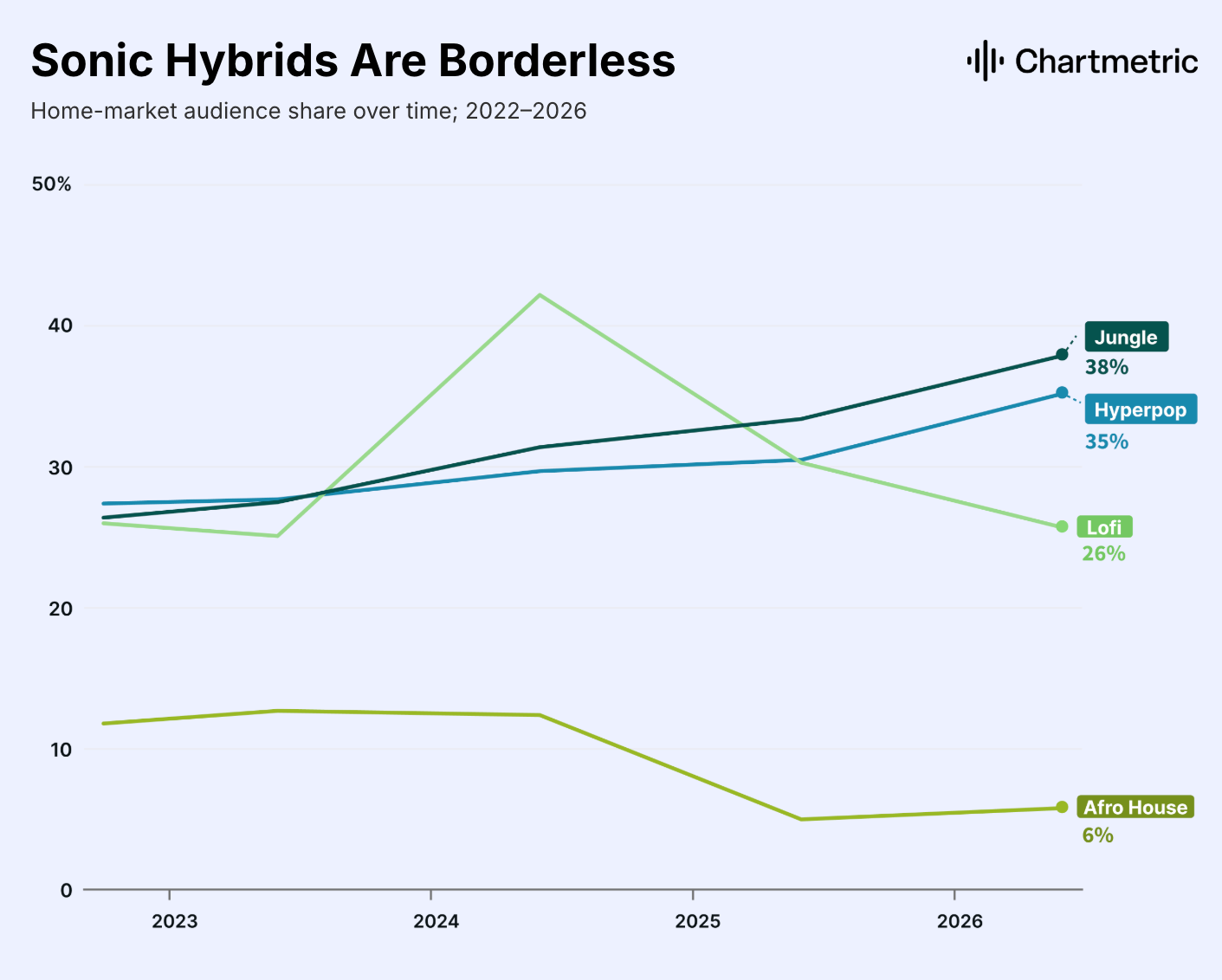
That distinction has practical implications. A regional hybrid may benefit from deep cultural roots and a strong home-market strategy. A sonic hybrid may grow through collaborations and online communities scattered across several countries.
**+Read more:** [*"World Cup 2026 Is FIFA's Most Musical Tournament to Date"*](https://www.hypebot.com/world-cup-2026-is-fifas-most-musical-tournament-to-date/)
## YouTube Spreads the Sound. Spotify Shows Where It Sticks.
The report also finds a revealing difference between platforms. Audiences for regional hybrids tend to be more geographically dispersed on [YouTube](https://www.hypebot.com/tag/youtube/) but more concentrated on [Spotify](https://www.hypebot.com/tag/spotify/). Corridos Tumbados shows the widest gap, followed by Phonk, Amapiano, and UK Drill.
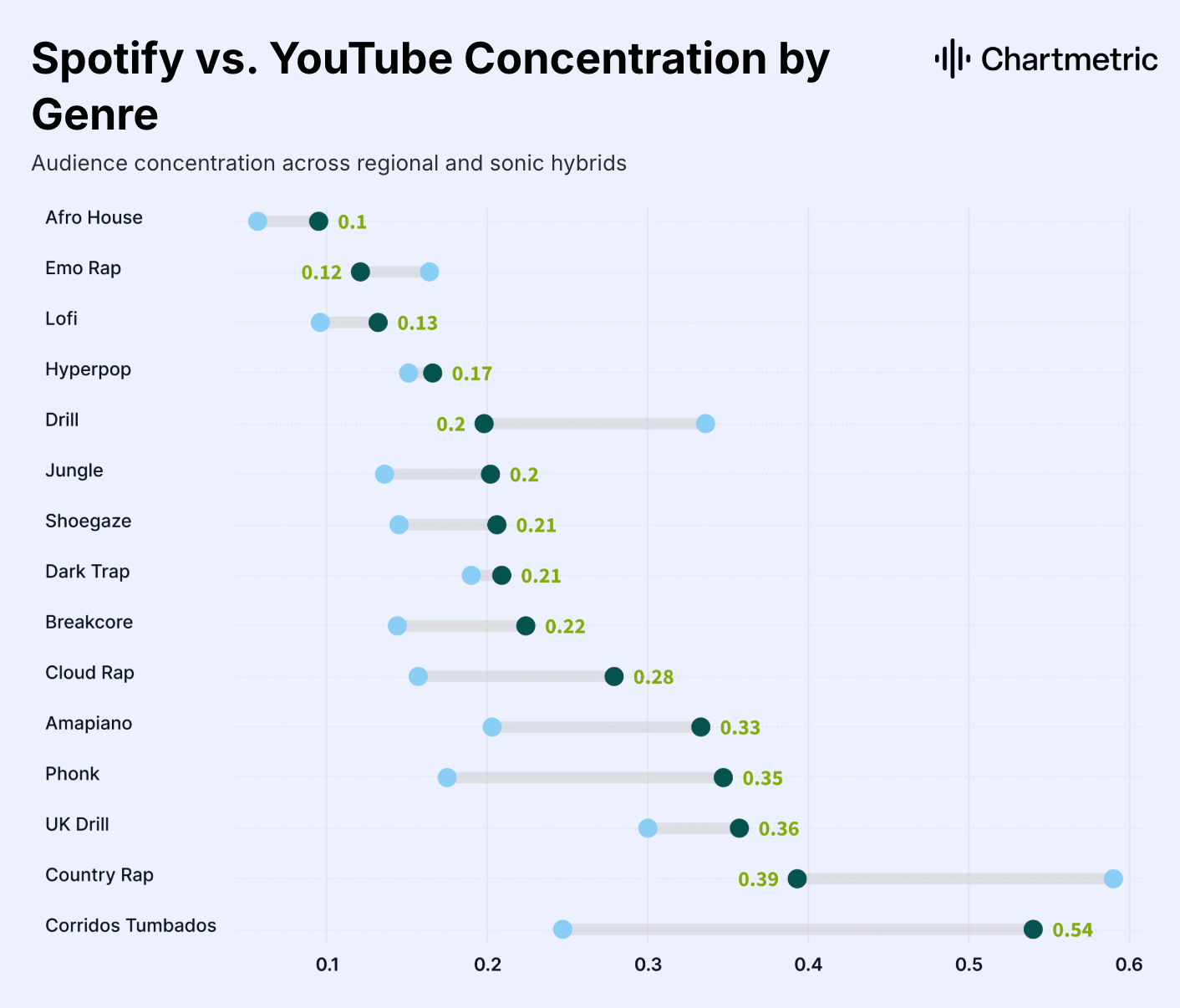
Chartmetric and Splice interpret YouTube as a measure of where a sound is being encountered, while Spotify more clearly shows where it has entered regular listening habits.
For independent artists, that is an important distinction. A globally distributed video audience does not necessarily mean a genre has developed equally committed fan communities everywhere. YouTube may create visibility; Spotify can reveal where curiosity is becoming repeat consumption.
## Genres Aren’t Dying. They’re Multiplying.
In all this, it's fair to say that music may no longer be moving toward one dominant “next big genre.” Instead, dozens of highly specific sounds can grow alongside one another. Some combine regional traditions with contemporary production. Others revive older aesthetics for a new online generation.
Eventually, the fastest-growing hybrids mature into established scenes and make room for another wave of experimentation.
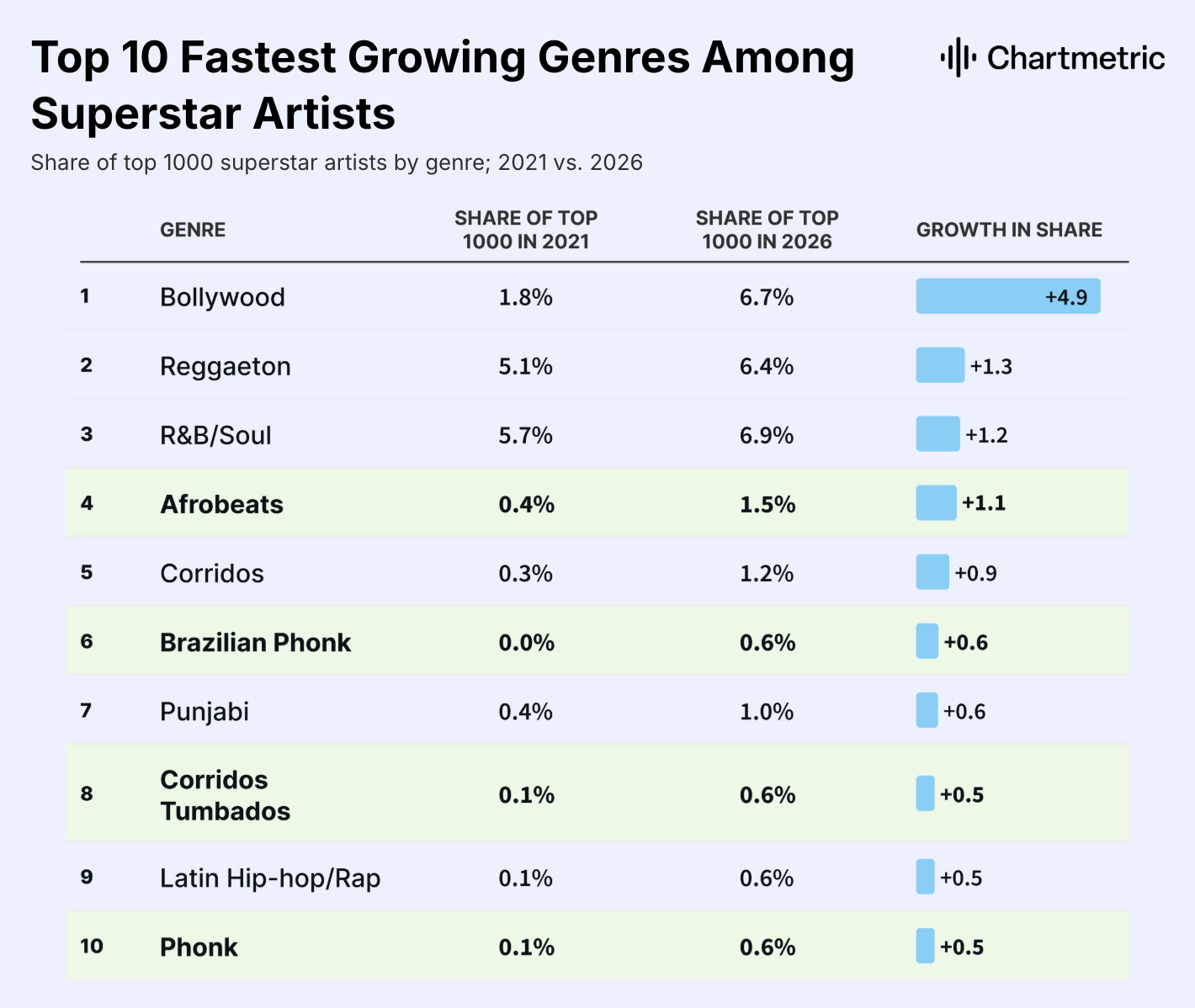
If you're an artist, that does not mean chasing every fast-rising tag or forcing unrelated influences into a song. It means recognizing that genre is becoming less of a creative restriction and more of a navigational tool — a way to find collaborators, communities and listeners.
The streaming charts still tell us what music has arrived. But the first signs of what comes next may be found in what producers are searching for before anyone knows what to call it.
***+Read more:*** [*"The Data Behind the Expansion of Languages in the US Music Streaming Market"*](https://www.hypebot.com/the-data-behind-the-expansion-of-languages-in-the-us-music-streaming-market/)
### Social Media in the Age of AI: The Internet’s Next Luxury Is Proof You’re Human
URL: https://www.hypebot.com/social-media-in-the-age-of-ai-the-internets-next-luxury-is-proof-youre-human/
Last updated: 2026-07-21T13:43:41.000Z
*By *Oskar Eichler*, CEO of* [***The Stats Company***](https://stats.company/?ref=hypebot.com)
The internet has a trust shortage. Content is everywhere, but trust and connection are scarce.
Here's why.
[Generative AI](https://www.hypebot.com/tag/ai/) has made it possible to produce captions, videos, images, comments, scripts, ads, and entire content calendars at a speed no human team could match (or would want to). For brands, marketers, and creators, efficiency can feel seductive. AI can help brainstorm, edit, translate, repurpose, and scale. But the same force that makes content easier to create is making it easier to *ignore.*
You can (and should) ignore what you have no connection to. Our feeds are jammed with connection-resistant moments, filling up with synthetic posts, recycled formats, engagement bait, bot-like comments, and content that may look good but feels strangely empty.
We all sense it. Even when we cannot identify exactly how AI assisted, we know when something feels hollow. We know when a voice has been sanded down into marketing language. We know when a creator is chasing the algorithm rather than saying something true or meaningful.
[Social media](https://www.hypebot.com/tag/social-media/) has always been built on a simple human exchange: people follow people, not marketing systems. They follow taste, humor, vulnerability, expertise, timing, identity, and point of view. They follow because there is a person on the other side who sees something the way they do, or sees it in a way they never could.
They follow connection.
In an AI-saturated internet, that human signal becomes more valuable, not less.
This does not mean creators should reject AI. The future will not belong to people who refuse to engage with new tools, but rather to people who use them without losing their voice.
AI can make the work faster, but it cannot manufacture cultural intuition or human emotion. It cannot know which behind-the-scenes post will make fans feel closer. It cannot replace the moment a creator responds honestly to their community. It cannot fake the long-term trust that comes from showing up consistently with a recognizable point of view.
**Image courtesy of* [**Socialstats*](https://socialstats.com/?ref=hypebot.com)**.*
**+Read more:** [*"For Fans, Band Merch Offers a Connection Deeper Than Commerce"*](https://www.hypebot.com/for-fans-band-merch-offers-a-connection-deeper-than-commerce/)
For **brands**, this changes the way social media performance should be understood. Vanity metrics alone are no longer enough. A post can get views and still fail to build trust. A campaign can reach millions and still leave no lasting audience relationship behind. The important question is: *“What kind of connection did it create?”*
**Creators** need better connection signals. They need to understand which formats are working, when their audience is online, which posts are outperforming their baseline, which topics create deeper engagement, and which new followers are worth paying attention to. They need to separate noise from momentum. They need tools that help them see not just how many people watched, but what the audience is telling them through behavior.
That is the thinking behind [Socialstats](https://socialstats.com/?ref=hypebot.com), the new expansion from **Songstats**. Socialstats is a social analytics platform built for a creator economy where being real is a competitive advantage.
What we’ve discovered is that data can surface human connection. It gives creators, teams, managers, and brands a clearer view of moments that matter: standout posts, best-performing formats, optimal posting times, audience growth, notable new followers, and engagement patterns that show what is actually resonating.
The goal is to help creators amplify the thing that makes them valuable in the first place: their relationship with their audience.
**Image courtesy of* [**Socialstats*](https://socialstats.com/?ref=hypebot.com)**.*
As AI-generated content becomes more common, creators will face a strange new challenge. They will have more tools than ever, but also more competition from content that looks competent, moves quickly, and costs almost nothing to produce. We don’t need to become more robotic in response, but more human.
The next era of [social media](https://www.hypebot.com/tag/social-media/) will reward creators who can combine creativity with intelligence, instinct with measurement, and authenticity with strategy. AI may flood the feed, but real connection will still be scarce. And scarcity is where value lives.
***+Read more:*** [*"What Constant Visibility Is Doing to the Creative Process"*](https://www.hypebot.com/what-constant-visibility-is-doing-to-the-creative-process/)
---
**Oskar Eichler* is the founder and CEO of *The Stats Company*, creators of* [***Socialstats***](http://socialstats.com/?ref=hypebot.com) *and*[***Songstats***](http://songstats.com/?ref=hypebot.com)*, analytics platforms custom built for crreators and musicians. Oskar is also a touring DJ and one half of the duo* [***DONT BLINK***](https://dontblink.komi.io/?ref=hypebot.com) *who uses these platforms every day.*
### When Is the Best Time to Start Memorizing a Piece?
URL: https://www.hypebot.com/when-is-the-best-time-to-start-memorizing-a-piece/
Last updated: 2026-07-21T12:42:04.000Z
### **When Is the Best Time to Start Memorizing a Piece?**
*By* [***Dr. Noa Kageyama, PhD***](https://bulletproofmusician.com/author/njkalm/?ref=hypebot.com) *of* [***The Bulletproof Musician***](https://bulletproofmusician.com/when-is-the-best-time-to-start-memorizing-a-piece-for-fast-accurate-results/?ref=hypebot.com)
[Performing](https://www.hypebot.com/tag/performing-live/) from memory can be a pretty liberating experience… But it can be an awfully stressful and [anxiety-inducing experience](https://www.hypebot.com/the-research-explaining-how-performance-anxiety-starts-before-a-show/) too! Especially if you’ve had a memory slip – or even a near-memory slip – in the past. So you may have wondered how some folks seem to be able to memorize so much music so easily and effectively.
Well, for what it’s worth, it’s probably not as effortless as it might appear from the outside. For instance, as a kid, I never thought about memorizing music. It just kind of happened on its own. Of course, I later began to discover (and usually at the worst possible times), that my memory wasn’t nearly as reliable as I thought!
Eventually, I started being more **intentional about memorizing** much earlier in the learning process. But it was never very clear to me when the optimal time for starting the memorization process might be.
Like, was a month out from the performance enough? Or should it begin once the notes are learned? Or once we can play things up to tempo? Or maybe much sooner, even before we learn the notes…?
What does the research say about this? At what point during the learning process should we start memorizing a piece?
## Have we misunderstood tests?
Before we explore that question, let’s take a step back to take a quick look at the literature on testing.
Because our tendency is to think of tests as an assessment tool. A necessary evil that we all have to endure, so teachers can see if we’ve learned anything. Kind of like going to the dentist to see if you’ve been brushing and flossing regularly (btw, [**does it really matter if we floss?**](https://gimletmedia.com/shows/science-vs/awhmabel/the-dentist-toss-the-floss-flush-the?ref=hypebot.com)).
So naturally, we have a tendency to avoid anything that feels like a test. But what if we’re wrong about tests? What if they actually serve a different role than we think?
A pair of Washington University researchers wanted to explore tests from a different perspective. They were interested in finding out if tests could actually help *enhance* learning, rather than just assess it.
## Three study groups
So in a 2006 study ([**Roediger & Karpicke**](https://doi.org/10.1111/j.1467-9280.2006.01693.x?ref=hypebot.com)), researchers recruited 180 undergraduate students to read and study a short passage from the reading comprehension section of a test-prep book. Everyone was randomly assigned to one of three study groups:
The **study-study-study-study (SSSS)** group received **four** 5-minute study periods to study the passage.
The **study-study-study-test** **(SSST)** group received **three** study periods, and then took a practice test where they had 10 minutes to recall as much of the passage as they could.
And the **study-test-test-test (STTT)** group received **one** study period, followed by three practice tests.
And then everyone took a final test to see how much learning took place. But there was an important twist!
**+Read more:** [*"Making Mistakes on Stage? This Study Offers a Way to Correct Them."*](https://www.hypebot.com/making-mistakes-on-stage-this-study-offers-a-way-to-correct-them/)
## Immediate vs. delayed recall
Half of the participants took the final test shortly after completing their last study session or practice test.
The other half of the participants didn’t take the final test right away. They were asked to come back to the lab a **full week** later for their test, to see how much of the material actually stuck.
And which group did the best?
## Immediate recall
Well, when tested right after studying, the **SSSS** group did the best, recalling 83% of the passage.
The **SSST** group did second-best, recalling 78%.
And the **STTT** group did the worst, with a recall score of 71%.
So at first glance, studying more seems to lead to better recall than taking a bunch of practice tests. But the problem of course is that how much you can remember right after studying is not as important as how much you can remember days or weeks later, right?
## Delayed recall
Indeed, when tested 7 days later, the participants’ performance totally flipped.
This time, the **STTT** group did best, recalling 61% of the passage, while the **SSST** group recalled 56%, and the **SSSS** group only recalled 40%.
So how could we apply the “test-enhanced learning” phenomenon to learning (and memorizing) music?
## 13 singers
British researcher [Jane Ginsborg](https://bulletproofmusician.com/jane-ginsborg-on-building-stronger-and-more-reliable-musical-memory/?ref=hypebot.com) ([**2002**](https://doi.org/10.1177/0305735602301007?ref=hypebot.com)) recruited 13 classically trained singers[1](https://bulletproofmusician.com/when-is-the-best-time-to-start-memorizing-a-piece-for-fast-accurate-results/?ref=hypebot.com#easy-footnote-bottom-1-36970).
They were asked to memorize a 90-second song within 2 weeks, and allowed six 15-minute practice sessions (no more than one per day) to do so. Each singer recorded their practice sessions, which were then analyzed to see which approaches led to the fastest and most secure memory.
There were several factors that separated the “fast, accurate” memorizers from the “slow, inaccurate” memorizers, but one of the main ones was…wait for it…testing! 😁
How so?
## The early bird…
Essentially, the best memorizers began testing their memory much sooner, by trying to sing at least a few bars of the song from memory *in their very first practice session*. And this self-testing ramped up even more in their second practice session.
The worst memorizers sang almost nothing from memory in the first practice session, and didn’t really begin testing their memory until their *third* practice session.

Ginsborg, J. (2002). Classical Singers Learning and Memorising a New Song: An Observational Study. **Psychology of Music, 30*(1), 58-101.
The fast memorizers did make many more memory errors in their early practice sessions, but they fixed them, and made fewer and fewer errors toward the latter practice sessions.
The slow memorizers avoided errors early on by singing from the score, but they experienced more and more memory issues as they began testing themselves in the latter practice sessions. And ultimately, they ended up making a ton of errors in their final session as they tried to cram the piece into memory at the last minute.

Ginsborg, J. (2002). Classical Singers Learning and Memorising a New Song: An Observational Study. **Psychology of Music, 30*(1), 58-101.
So what’s the big takeaway?
## Takeaways
Testing your memory is uncomfortable – especially early on, when the details are unclear or all jumbled up in your head. And you certainly don’t want to learn the wrong notes or miss important articulation or phrase markings either. So it’s easy to rationalize putting this kind of memory testing off until you feel like you’ve got the piece in your muscles and know the piece well.
But studies like the ones we looked at today suggest that self-quizzing is a key part of the memorization process. And if you don’t have a lot of time to prepare, it’s probably extra important to start testing yourself much sooner in the process than you might otherwise. As Ginsborg explains in her paper:
> *“Recall requires practice and…experts began practicing recall earlier.”*
After all, at the end of the day, it’s way better to suffer through that lost feeling in the practice room than on stage!
And honestly, if we’re memorizing music the right way, it actually makes practicing much more interesting. Even fun.
Heh? How’s that now?
## Memorizing can be…fun?
For much of my life, I thought memorizing meant playing a piece over and over until it stuck. If you’ve put yourself through this brute force method, you know that it’s not a lot of fun. And for me, it also made the music feel increasingly stale, such that I was completely done with the piece and couldn’t wait to move on to something new by the time it was time to perform it.
Of course, the process of memorizing music more deeply and intentionally, by coming up with meaningful [performance cues](https://bulletproofmusician.com/regular-memorization-works-ok-but-heres-why-deliberate-memorization-is-way-better/?ref=hypebot.com) for instance, or creating a “[memory palace](https://bulletproofmusician.com/does-the-memory-palace-strategy-really-work-and-is-it-something-musicians-could-use/?ref=hypebot.com)” to organize these cues can make the experience quite a creative and engaging process. One that not only makes practicing more interesting, but can help you be more deeply immersed in the music and perform more expressively when that time comes as well!
If you’d like to try a more active approach to memorization and take a piece of music through the three phases of effective memorization – encoding, consolidation, and retrieval – with step-by-step strategies from the research literature on memorization and real examples from learners, educators, and professionals, now might be the perfect time, as the official public release of the [***Bulletproof Memory***](https://members.bulletproofmusician.com/edu/bulletproof-memory/?icn=memory&icm=blog&ics=inline&ref=hypebot.com) course is now available.
---
**References**
- Ginsborg, J. (2002b). Classical Singers Learning and Memorising a New Song: An observational study. *Psychology of Music*, *30*(1), 58–101\. [https://doi.org/10.1177/0305735602301007](https://doi.org/10.1177/0305735602301007?ref=hypebot.com)
- Roediger, H. L., & Karpicke, J. D. (2006). Test-Enhanced learning. *Psychological Science*, *17*(3), 249–255\. [https://doi.org/10.1111/j.1467-9280.2006.01693.x](https://doi.org/10.1111/j.1467-9280.2006.01693.x?ref=hypebot.com)
### Grassroots No Creeps! Movement Becomes the Music Safety Alliance
URL: https://www.hypebot.com/grassroots-no-creeps-movement-becomes-the-music-safety-alliance/
Last updated: 2026-07-21T12:30:42.000Z
A new nonprofit organization dedicated to improving safety and workplace standards across the music industry is set to launch this month.
The [**Music Safety Alliance (MSA)**](http://www.musicsafetyalliance.org/?ref=hypebot.com) will officially launch as a 501(c)(3) nonprofit on **July 21**, expanding the grassroots [**No Creeps!**](https://www.instagram.com/nocreepsmvmt?ref=hypebot.com) movement into a national organization focused on creating safer, more inclusive environments for artists, songwriters, producers, engineers, executives, crew members, and other music professionals.
According to the organization, the Music Safety Alliance was created to address longstanding gaps in workplace protections and consistent safety standards across the music industry through education, advocacy, practical resources, and the development of industry best practices.
Rather than responding to individual incidents, the nonprofit aims to provide preventative tools and collaborative solutions that can be applied across recording sessions, tours, writers' camps, showcases, and live events.
The organization builds on several years of advocacy through the No Creeps! initiative, which has brought together music professionals through educational programming, industry partnerships, and community events. As a nonprofit, MSA says it will expand those efforts through new educational resources, grant-funded initiatives, and broader partnerships across the industry.
> [ View this post on Instagram ](https://www.instagram.com/p/DICGhH7vwIg/?utm%5Fsource=ig%5Fembed&utm%5Fcampaign=loading)
>
> [A post shared by Peanut Butter Friends (@peanutbutterfriends)](https://www.instagram.com/p/DICGhH7vwIg/?utm%5Fsource=ig%5Fembed&utm%5Fcampaign=loading)
Among the organization's first planned initiatives are a **Session Safety Checklist**, **Sustainable Creativity Workshop**, **Burnout Prevention Toolkit**, and a **Studio Certification Program**, all designed to help establish practical safety resources for music professionals.
The Music Safety Alliance launches with support from a number of industry partners, including Warner Music Group, She Is The Music, Keychange U.S., Women In Music, The 100 Percenters, and TuneCore.
Leading the organization are Executive Director Katie Tucker, Director of Marketing & Partnerships Gillian Driscoll, Director of Programs & Community Hazel Rose Kleingrove, and Director of Creative & Production Georgia Hutton.
The nonprofit says its work will center on three core pillars: developing practical resources and educational materials, advocating for stronger industry standards around safety and inclusion, and building community through workshops, networking events, and the continuing No Creeps! event series.
The Music Safety Alliance officially launches July 21, with additional information about its programs, partnerships, and educational resources available through the organization's website.
> [ View this post on Instagram ](https://www.instagram.com/p/DT3clzCEojq/?utm%5Fsource=ig%5Fembed&utm%5Fcampaign=loading)
>
> [A post shared by No Creeps! (@nocreepsmvmt)](https://www.instagram.com/p/DT3clzCEojq/?utm%5Fsource=ig%5Fembed&utm%5Fcampaign=loading)
[Learn more about the Music Safety Alliance here.](http://www.musicsafetyalliance.org/?ref=hypebot.com)
### What It Really Takes to Go Big on Spotify
URL: https://www.hypebot.com/what-it-really-takes-to-go-big-on-spotify/
Last updated: 2026-07-20T18:51:42.000Z
A lot of artists treat [**Spotify**](https://www.hypebot.com/tag/spotify/) like a library. Drop the songs, wait around, hope somebody finds them. Let that sink in for a second, is that what you do?
That's not how it works, not even close.
I've watched tens of thousands of artists promoting music on our platform, [**One Submit**](https://www.one-submit.com/?ref=hypebot.com). Some of them crack it. Most of them don't crack it. And honestly, talent is rarely the reason. It's usually this: they don't understand what Spotify actually *is*.
This platform is not a library of music, it's got an algorithm which means it shows certain songs to certain people; same as any social platform. Start treating it that way.
## **Think of it like Instagram for music**
Before we talk quality, let's talk quantity. This one reframing changes everything. [Instagram](https://www.hypebot.com/tag/instagram/) doesn't care how good your photo from two years ago was. It cares what you posted this week. [TikTok](https://www.hypebot.com/tag/tiktok/) stopped caring about your first video a long time ago. It wants to know what you put out this recently.
Spotify runs the same playbook. The algorithm is watching activity (read: fresh activity). It wants to see that you're releasing, that people are engaging, and that there's something live worth putting in front of listeners. One song from three years ago isn't a career. It's a dead end.
The artists I've seen build real traction on the platform are the ones treating releases like a content schedule. A new track every month, give or take. Quality still matters, I'm not saying drop anything. Consistency without quality gets you nowhere. Quality without consistency, same result.
***+Read more:*** [*"What Musicians and Critics Get Wrong About Each Other"*](https://www.hypebot.com/what-musicians-and-critics-get-wrong-about-each-other/)
## **Quality first. Always.**
I'm going to say this once because I mean it. Releasing often doesn't mean releasing slop. Every single track you put out should be the best thing you can make right now. Good mix. Solid master. A hook that actually hooks. If you're not there yet with the production, hold the release. Fix the thing.
What I'm pushing back on is the artist who spends three years on one track, waits for perfection, releases it, and then goes quiet for another year. That's not a strategy. That's hiding.
The goal is high quality at a sustainable pace. Once a month or so is realistic for most artists if they're working consistently. Some do more. Some do less and make it work. But the rhythm matters. Spotify needs to see you're active.
## **Don't drop an album. Drop singles.**
I get it. You've been working on a full project. Ten songs. You're proud of it and you want to put it all out at once. Don't.
When you release an album on Spotify, you're flooding the [algorithm](https://www.hypebot.com/tag/algorithm/) with ten tracks and zero momentum behind any of them. The platform can only pitch one song to [editorial playlists](https://www.hypebot.com/the-2026-guide-for-pitching-spotify-editorial-playlists/) per release. Curators on independent playlists want a single, not a tracklist to wade through. And listeners? Most of them check out the first track, maybe the second, and then something else grabs their attention. The other eight songs barely get played.
That's not how you build [streams](https://www.hypebot.com/tag/streaming-music/). That's how you burn your best material quietly. The move is singles. **One song at a time, every four to six weeks.**
Each release is its own moment. Its own campaign. Its own shot at playlist placements and algorithm signals. Each track feeds data back to Spotify about who your listeners are, so the next one gets pushed smarter. By the time you've released six or eight singles, you've got real traction, real followers, real data. Then if you want to package them as an album, do it. Now it's an event, not a blind upload.
## **Your old, dusty account might be holding you back**
If you uploaded a few songs five years ago, haven't touched the account since, and the songs have basically zero engagement, that profile might actually be working against you.
New Spotify accounts are more sensitive to the algorithm. When a fresh artist drops a track and it starts getting real engagement, streams, saves, follows, the algorithm reacts faster. It hasn't written you off yet. It's watching to see what you are.
An old dormant account with one song sitting at 200 streams? The algorithm has already made up its mind about you. It's slotted you somewhere quiet and moved on.
I've seen artists get better results starting over than trying to revive a profile the algorithm stopped caring about. It's a hard call. But if your current account is basically a ghost town, it's worth thinking about deleting it and starting from scratch.
> *"An old dormant account with one song sitting at 200 streams? The algorithm has already made up its mind about you. It's slotted you somewhere quiet and moved on."*
## **The real goal: trigger the algorithm**
Everything you do on Spotify should be pointed at one thing. Generating the signals the algorithm reads as proof that people care about your music. What does it read? Streams, obviously. But also saves, follows, likes, and replays.
When someone plays a track again right after it finishes. When they add it to their own playlists. Those signals tell the system your song isn't just being played, it's being chosen. People are coming back to it. You can't fake this with bot streams. Spotify catches that, and the consequences are real.
Most importantly, NEVER EVER use bot services to spike up your streams.
## **Three channels that move the needle**
Some artists think that if they just release a really good song, it will gain streams and traction without doing anything. That does not work.
[Playlist pitching](https://www.hypebot.com/tag/playlist-pitching/) is the most direct path to streams from real listeners. Submit to independent curators who cover your genre. When your track lands on a playlist with actual followers, those followers stream it. They save it. The algorithm notices.
We see this constantly at One Submit. A good playlist placement from a curator who actually fits your genre does more for your Spotify profile than a thousand followers on social media who never click play. That's one.
[Meta ads](https://www.hypebot.com/how-to-use-meta-ads-to-market-music/) are underused by independent artists and I think it's because they seem complicated. They don't have to be. A well-targeted Facebook or Instagram campaign sending traffic directly to your Spotify link works. It drives real streams from real people who are actually interested in your kind of music. The key word there is targeted. Broad ads to everybody waste money. Tight targeting by genre, mood, and artist similarity gets you listeners who will come back.
Running a [music campaign using Meta ads](https://www.one-submit.com/post/facebook-ads-for-music-promotion?ref=hypebot.com) takes some work, planning, and budget, but you can do it yourself.
Social content is the third piece. Not just "my song is out, go listen" posts. Actual content around the music. Behind the scenes. Process. The story of the song. TikTok and Instagram Reels give you a fighting chance of reaching new people organically. When that content connects and someone goes looking for your music on Spotify, that's a listener who showed up with intent. Those are good streams. You can use the videos created for the Meta ads campaign to run simultaneously on social media.
Run all three together if you can. Coordinate everything to start running on the first day of the song launch. A curator placement dropping at the same time your Meta ad is running and you've got a Reel picking up traction is a different scenario than any one of those alone.
**+Read more:** [*"How to Plan a Release Strategy That Spans the Entire Year"*](https://www.hypebot.com/how-to-plan-a-release-strategy-that-spans-the-entire-year/)
## **The compounding thing nobody tells you about**
Here's the part that took me a while to understand from watching campaigns play out at scale. If you promote a great song right, the first campaign you run will turn on the algorithm and place your music on algorithmic playlists slowly, meaning the algorithm will test your song carefully and to a small amount of users, so the impact will not be dramatic.
The second one will do better, and by the third or fourth successful campaign, something shifts.
The algorithm has now seen you before. It has data on who listens to you. What kind of listener you attract. Where they come from. How long they stay. When you drop a new track, the system already has a reference point. It's more likely to push your new song to listeners who already responded to your previous work.
That's the compounding effect. It doesn't happen after one release. It builds. Four, five solid campaigns in and you're playing a different game than you were at release number one.
This is why consistency matters so much. You're not just trying to make one song pop. You're building a listener base that the algorithm can use to seed the next one.
> *"When your song lands on one of those, everything changes. The streams, the followers, the algorithmic push that follows from it. It's a genuine game changer."*
## **Editorial playlists: the real destination**
Everything I've described so far is building toward one thing. Getting on an editorial playlist.
Editorial playlists are the ones Spotify's own team curates. New Music Friday. Fresh Finds. Mood-based playlists with hundreds of thousands of followers. When your song lands on one of those, everything changes. The streams, the followers, the algorithmic push that follows from it. It's a genuine game changer.
The path there isn't a secret. You pitch through Spotify for Artists before your release date. But here's what most people miss: the pitch is just the application. What actually gets you in is having a profile that looks like something worth featuring. Recent releases. Real engagement numbers. A listener base that's been growing. Evidence that people care about your music before Spotify's editorial team even opens your submission.
That's what the whole strategy above is building. Not just streams for their own sake. A profile that's ready for the moment when the right person is looking.
## **The short version of all of this**
Release music consistently. Make it good every time. Don't let the algorithm forget you exist. Run real campaigns with playlist pitching, paid ads, and social content working together. Build the signals. Build them again on the next release. And the one after that. By the time you're a few campaigns in, the algorithm is your friend instead of a stranger.
Editorial playlists won't come from one song. They come from a body of work that proves you're serious and that listeners agree. Start where you are. Release what you have. Keep going.That's what it actually takes.
---
**Oren Sharon* is the Founder of* [***One Submit***](https://www.one-submit.com/?ref=hypebot.com)*, chosen as the* [*best music promotion*](https://www.side-line.com/the-10-best-music-promotion-services/?ref=hypebot.com) *service for 2026.*
### School of Rock AllStars' 34-Date Tour Supports Music Education Access
URL: https://www.hypebot.com/school-of-rock-allstars-34-date-tour-supports-music-education-access/
Last updated: 2026-07-20T16:55:10.000Z
[**School of Rock’s**](https://www.schoolofrock.com/?ref=hypebot.com) most accomplished young musicians are hitting the road for a nationwide tour designed to showcase student talent — and help more young people access music education.
Beginning today, **July 20**, the 2026 [**School of Rock AllStars Tour**](https://www.schoolofrock.com/allstars2026?ref=hypebot.com) will present 34 shows across 33 U.S. cities. The tour features 162 students representing 99 School of Rock locations in the US, Canada, Chile, Mexico, Peru, Brazil, and Australia.
Fewer than 1% of School of Rock students worldwide earn AllStar status, the organization’s highest level of achievement. This year’s musicians will be divided among six regional touring groups: **Gold Rush, Lone Star, Heartland, Music City, Steel Belt,** and **Wicked East.**
The routes include performances at established [independent venues](https://www.hypebot.com/tag/independent-venues) such as **Trees** in Dallas, **Sony Hall** in New York City, **3Ten** at **ACL Live** in Austin, **Underground Arts** in Philadelphia and **The Masquerade** in Atlanta. House Bands from nearby School of Rock locations will open each show, giving additional students an opportunity to perform on a professional stage.
School of Rock President **Stacey Ryan** said:
> *"The music is the vehicle, but what they carry with them for the rest of their lives is the confidence \[and\] connection."*
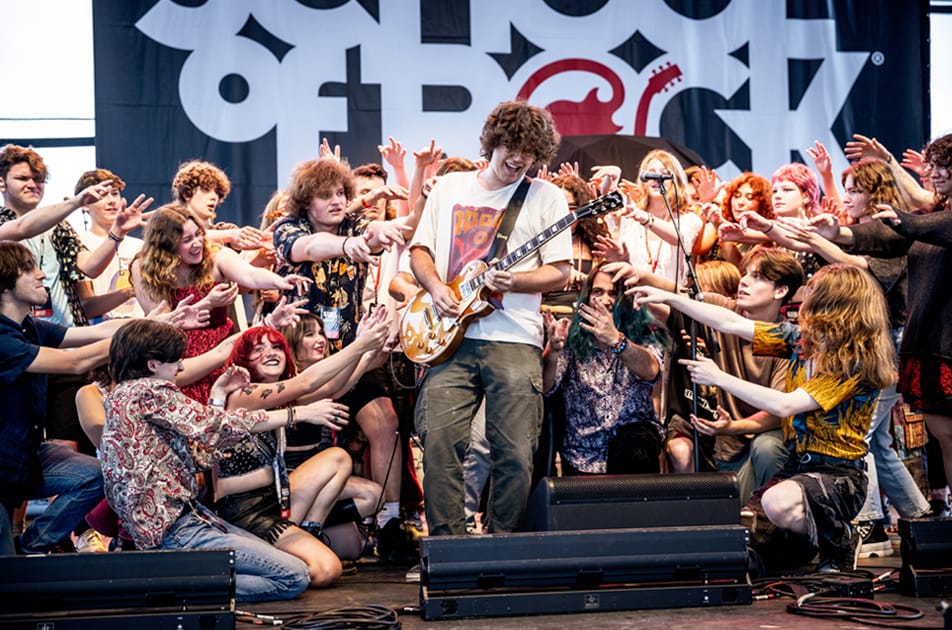
***+Read more:*** [*"Backstage Pass: Tobi Parks of Tour Tech & xBK on Closing the Live Music Data Gap"*](https://www.hypebot.com/backstage-pass-tobi-parks-of-tour-tech-xbk-on-closing-the-live-music-data-gap/)
## Young Musicians Take the Next Step
The 2026 class includes students at very different points in their musical development. **Logan,** a 15-year-old from Vancouver, recently performed national anthems before more than 26,000 people at a professional soccer match and is the first student from his School of Rock location to earn AllStar status. **Rodrigo,** 15, of Lima, Peru, will perform in the United States for the first time.
**Noah,** an 18-year-old musician from Farmington, Connecticut, will attend Berklee College of Music this fall, while 17-year-old **Sophia** of Woodland Hills, California, is returning for her third AllStars tour after previously performing alongside Victor Wooten and Jacob Collier.
Former AllStars have gone on to sign recording contracts, tour professionally, appear in Broadway productions and compete on *American Idol* and *The Voice*. Others have pursued careers outside music in fields including medicine, robotics and aerospace engineering.
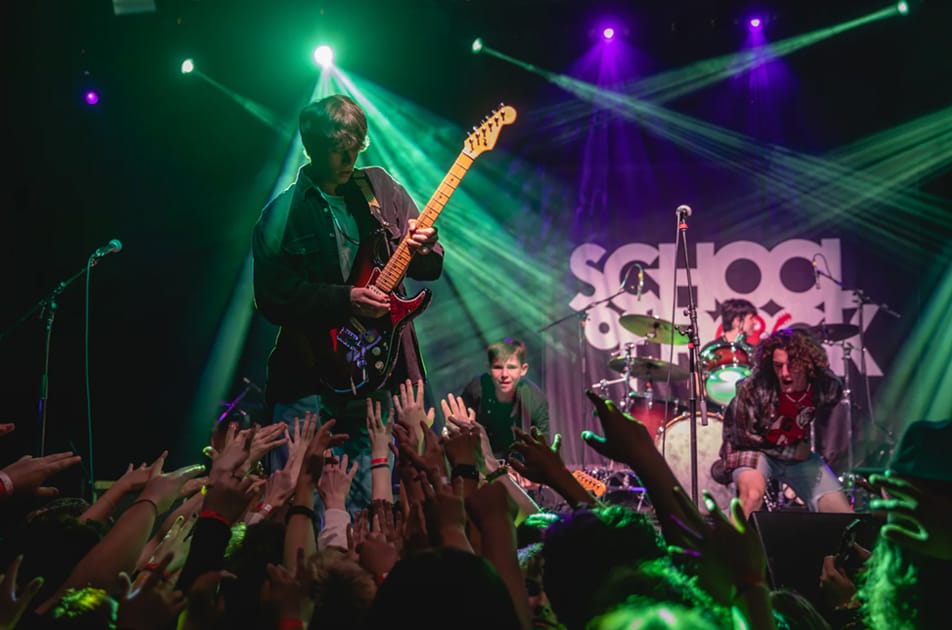
**+Read more:** [*"From Aircraft Carriers to Delis: Live Music Promoters Are Betting on Unusual Venues"*](https://www.hypebot.com/from-aircraft-carriers-to-delis-live-music-promoters-are-betting-on-unusual-venues/)
## Touring to Expand Music Education Access
This year’s tour will also raise money for the [Play Without Limits Project](https://www.playwithoutlimits.org/?ref=hypebot.com), which provides scholarships to students who might not otherwise be able to participate in School of Rock programs.
A 2025 parent survey commissioned by School of Rock and administered by a third-party consultancy found that 96.2% of respondents observed improved self-confidence in their children. More than 84% reported [progress in confidence](https://www.hypebot.com/how-an-athletic-mindset-can-help-artists-with-performance-anxiety/), communication and participation in group settings.
By pairing those outcomes with a national touring experience, School of Rock is positioning live performance as more than the conclusion of a music lesson. For the AllStars, the road itself becomes part of the education — teaching collaboration, adaptability and the realities of performing night after night.
The six regional tours run **from July 20 through July 25.** Dates, venues, tickets and donation information are available through the official [**School of Rock AllStars tour page**](https://www.schoolofrock.com/allstars2026?ref=hypebot.com)**.**
### UK Unveils £45M ‘Turn It Up’ Plan to Back Artists, Venues, and Careers
URL: https://www.hypebot.com/uk-unveils-45m-turn-it-up-plan-to-back-artists-venues-and-careers/
Last updated: 2026-07-20T16:32:49.000Z
The **UK government** has launched a wide-ranging national strategy designed to strengthen the country’s music industry from classrooms and grassroots venues to international [touring.](https://www.hypebot.com/tag/touring/)
[**Turn It Up: Our Plan for Music**](https://www.gov.uk/government/publications/turn-it-up-our-plan-for-music/turn-it-up-our-plan-for-music?ref=hypebot.com) includes a £15 million injection into the government’s **Music Growth Package**, bringing the fund’s total value to **£45 million** (approximately $60 million) **between 2026 and 2029.**
The expanded package is expected to support more than 2,000 projects and at least 40,000 artists and music professionals over the next three years. Unlike earlier funding programs focused primarily on grassroots infrastructure, the new package will [also provide direct support](https://www.ukmusic.org/news/uk-music-chief-welcomes-government-plan-to-turn-up-music-industry/?utm%5Fsource=chatgpt.com) to emerging and mid-career artists, bands, managers, labels and publishers.
Culture Secretary **Lisa Nandy** states:
> *“Talent is everywhere, but opportunity is not.”*
## Where the funding will go
The £45 million Music Growth Package is divided into three main areas. The first will support roughly 500 infrastructure projects involving grassroots venues, clubs, festivals, promoters, recording studios and rehearsal spaces.
A second strand will fund domestic touring, showcasing and promotion, including support for approximately 500 projects and 300 awards through the Early Career Promoter Fund.
The third will help around 700 independent artists, creators and music professionals reach international markets. That includes £4.8 million for the Music Export Growth Scheme, alongside an expansion of the International Showcase Fund.
Grants of up to £100,000 will also be made available to established organizations and trade groups seeking to scale existing programs. Applications are expected to open through [Arts Council England](https://www.artscouncil.org.uk/?ref=hypebot.com) during summer 2026.
## Music education moves beyond the classroom
The strategy also aims to widen access to [music education](https://www.hypebot.com/tag/education/) for young people who may not be able to afford private lessons, equipment or extracurricular programs.
At least £12.5 million in dormant-assets funding will support a new Music in Libraries initiative co-designed with the **Ed Sheeran Foundation**. Library authorities across England will be able to apply for funding to add instruments, recording booths, studio equipment, workshops and live performance opportunities.
Another £10 million will support creative mentoring for children and young people who have experienced the care system. The program will provide one-on-one relationships with creative professionals while helping cover costs including tuition, equipment, transportation and tickets.
Music is also set to receive a stronger position in England’s reformed National Curriculum beginning in September 2028\. Meanwhile, the government is investing £9 million over three years in the Discover Creative Careers program, intended to connect students with professional opportunities throughout the creative industries.
***+Read more:*** [*"Do You Know Why There's No Glastonbury This Year? (It's So Cool.)"*](https://www.hypebot.com/do-you-know-why-theres-no-glastonbury-this-year-its-so-cool/)
## New support for venues, festivals, and touring
For the live sector, the plan includes several attempts to lower the practical barriers facing independent organizers. The number of Temporary Event Notices available to a venue each year will increase from 15 to 20, while the maximum number of event days will rise from 21 to 26\. The government also plans to encourage longer licensing agreements for [festivals](https://www.hypebot.com/tag/festivals/), including minimum three-year terms for new events and five-year terms for established ones.
The strategy promises stronger implementation of the Agent of Change principle, which is intended to protect existing music venues from noise complaints arising after nearby residential development. Government departments will issue updated guidance to local planning authorities and examine whether additional changes to noise regulations are required.
On international touring, the government acknowledged that **Brexit** has created additional costs and administrative burdens for UK artists and crews. It pledged to continue working with European partners, improve official touring guidance and support the rollout of digital ATA carnets, although the strategy stops short of offering a comprehensive solution to post-Brexit touring restrictions.
## Ticketing, AI and creator protections
The plan reiterates the government’s support for banning ticket resale above face value, a measure it estimates could save fans approximately £112 million annually.
It also calls for broader adoption of the live industry’s voluntary £1 contribution on tickets for shows at venues with capacities above 5,000\. The LIVE Trust has already distributed £1.5 million from the initiative to grassroots venues, small festivals and artist touring programs. The government said it may consider legislation if voluntary participation does not become widespread.
On [artificial intelligence](https://www.hypebot.com/tag/ai/), the government will establish a task force to develop recommendations for labeling AI-generated content, consult on protections against unauthorized digital replicas and review tools that allow creators to control how their work is used online.
The strategy also creates a Creative Freelance Champion to represent a workforce in which approximately 65% of people in music and the performing arts operate on a freelance or self-employed basis.
UK Music Chief Executive Tom Kiehl welcomed the plan as an important step that could “boost jobs and opportunities right across the UK.” The organization estimates that the British music industry contributed £8 billion to the economy in 2024, generated £4.8 billion in exports and supported 220,000 jobs.
For an industry facing rising touring costs, fragile venue economics and an increasingly unequal path into creative careers, *Turn It Up* represents something substantial: a government treating music not simply as a cultural success story, but as an ecosystem worth actively supporting.
[*Read the full plan here.*](https://www.gov.uk/government/publications/turn-it-up-our-plan-for-music/turn-it-up-our-plan-for-music?ref=hypebot.com)
### Lalu's Corner: Scaling on Adjacency
URL: https://www.hypebot.com/lalus-corner-scaling-on-adjacency/
Last updated: 2026-07-20T14:51:52.000Z
*Welcome to* [***Lalu's Corner***](https://www.hypebot.com/tag/lalus-corner/)*, a monthly column by music and brand partnership agent *Lauren Thackray*, exploring commercial music applications and sync placements, and the most pertinent takeaways for independent artists.*
In February, **Alysa Liu** won Olympic gold and then did something no one asked her to do. In the exhibition gala - the free skate, no medal on the line - she skated to "Stateside," the [**PinkPantheress**](https://www.bandsintown.com/a/15495835-pinkpantheress?utm%5Fsource=hypebot&came%5Ffrom=900) and [**Zara Larsson**](https://www.bandsintown.com/a/1602952-zara-larsson?utm%5Fsource=hypebot&came%5Ffrom=900) track, in an outfit modelled on PinkPantheress' look from the [music video.](https://www.youtube.com/watch?v=lIxQe1R5hs0&ref=hypebot.com)
[The song went to No. 1](https://www.hollywoodreporter.com/music/music-news/alysa-liu-effect-pinkpantheress-zara-larsson-stateside-bump-1236523804/?ref=hypebot.com) on [**Spotify's**](https://www.hypebot.com/tag/spotify/) Global Daily Chart the next day.
Interesting to think about why it was primed to travel the second someone gave it a reason to.
## **Adjacency over reach**
Zara Larsson has had hits for over a decade, like "Lush Life," and "Ain't My Fault," and a genuine pop CV to boot; not to mention a Grammy nod for *Midnight Sun* and a full viral moment of her own in 2024 when a TikTok meme sent "Symphony" back up the charts nine years after its release.
She wasn't obscure, and she wasn't waiting to be discovered, but she was back as a nostalgia act (the "decade-old song people were rediscovering"); not as the artist setting the temperature. Then she turns up on a PinkPantheress remix and the register changes entirely: a [Coachella](https://www.hypebot.com/tag/coachella/) appearance, a No. 1, a different kind of attention altogether.
Zara didn't need PinkPantheress' audience, she already had reach of her own, plus a meme that proved she could still go viral without help. What she got instead was **adjacency**: **proximity to an artist coded as *taste***, placed next to her on a record built to be shared.
PinkPantheress handed Zara her credibility. This is the thing worth sitting with for anyone advising an artist on features: stop asking who has the numbers. Ask who's coded as taste-aligned in the exact way your artist isn't yet. The right feature changes what an artist is allowed to mean.
***+Read more:*** [*"For PinkPantheress, a Minimal Stage Is Key to Intimate Fan Connection"*](https://www.hypebot.com/for-pinkpantheress-a-minimal-stage-is-key-to-intimate-fan-connection/)
## **Authenticity is the adjacency you can't fake your way into**
Which is really the whole game. Zara didn't just co-sign a hot feature — she co-wrote every track on *Midnight Sun*, working the record with MNEK, aligning herself with the self-made pop star that PinkPantheress and **Charli XCX's** *Brat* had already made the default.
The manufactured, untouchable pop star like Britney or Beyoncé — built at arm's length from the audience — wasn't the model she was reaching for.
> [@britishvogue](https://www.tiktok.com/@britishvogue?refer=embed&ref=hypebot.com "@britishvogue")
>
> [#PinkPantheress](https://www.tiktok.com/tag/pinkpantheress?refer=embed&ref=hypebot.com "pinkpantheress") fangirls over [#Olympic](https://www.tiktok.com/tag/olympic?refer=embed&ref=hypebot.com "olympic") gold medal-winner [#AlysaLiu](https://www.tiktok.com/tag/alysaliu?refer=embed&ref=hypebot.com "alysaliu") at the [#Burberry](https://www.tiktok.com/tag/burberry?refer=embed&ref=hypebot.com "burberry") AW26 show at LondonFashionWeek.
>
> [♬ original sound - British Vogue](https://www.tiktok.com/music/original-sound-7610183824890219294?refer=embed&ref=hypebot.com "♬ original sound - British Vogue")
That matters here specifically because adjacency runs on trust. PinkPantheress could transfer credibility to Zara because PinkPantheress *has* credibility to lend — earned by being visibly, audibly the author of her own music. A figure skater could reach for "Stateside" unprompted because the song read as real, not as product.
Authenticity isn't a value statement anymore. It's the currency that makes every other adjacency possible.
## **Adjacency compounds**
Liu didn't just skate to a song — she lent it something back. An Olympic gold medal, an exhibition slot with no scoring on the line, a look built off PinkPantheress' own video: a 20-year-old volunteering her biggest platform to a pop record because the association already made sense to her.
That's the second half of the mechanism. The PinkPantheress feature bought Zara one adjacency, deliberately, with a deal behind it. Liu's skate multiplied it. Once an artist is coded as credible enough, other people start doing the work of standing next to them - unpaid, spending their own reputation on the association.
The first adjacency is never the last one. The payoff is everyone who borrows it after you.
### What's the takeaway in all this?
**For the artist:** Your next feature isn't a numbers trade, it's a credibility transfer - pick the person who allows people to believe in something new about you.
**For the manager:** The adjacency you can build is the deliberate one - the feature, the co-sign, the right room. Get that right and the free ones, the unbriefed skates, the borrowed looks, start compounding on their own.
**For the label or brand** backing either: You're not just buying reach for a campaign or a release, you're buying what strangers will be willing to lend it next, for free.
Zara Larsson had the songs, the numbers, even a meme, for years. It took one adjacency, and one moment nobody planned, to change what she meant.
---
## [**PinkPantheress Tour Dates**](https://www.bandsintown.com/a/15495835-pinkpantheress?utm%5Fsource=hypebot&came%5Ffrom=900)
## [**Zara Larsson Tour Dates**](https://www.bandsintown.com/a/1602952-zara-larsson?utm%5Fsource=hypebot&came%5Ffrom=900)
---
[***Lauren Thackray***](https://www.linkedin.com/in/laurenthackray/?ref=hypebot.com) *is the Founder of* [***LALU&CO***](https://www.linkedin.com/company/lalu-co/?ref=hypebot.com)*, a music culture agency helping brands build artist partnerships and cultural strategy. Her clients include Unilever, L’Oréal Paris and Heineken amongst others. And via her Substack newsletter,* [*LALU Dispatch*](https://laluandco.substack.com/about)*, she writes about brands and music.*
### Your Friend Bought the Tickets… For God’s Sake, Pay Them Back 💸
URL: https://www.hypebot.com/your-friend-bought-the-tickets-for-gods-sake-pay-them-back/
Last updated: 2026-07-20T15:11:55.000Z
Every friend group has one. They wake up early for the presale; they create the Ticketmaster account; they memorize the access code, survive the queue and keep an eye on their screen for hours; and then somehow magically find six seats together before the [little blue dots disappear](https://www.hypebot.com/what-is-blue-dot-fever-the-rising-tide-of-tour-cancellations-in-2026/).
But then reality sets in. They've just put everyone else’s tickets on **their credit card.**
According to new research published by [**Zelle**](https://www.zelle.com/?ref=hypebot.com), that familiar act of group-chat heroism is increasingly leaving young consumers with debt, anxiety, and a collection of increasingly desperate payment requests.
Zelle’s new [***Avoidance Economy Report***](https://www.zelle.com/press-releases/new-zelle-research-group-chat-lit-settling-another-story?ref=hypebot.com) found that **76% of Gen Z consumers** who have fronted money for a group expense said **they were not fully repaid.** More than half said the experience created tension or negatively affected a relationship, while **47% reported going into debt** to cover group expenses.
Let's dig in.
## One Friend Has Become the Group’s Bank
[Live entertainment](https://www.hypebot.com/tag/live-music/) is built around *shared experiences,* but [buying tickets](https://www.hypebot.com/tag/tickets/) together rarely means sharing the financial risk equally. Because of the way ticketing platforms have gamified and funnelized the purchase moment, when a concert goes on sale, there is generally **no time** to collect money from five friends, confirm everyone’s budget and patiently discuss whether Section 112 is worth another $40\.
Tickets are disappearing in milliseconds. Prices are always fluctuating. The group needs someone to make a decision, *fast.*
But the problem is, with everything being so pricey right now, the person who hit "Purchase" is no longer simply a friend. For the next several weeks, they are a ticket broker, travel coordinator, accounts-receivable department and interest-free lender. And that has consequences.
A friend who once fronted $150 for three club tickets may now be carrying hundreds (or thousands) of dollars in tickets, fees, hotel rooms and transportation costs.
Zelle’s research found that Gen Z was the [highest-spending generation](https://www.hypebot.com/luminate-live-music-report-of/) surveyed for major travel and event experiences. 37% reported spending at least $2,501 per person on average for events such as Coachella, the World Cup, the US Open and the Super Bowl. Those figures are obviously not limited to concerts, but they capture something increasingly familiar across live entertainment: participating in a major cultural moment can require vacation-sized spending.
## Payment Requests Now Offer a Crucial Data Window Into Group Social Activity
In 2026, nobody needs to walk for blocks just to find an ATM anymore, or write a check, or leave an "IOU" on the fridge. Payment requests for digital money transfers can be made in seconds.
Zelle's data tracks the time it takes between the request and the transfer, and their recent study found that some Gen Z consumers take months to settle shared expenses. 18% said repayment could take up to one month, 10% said it could take between two and six months, and 11% said it could take longer than six months.
The delay also creates a distinctly modern form of social discomfort. Zelle calls it **“Payment Avoidance”** — delaying, ignoring or withdrawing from conversations about money. 20% of Gen Z respondents said they had canceled plans or muted or ignored group chats to avoid repayment, while one-third said settling shared expenses caused stress or anxiety.
That means the digital payment request is doing more than moving money. It is becoming part of the social record surrounding the event.
**+Read more:** [*"Luminate Live Music Report: The Who & How of Concert-Going Are Changing"*](https://www.hypebot.com/luminate-live-music-report-of/)
## Rising Prices Raise the Emotional Stakes
Owing a friend $20 can feel casual. Owing them $400 changes the temperature of a conversation. The higher the cost of live entertainment climbs, the more financially exposed the group’s designated buyer becomes. That person may be carrying the balance on a credit card, absorbing interest or temporarily losing access to money needed for rent, groceries and other expenses.
Meanwhile, asking to be repaid can feel strangely impolite — even when it is completely reasonable. This is where a simple transaction becomes a friendship problem. The person who owes money may be experiencing genuine financial anxiety. The person who fronted the money may feel taken advantage of. Both may avoid discussing it because neither wants a concert, dinner or weekend trip to become an argument.
According to the report, 25% of Gen Z respondents said repayment problems had damaged a relationship over the long term. Fourteen percent said they had ended a friendship or relationship over a repayment dispute.
## Digital Payments Don’t Fix the Entire System
Unsurprisingly, Zelle’s most frequent users reported that digital payments make these transactions easier. Among the 1,000 “super-users” surveyed, 80% said Zelle helped them get paid faster, 68% said it made splitting costs more equitable and half said it reduced the awkwardness of settling shared expenses.
Those findings come from frequent Zelle users and should be understood as product-oriented research. Still, the broader behavior is difficult to dismiss. Payment apps reduce the effort required to transfer money, but they cannot make an unaffordable outing affordable. They also cannot eliminate a ticketing structure that often forces one person to assume the entire group’s financial risk.
**Ticketing platforms could potentially do more, too.** Split-payment options, short group reservation windows and individual payment links could allow friends to secure adjacent tickets without requiring one attendee to finance the outing.
Until then, the friend who successfully gets through the queue remains the group’s unofficial bank. So celebrate them. Buy them a drink at the show. Forgive them for selecting seats slightly farther from the stage than everyone wanted.
And, for God’s sake, pay them back.
**+Read more:** [*"Exposing How the Live Music Industry Lies About Its Massive Carbon Footprint"*](https://www.hypebot.com/exposing-how-the-live-music-industry-lies-about-its-massive-carbon-footprint/)
---
*Read Zelle's Zelle’s full* [*Avoidance Economy Report*](https://www.zelle.com/press-releases/new-zelle-research-group-chat-lit-settling-another-story?ref=hypebot.com)*.*
### Your Morning Coffee Podcast: Spotify Playlists Are Shrinking, Luminate's 2026 So Far, Suno.
URL: https://www.hypebot.com/your-morning-coffee-podcast-51/
Last updated: 2026-07-20T13:23:19.000Z
### **Listen on your favorite** [**podcast platform**](https://bio.to/UloQY6?ref=hypebot.com)**.**
Subscribe to the Your Morning Coffee newsletter [here](https://label-logic.us8.list-manage.com/subscribe?u=735771602810b0eb238d4e814&id=1ffaab59d7&ref=hypebot.com).
**YMC Episode 311 — July 20, 2026**
On this week’s episode of the **Your Morning Coffee podcast**, your hosts Jay Gilbert and Mike Etchart chat about these timely music industry stories:
- **Luminate Midyear Report 2026: R&B/Hip-Hop Falls, Dance Rises, CDs Surge 16% & More**
- **Suno Scraped YouTube, Deezer to Train AI, Hacked Code Reveals - Potentially Strengthening UMG & Sony's Case**
- **Spotify's Editorial Playlists Look Enormous, But They're Shrinking**
- **Your Catalog Might Be Your Best Marketing Asset, Here's How To Use It**
Plus an audio with Craig Meyer from GigLogic!
Listen right here:
Subscribe to the Your Morning Coffee newsletter [**here**](https://label-logic.us8.list-manage.com/subscribe?u=735771602810b0eb238d4e814&id=1ffaab59d7&ref=hypebot.com)**.**
**FIND MORE CURATED MUSIC BUSINESS AND INDIE**
**PODCAST EPISODES** [**HERE**](https://www.hypebot.com/tag/podcast-music-biz/)
### Are Music Festivals the New Frontier of Digital Media?
URL: https://www.hypebot.com/are-music-festivals-the-new-frontier-of-digital-media/
Last updated: 2026-07-17T15:16:54.000Z
In the eyes of music fans, [livestreaming](https://www.hypebot.com/tag/livestream/) a music festival has pretty much always been seen as a way to extend the [festival's](https://www.hypebot.com/tag/festivals/) influence out to those who couldn't attend, whether geographically or financially.
An extra camera feed to build a little FOMO in the fan space. Nothing wrong with that?
But nowadays, we're seeing so many festivals go bankrupt, financial backers pulling out or festivals having to cross new thresholds for supportive fundraising, just to make ends meet, as well as tickets going unsold in a particularly volatile economy. All of this leaves music festivals with the annoying predicament of having to scramble for additional revenue streams just to stay alive.
The livestream used to be a bonus gift to a festival's global digital community, but now digital content is shifting to become one of the driving forces of the performance curation, production design, and technical foundations of a music festival *existentially.*
This summer, [**Disney+** is joining **Hulu**](https://press.disneyplus.com/news/music-festivals?ref=hypebot.com) to livestream **Bonnaroo, Lollapalooza,** and **Austin City Limits** globally, expanding what had largely been a US-focused streaming offering into an international entertainment product. The broadcasts won't simply show performances. They'll also include artist interviews, backstage content, and festival-produced programming designed specifically for viewers watching from home.
***+Read more:*** [*"Sturgill Simpson's Taking His Alter Ego on Tour — the Risk and the Mystery Are the Point."*](https://www.hypebot.com/sturgill-simpsons-taking-his-alter-ego-on-tour-the-risk-and-the-mystery-are-the-point/)
It's another sign that music festivals are evolving into something much larger than multi-day live events. They're becoming a new type of media company.
And this is just the beginning. Those three partnerships still anchor the live stage performance as the centerpiece of the event, the live audience is in the room and the artist is playing to them. This, now, is an extension of the television rights acquisition arrangement to broadcast live events, like [the BBC started](https://spectator.com/article/the-festivalisation-of-tv/?ref=hypebot.com) with [the Glastonbury Music Festival](https://www.hypebot.com/do-you-know-why-theres-no-glastonbury-this-year-its-so-cool/) in 1994.
During the COVID-19 pandemic in 2020, Glastonbury happened entirely online and on television due to lockdown measures.
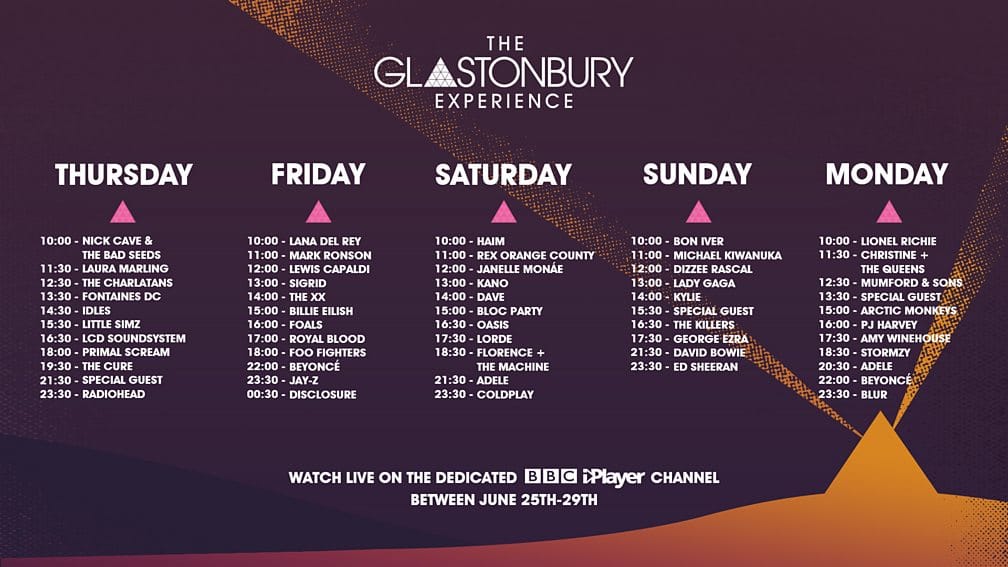
**The Glastonbury 2020 lineup, shared by the BBC.*
According to cultural theorist **Leanne Weston**, [writing for *CST Online*](https://cstonline.net/live-forever-glastonbury-2020-television-time-memory-and-nostalgia-by-leanne-weston/?ref=hypebot.com):
> *"The typical function and understanding of the BBC’s Glastonbury coverage, to stand in for “being there” is further amplified. As such, part of the cultural work performed by the 2020 coverage is to negotiate for multiple forms of loss and lack – the lack of attendance, the lack of an event, and the (seeming) lack of an alternative – offering ways for the audience to connect or reconnect with Glastonbury as a cultural site and symbol. The underlying public service imperatives of the coverage are clear, contributing to wider cultural practices that bind the nation in a time of crisis, while also reasserting its position through a re-presentation of its history, achieved through repurposed Glastonbury footage."*
Weston writes that the dominant broadcast model of the past was, and even continued to be throughout the global crisis of the COVID-19 pandemic, based on catering to "lack" — a general public's lack of presence at what is considered to be an important shared cultural event. Those in attendance of these events are typically considered privileged, opportunistically.
But as the future is starting to reveal itself through content marketing partnerships such as these, which put forth a new criterion of privilege in paywall subscription access and thus a new understanding of what the "product" is in the transaction of entertainment consumption, we have to assume this will one day change the nature of music festivals to then cater to a digital audience first and foremost.
As **Graeme Thomson** writes in [this piece for *The Spectator*](https://spectator.com/article/the-festivalisation-of-tv/?ref=hypebot.com): "Televising Glastonbury has changed the festival, and in turn transformed television." I cannot imagine it doesn't then also go the other way.
A festival that welcomes 70,000 attendees can suddenly reach millions of viewers around the world without adding a single person to its grounds, and the audience is no longer limited by venue capacity. So why would media companies continue to put the live audience at the center of an experience meant to scale to millions of viewers elsewhere?
Instead of monetizing only those who physically attend, festivals can now create value before the gates open, throughout the weekend, and long after the final encore.
That fundamentally changes the economics. Livestreams generate advertising inventory, subscription value, sponsorship opportunities, social media clips, behind-the-scenes programming, artist interviews, documentary footage, and years of archival content.
The livestream also becomes marketing for next year's ticket sales, reminding viewers what they're missing while simultaneously giving sponsors and artists a global audience. Every broadcast extends the life of the festival beyond a single weekend.
Yet my hope is that this shift doesn't begin to diminish the value of being there in person, and that audiences don't start to expect access over attendance. One of the palpable joys we all experienced in 2021 and 2022 when large-scale cultural events were safe enough to start inviting in-person audiences again, was that sense that we had been missing out on shared public space moments of standing in a crowd together, experiencing something as a group.
We'll see how this plays out over the next few iterations of these festivals in question. Ultimately it's a net positive that they've been able to survive the wave of ["Blue Dot Fever"](https://www.hypebot.com/what-is-blue-dot-fever-the-rising-tide-of-tour-cancellations-in-2026/) that's been poisoning the live touring ecosystem of late, by finding a new sustainable revenue stream.
I'm just not sure I want to be able to answer the question of *"what do Bonnaroo, Love Island, and The Mandalorian all have in common?"* with *"you can watch all of them on your couch in your underwear."*
***+Read more:*** [*"How Lollapalooza's Evolution Has Defined the Last 3.5 Decades of Live Music"*](https://www.hypebot.com/how-lollapaloozas-evolution-has-defined-the-last-3-5-decades-of-live-music/)
### Black Marble on Songwriting Mindsets, the Lie of Fantasy, & American Thievery
URL: https://www.hypebot.com/black-marble-on-songwriting-mindsets-the-lie-of-fantasy-american-thievery/
Last updated: 2026-07-17T13:47:03.000Z
[**Black Marble**](https://www.bandsintown.com/a/2202001-black-marbleutm%5Fsource=hypebot&came%5Ffrom=900?ref=hypebot.com) is the synthwave pop project of NYC-based songwriter and producer **Chris Stewart.** His newest record, [***Life in Small Spaces***](https://blackmarble.lnk.to/lifeinsmallspacesPR?ref=hypebot.com)*—*which comes out next month and of which, two singles have been released — is unmistakably written for his audience's ears, yet the subject matter is almost a letter to and about the music industry itself.
Stewart writes about his experience of disillusionment and disappointment as he navigated the music business from the seat of an artist on the rise for so many years. It's honest and truthful, and unique, and in no way does this exposé of analysis take away from the resonance and chops of the songwriting itself. Part of that is because it's a "live sounding" album. It's raw, and in that conscious approach to production, that much more authentic.
I knew that Black Marble was also starting a long string of tour dates in support of the record launch, and that Stewart has taken to the road quite a bit in his career. So we talk about all that and more.
Here's our conversation. Enjoy!
---
**Hypebot: Hey Chris, thanks for taking the time to answer some questions. Congrats on** [***Life in Small Spaces***](https://blackmarble.lnk.to/lifeinsmallspacesPR?ref=hypebot.com)***,* which comes out next month. What is different about this record versus your past albums?**
Chris: "Sonically it's much more of a guitar and bass sort of old-school, underground sounding pop record. A bit more lo-fi than the last two records but probably still a bit more produced than the first or second one."
I think it took the last two records to make this one. I couldn't have made this one before now because I didn't have the production experience or songwriting skills to write these compact songs, honestly."
**H: What connects the live show to the record for you? Or vice versa, do they inform each other in some way?**
C: "Well much more so than in the past, I'm thinking of making songs I want to play live. When I first started I just wanted to make songs people would like when listening to headphones on the subway, whereas now, I know I'm going to play these songs on the road, that's the fun part of being in a band, the touring."
So I'm always thinking about when I'm writing whether or not something would be a good live song."
**H: On that note, I watched this live show you did that was captured in full in 2024 and you’re playing the guitar the whole time. Yes there’s a synth player on stage, but in a weird way I’m surprised you’re not wielding a synth in your live performance considering the album material! I’m just curious what drove the decision to play these songs on guitar live? And is that still the case today?**
C: "Ha yeah I get that, I suppose I just like playing guitar on stage. It feels fun to sing and play guitar. It's a bit more unwieldy to sing and play keyboards, always looking down and picking out notes. It doesn't make for the most engaging performance and I'm always trying to find ways to be more comfortable and in the zone on stage. With guitar it's easier to be expressive and sing and play at the same time."
**H: One thing that gets talked about with this new LP is that there’s some pondering and commentary on the music industry itself, particularly economics and the longevity of an artist’s standing. You’ve said: *“The life of an artist goes on after your moment ends, you know? So who do you want to be in the end and how do you want to be seen by the people that know you?”* Can you expand on that?**
C: "Sure. When you're in music long enough you start to realize about half, maybe more than half of your peers are in it as a game they are playing to see who can become a more popular band. Every social media post, every picture every video posted exists solely to give the impression that the band is a big and popular band because in order to become a big and popular band, these people have deduced, the way to do it is trick people into thinking you're that way already, which, to a certain extent works."
In the end though you can only go as far as other people will take you. For me, I don't want to try and trick people into thinking I'm cooler than them, that sort of 'exclusivity angle.' That's more like seeing music like politics; operating as though the listeners are stupid and you're selling them a fantasy. I don't think so lowly of people. I feel like if you're not deep in the music game you don't even notice people being like this, because I didn't. But yeah once you're in you see how many people do everything they do with a political calculation first and foremost."
It makes me wonder if other creative disciplines, writing, acting, filmmaking are the same way."
> *"I don't want to try and trick people into thinking I'm cooler than them, that sort of 'exclusivity angle.' That's more like seeing music like politics; operating as though the listeners are stupid and you're selling them a fantasy. I don't think so lowly of people."*
**H: Do songs generally come to you fast while you’re writing or are they laborious and slow?**
C: "Pretty fast but I have albums worth of unfinished songs. At a certain point if it's not working I just set it aside. Sometimes I can come back to it later and hear what it needs with fresh ears. Like months or even years later."
**H: What is uncompromising to you creatively, and what is malleable?**
C: "What's uncompromising, or can't be compromised if I understand correctly, is that I'm writing songs for me and the people that are like me. Whoever we are. We exist as a big group floating above my head and I'm writing for us. What's malleable is what the songs sound like. As long as they speak to me they will speak to us."
**H: Do songs evolve on the road at all, it strikes me that with the drum machine parts programmed there’s not a lot of flexibility to stretch those tracks out but I’m curious if you write “live versions” of your songs that include vamps or extensions at all?**
C: "Yeah it's more adapting them for a three-piece live setup that changes them but I've always been okay with those changes and most of the time I really like the live version adaptations. I feel like they come out a bit leaner and meaner sometimes, but honestly a good portion of the songs sound pretty similar live to recorded."
**H: Are there songs from either this or past records that trip you up playing live?**
C: "Not really, no. When I first started playing live shows I was so bad at playing that I would like, go out to the car and practice playing the parts in between other bands' sets. I was so nervous and prone to making mistakes. Now I can play well enough to pick up songs fairly quickly."
I almost forgot about those days, it's good to remember how far you've come every once in a while, haha!"
**H: Do you think touring is essential for artists today?**
C: "It probably is if you want to make a living as an original band, but I feel like there's so many ways to be involved with music whether scoring or songwriting or teaching that don't involve touring that could be a nice and stable way to have a career in music without trying to be a 'band' in the classical way."
> "When I first started playing live shows I was so bad at playing that I would like, go out to the car and practice playing the parts in between other bands' sets. I was so nervous and prone to making mistakes."
**H: What’s something you’ve learned by spending time on the road?**
C: "How America as a country is like a cardboard box you throw 80 stupid people and like 20 smart people into and say: 'Okay you smarter ones, go ahead and take advantage of the stupid ones.' The whole PT Barnum thing, there's a sucker born every minute. That's really internalized here. When someone rips you off you feel stupid more than you feel outraged."
In other countries, if businesses lie and steal from their customers the citizens would be up in arms. Here it's like: 'Oh you bested me again Postmates. You said the food would come in 36 minutes and the second I paid for it you changed the time to an hour and 12 minutes. Silly me.' It's like, no that's just like a lie. Everyone here is a thief and a liar and are brainwashed into thinking that makes them smart. It's not like you're the stupid one if you don't want to participate. But you can get tricked into thinking you are."
On tour in Europe, I realized how young my country is and that it's an extension of these much older places where people seem to be a little more laid back and have internalized some wisdom we seem to currently lack just because they've been around so much longer, I think. I think there's some good things about the States also but I feel like they have things a bit more wired in other places about how to live with a certain dignity."
**H: As a fan, who are some artists you’ve seen play live recently that have blown you away?**
C: "I have been so busy with the record, it's sad to say I haven't been able to get out to shows recently!"
**H: Ah too bad, well when you do go out, what's your favorite post-concert food to eat?**
C: "Well it depends on where I am. In NYC, it's a slice of Pizza, in LA it's tacos and in Europe it's Kebab."
**Life in Small Spaces* by* [***Black Marble***](https://www.instagram.com/blackmarblenyc/?hl=en&ref=hypebot.com) *comes out August 21st on Sacred Bones.* [*Pre-order or Pre-save here.*](https://blackmarble.lnk.to/lifeinsmallspacesPR?ref=hypebot.com)
---
## [**Black Marble Tour Dates**](https://www.bandsintown.com/a/2202001-black-marbleutm%5Fsource=hypebot&came%5Ffrom=900?ref=hypebot.com)
### Ringo Says Farting in the Band Van Is Okay.
URL: https://www.hypebot.com/ringo-says-farting-in-the-band-van-is-okay/
Last updated: 2026-07-17T12:33:34.000Z
When **Ringo Starr** [was recently asked](https://www.music-news.com/news/UK/190071/Ringo-Starr-says-Beatles-had-one-rule-on-long-van-rides-own-up-to-the-fart?ref=hypebot.com) about life on the road, he shared one of **the** **Beatles'** simplest rules for long van rides: if someone farted, they had to admit it.
> *"If you're in the van and you fart, own up to it... At the beginning, it was like ‘well, it wasn't me.' And we realized, well, just to get it out of the way, say 'I did it.' And it worked a treat and it took the pressure off."*
It's the kind of story that sounds too ridiculous to be true. Yet musicians from **Brian Johnson** of **AC/DC** to **St. Vincent** to **Dave Grohl** have all swapped similar stories in interviews and in the *What Drives Us* documentary.
> If you fart, admit it. - [@ringostarrmusic](https://x.com/ringostarrmusic?ref%5Fsrc=twsrc%5Etfw&ref=hypebot.com) [#fartvan](https://x.com/hashtag/fartvan?src=hash&ref%5Fsrc=twsrc%5Etfw&ref=hypebot.com)[#WHATDRIVESUS](https://x.com/hashtag/WHATDRIVESUS?src=hash&ref%5Fsrc=twsrc%5Etfw&ref=hypebot.com) directed by Dave Grohl is out Friday, April 30th!!!
>
> To be released exclusively on the [@Coda\_Collection](https://x.com/Coda%5FCollection?ref%5Fsrc=twsrc%5Etfw&ref=hypebot.com) in the U.S. and via Amazon Prime Video outside the U.S. [https://t.co/NLw8nyzbfo](https://t.co/NLw8nyzbfo?ref=hypebot.com) [pic.twitter.com/LXaX0JNZfD](https://t.co/LXaX0JNZfD?ref=hypebot.com)
>
> — Foo Fighters (@foofighters) [April 28, 2021](https://x.com/foofighters/status/1387502361334087680?ref%5Fsrc=twsrc%5Etfw&ref=hypebot.com)
It's become clear that nearly every [touring](https://www.hypebot.com/tag/touring/) band has its own version of this conversation.
The joke isn't really about farting. Although, perhaps for Ringo, it might actually be...
But this speaks more to what happens when a handful of people choose to spend weeks, or months, living together in a space barely bigger than a walk-in closet.
Most fans experience the 90 or so minutes on stage they see of the band playing together. They don't see the hundreds of hours spent inside vans, backstage lounges, hotel rooms, airport terminals, truck stops, and parking lots. Those are the places where bands become families, for better or worse, and the moments when the relationship deepens to make space for the magic to occur on stage.
According to musician [**Chris Whited**](https://www.facebook.com/chrisconquer/posts/75-of-tour-is-being-inside-a-van-farting-the-other-25-is-just-farting-other-plac/10219827143023619/):
> *"75% of tour is being inside a van farting. The other 25% is just farting other places."*
It appears that **"Tour Etiquette"** (*if there is such a thing*) isn't all that glamorous, but it's one of the most important skills a musician can develop. The little habits that seem insignificant on day one often become the things everyone remembers by week three.
So, with thanks to Ringo (and everyone else) for reopening one of touring's oldest debates, here are five reminders worth packing alongside your guitar case.
**+Read more:** [*"How to Nail Your Next Supporting Act Set"*](https://www.hypebot.com/how-to-nail-your-next-supporting-act-set/)
## 1\. Own Up to It. (Come On, Man.)
Ringo's famous rule isn't actually about farting. It's about accountability.
Leave your moldy coffee cup in the van for two days? Own it. Forget to fill the gas tank? Own it. Miss your load-in call? Own it. Wake everyone up because your alarm has been blaring for five minutes? Own it.
Every band makes mistakes. Every tour has moments where somebody forgets something, breaks something, loses something, or creates an awkward situation. The bands that survive aren't the ones that avoid those moments — they're the ones that don't waste energy pretending they never happened. That creates secrecy and animosity, which can stew unresolved and get under people's skin.
Touring with a band of humans leaves very little room for individual ego. The quickest path forward is usually the simplest one: admit it, laugh about it, and keep driving.
Also maybe go easy on the gas station microwaved burritos, man. It's enough already.
## 2\. Respect Privacy (Even When There Isn't Any)
The thing with being on the road is that you're basically never alone. Unless you're on tour solo, almost every waking moment is a social one. Any chance at privacy is a luxury that anyone would be silly not to take.
A nap in the greenroom. Sitting out of soundcheck for a few minutes while the drummer line-checks every drum in the kit. A morning walk on your day off.
There's a universal signal that every band knows pretty intimately for when someone needs a moment to themselves:
**Headphones.**
If someone is staring out the van window with headphones, watching the corn fields blur into the skyline, just leave them be. Long tours teach you that not every silence needs to be filled. Some people recharge by talking, others recharge by disappearing into a playlist, a book, or the passing scenery outside the van.
Being a good travel companion isn't about constant conversation. It's about recognizing when someone needs company — and when they need quiet.
## 3\. Pull Your Weight
Every touring musician knows the person who somehow disappears whenever it's time to unload the trailer. Don't be that person.
Help carry the gear. Offer to drive if you're insured. Grab coffees on the next gas stop. Take ten minutes to help coil cables instead of scrolling your phone. These gestures don't make the headlines, but they shape how people remember touring with you.
Nobody likes a diva.
**+Read more:** [*"How to Choose the Right Indie Venue for Your Live Concert"*](https://www.hypebot.com/how-to-choose-the-right-indie-venue-for-your-live-concert/)
## 4\. Acknowledge the Shared Space
A tour van isn't just transportation, it's essentially your living room, your occasional bedroom, your office, your dining room, and your social shared space for weeks on end.
That means every beef jerky wrapper you leave behind, every wet towel tossed on the floor, or every patch cable stretched across the aisle, and yes, every suspicious smell, eventually becomes *somebody else's* problem. Keeping shared spaces clean isn't really about cleanliness, it's about communicating to others that you value their right to occupy the same space as you.
Those little acts of communal consideration have a funny way of making long drives feel a little shorter.
## 5\. Be Someone People Want to Tour With Again
Talent gets bands on the road, but character keeps them there. Every musician has played with someone incredibly gifted who was exhausting to travel with. Likewise, nearly everyone knows someone who isn't necessarily the flashiest player in the room but keeps getting the call because they're dependable, positive, and easy to spend time around.
That's professionalism. And if you're looking to create a sustainable pipeline of touring opportunities for yourself, professionalism is one of the ways you'll get there.
Touring has a way of revealing who people really are. There aren't many places to hide when you're sharing meals, navigating delays, solving problems, sleeping too little, and trying to perform your best every night.
## The Road Teaches More Than Stagecraft
It's easy to laugh at Ringo Starr's decades-old "fart rule." That's part of what makes the story so memorable. Every touring band eventually discovers that these unwritten rules are about more than just bodily functions, snacks, playlists, or whose turn it is to drive.
Learn to laugh about your mistakes, communicate honestly, and keep the van moving forward, and you'll be just fine.
**+Read more:** [*"Lauv Stepped Away From a Major Tour. Artists Should Know That's Okay."*](https://www.hypebot.com/lauv-stepped-away-from-a-major-tour-more-artists-should-know-thats-okay/)
### Live Music Industry News: DC, MA, StubHub, NIVA, AEG, SXSW
URL: https://www.hypebot.com/live-music-industry-news-18/
Last updated: 2026-07-17T14:03:04.000Z
### **D.C., MA RESALE Act Passes**
**Washington D.C.** has passed the **RESALE Act**, a landmark law championed by Councilmember **Charles Allen** and supported by the **National Independent Venue Association** (NIVA). Designed to curb predatory ticket scalping, this legislation protects fans and local venues by restoring fairness and transparency to the District's live entertainment scene.
Key reforms include a **10% cap on resale markups**, a **ban on speculative ticket sales**, and a **prohibition on surveillance pricing**. The law also mandates all-in price transparency, requires high-volume resellers to register with the city, and strengthens enforcement to shield consumers from exploitative secondary platforms.
### **MA Pledges Ticket Reform**
Massachusetts Gov. Maura Healey spoke about cutting ticket prices and fees at a State House press conference. She announced The Great Divide Act and used the recent Noah Kahan Fenway Park shows as an example of why it's needed.
"Our legislation is going to cap resale ticket prices and fees for all concerts. We're saying that no concert can be resold for more than 110% of the face value, the original ticket price. So those $200 Noah Kahan tickets can only be sold for $220 now. Seems good, right? I see a lot of nodding faces, wish we had this in place last week, right?," [said](https://www.nbcboston.com/news/local/gov-healey-to-announce-action-to-cut-concert-and-sports-ticket-resale-prices/3982355/?ref=hypebot.com) the governor. "OK, so that's the first thing, it's going to cap the resale price at no more than 110% and then we're going to cut the fees that these resellers charge on any ticket whether it's for concerts or sports, by capping those service fees at 10%... We're also gonna ban ghost tickets."
### **StubHub Class Action Lawsuit**
**StubHub** and **CEO Eric Baker** have been hit with a proposed **$5 million class action suit** over ties to large-scale scalpers. The suit alleges deceptive practices including StubHub marketing itself as a "marketplace for fans to buy and sell tickets."
The CBC reported last week that recent filings with the U.S. Securities and Exchange Commission shows that Baker also runs **Andro Capital,** a hedge fund that resells millions of dollars in sports and concert tickets on StubHub.
StubHub recently faced an uproar after cancelling thousands of **World Cup** tickets.
### **NIVA Board Adds Three**
**NIVA** has three newly elected members of its **Board of Directors**. They are **David Weingarden**, Vice President, Concerts + Events at **Z2 Entertainment**; **Cassie Dickson**, Director of HR and Project Manager for **Audiotree, Lincoln Hall** and **Schubas Taverne**; and **Shayna Melgaard**, Programming Manager, **Hennepin Arts Center**.
“NIVA’s newest board members bring a wealth of diverse experiences, perspectives, and expertise that will strengthen the organization as it continues to champion independent venues, festivals, promoters, and presenters nationwide,” says **Stephen Parker, NIVA Executive Director.** “As the industry continues to evolve, their leadership will help ensure that independent music and cultural spaces remain vibrant, resilient, and accessible for future generations.”
### **Numa Christopher Saisselin To VenuWorks' Sunrise Theatre**
**VenuWorks** has named **Numa Christopher Saisselin** as Executive Director of the **Sunrise Theatre** in Fort Pierce, Florida. His appointment follows VenuWorks’ selection as the new management company for the 1,200-seat theater.
Saisselin joins from his position as president of the **Florida Theatre Performing Arts Center** in Jacksonville and previously served as CEO of the **Count Basie Theatre** in Red Bank, NJ.
### Save On SXSW Showcase Applications
March 2027 may feel like it’s a long way off but [**Music Festival Showcase applications**](https://explore.sxsw.com/e3t/Ctc/OL+113/c3yrK04/MXfGzkCRHmhW4bkgxP1qMrqpW1qZjFf5RyJQgN15bQXx3hCZYW7Y8-PT6lZ3nFW1HSS-36QpLmQW3mynjS3Lfqd7W3ktWMd1nfGqZW21qrtv5W1W59W5Y6dHS2-mPXGW78fJ3y4q7QSPW2Y6rQN5KgSj4W93fqnv3xxCDyW1Ww4LY50v7SzW4fpBXY7mvVjYN3M4Z1ql6XBtVmX7-q3KM69-W6hSH2Q19YX2XW794F%5Fg58NJwLW7gWFqh2YllVXW3PGQFQ3ZlhTcVMjwpR27pHtWW3%5FT0fb4SRn5qW63v-bJ4wYzPDW1FqNJw7sfqNVW8ZzpLY2vyH6mW3gs4DF4fVgvzW1BWr3W1pJ47nW1qYhrJ1R8qK%5FW1g1v352NL1C8W2ZcPbV65WxSBf5Xn1Cd04?ref=hypebot.com)are officially open. Right now it’s only **$35** to apply but the application fee increases after Monday, August 31\. Don’t wait—[get your application in early](https://explore.sxsw.com/e3t/Ctc/OL+113/c3yrK04/MXfGzkCRHmhW4bkgxP1qMrqpW1qZjFf5RyJQgN15bQXx3hCZYW7Y8-PT6lZ3nXW3dHV0r5K8078W8nF4VP2pZ9mXW3%5FGkf38V1d6fW655wc24yP766W8hJ9YR7RHq3GW7Xtgmq4tym%5FXW4PML9h32MVfzW2qfgyZ1BMNXzW56dvgD1rg9G0W1SlWbY4NvDlHW2BDg5S6j60twW6YqD0N1SxlfKW1X8KSs6J6DqLW2BXs%5Fd6N4BCvW5W5CVq8dmRkzTXbdk7NgFwVVytFSb2Wg4snW6KQcGb5BTklgW6679L76bH95GW6M-0PQ340tD3N8GPlbkzrD9pW4bbsdn56CybWN4Mbv1jdyj%5FvW1zkbVh6Rv2slW2N%5FC%5FG951-RpN2qX4s4PJZtQf6kqk-404?ref=hypebot.com) .
Learn more about Showcase, **Panel Picker** and other [**SXSW 2027 deadlines** here](https://www.hypebot.com/sxsw-2027-music-showcase-and-panel-picker-applications-open/).
### **AEG Strengthens Venue Development Team**
AEG is adding to its Venue Development team support the company's growing slate of venues across North America.
**Cameron Marcotte** has been elevated to Vice President, and **Jake Hiersteiner** and **Mike Ryan** promoted to Director roles. In addition **Alyssa Sarilarp** joins as Senior Design and Construction Specialist, **Will Evans** as Senior Project Manager, and **Marysol Flores** as Administrative Assistant.
The team is led by **Colin Conway,** Senior Vice President, Venue Planning, Acquisition and Development.
***Get all the latest Music Industry & Live Music News updated continuously from across the web under the Hypebot Industry News tab*** [***here***](https://www.hypebot.com/music-industry-news-feed/)***.***
## Hypebot
Essential news & insights for artists and live music pros.
Sign up for free weekly content delivered to your inbox
Subscribe
Email sent! Check your inbox to complete your signup.
### The Comeback Tour No Longer Sells Only Tickets — It Sells Memory.
URL: https://www.hypebot.com/the-comeback-tour-no-longer-sells-only-tickets-it-sells-memory/
Last updated: 2026-07-16T18:09:26.000Z
In 2026, [comeback tours](https://www.hypebot.com/comebacks-and-reunions-nostalgia-takes-the-stage-in-2026/) have started to feel a bit more regular than they once were.
Not too too long ago, the concept of a long-silent band going back out on the road was big news, a big deal, and a big ticket entertainment event. But nowadays, it's more common than ever, not so unexpected when announcements do come, and a fantastically reliable business model.
Here's why.
[Artist catalogs](https://www.hypebot.com/the-10-most-valuable-artist-music-catalogs-for-now/) are being bought and sold and monetized for every commercial application under the sun. Going back out on the road supports the multiplatform redistribution of old material better than anything else.
[VIP packages](https://www.hypebot.com/its-time-to-rethink-the-vip-experience-at-concerts-and-festivals/) are cropping up in every city, every market, and with an enormously complex tech infrastructure to streamline and actionize the superfan economy around them.
[Merchandise](https://www.hypebot.com/tag/merch/) is now customizable and created on-demand so regularly that it's becoming nearly mandatory for big ticket tours to manufacture limited edition and one-off pieces in order to sell hyper-personalized souvenirs.
And, lastly, in case you haven't heard by now: [nostalgia is IN](https://www.gwi.com/blog/nostalgia-trend?ref=hypebot.com) with younger generations.
It all boils down to one thing: **memory.** Specifically, how to capitalize on memory. Which is why this is evidence to support what I have started to call the **"Nostalgia Economy."**
Look no further than this summer.
[**AC/DC**](https://www.bandsintown.com/a/26647-acdc?utm%5Fsource=hypebot&came%5Ffrom=900) continues its blockbuster ***Power Up* stadium tour**, proving the band's live appeal remains as powerful as ever decades into its career. And [**Bon Jovi**](https://www.bandsintown.com/a/300-bon-jovi?utm%5Fsource=hypebot&came%5Ffrom=900) has returned to the stage after Jon Bon Jovi's recovery from vocal cord surgery with the carefully constructed ***Forever Tour***, framed not around nostalgia alone, but resilience and renewal.
These events are both examples of a format that has become remarkably consistent in the last decade of [live music.](https://www.hypebot.com/tag/live-music/) Let's talk about it.
## The Tour Is Only One Piece of the Return
When artists announce a comeback tour today, fans rarely receive just concert dates. Instead, the announcement often arrives alongside an entire ecosystem of content-oriented products:
- **Deluxe anniversary editions**
- **Box sets and vinyl reissues**
- **Previously unreleased demos**
- **Documentaries or streaming specials**
- **Social media archival campaigns**
- **Podcast appearances**
- **Exclusive merchandise**
- **VIP experiences**
- **Fan club activations**
- **Brand partnerships**
The tour is always the centerpiece — there's nothing like a live performance engagement to connect an artist with their fans in the arena of memory-making — but it's clearly also surrounded by months of coordinated storytelling.
That's because artists aren't simply selling tickets anymore. They're reactivating an audience for commercial conversion.
For legacy acts especially, years away from touring often leave behind an enormous archive of music, photography, video, interviews, and memorabilia waiting to be rediscovered. Modern comeback campaigns package that history into something that feels both nostalgic and new.
In many ways, artists have learned from Hollywood. Movie studios rarely reboot a franchise with only a theatrical release. They build an event around it, and now the music industry has caught up.
***+Read more:*** [*"Comebacks and Reunions: Nostalgia Takes the Stage in 2026"*](https://www.hypebot.com/comebacks-and-reunions-nostalgia-takes-the-stage-in-2026/)
## Nostalgia Became Infrastructure
Streaming platforms have made back catalogs more valuable than ever. Vinyl continues attracting collectors. Documentaries introduce younger audiences to artists they may have missed. Social media turns decades-old concert footage into viral clips overnight.
In that environment, a comeback is an opportunity to reconnect multiple generations of listeners simultaneously, under one roof or in the acoustic shadow of one amphitheater. Longtime fans get the emotional reward of seeing an artist again, but newer fans finally get the opportunity to experience a legendary live show that previously existed only through YouTube videos and family stories.
The same tour now serves two entirely different audiences.
## Touring Economics Are Not What They Used to Be
Touring has become [more expensive](https://www.hypebot.com/the-brutal-reality-of-touring-indie-band-opens-the-books/) across the board. Production costs continue to climb. Insurance is more expensive. Transportation, labor, staging and logistics all require larger investments than they did even a few years ago; on the part of the production company, the label and their team, the artists, and the fans themselves.
Launching a comeback tour with nothing but [a ticket announcement](https://www.hypebot.com/is-blue-dot-fever-real-how-to-tour-in-tough-times/) leaves value on the table. But launching it alongside deluxe albums, exclusive merchandise, documentary releases, premium experiences and carefully paced media appearances spreads marketing costs across multiple revenue streams.
The economics become much easier to justify. Instead of asking fans for one purchase, artists create dozens of ways to participate. Some fans buy a ticket, but many others will buy the deluxe record reissue, pay to stream the documentary, subscribe to get exclusive content, or grab a unique tour-only t-shirt to celebrate the occasion.
[](https://www.hypebot.com/the-mythos-of-a-band-that-became-more-famous-by-disappearing/)
**+Read more:** [*"The Mythos of a Band That Became More Famous By Disappearing"*](https://www.hypebot.com/the-mythos-of-a-band-that-became-more-famous-by-disappearing/)
## Even Absence Has Become Part of the Story
Interestingly, many comeback tours begin years before the first concert. The absence itself becomes part of the narrative.
Whether that originates from recovery of illness or injury, family priorities, creative burnout, mental health instability, band reconciliation, or a change of heart around one's work, absence is never without drama or trauma.
That becomes part of the arc of storytelling that almost always accompanies the comeback tour. These aren't obstacles to the marketing anymore, in fact they're central nowadays. Fans in 2026 recognize that care and support goes both ways.
## Why Does This Matter for Independent Artists?
Most indie musicians won't disappear for ten years before returning to sold-out arenas. I guess you never know, but the underlying lesson still applies: **A release doesn't have to be a single moment.**
In fact, nothing in your catalog should be treated with a time-sensitive approach. Everything can be extended and extrapolated these days with a bit of creativity, boldness, and paying attention to what's *really* driving your [fan engagement](https://www.hypebot.com/why-fan-subscriptions-failed-and-what-actually-comes-next/).
Artists who revisit older albums, celebrate anniversaries, remaster recordings, release live archives, publish behind-the-scenes footage, or revisit songs with fresh perspective are creating the same kind of layered experience — just on a different scale.
The comeback tour has proven something crucial in this moment: Fans don't simply want new music anymore. They want to live a memory.
---
## [**AC/DC Tour Dates**](https://www.bandsintown.com/a/26647-acdc?utm%5Fsource=hypebot&came%5Ffrom=900)
## [**Bon Jovi Tour Dates**](https://www.bandsintown.com/a/300-bon-jovi?utm%5Fsource=hypebot&came%5Ffrom=900)
### My Chemical Romance Is Back, and So Is My Sciatica
URL: https://www.hypebot.com/my-chemical-romance-is-back-and-so-is-my-sciatica/
Last updated: 2026-07-16T14:21:30.000Z
2026 is stacked with massive [tours](https://www.hypebot.com/tag/touring/) including **Harry Styles, Rosalía, Ariana Grande, My Chemical Romance, Olivia Rodrigo,** and **Jay-Z** to name just a few. But alongside the adrenaline of securing tickets comes a darker, more painful reality:
Our joints are screaming.
If you've recently looked at a general admission floor ticket and thought — **"Can my lower back handle five hours of concrete?"** — you are not alone.
A new study from the folks at the booking platform[SpaSeekers](https://www.spaseekers.com/?ref=hypebot.com) calculated the exact moment that music fans decide they are officially too old to stand at the barricade. The magic number? **Exactly 30 years old.**
Yowzers, that's a hard pill to swallow...
## The Great Standing-to-Seating Migration
According to a survey of 2,000 concertgoers, 30 is the milestone where the allure of the mosh pit loses to the sweet, sweet embrace of an allocated seat. There’s even a gender divide in when our bodies decide to wave the white flag:
- **Men** tap out early, transitioning to seats at **28**.
- **Women** hold out slightly longer, surviving the floor until **32**.
While 1 in 4 (23%) still stubbornly view standing as the "definitive" and authentic concert experience, the gravity of aging catches up fast. Among those who have made the migration to the seated tier:
- **49%** cite pure comfort as their primary motivation.
- **28%** love the convenience of having a designated spot (no more losing your friends when you go to the bathroom).
- **25%** just want some personal space without feeling crammed.
## How to Survive the 2026 Tour Season (Without a Walker)
If you refused to buy seats for **My Chemical Romance** because "it's not punk," the study offers a few survival tips:
- **Keep Grooving (Even Micro-Grooves):** Don't stand still. Shift your weight from foot to foot, rise up on your toes, or take a gentle lap to the bar or merch stable. Movement keeps blood from pooling in your legs.
- **Ditch the "Fit" for Real Footwear:** Leave the brand-new, unsupportive fashion boots in the box. Your lower back will thank you for wearing sensible, cushioned sneakers.
- **The Pre-Game Walk:** Don't sit in a car or train for two hours and then immediately stand cold on the floor. Get a proper walk in beforehand to warm up those muscles.
- **Active Recovery:** The morning after, resist the urge to rot on the couch. Gentle walking clears joint stiffness far faster than playing dead.
Unsurprisingly [SpaSeekers](https://www.spaseekers.com/?ref=hypebot.com) advises booking a post-concert massage. After all nothing says ***"*I survived a Jay-Z Stadium Show"** quite like a deep-tissue Swedish massage.
---
## [**My Chemical Romance Tour Dates**](https://www.bandsintown.com/a/17-my-chemical-romance?utm%5Fsource=hypebot&came%5Ffrom=900)
### Creator Economy Projects and Startups, Are You Ready to Dive In?
URL: https://www.hypebot.com/creator-economy-projects-and-startups-are-you-ready-to-dive-in/
Last updated: 2026-07-16T14:04:39.000Z
Music Tectonics is expanding its annual [**Swimming with Narwhals**](https://www.musictectonics.com/pitch-competition?ref=hypebot.com) startup pitch competition with a new focus on the music industry's next generation of entrepreneurs.
The conference announced a partnership with the [**Yamaha Music Innovations Fund**](https://yamahamusicinnovations.com/?ref=hypebot.com) to invite very early-stage startups — including companies that are less than a year old or still at the idea stage — to apply for this year's competition. Applications are open through **August 7**, with finalists pitching live during the [**Music Tectonics Conference**](https://www.musictectonics.com/?ref=hypebot.com) in **Santa Monica, California, October 27–29.**
Unlike previous editions, this year's competition explicitly welcomes founders who may have little more than a compelling concept and investor deck. Eligible companies can be pre-seed, pre-launch, or have an early minimum viable product (MVP), and while Music Tectonics remains rooted in music innovation, applicants are encouraged from across the broader media, entertainment, and creator economy technology sectors.
A panel of investors will select semifinalists, who will first pitch during the Music Tectonics Online Pre-conference on September 23 before finalists advance to the live competition in October.
[](https://www.musictectonics.com/pitch-competition?ref=hypebot.com)
Beyond the competition itself, organizers say **Swimming with Narwhals** is designed to connect founders with venture capital firms, strategic investors, and industry leaders. Previous participants have gone on to build successful companies, including AI audio platform **AudioShake** and creator engagement startup **Fave**, both of which used early appearances at Music Tectonics to gain visibility with investors before raising significant funding rounds.
**Andrew Kahn**, Managing Partner of the Yamaha Music Innovations Fund, says:
> *"If this is your first pitch, this is the competition for you. If you have a brilliant idea and stellar deck but are just at the beginning of your journey, you’re the person we’re looking for."*
The partnership is intended to help identify entrepreneurs with promising ideas at the earliest stages of development.
Applications for the 2026 **Swimming with Narwhals** competition are open from **July 15 through August 7**. Semifinalists will be announced on **August 18**, with the final competition taking place during Music Tectonics in Santa Monica later this fall.
Winner or not, this conference program gives entrepreneurs the opportunity to network with major VCs and investors. ***Want to be a narwhal?*** [**Apply here.**](https://www.musictectonics.com/pitch-competition?ref=hypebot.com)
[](https://www.musictectonics.com/?ref=hypebot.com)
---
*The* [***Yamaha Music Innovations Fund***](https://yamahamusicinnovations.com/?ref=hypebot.com) *launched in 2025 with a mission to invest in early-stage founders building technology that changes how culture is made, shared and experienced.*
### 58 Music Icons Demand Action As $300M US Royalty Cut Looms
URL: https://www.hypebot.com/58-music-icons-demand-action-as-300m-us-royalty-cut-looms/
Last updated: 2026-07-16T13:42:58.000Z
The clock is ticking on a massive pay cut for American musicians, and some of the industry’s heaviest hitters are calling on Congress to step in.
At stake is nearly $300 million in annual European radio royalties.
In a [joint letter](https://www.hypebot.com/which-artists-are-in-demand-in-these-4-cities-this-week/) sent to congressional leaders this week, a coalition of 58 legendary artists led by [**KISS**](https://www.bandsintown.com/a/50049-kiss?utm%5Fsource=hypebot&came%5Ffrom=900) frontman **Gene Simmons** have urged Washington to immediately pass the **American Music Fairness Act** (AMFA).
### $300 Million European Threat
For decades, the **United States** has shared an embarrassing distinction with **Cuba, Iran**, and **North Korea**: we do not pay performers when their music is broadcast on [AM/FM radio.](https://www.hypebot.com/tag/radio/)
While a 2020 **European Court of Justice** ruling temporarily forced EU radio to pay American musicians, the **European Commission** is now moving to reinstate "material reciprocity." In short, if American AM/FM radio won't pay European artists, Europe is going to stop paying ours.
As Simmons warned in a **Wall Street Journal** op-ed:
> **“Earlier this month, the European Commission opened a formal proceeding to undo it under the banner of ‘material reciprocity’ — a fancy way of saying that if American broadcasters won’t pay artists, neither will European ones. If it becomes law, vital money will stop flowing to American artists.”**
### A United Front of Industry Heavyweights
The sheer star power behind this push highlights how vital this issue is to the creative community. The letter boasts superstar signatures from across the musical spectrum:
Aerosmith • Barbra Streisand • Belinda Carlisle • Billy Idol • Bonnie Raitt • Boyz II Men • Carly Simon • Carole King • Celine Dion • Cyndi Lauper • Darius Rucker • Darryl “DMC” McDaniels • David Foster • Dee Snider • Def Leppard • Don McLean • Duran Duran • Foreigner • Gavin Rossdale • Gene Simmons • Gloria Estefan • Gloria Gaynor • Hootie & The Blowfish • Huey Lewis • Jackson Browne • James Taylor • Jason Aldean • Jason Mraz • Jefferson Starship • Jelly Roll • Joan Jett • Josh Groban • Julian Lennon • Katharine McPhee • Kool and the Gang • LeAnn Rimes • Lee Ann Womack • Lee Greenwood • Lil Jon • Lisa Loeb • Master P • Mariah Carey • MC Lyte • Melle Mel • Mickey Guyton • Mike Love • Mýa • Nancy Wilson • Peter Frampton • P!nk • Randy Travis • R.E.M. • Sammy Hagar • Sarah McLachlan • Smokey Robinson • Steve Miller • TLC • Tori Amos
But this isn't just about protecting the superstars, either. European royalties represent a critical lifeline for session musicians, backing vocalists, and all independent creators who rely on these streams of income to survive.
### What Does the AMFA Do?
The **American Music Fairness Act** is designed to close the decades-old terrestrial radio loophole while carefully protecting grassroots broadcasting:
- **Targets Corporate Conglomerates:** It forces multi-billion-dollar broadcast conglomerates to finally pay artists for their work — aligning terrestrial radio with streaming, satellite, and digital platforms.
- **Protects Small & Local Radio:** Small, community, and local broadcasters are shielded, allowing them to play unlimited music for less than $2 a day.
- **Exempts Public Stations:** College, religious, public, and non-commercial stations are fully exempt from the fees.
### Hypebot's Bottom Line
Terrestrial radio is a multi-billion-dollar industry built entirely on the backs of the artists who write and record the hits. Yet, US broadcasters have escaped paying performance royalties for decades.
With Europe ready to pull the plug on hundreds of millions of dollars in retaliation, Congress no longer has the luxury of kicking the can down the road.
It's time to pass The American Music Fairness Act and pay the artists fairly.
### I Built Brands for 30 Years — Then I Built a BAND.
URL: https://www.hypebot.com/i-built-brands-for-30-years-then-i-built-a-band/
Last updated: 2026-07-16T13:02:08.000Z
*By *Matt Walton**
Every week, [independent artists](https://www.hypebot.com/tag/indie-artists/) ask the same question: *How do I get people to hear my music?*
Most of the advice they receive focuses on content creation and dialling up the promotions against ever-elusive algorithms. Post more on TikTok. Make more Reels. Run ads. Pitch more playlists. Feed the system.
But after spending three decades building [brands](https://www.hypebot.com/tag/brands/) in the tech space before returning to music, I've come to a different conclusion: Most independent artists don't have a content marketing problem, they have a [strategy](https://www.hypebot.com/tag/marketing-strategy/) problem. How to stand out amidst the volume of online noise.
The daily marketing side is visible through social posts, streams and other online content. Strategy happens much earlier, long before the first single is released, and that's where I think too many independent artists are falling short.
When I launched [**Good Vibes Rollercoaster**](https://www.youtube.com/@GoodVibesRollercoaster?ref=hypebot.com) in March, I wasn't trying to prove a marketing theory. I simply applied the same principles I'd used throughout my business career. The result surprised even me. In ten weeks, an entirely unknown independent band generated more than **665,000 YouTube views**, **almost 29,000 subscribers, over 1.5 million cross-platform views** and **hundreds of playlist additions**, all without label backing.
**+Read more:** [*"Distributed Everywhere But Nowhere Is Home"*](https://www.hypebot.com/distributed-everywhere-but-nowhere-is-home/)
Those numbers aren't important because they're large for an unknown, self-funded band launched out of nowhere on a small budget. They're important because they demonstrate what can happen when marketing becomes the final stage of a much longer process rather than the starting point.
I've always believed success rests on four things: **good purpose, good people, good product,** and **good promotion**. Notice that promotion comes *last.*
Too often, artists obsess over social media tactics before they've honestly asked whether the songs are ready, whether their visual identity is consistent or whether they can clearly explain what they stand for in a sentence. No amount of clever marketing compensates for weak foundations.
The product has to be worth [discovering](https://www.hypebot.com/tag/discovery/).
The people matter just as much. Independence shouldn't mean isolation. We assembled a team of exceptional musicians, engineers, designers and creatives because every great brand is ultimately built by people who share a common purpose. Collaboration isn't a compromise of artistic vision — it's often what allows that vision to be realized.
Only then does promotion begin to make sense.
One lesson from the corporate world that transfers remarkably well to music is that launches don't start on release day. Our marketing plan began around six months before the first single appeared. Branding, photography, artwork, messaging, search optimisation, website content and release schedules were all developed before audiences knew the band existed. That's exactly how companies launch products, yet musicians often finish an album before asking how anyone will find it.
The irony is that audiences are remarkably good at recognizing authenticity, but authenticity isn't something you invent halfway through a campaign. It comes from understanding your purpose from the very beginning.
For us, that purpose was straightforward. We wanted to make optimistic rock n roll music that celebrated community rather than division and celebrated the great things in life. Once that was established, creative decisions became much easier. Songs, videos, artwork, interviews and social content all reinforced the same idea without feeling manufactured because they genuinely reflected who we were. And if the message is strong and consistent and it resonates, then the cost and professional quality of the content is less important. You can entirely work within budget.
So, purpose isn't a marketing slogan. It's a decision-making framework.
The other misconception I often hear is that data somehow diminishes creativity. I couldn't disagree more. Data never told us what songs to write. It told us whether the people who might enjoy those songs were actually finding them.
We watched patterns carefully across YouTube, Spotify, and Instagram. We looked at audience behaviour, search performance, playlist categories, viewing habits and engagement trends. Not because we wanted to chase algorithms, but because we wanted to understand where our audience naturally lived.
Artists shouldn't spend their lives trying to outsmart recommendation systems. They should spend their time understanding the people those systems are connecting them with.
> *"The future won't necessarily belong to the artists with the biggest budgets or the loudest social media presence. It will belong to those who understand that music and strategic marketing aren't opposing forces."*
One unexpected discovery was just how international that audience became. While we naturally expected to build momentum in the UK, some of our strongest early support has come from Brazil, Mexico, Indonesia and Japan, where passionate communities continue to embrace uplifting British guitar music.
That's changing the way I think about artist development.
Instead of viewing overseas success as something that comes after domestic recognition, independent artists now have the opportunity to build internationally from day one. In some cases, momentum abroad may become the catalyst that creates attention back home.
***+Read more:*** [*"60 Years of the SM58 🎤 A Lesson in Branding"*](https://www.hypebot.com/60-years-of-the-sm58-a-lesson-in-branding/)
Another area I believe artists still underestimate is search.
Most musicians understand social media optimisation, but far fewer think about search engine optimization — or the emerging role of generative search optimization — as part of their release strategy. Increasingly, fans aren't just discovering music through streaming platforms. They're asking AI assistants, searching conversationally and consuming recommendations generated across entirely different ecosystems.
Being discoverable is no longer just about algorithms inside Spotify or YouTube. It's about ensuring your identity is understood wherever people go looking.
Perhaps the biggest lesson I've taken from this experience, though, is that community is a far more sustainable goal than [virality](https://www.hypebot.com/tag/viral/). Virality is exciting, but it's fleeting. Community compounds. And community is something audiences are seeking in this increasingly digitized world.
Marketing can persuade somebody to press play once. Authenticity is what persuades them to come back, tell their friends and become advocates for your music.
Technology has given independent artists access to extraordinary [tools](https://www.hypebot.com/tag/tools/). Recording, distribution, analytics and audience building are more accessible than they've ever been. What hasn't become commonplace among artists is strategic thinking – a key ingredient to label launches of even their smallest-budget projects.
That’s a major gap that has stood out to me.
The future won't necessarily belong to the artists with the biggest budgets or the loudest social media presence. It will belong to those who understand that music and strategic marketing aren't opposing forces. They're complementary disciplines, united by one simple objective: helping great songs find the people who'll genuinely love them.
*Discover Good Vibes Rollercoaster on* [*YouTube*](https://www.youtube.com/@GoodVibesRollercoaster?ref=hypebot.com) *and* [*Spotify*](https://open.spotify.com/artist/37EeaXg6oEFh408INiQH9i?si=NTEjSKKjQyqxc3MizlpoOA&ref=hypebot.com)*, or visit their* [*website*](https://www.goodvibesrollercoaster.com/?ref=hypebot.com) *to learn more.*
---
*Matt Walton is a global technology executive, business leader, mentor and musician whose career has been defined by resilience, innovation and a belief in the potential of others. Over the past three decades, he has built an international career leading digital transformation programs for some of the world's best-known organizations. Currently a Global Strategic Deals Executive at Oracle, he has advised companies including Marks & Spencer, Sainsbury's, BP, and Virgin.*
### Talk to Spotify: What AI Chatbots Mean for Music Marketing
URL: https://www.hypebot.com/talk-to-spotify-what-ai-chatbots-mean-for-music-marketing/
Last updated: 2026-07-16T12:49:39.000Z
Spotify has launched **"Talk to Spotify,"** a built-in, ChatGPT-style conversational AI assistant. It replaces passive algorithmic music discovery with an interactive, prompt-based listening experience.
For music marketers, leaning into metadata optimization, deep storytelling, and off-platform SEO are about to become as important as landing on an official editorial playlist.
### What is Talk to Spotify?
With the beta rollout of [Talk to Spotify](https://newsroom.spotify.com/2026-07-14/talk-to-spotify-announcement-beta/?ref=hypebot.com), paid premium 18+ users in the U.S., Ireland, and Sweden can use voice or text to have dynamic, back-and-forth conversations with the app. It is accessible from both the Home page and the "Now Playing" screen.
**Here is a breakdown of the new feature, how it alters discovery, and exactly how music marketers need to pivot their strategies.**
The new assistant blends Spotify's internal data with external language models to serve as a personal, interactive DJ. Users can prompt the chatbot to:
- **Shape Sessions in Real-Time:** Listeners can say, "Play some artists I haven't heard before," and then follow up with, "Make it more upbeat" or "Just play their recent stuff".
- **Answer Contextual Trivia:** From the "Now Playing" view, users can ask questions like, "When was this album released?", "What genre is this?", or "What is the inspiration behind this song?".
- **Analyze Listening History:** The bot acts as a year-round Spotify Wrapped, answering queries like, "When did I first listen to this track?" or "What genres have I been into recently?".
### **How Talk to Spotify Changes Music Discovery**
For years, music discovery has been dictated by static search inputs and passive algorithmic curation like Discover Weekly and Release Radar.
**"Talk to Spotify" turns discovery into a highly specific, personalized dialogue that could level the playing field for niche artists.**
If a listener asks the AI to "Play a rainy Sunday morning playlist" or "Introduce me to the biggest indie artists in Australia right now", the AI isn't just relying on mainstream chart data; it is scraping metadata, contextual tags, and audio profiles. Theis ability to ask about the music also means fans can build deeper parasocial connections with creators.
### **4 Ways Marketers and Artists Should Adjust**
**If listeners are now talking to Spotify, marketers need to ensure Spotify knows how to talk back.**
Here is how to optimize for the AI-search era.
#### 1) Metadata and Tagging is Non-Negotiable
If you want to be served up when a user prompts the AI to "Play upbeat deep cuts from the last 3 years," your backend data needs to be flawless. Accurate genres, moods, BPM, and credits are now crucial pieces of conversational SEO. Ensure your distributor has all the granular details about your track before release day.
*Also Read:* [*Music Rights Infrastructure Is Broken: Metadata Is the Missing Layer*](https://www.hypebot.com/music-rights-infrastructure-is-broken-metadata-is-the-missing-layer/)
#### 2) Maximize Your Spotify for Artists Storytelling
The AI is pulling directly from the ecosystem. To accurately answer fan questions, Spotify needs data.
- **Update your Bio:** Keep it detailed, mentioning influences, hometowns, and recent milestones.
- **Use Spotify Clips and Canvas:** These tools keep users visually engaged on the "Now Playing" screen—exactly where the "Talk to Spotify" query bar lives.
- **Add Songwriter & Producer Credits:** The AI will definitely be answering questions like, "Who produced this track?"
#### 3) Feed Off-Platform Large Language Models (LLMs)
Because conversational AI chatbots rely on large language models trained on the wider internet, your off-platform PR strategy matters. When a fan asks, *"*What is the inspiration behind this album?", the AI will likely scrape interviews, Genius annotations, press releases, and Wikipedia to construct its answer.
- **Verify your** [**Genius lyrics and add annotations**](https://genius.com/Genius-how-to-add-songs-to-genius-annotated?ref=hypebot.com)explaining the meaning behind your songs.
- Ensure **news and press releases** distributed to music blogs and other outlets clearly outline the narrative, themes, and inspiration behind the music.
### 4) Market Your Prompt on Social Media
Short-form video may be the best way to train your audience to use this feature. Instead of just sharing a standard "Link in Bio" on TikTok, YouTube Shorts, or Instagram Reels, **market the prompt**.
Give your fans a direct Call-To-Action: **"**Go to Talk to Spotify and ask it to play my newest upbeat track" or "Ask Spotify what the secret meaning behind my new single is." Training your audience to generate these AI interactions will signal high engagement to Spotify’s backend algorithms.
## **Hypebot's Bottom Line**
The era of passive and editorial playlist curation is giving way to conversational AI search.
It is no longer enough to just deliver a great audio file. Success in this new landscape requires building a comprehensive, highly accessible digital footprint.
If the Talk to Spotify AI assistant doesn’t know your backstory, your specific genre niche, or your lyrical themes, it simply won't recommend you when a listener asks for it.
To survive the shift to conversational AI music discovery, optimize your metadata, feed the large language models with consistent PR, and actively teach your fans how to prompt your music.
**+Read more:** [*"Forget 'Subscribe,' Teach Fans to Hack Their Social Feeds"*](https://www.hypebot.com/forget-subscribe-teach-fans-to-hack-their-social-feeds/)
---
## Hypebot
Essential news & insights for artists and live music pros.
Sign up for free weekly content delivered to your inbox
Subscribe
Email sent! Check your inbox to complete your signup.
***Get all the latest Music Industry & Live Music News updated continuously from across the web under the Hypebot Industry News tab*** [***here***](https://www.hypebot.com/music-industry-news-feed/)***.***
### You Released the Song. Now What?
URL: https://www.hypebot.com/you-released-the-song-now-what/
Last updated: 2026-07-16T12:08:48.000Z
### **You Released the Song. Now What?**
*By* [***Kevin Breuner***](https://blog.reverbnation.com/author/kbreuner/?ref=hypebot.com) *of* [***ReverbNation Blog***](https://blog.reverbnation.com/you-released-the-song-now-what/?ref=hypebot.com)
[Release day](https://www.hypebot.com/tag/release-strategy/) tends to get all the attention. You post the cover art and share the streaming links. You send an email and make a few social posts to tell everyone the song is finally out. Then a few days pass.
The initial excitement starts to slow down and it feels like all the energy for the new release is gone. It would be easy at this moment to move on and start thinking about the next release.
But for serious artists, release day is not the finish line. It’s the starting point for the next phase of promotion that can last for months. After your release is when you are able to fully execute your [marketing strategy](https://www.hypebot.com/tag/marketing-strategy/).
Here’s a practical post-release checklist for the first 30 days after your song comes out.
## **1\. Make Sure Everything Looks Right**
Before you start pushing the song everywhere, take a few minutes to check the basics. Look at your release on every major platform where it appears:
- Spotify
- Apple Music
- YouTube Music
- Amazon Music
- TIDAL
- Instagram/Facebook music library
- TikTok music library
Make sure the artist name, song title, artwork, audio, credits, and explicit tags are correct. Also check that the song landed on the correct artist profile. This is especially important if you have a common artist name or if this is one of your first releases.
If you find something is wrong, you’ll need to contact your distributor as soon as possible. Small metadata issues can create bigger problems later, especially if they split your catalog across multiple profiles or make it harder for fans to find the right song.
## **2\. Update Your Artist Profiles**
Your new song may be the first thing someone hears from you. But if they like it, the next thing they’ll do is check out your profile. Make sure your artist presence looks active and current.
Update your:
- Artist bio
- Profile photo
- Header image
- Social links
- Website link
- Tour dates
- Merch links
- Featured playlists
- Pinned posts or artist picks
A listener should be able to land on your profile and quickly understand who you are, what you sound like, and what they should do next. Don’t make people work too hard to become a fan.
## **3\. Keep Talking About the Song After Release Day**
A common mistake is treating promotion like a one-day announcement. One post that says “my new song is out now” is not effective music marketing. It’s a notification that the majority of your fans will miss if it only happens once on release day.
However, it’s important to have a broader messaging strategy and not keep posting the same thing over and over again. Use your marketing efforts as a way to tell the story of the new release and the current state of your artist journey.
Instead of repeating the same message, find new angles. Talk about:
- What inspired the song
- What the lyrics mean
- How the recording came together
- A specific sound, instrument, or production choice
- The story behind the artwork
- What you hope listeners feel when they hear it
- A line from the song that means something to you
- A behind-the-scenes moment from the process
The goal is to give them more reasons to care. The more reasons people have to care, the better the chances they’ll go deeper with the music and move toward being a dedicated fan.
***+Read more:*** [*"How to Plan a Release Strategy That Spans the Entire Year"*](https://www.hypebot.com/how-to-plan-a-release-strategy-that-spans-the-entire-year/)
## **4\. Turn the Song Into Multiple Pieces of Content**
Your song is not just one streaming link. It is a content engine. Pull different moments from the release and turn them into posts, videos, emails, and short-form clips.
You could create:
- A lyric video clip
- A behind-the-scenes studio clip
- A stripped-down performance
- A “story behind the song” video
- A post explaining one lyric
- A carousel with photos from the writing or recording process
- A short video showing how the track started vs. how it ended
- A playlist featuring your song alongside influences
- A fan question: “What line hits you the hardest?”
You do not need to create complicated content. You just need to keep giving the song new entry points. You can think about this like how radio works. The more people hear a new song, the more they tend to like it and go listen on their own.
Different fans connect with different things. Some care about the lyrics. Some care about the vibe. Some care about the story. Some just need to hear the hook at the right moment.
## **5\. Watch the Right Metrics**
It’s easy to obsess over total streams. Streams matter, but they don’t tell the whole story. After release day, look for signs that people are actually connecting.
Pay attention to:
- Saves
- Playlist adds
- Repeat listeners
- Follower growth
- Profile visits
- Social comments
- Shares
- Email replies
- Merch or ticket activity
- Where listeners are coming from
A smaller number of engaged listeners is more valuable than a random spike from people who never come back. If people are saving the song, sharing it, adding it to playlists, or following you after listening, that is a good sign. It means the song is doing more than generating plays. It is helping build your audience.
## **6\. Personally Invite People to Listen**
Personal connections are still very important when promoting your music. Are you harnessing the complete power of your social connections and network?
After release day, think about the people who are most likely to care:
- Longtime fans
- Friends who support your music
- Local industry connections (booker/promoter)
- Playlist curators you already know
- Other artists in your scene
- Past collaborators
- Local press
Reach out in a genuine way. Don’t spam everyone with the same message. A simple note can work:
> *“Hey, I just released a new song that I think you’d really connect with. I’d love for you to hear it when you have a minute.”*
Personal outreach takes more time, but it often creates deeper engagement than another generic post.
## **7\. Give Fans a Clear Next Step**
Once someone listens, what should they do next? Many artists forget this part.
Don’t just say, “Listen now.” Give people a simple action that helps move your career forward. Ask them to:
- Follow you on Spotify
- Save the song
- Add it to a playlist
- Share it with one friend
- Join your email list
- Watch the video
- Comment with their favorite lyric
- Come to a show
- Check out your merch
You don’t need to ask for everything at once. In fact, you shouldn’t. Pick one clear next step based on what matters most for where you’re at with your release now.
## **8\. Add the Song to Your Own Ecosystem**
An often overlooked part of promoting a release is getting your artist website and all the important artist profiles online updated to reflect the new song.
Add links and mentions to the places you control or manage:
- Your website
- Your ReverbNation profile
- Your email newsletter
- Your link-in-bio page
- Your YouTube channel
- Your artist playlists
- Your live show setlist
- Your merch table QR code
- Your press kit
The more connected and consistent your artist messaging is, the easier it is for people to move from casual listener to actual fan.
## **9\. Re-Promote the Song With a New Angle**
About one to two weeks after release day, it’s common for artists to stop promoting their new release. It’s usually because they feel like they ran out of things to say. Instead of going dark or moving on to the next thing, relaunch the conversation with a new angle.
For example:
- “The lyric people keep asking me about…”
- “Here’s how this song started.”
- “This part almost didn’t make the final version.”
- “I made a playlist of songs that inspired this release.”
- “Here’s what this song means to me now that it’s out.”
- “If you missed it last week, this one is for you.”
This gives you a reason to talk about the song again without sounding repetitive. A release can have multiple moments. The announcement is just one of them.
## **10\. Use What You Learn for the Next Release**
The first 30 days after a song comes out can teach you a lot.
Ask yourself:
- Which posts got the most response?
- Which clips made people stop and listen?
- Which platform drove the most meaningful engagement?
- Did listeners save or share the song?
- Did you gain followers?
- Did your email list respond?
- Did any unexpected audience or location show up in your stats?
- What would you do differently next time?
Every release should make the next release stronger. That is how momentum gets built. Not from one perfect campaign, but from paying attention, learning, adjusting, and showing up again with a better plan.
***+Read more:*** [*"The Modern Guide to Getting Your Music Played on Radio"*](https://www.hypebot.com/the-modern-guide-to-getting-your-music-played-on-radio/)
### Which Artists Are in Demand in These 4 Cities This Week?
URL: https://www.hypebot.com/which-artists-are-in-demand-in-these-4-cities-this-week/
Last updated: 2026-07-15T16:36:09.000Z
From stadium-filling singer-songwriters to intimate underplays and stacked amphitheater bills, current [**Bandsintown**](https://bandsintown.com/?utm%5Fsource=hypebot&came%5Ffrom=900) ticket listings reveal what audiences are responding to in [**Los Angeles**](https://www.bandsintown.com/c/los-angeles-ca?city%5Fid=5368361&?utm%5Fsource=hypebot&came%5Ffrom=900&ref=hypebot.com)**,** [**Chicago**](https://www.bandsintown.com/c/chicago-il?utm%5Fsource=hypebot&came%5Ffrom=900)**,** [**New York**](https://www.bandsintown.com/c/new-york-city-ny?city%5Fid=5128581&?utm%5Fsource=hypebot&came%5Ffrom=900&ref=hypebot.com)**,** and[**Toronto**](https://www.bandsintown.com/c/toronto-on?city%5Fid=6167865&?utm%5Fsource=hypebot&came%5Ffrom=900&ref=hypebot.com)**.**
Demand does not look the same in every touring market. A look at popular concerts listed by Bandsintown across four major North American cities this week shows the way that market can act differently from comparable references. The artists, venues, and combinations attracting attention offer a useful snapshot of what's moving live audiences to search and buy tickets in elevated numbers.
Let's take a look.
## **Los Angeles: Eclectic Artists Are Moving Into Major Rooms**
The clearest [**Los Angeles**](https://www.bandsintown.com/c/los-angeles-ca?city%5Fid=5368361&?utm%5Fsource=hypebot&came%5Ffrom=900&ref=hypebot.com) signal belongs to [**Olivia Dean**](https://www.bandsintown.com/a/11137816-olivia-dean?utm%5Fsource=hypebot&came%5Ffrom=900), who like many of her pop contemporaries has booked back-to-back performances at Crypto.com Arena.
One arena appearance is a milestone. Two suggest that Dean’s rise has moved well beyond the “breakout artist” stage and into sustained major-market demand. Her ascent also reflects how quickly an artist can now travel from tastemaker discovery to the upper tiers of touring when streaming growth, social visibility and an emotionally invested audience begin reinforcing one another.
The remaining Los Angeles listings show how fragmented — and potentially healthy — the market can be.
[**Nathy Peluso**](https://www.bandsintown.com/a/14357366-nathy-peluso?utm%5Fsource=hypebot&came%5Ffrom=900) and [**Grupo Niche**](https://www.bandsintown.com/a/5153-grupo-niche?utm%5Fsource=hypebot&came%5Ffrom=900) at the Hollywood Bowl represent another substantial part of the Los Angeles live market. Peluso brings contemporary experimentation, theatricality and pop momentum, while Grupo Niche carries decades of salsa history. Their appearance at the Bowl points to a Latin music audience broad enough to support both emerging ideas and established traditions on the same stage.
[**Elevation Worship**](https://www.bandsintown.com/a/324758-elevation-worship?utm%5Fsource=hypebot&came%5Ffrom=900) and [**Crowder**](https://www.bandsintown.com/a/3087658-crowder?utm%5Fsource=hypebot&came%5Ffrom=900) at the Greek Theatre demonstrate the size of the contemporary Christian touring audience. Worship music does not always receive the same mainstream touring coverage as pop or rock, but its leading artists have built dependable communities capable of supporting major amphitheater dates.
Los Angeles is never carried by one dominant genre. Pop, worship music and Latin programming are all reaching landmark venues simultaneously.
## **Chicago: Stadium Shows and Strategic Underplays**
[**Chicago’s**](https://www.bandsintown.com/c/chicago-il?utm%5Fsource=hypebot&came%5Ffrom=900) most obvious heavyweight is [**Noah Kahan**](https://www.bandsintown.com/a/6036140-noah-kahan?utm%5Fsource=hypebot&came%5Ffrom=900), joined by [**Gigi Perez**](https://www.bandsintown.com/a/15384148-gigi-perez?utm%5Fsource=hypebot&came%5Ffrom=900) for two nights at Wrigley Field. Few demand signals are clearer than consecutive stadium bookings. Kahan’s folk-pop success has translated into genuine stadium-level touring power, while Perez gains access to an enormous audience with a natural affinity for her own emotionally direct strain of alternative pop.
At a different scale, [**Royel Otis**](https://www.bandsintown.com/a/15490951-royel-otis?utm%5Fsource=hypebot&came%5Ffrom=900) at **The Salt Shed** signals continued momentum for guitar-based indie pop. The Chicago venue has [become an important stop](https://www.hypebot.com/chicago-venue-collective-16oc-thrives-by-building-community/) for artists moving between club-level success and larger national recognition, making it a useful room for spotting acts in transition.
Then there is [**The Black Keys**](https://www.bandsintown.com/a/955-the-black-keys?utm%5Fsource=hypebot&came%5Ffrom=900) at **The Vic Theatre.** For a band accustomed to arenas and amphitheaters, a comparatively intimate theater appearance creates its own kind of demand: *scarcity.*
A [smaller venue](https://www.hypebot.com/tag/small-venues/) does not necessarily indicate that an artist’s audience has shrunk. In the right circumstances, it communicates the opposite. Fans understand that seeing an established act at close range is unusual, and that rarity can turn an ordinary tour date into an event.
## **New York: Demand at Every Level of the Venue Ladder (As Always)**
Few markets can support as many different versions of live demand simultaneously as [**New York**](https://www.bandsintown.com/c/new-york-city-ny?city%5Fid=5128581&?utm%5Fsource=hypebot&came%5Ffrom=900&ref=hypebot.com). At the upper end are [**Ariana Grande**](https://www.bandsintown.com/a/1120421-ariana-grande?utm%5Fsource=hypebot&came%5Ffrom=900) at **Barclays Center** and [**Bon Jovi**](https://www.bandsintown.com/a/300-bon-jovi?utm%5Fsource=hypebot&came%5Ffrom=900) at **Madison Square Garden.**
Grande represents contemporary arena-pop demand and the growing tendency for major artists to [spend more time within individual cities](https://www.hypebot.com/what-are-you-up-to-ariana/). Rather than racing through a market for a single night, artists at her level can settle into a venue long enough to make each stop feel more like a temporary residency.
Bon Jovi’s Madison Square Garden appearance reveals the commercial power of a different format: the comeback tour. After years away from the stage and Jon Bon Jovi’s highly publicized vocal recovery, the performance is not simply another concert. The return itself becomes part of the ticket’s value.
[**Alex Warren’s**](https://www.bandsintown.com/a/1019697-alex-warren?utm%5Fsource=hypebot&came%5Ffrom=900) Madison Square Garden booking offers a newer version of the New York success story. Reaching the Garden remains one of touring’s most symbolic achievements, particularly for an artist whose audience has grown during an era in which digital momentum can translate into major live demand with remarkable speed.
The most intriguing New York listing, however, may be [**Gracie Abrams**](https://www.bandsintown.com/a/15467681-gracie-abrams?utm%5Fsource=hypebot&came%5Ffrom=900) at the **Bowery Ballroom.** Like The Black Keys, Abrams playing a room of that size creates intense scarcity. It is not evidence that she belongs [in a smaller venue](https://www.hypebot.com/a-venues-70-million-renovation-to-fit-less-people/); it is evidence that an intimate appearance by an arena-level artist has become an event unto itself.
## **Toronto: Rock and Alternative Music Are Packing the Calendar**
[**Toronto’s**](https://www.bandsintown.com/c/toronto-on?city%5Fid=6167865&?utm%5Fsource=hypebot&came%5Ffrom=900&ref=hypebot.com) current touring snapshot is markedly rock-heavy. [**Jack White**](https://www.bandsintown.com/a/89140-jack-white?utm%5Fsource=hypebot&came%5Ffrom=900) played this week at the **RBC Amphitheatre** with [**Angine De Poitrine**](https://www.bandsintown.com/a/15537640-angine-de-poitrine?utm%5Fsource=hypebot&came%5Ffrom=900). What kind of sorcery is this bill!?!? He'll introduce his established, multigenerational audience to one of the hottest, weirdest bands on the scene right now, and to one of the city’s major outdoor stages.
The following night, the same venue hosts [**Muse**](https://www.bandsintown.com/a/143-muse?utm%5Fsource=hypebot&came%5Ffrom=900) with [**Bloc Party**](https://www.bandsintown.com/a/198-bloc-party?utm%5Fsource=hypebot&came%5Ffrom=900) and [**The Temper Trap**](https://www.bandsintown.com/a/24973-the-temper-trap?utm%5Fsource=hypebot&came%5Ffrom=900). That bill combines three recognizable strains of 2000s alternative music: Muse’s theatrical arena rock, Bloc Party’s post-punk revivalism and The Temper Trap’s atmospheric indie sound. Rather than relying on one headliner alone, the package assembles several overlapping audiences into a broader amphitheater proposition.
Toronto’s demand is not limited to legacy-conscious bills. [**Lucy Dacus**](https://www.bandsintown.com/a/3678028-lucy-dacus?utm%5Fsource=hypebot&came%5Ffrom=900) at **Queen Elizabeth Theatre** reflects the continued strength of emotionally direct indie songwriting. Her placement also shows that quieter, more intimate music can command substantial rooms without adopting the scale or spectacle of arena rock.
[**Buddy Guy**](https://www.bandsintown.com/a/5716-buddy-guy?utm%5Fsource=hypebot&came%5Ffrom=900) at **Massey Hall** adds another dimension to Toronto’s rock-heavy calendar. Guy’s presence connects the city’s current appetite for guitar music to one of its deepest foundations: the blues tradition that helped shape generations of rock performers. His ability to remain a substantial live draw also demonstrates that catalog familiarity is not the only thing keeping veteran artists on the road.
**+Read more:** [*"A Venue's $70 Million Renovation to Fit… Less People?"*](https://www.hypebot.com/a-venues-70-million-renovation-to-fit-less-people/)
### How to Use Free Google Alerts to Track AI, Online Presence
URL: https://www.hypebot.com/how-to-use-free-google-alerts-to-track-ai-online-presence/
Last updated: 2026-07-15T12:55:22.000Z
In our recent Hypebot post on [How to Audit Your Music Brand on Google and AI](https://www.hypebot.com/how-to-audit-your-music-brand-on-google-seand-ai-now/), we learned how fans and talent buyers are turning to AI tools like ChatGPT and Gemini to discover new artists.
Running a "private browser" audit is essential to strip away algorithmic bias and see what the machines actually think of you. **Michael Brandvold** and **Balasko** expanded on this in the latest [**Music Biz Weekly**](https://youtu.be/Wpj2ObSHFMc?si=tE79zZy3pcJTxuXU&ref=hypebot.com) podcast episode, breaking down how to manage the data that feeds these recommendation engines.
But a search audit is only a snapshot in time. To truly control your narrative and ensure your SEO stays pristine, you need continuous monitoring. The easiest, free way to do this is **Google Alerts.**
Here is why Google Alerts are essential for the modern musician, and how to use them to continuously track your digital footprint.
### **Why Google Alerts Matter for Musicians**
AI recommendation engines and search algorithms learn from data and content across the web. To stay relevant in AI-driven discovery, you need to know exactly when and where your name pops up.
- **Reputation Management:** Catch outdated information, correct misspellings of your band name, and ensure your local gig and genre data is accurate.
- **Amplify Your Press:** Find out the exact moment an indie blog posts your press release or reviews your latest track, allowing you to instantly share it with your fans.
- **AI Validation:** By continuously tracking your digital footprint, you can ensure that the baseline data feeding into AI models remains consistent, accurate, and up-to-date.
### How to Set Up Google Alerts for Your Music Brand
Setting up a tracker takes less than a minute and acts as an automated PR assistant for your SEO strategy.
1. **Go to the Source:** Visit [google.com/alerts](https://www.google.com/alerts?authuser=1&ref=hypebot.com).
2. **Enter Your Keywords:** Create individual alerts for your **Artist Name**, your **Album/Track Titles**, and your **Record Label**. \[**Pro-tip:** Put exact names in quotes, e.g., "The Velvet Sounds", so Google only flags exact matches.\]
3. **Refine Your Settings:** Click “Show options” to customize how often you receive updates \[“As-it-happens” or “At most once a day”\], the region, and the sources \[blogs, news, web\].
4. **Monitor Local Geo-Targets:** Set up a geo-specific alert like `"[Your Artist Name]" + "[Your City]"` to track local venue calendars, local press, and Reddit threads.
## **Hypebot's Bottom Line**
Auditing your digital presence is the first step to being discovered. But actively monitoring it is how you maintain control.
Set up free Google Alerts today, read the [full audit guide here](https://www.hypebot.com/how-to-audit-your-music-brand-on-google-seand-ai-now/), and listen to the[ full podcast discussion](https://www.hypebot.com/why-is-auditing-your-online-presence-so-crucial/) to learn more about optimizing your digital footprint.
Don't let an algorithm dictate your brand. Make sure your search presence is working for you and your music career.
### LIVE MUSIC INDUSTRY NEWS
URL: https://www.hypebot.com/live-music-industry-news-17/
Last updated: 2026-07-15T12:28:50.000Z
### **STUBSCAM Launches**
Music manager and fair ticketing advocate **Randy Nichols** has launched [**STUBSCAM**](https://stubscam.com/?ref=hypebot.com). The site chronicles the ticket resale giant's exploits including [complaints from ticket buyers](https://stubscam.com/?ref=hypebot.com#take-action) and a new [**CBC investigation**](https://www.cbc.ca/news/investigates/stubhub-marketplace-mass-scalper-sec-filings-9.7265230?ref=hypebot.com) that found the self proclaimed "marketplace for fans is run by a mass scalper."
"StubHub spent over $1,000,000 lobbying in California to fool fans and legislators," writes Nichols. "This site cost $13.19 to tell the truth."
### Eventim USA + National Independent Venue Foundation
The **Eventim USA** is supporting the **National Independent Venue Foundation (NIVF)** with a dedicated click-through donation feature for every digital ticket receipt processed through its U.S. ticketing platform.
The new feature empowers live music and comedy fans to make seamless, tax-deductible micro-donations directly to NIVF at the point of purchase, providing critical, ongoing support for grassroots stages, workforce development, and emergency relief programs nationwide.
### Greenwich Village adds Bleeker Bell
The team behind NYC's **Café Wha?**, **Groove** and **Village Presents** is opening **Bleecker Bell**, a new 200-capacity music venue at 163 Bleecker St. in New York
City’s Greenwich Village.
Set to open this fall, it will be the iconic neighborhood's first new club in nearly 20 years. Bleecker Bell will present intimate curated performances from emerging and established artists spanning folk, Americana, jazz, and rock & roll.
### ROSTR adds to leadership team
Live music trade **ROSTR** has expanded its executive leadership team with strategic hires.
- **Head of Growth & Partnerships:** **Jess O'Donnell** brings seven years of experience from Apple's Growth Marketing team to boost platform retention and user acquisition.
- **Head of Latin America:** **Santiago Restrepo Abisambra,** formerly of ONErpm and Last Tour, joined to spearhead the company's regional expansion initiatives.
Both will report to another recent hire, **Chief Growth Officer Vivian Wang Donohue,** a former commercial growth lead at Apple Music and AEG.
### Live Nation Skift Live Tourism Summit
**Live Nation** has launched a new music tourism conference to be held at NYC's North Javits Centre on September 22, 2026\. The **Live Tourism Summit** is sponsored by **Skift**, the travel and tourism industry intelligence platform.
The summit will bring together executives in live tourism, representing destinations, hospitality, aviation, sports, entertainment, travel platforms, venue operators, and event organizers.
Speakers include **Russell Wallach**, Live Nation Global President of Media and Sponsorship; Visit Philadelphia CEO, **Angela Val** and **Steve Hill**, CEO of the Las Vegas Convention and Visitors Authority
---
***Get all the latest Music Industry & Live Music News updated continuously from across the web under the Hypebot Industry News tab*** [***here***](https://www.hypebot.com/music-industry-news-feed/)***.***
## Hypebot
Essential news & insights for artists and live music pros.
Sign up for free weekly content delivered to your inbox
Subscribe
Email sent! Check your inbox to complete your signup.
### How Reserved by Spotify Works: A Step-by-Step Guide
URL: https://www.hypebot.com/how-reserved-by-spotify-works-a-step-by-step-guide/
Last updated: 2026-07-15T12:17:18.000Z
When your favorite artist [announces a tour](https://www.hypebot.com/tag/touring), you want a real chance to be in the room. For the biggest tours, demand far outpaces the number of tickets. So Spotify built a means for an artist’s most engaged fans to get that chance.
[**Reserved By Spotify**](https://newsroom.spotify.com/2026-05-21/investor-day-reserved-launch/?ref=hypebot.com) goes live today in the US for eligible Spotify Premium subscribers (ages 18+), starting with a slate of exciting artist tours this week and expanding from there.
[Learn how to get your tour dates to appear on Spotify here.](https://www.hypebot.com/how-to-get-your-tour-dates-to-appear-on-your-spotify-page/)
Here’s how it works, courtesy of Spotify's News Desk.
---
## **Who gets an offer**
With Reserved, we identify an artist’s most dedicated fans and hold two tour tickets for them to purchase before the general sale goes live. Eligibility is based on a wide range of signals like streams, saves, and shares, as well as location, to make sure offers reach fans who are likely to attend.
We don’t share every detail of how it works to avoid encouraging anyone to engage strategically rather than genuinely. But what we can say is that Reserved is designed to reward active fan engagement.
## **Step 1: You get the heads-up.**
When you’re eligible, your Reserved offer will be waiting for you right on your Spotify Home screen. We’ll notify you by email, push notification, and in “[Your Updates](https://www.instagram.com/reel/DQ67Ts%5FkTSF/?igsh=MTJmbG9nMTlob20waA==&ref=hypebot.com).” To make sure you don’t miss it, keep your notifications turned on for live concerts and events, [keep your app updated](https://newsroom.spotify.com/2025-11-28/spotify-app-update-wrapped-features/?ref=hypebot.com), and set your location in your [Live Events Feed](https://open.spotify.com/concerts?ref=hypebot.com).
You can also find your offer across various places in the app, including:
- Search
- The artist’s page
- Your Live Events Feed
- The Now Playing view
Tap the offer to see available tour dates, when your Reserved window will open, and to set a reminder so you don’t miss it.

## **Step 2: Your Reserved window opens. Claim your tickets.**
When your Reserved window opens, tap “Buy now” to choose up to two tickets for a Reserved-eligible date on the tour.
Your window is typically around a day, with two tickets to the tour held for you to purchase at any point throughout that time. That said, to get the specific date, location, and seats you prefer, we recommend purchasing as soon as you know which show you want to attend.
We designed Reserved to give you options, so you can buy tickets for any eligible date on the tour, not just the show closest to you. Reserved allocations include a range of seating and prices, and specific availability varies by show.
## **Step 3: Complete your purchase.**
Once you’ve selected your tickets, you’ll be directed to Ticketmaster to complete checkout. If prompted, connect your Spotify account to Ticketmaster so we can verify your Reserved access and unlock your tickets. Choose up to two seats, add your payment info, and confirm.
For some high-demand shows, you may enter a queue before reaching the ticket selection page. No matter what, two tickets on the tour will be held for you throughout your entire on-sale window. Each show has its own availability, so if you reach the end of a queue and your preferred seats are sold out, you’ll still have the opportunity to purchase other tickets.
**Pro tip:** [Connect](https://my.ticketmaster.com/settings/connected-accounts?ref=hypebot.com) your Spotify account to Ticketmaster ahead of time for faster checkout.
0:00
/0:17
1×
## **After the window closes**
Unclaimed Reserved tickets become available to the next most dedicated eligible fans. We’ll notify them the same way, and tickets are available while supplies last.
## **A few things to keep in mind**
Reserved is available for select artists and tours for Spotify Premium subscribers who are 18 or older. Window lengths, ticket availability, and eligible dates vary by campaign.
With Reserved, Spotify is continuing its investment in live music while creating a new way to connect artists with their biggest fans.
### [How to Connect Your Bandsintown Account to Reach 4 Billion Fans](https://www.hypebot.com/how-to-connect-your-bandsintown-account-to-reach-4-billion-fans/)
### A Venue's $70 Million Renovation to Fit… Less People?
URL: https://www.hypebot.com/a-venues-70-million-renovation-to-fit-less-people/
Last updated: 2026-07-15T11:46:18.000Z
Here's a bit of common sense. **What are the usual goals of renovating a live music venue?**
More often than not it would be to add more seats, to sell more tickets, and to maximize every square foot.
[**Ravinia Festival**](https://www.bandsintown.com/v/10006700-ravinia-festival?utm%5Fsource=hypebot&came%5Ffrom=900) just spent **$70 million** moving in the opposite direction.
When the historic Illinois venue reopened [its newly renovated](https://apnews.com/article/ravinia-festival-hunter-pavilion-588458d3af5fe2d86b5ff26d066a0fb2?ref=hypebot.com) **Hunter Pavilion** this week, one of the most noticeable changes wasn't what had been added — it was what had been removed. Capacity dropped from roughly **3,350 seats to 2,840.**
So, why?
Firstly, the Hunter Pavilion made its seats wider, which is more ADA-compliant with disability standards. It also provides more legroom for each seat, creating a more comfortable experience for patrons of all ages.
A second improvement the venue wanted to make was an overall clarity of sight-lines. The Hunter Pavilion was [originally built](https://news.wttw.com/2026/07/09/ravinia-festival-s-hunter-pavilion-reopens-after-70-million-gut-renovation?ref=hypebot.com) in 1904, and it burned down in 1949 leading to structural changes that have remained in place until 2024 when the renovations were proposed. The stage size was expanded 7 extra feet as well, which creates more visibility.
But the crowning achievement of the renovation was to reimagine the way temperature interacts in a live room.
According to [news reports](https://apnews.com/article/ravinia-festival-hunter-pavilion-588458d3af5fe2d86b5ff26d066a0fb2?ref=hypebot.com), in order to lower the temperature on stage and provide a cooler experience for the musicians and patrons alike, LED lights were swapped in, and ventilation fans were installed throughout the space. But that's not all, cooler temperatures also help create a "cooler sound" acoustically.
Chief Conductor of the Chicago Symphony Orchestra **Marin Alsop** notes that:
> *“The amplitude — is that the right word? — of sound on stage can get very, very hot. It’s really loud sometimes and it’s especially loud in the area of the brass...One of the big acoustical improvements that I hope they’ve addressed is trying to spread out that.”*
Wow.
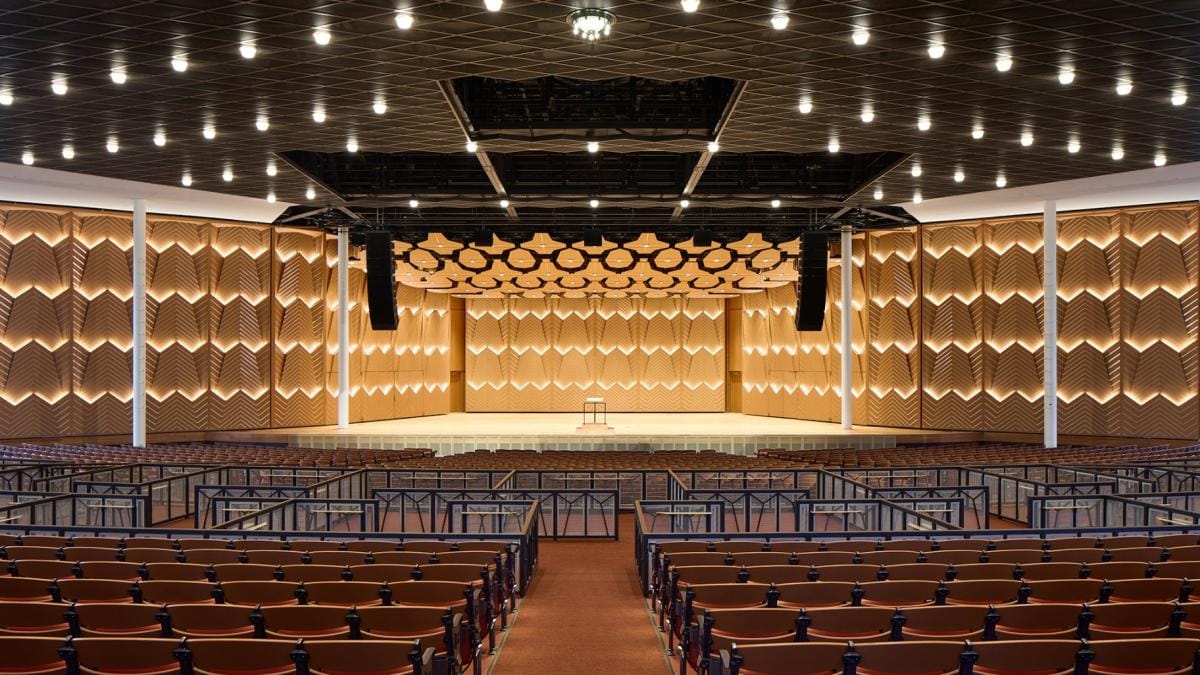
**Interior of the renovated Hunter Pavilion in Highland Park, Illinois. (Dave Burk/Ravinia via AP)*
***+Read more:*** [*"From Aircraft Carriers to Delis: Live Music Promoters Are Betting on Unusual Venues"*](https://www.hypebot.com/from-aircraft-carriers-to-delis-live-music-promoters-are-betting-on-unusual-venues/)
All in all, the Hunter Pavilion has created a more enjoyable experience top-to-bottom for both audiences and performers. And this renovation revelation has us at Hypebot starting to imagine that this might reflect a more nuanced lens on the state of the live music experience in 2026:
***How well can the live room serve the people already there?***
Vibes are important. Acoustics are important. Temperature is important. Compliance with standards that provide comfort and accessibility to the handicapped community is important.
**Lachi** talks about widening accessibility in [our exclusive Hypebot interview](https://www.hypebot.com/lachi-on-the-uplifting-work-of-celebrating-self-joy-in-music-and-beyond/) with the blind singer and activist.
> *"Every guest deserves to be treated with dignity, autonomy, and respect, so it’s all just a matter of hospitality and accommodation to a patron who wants to give you their money. Beyond that, think full experience: clear wayfinding, trained staff, accessible ticketing, sensory-friendly options, and a website that says, 'Hey here’s all that info and a contact.' Access is about dignity and ease, not just entry."*
The gatekeepers want to sell more tickets and pack more people in to a select few concerts incentivized by shareholder success. None of the upgrades here sell more tickets, they strive to create a better environment for those who have helped keep this venue in business for over 100 years.
They create a better concert.
**+Read more:** [*"Backstage Pass: Tobi Parks of Tour Tech & xBK on Closing the Live Music Data Gap"*](https://www.hypebot.com/backstage-pass-tobi-parks-of-tour-tech-xbk-on-closing-the-live-music-data-gap/)
As audiences become more selective about where they spend their entertainment dollars, experience itself has started to become a competitive advantage. Comfort matters. Accessibility matters. Sound quality matters.
From the Chicago Symphony Orchestra to major touring rock acts, a venue that is easier to navigate, more enjoyable to sit in for three hours, and more accommodating for guests with disabilities isn't simply checking regulatory boxes. It's investing in the likelihood that people will come back.
[Independent venues](https://www.hypebot.com/tag/independent-venues/) without $70 million in the bank can also take note here. It doesn't take a small country's GDP to create an environment fans actually want to return to, and a place that welcomes people of all abilities. The feeling of a room has always been part of the product.
Sometimes less really is more.
In an industry often obsessed with growth, this is a refreshing reminder that success isn't always measured by how many seats you can fill, but rather, the memories and moments people take away once they get up.
---
## [**Ravinia Festival 2026 Season**](https://www.bandsintown.com/v/10006700-ravinia-festival?utm%5Fsource=hypebot&came%5Ffrom=900)
JUL 14 — Squirrel Nut Zippers
JUL 15 — Harry Connick, Jr.
JUL 16 — Mozart’s "The Abduction from the Seraglio"
JUL 17 — Paul Simon
JUL 18 — Paul Simon
JUL 18 — Mozart’s "The Abduction from the Seraglio"
JUL 19 — Beethoven’s “Pastoral” Symphony and Violin Concerto
JUL 22 — Violinist Augustin Hadelich
JUL 23 — Mahler’s Sixth Symphony
JUL 24 — On the Movies
JUL 25 — An Evening with St. Vincent
JUL 26 — Chanticleer
JUL 26 — Emmylou Harris & Graham Nash
JUL 28 — Ravinia with The Coral Reefer Band
JUL 29 — The Kody Norris Show
JUL 31 — Dvořák’s “New World” Symphony
AUG 01 — Laurie Berkner
AUG 01 — John Williams and Rachmaninoff
AUG 02 — Chicago Symphony Orchestra
AUG 04 — Magic City Hippies
AUG 05 — Danish String Quartet
AUG 06 — Daniel Lozakovich
AUG 07 — Chicago Symphony Orchestra
AUG 08 — Chance The Rapper
AUG 09 — Hugh Jackman
AUG 09 — Misha Dichter
AUG 11 — Gladys Knight
AUG 12 — Joe Bonamassa
AUG 13 — Chicago Symphony Orchestra
AUG 14 — Chicago Symphony Orchestra
AUG 15 — moe.
AUG 15 — Okee Dokee Brothers
AUG 16 — Chicago Symphony Orchestra
AUG 16 — Frederica von Stade
AUG 19 — Gregory Alan Isakov
AUG 20 — Ricky Martin
AUG 21 — Alabama Shakes
AUG 22 — Divinity Roxx
AUG 22 — Ravinia Festival - Carousel Stage
AUG 22 — Bonnie Raitt
AUG 23 — Grease Sing-A-Long
AUG 25 — Deep Purple
AUG 26 — Brandi Carlile
AUG 27 — Kool & The Gang
AUG 28 — Alabama
AUG 29 — Ray LaMontagne
AUG 30 — Miranda Lambert
SEP 02 — Labrinth
SEP 03 — Music of the Baroque
SEP 04 — Snoop Dogg
SEP 05 — Rod Stewart
SEP 06 — Pianist Olga Kern
SEP 06 — Squeeze
SEP 12 — Alison Krauss & Union Station
SEP 13 — Los Tigres del Norte
SEP 17 — Ravinia Festival (with Thievery Corporation)
SEP 17 — Ziggy Marley and Thievery Corporation
SEP 18 — Tom Jones
SEP 19 — Martina McBride
SEP 23 — Jacob Collier
### The 2026 Guide for Pitching Spotify Editorial Playlists
URL: https://www.hypebot.com/the-2026-guide-for-pitching-spotify-editorial-playlists/
Last updated: 2026-07-14T15:32:06.000Z
### **How to pitch Spotify editorial playlists: A step-by-step guide for independent artists**
*By* [***Ryan DiLello***](https://diymusician.cdbaby.com/author/rdilellocdbaby-com/?ref=hypebot.com) *of* [***DIY Musician Blog***](https://diymusician.cdbaby.com/music-promotion/pitch-spotify-editorial-playlists/?ref=hypebot.com)
If you know your way around [**Spotify**](https://www.hypebot.com/tag/spotify/), you might be familiar with [editorial playlists](https://www.hypebot.com/pitching-to-playlists-here-are-6-important-things-to-remember/). These curated playlists — organized by genre, mood, music scene, and more — rack up millions of plays from listeners around the world looking for new music. As such, placement on these [playlists](https://www.hypebot.com/tag/playlist/) can significantly boost your streams, but it’s an incredibly competitive process.
What you might not know is, your pitch still provides Spotify with additional descriptive [metadata](https://diymusician.cdbaby.com/releasing-music/music-metadata-101/?ref=hypebot.com) it can use to better recommend your music to new listeners, regardless of whether it’s placed on an editorial playlist.
In this blog, you’ll learn everything you need to know about how Spotify’s editorial playlists work — including a few tips for how to perfect your pitch. Let’s dive in.
## **What are editorial playlists?**
Spotify’s editorial playlists are official playlists curated by Spotify’s editorial team of genre, lifestyle, and culture specialists. The team maintains thousands of these playlists, reviewing artist submissions from around the world. Editorial playlists feature both chart-topping and emerging artists, serving as a primary source of discovery for the millions of listeners that tune in.
## **Why do editorial playlists matter?**
Spotify’s editorial playlists provide instant access to a targeted set of fans. Placement on an editorial playlist can grow an artist’s monthly listens and provide real pathways to gaining new fans. Even if a submission isn’t accepted, pitching Spotify on your release can provide the platform with additional [descriptive metadata](https://www.hypebot.com/5-signs-a-spotify-playlist-is-fake-and-how-playlist-bot-checkers-actually-work/) that it can use to more intelligently recommend your music to new listeners.
## **How do I get my music on Spotify’s editorial playlists?**
You can pitch your music for editorial playlist consideration directly within your Spotify for Artists dashboard. **You must submit your pitch at least 7 days before your release date.** Spotify recommends pitching 4-6 weeks in advance to provide sufficient time for review.
**Note:** You can only pitch one song track from an upcoming release and once it goes live, it’s no longer eligible for pitching.
Here’s how to pitch your music for Spotify editorial playlist consideration:
1. Release your music to Spotify with CD Baby. Get started [here](https://auth.cdbaby.com/Account/SignUp?ref=hypebot.com).
2. Claim your Spotify for Artists account. If you’re a CD Baby artist, you can easily claim your account [here](https://members.cdbaby.com/SpotifyForArtists?ref=hypebot.com).
3. Log into your **Spotify for Artists** account.
4. Go to the **Music Tab** and select **Upcoming**.
5. Choose a song and fill out the information. The more information you provide, the better your chances of getting placed on a playlist.
**+Read more:** [*"What Are Music Curators Actually Looking For? Insights From 100K Submissions"*](https://www.hypebot.com/what-are-music-curators-actually-looking-for-insights-from-100k-submissions/)
## **Tips for pitching your music to Spotify editorial playlists**
If you’re [preparing to pitch your music](https://www.hypebot.com/pitching-to-playlists-here-are-6-important-things-to-remember/) to Spotify’s editorial playlists, here are some best practices to help maximize your chances.
### **Give yourself enough lead time**
Pitch your song early — at least four weeks out — to give the Spotify team sufficient time to review your music. Editorial playlists are unique because submissions are reviewed by an actual team of editors — not an algorithm. With that, artists have to recognize Spotify receives thousands of submissions per week, so pitching early maximizes your chances of getting full consideration.
### **Provide additional music metadata**
Spotify’s pitch process will ask you about instrumentation, mood, genre, and more to help editors more effectively sort your music. It’s essential that you fill out all of that information and reinforce it in your written pitch using keywords that overlap with playlist names. Remember, even if your music doesn’t land on an editorial playlist, this additional information about your music helps Spotify connect you with new fans.
### **Be specific about placements**
Ahead of pitching, do your research on Spotify playlists that might be a fit. Make a list of playlists that seem promising. You should be realistic and strategic with your choices — don’t start with the most popular playlists.
Look for opportunities to dial into your niche. Identify emerging artists who sound similar to your music and note what playlists they’ve been featured on, ask friends for recommendations, follow relevant independent labels and distributors and track where their artists are placed.

## **The Spotify Editorial Playlist Pitch Template**
Now that you understand how playlists work and some of the best practices for crafting your pitch, here’s how to make the most of the 500 characters Spotify allows for the pitch.

### **Get your music on Spotify with CD Baby**
The first step to getting your music on Spotify editorial playlists is releasing your music to the platform. Over two million artists around the world trust CD Baby to distribute their music to Spotify. As a preferred partner to the platform, CD Baby makes it easy to claim your Spotify for Artists profile and provides resources like this blog to help you succeed.
Ready to release your music to Spotify and more than 150 other platforms? [Create a CD Baby account](https://cdbaby.com/sign-up?ref=hypebot.com) today.
***+Read more:*** [*"The Modern Guide to Getting Your Music Played on Radio"*](https://www.hypebot.com/the-modern-guide-to-getting-your-music-played-on-radio/)
### Why Is Auditing Your Online Presence So Crucial?
URL: https://www.hypebot.com/why-is-auditing-your-online-presence-so-crucial/
Last updated: 2026-07-14T14:56:54.000Z
Fans, promoters, agents, and even AI itself are forming opinions about you long before they ever visit your website. But are they getting the right story?
This week on [**The Music Biz Weekly Podcast**](https://www.hypebot.com/tag/music-biz-weekly/), they dive into why every artist should perform a complete online brand audit. Inspired by a [recent Hypebot article from Bruce Houghton](https://www.hypebot.com/how-to-audit-your-music-brand-on-google-seand-ai-now/), Michael Brandvold and Blasko discuss how Google Search, AI-powered search tools, social media profiles, streaming services, and online directories all contribute to your digital reputation.
Learn how to identify outdated information, inconsistent branding, missing profiles, and inaccurate AI-generated answers before they cost you opportunities.
**Watch and listen here or on you favorite podcast platform.**
**FIND MORE FROM MUSIC BIZ WEEKLY & OTHER GREAT MUSIC BUSINESS AND INDIE MUSICIAN PODCAST EPISODES** [**HERE**](https://www.hypebot.com/hypebot/category/podcast-music-biz)**.**
## Hypebot
Essential news & insights for artists and live music pros.
Sign up for free weekly content delivered to your inbox
Subscribe
Email sent! Check your inbox to complete your signup.
**FIND MORE FROM MUSIC BIZ WEEKLY & OTHER GREAT MUSIC BUSINESS AND INDIE MUSICIAN PODCAST EPISODES** [**HERE**](https://www.hypebot.com/hypebot/category/podcast-music-biz)
### What Musicians and Critics Get Wrong About Each Other
URL: https://www.hypebot.com/what-musicians-and-critics-get-wrong-about-each-other/
Last updated: 2026-07-14T14:25:21.000Z
One of my best friends was an actor and like most actors, he didn’t enjoy and sometimes struggled with the audition process. Then he produced and directed a few productions and found himself on the other side of the casting table. It was a *revelation.*
All of a sudden, a bunch of things came into focus: directors want the actor to be good, they’re rooting for the actor, and mainly want to know if the actor is somebody they want to hang with for weeks at a time. These “two sides” are not, in fact, *adversarial,* and much better understood when somebody has been on one side or the other.
I started thinking about this dynamic as it pertains to the musician-critic relationship, and how if we just understood the other party better, everyone's jobs and expectations would be smoother.
### The Artist-Journalist Detente
Musicians and critics. They’re in the same ecosystem in a symbiotic relationship where one needs the other. Just like my actor friend, I can write about this drawing on some personal experience; I’ve been a reviewer for years, and for 18 years now I’ve been releasing music that gets reviewed.
It’s a double life, sure, but I would argue that filling both roles has given me a deeper understanding of what bands and critics should realize about each other.
## **What Reviewers Often Don't Realize About Musicians**
In my opinion, here are the things we musicians feel journalists will often get *wrong* when engaging with a work.
**1) Review the Record in Front of You**
When a musician makes an original album, it’s demoralizing to have the reviewer go off on a jag that it would have been better if it had more of an Andrew Bird feel. Review the *record*. Don’t detail what the album isn’t — or don’t use this as your forum to blanket criticize shoegaze music or heavy metal at large.
**2) Oh Lord, Please Don’t Let Me Be Misunderstood**
On the nose, accurate criticism doesn’t hurt as much as a flippant incorrect comment based on 1 or 2 quick listens. We artists don't mind a bad review if it's coming from an informed, genuine place, we care if you don't even take the time to listen thoroughly.
**3) The Artist Has Heard Their Album 100x More Than You Have**
If you hear some unusual phrasing or oddball note, that’s not an “aha” or “gotcha” moment to catch the artist in a mistake. More often than not, it's played that way on purpose or it's left in there on purpose. Treat it like a decision and not an error.
**4) Reviews Mean Two Things to a Band**
First of all, we're trying to expand our listenership, so thanks for talking about our record at all. We're grateful just to be on your site, good or bad. Secondly, what would be great no matter what, is to be able to capture a pull-quote for our website, EPK, social media, or mailing list. A rave review is always great, but even a mediocre review can be helpful if there's some intentionality to the writing.
**5) Don’t Be a Mind-Reader**
“I’ll bet the singer was trying to XYZ”... Nope. You’re probably incorrect about the artist’s intent. Open your mind, buddy.
**+Read more:** [*"The Modern Guide to Getting Your Music Played on Radio"*](https://www.hypebot.com/the-modern-guide-to-getting-your-music-played-on-radio/)
## **What Musicians Often Don't Realize About Critics**
And now to present the other side of the coin; what we musicians seem to not be able to grasp about the journalist's role.
**1) It’s Not the Reviewer’s Job to "Promote" Your Record**
Don't confuse necessary PR agency and reviewer coordination or communication for meaning that everyone is on the same team. For critics, the music is the raw material for their review, and the reader is the customer.
**2) The Overwhelming Sameness of Releases**
There's not too much that bands can do about this besides just making a great record. But the stack of things that critics hear can start to blur together after a while, and we really have no idea how tall that pile of promo discs on their desk actually is. Some sympathy for that, and a bit less entitlement on the part of the artist or label, goes a long way. Critics are going to overvalue something that leaps off the speakers instead of something that requires a seventh listen to really digest.
**3) Supplemental Materials**
Critics need *something* to help do their job, like a one-sheet or EPK. Give them some basic facts they can use in their reviews like hometown, previous bands, and your self-defined genre.
**4) Cheesy, Fake, or Bad PR Work**
That said, claims like “sounds like a Frank Zappa orchestra recast as a New Orleans second line” are painful to read, and can annoy the reviewer. Advice sites tell you to make some wacky description to pique a writer’s interest; please, don’t be that guy.
On another level, don’t claim you’re bigger than you are or pretend that you’re a publicist when you and I both know the artist is writing this themself (which by the way, is not a deal-breaker!). Thus...
**5) Just Be Yourself?**
If you’re a fledgling DIY artist who works in a FedEx/Kinko’s, be honest. You’ll be amazed at how much the critic will get on your side and empathize with that experience. If you’re at this level, the reviewer probably isn’t writing for *Rolling Stone.*
**6) Tension Between Honesty and Trashing an Album**
On [the indie level](https://www.hypebot.com/tag/indie-artists/), most critics really don’t want to torch an artist with a catty, negative review. There’s an obligation to the readers, yes, but only sociopaths enjoy trashing an aspiring singer.
## **Yeah Okay, We *All* Get It Wrong**
Nobody’s perfect, and both musicians and critics can be guilty of getting high on their own supply.
Bands have slaved over and lived with these recordings for a long time. When a critic doesn’t “get it” or just doesn’t like it, that can be painful. Sometimes the artist is having a bad day and lashes out, like Halsey here lashing out to Anthony Fantano:
Conversely, critics can really disappear up their own asses sometimes. Not every music writer has the chops to write creative departures like Lester Bangs or Greil Marcus. And worse yet are meaningless critic-speak drivel that tells readers nothing — and signals to the band being reviewed that the writer doesn’t have a clue.
Pretentious language like “memorable melodic construction,” "cinematic grandeur," "cinematic backdrop", or "sonically ambitious" actually doesn’t describe anything. You know the type, as seen in Reddit meme here...
The longer I’ve done both jobs, the more I realize how easily both sides misread each other.
## **Understanding = Good**
In general, it's always a net positive to experience walking a mile in someone else's shoes professionally. I always felt tense going into a job interview until I started interviewing applicants myself. I eventually realized that the main thing I was interviewing or screening for with already-qualified applicants was: “Could I tolerate having lunch with this person once a week?”
Empathy and understanding between artists and critics is crucial.
Music writers and musicians have more similarities than differences. We all love music, unfortunately for our spouses. Their work is a labor of love in both cases; odds are, neither reviewer nor songwriter is getting paid much. And all of us are fighting for competitive spots in industries whose best days are behind them.
But when things are right, both jobs are damn fun to do.
### The Most Important Person in the Music Ecosystem
I’ve written nearly 1000 words already without mentioning or acknowledging the key beneficiary in this whole relationship: **the music consumer.**
- **Artists need to give LISTENERS** something they can't get anywhere else.
- **Critics need to give READERS** information they can use: what does it sound like, would this be up their alley?
If I'm making music, my job isn't to impress reviewers. If I'm reviewing music, my job isn't to flatter musicians. In both cases, my responsibility is to the audience. The listener and reader.
**+Read more:** [*"4 Tips to Triple Your Merch Sales at Your Concert"*](https://www.hypebot.com/4-tips-to-triple-your-merch-sales-at-your-concert/)
### NIVA Urges Fans, Artists and Venues to Weigh In on Live Nation Settlement
URL: https://www.hypebot.com/niva-urges-fans-artists-and-venues-to-weigh-in-on-live-nation-settlement/
Last updated: 2026-07-14T12:56:26.000Z
The proposed U.S. Department of Justice settlement with [**Live Nation**](https://www.hypebot.com/tag/live-nation/) and [**Ticketmaster**](https://www.hypebot.com/tag/ticketmaster/) has entered its next phase, and the [**National Independent Venue Association (NIVA)**](https://www.hypebot.com/tag/niva/) is urging independent venues, artists, promoters, festivals and fans to make their voices heard.
On Monday, the [DOJ officially published the proposed settlement](https://www.federalregister.gov/documents/2026/07/06/2026-13623/united-states-et-al-v-live-nation-entertainment-inc-proposed-final-judgment-and-competitive-impact?ref=hypebot.com) in the Federal Register, triggering a 60-day public comment period under the Tunney Act. The process **gives the public until September 4, 2026** to **submit comments** before **U.S. District Judge** **Arun Subramanian** determines whether the agreement is in the public interest.
The comment period follows one of the most consequential antitrust rulings in live music history. In April, a federal jury found Live Nation and Ticketmaster liable on all monopolization counts brought by a coalition of state attorneys general, concluding that the company had illegally monopolized key segments of the live entertainment industry. The remedies phase of that case is still ahead.
NIVA, which has consistently advocated for stronger competition in the live music marketplace, argues that the DOJ's proposed settlement falls well short of addressing the structural issues identified during the trial. Additionally, the monetary penalty doesn't meet the scale and scope of the damage. NIVA Executive Director **Stephen Parker** stated:
> *"Six states signed on to this insufficient deal and will share about $18.5 million. Live Nation earns that in roughly six hours. Over the 60 days the public has to comment on whether this settlement serves the public interest, it is estimated that Live Nation will take in more than $4 billion."*
According to NIVA, the proposed agreement would leave Live Nation's vertically integrated business model largely intact.
While the settlement includes measures such as limited amphitheater divestitures, a cap on one category of Ticketmaster fees at Live Nation-owned venues, and an extension of the company's existing consent decree, it would not require Live Nation to divest Ticketmaster or separate its ticketing, promotion, venue ownership and artist management businesses.

The organization also notes that the settlement would not affect Live Nation's festival business, would not impose new limits on the company's role in routing national tours, and would leave many of the broader structural questions raised during trial unresolved.
Those issues remain central to the separate remedies proceedings being pursued by the coalition of non-settling states. Judge Subramanian is expected to consider the DOJ settlement later this fall, while the states continue seeking additional remedies that could include Ticketmaster divestiture, further venue sales, restrictions on tying concert promotion to venue bookings, limits on exclusive ticketing agreements, and financial damages. A hearing on Live Nation's post-trial motions is scheduled for July 30.
NIVA is encouraging anyone affected by the live entertainment marketplace — including independent venues, promoters, festivals, artists, managers, agents and concertgoers — to submit comments directly to the DOJ during the Tunney Act review before September 4, 2026\.
For independent venues, the comment period represents one of the few opportunities to place their experiences directly into the court record before a judge decides whether the proposed settlement adequately addresses competition in the live entertainment industry.
---
## **HOW TO SUBMIT A COMMENT**
Anyone may comment. Independent venues, promoters, festivals, artists, agents, managers, and fans are all encouraged to do so. Fans should share how Live Nation and Ticketmaster have made for a terrible live experience for them. Comments are submitted directly to the Antitrust Division, and they are then posted publicly, filed with the court, and published in the *Federal Register*.
**View the formal Tunney Act filing in the Federal Register** [**HERE**](https://www.federalregister.gov/documents/2026/07/06/2026-13623/united-states-et-al-v-live-nation-entertainment-inc-proposed-final-judgment-and-competitive-impact?ref=hypebot.com)
**Deadline:** September 4, 2026
**By email:** [LiveNationPublicComment@usdoj.gov](mailto:LiveNationPublicComment@usdoj.gov)
**By mail:** David Teslicko, Acting Chief Financial Services, Fintech, and Banking Section Antitrust Division, U.S. Department of Justice 450 Fifth Street NW, Suite 4000, Washington, DC 20530
**The case:** *United States et al. v. Live Nation Entertainment, Inc. and Ticketmaster L.L.C.*, No. 1:24-cv-3973 (S.D.N.Y.). The notice appears at 91 Fed. Reg. 41330 (July 6, 2026).
NIVA will publish a comment toolkit for members, artists, and fans in the coming days, and will file its own detailed comment with the Department and the court before the deadline.
### Ex-MLB Star Carl Crawford on Funding Talented Artists' Dreams
URL: https://www.hypebot.com/ex-mlb-star-carl-crawford-on-funding-talented-artists-dreams/
Last updated: 2026-07-14T12:45:00.000Z
> *"The studio is just one piece of the puzzle...We don’t just want to create artists — we want to create well-rounded stars."*
**Carl Crawford** was nicknamed "the Perfect Storm" when he played professional MLB baseball as an elite left fielder and baserunner. Although he moved around in his career to the Tampa Bay Rays, Boston Red Sox, and Los Angeles Dodgers, he ultimately returned to his home in Houston, Texas, to start[**1501 Certified Entertainment**](https://www.1501ent.com/?ref=hypebot.com)in 2016\.
1501 has been one of the most prominent Hip-Hop talent boosters in a city that's been brimming with artistic creativity since the 1990s. And Carl has been fortunate enough to work with rising rappers like **Megan Thee Stallion, Erica Banks,** and **Diamond the Body**, as well as a crop of new, younger artist just getting started in the industry. His new high-end recording studio just launched, making it the brick-n-mortar manifestation of a dream he has been working towards for nearly a decade.
We talk about his journey from baseball to music, and how he's helping to facilitate the journeys of those in his local community.
Here's our conversation. Enjoy!
---
**Hypebot: Congrats on opening 1501 Studio — why don’t you introduce us to the project?**
Carl Crawford: "1501 Studio is something I’ve been wanting to do for a long time. We already had our artist development compound, and I felt like the next step was bringing a world-class recording studio to that environment. I wanted artists to have everything they need in one place to create, grow, and develop their careers."
**H: How did this all come together? What was the genesis, and what hurdles did the project have to overcome?**
C: "The vision for the studio started with me. As we continued building out the 1501 artist development compound, I knew I wanted to create a world-class recording studio that would give artists everything they needed to create and grow in one place."
Once I shared the vision with my team, everyone came together to help bring it to life. J Lacy played a major role in managing the project and helping oversee the process, alongside several other key team members who helped make sure every detail was executed properly. We brought in multiple builders, reviewed different plans, and ultimately selected the team we felt could bring the vision to life the best."
The entire process took about eight months. We had a few scheduling changes and some unexpected costs along the way, but that’s part of building something special. Looking back, it was all worth it because the finished product turned out exactly how we envisioned it."
**Studio speakers designed by* [**Augspurger*](http://www.augspurger.com/?ref=hypebot.com)**.*
**H: You were raised in Houston. What does it mean to bring this studio back to the community that gave rise to your own opportunities?**
C: "When I started 1501, the goal was always to create opportunities for talented artists who might not otherwise have access to them. Baseball gave me opportunities that changed my life, and I wanted to do the same for people through music."
This is actually the second studio I’ve built. The first studio has a lot of history behind it — artists like Megan Thee Stallion and Erica Banks recorded there. We’ve also had artists like BeatKing, 6ix9ine, and many others come through those doors. This new studio represents a new era for 1501\. It’s a new look, a different environment, and a new energy that reflects where we’re headed."
**H: Houston is known as a Hip-Hop hub, but many genres thrive there. What are your earliest memories of music, and how did that passion grow?**
C: "Growing up in Houston, music was always around. I listened to artists like Tupac, Biggie, Lil’ Keke, and of course Slim Thug — he’s from my neighborhood, so that was always special. As I got older, I became a big fan of artists like Future, and lately I’ve been listening to Belly Gang Kush. Music has always been a part of my life, whether it was in the car, at family gatherings, or just around the city."
**H: Tell me about working with** [**Houston’s up-and-coming talent**](https://www.1501ent.com/?ref=hypebot.com)**. What’s unique about this generation of artists, and how is 1501 helping them grow nationally?**
C: "I enjoy working with local artists because Houston has always had incredible talent. At the same time, we’ve expanded our reach beyond Houston. Right now, we have artists like Diamond The Body out of Broward County, Florida, FNF Chxpo from Houston, and Luh CEO from Dallas, along with several developing artists."
What makes this generation unique is that every artist has their own lane. They’re not afraid to be themselves. My job is to help provide the resources, guidance, and opportunities that allow them to build sustainable careers and reach audiences nationwide."
**H: Are there other ways you’re championing artists beyond the studio?**
C: "Absolutely. At 1501, we’re focused on creating a complete development environment. The studio is just one piece of the puzzle."
At our artist development compound, we host influencer events, media opportunities, performance showcases, and training sessions that help artists learn how to engage with fans, improve their stage presence, handle interviews, and build their brands. We don’t just want to create artists — we want to create well-rounded stars."
**H: Do you have plans to incorporate live music and concerts into your work through 1501 Entertainment?**
C: "Live events have always been part of what we do. We’ve hosted and worked with artists and entertainers ranging from BigXthaPlug, KenTheMan, Monaleo, and Deshae Frost to many others."
One thing we haven’t fully incorporated yet is a live band element, but that’s definitely something I’d like to explore in the future because it creates a completely different experience for both the artist and the audience."
**H: What similarities do you see between baseball and music?**
C: "The biggest similarity is discipline. Whether you’re trying to become an All-Star baseball player or a successful recording artist, it takes commitment, consistency, and mental toughness."
Baseball requires constant training, preparation, and structure. Music is the same way. People see the performances and the success, but they don’t always see the work behind it. There are rehearsals, studio sessions, media appearances, meet-and-greets, and long hours perfecting your craft."
Even when it comes to contracts and business, there are a lot of similarities. The biggest difference is that baseball tends to be a little more straightforward when it comes to rules and team loyalty."
**H: What’s your cheat meal on a Saturday night? How do you stay in shape now that you’re retired from Major League Baseball?**
C: "Probably a pork chop sandwich or some good barbecue. I also eat a lot of seafood."
That said, I’ve become even more focused on my health over the years. I work out every day, juice regularly, and stay on top of my doctor’s appointments. My biggest motivation is making sure I’m healthy and able to be there for my kids for a long, long time."
**H: Stick-burners or pellets? Just kidding… What’s the best BBQ spot in Houston right now?**
C: "I’ve got to go with [Burns Original BBQ](https://www.instagram.com/burnsoriginalbbq/?hl=en&ref=hypebot.com). It’s family-owned, and we’ve been serving Houston for more than 40 years. It’s a place I’m proud of, not just because of the family connection, but because the food speaks for itself."
[Check out 1501 Entertainment here.](https://www.1501ent.com/?ref=hypebot.com)
### New AI Labeling Standard for Music Draws Support — and Hesitation
URL: https://www.hypebot.com/new-ai-labeling-standard-for-music-draws-support-and-hesitation/
Last updated: 2026-07-13T18:12:25.000Z
The music industry's push for greater transparency around artificial intelligence took [another step forward this week](https://www.musicbusinessworldwide.com/record-industry-proposes-ai-labeling-system-for-streaming-platforms/?ref=hypebot.com) as a coalition of recorded music organizations unveiled a proposed voluntary labeling framework for [AI-generated music](https://www.hypebot.com/tag/ai/).
The proposal quickly drew responses from AI music platform[**Suno**](https://www.hypebot.com/tag/suno/) and the [**Digital Media Association (DIMA)**](https://dima.org/?ref=hypebot.com), highlighting broad agreement that transparency matters, while exposing differing views on how such a system should be implemented.
The proposed framework introduces two standardized labels designed to help listeners better understand how AI was used in the creation of a recording.
Under the proposal, recordings created primarily through generative AI would carry an **"AI-Generated"** label, while recordings that remain substantially human-created but incorporate generative AI during the creative process would be identified as **"AI-Assisted."** The organizations behind the initiative say the labels are intended to provide greater transparency for consumers without discouraging legitimate creative uses of AI.
Rather than relying solely on visible badges, the proposal also calls for standardized metadata that could travel with recordings throughout the digital music ecosystem. The framework is designed for commercial sound recordings and does not currently extend to compositions, lyrics, artwork, or music videos.
The announcement comes as questions surrounding AI disclosure continue to gain momentum across the music industry, with streaming services, distributors, rightsholders, and AI developers all exploring how generative AI should be represented to listeners.
Suno, which remains involved in ongoing copyright litigation with major record companies over the training of its AI models, responded by expressing support for the broader goal of transparency.
In [a statement](https://www.musicbusinessworldwide.com/suno-sued-by-major-labels-says-transparency-is-important-as-record-industry-proposes-ai-labeling-system/?ref=hypebot.com), the company said it believes transparency is important and pointed to its ongoing investments in technologies such as watermarking and audio fingerprinting. At the same time, Suno argued that decisions about how AI disclosures ultimately appear to listeners should be made collaboratively by artists, rights holders, distributors, and streaming platforms rather than AI developers alone.
The proposal also [prompted a response](https://dima.org/resource/dima-responds-to-new-ai-labelling-program-from-the-recorded-music-community/?ref=hypebot.com) from the **Digital Media Association (DIMA)**, whose members include several of the largest digital music and streaming companies. **Graham Davies**, President and CEO of DIMA notes:
> *“DIMA has long advocated for the creators, owners, and distributors of music to provide accurate and timely metadata on all music released and distributed to streaming services...Our members look forward to continuing to work with the labels, producers, artists and distributors, as well as other industry stakeholders and standards bodies such as DDEX, to build a robust supply chain in which consumers can trust.”*
The exchange underscores how the conversation around AI in music is beginning to evolve. While much of the public discussion over the past two years has centered on copyright and training data, attention is increasingly shifting toward disclosure, metadata standards, and how AI-created works will ultimately be presented to listeners across streaming platforms.
For now, the proposed labeling system remains voluntary, and no major streaming service has announced plans to adopt it. Still, it represents one of the industry's most coordinated efforts yet to establish a common language for identifying AI-generated and AI-assisted recordings — a discussion that is likely to continue as generative AI becomes an increasingly common part of music creation.
**+Read more:** [*"Why AI Song Generators Don’t Grant Copyright"*](https://www.hypebot.com/why-ai-song-generators-dont-grant-copyright/)
### 60 Years of the SM58 🎤 A Lesson in Branding
URL: https://www.hypebot.com/60-years-of-the-sm58-a-lesson-in-branding/
Last updated: 2026-07-13T15:49:27.000Z
*By *John Ball*, Creative Director at* [***MiresBall***](https://miresball.com/?ref=hypebot.com)
Walk into any [live music venue](https://www.hypebot.com/tag/venues/) in the world and there's a fair chance you'll find one, a ball-topped microphone with a tapered black handle and steel mesh head, set up center stage and perhaps looking slightly battered.
It is the **Shure SM58**, and it has been in continuous production since 1966, used by presidents, popes, and rock stars from Mick Jagger, Tina Turner, and Paul McCartney all the way through to Olivia Dean at this year's Grammys.
The SM58 has stood the test of time for two reasons.
First and foremost, it is an outstanding product known far and wide for its durability and roadworthiness. But its success would have been far less certain if Shure had stopped at creating a great product, rather than also building it into the well-loved brand we know today, often referred to as simply "the 58."
Together, both product and brand have been vital in maintaining relevance amid increasing competition and evolving technology.
Having worked with Shure on how it presents the SM58 to the world for over twenty years, I've seen first-hand how a microphone became an icon — and the lessons the [music industry](https://www.hypebot.com/tag/music-industry/) can learn.
## **Start with a shape you can draw from memory**
The first one might sound obvious: the product itself has to be distinctive enough to recognize at a glance. Think of the Coke bottle, the Weber kettle grill, Converse Chuck Taylors, Ray-Ban Wayfarers. The SM58 belongs in that company. Its silhouette, that rounded mesh head on a tapered body, is so familiar that Shure extended the product design language to other vocal mics in its portfolio, reinforcing its ubiquity over decades.
When a product's form becomes shorthand for the category itself, the brand has won something no amount of advertising can buy.
And yet, a distinctive shape is only valuable if it can carry meaning beyond the object. The SM58 has been in the hands of generations of performers, from local venues to the world's biggest stages. Its distinctive silhouette is omnipresent in [live-performance](https://www.hypebot.com/tag/live-performance/) photography and broadcast imagery, cementing its place in our minds.
A product that looks the part earns itself a place in the picture, and every time it appears in a defining cultural moment, a bit of that moment attaches back to the product.
In fact, even the microphone emoji 🎤 looks remarkably like an SM58\. Whether intentional or not, it's become the visual shorthand most people reach for when they think "microphone."
**+Read more:** [*"What Is a Sonic Identity and Why Every Brand Needs One"*](https://www.hypebot.com/what-is-a-sonic-identity-and-why-every-brand-needs-one/)
## **Keep refreshing the context, not the product**
The second lesson is about restraint combined with reinvention. Shure doesn't tinker with the SM58's fundamental design, but it never stops finding new contexts to put it in.
Commemorative versions, limited colorways, and collaborations have kept the product feeling alive without ever changing its essential character. From the silver 50th Anniversary edition to a Supreme co-brand, an all-black model, and special artist issues for The Who and Paul McCartney, each one [refreshes the story](https://www.hypebot.com/the-story-i-will-keep-telling-myself/) for both new audiences and long-time fans.
Compare that with Lego, which has expanded into theme parks and blockbuster films while the humble brick remains central to everything it does, and the lesson is universal: celebrate the product by continually refreshing what surrounds it, not the product itself.
> *"The SM58 shows what happens when you...treat the product like a character, give it life beyond the stage, and continually refresh its storytelling, without ever losing what made it recognizable in the first place."*
## **Let the family grow, but keep the lineage visible**
Shure built a good bit of its reputation on the SM58, but it doesn't stop there. Starting with the ubiquitous Super 55 "Elvis mic," the company has a long history of products achieving widespread recognition. More recently, the studio-legend SM7B, the microphone behind most of the podcasts you've watched this year, whether you noticed the logo or not, inspired the look of the MV7 family of mics geared for a new audience of content creators.
Even when a next-generation product like the Nexadyne™ vocal microphone — built on entirely reinvented acoustic technology — departs from the classic SM58 contour, it's still shown on the packaging in a similar orientation. The family tree is always evident in some form.
## **Build on fandom**
What's remarkable about the SM58 is that much of its reputation was created by its fans rather than any [paid advertising](https://www.hypebot.com/tag/advertising/). Long before social media existed, stories of the 58 surviving drops, falls, and even being run over by a tour bus circulated. Shure encouraged this folklore with its own videos showing the mic still working after being used as a hockey puck, tossed in the ocean, and even barbecued — all to prove it was ready for the rigors of the road.
We embraced that narrative with the product's packaging, photographing the SM58 lying on the worn floor of a gritty club stage. Our 50th anniversary campaign added another layer, showcasing the battle scars and dented grilles in a museum-like setting. Rather than polishing away its history, Shure celebrates the stories that have made the microphone legendary.
**+Read more:** [*"Amyl & The Sniffers: How a F\*ing Good Concert Film Helps You Grow"*](https://www.hypebot.com/amyl-the-sniffers-how-a-f-ing-good-concert-film-helps-you-grow/)
## **Never let the product outgrow the parent**
Finally, and perhaps most importantly, the parent brand should always stay visible and relevant.
It's tempting to let a hit product own the spotlight, but that can become limiting when launching adjacent efforts. Shure has resisted this by investing in an overarching brand message, "Sound Extraordinary," that speaks broadly to the needs of today's customers. Tied to this strategy, campaigns, packaging, and even new products can do double duty, celebrating the classic icons while reinforcing the name above the door.
The music industry, like most industries built around physical tools, often treats its products as features and specs rather than as objects with a soul and a story. The SM58 shows what happens when you do the opposite, treat the product like a character, give it life beyond the stage, and continually refresh its storytelling, without ever losing what made it recognizable in the first place.
---
**John Ball* is Principal and Creative Director at award-winning agency MiresBall. With over thirty-five years of design and business experience, John is known for the clarity and simplicity of his work. Combining strategic, practical thinking with meticulously executed creative, he’s built long-term relationships with global brands, including legendary audio icon Shure.*
### Musicians Speak on the Impact of Getting a U.S. Artist Visa
URL: https://www.hypebot.com/musicians-speak-on-the-impact-of-getting-a-u-s-artist-visa/
Last updated: 2026-07-13T14:46:26.000Z
### **Musicians Speak on the Impact of Getting a U.S. Artist Visa**
*By* [***Megan DeMatteo***](https://hmc.chartmetric.com/author/megan/?ref=hypebot.com) *of* [***Chartmetric‘s How Music Charts blog***](https://hmc.chartmetric.com/international-artists-us-touring-visa/?ref=hypebot.com)
Art may be subjective to fans and listeners, but not to the U.S. immigration system.
For international musicians, breaking into the [$65 billion](https://www.grandviewresearch.com/industry-analysis/us-music-tourism-market-report?ref=hmc.chartmetric.com) U.S. market is a career milestone. Yet, international artists need a specialized work authorization called the [O-1 visa](https://www.uscis.gov/working-in-the-united-states/temporary-workers/o-1-visa-individuals-with-extraordinary-ability-or-achievement?ref=hmc.chartmetric.com) to perform in the United States. The visa is reserved for individuals who can demonstrate “extraordinary ability” through sustained recognition across fields including arts, sciences, education, business and athletics.
It is basically a temporary work permit that allows talented people to live and work in the country, but it does not grant residency or citizenship.
The pathway to earning the “extraordinary” O-1 visa has become increasingly difficult to navigate. Costs have risen sharply in recent years, [jumping](https://www.usnews.com/news/entertainment/articles/2025-03-14/visa-fee-hikes-and-delays-hinder-international-artists-from-touring-the-united-states?ref=hmc.chartmetric.com#:~:text=On%20April%201%2C%202024%2C%20the,the%20first%20bump%20since%202016.) from $460 to $1,615 per filer in 2024, to its current fee of [$2,965](https://www.uscis.gov/newsroom/alerts/uscis-to-increase-premium-processing-fees?ref=hmc.chartmetric.com) in 2026\. And then there’s the waiting. The United States Citizenship and Immigration Services office has [historically promised](https://egov.uscis.gov/processing-times/historic-pt?ref=hmc.chartmetric.com) to process visa applications in two weeks but takes a lot longer in reality.
“Processing is currently taking 10 to 12 months, which is too long for the industry's practices,” immigration expert Matthew Covey told *Chartmetric.* That waiting period rubs up against the realities of marketing timelines and venue bookings. “You can’t confirm a tour that far out,” Covey said.
Covey is the executive director of [Tamizdat](https://tamizdat.org/?ref=hmc.chartmetric.com), an organization that works on legal issues for international traveling artists. He says the rigamarole can set an artist back between $3,000 and $6,000 per visa application, which is an unsustainable burden for tours that are already at risk of losing money. It’s even worse for bands with multiple members.
The system has drifted from its original intent, Covey argues, explaining that “visa petitions in 1995 were usually about 30 pages long. Now they are often more than 500 pages long,” and that “the all-in costs of navigating this process have increased 5,000% since the 1990s,” without a clear policy benefit in terms of national security or labor protection.
Anecdotally, Covey observes that artists from the Global South are among the most affected, but the impact extends across genres and regions. “From DJs to orchestras, from dance to theater, we are seeing a major drop in artists even trying to come to the U.S.,” he says.
Tamizdat estimates that 2026 will see at least a 30% drop in international touring across the performing arts in the United States, even as global music grows in popularity. Chartmetric counts at least 213,000 artists hailing from Brazil alone, alongside 131,000 from India, 128,000 from Mexico and tens of thousands more across Argentina, Indonesia, South Africa and Chile.
Even among the top superstar artists, Chartmetric counts that 57% of the artists from the tier hail from outside the United States – meaning the majority of the world's biggest acts are potential O-1 visa applicants.
For many of them, the U.S. is not just another stop on a tour itinerary but their single largest audience: 43% of non-U.S. superstars count America as their top streaming market (257 out of the 596 non-US superstar artists).
For hundreds of the world's most successful artists, access to the U.S. is directly tied to reaching their biggest fanbase.
So how are some artists making it work? We spoke to a few to learn.
## Italian violinist Ludovica Burtone turned professional collaborations into a petition
[Ludovica Burtone](https://ludovicaburtone.com/?ref=hmc.chartmetric.com) arrived in Boston in 2011 already a working musician. She had spent nearly a decade playing violin in a regional Italian orchestra before enrolling at Berklee College of Music on a student visa to study jazz composition.
After graduating, she filed for an O-1 without a lawyer—hiring one was too expensive. She relied on a pro bono advisor to brief her on what her application would need. She pulled the accumulated evidence of her expertise from her career in Italy through her Berklee portfolio, gathering press coverage, documented performances, recordings, collaborations with established musicians and appearances at recognized venues like Carnegie Hall and The Boston Opera House.
As a chamber musician, Burtone was worried the immigration officials might not recognize her accomplishments: “I always wonder who is looking at my application,” Burtone said. “I never know if they like niche things. Maybe they know some of the jazz artists I play with, but maybe they need a big name to know you are collaborating with someone that has an incredible impact in that kind of music.”
For that reason, she advises: “If you have a Grammy—put it on the first page." Recently, Burtone has added performances with familiar names to her resume, including collaborations with the Icelandic band Sigur Ros, Jon Batiste’s American Symphony, and in the Notorious B.I.G. tribute concert at Lincoln Center.
To this day, Burtone says the the hot-and-cold limbo of maintaining her visa status can feel fragile at times. While her current O-1 visa allows her to remain in the U.S. for three years, she says international travel introduces risk. Each re-entry can require embassy interviews before receiving a passport stamp. “You might be targeted,” she explained. “We know that that happens. It has been happening, and it keeps happening.”
Like artists do best, Burtone transformed her emotions from her experiences into music with her 2023 album [*Migration Tales*](https://orcd.co/streammigrationtales?ref=hmc.chartmetric.com), a chamber project built from conversations with immigrant women.
[Migration Tales by Ludovica Burtone](https://ludovica.bandcamp.com/album/migration-tales?ref=hypebot.com)
## Taiwanese jazz artist Yuhan Su became an ‘endorsement artist’
[Yuhan Su](https://www.yuhansu.com/?ref=hmc.chartmetric.com) arrived in Boston from Taiwan in 2008 on a student visa to study jazz at Berklee. After graduation, she needed an O-1 visa to stay and build her career in New York. Looking for a way to prove her exceptionality she reached out directly to Mario DeCiutiis, the CEO of [Alternate Mode](https://alternatemode.com/?ref=hmc.chartmetric.com), a company that manufactures MIDI vibraphones. She’d met DeCiutiis at a Berklee workshop and decided to pitch him for a brand endorsement deal.
Because she had a direct connection between the instrument and her music career, her pitch compelled DeCiutiis enough to make her the face of the company’s vibraphones.
“I'm kind of like their endorsement artist,” she said.
Su has since renewed her O-1 every three years, all without hiring a lawyer. “That costs a lot of more money,” she said, adding that she meticulously documents her collaborations and professional work so that her paperwork reflects her qualifications. “You just have to be really hands-on with everything,” she says. "This process somehow makes your mind stronger.”
[OVER the MOONs by Yuhan Su](https://yuhansu.bandcamp.com/album/over-the-moons?ref=hypebot.com)
Even with a strong visa portfolio, touring remains constrained by logistics. With an eight-person ensemble on her latest album, [*OVER THE MOONs*](https://yuhansu.bandcamp.com/album/over-the-moons?ref=hmc.chartmetric.com), Su ultimately found it too hard and financially unfeasible to tour with her full band internationally, largely due to visa complexity and cost. Instead, she often travels solo and collaborates with local musicians abroad to make touring viable.
“In that way, you also get more local help and connections,” she said.
## Bob Sumner assembles bandmates on a P-2 visa
[Bob Sumner](https://bobsumnermusic.com/?ref=hmc.chartmetric.com), an Americana artist based in Vancouver, holds U.S. citizenship through his mother but still needs visas for the Canadian musicians he brings south of the border. He tours on a [P-2 visa](https://www.uscis.gov/working-in-the-united-states/temporary-workers/p-2-individual-performer-or-part-of-a-group-entering-to-perform-under-a-reciprocal-exchange-program?ref=hmc.chartmetric.com), a U.S. work authorization that allows international artists and entertainers to temporarily perform in the country under a reciprocal exchange between U.S. and foreign organizations, typically for up to one year. He builds bands for his touring lineups by rotating between players from Canada, Kentucky and Nashville. He says the process involves navigating a constant logistical puzzle and leveraging relationships with venues and presenters.
Timing is often frustrating.The P-2 requires proof of confirmed engagements for the duration of the visa request. An applicant who wants to tour for a year must prove they have one gig per month for all 12 months of the visa period, a standard that Sumner says “is pretty difficult to have.”
Difficulty compounds with the processing lag. On a recent album release tour, Sumner attempted to plan around what he was told would be a three-month processing window to receive visas for his bandmates. Instead, it stretched to six. “We didn’t get it in time for the band,” he said. He was forced to assemble local musicians in Seattle and Portland instead of bringing his Vancouver group, despite having already paid application fees for the original bandmates.
Sumner said the unpredictability makes planning nearly impossible for mid-level artists. The fixed costs of visas remain the same regardless of how profitable the tour might be. “If I’m going down and playing 500-room caps and not filling them, I’ll be lucky if I break even,” he says.
[Some Place To Rest Easy by Bob Sumner](https://bobsumner.bandcamp.com/album/some-place-to-rest-easy-2?ref=hypebot.com)
Starting in May 2026, Sumner plans to spend two months [on tour](https://bobsumnermusic.com/home?ref=hmc.chartmetric.com#shows) in Europe, where he says entry is comparatively straightforward.
## Getting ahead of US tour planning
Every big artist at one point started small. As Covey puts it, “the U2 and Elton Johns of tomorrow are playing at 200 capacity clubs today.”
Knowing this, artists interested in touring in the U.S. can get ahead by developing their U.S. audience as early as possible. Most important is nurturing relationships from every collaboration and connection. As these artists have demonstrated, you never know where a single gig or credit might lead. Document the process and keep a list of press mentions, interviews and media clips.
Musicians can also pull audience data from platforms like Chartmetric to track their U.S. fanbase. That may help them build a case for an O-1 visa because they can better prove international demand and that they have had a long-time track record of growing their audience from abroad.
In a system that heavily filters who gets to cross the border, it’s important that musicians leverage every tool at their disposal to keep the music alive.
[*Chartmetric*](https://chartmetric.com/?ref=hypebot.com) *gives independent artists the same data and tools that major labels use — so you can make strategic moves, not guesses.*
### What Are You Up to, Ariana?
URL: https://www.hypebot.com/what-are-you-up-to-ariana/
Last updated: 2026-07-13T13:58:06.000Z
[**Ariana Grande**](https://www.bandsintown.com/a/1120421-ariana-grande?utm%5Fsource=hypebot&came%5Ffrom=900) is smack dab in the middle of an intriguing tour.
Three nights in Oakland, five nights in LA, three nights in Austin, Sunrise, and Atlanta, six nights in Brooklyn, five nights in Boston, three nights in Montreal and Chicago, then a straight ten nights in London.
We've talked about [touring residencies before here on Hypebot](https://www.hypebot.com/in-the-new-era-of-touring-artists-are-planting-in-one-city-for-weeks/). Venues, fans, and cities have all become amenable to this type of entertainment booking because it boosts tourism, it simplifies ticketing infrastructure, and it lightens the mental and physical toll of the road on the artist and their crew.
But watching Ariana's performance from last week in Austin, Texas, has me curious about something else that's going on here. Something I think Ariana has uniquely brought to this equation.
Curtis Vadnais reviewed the performance in Austin for [*Music Connection*](https://www.musicconnection.com/ariana-grande-transports-moody-center-into-a-celestial-wonderland/?ref=hypebot.com)*,* and made a note to reflect on the depth and density of the environmental vibe planning:
> *"As the lights dimmed for Act I, a massive kabuki curtain concealed the main stage, building the room's palpable excitement to a fever pitch. The white fabric was suddenly ripped away to reveal Grande and her dancers as she launched into the house-infused beat of the opening number, 'yes, and?' which slid smoothly into red-lit performances of 'positions' and 'dandelion.' Grande wasted no time acknowledging the thundering arena. 'It's good to see us, isn't it, Austin? Welcome to the eternal sunshine tour,'"*
While it's clear that Ariana's new show bears all the hallmarks of the modern arena pop: towering visuals, intricate choreography, cinematic transitions, and enough lighting technology to power a small city, what it also brings (via both set/lighting design and Grande's undeniable talent) is a sense of intimacy, a dreamlike atmosphere, and site-specific customization.
This tour feels like an installation, because, well, it *is.*
***+Read more:*** [*"How We Built a Tour Identity for Fred again.. That Fans Made Their Own"*](https://www.hypebot.com/how-i-built-a-tour-identity-for-fred-again-that-fans-made-their-own/)
That's an interesting distinction at a time when more artists are spending multiple nights in the same city rather than racing through dozens of one-night arena stops. We've mostly [talked about that trend](https://www.hypebot.com/in-the-new-era-of-touring-artists-are-planting-in-one-city-for-weeks/) in practical terms. Fewer travel days mean lower costs, smaller carbon footprints, more flexibility for crews, and more opportunities for fans who couldn't get tickets the first night.
What we haven't spent much time talking about is what that extra time might mean *creatively.*
Because of this extra time in each arena, the crew has been able to projection-map giant swaths of light, shadow, and screen to parts of the space that would normally feel faraway for audiences in the "cheap" seats (we all know those don't exist anymore, except relatively). This in turn shrinks the space, and provides the right environment for Ariana to get quiet, vulnerable, subtle.
What stays is the consistent high level of quality, what changes from city to city is the way the team is able to utilize the unique interior architecture of each arena to build that intimacy into the set planning. I've never seen anything like it.
For decades, arena tours have been designed around portability. Every stage, screen, truss, and lighting cue has to fit into trucks, load in overnight, and work in buildings that all have slightly different dimensions. The goal has always been consistency, but it's more about economy and grandiosity.
Ariana's tour suggests another possibility. Rather than treating each arena as a blank box that simply houses the show, the production often gives the impression that it's in conversation with the room itself. This tour is about *feeling.*
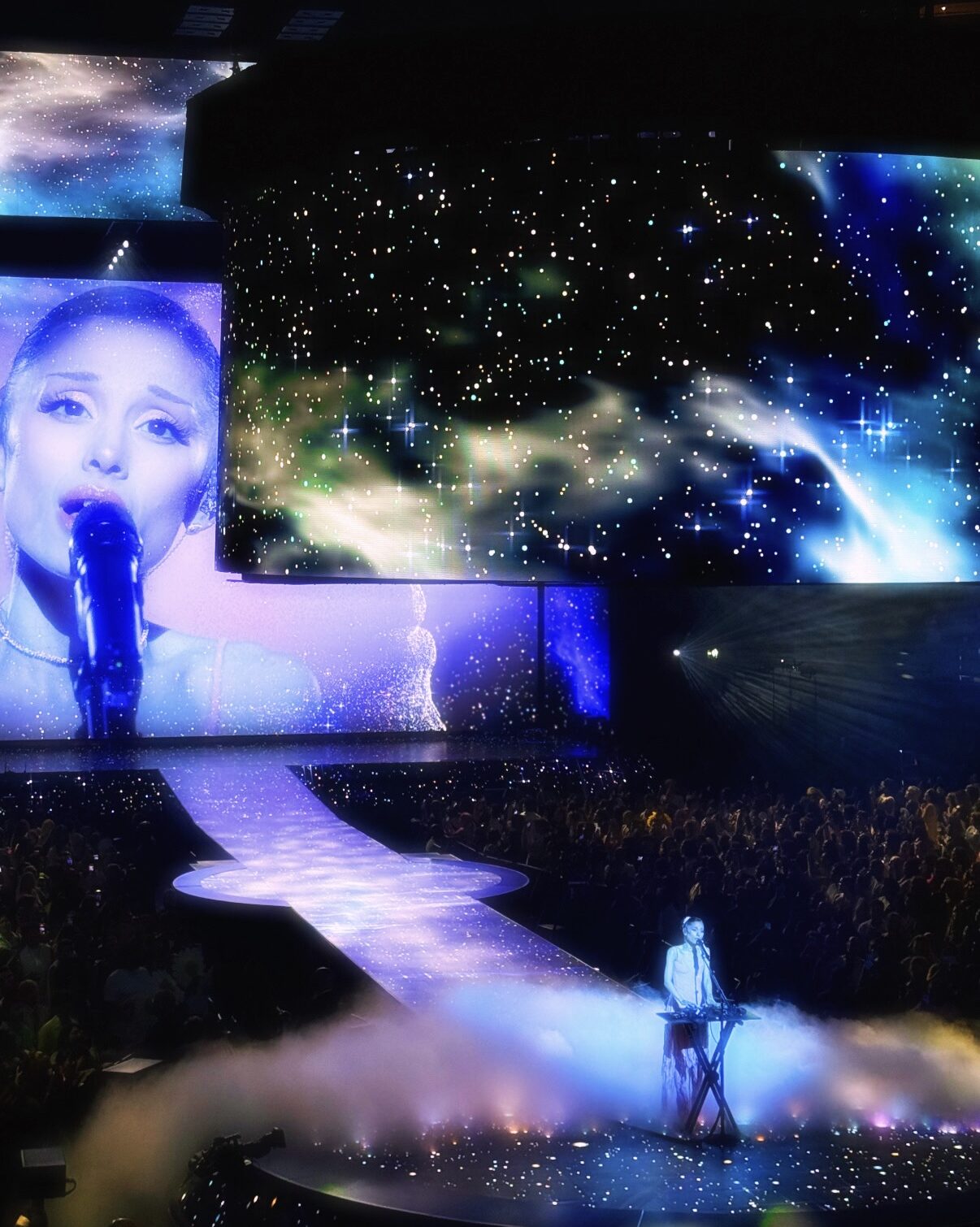
**Ariana Grande performs during the final night of her Austin concert run at the Moody Center on June 27, 2026\. (Photo: Curtis Vadnais)*
The lighting stretches into the architecture. Massive projections mapped to reshape the space around the stage. Choreography, scenic design, and visual storytelling blur together until it's difficult to tell where the venue ends and the performance begins. It's inspired by contemporary installation art and kabuki theatre, and it's starting to inspire a potential evolution of the large-scale touring apparatus.
As live music has grown significantly and expanded into further globalized markets, some of the top performers and their teams have shown they're less interested in bigger stages, brighter LED walls and walks. Rather, we might be seeing a push to shrink the space in creative ways.
Perhaps instead of asking, "How do we fit this show into another arena?" production designers might increasingly ask, "What can this particular arena contribute to the performance?"
**+Read more:** [*"Ethel Cain's 4-Night Run in Melbourne Taught Me About Deep Fan Connection"*](https://www.hypebot.com/ethel-cains-4-night-run-in-melbourne-taught-me-about-deep-fan-connection/)
---
## [**Ariana Grande Tour Dates**](https://www.bandsintown.com/a/1120421-ariana-grande?utm%5Fsource=hypebot&came%5Ffrom=900)
### Your Morning Coffee Podcast: StubHub Scalps From on High, AI-Tagging, Top 2026 Stories
URL: https://www.hypebot.com/your-morning-coffee-podcast-50/
Last updated: 2026-07-13T13:25:14.000Z
### **Listen on your favorite** [**podcast platform**](https://bio.to/UloQY6?ref=hypebot.com)**.**
Subscribe to the Your Morning Coffee newsletter [here](https://label-logic.us8.list-manage.com/subscribe?u=735771602810b0eb238d4e814&id=1ffaab59d7&ref=hypebot.com).
**YMC Episode 310 — July 13, 2026**
On this week’s episode of the **Your Morning Coffee podcast**, your hosts Jay Gilbert and Mike Etchart chat about these timely music industry stories:
- **Analyzing the 12 Top Music Business Stories of 2026 - So Far**
- **The Future of the Music Creator Economy**
- **RIAA, IFPI & More Come Together to Create System for Tagging AI-Generated Songs**
- **StubHub's 'Marketplace for Fans' is Run by a Mass Scalper, According to SEC Filings**
Listen right here:
6Subscribe to the Your Morning Coffee newsletter [**here**](https://label-logic.us8.list-manage.com/subscribe?u=735771602810b0eb238d4e814&id=1ffaab59d7&ref=hypebot.com)**.**
**FIND MORE CURATED MUSIC BUSINESS AND INDIE**
**PODCAST EPISODES** [**HERE**](https://www.hypebot.com/tag/podcast-music-biz/)
### Ticket Receipts as New Funding Stream for Venues
URL: https://www.hypebot.com/ticket-receipts-as-new-funding-stream-for-venues/
Last updated: 2026-07-10T13:56:33.000Z
Fans buying tickets through [Eventim USA](https://www.eventim.com/?ref=hypebot.com) will now have a new way to support independent venues without waiting for the next fundraiser.
The ticketing company has partnered with the [National Independent Venue Foundation (NIVF)](https://www.nivf.org/?ref=hypebot.com) to add a dedicated donation option directly to every digital ticket receipt processed through its US platform. The new feature allows fans to make tax-deductible micro-donations that will help fund emergency relief, workforce development, and other programs supporting independent venues and promoters across the country.
The initiative builds on Eventim USA's longstanding relationship with the independent venue community. The company was an early supporter of the National Independent Venue Association (NIVA) and has previously contributed to NIVF's Emergency Relief Fund, which has distributed millions of dollars to independent venues, promoters, and festivals facing unexpected financial hardship.
Funds raised through the new receipt-based donation feature will support several of NIVF's core initiatives, including its Emergency Relief Fund, the Venue Operations eXperience (VOX) workforce development program, and community initiatives designed to strengthen independent live performance spaces nationwide.
While the individual donations may be small, the model reflects a growing trend across the live music industry: embedding charitable giving into the fan experience itself. Rather than relying solely on annual fundraising campaigns, ticketing platforms can create ongoing opportunities for audiences to support the venues they care about at the moment they purchase tickets.
At Hypebot, we've long supported the independent venue ecosystem and the organizations working to preserve it. Independent venues remain the entry point for countless artists and an essential part of local music communities, making sustainable funding initiatives like this an important addition to the industry's support network.
For more information about the National Independent Venue Foundation, or to make a direct donation, please visit [nivf.org/donate](http://nivf.org/donate?ref=hypebot.com).
---
[***The National Independent Venue Foundation (NIVF)***](https://www.nivf.org/?ref=hypebot.com) *is a 501(c)(3) organization founded to preserve and nurture the ecosystem of independent live performance venues and promoters throughout the United States. Through financial aid, safety-net programming, education, and workforce development, NIVF supports a transparent, competitive marketplace and a diverse, inclusive community of artists, fans, and industry workers.* *\[*
### Luminate Live Music Report: The Who & How of Concert-Going Are Changing
URL: https://www.hypebot.com/luminate-live-music-report-of/
Last updated: 2026-07-10T12:28:16.000Z
If you’ve been scrolling through the headlines lately, you might think live music is coming down with a terminal case of [Blue Dot Fever](https://www.hypebot.com/what-is-blue-dot-fever-the-rising-tide-of-tour-cancellations-in-2026/) \- the nickname for tour cancellations marked by a sea of unsold blue tickets on venue seating maps.
But a new **Luminate Live Music Report** shows reality isn't a terminal diagnosis, but rather a complicated shift in how fans spend their cash. While the post-pandemic live music surge seems to have peaked, the market is proving incredibly resilient if you know how to navigate the new playing field.
**Here are critical takeaways from the Live Music Report that every promoter, talent buyer, artist, manager, and agent needs to know.**
### Big Picture: The Post-Pandemic Boom Has Peaked
- **The Revenue Ceiling:** Billboard Boxscore data shows global live revenue for the top 100 tours flattened at $9.1 billion, indicating that the post-pandemic demand surge has leveled off.
- **Price Sensitivity is Morphing:** While ticket cost remains the #1 barrier to entry, fewer fans are letting it stop them. The percentage of the general population citing cost as a barrier fell from 59% to 53% over the last two years, giving rise to multi-show "superfans" and a boom in music tourism.
- **Ticket Prices Eased (Slightly):** Likely in response to heavy consumer pushback, the average global ticket price dropped slightly to $127.17, down from the record high of $130.36.
- **Long-Term Optimism:** Despite a cooling period, Wall Street remains bullish. Goldman Sachs projects global live music revenue will hit $67.1 billion by 2035, while Morgan Stanley expects U.S. revenues to cross $14 billion by 2028.
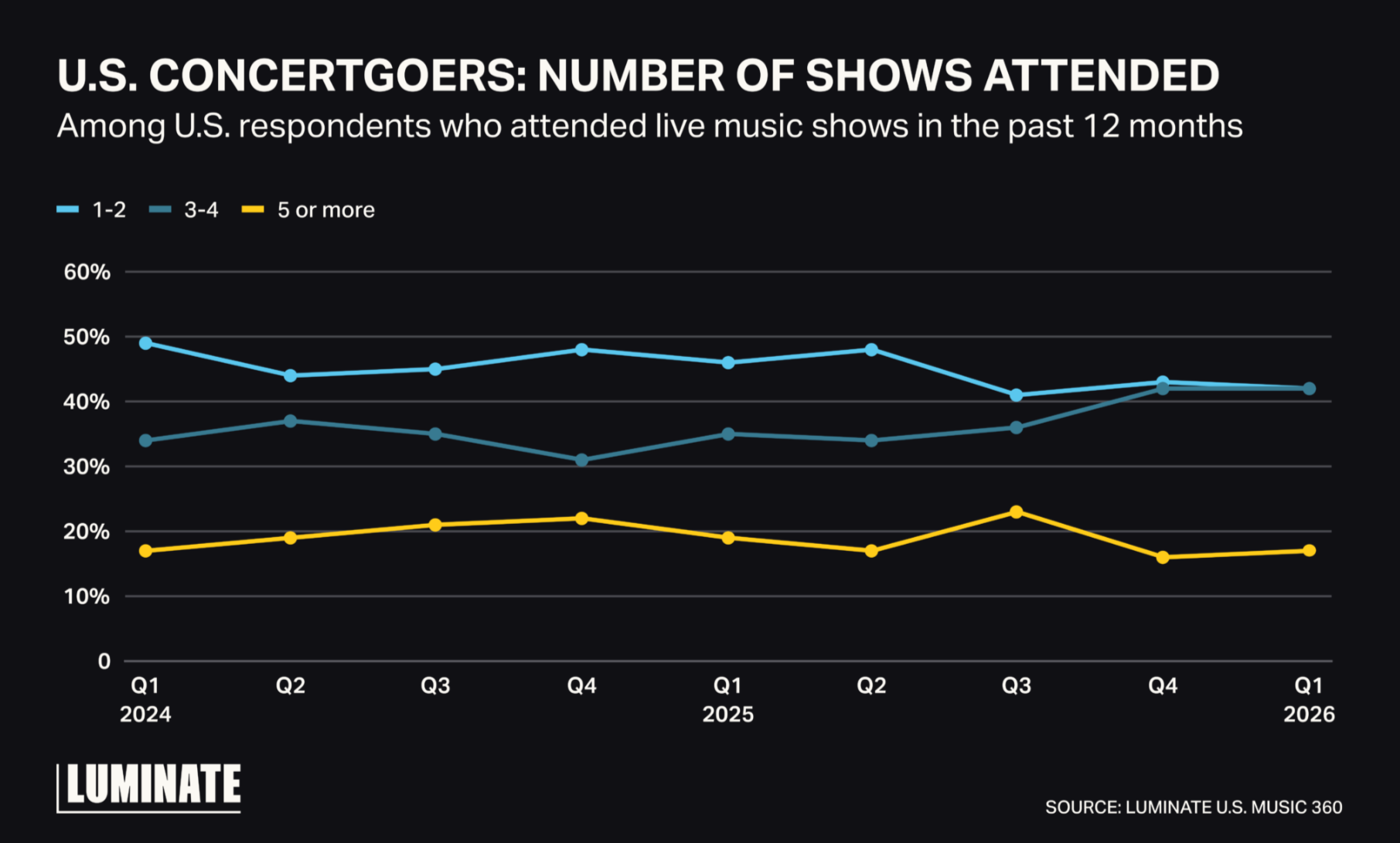
### Gen Z Demographics Split Along Gender Lines
**Gen Z** spent a **monthly average of $101** on live music events in Q1 2026\. That outpaced **Millennials ($94 average)** who are historically the highest-spending demographic for live music.
- **Zoomer Woman Takeover:** Women are heavily driving this trend. They are consistently outpacing men in concert attendance, packing stadiums for female-dominated fanbases like Taylor Swift, Olivia Rodrigo, and Sabrina Carpenter.
- **Where the Men Went:** Gen Z men aren't abandoning music, but they are opting out of expensive concert tickets. Luminate data shows their **monthly entertainment spend on video games is now double what they spend on live events.**
### The Independent Festival Squeeze is Severe
- **A Wave of Cancellations:** While stadium tours dominate, the mid-tier festival circuit is struggling under supply chain inflation. Global festival cancellations spiked to 107, and European festival sellout rates plummeted to a mere 17%.
- **What is Working:** Consumers are choosing dependable legacy brands and niche events over eclectically booked, expensive festivals. Flagships like Coachella (which secured its first post-pandemic sellout in 2026) and hyper-focused, genre-specific boutique fests (like [Camp Flog Gnaw](https://www.campfloggnaw.com/?ref=hypebot.com)) are the ones left standing.
### Smart Touring Strategies: Three Blueprints That Won
Artists who dominated cracked the code by aligning their live routes directly with streaming data:
- **The Mini-Residency (Beyoncé):** The *Cowboy Carter Tour* was the highest-grossing global tour, generating $306 million from just 23 U.S. dates. Instead of a grueling multi-city haul, she set up multi-night stadium residencies in high-streaming hubs, betting that music tourists would travel to her. **Harry Styles, The Eagles** and others are perusing similar strategies.
- **The Hometown Anchor (Tyler, the Creator):** Tyler played 52 U.S. shows by aggressively clustering dates where his streaming volume was concentrated (like a massive six-night run in Los Angeles), using a traditional national routing only for smaller, secondary markets.
- **The Nostalgia Plays (My Chemical Romance):** Celebrating the 20th anniversary of *The Black Parade*, the band grossed $82.5 million across just 10 stadium dates. It proved that milestone album anniversaries perfectly mobilize legacy fan bases and drive massive post-tour streaming dividends.
**Download the full free Luminate Live Music Report** [**here**](https://luminatedata.com/reports/live-music-2026?ref=hypebot.com)**.**
## **Hypebot's Bottom Line**
The newLuminate Live Music Report shows that live music is far from dying, but it is getting smarter.
The era of "build a standard 40-date tour and they will come" is facing a reckoning both in terms fan interest and the underlying costs of going on the road.
To avoid "blue dot fever," artists and promoters must embrace alternative formats like multi-night residencies, turning a tour into a "can't miss" event, hybrid virtual broadcasts and multi-act hyper-focused genre curation.
### Is Spotify Guarding Against One Type of AI Market Distortion While Monetizing Another?
URL: https://www.hypebot.com/is-spotify-guarding-against-one-type-of-ai-market-distortion-while-monetizing-another/
Last updated: 2026-07-10T12:12:01.000Z
Recently, **Spotify** and **Universal Music Group** [announced plans for a paid AI feature](https://newsroom.spotify.com/2026-05-21/universal-music-group-spotify-licensing-agreements-fan-made-covers-remixes/?ref=hypebot.com) that would let Premium subscribers create covers and remixes from songs by participating artists and songwriters. Artists will opt in, be credited, and receive compensation.
Universal called it an “AI-enabled superfan initiative.” Spotify says it will create new revenue streams and “new ways to drive discovery.” How comforting...
Nothing reassures a songwriter like hearing that the machine taking apart his song will be very *polite* about it. Spotify has spent years fighting artificial streaming. Fair enough. Fake listeners contaminate metrics, royalties, charts, and discovery. They create the appearance of attention where none exists and pull money away from artists who earned their plays honestly.
But [Spotify](https://www.hypebot.com/tag/spotify/) is now inviting users to generate synthetic versions of existing songs at scale. Those may be real listeners clicking play. But the musical object being consumed is artificial, derivative, and likely to favor catalog songs that were already winning.
It seems as though Spotify is guarding against one kind of AI market distortion while monetizing another.
## **The Machine Is Now Inside the Gates**
I have tried to be reasonable about artificial intelligence and music. The drum machine did not kill drummers. Auto-Tune did not make everyone a vocalist. AI may help somebody without studio money, session players, a producer, or four unreliable adults with matching Tuesday nights turn an idea into an actual song.
My worry has been something else.
A guy in a sweatshirt builds a band that looks real. They tour. They give interviews. The AI was trained on a voice. The singer was trained on the AI. The musicians were trained on what it spit out.
The band is real enough to sell tickets. It was just built backward. Milli Vanilli with a server rack. That was the threat I thought we were heading toward: fake artists entering the marketplace beside human ones.
But Spotify’s announcement is different. Nobody has to sneak the machine onto the platform. Now the platform itself wants to build it.
## **A Song Is a Pile of Decisions**
There is a difference between an artist using AI as part of making a song and a streaming platform using an artist’s finished song as raw material for a new consumer product.
A song is not merely vocals, chords, drums, and tempo. It is a pile of decisions. Someone wrote the line and almost threw it away. Someone chose the vocal take that cracked because the perfect one meant nothing. Someone fought over whether the song needed another chorus or the decency to end.
At some point, the artist quits second-guessing it and lets the song go. There were other versions. This was the one they chose. Spotify now wants to sell the listener a button that says: That is nice. But what if you meant something else?
**+Read more:** [*"5 Signs a Spotify Playlist Is Fake (and How Playlist Bot Checkers Actually Work)"*](https://www.hypebot.com/5-signs-a-spotify-playlist-is-fake-and-how-playlist-bot-checkers-actually-work/)
## **A Superfan Is Not a Prompt Engineer**
And apparently this is for the superfans. A superfan knows the album version from the live version, buys the record, hunts down the B-side, and can tell you where the singer’s voice catches on the line that ruins them every time. A superfan is not someone paying extra to have the artist removed from the artist’s own decisions.
I thought loving a song meant loving what somebody made. Spotify thinks loving a song means asking a machine to put a tiny hat on it.
People have always made covers and remixes. But a cover is not merely an altered product. It is a conversation. Johnny Cash did not drag “Hurt” into a prompt box and request dying American patriarch, trembling hands, please increase sorrow by 38 percent. Jimi Hendrix did not select psychedelic guitar reinterpretation from a drop-down menu next to Bob Dylan.
They heard something. They brought themselves to it. They risked embarrassment. They made choices. They left fingerprints. AI can create a variation. It cannot create the reason a human being needed to make that variation.
## **The Discovery Problem Is Worse**
I have generally thought pulling your music from Spotify was a luxury for artists whose audiences were already large enough to follow them elsewhere. For a working artist, leaving does not punish Spotify. It makes you harder to find. Someone hears about your song, searches for you, and does not find you. The spark dies.
So I have defended staying. Spotify is flawed and powerful, but listeners are there. You cannot heroically leave before anyone learns your name. This announcement is the first thing that makes me wonder whether that position can survive. Working artists are trying to get heard in a place where more than 100,000 new songs show up every day, alongside basically the [entire history of recorded music](https://www.hypebot.com/is-personalized-music-discovery-organic-when-its-driven-by-ai/).
An artist writes a song. Records it. Pays for it. Mixes it. Masters it. Creates artwork. Sends emails. Makes social posts that feel vaguely like begging with better lighting. Maybe gets lucky enough that a human being at a radio station plays it once.
By the next morning, another hundred thousand songs have arrived. And now Spotify wants to dump AI-made covers and remixes into the same place.
We still do not know how many users will be able to make, where they will live, or whether Spotify plans to feed them into recommendations and playlists. But Spotify has said other users will be able to hear them. These are not private little experiments on a listener’s phone. They are new pieces of content entering a platform that already buries original music under impossible volume.
## **This Is Not Discovery. It Is Re-Consumption.**
The songs best positioned for endless AI variations will be the songs people already know: songs with recognition, catalog value, and built-in attention. Their owners sit at the front of the streaming buffet while everyone else circles the parking lot holding an unplugged amp.
Spotify says this may drive [discovery](https://www.hypebot.com/why-i-built-a-music-discovery-platform-that-finds-not-buries-niche-artists/). Discovery of what?
Nobody fires up an AI cabaret-metal version of a song by an unknown band with 11 monthly listeners and a drummer named Derek who still owes everybody gas money. This is not discovery — this is **re-consumption**.
Discovery is hearing a voice you did not know existed. Discovery is a song rearranging the furniture in your skull. Spotify does not need to invent a fake new artist if it can keep listeners endlessly engaged with artificial versions of artists they already know. It can sell familiar music forever, wearing different wigs.
**+Read more:** [*"How Money Actually Flows Through the Music Industry in 2026"*](https://www.hypebot.com/how-money-actually-flows-through-the-music-industry-in-2026/)
## **Consent Is Necessary. It Is Not Enough.**
Participation should be **voluntary, paid,** and **subject to artist control.** Those are the minimum requirements for avoiding outright theft. But a "properly licensed bad idea" remains a bad idea.
Consent gets complicated in [the catalog-sale era](https://www.hypebot.com/the-10-most-valuable-artist-music-catalogs-for-now/). When a beloved song becomes part of an investment portfolio, who gets to decide whether it can be fed into the next platform experiment: the writer, performer, master owner, or publisher?
“Artist consent” only means much if the artist can actually say no. Otherwise, the next version of a song gets decided by whoever bought the spreadsheet. The Red Hot Chili Peppers recently sold their recorded catalog. I have no idea whether “Under the Bridge” would be eligible for this tool. The public does not know who holds which approval rights or who gets to say no. But I cannot wait for the disco-trip-hop version of “Under the Bridge,” approved by someone whose relationship to the song begins and ends with a catalog valuation model.
Small artists are told to adapt. Feed the algorithm. Make content. Engage the audience. Accept the payout. Keep swimming while someone pours concrete into the pool. The largest artists can tell Spotify that their songs are not building blocks for a premium AI toy.
## **A Platform That Manufactures the Flood**
AI is not going away. Spotify is not going away. Artists should be allowed to use tools that help them make something honest. But this is not a new tool entering the studio. It is the platform stepping between artist and listener to sell a customized substitute. It is the platform admitting that original music already faces unbearable competition, then proposing a machine capable of multiplying derivative content built from songs that already won.
A song is not a prompt. A fan is not made more devoted by wanting less of the artist. And a streaming platform is not serving music when it starts manufacturing the flood that drowns it.
Spotify has built the machine. Now we wait to see which artists are willing to feed it.
### The Modern Guide to Getting Your Music Played on Radio
URL: https://www.hypebot.com/the-modern-guide-to-getting-your-music-played-on-radio/
Last updated: 2026-07-10T11:38:33.000Z
For independent artists and management teams, [radio promotion](https://www.hypebot.com/tag/radio/) looks very different than it did even a decade ago.
[Streaming playlists](https://www.hypebot.com/tag/playlist/), short-form [video](https://www.hypebot.com/tag/youtube/), and [social media](https://www.hypebot.com/tag/social-media/) have all changed how people discover music, but radio still plays an important role — especially for artists looking to build credibility, connect with local audiences, and develop long-term [human relationships](https://www.hypebot.com/what-role-will-taste-play-in-radio-after-ai/) within the music industry.
The biggest misconception is that **"getting on the radio"** means convincing a major commercial station to put your song into heavy rotation. In reality, most independent artists will find greater success by [targeting college stations](https://www.hypebot.com/why-college-radio-matters-more-now-than-it-has-in-a-generation/), community radio, public radio, specialty shows, and independent online broadcasters that actively seek out emerging music.
Like any successful promotional campaign, getting your music on the radio starts long before you hit send on your first email. Here's how to give yourself the best chance of earning airplay — and making meaningful connections along the way.
## 1\. Build a Station List That Fits Your Music
One of the biggest mistakes artists make is sending the same email to hundreds of radio stations. A better approach is to build a smaller, more focused list of stations that genuinely play music like yours. Look for:
- College and university radio
- Community radio stations
- Public radio music programs
- AAA (Adult Album Alternative) stations
- Independent online radio
- Genre-specific specialty shows
- Local music programs in cities where you regularly perform
As you build your list, keep track of the station, contact name, email address, submission guidelines, and any notes about the types of artists they feature. Spend as much time researching who to contact as you do writing your pitch.
## 2\. Find the Right Person
You're rarely pitching an *entire* station. Even smaller stations will have teams dedicated to much more than just "music" (ie: sports, news, weather, tech, archiving, ad sales, etc.), so you're going to want to spend time doing research as to the right person intaking song and album requests.
Most often, you're pitching a music director, program director, DJ, or specialty show host who has the authority to add new music. Whenever possible:
- Address someone *by name.*
- Confirm they're still working at the station.
- Follow any submission guidelines they've published.
- Pay attention to whether they prefer email, online submission forms, or digital servicing platforms.
A personalized email immediately stands out from the dozens of generic submissions they receive every week.
## 3\. Listen Before You Pitch
Before reaching out, spend some time listening to the station — or better yet, the specific show you're targeting. Ask yourself the following questions:
- Does my music actually fit here?
- What artists have they been playing recently?
- Do they spotlight local musicians?
- Are there recurring themes or genres?
Mentioning a recent artist they featured or a segment you enjoyed demonstrates that you're pitching thoughtfully, not simply copying and pasting the same message to everyone on your list.
**+Read more:** [*"Why College Radio Matters More Now Than It Has in a Generation"*](https://www.hypebot.com/why-college-radio-matters-more-now-than-it-has-in-a-generation/)
## 4\. Make It Easy to Say Yes
Radio programmers are busy. The easier you make their job, the more likely they'll take a serious look at your music. This means packing an email or EPK with everything they'd need to cover your band or project without having to go hunting for that information on the internet.
That likely includes:
- A streaming link (private or public)
- A downloadable WAV or high-quality MP3
- A clean/radio edit if your song contains explicit language
- Release date
- One-paragraph artist bio
- A press photo
- Your Electronic Press Kit (EPK)
- Social links
- Upcoming tour dates, if relevant
A major thing to avoid however, is sending large attachments. Instead, include organized links that work across desktop and mobile. A website or service that hosts all of this information in [an EPK style](https://www.hypebot.com/on-the-fence-about-epks-heres-why-they-still-matter/) is always helpful. Think of your pitch as a professional press kit — not just an email with a song attached.
## 5\. Give Your Pitch a Reason to Exist Right Now
Every good pitch answers one simple question. **Why are you contacting me today?**
Maybe you're releasing a new single or launching an album, touring through their city or playing a local festival, building momentum for other types of milestones, or mission-aligned with the station itself. Whatever the reason is, giving timely context makes your pitch far more compelling than simply saying, "Here's my latest song."
## 6\. Follow Up Professionally
Most radio adds don't happen after a single email. Unfortunately, that tends to be the case unless you're going viral for some reason. That's *why* building a relationship over time is so important, trust and connection are still what power this industry. So following up on initial unresponded solicitations is okay, and it's normal, but please try to be polite about it.
Take a couple weeks before the first outreach, then from there: send a polite follow-up to check if the music made it to the right programmer or curator, and ask if they have any questions. Two weeks after that, one additional follow-up to offer something new like an interview opportunity or a free pass to your local show might help break through.
If you still don't receive a response, move on. Professional persistence is appreciated; repeated emails every couple of days usually aren't.
## 7\. Remember That Radio Offers More Than Airplay
Many artists focus only on getting a song played, but radio can open the door to much more. Many stations also feature:
- Artist interviews
- Live in-studio performances
- Acoustic sessions
- Album premieres
- Local music spotlights
- Concert calendars
- Guest appearances
Sometimes these opportunities create a stronger connection with listeners than a single spin ever could. When pitching, think about how you might contribute beyond simply sending a track.
## 8\. Build Relationships for the Long Term
So what happens if your song *does* get picked up? The best radio contacts often become long-term supporters. If someone plays your music:
- Send a thank-you.
- Share the broadcast on social media.
- Tag the station.
- Keep them updated when you release future music.
- Stay in touch without only reaching out when you need something.
Radio has always been a relationship business. Artists who treat it that way often find those relationships paying dividends for years.
***+Read more:*** [*"The Royalty Registration Checklist"*](https://www.hypebot.com/the-royalty-registration-checklist/)
### Should You Just Hire a Radio Promoter?
Professional radio promotion isn't necessary for every artist — but it can be worthwhile at the right stage of your career. A good radio promoter isn't simply paid to send emails. They're leveraging years of relationships with programmers, DJs, and music directors, understanding which stations are likely to respond to your music, and coordinating a campaign that would take most independent artists months to build on their own.
That said, hiring a radio promoter only makes sense if the rest of your release campaign is ready, and if you've got budget to spend.
If you're releasing your first few singles, still building your audience, or working with a limited budget, you'll often get more value by learning the basics yourself. Building your own list of contacts, pitching stations in markets where you're performing, and developing relationships over time will not only save money — it will also help you better understand how radio promotion works.
As your career grows, those relationships become even more valuable. At that point, a professional promoter can expand your reach and help open doors that are difficult to access on your own.
Radio may no longer be the only path to discovering new artists, but it's still one of the few places where passionate music lovers actively champion the songs they believe deserve to be heard.
Approach it with preparation, professionalism, and patience, and you'll give yourself the best chance of turning a cold email into a lasting industry relationship.
### How 'Art Of The Crossfade' Bridges the Divide Through Sound
URL: https://www.hypebot.com/art-of-the-crossfade-is-bridging-the-divide-through-sound-d/
Last updated: 2026-07-09T14:18:38.000Z
> *"Success is changing the way people hear themselves, hear their neighbors, and hear their city."*
We’re always interested in how music professionals are pushing boundaries - not just sonically, but socially. Enter [**Art of the Crossfade**](https://www.artofthecrossfade.com/?ref=hypebot.com), an ambitious new multi-city project spearheaded by cultural historian **Josh Kun** and legendary hip-hop DJ/producer **J.PERIOD**.
As America celebrates its 250th anniversary amidst deep social polarization, Kun and J.PERIOD are turning to a uniquely musical metaphor for democracy: the **DJ crossfader**. It’s a tool designed to blend two entirely different records into one harmonious groove, without silencing either voice. This ethos is the heartbeat of the project, a tour that combines **musical lectures,** hands-on **community storytelling workshops**, and real-time **"Live Mixtape" performances**.
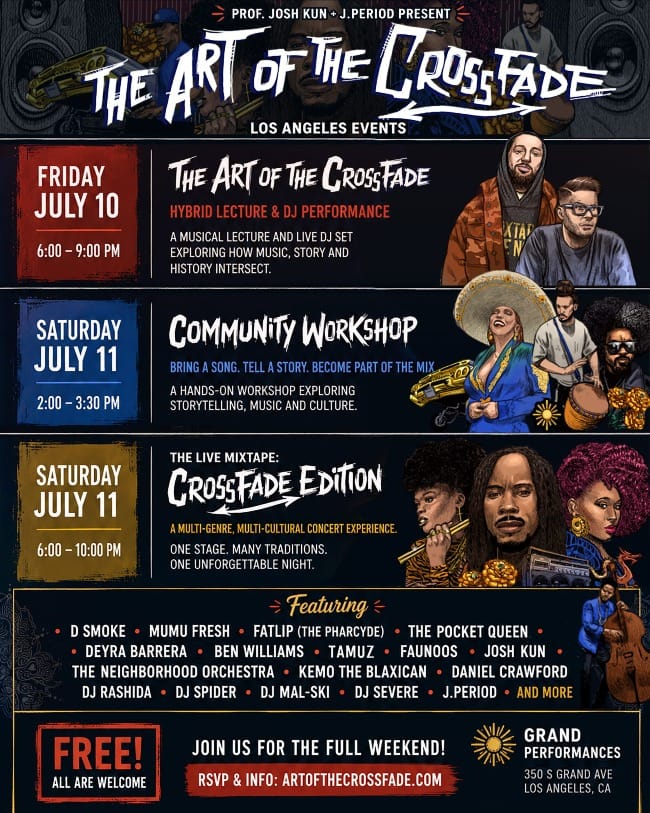
The tour kicks of this **Saturday July 11th in Los Angeles** with **The Live Mixtape: Crossfade Edition** at Grand Performances. Billed as a "live remix of Los Angeles itself," the **free** event boasts an strong lineup of national headliners and local powerhouses, including **D Smoke, Mumu Fresh, Fatlip (The Pharcyde), The Pocket Queen**, and more.
[Learn more about Art of the Crossfade and RSVP for the free July 11th LA Event here.](https://www.artofthecrossfade.com/?ref=hypebot.com)
Ahead of the highly anticipated LA kickoff, we sat down with co-founder Josh Kun to discuss the genesis of the project, the power of the crossfader as a tool for civic imagination, and how the music industry can help write a more inclusive story of American sound.
**Josh Kun** is an award-winning cultural historian, curator, and MacArthur Fellow. A Grammy-nominated writer, he is the author and editor of "Audiotopia: Music, Race, and America, Songs in the Key of Los Angeles," and "The Tide Was Always High: The Music of Latin America in Los Angeles". He is Vice Provost for the Arts at USC, where he holds the Chair in Cross-Cultural Communication at USC Annenberg.
Here's our conversation. Enjoy!
---
**Hypebot: The Art of the Crossfade explores a powerful and alluring premise: that music connects people across cultures, generations, and communities. How did this joint project come about?**
Josh Kun: "As a music historian and a DJ/producer we both operate under the fundamental belief that music is a unique tool of connection, both in terms of its listeners and audiences, but also in terms of the historical and cultural connections contained within any single piece of music."
As a writer and teacher I was drawn to the crossfader as a metaphor and method for thinking about music in new ways; as a DJ, J.PERIOD knows the power of the crossfader as a practical, technological tool — it allows him to mix different tracks together without erasing either of them. It allows him to slide the crossfader to land on points of connection and create new, unexpected conversations between sounds and songs."
**H: Why choose a DJ's crossfader as your central theme and how will you bring the concept to life?**
JK: "It is an innovation that is rich in both its applied technology when mixing, but also rich as a metaphor that can be extended into all sorts of social and cultural contexts."
In our events we bring it to life live on stage — J.PERIOD uses his crossfader to blend samples and beats together into new combinations and I tell stories of cultural crossfades over the decades. And then with the addition of live performers, we create a whole new mix live on stage."
> "In places where polarities are prevailing and where difference is seen as a threat, we believe the crossfader is a useful tool for embracing difference, connecting across polarities, and telling new stories."
**H: What else can people expect at the LA events?**
JK: "As a lead up to the big show — a live mixtape featuring an all-star cast of MCs and musicians — we will be performing a DJ-driven musical lecture that explains the crossfade concept over live samples and beats, and then hosting a community workshop with key organizations working on belonging, community, and civic engagement in Los Angeles (ALMA Backyard Farms, CHIRLA, Miry’s List, and Boyle Heights Arts Conservatory)."
At the workshop, community guests will share their stories and favorite songs, and they too will become part of the LA mixtape we assemble."
**H: You are also taking "The Art of the Crossfade" to Phoenix, New Orleans, and Lincoln, Nebraska, Why these cities and how will these shows differ from LA?**
JK: "These are all cities that have been facing conflicts, division, and struggles, whether immigration and ICE raids, refugee resettlement, or large scale demographic swings."
In places where polarities are prevailing and where difference is seen as a threat, we believe the crossfader is a useful tool for embracing difference, connecting across polarities, and telling new stories."
**H: If you've been to a great live show or spent a day at a music festival, you've seen how music brings people together. But with Americans more divided than at any time since the Civil War, is it realistic to think that music can make a meaningful difference?**
JK: "Can music end political polarization, squash cultural tensions, and stop xenophobia and hate? No. But can music be a tool that helps us imagine ways out of those things and rehearse new political futures, that helps communities see themselves in the histories of others, that reminds us that it is in difference that we thrive, that the way music moves us can lead to new social movements? Yes, absolutely."
**H: What would success look like for this project?**
JK: "I look forward to the community workshops where in each city different communities share their stories and hear their music as part of a larger mix."
Success is providing opportunities for new platforms for where music is a bridge toward democracy and inclusive belonging. Success is raising money for our community partners and making their work visible. Success is changing the way people hear themselves, hear their neighbors, and hear their city."
**H: For those not able to make it to a live show, are there ways that they can participate and learn more?**
JK: "They can follow along on our website— [artofthecrossfade.com](https://www.artofthecrossfade.com/?ref=hypebot.com)— where there will be news of livestreams, general project updates, and most importantly info about the mixtapes that get made in each city."
### US Coalition Fights to Save $300M in EU Music Royalties
URL: https://www.hypebot.com/us-coalition-fights-to-save-300m-in-eu-music-royalties/
Last updated: 2026-07-09T13:46:55.000Z
A coalition of leading U.S. music industry organizations has called on the **United States Trade Representative** (USTR) to aggressively oppose a new proposal by the **European Commission.**
The new policy would strip American artists and rightsholders of nearly **$300 million in annual performance royalties**. The EU is threating action because U.S. terrestrial AM/FM radio stations do not currently pay performance royalties a to any artists and rightsholders.
The EU wants to overturn the 2020 **Court of Justice of the European Union** (CJEU) **RAAP** decision. That ruling extended "national treatment" protections to American recording artists and labels, ensuring they get paid when their music is played on European airwaves.
Now, the EU is considering a switch to a **"material reciprocity"** framework, effectively creating a targeted carve-out that discriminates against U.S. creators.
### What EU Proposal Means for US Artists?
If the European Commission successfully transitions from "national treatment" to "material reciprocity," the fallout for U.S. creators will be immediate and severe:
- **Massive Financial Loss:** Up to $300 million in annual performance royalties could completely evaporate, directly impacting the livelihoods of working musicians.
- **Widespread Payment Cutoffs:** Currently, 21 out of 27 EU member states provide national treatment and pay American artists. A shift to reciprocity would legally allow these nations to withhold or slash those payments.
- **Administrative and Political Chaos:** Instead of a clear, rules-based international framework, U.S. creators would face fragmented, unpredictable rules across Europe, alongside politically driven eligibility requirements.
- **A Dangerous Global Precedent:** The coalition warns that if Europe successfully normalizes this discriminatory measure, other global markets will likely follow suit, severely eroding international copyright protections and transatlantic cooperation.
#### A Domestic Solution: The American Music Fairness Act (AMFA)
The coalition's letter call out the bipartisan **American Music Fairness Act** led by **Rep. Darrell Issa** (R-CA) and **Sen. Marsha Blackburn** (R-TN) as the definitive fix.
Because U.S. terrestrial AM/FM radio currently exploits a loophole in the laws to avoid paying performance royalties to artists, the EU is using that lack of domestic reciprocity as justification to cut off American streams. Passing the AMFA would force corporate U.S. radio to pay its fair share, satisfy European reciprocity demands, and protect American revenue streams both at home and abroad.
### The Music Industry Organizations Leading the Charge
The unified letter sent to the USTR was signed by a broad alliance of major U.S. music advocacy, performance rights, and labor organizations, including:
- American Association of Independent Music (A2IM)
- American Federation of Musicians (AFM)
- Artist Rights Alliance (ARA)
- ASCAP
- BMI
- Christian Music Trade Association
- Future of Music Coalition
- Music Managers Forum-US (MMF-US)
- National Independent Talent Organization (NITO)
- SAG-AFTRA
- Society of Composers & Lyricists (SCL)
- SoundExchange
- The Recording Academy
## Hypebot's Bottom Line
Moves by the European Union to cut off radio performance royalties is a massive wake-up call for both Washington DC and the American music community.
For years, U.S. terrestrial radio broadcasters have aggressively lobbied to preserve their century-old loophole, refusing to pay performers a dime for AM/FM airplay. But that is now about to cause severe collateral damage on a global scale.
**Europe is essentially calling America's bluff.** If the U.S. won't pay international artists on its airwaves, Europe will stop paying American artists on theirs - even though American music makes up over a third of the songs played on European radio.
While the USTR can step in to defend American creators against trade discrimination, the true, permanent fix lies in Congress.
**Passing the American Music Fairness Act isn’t just about doing the right thing for musicians at home anymore. It is now also a $300 million defense shield for American intellectual property abroad.**
### Bryson Tiller Doesn't Have to Rush His Crowd. Here's Why.
URL: https://www.hypebot.com/bryson-tiller-doesnt-have-to-rush-his-crowd-heres-why/
Last updated: 2026-07-09T13:30:49.000Z
[**Bryson Tiller's**](https://www.bandsintown.com/a/4573624-bryson-tiller?utm%5Fsource=hypebot&came%5Ffrom=900) newly announced [*Neo Trap Soul Tour*](https://www.bandsintown.com/a/4573624-bryson-tiller?utm%5Fsource=hypebot&came%5Ffrom=900) arrives at a fitting moment in his career. More than a decade after ***TRAPSOUL*** helped redefine modern R&B, Tiller remains one of the genre's most influential artists — not because he became the loudest voice, but because he proved you didn't have to be.
Long before sold-out tours and platinum records, Tiller was working at Papa John's in his hometown of Louisville, trying to support his young daughter while chasing a music career that often felt out of reach. He has spoken openly about sleeping in his car, having to borrow money from friends to get by, doubting whether music would ever become more than a dream, and nearly walking away from it altogether.
When ["Don't"](https://open.spotify.com/track/3pXF1nA74528Edde4of9CC?si=6f1f811e3ebb4f80&ref=hypebot.com) exploded online in 2015, listeners were discovering a next-wave voice in hip-hop, connecting with a modern take on the ever-evolving R&B sound, and most importantly, hearing themselves in a new artist's stories. Tiller's life and times reflected the struggles of those seeking out his music, an identification of familiarity that despite his rise in fame, has never faded away.
That relatability is also one of the reasons Bryson Tiller's live shows feel the way they do, which is to say it's why he's able to command [the live stage](https://www.hypebot.com/tag/live-music/) with patience, sensuality, and a pacing that many artists can't afford.
He's already done the work to connect with his audience, so even in a festival-sized scope, authenticity is what carries the [performance](https://www.hypebot.com/tag/live-performance/), not pageantry.
**+Read more:** [*"How to Choose the Right Indie Venue for Your Live Concert"*](https://www.hypebot.com/how-to-choose-the-right-indie-venue-for-your-live-concert/)
## A Different Kind of Headliner
Most arena performers in the Top 100 are taught to command attention by moving constantly, raising the energy, and relying on a constant stream of visual candy (lights, lasers, strobes, projections). You have to keep the audience on its feet.
Bigger stage. Bigger production. Bigger personality. Those are the rules. But Tiller's songs were never about being larger than life.
Rather than chasing explosive hooks or relentless momentum, *TRAPSOUL* introduced an atmosphere built on patience, restraint, and late-night storytelling. The songs unfolded gradually, inviting listeners into scenes instead of rushing them toward a climax.
That philosophy followed him onto the stage. A Bryson Tiller concert rarely feels hurried. Songs are allowed to breathe. The crowd [often finishes his lyrics](https://www.hypebot.com/why-rod-waves-fans-sing-his-songs-for-him/) before he does. Lighting and production support the mood instead of competing with it. Rather than overwhelming the audience with spectacle, Tiller trusts the songs — and the people singing them back — to carry much of the emotional weight.
He's performing *with* the room instead of *at* it.
## What He Built Has Become More Than a Genre
When people talk about "Trap Soul," they usually describe the genre of music that's soaked up thousands of artists on [Soundcloud](https://www.hypebot.com/tag/soundcloud/) and in [Spotify playlists](https://open.spotify.com/playlist/1rwl3ZaE7smGoVeBRtmLaU?si=42589332d0134f6a&ref=hypebot.com) with millions of accrued listens.
That sound includes artists like **PARTYNEXTDOOR, Brent Faiyaz, 6LACK** and others. There's hazy production, trap-inspired hip-hop drum loops, melodic vocals, R&B influence in the top-lines and vulnerable, sensual lyrics that tell stories. It's a style almost made for playlists, for listeners to sink into.
But trap soul also changed something about live performance. Before artists like Tiller, many mainstream hip-hop and R&B concerts were built around constant momentum and upping the ante. The expectation was to keep the energy climbing from one song to the next. Tiller showed there was another way.
A room full of thousands of people could be completely [captivated by mood](https://www.hypebot.com/how-kali-uchis-uses-mood-to-connect-to-fans-across-language-borders/). By pacing. By songs that told stories instead of demanding attention every thirty seconds. That approach has quietly influenced an entire generation of artists. You can hear echoes of it in today's melodic hip-hop and contemporary R&B, where atmosphere has become just as important as volume and emotional connection often matters more than choreography.
**+Read more:** [*"How Kali Uchis Uses Mood to Connect to Fans Across Language Borders"*](https://www.hypebot.com/how-kali-uchis-uses-mood-to-connect-to-fans-across-language-borders/)
## The Guy Never Really Changed
One of the most remarkable things about Bryson Tiller's career is that success never really required him to reinvent himself. Not really one to soak up the spotlight, he's been able to remain truthful and authentic over the last decade, while pursuing his gifts as a singer and songwriter; he's not *really* a showman.
Hence, that young father writing songs after long shifts at Papa John's isn't a completely different person from the artist preparing to headline the Neo Trap Soul Tour. The stages got bigger, the audiences got louder, sure. But the perspective stayed surprisingly grounded.
Maybe that's why his concerts continue to resonate, and why he's about to embark on a global leg of touring that looks a lot like what The Rolling Stones or Red Hot Chilli Peppers dig into. Only, his fans don't show up expecting a larger-than-life superstar; they show up expecting Bryson Tiller.
And in an era where so many live performances compete to be louder, faster and more spectacular than the last, there's something quietly revolutionary about an artist who understands that sometimes the strongest way to hold an audience's attention is simply to slow everything down.
---
## [**Bryson Tiller Tour Dates**](https://www.bandsintown.com/a/4573624-bryson-tiller?utm%5Fsource=hypebot&came%5Ffrom=900)
### Hypebot's Bottom Line: News That Matters to Musicians
URL: https://www.hypebot.com/hypebots-bottom-line-a-roundup-of-news-that-matters-to-musicians-3/
Last updated: 2026-07-09T12:56:06.000Z
Welcome back to **Hypebot's** [**Bottom Line**](https://www.hypebot.com/tag/bottom-line/)\- our regular roundup pulling key takeaways from the most important stories we've covered in the last 14 days!
Here the most impactful stories we've read recently.
### **Forget 'Subscribe' — Teach Fans To Hack Their Social Feeds**
**Hypebot's Bottom Line:** Stop treating social media algorithms like an unbeatable black box. With major platforms including Instagram, Threads and TikTok putting feed curation tools directly into users' hands, your marketing strategy needs to pivot from passive hope to active education. The most successful artists and marketers moving forward won't just create "algorithm-friendly" content. They will actively mobilize their core community to customize their feed settings. By turning your audience into algorithmic advocates, you ensure your music and announcements cut through the digital noise.
[**Read the full story**](https://www.hypebot.com/forget-subscribe-teach-fans-to-hack-their-social-feeds/)
## **Live Nations Demands Judge Overturn Monopoly Jury Verdict**
**Hypebot's Bottom Line:** Now that Live Nation has filed motions to dismiss the jury's monopoly verdict against it or permit a retrial, the ball is now in Federal Judge Arun Subramanian's court. The judge will likely issue a ruling, or at least provide significant guidance, on or before the upcoming major status conference scheduled for July 30, 2026\. If the judge denies Live Nation's requests and upholds the jury's verdict, the lawsuit will officially move into the "remedies phase" to determine penalties, which is currently slated for a separate bench trial expected to begin no earlier than February 2027.
[**Read the full story**](https://www.hypebot.com/live-nations-demands-judge-overturn-monopoly-jury-verdict/)
### **New Bandcamp Layoffs: Why Artists Are Worried and Where to Turn**
**Hypebot's Bottom Line:** While its too early to know the impact of changes at Bandcamp, the future of direct to fan sales will be more fragmented and potentially more equitable. More and more artists and labels are gravitating to multiple platforms where they can own their data and keep more revenue. But that's also messier than having one trusted hub. Bandcamp proved that fans will pay for music. Now dozens of platforms are rebuilding that model with different features and economics. With fewer engineers will Bandcamp be able to keep up? The key is not to panic, but to strategically diversify. Perhaps the platform that served everyone in 2015 can't serve everyone in 2026; and the alternatives are better than they've ever been.
[**Read the full story**](https://www.hypebot.com/new-bandcamp-layoffs-why-artists-are-worried-and-where-to-turn/)
Original DistoKid Logo
### **DistroKid Acquired By CVC Venture Capital Firm**
**Hypebot's Bottom Line:** When viewed alongside the corporate ownership of TuneCore and CD Baby, what does the acquisition of DistroKid by private equity giant CVC mean for independent artists? Independent music distribution is no longer a fringe market; it is a billion-dollar business. So while the marketing language of these platforms will continue to champion the "indie" spirit, the corporate reality behind the scenes has entirely shifted. Major corporations now control the distribution of the influx of what they call low-quality "slop" that they say is flooding streaming platforms and hurting their profit margins. For the everyday artist, day-to-day operations and distribution speeds are unlikely to change overnight. But the era of the truly independent, grassroots DIY music distributor has effectively come to a close.
[**Read the full story**](https://www.hypebot.com/distrokid-acquired-by-cvc-venture-capital-firm/)
***Get all the latest Music Industry & Live Music News updated continuously from across the web under the Hypebot Industry News tab*** [***here***](https://www.hypebot.com/music-industry-news-feed/)***.***
## Hypebot
Essential news & insights for artists and live music pros.
Sign up for free weekly content delivered to your inbox
Subscribe
Email sent! Check your inbox to complete your signup.
### Your Fans Proved Their Loyalty — Now Reward Them
URL: https://www.hypebot.com/your-fans-proved-their-loyalty-now-reward-them/
Last updated: 2026-07-09T12:25:52.000Z
### **YouTube Top Fan Videos: A New Way to Reward Your Most Loyal Fans**
*By* [***Randi Zimmerman***](https://blog.symphonic.com/author/randi-zimmerman/?ref=hypebot.com)*of* [***Symphonic***](https://blog.symphonic.com/2026/06/29/youtube-top-fan-videos/?ref=hypebot.com)
[**YouTube**](https://www.hypebot.com/tag/youtube/) is testing out a new feature for artists called **Top Fan Videos**, giving Official Artist Channels a new way to share exclusive content with their most loyal viewers.
With this feature, artists can upload videos that are only available to their **top 1% of viewers**, determined by watch time on their channel over the last 28 days. Here’s everything you need to know…
## YouTube Top Fan Videos: A New Way to Reward Your Most Loyal Fans
### What Are Top Fan Videos?
**Top Fan Videos** are exclusive videos artists can create for their most loyal supporters on YouTube. These can be *anything you want to share with your top fans* on YouTube.
**For example:**
- **“Thank You” & Personal Messages:** Direct, friendly videos thanking top fans for their loyalty. e.g., an artist might say, “I just want to thank you for being my Top fan on YouTube”.
- **Behind-the-Scenes Footage:** Sharing exclusive, “*casual”* clips from the road during a tour, or the set of a music video shoot.
- **Alternate Versions:** Giving top fans a first listen to alternate mixes of popular songs.
- **Surprise Drops & Pre-Release Teasers:** Sending an exclusive promotional message to alert top fans about an upcoming release, a secret show, or a surprise drop before the general public.
- **Exclusive Events Invitations:** Invite Top Fans to exclusive events, share sign-up links or venues, and access code information.
The feature is designed to help artists reward fans who consistently spend time watching their content. Instead of sharing a video publicly, artists can choose a new **“Top fans”** visibility setting during upload, making that video available only to their top viewers.
For fans, this creates a more personal experience. For artists, it adds a simple way to recognize and connect with the people who are already showing up the most.
***+Read more:*** [*"YouTube For Musicians: How It Can Help Grow Your Fan Base"*](https://www.hypebot.com/youtube-for-muscians-how-your-youtube-channel-can-help-grow-your-fan-base/)
### How It Works for Artists
Artists with an [**Official Artist Channel** ](https://support.symdistro.com/hc/en-us/articles/360034127132-Official-Artist-Channel-OAC?%5F%5Fhstc=77898315.bdd2f38df86b22286e2651fb04678f5d.1780333546768.1782397697433.1783520610368.5&%5F%5Fhssc=77898315.1.1783520610368&%5F%5Fhsfp=9b88be50182f055e3fc4850608b737a8&ref=hypebot.com)will see **Top fans** as a new option in the **Visibility** step when uploading a video. This appears alongside other visibility options like *private, unlisted,* and *public.*
**From there, artists can:**
- Select **Top fans** during the upload process on desktop or mobile.
- Change or remove the Top fans visibility setting later from the video details page.
- Manage published Top Fan Videos in the channel content hub, where “Top fans” will appear in the Visibility column.
### How Do Fans See These Videos?
Eligible top fans will be notified when they unlock an exclusive video. **Depending on their settings, fans may see:**
- *A push notification if they have notifications turned on.*
- *A notification in their YouTube inbox.*
- *A special promotion in their YouTube Home Feed letting them know they’ve unlocked an exclusive Top Fan Video from the artist.*
When watching the video, fans will also see a badge identifying it as a **top fan exclusive**. If they tap the badge, YouTube will show more information about the video and why they have access.
**Top fans can also comment on exclusive videos.** If they do, their top fan status may be visible to others in the comments section. YouTube will show users a disclosure before they post so they know their status may be shown.
This adds another layer of recognition for fans who are part of that top viewer group.
### Why This Matters for Artists
For artists focused on building stronger fan relationships, this is a small feature with a clear purpose: give your biggest YouTube supporters something just for them. ✨
If someone is consistently watching your videos, spending time on your channel, and keeping up with your content, Top Fan Videos could give you an easy way to acknowledge that without asking them to join another platform or sign up for anything extra.
It also gives artists a simple way to make exclusive content feel more personal. A quick thank-you video, behind-the-scenes clip, unreleased preview, or special update can go a long way when it’s shared with the people who are already most engaged.
**+Read more:** [*"Musicians Guide to Video Distribution and Monetization"*](https://www.hypebot.com/musicians-guide-to-video-distribution-and-monetization/)
### Why AI Song Generators Don’t Grant Copyright
URL: https://www.hypebot.com/why-ai-song-generators-dont-grant-copyright/
Last updated: 2026-07-09T12:22:25.000Z
> *"However, due to the nature of machine learning, Suno makes no representation or warranty to you that any copyright will vest in any Output." - suno.com/terms*
*By* [***Hunter Hillman***](https://www.linkedin.com/in/hunterhillman/?ref=hypebot.com)*, Head of Product at* [***Daydream***](https://daydream.live/?ref=hypebot.com)
The story of [music copyright](https://www.hypebot.com/tag/copyright/) is one of perpetual struggle between labels and artists.
Over the past century, legal infrastructure for artist rights has improved unevenly, in reaction to specific disputes. Right now we're watching a new front open up, as song generator companies develop tight relationships with labels around technologies that aren’t well-covered by existing authorship laws.
The original **Copyright Act of 1790** allowed registration of maps, charts, and books. Musical compositions, consisting of notes and lyrics, didn't receive protection until an 1831 amendment. And until 1972, the "rights" to a sound recording weren't really copyright at all. They were a patchwork of contract law and state-level doctrines, which made the relationship between labels, artists, and studios much more about paperwork and leverage than about any statutory entitlement.
Practically speaking, labels held most of the power: they owned physical masters, artist contracts, and distribution. This left artists, especially Black artists, in a weak negotiating position. Many early rock, R&B, and blues artists got almost nothing despite their records selling out.
When digital arrived, it was yet another opportunity for labels to capture value at the expense of artists. It took federal intervention, in the form of the 1995 Digital Performance Right, to establish streaming royalties. Terrestrial (AM/FM) radio still pays composition royalties only, not recording royalties, so US radio still doesn't pay artists or labels for the sound recording itself, unlike almost every other developed country.
Fast-forward to the present moment: **we're in a phase of extreme backlash against the use of** [**AI in music**](https://www.hypebot.com/tag/ai-in-music/)**.** Artists, especially independent artists, are justifiably angry about widespread theft of copyrighted material. IP lawyers are starting to work out compensation frameworks, and negotiation between labels and song generators is proceeding apace.
Most professionals fall into one of two camps: either they believe that generative AI in music should be banned or heavily restricted, or they accept that it will exist but believe that artists, including independent artists, need to be fairly compensated for stolen work and have the right to prevent models from being trained on their work.
I believe that the genie is out of the bottle, and (like it or not) we should expect AI-generated audio to comprise a significant portion of recorded music. Even if most musicians and producers eschew fully [AI-generated tracks](https://www.hypebot.com/ai-generated-music-is-everywhere-detecting-it-just-got-a-little-less-daunting/), there are legitimate use cases in loop and stem generation as part of a larger composition. Hybrid tracks will be extraordinarily common, and perhaps standard practice.
So while everyone is still arguing about training data and compensation for existing copyrighted material, there's a [long-horizon game](https://www.hypebot.com/music-after-the-generative-ai-creative-big-bang/) playing out between labels and song generation tools like **Suno.**
Even if every label fully licensed its catalog to Suno tomorrow, prompt-to-file generation would still hand users a finished song ***with no clear human author***. American case law and copyright office guidance state that AI-generated material without meaningful human creative control does not qualify for registration. No one has bothered to define what constitutes meaningful creative control, and Suno's product design does not promote human authorship.
A single prompt in and a rendered file out leaves no trail of iterative human choices. There's no record of a decision made mid-process, no parameter changed, no take rejected and redone. So Suno assigns to Pro and Premier subscribers all of its right, title and interest in output generated during the subscription, but explicitly disclaims any warranty that copyright will vest in that output.
It's hard to warrant a copyright when the product itself never generates the evidence a copyright claim would need.
In the wake of the Warner settlement, Suno also revised language that previously said subscribers "owned" their songs to remove the word "ownership" for users, with Suno technically remaining the "author" while granting a perpetual commercial license instead.
**Suno screenshot.*
***+Read more:*** [*"Music After the Generative AI Creative Big Bang"*](https://www.hypebot.com/music-after-the-generative-ai-creative-big-bang/)
To summarize, **Suno remains the author of any composition it generates.**
If someone rips off a song or cops a [sample](https://www.hypebot.com/tag/sampling/), artists have weak legal standing to challenge that. And as AI attribution frameworks mature, Suno could potentially file a claim on the royalties resulting from a song that uses any Suno-generated content. This is the predictable result of a carefully designed product interface that never once asks the user to make a legible creative decision that could result in authorship.
This creates a totally novel situation with a rights vacuum situated below the contract layer, and it's inherent to Suno's technological approach, its business model, and its product design decisions.
Given how the model works (text prompt in and a finished stereo file out), there's no clean place to locate a human author. Single-shot generation collapses the whole creative process into one request and one response. There's no intermediate state a person can point to and no parameter history tied back to a user's decisions. The disclaimer in their terms is honest, if unflattering: the architecture itself is what stands [between the user and a copyright](https://www.hypebot.com/us-copyright-office-publishing-leaders-met-to-discuss-the-future-of-music-ai/).
But this is a design choice, not a law of nature. Picture the opposite: a system that generates audio continuously while someone plays it like an instrument, adjusts parameters in real time, and records their own performance. In this scenario, the human authorship question mostly answers itself, because the human is visibly making decisions the whole way through.
Prompt-to-file was the faster product to build, the faster product to demo, and the faster product to monetize. It's the same logic that Universal and Sony allege drove Suno's approach to training data: build first, settle the rights question later, if a court makes you.
Suno is optimizing both its product and its business strategy for the business reality in front of it, and right now that reality is one completed deal with Warner, not a settled relationship with the industry as a whole. Universal and Sony are still suing Suno, not negotiating with it. Reports in April had Universal and Suno at an impasse in settlement talks, and by May, Universal and Sony had moved to expand their case against Suno by more than 61,000 additional recordings.
None of that is a negotiation with the artists actually making music on the platform – it's the labels deciding whether litigation or licensing is the better financial outcome. And authorship rights sit at the center of this decision.
The labels spent a century building leverage into every layer of the music business, from master ownership to radio royalties to the fine print in a 360 deal, and they're not about to hand a generative AI company a pass just because the underlying technology is new.
Universal already has a template for what settling looks like: it struck a licensing deal with **Udio**, Suno's closest competitor, while still pressing its case against Suno itself. The same label can sue one AI company and license the other, and either way artists are locked out of the conversation.
**Udio screenshot.*
The artists and independent producers who'll spend the next decade making things with these tools are, once again, negotiating for a seat at a table they didn't build.
If AI-generated music is going to have a defensible claim to ownership, the fix isn't in the terms of service. It's in the design of the tool, built so a person is unmistakably the author of what they made.
***+Read more:*** [*"Music Rights Infrastructure Is Broken: Metadata Is the Missing Layer"*](https://www.hypebot.com/music-rights-infrastructure-is-broken-metadata-is-the-missing-layer/)
---
[***Hunter Hillman***](https://www.linkedin.com/in/hunterhillman/?ref=hypebot.com) *is a product executive and entrepreneur specializing in real-world implementation of frontier technology. He’s been at the forefront of interactive media, creative tools, and emerging technologies for over a decade, during which time he’s supported market-leading creator platforms, consulted on high-profile litigation, and pioneered the productization of real-time AI technology in video and music. He's currently Head of Product at* [***Daydream***](https://daydream.live/?ref=hypebot.com)***.***
### How to Audit Your Music Brand on Google and AI Now!
URL: https://www.hypebot.com/how-to-audit-your-music-brand-on-google-seand-ai-now/
Last updated: 2026-07-09T12:10:40.000Z
[Music discovery](https://www.hypebot.com/tag/discovery) has fundamentally changed.
Fans, talent buyers and even record labels are no longer just typing an artist's name into a search bar. They are asking [AI](https://www.hypebot.com/tag/ai/) tools like **ChatGPT**, **Claude**, and **Google's Gemini** complex questions like: *"What are the best emerging neo-soul artists in Roanoke, Virginia?"* or *"Recommend indie rock bands playing local gigs near me."*
[Asking fans to hack their socials fees](https://www.hypebot.com/forget-subscribe-teach-fans-to-hack-their-social-feeds/) is a worthwhile strategy. But if your digital presence isn't also optimized for both traditional SEO and modern AI recommendation engines, you are leaving new fans and ticket sales on the table.
**Here is why you need to conduct a search audit of your music brand and how to use a private browser to do it.**
### **Algorithms Know You *Too* Well**
When you search for your own band name on your personal laptop or phone, Google knows exactly who you are. It uses your search history, location data, and cookies to serve up highly personalized results. You might see your latest Spotify release and website right at the top, leading you to believe your SEO is flawless.
**That is a dangerous illusion.**
To see what a potential fan or a local talent buyer actually sees, you need to strip away that bias. Opening a **Private** or **Incognito** browser session prevents search engines from using your past behavior to influence the results. It gives you the raw, unfiltered truth of your digital footprint.
### **Why You Need an AI and Google Audit**
- **Control Your Narrative:** Are the first results linking to your official website and current DSP profiles, or a defunct MySpace page and an outdated local press review from five years ago? An audit tells you what needs deleting or updating,
- **Geo-Targeting and Local Gigs:** Search engines and AI prioritize local context. If you want to rank for regional searches (e.g., "live music in \[Your City\] this weekend"), you need to see if your hometown, venue history, and local press are actually attached to your digital identity.
- **AI Machine Validation:** AI models learn from structured data across the web. If you aren't showing up accurately on Google, Wikipedia and sites like MusicBrainz, AI tools simply will not recommend you to users asking for new music.
### **How to Run a Quick Private Search Audit**
1. **Open a Private/Incognito Window:** Use Google's Chrome (Incognito), Apple's Safari (Private), Microsoft's Edge (InPrivate) or Firefox (Private).
2. **Search Your Artist Name:** Look at the first page of Google. Are your active social links, Spotify, and website dominating the top spots?
3. **Test Geo-Specific Keywords:** Search for your genre + your city (e.g., "Indie pop bands in Chicago"). Do you appear in roundups, local venue calendars, or Reddit threads?
4. **Prompt the AI:** Open ChatGPT or Claude (without logging into your main account if possible, or use a fresh chat) and ask, "Who is the musician \[Your Artist Name\]?" and "Recommend artists similar to \[Your Artist Name\]."
5. **Note the Gaps:** Document any missing links, outdated photos, or inaccurate genre descriptions. Use this list to update all of your online presence along with your bios, pitches to press. Most importantly, check and fix all of your metadata.
## **Hypebot's Bottom Line**
Taking control of your search presence is no longer an exercise in vanity; it is foundational infrastructure for your modern music career.
AI chatbots and geo-targeted search algorithms are the new digital gatekeepers for fan discovery and regional booking opportunities. If you do not actively manage the data feeding these engines, you risk being entirely invisible to a local talent buyer or your next biggest fan.
Do not let an algorithm dictate your brand by default or hide you behind outdated links. Fire up an Incognito window, discover exactly how the machines currently view you, and take actionable steps to correct your narrative today.
**The fans are out there searching. Make sure they can actually find you.**
### UMAW's "Raise the Bar" Campaign Promotes Fairer Treatment of Artists at Venues
URL: https://www.hypebot.com/umaws-raise-the-bar-campaign-promotes-fairer-treatment-of-artists-at-venues/
Last updated: 2026-07-08T16:25:12.000Z
[**United Musicians and Allied Workers (UMAW)**](https://weareumaw.org/?ref=hypebot.com) has launched a new campaign encouraging music venues to publicly commit to four artist-friendly standards aimed at improving working conditions for performers.
Called **"Raise the Bar,"** the initiative asks venues to pledge that they will eliminate four practices long criticized by musicians: **no merch cuts, no pay-to-play, no door polling, and greater contract transparency.**
To support the effort, UMAW has created an online directory highlighting venues that have signed on to the campaign, with the goal of expanding the list in the weeks ahead. The organization is also encouraging artists and fans to ask their local venues to participate.
In [announcing the campaign](https://weareumaw.org/raise-the-bar?ref=hypebot.com), UMAW said practices such as merchandise commissions, pay-to-play arrangements, opaque contracts, and door polling have become increasingly common at some venues, creating unnecessary financial and professional hurdles for working musicians. The organization argues that many independent venues already operate without these practices and hopes the public pledge will recognize those venues while encouraging others to follow suit.
The campaign has already received support from several music organizations, including the **Freelance Musicians Association of the AFM, Maine Music Alliance, Vocal Kentucky,** and the **Rising Artists Foundation.**
**Hypebot** has long championed the role of [independent venues](https://www.hypebot.com/tag/independent-venues/) as essential community spaces for artists and fans alike. While many independent operators already prioritize fair partnerships with performers, initiatives like Raise the Bar offer an opportunity to make those commitments more visible and establish clear expectations across the [live music industry](https://www.hypebot.com/tag/live-music/).
More than 20 venues across the US have joined the Raise the Bar initiative at launch, these include:
- **The Lab — San Francisco, CA**
- **Woodbine Chamber — Louisville, KY**
- **Aeronaut Allston — Allston, MA**
- **Club Passim — Cambridge, MA**
- **The Plough and Stars — Cambridge, MA**
- **Deep Cuts — Medford, MA**
- **The Rockwell — Somerville, MA**
- **SPACE Gallery — Portland, ME**
- **The Pinhook — Durham, NC**
- **Jalopy Theatre — Brooklyn, NY**
- **St. Vitus — Brooklyn, NY**
- **Tubby’s — Kingston, NY**
- **TV Eye — Queens, NY**
- **Rosendale Theatre — Rosendale, NY**
- **Bottlerocket Social Hall — Pittsburgh, PA**
- **Fire Museum Presents — Philadelphia, PA**
- **Mr. Roboto Project – Pittsburgh, PA**
- **First Unitarian Church/R5 Productions — Philadelphia, PA**
- **Johnny Brenda’s — Philadelphia, PA**
- **Myrtle — East Providence, RI**
- **Machines with Magnets — Pawtucket, RI**
Venues interested in participating can sign the pledge through [UMAW's Raise the Bar campaign website](https://weareumaw.org/raise-the-bar?ref=hypebot.com).
### What Is Your Music Worth? ValuePunks Offers Free Valuations
URL: https://www.hypebot.com/what-is-your-music-worth-valuepunks-offers-free-valuations/
Last updated: 2026-07-08T14:09:37.000Z
Getting an accurate valuation of a music catalog has meant hiring expensive advisors, waiting weeks, and receiving a single, oversimplified multiple. Artists and label often only saw this number when a buyer handed it to them across the negotiating table.
Enter [**ValuePunks**](https://valuepunks.com/?ref=hypebot.com), a newly launched music catalog valuation platform is designed to level the playing field. Built by Switzerland-based **Tribe Music Group AG**, it provides artists and independent labels with a fast, transparent view of what their catalog is actually worth, completely free of charge.
### **How ValuePunks Works**
Instead of using a blunt multiple that flattens out the nuances of different revenue streams, ValuePunks relies on deep data and granular modeling:
- **Song-by-Song Modeling:** Every catalog is modeled song by song using discounted cash flow, utilizing growth and decay rates fitted to specific genres.
- **Sum-of-the-Parts Valuation:** The platform refuses to lump everything into one number. Digital, physical, neighboring rights, sync, and direct-to-fan royalties all earn and age differently, so each category is valued on its own basis.
- **Data-Driven Benchmarking:** Performance metrics including stability, growth, and geographic revenue are benchmarked against the top 5,000 artists, or roughly 1,000 peers within the genre. This benchmarking adjusts the valuation up or down.
- **Speed and Transparency:** An indicative valuation is generated in minutes. Once income statements are added, it firms up into a statement-backed valuation.
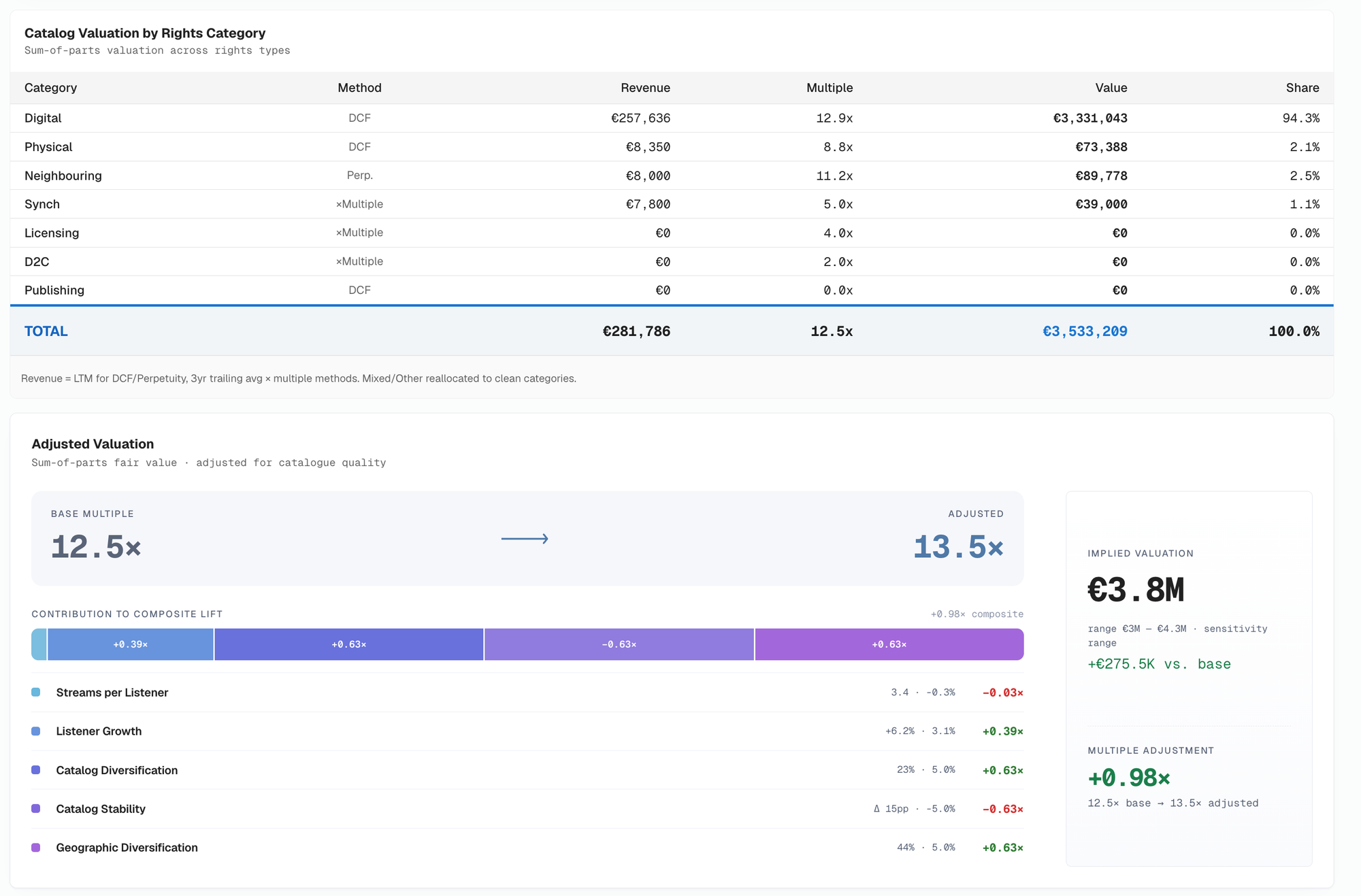
### **Why It Matters Artists & Independent Labels**
“Most artists never find out what their catalog is worth until a buyer is at the table - and that valuation isn't really being done for them,” explains Constantin Thyssen, Co-Founder and CEO of ValuePunks. “The people who made the music should be the best-informed in the room, not the least—so we give the tool to artists and labels for free. That’s a fairly punk thing to do in a market built on gatekeeping.”
The models driving ValuePunks are calibrated on real-world earnings, with the team having audited catalogues representing over €100/$114 million in annual royalties in the past year alone. Informed by data profiles across 120,000 catalogues and millions of songs, the platform aims to give creators the same institutional-grade intelligence that investors use.
While the current platform focuses on master rights and various performance royalties, a dedicated valuation tool for publishing copyrights is currently in development and expected to roll out soon.
Artists and independent labels can access their free valuation now at [www.valuepunks.com](http://www.valuepunks.com/?ref=hypebot.com).
## **Hypebot's Bottom Line**
Knowledge is power, but in the music catalog game, that power has historically belonged to the buyers with deep pockets and proprietary data.
[ValuePunks](http://www.valuepunks.com/?ref=hypebot.com) aims to democratize that ledger by giving indie creators the exact same institutional-grade intelligence that investors use. By treating different royalty streams as separate assets rather than flattening them into a single, arbitrary multiple, this tool gives artists the granular data they need to protect their life's work.
If you want to know what your music is actually worth without the expensive gatekeepers, this is a free tool worth testing.
### The Royalty Registration Checklist
URL: https://www.hypebot.com/the-royalty-registration-checklist/
Last updated: 2026-07-08T12:41:33.000Z
### **The Royalty Registration Checklist**
*By *Guillermo Pino Cruz* of* [***Not Another Record Label***](https://guillermopinocruz.substack.com/p/the-royalty-registration-checklist)
*\*This post is presented in full for free on Hypebot,* [*please subscribe to Not Another Record Label*](https://guillermopinocruz.substack.com/) *on Substack for more articles.*
In the modern music industry, your music can be played millions of times. Still, if your administrative foundation isn’t solid, that revenue either stays in the platform's hands or gets lost in “black box” accounts.
If you are not correctly registered with the appropriate organizations, the money your music generates remains “unclaimed.” Without the right digital paper trail, you cannot claim what you are rightfully owed.
Use this checklist before your next release goes live to claim every dollar that rightfully belongs to you.
## **1\. Performance Royalties (PRO / CMO)**
Collects money when your song is played publicly — radio, streaming, live sets, TV, background music in [venues](https://www.hypebot.com/tag/venues/).
Examples:
- **US:** Register with[ **ASCAP**](http://www.ascap.com/?ref=hypebot.com) or[ **BMI**](http://www.bmi.com/?ref=hypebot.com) (writer + publisher side)
- **UK:** Register with[ **PRS for Music**](https://www.prsformusic.com/?ref=hypebot.com)
- **France:** Register with[ **SACEM**](https://www.sacem.fr/?ref=hypebot.com)
- **Germany:** Register with[ **GEMA**](https://www.gema.de/en?ref=hypebot.com)
- **Argentina:** Register with[ **SADAIC**](https://www.sadaic.org.ar/?ref=hypebot.com)
- **Mexico:** Register with[ **SACM**](https://www.sacm.org.mx/?ref=hypebot.com)
- **Colombia:** Register with[ **SAYCO**](https://www.sayco.org/?ref=hypebot.com)
If you’re signed to a publisher, confirm they’ve registered the split correctly on their end too.
## **2\. Mechanical Royalties**
Paid out for reproduction of a composition — streams, downloads, physical sales (vinyl, CD, cassette).
- **US:** Register with [**The MLC**](http://www.themlc.com/?ref=hypebot.com) (Mechanical Licensing Collective) — mandatory for US streaming mechanicals.
- **UK/EU:** Usually collected via your PRO/CMO or a publishing administrator (SACEM, GEMA, and PRS all handle mechanicals alongside performance).
- If you self-publish, confirm your distributor isn’t quietly absorbing mechanicals you’re owed directly.
## **3\. Neighboring Rights and Master Royalties**
Separate from songwriter royalties — this pays the performer and rights holder of the actual recording, not just the composition.
- **US:** Register with[ **SoundExchange**](http://www.soundexchange.com/?ref=hypebot.com) (covers non-interactive digital platforms such as[ SiriusXM](http://www.siriusxm.com/?ref=hypebot.com),[ Pandora](http://www.pandora.com/?ref=hypebot.com), and online radio stations).
- **UK:** Register with **PPL**
- **France:** Register with **SPPF** or **SPEDIDAM** (depending on your role — label/producer vs. performer)
- **Germany:** Register with **GVL**
- If you’re both the artist and the label, you may need to register in both capacities separately.
This category is the one most self-released artists skip entirely — and it’s often the largest unclaimed pool.
**+Read more:** [*"Streams Don’t Build Careers: Fans Do"*](https://www.hypebot.com/streams-dont-build-careers-fans-do/)
## **4\. Publishing Administration**
If you write your own music and don’t have a publisher, someone still needs to actively chase royalties across territories and DSPs on the composition side.
- Decide: self-administer or use an admin service (there are several — compare fees and territory coverage before picking one).
- Confirm your publishing entity is registered with your PRO/CMO as both writer and publisher, if applicable.
- Set a calendar reminder to audit unclaimed/unmatched royalties every quarter.
## **5\. Double-Check Your Metadata**
Bad metadata = royalties sitting unclaimed in a black box, sometimes indefinitely.
- **ISRC:** assigned to every recording (unique per version. Don’t reuse across remixes, edits or distinct remasters).
- **ISWC**: assigned to every composition.
- All songwriters, producers, and publishers are listed correctly, with correct splits.
- **IPI/CAE numbers** are attached for every writer (get this from your PRO after registering).
- **Cross-check everything:** Ensure your distributor, PRO, and MLC/CMO details are identical. *Data mismatches are the #1 cause of unmatched royalties.*
## **6\. Platform and Content ID**
- Claim your artist profiles: **Spotify for Artists, Apple Music for Artists, YouTube, TikTok.**
- Enable **YouTube Content ID** (via your distributor or directly, if eligible) to monetize UGC using your music.
- Set up **audio fingerprinting** through your distributor to catch unauthorized use.
## **7\. After Every Release**
- Double-check that credits are live and correct on all platforms within 2 weeks of release.
- Cross-check that PRO, MLC/CMO, and distributor metadata all match.
- Log the release in your own royalty-tracking sheet — don’t rely on memory across a growing catalog.
- Revisit unclaimed/unmatched royalty portals (MLC, SoundExchange, PRS, GEMA all have these) every few months.
None of these registrations are automatic. Take the necessary time to research which entities apply to your territory and learn exactly how to register.
Protecting [your catalog](https://www.hypebot.com/tag/catalog/) is worth the effort.
**+Read more:** [*"You Don’t Need to Be Famous to Sell Your Music Catalog Anymore"*](https://www.hypebot.com/you-dont-need-to-be-famous-to-sell-your-music-catalog-anymore/)
### Huntsville Ain't Nashville — But It Sure Is on the Rise
URL: https://www.hypebot.com/huntsville-aint-nashville-but-it-sure-is-on-the-rise/
Last updated: 2026-07-08T12:11:03.000Z
When people talk about America's great [music cities](https://www.hypebot.com/tag/music-cities/), the conversation usually starts in familiar places. Nashville. Austin. New Orleans. Los Angeles. Those cities earned their reputations over decades and generations of legendary clubs, iconic recordings and musical mythology.
[**Huntsville, Alabama**](https://www.bandsintown.com/c/huntsville-al?utm%5Fsource=hypebot&came%5Ffrom=900), really has *none* of that history.
And yet, what lingers in the ellipsis of the future is the potential to create something both economically viable and culturally unique. And it all filters through an upcoming summer's worth of exciting concerts in 2026\.
Instead of trying to recreate another city's identity, Huntsville has spent the last several years building something much more deliberate: a modern live music ecosystem designed around venues, community programming, artist experiences and long-term economic development.
In 2026, becoming a "music city" isn't just about producing famous musicians, or hosting international conferences. It's about creating a place where live music can thrive all year-round. That takes community support, some smart investing, and a plan to lure the biggest nationally touring acts to stop in for a slice of local pie.
The clearest symbol of that ambition is the Orion Amphitheater.
Opened in 2022, [**the Orion Amphitheater**](https://theorionhuntsville.com/?ref=hypebot.com) is a 8,000-capacity venue has quickly become one of the Southeast's most talked-about outdoor concert spaces. It's operated by Venue Group; the company founded by **Mumford & Sons' Ben Lovett**, who also operate [**The Lumberyard**](https://www.al.com/life/2024/07/orion-amphitheater-groups-downtown-huntsville-venue-sets-grand-opening.html?ref=hypebot.com) in Huntsville, and have acquired the beloved [**Saturn**](https://saturnbirmingham.com/?ref=hypebot.com)live music venue in Birmingham.
The Orion was intentionally designed to feel less like a traditional amphitheater and more like a community gathering place. Between headline concerts, The Orion's calendar stays active with yoga classes, vintage markets, free fitness programs, family events and local festivals, making the venue part of everyday city life rather than a place that only comes alive on concert nights.
The concerts themselves have followed suit.
This year's calendar includes artists ranging from **Creed** and **Lord Huron** to **Parker McCollum, Billy Strings, Goo Goo Dolls, The Doobie Brothers** and **Five Finger Death Punch** — a level of programming that would have been difficult to imagine in Huntsville a decade ago.
But the Orion isn't carrying the city's music scene by itself. Downtown, [**the Von Braun Center**](https://www.vonbrauncenter.com/?ref=hypebot.com)has quietly evolved into a multi-venue campus capable of serving almost every level of touring artist.

Its 9,000-seat [**Propst Arena**](https://www.vonbrauncenter.com/propst-arena-in-huntsville/?ref=hypebot.com) (seen above) anchors major arena tours, while the 1,300-capacity [**Mars Music Hall**](https://www.vonbrauncenter.com/huntsville-event-venues/?ref=hypebot.com)(below)fills an important gap for artists graduating from clubs but not yet ready for arenas.
Add the [**Mark C. Smith Concert Hall**](https://www.vonbrauncenter.com/mark-c-smith-concert-hall-in-huntsville/?ref=hypebot.com) and [**Playhouse**](https://www.vonbrauncenter.com/vbc-playhouse-in-huntsville/?ref=hypebot.com), and Huntsville suddenly has an unusually complete ladder of performance spaces under one roof.
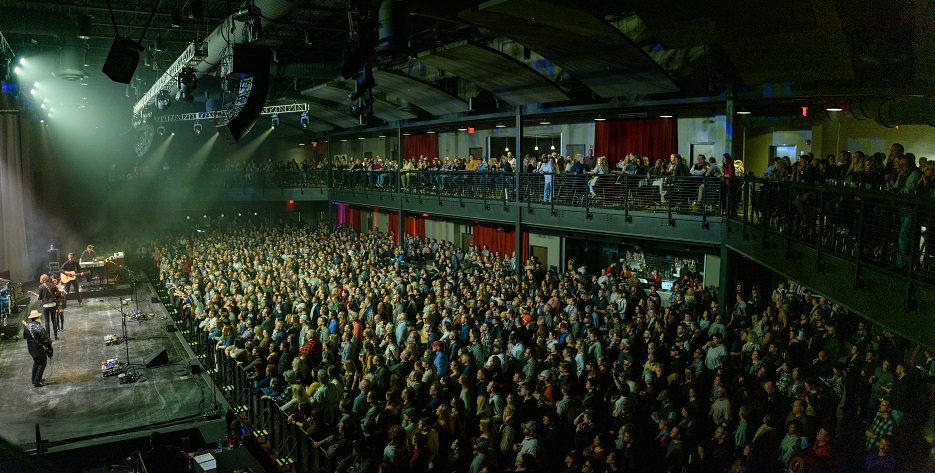
Outside the city's largest venues, the ecosystem becomes even more interesting.
Places like [**The Camp**](https://www.explorethecamp.com/?ref=hypebot.com) at MidCity have become gathering spaces where food trucks, local vendors and outdoor concerts blur the line between neighborhood hangout and music venue.
Stovehouse has transformed a century-old stove factory into one of Huntsville's busiest social hubs, pairing restaurants with a steady calendar of live performances. Their space, called [**The Electric Belle**](https://theelectricbelle.com/events/?ref=hypebot.com), hosts private parties and live acts, as well as DJ nights and student events, supporting a live music and nightlife community that is increasingly diversifying.
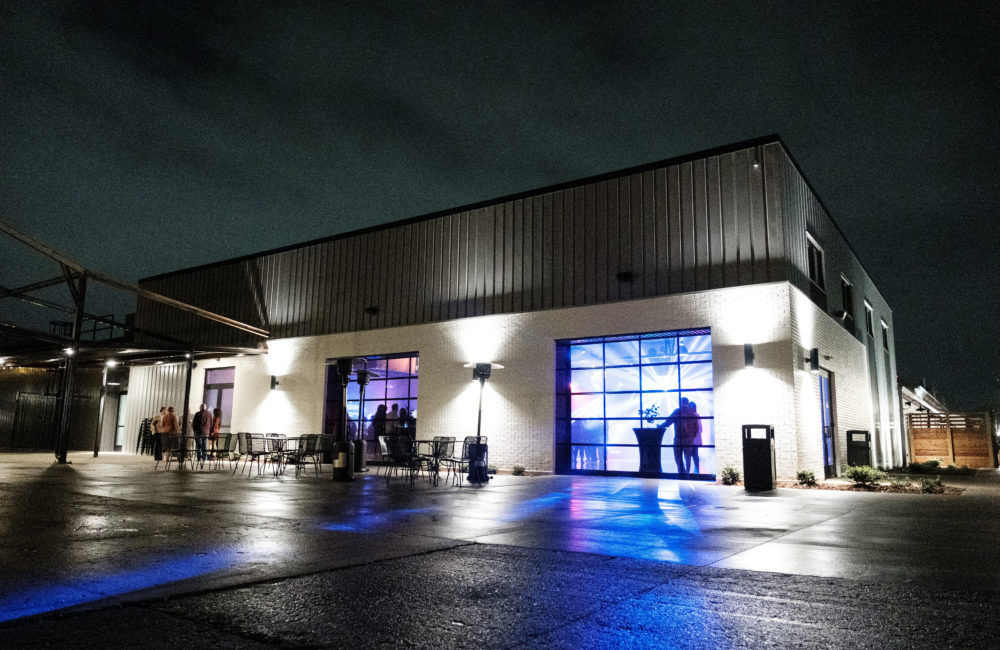
Meanwhile, [**Lowe Mill ARTS & Entertainment**](https://lowemill.art/?ref=hypebot.com)— the largest privately owned arts facility in the South — hosts concerts alongside artist studios, galleries and creative businesses, creating a music scene that feels woven into the city's broader cultural identity rather than isolated from it.
That's really the story here. Huntsville isn't trying to become another Nashville, where music is seeping up through the concrete everywhere you walk. Instead, it's trying to intentionally integrate live music into the societal fabric — how and where the city's population engages with culture — and build its infrastructure around to suit.
And that cuts across scale very conveniently.
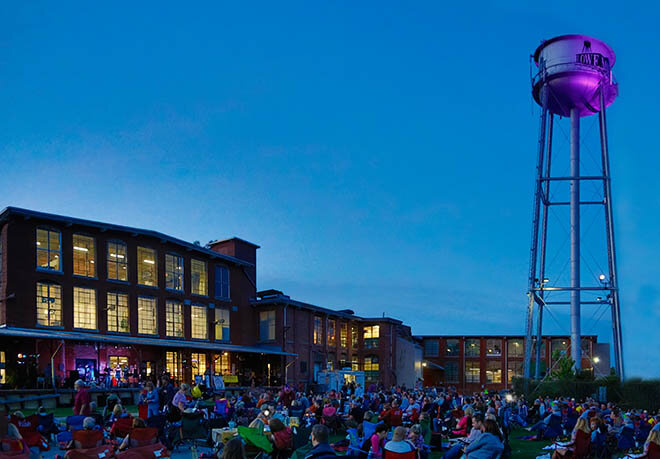
A touring artist can headline the Orion, play Mars Music Hall, perform an intimate songwriter set at Lowe Mill or appear at one of dozens of community events spread throughout the year. Local musicians aren't competing for one stage — they're growing within an increasingly connected network of venues.
Even smaller venues are seeing an uptick in community presence.
[**Campus No. 805**](https://www.instagram.com/campus805/?ref=hypebot.com) is a brewery that regularly hosts shows and events. [**Gold Sprint Coffee**](https://www.instagram.com/goldsprinthsv/?ref=hypebot.com) also hosts DIY shows. And [**Mad Malts Brewing**](https://www.instagram.com/madmaltsbrewing/?hl=en&ref=hypebot.com) features weird events of all kinds on the regular.
**But *why* is this happening?**
The city has treated music as an economic development strategy, creating [a dedicated Music Office](https://huntsvillemusic.com/venues-and-performance-spaces/?ref=hypebot.com), measuring the impact of its music economy and encouraging partnerships between venues, tourism officials and local businesses. Huntsville Music Month now brings together hundreds of performances every September, while parks, breweries and neighborhood venues help ensure live music remains visible long after the festival season ends.
The biggest opportunities don't always emerge from the biggest markets. In fact, less and less. As more mid-sized cities invest in venues, cultural districts and year-round programming, they become increasingly attractive stops for touring artists looking to reach engaged audiences without competing in oversaturated markets.
[**Huntsville**](https://www.bandsintown.com/c/huntsville-al?utm%5Fsource=hypebot&came%5Ffrom=900) won't replace Nashville.
That was never really the goal though, and everyone knows it. However, it still might transform into one of the country's best examples of how to build a music city for the next generation. Not through *mythology,* but through thoughtful investment in the people, places and infrastructure that keep live music alive.
[Learn more and engage with Huntsville Music Office.](https://huntsvillemusic.com/venues-and-performance-spaces/?ref=hypebot.com)
### The Bar Tab Used to Pay for Live Music. Clearly, It Doesn't Anymore.
URL: https://www.hypebot.com/the-bar-tab-used-to-pay-for-live-music-clearly-it-doesnt-anymore/
Last updated: 2026-07-08T11:58:26.000Z
The business model behind independent [live music](https://www.hypebot.com/tag/live-music/) was generations old, and remarkably simple. Bands brought people through the door. Those people bought drinks. The bar paid the venue's bills, and the tickets paid the artists.
Clear enough. Okay, so what went wrong with this equation?
Well, a thoughtful new [feature published this week by ***The Guardian***](https://www.theguardian.com/music/2026/jul/06/australian-live-music-industry?ref=hypebot.com) examines how [independent venues](https://www.hypebot.com/tag/independent-venues/) across Australia are experimenting with entirely new business models after finding that alcohol sales — once the financial backbone of grassroots music — are no longer enough to keep the lights on.
The article profiles venues adopting **monthly memberships, nonprofit structures, livestreaming, podcast production, rehearsal spaces,** and **community fundraising,** all as efforts to reduce their reliance on bar revenue. Perhaps because younger generations are drinking less than past consumer generations, perhaps it's simply an economical issue for the listening public with tickets and transportation and food all becoming more expensive, no matter the reason, venues are adjusting to the realities of their audience.
As *The Guardian* reports, Sydney nonprofit venue [**Lazy Thinking**](https://www.lazythinking.com.au/?ref=hypebot.com) began offering $15-per-month memberships after routinely losing around AU$1,000 each week.
Founder **Jim Flanagan** says even sold-out shows now generate only a fraction of the bar revenue they once did, reflecting broader shifts in drinking habits alongside rising operating costs.
**Sydney nonprofit venue* [***Lazy Thinking**](https://www.lazythinking.com.au/?ref=hypebot.com)***.**
***+Read more:*** [*"Live Music's Biggest Growth Opportunity May Be Hiding in Plain Sight"*](https://www.hypebot.com/live-musics-biggest-growth-opportunity-may-be-hiding-in-plain-sight/)
It's an Australian story on the surface, but the underlying challenge will sound familiar to [small venue](https://www.hypebot.com/tag/small-venues/) owners almost anywhere.
A packed room used to always mean a busy bar, and a busy bar made it possible to book emerging artists, take chances on unknown acts, and keep smaller venues alive through slower nights. Things aren't so black and white anymore.
Many of those assumptions are changing.
Younger audiences generally do consume less alcohol than previous generations, while inflation has made a night out significantly more expensive. At the same time, venues are facing higher rents, insurance premiums, wages and production costs. Even when attendance is healthy, the economics often aren't.
The result is that independent venues are beginning to think less like bars and more like tech startups about the way they grow and maintain their communities.
***+Read more:*** [*"Fall Out Boy x Wells Fargo? Small Venues, Hear Me Out..."*](https://www.hypebot.com/fall-out-boy-x-wells-fargo-small-venues-hear-me-out/)
Instead of relying on one primary revenue stream, they're building diversified businesses. Membership programs create recurring income. Podcast studios sit alongside performance spaces. Livestreams extend audiences beyond the room. Rehearsal spaces generate daytime revenue. Community fundraising and nonprofit structures help fill gaps that beer sales once covered.
These aren't gimmicks. They're attempts to answer a much bigger question:
## **If the bar no longer pays for live music, what will?**
It's a question that's becoming increasingly relevant far beyond Australia.
Across North America and Europe, we've covered similar experiments on Hypebot — from fan memberships and venue preservation initiatives to new merchandising strategies, VIP experiences and community-supported models. Each points toward the same conclusion:
The old financial engine underneath grassroots live music is losing horsepower, and the industry is searching for what comes next. And we're excited to see what starts to stick.
### Music Prediction Markets: The Opportunity, the Risk, and the Rules
URL: https://www.hypebot.com/music-prediction-markets-the-opportunity-the-risk-and-the-rules/
Last updated: 2026-07-08T11:25:03.000Z
*By *Jeff Sloan*, Founder & CEO of* [***FanLabel***](https://fanlabel.com/?ref=hypebot.com)
[Music data](https://www.hypebot.com/tag/data-/?-analysis) has become the centerpiece of a new financial market, and the numbers are growing by the day. [Kalshi](https://kalshi.com/?ref=hypebot.com) recently revealed that its music prediction markets jumped from roughly $70 million in trading in 2025 to over $400 million to date in 2026\.
Beyond that, [FanLabel’s](https://fanlabel.com/?ref=hypebot.com) internal market analysis estimates that through April 2026, year-to-date music and music-related contract volume across all prediction markets reached $823 million.
This robust activity has taken place with little to no strategic guidance, financial consideration for the use of **NIL (Name Image Likeness)**, and data capture on the part of rightsholders. That is a mistake. Prediction markets are scaling rapidly, and the entities and people who create, own, and manage [music rights](https://www.hypebot.com/tag/rights/) need to help set the rules now.
## **The Opportunities**
The upside extends far beyond contract trading volume invoking NIL. Music prediction markets could help even the data playing field between majors and indies. Event-contract prices create a real-time, market-implied probability for music outcomes, such as whether a particular song will reach the Top 10 of the Billboard Hot 100 chart or whether an album will cross a particular streaming threshold.
[Independent labels](https://www.hypebot.com/why-independent-record-labels-must-professionalize-to-survive/) and artists often lack the same analytics infrastructure as majors, so the market itself could provide concrete guidance they otherwise would not get.
Rightsholders can also use music prediction markets as risk-management tools, providing labels with guidance on release cycles where marketing spend and advances are tied to first-week or first-month performance. Markets can help publishers and [catalog owners/buyers](https://www.hypebot.com/the-10-most-valuable-artist-music-catalogs-for-now/) hedge against gaps between acquisition models and actual stream/chart performance, and accurately determine a song’s value for syncs and other licensed uses.
In addition, music prediction markets deepen fan engagement in ways that create commercial value for artists and rightsholders. Music superfans are already researching chart performance, streaming data, release clues, fandom signals, and artist lore. Prediction markets supercharge that engagement by harnessing it into a structured, data-driven activity with real outcomes attached.
Artists and rightsholders also have the opportunity to shape contracts in a way that provides multiple new sources of revenue. In addition to licenses for song samples, album artwork, NIL, and more, a healthy market for rightsholders could include settlement-data partnerships, brand/artist participation, and potentially a “toll” that rightsholders can charge based on trading volume.
**Screenshot courtesy of* [**FanLabel*](https://fanlabel.com/?ref=hypebot.com)**.*
**+Read more:** [*"Your Song Is the Starting Pistol, Not the Finish Line"*](https://www.hypebot.com/your-song-is-the-starting-pistol-not-the-finish-line/)
## **The Challenges**
However, not every music outcome should become a tradable contract. It is imperative that music prediction markets be tied to objective data and designed with appropriate safeguards.
The easiest way to do this is to focus on outcomes that can be tied to third-party metrics, such as chart rankings and stream counts. [***Luminate***](https://luminatedata.com/?ref=hypebot.com) administers both, and many **digital service providers (DSPs)** publish stream counts. These sources are publicly verifiable, already used for commercial and royalty calculations, and backed by anti-fraud incentives, making them a great foundation to govern results in music prediction markets.
In contrast, many music-related outcomes could be controlled by small groups of insiders, creating risk for manipulation or material non-public information. These include release timing, setlists, playlist confirmations, promotional-campaign details, and other decisions that could be known ahead of time by artists, managers, labels, promoters, DSPs, or chart-facing teams.
That does not mean the category is unworkable, but rather that the industry needs clear rules before these markets scale. Contracts tied to discretionary insider-controlled outcomes should either be avoided or subjected to much stricter review. Non-chart and non-stream markets should be limited to outcomes governed by independent, multi-party processes, such as major awards like the Grammys, where no single participant can determine the result.
For everything else, exchanges and music companies need restricted-person policies, blackout periods, information barriers, pre-listing consultation, settlement-source consent, and integrity monitoring.
Even objective-data contracts require careful design. Markets should define the reference universe clearly, use observation windows long enough to reduce the impact of short-term manipulation, set position limits that reflect the scale of the underlying music activity, and monitor both trading activity and the underlying chart or stream data for anomalies.
## **A Call for Coordination**
The time has come for **coordination between rightsholders, data vendors, and regulated exchanges** to help solve these challenges. Rightsholders need a practical, licensed foundation similar to that of sports leagues, which increasingly use prediction markets to capture data revenue, drive fan engagement, and increase brand visibility. By negotiating similar terms, music rightsholders can ensure that the market does not harden without their input.
Verifiable, transparent data vendors are also needed so contracts are tied to metrics that are objective, durable, and difficult to manipulate. In addition to Luminate chart and streaming data and DSP-published streaming counts, key infrastructure partners for music prediction markets include companies like [**Tuned Global**](https://www.tunedglobal.com/?ref=hypebot.com) for licensed-audio infrastructure and [**Plaid**](https://plaid.com/?ref=hypebot.com) or [**Coinflow Labs**](https://coinflow.cash/?ref=hypebot.com) for payments and **KYC (Know Your Customer)** initiatives.
Exchanges should remain responsible for federally regulated listing, trading, clearing, surveillance, position limits, and anti-manipulation enforcement. However, the market needs a music-specific enabling layer between exchanges, rightsholders, data vendors, and infrastructure partners that can help identify appropriate metrics, secure settlement-source alignment, flag rights or insider-information concerns, and ensure that contracts are purpose-built to meet the existing needs of and capture the universe of new opportunities for rightsholders.
The prediction-market landscape is expanding quickly, with roughly 18 existing **DCMs (Designated Contract Markets)** and a similar number going through **CFTC (Commodity Futures Trading Commission)** approval. As more of them explore music and entertainment contracts, that coordination will be essential to creating standards that can travel across platforms.
**Screenshot courtesy of* [**FanLabel*](https://fanlabel.com/?ref=hypebot.com)**.*
**+Read more:** [*"AI Won’t Replace Your Music Career, But It Can Help Organize It."*](https://www.hypebot.com/ai-wont-replace-your-music-career-but-it-can-help-organize-it/)
## **The Road Ahead**
FanLabel’s recent CFTC submission was one of the few comments focused specifically on music-related event contracts. That should concern the industry, as much of the prediction-market debate has been shaped by sports, gaming, crypto, state regulators, and consumer-protection advocates. Those voices matter, but music has its own economics, data sources, rights structures, and reputational risks.
It needs its own seat at the table.
Music prediction markets are still early enough to shape but not to ignore. The opportunity is now to engage and build a market that expands fan engagement, creates useful price signals and hedging tools, opens new revenue streams, and protects against manipulation before bad practices harden into industry norms.
---
**Jeff Sloan* is the Founder and CEO of* [***FanLabel***](https://fanlabel.com/?ref=hypebot.com)*, whose ownership includes major record label groups, and the architect of the FanLabel ecosystem and its extensive patent estate. A serial entrepreneur with more than 30 years of experience and multiple successful exits – including Clarity Technologies, Rubicon Genomics, and Genego – Sloan has spent his career taking startups from concept through launch, growth, and exit.*
### Live Nations Demands Judge Overturn Monopoly Jury Verdict
URL: https://www.hypebot.com/live-nations-demands-judge-overturn-monopoly-jury-verdict/
Last updated: 2026-07-07T18:40:20.000Z
Following the jury verdict finding Live Nation and Ticketmaster guilty of operating an illegal monopoly, the live entertainment giant is pushing are pushing back. In two aggressive memorandums filed on July 2, 2026, Live Nation called on the court to throw out the jury's verdict entirely; or failing that, to grant a brand new trial.
Here is a breakdown of Live Nation’s two-pronged legal defense.
### **1\. The Push to Overturn the Verdict: "No Proof of Harm"**
In their Motion for Judgment as a Matter of Law, Live Nation argues that the plaintiffs (the U.S. government and various states) failed to meet the technical requirements of the Sherman Antitrust Act. They claim the prosecution won on "made-for-juries emotional arguments" rather than actual economic proof.
Their key arguments for throwing out the verdict include:
- **Lack of Economic Harm:** Live Nation asserts the government failed to prove that the company's conduct actually resulted in higher prices, lower quality, or reduced output for artists and venues.
- **Artists Make More Money:** The defense highlights evidence acknowledging that artists actually made 18% more money playing at Live Nation’s large amphitheaters than at arenas.
- **Voluntary Venue Contracts:** Live Nation claims there is zero evidence that any venue was forced into an exclusive primary ticketing contract they did not want; rather, venues voluntarily chose these exclusive agreements.
- **Flawed Damages Calculations:** The companies argue that the plaintiff's expert witness on damages, Dr. Abrantes-Metz, provided an overcharge analysis that was completely unreliable and inadmissible.
### **2\. The Push for a New Trial: "Prejudiced Evidence"**
If the judge refuses to overturn the verdict outright, Live Nation has formally requested a new trial, arguing the original verdict was "against the weight of the evidence". They claim the jury was severely prejudiced by the improper admission of specific evidence and flawed jury instructions.
Key arguments for a new trial include:
- **Improper Focus on Fan Ticket Fees:** Live Nation argues the jury was improperly swayed by "out-of-market" evidence about the high ticket fees paid by fans, including comparisons to lower fees in Europe. Legally, they argue the trial should have only focused on the prices charged to the actual customers in the defined market: venues and artists.
- **Stale and Hearsay Evidence:** The defense claims the government propped up its allegations of "threats and retaliation" by heavily relying on "stale" evidence from outside the statute of limitations, as well as hearsay regarding rumors of venue "concerns".
- **Flawed Jury Instructions:** Live Nation asserts the court's instructions to the jury misstated antitrust law regarding market definition, anticompetitive effects, and exclusive dealing.
## **Hypebot's Bottom Line**
Now that Live Nation has filed motions to dismiss the jury's monopoly verdict against it or permit a retrial, the ball is now in Federal Judge Arun Subramanian court.
The judge will likely issue a ruling, or at least provide significant guidance, on or before the upcoming major status conference scheduled for July 30, 2026.
If the judge denies Live Nation's requests and upholds the jury's verdict, the lawsuit will officially move into the "remedies phase" to determine penalties, which is currently slated for a separate bench trial expected to begin no earlier than February 2027.
### CA, NC, DC, VT, ME Laws Limit Ticket Resale as Feds Fail to Act
URL: https://www.hypebot.com/ca-nc-dc-vt-me-laws-limit-ticket-resale-as-feds-fail-to-act/
Last updated: 2026-07-07T14:47:50.000Z
Venues, promoters, artists and fans have all pleaded for comprehensive federal ticketing reform to combat exorbitant markups and fees, predatory scalping practices, rampant bots and deceptive URLs.
While federal efforts like the TICKET Act made headlines for pushing for all-in pricing transparency, the real action is shifting from Capitol Hill and directly into state legislatures. In 2026, states are moving far beyond simple fee disclosures - they are actively rewriting the economics of the secondary ticket market.
### **Why is Ticketing Legislation Shifting from the Feds to the States?**
The shift from federal to state-level ticketing legislation is happening because state governments are able to act faster and impose stricter, localized market regulations than the current divided US Congress.
While federal bills primarily focus on basic consumer transparency (like upfront pricing), states are now aggressively targeting the root causes of secondary market inflation. They are stepping in to enact hard price caps on resale tickets, ban speculative ticketing (selling tickets the broker doesn't yet own), and mandate strict licensing for high-volume scalpers.
## **2026 State Ticket Resale Laws Breakdown**
States are now leading the charge by treating live event tickets not as commodities, but as consumer goods requiring heavy market protection. Here is a breakdown.
### **Washington D.C. (RESALE Act)**
**Pending its final Council vote in July 2026** , the RESALE Act enforces a strict 10% cap on ticket markups alongside a 10% cap on fees. It also restricts speculative ticketing and "surveillance pricing," a predatory practice that uses a buyer's online data against them to inflate prices. Additionally, it requires high-volume scalpers moving 50 or more tickets a year to register with the district and hold a $25,000 surety bond.
### **North Carolina (SB 849 - Real Tickets, Real Fans Act)**
Passed in July 2026, this legislation aggressively targets digital deception. It bans speculative tickets, deceptive URLs designed to trick buyers, and ticket bots. The law also enforces strict "all-in" pricing transparency and places hard caps on the secondary market, limiting resale markups to 20% and fees to 10%. **The law will take effect on October 6, 2026.**
### **California (AB 1349 & AB 1720)**
Having passed several key committee votes, **two related bills are advancing** through the current legislative session. AB 1349 requires sellers to have "constructive possession" of a ticket to ban speculative sales and prohibits fake "sold out" claims used to induce panic buying. AB 1720 would put a strict 10% cap on secondary market markups above the original ticket price.
### **Vermont (H. 512)**
**Effective July 1, 2026,** Vermont's new law focuses on protecting local arts ecosystems. It bans speculative tickets and deceptive resale websites while capping resale markups at 110% of the original price. This measure was specifically designed to protect independent venues with 3,000 seats or fewer and community-driven events from predatory scalping.
### **Maine (L.D. 913)**
Maine’s landmark ticketing legislation has been **championed by the National Independent Venue Association (NIVA)** as a national standard for consumer protection. **Effective September 2025**, the law imposes a strict 10% cap on ticket resale marketplace markups above the original total price. It also takes aggressive aim at secondary market tactics by banning speculative ticket listings, outlawing the use of bots to bypass purchasing limits, and prohibiting deceptive websites that mimic official venues. To ensure compliance, the state enforces full "all-in" price transparency and treats violations as unfair trade practices, carrying stiff penalties of up to $10,000 per infraction.
**Tennessee, Connecticut** and **New York** are also among the states advancing restrictions on resale.
## **Hypebot's Bottom Line**
The era of the "wild west" secondary market is facing an existential threat.
If state-level restrictions in CA, NC, VT, DC, ME and elsewhere hold up against the inevitable legal challenges from deep pocketed secondary platforms, the business model of high-margin ticket scalping will collapse.
For artists and venues, this is a massive win. While not a panacea, these laws will lead to tighter control over ticket inventory, a better relationship with fans who are no longer being priced out of the building, and a more equitable live ecosystem.
Expect to see other jurisdictions copy-and-paste these bills into their own legislative sessions throughout the rest of this year and into 2027.
### Manager of the Month: Isaac Gordon of Breakpoint Booking
URL: https://www.hypebot.com/manager-of-the-month-isaac-gordon-of-breakpoint-booking/
Last updated: 2026-07-07T14:07:56.000Z
Welcome back to our new interview series, [**Manager of the Month**](https://www.hypebot.com/tag/manager-of-the-month/), in which we spotlight the work of successful pros in the artist management space, and ask them to share (just a few of) their coveted trade secrets... *shhh!*
Manager of the Month is supported by [**Bandsintown Pro**](https://www.bandsintown.pro/?utm%5Fsource=hypebot&came%5Ffrom=900), the *smarter* way to promote live concert events.
**Isaac Gordon** founded [**Breakpoint Booking**](https://www.breakpointbooking.com/music/?ref=hypebot.com) in Beverly Hills in 2018\. It's one of the only **Black-** and **LGBTQ+-owned** member organizations of the **National Independent Talent Organization (NITO)**, and likely one of very few Black-owned talent agencies that takes a fully invested approach in developing raw, young, independent talent (across Music, Comedy, Speaking, and Branding/NIL). They've helped launch artists like Tank and the Bangas, Benny the Butcher, Harry Mack, Lost Dog Street Band, Sierra Ferrell, and hundreds more, and are on the verge of launching Sports and Television divisions.
Here's our conversation. Let's dive in. Enjoy!
---
**Hypebot: Hey Isaac, thanks so much for taking the time to answer some questions. Breakpoint (aptly named) specializes in breaking early career performers and creators. Why is that important for you?**
Isaac Gordon: "Great question. Honestly, I’ve always had a deep love for the independent side of the music industry. While in college, I had been managing emerging acts and exploring local scenes. When I finally found myself working professionally in the music industry with much bigger names, it didn’t take long for me to notice the amazing demos coming in from underground, unheard of talent."
For me, that was always where the real work lived: taking something completely unknown and being an active part of the process that makes it great."
In today's landscape, our model just makes sense. There are very few agencies out there willing to take on acts as early as we do and structurally develop them on the road. We proudly own our lane — whether it comes to breaking new talent or protecting the touring business of legacy acts. At the end of the day, it is all about helping our roster grow their business through hard work, absolute transparency, and foundational education."
**Artist roster snapshot courtesy of* [**Breakpoint Booking*](https://www.breakpointbooking.com/music/?ref=hypebot.com)**.*
**H: How did you get your start in this business? And where did you acquire your entrepreneurial sensibilities?**
IG: "I have no idea where I acquired my entrepreneurial sensibilities. Neither of my parents nor my grandparents ever owned a business; I come from a traditional, blue-collar, 9-to-5 family. My mom was a dedicated hospital worker and union president in Barberton, Ohio, and my dad worked concrete for a living when he wasn’t in the pulpit preaching on Sundays."
But even without a corporate blueprint, I was always hustling, constantly balancing two or three jobs at the same time. I’ve always believed that the absolute best way to learn anything is to just jump in and do it. Whether it was producing beats, starting a recording studio, or launching an independent record label — all of which I did when I was young — I did it to learn. You learn by executing."
Ironically, I got my professional start in booking as an intern, and if I’m being completely honest, I wasn't all that interested or excited about it at the time. I was hyper-focused on becoming a talent manager or an A&R. I applied everywhere like it was my full-time job, but the universe still guided me to a talent agency."
I didn’t sleep on the opportunity, though. Prior to landing that professional agency gig, I had founded my own management company where I was wearing every single hat imaginable. So while booking wasn't entirely new to me, it wasn’t until I started doing it for real, at scale, that I completely fell in love with it."
And if there's one thing I can say about making the shift to being an agent: it’s definitely not as thankless as being a manager."
**H: This series is called Manager of the Month — I guess there’s a dispute about whether booking agents think of themselves in a “managerial” role but in a way you’re shaping an artist’s career nonetheless. What’s the most important thing when building relationships with artists from your seat?**
IG: "Spot on. I mean, we are all part of the unified team that surrounds the talent — at least, that is exactly how I like to look at it. I firmly believe a great agent always keeps a manager's hat in their back pocket. There are days in this business when, even as the booking agent, the situation requires you to put that hat on to protect the client."
When it comes to relationship building in entertainment, the single most important thing you can do is just be yourself. Be who you really are, say exactly what you mean, and only promise what you can actually deliver — or better yet, under-promise and over-deliver."
From my seat as an agency owner, that is the exact culture I try to instill in our team. I don’t want order-takers. I want my agents to deeply uncover a client’s actual needs first, and then answer: How can we bring true value and fill this specific role for our client?"
> *"When it comes to relationship building in entertainment, the single most important thing you can do is just be yourself. Be who you really are, say exactly what you mean, and only promise what you can actually deliver — or better yet, under-promise and over-deliver."*
**H: Do you think it’s essential today for artists to develop their live performance skillset and go on tour?**
IG: "Yes, I think it’s essential for artists to develop their live performance skillset. I’ll take it a step further and say it’s the first and most important thing an artist can do. It does worry me that so many of us are now hiding behind our screens. Nothing will ever replace that real human to human connection. You have to figure out a way to master that if the plan is longevity."
As for touring, I don’t think it needs to be mastered immediately. While I believe it’s something every act will have to face at one time or another it’s not immediate. For developing acts it’s more about perfecting the show and building an audience. Touring isn’t for the weak though. I feel a lot of acts come in excited and leave broken down similar to those freshman in engineering photos you see online. It’s real business."
**H: You’ve mentioned in the past that you’re strangely one of “very few Black-owned talent agencies” — in fact you’re also LGBTQ+-owned as well — not to set up a sort of naïve premise here, but why is that? What advice would you give, for example, to aspiring members of the community to pursue these industry anchor positions if the doors aren’t opening for them?**
IG: "I think it all speaks directly to this country’s history. It wasn’t very long ago when the music industry was entirely segregated. Today’s Black artists have had a path paved for them, and it is the exact same reality for Black executives. We didn’t always have a seat at the table. Today, we have a few more of those seats thanks to the radical groundwork laid by pioneers like Harry Herbert Pace, Gamble and Huff, and Clarence Avant."
I distinctly remember going to my first major agency conference and looking around the room — there simply weren’t many folks there who looked like me. My ultimate hope and goal with Breakpoint Booking is to structurally change that. There is an immense amount of brilliant talent hidden in underserved communities — specifically talent outside the traditional bubbles of LA, Nashville, and NYC. They don’t lack drive; they just lack the opportunity and the blueprint. That is exactly why I proactively seek them out annually for our internship and training programs."
Beyond providing opportunity, I think it’s critical just to raise awareness that these positions exist. I constantly hear stories of successful agents who arrived in this space after initially having no idea what the booking side of the industry even entailed. I was one of those exact people."
Most incoming professionals default to wanting to be A&Rs or talent managers because that's what is visible. A lot of people simply don’t know how agents structurally tie into those ecosystems, or what it actually takes to build a successful, sustainable career as an agent. I would enjoy helping to bridge that educational gap."
**H: Can you point to certain successes you’ve had that have brought pride and a sense of trailblazing to the agency?**
IG: "There are so many to name, but there is also still so much yet to accomplish. If I had to start anywhere, it’s simply the fact that we’ve been in business for more than five years and completely survived the pandemic. Those were incredibly stressful, unprecedented times for live entertainment, and making it through to the other side intact is a victory in itself."
From there, I point to our growth from literal obscurity to having represented world-renowned icons like Janet Jackson, Teddy Riley, and Keke Palmer. I also look back with immense pride at our early-stage bookings with music acts like Tank and the Bangas, Benny the Butcher, and Sierra Ferrell, as well as comedy powerhouses like Nasser Al-Rayess, Jeffrey Keller, and Sarper Güven."
I often begrudgingly joke within our circle that we seem to 'graduate' our clients to WME once they hit a certain stratosphere. While the ultimate goal is to scale our infrastructure so we hold onto those clients long-term, it is an undeniable testament to our ear for talent and our ability to build an eye opening box office foundation from scratch."
Lastly, and most importantly, I’d point to the growth of our agents. It has been incredibly humbling to watch the graduates of our training program transition into full-time agents, making this industry their life's work and truly succeeding at it. At the end of the day, watching them win is probably the best part of it all."
> *"Managers and agents often find themselves operating on completely different timelines. Managers naturally want to move fast and strike while the iron is hot. Agents, on the other hand, usually want to slow things down so there’s more time in the box office."*
**H: Is there a story of hardship or adversity you can point to that changed how you approach management/booking?**
IG: "Going back to my earlier point about management being thankless, I have plenty of personal stories to vouch for that, and I hear the exact same horror stories from other managers and veteran industry professionals."
The reality is that artists can be incredibly cruel to the people building their careers. On the flip side of that coin, I constantly hear about managers and gatekeepers who were handed amazing opportunities to protect a talented individual, only to turn around, steal from them, and completely destroy their career. There’s a famous Hunter S. Thompson saying that perfectly encapsulates this industry: 'The music business is a cruel and shallow money trench, a long plastic hallway where thieves and pimps run free, and good men die like dogs.' And as the old joke goes: there's also a negative side."
In a twisted sense, that negative side is exactly what keeps a high-integrity agency like ours in business. Clients usually come to us after they’ve been burned by a shady third-party agency, or after they've trusted a bad agent who mismanaged their box office."
The silver lining here is that technology and access is helping artist get smarter. The modern independent landscape is forcing a level of transparency that didn't exist before. The scams that prey on hopes and dreams are being brought to light, and the people who entered this industry for all the wrong reasons will continue to be exposed. We’re just proud to stand on the right side of history. It’s important to me."
**H: What’s your post-concert food craving? :)**
IG: "I’m typically really hungry after concerts because it’s likely dinner for me. I would have to say any sort of *dineresque* spot within proximity. Please allow me the ability to choose between breakfast and dinner."
**Artist roster snapshot courtesy of* [**Breakpoint Booking*](https://www.breakpointbooking.com/music/?ref=hypebot.com)**.*
**H: What are the biggest differences in the ways managers work with artists than bookers?**
IG: "Let's be real. Managers are infinitely more involved in the day-to-day chaos than agents. Most artists aren’t picking up the phone at 3:00 AM to call their booking agent unless a show has gone completely off the rails. It’s the manager who has to sit on the line and talk them through the late-night existential crises. That’s exactly why management is such a thankless job."
However, when it comes to routing a tour, the agent is truly in the driver’s seat. We control the wheel when it comes to routing logic, geographic targeting, and granular venue negotiations. Meanwhile, the manager maintains a macro, high-level overview — orchestrating the surrounding orbit of the tour publicist, tour manager, label reps, and day-to-day teams."
Because our core responsibilities differ, managers and agents often find themselves operating on completely different timelines. Managers naturally want to move fast and strike while the iron is hot. Agents, on the other hand, usually want to slow things down so there’s more time in the box office."
**H: If you could time travel to the past or future, which would you choose and why?**
IG: "Ha! Being black I have to call the future on this one, right? I’m not trying to go back and have to fight to get back to where I am now! In all seriousness, the future would be amazing to witness. I can picture myself on a new earth-like planet. Maybe throw in a spaceship (all electric of course). I have a feeling we’d maybe be on GTA7 at that point."
**H: Haha, "GTS: Grand Theft Spaceship."**
---
*To learn more, visit* [*Breakpoint Booking*](https://www.breakpointbooking.com/?ref=hypebot.com) *and* [*follow them on Instagram*](https://www.instagram.com/breakpointbkng/?ref=hypebot.com)*.*
*Join the leading live event professionals saving time and selling more tickets with* [*Bandsintown Pro.*](https://www.bandsintown.pro/?utm%5Fsource=hypebot&came%5Ffrom=900)
## Hypebot
Essential news & insights for artists and live music pros.
Sign up for free weekly content delivered to your inbox
Subscribe
Email sent! Check your inbox to complete your signup.
### A Fandom Expert on Why Waiting Is Its Own Event
URL: https://www.hypebot.com/a-fandom-expert-on-why-waiting-is-its-own-event/
Last updated: 2026-07-07T13:17:10.000Z
### **Fans turn waiting into its own event**
*By *Carlo Kiksen* of* [***The Fanbase Builder***](https://newsletter.thefanbasebuilder.co/p/fans-turn-waiting-into-its-own-event?ref=hypebot.com)
Nobody likes to wait, but fans are surprisingly good at it.
Artists spend a lot of energy on [the release](https://www.hypebot.com/tag/release-strategy/) itself. Less thought goes into the space anticipating the release.
Many music campaigns focus on the concepts of anticipation and speculation. For example:
- Announcing an album and the campaign leading up to the release date.
- Announcing a tour, the campaign leading up to the on-sale date, and the time in between purchasing a ticket and the event itself.
- Rumours of major artists going on tour or releasing new music.
- Fans predicting festival lineups.
- Fan discussions about DJs playing 'IDs' at major shows.
For artists trying to build a lasting relationship with their audience, knowing how fans behave during a campaign’s build-up is as important as the [campaign](https://www.hypebot.com/tag/campaign/) itself.
**+Read more:** [*"Why Rod Wave's Fans Sing His Songs For Him"*](https://www.hypebot.com/why-rod-waves-fans-sing-his-songs-for-him/)
## How it works
Fandom academic **Owain Gwynne** introduced the concept of *fan-made time* in [his philosophy PhD thesis](https://ourarchive.otago.ac.nz/handle/10523/7256?ref=hypebot.com) at the University of Otago in New Zealand.
For two years, Gwynne analysed discussions on a popular *Lord of the Rings* website prior to the release of the first film in the ‘Hobbit’ trilogy. The film’s production faced many obstacles, including lengthy delays, a union strike and the departure of the original director.
According to Gwynne’s thesis, these events appeared to be as emotionally engaging for fans as they expect the films themselves to be.
The pre-release period is a block of time that fans create, shape, and possess themselves. During this time, fans engage in speculation, frustration, debate, and discussion. The wait between the present and the anticipated transforms into a separate event: a special experience that's enjoyed as much as the release itself.
In her book [***Fangirls: Scenes from Modern Music Culture***](https://www.goodreads.com/book/show/45696297-fangirls?ref=hypebot.com), author **Hannah Ewens** applies this concept to fangirls queueing for many hours for concerts. She describes the queueing as a ‘block of time created by fans’. By queueing, the girls extend the experience of a concert.
The release doesn’t start the experience. The announcement does. Sometimes the rumour does.
## Yes, but..
Fans create most of this themselves. The speculation, the anticipation, and the community energy often happens *despite* an artist’s marketing, not because of it.
So, if fans are perfectly capable of generating their own engagement around an artist, what is official marketing actually for? And is there a risk that too much managed communication; like scheduled posts and polished teasers; actually interrupts what fans were happily doing on their own?
Gwynne’s argument is that fan-made time should be treated separately from hype and marketing strategy. It’s not the same thing as a rollout. Conflating the two risks turning an organic fan experience into a managed one — and fans tend to notice.
## Take action now
Artists could facilitate fan-made time to be enjoyed. Monitor fan accounts on Instagram, TikTok, Reddit, Discord, etc. Learn how to engage with them and send them some news once in a while.
**+Read more:** [*"15 Must-Have Tools to Market Music and Grow a Fan Base"*](https://www.hypebot.com/15-must-have-tools-to-market-music-and-grow-a-fan-base/)
---
*Subscribe to* [***The Fanbase Builder***](https://newsletter.thefanbasebuilder.co/?ref=hypebotdraft.ghost.io) *and join the hundreds of artists, creators, and music industry executives who receive it for free.*
**Further Reading**
- [Fan-made time: How fans enjoy waiting](https://newsletter.thefanbasebuilder.co/p/fan-made-time-how-fans-enjoy-waiting?ref=hypebot.com) (The Fanbase Builder)
- Gwynne, O. (2017). Fan-made Time: Power and Play in the Production Paratext of The Hobbit *(Thesis, Doctor of Philosophy). University of Otago.* \[[link](https://ourarchive.otago.ac.nz/handle/10523/7256?ref=hypebot.com)\]
- ['Fan-made time' - a study of Hobbit fans](https://www.otago.ac.nz/postgraduate/otagopost/otago054771.html?ref=hypebot.com) (Otago Post)
- [Fangirls: Scenes from Modern Music Culture](https://www.goodreads.com/book/show/45696297-fangirls?ref=hypebot.com) (book)
- [Can superfan and community strategies coexist?](https://newsletter.thefanbasebuilder.co/p/can-superfan-and-community-strategies?ref=hypebot.com) (The Fanbase Builder)
### Watch: Jai Alai IPA x Raise the Stage — Songbyrd Music House
URL: https://www.hypebot.com/watch-jai-alai-ipa-x-raise-the-stage-songbyrd/
Last updated: 2026-07-07T13:28:07.000Z
**Raise The Stage** is a new series of micro-documentaries spotlighting influential North American independent music venues, put together in partnership between the [**National Independent Venue Association (NIVA)**](https://www.hypebot.com/tag/niva/) and **Jai Alai IPA**, the flagship beer brand from Cigar City Brewing.
Today's release highlights Washington D.C.'s [**Songbyrd Music House**](https://www.bandsintown.com/v/10003729-songbyrd-music-house?utm%5Fsource=hypebot&came%5Ffrom=900), a space that has only been open for ten years but is deeply entrenched in the local community's cultural identity. Housed in D.C.'s NE sector, in the Union Market neighborhood, the venue showcases a multitude of musical genres night after night in an intimate yet professional atmosphere.
Watch below, and catch every video in this series on Hypebot [**right here**](https://www.hypebot.com/tag/venue-spotlight).
Each episode of Raise The Stage pairs a venue operator with an artist who has a meaningful connection to the space, exploring how local venues help launch careers, build communities, and sustain regional music scenes.
The project is part of **Jai Fidelity**, a broader music-focused platform from Jai Alai IPA aimed at connecting the brand with live music culture and fan communities. Beyond the video series, Jai Alai IPA will also serve as title sponsor of a new NIVA marketing grant designed to help independent venues strengthen local awareness, audience engagement, and long-term sustainability.
[Learn more about NIVA here.](https://www.nivassoc.org/?ref=hypebot.com)
### A Short n’ Sweet Summary of Trademark Registration Issues Faced by Music Artists
URL: https://www.hypebot.com/a-short-n-sweet-summary-of-trademark-registration-issues-faced-by-music-artists/
Last updated: 2026-07-07T11:37:14.000Z
*By *Garrett Hall**
*\*This article is for informational purposes only and does not constitute legal advice. You should consult an attorney before applying to register your performer name as a trademark.*
Trademark registration applications for music artists face unique challenges, from local artists to pop superstars alike. The law regarding trademarks is not always the most approachable in the abstract, so it can be helpful to understand relevant concepts with concrete examples.
We can look to the trademark applications submitted by a notable pop artist, [**Sabrina Carpenter**](https://www.bandsintown.com/a/1503835-sabrina-carpenter?utm%5Fsource=hypebot&came%5Ffrom=900), to illustrate many of the trademark registration issues facing performers in the music industry today.
On May 15, 2024, a trademark application for “[SABRINA CARPENTER](https://tsdr.uspto.gov/?ref=hypebot.com#caseNumber=98551512&caseSearchType=US%5FAPPLICATION&caseType=DEFAULT&searchType=statusSearch)” was filed by her company **Bumble B Holdings, LLC,** to register the name in connection with four different ‘groups’ of goods and services, known as ‘Classes.’ Specifically, the application sought to register SABRINA CARPENTER in connection with sound recordings (Class 009), posters, stickers, notebooks, and calendars (Class 016), clothing and footwear (Class 025), and live music entertainment services (Class 041).
Bumble B Holdings, LLC has since filed for two additional trademark registration applications:
- [**THAT’S THAT ME ESPRESSO**](https://tsdr.uspto.gov/?ref=hypebot.com#caseNumber=98559522&caseSearchType=US%5FAPPLICATION&caseType=DEFAULT&searchType=statusSearch) **for clothing and coffee (Classes 025 & 030) filed on May 20, 2024;**
- [**SHORT N’ SWEET**](https://tsdr.uspto.gov/?ref=hypebot.com#caseNumber=99182373&caseSearchType=US%5FAPPLICATION&caseType=DEFAULT&searchType=statusSearch) **for sound recordings, temporary tattoos, tote bags & handbags, pillows, mugs, clothing, playing cards, and entertainment services (Classes 009, 016, 018, 020, 021, 025, 028, 041) filed on May 13, 2025.**
These three applications have faced many of the hurdles that are common to musician applications, making them fantastic examples through which we can introduce and explore these issues.
## **1) "Likelihood of Confusion"**
For all trademark applications, the **United States Patent and Trademark Office (“USPTO”)** will refuse to register any new mark that is likely to confuse consumers with an existing registered mark.
For example, if you started a soft drink company and attempted to register “COCA-COLAH” as a trademark for your goods, the USPTO would issue a refusal letter, known as an Office Action, explaining its concern that consumers would be likely to confuse your goods with existing registered trademark COCA-COLA.
In making a likelihood-of-confusion decision, the USPTO examines several factors, but the two major considerations are:
- **How similar the marks are to one another; *and***
- **How similar the applied-for goods and services are.**
In our COCA-COLA example, the marks COCA-COLAH and COCA-COLA are only a one-letter difference and pronounced the same. Additionally, both sell soft drink beverages — identical goods. These factors combine to indicate that consumer confusion is likely.
Likelihood-of-confusion is one of the most common refusals faced by trademark applicants. Artists that want to register their name as a trademark should always check to see if there are any existing, registered trademarks that could make their application difficult.
The SABRINA CARPENTER application received an Office Action for likelihood of confusion. The Office Action noted the possibility of confusion with an existing registration — [SWEET TOOTH BY SABRINA CARPENTER](https://tsdr.uspto.gov/?ref=hypebot.com#caseNumber=7565881&caseSearchType=US%5FAPPLICATION&caseType=DEFAULT&searchType=statusSearch), a trademark for fragrances owned by Scent Beauty, Inc. which had a preexisting licensing deal in place to use Sabrina’s name in their branding and marketing.
To demonstrate that no likelihood of confusion existed, Carpenter’s attorneys submitted a “consent agreement” signed by both Bumble B and Scent Beauty, demonstrating that the new trademark application mark and the registered mark were capable of co-existing in the market without causing conflict.
**Consent agreement document, page 1 of 6.*
Consent agreements are extremely effective in overcoming likelihood-of-confusion refusals. The Examining Attorney evaluating the application is tasked with serving the interests of all of the already-existing registered marks, so they often issue Office Actions in situations where confusion is likely. But if an owner of a registration signs a document saying that they are not concerned about confusion, this is normally sufficient to quell an Examiner’s concerns.
A consent agreement is one of several ways to solve a likelihood-of-confusion refusal. Whether it makes sense to reach out to the owner of the registered mark to seek their consent must be determined on a case-by-case basis, as doing so is not without its risks. For example, if the owner is unlikely to agree to a consent agreement, reaching out to them may alert them to challenge your application (if your application reaches the publication phase).
Here, at least, a consent agreement strategy worked for Sabrina.
For an artist seeking to protect their performer name as a trademark, the best course of action is to conduct a clearance search prior to filing. Because the likelihood-of-confusion analysis considers both identical *and similar* marks, it is important for an artist to do more than simply “check if their name is available;” doing so often leaves a ‘blind spot’ to similar names that could cause issues with the application. A clearance search will help artists get a much clearer picture of the landscape of marks that could result in their refusal.
## **2) "Name Consent of Living Individual"**
When a trademark contains a person’s name (ie, [GEORGE FOREMAN](https://tsdr.uspto.gov/?ref=hypebot.com#caseNumber=76146517&caseSearchType=US%5FAPPLICATION&caseType=DEFAULT&searchType=statusSearch) for electric grills; [CALVIN KLEIN](https://tsdr.uspto.gov/?ref=hypebot.com#caseNumber=73080370&caseSearchType=US%5FAPPLICATION&caseType=DEFAULT&searchType=statusSearch) for clothing), the USPTO requires that the applicant also submit a signed document demonstrating that the person consents to the registration. It is quite common for musicians to forget to provide this extra documentation along with their applications.
The application for SABRINA CARPENTER was submitted by her company, Bumble B Holdings, LLC, and the application was signed by the Principal of the company, **Elizabeth Carpenter** (Sabrina’s mother). Sabrina herself was not a signatory to the application. Because of this, the initial application record did not contain Sabrina Carpenter’s explicit consent to the registration of her name as a trademark.
To correct this, Bumble B Holdings amended the application to include a consent statement, signed by Sabrina Carpenter on May 17, 2024\.
**Consent to register name, signed by Sabrina Carpenter.*
This simple document resolved this name consent issue, but there is an additional requirement for music artists seeking to register their name as a trademark in connection with sound recordings; see below: NAME OF A PERFORMING ARTIST.
## **3) "Improper Specimen"**
At some point in the trademark application process, the applicant has to demonstrate that they are using the trademark in commerce with the applied-for goods and services. An applicant has the option of submitting this evidence with the initial application filing (use-based application) or at a later stage (intent-to-use application). An intent-to-use application requires an additional fee, but it can provide the applicant extra time to begin production and sales of their goods and services.
This evidence of use of the mark comes in the form of a ‘specimen’ which shows the trademark as it is used in context of the goods or services provided. The applicant has to submit at least one specimen for each class of goods/services that they are applying to register for.
Many specimens take the form of screen-captures of internet webpages where goods and services are available to consumers, such as online marketplaces for tickets, merchandise, or mp3 downloads. Other specimens could include images of the trademark appearing on product packaging, such as on CDs or vinyl covers.
To convince the Examining Attorney that the goods and services are in fact being provided to consumers, internet webpage specimens typically need to include the URL and date accessed, as well as a clear depiction of a way to order (ie, ‘Add to Cart’ or ‘Buy Now’ button), in addition to showing the trademark on the goods or packaging. For services, a decent specimen may be advertising materials, again with a means of obtaining the services (ie, a phone number to call).
All of this information has to be included in the screenshot specimen provided — it is not the Examiner’s responsibility to go to the website and track down information. If the connection between the trademark and the product is not clear enough to the Examiner, they will issue an Office Action refusal.
For example, the application for SABRINA CARPENTER included the following specimen to demonstrate that clothing is sold in connection with that mark.
This webpage screenshot makes for a good specimen. The website URL and date accessed appear at the bottom. Several articles of clothing are shown as available with prices listed, and the selected item has a clear ‘Add to Cart’ button. A traditional ‘checkout’ icon appears in the top right of the image. The mark SABRINA CARPENTER appears prominently at the top of the online storefront, and “Sabrina Carpenter Official Store” appears in the website footer. Artists who sell branded merchandise including clothing should follow this example.
As an additional consideration, when an applicant applies for *downloadable* goods, such as downloadable sound recordings (Class 009), the specimen must show that consumers have the ability to download the goods. If the specimen does not clearly show a download feature (ie, a ‘Download’ button), then the Examiner may refuse the application and issue an Office Action for Improper Specimen.
It is not uncommon for musicians to submit their Spotify page as a specimen — caution: a Spotify page can be a good specimen for services in Class 041, but because Spotify is streaming-only, it would fail to demonstrate that the musician sells downloadable songs.
## **4) "Failure to Function: Name of a Performing Artist"**
Trademarks function as an indicator of source. If a consumer sees ‘NIKE’ branding on a sweatshirt they like, that consumer is able to locate goods of the same or similar quality by locating the business that they know sells clothing under that branding. On the other hand, if Nike only sold a single sweatshirt, and the sweatshirt that the consumer liked was a custom 1-of-1, the branding ‘NIKE’ serves little function — it does not tell the consumer where they find similar-quality goods.
As such, names do not function as trademarks if used in connection with one-off products. If a name or logo does not indicate the source of similar-quality goods or services, then it ‘fails to function’ as a trademark.
This logic is crucial to performers. If a singer only has one release available on Spotify or iTunes, the singer’s name functions only as the name of a performing artist — it provides the listeners with no information about where they can find similar-quality songs under the same name.
Because of this shortcoming in trademark function, the USPTO will refuse to register applications for trademarks that are merely the name of a performing artist. In order for a performer’s name to be considered a trademark, the applicant has to demonstrate that their name is in use in connection with *multiple* releases (or, in the language that the Examiners use, “a series of creative works”). In addition, the applicant also has to demonstrate that they have some control over the production and quality of the releases.
The most common way of submitting this evidence is to provide a specimen that shows numerous releases under the trademark, as well as submitting a sworn declaration statement “Applicant \[name\] produces the goods and controls their quality,” signed by the applicant.
While this issue is most commonly associated with an artist’s musical sound recordings (which are considered goods), the same considerations apply to the live music performance services they provide. If a performer markets a one-time-only concert, then the performer’s name does not function as a trademark — it is merely the name of the artist to be performing.
For a name to function as a trademark for services, it may be preferable to submit a specimen that shows multiple gig dates and locations; for instance, a flyer with tour dates or a website where tickets can be bought for upcoming shows.
## **5) "Failure to Function: Title of a Single Workd Refusal"**
Similar to a ‘Name of a Performing Artist’ refusal, the USPTO will refuse to register an application for a trademark if the trademark is merely the name of a single work, such as a single song or album. The reasoning for this is the same as above — finding an album under one name does not function as a trademark unless it can indicate source, serving to show consumers where they can find similar releases under the same name.
On September 27, 2025, the application for SHORT N’ SWEET was refused on this basis, with the Examining Attorney issuing an Office Action explaining the refusal. Carpenter’s company responded on November 13, 2025 by submitting a new specimen and explaining that:
> *“\[t\]he substitute specimen submitted herewith shows that the subject mark is being used for a series of musical works, namely, each of the songs on an album. Those songs are available for purchase as separate musical works under the mark.”*
**SHORT N’ SWEET specimen image submitted 11/13/2025.*
Predictably, the Examining Attorney was not persuaded by Bumble B’s submission. The individual songs are not marketed as SHORT N’ SWEET, but rather, the album itself is. This led the Examiner to conclude that there was no evidence Bumble B provided:
> *“showing proper trademark use of the applied-for mark for the identified goods.”*
A proper response would show several releases under the branding SHORT N’ SWEET — for example a deluxe album version or a later album in a series of albums in that name.
For example, **Lil Wayne’s THA CARTER** could meet trademark registration requirements because he has released six albums in that name, and because of that, the name serves a trademark purpose by indicating source of similar-quality releases under the THA CARTER branding. If you were to come across an album titled THA CARTER VIII, you would have trademark-facilitated assumptions about who released it.
For another example of an album series that could serve a trademark function, see **Meat Loaf’s BAT OUT OF HELL**, which has seen three releases.
If Bumble B does not successfully overcome the Final Action, Class 009, which covers ‘musical sound recordings,’ will be deleted from the application. On June 22, 2026, Bumble B submitted a Request for Reconsideration after this Final Action, attaching new specimens and arguing that the:
> *“demonstrate use of the mark for a series of musical works since the two albums shown do not contain the same content.”*
Here is one of the included specimens:
This submission will improve Carpenter’s chances of securing the SHORT N’ SWEET trademark. Deluxe additions and variants of the main album are (arguably) different products in the way that is meaningful to trademarks — it permits the listener to find other, similar offerings under the same branding.
Carpenter’s attorneys should have known to submit evidence like this from the start, to give her the best chance at avoiding this failure-to-function refusal. Even with the effort that has gone into Carpenter’s four trademark applications, there is still work to be done if they are to result in registrations. It can certainly pay dividends for musicians to be aware of – and prepare for – some of the above issues from the very beginning of the application process.
---
**Garrett Hall* is a Boston-based intellectual property attorney and the founder of Hall, Esq., PLLC, where he operates BALLAD IP, a program providing specialized, music industry trademark and copyright services. His work focuses on helping clients navigate the trademark registration process, protecting their brands, and securing federal registrations. He writes about intellectual property law and music industry IP issues.*
### New Bandcamp Layoffs: Why Artists Are Worried and Where to Turn [UPDATE]
URL: https://www.hypebot.com/new-bandcamp-layoffs-why-artists-are-worried-and-where-to-turn/
Last updated: 2026-07-07T15:04:53.000Z
Last week [**Bandcamp**](https://www.hypebot.com/tag/bandcamp/) engineer [**Drew Harris**](https://bsky.app/profile/grmnygrmny.bsky.social/post/3mpgvo7l2v22t?ref=hypebot.com) posted: "My 13 years at Bandcamp are coming to an end – I've been laid off along with most of the remaining engineers." The news sent shockwaves through the independent music community.
> my 13 years at bandcamp are coming to an end - i’ve been laid off along with most of the remaining engineers. best job i’ve ever had, working with the best people you could ever work with. unceremonious end to quite a ride.
>
> — drew ([@grmnygrmny.bsky.social](https://bsky.app/profile/did:plc:sj32na5lminwmfkrlzrja3n7?ref%5Fsrc=embed&ref=hypebot.com)) [June 29, 2026 at 12:25 PM](https://bsky.app/profile/did:plc:sj32na5lminwmfkrlzrja3n7/post/3mpgvo7l2v22t?ref%5Fsrc=embed&ref=hypebot.com)
**UPDATE:** Bandcamp owner Songtradr confirmed the layoffs in a statement to Hypebot.
**"We reorganized our Engineering department to improve our delivery capabilities. As part of this transition, 10 Bandcamp engineering roles were eliminated.**
**Our commitment to artists, fans and the quality of our work remains unchanged."**
## Why This Matters
For independent artists and labels, Bandcamp isn't just another platform.
While Spotify and other streamers pay artists a small fraction of revenue per play, Bandcamp facilitates direct to fan sales. Artists keep roughly 82% of revenue and up 93% on special [Bandcamp Fridays](https://www.hypebot.com/bandcamp-fridays-returns-today-as-all-2026-dates-announced/). Since launch, Bandcamp has facilitated $1.2 billion in artist payouts.
## Why Are Artists So Concerned
In 2022, Epic Games acquired Bandcamp. Less than two years later, in 2023, Epic sold it to Songtradr, a music licensing company. That acquisition immediately triggered a[ 50% staff cut.](https://www.hypebot.com/epic-games-sells-bandcamp-to-songtradr-amid-layoffs/) Now, many online fear that Songtradr is finishing the job.
It's unclear why Bandcamp is cutting staff. Other recent tech company layoffs have cited AI as creating new efficiencies, including in engineering. Bandcamp is also dealing with increased competition and a growing desire among artists to sell directly to fans via their own website, app, or superfan platform.
## Bandcamp Alternatives
If you're thinking about making a move, there are a wide range of Bandcamp alternatives, each with their own strengths. Here are some of the more popular and promising.
**Subvert** [https://www.subvert.fm/](https://www.subvert.fm/?ref=hypebot.com)
We've [written about](https://www.hypebot.com/free-bandcamp-alternative-subvert-launches-with-22k-members/) this promising spiritual successor to Bandcamp. The worker-cooperative, artist-owned model supports merch, digital sales, and vinyl.
**Sleeve** [https://sleeve.fm](https://sleeve.fm/?ref=hypebot.com)
0% platform fees, full artist website with email list. Free tier available; paid from $16/mo.
**Single Music** [https://singlemusic.com](https://singlemusic.com/?ref=hypebot.com)
Integrates with Shopify, you own all fan data and are eligible for Billboard charts.
**Ampwall** [https://ampwall.com](https://ampwall.com/?ref=hypebot.com)
Musician-built platform where more revenue flows directly to artists.
**Bandzoogle** [https://bandzoogle.com](https://bandzoogle.com/?ref=hypebot.com)
Long-standing musician web site and marketing platform offers commission-free sales, EPK tools, merch stores, and email integration. $8.29–$16.62/mo.
**CD Baby** [https://cdbaby.com](https://cdbaby.com/?ref=hypebot.com)
Distribution + direct-to-fan sales in one place. One-time setup fee.
**Musicly**
[https://musicly.space](https://musicly.space/?ref=hypebot.com)
Strong live-show features and QR-code selling for touring artists
## What Artists Should Do Now
It may not be time to panic, but there are four things you can do now short of jumping platforms.
1. **Backup your data** — Download sales history and catalog before any issues arise.
2. **Capture emails** — Use [free tools like Bandsintown](https://help.artists.bandsintown.com/en/articles/7053435-collecting-fan-data?ref=hypebot.com) to capture fan data and build your own direct fan list. Don't rely on Bandcamp's discovery alone.
3. **Test alternatives** — Find one or two platforms that match your release schedule and audience.
4. **Don't panic** — Bandcamp still has search traffic and your sales history. Keep it while you diversify.
## Hypebot's Bottom Line
While its too early to know the impact of changes at Bandcamp, the future of direct to fan sales will be more fragmented and potentially more equitable. More and more artists and labels are gravitating to multiple platforms where they can own their data and keep more revenue.
But that's also messier than having one trusted hub.
Bandcamp proved that fans will pay for music. Now dozens of platforms are rebuilding that model with different features and economics. With fewer engineers will Bandcamp be able to keep up?
The key is not to panic, but to strategically diversify.
**Perhaps the platform that served everyone in 2015 can't serve everyone in 2026; and the alternatives are better than they've ever been.**
### DistroKid Acquired By CVC Venture Capital Firm
URL: https://www.hypebot.com/distrokid-acquired-by-cvc-venture-capital-firm/
Last updated: 2026-07-06T20:25:01.000Z
Private equity giant **CVC Capital Partners** has acquired a majority stake in independent music distribution platform **DistroKid.**
DistroKid is estimated to distribute about [40% of global new releases](https://app.dealroom.co/news/feed/cvc-capital-acquires-majority-stake-in-distrokid-as-distributor-handles-40-of-new-music-releases-worldwide?ref=hypebot.com). CVC also owns a controlling interest in **Superstruct Entertainment** which produces over 80 music festivals across Europe and Australia including **Wacken Open Air, Defqon.1, Parookaville,** and **Sónar.**
### Big Three Are No Longer Indie
For years, platforms like **DistroKid, TuneCore,** and **CD Baby** were seen as independent artist-first alternatives to the major label system. With today's acquisition of DistroKid buyout completes a trifecta of industry consolidation. Today, all three major DIY distributors are owned by large private equity firms or international corporations.
**Here is a quick breakdown of the CVC acquisition and what it means for the wider DIY music distribution industry.**
### CVC DistroKid Deal: Key Details.
- **Stake Acquired:** Majority ownership by private capital firm CVC Capital Partners.
- **Valuation Details:** While official financial terms were not made public, DistroKid had recently explored a sale targeting a **$2 billion** valuation.
- **Ownership Hierarchy:** Previous longtime investor, **Insight Partners**, will retain a significant minority stake in the platform.
- **Current Leadership:** **DistroKid President Phil Bauer** will continue to guide the existing leadership team
### The Big Picture: Every Major DIY Distributor is Now Corporate-Owned
Far from independent, here is the ownership of The Big Three DIY music distributors:
- **TuneCore:** Acquired by French digital music powerhouse **Believe,** which is owned by a consortium of private equity firm **EQT,** technology investment firm **TCV** and founder **Denis Ladegaillerie**.
- **CD Baby:** Acquired by **Downtown Music Holdings** in 2019 which last year was acquired by the publicly traded **Universal Music Group.**
- **DistroKid:** Now under the majority control of **CVC Capital Partners**, one of the largest private equity and investment advisory firms in the world.
### Hypebot's Bottom Line
When viewed alongside the corporate ownership of TuneCore and CD Baby, what does the acquisition DistroKid by private equity giant CVC mean for independent artists?
Independent music distribution is no longer a fringe market; it is billion-dollar business. So while the marketing language of these platforms will continue to champion the "indie" spirit, the corporate reality behind the scenes has entirely shifted.
Major corporations now control the distribution of the influx of what they call low-quality "slop" that they say is flooding streaming platforms and hurting their profit margins.
**For the everyday artist, day-to-day operations and distribution speeds are unlikely to change overnight.** **But the era of the truly independent, grassroots DIY music distributor has effectively come to a close.**
### 5 Upcoming Live Tours We're Excited About
URL: https://www.hypebot.com/5-upcoming-live-tours-were-excited-about/
Last updated: 2026-07-06T19:17:21.000Z
Our new series [**Touring Radar**](https://www.hypebot.com/tag/touring-radar/) takes a look at newly announced upcoming live tours that caught our attention, not because they're headline grabbers but because they say something interesting about where [live music](https://www.hypebot.com/tag/live-music/) is and where it's heading.
Whether it's long-awaited returns, unexpected genre pivots, or ambitious residencies, we're tracking who's on the move, and what's moving audiences.
These are five tour announcements that we're excited about.
## **1\. Brandon Flowers Steps Out on His Own Again**
After more than a decade focused primarily on his band **The Killers**, [**Brandon Flowers**](https://www.bandsintown.com/a/579447-brandon-flowers?utm%5Fsource=hypebot&came%5Ffrom=900) is returning to the road with a solo tour supporting his forthcoming album *Thrasher*. On stage, The Killers built a live show around catharsis and arena-shaking anthems, but Flowers' solo work is built for introspection and creative license.
**The Takeaway:**
Solo tours of artists known for stadium-sized bands are always fascinating because they tend to reset expectations. Smaller venues, new material and a different audience dynamic often reveal another side of an artist's songwriting. Sometimes the strongest way to refresh your live show isn't making it bigger — it's making it different.
## **2\. Hot Flash Heat Wave Takes the Next Step**
One of the week's more exciting announcements came from indie favorites [**Hot Flash Heat Wave**](https://www.bandsintown.com/a/6238465-hot-flash-heat-wave?utm%5Fsource=hypebot&came%5Ffrom=900), who unveiled a lengthy North American fall tour spanning intimate clubs from Los Angeles and Phoenix to New York, Boston and Toronto.
Booked through in a completist fashion, the band's route embraces the kind of steady, coast-to-coast club run that has long been the backbone of independent touring for generations. Stops like Valley Bar in Phoenix, The Masquerade in Atlanta, The Chapel in San Francisco and Middle East Upstairs in Cambridge reflect a strategy built around developing loyal audiences one room at a time.
**The Takeaway:**
Tours can be successful even if you're not selling out theaters. Consistent club routing remains one of the best ways to build sustainable momentum, strengthen fan communities and return to markets with bigger opportunities the next time around.
## **3\. The Co-Headline Tour Keeps Winning**
One announcement that quietly caught our attention was the return of the co-headlining run between[**Erykah Badu**](https://www.bandsintown.com/a/787-erykah-badu?utm%5Fsource=hypebot&came%5Ffrom=900) and [**The Alchemist**](https://www.bandsintown.com/a/1749-the-alchemist?utm%5Fsource=hypebot&came%5Ffrom=900) later this year. Badu and The Alchemist released the song, ["Next To You,"](https://open.spotify.com/album/3w2VgrN4DUnNijMa24X06D?si=jIguQ1Z-SxaRFZ5ZybpNaw&ref=hypebot.com) in 2025, and rumors circulated about a finished full-length album called, *Abi & Alan,* but that record has not yet surfaced. They'll clearly be bringing this material on the road so you're not going to want to miss these track debuts.
**The Takeaway:**
Co-headlining is something we always love to see. And it does feel increasingly common across genres. Artists share audiences, fans get more value, promoters have a stronger story to tell. Don't be surprised if this format continues growing over the next few touring cycles.
## **4\. Beabadoobee Keeps Betting on the Long Game**
Rather than announcing a handful of festival appearances, [**beabadoobee**](https://www.bandsintown.com/a/15382225-beabadoobee?utm%5Fsource=hypebot&came%5Ffrom=900) unveiled an extensive North American run behind her upcoming album *Pylon*. It shows she's building toward long term fan engagement in wide swaths of her listenership rather than taking the short-term, low-hanging fruit of select, big market appearances.
**The Takeaway:**
Album campaigns built around substantial headline tours have become less common in the streaming era, making this feel almost refreshingly traditional. It's also another reminder that touring still works best when it's tied to a clear creative chapter.
## **5\. Dizzee Rascal Is Leaning Into Legacy Without Standing Still**
[**Dizzee Rascal**](https://www.bandsintown.com/a/1019555-dizzee-rascal!?utm%5Fsource=hypebot&came%5Ffrom=900) is heading back on the road with a newly announced UK tour celebrating more than two decades of boundary-pushing music while continuing to showcase new material.
What caught our attention isn't simply the anniversary factor. Like a growing number of veteran artists, Dizzee Rascal isn't treating nostalgia as the entire pitch. The tour balances career-defining records with a reminder that audiences still want to see artists evolve rather than simply recreate the past.
**The Takeaway:**
Anniversary tours don't have to become greatest-hits exercises. The strongest ones use a celebrated catalog as a foundation while giving fans a reason to experience the next chapter live.
### The Music Industry Has an Engineering Problem
URL: https://www.hypebot.com/the-music-industry-has-an-engineering-problem/
Last updated: 2026-07-06T15:12:48.000Z
*By* [***Jay Rungta***](https://www.linkedin.com/in/jay-rungta/?ref=hypebot.com)*, Engineering Manager at YouTube*
The music business *is* a technology business, but the systems doing the actual work of moving money from platforms to artists are held together by engineers who aren't sure what to call themselves.
There's no degree in **monetization engineering.**
## **How did a song become so complicated to pay for?**
Before streaming and the internet, a sale was a sale, and a performance was a performance. The math may not have been easy, but at least the shape of it was simple. A unit or a ticket sold, combined with classical accounting, meant that the checks went out.
Thanks to the digital revolution, that shape was broken entirely. Now, **short-form video** and **GenAI** are set to break it all again.
A cascade of calculations need to be triggered to **calculate royalties on a three-second clip of a licensed track** in a [short-form video](https://www.hypebot.com/20-short-form-video-music-promotion-ideas/). First, it's figuring out the actual revenue generated against the clip. Then, multiplying that against a slate of ever-evolving deal terms: which means taking into account the underlying composition rights, master rights, user-generated content licensing terms, niche deals, global scale, and many other dimensions.
This has a lot of room for a lot of things to go wrong, especially when you consider its massive global scale, across region specific rules and currency conversion rates. There’s billions of these events every day, and we can’t have humans checking the final numbers before they go out. With that much [data](https://www.hypebot.com/tag/data-/?-analysis), it's just not possible to.
> *"A system that's 99.9% reliable and accurate sounds great, until you run it against billions of dollars of calculations."*
## **What breaks when you treat this like regular software.**
The engineers who built streaming infrastructure successfully built them to serve content to hundreds of millions of people reliably, which in itself was an enormously hard problem to solve. The issue is that royalty systems were also made by these teams, and the same expertise doesn’t transfer.
The failure modes on the product engineering and the monetization engineering side are completely different. A bug in a content recommendation algorithm may surface the wrong video, but a bug in a royalty calculation can compound quickly across millions in payments. Until a quarterly report lands on a rights holder's desk, and they start asking why the numbers don't add up.
By then, the money has already moved, kicking off long disputes or clawbacks. When reporting is opaque and reconciliation keeps failing, the business relationships eventually break down.
**+Read more:** [*"5 Signs a Spotify Playlist Is Fake (and How Playlist Bot Checkers Actually Work)"*](https://www.hypebot.com/5-signs-a-spotify-playlist-is-fake-and-how-playlist-bot-checkers-actually-work/)
## **What this discipline actually requires.**
So what does it take to do this right? A few things that general software engineering doesn't ask for.
The business logic has to live inside the system. You can't build rights clearance architecture without actually understanding what a rights holder needs to see — which means understanding their contracts, beyond just their data formats. To be good at this, you need to sit at the intersection of technical depth and business fluency.
Financial precision at scale is a different problem than performance at scale. A system that's 99.9% reliable and accurate sounds great, until you run it against billions of dollars of calculations. We’re talking about error margins of millions of dollars even then. The bar is higher than it sounds, and the margin for "good enough" is basically zero when real money is moving.
Couple this with the ever-evolving landscape of the space. The underlying deals change constantly. Rights structures can evolve over time. New content formats arrive faster than any platform's legal team can fully anticipate. A monetization system that can't adapt is inviting legal and audit troubles.
Flexibility has to be a first principle, not an afterthought.

## **The part that's about to get harder...**
The rise of short-form video already stressed these systems bad enough that some platforms are still catching up. Meanwhile, **GenAI** has arrived even as those stress fractures are still visible.
When a platform uses [AI](https://www.hypebot.com/tag/ai/) to generate music, [who holds the rights](https://www.hypebot.com/why-ai-tracks-put-music-supervisors-in-an-impossible-position/)? When a creator uses a voice model trained on a real artist's catalog, how does the royalty get split? These aren't hypothetical edge cases anymore, they're showing up in content pipelines as we speak.
The platforms that have treated monetization engineering as a real discipline — with dedicated expertise, real investment, proper architecture — will have options as the pay out structure of these assets become clearer. The ones that haven't, will be dealing with takedowns and high-profile disputes, all the while dealing with consumers being annoyed that Taylor Swift songs are missing from their music picker.
> *"The backend, the actual plumbing that gets money to the right people in the right amounts under the right contract terms, gets treated like operational infrastructure. It’s always someone else's problem… until it isn't."*
## **Why does this really matter?**
As mentioned before, there is no established career path into monetization engineering. Engineers stumble in from platform infrastructure, or from fintech, or occasionally from the music business itself, and they learn by building things and getting them wrong.
The music industry has spent enormous energy thinking about the frontend of the creator economy — discovery, fan engagement, direct-to-artist platforms. The backend, the actual plumbing that gets money to the right people in the right amounts under the right contract terms, gets treated like operational infrastructure. It’s always someone else's problem… until it isn't.
Since it's clearly the foundation everything else runs on, the industry probably should have a name for the engineers building it.
**+Read more:** [*"Music After the Generative AI Creative Big Bang"*](https://www.hypebot.com/music-after-the-generative-ai-creative-big-bang/)
---
[***Jay Rungta***](https://www.linkedin.com/in/jay-rungta/?ref=hypebot.com) *is a web monetization expert specializing in the financial infrastructure behind digital content platforms, from real-time royalty calculation to high-speed trading systems. At YouTube, he has built core architecture for music royalty payouts at massive scale. Earlier, he built the equities trading application layer at Millennium Management. His work centers on making sure money moves correctly at scale. He writes about the engineering challenges underlying financial systems.*
### A Day in the Life of a Working Musician on Gig Day
URL: https://www.hypebot.com/a-day-in-the-life-of-a-working-musician-on-gig-day/
Last updated: 2026-07-06T14:04:24.000Z
*By* [***Kat Gang***](https://www.instagram.com/katgangjazz/?ref=hypebot.com)
Most people think [being a musician](https://www.hypebot.com/tag/d-i-y/) means standing under a spotlight for a couple of hours each night, singing songs, and soaking up rapturous applause. Musicians know better.
We know it's the 6:00am [emails](https://www.hypebot.com/tag/email/) to venues we hope will book us, or the Hail Mary festival application we get in at the last second (just in case). It's thousands of hours of unseen, unanswered, often unrewarded work that go into trying to make it, make it happen, make something stick.
I am [**a singer for a living**](https://open.spotify.com/album/6zbjjhZsOP83cbYDJ8pqJE?si=YP7vhdY5RV2N-G%5F%5FIG78Gw&ref=hypebot.com). Here's what all of that usually looks like for me on a daily basis.
## **It Starts Early (With Loads of Caffeine)**
6am. The kids are awake, and so am I. I guzzle my first round of coffee before wrangling the kids and their lunches (including carrots today, let's see if they eat them!) before they're out the door at 8:00am and mama has a second to breathe before getting into emails at 9:00am.
I like to check my [Spotify](https://www.hypebot.com/tag/spotify) stats and post on the socials, letting the world know lovely jazz is happening tonight. I make my setlists, print extra charts if needed, update our band Google Drive with new arrangements or solo lines.
By 1:00pm, I'm packing. Microphone, cables, sheet music, backup shoes, makeup, emergency sewing kit.
**Pro-tip:** Always bring safety pins in case of a wardrobe malfunction!
After twenty years, I've learned that if something can break, stain, tear, or disappear, eventually it *will*. One time at The Plaza Hotel I forgot my dress and had to borrow one of the waitstaff's black uniforms.
**Pro-tip:** Keep extra emergency earrings and lipstick in the car.
> *"It is a feeling of connection. The first few moments of a performance feel like stepping through a doorway. One second I am a person putting socks on a five year old, and the next, I’m doing the thing that has called to me my whole life."*
## **Don't Forget to Check the Traffic…**
Then it's time to head into New York City. I'm in Westchester, so it usually takes me about 1 hour, but even the friends that commute from Brooklyn can spend upwards of 2 hours on travel alone. The grind is brutal, especially when you're sitting in bumper to bumper traffic in 90 degree weather and a busted AC or waiting for ignorant bridge and tunnel folks to realize they are in the exit only lane.
But we put on some Mingus and we make the best of it. I practice lyrics in the car and do my vocal warmups. I make ridiculous sounds like a gargling monkey and laugh when people in other cars stare. Gig days aren't for the faint of heart, but they are always worth it.
The glamour starts to fade somewhere around the Lincoln Tunnel. Why is commuting such a soul-sucking experience? I feel that this extends to every profession!
If you are lucky, you find street parking. I used to keep an old orange parking ticket in my glove compartment just in case I might need to strategically place it on the dashboard to park illegally for a minute to load in. Worst case scenario, you have to use a costly parking lot. I do not generally mind a little walking through the city — it takes my mind off the drive and allows me some people-watching, but vocalists have it easy.
**Kat Gang, photo by Tory Williams.*
***+Read more:*** [*"How to Nail Your Next Supporting Act Set"*](https://www.hypebot.com/how-to-nail-your-next-supporting-act-set/)
Drummers and upright bass players have to navigate the sidewalks with so many instruments and gear! I’m glad I’m a singer.
When I arrive, the waitstaff are usually setting tables. Servers are folding napkins. Bartenders are slicing fruit. It is rare that I have a dedicated dressing room on a gig, especially if it is at a restaurant or hotel.
I change in handicapped bathrooms, storage closets, or whatever corner management can spare. I've zipped myself into evening gowns in bathrooms with sticky floors while balancing a makeup bag on a paper towel dispenser. I once walked in on Olivia Palermo making out with some dude in the liquor closet of The Rose Club in The Plaza while attempting to grab my PA.
> *"The truth is that working musicians are small business owners, performers, event professionals, and hospitality workers all at once."*
## **It’s Showtime**
Well, almost.
The guests are beginning to arrive as the band warms up the crowd with one instrumental tune. I’m adjusting my dress and making sure that I don't have lipstick on my front teeth. Then I’m walking through the crowd to the stage while my pianist plays some impromptu entrance music (he likes to surprise me and make it different every night — sometimes it’s a showtune, sometimes it’s Beethoven, sometimes Jay-Z).
The moment I start singing, everything falls into place. The stresses of my day and the journey that brought me here all fade away. It sounds cliche but it’s true. What always surprises me is that it isn’t a feeling of power. It is a feeling of connection. The first few moments of a performance feel like stepping through a doorway. One second I am a person putting socks on a five year old, and the next, I’m doing the thing that has called to me my whole life.
When it comes to the audience, some of them are listening closely. Some are on first dates. Some are celebrating anniversaries. Some barely notice there's live music at all. One table applauds. Another requests “Girl from Ipanema.” Why is there always a table that asks for “Girl From Ipanema”?
No matter. We know it, and we play it. I like that one too. And yet, those aren't the moments I remember most. It's...
## **...The Quiet Moments**
When all is said and done, what I remember most are the quiet moments.
By 10:00pm the audience is heading home, but we still have at least an hour’s worth of work to do. The band still has to pack up. Instruments go back into cases. Cables get coiled. Checks get settled. Everyone says goodnight and good luck with the traffic.
On the commute home, I’m not thinking about the traffic to get there or the chaos of the morning. Instead, I’m thinking about what a beautiful night it was. And when I go back and think on the night, what stays with me are the quieter moments.
The couple holding hands during a ballad. The little girl dancing by herself in front of the bandstand. The regular who requests the same song (“Here's That Rainy Day”) every Tuesday and smiles when we play it.
The room falling completely silent for three minutes because everyone is listening. Though this is rare, it always nourishes me. I tell myself that "someone is always listening" because I know that it is true.
Those moments are why musicians keep doing this work.
By the time I finally get home, it’s usually after midnight. And the best/worst part is I can never go straight to sleep because I’m too wound up. So I get to feel the adrenaline pulsing through my body for a while longer, and linger in the sweet exhausted joy of how it feels to be a performer after a show.
Most people only saw the two hours on stage, but the job was the entire day: the preparation, the travel, the problem-solving, the performance, and the thousands of tiny moments that happen behind the scenes. The truth is that working musicians are small business owners, performers, event professionals, and hospitality workers all at once.
It's not glamorous. But after twenty years, I still can't imagine doing anything else.
***+Read more:*** [*"How to Perform Outdoors Without Sacrificing Your Sound"*](https://www.hypebot.com/how-to-perform-outdoors-without-sacrificing-your-sound/)
---
*Educated at Berklee and Tisch School of the Arts at NYU,* [***Kat Gang***](https://www.instagram.com/katgangjazz/?ref=hypebot.com) *has performed globally, touring in the UK, Italy, Israel, and Russia, and held residencies at The Plaza Hotel and Birdland Jazz Club in New York. She has performed twice at the GRAMMY Awards played Blue Note Jazz Festival, and currently holds a residency at The Nines with her quintet.*
[*Stream her new release,* **Bossa & Bordeaux** *, here.*](https://open.spotify.com/album/6zbjjhZsOP83cbYDJ8pqJE?si=YP7vhdY5RV2N-G%5F%5FIG78Gw&ref=hypebot.com)
### Forget 'Subscribe,' Teach Fans to Hack Their Social Feeds
URL: https://www.hypebot.com/forget-subscribe-teach-fans-to-hack-their-social-feeds/
Last updated: 2026-07-06T13:14:21.000Z
The era of fixed social media algorithms is shifting and creating a new playbook for music marketers and independent artists.
Social platforms including **Threads,** **Instagram**, and **TikTok** are aggressively rolling out features that hand algorithmic steering wheels back to the user. From Threads’ pinned custom topic feeds to TikTok and Instagram’s expanded interest dashboards and keyword filters, we are entering a phase of **"feed negotiation."** Audiences are no longer just consuming what they are given; they are actively telling platforms what they want more or less of.
**For musicians and marketers, getting a slot in a fan’s custom feed or algorithmic preference settings is the modern equivalent of getting someone to click "Subscribe."** In fact, it's arguably much more powerful because it forces the recommendation engine to prioritize you.
Most fans don't know these deep customization features exist, let alone how to use them. It is up to the artist to actively educate their audience.
**Here is how to navigate this shift.**

### 1\. Capitalize on Threads’ Pinned Custom Feeds
Meta's X clone [Threads](https://www.hypebot.com/with-500m-users-is-it-time-to-add-threads-to-your-marketing/) allows is 500 million users to create, save, and pin custom feeds based on specific keywords, searches, or profiles. This means users can effectively bypass the standard "For You" chaos to hang out in a feed dedicated entirely to a specific subculture or scene.
- **The Strategy:** Use a tour announcement or release week to drive fans toward custom feed curation.
- **The Action Plan:** Don't just drop a link. Post a call-to-action instructing your core fanbase to create a custom feed on Threads dedicated to your specific micro-genre (e.g., *#Synthpop* or *#IndieFolk*). By showing them how to pin that feed to their main dashboard for release week, they ensure your updates, behind-the-scenes threads, and countdowns land directly in front of them without being buried by the primary algorithm.
### 2\. Run an "Algorithm Tuning" Campaign on Instagram & TikTok
Both Instagram and TikTok now feature expanded settings allowing users to explicitly manage their topic preferences and reset or refine their feeds.
- **The Strategy:** Create a quick, 15-second screen-share video showing fans exactly how to signal interest to the platform.
- **The Action Plan:** Walk your audience through opening their content preference settings in Instagram’s topic manager or TikTok’s keyword filters. Frame it as an **insider hack** to keep the community connected: *“Social media algorithms are crowded. If you want to make sure my unreleased music actually hits your feed, take 5 seconds to go to your settings, add \[Your Genre/Niche\] to your priority topics, and let's bypass the system together.”*
### 3\. Match Your Metadata to the User's Intent
Because platforms are giving users the power to filter feeds via keywords and topics, **algorithmic SEO is no longer optional.** If a fan tells TikTok or Instagram they want more of a specific sub-genre, the platform’s AI scans video metadata to make the match.
- **The Strategy:** Align your content's technical architecture with the exact terms your fans are prioritizing.
- **The Action Plan:** Be disciplined with your vernacular. If you are a shoegaze artist telling fans to adjust their feed preferences to see more independent alternative music, ensure that exact phrase is written in your captions, placed as text-on-screen, spoken aloud in the first three seconds of the video (for speech-to-text AI indexing), and utilized in your tags.
### 4\. Double Down on Deep Engagement Signals
Even when a fan customizes their feed to favor your genre, the platform still has to decide *which* artist within that genre gets the top slot. Algorithms heavily weight active, high-intent signals—specifically **Saves and Direct Message (DM) shares**—over passive scrolling or likes.
- **The Strategy:** Use the momentum of a customized feed to drive deeper, algorithmic-cementing actions.
- **The Action Plan:** Structure your video hooks to end with an incentive to share or save. Ask fans to *"DM this to a friend who misses 2000s blog rock"* or *"Save this post for your weekend playlist discovery."* This double-signals to the fan's newly calibrated feed that your specific account is the highest-quality representation of that topic.
## **Hypebot's Bottom Line**
Stop treating social media algorithms like an unbeatable black box.
With major platforms including **Instagram, Threads** and **TikTok** putting feed curation tools directly into users' hands, **your marketing strategy needs to pivot from passive hope to active education.**
The most successful artists and marketers moving forward won't just create "algorithm-friendly" content. They will actively mobilize their core community to customize their feed settings.
**By turning your audience into algorithmic advocates, you ensure your music and announcements cut through the digital noise.**
***+Read more:*** [*"8 Tips for Building a Strong Digital Music Marketing Campaign"*](https://www.hypebot.com/8-tips-for-building-a-strong-digital-music-marketing-campaign/)
### Your Morning Coffee Podcast: Spotify Slashes Streams, Google AI Training, Trends in Music.
URL: https://www.hypebot.com/your-morning-coffee-podcast-49/
Last updated: 2026-07-13T13:23:01.000Z
### **Listen on your favorite** [**podcast platform**](https://bio.to/UloQY6?ref=hypebot.com)**.**
Subscribe to the Your Morning Coffee newsletter [here](https://label-logic.us8.list-manage.com/subscribe?u=735771602810b0eb238d4e814&id=1ffaab59d7&ref=hypebot.com).
**YMC Episode 309 — July 6, 2026**
On this week’s episode of the **Your Morning Coffee podcast**, your hosts Jay Gilbert and Mike Etchart chat about these timely music industry stories:
- **Spotify Slashes Streams of Hit Song after Suspicious Activity on Prediction Market Kalshi**
- **Viberate Opens Music Data to ChatGPT, Claude and Other AI bots Via Official MCP Server Launch**
- **Google Says AI Training Is Fair Use and Copyright Should Be Policed on Outputs, Not Inputs**
- [**The Trends Defining Music, Culture & Brand Marketing in 2026**](https://www.hypebot.com/beats-bytes-the-trends-defining-music-culture-brand-marketing-in-2026/)
Listen right here:
6Subscribe to the Your Morning Coffee newsletter [**here**](https://label-logic.us8.list-manage.com/subscribe?u=735771602810b0eb238d4e814&id=1ffaab59d7&ref=hypebot.com)**.**
**FIND MORE CURATED MUSIC BUSINESS AND INDIE**
**PODCAST EPISODES** [**HERE**](https://www.hypebot.com/tag/podcast-music-biz/)
### Happy 250 America! US Music Still Dominates at Home, Abroad
URL: https://www.hypebot.com/happy-250-america-us-music-still-dominates-at-home-abroad/
Last updated: 2026-07-03T14:18:44.000Z
As the United States celebrates its 250th anniversary, Spotify dropped a treasure trove of data that shows American music is still a global economic powerhouse.
For U.S. independent artists, songwriters, and domestic labels, it offers confirmation of the power of their music and the potential to capture ears both down the street and across the ocean.
### **Americans Want American Sounds**
While the global numbers are massive, the data shows that your most loyal fanbase is right in your backyard. Demand for domestic talent is staggering, particularly in the heartland.
> **Americans love listening to American music, and the numbers are striking: 69% of all streams in the country go to American artists, and American music makes up 70% of the Spotify Top 50 chart in the U.S. in 2025\. Listeners in the South and Midwest stream the most music made in America: In just the past week, Mississippi topped the list, followed by West Virginia, South Dakota, Alabama, and Louisiana.**
If you are touring or targeting digital ads, these regions represent an incredibly receptive, proud audience hungry for homegrown independent music.
### **Global Payoff**
Spotify also announced it paid music rightsholders **more than $11 billion in 2025\.** That's the largest single-year payout from any company in streaming history and much of that went to American based artists
If you are a U.S.-based creator, take note of these two major growth indicators:
- **Royalties have doubled:** Total royalties generated by U.S. artists on Spotify have more than doubled since 2019.
- **The export market is booming:** Nearly *half* of those U.S. artist royalties came from listeners outside the United States.
**International fans streamed tracks featuring at least one American artist a mind-blowing 776 billion times over the past year.** US music still carries an inherent passport: the world wants to hear what it is creating.
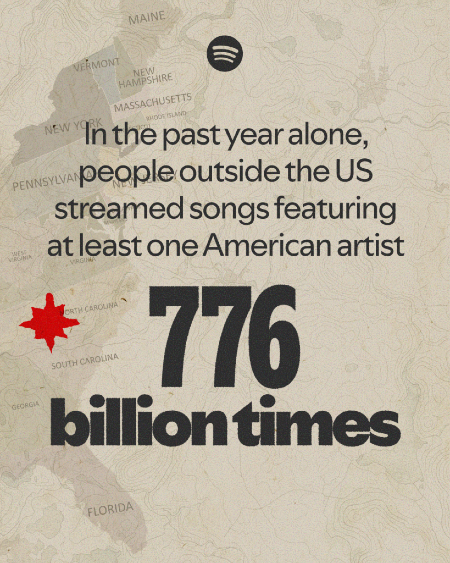
### **Country and Indie Explode Internationally**
American music has spent two and a half centuries evolving from roots and blues to hip-hop and rock. Today, international audiences are diving deep into historically regional genres.
If you are making country music, your global runway is clearing fast: Spotify reports that international **streams of American country music have grown more than 94% outside the U.S.** over the last five years.
Spotify's report also showed that **indie music** continues to dominate as one of the leading American genres most streamed both domestically and internationally.
Read the full Spotify 250th anniversary report [here](https://newsroom.spotify.com/2026-07-02/america-250-american-music-podcasts-audiobooks/?ref=hypebot.com).
### **Hypebot's Bottom Line**
Spotify's "America’s Sound, Heard Around The World" report isn't just a look at back at history. It’s a snapshot of a modern streaming music ecosystem that, while increasingly global, still favors the U.S.
With U.S. domestic regional streaming hitting record highs and international markets craving American sounds, the ceiling for U.S independent music has never been higher.
### Beats + Bytes: The Trends Defining Music, Culture & Brand Marketing in 2026
URL: https://www.hypebot.com/beats-bytes-the-trends-defining-music-culture-brand-marketing-in-2026/
Last updated: 2026-07-03T13:27:28.000Z
*By *Jesse Kirshbaum* of* [***Nue Agency***](https://nueagency.com/?ref=hypebot.com)
*\*This content was originally published in* [*Nue's Beats + Bytes newsletter*](https://nueagency.com/blog/?ref=hypebot.com)*.*
There is more noise than ever before. More content, more platforms, more creators, more opinions. But there has also never been more opportunity. Our goal with Beats + Bytes is to connect the dots and help you see where culture is heading next.
**TL;DR — FIVE TAKEAWAYS FROM THE FIRST HALF OF 2026**
1. The music business has a new music problem.
2. AI isn’t replacing creativity.
3. It’s expanding who gets to participate.
4. Fandom is becoming more participatory IRL experiences are the counterforce to AI and digital overload.
5. Culture is becoming the most valuable intelligence layer in business.
## **Part I — The Big Reset**
### New Music
The music industry is having a big problem when it comes to breaking new music. New music has always been the lifeblood of the industry. But that is currently not the case. This might be the biggest problem and opportunity in front of the music business.
According to Luminate, music listeners ages 13 to 24, arguably the industry’s most important and heavily targeted audience, are increasingly embracing music from the 1990s and earlier, while the number of listeners who say music from the 2020s is their favorite continues to decline.
### Catalog
> *Meanwhile, catalog remains one of the biggest opportunities in music, representing roughly 65% of recorded music streaming revenue.*
There are many reasons the catalog business is thriving while new music struggles. Familiarity, nostalgia and algorithms all play a role. Every catalog may also have a new life in AI. With the proper laws and guardrails in place, established music could be headed for an even bigger boom.
> *This is the start of what I’m calling the Living Catalog. Where old music can keep generating new value instead of just sitting on a shelf.*
### Streaming
We are closing in on a billion subscribers to music streamers globally. That’s amazing. But how many more subscribers can these platforms realistically add? It’s clear we are approaching market saturation, which opens the door to an entirely new era of music formats and monetization.
### Exclusives
When a subscription market saturates, one of two things happens. Either platforms consolidate and economics trend downward for creators, which is bad. Or a new layer of distribution appears and platforms start competing again for premium content that differentiates them, which is good if you happen to own the premium content.
Every other content vertical including film, television, sports, gaming and long-form audio already sells premium exclusives to drive subscriber growth. Music is the last vertical that doesn’t.
> *The infrastructure layer always moves before the cultural layer does, and the people who notice the infrastructure first get to price the culture that rides on top of it.*
It’s the cable-plus-media wave of the 1990s happening again in fast forward, and the music business is standing on the beach arguing about playlist placements and chasing data-driven A&R when the next cycle is being built, above our heads, by four companies, with our product nowhere in their strategy decks.
Mark Gillespie said it [best in this piece](https://www.linkedin.com/pulse/why-ive-been-watching-sky-mark-gillespie-gux9e/That%20changes?ref=hypebot.com) that changes, the moment the first major album is windowed exclusively through one of them.
## **Part II — AI Changes Everything**
### AI Music
AI isn’t replacing creativity. It’s enhancing it. AI is a creative tool. As guardrails come into place to protect artists’ IP, this could be one of the biggest growth moments in the history of the music business.
### Fan Remixes
*The* best marketing ideas are the ones that are shareable. The best songs are increasingly becoming the ones that can be interpreted. Everyone wants to make the experience their own.
In the AI era, songs become platforms. The next hit song won’t just be streamed. It will be remixed millions of times by fans. Songs are evolving from static pieces of art into living creative systems that can be personalized, localized, memed, covered and endlessly reimagined.
In this Living Catalog era, music never finishes being made, whether it’s a new release getting remixed in real time or a decades-old song getting a second life through AI.
> *Songs are evolving from static pieces of art into living creative systems.*
Success in the streaming era was measured by plays. Success in the generative era may be measured by participation.
> *It’s no longer enough to hear the song. Fans want to be in it.*
For brands, who already spend millions borrowing music’s cultural value, the next opportunity is turning that spend into remixable IP: one brand sound, many versions, many creators, many markets. That way, the campaign does not have to end when the media spend stops.
### Royalty Free Music
As the creator economy booms and AI starts dominating content creation, allowing for infinite iterations, clearing music at scale becomes a major issue.
Music unquestionably makes every podcast, campaign and social post better.
> *The data shows campaigns with audio outperform those without on profit (+75%), trust (+81%), price insensitivity (+81%) and customer acquisition (+19%). Across 14 measures, the average uplift for campaigns featuring audio was 22%.*
Audio nearly doubles the profit generated by emotionally driven campaigns, especially when paired with distinctive brand assets and deployed consistently over time.
Yet many people are still doing it illegally and exposing themselves to fees, fines and takedowns. Royalty free music is the gateway drug for more brands to build sophisticated music strategies.
### Music Intelligence
We are living through an unprecedented era of intelligence and insights.Music is the dominant cultural force and a true intelligence layer that informs both strategy and storytelling.
This isn’t about A&R and it isn’t just about data. It’s about insight that sharpens every pitch and gives brands a clear edge. Those insights come from representing artists at scale, understanding where to pull proprietary and aggregated data sources and having cultural experts flying high around the hoop, as brands build their campaigns.
## **Part III — Fandom Is Being Rewritten**
### Super Fans
One of the biggest challenges facing the music industry over the past five years has been figuring out how to better tap into the super fan. Brick by brick, it’s getting solved.
How do you create a more direct relationship with your fans? There are now some very good case studies showing where things are headed.
### The Fan Footage Is What Counts
Your concert experience is almost irrelevant. It’s the footage that counts. The proof that you were there.
> [*Piss and shit* ](https://www.pastemagazine.com/music/olivia-rodrigo/what-fans-will-do-for-barricade-spots-at-concerts?ref=hypebot.com)*can’t be smelled through the screen, after all.*
[SWSH](https://www.joinswsh.com/?ref=hypebot.com) just hit the scene and they seem to have a strong vision here. So does Greenfly in sports. Music is the holy grail for fan content. Whoever aggregates it holds tremendous power.
### Hip-Hop
The aging hip hop stars are becoming some of the most important voices and commentators across sports, culture and politics. These are great storytellers finding new lanes. Fat Joe, Jadakiss, Cam’Ron, Mase and Snoop are all aging incredibly well as the new broadcasters of our time.
In the process, they are making their music more culturally relevant than ever. Meanwhile, the data around n[ext generation of hip hop](https://www.digitalmusicnews.com/2026/06/10/hip-hop-gen-z-music-trends-with-chartmetric/?mc%5Fcid=8e69574a54&mc%5Feid=e3a089cba9&ref=hypebot.com) is equally fascinating as Rage Rap and Brazilian & Russian Phonk & Detroit Rap dominate younger audiences.
> *Hip-hop isn’t aging. It’s expanding.*
### Music Videos
Music videos are more important than ever. [Brands started rolling out music videos](https://www.marketingbrew.com/stories/why-so-many-brands-are-releasing-music-videos?ref=hypebot.com) in a major way this year and they are producing meaningful results, from GAP to Cheetos. These projects are taking brands into entirely new lanes. Beyond that, music videos remain essential for artists. I still wish YouTube had its own version of New Music Friday for videos.
I connect to new songs much more deeply these days, when I can see them. Longer form, [high concept videos](https://www.gq-magazine.co.uk/article/how-music-videos-got-good-again?utm%5Fsource=substack&utm%5Fmedium=email) are popping up more and more in a way to combat TikTok’s short adrenalin bumps.
Meanwhile, creativity is booming. Everywhere you go can be the set of a new video. I’m marveling at how Fat Joe and acclaimed producer Eif Rivera pulled this off [Victory Lap ](https://www.youtube.com/watch?v=%5F-6bZWAdyZk&ref=hypebot.com)while being smack in the center of the craziness of the Knicks Championship parade.
### MTV
As Paramount merges with Warner, it’s clear that MTV is not currently a priority. But it should be. TRL. MTV Jams. Yo! MTV Raps. Spring Break. These weren’t just television shows. They were cultural institutions. Given today’s political climate, I understand why prioritizing CBS Sunday Morning makes sense. But the Ellison’s are sitting on a gold mine.
MTV, VH1 and BET were cash cows back in the day. These brands tap directly into nostalgia and, in many ways, could be more relevant than ever. If Paramount doesn’t want to fully invest in MTV, they should set it free from its shackles and let someone else seize the opportunity.
> *If I had the keys, I’d bring MTV back as a live, culture-first brand built around moments, not a linear channel. Picture TRL for the algorithm era.*
### Viewing Party Culture
As ticket prices continue climbing to astronomical levels, if you can’t make the big dance, the viewing party is becoming a compelling option. In many cases, it may actually be the better experience. Who wants to deal with traffic and crowds?
The experience keeps getting better as companies like COSM prove the concept and announce expansion.
## **Part IV — IRL Strikes Back**
### IRL
IRL is the gravitational force that counters AI and the digital world. As screen time continues to accelerate, there is an equal and opposite push to get off the phone, get into the real world and connect.
Experiences are more important than ever. You can see it everywhere across culture. From [Jay-Z opening an epic](https://www.instagram.com/spotify/?utm%5Fsource=ig%5Fembed&ig%5Frid=A98s659L5EgI1hDenDrO3r9), underground pop-up to sell merch, to pints of ice cream sales declining while lines form around the block for every new ice cream spot in New York. People don’t just want ice cream anymore. They want the experience.
### Live
The pie is growing. There are more artists touring globally than ever before and that number continues to increase. International growth may now be outpacing the United States. Latin America is on fire and many believe that growth will continue for years to come.
Despite all the concerns around pricing and consumer fatigue, the live business continues to thrive.
### Blue Dot
There was a quick burst of hype around the term Blue Dot this quarter, but I think much of it was media hyperbole. The media loves a new buzzword. Ticket sales continue to perform well and the live business remains healthy.
### Sports & Fandom
Sports remains one of the last true water cooler moments where everyone can come together and experience something in real time. Sports are incredibly hot right now.
Beyond the game itself, the appetite is there and the cross section is where much of the opportunity lies. **Music and Sports is a 1+1=11 opportunity.**
Fan experiences, galleries, fashion collaborations, performances, soundtracks and side events surrounding the main event are increasingly becoming as important as the game itself.
### Peak New York
Maybe I’m biased because I sold my place in Miami and moved home. Maybe not. But New York feels different right now. From the Knicks to the World Cup, from Jay-Z’s Yankee Stadium campaign to Taylor Swift celebrating at MSG this weekend, the energy in New York is unlike anything I’ve seen in years.
There is a sense of unity and excitement in the air that can only be understood if you’re here experiencing it. I’ve seen it first hand for months. Anybody talking about New York that isn’t here, don’t know diddly. Period.
## **Part V — Media, Brands, & Content**
### Content
> *Virality is over. It’s the new table stakes.*
Consistency is what matters. Clipping took off and was exposed with [Chaotic Goods](https://www.billboard.com/pro/digital-marketers-secret-tactics-viral-songs/?ref=hypebot.com). Micro drama is beginning to explode. Jeffrey Katzenberg’s thesis was right. The timing was just wrong. Luck is always a factor.
In 2026, who wants to watch 60 minutes when you can watch sixty one-minute hot takes? R. Kelly also had it right with Trapped in the Closet. That one didn’t age particularly well. With attention spans where they are today, and the social graph being the dominant force multiplier in relevance, this category is going to explode.
### Creators
I know the prevailing opinion is that we are still in the early innings of the creator economy. It’s remarkable that Dhar Mann and IShowSpeed have larger audiences than all of the traditional media companies.
And while I love the rise of the nano expert, as everyone rushes toward creator marketing, I actually find it becoming less interesting.
> *Creators can’t hold a candle to true stars.*
Musicians remain the ultimate creators whose art can transcend culture at the speed of sound.
As everyone coming back from Cannes is singing the praises of the mass influx of creators, my belief is that the creator economy will eventually lose some of its luster as audiences attention returns to people with exceptional artistic and storytelling ability.
### Newsletters
There are so many freaking emails right now. We may be approaching the end of the long written email. Substack has done a great job of helping writers build off each other’s audiences, and that is crucial in today’s environment. But as everyone launches a newsletter, the category is becoming diluted. Remember app saturation?
It’s beginning to feel like that. Reinvention is coming and it’s going to happen quickly.
**My bet: the newsletters that survive will feel more like a relationship than a publication. They need to be interactive, personalized and meet the readers where they are at… which is less and less in a crowded inbox.**
### Spotify
Spotify continues to define the times. Their latest announcements tell an important story.
They’re trying to solve ticket scalping by offering superfans early access to tickets through partnerships with Live Nation. They’re going deeper into livestreaming. And their new tagline, “Time Well Spent,” really resonates in a world where time & attention are the most important commodities we have.
> *When was the last time you had a bad time listening to music?*
### Brands
Brands are increasingly becoming media companies.
Bose announced [its media strategy ](https://www.businessinsider.com/bose-becoming-media-company-launching-record-label-2026-6?ref=hypebot.com)this week. Pharrell is recording albums inside his office at LVMH and premiering them [on the runway](https://www.hot1049.com/2026/06/26/pharrell-williams-subverts-the-traditional-album-rollout-at-louis-vuitton-paris-show/?ref=hypebot.com). GAP hired a [Chief Entertainment Officer ](https://finance.yahoo.com/sectors/technology/articles/chief-entertainment-officer-120000334.html?ref=hypebot.com)and has become one of the year’s great turnaround stories. Coke launched a label. [Havas launched](https://www.adweek.com/agencies/havas-bets-on-a-record-label-to-reshape-brand-music-partnerships/?ref=hypebot.com) their own label too.
The fluency between culture, entertainment & brands is becoming invaluable.
## **Part VI — Follow The Money**
### Prediction Markets
**With more than** [**$400 million in music bets placed on Polymarket**](https://musically.com/2026/06/09/music-prediction-is-a-400m-market-in-2026-so-far-on-one-platform/?ref=hypebot.com) **so far this year, prediction markets represent a huge opportunity for the music business.**
That’s not including what’s happening on Kalshi and META’s [new product](https://www.nytimes.com/2026/06/23/technology/meta-prediction-markets-app.html?ref=hypebot.com) which could have a significant impact with women betting.
Honestly, these platforms are in desperate need of a holistic music strategy rather than fake influencer payments. It was a good start with the new [Rick Rubin commercial](https://consequence.net/2026/06/rick-rubin-in-ads-during-the-world-cup/?ref=hypebot.com) but the platforms require so much more strategic help and if done right, can be a real boom for the music business and prediction markets alike.
### Consolidation
Consolidation is happening everywhere across music, media and brands. Universal acquires Downtown. Penske acquires a collection of Vox Media’s music & culture brands. Scale continues to matter. As industries mature, consolidation follows.
### IPOs & Activists
We are headed into a major IPO boom. The success of SpaceX is going to create tremendous energy and attention in the capital markets. This will become one of the biggest business and marketing stories of the second half of the year. Eleven Labs is coming. So is Bending Spoons.
At the same time, activist investors are increasingly looking for undervalued assets where they can come in and create stronger companies.
Even when activists don’t win, their ideas often resonate and force companies to rethink what is possible.
## **Part VII — What's Next**
### New Aesthetics
Remember when Red Antler and Gin Lane defined an era in branding? Some would argue they still do.
But today, the hottest branding agencies in the world might be Claude, ChatGPT and Canva. [The aesthetic of the moment](https://www.nytimes.com/2026/06/17/style/maximalism-aesthetic-hyper-goo.html?ref=hypebot.com) feels glitchy, whimsical and maximalist. A new visual language is emerging in real time.
### Digital Goods
Most people have run the other way. But the signals suggest this category is very real, especially at the intersection of physical and digital ownership.
From BlackPINK’s sold out [Tamagotchi-inspired digital pets](https://hypebeast.com/2026/6/blackpink-tamagotchi-release-info?ref=hypebot.com) to digital music trading cards, the space continues to evolve. Music remains uniquely positioned to bridge the physical and digital worlds.
### Movies
Music is making a huge mark in film in 2026\. The Michael Jackson movie is [breaking all sorts](https://variety.com/2026/film/box-office/michael-box-office-record-surpasses-oppenheimer-1236797787/?utm%5Fsource=Sailthru&utm%5Fmedium=email&utm%5Fcampaign=H2G%5F062926&utm%5Fterm=HeadlineToGo%20-%20Active%20List) of box office records. Taylor Swift dropped the lead single for Toy Story 5 and her marketing rollout has been nothing short of brilliant.
Tribeca this year also told so many great music stories. But the most interesting trend in Hollywood right now is that a new generation is disrupting the old guard. The barriers to entry and the budgets once required to make meaningful work are disappearing.
### Shot on iPhone
There is also a growing wave of movies, documentaries and premium content being shot entirely on phones. Filmmaking is becoming dramatically more accessible.
> *The power is no longer in the equipment. The power is in the access and the edit.*
## **Closing Thoughts**
The common thread across all of these trends is simple. Culture is fragmenting & becoming personalized. Technology is accelerating. Human connection is becoming more valuable, not less. The winners over the next decade won’t be the people with the biggest budgets or the largest audiences.
They will be the people who understand culture, embrace new tools and build authentic relationships with communities.
> *Music is an emotional enhancement layer that sits across all of it.*
As always, if you’re looking to better understand where culture is heading, or how these shifts impact your business, we’d love to talk. If you’re a brand, platform, or artist team trying to figure out your music strategy for the back half of the year, this is exactly the kind of problem we want to help solve.
**The second half of 2026 is going to be wild — and the people who win it will be the ones who moved while everyone else was still arguing about playlist placements**
---
[***Nue***](https://nueagency.com/?ref=hypebot.com)*is a creative music agency that leverages the power of music culture to help our clients make deeper connections with their consumers. Each week in our Beats + Bytes newsletter, we highlight the best stories, news and trends happening in the the industry to keep up on what's new.*
### What Makes China's Music Market So Different?
URL: https://www.hypebot.com/what-makes-chinas-music-market-so-different/
Last updated: 2026-07-03T13:13:02.000Z
*By *Eric Zhigong Zhao**
In March 2026, [*IFPI* reported](https://www.ifpi.org/global-music-report-2026-global-recorded-music-revenues-grow-6-4-as-record-companies-drive-innovation/?ref=hypebot.com) that China had passed Germany to become the world's fourth-largest recorded music market, after a single year of 20.1 percent growth, the fastest of any major market.1
To a foreign artist, manager or label, the math looks like an open door. More than a billion listeners. A market growing while North America slows. A paying audience still far from its ceiling.
That open door is where the trouble starts.
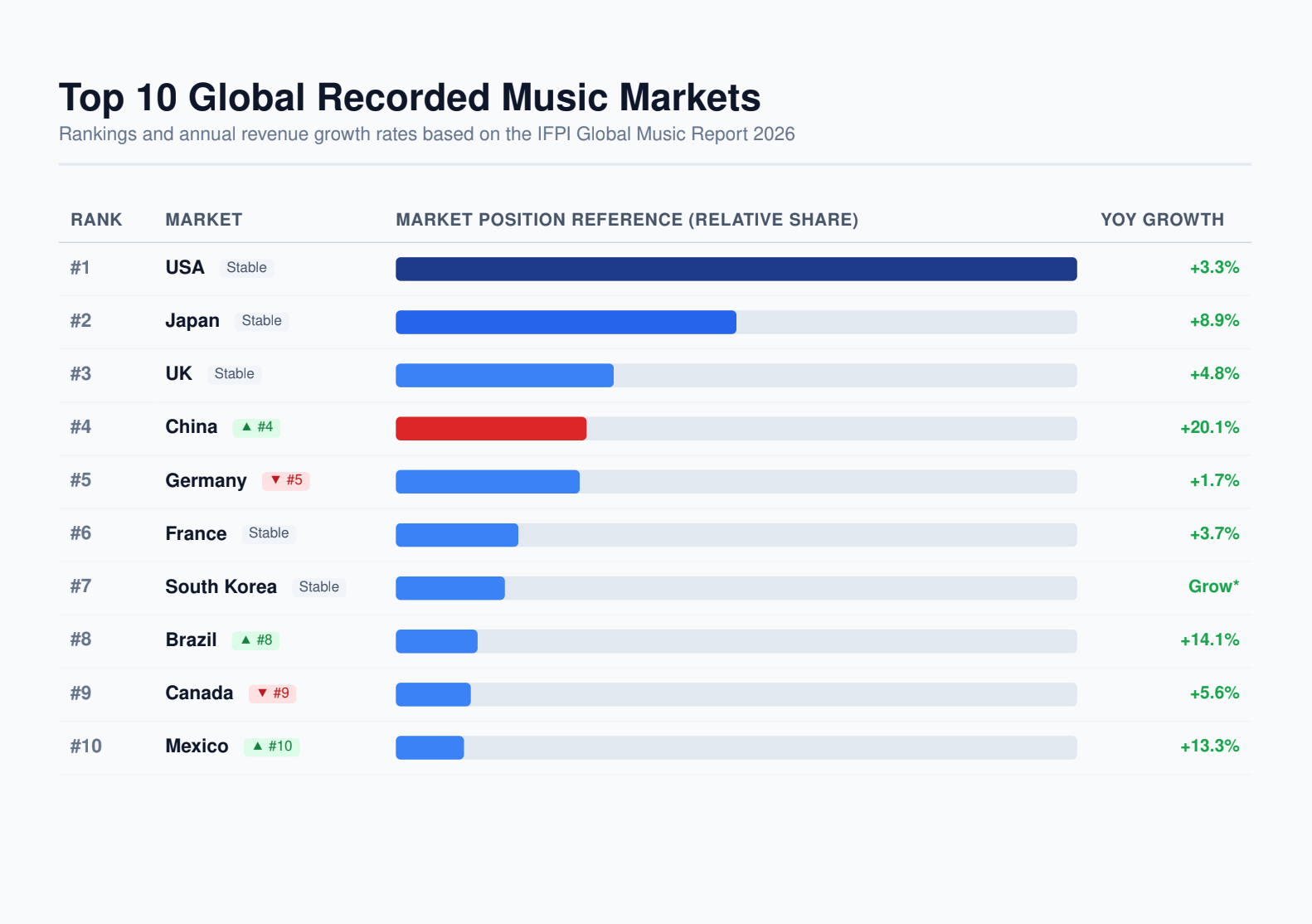
**Source: IFPI Global Music Report 2026 (Published March 2026)*
I work on the other side of it, as an intellectual property and entertainment lawyer in China, on the contracts, licenses and disputes that foreign acts and rights holders usually meet only after something has gone wrong. Most of them arrive with one core misunderstanding, and it is bigger than censorship or piracy, the two reasons Western coverage always reaches for.
They *think* that China is **one market**. It is **not.** It is a stack of separate markets that do not share customers, rules, or money, and a strategy that wins in one of them can be dead weight in the next. Here is the map.
## **1) You cannot enter the market by yourself.**
In most Western countries a foreign artist can, in principle, promote a show, sign a distributor, and license a recording to a platform on their own. In China, each of those steps runs through a licensed domestic gatekeeper by law.
A commercial performance needs a permit from the local Culture and Tourism authority, and a foreign act cannot hold or apply for that permit itself. The application goes through a licensed performance agency. The setlist is filed for approval before a single ticket is sold. Approvals attach to one venue, one date, one lineup, and they can freeze during politically sensitive weeks that have nothing to do with the music.

The usual advice, "find a local partner," is correct and close to useless, because it treats that partner as a convenience. The partner is the entity that legally holds your permit, controls your approvals, and often sits inside the chain of your rights.
Having reviewed dozens of agency and sub-licensing agreements involving foreign rights holders, I can tell you the failure point is almost always the same three questions: who actually controls the performance permit, how your rights move down the sub-licensing chain, and who absorbs the loss when an approval is pulled at the last minute.
Get those wrong and your streaming numbers will not save you.
## **2) "Weak copyright" is the wrong frame.**
The reflex belief that China has no real copyright protection is out of date. The Copyright Law amended in 2020 and in force since June 2021 introduced punitive damages for willful infringement, and through Article 45 gave sound recording producers a right to payment when their recordings are broadcast or publicly performed.
The comparison people assume, weak China against strong America, does not hold cleanly either. The United States has no public performance right for sound recordings on AM/FM radio at all. When a song plays on terrestrial radio in the US, the songwriter gets paid and the owner of the recording does not. The US does pay recording owners for digital and satellite play, collected by SoundExchange. China's Article 45 reaches further on paper, into traditional broadcast and public performances of sound recordings.
On paper, anyway. The real problem in China is collection. Walk into a shopping mall, a chain restaurant, or any of the millions of bubble-tea shops, and you will hear current hits, often a Billboard single within days of its release, exactly as you would in the US. Almost none of that throws off a public performance fee that reaches the rights holder. The right exists. The plumbing to collect it barely does.
Two bodies handle music collective licensing, and foreign rights holders should know which is which. The Music Copyright Society of China (MCSC), founded in 1992, is the only collective society for musical works, meaning composition and lyrics. The China Audio-Video Copyright Association (CAVCA), founded in 2008, is the only society for sound and video recordings.
The framework dates back to China's WTO accession era. MCSC manages musical works, while CAVCA focuses primarily on recordings, particularly karaoke licensing. Before the smartphone, KTV was the country's default night out, and that licensing stream was substantial. There is no competitive layer of ASCAP, BMI, SESAC and GMR here for a publisher to play one off against the other. Registration among independent and foreign rights holders is thin, and the distance between a right you hold and money in your account is wide.
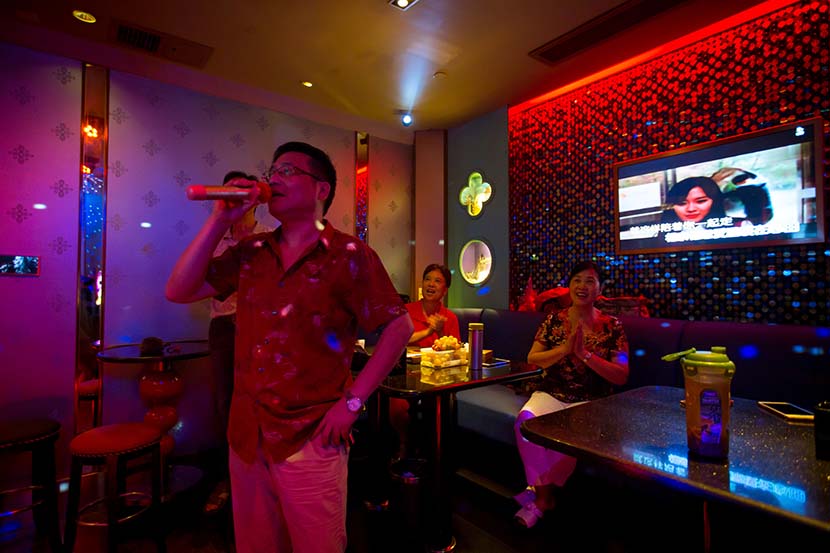
One contract warning while you are here. A large share of Chinese music deals default to a buyout, a single payment for a broad transfer of rights. Foreign songwriters routinely sign away more than they meant to, because the document assumes assignment where they assumed a license. Read the rights clause as if every word costs money, because it does.
***+Read more:*** [*"What Is Tencent Music? And What Makes China’s Streaming So Unique?"*](https://www.hypebot.com/what-is-tencent-music-and-what-makes-chinas-streaming-so-unique/)
## **3) The platforms do not work the way yours do.**
Spotify does not operate in mainland China. [Tencent Music (TME)](https://www.hypebot.com/what-is-tencent-music-and-what-makes-chinas-streaming-so-unique/) runs the market through QQ Music, Kugou and Kuwo, with NetEase Cloud Music as the main challenger.
The licensing rules changed in 2021, and the detail matters. China's market regulator did not ban exclusivity outright. It ordered TME to give up the long-term exclusive lock-ups it held with the global majors, after finding it controlled more than 80 percent of exclusive library rights following its 2016 merger with China Music Corporation.
What survived is narrower and still legal: exclusive deals with independent artists for up to three years, and an exclusive release window of up to 30 days for new songs. That 30-day window has become a competitive tool. When TF Entertainment, the company behind some of China's biggest idol groups, signed with both TME and NetEase, TME secured a first-release window.
For a foreign artist with real demand, that short exclusivity is a genuine point of leverage, the kind of thing a platform will pay a premium to lock down for a launch.
## **4) China is not one market.**
This is the part nobody writes in English, and it is where most foreign money gets wasted.
China is not a single audience reached through a single channel. It is at least seven loosely connected markets: the music festival circuit, the brand and advertising market, the Douyin (TikTok's Chinese sibling) short-video economy, paid streaming, the idol industry, the indie and Livehouse scene, and the ACG (anime, comics and games) subculture market. Each has its own gatekeepers, economics and audience. Winning one does not transfer to the others.
A Douyin explosion does not sell concert tickets. A festival favorite is not a streaming winner. A streaming star is not the artist a brand wants for an endorsement. Even "live" is layered: the Livehouse and festival worlds barely overlap with the arena-tour market that established Hong Kong and Taiwan stars still fill.
The clearest recent example is the rapper **Lan Lao** (SKAI ISYOURGOD). His track "Ba Fang Lai Cai" came out in August 2024 and broke out in early 2025, almost entirely through Douyin, where a remix and a dance turned it into a meme with billions of views. The short-video boom was not the income.
As one producer explained to a Chinese business publication, that repetition works as a funnel, pushing listeners back to QQ Music and NetEase Cloud where royalties actually settle. From there the song spread into other markets on its own terms. He topped Spotify's Chinese-language artist chart, passing **Jay Chou**, booked sold-out shows in Singapore, Australia and Europe, and landed a brand tie-in, a Lunar New Year remix with Carlsberg.
One artist, moving across short video, streaming, live and brand, with different mechanics paying out at each stop.
The brand market deserves its own line, because it is large and nearly invisible to outsiders. For Lunar New Year 2025, lululemon commissioned the independent musician **Ding Ke** to write an original song, "Back to Spring," for a campaign film fronted by the singer **Li Yuchun**, and released it to streaming platforms.
Brands here often want original music or a local ambassador rather than a license to a foreign hit, which is one more reason foreign catalog struggles to convert.
And streaming is no longer the dead end it is often called. TME's 2025 results show subscription revenue of about 17.7 billion Yuan, roughly $2.5 billion USD, up 16 percent, with 127 million paying users. The catch is the unit economics. Monthly revenue per paying user sits near 12 yuan, under two dollars, against the ten-plus dollars a Western service charges. The fastest growth is in everything around the subscription, concerts, merchandise and advertising, up about 40 percent, which is the multi-market structure showing up inside one company's income statement.2
Underneath all of it is the fan economy. Organized fan groups buy digital albums in bulk and fund promotion as a coordinated activity, and that spending, rather than passive listening, drives a lot of what looks like popularity. Its scale went public in 2021, when an idol-show voting mechanic tied to a dairy sponsor led fans to buy bottled milk for the codes inside and pour the milk away.
Regulators moved fast and reined the format in, and two lessons stuck:
- **Fan monetization** here is industrial,
- and the demand side of this market sits under **direct political supervision** in a way the Western supply side does not.
## **5) Why a market this big stays local.**
Stack these layers and the localization of the market stops looking like a wall and starts looking like the rational output of the system. Platform economics reward domestic traffic, because domestic idols and viral local acts generate the fan spending the platforms are built to capture.
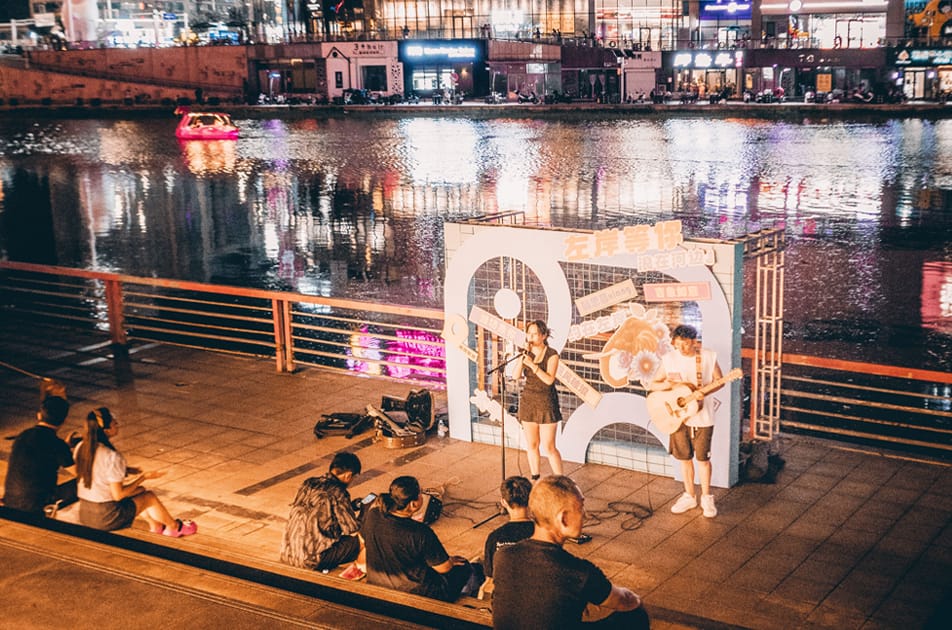
The approval regime adds cost, delay and cancellation risk to foreign content specifically. Algorithms and audience taste compound a home-grown catalog. Live touring across China's tiered cities rewards acts who can sustain a domestic circuit, which foreign artists rarely can. Even foreign brands tend to hire a local ambassador over licensing a foreign song, because it converts better.
None of this is sealed off. Foreign music circulates, foreign acts tour, deals close every week. The point is sharper and more useful than "China is hard." The market stays domestic because every layer of it, legal, platform, economic and administrative, is tuned for content that moves inside the system rather than across its edge.
China is not a market you enter once. It is a series of markets you enter separately.
---
**Eric Zhigong Zhao* is an IP and entertainment lawyer in China, working in Chinese and English. He came to the law from the other side of the studio glass. In college he made beats on an Akai MPC and played bass, and he still loses weekends to crate-digging and Discogs, with J Dilla as the bar everything gets measured against. Today he advises independent artists, labels, management companies and platforms on music copyright, performance licensing, trademarks, and cross-border deals between China and the West.*
### Footnotes
1. IFPI, Global Music Report 2026.[ https://www.ifpi.org/global-music-report-2026-global-recorded-music-revenues-grow-6-4-as-record-companies-drive-innovation/](https://www.ifpi.org/global-music-report-2026-global-recorded-music-revenues-grow-6-4-as-record-companies-drive-innovation/?ref=hypebot.com)
2. Tencent Music Entertainment Group, Fourth Quarter and Full-Year 2025 Unaudited Financial Results (March 17, 2026). Full-year music subscription revenue RMB 17.66 billion (US$2.53 billion), up 16.0 percent; music services other than subscriptions RMB 9.07 billion, up 39.2 percent; 127.4 million paying users and monthly ARPPU of RMB 11.9 as of year-end 2025.[ https://ir.tencentmusic.com/2026-03-17-Tencent-Music-Entertainment-Group-Announces-Fourth-Quarter-and-Full-Year-2025-Unaudited-Financial-Results](https://ir.tencentmusic.com/2026-03-17-Tencent-Music-Entertainment-Group-Announces-Fourth-Quarter-and-Full-Year-2025-Unaudited-Financial-Results?ref=hypebot.com)
### SmashFest Curator Mickey Shiloh on How Artists Need to Meet This Moment
URL: https://www.hypebot.com/smashfest-curator-mickey-shiloh-on-how-artists-need-to-meet-this-moment/
Last updated: 2026-07-03T17:56:42.000Z
Female-founded and independently produced, [**SmashFest Music Summit**](https://smashfestsummit.com/?ref=hypebot.com) was a three-day event that took place in Nashville in June. It's a conference and event that's built around real, open, and honest dialogue about what AI *actually* means for independent artists and songwriters, how the business is shifting, and what creative professionals need to know in order to stay ahead.
**Michaela ("Mickey") Shiloh**, is the Co-Host and Co-Founder of **SmashFest**, a multi-platinum songwriter and artist, and was named to *Forbes'* famous "30 Under 30." In her role as CEO/Founder of [**HRDRV**](https://www.hrdrv.com/?ref=hypebot.com) — a global artist development company — she empowers thousands of creators to build sustainable careers by merging music, business, and community.
Mickey took a beat after all the dust had settled around the summit, and then we dove in to everything she had learned over those three days. Read on for some serious advice and insight. 🍦
All below photos by **Oscar Flores**.
---
**Hypebot: Hey Mickey, thanks so much for taking the time to answer some questions. You co-run SmashFest — which isn’t just one annual event but several online and in person events throughout the year — and HRDRV which is an artist services company among other things. You’re also an artist and songwriter. Elephant in the room: How do you avoid burnout and exhaustion?!!?**
Michaela: "I don’t! At the level I operate, I don’t know if it’s possible to avoid burnout entirely. I move quickly, take on a lot, and thrive under a certain amount of pressure, which can naturally lead to burnout from time to time."
What I’ve gotten better at is recognizing it sooner and recovering faster. What keeps me going is that everything I build is connected and serves a larger mission to help others succeed. Their wins become my wins, and that sense of purpose makes the hard seasons totally worth it."
**H: Where did this journey of yours start?**
M: "Music chose me. My dad was a rapper, so I always say I caught the music bug from him. Some of my earliest memories are tied to music and discovering that I could express myself through lyrics in ways I couldn't through regular conversation."
The industry side came from necessity. I got signed at 15 and started earning real credits early, but I didn't have a true grasp of the business. There were opportunities I wasn't equipped to maximize and systems that only seemed to work if you already had insider access. I realized pretty quickly that talent alone wasn't enough."
That's where HRDRV was born. I wanted to build the infrastructure that gave artists access to education, opportunity, and practical resources. Back in 2019 when we launched, that meant everything from graphic design and mixing to distribution, strategy sessions, and community. I wanted artists to have support without needing a label, deep connections, or years of painful trial and error."
Everything I build is rooted in the mission of closing the gap between talent and entrepreneurship."
**H: So introduce us to SmashFest — which happened last month in Nashville. What’s the aim and scope of the summit?**
M: "SmashFest Music Summit was a three-day music industry conference in Nashville for emerging artists, songwriters, and producers to get in the same room with industry legends. The goal was actual access. Not panels where executives talk at you, but rooms where you're in genuine conversation with the people who can change your career."
This year we had 30+ speakers, 35+ performers, and brought in execs from EMPIRE, Lava Records, RCA, The MLC, Audiomack, and more. Attendees said it was the best conference they’d attended in years (or ever) and that was all we could’ve asked for."
**H: What were some of the highlights of this year's event?**
M: "We exceeded every expectation. It felt like the old industry meeting the new, and the conversations that happened throughout the weekend were truly once-in-a-lifetime. From the panels and mixers to the showcases, an entirely new level of community was created."
It didn’t end there. I’ve built a system within our site to help everyone stay connected and keep those relationships growing long after the event is over."
> *"Stop trying to reach everyone. Find the 100 people who would genuinely love what you do and obsess over them. Use your music as a door-opener, but build true 1:1 relationships with fans and other artists at your level."*
**H: What surprised you the most?**
M: "The community. I knew people would show up, but what caught me off guard was how much people genuinely connected with each other - artists finding collaborators, managers finding clients, panelists exchanging cards with attendees."
The networking wasn't forced or awkward. It happened organically because we put the right people in the room together. That's impossible to manufacture and it told me we got the curation right."
**H: You mention in a blog post that you spent upwards of $40k of your own money to put on this event. Why do conferences like this have a hard time making an ROI these days?**
M: "A few reasons. First, the costs are heavily front-loaded while the revenue comes in over time. You're paying deposits for venues, insurance, travel, and production months before ticket sales really ramp up. What I've noticed is that most people skip early-bird pricing altogether. Most ticket sales happen in the final few weeks, or even the final week, before the event."
Second, conference culture has also shifted. Attendees have been burned by events that overpromise and underdeliver, so they're waiting until the last minute to commit."
Third, sponsorship dollars have changed. Brands that once allocated significant budgets to live events are increasingly investing in creator campaigns and activations that guarantee a better ROI. They want measurable clicks, conversions, and attribution, and those metrics are often easier to track online than at an in-person event."
I put my own money into SmashFest because I believed in the connections and opportunities we could create for our attendees. If I had waited until the math was perfect, it never would have happened."
**H: If you could go back in time and be a fly on the wall of any global event in the past to attend, what would that be and why?**
M: "The room where Berry Gordy was building Motown's artist development system from scratch. What they figured out about turning talent into legacy, with almost no infrastructure and significant obstacles is astonishing."
What were those conversations like? What did they believe about artists that the industry has since forgotten?"
> *"I have a tremendous amount of respect for artists who show up night after night and deliver for thousands of people. That level of discipline, stamina, and commitment often goes unseen."*
**H: What are some of the biggest changes that artists are navigating right now in the industry?**
M: "The collapse of the middle. There used to be a clear path: build a local following, secure regional support, and gradually scale your career. That middle layer of infrastructure largely disappeared. Today, it feels like you're either going viral or grinding in relative obscurity, with algorithms having more influence on success than talent and work ethic."
That's why we do what we do. But it goes even deeper than that."
Music is one of the few things that truly unites people across every border, language, and background. It shapes culture, creates connection, and gives people a way to express what words alone often can't."
No matter where you're from or what language you speak, music has the power to move people, change perspectives, and bring communities together. It's one of the most powerful forces in the world, and artists deserve the infrastructure and opportunities to help that power reach its full potential."
**H: What advice would you give to indie artists looking to amplify their message and build their audience without a five-figure budget?**
M: "Stop trying to reach everyone. Find the 100 people who would genuinely love what you do and obsess over them. Use your music as a door-opener, but build true 1:1 relationships with fans and other artists at your level. Collaboration compounds reach faster, and learn the business side of one thing first — whether that's publishing, sync, or label deals — and become the most knowledgeable person in your circle about that one thing."
Knowledge is leverage when budget isn't. Recommended reading: [*All You Need to Know About The Music Business*](https://www.amazon.ca/Need-Know-About-Music-Business/dp/1501122185?ref=hypebot.com)by Donald Passman."
**H: What was one unforgettable concert that changed everything for you?**
M: "When I was a kid, I got to see the Ladies First tour with Beyoncé, Missy Elliott, and Alicia Keys. A couple of years ago, I saw Tyler, the Creator in Oakland, and a few weeks ago I caught No Doubt in Vegas at the Sphere."
What always stands out to me is the level of work that goes into performing at that scale. Touring and performing are an entirely different beast than studio work or a songwriting career. As someone who's spent so much time on the creative and business side, I have a tremendous amount of respect for artists who show up night after night and deliver for thousands of people."
That level of discipline, stamina, and commitment often goes unseen."
**H: What are the best and worst flavors of ice cream? Why?**
M: "Best: butter pecan or mint chocolate chip.
Worst: anything with artificial fruit flavoring."
**H: Later this year there’s an online event in October. Can you tell us what we can expect with that?**
M: "I'm taking the SmashFest energy fully digital this fall. Smaller rooms, direct feedback on your work, intentional collaboration opportunities - which was one thing we didn't get enough of at SmashFest. Additional Q&As with Grammy winners, executives, artist development coaches, and more."
It's a chance to go deeper and fill some of the gaps that are harder to address in a large in-person event. We’re keeping the same community-driven energy that made SmashFest special!"
*Learn more and discover all at* [*SmashFestSummit.com*](https://smashfestsummit.com/?ref=hypebot.com)*.*
### Music Is a Vicarious Experience: What That Means for Artists and Marketers
URL: https://www.hypebot.com/music-is-a-vicarious-experience-what-that-means-for-artists-and-marketers/
Last updated: 2026-07-03T12:09:08.000Z
*By* [***Hisham Dahud***](https://rizikmusic.substack.com/p/music-is-a-vicarious-experience)*, Artist & Educator*
One of the things I’ve enjoyed most about teaching my **Artist Entrepreneurship** class at **UCLA Extension** is that we rarely begin by talking about business.
That might sound strange for a course on [entrepreneurship](https://www.hypebot.com/artist-as-an-entrepreneur-5-things-you-need-to-know-now/).
Yes, we eventually discuss branding, audience development, marketing, revenue streams, and the realities of today’s music industry. Those things matter. But before we can talk about how to build a career around music, I think we have to ask a much more fundamental question: ***What is music actually for?***
In other words, what’s its utility?
## **What Are We Really Selling?**
If we’re going to spend an entire quarter talking about how to build a sustainable career as an artist, we should probably understand what it is we’re asking people to invest their time, money, and attention in.
That question led to one of my favorite moments from class this week. As we were discussing why people seek out music in the first place, a sentence came out that wasn’t in my notes and certainly wasn’t on any slide:
> ***“Music is a vicarious experience.”***
I’ve been thinking about it ever since.
When we hear the word *vicarious*, we usually think about experiencing life through someone else. We read novels about people we’ll never meet. We watch films about places we’ll never visit. We step into worlds we’ll never inhabit ourselves.
Music feels different.
Music doesn’t necessarily allow us to experience someone else’s story.
It allows us to experience someone else’s emotional world.
That’s a subtle but important distinction.
I’ve never stood on a battlefield. I’ve never lost a spouse. I’ve never watched my child leave home. And yet music has allowed me to imagine those emotional landscapes in ways that feel deeply real. Not because I know those exact experiences, but because music creates an emotional space that I can temporarily inhabit.
It expands the boundaries of my own life.
As someone who composes a great deal of instrumental music, I think about this often. Without lyrics, there’s no protagonist telling us what happened. No dialogue. No explicit narrative.
## **The Listener Finishes the Work**
Instead, the listener completes the work. One person hears hope. Another hears grief. Another remembers a childhood summer. Someone else imagines a future that hasn’t happened yet.
The composer builds the world. The listener lives inside it.
Maybe that’s why the same piece of music can mean something entirely different at sixteen than it does at thirty-eight. The recording hasn’t changed.
We have.
Our memories become part of the composition.
Which brings me back to entrepreneurship. Artists often think they’re selling songs. Or albums. Or concert tickets.
I don’t think that’s quite right.
They’re creating experiences.
Not experiences in the event-planning sense, but emotional experiences that allow another human being to feel something they couldn’t have reached on their own.
That’s an extraordinary kind of value.
## **The Business Follows the Art**
It’s also why I think reducing music to streams, algorithms, and content misses something essential. Those things are important — they’re part of the business — but they aren’t the reason music matters.
> ***"The business exists because the experience exists. Not the other way around."***
As educators, we sometimes rush to teach artists how to market their work.
I think we should first spend time asking why the work deserves to exist in the first place.
Because once you understand the utility of what you’re creating, the business decisions become much easier to make.
You’re no longer trying to sell songs. You’re creating opportunities for people to experience more life than they could have on their own.
To me, that’s one of the most beautiful things music can do.
---
**Hisham Dahud* is a Los Angeles–based composer, producer, live electronic artist, and educator. Performing under the name* [***RIŽIK***](http://rizikofficial.com/?ref=hypebot.com)*, his work explores the intersection of humanity, technology, and live performance. He teaches Artist Entrepreneurship at UCLA Extension.*
### Club Nothing Fund offers $10,000 Live Music Creator Grants
URL: https://www.hypebot.com/club-nothing-fund-offers-10-000-live-music-creator-grants/
Last updated: 2026-07-02T19:55:03.000Z
London-based consumer technology company [**Nothing**](https://nothing.tech/?ref=hypebot.com)**,** best known for its striking, community-driven smartphones and audio gear, has stepped directly into the nightlife industry.
The company has launched **Club Nothing**, a global series of dance music events, alongside a new financial initiative: the **Club Nothing Fund**.
Backed by high-profile music industry shareholders like **Charli xcx** (Nothing's newly minted Global Brand Ambassador), **The Weeknd**, and **Swedish House Mafia**, the brand is dedicating a $40,000 community fund to help next-generation nightlife curators bring their creative visions to life.
Here is everything you need to know about the fund and how to apply.
### **What is the Club Nothing Fund?**
The Club Nothing Fund is a global initiative designed to support the communities and creators shaping the future of nightlife.
The fund will award **four international creatives $10,000 each** to launch or scale club nights, independent event series, or even music festivals.
Beyond the cash injection, selected winners will gain visibility through the Club Nothing platform and Nothing’s expansive global community channels.
“Club Nothing is about creating spaces where people can come together around a shared love for music," said **Erica Travis, Senior Community Manager at Nothing**, "while giving emerging creatives the platform and support they need to bring their ambitions to life. Through the Club Nothing Fund, we’re investing in the people and communities that continue to inspire us.”
### **How to Apply: Key Dates & Eligibility**
Nothing has made the application process straightforward, targeting grassroots organizers who push boundaries in music and self-expression.
- **Who Can Apply:** Emerging international creatives, DJs, producers, and nightlife organizers looking to bring a club night, event series, or festival to life.
- **Application Window:** Applications open on **July 1, 2026**, and close on **August 9, 2026**.
- **Where to Apply:** Submit your application directly through the official portal at [nothing.tech/club-nothing](https://www.google.com/search?q=https://nothing.tech/club-nothing&authuser=1&ref=hypebot.com).
- **Winner Announcement:** Winners will be selected and announced later in August 2026.
### **The Judging Panel**
Your pitches will be evaluated by an esteemed panel of music industry professionals, tastemakers, and creators, including:
- **Manuka Honey** (DJ and Producer)
- **Shavone Charles** (Multi-hyphenate Artist & Global Head of Communications at Nothing)
- **Erica Travis** (Global Community Manager at Nothing & Music Festival Founder)
- **Solomon Pace-McCarrick** (Music Editor at *Dazed*)
- **James Supreme** (A&R and Music Publishing Agency Founder)
- **Layla Mustafa Rock** (Music Industry Professional)
### Expanding Global Nightlife
The fund accompanies a new series of in-person events. **Club Nothing** kicks off in **New York City on July 9**, transforming an "unexpected" Brooklyn venue into a one-night-only club experience to celebrate the launch of Nothing's new **Ear (3a)** audio devices. From there, the event series hits **Tokyo on July 30** before a global tour.
## **Hypebot's Bottom Line**
For independent music creators looking for financial backing to turn an event concept into a reality, the $40,000 **Club Nothing Fund** is a rare, corporate-backed grant with deep roots in cutting-edge music culture.
Head to the application page to [submit your concept](https://us.nothing.tech/club-nothing?ref=hypebot.com) before the August 9 deadline.
### Vollou Is Using Bandsintown Data to Help Artists Find Live Royalties
URL: https://www.hypebot.com/vollou-is-using-bandsintown-data-to-help-artists-find-live-royalties/
Last updated: 2026-07-02T15:52:23.000Z
[Independent artists](https://www.hypebot.com/tag/indie-artists/) often leave live performance royalties unclaimed simply because reporting every setlist is tedious, especially after years of touring. A new feature currently being tested by music administration platform [**Vollou**](https://vollou.com/?ref=hypebot.com) aims to make that process far more automatic.
[According to co-founder Callum Osborne](https://www.linkedin.com/posts/callumosborne%5Fmusictech-productdevelopment-musicroyalties-share-7475959945704853504-WKiy/?utm%5Fsource=share&utm%5Fmedium=member%5Fdesktop&rcm=ACoAAD4XW2QBYbx0AeFC3TO7u1TbTJ-ex2ReORI), the company is testing a system that can — with an artist's permission — reconstruct an artist's live performance history by combining publicly available performance information with setlists and recordings found across the web.
The workflow begins by gathering an artist's concert history from online sources such as [**Bandsintown**](https://www.artist.bandsintown.com/?utm%5Fsource=hypebot&came%5Ffrom=900). Once performances have been identified, Vollou searches for publicly available setlists or recordings associated with each show. When a match is found, the platform converts that information into structured performance data that can be stored automatically.

**Image courtesy of* [**Vollou*](https://vollou.com/?ref=hypebot.com)**.*
Perhaps the most valuable aspect of the feature is its ability to work retrospectively. Artists do not have to manually recreate years of touring history, because Vollou is attempting to build a system that reconstructs performances dating back years by finding information that already exists online but has never been organized for [royalty](https://www.hypebot.com/tag/royalties/) reporting.
For working musicians, that could mean recovering live performance information that might otherwise never be reported to [performing rights organizations](https://www.hypebot.com/tag/pro/). While the feature is still in testing, it highlights a growing trend in music technology: using automation not simply to save time, but to uncover revenue opportunities hidden in existing data.
[Find out more about Bandsintown's Marketplace](https://www.artist.bandsintown.com/integrations?ref=hypebot.com) of 30+ integrations and partnerships that help independent artists grow.
***+Read more:*** [*"Ed Sheeran Is Letting Fans Curate His Setlists. You Should Too."*](https://www.hypebot.com/ed-sheeran-is-letting-fans-curate-his-setlists-you-should-too/)
_Includes the latest 500 public posts. Use `/sitemap.xml` for the complete archive of public content._