

By Angela Tyler of Muddy Paw PR
Returning for the sixth year in a row, Measure of Music (presented by Chartmetric) boasted expert panels, networking opportunities, and of course, their famous hackathon. Fully virtual and free for musicians and industry, we’re recapping eight key takeaways for indie musicians.
For those interested, here's the official recap from Measure of Music.
1- Data Is the Missing Link
It’s the theme of Measure of Music as a whole, and a data point (ha - get it?) that you’ll see come up over and over again in this article and throughout the conference’s talks: Data is the missing link between artists and their next level of success.
While so many artists haphazardly try different tactics, what actually works isn’t just blind experimentation, it’s experimentation with data — the analytics, the streaming numbers, the ticket sales, it all matters. And it should be informing the experiments you're running, not the other way around.
Data is a topic that can often feel dense and overwhelming but each presenter did a great job of delivering information into bite-sized, easy-to-understand chunks.
2- It’s All About the Ticket Sales
For a long time, we’ve known that ticket sales move the needle in an artist’s career and that being able to track these things helps drive decisions. Everything from which markets to play or what cities run ads in, can be determined through ticket sales. However, knowing this and being able to act on it are different things.
So, how can artists use data in their marketing strategy for shows? First, you want to own as much of it as you can. Social media is great, email lists are better.
Second, your fans are your best data point. Who is currently interacting with you and going to shows? Who is buying merch there? How many tickets were bought vs scanned? What songs do they stream most or know all the words to? These data points help drive future decisions.
+Read more: "Bandsintown’s High Notes Reveals the Artists, Genres & Cities That Led Live Music in 2025"
3- IRL Experiences Still Convert the Best
One of the most interesting conversations was Building Global Fandoms: A Keynote Conversation with Sang Cho co-founder and COO of KAI Media and hello82, for its insight into in real life experiences and how they still convert the best. I highly recommend watching the replay of this one if you can. A few takeaways:
- Giving people a place to hang out in real life helps fuel that feeling of being an insider, and feeling connected to the artist.
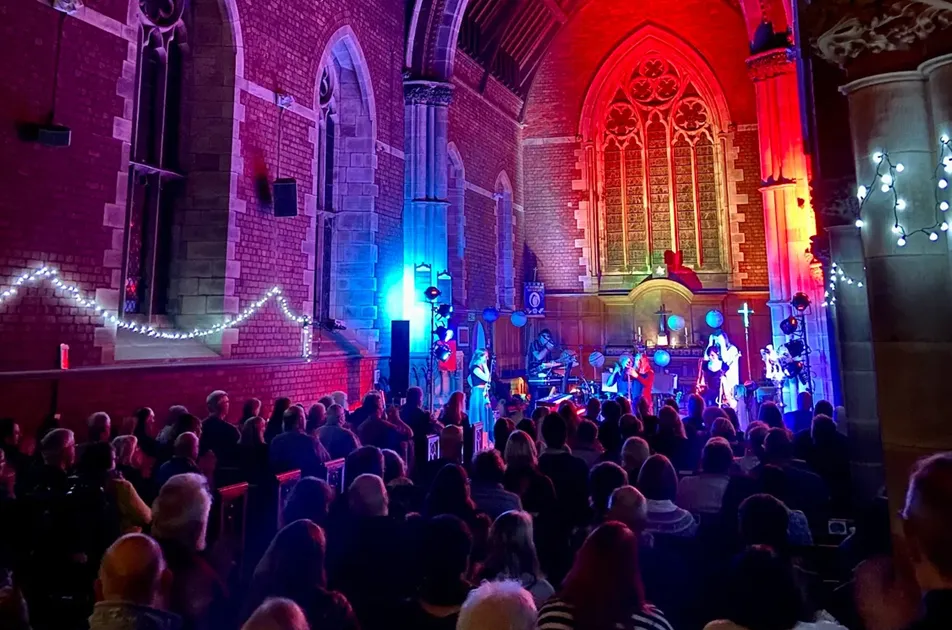
- Use these IRL activation spaces as a marketing tool or a core infrastructure. An easy way for indie artists can do this? Themed shows. A Halloween show where you decorate the venue and encourage costumes. A summer show where you decorate with inflatable palm trees, play a few summer covers, and have a special summer merch line.
- These IRL experiences have proven to be a core part of fan longevity. This isn’t about just recruiting new fans; it’s about keeping them year after year.
There are a ton of great examples in this talk, including how K-Pop uses IRL experiences and physical merch to convert and keep fans. Speaking of which...
"Your job is to create that when. That’s how you take someone from casual listener to true fan."
4- The Secret to Converting Audiences From Online to Offline Is...
Well that's the million-dollar question! I absolutely loved this talk as well, and it’s another must-see for artists who have long struggled to get fans out to shows and give them that IRL experience we know most fans are craving.
So here’s the secret: you’ve got to be offering them something unique. It’s not enough to just show up and play music; you need to give them an experience or a physical reason to prove they were there. It’s about creating moments people can latch onto.
A few ways we’ve seen this done:
- Creating one-of-a-kind merch you can only get at a show
- Making the show itself an experience that people don’t want ot miss out on and want to post about after (see above examples)
- Feeling included during a show (sing-alongs work great for this)
Another great point within this talk was asking yourself, “okay, now what?”
For instance, fans come to a show and sing along, but what happens after that? Do you want them to find you on socials? To stream a song?
Knowing what you want to happen beyond the initial reaction, and then creating a pathway for that to happen is what creates long-term, active fans. It’s what bridges that gap between live music and streaming music.
At the end of the day, people want to be able to say they were there when… Your job is to create that when. That’s how you take someone from casual listener to true fan.
5- It’s Never Too Early to Start an Email List
Remember that point earlier about owning your data? Email lists are great for that. They’re a goldmine for collecting data, segmenting it, and showing a very clear, concise timeline for how your audience is developing and connecting over time. So you’re not having to guess what they’re thinking or what’s gone right or wrong, because the data is already there to tell you.
On top of that, email lists are still the best and most reliable way to reach your biggest fans, and a way to give them that insider feel we’ve been talking about. Posting on Instagram about a show might convert some people, and it should be part of your strategy, but my clients who use email to announce shows and share updates are the ones seeing the most turnout and fan interaction.
6- Virality Is Basically Predictable
I know, wild, right?! But there is some truth to this. While virality is a long game full of lots of unpredictabilities and experimentation, you’re not completely at its mercy. One talk spoke about the different ways older music can find new life; great news for artists with huge back catalogues who want to capitalize on that while creating new music. There are a ton of great real-life case studies in here, but what it comes down to is — you guessed it — analyzing the data.
Here’s a statistic that blew me away:
US TikTok users are 74% more likely to discover and share music on social and short form, while 84% of songs that were in the Billboard Global 200 in 2024 went viral on TikTok first. Not only that, 96% of total TikTok views are significantly related to streaming values for 96% of artists analyzed.
By paying attention to fan activity, you can start to see patterns that indicate which songs are the most discoverable and why.
7- There’s More Than One Path to Success
At the heart of all of this data and knowledge, one thing is very important to remember: success isn’t linear, and your path is highly individualized. It’s also very rarely made up of just one thing.
To be a true success in 2026 as an indie musician, you need to first define what that means for you, and then what you’re willing to do for it. And I don’t mean just working hard, I mean doing multiple things within the industry. Success in the modern music industry is rarely made up of doing just one thing.
For instance, I run Muddy Paw PR full-time, but I also guest write (hi, here I am!) and do strategy sessions, and also run a wedding photography business. Most of the full-time musicians or professionals I know are in a similar position. They’ve developed a range of skills that they use to create a full-time income and round out their interests. As a bonus, these usually double as ongoing networking opportunities.
8- Niches Are the New Mainstream
One of my favorite quotes from the Measure of Music conference was that niches are the new mainstream. This is so true! The more you can dominate a niche online, the more likely you are to be able to break through to that mainstream audience you might be after.
Tyler the Creator is a prime example of this that we’ve seen over and over again. But it takes time. For Tyler the Creator, this was something that unfolded over the course of a highly strategic decade.
Once you know your niche, and you’ve built the right team around you (ideally a mix of other creatives and business-savvy professionals or artists), you can start to expand your audience, build the cult following, and grow from there. It takes time. But it is the fastest way.
Ok, I’m On It! Now What?
Now, you get started with these tools and strategies, and to do that, I have one more bonus tip for you, which is going to make collecting data and getting your music career organized a lot easier.
Having an arsenal of tools you can turn to when you need to make decisions like the ones we’ve been talking about is going to make your life so much easier. And to do that, Measure of Music has partnered with TheMetricsofMusic.com to provide tools like this. Check it out, and then report back and let us know what you found the most useful.
Happy data-ing! Learn more about Measure of Music here.