

_______________________
Guest post by Leticia Trandafir of LandrThere’s tons of articles out there with ‘hacks’ on how to get on a playlist.Some artists get handpicked by Spotify, Apple Music or Deezer playlist curators. They get tons of plays overnight. And sure, they get a spike in revenue from being heavily streamed. But I’d be lying if I told you there is a guaranteed, quick and easy way to achieve that.Once you release your music, you have to promote it. Otherwise it’ll collect digital dust and no one will listen—let alone playlist it. All good promotion starts organically—from great music and a real feeling.The way we discover and listen to music has changed. Algorithms are now heavily involved. They’re serving us personalized playlists. They’re breaking artists who have data to back up their success.But the most important thing to remember is that the human element hasn’t totally disappeared—even from the most data-driven streaming platforms.Tastemakers and playlist curators still make some of the best playlists around. And your fans are still… real humans!So here’s everything you need to know about getting on playlists, how to approach playlisters and how to craft your promotional strategy after releasing. This won’t get you on Spotify’s Fresh Finds tomorrow… but it’ll put all the chances on your side to get your music heard.Here’s the gist of the lists!1. Get Your Music On Streaming Platforms
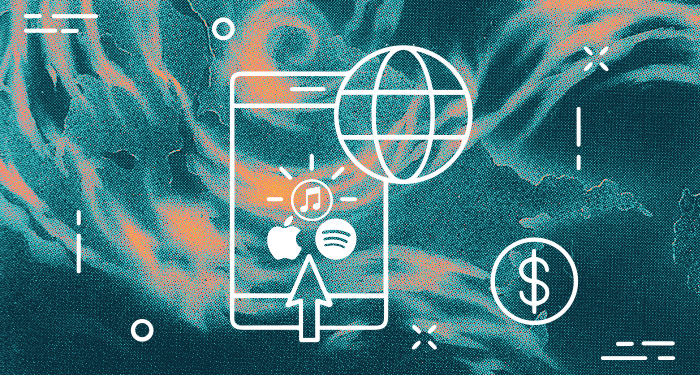
- Log into your LANDR account
- Click on ‘Releases’ in the top menu
- Upload a lossless file
- Enter the info for your release (titles, album art, etc.)
2. How To Get Verified
Spotify
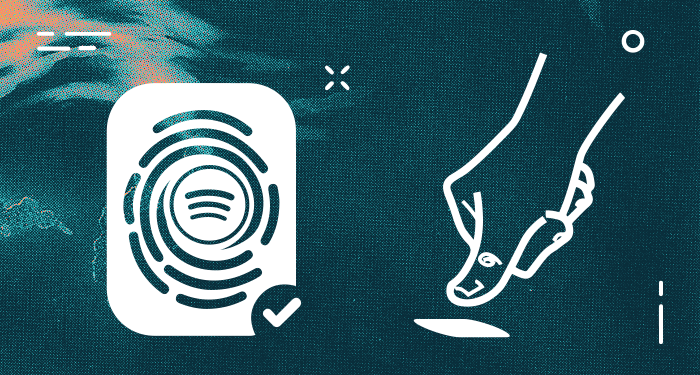
Once upon a time you needed to get 250 followers to earn the little blue verification check mark on your profile. Luckily, Spotify has opened verification to all artists.Go to Spotify for Artists and click ‘Get Access.’It takes a little while (a few days, or a week) but once they verify who you are, you get access to your artist profile. It lets you edit your photos, check your stats and more.Apple Music
Go to iTunes Connect to link your iTunes account and claim your artist profile.Click on the plus and add ‘Artists’. Search your name (your music has to be on there already. If not go back to step 1!).It takes up to a week or so to get the verified status.3. Build An Audience
In Real Life
Getting involved with people face to face is still key. No matter how many algorithms govern our lives, fans and journalists are human beings. Establishing a genuine relationship gives you a better shot at a sustainable and successful journey for your music.“Sharing to friends, music writers and radio has the same feeling for me—it’s having a relationship with the songs and knowing when the time, person and place feels right” says Joe Holtaway.Your first supporters are the ones who get you off the ground: your friends, family and internet pals (like that one Twitter friend who likes all your posts).Another thing to remember: to get fans, you gotta be a fan! Exchanging music and compliments with other fellow musicians you admire is a fantastic way to build a network.At the grassroots level, it’s often other musicians who organize shows and help co-promote each other with things like their own playlists. Cross-promote with everyone in your network and build a community and following organically.“I keep a journal—drawings, paintings, quotes, and in there I put addresses of those I meet at gatherings and shows. Often sharing recordings starts from there with a note the next day, a shared song link”— Joe Holtaway“I keep a journal—drawings, paintings, quotes, and in there I put addresses of those I meet at gatherings and shows. Often sharing recordings starts from there with a note the next day, a shared song link” advises Joe.Online
Getting the right social media profiles is important whether you like social media or not. Get a few that you can manage and keep them updated: Facebook, Instagram, Twitter, SoundCloud or Bandcamp.Make an a good artist website.Get your friends to follow your Facebook fan page by clicking “Invite Friends”.Link all your profiles together. Put all your social media links on Facebook, SoundCloud and on your website.These are the spaces that keep your momentum up if you maintain them. Share your story and your process, it all counts. But don’t be spammy.The best rule-of-thumb is to treat your fans like your close friends—if you’d be excited to share it with your friends, then share it with your fans. You wouldn’t spam your friends 5 times a day with a “check out my Soundcloud” post. So don’t do it to your fans either.4. Make Your Own Playlists
Get your feet wet with playlisting by making your own! Chances are, streaming platforms, playlisters and fans will appreciate it and they help to build your story as an artist.Make it thematic (e.g. your influences) or genre-specific (something you know well). Think about how you can naturally fit in 1-2 of your own songs. But don’t make it only about you!Show your taste and how your track fits with other awesome music. Add 30-100 songs by other artists that work well with yours.If you don’t know how to do it, check out these helpful guides:- How to create a playlist on Spotify
- How to create a playlist on Apple Music
- How to create a playlist on Tidal
- How to create a playlist on Google Play Music
5. Know The Right Playlists
The Big Guys
Of course, we’d all like our new single to end up on Spotify’s Rap Caviar (7 million followers), Fresh Electronic (1.5 million followers) or The Apple Music List.And I’m sure we’d all get a boost from being on major label playlists like Sony’s Filtr, Warner’s Digster and Universal’s Topsify.But let’s be real: official Playlists are not easy to get on. The Playlist Editors who make them have their own way of selecting songs—digging on blogs, having industry relationships, keeping an eye on new releases and looking at the data for what gets traction on their platform.You can always do some research online to find who the Playlist Editors are (LinkedInor a quick Google search). But keep in mind that they receive hundreds of requests daily. The chances of your track getting on there without any press or traction are quite low.What’s the solution? Start small by reaching out and submitting your tracks to independent playlist curators you follow and trust. Their playlists are often the launchpad to bigger playlists.It’ll take some research and digging to find them, so take the time to do it right (you’ll probably find some amazing music along the way anyways).Independent Curators
Music fans like you and me make playlists. Some of them have quite a bit of following. Brand and blogs also make playlists that have thousands of followers.Do your research and find playlists that fit the genre of your song. Search on streaming platforms or on sites like Playlists.net. Actually listen to their playlists and suggest where your music would fit best.Here’s a list of independent playlisters to contact:- IndieMono — Contact them on Facebook
- Songpickr — Contact them on Facebook
- [PIAS] Playslits — Contact them via their website
- Soundplate — Contact them via their website
- Pop Justice — Contact them via their website
- Marcus Butler — Contact him on Facebook
- Indie Mixtape — Contact them on Facebook
6. Get Press Coverage
- Update your social media profiles (e.g. Add a line like: New album ‘Let’s Go’ dropping next month!).
- Get a fresh set of press photos taken and put them in a folder that you can send out with a link (on Dropbox or Google Drive among others).
- Think of approaching blogs with an exclusive release
- Make an exclusive music video to go along with your song
Blogs To Reach Out To
If it’s your first release, start with smaller local blogs. Trust me, THEY COUNT!Here are some of the bigger blogs: Gorilla vs. Bear Pigeons and Planes, Consequence of Sound, Stereogum, Indie Shuffle, Resident Advisor, Dummy, Thump, Tiny Mix Tapes, Pitchfork, Inverted Audio, etc.Approach them well in advance, and with a concrete release date. Get in touch with radio stations too. Everything counts. From the smallest mention, to a full on exclusive feature.Hire a good publicist
Hiring a publicist is not typically something you do right when you’re starting out. Many artists do all their promotion themselves up to a certain point, or even forever!But ff you’re sure you’re ready to put some money into a campaign for your release, it’s worth looking into hiring a publicist.A publicist’s job is to help artists get press coverage and manage it. They help them plan their promotional campaigns and deal with journalists. Publicists already have relationships with the media and they know the industry well.If you think you’re ready to get a publicist, do your research and talk to artists they represent. Make sure they are legit—and not just there to make a buck without doing the legwork.Beware of scams.7. Approach Playlisters

Get Creative When Approaching Playlist Editors
A simple cold email might not work—get creative. Go to music conferences, introduce yourself in person. Have a copy of your record or a fun object that will get Playlist Editors intrigued. If you’re gigging near someone, send them a guest list spot and invite them to the show.Aim to start a meaningful and legitimate interaction. A good conversation (about something other than your music on their playlist) goes a long way.Get In Touch With User Generated Playlist Curators
A playlist is usually associated to the name of the curator, look them up. Don’t start with “Can you put my track in your playlist”. Work up to it. Say why you are approaching them specifically. Start a real relationship.Other artists make playlists too. This is what’s worked for me: making a playlist and tagging the artist on Facebook when I share it. Most times they won’t notice. But artist’s have messaged me to send thanks for playing their song.That was the start of a musical friendship. We’ve been exchanging music ever since!8. Don’t Rely On One Single Platform
 Don’t get too focused on one single platform or playlist. Try to hit as many listeners as possible. That way you’ll have all the more chances to get heard.Hot Tip: Build a landing page that gives people the option to stream or buy your track on their favourite platform—something like this. Try ToneDen or Linkfire too.Put a free preview of your track on SoundCloud and add a ‘Buy or Stream Link.’Give it to your DJ friends to play in their sets and radio shows. Send it out to online radio stations. Like I said before, every little thing counts.
Keep It Real
It’s great to try and promote yourself online and hit those big playlists. By putting all the chances on your side—getting verified, making your own playlists, reaching out to tastemakers and playlisters—you might be one step closer for getting listed.But remember that there’s no perfect recipe. The music has to be good, and luck has to enter the equation. Making face-to-face connections by playing shows and participating in the community is still key.It’s hard work and it doesn’t happen overnight, but it all pays off eventually.Yes, some artists blow up on streaming platforms because they get on a high traffic playlist. But sometimes those artists have trouble filling up a bar if they play a show—because people don’t actually know who they are. Only one of their songs got a lot of plays in the flow of a playlist.Streams are nothing if you don’t have real fans who will support your shows, buy merch and get stoked on your next release. So make sure you cover all your bases in an organic way: both online and offline.“I feel as songwriters we have a responsibility also to encourage others—there’s no need for competition, let’s be open hearted.” — Joe HoltawayLeticia is a DJ and music maker with a love for 303 basslines. Writer and Community Manager at LANDR.Related articles