

________________________
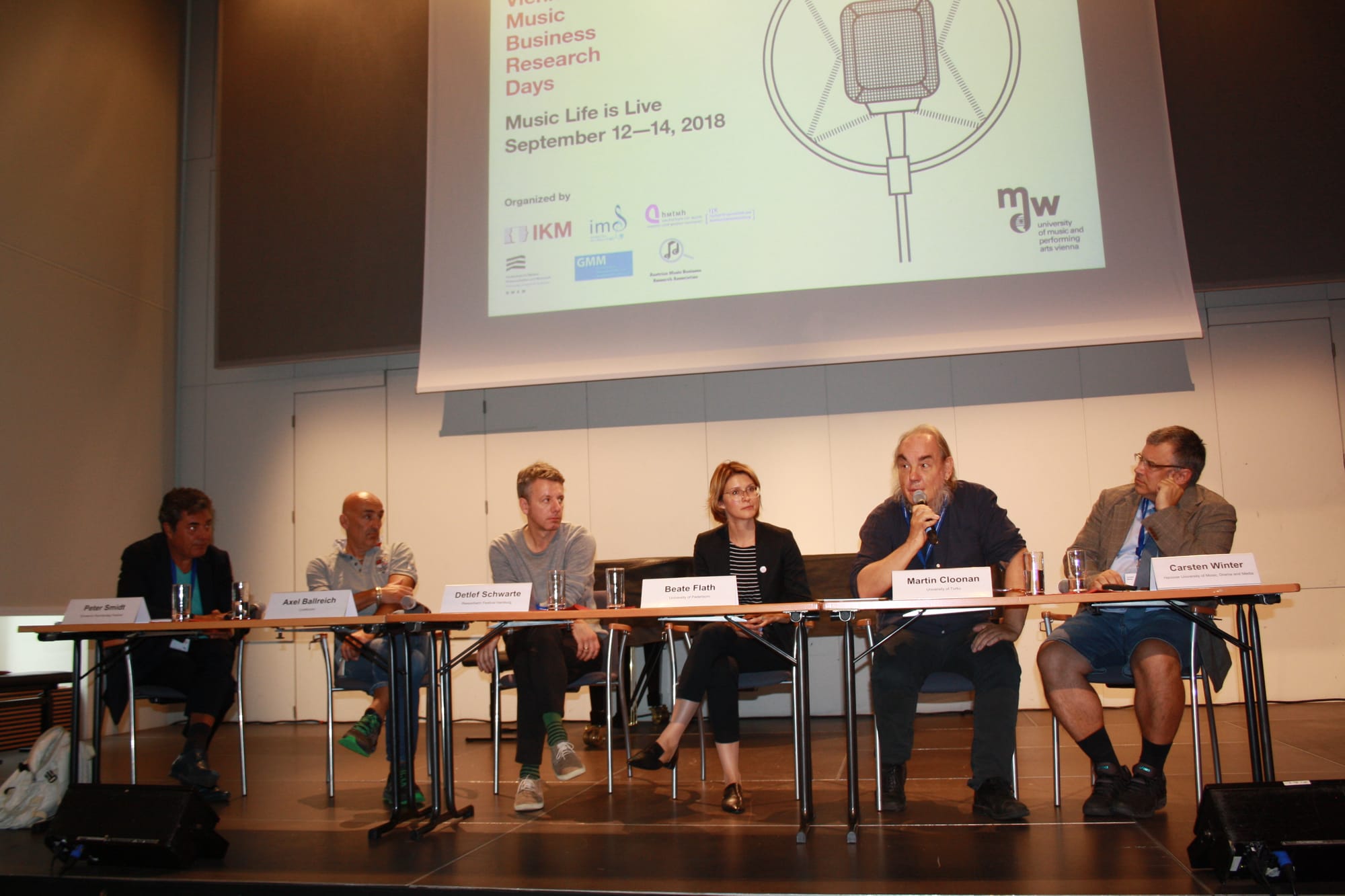
Guest post from Music Business ResearchThe 9th Vienna Music Business Research Days on “Music Life Is Live” gathered again renown music business researchers and music business professionals at the University of Music and Performing Arts to discuss the “Political Economics of Music Festivals” and “The International Concert and Touring Business”.The invited conference day of the Vienna Music Business Research Days 2018 was opened by the president of the University of Music and Performing Arts Vienna, Ulrike Sych, with a welcome address to the conference participants and the audience.INVITED CONFERENCE DAY ON SEPTEMBER 14th
- What about freedom of artistic expression, negative effects of music festivals, like a huge amount of waste, traffic jams, overfill of supermarkets, parking space and accommodation, annoyance by din etc., which are accompanying every festival?
- Is there only the permission for being loud – in the double sense of the word – when the gross domestic product is affected positively?
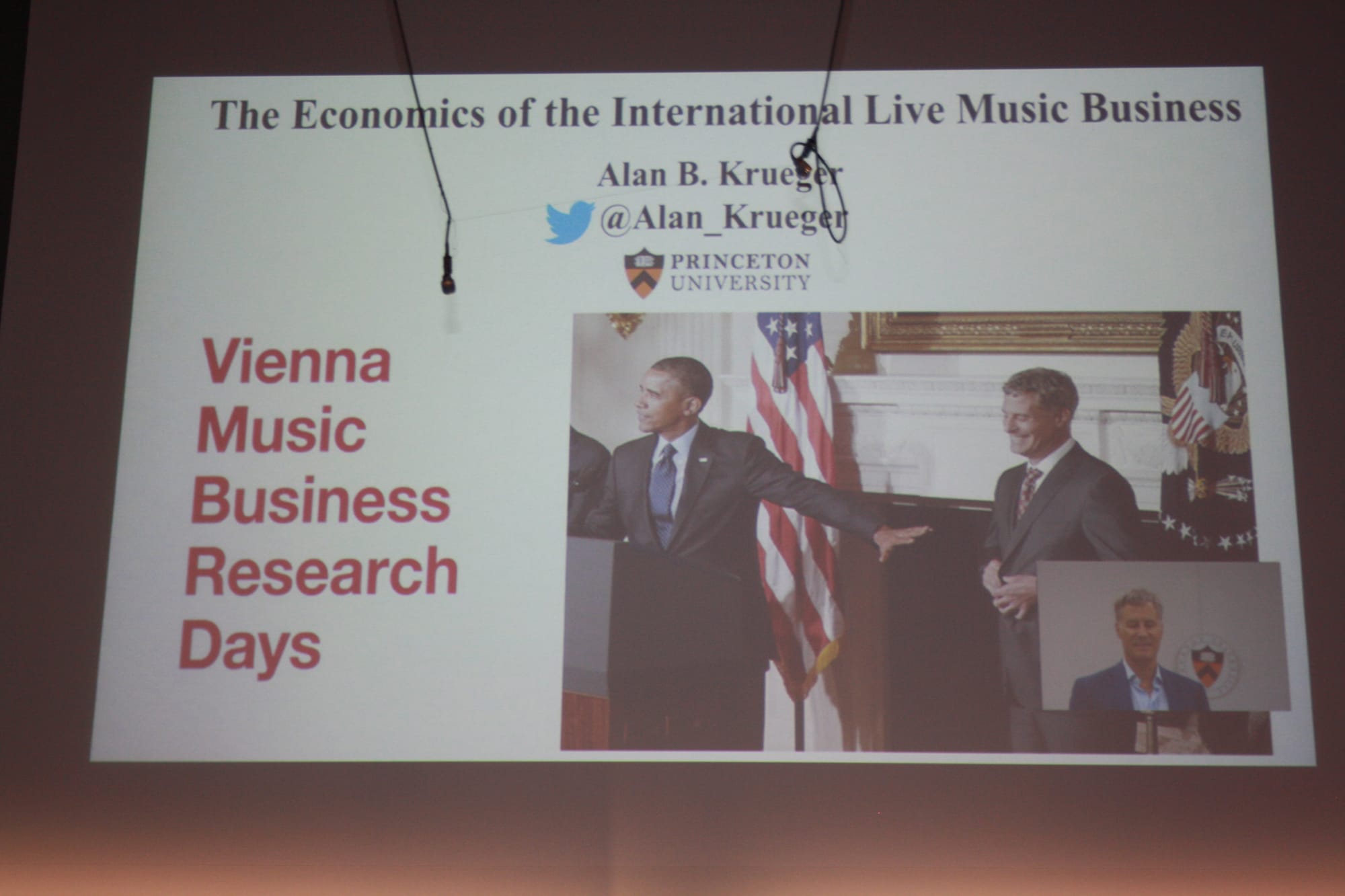 The former Chairman of President Barack Obama’s Council of Economic Advisers, Princeton University Professor Alan Krueger then held a keynote on “The Economics of the International Live Music Business”. He highlighted that the live music market has become the most important revenue source for musicians in the digitized music economy. On average 77.5 percent of the gross income for the top 35 artists who toured in 2016 came from live concerts. Further, a recent survey of 1,227 US musicians conducted by the Music Industry Research Association (MIRA) for 2018, shows that on average 41.6 percent of music related income comes from non-religious live music performances, followed by religious live music (church, choir etc.) with an average income share of 15.9 percent. The income share of audio/video music recordings with 3.6 percent and from music streaming with 1.5 percent respectively is, therefore, comparatively low. An average US musician, thus, earns 57.5 percent of her/his income from live performances. The median income from non-religious music performances is, therefore, relatively high with US $5,428 and is only topped by other music related income of US $7,000 and income from religious music performances of US $8,000. With a Lorenz curves analysis for 1987, 2002 and 2017, Alan Krueger highlighted that the live music business is a superstar business with the top 1 percent of performers earning 60 percent of total concert revenue worldwide in 2017. In 1987, the top 1 percent of performers earned just 40 percent of total concert revenue.Find here the video-stream and the presentation slides
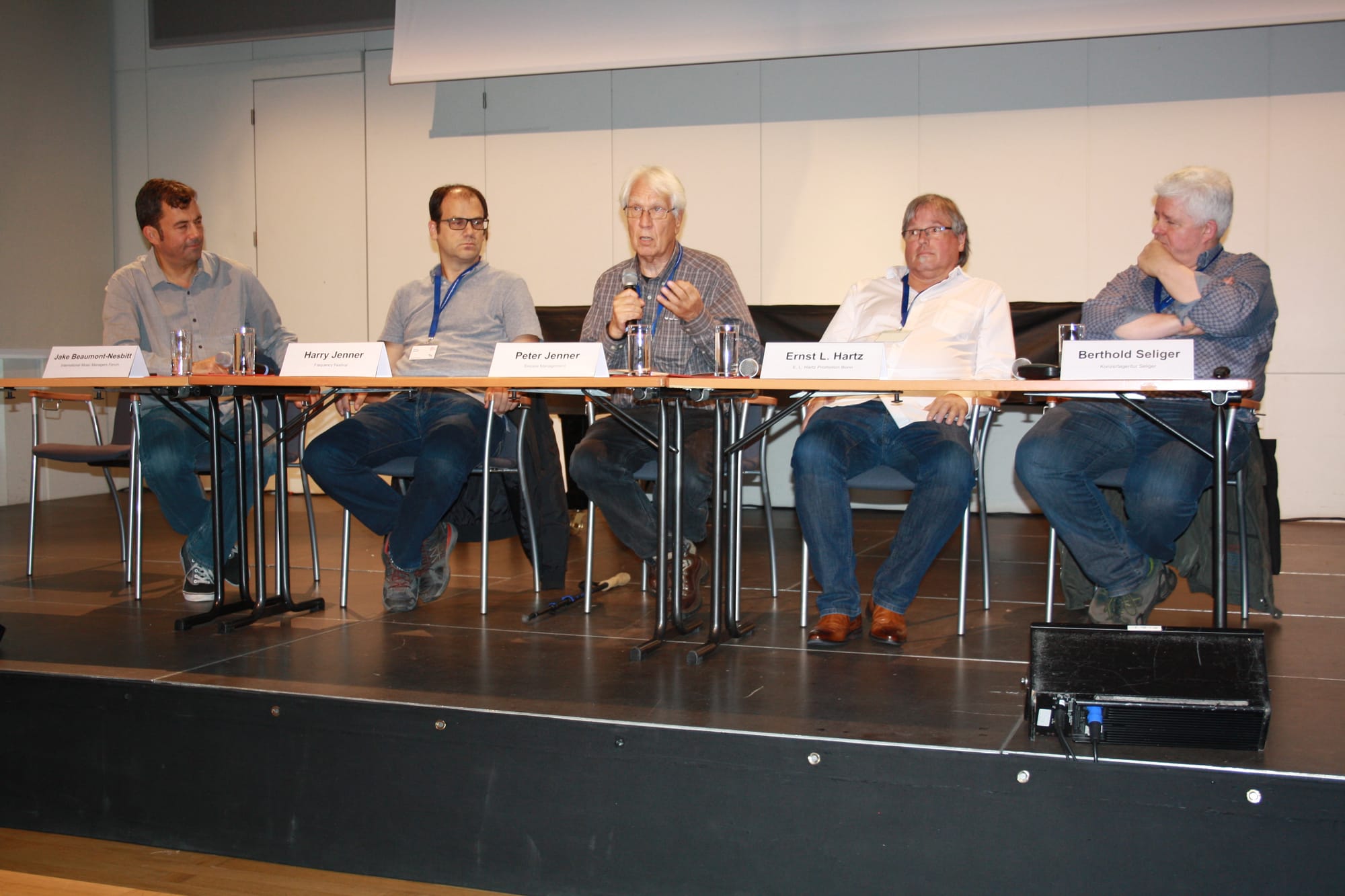 In the following panel discussion moderated by Berthold Seliger, Jake Beaumont-Nesbitt (International Music Managers Forum, London, UK), Ernst L. Hartz (E. L. Hartz Promotion Bonn, Germany) Harry Jenner (Frequency Festival, Austria) and Peter Jenner (Sincere Management, London, UK) highlighted the change of the “The International Concert and Touring Business” from a music driven and very fragmented promotions business to a money driven and oligopolistic business.