

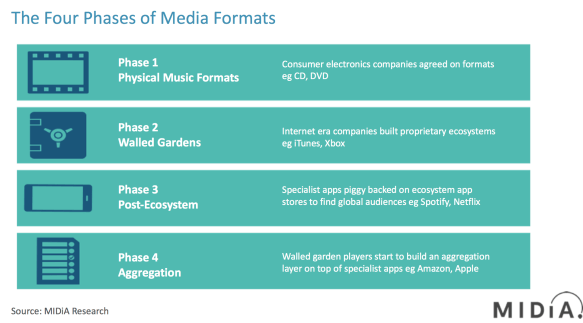
- Phase 1 – physical media formats: In the old world, consumer electronics companies came together to agree on standards and then competed in a gentlemanly fashion on execution. This approach underpinned the eras of the CD and DVD.
- Phase 2 – walled garden ecosystems: In the internet era companies competed fiercely, building proprietary formats into impenetrable walls that locked consumers in. This resulted in the rise of walled gardens such as iTunes and Xbox.
- Phase 3 – post-ecosystem: App stores became the chink in the armour for walled garden models, allowing a generation of specialist standalone apps such as Spotify and Netflix.
- Phase 4 – aggregation: Walled garden players had inadvertently created global platforms for specialist competitors, so are now figuring out how to avoid going the route of telcos and becoming dumb pipes. The likes of Xbox, Amazon and Apple have started to embrace some of their standalone competitors, adding curatorial layers on top via hardware and software. This is how we have Amazon channels, Fortnite’s marketplace within Xbox and, soon, Apple channels.
- Margin could be a real problem:Apple’s high profile spat with Spotify over its App Store levy hides a bigger commercial issue. With margins in streaming as low as they are, Apple most likely makes more margin on its Spotify App Store levy than it does selling its own Apple Music subscriptions. The amount of money it has invested in its lineup of TV+ originals is also unlikely to do its services margins any favours.
- Subscriptions have to get really big: Standalone subscriptions will not only be low (perhaps negative) net margin contributors, but will not deliver enough revenue. It would take more than one billion Apple customers paying for two $9.99 subscriptions every month of the year to generate the same amount of revenue it currently makes from hardware. The App Store is Apple’s current services cash cow, and Apple’s new slate of subscriptions are preparing for a post-App Store world. Yet it would take a hundred million $9.99 subscriptions every month of the year to get Apple’s services revenue to where it is now. That number is eminently achievable but generates revenue stagnation, not growth.