


Welcome to Be Memorable, a monthly column by independent singer, songwriter and Dream Chasers Radio host, Yaya Diamond, exploring how artists can use the power of branding and promotion to break through the noise and be memorable.
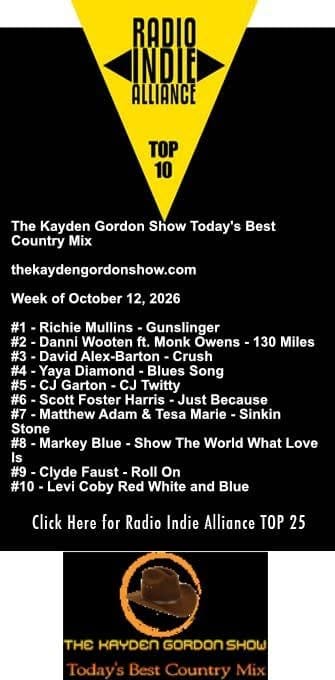
As I write "Blues Song" just hit #4 on the Radio Indie Alliance Top 10 — The Kayden Gordon Show's Today's Best Country Mix, for the week of October 12.
This news is still ringing in my head, because it proves the whole point of what I'm about to tell you about running a Grammy FYC campaign as an independent artist: you can't ride every horse. You pick one, and you ride it like everything depends on it — because it certainly does!
Everything below is in two parts: what I did, and what you can do. This is the stuff nobody hands you when you're running a campaign on a budget like mine — so I'm handing it to you.
1. Pick just one horse.
What I did: I had more than one song I believed in. But belief doesn't provide money for promotions, and hope, although great, doesn't fund a campaign. Every dollar behind my run for the 69th Grammys comes out of my own pocket, as I stated in my recent Hypebot article. That's the campaign fund. So the math was simple and brutal: I could only afford to give one song a real shot.
So how did I choose? I listened to the people. "Blues Song" chose itself, honestly. It was the most requested song I had — the one people asked for by name, the one that got the reaction in the room, the one listeners kept coming back to. When you're independent, you don't have a label's research department or a team of consultants telling you what to push. You have something better: real people telling you what moved them, and Blues Song was the key to the puzzle.
I stopped guessing and started listening. The requests were the data. "Blues Song" wasn't just my favorite — it was their favorite. And in a campaign where every dollar has to count, you don't bet on the song you hope people will love. You push the song they rave about the most.
And now the charts are saying the same thing the people said. #4. The horse is running!
What you can do: Pull your own data before you spend a dime. Which song gets requested at gigs? Which one has the most streams, the most DMs, the most "play that one again"? That's your horse — not the song you hope people will love, but the song they truly love, even if you don't. Then put every available dollar behind that one song and use the others for shows and live performances. It feels wrong, but do it anyway. A split budget is how independent artists lose campaigns they could have won.
2. Fund it from the kitchen table.
What I did: What does the campaign actually look like? Joining FYC Facebook groups and posting my song, asking Academy members to please take a listen and vote honestly, hitting up Instagram messages, send send send, post post post, and then post and send some more, every day, multiple times a day. There's no war room. There's me, at my table in Southwest Florida, a laptop, a phone, and one song I'm asking the world to hear. It's not glamorous. It's honest work, and honest work is the only thing I've ever been able to count on.
What you can do: Write down your real number — the actual dollars you can spend without hurting your life. That's your campaign budget, and it's enough if you're disciplined. Spend it only on things voters will actually see: a proper radio edit, Facebook targeted ads, maybe even promote some short videos of yourself talking about the song. Everything else is free: your phone camera is your content studio use it, FYC groups are your broadcast networks, your socials are your billboards. And film everything — your campaign is your content. The struggle, the wins, the late nights at the table: document it. People fund and follow journeys, not press releases, so don't waste your money on those.
3. Commit completely — narrowing the scope.
What I did: Once I picked the horse, everything narrowed. "Blues Song – Radio Edit" is entered in Best American Roots Performance and Best American Roots Song, and every bit of energy I have goes there. First-round voting runs October 12 through 22, and I'm treating those days like the song's whole future depends on them — because for an independent artist, it kind of does.
What you can do: Choose your categories like they cost money — because they do, in energy, time, and focus. Enter where your song genuinely fits, not where you wish it fit. Then narrow your whole world to that entry: every post, every email, every conversation points at it. Put the voting dates on your calendar and plan content for each day of the window before it opens — you'll be too deep in it to plan once it starts. One entry, one message, no distractions, no doubts.
4. Turn every win into proof.
What I did: Let's be honest about what #4 on a chart does for a Grammy campaign: voters vote, charts don't. No ballot has ever been swayed by a chart position alone. The Recording Academy members deciding Best American Roots Performance aren't checking the Radio Indie Alliance Top 10 before they vote, although it would be super nice if they did LOL.
But here's what it does do: it's proof that the song is trending. It tells a voter scrolling through hundreds of FYC entries that this song is already moving — that real stations are playing it, real listeners are requesting it, real momentum exists. For an independent artist with no label logo on the submission, that kind of third-party validation is real currency. It's the difference between "here's my song, please listen" and "here's my song — and by the way, it's already in fourth place somewhere."
It also does something no campaign budget can buy: it tells me I picked the right horse. When you're spending your own money, doubt is the most expensive thing in the room. A #4 chart position quiets the insecurity and gives you what you rarely have: hope.
What you can do: Chase every piece of proof you can get, starting now. Submit to independent, college radio, and reporting radio stations. Track every spin, every playlist add, every chart placement if possible — screenshot all of it. Each one becomes ammunition: put it in your FYC posts, your emails, your one-sheet, post it on your social media, make videos about it, etc. And be honest with yourself about what proof does: charts don't vote, voters do. But proof matters when a voter is deciding which of 200 entries deserves three minutes of their time. This gives them a reason to take a moment to listen and seriously consider your entry.
5. Don't ride alone.
What I did: Here's the part nobody tells you about being independent: the other independent artists are not your competition, they're your campaign team. I've been collaborating with fellow artists — we promote each other's songs, we show up for each other's releases, we lift each other up. When one of us gets a placement, a vote, a spin, we all feel it and congratulate each other. There's no label machine behind any of us, so we became the machine for each other. I share their music with my audience; they share "Blues Song" with theirs. It's not strategy — it's community. And community, it turns out, is the most powerful promotion money can't buy.
What you can do: Find five to ten artists at your level — same budget, same hunger — and build a promo circle before voting starts. Share each other's FYC posts. Show up for each other's releases. It costs nothing and multiplies every one of you. The artists around you are the only marketing department you'll ever be able to afford, so treat them like it: promote them like you'd want to be promoted. Don't forget your fans who would want to help you spread the word. Even though they may not be voters, they too can help spread the news about their favorite artist and the FYC song you choose.
6. Go where the voters actually are.
What I did: I'm posting "Blues Song" in the FYC listening groups where Recording Academy voting members gather. I'm writing about the campaign in my Hypebot column. I'm doing what I can to reach the voters and also offering my ear in return for their FYC submission.
What you can do: Find the rooms where your voters gather and go there first — FYC listening groups exist for exactly this. Read each group's rules before you post (some ban things like gramophone images or entry IDs — respect the room). And learn the most important targeting lesson in this whole article: FYC messages are for voters, not fans. Fans can't vote on Grammys, but they can help you reach them. Your voters get "For Your Consideration" with categories and credits; your fans get "stream it, request it, share it." Same song, two different messages, two different rooms.
That's the whole playbook. Pick the song the people already chose. Fund it with what you actually have. Narrow everything to the entry. Turn every win into proof. Link arms with the artists beside you. Put the right message in the right room. And when the charts confirm what the people already told you — ride that momentum all the way to the ballot.
One horse. Running fourth. All the way. Let's go! I wish you nothing but the best because in the end we are all winners!!!! Congrats.
Yaya Diamond is an independent singer and songwriter, the daughter of disco legend Evelyn Thomas, a Recording Academy voting member, and host of Dream Chasers Radio since 2008. "Blues Song" is her For Your Consideration entry for the 69th Annual Grammy Awards.