

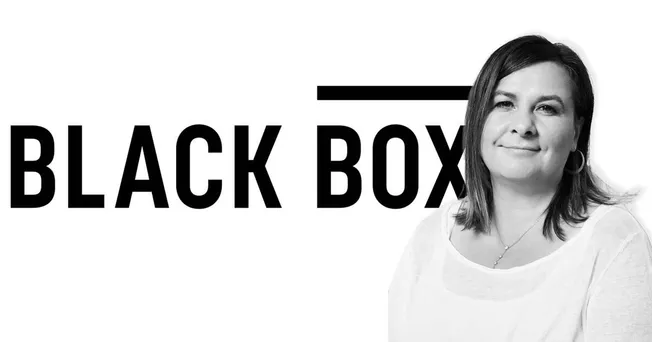
Black Box just shared their widely-anticipated annual “Top Artist Brands” analysis, only this year’s was a little different. Normally the team shares an in-depth run down of which artists’ brands were strongest in any given calendar year, but since it’s their tenth year sharing this work, they decided to expand it to “Top Artist Brands of the Decade” (2015-2025).
We sat down with Founder and CEO of Black Box, Livia Tortella, to make sense of it all!
Hypebot: Hey Livia! Thanks so much for taking the time, happy holiday season! How are you?
Livia: “Fantastic Jeremy! Hope you are well too. HNY :)”
H: Why don’t you introduce us to your now 10-YEARS LONG (!!!) artist branding ranking project. This year is a little different since it collects analysis from the past decade.
L: “This year, we needed to go back and see which artists consistently prioritized connection with fans and their personal narrative over the last ten years. Looking at all the artists through that lens was the interesting part. The artists on this list stayed connected to their audience (beyond album cycles), and evolved with them — they made challenging, culturally significant art and didn’t forget the music.
The best part of doing this list this year is the internal dialogue it inspires. A lot of artists get eliminated because they really don’t take advantage of social media as a way to connect with their audience — it’s more of a means to an end. The other great takeaway from this year’s list is seeing that there are long term careers being developed today.”
H: How did this start for you? What was your interest back in 2015 and how has it shifted since then?
L: “We started this list to spotlight a different kind of achievement. Not total streams, follower numbers or venue sales, but a dedication to fan communication through social media… a move away from virality and toward engagement and connection. We saw that some artists really understood where this was going, and we wanted to highlight their dedication to this.
There are a ton of super stars that have never made this list — because the artists we cover use this as an opportunity to build real communication with their fans. These are the artists that truly get the possibilities of this kind of work. Everyone talks about the monetary impact of fans these days — but the artists on our list are taking the long road — they are developing a lasting relationship with their fans.”
H: Tell me a bit about the kinds of metrics you’re using, or interested in?
L: “We look at social engagement metrics, and how sticky fans are. We also look at artists and their content strategy. Are they sharing their likes, dislikes, and their creativity? They are the first to break their own news, always. They are a moving culture.
On the pyramid of who is important in their world, their fans are number 1, 2 and 3. We have an artist that we work with who has regular music roll out meetings with her fans — they weigh in on everything from video concepts to merch to tour ideas. These are the metrics that jump out at us.”
H: Are there any “red herring” factors when it comes to branding that you think people value too much?
L: “When social feeds are too curated. Something could be visually consistent, beautiful even, but at times, it creates distance. It is a tough balance to show a creative point of view, and still be authentic. When the fan thinks that they are not on a guided tour, but are seeing the real side of an artist — then you are on the right path.”
H: Alright let’s dig into the fun stuff! Spoiler alert here but Billie Eilish takes the 🏆 here, and notably above Ms. Swift (#2). What are her strongest brand elements, what’s her brand “superpower?”
L: “Wow. Great question, because we argued over that one. In the end, Billie’s artistic vision, her punk rock energy and her mission to change the world won in the end. Ms. Swift has been the best teacher of how to engage with fans over the last ten years and manage the biggest audience in the world. Not easy to personalize that — but she achieves that. Billie shares a lot of these strengths, but for us, she edged out Swift with the force of her artistic statements.”
Wayne Coyne said it best, ‘if you are going to be an artist, be interesting.’
H: An elephant in the room right now would be Bad Bunny — given the politicization of his world tour skipping the US and his forthcoming Super Bowl Halftime performance — I love your concept of the “Trojan Horse.” Can you expand on that and his strong brand longevity?
L: When you really look at what Bad Bunny does creatively — it is different. The Latin music industry sometimes has a way of doing things — and we enjoy the fact that Bad Bunny has managed being both a commercial artist sonically, as well as an experimental one. When you dig deep, he walks differently from the genre’s stars by incorporating Salsa, Plena, Carribbean, etc. and not being afraid to share his views, and backs them up.
He has a massive audience, and yet, doesn’t care about dumbing it down to keep that audience. He answers only to the audience he helped cultivate.”
H: I found it interesting to see The 1975 on the list, they’re the only “band” present (and one of two “groups” alongside BTS). That speaks to the present moment in Pop Music for sure — do you have any actionable advice for bands in this era for how to replicate their branding success?
L: “It’s a great question… it’s hard, but not impossible. When you are managing the narrative of a band, and not individuals, you face natural “consensus” — which makes the development of a strong, personal brand hard.
For me it’s less about genre, and more about how you personalize a group aesthetic. It is easier with a clear leader in the group — but in the absence of that, the group should get together and get clear on what the identity of the band is (voice, visuals, personality), and find a method to capture content that is consistent and clear. It should feel like an interesting conversation between the band and the fans. Being intentional and personal helps.”
H: On a more general note, what can independent artists do with this information, in your opinion, to level up their brand and identity marketing?
L: “Know what you stand for, and why you decided to do what you do. Sometimes, artists get caught up in best practices, and forget the why. Also, engage consistently. Develop a relationship with your fans — understand that they are expecting you to check in. Think beyond social media. Get out into the world, and connect with your audience in the real world.
Wayne Coyne said it best, ‘if you are going to be an artist, be interesting.’ Lead your audience somewhere cool.”
Read the full “Top Artist Brands of the Decade.”