

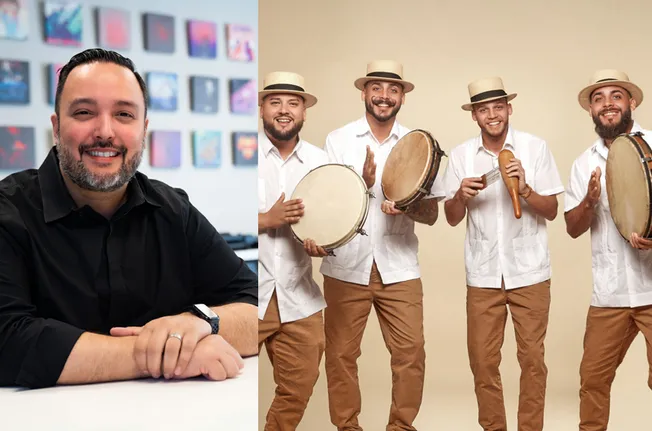
During this year's massive, record-breaking Superbowl Halftime Show performance by Bad Bunny, one person in particular had his jaw dropped to the ground even more than the rest of us; Symphonic CEO and Founder Jorge Brea.
That's because two of the Puerto Rican artists that Symphonic represents and has helped shepherd through their career, Los Pleneros de la Cresta and José Eduardo Santana, each had feature cameo moments during the telecast that put their artistry on display for the entire world to see.
Los Pleneros de la Cresta was featured on Bad Bunny's Debí Tirar Más Fotos, on the tracks "Café con Ron" and "Baile Inolvidable," while you might remember José's brief guitar solo just before Ricky Martin's surprise appearance. Both performed in his live ensemble.
Suffice to say, it was a great moment to check in with Jorge to talk about the deep ties that Symphonic has with the Puerto Rican, and Latin American, music communities.
Hypebot: Hey Jorge, we're speaking the day after the NFL Super Bowl. How did you like Bad Bunny's performance?
Jorge: "I absolutely loved it. It was fun, exciting, and genuinely moving, but also surprising in the best way. There were so many layers to it that I felt compelled to rewatch it and then see how people across different communities were responding."
It felt truly groundbreaking, not just as a halftime show, but as a cultural moment. It reminded people that you can perform at the highest level while staying true to who you are, and that kind of representation resonates far beyond the stage."
H: You mentioned that your partner Janette Berrios was the person who helped Bad Bunny put together his Apple Music profile page when he was just starting out. That must feel like a full circle moment! I feel it also speaks to the way you've helped so many artists grow their careers at Symphonic, especially from Latin America. What does this moment mean for you.
J: "Very early on, we were fortunate to work with the team at Rimas as one of the first distributors of their content. What Bad Bunny has become is truly a testament to the vision and dedication of that team, and of course, to the talent of Benito himself."
Our role was to support the team in the areas we specialize in as the artist and the movement around him continued to grow. Looking back, it’s incredible to think how something that seemed minor at the time, like properly setting up an artist page, was actually an important early step in making sure his brand was presented with intention and respect. To us, the little things matter. Showing up to do the work matters because it can make a difference, especially in an industry that is, at times, very admin-focused."
It really does feel full circle. We couldn’t be prouder of what the team at Rimas has built, of everything Bad Bunny has accomplished, and of having had the opportunity to witness an artist’s rise from concept to reality."
"As Bad Bunny continued to call out each country, it was exciting to realize how strong our footprint is in many of those same places."
H: From a marketing standpoint, how did Symphonic start planting its roots in the global Latin music creator community?
J: "Since our inception, we’ve been fortunate to witness various genres grow and become culturally and commercially significant. The business originally started as an electronic-music-focused company and then evolved to become more genre-agnostic, with Latin music emerging as a natural progression as the company grew."
Being Dominican, and with my colleague and partner Janette being Puerto Rican, along with other team members of Caribbean or Latin descent, it was a very methodical decision for us to engage more deeply in Latin genres. In order to expand, we needed to ensure we had the right team and capabilities to support that infrastructure, and then the confidence and work ethic to go after it."
We’ve expanded significantly across Latin America since 2016, opening offices in the Caribbean, Mexico, Brazil, Colombia, and other Latin territories. As Bad Bunny continued to call out each country, it was exciting to realize how strong our footprint is in many of those same places."
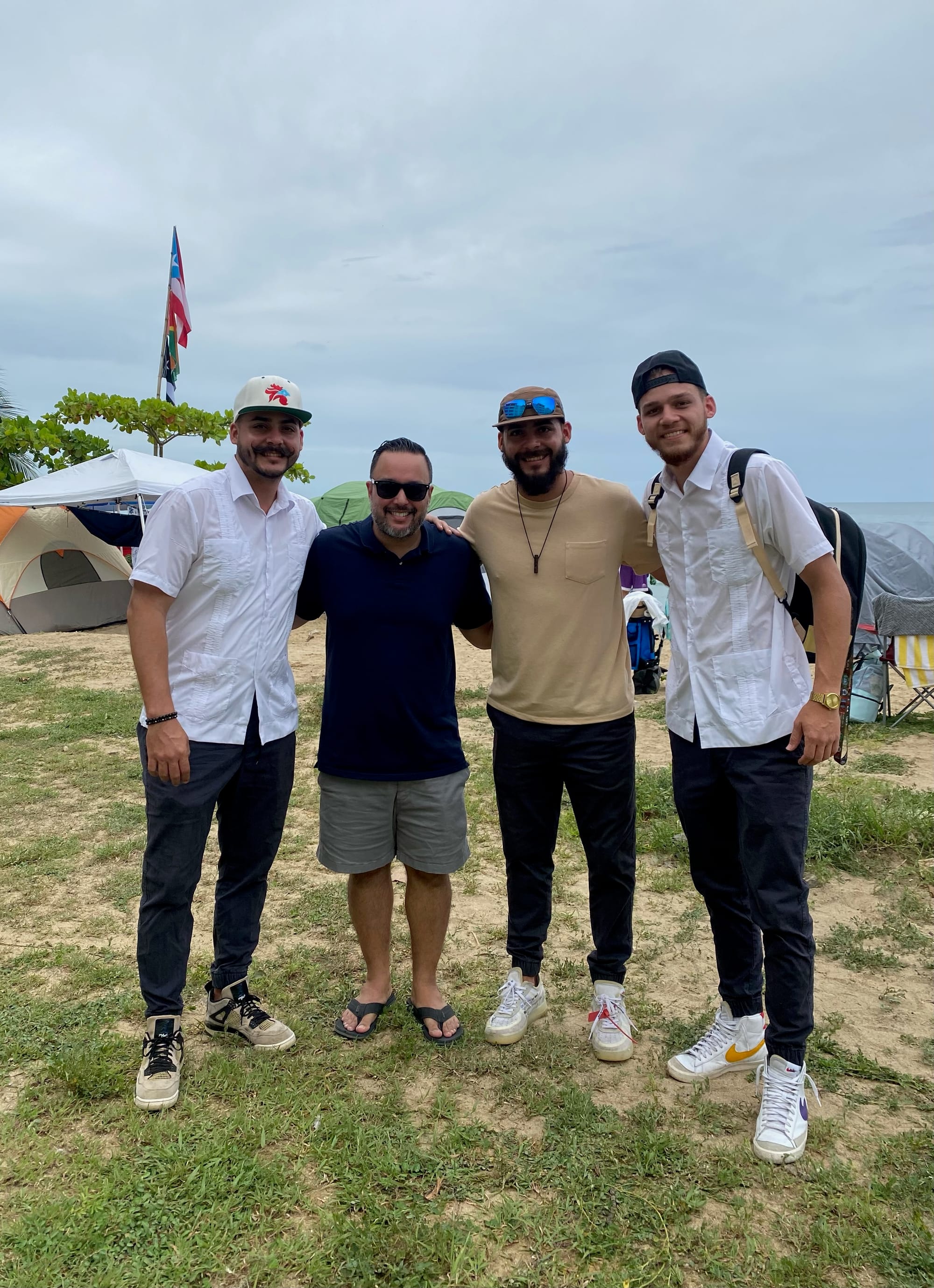
H: Tell me more about these two performing artists that shared the stage with Bad Bunny last night — Los Pleneros de la Cresta and José Eduardo Santana.
J: "It was honestly so exciting to see these acts on the world stage. They’re not only great people, but seeing their talents and genre specialties showcased at that level is incredibly rare and really important. We talk about them often, not just because we’re proud of them, but because they’re genuinely some of the most talented musicians out there."
Los Pleneros de la Cresta are a plena ensemble dedicated to preserving and celebrating one of Puerto Rico’s traditional Afro-Caribbean genres. Their sound is rooted in storytelling, pandereta rhythms, and that sense of community that plena is known for. They were featured on the track “Café con Ron,” which helped bring plena into a global pop conversation."
José Eduardo Santana is a Puerto Rican cuatrista who represents a new generation of musicians honoring tradition while also pushing it forward. He joined Bad Bunny’s world tour as part of the live band, bringing the sound of the cuatro to audiences all over the world. Along the way, in places like Medellín, he even paid tribute to musical traditions beyond Puerto Rico, which really speaks to his versatility and respect for culture."
H: Why is it important to work with this community of musicians, and what do you feel is most crucial?
J: "It’s important because this community carries so much history, culture, and lived experience, and that deserves to be treated with care and respect. These musicians aren’t just performers, they’re cultural bearers. When you work with them, you’re working with traditions that have been passed down through generations, and there’s a responsibility that comes with that."
What’s most crucial is showing up with intention. That means listening, doing the work properly, and making sure the infrastructure around them supports their artistry instead of getting in the way of it. Trust, consistency, and respect matter just as much as opportunity. When those things are in place, the music can travel further without losing what makes it special in the first place."
"These musicians aren’t just performers, they’re cultural bearers. When you work with them, you’re working with traditions that have been passed down through generations, and there’s a responsibility that comes with that."
H: We might be witnessing the tidal wave moment of when Latin music truly takes over the world — who else is on your radar?
J: "In my opinion, Latin music hasn’t just been popular recently, it has been shaping global culture for years. But right now it feels like its Mt. Everest moment, a tipping point where Latin sounds aren’t just influential, they’re defining the global music conversation in ways we’ve never seen before."
With Spanish-language records topping charts, historic award wins, and massive cultural moments like Bad Bunny at the Super Bowl, the world is finally recognizing what Latin artists have been building for decades. That kind of visibility doesn’t erase the history, but it amplifies it, giving space to both the superstars and a next wave of artists ready to break through."
As far as artists, Leton Pe, El Blachy, El Rubio Acordeón, Planta Industrial, Trueno, RMAND, Sofish, and our good friends at Ensamble Estero in the Dominican Republic are all amazing names to log and watch for."
Symphonic is a leading music technology and services company, offering a proprietary content management and distribution platform, global royalty collection and split payments, and robust label services to independent labels, managers, and artists. Founded in 2006 by music producer Jorge Brea, Symphonic is 100% independent and proud to be “by artists, for artists.”