

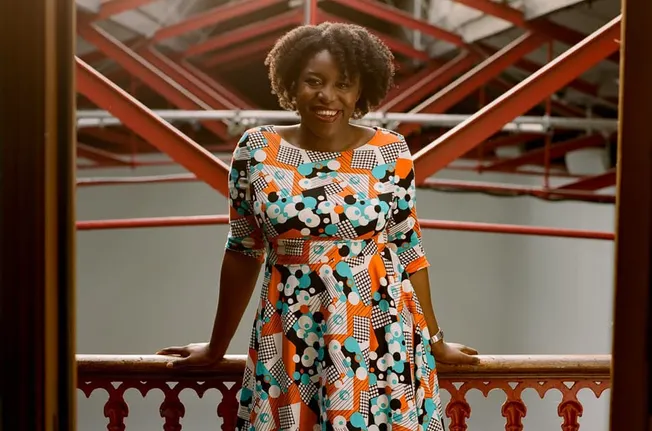
I've been wanting to sit down and chat with Christine Osazuwa for a while.
The founder of the Measure of Music Conference and Workshop for six years running, Christine also has 15 years experience working with major labels like Warner, Universal, Atlantic Records, and even at Spotify's HQ in Stockholm! She's like a Forrest Gump of the 21st century music industry. Not only that, but she's a born-Baltimorean who started booking local punk shows at age 15!
But her conference is also just as interesting; year in and year out panelists, speakers, experts, and virtual audience participants dive deep into the topics affecting indie musicians today and learn how data and metrics are shaping access to artists' pathways toward success. It's essential, and best of all, it's free.
The accessibility and inclusivity of being free and on the internet, is kind of the point. It brings together all of Christine's passions, ares of interest and expertise, and the core of her advocacy, under one cohesive mission: to democratize the utility of tools available at artists' disposal to build their careers.
Here's our conversation.
Hypebot: Hi Christine! Thanks so much for doing this interview. So tell me a bit about your background in music.
Christine: "Oh gosh. So I’ve been working in music for over 20 years now, which is crazy. I'm based in London but I grew up in Baltimore, and here's how I got my start: I went to a Simple Plan show and that was like my second or third show ever. I was 14 or 15. I come out of the show and on the street there's a band standing outside and they’re like, 'Hey, our band sounds kind of like Simple Plan, do you want to listen?' Obviously, this was a jillion years ago, so they had headphones and an iPod."
Fast forward, I end up running their street team. This was the MySpace era, so I was also helping bands out making cool MySpace pages too, which is how I learned to code. Essentially this was me doing 'digital marketing,' even though back then I didn't even know what to call it. Other bands would ask me, 'Hey, can you make us a flyer? Can you promote our show? Can you help us sell tickets?'"
So I started booking my own shows. And I booked bands for my 16th birthday party."
H: So who played at your Sweet 16?
C: "All Time Low was the headliner — they're from Baltimore. It sounds much more impressive 20 years later than it probably was 20 years ago. Though I’m very impressed and proud of them, when I worked at Warner, I got a chance to work across some of their campaigns again, which was really cool."
"Platforms like Apple Music and Spotify — and of course Ticketmaster — saw the inherent value in data really early, and have made it impossible for artists to get access to individual fan contacts and data. Artists essentially are licensing their own fans from these platforms."
H: How did those early experiences lead to you starting the Measure of Music conference?
C: "I did my degree in Music Business, filmed a documentary about fandom in the music industry, then worked at a ticketing company for three years. I then worked at Universal in Stockholm for two years. And Measure of Music was founded after I left Stockholm while I was still at Warner."
During COVID, I noticed a lot of people were getting laid off. There were a lot of people approaching me, because firstly, I had a job (you might remember that during the pandemic, major labels were making more money than ever!), but also because I had been savvy in the industry throughout my career. So there was uncertainty everywhere and people wanted to pick my brain about how to get hired. People would send me messages on LinkedIn like, 'Hey Christine, can we have a chat?' I started doing two calls a week with people, I'd book them individually, then do group calls."
At some point I realized it wasn't scalable, so I started conceptualizing a hackathon that lots of people could take part in. I put a Google form together and a bunch of people signed up, but then a lot more people said 'Oh, I don’t want to do the hackathon, but can I watch the other programming?' Then I started programming other informative events around streaming, APIs, data, always with guests. My first call was the Chartmetric and they’ve been my sponsor every year since."
H: Wow, it’s so interesting too that the community sort of dictated the format. So at this point, what's the goal of the conference to you?
C: "Measure of Music is a music tech and data conference and hackathon. The goal is really to democratize access to music data. Meaning: to make it easier for people to understand and utilize the platforms that big companies, with big teams and artists, gatekeep from independent artists. And to empower artists and teams to break into the music industry, become educated, progress and succeed in the industry."
H: So, COVID was the reason it started as a virtual conference, why is it still virtual?
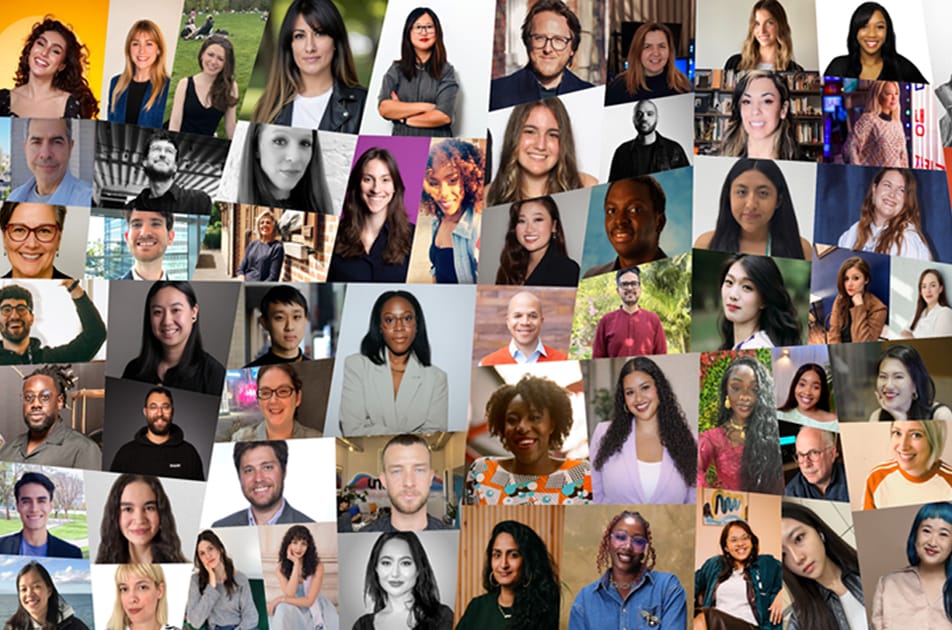
C: "One of the things that makes it great that it's virtual is that it's fully inclusive. It's also free. We've had 10,000 registrations for the conference over the course of six years, from like 90 countries. My speakers are mostly minorities in gender and race, my attendees are, my hackathon participants are. I just might be the most diverse music conference in the entire world. And it's all because it's free and on the internet."
I always complain that for all the conferences that cost money — of which there are plenty — what happens is that industry corporations just send their senior executives, which are basically all white men. And they're also the ones making all the money, and who don't need a free ticket to a conference. It's all about who gets 'let in' to the music industry, and I'm trying to expand that community."
H: This was the 6th annual conference you’ve held. One of the big takeaways this year was that "Data is the missing link between artists and their success." Can you talk a bit about what that means?
C: "I did my MBA in Marketing, and have an MA in Data Science. Back in 2017, people were asking 'what do those things have to do with each other?' People understood that streaming data was out there, but how it worked in tandem with ticket sales, merch sales, social media, and understanding your audience, was all still a mystery. Today, data can help make up all the pieces of an artist's career, but third parties are always coming in between, and keeping it to themselves."
Platforms like Apple Music and Spotify — and of course Ticketmaster — saw the inherent value in data really early, and have made it impossible for artists to get access to individual fan contacts and data. Artists essentially are licensing their own fans from these platforms."
On the other side, this also means from a tech standpoint that nobody talks to each other. An artist's data and metrics live across all these different platforms it's essentially impossible to build a complete fan picture."
"I just think pretty soon people are going to get off the grid, and make these exclusive, non-digital, you-had-to-be-there things happen more and more, and build community around that."
H: We've been talking a lot about digital engagement, but one of the other notions to come out of this year's conference was the idea of “IRL” still being so important for artist development. What can artists do to push their IRL engagement with fans?
C: "I’m so excited about IRL. Let me tell you, IRL would be like the space that I’m like want to put money into. Honestly, I think everyone is going to revolt from AI at some point very soon. Because before if you saw things on video, you could believe it was a real documentation of something that happened in real life. Now everything is fake, every video is manipulable, it's all AI. Nobody can believe anything."
So I just think pretty soon people are going to get off the grid, and make these exclusive, non-digital, you-had-to-be-there things happen more and more, and build community around that."
H: I’ve been thinking about this so much lately. There’s like an interesting dissonance between everything online being participatory (ie: remix your favorite songs, TikTok dances) — fans wanting to have active relationships with the music they consume — and people getting fed up with what the algorithm thinks we want. In a weird way, the entropy of this moment can't not bring people offline.
C: "It helps facilitate the offline. I think curation is really special, and that will never go away, especially in the democratization of tech and access. But I do worry about curation leading back into gatekeeping, essentially. I think the consequence of curation and IRL is going to take us back to exclusivity and gatekeeping, right? So figuring out that balance, what that looks like, is going to be really important to make sure that it doesn’t become like toxic."
Another area I’m really excited about that actually intersects with this is 'artist likeness.' The best example would be ABBA Voyage. The idea of artists not having to be present in order to continue to engage their fan bases, we've seen how this can also be helpful for artists' mental health, beyond it being a new revenue stream. Fandom can go so many ways right now."
"I told Michelle [Obama] I was moving to London, and then she goes, 'Look at us Black girls traveling the world.'"
H: What are some other ways artists can leverage the tools available to them right now to build a sustainable career in music, and what are those tools exactly?
C: "I wish I had like really cool sexy answers to this, but I think the best answer is just the most boring one. Literally, get a CRM. It doesn't matter which, there are plenty of great options. But just get a place where you can collect the email addresses and the phone numbers of your fans all in one organized space, whether that's at shows or a sign-up form link-in-bio. Then you're never beholden to a middleman's algorithm to communicate with your fans."
Secondly, you need to make it easy and clear for people to give you money. Merch, subscription/Patreon revenue, direct ticket sales from online or in-person events, even just a Venmo link. Those are the two big ones that I think are like the lowest hanging fruit that like early early stage artists aren’t doing enough and even like some like later stage artists aren’t doing nearly enough, basically."
H: Now, you MUST tell me about the time you met Michelle Obama!
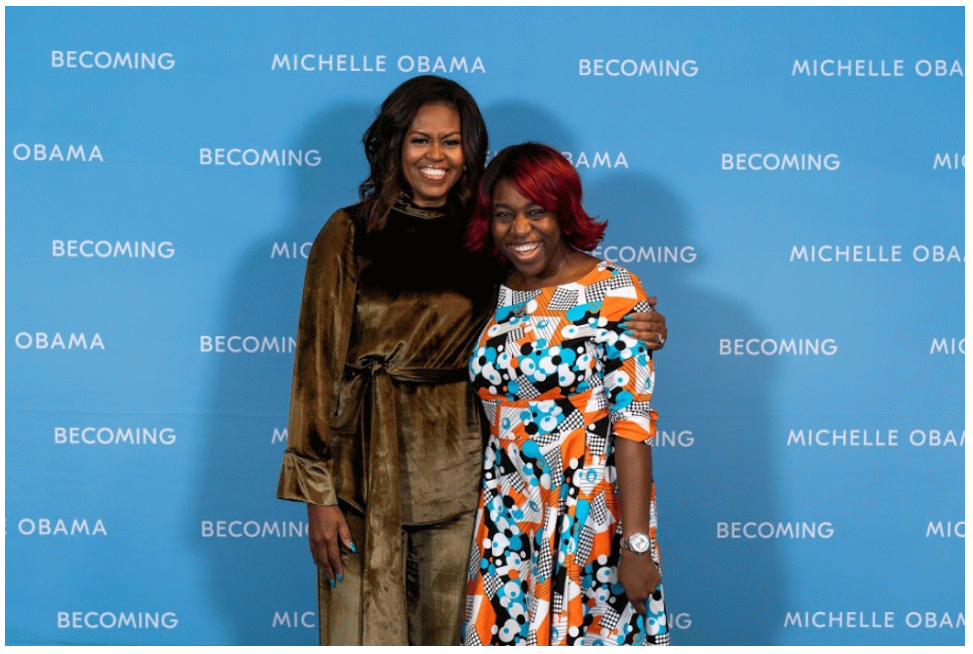
C: "Oh my! So basically, when I was at Universal, we had these big Christmas parties and end of year giveaways. I won for Rookie of the Year. Cool, whatever. But there was a cash prize, and it was right around when tickets for Michelle Obama’s book tour went on sale. I would've gone no matter what, but there was an add-on cost for the 'Meet and Greet' with Michelle. I took the money I won from the Warner giveaway and bought that ticket."
I remember every moment of that day."
She greeted me by name. 'Hi Christine,' she said, and I’m like, 'Hi Michelle!' I told her I was American, and she said, 'I can tell. I’m from Chicago.' I’m like, 'I know!' Haha. This was when I was still in Stockholm, but I told Michelle I was moving to London, and then she goes, 'Look at us Black girls traveling the world.'"
Oh my God!"
H: Speaking about being in the presence of stars, what was the best concert you saw recently?
C: "This is going to sound like a major flex, but I went to the Brit Awards recently, and Rosalía put on the performance of a lifetime. Oh my God! When Björk came out, I remember just literally saying: 'Holy shit.' The person in front of me turned around and was like, 'Right?' We were all just flabbergasted at the performance we had just watched, I did not stop talking about it for probably two weeks. I told every single person to watch this video."
H: Last question: Maryland crab or London fish n' chips?
C: "Honestly, apologies to Baltimore, I actually don’t like crabs, which is like as controversial a statement as a person from Baltimore can make."
H: Fish n' chips it is I guess!