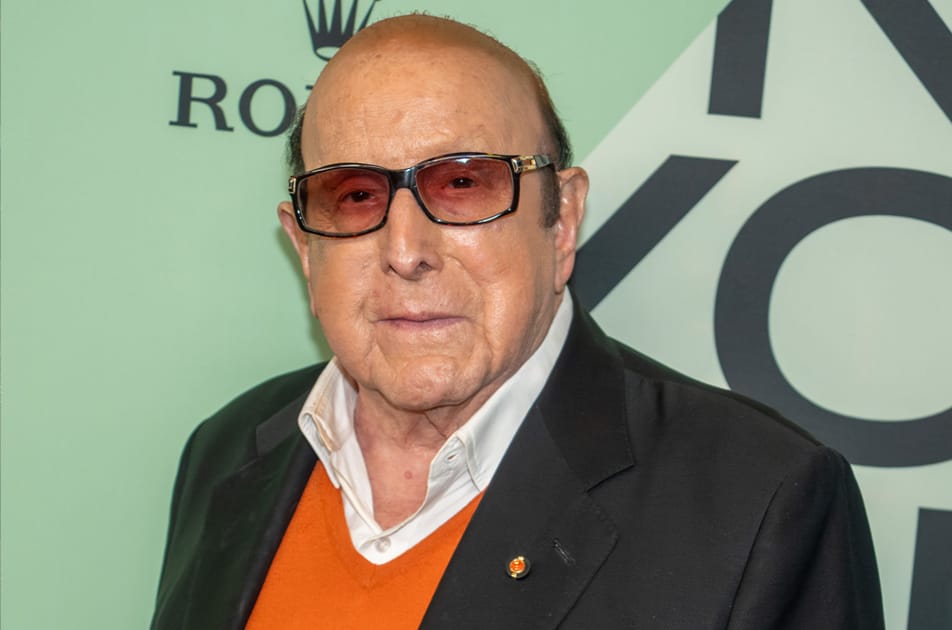


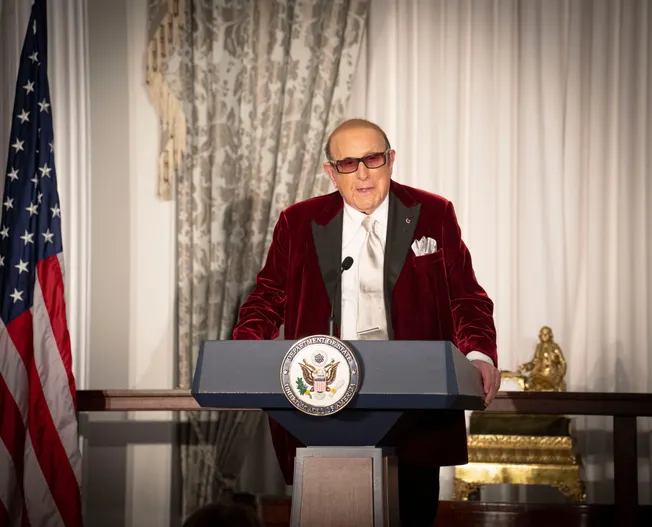
The music industry lost one of its most influential figures today with the passing of Clive Davis at age 94.
Over a career spanning more than six decades, Davis helped launch and guide the careers of countless artists, including Bruce Springsteen, Whitney Houston, Santana, Aerosmith, Alicia Keys, Barry Manilow, Patti Smith, and many more. Most tributes will rightly focus on his legendary A&R instincts and extraordinary track record of discovering talent.
But looking back on Davis' career through a live music lens reveals something equally remarkable.
Again and again, Davis didn't simply identify artists capable of making hit records. He recognized artists capable of creating unforgettable moments on stage. From festival breakthroughs to arena-rock institutions, many of the performers who defined modern live music found an early champion in Clive Davis.
He Watched Janis Joplin Change History at Monterey Pop
One of the most famous stories in Davis' career began not in an office, but at a music festival.
In 1967, Davis attended the Monterey International Pop Festival, an event that would become one of the most important gatherings in rock history. Among the many breakout performances that weekend was a stunning set from Big Brother and the Holding Company, fronted by a then-relatively unknown singer named Janis Joplin.
Like countless others in attendance, Davis was captivated. The performance instantly established Joplin as one of the most electrifying voices of her generation. Shortly afterward, Columbia Records signed the band, helping transform a festival sensation into a national phenomenon.
It's a perfect example of what separated Davis from many of his contemporaries. He wasn't simply evaluating songs or sales potential. He was evaluating impact. He innately understood that a great live performance could reveal something about an artist that no demo tape ever could.
More than half a century later, Joplin's Monterey appearance remains one of the defining performances of the 1960s — and one of the clearest examples of Davis recognizing history while it was happening.
He Championed Artists Whose Legends Lived On Stage
A fascinating pattern emerges when you look at the artists most associated with Davis. Many weren't merely successful recording artists. They became live music institutions.
Bruce Springsteen is perhaps the clearest example. Signed by Davis to Columbia Records in 1972, Springsteen would spend decades building a reputation as one of the greatest live performers in rock history. Long before he became a household name, stories about marathon concerts and emotionally charged performances helped fuel his growing legend.
Santana followed a similar path. While the band's breakthrough performance at Woodstock introduced them to the world, Davis became one of the key executives supporting their rise. Their fusion of rock, jazz, blues, and Latin influences was powerful on record, but it was on stage where the band's reputation truly flourished.
The same can be said for Aerosmith. Across multiple eras and reinventions, the band maintained its place as one of rock's most formidable touring acts. Davis understood not only the value of a great catalog, but the staying power of artists who could consistently connect with audiences in person.
Again and again, Davis gravitated toward performers whose careers became larger than their recordings.
The Voice Wasn't Enough. The Performance Mattered Too.
Whitney Houston's discovery has become one of the defining stories of Davis' career. Most accounts focus on the obvious: one of the greatest voices ever recorded. But Davis recognized something beyond technical ability. Houston possessed the rare ability to command a room.
Whether performing in intimate venues early in her career or on the world's biggest stages later on, she delivered performances that transcended the recordings fans already knew by heart. Her unforgettable rendition of "The Star-Spangled Banner" at Super Bowl XXV remains one of the most celebrated Super Bowl performances in modern American history.
Years later, Davis would help introduce Alicia Keys to the world, another artist whose musicianship and stage presence became central to her success. At a time when pop music was increasingly driven by production and image, Keys stood out because she could sit at a piano and hold an audience's attention through pure performance.
The pattern repeated itself once again: Davis wasn't merely investing in songs. He was investing in artists who could connect.
The Executive Behind Generations of Concert Memories
If you trace some of the most memorable concert moments of the past sixty years — from Monterey Pop and Woodstock to arena-rock's golden age and the rise of modern pop — you'll often find Clive Davis somewhere in the background. Not on stage, not in the spotlight, but helping create the conditions that allowed those moments to happen.
Millions of fans who bought tickets, packed into clubs, stood in festival fields, or watched legendary performances unfold may never have known his name. Yet many of those experiences were shaped by his ability to recognize something extraordinary before the rest of the world did.
For all the gold records, Hall of Fame honors, and industry accolades attached to his name, Clive Davis' greatest legacy may be the countless live music memories created by artists he believed in first.