____________________________
Guest post from Soundfly's FlypaperDiggers Factory is an online vinyl pre-order and production service built like a crowdfunding platform and with an international network of digital “crate-diggers” to back it up. Founder Alexis Castiel actually calls it “a community platform,” as it offers fans and professionals a chance to work together to make exciting projects come to life. Their mission is to help artists never waste another penny on costly vinyl production. Castiel took a minute recently to tell us about how the idea for this company came about, how they’re strategically working to get partners in place for all kinds of labels and artists so they don’t need to do that work themselves, and a little bit about Serge Gainsbourg, too!Were there any early endorsers to Diggers Factory who helped spread the word?When we were just getting started, we worked with American artists like the Flashbulband French hip-hop producer Kacem Wapalek. We also reissued the debut album by French house producer Bob Sinclar, Paradise, released in 1995 on Yellow Productions, and we teamed-up with labels such as Tru Thoughts and Einmusika Recordings.Can you briefly explain Diggers Factory’s mission and the essential problem you’re looking to solve in the industry?Basically, our mission is to create a community where artists, fans, and professionals work together to produce or repress vinyl records. The principle is actually quite simple: We offer a turnkey solution (production, mastering, logistics, graphic design) to edit or reissue music on vinyl. All the artists or labels need to do is gather enough pre-orders to fund and launch production.That means no initial investment is needed, there’s no financial risk, no obligation (they can use their own partners), and artists and label keep 100% control over their intellectual property!The idea behind this concept is to provide an end-to-end management of the production chain that will allow artists to focus on creating their music and that will also facilitate their label’s work by sparing them a lot of hassle, stress and risky investment. Vinyl manufacturing is, indeed, expensive and requires great expertise. (I wouldn’t advise anyone to try and produce vinyl records without knowing a thing about it!)It is also really hard to predict demand ahead of production. Artists often end up either disappointing their fans because they didn’t produce enough records or find themselves in a difficult situation because they invested a lot in the production, don’t sell enough records, and end up with [a] large stock of records to manage.
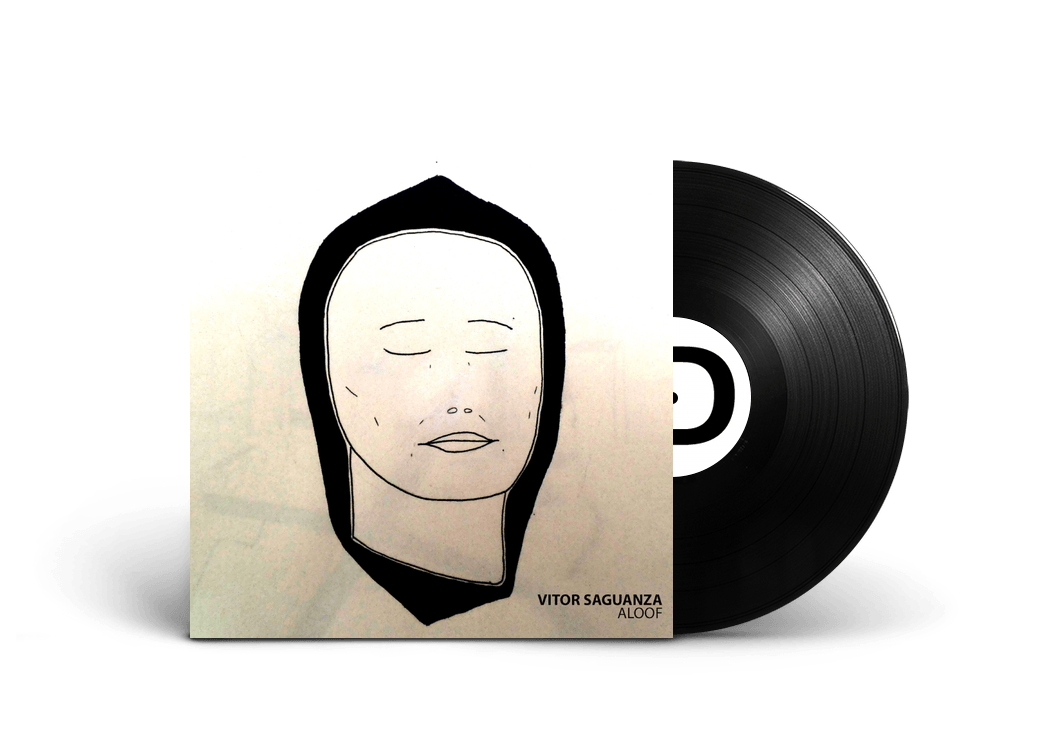
Vitor Saguanza‘s EP, Aloof, produced in partnership with Diggers Factory.
The model seems to take inspiration from crowdfunding platforms like Kickstarter. Is this correct?We took inspiration from the concept of crowdfunding indeed. We realized that, in many ways, the best way to help artists fund their projects was to call out their community. Today, fans like to get involved in the music they love, and they want to actively support artists. Musical projects count for 10 to 20% of all crowdfunding projects in France. In the United States, 20% of the Kickstarter projects that reach their objective are musical projects.But there’s a number of ways that Diggers Factory distances itself from the classical crowdfunding model. Unlike these platforms, we don’t let people decide on the amount of their contribution. They pay for the record at the price set by the artist to cover the production costs and everyone will get the same reward: the record. However, fans can decide to make a donation when [they] buy the record in order to give extra support to the artist.Besides the inspiration from crowdfunding, there’s also a very social aspect to the business and its community. Yes, Diggers Factory can also be seen as a kind of social network. That’s why we like to say that it is a community platform rather than a crowdfunding platform. We aim to create a digital community of “diggers,” where people come to discover new releases, get to know each other, and exchange conversation about music, share their tastes and their musical treasures.And professionals are also part of this vinyl lovers community. We offer a lot of services for artists and labels; we work with six different factories, 10 mastering studios, dozens of records shops around the world. And we’re here to find each artist the best partners they can work with without any obligation. When you create your account on Diggers Factory, you can either register as a Digger, an Artist, a Label, or a Distributor/Record Shop, and soon, it will be possible to register as a Mastering Studio and Pressing Plant.The idea is really to bring all artists, fans, and professionals to one place to produce and release vinyl records.
A Diggers Factory block party in Paris.
What was the inspiration behind creating this company?I’ve always been a vinyl lover. The entire time I spent digging through crates or discovering new music through online channels, I kept thinking the same things:- Small labels and emerging artists simply can’t afford to release music on vinyl. And that’s a real shame because I really enjoy purchasing and possessing the music I listen to rather than streaming it and contributing next to nothing to the artists.
- Secondly, there are hundreds of records I would love to have in my collection but that are nearly impossible to find anywhere locally or online, save for platforms like Discogs. But it’s tough to find rare records in good condition that are also affordable.
- Lastly, in frequenting records shops and spending time on communities like Discogs, I realized just how enormous the community of vinyl lovers is and that it’s actually growing despite everyone thinking the vinyl was dead all those years.
 In what ways has the platform grown since it launched?In the first year after the birth of the platform, a total of 10 projects succeeded. So far, in 2017, we’ve already produced over 20 projects to completion with more coming in every week. We’re seeing growth internationally this year as well, whereas in the first year, our community was predominantly French.Some of the stuff we’re working on these days (that I can speak of publicly!) is: a massive hip-hop compilation collected by the French producer Kyo Itachi; the first vinyl release of trance producers Hilight Tribe; a new release by the Berlin techno label Get Physical Music; two re-pressings with Rhythm Bomb; and many more.Earlier this year, we launched a collection with the INA (the National Audiovisual Institute of France), entitled 33 Tours avec l’INA. This collection includes three projects from singers Ray Charles, Serge Gainsbourg, and Dalida. All three projects saw a successful pre-order run, and we’ve just launched the production of 500 copies for each project!Can you talk more about the partnership with the INA? What is this organization and what do they mean to you?So, the Institute has collected and kept enormous records of French radio and television broadcast archives since since the 1960s. These archives are available online and are viewed and listened by people of all ages and walks of life every single day. The archives are currently only available online, and the majority of this collection remains unexplored.As you can imagine, this collection contains many treasures, so we approached them with a proposal to release certain works in a limited edition, and expand the reach of this organization to collectors and listeners everywhere. They loved the idea and chose three cultural icons of which they happened to have exceptional archival recordings.
+ Read more on Flypaper: “How to Properly Maintain Your Vinyl”
The Ray Charles project is called Au Palais des Sports-Live and was recorded in 1961 during his first European tour! The Serge Gainsbourg project, Premiers Tubes-Live, is composed of two live-on-radio sets recorded in 1961 and 1962 and contains an exclusive interview with Juliette Gréco, another French icon from that period. And thirdly, Premières Scènes-Live is a recording of Dalida’s first appearances on stage at the renowned Olympia in 1961 and on the radio show Discoparade in 1962.In case you’re interested, you can still pre-order these albums through our site.What do you think about the claim that artists today need to be more entrepreneurial and less focused on their craft in a vacuum?That’s a tough question! I don’t think that artists necessarily need to be more entrepreneurial. But it is a question of perspective. Some artists make their art for the love of it before thinking about how they are going to sell it. But a work of art is work and all work deserves to be rewarded! I want to help artists who would like to sell their music but just don’t know how to it or who can’t even conceive of the process. In 2013, I started listening to a band called Groovanova and wanted to buy their records. I was heartbroken to find out they had none because they didn’t know how to do it, who to work with, or whether their albums would sell. Three years later, Diggers Factory was born, and Groovanova was the first band to produce an EP through our service!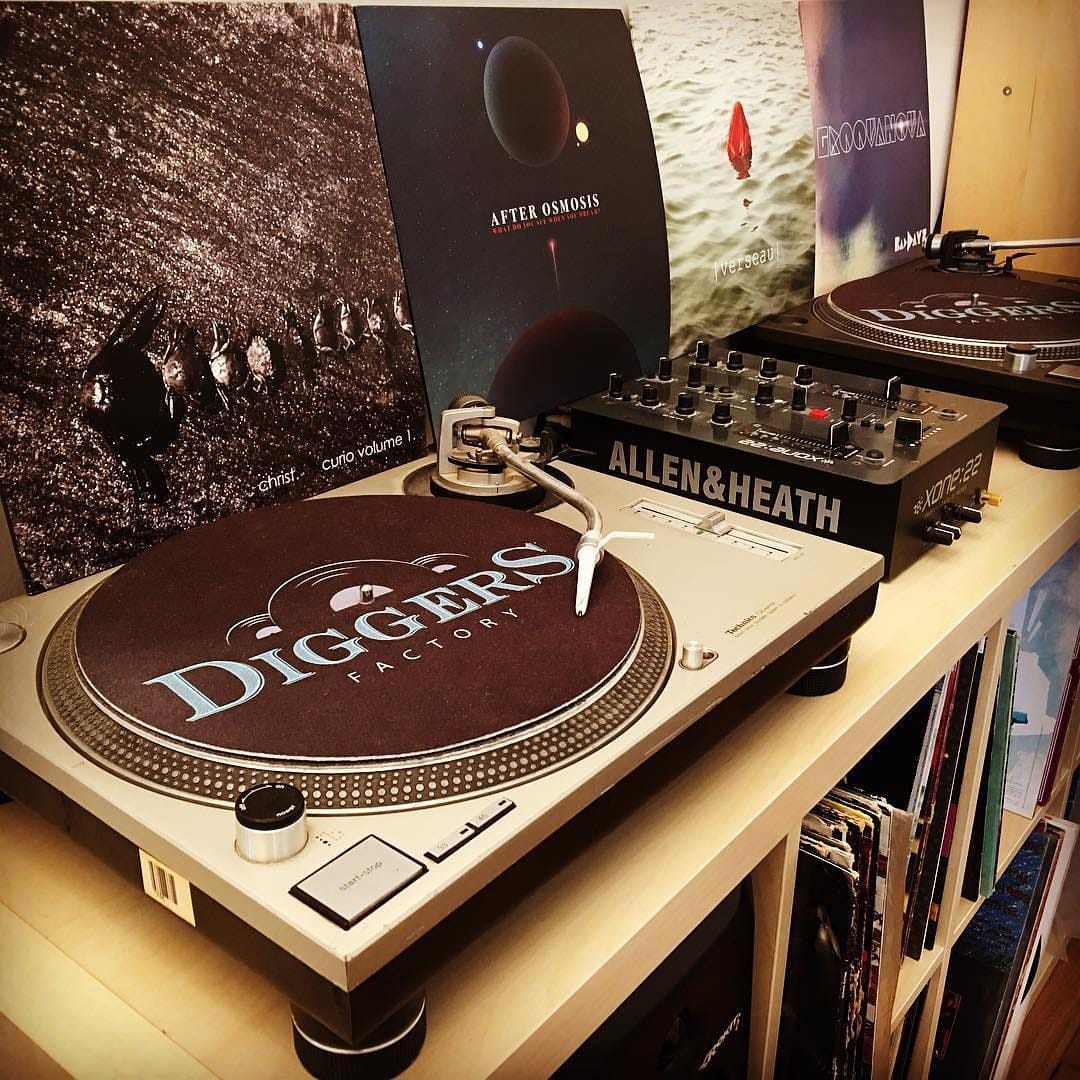 How did your networks in Europe, and the music scene, help to kick start this company? We actually started from scratch! Victor and I are both music and vinyl lovers, but we always lived our passion in our private spheres. We had never worked in the music industry before and didn’t have many contacts in the music scene, to be honest. We had to build our own relations [and] convince and prove to some already well-established labels and institutions that our solution might interest them!How would you describe your corporate culture?We are all involved with music in different ways — some of us play the piano, the flute, the bass guitar, drums, one is DJ in his spare time, one is a label manager. And some of the staff here do not play instruments themselves but have strong, deep connections with music. Above all else, we are all real diggers. Every member of our staff owns at least one turntable and spends a lot of their time digging through crates!If you’re interested in hearing more about pioneering new music initiatives, check out the full Entrepreneurship in Music series.+ Learn more on Soundfly: Get all the best practices and strategies for running a successful crowdfunding campaign, plus mentor support from former Kickstarter staff, in our course Crowdfunding for Musicians. Use code FLYPAPERSENTME for $100 off the next Mainstage session, starting September 6!