


The AI debate in music is no longer theoretical. It’s operational.
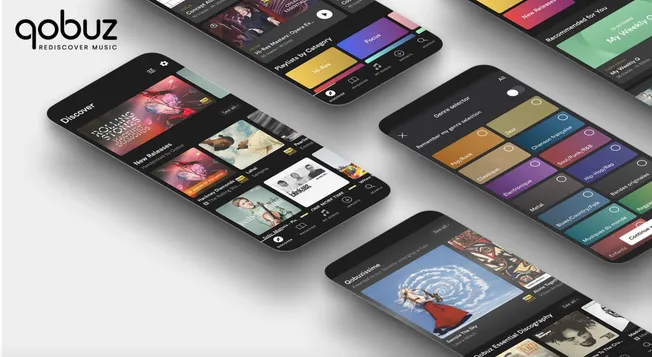
This week, Qobuz announced that it has begun deploying a proprietary AI detection system designed to identify and tag 100% AI-generated tracks across both new uploads and its existing catalog. The move follows the publication of its AI Charter and marks a clear stance: human-made music will be prioritized, labeled transparently, and editorially protected.
Qobuz is not acting in isolation. It’s joining a growing wave of platforms, distributors, and rights organizations that are building AI-detection tools directly into the infrastructure of digital music.
Some of whom are:
- Deezer: One of the earliest streaming platforms to publicly deploy AI detection tools at scale, reporting that thousands of AI-generated tracks are uploaded daily. Deezer has built internal fingerprinting systems to identify synthetic audio and flag it before monetization.
- YouTube: Through its Content ID ecosystem, YouTube is actively developing detection and identification systems to distinguish AI-generated works and address voice cloning issues — especially after high-profile synthetic tracks mimicking major artists went viral.
- SoundCloud: While more open to AI-assisted creation, SoundCloud updated its terms to clarify how AI training data can and cannot be used, and has invested in moderation systems to combat impersonation and fraudulent uploads.
- Spotify: Though less publicly aggressive about AI labeling, Spotify has increased its anti-fraud detection systems after surges in bot-driven AI ambient uploads flooded the platform’s royalty pool.
- Universal Music Group: On the rights-holder side, UMG has pushed aggressively for AI safeguards, pressuring platforms to remove unauthorized AI clones and advocating for stronger detection frameworks.
And the timing couldn’t be more critical. The scale of the issue is staggering.
According to a 2024 study by CISAC, music creators could lose up to €10 billion over five years due to AI-generated content siphoning value from the ecosystem. At the same time, generative AI companies are projected to generate billions annually from unlicensed use of copyrighted works.
+Read more: "The Future of Music Production Is Human: 1,100 Producers Weigh In on AI"
But beyond revenue, there are three existential risks at play.
1. Hyperinflation of Supply
AI tools can generate thousands of tracks per day. When that volume hits open distribution systems, it overwhelms discovery surfaces, search results, and recommendation engines.
If platforms don’t distinguish between human and synthetic works, volume wins. Tagging systems such as these are a structural response to that flood, and thankfully they currently work pretty well. What future evolutions may occur is another story.
2. Royalty Dilution
Most streaming platforms operate on pro-rata royalty pools. That means if AI-generated ambient tracks, “fake artists,” or bot-amplified uploads rack up streams, they siphon revenue from real human artists, which feels wrong.
Fraudulent or synthetic streaming creates noise in the space, but it also directly redistributes income. The popular model of excluding fraudulent streams from reports and royalty calculations reinforces the commonly held principle that human creators shouldn’t ourselves be subsidizing industrial AI output.
3. Trust and Transparency
Music discovery is built on trust. Listeners trust that what they’re hearing is authentic, and generated based on the data-driven tastes and behaviors they've signed on to allow platforms to access.
Artists trust that this system distributes value, and track recommendations fairly. Platforms depend on that mutual confidence. When AI impersonation, voice cloning, and mass-generated “filler” tracks enter the system without labeling, trust erodes fast.

+Read more: "OpEd: Why I Built a Tool to Stop AI From Scraping Musicians’ Songs"
The Human Curation Counterweight
Back to Qobuz, one of the platform's strongest differentiators is its commitment to 100% human-led editorial curation. This works for everyone. Listeners don't need scale, or volume, they need an informed "buddy," a helping hand, to help them discover their next favorite track.
Algorithms trained on engagement metrics often reward quantity, repeatability, and passive listening environments. AI-generated instrumental tracks are optimized precisely for those conditions. Human curators, by contrast, evaluate artistry, context, narrative, and cultural impact — variables that resist automation.
Qobuz is effectively saying: the future of music discovery shouldn’t be determined solely by which content can be produced fastest or cheapest.
Drawing a Cultural Line in the Sand
This moment isn’t about rejecting AI outright. Many artists are already integrating AI into their creative workflows — for ideation, production assistance, or sound design. The real debate that's shaping how money is routed and mass listener behavior is changing is around authorship, consent, compensation, and transparency.
At the current moment, Qobuz' philosophical statement is also its existential gamble: AI can exist on the platform, but it must be labeled, it must not impersonate nor dilute human compensation, and it will not quietly replace editorial judgment.
The music industry has always evolved alongside technology — from sampling to digital distribution to streaming. Each wave created both opportunity and disruption; however, generative AI is different because it scales creativity itself.
When creativity scales infinitely, value risks collapsing — unless systems are built to protect authorship and scarcity. By building AI detection directly into its catalog infrastructure, Qobuz and others are betting that long-term sustainability depends on preserving the economic and cultural value of human creation.
Founded in 2007 and a pioneer of high-quality sound, Qobuz is the French music streaming and download platform for those who want to live and share their passion for music. Available in 26 countries across Europe, the United States, Canada, Australia, New Zealand, Latin America, and Japan, Qobuz is aimed at all those seeking an authentic and fulfilling musical experience. With more than 100 million tracks in lossless quality – CD, Hi-Res (24-bit/up to 192 kHz), DXD, and DSD – Qobuz offers the richest Hi-Res catalog on the market, recognized by the world’s leading hi-fi brands.