

"Real change happens through consistent action — who we hire, who we promote, who we invest in, and whose work we choose to champion."
Across the music industry, the people shaping the technology behind the scenes — producers, engineers, beat makers, and developers — still skew overwhelmingly male. That imbalance has been well documented for years, but a handful of organizations around the world are working to change it.
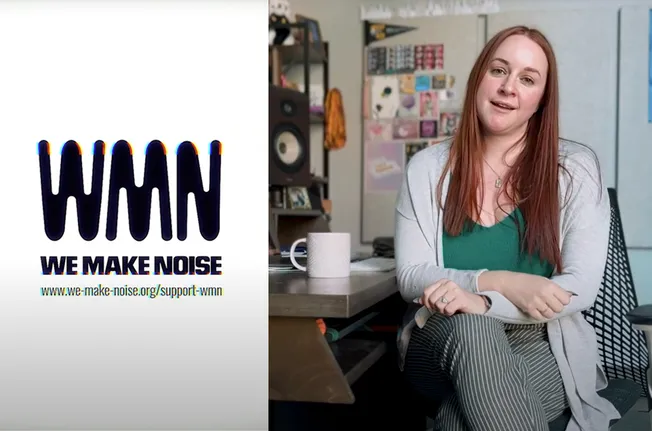
One such organization is We Make Noise, a nonprofit focused on expanding access to music technology and production for women and gender-expansive creators.
Founded in 2013 by educator and producer Erin Barra, We Make Noise began as a small initiative to teach beat making and production skills to women and girls. Today it has evolved into a global nonprofit network that blends music creation, education, and community building with a mission to advance gender equity across the music and audio industries.
They do this by:
1) Inclusive access to music technology.
The organization’s stated mission is to “harness the power of music and technology to advance global gender equity,” equipping participants with the tools, training, and professional networks they need to thrive in the industry. By teaching technical skills like production, sound design, and engineering (and pairing those skills with mentorship and career pathways), We Make Noise aims to change who gets to participate in shaping the sound of modern music.
2) A global network of chapters and programs
Over the past decade, the organization has expanded from a single educational initiative into an international network. We Make Noise now operates dozens of chapters across multiple continents, each hosting local workshops, events, and training programs tailored to their community. Some are volunteer-led student groups, while others operate in major music hubs with more formal programming, all united by a shared commitment to education, collaboration, and expanding access to creative technology.
3) Creative programs that connect artists and producers
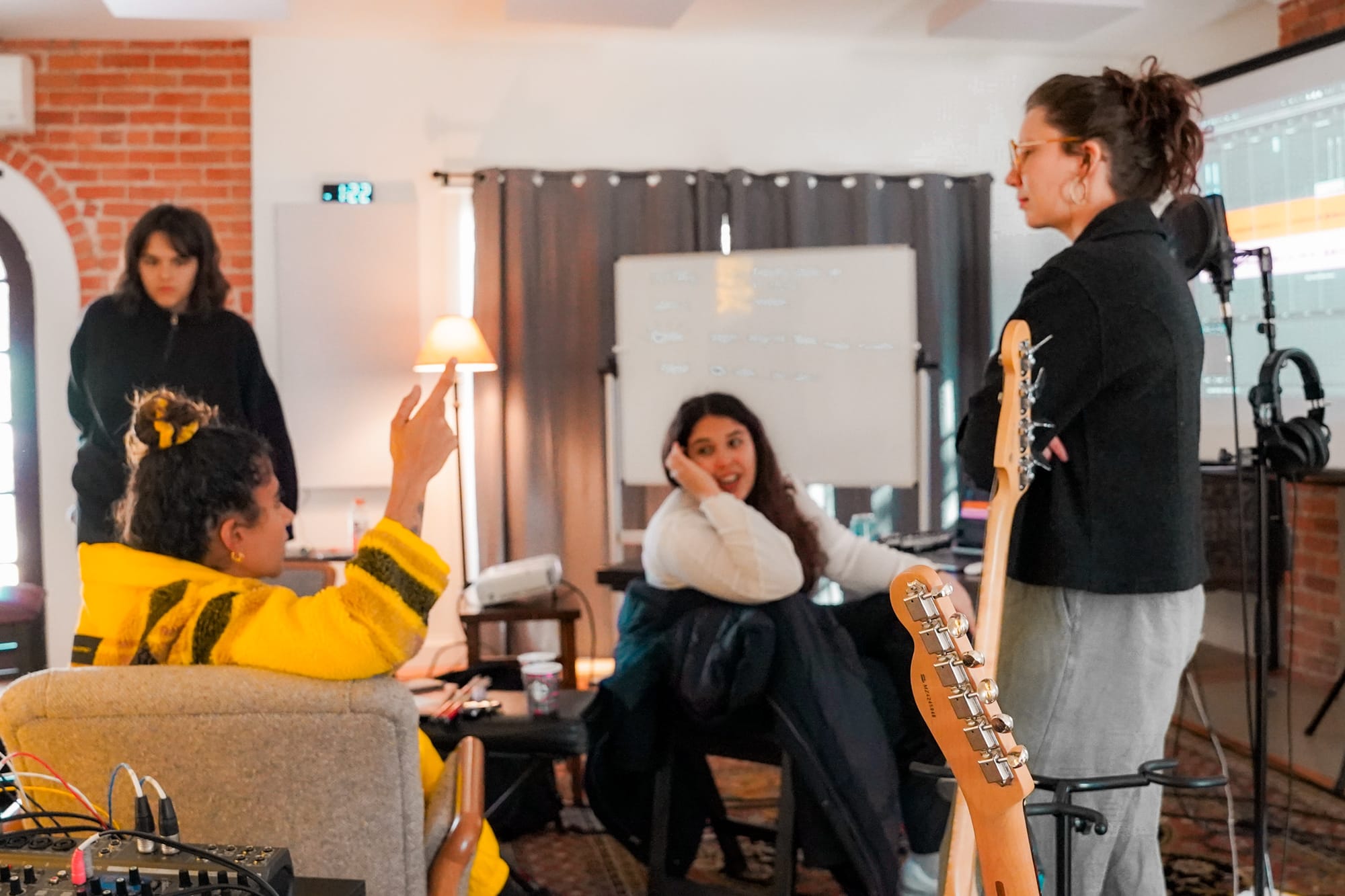
One of the most notable programs is the WMN Sessions, a series of songwriting and production retreats that bring together women and gender-expansive writers and producers to collaborate with established artists. These multi-day camps provide a space to create original music, build professional relationships, and gain credits on real releases. Featured participants have included Kimbra, Agnez Mo, and Madame Gandhi. In addition, the digital We Make Noise Hub offers an online platform for education, mentorship, and community support, often in partnership with industry tools and companies such as Ableton, Splice, and BandLab.
This International Women's Month, WMN is celebrating — and pushing their mission forward — with a series of new music releases distributed by EMPIRE. These include “Feels So Good,” the newest single from WMN Founder and Executive Director Erin Barra, from Barra’s forthcoming EP Exponent.
“For me, this release is the moment I finally gather and fully accept every version of myself I’ve been across these decades,” says Barra. “It feels like coming home and moving forward at the same time.”
WMN's releases continue later this month with the full-length, 20-artist global compilation album, We Make Noise Vol. 1 – featuring women and gender-expansive artists from the We Make Noise community, such as: Andrea Rocatti, Mary Akpa and Solreia.
Amidst all this impact, we quickly caught up with Erin Barra to talk about this moment.
Hypebot: Hi Erin! What does "impact" mean to you?
Erin: "To me, impact means making a meaningful difference in someone’s life or career. Sometimes that impact is tangible and measurable — whether someone earns a credit, lands a job, or gains a new opportunity. But often, the deepest impact is less visible: it’s in how someone sees themselves."
Much of our work is about helping people feel that they belong in the rooms where decisions are made and in the conversations where opportunities begin. Because of that, we define impact in two ways: through external markers of success, and through the internal confidence, sense of belonging, and capacity that allow someone to show up fully and thrive."
H: What can anyone (everyone) across the industry do to empower and lift women up in this space?
E: "First and foremost, when you have an opportunity to hire, collaborate, or bring someone into the room, make a conscious effort to consider people beyond the usual default — especially women and other gender-expansive creators. Representation grows when opportunity is shared intentionally."
Just as importantly, help shift the narrative by amplifying the work already happening: flood the timeline with music, stories, and content that highlights women and gender minorities in the field. Show up to events featuring their work, share and celebrate music made by women, and support organizations whose mission is to create greater equity and access."
Real change happens through consistent action — who we hire, who we promote, who we invest in, and whose work we choose to champion."
H: What does the future look like with more women behind the decks and desks of the industry?
E: "I often think about this through the lens of women in medicine. In the 1950s, there were very few female doctors; today, women make up more than half of all medical students. That kind of cultural and structural change did not happen overnight; it took decades of sustained effort, visibility, and persistence."
I believe the music industry is earlier in a similar arc, perhaps only about a decade into that long-term shift. If we continue to push forward with intention and refuse complacency, I’m hopeful that in another 10-20 years, this inequity will no longer define the landscape as it does today."
Erin Barra is a multifaceted leader at the intersection of music, technology, education, and equity. She serves as the Director of the Popular Music Program at Arizona State University and the Executive Director of We Make Noise, a global nonprofit advancing gender equity in music and tech. She is also a course developer for Berklee Online and a former Associate Professor at the Berklee College of Music.