


The FBI issued a stark warning: cybercriminals and scammers are increasingly targeting musicians, industry professionals and fans, and the financial consequences are staggering.
According to a recent report from the FBI’s Internet Crime Complaint Center (IC3), the music industry saw a significant surge in criminal activity between early 2024 and late 2025.
“A review of complaints submitted, along with our pending investigations, has identified clear trends in the tactics criminals are using to target employees in the music industry and fans alike,” said Terence G. Reilly, special agent in charge of the FBI Nashville Division. “We urge everyone to pause before taking action and to be wary of high-pressure tactics used by scammers.”
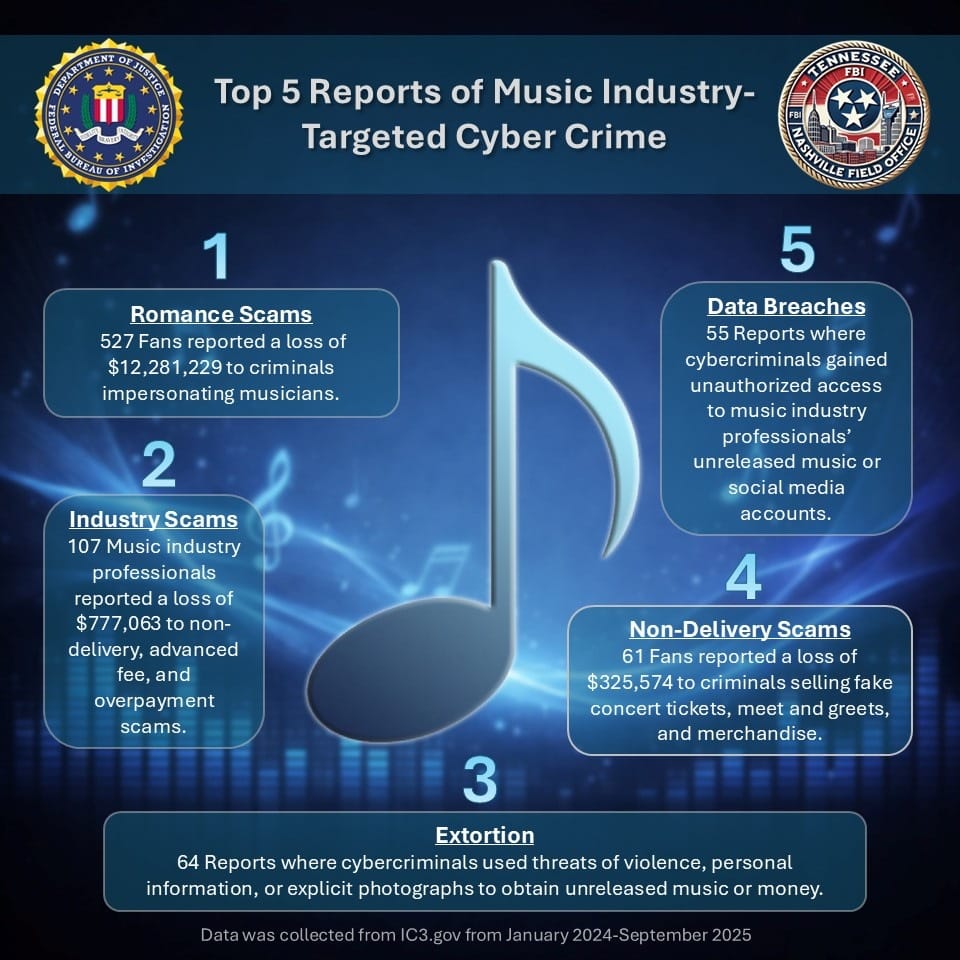
Key Cyber Crime Threats to the Music Industry
Here’s a breakdown of the primary threats facing musicians and the industry and how to protect yourself and your music.
- Extortion and Data Breaches: Cybercriminals are gaining unauthorized access to the social media accounts and personal devices of artists, managers, and producers. Once inside, they steal unreleased music or private information and demand payment under the threat of leaking the content.
- AI and Streaming Fraud: Scammers are using AI-generated songs and automated bot networks to manipulate streaming numbers, unlawfully siphoning royalty payments away from legitimate artists.
- Romance Scams: Criminals are impersonating famous performing artists to build trust with fans—particularly those over age 60—eventually defrauding them of millions of dollars.
- Intellectual Property Theft: The FBI identified cases where former employees or associates illegally copied unreleased music to sell it online for personal gain.
- Business Opportunity Scams: Industry professionals reported being contacted for fake record label contracts, collaborations, or promotional opportunities designed to steal sensitive data or "advance fees."
How to Protect Your Music and Music Business
To safeguard your intellectual property and financial assets, the FBI recommends several critical steps:
- Use Multi-Factor Authentication (MFA): Implement phishing-resistant MFA on all accounts, especially webmail, VPNs, and social media profiles.
- Audit Your Password Hygiene: Use a unique, strong passphrase for every account. Reusing passwords across platforms makes it easy for a single breach to compromise your entire digital presence.
- Verify Every Request: Scrutinize email addresses and URLs. Scammers often use slight misspellings of legitimate industry names (e.g.,
artistname@labell-records.com) to trick you into clicking malicious links. - Secure Your Hardware: Keep all software and operating systems up to date and avoid conducting sensitive business (like transferring funds or uploading masters) over public Wi-Fi without a VPN.
- Be Skeptical of High Pressure: Scammers often use a sense of urgency to bypass your better judgment. Pause and verify the identity of the person you are communicating with through a secondary, known channel.
Hypebot's Bottom Line: What to Do if You’re Targeted
If you believe you have been a victim of cybercrime or encountered suspicious activity, report it immediately to the FBI’s Internet Crime Complaint Center at www.ic3.gov.
Providing detailed information—including email headers, transaction dates, and communication logs—is vital to helping law enforcement track and stop these criminals.
In an industry built on digital collaboration and connection, staying vigilant is your best defense. Stay safe out there.