

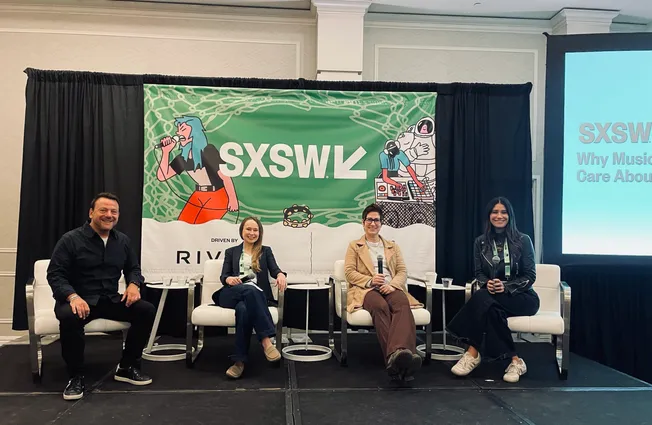
At SXSW 2026, the panel "Why Music Platforms Care About Live Music" made one thing clear: live music is no longer separate from streaming — it’s central to it.
For years, recorded music and live touring operated in parallel. That’s changing fast.
Executives Fabrice Sergent of Bandsintown, Abbie Riley of Spotify, Jamie Loeb of Nederlander Concert, and Ali Rivera from YouTube shared how streamers now see themselves as part of a continuous fan journey — from discovery to fandom to ticket purchase.
That transition has been rapid and is revolutionizing how artists grow monetizable fanbases and sell out shows.
"Integrating tour data across platforms has expanded potential reach from roughly 100 million to 4 billion users in just a few years," shared Sargent. Bandsintown is the exclusive or a primary concert information provider for YouTube, YouTube Music, Spotify, Google, Shazam, Apple, Bing and others.
For artists, that means publishing tour dates once now triggers distribution across multiple major platforms simultaneously.
Streaming Is Becoming A Ticket Sales Engine
Live events represent one of the clearest paths to turning listening into revenue.
Spotify's Abbie Riley shared that 40% of artists on its platform saw at least a 10% revenue increase tied to improved concert discovery, with $1.5 billion in ticket sales driven through the platform.
That shift reflects a bigger strategy: turning passive listening and video viewing into real-world action. Fans don’t just want to stream music — they want to experience it live, and more platforms are actively facilitating that transition.
Concert Discovery Is Moving Inside Streaming
YouTube's deeper ticket integrations and Spotify’s live event feeds are designed to surface concerts at the exact moment a fan is engaged.
Instead of searching for tour dates, fans are increasingly discovering shows:
- while listening to music
- while watching videos
- through personalized recommendations from the streaming services and directly from Bandsintown
"This is fundamentally different from traditional search or email marketing," said Nederlander Concert's Jamie Loeb. "Concert discovery is now embedded inside listening and viewing behavior, not separate from it."
Video + Live = Higher Conversion
Another key insight from the panel: video is now central to driving ticket sales.
YouTube’s Ali Rivera emphasized the role of “visual storytelling” — from Shorts to full music videos to live sessions — in building fandom that converts into ticket buyers.
Promoters and Music Marketers are already seeing the impact:
- Video-based campaigns outperform static ads
- Fans often discover songs before they know the artist
- Platforms help “connect the dots” between content and concerts
In short: attention drives fandom, and fandom drives ticket sales.
A Win For Emerging Artists — And Indie Venues
Panelists emphasized that discovery is increasingly driven by fan behavior, not marketing budgets. That gives smaller artists a better shot at visibility alongside superstars.
For independent venues, festivals and promoters, this kind of exposure is critical for long term survival.
The Bigger Shift
As AI and digital consumption grow, platforms are investing more in real-world experiences — not less.
Live music is becoming the monetization layer, the engagement layer, and the human connection layer of the modern music business.
"This about much more than doing business," Sergent concluded. "Live music as one of the last communal experiences — something AI and digital media can never fully replicate."
Hypebot's Bottom Line
Streaming is no longer just about plays — it’s about filling rooms.
Major takeaways:
- Streaming is now a ticketing funnel
- Discovery can be more than algorithmic and passive
- Tour data distribution is now centralized and global
- Video is essential to converting fans into ticket buyers
The streaming platforms like Spotify and YouTube that once disrupted recorded music are now helping power the next phase of growth for artists with a big boost from Bandsintown.