We're huge fans of what Groover is doing for artists. It's a platform built on the simple promise of helping artists connect with tastemakers, curators, editors, and playlist creators.
Artists get heard, they get feedback in order to grow and placements that will help them grow in visibility. And platforms get a direct line into the independent artist zeitgeist, a streamlined method for going through a normally unwieldly pile of submissions, and content to feed their hungering readerships.
It just works. So I wanted to chat with Dorian Perron, one of the co-founders of the company, to see how they identified this need, how they figured out how to address it, and what advice he can give to artists who might be struggling to find actionable momentum.
Enjoy!
Hypebot: Hey Dorian, thanks so much for doing this. So, tell me a bit about your journey.
Dorian: "Yeah thanks! Thanks for having me."
So I’ve always been passionate about music, and that really materialized when I was entering college and I started a music blog called Indeflagration. It’s a very long name, which is why we went with something simpler and shorter like 'Groover' later on. I was buying CDs in indie record shops and writing about them. It was my first project, discovering tracks and albums and trying to maintain a rhythm of making one post every day."
I lasted about three months. I thought we were doing something nobody had ever done before, but it turns out there were thousands of music blogs doing this kind of thing. This was 2013, the golden era of the music blog, or perhaps the start of the decline. I eventually started filming live acoustic sessions at my place under the name Studio Flagrant. We didn’t know how to film or capture sound at first, but we learned. We had amazing artists join us: Pete Yorn, Asghar, and even a live show with Patrick Watson."
H: That sounds similar to La Blogothèque?
D: "Exactly. They were my heroes. They had great concepts and videos with artists like Beirut, Bloc Party, and Arcade Fire. Ours was a bit different because we used fixed camera angles in my apartment, and we had to focus on getting the best sound possible with what limited gear and space we did have. We often preferred our renditions to the actual studio versions. And we also organized live events at venues in Paris. I didn’t know what I was doing, but we booked artists we liked and actually managed a few sold-out shows."
At the same time, I was studying business. In 2017, I went to an entrepreneurship program at UC Berkeley, where I met my co-founders, Romain Palmieri and Raphaël Cohen. We were all French students there — half engineering, half business. On the plane to Berkeley, Romain and I talked about how he had struggled to release an EP and start a label with his father."
Between his struggle as an artist and my experience receiving thousands of unanswered emails as a blogger, we knew by the time we landed that we wanted to help independent musicians, release music and actually get it heard. The program itself helped us figure out how to get to the heart of musicians' pain points and how we could address them."
H: So what exactly did your team identify was missing in the DIY music promotion ecosystem for bands?
D: "We went in with very open questions when talking with musicians at first. We talked to about 200 musicians in a month. We initially thought they struggled with music videos or production, releasing music, finding gigs, etc. But in fact mostly they told us: 'Actually I can produce, I can make music, and I can release it easily. I have no trouble finding people to help with artwork or videos. What I can't do is get people to listen to it once it's released.'"
They were frustrated that only their mom and their dog were the only ones listening. This is what we call the 'migraine problem' — their number one headache-inducing struggle."
At the same time, we interviewed bloggers and radio stations who were frustrated because they were receiving hundreds of emails a day that they simply couldn't manage. It's not that they didn't like the quality of the submissions, it's that they couldn't handle the load. So there was a double frustration on both sides."
H: Does it feel like you are still responding to that same initial need, or have musicians' needs evolved over time?
D: "That's such an interesting question but the answer is actually more interesting: I don’t think the core issues have evolved that much. Artists are still struggling to stand out and get their music heard by tastemakers. However, our focus on how to address that issue has shifted around what we found was most effective in closing that gap."
Two years in, we realized that while we serve both communities, our primary focus must be 100% on the independent artist. The curators — the blogs, playlists, and labels — are the means to an end. We had to serve artists everyday, since they remain the most vulberable, and the ecosystem would correct around that."
The problem will never be completely 'solved' because there are more creators than ever. The supply is growing much faster than the demand — tools like Udio and Suno allow people who can’t even play instruments to release insane amounts of music. So that's why we think curation is now more important than ever."
"They were frustrated that only their mom and their dog were the only ones listening. This is what we call the "migraine problem" — their number one headache-inducing struggle."
H: So you're talking about the artist being the central focus of your model, and I think what truly sets Groover apart is not necessarily connecting artists and curators/selectors (though that's super helpful!), it’s the element of feedback. Why is that so crucial?
D: "It's true. This is important. Many artists don't necessarily want feedback, and I’m not here to judge that. But on Groover, what artists find so helpful is that feedback functions first as a 'Proof of Listening.' And this helps because one of the main issues people have is the weight of that 'black hole' of sending endless emails and never hearing back. By requiring feedback, we guarantee that a professional actually listened to the track, and that's really step one for artists to feel like their work has value."
Where Groover takes that further are the four practical connectivitiy applications that feedback opens the door to:
- Exposure: Reaching out to and getting in touch with playlists, blogs, and radio. They keep editorial independence, so they choose whether to choose something, but we guarantee that they'll hear it.
- Collaboration: Finding managers, bookers, or labels. We’ve seen over 1,500 signings through Groover connections (and that's only the ones we know about).
- In-Depth Critique: Many artists really want critique on their song to know if they're on the right track. Using sound specialists and coaches for technical advice helps people move forward.
- Validation: Getting a "thumbs up" from someone like a Rolling Stone editor provides legitimacy, and an incentive for an artist needs to keep going.
Many artists have imposter syndrome; knowing that someone they don’t know actually likes their music provides the energy needed to stay in the game."
H: I love this, because I believe there are three forms of growth: external (data/numbers), internal (skill improvement), and the "specter" of growth — the feeling of momentum and just knowing that your stuff is actually out there for people to discover, helps energize artists. Back at Soundfly, we used to say that making music is one of the most joyful things in life until the industry gets in the way and messes things up. So how can artists bring joy back into the promotional or administrative side of things?
D: "Yeah it's so so hard. It's good if you can identify your strengths and weaknesses and what you really love to do. I read a book called The Six Working Types of Genius. It breaks tasks down into categories like: Wondering, Creativity, Discernment, Galvanizing, Enablement, and Finishing. And it says that everyone has two 'geniuses' inside them — things they love that provide energy — and two 'frustrations' that drain them. If you can spend 80% of your time on things you enjoy or are neutral about, you’ll stay in a good place."
For example, if you’re in a band, find the person who likes 'finishing' to handle the admin. Find the person who is super good at communication to maybe take care of booking or networking. And find those sources of joy by relying on other people rather than taking everything on yourself, begrudgingly."
Also, don’t force yourself into a box. TikTok isn't for everyone. If you hate a content concept after two videos, stop. You need to do it hundreds of times, so find a format that feels authentic. If you hate writing LinkedIn posts, like I very much do, find another way."
H: Authenticy really is everything. For artists who don't have a budget for a PR person, what is your best advice for how they can expand their exposure?
D: "You need to have a small backlog of visual content that you can share. Whether it’s studio footage, behind-the-scenes material, or a photo shoot you do with a professional photographer, you need to build a reflex to always be searching for those materials to have on hand. Content runs out very quickly."
Video content, short-form video and reels, is really what works on social media right now and that connects so well with audiences at the moment."
I follow this producer named Jackyboom. He posts every 2 or 3 days consistently, usually just videos of himself with headphones, reacting to his own unreleased tracks and productions, which sounds crazy and so simple, that's all it is, but it works. People are engaging with it, it's generating expectations from his fan base, and he's grown very fast. He wasn't that huge. Anyone can do that."
Another strategy is building your own playlists (adding your own tracks in there of course) and running small Meta ads to grow them. If you can crack the technical side of audience targeting and creating compelling visuals, you can grow without a massive budget. It’s not unattainable if you leverage your specific strengths and spend a little bit of time learning the systems."
"Curation is now more important than ever."
H: And speaking of growing an audience, our parent company Bandsintown is primarily a live music platform that artists and promoters can use to connect with fans. Although, there's a lot of conversation in the industry about the heightened costs of touring these days. How do you think that getting on stage and in front of audiences is valuable for artists today?
D: "Live music is so important. We're not directly touching that with Groover specifically, but for sure when you're growing your audience and want to scale your fan visibility and your numbers, touring helps enhance your ability to get discovered and scouted. So while going on tour is not necessarily the goal of every artist, getting on stage and interacting directly with fans is always a great experience."
I chatted with an artist recently who had that exact fear, who got invited to play at South By Southwest but knew they were going to lose a lot of money, and didn't know what to do. And if you have bandmates and one person doesn't want to take the time or the risk, it can be hard."
I always try to suggest artists do what they do best: get creative. Can you make a show work as a solo act? A duo or a trio? Can you find creative ways to sell more merch, or minimize your costs somehow? I mean, DJs are so optimized these days — they show up with a USB key and a headset. Being flexible will always bring artists more opportunities to create sustainable revenue."
H: I was on tour a few years ago and on my night off, it was a Monday night, I went to go see these four punk bands touring together to get back home after SXSW just to make back some of their losses. And they sold the place out, on a Monday! Just grinding it back home.
D: "You never know when or where a show will change your life as an artist. Sometimes it's worth it to push to make it work for networking opportunities and fan-building moments."
"With Gainsbourg, we’d probably be in a Ford Mustang with no roof, driving across the US desert, talking shit — or just not talking at all and listening to music."
H: What’s a final piece of advice for any early career artists just looking to find some forward momentum when things seem stagnant?
D: "It’s so hard because your project is always touching something personal for you, it can be very emotionally draining when things don't work out. Your project is you, but my advice is to try to separate your identity from the project itself. This is why many artists use aliases. I believe Chappell Roan has said in interviews, 'I am not Chappell Roan; that is the project.' Taking a different name can free you from the psychological weight of the industry."
So if you feel stagnant, just try to take a step back. If something else in your life — a relationship or another job — is making you feel like you're working too hard, deal with that first. But on the flip side: when you do feel energetic about an idea, go 1000%. Be obsessed. It’s so hard to make it in music, but if you feel passionate there's no limit to what you might be capable of, so give all the energy you can when the energy is there."
H: Who’s on your playlist right now?
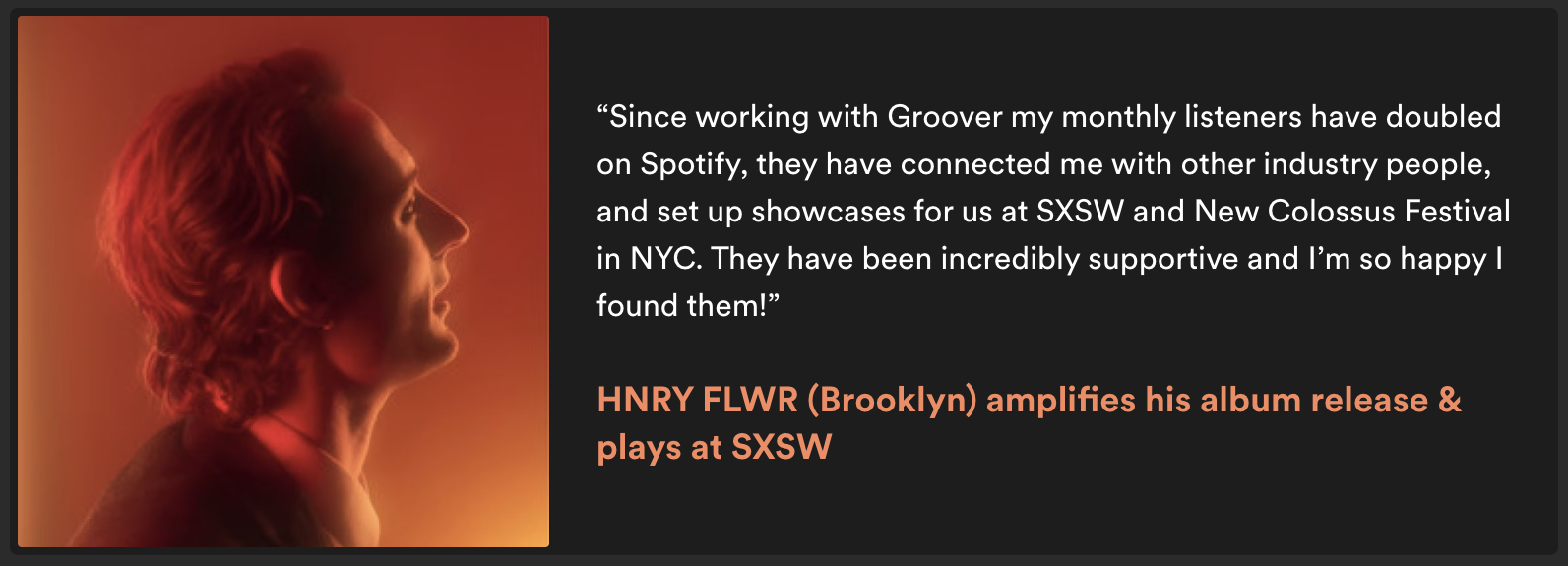
D: "So on my blog, I was really covering indie rock and indie folk, but since I've started DJing I'm listening to more indie dance and a lot of progressive house and everything. But this artist I told you about, Henry Flower (Hnry Flwr) just released a new single called "Zen in the Lion's Den," and it's so beautiful and atmospheric, I just love it."
I’ve also been listening to Jamie XX, I saw him in Paris, and I loved how it felt like a mix between a DJ set and a live original set. It was so inspiring the way it all flowed. My dream would be to play DJ sets of different styles of music where people never know what’s coming next, but it all feels cohesive."
H: What was the last truly great live show you saw?
D: "At Rock En Seine, where I saw Jamie XX I also saw Justice the same night. I've never seen a light show like that, so much power, and they're like mashing up all their tracks. It was crazy. I saw Chappell Roan as well at the same festival, I was amazed by like her vocals. She's so energetic and everything."
Those were huge shows, but I'm excited to be in New York and see Foxwarren and Tom Odell next week."
H: Finally, Serge Gainsbourg, Françoise Hardy, Jacques Brel, Édith Piaf. Who would you want to do a long road trip with, and why?
D: "Serge Gainsbourg, for sure. Depending on his alcohol level, it would be crazy. I think Jacques Brel would be crazy as well. With Gainsbourg, we’d probably be in a Ford Mustang with no roof, driving across the US desert, talking shit — or just not talking at all and listening to music."
Founded in 2018, Groover is the leading platform for independent artists to promote their music and connect directly with curators, radios, playlist owners, and industry professionals. With a community of over 650,000 artists and 3,000+ active curators across 180+ countries, Groover has redefined music promotion with guaranteed feedback, transparency, and artist-first values.