

For a stretch there, right around the time of the pandemic, discovering Khruangbin felt like being whispered a secret that everyone else somehow already knew, too.
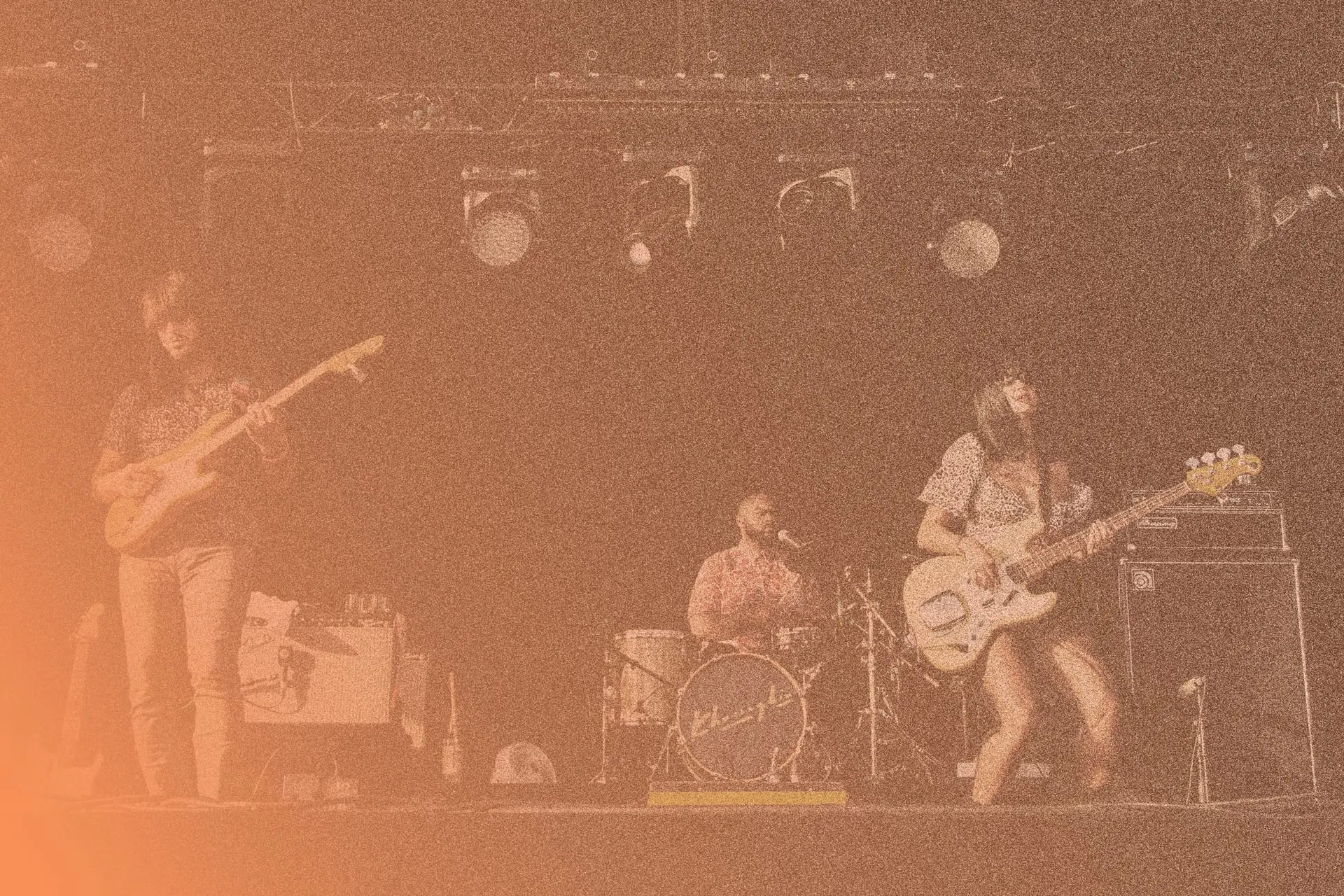
The Houston trio’s mixture of Thai funk, surf guitar, dub, soul, and psychedelic music was immediately identifiable, while their black hair dos, minimal stage banter and extraordinary musicianship made them one of the most infectious live bands in the world. Then the world caught up. And they were everywhere. And I'm pretty sure nobody had a problem with it. They're just one of those perfect "festival scale" bands, despite being so visually, and musically, minimalistic.
Now, Khruangbin is almost a "given" on any festival stage, rarely in need of introduction. But that's kind of where my curiosity lies at the moment... Nobody really talks about them anymore?
It's almost like we just assume that they'd just settled into a formula that works and are riding it out until the invitations stop coming. But that's not true at all, and in fact, the trio has become this well-oiled entertainment machine based on all those 10,000 stage hours of global fan engagement these past two years. They've refined and redefined their sound subtly, gotten extremely precise, and even re-recorded one of their old albums just to see what would happen.
Let's get caught up.
Khruangbin did not disappear. They became a headliner.
Over the past few summer weekends, Khruangbin has headlined Japan’s famous Fuji Rock Festival and topped the opening day of South Korea’s Incheon Pentaport Rock Festival.
When the band first appeared at Fuji Rock in 2019, they played the smaller Field of Heaven stage. This year, their return graced the top of the Green Stage bill. Fuji Rock’s own preview acknowledged that Khruangbin had effectively climbed the ladder all the way to headliner status.
At Pentaport, the band demonstrated how it has learned to work at that level. During “So We Won’t Forget,” Khruangbin folded the melody of “Arirang,” a traditional Korean song, into the performance, with a nod to BTS whose new album is titled that. It was not an enormous production stunt. It was a subtle acknowledgment of where the band was and who they were standing in front of.
That is kind of just how Khruangbin operates; the gestures are restrained, but precise.
+Read more: "A 2026 Live Music Venue Guide to São Paulo"
They got bigger without making the music bigger
Usually bands keep going for more and more and more when they get a taste of mass public attention. Just look at this year's Coachella stage set designs.
The conventional live-business ladder moves an artist from clubs to theatres, amphitheatres and eventually arenas. Khruangbin became large enough in audience pull to consider playing in arenas, with massive structural additions to their performance, and opted out.
During the A La Sala cycle, the band favored multiple-night amphitheatre engagements over an arena run. Bassist Laura Lee Ochoa explained to Uproxx that guitarist Mark Speer had reservations about how an arena would handle the intricacies of her melodic bass lines. A larger room might flatten the details that make Khruangbin sound like Khruangbin. Multiple nights also gave the trio room to rotate the song setlists for returning fans, correcting some of the rigidity of the more tightly programmed Mordechai tour.
That discipline shaped A La Sala. Recorded with minimal overdubs and no outside collaborators beyond longtime engineer Steve Christensen, it returned attention to the same three musicians responsible for recreating it onstage. Drummer Donald “DJ” Johnson described the challenge as being minimalist and maximalist simultaneously: creating an expansive sound without backing tracks or an expanded touring band.
+Read more: "Can Cheap Beer Save Australia’s Opening Bands?"
The setlist stayed still while the show kept moving
For much of the A La Sala tour, Khruangbin devoted the first half of the concert to performing the album in sequence. The band did not play to a click track or inflexible musical cues. Speer has explained that small mistakes could reveal ideas worth repeating. Dynamics changed, tempos breathed and songs gradually told the musicians what they wanted to become. The album sequence accumulated the lessons of performing it for audiences around the world.
Harkening back to the album cover artwork, the staging of a staircase leading to three window-like screens, created a changing weather and lightscape over the course of their set. Ochoa and Speer used slow, synchronized movements rather than constant crowd work, turning the stage into something between a living room, an installation and a piece of choreography. One Seattle review described the effect as making the cavernous WAMU Theater feel like the band’s living room.
+Read more: "Upcycled Tour Merch Is Live Music's Next Green Frontier"
Ten years of concerts rewrote the first album
In November 2025, Khruangbin offered the clearest evidence that live performance had helped develop the group's sound even further. Rather than remastering or repackaging its debut for its tenth anniversary, the trio returned to the same Central Texas barn and re-recorded it.
The Universe Smiles Upon You ii used the same instruments and location, but it was not an attempt to recreate 2015. Its arrangements, sequence and track selection reflected how Khruangbin understood the material after a decade of performing it. Simply playing the songs as originally recorded would no longer have represented who the musicians were.
The band paired the release with a sold-out 15-date run through venues including Webster Hall, 9:30 Club, Metro, and the Fonda Theatre. After an A La Sala world tour that its production team said encompassed approximately 130 performances, Khruangbin deliberately brought its oldest songs back into club-sized rooms.
That is a feedback loop: songs go on tour, audiences change how the musicians understand them, and those lessons eventually become the new recorded versions.
The closest thing to a live-music promise
Khruangbin’s early appeal was based partly on novelty. The band sounded unlike almost anything else on a festival bill. Its current value is based on something sturdier: trust.
Audiences now understand what a Khruangbin performance offers: an unhurried groove, meticulous musicianship, visual beauty, gradual release and the feeling of being transported somewhere calmer. And they're continually nailing it, getting tighter with every ring around the calendar.
Years spent in front of audiences have taught the trio how long a groove can breathe, when a familiar melody should arrive, how much visual information the music needs and which parts of a supposedly finished song remain open to change. Khruangbin knows the difference between what fans recognize and why they return.
That relationship now supersedes any individual album cycle. People are not necessarily buying tickets to hear a new release's songs, they're buying into a vibe and the certainty that the band will deliver it.