

_______________________
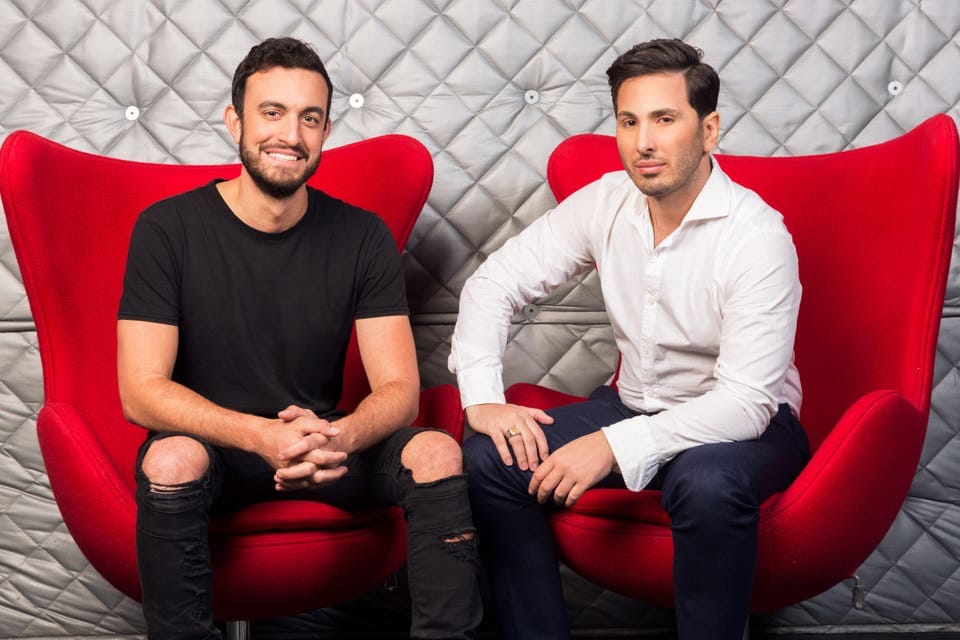
By Dana Feldman. This article originally appeared on Forbes.comIn just three years, Los Angeles-based Create Music Group has changed the online music streaming game. What started as a YouTube monetization company, collecting revenue on behalf of artists and labels, now monetizes more than nine billion streams per month. This year alone, CMG is on track to find $45 million for its clients, and in 2019 it’s predicted to find an additional $100 million.The company started with EDM content from DJs and producers releasing content on YouTube for their fans. These artists weren’t monetizing their music, and when certain tracks became viral hits, oftentimes the artist didn't know. CMG came in claiming those tracks on behalf of the artists, and the windfall for many was life-changing.Quickly, co-founders Jonathan Strauss, CEO, and Alexandre Williams, COO, made a name for themselves with their keen ability to spot unknown artists. As the pair became more adept at discovering talent, they started to sign mainstream names like the $44 million DJ Marshmello, the controversial Tekashi 6ix9ine, Migos and comedian DeShawn Raw. Many of their clients earn $10,000 a month, with a handful raking in $100,000. As for the controversy swirling around Tekashi 6ix9ine, when his new album “Dummy Boy” leaked over the weekend, he quickly made a distribution deal with CMG, and the album, originally set for distribution through Caroline and Capitol Music Group, was officially released Tuesday. The rapper, who has been behind bars on federal racketeering charges since last week, went to CMG because he wanted his music released immediately and because of his previous history working with CMG; the company is his main music publisher, but this marks the first time he’s used its distribution arm. Best friends since their days at Southern California’s Palos Verdes Peninsula High School, Strauss, 32, and Williams, 31, started CMG in 2015 when they discovered the unfulfilled niche in the streaming game wherein artists were creating music and, unbeknownst to them, third parties were making money off their talents. They had a solution to a problem, albeit one many didn’t even know they had. Strauss funded the startup, and they set up shop in a rented Lake Hollywood house with a handful of employees.“I funded $1 million, and I spent $1 million,” Strauss says, laughing. Within nine months, a seed investor came in with $2.25 million for a minority share. “And, we were off to the races! That’s when the fun started.” They began by approaching artists and getting them to sign with the promise of obtaining money they didn’t know they had coming to them. They’ve since built a distribution and publishing arm and many major labels work with them either on a rights management or A&R level. The company now also records music.Strauss initially got the seed money when he was 18 years old and his father gave him a $70,000 college fund to attend UCLA. He attempted to grow the money and day-traded it into $280,000, which he soon lost in one day during a volatile time in the market. He sold his car to fund a new venture out of his dorm room building a systems integration company for the film/post-production industry that allowed users to edit their footage in real time, which was very hard to do at that time. He made $250,000 the first year via deals renting and selling to studios like Bad Robot and Paramount. In his twenties, he’d saved $1 million and he and Williams started CMG and they were soon making $250,000 a month collecting royalties from YouTube, SoundCloud and Apple.Prior to starting, Williams was working a minimum wage job at a company focused on the distribution of music to the DSP’s like Apple, Spotify and YouTube for independent labels. The pair saw a plethora of overlooked opportunities, from the monetization of mixtapes to video content creation. “We saw a trend where many indie artists were foregoing a label and instead directly releasing their music on SoundCloud and YouTube. We quickly discovered that, in many cases, this music was being shared on a much wider scale and doing better than the music the artists were putting out via their label,” Strauss explains. What Williams’ then-boss thought was a fad, they saw as an incredible opportunity and they went to every artist in EDM. “It was an education for sure,” says Williams. “Just because an artist wants to allow fans to listen to their music for free doesn’t mean third parties should profit.” They acquired the company Williams previously worked for, Label Engine, taking on its roster of clients and used the data from Spotify, as well as data from YouTube to market the songs on multiple platforms.