

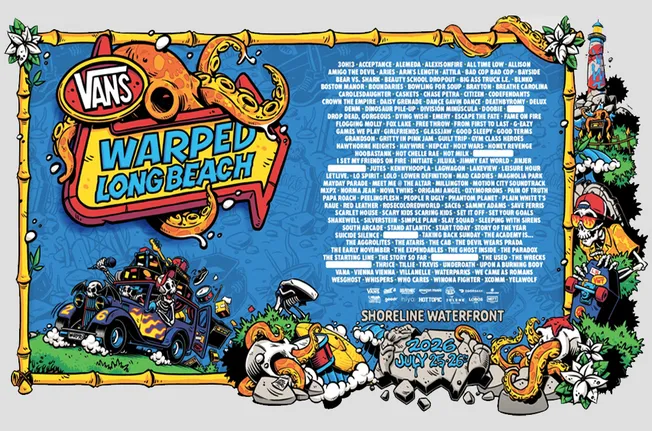
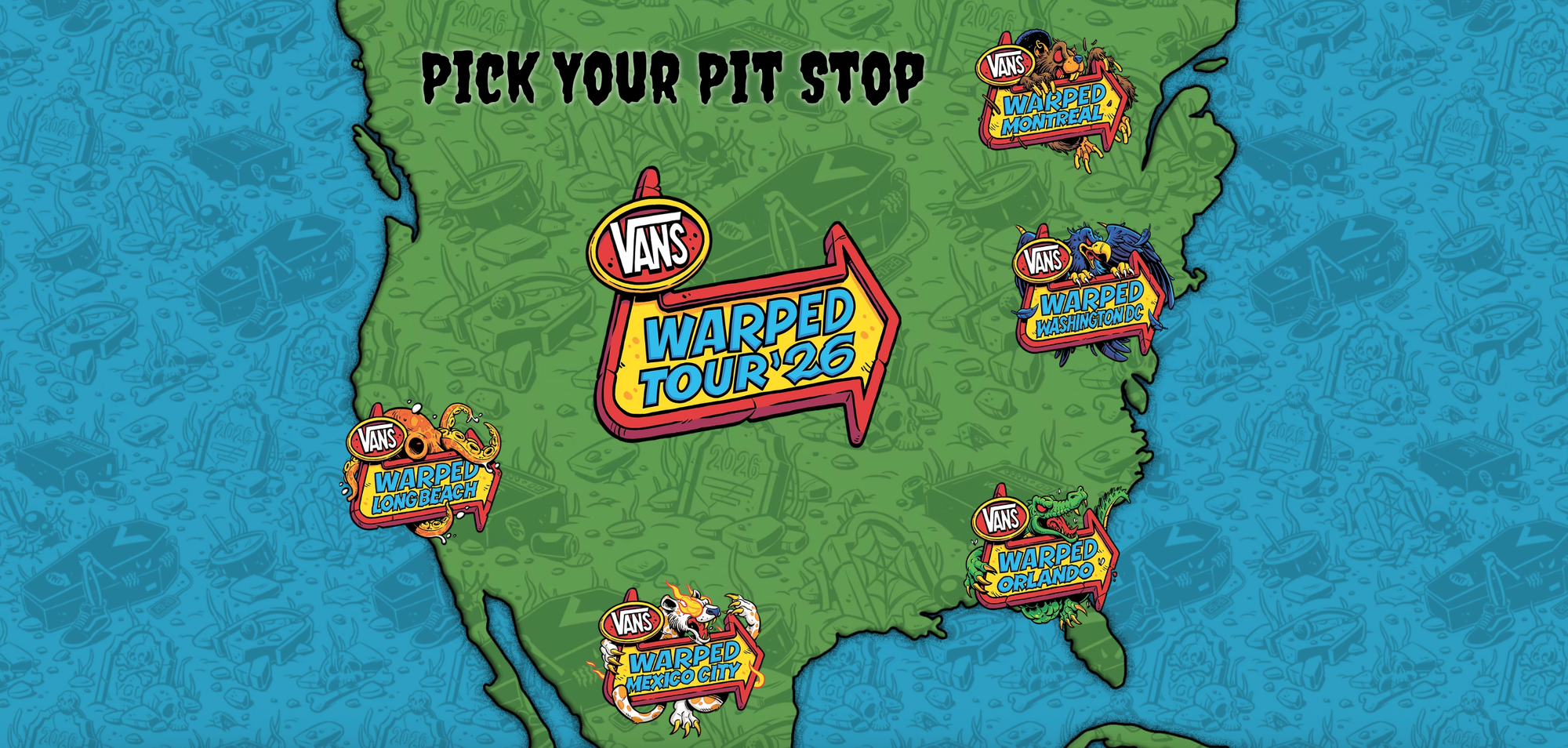
The lineups of of the 2026 Vans Warped Tour concert events are all but set and have been rolled out band by band since the beginning of the year on Instagram and via the general website for the tour; which will see stops in Montréal, Washington D.C., Long Beach, Orlando, and Mexico City.
As expected, this year's shows feature massive acts like Flogging Molly, Suicidal Tendencies, Coheed and Cambria, Simple Plan, Lambrini Girls, Thrice, and so much more.
But in typical fashion, as per how the Vans Warped Tour has marketed its artists since the beginning, the headliners don't matter. All artists are treated with the same billing exposure. This was the plan from the get go for festival founder, Kevin Lyman.
In speaking with Billboard recently, Lyman explained that:
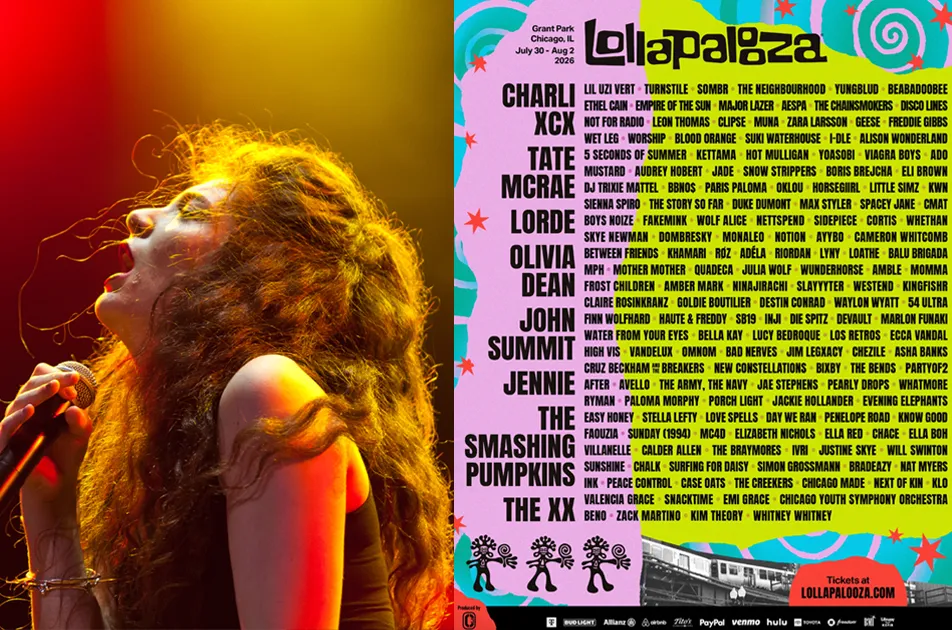
"Talking to as many students and young people as possible, I ask how many lines do you normally read down a poster before you decide if you like a festival. The answer is two or three. That leaves little chance for artist development.”
This is part of the festival's marketing strategy, but it's a measurable effect on helping rising and early career artists gain visibility, too.
On social media, releasing lineup announcements one artist at a time gives each act its own moment of attention — something that often gets lost when festivals unveil an entire poster all at once. Because of this approach, every announcement video has drawn at least 80k views, with several climbing past the 200k mark.
This goes all the way back to the Vans Warped Tour's roots in the mid-90s. And they've taken a lot of unique approaches as far as festivals usually operate.
Why Vans Warped Tour has always been an artist development engine
This touring festival's culture was built around youth scenes and communities. It's more of a social, cultural hub than a concert for many attendees, who mix skateboarding culture, punk and DIY fashion, activist organizations, and brands speaking to youth interests and hobbies.
For artists entering this space, the environment meant not just playing shows, but becoming part of a larger subcultural ecosystem to which fans felt a deep sense of belonging.
On the industry side of things, the Warped Tour also became a central meeting place for labels, managers, and booking agents looking for the next breakout act in alternative music. Because the tour ran for weeks across multiple markets, industry insiders had repeated opportunities to see bands develop over the course of the summer. That made Warped a scouting ground for the next generation of rock bands.
Indeed the fact that this model was a touring festival helped artists hone their skills across sometimes 30-40 dates; an unprecedented introduction to nationwide markets for young bands.
But there's one last thing worth mentioning that the Warped Tour did, as one its most adored and infamous traditions: artists staffed their own merch tents. While this might sound like more work for an already busy band and their team, this meant that fans could meet artists directly after their sets and build a meaningful connection. This led to careers-long fan loyalty, grassroots buzz around an artist, and a true DIY community feel.
You can't replicate that at a festival level easily, it has to be authentic.
So, from the artist side of things, what does a festival appearance do for an up-and-coming band or solo performer in general?
+Read more: "How Lollapalooza's Evolution Has Defined the Last 3.5 Decades of Live Music"
How festivals help artists grow and evolve
1. The Early-Day Slot: Learning the Craft in Front of Real Crowds
Most festivals program emerging artists in early afternoon or secondary-stage slots. On paper this can look like filler, but it’s often one of the most important developmental experiences an artist can get since they're not competing with larger acts for attention.
For a young act, it could mean playing to hundreds or thousands or even hundreds of thousands of people who didn’t come specifically for them, and learning how to win over unfamiliar audiences quickly. Unlike club shows — where audiences are usually fans and pay tickets specifically for the acts on the bill — festival crowds force artists to capture attention in minutes, which can dramatically sharpen live performance skills.
2. Festival Showcases and “Discovery Stages”
Many festivals explicitly design development pipelines inside the lineup. For example, SXSW built a "showcase system" through a label, brand, and curatorial reputation model around discovery of next-gen artists. Primavera Sound festivals curate stages highlighting rising acts both locally and abroad.
In the best case scenarios, these stages are where agents, managers, labels, and festival bookers actively scout talent. The goal isn’t immediate mass attention — it’s industry visibility, and therefor a standout set can lead to touring offers, international bookings, label invites, and festival circuit curation the following year, almost like a live audition.
3. Opening for Headliner Crowds (“Accidental Discovery”)
Sometimes the biggest development opportunity comes right before the headliner takes the stage. Fans show up early to secure spots for artists like Harry Styles, Beyoncé, or Kendrick Lamar—and end up discovering whoever performs beforehand. This phenomenon creates a rare opportunity to steel a moment. Social media buzz, tens of thousands of eyeballs and earballs, and immediate fan conversion may all ensue.
4. Networking Behind the Scenes
Artist development at festivals isn’t just about audiences — it’s about who’s backstage. At major events, emerging artists often interact with other high-profile artists, booking agents, label reps and scouts, sync supervisors, media and radio programmers, etc. A single festival can compress months of industry networking into one weekend.
5. Honing Skills and Learning the Pro Touring Machine
Festivals are also where emerging artists get their first exposure to the logistics of large-scale touring, and they get a crash course on how to maximize those moments. That kind of education can never happen in a rehearsal space, it has to happen with thousands of heads bopping up and down in front of you.
The Takeaway
Young artist development at festivals happens through performance pressure, industry visibility, accidental discovery, networking, and real-world touring experience. Even if the headlines go to the biggest names, festivals remain one of the most important career accelerators in live music.
+Read more: "Book More Women: The Data-Driven Initiative Pushing Music Festivals Toward Gender Equity"
Vans Warped Tour 2026 Dates
JUN 13-14 — Washington, DC @ Festival Grounds at RFK Campus
JUL 25-26 — Long Beach, CA @ Shoreline Waterfront
AUG 21-22 — Montréal, QC @ Parc Jean-Drapeau
SEP 12-13 — México, Mexico @ Autódromo Hermanos Rodríguez
NOV 13-14 — Orlando, FL @ Camping World Stadium Campus