

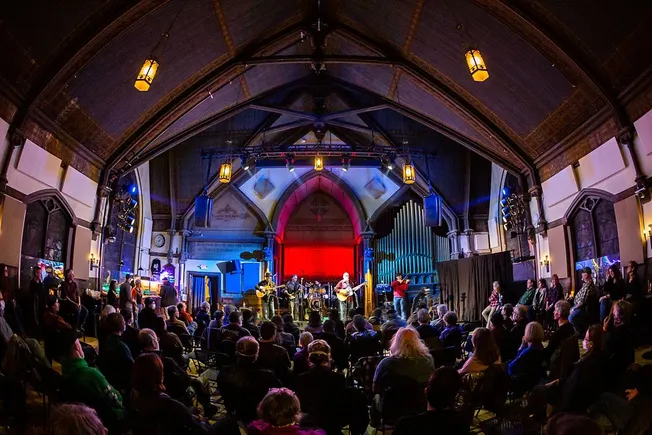
Brattleboro, Vermont music venue Stone Church has launched a direct legal strike against secondary ticketing giant StubHub.
Filed in New York Southern District Court, this David vs Goliath lawsuit targets the StubHub's checkout interface and consumer marketing, alleging trademark infringement and false advertising.
Instead of the antitrust complaints at the center of most current live music industry lawsuits, the Stone Church (officially FSO, LLC) filing uses a highly specific legal strategy. Focusing on trademark infringement under the Lanham Act, this suit offers a detailed breakdown of StubHub's UX (user experience), arguing that it actively deceived fans, damaged the venue's brand, and siphons revenue from grassroots music spaces.
The Lanham Act governs trademarks, service marks, and unfair competition. Beyond traditional trademark infringement, it also prohibits false advertising.
Stone Church's Core Allegations Against StubHub
The Stone Church lawsuit takes aim at several specific secondary ticketing practices not unique to StubHub.
- False Scarcity Flags: StubHub allegedly deploys urgent warnings (e.g., "Only 4% of tickets left!") on events where a vast majority of the primary box office inventory is actually still available.
- Deceptive Price Badges: The complaint highlights listings badged with superlatives like “Lowest price!” despite being marked up significantly above face value, while original, cheaper tickets sit unsold at the venue's direct box office.
- Speculative ("Spec") Selling: The venue accuses brokers of listing non-existent inventory on StubHub. In one documented test purchase cited in the suit, a broker allegedly waited 49 hours after collecting a fan's money on StubHub to actually purchase the real ticket from the Stone Church box office.
What Does Stone Church Want?
In addition to seeking damages exceeding $5 million, Stone Church is pushing for systemic operational transparency. The venue is seeking a federal injunction requiring StubHub to:
- Display all-in pricing upfront.
- Clearly disclose that its listings do not reflect the total remaining venue inventory.
- Notify consumers when primary box office tickets are still available for cheaper.
Hypebot’s Bottom Line
While live entertainment conglomerates fight high-profile antitrust battles in Washington and elsewhere, Stone Church is fighting against secondary ticketing platforms on the grounds of consumer protection and trademark law.
If this grassroots legal challenge by a small independent music venue forces a change in how ticket availability is marketed, it could completely disrupt the secondary ticketing space - and finally give concertgoers an honest view of what it costs to see their favorite artists.
Follow Stone Church on Bandsintown to see live concert listings.
Get all the latest Music Industry & Live Music News updated continuously from across the web under the Hypebot Industry News tab here.