

- Beginner—Just starting out or on a budget
- Intermediate—Ready for the next level
- Pro—Makin’ a living outta’ this
- Super Pro—You want to invest in top-of-the-line gear
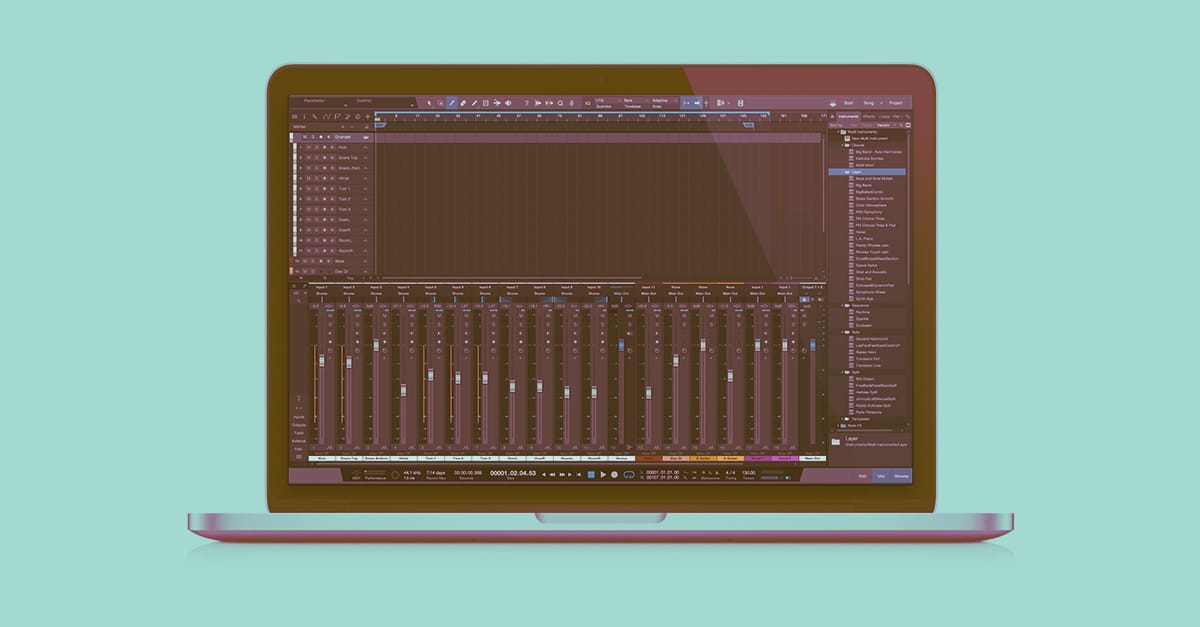
1. COMPUTER AND DIGITAL AUDIO WORKSTATION (DAW)
2. HEADPHONES
- In a room that isn’t treated for sound
- In an apartment where making noise is a problem (roommates, neighbors)
- When you can’t invest in a good pair of monitors quite yet
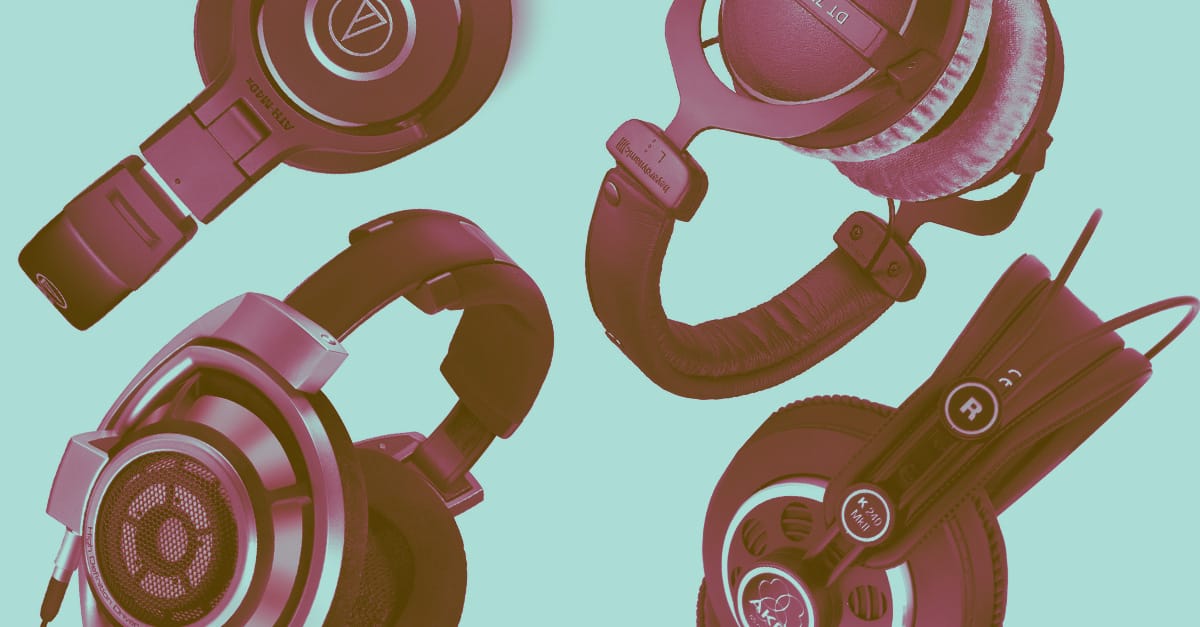
Here are some headphones vetted by our audio team:
- Beginner: Audio-Technica ATH-M40x (closed-back)
- Intermediate: AKG K240 MKII (closed-back)
- Pro: Beyerdynamic DT 770 250 ohm (closed-back) OR Sennheiser HD 600(open-back)
- Super Pro: Sennheiser HD 800 (open-back)
3. AUDIO INTERFACE
What is an audio interface?
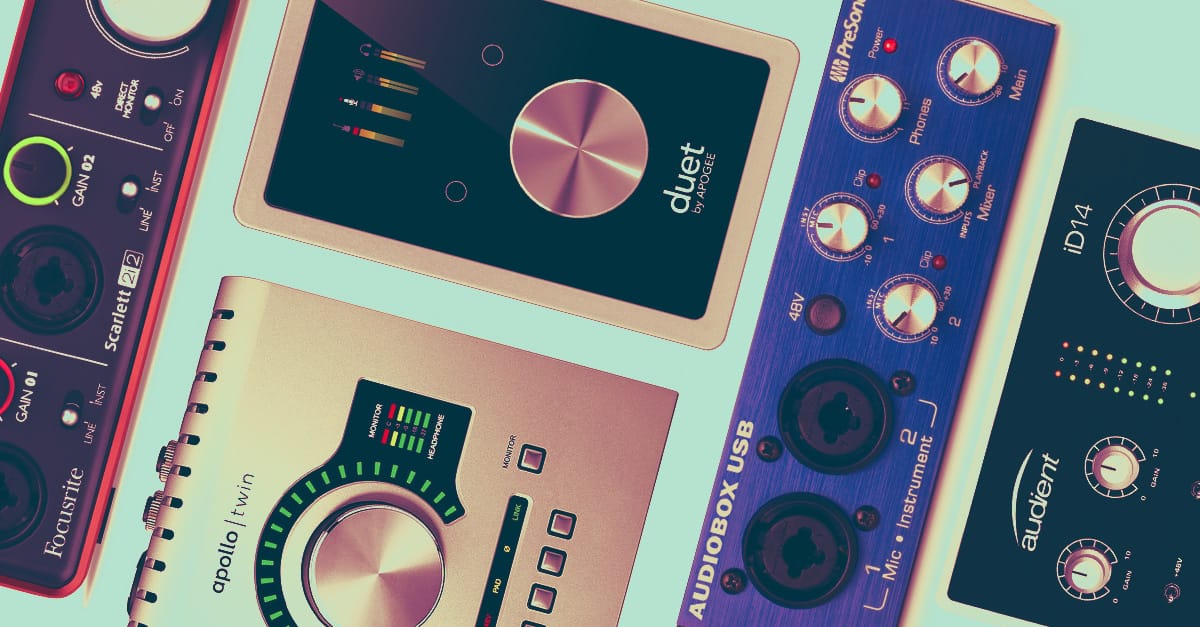
An audio interface is the device that allows you to connect instruments and mics to your computer. An interface gives you the ability to record various types of audio signals (mic, line, etc.) into your DAW.Audio interfaces use USB, FireWire or Thunderbolt to connect to Mac or PC. You usually have to install a simple driver for your interface, but then you’re good to go.When you’re looking for the best audio interface for a home studio, a great starting point is a model with 2 Inputs and 2 Outputs.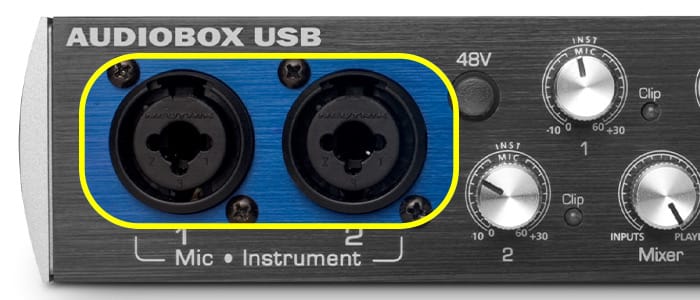
Here are our favourite audio interfaces:
- Beginner: PreSonus AudioBox OR Focusrite Scarlet 2i2
- Intermediate: Audient iD14 OR Apogee Duet (for Mac and iOS only)
- Pro: Apollo Twin
- Super Pro: Apogee Quartet OR Apogee Symphony
4. ACCESSORIES: CABLES, STANDS, RACKS
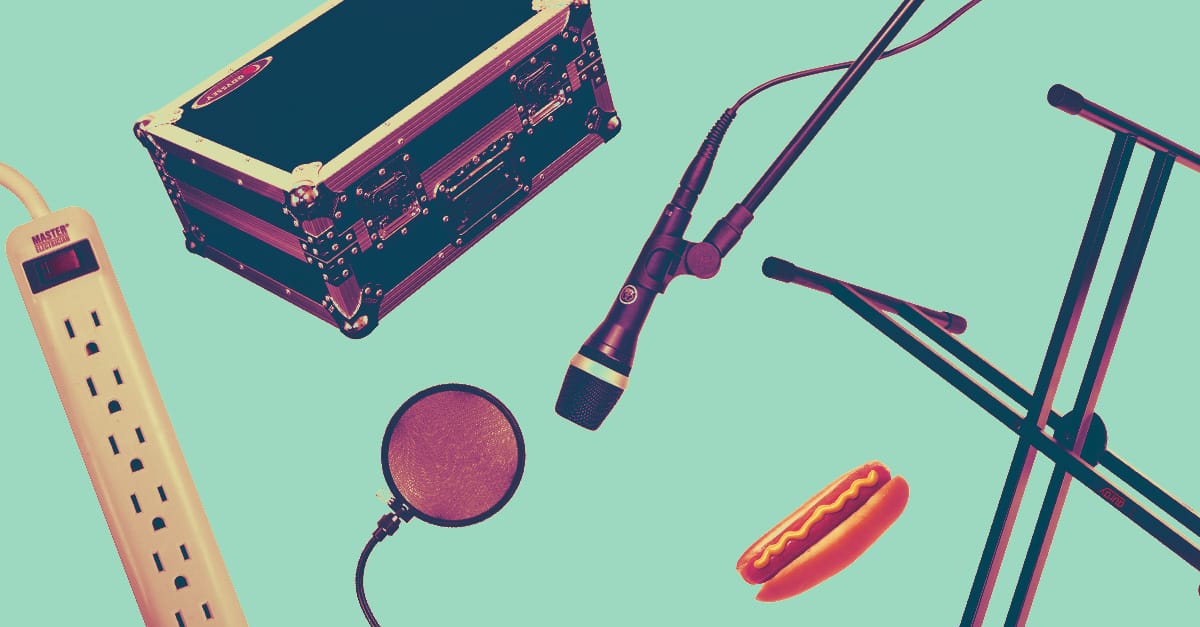
These are the basic cables most studios need:
- XLR cables for your mics and balanced connections
- Unbalanced ¼ inch cables for your guitars and pedals
- Balanced ¼ inch for your balanced synths and drum machines
- MIDI cables to sync everything together
- Mic stand
- Pop filter (for clean vocal takes)
- Keyboard Stand
- Travel cases for your gear—if you’re playing gigs
- High Quality Headphone Extension Cable (like Mogami Gold)
- Power Bars
- A proper Chair
5. MICROPHONE
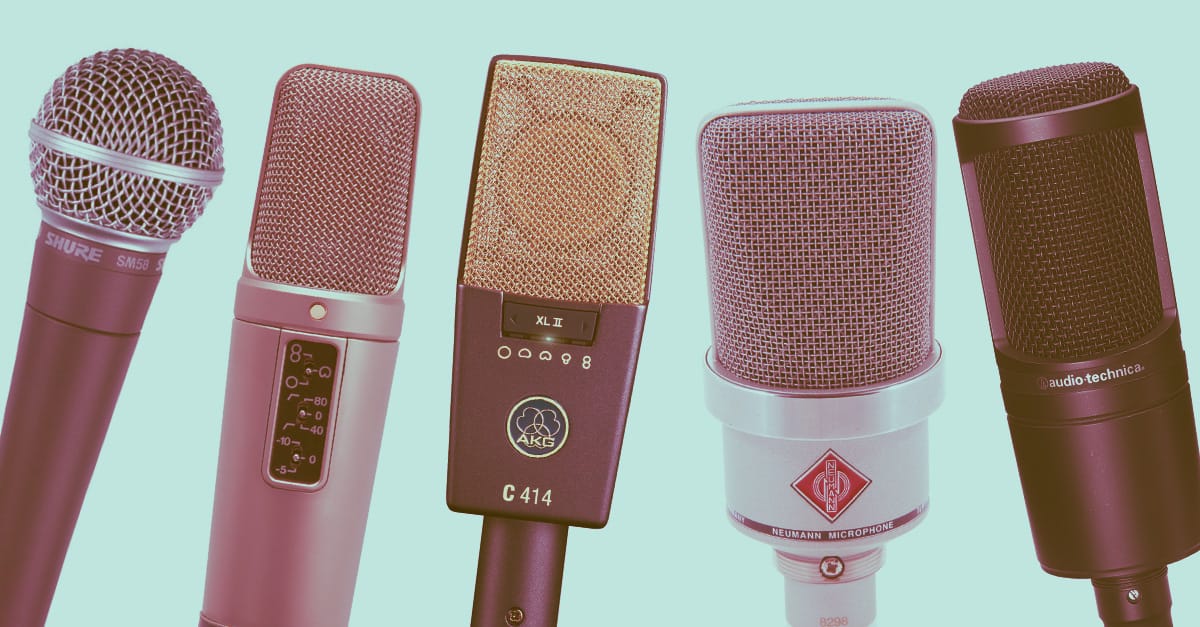
What is a Dynamic Mic?
Dynamic mics are sturdy—they’ll withstand a few beer stills and epic mic drops. This makes them the perfect stage microphones. They usually don’t require extra power. Just plug it with an XRL and you’re good to go.They have an acceptable frequency response, but it’s not the most accurate. Dynamic Mics best for live vocals, drums and loud guitar amps.What is a Condenser Mic?
Condenser mics are more sensitive and their output is louder. They have an excellent frequency and transient response. This means they’re best for catching all the variations especially in the high end.These mics are best suited for the studio—they’re more fragile and sensitive to loud sounds. They also require a power supply or ‘phantom power’ to work.Condenser mics are categorized by the size of their diaphragm: large or small. Large diaphragms are best for lower frequency (cellos, vocals, etc). Small diaphragms are best for fast, higher frequency sounds (solo flute, acoustic guitar, etc).Here’s some microphone options to check out:
- Beginner: Shure SM58 (dynamic) OR Audio-Technica AT2020 (condenser)
- Intermediate: RØDE NT2-A (condenser)
- Pro: Neumann TLM 102 (condenser)
- Super Pro: AKG C414 (condenser)
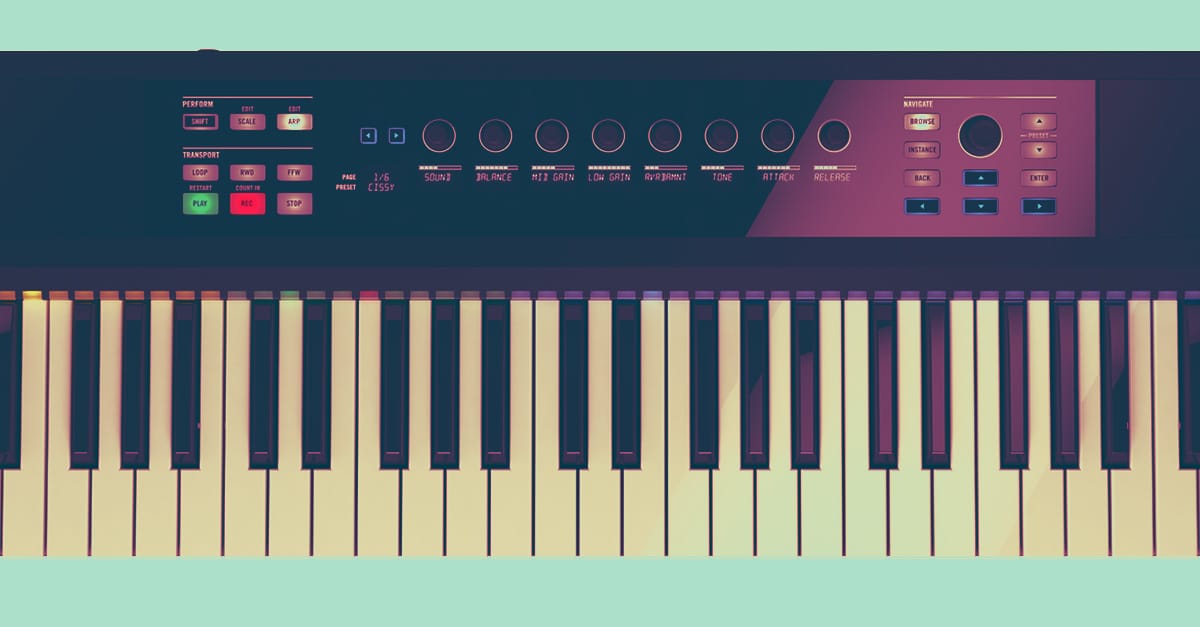
6. MIDI KEYBOARD/CONTROLLER
7. POWERED MONITORS
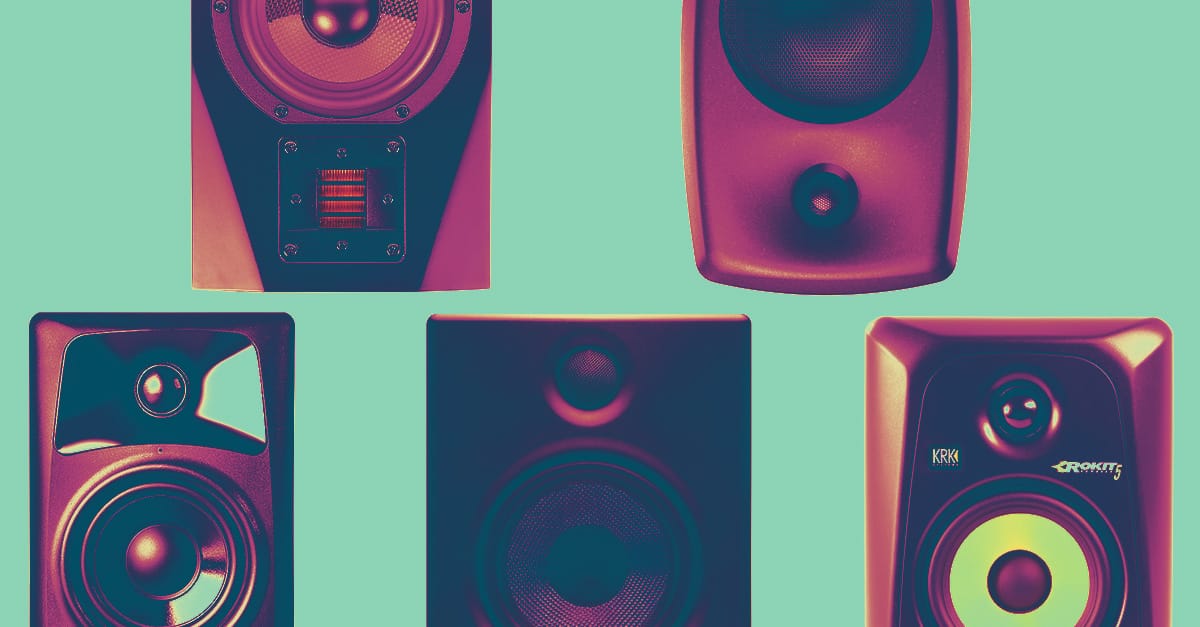
What’s the difference between regular speakers and monitors?
Speakers are made to enhance the sound in particular ways that sound good for listening. That means that the low end might be boosted. Those speakers color the sound a lot.Studio monitors on the other hand are flatter. They allow you to accurately hear your mix. Studio monitors are a must if you get serious about producing and mixing music.Here are the most popular monitor models:
- Beginner: M-Audio AV42 OR PreSonus Eris E5
- Intermediate: KRK Rokit 5
- Pro: Adam A5X
- Super Pro: Genelec 8030B
How to choose your studio monitors?
The best way to choose your studio monitors is by going to a music store that lets you hear all their available models.Bring a track you know very well on your phone or MP3 player.Position yourself in the middle of the two monitors at ear level. Your head and each monitor should form a perfect triangle (see image below). This is the optimal monitor placement.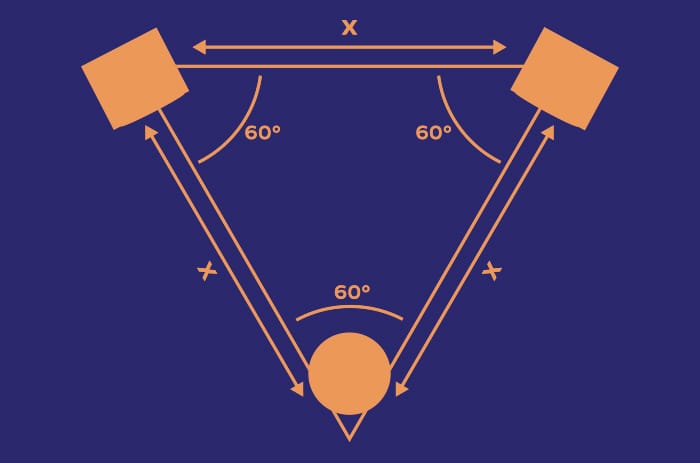
8. MUSIC PRODUCTION BOOKS
Here’s our favorite music production books:
- Home Recording For Musicians For Dummies by Jeff Strong
- The Audio Expert by Ethan Winter
- The Studio SOS Book: Solutions and Techniques for the Project Recording Studio by Paul White, Hugh Robjohns and Dave Lockwood
- The Mixing Engineer’s Handbook by Bobby Owsinsk
MAKE YOUR PERFECT STUDIO A REALITY
Building an awesome home recording studio can seem daunting at first.But remember that you don’t need to jump right into the most expensive gear. Your studio should be perfect for your needs. So do your research and find the perfect setup for your sound.Start small and tailor your setup to you. Then build it up as you evolve.Do it right and let your studio grow right along with your music.Leticia is a DJ and music maker with a love for 303 basslines and hangouts at the library. Content Creator at LANDR.Related articles