

When people talk about America's great music cities, the conversation usually starts in familiar places. Nashville. Austin. New Orleans. Los Angeles. Those cities earned their reputations over decades and generations of legendary clubs, iconic recordings and musical mythology.
Huntsville, Alabama, really has none of that history.
And yet, what lingers in the ellipsis of the future is the potential to create something both economically viable and culturally unique. And it all filters through an upcoming summer's worth of exciting concerts in 2026.
Instead of trying to recreate another city's identity, Huntsville has spent the last several years building something much more deliberate: a modern live music ecosystem designed around venues, community programming, artist experiences and long-term economic development.
In 2026, becoming a "music city" isn't just about producing famous musicians, or hosting international conferences. It's about creating a place where live music can thrive all year-round. That takes community support, some smart investing, and a plan to lure the biggest nationally touring acts to stop in for a slice of local pie.
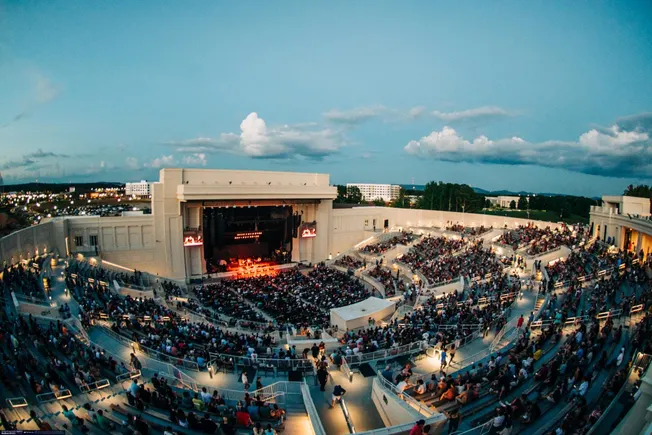
The clearest symbol of that ambition is the Orion Amphitheater.
Opened in 2022, the Orion Amphitheater is a 8,000-capacity venue has quickly become one of the Southeast's most talked-about outdoor concert spaces. It's operated by Venue Group; the company founded by Mumford & Sons' Ben Lovett, who also operate The Lumberyard in Huntsville, and have acquired the beloved Saturn live music venue in Birmingham.
The Orion was intentionally designed to feel less like a traditional amphitheater and more like a community gathering place. Between headline concerts, The Orion's calendar stays active with yoga classes, vintage markets, free fitness programs, family events and local festivals, making the venue part of everyday city life rather than a place that only comes alive on concert nights.
The concerts themselves have followed suit.
This year's calendar includes artists ranging from Creed and Lord Huron to Parker McCollum, Billy Strings, Goo Goo Dolls, The Doobie Brothers and Five Finger Death Punch — a level of programming that would have been difficult to imagine in Huntsville a decade ago.
But the Orion isn't carrying the city's music scene by itself. Downtown, the Von Braun Center has quietly evolved into a multi-venue campus capable of serving almost every level of touring artist.

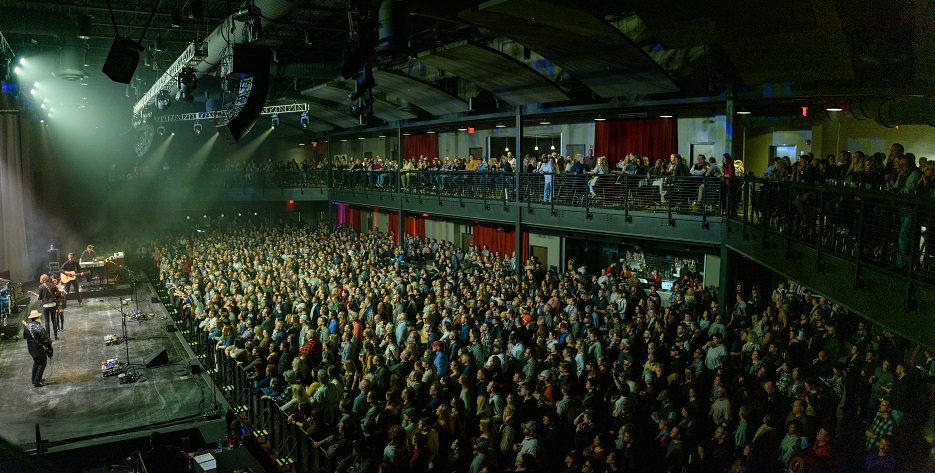
Its 9,000-seat Propst Arena (seen above) anchors major arena tours, while the 1,300-capacity Mars Music Hall (below) fills an important gap for artists graduating from clubs but not yet ready for arenas.
Add the Mark C. Smith Concert Hall and Playhouse, and Huntsville suddenly has an unusually complete ladder of performance spaces under one roof.
Outside the city's largest venues, the ecosystem becomes even more interesting.
Places like The Camp at MidCity have become gathering spaces where food trucks, local vendors and outdoor concerts blur the line between neighborhood hangout and music venue.
Stovehouse has transformed a century-old stove factory into one of Huntsville's busiest social hubs, pairing restaurants with a steady calendar of live performances. Their space, called The Electric Belle, hosts private parties and live acts, as well as DJ nights and student events, supporting a live music and nightlife community that is increasingly diversifying.
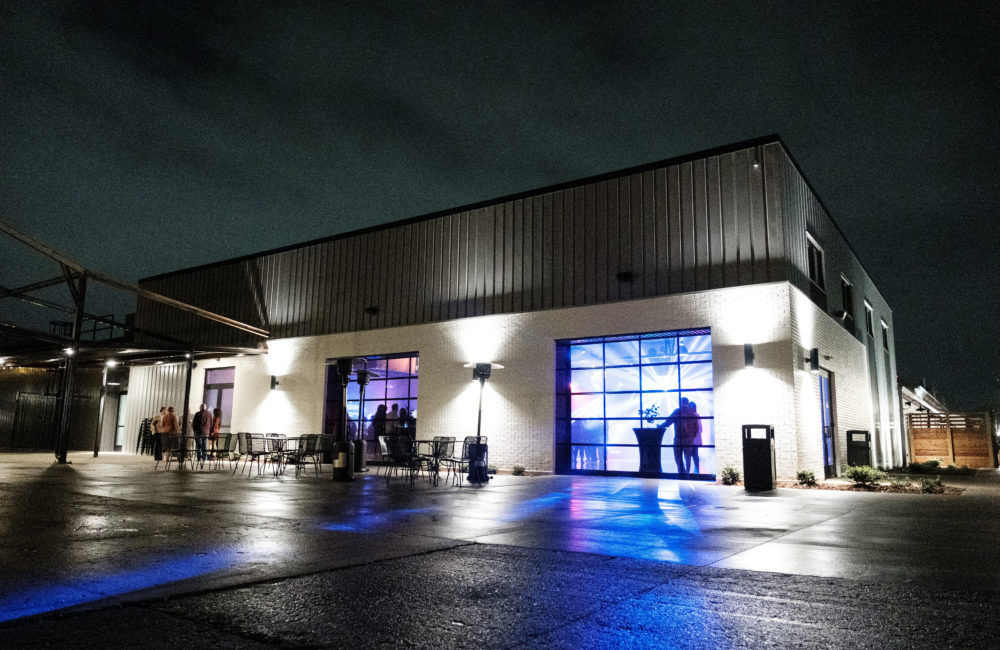
Meanwhile, Lowe Mill ARTS & Entertainment — the largest privately owned arts facility in the South — hosts concerts alongside artist studios, galleries and creative businesses, creating a music scene that feels woven into the city's broader cultural identity rather than isolated from it.
That's really the story here. Huntsville isn't trying to become another Nashville, where music is seeping up through the concrete everywhere you walk. Instead, it's trying to intentionally integrate live music into the societal fabric — how and where the city's population engages with culture — and build its infrastructure around to suit.
And that cuts across scale very conveniently.
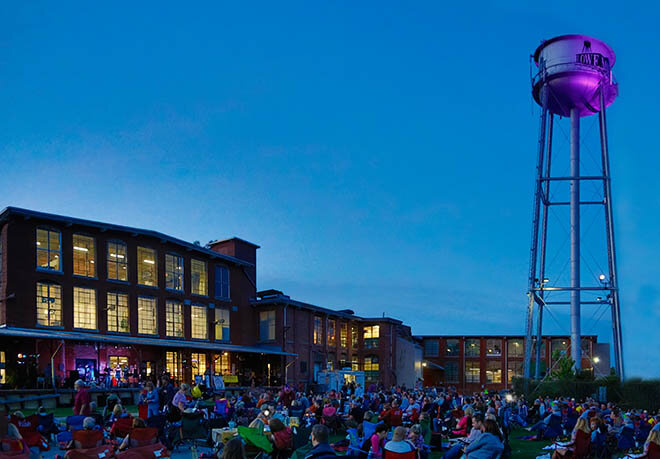
A touring artist can headline the Orion, play Mars Music Hall, perform an intimate songwriter set at Lowe Mill or appear at one of dozens of community events spread throughout the year. Local musicians aren't competing for one stage — they're growing within an increasingly connected network of venues.
Even smaller venues are seeing an uptick in community presence.
Campus No. 805 is a brewery that regularly hosts shows and events. Gold Sprint Coffee also hosts DIY shows. And Mad Malts Brewing features weird events of all kinds on the regular.
But why is this happening?
The city has treated music as an economic development strategy, creating a dedicated Music Office, measuring the impact of its music economy and encouraging partnerships between venues, tourism officials and local businesses. Huntsville Music Month now brings together hundreds of performances every September, while parks, breweries and neighborhood venues help ensure live music remains visible long after the festival season ends.
The biggest opportunities don't always emerge from the biggest markets. In fact, less and less. As more mid-sized cities invest in venues, cultural districts and year-round programming, they become increasingly attractive stops for touring artists looking to reach engaged audiences without competing in oversaturated markets.
Huntsville won't replace Nashville.
That was never really the goal though, and everyone knows it. However, it still might transform into one of the country's best examples of how to build a music city for the next generation. Not through mythology, but through thoughtful investment in the people, places and infrastructure that keep live music alive.