

__________________________
Guest post by Jaclyn Kendall of Soundfly's FlypaperThis article originally appeared on the Landr BlogPhysical formats have only been around since the 1870s — but in that relatively short amount of time, we’ve managed to come up with some pretty bizarre ways to release music. Each format on this list had its moment of usefulness. But looking back might make you ask “what were we thinking?”Regardless of how obsolete certain formats might be, they all led us to where we are today: streaming.Most music fans choose to purchase their music digitally — either via download or streaming. Smart artists are following suit as well. Many musicians are skipping out entirely on the cost of releasing physical formats — opting instead for digital music distribution that fits today’s music landscape.Well, how did we get here?
Regardless of their popularity today, every format on this list played its part in the march towards digital domination. We strolled through the odd history of music formats to explore where that journey has taken us — and where it might lead…Here’s the music format timeline — from vinyl to digital and everything in between.1948: The Record
Records, or discs, of varying speeds and materials have actually been around since the early 1900s — early versions rotated at 78 RPM (vroom, vroom!) and were made of shellac, which made them noisy (the bad kind of noisy, not the good kind) and fragile. In 1948, Columbia Records produced a 33 RPM 12-inch “long play” format, which we know, love, and donate to thrift stores today as the LP.The first LP ever pressed was titled Columbia ML4001, and was a “Mendelssohn Violin Concerto in E Minor” by violinist Nathan Milstein with the New York Philharmonic Symphony Orchestra, conducted by Bruno Walter.
1963: Compact Cassette
Compact Cassettes, or tapes, were invented by the Philips company and introduced to Europe at the Berlin Radio Show — Europe’s oldest tech convention with a rich history of its own.Early cassettes featured reverse housing with a max play time of 45 minutes of stereo audio per side — significantly longer than a vinyl LP’s playtime. Tapes also fit in a more affordable, compact package. The small size of tapes gave rise to portable players, making them a convenient development in the history of how and where we listen.The cassette also fit perfectly into the post-war era. A boom in population and suburban expansion meant cars… lots of cars. So the need for mobile playback systems and formats was a hot concept.The invention of tapes also introduced a volatile new concept into recorded music: piracy.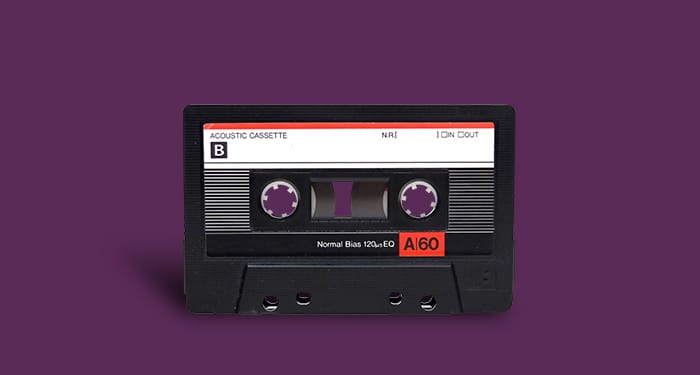
1964: 8-Track Tape
The 8-track tape was a collaborative invention between the unlikely trio of RCA Records, Lear Jet Company, and Ampex Magnetic Tape Company. This may seem like somewhat of an odd group, but Bill Lear of Lear Jet Corporation, along with his employee Richard Kraus, were responsible for designing the cartridge for 8-track tapes.Lear, who manufactured private, luxury aircrafts, had an interest in audio and previously tried to create an endless-loop wire recorder in the 1940s.The benefit of 8-track tapes over the compact cassette was their ability to house 8-parallel soundtracks with four corresponding stereo programs — they could play a lot of music in a relatively small package.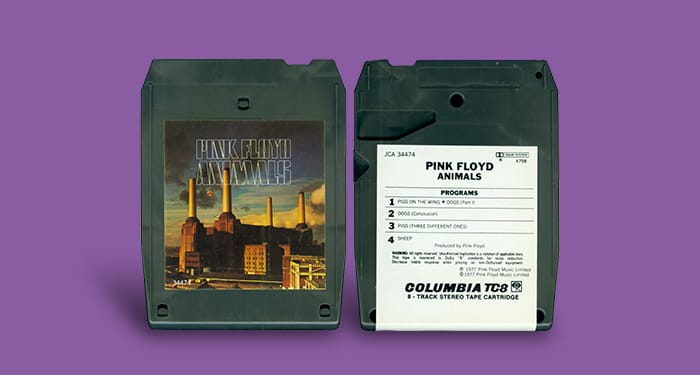
1972: Floppy Disk
Floppy disk’s are normally associated with data storage for desktop computers, but during the ’80s and ’90s a select-few artists began releasing albums on this somewhat unconventional format. IBM introduced the 8-inch floppy disk to the tech world in 1972, which was followed with a 5¼-inch model in 1976, and finally replaced with a conveniently-sized 3½-inch format in 1982.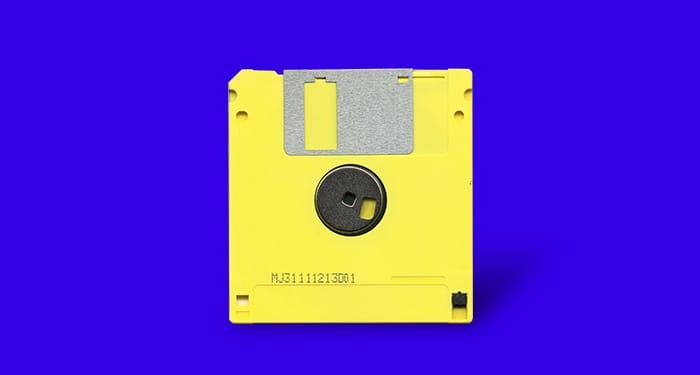
1982: Compact Disc
In 1974, Philips (yes, the same Philips of tape fame) had the initial idea for CDs as a replacement for records and cassettes. During the same time, Sony was also working on their own prototype (CD wars!). Sony’s offering was first demoed in 1976.Eventually the two companies came together and CDs were officially launched as a viable format in 1982. Sony also introduced the first ever CD player that year, the CDP-101 Compact Disc Player, which cost $1000!With CDs also came portable CD players, CD-ROM drives, writable CDs and the 16-bit/44.1kHz benchmark for audio formats, which all had their own effect on how we listen to music. CDs also brought together the best of every format that came before it: high-quality audio, compact, portable, writable and inexpensive.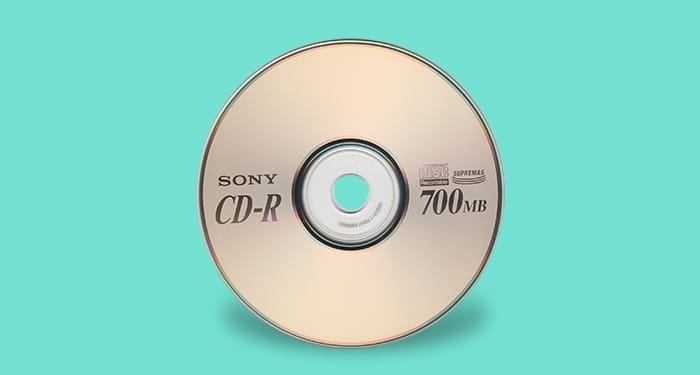
1992: MP3
The MP3 was originally developed in the the early ’80s by researcher Karlheinz Brandenburg. His post-doctoral work at the AT&T Bell Labs expanded on pre-existing codecs for compressing audio. In a strange twist, Brandenburg chose Suzanne Vega’s1987 hit, “Tom’s Diner” as a test song to perfect the MP3.But it wasn’t until 1992 that the MP3 went mainstream, and not until 1999 — with the creation of Napster — that the format really caught fire. Napster allowed for free peer-to-peer file sharing of the MP3 audio file that resulted in widespread copyright infringement and understandable outrage from the music industry.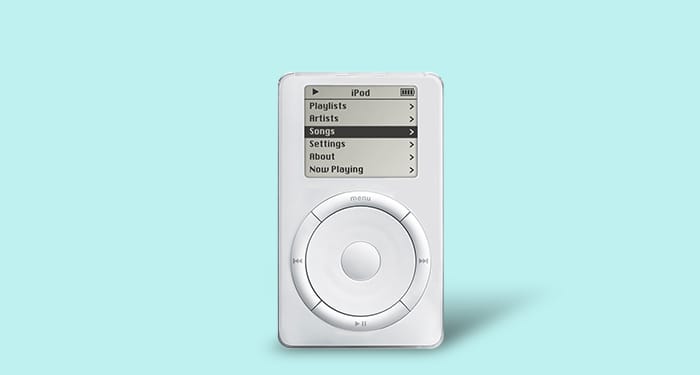
2002: Streaming
With 24/7 internet accessibility expanding thanks to mobile, developers and entrepreneurs saw the opportunity for something big: the possibility of listening to, and discovering, new music without having to actually download files or purchase songs.Additionally, streaming platforms aimed to (hopefully) make digital music a sustainable business model for everyone involved. In many ways it has, but there’s still a long way to go.The release of the iPhone in 2007 is what really caused streaming and internet radios popularity to skyrocket. Apps that were previously desktop only, were now available at the palm of your hand.