

New Youth Music Report Reveals How Live Music’s Normalized Practices Create Structures of Harm for Young Artists and Audiences
A new research report published by Youth Music entitled “Just The Way It Is?” draws a stark picture of how the UK’s live music ecosystem continues to reproduce conditions that expose young creatives — and often young audiences — to discrimination, exploitation, and unsafe working environments.
Built from testimony of 19 young people across the industry, the report illustrates how what many dismiss as “just the way it is” amounts to a pattern of normalized harm woven into the fabric of live and grassroots music culture.
Read the full report, “Just the Way It Is” here.
“They are expected to ‘grow a thick skin’ and ‘get on with it’.”
At the foundation of this cycle is a culture of low and unpaid work, which forces young musicians, engineers, and promoters to accept unsafe gigs, excessive hours, or unclear pay just to stay afloat. With many frontline opportunities clustered in costly cities and often tied to informal arrangements, working-class and marginalized creatives face heightened precarity.
Participants describe hidden hours, months-late payments, and being pressured to accept ticket-split gigs that shift all financial risk onto artists.
These inequities deepen when paired with unsafe and inaccessible live environments. From lone late-night travel to studios and venues lacking basic safeguards, to festivals offering no proper accommodation or risk management, the report documents a sector where safety planning is inconsistent or nonexistent.
Disabled young creatives report being denied essential access accommodations — sometimes because ramps “look ugly” — while others recount sleeping with alarms or makeshift weapons when performing at festivals or late-night gigs.
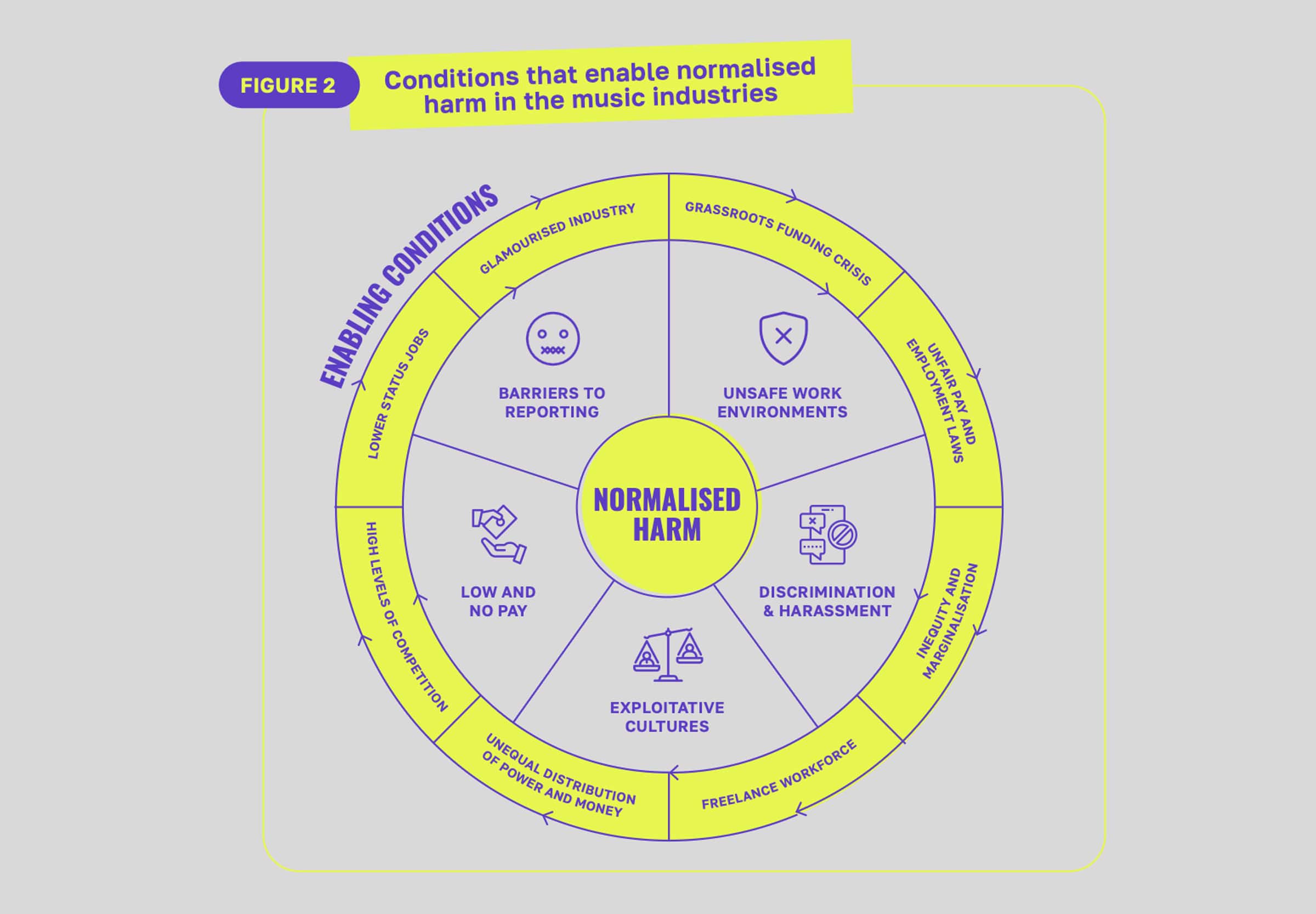
Layered onto this are widespread experiences of discrimination and harassment, particularly targeting women, LGBTQ+ creatives, disabled musicians, and people of minority ethnicities. Harassment ranges from misgendering and unwanted touching to coercive behaviour by senior collaborators. Because many meetings happen in pubs, bars, or private studios, and because work often relies on informal relationships, young creatives face blurred boundaries and very little accountability for those who cross them.
“Being young in the music industry… this is sadly just to be expected. That’s just the way it is.”
The report further outlines how exploitative cultures persist through the misuse of NDAs, vague contracts, and power imbalances. Young artists describe losing access to their own recordings, being misled about job roles, or being pressured into signing documents they were not allowed to show to family or advisors — all conditions that leave them vulnerable to predatory actors.
Finally, even when harm occurs, reporting pathways are limited or actively discouraged. Many venues lack procedures entirely, while others pressure young workers into silence “to protect the brand.” Freelancers — who make up a substantial share of live-sector labour — are especially vulnerable, often having no HR contact, no formal protections, and no assurances that reporting won’t cost them future work.
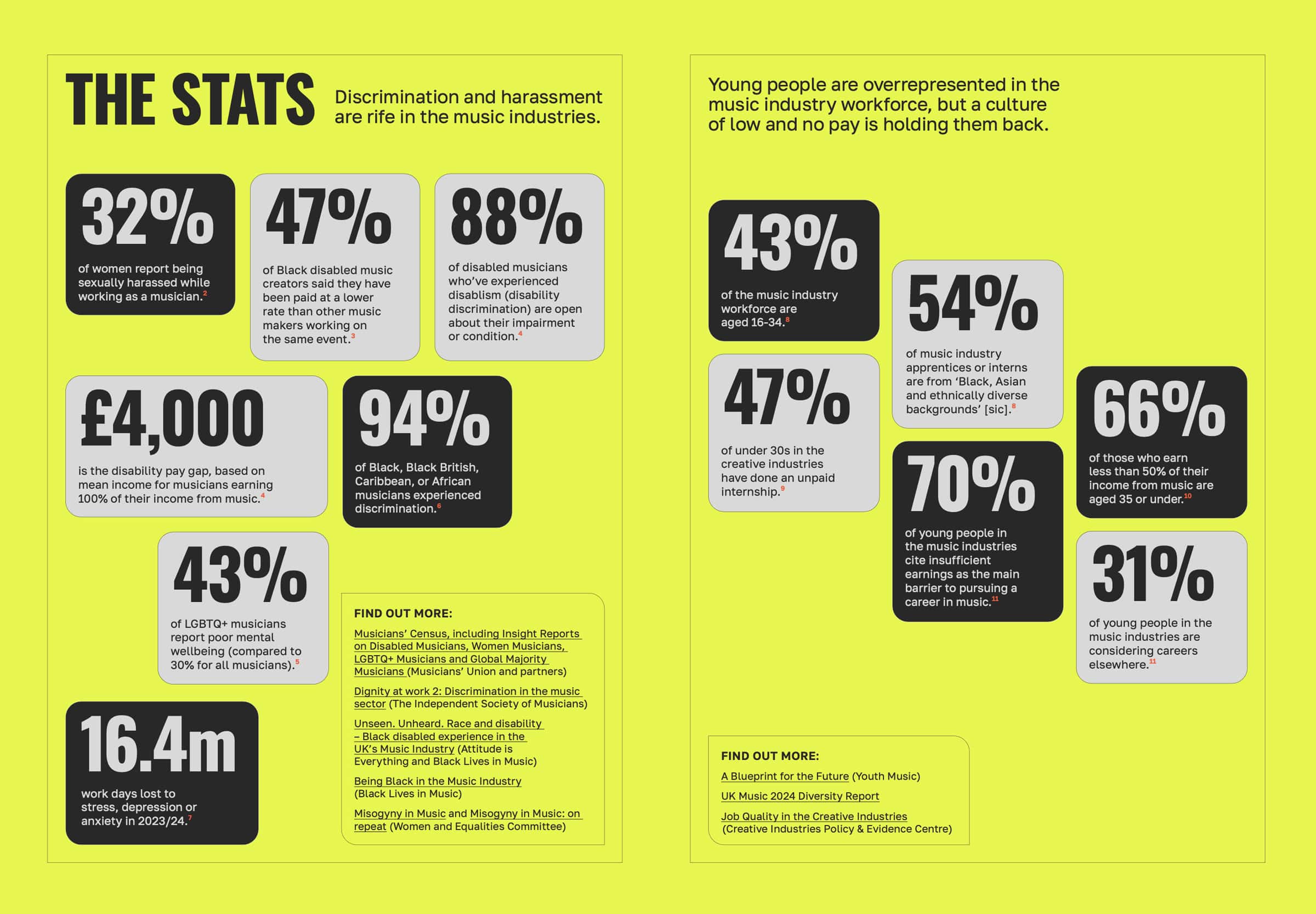
Youth Music’s conclusion is that these harms are not isolated incidents but structural patterns, rooted in chronic underfunding, informal labour practices, and longstanding inequities that the live music sector has failed to meaningfully address.
Yet this report also highlights the resilience of young creatives — building peer-support networks, relying on instinct, and identifying pockets of good practice — as a hopeful sign of how change can take shape from the ground up. It calls for coordinated action from government, funders, venues, promoters, and industry employers to strengthen pay standards, formalize safety expectations, and embed equity and accountability into every layer of the live music ecosystem.
Download and read the full report, “Just the Way It Is?” here.
And if you’ve got teenage or slightly older children, please have a look at Youth Music’s “A Young Person’s Guide to Staying Safe in the Music Industry” here.