

Why the Middle-Class Nightclub is Dead: Inside the Bifurcation of Party Culture
By Daniel Alexis of Midnight Rebels
In the summer of 2024, a UFO was spotted hovering over Es Vedrà, the magnetic rock off the coast of Ibiza. The footage went viral immediately. It was shaky, grainy, and terrifying. It was also, as it turned out, complete bullshit.
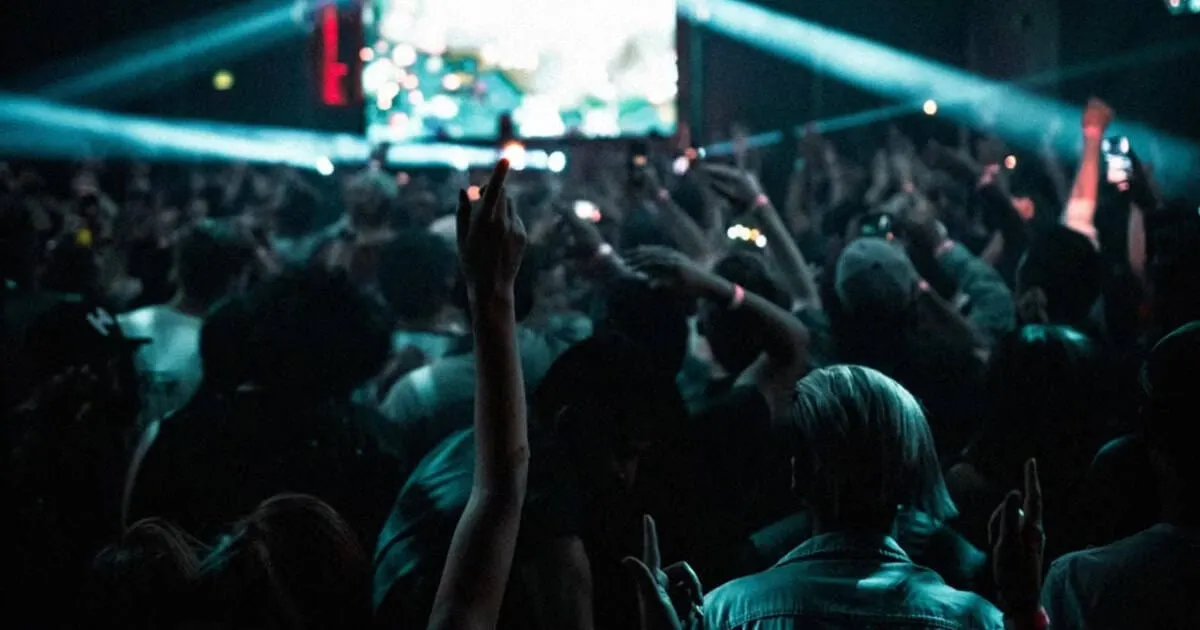
The “aliens” were a marketing stunt for ****, the world’s first self-proclaimed “Hyperclub,” fronted by none other than Will Smith. The stunt worked perfectly. Millions of views later, the club opened to a crowd that didn’t just come to dance — they came to document. Reviews from the opening described a production of “arena scale” where the “majority of the crowd was filming,” leaving the actual atmosphere feeling “disconnected.”
Welcome to the schizophrenic reality of nightlife in 2025. The party has bifurcated. We are witnessing a violent split in the culture, tearing the industry into two mutually exclusive worlds: the Content Palace, where the phone is the guest of honor, and the Sanctuary, where pulling out a camera is social suicide.
The Rise of the “Content Palace”
If you’ve walked into a new venue in Orlando, Dubai, or Las Vegas recently, you’ve noticed that something feels… staged. That’s because it is.
Venues like The Eye in Orlando aren’t just restaurants or lounges; they are “immersive experiences” designed with the explicit goal of feeding the content machine. The lighting isn’t calibrated to make you look good to the person standing next to you; it’s calibrated for the CMOS sensor in an iPhone 16. We’re seeing the rise of “High-CRI” LED systems that banish the unflattering shadows of the old-school disco in favor of a soft, studio-quality glow that mimics the “Golden Hour” at 2 AM.
This is the Attention Economy in bricks and mortar. The business model is simple: outsource your marketing to your customers. Every time a “micro-influencer” posts a story from the bathroom — which now likely features ring lights and “infinity mirrors” — the venue gets free ad space.
But it’s getting weirder. We aren’t just talking about “Instagrammable walls” anymore. In 2025, venues are installing full-blown “Content Creation Studios” inside the club. Places like Studio 1104 and various hotspots in Nashville now offer soundproofed booths and green screens inside the venue, so you can film your “GRWM” (Get Ready With Me) or a chaotic vlog without the nuisance of background noise.
The vibe shift here is palpable. It’s no longer about the music. It’s about “Main Character Energy.” But this narcissism has consequences. The backlash against “nuisance influencers” — streamers who shove cameras in strangers’ faces for clout — is reaching a boiling point. In Japan and Thailand, locals are cheering as streamers get kicked out of bars for disrupting the peace.
The Sanctuary: Paying for the Luxury of Nothing
On the other side of the divide, a new form of elitism is emerging. If the Content Club sells visibility, the Sanctuary sells the rarest commodity left on earth: privacy.
In Amsterdam, The Offline Club has turned “doing nothing” into a subscription service. For about €24.50 a month, members pay for the privilege of sitting in a room where phones are banned, reading books, and engaging in that archaic activity known as “talking to people.” It sounds like a joke — paying to not use the device you pay to own — but in an era of constant surveillance, disconnection is the new Louis Vuitton.
For the ultra-rich, this privacy costs significantly more. Kith Ivy in New York reportedly charges membership fees upward of $36,000. San Vicente Bungalows in West Hollywood has a privacy policy so draconian it would make the CIA blush. They don’t just put a sticker on your phone; they actively hunt down leaks. If you gossip about who you saw there, you’re out. Permanently.
This isn’t just about being snooty. It’s about “The Vibe.”
Head to Amber’s in Manchester or Moon Club in Bristol, and you’ll find the underground resistance. Here, the “No Photos on the Dancefloor” rule is strictly enforced. It’s a return to the ethos of Berghain, but it’s spreading.
The enforcement mechanisms vary. Some spots use the “sticker method” — a piece of tamper-proof tape over your lens. Others are going harder, employing Yondr pouches that physically lock your phone inside a neoprene case. The psychological effect of the pouch is profound. Users describe an initial spike of anxiety — the “phantom limb” syndrome of reaching for a phone that isn’t there — followed by a strange, euphoric release. When you can’t record the drop, you have to actually feel it.
“Unlocking the phones was like breaking a spell,” one clubgoer noted after a phone-free event. “Until then, it felt like everyone… was part of a single organism.”
The Luddite Kids Are Alright
Perhaps the most surprising twist in this saga is that the drive for disconnection isn’t just coming from grumpy Gen X-ers. It’s coming from the kids.

In New York, the Luddite Club — a group of teenagers who have ditched their smartphones for flip phones — meets in parks to read Dostoevsky and sketch, actively rebelling against the algorithmic silos of their peers. They are the canary in the coal mine. They’ve realized that the “Hyperclub” experience is a hollow loop of performative joy, and they’re opting out.
The Death of the Middle
So, where does this leave your local dive bar or the average Saturday night club?
Ideally, nowhere. The market analysis for 2025 shows a “classic bifurcation.” The middle is dying. Venues that try to do both — allow phones but try to keep it “cool” — are failing. They are the “conflict zones” where dancers getting lost in the music collide with influencers filming a TikTok dance, creating a friction that kills the vibe for everyone.
By 2030, the split will be complete. You will either go out to Broadcast — entering a venue that is essentially a mixed-reality film set, armed with AR glasses and AI-generated backdrops — or you will go out to Disappear, entering a Faraday cage where the outside world ceases to exist.
The choice is yours. Just don’t try to livestream from the dark room. You might get punched in the face, or worse — banned for life.
Daniel Alexis, also known as DASD, is a bedroom DJ and music producer from Manila, and an IT student who uses the power of web to express different insights and perspectives through writing.