


In a surprising turn that marks a dramatic inflection point in its 25-year history, Napster — the music streaming service once synonymous with digital access — has abruptly ceased its core music playback operations.
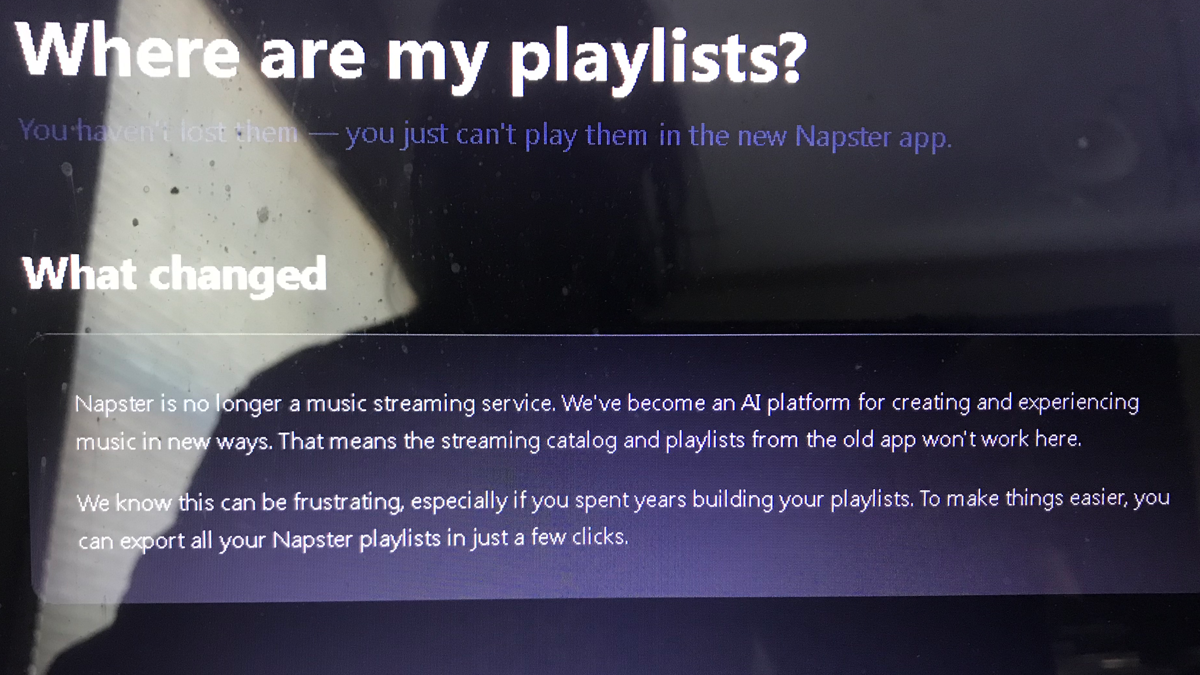
What many loyal subscribers woke up to in early January was not just a service outage, but a fundamentally different company. A splash screen replaced the familiar music player with the message: “Napster is no longer a music streaming service. We’ve become an AI platform for creating and experiencing music in new ways.” This sudden pivot has left long-time users stunned and scrambling for alternatives, as years of playlists and curated libraries became inaccessible within the app.
The shift reflects Napster’s transformation over the past year. Once one of the first fully-licensed digital music services with over 110 million tracks and millions of subscribers worldwide, Napster was acquired for $207 million by Infinite Reality in March 2025, a tech company specializing in artificial intelligence and immersive digital experiences.
The acquisition was originally framed as an opportunity to expand Napster beyond streaming — incorporating virtual listening parties, interactive fan engagement, and immersive 3D environments to bridge music with social and creator-centric technologies.
That larger vision has now taken a hard turn. Instead of a gradual integration of new features, the core streaming service itself has been dismantled. Users were directed to third-party tools like TuneMyMusic to export their playlists and migrate them to other platforms — a gesture many industry observers see as too little, too late.
The abrupt shutdown has ignited frustration across social media and Reddit communities, with subscribers reporting the sudden disappearance of their music libraries mid-use and long-cultivated playlists effectively lost without warning. Many expressed disappointment after years — even decades — of loyalty, with some users vowing to move to competing services such as Apple Music or Spotify.
Napster’s leadership has defended the pivot as embracing “a new phase” of user interaction where artificial intelligence plays a central role in music creation and discovery, rather than passive consumption. Central to this new strategy are AI-powered tools and digital assistants designed to help users brainstorm, plan, learn, and create. The company has already rolled out offerings like Napster View, a combination of proprietary hardware and AI software optimized for Mac devices, along with animated AI companions and digital twin avatars.
Some see Napster’s abrupt transformation as symptomatic of wider pressure on legacy digital services to reinvent themselves amid the rise of generative AI — a shift that, in Napster’s case, has come at the cost of the core product that built its brand.