

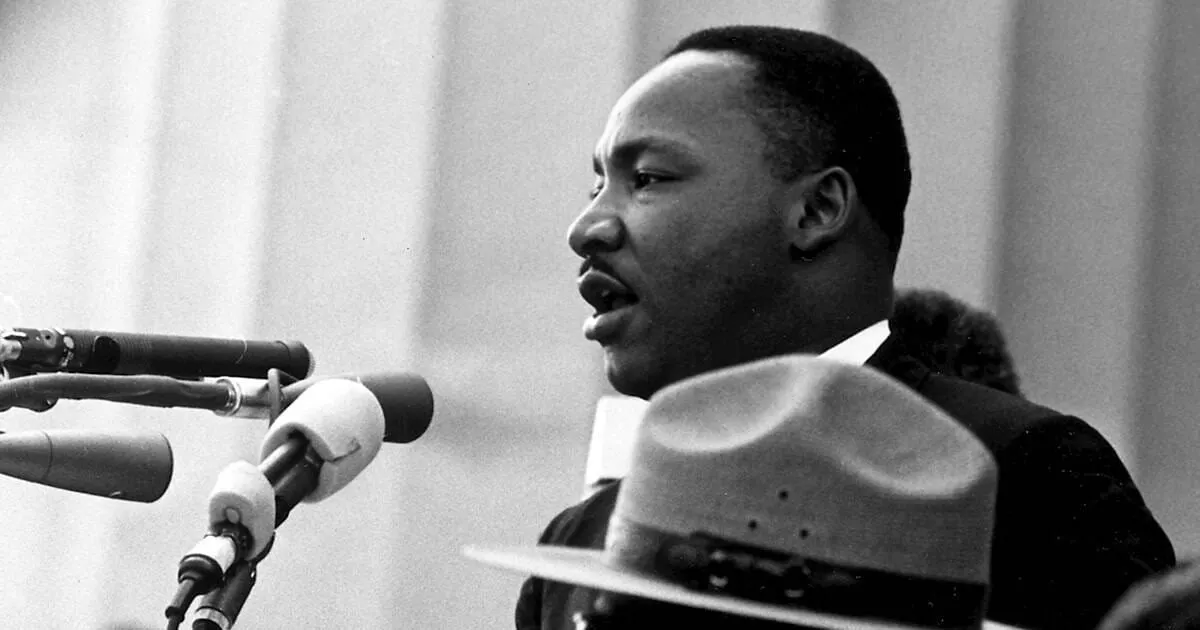
Martin Luther King Jr. was not only one of the defining moral leaders of the 20th century — he was also one of its most powerful cultural catalysts. His vision of justice, rooted in nonviolence, collective dignity, and the radical belief that America could be reshaped through empathy and courage, reverberated far beyond politics and into the arts. King understood the power of music and culture as tools for unity and persuasion, often invoking spirituals, hymns, and folk traditions in his speeches to reinforce a shared emotional language.
Throughout the Civil Rights Movement of the 1960s, music functioned as both sustenance and strategy. Gospel, soul, jazz, and folk became vehicles for protest and hope, carrying messages that speeches alone could not. Artists like Sam Cooke, Nina Simone, Curtis Mayfield, and Marvin Gaye translated King’s ideals into sound — sometimes through uplift, sometimes through grief, sometimes through righteous anger — but always with an eye toward social transformation. Their work didn’t simply respond to King’s leadership; it extended it, reaching audiences that marches and sermons could not.
In the decades following King’s assassination in 1968, his influence only widened. Rock, hip-hop, and R&B artists continued to draw from his words and worldview, using music to challenge injustice, memorialize sacrifice, and demand progress. Songs inspired by King or shaped by his legacy became rallying cries and reminders that the struggle for equality is not confined to a single era.
Musicians have helped carry King’s unfinished work forward, turning his dream into a living, evolving soundtrack for change. Here are 12 songs that celebrate and continue Dr. King’s enduring legacy:
1. Billie Holiday – “Strange Fruit” (1939)
We start with a song that was recorded decades before King’s rise to prominence. “Strange Fruit” in particular exposed the brutality of racial violence in America and was a powerful expressive force within the Black American community that influenced a number of other artists from Nina Simone to Bob Dylan to Lauren Hill. Widely regarded as one of the most influential protest songs ever written, the song helped establish music as a vehicle for moral confrontation and social truth. Its influence shaped the cultural landscape that made the Civil Rights Movement possible.
2. Sam Cooke – “A Change Is Gonna Come” (1964)
Written in response to personal experiences with racism in the American South, and inspired by King’s famed “I Have a Dream” speech in 1963, “A Change Is Gonna Come” became one of the defining anthems of the Civil Rights era. Its message of inevitable progress closely mirrors Martin Luther King Jr.’s belief in moral arc and historical justice. The song’s blend of vulnerability and hope gave emotional voice to a movement demanding dignity and equality.
3. Curtis Mayfield – “People Get Ready” (1965)
“People Get Ready” draws on gospel traditions to express faith in collective action and moral awakening. Its message aligns closely with King’s emphasis on unity, nonviolence, and spiritual resolve. The song became both a hymn and a rallying cry during the height of the movement as King Jr. named the song the unofficial anthem of the Civil Rights Movement and often used the song to get people marching or to calm and comfort them.
4. Nina Simone – “Why? (The King of Love Is Dead)” (1968)
Recorded just days after King’s assassination, Nina Simone’s performance captures grief, fury, and disillusionment in real time. Rather than offering comfort, the song confronts listeners with the consequences of violence and injustice. Simone’s raw delivery reflects the emotional rupture felt across the Civil Rights Movement in 1968.
5. Oliver Nelson – “Martin Was a Man, A Real Man” (1970)
Composed in the aftermath of King’s assassination, Oliver Nelson’s tribute offers a moment of quiet reflection rather than overt protest. Through restrained jazz orchestration, the piece mourns King’s humanity as much as his leadership. Lyric-less, it stands as one of the most understated yet emotionally profound musical responses to his death.
6. Marvin Gaye – “What’s Going On” (1971)
Marvin Gaye’s landmark single expanded the language of soul music to include social inquiry and moral urgency. Though released after King’s death, it reflects the world King sought to build — one rooted in empathy, peace, and shared responsibility. The song helped redefine how mainstream artists engaged with political and social issues in the public eye.
7. Stevie Wonder – “Happy Birthday” (1980)
Stevie Wonder wrote “Happy Birthday” as part of a public campaign to establish Martin Luther King Jr. Day as a federal holiday. The song transformed celebration into activism, turning radio airplay into political pressure. It remains one of the clearest examples of popular music directly influencing U.S. civil rights legislation.
8. U2 – “Pride (In the Name of Love)” (1984)
“Pride (In the Name of Love)” explicitly memorializes Martin Luther King Jr. and his commitment to nonviolent resistance. By framing King’s sacrifice within a global rock context, U2 introduced his legacy to a new generation. The song emphasizes love as a radical and enduring political force.
9. Public Enemy – “By the Time I Get to Arizona” (1991)
Public Enemy released this track in response to Arizona’s refusal to initially recognize Martin Luther King Jr. Day. The song’s confrontational tone reflects growing frustration with symbolic gestures replacing meaningful progress. It demonstrates how King’s legacy continued to fuel protest long after the Civil Rights era formally ended.
10. Paul Simon – “So Beautiful Or So What” (2011)
Paul Simon’s song reflects a late-career meditation on morality, contradiction, and the search for meaning in an unjust world. While not a direct tribute, its philosophical questioning echoes Martin Luther King Jr.’s insistence on moral reckoning and personal responsibility. The inclusion of lyrics (“Four men on the balcony / Overlooking the parking lot / Pointing at a figure in the distance / Dr. King has just been shot“) prompts us to question how King’s influence extends beyond protest music into quieter, contemplative forms of artistic expression.
11. Common & John Legend – “Glory” (2014)
Written for Ava DuVernay’s major motion picture, Selma, “Glory” explicitly connects the Civil Rights Movement to contemporary struggles for racial justice. The song draws a direct line between Martin Luther King Jr.’s marches and the ongoing fight for voting rights and equality. By blending historical reflection with present-day urgency, it positions King’s legacy as unfinished and actively alive.
12. Kendrick Lamar – “Alright” (2015)
“Alright” emerged as a modern protest anthem amid renewed civil rights activism in the 2010s. Its message of survival and collective resilience echoes King’s belief in hope as a form of resistance. The song demonstrates how the language of civil rights continues to evolve across generations. Indeed this song, and the entire To Pimp A Butterfly record, helped establish Lamar as one of the flag-bearers of this new generation of mass influence, politically active creatives.