I used to live next door to another musician who was young and had ambitions. One time I asked him to join me at an open mic night, figuring it’s easier for us both to hang with a friend than doing that by yourself all night. My neighbor demurred, saying he didn’t think it would be good for his image. Just then I first thought: he’s never going to make it.
If you don’t like playing for 20 people then why do you think you’ll like playing for 2,000 people?
So You Want to Be a Musician
I can't exactly put myself in his head but I think he loved the idea of playing music instead of the reality. Which is totally fine; I'm not writing this to dunk on him. But over the years he had a lot of support from his family, they threw money at photo shoots, a well-paid and well-rehearsed band for an occasional showcase at too big of a theater.
What I didn't see was him playing very often.
Music is hard and only getting harder. We have better tools and more platforms than ever, but record sales are gone, streaming pays very little, and AI is beginning to seep into the creative side. A career in music was always a long shot; now it's an even odder one.
As it turns out, live music is our best hope — I mean that as a musician AND as a fan in the audience. It's the lane to get paid, but it's also where it's a person-to-person business.
This sounds like a downer, that playing live in front of an audience is basically what's left career-wise, but maybe that's a saving grace. It can't be faked or simulated. And there's no AI in the world that's ever going to replace that.
+Read more: "How to Book a 10 City Living Room Tour Without a Booking Agent"
Small Venues
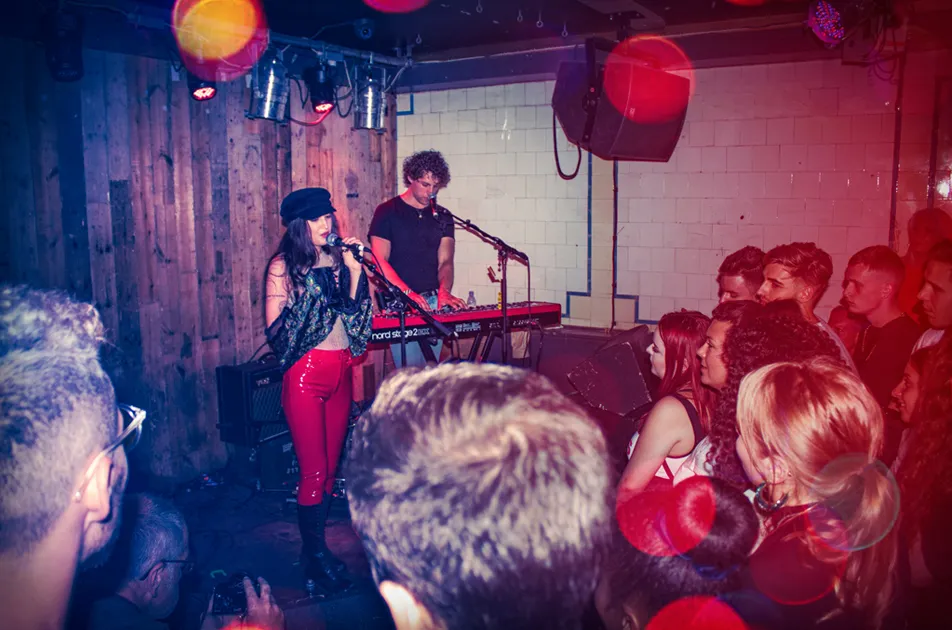
Yes, my neighbor not wanting to play an open mic makes some sense. It's not glamorous. Sometimes you're just playing for other musicians at the open mic. Sometimes it's just plain annoying.
But there's an incredible skill you develop at an open mic. You learn how to win over an audience that does not want to be won over. You need to make them listen to you. Counterintuitively, getting louder is not the way — getting quieter or more intense sometimes is your best path to being compelling.
I've learned to like going in solo.
Yes, in The Bigfellas and in The Water Spots the camaraderie of you and your bandmates doing battle is fun as hell and a great luxury. If something is lame, you can laugh it off together. When you're solo, that's not easy. When you get an indifferent audience, it's very easy to question why the hell you're doing it.
But sometimes attitude is everything and that's what you learn on the job. Just like being a cashier at CVS can suck, the day goes by so much faster and better for the clerk that chooses to engage with the customer and he or she almost decides to have a good night. A solo musician can just "get through" the bad gig — or instead find a couple of people or a couple of moments in it.
I used to play my faux urbane Randy Newman / Ben Folds solo piano at a residency at a dive bar. And once I just decided to sometimes play what I wanted, even if it's a Rufus Wainwright ballad, that would be my one for me as opposed to a Backstreet Boys or Elton John singalong for them - more times than not, I'd find a great response from a couple of barflies about the Rufus Wainwright thing. It's amazing.
This Life Isn’t for Everyone
Weathering rejection is never fun. But it's what separates those who survive in creative work from those who don't. Jerry Seinfeld, as a very successful comedian, was frequently asked by aspiring comedians if he had any advice. He would always respond:
"Get out of the business. Don't do it."
Is it because he hated comedy or didn't think anybody younger than he had any talent? Nope. The point was anybody who would be dissuaded by that advice has no chance of making it, so his response was a shortcut response to weed out people who didn't have the temperament.
What's the common element you can determine about successful artists? They all had obsessive drive. Pick any famous artist you don't like in any field (even if they got some good breaks0 you've still got to admit that they worked their asses off.
The question about those successful artists is not what would it take for them to succeed but instead: what would it have taken for them to stop trying?
The extra effort it takes to succeed, even on some barely visible low level victories I've had in the arts; it doesn't feel like work. You can't control how an audience reacts to your work and you can't control your "lucky" breaks, but you sure as hell can outwork the other guy.
That said, if you can apply that level of work to sales or investing, there's definitely a better future available to you than in music.
Most artists are kind of missing the gene for going to law school, being a great accountant or being a data scientist. Ironically, in this new era of DIY-everything artists, every artist does have to become a business which involves organization, marketing savvy, and all kinds of non-artist behaviors. It's tricky. Even so, none of these obstacles matter if you truly love playing.
+Read more: "Yes, 'Great Things' Really Do “Start in Little Rooms."
The Takeaway
If you don't really love performing — working small rooms, the load-in and load-out, the indifferent crowds, the clinking glasses during your ballad — it's hard to imagine enjoying all of the other stuff later. If you can't enjoy that Rufus Wainwright moment when you're playing, then is it even fun?
And if it's not fun, what's the point? If you don't love this start of a music career — then why would you love the rest of it?
Charlie Recksieck is a musician, composer, and writer-for-hire focused on music, culture, and the realities of today’s creative economy. As a songwriter, he’s been called “the stupid man’s Randy Newman,” which he considers a fair warning label. Check out Charlie's music at The Bigfellas.