

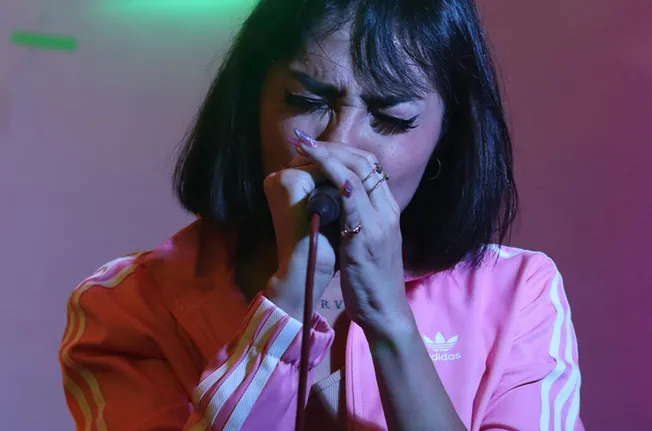
Walk into any neighborhood bar on a Thursday night and you’ll see it: a shaky mic stand, a glowing lyrics screen, a half-drunk, barely attentive crowd, and someone summoning the courage to sing their heart out to a room that didn’t necessarily ask for it.
It might not look like "artist development;" but in many ways, karaoke is one of the most effective (and accessible) forms of live performance training available to amateur and working vocalists alike.
For independent artists looking to sharpen their on-stage presence without burning through tour budgets or waiting for booking emails, karaoke offers something rare: repetition, exposure, and real audience feedback — all in one night.
Here’s why you could argue that karaoke makes you a better live performer.
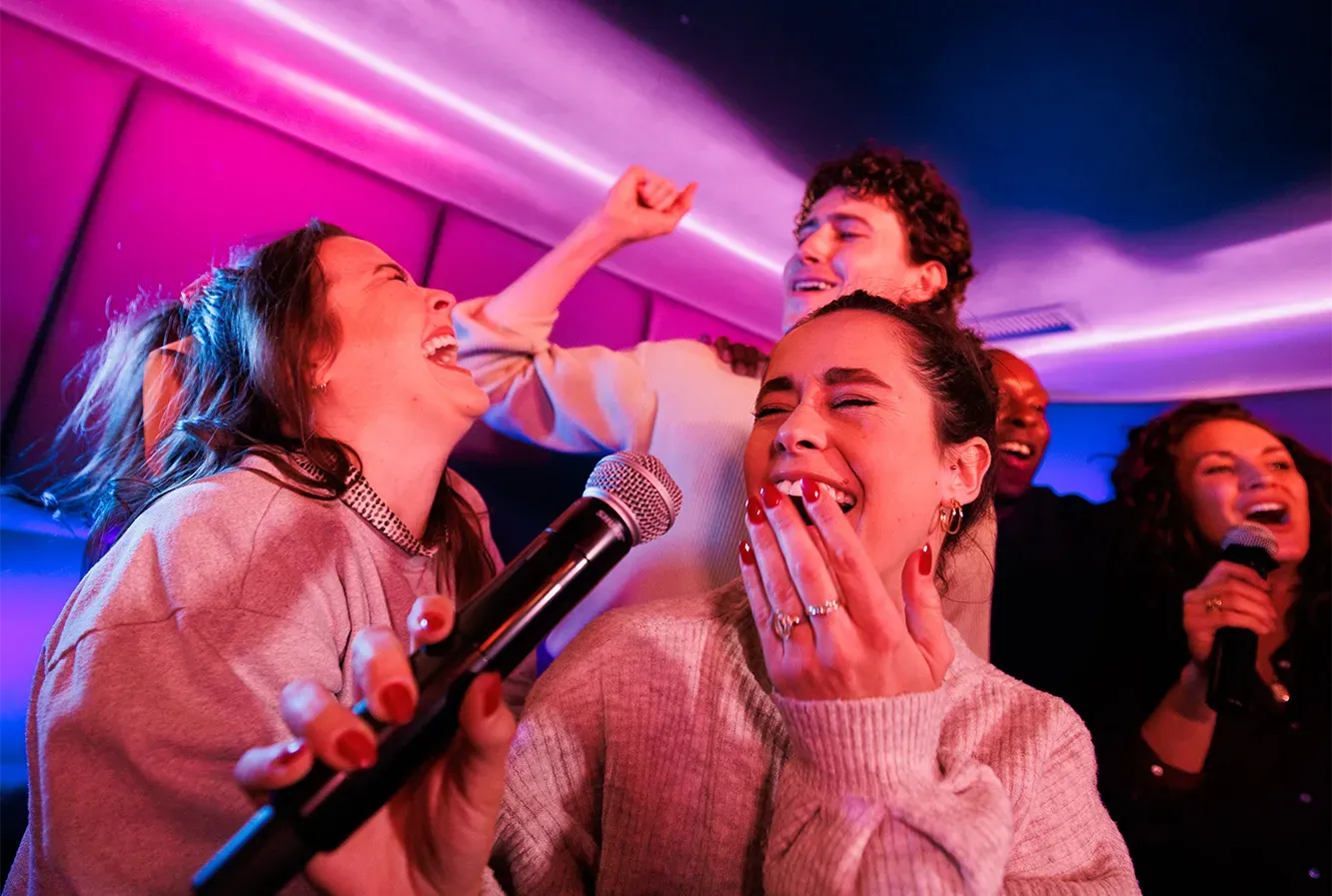
1. It Forces You to Perform Without a Safety Net
On a karaoke stage, there’s no band to lean on, no backing vocalist to smooth out rough spots, and no weeks of rehearsals.
That kind of exposure builds resilience quickly, and helps one gain a bit of composure and comfortability in unpredictable spaces. Touring artists spend years learning how to handle the adrenaline spike of stepping on stage. Karaoke compresses that experience into three-minute drills.
You learn to manage nerves in real time — and to keep going even when your voice shakes in the first verse.
+Read more: "Building Your Confidence As A Beginner Singer"
2. You Develop Crowd-Reading Instincts
Karaoke audiences are unpredictable. Some are locked in, some are chatting at the bar. Some might be brutally honest if you ask for feedback (or receive it anyway), and some are just always going to be enthusiastically supportive.
Navigating that variety of vibes teaches you a crucial live skill: how to read a room.
You begin to sense when to play it straight, when to lean into humor or deprecation (which can be connective!), when to move more or use stillness as a tool, and when to simplify and focus on intimacy. The stage is a powerful place to stand, and it takes time to learn how to wield its powers.
Independent touring artists know this well — energy management can determine whether a small venue show thrives or flattens. Karaoke gives you reps in that exact muscle.
3. It Sharpens Microphone Technique
On that note — sort of like the "10,000 hours rule," unlike rehearsing at home, karaoke puts your voice through a live PA system — often an imperfect one at that — which is an environment you simply need to immerse yourself in.
You become aware of things like mic distance, breath noise and the shape of it coming through the speakers, your plosives, projection versus shouting, etc. You quickly learn that yelling isn’t the same as singing loud. You learn how subtle mic placement can change tone and control.
Those are the same fundamentals arena artists refine over years of touring. Artists like Lady Gaga and Ed Sheeran built early chops performing in unpredictable rooms long before headlining major venues.

4. It Strengthens Pure Stage Presence
When you’re singing someone else’s song, you can’t rely on your songwriting to carry you. So what’s left?
- Your body language. Your eye contact. Your facial expressions. Your charisma.
You’re forced to communicate energy largely through gestures, without being able to hide behind the easy intimacy of “this is my story.” That builds transferable presence — the ability to hold attention regardless of material.
5. It Improves Song Interpretation
In a similar vein, singing someone else’s music teaches phrasing, dynamics, and emotional control. It's malleable in a way that's different from the personal connections you hold to your own original music.
As a performer you can feel free to experiment with softening verses or phrases, emphasizing certain notes or melodic phrases, changing the cadence of a line to suit your vocal strong suits.
That interpretive muscle can then be applied to singing your own catalog in different types of live environments, but you need to build that practice first. And karaoke is a great training ground. Many artists discover nuance in their original songs only after learning to inhabit other people’s material first.
+Read more: "Is “Shifting Focus” the Key to Playing With More Freedom on Stage?"
6. It Reduces Performance Anxiety Through Repetition
Performance fear thrives on unfamiliarity. The more often you stand under lights while people watch you, the less catastrophic it feels. Karaoke normalizes exposure.
You make small mistakes and realize that the world doesn’t end, the crowd often barely notices, and in fact sometimes they cheer. That desensitization builds durable confidence. And confidence on stage is cumulative — it compounds over time.
7. It Encourages Risk-Taking in a Low-Stakes Environment
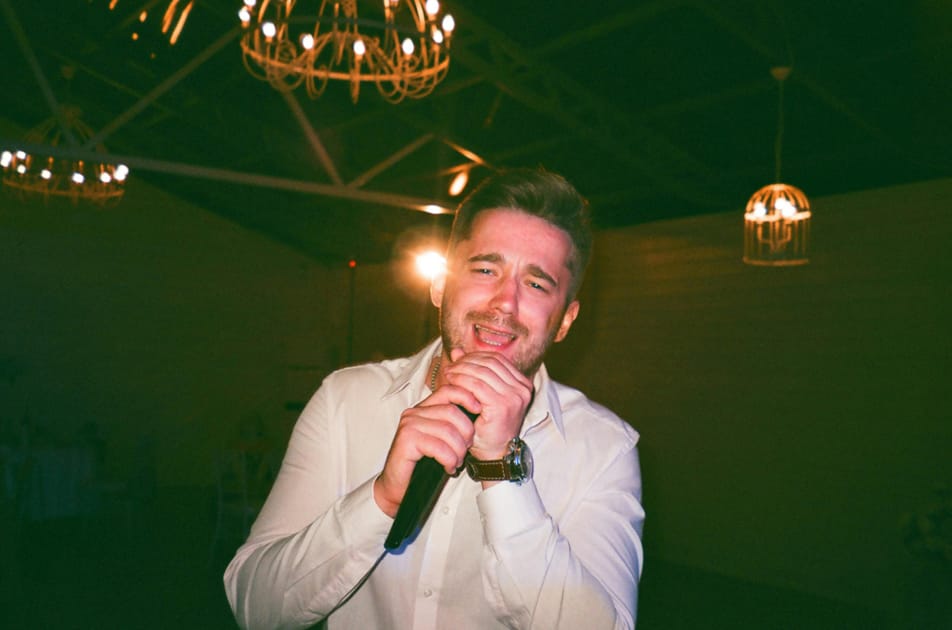
Karaoke audiences expect imperfection. That freedom is powerful.
Try a genre outside your comfort zone, practice your imperfect falsetto, work on belting, experiment with movement.
For independent artists, this is essentially a lab environment. You can test vocal approaches or stage behaviors before bringing them into a paid performance setting. Risk is where growth happens — and karaoke lowers the consequences of failure.
8. It Teaches Adaptability
Karaoke systems glitch. Lyrics scroll too fast. Keys are wrong. Tempos feel off. Learning to adjust on the fly — and keep the audience with you — is the hallmark of a seasoned performer.
Live shows rarely go exactly as planned. The artists who thrive aren’t the ones who avoid mistakes. They’re the ones who absorb them and keep moving. Karaoke builds that flexibility early.
Ultimately, what makes karaoke so powerful is accessibility. You don’t need a booking agent, a marketing budget, Grammy-level original songwriting material, or a built-in fan base.
You just need a microphone and the willingness to step up. And maybe a gin and tonic.