


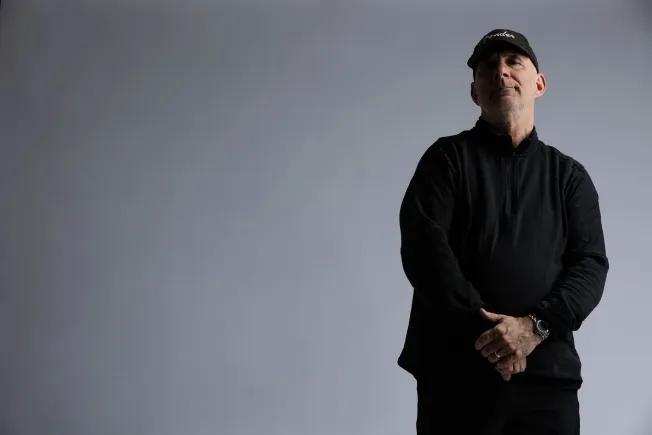
For all who believe in the power of being lifelong learners of the business that has given us and the world so much, Jay Gilbert's keynote at the Music and Entertainment Industry Educators Association is a must read.
Full text:
To the educators, administrators, researchers, and industry professionals in this room — thank you. Thank you for showing up, not just today, but every single day for your students, your institutions, and for an industry that frankly demands more from its participants than almost any other field on earth.
My name is Jay Gilbert. You may know the name from my weekly music industry newsletter and podcast; Your Morning Coffee.
I started the newsletter over a decade ago from my dining room table. It combines three things that I’m very passionate about; music, technology and education. Mike Etchart and I started the companion podcast over 5 years ago. We’ve released nearly 300 regular weekly episodes and another 30 special episodes with smart people like these to break it all down for us.
I’ve been invited to speak at dozens of college music business programs that have incorporated Your Morning Coffee into their curriculum. It’s humbling.
QUICK BACKGROUND
I began my journey as a music student, a singer / songwriter. I played in bands and learned how records were made. I worked at Tower Records to pay the rent — and if you're under 35 and don't know what Tower Records was, that's actually kind of the whole point of this speech.
I eventually got an entry level position with MCA when it was headed by Irving Azoff, before it became Universal Music Group. I worked there for 18 amazing years - I say that like it's impressive. Mostly it means I survived four mergers and outlasted countless organizational charts. 11 years ago I left my last major label gig, with Warner Music Group.
I chose a new path. Reinvention. I helped create a label and artist services company, Label Logic, with two colleagues from Universal, Jeff Moskow and Emily Cagan. I also began private consulting for artists, labels, artist managers and tech startups.
When I made the move to consulting, there was only one other company that I knew of that was calling itself “label and artist services.” (shout out to Fred Croshal). Today, with all of the recent layoffs, there are a lot. I wrote a guest column for Billboard about this very topic just last week.
TODAY: CHOOSING TO EDUCATE
Let me start with a simple observation; The music business has never been easy to understand. It wasn't easy in the days of Tin Pan Alley. It wasn't easy when the majors controlled everything through physical distribution. It wasn't easy when Napster blew the roof off the building. And it is absolutely, unequivocally not easy today — when artificial intelligence is writing lyrics and chord progressions, when a teenager with a laptop and a TikTok account can generate more streams in a week than a mid-level artist with a full label deal — which is either deeply inspiring or deeply depressing, depending on where you are in your career.
And when the contractual and rights landscape has become so layered, so dense, so deliberately complex, that even seasoned attorneys sometimes need a roadmap.
And yet — here we all are. Choosing to educate. Choosing to prepare the next generation for this beautiful, maddening, extraordinary industry. That, to me, is one of the most important callings in music today.
TALENT AND HUSTLE
"Talent matters. Hustle matters... (but) ignorance is expensive"
There's a persistent myth that floats around the music business — and I suspect many of you have heard it from students, from parents, maybe even from colleagues outside our field. The myth goes something like this: "You don't need school for music. You just need talent and hustle." And I want to address that head-on, because there is a kernel of truth wrapped inside a dangerous oversimplification.
Yes — talent matters. Hustle matters. Relationships matter. Timing also matters. But here's what nobody tells the 19-year-old who just signed a publishing deal or a label deal because someone told them it was “standard:” Ignorance is expensive in this business.
It is expensive to not understand how publishing works when you're co-writing songs that go on to generate millions in sync revenue. It is expensive to not understand the difference between a work-for-hire agreement and a royalty-bearing contract when you're a producer just starting out.
It is expensive to not understand how streaming royalty calculations actually work — how pennies on the stream become dollars, or don't, depending on who owns what piece of the puzzle.
It is expensive to not understand metadata — yes, metadata — I promise I did not come to a music educators conference to talk about metadata, and yet here we are, because that's the industry today."
Because when a missing ISRC code or an incorrect PRO registration means money simply disappears into the ether, never to be recovered.
"the music industry is complex by design"
The music industry is, as I said, complex by design. And I want to sit with that phrase for a moment, because I chose it deliberately.
This complexity did not happen by accident. Layers of rights — master rights, publishing rights, sync rights, neighboring rights, performance rights, mechanical rights — were built over more than a century of legislation, litigation, negotiation, and renegotiation. The business model has always rewarded those who understand the complexity and extracted value from those who don't.
EDUCATION IS THE GREAT EQUALIZER
When your students walk out of your classrooms understanding how a label recoups an advance, how a publishing deal is structured, how to read a royalty statement, how to build a sustainable independent business — you are giving them something that no amount of raw talent alone can provide. You are giving them armor.
THE ALGORITHM IN THE ROOM
Now, let's talk about the elephant in the room — or perhaps more accurately, the algorithm in the room. Which, like the elephant, will never forget you but… will probably sell your information.
The music industry in 2026 looks fundamentally different than it did even five years ago. And the pace of change is not slowing down. If anything, it is accelerating.
Consider what your students are walking into:
- Artificial intelligence is now a genuine creative and commercial force — generating music, separating stems, cloning vocal performances, and raising profound questions about ownership, authorship, and compensation that our legal frameworks are still scrambling to answer.
- The creator economy has fundamentally disrupted traditional career pathways. Being an "artist" now means being a content strategist, a brand manager, a data analyst, and a community builder — all at once.
- Streaming economics continue to evolve. We’re teaching Pro-Rata vs User-Centric payout models, evolving rules in how streams are weighted and counted, new battles over streaming rates, and ongoing tension between the platforms, the labels, and the independent community. Even spatial audio like Dolby Atmos and Sony 360, immersive experiences, and live entertainment technologies are reshaping how music is consumed and monetized.
WE ARE THE WORLD
- Global markets — particularly in Africa, Southeast Asia, and Latin America — are producing music that is reshaping global charts and creating entirely new commercial ecosystems that don't necessarily follow the old Western industry playbook.
FUN FACT: According to Spotify’s recent Loud & Clear report, GLOBAL audiences are arriving faster. Within just two years of their debut, artists on average already earn more than half their royalties from outside their home country.
Music is also more multilingual than ever. Songs in 16 different languages reached Spotify's Global Top 50 in 2025 — more than double the count from 2020. And threading through all of this is the constant, urgent question:
How do we prepare students for jobs and career paths that may not fully exist yet?
STAY NIMBLE, STAY RELEVANT
This is where I want to speak directly to my colleagues in this room. We are educators. We love structure. We love curriculum. We love the satisfying feeling of a well-organized syllabus – preferably color-coded.
But let me challenge us today with this thought: If your syllabus from three years ago looks exactly like your syllabus today, something is wrong.
I say that with love and with respect, because I understand the institutional realities we work within. The music industry has changed since I began this speech! I literally had to update my notes for this speech in the Uber on my way from the airport.
Curriculum approval processes are slow. Textbooks go out of date. Tenure and promotion structures don't always reward the kind of rapid, responsive updating that this industry demands.
But our students can’t afford for us to be comfortable.
So what does it look like to stay nimble as music industry educators?
First — treat industry professionals as partners, not just guest speakers.
There is an enormous difference between inviting someone in once a semester to tell your students how great their career has been — and we've all sat through those, including me on the giving end — with practitioners who help you pressure-test your curriculum against the realities of the current market.
Build advisory boards that actually advises. Have real conversations. Ask the uncomfortable question: "Is what we're teaching still relevant? What are you seeing in the market that we're missing?"
Second — integrate emerging issues in real time.
When the AI and music rights conversation exploded over the past few years, that needed to be in classrooms immediately — not waiting for the next curriculum review cycle. When new technologies and disruptions appear, when DSPs change their policies. When new royalty legislation moves through Congress. When a landmark case is decided.
Our classrooms should feel, at least in part, like living newsrooms — places where students learn frameworks for critical thinking while simultaneously applying those frameworks to breaking developments.
Third — teach the fundamentals with ferocious rigor.
Here's the paradox: the faster the industry changes, the more important the fundamentals become.
Copyright law will keep evolving — but students who deeply understand why copyright exists, what it's designed to protect, and how its principles have been interpreted over time will be far better equipped to navigate whatever comes next than students who simply memorized a set of current rules.
"value creation, value capture, and value exchange"
Business models will keep shifting — but students who understand value creation, value capture, and value exchange at a foundational level will be able to adapt across whatever platform or format emerges next.The goal is not to train students for the current music industry. The goal is to develop the critical, analytical, and creative capacity to succeed in the next one.
Fourth — be honest about complexity without creating paralysis.
I've seen two failure modes in music business education. The first is oversimplification — teaching a version of the industry that is clean and linear and reassuring and sending students into a reality that looks nothing like what they were prepared for.
The second is overwhelming students with complexity to the point where they feel the industry is impenetrable, unfair, and not worth trying to navigate.
The sweet spot — and this is genuinely hard to find — is teaching complexity with confidence. Helping students understand that yes, this is difficult, yes, this is layered, yes, there are people in this industry who will try to take advantage of your ignorance — and here are the tools, here is the framework, here is the community, and here is the confidence you need to navigate it anyway.
Fifth — model lifelong learning.
Our students are watching us. Not just what we teach, but how we engage with knowledge. When we demonstrate our own curiosity — when we say in class, "I've been following this new development and I'm honestly still figuring out what it means" — we normalize the reality that in this industry, learning never stops.
Because I publish a weekly newsletter and podcast on the music industry. Every single week I learn something I didn’t know the week before. Sometimes I learn I was wrong about something the week before!
The most successful people I have encountered in music and entertainment are not the ones who knew the most when they graduated from college. They are the ones who never stopped being students of the business.
AND FINALLY... A FEW PREDICTIONS
FANS ARE BECOMING CREATORS
Generative AI platforms and tools are enabling fans to co-create music alongside their favorite artists, blurring the lines between music consumption and creation. Younger generations, who have grown up with technology, view music creation differently than previous generations. These fans are no longer content to passively listen, they want to participate by speeding up, slowing down, reverbing, breaking out stems, remixing, interpolating and reimagining tracks by their favorite artists. Online communities (e.g., Bandlab, Discord servers, Reddit forums etc.) are fostering collaboration among fans to share tools, techniques, and inspiration. Look for new revenue streams from commercialization of fan-made content.
“GIVE ME A GREAT SONG…”
Fans today are drinking from a firehose of new music being released each week. Luminate reported that in 2025, 106,000 tracks were uploaded daily on average. If you take into account platforms like Soundcloud and YouTube, some experts estimate that number nearly triples. Last year, Luminate tracked 253 million tracks (ISRCs). Of that number, 224 million had 1,000 or fewer plays (88%) and ~50 million had ZERO plays (25%).
The barrier to entry has disappeared. Less than 4% of those tracks were released by the majors yet they make up nearly 64% market share. It’s easier than ever to release music globally yet harder than ever to rise above the noise and clutter to gain and grow a real audience.
DIRECT TO CONSUMER (D2C) REVOLUTION
There are so many benefits for artists to develop a robust direct-to-fan relationship, not to replace traditional “middlemen” like labels, distributors, retailers and DSPs, but to supplement and amplify them.
D2C can take the form of website sales, venue sales, fan clubs, and crowdfunding. Artists and their teams are finding a lot of freedom in the products and experiences they offer D2C. They also gain greater control over pricing / margins, capture valuable fan data to foster direct to fan relationships.
I see this often-underutilized revenue stream being taken much more seriously. \
IN CLOSING
I want to close with something a bit more personal: My grandfather was not a music industry professional. He was not an attorney, a label exec, or a streaming consultant. He didn't know what a PRO was. He played the tenor sax in big bands.
But he told me something once that has stayed with me longer than anything I learned in a conference room: 'Music is who you are, not what you do.' I know he was right. I think he'd be both amazed and mildly confused by everything I just described. But I think he'd understand why we're all here.
I think about the students who are sitting in music business classrooms right now. They are passionate. They are creative. They are often willing to sacrifice financial security, stability, conventional career paths — because they believe, deeply, that music matters.
It’s who they are. It’s who you are.
So they deserve educators like you who take that passion seriously enough to give them the truth. The complicated, inconvenient, ever-shifting, beautifully messy truth about this industry.
They deserve to know how money flows and where it gets lost.
They deserve to know how to protect their work and their rights. They deserve to know that independence is viable and how to build it. They deserve to know that the old gatekeepers no longer hold all the keys —and that new gatekeepers are already emerging to take their place.
They deserve to know that a career in music is absolutely achievable — and that it will require everything they have, not just their talent, but their knowledge, their resilience, their adaptability, and their integrity.
That's what we're building here. In these classrooms. In these hallways. In these conference sessions where we push each other to be better. We are not just educators. We are career architects. We are building the infrastructure of individual human lives and, in aggregate, the future of an industry that touches every human being on the planet.
Music is universal. It transcends language, culture, geography, and time.And the business that supports it, that amplifies it, that connects artists to audiences — that business needs brilliant, educated, principled, adaptable people.
People like you.
Connect here with Jay Gilbert