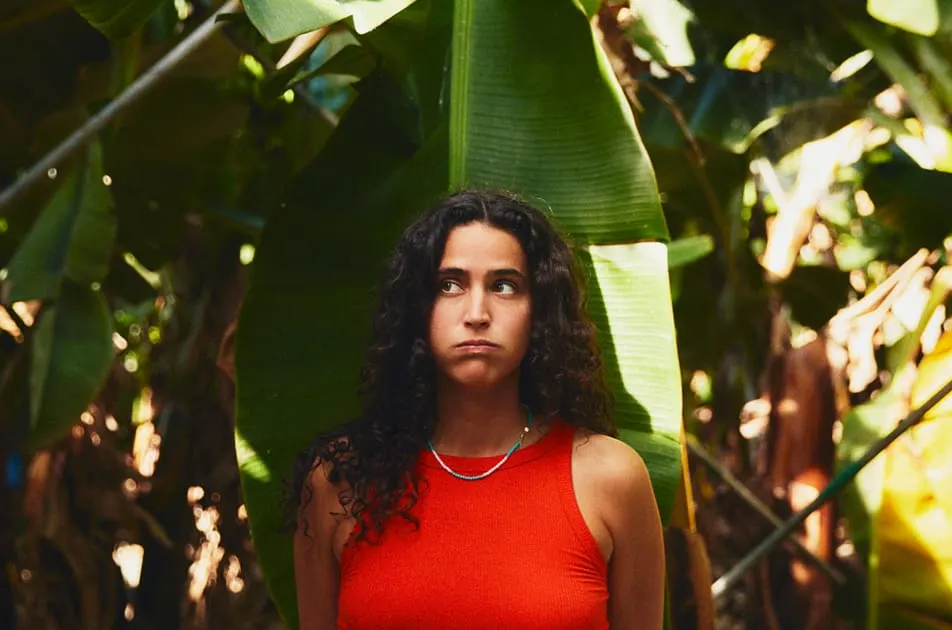


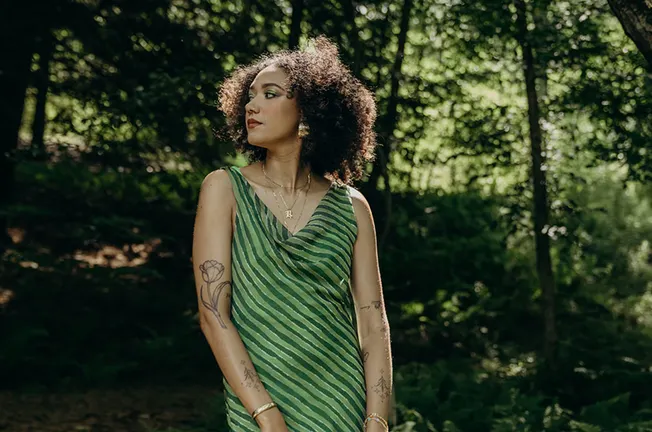
Kimaya Diggs is a Western Massachusetts singer-songwriter, poet, and producer whose new album, Green, came out this month. Written after a period of loss, chronic illness, and rebuilding her voice following surgery, the album finds Kimaya exploring belonging, resilience, and how to remain open to life after it has changed you.
Her upbringing is an important piece of her work as an artist, as she uses creativity as one of the vessels for contemplating her identity. As a Black and Desi artist in a predominantly white region growing up, she has often felt socially isolated while remaining deeply connected to the land, rivers, wildlife, and creative community around her. At its core, Green is an album about place: what makes somewhere feel like home.
Here's our conversation. Enjoy!
Hypebot: Hey Kimaya, thanks for taking the time! How do you write: lyrics first, guitar or arrangement first, or some combination?
Kimaya Diggs: "For Green, I took a new approach to the writing. Instead of waiting for inspiration to strike or the conditions to be perfect, I wrote quickly and intuitively, and actually moved between songs if I ever found myself stuck for more than five minutes."
The process was richly generative, and once I'd amassed a huge number of verses, choruses, and chord progressions, I started putting them together in new ways, cutting things that didn't work, and basically chipping away at this block of material until I'd unearthed the song."
H: Your songwriting is extremely personal. You’ve spoken before about your Black and Desi upbringing in a predominantly white part of Massachusetts. Why is it important to frame and communicate those aspects of your experience and identity through creativity? Does writing ever complicate the relationship you thought you had with those moments in your life?
KD: "Existing as the person I am feels inherently political much of the time. I think that phrase is sometimes overused, but it does capture the fact that when I leave the house, when I'm at my day job, when I'm driving my car, the world engages with me in a specific way that the predominantly white population around me doesn't experience. It gives this outsider feeling, or a sense of being in opposition to the world."
It's not always bad, but it is always loaded, and my day consists of reading the room and constantly weighing if I should stay or go. I don't think this feeling is unique to Black and brown people living in highly white areas – I think that all of us feel like outsiders, and all of us feel isolated at times. I've always thought that, paradoxically, the best way to invite someone into a song and make it feel 'relateable' is to dig into the facets of what makes your own point of view unique."
In my experience, people aren't looking for songs that reflect their broad experience of enjoying a summer day, but they are looking for glimmers of specific things that make them feel seen – like the experience of wanting to memorize the smile of someone you love as the summer sun plays across their face."
H: Have you ever received feedback from listeners or fans who felt seen by your writing?
KD: "I have! In the algorithm age, it's hard to put a lot of stock into streaming numbers or social media followers, so messages from people who have been moved by my work mean the most to me."
It's my personal measure of success: am I reaching people who need this music? Is it connecting with them? If so, I'm happy. The messages mean so much to me that there are some I know by heart and say to myself when I'm feeling a crisis of confidence."
"I think that some parts of being an artist mean that by default there's some important part of your life where you feel like you don't belong... I create to be understood and to be known, and I think that originally came from this sense of not being understood."
H: Belonging seems to be a theme in your work. How has being a musician and artist become a place of belonging, or perhaps not, for you in recent years?
KD: "As a musician, I have two extremes: I like to be anonymous and a cog in the machine in a big choir or ensemble, and I like to do my own thing and make it as weird and theatrical and heartfelt as I want to."
I think that some parts of being an artist mean that by default there's some important part of your life where you feel like you don't belong. Maybe that's just me! But I create to be understood and to be known, and I think that originally came from this sense of not being understood."
H: Congratulations on Green. It’s a gorgeous record. Can you talk about what you wanted to do differently with this recording? What does “green” mean to you?
KD: "Thank you so much, that really means a lot to me and I'm grateful you took the time to bring it into your life! With this album, I wanted to take on the lead producer role, and to engineer more of the record, both of which happened! In the past, when I was just beginning to learn about recording music, I often doubted my own taste, and my lack of technical abilities put a damper on how much control I was able to have over my recordings."
That's not to say I don't love my previous records, but with Green I felt a new sense of agency in my ability to communicate and execute my vision for each song."
To me, 'green' represents the moment in spring when the leaves finally unfurl. It's a short period where the entire landscape is transformed, and it's one of my favorite times of year. It's a moment full of potential and possibility, and I want the album to feel just like that."
H: Do you find creative freedom in the space between taking yourself seriously and throwing caution to the wind?
KD: "For the last several years, I've been committed to not taking myself too seriously. It's a cliché, but losing my mom put so much into perspective. In my music, that manifests as a willingness to play and experiment, to trust my intuition and taste, and most importantly, to trust all of the people I collaborate with."
82 incredible artists contributed to this album between playing on the songs, working on music videos, styling, photos, and so much more, and they're all people whose taste I trust."
H: What animal do you identify with, and why?
KD: "The first thing that comes to mind is a red-tailed hawk, but I'm not sure why. Many of them spend time in my yard, so I get to watch them up close. They're focused, patient, and a little removed from the rest of the forest."
"Seeing someone live, hearing their stories, talking with them after the show – that's the best way to connect, and in that way, I think it's essential."
H: Let’s talk about touring. You have a tour coming up that spans a large part of the country. What are you looking forward to most about this run?
KD: "I'm very excited for the tour! I'm looking forward to meeting bands in new cities, to playing the songs in flexible configurations, and to connecting with audiences in real life. For me, the album is only half of the circle. Closing the circle means bringing it to people in person – it's a completely different experience."
H: You recently supported Mavis Staples and Tank and the Bangas at different shows. What were those experiences like for you as an artist on the rise? What were the biggest takeaways from watching their sets?
KD: "I feel so lucky to have supported so many incredible artists over the years. It's always an honor and a privilege to share the stage and to get to see people at the top of their craft. Watching Mavis is always so emotional for me. She's a true channeler and filled head to toe with incredible power and compassion. She's also incredibly funny! I'll be opening for her again in Washington state in January."
H: Do you think touring is essential for artists today?
KD: "This is a tough one, because touring isn't financially viable for most artists who don't have institutional support. I'm fully independent, funding everything myself through community support, grants, personal underwriting, and putting money back into the business."
But at the same time, there's no better way to truly connect with someone than to play live for them. We hear hundreds of artists a week through our streaming algorithms, and it's rare for one to really catch your ear even if they're all incredibly talented. But seeing someone live, hearing their stories, talking with them after the show – that's the best way to connect, and in that way, I think it's essential."
H: What’s your favorite food to eat after a concert?
KD: "I am the world's biggest fan of Lays salt and vinegar chips."