

Welcome to Lalu's Corner, a monthly column by music and brand partnership agent Lauren Thackray, exploring commercial music applications and sync placements, and the most pertinent takeaways for independent artists.
There's a scene about half an hour into Apex in which Ben fixes Sasha with a look that says everything the dialogue won't.
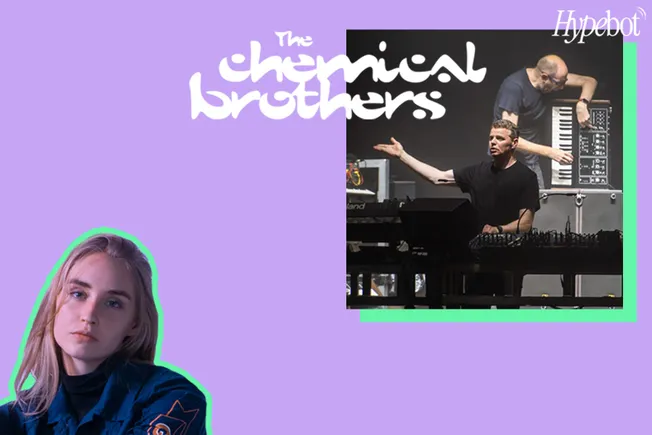
Underneath it: "Go" by The Chemical Brothers.
Not the score. The score is Högni Egilsson's — orchestral, organic, eighteen cues of patient, beautiful work, that elevates the drama in elegant fashion. But "Go" is something else.
A needle drop license. Thirty-odd seconds of a track released more than a decade ago, lifted whole and placed onto a single look. And it's the bit you'll still feel on your way home.
The feeling is the memory
Whether you've seen the film or not, you already know the phenomenon. Ask anyone about a film they loved a year ago and you'll get a feeling long before a synopsis. The body remembers the feeling long after the details have faded.
Music is often how that feeling gets in.
Stranger Things didn't just revive interest in Kate Bush's "Running Up That Hill"; it permanently linked the song to a feeling of courage, sacrifice and survival for a new generation of viewers.
Saltburn didn't leave us quoting the script — it sent "Murder on the Dancefloor" back into charts around the world because one unforgettable scene transformed a feel-good pop record into something darker, stranger and impossible to hear the same way.
You can't manufacture the match
That's the magic of sync when it works. Nobody sets out to create a forgettable placement. Every music supervisor, filmmaker, artist and rights holder is chasing the same thing: the moment where music and picture stop feeling like separate things and become one.
- You can have a brilliant song and the wrong scene.
- You can have a brilliant scene and the wrong song.
- You can have a good song in a good scene and nobody complains.
The placements we remember are the exceptions. The rare moments where a song doesn't simply accompany a scene; it becomes part of how we remember it.
That's art — you can't engineer that match. But you can widen your odds of being in it, and be ready when it lands.
If you're an artist:
The moment doesn't care how big the song was, or how old. "Go" is a decade deep; "Running Up That Hill" was thirty-seven. The track that owns a scene is almost never the obvious single. Make your back catalogue findable for a feeling, not just a genre.
Supervisors often search by emotional brief as much as by genre. They search for menace, for euphoric nostalgia, for eerie-but-pretty. The more discoverable and emotionally searchable your catalogue is, the more chances it has to become part of someone else's story.
If you're a manager:
Chase the right thirty seconds, not just placements. One fused moment is worth more to an artist's profile, and to the next negotiation. And alchemy moves fast, on someone else's timeline. The artists who get the moment are the ones whose rights are clean, whose splits are agreed, who can clear in days, not months.
Friction is how you lose the match before you ever hear about it.
If you're on the licensing side:
The value is concentrated in the rare fusion, much of the long-tail value on Kate Bush or Sophie Ellis-Bextor came from the chart resurgence and social circulation that followed. If your social and UGC rights aren't sorted before the placement airs, you're leaving the largest part of the upside on the table.
The Big-A$$ Takeaway
There's plenty of machinery that's made sync more sophisticated — streaming made every placement global, studios now build soundtracks as campaign assets, artists are hired as composers for their sound, social platforms can turn a single scene into millions of pieces of content. But the machinery isn't the lesson.
The lesson is that the most valuable thing in this business can't be bought or forced. The match between a song and a moment is luck. Being clean, findable, trusted and ready for it is craft. You can't make the lightning strike — but you can spend every day making sure that when it does, it strikes you.
Apex may ultimately be remembered for thirty seconds of a Chemical Brothers track dropped at exactly the right moment. When music and picture truly meet, they create memory — and memory, in the end, is what people carry home.
Lauren Thackray is the Founder of LALU&CO, a music culture agency helping brands build artist partnerships and cultural strategy. Her clients include Unilever, L’Oréal Paris and Heineken amongst others. And via her Substack newsletter, LALU Dispatch, she writes about brands and music.