


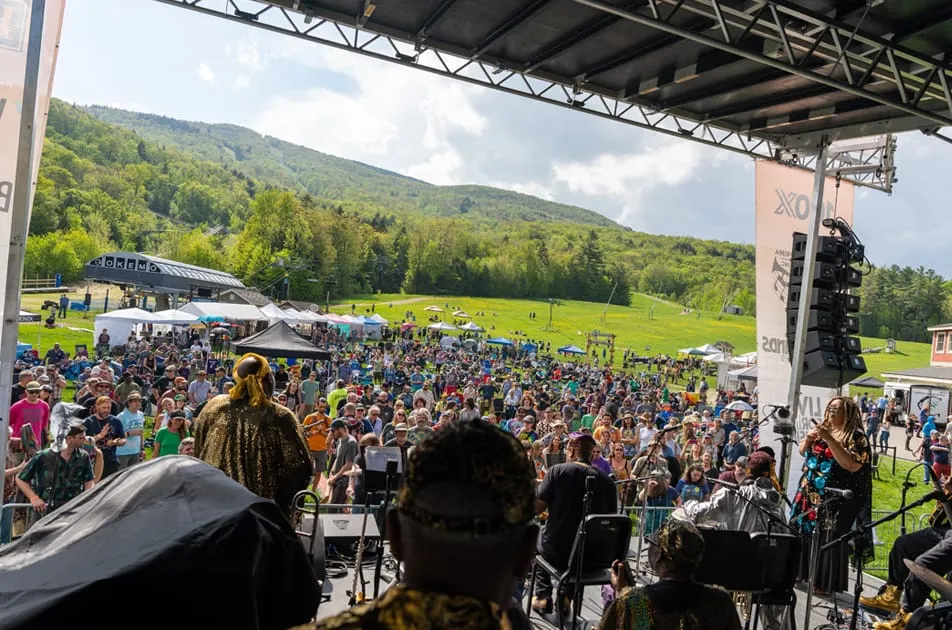
There was a time when live music and alcohol consumption were inseparable. Bar sales powered venue economics. Brand sponsorships shaped festival footprints. “Drugs & Rock ’N Roll” was the mantra.
And even for those who managed to kick their own habits, sometimes just being sober at a music festival is a triggering experience that could lead to peer pressure or relapse.
But thankfully, there's a new wave of sober music festivals that really do make good on their promise to fans to focus solely on the music — without any substance abuse distractions — and they're becoming popular with crowds much wider than just the sober and recovering community.
Next week in Vermont, Music on the Mountain, which is hosted by The Phoenix — a growing community-based movement that organizes national events and fundraisers catered towards substance-free living — returns for its third year. It's just one example in a widening trend of festivals and events being built without intoxication at their core. And they’re not fringe anymore.
Let’s take a look.
Music on the Mountain
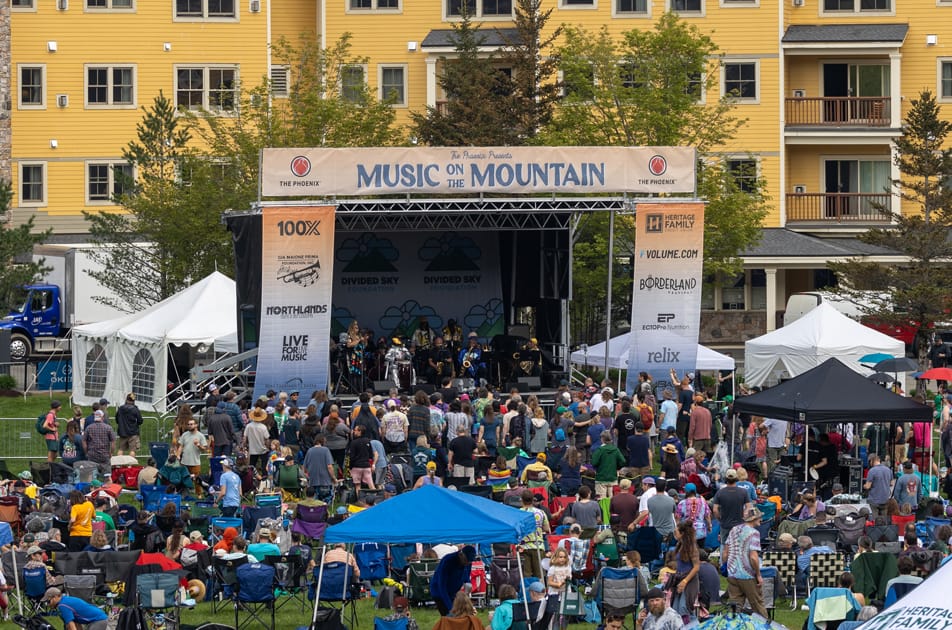
If there’s a flagship for this movement, this might be it. Music on the Mountain is “sober-friendly” and fully substance-free by design. No alcohol sales, no beer sponsors, no default assumption that you need something in your hand to participate. Instead, the festival blends live music with recovery programming, wellness activities, and intentional community-building.
Plus, it’s backed by a growing community-driven organization in The Phoenix, which now reaches nearly two million members nationwide.
Music on the Mountain runs from May 15-17 at the Jackson Gore Inn at Okemo Mountain Resort in Windsor County, Vermont.
Shambhala Music Festival
This is where things get interesting. Shambhala is not a niche recovery gathering — it’s one of North America’s most respected electronic dance music festivals, with massive stages, globally influential DJs, and full-scale production.
And it’s entirely alcohol-free, which is strictly enforced with car searches at the gate to confiscate alcohol. Yet the festival is also a shimmering example of extensive, non-judgmental harm reduction services and anonymous drug testing just in case one does find themselves in a tricky situation (as opposed to a zero-tolerance policy).
The festival also hosts “Camp Clean Beats,” a dedicated sober space offering meetings and support throughout the weekend.
Shambhala Music Festival runs from July 24-27 at the Salmo River Ranch in Salmo, British Columbia, Canada.
Into The Wild Gathering
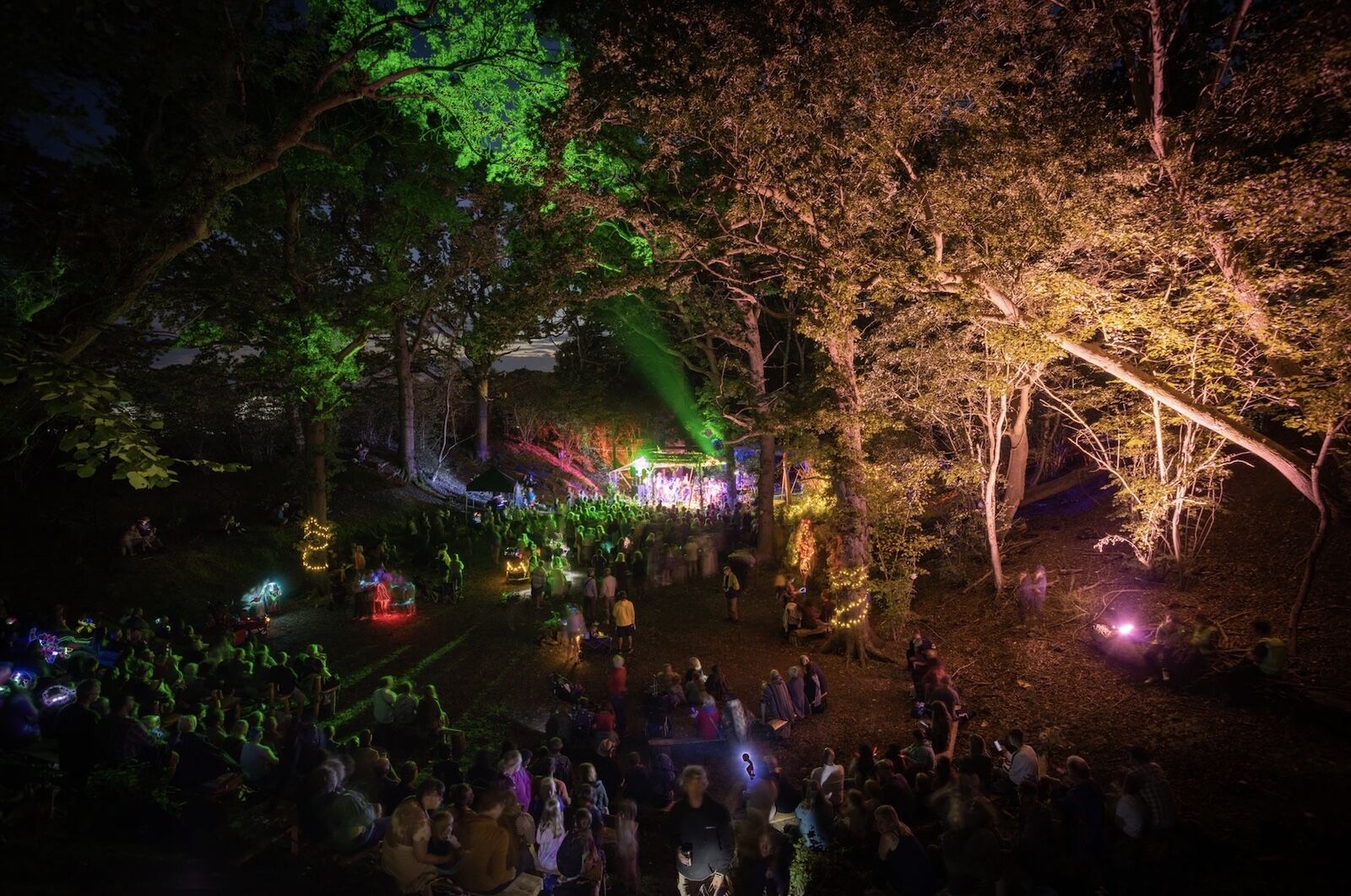
Into the Wild is a little bit more subtle, but interesting nonetheless. This bohemian, "enchanted gathering" is held on the grounds of an 18th-century estate in Sussex. The event blends music with foraging, crafts, yoga, and nature-based workshops. Alcohol isn’t the centerpiece (and often not present in meaningful ways at all).
It honestly feels less like a festival and more like a retreat with a dope lineup.
Into The Wild runs from August 28-31 at the Chiddinglye Farm in East Grinstead, West Sussex, UK.
Morning Gloryville
Take everything you think a rave is — and flip it. Morning Gloryville started in 2013, and has been running sober dance parties around the world ever since. They're very often in the morning. DJs, yoga, massage, movement, community. Just music, energy, and bodies in motion.
No substances. No late-night haze. And the fact that there's never any dangerous poisons around makes it a family-friendly event that attracts an all-ages crowd to enjoy. It’s proof that the dancefloor itself doesn’t need chemical enhancement to work.
Morning Gloryville events happen throughout the year and in different locations, so check the website for next party details.
+Read more: "A New Crop of Music Festivals Is Selling Adults Back Their Childhoods"
So, what’s actually happening here?
This isn’t about banning alcohol. It’s about decoupling live music from it. And that opens the door to a few larger trends.
1. Accommodating new audiences
The “sober curious” crowd is real — and growing. And getting younger. A Gallup comparison cited by TIME found that the share of adults under 35 who drink fell from 72% in the early 2000s to 62% in 2021–2023; Gen Z is drinking less, yet still going out — festivals are adapting.
They're also making bigger efforts to accommodate older generations of audiences who support live music and are in recovery stages in their life. All in all, it's about having options for how people like to enjoy live music, without having to make uncomfortable compromises.
2. Experience is replacing enhancement
Festivals used to rely on substances to heighten the moment. Now they’re investing in: wellness programming, immersive environments, retreat-style participatory activities, and intentional "social design" structures. Although live music and the artist lineups are still the drivers for ticket sales, this helps diversify the experience to extend the festival's ability to entertain.
3. Community is becoming the product
What’s striking about these events is what they add — not just what they remove. Older generation festivals basically provided two things: a timetable of stage-based events and a place to pitch your tent. Now there's much more thought being put into bringing people together with shared rituals, group participation, and a higher purpose.
That creates deeper connection — and often stronger loyalty. See our recent writeup on festivals offering youth summer camp inspired experiences as a nostalgia play!
+Read more: "Festival Curator Brad Sweet on Raising $700k in Fan-Powered Ownership"

![MUTEK Elevates Live Electronic Music Performance Yet Again [PHOTOS]](https://storage.ghost.io/c/3a/95/3a957c06-c825-4057-9939-0a274cc16d23/content/images/size/w1304/format/webp/2026/09/MUTEK27_20260827_Korea-Town-Acid---Ajeebsir_credit_Fre--de--rique-Me--nard-Aubin-1506.jpg)