


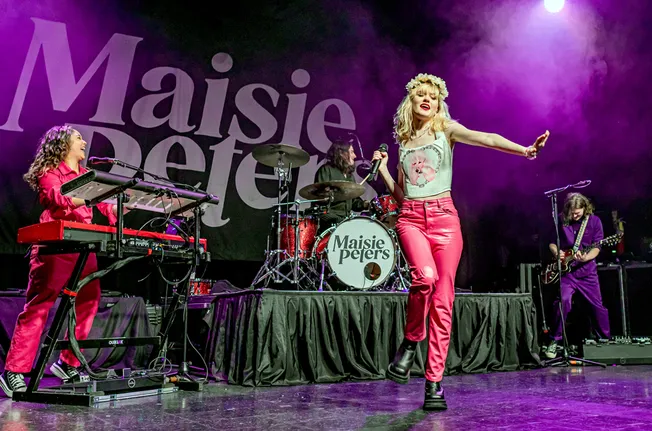
In a recent interview with Cosmopolitan, British singer-songwriter Maisie Peters revealed that she had dealt with a complicated vocal health issue on tour in 2023.
During her The Good Witch Tour in support of her sophomore album, Peters was diagnosed with polyps on her vocal cords, which caused significant strain, and was facing the possibility of surgery. She noted:
"I did the whole [The Good Witch] tour with these vocal polyps and was in vocal therapy for three months. I couldn’t sing or drink or eat certain foods, and I never really shared anything publicly. It was very stressful and anxiety-inducing – every day I was waking up and thinking, 'I can’t sing. How can I play to 3,000 people tonight? I can’t hit my notes.' Also, 'Will I ever get better? Will I ever sound the same?'"
Ultimately, Maisie was able to recover without undergoing surgery, saying she healed “pretty much entirely.” Still, the ordeal became a turning point in how she approached her health and workload.
It later influenced her decision to step away from Kelsea Ballerini’s North American tour in January 2025 (an increasingly common problem for touring Pop artists in recent years).
"For so many years, I was pushing and pushing and pushing, and at the end of that year, my body – even before my head – realised [sic], like, 'I can’t do it any more.'"
This is a highly common health issue for singers. If you're a touring and performing singer, you may want to learn more about vocal polyps, which are one of several types of vocal cord lesions, in order to better understand your options for treatment and recovery.
Here is some helpful information on vocal cord lesion types and treatment options for polyps in particular.
+Read more: "Lewis Capaldi Is Back on the Road. We Need to Talk About the Mental Health Toll of Touring"
What Are Vocal Cord Lesions?
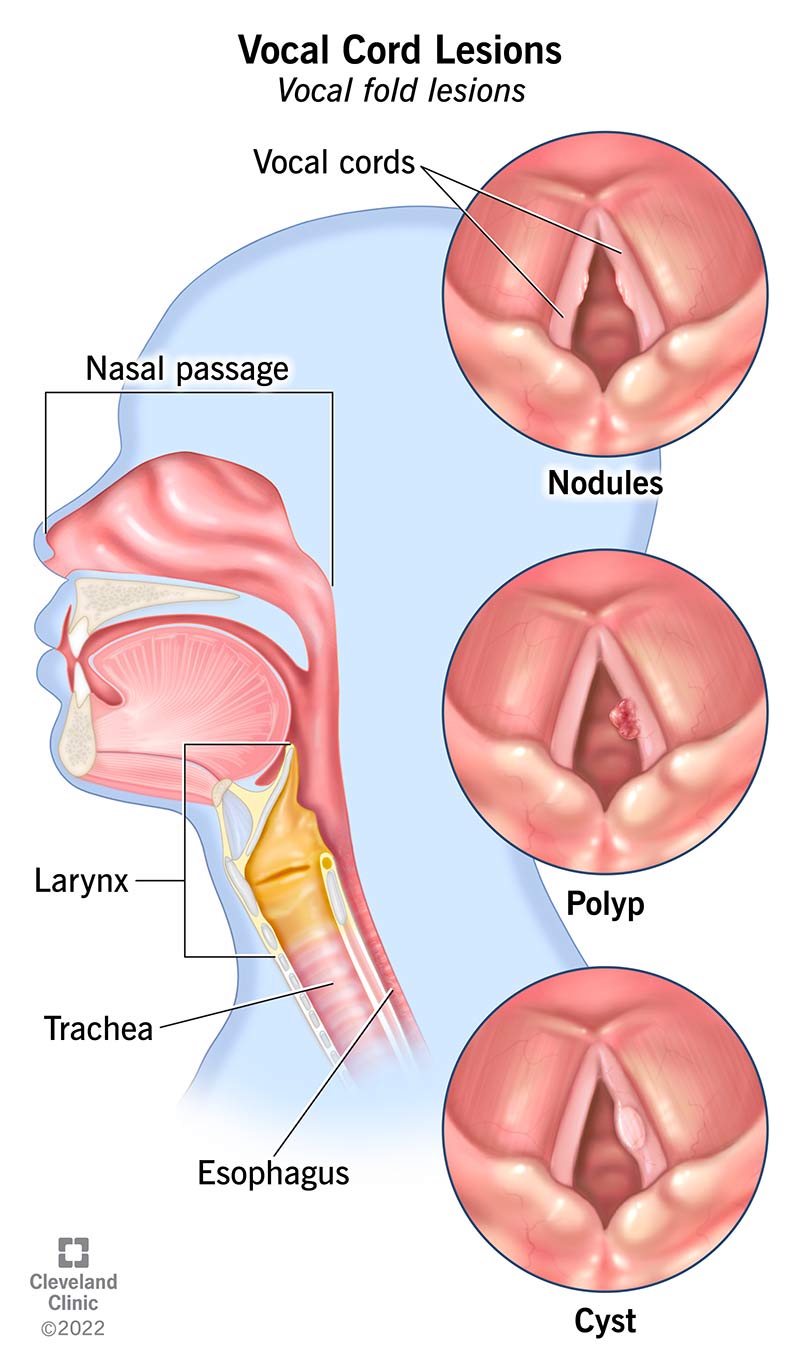
Vocal cord lesions (or "vocal fold lesions") are growths that form on your vocal cords, which can be benign (noncancerous) or malignant (cancerous). The vocal cords are two bands of muscle and vibratory tissue inside the larynx ("voice box"). They vibrate together to produce sound when you speak or sing.
When lesions appear on the vocal cords, it can cause pain during speaking and singing, and they can change the timbre and auditory properties of one's voice. Types of benign lesions include vocal cord nodules, cysts, and polyps.
Vocal cord nodules
Vocal cord nodules are also referred to as "singer’s or screamer’s nodes." Expectedly, they form when a vocalist (or anyone) repeatedly overuses their voice, because they develop at the midpoint of one's vocal cords, which gets used most often. Nodules are generally more common than polyps, and frequently appear in children and women due to chronic voice overuse.
Vocal cord cysts
Vocal cord cysts are sac-like growths with a fluid-filled center. Less common than nodules and polyps, cysts often present similar symptoms, yet are not associated with voice overuse or misuse. The two types of vocal cord cysts are mucus retention and epidermoid.
Vocal cord polyps
Vocal cord polyps, like nodules, are common after both repeated episodes, or even just one single episode of voice overuse such as yelling or a sudden loss of voice. They are usually larger than nodules, and typically only form on one of the two vocal cords. However, due to the friction of a polyp rubbing against the other vocal cord during voice use, another may form in the affected area.
One specific type of vocal cord polyp known as Reinke’s edema is associated almost exclusively with smoking.
What are the symptoms of vocal cord polyps?
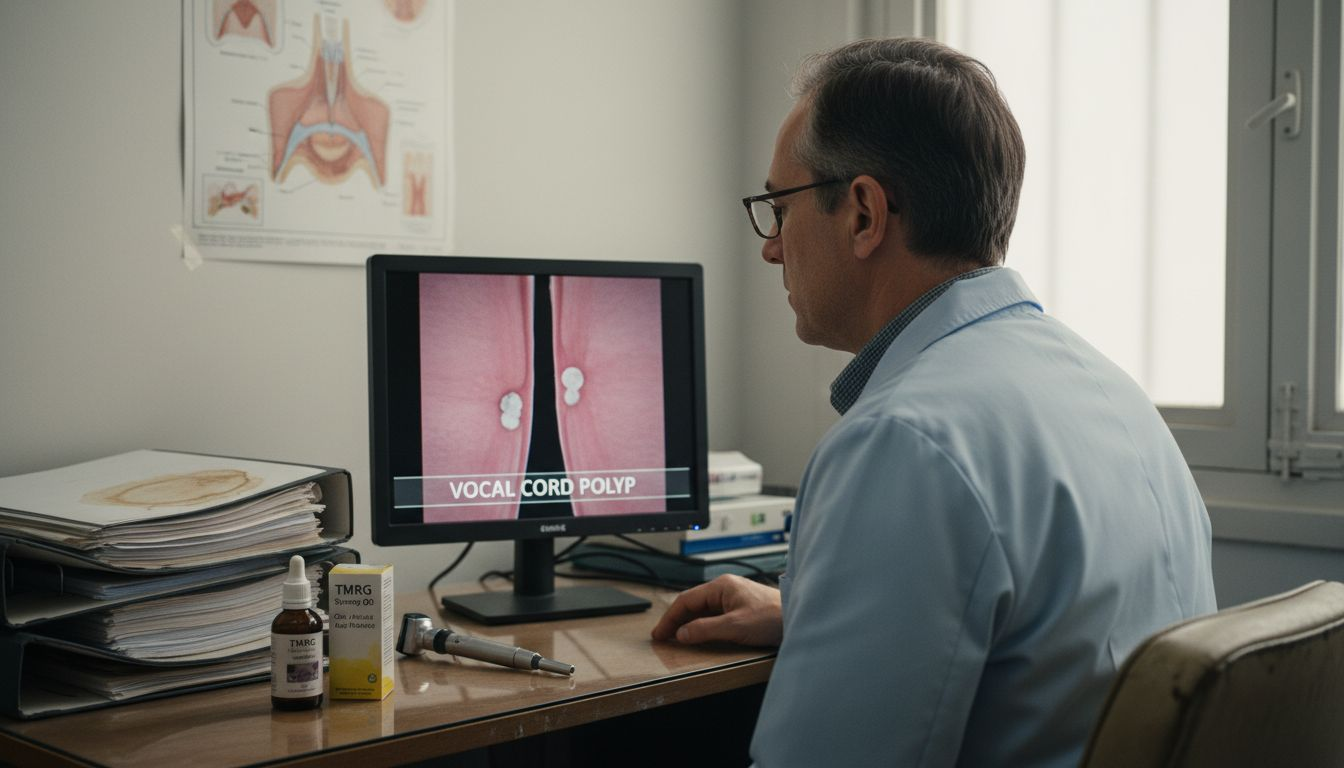
Primary symptoms of polyps specifically include persistent hoarseness, breathiness or roughness in vocal tone, reduced vocal range and pitch control, voice fatigue, and the sensation of having a lump in the throat.
How Do You Treat Vocal Polyps?
Treatments range between surgical and non-surgical options. While surgery is a quicker resolution of the problem, and can result in quicker recovery, it presents more risks than non-surgical options and may fail to significantly alter the behavior of the vocalist that caused the polyp(s) to form.
Let's discuss both.
Surgical Treatment
Surgical treatment for vocal cord polyps typically involves phonomicrosurgery, a precise, outpatient procedure performed under general anesthesia to remove the lesion while preserving vocal cord tissue. Surgeons use microscopes and specialized instruments inserted through the mouth to excise polyps, often using a "microflap" technique to minimize scarring.
Non-Surgical Treatments
1) Voice Therapy
This is a crucial approach for singers, in order to keep one's voice strong and in sustainably good health for performance. Strategies for recovering from vocal cord polyps without surgery will need to include "behavioral voice therapy," incorporating personalized interventions to reduce vocal strain through a change in vocalization processes; or how one sings and uses their voice consistently.
Voice therapy techniques may include:
- Breath Support Training: Developing proper diaphragmatic breathing
- Resonance Therapy: Optimizing vocal cord vibration and sound production
- Vocal Hygiene Education: Learning protective vocal behaviors
- Technique Modification: Adjusting speaking and singing patterns
- Vocal Rest Protocols: Strategic periods of reduced vocal usage
2) Vocal Technique Modifications
Working in tandem with behavioral therapy, vocal technique modifications are most helpful in preventing the recurrence of polyps. The most common alterations a singer can make are to:
- Reduce sudden vocal pitch changes
- Minimize excessive vocal volume
- Implement consistent warm-up and cool-down routines
- Practice controlled breathing techniques
- Develop more efficient vocal cord engagement
Professional voice therapists will usually work to design personalized treatment strategies that take into account a singer's specific use case: vocal demands, performance requirements, and polyp characteristics.
3) Natural Remedies and Hydration
Hydration is a critical part of recovery for singers. An in-depth plan for moisture management and placement, beyond simply drinking water, must be utilized in order to both heal from vocal polyps and prevent them from developing in the future. Consistent hydration can reduce vocal cord inflammation by up to 45% and accelerate the healing process so a singer may get back on stage quicker.
Hydration approaches will include:
- Drinking 8-10 glasses of water daily
- Using room humidifiers to maintain ambient moisture
- Consuming herbal teas with anti-inflammatory properties
- Avoiding dehydrating substances like caffeine and alcohol
- Practicing steam inhalation techniques
Herbal remedies can also provide support for recovery. That may include teas such as chamomile, which reduces inflammation, slippery elm tea, which soothes irritation of the throat, and roots like licorice, ginger, and marshmallow root.
Comparing Surgical and Non-Surgical Treatment Outcomes
- Surgical Treatment:
- Rapid symptomatic relief
- Direct polyp removal
- Potential for immediate voice improvement
- Higher risk of complications
- Non-Surgical Treatment:
- Gradual voice quality enhancement
- Lower intervention risk
- Focus on underlying vocal technique
- Potential for long-term behavioral change
Maisie Peters 2026 Tour Dates
MAR 18 — Amsterdam, Netherlands @ Melkweg
MAR 20 — Berlin, Germany @ Astra Kulturhaus
MAR 21 — Köln, Germany @ Live Music Hall
MAR 23 — Paris, France @ La Cigale
MAR 25 — London, United Kingdom @ KOKO
APR 14 — Washington, DC @ 9:30 Club
APR 16 — Montréal, QC @ Théâtre Beanfield
APR 17 — Toronto, ON @ Phoenix Concert Theatre
APR 19 — Chicago, IL @ The Vic Theatre
APR 22 — Los Angeles, CA @ The Fonda Theatre
MAY 11 — Liverpool, United Kingdom @ Camp and Furnace
MAY 14 — Bristol, United Kingdom @ Trinity Centre
MAY 17 — London, United Kingdom @ Union Chapel