

Welcome to our new interview series, Manager of the Month, in which we spotlight the work of successful pros in the artist management space, and ask them to share (just a few of) their coveted trade secrets... shhh!
Manager of the Month is supported by Bandsintown Pro, the smarter way to promote live concert events.
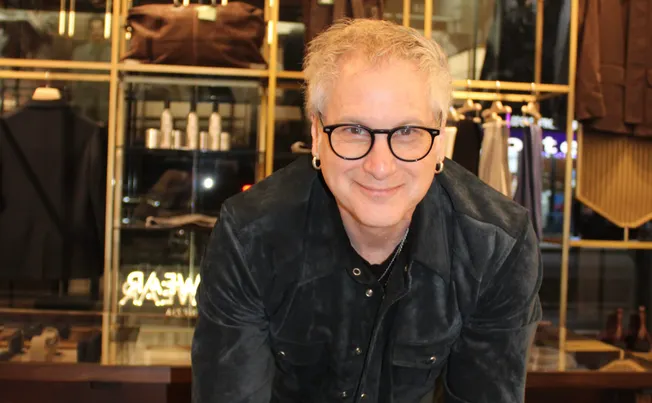
Russ Rieger is the CEO of Not Dead Yet Media, a New York-based cultural infrastructure company for independent artists encompassing artist management, a label and an artist strategic consultancy. He’s also a partner in Drive All Night Productions alongside Frederick Zollo, a production company covering Broadway, TV, and film, and the co-host of The Indie Music Network podcast.
There's so much information below so let's just dive right in. Enjoy!
Hypebot: Hey Russ, thanks so much for taking the time to answer some questions. You run Not Dead Yet Media (a name I love by the way - reminds me of the Willie Nelson song “Still Not Dead”), but you’ve got a long history working across the music industry. Walk us through how you ended up starting an agency/consultancy, and what it was you’re trying to do differently?
Russ: "First, thank you for doing this, and it's good to know that you're a fan of Willie Nelson, I admire him too. But the name is actually from one of my favorite artists, Frank Turner. He has an anthemic song called 'Get Better' with the chorus 'we can get better / because we're not dead yet.' I have the shirt. That's just a great rallying cry for me and the sentiment – the conviction that you need to keep going, continue to get off the mat, that it's always possible to decide to improve and change. It's full of hope and the best description of how I've been thinking about this moment and this era in my life."
Plus, as a passionate die-hard fan, anything I can do to promote Frank Turner is worth it."
I came back into music because it's everything to me. There's nothing that comes close. I often think in lyrics. That sounds like a setup to a rom-com, but even as I benefited by working in other sectors – my own branding company, advising startups and investment companies at the intersection of media and tech, running the media and entertainment division at a New York family office – I learned a great deal from being immersed in multiple perspectives that I can now bring directly to the challenges artists and indie labels face. But music was always where I belonged."
All it took to come back was a serendipitous introduction to Heather de Armas through a conversation with Bobby Haber. She reminded me of myself at her age – a business sense and creative instinct built through running her own management company and a label with Orchard distribution. She questioned the current structure as the only possible arrangement and was open to exploring new possibilities. I immediately called my long-time friend and partner Rebecca Carroll and said: 'Do you want to jump back in with both feet?'"
The chemistry the three of us have is something special, easy and unique – and it's bigger than any of us individually, which is always my goal. Three decades apart in age. Three completely different relationships to music and industry. The same fundamental convictions about what independent artists deserve and what has been keeping them from getting it. We always ask why not, rather than accepting the current arrangement as the only possible one."
What I want to do differently is structural. Not Dead Yet Media is built as an interconnected ecosystem where each division – management, label, strategic consultancy, the production company with Frederick Zollo, and the content division featuring The Indie Music Network, our podcast network, and the upcoming Salon Series – works in tandem to cross-promote everything we're doing while creating new opportunities, new ways for artists to be discovered, and new initiatives to keep iterating. Technology will keep evolving and business models will keep shifting, but we're set up to keep finding new doors for fans to discover music that will change their lives."
We believe artists are 'starbursts' – their creativity isn't vertical. It can expand anywhere. An artist can be a musician, an actor, a writer, a painter, an entrepreneur. We want to build a company that can accommodate wherever their art takes them and build a business around that for their future."
We are purposefully boutique, carefully choosing who we work with because we know the amount of time, focus and energy that genuine commitment requires. The independent music ecosystem has all the right ingredients and talent but is too often isolated in practice and infrastructure. I came back to address that structurally – not just artist by artist, but as an ecosystem."
"The major label system is driven, as it has always been, by the need to justify risk through scale. They are looking for artists who can generate returns large enough to offset the cost of the infrastructure around them. That's not a criticism. It's just the math of running a company with hundreds of employees and a global distribution system. Those economics produce specific decision-making patterns that are very legible once you've been inside them."
H: At the risk of setting you up for the obvious answer here, you talk about (basically) how all major labels think the same, and that you can read their minds before they even open their mouths. So what is it that’s driving labels today?
R: "That's a fair question and as I re-read it I can see the mistake I made in communicating what we're about. I don't want to appear adversarial – after all I ran two labels and have close friends at labels, both major and indie. I know how hard people who are at record labels work and how much they care."
What I meant was that having spent so much time inside and building labels and their systems, I understand the models and the incentive structures very well. I know what an artist needs to create the right partnership and how any opportunity, when it comes, needs to be structured for an artist."
Charlie Munger once said: 'Show me the incentive and I'll show you the outcome.'"
The major label system is driven, as it has always been, by the need to justify risk through scale. They are looking for artists who can generate returns large enough to offset the cost of the infrastructure around them. That's not a criticism. It's just the math of running a company with hundreds of employees and a global distribution system. Those economics produce specific decision-making patterns that are very legible once you've been inside them. Many labels have also become highly dependent on data and less on the skill set of A&R."
There are wonderful, passionate, genuinely music-loving people at every level of every major label. The cultural difference between a major and an indie is real, but it is structural, not personal. Having been at labels, in management, in branding, working with tech companies, and at a family office on the investment side – I now can bring a range of perspectives and alternative business practices from multiple sectors that I believe are new and insightful to artists navigating a music industry that now is dependent on all of these worlds simultaneously. Knowing how those worlds think is an advantage that I can offer an artist walking into any of those rooms."
"Starting independently gives me the ability to make the right call for an artist's career at a critical stage rather than the right call for this quarter's numbers. That distinction is everything."
H: And with all your experience in different facets of the industry, what made you want to start an independent label yourself?
R: "It was partly my experience outside the industry that taught me the most, because I was able to look at music from outside perspectives – at the intersection of music, technology, brand, and capital investment. Taking those observations and applying them to a new kind of media company, one where the label becomes a central hub rather than a standalone entity, and building in the capacity to iterate as we scale. Iteration is built into the model and into the whole company. Each division amplifies the others and brings an outsized reach for a boutique with unique strategies that will constantly adapt to new challenges."
I believe deeply in the long game. Artist development as it was practiced at its best – patient, multi-cycle, relationship-intensive – is essential to building careers. Not every artist will reach the heights of others, but if we can help ensure they each have a chance at living this dream and having a long-term career, that's everything."
Our number one focus is finding a die-hard fan base for each artist we work with. Every plan and every move is based on capturing a community of fans that love an artist. So many of us in this business are fans – I am, and I work to spread the word of artists I love for free all the time. Fans are the best marketing and promotion team a record label can create. They are the ones who enable a career."
I keep pointing to Billy Joel's epic run at Madison Square Garden. Does anyone really believe those are new fans attending night after night? Maybe the children of die-hards, but no – it's his loyal fan base that wanted to be there. I am that fan for many artists I've loved for decades. That's the community I want to build for every artist we work with."
Starting independently gives me the ability to make the right call for an artist's career at a critical stage rather than the right call for this quarter's numbers. That distinction is everything."
H: And even with all that experience, I imagine there were still growing pains in that project. What’s an example of something that tripped you up that you had to work through over time?
R: "Finding the right chemistry and trust with an artist is still the hardest thing – and I've been doing this for a long time. I take this very seriously because we are dealing with people's lives and dreams. Chemistry and trust are essential. They don't come automatically. Both sides need to earn them and I've found I need to create the space and time to evaluate correctly for everyone concerned."
Early on I didn't do this well enough and had to make the hard decision to let go of situations that couldn't be forced, knowing these relationships will never be successful no matter how much everyone tries. There are never any guarantees, but the only road to success must be built on real chemistry. The mistake I made in our first year was signing an artist I wanted to work with and help and assuming that artist was genuinely ready for the relationship we are offering."
The infrastructure matters. The relationships matter. The strategy matters. But none of it works if the artist is not at the stage where they can actually use it, and more fundamentally, if the trust between artist and manager is not real. In a short time, you can feel the chemistry or you can't. When you can't still move forward, you're wasting everyone's time and efforts to a losing cause because you're not truly working together for the same thing. It's hard enough as it is, than to try when neither party sees the same north star."
I'm also still reminding myself to be deliberate and disciplined with all the initiatives I want to launch. This won't work unless it's planned, has targeted milestones with a timeline to achieve them before moving on, and scale methodologically and deliberately. Don Ienner has said to me many times – 'crawl, walk, run.' It's a phrase I repeat to myself almost daily because I always prefer to run and it's always smart to listen to his advice."
H: What’s the best pizza spot in New York City?
R: "Johnny's, around the corner from Baker Falls. I'm biased because I'm there too often as I love an artist that has a residency at the club. It's NYC, there are many choices of the best pizza. So open to suggestions — I don't need a reason to try more."
"There is a definitive power in creativity. The power of a song, a performance that moves people to unknown depths. That's why we do this – to catch the magic and be a part of helping bring that to the world."
H: What are the biggest things that have changed in the last ten years in the industry from your perspective?
R: "I think two consequential changes are streaming, and the over-reliance on data, especially in A&R. There is obviously a strong case to make for using data for everything. It's the degree that I'm citing. But for many labels, agents and publishers, they can afford to wait for an artist to reach those numbers before jumping in. It works for me because once we have an artist reaching those numbers I feel very confident on negotiating terms or staying independent for more control and a higher net revenue for the artist."
The artists who have built the most durable careers had a specific perspective, amazing songs, compelling live presence, a genuine community of people who cared about their music, and the capacity to build that community over time. Those things eventually show up in the data, but by the time the data is conclusive, the artist is in a much stronger position to make a decision. I'm looking to find new relationships with those decision makers who can see beyond the data."
The other change is what has happened to live music. It's become more complicated for artists and managers. For most artists, especially up-and-coming and mid-level artists, the economics of touring have gotten significantly harder. Costs are up, and guarantees haven't kept pace. Routing a tour that doesn't lose money is harder than ever. The need for touring is still essential, but finding ways to make it cost-effective is now paramount. It's one of the reasons why we want to build an indie coalition – because collective infrastructure and leverage can help address these challenges in ways that individual artists just can’t."
H: What do managers wish artists would do differently? And what do managers usually end up learning from artists?
R: That's a tough question to answer. Artists are all different. There is no set pattern to form a generality. That said, for me I'd love for alternative artists (that includes, rock, singer-songwriters, and alt country, etc) to learn from the global success that hip-hop forged and work together to promote each other. It's always about leverage and artists need each other to help break through to gain a following and they'll have the best chance if they work together. I'd love to create an indie coalition with this as the basis."
I was at a club recently and a new artist was introduced. As he walked on stage someone in the crowd asked him to repeat his name as many of us didn't hear it clearly. He just dismissed it and said they already said his name. How is that productive to him and how does that connect him to possible new fans. We can't make this work by being too cool or feel that self promotion isn't worthy or respectable. There is so much traffic, so many artists trying to be heard, that if you believe in yourself and what you've created, you need to do everything you can to promote your work staying authentic and true to yourself at the same time."
The second thing is to do their best to understand the business. Know what you own. Know what your rights are. The more an artist can learn about the business, the best chance they'll be able to make the right choices for their career and develop stronger partnerships with their team. Some of the best artists I've ever worked with were the smartest and most involved in all aspects of their careers."
What do managers learn from artists? To follow their instincts. To wait until they're ready. To respect their artistic sense even when it isn't clear to you. What they see can't always be described nor can be translated easily into a plan. Sometimes, when you know their conviction is strong, you just have to take that leap of faith with them. There is a definitive power in creativity. The power of a song, a performance that moves people to unknown depths. That's why we do this – to catch the magic and be a part of helping bring that to the world."
"I'm a strong believer in what I call the three-version album strategy – studio record first, acoustic version six months later, live album at the end of the touring cycle. Same songs, three distinct creative expressions, three separate press cycles, a continual stream of social media content, a year plus campaign from one body of creative work."
H: What are the top 3 pieces of advice for building a high-impact marketing campaign around a release or tour on an indie budget?
R: "1- Release one record and market it three times. The expectation that artists need to keep releasing material at a pace that only diminishes the quality of songwriting and at the same time gives so little time for fans to find the music is unsustainable. I believe an artist needs at least one year to promote the record they made. We view it as one piece of art presented in three versions:"
- First, the original record, with a separate single campaign around it.
- Second, an acoustic version of the record.
- Lastly, a live version of the same record. That will take at least a year of promotion and allow the time to create more than one entry point for fans to discover an artist from one body of work.
- Additionally, each version includes all new opportunities for content to be created and shared."
I'm a strong believer in what I call the three-version album strategy – studio record first, acoustic version six months later, live album at the end of the touring cycle. Same songs, three distinct creative expressions, three separate press cycles, a continual stream of social media content, a year plus campaign from one body of creative work."
No artist can reach the audience they need in the short period of time that the algorithms or steaming services advise. It's always taken a long, hard fought, dedicated time to build a committed fan base. The streaming algorithm wants you releasing new music every six weeks. This strategy feeds that appetite without requiring constant new creative output and without abandoning an album before it has had a chance to find its full audience. Each version reveals a different dimension of the artist – the producer's version, the songwriter's version, the performer's version – and gives both existing fans and new ones a different reason to engage."
2- Find your two hundred most devoted fans and invest in those relationships specifically before you invest in reaching two thousand strangers. A die-hard fan, the person who shows up for multiple shows, tells ten people about you, streams the record because they love it rather than because an algorithm surfaced it – is worth more than ten thousand passive followers. Marketing on an indie budget is not about reach. It is about depth of connection. The artist who has two hundred people who care deeply is further along than the artist with twenty thousand people who are vaguely aware."
I know this because I am that fan. Again, let me take the time to promote Frank Turner - it's the 10-year anniversary of his live record for show 2000 - he's since surpassed 3000 shows but this is a great entry point to discover him. See, that's what a die-hard fan does: They evangelize about the artist they love for free."
3- I love creating short sizzle reels as commercials for an artist. Not a music video – a commercial. Showing them to the social media world in their best light. It's also great to have for the industry, club promoters, agents and press. Built around the most visceral moment of the song, imagery that creates a specific world, designed to make someone who has never heard of you stop scrolling and need to know more."
That piece of content, tested across platforms and refined based on what actually stops people, is the engine everything else runs on. Brands do it all the time. MTV provided the platform and taught the labels that controlled the era – the ones that understood the new medium and built content for it specifically – that visual storytelling and music are inseparable. Social media is offering the same lesson right now. The artists who learn it first will have a significant advantage over the ones still debating whether it matters."
"Here's what's important to understand about virality: the main benefit of going viral is the chance to gain another core of die-hard fans. Everything else lasts only until the next viral moment."
H: And speaking of money and indies, when most musicians read about catalog acquisitions in the hundreds of millions of dollars I think a seismometer could detect the collective eyeroll. So what does IP actually have to do with the average artist?
R: Those numbers are for the very few, but catalog acquisition is still a relatively new revenue opportunity for artists and the eyeroll is understandable – it feels as out of reach as headlining a worldwide stadium tour. But for certain artists it's a great opportunity. If they find the right partners and negotiate an agreement that respects their catalog of work, what an amazing chance to receive a windfall for your family that would never have been available to previous generations of artists – especially if they are still making records and writing."
It's a great freedom and a wonderful way to mark a moment in a career that recognizes the value of what an artist has created. Even at lower numbers, more realistic for indie artists, it's still a lump sum that would never materialize otherwise. And an artist can put that money away and continue making more – a catalog acquisition is for a point in time, not the future."
We're also entering the period where artists are beginning to gain back their masters starting with recordings from 1991 under US copyright reversion rights. That's a significant and underreported shift in the landscape."
For young artists starting out, it may be hard to imagine any of this applying to them – but the underlying principle applies at every level and from the very first deal. Any agreement with a record label or publishing company must include serious thought about maintaining the option to have control of masters and publishing rights so that an artist is in a position to benefit if the moment comes. What an artist owns, or when ownership returns to them, is a major consideration for any deal going forward."
Your master recordings, your publishing, your name and likeness – these are assets. They can appreciate significantly over time if you protect them and they can be lost irretrievably if you sign them away in deals you did not fully understand. The most common financial disaster in independent music is an artist who signed away publishing rights in a deal that looked reasonable at the time and spent the following decade watching someone else collect income on their own songs. It happens constantly. It happens to artists who are not naive – they just did not have someone in the room who could explain what they were actually agreeing to."
The practical advice is simple even if it is not always easy: know what you own, know what you are signing, and make sure you have a qualified music attorney review every deal before you sign it. They may seem expensive but the consequences of not having one are long-lasting. It is the best investment a developing artist can make."
H: Hot take — is it better for an artist to spend their time trying not to go viral? What would that even look like?
R: "Why would an artist not want to go viral? They spend their life creating something out of nothing – something that is a part of them. Why wouldn't you want the world to hear it by any means necessary? But it's not something most artists can control, and I don't believe an artist should compromise who they are or manufacture a false moment for the sake of going viral – because there won't be any long-term benefit in gimmicks or anything inauthentic. A genuine viral moment for an artist who is ready to take advantage of it is a great opportunity."
The key word is 'ready.'"
But here's what's important to understand about virality: the main benefit of going viral is the chance to gain another core of die-hard fans. Everything else lasts only until the next viral moment."
It's all about building a community of die-hard fans. 'Like' is one of the worst words in the English language when it comes to music. Like doesn't mean someone will follow an artist, go to a show, tell a friend. How many bands or TV shows or movies would you actually watch if a friend said they liked it? It means nothing. Love means something. Devotion means something. That's what we're building toward."
For an artist who has no audience, any attention is better than none – if a clip goes viral, you take it, you convert as many of those people as you can into actual fans, and you move on. But an artist whose career strategy is organized around going viral is optimizing for the wrong thing. Virality produces exposure. Exposure is not a career."
I have watched artists achieve enormous viral moments and have nothing to show for it eighteen months later because the moment was not connected to a genuine community of people who cared about the music beyond that specific context. The algorithm surfaces something, millions of people see it, and then the algorithm moves on. If all you built was the viral moment, you move on with it."
The die-hard fan who has been with an artist for three years and told everyone they know is more valuable than any viral moment the algorithm delivered and then forgot. The artist who understands that is the one who will still be releasing records in twenty years."
"The Clash at the Palladium; I saw what I want heaven to look like. I was in the presence of punk rock gods. It was world-changing, soul-changing, a religious experience."
H: What was the first time in your life that a concert blew your mind?
R: "The Clash at the Palladium; I saw what I want heaven to look like. I was in the presence of punk rock gods. It was world-changing, soul-changing, a religious experience – and one you keep wanting to experience again and again. Nothing like seeing an explosion of passion through sound and the complete command of a stage. The only band that matters gave the only live show that mattered for a long time."
H: When is it okay to throw a tomato at a band on stage?
R: "Never. Not once. I know many things get thrown onto stages and I know it has a history, but anything that is a projectile is always unacceptable, dangerous, and disrespectful. There is nothing cool about throwing anything – with the exception of a beach ball in the crowd or a sign you made for the artist."
The stage is the band's space and they are vulnerable up there, pouring their hearts out. If you don't like a performance, leave – but leave after the song is over. The music deserves that much."
H: It's true, tomatoes belong on pizza, not people.
To learn more, visit Not Dead Yet Media.
Join the leading live event professionals saving time and selling more tickets with Bandsintown Pro.