

_____________________________
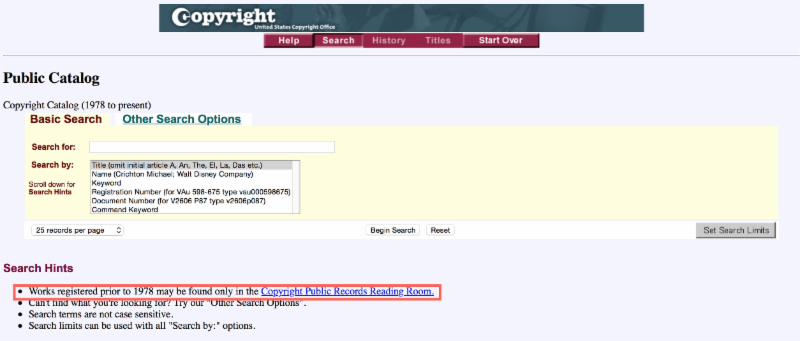
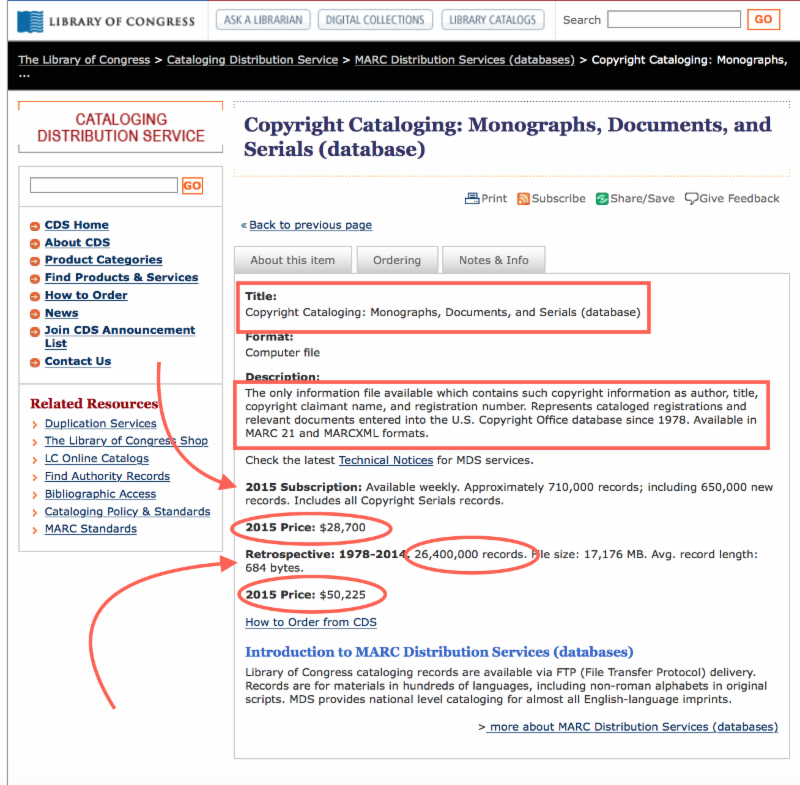
Guest Post by Chris Castle on Music Tech SolutionsWe’re going to assume that readers know the general background on the millions of “address unknown” NOIs filed with the Copyright Office under a loophole in the Copyright Act (Sec. 115(c)(1)).The nutshell summary: Starting April of last year, Google, Amazon, Pandora and other on-demand digital services using compulsory licenses began filing very large numbers of “address unknown NOIs” for compulsory mechanical licenses with the Copyright Office. These filings were implemented through a taxpayer funded customized electronic filing process that allows services to exploit songs for free–no royalty is payable. The Copyright Office created this customized platform for these services about the time that the Copyright Office announced a reduced fee structure for this customized electronic filing process that increases the burden on songwriters. (Even though Pandora has yet to launch its on-demand music service, Pandora appears to have served the Copyright Office with well over 1,000,000 address unknown NOIs. Since it’s early days, we can probably expect that number to increase, perhaps dramatically.)The Copyright Office then posts these “address unknown” filings one-by-one as part of the public record of the Copyright Office, apparently so that songwriters can find out if their songs are being used.There are no reciprocal countermeasures provided by either the Library of Congress or the Copyright Office. We’ve posted about this process before and Billboard reported on Music Reports, Inc.’s involvement in supporting the entire filing but has yet to report on the scope of the problem.The two key differences between serving an “address unknown” NOI and serving a “regular” NOI is that the “address unknown” NOI is served on the Copyright Office instead of the copyright owner and the digital music service never sends an accounting or a royalty payment.At such time-if ever-that the song copyright owner identifies themselves in the Copyright Office, which the copyright owner is not obligated to do under US law or the Berne Convention, statutory royalties will be payable thereafter–not retroactively. That mess is unlikely to ever get sorted.I’d sum it up by saying that in my view anyone who participates in this mass NOI filing is manipulating a loophole in the law as a way of forcing copyright owners to let their songs be used for free.Rightscorp has developed a proprietary database to assist songwriters with sorting out this mess and we interviewed Rightscorp CEO Christopher Sabec about the process for Music Tech Solutions.Chris Castle: Thanks for participating in our interview today on the “mass NOI” filing. Why don’t you start by telling readers the 10,000 foot view of your resume and what Rightscorp does, especially in the landmark BMG v. Cox case, currently on appeal.Christopher Sabec: I am the co-founder and CEO of Rightscorp, Inc, which is a leading provider of data and analytic services to support artists, songwriters and owners of intellectual property. We assist rights holders by monitoring and monetizing their copyrights on peer-to-peer networks such as BitTorrent. We also provide data and support for DMCA litigation, most recently supporting BMG with gathering evidence, assisting with e-discovery and providing testimony in their groundbreaking litigation against Cox Communications. [BMG won a $25 million damages award against Cox that is currently on appeal.] I am an attorney by training and in the past, I have served as CEO of the Jerry Garcia Estate LLC, discovered and managed the rock band Hanson, and represented Dave Matthews in the early years.Castle: So you’re coming at this from the artist/songwriter/copyright owner side of the desk?Sabec: Correct. We are dedicated to the vision that creative works should be protected economically on the Internet so that the next generation of great music, movies, and other content can be made and creators can prosper.Castle: You’ve had a chance to look at some of these mass NOI filings and that’s what we’re going to focus on today. Let’s start by giving readers an idea of the scope of these filings.How many songs have you identified so far that have been filed with “address unknown” NOIs?Sabec: As of January 18, we have identified more than 25.6 million address unknown NOIs that have been filed with the Copyright Office.Castle: That is a mind-numbing number. How easy is it for any songwriter to search for themselves in these “address unknown” filings to see if the NOIs were even filed correctly since the Copyright Office does nothing?Sabec: It would be a huge manual process. It would require downloading all the individual mass filings, sorting through them to look for particular copyrights, and creating reports that would makes sense of the volume of data. We don’t see this as an easily achieved manual process.Castle: So the Copyright Office has not set up a searchable database for these filings?Sabec: No. The Copyright Office just publishes the filings as they are received, placing the burden of sorting the information on the songwriters and rights holders.Castle: That sounds like the songwriter is effectively not able to find themselves in the Copyright Office filings?Sabec: It’s a true needle-in-a-haystack situation.Castle: When I looked through these filings, I found a number of songs that I recognized that were clearly identifiable and were registered for copyright long ago. Did you find any songs like that when you sampled the NOI filings?

Related articles