


 This blog post serves as a brief overview of my book, which I still recommend you check out for even more indepth info! —Last night someone asked me if they should pay $500 to perform at a show. While I’ve often spoken about the (bad) ethics of pay-for-play performances – and the evils of forcing artists to pay to play their own art, this time my reply was simple: What’s your ROI? What’s your return on investment?Are you going to sell enough merchandise that night to where you make a profit? Or are you bringing in enough streaming or paid-show revenue to where you can write it off as a business expense?Or let’s use a less controversial example.How about that music video? The one that cost $2000 to shoot? Are you going to see a return on that $2000 video shoot during your marketing? Or just hope it ends up paying off…somehow?Exposure is great, but exposure isn’t going to pay the bills.And that’s what I’m getting at here.Quite often artists, especially young ones, simply don’t even factor in revenue streams or ROI for their work. Many artists are simply waiting on some “moment”. Some “big break” – an article pops off, or some video goes viral. They’re waiting on what I call their “Fair God Mother Moment”- some A&R Fairy comes down to earth and grants them a record contract. They think, “Then, …maybe then… – I’ll get paid.”This. Doesn’t. Work.Not only is this false but- signing a record deal won’t always solve your financial troubles – also, signing a record deal could mean dozens of things. But let’s talk even bigger picture here.Because I want you to get paid. Let’s say you have around 2,000 fans on Twitter, another 2,000 on Instagram, and another 1,000 on Facebook. This isn’t a crazy number, will there be overlap in fans? Yes – but bare with me. That’s5,000fans, right?Now imagine if they all bought ONE $30 t-shirt. Just one.
You just made $150,000 dollars.
You may be thinking – “Okay Tyler, but how realistic is it that all 5,000 people will convert into a sale?”. Honestly, it’s higher than you think! But we’ll get into specifics later. But you’re right! That’s a 100% success rate, so let’s drill it down further.Let’s say you sold half of that – 2,500 fans bought one $30 t-shirt. Okay, that’s still $75,000! An above average salary.Let’s bring it even lower – 1,000 fans bought a shirt. Hell, that’s still a solid income stream at $30,000.Okay, even lower! You sold one single t-shirt to 500 of your fans – you just made $15,000! Which is likely more than you’re making from streaming, and maybe even more than you’re making from live shows.But we aren’t thinking of income streams – are we? Instead, we’re thinking of a “big break” to pay our bills. Something that’s just going to happen by chance.But your fans are already your customers! Your fans are there, waiting and willing to invest in your work. Even if you have a small audience, you can still convert them into paying customers with the right branding and marketing.Now – I used merch as an example but there’s plenty of other income streams we can tackle, right? There’s also streaming – which can be a decent income source, but there’s also crowdfunding. And to cap it off, licensing – which is more difficult to secure, but can be a literal life-changing opportunity.My Disclaimer: With everything – I am writing this with the idea in mind that you have a good, qualityproduct that people will want to buy, that fans will want to support and that music supervisors will want to utilize. We’ll touch on what makes something “quality” a little in this article – but again, I can’t save you if your work still needs improvement. That being said – I’d say I get more great music and merch than bad in my inbox, so I already believe in you. Let’s go. Since I already gave you a glimpse of what can be done with merchandise, we’re going to start with a low-hanging fruit. Something you’re already familiar with – streaming. Streaming should actually be one of the reasons you look into other income sources because, well, it’s on the low-side.But, you can still make some gas or grocery money out of it, if done well.
Making (a little) Money from Streaming Outlets
Let’s knock this one out of the way – the average artist makes between $0.006 and $0.0084 per stream. Are you going to make a sizable income from streaming? No. In fact, that $0.006 figure should be the reason you look into other streams. However, since this is a remnant of the physical CD era, folks still gravitate to pushing their streams, which is fine. Streaming is still a main music consumption tool andshould be a focus. The marketing perks of streaming are also huge, because it can potentially bring more exposure, which can be later converted into merch sales, booking and more.However, you most likely aren’t going to go rich over streaming alone.How much money you make is dependent on a lot of factors – namely your publishing, the profit split between your writers, producers and label, However, here’s what I’ve seen from personal experience:We just launched a large Spotify campaign for a new indie act. We were fortunate enough to garner placement on two major Spotify-operated playlists. We’ve gained around 30K streams a month.Despite 30K+ monthly streams, our monthly Spotify payout is still a little less than $100. We’ll likely see a similar amount from Apple Music, too. So let’s say on a good month, we’ll garner $200. As we increase our catalog with new music, keep up momentum – and see similar numbers, maybe we can get closer to a $1,000 a month – one day.Is that life-changing? No.But is $200 a month still a good bit of money to invest in ads? Yes.Is $200 a month a good amount to put into savings? Yes.But here’s another way to look at it:Those thousands of daily listeners can also be converted to social media followers – which can then be targeted to sell merch and other content. In this article we’re going to talk about ways to make thousands, so I don’t want you to see this $200 and click away, but let’s start small.Step One: Distribute Your Music & Join a PRO.You likely knew this but hey, we’ve got to add it in. The first step to getting some income from your streaming is to well.. distribute it.Check out outlets like TuneCore (my personal favorite), CDBaby or any other reputable distribution services. These outlets assist you in placing your music on Spotify, Apple Music, Tidal, Pandora and just about any other streaming medium out there.The prices range – some outlets charge per track, while others charge a small annual fee. Check out what works best for you and budget. If you’re just looking for a quick way to get your music on a few streaming platforms – then any major indie distributor will work. However, look into the perks that come attached to each one.For instance, TuneCore offers a Publishing Administration service which actively tries and get your music placed in film, TV and more. It also only costs $75! It also assists in collecting royalties for these placements, too.TuneCore further partners with services that master a product for you online, as well as assist you in licensing a cover song – which is a really fun tool for artist.No matter the distributor – you still need to join a performing rights organization, also called a PRO. These organization ensure you’re protected each time your song is performed live, on radio, on a streaming service and more. While your distributor does this, too – a PRO goes above and beyond and protects you even further. This includes legal protection and proper compensation.The three most common PROs are ASCAP, BMI and SESAC. They all offer around about the same protection, the main things that differ are prices. Check them out and see what works best for your budget. (Spoiler: BMI is free).Step Two: Get Verified (Spotify)Alright, so now your songs are on your streaming platforms. It’s time to promote! I was very surprised by how helpful Spotify was when I reached out for tips. They’ve gained a past reputation for being closed off when it comes to indie artists, however, they’ve recently changed this by offering a wide array on fan insight tools.While not a tool, it is one of the most useful but overlooked Spotify features: Verification. Verification on Spotify is incredibly easy. It’s a simple process – once you reach 250 followers, you fill out a form onSpotify’s website, and then – you’re guaranteed verification.That’s it! It takes a few weeks, but once you’re verified you’ll have access to an array of Fan Insight tools for checking stats, and the ability to change your Spotify header.While looking official is important, there’s another reason you should get verified, and that’s because it makes you more attractive to Spotify curators. Spotify playlist boast hundreds of thousands of followers, and if you’re verified, you have a better chance of being placed. You also have a better chance of being picked up by Spotify’s Weekly Discover playlist, which is based on an algorithm.Step Three: Market Away!This is a step that should be used for any streaming platform – and beyond. While I could literally write a book on playlist and streaming marketing, we’re going to simplify it in just a few bullet points.- Pitch Curators Your Music
- Utilize Your Fans and Social Media
- Sign up for Fan Insights (Spotify)
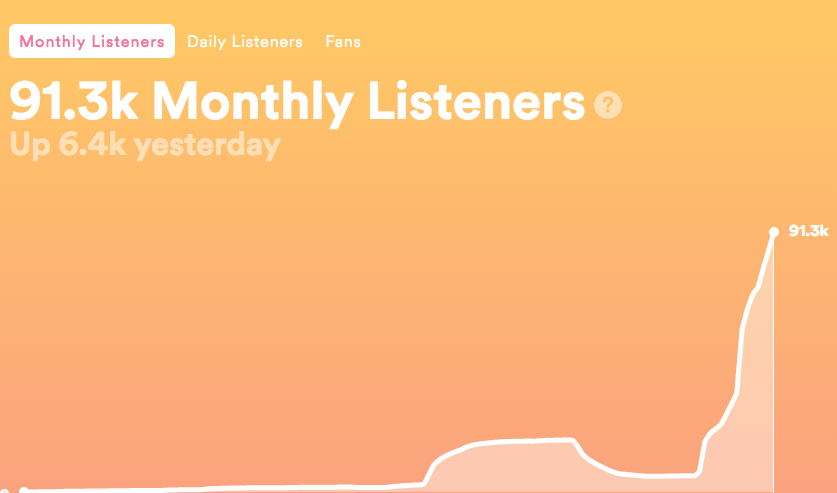
(Hey! This is now up to 200K monthly listeners – check out my book to learn more!)
Use this to your advantage! If you see streams coming from a certain country, maybe do some ads promoting your playlist in that country.Or if you see your fans are listening to a similar artist – reach out to that artist, there may be some great co-branding opportunities. Regardless this is the tool for checking out your stats and planning accordingly.Step Four: Accept Your Check!Look, let’s be honest – unless you get on a list with thousands, streaming naturally will take some time to see any financial love. However, if you registered with your PRO and you distributed your work properly – you’ll automatically receive your check eventually. How often you get paid depends on your PRO, but most of the time you get a monthly residual statement sent to your PayPal or direct deposited in your account.Easy as that.
Selling Your Merch Online!
This, to me, is one of the largest revenue streams for an artist today – but still, relatively untapped. I follow hundreds of artist on various social platforms, and rarely see them push merch. The main time I see an artist harp on merchandise is a live event.How crazy is that?!You may have a concert 1-3 times a month (if you’re lucky) but you have an online profile 24-7! Your social media channels should be constant sales funnels for merchandise, and even music. (Yes some fans still buy music).I’m going to echo what I said at the beginning of this article, and this is to inspire you because: it’s possible.If you sell one $30 t-shirt, to just 1,000 of your fans, that’s $30,000! Even if you just do half that, 500, that’s still $15,000! This is completely doable, but it’s more than just spewing out merch links on Twitter.Step One: Get your merch up.There’s plenty of ways to get inventory – whether it’s an online store like Teespring, or a local printer. No matter your route, get your t-shirts, hats, etc.. printed and ready for promotion.Once you have your inventory, you’re going to need to place it somewhere. The good news, is that most websites have a native e-commerce function that comes with the website: Four Square, Wix, and even WordPress (WooCommerce Plugin).You can also use a third-party platform like Big Cartel, but I suggest you have a link to that Big Cartel (or other) on your website as well.Do your research – please. Look through help guides for your website’s platforms, don’t just throw things up and hope things work out. Regardless, there’s store options out there that are as easy as you uploading your product images, and linking your bank account.Make sure these are set up correctly, run a few tests, and ensure everything works before going live. I’ve sold everything from shirts to ebooks, and there’s bound to be some payment issue, or bug eventually. So, take a few days to run through any issues when setting up your store.Step Two: Define Your Sales FunnelsI want to do a whole article on sales funnels in the future – in fact, I could likely write a whole book on it. That being said, we’re going to be informative, yet brief.Artists – you likely already use a type of sales funnel for your work. Though, it’s likely on a basic level.For instance, someone follows you on Twitter – and you schedule tweets promoting your merch.That’s a very basic level of sales funnel. By definition, a sales funnel is any form of process that end in a sale or an attempted sale. Here’s a few you should ensure you’re using.And again – I’m over simplifying. Feel free to research sales funnels and you’ll learn about the various kinds: conversion funnels, acquisition funnels, monetization funnels. I’m sparing you all those long details.Instead, our funnel is simple: we’re trying to get people to your merch page to click “purchase”.- Email Marketing. Yes, Email marketing.
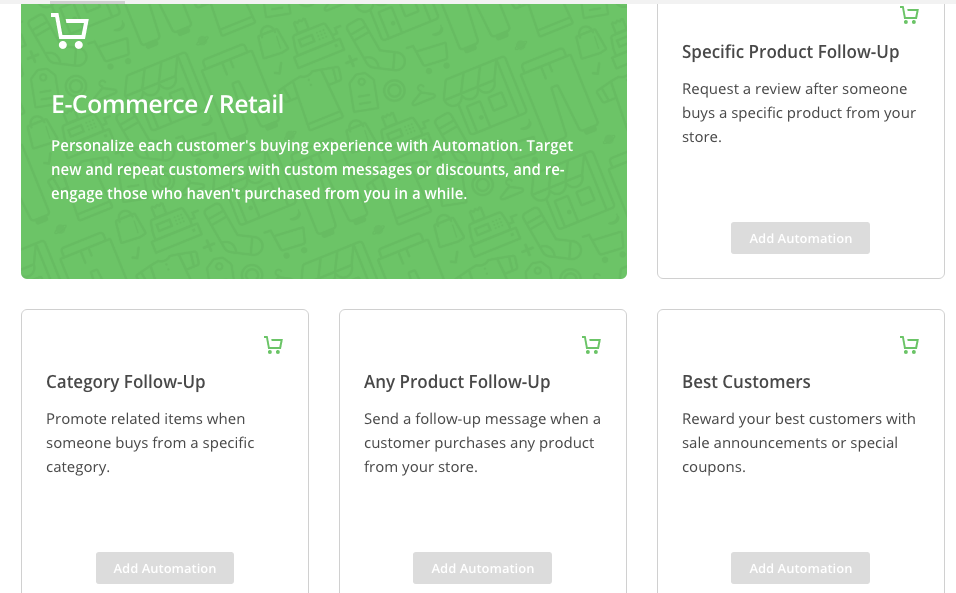
- Product Followup – Which emails a past customer, persuading them to make another purchase.
- A Welcome Series – Have a new subscriber? How about welcome them to the newsletter with a discount for a t-shirt? Then automate some additional emails based on if they used the discount or not.
- Abandoned Cart Messages – Did a fan put something in their cart but then leave? You can automate an email to go out.
- Social Media & PR
Crowdfunding – It’s not just for fundraising anymore.
Crowdfunding is sometimes used by artists – namely to meet a monetary amount to fund a recording session, or something particular like renting a van for a tour. While these are great reasons to raise money – crowdfunding can also be used for monthly profit.That’s where Patreon comes in. Patreon is a different form of crowdfunding – I love PledgeMusic for funding releases, I also love outlets like GoFundMe – but Patreon is a very different animal.Instead of fans donating cash until you meet a goal, fans promise to donate X amount of money each time you drop a new form of work.So, maybe fans will promise to give you $5 every time you release a new music video, or track on SoundCloud. It’s a fun way for fans to support artists, as well as allow artists to receive income for their work.And sure – you might not be releasing music each month, but you can still define your own parameters. Maybe it’s a vlog, a lyric video, or even a livestream, do what works for you.I had an artist who would do vlogs talking about his music/life each week – as well as release new material every other month or so. Some of it was even remixed versions of his previous work. He was fortunate enough to have enough fans to where he was making around $5,000 a month simply releasing content through Patreon. Some of it wasn’t even music!The tools are there! We just need to use them and formulate our own personal best practices.Marketing Tips for Patreon:- Ensure your content calendar ahead of time. What can you release each month that’s worth it for fans? Or should you consider a more spaced-out interval?
- Incorporate your Patreon page into your social media and email marketing campaigns.
- Offer your subscribers unique perks – as well as exclusive access on material.
- Film a quality intro video to attract subscribers.
Licensing: A Major Untapped Resource in Hip Hop.
Licensing is a huge way for artists to make money in today’s industry. While the payouts are going to vary – I’ve seen artist make anywhere from $2,500 to $25,000 in licensing. That’s not including the residuals that they (might) get in royalties from their PROs.In a nutshell – here’s how licensing works.Anytime your music is played – it’s considered a “performance” and you are owed royalties or some form of payment. There’s the obvious examples: radio and streaming, but, there’s other instances too. Such as your work being played in a movie, TV show or video game.However, this gets tricky for major-signed artists. Because there’s usually a few layers to who owns the “rights” to the music – so getting stuff cleared for use in quickly can be difficult. And if you’re working on a commercial, or a film – they likely need music ASAP. Filmmakers don’t have the time to go through hoops and get artist, publisher, and writer permission.And if they do – just for :30 seconds of a well-known song could cost hundreds of thousands of dollars.(The process is much like getting a sampled cleared!) This actually puts indie artists to an advantage. Own the rights to your song? You probably do. Willing to accept less money on your track than Jay Z? Likely so.This makes the indie artist a more preferable choice for commercials, TV show or film. In fact, many artists prosper because their track has a certain “style” that a creative director or film-team is looking for.The film may be looking for a Marvin Gaye type track for a certain scene – obviously licensing “Sexual Healing” will cost a pretty penny. It will also take a few weeks or even months to file the paperwork – so instead, they may find an indie soul artist with a similar voice and similar track for that scene.So, who are these decision makers and how do we contact them? Let’s discuss.Step One: Build a List of Creative Directors, Libraries and Music Supervisors.Just like you would pitch writers during a press run – when pitching your music for licensing, you’re going to pitch music supervisors. Music supervisors are the people who pick out music for certain scenes in film.How amazing is that?It’s more than just curating, it’s also ensuring that the music is budget friendly, and most importantly, that the music can be cleared to meet deadlines. Sometimes a music supervisor will also have a music editor working with them. That’s the person who physically puts the music in the scene. Occasionally, when the music is finally inserted into the scene, they find that it’s actually not a fit.Since this occurs late in the post-production process, usually the music editor will need to find another song ASAP. Like.. that day. So, music editors are also a good person to pitch your music too a well.For commercials – while some ad agencies or companies that make commercials have music supervisors, often you’re dealing with creative directors. These are the guys that put together the finished product for their brands.- Find These People!
- Look Into Networking Events!
You can check out his latest ebook, An Artist’s Field Guide to Income Streams here.
Related articles