By Jean-Baptiste Thiebaut, founder of Music Hackspace
I founded Music Hackspace in 2011, around the same time hackathons were becoming a big part of the culture of music technology.
Back then, companies like SoundCloud and Spotify were helping define the format. Hackathons were a way to open up APIs, attract talent, and create momentum around new tools. There was something exciting about them: people from different backgrounds coming together, barriers dropping away, and ideas moving quickly from conversation to prototype.
Though, if I'm honest, the output was often limited. In 24-36 hours, teams would build playlist engines, recommendation ideas, remix tools, or music discovery concepts. Some were smart. A few were ahead of their time. But most were not game-changing products.
What mattered was that Hackathons created access.
They brought people into rooms they would not otherwise have been in. They helped young talent discover emerging roles in product, UX, creative technology and entrepreneurship. At a Hackathon you could build, test, and participate, even if you were early in your career or outside the usual networks. That was valuable then, and it is even more valuable now.
Fifteen years later, the context has changed completely. The barriers to building are much lower. AI has accelerated ideation, coding, design, music-making and prototyping to the point where an individual can do in hours what used to take a team much longer.
When technology becomes easier to use, the most valuable innovations are no longer powered by technical skill alone.
That’s why the role of hackathons hasn’t faded, it has changed and become more important. They’re no longer about writing code fast, but about bringing people together; because code is now cheap, while taste, context, interdisciplinary thinking, and honest feedback are all much harder to find.
+Read more: "How AI-Curious Artists Can Move Beyond ChatGPT"
Hackathons Are Taking on a New Role
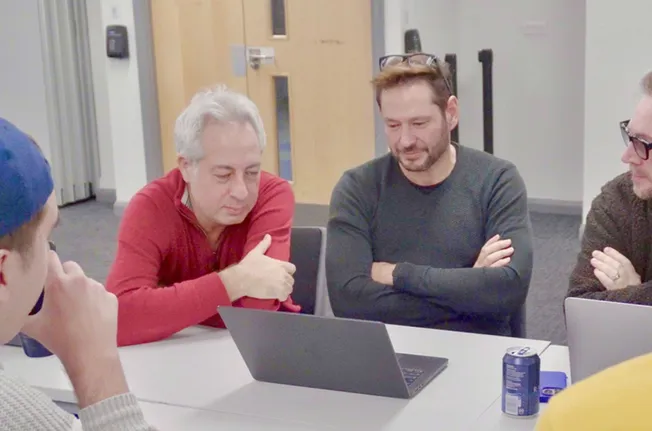
At their best, hackathons create fast, high-quality collaboration between people who think differently: musicians, artists, developers, designers, producers, founders, researchers. They compress the feedback loop, so ideas get tested earlier. Weak assumptions get exposed faster.
In my view, that human-to-human dynamic is now the real value of hackathons. This is particularly true in music.
Music has always evolved through exchange between genres, instruments, cultures, and people with different ways of hearing and making sense of the world. But today, too much innovation infrastructure is still concentrated in the same cities, institutions, and established networks.
If we want better ideas, we need to widen the map. That is one of the reasons I want us to run hackathons globally, especially in places that are underserved by technology, but rich in cultural and musical history.
I am thinking here of places like Brazil, India, Indonesia, and South Africa. These are not peripheral markets in any meaningful creative sense. They are places with deep musical identity, strong communities, and enormous creative potential. What is often missing is not talent, but infrastructure, access, visibility, and connection to wider innovation networks.
If we keep building the future of music technology in the same few hubs, we will keep getting a narrow set of ideas, shaped by a narrow set of assumptions. I think hackathons can help change that. Not on their own, and not merely as a slogan. Hackathons can be a practical way to decentralize innovation. They can create spaces where local communities are more than simply consumers of imported technology and surface talent that would otherwise be overlooked.
To me, this is one of the most important reasons to keep running Hackathons.
That’s why many of the world’s leading or most innovative music tech companies continue to support them. For example, for our recent run of Music Hackspace Hackathons, Muse Group saw eye-to-eye with me on the continuing value of such events, and how encouraging this kind of in-person creativity can foster the next generation of app-makers for platforms like MuseHub.
They can lead to prototypes, sometimes even products. But mostly it’s a vital chance to work with people you wouldn’t normally meet and see what comes out of it. Hackathons create collisions that would not happen otherwise.
So when people ask whether hackathons are still relevant, my answer is simple: they are more relevant than ever.
Jean‑Baptiste (JB) Thiebaut is the Partner Relations lead at MuseHub and the founder & CEO of Music Hackspace, an online education platform dedicated to music and creative technologies. He holds a PhD from the Centre for Digital Music at Queen Mary University.