

________________________________
By Cary Sherman, Chairman & CEO of the RIAAThe American recorded music business grew in 2017, for the second consecutive year, as music fans continued to subscribe to streaming services, which counted more than 35 million U.S. subscriptions and drove a 16.5% increase in retail sales to $8.7 billion.My colleague Josh Friedlander walks through all the data in more detail here.
Subscriptions Drive Music’s Recovery
Music is a digital business, with more than 80% of overall revenue stemming from an array of digital platforms and services.Streaming music services delivered $5.7 billion in revenue. Paid music subscriptions generated the lion’s share of that amount — surpassing $4 billion for the first time — and now represent the largest recorded music format by value.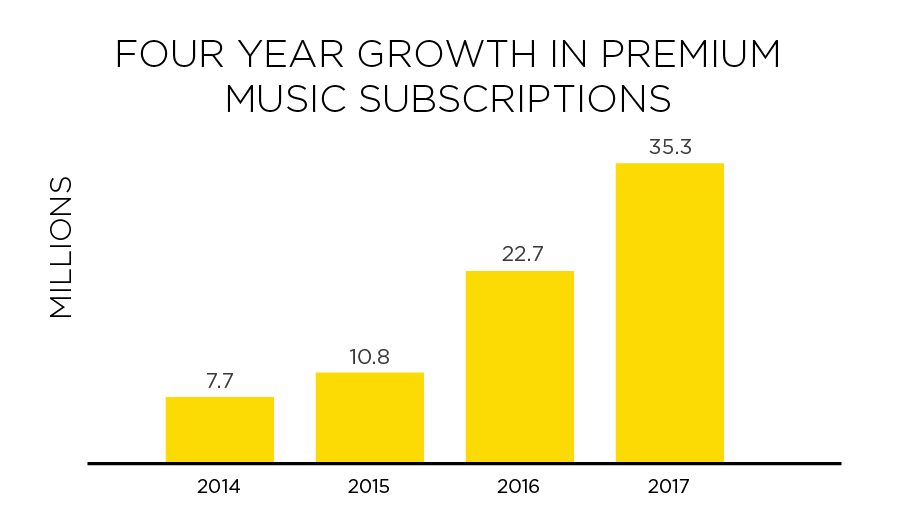
#Labelsatwork
More than any other creative industry, music companies successfully transformed themselves ahead of the transition to streaming, all while forging stronger relationships with their most important partner: the artist.This remarkable re-invention didn’t happen by accident. It is the result of years of painstaking work by record labels who continue to strengthen the teams and systems necessary to support an artist’s ambition, all while working closely with hundreds of digital platforms to bring music to fans in new and innovative ways.Music labels around the world invest more than $4.5 billion a year in discovering new artists, protecting their work and helping them find their audience and success. The Internet offers countless opportunities to distribute music, but with millions of songs and tens of thousands of albums released annually, it’s increasingly difficult for artists to break through and be discovered by fans. Record labels help artists stand out and elevate the music to the next level, whether it’s an established act or an up-and-coming new artist.
Fragile Recovery Continues
We‘re delighted by the progress so far, but to put the numbers in context, these two years of growth only return the business to 60% of its peak size — about where it stood ten years ago — and that’s ignoring inflation. And make no mistake, there’s still much work to be done in order to make this growth sustainable for the long term.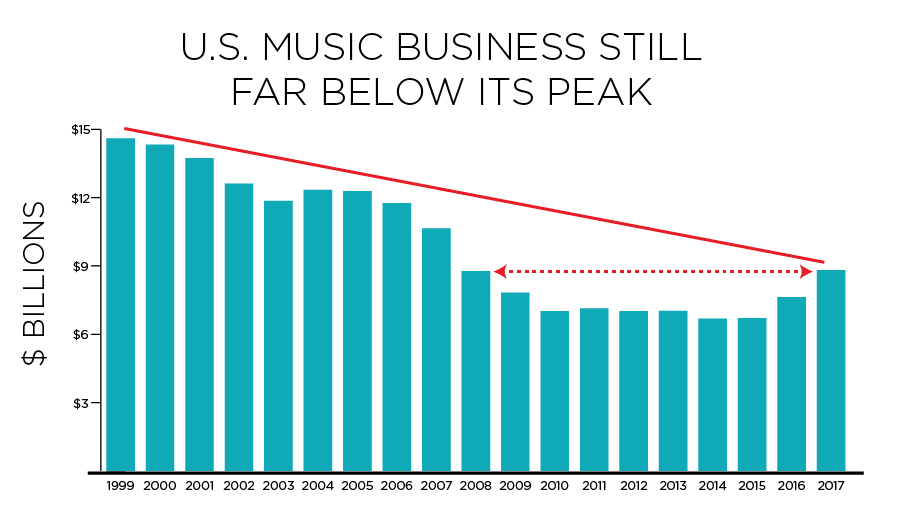
Reform Legislation Advancing
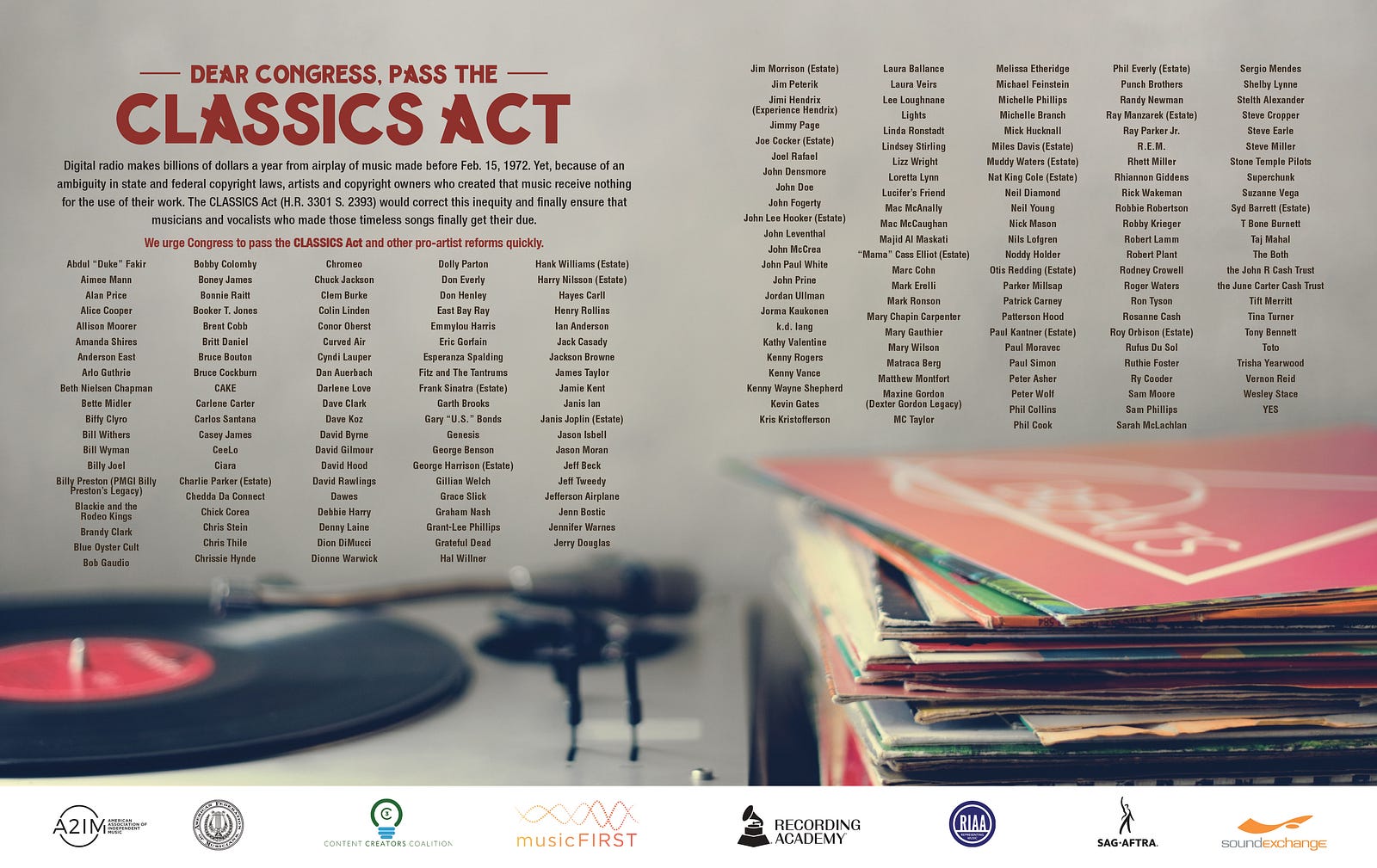
In Washington, Congress appears poised to advance a package of reforms that will modernize music licensing for the benefit of songwriters, recording artists, producers and digital music services alike, which we enthusiastically support. In addition to ensuring that all platforms pay based on the same market-based rate standard, a vital piece of that bipartisan legislative package — the CLASSICS Act — would correct one of the most glaring injustices in the streaming music economy: Because of a quirk in the law, legacy artists who recorded music before 1972 are not guaranteed royalties under federal copyright law when their music is played on digital radio outlets. The proposed legislation would ensure that all recordings are treated the same — and countless artists have encouraged Congress to enact this essential reform.