


Earlier this month, one man died and six other attendees of the Dreamstate electronic music festival in Sydney, Australia, were hospitalized (one remaining in critical condition), in what is being investigated as a substance overdose incident.
Investigators believe the man’s cardiac arrest may be linked to a suspected overdose, and 9News Australia says police are assessing the possibility that multiple overdoses took place during the festival.
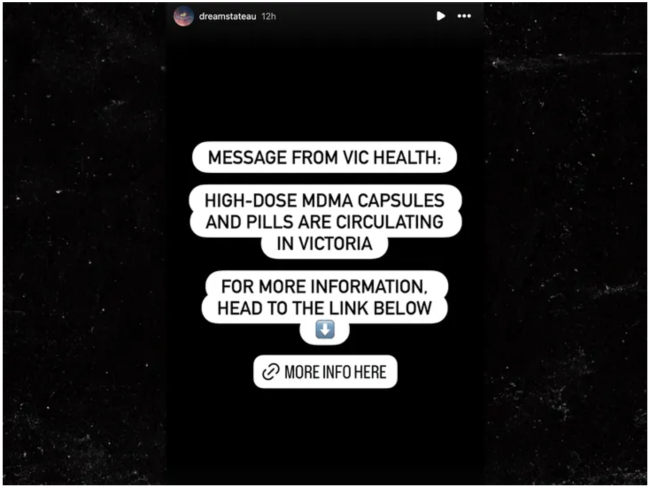
Drug overdoses at mass attendance music events like festivals remains a problem. However, there is evidence to suggest that measures being put in place by festivals throughout Australia, North America, and Europe to prevent episodes of harm and spread public awareness and knowledge, have begun to reduce the frequency and magnitude of incidents if and when they do happen.
Part of this problem stems from the fact that dealers selling on festival grounds are twice as likely to deceive customers than in normal transaction environments, which adds to the risk of misuse. Another aspect is that festivalgoers fear legal reprocussions for admitting they bought ilicit substances.
Perhaps it goes without saying, but purely punitive approaches (ie: policing) do not work to reduce overdoses or change the culture around risk-assessment. Hence, strategies that promote anonymity and tolerance, combined with safety testing and information sharing, have seen some success.
In 2016, at The Secret Garden Party in Abbots Ripton, UK, free, anonymous drug testing was implemented in a pilot program by the non-profit social enterprise The Loop, called Multi Agency Safety Testing (MAST). The result was a 95% reduction in drug-related hospital admissions from the year before; and this success was set against the backdrop of 2016 being the highest year on record for drug-related deaths and festival drug-related hospitalizations in the UK.
Risk-free drug-testing was also conducted at the Boom Festival in Idanha-a-Nova, Portugal, in the summer of 2016, and a team of researchers were invited to interview participants risk-free to measure behaviors and decision-making across festival-goers once they learned about the contents of their substances. The results showed an impactful reduction in willingness to take a substance that contained different ingrediants than expected, leading to an acknowledgment that harm reduction by way of analysis and information sharing is possible.
The Shambhala Festival in rural British Columbia, Canada, has conducted long-standing point-of-care drug testing and voluntary disposal, whereby results are both provided to the submitter privately and displayed on a screen in a running aggregate total so that all attendees can monitor the rates at which substances are being mis-labeled. Shambhala has also begun running naloxone training sessions and distributing aid kits. With overdose deaths caused by fentanyl being such a persistent problem in the province of BC, these strategies have measurably reduced incidents and changed the way festivalgoers assess risk at scale.
So, yes, established public health and harm-reduction strategies do exist to help music festivals and other large-crowd events address drug overdose and hospitalization incidents. Here's a recap of what we know works in support of overdose prevention:
1) Harm Reduction Framing
Rather than relying on punishment or enforcement alone, education, access to support and tools, and practical measures have led to organic reduction in the risk of serious injury or death when people use drugs. It's about reframing the use of drugs around responsible beahvior training and acceptance, rather than it being a black and white issue.
2) On-Site Medical & Support Services
Festivals that go the extra mile to staff and deploy robust medical teams, trained specifically to recognize and respond to drug toxicity and overheating, have shown to be effective in reducing risk. Offering “Safe spaces” and quiet rest areas also helps attendees cool down, hydrate, or recover without stigma.
3) Drug Checking & Pill Testing Services
One of the most evidence-backed harm-reduction approaches is drug checking, where people can anonymously have substances analysed for composition, potency, and dangerous contaminants like fentanyl. On-site testing lets festivals alert attendees in real time about particularly dangerous batches circulating at the event, both individually and in some cases, in mass messaging formats.
4) Overdose Reversal Tools
Naloxone (Narcan) is an opioid overdose reversal medication. Some festivals distribute or allow naloxone on site, teach attendees how to use it, or place trained volunteers where it’s easily accessible. This has proven to save lives of people overdosing on fentanyl in particular.
5) Real-Time Education & Messaging
Clear, ongoing communication about risks (ie: hot weather increasing MDMA toxicity, drug mixing dangers) helps festivalgoers make safer decisions. Behaviors have been proven to shift based on evidence and awareness. Pre-event and on-site announcements, posters, apps, and volunteers raise awareness about hydration, pacing, and recognizing signs of overdose.
6) Peer Support & Information Booths
Organizations like DanceSafe and similar groups set up booths to distribute educational materials, provide free harm-reduction tools (like water, condoms, test kits), and offer friendly, anonymous, and nonjudgmental support. This helps concert attendees feel safe.
7) Policies Encouraging Help-Seeking
Some regions adopt Good Samaritan laws or similar legal protections so people can seek emergency help, and provide it, when someone overdoses without fear of criminal charges. This has shown to encourage quicker response and save lives.
8) Data, Monitoring & Early Warning
Public health partners and festival organizers sometimes share data in open channels with one another, on dangerous substances and overdose incidents across events and venues. This creates drug-market early warnings and moment-relevant data that can be communicated rapidly to attendees.
9) Attendee-Level Risk Reduction Education
Research shows that people themselves can adopt self-protective behaviors, when given accurate, personalized information. This may include teaching about: spacing out doses, avoiding mixing substances (ie: stimulants with depressants), limiting quantity, keeping hydrated and cool, and enlisting a buddy to look out for them. These dosing-related strategies have been associated with fewer adverse outcomes.