


Why the First 72 Hours After a Release Matter More Than Most Indie Artists Think
By Martin Ferrer of Forward Music
At Forward, we work with independent labels on album release operations, catalog monitoring, and post-release enforcement, so we spend a lot of time watching what actually happens once a track is out in the world.
And one pattern shows up again and again: the first 72 hours after release matter far more than most indie artists think.
In fact, a recent report that was just published by the team working on our proprietary, AI-powered anti-piracy service, Shield, found that:
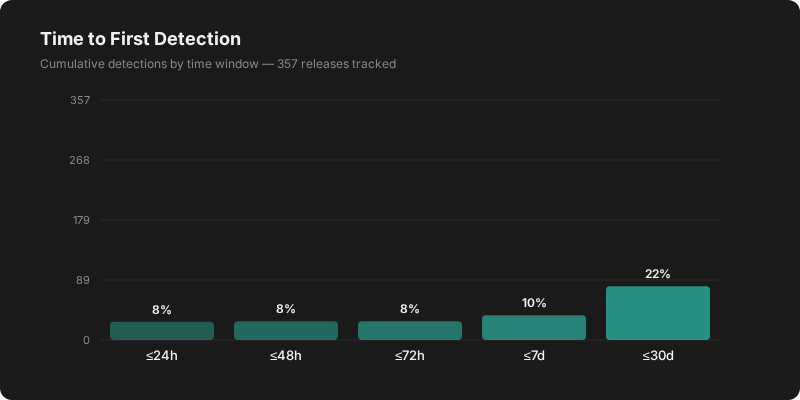
"Of 25 releases from Q1 2026 with detection data, 8 (32%) were detected on piracy networks within 24 hours of release."
The sample size is small; meaning that this is indicative, not conclusive. But what's definitely true is that new releases are always targeted fast.
For smaller teams, the risk is usually not one big, dramatic piracy event. It is something messier and more common. An unofficial upload appears. A mirror pops up somewhere else. Metadata gets stripped. A listener lands on the wrong version first. Search starts splitting attention. The official link loses momentum.
None of that looks huge on its own. Together, it can chip away at the one window when a release is supposed to be building.
That is why this is not just a piracy issue. It is a release control issue.
A lot of artists have mixed feelings about unofficial uploads, especially early on. Sometimes they look annoying. Sometimes they even look useful. A track starts spreading in places it was never meant to, and suddenly more people are hearing it than they would have through the official rollout alone.
That is exactly why this gets misunderstood.
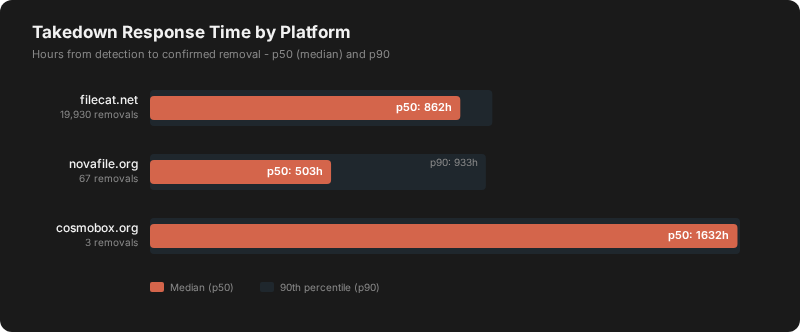
Extra reach is not always the same thing as healthy momentum. When music starts circulating through the wrong channels, the campaign gets harder to control. Links point to the wrong place. Attribution gets messy. Official versions compete with unofficial ones.
Already busy artist teams end up spending release week cleaning up noise instead of building attention around the release itself. That early period is where small problems become expensive.
+Read more: "How Much Does It Cost to Run Your Own Record Label?"
By the time a track is live, most indie teams are already juggling too much: DSP links, socials, metadata, artist pages, press, fan responses, distributor issues, and the usual last-minute friction that comes with release week. If unofficial copies start appearing at the same time, even a minor problem can turn into a real operational drain.
Instead of pushing the record forward, the team starts chasing mirrors, filing takedowns, and trying to work out what is live, what is wrong, and what needs fixing first.
From our side, working with independent labels, that is usually where the real damage starts. Not in some catastrophic, headline-making way. In a slower way. A leak here, a repost there, a delay in response, a loss of momentum at exactly the wrong moment. It is less dramatic than people think, but often more costly.
The artists and labels that handle this best are rarely the ones with the biggest legal teams. They are the ones with the clearest process in the first few days after launch. They know what is official, what is circulating, what looks wrong, and who is responsible for acting quickly.
For independent artists, that does not mean building some huge enforcement machine. It just means treating the first three days after release as an active part of the campaign instead of assuming the job is done once the song is live.
Forward is a music distribution platform and software company that also created Lost on You Music, the first electronic record label and benefit program that donates all money raised from album sales to help fight malnutrition, health and sanitary problems in the poorest parts of Africa.