


________________________________
Guest Post by Bas Grasmayer, from the MUSIC x TECH x FUTURE weekly mailingHaving a large fanbase or userbase opens up a lot of opportunities. You can experiment with monetization, referrals, and you won’t feel like you’re speaking to an empty room when using social media channels. Before getting there, you must get people to discover you and it’s this crucial first step where a mentality problem leads to many great musicians and startups never really taking off.An impression is not enough
You have a “killer app”. Or you make insanely good music. Surely, upon seeing or hearing it, people will instantly fall in love and become your fan. Not quite.We live in a noisy age and people will quite simply not be paying enough attention the first time. If you want to convince someone to change their habit and use your service, you’ll often need more than 1 impression. Don’t think you’re excluded as a label or musician: most people prefer listening to music they already know, so they have to make you part of their habit.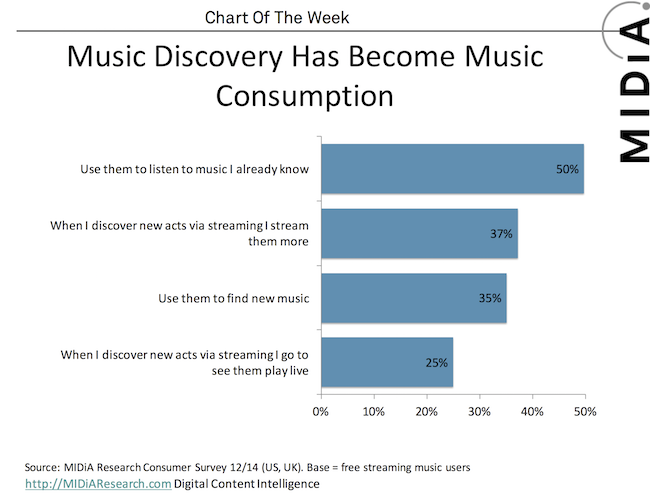
The Rule of Seven
In marketing, there’s a general rule of thumb that people need to hear your message seven times before most will make a purchase decision. Seven is soft and it varies from business to business, so it might be five or twelve, but the most important takeaway is:You’re probably not going to stand out on the first impression.This means you have to adjust your strategy. The goal is to get heard or seen by a relevant audience multiple times and to then connect them to your channels or service, so that it’s easy to get their attention again and monetize them.The Rule of Seven for Music
I follow the fanbase as an ecosystem model by default and will be using that now. It means you connect your fanbase, play a central role in it, understand who the people are, and develop new business models and revenue streams with them (it can be as simple as just asking). It goes:- Be discovered
- Retain attention
- Connect (with) fans
- Nurture the connection
- Listen (and build business models)
Related articles