Spotify has announced two new beta features — Artist Profile Protection (APP) and SongDNA — that tackle long-standing pain points in the streaming ecosystem: misattributed music and shallow discovery.
While very different on the surface, both updates respond to the ways in which streaming platforms are evolving, both for artists (allowing more control over their identity), and fans (giving more context around the music they consume).
Fixing One of Streaming’s Most Frustrating Problems
With the launch of Artist Profile Protection, Spotify is addressing a persistent issue that has only grown in the AI era: music showing up on the wrong artist profiles.
For years, artists — especially those with common names — have dealt with misattributed releases cluttering their catalogs, skewing their data, and confusing fans. In some cases, bad actors have even intentionally attached their music to more established profiles to game discovery systems.
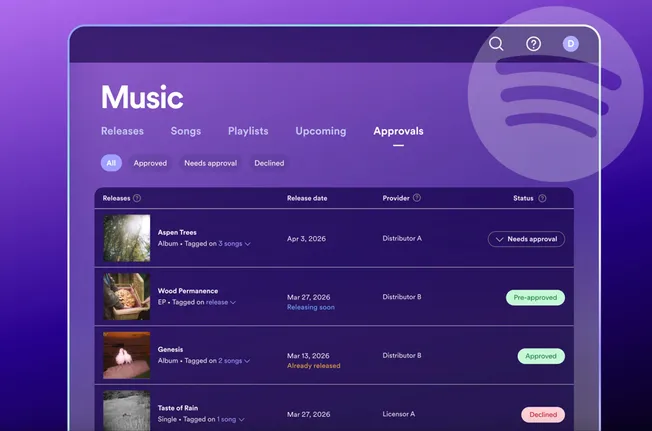
Spotify’s new optional feature introduces a review step before music appears under an artist’s name. If enabled, artists can approve or reject releases before they go live on their profile. Approved tracks function as normal; declined ones are blocked from appearing altogether.
The addition of a unique “artist key” for trusted collaborators also streamlines legitimate releases, allowing them to bypass manual review.
+Read more: "Spotify's "About the Song" Feature Adds Context to Discovery"
Turning Credits Into Discovery Engines
At the same time, Spotify is expanding how fans explore music with SongDNA, a new feature embedded in the Now Playing view.
SongDNA surfaces the network behind a track — writers, producers, samples, interpolations, and covers — and lets listeners follow those connections across the platform. It effectively turns every song into a web of clickable relationships, offering a more interactive and layered listening experience.
For creators, it’s another step toward making behind-the-scenes contributions more visible, and potentially more discoverable.
How This Helps Indie Artists
Taken together, these features highlight two areas where independent artists have historically been at a disadvantage: control and context.
1. Protecting your identity (and your data)
For indie artists without label infrastructure, a single misattributed release can do real damage — polluting algorithmic signals like Release Radar, distorting listener data, and undermining brand clarity. Artist Profile Protection introduces something the streaming economy has lacked: proactive control.
Instead of reacting after the fact, artists can now:
- Prevent unauthorized or incorrect releases from ever appearing
- Maintain clean catalog data that feeds Spotify’s recommendation systems
- Protect fan trust by ensuring everything on their profile is actually theirs
2. Expanding discovery beyond the artist name
Discovery on streaming platforms has long been centered on artist profiles and playlists. SongDNA pushes that model outward, creating new pathways based on relationships between creators. For independent artists, this could help songwriters and producers gain visibility, collaborations become more powerful discovery tools, and niche scenes and cross-genre influences become easier for fans to explore.
3. A subtle shift toward metadata as power
Both features rely heavily on accurate metadata and artist input — whether it’s approving releases or managing SongDNA connections. That means that your metadata is working for you in a more front-forward way than ever before. Artists who actively manage their credits, collaborators, and catalog accuracy will be better positioned to show up in new discovery pathways and work the algorithm in their favor more.