

[UPDATED] "Superfans" and "fan subscriptions" have been the music industry's favorite buzzwords for two years. With streaming growth plateauing, artists, labels and platforms were rushing to monetize the top 1% of listeners.
But in sharp new analysis for Water & Music by researcher and music-tech analyst Cherie Hu traces how three of the most-cited proof points for direct-to-fan subscriptions — Vault, Patreon, and Spotify — have each, in their own way, retreated from the model they promised to popularize.
The conclusion is blunt and worth paying attention to: superfan subscriptions are failing not because fans don't care, but because the model itself was wrong for most fans and artists from the start.
Vault Pulls the Plug
In March 2024, newly independent artist James Blake launched paid subscriptions on Vault, charging fans $5 per month for access to unreleased demos and a private group chat.
The launch generated enormous press. Blake was the ideal test case: a credible critic of streaming, an engaged and prolific artist, a loyal fanbase.
It lasted less than two years.
In December, with one day's notice, Vault CEO David Greenstein emailed subscribers announcing the shift to a free model. His explanation was unusually candid:
"Subscriptions force artists into a schedule that doesn't match how they create music. It adds pressure instead of creating space."
The change went almost entirely unreported. Hu notes that Vault has since repositioned itself as a broader direct-to-fan platform — drops, digital sales, SMS, email marketing, fan analytics — with no paid subscription offer in sight. Artists like Kesha and Nicole Moudaber have joined the revamped platform.
Patreon Pivots
Patreon rode a massive COVID-era wave. Between March and May 2020, the collective value that fans were paying musicians on the platform jumped over 60%, and the total number of musicians there rose 200%. Patreon's valuation ballooned from $1.2B in September 2020 to $4B by April 2021.
Then reality set in. As touring returned and subscription fatigue kicked in, Patreon laid off 17% of its staff in late 2022.
Today, Hu observes, paid memberships are no longer central to how Patreon positions itself. Introduced in 2023, free memberships now outnumber paid ones four to one (100 million vs. 25 million) on the platform. One-time payments have grown 3x year-over-year.
The top earners on Patreon today are podcasters - not recording or touring musicians. That distinction matters enormously, because those roles have something most artist careers don't: a natural, recurring cadence of deliverables.
Patreon disputes some of Hu's conclusions telling Hypebot:
"Getting creators paid remains Patreon's mission and everything the company does is in service of that goal. Even free memberships are designed to help creators grow their fanbase, build loyalty, and ultimately convert them to paying fans. While it is not Patreon's entire business, the company continues to see growth in memberships and creator communities on Patreon."
Spotify Superfan Tier That Isn't (Yet)
Spotify has been publicly dangling a super-premium tier since late 2024.
Reuters reported early last year that a "Music Pro" add-on could cost up to $5.99 extra per month and include hi-fi audio, AI remixing tools, and concert ticket access. Then, in September, lossless audio arrived free inside standard Premium subscriptions — eliminating one of the clearest upsell arguments.
Spotify's recent Q1 2026 results highlighted new features like Taste Profiles, Prompted Playlists, and invite-only fan events. On the superfan tier itself? No update. Bloomberg has reported that Spotify simply cannot agree internally on what such a plan should contain.
Hu frames this as the institutional version of the same problem Vault and Patreon faced. Spotify has scale, data, and motivation. What it lacks is a coherent answer to what superfans should actually pay for inside a mass-market streaming app.
The $4B Stat That Launched Superfans
Much of the enthusiasm for superfan monetization traces back to Goldman Sachs' 2023 "Music in the Air" report, which identified "superfan segmentation" as a potential $4 billion incremental revenue opportunity by 2030.
Hu's analysis urges caution about that figure. Goldman's model focused only on streaming subscriptions, assuming 20% of current subscribers were superfans willing to pay $22.80/month. It was, in essence, an argument that streaming should cost more for certain listeners — not a full accounting of fan spending across merch, ticketing, vinyl, travel, and community.
The number became influential in pitch decks precisely because it made a messy behavioral reality sound tidy and forecastable.
Luminate offered a broader picture in its 2023 Midyear Music Report, estimating that 15% of the U.S. general public qualifies as a superfan — defined as listeners who engage with artists in five or more ways across streaming, social media, merch, physical music, and live shows.
As Hu puts it, the gap between Goldman's and Luminate's definitions captures a core industry tension: superfans have varied motivations and ability to pay, but are often modeled simply as higher-paying streaming subscribers.
Why Subscriptions Were Always A Mismatch
The deeper argument is structural, and it deserves to be heard clearly.
Recording and touring artists have spiky careers — months or years of writing and recording, followed by promotional cycles, followed by periods of deliberate silence. Fans, meanwhile, might spend $150 in one week and nothing for the next six months. That doesn't make them less valuable.
Forcing this reality into a monthly subscription model creates a bad deal for everyone. Artists feel pressure to produce content on a schedule that has nothing to do with their creative process. Fans are naturally doing a mental accounting of whether they're getting "enough" to justify the monthly charge.
As Hu says, "a direct fan relationship in music cannot be reduced to a monthly bill."
Play Dead
The one counterexample Hu highlights is instructive precisely because it proves the rule. In April 2026, the Grateful Dead and nugs.net launched Play Dead, a $9.99/month subscription for hi-res streaming of the band's live archive — hundreds of recordings, including 20 previously unreleased shows.
It works, Hu argues, because no current band members are being asked to generate weekly content, the product is an archive of something that already exists, and Deadheads already had a long culture of obsessively collecting and comparing live recordings.
Play Dead subscriptions aren't creating a new behavior — it's formalizing one that already existed.
What Comes Next
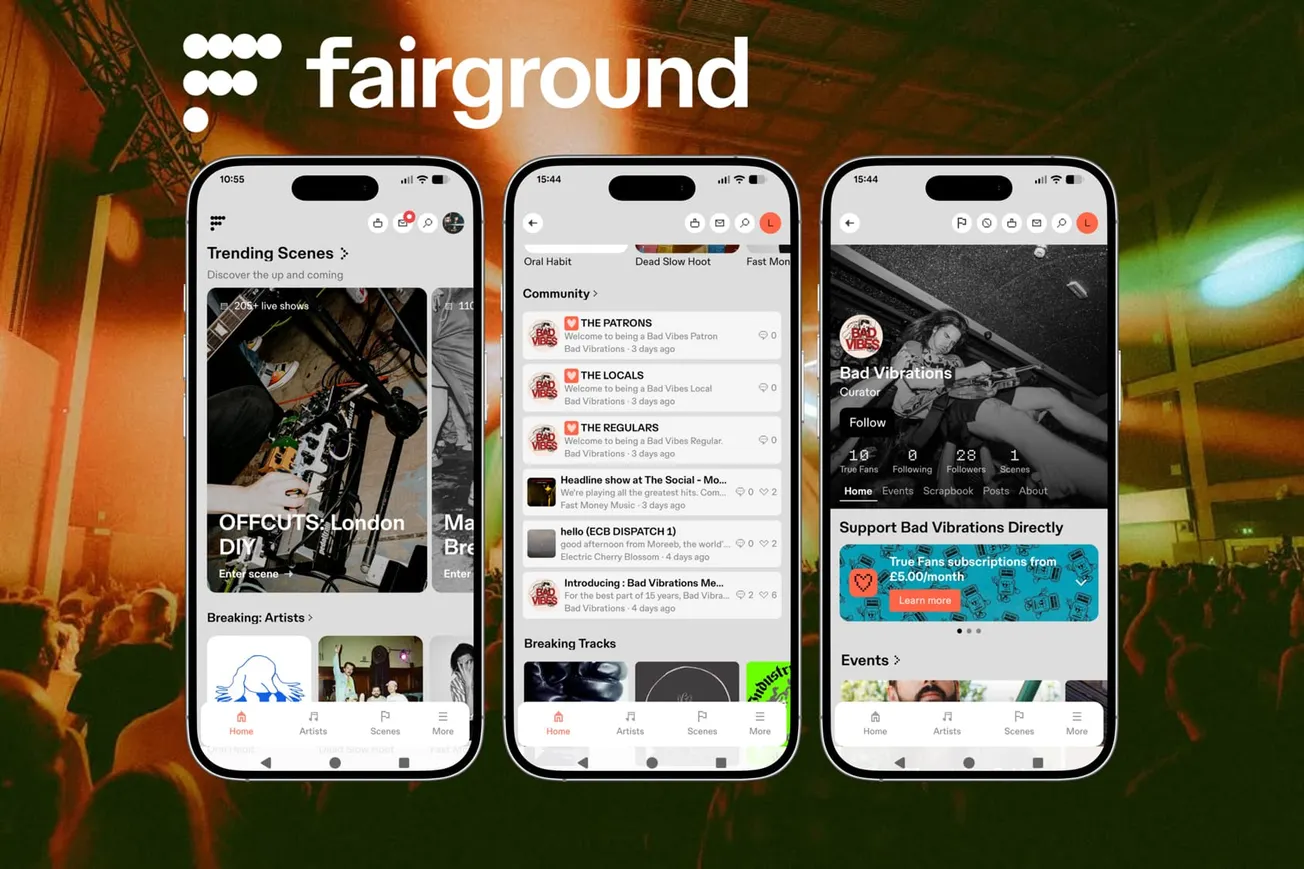
The fan platforms that appear to be gaining traction — Laylo, Openstage, EVEN, Stationhead, Softside, Superfan, Medallion, b.stage, Weverse — operate on a fundamentally different logic. Rather than "pay every month for access," the emerging paradigm is: be reachable, recognized, and ready when something meaningful happens.
Listening parties, release campaigns, ticket access, merch collaborations, archive releases, and concert histories are moments fans are already willing to spend around, without being asked to pay a monthly subscription in the interim.
UMG has also been moving in this direction. At its September 2024 Capital Markets Day, the company named "accelerating superfan monetization" as a key financial driver through 2028, with its direct-to-consumer vertical growing at a 33% CAGR.
So far UMG's approach has included listening parties, virtual stores, Roblox activations, and investments in platforms like Weverse and Stationhead -treating superfans as an ARPU (Average Revenue Per User) and platform strategy, not just a community building initiative.
Hypebot's Bottom Line
The artist-to-fan subscription model borrowed its logic from software and creator media (predictable cadences, recurring deliverables, a steady content drip) and applied it to the careers of musicians who have never worked that way.
What will replace music superfan subscriptions won't include exclusive clubs with monthly dues.
Successful fan monetization tools are now being built around the irregular, high-intent moments when artistry and fandom already align. The artists and platforms that figure that out first will have a significant head start.
Source: "Why Superfan Subscriptions Are Dying Out" by Cherie Hu, Water & Music (April 30, 2026). Water & Music is an independent research publication focused on the music industry and technology. Subscribe at waterandmusic.com.