

____________________
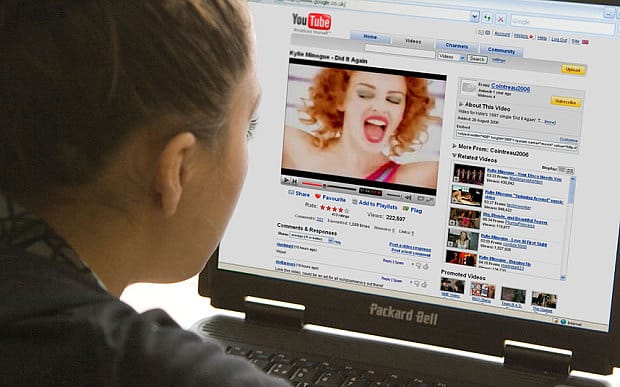
Guest post by Russ Crupnick of MusicWatchIn many ways, YouTube is the most valuable asset that the music industry has. It boasts the largest audience for streaming music—in the US MusicWatch estimates their audience at 120M active users. The platform accounts for about one in four music listening hours, according to MusicWatch’s audiocensussm tracking study. Many Americans believe it to be the most influential force for music discovery. And yet we have observed a year in which YouTube has been excoriated by all sorts of stakeholders, from artists to executives 0 even the acclaimed business manager Irving Azoff took on YouTube. This quarrel has centered on the “value gap,” a term which has joined the music lexicon next to “vinyl,” “EDM” and “Adele.” Put simply, the value gap is a measure of the amount of music purchased or listened to relative to the dollars received by artists and rights holders.
 This week YouTube reported that their 2016 contributions to the music industry will exceed $1B. Considering that IFPI set global digital revenues at nearly $7B (US) last year, the YouTube contribution is a healthy portion of the overall pie. So what’s the problem?Based on numbers presented by the RIAA, our estimate is that about 30 percent of YouTube revenue filters to the US, or roughly $300M. If first half trends hold up, US streaming revenues will be in the neighborhood of $3.5B, meaning YouTube contributes almost nine percent of revenues. With that 120M user base, ARPU (average revenue per user) is about $2.50 per music listener.Through Q3 2016 Pandora reported $522M in content acquisition costs. At that run rate the total 2016 expense will be roughly $700M. With 80M active users, Pandora’s industry ARPU is $8.75, or 3.5 times higher than YouTube.Look at it another way. YouTube has a 27 percent share of music listening in the US and will pay $300M to rights holders, or $11.11M per share point. Pandora has a 27 percent share and pays $700M, or $29.17M per point. Therein lies the value gap. And certainly the YouTube user has much more flexibility to determine how they interact with YouTube, with more options to skip, replay or create individualized playlists.
 Therein lies another rub. When we surveyed streamers who claimed YouTube was their primary music listening service:
- 74% chose it as favorite because it was free
- 31% chose it because of its on-demand features
- 26% chose it because there were unlimited song skips
Related articles