

_________________________________
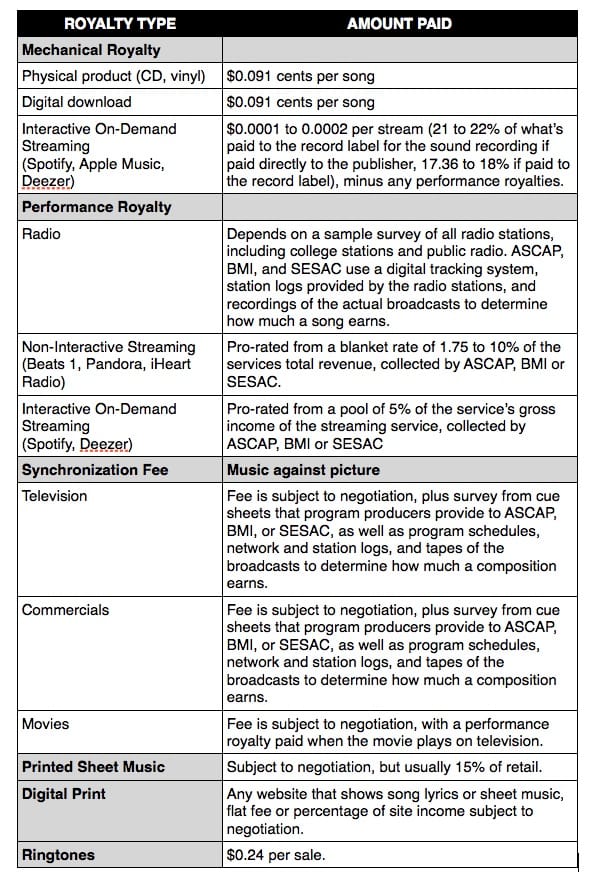
Guest Post by Bobby Owsinski on Music 3.0Regardless of the era, the songwriter and publisher have made money, and continue to make money in three primary ways:1. Mechanical royalties are paid whenever a song is digitally downloaded, a song is streamed from an on-demand service, or a physical CD or vinyl record is sold.2. A performance royalty is paid whenever a song is played on radio, on television, or streamed over the Internet.3. A synchronization fee is paid when music is used against picture.This payment mechanism hasn’t really changed all that much in Music 4.1 from previous music eras, although it’s managed to become even more complicated than it was. What has changed is that during this period in which music sales are far less than half of what they were at their peak, publishing is the one area of the music industry that has held its own. How does that happen when sales, and therefore mechanical royalties, are down, you ask?While it’s true that mechanical royalties are not nearly what they used to be now that CD sales are so low and downloads have decreased, they’re offset by the tremendous increase in performance royalties because music is now played on so many more broadcasts than before. The 500-channel cable and satellite television universe, along with satellite and Internet radio, provides more opportunities for music to be played, and as a result, more performance royalties are generated.That said, music publishing income is derived from more sources than you think, and while some of it doesn’t appear significant by itself, it can all add up to a nice royalty check. Here’s an excerpt of a chart from the latest edition of my Music 4.1 book that shows a simple breakdown of when publishing royalties occur, how it’s collected, and the royalty rate.