


By Ghida Esber
The A&R department has moved. It is not only sitting in a label office in Cairo, Riyadh, or Dubai. It is in a basement venue in Paris, a university campus in New Jersey, and a club night in West London.
I have spent the last year deep in Arab diaspora music, speaking to A&R teams, promoters, artist managers, and artists across Europe and the US. What has become clear is that diaspora communities are often where new Arabic talent builds its audience first.
Industry conversations still tend to frame MENA as an emerging market through streaming stats, growth curves, and platform expansion. What gets missed is how much momentum is already coming from abroad. Diaspora communities are breaking artists, building scenes, and sending new sounds back home long before the mainstream notices.
Same heritage, different scenes
Cities may share cultural roots, but the scenes that form around them are local. Approaches that treat the Arab diaspora as one audience often miss how different organizers, venues, media, and formats shape discovery in each city.
London remains a launchpad, but many of its most exciting Arab and Arab-adjacent artists, like Hamdi and Miraa May, barely show up in Arabic playlists. The industry’s categories do not always know where to place them, revealing a disconnect between platform logic and real communities.
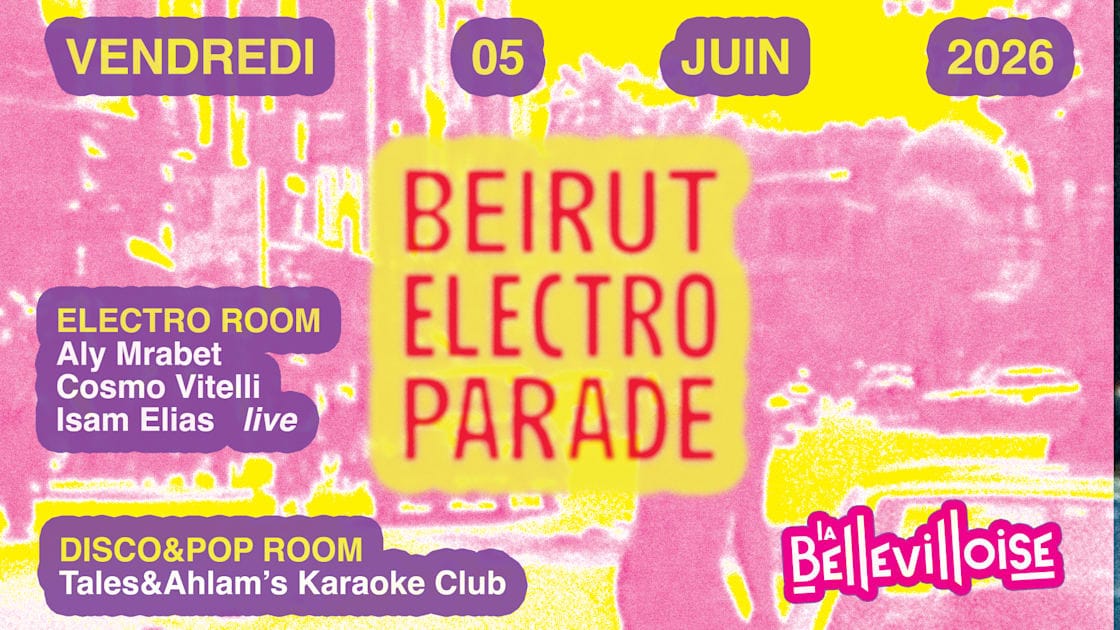
Paris benefits from decades of Levant and Maghrebi diaspora infrastructure, with events like Beirut Electro Parade and Radio Flouka creating stronger continuity across generations and genres. In the US, the landscape varies by city. New York can support both politically engaged underground spaces and more commercial nightlife, while LA often shows strong industry interest but less shared cultural context.
Outside the usual hubs, communities in Brazil, Australia, Canada, and Indonesia add further range. Taken together, the pattern is less a single diaspora market and more a set of city specific scenes that require city specific attention. The most effective teams partner with local connectors, show up consistently, and invest where culture is built.
The data behind the moment
MENA listeners spend around 27 hours a week with music, about six hours above the global average. Spotify has also reported that Egyptian listeners share MENA tracks at exceptionally high rates, around 2,700% above average, while much of the royalty growth for Egyptian artists is now coming from listeners outside the country.
Looking more closely, the picture becomes even clearer:
- Mishaal Tamer’s Spotify audience includes cities like Sydney, Paris, Melbourne, Milan, and São Paulo, showing how far beyond the Arab world his listenership already reaches.
- Wegz did not just break out online. He partnered with Live Nation and took Egyptian Arabic rap across major Western cities.
- Two of the biggest names in Western music sampled Fairuz in the past year. Billie Eilish has also publicly named Nancy Ajram as one of her favourite singers.
Coachella 2026 made the shift hard to ignore. After Elyanna’s full Arabic set in 2023, the lineup reflected a wider presence of Arab-heritage artists across different sounds and scenes.
Together, these signals show that Arabic music’s global growth is not coming from one channel. It is being shaped by streaming behaviour, diaspora touring and the communities connecting them.
The diaspora validates first.
The pattern is consistent: the diaspora validates first, then the region follows.
The strongest sign is in the middle layer. Artists are building real audiences in Western cities, while the region still focuses on the biggest names and familiar stories. Artists such as Michael Hakim and Ghali show the power of diaspora audiences as early believers, building momentum abroad before that success feeds into the wider MENA industry conversation.
Tastemakers are usually the first to notice these shifts. When artists like Bu Kolthoum or Nemahsis appear on platforms such as COLORS, they often reach wider international audiences before becoming part of a bigger regional conversation.
Saint Levant’s first crowds were Arab Student Association gigs on US campuses, long before the global spotlight showed up. Issam Alnajjar’s “Hadal Ahbek” was a TikTok hit worldwide before anyone reintroduced it to MENA. In each case, the diaspora made it happen.
What needs to happen next
The future of Arabic music will be shaped by exchange between the diaspora and the region, not by one market exporting to the other.
The artists, communities, and scenes leading this movement are already creating the signals the industry will later follow. The opportunity now is to recognize those signals earlier, invest in them locally, and build with the communities driving them.
For labels, platforms, promoters, and brands, this means moving beyond broad “MENA audience” thinking. It means understanding London differently from Paris, New York differently from LA, and São Paulo differently from Sydney. It means treating diaspora scenes not as secondary markets, but as creative engines.
The question now is not whether the industry catches up, but how much it will have missed by the time it does.
Ghida Esber is a Dubai-based music and technology strategist with more than eight years of experience building products, partnerships, and artist programmes across streaming, distribution, and creator ecosystems. Her work across Anghami and ByteDance spans MENA and global markets, with a focus on platform growth and emerging artist development. She writes about music, how culture moves through technology, and what the industry still gets wrong.